AB 74: Housing.
- Session Year: 2017-2018
- House: Assembly
- Latest Version Date: 2017-10-14
Existing federal law requires the Secretary of the Department of Housing and Urban Development to establish a Housing Trust Fund to provide grants to states to increase the supply of rental housing for extremely low and very low income families, including homeless families, and home ownership for extremely low and very low income families.
Existing law establishes the Department of Housing and Community Development in the Business, Consumer Services, and Housing Agency. The department is responsible for administering various housing and home loan programs throughout the state. Existing law designates the department as the state agency responsible for administering funds received by the state from the federal Housing Trust Fund and requires the department to administer these funds through existing or newly created programs.
This bill would require the department, on or before January 1, 2019, to establish the Housing for a Healthy California Program to create supportive housing opportunities through grants to counties for capital and operating assistance, as specified, or operating reserve grants and capital loans to developers, or both. The bill would require the department to award grants to counties on a competitive basis pursuant to rating and ranking criteria, as specified. The bill would require the county to use grant funds in a specified manner and to comply with federal Housing Trust Fund regulations. The bill would require a county or developer awarded grant or loan funds to report data, as specified. The bill would require the department to submit federal Housing Trust Fund allocation plans to the Department of Housing and Urban Development, as provided. The bill would also require the department to analyze data collected pursuant to the program, as specified, and to report program data to certain legislative committees, as specified. The bill would require the department to carry out these provisions with revenues appropriated to the department from federal Housing Trust Fund allocations, as specified, or with any other revenues appropriated to the department that may be allocated for purposes of the program, or both.
Existing law establishes various housing programs directed by the Department of Housing and Community Development (HCD), including special housing programs to provide housing assistance for persons with developmental and physical disabilities and persons with mental health disorders. Existing law provides for the Medi-Cal program, which is administered by the State Department of Health Care Services (DHCS), under which qualified low-income individuals receive health care services. The Medi-Cal program is, in part, governed and funded by federal Medicaid program provisions.This bill would require HCD to, on or before October 1, 2018, establish the Housing for a Healthy California Program and on or before April 1, 2019, and every year thereafter, subject to on appropriation by the Legislature, award grants on a competitive basis to eligible grant applicants based on guidelines that HCD would draft, as prescribed, and other requirements. The bill would provide that an applicant is eligible for a grant under the program if the applicant meets specified requirements, including that the applicant identify a source of funding, as specified, agree to contribute funding for interim and long-term rental assistance, and agree to collect and report data, as specified.The bill would require an applicant awarded a grant to use the funds for specified purposes, including long-term rental assistance and interim housing. The bill would provide that a county resident is eligible to receive assistance pursuant to a grant awarded under the program if he or she meets specified requirements, including that the person is homeless, is a Medi-Cal beneficiary, is eligible for Supplemental Security Income, is eligible to receive certain services, and is likely to improve his or her health with supportive services. The bill would provide that the program shall be funded upon appropriation by the Legislature. The bill would also authorize HCD, for purposes of implementing these provisions, to enter into exclusive or nonexclusive contracts on a bid or negotiated basis, exempt from specified small business procurement, personal service, and public contracting provisions, and exempt from the review or approval of any division of the Department of General Services. The bill would exempt the program guidelines created by the department from requirements prescribed for administrative regulations. The bill would require HCD to analyze data collected pursuant to the program, as specified, and by October 1, 2020, and subsequently as the program may be funded, to report program data to certain legislative committees, as specified. The bill would appropriate an unspecified amount from the General Fund to the Department of Housing and Community Development for these purposes.This bill would declare that it is to take effect immediately as a bill providing for appropriations related to the Budget Bill.Existing law establishes various housing programs directed by the Department of Housing and Community Development (HCD), including special housing programs to provide housing assistance for persons with developmental and physical disabilities and persons with mental health disorders. Existing law provides for the Medi-Cal program, which is administered by the State Department of Health Care Services (DHCS), under which qualified low-income individuals receive health care services. The Medi-Cal program is, in part, governed and funded by federal Medicaid program provisions.
This bill would require HCD to, on or before October 1, 2018, establish the Housing for a Healthy California Program and on or before April 1, 2019, and every year thereafter, subject to on appropriation by the Legislature, award grants on a competitive basis to eligible grant applicants based on guidelines that HCD would draft, as prescribed, and other requirements. The bill would provide that an applicant is eligible for a grant under the program if the applicant meets specified requirements, including that the applicant identify a source of funding, as specified, agree to contribute funding for interim and long-term rental assistance, and agree to collect and report data, as specified.
The bill would require an applicant awarded a grant to use the funds for specified purposes, including long-term rental assistance and interim housing. The bill would provide that a county resident is eligible to receive assistance pursuant to a grant awarded under the program if he or she meets specified requirements, including that the person is homeless, is a Medi-Cal beneficiary, is eligible for Supplemental Security Income, is eligible to receive certain services, and is likely to improve his or her health with supportive services. The bill would provide that the program shall be funded upon appropriation by the Legislature. The bill would also authorize HCD, for purposes of implementing these provisions, to enter into exclusive or nonexclusive contracts on a bid or negotiated basis, exempt from specified small business procurement, personal service, and public contracting provisions, and exempt from the review or approval of any division of the Department of General Services. The bill would exempt the program guidelines created by the department from requirements prescribed for administrative regulations. The bill would require HCD to analyze data collected pursuant to the program, as specified, and by October 1, 2020, and subsequently as the program may be funded, to report program data to certain legislative committees, as specified. The bill would appropriate an unspecified amount from the General Fund to the Department of Housing and Community Development for these purposes.
This bill would declare that it is to take effect immediately as a bill providing for appropriations related to the Budget Bill.
The Legislature finds and declares all of the following:
(a)Homeless beneficiaries incur disproportionate Medi-Cal costs, particularly people experiencing chronic homelessness and people who cycle between homelessness, emergency departments, inpatient care, and nursing home stays. Supportive housing, which is affordable housing with intensive services, allows people experiencing significant barriers to housing stability to improve their health and decrease their Medicaid costs. National studies comparing formerly homeless Medicaid beneficiaries living in supportive housing with homeless beneficiaries receiving usual care demonstrate Medicaid cost savings.
(b)In most communities in California, a lack of housing affordable to people experiencing homelessness is one of the greatest barriers to exiting homelessness. Housing resources would equip counties implementing services programs for people experiencing homelessness to achieve the goals of these programs, and would spur local governments to coordinate the capital, operating, and services funding necessary to move our most vulnerable and expensive homeless Californians to housing stability.
SEC. 2.Part 14.2 (commencing with Section 53590) is added to Division 31 of the Health and Safety Code, to read:14.2.Housing for a Healthy California Program53590.For purposes of this part, all of the following definitions shall apply:
(a)Chronically homeless has the same meaning as in Parts 91 and 578 of Title 24 of the Code of Federal Regulations, as those parts read on January 1, 2018, except that people who were chronically homeless before entering an institution would continue to be defined as chronically homeless upon discharge, regardless of length of stay.
(b)County means a county, city and county, or a city collaborating with a county to secure services funding.
(c)Department means the Department of Housing and Community Development.
(d)Fair market rent means the rent, including the cost of utilities, as established by the United States Department of Housing and Urban Development pursuant to Parts 888 and 982 of Title 24 of the Code of Federal Regulations, as those parts read on January 1, 2018, for units by number of bedrooms, that must be paid in the market area to rent privately owned, existing, decent, safe, and sanitary rental housing of nonluxury nature with suitable amenities.
(e)Health Home Program means the Health Home Program established pursuant to Article 3.9 (commencing with Section 14127) of Chapter 7 of Part 3 of Division 9 of the Welfare and Institutions Code.
(f)Homeless has the same meaning as in Section 578.3 of Title 24 of the Code of Federal Regulations, as that section read on January 1, 2018.
(g)Long-term rental assistance means a rental subsidy provided to a housing provider, including a developer leasing affordable housing, to assist a tenant to pay the difference between 30 percent of the tenants income and fair market rent or reasonable market rent as determined by the department.
(h)Federal Housing Trust Fund has the same meaning as the national Housing Trust Fund established pursuant to the Housing and Economic Recovery Act of 2008 (Public Law 110-289), and implementing federal regulations.
(i)Permanent housing means a housing unit where the landlord does not limit length of stay in the housing unit, the landlord does not restrict the movements of the tenant, and the tenant has a lease and is subject to the rights and responsibilities of tenancy, pursuant to Chapter 2 (commencing with Section 1940) of Title 5 of Part 4 of Division 3 of the Civil Code.
(j)Program means the Housing for a Healthy California Program created by this part.
(k)Supportive housing has the same meaning as in Section 50675.14.
(l)Whole Person Care pilot has the meaning as described in the Medi-Cal 2020 Waiver Special Terms and Conditions (STCs), Sections 110-126, as approved by the federal Centers for Medicare and Medicaid Services on December 30, 2015.
53591.The department shall do all of the following:
(a)On or before January 1, 2019, establish the Housing for a Healthy California Program to create supportive housing opportunities through either or both of the following:
(1)Grants to counties for capital and operating assistance. The department shall award grants to counties on a competitive basis pursuant to rating and ranking criteria that include, but are not limited to, points based upon all of the following:
(A)Need, which includes consideration of the number of individuals experiencing homelessness and the impact of housing costs in the county.
(B)Ability of the county to administer or partner to administer a program offering capital loans and operating assistance in supportive housing. Operating assistance may include operating reserves.
(C)The countys documented partnerships with affordable and supportive housing providers in the county.
(D)Demonstrated commitment to address the needs of people experiencing homelessness through existing programs or programs planned to be implemented within 12 months.
(E)Preferences or set asides for housing populations established by the department pursuant to Section 53595.
(F)Coordination with all of the following:
(i)Community-based housing and homeless service providers.
(ii)Behavioral health providers.
(iii)Safety net providers, including community health centers.
(2)Operating reserve grants and capital loans to developers. The department may use existing guidelines in awarding grants and loans to developers.
(b)On or before August 31, 2018, and on or before August 31 for the next three years, submit federal Housing Trust Fund allocation plans to the Department of Housing and Urban Development that includes state objectives consistent with the goals of this part.
(c)Draft any necessary regulations, guidelines, and notices of funding availability for stakeholder comment.
(d)Midyear and annually, collect data from counties and developers awarded grant or loan funds.
(e)No later than October 1, 2020, contract with an independent evaluator to analyze data collected pursuant to Section 53593 to determine changes in health care costs and utilization associated with services and housing provided under the program. The department shall provide, on a regular basis as needed, collected data to the evaluator.
(f)(1)On or before January 1, 2024, report data collected to the Assembly Committee on Budget, the Senate Committee on Budget and Fiscal Review, the Assembly and Senate Committees on Health, the Assembly Committee on Housing and Community Development, and the Senate Committee on Transportation and Housing.
(2)A report to be submitted pursuant to paragraph (1) shall be submitted in compliance with Section 9795 of the Government Code.
(g)The department is encouraged to consult with the State Department of Health Care Services where appropriate to carry out the intent of this section.
53592.A county shall be eligible for a program grant if the county meets the requirements of this section. Eligibility does not create an entitlement to grant funds and is subject to availability of funds. The county shall meet all of the following requirements:
(a)Has identified a source of funding for providing intensive services promoting housing stability. Funding for these services may include, but are not limited to, one or more of the following:
(1)County general funds.
(2)Whole Person Care pilot program funds, to the extent those funds are available or the Whole Person Care program has been renewed.
(3)The Health Home Program.
(4)Other county-controlled funding to provide these services to eligible participants.
(b)Has agreed to contribute funding for projects assisted through federal Housing Trust Fund grants. This assistance may include preferences or set-asides for federally funded, locally administered rental subsidies.
(c)Has designated a process for administering grant funds through agencies administering housing programs.
(d)Agrees to collect and report data, as described in Section 53593, to the department.
53593.(a)The department shall coordinate with the State Department of Health Care Services to match program participant data, consistent with state and federal privacy law, to Medi-Cal data to identify outcomes among participants as well as changes in health care costs and utilization associated with housing and services provided under the program to the extent that information is available, up to 12 months prior to each participants move into permanent housing, as well as changes in costs after each participants move into permanent housing.
(b)A county or developer awarded grant or loan funds shall, at annual and midyear intervals, report all of the following data to the department:
(1)Data specified by the department necessary to measure the costs and outcomes of the program.
(2)The number of participants and the type of interventions offered through grant funds.
(3)The number of participants living in supportive housing or other permanent housing.
(4)To the extent feasible and available, data on the impact of the program on participants use of corrections systems and law enforcement resources.
53594.(a)A county shall use grants awarded pursuant to this part for all of the following:
(1)Acquisition funding, new construction, or reconstruction and rehabilitation.
(2)Project based operating assistance.
(3)A countys administrative costs, as determined by the department, of at least 5 percent of the total grant awarded.
(b)Project based operating assistance may include either or both of the following:
(1)Long-term rental assistance for periods of up to five years, subject to renewal grants.
(2)A capitalized operating reserve for at least 15 years to pay for operating costs of an apartment or apartments receiving capital funding to provide supportive housing to people experiencing homelessness.
(c)A county awarded grant funds pursuant to this part shall comply with federal Housing Trust Fund regulations.
53595.The department shall establish rating and ranking criteria to promote housing for persons who meet all of the following requirements:
(a)Is chronically homeless or is homeless and a high-cost health user upon initial eligibility.
(b)Is a Medi-Cal beneficiary.
(c)Is eligible for Supplemental Security Income.
(d)Is eligible to receive services under a program providing services promoting housing stability, including, but not limited to, the following:
(1)The Whole Person Care pilot program, to the extent the Whole Person Care program is available or has been renewed.
(2)The Health Home Program.
(3)A locally controlled services program funding or providing services in supportive housing.
(e)Is likely to improve his or her health conditions with supportive housing.
53596.The Legislature shall consider the impact that housing and supportive services have had in changing utilization and health care costs, as identified in the evaluation described in Section 53591, of moving eligible participants into supportive housing.
53597.The department shall reimburse the State Department of Health Care Services for the costs of collaborating in matching and providing relevant data.
53598.(a)For purposes of implementing this part, the department may enter into exclusive or nonexclusive contracts on a bid or negotiated basis. Contracts entered into or amended pursuant to this subdivision shall be exempt from Chapter 6 (commencing with Section 14825) of Part 5.5 of Division 3 of Title 2 of the Government Code, Section 19130 of the Government Code, and Part 2 (commencing with Section 10100) of Division 2 of the Public Contract Code and shall be exempt from the review or approval of any division of the Department of General Services.
(b)Any regulations or guidelines that are adopted, amended, or repealed to implement this part shall not be subject to Chapter 3.5 (commencing with Section 11340) of Part 1 of Division 3 of Title 2 of the Government Code.
53599.The department shall carry out the purposes of this part with either or both of the following:
(a)Revenues appropriated to the department from federal Housing Trust Fund allocations for years 2018 to 2021, inclusive.
(b)Any other revenues appropriated to the department that may be allocated for purposes of the program.
The Legislature finds and declares all of the following:
(a)Homeless beneficiaries incur disproportionate Medi-Cal costs, particularly people experiencing chronic homelessness and people who cycle between homelessness, emergency departments, inpatient care, and nursing home stays. Supportive housing, which is affordable housing with intensive services, allows people experiencing significant barriers to housing stability to improve their health and decrease their Medicaid costs. National studies comparing formerly homeless Medicaid beneficiaries living in supportive housing with homeless beneficiaries receiving usual care demonstrate Medicaid cost savings of almost $9,000 per year after the costs of services. savings.
(b)In most communities in California, a lack of housing affordable to people experiencing homelessness is one of the greatest barriers to exiting homelessness. Housing resources would equip Whole Person Care counties choosing to target homeless people with the resources to achieve the goals of the Whole Person Care Waiver provisions, during the course of the pilot and after the pilot ends. Whole Person Care pilot has the meaning as described in the Medi-Cal 2020 Waiver Special Terms and Conditions (STCs), Sections 110-126, as approved by the federal Centers for Medicare and Medicaid Services on December 30, 2015, or in any subsequent amendment to the STCs. counties implementing services programs for people experiencing homelessness to achieve the goals of these programs, and would spur local governments to coordinate the capital, operating, and services funding necessary to move our most vulnerable and expensive homeless Californians to housing stability.
SEC. 2.Part 14.2 (commencing with Section 53590) is added to Division 31 of the Health and Safety Code, to read:14.2.Housing for a Healthy California Program53590.For purposes of this part, all of the following definitions shall apply:
(a)Chronically homeless has the same meaning as in Parts 91 and 578 of Title 24 of the Code of Federal Regulations, as those parts read on January 1, 2018, except that people who were chronically homeless before entering an institution would continue to be defined as chronically homeless upon discharge, regardless of length of stay.
(a)Applicant(b)County means a county county, city and county, or a city collaborating with a county to secure services funding.
(b)(c)Department means the Department of Housing and Community Development.
(c)(d)Fair market rent means the rent, including the cost of utilities, as established by the United States Department of Housing and Urban Development pursuant to Parts 888 and 982 of Title 24 of the Code of Federal Regulations, as those parts read on January 1, 2018, for units by number of bedrooms, that must be paid in the market area to rent privately owned, existing, decent, safe, and sanitary rental housing of nonluxury nature with suitable amenities.
(e)Health Home Program means the Health Home Program established pursuant to Article 3.9 (commencing with Section 14127) of Chapter 7 of Part 3 of Division 9 of the Welfare and Institutions Code.
(d)(f)Homeless has the same meaning as in Section 578.3 of Title 24 of the Code of Federal Regulations, as that section read on January 1, 2018.
(f)Interim housing means a safe place for a participant to live temporarily while the participant is waiting to move into a permanent apartment affordable to the participant with rental assistance, and where the participant is not required to pay more than 30 percent of his or her income toward the cost of the interim housing. Interim housing may include recuperative or respite care and shall not be funded for longer than a period of nine months.(g)Long-term rental assistance means a rental subsidy provided to a housing provider, including a landlord renting in the private market or a developer leasing affordable housing, to assist a tenant to pay the difference between 30 percent of the tenants income and fair market rent or reasonable market rent as determined by the department.
(h)Federal Housing Trust Fund has the same meaning as the national Housing Trust Fund established pursuant to the Housing and Economic Recovery Act of 2008 (Public Law 110-289), and implementing federal regulations.
(h)(i)Permanent housing means a housing unit where the landlord does not limit length of stay in the housing unit, the landlord does not restrict the movements of the tenant, and the tenant has a lease and is subject to the rights and responsibilities of tenancy, pursuant to Chapter 2 (commencing with Section 1940) of Title 5 of Part 4 of Division 3 of the Civil Code.
(i)(j)Program means the Housing for a Healthy California Program created by this part.
(j)(k)Supportive housing has the same meaning as in Section 50675.14.
(l)Whole Person Care pilot has the meaning as described in the Medi-Cal 2020 Waiver Special Terms and Conditions (STCs), Sections 110-126, as approved by the federal Centers for Medicare and Medicaid Services on December 30, 2015.
53591.The department shall do all of the following:
(a)On or before October 1, 2018, January 1, 2019, establish the Housing for a Healthy California Program. Program to create supportive housing opportunities through either or both of the following:
(1)Grants to counties for capital and operating assistance. The department shall award grants to counties on a competitive basis pursuant to rating and ranking criteria that include, but are not limited to, points based upon all of the following:
(b)On or before October 1, 2018, draft guidelines for stakeholder comment to fund competitive grants to pay for interim and long-term rental assistance under the program. The guidelines shall detail competitive scoring criteria that includes, but is not limited to, scoring that awards points based upon all of the following:(1)(A)Need, which includes consideration of the number of individuals experiencing homelessness and the impact of housing costs in the applicants geographic area. county.
(2)(B)Ability of the applicant county to administer or partner to administer a program offering interim and long-term rental assistance to people experiencing homelessness. capital loans and operating assistance in supportive housing. Operating assistance may include operating reserves.
(3)(C)The applicants countys documented partnerships with affordable and supportive housing providers in the applicants geographic area. county.
(D)Demonstrated commitment to address the needs of people experiencing homelessness through existing programs or programs planned to be implemented within 12 months.
(4)A comprehensive plan to connect interim housing, long-term rental assistance, and project-based supportive housing resources.(E)Preferences or set asides for housing populations established by the department pursuant to Section 53595.
(5)(F)Coordination with (A) community-based housing and homeless service providers, (B) behavioral health providers, and (C), safety net providers, including community health centers. all of the following:
(i)Community-based housing and homeless service providers.
(ii)Behavioral health providers.
(iii)Safety net providers, including community health centers.
(2)Operating reserve grants and capital loans to developers. The department may use existing guidelines in awarding grants and loans to developers.
(c)On or before April 1, 2019, and every year thereafter, subject to appropriation by the Legislature, award grants on a competitive basis to eligible grant applicants. If appropriations are made available in future years, applicants shall compete for each round of five-year grants.(b)On or before August 31, 2018, and on or before August 31 for the next three years, submit federal Housing Trust Fund allocation plans to the Department of Housing and Urban Development that includes state objectives consistent with the goals of this part.
(c)Draft any necessary regulations, guidelines, and notices of funding availability for stakeholder comment.
(d)Midyear and annually, collect data from the Medi-Cal Housing Program grantees. counties and developers awarded grant or loan funds.
(e)No later than April 1, 2019, October 1, 2020, contract with an independent evaluator or work with an evaluator who is contracted with the State Department of Health Care Services to analyze data collected pursuant to Section 53593 to determine changes in health care costs and utilization associated with services and housing provided under the program. The department shall provide, on a regular basis as needed, collected data to the evaluator.
(f)(1)On or before October 1, 2020, for grants awarded in 2019, and in subsequent years thereafter in which the program is allocated additional funds, January 1, 2024, report data collected to the Assembly Committee on Budget, the Senate Committee on Budget and Fiscal Review, the Assembly and Senate committees on health, Committees on Health, the Assembly Committee on Housing and Community Development, and the Senate Committee on Transportation and Housing.
(2)A report to be submitted pursuant to paragraph (1) shall be submitted in compliance with Section 9795 of the Government Code.
(g)The department is encouraged to consult with the State Department of Health Care Services where appropriate to carry out the intent of this section.
53592.An applicant A county shall be eligible for a program grant if the applicant county meets the requirements of this section. Eligibility does not create an entitlement to grant funds and is subject to availability of funds. The applicant county shall meet all of the following requirements:
(a)Identify Has identified a source of funding for Housing Transition Services and Tenancy Sustaining Services, as defined in the Centers for Medicare and Medicaid Services Informational Bulletin regarding Housing-Related Activities and Services for People with Disabilities, issued June 26, 2015. providing intensive services promoting housing stability. Funding for these services may include, but are not limited to, one or more of the following:
(1)County general funds.
(2)Whole Person Care pilot program funds. funds, to the extent those funds are available or the Whole Person Care program has been renewed.
(3)The Health Home Program.
(4)Other county-controlled funding to provide these services to eligible participants.
(b)Agree Has agreed to contribute funding for interim and long-term rental assistance through an identified source. projects assisted through federal Housing Trust Fund grants. This assistance may include preferences or set-asides for federally funded, locally administered rental subsidies.
(c)Has designated a process for administering grant funds through agencies administering housing programs.
(d)Agree Agrees to collect and report data, as described in Section 53593, to the department.
53593.(a)The department shall coordinate with the State Department of Health Care Services to match program participant data, consistent with state and federal privacy law, to Medi-Cal data to identify outcomes among participants as well as changes in health care costs and utilization associated with housing and services provided under the program to the extent that information is available, up to 12 months prior to each participants move into permanent housing, as well as changes in costs after each participants move into permanent housing.
(b)An applicant A county or developer awarded grant or loan funds shall, at annual and midyear intervals, report all of the following data to the department:
(1)Data specified by the department necessary to measure the costs and outcomes of the program.
(2)The number of participants and the type of interventions offered through grant funds.
(3)The number of participants living in supportive housing or other permanent housing.
(4)To the extent feasible and available, data on the impact of the program on participants use of corrections systems and law enforcement resources.
53594.An applicant (a)A county shall use grants awarded pursuant to this part for one or more of the following, which may be administered through a housing pool: all of the following:
(1)Acquisition funding, new construction, or reconstruction and rehabilitation.
(2)Project based operating assistance.
(3)A countys administrative costs, as determined by the department, of at least 5 percent of the total grant awarded.
(b)Project based operating assistance may include either or both of the following:
(a)(1)Long-term rental assistance for periods of up to five years. years, subject to renewal grants.
(b)(2)A capitalized operating reserve for up to at least 15 years to pay for operating costs of an apartment or apartments within a development receiving public receiving capital funding to provide supportive housing to people experiencing homelessness.
(c)Interim housing.(d)A countys administrative costs for up to 3 percent of the total grant awarded.(c)A county awarded grant funds pursuant to this part shall comply with federal Housing Trust Fund regulations.
53595.A county resident is eligible to receive assistance pursuant to a grant awarded under the program if he or she meets The department shall establish rating and ranking criteria to promote housing for persons who meet all of the following requirements:
(a)Is chronically homeless or is homeless and a high-cost health user upon initial eligibility.
(b)Is a Medi-Cal beneficiary.
(c)Is eligible for Supplemental Security Income.
(d)Is eligible to receive services under a program providing services promoting housing stability, including, but not limited to, the following:
(1)The Whole Person Care pilot program. program, to the extent the Whole Person Care program is available or has been renewed.
(2)Health The Health Home Program.
(3)A locally controlled services program funding or providing services in supportive housing.
(e)Is likely to improve his or her health conditions with supportive housing.
53596.The program shall be funded upon appropriation by the Legislature. The Legislature shall consider the impact that housing and supportive services have had in changing utilization and health care costs, as identified in the evaluation described in Section 53591, of moving eligible participants into supportive housing.
53597.The department shall reimburse the State Department of Health Care Services for the costs of collaborating in matching and providing relevant data. The department shall use no more than 5 percent of the funds appropriated for the program for purposes of administering the program.
53598.(a)For purposes of implementing this part, the department may enter into exclusive or nonexclusive contracts on a bid or negotiated basis. Contracts entered into or amended pursuant to this subdivision shall be exempt from Chapter 6 (commencing with Section 14825) of Part 5.5 of Division 3 of Title 2 of the Government Code, Section 19130 of the Government Code, and Part 2 (commencing with Section 10100) of Division 2 of the Public Contract Code and shall be exempt from the review or approval of any division of the Department of General Services.
(b)Any regulations or guidelines that are adopted, amended, or repealed to implement this chapter part shall not be subject to Chapter 3.5 (commencing with Section 11340) of Part 1 of Division 3 of Title 2 of the Government Code.
53599.The department shall carry out the purposes of this part with either or both of the following:
(a)Revenues appropriated to the department from federal Housing Trust Fund allocations for years 2018 to 2021, inclusive.
(b)Any other revenues appropriated to the department that may be allocated for purposes of the program.
SEC. 3.The sum of ____ dollars ($____) is hereby appropriated from the General Fund to the Department of Housing and Community Development to carry out the purposes of the Housing for a Healthy California Program (Part 14.2 (commencing with Section 53590) of Division 31 of the Health and Safety Code).SEC. 4.This act is a bill providing for appropriations related to the Budget Bill within the meaning of subdivision (e) of Section 12 of Article IV of the California Constitution, has been identified as related to the budget in the Budget Bill, and shall take effect immediately.The Legislature finds and declares all of the following:
(a)Homeless beneficiaries incur disproportionate Medi-Cal costs, particularly people experiencing chronic homelessness and people who cycle between homelessness, emergency departments, inpatient care, and nursing home stays. Supportive housing, which is affordable housing with intensive services, allows people experiencing significant barriers to housing stability to improve their health and decrease their Medicaid costs. National studies comparing formerly homeless Medicaid beneficiaries living in supportive housing with homeless beneficiaries receiving usual care demonstrate Medicaid cost savings of almost $9,000 per year after the costs of services.
(b)In most communities in California, a lack of housing affordable to people experiencing homelessness is one of the greatest barriers to exiting homelessness. Housing resources would equip Whole Person Care counties choosing to target homeless people with the resources to achieve the goals of the Whole Person Care Waiver provisions, during the course of the pilot and after the pilot ends. Whole Person Care pilot has the meaning as described in the Medi-Cal 2020 Waiver Special Terms and Conditions (STCs), Sections 110-126, as approved by the federal Centers for Medicare and Medicaid Services on December 30, 2015, or in any subsequent amendment to the STCs.
SEC. 2. Part 14.2 (commencing with Section 53590) is added to Division 31 of the Health and Safety Code, to read: 14.2. Housing for a Healthy California Program 53590.For purposes of this part, all of the following definitions shall apply:
(a)Applicant means a county or a city collaborating with a county to secure services funding.
(b)Department means the Department of Housing and Community Development.
(c)Fair market rent means the rent, including the cost of utilities, as established by the United States Department of Housing and Urban Development pursuant to Parts 888 and 982 of Title 24 of the Code of Federal Regulations, as those parts read on January 1, 2018, for units by number of bedrooms, that must be paid in the market area to rent privately owned, existing, decent, safe, and sanitary rental housing of nonluxury nature with suitable amenities.
(d)Homeless has the same meaning as in Section 578.3 of Title 24 of the Code of Federal Regulations, as that section read on January 1, 2018.
(f)Interim housing means a safe place for a participant to live temporarily while the participant is waiting to move into a permanent apartment affordable to the participant with rental assistance, and where the participant is not required to pay more than 30 percent of his or her income toward the cost of the interim housing. Interim housing may include recuperative or respite care and shall not be funded for longer than a period of nine months.
(g)Long-term rental assistance means a rental subsidy provided to a housing provider, including a landlord renting in the private market or a developer leasing affordable housing, to assist a tenant to pay the difference between 30 percent of the tenants income and fair market rent or reasonable market rent as determined by the department.
(h)Permanent housing means a housing unit where the landlord does not limit length of stay in the housing unit, the landlord does not restrict the movements of the tenant, and the tenant has a lease and is subject to the rights and responsibilities of tenancy, pursuant to Chapter 2 (commencing with Section 1940) of Title 5 of Part 4 of Division 3 of the Civil Code.
(i)Program means the Housing for a Healthy California Program created by this part.
(j)Supportive housing has the same meaning as in Section 50675.14.
53591.The department shall do all of the following:
(a)On or before October 1, 2018, establish the Housing for a Healthy California Program.
(b)On or before October 1, 2018, draft guidelines for stakeholder comment to fund competitive grants to pay for interim and long-term rental assistance under the program. The guidelines shall detail competitive scoring criteria that includes, but is not limited to, scoring that awards points based upon all of the following:
(1)Need, which includes consideration of the number of individuals experiencing homelessness and the impact of housing costs in the applicants geographic area.
(2)Ability of the applicant to administer a program offering interim and long-term rental assistance to people experiencing homelessness.
(3)The applicants documented partnerships with affordable and supportive housing providers in the applicants geographic area.
(4)A comprehensive plan to connect interim housing, long-term rental assistance, and project-based supportive housing resources.
(5)Coordination with (A) community-based housing and homeless service providers, (B) behavioral health providers, and (C), safety net providers, including community health centers.
(c)On or before April 1, 2019, and every year thereafter, subject to appropriation by the Legislature, award grants on a competitive basis to eligible grant applicants. If appropriations are made available in future years, applicants shall compete for each round of five-year grants.
(d)Midyear and annually, collect data from the Medi-Cal Housing Program grantees.
(e)No later than April 1, 2019, contract with an independent evaluator or work with an evaluator who is contracted with the State Department of Health Care Services to analyze data collected pursuant to Section 53593 to determine changes in health care costs associated with services provided under the program. The department shall provide, on a regular basis as needed, collected data to the evaluator.
(f)(1)On or before October 1, 2020, for grants awarded in 2019, and in subsequent years thereafter in which the program is allocated additional funds, report data collected to the Assembly Committee on Budget, the Senate Committee on Budget and Fiscal Review, the Assembly and Senate committees on health, the Assembly Committee on Housing and Community Development, and the Senate Committee on Transportation and Housing.
(2)A report to be submitted pursuant to paragraph (1) shall be submitted in compliance with Section 9795 of the Government Code.
(g)The department is encouraged to consult with the State Department of Health Care Services where appropriate to carry out the intent of this section.
53592.An applicant shall be eligible for a program grant if the applicant meets the requirements of this section. Eligibility does not create an entitlement to grant funds and is subject to availability of funds. The applicant shall meet all of the following requirements:
(a)Identify a source of funding for Housing Transition Services and Tenancy Sustaining Services, as defined in the Centers for Medicare and Medicaid Services Informational Bulletin regarding Housing-Related Activities and Services for People with Disabilities, issued June 26, 2015. Funding for these services may include, but are not limited to, one or more of the following:
(1)County general funds.
(2)Whole Person Care pilot program funds.
(3)The Health Home Program.
(4)Other county-controlled funding to provide these services to eligible participants.
(b)Agree to contribute funding for interim and long-term rental assistance through an identified source.
(c)Has designated a process for administering grant funds through agencies administering housing programs.
(d)Agree to collect and report data, as described in Section 53593, to the department.
53593.(a)The department shall coordinate with the State Department of Health Care Services to match program participant data, consistent with state and federal privacy law, to Medi-Cal data to identify outcomes among participants as well as changes in health care costs associated with housing and services provided under the program to the extent that information is available, up to 12 months prior to each participants move into permanent housing, as well as changes in costs after each participants move into permanent housing.
(b)An applicant awarded grant funds shall, at annual and midyear intervals, report all of the following data to the department:
(1)Data specified by the department necessary to measure the costs and outcomes of the program.
(2)The number of participants and the type of interventions offered through grant funds.
(3)The number of participants living in supportive housing or other permanent housing.
53594.An applicant shall use grants awarded pursuant to this part for one or more of the following, which may be administered through a housing pool:
(a)Long-term rental assistance for periods of up to five years.
(b)A capitalized operating reserve for up to 15 years to pay for operating costs of an apartment or apartments within a development receiving public funding to provide supportive housing to people experiencing homelessness.
(c)Interim housing.
(d)A countys administrative costs for up to 3 percent of the total grant awarded.
53595.A county resident is eligible to receive assistance pursuant to a grant awarded under the program if he or she meets all of the following requirements:
(a)Is homeless upon initial eligibility.
(b)Is a Medi-Cal beneficiary.
(c)Is eligible for Supplemental Security Income.
(d)Is eligible to receive services under a program providing services promoting housing stability, including, but not limited to, the following:
(1)The Whole Person Care pilot program.
(2)Health Home Program.
(3)A locally controlled services program funding or providing services in supportive housing.
(e)Is likely to improve his or her health conditions with supportive housing.
53596.The program shall be funded upon appropriation by the Legislature. The Legislature shall consider the impact that housing and supportive services have had in changing utilization and health care costs, as identified in the evaluation described in Section 53591, of moving eligible participants into supportive housing.
53597.The department shall reimburse the State Department of Health Care Services for the costs of collaborating in matching and providing relevant data. The department shall use no more than 5 percent of the funds appropriated for the program for purposes of administering the program.
53598.(a)For purposes of implementing this part, the department may enter into exclusive or nonexclusive contracts on a bid or negotiated basis. Contracts entered into or amended pursuant to this subdivision shall be exempt from Chapter 6 (commencing with Section 14825) of Part 5.5 of Division 3 of Title 2 of the Government Code, Section 19130 of the Government Code, and Part 2 (commencing with Section 10100) of Division 2 of the Public Contract Code and shall be exempt from the review or approval of any division of the Department of General Services.
(b)Any guidelines that are adopted, amended, or repealed to implement this chapter shall not be subject to Chapter 3.5 (commencing with Section 11340) of Part 1 of Division 3 of Title 2 of the Government Code.
SEC. 3.The sum of ____ dollars ($____) is hereby appropriated from the General Fund to the Department of Housing and Community Development to carry out the purposes of the Housing for a Healthy California Program (Part 14.2 (commencing with Section 53590) of Division 31 of the Health and Safety Code).
SEC. 4.This act is a bill providing for appropriations related to the Budget Bill within the meaning of subdivision (e) of Section 12 of Article IV of the California Constitution, has been identified as related to the budget in the Budget Bill, and shall take effect immediately.
REVISIONS: HeadingLines 1 and 2.|
Date
|
Status
|
|---|---|
| Oct 14, 2017 | Chaptered by Secretary of State - Chapter 777, Statutes of 2017. |
| Oct 14, 2017 | Approved by the Governor. |
| Sep 20, 2017 | Enrolled and presented to the Governor at 4:30 p.m. |
| Sep 13, 2017 | Assembly Rule 77(a) suspended. |
| Sep 12, 2017 | In Assembly. Concurrence in Senate amendments pending. May be considered on or after September 14 pursuant to Assembly Rule 77. |
| Sep 11, 2017 | Read third time. Passed. Ordered to the Assembly. |
| Sep 5, 2017 | Read second time. Ordered to third reading. |
| Sep 1, 2017 | From committee: Amend, and do pass as amended. (Ayes 7. Noes 0.) (September 1). |
| Jul 17, 2017 | In committee: Referred to APPR. suspense file. |
| Jun 28, 2017 | From committee: Do pass and re-refer to Com. on APPR. (Ayes 11. Noes 1.) (June 27). Re-referred to Com. on APPR. |
| Jun 14, 2017 | Referred to Com. on T. & H. |
| Jun 5, 2017 | In Senate. Read first time. To Com. on RLS. for assignment. |
| Jun 1, 2017 | Read third time. Passed. Ordered to the Senate. (Ayes 61. Noes 16. Page 2054.) |
| May 30, 2017 | Read second time. Ordered to third reading. |
| May 26, 2017 | From committee: Do pass. (Ayes 12. Noes 5.) (May 26). |
| Apr 5, 2017 | In committee: Set, first hearing. Referred to APPR. suspense file. |
| Mar 22, 2017 | From committee: Do pass and re-refer to Com. on APPR. (Ayes 13. Noes 1.) (March 21). Re-referred to Com. on APPR. |
| Mar 8, 2017 | From committee: Do pass and re-refer to Com. on HEALTH. (Ayes 6. Noes 1.) (March 8). Re-referred to Com. on HEALTH. |
| Feb 9, 2017 | Coauthors revised. |
| Jan 19, 2017 | Referred to Coms. on H. & C.D. and HEALTH. |
| Jan 4, 2017 | Read first time. |
| Dec 19, 2016 | From printer. May be heard in committee January 18. |
| Dec 16, 2016 | Introduced. To print. |
|
Date
|
Description
|
Location
|
Votes
|
|
|---|---|---|---|---|
| Sep 13, 2017 | AB 74 CHIU Concurrence in Senate Amendments | Assembly Floor |
Passed |
|
| Sep 11, 2017 | Assembly 3rd Reading AB74 Chiu et al. By Glazer | Senate Floor |
Passed |
|
| Sep 1, 2017 | Do pass as amended | Senate Standing Committee on Appropriations |
Passed |
|
| Jul 17, 2017 | Placed on suspense file | Senate Standing Committee on Appropriations |
Passed |
|
| Jun 27, 2017 | Do pass, but first be re-referred to the Committee on [Appropriations] | Senate Standing Committee on Transportation and Housing |
Passed |
|
| Jun 1, 2017 | AB 74 CHIU Assembly Third Reading | Assembly Floor |
Passed |
|
| May 26, 2017 | Do pass. | Assembly Standing Committee on Appropriations |
Passed |
|
| Mar 21, 2017 | Do pass and be re-referred to the Committee on [Appropriations] | Assembly Standing Committee on Health |
Passed |
|
| Mar 8, 2017 | Do pass and be re-referred to the Committee on [Health] | Assembly Standing Committee on Housing and Community Development |
Passed |
This list shows positions taken on this bill by organizations on the date displayed, which is linked to the original source.
Positions by individuals are not included.
|
Organization
|
Position
|
Date
|
|---|---|---|
| Alameda County Board of Supervisors | ** Support | Sep 5, 2017 |
| Alliance Of Catholic Health Care | ** Support | Sep 5, 2017 |
| BRIDGE Housing | * Support | Mar 21, 2017 |
| California Access Coalition | ** Support | Sep 5, 2017 |
| California Association of Public Hospitals | * Support | Mar 21, 2017 |
| California Catholic Conference, Inc. | ** Support | Sep 5, 2017 |
| California Commission on Aging | ** Support | Mar 7, 2017 |
| California Housing Consortium | * Support | Mar 8, 2017 |
| Corporation For Supportive Housing | ** Support | Sep 5, 2017 |
| County Behavioral Health Directors Association | * Support | Mar 21, 2017 |
| County Behavioral Health Directors Association of California | ** Support | Mar 17, 2017 |
| County of San Bernardino | ** Support | Mar 7, 2017 |
| Davita | * Support | Mar 8, 2017 |
| Dignity Health | ** Support | Mar 7, 2017 |
| Disability Rights California | ** Support | Mar 17, 2017 |
| Episcopal Communities and Services | * Support | Mar 8, 2017 |
| Friends Committee of Legislation in California | * Support | Mar 21, 2017 |
| Housing Authority of the County of Santa Barbara | ** Support | Mar 7, 2017 |
| Housing California | ** Support | Sep 5, 2017 |
| Leading Age | ** Support | Sep 5, 2017 |
| Leading Age California | * Support | Mar 8, 2017 |
| League Of California Cities | * Support | Mar 21, 2017 |
| Los Angeles County Board of Supervisors | ** Support | Sep 5, 2017 |
| National Association of Social Workers | ** Support | Sep 5, 2017 |
| Non-Profit Housing Association of Northern California | * Support | Mar 8, 2017 |
| Northern California Presbyterian Homes and Services | * Indeterminate | Mar 8, 2017 |
| Onyx Architects | ** Support | Mar 7, 2017 |
| PATH Ventures | ** Support | Mar 7, 2017 |
| Project Inform | ** Support | Mar 7, 2017 |
| Resources for Community Development | ** Support | Mar 7, 2017 |
| Santa Clara County Board of Supervisors | ** Support | Sep 5, 2017 |
| Santa Clara Methodist Retirement Foundation | * Support | Mar 8, 2017 |
| western center on law and poverty | ** Support | Sep 5, 2017 |
CONCURRENCE IN SENATE AMENDMENTS
CSA1 Bill Id:AB 74
Author:(Chiu, et al.)
As Amended Ver:September 1, 2017
Majority vote
ASSEMBLY: | 61-16 | (June 1, 2017) | SENATE: | 35-0 | (September 11, 2017) |
Original Committee Reference: H. & C.D.
SUMMARY: Creates the Housing for a Healthy California Program (Program) to provide rental assistance to individuals who are homeless and receive services from the Whole Person Care pilot program, Health Homes, or another locally controlled funding source. Specifically, this bill:
- Makes legislative findings.
- Defines "chronically homeless" to mean the same as the federal definition in the Code of Federal Regulations Parts 91 and 578 of Title 24 except that people who were chronically homeless before entering an institution would continue to be defined as chronically homeless upon discharge regardless of the length of stay.
- Defines "county" to mean a county, city and county, or a city collaborating with a county to secure services funding.
- Defines "fair market value" to mean the rent, including utilities, as determined by the United States Department of Housing and Urban Development (HUD) for units by bedroom that must be paid in the market area to rent privately owned, existing, decent safe, and sanitary rental housing of non-luxury nature.
- Defines "Health Home Program" to mean the Health Home Program established pursuant to Welfare and Institutions Code Section 14127.
- Defines "homelessness" to mean the federal definition in the Code of Federal Regulations Title 24 Section 578.3.
- Defines "long-term rental assistance" to mean a rental subsidy provided to a housing provider, including leasing affordable housing to assist a tenant to pay the difference between 30% of the tenant's income and fair market rent or reasonable market rent as determined by the Department of Housing and Community Development (HCD).
- Defines "Federal Housing Trust Fund" to mean the national Housing Trust Fund established pursuant to the Housing and Economic Recovery Act of 2008.
- Defines "permanent housing" to mean an apartment where the landlord does not limit stay in the apartment, the landlord does not restrict the movements of the tenant, and the tenant has a lease that is subject to Civil Code Section 1940 et.al.
- Defines "Program" to mean the Housing for a Healthy California Program.
- Defines "supportive housing" to mean housing with no limit on length of stay, occupied by the target population, and that is linked to onsite or offsite services that assist the resident in retaining the housing, improving his or her health status, and maximizing his or her ability to live and, when possible, work in the community.
- Defines "Whole Person Care pilot" to have the meaning as described in the Medi-Cal 2020 Waiver Special Terms and Conditions.
- Requires the HCD to do all of the following:
- On or before January 1, 2019, create the Program to create supportive housing opportunities through either or both of the following:
- Grants to counties for capital and operating assistance on a competitive basis based on ranking criteria that include but are not limited to points based upon the following:
- Need which includes consideration of the number of individuals experiencing homelessness and the impact of housing cost in the county;
- Ability of the county to administer a program offering capital loans and operating assistance in supportive housing, operating assistance may include operating reserves;
- The county's documented partnerships with affordable and supportive housing in the county;
- Demonstrated commitment to address the needs of people experiencing homelessness through existing programs or programs planned to be implement within 12 months;
- Preferences or set asides for housing populations established by HCD;
- Coordination with a community based housing and homeless service providers, behavioral health providers, and safety net providers, including community health centers.
- Operating reserve grants and capital loans to developers. HCD may use existing guidelines in awarding grants and loans to developers.
- Grants to counties for capital and operating assistance on a competitive basis based on ranking criteria that include but are not limited to points based upon the following:
- On or after August 31, 2018, and on or before August 31 for the next three years, submit federal Housing Trust Fund allocation plans to the Department of Housing and Urban Development that includes state objectives consistent with the goals of this part.
- Draft any necessary regulations, guidelines, and notices for funding availability for stakeholder comment
- Collect data mid-year and annually from counties and developers awarded grant or loan funds.
- No later than October 1, 2020, contract with an independent evaluator, to analyze data collected to determine changes in health care costs and utilization associated with services and housing provided under the program.
- On or before January 1, 2024, report data collected to the Assembly Budget Committee, the Senate Budget and Fiscal Review Committee, the Assembly and Senate Health committees, the Assembly Housing and Community Development Committee, and the Senate Transportation and Housing Committee.
- On or before January 1, 2019, create the Program to create supportive housing opportunities through either or both of the following:
- Encourages HCD to consult with DHCS where appropriate to create the Program, draft guidelines, award grants, and contract with an independent evaluator.
- Provides that an county is eligible for the Program if the county meets the following requirements:
- Identifies a source of funding for providing intensive services promoting housing sustainability including but not limited to one or more of the following:
- County general funds;
- Whole Person Care program funds to the extent those funds are available or the Whole Person Care program has been renewed;
- The Health Home Program; and
- Other county-controlled funding to provide these services to eligible participants.
- Agrees to contribute funding for projects assisted through federal Housing Trust Fund grants. This assistance may include preferences or set-asides for federally funded, locally administered rental subsidies.
- Has designated a process for administering grant funds through agencies administering housing programs; and
- Agrees to collect and report data to HCD.
- Requires HCD to coordinate with DHCS to match program participant data, consistent with state and federal privacy law, to Medi-Cal data to identify outcomes among participants as well as changes in health care costs associated with housing and services provided under the Program to the extent that information is available up to 12 months prior to each participants move into permanent housing as well as changes in costs after each participant move into permanent housing.
- Requires a county awarded grant funds to annually and at mid-year intervals report the following data to HCD:
- Data specified by HCD necessary to measure the costs and outcomes of the program;
- The number of participants and the type of interventions offered through grant funds;
- The number of participants living in supportive housing other housing; and
- To the extent feasible and available, data on the impact of the Program on participants use of corrections systems and law enforcement resources.
- Requires a county or region to use grants awarded through the Program for all of the following:
- Acquisition funding, new construction, or reconstruction and rehabilitation;
- Project based operating assistance which may include either for both of the following: long-term assistance for periods of up to five years subject to renewal grants and/or a capitalized operating reserve for at least 15 years to pay for operating costs of an apartment or apartments receiving capital funding to provide supportive housing to people experiencing homelessness.
- Long-term rental assistance for period up to five years;
- A capitalized operating reserve for at least 15 years to pay for operating costs of an apartment or apartments receiving public funding to provide supportive housing to people experiencing homeless.
- A county's administrative costs for up to 5% of the total grant awarded.
- Requires HCD to establish rating and ranking criteria to promote housing for persons who meet all of the following requirements:
- Is chronically homeless or is homeless and a high-cost health user upon initial eligibility;
- Is a Medi-Cal beneficiary;
- Is eligible for Supplemental Security Income;
- Is assed likely to improve his or her health conditions with supportive housing; and
- Is eligible to receive services under a program providing services promoting housing stability, including, but not limited to the following:
- The Whole Person Care pilot program;
- Health Home Program, whichever is relevant to the participating county or region; and
- A locally controlled services program funding or providing services in supportive housing.
- Requires the Legislature to consider the impact housing and supportive services have in changing the utilization and health care cost in determining future appropriations.
- Requires HCD to reimburse DHCS for their costs of collaborating and matching and providing relevant data.
- Provide guidelines adopted, amended, or repealed related to the Program are not subject to review by the Office of Administrative Law.
- Authorizes HCD to carry implement the program with either or both of the following:
- Revenues appropriated to HCD from the federal Housing Trust Fund allocations from 2018 to 2021; and
- Any other revenues appropriated to HCD for the purpose of this program.
The Senate amendments:
- Add new definitions and delete existing definitions.
- Require funding for the Program to come from the federal Housing Trust Fund or other sources appropriated to the HCD for the purpose of the program.
- Make technical changes.
FISCAL EFFECT: According to the Senate Appropriations Committee:
- Unknown annual costs to provide grants to support rental assistance for homeless Medi-Cal beneficiaries (federal funds). This bill requires HCD to include funding for this program within an existing program, supported by federal funds. The amount of federal funding that would be allocated to this program is not specified in this bill and would depend on allocations by HCD and/or the Legislature.
- One-time costs of about $500,000 to develop program requirements, consult with stakeholders, and adopt program guidelines by HCD (federal funds).
- Unknown annual costs to administer the grant program by HCD (federal funds). The amount of administrative costs would depend on the overall size of the program, which is not specified in this bill.
- Ongoing costs, likely in the low hundreds of thousands per year, to contract with an independent evaluator to analyze program data, including health care spending data for program participants (federal funds). This bill requires HCD to contract for an independent evaluation. This bill does not place an end date on the evaluation of the program, therefore staff assumes that program evaluation will be an ongoing cost.
- Ongoing costs, likely in the low hundreds of thousands, for DHCS to coordinate with HCD and to collect and report on Medi-Cal expenditures for participating Medi-Cal beneficiaries (federal funds). This bill requires the independent evaluator to determine changes in health care costs for participating Medi-Cal beneficiaries. DHCS will likely incur staff costs to compile both fee-for-service and managed care expenditure data.
- Unknown, but significant future public savings are likely due to reduced health care costs for participating individuals, to the extent the program is funded (General Fund, local funds, federal funds). There are numerous published studies that have shown significant reductions in public spending when homeless individuals who are high-utilizers of public services are provided housing as well as physical and mental health services. Those studies have shown a strong cost-benefit ratio to “housing first” pilot projects. To the extent that this program is funded and funding is targeted towards high-utilizers of health care services, the program is likely to generate future cost savings in avoided health care costs (as well as potential savings due to decreased costs in the criminal justice system). Cost savings could accrue to the state due to reductions in hospitalizations at private hospitals, to local governments due to reductions in hospitalizations at public hospitals or psychiatric hospitals, and to the federal government which provides matching funds for Medi-Cal services. Because of the complexity of financing for Medi-Cal services, cost savings to the state may or may not fully offset state expenditures.
COMMENTS: Homelessness often creates an institutional circuit, where those experiencing it long enough cycle through living on the streets, emergency department visits, inpatient admissions, incarceration, and often nursing home stays. This circuit is expensive to our public systems. Homeless individuals cost our public systems an average of $2,897 per month, two-thirds incurred through the health system. Half of all homeless people have a history of incarceration. If homeless when discharged from prison or jail, parolees and probationers are seven times more likely to recidivate than people who are housed. Homeless Californians incur disproportionate Medi-Cal costs and achieve poor health outcomes. Many experience a combination of chronic medical, mental health, and substance abuse conditions, as well as social determinants that negatively impact their ability to access care.
Homeless frequent users continue to increase their inpatient costs despite high Medi-Cal costs because they cannot obtain sufficient rest, follow a healthy diet, store medications, or regularly attend appointments so long as they are unhoused. Two-thirds of frequent users have both medical and behavioral health conditions, are homeless, and die 30 years younger than average.
In March 2015, the DHCS proposed using Medi-Cal to fund services and housing assistance – supportive housing – acknowledging decades of research demonstrating supportive housing decreases Medicaid costs among homeless beneficiaries. The Federal Centers for Medicare & Medicaid Services (CMS) approved use of federal Medicaid dollars to fund services in supportive housing. Though CMS rejected using federal Medicaid dollars to pay for housing, CMS stated the State could use its own State dollars (through Medi-Cal or otherwise) to fund housing subsidies. In fact, a number of other states and jurisdictions within California, including the State of New York and the County of Los Angeles, pay for housing costs through health systems.
The final 1115 Medicaid Waiver in California includes the Whole Person Care pilot program, which allows counties to tap into federal funds to pay for care management supports, services helping people find housing, and services promoting housing stability DHCS is also working to implement a new Health Home Program that would fund services for high-cost homeless beneficiaries.
Supportive housing, which is affordable housing with intensive services, allows people experiencing significant barriers to housing stability to improve their health and decrease their Medicaid costs. National studies comparing formerly homeless Medicaid beneficiaries living in supportive housing with homeless beneficiaries receiving usual care demonstrate Medicaid cost savings of almost $9,000 per year after the costs of services. This bill would create the Housing for a Healthy California Program to provide rental assistance for homeless individuals who receive Social Security Income and receive funding for wrap-around services to help them stay housed through the Whole Person Care pilot program, Health Homes, or other service funding.
Senate amendments require funding for the Program from the federal Housing Trust Fund or other sources of funding available to HCD for the purposes of the program. HCD received approximately $30 million last year in funding from the federal Housing Trust Fund. Federal law requires the funds to fund the construction of low- and extremely-low income housing; however, one-third of the funds may be used toward operating costs of developments constructed using funding from the federal Housing Trust Fund.
Related legislation: This bill is the same as AB 2821 (Chiu) of 2016, which was approved by the Assembly Housing and Community Development Committee 6-1.
Governor's veto message:
I am returning Assembly Bill 2821 without my signature.
This bill establishes a new program to provide rental assistance to homeless Medi-Cal beneficiaries.
While the goal of this bill is laudable and the policy could lead to savings in the health care system, codifying a program without an identified funding source raises false expectations. This grant program, like any new expenditure, is best left to budget discussions.
Analysis Prepared by: Lisa Engel / H. & C.D. / (916) 319-2085 FN: 0001988
Office of Senate Floor Analyses (916) 651-1520 Fax: (916) 327-4478 | AB 74 |
THIRD READING
Bill No: AB 74
Author: Chiu (D), Bonta (D) and Santiago (D), et al.
Amended: 9/1/17 in Senate
SENATE TRANS. & HOUSING COMMITTEE: 11-1, 6/27/17
AYES: Beall, Cannella, Allen, Atkins, Bates, McGuire, Mendoza, Roth, Skinner, Wieckowski, Wiener
NOES: Morrell
NO VOTE RECORDED: Gaines
SENATE APPROPRIATIONS COMMITTEE: 7-0, 9/1/17
AYES: Lara, Bates, Beall, Bradford, Hill, Nielsen, Wiener
ASSEMBLY FLOOR: 61-16, 6/1/17 - See last page for vote
SOURCE: Corporation for Supportive Housing
Housing California
DIGEST:
This bill requires the Department of Housing and Community Development (HCD) to establish the Housing for a Healthy California Program, which funds competitive grants to pay for housing construction or operating costs for chronically homeless Medi-Cal beneficiaries who meet specified criteria, including who are eligible for Supplemental Security Income.
Existing law:
- Creates the federal Housing Trust Fund (HTF) as part of the Housing and Economic Recovery Act of 2008. This program will allocate funds to state and state-designated entities on a formula basis for the production or preservation of affordable housing. Federal regulations, released in January 2015, specify how states must use these funds.
- Establishes various housing programs directed by HCD, including special housing programs to provide housing assistance for persons with developmental and physical disabilities and persons with mental health disorders.
This bill:
- Requires HCD, on or before January 1, 2019, establish the Housing for a Healthy California Program to create supportive housing opportunities through either or both of the following:
- Grants to counties for capital and operating assistance. HCD shall award grants to counties on a competitive basis pursuant to rating and ranking criteria that include, but are not limited to, points based on the following:
- Need, which includes consideration of the number of individuals experiencing homelessness and the impact of housing costs in the applicant’s geographic area.
- Ability of the county to administer or partner to administer a program offering capital loans and operating assistance reserves in supportive housing
- The county’s documented partnerships with affordable supportive housing providers in its geographic area
- Demonstrated commitment to address the needs of people experiencing homelessness through existing programs or programs planned to be implemented within 12 months.
- Preferences or set asides for housing populations established by the department
- Coordination with all of the following: community-based housing and homeless service providers, behavioral health providers, and safety net providers, including health center
- Operating reserve grants and capital loans to developers. HCD shall use existing guidelines in awarding grants and loans to developers.
- Grants to counties for capital and operating assistance. HCD shall award grants to counties on a competitive basis pursuant to rating and ranking criteria that include, but are not limited to, points based on the following:
- Requires HCD, on or before August 31, 2018, to submit a HTF allocation plan to the Department of Housing and Urban Development that includes state objectives consistent with the goals of this part.
- Requires HCD to draft any necessary regulations, guidelines, and notices of funding availability for stakeholder comment.
- Requires HCD to collect data from grant recipients.
- Requires a county to meet the following requirements:
- Identified a source of funding for Housing Transition Services and Tenancy Sustaining Services.
- Agreed to continue funding projects assisted through HTF grants.
- Designated a process for administering grant funds through agencies administering housing programs.
- Agrees to collect and report data.
- Requires HCD to coordinate with the Department of Health Care Services (DHCS) to match program participant data to Medi-Cal data to identify outcomes among participants as well as changes in health care costs associated with housing and services provided under the Housing for a Healthy California Program to the extent that information is available, up to 12 months prior to each participant’s move into permanent housing, as well as changes in costs after each participant’s move in to permanent housing.
- Requires funds shall be awarded for all of the following purposes:
- Acquisition funding, new construction, or reconstruction and rehabilitation.
- Project based operating assistance.
- A county’s administrative costs as determined by the department, of at least 5% of the total grant awarded.
- Permits project based-operating costs to include either or both of the following:
- Long-term rental assistance for periods up to five years;
- A capitalized operating reserve for at least 15 years to pay for operating costs of an apartment or apartments receiving capital funding to provide supportive housing to people experiencing homelessness.
- Requires HCD to establish rating and ranking criteria to promote housing for persons who meet all of the following requirements:
- Is chronically homeless or is homeless and a high-cost health user upon initial eligibility;
- Is a Medi-Cal beneficiary;
- Is eligible for Supplemental Security Income;
- Is eligible to receive services under either the whole person care pilot or the Health Home Program, or a locally controlled services program funding or providing services in supportive housing; and
- Is likely to improve his or her health conditions with supportive housing.
Comments
- Purpose. According to the author, “California is home to 20% of the country's homeless population. Homelessness often creates an institutional circuit, where those experiencing it long enough cycle through living on the streets, emergency department visit, inpatient admissions, incarceration, and often nursing home stays. In addition to the moral cost to society, this circuit is expensive to our public systems: homeless individuals cost our public systems an average of $2,897 per month, two-thirds incurred through the health system. This bill attempts to coordinate delivery of services between the health and housing systems to further our goal of eliminating homelessness. Through the Whole Person Care pilot program and Health Homes, a program DHCS is implementing to fund services for high-cost homeless beneficiaries, the state has identified funding for services. The Housing for a Healthy California program will complete the goals of those programs by providing rental assistance.”
- Homelessness. Half of all homeless people have a history of incarceration. If homeless when discharged from prison or jail, parolees and probationers are seven times more likely to recidivate than people who are housed. Homeless Californians incur disproportionate Medi-Cal costs and achieve poor health outcomes. Many experience a combination of chronic medical, mental health, and substance abuse conditions, as well as social determinants that negatively impact their ability to access care. Homeless individuals that frequently use medical services continue to increase their inpatient costs despite high Medi-Cal costs because they cannot obtain sufficient rest, follow a healthy diet, store medications, or regularly attend appointments so long as they are unhoused. Two-thirds of these frequent users have both medical and behavioral health conditions, are homeless, and die 30 years younger than average.
- Whole Person Care pilot. In March 2015, DHCS proposed using Medi-Cal to fund supportive housing, acknowledging decades of research demonstrating that this form of housing decreases Medicaid costs among homeless beneficiaries. The Federal Centers for Medicare and Medicaid Services (CMS) approved the use of federal Medicaid dollars to fund services in supportive housing, referred to as the 1115 Medicaid Waiver. While CMS rejected using federal Medicaid dollars to pay for housing, CMS stated that California could use its own dollars (through Medi-Cal or otherwise) to fund housing subsidies. A number of jurisdictions, including the State of New York and the County of Los Angeles, already pay for housing costs through health systems.
The final 1115 Medicaid Waiver in California includes the Whole Person Care pilot program, which allows counties to tap into federal funds to pay for management supports, services helping people find housing, and services promoting housing stability. DHCS is also working to implement a new Health Home Program that would fund services for high-cost homeless beneficiaries, which will allow counties to sustain Whole Person Care services beyond the 5 years of the 1115 Medicaid waiver.
- Appropriations Amendments. This bill was amended in the Senate Appropriations Committee to require HCD to submit, as part of its HTF allocation plan to the Department of Housing and Urban Development, objectives that are consistent with the goals in this bill, and made technical changes.
FISCAL EFFECT: Appropriation: No Fiscal Com.: Yes Local: No
According to the Senate Appropriations Committee:
- Unknown annual costs to provide grants to support rental assistance for homeless Medi-Cal beneficiaries (federal funds). This bill requires HCD to include funding for this program within an existing program, supported by federal funds. The amount of federal funding that would be allocated to this program is not specified in this bill and would depend on allocations by HCD and/or the Legislature.
- One-time costs of about $500,000 to develop program requirements, consult with stakeholders, and adopt program guidelines by HCD (federal funds).
- Unknown annual costs to administer the grant program by HCD (federal funds). The amount of administrative costs would depend on the overall size of the program, which is not specified in this bill.
- Ongoing costs, likely in the low hundreds of thousands per year, to contract with an independent evaluator to analyze program data, including health care spending data for program participants (federal funds). This bill requires HCD to contract for an independent evaluation. This bill does not place an end date on the evaluation of the program, therefore staff assumes that program evaluation will be an ongoing cost.
- Ongoing costs, likely in the low hundreds of thousands, for DHCS to coordinate with HCD and to collect and report on Medi-Cal expenditures for participating Medi-Cal beneficiaries (federal funds). This bill requires the independent evaluator to determine changes in health care costs for participating Medi-Cal beneficiaries. DHCS will likely incur staff costs to compile both fee-for-service and managed care expenditure data.
- Unknown, but significant future public savings are likely due to reduced health care costs for participating individuals, to the extent the program is funded (General Fund, local funds, federal funds). There are numerous published studies that have shown significant reductions in public spending when homeless individuals who are high-utilizers of public services are provided housing as well as physical and mental health services. Those studies have shown a strong cost-benefit ratio to “housing first” pilot projects. To the extent that this program is funded and funding is targeted towards high-utilizers of health care services, the program is likely to generate future cost savings in avoided health care costs (as well as potential savings due to decreased costs in the criminal justice system). Cost savings could accrue to the state due to reductions in hospitalizations at private hospitals, to local governments due to reductions in hospitalizations at public hospitals or psychiatric hospitals, and to the federal government which provides matching funds for Medi-Cal services. Because of the complexity of financing for Medi-Cal services, cost savings to the state may or may not fully offset state expenditures.
Corporation for Supportive Housing (co-source)
Housing California (co-source)
Alameda County Board of Supervisors
Alliance of Catholic Health Care
California Access Coalition
California Catholic Conference, Inc.
California Chapter of the American College of Emergency Physicians
Leading Age
Los Angeles County Board of Supervisors
National Association of Social Workers
Santa Clara County Board of Supervisors
Western Center on Law and Poverty
None received
ASSEMBLY FLOOR: 61-16, 6/1/17
AYES: Aguiar-Curry, Arambula, Baker, Berman, Bloom, Bocanegra, Bonta, Burke, Caballero, Calderon, Cervantes, Chau, Chen, Chiu, Chu, Cooley, Cooper, Dababneh, Daly, Eggman, Frazier, Friedman, Cristina Garcia, Eduardo Garcia, Gipson, Gloria, Gomez, Gonzalez Fletcher, Gray, Grayson, Holden, Irwin, Jones-Sawyer, Kalra, Lackey, Levine, Limón, Low, Maienschein, McCarty, Medina, Mullin, Muratsuchi, Nazarian, O'Donnell, Quirk, Quirk-Silva, Reyes, Ridley-Thomas, Rodriguez, Rubio, Salas, Santiago, Steinorth, Mark Stone, Thurmond, Ting, Waldron, Weber, Wood, Rendon
NOES: Travis Allen, Bigelow, Brough, Chávez, Cunningham, Dahle, Flora, Fong, Gallagher, Harper, Kiley, Mathis, Melendez, Obernolte, Patterson, Voepel
NO VOTE RECORDED: Acosta, Choi, Mayes
Prepared by: Alison Hughes / T. & H. / (916) 651-4121
9/5/17 9:41:19
**** END ****
SENATE COMMITTEE ON
Senator Ricardo Lara, Chair
2017 - 2018 Regular Session
AB 74 (Chiu) - Housing
Version: | Policy Vote: |
Urgency: | Mandate: |
Hearing Date: | Consultant: |
Bill Summary:
AB 74 would require the Department of Housing and Community Development to establish a program to fund competitive grants to pay for rental assistance for homeless Medi-Cal beneficiaries.
*********** ANALYSIS ADDENDUM – SUSPENSE FILE ***********
The following information is revised to reflect amendments
adopted by the committee on September 1, 2017
Fiscal Impact:
- Unknown annual costs to provide grants to support rental assistance for homeless Medi-Cal beneficiaries (federal funds). The bill would require the Department to include funding for this program within an existing program, supported by federal funds. The amount of federal funding that would be allocated to this program is not specified in the bill and would depend on allocations by the Department and/or the Legislature.
- One-time costs of about $500,000 to develop program requirements, consult with stakeholders, and adopt program guidelines by the Department of Housing and Community Development (federal funds).
- Unknown annual costs to administer the grant program by the Department of Housing and Community Development (federal funds). The amount of administrative costs would depend on the overall size of the program, which is not specified in the bill.
- Ongoing costs, likely in the low hundreds of thousands per year, to contract with an independent evaluator to analyze program data, including health care spending data for program participants (federal funds). The bill requires the Department of Housing and Community Development to contract for an independent evaluation. The bill does not place an end date on the evaluation of the program, therefore staff assumes that program evaluation will be an ongoing cost.
- Ongoing costs, likely in the low hundreds of thousands, for the Department of Health Care Services to coordinate with the Department of Community Development and to collect and report on Medi-Cal expenditures for participating Medi-Cal beneficiaries (federal funds). The bill requires the independent evaluator to determine changes in health care costs for participating Medi-Cal beneficiaries. The Department of Health Care Services will likely incur staff costs to compile both fee-for-service and managed care expenditure data.
- Unknown, but significant future public savings are likely due to reduced health care costs for participating individuals, to the extent the program is funded (General Fund, local funds, federal funds). There are numerous published studies that have shown significant reductions in public spending when homeless individuals who are high-utilizers of public services are provided housing as well as physical and mental health services. Those studies have shown a strong cost-benefit ratio to “housing first” pilot projects. To the extent that this program is funded and funding is targeted towards high-utilizers of health care services, the program is likely to generate future cost savings in avoided health care costs (as well as potential savings due to decreased costs in the criminal justice system). Cost savings could accrue to the state due to reductions in hospitalizations at private hospitals, to local governments due to reductions in hospitalizations at public hospitals or psychiatric hospitals, and to the federal government which provides matching funds for Medi-Cal services. Because of the complexity of financing for Medi-Cal services, cost savings to the state may or may not fully offset state expenditures.
Author Amendments:
Require the program to be funded from the existing Federal Housing Trust Fund, require the Department to include this program in its Federal Housing Trust Fund allocation plan, and make several changes to the operation and requirements of the program.
-- END --
SENATE COMMITTEE ON
Senator Ricardo Lara, Chair
2017 - 2018 Regular Session
AB 74 (Chiu) - Housing
Version: | Policy Vote: |
Urgency: | Mandate: |
Hearing Date: July 17, 2017 | Consultant: |
This bill meets the criteria for referral to the Suspense File.
Bill Summary:
AB 74 would require the Department of Housing and Community Development to establish a program to fund competitive grants to pay for rental assistance for homeless Medi-Cal beneficiaries.
Fiscal Impact:
- Unknown annual costs to provide grants to support rental assistance for homeless Medi-Cal beneficiaries (General Fund). The bill would appropriate an unspecified amount of funding for the program. Staff notes that the author and other members of the Assembly had proposed to include $90 million in the 2017-18 budget to fund this bill (as part of a larger program for affordable housing). That funding was not included in the enacted Budget Act.
- One-time costs of about $500,000 to develop program requirements, consult with stakeholders, and adopt program guidelines by the Department of Housing and Community Development (General Fund).
- Ongoing costs of about $300,000 - $500,000 per year to administer the grant program by the Department of Housing and Community Development (General Fund). Based on a prior proposal for $60 million in initial funding, the Department anticipated needing about $300,000 per year to administer the grant program.
- Ongoing costs, likely in the low hundreds of thousands per year, to contract with an independent evaluator to analyze program data, including health care spending data for program participants (General Fund). The bill requires the Department of Housing and Community Development to contract for an independent evaluation. The bill does not place an end date on the evaluation of the program, therefore staff assumes that program evaluation will be an ongoing cost.
- Ongoing costs, likely in the low hundreds of thousands, for the Department of Health Care Services to coordinate with the Department of Community Development and to collect and report on Medi-Cal expenditures for participating Medi-Cal beneficiaries (General Fund and federal funds). The bill requires the independent evaluator to determine changes in health care costs for participating Medi-Cal beneficiaries. The Department of Health Care Services will likely incur staff costs to compile both fee-for-service and managed care expenditure data.
- Unknown, but significant future public savings are likely due to reduced health care costs for participating individuals, to the extent the program is funded (General Fund, local funds, federal funds). There are numerous published studies that have shown significant reductions in public spending when homeless individuals who are high-utilizers of public services are provided housing as well as physical and mental health services. Those studies have shown a strong cost-benefit ratio to “housing first” pilot projects. To the extent that this program is funded and funding is targeted towards high-utilizers of health care services, the program is likely to generate future cost savings in avoided health care costs (as well as potential savings due to decreased costs in the criminal justice system). Cost savings could accrue to the state due to reductions in hospitalizations at private hospitals, to local governments due to reductions in hospitalizations at public hospitals or psychiatric hospitals, and to the federal government which provides matching funds for Medi-Cal services. Because of the complexity of financing for Medi-Cal services, cost savings to the state may or may not fully offset state expenditures.
Background:
Under state and federal law, the Department of Health Care Services operates the Medi-Cal program, which provides health care coverage to low income individuals, families, and children. Medi-Cal provides coverage to childless adults and parents with household incomes up to 138% of the federal poverty level and to children with household incomes up to 266% of the federal poverty level. The federal government provides matching funds that vary from 50% to 90% of expenditures depending on the category of beneficiary.
Federal law generally prohibits federal Medicaid matching funds from being used directly to support housing of Medicaid beneficiaries. However, there are two federally authorized Medi-Cal programs that do allow federal funds to be used for services associated with housing. The Whole Person Care Pilots (a program included in the new Section 1115 “Medi-Cal 2020” waiver) authorizes federal matching funds for a variety of social services and supports for high-utilizers of Medi-Cal health care services. Funding for the Whole Person Care Pilots will come from additional federal funds ($300 million per year for five years) and intergovernmental transfers from participating counties. Also, the state has authorized participation in the federal “Health Homes” program, which provides enhanced federal matching funds (90%) for two years to provide additional services and supports to individuals with high-health care costs and/or mental illness.
Proposed Law:
AB 74 would require the Department of Housing and Community Development to establish a program to fund competitive grants to pay for rental assistance for homeless Medi-Cal beneficiaries.
Specific provisions of the bill would:
- Require the Department of Housing and Community Development, in coordination with the Department of Health Care Services, to establish the Medi-Cal Housing Program by October 1, 2018;
- Require the Department of Housing and Community Development to establish draft guidelines to fund competitive grants to pay for rental assistance for Medi-Cal beneficiaries;
- Specify certain criteria that must be included in the grant guidelines;
- Require the Department of Housing and Community Development, on or after April 1, 2019 and subject to appropriation of funds by the Legislature, to award competitive grants to participants in the Whole Person Care Pilots or Medi-Cal managed care plans administering the Health Home Program;
- Require the Department of Housing and Community Development to collect data from participants and the Department of Health Care Services;
- Require the Department of Housing and Community Development to contract with an independent evaluator to determine the changes in health care costs for Medi-Cal beneficiaries who are provided services under the Program;
- Specify the eligibility requirements for grant applicants – including a requirement that the applicant be either the lead agency for a Whole Person Care pilot or is located in a county where a Health Home Program is operating, that the applicant has identified sources of funding for certain housing-related services and that the applicant agrees to contribute funding for rental assistance, and other requirements;
- Require the Department of Housing and Community Development and the Department of Health Care Services to coordinate to collect Medi-Cal data on health care costs for participating beneficiaries;
- Specify the eligible uses of grant funds;
- Specify the eligibility criteria for individuals receiving assistance funded through the program – primarily that participants be Medi-Cal eligible and be homeless;
- Make the program subject to annual appropriation by the Legislature;
- Limit administrative costs to 5% of program funding;
- Appropriate an unspecified amount of funding from the General Fund to implement the bill;
- Specify that the bill is a budget trailer bill and therefore would take effect immediately.
Related Legislation:
- AB 1618 (Committee on Budget, Statutes of 2016) establishes a program for the Department of Housing and Community Development to distribute $2 billion in funding for permanent supportive housing for individuals eligible for services under the Mental Health Services Act (Proposition 63). Funding for this program will come from a securitization of future Mental Health Services Act tax revenues.
- AB 2821 (Chiu, 2016) was substantially similar to this bill, except that bill did not include an appropriation of funding. That bill was vetoed by Governor Brown.
Staff Comments:
The author of this bill and several other members of the Assembly proposed to include $400 million for affordable housing the 2017-18 budget, including $90 million for the purposes of this bill. That proposal was not included in the enacted Budget Act.
-- END --
SENATE COMMITTEE ON TRANSPORTATION AND HOUSING
Senator Jim Beall, Chair
2017 - 2018 Regular
Bill No: Hearing Date: 6/27/2017
Author: | Chiu | ||
Version: | 12/16/2016 | ||
Urgency: | Yes | Fiscal: | Yes |
Consultant: | Alison Hughes | ||
SUBJECT: for a Healthy California Program.
DIGEST: This bill requires the Department of Housing and Community Development to establish the Housing for a Healthy California Program, which would fund competitive grants to pay for interim and long-term rental assistance for homeless Medi-Cal beneficiaries who meet specified criteria, including who are eligible for Supplemental Security Income. This bill also establishes criteria for an applicant to be eligible for a grant, including having identified a source of funding for housing transition services and tenancy sustaining services and agreeing to contribute funding for interim and long-term rental assistance.
ANALYSIS:
Existing law:
- Establishes various housing programs directed by the Department of Housing and Community Development (HCD), including special housing programs to provide housing assistance for persons with developmental and physical disabilities and persons with mental health disorders.
- Establishes the Medi-Cal program, which is administered by the Department of Health Care Services (DHCS), under which qualified low-income individuals receive health care services. Authorizes DHCS, subject to federal approval, to create a Medi-Cal Health Home Program for enrollees with chronic conditions, as prescribed, as authorized under federal Medicaid law.
This bill:
- Requires HCD to establish the Housing for a Healthy California Program on or before October 1, 2017, which would fund competitive grants to pay for interim and long-term rental assistance. Requires the Housing for a Healthy California Program to be funded, subject to a legislative appropriation, and makes the funding of grants subject to annual legislative appropriations.
- Requires HCD, on or before April 1, 2018, and every year thereafter, subject to legislative appropriation, to award grants on a competitive basis to eligible grant applicants. Requires, if appropriations are made available in future years, counties to compete for each round of five-year grants.
- Establishes criteria for an applicant to be eligible for Housing for a Healthy California Program grant, including requiring an applicant to identify a source of funding for Housing Transition Services and Tenancy Sustaining Services, as defined in the Centers for Medicare and Medicaid Services’ Informational Bulletin regarding Housing-Related Activities and Services for People with Disabilities. Permits funding for these services to include, but not be limited to, one or more of the following: County general funds, Whole Person Care pilot program funds, the Health Home Program; or, other county-controlled funding to provide these services to eligible participants.
- Requires an applicant, in order to be eligible for a Housing for a Healthy California Program grant, to agree to contribute funding for interim and long-term rental assistance through an identified source.
- Requires an applicant to use grants awarded under this bill for one or more of the following, which may be administered through a housing pool:
- Long-term rental assistance for periods up to five years;
- A capitalized operating reserve for up to 15 years to pay for operating costs of an apartment or apartments within a development receiving public funding to provide supportive housing to people experiencing homelessness;
- Interim housing; and,
- A county’s administrative costs for up to 3% of the total grant awarded.
- Defines eligibility to receive assistance under a grant awarded under the Housing for a Healthy California Program as a county resident who meets all of the following requirements:
- Is homeless upon initial eligibility;
- Is a Medi-Cal beneficiary;
- Is eligible for Supplemental Security Income;
- Is eligible to receive services under either the WPC pilot or the Health Home Program, or a locally controlled services program funding or providing services in supportive housing; and
- Is likely to improve his or her health conditions with supportive housing.
- Requires HCD to coordinate with DHCS to match Program participant data to Medi-Cal data to identify outcomes among participants as well as changes in health care costs associated with housing and services provided under the Housing for a Healthy California Program to the extent that information is available, up to 12 months prior to each participant’s move into permanent housing, as well as changes in costs after each participant’s move in to permanent housing.
- Requires an applicant awarded grant funds to report specified data to HCD and DHCS at annual and midyear intervals. Requires HCD to report data collected to specified legislative budget and policy committees, by October 1, 2019, for grants awarded in 2018, and in subsequent years thereafter in which the Housing for a Healthy California Program is allocated additional funds.
- Requires HCD, on or before October 1, 2017, to draft guidelines for stakeholder comment to fund competitive grants to pay for interim and long-term rental assistance under the Housing for a Healthy California Program. Requires the guidelines to detail competitive scoring criteria that includes, but is not limited to, scoring that awards points based upon specified criteria.
- Requires HCD to contract with an independent evaluator, or work with an evaluator contracted with DHCS, to analyze data to determine changes in health care costs associated with services provided under the Housing for a Healthy California Program by no later than April 1, 2018. Requires HCD to provide data collected to the evaluator on a regular basis as needed.
- Appropriates an unspecified amount from the General Fund to HCD to carry out the purposes of the program
COMMENTS:
1) Purpose. According to the author, “California is home to 20% of the country's homeless population. Homelessness often creates an institutional circuit, where those experiencing it long enough cycle through living on the streets, emergency department visit, inpatient admissions, incarceration, and often nursing home stays. In addition to the moral cost to society, this circuit is expensive to our public systems: homeless individuals cost our public systems an average of $2,897 per month, two-thirds incurred through the health system. This bill attempts to coordinate delivery of services between the health and housing systems to further our goal of eliminating homelessness. Through the Whole Person Care pilot program and Health Homes, a program DHCS is implementing to fund services for high-cost homeless beneficiaries, the state has identified funding for services. The Housing for a Healthy California program will complete the goals of those programs by providing rental assistance.”
- Homelessness. Half of all homeless people have a history of incarceration. If homeless when discharged from prison or jail, parolees and probationers are seven times more likely to recidivate than people who are housed. Homeless Californians incur disproportionate Medi-Cal costs and achieve poor health outcomes. Many experience a combination of chronic medical, mental health, and substance abuse conditions, as well as social determinants that negatively impact their ability to access care. Homeless individuals that frequently use medical services continue to increase their inpatient costs despite high Medi-Cal costs because they cannot obtain sufficient rest, follow a healthy diet, store medications, or regularly attend appointments so long as they are unhoused. Two-thirds of these frequent users have both medical and behavioral health conditions, are homeless, and die 30 years younger than average.
- Background on Whole Person Care pilot. In March 2015, DHCS proposed using Medi-Cal to fund supportive housing, acknowledging decades of research demonstrating that this form of housing decreases Medicaid costs among homeless beneficiaries. The Federal Centers for Medicare and Medicaid Services (CMS) approved the use of federal Medicaid dollars to fund services in supportive housing, referred to as the 1115 Medicaid Waiver. While CMS rejected using federal Medicaid dollars to pay for housing, CMS stated that California could use its own dollars (through Medi-Cal or otherwise) to fund housing subsidies. A number of jurisdictions, including the State of New York and the County of Los Angeles, already pay for housing costs through health systems.
The final 1115 Medicaid Waiver in California includes the Whole Person Care pilot program, which allows counties to tap into federal funds to pay for management supports, services helping people find housing, and services promoting housing stability. DHCS is also working to implement a new Health Home Program that would fund services for high-cost homeless beneficiaries, which will allow counties to sustain Whole Person Care services beyond the 5 years of the 1115 Medicaid waiver.
- Housing for a Healthy California Program. This bill would complete the Whole Person Care piece of the 1115 pilots and the Health Home Program by creating a program that funds rental subsidies tied to services dollars included in the 1115 Waiver and the Health Home Program. The program would be funded by an initial appropriation from the Legislature, but it is not clear how much or where that funding would come from.
Related Legislation:
AB 2821 (Chiu, 2016) — Would have required HCD to establish the Housing for a Healthy California Program, which would fund competitive grants to pay for interim and long-term rental assistance for homeless Medi-Cal beneficiaries who meet specified criteria, including who are eligible for Supplemental Security Income. Establishes criteria for an applicant to be eligible for a grant, including having identified a source of funding for housing transition services and tenancy sustaining services and which agrees to contribute funding for interim and long-term rental assistance. This bill was vetoed by the Governor. The veto message stated:
“While the goal of this bill is laudable and the policy could lead to savings in the health care system, codifying a program without an identified funding source raises false expectations. This grant program, like any new expenditure, is best left to budget discussions.”
Assembly Votes:
Floor: 61-16
Appr: 12-5
Health: 13-1
H&CD: 6-1
FISCAL EFFECT: Appropriation: Yes Fiscal Com.: Yes Local: No
POSITIONS: (Communicated to the committee before noon on Wednesday,
June 21, 2017.)
SUPPORT:
Corporation for Supportive Housing (co-sponsor)
Housing California (co-sponsor)
Alameda County Board of Supervisors
Alliance of Catholic Health Care
California Access Coalition
California Catholic Conference, Inc.
California Chapter of the American College of Emergency Physicians
Leading Age
Los Angeles County Board of Supervisors
National Association of Social Workers
Santa Clara County Board of Supervisors
Western Center on Law and Poverty
OPPOSITION:
None received.
-- END --
ASSEMBLY THIRD READING
ATR Bill Id:AB 74
Author:(Chiu, et al.)
As Introduced Ver:December 16, 2016
Majority vote
Committee | Votes | Ayes | Noes |
Housing | 6-1 | Chiu, Steinorth, Bocanegra, Chau, Kalra, Limón | Choi |
Health | 13-1 | Wood, Maienschein, Bonta, Burke, Limón, McCarty, Nazarian, Quirk-Silva, Chiu, Rodriguez, Santiago, Thurmond, Waldron | Gallagher |
Appropriations | 12-5 | Gonzalez Fletcher, Bloom, Bocanegra, Bonta, Calderon, McCarty, Quirk, Friedman, Eduardo Garcia, Gray, Muratsuchi, Reyes | Bigelow, Brough, Fong, Gallagher, Obernolte |
SUMMARY: Creates the Housing for a Healthy California Program (Program) to provide rental assistance to individuals who are homeless and receive services from the Whole Person Care pilot program, Health Homes, or another locally controlled funding source. Specifically, this bill:
- Makes legislative findings.
- Defines an "applicant" to mean a county or a city that collaborate with a county to secure services funding.
- Defines "fair market value" to mean the rent, including utilities, as determined by the United States Department of Housing and Urban Development (HUD) for units by bedroom that must be paid in the market area to rent privately owned, existing, decent, safe, and sanitary rental housing of nonluxury nature.
- Defines "homelessness" to mean the federal definition in the Code of Federal Regulations Title 24 Section 578.3.
- Defines "interim housing" to mean a safe place for a participate to live temporarily while waiting to move into a permanent apartment affordable to the participant with rental assistance, where the participant is not required to pay more than 30% of his or her income toward the costs of interim housing. Interim housing may include recuperative or respite care and shall not be funded for longer than nine months.
- Defines "long-term rental assistance" to mean a rental subsidy provided to a housing provider, including a landlord renting in the private market or developers or developer creating affordable housing, to assist a tenant to pay the difference between 30% of the tenant's income and fair market rent or reasonable market rent as determined by the Department of Housing and Community Development (HCD).
- Defines "permanent housing" to mean an apartment where the landlord does not limit stay in the apartment, the landlord does not restrict the movements of the tenant, and the tenant has a lease that is subject to Civil Code Section 1940 et.al.
- Defines "Program" to mean the Housing for a Healthy California Program.
- Defines "supportive housing" to mean housing with no limit on length of stay, occupied by the target population, and that is linked to onsite or offsite services that assist the resident in retaining the housing, improving his or her health status, and maximizing his or her ability to live and, when possible, work in the community.
- Requires the HCD to do all of the following:
- On or before October 1, 2018, create the Program;
- On or before October 1, 2018, draft guidelines for stakeholder comment to fund competitive grants to eligible counties to pay for interim and long-term rental assistance under the Program;
- On or before April 1, 2019 and every year thereafter, subject to appropriation by the Legislature, award grants on a competitive basis to eligible counties and regions participating in a Whole Person Care pilot or counties and regions with Medi-Cal managed care plans administering the Health home Program;
- Collect data mid-year and annually from Medi-Cal managed care plans partnering with participating counties and regions receiving grants awarded under the Program.
- No later than April 1, 2019, contract with an independent evaluator or an evaluator contracted with the Department of Health Care Services (DHCS), to analyze data collected to determine potential costs avoided or saved due to the Medi-Cal Housing Program.
- By October 1, 2020, and every year thereafter, in which the Program receives funding, report data collected to the Assembly Budget Committee, the Senate Budget and Fiscal Review Committee, the Assembly and Senate Health committees, the Assembly Housing and Community Development Committee, and the Senate Transportation and Housing Committee.
- Encourages HCD to consult with DHCS where appropriate to create the Program, draft guidelines, award grants, and contract with an independent evaluator.
- Requires the guidelines to include a competitive scoring criteria that includes but is not limited to scoring that awards points based on the following:
- Need which includes consideration of the number of individuals experiencing homelessness and the impact of housing cots in the applicants geographic area;
- Ability of the applicant to administer a program offering interim and long-term rental assistance of people experiencing homelessness;
- The applicant's documented partnerships with affordable and supportive housing in the applicants geographic area;
- A comprehensive plan to connect interim housing, long-term rental assistance and project based supportive housing resources; and
- Coordination with a community based housing and homeless service providers, behavioral health providers, and safety net providers, including community health centers.
- Provides that an applicant is eligible for the Program if the applicants meets the following requirements:
- Identifies a source of funding for housing transition services and tenancy sustain services including but not limited to one or more of the following:
- County general funds;
- Whole Person Care program funds;
- The Health Home Program; and
- Other county-controlled funding to provide these services to eligible participants.
- Agrees to contribute funding for interim and long-term rental assistance from an identified source.
- Has designated a process for administering grant funds through agencies administering housing programs;
- Agrees to collect and report data to HCD.
- Requires HCD to coordinate with DHCS to match program participant data, consistent with state and federal privacy law, to Medi-Cal data to identify outcomes among participants as well as changes in health care costs associated with housing and services provided under the Program to the extent that information is available up to 12 months prior to each participants move into permanent housing as well as changes in costs after each participant move into permanent housing.
- Requires an applicant awarded grant funds to annually and at midyear intervals report the following data to HCD:
a) Data specified by HCD necessary to measure the costs and outcomes of the program;
- The number of participants and the type of interventions offered through grant funds.
- The number of participants living in supportive housing other housing.
- Requires a county or region to use grants awarded through the Program for one or more of the following, which may be administered through a housing pool:
- Long-term rental assistance for period up to five years;
- A capitalized operating reserve for up to 15 years to pay for operating costs of an apartment or apartments within a development receiving public funding to provide supportive housing to people experiencing homeless.
- Interim housing; or
- A county's administrative costs for up to 5% of the total grant awarded.
- Provides that a county resident is eligible to receive assistance under the Program if he or she meets all of the following requirements:
- Is homeless upon initial eligibility;
- Is a Medi-Cal beneficiary;
- Is eligible for Supplemental Security Income;
- Is assed likely to improve his or her health conditions with supportive housing; and
- Is eligible to receive services under a program providing services promoting housing stability, including, but not limited to the following:
- The Whole Person Care pilot program;
- Health Home Program, whichever is relevant to the participating county or region; and
- A locally controlled services program funding or providing services in supportive housing.
- Provide that the Program is subject to an appropriation of the Legislature.
- Requires the Legislature to consider the impact housing and supportive services have in changing the utilization and health care cost in determining future appropriations.
- Requires HCD to reimburse DHCS for their costs of collaborating and matching and providing relevant data.
- Allow HCD to use no more than 5% of funds from the Program for purpose of administering the program.
- Provide guidelines adopted, amended, or repealed related to the Program are not subject to review by the Office of Administrative Law.
FISCAL EFFECT: According to the Assembly Appropriations Committee:
- Unknown annual costs to provide grants to support rental assistance for homeless beneficiaries General Fund (GF). The bill does not appropriate any funding for the program nor does it specify a projected level of funding for future years. Staff notes that a $90 million budget augmentation to fund this program as part of a larger affordable housing effort was approved in the Assembly Budget Subcommittee No. 4 on State Administration.
- One-time costs of about $500,000 (GF) to HCD to develop program requirements, consult with stakeholders, and adopt program guidelines
- Ongoing costs of about $300,000 (GF) per year to HCD to administer the grant program.
- Unknown, but significant future public savings are likely due to reduced health care costs for participating individuals, to the extent the program is funded (GF/ local funds/federal funds). There are numerous published studies that have shown significant reductions in public spending when homeless individuals who are high-utilizers of public services are provided housing as well as physical and mental health services. National studies comparing formerly homeless Medicaid beneficiaries living in supportive housing with homeless beneficiaries receiving usual care demonstrate Medicaid cost savings of almost $9,000 per year after the costs of services.
COMMENTS: Homelessness often creates an institutional circuit, where those experiencing it long enough cycle through living on the streets, emergency department visits, inpatient admissions, incarceration, and often nursing home stays. This circuit is expensive to our public systems. Homeless individuals cost our public systems an average of $2,897 per month, two-thirds incurred through the health system. Half of all homeless people have a history of incarceration. If homeless when discharged from prison or jail, parolees and probationers are seven times more likely to recidivate than people who are housed. Homeless Californians incur disproportionate Medi-Cal costs and achieve poor health outcomes. Many experience a combination of chronic medical, mental health, and substance abuse conditions, as well as social determinants that negatively impact their ability to access care.
Homeless frequent users continue to increase their inpatient costs despite high Medi-Cal costs because they cannot obtain sufficient rest, follow a healthy diet, store medications, or regularly attend appointments so long as they are unhoused. Two-thirds of frequent users have both medical and behavioral health conditions, are homeless, and die 30 years younger than average.
In March 2015, the DHCS proposed using Medi-Cal to fund services and housing assistance—supportive housing — acknowledging decades of research demonstrating supportive housing decreases Medicaid costs among homeless beneficiaries. The Federal Centers for Medicare & Medicaid Services (CMS) approved use of federal Medicaid dollars to fund services in supportive housing. Though CMS rejected using federal Medicaid dollars to pay for housing, CMS stated the State could use its own State dollars (through Medi-Cal or otherwise) to fund housing subsidies. In fact, a number of other states and jurisdictions within California, including the State of New York and the County of Los Angeles, pay for housing costs through health systems.
The final 1115 Medicaid Waiver in California includes the Whole Person Care pilot program, which allows counties to tap into federal funds to pay for care management supports, services helping people find housing, and services promoting housing stability DHCS is also working to implement a new Health Home Program that would fund services for high-cost homeless beneficiaries.
Supportive housing, which is affordable housing with intensive services, allows people experiencing significant barriers to housing stability to improve their health and decrease their Medicaid costs. National studies comparing formerly homeless Medicaid beneficiaries living in supportive housing with homeless beneficiaries receiving usual care demonstrate Medicaid cost savings of almost $9,000 per year after the costs of services. This bill would create the Housing for a Healthy California Program to provide rental assistance for homeless individuals who receive Social Security Income and receive funding for wrap-around services to help them stay housed through the Whole Person Care pilot program, Health Homes, or other service funding.
Related legislation: This bill is the same as AB 2821 (Chiu) of 2016 which was approved by this committee 6-1.
Governor's veto message:
"I am returning Assembly Bill 2821 without my signature.
This bill establishes a new program to provide rental assistance to homeless Medi-Cal beneficiaries.
While the goal of this bill is laudable and the policy could lead to savings in the health care system, codifying a program without an identified funding source raises false expectations. This grant program, like any new expenditure, is best left to budget discussions."
Analysis Prepared by: Lisa Engel / H. & C.D. / (916) 319-2085 FN: 0000750
Date of Hearing: April 5, 2017
ASSEMBLY COMMITTEE ON APPROPRIATIONS
Lorena Gonzalez Fletcher, Chair
ABPCA Bill Id:AB 74
Author:(Chiu) – As Introduced Ver:December 16, 2016
Policy Committee: | Housing and Community Development | Vote: | 6 - 1 |
Health | 13 - 1 |
Urgency: No State Mandated Local Program: No Reimbursable: No
SUMMARY:
This bill requires the Department of Housing and Community Development (HCD) to establish the Housing for a Healthy California Program (Program) to fund competitive grants to pay for rental assistance for homeless recipients of services from the Whole Person Care (WPC) pilot program, Health Homes, or another locally controlled funding source.
FISCAL EFFECT:
- Unknown annual costs to provide grants to support rental assistance for homeless beneficiaries (GF). The bill does not appropriate any funding for the program nor does it specify a projected level of funding for future years. Staff notes that, similar to last year, the sponsors are requesting the author and other members of the Assembly to include $90 million in the proposed budget to fund this Program (as part of a larger program for affordable housing).
- One-time costs of about $500,000 (GF) to HCD to develop Program requirements, consult with stakeholders, and adopt Program guidelines
- Ongoing costs of about $300,000 (GF) per year to HCD to administer the grant program.
- Unknown, but significant future public savings are likely due to reduced health care costs for participating individuals, to the extent the Program is funded (GF/ local funds/federal funds). There are numerous published studies that have shown significant reductions in public spending when homeless individuals who are high-utilizers of public services are provided housing, as well as physical and mental health services. National studies comparing formerly homeless Medicaid beneficiaries living in supportive housing with homeless beneficiaries receiving usual care demonstrate Medicaid cost savings of almost $9,000 per year after the costs of services.
COMMENTS:
- Purpose. According to the author, supportive housing stabilizes individuals and families with disabilities who have significant barriers to housing stability. It offers long-term subsidies to help people in deep poverty afford decent, safe housing and intensive, frequent, face-to face multidisciplinary outreach and engagement services, health care coordination, and services to help formerly homeless people maintain housing. California is home to 20% of the country’s homeless population. Homelessness often creates an institutional circuit, where those experiencing it long enough cycle through living on the streets, emergency department visits, inpatient admissions, incarceration, and often nursing home stays. Homeless individuals cost our public systems an average of $2,897 per month, two-thirds incurred through the health system. This bill attempts to coordinate delivery of services between the health and housing systems to further the goal of eliminating homelessness. Through the WPC pilot program and Health Home Program, the state has identified funding for services, and the grants under this bill complete the goals of those programs by providing rental assistance.
- Whole Person Care pilot program. On December 30, 2015, the Department of Health Care Services (DHCS) received federal approval from the Centers for Medicare and Medicaid Services (CMS) for a renewal of its Medicaid Section 1115 Waiver. The new waiver, “Waiver 2020” builds upon the Bridge to Reform Waiver (BTR) that was approved in 2010. The new Waiver will provide California with at least $6.2 billion in ongoing federal funding over the next five years. The WPC pilots are a 5-year program authorized under California’s Medi-Cal 2020 waiver to test locally-based initiatives that will coordinate physical health, behavioral health, and social services for vulnerable Medi-Cal beneficiaries who are high users of multiple health care systems and continue to have poor outcomes. Up to $1.5 billion in federal funds is available over five years to match local public funds for the WPC pilots.
In 2016, DHCS completed a first round of the WPC application process and approved 18 lead entities to operate WPC pilots. On January 13, 2017, DHCS released the revised second round WPC application. Funding for this second round is approximately $120 million in total funds available annually.
- Health Homes programs. The federal Patient Protection and Affordable Care Act allows states to elect the Health Home option in their Medicaid program and receive a 90% federal Medicaid matching rate for two years for these services. Federal law defines the individuals eligible for health home services as individuals meeting one of the following: i) having at least two chronic conditions; ii) having one chronic condition and are at risk of having a second chronic condition; or, iii) having one serious and persistent mental health condition. AB 361 (Mitchell), Chapter 642, Statutes of 2013, authorizes DHCS to implement the Health Homes for Enrollees with Chronic Conditions option.
- Prior Legislation.
- AB 2821 (Chiu, 2016) was similar to the provisions of this bill but was vetoed by the Governor. In the veto message, the Governor stated the following:
This bill establishes a new program to provide rental assistance to homeless Medi-Cal beneficiaries.
While the goal of this bill is laudable and the policy could lead to savings in the health care system, codifying a program without an identified funding source raises false expectations. This grant program, like any new expenditure, is best left to budget discussions.
- AB 1618 (Committee on Budget), Chapter 43, Statutes of 2016, a budget trailer bill, established the “No Place Like Home Program” administered by the HCD, in consultation with an Advisory Committee, to distribute $2 billion among the counties to finance capital costs and capitalized operating costs of permanent supportive housing for persons who are eligible for services under Proposition 63 (Mental Health Services Act) and are homeless, chronically homeless, or at risk of chronic homelessness. Funds for the program would be through the issuance of bonds by the State Treasurer that are secured by Proposition 63 revenues.
Analysis Prepared by: Jennifer Swenson / APPR. / (916) 319-2081
Date of Hearing: March 21, 2017
ASSEMBLY COMMITTEE ON HEALTH
Jim Wood, Chair
ABPCA Bill Id:AB 74
Author:(Chiu) – As Introduced Ver:December 16, 2016
SUBJECT: Housing.
SUMMARY: Establishes the Housing for a Healthy California Program (program) under the Department of Housing and Community Development (HCD) to fund competitive grants to pay for rental assistance. Contains an urgency clause to ensure that the provisions of this bill go into immediate effect upon enactment. Specifically, this bill:
- Requires HCD to establish the program and to draft guidelines for stakeholder comment to fund competitive grants to pay for interim and long-term rental assistance under the program on or before October 1, 2018.
- Requires the guidelines to detail competitive scoring criteria that includes, but is not limited to, scoring that awards points based upon all of the following:
- Need, including consideration of the number of individuals experiencing homelessness and the impact of housing costs in the applicant’s geographic area;
- Ability of the applicant to administer a program offering interim and long-term rental assistance to people experiencing homelessness;
- Documented partnerships with affordable and supportive housing providers, as specified;
- A comprehensive plan to connect interim housing, long-term rental assistance, and project-based supportive housing resources; and,
- Coordination among specified providers.
- Requires HCD to do the following:
- On or before April 1, 2019, and every year thereafter, subject to appropriation by the Legislature, award grants on a competitive basis to eligible applicants. Specifies that if appropriations are made available in future years, applicants shall compete for each round of five-year grants;
- Midyear and annually, collect data from the Medi-Cal Housing Program grantees;
- No later than April 1, 2019, contract with an independent evaluator or an evaluator contracted with the Department of Health Care Services (DHCS) to analyze data collected to determine changes in health care costs associated with services provided under the program. Requires HCD to provide, on a regular basis, as needed, collected data on the evaluator; and,
- On or before October 1, 2020, for grants awarded in 2019, and in subsequent years therafter in which the program is allocated additional funds, report data collected to specified committees of the Legislature.
- Requires an applicant to meet all of the following requirements:
- Identify a source of funding for Housing Transition Services and Tenancy Sustaining Services, as specified. Specifies that funding for these services may include, but are not limited to one or more of the following:
- County general funds;
- Whole Person Care (WPC) pilot program funds;
- The Health Home Program; and,
- Other county-controlled funding to provide these services to eligible participants.
- Agree to contribute funding for interim and long-term rental assistance through an identified source;
- Has designated a process for administering grant funds through agencies administering housing program; and,
- Agree to collect and report data, as specified.
- Identify a source of funding for Housing Transition Services and Tenancy Sustaining Services, as specified. Specifies that funding for these services may include, but are not limited to one or more of the following:
- Requires HCD to coordinate with DHCS to match program participant data, consistent with state and federal privacy law, to Medi-Cal data to identify outcomes among participants as well as changes in health care costs associated with housing and services provided under the program to the extent that information is available, up to 12 months prior to each participant’s move into permanent housing, and changes in costs after each participant’s move into permanent housing.
- Requires an applicant awarded grant funds, at annual and midyear intervals, to report all of the following data to HCD:
- Data specified by HCD necessary to measure the costs and outcomes of the program;
- The number of participants and the type of interventions offered through grant programs; and,
- The number of participants living in supportive housing or other permanent housing.
- Requires an applicant to use grants awarded for one or more of the following, which may be administered through a housing pool:
- Long-term rental assistance for periods up to five years;
- A capitalized operating reserve for up to 15 years to pay for operating costs of an apartment or apartments within a development receiving public funding to provide supportive housing to people experiencing homelessness;
- Interim housing; and,
- A county’s administrative costs for up to 3% of the total grant awarded.
- Makes a county resident eligible to receive assistance pursuant to a grant awarded under this program if he or she meets all of the following requirements:
- Is homeless upon initial eligibility;
- Is a Medi-Cal beneficiary;
- Is eligible for Supplemental Security Income;
- Is eligible to receive services under a program providing services promoting housing stability, including, but not limited to, the following:
- The WPC pilot program;
- The Health Home Program; and,
- A locally controlled services program funding or providing services in supportive housing.
- Is likely to improve his or her health conditions with supportive housing.
- Requires the grant program to be funded upon appropriation by the Legislature, as specified.
- Requires HCD to reimburse DHCS for the costs of collaborating in matching and providing relevant data. Requires HCD to use no more than 5% of the funds appropriated for the program for purposes of administering the program.
- Authorizes HCD to enter into exclusive or nonexclusive contracts, as specified and exempts HCD from the review or approval of the Department of General Services.
- Defines various terms including:
- “Interim housing” to mean a safe place for a participant to live temporarily while waiting to move into a permanent apartment affordable to the participant with rental assistance, and where the participant is not required to pay more than 30% of his or her income toward the cost of the interim housing. Includes recuperative or respite care and is limited in funding to nine months;
- “Long-term rental assistance” as a rental subsidy provided to a housing provider, including a landlord renting in the private market or a developer leasing affordable housing, to assist a tenant to pay the difference between 30 percent of the tenant’s income and fair market rent or reasonable market rent as determined by HCD; and,
- “Permanent housing” as a housing unit where the landlord does not limit length of stay in the housing unit, the landlord does not restrict the movements of the tenant, and the tenant has a lease and is subject to the rights and responsibilities of tenancy, as specified.
EXISTING LAW:
- Establishes the Medi-Cal program, administered by DHCS, under which qualified low-income individuals receive health care services.
- Establishes HCD, to among other functions, implement policies and programs to preserve and expand affordable housing in California.
- Defines “supportive housing” as housing with no limit on length of stay, that is occupied by a target population, as defined, and that is linked to onsite or offsite services that assist the supportive housing resident in retaining the housing, improving his or her health status, and maximizing his or her ability to live and, when possible, work in the community.
FISCAL EFFECT: This bill has not yet been analyzed by a fiscal committee.
COMMENTS:
- PURPOSE OF THIS BILL. According to the author, supportive housing stabilizes individuals and families with disabilities who have significant barriers to housing stability. It offers long-term subsidies to help people in deep poverty afford decent, safe housing and intensive, frequent, face-to face multidisciplinary outreach and engagement services, health care coordination, and services to help formerly homeless people maintain housing. California is home to 20% of the country’s homeless population. Homelessness often creates an institutional circuit, where those experiencing it long enough cycle through living on the streets, emergency department (ED) visits, inpatient admissions, incarceration, and often nursing home stays. In addition to the moral cost to society, this circuit is expensive to our public systems. Homeless individuals cost our public systems an average of $2,897 per month, two-thirds incurred through the health system. This bill attempts to coordinate delivery of services between the health and housing systems to further the goal of eliminating homelessness. Through the WPC pilot program and Health Home Program, the state has identified funding for services, and the grants under this bill complete the goals of those programs by providing rental assistance.
- BACKGROUND. According to the Substance Abuse and Mental Health Services Administration, stable housing provides the foundation upon which people build their lives. Without a safe, affordable place to live, it is almost impossible to achieve good health or to achieve one’s full potential. According to the U.S. Department of Housing and Urban Development (HUD), on a single night in 2014, more than 578,000 people, including 136,000 children, experienced homelessness. Of those people, more than 177,000 were unsheltered. While the number of people experiencing homelessness has declined since 2007, much work remains to be done to reach the goal of ending homelessness in the United States. According to HUD’s 2013 Annual Homelessness Assessment Report, of those who experience homelessness, approximately 257,300 people have a severe mental illness or a chronic substance use disorder.
- Homelessness and Health Care. According to the National Coalition for the Homeless (Coalition), homelessness and health care are intimately interwoven. Inadequate health insurance is itself a cause for homelessness. Many people without health insurance have low incomes and do not have the resources to pay for health services on their own. A serious injury or illness in the family could result in insurmountable expenses for hospitalizations, tests, and treatment. For many, this forces a choice between hospital bills or rent. Homeless people are three to six times more likely to become ill than housed people. Homelessness precludes good nutrition, good personal hygiene, and basic first aid, adding to the complex health needs of homeless people. Additionally, conditions which require regular, uninterrupted treatment, such as tuberculosis and HIV/AIDS, are extremely difficult to treat or control among those without adequate housing. Diseases that are common among the homeless population include heart disease, cancer, liver disease, kidney disease, skin infections, HIV/AIDS, pneumonia, and tuberculosis. People who live on the streets or spend most of their time outside are at high risk for frostbite, immersion foot, and hypothermia, especially during the winter or rainy periods. Although not many homeless deaths are specifically attributed to exposure-related causes, the risk of death from other causes is increased eightfold in people who have experienced those conditions in the past.
The Coalition further notes that many homeless people who are ill and need treatment do not ever receive medical care. Barriers to health care include lack of knowledge about where to get treated, lack of access to transportation, and lack of identification. Psychological barriers also exist, such as embarrassment, nervousness about filling out the forms and answering questions properly, and self-consciousness about appearance and hygiene when living on the streets. The most common obstacle to health care is the cost. Without health coverage, many homeless people simply cannot pay for health care services. As a result, many homeless people utilize hospital EDs as their primary source of health care. Not only is this the least effective form of care for them since it provides little continuity, it is also very expensive for hospitals and the government. As a result of these factors, homeless people are three to four times more likely to die than the general population. This increased risk is especially significant in people between the ages of 18 and 54. Although women normally have higher life expectancies than men, even in impoverished areas, homeless men and women have similar risks of premature mortality. In fact, young homeless women are up to 31 times as likely to die early as housed young women. The average life expectancy in the homeless population is estimated between 42 and 52 years, compared to 78 years in the general population. - Medi-Cal 2020 Waiver and WPC pilot program. On December 30, 2015, DHCS received federal approval from the Centers for Medicare and Medicaid Services (CMS) for a renewal of its Medicaid Section 1115 Waiver. The new waiver, “Waiver 2020” builds upon the Bridge to Reform Waiver (BTR) that was approved in 2010. In addition to preserving many of the existing elements of the BTR, the new Waiver includes several new, ambitious initiatives aimed at continuing the delivery system improvements that began five years ago. The Waiver provides opportunities for innovation through WPC pilots, expanded care opportunities for California’s remaining uninsured and a Dental Transformation Initiative. The new Waiver will provide California with at least $6.2 billion in ongoing federal funding over the next five years. The Waiver represents a shared commitment between California and CMS to provide 13 million Medi-Cal beneficiaries with efficient, high quality care that will ultimately improve health outcomes and reduce costs.
- Homelessness and Health Care. According to the National Coalition for the Homeless (Coalition), homelessness and health care are intimately interwoven. Inadequate health insurance is itself a cause for homelessness. Many people without health insurance have low incomes and do not have the resources to pay for health services on their own. A serious injury or illness in the family could result in insurmountable expenses for hospitalizations, tests, and treatment. For many, this forces a choice between hospital bills or rent. Homeless people are three to six times more likely to become ill than housed people. Homelessness precludes good nutrition, good personal hygiene, and basic first aid, adding to the complex health needs of homeless people. Additionally, conditions which require regular, uninterrupted treatment, such as tuberculosis and HIV/AIDS, are extremely difficult to treat or control among those without adequate housing. Diseases that are common among the homeless population include heart disease, cancer, liver disease, kidney disease, skin infections, HIV/AIDS, pneumonia, and tuberculosis. People who live on the streets or spend most of their time outside are at high risk for frostbite, immersion foot, and hypothermia, especially during the winter or rainy periods. Although not many homeless deaths are specifically attributed to exposure-related causes, the risk of death from other causes is increased eightfold in people who have experienced those conditions in the past.
One of the most innovative aspects of the Waiver is a new opportunity for counties to leverage resources more effectively by coordinating physician health, behavioral health, and social services in a patient-centered manner with the goal of improving the health and well-being of beneficiaries. The new WPC pilots will enable counties and their partners to target these high users, share data between systems, coordinate care in real time, and evaluate progress in improving individual and population health.
The WPC pilots are a 5-year program authorized under California’s Medi-Cal 2020 waiver to test locally-based initiatives that will coordinate physical health, behavioral health, and social services for vulnerable Medi-Cal beneficiaries who are high users of multiple health care systems and continue to have poor outcomes. Through collaborative leadership and systematic coordination among public and private entities, WPC pilots will identify target populations, share data between systems, coordinate care in real time, and evaluate individual and population health progress. Up to $1.5 billion in federal funds is available over five years to match local public funds for the WPC pilots.
In 2016, DHCS completed a first round of WPC application process and approved 18 lead entities to operate WPC pilots. On January 13, 2017, DHCS released the revised second round WPC application. Applicants who were approved in the first round may add new target populations and/or services and interventions, and new applicants may also apply. Funding for this second round is approximately $120 million in total funds available annually.
- Health Homes Programs. The federal Patient Protection and Affordable Care Act allows states to elect the Health Home option in their Medicaid program and receive a 90% federal Medicaid matching rate for two years for these services. Federal law defines the individuals eligible for health home services as individuals meeting one of the following: i) having at least two chronic conditions; ii) having one chronic condition and are at risk of having a second chronic condition; or, iii) having one serious and persistent mental health condition. AB 361 (Mitchell), Chapter 642, Statutes of 2013, authorizes DHCS to implement the Health Homes for Enrollees with Chronic Conditions option.
- SUPPORT. Disability Rights California states that housing that is affordable and accessible is essential to reducing the number of people who are homeless. It also requests that when this bill passes and becomes law, disability accessibility be part of the guidelines and final criteria for competitive grants. The California Catholic Conference states that chronically homeless people who moved into supportive housing decreased their hospital stays by one-third within a year and 46% after 18 months, and their nursing home days by over 60% within a year.
The California Access Coalition states that Californians experiencing homelessness incur disproportionate costs to local programs and even with these higher health costs, their health outcomes are poor and are at risk for early mortality. The Western Center on Law and Poverty explains that despite the costs being much higher to provide medical services to people experiencing homelessness, no matter how effective these same services may be for housed people, they do not improve the health or decrease the costs of our homeless residents. The County Behavioral Health Directors Association states that this bill would complete the WPC nature of the 1115 pilots and that a one-time investment would decrease costs from dramatic improvements in clinical outcomes. - PREVIOUS LEGISLATION.
- AB 2821 (Chiu) was similar to the provisions of this bill but was vetoed by the Governor who indicated that the grant program, like any new expenditure, is best left to budget discussions. In the veto message, the Governor stated the following:
This bill establishes a new program to provide rental assistance to homeless Medi-Cal beneficiaries.
While the goal of this bill is laudable and the policy could lead to savings in the health care system, codifying a program without an identified funding source raises false expectations. This grant program, like any new expenditure, is best left to budget discussions.
- AB 1618 (Committee on Budget), Chapter 43, Statutes of 2016, a budget trailer bill, establishes the “No Place Like Home Program” administered by the HCD, in consultation with an Advisory Committee, to distribute $2 billion among the counties to finance capital costs, including acquisition, design, construction, rehabilitation or preservation and capitalized operating costs of permanent supportive housing for persons who are eligible for services under Proposition 63 (Mental Health Services Act) and are homeless, chronically homeless, or at risk of chronic homelessness. Funds for the program would be through the issuance of bonds by the State Treasurer that are secured by Proposition 63 revenues.
- DOUBLE REFERRAL. This bill is double referred. It was heard in the Assembly Committee on Housing and Community Development Committee and passed out on a vote of 6-1 on March 8, 2017.
- COMMENT. This bill is substantially similar to AB 2821 which was vetoed by the Governor who indicated that the grant program, like any new expenditure, is best left to budget discussions. The Committee may wish to ask the author to respond to the Governor’s veto message.
REGISTERED SUPPORT / OPPOSITION:
Support
California Access Coalition
California Catholic Conference Inc.
County Behavioral Health Directors Association of California
Disability Rights California
Western Center on Law and Poverty
Opposition
None on file.
Analysis Prepared by: Rosielyn Pulmano / HEALTH / (916) 319-2097
Date of Hearing: March 8, 2017
ASSEMBLY COMMITTEE ON HOUSING AND COMMUNITY DEVELOPMENT
David Chiu, Chair
ABPCA Bill Id:AB 74 (
Author:Chiu) – As Introduced Ver:December 16, 2016
SUBJECT: Housing
SUMMARY: Creates the Housing for a Healthy California Program (Program) to provide rental assistance to individuals who are homeless and receive services from the Whole Person Care pilot program, Health Homes, or another locally controlled funding source. Specifically, this bill:
- Makes legislative findings.
- Defines an "applicant" to mean a county or a city that collaborate with a county to secure services funding.
- Defines "fair market value" to mean the rent, including utilities, as determined by the United States Department of Housing and Urban Development (HUD) for units by bedroom that must be paid in the market area to rent privately owned, existing, decent safe, and sanitary rental housing of nonluxury nature.
- Defines "homelessness" to mean the federal definition in the Code of Federal Regulations Title 24 Section 578.3.
- Defines "interim housing" to mean a safe place for a participate to live temporarily while waiting to move into a permanent apartment affordable to the participant with rental assistance, where the participant is not required to pay more than 30% of his or her income toward the costs of interim housing. Interim housing may include recuperative or respite care and shall not be funded for longer than nine months.
- Defines "long-term rental assistance" to mean a rental subsidy provided to a housing provider, including a landlord renting in the private market or developers or developer creating affordable housing, to assist a tenant to pay the difference between 30% of the tenant's income and fair market rent or reasonable market rent as determined by the Department of Housing and Community Development (HCD).
- Defines "permanent housing" to mean an apartment where the landlord does not limit stay in the apartment, the landlord does not restrict the movements of the tenant, and the tenant has a lease that is subject to Civil Code Section 1940 et.al.
- Defines "Program" to mean the Housing for a Healthy California Program.
- Defines "supportive housing" to mean housing with no limit on length of stay, occupied by the target population, and that is linked to onsite or offsite services that assist the resident in retaining the housing, improving his or her health status, and maximizing his or her ability to live and, when possible, work in the community.
- Requires the HCD to do all of the following:
- On or before October 1, 2018, create the Program;
- On or before October 1, 2018, draft guidelines for stakeholder comment to fund competitive grants to eligible counties to pay for interim and long-term rental assistance under the Program;
- On or before April 1, 2019 and every year thereafter, subject to appropriation by the Legislature, award grants on a competitive basis to eligible counties and regions participating in a Whole Person Care pilot or counties and regions with Medi-Cal managed care plans administering the Health home Program;
- Collect data mid-year and annually from Medi-Cal managed care plans partnering with participating counties and regions receiving grants awarded under the Program.
- No later than April 1, 2019, contract with an independent evaluator or an evaluator contracted with the Department of Health Care Services (DHCS), to analyze data collected to determine potential costs avoided or saved due to the Medi-Cal Housing Program.
- By October 1, 2020, and every year thereafter, in which the Program receives funding, report data collected to the Assembly Budget Committee, the Senate Budget and Fiscal Review Committee, the Assembly and Senate Health committees, the Assembly Housing and Community Development Committee, and the Senate Transportation and Housing Committee.
- Encourages HCD to consult with DHCS where appropriate to create the Program, draft guidelines, award grants, and contract with an independent evaluator.
- Requires the guidelines to include a competitive scoring criteria that includes but is not limited to scoring that awards points based on the following:
- Need which includes consideration of the number of individuals experiencing homelessness and the impact of housing cots in the applicants geographic area;
- Ability of the applicant to administer a program offering interim and long-term rental assistance of people experiencing homelessness;
- The applicant's documented partnerships with affordable and supportive housing in the applicants geographic area;
- A comprehensive plan to connect interim housing, long-term rental assistance and project based supportive housing resources; and
- Coordination with a community based housing and homeless service providers, behavioral health providers, and safety net providers, including community health centers.
- Provides that an applicant is eligible for the Program if the applicants meets the following requirements:
- Identifies a source of funding for housing transition services and tenancy sustain services including but not limited to one or more of the following:
- County general funds;
- Whole Person Care program funds;
- The Health Home Program; and
- Other county-controlled funding to provide these services to eligible participants.
- Agrees to contribute funding for interim and long-term rental assistance from an identified source.
- Has designated a process for administering grant funds through agencies administering housing programs;
- Agrees to collect and report data to HCD.
- Requires HCD to coordinate with DHCS to match program participant data, consistent with state and federal privacy law, to Medi-Cal data to identify outcomes among participants as well as changes in health care costs associated with housing and services provided under the Program to the extent that information is available up to 12 months prior to each participants move into permanent housing as well as changes in costs after each participant move into permanent housing.
- Requires an applicant awarded grant funds to annually and at midyear intervals report the following data to HCD:
a) Data specified by HCD necessary to measure the costs and outcomes of the program;
- The number of participants and the type of interventions offered through grant funds.
- The number of participants living in supportive housing other housing.
- Requires a county or region to use grants awarded through the Program for one or more of the following, which may be administered through a housing pool:
- Long-term rental assistance for period up to five years;
- A capitalized operating reserve for up to 15 years to pay for operating costs of an apartment or apartments within a development receiving public funding to provide supportive housing to people experiencing homeless.
- Interim housing; or
- A county's administrative costs for up to 5% of the total grant awarded.
- Provides that a county resident is eligible to receive assistance under the Program if he or she meets all of the following requirements:
- Is homeless upon initial eligibility;
- Is a Medi-Cal beneficiary;
- Is eligible for Supplemental Security Income;
- Is assed likely to improve his or her health conditions with supportive housing; and
- Is eligible to receive services under a program providing services promoting housing stability, including, but not limited to the following:
- The Whole Person Care pilot program;
- Health Home Program, whichever is relevant to the participating county or region; and
- A locally controlled services program funding or providing services in supportive housing.
- Provide that the Program is subject to an appropriation of the Legislature.
- Requires the Legislature to consider the impact housing and supportive services have in changing the utilization and health care cost in determining future appropriations.
- Requires HCD to reimburse DHCS for their costs of collaborating and matching and providing relevant data.
- Allow HCD to use no more than 5% of funds from the Program for purpose of administering the program.
- Provide guidelines adopted, amended, or repealed related to the Program are not subject to review by the Office of Administrative Law.
FISCAL EFFECT: Unknown.
COMMENTS: Homelessness often creates an institutional circuit, where those experiencing it long enough cycle through living on the streets, emergency department visits, inpatient admissions, incarceration, and often nursing home stays. This circuit is expensive to our public systems. Homeless individuals cost our public systems an average of $2,897 per month, two-thirds incurred through the health system. Half of all homeless people have a history of incarceration. If homeless when discharged from prison or jail, parolees and probationers are seven times more likely to recidivate than people who are housed. Homeless Californians incur disproportionate Medi-Cal costs and achieve poor health outcomes. Many experience a combination of chronic medical, mental health, and substance abuse conditions, as well as social determinants that negatively impact their ability to access care.
Homeless frequent users continue to increase their inpatient costs despite high Medi-Cal costs because they cannot obtain sufficient rest, follow a healthy diet, store medications, or regularly attend appointments so long as they are unhoused. Two-thirds of frequent users have both medical and behavioral health conditions, are homeless, and die 30 years younger than average.
In March 2015, the DHCS proposed using Medi-Cal to fund services and housing assistance—supportive housing—acknowledging decades of research demonstrating supportive housing decreases Medicaid costs among homeless beneficiaries. The Federal Centers for Medicare & Medicaid Services (CMS) approved use of federal Medicaid dollars to fund services in supportive housing. Though CMS rejected using federal Medicaid dollars to pay for housing, CMS stated the State could use its own State dollars (through Medi-Cal or otherwise) to fund housing subsidies. In fact, a number of other states and jurisdictions within California, including the State of New York and the County of Los Angeles, pay for housing costs through health systems.
The final 1115 Medicaid Waiver in California includes the Whole Person Care pilot program, which allows counties to tap into federal funds to pay for care management supports, services helping people find housing, and services promoting housing stability DHCS is also working to implement a new Health Home Program that would fund services for high-cost homeless beneficiaries.
Supportive housing, which is affordable housing with intensive services, allows people experiencing significant barriers to housing stability to improve their health and decrease their Medicaid costs. National studies comparing formerly homeless Medicaid beneficiaries living in supportive housing with homeless beneficiaries receiving usual care demonstrate Medicaid cost savings of almost $9,000 per year after the costs of services. This bill would create the Housing for a Healthy California Program to provide rental assistance for homeless individuals who receive Social Security Income and receive funding for wrap-around services to help them stay housed through the Whole Person Care pilot program, Health Homes, or other service funding.
Related legislation: This bill is the same as AB 2821 (Chiu) from last year which was approved by this committee 6-1.
Governor's veto message:
"I am returning Assembly Bill 2821 without my signature.
This bill establishes a new program to provide rental assistance to homeless Medi-Cal beneficiaries.
While the goal of this bill is laudable and the policy could lead to savings in the health care system, codifying a program without an identified funding source raises false expectations. This grant program, like any new expenditure, is best left to budget discussions."
Double referred: If AB 74 passes out of this committee, the bill will be referred to the Committee on Health.
REGISTERED SUPPORT / OPPOSITION:
Support
Corporation for Supportive Housing (co-sponsor)
Housing California (co-sponsor)
California Commission on Aging
County of San Bernardino
Dignity Health
Housing Authority of the County of Santa Barbara
Non-Profit Housing Association of Northern California
ONYX Architects
PATH Ventures
Project Inform
Resources for Community Development
Opposition
None on file
Analysis Prepared by: Lisa Engel / H. & C.D. / 916-319-2085
Discussed in Hearing
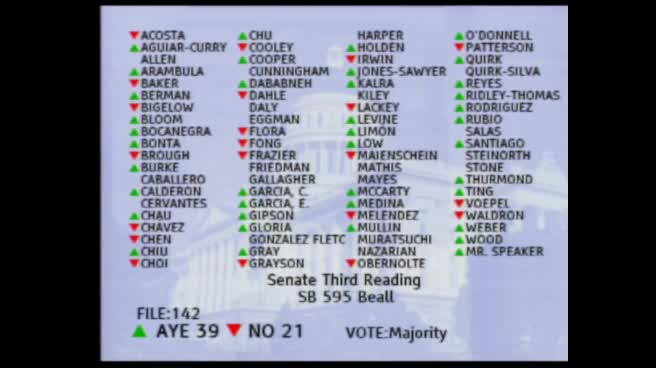 1MIN
Assembly Floor
 3MIN
Senate Floor
 1H
Senate Standing Committee on Appropriations
 10MIN
Senate Standing Committee on Transportation and Housing
 2MIN
Assembly Floor
 1H
Assembly Standing Committee on Appropriations
 7MIN
Assembly Standing Committee on Health
 19MIN






