AB 766: Foster youth: students of the California State University and California Community Colleges.
- Session Year: 2017-2018
- House: Assembly
- Latest Version Date: 2017-10-12
Existing law establishes the Aid to Families with Dependent Children-Foster Care (AFDC-FC) program, under which counties provide payments to foster care providers on behalf of qualified children in foster care. The program is funded by a combination of federal, state, and county funds. In order to be eligible for AFDC-FC, existing law requires a child or nonminor dependent to be placed in one of several specified placements, including, for nonminor dependents, a supervised independent living setting. Existing law authorizes a nonminor dependent to receive all of his or her AFDC-FC payment directly if he or she is living in a supervised independent living placement and he or she complies with certain requirements.
This bill would establish, as an additional AFDC-FC eligible placement for specified minor dependents enrolled in a postsecondary educational institution, a dormitory or other designated housing of the postsecondary educational institution in which the minor dependent is living independently. The bill would authorize the minor dependent to receive the AFDC-FC payment directly, if specified conditions are met. The bill would specify that a minor receiving court-ordered reunification services would be ineligible for a placement described in the bill, under prescribed circumstances. The bill would provide that federal financial participation would not be available for placements under the bill, unless otherwise authorized. By imposing additional duties on county social workers and probation officers, this bill would impose a state-mandated local program.
Existing law establishes the California State University, under the administration of the Trustees of the California State University, as one of the segments of public postsecondary education in the state. Existing law authorizes the trustees by rule to require all persons to pay fees, rents, deposits, and charges for services, facilities, or materials provided by the trustees to those persons. Under existing law, the trustees may waive or reduce tuition and other fees under certain circumstances.
Existing law establishes the California Community Colleges, under the administration of the Board of Governors of the California Community Colleges, as one of the segments of public postsecondary education in this state, and authorizes the establishment of community college districts under the administration of community college governing boards. Existing law requires the governing board to charge each student a prescribed fee per unit per semester, but waives that fee requirement for students who meet minimum academic and progress standards adopted by the board of governors and meet at least one of other specified additional requirements.
This bill would require the California State University and campuses of the California Community Colleges to disregard the AFDC-FC payments provided for in the bill when determining eligibility for financial aid, as specified, for a minor who is living independently in a dormitory or other designated housing of a postsecondary educational institution, as described in the bill. The bill also would declare the intent of the Legislature that payments received by a minor as authorized by the bill not be counted as income by any public or private postsecondary educational institution in the state for the purposes of the minors financial aid determination, as specified. To the extent that these provisions would impose new duties on community college districts, it would constitute a state-mandated local program.
The California Constitution requires the state to reimburse local agencies and school districts for certain costs mandated by the state. Statutory provisions establish procedures for making that reimbursement.
This bill would provide that with regard to certain mandates no reimbursement is required by this act for a specified reason.
With regard to any other mandates, this bill would provide that, if the Commission on State Mandates determines that the bill contains costs so mandated by the state, reimbursement for those costs shall be made pursuant to the statutory provisions noted above.
This bill would incorporate additional changes to Section 11402 of the Welfare and Institutions Code proposed by SB 612 to be operative only if this bill and SB 612 are enacted and this bill is enacted last.
Existing law establishes the Aid to Families with Dependent Children-Foster Care (AFDC-FC) program, under which counties provide payments to foster care providers on behalf of qualified children in foster care. The program is funded by a combination of federal, state, and county funds. In order to be eligible for AFDC-FC, existing law requires a child or nonminor dependent to be placed in one of several specified placements, including, for nonminor dependents, a supervised independent living setting. Existing law authorizes a nonminor dependent to receive all of his or her AFDC-FC payment directly if he or she is living in a supervised independent living placement and he or she complies with certain requirements.
This bill would establish, as an additional AFDC-FC eligible placement for specified minor dependents enrolled in a postsecondary educational institution, a dormitory or other designated housing of the postsecondary educational institution in which the minor dependent is living independently. The bill would authorize the minor dependent to receive the AFDC-FC payment directly, if specified conditions are met. The bill would specify that a minor receiving court-ordered reunification services would be ineligible for a placement described in the bill, under prescribed circumstances. The bill would provide that federal financial participation would not be available for placements under the bill, unless otherwise authorized. By imposing additional duties on county social workers and probation officers, this bill would impose a state-mandated local program.
Existing law establishes the California State University, under the administration of the Trustees of the California State University, as one of the segments of public postsecondary education in the state. Existing law authorizes the trustees by rule to require all persons to pay fees, rents, deposits, and charges for services, facilities, or materials provided by the trustees to those persons. Under existing law, the trustees may waive or reduce tuition and other fees under certain circumstances.
Existing law establishes the California Community Colleges, under the administration of the Board of Governors of the California Community Colleges, as one of the segments of public postsecondary education in this state, and authorizes the establishment of community college districts under the administration of community college governing boards. Existing law requires the governing board to charge each student a prescribed fee per unit per semester, but waives that fee requirement for students who meet minimum academic and progress standards adopted by the board of governors and meet at least one of other specified additional requirements.
This bill would require the California State University and campuses of the California Community Colleges to disregard the AFDC-FC payments provided for in the bill when determining eligibility for financial aid, as specified, for a minor who is living independently in a dormitory or other designated housing of a postsecondary educational institution, as described in the bill. The bill also would declare the intent of the Legislature that payments received by a minor as authorized by the bill not be counted as income by any public or private postsecondary educational institution in the state for the purposes of the minors financial aid determination, as specified. To the extent that these provisions would impose new duties on community college districts, it would constitute a state-mandated local program.
The California Constitution requires the state to reimburse local agencies and school districts for certain costs mandated by the state. Statutory provisions establish procedures for making that reimbursement.
This bill would provide that with regard to certain mandates no reimbursement is required by this act for a specified reason.
With regard to any other mandates, this bill would provide that, if the Commission on State Mandates determines that the bill contains costs so mandated by the state, reimbursement for those costs shall be made pursuant to the statutory provisions noted above.
Existing law establishes the Aid to Families with Dependent Children-Foster Care (AFDC-FC) program, under which counties provide payments to foster care providers on behalf of qualified children in foster care. The program is funded by a combination of federal, state, and county funds. In order to be eligible for AFDC-FC, existing law requires a child or nonminor dependent to be placed in one of several specified placements, including, for nonminor dependents, a supervised independent living setting. Existing law authorizes a nonminor dependent to receive all of his or her AFDC-FC payment directly if he or she is living in a supervised independent living placement and he or she complies with certain requirements.
This bill would provide that, in order to be eligible for AFDC-FC, as specified, a minor dependent enrolled in a postsecondary college or university may be placed in a supervised independent living placement, which the bill would define to mean a college or university dormitory, or other college or university designated housing, in which the minor dependent is living independently. The bill would also authorize a minor dependent living independently in that placement to receive all of his or her AFDC-FC payment directly if he or she agrees to work together with the social worker or probation officer to facilitate implementation of the mutually developed supervised placement agreement and transitional independent living case plan. establish, as an additional AFDC-FC eligible placement for specified minor dependents enrolled in a postsecondary educational institution, a dormitory or other designated housing of the postsecondary educational institution in which the minor dependent is living independently. The bill would authorize the minor dependent to receive the AFDC-FC payment directly, if specified conditions are met. The bill would specify that a minor receiving court-ordered reunification services would be ineligible for a placement described in the bill, under prescribed circumstances. The bill would provide that federal financial participation would not be available for placements under the bill, unless otherwise authorized. By imposing additional duties on county social workers and probation officers, this bill would impose a state-mandated local program.
Existing law establishes the California State University, under the administration of the Trustees of the California State University, as one of the segments of public postsecondary education in the state. Existing law authorizes the trustees by rule to require all persons to pay fees, rents, deposits, and charges for services, facilities, or materials provided by the trustees to those persons. Under existing law, the trustees may waive or reduce tuition and other fees under certain circumstances.
Existing law establishes the California Community Colleges, under the administration of the Board of Governors of the California Community Colleges, as one of the segments of public postsecondary education in this state, and authorizes the establishment of community college districts under the administration of community college governing boards. Existing law requires the governing board to charge each student a prescribed fee per unit per semester, but waives that fee requirement for students who meet minimum academic and progress standards adopted by the board of governors and meet at least one of other specified additional requirements.
This bill would require the California State University and the California Community Colleges to disregard the AFDC-FC payments provided for in the bill when determining eligibility for financial aid, as specified, for minor a a minor who is living independently in a supervised independent living placement dormitory or other designated housing of a postsecondary educational institution, as described in the bill. The bill also would declare the intent of the Legislature that payments received by a minor as authorized by the bill not be counted as income by any public or private postsecondary educational institution in the state for the purposes of the minors financial aid determination, as specified. To the extent that these provisions would impose new duties on community college districts, it would constitute a state-mandated local program.
The California Constitution requires the state to reimburse local agencies and school districts for certain costs mandated by the state. Statutory provisions establish procedures for making that reimbursement.
This bill would provide that with regard to certain mandates no reimbursement is required by this act for a specified reason.
With regard to any other mandates, this bill would provide that, if the Commission on State Mandates determines that the bill contains costs so mandated by the state, reimbursement for those costs shall be made pursuant to the statutory provisions noted above.
Existing law establishes the Aid to Families with Dependent Children-Foster Care (AFDC-FC) program, under which counties provide payments to foster care providers on behalf of qualified children in foster care. The program is funded by a combination of federal, state, and county funds. In order to be eligible for AFDC-FC, existing law requires a child or nonminor dependent to be placed in one of several specified placements, including, for nonminor dependents, a supervised independent living setting. Existing law authorizes a nonminor dependent to receive all of his or her AFDC-FC payment directly if he or she is living in a supervised independent living placement and he or she complies with certain requirements.
This bill would provide that, in order to be eligible for AFDC-FC, as specified, a minor dependent enrolled in a postsecondary college or university may be placed in a supervised independent living placement, which the bill would define to mean a college or university dormitory, or other college or university designated housing, in which the minor dependent is living independently. The bill would also authorize a minor dependent living independently in that placement to receive all of his or her AFDC-FC payment directly if he or she agrees to work together with the social worker or probation officer to facilitate implementation of the mutually developed supervised placement agreement and transitional independent living case plan. By imposing additional duties on county social workers and probation officers, this bill would impose a state-mandated local program.
The California Constitution requires the state to reimburse local agencies and school districts for certain costs mandated by the state. Statutory provisions establish procedures for making that reimbursement.This bill would provide that no reimbursement is required by this act for a specified reason.Existing law establishes the California State University, under the administration of the Trustees of the California State University, as one of the segments of public postsecondary education in the state. Existing law authorizes the trustees by rule to require all persons to pay fees, rents, deposits, and charges for services, facilities, or materials provided by the trustees to those persons. Under existing law, the trustees may waive or reduce tuition and other fees under certain circumstances.
Existing law establishes the California Community Colleges, under the administration of the Board of Governors of the California Community Colleges, as one of the segments of public postsecondary education in this state, and authorizes the establishment of community college districts under the administration of community college governing boards. Existing law requires the governing board to charge each student a prescribed fee per unit per semester, but waives that fee requirement for students who meet minimum academic and progress standards adopted by the board of governors and meet at least one of other specified additional requirements.
This bill would require the California State University and the California Community Colleges to disregard the AFDC-FC payments provided for in the bill when determining eligibility for financial aid, as specified, for minor a who is living independently in a supervised independent living placement as described in the bill. The bill also would declare the intent of the Legislature that payments received by a minor as authorized by the bill not be counted as income by any public or private postsecondary educational institution in the state for the purposes of the minors financial aid determination, as specified. To the extent that these provisions would impose new duties on community college districts, it would constitute a state-mandated local program.
The California Constitution requires the state to reimburse local agencies and school districts for certain costs mandated by the state. Statutory provisions establish procedures for making that reimbursement.
This bill would provide that with regard to certain mandates no reimbursement is required by this act for a specified reason.
With regard to any other mandates, this bill would provide that, if the Commission on State Mandates determines that the bill contains costs so mandated by the state, reimbursement for those costs shall be made pursuant to the statutory provisions noted above.
Existing law establishes the Aid to Families with Dependent Children-Foster Care (AFDC-FC) program, under which counties provide payments to foster care providers on behalf of qualified children in foster care. The program is funded by a combination of federal, state, and county funds. In order to be eligible for AFDC-FC, existing law requires a child or nonminor dependent to be placed in one of several specified placements, including, for nonminor dependents, a supervised independent living setting. Existing law authorizes a nonminor dependent to receive all of his or her AFDC-FC payment directly if he or she is living in a supervised independent living placement and he or she complies with certain requirements.
This bill would specify provide that, in order to be eligible for AFDC-FC, as specified, a minor dependent enrolled in a postsecondary college or university may be placed in a supervised independent living setting in placement, which the bill would define to mean a college or university dormitory dormitory, or other college or university designated housing. housing, in which the minor dependent is living independently. The bill would also authorize a minor dependent living independently in that placement to receive all of his or her AFDC-FC payment directly if he or she agrees to work together with the social worker or probation officer to facilitate implementation of the mutually developed supervised placement agreement and transitional independent living case plan. By imposing additional duties on county social workers and probation officers, this bill would impose a state-mandated local program.
The California Constitution requires the state to reimburse local agencies and school districts for certain costs mandated by the state. Statutory provisions establish procedures for making that reimbursement.
This bill would provide that no reimbursement is required by this act for a specified reason.
Existing law establishes the Aid to Families with Dependent Children-Foster Care (AFDC-FC) program, under which counties provide payments to foster care providers on behalf of qualified children in foster care. The program is funded by a combination of federal, state, and county funds. In order to be eligible for AFDC-FC, existing law requires a child or nonminor dependent to be placed in one of several specified placements, including, for nonminor dependents, a supervised independent living setting. Existing law authorizes a nonminor dependent to receive all of his or her AFDC-FC payment directly if he or she is living in a supervised independent living placement and he or she complies with certain requirements.
This bill would specify that, in order to be eligible for AFDC-FC, a minor dependent may be placed in a supervised independent living setting in a college or university dormitory or other college or university designated housing. The bill would also authorize a minor dependent living in that placement to receive all of his or her AFDC-FC payment directly if he or she agrees to work together with the social worker or probation officer to facilitate implementation of the mutually developed supervised placement agreement and transitional independent living case plan. By imposing additional duties on county social workers and probation officers, this bill would impose a state-mandated local program.
The California Constitution requires the state to reimburse local agencies and school districts for certain costs mandated by the state. Statutory provisions establish procedures for making that reimbursement.
This bill would provide that no reimbursement is required by this act for a specified reason.
Notwithstanding any other law, payments made, pursuant to subdivision (a) of Section 11402.7 of the Welfare and Institutions Code, to a student or applicant for enrollment shall not be considered when the California State University or a campus of the California Community Colleges determines eligibility for a waiver of fees, or any other financial aid, for a minor who is living in a dormitory or other designated housing of the institution he or she attends, as described in Section 11402.7 of the Welfare and Institutions Code.
SEC. 2.Section 11402 of the Welfare and Institutions Code is amended to read:11402.In order to be eligible for AFDC-FC, a child or nonminor dependent shall be placed in one of the following:
(a)Prior to January 1, 2020:
(1)The approved home of a relative, provided the child or youth is otherwise eligible for federal financial participation in the AFDC-FC payment.
(2)The approved home of a nonrelative extended family member, as described in Section 362.7.
(3)The licensed family home of a nonrelative.
(b)The approved home of a resource family, as defined in Section 16519.5, if either of the following is true:
(1)The caregiver is a nonrelative.
(2)The caregiver is a relative, and the child or youth is otherwise eligible for federal financial participation in the AFDC-FC payment.
(c)A small family home, as defined in paragraph (6) of subdivision (a) of Section 1502 of the Health and Safety Code.
(d)A housing model certified by a licensed transitional housing placement provider, as described in Section 1559.110 of the Health and Safety Code, and as defined in subdivision (r) of Section 11400.
(e)An approved supervised independent living setting for nonminor dependents, as described in subdivision (w) of Section 11400.
(f)A licensed foster family agency, as defined in subdivision (g) of Section 11400 and paragraph (4) of subdivision (a) of Section 1502 of the Health and Safety Code, for placement into a certified or approved home used exclusively by the foster family agency.
(g)A short-term residential therapeutic program licensed as a community care facility, as defined in subdivision (ad) of Section 11400 and paragraph (18) of subdivision (a) of Section 1502 of the Health and Safety Code.
(h)An out-of-state group home that meets the requirements of paragraph (2) of subdivision (c) of Section 11460, provided that the placement worker, in addition to complying with all other statutory requirements for placing a child or youth in an out-of-state group home, documents that the requirements of Section 7911.1 of the Family Code have been met.
(i)A community treatment facility set forth in Article 5 (commencing with Section 4094) of Chapter 3 of Part 1 of Division 4.
(j)A community care facility licensed pursuant to Chapter 3 (commencing with Section 1500) of Division 2 of the Health and Safety Code and vendored by a regional center pursuant to Section 56004 of Title 17 of the California Code of Regulations.
(k)The home of a nonrelated legal guardian or the home of a former nonrelated legal guardian when the guardianship of a child or youth who is otherwise eligible for AFDC-FC has been dismissed due to the child or youth attaining 18 years of age.
(l)A dormitory or other designated housing of a postsecondary educational institution in which a minor dependent who is enrolled at the postsecondary educational institution is living independently, as described in Section 11402.7.
SEC. 2.5.Section 11402 of the Welfare and Institutions Code is amended to read:11402.In order to be eligible for AFDC-FC, a child or nonminor dependent shall be placed in one of the following:
(a)Prior to January 1, 2020:
(1)The approved home of a relative, provided the child or youth is otherwise eligible for federal financial participation in the AFDC-FC payment.
(2)The approved home of a nonrelative extended family member, as described in Section 362.7.
(3)The licensed family home of a nonrelative.
(b)The approved home of a resource family, as defined in Section 16519.5, if either of the following is true:
(1)The caregiver is a nonrelative.
(2)The caregiver is a relative, and the child or youth is otherwise eligible for federal financial participation in the AFDC-FC payment.
(c)A small family home, as defined in paragraph (6) of subdivision (a) of Section 1502 of the Health and Safety Code.
(d)A housing unit, as described in Section 1559.110 of the Health and Safety Code, certified by a licensed transitional housing placement provider, as defined in paragraph (12) of subdivision (a) of Section 1502 of the Health and Safety Code and subdivision (r) of Section 11400.
(e)An approved supervised independent living setting for nonminor dependents, as described in subdivision (w) of Section 11400.
(f)A licensed foster family agency, as defined in subdivision (g) of Section 11400 and paragraph (4) of subdivision (a) of Section 1502 of the Health and Safety Code, for placement into a certified or approved home used exclusively by the foster family agency.
(g)A short-term residential therapeutic program, as defined in subdivision (ad) of Section 11400 and paragraph (18) of subdivision (a) of Section 1502 of the Health and Safety Code.
(h)An out-of-state group home that meets the requirements of paragraph (2) of subdivision (c) of Section 11460, provided that the placement worker, in addition to complying with all other statutory requirements for placing a child or youth in an out-of-state group home, documents that the requirements of Section 7911.1 of the Family Code have been met.
(i)A community treatment facility, as defined in paragraph (8) of subdivision (a) of Section 1502 of the Health and Safety Code, and as set forth in Article 5 (commencing with Section 4094) of Chapter 3 of Part 1 of Division 4.
(j)A community care facility licensed pursuant to Chapter 3 (commencing with Section 1500) of Division 2 of the Health and Safety Code and vendored by a regional center pursuant to Section 56004 of Title 17 of the California Code of Regulations.
(k)The home of a nonrelated legal guardian or the home of a former nonrelated legal guardian when the guardianship of a child or youth who is otherwise eligible for AFDC-FC has been dismissed due to the child or youth attaining 18 years of age.
(l)A dormitory or other designated housing of a postsecondary educational institution in which a minor dependent who is enrolled at the postsecondary educational institution is living independently, as described in Section 11402.7.
SEC. 3.Section 11402.7 is added to the Welfare and Institutions Code, to read:11402.7.(a)Notwithstanding any other law, a minor dependent at least 16 years of age who is otherwise eligible for AFDC-FC benefits, as described in Section 11401, may be eligible to receive his or her AFDC-FC payment directly, if all of the following conditions apply:
(1)The minor is enrolled in a postsecondary educational institution.
(2)The minor is living independently in a dormitory or other designated housing of the postsecondary educational institution.
(3)The placement is made pursuant to a supervised placement agreement and transitional independent living plan, as described in paragraph (16) of subdivision (g) of Section 16501.1.
(b)A minor receiving court-ordered reunification services shall not be eligible to live independently in postsecondary educational institutional housing pursuant to this section if the court finds that the placement would impede reunification efforts.
(c)Unless otherwise authorized by federal law, federal financial participation shall not be available for placements described in this section.
(d)(1)It is the intent of the Legislature that payments received by a minor pursuant to subdivision (a) shall not be counted as income by any public or private postsecondary educational institution in the state for the purposes of the minors financial aid determination.
(2)The California State University and the California Community Colleges shall not consider the payments described in subdivision (a) when determining eligibility for financial aid, as provided in Section 66021.5 of the Education Code.
SEC. 4.To the extent that this act has an overall effect of increasing certain costs already borne by a local agency for programs or levels of service mandated by the 2011 Realignment Legislation within the meaning of Section 36 of Article XIII of the California Constitution, it shall apply to local agencies only to the extent that the state provides annual funding for the cost increase. Any new program or higher level of service provided by a local agency pursuant to this act above the level for which funding has been provided shall not require a subvention of funds by the state or otherwise be subject to Section 6 of Article XIIIB of the California Constitution.
However, if the Commission on State Mandates determines that this act contains other costs mandated by the state, reimbursement to local agencies and school districts for those costs shall be made pursuant to Part 7 (commencing with Section 17500) of Division 4 of Title 2 of the Government Code.
SEC. 5.Section 2.5 of this bill incorporates amendments to Section 11402 of the Welfare and Institutions Code proposed by both this bill and Senate Bill 612. That section shall only become operative if (1) both bills are enacted and become effective on or before January 1, 2018, (2) each bill amends Section 11402 of the Welfare and Institutions Code, and (3) this bill is enacted after Senate Bill 612, in which case Section 2 of this bill shall not become operative.
Notwithstanding any other law, payments made, pursuant to subdivision (a) of Section 11402.7 of the Welfare and Institutions Code, to a student or applicant for enrollment shall not be considered when the California State University or a campus of the California Community Colleges determines eligibility for a waiver of fees, or any other financial aid, for a minor who is living in a dormitory or other designated housing of the institution he or she attends, as described in Section 11402.7 of the Welfare and Institutions Code.
SEC. 2.Section 11402 of the Welfare and Institutions Code is amended to read:11402.In order to be eligible for AFDC-FC, a child or nonminor dependent shall be placed in one of the following:
(a)Prior to January 1, 2020:
(1)The approved home of a relative, provided the child or youth is otherwise eligible for federal financial participation in the AFDC-FC payment.
(2)The approved home of a nonrelative extended family member, as described in Section 362.7.
(3)The licensed family home of a nonrelative.
(b)The approved home of a resource family, as defined in Section 16519.5, if either of the following is true:
(1)The caregiver is a nonrelative.
(2)The caregiver is a relative, and the child or youth is otherwise eligible for federal financial participation in the AFDC-FC payment.
(c)A small family home, as defined in paragraph (6) of subdivision (a) of Section 1502 of the Health and Safety Code.
(d)A housing model certified by a licensed transitional housing placement provider, as described in Section 1559.110 of the Health and Safety Code, and as defined in subdivision (r) of Section 11400.
(e)An approved supervised independent living setting for nonminor dependents, as described in subdivision (w) of Section 11400.
(f)A licensed foster family agency, as defined in subdivision (g) of Section 11400 and paragraph (4) of subdivision (a) of Section 1502 of the Health and Safety Code, for placement into a certified or approved home used exclusively by the foster family agency.
(g)A short-term residential therapeutic program licensed as a community care facility, as defined in subdivision (ad) of Section 11400 and paragraph (18) of subdivision (a) of Section 1502 of the Health and Safety Code.
(h)An out-of-state group home that meets the requirements of paragraph (2) of subdivision (c) of Section 11460, provided that the placement worker, in addition to complying with all other statutory requirements for placing a child or youth in an out-of-state group home, documents that the requirements of Section 7911.1 of the Family Code have been met.
(i)A community treatment facility set forth in Article 5 (commencing with Section 4094) of Chapter 3 of Part 1 of Division 4.
(j)A community care facility licensed pursuant to Chapter 3 (commencing with Section 1500) of Division 2 of the Health and Safety Code and vendored by a regional center pursuant to Section 56004 of Title 17 of the California Code of Regulations.
(k)The home of a nonrelated legal guardian or the home of a former nonrelated legal guardian when the guardianship of a child or youth who is otherwise eligible for AFDC-FC has been dismissed due to the child or youth attaining 18 years of age.
(l)A dormitory or other designated housing of a postsecondary educational institution in which a minor dependent who is enrolled at the postsecondary educational institution is living independently, as described in Section 11402.7.
SEC. 2.5.Section 11402 of the Welfare and Institutions Code is amended to read:11402.In order to be eligible for AFDC-FC, a child or nonminor dependent shall be placed in one of the following:
(a)Prior to January 1, 2020:
(1)The approved home of a relative, provided the child or youth is otherwise eligible for federal financial participation in the AFDC-FC payment.
(2)The approved home of a nonrelative extended family member, as described in Section 362.7.
(3)The licensed family home of a nonrelative.
(b)The approved home of a resource family, as defined in Section 16519.5, if either of the following is true:
(1)The caregiver is a nonrelative.
(2)The caregiver is a relative, and the child or youth is otherwise eligible for federal financial participation in the AFDC-FC payment.
(c)A small family home, as defined in paragraph (6) of subdivision (a) of Section 1502 of the Health and Safety Code.
(d)A housing model unit, as described in Section 1559.110 of the Health and Safety Code, certified by a licensed transitional housing placement provider, as described in Section 1559.110 defined in paragraph (12) of subdivision (a) of Section 1502 of the Health and Safety Code, and as defined in Code and subdivision (r) of Section 11400.
(e)An approved supervised independent living setting for nonminor dependents, as defined described in subdivision (w) of Section 11400.
(f)A licensed foster family agency, as defined in subdivision (g) of Section 11400 and paragraph (4) of subdivision (a) of Section 1502 of the Health and Safety Code, for placement into a certified or approved home used exclusively by the foster family agency.
(g)A short-term residential therapeutic program licensed as a community care facility, program, as defined in subdivision (ad) of Section 11400 and paragraph (18) of subdivision (a) of Section 1502 of the Health and Safety Code.
(h)An out-of-state group home that meets the requirements of paragraph (2) of subdivision (c) of Section 11460, provided that the placement worker, in addition to complying with all other statutory requirements for placing a child or youth in an out-of-state group home, documents that the requirements of Section 7911.1 of the Family Code have been met.
(i)A community treatment facility facility, as defined in paragraph (8) of subdivision (a) of Section 1502 of the Health and Safety Code, and as set forth in Article 5 (commencing with Section 4094) of Chapter 3 of Part 1 of Division 4.
(j)A community care facility licensed pursuant to Chapter 3 (commencing with Section 1500) of Division 2 of the Health and Safety Code and vendored by a regional center pursuant to Section 56004 of Title 17 of the California Code of Regulations.
(k)(k)The home of a nonrelated legal guardian or the home of a former nonrelated legal guardian when the guardianship of a child or youth who is otherwise eligible for AFDC-FC has been dismissed due to the child or youth attaining 18 years of age.
(l)A dormitory or other designated housing of a postsecondary educational institution in which a minor dependent who is enrolled at the postsecondary educational institution is living independently, as described in Section 11402.7.
SEC. 3.Section 11402.7 is added to the Welfare and Institutions Code, to read:11402.7.(a)Notwithstanding any other law, a minor dependent at least 16 years of age who is otherwise eligible for AFDC-FC benefits, as described in Section 11401, may be eligible to receive his or her AFDC-FC payment directly, if all of the following conditions apply:
(1)The minor is enrolled in a postsecondary educational institution.
(2)The minor is living independently in a dormitory or other designated housing of the postsecondary educational institution.
(3)The placement is made pursuant to a supervised placement agreement and transitional independent living plan, as described in paragraph (16) of subdivision (g) of Section 16501.1.
(b)A minor receiving court-ordered reunification services shall not be eligible to live independently in postsecondary educational institutional housing pursuant to this section if the court finds that the placement would impede reunification efforts.
(c)Unless otherwise authorized by federal law, federal financial participation shall not be available for placements described in this section.
(d)(1)It is the intent of the Legislature that payments received by a minor pursuant to subdivision (a) shall not be counted as income by any public or private postsecondary educational institution in the state for the purposes of the minors financial aid determination.
(2)The California State University and the California Community Colleges shall not consider the payments described in subdivision (a) when determining eligibility for financial aid, as provided in Section 66021.5 of the Education Code.
SEC. 4.To the extent that this act has an overall effect of increasing certain costs already borne by a local agency for programs or levels of service mandated by the 2011 Realignment Legislation within the meaning of Section 36 of Article XIII of the California Constitution, it shall apply to local agencies only to the extent that the state provides annual funding for the cost increase. Any new program or higher level of service provided by a local agency pursuant to this act above the level for which funding has been provided shall not require a subvention of funds by the state or otherwise be subject to Section 6 of Article XIIIB of the California Constitution.
However, if the Commission on State Mandates determines that this act contains other costs mandated by the state, reimbursement to local agencies and school districts for those costs shall be made pursuant to Part 7 (commencing with Section 17500) of Division 4 of Title 2 of the Government Code.
SEC. 5.Section 2.5 of this bill incorporates amendments to Section 11402 of the Welfare and Institutions Code proposed by both this bill and Senate Bill 612. That section shall only become operative if (1) both bills are enacted and become effective on or before January 1, 2018, (2) each bill amends Section 11402 of the Welfare and Institutions Code, and (3) this bill is enacted after Senate Bill 612, in which case Section 2 of this bill shall not become operative.
Notwithstanding any other law, payments made, pursuant to subdivision (a) of Section 11402.7 of the Welfare and Institutions Code, to a student or applicant for enrollment shall not be considered when the California State University or a campus of the California Community Colleges determines eligibility for a waiver of fees, or any other financial aid, for a minor who is living in a dormitory or other designated housing of the institution he or she attends, as described in Section 11402.7 of the Welfare and Institutions Code.
SECTION 1.Section 76300.1 is added to the Education Code, to read:76300.1.Notwithstanding any other law, the board of governors shall not consider payments made pursuant to subdivision (a) of Section 11402.7 of the Welfare and Institutions Code when determining eligibility for a waiver of fees, or any other financial aid, for a minor who is living in a dormitory or other designated housing of a postsecondary educational institution, as described in Section 11402.7 of the Welfare and Institutions Code.SEC. 2.Section 89713 is added to the Education Code, to read:89713.Notwithstanding any other law, the trustees shall not consider payments made pursuant to subdivision (a) of Section 11402.7 of the Welfare and Institutions Code when determining eligibility for a waiver of tuition or other fees, or any other financial aid, for a minor who is living in a dormitory or other designated housing of a postsecondary educational institution, as described in Section 11402.7 of the Welfare and Institutions Code.SEC. 3.SEC. 2.Section 11402 of the Welfare and Institutions Code is amended to read:11402.In order to be eligible for AFDC-FC, a child or nonminor dependent shall be placed in one of the following:
(a)Prior to January 1, 2020:
(1)The approved home of a relative, provided the child or youth is otherwise eligible for federal financial participation in the AFDC-FC payment.
(2)The approved home of a nonrelative extended family member, as described in Section 362.7.
(3)The licensed family home of a nonrelative.
(b)The approved home of a resource family, as defined in Section 16519.5, if either of the following is true:
(1)The caregiver is a nonrelative.
(2)The caregiver is a relative, and the child or youth is otherwise eligible for federal financial participation in the AFDC-FC payment.
(c)A small family home, as defined in paragraph (6) of subdivision (a) of Section 1502 of the Health and Safety Code.
(d)A housing model certified by a licensed transitional housing placement provider, as described in Section 1559.110 of the Health and Safety Code, and as defined in subdivision (r) of Section 11400.
(e)An approved supervised independent living setting for nonminor dependents, as described in subdivision (w) of Section 11400.
(f)A licensed foster family agency, as defined in subdivision (g) of Section 11400 and paragraph (4) of subdivision (a) of Section 1502 of the Health and Safety Code, for placement into a certified or approved home used exclusively by the foster family agency.
(g)A short-term residential therapeutic program licensed as a community care facility, as defined in subdivision (ad) of Section 11400 and paragraph (18) of subdivision (a) of Section 1502 of the Health and Safety Code.
(h)An out-of-state group home that meets the requirements of paragraph (2) of subdivision (c) of Section 11460, provided that the placement worker, in addition to complying with all other statutory requirements for placing a child or youth in an out-of-state group home, documents that the requirements of Section 7911.1 of the Family Code have been met.
(i)A community treatment facility set forth in Article 5 (commencing with Section 4094) of Chapter 3 of Part 1 of Division 4.
(j)A community care facility licensed pursuant to Chapter 3 (commencing with Section 1500) of Division 2 of the Health and Safety Code and vendored by a regional center pursuant to Section 56004 of Title 17 of the California Code of Regulations.
(k)The home of a nonrelated legal guardian or the home of a former nonrelated legal guardian when the guardianship of a child or youth who is otherwise eligible for AFDC-FC has been dismissed due to the child or youth attaining 18 years of age.
(l)A dormitory or other designated housing of a postsecondary educational institution in which a minor dependent who is enrolled at the postsecondary educational institution is living independently, as described in Section 11402.7.
SEC. 4.SEC. 3.Section 11402.7 is added to the Welfare and Institutions Code, to read:11402.7.(a)Notwithstanding any other law, a minor dependent at least 16 years of age who is otherwise eligible for AFDC-FC benefits, as described in Section 11401, may be eligible to receive his or her AFDC-FC payment directly, if all of the following conditions apply:
(1)The minor is enrolled in a postsecondary educational institution.
(2)The minor is living independently in a dormitory or other designated housing of the postsecondary educational institution.
(3)The placement is made pursuant to a supervised placement agreement and transitional independent living plan, as described in paragraph (16) of subdivision (g) of Section 16501.1.
(b)A minor receiving court-ordered reunification services shall not be eligible to live independently in postsecondary educational institutional housing pursuant to this section if the court finds that the placement would impede reunification efforts.
(c)Unless otherwise authorized by federal law, federal financial participation shall not be available for placements described in this section.
(d)(1)It is the intent of the Legislature that payments received by a minor pursuant to subdivision (a) shall not be counted as income by any public or private postsecondary educational institution in the state for the purposes of the minors financial aid determination.
(2) The California State University and the California Community Colleges shall not consider the payments described in subdivision (a) when determining eligibility for financial aid, as provided in Sections 76300.1 and 89713 Section 66021.5 of the Education Code.
SEC. 5.SEC. 4.To the extent that this act has an overall effect of increasing certain costs already borne by a local agency for programs or levels of service mandated by the 2011 Realignment Legislation within the meaning of Section 36 of Article XIII of the California Constitution, it shall apply to local agencies only to the extent that the state provides annual funding for the cost increase. Any new program or higher level of service provided by a local agency pursuant to this act above the level for which funding has been provided shall not require a subvention of funds by the state or otherwise be subject to Section 6 of Article XIIIB of the California Constitution.
However, if the Commission on State Mandates determines that this act contains other costs mandated by the state, reimbursement to local agencies and school districts for those costs shall be made pursuant to Part 7 (commencing with Section 17500) of Division 4 of Title 2 of the Government Code.
Notwithstanding any other law, the board of governors shall not consider payments made pursuant to subdivision (a) of Section 11402.7 of the Welfare and Institutions Code when determining eligibility for a waiver of fees, or any other financial aid, for minor a a minor who is living independently in a supervised independent living placement, as described in subdivision (w) of Section 11400 in a dormitory or other designated housing of a postsecondary educational institution, as described in Section 11402.7 of the Welfare and Institutions Code.
SEC. 2.Section 89713 is added to the Education Code, to read:89713.Notwithstanding any other law, the trustees shall not consider payments made pursuant to subdivision (a) of Section 11402.7 of the Welfare and Institutions Code when determining eligibility for a waiver of tuition or other fees, or any other financial aid, for minor a a minor who is living independently in a supervised independent living placement, as described in subdivision (w) of Section 11400 in a dormitory or other designated housing of a postsecondary educational institution, as described in Section 11402.7 of the Welfare and Institutions Code.
SEC. 3.Section 11400 of the Welfare and Institutions Code is amended to read:11400.For purposes of this article, the following definitions shall apply:(a)Aid to Families with Dependent Children-Foster Care (AFDC-FC) means the aid provided on behalf of needy children in foster care under the terms of this division.(b)Case plan means a written document that, at a minimum, specifies the type of home in which the child shall be placed, the safety of that home, and the appropriateness of that home to meet the childs needs. It shall also include the agencys plan for ensuring that the child receive proper care and protection in a safe environment, and shall set forth the appropriate services to be provided to the child, the childs family, and the foster parents, in order to meet the childs needs while in foster care, and to reunify the child with the childs family. In addition, the plan shall specify the services that will be provided or steps that will be taken to facilitate an alternate permanent plan if reunification is not possible.(c)Certified family home means an individual or family certified by a licensed foster family agency and issued a certificate of approval by that agency as meeting licensing standards, and used exclusively by that foster family agency for placements.(d)Family home means the family residence of a licensee in which 24-hour care and supervision are provided for children.(e)Small family home means any residential facility, in the licensees family residence, which provides 24-hour care for six or fewer foster children who have mental disorders or developmental or physical disabilities and who require special care and supervision as a result of their disabilities.(f)Foster care means the 24-hour out-of-home care provided to children whose own families are unable or unwilling to care for them, and who are in need of temporary or long-term substitute parenting.(g)Foster family agency means a licensed community care facility, as defined in paragraph (4) of subdivision (a) of Section 1502 of the Health and Safety Code. Private foster family agencies shall be organized and operated on a nonprofit basis.(h)Group home means a nondetention privately operated residential home, organized and operated on a nonprofit basis only, of any capacity, or a nondetention licensed residential care home operated by the County of San Mateo with a capacity of up to 25 beds, that accepts children in need of care and supervision in a group home, as defined by paragraph (13) of subdivision (a) of Section 1502 of the Health and Safety Code.(i)Periodic review means review of a childs status by the juvenile court or by an administrative review panel, that shall include a consideration of the safety of the child, a determination of the continuing need for placement in foster care, evaluation of the goals for the placement and the progress toward meeting these goals, and development of a target date for the childs return home or establishment of alternative permanent placement.(j)Permanency planning hearing means a hearing conducted by the juvenile court in which the childs future status, including whether the child shall be returned home or another permanent plan shall be developed, is determined.(k)Placement and care refers to the responsibility for the welfare of a child vested in an agency or organization by virtue of the agency or organization having (1) been delegated care, custody, and control of a child by the juvenile court, (2) taken responsibility, pursuant to a relinquishment or termination of parental rights on a child, (3) taken the responsibility of supervising a child detained by the juvenile court pursuant to Section 319 or 636, or (4) signed a voluntary placement agreement for the childs placement; or to the responsibility designated to an individual by virtue of his or her being appointed the childs legal guardian.(l)Preplacement preventive services means services that are designed to help children remain with their families by preventing or eliminating the need for removal.(m)Relative means an adult who is related to the child by blood, adoption, or affinity within the fifth degree of kinship, including stepparents, stepsiblings, and all relatives whose status is preceded by the words great, great-great, or grand or the spouse of any of these persons even if the marriage was terminated by death or dissolution.(n)Nonrelative extended family member means an adult caregiver who has an established familial or mentoring relationship with the child, as described in Section 362.7.(o)Voluntary placement means an out-of-home placement of a child by (1) the county welfare department, probation department, or Indian tribe that has entered into an agreement pursuant to Section 10553.1, after the parents or guardians have requested the assistance of the county welfare department and have signed a voluntary placement agreement; or (2) the county welfare department licensed public or private adoption agency, or the department acting as an adoption agency, after the parents have requested the assistance of either the county welfare department, the licensed public or private adoption agency, or the department acting as an adoption agency for the purpose of adoption planning, and have signed a voluntary placement agreement.(p)Voluntary placement agreement means a written agreement between either the county welfare department, probation department, or Indian tribe that has entered into an agreement pursuant to Section 10553.1, licensed public or private adoption agency, or the department acting as an adoption agency, and the parents or guardians of a child that specifies, at a minimum, the following:(1)The legal status of the child.(2)The rights and obligations of the parents or guardians, the child, and the agency in which the child is placed.(q)Original placement date means the most recent date on which the court detained a child and ordered an agency to be responsible for supervising the child or the date on which an agency assumed responsibility for a child due to termination of parental rights, relinquishment, or voluntary placement.(r)(1)Transitional housing placement provider means an organization licensed by the State Department of Social Services pursuant to Section 1559.110 of the Health and Safety Code, to provide transitional housing to foster children at least 16 years of age and not more than 18 years of age, and nonminor dependents, as defined in subdivision (v). A transitional housing placement provider shall be privately operated and organized on a nonprofit basis.(2)Prior to licensure, a provider shall obtain certification from the applicable county, in accordance with Section 16522.1.(s)Transitional Housing Program-Plus means a provider certified by the applicable county, in accordance with subdivision (c) of Section 16522, to provide transitional housing services to former foster youth who have exited the foster care system on or after their 18th birthday.(t)Whole family foster home means a new or existing family home, approved relative caregiver or nonrelative extended family members home, the home of a nonrelated legal guardian whose guardianship was established pursuant to Section 360 or 366.26, certified family home, or a host family home placement of a transitional housing placement provider, that provides foster care for a minor or nonminor dependent parent and his or her child, and is specifically recruited and trained to assist the minor or nonminor dependent parent in developing the skills necessary to provide a safe, stable, and permanent home for his or her child. The child of the minor or nonminor dependent parent need not be the subject of a petition filed pursuant to Section 300 to qualify for placement in a whole family foster home.(u)Mutual agreement means any of the following:(1)A written voluntary agreement of consent for continued placement and care in a supervised setting between a minor or, on and after January 1, 2012, a nonminor dependent, and the county welfare services or probation department or tribal agency responsible for the foster care placement, that documents the nonminors continued willingness to remain in supervised out-of-home placement under the placement and care of the responsible county, tribe, consortium of tribes, or tribal organization that has entered into an agreement with the state pursuant to Section 10553.1, remain under the jurisdiction of the juvenile court as a nonminor dependent, and report any change of circumstances relevant to continued eligibility for foster care payments, and that documents the nonminors and social workers or probation officers agreement to work together to facilitate implementation of the mutually developed supervised placement agreement and transitional independent living case plan.(2)An agreement, as described in paragraph (1), between a nonminor former dependent or ward in receipt of Kin-GAP payments under Article 4.5 (commencing with Section 11360) or Article 4.7 (commencing with Section 11385), and the agency responsible for the Kin-GAP benefits, provided that the nonminor former dependent or ward satisfies the conditions described in Section 11403.01, or one or more of the conditions described in paragraphs (1) to (5), inclusive, of subdivision (b) of Section 11403. For purposes of this paragraph and paragraph (3), nonminor former dependent or ward has the same meaning as described in subdivision (aa).(3)An agreement, as described in paragraph (1), between a nonminor former dependent or ward in receipt of AFDC-FC payments under subdivision (e) or (f) of Section 11405 and the agency responsible for the AFDC-FC benefits, provided that the nonminor former dependent or ward described in subdivision (e) of Section 11405 satisfies one or more of the conditions described in paragraphs (1) to (5), inclusive, of subdivision (b) of Section 11403, and the nonminor described in subdivision (f) of Section 11405 satisfies the secondary school or equivalent training or certificate program conditions described in that subdivision.(v)Nonminor dependent means, on and after January 1, 2012, a foster child, as described in Section 675(8)(B) of Title 42 of the United States Code under the federal Social Security Act who is a current dependent child or ward of the juvenile court, or who is a nonminor under the transition jurisdiction of the juvenile court, as described in Section 450, and who satisfies all of the following criteria:(1)He or she has attained 18 years of age while under an order of foster care placement by the juvenile court, and is not more than 19 years of age on or after January 1, 2012, not more than 20 years of age on or after January 1, 2013, or not more than 21 years of age on or after January 1, 2014, and as described in Section 10103.5.(2)He or she is in foster care under the placement and care responsibility of the county welfare department, county probation department, Indian tribe, consortium of tribes, or tribal organization that entered into an agreement pursuant to Section 10553.1.(3)He or she has a transitional independent living case plan pursuant to Section 475(8) of the federal Social Security Act (42 U.S.C. Sec. 675(8)), as contained in the federal Fostering Connections to Success and Increasing Adoptions Act of 2008 (Public Law 110-351), as described in Section 11403.(w)Supervised independent living placement means an independent supervised setting, as specified in a nonminor dependents transitional independent living case plan, in which the youth is living independently, pursuant to Section 472(c)(2) of the federal Social Security Act (42 U.S.C. Sec. 672(c)(2)). Supervised independent living placement also means a college or university dormitory, or other college or university designated housing, in which a minor dependent who is enrolled in a postsecondary college or university is living independently.(x)Supervised independent living setting, pursuant to Section 472(c)(2) of the federal Social Security Act (42 U.S.C. Sec. 672(c)(2)), includes both a supervised independent living placement, as defined in subdivision (w), and a residential housing unit certified by the transitional housing placement provider operating a Transitional Housing Placement-Plus Foster Care program, as described in paragraph (2) of subdivision (a) of Section 16522.1.(y)Transitional independent living case plan means, on or after January 1, 2012, a childs case plan submitted for the last review hearing held before he or she reaches 18 years of age or the nonminor dependents case plan, updated every six months, that describes the goals and objectives of how the nonminor will make progress in the transition to living independently and assume incremental responsibility for adult decisionmaking, the collaborative efforts between the nonminor and the social worker, probation officer, or Indian tribal placing entity and the supportive services as described in the transitional independent living plan (TILP) to ensure active and meaningful participation in one or more of the eligibility criteria described in paragraphs (1) to (5), inclusive, of subdivision (b) of Section 11403, the nonminors appropriate supervised placement setting, and the nonminors permanent plan for transition to living independently, which includes maintaining or obtaining permanent connections to caring and committed adults, as set forth in paragraph (16) of subdivision (f) of Section 16501.1.(z)Voluntary reentry agreement means a written voluntary agreement between a former dependent child or ward or a former nonminor dependent, who has had juvenile court jurisdiction terminated pursuant to Section 391, 452, or 607.2, and the county welfare or probation department or tribal placing entity that documents the nonminors desire and willingness to reenter foster care, to be placed in a supervised setting under the placement and care responsibility of the placing agency, the nonminors desire, willingness, and ability to immediately participate in one or more of the conditions of paragraphs (1) to (5), inclusive, of subdivision (b) of Section 11403, the nonminors agreement to work collaboratively with the placing agency to develop his or her transitional independent living case plan within 60 days of reentry, the nonminors agreement to report any changes of circumstances relevant to continued eligibility for foster care payments, and (1) the nonminors agreement to participate in the filing of a petition for juvenile court jurisdiction as a nonminor dependent pursuant to subdivision (e) of Section 388 within 15 judicial days of the signing of the agreement and the placing agencys efforts and supportive services to assist the nonminor in the reentry process, or (2) if the nonminor meets the definition of a nonminor former dependent or ward, as described in subdivision (aa), the nonminors agreement to return to the care and support of his or her former juvenile court-appointed guardian and meet the eligibility criteria for AFDC-FC pursuant to subdivision (e) of Section 11405.(aa)Nonminor former dependent or ward means, on and after January 1, 2012, either of the following:(1)A nonminor who reached 18 years of age while subject to an order for foster care placement, and for whom dependency, delinquency, or transition jurisdiction has been terminated, and who is still under the general jurisdiction of the court.(2)A nonminor who is over 18 years of age and, while a minor, was a dependent child or ward of the juvenile court when the guardianship was established pursuant to Section 360 or 366.26, or subdivision (d), of Section 728 and the juvenile court dependency or wardship was dismissed following the establishment of the guardianship.(ab)Runaway and homeless youth shelter means a type of group home, as defined in paragraph (14) of subdivision (a) of Section 1502 of the Health and Safety Code, that is not an eligible placement option under Sections 319, 361.2, 450, and 727, and that is not eligible for AFDC-FC funding pursuant to subdivision (c) of Section 11402 or Section 11462.(ac)Transition dependent is a minor between 17 years and five months and 18 years of age who is subject to the courts transition jurisdiction under Section 450.(ad)Short-term residential therapeutic program means a nondetention, licensed community care facility, as defined in paragraph (18) of subdivision (a) of Section 1502 of the Health and Safety Code, that provides an integrated program of specialized and intensive care and supervision, services and supports, and treatment for the child or youth, when the childs or youths case plan specifies the need for, nature of, and anticipated duration of this specialized treatment. Short-term residential therapeutic programs shall be organized and operated on a nonprofit basis.(ae)Resource family means an approved caregiver, as defined in subdivision (c) of Section 16519.5.(af)Core Services mean services, made available to children, youth, and nonminor dependents either directly or secured through formal agreement with other agencies, which are trauma informed and culturally relevant as specified in Sections 11462 and 11463.SEC. 4.SEC. 3.Section 11402 of the Welfare and Institutions Code is amended to read:11402.In order to be eligible for AFDC-FC, a child or nonminor dependent shall be placed in one of the following:
(a)Prior to January 1, 2020:
(1)The approved home of a relative, provided the child or youth is otherwise eligible for federal financial participation in the AFDC-FC payment.
(2)The approved home of a nonrelative extended family member, as described in Section 362.7.
(3)The licensed family home of a nonrelative.
(b)The approved home of a resource family, as defined in Section 16519.5, if either of the following is true:
(1)The caregiver is a nonrelative.
(2)The caregiver is a relative, and the child or youth is otherwise eligible for federal financial participation in the AFDC-FC payment.
(c)A small family home, as defined in paragraph (6) of subdivision (a) of Section 1502 of the Health and Safety Code.
(d)A housing model certified by a licensed transitional housing placement provider, as described in Section 1559.110 of the Health and Safety Code, and as defined in subdivision (r) of Section 11400.
(e)An approved supervised independent living setting for nonminor dependents, as described in subdivision (w) of Section 11400.
(f)A licensed foster family agency, as defined in subdivision (g) of Section 11400 and paragraph (4) of subdivision (a) of Section 1502 of the Health and Safety Code, for placement into a certified or approved home used exclusively by the foster family agency.
(g)A short-term residential therapeutic program licensed as a community care facility, as defined in subdivision (ad) of Section 11400 and paragraph (18) of subdivision (a) of Section 1502 of the Health and Safety Code.
(h)An out-of-state group home that meets the requirements of paragraph (2) of subdivision (c) of Section 11460, provided that the placement worker, in addition to complying with all other statutory requirements for placing a child or youth in an out-of-state group home, documents that the requirements of Section 7911.1 of the Family Code have been met.
(i)A community treatment facility set forth in Article 5 (commencing with Section 4094) of Chapter 3 of Part 1 of Division 4.
(j)A community care facility licensed pursuant to Chapter 3 (commencing with Section 1500) of Division 2 of the Health and Safety Code and vendored by a regional center pursuant to Section 56004 of Title 17 of the California Code of Regulations.
(k)The home of a nonrelated legal guardian or the home of a former nonrelated legal guardian when the guardianship of a child or youth who is otherwise eligible for AFDC-FC has been dismissed due to the child or youth attaining 18 years of age.
(l)A supervised independent living placement for minor dependents, as described in subdivision (w) of Section 11400. A minor dependent placed in a supervised independent living placement shall be eligible for AFDC-FC payments from state funds, and to the extent permitted by federal law, AFDC-FC payments from federal funds.(l)A dormitory or other designated housing of a postsecondary educational institution in which a minor dependent who is enrolled at the postsecondary educational institution is living independently, as described in Section 11402.7.
SEC. 5.SEC. 4.Section 11402.7 is added to the Welfare and Institutions Code, to read:11402.7.(a)A minor dependent may receive all of the AFDC-FC payment directly, provided that the minor is living independently in a supervised independent living placement, as described in subdivision (w) of Section 11400, and the minor agrees to work together with the social worker or probation officer to facilitate implementation of a mutually developed supervised placement agreement and transitional independent living case plan.11402.7.(a)Notwithstanding any other law, a minor dependent at least 16 years of age who is otherwise eligible for AFDC-FC benefits, as described in Section 11401, may be eligible to receive his or her AFDC-FC payment directly, if all of the following conditions apply:
(1)The minor is enrolled in a postsecondary educational institution.
(2)The minor is living independently in a dormitory or other designated housing of the postsecondary educational institution.
(3)The placement is made pursuant to a supervised placement agreement and transitional independent living plan, as described in paragraph (16) of subdivision (g) of Section 16501.1.
(b)A minor receiving court-ordered reunification services shall not be eligible to live independently in postsecondary educational institutional housing pursuant to this section if the court finds that the placement would impede reunification efforts.
(c)Unless otherwise authorized by federal law, federal financial participation shall not be available for placements described in this section.
(b)(d)(1)It is the intent of the Legislature that payments received by a minor pursuant to subdivision (a) shall not be counted as income by any public or private postsecondary educational institution in the state for the purposes of the minors financial aid determination.
(2) The California State University and the California Community Colleges shall not consider the payments described in subdivision (a) when determining eligibility for financial aid, as provided in Sections 76300.1 and 89713 of the Education Code.
SEC. 6.SEC. 5.To the extent that this act has an overall effect of increasing certain costs already borne by a local agency for programs or levels of service mandated by the 2011 Realignment Legislation within the meaning of Section 36 of Article XIII of the California Constitution, it shall apply to local agencies only to the extent that the state provides annual funding for the cost increase. Any new program or higher level of service provided by a local agency pursuant to this act above the level for which funding has been provided shall not require a subvention of funds by the state or otherwise be subject to Section 6 of Article XIIIB of the California Constitution.
However, if the Commission on State Mandates determines that this act contains other costs mandated by the state, reimbursement to local agencies and school districts for those costs shall be made pursuant to Part 7 (commencing with Section 17500) of Division 4 of Title 2 of the Government Code.
Notwithstanding any other law, the board of governors shall not consider payments made pursuant to subdivision (a) of Section 11402.7 of the Welfare and Institutions Code when determining eligibility for a waiver of fees, or any other financial aid, for minor a who is living independently in a supervised independent living placement, as described in subdivision (w) of Section 11400 of the Welfare and Institutions Code.
SEC. 2.Section 89713 is added to the Education Code, to read:89713.Notwithstanding any other law, the trustees shall not consider payments made pursuant to subdivision (a) of Section 11402.7 of the Welfare and Institutions Code when determining eligibility for a waiver of tuition or other fees, or any other financial aid, for minor a who is living independently in a supervised independent living placement, as described in subdivision (w) of Section 11400 of the Welfare and Institutions Code.
SECTION 1.SEC. 3.Section 11400 of the Welfare and Institutions Code is amended to read:11400.For purposes of this article, the following definitions shall apply:
(a)Aid to Families with Dependent Children-Foster Care (AFDC-FC) means the aid provided on behalf of needy children in foster care under the terms of this division.
(b)Case plan means a written document that, at a minimum, specifies the type of home in which the child shall be placed, the safety of that home, and the appropriateness of that home to meet the childs needs. It shall also include the agencys plan for ensuring that the child receive proper care and protection in a safe environment, and shall set forth the appropriate services to be provided to the child, the childs family, and the foster parents, in order to meet the childs needs while in foster care, and to reunify the child with the childs family. In addition, the plan shall specify the services that will be provided or steps that will be taken to facilitate an alternate permanent plan if reunification is not possible.
(c)Certified family home means an individual or family certified by a licensed foster family agency and issued a certificate of approval by that agency as meeting licensing standards, and used exclusively by that foster family agency for placements.
(d)Family home means the family residence of a licensee in which 24-hour care and supervision are provided for children.
(e)Small family home means any residential facility, in the licensees family residence, which provides 24-hour care for six or fewer foster children who have mental disorders or developmental or physical disabilities and who require special care and supervision as a result of their disabilities.
(f)Foster care means the 24-hour out-of-home care provided to children whose own families are unable or unwilling to care for them, and who are in need of temporary or long-term substitute parenting.
(g)Foster family agency means a licensed community care facility, as defined in paragraph (4) of subdivision (a) of Section 1502 of the Health and Safety Code. Private foster family agencies shall be organized and operated on a nonprofit basis.
(h)Group home means a nondetention privately operated residential home, organized and operated on a nonprofit basis only, of any capacity, or a nondetention licensed residential care home operated by the County of San Mateo with a capacity of up to 25 beds, that accepts children in need of care and supervision in a group home, as defined by paragraph (13) of subdivision (a) of Section 1502 of the Health and Safety Code.
(i)Periodic review means review of a childs status by the juvenile court or by an administrative review panel, that shall include a consideration of the safety of the child, a determination of the continuing need for placement in foster care, evaluation of the goals for the placement and the progress toward meeting these goals, and development of a target date for the childs return home or establishment of alternative permanent placement.
(j)Permanency planning hearing means a hearing conducted by the juvenile court in which the childs future status, including whether the child shall be returned home or another permanent plan shall be developed, is determined.
(k)Placement and care refers to the responsibility for the welfare of a child vested in an agency or organization by virtue of the agency or organization having (1) been delegated care, custody, and control of a child by the juvenile court, (2) taken responsibility, pursuant to a relinquishment or termination of parental rights on a child, (3) taken the responsibility of supervising a child detained by the juvenile court pursuant to Section 319 or 636, or (4) signed a voluntary placement agreement for the childs placement; or to the responsibility designated to an individual by virtue of his or her being appointed the childs legal guardian.
(l)Preplacement preventive services means services that are designed to help children remain with their families by preventing or eliminating the need for removal.
(m)Relative means an adult who is related to the child by blood, adoption, or affinity within the fifth degree of kinship, including stepparents, stepsiblings, and all relatives whose status is preceded by the words great, great-great, or grand or the spouse of any of these persons even if the marriage was terminated by death or dissolution.
(n)Nonrelative extended family member means an adult caregiver who has an established familial or mentoring relationship with the child, as described in Section 362.7.
(o)Voluntary placement means an out-of-home placement of a child by (1) the county welfare department, probation department, or Indian tribe that has entered into an agreement pursuant to Section 10553.1, after the parents or guardians have requested the assistance of the county welfare department and have signed a voluntary placement agreement; or (2) the county welfare department licensed public or private adoption agency, or the department acting as an adoption agency, after the parents have requested the assistance of either the county welfare department, the licensed public or private adoption agency, or the department acting as an adoption agency for the purpose of adoption planning, and have signed a voluntary placement agreement.
(p)Voluntary placement agreement means a written agreement between either the county welfare department, probation department, or Indian tribe that has entered into an agreement pursuant to Section 10553.1, licensed public or private adoption agency, or the department acting as an adoption agency, and the parents or guardians of a child that specifies, at a minimum, the following:
(1)The legal status of the child.
(2)The rights and obligations of the parents or guardians, the child, and the agency in which the child is placed.
(q)Original placement date means the most recent date on which the court detained a child and ordered an agency to be responsible for supervising the child or the date on which an agency assumed responsibility for a child due to termination of parental rights, relinquishment, or voluntary placement.
(r)(1)Transitional housing placement provider means an organization licensed by the State Department of Social Services pursuant to Section 1559.110 of the Health and Safety Code, to provide transitional housing to foster children at least 16 years of age and not more than 18 years of age, and nonminor dependents, as defined in subdivision (v). A transitional housing placement provider shall be privately operated and organized on a nonprofit basis.
(2)Prior to licensure, a provider shall obtain certification from the applicable county, in accordance with Section 16522.1.
(s)Transitional Housing Program-Plus means a provider certified by the applicable county, in accordance with subdivision (c) of Section 16522, to provide transitional housing services to former foster youth who have exited the foster care system on or after their 18th birthday.
(t)Whole family foster home means a new or existing family home, approved relative caregiver or nonrelative extended family members home, the home of a nonrelated legal guardian whose guardianship was established pursuant to Section 360 or 366.26, certified family home, or a host family home placement of a transitional housing placement provider, that provides foster care for a minor or nonminor dependent parent and his or her child, and is specifically recruited and trained to assist the minor or nonminor dependent parent in developing the skills necessary to provide a safe, stable, and permanent home for his or her child. The child of the minor or nonminor dependent parent need not be the subject of a petition filed pursuant to Section 300 to qualify for placement in a whole family foster home.
(u)Mutual agreement means any of the following:
(1)A written voluntary agreement of consent for continued placement and care in a supervised setting between a minor or, on and after January 1, 2012, a nonminor dependent, and the county welfare services or probation department or tribal agency responsible for the foster care placement, that documents the nonminors continued willingness to remain in supervised out-of-home placement under the placement and care of the responsible county, tribe, consortium of tribes, or tribal organization that has entered into an agreement with the state pursuant to Section 10553.1, remain under the jurisdiction of the juvenile court as a nonminor dependent, and report any change of circumstances relevant to continued eligibility for foster care payments, and that documents the nonminors and social workers or probation officers agreement to work together to facilitate implementation of the mutually developed supervised placement agreement and transitional independent living case plan.
(2)An agreement, as described in paragraph (1), between a nonminor former dependent or ward in receipt of Kin-GAP payments under Article 4.5 (commencing with Section 11360) or Article 4.7 (commencing with Section 11385), and the agency responsible for the Kin-GAP benefits, provided that the nonminor former dependent or ward satisfies the conditions described in Section 11403.01, or one or more of the conditions described in paragraphs (1) to (5), inclusive, of subdivision (b) of Section 11403. For purposes of this paragraph and paragraph (3), nonminor former dependent or ward has the same meaning as described in subdivision (aa).
(3)An agreement, as described in paragraph (1), between a nonminor former dependent or ward in receipt of AFDC-FC payments under subdivision (e) or (f) of Section 11405 and the agency responsible for the AFDC-FC benefits, provided that the nonminor former dependent or ward described in subdivision (e) of Section 11405 satisfies one or more of the conditions described in paragraphs (1) to (5), inclusive, of subdivision (b) of Section 11403, and the nonminor described in subdivision (f) of Section 11405 satisfies the secondary school or equivalent training or certificate program conditions described in that subdivision.
(v)Nonminor dependent means, on and after January 1, 2012, a foster child, as described in Section 675(8)(B) of Title 42 of the United States Code under the federal Social Security Act who is a current dependent child or ward of the juvenile court, or who is a nonminor under the transition jurisdiction of the juvenile court, as described in Section 450, and who satisfies all of the following criteria:
(1)He or she has attained 18 years of age while under an order of foster care placement by the juvenile court, and is not more than 19 years of age on or after January 1, 2012, not more than 20 years of age on or after January 1, 2013, or not more than 21 years of age on or after January 1, 2014, and as described in Section 10103.5.
(2)He or she is in foster care under the placement and care responsibility of the county welfare department, county probation department, Indian tribe, consortium of tribes, or tribal organization that entered into an agreement pursuant to Section 10553.1.
(3)He or she has a transitional independent living case plan pursuant to Section 475(8) of the federal Social Security Act (42 U.S.C. Sec. 675(8)), as contained in the federal Fostering Connections to Success and Increasing Adoptions Act of 2008 (Public Law 110-351), as described in Section 11403.
(w)Supervised independent living placement means an independent supervised setting, as specified in a nonminor dependents transitional independent living case plan, in which the youth is living independently, pursuant to Section 472(c)(2) of the federal Social Security Act (42 U.S.C. Sec. 672(c)(2)). Supervised independent living placement also means a college or university dormitory, or other college or university designated housing, in which a minor dependent who is enrolled in a postsecondary college or university is living independently.
(x)Supervised independent living setting, pursuant to Section 472(c)(2) of the federal Social Security Act (42 U.S.C. Sec. 672(c)(2)), includes both a supervised independent living placement, as defined in subdivision (w), and a residential housing unit certified by the transitional housing placement provider operating a Transitional Housing Placement-Plus Foster Care program, as described in paragraph (2) of subdivision (a) of Section 16522.1.
(y)Transitional independent living case plan means, on or after January 1, 2012, a childs case plan submitted for the last review hearing held before he or she reaches 18 years of age or the nonminor dependents case plan, updated every six months, that describes the goals and objectives of how the nonminor will make progress in the transition to living independently and assume incremental responsibility for adult decisionmaking, the collaborative efforts between the nonminor and the social worker, probation officer, or Indian tribal placing entity and the supportive services as described in the transitional independent living plan (TILP) to ensure active and meaningful participation in one or more of the eligibility criteria described in paragraphs (1) to (5), inclusive, of subdivision (b) of Section 11403, the nonminors appropriate supervised placement setting, and the nonminors permanent plan for transition to living independently, which includes maintaining or obtaining permanent connections to caring and committed adults, as set forth in paragraph (16) of subdivision (f) of Section 16501.1.
(z)Voluntary reentry agreement means a written voluntary agreement between a former dependent child or ward or a former nonminor dependent, who has had juvenile court jurisdiction terminated pursuant to Section 391, 452, or 607.2, and the county welfare or probation department or tribal placing entity that documents the nonminors desire and willingness to reenter foster care, to be placed in a supervised setting under the placement and care responsibility of the placing agency, the nonminors desire, willingness, and ability to immediately participate in one or more of the conditions of paragraphs (1) to (5), inclusive, of subdivision (b) of Section 11403, the nonminors agreement to work collaboratively with the placing agency to develop his or her transitional independent living case plan within 60 days of reentry, the nonminors agreement to report any changes of circumstances relevant to continued eligibility for foster care payments, and (1) the nonminors agreement to participate in the filing of a petition for juvenile court jurisdiction as a nonminor dependent pursuant to subdivision (e) of Section 388 within 15 judicial days of the signing of the agreement and the placing agencys efforts and supportive services to assist the nonminor in the reentry process, or (2) if the nonminor meets the definition of a nonminor former dependent or ward, as described in subdivision (aa), the nonminors agreement to return to the care and support of his or her former juvenile court-appointed guardian and meet the eligibility criteria for AFDC-FC pursuant to subdivision (e) of Section 11405.
(aa)Nonminor former dependent or ward means, on and after January 1, 2012, either of the following:
(1)A nonminor who reached 18 years of age while subject to an order for foster care placement, and for whom dependency, delinquency, or transition jurisdiction has been terminated, and who is still under the general jurisdiction of the court.
(2)A nonminor who is over 18 years of age and, while a minor, was a dependent child or ward of the juvenile court when the guardianship was established pursuant to Section 360 or 366.26, or subdivision (d), of Section 728 and the juvenile court dependency or wardship was dismissed following the establishment of the guardianship.
(ab)Runaway and homeless youth shelter means a type of group home, as defined in paragraph (14) of subdivision (a) of Section 1502 of the Health and Safety Code, that is not an eligible placement option under Sections 319, 361.2, 450, and 727, and that is not eligible for AFDC-FC funding pursuant to subdivision (c) of Section 11402 or Section 11462.
(ac)Transition dependent is a minor between 17 years and five months and 18 years of age who is subject to the courts transition jurisdiction under Section 450.
(ad)Short-term residential therapeutic program means a nondetention, licensed community care facility, as defined in paragraph (18) of subdivision (a) of Section 1502 of the Health and Safety Code, that provides an integrated program of specialized and intensive care and supervision, services and supports, and treatment for the child or youth, when the childs or youths case plan specifies the need for, nature of, and anticipated duration of this specialized treatment. Short-term residential therapeutic programs shall be organized and operated on a nonprofit basis.
(ae)Resource family means an approved caregiver, as defined in subdivision (c) of Section 16519.5.
(af)Core Services mean services, made available to children, youth, and nonminor dependents either directly or secured through formal agreement with other agencies, which are trauma informed and culturally relevant as specified in Sections 11462 and 11463.
SEC. 2.SEC. 4.Section 11402 of the Welfare and Institutions Code is amended to read:11402.In order to be eligible for AFDC-FC, a child or nonminor dependent shall be placed in one of the following:
(a)Prior to January 1, 2020:
(1)The approved home of a relative, provided the child or youth is otherwise eligible for federal financial participation in the AFDC-FC payment.
(2)The approved home of a nonrelative extended family member, as described in Section 362.7.
(3)The licensed family home of a nonrelative.
(b)The approved home of a resource family, as defined in Section 16519.5, if either of the following is true:
(1)The caregiver is a nonrelative.
(2)The caregiver is a relative, and the child or youth is otherwise eligible for federal financial participation in the AFDC-FC payment.
(c)A small family home, as defined in paragraph (6) of subdivision (a) of Section 1502 of the Health and Safety Code.
(d)A housing model certified by a licensed transitional housing placement provider, as described in Section 1559.110 of the Health and Safety Code, and as defined in subdivision (r) of Section 11400.
(e)An approved supervised independent living setting for nonminor dependents, as described in subdivision (w) of Section 11400.
(f)A licensed foster family agency, as defined in subdivision (g) of Section 11400 and paragraph (4) of subdivision (a) of Section 1502 of the Health and Safety Code, for placement into a certified or approved home used exclusively by the foster family agency.
(g)A short-term residential therapeutic program licensed as a community care facility, as defined in subdivision (ad) of Section 11400 and paragraph (18) of subdivision (a) of Section 1502 of the Health and Safety Code.
(h)An out-of-state group home that meets the requirements of paragraph (2) of subdivision (c) of Section 11460, provided that the placement worker, in addition to complying with all other statutory requirements for placing a child or youth in an out-of-state group home, documents that the requirements of Section 7911.1 of the Family Code have been met.
(i)A community treatment facility set forth in Article 5 (commencing with Section 4094) of Chapter 3 of Part 1 of Division 4.
(j)A community care facility licensed pursuant to Chapter 3 (commencing with Section 1500) of Division 2 of the Health and Safety Code and vendored by a regional center pursuant to Section 56004 of Title 17 of the California Code of Regulations.
(k)The home of a nonrelated legal guardian or the home of a former nonrelated legal guardian when the guardianship of a child or youth who is otherwise eligible for AFDC-FC has been dismissed due to the child or youth attaining 18 years of age.
(l)A supervised independent living placement for minor dependents, as described in subdivision (w) of Section 11400. A minor dependent placed in a supervised independent living placement shall be eligible for AFDC-FC payments from state funds, and to the extent permitted by federal law, AFDC-FC payments from federal funds.
SEC. 3.SEC. 5.Section 11402.7 is added to the Welfare and Institutions Code, to read:11402.7.(a)A minor dependent may receive all of the AFDC-FC payment directly, provided that the minor is living independently in a supervised independent living placement, as described in subdivision (w) of Section 11400, and the minor agrees to work together with the social worker or probation officer to facilitate implementation of a mutually developed supervised placement agreement and transitional independent living case plan.
(b)(1)It is the intent of the Legislature that payments received by a minor pursuant to subdivision (a) shall not be counted as income by any public or private postsecondary educational institution in the state for the purposes of the minors financial aid determination.
(2) The California State University and the California Community Colleges shall not consider the payments described in subdivision (a) when determining eligibility for financial aid, as provided in Sections 76300.1 and 89713 of the Education Code.
SEC. 6.To the extent that this act has an overall effect of increasing certain costs already borne by a local agency for programs or levels of service mandated by the 2011 Realignment Legislation within the meaning of Section 36 of Article XIII of the California Constitution, it shall apply to local agencies only to the extent that the state provides annual funding for the cost increase. Any new program or higher level of service provided by a local agency pursuant to this act above the level for which funding has been provided shall not require a subvention of funds by the state or otherwise be subject to Section 6 of Article XIIIB of the California Constitution.
However, if the Commission on State Mandates determines that this act contains other costs mandated by the state, reimbursement to local agencies and school districts for those costs shall be made pursuant to Part 7 (commencing with Section 17500) of Division 4 of Title 2 of the Government Code.
SEC. 4.To the extent that this act has an overall effect of increasing the costs already borne by a local agency for programs or levels of service mandated by the 2011 Realignment Legislation within the meaning of Section 36 of Article XIII of the California Constitution, it shall apply to local agencies only to the extent that the state provides annual funding for the cost increase. Any new program or higher level of service provided by a local agency pursuant to this act above the level for which funding has been provided shall not require a subvention of funds by the state or otherwise be subject to Section 6 of Article XIIIB of the California Constitution.For purposes of this article, the following definitions shall apply:
(a)Aid to Families with Dependent Children-Foster Care (AFDC-FC) means the aid provided on behalf of needy children in foster care under the terms of this division.
(b)Case plan means a written document that, at a minimum, specifies the type of home in which the child shall be placed, the safety of that home, and the appropriateness of that home to meet the childs needs. It shall also include the agencys plan for ensuring that the child receive proper care and protection in a safe environment, and shall set forth the appropriate services to be provided to the child, the childs family, and the foster parents, in order to meet the childs needs while in foster care, and to reunify the child with the childs family. In addition, the plan shall specify the services that will be provided or steps that will be taken to facilitate an alternate permanent plan if reunification is not possible.
(c)Certified family home means an individual or family certified by a licensed foster family agency and issued a certificate of approval by that agency as meeting licensing standards, and used exclusively by that foster family agency for placements.
(d)Family home means the family residence of a licensee in which 24-hour care and supervision are provided for children.
(e)Small family home means any residential facility, in the licensees family residence, which provides 24-hour care for six or fewer foster children who have mental disorders or developmental or physical disabilities and who require special care and supervision as a result of their disabilities.
(f)Foster care means the 24-hour out-of-home care provided to children whose own families are unable or unwilling to care for them, and who are in need of temporary or long-term substitute parenting.
(g)Foster family agency means a licensed community care facility, as defined in paragraph (4) of subdivision (a) of Section 1502 of the Health and Safety Code. Private foster family agencies shall be organized and operated on a nonprofit basis.
(h)Group home means a nondetention privately operated residential home, organized and operated on a nonprofit basis only, of any capacity, or a nondetention licensed residential care home operated by the County of San Mateo with a capacity of up to 25 beds, that accepts children in need of care and supervision in a group home, as defined by paragraph (13) of subdivision (a) of Section 1502 of the Health and Safety Code.
(i)Periodic review means review of a childs status by the juvenile court or by an administrative review panel, that shall include a consideration of the safety of the child, a determination of the continuing need for placement in foster care, evaluation of the goals for the placement and the progress toward meeting these goals, and development of a target date for the childs return home or establishment of alternative permanent placement.
(j)Permanency planning hearing means a hearing conducted by the juvenile court in which the childs future status, including whether the child shall be returned home or another permanent plan shall be developed, is determined.
(k)Placement and care refers to the responsibility for the welfare of a child vested in an agency or organization by virtue of the agency or organization having (1) been delegated care, custody, and control of a child by the juvenile court, (2) taken responsibility, pursuant to a relinquishment or termination of parental rights on a child, (3) taken the responsibility of supervising a child detained by the juvenile court pursuant to Section 319 or 636, or (4) signed a voluntary placement agreement for the childs placement; or to the responsibility designated to an individual by virtue of his or her being appointed the childs legal guardian.
(l)Preplacement preventive services means services that are designed to help children remain with their families by preventing or eliminating the need for removal.
(m)Relative means an adult who is related to the child by blood, adoption, or affinity within the fifth degree of kinship, including stepparents, stepsiblings, and all relatives whose status is preceded by the words great, great-great, or grand or the spouse of any of these persons even if the marriage was terminated by death or dissolution.
(n)Nonrelative extended family member means an adult caregiver who has an established familial or mentoring relationship with the child, as described in Section 362.7.
(o)Voluntary placement means an out-of-home placement of a child by (1) the county welfare department, probation department, or Indian tribe that has entered into an agreement pursuant to Section 10553.1, after the parents or guardians have requested the assistance of the county welfare department and have signed a voluntary placement agreement; or (2) the county welfare department licensed public or private adoption agency, or the department acting as an adoption agency, after the parents have requested the assistance of either the county welfare department, the licensed public or private adoption agency, or the department acting as an adoption agency for the purpose of adoption planning, and have signed a voluntary placement agreement.
(p)Voluntary placement agreement means a written agreement between either the county welfare department, probation department, or Indian tribe that has entered into an agreement pursuant to Section 10553.1, licensed public or private adoption agency, or the department acting as an adoption agency, and the parents or guardians of a child that specifies, at a minimum, the following:
(1)The legal status of the child.
(2)The rights and obligations of the parents or guardians, the child, and the agency in which the child is placed.
(q)Original placement date means the most recent date on which the court detained a child and ordered an agency to be responsible for supervising the child or the date on which an agency assumed responsibility for a child due to termination of parental rights, relinquishment, or voluntary placement.
(r)(1)Transitional housing placement provider means an organization licensed by the State Department of Social Services pursuant to Section 1559.110 of the Health and Safety Code, to provide transitional housing to foster children at least 16 years of age and not more than 18 years of age, and nonminor dependents, as defined in subdivision (v). A transitional housing placement provider shall be privately operated and organized on a nonprofit basis.
(2)Prior to licensure, a provider shall obtain certification from the applicable county, in accordance with Section 16522.1.
(s)Transitional Housing Program-Plus means a provider certified by the applicable county, in accordance with subdivision (c) of Section 16522, to provide transitional housing services to former foster youth who have exited the foster care system on or after their 18th birthday.
(t)Whole family foster home means a new or existing family home, approved relative caregiver or nonrelative extended family members home, the home of a nonrelated legal guardian whose guardianship was established pursuant to Section 360 or 366.26, certified family home, or a host family home placement of a transitional housing placement provider, that provides foster care for a minor or nonminor dependent parent and his or her child, and is specifically recruited and trained to assist the minor or nonminor dependent parent in developing the skills necessary to provide a safe, stable, and permanent home for his or her child. The child of the minor or nonminor dependent parent need not be the subject of a petition filed pursuant to Section 300 to qualify for placement in a whole family foster home.
(u)Mutual agreement means any of the following:
(1)A written voluntary agreement of consent for continued placement and care in a supervised setting between a minor or, on and after January 1, 2012, a nonminor dependent, and the county welfare services or probation department or tribal agency responsible for the foster care placement, that documents the nonminors continued willingness to remain in supervised out-of-home placement under the placement and care of the responsible county, tribe, consortium of tribes, or tribal organization that has entered into an agreement with the state pursuant to Section 10553.1, remain under the jurisdiction of the juvenile court as a nonminor dependent, and report any change of circumstances relevant to continued eligibility for foster care payments, and that documents the nonminors and social workers or probation officers agreement to work together to facilitate implementation of the mutually developed supervised placement agreement and transitional independent living case plan.
(2)An agreement, as described in paragraph (1), between a nonminor former dependent or ward in receipt of Kin-GAP payments under Article 4.5 (commencing with Section 11360) or Article 4.7 (commencing with Section 11385), and the agency responsible for the Kin-GAP benefits, provided that the nonminor former dependent or ward satisfies the conditions described in Section 11403.01, or one or more of the conditions described in paragraphs (1) to (5), inclusive, of subdivision (b) of Section 11403. For purposes of this paragraph and paragraph (3), nonminor former dependent or ward has the same meaning as described in subdivision (aa).
(3)An agreement, as described in paragraph (1), between a nonminor former dependent or ward in receipt of AFDC-FC payments under subdivision (e) or (f) of Section 11405 and the agency responsible for the AFDC-FC benefits, provided that the nonminor former dependent or ward described in subdivision (e) of Section 11405 satisfies one or more of the conditions described in paragraphs (1) to (5), inclusive, of subdivision (b) of Section 11403, and the nonminor described in subdivision (f) of Section 11405 satisfies the secondary school or equivalent training or certificate program conditions described in that subdivision.
(v)Nonminor dependent means, on and after January 1, 2012, a foster child, as described in Section 675(8)(B) of Title 42 of the United States Code under the federal Social Security Act who is a current dependent child or ward of the juvenile court, or who is a nonminor under the transition jurisdiction of the juvenile court, as described in Section 450, and who satisfies all of the following criteria:
(1)He or she has attained 18 years of age while under an order of foster care placement by the juvenile court, and is not more than 19 years of age on or after January 1, 2012, not more than 20 years of age on or after January 1, 2013, or not more than 21 years of age on or after January 1, 2014, and as described in Section 10103.5.
(2)He or she is in foster care under the placement and care responsibility of the county welfare department, county probation department, Indian tribe, consortium of tribes, or tribal organization that entered into an agreement pursuant to Section 10553.1.
(3)He or she has a transitional independent living case plan pursuant to Section 475(8) of the federal Social Security Act (42 U.S.C. Sec. 675(8)), as contained in the federal Fostering Connections to Success and Increasing Adoptions Act of 2008 (Public Law 110-351), as described in Section 11403.
(w)Supervised independent living placement means an independent supervised setting, as specified in a nonminor dependents transitional independent living case plan, in which the youth is living independently, pursuant to Section 472(c)(2) of the federal Social Security Act (42 U.S.C. Sec. 672(c)(2)). For minors enrolled in a postsecondary college or university, a supervised Supervised independent living placement also means a college or university dormitory, or other college or university designated housing, in which a minor dependent who is enrolled in a postsecondary college or university is living independently.
(x)Supervised independent living setting, pursuant to Section 472(c)(2) of the federal Social Security Act (42 U.S.C. Sec. 672(c)(2)), includes both a supervised independent living placement, as defined in subdivision (w), and a residential housing unit certified by the transitional housing placement provider operating a Transitional Housing Placement-Plus Foster Care program, as described in paragraph (2) of subdivision (a) of Section 16522.1.
(y)Transitional independent living case plan means, on or after January 1, 2012, a childs case plan submitted for the last review hearing held before he or she reaches 18 years of age or the nonminor dependents case plan, updated every six months, that describes the goals and objectives of how the nonminor will make progress in the transition to living independently and assume incremental responsibility for adult decisionmaking, the collaborative efforts between the nonminor and the social worker, probation officer, or Indian tribal placing entity and the supportive services as described in the transitional independent living plan (TILP) to ensure active and meaningful participation in one or more of the eligibility criteria described in paragraphs (1) to (5), inclusive, of subdivision (b) of Section 11403, the nonminors appropriate supervised placement setting, and the nonminors permanent plan for transition to living independently, which includes maintaining or obtaining permanent connections to caring and committed adults, as set forth in paragraph (16) of subdivision (f) of Section 16501.1.
(z)Voluntary reentry agreement means a written voluntary agreement between a former dependent child or ward or a former nonminor dependent, who has had juvenile court jurisdiction terminated pursuant to Section 391, 452, or 607.2, and the county welfare or probation department or tribal placing entity that documents the nonminors desire and willingness to reenter foster care, to be placed in a supervised setting under the placement and care responsibility of the placing agency, the nonminors desire, willingness, and ability to immediately participate in one or more of the conditions of paragraphs (1) to (5), inclusive, of subdivision (b) of Section 11403, the nonminors agreement to work collaboratively with the placing agency to develop his or her transitional independent living case plan within 60 days of reentry, the nonminors agreement to report any changes of circumstances relevant to continued eligibility for foster care payments, and (1) the nonminors agreement to participate in the filing of a petition for juvenile court jurisdiction as a nonminor dependent pursuant to subdivision (e) of Section 388 within 15 judicial days of the signing of the agreement and the placing agencys efforts and supportive services to assist the nonminor in the reentry process, or (2) if the nonminor meets the definition of a nonminor former dependent or ward, as described in subdivision (aa), the nonminors agreement to return to the care and support of his or her former juvenile court-appointed guardian and meet the eligibility criteria for AFDC-FC pursuant to subdivision (e) of Section 11405.
(aa)Nonminor former dependent or ward means, on and after January 1, 2012, either of the following:
(1)A nonminor who reached 18 years of age while subject to an order for foster care placement, and for whom dependency, delinquency, or transition jurisdiction has been terminated, and who is still under the general jurisdiction of the court.
(2)A nonminor who is over 18 years of age and, while a minor, was a dependent child or ward of the juvenile court when the guardianship was established pursuant to Section 360 or 366.26, or subdivision (d), of Section 728 and the juvenile court dependency or wardship was dismissed following the establishment of the guardianship.
(ab)Runaway and homeless youth shelter means a type of group home, as defined in paragraph (14) of subdivision (a) of Section 1502 of the Health and Safety Code, that is not an eligible placement option under Sections 319, 361.2, 450, and 727, and that is not eligible for AFDC-FC funding pursuant to subdivision (c) of Section 11402 or Section 11462.
(ac)Transition dependent is a minor between 17 years and five months and 18 years of age who is subject to the courts transition jurisdiction under Section 450.
(ad)Short-term residential therapeutic program means a nondetention, licensed community care facility, as defined in paragraph (18) of subdivision (a) of Section 1502 of the Health and Safety Code, that provides an integrated program of specialized and intensive care and supervision, services and supports, and treatment for the child or youth, when the childs or youths case plan specifies the need for, nature of, and anticipated duration of this specialized treatment. Short-term residential therapeutic programs shall be organized and operated on a nonprofit basis.
(ae)Resource family means an approved caregiver, as defined in subdivision (c) of Section 16519.5.
(af)Core Services mean services, made available to children, youth, and nonminor dependents either directly or secured through formal agreement with other agencies, which are trauma informed and culturally relevant as specified in Sections 11462 and 11463.
SEC. 2.Section 11402 of the Welfare and Institutions Code is amended to read:11402.In order to be eligible for AFDC-FC, a child or nonminor dependent shall be placed in one of the following:
(a)Prior to January 1, 2020:
(1)The approved home of a relative, provided the child or youth is otherwise eligible for federal financial participation in the AFDC-FC payment.
(2)The approved home of a nonrelative extended family member, as described in Section 362.7.
(3)The licensed family home of a nonrelative.
(b)The approved home of a resource family, as defined in Section 16519.5, if either of the following is true:
(1)The caregiver is a nonrelative.
(2)The caregiver is a relative, and the child or youth is otherwise eligible for federal financial participation in the AFDC-FC payment.
(c)A small family home, as defined in paragraph (6) of subdivision (a) of Section 1502 of the Health and Safety Code.
(d)A housing model certified by a licensed transitional housing placement provider, as described in Section 1559.110 of the Health and Safety Code, and as defined in subdivision (r) of Section 11400.
(e)An approved supervised independent living setting for nonminor dependents, or a college or university dormitory or other college or university designated housing for a minor dependent, dependents, as described in subdivision (w) of Section 11400.
(f)A licensed foster family agency, as defined in subdivision (g) of Section 11400 and paragraph (4) of subdivision (a) of Section 1502 of the Health and Safety Code, for placement into a certified or approved home used exclusively by the foster family agency.
(g)A short-term residential therapeutic program licensed as a community care facility, as defined in subdivision (ad) of Section 11400 and paragraph (18) of subdivision (a) of Section 1502 of the Health and Safety Code.
(h)An out-of-state group home that meets the requirements of paragraph (2) of subdivision (c) of Section 11460, provided that the placement worker, in addition to complying with all other statutory requirements for placing a child or youth in an out-of-state group home, documents that the requirements of Section 7911.1 of the Family Code have been met.
(i)A community treatment facility set forth in Article 5 (commencing with Section 4094) of Chapter 3 of Part 1 of Division 4.
(j)A community care facility licensed pursuant to Chapter 3 (commencing with Section 1500) of Division 2 of the Health and Safety Code and vendored by a regional center pursuant to Section 56004 of Title 17 of the California Code of Regulations.
(k)The home of a nonrelated legal guardian or the home of a former nonrelated legal guardian when the guardianship of a child or youth who is otherwise eligible for AFDC-FC has been dismissed due to the child or youth attaining 18 years of age.
(l)A supervised independent living placement for minor dependents, as described in subdivision (w) of Section 11400. A minor dependent placed in a supervised independent living placement shall be eligible for AFDC-FC payments from state funds, and to the extent permitted by federal law, AFDC-FC payments from federal funds.
SEC. 3.Section 11403 of the Welfare and Institutions Code is amended to read:11403.(a)It is the intent of the Legislature to exercise the option afforded states under Section 475(8) (42 U.S.C. Sec. 675(8)), and Section 473(a)(4) (42 U.S.C. Sec. 673(a)(4)) of the federal Social Security Act, as contained in the federal Fostering Connections to Success and Increasing Adoptions Act of 2008 (Public Law 110-351), to receive federal financial participation for nonminor dependents of the juvenile court who satisfy the conditions of subdivision (b), consistent with their transitional independent living case plan. Effective January 1, 2012, these nonminor dependents shall be eligible to receive support up to 19 years of age, effective January 1, 2013, up to 20 years of age, and effective January 1, 2014, up to 21 years of age, consistent with their transitional independent living case plan and as described in Section 10103.5. It is the intent of the Legislature both at the time of initial determination of the nonminor dependents eligibility and throughout the time the nonminor dependent is eligible for aid pursuant to this section, that the social worker or probation officer or Indian tribal placing entity and the nonminor dependent shall work together to ensure the nonminor dependents ongoing eligibility. All case planning shall be a collaborative effort between the nonminor dependent and the social worker, probation officer, or Indian tribe, with the nonminor dependent assuming increasing levels of responsibility and independence.(b)A nonminor dependent receiving aid pursuant to this chapter, who satisfies the age criteria set forth in subdivision (a), shall meet the legal authority for placement and care by being under a foster care placement order by the juvenile court, or the voluntary reentry agreement as set forth in subdivision (z) of Section 11400, and is otherwise eligible for AFDC-FC payments pursuant to Section 11401. A nonminor who satisfies the age criteria set forth in subdivision (a), and who is otherwise eligible, shall continue to receive CalWORKs payments pursuant to Section 11253 or, as a nonminor former dependent or ward, aid pursuant to Kin-GAP under Article 4.5 (commencing with Section 11360) or Article 4.7 (commencing with Section 11385) or adoption assistance payments as specified in Chapter 2.1 (commencing with Section 16115) of Part 4. Effective January 1, 2012, a nonminor former dependent child or ward of the juvenile court who is receiving AFDC-FC benefits pursuant to Section 11405 and who satisfies the criteria set forth in subdivision (a) shall be eligible to continue to receive aid as long as the nonminor is otherwise eligible for AFDC-FC benefits under this subdivision. This subdivision applies when one or more of the following conditions exist:(1)The nonminor is completing secondary education or a program leading to an equivalent credential.(2)The nonminor is enrolled in an institution which provides postsecondary or vocational education.(3)The nonminor is participating in a program or activity designed to promote, or remove barriers to employment.(4)The nonminor is employed for at least 80 hours per month.(5)The nonminor is incapable of doing any of the activities described in subparagraphs (1) to (4), inclusive, due to a medical condition, and that incapability is supported by regularly updated information in the case plan of the nonminor. The requirement to update the case plan under this section shall not apply to nonminor former dependents or wards in receipt of Kin-GAP program or Adoption Assistance Program payments.(c)The county child welfare or probation department, Indian tribe, consortium of tribes, or tribal organization that has entered into an agreement pursuant to Section 10553.1, shall work together with a nonminor dependent who is in foster care on his or her 18th birthday and thereafter or a nonminor former dependent receiving aid pursuant to Section 11405, to satisfy one or more of the conditions described in paragraphs (1) to (5), inclusive, of subdivision (b) and shall certify the nonminors applicable condition or conditions in the nonminors six-month transitional independent living case plan update, and provide the certification to the eligibility worker and to the court at each six-month case plan review hearing for the nonminor dependent. Relative guardians who receive Kin-GAP payments and adoptive parents who receive adoption assistance payments shall be responsible for reporting to the county welfare agency that the nonminor does not satisfy at least one of the conditions described in subdivision (b). The social worker, probation officer, or tribal entity shall verify and obtain assurances that the nonminor dependent continues to satisfy at least one of the conditions in paragraphs (1) to (5), inclusive, of subdivision (b) at each six-month transitional independent living case plan update. The six-month case plan update shall certify the nonminors eligibility pursuant to subdivision (b) for the next six-month period. During the six-month certification period, the payee and nonminor shall report any change in placement or other relevant changes in circumstances that may affect payment. The nonminor dependent, or nonminor former dependent receiving aid pursuant to subdivision (e) of Section 11405, shall be informed of all due process requirements, in accordance with state and federal law, prior to an involuntary termination of aid, and shall simultaneously be provided with a written explanation of how to exercise his or her due process rights and obtain referrals to legal assistance. Any notices of action regarding eligibility shall be sent to the nonminor dependent or former dependent, his or her counsel, as applicable, and the placing worker, in addition to any other payee. Payments of aid pursuant to Kin-GAP under Article 4.5 (commencing with Section 11360) or Article 4.7 (commencing with Section 11385), adoption assistance payments as specified in Chapter 2.1 (commencing with Section 16115) of Part 4, or aid pursuant to subdivision (e) of Section 11405 that are made on behalf of a nonminor former dependent shall terminate subject to the terms of the agreements. Subject to federal approval of amendments to the state plan, aid payments may be suspended and resumed based on changes of circumstances that affect eligibility. Nonminor former dependents, as identified in paragraph (2) of subdivision (aa) of Section 11400, are not eligible for reentry under subdivision (e) of Section 388 as nonminor dependents under the jurisdiction of the juvenile court, but may be eligible for reentry pursuant to Section 388.1 if (1) the nonminor former dependent was receiving aid pursuant to Kin-GAP under Article 4.5 (commencing with Section 11360) or Article 4.7 (commencing with Section 11385), the nonminor former dependent was receiving aid pursuant to subdivision (e) of Section 11405, or the nonminor was receiving adoption assistance payments as specified in Chapter 2.1 (commencing with Section 16115) of Part 3, and (2) the nonminors former guardian or adoptive parent dies, or no longer provides ongoing support to, and no longer receives benefits on behalf of, the nonminor after the nonminor turns 18 years of age but before the nonminor turns 21 years of age. Nonminor former dependents requesting the resumption of AFDC-FC payments pursuant to subdivision (e) of Section 11405 shall complete the applicable portions of the voluntary reentry agreement, as described in subdivision (z) of Section 11400.(d)(1)A nonminor dependent may receive all of the payment directly provided that the nonminor is living independently in a supervised placement, as described in subdivision (w) of Section 11400, and that both the youth and the agency responsible for the foster care placement have signed a mutual agreement, as defined in subdivision (u) of Section 11400, if the youth is capable of making an informed agreement, that documents the continued need for supervised out-of-home placement, and the nonminors and social workers or probation officers agreement to work together to facilitate implementation of the mutually developed supervised placement agreement and transitional independent living case plan.(2)A minor enrolled in a postsecondary college or university may receive all of the payment directly, provided that the minor is living independently in a college or university dormitory or other college or university designated housing, in a supervised independent living placement, as described in subdivision (w) of Section 11400, and the minor agrees to work together with the social worker or probation officer to facilitate implementation of a mutually developed supervised placement agreement and transitional independent living case plan.(e)Eligibility for aid under this section shall not terminate until the nonminor dependent attains the age criteria, as set forth in subdivision (a), but aid may be suspended when the nonminor dependent no longer resides in an eligible facility, as described in Section 11402, or is otherwise not eligible for AFDC-FC benefits under Section 11401, or terminated at the request of the nonminor, or after a court terminates dependency jurisdiction pursuant to Section 391, delinquency jurisdiction pursuant to Section 607.2, or transition jurisdiction pursuant to Section 452. AFDC-FC benefits to nonminor dependents, may be resumed at the request of the nonminor by completing a voluntary reentry agreement pursuant to subdivision (z) of Section 11400, before or after the filing of a petition filed pursuant to subdivision (e) of Section 388 after a court terminates dependency or transitional jurisdiction pursuant to Section 391, or delinquency jurisdiction pursuant to Section 607.2. The county welfare or probation department or Indian tribal entity that has entered into an agreement pursuant to Section 10553.1 shall complete the voluntary reentry agreement with the nonminor who agrees to satisfy the criteria of the agreement, as described in subdivision (z) of Section 11400. The county welfare department or tribal entity shall establish a new child-only Title IV-E eligibility determination based on the nonminors completion of the voluntary reentry agreement pursuant to Section 11401. The beginning date of aid for either federal or state AFDC-FC for a reentering nonminor who is placed in foster care is the date the voluntary reentry agreement is signed or the nonminor is placed, whichever is later. The county welfare department, county probation department, or tribal entity shall provide a nonminor dependent who wishes to continue receiving aid with the assistance necessary to meet and maintain eligibility.(f)(1)The county having jurisdiction of the nonminor dependent shall remain the county of payment under this section regardless of the youths physical residence. Nonminor former dependents receiving aid pursuant to subdivision (e) of Section 11405 shall be paid by their county of residence. Counties may develop courtesy supervision agreements to provide case management and independent living services by the county of residence pursuant to the nonminor dependents transitional independent living case plan. Placements made out of state are subject to the applicable requirements of the Interstate Compact on Placement of Children, pursuant to Part 5 (commencing with Section 7900) of Division 12 of the Family Code.(2)The county welfare department, county probation department, or tribal entity shall notify all foster youth who attain 16 years of age and are under the jurisdiction of that county or tribe, including those receiving Kin-GAP, and AAP, of the existence of the aid prescribed by this section.(3)The department shall seek any waiver to amend its Title IV-E State Plan with the Secretary of the United States Department of Health and Human Services necessary to implement this section.(g)(1)Subject to paragraph (3), a county shall pay the nonfederal share of the cost of extending aid pursuant to this section to eligible nonminor dependents who have reached 18 years of age and who are under the jurisdiction of the county, including AFDC-FC payments pursuant to Section 11401, aid pursuant to Kin-GAP under Article 4.7 (commencing with Section 11385), adoption assistance payments as specified in Chapter 2.1 (commencing with Section 16115) of Part 4, and aid pursuant to Section 11405 for nonminor dependents who are residing in the county as provided in paragraph (1) of subdivision (f). A county shall contribute to the CalWORKs payments pursuant to Section 11253 and aid pursuant to Kin-GAP under Article 4.5 (commencing with Section 11360) at the statutory sharing ratios in effect on January 1, 2012.(2)Subject to paragraph (3), a county shall pay the nonfederal share of the cost of providing permanent placement services pursuant to subdivision (c) of Section 16508 and administering the Aid to Families with Dependent Children Foster Care program pursuant to Section 15204.9. For purposes of budgeting, the department shall use a standard for the permanent placement services that is equal to the midpoint between the budgeting standards for family maintenance services and family reunification services.(3)(A)(i)Notwithstanding any other law, a countys required total contribution pursuant to paragraphs (1) and (2), excluding costs incurred pursuant to Section 10103.5, shall not exceed the amount of savings in Kin-GAP assistance grant expenditures realized by the county from the receipt of federal funds due to the implementation of Article 4.7 (commencing with Section 11385), and the amount of funding specifically included in the Protective Services Subaccount within the Support Services Account within the Local Revenue Fund 2011, plus any associated growth funding from the Support Services Growth Subaccount within the Sales and Use Tax Growth Account to pay the costs of extending aid pursuant to this section.(ii)A county, at its own discretion, may expend additional funds beyond the amounts identified in clause (i). These additional amounts shall not be included in any cost and savings calculations or comparisons performed pursuant to this section.(B)Beginning in the 201112 fiscal year, and for each fiscal year thereafter, funding and expenditures for programs and activities under this section shall be in accordance with the requirements provided in Sections 30025 and 30026.5 of the Government Code. In addition, the following are available to the counties for the purpose of funding costs pursuant to this section:(i)The savings in Kin-GAP assistance grant expenditures realized from the receipt of federal funds due to the implementation of Article 4.7 (commencing with Section 11385).(ii)The savings realized from the change in federal funding for adoption assistance resulting from the enactment of Public Law 110-351 and consistent with subdivision (d) of Section 16118.(4)(A)The limit on the countys total contribution pursuant to paragraph (3) shall be assessed by the State Department of Social Services, in conjunction with the California State Association of Counties, in 201516, to determine if it shall be removed. The assessment of the need for the limit shall be based on a determination on a statewide basis of whether the actual county costs of providing extended care pursuant to this section, excluding costs incurred pursuant to Section 10103.5, are fully funded by the amount of savings in Kin-GAP assistance grant expenditures realized by the counties from the receipt of federal funds due to the implementation of Article 4.7 (commencing with Section 11385) and the amount of funding specifically included in the Protective Services Subaccount within the Support Services Account within the Local Revenue Fund 2011 plus any associated growth funding from the Support Services Growth Subaccount within the Sales and Use Tax Growth Account to pay the costs of extending aid pursuant to this section.(B)If the assessment pursuant to subparagraph (A) shows that the statewide total costs of extending aid pursuant to this section, excluding costs incurred pursuant to Section 10103.5, are fully funded by the amount of savings in Kin-GAP assistance grant expenditures realized by the counties from the receipt of federal funds due to the implementation of Article 4.7 (commencing with Section 11385) and the amount of funding specifically included in the Protective Services Subaccount within the Support Services Account within the Local Revenue Fund 2011 plus any associated growth funding from the Support Services Growth Subaccount within the Sales and Use Tax Growth Account to pay the costs of extending aid pursuant to this section, the Department of Finance shall certify that fact, in writing, and shall post the certification on its Internet Web site, at which time subparagraph (A) of paragraph (3) shall no longer be implemented.(h)It is the intent of the Legislature that a county currently participating in the Child Welfare Demonstration Capped Allocation Project not be adversely impacted by the departments exercise of its option to extend foster care benefits pursuant to Section 673(a)(4) and Section 675(8) of Title 42 of the United States Code in the federal Social Security Act, as contained in the federal Fostering Connections to Success and Increasing Adoptions Act of 2008 (Public Law 110-351). Therefore, the department shall negotiate with the United States Department of Health and Human Services on behalf of those counties that are currently participating in the demonstration project to ensure that those counties receive reimbursement for these new programs outside of the provisions of those counties waiver under Subtitle IV-E (commencing with Section 470) of the federal Social Security Act (42 U.S.C. Sec. 670 et seq.).(i)The department, on or before July 1, 2013, shall develop regulations to implement this section in consultation with concerned stakeholders, including, but not limited to, representatives of the Legislature, the County Welfare Directors Association, the Chief Probation Officers of California, the Judicial Council, representatives of Indian tribes, the California Youth Connection, former foster youth, child advocacy organizations, labor organizations, juvenile justice advocacy organizations, foster caregiver organizations, and researchers. In the development of these regulations, the department shall consider its Manual of Policy and Procedures, Division 30, Chapter 30-912, 913, 916, and 917, as guidelines for developing regulations that are appropriate for young adults who can exercise incremental responsibility concurrently with their growth and development. The department, in its consultation with stakeholders, shall take into consideration the impact to the Automated Child Welfare Services Case Management Services (CWS-CMS) and required modifications needed to accommodate eligibility determination under this section, benefit issuance, case management across counties, and recognition of the legal status of nonminor dependents as adults, as well as changes to data tracking and reporting requirements as required by the Child Welfare System Improvement and Accountability Act as specified in Section 10601.2, and federal outcome measures as required by the federal John H. Chafee Foster Care Independence Program (42 U.S.C. Sec. 677(f)). In addition, the department, in its consultation with stakeholders, shall define the supervised independent living setting which shall include, but not be limited to, apartment living, room and board arrangements, college or university dormitories, and shared roommate settings, and define how those settings meet health and safety standards suitable for nonminors. The department, in its consultation with stakeholders, shall define the six-month certification of the conditions of eligibility pursuant to subdivision (b) to be consistent with the flexibility provided by federal policy guidance, to ensure that there are ample supports for a nonminor to achieve the goals of his or her transition independent living case plan. The department, in its consultation with stakeholders, shall ensure that notices of action and other forms created to inform the nonminor of due process rights and how to access them shall be developed, using language consistent with the special needs of the nonminor dependent population.(j)Notwithstanding the Administrative Procedure Act, Chapter 3.5 (commencing with Section 11340) of Part 1 of Division 3 of Title 2 of the Government Code, the department shall prepare for implementation of the applicable provisions of this section by publishing, after consultation with the stakeholders listed in subdivision (i), all-county letters or similar instructions from the director by October 1, 2011, to be effective January 1, 2012. Emergency regulations to implement the applicable provisions of this act may be adopted by the director in accordance with the Administrative Procedure Act. The initial adoption of the emergency regulations and one readoption of the emergency regulations shall be deemed to be an emergency and necessary for the immediate preservation of the public peace, health, safety, or general welfare. Initial emergency regulations and the first readoption of those emergency regulations shall be exempt from review by the Office of Administrative Law. The emergency regulations authorized by this section shall be submitted to the Office of Administrative Law for filing with the Secretary of State and shall remain in effect for no more than 180 days.SEC. 3.Section 11402.7 is added to the Welfare and Institutions Code, to read:11402.7.A minor dependent may receive all of the AFDC-FC payment directly, provided that the minor is living independently in a supervised independent living placement, as described in subdivision (w) of Section 11400, and the minor agrees to work together with the social worker or probation officer to facilitate implementation of a mutually developed supervised placement agreement and transitional independent living case plan.
SEC. 4.To the extent that this act has an overall effect of increasing the costs already borne by a local agency for programs or levels of service mandated by the 2011 Realignment Legislation within the meaning of Section 36 of Article XIII of the California Constitution, it shall apply to local agencies only to the extent that the state provides annual funding for the cost increase. Any new program or higher level of service provided by a local agency pursuant to this act above the level for which funding has been provided shall not require a subvention of funds by the state or otherwise be subject to Section 6 of Article XIIIB of the California Constitution.
For purposes of this article, the following definitions shall apply:
(a)Aid to Families with Dependent Children-Foster Care (AFDC-FC) means the aid provided on behalf of needy children in foster care under the terms of this division.
(b)Case plan means a written document that, at a minimum, specifies the type of home in which the child shall be placed, the safety of that home, and the appropriateness of that home to meet the childs needs. It shall also include the agencys plan for ensuring that the child receive proper care and protection in a safe environment, and shall set forth the appropriate services to be provided to the child, the childs family, and the foster parents, in order to meet the childs needs while in foster care, and to reunify the child with the childs family. In addition, the plan shall specify the services that will be provided or steps that will be taken to facilitate an alternate permanent plan if reunification is not possible.
(c)Certified family home means an individual or family certified by a licensed foster family agency and issued a certificate of approval by that agency as meeting licensing standards, and used exclusively by that foster family agency for placements.
(d)Family home means the family residence of a licensee in which 24-hour care and supervision are provided for children.
(e)Small family home means any residential facility, in the licensees family residence, which provides 24-hour care for six or fewer foster children who have mental disorders or developmental or physical disabilities and who require special care and supervision as a result of their disabilities.
(f)Foster care means the 24-hour out-of-home care provided to children whose own families are unable or unwilling to care for them, and who are in need of temporary or long-term substitute parenting.
(g)Foster family agency means a licensed community care facility, as defined in paragraph (4) of subdivision (a) of Section 1502 of the Health and Safety Code. Private foster family agencies shall be organized and operated on a nonprofit basis.
(h)Group home means a nondetention privately operated residential home, organized and operated on a nonprofit basis only, of any capacity, or a nondetention licensed residential care home operated by the County of San Mateo with a capacity of up to 25 beds, that accepts children in need of care and supervision in a group home, as defined by paragraph (13) of subdivision (a) of Section 1502 of the Health and Safety Code.
(i)Periodic review means review of a childs status by the juvenile court or by an administrative review panel, that shall include a consideration of the safety of the child, a determination of the continuing need for placement in foster care, evaluation of the goals for the placement and the progress toward meeting these goals, and development of a target date for the childs return home or establishment of alternative permanent placement.
(j)Permanency planning hearing means a hearing conducted by the juvenile court in which the childs future status, including whether the child shall be returned home or another permanent plan shall be developed, is determined.
(k)Placement and care refers to the responsibility for the welfare of a child vested in an agency or organization by virtue of the agency or organization having (1) been delegated care, custody, and control of a child by the juvenile court, (2) taken responsibility, pursuant to a relinquishment or termination of parental rights on a child, (3) taken the responsibility of supervising a child detained by the juvenile court pursuant to Section 319 or 636, or (4) signed a voluntary placement agreement for the childs placement; or to the responsibility designated to an individual by virtue of his or her being appointed the childs legal guardian.
(l)Preplacement preventive services means services that are designed to help children remain with their families by preventing or eliminating the need for removal.
(m)Relative means an adult who is related to the child by blood, adoption, or affinity within the fifth degree of kinship, including stepparents, stepsiblings, and all relatives whose status is preceded by the words great, great-great, or grand or the spouse of any of these persons even if the marriage was terminated by death or dissolution.
(n)Nonrelative extended family member means an adult caregiver who has an established familial or mentoring relationship with the child, as described in Section 362.7.
(o)Voluntary placement means an out-of-home placement of a child by (1) the county welfare department, probation department, or Indian tribe that has entered into an agreement pursuant to Section 10553.1, after the parents or guardians have requested the assistance of the county welfare department and have signed a voluntary placement agreement; or (2) the county welfare department licensed public or private adoption agency, or the department acting as an adoption agency, after the parents have requested the assistance of either the county welfare department, the licensed public or private adoption agency, or the department acting as an adoption agency for the purpose of adoption planning, and have signed a voluntary placement agreement.
(p)Voluntary placement agreement means a written agreement between either the county welfare department, probation department, or Indian tribe that has entered into an agreement pursuant to Section 10553.1, licensed public or private adoption agency, or the department acting as an adoption agency, and the parents or guardians of a child that specifies, at a minimum, the following:
(1)The legal status of the child.
(2)The rights and obligations of the parents or guardians, the child, and the agency in which the child is placed.
(q)Original placement date means the most recent date on which the court detained a child and ordered an agency to be responsible for supervising the child or the date on which an agency assumed responsibility for a child due to termination of parental rights, relinquishment, or voluntary placement.
(r)(1)Transitional housing placement provider means an organization licensed by the State Department of Social Services pursuant to Section 1559.110 of the Health and Safety Code, to provide transitional housing to foster children at least 16 years of age and not more than 18 years of age, and nonminor dependents, as defined in subdivision (v). A transitional housing placement provider shall be privately operated and organized on a nonprofit basis.
(2)Prior to licensure, a provider shall obtain certification from the applicable county, in accordance with Section 16522.1.
(s)Transitional Housing Program-Plus means a provider certified by the applicable county, in accordance with subdivision (c) of Section 16522, to provide transitional housing services to former foster youth who have exited the foster care system on or after their 18th birthday.
(t)Whole family foster home means a new or existing family home, approved relative caregiver or nonrelative extended family members home, the home of a nonrelated legal guardian whose guardianship was established pursuant to Section 360 or 366.26, certified family home, or a host family home placement of a transitional housing placement provider, that provides foster care for a minor or nonminor dependent parent and his or her child, and is specifically recruited and trained to assist the minor or nonminor dependent parent in developing the skills necessary to provide a safe, stable, and permanent home for his or her child. The child of the minor or nonminor dependent parent need not be the subject of a petition filed pursuant to Section 300 to qualify for placement in a whole family foster home.
(u)Mutual agreement means any of the following:
(1)A written voluntary agreement of consent for continued placement and care in a supervised setting between a minor or, on and after January 1, 2012, a nonminor dependent, and the county welfare services or probation department or tribal agency responsible for the foster care placement, that documents the nonminors continued willingness to remain in supervised out-of-home placement under the placement and care of the responsible county, tribe, consortium of tribes, or tribal organization that has entered into an agreement with the state pursuant to Section 10553.1, remain under the jurisdiction of the juvenile court as a nonminor dependent, and report any change of circumstances relevant to continued eligibility for foster care payments, and that documents the nonminors and social workers or probation officers agreement to work together to facilitate implementation of the mutually developed supervised placement agreement and transitional independent living case plan.
(2)An agreement, as described in paragraph (1), between a nonminor former dependent or ward in receipt of Kin-GAP payments under Article 4.5 (commencing with Section 11360) or Article 4.7 (commencing with Section 11385), and the agency responsible for the Kin-GAP benefits, provided that the nonminor former dependent or ward satisfies the conditions described in Section 11403.01, or one or more of the conditions described in paragraphs (1) to (5), inclusive, of subdivision (b) of Section 11403. For purposes of this paragraph and paragraph (3), nonminor former dependent or ward has the same meaning as described in subdivision (aa).
(3)An agreement, as described in paragraph (1), between a nonminor former dependent or ward in receipt of AFDC-FC payments under subdivision (e) or (f) of Section 11405 and the agency responsible for the AFDC-FC benefits, provided that the nonminor former dependent or ward described in subdivision (e) of Section 11405 satisfies one or more of the conditions described in paragraphs (1) to (5), inclusive, of subdivision (b) of Section 11403, and the nonminor described in subdivision (f) of Section 11405 satisfies the secondary school or equivalent training or certificate program conditions described in that subdivision.
(v)Nonminor dependent means, on and after January 1, 2012, a foster child, as described in Section 675(8)(B) of Title 42 of the United States Code under the federal Social Security Act who is a current dependent child or ward of the juvenile court, or who is a nonminor under the transition jurisdiction of the juvenile court, as described in Section 450, and who satisfies all of the following criteria:
(1)He or she has attained 18 years of age while under an order of foster care placement by the juvenile court, and is not more than 19 years of age on or after January 1, 2012, not more than 20 years of age on or after January 1, 2013, or not more than 21 years of age on or after January 1, 2014, and as described in Section 10103.5.
(2)He or she is in foster care under the placement and care responsibility of the county welfare department, county probation department, Indian tribe, consortium of tribes, or tribal organization that entered into an agreement pursuant to Section 10553.1.
(3)He or she has a transitional independent living case plan pursuant to Section 475(8) of the federal Social Security Act (42 U.S.C. Sec. 675(8)), as contained in the federal Fostering Connections to Success and Increasing Adoptions Act of 2008 (Public Law 110-351), as described in Section 11403.
(w)Supervised independent living placement means, on and after January 1, 2012, means an independent supervised setting, as specified in a nonminor dependents transitional independent living case plan, in which the youth is living independently, pursuant to Section 472(c)(2) of the federal Social Security Act (42 U.S.C. Sec. 672(c)(2)). For minors enrolled in a postsecondary college or university, a supervised independent living placement means a college or university dormitory, or other college or university designated housing, in which a minor dependent is living independently.
(x)Supervised independent living setting, pursuant to Section 472(c)(2) of the federal Social Security Act (42 U.S.C. Sec. 672(c)(2)), includes both a supervised independent living placement, as defined in subdivision (w), and a residential housing unit certified by the transitional housing placement provider operating a Transitional Housing Placement-Plus Foster Care program, as described in paragraph (2) of subdivision (a) of Section 16522.1.
(y)Transitional independent living case plan means, on or after January 1, 2012, a childs case plan submitted for the last review hearing held before he or she reaches 18 years of age or the nonminor dependents case plan, updated every six months, that describes the goals and objectives of how the nonminor will make progress in the transition to living independently and assume incremental responsibility for adult decisionmaking, the collaborative efforts between the nonminor and the social worker, probation officer, or Indian tribal placing entity and the supportive services as described in the transitional independent living plan (TILP) to ensure active and meaningful participation in one or more of the eligibility criteria described in paragraphs (1) to (5), inclusive, of subdivision (b) of Section 11403, the nonminors appropriate supervised placement setting, and the nonminors permanent plan for transition to living independently, which includes maintaining or obtaining permanent connections to caring and committed adults, as set forth in paragraph (16) of subdivision (f) of Section 16501.1.
(z)Voluntary reentry agreement means a written voluntary agreement between a former dependent child or ward or a former nonminor dependent, who has had juvenile court jurisdiction terminated pursuant to Section 391, 452, or 607.2, and the county welfare or probation department or tribal placing entity that documents the nonminors desire and willingness to reenter foster care, to be placed in a supervised setting under the placement and care responsibility of the placing agency, the nonminors desire, willingness, and ability to immediately participate in one or more of the conditions of paragraphs (1) to (5), inclusive, of subdivision (b) of Section 11403, the nonminors agreement to work collaboratively with the placing agency to develop his or her transitional independent living case plan within 60 days of reentry, the nonminors agreement to report any changes of circumstances relevant to continued eligibility for foster care payments, and (1) the nonminors agreement to participate in the filing of a petition for juvenile court jurisdiction as a nonminor dependent pursuant to subdivision (e) of Section 388 within 15 judicial days of the signing of the agreement and the placing agencys efforts and supportive services to assist the nonminor in the reentry process, or (2) if the nonminor meets the definition of a nonminor former dependent or ward, as described in subdivision (aa), the nonminors agreement to return to the care and support of his or her former juvenile court-appointed guardian and meet the eligibility criteria for AFDC-FC pursuant to subdivision (e) of Section 11405.
(aa)Nonminor former dependent or ward means, on and after January 1, 2012, either of the following:
(1)A nonminor who reached 18 years of age while subject to an order for foster care placement, and for whom dependency, delinquency, or transition jurisdiction has been terminated, and who is still under the general jurisdiction of the court.
(2)A nonminor who is over 18 years of age and, while a minor, was a dependent child or ward of the juvenile court when the guardianship was established pursuant to Section 360 or 366.26, or subdivision (d), of Section 728 and the juvenile court dependency or wardship was dismissed following the establishment of the guardianship.
(ab)Runaway and homeless youth shelter means a type of group home, as defined in paragraph (14) of subdivision (a) of Section 1502 of the Health and Safety Code, that is not an eligible placement option under Sections 319, 361.2, 450, and 727, and that is not eligible for AFDC-FC funding pursuant to subdivision (c) of Section 11402 or Section 11462.
(ac)Transition dependent is a minor between 17 years and five months and 18 years of age who is subject to the courts transition jurisdiction under Section 450.
(ad)Short-term residential therapeutic program means a nondetention, licensed community care facility, as defined in paragraph (18) of subdivision (a) of Section 1502 of the Health and Safety Code, that provides an integrated program of specialized and intensive care and supervision, services and supports, and treatment for the child or youth, when the childs or youths case plan specifies the need for, nature of, and anticipated duration of this specialized treatment. Short-term residential therapeutic programs shall be organized and operated on a nonprofit basis.
(ae)Resource family means an approved caregiver, as defined in subdivision (c) of Section 16519.5.
(af)Core Services mean services, made available to children, youth, and nonminor dependents either directly or secured through formal agreement with other agencies, which are trauma informed and culturally relevant as specified in Sections 11462 and 11463.
SEC. 2.Section 11402 of the Welfare and Institutions Code is amended to read:11402.In order to be eligible for AFDC-FC, a child or nonminor dependent shall be placed in one of the following:
(a)Prior to January 1, 2020:
(1)The approved home of a relative, provided the child or youth is otherwise eligible for federal financial participation in the AFDC-FC payment.
(2)The approved home of a nonrelative extended family member, as described in Section 362.7.
(3)The licensed family home of a nonrelative.
(b)The approved home of a resource family, as defined in Section 16519.5, if either of the following is true:
(1)The caregiver is a nonrelative.
(2)The caregiver is a relative, and the child or youth is otherwise eligible for federal financial participation in the AFDC-FC payment.
(c)A small family home, as defined in paragraph (6) of subdivision (a) of Section 1502 of the Health and Safety Code.
(d)A housing model certified by a licensed transitional housing placement provider, as described in Section 1559.110 of the Health and Safety Code, and as defined in subdivision (r) of Section 11400.
(e)An approved supervised independent living setting for nonminor dependents, or a college or university dormitory or other college or university designated housing for a minor dependent, as defined described in subdivision (w) of Section 11400.
(f)A licensed foster family agency, as defined in subdivision (g) of Section 11400 and paragraph (4) of subdivision (a) of Section 1502 of the Health and Safety Code, for placement into a certified or approved home used exclusively by the foster family agency.
(g)A short-term residential therapeutic program licensed as a community care facility, as defined in subdivision (ad) of Section 11400 and paragraph (18) of subdivision (a) of Section 1502 of the Health and Safety Code.
(h)An out-of-state group home that meets the requirements of paragraph (2) of subdivision (c) of Section 11460, provided that the placement worker, in addition to complying with all other statutory requirements for placing a child or youth in an out-of-state group home, documents that the requirements of Section 7911.1 of the Family Code have been met.
(i)A community treatment facility set forth in Article 5 (commencing with Section 4094) of Chapter 3 of Part 1 of Division 4.
(j)A community care facility licensed pursuant to Chapter 3 (commencing with Section 1500) of Division 2 of the Health and Safety Code and vendored by a regional center pursuant to Section 56004 of Title 17 of the California Code of Regulations.
(k)The home of a nonrelated legal guardian or the home of a former nonrelated legal guardian when the guardianship of a child or youth who is otherwise eligible for AFDC-FC has been dismissed due to the child or youth attaining 18 years of age.
SEC. 3.Section 11403 of the Welfare and Institutions Code is amended to read:11403.(a)It is the intent of the Legislature to exercise the option afforded states under Section 475(8) (42 U.S.C. Sec. 675(8)), and Section 473(a)(4) (42 U.S.C. Sec. 673(a)(4)) of the federal Social Security Act, as contained in the federal Fostering Connections to Success and Increasing Adoptions Act of 2008 (Public Law 110-351), to receive federal financial participation for nonminor dependents of the juvenile court who satisfy the conditions of subdivision (b), consistent with their transitional independent living case plan. Effective January 1, 2012, these nonminor dependents shall be eligible to receive support up to 19 years of age, effective January 1, 2013, up to 20 years of age, and effective January 1, 2014, up to 21 years of age, consistent with their transitional independent living case plan and as described in Section 10103.5. It is the intent of the Legislature both at the time of initial determination of the nonminor dependents eligibility and throughout the time the nonminor dependent is eligible for aid pursuant to this section, that the social worker or probation officer or Indian tribal placing entity and the nonminor dependent shall work together to ensure the nonminor dependents ongoing eligibility. All case planning shall be a collaborative effort between the nonminor dependent and the social worker, probation officer, or Indian tribe, with the nonminor dependent assuming increasing levels of responsibility and independence.
(b)A nonminor dependent receiving aid pursuant to this chapter, who satisfies the age criteria set forth in subdivision (a), shall meet the legal authority for placement and care by being under a foster care placement order by the juvenile court, or the voluntary reentry agreement as set forth in subdivision (z) of Section 11400, and is otherwise eligible for AFDC-FC payments pursuant to Section 11401. A nonminor who satisfies the age criteria set forth in subdivision (a), and who is otherwise eligible, shall continue to receive CalWORKs payments pursuant to Section 11253 or, as a nonminor former dependent or ward, aid pursuant to Kin-GAP under Article 4.5 (commencing with Section 11360) or Article 4.7 (commencing with Section 11385) or adoption assistance payments as specified in Chapter 2.1 (commencing with Section 16115) of Part 4. Effective January 1, 2012, a nonminor former dependent child or ward of the juvenile court who is receiving AFDC-FC benefits pursuant to Section 11405 and who satisfies the criteria set forth in subdivision (a) shall be eligible to continue to receive aid as long as the nonminor is otherwise eligible for AFDC-FC benefits under this subdivision. This subdivision applies when one or more of the following conditions exist:
(1)The nonminor is completing secondary education or a program leading to an equivalent credential.
(2)The nonminor is enrolled in an institution which provides postsecondary or vocational education.
(3)The nonminor is participating in a program or activity designed to promote, or remove barriers to employment.
(4)The nonminor is employed for at least 80 hours per month.
(5)The nonminor is incapable of doing any of the activities described in subparagraphs (1) to (4), inclusive, due to a medical condition, and that incapability is supported by regularly updated information in the case plan of the nonminor. The requirement to update the case plan under this section shall not apply to nonminor former dependents or wards in receipt of Kin-GAP program or Adoption Assistance Program payments.
(c)The county child welfare or probation department, Indian tribe, consortium of tribes, or tribal organization that has entered into an agreement pursuant to Section 10553.1, shall work together with a nonminor dependent who is in foster care on his or her 18th birthday and thereafter or a nonminor former dependent receiving aid pursuant to Section 11405, to satisfy one or more of the conditions described in paragraphs (1) to (5), inclusive, of subdivision (b) and shall certify the nonminors applicable condition or conditions in the nonminors six-month transitional independent living case plan update, and provide the certification to the eligibility worker and to the court at each six-month case plan review hearing for the nonminor dependent. Relative guardians who receive Kin-GAP payments and adoptive parents who receive adoption assistance payments shall be responsible for reporting to the county welfare agency that the nonminor does not satisfy at least one of the conditions described in subdivision (b). The social worker, probation officer, or tribal entity shall verify and obtain assurances that the nonminor dependent continues to satisfy at least one of the conditions in paragraphs (1) to (5), inclusive, of subdivision (b) at each six-month transitional independent living case plan update. The six-month case plan update shall certify the nonminors eligibility pursuant to subdivision (b) for the next six-month period. During the six-month certification period, the payee and nonminor shall report any change in placement or other relevant changes in circumstances that may affect payment. The nonminor dependent, or nonminor former dependent receiving aid pursuant to subdivision (e) of Section 11405, shall be informed of all due process requirements, in accordance with state and federal law, prior to an involuntary termination of aid, and shall simultaneously be provided with a written explanation of how to exercise his or her due process rights and obtain referrals to legal assistance. Any notices of action regarding eligibility shall be sent to the nonminor dependent or former dependent, his or her counsel, as applicable, and the placing worker, in addition to any other payee. Payments of aid pursuant to Kin-GAP under Article 4.5 (commencing with Section 11360) or Article 4.7 (commencing with Section 11385), adoption assistance payments as specified in Chapter 2.1 (commencing with Section 16115) of Part 4, or aid pursuant to subdivision (e) of Section 11405 that are made on behalf of a nonminor former dependent shall terminate subject to the terms of the agreements. Subject to federal approval of amendments to the state plan, aid payments may be suspended and resumed based on changes of circumstances that affect eligibility. Nonminor former dependents, as identified in paragraph (2) of subdivision (aa) of Section 11400, are not eligible for reentry under subdivision (e) of Section 388 as nonminor dependents under the jurisdiction of the juvenile court, but may be eligible for reentry pursuant to Section 388.1 if (1) the nonminor former dependent was receiving aid pursuant to Kin-GAP under Article 4.5 (commencing with Section 11360) or Article 4.7 (commencing with Section 11385), the nonminor former dependent was receiving aid pursuant to subdivision (e) of Section 11405, or the nonminor was receiving adoption assistance payments as specified in Chapter 2.1 (commencing with Section 16115) of Part 3, and (2) the nonminors former guardian or adoptive parent dies, or no longer provides ongoing support to, and no longer receives benefits on behalf of, the nonminor after the nonminor turns 18 years of age but before the nonminor turns 21 years of age. Nonminor former dependents requesting the resumption of AFDC-FC payments pursuant to subdivision (e) of Section 11405 shall complete the applicable portions of the voluntary reentry agreement, as described in subdivision (z) of Section 11400.
(d)(1)A nonminor dependent may receive all of the payment directly provided that the nonminor is living independently in a supervised placement, as described in subdivision (w) of Section 11400, and that both the youth and the agency responsible for the foster care placement have signed a mutual agreement, as defined in subdivision (u) of Section 11400, if the youth is capable of making an informed agreement, that documents the continued need for supervised out-of-home placement, and the nonminors and social workers or probation officers agreement to work together to facilitate implementation of the mutually developed supervised placement agreement and transitional independent living case plan.
(2)A minor enrolled in a postsecondary college or university may receive all of the payment directly, provided that the minor is living independently in a college or university dormitory or other college or university designated housing, in a supervised independent living placement, as described in subdivision (w) of Section 11400, and the minor agrees to work together with the social worker or probation officer to facilitate implementation of a mutually developed supervised placement agreement and transitional independent living case plan.
(e)Eligibility for aid under this section shall not terminate until the nonminor dependent attains the age criteria, as set forth in subdivision (a), but aid may be suspended when the nonminor dependent no longer resides in an eligible facility, as described in Section 11402, or is otherwise not eligible for AFDC-FC benefits under Section 11401, or terminated at the request of the nonminor, or after a court terminates dependency jurisdiction pursuant to Section 391, delinquency jurisdiction pursuant to Section 607.2, or transition jurisdiction pursuant to Section 452. AFDC-FC benefits to nonminor dependents, may be resumed at the request of the nonminor by completing a voluntary reentry agreement pursuant to subdivision (z) of Section 11400, before or after the filing of a petition filed pursuant to subdivision (e) of Section 388 after a court terminates dependency or transitional jurisdiction pursuant to Section 391, or delinquency jurisdiction pursuant to Section 607.2. The county welfare or probation department or Indian tribal entity that has entered into an agreement pursuant to Section 10553.1 shall complete the voluntary reentry agreement with the nonminor who agrees to satisfy the criteria of the agreement, as described in subdivision (z) of Section 11400. The county welfare department or tribal entity shall establish a new child-only Title IV-E eligibility determination based on the nonminors completion of the voluntary reentry agreement pursuant to Section 11401. The beginning date of aid for either federal or state AFDC-FC for a reentering nonminor who is placed in foster care is the date the voluntary reentry agreement is signed or the nonminor is placed, whichever is later. The county welfare department, county probation department, or tribal entity shall provide a nonminor dependent who wishes to continue receiving aid with the assistance necessary to meet and maintain eligibility.
(f)(1)The county having jurisdiction of the nonminor dependent shall remain the county of payment under this section regardless of the youths physical residence. Nonminor former dependents receiving aid pursuant to subdivision (e) of Section 11405 shall be paid by their county of residence. Counties may develop courtesy supervision agreements to provide case management and independent living services by the county of residence pursuant to the nonminor dependents transitional independent living case plan. Placements made out of state are subject to the applicable requirements of the Interstate Compact on Placement of Children, pursuant to Part 5 (commencing with Section 7900) of Division 12 of the Family Code.
(2)The county welfare department, county probation department, or tribal entity shall notify all foster youth who attain 16 years of age and are under the jurisdiction of that county or tribe, including those receiving Kin-GAP, and AAP, of the existence of the aid prescribed by this section.
(3)The department shall seek any waiver to amend its Title IV-E State Plan with the Secretary of the United States Department of Health and Human Services necessary to implement this section.
(g)(1)Subject to paragraph (3), a county shall pay the nonfederal share of the cost of extending aid pursuant to this section to eligible nonminor dependents who have reached 18 years of age and who are under the jurisdiction of the county, including AFDC-FC payments pursuant to Section 11401, aid pursuant to Kin-GAP under Article 4.7 (commencing with Section 11385), adoption assistance payments as specified in Chapter 2.1 (commencing with Section 16115) of Part 4, and aid pursuant to Section 11405 for nonminor dependents who are residing in the county as provided in paragraph (1) of subdivision (f). A county shall contribute to the CalWORKs payments pursuant to Section 11253 and aid pursuant to Kin-GAP under Article 4.5 (commencing with Section 11360) at the statutory sharing ratios in effect on January 1, 2012.
(2)Subject to paragraph (3), a county shall pay the nonfederal share of the cost of providing permanent placement services pursuant to subdivision (c) of Section 16508 and administering the Aid to Families with Dependent Children Foster Care program pursuant to Section 15204.9. For purposes of budgeting, the department shall use a standard for the permanent placement services that is equal to the midpoint between the budgeting standards for family maintenance services and family reunification services.
(3)(A)(i)Notwithstanding any other law, a countys required total contribution pursuant to paragraphs (1) and (2), excluding costs incurred pursuant to Section 10103.5, shall not exceed the amount of savings in Kin-GAP assistance grant expenditures realized by the county from the receipt of federal funds due to the implementation of Article 4.7 (commencing with Section 11385), and the amount of funding specifically included in the Protective Services Subaccount within the Support Services Account within the Local Revenue Fund 2011, plus any associated growth funding from the Support Services Growth Subaccount within the Sales and Use Tax Growth Account to pay the costs of extending aid pursuant to this section.
(ii)A county, at its own discretion, may expend additional funds beyond the amounts identified in clause (i). These additional amounts shall not be included in any cost and savings calculations or comparisons performed pursuant to this section.
(B)Beginning in the 201112 fiscal year, and for each fiscal year thereafter, funding and expenditures for programs and activities under this section shall be in accordance with the requirements provided in Sections 30025 and 30026.5 of the Government Code. In addition, the following are available to the counties for the purpose of funding costs pursuant to this section:
(i)The savings in Kin-GAP assistance grant expenditures realized from the receipt of federal funds due to the implementation of Article 4.7 (commencing with Section 11385).
(ii)The savings realized from the change in federal funding for adoption assistance resulting from the enactment of Public Law 110-351 and consistent with subdivision (d) of Section 16118.
(4)(A)The limit on the countys total contribution pursuant to paragraph (3) shall be assessed by the State Department of Social Services, in conjunction with the California State Association of Counties, in 201516, to determine if it shall be removed. The assessment of the need for the limit shall be based on a determination on a statewide basis of whether the actual county costs of providing extended care pursuant to this section, excluding costs incurred pursuant to Section 10103.5, are fully funded by the amount of savings in Kin-GAP assistance grant expenditures realized by the counties from the receipt of federal funds due to the implementation of Article 4.7 (commencing with Section 11385) and the amount of funding specifically included in the Protective Services Subaccount within the Support Services Account within the Local Revenue Fund 2011 plus any associated growth funding from the Support Services Growth Subaccount within the Sales and Use Tax Growth Account to pay the costs of extending aid pursuant to this section.
(B)If the assessment pursuant to subparagraph (A) shows that the statewide total costs of extending aid pursuant to this section, excluding costs incurred pursuant to Section 10103.5, are fully funded by the amount of savings in Kin-GAP assistance grant expenditures realized by the counties from the receipt of federal funds due to the implementation of Article 4.7 (commencing with Section 11385) and the amount of funding specifically included in the Protective Services Subaccount within the Support Services Account within the Local Revenue Fund 2011 plus any associated growth funding from the Support Services Growth Subaccount within the Sales and Use Tax Growth Account to pay the costs of extending aid pursuant to this section, the Department of Finance shall certify that fact, in writing, and shall post the certification on its Internet Web site, at which time subparagraph (A) of paragraph (3) shall no longer be implemented.
(h)It is the intent of the Legislature that a county currently participating in the Child Welfare Demonstration Capped Allocation Project not be adversely impacted by the departments exercise of its option to extend foster care benefits pursuant to Section 673(a)(4) and Section 675(8) of Title 42 of the United States Code in the federal Social Security Act, as contained in the federal Fostering Connections to Success and Increasing Adoptions Act of 2008 (Public Law 110-351). Therefore, the department shall negotiate with the United States Department of Health and Human Services on behalf of those counties that are currently participating in the demonstration project to ensure that those counties receive reimbursement for these new programs outside of the provisions of those counties waiver under Subtitle IV-E (commencing with Section 470) of the federal Social Security Act (42 U.S.C. Sec. 670 et seq.).
(i)The department, on or before July 1, 2013, shall develop regulations to implement this section in consultation with concerned stakeholders, including, but not limited to, representatives of the Legislature, the County Welfare Directors Association, the Chief Probation Officers of California, the Judicial Council, representatives of Indian tribes, the California Youth Connection, former foster youth, child advocacy organizations, labor organizations, juvenile justice advocacy organizations, foster caregiver organizations, and researchers. In the development of these regulations, the department shall consider its Manual of Policy and Procedures, Division 30, Chapter 30-912, 913, 916, and 917, as guidelines for developing regulations that are appropriate for young adults who can exercise incremental responsibility concurrently with their growth and development. The department, in its consultation with stakeholders, shall take into consideration the impact to the Automated Child Welfare Services Case Management Services (CWS-CMS) and required modifications needed to accommodate eligibility determination under this section, benefit issuance, case management across counties, and recognition of the legal status of nonminor dependents as adults, as well as changes to data tracking and reporting requirements as required by the Child Welfare System Improvement and Accountability Act as specified in Section 10601.2, and federal outcome measures as required by the federal John H. Chafee Foster Care Independence Program (42 U.S.C. Sec. 677(f)). In addition, the department, in its consultation with stakeholders, shall define the supervised independent living setting which shall include, but not be limited to, apartment living, room and board arrangements, college or university dormitories, and shared roommate settings, and define how those settings meet health and safety standards suitable for nonminors. The department, in its consultation with stakeholders, shall define the six-month certification of the conditions of eligibility pursuant to subdivision (b) to be consistent with the flexibility provided by federal policy guidance, to ensure that there are ample supports for a nonminor to achieve the goals of his or her transition independent living case plan. The department, in its consultation with stakeholders, shall ensure that notices of action and other forms created to inform the nonminor of due process rights and how to access them shall be developed, using language consistent with the special needs of the nonminor dependent population.
(j)Notwithstanding the Administrative Procedure Act, Chapter 3.5 (commencing with Section 11340) of Part 1 of Division 3 of Title 2 of the Government Code, the department shall prepare for implementation of the applicable provisions of this section by publishing, after consultation with the stakeholders listed in subdivision (i), all-county letters or similar instructions from the director by October 1, 2011, to be effective January 1, 2012. Emergency regulations to implement the applicable provisions of this act may be adopted by the director in accordance with the Administrative Procedure Act. The initial adoption of the emergency regulations and one readoption of the emergency regulations shall be deemed to be an emergency and necessary for the immediate preservation of the public peace, health, safety, or general welfare. Initial emergency regulations and the first readoption of those emergency regulations shall be exempt from review by the Office of Administrative Law. The emergency regulations authorized by this section shall be submitted to the Office of Administrative Law for filing with the Secretary of State and shall remain in effect for no more than 180 days.
SEC. 4.To the extent that this act has an overall effect of increasing the costs already borne by a local agency for programs or levels of service mandated by the 2011 Realignment Legislation within the meaning of Section 36 of Article XIII of the California Constitution, it shall apply to local agencies only to the extent that the state provides annual funding for the cost increase. Any new program or higher level of service provided by a local agency pursuant to this act above the level for which funding has been provided shall not require a subvention of funds by the state or otherwise be subject to Section 6 of Article XIIIB of the California Constitution.
|
Date
|
Status
|
|---|---|
| Oct 12, 2017 | Chaptered by Secretary of State - Chapter 710, Statutes of 2017. |
| Oct 12, 2017 | Approved by the Governor. |
| Sep 20, 2017 | Enrolled and presented to the Governor at 4:30 p.m. |
| Sep 13, 2017 | Assembly Rule 77(a) suspended. |
| Sep 12, 2017 | In Assembly. Concurrence in Senate amendments pending. May be considered on or after September 14 pursuant to Assembly Rule 77. |
| Sep 11, 2017 | Read third time. Passed. Ordered to the Assembly. |
| Sep 6, 2017 | Read second time. Ordered to third reading. |
| Sep 5, 2017 | Read third time and amended. Ordered to second reading. |
| Aug 24, 2017 | From Consent Calendar. |
| Aug 22, 2017 | Read second time. Ordered to Consent Calendar. |
| Aug 21, 2017 | From committee: Be placed on second reading file pursuant to Senate Rule 28.8 and ordered to consent calendar. |
| Jul 19, 2017 | Read second time and amended. Re-referred to Com. on APPR. |
| Jul 18, 2017 | From committee: Amend, and do pass as amended and re-refer to Com. on APPR. with recommendation: To Consent Calendar. (Ayes 7. Noes 0.) (July 12). |
| Jul 3, 2017 | From committee chair, with author's amendments: Amend, and re-refer to committee. Read second time, amended, and re-referred to Com. on ED. |
| Jun 28, 2017 | Re-referred to Com. on ED. |
| Jun 21, 2017 | Withdrawn from committee. |
| Jun 20, 2017 | Read second time and amended. Re-referred to Com. on APPR. |
| Jun 19, 2017 | From committee: Amend, and do pass as amended and re-refer to Com. on APPR. with recommendation: To Consent Calendar. (Ayes 4. Noes 0.) (June 13). |
| May 18, 2017 | Referred to Com. on HUMAN S. |
| May 4, 2017 | In Senate. Read first time. To Com. on RLS. for assignment. |
| May 4, 2017 | Read third time. Passed. Ordered to the Senate. (Ayes 76. Noes 0. Page 1391.) |
| Apr 27, 2017 | Read second time. Ordered to Consent Calendar. |
| Apr 26, 2017 | From committee: Do pass. To Consent Calendar. (Ayes 16. Noes 0.) (April 26). |
| Mar 28, 2017 | Re-referred to Com. on APPR. |
| Mar 27, 2017 | Read second time and amended. |
| Mar 23, 2017 | From committee: Amend, and do pass as amended and re-refer to Com. on APPR. (Ayes 7. Noes 0.) (March 21). |
| Mar 2, 2017 | Referred to Com. on HUM. S. |
| Feb 16, 2017 | From printer. May be heard in committee March 18. |
| Feb 15, 2017 | Read first time. To print. |
|
Date
|
Description
|
Location
|
Votes
|
|
|---|---|---|---|---|
| Sep 13, 2017 | AB 766 FRIEDMAN Concurrence in Senate Amendments | Assembly Floor |
Passed |
|
| Sep 11, 2017 | Assembly 3rd Reading AB766 Friedman By Mitchell | Senate Floor |
Passed |
|
| Jul 12, 2017 | Do pass as amended, but first amend, and re-refer to the Committee on [Appropriations] with the recommendation: To Consent Calendar | Senate Standing Committee on Education |
Passed |
|
| Jun 13, 2017 | Do pass as amended, but first amend, and re-refer to the Committee on [Appropriations] with the recommendation: To Consent Calendar | Senate Standing Committee on Human Services |
Passed |
|
| May 4, 2017 | AB 766 FRIEDMAN Consent Calendar Second Day Regular Session | Assembly Floor |
Passed |
|
| Apr 26, 2017 | Do pass. To Consent Calendar. | Assembly Standing Committee on Appropriations |
Passed |
|
| Mar 21, 2017 | Do pass as amended and be re-referred to the Committee on [Appropriations] | Assembly Standing Committee on Human Services |
Passed |
This list shows positions taken on this bill by organizations on the date displayed, which is linked to the original source.
Positions by individuals are not included.
|
Organization
|
Position
|
Date
|
|---|---|---|
| All Saints Church Foster Care Project | ** Support | Sep 6, 2017 |
| California Alliance of Caregivers | * Indeterminate | Mar 21, 2017 |
| California Alliance Of Child And Family Services | ** Support | Sep 6, 2017 |
| California Probation, Parole And Correctional Association | ** Support | Sep 6, 2017 |
| California State University | ** Support | Sep 6, 2017 |
| Chief Probation Officers Of California | ** Support | Sep 6, 2017 |
| Children Now | ** Support | Mar 17, 2017 |
| Children'S Law Center Of California | ** Support | Sep 6, 2017 |
| Hillsides | ** Support | Sep 6, 2017 |
| John Burton Advocates for Youth | ** Support | Mar 17, 2017 |
| Junior League of San Diego | ** Support | Sep 6, 2017 |
| National Association Of Social Workers, California Chapter | ** Support | Sep 6, 2017 |
| National Center for Youth Law | ** Support | Mar 17, 2017 |
| the california probation, parole and correctional association | ** Support | Jun 9, 2017 |
| The California State University | ** Support | Jun 9, 2017 |
| the national association of social workers | ** Support | Jun 9, 2017 |
| Youth Law Center | ** Support | Mar 17, 2017 |
CONCURRENCE IN SENATE AMENDMENTS
CSA1 Bill Id:AB 766
Author:(Friedman)
As Amended Ver:September 5, 2017
Majority vote
ASSEMBLY: | 76-0 | (May 4, 2017) | SENATE: | 39-0 | (September 11, 2017) |
Original Committee Reference: HUM. S.
SUMMARY: Includes a dormitory or other designated housing of a postsecondary educational institution in which a minor dependent who is enrolled at the postsecondary institution is living independently among the placement options in which a child or nonminor dependent must live in order to be eligible for Aid to Families with Dependent Children- Foster Care (AFDC-FC), allows a minor dependent who is otherwise eligible to receive AFDC-FC payments who meets certain requirements to receive his or her AFDC-FC payments directly, and prohibits AFDC-FC payments paid directly to the minor dependent from being considered by the California State University (CSU) and the California Community Colleges when determining eligibility for financial aid.
Specifically, this bill:
- Includes among the placement options in which a child or nonminor dependent must live in order to be eligible for AFDC-FC a dormitory or other designated housing of a postsecondary educational institution in which a minor dependent who is enrolled at the postsecondary institution is living independently.
- Allows a minor dependent at least 16 years of age and who is otherwise eligible for AFDC-FC benefits to be eligible to receive his or her AFDC-FC payment directly if all of the following conditions apply:
- The minor is enrolled in a postsecondary educational institution;
- The minor is living independently in a dormitory or other designated housing of the postsecondary educational institution; and
- The placement is made pursuant to a supervised placement agreement and transitional independent living plan, as specified in current law.
- Prohibits a minor who is receiving court-ordered reunification services from being eligible to live independently in postsecondary educational institutional housing if the court finds that the placement would impede reunification efforts.
- Specifies that federal financial participation shall not be available for placement described by the provisions of this bill unless otherwise authorized by federal law.
- Declares legislative intent that AFDC-FC payments received by a minor pursuant to the provisions of this bill shall not be counted as income by any public or private postsecondary educational institution in the state for purposes of determining financial aid for the minor.
- Prohibits the CSU and the California Community Colleges from considering the payments described by certain provisions of this bill when determining eligibility for financial aid, as specified in current law.
- Prohibits the AFDC-FC payments made pursuant to the provisions of this bill to a student or applicant for enrollment from being considered when the CSU or a campus of the California Community Colleges determines eligibility for fee waivers, or any other financial aid, for a minor who lives in a dormitory or other designated housing of the institution he or she attends, as specified.
- Makes amendments to avoid chaptering conflicts with SB 612 of the current legislative session.
- Makes technical amendments.
The Senate amendments:
- Add language prohibiting AFDC-FC payments made pursuant to the provisions of this bill to a student or applicant for enrollment from being considered when the CSU or a campus of the California Community Colleges determines eligibility for a waiver of fees, or for any other financial aid for a minor who is living in a dormitory or other designated housing of the institution he or she attends, as described in current law.
- Delete inclusion of dormitories in the definition of Supervised Independent Living Placement (SILP) and delete related and conforming and technical changes and instead include dormitories among the approved placement options for a child or nonminor dependent for purposes of AFDC-FC eligibility.
- Modify requirements enabling minor dependents to receive AFDC-FC payments directly by:
- Deleting language that allows a minor dependent to receive all of the AFDC-FC payment directly, provided that the minor is living independently in a supervised independent living placement, as specified, and the minor agrees to work with the social worker or probation officer to facilitate implementation of a mutually developed supervised placement agreement and transitional independent living case plan; and
- Adding language that allows a minor dependent who is at least 16 years of age who is otherwise eligible for AFDC-FC benefits to be eligible to receive his or her AFDC-FC payments directly, if certain conditions apply, including:
- The minor is enrolled in a postsecondary educational institution;
- The minor is living independently in a dormitory or other designated housing of the postsecondary educational institution; or
- The placement is made pursuant to a supervised placement agreement and transitional independent living plan, as specified by current law.
- Add language that prohibit a minor receiving court-ordered reunification services from being eligible to live independently in postsecondary educational institutional housing pursuant to provisions of this bill, if the court finds that the placement would impede reunification efforts.
- Add language that states Legislative intent that payments received by a minor, as specified, be prohibited from counting as income by any public or private postsecondary educational institution in the state for the purposes of the minor's financial aid determination.
- Add language that prohibits the CSU and the California Community Colleges from considering the payments specified by provisions in this bill when determining eligibility for financial aid, as specified in current law.
- Delete language that includes in the definition of "supervised independent living placement" a college or university dormitory or other college or university designated housing in which a minor dependent who is enrolled in a postsecondary college or university is living independently.
- Make amendments to avoid chaptering conflicts with SB 612 of the current legislative session.
- Make technical changes.
EXISTING LAW:
- Establishes a state and local system of child welfare services, including foster care, for children who have been adjudged by the court to be at risk or have been abused or neglected, as specified. (Welfare and Institutions Code (WIC) Section 202)
- Allows a juvenile court to adjudge a child a ward or a dependent of the court for specified reasons, including but not limited to if the child has been left without any provision for support, as specified. (WIC Section 300)
- States that the purpose of foster care law is to provide maximum safety and protection for children who are currently being physically, sexually, or emotionally abused, neglected, or exploited, and to ensure the safety, protection, and physical and emotional well-being of children who are at risk of harm. (WIC Section 300.2)
- Declares the intent of the Legislature to, whenever possible, preserve and strengthen a child's family ties and, when a child must be removed from the physical custody of his or her parents, to give preferential consideration to placement with relatives. States the intent of the Legislature to reaffirm its commitment to children who are in out-of-home placement to live in the least restrictive family setting and as close to the child's family as possible, as specified. Further states the intent of the Legislature that all children live with a committed, permanent, nurturing family and states that services and supports should be tailored to meet the specific needs of the individual child and family being served, as specified. (WIC Section 16000)
- Provides for extended foster care funding for youth until age 21, as well as adopts other changes to conform to the federal Fostering Connections to Success Act. (WIC Sections 241.1, 303, 366.3, 388, 391, 450, 11400, 11402, 11403)
- Defines "nonminor dependent" as a current or former foster youth who is between18 and 21 years old, in foster care under the responsibility of the county welfare department, county probation department, or Indian Tribe, and participating in a transitional independent living plan, as specified. (WIC Section 11400 (v))
- Establishes AFDC-FC as aid provided on behalf of needy children in foster care, and specifies eligibility requirements. (WIC Sections 11400 and 11402)
- Permits a nonminor former foster youth under the age of 21 to petition the court for re-entry into foster care if his or her guardian or adoptive parent is no longer providing him or her with support, as specified. (WIC Section 388.1)
- Allows nonminor dependents who meet general AFDC-FC requirements, as well as one or more of a set of specified requirements, to voluntarily continue placement in or to re-enter into foster care. (WIC Section 11403(b))
- Defines "supervised independent living placement" as an independent supervised setting as specified in a nonminor dependent's transitional independent case plan, in which the youth is living independently. (WIC Section 11400)
- Defines "Transitional Housing Program-Plus Foster Care" (THP+FC) to mean transitional housing program serving nonminor dependents between the ages of 18 and 21. (WIC Section 16522.1 (a)(2))
FISCAL EFFECT: Unknown. This bill is keyed non-fiscal by the Legislative Counsel.
COMMENTS:
Child Welfare Services: The purpose of California's Child Welfare Services (CWS) system is to protect children from abuse and neglect and provide for their health and safety. When children are identified as being at risk of abuse, neglect or abandonment, county juvenile courts hold legal jurisdiction and children are served by the CWS system through the appointment of a social worker. Through this system, there are multiple opportunities for the custody of the child, or his or her placement outside of the home, to be evaluated, reviewed and determined by the judicial system, in consultation with the child's social worker, to help provide the best possible services to the child. The CWS system seeks to help children who have been removed from their homes reunify with their parents or guardians, whenever appropriate, or unite them with other individuals they consider to be family. There are currently over 64,000 children and youth in California's child welfare system.
Aid to Families with Dependent Children-Foster Care (AFDC-FC) and federally eligible vs. non-federally eligible foster youth: AFDC-FC provides foster care benefits to youth and can be either federally-funded or state-only funded. In order to be federally eligible for foster care, the home from which a child was removed must AFDC eligibility criteria from 1996 AFDC in the month the petition is filed or in any of the six months prior to the month the petition is filed. In 1996, the income limit for a family of three to qualify for AFDC was $723. Because some foster youth are ineligible to receive federally funded foster care benefits, the State of California created State AFDC-FC, which is a blend of State and County funds and provides funding to foster children placed with non-relative foster parents at the same rate as foster youth who are federally eligible.
In 2008, the Fostering Connections to Success and Increasing Adoptions Act (P.L. 110-351) made statutory changes to incorporate youth between the ages of 18 and 21 years old as eligible for foster care. The Act also extended federal AFDC-FC payments to a youth who is 18 years of age or older and who is placed in a supervised setting in which the youth is living independently.
Extended foster care: In September 2010, Governor Schwarzenegger signed AB 12 (Beall), Chapter 559, Statutes of 2010, which extended foster care benefits for eligible youth aging out of the foster care system. Rather than leave youth without support on their 18th birthday, AB 12 provides transitional youth, referred to as nonminor dependents, with access to resources and mentorship until they turn 21. AB 12 provides these youth with the opportunity to experience independent living in supervised living environments and the opportunity to obtain educational and employment training in order to better prepare them for a successful transition into adulthood and self-sufficiency. In order to qualify for extended foster care, youth must meet certain eligibility criteria.
Need for this bill: According to the author's office, "When California extended eligibility for benefits to foster youth between the ages of 18 and 21, we made a college degree an attainable reality and opened the door to a lifetime of opportunity. And yet, for a relatively small, but growing number of foster youth attending college before their 18th birthday, they're left without the housing supports their older peers are eligible for. [This bill] closes this loophole and improves access to college for foster youth by ensure that the AFDC-FC payments can be made to a minor living in a college dormitory, and prohibits the California Community Colleges and CSU from considering AFDC-FC payments when determining a minor foster youth's eligibility for a waiver of tuition or fees, or any other financial aid."
PRIOR LEGISLATION
AB 2454 (Quirk-Silva), Chapter 769, Statutes of 2014, authorized former nonminor dependents under the age of 21, as specified, to petition the court to re-enter foster care if their guardian or adoptive parent is no longer providing them with support.
AB 787 (Stone), Chapter 487, Statutes of 2013, made technical and clarifying changes to the California Fostering Connections to Success Act.
AB 1712 (Beall), Chapter 846, Statutes of 2012, made technical and clarifying changes to the California Fostering Connections to Success Act.
AB 212 (Beall), Chapter 459, Statues of 2011, made technical and clarifying changes to the California Fostering Connections to Success Act.
AB 12 (Beall), Chapter 559, Statutes of 2010, the "California Fostering Connections to Success Act," conformed state law to federal requirements to revise and expand programs and funding for certain foster and adopted children.
Analysis Prepared by: Kelsy Castillo / HUM. S. / (916) 319-2089 FN: 0002011
Office of Senate Floor Analyses (916) 651-1520 Fax: (916) 327-4478 | AB |
THIRD READING
Bill No: AB 766
Amended: 9/5/17 in Senate
SENATE HUMAN SERVICES COMMITTEE: 4-0, 6/13/17
AYES: Wiener, Glazer, Newman, Nguyen
NO VOTE RECORDED: Berryhill
SENATE EDUCATION COMMITTEE: 7-0, 7/12/17
AYES: Allen, Wilk, Galgiani, Leyva, Mendoza, Pan, Vidak
SENATE APPROPRIATIONS COMMITTEE: Senate Rule 28.8
ASSEMBLY FLOOR: 76-0, 5/4/17 (Consent) - See last page for vote
SOURCE: Children’s Law Center of California
DIGEST:
This bill prohibits the California State University (CSU) or a campus of the California Community Colleges (CCC) from considering supervised independent living placement (SILP) payments when determining a minor foster youth’s eligibility for a waiver of fees or any other financial aid, extends eligibility for extended foster youth payments to minor dependents whose placement is a college dormitory in which the youth is living independently, and authorizes extended foster youth payments to be made directly to a minor dependent whose placement is a college dormitory in which the youth is living independently.
Senate Floor Amendments of 9/5/17 add double-jointing language to avoid chaptering issues with SB 612 (Mitchell).
Existing federal law, the Higher Education Act:
- Includes a list of “excludable income” that is not to be included in the calculation of a student’s Expected Family Contribution (EFC), and therefore is not to be reported on the student’s Free Application for Federal Student Aid (FAFSA).
- Provides that payments and services provided under Part E of Title IV of the Social Security Act (payments made directly to the foster youth) are considered excludable income. (United States Code, Title 20 § 480(e))
Existing state law:
- Requires the governing board of each community college district to charge each student a $46 per unit, per semester, fee. (Education Code § 76300)
- Authorizes the CSU Trustees by rule to require all persons to pay fees, rents, deposits, and charges for services, facilities or materials provided by the trustees to such persons. (EC § 89700)
- Establishes the jurisdiction of the dependency court over children who have suffered or are at substantial risk of suffering serious physical harm inflicted non-accidentally upon the child by the child’s parent or guardian or as a result of the failure or inability of his or her parent or guardian to provide adequate supervision. (Welfare and Institutions Code § 300, et seq.)
- Defines a non-minor dependent as a foster child who has attained 18 years of age while under an order of foster care placement and is not more than 21 years of age, and who has a transitional independent living case plan, as specified. (WIC § 11400 (v))
- Establishes Aid to Families with Dependent Children-Foster Care (AFDC-FC) as aid provided on behalf of needy children in foster care, and specifies eligibility requirements. (WIC § 11400 and § 11402)
- Defines a SILP as an independent supervised setting, as specified in a non-minor dependent’s transitional independent living case plan, in which the youth is living independently. (WIC § 11400 (w))
- Permits a non-minor dependent in a SILP to receive all of the AFDC-FC payment directly if the non-minor is living independently and both the youth and the agency responsible for the foster care placement have signed a mutual agreement that documents the continued need for supervised out-of-home placement. (WIC § 11403(d))
This bill:
Consideration of extended foster youth payments as income
- Prohibits the CSU or a campus of the CCC from considering SILP payments when determining a minor foster youth’s eligibility for a waiver of fees or any other financial aid.
Placement of a minor dependent in a college dormitory
- Extends eligibility for a foster youth to receive AFDC-FC payments to include minor dependents whose placement is a dormitory or other designated housing of a postsecondary educational institution in which the minor is living independently.
Eligibility for direct extended foster care payments
- Authorizes a minor dependent at least 16 years of age who is otherwise eligible for AFDC-FC benefits to be eligible to receive his or her AFDC-FC payment directly, if all of the following conditions apply:
- The minor is enrolled in a postsecondary educational institution.
- The minor is living independently in a dormitory or other designated housing of the postsecondary educational institution.
- The placement is made pursuant to a supervised placement agreement and transitional independent living plan
- Prohibits a minor receiving court-ordered reunification services from being eligible to live independently in postsecondary educational institutional housing pursuant to this section if the court finds that the placement would impede reunification efforts.
- Prohibits federal financial aid from being available for placements described in this bill, unless otherwise authorized by federal law.
- States legislative intent that payments received by a minor not be counted as income by any public or private postsecondary educational institution in the state for the purposes of the minor’s financial aid determination.
- Provides that this bill shall apply to local agencies only to the extent that the state provides annual funding for the cost increase to the extent that this bill has an overall effect of increasing certain costs already borne by a local agency for programs or levels of service mandated by the 2011 Realignment Legislation. This bill provides that any new program or higher level of service provided by a local agency above the level for which funding has been provided shall not require a subvention of funds by the state.
Miscellaneous
- Includes double-jointing language to avoid chaptering issues with SB 612 (Mitchell).
Background
Cost of Attendance minus Expected Family Contribution equals financial need. A student’s need for financial aid is determined by the federal Department of Education’s Office of Federal Student Aid, based on the student’s FAFSA. Information from a student’s FAFSA is used in a formula that calculates the student’s EFC. If a student’s EFC is below a certain amount, the student is eligible for a Federal Pell Grant, assuming all other eligibility requirements are met. Postsecondary education institutions may award additional non-federal aid. A student’s EFC is used in an equation to determine the student’s financial need.
The college or university campus financial aid administrator calculates a student’s cost of attendance and subtracts the amount of EFC. If that calculation results in an amount greater than zero, the student is considered to have financial need.
Extends to minor dependents supports currently afforded to non-minor dependent. This bill addresses a gap in supports for foster youth who have not reached 18 years of age, but who are living in a college dormitory.
The United States Department of Education’s Office of Federal Student Aid issued a Dear Colleague letter on July 3, 2013, explaining that extended foster care payments that are made directly to the student are to be excluded from income for purposes of the calculation of a student’s EPC and therefore not reported on the FAFSA. The letter further explains that if extended foster care payments are not made directly to the student, the payments must be reported on the FAFSA as untaxed income. (https://ifap.ed.gov/dpcletters/GEN1318.html)
Existing law allows youth to remain in foster care to age 21 and provides a SILP as an option for non-minor dependents. A SILP can be an apartment, condominium, room-and-board or college dormitory; while a SILP is not a licensed placement, it must be approved by the county social worker or probation officer. Under existing law, there is no placement option for a minor dependent in a college dormitory because SILPs are only available for non-minor dependents. This bill extends the college dormitory SILP option payments to minor dependents.
Existing law allows a non-minor dependent who is placed in a SILP to directly receive all, or a portion of, the $899 foster care payment. According to the Senate Human Services Committee’s analysis, the Department of Social Services reports that there were 8,788 non-minor dependents in California as of January 1, 2017, and 3,414 of these youth were living in a SILP. This bill allows minor dependents to directly receive extended foster care payments.
FISCAL EFFECT: Appropriation: Fiscal Com.: Local:
Children’s Law Center of California (source)
All Saints Church Foster Care Project
California Alliance of Child and Family Services
California Probation, Parole and Correctional Association
California State University
Chief Probation Officers of California
Hillsides
Junior League of San Diego
National Association of Social Workers, California Chapter
ASSEMBLY FLOOR: 76-0, 5/4/17
AYES: Acosta, Aguiar-Curry, Arambula, Baker, Berman, Bloom, Bocanegra, Bonta, Brough, Burke, Caballero, Calderon, Cervantes, Chau, Chávez, Chen, Chiu, Choi, Chu, Cooley, Cooper, Cunningham, Dababneh, Dahle, Daly, Eggman, Flora, Fong, Frazier, Friedman, Gallagher, Eduardo Garcia, Gipson, Gloria, Gomez, Gonzalez Fletcher, Gray, Grayson, Harper, Holden, Irwin, Jones-Sawyer, Kalra, Kiley, Lackey, Levine, Limón, Low, Maienschein, Mathis, Mayes, McCarty, Medina, Melendez, Mullin, Muratsuchi, Nazarian, Obernolte, O'Donnell, Quirk, Quirk-Silva, Reyes, Ridley-Thomas, Rodriguez, Rubio, Salas, Santiago, Steinorth, Mark Stone, Thurmond, Ting, Voepel, Waldron, Weber, Wood, Rendon
NO VOTE RECORDED: Travis Allen, Bigelow, Cristina Garcia, Patterson
9/6/17 16:02:27
Office of Senate Floor Analyses (916) 651-1520 Fax: (916) 327-4478 | AB |
THIRD READING
Bill No: AB 766
:
SENATE HUMAN SERVICES COMMITTEE: 4-0, 6/13/17
AYES: Wiener, Glazer, Newman, Nguyen
NO VOTE RECORDED: Berryhill
SENATE EDUCATION COMMITTEE: 7-0, 7/12/17
AYES: Allen, Wilk, Galgiani, Leyva, Mendoza, Pan, Vidak
SENATE APPROPRIATIONS COMMITTEE: Senate Rules 28.8
ASSEMBLY FLOOR: 76-0, 5/4/17 (Consent) - See last page for vote
SOURCE: Children’s Law Center of California
DIGEST:
This bill prohibits the California State University (CSU) or a campus of the California Community Colleges (CCC) from considering supervised independent living placement (SILP)payments when determining a minor foster youth’s eligibility for a waiver of fees or any other financial aid, extends eligibility for extended foster youth payments to minor dependents whose placement is a college dormitory in which the youth is living independently, and authorizes extended foster youth payments to be made directly to a minor dependent whose placement is a college dormitory in which the youth is living independently.
Existing federal law, the Higher Education Act:
- Includes a list of “excludable income” that is not to be included in the calculation of a student’s Expected Family Contribution (EFC), and therefore is not to be reported on the student’s Free Application for Federal Student Aid (FAFSA).
- Provides that payments and services provided under Part E of Title IV of the Social Security Act (payments made directly to the foster youth) are considered excludable income. (United States Code, Title 20 § 480(e))
Existing state law:
- Requires the governing board of each community college district to charge each student a $46 per unit, per semester, fee. (Education Code § 76300)
- Authorizes the CSU Trustees by rule to require all persons to pay fees, rents, deposits, and charges for services, facilities or materials provided by the trustees to such persons. (EC § 89700)
- Establishes the jurisdiction of the dependency court over children who have suffered or are at substantial risk of suffering serious physical harm inflicted non-accidentally upon the child by the child’s parent or guardian or as a result of the failure or inability of his or her parent or guardian to provide adequate supervision. (Welfare and Institutions Code § 300, et seq.)
- Defines a non-minor dependent as a foster child who has attained 18 years of age while under an order of foster care placement and is not more than 21 years of age, and who has a transitional independent living case plan, as specified. (WIC § 11400 (v))
- Establishes Aid to Families with Dependent Children-Foster Care (AFDC-FC) as aid provided on behalf of needy children in foster care, and specifies eligibility requirements. (WIC § 11400 and § 11402)
- Defines a SILP as an independent supervised setting, as specified in a non-minor dependent’s transitional independent living case plan, in which the youth is living independently. (WIC § 11400 (w))
- Permits a non-minor dependent in a SILP to receive all of the AFDC-FC payment directly if the non-minor is living independently and both the youth and the agency responsible for the foster care placement have signed a mutual agreement that documents the continued need for supervised out-of-home placement. (WIC § 11403(d))
This bill:
Consideration of extended foster youth payments as income
- Prohibits the CSU or a campus of the CCC from considering SILP payments when determining a minor foster youth’s eligibility for a waiver of fees or any other financial aid.
Placement of a minor dependent in a college dormitory
- Extends eligibility for a foster youth to receive AFDC-FC payments to include minor dependents whose placement is a dormitory or other designated housing of a postsecondary educational institution in which the minor is living independently.
Eligibility for direct extended foster care payments
- Authorizes a minor dependent at least 16 years of age who is otherwise eligible for AFDC-FC benefits to be eligible to receive his or her AFDC-FC payment directly, if all of the following conditions apply:
- The minor is enrolled in a postsecondary educational institution.
- The minor is living independently in a dormitory or other designated housing of the postsecondary educational institution.
- The placement is made pursuant to a supervised placement agreement and transitional independent living plan
- Prohibits a minor receiving court-ordered reunification services from being eligible to live independently in postsecondary educational institutional housing pursuant to this section if the court finds that the placement would impede reunification efforts.
- Prohibits federal financial aid from being available for placements described in this bill, unless otherwise authorized by federal law.
- States legislative intent that payments received by a minor not be counted as income by any public or private postsecondary educational institution in the state for the purposes of the minor’s financial aid determination.
- Provides that this bill shall apply to local agencies only to the extent that the state provides annual funding for the cost increase to the extent that this bill has an overall effect of increasing certain costs already borne by a local agency for programs or levels of service mandated by the 2011 Realignment Legislation. This bill provides that any new program or higher level of service provided by a local agency above the level for which funding has been provided shall not require a subvention of funds by the state.
Background
Cost of Attendance minus Expected Family Contribution equals financial need. A student’s need for financial aid is determined by the federal Department of Education’s Office of Federal Student Aid, based on the student’s FAFSA. Information from a student’s FAFSA is used in a formula that calculates the student’s EFC. If a student’s EFC is below a certain amount, the student is eligible for a Federal Pell Grant, assuming all other eligibility requirements are met. Postsecondary education institutions may award additional non-federal aid. A student’s EFC is used in an equation to determine the student’s financial need.
The college or university campus financial aid administrator calculates a student’s cost of attendance and subtracts the amount of EFC. If that calculation results in an amount greater than zero, the student is considered to have financial need.
Extends to minor dependents supports currently afforded to non-minor dependent. This bill addresses a gap in supports for foster youth who have not reached 18 years of age, but who are living in a college dormitory.
The United States Department of Education’s Office of Federal Student Aid issued a Dear Colleague letter on July 3, 2013, explaining that extended foster care payments that are made directly to the student are to be excluded from income for purposes of the calculation of a student’s EPC and therefore not reported on the FAFSA. The letter further explains that if extended foster care payments are not made directly to the student, the payments must be reported on the FAFSA as untaxed income. (https://ifap.ed.gov/dpcletters/GEN1318.html)
Existing law allows youth to remain in foster care to age 21 and provides a SILP as an option for non-minor dependents. A SILP can be an apartment, condominium, room-and-board or college dormitory; while a SILP is not a licensed placement, it must be approved by the county social worker or probation officer. Under existing law, there is no placement option for a minor dependent in a college dormitory because SILPs are only available for non-minor dependents. This bill extends the college dormitory SILP option payments to minor dependents.
Existing law allows a non-minor dependent who is placed in a SILP to directly receive all, or a portion of, the $899 foster care payment. According to the Senate Human Services Committee’s analysis, the Department of Social Services reports that there were 8,788 non-minor dependents in California as of January 1, 2017, and 3,414 of these youth were living in a SILP. This bill allows minor dependents to directly receive extended foster care payments.
FISCAL EFFECT: Appropriation: Fiscal Com.: Local:
Children’s Law Center of California (source)
All Saints Church Foster Care Project
California Alliance of Child and Family Services
California Probation, Parole and Correctional Association
California State University
Chief Probation Officers of California
Hillsides
Junior League of San Diego
National Association of Social Workers, California Chapter
OPPOSITION: (Verified 8/21/17)
ASSEMBLY FLOOR: 76-0, 5/4/17
AYES: Acosta, Aguiar-Curry, Arambula, Baker, Berman, Bloom, Bocanegra, Bonta, Brough, Burke, Caballero, Calderon, Cervantes, Chau, Chávez, Chen, Chiu, Choi, Chu, Cooley, Cooper, Cunningham, Dababneh, Dahle, Daly, Eggman, Flora, Fong, Frazier, Friedman, Gallagher, Eduardo Garcia, Gipson, Gloria, Gomez, Gonzalez Fletcher, Gray, Grayson, Harper, Holden, Irwin, Jones-Sawyer, Kalra, Kiley, Lackey, Levine, Limón, Low, Maienschein, Mathis, Mayes, McCarty, Medina, Melendez, Mullin, Muratsuchi, Nazarian, Obernolte, O'Donnell, Quirk, Quirk-Silva, Reyes, Ridley-Thomas, Rodriguez, Rubio, Salas, Santiago, Steinorth, Mark Stone, Thurmond, Ting, Voepel, Waldron, Weber, Wood, Rendon
NO VOTE RECORDED: Travis Allen, Bigelow, Cristina Garcia, Patterson
8/25/17 11:10:19
**** END ****
Office of Senate Floor Analyses (916) 651-1520 Fax: (916) 327-4478 | AB |
CONSENT
Bill No: AB 766
:
SENATE HUMAN SERVICES COMMITTEE: 4-0, 6/13/17
AYES: Wiener, Glazer, Newman, Nguyen
NO VOTE RECORDED: Berryhill
SENATE EDUCATION COMMITTEE: 7-0, 7/12/17
AYES: Allen, Wilk, Galgiani, Leyva, Mendoza, Pan, Vidak
SENATE APPROPRIATIONS COMMITTEE: Senate Rules 28.8
ASSEMBLY FLOOR: 76-0, 5/4/17 (Consent) - See last page for vote
SOURCE: Children’s Law Center of California
DIGEST:
This bill prohibits the California State University (CSU) or a campus of the California Community Colleges (CCC) from considering supervised independent living placement (SILP)payments when determining a minor foster youth’s eligibility for a waiver of fees or any other financial aid, extends eligibility for extended foster youth payments to minor dependents whose placement is a college dormitory in which the youth is living independently, and authorizes extended foster youth payments to be made directly to a minor dependent whose placement is a college dormitory in which the youth is living independently.
Existing federal law, the Higher Education Act:
- Includes a list of “excludable income” that is not to be included in the calculation of a student’s Expected Family Contribution (EFC), and therefore is not to be reported on the student’s Free Application for Federal Student Aid (FAFSA).
- Provides that payments and services provided under Part E of Title IV of the Social Security Act (payments made directly to the foster youth) are considered excludable income. (United States Code, Title 20 § 480(e))
Existing state law:
- Requires the governing board of each community college district to charge each student a $46 per unit, per semester, fee. (Education Code § 76300)
- Authorizes the CSU Trustees by rule to require all persons to pay fees, rents, deposits, and charges for services, facilities or materials provided by the trustees to such persons. (EC § 89700)
- Establishes the jurisdiction of the dependency court over children who have suffered or are at substantial risk of suffering serious physical harm inflicted non-accidentally upon the child by the child’s parent or guardian or as a result of the failure or inability of his or her parent or guardian to provide adequate supervision. (Welfare and Institutions Code § 300, et seq.)
- Defines a non-minor dependent as a foster child who has attained 18 years of age while under an order of foster care placement and is not more than 21 years of age, and who has a transitional independent living case plan, as specified. (WIC § 11400 (v))
- Establishes Aid to Families with Dependent Children-Foster Care (AFDC-FC) as aid provided on behalf of needy children in foster care, and specifies eligibility requirements. (WIC § 11400 and § 11402)
- Defines a SILP as an independent supervised setting, as specified in a non-minor dependent’s transitional independent living case plan, in which the youth is living independently. (WIC § 11400 (w))
- Permits a non-minor dependent in a SILP to receive all of the AFDC-FC payment directly if the non-minor is living independently and both the youth and the agency responsible for the foster care placement have signed a mutual agreement that documents the continued need for supervised out-of-home placement. (WIC § 11403(d))
This bill:
Consideration of extended foster youth payments as income
- Prohibits the CSU or a campus of the CCC from considering SILP payments when determining a minor foster youth’s eligibility for a waiver of fees or any other financial aid.
Placement of a minor dependent in a college dormitory
- Extends eligibility for a foster youth to receive AFDC-FC payments to include minor dependents whose placement is a dormitory or other designated housing of a postsecondary educational institution in which the minor is living independently.
Eligibility for direct extended foster care payments
- Authorizes a minor dependent at least 16 years of age who is otherwise eligible for AFDC-FC benefits to be eligible to receive his or her AFDC-FC payment directly, if all of the following conditions apply:
- The minor is enrolled in a postsecondary educational institution.
- The minor is living independently in a dormitory or other designated housing of the postsecondary educational institution.
- The placement is made pursuant to a supervised placement agreement and transitional independent living plan
- Prohibits a minor receiving court-ordered reunification services from being eligible to live independently in postsecondary educational institutional housing pursuant to this section if the court finds that the placement would impede reunification efforts.
- Prohibits federal financial aid from being available for placements described in this bill, unless otherwise authorized by federal law.
- States legislative intent that payments received by a minor not be counted as income by any public or private postsecondary educational institution in the state for the purposes of the minor’s financial aid determination.
- Provides that this bill shall apply to local agencies only to the extent that the state provides annual funding for the cost increase to the extent that this bill has an overall effect of increasing certain costs already borne by a local agency for programs or levels of service mandated by the 2011 Realignment Legislation. This bill provides that any new program or higher level of service provided by a local agency above the level for which funding has been provided shall not require a subvention of funds by the state.
Background
Cost of Attendance minus Expected Family Contribution equals financial need. A student’s need for financial aid is determined by the federal Department of Education’s Office of Federal Student Aid, based on the student’s FAFSA. Information from a student’s FAFSA is used in a formula that calculates the student’s EFC. If a student’s EFC is below a certain amount, the student is eligible for a Federal Pell Grant, assuming all other eligibility requirements are met. Postsecondary education institutions may award additional non-federal aid. A student’s EFC is used in an equation to determine the student’s financial need.
The college or university campus financial aid administrator calculates a student’s cost of attendance and subtracts the amount of EFC. If that calculation results in an amount greater than zero, the student is considered to have financial need.
Extends to minor dependents supports currently afforded to non-minor dependent. This bill addresses a gap in supports for foster youth who have not reached 18 years of age, but who are living in a college dormitory.
The United States Department of Education’s Office of Federal Student Aid issued a Dear Colleague letter on July 3, 2013, explaining that extended foster care payments that are made directly to the student are to be excluded from income for purposes of the calculation of a student’s EPC and therefore not reported on the FAFSA. The letter further explains that if extended foster care payments are not made directly to the student, the payments must be reported on the FAFSA as untaxed income. (https://ifap.ed.gov/dpcletters/GEN1318.html)
Existing law allows youth to remain in foster care to age 21 and provides a SILP as an option for non-minor dependents. A SILP can be an apartment, condominium, room-and-board or college dormitory; while a SILP is not a licensed placement, it must be approved by the county social worker or probation officer. Under existing law, there is no placement option for a minor dependent in a college dormitory because SILPs are only available for non-minor dependents. This bill extends the college dormitory SILP option payments to minor dependents.
Existing law allows a non-minor dependent who is placed in a SILP to directly receive all, or a portion of, the $899 foster care payment. According to the Senate Human Services Committee’s analysis, the Department of Social Services reports that there were 8,788 non-minor dependents in California as of January 1, 2017, and 3,414 of these youth were living in a SILP. This bill allows minor dependents to directly receive extended foster care payments.
FISCAL EFFECT: Appropriation: Fiscal Com.: Local:
Children’s Law Center of California (source)
All Saints Church Foster Care Project
California Alliance of Child and Family Services
California Probation, Parole and Correctional Association
California State University
Chief Probation Officers of California
Hillsides
Junior League of San Diego
National Association of Social Workers, California Chapter
OPPOSITION: (Verified 8/21/17)
ASSEMBLY FLOOR: 76-0, 5/4/17
AYES: Acosta, Aguiar-Curry, Arambula, Baker, Berman, Bloom, Bocanegra, Bonta, Brough, Burke, Caballero, Calderon, Cervantes, Chau, Chávez, Chen, Chiu, Choi, Chu, Cooley, Cooper, Cunningham, Dababneh, Dahle, Daly, Eggman, Flora, Fong, Frazier, Friedman, Gallagher, Eduardo Garcia, Gipson, Gloria, Gomez, Gonzalez Fletcher, Gray, Grayson, Harper, Holden, Irwin, Jones-Sawyer, Kalra, Kiley, Lackey, Levine, Limón, Low, Maienschein, Mathis, Mayes, McCarty, Medina, Melendez, Mullin, Muratsuchi, Nazarian, Obernolte, O'Donnell, Quirk, Quirk-Silva, Reyes, Ridley-Thomas, Rodriguez, Rubio, Salas, Santiago, Steinorth, Mark Stone, Thurmond, Ting, Voepel, Waldron, Weber, Wood, Rendon
NO VOTE RECORDED: Travis Allen, Bigelow, Cristina Garcia, Patterson
8/22/17 16:01:08
**** END ****
SENATE COMMITTEE ON EDUCATION
Senator Benjamin Allen, Chair
2017 - 2018 Regular
Bill No: Hearing Date: July 12, 2017
Author: | Friedman | ||
Version: |
| ||
Urgency: | Fiscal: | ||
Consultant: | |||
Subject:
SUMMARY
This bill prohibits the California Community Colleges and California State University (CSU) from considering supervised independent living placement payments when determining a minor foster youth’s eligibility for a waiver of tuition or fees, or any other financial aid, extends eligibility for extended foster youth payments to minor dependents whose placement is a college dormitory in which the youth is living independently, and authorizes extended foster youth payments to be made directly to a minor dependent whose placement is a college dormitory in which the youth is living independently.
BACKGROUND
Cost of Attendance minus Expected Family Contribution equals financial need
A student’s need for financial aid is determined by the federal Department of Education’s Office of Federal Student Aid, based on the student’s Free Application for Federal Student Aid (FAFSA). Information from a student’s FAFSA is used in a formula that calculates the student’s Expected Family Contribution (EFC). If a student’s EFC is below a certain amount, the student is eligible for a Federal Pell Grant, assuming all other eligibility requirements are met. Postsecondary education institutions may award additional non-federal aid. A student’s EFC is used in an equation to determine the student’s financial need.
The college or university campus financial aid administrator calculates a student’s cost of attendance and subtracts the amount of EFC. If that calculation results in an amount greater than zero, the student is considered to have financial need.
Existing state law:
- Requires the governing board of each community college district to charge each student a $46 per unit, per semester, fee. (Education Code § 76300)
- Authorizes the CSU Trustees by rule to require all persons to pay fees, rents, deposits, and charges for services, facilities or materials provided by the trustees to such persons. (EC § 89700)
- Establishes the jurisdiction of the dependency court over children who have suffered or are at substantial risk of suffering serious physical harm inflicted non-accidentally upon the child by the child’s parent or guardian or as a result of the failure or inability of his or her parent or guardian to provide adequate supervision. (Welfare and Institutions Code § 300, et seq.)
- Defines a non-minor dependent as a foster child who has attained 18 years of age while under an order of foster care placement and is not more than 21 years of age, and who has a transitional independent living case plan, as specified. (WIC § 11400 (v))
- Establishes Aid to Families with Dependent Children-Foster Care (AFDC-FC) as aid provided on behalf of needy children in foster care, and specifies eligibility requirements. (WIC § 11400 and § 11402)
- Defines a supervised independent living placement (SILP) as an independent supervised setting, as specified in a non-minor dependent’s transitional independent living case plan, in which the youth is living independently. (WIC § 11400 (w))
- Permits a non-minor dependent in a SILP to receive all of the AFDC-FC payment directly if the non-minor is living independently and both the youth and the agency responsible for the foster care placement have signed a mutual agreement that documents the continued need for supervised out-of-home placement. (WIC § 11403(d))
Existing federal law, the Higher Education Act, includes a list of “excludable income” that is not to be included in the calculation of a student’s Expected Family Contribution, and therefore is not to be reported on the student’s Free Application for Federal Student Aid (FAFSA). Existing federal law provides that payments and services provided under Part E of Title IV of the Social Security Act (payments made directly to the foster youth) are considered excludable income. (United States Code, Title 20 § 480(e))
ANALYSIS
This bill prohibits the California Community Colleges (CCC) and California State University (CSU) from considering SILP payments when determining a minor foster youth’s eligibility for a waiver of tuition or fees, or any other financial aid, extends eligibility for extended foster youth payments to minor dependents whose placement is a college dormitory in which the youth is living independently, and authorizes extended foster youth payments to be made directly to a minor dependent whose placement is a college dormitory in which the youth is living independently. Specifically, this bill:
Consideration of extended foster youth payments as income
- Prohibits the CCC Board of Governors from considering foster care payments made directly to a minor dependent (as described in # 4) when determining eligibility for a waiver of fees, or any other financial aid, for a minor who is living in a dormitory or other designated housing of a postsecondary educational institution.
- Prohibits the CSU Trustees from considering foster care payments made directly to a minor dependent (as described in # 4) when determining eligibility for a waiver of tuition or other fees, or any other financial aid, for a minor who is living in a dormitory or other designated housing of a postsecondary educational institution.
Placement of a minor dependent in a college dormitory
- Extends eligibility for a foster youth to receive Aid for Families with Dependent Children – Foster Care (AFDC-FC) payments to include minor dependents whose placement is a dormitory or other designated housing of a postsecondary educational institution in which the minor is living independently.
Eligibility for direct extended foster care payments
- Authorizes a minor dependent at least 16 years of age who is otherwise eligible for AFDC-FC benefits to be eligible to receive his or her AFDC-FC payment directly, if all of the following conditions apply:
- The minor is enrolled in a postsecondary educational institution.
- The minor is living independently in a dormitory or other designated housing of the postsecondary educational institution.
- The placement is made pursuant to a supervised placement agreement and transitional independent living plan
- The minor is enrolled in a postsecondary educational institution.
- Prohibits a minor receiving court-ordered reunification services from being eligible to live independently in postsecondary educational institutional housing pursuant to this section if the court finds that the placement would impede reunification efforts.
- Prohibits federal financial aid from being available for placements described in this bill, unless otherwise authorized by federal law.
- States legislative intent that payments received by a minor not be counted as income by any public or private postsecondary educational institution in the state for the purposes of the minor’s financial aid determination.
- Provides that this bill shall apply to local agencies only to the extent that the state provides annual funding for the cost increase to the extent that this bill has an overall effect of increasing certain costs already borne by a local agency for programs or levels of service mandated by the 2011 Realignment Legislation. This bill provides that any new program or higher level of service provided by a local agency above the level for which funding has been provided shall not require a subvention of funds by the state.
STAFF COMMENTS
- Need for the bill. According to the author, “California-specific research shows that that while most current or former foster youth in college receive some form of financial aid, many only receive support for course enrollment fees and not living expenses. AB 12 (2010) extended the age that youth can remain in foster care from 18 to 21, and created a new placement option, a supervised independent living placement (SILP) which enables youth to remain in care while living autonomously and gaining self-sufficiency. There is financial support provided for SILPs and often times the benefit is paid directly to the youth. College dorms and other designated university housing are automatically approved as SILPs. While AB 12 extended aid for transition-age foster youth attending college, there is a small population of minors in the foster care system who are also college students. Under current law, there is a gap in placement options for these youth because SILPs are only available for non-minors.”
- Extends to minor dependents supports currently afforded to non-minor dependent. This bill addresses a gap in supports for foster youth who have not reached 18 years of age, but who are living in a college dormitory.
Consideration of extended foster youth payments as income
The United States Department of Education’s Office of Federal Student Aid issued a Dear Colleague letter on July 3, 2013, explaining that extended foster care payments that are made directly to the student are to be excluded from income for purposes of the calculation of a student’s Expected Family Contribution and therefore not reported on the Free Application for Federal Student Aid (FAFSA). The letter further explains that if extended foster care payments are not made directly to the student, the payments must be reported on the FAFSA as untaxed income. https://ifap.ed.gov/dpcletters/GEN1318.html
Placement of a minor dependent in a college dormitory
Existing law allows youth to remain in foster care to age 21 and provides a Supervised Independent Living Placement (SILP) as an option for non-minor dependents. A SILP can be an apartment, condominium, room-and-board or college dormitory; while a SILP is not a licensed placement, it must be approved by the county social worker or probation officer. Under existing law, there is no placement option for a minor dependent in a college dormitory because SILPs are only available for non-minor dependents. This bill extends the college dormitory SILP option payments to minor dependents.
Eligibility for direct extended foster care payments
Existing law allows a non-minor dependent who is placed in a SILP to directly receive all, or a portion of, the $899 foster care payment. According to the Senate Human Services Committee’s analysis, the Department of Social Services reports that there were 8,788 non-minor dependents in California as of January 1, 2017, and 3,414 of these youth were living in a SILP. This bill allows minor dependents to directly receive extended foster care payments. - How financial need is determined. The college or university campus financial aid administrator calculates a student’s cost of attendance and subtracts the amount of Expected Family Contribution. If that calculation results in an amount greater than zero, the student is considered to have financial need. A student’s financial aid package is often determined at the campus level. This bill prohibits the California Community Colleges (CCC) Board of Governors and California State University (CSU) Trustees from considering supervised independent living placement (SILP) payments for a minor dependent when determining eligibility for financial aid. Staff recommends amendments to strike reference to the BOG and Trustees, and instead generally prohibit foster care payments from being considered when determining eligibility for financial aid.
- Heard and amended by the Senate Human Services Committee. This bill was heard by the Senate Human Services Committee on June 13, where it passed on a 4-0 vote. This bill was amended by the Senate Human Services Committee to prohibit the CCC and CSU from considering foster care payments made directly to a minor dependent when determining eligibility for a waiver of tuition or fees, or any other financial aid. Those amendments were made at the request of the County Welfare Directors Association to address concerns that a foster youth who receives a SILP payment may see other financial aid reduced as a result. The bill now ensures that SILP payments will not be considered when determining financial need.
- Fiscal impact. According to the Assembly Appropriations Committee’s analysis of the prior version of this bill, this bill would result in minor costs to the Department of Social Services (DSS) to the extent that foster youth now forfeiting benefits would retain them. DSS anticipates the number of youth impacted by this bill to be small, and most for only a few months. Assuming 10 cases per year, total costs would be approximately $7,900 ($7,835 General Fund). Annual ongoing costs would be approximately $15,560 ($15,425 General Fund).
A fiscal analysis has not been completed for the portion of this bill that prohibits foster care payments made to minor dependents from being considered when determining student financial aid. - Related legislation. AB 604 (Gipson) expands the definition of a non-minor dependent to include a child who turns 18 while in temporary placement with a county child welfare department, and permits a court to place a child who is not determined to be a dependent into dependency or transition status for the purpose of eligibility for extended foster care. It also grants a non-minor who was adopted but is no longer receiving support from his or her parents the right to petition a court for entry into extended foster care, even if the adoptive parents are still receiving aid for the non-minor, and makes other changes. AB 604 is scheduled to be heard by the Senate Judiciary Committee on July 11.
SUPPORT
Children’s Law Center (sponsors)
All Saints church Foster Care Project
California Alliance of Child and Family Services
California Probation, Parole and Correctional Association
California State University
Chief Probation Officers of California
Hillsides
Junior League of San Diego
National Association of Social Workers, California Chapter
OPPOSITION
None received
-- END --
SENATE COMMITTEE ON HUMAN SERVICES
Senator Wiener, Chair
2017 - 2018 Regular
Bill No: AB 766
Author: | Friedman | ||
Version: | March 27, 2017 | Hearing Date: | June 13, 2017 |
Urgency: | No | Fiscal: | Yes |
Consultant: | Mareva Brown | ||
Subject: Foster youth
SUMMARY
This bill expands the definition of a supervised independent living setting to include a minor foster child living in a college dormitory or other college-designated housing, as specified. It additionally permits a child who is living in an independent living arrangement to receive all of their foster care payment directly, under specified circumstances.
ABSTRACT
Existing law:
- Establishes the jurisdiction of the dependency court over children who have suffered or are at substantial risk of suffering serious physical harm inflicted non accidentally upon the child by the child’s parent or guardian or as a the result of the failure or inability of his or her parent or guardian to provide adequate supervision. (WIC 300, et seq.)
- Defines a nonminor dependent as a foster child on and after January 1, 2012, who has attained 18 years of age while under an order of foster care placement and is not more than 21 years of age, and who has a transitional independent living case plan, as specified. (WIC 11400 (v))
- Establishes Aid to Families with Dependent Children-Foster Care (AFDC-FC) as aid provided on behalf of needy children in foster care, and specifies eligibility requirements. (WIC 11400; WIC 11402)
- Permits a nonminor former foster youth under the age of 21 to petition the court for re-entry into foster care if his or her guardian or adoptive parent is no longer providing him or her with support, as specified. (WIC 388.1)
- Allows nonminor dependents who meet general AFDC-FC requirements, as well as other specified requirements including college attendance, to voluntarily continue placement in or to re-enter into foster care. (WIC 11403(b))
- Establishes a variety of housing options for foster youth and nonminor dependents, including a home certified by a foster family (HSC 1506), a Transitional Housing Placement-Plus Foster Care provider (HSC 1559.110), and others.
- Defines a supervised independent living placement (SILP) as an independent supervised setting, as specified in a nonminor dependent’s transitional independent living case plan, in which the youth is living independently, as specified in federal statute. (WIC 11400 (w))
- Permits a nonminor dependent in a SILP to receive all of the AFDC-FC payment directly provided that the nonminor is living independently and that both the youth and the agency responsible for the foster care placement have signed a mutual agreement that documents the continued need for supervised out-of-home placement, and the agreement to work together to facilitate implementation of the mutually developed supervised placement agreement and transitional independent living case plan. (WIC 11403(d))
- Permits under federal law a college student to exclude from financial aid calculations any payments received for being a foster child under title IV-E of the Social Security Act. (US Higher Education Act 480 (e)(4))
This bill:
- Adds to the definition of a “supervised independent living placement” that it may also mean a college or university dormitory, or other college or university designated housing, in which a minor dependent who is enrolled in a postsecondary college or university is living independently.
- Adds to the existing list of programs that qualify a child to be eligible for state-funded AFDC-FC payments, a minor dependent in a SILP, as specified.
- Authorizes the payment of state funds for a minor dependent placed in a SILP, and, to the extent permitted by federal law, AFDC-FC payments from federal funds.
- Permits a minor dependent to receive all of the AFDC-FC payment directly, provided that the minor is living independently in a SILP, defined as college housing, and the minor agrees to work together with the social worker or probation officer to facilitate implementation of a mutually developed supervised placement agreement and transitional independent living case plan.
FISCAL IMPACT
An analysis by the Assembly Appropriations Committee identifies minor costs to CDSS to the extent that foster youth now forfeiting benefits, would retain them. CDSS anticipates the number of youth impacted by this bill to be small, and most for only a few months. Assuming 10 cases per year, FY 2017-18, total costs, including benefits and administrative, would be approximately $7,900 ($7,835 GF). Annual ongoing costs would be approximately $15,560 ($15,425 GF).
BACKGROUND AND DISCUSSION
Purpose of the bill:
According to the author, foster youth are significantly less likely to attend a post-secondary school than their non-foster care peers. They are even less likely to earn a degree. The author states that a lack of resources has been identified as a primary obstacle to post-secondary school success, and that foster youth generally lack financial support from family. This bill enables minor college students to receive funding when they are in school. The author states, “with additional support, a college degree is an attainable reality, opening the door to a lifetime of opportunity.
Background
California’s child welfare system is designed to protect children who are abused, neglected or exploited – or judged to be at risk of those acts – by providing intensive services to families in order to keep them together. If maintaining the family is determined not to be in the best interest of the child, the child is removed and the child welfare agency arranges for and monitors temporary or permanent placement of the child in the safest and least restrictive environment possible. Approximately 61,400 children were in out-of-home foster care placement through the child welfare system as of October 1, 2016, according to data produced by UC Berkeley’s Child Welfare Indicators website.
Outcomes for foster children are poor: Children and youth have increased rates of chronic health conditions, mental health conditions, high rates of unintended pregnancy, and low educational achievement.
School performance
Foster children have substantially lower success rates in school than children who are not in the child welfare system. Just 29 percent of students in foster care score proficient or above in English language arts on the California Standards Test compared to 53 percent of students statewide. Foster youth had the lowest math achievement of all groups identified as at-risk, just 37 percent of foster youth scored proficient or higher on the math portion of the California Standards Test, compared with 60 percent of students statewide.
Foster youth also have the highest dropout rates and the lowest graduation rates. The single-year dropout rate for students in foster care is 8 percent, compared with 3 percent of students statewide. High school graduation rates for students in foster care are 58 percent, compared with 84 percent of students statewide.[1] One reason for this poor performance may be that students in foster care experience much higher rates of school instability than other students. One third of foster youth attend two or more schools during a single school year compared to 7 percent of students statewide.
College attendance by foster youth
CDSS identifies about 36,000 current or former foster youth who would be eligible for the California Chafee Grant for Foster Youth. The Chafee grant is a $5,000 annual stipend for youth who are attending college, or career and technical training, and were in foster care between the ages of 16 and 18. In the spring of 2014, there were about 13,400 foster youth enrolled in all California community colleges,[2] and substantially fewer in four-year colleges. The number of minors in foster care who are attending four-year colleges is even smaller – CDSS estimates 10 or fewer annually and often these students turn 18 soon after starting college, and no longer need the special minor SILP placement status. While most current or former foster youth in college receive some form of financial aid, many only receive support for course enrollment fees and not living expenses.
Extended Foster Care
The intent of extended foster care is to bridge the gap between intensively supervised foster care and unsupervised adulthood by maintaining a safety net of support while providing the youth independence and additional educational or work opportunities. It was prompted by the recognition that many youth were unable to successfully transition from foster care or group care to adulthood without additional guidance and assistance.
The federal Fostering Connections to Success and Increasing Adoptions Act of 2008 (P.L. 110-351) enabled states to expand the definition of a foster “child,” by creating extended care for youth up to age 21. The federal law allows foster youth to remain in care past age 18 if they are completing secondary education or a high school equivalency credential, enrolled in post-secondary or vocational education, employed for at least 80 hours a month or participating in other qualifying activities.
In 2010, California enacted AB 12 (Beall, Chapter 559, Statutes of 2010), which permits foster youth to remain in extended foster care until age 21, under the same criteria as the federal statute.
Also in 2010, the federal Administration for Children and Families issued guidance allowing states to develop a range of supervised independent living settings which can be “reasonably interpreted as consistent with the law,” that would meet requirements for supervised settings without having an adult living onsite.[3]
Placement Options
Extended foster care is voluntary. Youth who opt into the program are eligible for various types of placements. They may remain in the home of a relative or non-related extended family member, a licensed or certified foster family home, or the home of a non-related legal guardian, as specified, among other options.
Supervised Independent Living Program (SILP)
The Supervised Independent Living Placement (SILP) allows a nonminor dependent to live independently in an apartment, condominium, room-and-board or college dorm, while being supervised by a social worker or probation officer. It provides a nonminor with the highest amount of autonomy of all potential living situations while remaining in the foster care system. While a SILP is not a licensed placement, it must be approved by county social worker or probation officer, in order for the nonminor to receive support.[4]
Under a SILP, a nonminor may live alone, or with roommates. The nonminor may directly receive all, or a portion of, the $899 foster care payment. According to CDSS, there were 8,788 nonminor dependents in California as of January 1, and 3,414 of them were living in a SILP, more than one-third of the total.
Minors living independently
Prior to the extension of foster care past age 18, California established a Transitional Housing Placement Program (THPP) for 16- and 17-year-olds to provide a safe living environment where teens could practice skills needed to live independently upon exiting the foster care system. The program provides supervised transitional housing and supportive services, based on a youth’s transitional independent living plan. This model exists for youth younger than 18, however, it cannot be used for a college dormitory living situation. Under current law, there no placement option for a minor foster youth in a college dormitory because SILPs are only available for non-minors.
Related legislation:
SB 12 (Beall, 2017) requires the California Student Aid Commission to work cooperatively with CDSS to develop an automated system to verify a student’s status as a foster youth to aid in the processing of applications for state or federal financial aid.
AB 1567 (Holden, 2017) would ensure that data about an applicant’s foster status and school forms are automatically sent to the college financial aid office.
AB 12 (Beall, Chapter 559, Statutes of 2010) the “California Fostering Connections to Success Act,” conformed state law to federal requirements to revise and expand programs and funding for certain foster and adopted children.
COMMENTS
This bill addresses a gap in supports for a foster youth who has not reached age 18, but is beginning college and is living in a dormitory. While the numbers are very small, bridging this placement gap could be significant for young, motivated foster youth.
The County Welfare Directors Association has expressed concern that while the intent of the bill is laudable, as written, a youth who receives a SILP payment may see other financial aid reduced as a result. Federal law permits students to disregard from financial aid calculations any payments made or services received under Title IV-E of the Social Security Act, which identifies foster care payments.
To address this concern, staff recommends the following amendment:
11402.7.(a) A minor dependent may receive all of the AFDC-FC payment directly, provided that the minor is living independently in a supervised independent living placement, as described in subdivision (w) of Section 11400, and the minor agrees to work together with the social worker or probation officer to facilitate implementation of a mutually developed supervised placement agreement and transitional independent living case plan.
(b) (1) It is the intent of the Legislature that payments received by the minor, as described in subsection (a), do not count as income for the purposes of the minor’s financial aid determination.
(2) The California State University system and the California Community Colleges shall not include the payments as described in subsection (a) in the calculation for determining the minor’s financial aid.
PRIOR VOTES
Assembly Floor: | 76 - 0 |
Assembly Appropriations Committee: | 16 - 0 |
Assembly Human Services Committee: | 7 - 0 |
POSITIONS
Support:
Children’s Law Center of California (Sponsor)
Hillsides
The California Probation, Parole and Correctional Association
The California State University (CSU)
The Junior League of San Diego
The National Association of Social Workers
Oppose:
None received.
-- END –
Barratt, V.X., & Berliner, B. (2013). “The Invisible Achievement Gap Part 1: Education Outcomes of Students in Foster Care in California’s Public Schools.” San Francisco: WestEd ↑
California College Pathways program, “Charting the Course, Using Data to Support Foster Youth College Success” October 2015. ↑
“Guidance on Fostering Connections to Success and Increasing Adoptions Act of 2008,” ACYF-CB-PI-10-11 ↑
http://www.cafosteringconnections.org/wp2/?page_id=75 ↑
Date of Hearing: April 26, 2017
ASSEMBLY COMMITTEE ON APPROPRIATIONS
Lorena Gonzalez Fletcher, Chair
ABPCA Bill Id:AB 766
Author:(Friedman) – As Amended Ver:March 27, 2017
Policy Committee: | Human Services | Vote: | 7 - 0 |
|
| ||
|
|
Urgency: No State Mandated Local Program: Yes Reimbursable: No
SUMMARY: This bill defines “supervised independent living placement” (SILP), for minors enrolled in a postsecondary college or university, as a college or university dormitory or other college or university designated housing for purposes of Aid to Families with Dependent Children-Foster Care (AFDC-FC) eligibility. Specifically, this bill:
- Defines, for minors enrolled in a postsecondary college or university, “supervised independent living placement” to mean a college or university dormitory, or other college or university designated housing, in which a minor dependent is living independently.
- Specifies that a minor dependent placed in a supervised independent living placement is eligible for AFDC-FC payments from state funds, and to the extent permitted by federal law, AFDC-FC payments from federal funds.
- Allows a minor enrolled in a postsecondary college or university to receive AFDC-FC payments directly so long as the minor is living independently in a supervised independent living placement, and agrees to work with a social worker or probation officer to implement a supervised placement agreement and transitional living case plan, as specified.
FISCAL EFFECT:
Minor costs to the Department of Social Services (DSS) to the extent that foster youth now forfeiting benefits, would retain them. DSS anticipates the number of youth impacted by this bill to be small, and most for only a few months. Assuming 10 cases per year, FY 2017-18, total costs, including benefits and administrative, would be approximately $7,900 ($7,835 GF). Annual ongoing costs would be approximately $15,560 ($15,425 GF).
COMMENTS:
- Purpose. According to the author’s office, “[This bill] extends SILP eligibility to a small but important population—foster youth under the age of 18 who are attending college and residing in approved college housing. With the additional support, a college degree is an attainable reality, opening the door to a lifetime of opportunity.”
- Background. AFDC-FC provides foster care benefits to qualified youth and is funded by a combination of federal, state, and county funds. Because some foster youth are ineligible to receive federally funded foster care benefits, the State of California created State AFDC-FC, which is a blend of state and county funds and provides funding to foster children placed with non-relative foster parents at the same rate as foster youth who are federally eligible. In order to be eligible for AFDC-FC benefits, existing law requires a child to be placed in one of several specified placements, including an approved home of a relative or a nonrelative extended family member, a licensed family home, an approved home of a resource family, the home of a current nonrelated legal guardian, a small family home, licensed transitional housing, as well as various group home and facility settings.
In 2008, the federal Fostering Connections to Success and Increasing Adoptions added youth between the ages of 18 and 21 years old as eligible for foster care. The Act also extended eligible placements for a youth who is 18 years of age or older to include a supervised setting in which the youth is living independently. In 2010, Governor Brown signed AB 12 (Beall), Chapter 559, Statutes of 2010, which implemented the new federal system and created two independent living placement options for nonminor dependents, including SILPs. A SILP may include an apartment, a dorm room, or a room in the home of a person other than a biological parent, such as an extended family member, a friend, or a former foster parent.
For minor dependents, an independent living setting, including a college dormitory, is not an eligible placement for purposes of receiving foster care benefits. Thus, for example, a 16- or 17-year-old foster youth attending college and living in college-designated housing would lose their foster care benefits. Moreover, if they are not in foster care on their 18th birthday, they may forfeit eligibility for extended foster care as well.
This bill seeks to close this gap for minors attending college by designating university housing as an eligible placement, for purposes of receiving foster care benefits.
- Prior Legislation.
AB 2454 (Quirk-Silva), Chapter 769, Statutes of 2014, authorized former nonminor dependents under the age of 21, as specified, to petition the court to re-enter foster care if their guardian or adoptive parent is no longer providing them with support.
AB 787 (Stone), Chapter 487, Statutes of 2013, AB 1712 (Beall), Chapter 846, Statutes of 2012, and AB 212 (Beall), Chapter 459, Statues of 2011, all made technical and clarifying changes to the California Fostering Connections to Success Act.
Analysis Prepared by: Jennifer Swenson / APPR. / (916) 319-2081
Date of Hearing: March 21, 2017
ASSEMBLY COMMITTEE ON HUMAN SERVICES
Blanca Rubio, Chair
ABPCA Bill Id:AB 766 (
Author:Friedman) – As Introduced Ver:February 15, 2017
SUBJECT: Foster youth
SUMMARY: Defines “supervised independent living placement” for minors enrolled in a postsecondary college or university and for purposes of Aid to Families with Dependent Children-Foster Care (AFDC-FC) eligibility as a college or university dormitory or other college or university designated housing.
Specifically, this bill:
- Defines, for minors enrolled in a postsecondary college or university, “supervised independent living placement” to mean a college or university dormitory, or other college or university designated housing, in which a minor dependent is living independently.
- Includes, for minor dependents, a college or university dormitory or other college or university designated housing as an independent living setting in which a child or nonminor can be placed in order to be eligible for AFDC-FC.
- Allows a minor enrolled in a postsecondary college or university to receive AFDC-FC payments directly so long as the minor: is living independently in a college or university dormitory or other college or university designated housing, is in a supervised living placement, and agrees to work with a social worker or probation officer to implement a supervised placement agreement and transitional living case plan, as specified.
- Makes technical amendments.
EXISTING LAW:
- Establishes a state and local system of child welfare services, including foster care, for children who have been adjudged by the court to be at risk or have been abused or neglected, as specified. (WIC 202)
- Allows a juvenile court to adjudge a child a ward or a dependent of the court for specified reasons, including but not limited to if the child has been left without any provision for support, as specified. (WIC 300)
- States that the purpose of foster care law is to provide maximum safety and protection for children who are currently being physically, sexually, or emotionally abused, neglected, or exploited, and to ensure the safety, protection, and physical and emotional well-being of children who are at risk of harm. (WIC 300.2)
- Declares the intent of the Legislature to, whenever possible, preserve and strengthen a child’s family ties and, when a child must be removed from the physical custody of his or her parents, to give preferential consideration to placement with relatives. States the intent of the Legislature to reaffirm its commitment to children who are in out-of-home placement to live in the least restrictive family setting and as close to the child’s family as possible, as specified. Further states the intent of the Legislature that all children live with a committed, permanent, nurturing family and states that services and supports should be tailored to meet the specific needs of the individual child and family being served, as specified. (WIC 16000)
- Provides for extended foster care funding for youth until age 21, as well as adopts other changes to conform to the federal Fostering Connections to Success Act. (WIC 241.1, 303, 366.3, 388, 391, 450, 11400, 11402, 11403)
- Defines “nonminor dependent” as a current or former foster youth who is between18 and 21 years old, in foster care under the responsibility of the county welfare department, county probation department, or Indian Tribe, and participating in a transitional independent living plan, as specified. (WIC 11400 (v))
- Establishes AFDC-FC as aid provided on behalf of needy children in foster care, and specifies eligibility requirements. (WIC 11400 and 11402)
- Permits a nonminor former foster youth under the age of 21 to petition the court for re-entry into foster care if his or her guardian or adoptive parent is no longer providing him or her with support, as specified. (WIC 388.1)
- Allows nonminor dependents who meet general AFDC-FC requirements, as well as one or more of a set of specified requirements, to voluntarily continue placement in or to re-enter into foster care. (WIC 11403(b))
- Defines “supervised independent living placement” as an independent supervised setting as specified in a nonmionr dependent’s transitional independent case plan, in which the youth is living independently. (WIC 11400)
- Defines “Transitional Housing Program-Plus Foster Care” (THP+FC) to mean transitional housing program serving nonminor dependents between the ages of 18 and 21. (WIC 16522.1 (a)(2))
FISCAL EFFECT: Unknown.
COMMENTS:
Child Welfare Services: The purpose of California’s Child Welfare Services (CWS) system is to protect children from abuse and neglect and provide for their health and safety. When children are identified as being at risk of abuse, neglect or abandonment, county juvenile courts hold legal jurisdiction and children are served by the CWS system through the appointment of a social worker. Through this system, there are multiple opportunities for the custody of the child, or his or her placement outside of the home, to be evaluated, reviewed and determined by the judicial system, in consultation with the child's social worker, to help provide the best possible services to the child. The CWS system seeks to help children who have been removed from their homes reunify with their parents or guardians, whenever appropriate, or unite them with other individuals they consider to be family. There are currently over 64,000 children and youth in California’s child welfare system.
Aid to Families with Dependent Children-Foster Care (AFDC-FC) and federally eligible vs. non-federally eligible foster youth: AFDC-FC provides foster care benefits to youth and can be either federally-funded or state-only funded. In order to be federally eligible for foster care, the home from which a child was removed must AFDC eligibility criteria from 1996 AFDC in the month the petition is filed or in any of the 6 months prior to the month the petition is filed. In 1996, the income limit for a family of 3 to qualify for AFDC was $723. Because some foster youth are ineligible to receive federally funded foster care benefits, the State of California created State AFDC-FC, which is a blend of State and County funds and provides funding to foster children placed with non-relative foster parents at the same rate as foster youth who are federally eligible.
In 2008, the Fostering Connections to Success and Increasing Adoptions Act (P.L. 110-351) made statutory changes to incorporate youth between the ages of 18 and 21 years old as eligible for foster care. The Act also extended federal AFDC-FC payments to a youth who is 18 years of age or older and who is placed in a supervised setting in which the youth is living independently. As it is currently defined in the Social Security Act (42 U.S.C. 672), only a youth who is 18 years of age or older and who lives in a supervised independent living setting is eligible to receive federal AFDC-FC funds. As it is currently written, this bill does not explicitly state the source of the AFDC-FC payments made to the minors addressed by the provisions of this bill , as those youth are ineligible to receive federal AFDC-FC payments while living in a supervised living setting.
Extended foster care: In September 2010, Governor Brown signed AB 12 (Beall), Chapter 559, Statutes of 2010, which extended foster care benefits for eligible youth aging out of the foster care system. Rather than leave youth without support on their 18th birthday, AB 12 provides transitional youth, referred to as nonminor dependents, with access to resources and mentorship until they turn 21. AB 12 provides these youth with the opportunity to experience independent living in supervised living environments and the opportunity to obtain educational and employment training in order to better prepare them for a successful transition into adulthood and self-sufficiency.
In order to qualify for extended foster care, youth must meet at least one of the five defined program criteria, including:
- Be enrolled in a high school or equivalent program;
- Be enrolled in a college, community college, or vocational program;
- Be employed at least 80 hours a month;
- Participate in a program or activity designed to remove barriers to employment; or
- Be unable to do one of the above requirements due to a medical condition.
Nonminor dependents must also sign an agreement to remain in foster care within six months of turning 18, reside in an eligible placement, and agree to work with their social worker to meet goals of the youth’s Transitional Living Plan, which is developed for a youth by a social worker or probation officer with active participation by the youth and other supporting adults.
Supervised Independent Living Placement (SILP): The extension of foster care benefits to nonminor dependents created two new placement options: Supervised Independent Living Placements (SILPs) and Transitional Housing Placement Plus Foster Care (THP+FC). Both placements were intended to offer young adults who elected to remain in foster care with a higher level of self-sufficiency and autonomy, while still complying with federal Title IV-E eligibility requirements for foster care placements. In order to maintain eligibility for Title IV-E funding, which is the major source of federal funding for the administration and provision of child welfare services to foster youth, a nonminor dependent must ensure that their SILP is approved by the county as meeting the health and safety standards appropriate for legal adults, and youth must participate in a readiness assessment prior to SILP approval.
A SILP offers the highest level of independence for nonminor dependents and was intended for nonminor dependents who are developmentally ready to live independently or in a less restrictive environment with less intensive services from a case manager or caregiver, according to DSS. Unlike traditional foster care placements, a nonminor dependent is responsible for finding his or her own SILP unit, which may be a variety of different settings, including their own apartment, a shared apartment, a dorm room, or a room in the home of a person other than a biological parent, such as an extended family member, a friend, or a former foster parent. Youth placed in SILPs may receive their foster care payment directly, which is equivalent to the foster care basic rate of $799 per month. Certain eligible youth are also eligible to receive a monthly infant supplement if they are custodial parents and education transportation assistance, but are not eligible to receive a specialized care increment, which is offered by most counties to caregivers to meet the additional daily care needs of a child who has a health and/or behavioral problem.
Transitional Housing Placement Program Plus Foster Care (THP+FC): Also established by the adoption of AB 12, THP+FC was created to provide nonminor dependents with a placement option that provides transitional housing and supportive services based on a Transitional Independent Living Plan (TILP). A participant in THP+FC may live in one of three settings, which include placement with a host family in which the youth lives with a caring adult selected and approved by the transitional housing placement provider; placement in a single site location in which a nonminor dependent lives in an apartment, condominium, or single family home rented or leased by the THP+FC provider where one or more adult employees of the THP+FC provider lives on site; or a remote site placement in which a nonminor lives in a single housing unit rented or leased by the housing provider such that the nonminor dependent lives independently but still received regular supervision from the provider. Services and supports provided for THP+FC participants include case management, supervision, and supportive services. The goal of supportive services is to assist the youth in obtaining the skills necessary to transition successfully into adulthood and to eventually become self-sufficient. Currently, 48 of California’s 58 counties operate a THP+FC program; counties without THP+FC are small, rural counties with a low number of foster youth, and include Alpine, Inyo, Modoc, San Benito, and Trinity.
In 2016, the John Burton Foundation published a report entitled “THP-Plus & THP-Plus Foster Care: Providing Affordable Housing and Supportive Services to Youth Transitioning from California’s Foster care and Juvenile Probation Systems,” which stated that on June 30, 2016, there were 1,737 individuals placed in THP+FC. Of these youth, 42% were male and 58% were female. The most common housing model utilized by THP+FC youth was remote-site housing which accounted for 85% of all housing sites in the program.
Need for this bill: According to the author’s office, “[This bill] extends SILP eligibility to a small but important population—foster youth under the age of 18 who are attending college and residing in approved college housing. With the additional support, a college degree is an attainable reality, opening the door to a lifetime of opportunity.”
Proposed amendments: In order to clarify the funding source for the population affected by the provisions of this bill, committee staff recommends the following amendments:
- On page 7 of the bill, insert the following:
10
(w) “Supervised independent living placement” means, on and
11
after January 1, 2012, means an independent supervised setting,
12
as specified in a nonminor dependent’s transitional independent
13
living case plan, in which the youth is living independently,
14
pursuant to Section 472(c)(2) of the federal Social Security Act
15
(42 U.S.C. Sec. 672(c)(2)). For minors enrolled in a postsecondary
16
college or university, a “supervised independent living placement”
17
means a college or university dormitory, or other college or
18
university designated housing, in which a minor dependent is living
19
Independently., and is receiving state funded AFDC-FC maintenance payments.
PRIOR LEGISLATION
AB 2454 (Quirk-Silva), Chapter 769, Statutes of 2014, authorized former nonminor dependents under the age of 21, as specified, to petition the court to re-enter foster care if their guardian or adoptive parent is no longer providing them with support.
AB 787 (Stone), Chapter 487, Statutes of 2013, made technical and clarifying changes to the California Fostering Connections to Success Act.
AB 1712 (Beall), Chapter 846, Statutes of 2012, made technical and clarifying changes to the California Fostering Connections to Success Act.
AB 212 (Beall), Chapter 459, Statues of 2011, made technical and clarifying changes to the California Fostering Connections to Success Act.
AB 12 (Beall), Chapter 559, Statutes of 2010, the “California Fostering Connections to Success Act,” conformed state law to federal requirements to revise and expand programs and funding for certain foster and adopted children.
REGISTERED SUPPORT / OPPOSITION:
Support
Children’s Law Center of CA (Sponsor)
California Alliance of Child and Family Services
Children Now
John Burton Advocates for Youth
National Center for Youth Law
Youth Law Center
Opposition
None on file.
Analysis Prepared by: Kelsy Castillo / HUM. S. / (916) 319-2089
Discussed in Hearing
View Older Hearings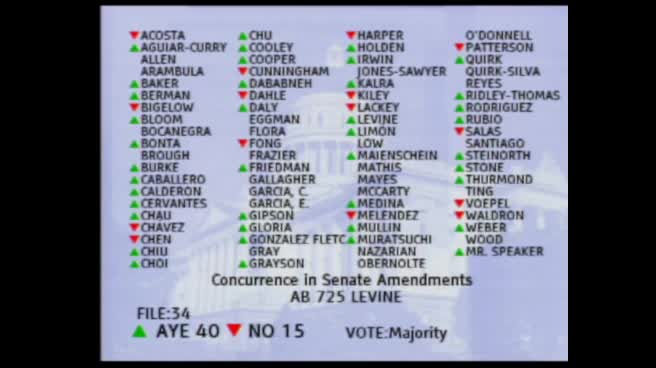
Bill Author

Bill Co-Author(s):