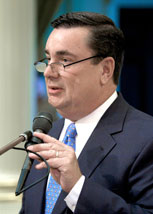
AB 782: California Health Insurance Fairness Act: personal income tax: deduction: medical insurance.
- Session Year: 2017-2018
- House: Assembly
- Latest Version Date: 2017-02-15
The Personal Income Tax Law allows various deductions in computing the income that is subject to the taxes imposed by that law including in modified conformity with federal tax law, a deduction for that portion of medical expenses that is more than 7.5% of adjusted gross income. Self-employed individuals are allowed to deduct health insurance premiums for medical expenses incurred by the taxpayer in lieu of the itemized deduction for medical expenses.
This bill, for taxable years beginning on or after January 1, 2017, would allow a deduction from gross income under the Personal Income Tax Law for the amounts paid or incurred by a taxpayer during the taxable year for medical insurance for medical care, as defined, and for transportation for and essential to that medical care, as provided. The bill would not allow as an itemized deduction, the amount allowed as a deduction from gross income as provided.
This bill would take effect immediately as a tax levy.
This act shall be known, and may be cited, as the California Health Insurance Fairness Act.
SEC. 2.The Legislature finds and declares all of the following:
(a)In 2010, the United States Congress passed the Affordable Care Act, commonly known as Obamacare, which mandates that individuals obtain health insurance. This mandate is known as the individual mandate.
(b)Under Obamacare, beginning in 2014, all Californians were forced to obtain health insurance.
(c)Under both federal and state tax laws, employer-paid insurance benefits are excluded from taxation and paid for with pretaxable income.
(d)According to the Kaiser Family Foundation, four million Californians do not get their health insurance paid for by their employers and, in order to meet the federal mandate, they have had to obtain health insurance or face a penalty imposed by the IRS of up to 1 percent of their 2014 income, 2 percent of their 2015 income, and 2.5 percent for years after 2015 (26 U.S.C. Sec. 5000A(c)(2)(B)). Tax penalties for uninsured children are one-half of the penalty for an adult.
(e)Both individuals and families with an income in 2014 that was between 138 percent and 400 percent of the poverty level were able to purchase health insurance through Covered California and received a tax subsidy to offset all or part of the health insurance premium. If the individuals or familys income was less than these percentages, that individual or family may have qualified for Medi-Cal.
(f)The Kaiser Family Foundation estimates that 52 percent of Americans who buy individual insurance today would not be eligible for subsidies to help offset the cost of health care. The 48 percent that do receive subsidies would receive an average of $5,548 per year, which would only cover 66 percent of the cost. Most individuals will face higher premiums and higher taxes to pay for those subsidies that others will receive.
(g)Around 1.2 million Californians do not receive employer-paid health insurance and are not eligible for Medi-Cal or other taxpayer-paid insurance programs and must purchase their health insurance directly from an insurer. Individuals and families must buy their health insurance with after-tax dollars if they are ineligible for a subsidy or the subsidy does not cover the full cost of the insurance, making their health insurance more expensive.
(h)Under existing California law, a taxpayer is able to deduct medical expenses, including the cost of purchasing health insurance, that exceed 7.5 percent of their adjusted gross income. Any medical expense below 7.5 percent of their income is not tax deductible. Only taxpayers that itemize their deductions can take the deduction. Because that threshold is so high, many taxpayers do not get any tax benefit, thus making the cost of their insurance more expensive.
(i)Bringing the threshold from 7.5 percent down to 0 percent will level the playing field between those who receive insurance from an employer and those purchasing it in the individual market. It would also reduce the number of uninsured and, accordingly, would reduce the costs associated with providing health care to the uninsured.
SEC. 3.Section 17072 of the Revenue and Taxation Code is amended to read:17072.(a)Section 62 of the Internal Revenue Code, relating to adjusted gross income defined, shall apply, except as otherwise provided.
(b)Section 62(a)(2)(D) of the Internal Revenue Code, relating to certain expenses of elementary and secondary school teachers, shall not apply.
(c)Section 62(a)(21) of the Internal Revenue Code, relating to attorneys fees relating to awards to whistleblowers, shall not apply.
(d)Section 62(a) of the Internal Revenue Code is modified to provide that the amount allowed as a deduction under Section 213(d)(1)(B) and (D) of the Internal Revenue Code shall be allowed as a deduction for purposes of computing adjusted gross income, except as otherwise provided.
(1)For purposes of this subdivision, Section 213(d)(1)(D) of the Internal Revenue Code is modified to provide that the phrases (including amounts paid as premiums under part B of title XVIII of the Social Security Act, relating to supplementary medical insurance for the aged) and or for any qualified long-term care insurance contract (as defined in section 7702B(b)) shall not apply.
(2)Any amount allowed as a deduction under this subdivision shall not be allowed as an itemized deduction under Section 63 of the Internal Revenue Code, relating to taxable income defined, as applicable, for purposes of this part.
(3)This subdivision shall apply to taxable years beginning on or after January 1, 2017.
SEC. 4.This act provides for a tax levy within the meaning of Article IV of the California Constitution and shall go into immediate effect.
|
Date
|
Status
|
|---|---|
| Feb 1, 2018 | From committee: Without further action pursuant to Joint Rule 62(a). |
| May 8, 2017 | In committee: Set, first hearing. Failed passage. |
| Mar 27, 2017 | In committee: Hearing postponed by committee. |
| Mar 2, 2017 | Referred to Com. on REV. & TAX. |
| Feb 16, 2017 | From printer. May be heard in committee March 18. |
| Feb 15, 2017 | Read first time. To print. |
|
Date
|
Description
|
Location
|
Votes
|
|
|---|---|---|---|---|
| May 8, 2017 | Do pass as amended and be re-referred to the Committee on [Appropriations] | Assembly Standing Committee on Revenue and Taxation |
Failed |
This list shows positions taken on this bill by organizations on the date displayed, which is linked to the original source.
Positions by individuals are not included.
|
Organization
|
Position
|
Date
|
|---|---|---|
| Health Access California | ** Against | May 5, 2017 |
| Howard Jarvis Taxpayers Association | ** Support | May 5, 2017 |
| Service Employees International Union, Local 1000 | * Against | May 9, 2017 |
Date of Hearing: May 8, 2017
ASSEMBLY COMMITTEE ON REVENUE AND TAXATION
Sebastian Ridley-Thomas, Chair
ABPCA Bill Id:AB 782 (
Author:Acosta) – As Introduced Ver:February 15, 2017
Majority vote. Tax levy. Fiscal committee.
SUBJECT: California Health Insurance Fairness Act: personal income tax: deduction: medical insurance
SUMMARY: Allows individual taxpayers, for taxable years beginning on or after January 1, 2017, to deduct their transportation for essential medical care and their medical care insurance premiums in computing their adjusted gross income (AGI). Specifically, this bill:
- Contains legislative findings and declarations relating to the Affordable Care Act (ACA), which mandates individuals to obtain health insurance by March of 2014, and the need to level the playing field between those who receive insurance from an employer and those purchasing it in the individual market.
- Allows an income tax deduction to a taxpayer, under the Personal Income Tax (PIT) Law, in computing AGI, for the amounts paid during the taxable year for "medical care" insurance premiums and transportation. Medicare Part B supplemental medical insurance and insurance for long-term care services are excluded from the definition of "medical care."
- Provides that any amount included as a deduction from gross income shall not be allowed as an itemized deduction under Internal Revenue Code Section 63.
- Takes effect immediately as a tax levy.
EXISTING FEDERAL LAW:
- Allows an individual taxpayer to deduct unreimbursed medical expenses as an itemized deduction, but only to the extent that such expenses exceed 10% of the individual’s AGI.
- Defines "medical expenses" as amounts paid for: (a) the diagnosis, cure, mitigation, treatment, or prevention of disease, or for the purpose of affecting any structure or function of the body; (b) transportation primarily for and essential to such medical care; (c) medical insurance that covers such medical care (including essential transportation and amounts paid as premiums for Medicare Part B supplemental medical insurance); and, (d) long-term care services.
EXISTING STATE LAW conforms, as of January 1, 2015, to the federal provisions relating to itemized deductions for unreimbursed medical expenses, with a modification to reduce the AGI threshold from 10% to 7.5%.
FISCAL EFFECT: The Franchise Tax Board estimates General Fund revenue losses of $550 million in fiscal year (FY) 2017-18, $380 million in FY 2018-19, and $400 million in FY 2019-20.
COMMENTS:
- The author has provided the following statement in support of this bill:
With 1.2 million Californians currently not receiving health care form their employer, AB 782 seeks to make health insurance more affordable by leveling the playing field for individuals and families who do not receive employer paid health insurance. The bill would provide a deduction for all those who purchase health insurance out of pocket. The bill is intended specifically to make health insurance more affordable for those that are mandated under the ACA to purchase health insurance or face a tax penalty post March 31st, 2014.
- Supporters state that many patients come to the emergency department seeking care for health conditions that have significantly deteriorated due to an inability to pay. The tax deductions in this bill would offset the cost of health care and improve access.
- Opponents argue that this bill would “allow individual taxpayers to make ‘above the line’ deductions from gross income for health care premiums. The proposed deduction does not make health coverage more affordable for low- and moderate-income families; rather, this approach helps wealthier people reduce their tax liability.”
- Committee Staff Comments:
- New tax expenditure: Existing law provides various credits, deductions, exclusions, and exemptions for particular taxpayer groups. In the late 1960s, U.S. Treasury officials began arguing that these features of the tax law should be referred to as "expenditures" since they are generally enacted to accomplish some governmental purpose and there is a determinable cost associated with each (in the form of foregone revenues). As the Department of Finance notes in its annual Tax Expenditure Report, there are several key differences between tax expenditures and direct expenditures. First, tax expenditures are reviewed less frequently than direct expenditures once they are put in place. This can offer taxpayers greater economic certainty, but it can also result in tax expenditures remaining a part of the tax code without demonstrating any public benefit. Second, there is generally no control over the amount of revenue losses associated with any given tax expenditure. Finally, once enacted, it takes a two-thirds vote to rescind an existing tax expenditure absent a sunset date, effectively resulting in a "one-way ratchet" whereby tax expenditures can be conferred by majority vote, but cannot be rescinded, irrespective of their efficacy, without a supermajority vote. This bill would create a new tax expenditure in the form of an above-the-line deduction. The Committee may wish to add a sunset to this above-the-line deduction.
- Need for the bill: Most Californians receive employer-paid health insurance, the value of which is not included in the employee's gross income. Self-employed taxpayers may deduct premiums paid for medical, dental and qualifying long-term care insurance coverage as an "above-the-line" deduction to reduce their gross income. However, taxpayers who are neither self-employed nor receive health insurance from their employers may deduct their unreimbursed medical care expenses, including health insurance premiums, only as an itemized deduction. The intent of the author is to make health insurance more affordable for taxpayers by allowing a tax deduction from gross income, instead of an itemized deduction, for the mandated costs of health insurance and healthcare premiums. According to the author, individuals who buy health insurance on their own need relief from rising health care costs, especially as the costs increase due to the ACA. However, many individuals already receive a subsidy to offset the cost of the individual mandate. The federal government provides a Premium Tax Credit (PTC), which is a refundable tax credit designed to help eligible individuals and families with low or moderate income afford health insurance purchased through the Health Insurance Marketplace. The size of the PTC is based on a sliding scale. Taxpayers who have a lower income get a larger credit to help cover the cost of their insurance. A taxpayer can choose to have an estimated credit computed as part of the monthly cost to lower payments or the taxpayer can choose to get all of the benefit of the credit when taxes are filed.
- "Above-the-line" vs. "below-the-line" deductions: An "above-the-line" deduction is used to derive a taxpayer's AGI, while a "below-the-line" deduction reduces California AGI to derive taxable income. "Above-the-line" deductions are more desirable than itemized deductions because they not phased out or subject to a floor like many itemized deductions. Furthermore, they can be claimed even if the taxpayer does not itemize deductions. Finally, they lower the taxpayer’s AGI, which can allow the taxpayer to qualify for more and/or larger deductions.
- The value of a tax deduction: Under existing law, taxpayers may only claim an itemized deduction for unreimbursed medical expenses, subject to the AGI threshold of 7.5% for all individuals. A deduction is generally more valuable to high-income taxpayers because the "value" of a deduction varies with the marginal tax rate (or tax bracket) of the taxpayer. For example, an individual taxpayer in a 10% tax bracket would receive a tax benefit of $10 on a $100 deduction. In contrast, a taxpayer in a 25% tax bracket would save $25 in tax out of every $100 deducted from gross income. Thus, assuming the same level of deductions, high-income taxpayers, presumably with a greater ability to pay taxes, would receive a greater tax benefit from the proposed deduction than the lower income taxpayer.
REGISTERED SUPPORT / OPPOSITION:
Support
California Chapter of the American College of Emergency Physicians
Howard Jarvis Taxpayers Association
Opposition
California State Council of the Service Employees International Union
Health Access California
Analysis Prepared by: Carlos Anguiano / REV. & TAX. / (916) 319-2098
Date of Hearing: March 27, 2017
ASSEMBLY COMMITTEE ON REVENUE AND TAXATION
Sebastian Ridley-Thomas, Chair
ABPCA Bill Id:AB 782 (
Author:Acosta) – As Introduced Ver:February 15, 2017
Majority vote. Tax levy. Fiscal committee.
SUBJECT: California Health Insurance Fairness Act: personal income tax: deduction: medical insurance
SUMMARY: Allows individual taxpayers, for taxable years beginning on or after January 1, 2017, to deduct their transportation for essential medical care and their medical care insurance premiums in computing their adjusted gross income (AGI). Specifically, this bill:
- Contains legislative findings and declarations relating to the Affordable Care Act (ACA), which mandates individuals to obtain health insurance by March of 2014, and the need to level the playing field between those who receive insurance from an employer and those purchasing it in the individual market.
- Allows an income tax deduction to a taxpayer, under the Personal Income Tax (PIT) Law, in computing AGI, for the amounts paid during the taxable year for "medical care" insurance premiums and transportation. Medicare Part B supplemental medical insurance and insurance for long-term care services are excluded from the definition of "medical care."
- Provides that any amount included as a deduction from gross income shall not be allowed as an itemized deduction under Internal Revenue Code Section 63.
- Takes effect immediately as a tax levy.
EXISTING FEDERAL LAW:
- Allows an individual taxpayer to deduct unreimbursed medical expenses as an itemized deduction, but only to the extent that such expenses exceed 10% of the individual’s AGI.
- Defines "medical expenses" as amounts paid for: (a) the diagnosis, cure, mitigation, treatment, or prevention of disease, or for the purpose of affecting any structure or function of the body; (b) transportation primarily for and essential to such medical care; (c) medical insurance that covers such medical care (including essential transportation and amounts paid as premiums for Medicare Part B supplemental medical insurance); and, (d) long-term care services.
EXISTING STATE LAW conforms, as of January 1, 2015, to the federal provisions relating to itemized deductions for unreimbursed medical expenses, with a modification to reduce the AGI threshold from 10% to 7.5%.
FISCAL EFFECT: The Franchise Tax Board estimates General Fund revenue losses of $550 million in fiscal year (FY) 2017-18, $380 million in FY 2018-19, and $400 million in FY 2019-20.
COMMENTS:
- The author has provided the following statement in support of this bill:
With 1.2 million Californians currently not receiving health care form their employer, AB 782 seeks to make health insurance more affordable by leveling the playing field for individuals and families who do not receive employer paid health insurance. The bill would provide a deduction for all those who purchase health insurance out of pocket. The bill is intended specifically to make health insurance more affordable for those that are mandated under the ACA to purchase health insurance or face a tax penalty post March 31st, 2014.
- Supporters state that many patients come to the emergency department seeking care for health conditions that have significantly deteriorated due to an inability to pay. The tax deductions in this bill would offset the cost of health care and improve access.
- Opponents argue that this bill would “allow individual taxpayers to make ‘above the line’ deductions from gross income for health care premiums. The proposed deduction does not make health coverage more affordable for low- and moderate-income families; rather, this approach helps wealthier people reduce their tax liability.”
- Committee Staff Comments:
- New tax expenditure: Existing law provides various credits, deductions, exclusions, and exemptions for particular taxpayer groups. In the late 1960s, U.S. Treasury officials began arguing that these features of the tax law should be referred to as "expenditures" since they are generally enacted to accomplish some governmental purpose and there is a determinable cost associated with each (in the form of foregone revenues). As the Department of Finance notes in its annual Tax Expenditure Report, there are several key differences between tax expenditures and direct expenditures. First, tax expenditures are reviewed less frequently than direct expenditures once they are put in place. This can offer taxpayers greater economic certainty, but it can also result in tax expenditures remaining a part of the tax code without demonstrating any public benefit. Second, there is generally no control over the amount of revenue losses associated with any given tax expenditure. Finally, once enacted, it takes a two-thirds vote to rescind an existing tax expenditure absent a sunset date, effectively resulting in a "one-way ratchet" whereby tax expenditures can be conferred by majority vote, but cannot be rescinded, irrespective of their efficacy, without a supermajority vote. This bill would create a new tax expenditure in the form of an above-the-line deduction. The Committee may wish to add a sunset to this above-the-line deduction.
- Need for the bill: Most Californians receive employer-paid health insurance, the value of which is not included in the employee's gross income. Self-employed taxpayers may deduct premiums paid for medical, dental and qualifying long-term care insurance coverage as an "above-the-line" deduction to reduce their gross income. However, taxpayers who are neither self-employed nor receive health insurance from their employers may deduct their unreimbursed medical care expenses, including health insurance premiums, only as an itemized deduction. The intent of the author is to make health insurance more affordable for taxpayers by allowing a tax deduction from gross income, instead of an itemized deduction, for the mandated costs of health insurance and healthcare premiums. According to the author, individuals who buy health insurance on their own need relief from rising health care costs, especially as the costs increase due to the ACA. However, many individuals already receive a subsidy to offset the cost of the individual mandate. The federal government provides a Premium Tax Credit (PTC), which is a refundable tax credit designed to help eligible individuals and families with low or moderate income afford health insurance purchased through the Health Insurance Marketplace. The size of the PTC is based on a sliding scale. Taxpayers who have a lower income get a larger credit to help cover the cost of their insurance. A taxpayer can choose to have an estimated credit computed as part of the monthly cost to lower payments or the taxpayer can choose to get all of the benefit of the credit when taxes are filed.
- Too soon? Congressional House Republicans have put forth the American Health Care Act, which, among other things, eliminates the individual mandate established under the ACA. Because the intent of the author is to offset the mandated costs required by the ACA, the Committee may wish to wait until Congress acts on new healthcare reform.
- "Above-the-line" vs. "below-the-line" deductions: An "above-the-line" deduction is used to derive a taxpayer's AGI, while a "below-the-line" deduction reduces California AGI to derive taxable income. "Above-the-line" deductions are more desirable than itemized deductions because they not phased out or subject to a floor like many itemized deductions. Furthermore, they can be claimed even if the taxpayer does not itemize deductions. Finally, they lower the taxpayer’s AGI, which can allow the taxpayer to qualify for more and/or larger deductions.
- The value of a tax deduction: Under existing law, taxpayers may only claim an itemized deduction for unreimbursed medical expenses, subject to the AGI threshold of 7.5% for all individuals. A deduction is generally more valuable to high-income taxpayers because the "value" of a deduction varies with the marginal tax rate (or tax bracket) of the taxpayer. For example, an individual taxpayer in a 10% tax bracket would receive a tax benefit of $10 on a $100 deduction. In contrast, a taxpayer in a 25% tax bracket would save $25 in tax out of every $100 deducted from gross income. Thus, assuming the same level of deductions, high-income taxpayers, presumably with a greater ability to pay taxes, would receive a greater tax benefit from the proposed deduction than the lower income taxpayer.
REGISTERED SUPPORT / OPPOSITION:
Support
California Chapter of the American College of Emergency Physicians
Opposition
California State Council of the Service Employees International Union
Health Access California
Analysis Prepared by: Carlos Anguiano / REV. & TAX. / (916) 319-2098
Discussed in Hearing
 16MIN
Assembly Standing Committee on Revenue and Taxation
Bill Author