AB 837: No party preference voters: partisan primary elections.
- Session Year: 2017-2018
- House: Assembly
- Latest Version Date: 2017-10-15
Existing law requires a voter to disclose a preference for a political party in order to participate in the political partys primary election. Existing law permits a voter who has declined to disclose a political party preference to request the ballot of a political party at a partisan primary election if the political party, by party rule duly noticed to the Secretary of State, authorizes a voter who has declined to disclose a political party preference to vote the ballot of the political party at that election. Existing law requires the voter registration card, the vote by mail application, and the state voter information guide to notify voters that a voter is not entitled to vote the ballot of a political party at a partisan primary election unless he or she has disclosed a preference for the political party or he or she has declined to disclose a political party preference and the political party has authorized a voter who has declined to disclose a preference to vote its ballot.
Existing law generally requires the Secretary of State to prepare certain election materials. Existing law requires an elections official to furnish the precinct officers with specified supplies for an election.
This bill would require the Secretary of State, a county elections official, and the members of a precinct board to provide information to voters, as specified, relating to the ability of a voter who has declined to disclose a political party preference to vote a political partys ballot at a partisan primary election. The bill would require the Secretary of State and a county elections official to prepare and print specified notices and other materials.
By imposing additional duties on local elections officials, this bill would impose a state-mandated local program.
This bill would incorporate additional changes to Section 14105 of the Elections Code proposed by SB 286 to be operative only if this bill and SB 286 are enacted and this bill is enacted last.
The California Constitution requires the state to reimburse local agencies and school districts for certain costs mandated by the state. Statutory provisions establish procedures for making that reimbursement.
This bill would provide that, if the Commission on State Mandates determines that the bill contains costs mandated by the state, reimbursement for those costs shall be made pursuant to the statutory provisions noted above.
Existing law requires a voter to disclose a preference for a political party in order to participate in the political partys primary election. Existing law permits a voter who has declined to disclose a political party preference to request the ballot of a political party at a partisan primary election if the political party, by party rule duly noticed to the Secretary of State, authorizes a voter who has declined to disclose a political party preference to vote the ballot of the political party at that election. Existing law requires the voter registration card, the vote by mail application, and the state voter information guide to notify voters that a voter is not entitled to vote the ballot of a political party at a partisan primary election unless he or she has disclosed a preference for the political party or he or she has declined to disclose a political party preference and the political party has authorized a voter who has declined to disclose a preference to vote its ballot.
Existing law generally requires the Secretary of State to prepare certain election materials. Existing law requires an elections official to furnish the precinct officers with specified supplies for an election.
This bill would require the Secretary of State, for a partisan primary election, to prepare and print posters and other materials that contain specified information, including the name of each political party that authorizes a voter who has declined to disclose a political party preference to vote at that election and a statement that a voter who has declined to disclose a political party preference may request the ballot of one of those political parties. This bill would require the Secretary of State to supply the materials to each elections official and would require an elections official to furnish the materials to the precinct officers for each partisan primary election.This bill would require the Secretary of State, a county elections official, and the members of a precinct board to provide information to voters, as specified, relating to the ability of a voter who has declined to disclose a political party preference to vote a political partys ballot at a partisan primary election. The bill would require the Secretary of State and a county elections official to prepare and print specified notices and other materials.
By imposing additional duties on local elections officials, this bill would impose a state-mandated local program.
The California Constitution requires the state to reimburse local agencies and school districts for certain costs mandated by the state. Statutory provisions establish procedures for making that reimbursement.
This bill would provide that, if the Commission on State Mandates determines that the bill contains costs mandated by the state, reimbursement for those costs shall be made pursuant to the statutory provisions noted above.
Existing law permits a voter who has declined to disclose a political party preference to request the ballot of a political party at a partisan primary election if the political party, by party rule duly noticed to the Secretary of State, authorizes a voter who has declined to disclose a political party preference to vote the ballot of the political party at that election.
Existing law generally requires the Secretary of State to prepare certain election materials. Existing law requires an elections official to furnish the precinct officers with specified supplies for an election.
This bill would require the Secretary of State, for a partisan primary election, to prepare and print posters and other materials that contain specified information, including the name of each political party that authorizes a voter who has declined to disclose a political party preference to vote at that election and a statement that a voter who has declined to disclose a political party preference may request the ballot of one of those political parties. This bill would require the Secretary of State to supply the materials to each elections official and would require an elections official to furnish the materials to the precinct officers for each partisan primary election.
The California Constitution requires the state to reimburse local agencies and school districts for certain costs mandated by the state. Statutory provisions establish procedures for making that reimbursement.
This bill would provide that, if the Commission on State Mandates determines that the bill contains costs mandated by the state, reimbursement for those costs shall be made pursuant to the statutory provisions noted above.
This chapter applies only to partisan primary elections.
13501.(a)The Secretary of State shall include in the state voter information guide the information specified in subdivision (a) of Section 9083.5, including a statement explaining that a voter who has declined to disclose a political party preference may not vote in a political partys primary election unless the political party has authorized a voter who has declined to disclose a political party preference to vote in its primary election.
(b)The Secretary of State shall make all of the following information available on the Secretary of States Internet Web site:
(1)A statement that a voter who has declined to disclose a political party preference may vote in a political partys partisan primary election if the political party, by party rule duly noticed to the Secretary of State, authorizes a voter who has declined to disclose a political party preference to vote in the next ensuing partisan primary election.
(2)The name of each political party that authorizes a voter who has declined to disclose a political party preference to vote in the partisan primary election.
(3)A statement that a voter who has declined to disclose a political party preference may request the ballot of one of the political parties that authorizes a voter who has declined to disclose a political party preference to vote in the partisan primary election.
(c)A county elections official shall include all of the information described in paragraphs (1) to (3), inclusive, of subdivision (b) in the nonpartisan county voter information guide prepared pursuant to Section 13300 and shall make the information available on the officials Internet Web site. In addition, the county elections official shall send an email to the email address of a voter who has declined to disclose a political party preference notifying the voter that he or she may request a political partys ballot at the next ensuing partisan primary election if the political party has so authorized. The county elections official shall also provide the notice to a voter who has declined to disclose a political party preference by text message if the voter has provided written consent to receive text messages from the county elections official.
13502.(a)With each nonpartisan vote by mail ballot that is sent to a voter who has declined to disclose a political party preference, the county elections official shall include a notice informing the voter that he or she may request a political partys ballot at the next ensuing partisan primary election if the political party has so authorized.
(b)In addition to any other method permitted by law, a voter who has declined to disclose a political party preference may request the ballot of a political party that has authorized a voter who has declined to disclose a political party preference to vote in its partisan primary election as follows:
(1)In his or her vote by mail application pursuant to subdivision (c) of Section 3006.
(2)By telephone pursuant to Section 3007.8.
(3)Over the Internet if available pursuant to Section 3007.7.
(4)By email or by facsimile transmission if permitted by the county elections official.
(c)No later than seven days before the date of a partisan primary election, a voter who has declined to disclose a political party preference and who has received a nonpartisan vote by mail ballot may return his or her unvoted ballot to the county elections official and request and receive the ballot for a political party if the political party has authorized a voter who has declined to disclose a political party preference to vote in its partisan primary election.
SEC. 2.Section 14105 of the Elections Code is amended to read:14105.The elections official shall furnish to the precinct officers all of the following:
(a)Printed copies of the indexes.
(b)Necessary printed blanks for the roster, tally sheets, lists of voters, declarations, and returns.
(c)Envelopes in which to enclose returns.
(d)Not fewer than 6 nor more than 12 instruction cards to each precinct for the guidance of voters in obtaining and marking their ballots. On each card shall be printed necessary instructions and the provisions of Sections 14225, 14279, 14280, 14287, 14291, 14295, 15271, 15272, 15273, 15276, 15277, 15278, 18370, 18380, 18403, 18563, and 18569.
(e)A digest of the election laws with any further instructions the county elections official may desire to make.
(f)An American flag of sufficient size to adequately assist the voter in identifying the polling place. The flag is to be erected at or near the polling place on election day.
(g)A ballot container, properly marked on the outside indicating its contents.
(h)When it is necessary to supply additional ballot containers, these additional containers shall also be marked on the outside, indicating their contents.
(i)Sufficient ink pads and stamps for each booth. The stamps shall be one solid piece and shall be made so that a cross (+) may be made with either end. If ballots are to be counted by vote tabulating equipment, an adequate supply of other approved voting devices shall be furnished. All voting stamps or voting devices shall be maintained in good, usable condition.
(j)When a candidate or candidates have qualified to have his or her or their names counted pursuant to Article 3 (commencing with Section 15340) of Chapter 4 of Division 15, a sufficient number of ink pens or pencils in the voting booths for the purpose of writing in on the ballot the name of the candidate or candidates.
(k)A sufficient number of cards to each polling place containing the telephone number of the office to which a voter may call to obtain information about his or her precinct location. The card shall state that the voter may call collect during polling hours.
(l)An identifying badge or insignia for each member of the precinct board. The member shall print his or her name and the precinct number on the badge or insignia, and shall wear the badge or insignia at all times in the performance of duties, so as to be readily identified as a member of the precinct board by all persons entering the polling place.
(m)Facsimile copies of the ballot containing ballot measures and ballot instructions printed in Spanish or other languages as provided in Section 14201.
(n)Sufficient copies of the notices to be posted on the indexes used at the polls. The notice shall read as follows: This index shall not be marked in any manner except by a member of the precinct board acting pursuant to Section 14297 of the Elections Code. Any person who removes, tears, marks, or otherwise defaces this index with the intent to falsify or prevent others from readily ascertaining the name, address, or political affiliation of any voter, or the fact that a voter has or has not voted, is guilty of a misdemeanor.
(o)A roster of voters for each precinct in the form prescribed in Section 14107.
(p)In addition, the elections official may, with the approval of the board of supervisors, furnish the original books of affidavits of registration or other material necessary to verify signatures to the precinct officers.
(q)Printed copies of the Voter Bill of Rights, as supplied by the Secretary of State. The Voter Bill of Rights shall be conspicuously posted both inside and outside every polling place.
(r)For a partisan primary election, printed copies of the posters or other materials described in Section 14105.2. The posters or other materials shall be conspicuously posted both inside and outside every polling place.
SEC. 2.5.Section 14105 of the Elections Code is amended to read:14105.The elections official shall furnish to each polling place all of the following:
(a)At least one accessible copy of the voter list.
(b)Necessary printed blanks for the roster, tally sheets, voter list, declarations, and returns.
(c)Not fewer than 6 nor more than 12 instruction cards to each polling place for the guidance of voters in obtaining and marking their ballots. On each card shall be printed necessary instructions and the provisions of Sections 14225, 14279, 14280, 14287, 14291, 14295, 15271, 15272, 15273, 15276, 15277, 15278, 18370, 18380, 18403, 18563, and 18569.
(d)A digest of the election laws with any further instructions the county elections official may desire to make.
(e)An American flag of sufficient size to adequately assist the voter in identifying the polling place. The flag is to be erected at or near the polling place.
(f)A ballot container, properly marked on the outside indicating its contents. If it is necessary to supply additional ballot containers, these additional containers shall also be marked on the outside indicating their contents.
(g)At least one copy of the certified write-in list, if applicable.
(h)A sufficient number of cards to each polling place containing the telephone number of the office to which a voter may call to obtain information about his or her polling place. The card shall state that the voter may call collect during polling hours.
(i)An identifying badge or insignia for each member of the precinct board. The member shall print his or her name on the badge or insignia, and shall wear the badge or insignia at all times in the performance of duties, so as to be readily identified as a member of the precinct board by all persons entering the polling place.
(j)Facsimile copies of the ballot containing ballot measures and ballot instructions printed in Spanish or other languages as provided in Section 14201.
(k)Sufficient copies of the notices to be posted on the voter list used at the polls. The notice shall read as follows: This voter list shall not be marked in any manner except by a member of the precinct board acting pursuant to Section 14297. Any person who removes, tears, marks, or otherwise defaces this voter list with the intent to falsify or prevent others from readily ascertaining the name, address, or political affiliation of any voter, or the fact that a voter has or has not voted, is guilty of a misdemeanor.
(l)A roster for each polling place in the form prescribed in Section 14107.
(m)Printed copies of the Voter Bill of Rights, as supplied by the Secretary of State. The Voter Bill of Rights shall be conspicuously posted both inside and outside every polling place.
(n)For a partisan primary election, printed copies of the posters or other materials described in Section 14105.2. The posters or other materials shall be conspicuously posted both inside and outside every polling place.
SEC. 3.Section 14105.2 is added to the Elections Code, to read:14105.2.(a)For a partisan primary election, the Secretary of State shall prepare and print posters or other materials that contain all of the following information:
(1)A statement that a voter who has declined to disclose a political party preference may vote in a political partys partisan primary election if the political party, by party rule duly noticed to the Secretary of State, authorizes a voter who has declined to disclose a political party preference to vote in the next ensuing partisan primary election.
(2)The name of each political party that authorizes a voter who has declined to disclose a political party preference to vote in the partisan primary election.
(3)A statement that a voter who has declined to disclose a political party preference may request the ballot of one of the political parties that authorizes a voter who has declined to disclose a political party preference to vote in the partisan primary election.
(b)The Secretary of State shall supply the posters or other materials described in subdivision (a) to each elections official who shall furnish the materials to the precinct officers pursuant to Section 14105.
SEC. 4.Section 14227.5 is added to the Elections Code, to read:14227.5.(a)At a partisan primary election, before providing a voter who has declined to disclose a political party preference with a nonpartisan ballot or before the voter enters the voting booth, as applicable, a member of the precinct board shall provide a uniform notification to the voter informing him or her that he or she may request a political partys ballot and the name of each political party that has authorized a voter who has declined to disclose a political party preference to vote in its ballot.
(b)A county elections official shall train the members of a precinct board regarding their duties under subdivision (a).
SEC. 5.Section 2.5 of this bill incorporates amendments to Section 14105 of the Elections Code proposed by both this bill and Senate Bill 286. That section shall only become operative if (1) both bills are enacted and become effective on or before January 1, 2018, (2) each bill amends Section 14105 of the Elections Code, and (3) this bill is enacted after Senate Bill 286, in which case Section 2 of this bill shall not become operative.
SEC. 6.If the Commission on State Mandates determines that this act contains costs mandated by the state, reimbursement to local agencies and school districts for those costs shall be made pursuant to Part 7 (commencing with Section 17500) of Division 4 of Title 2 of the Government Code.
This chapter applies only to partisan primary elections.
13401.13501.(a)The Secretary of State shall include in the state voter information guide the information specified in subdivision (a) of Section 9083.5, including a statement explaining that a voter who has declined to disclose a political party preference may not vote in a political partys primary election unless the political party has authorized a voter who has declined to disclose a political party preference to vote in its primary election.
(b)The Secretary of State shall make all of the following information available on the Secretary of States Internet Web site:
(1)A statement that a voter who has declined to disclose a political party preference may vote in a political partys partisan primary election if the political party, by party rule duly noticed to the Secretary of State, authorizes a voter who has declined to disclose a political party preference to vote in the next ensuing partisan primary election.
(2)The name of each political party that authorizes a voter who has declined to disclose a political party preference to vote in the partisan primary election.
(3)A statement that a voter who has declined to disclose a political party preference may request the ballot of one of the political parties that authorizes a voter who has declined to disclose a political party preference to vote in the partisan primary election.
(c)A county elections official shall include all of the information described in paragraphs (1) to (3), inclusive, of subdivision (b) in the nonpartisan county voter information guide prepared pursuant to Section 13300 and shall make the information available on the officials Internet Web site. In addition, the county elections official shall send an email to the email address of a voter who has declined to disclose a political party preference notifying the voter that he or she may request a political partys ballot at the next ensuing partisan primary election if the political party has so authorized. The county elections official shall also provide the notice to a voter who has declined to disclose a political party preference by text message if the voter has provided written consent to receive text messages from the county elections official.
13402.13502.(a)With each nonpartisan vote by mail ballot that is sent to a voter who has declined to disclose a political party preference, the county elections official shall include a notice informing the voter that he or she may request a political partys ballot at the next ensuing partisan primary election if the political party has so authorized.
(b)In addition to any other method permitted by law, a voter who has declined to disclose a political party preference may request the ballot of a political party that has authorized a voter who has declined to disclose a political party preference to vote in its partisan primary election as follows:
(1)In his or her vote by mail application pursuant to subdivision (c) of Section 3006.
(2)By telephone pursuant to Section 3007.8.
(3)Over the Internet if available pursuant to Section 3007.7.
(4)By email or by facsimile transmission if permitted by the county elections official.
(c)No later than seven days before the date of a partisan primary election, a voter who has declined to disclose a political party preference and who has received a nonpartisan vote by mail ballot may return his or her unvoted ballot to the county elections official and request and receive the ballot for a political party if the political party has authorized a voter who has declined to disclose a political party preference to vote in its partisan primary election.
SEC. 2.Section 14105 of the Elections Code is amended to read:14105.The elections official shall furnish to the precinct officers all of the following:
(a)Printed copies of the indexes.
(b)Necessary printed blanks for the roster, tally sheets, lists of voters, declarations, and returns.
(c)Envelopes in which to enclose returns.
(d)Not fewer than six 6 nor more than 12 instruction cards to each precinct for the guidance of voters in obtaining and marking their ballots. On each card shall be printed necessary instructions and the provisions of Sections 14225, 14279, 14280, 14287, 14291, 14295, 15271, 15272, 15273, 15276, 15277, 15278, 18370, 18380, 18403, 18563, and 18569.
(e)A digest of the election laws with any further instructions the county elections official may desire to make.
(f)An American flag of sufficient size to adequately assist the voter in identifying the polling place. The flag is to be erected at or near the polling place on election day.
(g)A ballot container, properly marked on the outside indicating its contents.
(h)When it is necessary to supply additional ballot containers, these additional containers shall also be marked on the outside, indicating their contents.
(i)Sufficient ink pads and stamps for each booth. The stamps shall be one solid piece and shall be made so that a cross (+) may be made with either end. If ballots are to be counted by vote tabulating equipment, an adequate supply of other approved voting devices shall be furnished. All voting stamps or voting devices shall be maintained in good, usable condition.
(j)When a candidate or candidates have qualified to have his or her or their names counted pursuant to Article 3 (commencing with Section 15340) of Chapter 4 of Division 15, a sufficient number of ink pens or pencils in the voting booths for the purpose of writing in on the ballot the name of the candidate or candidates.
(k)A sufficient number of cards to each polling place containing the telephone number of the office to which a voter may call to obtain information about his or her precinct location. The card shall state that the voter may call collect during polling hours.
(l)An identifying badge or insignia for each member of the precinct board. The member shall print his or her name and the precinct number on the badge or insignia, and shall wear the badge or insignia at all times in the performance of duties, so as to be readily identified as a member of the precinct board by all persons entering the polling place.
(m)Facsimile copies of the ballot containing ballot measures and ballot instructions printed in Spanish or other languages as provided in Section 14201.
(n)Sufficient copies of the notices to be posted on the indexes used at the polls. The notice shall read as follows: This index shall not be marked in any manner except by a member of the precinct board acting pursuant to Section 14297 of the Elections Code. Any person who removes, tears, marks, or otherwise defaces this index with the intent to falsify or prevent others from readily ascertaining the name, address, or political affiliation of any voter, or the fact that a voter has or has not voted, is guilty of a misdemeanor.
(o)A roster of voters for each precinct in the form prescribed in Section 14107.
(p)In addition, the elections official may, with the approval of the board of supervisors, furnish the original books of affidavits of registration or other material necessary to verify signatures to the precinct officers.
(q)Printed copies of the Voter Bill of Rights, as supplied by the Secretary of State. The Voter Bill of Rights shall be conspicuously posted both inside and outside every polling place.
(r)For a partisan primary election, printed copies of the posters or other materials described in Section 14105.2. The posters or other materials shall be conspicuously posted both inside and outside every polling place.
SEC. 2.5.Section 14105 of the Elections Code is amended to read:14105.The elections official shall furnish to the precinct officers each polling place all of the following:
(a)Printed copies of the indexes.(a)At least one accessible copy of the voter list.
(b)Necessary printed blanks for the roster, tally sheets, lists of voters, voter list, declarations, and returns.
(c)Envelopes in which to enclose returns.(d)(c)Not less fewer than six 6 nor more than 12 instruction cards to each precinct polling place for the guidance of voters in obtaining and marking their ballots. On each card shall be printed necessary instructions and the provisions of Sections 14225, 14279, 14280, 14287, 14291, 14295, 15271, 15272, 15273, 15276, 15277, 15278, 18370, 18380, 18403, 18563, and 18569.
(e)(d)A digest of the election laws with any further instructions the county elections official may desire to make.
(f)(e)An American flag of sufficient size to adequately assist the voter in identifying the polling place. The flag is to be erected at or near the polling place on election day. place.
(g)A ballot container, properly marked on the outside indicating its contents.(h)When(f)A ballot container, properly marked on the outside indicating its contents. If it is necessary to supply additional ballot containers, these additional containers shall also be marked on the outside, outside indicating their contents.
(i)Sufficient ink pads and stamps for each booth. The stamps shall be one solid piece and shall be made so that a cross (+) may be made with either end. If ballots are to be counted by vote tabulating equipment, an adequate supply of other approved voting devices shall be furnished. All voting stamps or voting devices shall be maintained in good usable condition.(j)When a candidate or candidates have qualified to have his or her or their names counted pursuant to Article 3 (commencing with Section 15340) of Chapter 4 of Division 15, a sufficient number of ink pens or pencils in the voting booths for the purpose of writing in on the ballot the name of the candidate or candidates.(g)At least one copy of the certified write-in list, if applicable.
(k)(h)A sufficient number of cards to each polling place containing the telephone number of the office to which a voter may call to obtain information about his or her precinct location. polling place. The card shall state that the voter may call collect during polling hours.
(l)(i)An identifying badge or insignia for each member of the precinct board. The member shall print his or her name and the precinct number thereon on the badge or insignia, and shall wear the badge or insignia at all times in the performance of duties, so as to be readily identified as a member of the precinct board by all persons entering the polling place.
(m)(j)Facsimile copies of the ballot containing ballot measures and ballot instructions printed in Spanish or other languages as provided in Section 14201.
(n)(k)Sufficient copies of the notices to be posted on the indexes voter list used at the polls. The notice shall read as follows: This index voter list shall not be marked in any manner except by a member of the precinct board acting pursuant to Section 14297 of the Elections Code. 14297. Any person who removes, tears, marks, or otherwise defaces this index voter list with the intent to falsify or prevent others from readily ascertaining the name, address, or political affiliation of any voter, or the fact that a voter has or has not voted, is guilty of a misdemeanor.
(o)(l)A roster of voters for each precinct polling place in the form prescribed in Section 14107.
(p)In addition, the elections official may, with the approval of the board of supervisors, furnish the original books of affidavits of registration or other material necessary to verify signatures to the precinct officers.(q)(m)Printed copies of the Voter Bill of Rights, as supplied by the Secretary of State. The Voter Bill of Rights shall be conspicuously posted both inside and outside every polling place.
This section shall become operative on January 1, 1990.(n)For a partisan primary election, printed copies of the posters or other materials described in Section 14105.2. The posters or other materials shall be conspicuously posted both inside and outside every polling place.
SEC. 3.Section 14105.2 is added to the Elections Code, to read:14105.2.(a)For a partisan primary election, the Secretary of State shall prepare and print posters or other materials that contain all of the following information:
(1)A statement that a voter who has declined to disclose a political party preference may vote in a political partys partisan primary election if the political party, by party rule duly noticed to the Secretary of State, authorizes a voter who has declined to disclose a political party preference to vote in the next ensuing partisan primary election.
(2)The name of each political party that authorizes a voter who has declined to disclose a political party preference to vote in the partisan primary election.
(3)A statement that a voter who has declined to disclose a political party preference may request the ballot of one of the political parties that authorizes a voter who has declined to disclose a political party preference to vote in the partisan primary election.
(b)The Secretary of State shall supply the posters or other materials described in subdivision (a) to each elections official who shall furnish the materials to the precinct officers pursuant to Section 14105.
SEC. 4.Section 14228 14227.5 is added to the Elections Code, to read:14228.14227.5.(a)At a partisan primary election, before providing a voter who has declined to disclose a political party preference with a nonpartisan ballot or before the voter enters the voting booth, as applicable, a member of the precinct board shall provide a uniform notification to the voter informing him or her that he or she may request a political partys ballot and the name of each political party that has authorized a voter who has declined to disclose a political party preference to vote in its ballot.
(b)A county elections official shall train the members of a precinct board regarding their duties under subdivision (a).
SEC. 5.Section 2.5 of this bill incorporates amendments to Section 14105 of the Elections Code proposed by both this bill and Senate Bill 286. That section shall only become operative if (1) both bills are enacted and become effective on or before January 1, 2018, (2) each bill amends Section 14105 of the Elections Code, and (3) this bill is enacted after Senate Bill 286, in which case Section 2 of this bill shall not become operative.
SEC. 5.SEC. 6.If the Commission on State Mandates determines that this act contains costs mandated by the state, reimbursement to local agencies and school districts for those costs shall be made pursuant to Part 7 (commencing with Section 17500) of Division 4 of Title 2 of the Government Code.
This chapter applies only to partisan primary elections.
13401.(a)The Secretary of State shall include in the state voter information guide the information specified in subdivision (a) of Section 9083.5, including a statement explaining that a voter who has declined to disclose a political party preference may not vote in a political partys primary election unless the political party has authorized a voter who has declined to disclose a political party preference to vote in its primary election.
(b)The Secretary of State shall make all of the following information available on the Secretary of States Internet Web site:
(1)A statement that a voter who has declined to disclose a political party preference may vote in a political partys partisan primary election if the political party, by party rule duly noticed to the Secretary of State, authorizes a voter who has declined to disclose a political party preference to vote in the next ensuing partisan primary election.
(2)The name of each political party that authorizes a voter who has declined to disclose a political party preference to vote in the partisan primary election.
(3)A statement that a voter who has declined to disclose a political party preference may request the ballot of one of the political parties that authorizes a voter who has declined to disclose a political party preference to vote in the partisan primary election.
(c)A county elections official shall include all of the information described in paragraphs (1) to (3), inclusive, of subdivision (b) in the nonpartisan county voter information guide prepared pursuant to Section 13300 and shall make the information available on the officials Internet Web site. In addition, the county elections official shall send an email to the email address of a voter who has declined to disclose a political party preference notifying the voter that he or she may request a political partys ballot at the next ensuing partisan primary election if the political party has so authorized. The county elections official shall also provide the notice to a voter who has declined to disclose a political party preference by text message if the voter has provided written consent to receive text messages from the county elections official.
13402.(a)With each nonpartisan vote by mail ballot that is sent to a voter who has declined to disclose a political party preference, the county elections official shall include a notice informing the voter that he or she may request a political partys ballot at the next ensuing partisan primary election if the political party has so authorized.
(b)In addition to any other method permitted by law, a voter who has declined to disclose a political party preference may request the ballot of a political party that has authorized a voter who has declined to disclose a political party preference to vote in its partisan primary election as follows:
(1)In his or her vote by mail application pursuant to subdivision (c) of Section 3006.
(2)By telephone pursuant to Section 3007.8.
(3)Over the Internet if available pursuant to Section 3007.7.
(4)By email or by facsimile transmission if permitted by the county elections official.
(c)No later than seven days before the date of a partisan primary election, a voter who has declined to disclose a political party preference and who has received a nonpartisan vote by mail ballot may return his or her unvoted ballot to the county elections official and request and receive the ballot for a political party if the political party has authorized a voter who has declined to disclose a political party preference to vote in its partisan primary election.
SECTION 1.SEC. 2.Section 14105 of the Elections Code is amended to read:14105.The elections official shall furnish to the precinct officers all of the following:
(a)Printed copies of the indexes.
(b)Necessary printed blanks for the roster, tally sheets, lists of voters, declarations, and returns.
(c)Envelopes in which to enclose returns.
(d)Not fewer than six nor more than 12 instruction cards to each precinct for the guidance of voters in obtaining and marking their ballots. On each card shall be printed necessary instructions and the provisions of Sections 14225, 14279, 14280, 14287, 14291, 14295, 15271, 15272, 15273, 15276, 15277, 15278, 18370, 18380, 18403, 18563, and 18569.
(e)A digest of the election laws with any further instructions the county elections official may desire to make.
(f)An American flag of sufficient size to adequately assist the voter in identifying the polling place. The flag is to be erected at or near the polling place on election day.
(g)A ballot container, properly marked on the outside indicating its contents.
(h)When it is necessary to supply additional ballot containers, these additional containers shall also be marked on the outside, indicating their contents.
(i)Sufficient ink pads and stamps for each booth. The stamps shall be one solid piece and shall be made so that a cross (+) may be made with either end. If ballots are to be counted by vote tabulating equipment, an adequate supply of other approved voting devices shall be furnished. All voting stamps or voting devices shall be maintained in good, usable condition.
(j)When a candidate or candidates have qualified to have his or her or their names counted pursuant to Article 3 (commencing with Section 15340) of Chapter 4 of Division 15, a sufficient number of ink pens or pencils in the voting booths for the purpose of writing in on the ballot the name of the candidate or candidates.
(k)A sufficient number of cards to each polling place containing the telephone number of the office to which a voter may call to obtain information about his or her precinct location. The card shall state that the voter may call collect during polling hours.
(l)An identifying badge or insignia for each member of the precinct board. The member shall print his or her name and the precinct number on the badge or insignia, and shall wear the badge or insignia at all times in the performance of duties, so as to be readily identified as a member of the precinct board by all persons entering the polling place.
(m)Facsimile copies of the ballot containing ballot measures and ballot instructions printed in Spanish or other languages as provided in Section 14201.
(n)Sufficient copies of the notices to be posted on the indexes used at the polls. The notice shall read as follows: This index shall not be marked in any manner except by a member of the precinct board acting pursuant to Section 14297 of the Elections Code. Any person who removes, tears, marks, or otherwise defaces this index with the intent to falsify or prevent others from readily ascertaining the name, address, or political affiliation of any voter, or the fact that a voter has or has not voted, is guilty of a misdemeanor.
(o)A roster of voters for each precinct in the form prescribed in Section 14107.
(p)In addition, the elections official may, with the approval of the board of supervisors, furnish the original books of affidavits of registration or other material necessary to verify signatures to the precinct officers.
(q)Printed copies of the Voter Bill of Rights, as supplied by the Secretary of State. The Voter Bill of Rights shall be conspicuously posted both inside and outside every polling place.
(r)For a partisan primary election, printed copies of the posters or other materials described in Section 14105.2. The posters or other materials shall be conspicuously posted both inside and outside every polling place.
SEC. 2.SEC. 3.Section 14105.2 is added to the Elections Code, to read:14105.2.(a)For a partisan primary election, the Secretary of State shall prepare and print posters or other materials that contain all of the following information:
(1)A statement that a voter who has declined to disclose a political party preference may vote in a political partys partisan primary election if the political party, by party rule duly noticed to the Secretary of State, authorizes a voter who has declined to disclose a political party preference to vote in its the next ensuing partisan primary election.
(2)The name of each political party that authorizes a voter who has declined to disclose a political party preference to vote in this the partisan primary election.
(3)A statement that a voter who has declined to disclose a political party preference may request the ballot of one of the political parties that authorizes a voter who has declined to disclose a political party preference to vote in this the partisan primary election.
(b)The Secretary of State shall supply the posters or other materials described in subdivision (a) to each elections official who shall furnish the materials to the precinct officers pursuant to Section 14105.
SEC. 4.Section 14228 is added to the Elections Code, to read:14228.(a)At a partisan primary election, before providing a voter who has declined to disclose a political party preference with a nonpartisan ballot or before the voter enters the voting booth, as applicable, a member of the precinct board shall provide a uniform notification to the voter informing him or her that he or she may request a political partys ballot and the name of each political party that has authorized a voter who has declined to disclose a political party preference to vote in its ballot.
(b)A county elections official shall train the members of a precinct board regarding their duties under subdivision (a).
SEC. 3.SEC. 5.If the Commission on State Mandates determines that this act contains costs mandated by the state, reimbursement to local agencies and school districts for those costs shall be made pursuant to Part 7 (commencing with Section 17500) of Division 4 of Title 2 of the Government Code.
The elections official shall furnish to the precinct officers all of the following:
(a)Printed copies of the indexes.
(b)Necessary printed blanks for the roster, tally sheets, lists of voters, declarations, and returns.
(c)Envelopes in which to enclose returns.
(d)Not less fewer than six nor more than 12 instruction cards to each precinct for the guidance of voters in obtaining and marking their ballots. On each card shall be printed necessary instructions and the provisions of Sections 14225, 14279, 14280, 14287, 14291, 14295, 15271, 15272, 15273, 15276, 15277, 15278, 18370, 18380, 18403, 18563, and 18569.
(e)A digest of the election laws with any further instructions the county elections official may desire to make.
(f)An American flag of sufficient size to adequately assist the voter in identifying the polling place. The flag is to be erected at or near the polling place on election day.
(g)A ballot container, properly marked on the outside indicating its contents.
(h)When it is necessary to supply additional ballot containers, these additional containers shall also be marked on the outside, indicating their contents.
(i)Sufficient ink pads and stamps for each booth. The stamps shall be one solid piece and shall be made so that a cross (+) may be made with either end. If ballots are to be counted by vote tabulating equipment, an adequate supply of other approved voting devices shall be furnished. All voting stamps or voting devices shall be maintained in good good, usable condition.
(j)When a candidate or candidates have qualified to have his or her or their names counted pursuant to Article 3 (commencing with Section 15340) of Chapter 4 of Division 15, a sufficient number of ink pens or pencils in the voting booths for the purpose of writing in on the ballot the name of the candidate or candidates.
(k)A sufficient number of cards to each polling place containing the telephone number of the office to which a voter may call to obtain information about his or her precinct location. The card shall state that the voter may call collect during polling hours.
(l)An identifying badge or insignia for each member of the precinct board. The member shall print his or her name and the precinct number thereon on the badge or insignia, and shall wear the badge or insignia at all times in the performance of duties, so as to be readily identified as a member of the precinct board by all persons entering the polling place.
(m)Facsimile copies of the ballot containing ballot measures and ballot instructions printed in Spanish or other languages as provided in Section 14201.
(n)Sufficient copies of the notices to be posted on the indexes used at the polls. The notice shall read as follows: This index shall not be marked in any manner except by a member of the precinct board acting pursuant to Section 14297 of the Elections Code. Any person who removes, tears, marks, or otherwise defaces this index with the intent to falsify or prevent others from readily ascertaining the name, address, or political affiliation of any voter, or the fact that a voter has or has not voted, is guilty of a misdemeanor.
(o)A roster of voters for each precinct in the form prescribed in Section 14107.
(p)In addition, the elections official may, with the approval of the board of supervisors, furnish the original books of affidavits of registration or other material necessary to verify signatures to the precinct officers.
(q)Printed copies of the Voter Bill of Rights, as supplied by the Secretary of State. The Voter Bill of Rights shall be conspicuously posted both inside and outside every polling place.
This section shall become operative on January 1, 1990.(r)For a partisan primary election, printed copies of the posters or other materials described in Section 14105.2. The posters or other materials shall be conspicuously posted both inside and outside every polling place.
SEC. 2.Section 14105.2 is added to the Elections Code, to read:14105.2.(a)For a partisan primary election, the Secretary of State shall prepare and print posters or other materials that contain all of the following information:
(1)A statement that a voter who has declined to disclose a political party preference may vote in a political partys partisan primary election if the political party, by party rule duly noticed to the Secretary of State, authorizes a voter who has declined to disclose a political party preference to vote in its next ensuing partisan primary election.
(2)The name of each political party that authorizes a voter who has declined to disclose a political party preference to vote in this partisan primary election.
(3)A statement that a voter who has declined to disclose a political party preference may request the ballot of one of the political parties that authorizes a voter who has declined to disclose a political party preference to vote in this partisan primary election.
(b)The Secretary of State shall supply the posters or other materials described in subdivision (a) to each elections official who shall furnish the materials to the precinct officers pursuant to Section 14105.
SEC. 3.If the Commission on State Mandates determines that this act contains costs mandated by the state, reimbursement to local agencies and school districts for those costs shall be made pursuant to Part 7 (commencing with Section 17500) of Division 4 of Title 2 of the Government Code.
|
Date
|
Status
|
|---|---|
| Oct 15, 2017 | Chaptered by Secretary of State - Chapter 819, Statutes of 2017. |
| Oct 15, 2017 | Approved by the Governor. |
| Sep 19, 2017 | Enrolled and presented to the Governor at 3 p.m. |
| Sep 11, 2017 | Senate amendments concurred in. To Engrossing and Enrolling. |
| Sep 7, 2017 | In Assembly. Concurrence in Senate amendments pending. May be considered on or after September 9 pursuant to Assembly Rule 77. |
| Sep 7, 2017 | Read third time. Passed. Ordered to the Assembly. |
| Aug 29, 2017 | Read second time. Ordered to third reading. |
| Aug 28, 2017 | Read third time and amended. Ordered to second reading. |
| Jul 11, 2017 | Read second time. Ordered to third reading. |
| Jul 10, 2017 | From committee: Be ordered to second reading pursuant to Senate Rule 28.8. |
| Jun 21, 2017 | From committee: Do pass and re-refer to Com. on APPR. (Ayes 4. Noes 1.) (June 20). Re-referred to Com. on APPR. |
| May 24, 2017 | Referred to Com. on E. & C.A. |
| May 15, 2017 | In Senate. Read first time. To Com. on RLS. for assignment. |
| May 15, 2017 | Read third time. Passed. Ordered to the Senate. (Ayes 58. Noes 20. Page 1541.) |
| May 11, 2017 | Read second time. Ordered to third reading. |
| May 10, 2017 | From committee: Do pass. (Ayes 12. Noes 5.) (May 10). |
| Apr 27, 2017 | From committee: Do pass and re-refer to Com. on APPR. (Ayes 6. Noes 1.) (April 26). Re-referred to Com. on APPR. |
| Apr 20, 2017 | Re-referred to Com. on E. & R. |
| Apr 19, 2017 | From committee chair, with author's amendments: Amend, and re-refer to Com. on E. & R. Read second time and amended. |
| Mar 2, 2017 | Referred to Com. on E. & R. |
| Feb 17, 2017 | From printer. May be heard in committee March 19. |
| Feb 16, 2017 | Read first time. To print. |
|
Date
|
Description
|
Location
|
Votes
|
|
|---|---|---|---|---|
| Sep 11, 2017 | AB 837 LOW Concurrence in Senate Amendments | Assembly Floor |
Passed |
|
| Sep 7, 2017 | Assembly 3rd Reading AB837 Low By Allen | Senate Floor |
Passed |
|
| Jun 20, 2017 | Do pass, but first be re-referred to the Committee on [Appropriations] | Senate Standing Committee on Elections and Constitutional Amendments |
Passed |
|
| May 15, 2017 | AB 837 LOW Assembly Third Reading | Assembly Floor |
Passed |
|
| May 10, 2017 | Do pass. | Assembly Standing Committee on Appropriations |
Passed |
|
| Apr 26, 2017 | Do pass and be re-referred to the Committee on [Appropriations] | Assembly Standing Committee on Elections and Redistricting |
Passed |
This list shows positions taken on this bill by organizations on the date displayed, which is linked to the original source.
Positions by individuals are not included.
|
Organization
|
Position
|
Date
|
|---|---|---|
| California Teachers Association | ** Support | Aug 29, 2017 |
| Independent Voter Project | ** Against | Aug 29, 2017 |
| League Of Women Voters Of California | ** Support | Aug 29, 2017 |
| Secretary of State Alex Padilla | ** Support | Aug 29, 2017 |
CONCURRENCE IN SENATE AMENDMENTS
CSA1 Bill Id:AB 837
Author:(Low)
As Amended Ver:August 28, 2017
Majority vote
ASSEMBLY: | 58-20 | (May 15, 2017) | SENATE: | 27-13 | (September 7, 2017) |
Original Committee Reference: E. & R.
SUMMARY: Makes significant changes to partisan primary election processes and procedures to improve the voting process for voters that decline to disclose a political party preference. Specifically, this bill:
- Requires the Secretary of State (SOS), for a partisan primary election, to prepare and print posters or other materials that contain all of the following:
- A statement that a voter who has declined to disclose a political party preference may vote in a political party's partisan primary election if the political party, by party rule duly noticed to the SOS, authorizes a voter who has declined to disclose a political party preference to vote in its next ensuing partisan primary election;
- The name of each political party that authorizes a voter who has declined to disclose a political party preference to vote in its partisan primary; and,
- A statement that a voter who has declined to disclose a political party preference may request the ballot of one of the political parties that authorizes a voter who has declined to disclose a political party preference to vote in its partisan primary election.
- Requires the SOS to supply the posters or other materials described above to each elections official who shall furnish the materials to the precinct officers in accordance with current law.
- Requires the SOS to include information pertaining to partisan primary elections in the state voter information guide and on the SOS's Internet Web site, as specified.
- Requires a county elections official to provide notification by email or text message, as specified, to a voter who has declined to disclose a political party preference, notifying the voter that he or she may request a political party's ballot at the next ensuing partisan primary election if the political party has so authorized.
- Requires a county elections official, for each nonpartisan vote by mail ballot that is sent to a voter who has declined to disclose a political party preference, to include a notice informing the voter that he or she may request a political party's ballot at the next ensuing partisan primary election if the political party has so authorized.
- Permits a voter who has declined to disclose a political party preference to request the ballot of a political party that has authorized a voter who has declined to disclose a political party preference to vote in its partisan primary election as follows:
- In his or her vote by mail application pursuant to current law;
- By telephone in accordance with existing law;
- Over the Internet if available pursuant to current law; or,
- By email or by facsimile transmission if permitted by the county elections official.
- Requires a poll worker, at a partisan primary election, to provide a uniform notification to a voter who has declined to disclose a political party preference with a nonpartisan ballot or before the voter enters the voting booth, as specified.
- Requires a county elections official to train poll workers regarding their duties described above.
The Senate amendments add double-jointing language to avoid chaptering problems with SB 286 (Stern).
FISCAL EFFECT: According to the Assembly Appropriations Committee:
- Costs to the SOS in the tens of thousands of dollars every four years to print and send materials to polling places.
- This bill is unlikely to create a reimbursable state mandate because the provisions of the bill do not require significant changes from existing processes for elections officials. Any potential costs are likely to be minor and not meet the threshold for a state mandate.
COMMENTS: According to the author, "Last year's Presidential primary election exposed a number of barriers that exist for participation by voters who are registered as No Party Preference (NPP) voters. Procedures and timelines vary significantly from county-to-county for how NPP voters can request and receive a ballot to vote in the Presidential primary election of their choice. Some counties are proactive and present NPP voters with a menu card, poster, or sign that explains the different ballot options available to non-affiliated voters. Other counties strictly interpret the law and only provide a NPP voter with ballot options and information materials upon request.
"Media accounts from last year's primary election suggest that this lack of standardization led to voter confusion about the options available to NPP voters. Furthermore, elections officials received complaints about poll workers who did not know the proper protocol for dealing with NPP voters…
"AB 837 streamlines and standardizes procedures to ensure non-affiliated voters are informed of their rights when casting a ballot. Specifically, this bill establishes clear requirements for the Secretary of State, county elections officials and poll workers to notify and educate NPP voters of the different ballot options available to them."
The Senate amendments make technical changes to avoid chaptering problems with SB 286 (Stern). This bill, as amended in the Senate, is consistent with the Assembly actions.
Analysis Prepared by: Nichole Becker / E. & R. / (916) 319-2094 FN: 0001501
Office of Senate Floor Analyses (916) 651-1520 Fax: (916) 327-4478 | AB |
THIRD READING
Bill No: AB 837
: in Senate
SENATE ELECTIONS & C.A. COMMITTEE: 4-1, 6/20/17
AYES: Stern, Allen, Hertzberg, Leyva
NOES: Anderson
SENATE APPROPRIATIONS COMMITTEE: Senate Rule 28.8
ASSEMBLY FLOOR: 58-20, 5/15/17 - See last page for vote
SOURCE: Secretary of State Alex Padilla
DIGEST:
This bill requires the Secretary of State (SOS), county elections officials, and members of a precinct board to provide information to voters specified relating to the ability of a voter who has declined to disclose a political party preference to vote a political party’s ballot at a partisan primary election.
Senate Floor Amendments of 8/28/17 insert language to address a chaptering-out issue in the event both this bill and SB 286 (Stern) are both enacted.
Existing law:
- Permits a person to choose a political party preference when registering to vote. Voters who do not choose a political party preference are commonly referred to as "No Party Preference" (NPP) voters.
- Permits a voter who has declined to disclose a political party preference to request the ballot of a political party at a partisan primary election if the political party, by party rule duly noticed to the SOS, authorizes a voter who has declined to disclose a political party preference to vote in its primary election.
- Requires the SOS to supply county elections officials with copies of the Voter Bill of Rights to be posted both inside and outside every polling place.
- Requires, at a presidential primary election, that an NPP voter be furnished only a nonpartisan ballot, unless he or she requests a ballot of a political party and that political party, by party rule noticed to the SOS, authorizes NPP voters to vote the ballot of that political party. Requires the nonpartisan ballot to contain only the names of candidates for nonpartisan offices, voter-nominated offices, and measures to be voted for at the primary election. Requires each voter registered as preferring a political party participating in the election to be furnished only a ballot of the political party for which he or she disclosed a party preference, as specified, and the nonpartisan ballot, both of which are printed together as one ballot.
- Requires a county elections officials, prior to each partisan primary election, to mail to every NPP voter whose name appears on the permanent vote by mail (VBM) voter list a notice and application regarding voting in the primary election. Requires the notice to inform the voter that he or she may request a VBM ballot for a particular political party for the primary election, if that political party adopted a party rule, duly noticed to the SOS, authorizing these voters to vote in their primary, as specified.
- Requires the application to contain a check-off box with a conspicuously printed statement that reads substantially similar to the following: "I have declined to disclose a preference for a qualified political party. However, for this primary election only, I request a vote by mail ballot for the ____ Party." Requires the name of the political party to be personally affixed by the voter.
This bill:
- Requires the SOS, for a partisan primary election, to prepare and print posters or other materials that contain all of the following:
- A statement that a voter who has declined to disclose a political party preference may vote in a political party's partisan primary election if the political party, by party rule duly noticed to the SOS, authorizes a voter who has declined to disclose a political party preference to vote in its next ensuing partisan primary election;
- The name of each political party that authorizes a voter who has declined to disclose a political party preference to vote in its partisan primary; and,
- A statement that a voter who has declined to disclose a political party preference may request the ballot of one of the political parties that authorizes a voter who has declined to disclose a political party preference to vote in its partisan primary election.
- Requires the SOS to supply the posters or other materials described above to each elections official who shall furnish the materials to the precinct officers in accordance with current law.
- Requires the SOS to include in the state voter information guide information pertaining to partisan primary elections, including a statement explaining that a voter who has declined to disclose a political party preference may not vote in a political party's primary election unless the political party has authorized a voter who has declined to disclose a political party preference to vote in its primary election.
- Requires the SOS to make all of the following information available on the SOS's Internet Web site:
- A statement that a voter who has declined to disclose a political party preference may vote in a political party's partisan primary election if the political party, by party rule duly noticed to the SOS, authorizes a voter who has declined to disclose a political party preference to vote in the next ensuing partisan primary election;
- The name of each political party that authorizes a voter who has declined to disclose a political party preference to vote in the partisan primary election; and,
- A statement that a voter who has declined to disclose a political party preference may request the ballot of one of the political parties that authorizes a voter who has declined to disclose a political party preference to vote in the partisan primary election.
- Requires a county elections official to include all the information listed above in a nonpartisan county voter information guide prepared for a partisan primary election pursuant to current law, and to make the information available on the official's Internet Web site.
- Requires a county elections official to send an email to the email address of a voter who has declined to disclose a political party preference notifying the voter that he or she may request a political party's ballot at the next ensuing partisan primary election if the political party has so authorized.
- Requires a county elections official to provide the notice to a voter who has declined to disclose a political party preference by text message if the voter has provided written consent to receive text messages from the county elections official.
- Requires a county elections official, for each nonpartisan VBM ballot that is sent to a voter who has declined to disclose a political party preference, to include a notice informing the voter that he or she may request a political party's ballot at the next ensuing partisan primary election if the political party has so authorized.
- Permits a voter who has declined to disclose a political party preference to request the ballot of a political party that has authorized a voter who has declined to disclose a political party preference to vote in its partisan primary election as follows:
- In his or her VBM application pursuant to current law;
- By telephone in accordance with existing law;
- Over the Internet if available pursuant to current law; or,
- By email or by facsimile transmission if permitted by the county elections official.
- Allows a voter, not later than seven days before the date of a partisan primary election, who has declined to disclose a political party preference and who has received a nonpartisan VBM ballot to return his or her unvoted ballot to the county elections official and request and receive the ballot for a political party if the political party has authorized a voter who has declined to disclose a political party preference to vote in its partisan primary election.
- Requires a poll worker, at a partisan primary election, before providing a voter who has declined to disclose a political party preference with a nonpartisan ballot or before the voter enters the voting booth, to provide a uniform notification to the voter informing him or her that he or she may request a political party's ballot and the name of each political party that has authorized a voter who has declined to disclose a political party preference to vote in its ballot.
- Requires a county elections official to train poll workers regarding their duties described above.
- Contains language to address a chaptering-out issue in the event both this bill and SB 286 (Stern) are both enacted.
Background
Presidential Primary Election Options. Under California's presidential primary system, a voter who is registered with a political party receives a ballot for that party's presidential primary election. For example, voters who are registered with the Democratic, Republican, American Independent, Green, Libertarian, or Peace and Freedom Party received the primary election ballot for their respective parties. At the same time, voters who declined to disclose a political party preference (also known as NPP voters) received a nonpartisan ballot that does not list the candidates for president. Under current law, however, an NPP voter may request the ballot of any political party that has notified the SOS that it will allow those voters to participate in its presidential primary election. This is commonly referred to as a "crossover" ballot.
For the 2016 statewide presidential primary election, the American Independent Party, Democratic Party, and Libertarian Party all indicated that they would allow voters who are not registered with a party to participate in their presidential primary elections.
Voter Confusion. Last year's presidential primary election significantly underscored the lack of uniform statewide procedures and timelines for how an NPP voter can request and receive a ballot to vote in the presidential primary election. There were a significant number of media articles and complaints from voters across the state that reported they were not provided information on how to vote as an NPP voter and that poll workers were not knowledgeable about the process to obtain a crossover ballot.
Some counties were proactive in educating NPP voters about their option to obtain a crossover ballot and provided written notification informing NPP voters of their option to choose a crossover ballot. Other counties, however, strictly interpreted the law and only provided an NPP voter with ballot option information upon request.
This bill makes significant changes to election procedures and processes for partisan primary elections to ensure NPP voters are properly informed of their ballot options. Specifically, this bill establishes clear requirements for the SOS, county elections officials, and poll workers to notify and educate voters about their right to choose a crossover ballot, as specified.
Comments
- According to the author, last year's presidential primary election exposed a number of barriers that exist for participation by voters who are registered as NPP voters.
Procedures and timelines vary significantly from county-to-county for how NPP voters can request and receive a ballot to vote in the presidential primary election of their choice. Some counties are proactive and present NPP voters with a menu card, poster, or sign that explains the different ballot options available to non-affiliated voters. Other counties strictly interpret the law and only provide an NPP voter with ballot options and information materials upon request.
Media accounts from last year's primary election suggest that this lack of standardization led to voter confusion about the options available to NPP voters. Furthermore, elections officials received complaints about poll workers who did not know the proper protocol for dealing with NPP voters.
NPP voters are the fastest growing segment of the California electorate – representing over 24% of the registered voters in California. These voters deserve to be made aware of their right to choose a crossover ballot.
AB 837 streamlines and standardizes procedures to ensure non-affiliated voters are informed of their rights when casting a ballot. Specifically, this bill establishes clear requirements for the SOS, county elections officials and poll workers to notify and educate NPP voters of the different ballot options available to them.
Related/Prior Legislation
AB 2953 (Feuer, 2008) would have required poll workers to provide written notification, as specified, informing to each unaffiliated voter that he or she may request a partisan ballot at a primary election. AB 2953 was vetoed by Governor Schwarzenegger and in his veto message the Governor stated, "The historic delay in passing the 2008-2009 State Budget has forced me to prioritize the bills sent to my desk at the end of the year's legislative session. Given the delay, I am only signing bills that are the highest priority for California. This bill does not meet that standard and I cannot sign it at this time."
FISCAL EFFECT: Appropriation: Fiscal Com.: Local:
Secretary of State Alex Padilla (source)
California Teachers Association
League of Women Voters of California
OPPOSITION: (Verified 8/28/17)
Independent Voter Project
ASSEMBLY FLOOR: 58-20, 5/15/17
AYES: Aguiar-Curry, Arambula, Baker, Berman, Bloom, Bocanegra, Bonta, Burke, Caballero, Calderon, Cervantes, Chau, Chiu, Chu, Cooley, Cooper, Cunningham, Dababneh, Daly, Eggman, Frazier, Friedman, Cristina Garcia, Eduardo Garcia, Gipson, Gloria, Gomez, Gonzalez Fletcher, Gray, Grayson, Irwin, Jones-Sawyer, Kalra, Levine, Limón, Low, Mayes, McCarty, Medina, Mullin, Muratsuchi, Nazarian, O'Donnell, Quirk, Quirk-Silva, Reyes, Ridley-Thomas, Rodriguez, Rubio, Salas, Santiago, Steinorth, Mark Stone, Thurmond, Ting, Weber, Wood, Rendon
NOES: Acosta, Travis Allen, Bigelow, Brough, Chávez, Chen, Choi, Dahle, Fong, Gallagher, Harper, Kiley, Lackey, Maienschein, Mathis, Melendez, Obernolte, Patterson, Voepel, Waldron
NO VOTE RECORDED: Flora, Holden
8/29/17 10:29:25
**** END ****
Office of Senate Floor Analyses (916) 651-1520 Fax: (916) 327-4478 | AB |
THIRD READING
Bill No: AB 837
:
SENATE ELECTIONS & C.A. COMMITTEE: 4-1, 6/20/17
AYES: Stern, Allen, Hertzberg, Leyva
NOES: Anderson
SENATE APPROPRIATIONS COMMITTEE: Senate Rule 28.8
ASSEMBLY FLOOR: 58-20, 5/15/17 - See last page for vote
SOURCE: Secretary of State Alex Padilla
DIGEST:
This bill requires the Secretary of State (SOS), county elections officials, and members of a precinct board to provide information to voters specified relating to the ability of a voter who has declined to disclose a political party preference to vote a political party’s ballot at a partisan primary election.
Existing law:
- Permits a person to choose a political party preference when registering to vote. Voters who do not choose a political party preference are commonly referred to as "No Party Preference" (NPP) voters.
- Permits a voter who has declined to disclose a political party preference to request the ballot of a political party at a partisan primary election if the political party, by party rule duly noticed to the SOS, authorizes a voter who has declined to disclose a political party preference to vote in its primary election.
- Requires the SOS to supply county elections officials with copies of the Voter Bill of Rights to be posted both inside and outside every polling place.
- Requires, at a presidential primary election, that an NPP voter be furnished only a nonpartisan ballot, unless he or she requests a ballot of a political party and that political party, by party rule noticed to the SOS, authorizes NPP voters to vote the ballot of that political party. Requires the nonpartisan ballot to contain only the names of candidates for nonpartisan offices, voter-nominated offices, and measures to be voted for at the primary election. Requires each voter registered as preferring a political party participating in the election to be furnished only a ballot of the political party for which he or she disclosed a party preference, as specified, and the nonpartisan ballot, both of which are printed together as one ballot.
- Requires a county elections officials, prior to each partisan primary election, to mail to every NPP voter whose name appears on the permanent vote by mail (VBM) voter list a notice and application regarding voting in the primary election. Requires the notice to inform the voter that he or she may request a VBM ballot for a particular political party for the primary election, if that political party adopted a party rule, duly noticed to the SOS, authorizing these voters to vote in their primary, as specified.
- Requires the application to contain a check-off box with a conspicuously printed statement that reads substantially similar to the following: "I have declined to disclose a preference for a qualified political party. However, for this primary election only, I request a vote by mail ballot for the ____ Party." Requires the name of the political party to be personally affixed by the voter.
This bill:
- Requires the SOS, for a partisan primary election, to prepare and print posters or other materials that contain all of the following:
- A statement that a voter who has declined to disclose a political party preference may vote in a political party's partisan primary election if the political party, by party rule duly noticed to the SOS, authorizes a voter who has declined to disclose a political party preference to vote in its next ensuing partisan primary election;
- The name of each political party that authorizes a voter who has declined to disclose a political party preference to vote in its partisan primary; and,
- A statement that a voter who has declined to disclose a political party preference may request the ballot of one of the political parties that authorizes a voter who has declined to disclose a political party preference to vote in its partisan primary election.
- Requires the SOS to supply the posters or other materials described above to each elections official who shall furnish the materials to the precinct officers in accordance with current law.
- Requires the SOS to include in the state voter information guide information pertaining to partisan primary elections, including a statement explaining that a voter who has declined to disclose a political party preference may not vote in a political party's primary election unless the political party has authorized a voter who has declined to disclose a political party preference to vote in its primary election.
- Requires the SOS to make all of the following information available on the SOS's Internet Web site:
- A statement that a voter who has declined to disclose a political party preference may vote in a political party's partisan primary election if the political party, by party rule duly noticed to the SOS, authorizes a voter who has declined to disclose a political party preference to vote in the next ensuing partisan primary election;
- The name of each political party that authorizes a voter who has declined to disclose a political party preference to vote in the partisan primary election; and,
- A statement that a voter who has declined to disclose a political party preference may request the ballot of one of the political parties that authorizes a voter who has declined to disclose a political party preference to vote in the partisan primary election.
- Requires a county elections official to include all the information listed above in a nonpartisan county voter information guide prepared for a partisan primary election pursuant to current law, and to make the information available on the official's Internet Web site.
- Requires a county elections official to send an email to the email address of a voter who has declined to disclose a political party preference notifying the voter that he or she may request a political party's ballot at the next ensuing partisan primary election if the political party has so authorized.
- Requires a county elections official to provide the notice to a voter who has declined to disclose a political party preference by text message if the voter has provided written consent to receive text messages from the county elections official.
- Requires a county elections official, for each nonpartisan VBM ballot that is sent to a voter who has declined to disclose a political party preference, to include a notice informing the voter that he or she may request a political party's ballot at the next ensuing partisan primary election if the political party has so authorized.
- Permits a voter who has declined to disclose a political party preference to request the ballot of a political party that has authorized a voter who has declined to disclose a political party preference to vote in its partisan primary election as follows:
- In his or her VBM application pursuant to current law;
- By telephone in accordance with existing law;
- Over the Internet if available pursuant to current law; or,
- By email or by facsimile transmission if permitted by the county elections official.
- Allows a voter, not later than seven days before the date of a partisan primary election, who has declined to disclose a political party preference and who has received a nonpartisan VBM ballot to return his or her unvoted ballot to the county elections official and request and receive the ballot for a political party if the political party has authorized a voter who has declined to disclose a political party preference to vote in its partisan primary election.
- Requires a poll worker, at a partisan primary election, before providing a voter who has declined to disclose a political party preference with a nonpartisan ballot or before the voter enters the voting booth, to provide a uniform notification to the voter informing him or her that he or she may request a political party's ballot and the name of each political party that has authorized a voter who has declined to disclose a political party preference to vote in its ballot.
- Requires a county elections official to train poll workers regarding their duties described above.
Background
Presidential Primary Election Options. Under California's presidential primary system, a voter who is registered with a political party receives a ballot for that party's presidential primary election. For example, voters who are registered with the Democratic, Republican, American Independent, Green, Libertarian, or Peace and Freedom Party received the primary election ballot for their respective parties. At the same time, voters who declined to disclose a political party preference (also known as NPP voters) received a nonpartisan ballot that does not list the candidates for president. Under current law, however, an NPP voter may request the ballot of any political party that has notified the SOS that it will allow those voters to participate in its presidential primary election. This is commonly referred to as a "crossover" ballot.
For the 2016 statewide presidential primary election, the American Independent Party, Democratic Party, and Libertarian Party all indicated that they would allow voters who are not registered with a party to participate in their presidential primary elections.
Voter Confusion. Last year's presidential primary election significantly underscored the lack of uniform statewide procedures and timelines for how an NPP voter can request and receive a ballot to vote in the presidential primary election. There were a significant number of media articles and complaints from voters across the state that reported they were not provided information on how to vote as an NPP voter and that poll workers were not knowledgeable about the process to obtain a crossover ballot.
Some counties were proactive in educating NPP voters about their option to obtain a crossover ballot and provided written notification informing NPP voters of their option to choose a crossover ballot. Other counties, however, strictly interpreted the law and only provided an NPP voter with ballot option information upon request.
This bill makes significant changes to election procedures and processes for partisan primary elections to ensure NPP voters are properly informed of their ballot options. Specifically, this bill establishes clear requirements for the SOS, county elections officials, and poll workers to notify and educate voters about their right to choose a crossover ballot, as specified.
Comments
- According to the author, last year's presidential primary election exposed a number of barriers that exist for participation by voters who are registered as NPP voters.
Procedures and timelines vary significantly from county-to-county for how NPP voters can request and receive a ballot to vote in the presidential primary election of their choice. Some counties are proactive and present NPP voters with a menu card, poster, or sign that explains the different ballot options available to non-affiliated voters. Other counties strictly interpret the law and only provide a NPP voter with ballot options and information materials upon request.
Media accounts from last year's primary election suggest that this lack of standardization led to voter confusion about the options available to NPP voters. Furthermore, elections officials received complaints about poll workers who did not know the proper protocol for dealing with NPP voters.
NPP voters are the fastest growing segment of the California electorate – representing over 24% of the registered voters in California. These voters deserve to be made aware of their right to choose a crossover ballot.
AB 837 streamlines and standardizes procedures to ensure non-affiliated voters are informed of their rights when casting a ballot. Specifically, this bill establishes clear requirements for the SOS, county elections officials and poll workers to notify and educate NPP voters of the different ballot options available to them.
Related/Prior Legislation
AB 2953 (Feuer, 2008) would have required poll workers to provide written notification, as specified, informing to each unaffiliated voter that he or she may request a partisan ballot at a primary election. AB 2953 was vetoed by Governor Schwarzenegger and in his veto message the Governor stated, "The historic delay in passing the 2008-2009 State Budget has forced me to prioritize the bills sent to my desk at the end of the year's legislative session. Given the delay, I am only signing bills that are the highest priority for California. This bill does not meet that standard and I cannot sign it at this time."
FISCAL EFFECT: Appropriation: Fiscal Com.: Local:
Secretary of State Alex Padilla (source)
California Teachers Association
League of Women Voters of California
OPPOSITION: (Verified 7/10/17)
Independent Voter Project
ASSEMBLY FLOOR: 58-20, 5/15/17
AYES: Aguiar-Curry, Arambula, Baker, Berman, Bloom, Bocanegra, Bonta, Burke, Caballero, Calderon, Cervantes, Chau, Chiu, Chu, Cooley, Cooper, Cunningham, Dababneh, Daly, Eggman, Frazier, Friedman, Cristina Garcia, Eduardo Garcia, Gipson, Gloria, Gomez, Gonzalez Fletcher, Gray, Grayson, Irwin, Jones-Sawyer, Kalra, Levine, Limón, Low, Mayes, McCarty, Medina, Mullin, Muratsuchi, Nazarian, O'Donnell, Quirk, Quirk-Silva, Reyes, Ridley-Thomas, Rodriguez, Rubio, Salas, Santiago, Steinorth, Mark Stone, Thurmond, Ting, Weber, Wood, Rendon
NOES: Acosta, Travis Allen, Bigelow, Brough, Chávez, Chen, Choi, Dahle, Fong, Gallagher, Harper, Kiley, Lackey, Maienschein, Mathis, Melendez, Obernolte, Patterson, Voepel, Waldron
NO VOTE RECORDED: Flora, Holden
7/12/17 9:56:23
**** END ****
SENATE COMMITTEE ON
ELECTIONS AND CONSTITUTIONAL AMENDMENTS
Senator Henry Stern, Chair
2017 - 2018 Regular
Bill No: AB Hearing Date: 6/20/17
Author: | |||
Version: | 4/19/17 | ||
Urgency: | No | Fiscal: | Yes |
Consultant: | Darren Chesin | ||
Subject: No party preference voters: partisan primary elections
DIGEST
This bill requires the Secretary of State (SOS), county elections officials, and members of a precinct board to provide information to voters specified relating to the ability of a voter who has declined to disclose a political party preference to vote a political party’s ballot at a partisan primary election.
ANALYSIS
Existing law:
- Permits a person to choose a political party preference when registering to vote. Voters who do not choose a political party preference are commonly referred to as "No Party Preference" (NPP) voters.
- Permits a voter who has declined to disclose a political party preference to request the ballot of a political party at a partisan primary election if the political party, by party rule duly noticed to the SOS, authorizes a voter who has declined to disclose a political party preference to vote in its primary election.
- Requires the SOS to supply county elections officials with copies of the Voter Bill of Rights to be posted both inside and outside every polling place.
- Requires, at a presidential primary election, that a NPP voter be furnished only a nonpartisan ballot, unless he or she requests a ballot of a political party and that political party, by party rule noticed to the SOS, authorizes NPP voters to vote the ballot of that political party. Requires the nonpartisan ballot to contain only the names of candidates for nonpartisan offices, voter-nominated offices, and measures to be voted for at the primary election. Requires each voter registered as preferring a political party participating in the election to be furnished only a ballot of the political party for which he or she disclosed a party preference, as specified, and the nonpartisan ballot, both of which are printed together as one ballot.
- Requires a county elections officials, prior to each partisan primary election, to mail to every NPP voter whose name appears on the permanent vote by mail (VBM) voter list a notice and application regarding voting in the primary election. Requires the notice to inform the voter that he or she may request a VBM ballot for a particular political party for the primary election, if that political party adopted a party rule, duly noticed to the SOS, authorizing these voters to vote in their primary, as specified.
- Requires the application to contain a check-off box with a conspicuously printed statement that reads substantially similar to the following: "I have declined to disclose a preference for a qualified political party. However, for this primary election only, I request a vote by mail ballot for the ____ Party." Requires the name of the political party to be personally affixed by the voter.
This bill:
- Requires the SOS, for a partisan primary election, to prepare and print posters or other materials that contain all of the following:
- A statement that a voter who has declined to disclose a political party preference may vote in a political party's partisan primary election if the political party, by party rule duly noticed to the SOS, authorizes a voter who has declined to disclose a political party preference to vote in its next ensuing partisan primary election;
- The name of each political party that authorizes a voter who has declined to disclose a political party preference to vote in its partisan primary; and,
- A statement that a voter who has declined to disclose a political party preference may request the ballot of one of the political parties that authorizes a voter who has declined to disclose a political party preference to vote in its partisan primary election.
- Requires the SOS to supply the posters or other materials described above to each elections official who shall furnish the materials to the precinct officers in accordance with current law.
- Requires the SOS to include in the state voter information guide information pertaining to partisan primary elections, including a statement explaining that a voter who has declined to disclose a political party preference may not vote in a political party's primary election unless the political party has authorized a voter who has declined to disclose a political party preference to vote in its primary election.
- Requires the SOS to make all of the following information available on the SOS's Internet Web site:
- A statement that a voter who has declined to disclose a political party preference may vote in a political party's partisan primary election if the political party, by party rule duly noticed to the SOS, authorizes a voter who has declined to disclose a political party preference to vote in the next ensuing partisan primary election;
- The name of each political party that authorizes a voter who has declined to disclose a political party preference to vote in the partisan primary election; and,
- A statement that a voter who has declined to disclose a political party preference may request the ballot of one of the political parties that authorizes a voter who has declined to disclose a political party preference to vote in the partisan primary election.
- Requires a county elections official to include all the information listed above in a nonpartisan county voter information guide prepared for a partisan primary election pursuant to current law, and to make the information available on the official's Internet Web site.
- Requires a county elections official to send an email to the email address of a voter who has declined to disclose a political party preference notifying the voter that he or she may request a political party's ballot at the next ensuing partisan primary election if the political party has so authorized.
- Requires a county elections official to provide the notice to a voter who has declined to disclose a political party preference by text message if the voter has provided written consent to receive text messages from the county elections official.
- Requires a county elections official, for each nonpartisan VBM ballot that is sent to a voter who has declined to disclose a political party preference, to include a notice informing the voter that he or she may request a political party's ballot at the next ensuing partisan primary election if the political party has so authorized.
- Permits a voter who has declined to disclose a political party preference to request the ballot of a political party that has authorized a voter who has declined to disclose a political party preference to vote in its partisan primary election as follows:
- In his or her VBM application pursuant to current law;
- By telephone in accordance with existing law;
- Over the Internet if available pursuant to current law; or,
- By email or by facsimile transmission if permitted by the county elections official.
- Allows a voter, not later than seven days before the date of a partisan primary election, who has declined to disclose a political party preference and who has received a nonpartisan VBM ballot to return his or her unvoted ballot to the county elections official and request and receive the ballot for a political party if the political party has authorized a voter who has declined to disclose a political party preference to vote in its partisan primary election.
- Requires a poll worker, at a partisan primary election, before providing a voter who has declined to disclose a political party preference with a nonpartisan ballot or before the voter enters the voting booth, to provide a uniform notification to the voter informing him or her that he or she may request a political party's ballot and the name of each political party that has authorized a voter who has declined to disclose a political party preference to vote in its ballot.
- Requires a county elections official to train poll workers regarding their duties described above.
BACKGROUND
Presidential Primary Election Options. Under California's presidential primary system, a voter who is registered with a political party receives a ballot for that party's presidential primary election. For example, voters who are registered with the Democratic, Republican, American Independent, Green, Libertarian, or Peace and Freedom Party received the primary election ballot for their respective parties. At the same time, voters who declined to disclose a political party preference (also known as NPP voters) received a nonpartisan ballot that does not list the candidates for president. Under current law, however, a NPP voter may request the ballot of any political party that has notified the SOS that it will allow those voters to participate in its presidential primary election. This is commonly referred to as a "crossover" ballot.
For the 2016 statewide presidential primary election, the American Independent Party, Democratic Party, and Libertarian Party all indicated that they would allow voters who are not registered with a party to participate in their presidential primary elections.
Poll Worker Guidelines. Serving as a poll worker is an important and challenging job as there are many rules and regulations that must be followed. In practice the SOS prepares and updates poll worker guidelines and standards, and provides them to elections officials to help them train their poll workers on how to best perform their duties. However, due to the diversity of the state's population, geography, voting systems and more, training methods and materials prepared by the elections officials vary by county. As a result, there is no uniform statewide standard or training method for poll workers.
According to the SOS's 2016 poll worker guidelines, county elections officials should train poll workers on how to use and distribute NPP voter information materials, including but not limited to, signs, posters, and written information, to inform NPP voters that they may request a ballot of a political party that has authorized a NPP voter to "crossover" and vote the ballot of that political party. Additionally, the guidelines state that a poll worker should provide information to the NPP voter in a way that avoids any advocacy towards a particular party's ballot.
Voter Confusion. Last year's Presidential primary election significantly underscored the lack of uniform statewide procedures and timelines for how a NPP voter can request and receive a ballot to vote in the Presidential primary election. There were a significant number of media articles and complaints from voters across the state that reported they were not provided information on how to vote as an NPP voter and that poll workers were not knowledgeable about the process to obtain a crossover ballot.
Some counties were proactive in educating NPP voters about their option to obtain a crossover ballot and provided written notification informing NPP voters of their option to choose a crossover ballot. Other counties, however, strictly interpreted the law and only provided a NPP voter with ballot option information upon request.
This bill makes significant changes to election procedures and processes for partisan primary elections to ensure NPP voters are properly informed of their ballot options. Specifically, this bill establishes clear requirements for the SOS, county elections officials, and poll workers to notify and educate voters about their right to choose a crossover ballot, as specified.
NPP Vote by Mail Voters. Under current law, county elections officials are required, prior to each partisan primary election, to mail to every NPP voter whose name appears on the permanent VBM voter list a notice and application that alerts the voter of their option to request a VBM ballot of a political party that has authorized NPP voters to vote in its primary election. In contrast, a voter who decides to vote by mail for a certain primary election is informed of their option to request a partisan VBM ballot only when they fill out his or her VBM application. In practice, many VBM voters inadvertently do not choose a ballot or dismiss the notice and end up receiving a nonpartisan ballot for presidential primary election that does not list any presidential candidates. This bill improves and increases the notification provided to NPP VBM voters.
Increased Accessibility to Crossover Ballots. This bill makes significant changes to modernize and make election information more accessible to NPP voters. Specifically, this bill requires a county elections official to notify a NPP voter about their option to choose a crossover ballot by email or text, as specified. Additionally, this bill authorizes a NPP voter to request a crossover ballot by telephone, email, facsimile, or through a county elections official's Internet web site, as specified. Furthermore, this bill requires county elections officials to send a notice with a VBM ballot sent to a NPP voter informing the voter of their option to request a crossover ballot, as specified.
COMMENTS
- According to the author: Last year's presidential primary election exposed a number of barriers that exist for participation by voters who are registered as NPP voters.
Procedures and timelines vary significantly from county-to-county for how NPP voters can request and receive a ballot to vote in the presidential primary election of their choice. Some counties are proactive and present NPP voters with a menu card, poster, or sign that explains the different ballot options available to non-affiliated voters. Other counties strictly interpret the law and only provide a NPP voter with ballot options and information materials upon request.
Media accounts from last year's primary election suggest that this lack of standardization led to voter confusion about the options available to NPP voters. Furthermore, elections officials received complaints about poll workers who did not know the proper protocol for dealing with NPP voters.
NPP voters are the fastest growing segment of the California electorate – representing over 24% of the registered voters in California. These voters deserve to be made aware of their right to choose a crossover ballot.
AB 837 streamlines and standardizes procedures to ensure non-affiliated voters are informed of their rights when casting a ballot. Specifically, this bill establishes clear requirements for the SOS, county elections officials and poll workers to notify and educate NPP voters of the different ballot options available to them. - Arguments in Support. The sponsor of this bill, Secretary of State Alex Padilla, writes in support:
In California, the primary ballot for Presidential candidates is different from the primary ballot [for] state and congressional candidates. A voter can vote for any state and congressional candidate regardless of party. However, for President a voter can only vote for the candidates for President of the party for which they are registered. If a voter is registered as "No Party Preference" (NPP) they can request the Presidential primary ballot from political parties that allow it under their party rules. This is known as "crossover voting."
The 2012 Presidential primary was the first election to be conducted under these rules. That year President Barack Obama was uncontested in the Democratic Primary and Governor Mitt Romney's Republican Party did not allow for crossover voting. Few NPP voters had a reason to cast crossover votes. However, the 2016 Presidential primary experienced an increase in crossover voting. One of the top messages my office received from voters was in regards to confusion about crossover voting. Unfortunately, current state law insufficiently addresses how the public will be notified and educated about crossover voting.
AB 837 will establish clear requirements for the Secretary of State, county election officials, and poll workers to notify and educate voters about crossover voting.
- Arguments in Opposition. In opposition, the Independent Voter Project (IVP) writes:
AB 837 does not solve the constitutional issues with California's current presidential primaries:
• The California Constitution calls for an "open presidential primary."
• After California Democratic Party v. Jones invalidated the old blanket primary in 2000, the state reverted back to a semi-closed system.
• AB 837 would leave the semi-closed primary structure in place and merely provide voters with information on how to participate in what is still an unconstitutional primary.
The bill also fails to address the issues that IVP brought to Secretary of State's attention two years ago:
• 24.51% of voters in California are registered as No Party Preference (NPP).
• The semi-closed structure makes voting in primary elections cumbersome and confusing for NPP voters, as they can only vote in certain parties' primaries and often register with the American Independent Party on accident, making them ineligible to vote in a party primary of their choice.
• IVP supported ACR 145 (introduced 2/29/16) which would have addressed many of the above issues more constructively than AB 837, which provides only cosmetic education.
Every voter has a fundamental right to participate at all critical stages of the election process without being forced to join a political party. It is this same fundamental right of non-association that the Court recognized in Democratic Party v Jones.
Clarification Regarding Opposition Argument. The opposition asserts that California's current presidential primary system is inconsistent with the state Constitution because the state conducts a "semi-closed" presidential primary rather than an "open" presidential primary. This assertion, however, appears to be based on a misunder-standing of the meaning of the phrase "open presidential primary" as it is used in the state Constitution.
Article II, Section 5 of the California Constitution requires the Legislature to "provide for partisan elections for presidential candidates…including an open presidential primary whereby the candidates on the ballot are those found by the Secretary of State to be recognized candidates throughout the nation…" The language referring to an "open presidential primary" was added to the Constitution through the adoption of Proposition 4 at the June 1972 statewide primary election, which was placed on the ballot by the Legislature through the adoption of SCA 3 (Alquist, Resolution Ch. 274, Statutes of 1971).
The effect and intent of that constitutional amendment was to require the SOS to place on the ballot the names of recognized candidates for President without the need for those candidates (or for delegates who were pledged to support those candidates) to circulate petitions. In this context, the term "open presidential primary" referred to the fact that the primary was open to any person who was generally recognized as a candidate for president, as opposed to being limited to candidates who were backed by a slate of delegates who had circulated petitions to appear on the ballot. California's current process for conducting presidential primary elections is wholly consistent with that requirement.
RELATED/PRIOR LEGISLATION
AB 2953 (Feuer of 2008), would have required poll workers to provide written notification, as specified, informing to each unaffiliated voter that he or she may request a partisan ballot at a primary election. AB 2953 was vetoed by Governor Schwarzenegger and in his veto message the Governor stated, "The historic delay in passing the 2008-2009 State Budget has forced me to prioritize the bills sent to my desk at the end of the year's legislative session. Given the delay, I am only signing bills that are the highest priority for California. This bill does not meet that standard and I cannot sign it at this time."
PRIOR ACTION
Assembly Floor: | |
Assembly Appropriations Committee: | |
Assembly Elections and Redistricting Committee: |
|
POSITIONS
Sponsor: Secretary of State, Alex Padilla
Support: California Teachers Association
League of Women Voters of California
Oppose: Independent Voter Project
-- END --
ASSEMBLY THIRD READING
ATR Bill Id:AB 837
Author:(Low)
As Amended Ver:April 19, 2017
Majority vote
Committee | Votes | Ayes | Noes |
Elections | 6-1 | Berman, Santiago, Cunningham, Low, Mullin, Weber | Harper |
Appropriations | 12-5 | Gonzalez Fletcher, Bloom, Bocanegra, Bonta, Calderon, Chau, Eggman, Friedman, Eduardo Garcia, Gray, Muratsuchi, Reyes | Bigelow, Brough, Fong, Gallagher, Obernolte |
SUMMARY: Makes significant changes to partisan primary election processes and procedures to improve the voting process for voters that decline to disclose a political party preference. Specifically, this bill:
- Requires the Secretary of State (SOS), for a partisan primary election, to prepare and print posters or other materials that contain all of the following:
- A statement that a voter who has declined to disclose a political party preference may vote in a political party's partisan primary election if the political party, by party rule duly noticed to the SOS, authorizes a voter who has declined to disclose a political party preference to vote in its next ensuing partisan primary election;
- The name of each political party that authorizes a voter who has declined to disclose a political party preference to vote in its partisan primary; and,
- A statement that a voter who has declined to disclose a political party preference may request the ballot of one of the political parties that authorizes a voter who has declined to disclose a political party preference to vote in its partisan primary election.
- Requires the SOS to supply the posters or other materials described above to each elections official who shall furnish the materials to the precinct officers in accordance with current law.
- Requires the SOS to include information pertaining to partisan primary elections in the state voter information guide and on the SOS's Internet Web site, as specified.
- Requires a county elections official to provide notification by email or text message, as specified, to a voter who has declined to disclose a political party preference, notifying the voter that he or she may request a political party's ballot at the next ensuing partisan primary election if the political party has so authorized.
- Requires a county elections official, for each nonpartisan vote by mail ballot that is sent to a voter who has declined to disclose a political party preference, to include a notice informing the voter that he or she may request a political party's ballot at the next ensuing partisan primary election if the political party has so authorized.
- Permits a voter who has declined to disclose a political party preference to request the ballot of a political party that has authorized a voter who has declined to disclose a political party preference to vote in its partisan primary election as follows:
- In his or her vote by mail application pursuant to current law;
- By telephone in accordance with existing law;
- Over the Internet if available pursuant to current law; or,
- By email or by facsimile transmission if permitted by the county elections official.
- Requires a poll worker, at a partisan primary election, to provide a uniform notification to a voter who has declined to disclose a political party preference with a nonpartisan ballot or before the voter enters the voting booth, as specified.
- Requires a county elections official to train poll workers regarding their duties described above.
FISCAL EFFECT: According to the Assembly Appropriations Committee:
- Costs to the SOS in the tens of thousands of dollars every four years to print and send materials to polling places.
- This bill is unlikely to create a reimbursable state mandate because the provisions of the bill do not require significant changes from existing processes for elections officials. Any potential costs are likely to be minor and not meet the threshold for a state mandate.
COMMENTS: According to the author, "Last year's Presidential primary election exposed a number of barriers that exist for participation by voters who are registered as No Party Preference (NPP) voters. Procedures and timelines vary significantly from county-to-county for how NPP voters can request and receive a ballot to vote in the Presidential primary election of their choice. Some counties are proactive and present NPP voters with a menu card, poster, or sign that explains the different ballot options available to non-affiliated voters. Other counties strictly interpret the law and only provide a NPP voter with ballot options and information materials upon request.
"Media accounts from last year's primary election suggest that this lack of standardization led to voter confusion about the options available to NPP voters. Furthermore, elections officials received complaints about poll workers who did not know the proper protocol for dealing with NPP voters…
"AB 837 streamlines and standardizes procedures to ensure non-affiliated voters are informed of their rights when casting a ballot. Specifically, this bill establishes clear requirements for the Secretary of State, county elections officials and poll workers to notify and educate NPP voters of the different ballot options available to them."
Please see the policy committee analysis for a full discussion of this bill.
Analysis Prepared by: Nichole Becker / E. & R. / (916) 319-2094 FN: 0000356
Date of Hearing: May 10, 2017
ASSEMBLY COMMITTEE ON APPROPRIATIONS
Lorena Gonzalez Fletcher, Chair
ABPCA Bill Id:AB 837
Author:(Low) – As Amended Ver:April 19, 2017
Policy Committee: | Elections and Redistricting | Vote: | 6 - 1 |
Urgency: No State Mandated Local Program: Yes Reimbursable: No
SUMMARY:
This bill makes significant changes to partisan primary election processes and procedures to improve the voting process for voters that decline to disclose a political party preference. Specifically, this bill:
- Requires the Secretary of State (SOS), for a partisan primary election, to prepare and print posters or other materials containing specified information related to voters who have declined to disclose a political party preference. The SOS must send the posters or other materials to all polling places. In addition, this bill requires the SOS to post the same type of information required for the posters and other material on the SOS’s internet website.
- Requires the SOS to include in the state voter information guide information pertaining to partisan primary elections, including a statement explaining that a voter who has declined to disclose a political party preference may not vote in a political party's primary election unless the political party has authorized a voter who has declined to disclose a political party preference to vote in its primary election.
- Requires a county elections official to meet various requirements related to voters that do not disclose a party preference for a partisan primary election.
FISCAL EFFECT:
- Costs to the SOS in the tens of thousands of dollars every four years to print and send materials to polling places.
- This bill is unlikely to create a reimbursable state mandate because the provisions of the bill do not require significant changes from existing processes for elections officials. Any potential costs are likely to be minor and not meet the threshold for a state mandate.
COMMENTS:
- Background. Existing law permits a voter who has declined to disclose a political party preference to request the ballot of a political party at a partisan primary election if the political party, by party rule duly noticed to the SOS, authorizes a voter who has declined to disclose a political party preference to vote in its primary election.
- Purpose. According to the author, “Last year's Presidential primary election exposed a number of barriers that exist for participation by voters who are registered as No Party Preference (NPP) voters. Procedures and timelines vary significantly from county-to-county for how NPP voters can request and receive a ballot to vote in the Presidential primary election of their choice. Some counties are proactive and present NPP voters with a menu card, poster, or sign that explains the different ballot options available to non-affiliated voters. Other counties strictly interpret the law and only provide a NPP voter with ballot options and information materials upon request. Media accounts from last year's primary election suggest that this lack of standardization led to voter confusion about the options available to NPP voters. Furthermore, elections officials received complaints about poll workers who did not know the proper protocol for dealing with NPP voters.”
The author further states, “AB 837 streamlines and standardizes procedures to ensure non-affiliated voters are informed of their rights when casting a ballot. Specifically, this bill establishes clear requirements for the Secretary of State, county elections officials and poll workers to notify and educate NPP voters of the different ballot options available to them.”
Analysis Prepared by: Jessica Peters / APPR. / (916) 319-2081
Date of Hearing: April 26, 2017
ASSEMBLY COMMITTEE ON ELECTIONS AND REDISTRICTING
Marc Berman, Chair
ABPCA Bill Id:AB 837 (
Author:Low) – As Amended Ver:April 19, 2017
SUBJECT: No party preference voters: partisan primary elections.
SUMMARY: Makes significant changes to partisan primary election processes and procedures to improve the voting process for voters that decline to disclose a political party preference. Specifically, this bill:
- Requires the Secretary of State (SOS), for a partisan primary election, to prepare and print posters or other materials that contain all of the following:
- A statement that a voter who has declined to disclose a political party preference may vote in a political party's partisan primary election if the political party, by party rule duly noticed to the SOS, authorizes a voter who has declined to disclose a political party preference to vote in its next ensuing partisan primary election;
- The name of each political party that authorizes a voter who has declined to disclose a political party preference to vote in its partisan primary; and,
- A statement that a voter who has declined to disclose a political party preference may request the ballot of one of the political parties that authorizes a voter who has declined to disclose a political party preference to vote in its partisan primary election.
- Requires the SOS to supply the posters or other materials described above to each elections official who shall furnish the materials to the precinct officers in accordance with current law.
- Requires the SOS to include in the state voter information guide information pertaining to partisan primary elections, including a statement explaining that a voter who has declined to disclose a political party preference may not vote in a political party's primary election unless the political party has authorized a voter who has declined to disclose a political party preference to vote in its primary election.
- Requires the SOS to make all of the following information available on the SOS's Internet Web site:
- A statement that a voter who has declined to disclose a political party preference may vote in a political party's partisan primary election if the political party, by party rule duly noticed to the SOS, authorizes a voter who has declined to disclose a political party preference to vote in the next ensuing partisan primary election;
- The name of each political party that authorizes a voter who has declined to disclose a political party preference to vote in the partisan primary election; and,
- A statement that a voter who has declined to disclose a political party preference may request the ballot of one of the political parties that authorizes a voter who has declined to disclose a political party preference to vote in the partisan primary election.
- Requires a county elections official to include all the information listed above in a nonpartisan county voter information guide prepared for a partisan primary election pursuant to current law, and to make the information available on the official's Internet Web site.
- Requires a county elections official to send an email to the email address of a voter who has declined to disclose a political party preference notifying the voter that he or she may request a political party's ballot at the next ensuing partisan primary election if the political party has so authorized.
- Requires a county elections official to provide the notice to a voter who has declined to disclose a political party preference by text message if the voter has provided written consent to receive text messages from the county elections official.
- Requires a county elections official, for each nonpartisan vote by mail (VBM) ballot that is sent to a voter who has declined to disclose a political party preference, to include a notice informing the voter that he or she may request a political party's ballot at the next ensuing partisan primary election if the political party has so authorized.
- Permits a voter who has declined to disclose a political party preference to request the ballot of a political party that has authorized a voter who has declined to disclose a political party preference to vote in its partisan primary election as follows:
- In his or her VBM application pursuant to current law;
- By telephone in accordance with existing law;
- Over the Internet if available pursuant to current law; or,
- By email or by facsimile transmission if permitted by the county elections official.
- Allows a voter, not later than seven days before the date of a partisan primary election, who has declined to disclose a political party preference and who has received a nonpartisan VBM ballot to return his or her unvoted ballot to the county elections official and request and receive the ballot for a political party if the political party has authorized a voter who has declined to disclose a political party preference to vote in its partisan primary election.
- Requires a poll worker, at a partisan primary election, before providing a voter who has declined to disclose a political party preference with a nonpartisan ballot or before the voter enters the voting booth, to provide a uniform notification to the voter informing him or her that he or she may request a political party's ballot and the name of each political party that has authorized a voter who has declined to disclose a political party preference to vote in its ballot.
- Requires a county elections official to train poll workers regarding their duties described above.
EXISTING LAW:
- Permits a person to choose a political party preference when registering to vote. Voters who do not choose a political party preference are commonly referred to as "No Party Preference" (NPP) voters.
- Permits a voter who has declined to disclose a political party preference to request the ballot of a political party at a partisan primary election if the political party, by party rule duly noticed to the SOS, authorizes a voter who has declined to disclose a political party preference to vote in its primary election.
- Requires the SOS to supply county elections officials with copies of the Voter Bill of Rights to be posted both inside and outside every polling place.
- Requires, at a presidential primary election, that a NPP voter be furnished only a nonpartisan ballot, unless he or she requests a ballot of a political party and that political party, by party rule noticed to the SOS, authorizes NPP voters to vote the ballot of that political party. Requires the nonpartisan ballot to contain only the names of candidates for nonpartisan offices, voter-nominated offices, and measures to be voted for at the primary election. Requires each voter registered as preferring a political party participating in the election to be furnished only a ballot of the political party for which he or she disclosed a party preference, as specified, and the nonpartisan ballot, both of which are printed together as one ballot.
- Requires a county elections officials, prior to each partisan primary election, to mail to every voter who has declined to disclose a preference for a political party and whose name appears on the permanent VBM voter list a notice and application regarding voting in the primary election. Requires the notice to inform the voter that he or she may request a VBM ballot for a particular political party for the primary election, if that political party adopted a party rule, duly noticed to the SOS, authorizing these voters to vote in their primary, as specified.
- Requires the application to contain a checkoff box with a conspicuously printed statement that reads substantially similar to the following: "I have declined to disclose a preference for a qualified political party. However, for this primary election only, I request a vote by mail ballot for the ____ Party." Requires the name of the political party to be personally affixed by the voter.
FISCAL EFFECT: Unknown. State-mandated local program; contains reimbursement direction.
COMMENTS:
- Purpose of the Bill: According to the author:
Last year's Presidential primary election exposed a number of barriers that exist for participation by voters who are registered as No Party Preference (NPP) voters.
Procedures and timelines vary significantly from county-to-county for how NPP voters can request and receive a ballot to vote in the Presidential primary election of their choice. Some counties are proactive and present NPP voters with a menu card, poster, or sign that explains the different ballot options available to non-affiliated voters. Other counties strictly interpret the law and only provide a NPP voter with ballot options and information materials upon request.
Media accounts from last year's primary election suggest that this lack of standardization led to voter confusion about the options available to NPP voters. Furthermore, elections officials received complaints about poll workers who did not know the proper protocol for dealing with NPP voters.
NPP voters are the fastest growing segment of the California electorate – representing over 24% of the registered voters in California. These voters deserve to be made aware of their right to choose a crossover ballot.
AB 837 streamlines and standardizes procedures to ensure non-affiliated voters are informed of their rights when casting a ballot. Specifically, this bill establishes clear requirements for the Secretary of State, county elections officials and poll workers to notify and educate NPP voters of the different ballot options available to them.
- Presidential Primary Election Options: Under California's presidential primary system, a voter who is registered with a political party receives a ballot for that party's presidential primary election. For example, voters who are registered with the Democratic, Republican, American Independent, Green, Libertarian, or Peace and Freedom Party received the primary election ballot for their respective parties. At the same time, voters who declined to disclose a political party preference (also known as NPP voters) received a nonpartisan ballot that does not list the candidates for president. Under current law, however, a NPP voter may request the ballot of any political party that has notified the SOS that it will allow those voters to participate in its presidential primary election. This is commonly referred to as a "crossover" ballot.
For the 2016 statewide presidential primary election, the American Independent Party, Democratic Party, and Libertarian Party all indicated that they would allow voters who are not registered with a party to participate in their presidential primary elections.
- Poll Worker Guidelines: Serving as a poll worker is an important and challenging job as there are many rules and regulations that must be followed. In practice the SOS prepares and updates poll worker guidelines and standards, and provides them to elections officials to help them train their poll workers on how to best perform their duties. However, due to the diversity of the state's population, geography, voting systems and more, training methods and materials prepared by the elections officials vary by county. As a result, there is no uniform statewide standard or training method for poll workers.
According to the SOS's 2016 poll worker guidelines, county elections officials should train poll workers on how to use and distribute NPP voter information materials, including but not limited to, signs, posters, and written information, to inform NPP voters that they may request a ballot of a political party that has authorized a NPP voter to "crossover" and vote the ballot of that political party. Additionally, the guidelines state that a poll worker should provide information to the NPP voter in a way that avoids any advocacy towards a particular party's ballot. - Voter Confusion: Last year's Presidential primary election significantly underscored the lack of uniform statewide procedures and timelines for how a NPP voter can request and receive a ballot to vote in the Presidential primary election. There were a significant number of media articles and complaints from voters across the state that reported they were not provided information on how to vote as an NPP voter and that poll workers were not knowledgeable about the process to obtain a crossover ballot.
Some counties were proactive in educating NPP voters about their option to obtain a crossover ballot and provided written notification informing NPP voters of their option to choose a crossover ballot. Other counties, however, strictly interpreted the law and only provided a NPP voter with ballot option information upon request.
This bill makes significant changes to election procedures and processes for partisan primary elections to ensure NPP voters are properly informed of their ballot options. Specifically, this bill establishes clear requirements for the SOS, county elections officials, and poll workers to notify and educate voters about their right to choose a crossover ballot, as specified.
- NPP Vote by Mail Voters: Under current law, county elections officials are required, prior to each partisan primary election, to mail to every voter who has declined to disclose a preference for a political party and whose name appears on the permanent VBM voter list a notice and application that alerts the NPP voter of their option to request a VBM ballot of a political party that has authorized NPP voters to vote in its primary election. In contrast, a voter who decides to vote by mail for a certain primary election is informed of their option to request a partisan VBM ballot only when they fill out his or her VBM application. In practice, many VBM voters inadvertently do not choose a ballot or dismiss the notice and end up receiving a nonpartisan ballot for presidential primary election that does not list any presidential candidates. This bill improves and increases the notification provided to NPP VBM voters.
- Increased Accessibility to Crossover Ballots: This bill makes significant changes to modernize and make election information more accessible to NPP voters. Specifically, this bill requires a county elections official to notify a NPP voter about their option to choose a crossover ballot by email or text, as specified. Additionally, this bill authorizes a NPP voter to request a crossover ballot by telephone, email, facsimile, or through a county elections official's Internet web site, as specified. Furthermore, this bill requires county elections officials to send a notice with a VBM ballot sent to a NPP voter informing the voter of their option to request a crossover ballot, as specified.
- Arguments in Support: The sponsor of this bill, Secretary of State Alex Padilla, writes in support:
In California, the primary ballot for Presidential candidates is different from the primary ballot [for] state and congressional candidates. A voter can vote for any state and congressional candidate regardless of party. However, for President a voter can only vote for the candidates for President of the party for which they are registered. If a voter is registered as "No Party Preference" (NPP) they can request the Presidential primary ballot from political parties that allow it under their party rules. This is known as "crossover voting."
The 2012 Presidential primary was the first election to be conducted under these rules. That year President Barack Obama was uncontested in the Democratic Primary and Governor Mitt Romney's Republican Party did not allow for crossover voting. Few NPP voters had a reason to cast crossover votes. However, the 2016 Presidential primary experienced an increase in crossover voting. One of the top messages my office received from voters was in regards to confusion about crossover voting. Unfortunately, current state law insufficiently addresses how the public will be notified and educated about crossover voting.
AB 837 will establish clear requirements for the Secretary of State, county election officials, and poll workers to notify and educate voters about crossover voting.
- Arguments in Opposition: In opposition, the Independent Voter Project (IVP) writes:
AB 837 does not solve the constitutional issues with California's current presidential primaries:
• The California Constitution calls for an "open presidential primary."
• After California Democratic Party v. Jones invalidated the old blanket primary in 2000, the state reverted back to a semi-closed system.
• AB 837 would leave the semi-closed primary structure in place and merely provide voters with information on how to participate in what is still an unconstitutional primary.
The bill also fails to address the issues that IVP brought to Secretary of State's attention two years ago:
• 24.51% of voters in California are registered as No Party Preference (NPP).
• The semi-closed structure makes voting in primary elections cumbersome and confusing for NPP voters, as they can only vote in certain parties' primaries and often register with the American Independent Party on accident, making them ineligible to vote in a party primary of their choice.
• IVP supported ACR 145 (introduced 2/29/16) which would have addressed many of the above issues more constructively than AB 837, which provides only cosmetic education.
Every voter has a fundamental right to participate at all critical stages of the election process without being forced to join a political party. It is this same fundamental right of non-association that the Court recognized in Democratic Party v Jones.
The opposition asserts that California's current presidential primary system is inconsistent with the state Constitution because the state conducts a "semi-closed" presidential primary rather than an "open" presidential primary. This assertion, however, appears to be based on misunderstanding of the meaning of the phrase "open presidential primary" as it is used in the state Constitution. Article II, Section 5 of the California Constitution requires the Legislature to "provide for partisan elections for presidential candidates…including an open presidential primary whereby the candidates on the ballot are those found by the Secretary of State to be recognized candidates throughout the nation…" The Assembly Elections & Redistricting Committee analysis for ACR 145 (Olsen) from 2016 states that the language referring to an "open presidential primary" was added to the Constitution through the adoption of Proposition 4 at the June 1972 statewide primary election, which was placed on the ballot by the Legislature through the adoption of SCA 3 (Alquist), Resolution Chapter 274, Statutes of 1971. Based on news reports, legislative history, and the ballot arguments for and against Proposition 4, it is clear that the effect and intent of the constitutional amendment was to require the SOS to place on the ballot the names of recognized candidates for President of the US without the need for those candidates (or for delegates who were pledged to support those candidates) to circulate petitions. In this context, the term "open presidential primary" referred to the fact that the primary was open to any person who was generally recognized as a candidate for president, as opposed to being limited to candidates who were backed by a slate of delegates who had circulated petitions to appear on the ballot. California's current process for conducting presidential primary elections is wholly consistent with that requirement.
- Previous Legislation: AB 2953 (Feuer) of 2008, would have required poll workers to provide written notification, as specified, informing to each unaffiliated voter that he or she may request a partisan ballot at a primary election. AB 2953 was vetoed by Governor Schwarzenegger and in his veto message the Governor stated, "The historic delay in passing the 2008-2009 State Budget has forced me to prioritize the bills sent to my desk at the end of the year's legislative session. Given the delay, I am only signing bills that are the highest priority for California. This bill does not meet that standard and I cannot sign it at this time."
REGISTERED SUPPORT / OPPOSITION:
Support
Secretary of State Alex Padilla (Sponsor)
Opposition
Independent Voter Project
Analysis Prepared by: Nichole Becker / E. & R. / (916) 319-2094
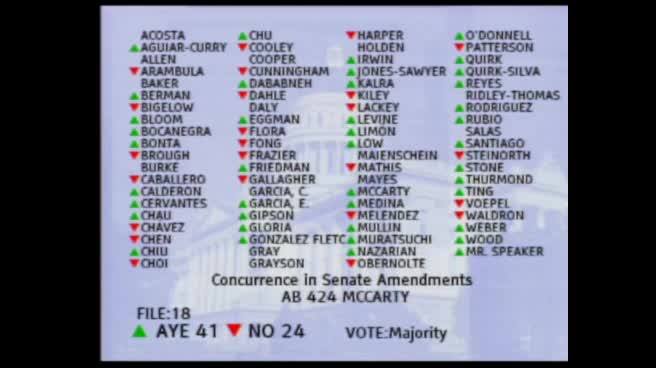
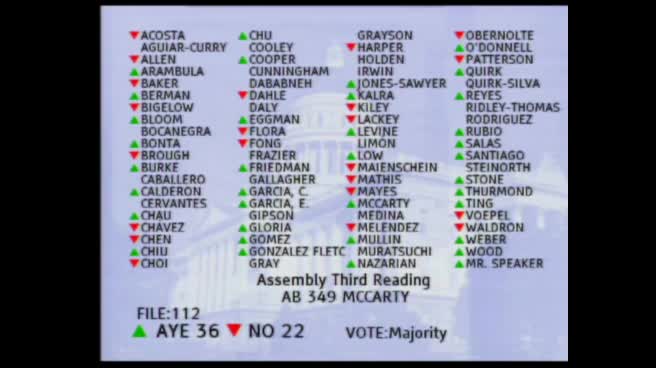
Bill Author

Bill Co-Author(s):