AB 850: Mental Health Services Oversight and Accountability Commission.
- Session Year: 2017-2018
- House: Assembly
- Latest Version Date: 2017-09-15
Existing law, the Mental Health Services Act, an initiative measure enacted by the voters as Proposition 63 at the November 2, 2004, statewide general election, establishes the Mental Health Services Oversight and Accountability Commission, and requires the commission to consist of 16 voting members, including, among others, two persons with a severe mental illness and a mental health professional. The act may be amended by the Legislature by a 2/3 vote of both houses and only so long as the amendment is consistent with and furthers the intent of the act. The Legislature may clarify procedures and terms of the act by majority vote.
This bill would require the Governor to appoint an additional member to the commission who has knowledge and experience in reducing mental health disparities, especially for racial and ethnic communities. The bill would state the finding and declaration of the Legislature that this change is consistent with and furthers the intent of the act.
This bill would incorporate additional changes to Section 5845 of the Welfare and Institutions Code proposed by AB 1688 to be operative only if this bill and AB 1688 are enacted and this bill is enacted last.
Existing law, the Mental Health Services Act, an initiative measure enacted by the voters as Proposition 63 at the November 2, 2004, statewide general election, establishes the Mental Health Services Oversight and Accountability Commission, and requires the commission to consist of 16 voting members, including, among others, two persons with a severe mental illness and a mental health professional. The act may be amended by the Legislature by a 2/3 vote of both houses and only so long as the amendment is consistent with and furthers the intent of the act. The Legislature may clarify procedures and terms of the act by majority vote.
This bill would require the Governor to appoint an additional member to the commission who has knowledge and experience in reducing mental health disparities, especially for racial and ethnic communities. The bill would state the finding and declaration of the Legislature that this change is consistent with and furthers the intent of the act.
This bill would incorporate additional changes to Section 5845 of the Welfare and Institutions Code proposed by AB 1688 to be operative only if this bill and AB 1688 are enacted and this bill is enacted last.
Existing law, the Mental Health Services Act, an initiative measure enacted by the voters as Proposition 63 at the November 2, 2004, statewide general election, establishes the Mental Health Services Oversight and Accountability Commission, and requires the commission to consist of 16 voting members, including, among others, two persons with a severe mental illness and a mental health professional. The act may be amended by the Legislature by a 2/3 vote of both houses and only so long as the amendment is consistent with and furthers the intent of the act. The Legislature may clarify procedures and terms of the act by majority vote.
This bill would require the Governor to appoint an additional member to the commission who has knowledge and experience in reducing mental health disparities, especially for racial and ethnic communities. The bill would state the finding and declaration of the Legislature that this change is consistent with and furthers the intent of the act.
Existing law, the Mental Health Services Act, an initiative measure enacted by the voters as Proposition 63 at the November 2, 2004, statewide general election, establishes the Mental Health Services Oversight and Accountability Commission, and requires the commission to consist of 16 voting members, including, among others, two persons with a severe mental illness and a mental health professional. The act may be amended by the Legislature by a 2/3 vote of both houses and only so long as the amendment is consistent with and furthers the intent of the act. The Legislature may clarify procedures and terms of the act by majority vote.
This bill would require the Governor to appoint an additional member to the commission who has knowledge and experience in reducing mental health disparities, especially for racial and ethnic communities. The bill would state the finding and declaration of the Legislature that this change is consistent with and furthers the intent of the act.
(a)The Mental Health Services Oversight and Accountability Commission is hereby established to oversee Part 3 (commencing with Section 5800), the Adult and Older Adult Mental Health System of Care Act; Part 3.1 (commencing with Section 5820), Human Resources, Education, and Training Programs; Part 3.2 (commencing with Section 5830), Innovative Programs; Part 3.6 (commencing with Section 5840), Prevention and Early Intervention Programs; and Part 4 (commencing with Section 5850), the Childrens Mental Health Services Act. The commission shall replace the advisory committee established pursuant to Section 5814. The commission shall consist of 17 voting members as follows:
(1)The Attorney General or his or her designee.
(2)The Superintendent of Public Instruction or his or her designee.
(3)The Chairperson of the Senate Health and Human Services Committee or another member of the Senate selected by the President pro Tempore of the Senate.
(4)The Chairperson of the Assembly Health Committee or another member of the Assembly selected by the Speaker of the Assembly.
(5)Two persons with a severe mental illness, a family member of an adult or senior with a severe mental illness, a family member of a child who has or has had a severe mental illness, a physician specializing in alcohol and drug treatment, a mental health professional, a county sheriff, a superintendent of a school district, a representative of a labor organization, a representative of an employer with less than 500 employees and a representative of an employer with more than 500 employees, a person with knowledge and experience in reducing mental health disparities, especially for racial and ethnic communities, and a representative of a health care services plan or insurer, all appointed by the Governor. In making appointments, the Governor shall seek individuals who have had personal or family experience with mental illness. At least one of the persons appointed pursuant to this paragraph shall have a background in auditing.
(b)Members shall serve without compensation, but shall be reimbursed for all actual and necessary expenses incurred in the performance of their duties.
(c)The term of each member shall be three years, to be staggered so that approximately one-third of the appointments expire in each year.
(d)In carrying out its duties and responsibilities, the commission may do all of the following:
(1)Meet at least once each quarter at any time and location convenient to the public as it may deem appropriate. All meetings of the commission shall be open to the public.
(2)Within the limit of funds allocated for these purposes, pursuant to the laws and regulations governing state civil service, employ staff, including any clerical, legal, and technical assistance as may appear necessary. The commission shall administer its operations separate and apart from the State Department of Health Care Services and the California Health and Human Services Agency.
(3)Establish technical advisory committees such as a committee of consumers and family members.
(4)Employ all other appropriate strategies necessary or convenient to enable it to fully and adequately perform its duties and exercise the powers expressly granted, notwithstanding any authority expressly granted to any officer or employee of state government.
(5)Enter into contracts.
(6)Obtain data and information from the State Department of Health Care Services, the Office of Statewide Health Planning and Development, or other state or local entities that receive Mental Health Services Act funds, for the commission to utilize in its oversight, review, training and technical assistance, accountability, and evaluation capacity regarding projects and programs supported with Mental Health Services Act funds.
(7)Participate in the joint state-county decisionmaking process, as contained in Section 4061, for training, technical assistance, and regulatory resources to meet the mission and goals of the states mental health system.
(8)Develop strategies to overcome stigma and discrimination, and accomplish all other objectives of Part 3.2 (commencing with Section 5830), 3.6 (commencing with Section 5840), and the other provisions of the act establishing this commission.
(9)At any time, advise the Governor or the Legislature regarding actions the state may take to improve care and services for people with mental illness.
(10)If the commission identifies a critical issue related to the performance of a county mental health program, it may refer the issue to the State Department of Health Care Services pursuant to Section 5655.
(11)Assist in providing technical assistance to accomplish the purposes of the Mental Health Services Act, Part 3 (commencing with Section 5800), and Part 4 (commencing with Section 5850) in collaboration with the State Department of Health Care Services and in consultation with the County Behavioral Health Directors Association of California.
(12)Work in collaboration with the State Department of Health Care Services and the California Mental Health Planning Council, and in consultation with the County Behavioral Health Directors Association of California, in designing a comprehensive joint plan for a coordinated evaluation of client outcomes in the community-based mental health system, including, but not limited to, parts listed in subdivision (a). The California Health and Human Services Agency shall lead this comprehensive joint plan effort.
SEC. 1.5.Section 5845 of the Welfare and Institutions Code is amended to read:5845.(a)The Mental Health Services Oversight and Accountability Commission is hereby established to oversee Part 3 (commencing with Section 5800), the Adult and Older Adult Mental Health System of Care Act; Part 3.1 (commencing with Section 5820), Human Resources, Education, and Training Programs; Part 3.2 (commencing with Section 5830), Innovative Programs; Part 3.6 (commencing with Section 5840), Prevention and Early Intervention Programs; and Part 4 (commencing with Section 5850), the Childrens Mental Health Services Act. The commission shall replace the advisory committee established pursuant to Section 5814. The commission shall consist of 17 voting members as follows:
(1)The Attorney General or his or her designee.
(2)The Superintendent of Public Instruction or his or her designee.
(3)The Chairperson of the Senate Health and Human Services Committee or another member of the Senate selected by the President pro Tempore of the Senate.
(4)The Chairperson of the Assembly Health Committee or another member of the Assembly selected by the Speaker of the Assembly.
(5)Two persons with a severe mental illness, a family member of an adult or senior with a severe mental illness, a family member of a child who has or has had a severe mental illness, a physician specializing in alcohol and drug treatment, a mental health professional, a county sheriff, a superintendent of a school district, a representative of a labor organization, a representative of an employer with less than 500 employees and a representative of an employer with more than 500 employees, a person with knowledge and experience in reducing mental health disparities, especially for racial and ethnic communities, and a representative of a health care services plan or insurer, all appointed by the Governor. In making appointments, the Governor shall seek individuals who have had personal or family experience with mental illness. At least one of the persons appointed pursuant to this paragraph shall have a background in auditing.
(b)Members shall serve without compensation, but shall be reimbursed for all actual and necessary expenses incurred in the performance of their duties.
(c)The term of each member shall be three years, to be staggered so that approximately one-third of the appointments expire in each year.
(d)In carrying out its duties and responsibilities, the commission may do all of the following:
(1)Meet at least once each quarter at any time and location convenient to the public as it may deem appropriate. All meetings of the commission shall be open to the public.
(2)Within the limit of funds allocated for these purposes, pursuant to the laws and regulations governing state civil service, employ staff, including any clerical, legal, and technical assistance as may appear necessary. The commission shall administer its operations separate and apart from the State Department of Health Care Services and the California Health and Human Services Agency.
(3)Establish technical advisory committees such as a committee of consumers and family members.
(4)Employ all other appropriate strategies necessary or convenient to enable it to fully and adequately perform its duties and exercise the powers expressly granted, notwithstanding any authority expressly granted to any officer or employee of state government.
(5)Enter into contracts.
(6)Obtain data and information from the State Department of Health Care Services, the Office of Statewide Health Planning and Development, or other state or local entities that receive Mental Health Services Act funds, for the commission to utilize in its oversight, review, training and technical assistance, accountability, and evaluation capacity regarding projects and programs supported with Mental Health Services Act funds.
(7)Participate in the joint state-county decisionmaking process, as contained in Section 4061, for training, technical assistance, and regulatory resources to meet the mission and goals of the states mental health system.
(8)Develop strategies to overcome stigma and discrimination, and accomplish all other objectives of Part 3.2 (commencing with Section 5830), 3.6 (commencing with Section 5840), and the other provisions of the act establishing this commission.
(9)At any time, advise the Governor or the Legislature regarding actions the state may take to improve care and services for people with mental illness.
(10)If the commission identifies a critical issue related to the performance of a county mental health program, it may refer the issue to the State Department of Health Care Services pursuant to Section 5655.
(11)Assist in providing technical assistance to accomplish the purposes of the Mental Health Services Act, Part 3 (commencing with Section 5800), and Part 4 (commencing with Section 5850) in collaboration with the State Department of Health Care Services and in consultation with the County Behavioral Health Directors Association of California.
(12)Work in collaboration with the State Department of Health Care Services and the California Behavioral Health Planning Council, and in consultation with the County Behavioral Health Directors Association of California, in designing a comprehensive joint plan for a coordinated evaluation of client outcomes in the community-based mental health system, including, but not limited to, parts listed in subdivision (a). The California Health and Human Services Agency shall lead this comprehensive joint plan effort.
SEC. 2.Section 1.5 of this bill incorporates amendments to Section 5845 of the Welfare and Institutions Code proposed by both this bill and Assembly Bill 1688. That section shall only become operative if (1) both bills are enacted and become effective on or before January 1, 2018, (2) each bill amends Section 5845 of the Welfare and Institutions Code, and (3) this bill is enacted after Assembly Bill 1688, in which case Section 1 of this bill shall not become operative.
SEC. 3.The Legislature finds and declares that this act is consistent with and furthers the intent of the Mental Health Services Act within the meaning of Section 18 of the Mental Health Services Act.
(a)The Mental Health Services Oversight and Accountability Commission is hereby established to oversee Part 3 (commencing with Section 5800), the Adult and Older Adult Mental Health System of Care Act; Part 3.1 (commencing with Section 5820), Human Resources, Education, and Training Programs; Part 3.2 (commencing with Section 5830), Innovative Programs; Part 3.6 (commencing with Section 5840), Prevention and Early Intervention Programs; and Part 4 (commencing with Section 5850), the Childrens Mental Health Services Act. The commission shall replace the advisory committee established pursuant to Section 5814. The commission shall consist of 17 voting members as follows:
(1)The Attorney General or his or her designee.
(2)The Superintendent of Public Instruction or his or her designee.
(3)The Chairperson of the Senate Health and Human Services Committee or another member of the Senate selected by the President pro Tempore of the Senate.
(4)The Chairperson of the Assembly Health Committee or another member of the Assembly selected by the Speaker of the Assembly.
(5)Two persons with a severe mental illness, a family member of an adult or senior with a severe mental illness, a family member of a child who has or has had a severe mental illness, a physician specializing in alcohol and drug treatment, a mental health professional, a county sheriff, a superintendent of a school district, a representative of a labor organization, a representative of an employer with less than 500 employees and a representative of an employer with more than 500 employees, a person with knowledge and experience in reducing mental health disparities, especially for racial and ethnic communities, and a representative of a health care services plan or insurer, all appointed by the Governor. In making appointments, the Governor shall seek individuals who have had personal or family experience with mental illness. At least one of the persons appointed pursuant to this paragraph shall have a background in auditing.
(b)Members shall serve without compensation, but shall be reimbursed for all actual and necessary expenses incurred in the performance of their duties.
(c)The term of each member shall be three years, to be staggered so that approximately one-third of the appointments expire in each year.
(d)In carrying out its duties and responsibilities, the commission may do all of the following:
(1)Meet at least once each quarter at any time and location convenient to the public as it may deem appropriate. All meetings of the commission shall be open to the public.
(2)Within the limit of funds allocated for these purposes, pursuant to the laws and regulations governing state civil service, employ staff, including any clerical, legal, and technical assistance as may appear necessary. The commission shall administer its operations separate and apart from the State Department of Health Care Services and the California Health and Human Services Agency.
(3)Establish technical advisory committees such as a committee of consumers and family members.
(4)Employ all other appropriate strategies necessary or convenient to enable it to fully and adequately perform its duties and exercise the powers expressly granted, notwithstanding any authority expressly granted to any officer or employee of state government.
(5)Enter into contracts.
(6)Obtain data and information from the State Department of Health Care Services, the Office of Statewide Health Planning and Development, or other state or local entities that receive Mental Health Services Act funds, for the commission to utilize in its oversight, review, training and technical assistance, accountability, and evaluation capacity regarding projects and programs supported with Mental Health Services Act funds.
(7)Participate in the joint state-county decisionmaking process, as contained in Section 4061, for training, technical assistance, and regulatory resources to meet the mission and goals of the states mental health system.
(8)Develop strategies to overcome stigma and discrimination, and accomplish all other objectives of Part 3.2 (commencing with Section 5830), 3.6 (commencing with Section 5840), and the other provisions of the act establishing this commission.
(9)At any time, advise the Governor or the Legislature regarding actions the state may take to improve care and services for people with mental illness.
(10)If the commission identifies a critical issue related to the performance of a county mental health program, it may refer the issue to the State Department of Health Care Services pursuant to Section 5655.
(11)Assist in providing technical assistance to accomplish the purposes of the Mental Health Services Act, Part 3 (commencing with Section 5800), and Part 4 (commencing with Section 5850) in collaboration with the State Department of Health Care Services and in consultation with the County Behavioral Health Directors Association of California.
(12)Work in collaboration with the State Department of Health Care Services and the California Mental Health Planning Council, and in consultation with the County Behavioral Health Directors Association of California, in designing a comprehensive joint plan for a coordinated evaluation of client outcomes in the community-based mental health system, including, but not limited to, parts listed in subdivision (a). The California Health and Human Services Agency shall lead this comprehensive joint plan effort.
SEC. 1.5.Section 5845 of the Welfare and Institutions Code is amended to read:5845.(a)The Mental Health Services Oversight and Accountability Commission is hereby established to oversee Part 3 (commencing with Section 5800), the Adult and Older Adult Mental Health System of Care Act; Part 3.1 (commencing with Section 5820), Human Resources, Education, and Training Programs; Part 3.2 (commencing with Section 5830), Innovative Programs; Part 3.6 (commencing with Section 5840), Prevention and Early Intervention Programs; and Part 4 (commencing with Section 5850), the Childrens Mental Health Services Act. The commission shall replace the advisory committee established pursuant to Section 5814. The commission shall consist of 16 17 voting members as follows:
(1)The Attorney General or his or her designee.
(2)The Superintendent of Public Instruction or his or her designee.
(3)The Chairperson of the Senate Health and Human Services Committee or another member of the Senate selected by the President pro Tempore of the Senate.
(4)The Chairperson of the Assembly Health Committee or another member of the Assembly selected by the Speaker of the Assembly.
(5)Two persons with a severe mental illness, a family member of an adult or senior with a severe mental illness, a family member of a child who has or has had a severe mental illness, a physician specializing in alcohol and drug treatment, a mental health professional, a county sheriff, a superintendent of a school district, a representative of a labor organization, a representative of an employer with less than 500 employees and a representative of an employer with more than 500 employees, a person with knowledge and experience in reducing mental health disparities, especially for racial and ethnic communities, and a representative of a health care services plan or insurer, all appointed by the Governor. In making appointments, the Governor shall seek individuals who have had personal or family experience with mental illness. At least one of the persons appointed pursuant to this paragraph shall have a background in auditing.
(b)Members shall serve without compensation, but shall be reimbursed for all actual and necessary expenses incurred in the performance of their duties.
(c)The term of each member shall be three years, to be staggered so that approximately one-third of the appointments expire in each year.
(d)In carrying out its duties and responsibilities, the commission may do all of the following:
(1)Meet at least once each quarter at any time and location convenient to the public as it may deem appropriate. All meetings of the commission shall be open to the public.
(2)Within the limit of funds allocated for these purposes, pursuant to the laws and regulations governing state civil service, employ staff, including any clerical, legal, and technical assistance as may appear necessary. The commission shall administer its operations separate and apart from the State Department of Health Care Services and the California Health and Human Services Agency.
(3)Establish technical advisory committees such as a committee of consumers and family members.
(4)Employ all other appropriate strategies necessary or convenient to enable it to fully and adequately perform its duties and exercise the powers expressly granted, notwithstanding any authority expressly granted to any officer or employee of state government.
(5)Enter into contracts.
(6)Obtain data and information from the State Department of Health Care Services, the Office of Statewide Health Planning and Development, or other state or local entities that receive Mental Health Services Act funds, for the commission to utilize in its oversight, review, training and technical assistance, accountability, and evaluation capacity regarding projects and programs supported with Mental Health Services Act funds.
(7)Participate in the joint state-county decisionmaking process, as contained in Section 4061, for training, technical assistance, and regulatory resources to meet the mission and goals of the states mental health system.
(8)Develop strategies to overcome stigma and discrimination, and accomplish all other objectives of Part 3.2 (commencing with Section 5830), 3.6 (commencing with Section 5840), and the other provisions of the act establishing this commission.
(9)At any time, advise the Governor or the Legislature regarding actions the state may take to improve care and services for people with mental illness.
(10)If the commission identifies a critical issue related to the performance of a county mental health program, it may refer the issue to the State Department of Health Care Services pursuant to Section 5655.
(11)Assist in providing technical assistance to accomplish the purposes of the Mental Health Services Act, Part 3 (commencing with Section 5800), and Part 4 (commencing with Section 5850) in collaboration with the State Department of Health Care Services and in consultation with the California Mental County Behavioral Health Directors Association. Association of California.
(12)Work in collaboration with the State Department of Health Care Services and the California Mental Behavioral Health Planning Council, and in consultation with the California Mental County Behavioral Health Directors Association, Association of California, in designing a comprehensive joint plan for a coordinated evaluation of client outcomes in the community-based mental health system, including, but not limited to, parts listed in subdivision (a). The California Health and Human Services Agency shall lead this comprehensive joint plan effort.
SEC. 2.Section 1.5 of this bill incorporates amendments to Section 5845 of the Welfare and Institutions Code proposed by both this bill and Assembly Bill 1688. That section shall only become operative if (1) both bills are enacted and become effective on or before January 1, 2018, (2) each bill amends Section 5845 of the Welfare and Institutions Code, and (3) this bill is enacted after Assembly Bill 1688, in which case Section 1 of this bill shall not become operative.
SEC. 2.SEC. 3.The Legislature finds and declares that this act is consistent with and furthers the intent of the Mental Health Services Act within the meaning of Section 18 of the Mental Health Services Act.
(a)The Mental Health Services Oversight and Accountability Commission is hereby established to oversee Part 3 (commencing with Section 5800), the Adult and Older Adult Mental Health System of Care Act; Part 3.1 (commencing with Section 5820), Human Resources, Education, and Training Programs; Part 3.2 (commencing with Section 5830), Innovative Programs; Part 3.6 (commencing with Section 5840), Prevention and Early Intervention Programs; and Part 4 (commencing with Section 5850), the Childrens Mental Health Services Act. The commission shall replace the advisory committee established pursuant to Section 5814. The commission shall consist of 17 voting members as follows:
(1)The Attorney General or his or her designee.
(2)The Superintendent of Public Instruction or his or her designee.
(3)The Chairperson of the Senate Health and Human Services Committee or another member of the Senate selected by the President pro Tempore of the Senate.
(4)The Chairperson of the Assembly Health Committee or another member of the Assembly selected by the Speaker of the Assembly.
(5)Two persons with a severe mental illness, a family member of an adult or senior with a severe mental illness, a family member of a child who has or has had a severe mental illness, a physician specializing in alcohol and drug treatment, a mental health professional, a county sheriff, a superintendent of a school district, a representative of a labor organization, a representative of an employer with less than 500 employees and a representative of an employer with more than 500 employees, a person with knowledge and experience in reducing mental health disparities, especially for racial and ethnic communities, and a representative of a health care services plan or insurer, all appointed by the Governor. In making appointments, the Governor shall seek individuals who have had personal or family experience with mental illness. At least one of the persons appointed pursuant to this paragraph shall have a background in auditing.
(b)Members shall serve without compensation, but shall be reimbursed for all actual and necessary expenses incurred in the performance of their duties.
(c)The term of each member shall be three years, to be staggered so that approximately one-third of the appointments expire in each year.
(d)In carrying out its duties and responsibilities, the commission may do all of the following:
(1)Meet at least once each quarter at any time and location convenient to the public as it may deem appropriate. All meetings of the commission shall be open to the public.
(2)Within the limit of funds allocated for these purposes, pursuant to the laws and regulations governing state civil service, employ staff, including any clerical, legal, and technical assistance as may appear necessary. The commission shall administer its operations separate and apart from the State Department of Health Care Services and the California Health and Human Services Agency.
(3)Establish technical advisory committees such as a committee of consumers and family members.
(4)Employ all other appropriate strategies necessary or convenient to enable it to fully and adequately perform its duties and exercise the powers expressly granted, notwithstanding any authority expressly granted to any officer or employee of state government.
(5)Enter into contracts.
(6)Obtain data and information from the State Department of Health Care Services, the Office of Statewide Health Planning and Development, or other state or local entities that receive Mental Health Services Act funds, for the commission to utilize in its oversight, review, training and technical assistance, accountability, and evaluation capacity regarding projects and programs supported with Mental Health Services Act funds.
(7)Participate in the joint state-county decisionmaking process, as contained in Section 4061, for training, technical assistance, and regulatory resources to meet the mission and goals of the states mental health system.
(8)Develop strategies to overcome stigma and discrimination, and accomplish all other objectives of Part 3.2 (commencing with Section 5830), 3.6 (commencing with Section 5840), and the other provisions of the act establishing this commission.
(9)At any time, advise the Governor or the Legislature regarding actions the state may take to improve care and services for people with mental illness.
(10)If the commission identifies a critical issue related to the performance of a county mental health program, it may refer the issue to the State Department of Health Care Services pursuant to Section 5655.
(11)Assist in providing technical assistance to accomplish the purposes of the Mental Health Services Act, Part 3 (commencing with Section 5800), and Part 4 (commencing with Section 5850) in collaboration with the State Department of Health Care Services and in consultation with the California Mental Health Directors Association. County Behavioral Health Directors Association of California.
(12)Work in collaboration with the State Department of Health Care Services and the California Mental Health Planning Council, and in consultation with the California Mental Health Directors Association, County Behavioral Health Directors Association of California, in designing a comprehensive joint plan for a coordinated evaluation of client outcomes in the community-based mental health system, including, but not limited to, parts listed in subdivision (a). The California Health and Human Services Agency shall lead this comprehensive joint plan effort.
SEC. 2.The Legislature finds and declares that this act is consistent with and furthers the intent of the Mental Health Services Act within the meaning of Section 18 of the Mental Health Services Act.
(a)The Mental Health Services Oversight and Accountability Commission is hereby established to oversee Part 3 (commencing with Section 5800), the Adult and Older Adult Mental Health System of Care Act; Part 3.1 (commencing with Section 5820), Human Resources, Education, and Training Programs; Part 3.2 (commencing with Section 5830), Innovative Programs; Part 3.6 (commencing with Section 5840), Prevention and Early Intervention Programs; and Part 4 (commencing with Section 5850), the Childrens Mental Health Services Act. The commission shall replace the advisory committee established pursuant to Section 5814. The commission shall consist of 16 17 voting members as follows:
(1)The Attorney General or his or her designee.
(2)The Superintendent of Public Instruction or his or her designee.
(3)The Chairperson of the Senate Health and Human Services Committee or another member of the Senate selected by the President pro Tempore of the Senate.
(4)The Chairperson of the Assembly Health Committee or another member of the Assembly selected by the Speaker of the Assembly.
(5)Two persons with a severe mental illness, a family member of an adult or senior with a severe mental illness, a family member of a child who has or has had a severe mental illness, a physician specializing in alcohol and drug treatment, a mental health professional, a county sheriff, a superintendent of a school district, a representative of a labor organization, a representative of an employer with less than 500 employees and a representative of an employer with more than 500 employees, a person with knowledge and experience in reducing mental health disparities, especially for racial and ethnic communities, and a representative of a health care services plan or insurer, all appointed by the Governor. In making appointments, the Governor shall seek individuals who have had personal or family experience with mental illness. At least one of the persons appointed pursuant to this paragraph shall have a background in auditing.
(b)Members shall serve without compensation, but shall be reimbursed for all actual and necessary expenses incurred in the performance of their duties.
(c)The term of each member shall be three years, to be staggered so that approximately one-third of the appointments expire in each year.
(d)In carrying out its duties and responsibilities, the commission may do all of the following:
(1)Meet at least once each quarter at any time and location convenient to the public as it may deem appropriate. All meetings of the commission shall be open to the public.
(2)Within the limit of funds allocated for these purposes, pursuant to the laws and regulations governing state civil service, employ staff, including any clerical, legal, and technical assistance as may appear necessary. The commission shall administer its operations separate and apart from the State Department of Health Care Services and the California Health and Human Services Agency.
(3)Establish technical advisory committees such as a committee of consumers and family members.
(4)Employ all other appropriate strategies necessary or convenient to enable it to fully and adequately perform its duties and exercise the powers expressly granted, notwithstanding any authority expressly granted to any officer or employee of state government.
(5)Enter into contracts.
(6)Obtain data and information from the State Department of Health Care Services, the Office of Statewide Health Planning and Development, or other state or local entities that receive Mental Health Services Act funds, for the commission to utilize in its oversight, review, training and technical assistance, accountability, and evaluation capacity regarding projects and programs supported with Mental Health Services Act funds.
(7)Participate in the joint state-county decisionmaking process, as contained in Section 4061, for training, technical assistance, and regulatory resources to meet the mission and goals of the states mental health system.
(8)Develop strategies to overcome stigma and discrimination, and accomplish all other objectives of Part 3.2 (commencing with Section 5830), 3.6 (commencing with Section 5840), and the other provisions of the act establishing this commission.
(9)At any time, advise the Governor or the Legislature regarding actions the state may take to improve care and services for people with mental illness.
(10)If the commission identifies a critical issue related to the performance of a county mental health program, it may refer the issue to the State Department of Health Care Services pursuant to Section 5655.
(11)Assist in providing technical assistance to accomplish the purposes of the Mental Health Services Act, Part 3 (commencing with Section 5800), and Part 4 (commencing with Section 5850) in collaboration with the State Department of Health Care Services and in consultation with the California Mental Health Directors Association.
(12)Work in collaboration with the State Department of Health Care Services and the California Mental Health Planning Council, and in consultation with the California Mental Health Directors Association, in designing a comprehensive joint plan for a coordinated evaluation of client outcomes in the community-based mental health system, including, but not limited to, parts listed in subdivision (a). The California Health and Human Services Agency shall lead this comprehensive joint plan effort.
SEC. 2.The Legislature finds and declares that this act is consistent with and furthers the intent of the Mental Health Services Act within the meaning of Section 18 of the Mental Health Services Act.
|
Date
|
Status
|
|---|---|
| Jan 12, 2018 | Stricken from file. |
| Jan 3, 2018 | Consideration of Governor's veto pending. |
| Oct 2, 2017 | Vetoed by Governor. |
| Sep 25, 2017 | Enrolled and presented to the Governor at 12 p.m. |
| Sep 14, 2017 | Senate amendments concurred in. To Engrossing and Enrolling. |
| Sep 14, 2017 | Senate amendments concurred in. To Engrossing and Enrolling. (Ayes 78. Noes 0. Page 3376.). |
| Sep 13, 2017 | Assembly Rule 77(a) suspended. |
| Sep 13, 2017 | In Assembly. Concurrence in Senate amendments pending. May be considered on or after September 15 pursuant to Assembly Rule 77. |
| Sep 12, 2017 | Read third time. Passed. Ordered to the Assembly. |
| Sep 11, 2017 | Read second time. Ordered to third reading. |
| Sep 8, 2017 | Read third time and amended. Ordered to second reading. |
| Jun 27, 2017 | Read second time. Ordered to third reading. |
| Jun 26, 2017 | From committee: Be ordered to second reading pursuant to Senate Rule 28.8. |
| Jun 12, 2017 | Read second time and amended. Re-referred to Com. on APPR. |
| Jun 8, 2017 | From committee: Amend, and do pass as amended and re-refer to Com. on APPR. (Ayes 9. Noes 0.) (June 7). |
| May 18, 2017 | Referred to Com. on HEALTH. |
| May 4, 2017 | In Senate. Read first time. To Com. on RLS. for assignment. |
| May 4, 2017 | Read third time. Passed. Ordered to the Senate. (Ayes 76. Noes 0. Page 1392.) |
| Apr 27, 2017 | Read second time. Ordered to Consent Calendar. |
| Apr 26, 2017 | From committee: Do pass. To Consent Calendar. (Ayes 16. Noes 0.) (April 26). |
| Apr 5, 2017 | From committee: Do pass and re-refer to Com. on APPR. (Ayes 13. Noes 0.) (April 4). Re-referred to Com. on APPR. |
| Mar 2, 2017 | Referred to Com. on HEALTH. |
| Feb 17, 2017 | From printer. May be heard in committee March 19. |
| Feb 16, 2017 | Read first time. To print. |
|
Date
|
Description
|
Location
|
Votes
|
|
|---|---|---|---|---|
| Sep 14, 2017 | AB 850 CHAU Concurrence in Senate Amendments | Assembly Floor |
Passed |
|
| Sep 12, 2017 | Assembly 3rd Reading AB850 Chau et al. By Pan | Senate Floor |
Passed |
|
| Jun 7, 2017 | Do pass as amended, but first amend, and re-refer to the Committee on [Appropriations] | Senate Standing Committee on Health |
Passed |
|
| May 4, 2017 | AB 850 CHAU Consent Calendar Second Day Regular Session | Assembly Floor |
Passed |
|
| Apr 26, 2017 | Do pass. To Consent Calendar. | Assembly Standing Committee on Appropriations |
Passed |
|
| Apr 4, 2017 | Do pass and be re-referred to the Committee on [Appropriations] | Assembly Standing Committee on Health |
Passed |
This list shows positions taken on this bill by organizations on the date displayed, which is linked to the original source.
Positions by individuals are not included.
|
Organization
|
Position
|
Date
|
|---|---|---|
| African American Health Institute of San Bernardino | ** Support | Sep 9, 2017 |
| Alliance for Boys and Men of Color | ** Support | Sep 9, 2017 |
| Asian Pacific Counseling & Treatment Centers | ** Support | Sep 9, 2017 |
| California Access Coalition | ** Support | Sep 9, 2017 |
| California Council Of Community Behavioral Health Agencies | ** Support | Sep 9, 2017 |
| California Pan-Ethnic Health Network | ** Support | Sep 9, 2017 |
| California Psychological Association | ** Support | Sep 9, 2017 |
| California Reducing Disparities Project | * Support | Apr 4, 2017 |
| California Youth Empowerment Network | ** Support | Sep 9, 2017 |
| CaliforniaHealth+ Advocates | ** Support | Sep 9, 2017 |
| Chinese-American Elected Officials | ** Support | Sep 9, 2017 |
| Community Clinic Association | ** Support | Sep 9, 2017 |
| Department Of Finance | ** Against | Sep 9, 2017 |
| Disability Rights California | ** Support | Sep 9, 2017 |
| Diversity in Health Training Institute | ** Support | Sep 9, 2017 |
| Family Alliance for Counseling Tools and Resolution | ** Support | Sep 9, 2017 |
| korean community services | ** Support | Sep 9, 2017 |
| latino commission on alcohol and drug abuse services | ** Support | Sep 9, 2017 |
| Mental Health America of California | ** Support | Sep 9, 2017 |
| muslim american society social services foundation | ** Support | Sep 9, 2017 |
| National Asian Pacific American Families Against Substance Abuse | ** Support | Sep 9, 2017 |
| National Association of Social Workers California Chapter | ** Support | Sep 9, 2017 |
| Native Directions Inc. | ** Support | Sep 9, 2017 |
| Racial and Ethnic Mental Health Disparities Coalition | ** Support | Sep 9, 2017 |
| Several individuals | ** Support | Sep 9, 2017 |
| Three Rivers Indian Lodge | ** Support | Sep 9, 2017 |
| western center on law & poverty | ** Support | Sep 9, 2017 |
GOVERNOR'S VETO
GV Bill Id:AB 850
Author:(Chau)
As Enrolled Ver:September 15, 2017
2/3 vote
ASSEMBLY: | 76-0 | (May 4, 2017) | SENATE: | 40-0 | (September 12, 2017) |
ASSEMBLY: | 78-0 | (September 14, 2017) |
Original Committee Reference: HEALTH
SUMMARY: Increases the membership of the Mental Health Services Oversight and Accountability Commission to include an individual with knowledge and experience in reducing mental health disparities, especially for racial and ethnic communities, to be appointed by the Governor.
The Senate amendments delete references to the California Mental Health Directors Association and replace them with the County Behavioral Health Directors Association and make changes to avoid chaptering out conflicts with AB 1688 (Committee on Health) of the current legislative session since this bill and AB 1688 both amend the same code sections.
FISCAL EFFECT: According to the Senate Appropriations Committee, pursuant to Senate Rule 28.8, negligible state costs.
This bill adds a member to the Mental Health Services Oversight and Accountability Commission who has experience in reducing mental health disparities. I believe the Commission as currently constituted is up to the task entrusted to it.
Analysis Prepared by: Paula Villescaz / HEALTH / (916) 319-2097 FN: 0002427
CONCURRENCE IN SENATE AMENDMENTS
CSA1 Bill Id:AB 850
Author:(Chau)
As Amended Ver: September 8, 2017
2/3 vote
ASSEMBLY: | 76-0 | (May 4, 2017) | SENATE: | 40-0 | (September 12, 2017) |
Original Committee Reference: HEALTH
SUMMARY: Increases the membership of the Mental Health Services Oversight and Accountability Commission (Commission) to include an individual with knowledge and experience in reducing mental health disparities, especially for racial and ethnic communities, to be appointed by the Governor.
The Senate amendments delete references to the California Mental Health Directors Association and replace them with the County Behavioral Health Directors Association and make changes to avoid chaptering out conflicts with AB 1688 (Committee on Health) of the current legislative session since this bill and AB 1688 both amend the same code sections.
EXISTING LAW:
- Establishes the Mental Health Services Act (MHSA), enacted by voters in 2004 as Proposition 63, to provide funds to counties to expand services, develop innovative programs, and integrated service plans for mentally ill children, adults, and seniors through a 1% income tax on personal income above $1 million.
- Establishes the Commission to oversee the implementation of MHSA.
- Establishes the following membership requirements for the Commission, appointed by the Governor unless otherwise specified:
- The Attorney General or his or her designee;
- The Superintendent of Public Instruction or his or her designee;
- A member of the Senate selected by the President pro Tempore of the Senate;
- A member of the Assembly selected by the Speaker of the Assembly;
- Two persons with a severe mental illness;
- A family member of an adult or senior with a severe mental illness;
- A family member of a child who has or has had a severe mental illness;
- A physician specializing in alcohol and drug treatment;
- A mental health professional;
- A county sheriff;
- A superintendent of a school district;
- A representative of a labor organization;
- A representative of an employer with less than 500 employees;
- A representative of an employer with more than 500 employees; and,
- A representative of a health care services plan or insurer.
- Specifies that the MHSA can only be amended by a two-thirds vote of both houses of the Legislature and only as long as the amendment is consistent with and furthers the intent of the MHSA. Permits provisions clarifying the procedures and terms of the MHSA to be added by majority vote.
FISCAL EFFECT: According to the Senate Appropriations Committee, pursuant to Senate Rule 28.8, negligible state costs.
COMMENTS: According to the author, the Commission was created to oversee the implementation and administration of the MHSA. The Commission currently has 16 members, appointed by various entities but primarily by the Governor. There are seats that represent various interests but none specifically to make sure that the needs of underserved communities, particularly racial and ethnic communities that represent approximately 60% of California's population, are addressed and included in the Commission's roles and responsibilities. There have been indications that since the MHSA was passed, the proportion of people from communities of color receiving mental health treatment is actually getting smaller. This bill would help address this issue by adding an additional member on the Commission with knowledge and experience in reducing mental health disparities for racial and ethnic communities to assist the Commission in addressing these critical issues.
Proposition 63 was passed by voters in November 2004. The MHSA imposes a 1% income tax on personal income in excess of $1 million and creates the 16 member Commission charged with overseeing the implementation of MHSA. The 2016-17 Governor's Budget projected that $1.9 billion in revenue would be deposited into the Mental Health Services Fund in fiscal year 2017-18. The MHSA addresses a broad continuum of prevention, early intervention and service needs as well as provided funding for infrastructure, technology, and training needs for the community mental health system. In addition to local programs, the MHSA authorizes up to 5% of revenues for state administrative functions performed by a variety of state entities such as the Department of Health Care Services (DHCS) and the Office of Statewide Health Planning and Development. It also funds evaluation of the MHSA by the Commission.
The Racial and Ethnic Mental Health Disparities Coalition (REMHDCO), sponsor of the bill, states that the bill would provide a new seat on the Commission for someone with knowledge of and commitment to reducing mental health disparities, especially for racial and ethnic communities. The Commission has significant influence on the continued implementation of the MHSA and REMHDCO believes this new seat is a crucial step to ensuring services are culturally competent, responsive, and representative of the diverse needs of all Californians.
The California Access Coalition (CAC) states in support of this bill that an important part of mental health oversight is ensuring equitable treatment of all populations. CAC believes it would help the Commission in this effort to have a standing appointment on the Commission be a person with expertise in these communities.
Analysis Prepared by: Paula Villescaz / HEALTH / (916) 319-2097 FN: 0002210
Office of Senate Floor Analyses (916) 651-1520 Fax: (916) 327-4478 | AB |
THIRD READING
Bill No: AB 850
: 9/8/17
SENATE HEALTH COMMITTEE: 9-0, 6/7/17
AYES: Hernandez, Nguyen, Atkins, Leyva, Mitchell, Monning, Newman, Nielsen, Roth
SENATE APPROPRIATIONS COMMITTEE: Senate Rule 28.8
ASSEMBLY FLOOR: 76-0, 5/4/17 (Consent) - See last page for vote
SOURCE: Racial and Ethnic Mental Health Disparities Coalition
DIGEST:
This bill adds a Governor-appointed member to the Mental Health Services Oversight and Accountability Commission who has knowledge and experience in reducing mental health disparities, especially for racial and ethnic communities.
Senate Floor Amendments of 9/8/17 address chaptering out conflicts with AB 1688 (Committee on Health).
Existing law:
- Establishes the Mental Health Services Oversight and Accountability Commission (MHSOAC) to develop strategies to overcome stigma, advise the Governor and the Legislature on mental health policy, and oversee the implementation of the Mental Health Services Act (MHSA), enacted by voters in 2004 as Proposition 63, which provides funds to counties to expand services and develop innovative programs and integrated service plans for mentally ill children, adults, and seniors through a 1% income tax on personal income above $1 million.
- Requires the MHSOAC to consist of 16 voting members as follows:
- The Attorney General or his or her designee;
- The Superintendent of Public Instruction or his or her designee;
- The Chair of the Senate Health and Human Services Committee or another member of the Senate selected by the President pro Tempore of the Senate;
- The Chair of the Assembly Health Committee or another member of the Assembly selected by the Speaker of the Assembly; and
- 12 members appointed by the Governor that include:
- Two people with a severe mental illness;
- A family member of an adult or senior with a severe mental illness;
- A family member of a child who has or has had a severe mental illness;
- A physician specializing in alcohol and drug treatment;
- A mental health professional;
- A county sheriff;
- A superintendent of a school district;
- A representative of a labor organization;
- A representative of an employer with less than 500 employees;
- A representative of an employer with more than 500 employees; and
- A representative of a health care services plan or insurer.
This bill adds a Governor-appointed member to the MHSOAC who has knowledge and experience in reducing mental health disparities, especially for racial and ethnic communities.
Comments
- Author’s statement. According to the author, the MHSAOC was created to oversee the implementation and administration of the MHSA. The MHSOAC currently has 16 members, appointed by various entities but primarily by the Governor. There are seats that represent various interests but none specifically to make sure that the needs of underserved communities, particularly racial and ethnic communities that represent approximately 60% of California’s population, are addressed and included in the MHSOAC’s roles and responsibilities. Although the MHSA provides opportunities for improving services for underserved communities, there is little attention at the state level to ensure that reducing disparities is taking place. For example, there have been indications that since the MHSA was passed, the proportion of people from communities of color receiving mental health treatment is actually getting smaller. AB 850 helps address this issue by adding an additional member on the MHSOAC with knowledge and experience in reducing mental health disparities for racial and ethnic communities.
- MHSA. The MHSA requires each county mental health program to prepare and submit a three-year plan to DHCS that must be updated each year and approved by DHCS after review and comment by the MHSOAC. DHCS is required to provide guidelines to counties related to each component of the MHSA, including, among other things, community services and support content to provide integrated mental health and other support services to those whose needs are not currently met through other funding sources; prevention and early intervention content to provide services to avert mental health crises; and innovative program content to improve access to mental health services. In the three-year plans, counties are required to include a list of all programs for which MHSA funding is being requested and that identifies how the funds will be spent and which populations will be served. Counties also must submit their plans for approval to the MHSOAC before they can spend certain categories of funding. Under current law, counties have three years to use MHSA funds allocated to them. After the three years, any unspent funds are required to be reverted back to the state for allocation to other counties in future years. The MHSA provides funding for programs within five components:
- Community Services and Supports: Provides direct mental health services to the severely and seriously mentally ill, such as mental health treatment, cost of health care treatment, and housing supports. Regulation requires counties to direct the majority of its Community Services and Supports funds to Full‑Service Partnerships (FSPs). FSPs are county coordinated plans, in collaboration with the client and the family to provide the full spectrum of community services. These services consist of mental health services and supports, such as peer support and crisis intervention services; and non-mental health services and supports, such as food, clothing, housing, and the cost of medical treatment;
- Prevention and Early Intervention: Provides services to mental health clients in order to help prevent mental illness from becoming severe and disabling;
- Innovation: Provides services and approaches that are creative in an effort to address mental health clients’ persistent issues, such as improving services for underserved or unserved populations within the community;
- Capital Facilities and Technological Needs: Creates additional county infrastructure such as additional clinics and facilities and/or development of a technological infrastructure for the mental health system, such as electronic health records for mental health services; and,
- Workforce Education and Training: Provides training for existing county mental health employees, outreach and recruitment to increase employment in the mental health system, and financial incentives to recruit or retain employees within the public mental health system.
- California Reducing Disparities Project (CRDP). The CRDP was started by the former Department of Mental Health and is currently a project administered by the Department of Public Health (DPH) that is funded by the MHSA. The CRDP has a goal of improving access and services to five target populations: African-American; Asian and Pacific Islander; Latino; Lesbian, Gay, Bisexual, Transgender, Queer, and Questioning (LGBTQ); and Native-American communities. A Strategic Plan to reduce mental health disparities in the target populations was drafted by various entities that represent the target populations and is currently awaiting approval from DPH. Further, on July 11, 2016, DPH announced its intent to award nearly $13 million in grants, over the course of five and a half years, to help reduce mental health disparities in communities that have been traditionally underserved. DPH stated that even though they make up the majority of the state’s population, communities of color are less likely to receive quality mental health services than their Caucasian peers, and members of the LGBTQ community frequently report that mental health providers do not know how to address sexual orientation and gender identity concerns, or overemphasize these issues in treatment even if it is not the reason the person sought care. DPH stated that the CRDP grants will invest in new and existing community programs that have shown promise in reducing mental health disparities.
- National data on mental health disparities. According to the federal Substance Abuse and Mental Health Services Administration’s (SAMHSA) Web site, while the Affordable Care Act (ACA) was instrumental in decreasing the uninsured rate among Latinos and low-income people, who disproportionately comprise racial and ethnic minorities, and the ACA expanded coverage for mental health and substance use treatment, racial and ethnic minorities are still more likely to be uninsured and have limited access to mental health services. This population is also less likely to see the right health care provider, such as a psychiatrist, psychologist, or social worker. SAMHSA’s Web site states that racial and ethnic minorities are more likely to first see a primary care physician (PCP), and primary care is the most common place that African Americans and Latinos receive treatment for depression, leaving it up to a PCP to properly treat or refer patients to a mental health specialist for proper care. SAMHSA’s Web site states that PCPs are less likely to detect mental health problems in African-American and Latino patients and are often not trained to recognize how mental health disorder symptoms manifest differently across racial and ethnic groups. One example is that Latinos are more likely to seek treatment for the physical manifestations of mental distress rather than the underlying cause. SAMHSA’s Web site also points out that language is also a barrier to treatment, as approximately 10% of people who do not speak English receive needed mental health services, compared to approximately 50% of English-speaking Latino and Asian-Pacific Islander people. Access to mental health services for people who are deaf has also been identified as a problem.
FISCAL EFFECT: Appropriation: Fiscal Com.: Local:
Racial and Ethnic Mental Health Disparities Coalition (source)
African American Health Institute of San Bernardino
Alliance for Boys and Men of Color
Asian Pacific Counseling & Treatment Centers
California Access Coalition
California Council of Community Behavioral Health Agencies
California Psychological Association
California Pan-Ethnic Health Network
California Youth Empowerment Network
CaliforniaHealth+ Advocates
Chinese-American Elected Officials
Community Clinic Association
Disability Rights California
Diversity in Health Training Institute
Family Alliance for Counseling Tools and Resolution
Korean Community Services
Latino Commission on Alcohol and Drug Abuse Services
Mental Health America of California
Muslim American Society Social Services Foundation
National Asian Pacific American Families Against Substance Abuse
National Association of Social Workers California Chapter
Native Directions Inc./Three Rivers Indian Lodge
Western Center on Law & Poverty
Several individuals
Department of Finance
ARGUMENTS IN SUPPORT: Supporters, largely made up of groups that advocate for communities of color, argue that this bill is consistent with the goals of the MHSA and will help the MHSOAC in accomplishing its organizational goals and in ensuring that services are culturally competent, responsive, and representative of the diverse needs of all Californians. The Racial and Ethnic Mental Health Disparities Coalition, sponsor of this bill, states that the MHSOAC recently awarded funds, intended for advocacy on behalf of diverse racial and ethnic communities, to a mainstream organization with little experience in reducing disparities. The California Pan-Ethnic Health Network (CPEHN) states that 16.4% of Latino and 17.3% of African Americans need help for emotional/mental health problems or use of alcohol and/or drugs compared to 17.9% of Whites; however, 48.2% of Latinos and 52.3% of African Americans who sought help did not receive treatment compared to 37% of Whites. CPEHN further states that 92% of adults in California with limited English proficiency reported unmet needs for mental health services, with about 70% receiving no treatment at all.
ARGUMENTS IN OPPOSITION: The Department of Finance (DOF) argues that the addition of a commissioner to the MHSOAC who has knowledge and experience in reducing mental health disparities is duplicate of existing MHSOAC efforts with the Cultural and Linguistic Competence Subcommittee, which informs the MHSOAC on such issues as cultural and linguistic competency, respect and reverence for all people, reducing stigma and discrimination, and reducing mental health disparities. DOF also argues that current statute does not preclude the Governor from appointing an individual with experience in reducing mental health disparities to the MHSOAC.
ASSEMBLY FLOOR: 76-0, 5/4/17
AYES: Acosta, Aguiar-Curry, Arambula, Baker, Berman, Bloom, Bocanegra, Bonta, Brough, Burke, Caballero, Calderon, Cervantes, Chau, Chávez, Chen, Chiu, Choi, Chu, Cooley, Cooper, Cunningham, Dababneh, Dahle, Daly, Eggman, Flora, Fong, Frazier, Friedman, Gallagher, Eduardo Garcia, Gipson, Gloria, Gomez, Gonzalez Fletcher, Gray, Grayson, Harper, Holden, Irwin, Jones-Sawyer, Kalra, Kiley, Lackey, Levine, Limón, Low, Maienschein, Mathis, Mayes, McCarty, Medina, Melendez, Mullin, Muratsuchi, Nazarian, Obernolte, O'Donnell, Quirk, Quirk-Silva, Reyes, Ridley-Thomas, Rodriguez, Rubio, Salas, Santiago, Steinorth, Mark Stone, Thurmond, Ting, Voepel, Waldron, Weber, Wood, Rendon
NO VOTE RECORDED: Travis Allen, Bigelow, Cristina Garcia, Patterson
9/9/17 16:09:54
**** END ****
Office of Senate Floor Analyses (916) 651-1520 Fax: (916) 327-4478 | AB |
THIRD READING
Bill No: AB 850
:
SENATE HEALTH COMMITTEE: 9-0, 6/7/17
AYES: Hernandez, Nguyen, Atkins, Leyva, Mitchell, Monning, Newman, Nielsen, Roth
SENATE APPROPRIATIONS COMMITTEE: Senate Rule 28.8
ASSEMBLY FLOOR: 76-0, 5/4/17 (Consent) - See last page for vote
SOURCE: Racial and Ethnic Mental Health Disparities Coalition
DIGEST:
This bill adds a Governor-appointed member to the Mental Health Services Oversight and Accountability Commission who has knowledge and experience in reducing mental health disparities, especially for racial and ethnic communities.
Existing law:
- Establishes the Mental Health Services Oversight and Accountability Commission (MHSOAC) to develop strategies to overcome stigma, advise the Governor and the Legislature on mental health policy, and oversee the implementation of the Mental Health Services Act (MHSA), enacted by voters in 2004 as Proposition 63, which provides funds to counties to expand services and develop innovative programs and integrated service plans for mentally ill children, adults, and seniors through a 1% income tax on personal income above $1 million.
- Requires the MHSOAC to consist of 16 voting members as follows:
- The Attorney General or his or her designee;
- The Superintendent of Public Instruction or his or her designee;
- The Chair of the Senate Health and Human Services Committee or another member of the Senate selected by the President pro Tempore of the Senate;
- The Chair of the Assembly Health Committee or another member of the Assembly selected by the Speaker of the Assembly; and
- 12 members appointed by the Governor that include:
- Two people with a severe mental illness;
- A family member of an adult or senior with a severe mental illness;
- A family member of a child who has or has had a severe mental illness;
- A physician specializing in alcohol and drug treatment;
- A mental health professional;
- A county sheriff;
- A superintendent of a school district;
- A representative of a labor organization;
- A representative of an employer with less than 500 employees;
- A representative of an employer with more than 500 employees; and
- A representative of a health care services plan or insurer.
This bill adds a Governor-appointed member to the MHSOAC who has knowledge and experience in reducing mental health disparities, especially for racial and ethnic communities.
Comments
- Author’s statement. According to the author, the MHSAOC was created to oversee the implementation and administration of the MHSA. The MHSOAC currently has 16 members, appointed by various entities but primarily by the Governor. There are seats that represent various interests but none specifically to make sure that the needs of underserved communities, particularly racial and ethnic communities that represent approximately 60% of California’s population, are addressed and included in the MHSOAC’s roles and responsibilities. Although the MHSA provides opportunities for improving services for underserved communities, there is little attention at the state level to ensure that reducing disparities is taking place. For example, there have been indications that since the MHSA was passed, the proportion of people from communities of color receiving mental health treatment is actually getting smaller. AB 850 helps address this issue by adding an additional member on the MHSOAC with knowledge and experience in reducing mental health disparities for racial and ethnic communities.
- MHSA. The MHSA requires each county mental health program to prepare and submit a three-year plan to DHCS that must be updated each year and approved by DHCS after review and comment by the MHSOAC. DHCS is required to provide guidelines to counties related to each component of the MHSA, including, among other things, community services and support content to provide integrated mental health and other support services to those whose needs are not currently met through other funding sources; prevention and early intervention content to provide services to avert mental health crises; and innovative program content to improve access to mental health services. In the three-year plans, counties are required to include a list of all programs for which MHSA funding is being requested and that identifies how the funds will be spent and which populations will be served. Counties also must submit their plans for approval to the MHSOAC before they can spend certain categories of funding. Under current law, counties have three years to use MHSA funds allocated to them. After the three years, any unspent funds are required to be reverted back to the state for allocation to other counties in future years. The MHSA provides funding for programs within five components:
- Community Services and Supports: Provides direct mental health services to the severely and seriously mentally ill, such as mental health treatment, cost of health care treatment, and housing supports. Regulation requires counties to direct the majority of its Community Services and Supports funds to Full‑Service Partnerships (FSPs). FSPs are county coordinated plans, in collaboration with the client and the family to provide the full spectrum of community services. These services consist of mental health services and supports, such as peer support and crisis intervention services; and non-mental health services and supports, such as food, clothing, housing, and the cost of medical treatment;
- Prevention and Early Intervention: Provides services to mental health clients in order to help prevent mental illness from becoming severe and disabling;
- Innovation: Provides services and approaches that are creative in an effort to address mental health clients’ persistent issues, such as improving services for underserved or unserved populations within the community;
- Capital Facilities and Technological Needs: Creates additional county infrastructure such as additional clinics and facilities and/or development of a technological infrastructure for the mental health system, such as electronic health records for mental health services; and,
- Workforce Education and Training: Provides training for existing county mental health employees, outreach and recruitment to increase employment in the mental health system, and financial incentives to recruit or retain employees within the public mental health system.
- California Reducing Disparities Project (CRDP). The CRDP was started by the former Department of Mental Health and is currently a project administered by the Department of Public Health (DPH) that is funded by the MHSA. The CRDP has a goal of improving access and services to five target populations: African-American; Asian and Pacific Islander; Latino; Lesbian, Gay, Bisexual, Transgender, Queer, and Questioning (LGBTQ); and Native-American communities. A Strategic Plan to reduce mental health disparities in the target populations was drafted by various entities that represent the target populations and is currently awaiting approval from DPH. Further, on July 11, 2016, DPH announced its intent to award nearly $13 million in grants, over the course of five and a half years, to help reduce mental health disparities in communities that have been traditionally underserved. DPH stated that even though they make up the majority of the state’s population, communities of color are less likely to receive quality mental health services than their Caucasian peers, and members of the LGBTQ community frequently report that mental health providers do not know how to address sexual orientation and gender identity concerns, or overemphasize these issues in treatment even if it is not the reason the person sought care. DPH stated that the CRDP grants will invest in new and existing community programs that have shown promise in reducing mental health disparities.
- National data on mental health disparities. According to the federal Substance Abuse and Mental Health Services Administration’s (SAMHSA) Web site, while the Affordable Care Act (ACA) was instrumental in decreasing the uninsured rate among Latinos and low-income people, who disproportionately comprise racial and ethnic minorities, and the ACA expanded coverage for mental health and substance use treatment, racial and ethnic minorities are still more likely to be uninsured and have limited access to mental health services. This population is also less likely to see the right health care provider, such as a psychiatrist, psychologist, or social worker. SAMHSA’s Web site states that racial and ethnic minorities are more likely to first see a primary care physician (PCP), and primary care is the most common place that African Americans and Latinos receive treatment for depression, leaving it up to a PCP to properly treat or refer patients to a mental health specialist for proper care. SAMHSA’s Web site states that PCPs are less likely to detect mental health problems in African-American and Latino patients and are often not trained to recognize how mental health disorder symptoms manifest differently across racial and ethnic groups. One example is that Latinos are more likely to seek treatment for the physical manifestations of mental distress rather than the underlying cause. SAMHSA’s Web site also points out that language is also a barrier to treatment, as approximately 10% of people who do not speak English receive needed mental health services, compared to approximately 50% of English-speaking Latino and Asian-Pacific Islander people. Access to mental health services for people who are deaf has also been identified as a problem.
Related/Prior Legislation
AB 462 (Thurmond, 2017) authorizes the Director of the Employment Development Department to share information with the MHSOAC related to quarterly wage data to assist in fulfilling its duties under the MHSA, to the extent permitted under applicable federal statute and regulation. Declares it the intent of the Legislature to authorize the MHSOAC to receive information held by other state agencies, as it relates to outcomes established under the MHSA, for purposes of monitoring outcomes and improving the mental health system. AB 462 passed out of the Senate Health Committee by a vote of 9-0 on June 7, 2017.
AB 860 (Cooley, 2017) authorizes the MHSOAC to conduct a fact-finding tour of a facility or location that is not open to the public, as specified. AB 860 passed out of the Senate Health Committee by a vote of 9-0 on June 21, 2017.
AB 1134 (Gloria, 2017) authorizes the MHSOAC to establish a fellowship program for the purpose of providing an experiential learning opportunity for a mental health consumer and a mental health professional. AB 1134 passed out of the Senate Health Committee by a vote of 9-0 on June 14, 2017.
AB 745 (Chau, 2015) would have required the Governor to appoint an additional member to the MHSOAC who has experience providing supportive housing to persons with a severe mental illness. AB 745 was vetoed by the Governor who stated that while supportive housing can help improve the lives of those with serious mental illness the current 16 members of the MHSOAC are adequate to the task.
AB 253 (Roger Hernández, 2015) would have made changes to the MHSA, including adding two additional members to the MHSOAC, one of whom would have been required to have knowledge and experience in reducing mental health disparities. AB 253 was not heard in the Senate Health Committee.
FISCAL EFFECT: Appropriation: Fiscal Com.: Local:
Racial and Ethnic Mental Health Disparities Coalition (source)
African American Health Institute of San Bernardino
Alliance for Boys and Men of Color
Asian Pacific Counseling & Treatment Centers
California Access Coalition
California Council of Community Behavioral Health Agencies
California Psychological Association
California Pan-Ethnic Health Network
California Youth Empowerment Network
CaliforniaHealth+ Advocates
Community Clinic Association
Disability Rights California
Diversity in Health Training Institute
Family Alliance for Counseling Tools and Resolution
Korean Community Services
Latino Commission on Alcohol and Drug Abuse Services
Mental Health America of California
Muslim American Society Social Services Foundation
National Asian Pacific American Families Against Substance Abuse
National Association of Social Workers California Chapter
Native Directions Inc./Three Rivers Indian Lodge
Western Center on Law & Poverty
Several individuals
OPPOSITION: (Verified 6/26/17)
None received
ARGUMENTS IN SUPPORT: Supporters, largely made up of groups that advocate for communities of color, argue that this bill is consistent with the goals of the MHSA and will help the MHSOAC in accomplishing its organizational goals and in ensuring that services are culturally competent, responsive, and representative of the diverse needs of all Californians. The Racial and Ethnic Mental Health Disparities Coalition, sponsor of this bill, states that the MHSOAC recently awarded funds, intended for advocacy on behalf of diverse racial and ethnic communities, to a mainstream organization with little experience in reducing disparities. The California Pan-Ethnic Health Network (CPEHN) states that 16.4% of Latino and 17.3% of African Americans need help for emotional/mental health problems or use of alcohol and/or drugs compared to 17.9% of Whites; however, 48.2% of Latinos and 52.3% of African Americans who sought help did not receive treatment compared to 37% of Whites. CPEHN further states that 92% of adults in California with limited English proficiency reported unmet needs for mental health services, with about 70% receiving no treatment at all.
ASSEMBLY FLOOR: 76-0, 5/4/17
AYES: Acosta, Aguiar-Curry, Arambula, Baker, Berman, Bloom, Bocanegra, Bonta, Brough, Burke, Caballero, Calderon, Cervantes, Chau, Chávez, Chen, Chiu, Choi, Chu, Cooley, Cooper, Cunningham, Dababneh, Dahle, Daly, Eggman, Flora, Fong, Frazier, Friedman, Gallagher, Eduardo Garcia, Gipson, Gloria, Gomez, Gonzalez Fletcher, Gray, Grayson, Harper, Holden, Irwin, Jones-Sawyer, Kalra, Kiley, Lackey, Levine, Limón, Low, Maienschein, Mathis, Mayes, McCarty, Medina, Melendez, Mullin, Muratsuchi, Nazarian, Obernolte, O'Donnell, Quirk, Quirk-Silva, Reyes, Ridley-Thomas, Rodriguez, Rubio, Salas, Santiago, Steinorth, Mark Stone, Thurmond, Ting, Voepel, Waldron, Weber, Wood, Rendon
NO VOTE RECORDED: Travis Allen, Bigelow, Cristina Garcia, Patterson
6/27/17 16:32:01
**** END ****
SENATE COMMITTEE ON HEALTH
Senator Ed Hernandez, O.D., Chair
BILL NO: AB 850
AUTHOR: | Chau | ||
VERSION: | February 16, 2017 | ||
HEARING DATE: | June 7, 2017 | ||
CONSULTANT: | Reyes Diaz | ||
SUBJECT: Mental Health Services Oversight and Accountability Commission
SUMMARY:
Adds a Governor-appointed member to the Mental Health Services Oversight and Accountability Commission who has knowledge and experience in reducing mental health disparities, especially for racial and ethnic communities.
Existing law:
- Establishes the Mental Health Services Oversight and Accountability Commission (MHSOAC) to develop strategies to overcome stigma, advise the Governor and the Legislature on mental health policy, and oversee the implementation of the Mental Health Services Act (MHSA), enacted by voters in 2004 as Proposition 63, which provides funds to counties to expand services and develop innovative programs and integrated service plans for mentally ill children, adults, and seniors through a 1% income tax on personal income above $1 million.
- Requires the MHSOAC to consist of 16 voting members as follows:
- The Attorney General or his or her designee;
- The Superintendent of Public Instruction or his or her designee;
- The Chair of the Senate Health and Human Services Committee or another member of the Senate selected by the President pro Tempore of the Senate;
- The Chair of the Assembly Health Committee or another member of the Assembly selected by the Speaker of the Assembly; and
- 12 members appointed by the Governor that include:
- Two people with a severe mental illness;
- A family member of an adult or senior with a severe mental illness;
- A family member of a child who has or has had a severe mental illness;
- A physician specializing in alcohol and drug treatment;
- A mental health professional;
- A county sheriff;
- A superintendent of a school district;
- A representative of a labor organization;
- A representative of an employer with less than 500 employees;
- A representative of an employer with more than 500 employees; and
- A representative of a health care services plan or insurer.
This bill: Adds a Governor-appointed member to the MHSOAC who has knowledge and experience in reducing mental health disparities, especially for racial and ethnic communities.
FISCAL EFFECT:
According to the Assembly Appropriations Committee, this bill has minor costs in the range of $10,000 to reimburse a commissioner for travel and per diem cost to participate in meetings (Mental Health Services Fund). Commissioners do not receive a stipend.
PRIOR VOTES:
Assembly Floor: | 76 - 0 |
Assembly Appropriations Committee: | 16 - 0 |
Assembly Health Committee: | 13 - 0 |
COMMENTS:
- Author’s statement. According to the author, the MHSAOC was created to oversee the implementation and administration of the MHSA. The MHSOAC currently has 16 members, appointed by various entities but primarily by the Governor. There are seats that represent various interests but none specifically to make sure that the needs of underserved communities, particularly racial and ethnic communities that represent approximately 60% of California’s population, are addressed and included in the MHSOAC’s roles and responsibilities. Although the MHSA provides opportunities for improving services for underserved communities, there is little attention at the state level to ensure that reducing disparities is taking place. For example, there have been indications that since the MHSA was passed, the proportion of people from communities of color receiving mental health treatment is actually getting smaller. AB 850 would help address this issue by adding an additional member on the MHSOAC with knowledge and experience in reducing mental health disparities for racial and ethnic communities.
- MHSA. The MHSA requires each county mental health program to prepare and submit a three-year plan to DHCS that must be updated each year and approved by DHCS after review and comment by the MHSOAC. DHCS is required to provide guidelines to counties related to each component of the MHSA, including, among other things, community services and support content to provide integrated mental health and other support services to those whose needs are not currently met through other funding sources; prevention and early intervention content to provide services to avert mental health crises; and innovative program content to improve access to mental health services. In the three-year plans, counties are required to include a list of all programs for which MHSA funding is being requested and that identifies how the funds will be spent and which populations will be served. Counties also must submit their plans for approval to the MHSOAC before they can spend certain categories of funding. Under current law, counties have three years to use MHSA funds allocated to them. After the three years, any unspent funds are required to be reverted back to the state for allocation to other counties in future years. The MHSA provides funding for programs within five components:
- Community Services and Supports: Provides direct mental health services to the severely and seriously mentally ill, such as mental health treatment, cost of health care treatment, and housing supports. Regulation requires counties to direct the majority of its Community Services and Supports funds to Full‑Service Partnerships (FSPs). FSPs are county coordinated plans, in collaboration with the client and the family to provide the full spectrum of community services. These services consist of mental health services and supports, such as peer support and crisis intervention services; and non-mental health services and supports, such as food, clothing, housing, and the cost of medical treatment;
- Prevention and Early Intervention: Provides services to mental health clients in order to help prevent mental illness from becoming severe and disabling;
- Innovation: Provides services and approaches that are creative in an effort to address mental health clients’ persistent issues, such as improving services for underserved or unserved populations within the community;
- Capital Facilities and Technological Needs: Creates additional county infrastructure such as additional clinics and facilities and/or development of a technological infrastructure for the mental health system, such as electronic health records for mental health services; and,
- Workforce Education and Training: Provides training for existing county mental health employees, outreach and recruitment to increase employment in the mental health system, and financial incentives to recruit or retain employees within the public mental health system.
- California Reducing Disparities Project (CRDP). The CRDP was started by the former Department of Mental Health and is currently a project administered by the Department of Public Health (DPH) that is funded by the MHSA. The CRDP has a goal of improving access and services to five target populations: African-American; Asian and Pacific Islander; Latino; Lesbian, Gay, Bisexual, Transgender, Queer, and Questioning (LGBTQ); and Native-American communities. A Strategic Plan to reduce mental health disparities in the target populations was drafted by various entities that represent the target populations and is currently awaiting approval from DPH. Further, on July 11, 2016, DPH announced its intent to award nearly $13 million in grants, over the course of five and a half years, to help reduce mental health disparities in communities that have been traditionally underserved. DPH stated that even though they make up the majority of the state’s population, communities of color are less likely to receive quality mental health services than their Caucasian peers, and members of the LGBTQ community frequently report that mental health providers do not know how to address sexual orientation and gender identity concerns, or overemphasize these issues in treatment even if it is not the reason the person sought care. DPH stated that the CRDP grants will invest in new and existing community programs that have shown promise in reducing mental health disparities.
- National data on mental health disparities. According to the federal Substance Abuse and Mental Health Services Administration’s (SAMHSA) Web site, while the Affordable Care Act (ACA) was instrumental in decreasing the uninsured rate among Latinos and low-income people, who disproportionately comprise racial and ethnic minorities, and the ACA expanded coverage for mental health and substance use treatment, racial and ethnic minorities are still more likely to be uninsured and have limited access to mental health services. This population is also less likely to see the right health care provider, such as a psychiatrist, psychologist, or social worker. SAMHSA’s Web site states that racial and ethnic minorities are more likely to first see a primary care physician (PCP), and primary care is the most common place that African Americans and Latinos receive treatment for depression, leaving it up to a PCP to properly treat or refer patients to a mental health specialist for proper care. SAMHSA’s Web site states that PCPs are less likely to detect mental health problems in African-American and Latino patients and are often not trained to recognize how mental health disorder symptoms manifest differently across racial and ethnic groups. One example is that Latinos are more likely to seek treatment for the physical manifestations of mental distress rather than the underlying cause. SAMHSA’s Web site also points out that language is also a barrier to treatment, as approximately 10% of people who do not speak English receive needed mental health services, compared to approximately 50% of English-speaking Latino and Asian-Pacific Islander people. Access to mental health services for people who are deaf has also been identified as a problem.
- Related legislation. AB 462 (Thurmond) authorizes the Director of Employment Development Department to share information with the MHSOAC related to quarterly wage data to assist in fulfilling its duties under the MHSA, to the extent permitted under applicable federal statute and regulation. Declares it the intent of the Legislature to authorize the MHSOAC to receive information held by other state agencies, as it relates to outcomes established under the MHSA, for purposes of monitoring outcomes and improving the mental health system. AB 462 is scheduled to be heard in this committee on June 7, 2017.
AB 860 (Cooley) authorizes the MHSOAC to conduct a fact-finding tour of a facility or location that is not open to the public, as specified. AB 860 is pending in this committee.
AB 1134 (Gloria) authorizes the MHSOAC to establish a fellowship program for the purpose of providing an experiential learning opportunity for a mental health consumer and a mental health professional. AB 1134 is scheduled to be heard in this committee on June 7, 2017.
- Prior legislation. AB 745 (Chau of 2015) would have required the Governor to appoint an additional member to the MHSOAC who has experience providing supportive housing to persons with a severe mental illness. AB 745 was vetoed by the Governor who stated that while supportive housing can help improve the lives of those with serious mental illness the current 16 members of the MHSOAC are adequate to the task.
AB 253 (Roger Hernández of 2015) would have made changes to the MHSA, including adding two additional members to the MHSOAC, one of whom would have been required to have knowledge and experience in reducing mental health disparities. AB 253 was not heard in the Senate Transportation and Housing Committee.
- Support. Supporters, largely made up of groups that advocate for communities of color, argue that this bill is consistent with the goals of the MHSA and will help the MHSOAC in accomplishing its organizational goals and in ensuring that services are culturally competent, responsive, and representative of the diverse needs of all Californians. The Racial and Ethnic Mental Health Disparities Coalition, sponsor of this bill, states that the MHSOAC recently awarded funds, intended for advocacy on behalf of diverse racial and ethnic communities, to a mainstream organization with little experience in reducing disparities. The California Pan-Ethnic Health Network (CPEHN) states that 16.4% of Latino and 17.3% of African Americans need help for emotional/mental health problems or use of alcohol and/or drugs compared to 17.9% of Whites; however, 48.2% of Latinos and 52.3% of African Americans who sought help did not receive treatment compared to 37% of Whites. CPEHN further states that 92% of adults in California with limited English proficiency reported unmet needs for mental health services, with about 70% receiving no treatment at all.
- Technical amendments. The author may wish to consider the following technical amendments:
- On page 4, lines 14, 15, 18, and 19, replace “California Mental Health Directors Association” with “County Behavioral Health Directors Association of California.”
SUPPORT AND OPPOSITION:
Support: Racial and Ethnic Mental Health Disparities Coalition (sponsor)
African American Health Institute of San Bernardino
Alliance for Boys and Men of Color
California Access Coalition
California Council of Community Behavioral Health Agencies
CaliforniaHealth+ Advocates
California Pan-Ethnic Health Network
California Youth Empowerment Network
Disability Rights California
Family Alliance for Counseling Tools and Resolution
Korean Community Services
Latino Commission on Alcohol and Drug Abuse Services
Mental Health America of California
Muslim American Society Social Services Foundation
National Asian Pacific American Families Against Substance Abuse
National Association of Social Workers California Chapter
Native Directions, Inc. /Three Rivers Indian Lodge
Several Individuals
Oppose: None received
-- END --
Date of Hearing: April 26, 2017
ASSEMBLY COMMITTEE ON APPROPRIATIONS
Lorena Gonzalez Fletcher, Chair
ABPCA Bill Id:AB 850
Author:(Chau) – As Introduced Ver:February 16, 2017
Policy Committee: | Health | Vote: | 13 - 0 |
Urgency: No State Mandated Local Program: No Reimbursable: No
SUMMARY:
This bill increases the membership of the Mental Health Services Oversight and Accountability Commission (MHSOAC) by one gubernatorial appointee, in order to add a commissioner with knowledge and experience in reducing mental health disparities.
FISCAL EFFECT:
Minor costs, in the range of $10,000, to reimburse a commissioner for travel and per diem cost to participate in meetings (Mental Health Services Fund). Commissioners do not receive a stipend.
COMMENTS:
- Purpose. By adding a MHSOAC commissioner with experience in addressing mental health disparities, this bill intends to improve the consideration of such disparities in Commission decision-making. The author indicates ten years after the passage of the Mental Health Services Act (MHSA), there has been inadequate progress in addressing racial disparities in utilization of mental health services. This bill is sponsored by the Racial and Ethnic Mental Health Disparities Coalition and has no opposition.
- Background. The MHSOAC is charged with overseeing Proposition 63, also called the MHSA, which was approved by voters in 2004 and enacted into law on January 1, 2005. The MHSA places a 1% tax on personal income above $1 million to fund community mental health services. Prior to making allocations to counties, up to 5% of total of annual revenues is set aside for administrative costs, which includes the Commission's annual operating costs. Counties use MHSA dollars to expand mental health services, provide prevention and early intervention services, offer innovative programs, and educate, train and retain mental health professionals. In 2017-18, the MHSA is projected to generate nearly $1.9 billion. According to the strategic plan associated with the MHSA-funded California Reducing Disparities Project, minority race and ethnicity, low English proficiency, and low educational attainment, among other characteristics, are all associated with unmet need for mental health services.
- Prior Legislation. AB 745 (Chau), of the 2015-16 Legislative Session, was similar to this bill and would have added an additional commissioner who has experience in supportive housing for the mentally ill. AB 745 was vetoed by the Governor, who stated the existing sixteen commissioners could address such issues. It does not appear this bill addresses the concern of the Governor about adding additional commissioners.
Analysis Prepared by: Lisa Murawski / APPR. / (916) 319-2081
Date of Hearing: April 4, 2017
ASSEMBLY COMMITTEE ON HEALTH
Jim Wood, Chair
ABPCA Bill Id:AB 850
Author:(Chau) – As Introduced Ver:February 16, 2017
SUBJECT: Mental Health Services Oversight and Accountability Commission.
SUMMARY: Increases the membership of the Mental Health Services Oversight and Accountability Commission (Commission) to include an individual with knowledge and experience in reducing mental health disparities, especially for racial and ethnic communities, to be appointed by the Governor.
EXISTING LAW:
- Establishes the Mental Health Services Act (MHSA), enacted by voters in 2004 as Proposition 63, to provide funds to counties to expand services, develop innovative programs, and integrated service plans for mentally ill children, adults, and seniors through a 1% income tax on personal income above $1 million.
- Establishes the Commission to oversee the implementation of MHSA.
- Establishes the following membership requirements for the Commission, appointed by the Governor unless otherwise specified:
- The Attorney General or his or her designee;
- The Superintendent of Public Instruction or his or her designee;
- A member of the Senate selected by the President pro Tempore of the Senate;
- A member of the Assembly selected by the Speaker of the Assembly;
- Two persons with a severe mental illness;
- A family member of an adult or senior with a severe mental illness;
- A family member of a child who has or has had a severe mental illness;
- A physician specializing in alcohol and drug treatment;
- A mental health professional;
- A county sheriff;
- A superintendent of a school district;
- A representative of a labor organization;
- A representative of an employer with less than 500 employees;
- A representative of an employer with more than 500 employees; and,
- A representative of a health care services plan or insurer.
- Specifies that the MHSA can only be amended by a two-thirds vote of both houses of the Legislature and only as long as the amendment is consistent with and furthers the intent of the MHSA. Permits provisions clarifying the procedures and terms of the MHSA to be added by majority vote.
FISCAL EFFECT: This bill has not yet been analyzed by a fiscal committee.
COMMENTS:
- PURPOSE OF THIS BILL. According to the author, the Commission was created to oversee the implementation and administration of the MHSA. The Commission currently has 16 members, appointed by various entities but primarily by the Governor. There are seats that represent various interests but none specifically to make sure that the needs of underserved communities, particularly racial and ethnic communities that represent approximately 60% of California’s population, are addressed and included in the Commission’s roles and responsibilities. There have been indications that since the MHSA was passed, the proportion of people from communities of color receiving mental health treatment is actually getting smaller. This bill would help address this issue by adding an additional member on the Commission with knowledge and experience in reducing mental health disparities for racial and ethnic communities to assist the Commission in addressing these critical issues.
- BACKGROUND. Proposition 63 was passed by voters in November 2004. The MHSA imposes a 1% income tax on personal income in excess of $1 million and creates the 16 member Commission charged with overseeing the implementation of MHSA. The 2016-17 Governor’s Budget projected that $1.9 billion in revenue would be deposited into the Mental Health Services Fund in fiscal year 2017-18. The MHSA addresses a broad continuum of prevention, early intervention and service needs as well as provided funding for infrastructure, technology, and training needs for the community mental health system. In addition to local programs, the MHSA authorizes up to 5% of revenues for state administrative functions performed by a variety of state entities such as the Department of Health Care Services (DHCS) and the Office of Statewide Health Planning and Development. It also funds evaluation of the MHSA by the Commission.
- Commission. MHSA requires each county mental health department to prepare and submit a three-year plan to DHCS that must be updated each year and approved by DHCS after review and comment by the Commission. In their three-year plans, counties are required to include a list of all programs for which MHSA funding is being requested and that identifies how the funds will be spent and which populations will be served. Counties must submit their plans for approval to the Commission before the counties may spend certain categories of funding.
- Funding. The MHSA provides funding for programs within five components:
- Community Services and Supports: Provides direct mental health services to the severely and seriously mentally ill, such as mental health treatment, cost of health care treatment, and housing supports. Regulation requires counties to direct the majority of its Community Services and Supports funds to Full Service Partnerships (FSPs). FSPs are county coordinated plans, in collaboration with the client and the family to provide the full spectrum of community services. These services consist of mental health services and supports, such as peer support and crisis intervention services; and non-mental health services and supports, such as food, clothing, housing, and the cost of medical treatment;
- Prevention and Early Intervention: Provides services to mental health clients in order to help prevent mental illness from becoming severe and disabling;
- Innovation: Provides services and approaches that are creative in an effort to address mental health clients’ persistent issues, such as improving services for underserved or unserved populations within the community;
- Capital Facilities and Technological Needs: Creates additional county infrastructure such as additional clinics and facilities and/or development of a technological infrastructure for the mental health system, such as electronic health records for mental health services; and,
- Workforce Education and Training: Provides training for existing county mental health employees, outreach and recruitment to increase employment in the mental health system, and financial incentives to recruit or retain employees within the public mental health system.
- SUPPORT. The Racial and Ethnic Mental Health Disparities Coalition (REMHDCO), sponsor of the bill, states that the bill would provide a new seat on the MHSOAC for someone with knowledge of and commitment to reducing mental health disparities, especially for racial and ethnic communities. The MHSOAC has significant influence on the continued implementation of the MHSA and REMHDCO believes this new seat is a crucial step to ensuring services are culturally competent, responsive, and representative of the diverse needs of all Californians.
The California Access Coalition (CAC) states in support of this bill that an important part of mental health oversight is ensuring equitable treatment of all populations. CAC believes it would help the Commission in this effort to have a standing appointment on the Commission be a person with expertise in these communities.
- RELATED LEGISLATION.
- AB 462 (Thurmond) authorizes the Director of Employment Development Department to share information with the Commission related to quarterly wage data to assist the Commission in fulfilling its duties under the MHSA, to the extent permitted under applicable federal statute and regulation. Declares it the intent of the Legislature to authorize the Commission to receive information held by other state agencies, as it relates to outcomes established under the MHSA, for purposes of monitoring outcomes and improving the mental health system. AB 462 is pending in the Assembly Health Committee.
- AB 727 (Nazarian) clarifies that counties may spend MHSA funds on housing assistance for people in the target population for these programs, including seriously emotionally disturbed children or adolescents and adults or older adults who have a serious mental disorder. AB 727 is pending in the Assembly Health Committee.
- AB 860 (Cooley) authorizes the Commission to conduct a fact-finding tour of a facility or location that is not open to the public, as specified. AB 860 is pending in the Assembly Health Committee.
- AB 1134 (Gloria) authorizes the Commission to establish a fellowship program for the purpose of providing an experiential learning opportunity for a mental health consumer and a mental health professional. AB 1134 is pending in the Assembly Health Committee.
- PREVIOUS LEGISLATION. AB 745 (Chau) of 2015 would have required the Governor to appoint an additional member to the Commission who has experience providing supportive housing to persons with a severe mental illness. AB 745 was vetoed, by the Governor who stated:
"I am returning Assembly Bill 745 without my signature. This bill would add an additional member to the Mental Health Services Oversight and Accountability Commission with experience in supportive housing. While supportive housing can help improve the lives of those with serious mental illness, I believe that the current commission -- with sixteen members -- is adequate to the task."
- POLICY COMMENTS. As discussed above, previous bills adding an additional member to the Commission have been vetoed by the Governor. The Committee may wish to clarify how the author would address the concerns raised by the Governor's previous vetoes of similar legislation.
REGISTERED SUPPORT / OPPOSITION:
Support
Racial and Ethnic Mental Health Disparities Coalition (REMHDCO)(sponsor)
African American Health Institute of San Bernardino
Asian Pacific Counseling & Treatment Centers
California Access Coalition
California Health Advocates
California Psychological Association
California Pan-Ethnic Health Network
Community Clinic Association
Disability Rights California
Diversity in Health Training Institute
Family Alliance for Counseling Tools and Resolution
National Asian Pacific American Families Against Substance Abuse
Native Directions Inc./Three Rivers Indian Lodge
The Latino Commission on Alcohol and Drug Abuse Services
Western Center on Law & Poverty
Several individuals
Opposition
None on file.
Analysis Prepared by: Paula Villescaz / HEALTH / (916) 319-2097
Discussed in Hearing
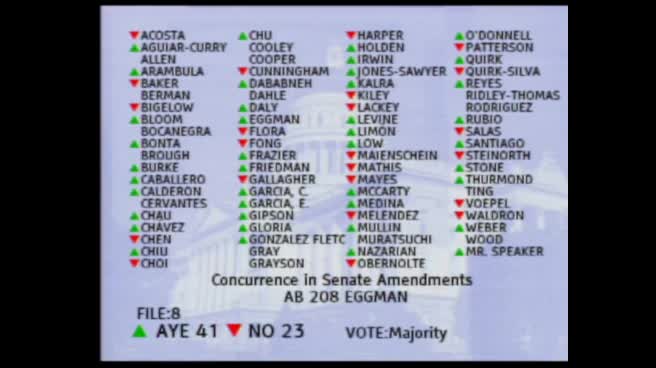 1MIN
Assembly Floor
 1MIN
Senate Floor
 6MIN
Senate Standing Committee on Health
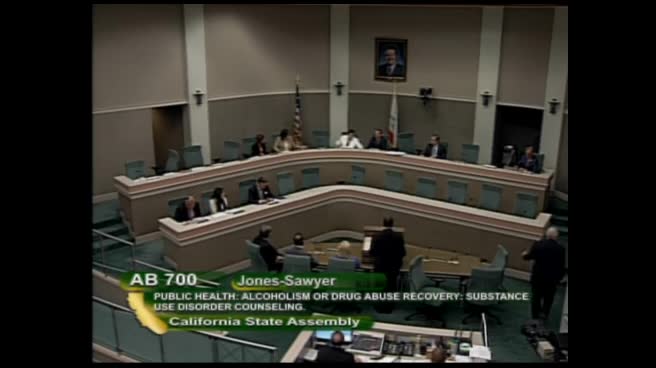 11MIN
Assembly Standing Committee on Health
Bill Author
Bill Co-Author(s):