AB 852: Vehicles: child safety.
- Session Year: 2017-2018
- House: Assembly
- Latest Version Date: 2018-06-27
Existing law requires the driver of any vehicle, upon meeting or overtaking any schoolbus equipped with required signs that is stopped for the purpose of loading or unloading any schoolchildren and displaying a flashing red light signal and stop signal arm, if equipped with a stop signal arm, to bring the vehicle to a stop immediately before passing the schoolbus and to not proceed past the schoolbus until the flashing red light signal and stop signal arm cease operation. A violation of these provisions is a crime.
This bill would authorize a school district to install and operate an automated schoolbus video enforcement system, as defined, for the purpose of enforcing the prohibition described above. The bill would require additional signage on schoolbuses relative to the video enforcement system. The bill would prohibit a school district from using automated schoolbus video enforcement systems or information gathered from those systems for any purpose other than those authorized by these provisions. The bill would additionally require a school district using an automated schoolbus video enforcement system to, among other things, have a communication plan about the deployment of the system and destroy images captured within 120 days if no violation occurred.
Existing constitutional provisions require that a statute that limits the right of access to the meetings of public bodies or the writings of public officials and agencies be adopted with findings demonstrating the interest protected by the limitation and the need for protecting that interest.
This bill would make legislative findings to that effect.
Existing law requires the driver of any vehicle, upon meeting or overtaking any schoolbus equipped with required signs that is stopped for the purpose of loading or unloading any schoolchildren and displaying a flashing red light signal and stop signal arm, if equipped with a stop signal arm, to bring the vehicle to a stop immediately before passing the schoolbus and to not proceed past the schoolbus until the flashing red light signal and stop signal arm cease operation. A violation of these provisions is a crime.
This bill would authorize a school district to install and operate an automated schoolbus video enforcement system, as defined, for the purpose of enforcing the prohibition described above. The bill would require additional signage on schoolbuses relative to the video enforcement system. The bill would prohibit a school district from using automated schoolbus video enforcement systems or information gathered from those systems for any purpose other than those authorized by these provisions.
Existing constitutional provisions require that a statute that limits the right of access to the meetings of public bodies or the writings of public officials and agencies be adopted with findings demonstrating the interest protected by the limitation and the need for protecting that interest.
This bill would make legislative findings to that effect.
The hazardous waste control laws prohibit the use of a nonbiodegradable toxic chemical in a chemical toilet, recreational vehicle, or waste facility of a vessel and prohibit the sale of a nonbiodegradable toxic chemical in a container that indicates that the chemical could be used in a chemical toilet, a waste facility of a recreational vehicle, or a waste facility of a vessel. Existing law requires the Department of Toxic Substances Control to develop and adopt regulations to define nonbiodegradable toxic chemicals and limitations on the sale of those chemicals. A violation of the hazardous waste control laws is a crime.This bill would instead prohibit those uses for a nonbiodegradable chemical or a toxic chemical, and would prohibit the sale of those chemicals, under those same circumstances. Because the bill would prohibit additional chemicals, thereby expanding the application of a crime, the bill would impose a state-mandated local program. The bill would require the department to develop and adopt analogous regulations regarding the nonbiodegradable chemicals and toxic chemicals.The bill would prohibit the state or a regional board from requiring a recreational vehicle park or campground served by a septic system to mitigate the presence or impact in its septic system of a nonbiodegradable or toxic chemical of a kind typically found in waste from vehicular or onsite waste facilities.The California Constitution requires the state to reimburse local agencies and school districts for certain costs mandated by the state. Statutory provisions establish procedures for making that reimbursement.This bill would provide that no reimbursement is required by this act for a specified reason.The hazardous waste control laws prohibit the use of a nonbiodegradable toxic chemical in a chemical toilet, recreational vehicle, or waste facility of a vessel and prohibit the sale of a nonbiodegradable toxic chemical in a container that indicates that the chemical could be used in a chemical toilet, a waste facility of a recreational vehicle, or a waste facility of a vessel. Existing law requires the Department of Toxic Substances Control to develop and adopt regulations to define nonbiodegradable toxic chemicals and limitations on the sale of those chemicals. A violation of the hazardous waste control laws is a crime.
This bill would instead prohibit those uses for a nonbiodegradable chemical or a toxic chemical, and would prohibit the sale of those chemicals, under those same circumstances. Because the bill would prohibit additional chemicals, thereby expanding the application of a crime, the bill would impose a state-mandated local program. The bill would require the department to develop and adopt analogous regulations regarding the nonbiodegradable chemicals and toxic chemicals.
The bill would prohibit the state or a regional board from requiring a recreational vehicle park or campground served by a septic system to mitigate the presence or impact in its septic system of a nonbiodegradable or toxic chemical of a kind typically found in waste from vehicular or onsite waste facilities.
The California Constitution requires the state to reimburse local agencies and school districts for certain costs mandated by the state. Statutory provisions establish procedures for making that reimbursement.
This bill would provide that no reimbursement is required by this act for a specified reason.
The Planning and Zoning Law requires a city or county to adopt a general plan for land use development within its boundaries that includes, among other things, a housing element. That law, after adoption of the general plan, requires the planning agency to provide by April 1 of each year an annual report to the legislative body, the Office of Planning and Research, and the Department of Housing and Community Development that contains specified information pertaining to the implementation of the general plan.This bill would require that this report also include the number of housing development applications received in the prior year, units included in all development applications in the prior year, and units approved and disapproved in the prior year. By increasing the duties of local planning agencies with respect to the preparation of the report on a citys or countys general plan, this bill would impose a state-mandated local program.The California Constitution requires the state to reimburse local agencies and school districts for certain costs mandated by the state. Statutory provisions establish procedures for making that reimbursement.This bill would provide that no reimbursement is required by this act for a specified reason.The Planning and Zoning Law requires a city or county to adopt a general plan for land use development within its boundaries that includes, among other things, a housing element. That law, after adoption of the general plan, requires the planning agency to provide by April 1 of each year an annual report to the legislative body, the Office of Planning and Research, and the Department of Housing and Community Development that contains specified information pertaining to the implementation of the general plan.
This bill would require that this report also include the number of housing development applications received in the prior year, units included in all development applications in the prior year, and units approved and disapproved in the prior year. By increasing the duties of local planning agencies with respect to the preparation of the report on a citys or countys general plan, this bill would impose a state-mandated local program.
The California Constitution requires the state to reimburse local agencies and school districts for certain costs mandated by the state. Statutory provisions establish procedures for making that reimbursement.
This bill would provide that no reimbursement is required by this act for a specified reason.
(a)The driver of any vehicle, upon meeting or overtaking, from either direction, any schoolbus equipped with signs as required in this code, that is stopped for the purpose of loading or unloading any schoolchildren and displays a flashing red light signal and stop signal arm, as defined in paragraph (4) of subdivision (b) of Section 25257, if equipped with a stop signal arm, visible from front or rear, shall bring the vehicle to a stop immediately before passing the schoolbus and shall not proceed past the schoolbus until the flashing red light signal and stop signal arm, if equipped with a stop signal arm, cease operation.
(b)(1)The driver of a vehicle upon a divided highway or multiple-lane highway need not stop upon meeting or passing a schoolbus that is upon the other roadway.
(2)For the purposes of this subdivision, a multiple-lane highway is any highway that has two or more lanes of travel in each direction.
(c)(1)If a vehicle was observed overtaking a schoolbus in violation of subdivision (a), and the driver of the schoolbus witnessed the violation, the driver may, within 24 hours, report the violation and furnish the vehicle license plate number and description and the time and place of the violation to the local law enforcement agency having jurisdiction of the offense. That law enforcement agency shall issue a letter of warning prepared in accordance with paragraph (2) with respect to the alleged violation to the registered owner of the vehicle. The issuance of a warning letter under this paragraph shall not be entered on the driving record of the person to whom it is issued, but does not preclude the imposition of any other applicable penalty.
(2)The Attorney General shall prepare and furnish to every law enforcement agency in the state a form letter for purposes of paragraph (1), and the law enforcement agency may issue those letters in the exact form prepared by the Attorney General. The Attorney General may charge a fee to any law enforcement agency that requests a copy of the form letter to recover the costs of preparing and providing that copy.
(d)(1)Notwithstanding subdivision (c), in addition to any other monitoring devices lawfully authorized to be installed in or on a schoolbus, a school district is authorized to install and operate an automated schoolbus video enforcement system for the purpose of enforcing violations of subdivision (a).
(2)For purposes of this section, an automated schoolbus video enforcement system means a camera system that monitors and records motor vehicles overtaking or passing a schoolbus when the schoolbus is stopped and displaying a flashing red signal system and a stop signal arm, if equipped with a stop signal arm.
(e)(1)A schoolbus equipped with an automated schoolbus video enforcement system shall also be equipped with highly visible signage on the rear of the schoolbus that reads as follows:
STOP WHEN LIGHTS ARE FLASHING - ITS THE LAW
VIDEO ENFORCED STOP
(2)The automated schoolbus video enforcement system shall not activate until at least six seconds after the stop arm is deployed, or, if not equipped with a stop arm, at least six seconds after the schoolbus has stopped and its red lights are flashing.
(f)If a school district adopts an automated schoolbus video enforcement system pursuant to this section, a school district may do any of the following:
(1)Craft working arrangements and agreements with law enforcement and governing bodies of cities and counties in the school districts jurisdiction regarding the responsibilities associated with the administration and cost of deploying that system.
(2)Contract with private vendors for the installation, operation, and maintenance of the system. This paragraph does not authorize a private vendor to decide whether captured images result in a cited violation of subdivision (a).
(3)A school district contracting with a vendor to support an automated schoolbus video enforcement system shall prohibit the vendor from storing, utilizing, or sharing any information, image, or other data captured or generated by the system with any other entity except the school district it supports and law enforcement serving the school districts jurisdiction.
(3)(4)A contract between the school district and a vendor to provide administrative or other services for the automated schoolbus video enforcement system, including, but not limited to, processing or storing data collected by the system, shall contain provisions requiring the vendor to provide and install the signage required by this subdivision at the vendors expense.
(f)Notwithstanding any other law, any information, image, or other data captured or generated by the automated schoolbus video enforcement system that is transmitted wirelessly is confidential and shall be encrypted and, unless demanded by subpoena, shall be available only to the school district, contractor, law enforcement, or offender for purposes of appeal and enforcing subdivision (a). A school district shall not use an automated schoolbus video enforcement system or any information, image, or other data captured or generated by the automated schoolbus video enforcement system for any purpose other than the purposes authorized by this section.(g)A school district utilizing an automated schoolbus video enforcement system shall provide the video evidence captured by the system to the local law enforcement agency with jurisdiction over the location where the violation occurred.(g)(1)A school district that adopts an automated schoolbus video enforcement system pursuant to this section shall have a public communication plan to provide information to persons in the school districts jurisdiction that the system will be deployed, and shall provide the information at least 30 days before its deployment.
(2)During the first 90 days of the deployment of an automated schoolbus video enforcement system, a vehicle owner or driver in violation of subdivision (a) captured by the system shall receive a warning letter and not a citation, unless two or more violations by the same vehicle have occurred during the 90-day period.
(h)(1)A school district utilizing an automated schoolbus video enforcement system shall provide any information, image, or other data captured or generated by that system to the local law enforcement agency with jurisdiction over the location where the violation occurred.
(2)Notwithstanding any other law, any information, image, or other data captured or generated by the automated schoolbus video enforcement system is confidential and shall be encrypted and, unless demanded by subpoena, shall be available only to the school district, contractor, law enforcement, or offender for purposes of appeal and enforcing subdivision (a).
(3)A school district shall not use an automated schoolbus video enforcement system or any information, image, or other data captured or generated by that system for any purpose other than the purposes authorized by this section.
(i)(1)If a school district utilizes an automated schoolbus video enforcement system, the video images shall only capture the vehicle type, color, and license plate displayed, and shall not contain images of any person in the vehicle.
(2)The video images captured or generated by the automated schoolbus video enforcement system shall contain all of the following:
(A)A clear view of vehicles passing the schoolbus on either side.
(B)The date and time the recording was made.
(C)An electronic symbol showing the activation of the amber lights, flashing red lights, stop arm deployment, and brake activation.
(3)Video images used to enforce the schoolbus stop law shall be destroyed within 120 days of recording if no violation occurred.
(j)The vehicle owner and vehicle driver have a right to a copy of the automatic captured video image if a violation is charged. If the vehicle is a rented vehicle, the rental company has a right to view, but not own, store, or share an image of the vehicle charged with a schoolbus stop violation.
(k)A driver of a schoolbus equipped with an automated schoolbus video enforcement system shall not be liable for the operation of that system.
(h)(l)This section also applies to a roadway upon private property.
SEC. 2.The Legislature finds and declares that Section 1 of this act, which amends Section 22454 of the Vehicle Code, imposes a limitation on the publics right of access to the meetings of public bodies or the writings of public officials and agencies within the meaning of Section 3 of Article I of the California Constitution. Pursuant to that constitutional provision, the Legislature makes the following findings to demonstrate the interest protected by this limitation and the need for protecting that interest:
Protecting the privacy of a person whose image is captured by a schoolbus video enforcement system enhances public safety and the protection of individual rights, thereby furthering the purposes of Section 3 of Article I of the California Constitution.
(a)The driver of any vehicle, upon meeting or overtaking, from either direction, any schoolbus equipped with signs as required in this code, that is stopped for the purpose of loading or unloading any schoolchildren and displays a flashing red light signal and stop signal arm, as defined in paragraph (4) of subdivision (b) of Section 25257, if equipped with a stop signal arm, visible from front or rear, shall bring the vehicle to a stop immediately before passing the schoolbus and shall not proceed past the schoolbus until the flashing red light signal and stop signal arm, if equipped with a stop signal arm, cease operation.
(b)(1)The driver of a vehicle upon a divided highway or multiple-lane highway need not stop upon meeting or passing a schoolbus that is upon the other roadway.
(2)For the purposes of this subdivision, a multiple-lane highway is any highway that has two or more lanes of travel in each direction.
(c)(1)If a vehicle was observed overtaking a schoolbus in violation of subdivision (a), and the driver of the schoolbus witnessed the violation, the driver may, within 24 hours, report the violation and furnish the vehicle license plate number and description and the time and place of the violation to the local law enforcement agency having jurisdiction of the offense. That law enforcement agency shall issue a letter of warning prepared in accordance with paragraph (2) with respect to the alleged violation to the registered owner of the vehicle. The issuance of a warning letter under this paragraph shall not be entered on the driving record of the person to whom it is issued, but does not preclude the imposition of any other applicable penalty.
(2)The Attorney General shall prepare and furnish to every law enforcement agency in the state a form letter for purposes of paragraph (1), and the law enforcement agency may issue those letters in the exact form prepared by the Attorney General. The Attorney General may charge a fee to any law enforcement agency that requests a copy of the form letter to recover the costs of preparing and providing that copy.
(d)(1)Notwithstanding subdivision (c), in addition to any other monitoring devices lawfully authorized to be installed in or on a schoolbus, a school district is authorized to install and operate an automated schoolbus video enforcement system for the purpose of enforcing violations of subdivision (a).
(2)For purposes of this section, an automated schoolbus video enforcement system means a camera system that monitors and records motor vehicles overtaking or passing a schoolbus when the schoolbus is stopped and displaying a flashing red signal system and a stop signal arm, if equipped with a stop signal arm.
(e)(1)A schoolbus equipped with an automated schoolbus video enforcement system shall also be equipped with highly visible signage on the rear of the schoolbus that reads as follows:
STOP WHEN LIGHTS ARE FLASHING - ITS THE LAW
VIDEO ENFORCED STOP
(2)The automated schoolbus video enforcement system shall not activate until at least six seconds after the stop arm is deployed, or, if not equipped with a stop arm, at least six seconds after the schoolbus has stopped and its red lights are flashing.
(3)A contract between the school district and a vendor to provide administrative or other services for the automated schoolbus video enforcement system, including, but not limited to, processing or storing data collected by the system, shall contain provisions requiring the vendor to provide and install the signage required by this subdivision at the vendors expense.
(f)Notwithstanding any other law, any information, image, or other data captured or generated by the automated schoolbus video enforcement system that is transmitted wirelessly is confidential and shall be encrypted and, unless demanded by subpoena, shall be available only to the school district, contractor, law enforcement, or offender for purposes of appeal and enforcing subdivision (a). A school district shall not use an automated schoolbus video enforcement system or any information, image, or other data captured or generated by the automated schoolbus video enforcement system for any purpose other than the purposes authorized by this section.
(g)A school district utilizing an automated schoolbus video enforcement system shall provide the video evidence captured by the system to the local law enforcement agency with jurisdiction over the location where the violation occurred.
(d)(h)This section also applies to a roadway upon private property.
SEC. 2.The Legislature finds and declares that Section 1 of this act, which amends Section 22454 of the Vehicle Code, imposes a limitation on the publics right of access to the meetings of public bodies or the writings of public officials and agencies within the meaning of Section 3 of Article I of the California Constitution. Pursuant to that constitutional provision, the Legislature makes the following findings to demonstrate the interest protected by this limitation and the need for protecting that interest:
Protecting the privacy of a person whose image is captured by a schoolbus video enforcement system enhances public safety and the protection of individual rights, thereby furthering the purposes of Section 3 of Article I of the California Constitution.
SECTION 1.Section 25210 of the Health and Safety Code is amended to read:25210.It is unlawful to use a nonbiodegradable or toxic chemical in a chemical toilet, recreational vehicle, or waste facility of a vessel as the term vessel is defined in the Harbors and Navigation Code, and it is unlawful to sell a nonbiodegradable or toxic chemical in a container that indicates that the chemical could be used in a chemical toilet, a waste facility of a recreational vehicle, or a waste facility of a vessel as the term vessel is defined in the Harbors and Navigation Code. The department shall develop and adopt regulations to define nonbiodegradable chemicals and toxic chemicals and limitations on the sale of those chemicals.SEC. 2.Section 25210.2 is added to the Health and Safety Code, to read:25210.2.A recreational vehicle park, as defined in Section 18862.39, or campground served by a septic system shall not be required by the state or a regional board to mitigate the presence or impact in its septic system of a nonbiodegradable or toxic chemical, as those terms are defined pursuant to Section 25210, of a kind typically found in waste from vehicular or onsite waste facilities.SEC. 3.No reimbursement is required by this act pursuant to Section 6 of Article XIIIB of the California Constitution because the only costs that may be incurred by a local agency or school district will be incurred because this act creates a new crime or infraction, eliminates a crime or infraction, or changes the penalty for a crime or infraction, within the meaning of Section 17556 of the Government Code, or changes the definition of a crime within the meaning of Section 6 of Article XIIIB of the California Constitution.It shall be unlawful, on or after January 1, 1979, is unlawful to use a nonbiodegradable or toxic chemical in a chemical toilet, recreational vehicle, or waste facility of a vessel as the term vessel is defined in the Harbors and Navigation Code, and it shall be unlawful on or after January 1, 1979, is unlawful to sell a nonbiodegradable or toxic chemical in a container which that indicates that the chemical could be used in a chemical toilet, a waste facility of a recreational vehicle, or a waste facility of a vessel as the term vessel is defined in the Harbors and Navigation Code. The department shall develop and adopt regulations to define nonbiodegradable chemicals and toxic chemicals and limitations on the sale thereof by June 1, 1978. of those chemicals.
SEC. 2.Section 25210.2 is added to the Health and Safety Code, to read:25210.2.A recreational vehicle park, as defined in Section 18862.39, or campground served by a septic system shall not be required by the state or a regional board to mitigate the presence or impact in its septic system of a nonbiodegradable or toxic chemical, as those terms are defined pursuant to Section 25210, of a kind typically found in waste from vehicular or onsite waste facilities.
SEC. 3.No reimbursement is required by this act pursuant to Section 6 of Article XIIIB of the California Constitution because the only costs that may be incurred by a local agency or school district will be incurred because this act creates a new crime or infraction, eliminates a crime or infraction, or changes the penalty for a crime or infraction, within the meaning of Section 17556 of the Government Code, or changes the definition of a crime within the meaning of Section 6 of Article XIIIB of the California Constitution.
SECTION 1.Section 65400 of the Government Code is amended to read:65400.(a)After the legislative body has adopted all or part of a general plan, the planning agency shall do both of the following:(1)Investigate and make recommendations to the legislative body regarding reasonable and practical means for implementing the general plan or element of the general plan, so that it will serve as an effective guide for orderly growth and development, preservation and conservation of open-space land and natural resources, and the efficient expenditure of public funds relating to the subjects addressed in the general plan.(2)Provide by April 1 of each year an annual report to the legislative body, the Office of Planning and Research, and the Department of Housing and Community Development that includes all of the following:(A)The status of the plan and progress in its implementation.(B)The progress in meeting its share of regional housing needs determined pursuant to Section 65584 and local efforts to remove governmental constraints to the maintenance, improvement, and development of housing pursuant to paragraph (3) of subdivision (c) of Section 65583.The housing element portion of the annual report, as required by this paragraph, shall be prepared through the use of forms and definitions adopted by the Department of Housing and Community Development pursuant to the rulemaking provisions of the Administrative Procedure Act (Chapter 3.5 (commencing with Section 11340) of Part 1 of Division 3 of Title 2). Prior to and after adoption of the forms, the housing element portion of the annual report shall include a section that describes the actions taken by the local government towards completion of the programs and status of the local governments compliance with the deadlines in its housing element. That report shall be considered at an annual public meeting before the legislative body where members of the public shall be allowed to provide oral testimony and written comments.The report may include the number of units that have been substantially rehabilitated, converted from nonaffordable to affordable by acquisition, and preserved consistent with the standards set forth in paragraph (2) of subdivision (c) of Section 65583.1. The report shall document how the units meet the standards set forth in that subdivision.(C)The number of housing development applications received in the prior year.(D)The number of units included in all development applications in the prior year.(E)The number of units approved and disapproved in the prior year.(F)The degree to which its approved general plan complies with the guidelines developed and adopted pursuant to Section 65040.2 and the date of the last revision to the general plan.(b)If a court finds, upon a motion to that effect, that a city, county, or city and county failed to submit, within 60 days of the deadline established in this section, the housing element portion of the report required pursuant to subparagraph (B) of paragraph (2) of subdivision (a) that substantially complies with the requirements of this section, the court shall issue an order or judgment compelling compliance with this section within 60 days. If the city, county, or city and county fails to comply with the courts order within 60 days, the plaintiff or petitioner may move for sanctions, and the court may, upon that motion, grant appropriate sanctions. The court shall retain jurisdiction to ensure that its order or judgment is carried out. If the court determines that its order or judgment is not carried out within 60 days, the court may issue further orders as provided by law to ensure that the purposes and policies of this section are fulfilled. This subdivision applies to proceedings initiated on or after the first day of October following the adoption of forms and definitions by the Department of Housing and Community Development pursuant to paragraph (2) of subdivision (a), but no sooner than six months following that adoption.SEC. 2.No reimbursement is required by this act pursuant to Section 6 of Article XIIIB of the California Constitution because a local agency or school district has the authority to levy service charges, fees, or assessments sufficient to pay for the program or level of service mandated by this act, within the meaning of Section 17556 of the Government Code.(a)After the legislative body has adopted all or part of a general plan, the planning agency shall do both of the following:
(1)Investigate and make recommendations to the legislative body regarding reasonable and practical means for implementing the general plan or element of the general plan, so that it will serve as an effective guide for orderly growth and development, preservation and conservation of open-space land and natural resources, and the efficient expenditure of public funds relating to the subjects addressed in the general plan.
(2)Provide by April 1 of each year an annual report to the legislative body, the Office of Planning and Research, and the Department of Housing and Community Development that includes all of the following:
(A)The status of the plan and progress in its implementation.
(B)The progress in meeting its share of regional housing needs determined pursuant to Section 65584 and local efforts to remove governmental constraints to the maintenance, improvement, and development of housing pursuant to paragraph (3) of subdivision (c) of Section 65583.
The housing element portion of the annual report, as required by this paragraph, shall be prepared through the use of forms and definitions adopted by the Department of Housing and Community Development pursuant to the rulemaking provisions of the Administrative Procedure Act (Chapter 3.5 (commencing with Section 11340) of Part 1 of Division 3 of Title 2). Prior to and after adoption of the forms, the housing element portion of the annual report shall include a section that describes the actions taken by the local government towards completion of the programs and status of the local governments compliance with the deadlines in its housing element. That report shall be considered at an annual public meeting before the legislative body where members of the public shall be allowed to provide oral testimony and written comments.
The report may include the number of units that have been substantially rehabilitated, converted from nonaffordable to affordable by acquisition, and preserved consistent with the standards set forth in paragraph (2) of subdivision (c) of Section 65583.1. The report shall document how the units meet the standards set forth in that subdivision.
(C)The number of housing development applications received in the prior year.
(D)The number of units included in all development applications in the prior year.
(E)The number of units approved and disapproved in the prior year.
(C)(F)The degree to which its approved general plan complies with the guidelines developed and adopted pursuant to Section 65040.2 and the date of the last revision to the general plan.
(b)If a court finds, upon a motion to that effect, that a city, county, or city and county failed to submit, within 60 days of the deadline established in this section, the housing element portion of the report required pursuant to subparagraph (B) of paragraph (2) of subdivision (a) that substantially complies with the requirements of this section, the court shall issue an order or judgment compelling compliance with this section within 60 days. If the city, county, or city and county fails to comply with the courts order within 60 days, the plaintiff or petitioner may move for sanctions, and the court may, upon that motion, grant appropriate sanctions. The court shall retain jurisdiction to ensure that its order or judgment is carried out. If the court determines that its order or judgment is not carried out within 60 days, the court may issue further orders as provided by law to ensure that the purposes and policies of this section are fulfilled. This subdivision applies to proceedings initiated on or after the first day of October following the adoption of forms and definitions by the Department of Housing and Community Development pursuant to paragraph (2) of subdivision (a), but no sooner than six months following that adoption.
SEC. 2.No reimbursement is required by this act pursuant to Section 6 of Article XIIIB of the California Constitution because a local agency or school district has the authority to levy service charges, fees, or assessments sufficient to pay for the program or level of service mandated by this act, within the meaning of Section 17556 of the Government Code.
|
Date
|
Status
|
|---|---|
| Jun 27, 2018 | From committee chair, with author's amendments: Amend, and re-refer to committee. Read second time, amended, and re-referred to Com. on T. & H. |
| Jun 26, 2018 | In committee: Set, first hearing. Hearing canceled at the request of author. |
| Jun 20, 2018 | Re-referred to Coms. on T. & H., ED., and JUD. |
| Jun 13, 2018 | From committee chair, with author's amendments: Amend, and re-refer to committee. Read second time, amended, and re-referred to Com. on RLS. |
| Sep 7, 2017 | From committee chair, with author's amendments: Amend, and re-refer to committee. Read second time, amended, and re-referred to Com. on RLS. |
| May 18, 2017 | Referred to Com. on RLS. |
| May 4, 2017 | In Senate. Read first time. To Com. on RLS. for assignment. |
| May 4, 2017 | Read third time. Passed. Ordered to the Senate. (Ayes 76. Noes 0. Page 1392.) |
| Apr 27, 2017 | Read second time. Ordered to Consent Calendar. |
| Apr 26, 2017 | From committee: Do pass. To Consent Calendar. (Ayes 16. Noes 0.) (April 26). |
| Apr 6, 2017 | From committee: Do pass and re-refer to Com. on APPR. (Ayes 8. Noes 0.) (April 5). Re-referred to Com. on APPR. |
| Mar 2, 2017 | Referred to Com. on L. GOV. |
| Feb 17, 2017 | From printer. May be heard in committee March 19. |
| Feb 16, 2017 | Read first time. To print. |
|
Date
|
Description
|
Location
|
Votes
|
|
|---|---|---|---|---|
| May 4, 2017 | AB 852 GRAYSON Consent Calendar Second Day Regular Session | Assembly Floor |
Passed |
|
| Apr 26, 2017 | Do pass. To Consent Calendar. | Assembly Standing Committee on Appropriations |
Passed |
|
| Apr 5, 2017 | Do pass and be re-referred to the Committee on [Appropriations] | Assembly Standing Committee on Local Government |
Passed |
This list shows positions taken on this bill by organizations on the date displayed, which is linked to the original source.
Positions by individuals are not included.
|
Organization
|
Position
|
Date
|
|---|---|---|
| American Planning Association, California Chapter | ** Support | Apr 4, 2017 |
| California Apartment Association | * Support | Apr 5, 2017 |
| California Association Of Realtors | * Support | Apr 5, 2017 |
| City of Indian Wells | ** Support | Apr 4, 2017 |
| League Of California Cities | * Support | Apr 5, 2017 |
Date of Hearing: April 26, 2017
ASSEMBLY COMMITTEE ON APPROPRIATIONS
Lorena Gonzalez Fletcher, Chair
ABPCA Bill Id:AB 852
Author:(Grayson) – As Introduced Ver:February 16, 2017
Policy Committee: | Local Government | Vote: | 8 - 0 |
|
| ||
|
|
Urgency: No State Mandated Local Program: Yes Reimbursable: No
SUMMARY: This bill requires a city or county to include, as part of the annual general plan report provided to its legislative body, the Governor’s Office of Planning and Research (OPR), and the Department of Housing and Community Development (HCD), the following additional information:
- The number of housing development applications received in the prior year;
- The number of units included in all development applications in the prior year; and,
- The number of units approved and disapproved in the prior year.
FISCAL EFFECT:
Minor costs to cities and counties. These costs are not reimbursable by the state because cities and counties have the authority to impose fees to cover any costs.
COMMENTS:
- Purpose. According to the author, “California’s Planning and Zoning Law currently requires cities and counties to produce annual reports that contain information about the implementation of their general plans; however, these reports do not provide a full picture of the efforts local governments are making to address housing needs in their jurisdictions by approving projects that meet specified requirements. Given the crisis in housing availability that the state is currently facing, it is vitally important to know whether local governments are making reasonable efforts to approve new projects. This bill will allow regulatory agencies to better assess whether local governments are complying with applicable housing laws, and taking appropriate steps to address California’s housing crisis.”
- Background. Existing law requires the planning agency of a city or county, after the legislative body has adopted all or part of a general plan, to provide an annual report to the legislative body, OPR, and HCD that includes various information on the progress and implementation of the general plan. As part of this annual reporting requirement, the planning agency must include information on the housing element portion of the general plan.
Analysis Prepared by: Jennifer Swenson / APPR. / (916) 319-2081
Date of Hearing: April 5, 2017
ASSEMBLY COMMITTEE ON LOCAL GOVERNMENT
Cecilia Aguiar-Curry, Chair
ABPCA Bill Id:AB 852 (
Author:Grayson) – As Introduced Ver:February 16, 2017
SUBJECT: Planning and zoning: general plan: report.
SUMMARY: Requires cities and counties to include additional information in the annual general plan report. Specifically, this bill:
- Requires a city or county to include the following information as part of the annual general plan report provided to the legislative body, the Governor’s Office of Planning and Research (OPR), and the Department of Housing and Community Development (HCD):
- The number of housing development applications received in the prior year;
- The number of units included in all development applications in the prior year; and,
- The number of units approved and disapproved in the prior year.
- Specifies that no reimbursement is required by the bill’s provisions because a local agency has the authority to levy service charges, fees, or assessments sufficient to pay for the program or level of serviced, as specified.
EXISTING LAW:
- Requires cities and counties to adopt a general plan that includes seven mandatory elements: Land Use, Open Space, Conservation, Housing, Circulation, Noise, and Safety.
- Requires the planning agency, after the legislative body has adopted all or part of a general plan, to do both of the following:
- Investigate and make recommendations to the legislative body regarding reasonable and practical means for implementing the general plan or element of the general plan, so that it will serve as an effective guide for orderly growth and development, preservation and conservation of open-space land and natural resources, and the efficient expenditure of public funds relating to the subjects addressed in the general plan; and,
- Provide by April 1 of each year an annual report to the legislative body, OPR, and HCD, that includes all of the following:
- The status of the plan and progress in its implementation;
- The progress in meeting its share of regional housing needs, as specified; and,
- The degree to which its approved general plan complies with the guidelines developed and adopted pursuant to Section 65040.2 and the date of the last revision to the general plan.
- Requires, as part of the annual report, a report on the housing element, which shall be prepared through the use of forms and definitions adopted by HCD.
- Requires the housing element portion of the annual report to include a section that describes the actions taken by the local government towards completion of the programs and status of the local government’s compliance with the deadlines in its housing element.
- Requires the housing element portion of the annual report to be considered at an annual public meeting before the legislative body where members of the public shall be allowed to provide oral testimony and written comments.
- Allows the housing element portion of the annual report to include the number of units that have been substantially rehabilitated, converted from nonaffordable to affordable by acquisition, and preserved consistent with the specified standards.
- Specifies that if a court finds, upon a motion to that effect, that a city, county or city and county failed to submit, within 60 days of the deadline, the housing element portion of the report that substantially complies with the requirements, as specified, the court shall issue an order or judgment compelling compliance within 60 days. Specifies that if the city or county fails to comply with the court’s order within 60 days, the plaintiff or petition may move for sanctions, and the court may, upon that motion, grant appropriate sanctions. Allows the court to issue further orders as provided by law to ensure that the purposes and policies of this section are fulfilled, as specified.
FISCAL EFFECT: This bill is keyed fiscal and contains a state-mandated local program.
COMMENTS:
- Bill Summary. Existing law requires the planning agency of a city or county, after the legislative body has adopted all or part of a general plan, to provide an annual report to the legislative body, OPR, and HCD that includes various information on the progress and implementation of the general plan. As part of this annual reporting requirement, the planning agency must include various information on the housing element portion of the general plan.
This bill requires, as part of the annual general plan report provided to the legislative body, to OPR, and to HCD, the planning agency of the city or county to include the following information: a) The number of housing development applications received in the prior year; b) The number of units included in all development applications in the prior year; and, c) The number of units approved and disapproved in the prior year.
This bill is sponsored by the League of California Cities.
- Author’s Statement. According to the author, “California is experiencing an acute shortage of new housing construction. According to the Legislative Analyst’s Office, California needs to produce approximately 180,000 units of housing per year to keep up with population growth; we currently produce less than half that amount. This issue disproportionately affects working and middle class households. A recent report by the California Department of Housing and Community Development highlighted this fact, showing that California is short about 1.5 million rental units priced for very low- and extremely low-income households. California’s Planning and Zoning Law currently requires cities and counties to produce annual reports that contain information about the implementation of their general plans; however, these reports do not provide a full picture of the efforts local governments are making to address housing needs in their jurisdictions by approving projects that meet specified requirements. Given the crisis in housing availability that the state is currently facing, it is vitally important to know whether local governments are making reasonable efforts to approve new projects. AB 852 will require cities and counties to report the number of housing development applications received in the prior year, the number of units included in all development applications in the prior year, and units approved and disapproved in the prior year in their annual reports. This will allow regulatory agencies to better assess whether local governments are complying with applicable housing laws, and taking appropriate steps to address California’s housing crisis.”
- Arguments in Support. The League of Cities argues that this bill will significantly help fill in key housing development data gaps at the local level, and that gathering accurate and timely data is essential.
- Arguments in Opposition. None on file.
REGISTERED SUPPORT / OPPOSITION:
Support
League of California Cities [SPONSOR]
American Planning Association, California Chapter
City of Indian Wells
California Association of Realtors
Opposition
None on file
Analysis Prepared by: Debbie Michel / L. GOV. / (916) 319-3958
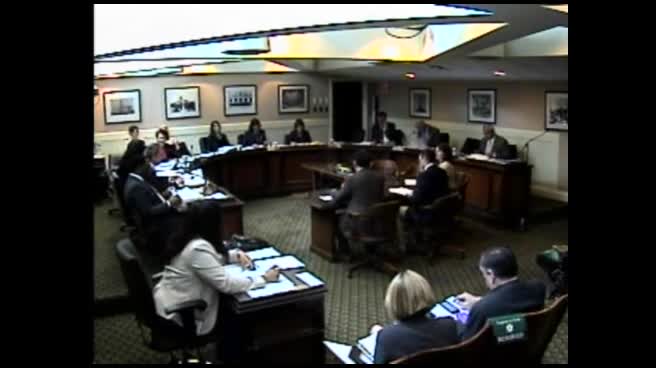
Discussed in Hearing
 3MIN
Assembly Standing Committee on Local Government


Bill Co-Author(s):