AB 880: Tribal Nation Grant Fund.
- Session Year: 2017-2018
- House: Assembly
- Latest Version Date: 2018-09-27
(1)Existing law establishes the Tribal Nation Grant Fund for the receipt and deposit of moneys received by the state from Indian tribes pursuant to the terms of tribal-state gaming compacts. Under existing law, moneys in the Tribal Nation Grant Fund are available, upon appropriation by the Legislature, for the discretionary distribution of funds to nongaming and limited-gaming tribes, as specified. An existing Executive Order establishes the position of the Governors Tribal Advisor within the office of the Governor.
This bill would establish within the office of the Governor, the office of the Governors Tribal Advisor, to be headed by the Governors Tribal Advisor, who is to be appointed by, and serve at the pleasure of, the Governor. The bill would also establish within state government the Tribal Nation Grant Panel and the Tribal Nation Grant Fund Program, through which the panel may award grants and make other distributions from the fund to eligible tribes, as defined, with the assistance of the advisor, the Bureau of Gambling Control, and the California Gambling Control Commission, as specified. The bill would require the tribal advisor, before January 1, 2020, to appoint elected tribal leaders from federally recognized tribes in California to serve on the panel. The bill would require, after that date, the advisor and panel, in consultation with federally recognized tribes in California, to determine how members of the panel are appointed. The bill would require actions taken under these provisions to be consistent with tribal-state gaming compacts and would exempt the activities of the advisor, panel, bureau, and commission pursuant to these provisions from the Administrative Procedure Act. The bill would prohibit public disclosure, in public records or during a meeting of the panel, of all information relating to the administration of these provisions that describes the internal affairs of an eligible tribe, except as specified, and would require the panel to comply with the Bagley-Keene Open Meeting Act in a manner consistent with these prohibitions. The bill would require, commencing on or before July 15, 2020, and annually thereafter, the commission to prepare and post on its Internet Web site a report detailing the status of grants and other distributions made from the fund for the previous fiscal year. The bill would also require the tribal advisor to provide an annual report to the Senate and Assembly Committees on Governmental Organization on the status of the program, as specified.
(2)Existing constitutional provisions require that a statute that limits the right of access to the meetings of public bodies or the writings of public officials and agencies be adopted with findings demonstrating the interest protected by the limitation and the need for protecting that interest.
This bill would make legislative findings to that effect.
(1)Existing law establishes the Tribal Nation Grant Fund and the Indian Gaming Revenue Sharing Trust Fund for the receipt and deposit of moneys received by the state from Indian tribes pursuant to the terms of tribal-state gaming compacts. Under existing law, moneys in the Tribal Nation Grant Fund are available, upon appropriation by the Legislature, for the discretionary distribution of funds to nongaming and limited-gaming tribes, as specified, and moneys in the Indian Gaming Revenue Sharing Trust Fund are available, upon appropriation by the Legislature, to the California Gambling Control Commission for the purpose of making distributions to eligible recipient Indian tribes. as specified. An existing Executive Order establishes the position of the Governors Tribal Advisor within the office of the Governor.
This bill would instead provide that moneys in the Tribal Nation Grant Fund are continuously appropriated without regard to fiscal year to the California Gambling Control Commission. The bill would require that moneys deposited into the Indian Gaming Revenue Sharing Trust Fund in excess of $1,100,000 per eligible recipient Indian tribe shall be held and used for future disbursements or transferred to the Tribal Nation Grant Fund, and would specify how the commission should calculate the excess moneys. By continuously appropriating the moneys in the Tribal Nation Grant Fund, the bill would make an appropriation.This bill would establish within the office of the Governor, the office of the Governors Tribal Advisor, to be headed by the Governors Tribal Advisor, who is to be appointed by, and serve at the pleasure of, the Governor. The bill would also establish within state government the Tribal Nation Grant Panel and the Tribal Nation Grant Fund Program whereby the Tribal Nation Grant Panel would be authorized to Program, through which the panel may award grants and make other distributions from the fund to eligible tribes, as defined, with the assistance of the advisor, the Bureau of Gambling Control, and the California Gambling Control Commission, as specified. The panel would be composed of 9 members, of which 7 are voting members and 2 are alternate nonvoting members. Before January 1, 2020, the tribal advisor would The bill would require the tribal advisor, before January 1, 2020, to appoint elected tribal leaders from federally recognized tribes in California to serve on the panel. The bill would require, after that date, the advisor and panel, in consultation with federally recognized tribes in California California, to determine how members of the panel are appointed. The bill would require actions taken under these provisions to be consistent with tribal-state gaming compacts and would exempt the activities of the advisor, panel, bureau, and commission pursuant to these provisions from the Administrative Procedure Act. The bill would prohibit public disclosure, in public records or during a meeting of the panel, of all information relating to the administration of these provisions that describes the internal affairs of an eligible tribe, except as specified, and would require the panel to comply with the Bagley-Keene Open Meeting Act in a manner consistent with these prohibitions. The bill would require, commencing on or before July 15, 2020, and annually thereafter, the commission to prepare and post on its Internet Web site a report detailing the status of grants and other distributions made from the fund for the previous fiscal year. The bill would also require the tribal advisor to provide an annual report to the Senate and Assembly Committees on Governmental Organization on the status of the program, as specified.
(2)Existing constitutional provisions require that a statute that limits the right of access to the meetings of public bodies or the writings of public officials and agencies be adopted with findings demonstrating the interest protected by the limitation and the need for protecting that interest.
This bill would make legislative findings to that effect.
(1)Existing law establishes the Tribal Nation Grant Fund and the Indian Gaming Revenue Sharing Trust Fund for the receipt and deposit of moneys received by the state from Indian tribes pursuant to the terms of tribal-state gaming compacts. Under existing law, moneys in the Tribal Nation Grant Fund are available, upon appropriation by the Legislature, for the discretionary distribution of funds to nongaming and limited-gaming tribes, as specified, and moneys in the Indian Gaming Revenue Sharing Trust Fund are available, upon appropriation by the Legislature, to the California Gambling Control Commission for the purpose of making distributions to eligible recipient Indian tribes. An existing Executive Order establishes the position of the Governors Tribal Advisor within the office of the Governor.
This bill would instead provide that moneys in the Tribal Nation Grant Fund are continuously appropriated without regard to fiscal year to the California Gambling Control Commission. The bill would require that moneys deposited into the Indian Gaming Revenue Sharing Trust Fund in excess of $1,100,000 per eligible recipient Indian tribe shall be held and used for future disbursements or transferred to the Tribal Nation Grant Fund, and would specify how the commission should calculate the excess moneys. By continuously appropriating the moneys in the Tribal Nation Grant Fund, the bill would make an appropriation.
This bill would establish within the office of the Governor, the office of the Governors Tribal Advisor, to be headed by the Governors Tribal Advisor, who is to be appointed by, and serve at the pleasure of, the Governor. The bill would also establish Tribal Nation Grant Fund Program whereby the Tribal Nation Grant Panel would be authorized to award grants and make other distributions from the fund to eligible tribes, as defined, with the assistance of the advisor, the Bureau of Gambling Control, and the California Gambling Control Commission, as specified. The panel would be composed of 9 members, of which 7 are voting members and 2 are alternate nonvoting members. Before January 1, 2020, the tribal advisor would appoint elected tribal leaders from federally recognized tribes in California to serve on the panel. The bill would require, after that date, the advisor and panel, in consultation with federally recognized tribes in California to determine how members of the panel are appointed. The bill would require actions taken under these provisions to be consistent with tribal-state gaming compacts and exempt the activities of the advisor, panel, bureau, and commission pursuant to these provisions from the Administrative Procedure Act. The bill would prohibit public disclosure, in public records or during a meeting of the panel, of all information relating to the administration of these provisions that describes the internal affairs of an eligible tribe, except as specified, and would require the panel to comply with the Bagley-Keene Open Meeting Act in a manner consistent with these prohibitions.
(2)Existing constitutional provisions require that a statute that limits the right of access to the meetings of public bodies or the writings of public officials and agencies be adopted with findings demonstrating the interest protected by the limitation and the need for protecting that interest.
This bill would make legislative findings to that effect.
(1)Existing law establishes the Tribal Nation Grant Fund for the receipt and deposit of moneys received by the state from Indian tribes pursuant to the terms of tribal-state gaming compacts. An existing Executive Order establishes the position of the Governors Tribal Advisor within the office of the Governor.
This bill would establish within the office of the Governor, the office of the Governors Tribal Advisor, to be headed by the Governors Tribal Advisor, who is to be appointed by, and serve at the pleasure of, the Governor. The bill would also establish Tribal Nation Grant Fund Program whereby the Tribal Nation Grant Panel would be authorized to award grants and make other distributions from the fund to eligible tribes, as defined, with the assistance of the advisor, the Bureau of Gambling Control, and the California Gambling Control Commission, as specified. The panel would be composed of 9 members, of which 7 are voting members and 2 are alternate nonvoting members. Before January 1, 2020, the tribal advisor would appoint elected tribal leaders from federally recognized tribes in California to serve on the panel. The bill would require, after that date, the advisor and panel, in consultation with federally recognized tribes in California to determine how members of the panel are appointed. The bill would require actions taken under these provisions to be consistent with tribal-state gaming compacts and exempt the activities of the advisor, panel, bureau, and commission pursuant to these provisions from the Administrative Procedure Act. The bill would prohibit public disclosure, in public records or during a meeting of the panel, of all information relating to the administration of these provisions that describes the internal affairs of an eligible tribe, except as specified, and would require the panel to comply with the Bagley-Keene Open Meeting Act in a manner consistent with these prohibitions.
(2)Existing constitutional provisions require that a statute that limits the right of access to the meetings of public bodies or the writings of public officials and agencies be adopted with findings demonstrating the interest protected by the limitation and the need for protecting that interest.
This bill would make legislative findings to that effect.
Existing federal law, the Indian Gaming Regulatory Act of 1988, provides for the negotiation and execution of tribal-state gaming compacts for the purpose of authorizing certain types of gaming on Indian lands within a state. The California Constitution authorizes the Governor to negotiate and conclude compacts, subject to ratification by the Legislature. Existing law expressly ratifies a number of tribal-state gaming compacts, and amendments to tribal-state gaming compacts, between the State of California and specified Indian tribes. Existing law creates in the State Treasury the Tribal Nation Grant Fund, administered by the California Gambling Control Commission, for the receipt and deposit of moneys received by the state from Indian tribes pursuant to the terms of tribal-state gaming compacts. Existing law authorizes moneys in the fund, upon appropriation by the Legislature, to be available for the discretionary distribution of funds to nongaming tribes and limited gaming tribes upon application of those tribes for purposes related to effective self-governance, self-determined community, and economic development.This bill would instead require the commission to administer the fiscal operations of the Tribal Nation Grant Fund and would specify that the commission is to act as a limited trustee not subject to the duties and liability contained in the Probate Code, similar state or federal statutes, rules or regulations, or under state or federal common law or equitable principles. The bill would require the commission to allocate and disburse the moneys in the Tribal Nation Grant Fund, as directed, to one or more eligible nongaming tribes and limited gaming tribes upon a competitive application basis. The bill would prohibit the commission from exercising any discretion or control over, or from bearing any responsibility arising from, the recipient tribes uses or disbursement of Tribal Nation Grant Fund moneys. The bill would specify that the Tribal Nation Grant Fund is intended to assist eligible tribal governments in deploying comprehensive business planning strategies and activities.Existing federal law, the Indian Gaming Regulatory Act of 1988, provides for the negotiation and execution of tribal-state gaming compacts for the purpose of authorizing certain types of gaming on Indian lands within a state. The California Constitution authorizes the Governor to negotiate and conclude compacts, subject to ratification by the Legislature. Existing law expressly ratifies a number of tribal-state gaming compacts, and amendments to tribal-state gaming compacts, between the State of California and specified Indian tribes. Existing law creates in the State Treasury the Tribal Nation Grant Fund, administered by the California Gambling Control Commission, for the receipt and deposit of moneys received by the state from Indian tribes pursuant to the terms of tribal-state gaming compacts. Existing law authorizes moneys in the fund, upon appropriation by the Legislature, to be available for the discretionary distribution of funds to nongaming tribes and limited gaming tribes upon application of those tribes for purposes related to effective self-governance, self-determined community, and economic development.
This bill would instead require the commission to administer the fiscal operations of the Tribal Nation Grant Fund and would specify that the commission is to act as a limited trustee not subject to the duties and liability contained in the Probate Code, similar state or federal statutes, rules or regulations, or under state or federal common law or equitable principles. The bill would require the commission to allocate and disburse the moneys in the Tribal Nation Grant Fund, as specified, directed, to one or more eligible nongaming tribes and limited gaming tribes upon a competitive application basis. The bill would prohibit the commission from exercising any discretion or control over, or from bearing any responsibility arising from, the recipient tribes uses or disbursement of Tribal Nation Grant Fund moneys. The bill would require the state-designated agency to perform any necessary audits to ensure that moneys awarded to any tribe are being used in accordance with their disbursement in relation to the purpose of the Tribal Nation Grant Fund. The bill would specify that the Tribal Nation Grant Fund is intended to assist eligible tribal governments in deploying comprehensive business planning strategies and activities.
Existing federal law, the Indian Gaming Regulatory Act of 1988, provides for the negotiation and execution of tribal-state gaming compacts for the purpose of authorizing certain types of gaming on Indian lands within a state. The California Constitution authorizes the Governor to negotiate and conclude compacts, subject to ratification by the Legislature. Existing law expressly ratifies a number of tribal-state gaming compacts, and amendments to tribal-state gaming compacts, between the State of California and specified Indian tribes. Existing law creates in the State Treasury the Tribal Nation Grant Fund, administered by the California Gambling Control Commission, for the receipt and deposit of moneys received by the state from Indian tribes pursuant to the terms of tribal-state gaming compacts. Existing law authorizes moneys in the fund, upon appropriation by the Legislature, to be available for the discretionary distribution of funds to nongaming tribes and limited gaming tribes upon application of those tribes for purposes related to effective self-governance, self-determined community, and economic development.
This bill would instead require the commission to administer the fiscal operations of the Tribal Nation Grant Fund and would specify that the commission is to act as a limited trustee not subject to the duties and liability contained in the Probate Code, similar state or federal statutes, rules or regulations, or under state or federal common law or equitable principles. The bill would require the commission to allocate and disburse the moneys in the Tribal Nation Grant Fund, as specified, to one or more eligible nongaming tribes and limited gaming tribes upon a competitive application basis. The bill would prohibit the commission from exercising any discretion or control over, or from bearing any responsibility arising from, the recipient tribes uses or disbursement of Tribal Nation Grant Fund moneys. The bill would require the state-designated agency to perform any necessary audits to ensure that moneys awarded to any tribe are being used in accordance with their disbursement in relation to the purpose of the Tribal Nation Grant Fund. The bill would specify that the Tribal Nation Grant Fund is intended to assist eligible tribal governments in deploying comprehensive business planning strategies and activities.
(a)This article does not prohibit the Tribal Nation Grant Panel from holding a closed session when discussing matters involving information relating to the administration of Article 2.3 (commencing with Section 12019.30) of Chapter 1 of Part 2 that describes, directly or indirectly, the internal affairs of an eligible tribe, including, but not limited to, the finances and competitive business plans of an eligible tribe.
(b)Discussion in closed session authorized by this section shall be limited to the confidential information related to the agendized item and shall not include discussion of any other information or matter.
(c)Before going into closed session, the Tribal Nation Grant Panel shall publicly announce the type of information to be discussed in closed session, which shall be recorded in the minutes.
(d)Action taken on agenda items discussed pursuant to this section shall be taken in open session.
(e)For purposes of this section, the terms Tribal Nation Grant Panel and eligible tribe shall have the same meanings as set forth in Article 2.3 (commencing with Section 12019.30) of Chapter 1 of Part 2.
SEC. 2.Section 12012.3 is added to the Government Code, to read:12012.3.(a)There is within the office of the Governor, the office of the Governors Tribal Advisor, which shall be headed by the Governors Tribal Advisor.
(b)The Governors Tribal Advisor shall be appointed by, and serve at the pleasure of, the Governor.
(c)The Governors Tribal Advisor shall be an enrolled member of a federally recognized tribe in California.
SEC. 3.Section 12012.95 of the Government Code is amended and renumbered to read:12019.35.(a)There is in the State Treasury the Tribal Nation Grant Fund for the receipt and deposit of moneys received by the state from Indian tribes pursuant to the terms of tribal-state gaming compacts. The fund reflects a vision of facilitating tribal self-governance and improving the quality of life of tribal people throughout the state.
(b)The Tribal Nation Grant Fund shall be administered by the California Gambling Control Commission, which shall act as the limited trustee as provided under the terms of applicable tribal-state gaming compacts and shall not be subject to the duties and liabilities provided in the Probate Code, common law, or equitable principles. Moneys in the fund shall be available, upon appropriation by the Legislature, for the discretionary distribution of funds to nongaming tribes and limited-gaming tribes upon application of those tribes for purposes related to effective self-governance, self-determined community, and economic development.
(c)The California Gambling Control Commission shall deposit money into the fund only after it determines there are sufficient moneys in the Indian Gaming Revenue Sharing Trust Fund to distribute the quarterly payments described in Section 12012.90.
SEC. 4.Article 2.3 (commencing with Section 12019.30) is added to Chapter 1 of Part 2 of Division 3 of Title 2 of the Government Code, to read:2.3.Tribal Nation Grant Fund Program12019.30.Unless the context requires otherwise, for purposes of this article, the following terms shall have the following meanings:
(a)Advisor means the Governors Tribal Advisor.
(b)Bureau means the Bureau of Gambling Control within the Department of Justice.
(c)Commission means the California Gambling Control Commission.
(d)Eligible tribe means a nongaming or limited-gaming federally recognized tribe in California as defined in applicable tribal-state gaming compacts.
(e)Fund means the Tribal Nation Grant Fund established by Section 12019.35.
(f)Grant means an amount of money paid to an eligible tribe from the fund awarded by the panel through a competitive process pursuant to this article.
(g)Panel means the Tribal Nation Grant Panel established by Section 12019.60.
(h)Program means the Tribal Nation Grant Fund Program established by this article.
12019.40.(a)There is in state government the Tribal Nation Grant Fund Program whereby the panel is authorized to award grants from available moneys within the fund and make other distributions from the fund to eligible tribes as set forth in this article.
(b)A request for a grant shall be made by submitting an application to the commission on a form approved by the panel and provided by the commission. Unless prohibited by a tribal-state gaming compact or the panel, an eligible tribe may apply for more than one grant, but shall submit a separate application for each grant proposal. Two or more eligible tribes may apply for one grant by submitting a joint application.
(c)A grant shall be used to fund a specifically described purpose or project generally relating to self-governance, developing a self-determined community, and economic development in the application. Eligible purposes or projects may include, but are not limited to, development of curricula in a tribal language or culture, housing, support for compliance with the federal Indian Child Welfare Act, vocational training, community development, investments in tribal schools and colleges, support of tribal government institutions and tribal courts, nongaming economic diversification, or investment in public health, information technology, renewable energy, water conservation, cultural preservation or awareness, educational programs, or scholarships.
(d)A grant shall not be used to pay a per capita distribution to tribal members or an investment in a purpose or project related to any gaming operation or activity.
12019.45.(a)The advisor and panel, with administrative support from the commission and in consultation with federally recognized tribes in California, shall develop a concise application form for one or more eligible tribes to apply for a grant.
(b)The application developed pursuant to subdivision (a) shall include, but not be limited to, all of the following:
(1)An identification of every eligible tribe applying for the grant and the name, signature, and contact information of every individual who is authorized by each eligible tribes governing body to apply for the grant.
(2)A description of the purpose or project for which the grant is intended to be used.
(3)An assessment of the nature and extent of the potential benefits from the described purpose or project to each applying eligible tribe.
(4)The safeguards in place to ensure that the grant would be applied only to the described purpose or project.
(5)The amount and source of other moneys or in-kind services or goods, if any, that are available to be additionally applied to the described purpose or project and when those moneys or in-kind services or goods are intended to be applied.
(6)A list of every grant awarded or other distribution from the fund previously awarded or distributed to each eligible tribe applying for the grant and the results achieved as a result of those prior awards or distributions.
(7)A strategy for how the benefits from the described purpose or project will be sustainably maintained.
(8)A signed acceptance of the terms described in Section 12019.75 from an authorized representative of every eligible tribe applying in the application.
(9)Identification of the information provided in the application that each eligible tribe proposes is confidential and not subject to public disclosure pursuant to subdivision (a) of Section 12019.55, and a statement, in bold, that the panel may consider, but is not required to comply with, an eligible tribes identification of information as confidential when responding to a request for public records pursuant to the California Public Records Act (Chapter 3.5 (commencing with Section 6250) of Division 7 of Title 1).
(10)Any other information the advisor and panel deem valuable to evaluating the merits of awarding a grant.
12019.50.(a)The staff of the commission shall provide all of the following services:
(1)Assistance to the individuals applying for a grant on behalf of every eligible tribe in understanding the application process. This assistance shall not include completing an application for a grant on behalf of an eligible tribe.
(2)All administrative support necessary to implement this article, including, but not limited to, processing applications for grants, administrative services to the advisor, the panel, and technical experts retained by the panel, if any, and administrative assistance to the panel allocating and disbursing grants and making other distributions from the fund to eligible tribes.
(b)To the extent prohibited by applicable tribal-state gaming compacts, the commission and its staff shall not exercise discretion or control over the approval or disapproval of grant applications or the use of grants or other distributions from the fund by eligible tribes.
12019.55.(a)All information relating to the administration of this article that describes, directly or indirectly, the internal affairs of an eligible tribe, including, but not limited to, the finances and competitive business plans of an eligible tribe, is confidential and shall not be disclosed pursuant to any state law, including, but not limited to, the California Public Records Act (Chapter 3.5 (commencing with Section 6250) of Division 7 of Title 1).
(b)The panel shall comply with the Bagley-Keene Open Meeting Act (Article 9 (commencing with Section 11120) of Chapter 1 of Part 1), and shall do so in a manner that prevents the disclosure of information described in subdivision (a), including, but not limited to, holding, when necessary in a closed session, as authorized by Section 11126.4.5.
12019.60.(a)There is in state government the Tribal Nation Grant Panel.
(b)(1)The panel shall be composed of nine total members, of which seven are voting members and two are alternate nonvoting members.
(2)Four members who are authorized to vote are required to establish a quorum for the transaction of business of the panel. The panel may take an action by a majority vote of a quorum, except that the panel shall only award a grant or approve a distribution from the fund by an approval vote of four or more members who are authorized to vote.
(3)Any member may voluntarily recuse himself or herself from the consideration of a grant application or a particular agenda item.
(4)If one or two of the seven voting members recuse themselves from the consideration of or voting on a grant application or a particular agenda item, or do not attend a meeting of the panel, the advisor may select an alternate nonvoting member to act in the place of the recused or absent voting member for the consideration of and voting on the grant application or agenda item, or for that meeting.
(c)(1)Before January 1, 2020, all members shall be appointed by the advisor for a term of one year. The advisor may extend the term of any member for up to one year or fill a vacancy by appointing a new member. Applicable to any appointment made pursuant to this paragraph, the advisor shall only appoint an individual who is an elected tribal leader from a federally recognized tribe in California and shall endeavor to establish a panel that represents the diversity of tribes in California. No member appointed pursuant to this paragraph shall serve on the panel on or after January 1, 2020, unless separately appointed pursuant to a process authorized in paragraph (2).
(2)The advisor and panel, as comprised before January 1, 2020, in consultation with federally recognized tribes in California, shall determine how members of the panel are appointed on and after January 1, 2020. The advisor and panel, as comprised on and after January 1, 2020, in consultation with federally recognized tribes in California, may from time-to-time, amend how members of the panel are appointed as they jointly determine is necessary to fairly and equitably achieve the purposes for which the fund was created.
(d)The advisor is not a member of the panel but shall preside over the meetings of the panel in an administrative capacity. The advisor shall advise the panel on procedures for the business of the panel and encourage the use of procedures that allow for a fair process to evaluate grant applications and consider other distributions from the fund that best serves all eligible tribes.
(e)Any member of the panel who attends a meeting, regardless of whether the member votes, shall be compensated a one-hundred-dollar ($100) per diem for each day a meeting is held and the actual, reasonable travel expenses to attend that meeting.
12019.65.(a)The panel shall meet to consider grant applications at least annually and shall consider at a meeting all completed grant applications that were submitted by a deadline established by the panel. The panel may award a grant in an amount less than requested in an application.
(b)The panel may distribute, in equal amounts, a portion of the available moneys in the fund to all eligible tribes that submitted a completed grant application within the deadline established by the panel. The panel shall not distribute all available moneys in the fund through an equal distribution pursuant to this subdivision.
(c)The panel may decline to award future grants or distributions to an eligible tribe for a specified period of time if the panel, in its sole discretion, determines that the eligible tribe had previously received and used a grant in a manner inconsistent with the described purpose or project set forth in the grant application or in compliance with conditions and limitations imposed by the panel.
(d)The advisor and panel, with administrative support from the commission and in consultation with federally recognized tribes in California, shall develop an appropriate process to reasonably ensure that grants are used in a manner consistent with this article, applicable tribal-state gaming compacts, the application, and the conditions and limitation imposed on the award of a grant, if any. The process shall be respectful and promotive of tribal sovereignty.
(e)The advisor and panel, with administrative support from the commission and in consultation with federally recognized tribes in California, may develop a process to use technical experts with relevant experience to review and score applications. The technical experts may be compensated up to a one-hundred-dollar ($100) per diem for each day spent reviewing and scoring applications.
(f)(1)The advisor and panel, with administrative support from the commission and in consultation with federally recognized tribes in California, shall develop procedures to govern the business of the panel, including, but not limited to, the procedures for meetings, a process for evaluating and resolving potential conflicts of interest of members of the panel, the process for auditing the use of grants, and all other processes that may be required to award grants or make other distributions from the fund.
(2)Only the bureau shall conduct audits of the use of grant funds.
(g)All activities of the advisor, panel, bureau, and commission pursuant to this article are exempt from the Administrative Procedure Act (Chapter 3.5 (commencing with Section 11340) of Part 1).
12019.70.(a)The panel may, in its discretion and based upon the purpose or project set forth in the application, require an eligible tribe to encumber or expend any or all of a grant within a specified period of time from the date that the panel awarded the grant.
(b)The panel may, in its discretion, modify any deadline it established for the use of a grant.
12019.75.By applying for a grant, each eligible tribe and each individual applying on behalf of each eligible tribe shall agree to all of the following:
(a)The terms and conditions the panel imposes as a condition of awarding the grant, including the limitations set forth in this section and article.
(b)To cooperate with the panel, advisor, commission, bureau, or other state entity designated by the Governor to ensure that the grant is used in a manner consistent with the assertions in the application and any condition or limitations imposed on the award of the grant.
(c)To provide access to the panel, advisor, commission, bureau, or other state entity designated by the Governor to all documents relevant to the use of the grant to allow a comprehensive audit, to ensure a grant is used for the purpose or project set forth in the application, in compliance with the conditions or limitations on the grant, and applicable tribal-state gaming compacts.
(d)To return to the fund any amount of a grant not encumbered or expended in compliance with Section 12019.70. Any returned funds shall be provided to the commission for deposit into the fund.
12019.80.On or before July 15, 2020, and annually thereafter, the commission shall prepare and post on its Internet Web site a report detailing the status of grants and other distributions made from the fund for the previous fiscal year. In preparing the report, the commission shall not provide information prohibited from public disclosure pursuant to Section 12019.55, unless the eligible tribe that is the subject of the information authorizes the commission to include that information in the report as evidenced in a writing signed by an authorized representative of the eligible tribe.
12019.81.(a)The advisor shall provide an annual report to the Senate and Assembly Committees on Governmental Organization on the status of the program relating to the programs activities and resources needed to implement and maintain the program.
(b)This report shall include all of the following:
(1)An update and summary of the program, including recent developments, strategic priorities, and upcoming milestones.
(2)An annual fiscal report for the prior fiscal year summarizing proceeds to the fund and expenditures and grants distributed out of the fund.
(3)A general evaluation to understand and strengthen the performance and effectiveness of the program.
12019.85.The activities authorized and required by this article, including, but not limited to, the administrative and procedural support services provided by the commission, its staff, and the advisor, the costs and compensation of members of the panel, and the costs of audits, are regulatory costs in connection with the implementation and administration of responsibilities imposed by tribal-state gaming compacts, and shall be funded by moneys in the Indian Gaming Special Distribution Fund, and shall not be funded from the Indian Gaming Revenue Sharing Trust Fund or the fund.
12019.90.Actions taken under this article shall be consistent with the provisions of tribal-state gaming compacts.
SEC. 5.The Legislature finds and declares that Section 1 of this act, which adds Section 11126.4.5 to the Government Code, and Section 4 of this act, which adds Article 2.3 (commencing with Section 12019.30) to Chapter 1 of Part 2 of Division 3 of Title 2 of the Government Code, impose a limitation on the publics right of access to the meetings of public bodies or the writings of public officials and agencies within the meaning of Section 3 of Article I of the California Constitution. Pursuant to that constitutional provision, the Legislature makes the following findings to demonstrate the interest protected by this limitation and the need for protecting that interest:
To protect the sovereignty of tribal nations and perform the states responsibilities pursuant to tribal-state gaming compacts, it is necessary to limit the publics access to information regarding the internal affairs of eligible tribes seeking grants and other distributions from the Tribal Nation Grant Fund.
(a)This article does not prohibit the Tribal Nation Grant Panel from holding a closed session when discussing matters involving information relating to the administration of Article 2.3 (commencing with Section 12019.30) of Chapter 1 of Part 2 that describes, directly or indirectly, the internal affairs of an eligible tribe, including, but not limited to, the finances and competitive business plans of an eligible tribe.
(b)Discussion in closed session authorized by this section shall be limited to the confidential information related to the agendized item and shall not include discussion of any other information or matter.
(c)Before going into closed session, the Tribal Nation Grant Panel shall publicly announce the type of information to be discussed in closed session, which shall be recorded in the minutes.
(d)Action taken on agenda items discussed pursuant to this section shall be taken in open session.
(e)For purposes of this section, the terms Tribal Nation Grant Panel and eligible tribe shall have the same meanings as set forth in Article 2.3 (commencing with Section 12019.30) of Chapter 1 of Part 2.
SEC. 2.Section 12012.3 is added to the Government Code, to read:12012.3.(a)There is within the office of the Governor, the office of the Governors Tribal Advisor, which shall be headed by the Governors Tribal Advisor.
(b)The Governors Tribal Advisor shall be appointed by, and serve at the pleasure of, the Governor.
(c)The Governors Tribal Advisor shall be an enrolled member of a federally recognized tribe in California.
SEC. 3.Section 12012.95 of the Government Code is amended and renumbered to read:12019.35.(a)There is in the State Treasury the Tribal Nation Grant Fund for the receipt and deposit of moneys received by the state from Indian tribes pursuant to the terms of tribal-state gaming compacts. The fund reflects a vision of facilitating tribal self-governance and improving the quality of life of tribal people throughout the state.
(b)The Tribal Nation Grant Fund shall be administered by the California Gambling Control Commission, which shall act as the limited trustee as provided under the terms of applicable tribal-state gaming compacts and shall not be subject to the duties and liabilities provided in the Probate Code, common law, or equitable principles. Notwithstanding Section 13340, moneys in the fund are continuously appropriated without regard to fiscal year to the California Gambling Control Commission for the purpose of principles. Moneys in the fund shall be available, upon appropriation by the Legislature, for the discretionary distribution of funds to nongaming tribes and limited-gaming tribes upon application of those tribes for purposes related to effective self-governance, self-determined community, and economic development.
(c)The California Gambling Control Commission shall deposit money into the fund only after it determines there are sufficient moneys in the Indian Gaming Revenue Sharing Trust Fund to distribute the quarterly payments described in Section 12012.90.
SEC. 4.Article 2.3 (commencing with Section 12019.30) is added to Chapter 1 of Part 2 of Division 3 of Title 2 of the Government Code, to read:2.3.Tribal Nation Grant Fund Program12019.30.Unless the context requires otherwise, for purposes of this article, the following terms shall have the following meanings:
(a)Advisor means the Governors Tribal Advisor.
(b)Bureau means the Bureau of Gambling Control within the Department of Justice.
(c)Commission means the California Gambling Control Commission.
(d)Eligible tribe means a nongaming or limited-gaming federally recognized tribe in California as defined in applicable tribal-state gaming compacts.
(e)Fund means the Tribal Nation Grant Fund established by Section 12019.35.
(f)Grant means an amount of money paid to an eligible tribe from the fund awarded by the panel through a competitive process pursuant to this article.
(g)Panel means the Tribal Nation Grant Panel established by Section 12019.60.
(h)Program means the Tribal Nation Grant Fund Program established by this article.
12019.36.(a)Moneys deposited in the Indian Gaming Revenue Sharing Trust Fund in excess of the amount necessary to distribute one million one hundred thousand dollars ($1,100,000) to each eligible recipient Indian tribe shall remain in the Indian Gaming Revenue Sharing Trust Fund available for disbursement in later years, or shall be transferred to the fund, but shall not be used for purposes other than the Indian Gaming Revenue Sharing Trust Fund or the fund.(b)The commission shall transfer money into the fund only after it determines there are sufficient moneys in the Indian Gaming Revenue Sharing Trust Fund to distribute the quarterly payments described in Section 12012.90.(c)The commission shall determine there are sufficient moneys in the Indian Gaming Revenue Sharing Trust Fund if the amount paid by tribes to the Indian Gaming Revenue Sharing Trust Fund or the fund for the fiscal year is greater than the number of eligible recipient Indian tribes in the fiscal year multiplied by one million one hundred thousand dollars ($1,100,000), minus any distributions allocated, but withheld for an eligible tribe.(d)On or before August 31, 2019, and annually thereafter, the Department of Finance, in consultation with the commission, shall provide a schedule to the Controller to transfer the excess moneys to the fund.12019.40.(a)There is in state government the Tribal Nation Grant Fund Program whereby the panel is authorized to award grants from available moneys within the fund and make other distributions from the fund to eligible tribes as set forth in this article.
(b)A request for a grant shall be made by submitting an application to the commission on a form approved by the panel and provided by the commission. Unless prohibited by a tribal-state gaming compact or the panel, an eligible tribe may apply for more than one grant, but shall submit a separate application for each grant proposal. Two or more eligible tribes may apply for one grant by submitting a joint application.
(c)A grant shall be used to fund a specifically described purpose or project generally relating to self-governance, developing a self-determined community, and economic development in the application. Eligible purposes or projects may include, but are not limited to, development of curricula in a tribal language or culture, housing, support for compliance with the federal Indian Child Welfare Act, vocational training, community development, investments in tribal schools and colleges, support of tribal government institutions and tribal courts, nongaming economic diversification, or investment in public health, information technology, renewable energy, water conservation, cultural preservation or awareness, educational programs, or scholarships.
(d)A grant shall not be used to pay a per capita distribution to tribal members or an investment in a purpose or project related to any gaming operation or activity.
12019.45.(a)The advisor and panel, with administrative support from the commission and in consultation with federally recognized tribes in California, shall develop a concise application form for one or more eligible tribes to apply for a grant.
(b)The application developed pursuant to subdivision (a) shall include, but not be limited to, all of the following:
(1)An identification of every eligible tribe applying for the grant and the name, signature, and contact information of every individual who is authorized by each eligible tribes governing body to apply for the grant.
(2)A description of the purpose or project for which the grant is intended to be used.
(3)An assessment of the nature and extent of the potential benefits from the described purpose or project to each applying eligible tribe.
(4)The safeguards in place to ensure that the grant would be applied only to the described purpose or project.
(5)The amount and source of other moneys or in-kind services or goods, if any, that are available to be additionally applied to the described purpose or project and when those moneys or in-kind services or goods are intended to be applied.
(6)A list of every grant awarded or other distribution from the fund previously awarded or distributed to each eligible tribe applying for the grant and the results achieved as a result of those prior awards or distributions.
(7)A strategy for how the benefits from the described purpose or project will be sustainably maintained.
(8)A signed acceptance of the terms described in Section 12019.75 from an authorized representative of every eligible tribe applying in the application.
(9)Identification of the information provided in the application that each eligible tribe proposes is confidential and not subject to public disclosure pursuant to subdivision (a) of Section 12019.55, and a statement, in bold, that the panel may consider, but is not required to comply with, an eligible tribes identification of information as confidential when responding to a request for public records pursuant to the California Public Records Act (Chapter 3.5 (commencing with Section 6250) of Division 7 of Title 1).
(10)Any other information the advisor and panel deem valuable to evaluating the merits of awarding a grant.
12019.50.(a)The staff of the commission shall provide all of the following services:
(1)Assistance to the individuals applying for a grant on behalf of every eligible tribe in understanding the application process. This assistance shall not include completing an application for a grant on behalf of an eligible tribe.
(2)All administrative support necessary to implement this article, including, but not limited to, processing applications for grants, administrative services to the advisor, the panel, and technical experts retained by the panel, if any, and administrative assistance to the panel allocating and disbursing grants and making other distributions from the fund to eligible tribes.
(b)To the extent prohibited by applicable tribal-state gaming compacts, the commission and its staff shall not exercise discretion or control over the approval or disapproval of grant applications or the use of grants or other distributions from the fund by eligible tribes.
12019.55.(a)All information relating to the administration of this article that describes, directly or indirectly, the internal affairs of an eligible tribe, including, but not limited to, the finances and competitive business plans of an eligible tribe, is confidential and shall not be disclosed pursuant to any state law, including, but not limited to, the California Public Records Act (Chapter 3.5 (commencing with Section 6250) of Division 7 of Title 1).
(b)The panel shall comply with the Bagley-Keene Open Meeting Act (Article 9 (commencing with Section 11120) of Chapter 1 of Part 1), and shall do so in a manner that prevents the disclosure of information described in subdivision (a), including, but not limited to, holding, when necessary in a closed session, as authorized by Section 11126.4.5.
12019.60.(a)There is in state government the Tribal Nation Grant Panel.
(b)(1)The panel shall be comprised composed of nine total members, of which seven are voting members and two are alternate nonvoting members.
(2)Four members who are authorized to vote are required to establish a quorum for the transaction of business of the panel. The panel may take an action by a majority vote of a quorum, except that the panel shall only award a grant or approve a distribution from the fund by an approval vote of four or more members who are authorized to vote.
(3)Any member may voluntarily recuse himself or herself from the consideration of a grant application or a particular agenda item.
(4)If one or two of the seven voting members recuse themselves from the consideration of or voting on a grant application or a particular agenda item, or do not attend a meeting of the panel, the advisor may select an alternate nonvoting member to act in the place of the recused or absent voting member for the consideration of and voting on the grant application or agenda item, or for that meeting.
(c)(1)Before January 1, 2020, all members shall be appointed by the advisor for a term of one year. The advisor may extend the term of any member for up to one year or fill a vacancy by appointing a new member. Applicable to any appointment made pursuant to this paragraph, the advisor shall only appoint an individual who is an elected tribal leader from a federally recognized tribe in California and shall endeavor to establish a panel that represents the diversity of tribes in California. No member appointed pursuant to this paragraph shall serve on the panel on or after January 1, 2020, unless separately appointed pursuant to a process authorized in paragraph (2).
(2)The advisor and panel, as comprised before January 1, 2020, in consultation with federally recognized tribes in California, shall determine how members of the panel are appointed on and after January 1, 2020. The advisor and panel, as comprised on and after January 1, 2020, in consultation with federally recognized tribes in California, may from time-to-time, amend how members of the panel are appointed as they jointly determine is necessary to fairly and equitably achieve the purposes for which the fund was created.
(d)The advisor is not a member of the panel but shall preside over the meetings of the panel in an administrative capacity. The advisor shall advise the panel on procedures for the business of the panel and encourage the use of procedures that allow for a fair process to evaluate grant applications and consider other distributions from the fund that best serves all eligible tribes.
(e)Any member of the panel who attends a meeting, regardless of whether the member votes, shall be compensated a one-hundred-dollar ($100) per diem for each day a meeting is held and the actual, reasonable travel expenses to attend that meeting.
12019.65.(a)The panel shall meet to consider grant applications at least annually and shall consider at a meeting all completed grant applications that were submitted by a deadline established by the panel. The panel may award a grant in an amount less than requested in an application.
(b)The panel may distribute, in equal amounts, a portion of the available moneys in the fund to all eligible tribes that submitted a completed grant application within the deadline established by the panel. The panel shall not distribute all available moneys in the fund through an equal distribution pursuant to this subdivision.
(c)The panel may decline to award future grants or distributions to an eligible tribe for a specified period of time if the panel, in its sole discretion, determines that the eligible tribe had previously received and used a grant in a manner inconsistent with the described purpose or project set forth in the grant application or in compliance with conditions and limitations imposed by the panel.
(d)The advisor and panel, with administrative support from the commission and in consultation with federally recognized tribes in California, shall develop an appropriate process to reasonably ensure that grants are used in a manner consistent with this article, applicable tribal-state gaming compacts, the application, and the conditions and limitation imposed on the award of a grant, if any. The process shall be respectful and promotive of tribal sovereignty.
(e)The advisor and panel, with administrative support from the commission and in consultation with federally recognized tribes in California, may develop a process to use technical experts with relevant experience to review and score applications. The technical experts may be compensated up to a one-hundred-dollar ($100) per diem for each day spent reviewing and scoring applications.
(f)(1)The advisor and panel, with administrative support from the commission and in consultation with federally recognized tribes in California, shall develop procedures to govern the business of the panel, including, but not limited to, the procedures for meetings, a process for evaluating and resolving potential conflicts of interest of members of the panel, the process for auditing the use of grants, and all other processes that may be required to award grants or make other distributions from the fund.
(2)Only the bureau shall conduct audits of the use of grant funds.
(g)All activities of the advisor, panel, bureau, and commission pursuant to this article are exempt from the Administrative Procedure Act (Chapter 3.5 (commencing with Section 11340) of Part 1).
12019.70.(a)The panel may, in its discretion and based upon the purpose or project set forth in the application, require an eligible tribe to encumber or expend any or all of a grant within a specified period of time from the date that the panel awarded the grant.
(b)The panel may, in its discretion, modify any deadline it established for the use of a grant.
12019.75.By applying for a grant, each eligible tribe and each individual applying on behalf of each eligible tribe shall agree to all of the following:
(a)The terms and conditions the panel imposes as a condition of awarding the grant, including the limitations set forth in this section and article.
(b)To cooperate with the panel, advisor, commission, bureau, or other state entity designated by the Governor to ensure that the grant is used in a manner consistent with the assertions in the application and any condition or limitations imposed on the award of the grant.
(c)To provide access to the panel, advisor, commission, bureau, or other state entity designated by the Governor to all documents relevant to the use of the grant to allow a comprehensive audit, to ensure a grant is used for the purpose or project set forth in the application, in compliance with the conditions or limitations on the grant, and applicable tribal-state gaming compacts.
(d)To return to the fund any amount of a grant not encumbered or expended in compliance with Section 12019.70. Any returned funds shall be provided to the commission for deposit into the fund.
12019.80.On or before July 15, 2020, and annually thereafter, the commission shall prepare and post on its Internet Web site a report detailing the status of grants and other distributions made from the fund for the previous fiscal year. In preparing the report, the commission shall not provide information prohibited from public disclosure pursuant to Section 12019.55, unless the eligible tribe that is the subject of the information authorizes the commission to include that information in the report as evidenced in a writing signed by an authorized representative of the eligible tribe.
12019.81.(a)The advisor shall provide an annual report to the Senate and Assembly Committees on Governmental Organization on the status of the program relating to the programs activities and resources needed to implement and maintain the program.
(b)This report shall include all of the following:
(1)An update and summary of the program, including recent developments, strategic priorities, and upcoming milestones.
(2)An annual fiscal report for the prior fiscal year summarizing proceeds to the fund and expenditures and grants distributed out of the fund.
(3)A general evaluation to understand and strengthen the performance and effectiveness of the program.
12019.85.The activities authorized and required by this article, including, but not limited to, the administrative and procedural support services provided by the commission, its staff, and the advisor, the costs and compensation of members of the panel, and the costs of audits, are regulatory costs in connection with the implementation and administration of responsibilities imposed by tribal-state gaming compacts, and shall be funded by moneys in the Indian Gaming Special Distribution Fund, and shall not be funded from the Indian Gaming Revenue Sharing Trust Fund or the fund.
12019.90.Actions taken under this article shall be consistent with the provisions of tribal-state gaming compacts.
SEC. 5.The Legislature finds and declares that Section 1 of this act, which adds Section 11126.4.5 to the Government Code, and Section 4 of this act, which adds Article 2.3 (commencing with Section 12019.30) to Chapter 1 of Part 2 of Division 3 of Title 2 of the Government Code, impose a limitation on the publics right of access to the meetings of public bodies or the writings of public officials and agencies within the meaning of Section 3 of Article I of the California Constitution. Pursuant to that constitutional provision, the Legislature makes the following findings to demonstrate the interest protected by this limitation and the need for protecting that interest:
To protect the sovereignty of tribal nations and perform the states responsibilities pursuant to tribal-state gaming compacts, it is necessary to limit the publics access to information regarding the internal affairs of eligible tribes seeking grants and other distributions from the Tribal Nation Grant Fund.
(a)This article does not prohibit the Tribal Nation Grant Panel from holding a closed session when discussing matters involving information relating to the administration of Article 2.3 (commencing with Section 12019.30) of Chapter 1 of Part 2 that describes, directly or indirectly, the internal affairs of an eligible tribe, including, but not limited to, the finances and competitive business plans of an eligible tribe.
(b)Discussion in closed session authorized by this section shall be limited to the confidential information related to the agendized item and shall not include discussion of any other information or matter.
(c)Before going into closed session, the Tribal Nation Grant Panel shall publicly announce the type of information to be discussed in closed session, which shall be recorded in the minutes.
(d)Action taken on agenda items discussed pursuant to this section shall be taken in open session.
(e)For purposes of this section, the terms Tribal Nation Grant Panel and eligible tribe shall have the same meanings as set forth in Article 2.3 (commencing with Section 12019.30) of Chapter 1 of Part 2.
SEC. 2.Section 12012.3 is added to the Government Code, to read:12012.3.(a)There is within the office of the Governor, the office of the Governors Tribal Advisor, which shall be headed by the Governors Tribal Advisor.
(b)The Governors Tribal Advisor shall be appointed by, and serve at the pleasure of, the Governor.
SEC. 3.Section 12012.95 of the Government Code is amended and renumbered to read:12019.35.(a)There is in the State Treasury the Tribal Nation Grant Fund for the receipt and deposit of moneys received by the state from Indian tribes pursuant to the terms of tribal-state gaming compacts. The fund reflects a vision of facilitating tribal self-governance and improving the quality of life of tribal people throughout the state.
(b)The Tribal Nation Grant Fund shall be administered by the California Gambling Control Commission, which shall act as the limited trustee as provided under the terms of applicable tribal-state gaming compacts and shall not be subject to the duties and liabilities provided in the Probate Code, common law, or equitable principles. Moneys in the fund shall be available, upon appropriation by the Legislature, for the Notwithstanding Section 13340, moneys in the fund are continuously appropriated without regard to fiscal year to the California Gambling Control Commission for the purpose of discretionary distribution of funds to nongaming tribes and limited-gaming tribes upon application of those tribes for purposes related to effective self-governance, self-determined community, and economic development.
(c)The California Gambling Control Commission shall deposit money into the fund only after it determines there are sufficient moneys in the Indian Gaming Revenue Sharing Trust Fund to distribute the quarterly payments described in Section 12012.90.SEC. 4.Article 2.3 (commencing with Section 12019.30) is added to Chapter 1 of Part 2 of Division 3 of Title 2 of the Government Code, to read:2.3.Tribal Nation Grant Fund Program12019.30.Unless the context requires otherwise, for purposes of this article, the following terms shall have the following meanings:
(a)Advisor means the Governors Tribal Advisor.
(b)Bureau means the Bureau of Gambling Control within the Department of Justice.
(c)Commission means the California Gambling Control Commission.
(d)Eligible tribe means a nongaming or limited-gaming federally recognized tribe in California as defined in applicable tribal-state gaming compacts.
(e)Fund means the Tribal Nation Grant Fund established by Section 12019.35.
(f)Grant means an amount of money paid to an eligible tribe from the fund awarded by the panel through a competitive process pursuant to this article.
(g)Panel means the Tribal Nation Grant Panel established by Section 12019.60.
(h)Program means the Tribal Nation Grant Fund Program established by this article.
12019.36.(a)Moneys deposited in the Indian Gaming Revenue Sharing Trust Fund in excess of the amount necessary to distribute one million one hundred thousand dollars ($1,100,000) to each eligible recipient Indian tribe shall remain in the Indian Gaming Revenue Sharing Trust Fund available for disbursement in later years, or shall be transferred to the fund, but shall not be used for purposes other than the Indian Gaming Revenue Sharing Trust Fund or the fund.
(b)The commission shall transfer money into the fund only after it determines there are sufficient moneys in the Indian Gaming Revenue Sharing Trust Fund to distribute the quarterly payments described in Section 12012.90.
(c)The commission shall determine there are sufficient moneys in the Indian Gaming Revenue Sharing Trust Fund if the amount paid by tribes to the Indian Gaming Revenue Sharing Trust Fund or the fund for the fiscal year is greater than the number of eligible recipient Indian tribes in the fiscal year multiplied by one million one hundred thousand dollars ($1,100,000), minus any distributions allocated, but withheld for an eligible tribe.
(d)On or before August 31, 2019, and annually thereafter, the Department of Finance, in consultation with the commission, shall provide a schedule to the Controller to transfer the excess moneys to the fund.
12019.40.(a)There is in state government the Tribal Nation Grant Fund Program whereby the panel is authorized to award grants from available moneys within the fund and make other distributions from the fund to eligible tribes as set forth in this article.
(b)A request for a grant shall be made by submitting an application to the commission on a form approved by the panel and provided by the commission. Unless prohibited by a tribal-state gaming compact or the panel, an eligible tribe may apply for more than one grant, but shall submit a separate application for each grant proposal. Two or more eligible tribes may apply for one grant by submitting a joint application.
(c)A grant shall be used to fund a specifically described purpose or project generally relating to self-governance, developing a self-determined community, and economic development in the application. Eligible purposes or projects may include, but are not limited to, development of curricula in a tribal language or culture, housing, support for compliance with the federal Indian Child Welfare Act, vocational training, community development, investments in tribal schools and colleges, support of tribal government institutions and tribal courts, nongaming economic diversification, or investment in public health, information technology, renewable energy, water conservation, cultural preservation or awareness, educational programs, or scholarships.
(d)A grant shall not be used to pay a per capita distribution to tribal members or an investment in a purpose or project related to any gaming operation or activity.
12019.45.(a)The advisor and panel, with administrative support from the commission and in consultation with federally recognized tribes in California, shall develop a concise application form for one or more eligible tribes to apply for a grant.
(b)The application developed pursuant to subdivision (a) shall include, but not be limited to, all of the following:
(1)An identification of every eligible tribe applying for the grant and the name, signature, and contact information of every individual who is authorized by each eligible tribes governing body to apply for the grant.
(2)A description of the purpose or project for which the grant is intended to be used.
(3)An assessment of the nature and extent of the potential benefits from the described purpose or project to each applying eligible tribe.
(4)The safeguards in place to ensure that the grant would be applied only to the described purpose or project.
(5)The amount and source of other moneys or in-kind services or goods, if any, that are available to be additionally applied to the described purpose or project and when those moneys or in-kind services or goods are intended to be applied.
(6)A list of every grant awarded or other distribution from the fund previously awarded or distributed to each eligible tribe applying for the grant and the results achieved as a result of those prior awards or distributions.
(7)A strategy for how the benefits from the described purpose or project will be sustainably maintained.
(8)A signed acceptance of the terms described in Section 12019.75 from an authorized representative of every eligible tribe applying in the application.
(9)Identification of the information provided in the application that each eligible tribe proposes is confidential and not subject to public disclosure pursuant to subdivision (a) of Section 12019.55, and a statement, in bold, that the panel may consider, but is not required to comply with, an eligible tribes identification of information as confidential when responding to a request for public records pursuant to the California Public Records Act (Chapter 3.5 (commencing with Section 6250) of Division 7 of Title 1).
(10)Any other information the advisor and panel deem valuable to evaluating the merits of awarding a grant.
12019.50.(a)The staff of the commission shall provide all of the following services:
(1)Assistance to the individuals applying for a grant on behalf of every eligible tribe in understanding the application process. This assistance shall not include completing an application for a grant on behalf of an eligible tribe.
(2)All administrative support necessary to implement this article, including, but not limited to, processing applications for grants, administrative services to the advisor, the panel, and technical experts retained by the panel, if any, and administrative assistance to the panel allocating and disbursing grants and making other distributions from the fund to eligible tribes.
(b)To the extent prohibited by applicable tribal-state gaming compacts, the commission and its staff shall not exercise discretion or control over the approval or disapproval of grant applications or the use of grants or other distributions from the fund by eligible tribes.
12019.55.(a)All information relating to the administration of this article that describes, directly or indirectly, the internal affairs of an eligible tribe, including, but not limited to, the finances and competitive business plans of an eligible tribe, is confidential and shall not be disclosed pursuant to any state law, including, but not limited to, the California Public Records Act (Chapter 3.5 (commencing with Section 6250) of Division 7 of Title 1).
(b)The panel shall comply with the Bagley-Keene Open Meeting Act (Article 9 (commencing with Section 11120) of Chapter 1 of Part 1), and shall do so in a manner that prevents the disclosure of information described in subdivision (a), including, but not limited to, holding, when necessary in a closed session, as authorized by Section 11126.4.5.
12019.60.(a)There is in state government the Tribal Nation Grant Panel.
(b)(1)The panel shall be comprised of nine total members, of which seven are voting members and two are alternate nonvoting members.
(2)Four members who are authorized to vote are required to establish a quorum for the transaction of business of the panel. The panel may take an action by a majority vote of a quorum, except that the panel shall only award a grant or approve a distribution from the fund by an approval vote of four or more members who are authorized to vote.
(3)Any member may voluntarily recuse himself or herself from the consideration of a grant application or a particular agenda item.
(4)If one or two of the seven voting members recuse themselves from the consideration of or voting on a grant application or a particular agenda item, or do not attend a meeting of the panel, the advisor may select an alternate nonvoting member to act in the place of the recused or absent voting member for the consideration of and voting on the grant application or agenda item, or for that meeting.
(c)(1)Before January 1, 2020, all members shall be appointed by the advisor for a term of one year. The advisor may extend the term of any member for up to one year or fill a vacancy by appointing a new member. Applicable to any appointment made pursuant to this paragraph, the advisor shall only appoint an individual who is an elected tribal leader from a federally recognized tribe in California and shall endeavor to establish a panel that represents the diversity of tribes in California. No member appointed pursuant to this paragraph shall serve on the panel on or after January 1, 2020, unless separately appointed pursuant to a process authorized in paragraph (2).
(2)The advisor and panel, as comprised before January 1, 2020, in consultation with federally recognized tribes in California, shall determine how members of the panel are appointed on and after January 1, 2020. The advisor and panel, as comprised on and after January 1, 2020, in consultation with federally recognized tribes in California, may from time-to-time, amend how members of the panel are appointed as they jointly determine is necessary to fairly and equitably achieve the purposes for which the fund was created.
(d)The advisor is not a member of the panel but shall preside over the meetings of the panel in an administrative capacity. The advisor shall advise the panel on procedures for the business of the panel and encourage the use of procedures that allow for a fair process to evaluate grant applications and consider other distributions from the fund that best serves all eligible tribes.
(e)Any member of the panel who attends a meeting, regardless of whether the member votes, shall be compensated a one-hundred-dollar ($100) per diem for each day a meeting is held and the actual, reasonable travel expenses to attend that meeting.
12019.65.(a)The panel shall meet to consider grant applications at least annually and shall consider at a meeting all completed grant applications that were submitted by a deadline established by the panel. The panel may award a grant in an amount less than requested in an application.
(b)The panel may distribute, in equal amounts, a portion of the available moneys in the fund to all eligible tribes that submitted a completed grant application within the deadline established by the panel. The panel shall not distribute all available moneys in the fund through an equal distribution pursuant to this subdivision.
(c)The panel may decline to award future grants or distributions to an eligible tribe for a specified period of time if the panel, in its sole discretion, determines that the eligible tribe had previously received and used a grant in a manner inconsistent with the described purpose or project set forth in the grant application or in compliance with conditions and limitations imposed by the panel.
(d)The advisor and panel, with administrative support from the commission and in consultation with federally recognized tribes in California, shall develop an appropriate process to reasonably ensure that grants are used in a manner consistent with this article, applicable tribal-state gaming compacts, the application, and the conditions and limitation imposed on the award of a grant, if any. The process shall be respectful and promotive of tribal sovereignty.
(e)The advisor and panel, with administrative support from the commission and in consultation with federally recognized tribes in California, may develop a process to use technical experts with relevant experience to review and score applications. The technical experts may be compensated up to a one-hundred-dollar ($100) per diem for each day spent reviewing and scoring applications.
(f)(1)The advisor and panel, with administrative support from the commission and in consultation with federally recognized tribes in California, shall develop procedures to govern the business of the panel, including, but not limited to, the procedures for meetings, a process for evaluating and resolving potential conflicts of interest of members of the panel, the process for auditing the use of grants, and all other processes that may be required to award grants or make other distributions from the fund.
(2)Only the bureau shall conduct audits of the use of grant funds.
(g)All activities of the advisor, panel, bureau, and commission pursuant to this article are exempt from the Administrative Procedure Act (Chapter 3.5 (commencing with Section 11340) of Part 1).
12019.70.(a)The panel may, in its discretion and based upon the purpose or project set forth in the application, require an eligible tribe to encumber or expend any or all of a grant within a specified period of time from the date that the panel awarded the grant.
(b)The panel may, in its discretion, modify any deadline it established for the use of a grant.
12019.75.By applying for a grant, each eligible tribe and each individual applying on behalf of each eligible tribe shall agree to all of the following:
(a)The terms and conditions the panel imposes as a condition of awarding the grant, including the limitations set forth in this section and article.
(b)To cooperate with the panel, advisor, commission, bureau, or other state entity designated by the Governor to ensure that the grant is used in a manner consistent with the assertions in the application and any condition or limitations imposed on the award of the grant.
(c)To provide access to the panel, advisor, commission, bureau, or other state entity designated by the Governor to all documents relevant to the use of the grant to allow a comprehensive audit, to ensure a grant is used for the purpose or project set forth in the application, in compliance with the conditions or limitations on the grant, and applicable tribal-state gaming compacts.
(d)To return to the fund any amount of a grant not encumbered or expended in compliance with Section 12019.70. Any returned funds shall be provided to the commission for deposit into the fund.
12019.80.On or before January 1, 2019, July 15, 2020, and annually thereafter, the commission shall prepare and post on its Internet Web site a report detailing the status of grants and other distributions made from the fund. fund for the previous fiscal year. In preparing the report, the commission shall not provide information prohibited from public disclosure pursuant to Section 12019.55, unless the eligible tribe that is the subject of the information authorizes the commission to include that information in the report as evidenced in a writing signed by an authorized representative of the eligible tribe.
12019.85.The activities authorized and required by this article, including, but not limited to, the administrative and procedural support services provided by the commission, its staff, and the advisor, the costs and compensation of members of the panel, and the costs of audits, are regulatory costs in connection with the implementation and administration of responsibilities imposed by tribal-state gaming compacts, and shall be funded by moneys in the Indian Gaming Special Distribution Fund, and shall not be funded from the Indian Gaming Revenue Sharing Trust Fund or the fund.
12019.90.Actions taken under this article shall be consistent with the provisions of tribal-state gaming compacts.
SEC. 5.The Legislature finds and declares that Section 1 of this act, which adds Section 11126.4.5 to the Government Code, and Section 4 of this act, which adds Article 2.3 (commencing with Section 12019.30) to Chapter 1 of Part 2 of Division 3 of Title 2 of the Government Code, imposes impose a limitation on the publics right of access to the meetings of public bodies or the writings of public officials and agencies within the meaning of Section 3 of Article I of the California Constitution. Pursuant to that constitutional provision, the Legislature makes the following findings to demonstrate the interest protected by this limitation and the need for protecting that interest:
To protect the sovereignty of tribal nations and perform the states responsibilities pursuant to tribal-state gaming compacts, it is necessary to limit the publics access to information regarding the internal affairs of eligible tribes seeking grants and other distributions from the Tribal Nation Grant Fund.
(a)This article does not prohibit the Tribal Nation Grant Panel from holding a closed session when discussing matters involving information relating to the administration of Article 2.3 (commencing with Section 12019.30) of Chapter 1 of Part 2 that describes, directly or indirectly, the internal affairs of an eligible tribe, including, but not limited to, the finances and competitive business plans of an eligible tribe.
(b)Discussion in closed session authorized by this section shall be limited to the confidential information related to the agendized item and shall not include discussion of any other information or matter.
(c)Before going into closed session, the Tribal Nation Grant Panel shall publicly announce the type of information to be discussed in closed session, which shall be recorded in the minutes.
(d)Action taken on agenda items discussed pursuant to this section shall be taken in open session.
(e)For purposes of this section, the terms Tribal Nation Grant Panel and eligible tribe shall have the same meanings as set forth in Article 2.3 (commencing with Section 12019.30) of Chapter 1 of Part 2.
SEC. 2.Section 12012.3 is added to the Government Code, to read:12012.3.(a)There is within the office of the Governor, the office of the Governors Tribal Advisor, which shall be headed by the Governors Tribal Advisor.
(b)The Governors Tribal Advisor shall be appointed by, and serve at the pleasure of, the Governor.
SEC. 3.Section 12012.95 of the Government Code is amended and renumbered to read:12012.95.12019.35.(a)There is hereby created in the State Treasury the Tribal Nation Grant Fund for the receipt and deposit of moneys received by the state from Indian tribes pursuant to the terms of tribal-state gaming compacts. The fund reflects a vision of facilitating the development of tribal institutions self-governance and improving the quality of life of tribal people throughout the state.
(b)The Tribal Nation Grant Fund shall be administered by the California Gambling Control Commission. Commission, which shall act as the limited trustee as provided under the terms of applicable tribal-state gaming compacts and shall not be subject to the duties and liabilities provided in the Probate Code, common law, or equitable principles. Moneys in the fund shall be available, upon appropriation by the Legislature, for the discretionary distribution of funds to nongaming tribes and limited gaming limited-gaming tribes upon application of those tribes for purposes related to effective self-governance, self-determined community, and economic development.
(c)The California Gambling Control Commission shall deposit money into the fund only after it determines there are sufficient moneys in the Indian Gaming Revenue Sharing Trust Fund to distribute the quarterly payments described in Section 12012.90.
SEC. 4.Article 2.3 (commencing with Section 12019.30) is added to Chapter 1 of Part 2 of Division 3 of Title 2 of the Government Code, to read:2.3.Tribal Nation Grant Fund Program12019.30.Unless the context requires otherwise, for purposes of this article, the following terms shall have the following meanings:
(a)Advisor means the Governors Tribal Advisor.
(b)Bureau means the Bureau of Gambling Control within the Department of Justice.
(c)Commission means the California Gambling Control Commission.
(d)Eligible tribe means a nongaming or limited-gaming federally recognized tribe in California as defined in applicable tribal-state gaming compacts.
(e)Fund means the Tribal Nation Grant Fund established by Section 12019.35.
(f)Grant means an amount of money paid to an eligible tribe from the fund awarded by the panel through a competitive process pursuant to this article.
(g)Panel means the Tribal Nation Grant Panel established by Section 12019.60.
(h)Program means the Tribal Nation Grant Fund Program established by this article.
12019.40.(a)There is in state government the Tribal Nation Grant Fund Program whereby the panel is authorized to award grants from available moneys within the fund and make other distributions from the fund to eligible tribes as set forth in this article.
(b)A request for a grant shall be made by submitting an application to the commission on a form approved by the panel and provided by the commission. Unless prohibited by a tribal-state gaming compact or the panel, an eligible tribe may apply for more than one grant, but shall submit a separate application for each grant proposal. Two or more eligible tribes may apply for one grant by submitting a joint application.
(c)A grant shall be used to fund a specifically described purpose or project generally relating to self-governance, developing a self-determined community, and economic development in the application. Eligible purposes or projects may include, but are not limited to, development of curricula in a tribal language or culture, housing, support for compliance with the federal Indian Child Welfare Act, vocational training, community development, investments in tribal schools and colleges, support of tribal government institutions and tribal courts, nongaming economic diversification, or investment in public health, information technology, renewable energy, water conservation, cultural preservation or awareness, educational programs, or scholarships.
(d)A grant shall not be used to pay a per capita distribution to tribal members or an investment in a purpose or project related to any gaming operation or activity.
12019.45.(a)The advisor and panel, with administrative support from the commission and in consultation with federally recognized tribes in California, shall develop a concise application form for one or more eligible tribes to apply for a grant.
(b)The application developed pursuant to subdivision (a) shall include, but not be limited to, all of the following:
(1)An identification of every eligible tribe applying for the grant and the name, signature, and contact information of every individual who is authorized by each eligible tribes governing body to apply for the grant.
(2)A description of the purpose or project for which the grant is intended to be used.
(3)An assessment of the nature and extent of the potential benefits from the described purpose or project to each applying eligible tribe.
(4)The safeguards in place to ensure that the grant would be applied only to the described purpose or project.
(5)The amount and source of other moneys or in-kind services or goods, if any, that are available to be additionally applied to the described purpose or project and when those moneys or in-kind services or goods are intended to be applied.
(6)A list of every grant awarded or other distribution from the fund previously awarded or distributed to each eligible tribe applying for the grant and the results achieved as a result of those prior awards or distributions.
(7)A strategy for how the benefits from the described purpose or project will be sustainably maintained.
(8)A signed acceptance of the terms described in Section 12019.75 from an authorized representative of every eligible tribe applying in the application.
(9)Identification of the information provided in the application that each eligible tribe proposes is confidential and not subject to public disclosure pursuant to subdivision (a) of Section 12019.55, and a statement, in bold, that the panel may consider, but is not required to comply with, an eligible tribes identification of information as confidential when responding to a request for public records pursuant to the California Public Records Act (Chapter 3.5 (commencing with Section 6250) of Division 7 of Title 1).
(10)Any other information the advisor and panel deem valuable to evaluating the merits of awarding a grant.
12019.50.(a)The staff of the commission shall provide all of the following services:
(1)Assistance to the individuals applying for a grant on behalf of every eligible tribe in understanding the application process. This assistance shall not include completing an application for a grant on behalf of an eligible tribe.
(2)All administrative support necessary to implement this article, including, but not limited to, processing applications for grants, administrative services to the advisor, the panel, and technical experts retained by the panel, if any, and administrative assistance to the panel allocating and disbursing grants and making other distributions from the fund to eligible tribes.
(b)To the extent prohibited by applicable tribal-state gaming compacts, the commission and its staff shall not exercise discretion or control over the approval or disapproval of grant applications or the use of grants or other distributions from the fund by eligible tribes.
12019.55.(a)All information relating to the administration of this article that describes, directly or indirectly, the internal affairs of an eligible tribe, including, but not limited to, the finances and competitive business plans of an eligible tribe, is confidential and shall not be disclosed pursuant to any state law, including, but not limited to, the California Public Records Act (Chapter 3.5 (commencing with Section 6250) of Division 7 of Title 1).
(b)The panel shall comply with the Bagley-Keene Open Meeting Act (Article 9 (commencing with Section 11120) of Chapter 1 of Part 1), and shall do so in a manner that prevents the disclosure of information described subdivision (a), including, but not limited to, holding, when necessary a closed session, as authorized by Section 11126.4.5.
12019.60.(a)There is in state government the Tribal Nation Grant Panel.
(b)(1)The panel shall be comprised of nine total members, of which seven are voting members and two are alternate nonvoting members.
(2)Four members who are authorized to vote are required to establish a quorum for the transaction of business of the panel. The panel may take an action by a majority vote of a quorum, except that the panel shall only award a grant or approve a distribution from the fund by an approval vote of four or more members who are authorized to vote.
(3)Any member may voluntarily recuse himself or herself from the consideration of a grant application or a particular agenda item.
(4)If one or two of the seven voting members recuse themselves from the consideration of or voting on a grant application or a particular agenda item, or do not attend a meeting of the panel, the advisor may select an alternate nonvoting member to act in the place of the recused or absent voting member for the consideration of and voting on the grant application or agenda item, or for that meeting.
(c)(1)Before January 1, 2020, all members shall be appointed by the advisor for a term of one year. The advisor may extend the term of any member for up to one year or fill a vacancy by appointing a new member. Applicable to any appointment made pursuant to this paragraph, the advisor shall only appoint an individual who is an elected tribal leader from a federally recognized tribe in California and shall endeavor to establish a panel that represents the diversity of tribes in California. No member appointed pursuant to this paragraph shall serve on the panel on or after January 1, 2020, unless separately appointed pursuant to a process authorized in paragraph (2).
(2)The advisor and panel, as comprised before January 1, 2020, in consultation with federally recognized tribes in California, shall determine how members of the panel are appointed on and after January 1, 2020. The advisor and panel, as comprised on and after January 1, 2020, in consultation with federally recognized tribes in California, may from time-to-time, amend how members of the panel are appointed as they jointly determine is necessary to fairly and equitably achieve the purposes for which the fund was created.
(d)The advisor is not a member of the panel but shall preside over the meetings of the panel in an administrative capacity. The advisor shall advise the panel on procedures for the business of the panel and encourage the use of procedures that allow for a fair process to evaluate grant applications and consider other distributions from the fund that best serves all eligible tribes.
(e)Any member of the panel who attends a meeting, regardless of whether the member votes, shall be compensated a one-hundred-dollar ($100) per diem for each day a meeting is held and the actual, reasonable travel expenses to attend that meeting.
12019.65.(a)The panel shall meet to consider grant applications at least annually and shall consider at a meeting all completed grant applications that were submitted by a deadline established by the panel. The panel may award a grant in an amount less than requested in an application.
(b)The panel may distribute, in equal amounts, a portion of the available moneys in the fund to all eligible tribes that submitted a completed grant application within the deadline established by the panel. The panel shall not distribute all available moneys in the fund through an equal distribution pursuant to this subdivision.
(c)The panel may decline to award future grants or distributions to an eligible tribe for a specified period of time if the panel, in its sole discretion, determines that the eligible tribe had previously received and used a grant in a manner inconsistent with the described purpose or project set forth in the grant application or in compliance with conditions and limitations imposed by the panel.
(d)The advisor and panel, with administrative support from the commission and in consultation with federally recognized tribes in California, shall develop an appropriate process to reasonably ensure that grants are used in a manner consistent with this article, applicable tribal-state gaming compacts, the application, the conditions and limitation imposed on the award of a grant, if any. The process shall be respectful and promotive of tribal sovereignty.
(e)The advisor and panel, with administrative support from the commission and in consultation with federally recognized tribes in California, may develop a process to use technical experts with relevant experience to review and score applications. The technical experts may be compensated up to a one-hundred-dollar ($100) per diem for each day spent reviewing and scoring applications.
(f)(1)The advisor and panel, with administrative support from the commission and in consultation with federally recognized tribes in California, shall develop procedures to govern the business of the panel, including, but not limited to, the procedures for meetings, a process for evaluating and resolving potential conflicts of interest of members of the panel, the process for auditing the use of grants, and all other processes that may be required to award grants or make other distributions from the fund.
(2)Only the bureau shall conduct audits of the use of grant funds.
(g)All activities of the advisor, panel, bureau, and commission pursuant to this article are exempt from the Administrative Procedure Act (Chapter 3.5 (commencing with Section 11340) of Part 1).
12019.70.(a)The panel may, in its discretion and based upon the purpose or project set forth in the application, require an eligible tribe to encumber or expend any or all of a grant within a specified period of time from the date that the panel awarded the grant.
(b)The panel may, in its discretion, modify any deadline it established for the use of a grant.
12019.75.By applying for a grant, each eligible tribe and each individual applying on behalf of each eligible tribe shall agree to all of the following:
(a)The terms and conditions the panel imposes as a condition of awarding the grant, including the limitations set forth in this section and article.
(b)To cooperate with the panel, advisor, commission, bureau, or other state entity designated by the Governor to ensure that the grant is used in a manner consistent with the assertions in the application and any condition or limitations imposed on the award of the grant.
(c)To provide access to the panel, advisor, commission, bureau, or other state entity designated by the Governor to all documents relevant to the use of the grant to allow a comprehensive audit, to ensure a grant is used for the purpose or project set forth in the application, in compliance with the conditions or limitations on the grant, and applicable tribal-state gaming compacts.
(d)To return to the fund any amount of a grant not encumbered or expended in compliance with Section 12019.70. Any returned funds shall be provided to the commission for deposit into the fund.
12019.80.On or before January 1, 2019, and annually thereafter, the commission shall prepare and post on its Internet Web site a report detailing the status of grants and other distributions made from the fund. In preparing the report, the commission shall not provide information prohibited from public disclosure pursuant to Section 12019.55, unless the eligible tribe that is the subject of the information authorizes the commission to include that information in the report as evidenced in a writing signed by an authorized representative of the eligible tribe.
12019.85.The activities authorized and required by this article, including, but not limited to, the administrative and procedural support services provided by the commission, its staff, and the advisor, the costs and compensation of members of the panel, and the costs of audits, are regulatory costs in connection with the implementation and administration of responsibilities imposed by tribal-state gaming compacts, and shall be funded by moneys in the Indian Gaming Special Distribution Fund, and shall not be funded from the Indian Gaming Revenue Sharing Trust Fund or the fund.
12019.90.Actions taken under this article shall be consistent with the provisions of tribal-state gaming compacts.
SEC. 5.The Legislature finds and declares that Section 1 of this act, which adds Section 11126.4.5 to the Government Code, and Section 4 of this act, which adds Article 2.3 (commencing with Section 12019.30) to Chapter 1 of Part 2 of Division 3 of Title 2 of the Government Code, imposes a limitation on the publics right of access to the meetings of public bodies or the writings of public officials and agencies within the meaning of Section 3 of Article I of the California Constitution. Pursuant to that constitutional provision, the Legislature makes the following findings to demonstrate the interest protected by this limitation and the need for protecting that interest:
To protect the sovereignty of tribal nations and perform the states responsibilities pursuant to tribal-state gaming compacts, it is necessary to limit the publics access to information regarding the internal affairs eligible tribes seeking grants and other distributions from the Tribal Nation Grant Fund.
SECTION 1.Section 12012.95 of the Government Code is amended to read:12012.95.(a)There is hereby created in the State Treasury the Tribal Nation Grant Fund for the receipt and deposit of moneys received by the state from Indian tribes pursuant to the terms of tribal-state gaming compacts. The fund reflects a vision of facilitating the development of tribal institutions and improving the quality of life of tribal people throughout the state.(b)The fiscal operations of the Tribal Nation Grant Fund shall be administered by the California Gambling Control Commission, which acts as a limited trustee not subject to the duties and liabilities contained in the Probate Code, similar state or federal statutes, rules or regulations, or under state or federal common law or equitable principles, and with no duties or obligations as provided for under the terms of any tribal-state gaming compact, except for the receipt, deposit, and distribution of moneys paid by gaming tribes for the benefit of nongaming tribes and limited-gaming tribes. The California Gambling Control Commission shall allocate and disburse Tribal Nation Grant Fund moneys, as directed, to one or more eligible nongaming and limited-gaming tribes upon a competitive application basis. The California Gambling Control Commission shall exercise no discretion or control over, nor bear any responsibility arising from, the recipient tribes use or disbursement of Tribal Nation Grant Fund moneys. (c)Moneys in the fund shall be available, upon appropriation by the Legislature, for the discretionary distribution of funds to nongaming tribes and limited-gaming tribes upon application of those tribes for purposes related to effective self-governance, self-determined community, and economic development. The fund is intended to assist eligible tribal governments in deploying comprehensive business planning strategies and activities.(a)There is hereby created in the State Treasury the Tribal Nation Grant Fund for the receipt and deposit of moneys received by the state from Indian tribes pursuant to the terms of tribal-state gaming compacts. The fund reflects a vision of facilitating the development of tribal institutions and improving the quality of life of tribal people throughout the state.
(b)The fiscal operations of the Tribal Nation Grant Fund shall be administered by the California Gambling Control Commission, which acts as a limited trustee not subject to the duties and liabilities contained in the Probate Code, similar state or federal statutes, rules or regulations, or under state or federal common law or equitable principles, and with no duties or obligations as provided for under the terms of any tribal-state gaming compact, except for the receipt, deposit, and distribution of moneys paid by gaming tribes for the benefit of nongaming tribes and limited-gaming tribes, as those payments are directed by a state-designated agency. tribes. The California Gambling Control Commission shall allocate and disburse Tribal Nation Grant Fund moneys as specified by a state-designated agency moneys, as directed, to one or more eligible nongaming and limited-gaming tribes upon a competitive application basis. The California Gambling Control Commission shall exercise no discretion or control over, nor bear any responsibility arising from, the recipient tribes use or disbursement of Tribal Nation Grant Fund moneys.
(c)Moneys in the fund shall be available, upon appropriation by the Legislature, for the discretionary distribution of funds to nongaming tribes and limited-gaming tribes upon application of those tribes for purposes related to effective self-governance, self-determined community, and economic development. The fund is intended to assist eligible tribal governments in deploying comprehensive business planning strategies and activities.
(d)The state-designated agency shall perform any necessary audits to ensure that moneys awarded to any tribe are being used in accordance with their disbursement in relation to the purpose of the Tribal Nation Grant Fund.(a)There is hereby created in the State Treasury the Tribal Nation Grant Fund for the receipt and deposit of moneys received by the state from Indian tribes pursuant to the terms of tribal-state gaming compacts. The fund reflects a vision of facilitating the development of tribal institutions and improving the quality of life of tribal people throughout the state.
(b)The Tribal Nation Grant Fund shall be administered by the California Gambling Control Commission. Moneys(b)The fiscal operations of the Tribal Nation Grant Fund shall be administered by the California Gambling Control Commission, which acts as a limited trustee not subject to the duties and liabilities contained in the Probate Code, similar state or federal statutes, rules or regulations, or under state or federal common law or equitable principles, and with no duties or obligations as provided for under the terms of any tribal-state gaming compact, except for the receipt, deposit, and distribution of moneys paid by gaming tribes for the benefit of nongaming tribes and limited-gaming tribes, as those payments are directed by a state-designated agency. The California Gambling Control Commission shall allocate and disburse Tribal Nation Grant Fund moneys as specified by a state-designated agency to one or more eligible nongaming and limited-gaming tribes upon a competitive application basis. The California Gambling Control Commission shall exercise no discretion or control over, nor bear any responsibility arising from, the recipient tribes use or disbursement of Tribal Nation Grant Fund moneys.
(c)Moneys in the fund shall be available, upon appropriation by the Legislature, for the discretionary distribution of funds to nongaming tribes and limited gaming limited-gaming tribes upon application of those tribes for purposes related to effective self-governance, self-determined community, and economic development. The fund is intended to assist eligible tribal governments in deploying comprehensive business planning strategies and activities.
(d)The state-designated agency shall perform any necessary audits to ensure that moneys awarded to any tribe are being used in accordance with their disbursement in relation to the purpose of the Tribal Nation Grant Fund.
|
Date
|
Status
|
|---|---|
| Sep 27, 2018 | Chaptered by Secretary of State - Chapter 801, Statutes of 2018. |
| Sep 27, 2018 | Approved by the Governor. |
| Sep 10, 2018 | Enrolled and presented to the Governor at 3:30 p.m. |
| Aug 30, 2018 | Senate amendments concurred in. To Engrossing and Enrolling. |
| Aug 28, 2018 | From committee: That the Senate amendments be concurred in. (Ayes 17. Noes 0.) (August 28). |
| Aug 23, 2018 | Re-referred to Com. on G.O. pursuant to Assembly Rule 77.2. |
| Aug 22, 2018 | In Assembly. Concurrence in Senate amendments pending. May be considered on or after August 24 pursuant to Assembly Rule 77. |
| Aug 22, 2018 | Read third time. Passed. Ordered to the Assembly. |
| Aug 20, 2018 | Read second time. Ordered to third reading. |
| Aug 17, 2018 | From committee: Amend, and do pass as amended. (Ayes 7. Noes 0.) (August 16). |
| Aug 6, 2018 | In committee: Referred to APPR. suspense file. |
| Jun 26, 2018 | From committee: Pursuant to Senate Rule 29.10 be re-referred to Com. on APPR. Re-referred to Com. on APPR. |
| Jun 14, 2018 | From committee chair, with author's amendments: Amend, and re-refer to committee. Read second time, amended, and re-referred to Com. on G.O. |
| Jun 13, 2018 | Re-referred to Com. on G.O. |
| Jun 4, 2018 | Read second time. Ordered to third reading. |
| May 31, 2018 | From inactive file. |
| Sep 13, 2017 | Read second time. Ordered to third reading. |
| Sep 12, 2017 | In committee: Set, first hearing. Hearing canceled at the request of author. |
| Sep 11, 2017 | Read second time. Ordered to third reading. |
| Sep 8, 2017 | Read third time and amended. Ordered to second reading. |
| Aug 24, 2017 | From Consent Calendar. |
| Aug 22, 2017 | Read second time. Ordered to Consent Calendar. |
| Aug 21, 2017 | From committee: Be placed on second reading file pursuant to Senate Rule 28.8 and ordered to consent calendar. |
| Jul 11, 2017 | From committee: Do pass and re-refer to Com. on APPR. with recommendation: To Consent Calendar. (Ayes 13. Noes 0.) (July 11). Re-referred to Com. on APPR. |
| Jun 1, 2017 | Referred to Com. on G.O. |
| May 18, 2017 | In Senate. Read first time. To Com. on RLS. for assignment. |
| May 18, 2017 | Read third time. Passed. Ordered to the Senate. (Ayes 69. Noes 0. Page 1618.) |
| May 11, 2017 | Read second time. Ordered to Consent Calendar. |
| May 10, 2017 | From committee: Do pass. To Consent Calendar. (Ayes 17. Noes 0.) (May 10). |
| May 4, 2017 | Re-referred to Com. on APPR. |
| May 3, 2017 | From committee chair, with author's amendments: Amend, and re-refer to Com. on APPR. Read second time and amended. |
| Apr 27, 2017 | From committee: Do pass and re-refer to Com. on APPR. (Ayes 20. Noes 0.) (April 27). Re-referred to Com. on APPR. |
| Mar 2, 2017 | Referred to Com. on G.O. |
| Feb 17, 2017 | From printer. May be heard in committee March 19. |
| Feb 16, 2017 | Read first time. To print. |
|
Date
|
Description
|
Location
|
Votes
|
|
|---|---|---|---|---|
| Aug 30, 2018 | AB 880 GRAY Concurrence in Senate Amendments | Assembly Floor |
Passed |
|
| Aug 28, 2018 | With recommendation: That Senate amendments be concurred in. | Assembly Standing Committee on Governmental Organization |
Passed |
|
| Aug 22, 2018 | Assembly 3rd Reading AB880 Gray By Dodd | Senate Floor |
Passed |
|
| Aug 16, 2018 | Do pass as amended | Senate Standing Committee on Appropriations |
Passed |
|
| Aug 6, 2018 | Placed on suspense file | Senate Standing Committee on Appropriations |
Passed |
|
| Jun 26, 2018 | Pursuant to Senate Rule 29.10, that the measure be re-referred to the Committee on Appropriations pursuant to Joint Rule 10.5 | Senate Standing Committee on Governmental Organization |
Passed |
|
| Jul 11, 2017 | Do pass, but first be re-referred to the Committee on [Appropriations] with the recommendation: To Consent Calendar | Senate Standing Committee on Governmental Organization |
Passed |
|
| May 18, 2017 | AB 880 GRAY Consent Calendar Second Day Regular Session | Assembly Floor |
Passed |
|
| May 10, 2017 | Do pass. To Consent Calendar. | Assembly Standing Committee on Appropriations |
Passed |
|
| Apr 27, 2017 | Do pass and be re-referred to the Committee on [Appropriations] | Assembly Standing Committee on Governmental Organization |
Passed |
This list shows positions taken on this bill by organizations on the date displayed, which is linked to the original source.
Positions by individuals are not included.
|
Organization
|
Position
|
Date
|
|---|---|---|
| California Tribal Business Alliance | ** Support | Aug 20, 2018 |
| Coyote Valley Band Of Pomo Indians | ** Support | Aug 20, 2018 |
| Dry Creek Band of Pomo Indians | * Support | Jun 26, 2018 |
| Federated Indians Of Graton Rancheria | ** Support | Aug 20, 2018 |
| Hoopa Valley Tribe | * Support | Jun 26, 2018 |
| potter valley tribe | ** Support | Aug 20, 2018 |
| Potter Valley Tribe | * Support | Jun 26, 2018 |
| Ramona Band Of Cahuilla | * Support | Jun 26, 2018 |
| Ramona Band Of Chauilla | ** Support | Aug 20, 2018 |
| San Manuel Band Of Mission Indians | * Support | Jun 26, 2018 |
| Shingle Springs Band Of Miwok Indians | * Support | Jun 26, 2018 |
| United Pomo Nations Council | ** Support | Aug 20, 2018 |
| Wilton Rancheria | ** Support | Aug 20, 2018 |
CONCURRENCE IN SENATE AMENDMENTS
CSA2 Bill Id:AB 880
Author:(Gray)
As Amended Ver:August 17, 2018
Majority vote
ASSEMBLY: | 69-0 | (May 18, 2017) | SENATE: | 39-0 | (August 22, 2018) |
COMMITTEE VOTE: | 17-0 | (August 28, 2018) | RECOMMENDATION: | concur |
(G.O.)
Original Committee Reference: G.O.
SUMMARY: This would establish the Tribal Nation Grant Panel (Panel) and the Tribal Nation Grant Fund Program (Program), and authorizes the Panel to award grants from available funds in the Tribal Nation Grant Fund (TNGF) to nongaming and limited-gaming tribes, as specified. In addition, this bill establishes the Office of the Governor's Tribal Advisor (Advisor).
The Senate amendments delete the Assembly version of this bill, and instead:
- Establishes the Panel and requires the Panel to be composed of nine total members.
- Establishes the Office of the Advisor, which shall be headed by the Advisor. The Advisor shall be an enrolled member of a federally recognized tribe in California, be appointed by, and serve at the pleasure of the Governor.
- Establishes the Program, whereby the Panel is authorized to award grants from available moneys within the TNGF and make other distributions from the TNGF to eligible tribes.
- Requires a request for a grant to be made by submitting an application to the California Gambling Control Commission (CGCC) a form approved by the Panel and provided by the Commission. Unless prohibited by a tribal-state gaming compact or the Panel, an eligible tribe may apply for more than one grant.
- Requires the Advisor, and Panel, with administrative support from the CGCC and in consultation with federally recognized tribes in California, to develop a concise application form for one or more eligible tribes to apply for a grant.
- Requires the staff of the CGCC to provide specified services, but specifies that this assistance shall not include completing an application for a grant.
- Requires a grant to be used to fund a specifically described purpose or project generally relating to self-governance, developing a self-determined community, and economic development in the application.
- Specifies that an eligible purpose may include, but not limited to, development of curricula in a tribal language or culture, housing, support for compliance with the federal Indian Child Welfare Act, vocational training, community development, investments in tribal schools and colleges, support of tribal government institutions and tribal courts, nongaming economic diversification, or investment in public health, information technology, renewable energy, water conservation, cultural preservation or awareness, educational programs, or scholarships.
- Specifies that a grant shall not be used to pay a per capita distribution to tribal members or an investment in a purpose or project related to any gaming operation or activity.
- Requires the Advisor, before January 1, 2020, to appoint all members of the Panel for a period of one year. The Advisor may extend the term of any member for up to one year or fill a vacancy by appointing a new member.
- Requires the Advisor and Panel, as compromised before January 1, 2020, in consultation with federally recognized tribes in California, to determine how members of the Panel are appointed after January 1, 2020.
- Requires CGCC to administer the fiscal operation of the TNGF by specifying that the CGCC shall act as a limited trustee. The Commission may transfer money into the TNGF only after it determines that are sufficient moneys in the Revenue Sharing Trust Fund (RSFT).
- Provides that the Panel may hold a closed session when discussing matters that describe the internal affairs of an eligible tribe, including the finances and competitive business plans of an eligible tribe. Before going into closed session, the Panel is required to publicly announce the type of information that will be discussed in the closed session. Any actions taken on agenda items must be taken in open session.
- Specifies that all information that describes the internal affairs of an eligible tribe, including its finances and competitive business plans, is confidential and shall not be disclosed to any state law, including the California Public Records Act. The Panel is required to act in a manner that prevents the disclosure of this information.
- Provides that every member of the Panel who attends a meeting shall be compensated $100 per diem for each day a meeting is held and the actual, reasonable travel expenses to attend that meeting.
- Requires the Panel to meet and consider grant applications at least annually and shall consider all completed grant applications that were submitted by a deadline established by the Panel. The Panel is authorized to award a grant in an amount less than requested.
- Specifies that the Panel may decline to award future grants or distributions to an eligible tribe for a specified period of time if the Panel determines that the tribe had previously received and used a grant in a manner inconsistent with the describe purpose or project described in the tribe's grant application or in compliance with conditions and limitations imposed by the Panel.
- Requires the Advisor and Panel to develop a process to reasonably ensure that grants are used in a manner consistent with the provisions of this bill, applicable tribal-state gaming compacts, the application, the conditions and limitation imposed on the award or a grant, if any. This process shall be respectful of tribal sovereignty.
- Requires the Advisor and Panel, with administrative support from the Commission, to develop procedures to govern the business of the Panel, as specified, including the process for auditing the use of grants. Only the Bureau of Gambling Control (Bureau) may conduct audits of the use of grant funds.
- Exempts all activities of the Advisor, Panel, Bureau, and CGCC from the provisions of the Administrative Procedure Act.
- Specifies that each eligible tribe and each individual applying on behalf of each eligible tribe shall agree to specified criteria.
- Requires the Panel to comply with the provisions of the Bagley-Keene Open Meeting Act and to do so in a manner that prevents disclosure of the internal affairs of an eligible tribe.
- Requires, on or before July 15, 2020, and annually thereafter, the CGCC to prepare and post on its Internet Web site a report detailing the status of grants and other distributions made from the TNGF for the previous fiscal year.
- Specifies that the activities authorized under this bill shall be funded by the SDF, and shall not be funded from the RSTF or the TNGF.
- Requires the Advisor to provide an annual report to the Legislature on the status of the Program relating to the Program's activities and resources needed to maintain the program, as specified.
EXISTING LAW:
- Provides, under the federal Indian Gaming Regulatory Act of 1988, for the negotiation and execution of compacts for the purpose of authorizing class III gaming on Indian lands within a state. Additionally, the California Constitution authorizes the Governor to negotiate and conclude compacts, subject to ratification by the Legislature.
- Ratifies a number of tribal-state gaming compacts, and amendments of tribal-state gaming compacts, between the State of California and specified Indian tribes.
- Creates the Indian Gaming Special Distribution Fund (SDF) in the State Treasury for the receipt of revenue contributions made by tribal governments pursuant to the terms of the 1999 model Tribal-State Gaming Compacts and authorizes the Legislature to appropriate money from the SDF for the following purposes: a) grants for programs designed to address gambling addiction; b) grants for the support of state and local government agencies impacted by tribal government gaming; c) compensation for regulatory costs incurred by the California Gambling Control Commission (CGCC) and the Department of Justice in connection with the implementation and administration of compacts; d) payment of shortfalls that may occur in the Indian Gaming Revenue Sharing Trust Fund (RSTF); e) disbursements for the purpose of implementing the terms of tribal labor relations ordinances promulgated in accordance with the terms of the 1999 compacts; and, f) any other purpose specified by law. The distribution formula "sunsets" on January 1, 2021.
- Creates in the State Treasury the RSTF for the receipt and deposit of moneys derived from gaming device license fees that are paid into the RSTF pursuant to the terms of specified tribal-state gaming compacts for the purpose of making distributions to non-compacted Tribes (e.g., federally-recognized non-gaming and tribes that operate casinos with fewer than 350 slot machines). Revenue in the RSTF is available to the CGCC, upon appropriation by the Legislature, for making distributions of $1.1 million annually to non-compact tribes. The RSTF was created as part of the 1999 compacts, which, in conjunction with the passage of Proposition 1A, created gaming compacts with approximately 60 California tribes. Non-compact tribes are considered third-party beneficiaries of the 1999 compacts.
- Requires CGCC to, on or before the day of the May budget revision for each fiscal year, determine the anticipated total amount of shortfalls in payment likely to occur in the RSTF for the next fiscal year, and to provide to the committee in the Senate and Assembly that considers the State Budget an estimate of the amount needed to transfer from the SDF to backfill the RSTF for the next fiscal year.
- Creates in the State Treasury the TNGF to complement the RSTF and provides for the distribution of funds to non-gaming tribes, upon application of such tribes for purposes related to effective self-governance, self-determined community, and economic development. This fund is designed to be fluid and payments are intended to be made to non-gaming tribes on a "need" basis, upon application by non-gaming tribes.
- Specifies that the TNGF reflects a vision of facilitating the development of tribal institutions and improving the quality of life of tribal people throughout the state.
AS PASSED BY THE ASSEMBLY, this bill would have modified the administration of the TNGF by requiring CGCC, acting in the capacity as a limited trustee, to administer the TNGF and allocate and disburse TNGF funds to eligible tribes on a competitive application basis.
FISCAL EFFECT: According to the Senate Appropriations Committee analysis, ongoing costs to the Commission of approximately $200,000 for increased workload to establish and administer the TNGF Program. This would include disbursing grant funds as directed by the panel, processing applications, and providing various administrative services to the Advisor, Panel, and technical experts.
Additionally, costs, in the low thousands of dollars for per diem expenses for Panel members and technical experts.
Lastly, ongoing costs to the Bureau of up to $300,000 per year for increased workload for auditors to conduct the overall review of state funds and internal control standards reviews. The workload could be affected by total grant applications received and audit frequency.
COMMENTS: This bill was substantially amended in the Senate and the Assembly-approved provisions of this bill were deleted.
Purpose of the bill. According to the author's office, this bill will establish a framework to implement an existing fund to ensure that additional available money can be distributed to eligible tribal governments. The goal of this bill is to establish an effective structure for the TNGF and to increase the impact of gaming revenues on non/limited gaming tribes.
The TNGF was created for distribution of additional funds to nongaming and limited-gaming tribes, if and only if the RSTF is fully funded, upon application of such tribes for purposes related to effective self-governance, self-determined community, and economic development.
According to the Governor's Office, this bill reflects input from tribal governments following months of discussions and formal consultations with tribal leaders. The framework in this bill ensures that tribal leaders are empowered to establish a fair and respectful process for identifying and addressing the needs of tribal governments within California. As described within this bill, grants shall be used to fund a specifically described purpose or project generally relating to self-governance, developing a self-determined community, and economic development in the application.
Eligible purposes or projects may include, but are not limited to, development of curricula in a tribal language or culture, housing, support for compliance with the federal Indian Child Welfare Act, vocational training, community development, investments in tribal schools and colleges, support of tribal government institutions and tribal courts, nongaming economic diversification, or investment in public health, information technology, renewable energy, water conservation, cultural preservation or awareness, educational programs, and/or scholarships.
Revenue Sharing Trust Fund. The original tribal state gaming compacts in California established the RSTF to ensure that all federally recognized tribes in California received some of the benefits from tribal gaming regardless of whether they operated a casino. Tribes contribute to the RSTF based on the terms of their tribal compact. Some contribute a flat fee, some contribute based on the number of slot machines they operate, and some contribute a percentage of their revenue.
The money in the RSTF is distributed to tribes that either do not operate a casino or have a casino with less than 350 slot machines. Each of the 72 tribes currently eligible for the RSTF receives $1.1 million per year, regardless of size, need, effective use of prior distributions, or any other consideration.
The RSTF has never had sufficient funds to meet its obligations and thus has required backfills from either the General Fund or the SDF. The CGCC has estimated that this year, for the first time, there will be a surplus of approximately $30 million in the RSTF. This surplus could be used to provide funding for the TNGF.
Tribal Nation Grant Fund. The TNGF was initially created in the Graton Rancheria Compact in 2012 and included in subsequent compacts. The TNGF was seen as a new destination for gaming revenues for distribution of funds to non-gaming and limited gaming tribes upon application of such tribes for purposes related to effective self-governance, self-determined community, and economic development. The TNGF was designed to be fluid and payments were intended to be made to eligible tribes on a "need" basis.
However, the TNGF is not currently being funded because of shortfalls in the RSTF. The details of how the TNGF operates are not specified either in compacts or in current law. Therefore, the Governor's Office has been discussing how best to implement the TNGF with tribal leaders for several years.
In addition, on April 5, 2018, the Assembly and Senate Governmental Organization Committees jointly held an informational hearing titled, "Tribal Nation Grant Fund – Objectives, Development, and Implementation," with the goal "to inform members about the history and objectives of the TNGF, understand the implementation framework established by AB 880, and seek input from all interested stakeholders on potential refinements or improvements to that framework so that the TNGF will be most effective in achieving its objectives." Participants included the Legislative Analyst's Office, representatives from the Office of the Governor, Commission, and the Bureau, and tribal leaders.
This bill reflects the aforementioned discussions, consultations, and hearing. While some tribes have advocated for money in the TNGF to be used for purpose of increasing the amount of RSTF payments, it should be noted that this cannot be done legally. RSTF distributions cannot be increased above the $1.1 million without amending all existing compacts. Current compacts include provisions that require that excess funds remain in the RSTF for future use. If such an amendment was included, all compacts would have to be renegotiated.
In support: According to the Federated Indians of Graton Rancheria, "Our Tribe is proud to pay into the TNGF, and as such we have a significant interest in ensuring that the money we pay into the TNGF goes to the tribes in our state that need financial assistance to provide services for their tribal members."
The Dry Creek Rancheria Band of Pomo Indians writes, "This bill will ensure that the State finally implements the provision of the tribal-state gaming compacts that provides an important funding opportunity for tribes with smaller gaming operations. In a time where federal funds are becoming increasingly more limited, the TNGF will become an important source for funding much needed improvements in California's Indian Country.
The California Tribal Business Alliance writes, "This bill would establish within the office of the Governor, the office of the Governor's Tribal Advisor. This statutory change will ensure that California's tribal nations have direct access to the highest levels of California State Government and will enhance government-to-government relations between the Executive Branch and California's Tribes.
The Shingle Springs Band of Miwok Indians writes, "We believe this bill is needed because it will allow for administration of the TNGF and allocate and disburse TNGF funds to eligible tribes on a competitive application basis"
Prior legislation. AB 1355 (Gray), Chapter 118, Statutes of 2016, specified that the TNGF reflects a vision of facilitating the development of tribal institutions and improving the quality of life of tribal people throughout the state.
AB 2914 (Governmental Organization Committee), Chapter 110, Statutes of 2016, clarified provisions in current law relating to the RSTF for the purpose of making distributions to eligible Indian tribes.
AB 1916 (Hall), Chapter 600, Statutes of 2014, created the TNGF in the State Treasury, to be administered by the Commission, for the receipt and deposit of moneys received by the state from Indian tribes, pursuant to the terms of tribal-state gaming compacts.
Analysis Prepared by: Eric Johnson / G.O. / (916) 319-2531 FN: 0005054
CONCURRENCE IN SENATE AMENDMENTS
CSA1 Bill Id:AB 880
Author:(Gray)
As Amended Ver:August 17, 2018
Majority vote
ASSEMBLY: | 69-0 | (May 18, 2018) | SENATE: | 39-0 | (August 22, 2018) |
Original Committee Reference: G.O.
SUMMARY: This would establish the Tribal Nation Grant Panel (Panel) and the Tribal Nation Grant Fund Program (Program), and authorizes the Panel to award grants from available funds in the Tribal Nation Grant Fund (TNGF) to nongaming and limited-gaming tribes, as specified. In addition, this bill establishes the Office of the Governor's Tribal Advisor (Advisor).
The Senate amendments delete the Assembly version of this bill, and instead:
- Establishes the Panel and requires the Panel to be composed of nine total members.
- Establishes the Office of the Advisor, which shall be headed by the Advisor. The Advisor shall be an enrolled member of a federally recognized tribe in California, be appointed by, and serve at the pleasure of the Governor.
- Establishes the Program, whereby the Panel is authorized to award grants from available moneys within the TNGF and make other distributions from the TNGF to eligible tribes.
- Requires a request for a grant to be made by submitting an application to the California Gambling Control Commission (CGCC) a form approved by the Panel and provided by the Commission. Unless prohibited by a tribal-state gaming compact or the Panel, an eligible tribe may apply for more than one grant.
- Requires the Advisor, and Panel, with administrative support from the CGCC and in consultation with federally recognized tribes in California, to develop a concise application form for one or more eligible tribes to apply for a grant.
- Requires the staff of the CGCC to provide specified services, but specifies that this assistance shall not include completing an application for a grant.
- Requires a grant to be used to fund a specifically described purpose or project generally relating to self-governance, developing a self-determined community, and economic development in the application.
- Specifies that an eligible purpose may include, but not limited to, development of curricula in a tribal language or culture, housing, support for compliance with the federal Indian Child Welfare Act, vocational training, community development, investments in tribal schools and colleges, support of tribal government institutions and tribal courts, nongaming economic diversification, or investment in public health, information technology, renewable energy, water conservation, cultural preservation or awareness, educational programs, or scholarships.
- Specifies that a grant shall not be used to pay a per capita distribution to tribal members or an investment in a purpose or project related to any gaming operation or activity.
- Requires the Advisor, before January 1, 2020, to appoint all members of the Panel for a period of one year. The Advisor may extend the term of any member for up to one year or fill a vacancy by appointing a new member.
- Requires the Advisor and Panel, as compromised before January 1, 2020, in consultation with federally recognized tribes in California, to determine how members of the Panel are appointed after January 1, 2020.
- Requires CGCC to administer the fiscal operation of the TNGF by specifying that the CGCC shall act as a limited trustee. The Commission may transfer money into the TNGF only after it determines that are sufficient moneys in the Revenue Sharing Trust Fund (RSFT).
- Provides that the Panel may hold a closed session when discussing matters that describe the internal affairs of an eligible tribe, including the finances and competitive business plans of an eligible tribe. Before going into closed session, the Panel is required to publicly announce the type of information that will be discussed in the closed session. Any actions taken on agenda items must be taken in open session.
- Specifies that all information that describes the internal affairs of an eligible tribe, including its finances and competitive business plans, is confidential and shall not be disclosed to any state law, including the California Public Records Act. The Panel is required to act in a manner that prevents the disclosure of this information.
- Provides that every member of the Panel who attends a meeting shall be compensated $100 per diem for each day a meeting is held and the actual, reasonable travel expenses to attend that meeting.
- Requires the Panel to meet and consider grant applications at least annually and shall consider all completed grant applications that were submitted by a deadline established by the Panel. The Panel is authorized to award a grant in an amount less than requested.
- Specifies that the Panel may decline to award future grants or distributions to an eligible tribe for a specified period of time if the Panel determines that the tribe had previously received and used a grant in a manner inconsistent with the describe purpose or project described in the tribe's grant application or in compliance with conditions and limitations imposed by the Panel.
- Requires the Advisor and Panel to develop a process to reasonably ensure that grants are used in a manner consistent with the provisions of this bill, applicable tribal-state gaming compacts, the application, the conditions and limitation imposed on the award or a grant, if any. This process shall be respectful of tribal sovereignty.
- Requires the Advisor and Panel, with administrative support from the Commission, to develop procedures to govern the business of the Panel, as specified, including the process for auditing the use of grants. Only the Bureau of Gambling Control (Bureau) may conduct audits of the use of grant funds.
- Exempts all activities of the Advisor, Panel, Bureau, and CGCC from the provisions of the Administrative Procedure Act.
- Specifies that each eligible tribe and each individual applying on behalf of each eligible tribe shall agree to specified criteria.
- Requires the Panel to comply with the provisions of the Bagley-Keene Open Meeting Act and to do so in a manner that prevents disclosure of the internal affairs of an eligible tribe.
- Requires, on or before July 15, 2020, and annually thereafter, the CGCC to prepare and post on its Internet Web site a report detailing the status of grants and other distributions made from the TNGF for the previous fiscal year.
- Specifies that the activities authorized under this bill shall be funded by the SDF, and shall not be funded from the RSTF or the TNGF.
- Requires the Advisor to provide an annual report to the Legislature on the status of the Program relating to the Program's activities and resources needed to maintain the program, as specified.
EXISTING LAW:
- Provides, under the federal Indian Gaming Regulatory Act of 1988, for the negotiation and execution of compacts for the purpose of authorizing class III gaming on Indian lands within a state. Additionally, the California Constitution authorizes the Governor to negotiate and conclude compacts, subject to ratification by the Legislature.
- Ratifies a number of tribal-state gaming compacts, and amendments of tribal-state gaming compacts, between the State of California and specified Indian tribes.
- Creates the Indian Gaming Special Distribution Fund (SDF) in the State Treasury for the receipt of revenue contributions made by tribal governments pursuant to the terms of the 1999 model Tribal-State Gaming Compacts and authorizes the Legislature to appropriate money from the SDF for the following purposes: (a) grants for programs designed to address gambling addiction; (b) grants for the support of state and local government agencies impacted by tribal government gaming; (c) compensation for regulatory costs incurred by the California Gambling Control Commission (CGCC) and the Department of Justice in connection with the implementation and administration of compacts; (d) payment of shortfalls that may occur in the Indian Gaming Revenue Sharing Trust Fund (RSTF); (e) disbursements for the purpose of implementing the terms of tribal labor relations ordinances promulgated in accordance with the terms of the 1999 compacts; and, (f) any other purpose specified by law. The distribution formula "sunsets" on January 1, 2021.
- Creates in the State Treasury the RSTF for the receipt and deposit of moneys derived from gaming device license fees that are paid into the RSTF pursuant to the terms of specified tribal-state gaming compacts for the purpose of making distributions to non-compacted Tribes (e.g., federally-recognized non-gaming and tribes that operate casinos with fewer than 350 slot machines). Revenue in the RSTF is available to the CGCC, upon appropriation by the Legislature, for making distributions of $1.1 million annually to non-compact tribes. The RSTF was created as part of the 1999 compacts, which, in conjunction with the passage of Proposition 1A, created gaming compacts with approximately 60 California tribes. Non-compact tribes are considered third-party beneficiaries of the 1999 compacts.
- Requires CGCC to, on or before the day of the May budget revision for each fiscal year, determine the anticipated total amount of shortfalls in payment likely to occur in the RSTF for the next fiscal year, and to provide to the committee in the Senate and Assembly that considers the State Budget an estimate of the amount needed to transfer from the SDF to backfill the RSTF for the next fiscal year.
- Creates in the State Treasury the TNGF to complement the RSTF and provides for the distribution of funds to non-gaming tribes, upon application of such tribes for purposes related to effective self-governance, self-determined community, and economic development. This fund is designed to be fluid and payments are intended to be made to non-gaming tribes on a "need" basis, upon application by non-gaming tribes.
- Specifies that the TNGF reflects a vision of facilitating the development of tribal institutions and improving the quality of life of tribal people throughout the state.
AS PASSED BY THE ASSEMBLY, this bill would have modified the administration of the TNGF by requiring CGCC, acting in the capacity as a limited trustee, to administer the TNGF and allocate and disburse TNGF funds to eligible tribes on a competitive application basis.
FISCAL EFFECT: According to the Senate Appropriations Committee analysis, ongoing costs to the Commission of approximately $200,000 for increased workload to establish and administer the TNGF Program. This would include disbursing grant funds as directed by the panel, processing applications, and providing various administrative services to the Advisor, Panel, and technical experts.
Additionally, costs, in the low thousands of dollars for per diem expenses for Panel members and technical experts.
Lastly, ongoing costs to the Bureau of up to $300,000 per year for increased workload for auditors to conduct the overall review of state funds and internal control standards reviews. The workload could be affected by total grant applications received and audit frequency.
COMMENTS: This bill was substantially amended in the Senate and the Assembly-approved provisions of this bill were deleted.
Purpose of the bill. According to the author's office, this bill will establish a framework to implement an existing fund to ensure that additional available money can be distributed to eligible tribal governments. The goal of this bill is to establish an effective structure for the TNGF and to increase the impact of gaming revenues on non/limited gaming tribes.
The TNGF was created for distribution of additional funds to nongaming and limited-gaming tribes, if and only if the RSTF is fully funded, upon application of such tribes for purposes related to effective self-governance, self-determined community, and economic development.
According to the Governor's Office, this bill reflects input from tribal governments following months of discussions and formal consultations with tribal leaders. The framework in this bill ensures that tribal leaders are empowered to establish a fair and respectful process for identifying and addressing the needs of tribal governments within California. As described within this bill, grants shall be used to fund a specifically described purpose or project generally relating to self-governance, developing a self-determined community, and economic development in the application.
Eligible purposes or projects may include, but are not limited to, development of curricula in a tribal language or culture, housing, support for compliance with the federal Indian Child Welfare Act, vocational training, community development, investments in tribal schools and colleges, support of tribal government institutions and tribal courts, nongaming economic diversification, or investment in public health, information technology, renewable energy, water conservation, cultural preservation or awareness, educational programs, and/or scholarships.
Revenue Sharing Trust Fund. The original tribal state gaming compacts in California established the RSTF to ensure that all federally recognized tribes in California received some of the benefits from tribal gaming regardless of whether they operated a casino. Tribes contribute to the RSTF based on the terms of their tribal compact. Some contribute a flat fee, some contribute based on the number of slot machines they operate, and some contribute a percentage of their revenue.
The money in the RSTF is distributed to tribes that either do not operate a casino or have a casino with less than 350 slot machines. Each of the 72 tribes currently eligible for the RSTF receives $1.1 million per year, regardless of size, need, effective use of prior distributions, or any other consideration.
The RSTF has never had sufficient funds to meet its obligations and thus has required backfills from either the General Fund or the SDF. The CGCC has estimated that this year, for the first time, there will be a surplus of approximately $30 million in the RSTF. This surplus could be used to provide funding for the TNGF.
Tribal Nation Grant Fund. The TNGF was initially created in the Graton Rancheria Compact in 2012 and included in subsequent compacts. The TNGF was seen as a new destination for gaming revenues for distribution of funds to non-gaming and limited gaming tribes upon application of such tribes for purposes related to effective self-governance, self-determined community, and economic development. The TNGF was designed to be fluid and payments were intended to be made to eligible tribes on a "need" basis.
However, the TNGF is not currently being funded because of shortfalls in the RSTF. The details of how the TNGF operates are not specified either in compacts or in current law. Therefore, the Governor's Office has been discussing how best to implement the TNGF with tribal leaders for several years.
In addition, on April 5, 2018, the Assembly and Senate Governmental Organization Committees jointly held an informational hearing titled, "Tribal Nation Grant Fund – Objectives, Development, and Implementation," with the goal "to inform members about the history and objectives of the TNGF, understand the implementation framework established by AB 880, and seek input from all interested stakeholders on potential refinements or improvements to that framework so that the TNGF will be most effective in achieving its objectives." Participants included the Legislative Analyst's Office, representatives from the Office of the Governor, Commission, and the Bureau, and tribal leaders.
AB 880 reflects the aforementioned discussions, consultations, and hearing. While some tribes have advocated for money in the TNGF to be used for purpose of increasing the amount of RSTF payments, it should be noted that this cannot be done legally. RSTF distributions cannot be increased above the $1.1 million without amending all existing compacts. Current compacts include provisions that require that excess funds remain in the RSTF for future use. If such an amendment was included, all compacts would have to be renegotiated.
In support: According to the Federated Indians of Graton Rancheria, "Our Tribe is proud to pay into the TNGF, and as such we have a significant interest in ensuring that the money we pay into the TNGF goes to the tribes in our state that need financial assistance to provide services for their tribal members."
The Dry Creek Rancheria Band of Pomo Indians writes, "This bill will ensure that the State finally implements the provision of the tribal-state gaming compacts that provides an important funding opportunity for tribes with smaller gaming operations. In a time where federal funds are becoming increasingly more limited, the TNGF will become an important source for funding much needed improvements in California's Indian Country.
The California Tribal Business Alliance writes, "This bill would establish within the office of the Governor, the office of the Governor's Tribal Advisor. This statutory change will ensure that California's tribal nations have direct access to the highest levels of California State Government and will enhance government-to-government relations between the Executive Branch and California's Tribes.
The Shingle Springs Band of Miwok Indians writes, "We believe this bill is needed because it will allow for administration of the TNGF and allocate and disburse TNGF funds to eligible tribes on a competitive application basis"
Prior legislation. AB 1355 (Gray), Chapter 118, Statutes of 2016, specified that the TNGF reflects a vision of facilitating the development of tribal institutions and improving the quality of life of tribal people throughout the state.
AB 2914 (Governmental Organization Committee), Chapter 110, Statutes of 2016, clarified provisions in current law relating to the RSTF for the purpose of making distributions to eligible Indian tribes.
AB 1916 (Hall), Chapter 600, Statutes of 2014, created the TNGF in the State Treasury, to be administered by the Commission, for the receipt and deposit of moneys received by the state from Indian tribes, pursuant to the terms of tribal-state gaming compacts.
Analysis Prepared by: Eric Johnson / G.O. / (916) 319-2531 FN: 0004557
Office of Senate Floor Analyses (916) 651-1520 Fax: (916) 327-4478 | AB |
THIRD READING
Bill No: AB 880
:
SENATE GOVERNMENTAL ORG. COMMITTEE: 13-0, 6/26/18 (Pursuant to Senate Rule 29.10)
AYES: Dodd, Wilk, Bradford, Cannella, Gaines, Galgiani, Glazer, Hill, Hueso, Lara, Portantino, Vidak, Wiener
SENATE APPROPRIATIONS COMMITTEE: 7-0, 8/16/18
AYES: Portantino, Bates, Beall, Bradford, Hill, Nielsen, Wiener
ASSEMBLY FLOOR: Not relevant
DIGEST: This bill establishes the Tribal Nation Grant Panel (Panel) and the Tribal Nation Grant Fund Program (Program), and authorizes the Panel to award grants from available funds in the Tribal Nation Grant Fund (TNGF) to nongaming and limited-gaming tribes, as specified. In addition, this bill establishes the Office of the Governor’s Tribal Advisor (Advisor).
ANALYSIS:
Existing law:
- Provides, under Indian Gaming Regulatory Act of 1988, for the negotiation and execution of tribal-state gaming compacts for the purpose of authorizing certain types of gaming on Indian lands within a state.
- Authorizes, under the Constitution, the Governor to negotiate and conclude tribal-state gaming compacts, subject to ratification by the Legislature.
- Authorizes expressly a number of tribal-state gaming compacts, and amendments to tribal-state gaming compacts between the State of California and specified federally recognized Indian tribes.
- Creates the Indian Gaming Special Distribution Fund (SDF) in the State Treasury for the receipt of revenue contributions made by tribal governments pursuant to the terms of the 1999 model Tribal-State Gaming Compacts and authorizes the Legislature to appropriate money from the SDF for specified purposes.
- Creates in the State Treasury the Indian Gaming Revenue Sharing Trust Fund (RSTF) for the receipt and deposit of moneys derived from gaming device license fees pursuant to the terms of specified tribal-state gaming compacts for the purpose of making distributions to non-compacted tribes and tribes that operate casinos with fewer than 350 slot machines.
- Creates in the State Treasury the TNGF, to complement the RSTF, and provides for the distribution of funds to non-gaming tribes, upon application of such tribes for purposes related to effective self-governance, self-determined community, and economic development.
This bill:
- Establishes the Panel and requires the Panel to be composed of nine total members.
- Establishes the Office of the Advisor, which shall be headed by the Advisor. The Advisor shall be an enrolled member of a federally recognized tribe in California, be appointed by, and serve at the pleasure of the Governor.
- Establishes the Program, whereby the Panel is authorized to award grants from available moneys within the TNGF and make other distributions from the TNGF to eligible tribes.
- Requires a request for a grant to be made by submitting an application to the California Gambling Control Commission (Commission) a form approved by the Panel and provided by the Commission. Unless prohibited by a tribal-state gaming compact or the Panel, an eligible tribe may apply for more than one grant.
- Requires the Advisor, and Panel, with administrative support from the Commission and in consultation with federally recognized tribes in California, to develop a concise application form for one or more eligible tribes to apply for a grant.
- Requires the staff of the Commission to provide specified services, but specifies that this assistance shall not include completing an application for a grant.
- Requires a grant to be used to fund a specifically described purpose or project generally relating to self-governance, developing a self-determined community, and economic development in the application.
- Specifies that an eligible purpose may include, but not limited to, development of curricula in a tribal language or culture, housing, support for compliance with the federal Indian Child Welfare Act, vocational training, community development, investments in tribal schools and colleges, support of tribal government institutions and tribal courts, nongaming economic diversification, or investment in public health, information technology, renewable energy, water conservation, cultural preservation or awareness, educational programs, or scholarships.
- Specifies that a grant shall not be used to pay a per capita distribution to tribal members or an investment in a purpose or project related to any gaming operation or activity.
- Requires the Advisor, before January 1, 2020, to appoint all members of the Panel for a period of one year. The Advisor may extend the term of any member for up to one year or fill a vacancy by appointing a new member.
- Requires the Advisor and Panel, as compromised before January 1, 2020, in consultation with federally recognized tribes in California, to determine how members of the Panel are appointed after January 1, 2020.
- Requires the Commission to administer the fiscal operation of the TNGF by specifying that the Commission shall act as a limited trustee. The Commission may transfer money into the TNGF only after it determines that are sufficient moneys in the RSFT.
- Provides that the Panel may hold a closed session when discussing matters that describe the internal affairs of an eligible tribe, including the finances and competitive business plans of an eligible tribe. Before going into closed session, the Panel is required to publicly announce the type of information that will be discussed in the closed session. Any actions taken on agenda items must be taken in open session.
- Specifies that all information that describes the internal affairs of an eligible tribe, including its finances and competitive business plans, is confidential and shall not be disclosed to any state law, including the California Public Records Act. The Panel is required to act in a manner that prevents the disclosure of this information.
- Provides that every member of the Panel who attends a meeting shall be compensated $100 per diem for each day a meeting is held and the actual, reasonable travel expenses to attend that meeting.
- Requires the Panel to meet and consider grant applications at least annually and shall consider all completed grant applications that were submitted by a deadline established by the Panel. The Panel is authorized to award a grant in an amount less than requested.
- Specifies that the Panel may decline to award future grants or distributions to an eligible tribe for a specified period of time if the Panel determines that the tribe had previously received and used a grant in a manner inconsistent with the describe purpose or project described in the tribe’s grant application or in compliance with conditions and limitations imposed by the Panel.
- Requires the Advisor and Panel to develop a process to reasonably ensure that grants are used in a manner consistent with the provisions of this bill, applicable tribal-state gaming compacts, the application, the conditions and limitation imposed on the award or a grant, if any. This process shall be respectful of tribal sovereignty.
- Requires the Advisor and Panel, with administrative support from the Commission, to develop procedures to govern the business of the Panel, as specified, including the process for auditing the use of grants. Only the Bureau of Gambling Control (Bureau) may conduct audits of the use of grant funds.
- Exempts all activities of the Advisor, Panel, Bureau, and Commission from the provisions of the Administrative Procedure Act.
- Specifies that each eligible tribe and each individual applying on behalf of each eligible tribe shall agree to specified criteria.
- Requires the Panel to comply with the provisions of the Bagley-Keene Open Meeting Act and to do so in a manner that prevents disclosure of the internal affairs of an eligible tribe.
- Requires, on or before July 15, 2020, and annually thereafter, the Commission to prepare and post on its Internet Web site a report detailing the status of grants and other distributions made from the TNGF for the previous fiscal year.
- Specifies that the activities authorized under this bill shall be funded by the SDF, and shall not be funded from the RSTF or the TNGF.
- Requires the Advisor to provide an annual report to the Legislature on the status of the Program relating to the Program’s activities and resources needed to maintain the program, as specified.
Comments
Purpose of the bill. According to the author's office, this bill will establish a framework to implement an existing fund to ensure that additional available money can be distributed to eligible tribal governments. The goal of this bill is to establish an effective structure for the TNGF and to increase the impact of gaming revenues on non/limited gaming tribes.
The TNGF was created for distribution of additional funds to nongaming and limited-gaming tribes, if and only if the RSTF is fully funded, upon application of such tribes for purposes related to effective self-governance, self-determined community, and economic development.
According to the Governor's Office, this bill reflects input from tribal governments following months of discussions and formal consultations with tribal leaders. The framework in this bill ensures that tribal leaders are empowered to establish a fair and respectful process for identifying and addressing the needs of tribal governments within California. As described within this bill, grants shall be used to fund a specifically described purpose or project generally relating to self-governance, developing a self-determined community, and economic development in the application.
Eligible purposes or projects may include, but are not limited to, development of curricula in a tribal language or culture, housing, support for compliance with the federal Indian Child Welfare Act, vocational training, community development, investments in tribal schools and colleges, support of tribal government institutions and tribal courts, nongaming economic diversification, or investment in public health, information technology, renewable energy, water conservation, cultural preservation or awareness, educational programs, and/or scholarships.
Revenue Sharing Trust Fund. The original tribal state gaming compacts in California established the RSTF to ensure that all federally recognized tribes in California received some of the benefits from tribal gaming regardless of whether they operated a casino. Tribes contribute to the RSTF based on the terms of their tribal compact. Some contribute a flat fee, some contribute based on the number of slot machines they operate, and some contribute a percentage of their revenue.
The money in the RSTF is distributed to tribes that either do not operate a casino or have a casino with less than 350 slot machines. Each of the 72 tribes currently eligible for the RSTF receives $1.1 million per year, regardless of size, need, effective use of prior distributions, or any other consideration.
The RSTF has never had sufficient funds to meet its obligations and thus has required backfills from either the General Fund or the SDF. The Commission estimated that this year, for the first time, there will be a surplus of approximately $30 million in the RSTF. This surplus would be used to provide funding for the TNGF.
Tribal Nation Grant Fund. The TNGF was initially created in the Graton Rancheria Compact in 2012 and included in subsequent compacts. The TNGF was seen as a new destination for gaming revenues for distribution of funds to non-gaming and limited gaming tribes upon application of such tribes for purposes related to effective self-governance, self-determined community, and economic development. The TNGF was designed to be fluid and payments were intended to be made to eligible tribes on a “need” basis.
However, the TNGF is not currently being funded because of shortfalls in the RSTF. The details of how the TNGF operates are not specified either in compacts or in current law. Therefore, the Governor’s Office has been discussing how best to implement the TNGF with tribal leaders for several years.
In addition, on April 5, 2018, the Assembly and Senate Governmental Organization Committees jointly held an informational hearing titled, “Tribal Nation Grant Fund – Objectives, Development, and Implementation,” with the goal “to inform members about the history and objectives of the TNGF, understand the implementation framework established by AB 880, and seek input from all interested stakeholders on potential refinements or improvements to that framework so that the TNGF will be most effective in achieving its objectives.” Participants included the Legislative Analyst’s Office, representatives from the Office of the Governor, Commission, and the Bureau, and tribal leaders.
AB 880 reflects the aforementioned discussions, consultations, and hearing. While some tribes have advocated for money in the TNGF to be used for purpose of increasing the amount of RSTF payments, it should be noted that this cannot be done legally. RSTF distributions cannot be increased above the $1.1 million without amending all existing compacts. Current compacts include provisions that require that excess funds remain in the RSTF for future use. If such an amendment was included, all compacts would have to be renegotiated.
FISCAL EFFECT: Appropriation: No Fiscal Com.: Yes Local: No
According to the Senate Appropriations Committee, ongoing costs to the Commission of approximately $200,000 for increased workload to establish and administer the TNGF Program. This would include disbursing grant funds as directed by the panel, processing applications, and providing various administrative services to the Advisor, Panel, and technical experts.
Additionally, costs, in the low thousands of dollars for per diem expenses for Panel members and technical experts.
Finally, ongoing costs to the Bureau of up to $300,000 per year for increased workload for auditors to conduct the overall review of state funds and internal control standards reviews. The workload could be affected by total grant applications received and audit frequency.
California Tribal Business Alliance
Coyote Valley Band of Pomo Indians
Federated Indians of Graton Rancheria
Potter Valley Tribe
Ramona Band of Chauilla
United Pomo Nations Council
Wilton Rancheria
OPPOSITION: (Verified 8/17/18)
None received
ARGUMENTS IN SUPPORT: According to the Federated Indians of Graton Rancheria, “our tribe is proud to pay into the TNGF, and as such we have a significant interest in ensuring that the money we pay into the TNGF goes to the tribes in our state that need financial assistance to provide services for their tribal members.”
8/20/18 16:25:22
**** END ****
SENATE COMMITTEE ON
Senator Anthony Portantino, Chair
2017 - 2018 Regular Session
AB 880 (Gray) - Tribal Nation Grant Fund
Version: | Policy Vote: |
Urgency: | Mandate: |
Hearing Date: | Consultant: |
Bill Summary:
AB 880 would establish within the office of the Governor, the office of the Governor’s Tribal Advisor, to be headed by the Governor’s Tribal Advisor. This bill would also establish Tribal Nation Grant Fund (TNGF) Program whereby the Tribal Nation Grant Panel would be authorized to award grants and make other distributions from the fund to eligible tribes, as defined, with the assistance of the advisor, the Bureau of Gambling Control (Bureau), and the California Gambling Control Commission (CGCC), as specified. Additionally, this bill would provide that moneys in the TNGF are continuously appropriated without regard to fiscal year to the CGCC and require that moneys deposited into the Indian Gaming Revenue Sharing Trust Fund (RSTF) in excess of $1.1 million per eligible recipient Indian tribe shall be held and used for future disbursements or transferred to the TNGF, as specified.
*********** ANALYSIS ADDENDUM – SUSPENSE FILE ***********
The following information is revised to reflect amendments
adopted by the committee on August 16, 2018
Fiscal Impact:
- Ongoing costs to CGCC of approximately $200,000 for increased workload to establish and administer the TNGF Program. This would include disbursing grant funds as directed by the panel, processing applications, and providing various administrative services to the Tribal Advisor, panel, and technical experts. (Indian Gaming Special Distribution Fund)
- Costs, in the low thousands of dollars for per diem expenses for Panel members and technical experts. (Indian Gaming Special Distribution Fund)
- Ongoing costs to the Bureau of up to $300,000 per year for increased workload for auditors to conduct the overall review of state funds and internal control standards reviews. The workload could be affected by total grant applications received and audit frequency. (Indian Gaming Special Distribution Fund)
Author Amendments:
Remove the continuous appropriation. Require the Tribal Advisor to submit an annual report to the Legislature .
-- END --
SENATE COMMITTEE ON
Senator Anthony Portantino, Chair
2017 - 2018 Regular Session
AB 880 (Gray) - Tribal Nation Grant Fund
Version: | Policy Vote: |
Urgency: | Mandate: |
Hearing Date: | Consultant: |
This bill meets the criteria for referral to the Suspense File.
Bill Summary:
AB 880 would establish within the office of the Governor, the office of the Governor’s Tribal Advisor, to be headed by the Governor’s Tribal Advisor. This bill would also establish Tribal Nation Grant Fund (TNGF) Program whereby the Tribal Nation Grant Panel would be authorized to award grants and make other distributions from the fund to eligible tribes, as defined, with the assistance of the advisor, the Bureau of Gambling Control (Bureau), and the California Gambling Control Commission (CGCC), as specified. Additionally, this bill would provide that moneys in the TNGF are continuously appropriated without regard to fiscal year to the CGCC and require that moneys deposited into the Indian Gaming Revenue Sharing Trust Fund (RSTF) in excess of $1.1 million per eligible recipient Indian tribe shall be held and used for future disbursements or transferred to the TNGF, as specified.
Fiscal Impact:
- Ongoing costs to CGCC of approximately $200,000 for increased workload to establish and administer the TNGF Program. This would include disbursing grant funds as directed by the panel, processing applications, and providing various administrative services to the Tribal Advisor, panel, and technical experts. (Indian Gaming Special Distribution Fund)
- Costs, in the low thousands of dollars for per diem expenses for Panel members and technical experts. (Indian Gaming Special Distribution Fund)
- Ongoing costs to the Bureau of up to $300,000 per year for increased workload for auditors to conduct the overall review of state funds and internal control standards reviews. The workload could be affected by total grant applications received and audit frequency. (Indian Gaming Special Distribution Fund)
Background:
The original tribal state gaming compacts in California established the RSTF to ensure that all federally recognized tribes in California received some of the benefits from tribal gaming, regardless of whether they operated a casino. Tribes contribute to the RSTF based on the terms of their tribal compact: some contribute a flat fee, some contribute based on the number of slot machines, and some contribute a percentage of their revenue. The money in the RSTF is distributed to tribes that either do not operate a casino or have a casino with less than 350 slot machines. Each of the 72 tribes currently eligible for the RSTF receives $1.1 million per year (distributed in quarterly increments by the CGCC), regardless of size, need, effective use of prior distributions, or any other consideration.
The TNGF was initially created in the Graton Rancheria Compact of 2012 and put into statute in 2014 (AB 1916, Hall, Chapter 600, Statutes of 2014) to complement the RSTF. TNGF payments were intended to be made to eligible tribes on a need basis. The TNGF is to be funded if and only if the RSTF is fully funded.
Proposed Law:
This bill would establish the Tribal Nation Grant Fund Program whereby the Tribal Nation Grant Panel (Panel) would be authorized to award grants and make other distributions from the TBGF to eligible tribes. This bill would also establish the Governor’s Tribal Advisor which would select members of the Panel, would preside over meetings of the Panel, and would provide administrative support for the Panel. Specifically, this bill would:
- Specify that the Panel is not prohibited from holding a closed session when discussing matters involving information relating to the internal affairs of an eligible tribe, as defined , and would provide the procedures for going into a closed session;
- Establish within the office of the Governor, the office of the Governor’s Tribal Advisor, which shall be headed by the Governor’s Tribal Advisor, who shall be appointed by, and serve at the pleasure of, the Governor;
- Specify that the CGCC must act as the limited trustee as provided under the terms of applicable tribal-state gaming compacts and shall not be subject to the duties and liabilities provided in the Probate Code, common law, or equitable principles;
- Provide that moneys in the fund are continuously appropriated without regard to fiscal year to the CGCC;
- Require moneys deposited in the RSTF in excess of the amount necessary to distribute $1.1 million to remain in the RSTF available for disbursement in later years, or shall be transferred to the fund, but shall not be used for purposes other than the RSTF or the TNGF;
- Require the CGCC to transfer money into the TNGF only after it determines there are sufficient moneys in the RSTF to distribute the quarterly payments, as specified, and provides how CGCC shall determine if there are sufficient funds;
- Require the Department of Finance, on or before August 31, 2019, and annually thereafter, in consultation with CGCC, to provide a schedule to the Controller to transfer the excess moneys to the fund;
- Provide that there is in state Government the TNGF Program and authorize the Panel to award grants from available moneys within the TNGF and make other distributions from the TNGF to eligible tribes;
- Require a request for a grant to be made by submitting an application to the CGCC on a form approved by the panel and provided by the CGCC and authorize a tribe to apply for more than one grant, as specified;
- Require a grant to be used to fund a specifically described purpose or project generally relating to self-governance, developing a self-determined community, and economic development in the application, as specified;
- Prohibit a grant from being used to pay a per capita distribution to tribal members or an investment in a purpose or project related to any gaming operation or activity;
- Require the advisor and panel, with administrative support from the CGCC and in consultation with federally recognized tribes in California to develop a concise application form for one or more eligible tribes to apply for a grant;
- Require the staff of the CGCC to provide assistance to the individuals applying for a grant on behalf of every eligible tribe in understanding the application process and administrative support necessary including, but not limited to, processing applications for grants, administrative services to the advisor, the panel, and technical experts retained by the panel, if any, and administrative assistance to the panel allocating and disbursing grants and making other distributions from the fund to eligible tribes;
- Prohibit the CGCC and its staff from exercising discretion or control over the approval or disapproval of grant applications or the use of grants or other distributions from the fund by eligible tribes;
- Establish the Tribal Nation Grant Panel, comprising nine members, as specified;
- Require that, by January 1, 2020, all members of the Panel be appointed by the advisor for a term of one year, as specified, and before January 1, 2020, require that the advisor and Panel in consultation with federally recognized tribes in California determine how members of the panel are appointed on and after January 1, 2020;
- Specify that the advisor is not a member of the Panel and require the advisor to preside over the meetings of the panel in an administrative capacity, as specified;
- Require each Panel member who attends a meeting to be compensated a $100 per diem for each day a meeting is held and the actual, reasonable travel expenses to attend that meeting;
- Require the Panel to meet to consider grant applications at least annually and must consider at a meeting all completed grant applications that were submitted by an established deadline;
- Specify how the Panel may distribute award moneys;
- Require the advisor and the Panel, with administrative support from the CGCC and in consultation with federally recognized tribes in California, to develop an appropriate process to reasonably ensure that grants are used in a manner consistent with the TNGF Program, applicable tribal-state gaming compacts, the application, and the conditions and limitation imposed on the award of a grant, if any;
- Authorize the advisor and the Panel, with administrative support from the CGCC and in consultation with federally recognized tribes in California, to develop a process to use technical experts with relevant experience to review and score applications, who may be compensated up to $100 per diem for each day spent scoring and reviewing applications;
- Require the advisor and the Panel, with administrative support from the CGCC and in consultation with federally recognized tribes in California, to develop procedures to govern the business of the panel, including, but not limited to, the procedures for meetings, a process for evaluating and resolving potential conflicts of interest of members of the panel, the process for auditing the use of grants, and all other processes that may be required to award grants or make other distributions from the TNGF;
- Permit only the Bureau to conduct audits of the use of grant funds;
- Authorize the Panel to require an eligible tribe to encumber or expend any or all of a grant within a specified period of time and provide that an eligible tribe agree to specified terms and conditions;
- Require the CGCC, on or before January 1, 2019 to prepare and post on its Internet Web site a report detailing the status of grants and other distributions made from the TNGF;
- Provide that activities including, but not limited to, the administrative and procedural support services provided by the commission, its staff, and the advisor, the costs and compensation of members of the panel, and the costs of audits, are regulatory costs in connection with the implementation and administration of responsibilities imposed by tribal-state gaming compacts, and shall be funded by moneys in the Indian Gaming Special Distribution Fund, and shall not be funded from the RSTF or the TNGF;
- Require that actions taken under this Program be consistent with the provisions of tribal-state gaming compacts.
Related Legislation:
AB 1355 (Gray Chapter 118, Statutes of 2016) specifies that the TNGF reflects a vision of facilitating the development of tribal institutions and improving the quality of life of tribal people throughout the state.
AB 2914 (Committee on Governmental Organization, Chapter 110, Statutes of 2016) clarifies provisions in current law relating to the RSTF for the purpose of making distributions to eligible Indian tribes.
AB 1916 (Hall, Chapter 600, Statutes of 2014) created the TNGF in the State Treasury, to be administered by the CGCC, for the receipt and deposit of moneys received by the state from Indian tribes, pursuant to the terms of tribal-state gaming compacts.
Staff Comments:
The TNGF was created in the Graton Rancheria compact as a new destination for gaming revenue for distribution of funds to non-gaming and limited-gaming tribes for purposes related to effective self-governance, self-determined community, and economic development. The grant fund was created to complement the RSTF and payments are intended to be made to specified tribes on a competitive “need” basis, upon application by non-gaming and limited gaming tribes. Under the terms of the Graton Rancheria compact, the TNGF will not be funded until the RSTF has been fully funded.
The RSTF has previously never had sufficient funds to meet its obligations and has required backfills from either the General Fund or the Indian Gaming Special Distribution Fund. As a result of tribal-state gaming compact negotiations, RSTF revenues have increased and are for the first time, sufficient to fully fund RSTF distributions and are in excess of RSTF distributions. The CGCC projects RSTF revenues for FY 2018-19 of approximately $120.6 million which exceed distributions by $41.4 million.
The RSTF payments are received quarterly and excess funds can only be identified after tribal-state gaming compact payments are received. According to the CGCC, the continuous appropriation would provide maximum flexibility and would allow TNGF grants to be awarded without relying on the annual budget process.
-- END --
SENATE COMMITTEE ON GOVERNMENTAL ORGANIZATION
Senator Bill Dodd
Chair
2017 - 2018 Regular
Bill No: 880 Hearing Date: 6/26/2018
Author: | |||
Version: | 6/14/2018 Amended | ||
Urgency: | No | Fiscal: | Yes |
Consultant: | Felipe Lopez | ||
SUBJECT: Tribal Nation Grant Fund
DIGEST: This bill establishes the Tribal Nation Grant Panel (Panel) and the Tribal Nation Grant Fund Program (Program), and authorizes the Panel to award grants from available funds in the Tribal Nation Grant Fund (TNGF) to nongaming and limited-gaming tribes, as specified. In addition, the bill establishes the office of the Governor’s Tribal Advisor (Advisor).
ANALYSIS:
Existing law:
- Provides, under Indian Gaming Regulatory Act of 1988, for the negotiation and execution of tribal-state gaming compacts for the purpose of authorizing certain types of gaming on Indian lands within a state.
- Authorizes, under the Constitution, the Governor to negotiate and conclude tribal-state gaming compacts, subject to ratification by the Legislature.
- Authorizes expressly a number of tribal-state gaming compacts, and amendments to tribal-state gaming compacts between the State of California and specified federally recognized Indian tribes.
- Creates the Indian Gaming Special Distribution Fund (SDF) in the State Treasury for the receipt of revenue contributions made by tribal governments pursuant to the terms of the 1999 model Tribal-State Gaming Compacts and authorizes the Legislature to appropriate money from the SDF for the following purposes:
- Grants for programs designed to address gambling addiction.
- Grants for the support of state and local government agencies impacted by tribal government gaming.
- Compensation for regulatory costs incurred by the California Gambling Control Committee (Commission) and the Department of Justice in connection with the implementation and administration of tribal-state gaming compacts.
- Payment of shortfalls that may occur in the Indian Gaming Revenue Sharing Trust Fund (RSTF).
- Disbursements for the purpose of implementing the terms of tribal labor relations ordinances promulgated in accordance with the terms of the 1999 compacts.
- Any other purpose specified by law.
- Creates in the State Treasury the RSTF for the receipt and deposit of moneys derived from gaming device license fees pursuant to the terms of specified tribal-state gaming compacts for the purpose of making distributions to non-compacted tribes, which are federally-recognized as non-gaming tribes and tribes that operate casinos with fewer than 350 slot machines. Revenue in the RSTF is available to the Commission, upon appropriation by the Legislature, for making distributions of $1.1 million annually to non-compact tribes.
- Creates in the State Treasury the TNGF, to complement the RSTF, and provides for the distribution of funds to non-gaming tribes, upon application of such tribes for purposes related to effective self-governance, self-determined community, and economic development. This fund is designed to be fluid and payments are intended to be made, on a “need” basis, upon application by non-gaming tribes.
- Provides that moneys in the TNGF are available, upon appropriation by the Legislature, for the discretionary distribution of funds to nongaming and limited-gaming tribes, as specified, and moneys in the RSTF are available, upon appropriation by the Legislature to the Commission for the purpose of making distributions to eligible recipient Indian tribes.
This bill:
- Establishes the Panel and requires the Panel to be compromised of nine total members, of which seven are voting members and two are alternate nonvoting members. The advisor is required to only appoint an individual who is an elected tribal leader from a federally recognized tribe in California and shall endeavor to establish a panel that represents the diversity of tribes in California.
- Establishes the Office of the Advisor, which shall be headed by the Advisor. The Advisor shall be appointed by, and serve at the pleasure of the Governor.
The bill specifies that the Advisor is not a member of the Panel but shall preside over the meetings of the Panel in an administrative capacity.
- Establishes the Program, whereby the Panel is authorized to award grants from available moneys within the TNGF and make other distributions from the TNGF to eligible tribes.
- Requires a request for a grant to be made by submitting an application to the Commission a form approved by the Panel and provided by the Commission. Unless prohibited by a tribal-state gaming compact or the Panel, an eligible tribe may apply for more than one grant.
- Requires the Advisor, and Panel, with administrative support from the Commission and in consultation with federally recognized tribes in California, to develop a concise application form for one or more eligible tribes to apply for a grant. The application shall include specified information, including identification of the information that each eligible tribe proposes is confidential and not subject to public disclosure.
- Requires the staff of the Commission to provide specified services, but specifies that this assistance shall not include completing an application for a grant. The Commission and its staff shall also not exercise discretion or control over the approval or disapproval of grant applications or the use of grants or other distributions from the TNGF.
- Requires a grant to be used to fund a specifically described purpose or project generally relating to self-governance, developing a self-determined community, and economic development in the application.
- Specifies that an eligible purpose may include, but not limited to, development of curricula in a tribal language or culture, housing, support for compliance with the federal Indian Child Welfare Act, vocational training, community development, investments in tribal schools and colleges, support of tribal government institutions and tribal courts, nongaming economic diversification, or investment in public health, information technology, renewable energy, water conservation, cultural preservation or awareness, educational programs, or scholarships.
- Specifies that a grant shall not be used to pay a per capita distribution to tribal members or an investment in a purpose or project related to any gaming operation or activity.
- The Advisor is required to advise the Panel on procedures for the business of the Panel and encourage the use of procedures that allow for a fair process to evaluate grant applications and consider other distributions from the TNGF that best serves all eligible tribes.
- Authorizes any member of the Panel to voluntary recuse himself or herself from the consideration of a grant application or a particular agenda item. If a Panel member recuses himself or herself, or do not attend a meeting, the Advisor is authorized to select an alternate nonvoting member for that agenda item, or that meeting.
- Requires the Advisor, before January 1, 2020, to appoint all members of the Panel for a period of one year. The advisor may extend the term of any member for up to one year or fill a vacancy by appointing a new member. No member appointed prior to January 1, 2020, shall serve on the Panel on or after January 1, 2020 unless they are separately appointed pursuant to the process set forth in this bill.
- Requires the Advisor and Panel, as compromised before January 1, 2020, in consultation with federally recognized tribes in California, to determine how members of the Panel are appointed after January 1, 2020. The Advisor and the Tribe are authorized to amend how members of the Panel are appointed.
- Require the Commission to administer the fiscal operation of the TNGF by specifying that the Commission shall act as a limited trustee.
- Specifies that moneys in the TNGF are continuously appropriated without regard to fiscal year to the Commission.
- Requires that moneys deposited into the RSTF in excess of $1,100,000 per eligible recipient Indian tribe shall remain in the RSTF available for disbursement in later years, or shall be transferred to the TNGF, but shall not be used for purposes other than the RSTF or the TNGF.
- Requires the Commission to transfer money into the TNGF only after it determines that are sufficient moneys in the RSFT.
- Requires the Department of Finance, on or before August 31, 2019, and annually thereafter, in consultation with the Commission, to provide a schedule to the Controller to transfer the excess moneys to the TNGF.
- Provides that the Commission shall not be subject to the duties and liability contained in the Probate Code, similar state or federal statutes, rules or regulations, or under state or federal common law or equitable principles and with no duties or obligations provided under the terms of any tribal-state gaming compact, except for the receipt, deposit, and distribution of moneys paid by gaming tribes for the benefit of nongaming tribes, and limited-gaming tribes.
- Provides that the Panel may hold a closed session when discussing matters that describe the internal affairs of an eligible tribe, including the finances and competitive business plans of an eligible tribe. Before going into closed session, the Panel is required to publicly announce the type of information that will be discussed in the closed session. Any actions taken on agenda items must be taken in open session.
- Specifies that all information that describes the internal affairs of an eligible tribe, including its finances and competitive business plans, is confidential and shall not be disclosed to any state law, including the California Public Records Act. The Panel is required to act in a manner that prevents the disclosure of this information.
- Provides that every member of the Panel who attends a meeting shall be compensated $100 per diem for each day a meeting is held and the actual, reasonable travel expenses to attend that meeting.
- Requires the Panel to meet and consider grant applications at least annually and shall consider all completed grant applications that were submitted by a deadline established by the Panel. The Panel is authorized to award a grant in an amount less than requested.
- Specifies that the Panel may decline to award future grants or distributions to an eligible tribe for a specified period of time if the Panel determines that the tribe had previously received and used a grant in a manner inconsistent with the describe purpose or project described in the tribe’s grant application or in compliance with conditions and limitations imposed by the Panel.
- Requires the Advisor and Panel to develop a process to reasonably ensure that grants are used in a manner consistent with the provisions of this bill, applicable tribal-state gaming compacts, the application, the conditions and limitation imposed on the award or a grant, if any. This process shall be respectful of tribal sovereignty.
- Authorizes the panel, in its discretion and based upon the purpose or project set forth in the application, to require an eligible tribe to encumber or expend any or all of a grant within a specified period of time from the date that the panel awarded the grant.
- Requires the Advisor and Panel, with administrative support from the Commission, to develop procedures to govern the business of the Panel, as specified, including the process for auditing the use of grants. Only the Bureau of Gambling Control (Bureau) may conduct audits of the use of grant funds.
- Exempts all activities of the Advisor, Panel, Bureau, and Commission from the provisions of the Administrative Procedure Act.
- Specifies that each eligible tribe and each individual applying on behalf of each eligible tribe shall agree to specified criteria.
- Requires the Panel to comply with the provisions of the Bagley-Keene Open Meeting Act and to do so in a manner that prevents disclosure of the internal affairs of an eligible tribe.
- Requires, on or before July 15, 2020, and annually thereafter, the Commission to prepare and post on its Internet Web site a report detailing the status of grants and other distributions made from the TNGF for the previous fiscal year.
- Specifies that the activities authorized under this bill shall be funded by the Indian Gaming Special Distribution Fund (SDF), and shall not be funded from the RSTF or the TNGF.
Comments
Purpose of the bill. According to the author's office, this bill will establish a framework to implement an existing fund to ensure that additional available money can be distributed to eligible tribal governments. The goal of this bill is to establish an effective structure for the TNGF and to increase the impact of gaming revenues on non/limited gaming tribes.
The TNGF was created for distribution of additional funds to nongaming and limited-gaming tribes, if and only if the RSTF is fully funded, upon application of such tribes for purposes related to effective self-governance, self-determined community, and economic development.
According to the Governor's office, the bill reflects input from tribal governments following months of discussions and formal consultations with tribal leaders. The framework in the bill ensures that tribal leaders are empowered to establish a fair and respectful process for identifying and addressing the needs of tribal governments within California. As described within the bill, grants shall be used to fund a specifically described purpose or project generally relating to self-governance, developing a self-determined community, and economic development in the application.
Eligible purposes or projects may include, but are not limited to, development of curricula in a tribal language or culture, housing, support for compliance with the federal Indian Child Welfare Act, vocational training, community development, investments in tribal schools and colleges, support of tribal government institutions and tribal courts, nongaming economic diversification, or investment in public health, information technology, renewable energy, water conservation, cultural preservation or awareness, educational programs, and/or scholarships.
Indian Gaming Regulatory Act. In 1988, Congress enacted IGRA to provide a statutory basis for the operation and regulation of gaming on Indian lands. IGRA provides that an Indian tribe may conduct gaming activity on Indian lands if the activity “is not specifically prohibited by federal law and is conducted within a State which does not prohibit such gaming activity.”
IGRA distinguishes between three classes of gaming (Class I, Class II, and Class III) and provides for different forms of regulation for each class. Class I gaming includes “social games” for minor prizes or “traditional forms of Indian gaming.” Class II gaming is defined to include bingo and card games that are explicitly authorized by the laws of the state, or that are not explicitly prohibited by the laws of the state and are played at any location in the State, so long as the card games are played in conformity with those laws and regulations. Class III gaming includes such things as slot machines, casino games, and banked card games such as black jack and baccarat. Class III gaming may only be conducted under terms of a compact negotiated between an Indian tribe and a State.
When a tribe requests negotiations for a Class III compact, IGRA requires the State to negotiate with the Indian tribe in good faith. IGRA provides a comprehensive process to prevent an impasse in compact negotiations, which is triggered when a tribe files suit alleging that the State has refused to negotiate or has failed to negotiate in good faith.
Before 2000, the California Constitution prohibited Class III gaming. In 2000, California voters approved Proposition 1A, which had been proposed by the Governor and passed by the Legislature. Proposition 1A amended the California Constitution to permit the State to negotiate compacts with federally recognized Indian tribes for certain Class III gaming activities. Because non-Indian parties were still forbidden from operating gaming facilities, Proposition 1A granted Indian tribes a “constitutionally protected monopoly on most types of Class III games in California.”
Current compacts in the State of California have been negotiated to ensure that the signatory tribe is the primary economic beneficiary while allowing for revenue sharing for purposes consistent with IGRA.
Revenue Sharing Trust Fund. The original tribal state gaming compacts in California established the RSTF to ensure that all federally recognized tribes in California received some of the benefits from tribal gaming regardless of whether they operated a casino. Tribes contribute to the RSTF based on the terms of their tribal compact. Some contribute a flat fee, some contribute based on the number of slot machines they operate, and some contribute a percentage of their revenue.
The money in the RSTF is distributed to tribes that either do not operate a casino or have a casino with less than 350 slot machines. Each of the 72 tribes currently eligible for the RSTF receives $1.1 million per year, regardless of size, need, effective use of prior distributions, or any other consideration.
The RSTF has never had sufficient funds to meet its obligations and thus has required backfills from either the General Fund or the SDF. The Commission estimated that this year, for the first time, there will be a surplus of approximately $30 million in the RSTF. This surplus would be used to provide funding for the TNGF.
Tribal Nation Grant Fund. The TNGF was initially created in the Graton Rancheria Compact in 2012 and included in subsequent compacts. The TNGF was seen as a new destination for gaming revenues for distribution of funds to non-gaming and limited gaming tribes upon application of such tribes for purposes related to effective self-governance, self-determined community, and economic development. The TNGF was designed to be fluid and payments were intended to be made to eligible tribes on a “need” basis.
However, the TNGF is not currently being funded because of shortfalls in the RSTF. The details of how the TNGF operates are not specified either in compacts or in current law. Therefore, the Governor’s office has been discussing how best to implement the TNGF with tribal leaders for several years.
In addition, on April 5, 2018, the Assembly and Senate Governmental Organization Committees jointly held an informational hearing titled, “Tribal Nation Grant Fund – Objectives, Development, and Implementation,” with the goal “to inform members about the history and objectives of the TNGF, understand the implementation framework established by AB 880, and seek input from all interested stakeholders on potential refinements or improvements to that framework so that the TNGF will be most effective in achieving its objectives.” Participants included the Legislative Analyst’s Office, representatives from the Office of the Governor, Commission, and the Bureau, and tribal leaders.
AB 880 reflects the aforementioned discussions, consultations, and hearing. While some tribes have advocated for money in the TNGF to be used for purpose of increasing the amount of RSTF payments, it should be noted that this cannot be done legally. RSTF distributions cannot be increased above the $1.1 million without amending all existing compacts. Current compacts include provisions that require that excess funds remain in the RSTF for future use. If such an amendment was included, all compacts would have to be renegotiated.
Related/Prior Legislation
AB 1433 (Wood, Chapter 11, Statutes of 2018) ratified the tribal state compact entered into between the State of California and the Elk Valley Rancheria, California executed on August 31, 2017.
SB 6 (Hueso, Chapter 455, Statutes of 2017) ratified the tribal-state gaming compact entered into between the State of California and the Quechan Tribe of the Fort Yuma Indian Reservation, executed on August 31, 2017.
SB 585 (McGuire and Mendoza, Chapter 464, Statutes of 2017) ratified the tribal-state gaming compact entered into between the State of California and the Dry Creek Rancheria Band of Pomo Indians, executed on August 18, 2017.
SB 626 (Dodd, Chapter 465, Statutes of 2017) ratified the amendment to the tribal-state gaming compact entered into between the State of California and the Federated Indians of Graton Rancheria, executed on August 18, 2017.
AB 174 (Bigelow, Chapter 435, Statutes of 2017) ratified the tribal-state gaming compact entered into between the State of California and the United Auburn Indian Community, executed on August 18, 2017.
AB 253 (Bigelow, Chapter 437, Statutes of 2017) ratified the tribal-state gaming compact entered into between the State of California and the Tuolumne Band of Me-Wuk Indians, executed on August 18, 2017.
AB 394 (Mathis, Chapter 440, Statures of 2017) ratified the tribal-state gaming compact entered into between the State of California and the Tule River Indian Tribe of California, executed on August 31, 2017.
AB 891 (Mayes, Chapter 447, Statutes 2017) ratified the tribal-state gaming compact entered into between the State of California and the Morongo Band of Mission Indians executed on September 6, 2017.
AB 1378 (Gray, Chapter 450, Statutes of 2017) ratified the amendment to the tribal-state gaming compact entered into between the State of California and the San Manuel Band of Mission Indians executed on August 18, 2017.
AB 1606 (Cooper, Chapter 453, Statutes of 2017) ratified the tribal-state gaming compact entered into between the State of California and the Wilton Rancheria, executed on July 19, 2017.
AB 1355 (Gray, Chapter 118, Statutes of 2016) specified that the TNGF reflects a vision of facilitating the development of tribal institutions and improving the quality of life of tribal people throughout the state.
AB 2914 (Committee on Governmental Organization, Chapter 110, Statutes of 2016) clarified provisions in current law relating to the RSTF for the purpose of making distributions to eligible Indian tribes.
AB 1916 (Hall, Chapter 600, Statutes of 2014) created the TNGF in the State Treasury, to be administered by the Commission, for the receipt and deposit of moneys received by the state from Indian tribes, pursuant to the terms of tribal-state gaming compacts.
FISCAL EFFECT: Appropriation: Fiscal Com.: Local:
SUPPORT:
California Tribal Business Alliance
Coyote Valley Band of Pomo Indians
Federated Indians of Graton Rancheria
Potter Valley Tribe
Ramona Band of Chauilla
United Pomo Nations Council
Wilton Rancheria
OPPOSITION:
None received
ARGUMENTS IN SUPPORT: According to the Federated Indians of Graton Rancheria, “our tribe is proud to pay into the TNGF, and as such we have a significant interest in ensuring that the money we pay into the TNGF goes to the tribes in our state that need financial assistance to provide services for their tribal members.”
Office of Senate Floor Analyses (916) 651-1520 Fax: (916) 327-4478 | AB |
THIRD READING
Bill No: AB 880
:
SENATE GOVERNMENTAL ORG. COMMITTEE: 13-0, 7/11/17
AYES: Dodd, Berryhill, Bradford, Cannella, Gaines, Galgiani, Glazer, Hill, Hueso, Lara, Mendoza, Portantino, Vidak
SENATE APPROPRIATIONS COMMITTEE: Senate Rule 28.8
ASSEMBLY FLOOR: 69-0, 5/18/17 (Consent) - See last page for vote
DIGEST: This bill modifies the administration of the Tribal Nation Grant Fund (TNGF) by requiring the California Gambling Control Commission (CGCC), acting in the capacity as a limited trustee, to administer the TNGF and allocate and disburse TNGF funds to eligible tribes on a competitive application basis.
ANALYSIS:
Existing law:
- Provides, under Indian Gaming Regulatory Act of 1988, for the negotiation and execution of tribal-state gaming compacts for the purpose of authorizing certain types of gaming on Indian lands within a state.
- Authorizes, under the Constitution, the Governor to negotiate and conclude tribal-state gaming compacts, subject to ratification by the Legislature.
- Authorizes expressly a number of tribal-state gaming compacts, and amendments to tribal-state gaming compacts between the State of California and specified federally recognized Indian tribes.
- Creates the Indian Gaming Special Distribution Fund (SDF) in the State Treasury for the receipt of revenue contributions made by tribal governments pursuant to the terms of the 1999 model Tribal-State Gaming Compacts and authorizes the Legislature to appropriate money from the SDF for the following purposes:
- Grants for programs designed to address gambling addiction.
- Grants for the support of state and local government agencies impacted by tribal government gaming.
- Compensation for regulatory costs incurred by the CGCC and the Department of Justice in connection with the implementation and administration of tribal-state gaming compacts.
- Payment of shortfalls that may occur in the Indian Gaming Revenue Sharing Trust Fund (RSTF).
- Disbursements for the purpose of implementing the terms of tribal labor relations ordinances promulgated in accordance with the terms of the 1999 compacts.
- Any other purpose specified by law.
- Creates in the State Treasury the RSTF for the receipt and deposit of moneys derived from gaming device license fees pursuant to the terms of specified tribal-state gaming compacts for the purpose of making distributions to non-compacted tribes, which are federally-recognized as non-gaming tribes and tribes that operate casinos with fewer than 350 slot machines. Revenue in the RSTF is available to the CGCC, upon appropriation by the Legislature, for making distributions of $1.1 million annually to non-compact tribes.
- Creates in the State Treasury the TNGF, to complement the RSTF, and provides for the distribution of funds to non-gaming tribes, upon application of such tribes for purposes related to effective self-governance, self-determined community, and economic development. This fund is designed to be fluid and payments are intended to be made, on a “need” basis, upon application by non-gaming tribes.
This bill:
- Requires the CGCC to administer the fiscal operations of the TNGF by specifying that the CGCC shall act as a limited trustee.
- Provides that the CGCC shall not be subject to the duties and liability contained in the Probate Code, similar state or federal statutes, rules or regulations, or under state or federal common law or equitable principles and with no duties or obligations provided under the terms of any tribal-state gaming compact, except for the receipt, deposit, and distribution of moneys paid by gaming tribes for the benefit of nongaming tribes, and limited-gaming tribes.
- Requires the CGCC to allocate and disburse the moneys in the TNGF, as directed, to one or more eligible non-gaming and limited-gaming tribes upon a competitive application basis.
- Prohibits the CGCC from exercising any discretion or control over, or from bearing any responsibility arising from, the recipient tribes’ uses or disbursement of TNGF moneys.
- Specifies that the TNGF is intended to assist eligible tribal governments in deploying comprehensive business planning strategies and activities.
Comments
Purpose of the bill. According to the author's office, this bill will further the vision of creating a competitive grant fund for non-gaming tribes or those with very limited gaming for economic development, infrastructure, health care, education and other projects.
The author’s office notes that this bill will help establish an effective regulatory structure for the TNGF and to increase the impact of gaming revenues on non-gaming and limited gaming tribes. This bill specifies that the CGCC shall exercise no discretion or control over, nor bear any responsibility arising from, the recipient tribes’ use or disbursement of TNGF moneys.
According to the author’s office, the TNGF is intended to assist eligible tribal governments in deploying comprehensive business planning strategies and activities. Specified goals of the TNGF may include supporting the activities of eligible Native American community-based organizations, tribal colleges, and tribal government organizations that support private sector business development on reservations and in tribal communities. The TNGF reflects a vision of facilitating the development of tribal institutions and improving the quality of life of tribal people throughout the state.
Tribal Nation Grant Fund. The TNGF was initially created in the Graton Rancheria Compact in 2012 and included in subsequent compacts. It was put into statute by AB 1916 (Hall, Chapter 600, Statutes of 2014) with the intent to complement the RSTF.
The TNGF was seen as a new destination for gaming revenues for distribution of funds to non-gaming and limited gaming tribes upon application of such tribes for purposes related to effective self-governance, self-determined community, and economic development. The TNGF was designed to be fluid and payments were intended to be made to eligible tribes on a “need” basis.
However, the TNGF is not currently being funded because of shortfalls in the RSTF. The author’s office states, that the RSTF is expected to be fully funded by June 2018, which would then allow for contributions to the TNGF.
Related/Prior Legislation
AB 1355 (Gray, Chapter 118, Statutes of 2016) specified that the TNGF reflects a vision of facilitating the development of tribal institutions and improving the quality of life of tribal people throughout the state.
AB 2914 (Committee on Governmental Organization, Chapter 110, Statutes of 2016) clarified provisions in current law relating to the RSTF for the purpose of making distributions to eligible Indian tribes.
AB 1916 (Hall, Chapter 600, Statutes of 2014) created the TNGF in the State Treasury, to be administered by the CGCC, for the receipt and deposit of moneys received by the state from Indian tribes, pursuant to the terms of tribal-state gaming compacts.
FISCAL EFFECT: Appropriation: Fiscal Com.: Local:
None received
OPPOSITION: (Verified 8/21/17)
None received
ASSEMBLY FLOOR: 69-0, 5/18/17
AYES: Acosta, Travis Allen, Arambula, Baker, Berman, Bigelow, Bloom, Bocanegra, Bonta, Brough, Burke, Caballero, Cervantes, Chávez, Chen, Chiu, Choi, Chu, Cooley, Cooper, Cunningham, Dababneh, Dahle, Daly, Eggman, Flora, Fong, Gallagher, Cristina Garcia, Eduardo Garcia, Gomez, Gonzalez Fletcher, Gray, Grayson, Harper, Irwin, Jones-Sawyer, Kalra, Kiley, Lackey, Levine, Limón, Low, Maienschein, Mathis, Mayes, McCarty, Medina, Melendez, Muratsuchi, Nazarian, Obernolte, O'Donnell, Patterson, Quirk, Quirk-Silva, Reyes, Ridley-Thomas, Rodriguez, Rubio, Salas, Steinorth, Mark Stone, Thurmond, Ting, Voepel, Waldron, Weber, Wood
NO VOTE RECORDED: Aguiar-Curry, Calderon, Chau, Frazier, Friedman, Gipson, Gloria, Holden, Mullin, Santiago, Rendon
8/25/17 11:29:11
**** END ****
Office of Senate Floor Analyses (916) 651-1520 Fax: (916) 327-4478 | AB |
CONSENT
Bill No: AB 880
:
SENATE GOVERNMENTAL ORG. COMMITTEE: 13-0, 7/11/17
AYES: Dodd, Berryhill, Bradford, Cannella, Gaines, Galgiani, Glazer, Hill, Hueso, Lara, Mendoza, Portantino, Vidak
SENATE APPROPRIATIONS COMMITTEE: Senate Rule 28.8
ASSEMBLY FLOOR: 69-0, 5/18/17 (Consent) - See last page for vote
DIGEST: This bill modifies the administration of the Tribal Nation Grant Fund (TNGF) by requiring the California Gambling Control Commission (CGCC), acting in the capacity as a limited trustee, to administer the TNGF and allocate and disburse TNGF funds to eligible tribes on a competitive application basis.
ANALYSIS:
Existing law:
- Provides, under Indian Gaming Regulatory Act of 1988, for the negotiation and execution of tribal-state gaming compacts for the purpose of authorizing certain types of gaming on Indian lands within a state.
- Authorizes, under the Constitution, the Governor to negotiate and conclude tribal-state gaming compacts, subject to ratification by the Legislature.
- Authorizes expressly a number of tribal-state gaming compacts, and amendments to tribal-state gaming compacts between the State of California and specified federally recognized Indian tribes.
- Creates the Indian Gaming Special Distribution Fund (SDF) in the State Treasury for the receipt of revenue contributions made by tribal governments pursuant to the terms of the 1999 model Tribal-State Gaming Compacts and authorizes the Legislature to appropriate money from the SDF for the following purposes:
- Grants for programs designed to address gambling addiction.
- Grants for the support of state and local government agencies impacted by tribal government gaming.
- Compensation for regulatory costs incurred by the CGCC and the Department of Justice in connection with the implementation and administration of tribal-state gaming compacts.
- Payment of shortfalls that may occur in the Indian Gaming Revenue Sharing Trust Fund (RSTF).
- Disbursements for the purpose of implementing the terms of tribal labor relations ordinances promulgated in accordance with the terms of the 1999 compacts.
- Any other purpose specified by law.
- Creates in the State Treasury the RSTF for the receipt and deposit of moneys derived from gaming device license fees pursuant to the terms of specified tribal-state gaming compacts for the purpose of making distributions to non-compacted tribes, which are federally-recognized as non-gaming tribes and tribes that operate casinos with fewer than 350 slot machines. Revenue in the RSTF is available to the CGCC, upon appropriation by the Legislature, for making distributions of $1.1 million annually to non-compact tribes.
- Creates in the State Treasury the TNGF, to complement the RSTF, and provides for the distribution of funds to non-gaming tribes, upon application of such tribes for purposes related to effective self-governance, self-determined community, and economic development. This fund is designed to be fluid and payments are intended to be made, on a “need” basis, upon application by non-gaming tribes.
This bill:
- Requires the CGCC to administer the fiscal operations of the TNGF by specifying that the CGCC shall act as a limited trustee.
- Provides that the CGCC shall not be subject to the duties and liability contained in the Probate Code, similar state or federal statutes, rules or regulations, or under state or federal common law or equitable principles and with no duties or obligations provided under the terms of any tribal-state gaming compact, except for the receipt, deposit, and distribution of moneys paid by gaming tribes for the benefit of nongaming tribes, and limited-gaming tribes.
- Requires the CGCC to allocate and disburse the moneys in the TNGF, as directed, to one or more eligible non-gaming and limited-gaming tribes upon a competitive application basis.
- Prohibits the CGCC from exercising any discretion or control over, or from bearing any responsibility arising from, the recipient tribes’ uses or disbursement of TNGF moneys.
- Specifies that the TNGF is intended to assist eligible tribal governments in deploying comprehensive business planning strategies and activities.
Comments
Purpose of the bill. According to the author's office, this bill will further the vision of creating a competitive grant fund for non-gaming tribes or those with very limited gaming for economic development, infrastructure, health care, education and other projects.
The author’s office notes that this bill will help establish an effective regulatory structure for the TNGF and to increase the impact of gaming revenues on non-gaming and limited gaming tribes. This bill specifies that the CGCC shall exercise no discretion or control over, nor bear any responsibility arising from, the recipient tribes’ use or disbursement of TNGF moneys.
According to the author’s office, the TNGF is intended to assist eligible tribal governments in deploying comprehensive business planning strategies and activities. Specified goals of the TNGF may include supporting the activities of eligible Native American community-based organizations, tribal colleges, and tribal government organizations that support private sector business development on reservations and in tribal communities. The TNGF reflects a vision of facilitating the development of tribal institutions and improving the quality of life of tribal people throughout the state.
Tribal Nation Grant Fund. The TNGF was initially created in the Graton Rancheria Compact in 2012 and included in subsequent compacts. It was put into statute by AB 1916 (Hall, Chapter 600, Statutes of 2014) with the intent to complement the RSTF.
The TNGF was seen as a new destination for gaming revenues for distribution of funds to non-gaming and limited gaming tribes upon application of such tribes for purposes related to effective self-governance, self-determined community, and economic development. The TNGF was designed to be fluid and payments were intended to be made to eligible tribes on a “need” basis.
However, the TNGF is not currently being funded because of shortfalls in the RSTF. The author’s office states, that the RSTF is expected to be fully funded by June 2018, which would then allow for contributions to the TNGF.
Related/Prior Legislation
AB 1355 (Gray, Chapter 118, Statutes of 2016) specified that the TNGF reflects a vision of facilitating the development of tribal institutions and improving the quality of life of tribal people throughout the state.
AB 2914 (Committee on Governmental Organization, Chapter 110, Statutes of 2016) clarified provisions in current law relating to the RSTF for the purpose of making distributions to eligible Indian tribes.
AB 1916 (Hall, Chapter 600, Statutes of 2014) created the TNGF in the State Treasury, to be administered by the CGCC, for the receipt and deposit of moneys received by the state from Indian tribes, pursuant to the terms of tribal-state gaming compacts.
FISCAL EFFECT: Appropriation: Fiscal Com.: Local:
None received
OPPOSITION: (Verified 8/21/17)
None received
ASSEMBLY FLOOR: 69-0, 5/18/17
AYES: Acosta, Travis Allen, Arambula, Baker, Berman, Bigelow, Bloom, Bocanegra, Bonta, Brough, Burke, Caballero, Cervantes, Chávez, Chen, Chiu, Choi, Chu, Cooley, Cooper, Cunningham, Dababneh, Dahle, Daly, Eggman, Flora, Fong, Gallagher, Cristina Garcia, Eduardo Garcia, Gomez, Gonzalez Fletcher, Gray, Grayson, Harper, Irwin, Jones-Sawyer, Kalra, Kiley, Lackey, Levine, Limón, Low, Maienschein, Mathis, Mayes, McCarty, Medina, Melendez, Muratsuchi, Nazarian, Obernolte, O'Donnell, Patterson, Quirk, Quirk-Silva, Reyes, Ridley-Thomas, Rodriguez, Rubio, Salas, Steinorth, Mark Stone, Thurmond, Ting, Voepel, Waldron, Weber, Wood
NO VOTE RECORDED: Aguiar-Curry, Calderon, Chau, Frazier, Friedman, Gipson, Gloria, Holden, Mullin, Santiago, Rendon
8/22/17 16:36:49
**** END ****
SENATE COMMITTEE ON GOVERNMENTAL ORGANIZATION
Senator Bill Dodd
Chair
2017 - 2018 Regular
Bill No: 880 Hearing Date: 7/11/2017
Author: | |||
Version: | 5/3/2017 Amended | ||
Urgency: | No | Fiscal: | Yes |
Consultant: | Felipe Lopez | ||
SUBJECT: Tribal Nation Grant Fund
DIGEST: This bill modifies the administration of the Tribal Nation Grant Fund (TNGF) by requiring the California Gambling Control Commission (CGCC), acting in the capacity as a limited trustee, to administer the TNGF and allocate and disburse TNGF funds to eligible tribes on a competitive application basis.
ANALYSIS:
Existing law:
- Provides, under Indian Gaming Regulatory Act of 1988, for the negotiation and execution of tribal-state gaming compacts for the purpose of authorizing certain types of gaming on Indian lands within a state.
- Authorizes, under the Constitution, the Governor to negotiate and conclude tribal-state gaming compacts, subject to ratification by the Legislature.
- Expressly authorizes a number of tribal-state gaming compacts, and amendments to tribal-state gaming compacts between the State of California and specified federally recognized Indian tribes.
- Creates the Indian Gaming Special Distribution Fund (SDF) in the State Treasury for the receipt of revenue contributions made by tribal governments pursuant to the terms of the 1999 model Tribal-State Gaming Compacts and authorizes the Legislature to appropriate money from the SDF for the following purposes:
- Grants for programs designed to address gambling addiction.
- Grants for the support of state and local government agencies impacted by tribal government gaming.
- Compensation for regulatory costs incurred by the CGCC and the Department of Justice in connection with the implementation and administration of tribal-state gaming compacts.
- Payment of shortfalls that may occur in the Indian Gaming Revenue Sharing Trust Fund (RSTF).
- Disbursements for the purpose of implementing the terms of tribal labor relations ordinances promulgated in accordance with the terms of the 1999 compacts.
- Any other purpose specified by law.
- Creates in the State Treasury the RSTF for the receipt and deposit of moneys derived from gaming device license fees pursuant to the terms of specified tribal-state gaming compacts for the purpose of making distributions to non-compacted tribes, which are federally-recognized as non-gaming tribes and tribes that operate casinos with fewer than 350 slot machines. Revenue in the RSTF is available to the CGCC, upon appropriation by the Legislature, for making distributions of $1.1 million annually to non-compact tribes.
- Creates in the State Treasury the TNGF, to complement the RSTF, and provides for the distribution of funds to non-gaming tribes, upon application of such tribes for purposes related to effective self-governance, self-determined community, and economic development. This fund is designed to be fluid and payments are intended to be made, on a “need” basis, upon application by non-gaming tribes.
This bill:
- Requires the CGCC to administer the fiscal operations of the TNGF by specifying that the CGCC shall act as a limited trustee.
- Provides that the CGCC shall not be subject to the duties and liability contained in the Probate Code, similar state or federal statutes, rules or regulations, or under state or federal common law or equitable principles and with no duties or obligations provided under the terms of any tribal-state gaming compact, except for the receipt, deposit, and distribution of moneys paid by gaming tribes for the benefit of nongaming tribes, and limited-gaming tribes.
- Requires the CGCC to allocate and disburse the moneys in the TNGF, as directed, to one or more eligible non-gaming and limited-gaming tribes upon a competitive application basis.
- Prohibits the CGCC from exercising any discretion or control over, or from bearing any responsibility arising from, the recipient tribes’ uses or disbursement of TNGF moneys.
- Specifies that the TNGF is intended to assist eligible tribal governments in deploying comprehensive business planning strategies and activities.
Background
Purpose of the bill. According to the author's office, this bill will further the vision of creating a competitive grant fund for non-gaming tribes or those with very limited gaming for economic development, infrastructure, health care, education and other projects.
The author’s office notes that this bill will help establish an effective regulatory structure for the TNGF and to increase the impact of gaming revenues on non-gaming and limited gaming tribes. The bill specifies that the CGCC shall exercise no discretion or control over, nor bear any responsibility arising from, the recipient tribes’ use or disbursement of TNGF moneys.
According to the author’s office, the TNGF is intended to assist eligible tribal governments in deploying comprehensive business planning strategies and activities. Specified goals of the TNGF may include supporting the activities of eligible Native American community-based organizations, tribal colleges, and tribal government organizations that support private sector business development on reservations and in tribal communities. The TNGF reflects a vision of facilitating the development of tribal institutions and improving the quality of life of tribal people throughout the state.
Tribal Nation Grant Fund. The TNGF was initially created in the Graton Rancheria Compact in 2012 and included in subsequent compacts. It was put into statute by AB 1916 (Hall, Chapter, Statutes of 2014) with the intent to complement the RSTF.
The TNGF was seen as a new destination for gaming revenues for distribution of funds to non-gaming and limited gaming tribes upon application of such tribes for purposes related to effective self-governance, self-determined community, and economic development. The TNGF was designed to be fluid and payments were intended to be made to eligible tribes on a “need” basis.
However, the TNGF is not currently being funded because of shortfalls in the RSTF. The author’s office states, that the RSTF is expected to be fully funded by June 2018, which would then allow for contributions to the TNGF.
Prior/Related Legislation
AB 1355 (Gray Chapter 118, Statutes of 2016) specifies that the TNGF reflects a vision of facilitating the development of tribal institutions and improving the quality of life of tribal people throughout the state.
AB 2914 (Committee on Governmental Organization, Chapter 110, Statutes of 2016) clarifies provisions in current law relating to the RSTF for the purpose of making distributions to eligible Indian tribes.
AB 1916 (Hall, Chapter 600, Statutes of 2014) created the TNGF in the State Treasury, to be administered by the CGCC, for the receipt and deposit of moneys received by the state from Indian tribes, pursuant to the terms of tribal-state gaming compacts.
FISCAL EFFECT: Appropriation: Fiscal Com.: Local:
SUPPORT:
None received
OPPOSITION:
None received
Date of Hearing: May 10, 2017
ASSEMBLY COMMITTEE ON APPROPRIATIONS
Lorena Gonzalez Fletcher, Chair
ABPCA Bill Id:AB 880
Author:(Gray) – As Amended Ver:May 3, 2017
Policy Committee: | Governmental Organization | Vote: | 20 - 0 |
|
| ||
|
|
Urgency: No State Mandated Local Program: No Reimbursable: No
SUMMARY:
This bill modifies the administration of the Tribal Nation Grant Fund (TNGF). Specifically, this bill:
- Requires the California Gambling Control Commission (CGCC), acting in the capacity as a limited trustee, to administer the TNGF and allocate and disburse TNGF moneys to eligible tribes on a competitive application basis.
- Prohibits CGCC from controlling or having any responsibly for the use of TNGF moneys by recipient tribes.
FISCAL EFFECT:
No additional costs or revenue impacts for the CGCC to administer the TNGF as required.
COMMENTS:
- Background. The Revenue Sharing Trust Fund (RSTF) receives moneys from gaming device license fees pursuant to the terms of certain gaming compacts. The purpose of these funds is for distribution to non-compacted tribes, and revenue is available to the CGCC for making distributions. The RSTF was created as part of the 1999 compacts, and non-compact tribes are considered third-party beneficiaries of those compacts.
The TNGF was created to complement the RSTF and to provide for the distribution of additional funds to non-gaming tribes. This new fund was designed to be fluid and payments were intended to be made to eligible tribes on a “need” basis. However, the TNGF is not being funded because of shortfalls in the RSTF. The RSTF is expected to be fully funded by June 30, 2018, which would allow for revenue contributions into the TNGF thereafter.
- Purpose. According to the author, AB 880 will help establish an effective regulatory structure for the TNGF and increase the impact of gaming revenues on non-gaming and limited-gaming tribes. As a result, the TNGF will better serve its intended purpose, which is to provide for investments in economic development, infrastructure, health care, education, and other projects.
Analysis Prepared by: Luke Reidenbach / APPR. / (916) 319-2081
Date of Hearing: April 27, 2017
ASSEMBLY COMMITTEE ON GOVERNMENTAL ORGANIZATION
Adam Gray, Chair
ABPCA Bill Id:AB 880 (
Author:Gray) – As Introduced Ver:February 16, 2017
SUBJECT: Tribal Nation Grant Fund
SUMMARY: Would implement requirements pertaining to the Tribal Nation Grant Fund (TNGF), as specified. States the TNGF is intended to assist eligible tribal governments in deploying comprehensive business planning strategies and activities. Prohibits the California Gambling Control Commission (GGCC) from exercising any discretion or control over, or from bearing any responsibility arising from, the recipient tribes’ uses or disbursement of TNGF moneys. Specifically, this bill:
1) Provides the fiscal operations of the Tribal Nation Grant Fund (TNGF) shall be administered by the CGCC, which acts as a limited trustee not subject to the duties and liabilities contained in the Probate Code, similar state or federal statutes, rules or regulations, or under state or federal common law or equitable principles, and with no duties or obligations as provided for under the terms of any tribal-state gaming compact, except for the receipt, deposit, and distribution of moneys paid by gaming tribes for the benefit of nongaming tribes and limited-gaming tribes, as those payments are directed by a state-designated agency.
2) Provides the CGC shall allocate and disburse TNGF moneys as specified by a state-designated agency to one or more eligible nongaming and limited-gaming tribes upon a competitive application basis.
3) Provides the CGCC shall exercise no discretion or control over, nor bear any responsibility arising from, the recipient tribes’ use or disbursement of TNGF moneys.
4) States the TNGF is intended to assist eligible tribal governments in deploying comprehensive business planning strategies and activities.
5) Provides the state-designated agency (to be determined) shall perform any necessary audits to ensure that moneys awarded to any tribe are being used in accordance with their disbursement in relation to the purpose of the TNGF.
EXISTING LAW:
1) Provides, under the federal Indian Gaming Regulatory Act of 1988, for the negotiation and execution of compacts for the purpose of authorizing class III gaming on Indian lands within a state. Additionally, the California Constitution authorizes the Governor to negotiate and conclude compacts, subject to ratification by the Legislature.
2) Ratifies a number of tribal-state gaming compacts, and amendments of tribal-state gaming compacts, between the State of California and specified Indian tribes.
3) Creates the Indian Gaming Special Distribution Fund (SDF) in the State Treasury for the receipt of revenue contributions made by tribal governments pursuant to the terms of the 1999 model Tribal-State Gaming Compacts and authorizes the Legislature to appropriate money from the SDF for the following purposes: (a) grants for programs designed to address gambling addiction; (b) grants for the support of state and local government agencies impacted by tribal government gaming; (c) compensation for regulatory costs incurred by the California Gambling Control Commission (CGCC) and the Department of Justice in connection with the implementation and administration of compacts; (d) payment of shortfalls that may occur in the Indian Gaming Revenue Sharing Trust Fund (RSTF); (e) disbursements for the purpose of implementing the terms of tribal labor relations ordinances promulgated in accordance with the terms of the 1999 compacts; and, (f) any other purpose specified by law. The distribution formula "sunsets" on January 1, 2021.
4) Creates in the State Treasury the RSTF for the receipt and deposit of moneys derived from gaming device license fees that are paid into the RSTF pursuant to the terms of specified tribal-state gaming compacts for the purpose of making distributions to non-compacted Tribes (e.g., federally-recognized non-gaming and tribes that operate casinos with fewer than 350 slot machines). Revenue in the RSTF is available to the CGCC, upon appropriation by the Legislature, for making distributions of $1.1 million annually to non-compact tribes. The RSTF was created as part of the 1999 compacts, which, in conjunction with the passage of Proposition 1A, created gaming compacts with approximately 60 California tribes. Non-compact tribes are considered third-party beneficiaries of the 1999 compacts.
5) Requires CGCC to, on or before the day of the May budget revision for each fiscal year, determine the anticipated total amount of shortfalls in payment likely to occur in the RSTF for the next fiscal year, and to provide to the committee in the Senate and Assembly that considers the State Budget an estimate of the amount needed to transfer from the SDF to backfill the RSTF for the next fiscal year.
6) Creates in the State Treasury the TNGF to complement the RSTF and provides for the distribution of funds to non-gaming tribes, upon application of such tribes for purposes related to effective self-governance, self-determined community, and economic development. This fund is designed to be fluid and payments are intended to be made to non-gaming tribes on a “need” basis, upon application by non-gaming tribes.
7) Specifies that the TNGF reflects a vision of facilitating the development of tribal institutions and improving the quality of life of tribal people throughout the state.
FISCAL EFFECT: Unknown
COMMENTS:
Background
The State of California has signed and ratified Tribal-State Gaming Compacts with 72 Tribes and there are Secretarial Procedures in effect with three Tribes. There are currently 62 casinos operated by 60 Tribes. These compacts require the tribes make payments to various state accounts under certain conditions. Specific payment requirements differ across tribes and depend on various factors, such as the number of machines operated and/or the average slot machine net win (a measure of slot machine revenue). Funds deposited into the RSTF are distributed to certain federally recognized Indian tribes that either do not operate casinos or operate casinos with less than 350 slot machines. These tribes generally each receive $1.1 million annually. Annual RSTF expenditures have routinely exceeded revenues. State law requires that these shortfalls be addressed by transferring sufficient funds from the SDF annually to ensure every eligible tribe receives its full $1.1 million payment.
In July 2011, the Ninth Circuit Court of Appeal decided in the Rincon Band v. Schwarzenegger case that the state cannot require tribes to make payments to the General Fund. While the compacts requiring these payments still stand, many tribes currently making payments to the General Fund have renegotiated their compacts to redirect monies to the RSTF, TNGF, and other stipulated uses. This redirection of revenue sharing obligations has eliminated the structural imbalances in the SDF and RSTF and the need for General Fund transfers to the RSTF.
Purpose of the bill. According to the author's office, this bill will further the vision of creating a competitive grant fund for non-gaming tribes or those with very limited gaming for economic development, infrastructure, health care, education and other projects.
The author’s office notes that the TNGF was initially created in the Graton Rancheria Compact of 2012 and included in subsequent compacts as a new destination for gaming revenue for distribution of funds to non-gaming and limited gaming tribes, upon application of such tribes for purposes related to effective self-governance, self-determined community, and economic development. The TNGF was created to complement the RSTF.
Currently, the TNGF is not being funded due to shortfalls in the RSTF. The RSTF is expected to be fully funded by June 30, 2018, which would allow for revenue contributions into the TNGF thereafter.
AB 880 will help establish an effective regulatory structure for the TNGF and to increase the impact of gaming revenues on non-gaming and limited gaming tribes. The bill specifies that the CGCC shall exercise no discretion or control over, nor bear any responsibility arising from, the recipient tribes’ use or disbursement of TNGF moneys. In addition, a state-designated agency (to be determined) shall perform any necessary audits to ensure that moneys awarded to any tribe are being used in accordance with their disbursement in relation to the purpose of the TNGF.
According to the author’s office, the TNGF is intended to assist eligible tribal governments in deploying comprehensive business planning strategies and activities. Specified goals of the TNGF may include supporting the activities of eligible Native American community-based organizations, tribal colleges, and tribal government organizations that support private sector business development on reservations and in tribal communities. The TNGF reflects a vision of facilitating the development of tribal institutions and improving the quality of life of tribal people throughout the state.
Prior legislation. AB 1355 (Gray), Chapter 118, Statutes of 2016. Specifies that the TNGF reflects a vision of facilitating the development of tribal institutions and improving the quality of life of tribal people throughout the state.
AB 2914 (Committee on Governmental Organization), Chapter 110, Statutes of 2016. Clarifies provisions in current law relating to the RSTF for the purpose of making distributions to eligible recipient Indian tribes.
AB 1916 (Hall, Chapter 600, Statutes of 2014). Created the TNGF in the State Treasury, to be administered by the CGCC, for the receipt and deposit of moneys received by the state from Indian tribes, pursuant to the terms of tribal-state gaming compacts.
REGISTERED SUPPORT / OPPOSITION:
Support
None on file
Opposition
None on file
Analysis Prepared by: Eric Johnson / G.O. / (916) 319-2531
Discussed in Hearing
 55SEC
Assembly Floor
 4MIN
Assembly Standing Committee on Governmental Organization
 1MIN
Senate Floor
 1H
Senate Standing Committee on Appropriations
 7MIN
Senate Standing Committee on Governmental Organization
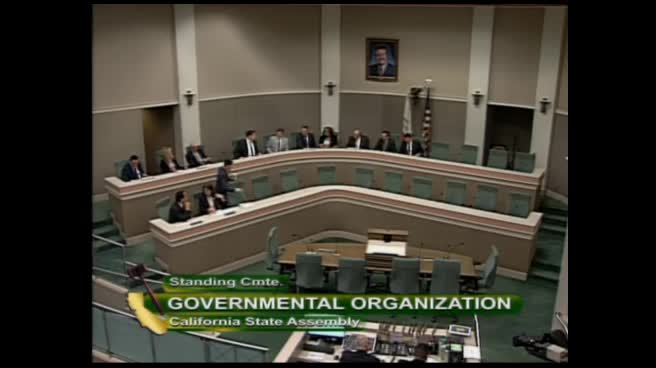 2MIN
Assembly Standing Committee on Governmental Organization
Bill Author

Bill Co-Author(s):