AB 893: California Renewables Portfolio Standard Program.
- Session Year: 2017-2018
- House: Assembly
- Latest Version Date: 2018-08-28
Under existing law, the Public Utilities Commission (PUC) has regulatory authority over public utilities, including electrical corporations. The Public Utilities Act imposes various duties and responsibilities on the commission with respect to the purchase of electricity and requires the PUC to review and adopt a renewable energy procurement plan for each electrical corporation pursuant to the California Renewables Portfolio Standard Program. The California Renewables Portfolio Standard Program requires a retail seller, as defined, to purchase specified minimum quantities of electricity products from eligible renewable energy resources, as defined, for specified compliance periods. A violation of the Public Utilities Act is a crime.
This bill would require each retail seller of electricity and each local publicly owned electric utility to procure a proportionate share of electricity products from a statewide total of 5,000 4,250 megawatts of qualified renewable energy resources, defined by the bill as a subset of eligible renewable energy resources that consists of certain bioenergy and geothermal energy resources with high performance relative to capacity, and certain solar and wind energy resources that are eligible for specified federal tax credits. The bill would require portions of that 5,000 4,250 megawatts to be procured from specified qualified renewable energy resources. The bill would require, no later than May 31, 2019, each retail seller to file with the PUC a plan for complying with this procurement requirement, as specified. If a community choice aggregator or electric service provider, by June August 1, 2019, fails to demonstrate it has secured sufficient enforceable and financeable procurement commitments to meet its proportionate share, the bill would require the applicable electrical corporation to procure the amount of any shortfall on behalf of the end-use customers of the community choice aggregator or direct access provider. The bill would require, no later than June 30, 2019, each local publicly owned electric utility to adopt a plan for complying with this procurement requirement, as specified. Under the bill, the electricity procured by retail sellers and local publicly owned electric utilities from these qualified renewable energy resources would count toward meeting their obligations under the California Renewables Portfolio Standard Program to purchase specified minimum quantities of electricity products from eligible renewable energy resources. Because a violation of these provisions would be a crime under the Public Utilities Act, the bill would impose a state-mandated local program. By imposing a new procurement requirement on local publicly owned electric utilities, this bill would impose a state-mandated local program.
Existing law requires the PUC and the State Energy Resources Conservation and Development Commission (Energy Commission) to undertake various actions in furtherance of meeting the states clean energy and pollution reduction objectives.
This bill would require the PUC and the Energy Commission to provide the Legislature, by March 31, 2019, with a joint assessment, as specified, of options for establishing a central statewide entity to procure electricity for all end-use retail customers in the state.
The California Constitution requires the state to reimburse local agencies and school districts for certain costs mandated by the state. Statutory provisions establish procedures for making that reimbursement.
This bill would provide that no reimbursement is required by this act for specified reasons.
Under existing law, the Public Utilities Commission (PUC) has regulatory authority over public utilities, including electrical corporations. The Public Utilities Act imposes various duties and responsibilities on the commission with respect to the purchase of electricity and requires the PUC to review and adopt a renewable energy procurement plan for each electrical corporation pursuant to the California Renewables Portfolio Standard Program. The California Renewables Portfolio Standard Program requires a retail seller, as defined, to purchase specified minimum quantities of electricity products from eligible renewable energy resources, as defined, for specified compliance periods. A violation of the Public Utilities Act is a crime.
This bill would require each retail seller of electricity and each local publicly owned electric utility to procure a proportionate share, as determined by the PUC, in consultation with the State Energy Resources Conservation and Development Commission, share of electricity products from a statewide total of 3,000 5,000 megawatts of geothermal generation capacity, as specified. qualified renewable energy resources, defined by the bill as a subset of eligible renewable energy resources that consists of certain bioenergy and geothermal energy resources with high performance relative to capacity, and certain solar and wind energy resources that are eligible for specified federal tax credits. The bill would require portions of that 5,000 megawatts to be procured from specified qualified renewable energy resources. The bill would require, no later than December 31, 2020, May 31, 2019, each retail seller to file with the PUC a plan for complying with this procurement requirement, as specified. If a community choice aggregator or electric service provider, by June 1, 2019, fails to demonstrate it has secured sufficient enforceable and financeable procurement commitments to meet its proportionate share, the bill would require the applicable electrical corporation to procure the amount of any shortfall on behalf of the end-use customers of the community choice aggregator or direct access provider. The bill would require, no later than December 31, 2020, June 30, 2019, each local publicly owned electric utility to adopt a plan for complying with this procurement requirement, as specified. Under the bill, the electricity procured by retail sellers and local publicly owned electric utilities from these geothermal powerplants qualified renewable energy resources would count toward meeting their obligations under the California Renewables Portfolio Standard Program to purchase specified minimum quantities of electricity products from eligible renewable energy resources. The bill would require projects generating electricity procured pursuant to the bills requirements for which construction began on or after January 1, 2019, to demonstrate an environmental benefit and an economic benefit to disadvantaged communities, as defined. Because a violation of these provisions would be a crime under the Public Utilities Act, the bill would impose a state-mandated local program. By imposing a new procurement requirement on local publicly owned electric utilities, this bill would impose a state-mandated local program.
Existing law requires the PUC and the State Energy Resources Conservation and Development Commission (Energy Commission) to undertake various actions in furtherance of meeting the states clean energy and pollution reduction objectives.
This bill would require the PUC and the Energy Commission to provide the Legislature, by March 31, 2019, with a joint assessment, as specified, of options for establishing a central statewide entity to procure electricity for all end-use retail customers in the state.
The California Constitution requires the state to reimburse local agencies and school districts for certain costs mandated by the state. Statutory provisions establish procedures for making that reimbursement.
This bill would provide that no reimbursement is required by this act for specified reasons.
Under existing law, the Public Utilities Commission (PUC) has regulatory authority over public utilities, including electrical corporations. The Public Utilities Act imposes various duties and responsibilities on the commission with respect to the purchase of electricity and requires the PUC to review and adopt a renewable energy procurement plan for each electrical corporation pursuant to the California Renewables Portfolio Standard Program. The California Renewables Portfolio Standard Program requires a retail seller, as defined, to purchase specified minimum quantities of electricity products from eligible renewable energy resources, as defined, for specified compliance periods. A violation of the Public Utilities Act is a crime.
This bill would require, no later than December 31, 2021, require each retail seller of electricity and each local publicly owned electric utility to procure a proportionate share, as determined by the PUC, in consultation with the State Energy Resources Conservation and Development Commission, of electricity products from a statewide total of 3,500 3,000 megawatts of geothermal generation capacity, as specified. The bill would require, no later than December 31, 2019, 2020, each retail seller to file with the PUC a plan for complying with this procurement requirement, as specified. The bill would require, no later than December 31, 2019, 2020, each local publicly owned electric utility to adopt a plan for complying with this procurement requirement, as specified. The bill would authorize the PUC to determine whether Under the bill, the electricity procured by retail sellers and local publicly owned electric utilities from these geothermal powerplants should would count toward meeting their obligations under the California Renewables Portfolio Standard Program to purchase specified minimum quantities of electricity products from eligible renewable energy resources. The bill would require projects generating electricity procured pursuant to the bills requirements for which construction began on or after January 1, 2019, to demonstrate an environmental benefit and an economic benefit to disadvantaged communities, as defined. Because a violation of these provisions would be a crime under the Public Utilities Act, the bill would impose a state-mandated local program. By imposing a new procurement requirement on local publicly owned electric utilities, this bill would impose a state-mandated local program.
The California Constitution requires the state to reimburse local agencies and school districts for certain costs mandated by the state. Statutory provisions establish procedures for making that reimbursement.
This bill would provide that no reimbursement is required by this act for specified reasons.
Under existing law, the Public Utilities Commission (PUC) has regulatory authority over public utilities, including electrical corporations. The Public Utilities Act imposes various duties and responsibilities on the commission with respect to the purchase of electricity and requires the commission PUC to review and adopt a renewable energy procurement plan for each electrical corporation pursuant to the California Renewables Portfolio Standard Program. The California Renewables Portfolio Standard Program requires a retail seller, as defined, to purchase specified minimum quantities of electricity products from eligible renewable energy resources, as defined, for specified compliance periods. A violation of the Public Utilities Act is a crime.
This bill would require, no later than December 31, 2021, each retail seller of electricity and each local publicly owned electric utility to procure a proportionate share, as determined by the commission, PUC, in consultation with the State Energy Resources Conservation and Development Commission, of electricity products from a statewide total of 2,500 3,500 megawatts of electricity generated by geothermal powerplants, geothermal generation capacity, as specified. The bill would require, no later than December 31, 2019, each retail seller to file with the commission PUC a plan for complying with this procurement requirement. requirement, as specified. The bill would require, no later than December 31, 2019, each local publicly owned electric utility to adopt a plan for complying with this procurement requirement, as specified. The bill would authorize the commission PUC to determine whether the electricity procured by retail sellers from these geothermal powerplants shall should count toward meeting their obligations under the California Renewables Portfolio Standard Program to purchase specified minimum quantities of electricity products from eligible renewable energy resources. The bill would require projects generating electricity procured pursuant to the bills requirements for which construction began on or after January 1, 2019, to demonstrate an environmental benefit and an economic benefit to disadvantaged communities, as defined, in California. defined. Because a violation of these provisions would be a crime under the Public Utilities Act, the bill would impose a state-mandated local program. By imposing a new procurement requirement on local publicly owned electric utilities, this bill would impose a state-mandated local program.
The California Constitution requires the state to reimburse local agencies and school districts for certain costs mandated by the state. Statutory provisions establish procedures for making that reimbursement.This bill would provide that no reimbursement is required by this act for a specified reason.The California Constitution requires the state to reimburse local agencies and school districts for certain costs mandated by the state. Statutory provisions establish procedures for making that reimbursement.
This bill would provide that no reimbursement is required by this act for specified reasons.
Under existing law, the Public Utilities Commission has regulatory authority over public utilities, including electrical corporations. The Public Utilities Act imposes various duties and responsibilities on the commission with respect to the purchase of electricity and requires the commission to review and adopt a renewable energy procurement plan for each electrical corporation pursuant to the California Renewables Portfolio Standard Program. The California Renewables Portfolio Standard Program requires a retail seller, as defined, to purchase specified minimum quantities of electricity products from eligible renewable energy resources, as defined, for specified compliance periods. A violation of the Public Utilities Act is a crime.
This bill would require, no later than December 31, 2021, each retail seller of electricity to procure a proportionate share, as determined by the commission, of a statewide total of 2,500 megawatts of electricity generated by geothermal powerplants, as specified. The bill would require, no later than December 31, 2019, each retail seller to file with the commission a plan for complying with this procurement requirement. The bill would authorize the commission to determine whether the electricity procured by retail sellers from these geothermal powerplants shall count toward meeting their obligations under the California Renewables Portfolio Standard Program to purchase specified minimum quantities of electricity products from eligible renewable energy resources. The bill would require projects generating electricity procured pursuant to the bills requirements to demonstrate an environmental benefit and an economic benefit to disadvantaged communities, as defined, in California. Because a violation of these provisions would be a crime under the Public Utilities Act, the bill would impose a state-mandated local program.
The California Constitution requires the state to reimburse local agencies and school districts for certain costs mandated by the state. Statutory provisions establish procedures for making that reimbursement.
This bill would provide that no reimbursement is required by this act for a specified reason.
Existing law establishes the Office of Statewide Health Planning and Development, which is vested with all the duties, powers, responsibilities, and jurisdiction of the State Department of Public Health relating to health planning and research development. Existing law requires the office to work with the Employment Development Departments Labor Market Information Division, state licensing boards, and state higher education entities to collect data regarding, among other things, the current supply of health care workers, the geographical distribution of health care workers, and the current and forecasted demand for health care workers.This bill would authorize local public health agencies and others to send data to the office regarding the number of graduate medical education slots necessary to meet the current and future physician and surgeon needs of the County of Imperial and similar medically underserved counties, as defined, from local public health or health planning agencies, entities engaged in the provision of health care services in those areas, and professional and educational associations, as specified.This bill would make legislative findings and declarations as to the necessity of a special statute for the County of Imperial and similar medically underserved counties.Existing law establishes the Office of Statewide Health Planning and Development, which is vested with all the duties, powers, responsibilities, and jurisdiction of the State Department of Public Health relating to health planning and research development. Existing law requires the office to work with the Employment Development Departments Labor Market Information Division, state licensing boards, and state higher education entities to collect data regarding, among other things, the current supply of health care workers, the geographical distribution of health care workers, and the current and forecasted demand for health care workers.
This bill would authorize local public health agencies and others to send data to the office regarding the number of graduate medical education slots necessary to meet the current and future physician and surgeon needs of the County of Imperial and similar medically underserved counties counties, as defined, from local public health or health planning agencies, entities engaged in the provision of health care services in those areas, and professional and educational associations, as specified.
This bill would make legislative findings and declarations as to the necessity of a special statute for the County of Imperial and other similar medically underserved counties.
Existing law establishes the Office of Statewide Health Planning and Development, which is vested with all the duties, powers, responsibilities, and jurisdiction of the State Department of Public Health relating to health planning and research development. Existing law requires the office to work with the Employment Development Departments Labor Market Information Division, state licensing boards, and state higher education entities to collect data regarding, among other things, the current supply of health care workers, the geographical distribution of health care workers, and the current and forecasted demand for health care workers.
This bill would authorize local public health agencies and others to send data to the office regarding the number of graduate medical education slots necessary to meet the current and future physician and surgeon needs of the County of Imperial and similar medically underserved counties from local public health or health planning agencies, entities engaged in the provision of health care services in those areas, and professional and educational associations, as specified.
This bill would make legislative findings and declarations as to the necessity of a special statute for the County of Imperial and other medically underserved counties.
Existing law, the Medical Practice Act, restricts the employment of physicians and surgeons or doctors of podiatric medicine by a corporation or other artificial legal entity to entities that do not charge for professional services rendered to patients and are approved by the Medical Board of California, subject to specified exemptions. Existing law, until January 1, 2024, also authorizes a federally certified critical access hospital to employ those medical professionals and to charge for professional services rendered by those medical professionals if the medical staff concur by an affirmative vote that the professionals employment is in the best interest of the communities served by the hospital and the hospital does not direct or interfere with the professional judgment of a physician and surgeon, as specified. Existing law requires, on and after July 1, 2017, and until July 1, 2023, a federally critical access hospital employing those medical professionals under this authorization to submit a report, on or before July 1 of each year, to the Office of Statewide Health Planning and Development, as specified.This bill would authorize the Pioneers Memorial Health Care District, until January 1, 2022, to conduct a pilot program pursuant to which it also may employ licensees and charge for professional services rendered by those licensees if the medical staff concur by an affirmative vote that the professionals employment is in the best interest of the communities served by the district and the district does not direct or interfere with the professional judgment of a physician and surgeon, as specified. The bill would require the district to submit a report to the office containing data elements required by the office.This bill would make legislative findings and declarations as to the necessity of a special statute for the Pioneers Memorial Health Care District.Existing law, the Medical Practice Act, restricts the employment of physicians and surgeons or doctors of podiatric medicine by a corporation or other artificial legal entity to entities that do not charge for professional services rendered to patients and are approved by the Medical Board of California, subject to specified exemptions. Existing law, until January 1, 2024, also authorizes a federally certified critical access hospital to employ those medical professionals and to charge for professional services rendered by those medical professionals if the medical staff concur by an affirmative vote that the professionals employment is in the best interest of the communities served by the hospital and the hospital does not direct or interfere with the professional judgment of a physician and surgeon, as specified. Existing law requires, on and after July 1, 2017, and until July 1, 2023, require a federally critical access hospital employing those medical professionals under this authorization to submit a report, on or before July 1 of each year, to the office Office of Statewide Health Planning and Development, as specified.
This bill would state the intent of the Legislature to subsequently amend this bill to include provisions that would authorize rural hospitals to employ physicians and surgeons or doctors of podiatric medicine and to charge for professional services rendered by those medical professionals.This bill would authorize the Pioneers Memorial Health Care District, until January 1, 2022, to conduct a pilot program pursuant to which it also may employ licensees and charge for professional services rendered by those licensees if the medical staff concur by an affirmative vote that the professionals employment is in the best interest of the communities served by the district and the district does not direct or interfere with the professional judgment of a physician and surgeon, as specified. The bill would require the district to submit a report to the office containing data elements required by the office.
This bill would make legislative findings and declarations as to the necessity of a special statute for the Pioneers Memorial Health Care District.
Existing law, the Medical Practice Act, restricts the employment of physicians and surgeons or doctors of podiatric medicine by a corporation or other artificial legal entity to entities that do not charge for professional services rendered to patients and are approved by the Medical Board of California, subject to specified exemptions. Existing law, until January 1, 2024, also authorizes a federally certified critical access hospital to employ those medical professionals and to charge for professional services rendered by those medical professionals if the medical staff concur by an affirmative vote that the professionals employment is in the best interest of the communities served by the hospital and the hospital does not direct or interfere with the professional judgment of a physician and surgeon, as specified. Existing law requires, on and after July 1, 2017, and until July 1, 2023, require a federally critical access hospital employing those medical professionals under this authorization to submit a report, on or before July 1 of each year, to the office as specified.
This bill would state the intent of the Legislature to subsequently amend this bill to include provisions that would authorize rural hospitals to employ physicians and surgeons or doctors of podiatric medicine and to charge for professional services rendered by those medical professionals.
This measure shall be known and may be cited as the Building Resilience by Integrating Dynamic Green Energy Act of 2018, or Bridge Act of 2018.
SEC. 2.(a)The Legislature finds and declares the following:
(1)The California Global Warming Solutions Act of 2006 (Division 25.5 (commencing with Section 38500) of the Health and Safety Code) required the State Air Resources Board to adopt a statewide greenhouse gas emissions limit to be achieved by 2020, equivalent to the statewide greenhouse gas emissions levels in 1990.
(2)Amendments to the California Global Warming Solutions Act of 2006 require the state board to ensure that statewide emissions of greenhouse gases are reduced to at least 40 percent below the statewide greenhouse gas emissions levels in 1990 no later than December 31, 2030.
(3)Decarbonizing the electrical generation sector is a key part of achieving Californias policy goals for reducing emissions of greenhouse gases.
(4)The California Renewables Portfolio Standard Program (Article 16 (commencing with Section 399.11) of Chapter 2.3 of Part 1 of Division 1 of the Public Utilities Code) is intended to complement the Renewable Energy Resources Program administered by the Energy Commission and established pursuant to Chapter 8.6 (commencing with Section 25740) of Division 15 of the Public Resources Code.
(5)The procurement of renewable energy provides unique benefits to California, including, but not limited to, the reduction of fossil fuel consumption, improved air quality, stable electricity rates, and the development of a safe, reliable, and resilient electrical grid.
(6)The Clean Energy and Pollution Reduction Act of 2015 (Chapter 547 of the Statutes of 2015) established a 50 percent renewables portfolio standard by 2030, but the states three largest electrical corporations can meet that target by 2020, and have not procured new generation from renewable energy resources since 2015.
(7)In July 2018, the State Air Resources Board, in consultation with the Public Utilities Commission and the State Energy Resources Conservation and Development Commission, adopted a goal to limit greenhouse gas emissions from the electricity sector to between 35 and 52 million metric tons of carbon dioxide in 2030.
(8)In Rulemaking 16-02-007 (filed February 11, 2016), Order Instituting Rulemaking to Develop an Electricity Integrated Resource Planning Framework and to Coordinate and Refine Long-Term Procurement Planning Requirements, the Public Utilities Commission established a target for reducing emissions of greenhouse gases for load-serving entities to an amount not to exceed 42 million metric tons by 2030 (Decision 18-02-018 (February 8, 2018) Decision Setting Requirements for Load Serving Entities Filing Integrated Resource Plans, at pages 52 to 59). Modeling results showed that load-serving entities must procure at least 10,300 megawatts of electricity from new eligible renewable energy resources, in addition to keeping existing renewable power projects online, in order to meet this target.
(9)Preliminary modeling results in the Public Utilities Commissions Rulemaking 16-02-007 have identified a potential ratepayer savings of $143,000,000 a year statewide, in levelized 2016 dollars, resulting from the procurement of tax-credit-eligible renewable resources.
(10)In May of 2018, Governor Brown issued an executive order to establish a task force to address the states ongoing wildfire emergency, and the California Forest Carbon Plan, issued jointly by the Natural Resources Agency, the Department of Forestry and Fire Protection, and the California Environmental Protection Agency, was also released indicating a need to utilize biomass-to-energy and development of grid and resource resiliency as part of the multifaceted plan to reduce wildfire risk and mitigate the significant carbon and black carbon emissions from the states largely climate driven and increasingly severe fires.(11)(10)Achieving the states climate change and renewable energy goals, while maintaining the reliability of the electricity grid and avoiding undue cost impacts on consumers, will require that the state maintain a balanced portfolio of eligible renewable energy resources, including biomass and geothermal resources that can operate flexibly and at high capacity factors to complement variable renewable energy resources, such as wind and solar.
(12)A number of biomass and geothermal projects are operating pursuant to contracts that are scheduled to expire by 2023, which have not been renewed or extended because electrical corporations are unwilling to procure additional renewable resources due to uncertainty about how much load they will continue to serve within their service territories and how much load will depart to community choice aggregators or electric service providers in coming years.(13)(11)Updated modeling performed by the Public Utilities Commission as part of its Integrated Resource Plan (IRP) proceeding supports the view that, in order to achieve greenhouse gas reduction targets for the electricity sector at the least cost to ratepayers, load-serving entities should plan to procure a total of 3,500 megawatts of new and existing geothermal generation capacity, including 1,700 megawatts of new geothermal generation capacity.
(14)(12)California must continue to build on the important environmental achievements attained to date by acting now to ensure 100 percent of total retail sales of electricity in California comes from renewable energy resources and zero-carbon resources by December 31, 2045.
(b)It is the intent of the Legislature to direct near-term procurement in a way that ensures a diverse and innovative portfolio, stable retail rates for electric service, and the safe and reliable operation of the electrical grid.
(c)It is the intent of the Legislature to ensure that existing renewable energy resources stay online and that new or repowered renewable energy resources are contracted by 2019 to ensure California stays on track to meet the 2030 greenhouse gas emissions target.
(d)It is the intent of the Legislature to examine the efficacy of developing a centralized procurement entity responsible for purchasing power and distribution resources on behalf of all ratepayers, to do all of the following:
(1)Reduce the cost of financing new and existing renewable energy projects in the state, including, but not limited to, new geothermal, bioenergy, geothermal and flexible energy projects.
(2)Help achieve the climate and air quality goals established in law.
(3)Stabilize the electric grid while reducing dependence on natural gas power plants to meet short-term electricity demand.
SEC. 3.Section 399.35 is added to the Public Utilities Code, to read:399.35.(a)(1)Each retail seller and local publicly owned electric utility shall procure, through contracts with a service term of at least 10 years in duration, a proportionate share of electricity products from a statewide total of 5,000 4,250 megawatts of cumulative-rated generating capacity of qualified renewable energy resources that meet the requirements of paragraph (1) of subdivision (b) of Section 399.16. For purposes of this section, proportionate share shall be based on the forecast of retail sales for the year 2020.
(2)Of the total amount of electricity products procured from geothermal projects pursuant to paragraph (1):
(A)Not less than 500 megawatts of cumulative-rated generation capacity shall be procured from geothermal projects in existence as of January 1, 2018, and operated pursuant to contracts otherwise scheduled to expire between December 31, 2020, January 1, 2019, and December 31, 2022.
(B)Not less than an additional 500 megawatts of cumulative-rated generation capacity shall be procured from geothermal projects in existence as of January 1, 2018, and operated pursuant to contracts otherwise scheduled to expire between December 31, 2026, 2025, and December 31, 2028.
(C)Not less than an additional 750 megawatts of cumulative-rated generation capacity shall be procured from geothermal resources that began construction on or after January 1, 2019, with early priority on projects in disadvantaged communities with deliveries of electricity products scheduled to commence no later than January 1, 2028.
(3)Of the total amount of electricity products procured from bioenergy projects pursuant to paragraph (1):(A)Not less than 325 megawatts of cumulative-rated generation capacity shall be procured from bioenergy projects in existence as of January 1, 2018, and operated pursuant to contracts otherwise scheduled to expire between December 31, 2020, and December 31, 2022.(B)(i)Not less than 200 megawatts of cumulative-rated generation capacity shall be procured from bioenergy projects that began construction on or after January 1, 2019, in addition to the procurement required pursuant to paragraph (2) of subdivision (f) of Section 399.20.(ii)Renewable bioenergy projects procured under this subparagraph shall be limited to facilities constructed for the purpose of healthy forest management with a nameplate generation capacity of less than five megawatts.(4)(3)Of the total amount of electricity products procured from geothermal projects pursuant to paragraph (1), not less than 2,500 megawatts shall be procured from tax-advantaged renewable energy resources.
(b)(1)No later than March 31, 2019, the commission shall determine the proportionate share of electricity products from the 5,000 4,250 megawatts of electricity that each retail seller is required to procure pursuant to subdivision (a), including a mix of at least 1,675 megawatts of tax-advantaged renewable resources that promotes the achievement of a diverse overall resource portfolio, as determined by the commission in its Decision 18-02-018 to achieve a greenhouse gas emissions target at or below the 42-million-metric-ton goal for 2030 identified in Rulemaking 16-02-007.
(2)The commission shall direct retail sellers to procure sufficient eligible renewable energy resources in consideration of the integrated resource plan requirements adopted by the commission in its Decision 18-02-018.
(A)Contracts executed by an electrical corporation for tax-advantaged renewable resources shall be submitted to the commission for review by no later than September 1, 2019.
(B)Procurement of tax-advantaged renewable resources pursuant to this subdivision shall be on behalf of retail end-use customers of all retail sellers. The commission shall act on all submitted contracts by December 31, 2019.
(c)(1)No later than May 31, 2019, each retail seller shall file with the commission a plan for complying with subdivision (a). Those plans may authorize a retail seller to aggregate its proportionate share with the proportionate share of another retail seller or local publicly owned electric utility in order to minimize administrative and contracting costs. The commission shall, no later than June 30, 2019, review and approve, modify, or reject plans filed by retail sellers.
(2)(A)If a community choice aggregator or electric service provider fails to demonstrate, by June August 1, 2019, that it has secured sufficient enforceable and financeable procurement commitments to meet its procurement requirements, the commission shall order the applicable electrical corporation to procure any shortfall on behalf of the retail end-use customers of the community choice aggregator or electric service provider and shall allow the recovery of any costs associated with the procurement from those end-use customers pursuant to paragraph (3).
(B)If a community choice aggregator or electric service provider elects not to procure the proportionate share of resources determined by the commission, it shall notify the commission by May 31, 2019.
(3)The commission shall allow for recovery of an electrical corporations costs associated with the procurement required by this section from all benefiting consumers on a nonbypassable basis.
(d)(1)No later than June 30, 2019, each local publicly owned electric utility shall adopt, as part of the renewable energy resources procurement plan required by subdivision (f) of Section 399.30, a plan for complying with subdivision (a), including a mix of at least 825 megawatts of tax-advantaged renewable resources that promote achievement of a diverse overall resource portfolio. A local publicly owned electric utility may aggregate its proportionate share with the proportionate share of another local publicly owned electric utility or retail seller in order to minimize administrative and contracting costs.
(2)Contracts executed by a local publicly owned electric utility for tax-advantaged renewable resources shall be executed no later than December 31, 2019.
(e)Electricity procured by a retail seller or local publicly owned electric utility pursuant to this section shall count toward meeting the requirements specified in subparagraph (B) of paragraph (2) of subdivision (b) of Section 399.15 or subdivision (c) of Section 399.30, as applicable.
(f)The procurement expenditure limitations described in subdivision (c) of Section 399.15 shall apply to procurement by electrical corporations pursuant to this section.
(g)Any cost limitations adopted by the governing board of a local publicly owned electric utility pursuant to subparagraph (B) of paragraph (2) of subdivision (d) of Section 399.30 shall apply to procurement by the local publicly owned utility pursuant to this section.
(h)For purposes of this section, the following definitions apply:
(1)Disadvantaged communities mean communities identified as disadvantaged pursuant to Section 39711 of the Health and Safety Code.
(2)Qualified renewable energy resources means either of the following:
(A)Renewable geothermal or bioenergy generation.
(B)Tax-advantaged renewable energy resources.
(3)(A)Renewable geothermal or bioenergy generation means generation from a renewable bioenergy or geothermal energy resource that is capable of generating electricity at a capacity factor greater than, or equal to, 80 percent, relative to its capacity, on an annual average basis.(B)Renewable bioenergy generation facilities contracted pursuant to this section shall adopt best available control technology, as defined in Section 40405 of the Health and Safety Code, and best available control technology for toxic air contaminants, as defined in Section 39666 of the Health and Safety Code. This required technology shall be installed in a generation facility before the facility begins delivery of electricity to the entity that procured that electricity pursuant to this section.(C)Renewable bioenergy generation shall be sited in a disadvantaged community only if it is consistent with priorities identified by the affected community in a transparent, meaningful public process. The input from the affected community shall be reflected in written documentation submitted to the commission.(4)(3)(A)Tax-advantaged renewable energy resource means a new or repowered renewable solar or wind energy resource that satisfies all of the following:
(i)Achieves initial commercial operation or initial operation for a repowered resource after January 1, 2019.
(ii)Is eligible for a federal investment tax credit pursuant to Section 48 of Title 26 of the United States Code of at least 22 percent or the federal production tax credit pursuant to Section 45 of Title 26 of the United States Code of at least 60 percent and passes the savings associated with these credits through to retail sellers and their customers.
(iii)Provides an electricity product meeting the product content category requirements of paragraph (1) of subdivision (b) of Section 399.16 pursuant to contracts of 10 years or more in duration, or in its ownership or ownership agreements, for eligible renewable energy resources.
(iv)Was not delivering electricity under contract to an entity providing electricity to customers inside or outside the state, and was not a part of a request for proposals shortlist of projects approved by the commission, or a similar public entity of another state, as of September 1, 2018, except as set forth in subparagraph (B).
(B)Wind projects under contract before September 1, 2018, to an entity providing electricity inside or outside the state qualify as a tax-advantaged renewable resource if at least half of the project capacity is repowered and the repowered portion satisfies clause (ii) of subparagraph (A). Only the portion of the resource that is repowered shall count towards the total tax-advantaged renewable energy resources to be procured pursuant to this section.
(i)Failure to comply with this section shall be subject to noncompliance penalties as specified in paragraph (8) of subdivision (b) of Section 399.15.
(j)The provisions of this section are severable. If any provision of this section or its application is held invalid, that invalidity shall not affect other provisions or applications that can be given effect without the invalid provision or application.
SEC. 4.Section 400.5 is added to the Public Utilities Code, to read:400.5.(a)By March 31, 2019, the commission and the Energy Commission shall provide the Legislature, in compliance with Section 9795 of the Government Code, with a joint assessment of options for establishing a statewide central procurement entity on behalf of retail sellers in the state. This assessment shall consider the role of any proposed central procurement entity in doing all of the following:
(1)Entering into long-term contracts for newly developed renewable energy resources, energy storage, and other preferred resources. For these purposes, preferred resources means those resources described in the states Energy Action Plan II, Implementation Roadmap for Energy Policies, a joint document adopted by the Energy Commission and the commission (September 21, 2005), as that description of preferred resources may be modified by the commission.
(2)Contracting for renewable energy resources when they are at risk of retirement, if they provide demonstrated environmental and public health benefits to the state, including, but not limited to, benefit from a reduction of toxic and criteria air emissions.
(3)Developing financing tools to minimize the cost of new generation projects.
(b)In conducting the assessment pursuant to subdivision (a), the commission and the Energy Commission shall consider the benefits, costs, and risks of assigning the procurement entity function to any of the following:
(1)A state agency or state power authority.
(2)A person or corporation, whether for-profit or nonprofit.
(3)An existing retail supplier, electrical corporation, or local publicly owned electric utility.
(c)The assessment shall evaluate the need for, and appropriate design of, the following features of a central procurement structure:
(1)The recovery of reasonable and prudent administrative and procurement costs through the retail rates of end-use customers in a fair and equitable manner.
(2)The process for advance review and up-front approval of any procurement commitments.
(3)Methods of assigning specific responsibilities to the procurement entity based on the outcome of state resource planning processes and other need determinations.
(4)Options for voluntary participation or self-provision of required resources by a retail seller, as defined in Section 399.12.
(5)A reasonable and legally defensible approach to evaluating the local environmental, reliability, air quality, and public health benefits of various resources solicited by the procurement entity. This approach shall include consideration of ways to minimize emissions of criteria pollutants, toxic air contaminants, and greenhouse gases, protect public health, and reduce environmental impacts of resources to the maximum extent feasible.
(d)The commission and the Energy Commission shall conduct a joint public process for completing the assessment and shall solicit comments from interested stakeholders.
(e)Pursuant to Section 10231.5 of the Government Code, this section becomes inoperative on March 31, 2023, and is repealed on January 1, 2024.
SEC. 5.No reimbursement is required by this act pursuant to Section 6 of Article XIIIB of the California Constitution because a local agency or school district has the authority to levy service charges, fees, or assessments sufficient to pay for the program or level of service mandated by this act or because costs that may be incurred by a local agency or school district will be incurred because this act creates a new crime or infraction, eliminates a crime or infraction, or changes the penalty for a crime or infraction, within the meaning of Section 17556 of the Government Code, or changes the definition of a crime within the meaning of Section 6 of Article XIIIB of the California Constitution.
This measure shall be known and may be cited as the Building Resilience by Integrating Dynamic Green Energy Act of 2018, or Bridge Act of 2018.
SEC. 2.(a)The Legislature finds and declares the following:
(1)The California Global Warming Solutions Act of 2006 (Division 25.5 (commencing with Section 38500) of the Health and Safety Code) required the State Air Resources Board to adopt a statewide greenhouse gas emissions limit to be achieved by 2020, equivalent to the statewide greenhouse gas emissions levels in 1990.
(2)Amendments to the California Global Warming Solutions Act of 2006 require the state board to ensure that statewide emissions of greenhouse gases are reduced to at least 40 percent below the statewide greenhouse gas emissions levels in 1990 no later than December 31, 2030.
(3)Decarbonizing the electrical generation sector is a key part of achieving Californias policy goals for reducing emissions of greenhouse gases.
(4)The California Renewables Portfolio Standard Program (Article 16 (commencing with Section 399.11) of Chapter 2.3 of Part 1 of Division 1 of the Public Utilities Code) is intended to complement the Renewable Energy Resources Program administered by the Energy Commission and established pursuant to Chapter 8.6 (commencing with Section 25740) of Division 15 of the Public Resources Code.
(5)The procurement of renewable energy provides unique benefits to California, including, but not limited to, the reduction of fossil fuel consumption, improved air quality, stable electricity rates, and the development of a safe, reliable, and resilient electrical grid.
(6)The Clean Energy and Pollution Reduction Act of 2015 (Chapter 547 of the Statutes of 2015) established a 50 percent renewables portfolio standard by 2030, but the states three largest electrical corporations can meet that target by 2020, and have not procured new generation from renewable energy resources since 2015.
(7)In July 2018, the State Air Resources Board, in consultation with the Public Utilities Commission and the State Energy Resources Conservation and Development Commission, adopted a goal to limit greenhouse gas emissions from the electricity sector to between 35 and 52 million metric tons of carbon dioxide in 2030.
(8)In Rulemaking 16-02-007 (filed February 11, 2016), Order Instituting Rulemaking to Develop an Electricity Integrated Resource Planning Framework and to Coordinate and Refine Long-Term Procurement Planning Requirements, the Public Utilities Commission established a target for reducing emissions of greenhouse gases for load-serving entities to an amount not to exceed 42 million metric tons by 2030 (Decision 18-02-018 (February 8, 2018) Decision Setting Requirements for Load Serving Entities Filing Integrated Resource Plans, at pages 52 to 59). Modeling results showed that load-serving entities must procure at least 10,300 megawatts of electricity from new eligible renewable energy resources, in addition to keeping existing renewable power projects online, in order to meet this target.
(9)Preliminary modeling results in the Public Utilities Commissions Rulemaking 16-02-007 have identified a potential ratepayer savings of $143,000,000 a year statewide, in levelized 2016 dollars, resulting from the procurement of tax-credit-eligible renewable resources.
(10)In May of 2018, Governor Brown issued an executive order to establish a task force to address the states ongoing wildfire emergency, and the California Forest Carbon Plan, issued jointly by the Natural Resources Agency, the Department of Forestry and Fire Protection, and the California Environmental Protection Agency, was also released indicating a need to utilize biomass-to-energy and development of grid and resource resiliency as part of the multifaceted plan to reduce wildfire risk and mitigate the significant carbon and black carbon emissions from the states largely climate driven and increasingly severe fires.
(11)Achieving the states climate change and renewable energy goals, while maintaining the reliability of the electricity grid and avoiding undue cost impacts on consumers, will require that the state maintain a balanced portfolio of eligible renewable energy resources, including biomass and geothermal resources that can operate flexibly and at high capacity factors to complement variable renewable energy resources, such as wind and solar.
(12)A number of biomass and geothermal projects are operating pursuant to contracts that are scheduled to expire by 2023, which have not been renewed or extended because electrical corporations are unwilling to procure additional renewable resources due to uncertainty about how much load they will continue to serve within their service territories and how much load will depart to community choice aggregators or electric service providers in coming years.
(13)Updated modeling performed by the Public Utilities Commission as part of its Integrated Resource Plan (IRP) proceeding supports the view that, in order to achieve greenhouse gas reduction targets for the electricity sector at the least cost to ratepayers, load-serving entities should plan to procure a total of 3,500 megawatts of new and existing geothermal generation capacity, including 1,700 megawatts of new geothermal generation capacity.
(14)California must continue to build on the important environmental achievements attained to date by acting now to ensure 100 percent of total retail sales of electricity in California comes from renewable energy resources and zero-carbon resources by December 31, 2045.
(b)It is the intent of the Legislature to direct near-term procurement in a way that ensures a diverse and innovative portfolio, stable retail rates for electric service, and the safe and reliable operation of the electrical grid.
(c)It is the intent of the Legislature to ensure that existing renewable energy resources stay online and that new or repowered renewable energy resources are contracted by 2019 to ensure California stays on track to meet the 2030 greenhouse gas emissions target.
(d)It is the intent of the Legislature to examine the efficacy of developing a centralized procurement entity responsible for purchasing power and distribution resources on behalf of all ratepayers, to do all of the following:
(1)Reduce the cost of financing new and existing renewable energy projects in the state, including, but not limited to, new geothermal, bioenergy, and flexible energy projects.
(2)Help achieve the climate and air quality goals established in law.
(3)Stabilize the electric grid while reducing dependence on natural gas power plants to meet short-term electricity demand.
SECTION 1.SEC. 3.Section 399.35 is added to the Public Utilities Code, to read:399.35.(a)(1)Each retail seller and local publicly owned electric utility shall procure procure, through contracts with a service term of at least 10 years in duration, a proportionate share of electricity products from a statewide total of 3,000 megawatts of geothermal generation capacity from projects for which construction began before, on, or after January 1, 2019, 5,000 megawatts of cumulative-rated generating capacity of qualified renewable energy resources that meet the requirements of paragraph (1) of subdivision (b) of Section 399.16. For purposes of this section, proportionate share shall be based on the forecast of retail sales for the year 2020.
(2)Of the total amount of electricity products procured from geothermal projects pursuant to paragraph (1):
(A)Not less than 500 megawatts of cumulative-rated generation capacity shall be procured from geothermal projects in existence as of January 1, 2018, and operated pursuant to contracts otherwise scheduled to expire between December 31, 2020, and December 31, 2022.
(B)Not less than an additional 500 megawatts of cumulative-rated generation capacity shall be procured from geothermal projects in existence as of January 1, 2018, and operated pursuant to contracts otherwise scheduled to expire between December 31, 2026, and December 31, 2028.
(C)Not less than an additional 750 megawatts of cumulative-rated generation capacity shall be procured from geothermal resources that began construction on or after January 1, 2019, with early priority on projects in disadvantaged communities with deliveries of electricity products scheduled to commence no later than January 1, 2028.
(3)Of the total amount of electricity products procured from bioenergy projects pursuant to paragraph (1):
(A)Not less than 325 megawatts of cumulative-rated generation capacity shall be procured from bioenergy projects in existence as of January 1, 2018, and operated pursuant to contracts otherwise scheduled to expire between December 31, 2020, and December 31, 2022.
(B)(i)Not less than 200 megawatts of cumulative-rated generation capacity shall be procured from bioenergy projects that began construction on or after January 1, 2019, in addition to the procurement required pursuant to paragraph (2) of subdivision (f) of Section 399.20.
(ii)Renewable bioenergy projects procured under this subparagraph shall be limited to facilities constructed for the purpose of healthy forest management with a nameplate generation capacity of less than five megawatts.
(4)Of the total amount of electricity products procured from geothermal projects pursuant to paragraph (1), not less than 2,500 megawatts shall be procured from tax-advantaged renewable energy resources.
(b)(1)No later than June 30, 2020, the commission, in consultation with the Energy Commission, March 31, 2019, the commission shall determine the proportionate share of electricity products from the 3,000 5,000 megawatts of electricity that each retail seller and local publicly owned electric utility is required to procure pursuant to subdivision (a). For purposes of this section, proportionate share shall be based on the forecast of retail sales for the year 2021. (a), including a mix of at least 1,675 megawatts of tax-advantaged renewable resources that promotes the achievement of a diverse overall resource portfolio, as determined by the commission in its Decision 18-02-018 to achieve a greenhouse gas emissions target at or below the 42-million-metric-ton goal for 2030 identified in Rulemaking 16-02-007.
(2)The commission shall direct retail sellers to procure sufficient eligible renewable energy resources in consideration of the integrated resource plan requirements adopted by the commission in its Decision 18-02-018.
(A)Contracts executed by an electrical corporation for tax-advantaged renewable resources shall be submitted to the commission for review by no later than September 1, 2019.
(B)Procurement of tax-advantaged renewable resources pursuant to this subdivision shall be on behalf of retail end-use customers of all retail sellers. The commission shall act on all submitted contracts by December 31, 2019.
(c)(1)No later than December 31, 2020, May 31, 2019, each retail seller shall file with the commission a plan for complying with subdivision (a). Those plans shall require each retail seller to procure at least one-half of its proportionate share by December 31, 2021, with deliveries of electricity products from that half of its proportionate share scheduled to commence no later than January 1, 2022, and shall require the other half of its proportionate share to be procured pursuant to contract with deliveries of electricity products scheduled to commence no later than January 1, 2030. Those plans may authorize a retail seller to aggregate its proportionate share with the proportionate share of another retail seller or local publicly owned electric utility in order to minimize administrative and contracting costs. A retail seller may procure its proportionate share by executing new contracts or by maintaining, extending, or renewing existing contracts for the purchase of electricity products from geothermal powerplants, so long as the retail seller continues to procure its share of these electricity products through the conclusion of the compliance periods set forth in paragraph (1) of subdivision (b) of Section 399.15. The commission shall, no later than June 30, 2021, 2019, review and approve, modify, or reject plans filed by retail sellers. A retail seller shall not be deemed out of compliance with the requirement of subdivision (a) if, after the commissions approval of the plan filed pursuant to this subdivision, a counterparty to a contract providing for deliveries of electricity products scheduled to commence no later than January 1, 2022, fails to commence delivery of the contracted electricity products by that date without fault of the retail seller.
(2)(A)If a community choice aggregator or electric service provider fails to demonstrate, by June 1, 2019, that it has secured sufficient enforceable and financeable procurement commitments to meet its procurement requirements, the commission shall order the applicable electrical corporation to procure any shortfall on behalf of the retail end-use customers of the community choice aggregator or electric service provider and shall allow the recovery of any costs associated with the procurement from those end-use customers pursuant to paragraph (3).
(B)If a community choice aggregator or electric service provider elects not to procure the proportionate share of resources determined by the commission, it shall notify the commission by May 31, 2019.
(3)The commission shall allow for recovery of an electrical corporations costs associated with the procurement required by this section from all benefiting consumers on a nonbypassable basis.
(d)(1)No later than December 31, 2020, June 30, 2019, each local publicly owned electric utility shall adopt, as part of the renewable energy resources procurement plan required by subdivision (f) of Section 399.30, a plan for complying with subdivision (a) by procuring at least one-half of its proportionate share by December 31, 2021, with deliveries of electricity products from that half of its proportionate share scheduled to commence no later than January 1, 2022, and by procuring the other half of its proportionate share through contracts with deliveries of electricity products scheduled to commence no later than January 1, 2030. (a), including a mix of at least 825 megawatts of tax-advantaged renewable resources that promote achievement of a diverse overall resource portfolio. A local publicly owned electric utility may aggregate its proportionate share with the proportionate share of another local publicly owned electric utility or retail seller in order to minimize administrative and contracting costs and may procure its proportionate share by executing new contracts or by maintaining, extending, or renewing existing contracts for the purchase of electricity products from geothermal power plants, so long as the local publicly owned electric utility continues to procure its share of these electricity products through the conclusion of the compliance periods set forth by subdivision (b) of Section 399.30. A local publicly owned electric utility shall not be deemed out of compliance with the requirements of subdivision (a) if, after adoption of a plan pursuant to this subdivision, a counterparty to a contract providing for deliveries of electricity products scheduled to commence no later than January 1, 2022, fails to commence delivery of the contracted electricity products by that date without fault of the local publicly owned electric utility. costs.
(2)Contracts executed by a local publicly owned electric utility for tax-advantaged renewable resources shall be executed no later than December 31, 2019.
(e)Electricity procured by a retail seller or local publicly owned electric utility pursuant to this section shall count toward meeting the requirements specified in subparagraph (B) of paragraph (2) of subdivision (b) of Section 399.15 or subdivision (c) of Section 399.30, as applicable.
(f)Projects generating electricity procured under this section for which construction began on or after January 1, 2019, shall demonstrate an environmental benefit and an economic benefit to California communities located within the boundaries of, and an environmental and an economic benefit to individuals living in, disadvantaged communities described in Section 39711 of the Health and Safety Code. Environmental benefits may include, but are not limited to, reducing air pollution from oxides of nitrogen, particulate matter 2.5 microns and smaller in size, or fugitive dust, or enabling the production of lithium. Economic benefits may include, but are not limited to, creating high-quality jobs.(g)(1)(f)The procurement expenditure limitations described in subdivision (c) of Section 399.15 shall apply to procurement by retail sellers electrical corporations pursuant to this section.
(2)The commission shall allow for recovery of the costs of the procurement required by this section by retail sellers from all benefiting consumers.(h)(g)Any cost limitations adopted by the governing board of a local publicly owned electric utility pursuant to subparagraph (B) of paragraph (2) of subdivision (d) of Section 399.30 shall apply to procurement by the local publicly owned utility pursuant to this section.
(h)For purposes of this section, the following definitions apply:
(1)Disadvantaged communities mean communities identified as disadvantaged pursuant to Section 39711 of the Health and Safety Code.
(2)Qualified renewable energy resources means either of the following:
(A)Renewable geothermal or bioenergy generation.
(B)Tax-advantaged renewable energy resources.
(3)(A)Renewable geothermal or bioenergy generation means generation from a renewable bioenergy or geothermal energy resource that is capable of generating electricity at a capacity factor greater than, or equal to, 80 percent, relative to its capacity, on an annual average basis.
(B)Renewable bioenergy generation facilities contracted pursuant to this section shall adopt best available control technology, as defined in Section 40405 of the Health and Safety Code, and best available control technology for toxic air contaminants, as defined in Section 39666 of the Health and Safety Code. This required technology shall be installed in a generation facility before the facility begins delivery of electricity to the entity that procured that electricity pursuant to this section.
(C)Renewable bioenergy generation shall be sited in a disadvantaged community only if it is consistent with priorities identified by the affected community in a transparent, meaningful public process. The input from the affected community shall be reflected in written documentation submitted to the commission.
(4)(A)Tax-advantaged renewable energy resource means a new or repowered renewable solar or wind energy resource that satisfies all of the following:
(i)Achieves initial commercial operation or initial operation for a repowered resource after January 1, 2019.
(ii)Is eligible for a federal investment tax credit pursuant to Section 48 of Title 26 of the United States Code of at least 22 percent or the federal production tax credit pursuant to Section 45 of Title 26 of the United States Code of at least 60 percent and passes the savings associated with these credits through to retail sellers and their customers.
(iii)Provides an electricity product meeting the product content category requirements of paragraph (1) of subdivision (b) of Section 399.16 pursuant to contracts of 10 years or more in duration, or in its ownership or ownership agreements, for eligible renewable energy resources.
(iv)Was not delivering electricity under contract to an entity providing electricity to customers inside or outside the state, and was not a part of a request for proposals shortlist of projects approved by the commission, or a similar public entity of another state, as of September 1, 2018, except as set forth in subparagraph (B).
(B)Wind projects under contract before September 1, 2018, to an entity providing electricity inside or outside the state qualify as a tax-advantaged renewable resource if at least half of the project capacity is repowered and the repowered portion satisfies clause (ii) of subparagraph (A). Only the portion of the resource that is repowered shall count towards the total tax-advantaged renewable energy resources to be procured pursuant to this section.
(i)Failure to comply with this section shall be subject to noncompliance penalties as specified in paragraph (8) of subdivision (b) of Section 399.15.
(i)(j)The provisions of this section are severable. If any provision of this section or its application is held invalid, that invalidity shall not affect other provisions or applications that can be given effect without the invalid provision or application.
SEC. 4.Section 400.5 is added to the Public Utilities Code, to read:400.5.(a)By March 31, 2019, the commission and the Energy Commission shall provide the Legislature, in compliance with Section 9795 of the Government Code, with a joint assessment of options for establishing a statewide central procurement entity on behalf of retail sellers in the state. This assessment shall consider the role of any proposed central procurement entity in doing all of the following:
(1)Entering into long-term contracts for newly developed renewable energy resources, energy storage, and other preferred resources. For these purposes, preferred resources means those resources described in the states Energy Action Plan II, Implementation Roadmap for Energy Policies, a joint document adopted by the Energy Commission and the commission (September 21, 2005), as that description of preferred resources may be modified by the commission.
(2)Contracting for renewable energy resources when they are at risk of retirement, if they provide demonstrated environmental and public health benefits to the state, including, but not limited to, benefit from a reduction of toxic and criteria air emissions.
(3)Developing financing tools to minimize the cost of new generation projects.
(b)In conducting the assessment pursuant to subdivision (a), the commission and the Energy Commission shall consider the benefits, costs, and risks of assigning the procurement entity function to any of the following:
(1)A state agency or state power authority.
(2)A person or corporation, whether for-profit or nonprofit.
(3)An existing retail supplier, electrical corporation, or local publicly owned electric utility.
(c)The assessment shall evaluate the need for, and appropriate design of, the following features of a central procurement structure:
(1)The recovery of reasonable and prudent administrative and procurement costs through the retail rates of end-use customers in a fair and equitable manner.
(2)The process for advance review and up-front approval of any procurement commitments.
(3)Methods of assigning specific responsibilities to the procurement entity based on the outcome of state resource planning processes and other need determinations.
(4)Options for voluntary participation or self-provision of required resources by a retail seller, as defined in Section 399.12.
(5)A reasonable and legally defensible approach to evaluating the local environmental, reliability, air quality, and public health benefits of various resources solicited by the procurement entity. This approach shall include consideration of ways to minimize emissions of criteria pollutants, toxic air contaminants, and greenhouse gases, protect public health, and reduce environmental impacts of resources to the maximum extent feasible.
(d)The commission and the Energy Commission shall conduct a joint public process for completing the assessment and shall solicit comments from interested stakeholders.
(e)Pursuant to Section 10231.5 of the Government Code, this section becomes inoperative on March 31, 2023, and is repealed on January 1, 2024.
SEC. 2.SEC. 5.No reimbursement is required by this act pursuant to Section 6 of Article XIIIB of the California Constitution because a local agency or school district has the authority to levy service charges, fees, or assessments sufficient to pay for the program or level of service mandated by this act or because costs that may be incurred by a local agency or school district will be incurred because this act creates a new crime or infraction, eliminates a crime or infraction, or changes the penalty for a crime or infraction, within the meaning of Section 17556 of the Government Code, or changes the definition of a crime within the meaning of Section 6 of Article XIIIB of the California Constitution.
(a)Each retail seller and local publicly owned electric utility shall procure a proportionate share of electricity products from a statewide total of 3,500 3,000 megawatts of geothermal generation capacity from projects for which construction began before, on, or after January 1, 2019, that meet the requirements of paragraph (1) of subdivision (b) of Section 399.16.
(b)No later than June 30, 2019, 2020, the commission, in consultation with the Energy Commission, shall determine the proportionate share of electricity products from the 3,500 3,000 megawatts of electricity that each retail seller and local publicly owned electric utility is required to procure pursuant to subdivision (a). For purposes of this section, proportionate share shall be based on the forecast of retail sales for the year 2020. 2021.
(c)No later than December 31, 2019, 2020, each retail seller shall file with the commission a plan for complying with subdivision (a). Those plans shall require each retail seller to procure at least one-half of its proportionate share by December 31, 2020, 2021, with deliveries of electricity products from that half of its proportionate share scheduled to commence no later than January 1, 2022, and shall require the other half of its proportionate share to be procured pursuant to contract with deliveries of electricity products scheduled to commence no later than January 1, 2028. 2030. Those plans may authorize a retail seller to aggregate its proportionate share with the proportionate share of another retail seller or local publicly owned electric utility in order to minimize administrative and contracting costs. A retail seller may procure its proportionate share by executing new contracts or by maintaining, extending, or renewing existing contracts for the purchase of electricity products from geothermal powerplants, so long as the retail seller continues to procure its share of these electricity products through the conclusion of the compliance periods set forth in paragraph (1) of subdivision (b) of Section 399.15. The commission shall, no later than June 30, 2020, 2021, review and approve, modify, or reject plans filed by retail sellers. A retail seller shall not be deemed out of compliance with the requirement of subdivision (a) if, after the commissions approval of the plan filed pursuant to this subdivision, a counterparty to a contract providing for deliveries of electricity products scheduled to commence no later than January 1, 2022, fails to commence delivery of the contracted electricity products by that date without fault of the retail seller.
(d)No later than December 31, 2019, 2020, each local publicly owned electric utility shall adopt, as part of the renewable energy resources procurement plan required by subdivision (f) of Section 399.30, a plan for complying with subdivision (a) by procuring at least half one-half of its proportionate share by December 31, 2020, 2021, with deliveries of electricity products from that half of its proportionate share scheduled to commence no later than January 1, 2022, and by procuring the other half of its proportionate share through contracts with deliveries of electricity products scheduled to commence no later than January 1, 2028. 2030. A local publicly owned electric utility may aggregate its proportionate share with the proportionate share of another retail seller or local publicly owned electric utility or retail seller in order to minimize administrative and contracting costs and may procure its proportionate share by executing new contracts or by maintaining, extending, or renewing existing contracts for the purchase of electricity products from geothermal power plants, so long as the local publicly owned electric utility continues to procure its share of these electricity products through the conclusion of the compliance periods set forth by subdivision (b) of Section 399.30. A local publicly owned electric utility shall not be deemed out of compliance with the requirements of subdivision (a) if, after adoption of a plan pursuant to this subdivision, a counterparty to a contract providing for deliveries of electricity products scheduled to commence no later than January 1, 2022, fails to commence delivery of the contracted electricity products by that date without fault of the local publicly owned electric utility.
(e)The commission may determine whether electricity Electricity procured by a retail seller or local publicly owned electric utility pursuant to this section shall count toward meeting the requirements specified in subparagraph (B) of paragraph (2) of subdivision (b) of Section 399.15. 399.15 or subdivision (c) of Section 399.30, as applicable.
(f)Projects generating electricity procured under this section for which construction began on or after January 1, 2019, shall demonstrate an environmental benefit and an economic benefit to California communities located within the boundaries of, and an environmental and an economic benefit to individuals living in, disadvantaged communities described in Section 39711 of the Health and Safety Code. Environmental benefits may include, but are not limited to, reducing air pollution from oxides of nitrogen, particulate matter 2.5 microns and smaller in size, or fugitive dust, or enabling the production of lithium. Economic benefits may include, but are not limited to, creating high-quality jobs.
(g)(1)The procurement expenditure limitations described in subdivision (c) of Section 399.15 shall apply to procurement by retail sellers pursuant to this section.
(2)The commission shall allow for recovery of the costs of the procurement required by this section by retail sellers from all benefiting consumers.
(h)Any cost limitations adopted by the governing board of a local publicly owned electric utility pursuant to subparagraph (B) of paragraph (2) of subdivision (d) of Section 399.30 shall apply to procurement by the local publicly owned utility pursuant to this section section.
(i)The provisions of this section are severable. If any provision of this section or its application is held invalid, that invalidity shall not affect other provisions or applications that can be given effect without the invalid provision or application.
SEC. 2.No reimbursement is required by this act pursuant to Section 6 of Article XIIIB of the California Constitution because a local agency or school district has the authority to levy service charges, fees, or assessments sufficient to pay for the program or level of service mandated by this act or because costs that may be incurred by a local agency or school district will be incurred because this act creates a new crime or infraction, eliminates a crime or infraction, or changes the penalty for a crime or infraction, within the meaning of Section 17556 of the Government Code, or changes the definition of a crime within the meaning of Section 6 of Article XIIIB of the California Constitution.
(a)No later than December 31, 2021, each Each retail seller and local publicly owned electric utility shall procure a proportionate share of electricity products from a statewide total of 2,500 3,500 megawatts of electricity generated by geothermal powerplants geothermal generation capacity from projects for which construction began before, on, or after January 1, 2019, that meet the requirements of paragraph (1) of subdivision (b) of Section 399.16.
(b)No later than June 30, 2019, the commission commission, in consultation with the Energy Commission, shall determine the proportionate share of the 2,500 electricity products from the 3,500 megawatts of electricity that each retail seller and local publicly owned electric utility is required to procure pursuant to subdivision (a). For purposes of this section, proportionate share shall be based on the forecast retail sales for the year 2020.
(c)No later than December 31, 2019, each retail seller shall file with the commission a plan for complying with subdivision (a). Those plans shall require each retail seller to procure at least one-half of its proportionate share by December 31, 2020. 2020, with deliveries of electricity products from that half of its proportionate share scheduled to commence no later than January 1, 2022, and shall require the other half of its proportionate share to be procured pursuant to contract with deliveries of electricity products scheduled to commence no later than January 1, 2028. Those plans may authorize a retail seller to aggregate its proportionate share with the proportionate share of another retail seller or local publicly owned electric utility in order to minimize administrative and contracting costs. A retail seller may procure its proportionate share by executing new contracts or by maintaining, extending, or renewing existing contracts for the purchase of electricity products from geothermal powerplants, so long as the retail seller continues to procure its share of these electricity products through the conclusion of the compliance periods set forth in paragraph (1) of subdivision (b) of Section 399.15. The commission shall, no later than June 30, 2020, review and approve, modify, or reject plans filed by retail sellers. A retail seller shall not be deemed out of compliance with the requirement of subdivision (a) if, after the commissions approval of the plan filed pursuant to this subdivision, a counterparty to a contract providing for deliveries of electricity products scheduled to commence no later than January 1, 2022, fails to commence delivery of the contracted electricity products by that date without fault of the retail seller.
(d)No later than December 31, 2019, each local publicly owned electric utility shall adopt, as part of the renewable energy resources procurement plan required by subdivision (f) of Section 399.30, a plan for complying with subdivision (a) by procuring at least half of its proportionate share by December 31, 2020, with deliveries of electricity products from that half of its proportionate share scheduled to commence no later than January 1, 2022, and by procuring the other half of its proportionate share through contracts with deliveries of electricity products scheduled to commence no later than January 1, 2028. A local publicly owned electric utility may aggregate its proportionate share with the proportionate share of another retail seller or local publicly owned electric utility in order to minimize administrative and contracting costs and may procure its proportionate share by executing new contracts or by maintaining, extending, or renewing existing contracts for the purchase of electricity products from geothermal power plants, so long as the local publicly owned electric utility continues to procure its share of these electricity products through the conclusion of the compliance periods set forth by subdivision (b) of Section 399.30. A local publicly owned electric utility shall not be deemed out of compliance with the requirements of subdivision (a) if, after adoption of a plan pursuant to this subdivision, a counterparty to a contract providing for deliveries of electricity products scheduled to commence no later than January 1, 2022, fails to commence delivery of the contracted electricity products by that date without fault of the local publicly owned electric utility.
(d)(e)The commission may determine whether electricity procured pursuant to this section shall count toward meeting the requirements specified in subparagraph (B) of paragraph (2) of subdivision (b) of Section 399.15.
(e)(f)Projects generating electricity procured under this section for which construction began on or after January 1, 2019, shall demonstrate an environmental benefit and an economic benefit to California communities located within the boundaries of, and an environmental and an economic benefit to individuals living in, disadvantaged communities described in Section 39711 of the Health and Safety Code. Environmental benefits may include, but are not limited to, reducing air pollution from oxides of nitrogen, particulate matter 2.5 microns and smaller in size, or fugitive dust, or enabling the production of lithium. Economic benefits may include, but are not limited to, creating high-quality jobs.
(f)It is the intent of the Legislature that the(g)(1)The procurement expenditure limitations described in subdivision (c) of Section 399.15 shall apply to electricity procured procurement by retail sellers pursuant to this section.
(2)The commission shall allow for recovery of the costs of the procurement required by this section by retail sellers from all benefiting consumers.
(h)Any cost limitations adopted by the governing board of a local publicly owned electric utility pursuant to subparagraph (B) of paragraph (2) of subdivision (d) of Section 399.30 shall apply to procurement by the local publicly owned utility pursuant to this section
(i)The provisions of this section are severable. If any provision of this section or its application is held invalid, that invalidity shall not affect other provisions or applications that can be given effect without the invalid provision or application.
SEC. 2.No reimbursement is required by this act pursuant to Section 6 of Article XIIIB of the California Constitution because the only costs that may be incurred by a local agency or school district will be incurred because this act creates a new crime or infraction, eliminates a crime or infraction, or changes the penalty for a crime or infraction, within the meaning of Section 17556 of the Government Code, or changes the definition of a crime within the meaning of Section 6 of Article XIIIB of the California Constitution.SEC. 2.No reimbursement is required by this act pursuant to Section 6 of Article XIIIB of the California Constitution because a local agency or school district has the authority to levy service charges, fees, or assessments sufficient to pay for the program or level of service mandated by this act or because costs that may be incurred by a local agency or school district will be incurred because this act creates a new crime or infraction, eliminates a crime or infraction, or changes the penalty for a crime or infraction, within the meaning of Section 17556 of the Government Code, or changes the definition of a crime within the meaning of Section 6 of Article XIIIB of the California Constitution.
(a)No later than December 31, 2021, each retail seller shall procure a proportionate share of a statewide total of 2,500 megawatts of electricity generated by geothermal powerplants that meet the requirements of paragraph (1) of subdivision (b) of Section 399.16.
(b)No later than June 30, 2019, the commission shall determine the proportionate share of the 2,500 megawatts of electricity that each retail seller is required to procure pursuant to subdivision (a). For purposes of this section, proportionate share shall be based on the forecast retail sales for the year 2020.
(c)No later than December 31, 2019, each retail seller shall file with the commission a plan for complying with subdivision (a). Those plans shall require each retail seller to procure at least one-half of its proportionate share by December 31, 2020. Those plans may authorize a retail seller to aggregate its proportionate share with the proportionate share of another retail seller in order to minimize administrative and contracting costs. The commission shall, no later than June 30, 2020, review and approve, modify, or reject plans filed by retail sellers.
(d)The commission may determine whether electricity procured pursuant to this section shall count toward meeting the requirements specified in subparagraph (B) of paragraph (2) of subdivision (b) of Section 399.15.
(e)Projects generating electricity procured under this section shall demonstrate an environmental benefit and an economic benefit to California communities located within the boundaries of, and an environmental and an economic benefit to individuals living in, disadvantaged communities described in Section 39711 of the Health and Safety Code. Environmental benefits may include, but are not limited to, reducing air pollution from oxides of nitrogen, particulate matter 2.5 microns and smaller in size, or fugitive dust, or enabling the production of lithium. Economic benefits may include, but are not limited to, creating high-quality jobs.
(f)It is the intent of the Legislature that the procurement expenditure limitations described in subdivision (c) of Section 399.15 apply to electricity procured pursuant to this section.
SEC. 2.No reimbursement is required by this act pursuant to Section 6 of Article XIIIB of the California Constitution because the only costs that may be incurred by a local agency or school district will be incurred because this act creates a new crime or infraction, eliminates a crime or infraction, or changes the penalty for a crime or infraction, within the meaning of Section 17556 of the Government Code, or changes the definition of a crime within the meaning of Section 6 of Article XIIIB of the California Constitution.
SECTION 1.Section 127805 is added to the Health and Safety Code, to read:127805.(a)The Office of Statewide Health Planning and Development may receive data regarding the number of graduate medical education slots necessary to meet the current and future physician and surgeon needs of the County of Imperial and similar medically underserved counties from the following entities:(1)Local public health or health planning agencies.(2)Entities engaged in the provision of health care services in those areas, including, but not limited to, hospitals and physician groups.(3)Professional and educational associations, such as the American Medical Association, the American Health Planning Association, the Association of American Medical Colleges, the American College of Physicians, and the Accreditation Council for Graduate Medical Education.(b)For purposes of this section, similar medically underserved counties means counties that contain medically underserved areas and populations as designated by the Health Resources and Services Administration of the United States Department of Health and Human Services.SEC. 2.The Legislature finds and declares that a special statute is necessary and that a general statute cannot be made applicable within the meaning of Section 16 of Article IV of the California Constitution because of the unique need to gather data necessary to determine current and future physician and surgeon needs in the County of Imperial and similar medically underserved counties.(a)The Office of Statewide Health Planning and Development may receive data regarding the number of graduate medical education slots necessary to meet the current and future physician and surgeon needs of the County of Imperial and similar medically underserved counties from the following entities:
(a)(1)Local public health or health planning agencies.
(b)(2)Entities engaged in the provision of health care services in those areas, including, but not limited to, hospitals and physician groups.
(c)(3)Professional and educational associations, such as the American Medical Association, the American Health Planning Association, the Association of American Medical Colleges, the American College of Physicians, and the Accreditation Council for Graduate Medical Education.
(b)For purposes of this section, similar medically underserved counties means counties that contain medically underserved areas and populations as designated by the Health Resources and Services Administration of the United States Department of Health and Human Services.
SEC. 2.The Legislature finds and declares that a special statute is necessary and that a general statute cannot be made applicable within the meaning of Section 16 of Article IV of the California Constitution because of the unique need to gather data necessary to determine current and future physician and surgeon needs in the County of Imperial and similar medically underserved areas. counties.
The Office of Statewide Health Planning and Development may receive data regarding the number of graduate medical education slots necessary to meet the current and future physician and surgeon needs of the County of Imperial and similar medically underserved counties from the following entities:
(a)Local public health or health planning agencies.
(b)Entities engaged in the provision of health care services in those areas, including, but not limited to, hospitals and physician groups.
(c)Professional and educational associations, such as the American Medical Association, the American Health Planning Association, the Association of American Medical Colleges, the American College of Physicians, and the Accreditation Council for Graduate Medical Education.
SEC. 2.The Legislature finds and declares that a special statute is necessary and that a general statute cannot be made applicable within the meaning of Section 16 of Article IV of the California Constitution because of the unique need to gather data necessary to determine current and future physician and surgeon needs in the County of Imperial and similar medically underserved areas.
SECTION 1.Section 2401.1 is added to the Business and Professions Code, to read:2401.1.(a)Notwithstanding Sections 2400 and 2401, the Pioneers Memorial Health Care District, until January 1, 2022, is authorized to conduct a pilot program pursuant to which it may employ licensees and charge for professional services rendered by those licensees to patients, provided that both of the following conditions are met:(1)The medical staff concur by an affirmative vote that the licensees employment is in the best interest of the communities served by the district.(2)The district does not interfere with, control, or otherwise direct a physician and surgeons professional judgment in a manner prohibited by Section 2400 or any other law.(b)On and after July 1, 2018, the Pioneers Memorial Health Care District shall submit to the Office of Statewide Health Planning and Development, on or before July 1 of each year, a report for any year in which it has employed or is employing licensees and charging for professional services rendered by those licensees to patients. The report shall include data elements as required by the office and shall be submitted in a format as required by the office. This report shall be submitted in compliance with Section 9795 of the Government Code. The requirement for submitting a report imposed under this subdivision is inoperative on July 1, 2022.SEC. 2.The Legislature finds and declares that a special statute is necessary and that a general statute cannot be made applicable within the meaning of Section 16 of Article IV of the California Constitution because of the particular need for Pioneers Memorial Health Care District to better recruit and employ physicians, and to ensure the continued presence of those professionals in a rural setting.(a)Notwithstanding Sections 2400 and 2401, the Pioneers Memorial Health Care District, until January 1, 2022, is authorized to conduct a pilot program pursuant to which it may employ licensees and charge for professional services rendered by those licensees to patients, provided that both of the following conditions are met:
(1)The medical staff concur by an affirmative vote that the licensees employment is in the best interest of the communities served by the district.
(2)The district does not interfere with, control, or otherwise direct a physician and surgeons professional judgment in a manner prohibited by Section 2400 or any other law.
(b)On and after July 1, 2018, the Pioneers Memorial Health Care District shall submit to the Office of Statewide Health Planning and Development, on or before July 1 of each year, a report for any year in which it has employed or is employing licensees and charging for professional services rendered by those licensees to patients. The report shall include data elements as required by the office and shall be submitted in a format as required by the office. This report shall be submitted in compliance with Section 9795 of the Government Code. The requirement for submitting a report imposed under this subdivision is inoperative on July 1, 2022.
SEC. 2.The Legislature finds and declares that a special statute is necessary and that a general statute cannot be made applicable within the meaning of Section 16 of Article IV of the California Constitution because of the particular need for Pioneers Memorial Health Care District to better recruit and employ physicians, and to ensure the continued presence of those professionals in a rural setting.
SECTION 1.It is the intent of the Legislature to subsequently amend this measure to include provisions that would authorize rural hospitals to employ physicians and surgeons or doctors of podiatric medicine and to charge for professional services rendered by those medical professionals.It is the intent of the Legislature to subsequently amend this measure to include provisions that would authorize rural hospitals to employ physicians and surgeons or doctors of podiatric medicine and to charge for professional services rendered by those medical professionals.
|
Date
|
Status
|
|---|---|
| Aug 28, 2018 | Senate Rule 29.3(b) suspended. (Ayes 24. Noes 11.) |
| Aug 27, 2018 | Read second time. Ordered to third reading. |
| Aug 24, 2018 | Read third time and amended. Ordered to second reading. |
| Aug 17, 2018 | From committee: Do pass. (Ayes 5. Noes 2.) (August 16). |
| Aug 6, 2018 | In committee: Referred to APPR. suspense file. |
| Jul 5, 2018 | Read second time and amended. Re-referred to Com. on APPR. |
| Jul 3, 2018 | From committee: Amend, and do pass as amended and re-refer to Com. on APPR. (Ayes 7. Noes 2.) (June 27). |
| Jun 20, 2018 | From committee chair, with author's amendments: Amend, and re-refer to committee. Read second time, amended, and re-referred to Com. on E., U. & C. |
| May 10, 2018 | Re-referred to Com. on E., U. & C. |
| Apr 30, 2018 | Withdrawn from committee. |
| Apr 26, 2018 | From committee chair, with author's amendments: Amend, and re-refer to committee. Read second time, amended, and re-referred to Com. on HEALTH. |
| Jul 17, 2017 | In committee: Hearing postponed by committee. |
| Jul 5, 2017 | In committee: Set, second hearing. Hearing canceled at the request of author. |
| Jun 14, 2017 | In committee: Set, first hearing. Hearing canceled at the request of author. |
| Jun 1, 2017 | Referred to Com. on HEALTH. |
| May 18, 2017 | In Senate. Read first time. To Com. on RLS. for assignment. |
| May 18, 2017 | Read third time. Passed. Ordered to the Senate. (Ayes 67. Noes 0. Page 1615.) |
| May 15, 2017 | Read second time. Ordered to third reading. |
| May 11, 2017 | Read second time and amended. Ordered returned to second reading. |
| May 10, 2017 | From committee: Amend, and do pass as amended. (Ayes 14. Noes 0.) (May 9). |
| May 4, 2017 | Re-referred to Com. on HEALTH. pursuant to Assembly Rule 96. |
| May 2, 2017 | Re-referred to Com. on B. & P. |
| May 1, 2017 | From committee chair, with author's amendments: Amend, and re-refer to Com. on B. & P. Read second time and amended. |
| Mar 28, 2017 | Re-referred to Com. on B. & P. |
| Mar 27, 2017 | From committee chair, with author's amendments: Amend, and re-refer to Com. on B. & P. Read second time and amended. |
| Mar 23, 2017 | Referred to Coms. on B. & P. and HEALTH. |
| Feb 17, 2017 | From printer. May be heard in committee March 19. |
| Feb 16, 2017 | Read first time. To print. |
|
Date
|
Description
|
Location
|
Votes
|
|
|---|---|---|---|---|
| Aug 16, 2018 | Do pass | Senate Standing Committee on Appropriations |
Passed |
|
| Aug 6, 2018 | Placed on suspense file | Senate Standing Committee on Appropriations |
Passed |
|
| Jun 27, 2018 | Do pass as amended, but first amend, and re-refer to the Committee on [Appropriations] | Senate Standing Committee on Energy, Utilities and Communications |
Passed |
|
| May 18, 2017 | AB 893 GARCIA, E. Assembly Third Reading | Assembly Floor |
Passed |
|
| May 9, 2017 | Do pass as amended. | Assembly Standing Committee on Health |
Passed |
This list shows positions taken on this bill by organizations on the date displayed, which is linked to the original source.
Positions by individuals are not included.
|
Organization
|
Position
|
Date
|
|---|---|---|
| american wind energy association california caucus | ** Against | Aug 18, 2018 |
| Association of California Healthcare Districts | * Support | May 9, 2017 |
| Association of Healthcare Districts | ** Support | Jul 17, 2017 |
| California Academy Of Family Physicians | ** Support | Jul 17, 2017 |
| California Chamber Of Commerce | ** Against | Aug 18, 2018 |
| California Community Choice Association | ** Against | Aug 18, 2018 |
| California Medical Association | ** Support | May 5, 2017 |
| California Municipal Utilities Association | ** Against | Aug 18, 2018 |
| California Wind Energy Association | ** Against | Aug 18, 2018 |
| Calpine Corporation | ** Support | Aug 18, 2018 |
| Controlled Thermal Resources, Inc. | ** Support | Aug 18, 2018 |
| County of Imperial | ** Support | Aug 18, 2018 |
| Energysource LLC | ** Support | Aug 18, 2018 |
| Imperial County Building And Construction Trades Council, Afl-Cio | ** Support | Aug 18, 2018 |
| Imperial Irrigation District | ** Support | Aug 18, 2018 |
| Imperial Valley Economic Development Corporation | ** Support | Aug 18, 2018 |
| International Brotherhood Of Electrical Workers Local 569 | ** Support | Aug 18, 2018 |
| Large-Scale Solar Association | ** Against | Aug 18, 2018 |
| Northern California Power Agency | ** Against | Aug 18, 2018 |
| Pacific Gas And Electric Company | ** Against | Aug 18, 2018 |
| Pacificorp | ** Against | Aug 18, 2018 |
| Riverside County 4Th District Supervisor, V. Manual Perez | ** Support | Aug 18, 2018 |
| Sacramento Municipal Utility District | ** Against | Aug 18, 2018 |
| Salton Sea Authority | ** Support | Aug 18, 2018 |
| San Diego Gas and Electric Company | ** Against | Aug 18, 2018 |
| Solar Energy Industries Association | ** Against | Aug 18, 2018 |
| Southern California Edison | ** Against | Aug 18, 2018 |
| Southern California Public Power Authority | ** Against | Aug 18, 2018 |
Office of Senate Floor Analyses (916) 651-1520 Fax: (916) 327-4478 | AB |
THIRD READING
Bill No: AB 893
:
SENATE ENERGY, U. & C. COMMITTEE: 7-2, 6/27/18
AYES: Hueso, Bradford, Hertzberg, Hill, Skinner, Stern, Wiener
NOES: Morrell, Vidak
NO VOTE RECORDED: Cannella, McGuire
SENATE APPROPRIATIONS COMMITTEE: 5-2, 8/16/18
AYES: Portantino, Beall, Bradford, Hill, Wiener
NOES: Bates, Nielsen
ASSEMBLY FLOOR: 67-0, 5/18/17 - See last page for vote
Imperial Irrigation District
DIGEST:
This bill requires, by December 31, 2021, each retail seller of electricity and each local publicly owned electric utility (POU) to procure a proportionate share of electricity products from a statewide total of 3,000 megawatts (MW) of geothermal generation capacity, as specified.
Existing law:
- Imposes, pursuant to the Public Utilities Act, various duties and responsibilities on the California Public Utilities Commission (CPUC) with respect to the purchase of electricity and requires the CPUC to review and adopt a renewable energy procurement plan for each investor-owned utility (IOU) and all retail sellers pursuant to the California Renewables Portfolio Standard Program (RPS). (Public Utilities Code §399.15)
- Establishes the RPS and requires a retail seller, as defined, to purchase specified minimum quantities of electricity products from eligible renewable energy resources, as defined, for specified compliance periods. (Public Utilities Code §399.16)
- Requires each POU to adopt and implement a renewable energy resources procurement plan that requires the utility to procure a minimum quantity of eligible renewable energy resources each compliance period to achieve the RPS procurement goals. (Public Utilities Code §399.30)
- Requires the CPUC to identify a diverse and balanced portfolio of resources needed to ensure a reliable electricity supply that provides optimal integration of renewable energy in a cost-effective manner. The CPUC must direct each IOU to develop a procurement plan that includes a strategy for procuring best-fit and least-cost resources to meet the portfolio’s needs. (Public Utilities Code §454.51)
- Authorizes Community Choice Aggregators (CCAs) to submit proposals to meet their portion of the renewable integration needs identified by the CPUC. (Public Utilities Code §454.51)
- Requires each load serving entity (LSE) to prepare and file an integrated resource plan (IRP) that includes procurements enabling utilities to meet greenhouse gas (GHG) emissions reduction targets for the electricity sector. (Public Utilities Code §454.52)
This bill:
- Requires each retail seller and POU to procure a proportionate share of electricity products from a statewide total of 3,000 MW of geothermal generation capacity from projects for which construction began before, on, or after January 1, 2019, that meet the requirements of paragraph (1) of subdivision (b) of Section 399.16.
- Requires, no later than June 30, 2020, the CPUC, in consultation with the California Energy Commission (CEC), to determine the proportionate share of electricity products from the 3,000 MW of electricity that each retail seller and POU is required to procure.
- Requires, no later than December 31, 2020, each retail seller to file with the CPUC a plan to comply with the geothermal procurement requirement, with one-half of the proportionate share of the retail seller to be procured by December 31, 2021, with deliveries of electricity products from that half of its proportionate share scheduled to commence no later than January 1, 2022, and require the other half of its proportionate share to be procured with deliveries of electricity products scheduled to commence no later than January 1, 2030.
- Provides that a retail seller may procure its proportionate share by executing new contracts or by maintaining, extending, or renewing existing contracts for the purchase of electricity products from geothermal powerplants.
- Requires the CPUC to, no later than June 30, 2021 review and approve, modify, or reject plans filed by retail sellers.
- Requires, no later than December 31, 2020, each POU to adopt, as part of the renewable energy resources procurement plan required by subdivision (f) of Section 399.30, a plan for complying with subdivision (a) by procuring at least half of its proportionate share by December 31, 2021, with deliveries of electricity products from that half of its proportionate share scheduled to commence no later than January 1, 2022, and by procuring the other half of its proportionate share through contracts with deliveries of electricity products scheduled to commence no later than January 1, 2030.
- Requires projects generating electricity procured under this section for which construction began on or after January 1, 2019, to demonstrate an environmental benefit and an economic benefit to California communities located within the boundaries of, and an environmental and an economic benefit to individuals living in, disadvantaged communities described in Section 39711 of the Health and Safety Code.
- Requires the CPUC to allow for recovery of the costs of the procurement required by this section by retail sellers from all benefiting consumers.
Background
Geothermal energy in California. California contains one of the largest amounts of geothermal electric generation capacity in the United States due to its location on the Pacific’s “ring of fire” and because of the state encompasses some of the edges of the tectonic plates. Geothermal energy is a clean, renewable resource that provides energy in the United States and around the world in a variety of applications and resources. It is considered a renewable resource because the heat emanating from the interior of the Earth is essentially limitless. Currently, there are a total of 43 operating geothermal power plants in California with an installed capacity of 2,694 MW. In 2017, geothermal energy in California produced 11,745 gigawatt-hours (GWh) of electricity. Combined with another 700 GWh of imported geothermal power, geothermal energy produced 5.69 percent of the state’s total system power. The largest concentration of geothermal plants is located north of San Francisco in the Geysers Geothermal Resources Area in Lake and Sonoma Counties.
“Duck Curve” integration of renewables is a challenge for the electric grid. Geothermal generation is considered “baseload” renewable energy, since it runs 24 hours, in contrast to intermittent renewable resources, such as solar and wind, which operate when the sun is shining and when the wind is blowing. Geothermal generation, as a baseload energy resource, has historically lacked the ramping capability of “flexible” resources such as natural gas power plants that can ramp up and down quickly in response to the changing conditions on the electric grid from intermittent resources. Based on a joint presentation by Imperial Irrigation District (IID) and the California Independent System Operator (CAISO) from August 3, 2017, there is an acknowledgment that modern designs of geothermal plants provide a more flexible operation to better compliment renewable resources during the day and service to California consumers during the night. According to the presentation, the new geothermal plants can be used to provide services as load following, spinning and replacement reserve, inertia and frequency response. Geothermal power plants are also capable of achieving high-capacity factors – a measure of actual output over a period of time – usually at or above 90 percent – making them extremely reliable source of energy.
Renewable Portfolio Standard. California’s ambitious RPS program is jointly implemented and administered by the CPUC and the CEC. The RPS program requires the state’s energy LSEs, including IOUs, CCAs, Electric Service Providers (ESPs) and POUs to procure 50 percent of their total electricity retail sales from eligible renewable energy resources by 2030. The RPS requires milestones on the path to 2030, including interim goals of 25 percent by 2016, and 33 percent by 2020. The CPUC reviews and approves RPS Procurement Plans and Compliance Reports for the IOUs, CCAs, and ESPs. The CEC oversees RPS compliance for the POUs. The large IOUs served approximately 75 percent of the state’s retail electricity load in 2016, while the smaller IOUs, CCAs, and ESPs collectively served the remaining 25 percent. The POUs serve approximately 20-25 percent of California’s electric load, but are not retail sellers.
The state is well on its way to achieving its existing RPS targets. As shown in the table below, the state’s three largest electric utilities generally have met current procurement goals and anticipate exceeding future procurement goals:
Progress towards Meeting RPS Procurement Mandates Existing statute requires each electric utility to procure 50 percent of electricity from eligible renewable energy resources by 2030, with interim goals of 25 percent by 2016 and 33 percent by 2020. | ||
2016 | 2020 | |
Pacific Gas and Electric | 32.9% | 43.0% |
Southern California Edison | 28.2 % | 41.4% |
San Diego Gas and Electric | 43.2% | 45.2% |
IRP Reference System Plan. As required in SB 350, the IRP process requires the CPUC to identify a portfolio of resources for electricity procurement that provides optimal integration of renewable energy in a cost-effective manner, and minimize impacts on ratepayer’s bills. The identification of this portfolio is intended to guide LSEs’ IRPs, which help ensure that utilities meet GHG reduction targets for the electricity sector. The reference system plan is a guide – not a mandate. Earlier this year, the CPUC adopted a reference system plan, which identifies the energy procurements needed to help the LSEs meet specific GHG reduction goals. The CPUC adopted a GHG reduction goal of 42 million metric tons by 2030. To meet this target, the CPUC identified specific procurements for LSEs, noted in the IRP reference system plan.
IRP RESOLVE model. In its efforts to develop the IRP system reference plan, the CPUC utilized RESOLVE which is a model that can solve for the optimal investments in renewable resources, energy storage technologies, new gas plants, and gas plant retrofits subject to an annual constraint on delivered renewable energy that reflects the constraints of the RPS policy, GHG emissions and maintaining resource adequacy and reliability. The RESOLVE is a modeling tool, not a forecast, but it can help serve as a guide based on the assumptions included in the model. In the adopted CPUC IRP Reference System Plan, the CPUC noted the potential need for 202 MW of additional geothermal energy to meet the 2030 GHG goal.
Doing the Math. The author of this bill notes that the most recent update to the RESOLVE model (although not what was included in the adopted IRP Reference Plan) which incorporated the 2017 Integrated Energy Policy Report, is projecting 1,700 MW of incremental geothermal generating capacity, on top of the existing 1,200 MW of geothermal capacity serving the CAISO load. The author has also estimated a total of 600 MW of capacity based on data from the RESOLVE model and the assumption that the CAISO load amounts to about 81 percent of statewide emissions. This math is the basis for the author’s proposal to require 3,000 MW procurement of existing and new geothermal energy by 2030 in this bill. It’s important to note that the RESOLVE model’s growth in geothermal energy from the 202 MW in the adopted Reference System Plan to 1700 MW in the recent RESOLVE model assumes an increase in electric vehicles and behind-the-meter solar, which was acknowledged to also have a higher overall resource cost. However, it is unclear whether 3,000 MW is ultimately an accurate amount that will be necessary to achieve the state’s GHG goals. We are currently in the midst of the first IRP cycle, with a new cycle commencing every two years. LSEs were required to submit their first plans by August 1. The CPUC is the process of reviewing their just filed plans.
Large IOUs long on renewable procurement. As noted above, the large IOUs are currently long on procurement and are anticipated to meet their 2030 RPS requirements by 2020. Accordingly, the IOUs chose not to hold annual RPS solicitation in 2017. Initially the IOUs procured more renewables than necessary in part to hedge against potential RPS shortfalls due to the initial higher project failure rates. However, changes in the electricity landscape, in particular the load migration from IOUs to CCAs is resulting in less need for the IOUs to procure additional resources, including renewable energy resources. Considering LSEs and the CPUC are in the midst of the firs IRP cycle and the uncertainty in the electricity landscape due to load migration, an obvious question is whether any additional procurement is needed at this time.
Too much? Too soon? This bill mandates a procurement goal of 3,000 MW of geothermal energy from both existing and new projects. However, there is uncertainty as to the assumptions that 3,000 MW is an appropriate amount. In opposition to this bill, PG&E states the mandate in this bill would result in additional procurement costs of $300 to $400 million annually. Moreover, the pace of procurement proposed by this bill is ambitious. This bill requires LSEs to develop plans by the end of 2020 and procure the first half of their proportionate share of the 3,000 MW of geothermal by the end of 2021. Considering the RESOLVE model identified the need for geothermal energy procurement by 2030, the requirement in this bill to procure by 2020 seems premature.
Related/Prior Legislation
AB 2208 (Aguiar-Curry, 2018) would have required the incremental renewable energy procurement of each "retail seller" of electricity, i.e., IOUs, ESPs and CCAs, as well as POUs, to include an unspecified percentage of geothermal, biogas or biomass energy resources, including an unspecified percentage from the Salton Sea Known Geothermal Resource Area. The bill was held in the Assembly Committee on Appropriations.
SB 1139 (Hueso, 2014) would have required that retail sellers procure a statewide total of 500 MW of electricity generated by new geothermal powerplants by December 31, 2024. The bill died on the Assembly floor.
AB 920 (Aguiar-Curry, 2017) would have asserted that a “diverse and balanced portfolio of resources,” for purposes of an IOU’s procurement plan, shall include “an appropriate mix of renewable capacity and makes a similar requirement of IRP. The bill was held in the Senate Committee on Appropriations.
FISCAL EFFECT: Appropriation: Fiscal Com.: Local: Yes
According to the Senate Appropriations Committee:
- Costs in the hundreds of thousands to the CPUC and the CEC, as well as potential increased costs to the state as a utility ratepayer.
- Ongoing cost of about $200,000 (Utilities Reimbursement Account) for CPUC to support more proceeding management related to the RPS and/or IRP.
- Onetime costs of approximately $75,000 (special funds) for the CEC to update the RPS regulations, RPS Eligibility Guidebook, and Verification Methodology Report to reflect the requirements of this bill.
- Ongoing annual costs of $150,000 (special funds) for the CEC to review updated procurement plans, verify RPS procurement claims, and review application of optional compliance measures specific to the requirements of this bill on an annual and compliance period basis.
- Potential increased electricity costs for various state agencies (General Fund and special funds), possibly in the tens of millions of dollars.
County of Imperial (co-source)
Imperial Irrigation District (co-source)
Calpine Corporation
Controlled Thermal Resources, Inc.
EnergySource LLC
Imperial County Building and Construction Trades Council, AFL-CIO
Imperial Valley Economic Development Corporation
International Brotherhood of Electrical Workers Local 569
Riverside County 4th District Supervisor, V. Manual Perez
Salton Sea Authority
OPPOSITION: (Verified 8/17/18)
American Wind Energy Association California Caucus
California Chamber of Commerce
California Community Choice Association
California Municipal Utilities Association
California Wind Energy Association
Large-Scale Solar Association
Northern California Power Agency
Pacific Gas and Electric Company
PacifiCorp
Sacramento Municipal Utility District
San Diego Gas and Electric Company
Solar Energy Industries Association
Southern California Edison
Southern California Public Power Authority
ARGUMENTS IN SUPPORT: According to the author, “Geothermal power creates high-paying jobs at all times, not just during construction, pays property taxes and provides additional local revenue to some of the most impoverished areas of the state. Geothermal power employs 6 times more people than solar and 18 times that of wind. AB 893 encourages the continued operation and development of geothermal power, a renewable resource that adds diversity and reliability to our state’s energy portfolio while also providing co-benefits to the environment and economies of some of our state’s most disadvantaged communities.”
ARGUMENTS IN OPPOSITION: The arguments by those opposed generally reflect the sentiment that this bill’s procurement mandate will be costly to ratepayers, unnecessary, undermines the processes the Legislature has already put in place to address procurement of electric generation in a technological neutral fashion, and imposes an unrealistic procurement mandate of geothermal resources.
ASSEMBLY FLOOR: 67-0, 5/18/17
AYES: Acosta, Travis Allen, Arambula, Baker, Berman, Bigelow, Bloom, Bocanegra, Bonta, Brough, Burke, Caballero, Cervantes, Chávez, Chen, Chiu, Choi, Chu, Cooley, Cooper, Cunningham, Dababneh, Dahle, Daly, Eggman, Flora, Fong, Gallagher, Cristina Garcia, Eduardo Garcia, Gomez, Gonzalez Fletcher, Gray, Grayson, Irwin, Jones-Sawyer, Kalra, Kiley, Lackey, Levine, Limón, Low, Maienschein, Mathis, Mayes, McCarty, Medina, Muratsuchi, Nazarian, Obernolte, O'Donnell, Patterson, Quirk, Quirk-Silva, Reyes, Ridley-Thomas, Rodriguez, Rubio, Salas, Steinorth, Mark Stone, Thurmond, Ting, Voepel, Waldron, Weber, Wood
NO VOTE RECORDED: Aguiar-Curry, Calderon, Chau, Frazier, Friedman, Gipson, Gloria, Harper, Holden, Melendez, Mullin, Santiago, Rendon
8/18/18 13:23:27
**** END ****
SENATE COMMITTEE ON APPROPRIATIONS
Senator Anthony Portantino, Chair
2017 - 2018 Regular Session
AB 893 (Eduardo Garcia) - California Renewables Portfolio Standard Program
Version: July 5, 2018 | Policy Vote: E., U., & C. 7 - 2 |
Urgency: No | Mandate: Yes |
Hearing Date: August 6, 2018 | Consultant: Ashley Ames |
This bill meets the criteria for referral to the Suspense File.
Bill Summary:
The bill would require each retail seller of electricity and each local publicly owned electric utility to procure a proportionate share of new geothermal capacity. At least half of the required 3,000 megawatts (MWs) would need to be procured by December 31, 2021. The other half would need to be procured by contracts with deliveries commencing no later than January 1, 2030.
Fiscal Impact:
Costs in the hundreds of thousands to the California Public Utilities Commission (CPUC) and the California Energy Commission (CEC), as well as potential increased costs to the state as a utility ratepayer.
- Ongoing cost of about $200,000 (Utilities Reimbursement Account) for CPUC to support more proceeding management related to the Renewables Portfolio Standard (RPS) and/or integrated resource plan.
- Onetime costs of approximately $75,000 (special funds) for the CEC to update the RPS regulations, RPS Eligibility Guidebook, and Verification Methodology Report to reflect the requirements of this bill.
- Ongoing annual costs of $150,000 (special funds) for the CEC to review updated procurement plans, verify RPS procurement claims, and review application of optional compliance measures specific to the requirements of this bill on an annual and compliance period basis.
- Potential increased electricity costs for various state agencies (General Fund and special funds), possibly in the tens of millions of dollars.
Background:
California’s RPS program is jointly implemented and administered by the CPUC and the CEC. The RPS program requires the state’s energy load serving entities (LSEs) to procure 50 percent of their total electricity retail sales from eligible renewable energy resources by 2030. The RPS requires milestones on the path to 2030, including interim goals of 25 percent by 2016, and 33 percent by 2020.The CPUC reviews and approves RPS Procurement Plans and Compliance Reports for the IOUs, CCAs, and ESPs. The CEC oversees RPS compliance for the POUs.
California contains one of the largest amounts of electric generation capacity from geothermal resources, defined as heat from the earth, in the United States due to its location on the Pacific’s “ring of fire” and because of the state encompasses some of the edges of the tectonic plates. Currently, there are a total of 43 operating geothermal power plants in California with an installed capacity of 2,694 MW. In 2017, geothermal energy in California produced 11,745 gigawatt-hours (GWh) of electricity. Combined with another 700 GWh of imported geothermal power, geothermal energy produced 5.69 percent of the state’s total system power. Geothermal generation is considered “baseload” renewable energy, since it runs 24 hours, in contrast to intermittent renewable resources, such as solar and wind, which operate when the sun is shining and when the wind is blowing.
Proposed Law:
This bill would:
- Require each retail seller and publicly owned electric utility (POU) to procure a proportionate share of electricity products from a statewide total of 3,000 MW of geothermal generation capacity from projects for which construction began before, on, or after January 1, 2019, that meet the requirements of paragraph (1) of subdivision (b) of Section 399.16.
- Require, no later than June 30, 2020, the CPUC, in consultation with the CEC, to determine the proportionate share of electricity products from the 3,000 MW of electricity that each retail seller and POU is required to procure.
- Require, no later than December 31, 2020, each retail seller to file with the CPUC a plan to comply with the geothermal procurement requirement, with one-half of the proportionate share of the retail seller to be procured by December 31, 2021and the other half of its proportionate share to be procured no later than January 1, 2030.
- Provide that the plan may authorize a retail seller to aggregate its proportionate share with the proportionate share of another retail seller or POU in order to minimize administrative and contracting costs.
- Provide that a retail seller may procure its proportionate share by executing new contracts or by maintaining, extending, or renewing existing contracts for the purchase of electricity products from geothermal powerplants, so long as the retail seller continues to procure its share of these electricity products through the conclusion of the compliance periods set forth in paragraph (1) of subdivision (b) of Section 399.15.
- Require the CPUC to, no later than June 30, 2021, review and approve, modify, or reject plans filed by retail sellers.
- Require, no later than December 31, 2020, each POU to adopt, as part of the renewable energy resources procurement plan required by subdivision (f) of Section 399.30, a plan for complying with subdivision (a).
- Authorize a POU to aggregate its proportionate share with the proportionate share of another retail seller or POU in order to minimize administrative and contracting costs and may procure its proportionate share by executing new contracts or by maintaining, extending, or renewing existing contracts for the purchase of electricity products from geothermal power plants.
- Authorize the CPUC to determine whether electricity procured pursuant to this section shall count toward meeting the requirements specified in subparagraph (B) of paragraph (2) of subdivision (b) of Section 399.15.
- Require projects generating electricity procured under this section to demonstrate an environmental benefit and an economic benefit to California communities located within the boundaries of disadvantaged communities.
- Require the procurement expenditure limitations described in subdivision (c) of Section 399.15 to apply to procurement by retail sellers pursuant to this section.
- Require the CPUC to allow for recovery of the costs of the procurement required by this section by retail sellers from all benefiting consumers.
- Require any cost limitations adopted by the governing board of a POU pursuant to subparagraph (B) of paragraph (2) of subdivision (d) of Section 399.30 to apply to procurement by the POU pursuant to this section.
Related Legislation:
SB 1347 (Stern, 2018) would require the CPUC by January 1, 2020, to direct certain load serving entities (LSEs) to procure a total of 2,000 MW of energy storage. The bill establishes criteria for utilities to own and operate a portion of the procured storage and recover costs from the procurements through rates. The bill is currently scheduled to be heard in the Assembly Committee on Appropriations.
AB 2208 (Aguiar-Curry, 2018) would have required the incremental renewable energy procurement of each "retail seller" of electricity, i.e., IOUs, ESPs and CCAs, as well as POUs, to include an unspecified percentage of geothermal, biogas or biomass energy resources, including an unspecified percentage from the Salton Sea Known Geothermal Resource Area. The bill was held in the Assembly Committee on Appropriations.
Staff Comments:
Many LSEs already procure geothermal resources, but they do so within the context of their entire resource portfolio. Mandating energy procurement via legislation reduces LSEs’ procurement flexibility, which can drive up costs charged to ratepayers. Due to the higher relative costs of geothermal resources, AB 893 would likely result in a need to increase electricity rates in some areas. PG&E states the mandate in this bill would result in additional procurement costs of $300 to $400 million annually. This raises costs on individual ratepayers as well as the state, since state government is a major consumer of electricity.
-- END –
SENATE COMMITTEE ON ENERGY, UTILITIES AND COMMUNICATIONS
Senator Ben Hueso, Chair
2017 - 2018 Regular
Bill No: Hearing Date: 6/27/2018
Author: | |||
Version: | 6/20/2018 As Amended | ||
Urgency: | Fiscal: | ||
Consultant: | |||
SUBJECT:
DIGEST: This bill would require, by December 31, 2021, each retail seller of electricity and each local publicly owned electric utility (POU) to procure a proportionate share of electricity products from a statewide total of 3,500 megawatts (MW) of geothermal generation capacity, as specified.
ANALYSIS:
Existing law:
- The Public Utilities Act imposes various duties and responsibilities on the California Public Utilities Commission (CPUC) with respect to the purchase of electricity and requires the CPUC to review and adopt a renewable energy procurement plan for each investor-owned utility (IOU) and all retail sellers pursuant to the California Renewables Portfolio Standard Program (RPS). (Public Utilities Code §399.15)
- Establishes the RPS and requires a retail seller, as defined, to purchase specified minimum quantities of electricity products from eligible renewable energy resources, as defined, for specified compliance periods. (Public Utilities Code §399.16)
- Requires each POU to adopt and implement a renewable energy resources procurement plan that requires the utility to procure a minimum quantity of eligible renewable energy resources each compliance period to achieve the RPS procurement goals. (Public Utilities Code §399.30)
- Requires the CPUC to identify a diverse and balanced portfolio of resources needed to ensure a reliable electricity supply that provides optimal integration of renewable energy in a cost-effective manner. The CPUC must direct each IOU to develop a procurement plan that includes a strategy for procuring best-fit and least-cost resources to meet the portfolio’s needs. (Public Utilities Code §454.51)
- Authorizes Community Choice Aggregators (CCAs) to submit proposals to meet their portion of the renewable integration needs identified by the CPUC. (Public Utilities Code §454.51)
- Requires each load serving entity (LSE) to prepare and file an integrated resource plan (IRP) that includes procurements enabling utilities to meet greenhouse gas (GHG) emissions reduction targets for the electricity sector. (Public Utilities Code §454.52)
- Defines as RPS eligible, electric generation resources from biomass, solar thermal, photovoltaic, wind, geothermal, fuel cells using renewable fuels, small hydroelectric generation of 30 MW or less, digester gas, landfill gas, ocean wave, ocean thermal, tidal current, and municipal solid waste conversion that uses a non-combustion thermal process to convert solid waste to a clean-burning fuel. (Public Resources Code §25741)
This bill:
- Requires each retail seller and POU to procure a proportionate share of electricity products from a statewide total of 3,500 MW of geothermal generation capacity from projects for which construction began before, on, or after January 1, 2019, that meet the requirements of paragraph (1) of subdivision (b) of Section 399.16.
- Requires, no later than June 30, 2019, the CPUC, in consultation with the California Energy Commission (CEC), to determine the proportionate share of electricity products from the 3,500 MW of electricity that each retail seller and POU is required to procure. Defines proportionate share to be based on the forecast retail sales for the year 2020.
- Requires, no later than December 31, 2019, each retail seller to file with the CPUC a plan to comply with the geothermal procurement requirement, with one-half of the proportionate share of the retail seller to be procured by December 31, 2020, with deliveries of electricity products from that half of its proportionate share scheduled to commence no later than January 1, 2022, and require the other half of its proportionate share to be procured with deliveries of electricity products scheduled to commence no later than January 1, 2028.
- Provides that the plan may authorize a retail seller to aggregate its proportionate share with the proportionate share of another retail seller or POU in order to minimize administrative and contracting costs.
- Provides that a retail seller may procure its proportionate share by executing new contracts or by maintaining, extending, or renewing existing contracts for the purchase of electricity products from geothermal powerplants, so long as the retail seller continues to procure its share of these electricity products through the conclusion of the compliance periods set forth in paragraph (1) of subdivision (b) of Section 399.15.
- Requires the CPUC to, no later than June 30, 2020, review and approve, modify, or reject plans filed by retail sellers. A retail seller shall not be deemed out of compliance with the requirement of subdivision (a) if, after the CPUC’s approval of the plan filed pursuant to this subdivision, a counterparty to a contract providing for deliveries of electricity products scheduled to commence no later than January 1, 2022, fails to commence delivery of the contracted electricity products by that date without fault of the retail seller.
- Requires, no later than December 31, 2019, each POU to adopt, as part of the renewable energy resources procurement plan required by subdivision (f) of Section 399.30, a plan for complying with subdivision (a) by procuring at least half of its proportionate share by December 31, 2020, with deliveries of electricity products from that half of its proportionate share scheduled to commence no later than January 1, 2022, and by procuring the other half of its proportionate share through contracts with deliveries of electricity products scheduled to commence no later than January 1, 2028.
- Authorizes a POU to aggregate its proportionate share with the proportionate share of another retail seller or POU in order to minimize administrative and contracting costs and may procure its proportionate share by executing new contracts or by maintaining, extending, or renewing existing contracts for the purchase of electricity products from geothermal power plants, so long as the POU continues to procure its share of these electricity products through the conclusion of the compliance periods set forth by subdivision (b) of Section 399.30.
- Prohibits a POU from being deemed out of compliance with the requirements of subdivision (a) if, after adoption of a plan pursuant to this subdivision, a counterparty to a contract providing for deliveries of electricity products scheduled to commence no later than January 1, 2022, fails to commence delivery of the contracted electricity products by that date without fault of the POU.
- Authorizes the CPUC to determine whether electricity procured pursuant to this section shall count toward meeting the requirements specified in subparagraph (B) of paragraph (2) of subdivision (b) of Section 399.15.
- Requires projects generating electricity procured under this section for which construction began on or after January 1, 2019, to demonstrate an environmental benefit and an economic benefit to California communities located within the boundaries of, and an environmental and an economic benefit to individuals living in, disadvantaged communities described in Section 39711 of the Health and Safety Code. Environmental benefits may include, but are not limited to, reducing air pollution from oxides of nitrogen, particulate matter 2.5 microns and smaller in size, or fugitive dust, or enabling the production of lithium. Economic benefits may include, but are not limited to, creating high-quality jobs.
- Requires the procurement expenditure limitations described in subdivision (c) of Section 399.15 to apply to procurement by retail sellers pursuant to this section.
- Requires the CPUC to allow for recovery of the costs of the procurement required by this section by retail sellers from all benefiting consumers.
- Requires any cost limitations adopted by the governing board of a POU pursuant to subparagraph (B) of paragraph (2) of subdivision (d) of Section 399.30 to apply to procurement by the POU pursuant to this section.
- States that the provisions of this section are severable. If any provision of this section or its application is held invalid, that invalidity shall not affect other provisions or applications that can be given effect without the invalid provision or application.
- States that no reimbursement is required by this act pursuant to Section 6 of Article XIII B of the California Constitution because a local agency or school district has the authority to levy service charges, fees, or assessments sufficient to pay for the program or level of service mandated by this act or because costs that may be incurred by a local agency or school district will be incurred because this act creates a new crime or infraction, eliminates a crime or infraction, or changes the penalty for a crime or infraction, within the meaning of Section 17556 of the Government Code, or changes the definition of a crime within the meaning of Section 6 of Article XIII B of the California Constitution.
Background
Geothermal Energy. Geothermal energy is defined as heat from the Earth. It is a clean, renewable resource that provides energy in the United States and around the world in a variety of applications and resources. It is considered a renewable resource because the heat emanating from the interior of the Earth is essentially limitless. A geothermal system requires heat, permeability, and water. To develop electricity from geothermal resources, wells are drilled into a geothermal reservoir. The wells bring the geothermal water to the surface, where its heat energy is converted into electricity at a geothermal power plant.
Geothermal Energy in California. California contains one of the largest amounts of geothermal electric generation capacity in the United States due to its location on the Pacific’s “ring of fire” and because of the state encompasses some of the edges of the tectonic plates. Currently, there are a total of 43 operating geothermal power plants in California with an installed capacity of 2,694 MW. In 2017, geothermal energy in California produced 11,745 gigawatt-hours (GWh) of electricity. Combined with another 700 GWh of imported geothermal power, geothermal energy produced 5.69 percent of the state’s total system power. The largest concentration of geothermal plants is located north of San Francisco in the Geysers Geothermal Resources Area in Lake and Sonoma Counties.
“Duck Curve” Integration of Renewables is a Challenge for the Electric Grid. Geothermal generation is considered “baseload” renewable energy, since it runs 24 hours, in contrast to intermittent renewable resources, such as solar and wind, which operate when the sun is shining and when the wind is blowing. Geothermal generation, as a baseload energy resource, has historically lacked the ramping capability of “flexible” resources such as natural gas power plants that can ramp up and down quickly in response to the changing conditions on the electric grid from intermittent resources. Based on a joint presentation by Imperial Irrigation District (IID) and the California Independent System Operator (CAISO) from August 3, 2017, there is an acknowledgment that modern designs of geothermal plants provide a more flexible operation to better compliment renewable resources during the day and service to California consumers during the night. According to the presentation, the new geothermal plants can be used to provide services as load following, spinning and replacement reserve, inertia and frequency response. Geothermal power plants are also capable of achieving high-capacity factors – a measure of actual output over a period of time – usually at or above 90 percent – making them extremely reliable source of energy.
Renewable Portfolio Standard. California’s ambitious RPS program is jointly implemented and administered by the CPUC and the CEC. The RPS program requires the state’s energy LSEs, including IOUs, CCAs, Electric Service Providers (ESPs) and POUs to procure 50 percent of their total electricity retail sales from eligible renewable energy resources by 2030. The RPS requires milestones on the path to 2030, including interim goals of 25 percent by 2016, and 33 percent by 2020. The CPUC reviews and approves RPS Procurement Plans and Compliance Reports for the IOUs, CCAs, and ESPs. The CEC oversees RPS compliance for the POUs. The large IOUs served approximately 75 percent of the state’s retail electricity load in 2016, while the smaller IOUs, CCAs, and ESPs collectively served the remaining 25 percent. The POUs serve approximately 20-25 percent of California’s electric load, but are not retail sellers.
The state is well on its way to achieving its existing RPS targets. As shown in the table below, the state’s three largest electric utilities generally have met current procurement goals and anticipate exceeding future procurement goals:
Progress towards Meeting RPS Procurement Mandates Existing statute requires each electric utility to procure 50 percent of electricity from eligible renewable energy resources by 2030, with interim goals of 25 percent by 2016 and 33 percent by 2020. | ||
2016 | 2020 | |
Pacific Gas and Electric1) | 32.9% | 43.0% |
Southern California Edison1) | 28.2 % | 41.4% |
San Diego Gas and Electric1) | 43.2% | 45.2% |
| ||
SB 350 and the Integrated Resources Plan. SB 350 required, among other provisions, a process for integrated resource planning that will ensure that LSEs meet targets that allow the electricity sector to contribute to California’s economy-wide GHG emissions reductions goals. As part of the IRP process, the CPUC adopts rules which govern the procurement process. These rules are updated biennially and support competitive procurement. Procurement plans of each LSE details what is going to be procured and how it will be done. These plans must adhere to state policies, including the energy loading order, which mandates that energy efficiency and demand response be pursued first, followed by renewables and lastly clean-fossil generation. If the LSEs procurement plans do not comply with state policies and adequately balance safety, reliability, cost, and environmental goals, the CPUC can order the utilities to modify them.
IRP Reference System Plan. The IRP process requires the CPUC to identify a portfolio of resources for electricity procurement that provides optimal integration of renewable energy in a cost-effective manner, and minimize impacts on ratepayer’s bills. The identification of this portfolio is intended to guide LSEs’ IRPs, which help ensure that utilities meet GHG reduction targets for the electricity sector. The reference system plan is a guide – not a mandate. Earlier this year, the CPUC adopted a reference system plan, which identifies the energy procurements needed to help the LSEs meet specific GHG reduction goals. The CPUC adopted a GHG reduction goal of 42 million metric tons by 2030. To meet this target, the CPUC identified specific procurements for LSEs, noted in the IRP reference system plan. The CPUC recently issued a ruling providing updated GHG emission benchmarks to guide LSE planning towards the IRP filing deadline on August 1st of this year. These IRPs filed by individual LSEs will enable the CPUC to determine whether California is on track to meet its 2030 GHG reduction target with a diverse and balanced mix of resources.
IRP RESOLVE Model. In its efforts to develop the IRP system reference plan, the CPUC utilized RESOLVE which is an optimal investment and operational model designed to inform long-term planning questions with regards to renewables integration in systems with high penetration levels of renewable energy. The model is formulated as a linear optimization problem that can solve for the optimal investments in renewable resources, energy storage technologies, new gas plants, and gas plant retrofits subject to an annual constraint on delivered renewable energy that reflects the constraints of the RPS policy, GHG emissions and maintaining resource adequacy and reliability. The RESOLVE is a modeling tool, not a forecast, but it can help serve as a guide based on the assumptions included in the model. In the adopted CPUC IRP Reference System Plan, the CPUC noted the potential need for 202 MW of additional geothermal energy to meet the 2030 GHG goal.
Doing the Math. The author of this bill notes that the most recent update to the RESOLVE model, which incorporated the 2017 Integrated Energy Policy Report, is projecting 1,700 MW of incremental geothermal generating capacity, on top of the existing 1,200 MW of geothermal capacity serving the CAISO load. The author has also estimated a total of 600 MW of capacity based on data from the RESOLVE model and the assumption that the CAISO load amounts to about 81 percent of statewide emissions. This math is the basis for the author’s proposal to require 3,500 MW procurement of existing and new geothermal energy by 2030 in this bill. It’s important to note that the RESOLVE model’s growth in geothermal energy from the 202 MW in the adopted Reference System Plan to 1700 MW in the recent RESOLVE model assumes an increase in electric vehicles and behind-the-meter solar, which was acknowledged to also have a higher overall resource cost. However, it is unclear whether 3,500 MW is ultimately an accurate amount that will be necessary to achieve the state’s GHG goals. We are currently in the midst of the first IRP cycle, with a new cycle commencing every two years. LSEs are still developing their first plans which are not due until August 1st of this year. Under the envisioned IRP process, LSEs would continue to select a procurement that best matches the least-cost best fit for their needs and their load.
Large IOUs Long on Renewable Procurement. As noted above, the large IOUs are currently long on procurement and are anticipated to meet their 2030 RPS requirements by 2020. Accordingly, the IOUs chose not to hold annual RPS solicitation in 2017. Initially the IOUs procured more renewables than necessary in part to hedge against potential RPS shortfalls due to the initial higher project failure rates. However, changes in the electricity landscape, in particular the load migration from IOUs to CCAs is resulting in less need for the IOUs to procure additional resources, including renewable energy resources. Considering LSEs are currently developing their IRPs and the uncertainty in the electricity landscape due to load migration, a natural question is whether any additional procurement is needed at this time.
Too Much? Too Soon? This bill mandates a procurement goal of 3,500 MW of geothermal energy from both existing and new projects. However, there is uncertainty as to the assumptions that 3,500 MW is an appropriate amount. In opposition to this bill, PG&E states the mandate in this bill would result in additional procurement costs of $300 to $400 million annually. The author may wish to consider reducing the megawatts required in this bill significantly so as to ensure costs are also appropriately managed and to minimize the impact on ratepayers. Moreover, the pace of procurement proposed by this bill is ambitious. This bill requires LSEs to develop plans by the end of 2019 and procure the first half of their proportionate share of the 3,500 MW of geothermal by the end of 2020. Considering the RESOLVE model identified the need for geothermal energy procurement by 2030, the requirement in this bill to procure by 2020 seems premature. The author may wish to consider slowing the pace of procurement.
Precedent? Mandating energy procurement via legislation may be less than desirable for the LSEs. Nonetheless, there have been previous efforts to require specific energy procurement in previous legislative bills and state budget adoption, including in 2016 when the Legislature and governor adopted SB 859 (Committee on Budget and Fiscal Review, Chapter 368, Statutes of 2016) whose section 14 requires IOUs to procure additional 125 MW of biomass generation by December 1, 2016 in the form of five-year contracts. This was the second carve-out for biomass energy generation. More recently, this committee has supported SB 1347 (Stern, 2018) which would require LSEs to procure their proportionate share of 2,000 MW of energy storage. That bill is pending in the Assembly Committee on Energy and Utilities.
RPS Eligible? This bill authorizes the CPUC to determine whether the geothermal energy procurement mandate should qualify for compliance with the RPS. Considering statute already identifies geothermal as a renewable, it is unclear why any procurement of this by a LSE should not satisfy the RPS requirements. The author should strike this provision in this bill.
Need for Jobs. The author notes that geothermal power projects can spur economic development and job creation for impoverished areas. Whereas solar projects provide most of the direct job benefits during the construction phase of the project, geothermal plants require workers during the operation of the plant.
Disadvantaged Community. This bill requires that the geothermal procurement benefits disadvantaged communities, as identified by the CalEnviroScreen. Presumably, the author seeks to direct investments to areas of the state with high pollution and high rates of poverty, such as Imperial County. Pacific Power has requested the author amend this bill to exempt it from the disadvantaged community target in order to account for the lack of disadvantaged communities, as defined by the CalEnviroScreen, within its service territory. However, Pacific Power notes its service territory encompasses low-income customers who would bear the higher costs from the proposed procurement mandate.
Prior/Related Legislation
SB 1347 (Stern, 2018) would require the CPUC by January 1, 2020, to direct certain LSEs to procure a total of 2,000 MW of energy storage. The bill establishes criteria for utilities to own and operate a portion of the procured storage and recover costs from the procurements through rates. The bill is currently scheduled to be heard in the Assembly Committee on Utilities and Energy.
AB 2208 (Aguiar-Curry, 2018) would have required the incremental renewable energy procurement of each "retail seller" of electricity, i.e., IOUs, ESPs and CCAs, as well as POUs, to include an unspecified percentage of geothermal, biogas or biomass energy resources, including an unspecified percentage from the Salton Sea Known Geothermal Resource Area. The bill was held in the Assembly Committee on Appropriations.
SB 1139 (Hueso, 2014) would have required that retail sellers procure a statewide total of 500 MW of electricity generated by new geothermal powerplants by December 31, 2024. The bill died on the Assembly floor.
AB 920 (Aguiar-Curry, 2017) would have asserted that a “diverse and balanced portfolio of resources,” for purposes of an IOU’s procurement plan, shall include “an appropriate mix of renewable capacity and makes a similar requirement of IRP. The bill was held in the Senate Committee on Appropriations.
FISCAL EFFECT: Appropriation: Fiscal Com.: Local:
SUPPORT:
Imperial Irrigation District (Co-sponsor)
County of Imperial (Co-sponsor)
Controlled Thermal Resources, Inc.
EnergySource LLC
Imperial County Building and Construction Trades Council AFL-CIO
Imperial Valley Economic Development Corporation
International Brotherhood of Electrical Workers Local 569
Salton Sea Authority
OPPOSITION:
American Wind Energy Association California Caucus
California Chamber of Commerce
California Community Choice Association
California Municipal Utilities Association
California Wind Energy Association
Large-Scale Solar Association
Northern California Power Agency
Pacific Gas and Electric Company
PacifiCorp
Sacramento Municipal Utility District
San Diego Gas and Electric Company
Solar Energy Industries Association
Southern California Public Power Authority
ARGUMENTS IN SUPPORT: According to the author:
“California has made significant strides towards achieving a low-carbon grid. Chief amongst them is the Renewables Portfolio Standard program that has resulted in a transformation of the state’s energy sector into one dependent on renewable resources. However, an energy portfolio that is oversubscribed with intermittent resources, like solar and wind, runs counterintuitive to California’s environmental and economic goals. When there is too much supply, we have to curtail, or reduce the output of renewable resources, below what they are capable of producing. When there is too little supply, we need backup capacity, usually coming from natural gas plants. Geothermal power creates high-paying jobs at all times, not just during construction, pays property taxes and provides additional local revenue to some of the most impoverished areas of the state. Geothermal power employs 6 times more people than solar and 18 times that of wind.
AB 893 encourages the continued operation and development of geothermal power, a renewable resource that adds diversity and reliability to our state’s energy portfolio while also providing co-benefits to the environment and economies of some of our state’s most disadvantaged communities.”
ARGUMENTS IN OPPOSITION: The arguments by those opposed generally reflect the sentiment that this bill’s procurement mandate will be costly to ratepayers, unnecessary, undermines the processes the Legislature has already put in place to address procurement of electric generation in a technological neutral fashion, and imposes an unrealistic procurement mandate of 3,500 MW of geothermal resources. Additionally, several of those opposed are concerned by the uncertainty that the geothermal procurement would not count towards RPS compliance.
-- END --
SENATE COMMITTEE ON HEALTH
Senator Ed Hernandez, O.D., Chair
BILL NO: AB 893
AUTHOR: | Eduardo Garcia | ||
VERSION: | May 11, 2017 | ||
HEARING DATE: | July 19, 2017 | ||
CONSULTANT: | Teri Boughton | ||
SUBJECT: Public health: graduate medical education
SUMMARY:
Permits the Office of Statewide Health Planning and Development to receive data regarding the number of graduate medical education slots necessary to meet the current and future physician and surgeon needs of the County of Imperial and similar medically underserved counties.
Existing law:
- Establishes the California Healthcare Workforce Policy Commission (Commission) and requires the Commission to, among other things, identify specific areas of the state where unmet priority needs for primary care family physicians and registered nurses exist; establish standards for family practice training programs, family practice residency programs, primary care physician assistants programs, and programs that train primary care nurse practitioners; and review and make recommendations to Office of Statewide Health Planning and Development (OSHPD) concerning the funding of those programs that are submitted to the Health Professions Development Program for participation in the state medical contract program.
- Establishes the Health Professions Education Foundation (HPEF) within OSHPD. Requires the HPEF to solicit and receive funds from Foundations and other private and public sources and to provide financial assistance in the form of scholarships or loans to students in the health professions who are from underrepresented groups. Provides that HPEF governed by a board consisting of 13 members appointed by the Governor, Speaker of the Assembly, and Senate Rules Committee.
- Establishes, under the HPEF, scholarship, loan, and loan repayment programs for registered nurses, vocational nurses, geriatric nurse practitioners, clinical nurse specialists, and mental health professionals who agree to practice for specified periods of time in underserved areas and in designated practice settings, as specified.
- Establishes, under HPEF, the Steven M. Thompson Physician Corps Loan Repayment Program (STPCLRP), which provides for the repayment of educational loans for licensed physicians and surgeons who practice in medically underserved areas of the state, as defined. Requires HPEF, in administering the STPCLRP, to use and develop guidelines for applicants that give preference to applicants who are best suited to meet the cultural and linguistic needs of patients in medically underserved populations, as specified, and who agree to practice in geriatric care settings. Also allows HPEF to appoint a selection committee to provide policy direction and guidance to the STPCLRP. Requires funds for loan repayment under the STPCLRP to have a funding match from a Foundation or other private source. Establishes a Medically Underserved Account for Physicians within the Fund, the primary purpose of which is to provide funding for the STPCLRP.
- Establishes the Song-Brown Health Care Workforce Training Act of 1973 (Song-Brown Act), administered by OSHPD to provide financial support to family practice residency programs, nurse practitioner and physician assistant programs, and registered nurse education programs to increase the number of students and residents receiving education and training in family practice and nursing. The Song-Brown Act also encourages universities and primary care health professionals to provide health care in medically underserved areas.
This bill:
- Permits OSHPD to receive data regarding the number of graduate medical education slots necessary to meet the current and future physician and surgeon needs of the County of Imperial and similar medically underserved counties from the following entities:
- Local public health or health planning agencies;
- Entities engaged in the provision of health care services in those areas, including, but not limited to, hospitals and physician groups; and,
- Professional and educational associations, such as the American Medical Association, the American Health Planning Association, the Association of American Medical Colleges, the American College of Physicians, and the Accreditation Council for Graduate Medical Education (ACGME).
- Defines “similar medically underserved counties” to mean counties that are contain medically underserved areas and populations as designated by the Health Resources and Services Administration of the United States Department of Health and Human Services.
FISCAL EFFECT:
This bill is keyed nonfiscal.
PRIOR VOTES:
Assembly Floor: | 67 - 0 |
Assembly Health Committee: | 14 - 0 |
COMMENTS:
- Author’s statement. According to the author, a large segment of the population in Imperial County are Medi-Cal members (42%) and with Medi-Cal rates at the lowest in the country, generating a market competitive income for primary care physicians makes it difficult to recruit new physicians. Even with Rural Health Clinics and Federally Qualified Heath Centers (who are able to employ physicians) in the area, there has never been a successful effort to meet the physician needs in the service area. The author concludes that by developing reports that reflect which counties are medically underserved, professional and educational associations will be better informed when placing physicians and surgeons.
- Physician shortage. According to a February 2017 report published by the Healthforce Center at University of California San Francisco (UCSF), the supply of primary care physicians in California is insufficient to meet the population’s needs. Only 36% of physicians provide primary care. Primary care physicians are also poorly distributed across the state with smaller ratios to population in rural areas than in urban areas. The greatest shortages of primary care clinician are in the Inland Empire Northern and Sierra, and San Joaquin Valley regions. Areas surrounding the cities of San Francisco, Sacramento, and San Diego have a somewhat greater supply of primary care clinicians than other regions of the state, while the Los Angeles area lags behind other metropolitan areas. Existing shortages of primary care clinicians are exacerbated by clinicians’ demographic characteristics. One third of California’s primary care physicians are age 55 or older. Older primary care physicians are much less likely to provide patient care than their younger peers and those who provide patient care work fewer hours per week. In addition, racial and ethnic minorities, particularly Latinos, are underrepresented in the primary care workforce relative to the California population. The number of residency positions in primary care has increased, but not all primary care residents will go on to provide primary care or will stay in California following graduation. Thus, the numbers of new graduates will not be sufficient to replace all primary care physicians who are expected to retire within the next decade.
Graduate Medical Education (GME). According to the University of California (UC), GME is supervised training that prepares doctors for independent practice in a recognized medical or surgical specialty. Following a four-year medical school education, resident physicians typically spend three to seven years in GME training. The ACGME is responsible for the accreditation of medical residency programs through the U.S. There are 27 ACGME-accredited specialty programs such as family medicine, pediatrics and surgery. There are 881 ACGME-accredited residency programs in California which train nearly 11,000 medical residents and fellows. These programs are run by 82 different sponsoring organizations. Roughly 5,000 residents are enrolled in UC-sponsored residency and affiliated family medicine programs. Other sponsors include major Academic Medical Centers such as Cedar-Sinai, Loma Linda, USC, and Stanford, as well as Kaiser and many community based hospitals.
According to the UCSF study, the numbers of graduates of medical schools will increase over the next several years as students enrolled in UC Riverside and California Northstate University medical schools begin to graduate in 2017 and 2019, respectively. The number of physician graduates will further increase in 2023 if Kaiser Permanente’s medical school begins enrolling students in 2019 as planned. California retains greater percentages of graduates of its medical schools and residency programs than other states. Approximately, 63% of persons who graduate from medical schools in California in 2014 remain in California to practice. In the U.S. overall, only 39% of medical school graduates practice in the state in which they attended medical school. In 2014, 70% of graduates of residency programs in California practice in California, whereas only 47% of graduates of residency programs nationwide practice in the state in which they were trained. Most training programs are concentrated in the state’s three largest metropolitan areas: Los Angeles, San Diego, and the San Francisco Bay Area. Few are located in the Inland Empire, Northern and Sierra, and San Joaquin Valley regions, the areas of the state that have the lowest supplies of primary care physicians relative to population. There are some primary care residency programs in regions of the state that have the lowest ratios of primary care physicians to population, including a large concentration in the western part of the Inland Empire region. The Northern and Sierra region has the lowest number of primary residency programs. The only primary care residency programs in this region, which spans a vast geographic area, are located in Redding.
According to UC, In California, approximately an additional 8,200 primary care physicians will be needed by 2030. Nationally, student enrollment in medical schools has increased by 25% between 2002 and 2015, while the number of GME positions has only increased by 17% since 2006.
- State GME funding. According to the Senate Budget Subcommittee on Health and Human Services April 27, 2017 agenda, the 2016 Budget Act appropriated $33.3 million to OSHPD and approved budget bill language to augment existing health care workforce initiatives as follows:
$18.7 million | Grant awards for existing primary care residency slots |
$3.3 million | New primary care residency slots at existing residency programs |
$5.7 million | Song-Brown Program primary care residency slots for teaching health centers |
$3.3 million | Newly accredited primary care residency programs |
$333,000 | State Loan Repayment Program |
$2 million | OSHPD state operations costs for administering the Song-Brown Program |
These funds were the first installment of a three-year, $100 million General Fund (GF) allocation for these purposes, which included budget bill language to make funds available for expenditure and encumbrance until June 30, 2022. The funds were approved, in part because of reductions in federal and private funding for healthcare workforce development, including the expiration of one-time funding from the California Endowment, the federal Health Resources and Services Administration, and the federal Teaching Health Centers Graduate Medical Education program. The Governor’s 2017-18 budget proposed to revert the $33.3 million GF allocation for health care workforce initiatives approved in the 2016 Budget Act. The budget also proposed not to include the second-year installment of $33.3 million for health care workforce initiatives and notes that no additional funding is included for this purpose in the future. The Legislature rejected the Governor’s proposal and approved restoration the annual allocation of $33.3 million General Fund for three years, beginning in 2017-18, for primary care residency slots and student loan repayments. Proposition 56, which increases excise taxes on tobacco products by $2, includes a $40 million annual allocation to the UC for physician training.
- Related legislation. AB 148 (Mathis) expands eligibility for the California Physician Corps Program in rural areas, until January 1, 2020, by revising the definition of “practice setting” to include a clinic that has at least 30% of patients in rural areas; and, a physician owned and operated medical practice setting that provides primary care located in a medically underserved area and has at least 30% of patients in rural areas. AB 148 passed the Senate Health Committee by a vote of 8-0 on July 12, 2017.
- Prior legislation. SB 22 (Roth of 2016) would have established the Medical Residency Training Advisory Panel within OSHPD’s Health Professions Education Foundation, consisting of 13 members, as specified. Specified the duties of the Advisory Panel and OSHPD for the purpose of establishing and funding new residency positions in medically underserved areas of the state. SB 22 was held at the request of the author.
SB 1416 (Rubio and Hernandez of 2012) would have created the GME Trust Fund for the purpose of funding grants to graduate medical education residency programs in California, and would have required OSHPD to develop criteria for distribution of available moneys. SB 1416 was held on the Assembly Appropriations Committee suspense file.
SB 1471 (Hernandez of 2016) would have required funds in the Managed Care Administrative Fines and Penalties Fund to be transferred each year to the Medically Underserved Account for Physicians in the Health Professions Education Fund and to the Major Risk Medical Insurance Fund, as specified. SB 1471 was held on the Assembly Appropriations Committee suspense file.
AB 2216 (Bonta of 2016) would have created the Teaching Health Center Primary Care Graduate Medical Education Fund (Fund) and required the OSHPD Director, subject to appropriation by the Legislature, to award planning and development grants and sustaining grants from the Fund to teaching health centers for the purpose of establishing new accredited or expanded primary care residency programs. AB 2216 was held on the Senate Appropriations Committee suspense file.
- Support. The Association of California Healthcare Districts supports long-term solutions to addressing the health care workforce shortage and maldistribution of physicians, especially in rural and underserved communities throughout the state. It is very difficult for these regions to attract a physician workforce and loan repayment programs are a critical step in solving the health care workforce shortage and ensuring access to healthcare services in the most underserved areas of the state. The California Academy of Family Physicians believes this bill addresses the shortfall of physicians as shown in OSHPD data.
- Policy Comment. This bill allows OSHPD to receive data but doesn’t require OSHPD to do anything with the data. A bill is not necessary for this purpose.
- Amendments. The committee and author may wish to adopt the following amendments to compel OSHPD to produce a onetime report on GME slots.
127805. (a) The Office of Statewide Health Planning and Development shall submit a report to the Legislature on or before October 1, 2018 may receive data regarding the number of graduate medical education slots necessary to meet the current and future physician and surgeon needs of the County of Imperial and similar medically underserved counties. The report shall include information from the following entities: from the following entities:
(1) Local public health or health planning agencies.
(2) Entities engaged in the provision of health care services in those areas, including, but not limited to, hospitals and physician groups.
(3) Professional and educational associations, such as the American Medical Association, the American Health Planning Association, the Association of American Medical Colleges, the American College of Physicians, and the Accreditation Council for Graduate Medical Education.
(b) For purposes of this section, “similar medically underserved counties” means counties that are primary care health professional shortage areas, contain medically underserved areas and populations as designated by the Health Resources and Services Administration of the United States Department of Health and Human Services.
(c) The office shall use the most recently published data provided by the National Resident Matching Program in the development of this report.
(d)(1) A report to be submitted pursuant to subdivision (a) shall be submitted in compliance with Section 9795 of the Government Code.
(2) Pursuant to Section 10231.5 of the Government Code, this section is repealed on January 1, 2020.
SUPPORT AND OPPOSITION:
Support: Association of Healthcare Districts
California Academy of Family Physicians
Oppose: None on file
-- END --
ASSEMBLY THIRD READING
ATR Bill Id:AB 893
Author:(Eduardo Garcia)
As Amended Ver:
Majority vote
Committee | Votes | Ayes | Noes |
Health | 14-0 | Wood, Maienschein, Bonta, Burke, Gallagher, Limón, McCarty, Berman, Quirk-Silva, Ridley-Thomas, Rodriguez, Santiago, Thurmond, Waldron |
|
SUMMARY: Authorizes the Office of Statewide Health Planning and Development (OSHPD) to receive data regarding the number of graduate medical education (GME) slots necessary to meet the current and future physician needs of Imperial County and similar medically underserved counties, as defined, from various organizations and agencies including, but not limited to, local public health or health planning agencies, hospitals and physician groups, and professional and educational associations, as specified.
FISCAL EFFECT: None
COMMENTS: According to the author, a large segment of the population in Imperial County are Medi-Cal members (42%) and with Medi-Cal rates at the lowest in the country, generating a market competitive income for primary care physicians makes it difficult to recruit new physicians. The author states that Even with Rural Health Clinics and Federally Qualified Heath Centers (who are able to employ physicians) in the area, there has never been a successful effort to meet the physician needs in the service area. The author concludes that creating residency programs in this area will help us meet physician needs.
- GME. GME, or residency training, is the second phase of the educational process that prepares doctors for independent practice in a medical or surgical specialty, such as pediatrics, or oncology. Resident physicians typically spend three to seven years in GME training following a four-year medical school education. Since 1965, Medicare has been the largest funder of GME. In 1997 Congress capped the number of residency slots for which hospitals could receive Medicare GME funding and has not increased the cap since. California has approximately 12.2% of the nation's population, yet only 8.6% of the medical residents and fellows. According to the University of California Office of the President, if California's share were proportional to the national average, the state would have an additional 4,200 medical residents and fellows.
- Physician supply and demand in California. California is home to the largest number of primary care physicians (PCPs) and nurse practitioners in the country. However, the state ranks 23rd in the number of PCPs per resident. An August 2014 report by the California HealthCare Foundation states that California has only 35 to 49 PCPs per 100,000 Medi-Cal enrollees. Federal guidelines call for the state to have 60 to 80 doctors per 100,000 patients. The supply of PCPs also varies substantially across California's counties. The number of PCPs actively practicing in California counties is, in too many cases, at the bottom range of, or below, the state's need. According to 2011 Health Resources and Services Administration (HRSA) data, 29 of California's 58 counties fall at the lower end or below the needed supply range for PCPs. In other words, half of Californians live in a community where they do not have adequate access to the health care services they need.
According to a 2013 report by the Robert Graham Center, "California: Projecting Primary Care Physician Workforce," to maintain current rates of utilization, California will need an additional 8,243 PCPs by 2030, a 32% increase compared to the states' current (as of 2010) 25,153 PCP workforce.
- Medically Underserved Areas (MUAs) and Populations. MUAs/Populations are areas or populations designated by the federal HRSA as having too few primary care providers, high infant mortality, high poverty, or a high elderly population. Health Professional Shortage Areas are designated by HRSA as having shortages of primary medical care, dental or mental health providers and may be geographic (a county or service area), population (e.g. low income or Medicaid eligible) or facilities (e.g. federally qualified health center or other state or federal prisons).
- State funding for GME. The 2016-17 Budget Act included $33.3 million per year for three years from the General Fund to support new and existing primary care residency positions. That funding was specifically appropriated to the Song-Brown Program, which provides funding for new primary care residency positions. However the Governor's proposed budget for 2017 completely eliminated those funds.
The California Medical Association (CMA) supports this bill stating that California ranks 32nd in the number of primary care residents and fellows per 100,000 population and six of nine California regions are facing a primary care shortage. CMA notes that there are two principal determinants of where a physician practices: a) where he or she grew up; and, b) where he or she completes residency training following medical school graduation. CMA concludes that this bill seeks to address the serious physician shortage facing California by requiring OSHPD to collect data on the number of GME slots needed in the state's most rural counties.
There is no opposition to this bill.
Analysis Prepared by: Lara Flynn / HEALTH / (916) 319-2097 FN: 0000376
Date of Hearing: May 9, 2017
ASSEMBLY COMMITTEE ON HEALTH
Jim Wood, Chair
ABPCA Bill Id:AB 893
Author:(Eduardo Garcia) – As Amended Ver:May 1, 2017
SUBJECT: Public health: graduate medical education.
SUMMARY: Authorizes the Office of Statewide Health Planning and Development (OSHPD) to receive data regarding the number of graduate medical education (GME) slots necessary to meet the current and future physician needs of Imperial County and similar medically underserved counties from various organizations and agencies including, but not limited to, local public health or health planning agencies, hospitals and physician groups, and professional and educational associations, as specified.
EXISTING LAW:
- Establishes OSHPD for the purpose of collecting data and disseminating information about California's healthcare infrastructure, promoting an equitably distributed healthcare workforce, and publishing information about healthcare outcomes.
- Establishes the California Healthcare Workforce Policy Commission (Commission) and requires the Commission to, among other functions, identify specific areas of the state where unmet priority needs for primary care family physicians and registered nurses exist; establish standards for family practice training programs, family practice residency programs, primary care physician assistants programs, and programs that train primary care nurse practitioners; and, review and make recommendations to OSHPD concerning the funding of those programs that are submitted to the Health Professions Development Program for participation in the state medical contract program.
- Creates the Steven M. Thompson Program within the Health Professions Education Foundation, administered by the OSHPD, which provides for the repayment of educational loans for physicians and surgeons who practice in medically underserved areas (MUAs) of the state.
FISCAL EFFECT: None
COMMENTS:
- PURPOSE OF THIS BILL. According to the author, a large segment of the population in Imperial County are Medi-Cal members (42%) and with Medi-Cal rates at the lowest in the country, generating a market competitive income for primary care physicians makes it difficult to recruit new physicians. The author states that Even with Rural Health Clinics and Federally Qualified Heath Centers (who are able to employ physicians) in the area, there has never been a successful effort to meet the physician needs in the service area. The author concludes that creating a residency programs in this areas will help us meet physician needs.
- BACKGROUND.
- GME. GME, or residency training, is the second phase of the educational process that prepares doctors for independent practice in a medical or surgical specialty, such as pediatrics, or oncology. Resident physicians typically spend three to seven years in GME training following a four-year medical school education. Since 1965, Medicare has been the largest funder of GME. In 1997 Congress capped the number of residency slots for which hospitals could receive Medicare GME funding and has not increased the cap since. California has approximately 12.2% of the nation's population, yet only 8.6% of the medical residents and fellows. According to the University of California Office of the President, if California's share were proportional to the national average, the state would have an additional 4,200 medical residents and fellows.
- Physician supply and demand in California. California is home to the largest number of primary care physicians (PCPs) and nurse practitioners in the country. However, the state ranks 23rd in the number of PCPs per resident. An August 2014 report by the California HealthCare Foundation states that California has only 35 to 49 PCPs per 100,000 Medi-Cal enrollees. Federal guidelines call for the state to have 60 to 80 doctors per 100,000 patients. The supply of PCPs also varies substantially across California’s counties. The number of PCPs actively practicing in California counties is, in too many cases, at the bottom range of, or below, the state's need. According to 2011 Health Resources and Services Administration (HRSA) data, 29 of California’s 58 counties fall at the lower end or below the needed supply range for PCPs. In other words, half of Californians live in a community where they do not have adequate access to the health care services they need.
According to a 2013 report by the Robert Graham Center, "California: Projecting Primary Care Physician Workforce," to maintain current rates of utilization, California will need an additional 8,243 PCPs by 2030, a 32% increase compared to the states' current (as of 2010) 25,153 PCP workforce. - MUAs and Populations. MUAs/Populations are areas or populations designated by the federal HRSA as having too few primary care providers, high infant mortality, high poverty, or a high elderly population. Health Professional Shortage Areas are designated by HRSA as having shortages of primary medical care, dental or mental health providers and may be geographic (a county or service area), population (e.g. low income or Medicaid eligible) or facilities (e.g. federally qualified health center or other state or federal prisons). According to OSHPD there are 168 MUAs in California, including Imperial County.
- State funding for GME. The 2016-17 Budget Act included $33.3 million per year for three years from the General Fund to support new and existing primary care residency positions. That funding was specifically appropriated to the Song-Brown Program, which provides funding for new primary care residency positions. However the Governor's proposed budget for 2017 completely eliminated those funds.
- SUPPORT. The California Medical Association (CMA) supports this bill stating that California ranks 32nd in the number of primary care residents and fellows per 100,000 population and six of nine California regions are facing a primary care shortage. CMA notes that there are two principal determinants of where a physician practices: a) where he or she grew up; and, b) where he or she completes residency training following medical school graduation. CMA concludes that this bill seeks to address the serious physician shortage facing California by requiring OSHPD to collect data on the number of GME slots needed in the state's most rural counties.
- PREVIOUS LEGISLATION.
- AB 2216 (Bonta) of 2016 would have created the Teaching Health Center Primary Care Graduate Medical Education Fund (Fund) and required the OSHPD Director, subject to appropriation by the Legislature, to award planning and development grants and sustaining grants from the Fund to teaching health centers for the purpose of establishing new accredited or expanded primary care residency programs. AB 2216 was held in the Senate Appropriations Committee.
- SB 1471 (Hernandez) of 2016 would have required funds in the Managed Care Administrative Fines and Penalties Fund to be transferred each year to the Medically Underserved Account for Physicians in the Health Professions Education Fund and to the Major Risk Medical Insurance Fund, as specified. SB 1471 was held in the Assembly Appropriations Committee.
- SB 1416 (Rubio and Hernandez) of 2012 would have created the Graduate Medical Education Trust Fund for the purpose of funding grants to GME residency programs in California, and would have required OSHPD to develop criteria for distribution of available moneys. SB 1416 was held in the Assembly Appropriations Committee.
- SUGGESTED AMENDMENTS.
- As currently drafted this bill allows OSHPD to receive data from various agencies and organizations, regarding the number of GME slots necessary to meet the current and future physician needs of Imperial County and similar medically underserved counties. However, OSHPD does not currently collect information on shortages of residencies, but rather shortages of providers through the Healthcare Workforce Clearinghouse. Should this bill move forward, the author may want to identify an additional agency to partner with on a study regarding the need for rural GME residencies.
- As currently drafted the bill does not define "similar medically underserved counties," the Committee may wish to amend the bill to specify which other rural counties should be included in any future study.
REGISTERED SUPPORT / OPPOSITION:
Support
California Medical Association
Association of California Healthcare Districts
Opposition
None on file.
Analysis Prepared by: Lara Flynn / HEALTH / (916) 319-2097
Discussed in Hearing
 1H
Senate Standing Committee on Appropriations
 1MIN
Assembly Floor
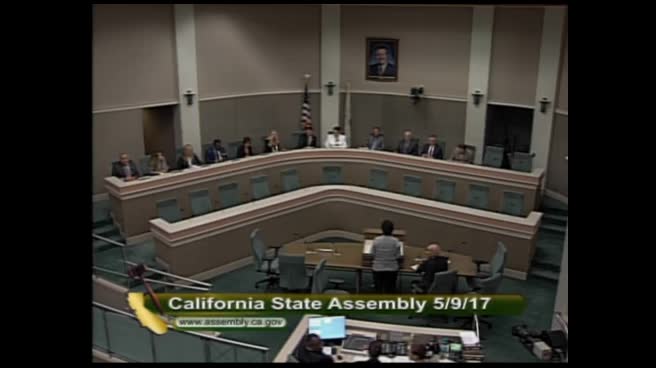 11MIN
Assembly Standing Committee on Health
Bill Author