AB 918: California Voting for All Act.
- Session Year: 2017-2018
- House: Assembly
- Latest Version Date: 2017-10-15
(1)In counties where the Secretary of State has determined that it is appropriate, existing law requires each precinct board to post, in a conspicuous location in the polling place, at least one facsimile copy of the ballot with the ballot measures and ballot instructions printed in Spanish. Existing law requires that facsimile ballots be printed in other languages and posted in the same manner if a significant and substantial need is found by the Secretary of State.
This bill, the California Voting for All Act, would instead require the county elections official to post one facsimile copy of the ballot that is printed in Spanish or other applicable languages, as determined by the Secretary of State, and to provide at least one facsimile copy of the ballot for voters at the polling place to use as a reference when casting a private ballot. If the Secretary of State determines that the number of voting-age residents in a precinct who are members of a single language minority and who lack sufficient skills in English to vote without assistance exceeds 20% of the voting-age residents in that precinct, the bill would require the county elections official to post one facsimile copy of the ballot, as described above, and to provide at least 3 facsimile copies of the ballot for voters at the polling place to use as a reference when casting a private ballot. The bill would require, in polling places where facsimile copies of the ballot are necessary, precinct board members to be trained on the purpose and proper handling of facsimile copies of ballots. The bill would also provide that a county elections official is not required to provide facsimile copies of the ballot in a particular language if the county elections official is required to provide translated ballots in that language under other provisions of law, as specified.
The bill would authorize a vote by mail voter to request that a facsimile copy of a ballot be sent by regular mail or electronic mail in the language of his or her preference, as specified. The bill would require a county elections official to prepare the requested facsimile copies no later than 10 days before election day and to process any requests for facsimile copies, as specified.
By imposing new duties on county elections officials, the bill would create a state-mandated local program.
(2)Existing law, the California Voters Choice Act, authorizes 14 specified counties, on or after January 1, 2018, and on or after January 1, 2020, any county except for the County of Los Angeles, to conduct any election as an all-mailed ballot election if certain conditions are satisfied. On or after January 1, 2020, the act authorizes the County of Los Angeles to conduct any election as a vote center election if certain conditions are satisfied, including conditions related to ballot dropoff locations and vote centers.
This bill would apply certain requirements relating to the availability and accessibility of non-English facsimile ballots and the public posting of voter information to the County of Los Angeles if it conducts a vote center election pursuant to the California Voters Choice Act. For an all-mailed ballot election or vote center election conducted pursuant to the California Voters Choice Act, the bill would require a county elections official to determine if a voter has previously identified a preferred language other than English, and would also require a county elections official to provide a facsimile copy of the ballot in the voters language preference, as specified, if the county is providing facsimile copies of the ballot in that language.
(3)Existing law states the intent of the Legislature that non-English-speaking citizens, like all other citizens, should be encouraged to vote and that appropriate efforts should be made to minimize obstacles to non-English-speaking citizens voting without assistance. Existing law requires an elections official to make reasonable efforts to recruit election officials who are fluent in a non-English language and in English, if the official finds that non-English-speaking citizens approximate 3% or more of the voting-age residents of a precinct, or if interested citizens or organizations provide information that the elections official believes indicates a need for voting assistance for qualified non-English-speaking citizens.
This bill would require county elections officials to report to the Secretary of State within 150 days following each statewide general election the number of individuals recruited to serve as members of precinct boards, including the number of those individuals recruited who are fluent in each language required to be represented at polling places. The bill would require, at each polling place, a precinct board member to identify the non-English languages spoken by him or her, other than English, by wearing a mechanism identifying the non-English languages spoken by that member.
The bill would also make conforming changes to other provisions of law.
(4)This bill would incorporate additional changes to Section 14200 of the Elections Code proposed by SB 286 to be operative only if this bill and SB 286 are enacted and this bill is enacted last.
(5)The California Constitution requires the state to reimburse local agencies and school districts for certain costs mandated by the state. Statutory provisions establish procedures for making that reimbursement.
This bill would provide that, if the Commission on State Mandates determines that the bill contains costs mandated by the state, reimbursement for those costs shall be made pursuant to the statutory provisions noted above.
(1)In counties where the Secretary of State has determined that it is appropriate, existing law requires each precinct board to post, in a conspicuous location in the polling place, at least one facsimile copy of the ballot with the ballot measures and ballot instructions printed in Spanish. Existing law requires that facsimile ballots be printed in other languages and posted in the same manner if a significant and substantial need is found by the Secretary of State.
This bill, the California Voting for All Act, would instead require the county elections official to post one facsimile copy of the ballot that is printed in Spanish or other applicable languages, as determined by the Secretary of State, and to provide at least one facsimile copy of the ballot for voters at the polling place to use as a reference when casting a private ballot. If the Secretary of State determines that the number of voting-age residents in a precinct who are members of a single language minority and who lack sufficient skills in English to vote without assistance exceeds 20% of the voting-age residents in that precinct, the bill would require the county elections official to post one facsimile copy of the ballot, as described above, and to provide at least 3 facsimile copies of the ballot for voters at the polling place to use as a reference when casting a private ballot. The bill would require, in polling places where facsimile copies of the ballot are necessary, precinct board members to be trained on the purpose and proper handling of facsimile copies of ballots. The bill would also provide that a county elections official is not required to provide facsimile copies of the ballot in a particular language if the county elections official is required to provide translated ballots in that language under other provisions of law, as specified.
The bill would authorize a voter to request that a facsimile copy of a ballot be sent by regular mail or electronic mail in the language of his or her preference, as specified. The bill would require a county elections official to prepare the requested facsimile copies no later than 10 days before election day and to process any requests for facsimile copies, as specified.
By imposing new duties on county elections officials, the bill would create a state-mandated local program.
(2)Existing law, the California Voters Choice Act, authorizes 14 specified counties, on or after January 1, 2018, and on or after January 1, 2020, any county except for the County of Los Angeles, to conduct any election as an all-mailed ballot election if certain conditions are satisfied. On or after January 1, 2020, the act authorizes the County of Los Angeles to conduct any election as a vote center election if certain conditions are satisfied, including conditions related to ballot dropoff locations and vote centers.
This bill would apply certain requirements relating to the availability and accessibility of non-English facsimile ballots and the public posting of voter information to the County of Los Angeles if it conducts a vote center election pursuant to the California Voters Choice Act. For an all-mailed ballot election or vote center election conducted pursuant to the California Voters Choice Act, the bill would require a county elections official to determine if a voter has previously identified a preferred language other than English, and would also require a county elections official to provide a facsimile copy of the ballot in the voters language preference, as specified, if the county is providing facsimile copies of the ballot in that language.
(3)Existing law states the intent of the Legislature that non-English-speaking citizens, like all other citizens, should be encouraged to vote and that appropriate efforts should be made to minimize obstacles to non-English-speaking citizens voting without assistance. Existing law requires an elections official to make reasonable efforts to recruit election officials who are fluent in a non-English language and in English, if the official finds that non-English-speaking citizens approximate 3% or more of the voting-age residents of a precinct, or if interested citizens or organizations provide information that the elections official believes indicates a need for voting assistance for qualified non-English-speaking citizens.
This bill would require county elections officials to report to the Secretary of State within 150 days following each statewide general election the number of individuals recruited to serve as members of precinct boards, including the number of those individuals recruited who are fluent in each language required to be represented at polling places. The bill would require, at each polling place, a precinct board member to identify the non-English languages spoken by him or her, other than English, by wearing a mechanism identifying the non-English languages spoken by that member.
The bill would also make conforming changes to other provisions of law.
(4)This bill would incorporate additional changes to Section 14200 of the Elections Code proposed by SB 286 to be operative only if this bill and SB 286 are enacted and this bill is enacted last.
(4)(5)The California Constitution requires the state to reimburse local agencies and school districts for certain costs mandated by the state. Statutory provisions establish procedures for making that reimbursement.
This bill would provide that, if the Commission on State Mandates determines that the bill contains costs mandated by the state, reimbursement for those costs shall be made pursuant to the statutory provisions noted above.
(1)In counties where the Secretary of State has determined that it is appropriate, existing law requires each precinct board to post, in a conspicuous location in the polling place, at least one facsimile copy of the ballot with the ballot measures and ballot instructions printed in Spanish. Existing law requires that facsimile ballots be printed in other languages and posted in the same manner if a significant and substantial need is found by the Secretary of State.
This bill, the California Voting for All Act, would instead require the county elections official to post one facsimile copy of the ballot that is printed in Spanish or other applicable languages, as determined by the Secretary of State, and to provide at least one facsimile copy of the ballot for voters at the polling place to use as a reference when casting a private ballot. If the Secretary of State determines that the number of voting-age residents in a precinct who are members of a single language minority and who lack sufficient skills in English to vote without assistance exceeds 20% of the voting-age residents in that precinct, the bill would require the county elections official to post one facsimile copy of the ballot, as described above, and to provide at least 3 facsimile copies of the ballot for voters at the polling place to use as a reference when casting a private ballot. The bill would require, in polling places where facsimile copies of the ballot are necessary, precinct board members to be trained on the purpose and proper handling of facsimile copies of ballots. The bill would also provide that a county elections official is not required to provide facsimile copies of the ballot in a particular language if the county elections official is required to provide translated ballots in that language under other provisions of law, as specified.
The bill would authorize a voter to request that a facsimile copy of a ballot be sent by regular mail or electronic mail in the language of his or her preference, as specified. The bill would require a county elections official to prepare the requested facsimile copies no later than 10 days before election day and to process any requests for facsimile copies, as specified.
By imposing new duties on county elections officials, the bill would create a state-mandated local program.
(2)Existing law, the California Voters Choice Act, authorizes 14 specified counties, on or after January 1, 2018, and on or after January 1, 2020, any county except for the County of Los Angeles, to conduct any election as an all-mailed ballot election if certain conditions are satisfied. On or after January 1, 2020, the act authorizes the County of Los Angeles to conduct any election as a vote center election if certain conditions are satisfied, including conditions related to ballot dropoff locations and vote centers.
This bill would apply certain requirements relating to the availability and accessibility of non-English facsimile ballots and the public posting of voter information to the County of Los Angeles if it conducts a vote center election pursuant to the California Voters Choice Act. For an all-mailed ballot election or vote center election conducted pursuant to the California Voters Choice Act, the bill would require a county elections official to determine if a voter has previously identified a preferred language other than English, and would also require a county elections official to provide a facsimile copy of the ballot in the voters language preference, as specified, if the county is providing facsimile copies of the ballot in that language.
(3)Existing law states the intent of the Legislature that non-English-speaking citizens, like all other citizens, should be encouraged to vote and that appropriate efforts should be made to minimize obstacles to non-English-speaking citizens voting without assistance. Existing law requires an elections official to make reasonable efforts to recruit election officials who are fluent in a non-English language and in English, if the official finds that non-English-speaking citizens approximate 3% or more of the voting-age residents of a precinct, or if interested citizens or organizations provide information that the elections official believes indicates a need for voting assistance for qualified non-English-speaking citizens.
This bill would require county elections officials to report to the Secretary of State within 150 days following each statewide general election the number of individuals recruited to serve as members of precinct boards, including the number of those individuals recruited who are fluent in each language required to be represented at polling places. The bill would require, at each polling place, a precinct board member to identify the non-English languages spoken by him or her, other than English, by wearing a mechanism identifying the non-English languages spoken by that member.
The bill would also make conforming changes to other provisions of law.
(4)The California Constitution requires the state to reimburse local agencies and school districts for certain costs mandated by the state. Statutory provisions establish procedures for making that reimbursement.
This bill would provide that, if the Commission on State Mandates determines that the bill contains costs mandated by the state, reimbursement for those costs shall be made pursuant to the statutory provisions noted above.
(1)In counties where the Secretary of State has determined that it is appropriate, existing law requires each precinct board to post, in a conspicuous location in the polling place, at least one facsimile copy of the ballot with the ballot measures and ballot instructions printed in Spanish. Existing law requires that facsimile ballots be printed in other languages and posted in the same manner if a significant and substantial need is found by the Secretary of State.
This bill, the California Voting for All Act, would instead require the county elections official to post one facsimile copy of the ballot that is printed in Spanish or other applicable languages, as determined by the Secretary of State, and to provide at least one facsimile copy of the ballot for voters at the polling place to use as a reference when casting a private ballot. If the Secretary of State determines that the number of voting-age residents in a precinct who are members of a single language minority and who lack sufficient skills in English to vote without assistance exceeds 20% of the voting-age residents in that precinct, the bill would require the county elections official to post one facsimile copy of the ballot, as described above, and to provide at least 3 facsimile copies of the ballot for voters at the polling place to use as a reference when casting a private ballot. The bill would require, in polling places where facsimile copies of the ballot are necessary, precinct board members to be trained on the purpose and proper handling of facsimile copies of ballots.
The bill would authorize a voter to request that a facsimile copy of a ballot be sent by regular mail or electronic mail in the language of his or her preference, as specified. The bill would require a county elections official to prepare the requested facsimile copies no later than 10 days before election day and to process any requests for facsimile copies, as specified.
By imposing new duties on county elections officials, the bill would create a state-mandated local program.
(2)Existing law, the California Voters Choice Act, authorizes 14 specified counties, on or after January 1, 2018, and on or after January 1, 2020, any county except for the County of Los Angeles, to conduct any election as an all-mailed ballot election if certain conditions are satisfied. On or after January 1, 2020, the act authorizes the County of Los Angeles to conduct any election as a vote center election if certain conditions are satisfied, including conditions related to ballot dropoff locations and vote centers.
This bill would apply certain requirements relating to the availability and accessibility of non-English facsimile ballots and the public posting of voter information to the County of Los Angeles if it conducts a vote center election pursuant to the California Voters Choice Act. For an all-mailed ballot election or vote center election conducted pursuant to the California Voters Choice Act, the bill would require a county elections official to determine if a voter has previously identified a preferred language other than English, and would also require a county elections official to provide a facsimile copy of the ballot in the voters language preference, as specified, if the county is providing facsimile copies of the ballot in that language.
(3)Existing law states the intent of the Legislature that non-English-speaking citizens, like all other citizens, should be encouraged to vote and that appropriate efforts should be made to minimize obstacles to non-English-speaking citizens voting without assistance. Existing law requires an elections official to make reasonable efforts to recruit election officials who are fluent in a non-English language and in English, if the official finds that non-English-speaking citizens approximate 3% or more of the voting-age residents of a precinct, or if interested citizens or organizations provide information that the elections official believes indicates a need for voting assistance for qualified non-English-speaking citizens.
This bill would require county elections officials to report to the Secretary of State within 150 days following each statewide general election the number of individuals recruited to serve as members of precinct boards, including the number of those individuals recruited who are fluent in each language required to be represented at polling places. The bill would require, at each polling place, a precinct board member to identify the non-English languages spoken by him or her, other than English, by wearing a mechanism identifying the non-English languages spoken by that member.
(4)The California Constitution requires the state to reimburse local agencies and school districts for certain costs mandated by the state. Statutory provisions establish procedures for making that reimbursement.
This bill would provide that, if the Commission on State Mandates determines that the bill contains costs mandated by the state, reimbursement for those costs shall be made pursuant to the statutory provisions noted above.
(1)In counties where the Secretary of State has determined that it is appropriate, existing law requires each precinct board to post, in a conspicuous location in the polling place, at least one facsimile copy of the ballot with the ballot measures and ballot instructions printed in Spanish. Existing law requires that facsimile ballots be printed in other languages and posted in the same manner if a significant and substantial need is found by the Secretary of State.
This bill, the California Voting for All Act, would instead require the county elections official to post one facsimile copy of the ballot that is printed in Spanish or other applicable languages, as determined by the Secretary of State, and to provide at least one facsimile copy of the ballot for voters at the polling place to use as a reference when casting a private ballot. If the Secretary of State determines that the number of voting-age residents in a precinct who are members of a single language minority and who lack sufficient skills in English to vote without assistance exceeds 20% of the voting-age residents in that precinct, the bill would require the county elections official to post one facsimile copy of the ballot, as described above, and to provide at least 3 facsimile copies of the ballot for voters at the polling place to use as a reference when casting a private ballot. The bill would require, in polling places where facsimile copies of the ballot are necessary, precinct board members to be trained on the purpose and proper handling of facsimile copies of ballots.
The bill would authorize a voter, including a vote by mail voter, voter to request that a facsimile copy of a ballot be sent by regular mail or electronic mail in the language of his or her preference, as specified. The bill would require a county elections official to prepare the requested facsimile copies no later than 14 10 days before election day and to process any requests for facsimile copies, as specified.
By imposing new duties on county elections officials, the bill would create a state-mandated local program.
(2)Existing law, the California Voters Choice Act, authorizes 14 specified counties, on or after January 1, 2018, and on or after January 1, 2020, any county except for the County of Los Angeles, to conduct any election as an all-mailed ballot election if certain conditions are satisfied. On or after January 1, 2020, the act authorizes the County of Los Angeles to conduct any election as a vote center election if certain conditions are satisfied, including conditions related to ballot dropoff locations and vote centers.
This bill would apply certain requirements relating to the availability and accessibility of non-English facsimile ballots and the public posting of voter information to the County of Los Angeles if it conducts a vote center election pursuant to the California Voters Choice Act. For an all-mailed ballot election or vote center election conducted pursuant to the California Voters Choice Act, the bill would require a county elections official to determine a voters language preference before mailing a voters vote by mail ballot, if a voter has previously identified a preferred language other than English, and would also require a county elections official to provide a facsimile copy of the ballot in the voters language preference with the vote by mail ballot preference, as specified, if the county is providing facsimile copies of the ballot in that language.
(3)Existing law states the intent of the Legislature that non-English-speaking citizens, like all other citizens, should be encouraged to vote and that appropriate efforts should be made to minimize obstacles to non-English-speaking citizens voting without assistance. Existing law requires an elections official to make reasonable efforts to recruit election officials who are fluent in a non-English language and in English, if the official finds that non-English-speaking citizens approximate 3% or more of the voting-age residents of a precinct, or if interested citizens or organizations provide information that the elections official believes indicates a need for voting assistance for qualified non-English-speaking citizens.
This bill would require county elections officials to report to the Secretary of State within 150 days following each statewide general election the number of election officials individuals recruited to serve as members of precinct boards, including the number of those election officials individuals recruited who are fluent in each language required to be represented at polling places. The bill would require, at each polling place, a precinct board member to identify the non-English languages spoken by him or her, other than English, by wearing a mechanism identifying the non-English languages spoken by that member.
(4)The California Constitution requires the state to reimburse local agencies and school districts for certain costs mandated by the state. Statutory provisions establish procedures for making that reimbursement.
This bill would provide that, if the Commission on State Mandates determines that the bill contains costs mandated by the state, reimbursement for those costs shall be made pursuant to the statutory provisions noted above.
(1)In counties where the Secretary of State has determined that it is appropriate, existing law requires each precinct board to post, in a conspicuous location in the polling place, at least one facsimile copy of the ballot with the ballot measures and ballot instructions printed in Spanish. Existing law requires that facsimile ballots be printed in other languages and posted in the same manner if a significant and substantial need is found by the Secretary of State.
This bill, the California Voting for All Act, would instead require the county elections official to post one facsimile copy of the ballot that is printed in Spanish or other applicable languages, as determined by the Secretary of State, and to provide at least one facsimile copy of the ballot for voters at the polling place to use as a reference when casting a private ballot. If the Secretary of State determines that the number of voting-age residents in a precinct who are members of a single language minority and who lack sufficient skills in English to vote without assistance exceeds 20% of the voting-age residents in that precinct, the bill would require the county elections official to post one facsimile copy of the ballot, as described above, and to provide at least 3 facsimile copies of the ballot for voters at the polling place to use as a reference when casting a private ballot. The bill would require, in polling places where facsimile copies of the ballot are necessary, precinct board members to be trained on the purpose and proper handling of facsimile copies of ballots.
The bill would authorize a voter, including a vote by mail voter, to request that a facsimile copy of a ballot be sent by regular mail or electronic mail in the language of his or her preference, as specified. The bill would require a county elections official to prepare the requested facsimile copies no later than 14 days before election day and to process any requests for facsimile copies, as specified.
By imposing new duties on county elections officials, the bill would create a state-mandated local program.
(2)Existing law, the California Voters Choice Act, authorizes 14 specified counties, on or after January 1, 2018, and on or after January 1, 2020, any county except for the County of Los Angeles, to conduct any election as an all-mailed ballot election if certain conditions are satisfied. On or after January 1, 2020, the act authorizes the County of Los Angeles to conduct any election as a vote center election if certain conditions are satisfied, including conditions related to ballot dropoff locations and vote centers.
This bill would apply certain requirements relating to the availability and accessibility of non-English facsimile ballots and the public posting of voter information to the County of Los Angeles if it conducts a vote center election pursuant to the California Voters Choice Act. For an all-mailed ballot election or vote center election conducted pursuant to the California Voters Choice Act, the bill would require a county elections official to determine a voters language preference before mailing a voters vote by mail ballot, and would also require a county elections official to provide a facsimile copy of the ballot in the voters language preference with the vote by mail ballot if the county is providing facsimile copies of the ballot in that language.
(3)Existing law states the intent of the Legislature that non-English-speaking citizens, like all other citizens, should be encouraged to vote and that appropriate efforts should be made to minimize obstacles to non-English-speaking citizens voting without assistance. Existing law requires an elections official to make reasonable efforts to recruit election officials who are fluent in a non-English language and in English, if the official finds that non-English-speaking citizens approximate 3% or more of the voting-age residents of a precinct, or if interested citizens or organizations provide information that the elections official believes indicates a need for voting assistance for qualified non-English-speaking citizens.
This bill would require county elections officials to report to the Secretary of State within 150 days following each statewide general election the number of election officials recruited to serve as members of precinct boards and boards, including the number of those election officials recruited who are fluent in languages that are each language required to be represented at polling places. The bill would require, at each polling place, a precinct board member to identify the non-English languages spoken by him or her, other than English, by wearing a mechanism identifying the non-English languages spoken by that member.
(4)In counties where the Secretary of State has determined that it is appropriate, existing law requires each precinct board to post, in a conspicuous location in the polling place, at least one facsimile copy of the ballot with the ballot measures and ballot instructions printed in Spanish. Existing law requires that facsimile ballots be printed in other languages and posted in the same manner if a significant and substantial need is found by the Secretary of State.This bill would instead require the county elections official to post one facsimile copy of the ballot that is printed in Spanish or other applicable languages, as determined by the Secretary of State, and to provide at least one facsimile copy of the ballot for voters at the polling place to use as a reference when casting a private ballot. If the Secretary of State determines that the number of voting-age residents in a precinct who are members of a single language minority and who lack sufficient skills in English to vote without assistance exceeds 20% of the voting-age residents in that precinct, the bill would require the county elections official to post one facsimile copy of the ballot, as described above, and to provide at least 3 facsimile copies of the ballot for voters at the polling place to use as a reference when casting a private ballot. The bill would require, in polling places where facsimile copies of the ballot are necessary, precinct board members to be trained on the purpose and proper handling of facsimile copies of ballots.By imposing new duties on county elections officials, the bill would create a state-mandated local program.(5)(4)The California Constitution requires the state to reimburse local agencies and school districts for certain costs mandated by the state. Statutory provisions establish procedures for making that reimbursement.
This bill would provide that, if the Commission on State Mandates determines that the bill contains costs mandated by the state, reimbursement for those costs shall be made pursuant to the statutory provisions noted above.
(1)Existing law requires that the vote by mail ballot be available to any registered voter. Existing law requires the Secretary of State to prepare and distribute to appropriate elections officials a uniform electronic application for a vote by mail ballot and a printed application for a vote by mail ballot that is to be distributed to voters.
This bill, the California Voting for All Act, would authorize a vote by mail voter to request a facsimile copy of a ballot in the language of his or her preference. If a vote by mail voter makes this request, the bill would require an elections official to send a facsimile copy of the ballot in the requested language with the voters vote by mail ballot if the elections official determines that the voters precinct will be equipped with a facsimile copy of the ballot in the requested language on Election Day. The bill would also require an elections official to send a facsimile copy of a ballot in a voters preferred language under the same conditions as described above if a county elections official receives a completed voter registration affidavit in which a voter requests a vote by mail ballot and indicates a language preference that is a language for which the elections official is required to provide a facsimile copy of a ballot.
(2)Existing law, the California Voters Choice Act, authorizes 14 specified counties, on or after January 1, 2018, and on or after January 1, 2020, any county except for the County of Los Angeles, to conduct any election as an all-mailed ballot election if certain conditions are satisfied. On or after January 1, 2020, the act authorizes the County of Los Angeles to conduct any election as a vote center election if certain conditions are satisfied, including conditions related to ballot dropoff locations and vote centers.
This bill would apply certain requirements relating to the availability and accessibility of non-English facsimile ballots and the public posting of voter information to the County of Los Angeles if it conducts a vote center election pursuant to the California Voters Choice Act. For an all-mailed ballot election or vote center election conducted pursuant to the California Voters Choice Act, the bill would require a county elections official to determine a voters language preference before mailing a voters vote by mail ballot, and would also require a county elections official to provide a facsimile copy of the ballot in the voters language preference with the vote by mail ballot if the county is providing facsimile copies of the ballot in that language.
(3)Existing law states the intent of the Legislature that non-English-speaking citizens, like all other citizens, should be encouraged to vote and that appropriate efforts should be made to minimize obstacles to non-English-speaking citizens without assistance. Existing law requires an elections official to make reasonable efforts to recruit election officials who are fluent in a non-English language and in English, if the official finds that non-English-speaking citizens approximate 3% or more of the voting-age residents of a precinct, or if interested citizens or organizations provide information that the elections official believes indicates a need for voting assistance for qualified non-English-speaking citizens.
This bill would require county elections officials to report to the Secretary of State within 150 days following each statewide general election the number of election officials recruited to serve as members of precinct boards and the number of those election officials who are fluent in languages that are required to be represented at polling places. The bill would require, at each polling place, a precinct board member to identify the non-English languages spoken by him or her, other than English, by wearing a mechanism identifying the non-English languages spoken by that member.
(4)In counties where the Secretary of State has determined that it is appropriate, existing law requires each precinct board to post, in a conspicuous location in the polling place, at least one facsimile copy of the ballot with the ballot measures and ballot instructions printed in Spanish. Existing law requires that facsimile ballots be printed in other languages and posted in the same manner if a significant and substantial need is found by the Secretary of State.
This bill would instead require the county elections official to post one facsimile copy of the ballot that is printed in Spanish or other applicable languages, as determined by the Secretary of State, and to provide at least one facsimile copy of the ballot for voters at the polling place to use as a reference when casting a private ballot. If the Secretary of State determines that the number of voting-age residents in a precinct who are members of a single language minority and who lack sufficient skills in English to vote without assistance exceeds 20% of the voting-age residents in that precinct, the bill would require the county elections official to post one facsimile copy of the ballot, as described above, and to provide at least 3 facsimile copies of the ballot for voters at the polling place to use as a reference when casting a private ballot. The bill would require, in polling places where facsimile copies of the ballot are necessary, precinct board members to be trained on the purpose and proper handling of facsimile copies of ballots.
By imposing new duties on county elections officials, the bill would create a state-mandated local program.
(5)The California Constitution requires the state to reimburse local agencies and school districts for certain costs mandated by the state. Statutory provisions establish procedures for making that reimbursement.
This bill would provide that, if the Commission on State Mandates determines that the bill contains costs mandated by the state, reimbursement for those costs shall be made pursuant to the statutory provisions noted above.
This act shall be known and may be cited as the California Voting for All Act.
SEC. 2.Section 4000.5 of the Elections Code is amended to read:4000.5.(a)Notwithstanding Section 4000 or any other law, as a pilot program, an all-mailed ballot special election or special consolidated election in San Diego County may be conducted by an eligible entity if the special election or special consolidated election is any of the following:
(1)A special election to fill a vacancy in a congressional or legislative office.
(2)A special election to fill a vacancy in the legislative body or governing body.
(3)A special election conducted pursuant to Chapter 2 (commencing with Section 9100), Chapter 3 (commencing with Section 9200), Chapter 4 (commencing with Section 9300), Chapter 5 (commencing with Section 9400), Chapter 6 (commencing with Section 9500) of Division 9, or Chapter 3 (commencing with Section 11200) of Division 11.
(b)A special election or special consolidated election described in paragraphs (1) to (3), inclusive, of subdivision (a) may be conducted wholly as an all-mailed ballot election if all of the following apply:
(1)(A)For a special election to fill a vacancy in a congressional or legislative office, the Board of Supervisors of San Diego County, by resolution, authorizes the use of mailed ballots for the election and the congressional or legislative district lies wholly or partially within San Diego County.
(B)For all other special elections, the legislative body or governing body of the eligible entity, by resolution, authorizes the use of mailed ballots for the election.
(2)The election does not occur on the same date as a statewide direct primary election, statewide general election, or any other election conducted in an overlapping jurisdiction that is not consolidated and conducted wholly by mail.
(3)(A)If the boundaries of the jurisdiction of the eligible entity overlap with the boundaries of a city, at least one ballot dropoff location is provided per city that is open during business hours to receive voted ballots beginning not less than seven days before the date of the election.
(B)The number of dropoff locations in unincorporated areas shall be based on the number of unincorporated registered voters divided by 100,000 (rounded to the next whole number) with no less than one location to be selected.
(C)A ballot dropoff location provided for under this section shall consist of a locked ballot box located in a secure public building that meets the accessibility requirements for a polling place.
(4)On at least one Saturday and Sunday on or after the date the elections official first delivers ballots to voters, the elections official allows any voter to vote the ballot at a satellite location within the jurisdiction of the eligible entity pursuant to Section 3018. The elections official shall determine the hours of operation for each Saturday and Sunday, provided that the satellite location is open to voters for a minimum of six hours on each designated Saturday and Sunday.
(5)(A)At least one polling place is provided per eligible entity or the polling places are fixed in a manner so that there is one polling place for every 10,000 registered voters within the jurisdiction of the eligible entity, as determined on the 88th day before the day of the election, whichever results in more polling places. A polling place shall allow a voter to request and vote a ballot between 7 a.m. and 8 p.m. on the day of the election.
(B)The polling places provided under this section shall be established in accordance with the accessibility requirements described in Article 5 (commencing with Section 12280) of Chapter 3 of Division 12, the federal Americans with Disabilities Act of 1990 (42 U.S.C. Sec. 12101 et seq.), the federal Help America Vote Act of 2002 (52 U.S.C. Sec. 20901 et seq.), and the federal Voting Rights Act of 1965 (52 U.S.C. Sec. 10101 et seq.), and shall, to the extent possible, ensure that access is evenly distributed throughout the jurisdiction of the eligible entity.
(C)The polling places provided under this section shall be established at accessible locations and shall be equipped with voting units or systems that are accessible to individuals with disabilities and that provide the same opportunity for access and participation as is provided to voters who are not disabled, including the ability to vote privately and independently in accordance with Sections 12280 and 19240.
(D)If a polling place consolidates one or more precincts for which the elections official is required to recruit precinct board members who are fluent in a language in addition to English pursuant to the federal Voting Rights Act of 1965 (52 U.S.C. Sec. 10101 et seq.), the elections official shall ensure that the polling place is staffed by precinct board members who speak that language.
(E)If a polling place consolidates one or more precincts for which the elections official is required to recruit precinct board members who are fluent in a language in addition to English pursuant to subdivision (c) of Section 12303, the elections official shall make reasonable efforts to ensure that the polling place is staffed by precinct board members who speak that language.
(6)(A)The elections official delivers to each voter all supplies necessary for the use and return of the mail ballot, including an envelope for the return of the voted mail ballot with postage prepaid.
(B)The elections official delivers to each voter, with either the sample ballot sent pursuant to Section 13303 or with the voters ballot, all of the following:
(i)A notice, translated in all languages required under subdivision (a) of Section 14201 and Section 203 of the federal Voting Rights Act of 1965 (52 U.S.C. Sec. 10101 et seq.), that informs voters of all of the following:
(I)An all-mailed ballot election is being conducted and each eligible voter will receive a ballot by mail.
(II)The voter may cast a ballot in person at a satellite location provided for under paragraph (4) or at a polling place on election day.
(III)The voter may request the elections official to send a vote by mail ballot in a language other than English pursuant to Section 203 of the federal Voting Rights Act of 1965 (52 U.S.C. Sec. 10101 et seq.) or a facsimile copy of the ballot printed in a language other than English pursuant to Section 14201.
(ii)A list of the ballot dropoff locations, satellite locations, and polling places established pursuant to this section. The list shall also be posted on the Internet Web site of the elections official.
(iii)A postage-paid postcard that the voter may return to the elections official for the purpose of requesting a vote by mail ballot in a language other than English.
(7)(A)The elections official submits to the Secretary of State a voter education and outreach plan to be implemented by the eligible entity for any election conducted pursuant to this section. The voter education and outreach plan shall include, but shall not be limited to, all of the following:
(i)One education and outreach meeting that includes representatives, advocates, and other stakeholders representing each community for which the eligible entity is required to provide voting materials and assistance in a language other than English under subdivision (a) of Section 14201 and the federal Voting Rights Act of 1965 (52 U.S.C. Sec. 10101 et seq.).
(ii)One education and outreach meeting that includes representatives from community organizations and individuals that advocate on behalf of, or provide services to, individuals with disabilities.
(iii)At least one in-person bilingual voter education workshop for each language in which the eligible entity is required to provide voting materials and assistance under subdivision (a) of Section 14201 and the federal Voting Rights Act of 1965 (52 U.S.C. Sec. 10101 et seq.).
(iv)At least one in-person voter education workshop to increase accessibility for participation of eligible voters with disabilities.
(v)A toll-free voter assistance hotline maintained by the elections official that is operational no later than the date that vote by mail ballots are mailed to voters until 5 p.m. on the day after the special election. The toll-free voter assistance hotline shall provide assistance to voters in all languages in which the eligible entity is required to provide voting materials and assistance under subdivision (a) of Section 14201 and the federal Voting Rights Act of 1965 (52 U.S.C. Sec. 10101 et seq.).
(vi)At least one public service announcement in the media, including newspapers, radio, and television, that serve English-speaking citizens for purposes of informing voters of the upcoming election and promoting the toll-free voter assistance hotline.
(vii)At least one public service announcement in the media, including newspapers, radio, and television, that serves non-English-speaking citizens for each language in which the eligible entity is required to provide voting materials and assistance under subdivision (a) of Section 14201 and the federal Voting Rights Act of 1965 (52 U.S.C. Sec. 10101 et seq.) for purposes of informing voters of the upcoming election and promoting the toll-free voter assistance hotline.
(viii)A voter education social media strategy that is developed in partnership with community organizations and individuals that advocate on behalf of, or provide services to, non-English-speaking individuals and individuals with disabilities.
(B)The voter education and outreach plan shall be posted on the Internet Web site of the Secretary of State and on the Internet Web site of the elections official.
(c)Except as otherwise provided in this section, the election day procedures shall be conducted in accordance with Division 14 (commencing with Section 14000).
(d)The elections official may provide, at his or her discretion, additional ballot dropoff locations and polling places for purposes of this section.
(e)The return of voted mail ballots is subject to Sections 3017 and 3020.
(f)(1)If the eligible entity conducts a special election pursuant to this section, it may process vote by mail ballot return envelopes beginning 29 days before the election. Processing vote by mail ballot return envelopes may include verifying the voters signature on the vote by mail ballot return envelope and updating voter history records.
(2)If the eligible entity conducts a special election pursuant to this section, it may start to process vote by mail ballots on the 10th business day before the election. Processing vote by mail ballots includes opening vote by mail ballot return envelopes, removing ballots, duplicating any damaged ballots, and preparing the ballots to be machine read, or machine reading them, but under no circumstances shall a vote count be accessed or released until 8 p.m. on the day of the election.
(g)Results of any vote by mail ballot tabulation or count shall not be released before the close of the polls on the day of the election.
(h)For the sole purpose of reporting the results of an election conducted pursuant to this section, upon completion of the ballot count, the elections official shall divide the jurisdiction into precincts pursuant to Article 2 (commencing with Section 12220) of Chapter 3 of Division 12 and shall prepare a statement of the results of the election in accordance with Sections 15373 and 15374.
(i)The elections official shall compile an index, list, or file of all persons who voted in an election conducted pursuant to this section. If the elections official uses data-processing equipment to compile the index, list, or file, he or she shall retain an accurate copy of that index, list, or file in electronic format for a period of 10 years.
(j)(1)If an election is conducted pursuant to this section, the eligible entity shall report to the Legislature and to the Secretary of State regarding the success of the election, including, but not limited to, all of the following:
(A)Any statistics on the cost to conduct the election.
(B)The turnout of different populations, including, but not limited to, and to the extent possible, the population categories of race, ethnicity, language preference, age, gender, disability, permanent vote by mail status, and political party preference.
(C)The number of ballots that were not counted and the reasons they were rejected.
(D)Voter fraud.
(E)Any other problems that become known to the eligible entity during the election or canvass.
(2)Whenever possible, using the criteria set forth in paragraph (1), the report shall compare the election conducted pursuant to this section to similar elections not conducted pursuant to this section in the same jurisdiction or comparable jurisdictions.
(3)Within six months after the date of the election or before the date of a subsequent election conducted pursuant to this section, whichever is sooner, the eligible entity shall do all of the following with respect to the report required by this subdivision:
(A)Submit the report to the Legislature in compliance with Section 9795 of the Government Code.
(B)Submit the report to the Secretary of State.
(C)Post the report on the Internet Web site of the elections official.
(k)For purposes of this section, eligible entity means both of the following:
(1)San Diego County.
(2)A city, school district, community college district, special district, or other district or political subdivision organized pursuant to state law, whose boundaries are located wholly or partially within San Diego County.
(l)An election conducted pursuant to this section is not subject to Section 4001.5.
(m)This section shall remain in effect only until January 1, 2021, and as of that date is repealed, unless a later enacted statute, that is enacted before January 1, 2021, deletes or extends that date.
SEC. 3.Section 4001.5 of the Elections Code is amended to read:4001.5.(a)Notwithstanding Section 4000 or any other law, as a pilot program, a county may conduct an all-mailed ballot special election or special consolidated election if the special election or special consolidated election is a special election to fill a vacancy in a congressional or legislative office.
(b)A special election or special consolidated election described in subdivision (a) may be conducted wholly as an all-mailed ballot election if all of the following apply:
(1)(A)The county board of supervisors, by resolution, approves the countys participation in the pilot program established by this section. A county may only participate in the pilot program if the percentage of permanent vote by mail voters in the county equals or exceeds 50 percent of the total number of voters in the county, as determined at the most recent statewide general election.
(B)If a county board of supervisors adopts a resolution pursuant to subparagraph (A), the county board of supervisors shall transmit the resolution to the Secretary of State within 10 days of adopting the resolution. Within 10 days of receiving a resolution adopted pursuant to subparagraph (A), the Secretary of State shall notify the Voting Accessibility Advisory Committee, established pursuant to Section 2053, and the Language Accessibility Advisory Committee, established pursuant to Section 2600, of the countys participation in the pilot program.
(2)The county board of supervisors, by resolution, authorizes the use of mailed ballots for the election and the congressional or legislative district lies wholly or partially within the county.
(3)The election does not occur on the same date as a statewide direct primary election, statewide general election, or any other election conducted in an overlapping jurisdiction that is not consolidated and conducted wholly by mail.
(4)(A)At least one ballot dropoff location is provided per city that is open during business hours to receive voted ballots beginning not less than seven days before the date of the election.
(B)The number of dropoff locations in unincorporated areas shall be based on the number of unincorporated registered voters divided by 100,000 (rounded to the next whole number) with no less than one location to be selected.
(C)A ballot dropoff location provided for under this section shall consist of a locked ballot box located in a secure public building that meets the accessibility requirements for a polling place.
(5)On at least one Saturday and Sunday on or after the date the county elections official first delivers ballots to voters, the county elections official allows any voter to vote the ballot at a satellite location within the county pursuant to Section 3018. The county elections official shall determine the hours of operation for each Saturday and Sunday, provided that the satellite location is open to voters for a minimum of six hours on each designated Saturday and Sunday.
(6)(A)The polling places are fixed in a manner so that there is one polling place for every 10,000 registered voters within the county, or the portion of the county in which the special election is being held, as determined on the 88th day before the day of the election. A polling place shall allow a voter to request and vote a ballot between 7 a.m. and 8 p.m. on the day of the election.
(B)The polling places provided under this section shall be established in accordance with the accessibility requirements described in Article 5 (commencing with Section 12280) of Chapter 3 of Division 12, the federal Americans with Disabilities Act of 1990 (42 U.S.C. Sec. 12101 et seq.), the federal Help America Vote Act of 2002 (52 U.S.C. Sec. 20901 et seq.), and the federal Voting Rights Act of 1965 (52 U.S.C. Sec. 10101 et seq.), and shall, to the extent possible, ensure that access is evenly distributed throughout the county, or the portion of the county in which the special election is being held.
(C)The polling places provided under this section shall be established at accessible locations and shall be equipped with voting units or systems that are accessible to individuals with disabilities and that provide the same opportunity for access and participation as is provided to voters who are not disabled, including the ability to vote privately and independently in accordance with Sections 12280 and 19240.
(D)The county elections official shall consider proximity to public transportation in determining the polling places to provide under this section.
(E)If a polling place consolidates one or more precincts for which the county elections official is required to recruit precinct board members who are fluent in a language in addition to English pursuant to the federal Voting Rights Act of 1965 (52 U.S.C. Sec. 10101 et seq.), the county elections official shall ensure that the polling place is staffed by precinct board members who speak that language.
(F)If a polling place consolidates one or more precincts for which the county elections official is required to recruit precinct board members who are fluent in a language in addition to English pursuant to subdivision (c) of Section 12303, the county elections official shall make reasonable efforts to ensure that the polling place is staffed by precinct board members who speak that language.
(7)(A)The county elections official delivers to each voter all supplies necessary for the use and return of the mail ballot, including an envelope for the return of the voted mail ballot with postage prepaid.
(B)In addition to the items required to be delivered to each voter under subparagraph (C), the county elections official delivers to each voter a notice, translated in all languages required under subdivision (a) of Section 14201 and Section 203 of the federal Voting Rights Act of 1965 (52 U.S.C. Sec. 10101 et seq.), that informs voters that an all-mailed ballot election is being conducted. The county elections official may send only one notice to a household if multiple registered voters reside within that household.
(C)The county elections official delivers to each voter, with the sample ballot sent pursuant to Section 13303 and with the voters ballot, all of the following:
(i)A notice, translated in all languages required under subdivision (a) of Section 14201 and Section 203 of the federal Voting Rights Act of 1965 (52 U.S.C. Sec. 10101 et seq.), that informs voters of all of the following:
(I)An all-mailed ballot election is being conducted and each eligible voter will receive a ballot by mail.
(II)The voter may cast a ballot in person at a satellite location provided for under paragraph (5) or at a polling place on election day.
(III)The voter may request the county elections official to send a vote by mail ballot in a language other than English pursuant to Section 203 of the federal Voting Rights Act of 1965 (52 U.S.C. Sec. 10101 et seq.) or a facsimile copy of the ballot printed in a language other than English pursuant to Section 14201.
(ii)A list of the ballot dropoff locations, satellite locations, and polling places established pursuant to this section. The list shall also be posted on the Internet Web site of the county elections official.
(iii)A postage-paid postcard that the voter may return to the county elections official for the purpose of requesting a vote by mail ballot in a language other than English.
(8)(A)The county elections official submits to the Secretary of State a voter education and outreach plan to be implemented by the county for any election conducted pursuant to this section. The voter education and outreach plan shall include, but shall not be limited to, all of the following:
(i)One education and outreach meeting that includes representatives, advocates, and other stakeholders representing each community for which the county is required to provide voting materials and assistance in a language other than English under subdivision (a) of Section 14201 and the federal Voting Rights Act of 1965 (52 U.S.C. Sec. 10101 et seq.).
(ii)One education and outreach meeting that includes representatives from community organizations and individuals that advocate on behalf of, or provide services to, individuals with disabilities.
(iii)At least one in-person bilingual voter education workshop for each language in which the county is required to provide voting materials and assistance under subdivision (a) of Section 14201 and the federal Voting Rights Act of 1965 (52 U.S.C. Sec. 10101 et seq.).
(iv)At least one in-person voter education workshop to increase accessibility for participation of eligible voters with disabilities.
(v)A toll-free voter assistance hotline maintained by the county elections official that is operational no later than the date that vote by mail ballots are mailed to voters until 5 p.m. on the day after the special election. The toll-free voter assistance hotline shall provide assistance to voters in all languages in which the county is required to provide voting materials and assistance under subdivision (a) of Section 14201 and the federal Voting Rights Act of 1965 (52 U.S.C. Sec. 10101 et seq.).
(vi)At least one public service announcement in the media, including newspapers, radio, and television, that serve English-speaking citizens for purposes of informing voters of the upcoming election and promoting the toll-free voter assistance hotline.
(vii)At least one public service announcement in the media, including newspapers, radio, and television, that serve non-English-speaking citizens for each language in which the county is required to provide voting materials and assistance under subdivision (a) of Section 14201 and the federal Voting Rights Act of 1965 (52 U.S.C. Sec. 10101 et seq.) for purposes of informing voters of the upcoming election and promoting the toll-free voter assistance hotline.
(viii)A voter education social media strategy that is developed in partnership with community organizations and individuals that advocate on behalf of, or provide services to, non-English-speaking individuals and individuals with disabilities.
(ix)The registration rates, participation rates, and rejection rates, including the reasons for rejection, of permanent vote by mail voters and in-person voters for the county. If the information is readily available, the county elections official shall include any statistics on the turnout of different populations, including, but not limited to, the population categories of race, ethnicity, language preference, age, gender, and disability. If the data reflects significant disparities in voter accessibility and participation, the county elections official shall include a statement of how he or she plans to address each disparity.
(B)The voter education and outreach plan shall be posted on the Internet Web site of the Secretary of State and on the Internet Web site of the county elections official.
(9)(A)The county elections official establishes a community election advisory committee that consists of community members representing minority groups covered under the federal Voting Rights Act of 1965 (52 U.S.C. Sec. 10101 et seq.) and subdivision (a) of Section 14201 and voters with disabilities including, but not limited to, mobility, sensory, physical, and mental disabilities. In lieu of a community election advisory committee, the county elections official may establish both a local voting accessibility advisory committee pursuant to the guidelines promulgated by the Secretary of State and a local language accessibility advisory committee. For purposes of this section, a local language accessibility advisory committee shall consist of community members representing minority groups covered under the federal Voting Rights Act of 1965 (52 U.S.C. Sec. 10101 et seq.) and subdivision (a) of Section 14201.
(B)The advisory committee or committees described in subparagraph (A) shall hold at least one meeting in the year prior to an all-mailed ballot election conducted pursuant to this section.
(c)Except as otherwise provided in this section, the election day procedures shall be conducted in accordance with Division 14 (commencing with Section 14000).
(d)The county elections official may provide, at his or her discretion, additional ballot dropoff locations and polling places for purposes of this section.
(e)The return of voted mail ballots is subject to Sections 3017 and 3020.
(f)Participating in the pilot program established by this section does not preclude the use of a remote accessible vote by mail system.
(g)(1)If the county conducts a special election pursuant to this section, it may process vote by mail ballot return envelopes beginning 29 days before the election. Processing vote by mail ballot return envelopes may include verifying the voters signature on the vote by mail ballot return envelope and updating voter history records.
(2)If the county conducts a special election pursuant to this section, it may start to process vote by mail ballots on the 10th business day before the election. Processing vote by mail ballots includes opening vote by mail ballot return envelopes, removing ballots, duplicating any damaged ballots, and preparing the ballots to be machine read, or machine reading them, but under no circumstances shall a vote count be accessed or released until 8 p.m. on the day of the election.
(h)Results of any vote by mail ballot tabulation or count shall not be released before the close of the polls on the day of the election.
(i)For the sole purpose of reporting the results of an election conducted pursuant to this section, upon completion of the ballot count, the county elections official shall divide the county, or the portion of the county in which the special election is being held into precincts pursuant to Article 2 (commencing with Section 12220) of Chapter 3 of Division 12 and shall prepare a statement of the results of the election in accordance with Sections 15373 and 15374.
(j)The county elections official shall compile an index, list, or file of all persons who voted in an election conducted pursuant to this section. If the county elections official uses data-processing equipment to compile the index, list, or file, he or she shall retain an accurate copy of that index, list, or file in electronic format for a period of 10 years.
(k)(1)If an election is conducted pursuant to this section, the county shall report to the Legislature and to the Secretary of State regarding the success of the election, including, but not limited to, all of the following:
(A)Any statistics on the cost to conduct the election.
(B)The turnout of different populations, including, but not limited to, and to the extent possible, the population categories of race, ethnicity, language preference, age, gender, disability, permanent vote by mail status, and political party preference.
(C)The number of ballots that were not counted and the reasons they were rejected.
(D)Voter fraud.
(E)Any other problems that become known to the county during the election or canvass.
(2)Whenever possible, using the criteria set forth in paragraph (1), the report shall compare the election conducted pursuant to this section to similar elections not conducted pursuant to this section in the same county or comparable counties.
(3)Within six months after the date of the election or before the date of a subsequent election conducted pursuant to this section, whichever is sooner, the county shall do all of the following with respect to the report required by this subdivision:
(A)Submit the report to the Legislature in compliance with Section 9795 of the Government Code.
(B)Submit the report to the Secretary of State.
(C)Post the report on the Internet Web site of the county elections official.
(l)This section shall remain in effect only until January 1, 2021, and as of that date is repealed, unless a later enacted statute, that is enacted before January 1, 2021, deletes or extends that date.
SEC. 4.Section 4005 of the Elections Code is amended to read:4005.(a)Notwithstanding Section 4000 or any other law, on or after January 1, 2018, the Counties of Calaveras, Inyo, Madera, Napa, Nevada, Orange, Sacramento, San Luis Obispo, San Mateo, Santa Clara, Shasta, Sierra, Sutter, and Tuolumne, and, except as provided in Section 4007, on or after January 1, 2020, any county may conduct any election as an all-mailed ballot election if all of the following apply:
(1)(A)At least two ballot dropoff locations are provided within the jurisdiction where the election is held or the number of ballot dropoff locations are fixed in a manner so that there is at least one ballot dropoff location provided for every 15,000 registered voters within the jurisdiction where the election is held, as determined on the 88th day before the day of the election, whichever results in more ballot dropoff locations. For purposes of this subparagraph, a vote center that includes an exterior ballot drop box counts only as a single ballot dropoff location. Ballot dropoff locations shall comply with the regulations adopted pursuant to subdivision (b) of Section 3025.
(B)A ballot dropoff location provided for under this section consists of a secure, accessible, and locked ballot box located as near as possible to established public transportation routes and that is able to receive voted ballots. All ballot dropoff locations shall be open at least during regular business hours beginning not less than 28 days before the day of the election, and on the day of the election. At least one ballot dropoff location shall be an accessible, secured, exterior drop box that is available for a minimum of 12 hours per day including regular business hours.
(2)(A)The county elections official permits a voter residing in the county to do any of the following at a vote center:
(i)Return, or vote and return, his or her vote by mail ballot.
(ii)Register to vote, update his or her voter registration, and vote pursuant to Section 2170.
(iii)Receive and vote a provisional ballot pursuant to Section 3016 or Article 5 (commencing with Section 14310) of Chapter 3 of Division 14.
(iv)Receive a replacement ballot upon verification that a ballot for the same election has not been received from the voter by the county elections official. If the county elections official is unable to determine if a ballot for the same election has been received from the voter, the county elections official may issue a provisional ballot.
(v)Vote a regular, provisional, or replacement ballot using accessible voting equipment that provides for a private and independent voting experience.
(B)Each vote center shall have at least three voting machines that are accessible to voters with disabilities.
(3)(A)On the day of the election, from 7 a.m. to 8 p.m., inclusive, and on each of the three days before the election, for a minimum of eight hours per day, at least one vote center is provided for every 10,000 registered voters within the jurisdiction where the election is held, as determined on the 88th day before the day of the election. At least 90 percent of the number of vote centers required by this subparagraph shall be open for all four days during the required times. Up to 10 percent of the number of vote centers required by this subparagraph may be open for less than four days if at least one vote center is provided for every 10,000 registered voters on each day.
(B)Notwithstanding subparagraph (A), for a jurisdiction with fewer than 20,000 registered voters, a minimum of two voter centers are provided on the day of the election and on each of the three days before the election within the jurisdiction where the election is held.
(4)(A)Beginning 10 days before the day of the election and continuing daily up to and including the fourth day before the election, for a minimum of eight hours per day, at least one vote center is provided for every 50,000 registered voters within the jurisdiction where the election is held, as determined on the 88th day before the day of the election.
(B)Notwithstanding subparagraph (A), for a jurisdiction with fewer than 50,000 registered voters, a minimum of two vote centers are provided within the jurisdiction where the election is held.
(C)The vote centers provided under this section are established in accordance with the accessibility requirements described in Article 5 (commencing with Section 12280) of Chapter 3 of Division 12, the federal Americans with Disabilities Act of 1990 (42 U.S.C. Sec. 12101 et seq.), the federal Help America Vote Act of 2002 (52 U.S.C. Sec. 20901 et seq.), and the federal Voting Rights Act of 1965 (52 U.S.C. Sec. 10101 et seq.).
(D)The vote centers provided under this section are equitably distributed across the county so as to afford maximally convenient options for voters and are established at accessible locations as near as possible to established public transportation routes. The vote centers shall be equipped with voting units or systems that are accessible to individuals with disabilities and that provide the same opportunity for access and participation as is provided to voters who are not disabled, including the ability to vote privately and independently in accordance with Sections 12280 and 19240.
(E)(i)The vote centers provided under this section have an electronic mechanism for the county elections official to immediately access, at a minimum, all of the following voter registration data:
(I)Name.
(II)Address.
(III)Date of birth.
(IV)Language preference.
(V)Party preference.
(VI)Precinct.
(VII)Whether or not the voter has been issued a vote by mail ballot and whether or not a ballot has been received by the county elections official.
(ii)The electronic mechanism used to access voter registration data shall not be connected in any way to a voting system.
(5)A method is available for voters with disabilities to request and receive a blank vote by mail ballot and, if a replacement ballot is necessary, a blank replacement ballot that voters with disabilities can read and mark privately and independently pursuant to the federal Help America Vote Act of 2002 (52 U.S.C. Sec. 20901 et seq.).
(6)(A)Except as otherwise provided for in this section, election boards for the vote centers established under this section meet the requirements for eligibility and composition pursuant to Article 1 (commencing with Section 12300) of Chapter 4 of Division 12.
(B)Each vote center provides language assistance in all languages required in the jurisdiction under subdivision (c) of Section 12303 or Section 203 of the federal Voting Rights Act of 1965 (52 U.S.C. Sec. 10101 et seq.) in a manner that enables voters of the applicable language minority groups to participate effectively in the electoral process. Each vote center shall post information regarding the availability of language assistance in English and all other languages for which language assistance is required to be provided in the jurisdiction under subdivision (c) of Section 12303 or Section 203 of the federal Voting Rights Act of 1965 (52 U.S.C. Sec. 10101 et seq.).
(i)If a vote center is located in, or adjacent to, a precinct, census tract, or other defined geographical subsection required to establish language requirements under subdivision (c) of Section 12303 or Section 203 of the federal Voting Rights Act of 1965 (52 U.S.C. Sec. 10101 et seq.), or if it is identified as needing language assistance through the public input process described in clause (ii), the county elections official shall ensure that the vote center is staffed by election board members who speak the required language. If the county elections official is unable to recruit election board members who speak the required language, alternative methods of effective language assistance shall be provided by the county elections official.
(ii)The county elections official shall solicit public input regarding which vote centers should be staffed by election board members who are fluent in a language in addition to English pursuant to subdivision (c) of Section 12303 and Section 203 of the federal Voting Rights Act of 1965 (52 U.S.C. Sec. 10101 et seq.).
(iii)The county elections official shall provide notice in the sample ballot, in vote by mail materials, and on his or her Internet Web site of the specific language services available at each vote center.
(C)Each vote center provides election materials translated in all languages required in the jurisdiction under subdivision (a) of Section 14201 and Section 203 of the federal Voting Rights Act of 1965 (52 U.S.C. Sec. 10101 et seq.).
(D)Each vote center provides reasonable modifications and auxiliary aids and services as required by the federal Americans with Disabilities Act of 1990 (42 U.S.C. Sec. 12101 et seq.) and the federal Rehabilitation Act of 1973 (29 U.S.C. Sec. 701 et seq.).
(7)(A)Beginning 10 days before the election, the county elections official maintains, in an electronic format, an index of voters who have done any of the following at one of the voter centers established pursuant to this section:
(i)Registered to vote or updated his or her voter registration.
(ii)Received and voted a provisional ballot or replacement ballot.
(iii)Voted a ballot using equipment at the vote center.
(B)The index required by subparagraph (A) includes the same information for each voter as is required to be included on copies of the index of affidavits of voter registration that are posted pursuant to Section 14294. The index required by subparagraph (A) shall be updated continuously during any time that a vote center is open in the jurisdiction.
(8)(A)Beginning 29 days before the day of the election, the county elections official mails to each registered voter a vote by mail ballot packet that includes a return envelope with instructions for the use and return of the vote by mail ballot.
(B)The county elections official delivers to each voter, with either the sample ballot sent pursuant to Section 13303 or with the vote by mail ballot packet, all of the following:
(i)A notice, translated in all languages required under subdivision (a) of Section 14201 and Section 203 of the federal Voting Rights Act of 1965 (52 U.S.C. Sec. 10101 et seq.), that informs voters of all of the following:
(I)An all-mailed ballot election is being conducted and each eligible voter will be issued a vote by mail ballot by mail.
(II)The voter may cast a vote by mail ballot in person at a vote center during the times and days specified in subparagraph (A) of paragraph (4) or on election day.
(III)No later than seven days before the day of the election, the voter may request the county elections official to send a vote by mail ballot in a language other than English pursuant to Section 203 of the federal Voting Rights Act of 1965 (52 U.S.C. Sec. 10101 et seq.) or a facsimile copy of the ballot printed in a language other than English pursuant to Section 14201.
(IV)No later than seven days before the day of the election, the voter may request the county elections official to send or deliver a ballot that voters with disabilities can read and mark privately and independently pursuant to the federal Help America Vote Act of 2002 (52 U.S.C. Sec. 20901 et seq.).
(ii)A list of the ballot dropoff locations and vote centers established pursuant to this section, including the dates and hours they are open. The list shall also be posted on the Internet Web site of the county elections official in a format that is accessible for people with disabilities pursuant to Section 11135 of the Government Code.
(iii)A postage-paid postcard that the voter may return to the county elections official for the purpose of requesting a vote by mail ballot in a language other than English or for the purpose of requesting a vote by mail ballot in an accessible format.
(C)Upon request, the county elections official provides written voting materials to voters with disabilities in an accessible format, as required by the federal Americans with Disabilities Act of 1990 (42 U.S.C. Sec. 12101 et seq.) and the federal Rehabilitation Act of 1973 (29 U.S.C. Sec. 701 et seq.).
(9)(A)The county elections official establishes a language accessibility advisory committee that is comprised of representatives of language minority communities. The committee shall be established no later than October 1 of the year before the first election conducted pursuant to this section. The committee shall hold its first meeting no later than April 1 of the year in which the first election is conducted pursuant to this section.
(B)The county elections official establishes a voting accessibility advisory committee that is comprised of voters with disabilities. The committee shall be established no later than October 1 of the year before the first election conducted pursuant to this section. The committee shall hold its first meeting no later than April 1 of the year in which the first election is conducted pursuant to this section.
(C)A county with fewer than 50,000 registered voters may establish a joint advisory committee for language minority communities and voters with disabilities.
(10)(A)The county elections official develops a draft plan for the administration of elections conducted pursuant to this section in consultation with the public, including both of the following:
(i)One meeting, publicly noticed at least 10 days in advance of the meeting, that includes representatives, advocates, and other stakeholders representing each community for which the county is required to provide voting materials and assistance in a language other than English under subdivision (a) of Section 14201 and the federal Voting Rights Act of 1965 (52 U.S.C. Sec. 10101 et seq.).
(ii)One meeting, publicly noticed at least 10 days in advance of the meeting, that includes representatives from the disability community and community organizations and individuals that advocate on behalf of, or provide services to, individuals with disabilities.
(B)The county elections official, when developing the draft plan for the administration of elections conducted pursuant to this section, considers, at a minimum, all of the following:
(i)Vote center and ballot dropoff location proximity to public transportation.
(ii)Vote center and ballot dropoff location proximity to communities with historically low vote by mail usage.
(iii)Vote center and ballot dropoff location proximity to population centers.
(iv)Vote center and ballot dropoff location proximity to language minority communities.
(v)Vote center and ballot dropoff location proximity to voters with disabilities.
(vi)Vote center and ballot dropoff location proximity to communities with low rates of household vehicle ownership.
(vii)Vote center and ballot dropoff location proximity to low-income communities.
(viii)Vote center and ballot dropoff location proximity to communities of eligible voters who are not registered to vote and may need access to same day voter registration.
(ix)Vote center and ballot dropoff location proximity to geographically isolated populations, including Native American reservations.
(x)Access to accessible and free parking at vote centers and ballot dropoff locations.
(xi)The distance and time a voter must travel by car or public transportation to a vote center and ballot dropoff location.
(xii)The need for alternate methods for voters with disabilities for whom vote by mail ballots are not accessible to cast a ballot.
(xiii)Traffic patterns near vote centers and ballot dropoff locations.
(xiv)The need for mobile vote centers in addition to the number of vote centers established pursuant to this section.
(C)The county elections official publicly notices the draft plan for the administration of elections conducted pursuant to this section and accepts public comments on the draft plan for at least 14 days before the hearing held pursuant to subparagraph (D).
(D)(i)Following the 14-day review period required by subparagraph (C), the county elections official holds a public meeting to consider the draft plan for the administration of elections conducted pursuant to this section and to accept public comments. The meeting shall be publicly noticed at least 10 days in advance of the meeting on the Internet Web sites of the clerk of the county board of supervisors and the county elections official, or, if neither the clerk of the county board of supervisors nor the county elections official maintain an Internet Web site, in the office of the county elections official.
(ii)After the public hearing to consider the draft plan for the administration of elections conducted pursuant to this section and to accept public comments, the county elections official shall consider any public comments he or she receives from the public and shall amend the draft plan in response to the public comments to the extent he or she deems appropriate. The county elections official shall publicly notice the amended draft plan and shall accept public comments on the amended draft plan for at least 14 days before the county elections official may adopt the amended draft plan pursuant to subparagraph (E).
(E)(i)Following the 14-day review and comment period required by clause (ii) of subparagraph (D), the county elections official may adopt a final plan for the administration of elections conducted pursuant to this section, and shall submit the voter education and outreach plan that is required by clause (i) of subparagraph (I) to the Secretary of State for approval.
(ii)The Secretary of State shall approve, approve with modifications, or reject a voter education and outreach plan submitted pursuant to clause (i) of subparagraph (I) within 14 days after the plan is submitted by the county elections official.
(iii)The draft plan, the amended draft plan, and the adopted final plan for the administration of elections conducted pursuant to this section shall be posted on the Internet Web site of the county elections official in each language in which the county is required to provide voting materials and assistance under subdivision (a) of Section 14201 and the federal Voting Rights Act of 1965 (52 U.S.C. Sec. 10101 et seq.), and the Secretary of States Internet Web site in a format that is accessible for people with disabilities pursuant to Section 11135 of the Government Code.
(F)Public meetings held pursuant to this paragraph shall, upon request, provide auxiliary aids and services to ensure effective communication with people with disabilities.
(G)Within two years of the adoption of the first plan for the administration of elections conducted pursuant to this section, the county elections official shall hold public meetings in accordance with the procedures described in subparagraphs (C) to (F), inclusive, to consider revising the first plan for the administration of elections conducted pursuant to this section. Every four years thereafter, the county elections official shall hold public meetings in accordance with the procedures described in subparagraphs (C) to (F), inclusive, to consider revising the plan for the administration of elections conducted pursuant to this section.
(H)(i)With reasonable public notification, a county elections official may amend a plan for the administration of elections conducted pursuant to this section no more than 120 days before the date of an election held pursuant to this section.
(ii)With reasonable public notification, a county elections official may amend a plan for the administration of elections conducted pursuant to this section more than 120 days before the date of an election held pursuant to this section if he or she provides at least 30 days to accept public comments on the amended plan.
(I)The plan for the administration of elections conducted pursuant to this section, includes all of the following:
(i)A voter education and outreach plan that is approved by the Secretary of State and that includes all of the following:
(I)A description of how the county elections official will use the media, including social media, newspapers, radio, and television that serve language minority communities for purposes of informing voters of the upcoming election and promoting the toll-free voter assistance hotline.
(II)A description of how the county elections official will use the media, including social media, newspapers, radio, and television for purposes of informing voters of the availability of a vote by mail ballot in an accessible format and the process for requesting such a ballot.
(III)A description of how the county elections official will have a community presence to educate voters regarding the provisions of this section.
(IV)A description of the accessible information that will be publicly available on the accessible Internet Web site of the county elections official.
(V)A description of the method used by the county elections official to identify language minority voters.
(VI)A description of how the county elections official will educate and communicate the provisions of this section to the public, including:
(ia)Communities for which the county is required to provide voting materials and assistance in a language other than English under subdivision (a) of Section 14201 and the federal Voting Rights Act of 1965 (52 U.S.C. Sec. 10101 et seq.). The county elections official shall hold at least one bilingual voter education workshop for each language in which the county is required to provide voting materials and assistance in a language other than English under subdivision (a) of Section 14201 and the federal Voting Rights Act of 1965 (52 U.S.C. Sec. 10101 et seq.).
(ib)The disability community, including organizations and individuals that advocate on behalf of, or provide services to, individuals with disabilities. The county elections official shall hold at least one voter education workshop to increase accessibility and participation of eligible voters with disabilities.
(VII)A description of how the county will spend the necessary resources on voter education and outreach to ensure that voters are fully informed about the election. This description shall include information about the amount of money the county plans to spend on voter education and outreach activities under the plan, and how that compares to the amount of money spent on voter education and outreach in recent similar elections in the same jurisdiction that were not conducted pursuant to this section.
(VIII)At least one public service announcement in the media, including newspapers, radio, and television, that serve English-speaking citizens for purposes of informing voters of the upcoming election and promoting the toll-free voter assistance hotline. Outreach made under this subclause shall include access for voters who are deaf or hard of hearing and voters who are blind or visually impaired.
(IX)At least one public service announcement in the media, including newspapers, radio, and television, that serve non-English-speaking citizens for each language in which the county is required to provide voting materials and assistance under subdivision (a) of Section 14201 and the federal Voting Rights Act of 1965 (52 U.S.C. Sec. 10101 et seq.) for purposes of informing voters of the upcoming election and promoting the toll-free voter assistance hotline.
(X)At least two direct contacts with voters for purposes of informing voters of the upcoming election and promoting the toll-free voter assistance hotline. The two direct contacts are in addition to any other required contacts including, but not limited to, sample ballots and the delivery of vote by mail ballots.
(ii)A description of how a voter with disabilities may request and receive a blank vote by mail ballot and, if a replacement ballot is necessary, a blank replacement ballot that a voter with disabilities can mark privately and independently.
(iii)A description of how the county elections official will address significant disparities in voter accessibility and participation identified in the report required by subdivision (g).
(iv)A description of the methods and standards that the county elections official will use to ensure the security of voting conducted at vote centers.
(v)Information about estimated short-term and long-term costs and savings from conducting elections pursuant to this section as compared to recent similar elections in the same jurisdiction that were not conducted pursuant to this section.
(vi)To the extent available at the time of publication, information on all of the following:
(I)The total number of vote centers to be established.
(II)The total number of ballot dropoff locations to be established.
(III)The location of each vote center.
(IV)The location of each ballot dropoff location and whether it is inside or outside.
(V)A map of the locations of each vote center and ballot dropoff location.
(VI)The hours of operation for each vote center.
(VII)The hours of operation for each ballot dropoff location.
(VIII)The security and contingency plans that would be implemented by the county elections official to do both of the following:
(ia)Prevent a disruption of the vote center process.
(ib)Ensure that the election is properly conducted if a disruption occurs.
(IX)The number of election board members and the number of bilingual election board members and the languages spoken.
(X)The services provided to voters with disabilities, including, but not limited to, the type and number of accessible voting machines and reasonable modifications at each vote center.
(XI)The design, layout, and placement of equipment inside each voter center that protects each voters right to cast a private and independent ballot.
(vii)A toll-free voter assistance hotline that is accessible to voters who are deaf or hard of hearing, and that is maintained by the county elections official that is operational no later than 29 days before the day of the election until 5 p.m. on the day after the election. The toll-free voter assistance hotline shall provide assistance to voters in all languages in which the county is required to provide voting materials and assistance under subdivision (a) of Section 14201 and the federal Voting Rights Act of 1965 (52 U.S.C. Sec. 10101 et seq.).
(J)The plan for the administration of elections conducted pursuant to this section is posted in a format that is accessible to persons with disabilities on the Internet Web site of the Secretary of State and on the Internet Web site of the county elections official.
(b)Notwithstanding Section 4000 or any other law, on or after January 1, 2018, the Counties of Calaveras, Inyo, Madera, Napa, Nevada, Orange, Sacramento, San Luis Obispo, San Mateo, Santa Clara, Shasta, Sierra, Sutter, and Tuolumne, and on or after January 1, 2020, any county may conduct a special election as an all-mailed ballot election under this section if all of the following apply:
(1)The county elections official has done either of the following:
(A)Previously conducted an election as an all-mailed ballot election in accordance with subdivision (a).
(B)Adopted a final plan for the administration of elections pursuant to clause (i) of subparagraph (E) of paragraph (9) of subdivision (a), in which case the county elections official shall complete all activities provided for in the voter education and outreach plan that is required by clause (i) of subparagraph (I) of paragraph (9) of subdivision (a) before the day of the special election.
(2)(A)On the day of election, from 7 a.m. to 8 p.m., inclusive, at least one vote center is provided for every 30,000 registered voters. If the jurisdiction is not wholly contained within the county, the county elections official shall make a reasonable effort to establish a vote center within the jurisdiction where the special election is held.
(B)Notwithstanding subparagraph (A), for a jurisdiction with fewer than 30,000 registered voters, the county elections official makes a reasonable effort to establish a vote center.
(3)(A)Not less than 10 days before the day of the election, for a minimum of eight hours per day, at least one vote center is provided for every 60,000 registered voters. If the jurisdiction is not wholly contained within the county, the county elections official shall make a reasonable effort to establish a vote center within the jurisdiction where the special election is held.
(B)Notwithstanding subparagraph (A), for a jurisdiction with fewer than 30,000 registered voters, the county elections official makes a reasonable effort to establish a vote center.
(4)(A)At least one ballot dropoff location is provided for every 15,000 registered voters. At least one ballot dropoff location shall be located within the jurisdiction where the special election is held. All ballot dropoff locations shall be open at least during regular business hours beginning not less than 28 days before the day of the election, and on the day of the election.
(B)Notwithstanding subparagraph (A), for a jurisdiction with fewer than 15,000 registered voters, at least one ballot dropoff location shall be provided.
(c)Except as otherwise provided in this section, the election day procedures shall be conducted in accordance with Division 14 (commencing with Section 14000).
(d)The county elections official may provide, at his or her discretion, additional ballot dropoff locations and vote centers for purposes of this section.
(e)The return of voted vote by mail ballots is subject to Sections 3017 and 3020.
(f)For the sole purpose of reporting the results of an election conducted pursuant to this section, upon completion of the ballot count, the county elections official shall divide the jurisdiction into precincts pursuant to Article 2 (commencing with Section 12220) of Chapter 3 of Division 12 and shall prepare a statement of the results of the election in accordance with Sections 15373 and 15374.
(g)(1)(A)Within six months of each election conducted pursuant to this section or Section 4007, the Secretary of State shall report to the Legislature, to the extent possible, all of the following information by categories of race, ethnicity, language preference, age, gender, disability, permanent vote by mail status, historical polling place voters, political party affiliation, and language minorities as it relates to the languages required under subdivision (a) of Section 14201 and Section 203 of the federal Voting Rights Act of 1965 (52 U.S.C. Sec. 10101 et seq.):
(i)Voter turnout.
(ii)Voter registration.
(iii)Ballot rejection rates.
(iv)Reasons for ballot rejection.
(v)Provisional ballot use.
(vi)Accessible vote by mail ballot use.
(vii)The number of votes cast at each vote center.
(viii)The number of ballots returned at ballot dropoff locations.
(ix)The number of ballots returned by mail.
(x)The number of persons who registered to vote at a vote center.
(xi)Instances of voter fraud.
(xii)Any other problems that became known to the county elections official or the Secretary of State during the election or canvass.
(B)The report required by subparagraph (A) shall be posted on the Internet Web site of the Secretary of State in a format that is accessible for people with disabilities pursuant to Section 11135 of the Government Code.
(C)The report required by subparagraph (A) shall be submitted to the Legislature in compliance with Section 9795 of the Government Code.
(D)If an election is conducted pursuant to this section, the county shall submit, to the extent possible, to the Secretary of State the information needed for the Secretary of State to prepare the report required by subparagraph (A).
(E)The Secretary of State may contract with any qualified person or organization for purposes of preparing the report required by subparagraph (A).
(2)The county elections official shall post on his or her Internet Web site a report that compares the cost of elections conducted pursuant to this section to the costs of previous elections. The report shall be posted in a format that is accessible for people with disabilities pursuant to Section 11135 of the Government Code.
(h)The Secretary of State shall enforce the provisions of this section pursuant to Section 12172.5 of the Government Code.
(i)For purposes of this section, disability has the same meaning as defined in subdivisions (j), (m), and (n) of Section 12926 of the Government Code.
SEC. 5.Section 4005.6 is added to the Elections Code, to read:4005.6.An election conducted pursuant to Section 4005 or 4007 is subject to the following requirements:
(a)The provisions of Sections 14200 and 14201 that apply to polling places also apply to vote centers.
(b)Prior to every election, the county elections official shall determine if a voter has previously identified a preferred language other than English to the elections official or to the Secretary of State. If the voters precinct is required to have a facsimile copy of the ballot in the voters preferred language pursuant to Section 14201, the county elections official shall send to him or her by regular mail or electronic mail a facsimile copy of the ballot in that language. The voter shall receive the facsimile copy of the ballot before vote centers open pursuant to subparagraph (A) of paragraph (4) of subdivision (a) of Section 4005. The facsimile copy of the ballot shall be sufficiently distinct in appearance from a regular ballot to prevent voters from attempting to vote on the facsimile copy.
SEC. 6.Section 12303 of the Elections Code is amended to read:12303.(a)A person who cannot read or write the English language is not eligible to act as a member of any precinct board.
(b)It is the intent of the Legislature that non-English-speaking citizens, like all other citizens, should be encouraged to vote. Therefore, appropriate efforts should be made to minimize obstacles to non-English-speaking citizens voting without assistance.
(c)(1)Where the elections official finds that citizens described in subdivision (b) approximate 3 percent or more of the voting-age residents of a precinct, or if interested citizens or organizations provided information that the elections official believes indicates a need for voting assistance for qualified citizens described in subdivision (b), the elections official shall make reasonable efforts to recruit election officials who are fluent in a language used by citizens described in subdivision (b) and in English. This recruitment shall be conducted through the cooperation of interested citizens and organizations and through voluntarily donated public service notices in the media, including newspapers, radio, and television, particularly those media that serve the non-English-speaking citizens described in subdivision (b).
(2)(A)Within 150 days following each statewide general election, the county elections official shall report to the Secretary of State the number of individuals recruited to serve as members of precinct boards, including the number of individuals recruited who are fluent in each language required to be represented under Section 14201 and Section 203 of the federal Voting Rights Act of 1965 (52 U.S.C. Sec. 10101 et seq.). The Secretary of State shall issue uniform standard reporting guidelines.
(B)The Secretary of State shall post all county reports received under subparagraph (A) on his or her Internet Web site within 180 days following each statewide general election.
(3)At each polling place, a member of the precinct board shall identify the languages spoken by him or her, other than English, by wearing a name tag, button, sticker, lanyard, or other mechanism, as determined by the county elections official. The text indicating the language skills of the member of the precinct board shall be in the non-English language or languages spoken by that member.
(d)At least 14 days before an election, the elections official shall prepare and make available to the public a list of the precincts to which officials were appointed pursuant to this section, and the language or languages other than English in which they will provide assistance.
SEC. 7.Chapter 5 (commencing with Section 13400) is added to Division 13 of the Elections Code, to read:5.Facsimile Copies of Ballots13400.(a)A vote by mail voter may request that a facsimile copy of his or her ballot in the language of his or her preference be sent to him or her by regular mail or electronic mail if the voter lives in a precinct that requires a facsimile copy of the ballot in that language pursuant to Section 14201. The county elections officer shall provide instructions to vote by mail voters in the county voter information guide and on the county elections Internet Web site on how to request a facsimile copy of a ballot, in all languages that the county is required to provide facsimile copies of ballots. A vote by mail voter may request a facsimile copy of a ballot by telephone, mail, online, or when requesting a vote by mail ballot from the county no later than seven days before election day.
(b)The county elections official shall prepare the requested facsimile copies described in subdivision (a) no later than 10 days before election day. Requests received by the county elections official 10 days or more before election day shall be processed by the 10th day prior to election day.
(c)This section does not limit an elections official from distributing facsimile copies of the ballot more widely than as required by subdivision (a) or earlier than required by subdivision (b).
SEC. 8.Section 14200 of the Elections Code is amended to read:14200.A member of each precinct board shall cause the following voting information to be publicly posted at each polling place:
(a)A sample version of the ballot that will be used for the election.
(b)Information regarding the date of the election and the hours during which polling places will be open.
(c)Instructions on how to vote, including how to cast a vote and how to cast a provisional ballot.
(d)Instructions for mail-in registrants and first-time voters under Section 303(b) of the federal Help America Vote Act of 2002 (Public Law 107-252).
(e)General information on voting rights under applicable federal and state laws, including information on the right of an individual to cast a provisional ballot and instructions on how to contact the appropriate officials if these rights are alleged to have been violated.
(f)General information on federal and state laws regarding prohibitions on acts of fraud and misrepresentation as they pertain to elections.
(g)Information regarding the languages other than English in which members of the precinct board can assist voters. The information shall be provided in all of the languages other than English spoken by the members.
SEC. 8.5.Section 14200 of the Elections Code is amended to read:14200.A member of each precinct board shall cause the following voting information to be publicly posted at each polling place:
(a)A sample version of the ballot that will be used for the election.
(b)Information regarding the date of the election and the hours during which polling places will be open.
(c)Instructions on how to vote, including how to cast a vote and how to cast a provisional ballot.
(d)Instructions for mail-in registrants and first-time voters under Section 303(b) of the federal Help America Vote Act of 2002 (52 U.S.C. Sec. 20901 et seq.).
(e)General information on voting rights under applicable federal and state laws, including information on the right of an individual to cast a provisional ballot and instructions on how to contact the appropriate officials if these rights are alleged to have been violated.
(f)General information on federal and state laws regarding prohibitions on acts of fraud and misrepresentation as they pertain to elections.
(g)Information regarding the languages other than English in which members of the precinct board can assist voters. The information shall be provided in all of the languages other than English spoken by the members.
SEC. 9.Section 14201 of the Elections Code is amended to read:14201.(a)In counties and precincts where the Secretary of State has determined that it is appropriate, the county elections official shall provide facsimile copies of the ballot, as described in subdivision (b), with the ballot measures and ballot instructions printed in Spanish, one of which shall be posted in a conspicuous location in the polling place and at least one of which shall be made available for voters at the polling place to use as a reference when casting a private ballot. Facsimile ballots shall also be printed in other languages and provided in the same manner if a significant and substantial need is found by the Secretary of State. A facsimile copy of the ballot available for voters to use in casting a private ballot shall be sufficiently distinct in appearance from a regular ballot to prevent voters from attempting to vote on the facsimile copy.
(b)(1)In determining if it is appropriate to provide the election materials in Spanish or other languages, the Secretary of State shall determine the number of residents of voting age in each county and precinct who are members of a single language minority, and who lack sufficient skills in English to vote without assistance. If the number of these residents equals 3 percent or more of the voting-age residents of a particular county or precinct, or if interested citizens or organizations provide the Secretary of State with information that gives the Secretary of State sufficient reason to believe a need for the furnishing of facsimile ballots, the Secretary of State shall find a need to provide at least two facsimile copies with the ballot measures and ballot instructions printed in Spanish or other applicable language in the affected polling places.
(2)If the Secretary of State determines that the number of voting-age residents in a precinct who are members of a single language minority and who lack sufficient skills in English to vote without assistance exceeds 20 percent of the voting-age residents in that precinct, the county elections official shall provide at least four facsimile copies of the ballot in the language of that language minority, one of which shall be posted in a conspicuous location in the polling place and at least three of which shall be made available for voters at the polling place to use as a reference when casting a private ballot.
(c)(1)In polling places where facsimile copies of the ballot are necessary, members of the precinct boards shall be trained on the purpose and proper handling of the facsimile copies of the ballot and shall be prepared to inform voters of the existence of the facsimile copies of the ballot, as appropriate.
(2)If a voter requests a facsimile copy of a ballot that is available in his or her language of preference pursuant to subdivision (a), a member of the precinct board shall provide the facsimile copy of the ballot to the voter.
(3)In polling places where facsimile copies of the ballot are necessary, a sign near the index of registration shall inform voters of the existence of the facsimile copies of the ballot. The sign shall be in English and in the language or languages of the facsimile copies available in that polling place.
(d)At least 14 days before an election, the county elections official shall provide information on the county elections Internet Web site identifying all polling places in the county and the languages of facsimile copies of the ballot that will be available to voters at each polling place. Explanatory information pertaining to the list of polling places, but not the list itself, shall be available in all languages in which the county provides facsimile copies of the ballot.
(e)The county elections official shall include text in the county voter information guide that refers voters with language needs to the portion of the county elections Internet Web site containing the information specified in subdivision (d). The text shall be in all languages in which the county provides facsimile copies of the ballot.
(f)The Secretary of State shall make the determinations and findings set forth in subdivisions (a) and (b) by January 1 of each year in which the Governor is elected.
(g)(1)A county elections official shall not be required to provide facsimile copies of the ballot in a particular language if the county elections official is required to provide translated ballots in that language pursuant to Section 203 of the federal Voting Rights Act of 1965 (52 U.S.C. Sec. 10101 et seq.).
(2)In a polling place where a county elections official is required pursuant to subdivision (a) to provide a facsimile copy of the ballot in a language other than English, the county elections official may instead provide voters with a ballot translated into that language. A county elections official who provides and publicizes translated ballots in the same manner as translated ballots provided and publicized pursuant to Section 203 of the federal Voting Rights Act of 1965 (52 U.S.C. Sec. 10101 et seq.), in lieu of providing facsimile copies of the ballot in any language required under subdivision (a), need not comply with subdivisions (c), (d), and (e) as pertaining to that language.
(h)It is the intent of the Legislature that non-English-speaking citizens, like all other citizens, should be encouraged to vote. Therefore, appropriate efforts should be made on a statewide basis to minimize obstacles to voting by citizens who lack sufficient skill in English to vote without assistance.
SEC. 10.Section 14282 of the Elections Code is amended to read:14282.(a)When a voter declares under oath, administered by any member of the precinct board at the time the voter appears at the polling place to vote, that the voter is then unable to mark a ballot, the voter shall receive the assistance of not more than two persons selected by the voter, other than the voters employer, an agent of the voters employer, or an officer or agent of the union of which the voter is a member.
(b)The county elections official shall provide information on the county elections Internet Web site and in the county voter information guide informing voters that a voter who is unable to mark a ballot may bring up to two individuals to the polls to assist them in voting as specified in subdivision (a). The information shall be available in all languages for which the county has requirements under Section 14201 of this code and Section 203 of the federal Voting Rights Act of 1965 (52 U.S.C. Sec. 10101 et seq.).
(c)A person assisting a voter shall not divulge any information regarding the marking of the ballot.
(d)In those polling places that are inaccessible under the guidelines promulgated by the Secretary of State for accessibility by the physically handicapped, a physically handicapped person may appear outside the polling place and vote a regular ballot. The person may vote the ballot in a place that is as near as possible to the polling place and that is accessible to the physically handicapped. A precinct board member shall take a regular ballot to that person, qualify that person to vote, and return the voted ballot to the polling place. In those precincts in which it is impractical to vote a regular ballot outside the polling place, vote by mail ballots shall be provided in sufficient numbers to accommodate physically handicapped persons who present themselves on election day. The vote by mail ballot shall be presented to and voted by a physically handicapped person in the same manner as a regular ballot may be voted by that person outside the polling place.
SEC. 11.Section 8.5 of this bill incorporates amendments to Section 14200 of the Elections Code proposed by both this bill and Senate Bill 286. That section shall only become operative if (1) both bills are enacted and become effective on or before January 1, 2018, (2) each bill amends Section 14200 of the Elections Code, and (3) this bill is enacted after Senate Bill 286, in which case Section 8 of this bill shall not become operative.
SEC. 12.If the Commission on State Mandates determines that this act contains costs mandated by the state, reimbursement to local agencies and school districts for those costs shall be made pursuant to Part 7 (commencing with Section 17500) of Division 4 of Title 2 of the Government Code.
This act shall be known and may be cited as the California Voting for All Act.
SEC. 2.Section 4000.5 of the Elections Code is amended to read:4000.5.(a)Notwithstanding Section 4000 or any other law, as a pilot program, an all-mailed ballot special election or special consolidated election in San Diego County may be conducted by an eligible entity if the special election or special consolidated election is any of the following:
(1)A special election to fill a vacancy in a congressional or legislative office.
(2)A special election to fill a vacancy in the legislative body or governing body.
(3)A special election conducted pursuant to Chapter 2 (commencing with Section 9100), Chapter 3 (commencing with Section 9200), Chapter 4 (commencing with Section 9300), Chapter 5 (commencing with Section 9400), Chapter 6 (commencing with Section 9500) of Division 9, or Chapter 3 (commencing with Section 11200) of Division 11.
(b)A special election or special consolidated election described in paragraphs (1) to (3), inclusive, of subdivision (a) may be conducted wholly as an all-mailed ballot election if all of the following apply:
(1)(A)For a special election to fill a vacancy in a congressional or legislative office, the Board of Supervisors of San Diego County, by resolution, authorizes the use of mailed ballots for the election and the congressional or legislative district lies wholly or partially within San Diego County.
(B)For all other special elections, the legislative body or governing body of the eligible entity, by resolution, authorizes the use of mailed ballots for the election.
(2)The election does not occur on the same date as a statewide direct primary election, statewide general election, or any other election conducted in an overlapping jurisdiction that is not consolidated and conducted wholly by mail.
(3)(A)If the boundaries of the jurisdiction of the eligible entity overlap with the boundaries of a city, at least one ballot dropoff location is provided per city that is open during business hours to receive voted ballots beginning not less than seven days before the date of the election.
(B)The number of dropoff locations in unincorporated areas shall be based on the number of unincorporated registered voters divided by 100,000 (rounded to the next whole number) with no less than one location to be selected.
(C)A ballot dropoff location provided for under this section shall consist of a locked ballot box located in a secure public building that meets the accessibility requirements for a polling place.
(4)On at least one Saturday and Sunday on or after the date the elections official first delivers ballots to voters, the elections official allows any voter to vote the ballot at a satellite location within the jurisdiction of the eligible entity pursuant to Section 3018. The elections official shall determine the hours of operation for each Saturday and Sunday, provided that the satellite location is open to voters for a minimum of six hours on each designated Saturday and Sunday.
(5)(A)At least one polling place is provided per eligible entity or the polling places are fixed in a manner so that there is one polling place for every 10,000 registered voters within the jurisdiction of the eligible entity, as determined on the 88th day before the day of the election, whichever results in more polling places. A polling place shall allow a voter to request and vote a ballot between 7 a.m. and 8 p.m. on the day of the election.
(B)The polling places provided under this section shall be established in accordance with the accessibility requirements described in Article 5 (commencing with Section 12280) of Chapter 3 of Division 12, the federal Americans with Disabilities Act of 1990 (42 U.S.C. Sec. 12101 et seq.), the federal Help America Vote Act of 2002 (52 U.S.C. Sec. 20901 et seq.), and the federal Voting Rights Act of 1965 (52 U.S.C. Sec. 10101 et seq.), and shall, to the extent possible, ensure that access is evenly distributed throughout the jurisdiction of the eligible entity.
(C)The polling places provided under this section shall be established at accessible locations and shall be equipped with voting units or systems that are accessible to individuals with disabilities and that provide the same opportunity for access and participation as is provided to voters who are not disabled, including the ability to vote privately and independently in accordance with Sections 12280 and 19240.
(D)If a polling place consolidates one or more precincts for which the elections official is required to recruit precinct board members who are fluent in a language in addition to English pursuant to the federal Voting Rights Act of 1965 (52 U.S.C. Sec. 10101 et seq.), the elections official shall ensure that the polling place is staffed by precinct board members who speak that language.
(E)If a polling place consolidates one or more precincts for which the elections official is required to recruit precinct board members who are fluent in a language in addition to English pursuant to subdivision (c) of Section 12303, the elections official shall make reasonable efforts to ensure that the polling place is staffed by precinct board members who speak that language.
(6)(A)The elections official delivers to each voter all supplies necessary for the use and return of the mail ballot, including an envelope for the return of the voted mail ballot with postage prepaid.
(B)The elections official delivers to each voter, with either the sample ballot sent pursuant to Section 13303 or with the voters ballot, all of the following:
(i)A notice, translated in all languages required under subdivision (a) of Section 14201 and Section 203 of the federal Voting Rights Act of 1965 (52 U.S.C. Sec. 10101 et seq.), that informs voters of all of the following:
(I)An all-mailed ballot election is being conducted and each eligible voter will receive a ballot by mail.
(II)The voter may cast a ballot in person at a satellite location provided for under paragraph (4) or at a polling place on election day.
(III)The voter may request the elections official to send a vote by mail ballot in a language other than English pursuant to Section 203 of the federal Voting Rights Act of 1965 (52 U.S.C. Sec. 10101 et seq.) or a facsimile copy of the ballot printed in a language other than English pursuant to Section 14201.
(ii)A list of the ballot dropoff locations, satellite locations, and polling places established pursuant to this section. The list shall also be posted on the Internet Web site of the elections official.
(iii)A postage-paid postcard that the voter may return to the elections official for the purpose of requesting a vote by mail ballot in a language other than English.
(7)(A)The elections official submits to the Secretary of State a voter education and outreach plan to be implemented by the eligible entity for any election conducted pursuant to this section. The voter education and outreach plan shall include, but shall not be limited to, all of the following:
(i)One education and outreach meeting that includes representatives, advocates, and other stakeholders representing each community for which the eligible entity is required to provide voting materials and assistance in a language other than English under subdivision (a) of Section 14201 and the federal Voting Rights Act of 1965 (52 U.S.C. Sec. 10101 et seq.).
(ii)One education and outreach meeting that includes representatives from community organizations and individuals that advocate on behalf of, or provide services to, individuals with disabilities.
(iii)At least one in-person bilingual voter education workshop for each language in which the eligible entity is required to provide voting materials and assistance under subdivision (a) of Section 14201 and the federal Voting Rights Act of 1965 (52 U.S.C. Sec. 10101 et seq.).
(iv)At least one in-person voter education workshop to increase accessibility for participation of eligible voters with disabilities.
(v)A toll-free voter assistance hotline maintained by the elections official that is operational no later than the date that vote by mail ballots are mailed to voters until 5 p.m. on the day after the special election. The toll-free voter assistance hotline shall provide assistance to voters in all languages in which the eligible entity is required to provide voting materials and assistance under subdivision (a) of Section 14201 and the federal Voting Rights Act of 1965 (52 U.S.C. Sec. 10101 et seq.).
(vi)At least one public service announcement in the media, including newspapers, radio, and television, that serve English-speaking citizens for purposes of informing voters of the upcoming election and promoting the toll-free voter assistance hotline.
(vii)At least one public service announcement in the media, including newspapers, radio, and television, that serves non-English-speaking citizens for each language in which the eligible entity is required to provide voting materials and assistance under subdivision (a) of Section 14201 and the federal Voting Rights Act of 1965 (52 U.S.C. Sec. 10101 et seq.) for purposes of informing voters of the upcoming election and promoting the toll-free voter assistance hotline.
(viii)A voter education social media strategy that is developed in partnership with community organizations and individuals that advocate on behalf of, or provide services to, non-English-speaking individuals and individuals with disabilities.
(B)The voter education and outreach plan shall be posted on the Internet Web site of the Secretary of State and on the Internet Web site of the elections official.
(c)Except as otherwise provided in this section, the election day procedures shall be conducted in accordance with Division 14 (commencing with Section 14000).
(d)The elections official may provide, at his or her discretion, additional ballot dropoff locations and polling places for purposes of this section.
(e)The return of voted mail ballots is subject to Sections 3017 and 3020.
(f)(1)If the eligible entity conducts a special election pursuant to this section, it may process vote by mail ballot return envelopes beginning 29 days before the election. Processing vote by mail ballot return envelopes may include verifying the voters signature on the vote by mail ballot return envelope and updating voter history records.
(2)If the eligible entity conducts a special election pursuant to this section, it may start to process vote by mail ballots on the 10th business day before the election. Processing vote by mail ballots includes opening vote by mail ballot return envelopes, removing ballots, duplicating any damaged ballots, and preparing the ballots to be machine read, or machine reading them, but under no circumstances shall a vote count be accessed or released until 8 p.m. on the day of the election.
(g)Results of any vote by mail ballot tabulation or count shall not be released before the close of the polls on the day of the election.
(h)For the sole purpose of reporting the results of an election conducted pursuant to this section, upon completion of the ballot count, the elections official shall divide the jurisdiction into precincts pursuant to Article 2 (commencing with Section 12220) of Chapter 3 of Division 12 and shall prepare a statement of the results of the election in accordance with Sections 15373 and 15374.
(i)The elections official shall compile an index, list, or file of all persons who voted in an election conducted pursuant to this section. If the elections official uses data-processing equipment to compile the index, list, or file, he or she shall retain an accurate copy of that index, list, or file in electronic format for a period of 10 years.
(j)(1)If an election is conducted pursuant to this section, the eligible entity shall report to the Legislature and to the Secretary of State regarding the success of the election, including, but not limited to, all of the following:
(A)Any statistics on the cost to conduct the election.
(B)The turnout of different populations, including, but not limited to, and to the extent possible, the population categories of race, ethnicity, language preference, age, gender, disability, permanent vote by mail status, and political party preference.
(C)The number of ballots that were not counted and the reasons they were rejected.
(D)Voter fraud.
(E)Any other problems that become known to the eligible entity during the election or canvass.
(2)Whenever possible, using the criteria set forth in paragraph (1), the report shall compare the election conducted pursuant to this section to similar elections not conducted pursuant to this section in the same jurisdiction or comparable jurisdictions.
(3)Within six months after the date of the election or before the date of a subsequent election conducted pursuant to this section, whichever is sooner, the eligible entity shall do all of the following with respect to the report required by this subdivision:
(A)Submit the report to the Legislature in compliance with Section 9795 of the Government Code.
(B)Submit the report to the Secretary of State.
(C)Post the report on the Internet Web site of the elections official.
(k)For purposes of this section, eligible entity means both of the following:
(1)San Diego County.
(2)A city, school district, community college district, special district, or other district or political subdivision organized pursuant to state law, whose boundaries are located wholly or partially within San Diego County.
(l)An election conducted pursuant to this section is not subject to Section 4001.5.
(m)This section shall remain in effect only until January 1, 2021, and as of that date is repealed, unless a later enacted statute, that is enacted before January 1, 2021, deletes or extends that date.
SEC. 3.Section 4001.5 of the Elections Code is amended to read:4001.5.(a)Notwithstanding Section 4000 or any other law, as a pilot program, a county may conduct an all-mailed ballot special election or special consolidated election if the special election or special consolidated election is a special election to fill a vacancy in a congressional or legislative office.
(b)A special election or special consolidated election described in subdivision (a) may be conducted wholly as an all-mailed ballot election if all of the following apply:
(1)(A)The county board of supervisors, by resolution, approves the countys participation in the pilot program established by this section. A county may only participate in the pilot program if the percentage of permanent vote by mail voters in the county equals or exceeds 50 percent of the total number of voters in the county, as determined at the most recent statewide general election.
(B)If a county board of supervisors adopts a resolution pursuant to subparagraph (A), the county board of supervisors shall transmit the resolution to the Secretary of State within 10 days of adopting the resolution. Within 10 days of receiving a resolution adopted pursuant to subparagraph (A), the Secretary of State shall notify the Voting Accessibility Advisory Committee, established pursuant to Section 2053, and the Language Accessibility Advisory Committee, established pursuant to Section 2600, of the countys participation in the pilot program.
(2)The county board of supervisors, by resolution, authorizes the use of mailed ballots for the election and the congressional or legislative district lies wholly or partially within the county.
(3)The election does not occur on the same date as a statewide direct primary election, statewide general election, or any other election conducted in an overlapping jurisdiction that is not consolidated and conducted wholly by mail.
(4)(A)At least one ballot dropoff location is provided per city that is open during business hours to receive voted ballots beginning not less than seven days before the date of the election.
(B)The number of dropoff locations in unincorporated areas shall be based on the number of unincorporated registered voters divided by 100,000 (rounded to the next whole number) with no less than one location to be selected.
(C)A ballot dropoff location provided for under this section shall consist of a locked ballot box located in a secure public building that meets the accessibility requirements for a polling place.
(5)On at least one Saturday and Sunday on or after the date the county elections official first delivers ballots to voters, the county elections official allows any voter to vote the ballot at a satellite location within the county pursuant to Section 3018. The county elections official shall determine the hours of operation for each Saturday and Sunday, provided that the satellite location is open to voters for a minimum of six hours on each designated Saturday and Sunday.
(6)(A)The polling places are fixed in a manner so that there is one polling place for every 10,000 registered voters within the county, or the portion of the county in which the special election is being held, as determined on the 88th day before the day of the election. A polling place shall allow a voter to request and vote a ballot between 7 a.m. and 8 p.m. on the day of the election.
(B)The polling places provided under this section shall be established in accordance with the accessibility requirements described in Article 5 (commencing with Section 12280) of Chapter 3 of Division 12, the federal Americans with Disabilities Act of 1990 (42 U.S.C. Sec. 12101 et seq.), the federal Help America Vote Act of 2002 (52 U.S.C. Sec. 20901 et seq.), and the federal Voting Rights Act of 1965 (52 U.S.C. Sec. 10101 et seq.), and shall, to the extent possible, ensure that access is evenly distributed throughout the county, or the portion of the county in which the special election is being held.
(C)The polling places provided under this section shall be established at accessible locations and shall be equipped with voting units or systems that are accessible to individuals with disabilities and that provide the same opportunity for access and participation as is provided to voters who are not disabled, including the ability to vote privately and independently in accordance with Sections 12280 and 19240.
(D)The county elections official shall consider proximity to public transportation in determining the polling places to provide under this section.
(E)If a polling place consolidates one or more precincts for which the county elections official is required to recruit precinct board members who are fluent in a language in addition to English pursuant to the federal Voting Rights Act of 1965 (52 U.S.C. Sec. 10101 et seq.), the county elections official shall ensure that the polling place is staffed by precinct board members who speak that language.
(F)If a polling place consolidates one or more precincts for which the county elections official is required to recruit precinct board members who are fluent in a language in addition to English pursuant to subdivision (c) of Section 12303, the county elections official shall make reasonable efforts to ensure that the polling place is staffed by precinct board members who speak that language.
(7)(A)The county elections official delivers to each voter all supplies necessary for the use and return of the mail ballot, including an envelope for the return of the voted mail ballot with postage prepaid.
(B)In addition to the items required to be delivered to each voter under subparagraph (C), the county elections official delivers to each voter a notice, translated in all languages required under subdivision (a) of Section 14201 and Section 203 of the federal Voting Rights Act of 1965 (52 U.S.C. Sec. 10101 et seq.), that informs voters that an all-mailed ballot election is being conducted. The county elections official may send only one notice to a household if multiple registered voters reside within that household.
(C)The county elections official delivers to each voter, with the sample ballot sent pursuant to Section 13303 and with the voters ballot, all of the following:
(i)A notice, translated in all languages required under subdivision (a) of Section 14201 and Section 203 of the federal Voting Rights Act of 1965 (52 U.S.C. Sec. 10101 et seq.), that informs voters of all of the following:
(I)An all-mailed ballot election is being conducted and each eligible voter will receive a ballot by mail.
(II)The voter may cast a ballot in person at a satellite location provided for under paragraph (5) or at a polling place on election day.
(III)The voter may request the county elections official to send a vote by mail ballot in a language other than English pursuant to Section 203 of the federal Voting Rights Act of 1965 (52 U.S.C. Sec. 10101 et seq.) or a facsimile copy of the ballot printed in a language other than English pursuant to Section 14201.
(ii)A list of the ballot dropoff locations, satellite locations, and polling places established pursuant to this section. The list shall also be posted on the Internet Web site of the county elections official.
(iii)A postage-paid postcard that the voter may return to the county elections official for the purpose of requesting a vote by mail ballot in a language other than English.
(8)(A)The county elections official submits to the Secretary of State a voter education and outreach plan to be implemented by the county for any election conducted pursuant to this section. The voter education and outreach plan shall include, but shall not be limited to, all of the following:
(i)One education and outreach meeting that includes representatives, advocates, and other stakeholders representing each community for which the county is required to provide voting materials and assistance in a language other than English under subdivision (a) of Section 14201 and the federal Voting Rights Act of 1965 (52 U.S.C. Sec. 10101 et seq.).
(ii)One education and outreach meeting that includes representatives from community organizations and individuals that advocate on behalf of, or provide services to, individuals with disabilities.
(iii)At least one in-person bilingual voter education workshop for each language in which the county is required to provide voting materials and assistance under subdivision (a) of Section 14201 and the federal Voting Rights Act of 1965 (52 U.S.C. Sec. 10101 et seq.).
(iv)At least one in-person voter education workshop to increase accessibility for participation of eligible voters with disabilities.
(v)A toll-free voter assistance hotline maintained by the county elections official that is operational no later than the date that vote by mail ballots are mailed to voters until 5 p.m. on the day after the special election. The toll-free voter assistance hotline shall provide assistance to voters in all languages in which the county is required to provide voting materials and assistance under subdivision (a) of Section 14201 and the federal Voting Rights Act of 1965 (52 U.S.C. Sec. 10101 et seq.).
(vi)At least one public service announcement in the media, including newspapers, radio, and television, that serve English-speaking citizens for purposes of informing voters of the upcoming election and promoting the toll-free voter assistance hotline.
(vii)At least one public service announcement in the media, including newspapers, radio, and television, that serve non-English-speaking citizens for each language in which the county is required to provide voting materials and assistance under subdivision (a) of Section 14201 and the federal Voting Rights Act of 1965 (52 U.S.C. Sec. 10101 et seq.) for purposes of informing voters of the upcoming election and promoting the toll-free voter assistance hotline.
(viii)A voter education social media strategy that is developed in partnership with community organizations and individuals that advocate on behalf of, or provide services to, non-English-speaking individuals and individuals with disabilities.
(ix)The registration rates, participation rates, and rejection rates, including the reasons for rejection, of permanent vote by mail voters and in-person voters for the county. If the information is readily available, the county elections official shall include any statistics on the turnout of different populations, including, but not limited to, the population categories of race, ethnicity, language preference, age, gender, and disability. If the data reflects significant disparities in voter accessibility and participation, the county elections official shall include a statement of how he or she plans to address each disparity.
(B)The voter education and outreach plan shall be posted on the Internet Web site of the Secretary of State and on the Internet Web site of the county elections official.
(9)(A)The county elections official establishes a community election advisory committee that consists of community members representing minority groups covered under the federal Voting Rights Act of 1965 (52 U.S.C. Sec. 10101 et seq.) and subdivision (a) of Section 14201 and voters with disabilities including, but not limited to, mobility, sensory, physical, and mental disabilities. In lieu of a community election advisory committee, the county elections official may establish both a local voting accessibility advisory committee pursuant to the guidelines promulgated by the Secretary of State and a local language accessibility advisory committee. For purposes of this section, a local language accessibility advisory committee shall consist of community members representing minority groups covered under the federal Voting Rights Act of 1965 (52 U.S.C. Sec. 10101 et seq.) and subdivision (a) of Section 14201.
(B)The advisory committee or committees described in subparagraph (A) shall hold at least one meeting in the year prior to an all-mailed ballot election conducted pursuant to this section.
(c)Except as otherwise provided in this section, the election day procedures shall be conducted in accordance with Division 14 (commencing with Section 14000).
(d)The county elections official may provide, at his or her discretion, additional ballot dropoff locations and polling places for purposes of this section.
(e)The return of voted mail ballots is subject to Sections 3017 and 3020.
(f)Participating in the pilot program established by this section does not preclude the use of a remote accessible vote by mail system.
(g)(1)If the county conducts a special election pursuant to this section, it may process vote by mail ballot return envelopes beginning 29 days before the election. Processing vote by mail ballot return envelopes may include verifying the voters signature on the vote by mail ballot return envelope and updating voter history records.
(2)If the county conducts a special election pursuant to this section, it may start to process vote by mail ballots on the 10th business day before the election. Processing vote by mail ballots includes opening vote by mail ballot return envelopes, removing ballots, duplicating any damaged ballots, and preparing the ballots to be machine read, or machine reading them, but under no circumstances shall a vote count be accessed or released until 8 p.m. on the day of the election.
(h)Results of any vote by mail ballot tabulation or count shall not be released before the close of the polls on the day of the election.
(i)For the sole purpose of reporting the results of an election conducted pursuant to this section, upon completion of the ballot count, the county elections official shall divide the county, or the portion of the county in which the special election is being held into precincts pursuant to Article 2 (commencing with Section 12220) of Chapter 3 of Division 12 and shall prepare a statement of the results of the election in accordance with Sections 15373 and 15374.
(j)The county elections official shall compile an index, list, or file of all persons who voted in an election conducted pursuant to this section. If the county elections official uses data-processing equipment to compile the index, list, or file, he or she shall retain an accurate copy of that index, list, or file in electronic format for a period of 10 years.
(k)(1)If an election is conducted pursuant to this section, the county shall report to the Legislature and to the Secretary of State regarding the success of the election, including, but not limited to, all of the following:
(A)Any statistics on the cost to conduct the election.
(B)The turnout of different populations, including, but not limited to, and to the extent possible, the population categories of race, ethnicity, language preference, age, gender, disability, permanent vote by mail status, and political party preference.
(C)The number of ballots that were not counted and the reasons they were rejected.
(D)Voter fraud.
(E)Any other problems that become known to the county during the election or canvass.
(2)Whenever possible, using the criteria set forth in paragraph (1), the report shall compare the election conducted pursuant to this section to similar elections not conducted pursuant to this section in the same county or comparable counties.
(3)Within six months after the date of the election or before the date of a subsequent election conducted pursuant to this section, whichever is sooner, the county shall do all of the following with respect to the report required by this subdivision:
(A)Submit the report to the Legislature in compliance with Section 9795 of the Government Code.
(B)Submit the report to the Secretary of State.
(C)Post the report on the Internet Web site of the county elections official.
(l)This section shall remain in effect only until January 1, 2021, and as of that date is repealed, unless a later enacted statute, that is enacted before January 1, 2021, deletes or extends that date.
SEC. 4.Section 4005 of the Elections Code is amended to read:4005.(a)Notwithstanding Section 4000 or any other law, on or after January 1, 2018, the Counties of Calaveras, Inyo, Madera, Napa, Nevada, Orange, Sacramento, San Luis Obispo, San Mateo, Santa Clara, Shasta, Sierra, Sutter, and Tuolumne, and, except as provided in Section 4007, on or after January 1, 2020, any county may conduct any election as an all-mailed ballot election if all of the following apply:
(1)(A)At least two ballot dropoff locations are provided within the jurisdiction where the election is held or the number of ballot dropoff locations are fixed in a manner so that there is at least one ballot dropoff location provided for every 15,000 registered voters within the jurisdiction where the election is held, as determined on the 88th day before the day of the election, whichever results in more ballot dropoff locations. For purposes of this subparagraph, a vote center that includes an exterior ballot drop box counts only as a single ballot dropoff location. Ballot dropoff locations shall comply with the regulations adopted pursuant to subdivision (b) of Section 3025.
(B)A ballot dropoff location provided for under this section consists of a secure, accessible, and locked ballot box located as near as possible to established public transportation routes and that is able to receive voted ballots. All ballot dropoff locations shall be open at least during regular business hours beginning not less than 28 days before the day of the election, and on the day of the election. At least one ballot dropoff location shall be an accessible, secured, exterior drop box that is available for a minimum of 12 hours per day including regular business hours.
(2)(A)The county elections official permits a voter residing in the county to do any of the following at a vote center:
(i)Return, or vote and return, his or her vote by mail ballot.
(ii)Register to vote, update his or her voter registration, and vote pursuant to Section 2170.
(iii)Receive and vote a provisional ballot pursuant to Section 3016 or Article 5 (commencing with Section 14310) of Chapter 3 of Division 14.
(iv)Receive a replacement ballot upon verification that a ballot for the same election has not been received from the voter by the county elections official. If the county elections official is unable to determine if a ballot for the same election has been received from the voter, the county elections official may issue a provisional ballot.
(v)Vote a regular, provisional, or replacement ballot using accessible voting equipment that provides for a private and independent voting experience.
(B)Each vote center shall have at least three voting machines that are accessible to voters with disabilities.
(3)(A)On the day of the election, from 7 a.m. to 8 p.m., inclusive, and on each of the three days before the election, for a minimum of eight hours per day, at least one vote center is provided for every 10,000 registered voters within the jurisdiction where the election is held, as determined on the 88th day before the day of the election. At least 90 percent of the number of vote centers required by this subparagraph shall be open for all four days during the required times. Up to 10 percent of the number of vote centers required by this subparagraph may be open for less than four days if at least one vote center is provided for every 10,000 registered voters on each day.
(B)Notwithstanding subparagraph (A), for a jurisdiction with fewer than 20,000 registered voters, a minimum of two voter centers are provided on the day of the election and on each of the three days before the election within the jurisdiction where the election is held.
(4)(A)Beginning 10 days before the day of the election and continuing daily up to and including the fourth day before the election, for a minimum of eight hours per day, at least one vote center is provided for every 50,000 registered voters within the jurisdiction where the election is held, as determined on the 88th day before the day of the election.
(B)Notwithstanding subparagraph (A), for a jurisdiction with fewer than 50,000 registered voters, a minimum of two vote centers are provided within the jurisdiction where the election is held.
(C)The vote centers provided under this section are established in accordance with the accessibility requirements described in Article 5 (commencing with Section 12280) of Chapter 3 of Division 12, the federal Americans with Disabilities Act of 1990 (42 U.S.C. Sec. 12101 et seq.), the federal Help America Vote Act of 2002 (52 U.S.C. Sec. 20901 et seq.), and the federal Voting Rights Act of 1965 (52 U.S.C. Sec. 10101 et seq.).
(D)The vote centers provided under this section are equitably distributed across the county so as to afford maximally convenient options for voters and are established at accessible locations as near as possible to established public transportation routes. The vote centers shall be equipped with voting units or systems that are accessible to individuals with disabilities and that provide the same opportunity for access and participation as is provided to voters who are not disabled, including the ability to vote privately and independently in accordance with Sections 12280 and 19240.
(E)(i)The vote centers provided under this section have an electronic mechanism for the county elections official to immediately access, at a minimum, all of the following voter registration data:
(I)Name.
(II)Address.
(III)Date of birth.
(IV)Language preference.
(V)Party preference.
(VI)Precinct.
(VII)Whether or not the voter has been issued a vote by mail ballot and whether or not a ballot has been received by the county elections official.
(ii)The electronic mechanism used to access voter registration data shall not be connected in any way to a voting system.
(5)A method is available for voters with disabilities to request and receive a blank vote by mail ballot and, if a replacement ballot is necessary, a blank replacement ballot that voters with disabilities can read and mark privately and independently pursuant to the federal Help America Vote Act of 2002 (52 U.S.C. Sec. 20901 et seq.).
(6)(A)Except as otherwise provided for in this section, election boards for the vote centers established under this section meet the requirements for eligibility and composition pursuant to Article 1 (commencing with Section 12300) of Chapter 4 of Division 12.
(B)Each vote center provides language assistance in all languages required in the jurisdiction under subdivision (c) of Section 12303 or Section 203 of the federal Voting Rights Act of 1965 (52 U.S.C. Sec. 10101 et seq.) in a manner that enables voters of the applicable language minority groups to participate effectively in the electoral process. Each vote center shall post information regarding the availability of language assistance in English and all other languages for which language assistance is required to be provided in the jurisdiction under subdivision (c) of Section 12303 or Section 203 of the federal Voting Rights Act of 1965 (52 U.S.C. Sec. 10101 et seq.).
(i)If a vote center is located in, or adjacent to, a precinct, census tract, or other defined geographical subsection required to establish language requirements under subdivision (c) of Section 12303 or Section 203 of the federal Voting Rights Act of 1965 (52 U.S.C. Sec. 10101 et seq.), or if it is identified as needing language assistance through the public input process described in clause (ii), the county elections official shall ensure that the vote center is staffed by election board members who speak the required language. If the county elections official is unable to recruit election board members who speak the required language, alternative methods of effective language assistance shall be provided by the county elections official.
(ii)The county elections official shall solicit public input regarding which vote centers should be staffed by election board members who are fluent in a language in addition to English pursuant to subdivision (c) of Section 12303 and Section 203 of the federal Voting Rights Act of 1965 (52 U.S.C. Sec. 10101 et seq.).
(iii)The county elections official shall provide notice in the sample ballot, in vote by mail materials, and on his or her Internet Web site of the specific language services available at each vote center.
(C)Each vote center provides election materials translated in all languages required in the jurisdiction under subdivision (a) of Section 14201 and Section 203 of the federal Voting Rights Act of 1965 (52 U.S.C. Sec. 10101 et seq.).
(D)Each vote center provides reasonable modifications and auxiliary aids and services as required by the federal Americans with Disabilities Act of 1990 (42 U.S.C. Sec. 12101 et seq.) and the federal Rehabilitation Act of 1973 (29 U.S.C. Sec. 701 et seq.).
(7)(A)Beginning 10 days before the election, the county elections official maintains, in an electronic format, an index of voters who have done any of the following at one of the voter centers established pursuant to this section:
(i)Registered to vote or updated his or her voter registration.
(ii)Received and voted a provisional ballot or replacement ballot.
(iii)Voted a ballot using equipment at the vote center.
(B)The index required by subparagraph (A) includes the same information for each voter as is required to be included on copies of the index of affidavits of voter registration that are posted pursuant to Section 14294. The index required by subparagraph (A) shall be updated continuously during any time that a vote center is open in the jurisdiction.
(8)(A)Beginning 29 days before the day of the election, the county elections official mails to each registered voter a vote by mail ballot packet that includes a return envelope with instructions for the use and return of the vote by mail ballot.
(B)The county elections official delivers to each voter, with either the sample ballot sent pursuant to Section 13303 or with the vote by mail ballot packet, all of the following:
(i)A notice, translated in all languages required under subdivision (a) of Section 14201 and Section 203 of the federal Voting Rights Act of 1965 (52 U.S.C. Sec. 10101 et seq.), that informs voters of all of the following:
(I)An all-mailed ballot election is being conducted and each eligible voter will be issued a vote by mail ballot by mail.
(II)The voter may cast a vote by mail ballot in person at a vote center during the times and days specified in subparagraph (A) of paragraph (4) or on election day.
(III)No later than seven days before the day of the election, the voter may request the county elections official to send a vote by mail ballot in a language other than English pursuant to Section 203 of the federal Voting Rights Act of 1965 (52 U.S.C. Sec. 10101 et seq.) or a facsimile copy of the ballot printed in a language other than English pursuant to Section 14201.
(IV)No later than seven days before the day of the election, the voter may request the county elections official to send or deliver a ballot that voters with disabilities can read and mark privately and independently pursuant to the federal Help America Vote Act of 2002 (52 U.S.C. Sec. 20901 et seq.).
(ii)A list of the ballot dropoff locations and vote centers established pursuant to this section, including the dates and hours they are open. The list shall also be posted on the Internet Web site of the county elections official in a format that is accessible for people with disabilities pursuant to Section 11135 of the Government Code.
(iii)A postage-paid postcard that the voter may return to the county elections official for the purpose of requesting a vote by mail ballot in a language other than English or for the purpose of requesting a vote by mail ballot in an accessible format.
(C)Upon request, the county elections official provides written voting materials to voters with disabilities in an accessible format, as required by the federal Americans with Disabilities Act of 1990 (42 U.S.C. Sec. 12101 et seq.) and the federal Rehabilitation Act of 1973 (29 U.S.C. Sec. 701 et seq.).
(9)(A)The county elections official establishes a language accessibility advisory committee that is comprised of representatives of language minority communities. The committee shall be established no later than October 1 of the year before the first election conducted pursuant to this section. The committee shall hold its first meeting no later than April 1 of the year in which the first election is conducted pursuant to this section.
(B)The county elections official establishes a voting accessibility advisory committee that is comprised of voters with disabilities. The committee shall be established no later than October 1 of the year before the first election conducted pursuant to this section. The committee shall hold its first meeting no later than April 1 of the year in which the first election is conducted pursuant to this section.
(C)A county with fewer than 50,000 registered voters may establish a joint advisory committee for language minority communities and voters with disabilities.
(10)(A)The county elections official develops a draft plan for the administration of elections conducted pursuant to this section in consultation with the public, including both of the following:
(i)One meeting, publicly noticed at least 10 days in advance of the meeting, that includes representatives, advocates, and other stakeholders representing each community for which the county is required to provide voting materials and assistance in a language other than English under subdivision (a) of Section 14201 and the federal Voting Rights Act of 1965 (52 U.S.C. Sec. 10101 et seq.).
(ii)One meeting, publicly noticed at least 10 days in advance of the meeting, that includes representatives from the disability community and community organizations and individuals that advocate on behalf of, or provide services to, individuals with disabilities.
(B)The county elections official, when developing the draft plan for the administration of elections conducted pursuant to this section, considers, at a minimum, all of the following:
(i)Vote center and ballot dropoff location proximity to public transportation.
(ii)Vote center and ballot dropoff location proximity to communities with historically low vote by mail usage.
(iii)Vote center and ballot dropoff location proximity to population centers.
(iv)Vote center and ballot dropoff location proximity to language minority communities.
(v)Vote center and ballot dropoff location proximity to voters with disabilities.
(vi)Vote center and ballot dropoff location proximity to communities with low rates of household vehicle ownership.
(vii)Vote center and ballot dropoff location proximity to low-income communities.
(viii)Vote center and ballot dropoff location proximity to communities of eligible voters who are not registered to vote and may need access to same day voter registration.
(ix)Vote center and ballot dropoff location proximity to geographically isolated populations, including Native American reservations.
(x)Access to accessible and free parking at vote centers and ballot dropoff locations.
(xi)The distance and time a voter must travel by car or public transportation to a vote center and ballot dropoff location.
(xii)The need for alternate methods for voters with disabilities for whom vote by mail ballots are not accessible to cast a ballot.
(xiii)Traffic patterns near vote centers and ballot dropoff locations.
(xiv)The need for mobile vote centers in addition to the number of vote centers established pursuant to this section.
(C)The county elections official publicly notices the draft plan for the administration of elections conducted pursuant to this section and accepts public comments on the draft plan for at least 14 days before the hearing held pursuant to subparagraph (D).
(D)(i)Following the 14-day review period required by subparagraph (C), the county elections official holds a public meeting to consider the draft plan for the administration of elections conducted pursuant to this section and to accept public comments. The meeting shall be publicly noticed at least 10 days in advance of the meeting on the Internet Web sites of the clerk of the county board of supervisors and the county elections official, or, if neither the clerk of the county board of supervisors nor the county elections official maintain an Internet Web site, in the office of the county elections official.
(ii)After the public hearing to consider the draft plan for the administration of elections conducted pursuant to this section and to accept public comments, the county elections official shall consider any public comments he or she receives from the public and shall amend the draft plan in response to the public comments to the extent he or she deems appropriate. The county elections official shall publicly notice the amended draft plan and shall accept public comments on the amended draft plan for at least 14 days before the county elections official may adopt the amended draft plan pursuant to subparagraph (E).
(E)(i)Following the 14-day review and comment period required by clause (ii) of subparagraph (D), the county elections official may adopt a final plan for the administration of elections conducted pursuant to this section, and shall submit the voter education and outreach plan that is required by clause (i) of subparagraph (I) to the Secretary of State for approval.
(ii)The Secretary of State shall approve, approve with modifications, or reject a voter education and outreach plan submitted pursuant to clause (i) of subparagraph (I) within 14 days after the plan is submitted by the county elections official.
(iii)The draft plan, the amended draft plan, and the adopted final plan for the administration of elections conducted pursuant to this section shall be posted on the Internet Web site of the county elections official in each language in which the county is required to provide voting materials and assistance under subdivision (a) of Section 14201 and the federal Voting Rights Act of 1965 (52 U.S.C. Sec. 10101 et seq.), and the Secretary of States Internet Web site in a format that is accessible for people with disabilities pursuant to Section 11135 of the Government Code.
(F)Public meetings held pursuant to this paragraph shall, upon request, provide auxiliary aids and services to ensure effective communication with people with disabilities.
(G)Within two years of the adoption of the first plan for the administration of elections conducted pursuant to this section, the county elections official shall hold public meetings in accordance with the procedures described in subparagraphs (C) to (F), inclusive, to consider revising the first plan for the administration of elections conducted pursuant to this section. Every four years thereafter, the county elections official shall hold public meetings in accordance with the procedures described in subparagraphs (C) to (F), inclusive, to consider revising the plan for the administration of elections conducted pursuant to this section.
(H)(i)With reasonable public notification, a county elections official may amend a plan for the administration of elections conducted pursuant to this section no more than 120 days before the date of an election held pursuant to this section.
(ii)With reasonable public notification, a county elections official may amend a plan for the administration of elections conducted pursuant to this section more than 120 days before the date of an election held pursuant to this section if he or she provides at least 30 days to accept public comments on the amended plan.
(I)The plan for the administration of elections conducted pursuant to this section, includes all of the following:
(i)A voter education and outreach plan that is approved by the Secretary of State and that includes all of the following:
(I)A description of how the county elections official will use the media, including social media, newspapers, radio, and television that serve language minority communities for purposes of informing voters of the upcoming election and promoting the toll-free voter assistance hotline.
(II)A description of how the county elections official will use the media, including social media, newspapers, radio, and television for purposes of informing voters of the availability of a vote by mail ballot in an accessible format and the process for requesting such a ballot.
(III)A description of how the county elections official will have a community presence to educate voters regarding the provisions of this section.
(IV)A description of the accessible information that will be publicly available on the accessible Internet Web site of the county elections official.
(V)A description of the method used by the county elections official to identify language minority voters.
(VI)A description of how the county elections official will educate and communicate the provisions of this section to the public, including:
(ia)Communities for which the county is required to provide voting materials and assistance in a language other than English under subdivision (a) of Section 14201 and the federal Voting Rights Act of 1965 (52 U.S.C. Sec. 10101 et seq.). The county elections official shall hold at least one bilingual voter education workshop for each language in which the county is required to provide voting materials and assistance in a language other than English under subdivision (a) of Section 14201 and the federal Voting Rights Act of 1965 (52 U.S.C. Sec. 10101 et seq.).
(ib)The disability community, including organizations and individuals that advocate on behalf of, or provide services to, individuals with disabilities. The county elections official shall hold at least one voter education workshop to increase accessibility and participation of eligible voters with disabilities.
(VII)A description of how the county will spend the necessary resources on voter education and outreach to ensure that voters are fully informed about the election. This description shall include information about the amount of money the county plans to spend on voter education and outreach activities under the plan, and how that compares to the amount of money spent on voter education and outreach in recent similar elections in the same jurisdiction that were not conducted pursuant to this section.
(VIII)At least one public service announcement in the media, including newspapers, radio, and television, that serve English-speaking citizens for purposes of informing voters of the upcoming election and promoting the toll-free voter assistance hotline. Outreach made under this subclause shall include access for voters who are deaf or hard of hearing and voters who are blind or visually impaired.
(IX)At least one public service announcement in the media, including newspapers, radio, and television, that serve non-English-speaking citizens for each language in which the county is required to provide voting materials and assistance under subdivision (a) of Section 14201 and the federal Voting Rights Act of 1965 (52 U.S.C. Sec. 10101 et seq.) for purposes of informing voters of the upcoming election and promoting the toll-free voter assistance hotline.
(X)At least two direct contacts with voters for purposes of informing voters of the upcoming election and promoting the toll-free voter assistance hotline. The two direct contacts are in addition to any other required contacts including, but not limited to, sample ballots and the delivery of vote by mail ballots.
(ii)A description of how a voter with disabilities may request and receive a blank vote by mail ballot and, if a replacement ballot is necessary, a blank replacement ballot that a voter with disabilities can mark privately and independently.
(iii)A description of how the county elections official will address significant disparities in voter accessibility and participation identified in the report required by subdivision (g).
(iv)A description of the methods and standards that the county elections official will use to ensure the security of voting conducted at vote centers.
(v)Information about estimated short-term and long-term costs and savings from conducting elections pursuant to this section as compared to recent similar elections in the same jurisdiction that were not conducted pursuant to this section.
(vi)To the extent available at the time of publication, information on all of the following:
(I)The total number of vote centers to be established.
(II)The total number of ballot dropoff locations to be established.
(III)The location of each vote center.
(IV)The location of each ballot dropoff location and whether it is inside or outside.
(V)A map of the locations of each vote center and ballot dropoff location.
(VI)The hours of operation for each vote center.
(VII)The hours of operation for each ballot dropoff location.
(VIII)The security and contingency plans that would be implemented by the county elections official to do both of the following:
(ia)Prevent a disruption of the vote center process.
(ib)Ensure that the election is properly conducted if a disruption occurs.
(IX)The number of election board members and the number of bilingual election board members and the languages spoken.
(X)The services provided to voters with disabilities, including, but not limited to, the type and number of accessible voting machines and reasonable modifications at each vote center.
(XI)The design, layout, and placement of equipment inside each voter center that protects each voters right to cast a private and independent ballot.
(vii)A toll-free voter assistance hotline that is accessible to voters who are deaf or hard of hearing, and that is maintained by the county elections official that is operational no later than 29 days before the day of the election until 5 p.m. on the day after the election. The toll-free voter assistance hotline shall provide assistance to voters in all languages in which the county is required to provide voting materials and assistance under subdivision (a) of Section 14201 and the federal Voting Rights Act of 1965 (52 U.S.C. Sec. 10101 et seq.).
(J)The plan for the administration of elections conducted pursuant to this section is posted in a format that is accessible to persons with disabilities on the Internet Web site of the Secretary of State and on the Internet Web site of the county elections official.
(b)Notwithstanding Section 4000 or any other law, on or after January 1, 2018, the Counties of Calaveras, Inyo, Madera, Napa, Nevada, Orange, Sacramento, San Luis Obispo, San Mateo, Santa Clara, Shasta, Sierra, Sutter, and Tuolumne, and on or after January 1, 2020, any county may conduct a special election as an all-mailed ballot election under this section if all of the following apply:
(1)The county elections official has done either of the following:
(A)Previously conducted an election as an all-mailed ballot election in accordance with subdivision (a).
(B)Adopted a final plan for the administration of elections pursuant to clause (i) of subparagraph (E) of paragraph (9) of subdivision (a), in which case the county elections official shall complete all activities provided for in the voter education and outreach plan that is required by clause (i) of subparagraph (I) of paragraph (9) of subdivision (a) before the day of the special election.
(2)(A)On the day of election, from 7 a.m. to 8 p.m., inclusive, at least one vote center is provided for every 30,000 registered voters. If the jurisdiction is not wholly contained within the county, the county elections official shall make a reasonable effort to establish a vote center within the jurisdiction where the special election is held.
(B)Notwithstanding subparagraph (A), for a jurisdiction with fewer than 30,000 registered voters, the county elections official makes a reasonable effort to establish a vote center.
(3)(A)Not less than 10 days before the day of the election, for a minimum of eight hours per day, at least one vote center is provided for every 60,000 registered voters. If the jurisdiction is not wholly contained within the county, the county elections official shall make a reasonable effort to establish a vote center within the jurisdiction where the special election is held.
(B)Notwithstanding subparagraph (A), for a jurisdiction with fewer than 30,000 registered voters, the county elections official makes a reasonable effort to establish a vote center.
(4)(A)At least one ballot dropoff location is provided for every 15,000 registered voters. At least one ballot dropoff location shall be located within the jurisdiction where the special election is held. All ballot dropoff locations shall be open at least during regular business hours beginning not less than 28 days before the day of the election, and on the day of the election.
(B)Notwithstanding subparagraph (A), for a jurisdiction with fewer than 15,000 registered voters, at least one ballot dropoff location shall be provided.
(c)Except as otherwise provided in this section, the election day procedures shall be conducted in accordance with Division 14 (commencing with Section 14000).
(d)The county elections official may provide, at his or her discretion, additional ballot dropoff locations and vote centers for purposes of this section.
(e)The return of voted vote by mail ballots is subject to Sections 3017 and 3020.
(f)For the sole purpose of reporting the results of an election conducted pursuant to this section, upon completion of the ballot count, the county elections official shall divide the jurisdiction into precincts pursuant to Article 2 (commencing with Section 12220) of Chapter 3 of Division 12 and shall prepare a statement of the results of the election in accordance with Sections 15373 and 15374.
(g)(1)(A)Within six months of each election conducted pursuant to this section or Section 4007, the Secretary of State shall report to the Legislature, to the extent possible, all of the following information by categories of race, ethnicity, language preference, age, gender, disability, permanent vote by mail status, historical polling place voters, political party affiliation, and language minorities as it relates to the languages required under subdivision (a) of Section 14201 and Section 203 of the federal Voting Rights Act of 1965 (52 U.S.C. Sec. 10101 et seq.):
(i)Voter turnout.
(ii)Voter registration.
(iii)Ballot rejection rates.
(iv)Reasons for ballot rejection.
(v)Provisional ballot use.
(vi)Accessible vote by mail ballot use.
(vii)The number of votes cast at each vote center.
(viii)The number of ballots returned at ballot dropoff locations.
(ix)The number of ballots returned by mail.
(x)The number of persons who registered to vote at a vote center.
(xi)Instances of voter fraud.
(xii)Any other problems that became known to the county elections official or the Secretary of State during the election or canvass.
(B)The report required by subparagraph (A) shall be posted on the Internet Web site of the Secretary of State in a format that is accessible for people with disabilities pursuant to Section 11135 of the Government Code.
(C)The report required by subparagraph (A) shall be submitted to the Legislature in compliance with Section 9795 of the Government Code.
(D)If an election is conducted pursuant to this section, the county shall submit, to the extent possible, to the Secretary of State the information needed for the Secretary of State to prepare the report required by subparagraph (A).
(E)The Secretary of State may contract with any qualified person or organization for purposes of preparing the report required by subparagraph (A).
(2)The county elections official shall post on his or her Internet Web site a report that compares the cost of elections conducted pursuant to this section to the costs of previous elections. The report shall be posted in a format that is accessible for people with disabilities pursuant to Section 11135 of the Government Code.
(h)The Secretary of State shall enforce the provisions of this section pursuant to Section 12172.5 of the Government Code.
(i)For purposes of this section, disability has the same meaning as defined in subdivisions (j), (m), and (n) of Section 12926 of the Government Code.
SEC. 5.Section 4005.6 is added to the Elections Code, to read:4005.6.An election conducted pursuant to Section 4005 or 4007 is subject to the following requirements:
(a)The provisions of Sections 14200 and 14201 that apply to polling places also apply to vote centers.
(b)Prior to every election, the county elections official shall determine if a voter has previously identified a preferred language other than English to the elections official or to the Secretary of State. If the voters precinct is required to have a facsimile copy of the ballot in the voters preferred language pursuant to Section 14201, the county elections official shall send to him or her by regular mail or electronic mail a facsimile copy of the ballot in that language. The voter shall receive the facsimile copy of the ballot before vote centers open pursuant to subparagraph (A) of paragraph (4) of subdivision (a) of Section 4005. The facsimile copy of the ballot shall be sufficiently distinct in appearance from a regular ballot to prevent voters from attempting to vote on the facsimile copy.
SEC. 6.Section 12303 of the Elections Code is amended to read:12303.(a)A person who cannot read or write the English language is not eligible to act as a member of any precinct board.
(b)It is the intent of the Legislature that non-English-speaking citizens, like all other citizens, should be encouraged to vote. Therefore, appropriate efforts should be made to minimize obstacles to non-English-speaking citizens voting without assistance.
(c)(1)Where the elections official finds that citizens described in subdivision (b) approximate 3 percent or more of the voting-age residents of a precinct, or if interested citizens or organizations provided information that the elections official believes indicates a need for voting assistance for qualified citizens described in subdivision (b), the elections official shall make reasonable efforts to recruit election officials who are fluent in a language used by citizens described in subdivision (b) and in English. This recruitment shall be conducted through the cooperation of interested citizens and organizations and through voluntarily donated public service notices in the media, including newspapers, radio, and television, particularly those media that serve the non-English-speaking citizens described in subdivision (b).
(2)(A)Within 150 days following each statewide general election, the county elections official shall report to the Secretary of State the number of individuals recruited to serve as members of precinct boards, including the number of individuals recruited who are fluent in each language required to be represented under Section 14201 and Section 203 of the federal Voting Rights Act of 1965 (52 U.S.C. Sec. 10101 et seq.). The Secretary of State shall issue uniform standard reporting guidelines.
(B)The Secretary of State shall post all county reports received under subparagraph (A) on his or her Internet Web site within 180 days following each statewide general election.
(3)At each polling place, a member of the precinct board shall identify the languages spoken by him or her, other than English, by wearing a name tag, button, sticker, lanyard, or other mechanism, as determined by the county elections official. The text indicating the language skills of the member of the precinct board shall be in the non-English language or languages spoken by that member.
(d)At least 14 days before an election, the elections official shall prepare and make available to the public a list of the precincts to which officials were appointed pursuant to this section, and the language or languages other than English in which they will provide assistance.
SEC. 7.Chapter 5 (commencing with Section 13400) is added to Division 13 of the Elections Code, to read:5.Facsimile Copies of Ballots13400.(a)A vote by mail voter may request that a facsimile copy of his or her ballot in the language of his or her preference be sent to him or her by regular mail or electronic mail if the voter lives in a precinct that requires a facsimile copy of the ballot in that language pursuant to Section 14201. The county elections officer shall provide instructions to vote by mail voters in the county voter information guide and on the county elections Internet Web site on how to request a facsimile copy of a ballot, in all languages that the county is required to provide facsimile copies of ballots. A vote by mail voter may request a facsimile copy of a ballot by telephone, mail, online, or when requesting a vote by mail ballot from the county no later than seven days before election day.
(b)The county elections official shall prepare the requested facsimile copies described in subdivision (a) no later than 10 days before election day. Requests received by the county elections official 10 days or more before election day shall be processed by the 10th day prior to election day.
(c)This section does not limit an elections official from distributing facsimile copies of the ballot more widely than as required by subdivision (a) or earlier than required by subdivision (b).
SEC. 8.Section 14200 of the Elections Code is amended to read:14200.A member of each precinct board shall cause the following voting information to be publicly posted at each polling place:
(a)A sample version of the ballot that will be used for the election.
(b)Information regarding the date of the election and the hours during which polling places will be open.
(c)Instructions on how to vote, including how to cast a vote and how to cast a provisional ballot.
(d)Instructions for mail-in registrants and first-time voters under Section 303(b) of the federal Help America Vote Act of 2002 (Public Law 107-252).
(e)General information on voting rights under applicable federal and state laws, including information on the right of an individual to cast a provisional ballot and instructions on how to contact the appropriate officials if these rights are alleged to have been violated.
(f)General information on federal and state laws regarding prohibitions on acts of fraud and misrepresentation as they pertain to elections.
(g)Information regarding the languages other than English in which members of the precinct board can assist voters. The information shall be provided in all of the languages other than English spoken by the members.
SEC. 8.5.Section 14200 of the Elections Code is amended to read:14200.A member of each precinct board shall cause the following voting information to be publicly posted at each polling place:
(a)A sample version of the ballot that will be used for the election.
(b)Information regarding the date of the election and the hours during which polling places will be open.
(c)Instructions on how to vote, including how to cast a vote and how to cast a provisional ballot.
(d)Instructions for mail-in registrants and first-time voters under Section 303(b) of the federal Help America Vote Act of 2002 (52 U.S.C. Sec. 20901 et seq.).
(e)General information on voting rights under applicable federal and state laws, including information on the right of an individual to cast a provisional ballot and instructions on how to contact the appropriate officials if these rights are alleged to have been violated.
(f)General information on federal and state laws regarding prohibitions on acts of fraud and misrepresentation as they pertain to elections.
(g)Information regarding the languages other than English in which members of the precinct board can assist voters. The information shall be provided in all of the languages other than English spoken by the members.
SEC. 9.Section 14201 of the Elections Code is amended to read:14201.(a)In counties and precincts where the Secretary of State has determined that it is appropriate, the county elections official shall provide facsimile copies of the ballot, as described in subdivision (b), with the ballot measures and ballot instructions printed in Spanish, one of which shall be posted in a conspicuous location in the polling place and at least one of which shall be made available for voters at the polling place to use as a reference when casting a private ballot. Facsimile ballots shall also be printed in other languages and provided in the same manner if a significant and substantial need is found by the Secretary of State. A facsimile copy of the ballot available for voters to use in casting a private ballot shall be sufficiently distinct in appearance from a regular ballot to prevent voters from attempting to vote on the facsimile copy.
(b)(1)In determining if it is appropriate to provide the election materials in Spanish or other languages, the Secretary of State shall determine the number of residents of voting age in each county and precinct who are members of a single language minority, and who lack sufficient skills in English to vote without assistance. If the number of these residents equals 3 percent or more of the voting-age residents of a particular county or precinct, or if interested citizens or organizations provide the Secretary of State with information that gives the Secretary of State sufficient reason to believe a need for the furnishing of facsimile ballots, the Secretary of State shall find a need to provide at least two facsimile copies with the ballot measures and ballot instructions printed in Spanish or other applicable language in the affected polling places.
(2)If the Secretary of State determines that the number of voting-age residents in a precinct who are members of a single language minority and who lack sufficient skills in English to vote without assistance exceeds 20 percent of the voting-age residents in that precinct, the county elections official shall provide at least four facsimile copies of the ballot in the language of that language minority, one of which shall be posted in a conspicuous location in the polling place and at least three of which shall be made available for voters at the polling place to use as a reference when casting a private ballot.
(c)(1)In polling places where facsimile copies of the ballot are necessary, members of the precinct boards shall be trained on the purpose and proper handling of the facsimile copies of the ballot and shall be prepared to inform voters of the existence of the facsimile copies of the ballot, as appropriate.
(2)If a voter requests a facsimile copy of a ballot that is available in his or her language of preference pursuant to subdivision (a), a member of the precinct board shall provide the facsimile copy of the ballot to the voter.
(3)In polling places where facsimile copies of the ballot are necessary, a sign near the index of registration shall inform voters of the existence of the facsimile copies of the ballot. The sign shall be in English and in the language or languages of the facsimile copies available in that polling place.
(d)The At least 14 days before an election, the county elections official shall provide information on the county elections Internet Web site identifying all polling places in the county and the languages of facsimile copies of the ballot that will be available to voters at each polling place. Explanatory information pertaining to the list of polling places, but not the list itself, shall be available in all languages in which the county provides facsimile copies of the ballot.
(e)The county elections official shall include text in the county voter information guide that refers voters with language needs to the portion of the county elections Internet Web site containing the information specified in subdivision (d). The text shall be in all languages in which the county provides facsimile copies of the ballot.
(f)The Secretary of State shall make the determinations and findings set forth in subdivisions (a) and (b) by January 1 of each year in which the Governor is elected.
(g)(1)A county elections official shall not be required to provide facsimile copies of the ballot in a particular language if the county elections official is required to provide translated ballots in that language pursuant to Section 203 of the federal Voting Rights Act of 1965 (52 U.S.C. Sec. 10101 et seq.).
(2)In a polling place where a county elections official is required pursuant to subdivision (a) to provide a facsimile copy of the ballot in a language other than English, the county elections official may instead provide voters with a ballot translated into that language. A county elections official who provides and publicizes translated ballots in accordance with in the same manner as translated ballots provided and publicized pursuant to Section 203 of the federal Voting Rights Act of 1965 (52 U.S.C. Sec. 10101 et seq.) seq.), in lieu of providing facsimile copies of the ballot in all languages any language required under subdivision (a), need not comply with subdivisions (c), (d), and (e). (e) as pertaining to that language.
(h)It is the intent of the Legislature that non-English-speaking citizens, like all other citizens, should be encouraged to vote. Therefore, appropriate efforts should be made on a statewide basis to minimize obstacles to voting by citizens who lack sufficient skill in English to vote without assistance.
SEC. 10.Section 14282 of the Elections Code is amended to read:14282.(a)When a voter declares under oath, administered by any member of the precinct board at the time the voter appears at the polling place to vote, that the voter is then unable to mark a ballot, the voter shall receive the assistance of not more than two persons selected by the voter, other than the voters employer, an agent of the voters employer, or an officer or agent of the union of which the voter is a member.
(b)The county elections official shall provide information on the county elections Internet Web site and in the county voter information guide informing voters that a voter who is unable to mark a ballot may bring up to two individuals to the polls to assist them in voting as specified in subdivision (a). The information shall be available in all languages for which the county has requirements under Section 14201 of this code and Section 203 of the federal Voting Rights Act of 1965 (52 U.S.C. Sec. 10101 et seq.).
(c)A person assisting a voter shall not divulge any information regarding the marking of the ballot.
(d)In those polling places that are inaccessible under the guidelines promulgated by the Secretary of State for accessibility by the physically handicapped, a physically handicapped person may appear outside the polling place and vote a regular ballot. The person may vote the ballot in a place that is as near as possible to the polling place and that is accessible to the physically handicapped. A precinct board member shall take a regular ballot to that person, qualify that person to vote, and return the voted ballot to the polling place. In those precincts in which it is impractical to vote a regular ballot outside the polling place, vote by mail ballots shall be provided in sufficient numbers to accommodate physically handicapped persons who present themselves on election day. The vote by mail ballot shall be presented to and voted by a physically handicapped person in the same manner as a regular ballot may be voted by that person outside the polling place.
SEC. 11.Section 8.5 of this bill incorporates amendments to Section 14200 of the Elections Code proposed by both this bill and Senate Bill 286. That section shall only become operative if (1) both bills are enacted and become effective on or before January 1, 2018, (2) each bill amends Section 14200 of the Elections Code, and (3) this bill is enacted after Senate Bill 286, in which case Section 8 of this bill shall not become operative.
SEC. 12.If the Commission on State Mandates determines that this act contains costs mandated by the state, reimbursement to local agencies and school districts for those costs shall be made pursuant to Part 7 (commencing with Section 17500) of Division 4 of Title 2 of the Government Code.
This act shall be known and may be cited as the California Voting for All Act.
SEC. 2.Section 4000.5 of the Elections Code is amended to read:4000.5.(a)Notwithstanding Section 4000 or any other law, as a pilot program, an all-mailed ballot special election or special consolidated election in San Diego County may be conducted by an eligible entity if the special election or special consolidated election is any of the following:
(1)A special election to fill a vacancy in a congressional or legislative office.
(2)A special election to fill a vacancy in the legislative body or governing body.
(3)A special election conducted pursuant to Chapter 2 (commencing with Section 9100), Chapter 3 (commencing with Section 9200), Chapter 4 (commencing with Section 9300), Chapter 5 (commencing with Section 9400), Chapter 6 (commencing with Section 9500) of Division 9, or Chapter 3 (commencing with Section 11200) of Division 11.
(b)A special election or special consolidated election described in paragraphs (1) to (3), inclusive, of subdivision (a) may be conducted wholly as an all-mailed ballot election if all of the following apply:
(1)(A)For a special election to fill a vacancy in a congressional or legislative office, the Board of Supervisors of San Diego County, by resolution, authorizes the use of mailed ballots for the election and the congressional or legislative district lies wholly or partially within San Diego County.
(B)For all other special elections, the legislative body or governing body of the eligible entity, by resolution, authorizes the use of mailed ballots for the election.
(2)The election does not occur on the same date as a statewide direct primary election, statewide general election, or any other election conducted in an overlapping jurisdiction that is not consolidated and conducted wholly by mail.
(3)(A)If the boundaries of the jurisdiction of the eligible entity overlap with the boundaries of a city, at least one ballot dropoff location is provided per city that is open during business hours to receive voted ballots beginning not less than seven days before the date of the election.
(B)The number of dropoff locations in unincorporated areas shall be based on the number of unincorporated registered voters divided by 100,000 (rounded to the next whole number) with no less than one location to be selected.
(C)A ballot dropoff location provided for under this section shall consist of a locked ballot box located in a secure public building that meets the accessibility requirements for a polling place.
(4)On at least one Saturday and Sunday on or after the date the elections official first delivers ballots to voters, the elections official allows any voter to vote the ballot at a satellite location within the jurisdiction of the eligible entity pursuant to Section 3018. The elections official shall determine the hours of operation for each Saturday and Sunday, provided that the satellite location is open to voters for a minimum of six hours on each designated Saturday and Sunday.
(5)(A)At least one polling place is provided per eligible entity or the polling places are fixed in a manner so that there is one polling place for every 10,000 registered voters within the jurisdiction of the eligible entity, as determined on the 88th day before the day of the election, whichever results in more polling places. A polling place shall allow a voter to request and vote a ballot between 7 a.m. and 8 p.m. on the day of the election.
(B)The polling places provided under this section shall be established in accordance with the accessibility requirements described in Article 5 (commencing with Section 12280) of Chapter 3 of Division 12, the federal Americans with Disabilities Act of 1990 (42 U.S.C. Sec. 12101 et seq.), the federal Help America Vote Act of 2002 (52 U.S.C. Sec. 20901 et seq.), and the federal Voting Rights Act of 1965 (52 U.S.C. Sec. 10101 et seq.), and shall, to the extent possible, ensure that access is evenly distributed throughout the jurisdiction of the eligible entity.
(C)The polling places provided under this section shall be established at accessible locations and shall be equipped with voting units or systems that are accessible to individuals with disabilities and that provide the same opportunity for access and participation as is provided to voters who are not disabled, including the ability to vote privately and independently in accordance with Sections 12280 and 19240.
(D)If a polling place consolidates one or more precincts for which the elections official is required to recruit precinct board members who are fluent in a language in addition to English pursuant to the federal Voting Rights Act of 1965 (52 U.S.C. Sec. 10101 et seq.), the elections official shall ensure that the polling place is staffed by precinct board members who speak that language.
(E)If a polling place consolidates one or more precincts for which the elections official is required to recruit precinct board members who are fluent in a language in addition to English pursuant to subdivision (c) of Section 12303, the elections official shall make reasonable efforts to ensure that the polling place is staffed by precinct board members who speak that language.
(6)(A)The elections official delivers to each voter all supplies necessary for the use and return of the mail ballot, including an envelope for the return of the voted mail ballot with postage prepaid.
(B)The elections official delivers to each voter, with either the sample ballot sent pursuant to Section 13303 or with the voters ballot, all of the following:
(i)A notice, translated in all languages required under subdivision (a) of Section 14201 and Section 203 of the federal Voting Rights Act of 1965 (52 U.S.C. Sec. 10101 et seq.), that informs voters of all of the following:
(I)An all-mailed ballot election is being conducted and each eligible voter will receive a ballot by mail.
(II)The voter may cast a ballot in person at a satellite location provided for under paragraph (4) or at a polling place on election day.
(III)The voter may request the elections official to send a vote by mail ballot in a language other than English pursuant to Section 203 of the federal Voting Rights Act of 1965 (52 U.S.C. Sec. 10101 et seq.) or a facsimile copy of the ballot printed in a language other than English pursuant to Section 14201.
(ii)A list of the ballot dropoff locations, satellite locations, and polling places established pursuant to this section. The list shall also be posted on the Internet Web site of the elections official.
(iii)A postage-paid postcard that the voter may return to the elections official for the purpose of requesting a vote by mail ballot in a language other than English.
(7)(A)The elections official submits to the Secretary of State a voter education and outreach plan to be implemented by the eligible entity for any election conducted pursuant to this section. The voter education and outreach plan shall include, but shall not be limited to, all of the following:
(i)One education and outreach meeting that includes representatives, advocates, and other stakeholders representing each community for which the eligible entity is required to provide voting materials and assistance in a language other than English under subdivision (a) of Section 14201 and the federal Voting Rights Act of 1965 (52 U.S.C. Sec. 10101 et seq.).
(ii)One education and outreach meeting that includes representatives from community organizations and individuals that advocate on behalf of, or provide services to, individuals with disabilities.
(iii)At least one in-person bilingual voter education workshop for each language in which the eligible entity is required to provide voting materials and assistance under subdivision (a) of Section 14201 and the federal Voting Rights Act of 1965 (52 U.S.C. Sec. 10101 et seq.).
(iv)At least one in-person voter education workshop to increase accessibility for participation of eligible voters with disabilities.
(v)A toll-free voter assistance hotline maintained by the elections official that is operational no later than the date that vote by mail ballots are mailed to voters until 5 p.m. on the day after the special election. The toll-free voter assistance hotline shall provide assistance to voters in all languages in which the eligible entity is required to provide voting materials and assistance under subdivision (a) of Section 14201 and the federal Voting Rights Act of 1965 (52 U.S.C. Sec. 10101 et seq.).
(vi)At least one public service announcement in the media, including newspapers, radio, and television, that serve English-speaking citizens for purposes of informing voters of the upcoming election and promoting the toll-free voter assistance hotline.
(vii)At least one public service announcement in the media, including newspapers, radio, and television, that serves non-English-speaking citizens for each language in which the eligible entity is required to provide voting materials and assistance under subdivision (a) of Section 14201 and the federal Voting Rights Act of 1965 (52 U.S.C. Sec. 10101 et seq.) for purposes of informing voters of the upcoming election and promoting the toll-free voter assistance hotline.
(viii)A voter education social media strategy that is developed in partnership with community organizations and individuals that advocate on behalf of, or provide services to, non-English-speaking individuals and individuals with disabilities.
(B)The voter education and outreach plan shall be posted on the Internet Web site of the Secretary of State and on the Internet Web site of the elections official.
(c)Except as otherwise provided in this section, the election day procedures shall be conducted in accordance with Division 14 (commencing with Section 14000).
(d)The elections official may provide, at his or her discretion, additional ballot dropoff locations and polling places for purposes of this section.
(e)The return of voted mail ballots is subject to Sections 3017 and 3020.
(f)(1)If the eligible entity conducts a special election pursuant to this section, it may process vote by mail ballot return envelopes beginning 29 days before the election. Processing vote by mail ballot return envelopes may include verifying the voters signature on the vote by mail ballot return envelope and updating voter history records.
(2)If the eligible entity conducts a special election pursuant to this section, it may start to process vote by mail ballots on the 10th business day before the election. Processing vote by mail ballots includes opening vote by mail ballot return envelopes, removing ballots, duplicating any damaged ballots, and preparing the ballots to be machine read, or machine reading them, but under no circumstances shall a vote count be accessed or released until 8 p.m. on the day of the election.
(g)Results of any vote by mail ballot tabulation or count shall not be released before the close of the polls on the day of the election.
(h)For the sole purpose of reporting the results of an election conducted pursuant to this section, upon completion of the ballot count, the elections official shall divide the jurisdiction into precincts pursuant to Article 2 (commencing with Section 12220) of Chapter 3 of Division 12 and shall prepare a statement of the results of the election in accordance with Sections 15373 and 15374.
(i)The elections official shall compile an index, list, or file of all persons who voted in an election conducted pursuant to this section. If the elections official uses data-processing equipment to compile the index, list, or file, he or she shall retain an accurate copy of that index, list, or file in electronic format for a period of 10 years.
(j)(1)If an election is conducted pursuant to this section, the eligible entity shall report to the Legislature and to the Secretary of State regarding the success of the election, including, but not limited to, all of the following:
(A)Any statistics on the cost to conduct the election.
(B)The turnout of different populations, including, but not limited to, and to the extent possible, the population categories of race, ethnicity, language preference, age, gender, disability, permanent vote by mail status, and political party preference.
(C)The number of ballots that were not counted and the reasons they were rejected.
(D)Voter fraud.
(E)Any other problems that become known to the eligible entity during the election or canvass.
(2)Whenever possible, using the criteria set forth in paragraph (1), the report shall compare the election conducted pursuant to this section to similar elections not conducted pursuant to this section in the same jurisdiction or comparable jurisdictions.
(3)Within six months after the date of the election or before the date of a subsequent election conducted pursuant to this section, whichever is sooner, the eligible entity shall do all of the following with respect to the report required by this subdivision:
(A)Submit the report to the Legislature in compliance with Section 9795 of the Government Code.
(B)Submit the report to the Secretary of State.
(C)Post the report on the Internet Web site of the elections official.
(k)For purposes of this section, eligible entity means both of the following:
(1)San Diego County.
(2)A city, school district, community college district, special district, or other district or political subdivision organized pursuant to state law, whose boundaries are located wholly or partially within San Diego County.
(l)An election conducted pursuant to this section is not subject to Section 4001.5.
(m)This section shall remain in effect only until January 1, 2021, and as of that date is repealed, unless a later enacted statute, that is enacted before January 1, 2021, deletes or extends that date.
SEC. 3.Section 4001.5 of the Elections Code is amended to read:4001.5.(a)Notwithstanding Section 4000 or any other law, as a pilot program, a county may conduct an all-mailed ballot special election or special consolidated election if the special election or special consolidated election is a special election to fill a vacancy in a congressional or legislative office.
(b)A special election or special consolidated election described in subdivision (a) may be conducted wholly as an all-mailed ballot election if all of the following apply:
(1)(A)The county board of supervisors, by resolution, approves the countys participation in the pilot program established by this section. A county may only participate in the pilot program if the percentage of permanent vote by mail voters in the county equals or exceeds 50 percent of the total number of voters in the county, as determined at the most recent statewide general election.
(B)If a county board of supervisors adopts a resolution pursuant to subparagraph (A), the county board of supervisors shall transmit the resolution to the Secretary of State within 10 days of adopting the resolution. Within 10 days of receiving a resolution adopted pursuant to subparagraph (A), the Secretary of State shall notify the Voting Accessibility Advisory Committee, established pursuant to Section 2053, and the Language Accessibility Advisory Committee, established pursuant to Section 2600, of the countys participation in the pilot program.
(2)The county board of supervisors, by resolution, authorizes the use of mailed ballots for the election and the congressional or legislative district lies wholly or partially within the county.
(3)The election does not occur on the same date as a statewide direct primary election, statewide general election, or any other election conducted in an overlapping jurisdiction that is not consolidated and conducted wholly by mail.
(4)(A)At least one ballot dropoff location is provided per city that is open during business hours to receive voted ballots beginning not less than seven days before the date of the election.
(B)The number of dropoff locations in unincorporated areas shall be based on the number of unincorporated registered voters divided by 100,000 (rounded to the next whole number) with no less than one location to be selected.
(C)A ballot dropoff location provided for under this section shall consist of a locked ballot box located in a secure public building that meets the accessibility requirements for a polling place.
(5)On at least one Saturday and Sunday on or after the date the county elections official first delivers ballots to voters, the county elections official allows any voter to vote the ballot at a satellite location within the county pursuant to Section 3018. The county elections official shall determine the hours of operation for each Saturday and Sunday, provided that the satellite location is open to voters for a minimum of six hours on each designated Saturday and Sunday.
(6)(A)The polling places are fixed in a manner so that there is one polling place for every 10,000 registered voters within the county, or the portion of the county in which the special election is being held, as determined on the 88th day before the day of the election. A polling place shall allow a voter to request and vote a ballot between 7 a.m. and 8 p.m. on the day of the election.
(B)The polling places provided under this section shall be established in accordance with the accessibility requirements described in Article 5 (commencing with Section 12280) of Chapter 3 of Division 12, the federal Americans with Disabilities Act of 1990 (42 U.S.C. Sec. 12101 et seq.), the federal Help America Vote Act of 2002 (52 U.S.C. Sec. 20901 et seq.), and the federal Voting Rights Act of 1965 (52 U.S.C. Sec. 10101 et seq.), and shall, to the extent possible, ensure that access is evenly distributed throughout the county, or the portion of the county in which the special election is being held.
(C)The polling places provided under this section shall be established at accessible locations and shall be equipped with voting units or systems that are accessible to individuals with disabilities and that provide the same opportunity for access and participation as is provided to voters who are not disabled, including the ability to vote privately and independently in accordance with Sections 12280 and 19240.
(D)The county elections official shall consider proximity to public transportation in determining the polling places to provide under this section.
(E)If a polling place consolidates one or more precincts for which the county elections official is required to recruit precinct board members who are fluent in a language in addition to English pursuant to the federal Voting Rights Act of 1965 (52 U.S.C. Sec. 10101 et seq.), the county elections official shall ensure that the polling place is staffed by precinct board members who speak that language.
(F)If a polling place consolidates one or more precincts for which the county elections official is required to recruit precinct board members who are fluent in a language in addition to English pursuant to subdivision (c) of Section 12303, the county elections official shall make reasonable efforts to ensure that the polling place is staffed by precinct board members who speak that language.
(7)(A)The county elections official delivers to each voter all supplies necessary for the use and return of the mail ballot, including an envelope for the return of the voted mail ballot with postage prepaid.
(B)In addition to the items required to be delivered to each voter under subparagraph (C), the county elections official delivers to each voter a notice, translated in all languages required under subdivision (a) of Section 14201 and Section 203 of the federal Voting Rights Act of 1965 (52 U.S.C. Sec. 10101 et seq.), that informs voters that an all-mailed ballot election is being conducted. The county elections official may send only one notice to a household if multiple registered voters reside within that household.
(C)The county elections official delivers to each voter, with the sample ballot sent pursuant to Section 13303 and with the voters ballot, all of the following:
(i)A notice, translated in all languages required under subdivision (a) of Section 14201 and Section 203 of the federal Voting Rights Act of 1965 (52 U.S.C. Sec. 10101 et seq.), that informs voters of all of the following:
(I)An all-mailed ballot election is being conducted and each eligible voter will receive a ballot by mail.
(II)The voter may cast a ballot in person at a satellite location provided for under paragraph (5) or at a polling place on election day.
(III)The voter may request the county elections official to send a vote by mail ballot in a language other than English pursuant to Section 203 of the federal Voting Rights Act of 1965 (52 U.S.C. Sec. 10101 et seq.) or a facsimile copy of the ballot printed in a language other than English pursuant to Section 14201.
(ii)A list of the ballot dropoff locations, satellite locations, and polling places established pursuant to this section. The list shall also be posted on the Internet Web site of the county elections official.
(iii)A postage-paid postcard that the voter may return to the county elections official for the purpose of requesting a vote by mail ballot in a language other than English.
(8)(A)The county elections official submits to the Secretary of State a voter education and outreach plan to be implemented by the county for any election conducted pursuant to this section. The voter education and outreach plan shall include, but shall not be limited to, all of the following:
(i)One education and outreach meeting that includes representatives, advocates, and other stakeholders representing each community for which the county is required to provide voting materials and assistance in a language other than English under subdivision (a) of Section 14201 and the federal Voting Rights Act of 1965 (52 U.S.C. Sec. 10101 et seq.).
(ii)One education and outreach meeting that includes representatives from community organizations and individuals that advocate on behalf of, or provide services to, individuals with disabilities.
(iii)At least one in-person bilingual voter education workshop for each language in which the county is required to provide voting materials and assistance under subdivision (a) of Section 14201 and the federal Voting Rights Act of 1965 (52 U.S.C. Sec. 10101 et seq.).
(iv)At least one in-person voter education workshop to increase accessibility for participation of eligible voters with disabilities.
(v)A toll-free voter assistance hotline maintained by the county elections official that is operational no later than the date that vote by mail ballots are mailed to voters until 5 p.m. on the day after the special election. The toll-free voter assistance hotline shall provide assistance to voters in all languages in which the county is required to provide voting materials and assistance under subdivision (a) of Section 14201 and the federal Voting Rights Act of 1965 (52 U.S.C. Sec. 10101 et seq.).
(vi)At least one public service announcement in the media, including newspapers, radio, and television, that serve English-speaking citizens for purposes of informing voters of the upcoming election and promoting the toll-free voter assistance hotline.
(vii)At least one public service announcement in the media, including newspapers, radio, and television, that serve non-English-speaking citizens for each language in which the county is required to provide voting materials and assistance under subdivision (a) of Section 14201 and the federal Voting Rights Act of 1965 (52 U.S.C. Sec. 10101 et seq.) for purposes of informing voters of the upcoming election and promoting the toll-free voter assistance hotline.
(viii)A voter education social media strategy that is developed in partnership with community organizations and individuals that advocate on behalf of, or provide services to, non-English-speaking individuals and individuals with disabilities.
(ix)The registration rates, participation rates, and rejection rates, including the reasons for rejection, of permanent vote by mail voters and in-person voters for the county. If the information is readily available, the county elections official shall include any statistics on the turnout of different populations, including, but not limited to, the population categories of race, ethnicity, language preference, age, gender, and disability. If the data reflects significant disparities in voter accessibility and participation, the county elections official shall include a statement of how he or she plans to address each disparity.
(B)The voter education and outreach plan shall be posted on the Internet Web site of the Secretary of State and on the Internet Web site of the county elections official.
(9)(A)The county elections official establishes a community election advisory committee that consists of community members representing minority groups covered under the federal Voting Rights Act of 1965 (52 U.S.C. Sec. 10101 et seq.) and subdivision (a) of Section 14201 and voters with disabilities including, but not limited to, mobility, sensory, physical, and mental disabilities. In lieu of a community election advisory committee, the county elections official may establish both a local voting accessibility advisory committee pursuant to the guidelines promulgated by the Secretary of State and a local language accessibility advisory committee. For purposes of this section, a local language accessibility advisory committee shall consist of community members representing minority groups covered under the federal Voting Rights Act of 1965 (52 U.S.C. Sec. 10101 et seq.) and subdivision (a) of Section 14201.
(B)The advisory committee or committees described in subparagraph (A) shall hold at least one meeting in the year prior to an all-mailed ballot election conducted pursuant to this section.
(c)Except as otherwise provided in this section, the election day procedures shall be conducted in accordance with Division 14 (commencing with Section 14000).
(d)The county elections official may provide, at his or her discretion, additional ballot dropoff locations and polling places for purposes of this section.
(e)The return of voted mail ballots is subject to Sections 3017 and 3020.
(f)Participating in the pilot program established by this section does not preclude the use of a remote accessible vote by mail system.
(g)(1)If the county conducts a special election pursuant to this section, it may process vote by mail ballot return envelopes beginning 29 days before the election. Processing vote by mail ballot return envelopes may include verifying the voters signature on the vote by mail ballot return envelope and updating voter history records.
(2)If the county conducts a special election pursuant to this section, it may start to process vote by mail ballots on the 10th business day before the election. Processing vote by mail ballots includes opening vote by mail ballot return envelopes, removing ballots, duplicating any damaged ballots, and preparing the ballots to be machine read, or machine reading them, but under no circumstances shall a vote count be accessed or released until 8 p.m. on the day of the election.
(h)Results of any vote by mail ballot tabulation or count shall not be released before the close of the polls on the day of the election.
(i)For the sole purpose of reporting the results of an election conducted pursuant to this section, upon completion of the ballot count, the county elections official shall divide the county, or the portion of the county in which the special election is being held into precincts pursuant to Article 2 (commencing with Section 12220) of Chapter 3 of Division 12 and shall prepare a statement of the results of the election in accordance with Sections 15373 and 15374.
(j)The county elections official shall compile an index, list, or file of all persons who voted in an election conducted pursuant to this section. If the county elections official uses data-processing equipment to compile the index, list, or file, he or she shall retain an accurate copy of that index, list, or file in electronic format for a period of 10 years.
(k)(1)If an election is conducted pursuant to this section, the county shall report to the Legislature and to the Secretary of State regarding the success of the election, including, but not limited to, all of the following:
(A)Any statistics on the cost to conduct the election.
(B)The turnout of different populations, including, but not limited to, and to the extent possible, the population categories of race, ethnicity, language preference, age, gender, disability, permanent vote by mail status, and political party preference.
(C)The number of ballots that were not counted and the reasons they were rejected.
(D)Voter fraud.
(E)Any other problems that become known to the county during the election or canvass.
(2)Whenever possible, using the criteria set forth in paragraph (1), the report shall compare the election conducted pursuant to this section to similar elections not conducted pursuant to this section in the same county or comparable counties.
(3)Within six months after the date of the election or before the date of a subsequent election conducted pursuant to this section, whichever is sooner, the county shall do all of the following with respect to the report required by this subdivision:
(A)Submit the report to the Legislature in compliance with Section 9795 of the Government Code.
(B)Submit the report to the Secretary of State.
(C)Post the report on the Internet Web site of the county elections official.
(l)This section shall remain in effect only until January 1, 2021, and as of that date is repealed, unless a later enacted statute, that is enacted before January 1, 2021, deletes or extends that date.
SEC. 4.Section 4005 of the Elections Code is amended to read:4005.(a)Notwithstanding Section 4000 or any other law, on or after January 1, 2018, the Counties of Calaveras, Inyo, Madera, Napa, Nevada, Orange, Sacramento, San Luis Obispo, San Mateo, Santa Clara, Shasta, Sierra, Sutter, and Tuolumne, and, except as provided in Section 4007, on or after January 1, 2020, any county may conduct any election as an all-mailed ballot election if all of the following apply:(1)(A)At least two ballot dropoff locations are provided within the jurisdiction where the election is held or the number of ballot dropoff locations are fixed in a manner so that there is at least one ballot dropoff location provided for every 15,000 registered voters within the jurisdiction where the election is held, as determined on the 88th day before the day of the election, whichever results in more ballot dropoff locations. For purposes of this subparagraph, a vote center that includes an exterior ballot drop box counts only as a single ballot dropoff location. Ballot dropoff locations shall comply with the regulations adopted pursuant to subdivision (b) of Section 3025.(B)A ballot dropoff location provided for under this section consists of a secure, accessible, and locked ballot box located as near as possible to established public transportation routes and that is able to receive voted ballots. All ballot dropoff locations shall be open at least during regular business hours beginning not less than 28 days before the day of the election, and on the day of the election. At least one ballot dropoff location shall be an accessible, secured, exterior drop box that is available for a minimum of 12 hours per day including regular business hours.(2)(A)The county elections official permits a voter residing in the county to do any of the following at a vote center:(i)Return, or vote and return, his or her vote by mail ballot.(ii)Register to vote, update his or her voter registration, and vote pursuant to Section 2170.(iii)Receive and vote a provisional ballot pursuant to Section 3016 or Article 5 (commencing with Section 14310) of Chapter 3 of Division 14.(iv)Receive a replacement ballot upon verification that a ballot for the same election has not been received from the voter by the county elections official. If the county elections official is unable to determine if a ballot for the same election has been received from the voter, the county elections official may issue a provisional ballot.(v)Vote a regular, provisional, or replacement ballot using accessible voting equipment that provides for a private and independent voting experience.(B)Each vote center shall have at least three voting machines that are accessible to voters with disabilities.(3)(A)On the day of the election, from 7 a.m. to 8 p.m., inclusive, and on each of the three days before the election, for a minimum of eight hours per day, at least one vote center is provided for every 10,000 registered voters within the jurisdiction where the election is held, as determined on the 88th day before the day of the election. At least 90 percent of the number of vote centers required by this subparagraph shall be open for all four days during the required times. Up to 10 percent of the number of vote centers required by this subparagraph may be open for less than four days if at least one vote center is provided for every 10,000 registered voters on each day.(B)Notwithstanding subparagraph (A), for a jurisdiction with fewer than 20,000 registered voters, a minimum of two voter centers are provided on the day of the election and on each of the three days before the election within the jurisdiction where the election is held.(4)(A)Beginning 10 days before the day of the election and continuing daily up to and including the fourth day before the election, for a minimum of eight hours per day, at least one vote center is provided for every 50,000 registered voters within the jurisdiction where the election is held, as determined on the 88th day before the day of the election.(B)Notwithstanding subparagraph (A), for a jurisdiction with fewer than 50,000 registered voters, a minimum of two vote centers are provided within the jurisdiction where the election is held.(C)The vote centers provided under this section are established in accordance with the accessibility requirements described in Article 5 (commencing with Section 12280) of Chapter 3 of Division 12, the federal Americans with Disabilities Act of 1990 (42 U.S.C. Sec. 12101 et seq.), the federal Help America Vote Act of 2002 (52 U.S.C. Sec. 20901 et seq.), and the federal Voting Rights Act of 1965 (52 U.S.C. Sec. 10101 et seq.).(D)The vote centers provided under this section are equitably distributed across the county so as to afford maximally convenient options for voters and are established at accessible locations as near as possible to established public transportation routes. The vote centers shall be equipped with voting units or systems that are accessible to individuals with disabilities and that provide the same opportunity for access and participation as is provided to voters who are not disabled, including the ability to vote privately and independently in accordance with Sections 12280 and 19240.(E)(i)The vote centers provided under this section have an electronic mechanism for the county elections official to immediately access, at a minimum, all of the following voter registration data:(I)Name.(II)Address.(III)Date of birth.(IV)Language preference.(V)Party preference.(VI)Precinct.(VII)Whether or not the voter has been issued a vote by mail ballot and whether or not a ballot has been received by the county elections official.(ii)The electronic mechanism used to access voter registration data shall not be connected in any way to a voting system.(5)A method is available for voters with disabilities to request and receive a blank vote by mail ballot and, if a replacement ballot is necessary, a blank replacement ballot that voters with disabilities can read and mark privately and independently pursuant to the federal Help America Vote Act of 2002 (52 U.S.C. Sec. 20901 et seq.).(6) (A) Except as otherwise provided for in this section, election boards for the vote centers established under this section meet the requirements for eligibility and composition pursuant to Article 1 (commencing with Section 12300) of Chapter 4 of Division 12.(B)Each vote center provides language assistance in all languages required in the jurisdiction under subdivision (c) of Section 12303 or Section 203 of the federal Voting Rights Act of 1965 (52 U.S.C. Sec. 10101 et seq.) in a manner that enables voters of the applicable language minority groups to participate effectively in the electoral process. Each vote center shall post information regarding the availability of language assistance in English and all other languages for which language assistance is required to be provided in the jurisdiction under subdivision (c) of Section 12303 or Section 203 of the federal Voting Rights Act of 1965 (52 U.S.C. Sec. 10101 et seq.).(i)If a vote center is located in, or adjacent to, a precinct, census tract, or other defined geographical subsection required to establish language requirements under subdivision (c) of Section 12303 or Section 203 of the federal Voting Rights Act of 1965 (52 U.S.C. Sec. 10101 et seq.), or if it is identified as needing language assistance through the public input process described in clause (ii), the county elections official shall ensure that the vote center is staffed by election board members who speak the required language. If the county elections official is unable to recruit election board members who speak the required language, alternative methods of effective language assistance shall be provided by the county elections official.(ii)The county elections official shall solicit public input regarding which vote centers should be staffed by election board members who are fluent in a language in addition to English pursuant to subdivision (c) of Section 12303 and Section 203 of the federal Voting Rights Act of 1965 (52 U.S.C. Sec. 10101 et seq.).(iii)The county elections official shall provide notice in the sample ballot, in vote by mail materials, and on his or her Internet Web site of the specific language services available at each vote center.(C)Each vote center provides election materials translated in all languages required in the jurisdiction under subdivision (a) of Section 14201 and Section 203 of the federal Voting Rights Act of 1965 (52 U.S.C. Sec. 10101 et seq.).(D)Each vote center provides reasonable modifications and auxiliary aids and services as required by the federal Americans with Disabilities Act of 1990 (42 U.S.C. Sec. 12101 et seq.) and the federal Rehabilitation Act of 1973 (29 U.S.C. Sec. 701 et seq.).(7)(A)Beginning 10 days before the election, the county elections official maintains, in an electronic format, an index of voters who have done any of the following at one of the voter centers established pursuant to this section:(i)Registered to vote or updated his or her voter registration.(ii)Received and voted a provisional ballot or replacement ballot.(iii)Voted a ballot using equipment at the vote center.(B)The index required by subparagraph (A) includes the same information for each voter as is required to be included on copies of the index of affidavits of voter registration that are posted pursuant to Section 14294. The index required by subparagraph (A) shall be updated continuously during any time that a vote center is open in the jurisdiction.(8)(A)Beginning 29 days before the day of the election, the county elections official mails to each registered voter a vote by mail ballot packet that includes a return envelope with instructions for the use and return of the vote by mail ballot.(B)The county elections official delivers to each voter, with either the sample ballot sent pursuant to Section 13303 or with the vote by mail ballot packet, all of the following:(i)A notice, translated in all languages required under subdivision (a) of Section 14201 and Section 203 of the federal Voting Rights Act of 1965 (52 U.S.C. Sec. 10101 et seq.), that informs voters of all of the following:(I)An all-mailed ballot election is being conducted and each eligible voter will be issued a vote by mail ballot by mail.(II)The voter may cast a vote by mail ballot in person at a vote center during the times and days specified in subparagraph (A) of paragraph (4) or on election day.(III)No later than seven days before the day of the election, the voter may request the county elections official to send a vote by mail ballot in a language other than English pursuant to Section 203 of the federal Voting Rights Act of 1965 (52 U.S.C. Sec. 10101 et seq.) or a facsimile copy of the ballot printed in a language other than English pursuant to Section 14201.(IV)No later than seven days before the day of the election, the voter may request the county elections official to send or deliver a ballot that voters with disabilities can read and mark privately and independently pursuant to the federal Help America Vote Act of 2002 (52 U.S.C. Sec. 20901 et seq.).(ii)A list of the ballot dropoff locations and vote centers established pursuant to this section, including the dates and hours they are open. The list shall also be posted on the Internet Web site of the county elections official in a format that is accessible for people with disabilities pursuant to Section 11135 of the Government Code.(iii)A postage-paid postcard that the voter may return to the county elections official for the purpose of requesting a vote by mail ballot in a language other than English or for the purpose of requesting a vote by mail ballot in an accessible format.(C)Upon request, the county elections official provides written voting materials to voters with disabilities in an accessible format, as required by the federal Americans with Disabilities Act of 1990 (42 U.S.C. Sec. 12101 et seq.) and the federal Rehabilitation Act of 1973 (29 U.S.C. Sec. 701 et seq.).(9)(A)The county elections official establishes a language accessibility advisory committee that is comprised of representatives of language minority communities. The committee shall be established no later than October 1 of the year before the first election conducted pursuant to this section. The committee shall hold its first meeting no later than April 1 of the year in which the first election is conducted pursuant to this section.(B)The county elections official establishes a voting accessibility advisory committee that is comprised of voters with disabilities. The committee shall be established no later than October 1 of the year before the first election conducted pursuant to this section. The committee shall hold its first meeting no later than April 1 of the year in which the first election is conducted pursuant to this section.(C)A county with fewer than 50,000 registered voters may establish a joint advisory committee for language minority communities and voters with disabilities.(10)(A)The county elections official develops a draft plan for the administration of elections conducted pursuant to this section in consultation with the public, including both of the following:(i)One meeting, publicly noticed at least 10 days in advance of the meeting, that includes representatives, advocates, and other stakeholders representing each community for which the county is required to provide voting materials and assistance in a language other than English under subdivision (a) of Section 14201 and the federal Voting Rights Act of 1965 (52 U.S.C. Sec. 10101 et seq.).(ii)One meeting, publicly noticed at least 10 days in advance of the meeting, that includes representatives from the disability community and community organizations and individuals that advocate on behalf of, or provide services to, individuals with disabilities.(B)The county elections official, when developing the draft plan for the administration of elections conducted pursuant to this section, considers, at a minimum, all of the following:(i)Vote center and ballot dropoff location proximity to public transportation.(ii)Vote center and ballot dropoff location proximity to communities with historically low vote by mail usage.(iii)Vote center and ballot dropoff location proximity to population centers.(iv)Vote center and ballot dropoff location proximity to language minority communities.(v)Vote center and ballot dropoff location proximity to voters with disabilities.(vi)Vote center and ballot dropoff location proximity to communities with low rates of household vehicle ownership.(vii)Vote center and ballot dropoff location proximity to low-income communities.(viii)Vote center and ballot dropoff location proximity to communities of eligible voters who are not registered to vote and may need access to same day voter registration.(ix)Vote center and ballot dropoff location proximity to geographically isolated populations, including Native American reservations.(x)Access to accessible and free parking at vote centers and ballot dropoff locations.(xi)The distance and time a voter must travel by car or public transportation to a vote center and ballot dropoff location.(xii)The need for alternate methods for voters with disabilities for whom vote by mail ballots are not accessible to cast a ballot.(xiii)Traffic patterns near vote centers and ballot dropoff locations.(xiv)The need for mobile vote centers in addition to the number of vote centers established pursuant to this section.(C)The county elections official publicly notices the draft plan for the administration of elections conducted pursuant to this section and accepts public comments on the draft plan for at least 14 days before the hearing held pursuant to subparagraph (D).(D)(i)Following the 14-day review period required by subparagraph (C), the county elections official holds a public meeting to consider the draft plan for the administration of elections conducted pursuant to this section and to accept public comments. The meeting shall be publicly noticed at least 10 days in advance of the meeting on the Internet Web sites of the clerk of the county board of supervisors and the county elections official, or, if neither the clerk of the county board of supervisors nor the county elections official maintain an Internet Web site, in the office of the county elections official.(ii)After the public hearing to consider the draft plan for the administration of elections conducted pursuant to this section and to accept public comments, the county elections official shall consider any public comments he or she receives from the public and shall amend the draft plan in response to the public comments to the extent he or she deems appropriate. The county elections official shall publicly notice the amended draft plan and shall accept public comments on the amended draft plan for at least 14 days before the county elections official may adopt the amended draft plan pursuant to subparagraph (E).(E)(i)Following the 14-day review and comment period required by clause (ii) of subparagraph (D), the county elections official may adopt a final plan for the administration of elections conducted pursuant to this section, and shall submit the voter education and outreach plan that is required by clause (i) of subparagraph (I) to the Secretary of State for approval.(ii)The Secretary of State shall approve, approve with modifications, or reject a voter education and outreach plan submitted pursuant to clause (i) of subparagraph (I) within 14 days after the plan is submitted by the county elections official.(iii)The draft plan, the amended draft plan, and the adopted final plan for the administration of elections conducted pursuant to this section shall be posted on the Internet Web site of the county elections official in each language in which the county is required to provide voting materials and assistance under subdivision (a) of Section 14201 and the federal Voting Rights Act of 1965 (52 U.S.C. Sec. 10101 et seq.), and the Secretary of States Internet Web site in a format that is accessible for people with disabilities pursuant to Section 11135 of the Government Code.(F)Public meetings held pursuant to this paragraph shall, upon request, provide auxiliary aids and services to ensure effective communication with people with disabilities.(G)Within two years of the adoption of the first plan for the administration of elections conducted pursuant to this section, the county elections official shall hold public meetings in accordance with the procedures described in subparagraphs (C) to (F), inclusive, to consider revising the first plan for the administration of elections conducted pursuant to this section. Every four years thereafter, the county elections official shall hold public meetings in accordance with the procedures described in subparagraphs (C) to (F), inclusive, to consider revising the plan for the administration of elections conducted pursuant to this section.(H)(i)With reasonable public notification, a county elections official may amend a plan for the administration of elections conducted pursuant to this section no more than 120 days before the date of an election held pursuant to this section.(ii)With reasonable public notification, a county elections official may amend a plan for the administration of elections conducted pursuant to this section more than 120 days before the date of an election held pursuant to this section if he or she provides at least 30 days to accept public comments on the amended plan.(I)The plan for the administration of elections conducted pursuant to this section, includes all of the following:(i)A voter education and outreach plan that is approved by the Secretary of State and that includes all of the following:(I)A description of how the county elections official will use the media, including social media, newspapers, radio, and television that serve language minority communities for purposes of informing voters of the upcoming election and promoting the toll-free voter assistance hotline.(II)A description of how the county elections official will use the media, including social media, newspapers, radio, and television for purposes of informing voters of the availability of a vote by mail ballot in an accessible format and the process for requesting such a ballot.(III)A description of how the county elections official will have a community presence to educate voters regarding the provisions of this section.(IV)A description of the accessible information that will be publicly available on the accessible Internet Web site of the county elections official.(V)A description of the method used by the county elections official to identify language minority voters.(VI)A description of how the county elections official will educate and communicate the provisions of this section to the public, including:(ia)Communities for which the county is required to provide voting materials and assistance in a language other than English under subdivision (a) of Section 14201 and the federal Voting Rights Act of 1965 (52 U.S.C. Sec. 10101 et seq.). The county elections official shall hold at least one bilingual voter education workshop for each language in which the county is required to provide voting materials and assistance in a language other than English under subdivision (a) of Section 14201 and the federal Voting Rights Act of 1965 (52 U.S.C. Sec. 10101 et seq.).(ib)The disability community, including organizations and individuals that advocate on behalf of, or provide services to, individuals with disabilities. The county elections official shall hold at least one voter education workshop to increase accessibility and participation of eligible voters with disabilities.(VII)A description of how the county will spend the necessary resources on voter education and outreach to ensure that voters are fully informed about the election. This description shall include information about the amount of money the county plans to spend on voter education and outreach activities under the plan, and how that compares to the amount of money spent on voter education and outreach in recent similar elections in the same jurisdiction that were not conducted pursuant to this section.(VIII)At least one public service announcement in the media, including newspapers, radio, and television, that serve English-speaking citizens for purposes of informing voters of the upcoming election and promoting the toll-free voter assistance hotline. Outreach made under this subclause shall include access for voters who are deaf or hard of hearing and voters who are blind or visually impaired.(IX)At least one public service announcement in the media, including newspapers, radio, and television, that serve non-English-speaking citizens for each language in which the county is required to provide voting materials and assistance under subdivision (a) of Section 14201 and the federal Voting Rights Act of 1965 (52 U.S.C. Sec. 10101 et seq.) for purposes of informing voters of the upcoming election and promoting the toll-free voter assistance hotline.(X)At least two direct contacts with voters for purposes of informing voters of the upcoming election and promoting the toll-free voter assistance hotline. The two direct contacts are in addition to any other required contacts including, but not limited to, sample ballots and the delivery of vote by mail ballots.(ii)A description of how a voter with disabilities may request and receive a blank vote by mail ballot and, if a replacement ballot is necessary, a blank replacement ballot that a voter with disabilities can mark privately and independently.(iii)A description of how the county elections official will address significant disparities in voter accessibility and participation identified in the report required by subdivision (g).(iv)A description of the methods and standards that the county elections official will use to ensure the security of voting conducted at vote centers.(v)Information about estimated short-term and long-term costs and savings from conducting elections pursuant to this section as compared to recent similar elections in the same jurisdiction that were not conducted pursuant to this section.(vi)To the extent available at the time of publication, information on all of the following:(I)The total number of vote centers to be established.(II)The total number of ballot dropoff locations to be established.(III)The location of each vote center.(IV)The location of each ballot dropoff location and whether it is inside or outside.(V)A map of the locations of each vote center and ballot dropoff location.(VI)The hours of operation for each vote center.(VII)The hours of operation for each ballot dropoff location.(VIII)The security and contingency plans that would be implemented by the county elections official to do both of the following:(ia)Prevent a disruption of the vote center process.(ib)Ensure that the election is properly conducted if a disruption occurs.(IX)The number of election board members and the number of bilingual election board members and the languages spoken.(X)The services provided to voters with disabilities, including, but not limited to, the type and number of accessible voting machines and reasonable modifications at each vote center.(XI)The design, layout, and placement of equipment inside each voter center that protects each voters right to cast a private and independent ballot.(vii)A toll-free voter assistance hotline that is accessible to voters who are deaf or hard of hearing, and that is maintained by the county elections official that is operational no later than 29 days before the day of the election until 5 p.m. on the day after the election. The toll-free voter assistance hotline shall provide assistance to voters in all languages in which the county is required to provide voting materials and assistance under subdivision (a) of Section 14201 and the federal Voting Rights Act of 1965 (52 U.S.C. Sec. 10101 et seq.).(J)The plan for the administration of elections conducted pursuant to this section is posted in a format that is accessible to persons with disabilities on the Internet Web site of the Secretary of State and on the Internet Web site of the county elections official.(b)Notwithstanding Section 4000 or any other law, on or after January 1, 2018, the Counties of Calaveras, Inyo, Madera, Napa, Nevada, Orange, Sacramento, San Luis Obispo, San Mateo, Santa Clara, Shasta, Sierra, Sutter, and Tuolumne, and on or after January 1, 2020, any county may conduct a special election as an all-mailed ballot election under this section if all of the following apply:(1)The county elections official has done either of the following:(A)Previously conducted an election as an all-mailed ballot election in accordance with subdivision (a).(B)Adopted a final plan for the administration of elections pursuant to clause (i) of subparagraph (E) of paragraph (9) of subdivision (a), in which case the county elections official shall complete all activities provided for in the voter education and outreach plan that is required by clause (i) of subparagraph (I) of paragraph (9) of subdivision (a) before the day of the special election.(2)(A)On the day of election, from 7 a.m. to 8 p.m., inclusive, at least one vote center is provided for every 30,000 registered voters. If the jurisdiction is not wholly contained within the county, the county elections official shall make a reasonable effort to establish a vote center within the jurisdiction where the special election is held.(B)Notwithstanding subparagraph (A), for a jurisdiction with fewer than 30,000 registered voters, the county elections official makes a reasonable effort to establish a vote center.(3)(A)Not less than 10 days before the day of the election, for a minimum of eight hours per day, at least one vote center is provided for every 60,000 registered voters. If the jurisdiction is not wholly contained within the county, the county elections official shall make a reasonable effort to establish a vote center within the jurisdiction where the special election is held.(B)Notwithstanding subparagraph (A), for a jurisdiction with fewer than 30,000 registered voters, the county elections official makes a reasonable effort to establish a vote center.(4)(A)At least one ballot dropoff location is provided for every 15,000 registered voters. At least one ballot dropoff location shall be located within the jurisdiction where the special election is held. All ballot dropoff locations shall be open at least during regular business hours beginning not less than 28 days before the day of the election, and on the day of the election.(B)Notwithstanding subparagraph (A), for a jurisdiction with fewer than 15,000 registered voters, at least one ballot dropoff location shall be provided.(c)Except as otherwise provided in this section, the election day procedures shall be conducted in accordance with Division 14 (commencing with Section 14000).(d)The county elections official may provide, at his or her discretion, additional ballot dropoff locations and vote centers for purposes of this section.(e)The return of voted vote by mail ballots is subject to Sections 3017 and 3020.(f)For the sole purpose of reporting the results of an election conducted pursuant to this section, upon completion of the ballot count, the county elections official shall divide the jurisdiction into precincts pursuant to Article 2 (commencing with Section 12220) of Chapter 3 of Division 12 and shall prepare a statement of the results of the election in accordance with Sections 15373 and 15374.(g)(1)(A)Within six months of each election conducted pursuant to this section or Section 4007, the Secretary of State shall report to the Legislature, to the extent possible, all of the following information by categories of race, ethnicity, language preference, age, gender, disability, permanent vote by mail status, historical polling place voters, political party affiliation, and language minorities as it relates to the languages required under subdivision (a) of Section 14201 and Section 203 of the federal Voting Rights Act of 1965 (52 U.S.C. Sec. 10101 et seq.):(i)Voter turnout.(ii)Voter registration.(iii)Ballot rejection rates.(iv)Reasons for ballot rejection.(v)Provisional ballot use.(vi)Accessible vote by mail ballot use.(vii)The number of votes cast at each vote center.(viii)The number of ballots returned at ballot dropoff locations.(ix)The number of ballots returned by mail.(x)The number of persons who registered to vote at a vote center.(xi)Instances of voter fraud.(xii)Any other problems that became known to the county elections official or the Secretary of State during the election or canvass.(B)The report required by subparagraph (A) shall be posted on the Internet Web site of the Secretary of State in a format that is accessible for people with disabilities pursuant to Section 11135 of the Government Code.(C)The report required by subparagraph (A) shall be submitted to the Legislature in compliance with Section 9795 of the Government Code.(D)If an election is conducted pursuant to this section, the county shall submit, to the extent possible, to the Secretary of State the information needed for the Secretary of State to prepare the report required by subparagraph (A).(2)The county elections official shall post on his or her Internet Web site a report that compares the cost of elections conducted pursuant to this section to the costs of previous elections. The report shall be posted in a format that is accessible for people with disabilities pursuant to Section 11135 of the Government Code.(h)The Secretary of State shall enforce the provisions of this section pursuant to Section 12172.5 of the Government Code.(i)For purposes of this section, disability has the same meaning as defined in subdivisions (j), (m), and (n) of Section 12926 of the Government Code.SEC. 4.Section 4005 of the Elections Code is amended to read:4005.(a)Notwithstanding Section 4000 or any other law, on or after January 1, 2018, the Counties of Calaveras, Inyo, Madera, Napa, Nevada, Orange, Sacramento, San Luis Obispo, San Mateo, Santa Clara, Shasta, Sierra, Sutter, and Tuolumne, and, except as provided in Section 4007, on or after January 1, 2020, any county may conduct any election as an all-mailed ballot election if all of the following apply:
(1)(A)At least two ballot dropoff locations are provided within the jurisdiction where the election is held or the number of ballot dropoff locations are fixed in a manner so that there is at least one ballot dropoff location provided for every 15,000 registered voters within the jurisdiction where the election is held, as determined on the 88th day before the day of the election, whichever results in more ballot dropoff locations. For purposes of this subparagraph, a vote center that includes an exterior ballot drop box counts only as a single ballot dropoff location. Ballot dropoff locations shall comply with the regulations adopted pursuant to subdivision (b) of Section 3025.
(B)A ballot dropoff location provided for under this section consists of a secure, accessible, and locked ballot box located as near as possible to established public transportation routes and that is able to receive voted ballots. All ballot dropoff locations shall be open at least during regular business hours beginning not less than 28 days before the day of the election, and on the day of the election. At least one ballot dropoff location shall be an accessible, secured, exterior drop box that is available for a minimum of 12 hours per day including regular business hours.
(2)(A)The county elections official permits a voter residing in the county to do any of the following at a vote center:
(i)Return, or vote and return, his or her vote by mail ballot.
(ii)Register to vote, update his or her voter registration, and vote pursuant to Section 2170.
(iii)Receive and vote a provisional ballot pursuant to Section 3016 or Article 5 (commencing with Section 14310) of Chapter 3 of Division 14.
(iv)Receive a replacement ballot upon verification that a ballot for the same election has not been received from the voter by the county elections official. If the county elections official is unable to determine if a ballot for the same election has been received from the voter, the county elections official may issue a provisional ballot.
(v)Vote a regular, provisional, or replacement ballot using accessible voting equipment that provides for a private and independent voting experience.
(B)Each vote center shall have at least three voting machines that are accessible to voters with disabilities.
(3)(A)On the day of the election, from 7 a.m. to 8 p.m., inclusive, and on each of the three days before the election, for a minimum of eight hours per day, at least one vote center is provided for every 10,000 registered voters within the jurisdiction where the election is held, as determined on the 88th day before the day of the election. At least 90 percent of the number of vote centers required by this subparagraph shall be open for all four days during the required times. Up to 10 percent of the number of vote centers required by this subparagraph may be open for less than four days if at least one vote center is provided for every 10,000 registered voters on each day.
(B)Notwithstanding subparagraph (A), for a jurisdiction with fewer than 20,000 registered voters, a minimum of two voter centers are provided on the day of the election and on each of the three days before the election within the jurisdiction where the election is held.
(4)(A)Beginning 10 days before the day of the election and continuing daily up to and including the fourth day before the election, for a minimum of eight hours per day, at least one vote center is provided for every 50,000 registered voters within the jurisdiction where the election is held, as determined on the 88th day before the day of the election.
(B)Notwithstanding subparagraph (A), for a jurisdiction with fewer than 50,000 registered voters, a minimum of two vote centers are provided within the jurisdiction where the election is held.
(C)The vote centers provided under this section are established in accordance with the accessibility requirements described in Article 5 (commencing with Section 12280) of Chapter 3 of Division 12, the federal Americans with Disabilities Act of 1990 (42 U.S.C. Sec. 12101 et seq.), the federal Help America Vote Act of 2002 (52 U.S.C. Sec. 20901 et seq.), and the federal Voting Rights Act of 1965 (52 U.S.C. Sec. 10101 et seq.).
(D)The vote centers provided under this section are equitably distributed across the county so as to afford maximally convenient options for voters and are established at accessible locations as near as possible to established public transportation routes. The vote centers shall be equipped with voting units or systems that are accessible to individuals with disabilities and that provide the same opportunity for access and participation as is provided to voters who are not disabled, including the ability to vote privately and independently in accordance with Sections 12280 and 19240.
(E)(i)The vote centers provided under this section have an electronic mechanism for the county elections official to immediately access, at a minimum, all of the following voter registration data:
(I)Name.
(II)Address.
(III)Date of birth.
(IV)Language preference.
(V)Party preference.
(VI)Precinct.
(VII)Whether or not the voter has been issued a vote by mail ballot and whether or not a ballot has been received by the county elections official.
(ii)The electronic mechanism used to access voter registration data shall not be connected in any way to a voting system.
(5)A method is available for voters with disabilities to request and receive a blank vote by mail ballot and, if a replacement ballot is necessary, a blank replacement ballot that voters with disabilities can read and mark privately and independently pursuant to the federal Help America Vote Act of 2002 (52 U.S.C. Sec. 20901 et seq.).
(6)(A)Except as otherwise provided for in this section, election boards for the vote centers established under this section meet the requirements for eligibility and composition pursuant to Article 1 (commencing with Section 12300) of Chapter 4 of Division 12.
(B)Each vote center provides language assistance in all languages required in the jurisdiction under subdivision (c) of Section 12303 or Section 203 of the federal Voting Rights Act of 1965 (52 U.S.C. Sec. 10101 et seq.) in a manner that enables voters of the applicable language minority groups to participate effectively in the electoral process. Each vote center shall post information regarding the availability of language assistance in English and all other languages for which language assistance is required to be provided in the jurisdiction under subdivision (c) of Section 12303 or Section 203 of the federal Voting Rights Act of 1965 (52 U.S.C. Sec. 10101 et seq.).
(i)If a vote center is located in, or adjacent to, a precinct, census tract, or other defined geographical subsection required to establish language requirements under subdivision (c) of Section 12303 or Section 203 of the federal Voting Rights Act of 1965 (52 U.S.C. Sec. 10101 et seq.), or if it is identified as needing language assistance through the public input process described in clause (ii), the county elections official shall ensure that the vote center is staffed by election board members who speak the required language. If the county elections official is unable to recruit election board members who speak the required language, alternative methods of effective language assistance shall be provided by the county elections official.
(ii)The county elections official shall solicit public input regarding which vote centers should be staffed by election board members who are fluent in a language in addition to English pursuant to subdivision (c) of Section 12303 and Section 203 of the federal Voting Rights Act of 1965 (52 U.S.C. Sec. 10101 et seq.).
(iii)The county elections official shall provide notice in the sample ballot, in vote by mail materials, and on his or her Internet Web site of the specific language services available at each vote center.
(C)Each vote center provides election materials translated in all languages required in the jurisdiction under subdivision (c) (a) of Section 14201 and Section 203 of the federal Voting Rights Act of 1965 (52 U.S.C. Sec. 10101 et seq.).
(D)Each vote center provides reasonable modifications and auxiliary aids and services as required by the federal Americans with Disabilities Act of 1990 (42 U.S.C. Sec. 12101 et seq.) and the federal Rehabilitation Act of 1973 (29 U.S.C. Sec. 701 et seq.).
(7)(A)Beginning 10 days before the election, the county elections official maintains, in an electronic format, an index of voters who have done any of the following at one of the voter centers established pursuant to this section:
(i)Registered to vote or updated his or her voter registration.
(ii)Received and voted a provisional ballot or replacement ballot.
(iii)Voted a ballot using equipment at the vote center.
(B)The index required by subparagraph (A) includes the same information for each voter as is required to be included on copies of the index of affidavits of voter registration that are posted pursuant to Section 14294. The index required by subparagraph (A) shall be updated continuously during any time that a vote center is open in the jurisdiction.
(8)(A)Beginning 29 days before the day of the election, the county elections official mails to each registered voter a vote by mail ballot packet that includes a return envelope with instructions for the use and return of the vote by mail ballot.
(B)The county elections official delivers to each voter, with either the sample ballot sent pursuant to Section 13303 or with the vote by mail ballot packet, all of the following:
(i)A notice, translated in all languages required under subdivision (c) (a) of Section 14201 and Section 203 of the federal Voting Rights Act of 1965 (52 U.S.C. Sec. 10101 et seq.), that informs voters of all of the following:
(I)An all-mailed ballot election is being conducted and each eligible voter will be issued a vote by mail ballot by mail.
(II)The voter may cast a vote by mail ballot in person at a vote center during the times and days specified in subparagraph (A) of paragraph (4) or on election day.
(III)No later than seven days before the day of the election, the voter may request the county elections official to send a vote by mail ballot in a language other than English pursuant to Section 203 of the federal Voting Rights Act of 1965 (52 U.S.C. Sec. 10101 et seq.) or a facsimile copy of the ballot printed in a language other than English pursuant to Section 14201.
(IV)No later than seven days before the day of the election, the voter may request the county elections official to send or deliver a ballot that voters with disabilities can read and mark privately and independently pursuant to the federal Help America Vote Act of 2002 (52 U.S.C. Sec. 20901 et seq.).
(ii)A list of the ballot dropoff locations and vote centers established pursuant to this section, including the dates and hours they are open. The list shall also be posted on the Internet Web site of the county elections official in a format that is accessible for people with disabilities pursuant to Section 11135 of the Government Code.
(iii)A postage-paid postcard that the voter may return to the county elections official for the purpose of requesting a vote by mail ballot in a language other than English or for the purpose of requesting a vote by mail ballot in an accessible format.
(C)Upon request, the county elections official provides written voting materials to voters with disabilities in an accessible format, as required by the federal Americans with Disabilities Act of 1990 (42 U.S.C. Sec. 12101 et seq.) and the federal Rehabilitation Act of 1973 (29 U.S.C. Sec. 701 et seq.).
(9)(A)The county elections official establishes a language accessibility advisory committee that is comprised of representatives of language minority communities. The committee shall be established no later than October 1 of the year before the first election conducted pursuant to this section. The committee shall hold its first meeting no later than April 1 of the year in which the first election is conducted pursuant to this section.
(B)The county elections official establishes a voting accessibility advisory committee that is comprised of voters with disabilities. The committee shall be established no later than October 1 of the year before the first election conducted pursuant to this section. The committee shall hold its first meeting no later than April 1 of the year in which the first election is conducted pursuant to this section.
(C)A county with fewer than 50,000 registered voters may establish a joint advisory committee for language minority communities and voters with disabilities.
(10)(A)The county elections official develops a draft plan for the administration of elections conducted pursuant to this section in consultation with the public, including both of the following:
(i)One meeting, publicly noticed at least 10 days in advance of the meeting, that includes representatives, advocates, and other stakeholders representing each community for which the county is required to provide voting materials and assistance in a language other than English under subdivision (c) (a) of Section 14201 and the federal Voting Rights Act of 1965 (52 U.S.C. Sec. 10101 et seq.).
(ii)One meeting, publicly noticed at least 10 days in advance of the meeting, that includes representatives from the disability community and community organizations and individuals that advocate on behalf of, or provide services to, individuals with disabilities.
(B)The county elections official, when developing the draft plan for the administration of elections conducted pursuant to this section, considers, at a minimum, all of the following:
(i)Vote center and ballot dropoff location proximity to public transportation.
(ii)Vote center and ballot dropoff location proximity to communities with historically low vote by mail usage.
(iii)Vote center and ballot dropoff location proximity to population centers.
(iv)Vote center and ballot dropoff location proximity to language minority communities.
(v)Vote center and ballot dropoff location proximity to voters with disabilities.
(vi)Vote center and ballot dropoff location proximity to communities with low rates of household vehicle ownership.
(vii)Vote center and ballot dropoff location proximity to low-income communities.
(viii)Vote center and ballot dropoff location proximity to communities of eligible voters who are not registered to vote and may need access to same day voter registration.
(ix)Vote center and ballot dropoff location proximity to geographically isolated populations, including Native American reservations.
(x)Access to accessible and free parking at vote centers and ballot dropoff locations.
(xi)The distance and time a voter must travel by car or public transportation to a vote center and ballot dropoff location.
(xii)The need for alternate methods for voters with disabilities for whom vote by mail ballots are not accessible to cast a ballot.
(xiii)Traffic patterns near vote centers and ballot dropoff locations.
(xiv)The need for mobile vote centers in addition to the number of vote centers established pursuant to this section.
(C)The county elections official publicly notices the draft plan for the administration of elections conducted pursuant to this section and accepts public comments on the draft plan for at least 14 days before the hearing held pursuant to subparagraph (D).
(D)(i)Following the 14-day review period required by subparagraph (C), the county elections official holds a public meeting to consider the draft plan for the administration of elections conducted pursuant to this section and to accept public comments. The meeting shall be publicly noticed at least 10 days in advance of the meeting on the Internet Web sites of the clerk of the county board of supervisors and the county elections official, or, if neither the clerk of the county board of supervisors nor the county elections official maintain an Internet Web site, in the office of the county elections official.
(ii)After the public hearing to consider the draft plan for the administration of elections conducted pursuant to this section and to accept public comments, the county elections official shall consider any public comments he or she receives from the public and shall amend the draft plan in response to the public comments to the extent he or she deems appropriate. The county elections official shall publicly notice the amended draft plan and shall accept public comments on the amended draft plan for at least 14 days before the county elections official may adopt the amended draft plan pursuant to subparagraph (E).
(E)(i)Following the 14-day review and comment period required by clause (ii) of subparagraph (D), the county elections official may adopt a final plan for the administration of elections conducted pursuant to this section, and shall submit the voter education and outreach plan that is required by clause (i) of subparagraph (I) to the Secretary of State for approval.
(ii)The Secretary of State shall approve, approve with modifications, or reject a voter education and outreach plan submitted pursuant to clause (i) of subparagraph (I) within 14 days after the plan is submitted by the county elections official.
(iii)The draft plan, the amended draft plan, and the adopted final plan for the administration of elections conducted pursuant to this section shall be posted on the Internet Web site of the county elections official in each language in which the county is required to provide voting materials and assistance under subdivision (c) (a) of Section 14201 and the federal Voting Rights Act of 1965 (52 U.S.C. Sec. 10101 et seq.), and the Secretary of States Internet Web site in a format that is accessible for people with disabilities pursuant to Section 11135 of the Government Code.
(F)Public meetings held pursuant to this paragraph shall, upon request, provide auxiliary aids and services to ensure effective communication with people with disabilities.
(G)Within two years of the adoption of the first plan for the administration of elections conducted pursuant to this section, the county elections official shall hold public meetings in accordance with the procedures described in subparagraphs (C) to (F), inclusive, to consider revising the first plan for the administration of elections conducted pursuant to this section. Every four years thereafter, the county elections official shall hold public meetings in accordance with the procedures described in subparagraphs (C) to (F), inclusive, to consider revising the plan for the administration of elections conducted pursuant to this section.
(H)(i)With reasonable public notification, a county elections official may amend a plan for the administration of elections conducted pursuant to this section no more than 120 days before the date of an election held pursuant to this section.
(ii)With reasonable public notification, a county elections official may amend a plan for the administration of elections conducted pursuant to this section more than 120 days before the date of an election held pursuant to this section if he or she provides at least 30 days to accept public comments on the amended plan.
(I)The plan for the administration of elections conducted pursuant to this section, includes all of the following:
(i)A voter education and outreach plan that is approved by the Secretary of State and that includes all of the following:
(I)A description of how the county elections official will use the media, including social media, newspapers, radio, and television that serve language minority communities for purposes of informing voters of the upcoming election and promoting the toll-free voter assistance hotline.
(II)A description of how the county elections official will use the media, including social media, newspapers, radio, and television for purposes of informing voters of the availability of a vote by mail ballot in an accessible format and the process for requesting such a ballot.
(III)A description of how the county elections official will have a community presence to educate voters regarding the provisions of this section.
(IV)A description of the accessible information that will be publicly available on the accessible Internet Web site of the county elections official.
(V)A description of the method used by the county elections official to identify language minority voters.
(VI)A description of how the county elections official will educate and communicate the provisions of this section to the public, including:
(ia)Communities for which the county is required to provide voting materials and assistance in a language other than English under subdivision (c) (a) of Section 14201 and the federal Voting Rights Act of 1965 (52 U.S.C. Sec. 10101 et seq.). The county elections official shall hold at least one bilingual voter education workshop for each language in which the county is required to provide voting materials and assistance in a language other than English under subdivision (c) (a) of Section 14201 and the federal Voting Rights Act of 1965 (52 U.S.C. Sec. 10101 et seq.).
(ib)The disability community, including organizations and individuals that advocate on behalf of, or provide services to, individuals with disabilities. The county elections official shall hold at least one voter education workshop to increase accessibility and participation of eligible voters with disabilities.
(VII)A description of how the county will spend the necessary resources on voter education and outreach to ensure that voters are fully informed about the election. This description shall include information about the amount of money the county plans to spend on voter education and outreach activities under the plan, and how that compares to the amount of money spent on voter education and outreach in recent similar elections in the same jurisdiction that were not conducted pursuant to this section.
(VIII)At least one public service announcement in the media, including newspapers, radio, and television, that serve English-speaking citizens for purposes of informing voters of the upcoming election and promoting the toll-free voter assistance hotline. Outreach made under this subclause shall include access for voters who are deaf or hard of hearing and voters who are blind or visually impaired.
(IX)At least one public service announcement in the media, including newspapers, radio, and television, that serve non-English-speaking citizens for each language in which the county is required to provide voting materials and assistance under subdivision (c) (a) of Section 14201 and the federal Voting Rights Act of 1965 (52 U.S.C. Sec. 10101 et seq.) for purposes of informing voters of the upcoming election and promoting the toll-free voter assistance hotline.
(X)At least two direct contacts with voters for purposes of informing voters of the upcoming election and promoting the toll-free voter assistance hotline. The two direct contacts are in addition to any other required contacts including, but not limited to, sample ballots and the delivery of vote by mail ballots.
(ii)A description of how a voter with disabilities may request and receive a blank vote by mail ballot and, if a replacement ballot is necessary, a blank replacement ballot that a voter with disabilities can mark privately and independently.
(iii)A description of how the county elections official will address significant disparities in voter accessibility and participation identified in the report required by subdivision (g).
(iv)A description of the methods and standards that the county elections official will use to ensure the security of voting conducted at vote centers.
(v)Information about estimated short-term and long-term costs and savings from conducting elections pursuant to this section as compared to recent similar elections in the same jurisdiction that were not conducted pursuant to this section.
(vi)To the extent available at the time of publication, information on all of the following:
(I)The total number of vote centers to be established.
(II)The total number of ballot dropoff locations to be established.
(III)The location of each vote center.
(IV)The location of each ballot dropoff location and whether it is inside or outside.
(V)A map of the locations of each vote center and ballot dropoff location.
(VI)The hours of operation for each vote center.
(VII)The hours of operation for each ballot dropoff location.
(VIII)The security and contingency plans that would be implemented by the county elections official to do both of the following:
(ia)Prevent a disruption of the vote center process.
(ib)Ensure that the election is properly conducted if a disruption occurs.
(IX)The number of election board members and the number of bilingual election board members and the languages spoken.
(X)The services provided to voters with disabilities, including, but not limited to, the type and number of accessible voting machines and reasonable modifications at each vote center.
(XI)The design, layout, and placement of equipment inside each voter center that protects each voters right to cast a private and independent ballot.
(vii)A toll-free voter assistance hotline that is accessible to voters who are deaf or hard of hearing, and that is maintained by the county elections official that is operational no later than 29 days before the day of the election until 5 p.m. on the day after the election. The toll-free voter assistance hotline shall provide assistance to voters in all languages in which the county is required to provide voting materials and assistance under subdivision (c) (a) of Section 14201 and the federal Voting Rights Act of 1965 (52 U.S.C. Sec. 10101 et seq.).
(J)The plan for the administration of elections conducted pursuant to this section is posted in a format that is accessible to persons with disabilities on the Internet Web site of the Secretary of State and on the Internet Web site of the county elections official.
(b)Notwithstanding Section 4000 or any other law, on or after January 1, 2018, the Counties of Calaveras, Inyo, Madera, Napa, Nevada, Orange, Sacramento, San Luis Obispo, San Mateo, Santa Clara, Shasta, Sierra, Sutter, and Tuolumne, and on or after January 1, 2020, any county may conduct a special election as an all-mailed ballot election under this section if all of the following apply:
(1)The county elections official has done either of the following:
(A)Previously conducted an election as an all-mailed ballot election in accordance with subdivision (a).
(B)Adopted a final plan for the administration of elections pursuant to clause (i) of subparagraph (E) of paragraph (9) of subdivision (a), in which case the county elections official shall complete all activities provided for in the voter education and outreach plan that is required by clause (i) of subparagraph (I) of paragraph (9) of subdivision (a) before the day of the special election.
(2)(A)On the day of election, from 7 a.m. to 8 p.m., inclusive, at least one vote center is provided for every 30,000 registered voters. If the jurisdiction is not wholly contained within the county, the county elections official shall make a reasonable effort to establish a vote center within the jurisdiction where the special election is held.
(B)Notwithstanding subparagraph (A), for a jurisdiction with fewer than 30,000 registered voters, the county elections official makes a reasonable effort to establish a vote center.
(3)(A)Not less than 10 days before the day of the election, for a minimum of eight hours per day, at least one vote center is provided for every 60,000 registered voters. If the jurisdiction is not wholly contained within the county, the county elections official shall make a reasonable effort to establish a vote center within the jurisdiction where the special election is held.
(B)Notwithstanding subparagraph (A), for a jurisdiction with fewer than 30,000 registered voters, the county elections official makes a reasonable effort to establish a vote center.
(4)(A)At least one ballot dropoff location is provided for every 15,000 registered voters. At least one ballot dropoff location shall be located within the jurisdiction where the special election is held. All ballot dropoff locations shall be open at least during regular business hours beginning not less than 28 days before the day of the election, and on the day of the election.
(B)Notwithstanding subparagraph (A), for a jurisdiction with fewer than 15,000 registered voters, at least one ballot dropoff location shall be provided.
(c)Except as otherwise provided in this section, the election day procedures shall be conducted in accordance with Division 14 (commencing with Section 14000).
(d)The county elections official may provide, at his or her discretion, additional ballot dropoff locations and vote centers for purposes of this section.
(e)The return of voted vote by mail ballots is subject to Sections 3017 and 3020.
(f)For the sole purpose of reporting the results of an election conducted pursuant to this section, upon completion of the ballot count, the county elections official shall divide the jurisdiction into precincts pursuant to Article 2 (commencing with Section 12220) of Chapter 3 of Division 12 and shall prepare a statement of the results of the election in accordance with Sections 15373 and 15374.
(g)(1)(A)Within six months of each election conducted pursuant to this section or Section 4007, the Secretary of State shall report to the Legislature, to the extent possible, all of the following information by categories of race, ethnicity, language preference, age, gender, disability, permanent vote by mail status, historical polling place voters, political party affiliation, and language minorities as it relates to the languages required under subdivision (c) (a) of Section 14201 and Section 203 of the federal Voting Rights Act of 1965 (52 U.S.C. Sec. 10101 et seq.):
(i)Voter turnout.
(ii)Voter registration.
(iii)Ballot rejection rates.
(iv)Reasons for ballot rejection.
(v)Provisional ballot use.
(vi)Accessible vote by mail ballot use.
(vii)The number of votes cast at each vote center.
(viii)The number of ballots returned at ballot dropoff locations.
(ix)The number of ballots returned by mail.
(x)The number of persons who registered to vote at a vote center.
(xi)Instances of voter fraud.
(xii)Any other problems that became known to the county elections official or the Secretary of State during the election or canvass.
(B)The report required by subparagraph (A) shall be posted on the Internet Web site of the Secretary of State in a format that is accessible for people with disabilities pursuant to Section 11135 of the Government Code.
(C)The report required by subparagraph (A) shall be submitted to the Legislature in compliance with Section 9795 of the Government Code.
(D)If an election is conducted pursuant to this section, the county shall submit, to the extent possible, to the Secretary of State the information needed for the Secretary of State to prepare the report required by subparagraph (A).
(E)The Secretary of State may contract with any qualified person or organization for purposes of preparing the report required by subparagraph (A).
(2)The county elections official shall post on his or her Internet Web site a report that compares the cost of elections conducted pursuant to this section to the costs of previous elections. The report shall be posted in a format that is accessible for people with disabilities pursuant to Section 11135 of the Government Code.
(h)The Secretary of State shall enforce the provisions of this section pursuant to Section 12172.5 of the Government Code.
(i)For purposes of this section, disability has the same meaning as defined in subdivisions (j), (m), and (n) of Section 12926 of the Government Code.
SEC. 5.Section 4005.5 4005.6 is added to the Elections Code, to read:4005.5.4005.6.An election conducted pursuant to Section 4005 or 4007 is subject to the following requirements:
(a)The provisions of Sections 14200 and 14201 that apply to polling places also apply to vote centers.
(b)Prior to every election, the county elections official shall determine if a voter has previously identified a preferred language other than English to the elections official or to the Secretary of State. If the voters precinct is required to have a facsimile copy of the ballot in the voters preferred language pursuant to Section 14201, the county elections official shall send to him or her by regular mail or electronic mail a facsimile copy of the ballot in that language. The voter shall receive the facsimile copy of the ballot before vote centers open pursuant to subparagraph (A) of paragraph (4) of subdivision (a) of Section 4005. The facsimile copy of the ballot shall be sufficiently distinct in appearance from a regular ballot to prevent voters from attempting to vote on the facsimile copy.
SEC. 6.Section 12303 of the Elections Code is amended to read:12303.(a)A person who cannot read or write the English language is not eligible to act as a member of any precinct board.
(b)It is the intent of the Legislature that non-English-speaking citizens, like all other citizens, should be encouraged to vote. Therefore, appropriate efforts should be made to minimize obstacles to non-English-speaking citizens voting without assistance.
(c)(1)Where the elections official finds that citizens described in subdivision (b) approximate 3 percent or more of the voting-age residents of a precinct, or if interested citizens or organizations provided information that the elections official believes indicates a need for voting assistance for qualified citizens described in subdivision (b), the elections official shall make reasonable efforts to recruit election officials who are fluent in a language used by citizens described in subdivision (b) and in English. This recruitment shall be conducted through the cooperation of interested citizens and organizations and through voluntarily donated public service notices in the media, including newspapers, radio, and television, particularly those media that serve the non-English-speaking citizens described in subdivision (b).
(2)(A)Within 150 days following each statewide general election, the county elections official shall report to the Secretary of State the number of individuals recruited to serve as members of precinct boards, including the number of individuals recruited who are fluent in each language required to be represented under Section 14201 and Section 203 of the federal Voting Rights Act of 1965 (52 U.S.C. Sec. 10101 et seq.). The Secretary of State shall issue uniform standard reporting guidelines.
(B)The Secretary of State shall post all county reports received under subparagraph (A) on his or her Internet Web site within 180 days following each statewide general election.
(3)At each polling place, a member of the precinct board shall identify the languages spoken by him or her, other than English, by wearing a name tag, button, sticker, lanyard, or other mechanism, as determined by the county elections official. The text indicating the language skills of the member of the precinct board shall be in the non-English language or languages spoken by that member.
(d)At least 14 days before an election, the elections official shall prepare and make available to the public a list of the precincts to which officials were appointed pursuant to this section, and the language or languages other than English in which they will provide assistance.
SEC. 7.Chapter 5 (commencing with Section 13400) is added to Division 13 of the Elections Code, to read:5.Facsimile Copies of Ballots13400.(a)A voter may request that a facsimile copy of his or her ballot in the language of his or her preference be sent to him or her by regular mail or electronic mail if the voter lives in a precinct that requires a facsimile copy of the ballot in that language pursuant to Section 14201. The county elections officer shall provide instructions to voters in the county voter information guide and on the county elections Internet Web site on how to request a facsimile copy of a ballot, in all languages that the county is required to provide facsimile copies of ballots. A voter may request a facsimile copy of a ballot by telephone, mail, online, or when requesting a vote by mail ballot from the county no later than seven days before election day.
(b)The county elections official shall prepare the requested facsimile copies described in subdivision (a) no later than 10 days before election day. Requests received by the county elections official 10 days or more before election day shall be processed by the 10th day prior to election day.
(c)This section does not limit an elections official from distributing facsimile copies of the ballot more widely than as required by subdivision (a) or earlier than required by subdivision (b).
SEC. 8.Section 14200 of the Elections Code is amended to read:14200.A member of each precinct board shall cause the following voting information to be publicly posted at each polling place on the day of each election: place:
(a)A sample version of the ballot that will be used for the election.
(b)Information regarding the date of the election and the hours during which polling places will be open.
(c)Instructions on how to vote, including how to cast a vote and how to cast a provisional ballot.
(d)Instructions for mail-in registrants and first-time voters under Section 303(b) of the federal Help America Vote Act of 2002 (Public Law 107-252).
(e)General information on voting rights under applicable federal and state laws, including information on the right of an individual to cast a provisional ballot and instructions on how to contact the appropriate officials if these rights are alleged to have been violated.
(f)General information on federal and state laws regarding prohibitions on acts of fraud and misrepresentation as they pertain to elections.
(g)Information regarding the languages other than English in which members of the precinct board can assist voters. The information shall be provided in all of the languages other than English spoken by the members.
SEC. 8.5.Section 14200 of the Elections Code is amended to read:14200.A member of each precinct board shall cause the following voting information to be publicly posted at each polling place on the day of each election: place:
(a)A sample version of the ballot that will be used for the election.
(b)Information regarding the date of the election and the hours during which polling places will be open.
(c)Instructions on how to vote, including how to cast a vote and how to cast a provisional ballot.
(d)Instructions for mail-in registrants and first-time voters under Section 303(b) of the federal Help America Vote Act of 2002 (P.L. 107-252). (52 U.S.C. Sec. 20901 et seq.).
(e)General information on voting rights under applicable federal and state laws, including information on the right of an individual to cast a provisional ballot and instructions on how to contact the appropriate officials if these rights are alleged to have been violated.
(f)General information on federal and state laws regarding prohibitions on acts of fraud and misrepresentation as they pertain to elections.
(g)Information regarding the languages other than English in which members of the precinct board can assist voters. The information shall be provided in all of the languages other than English spoken by the members.
SEC. 9.Section 14201 of the Elections Code is amended to read:14201.(a)In counties and precincts where the Secretary of State has determined that it is appropriate, the county elections official shall provide facsimile copies of the ballot, as described in subdivision (b), with the ballot measures and ballot instructions printed in Spanish, one of which shall be posted in a conspicuous location in the polling place and at least one of which shall be made available for voters at the polling place to use as a reference when casting a private ballot. Facsimile ballots shall also be printed in other languages and provided in the same manner if a significant and substantial need is found by the Secretary of State. A facsimile copy of the ballot available for voters to use in casting a private ballot shall be sufficiently distinct in appearance from a regular ballot to prevent voters from attempting to vote on the facsimile copy.
(b)(1)In determining if it is appropriate to provide the election materials in Spanish or other languages, the Secretary of State shall determine the number of residents of voting age in each county and precinct who are members of a single language minority, and who lack sufficient skills in English to vote without assistance. If the number of these residents equals 3 percent or more of the voting-age residents of a particular county or precinct, or if interested citizens or organizations provide the Secretary of State with information that gives the Secretary of State sufficient reason to believe a need for the furnishing of facsimile ballots, the Secretary of State shall find a need to provide at least two facsimile copies with the ballot measures and ballot instructions printed in Spanish or other applicable language in the affected polling places.
(2)If the Secretary of State determines that the number of voting-age residents in a precinct who are members of a single language minority and who lack sufficient skills in English to vote without assistance exceeds 20 percent of the voting-age residents in that precinct, the county elections official shall provide at least four facsimile copies of the ballot in the language of that language minority, one of which shall be posted in a conspicuous location in the polling place and at least three of which shall be made available for voters at the polling place to use as a reference when casting a private ballot.
(c)(1)In polling places where facsimile copies of the ballot are necessary, members of the precinct boards shall be trained on the purpose and proper handling of the facsimile copies of the ballot and shall be prepared to inform voters of the existence of the facsimile copies of the ballot, as appropriate.
(2)If a voter requests a facsimile copy of a ballot that is available in his or her language of preference pursuant to subdivision (a), a member of the precinct board shall provide the facsimile copy of the ballot to the voter.
(3)In polling places where facsimile copies of the ballot are necessary, a sign near the index of registration shall inform voters of the existence of the facsimile copies of the ballot. The sign shall be in English and in the language or languages of the facsimile copies available in that polling place.
(d)The county elections official shall provide information on the county elections Internet Web site identifying all polling places in the county and the languages of facsimile copies of the ballot that will be available to voters at each polling place. Explanatory information pertaining to the list of polling places, but not the list itself, shall be available in all languages in which the county provides facsimile copies of the ballot.
(e)The county elections official shall include text in the county voter information guide that refers voters with language needs to the portion of the county elections Internet Web site containing the information specified in subdivision (d). The text shall be in all languages in which the county provides facsimile copies of the ballot.
(f)The Secretary of State shall make the determinations and findings set forth in subdivisions (a) and (b) by January 1 of each year in which the Governor is elected.
(g)(1)A county elections official shall not be required to provide facsimile copies of the ballot in a particular language if the county elections official is required to provide translated ballots in that language pursuant to Section 203 of the federal Voting Rights Act of 1965 (52 U.S.C. Sec. 10101 et seq.).
(2)In a polling place where a county elections official is required pursuant to subdivision (a) to provide a facsimile copy of the ballot in a language other than English, the county elections official may instead provide voters with a ballot translated into that language. A county elections official who provides and publicizes translated ballots in accordance with Section 203 of the federal Voting Rights Act of 1965 (52 U.S.C. Sec. 10101 et seq.) in lieu of providing facsimile copies of the ballot in all languages required under subdivision (a), need not comply with subdivisions (c), (d), and (e).
(h)It is the intent of the Legislature that non-English-speaking citizens, like all other citizens, should be encouraged to vote. Therefore, appropriate efforts should be made on a statewide basis to minimize obstacles to voting by citizens who lack sufficient skill in English to vote without assistance.
SEC. 10.Section 14282 of the Elections Code is amended to read:14282.(a)When a voter declares under oath, administered by any member of the precinct board at the time the voter appears at the polling place to vote, that the voter is then unable to mark a ballot, the voter shall receive the assistance of not more than two persons selected by the voter, other than the voters employer, an agent of the voters employer, or an officer or agent of the union of which the voter is a member.
(b)The county elections official shall provide information on the county elections Internet Web site and in the county voter information guide informing voters that a voter who is unable to mark a ballot may bring up to two individuals to the polls to assist them in voting as specified in subdivision (a). The information shall be available in all languages for which the county has requirements under Section 14201 of this code and Section 203 of the federal Voting Rights Act of 1965 (52 U.S.C. Sec. 10101 et seq.).
(c)A person assisting a voter shall not divulge any information regarding the marking of the ballot.
(d)In those polling places that are inaccessible under the guidelines promulgated by the Secretary of State for accessibility by the physically handicapped, a physically handicapped person may appear outside the polling place and vote a regular ballot. The person may vote the ballot in a place that is as near as possible to the polling place and that is accessible to the physically handicapped. A precinct board member shall take a regular ballot to that person, qualify that person to vote, and return the voted ballot to the polling place. In those precincts in which it is impractical to vote a regular ballot outside the polling place, vote by mail ballots shall be provided in sufficient numbers to accommodate physically handicapped persons who present themselves on election day. The vote by mail ballot shall be presented to and voted by a physically handicapped person in the same manner as a regular ballot may be voted by that person outside the polling place.
SEC. 11.Section 8.5 of this bill incorporates amendments to Section 14200 of the Elections Code proposed by both this bill and Senate Bill 286. That section shall only become operative if (1) both bills are enacted and become effective on or before January 1, 2018, (2) each bill amends Section 14200 of the Elections Code, and (3) this bill is enacted after Senate Bill 286, in which case Section 8 of this bill shall not become operative.
SEC. 11.SEC. 12.If the Commission on State Mandates determines that this act contains costs mandated by the state, reimbursement to local agencies and school districts for those costs shall be made pursuant to Part 7 (commencing with Section 17500) of Division 4 of Title 2 of the Government Code.
This act shall be known and may be cited as the California Voting for All Act.
SEC. 2.Section 4000.5 of the Elections Code is amended to read:4000.5.(a)Notwithstanding Section 4000 or any other law, as a pilot program, an all-mailed ballot special election or special consolidated election in San Diego County may be conducted by an eligible entity if the special election or special consolidated election is any of the following:
(1)A special election to fill a vacancy in a congressional or legislative office.
(2)A special election to fill a vacancy in the legislative body or governing body.
(3)A special election conducted pursuant to Chapter 2 (commencing with Section 9100), Chapter 3 (commencing with Section 9200), Chapter 4 (commencing with Section 9300), Chapter 5 (commencing with Section 9400), Chapter 6 (commencing with Section 9500) of Division 9, or Chapter 3 (commencing with Section 11200) of Division 11.
(b)A special election or special consolidated election described in paragraphs (1) to (3), inclusive, of subdivision (a) may be conducted wholly as an all-mailed ballot election if all of the following apply:
(1)(A)For a special election to fill a vacancy in a congressional or legislative office, the Board of Supervisors of San Diego County, by resolution, authorizes the use of mailed ballots for the election and the congressional or legislative district lies wholly or partially within San Diego County.
(B)For all other special elections, the legislative body or governing body of the eligible entity, by resolution, authorizes the use of mailed ballots for the election.
(2)The election does not occur on the same date as a statewide direct primary election, statewide general election, or any other election conducted in an overlapping jurisdiction that is not consolidated and conducted wholly by mail.
(3)(A)If the boundaries of the jurisdiction of the eligible entity overlap with the boundaries of a city, at least one ballot dropoff location is provided per city that is open during business hours to receive voted ballots beginning not less than seven days before the date of the election.
(B)The number of dropoff locations in unincorporated areas shall be based on the number of unincorporated registered voters divided by 100,000 (rounded to the next whole number) with no less than one location to be selected.
(C)A ballot dropoff location provided for under this section shall consist of a locked ballot box located in a secure public building that meets the accessibility requirements for a polling place.
(4)On at least one Saturday and Sunday on or after the date the elections official first delivers ballots to voters, the elections official allows any voter to vote the ballot at a satellite location within the jurisdiction of the eligible entity pursuant to Section 3018. The elections official shall determine the hours of operation for each Saturday and Sunday, provided that the satellite location is open to voters for a minimum of six hours on each designated Saturday and Sunday.
(5)(A)At least one polling place is provided per eligible entity or the polling places are fixed in a manner so that there is one polling place for every 10,000 registered voters within the jurisdiction of the eligible entity, as determined on the 88th day before the day of the election, whichever results in more polling places. A polling place shall allow a voter to request and vote a ballot between 7 a.m. and 8 p.m. on the day of the election.
(B)The polling places provided under this section shall be established in accordance with the accessibility requirements described in Article 5 (commencing with Section 12280) of Chapter 3 of Division 12, the federal Americans with Disabilities Act of 1990 (42 U.S.C. Sec. 12101 et seq.), the federal Help America Vote Act of 2002 (52 U.S.C. Sec. 20901 et seq.), and the federal Voting Rights Act of 1965 (52 U.S.C. Sec. 10101 et seq.), and shall, to the extent possible, ensure that access is evenly distributed throughout the jurisdiction of the eligible entity.
(C)The polling places provided under this section shall be established at accessible locations and shall be equipped with voting units or systems that are accessible to individuals with disabilities and that provide the same opportunity for access and participation as is provided to voters who are not disabled, including the ability to vote privately and independently in accordance with Sections 12280 and 19240.
(D)If a polling place consolidates one or more precincts for which the elections official is required to recruit precinct board members who are fluent in a language in addition to English pursuant to the federal Voting Rights Act of 1965 (52 U.S.C. Sec. 10101 et seq.), the elections official shall ensure that the polling place is staffed by precinct board members who speak that language.
(E)If a polling place consolidates one or more precincts for which the elections official is required to recruit precinct board members who are fluent in a language in addition to English pursuant to subdivision (c) of Section 12303, the elections official shall make reasonable efforts to ensure that the polling place is staffed by precinct board members who speak that language.
(6)(A)The elections official delivers to each voter all supplies necessary for the use and return of the mail ballot, including an envelope for the return of the voted mail ballot with postage prepaid.
(B)The elections official delivers to each voter, with either the sample ballot sent pursuant to Section 13303 or with the voters ballot, all of the following:
(i)A notice, translated in all languages required under subdivision (c) (a) of Section 14201 and Section 203 of the federal Voting Rights Act of 1965 (52 U.S.C. Sec. 10101 et seq.), that informs voters of all of the following:
(I)An all-mailed ballot election is being conducted and each eligible voter will receive a ballot by mail.
(II)The voter may cast a ballot in person at a satellite location provided for under paragraph (4) or at a polling place on election day.
(III)The voter may request the elections official to send a vote by mail ballot in a language other than English pursuant to Section 203 of the federal Voting Rights Act of 1965 (52 U.S.C. Sec. 10101 et seq.) or a facsimile copy of the ballot printed in a language other than English pursuant to Section 14201.
(ii)A list of the ballot dropoff locations, satellite locations, and polling places established pursuant to this section. The list shall also be posted on the Internet Web site of the elections official.
(iii)A postage-paid postcard that the voter may return to the elections official for the purpose of requesting a vote by mail ballot in a language other than English.
(7)(A)The elections official submits to the Secretary of State a voter education and outreach plan to be implemented by the eligible entity for any election conducted pursuant to this section. The voter education and outreach plan shall include, but shall not be limited to, all of the following:
(i)One education and outreach meeting that includes representatives, advocates, and other stakeholders representing each community for which the eligible entity is required to provide voting materials and assistance in a language other than English under subdivision (c) (a) of Section 14201 and the federal Voting Rights Act of 1965 (52 U.S.C. Sec. 10101 et seq.).
(ii)One education and outreach meeting that includes representatives from community organizations and individuals that advocate on behalf of, or provide services to, individuals with disabilities.
(iii)At least one in-person bilingual voter education workshop for each language in which the eligible entity is required to provide voting materials and assistance under subdivision (c) (a) of Section 14201 and the federal Voting Rights Act of 1965 (52 U.S.C. Sec. 10101 et seq.).
(iv)At least one in-person voter education workshop to increase accessibility for participation of eligible voters with disabilities.
(v)A toll-free voter assistance hotline maintained by the elections official that is operational no later than the date that vote by mail ballots are mailed to voters until 5 p.m. on the day after the special election. The toll-free voter assistance hotline shall provide assistance to voters in all languages in which the eligible entity is required to provide voting materials and assistance under subdivision (c) (a) of Section 14201 and the federal Voting Rights Act of 1965 (52 U.S.C. Sec. 10101 et seq.).
(vi)At least one public service announcement in the media, including newspapers, radio, and television, that serve English-speaking citizens for purposes of informing voters of the upcoming election and promoting the toll-free voter assistance hotline.
(vii)At least one public service announcement in the media, including newspapers, radio, and television, that serves non-English-speaking citizens for each language in which the eligible entity is required to provide voting materials and assistance under subdivision (c) (a) of Section 14201 and the federal Voting Rights Act of 1965 (52 U.S.C. Sec. 10101 et seq.) for purposes of informing voters of the upcoming election and promoting the toll-free voter assistance hotline.
(viii)A voter education social media strategy that is developed in partnership with community organizations and individuals that advocate on behalf of, or provide services to, non-English-speaking individuals and individuals with disabilities.
(B)The voter education and outreach plan shall be posted on the Internet Web site of the Secretary of State and on the Internet Web site of the elections official.
(c)Except as otherwise provided in this section, the election day procedures shall be conducted in accordance with Division 14 (commencing with Section 14000).
(d)The elections official may provide, at his or her discretion, additional ballot dropoff locations and polling places for purposes of this section.
(e)The return of voted mail ballots is subject to Sections 3017 and 3020.
(f)(1)If the eligible entity conducts a special election pursuant to this section, it may process vote by mail ballot return envelopes beginning 29 days before the election. Processing vote by mail ballot return envelopes may include verifying the voters signature on the vote by mail ballot return envelope and updating voter history records.
(2)If the eligible entity conducts a special election pursuant to this section, it may start to process vote by mail ballots on the 10th business day before the election. Processing vote by mail ballots includes opening vote by mail ballot return envelopes, removing ballots, duplicating any damaged ballots, and preparing the ballots to be machine read, or machine reading them, but under no circumstances shall a vote count be accessed or released until 8 p.m. on the day of the election.
(g)Results of any vote by mail ballot tabulation or count shall not be released before the close of the polls on the day of the election.
(h)For the sole purpose of reporting the results of an election conducted pursuant to this section, upon completion of the ballot count, the elections official shall divide the jurisdiction into precincts pursuant to Article 2 (commencing with Section 12220) of Chapter 3 of Division 12 and shall prepare a statement of the results of the election in accordance with Sections 15373 and 15374.
(i)The elections official shall compile an index, list, or file of all persons who voted in an election conducted pursuant to this section. If the elections official uses data-processing equipment to compile the index, list, or file, he or she shall retain an accurate copy of that index, list, or file in electronic format for a period of 10 years.
(j)(1)If an election is conducted pursuant to this section, the eligible entity shall report to the Legislature and to the Secretary of State regarding the success of the election, including, but not limited to, all of the following:
(A)Any statistics on the cost to conduct the election.
(B)The turnout of different populations, including, but not limited to, and to the extent possible, the population categories of race, ethnicity, language preference, age, gender, disability, permanent vote by mail status, and political party preference.
(C)The number of ballots that were not counted and the reasons they were rejected.
(D)Voter fraud.
(E)Any other problems that become known to the eligible entity during the election or canvass.
(2)Whenever possible, using the criteria set forth in paragraph (1), the report shall compare the election conducted pursuant to this section to similar elections not conducted pursuant to this section in the same jurisdiction or comparable jurisdictions.
(3)Within six months after the date of the election or before the date of a subsequent election conducted pursuant to this section, whichever is sooner, the eligible entity shall do all of the following with respect to the report required by this subdivision:
(A)Submit the report to the Legislature in compliance with Section 9795 of the Government Code.
(B)Submit the report to the Secretary of State.
(C)Post the report on the Internet Web site of the elections official.
(k)For purposes of this section, eligible entity means both of the following:
(1)San Diego County.
(2)A city, school district, community college district, special district, or other district or political subdivision organized pursuant to state law, whose boundaries are located wholly or partially within San Diego County.
(l)An election conducted pursuant to this section is not subject to Section 4001.5.
(m)This section shall remain in effect only until January 1, 2021, and as of that date is repealed, unless a later enacted statute, that is enacted before January 1, 2021, deletes or extends that date.
SEC. 3.Section 4001.5 of the Elections Code is amended to read:4001.5.(a)Notwithstanding Section 4000 or any other law, as a pilot program, a county may conduct an all-mailed ballot special election or special consolidated election if the special election or special consolidated election is a special election to fill a vacancy in a congressional or legislative office.
(b)A special election or special consolidated election described in subdivision (a) may be conducted wholly as an all-mailed ballot election if all of the following apply:
(1)(A)The county board of supervisors, by resolution, approves the countys participation in the pilot program established by this section. A county may only participate in the pilot program if the percentage of permanent vote by mail voters in the county equals or exceeds 50 percent of the total number of voters in the county, as determined at the most recent statewide general election.
(B)If a county board of supervisors adopts a resolution pursuant to subparagraph (A), the county board of supervisors shall transmit the resolution to the Secretary of State within 10 days of adopting the resolution. Within 10 days of receiving a resolution adopted pursuant to subparagraph (A), the Secretary of State shall notify the Voting Accessibility Advisory Committee, established pursuant to Section 2053, and the Language Accessibility Advisory Committee, established pursuant to Section 2600, of the countys participation in the pilot program.
(2)The county board of supervisors, by resolution, authorizes the use of mailed ballots for the election and the congressional or legislative district lies wholly or partially within the county.
(3)The election does not occur on the same date as a statewide direct primary election, statewide general election, or any other election conducted in an overlapping jurisdiction that is not consolidated and conducted wholly by mail.
(4)(A)At least one ballot dropoff location is provided per city that is open during business hours to receive voted ballots beginning not less than seven days before the date of the election.
(B)The number of dropoff locations in unincorporated areas shall be based on the number of unincorporated registered voters divided by 100,000 (rounded to the next whole number) with no less than one location to be selected.
(C)A ballot dropoff location provided for under this section shall consist of a locked ballot box located in a secure public building that meets the accessibility requirements for a polling place.
(5)On at least one Saturday and Sunday on or after the date the county elections official first delivers ballots to voters, the county elections official allows any voter to vote the ballot at a satellite location within the county pursuant to Section 3018. The county elections official shall determine the hours of operation for each Saturday and Sunday, provided that the satellite location is open to voters for a minimum of six hours on each designated Saturday and Sunday.
(6)(A)The polling places are fixed in a manner so that there is one polling place for every 10,000 registered voters within the county, or the portion of the county in which the special election is being held, as determined on the 88th day before the day of the election. A polling place shall allow a voter to request and vote a ballot between 7 a.m. and 8 p.m. on the day of the election.
(B)The polling places provided under this section shall be established in accordance with the accessibility requirements described in Article 5 (commencing with Section 12280) of Chapter 3 of Division 12, the federal Americans with Disabilities Act of 1990 (42 U.S.C. Sec. 12101 et seq.), the federal Help America Vote Act of 2002 (52 U.S.C. Sec. 20901 et seq.), and the federal Voting Rights Act of 1965 (52 U.S.C. Sec. 10101 et seq.), and shall, to the extent possible, ensure that access is evenly distributed throughout the county, or the portion of the county in which the special election is being held.
(C)The polling places provided under this section shall be established at accessible locations and shall be equipped with voting units or systems that are accessible to individuals with disabilities and that provide the same opportunity for access and participation as is provided to voters who are not disabled, including the ability to vote privately and independently in accordance with Sections 12280 and 19240.
(D)The county elections official shall consider proximity to public transportation in determining the polling places to provide under this section.
(E)If a polling place consolidates one or more precincts for which the county elections official is required to recruit precinct board members who are fluent in a language in addition to English pursuant to the federal Voting Rights Act of 1965 (52 U.S.C. Sec. 10101 et seq.), the county elections official shall ensure that the polling place is staffed by precinct board members who speak that language.
(F)If a polling place consolidates one or more precincts for which the county elections official is required to recruit precinct board members who are fluent in a language in addition to English pursuant to subdivision (c) of Section 12303, the county elections official shall make reasonable efforts to ensure that the polling place is staffed by precinct board members who speak that language.
(7)(A)The county elections official delivers to each voter all supplies necessary for the use and return of the mail ballot, including an envelope for the return of the voted mail ballot with postage prepaid.
(B)In addition to the items required to be delivered to each voter under subparagraph (C), the county elections official delivers to each voter a notice, translated in all languages required under subdivision (c) (a) of Section 14201 and Section 203 of the federal Voting Rights Act of 1965 (52 U.S.C. Sec. 10101 et seq.), that informs voters that an all-mailed ballot election is being conducted. The county elections official may send only one notice to a household if multiple registered voters reside within that household.
(C)The county elections official delivers to each voter, with the sample ballot sent pursuant to Section 13303 and with the voters ballot, all of the following:
(i)A notice, translated in all languages required under subdivision (c) (a) of Section 14201 and Section 203 of the federal Voting Rights Act of 1965 (52 U.S.C. Sec. 10101 et seq.), that informs voters of all of the following:
(I)An all-mailed ballot election is being conducted and each eligible voter will receive a ballot by mail.
(II)The voter may cast a ballot in person at a satellite location provided for under paragraph (5) or at a polling place on election day.
(III)The voter may request the county elections official to send a vote by mail ballot in a language other than English pursuant to Section 203 of the federal Voting Rights Act of 1965 (52 U.S.C. Sec. 10101 et seq.) or a facsimile copy of the ballot printed in a language other than English pursuant to Section 14201.
(ii)A list of the ballot dropoff locations, satellite locations, and polling places established pursuant to this section. The list shall also be posted on the Internet Web site of the county elections official.
(iii)A postage-paid postcard that the voter may return to the county elections official for the purpose of requesting a vote by mail ballot in a language other than English.
(8)(A)The county elections official submits to the Secretary of State a voter education and outreach plan to be implemented by the county for any election conducted pursuant to this section. The voter education and outreach plan shall include, but shall not be limited to, all of the following:
(i)One education and outreach meeting that includes representatives, advocates, and other stakeholders representing each community for which the county is required to provide voting materials and assistance in a language other than English under subdivision (c) (a) of Section 14201 and the federal Voting Rights Act of 1965 (52 U.S.C. Sec. 10101 et seq.).
(ii)One education and outreach meeting that includes representatives from community organizations and individuals that advocate on behalf of, or provide services to, individuals with disabilities.
(iii)At least one in-person bilingual voter education workshop for each language in which the county is required to provide voting materials and assistance under subdivision (c) (a) of Section 14201 and the federal Voting Rights Act of 1965 (52 U.S.C. Sec. 10101 et seq.).
(iv)At least one in-person voter education workshop to increase accessibility for participation of eligible voters with disabilities.
(v)A toll-free voter assistance hotline maintained by the county elections official that is operational no later than the date that vote by mail ballots are mailed to voters until 5 p.m. on the day after the special election. The toll-free voter assistance hotline shall provide assistance to voters in all languages in which the county is required to provide voting materials and assistance under subdivision (c) (a) of Section 14201 and the federal Voting Rights Act of 1965 (52 U.S.C. Sec. 10101 et seq.).
(vi)At least one public service announcement in the media, including newspapers, radio, and television, that serve English-speaking citizens for purposes of informing voters of the upcoming election and promoting the toll-free voter assistance hotline.
(vii)At least one public service announcement in the media, including newspapers, radio, and television, that serve non-English-speaking citizens for each language in which the county is required to provide voting materials and assistance under subdivision (c) (a) of Section 14201 and the federal Voting Rights Act of 1965 (52 U.S.C. Sec. 10101 et seq.) for purposes of informing voters of the upcoming election and promoting the toll-free voter assistance hotline.
(viii)A voter education social media strategy that is developed in partnership with community organizations and individuals that advocate on behalf of, or provide services to, non-English-speaking individuals and individuals with disabilities.
(ix)The registration rates, participation rates, and rejection rates, including the reasons for rejection, of permanent vote by mail voters and in-person voters for the county. If the information is readily available, the county elections official shall include any statistics on the turnout of different populations, including, but not limited to, the population categories of race, ethnicity, language preference, age, gender, and disability. If the data reflects significant disparities in voter accessibility and participation, the county elections official shall include a statement of how he or she plans to address each disparity.
(B)The voter education and outreach plan shall be posted on the Internet Web site of the Secretary of State and on the Internet Web site of the county elections official.
(9)(A)The county elections official establishes a community election advisory committee that consists of community members representing minority groups covered under the federal Voting Rights Act of 1965 (52 U.S.C. Sec. 10101 et seq.) and subdivision (c) (a) of Section 14201 and voters with disabilities including, but not limited to, mobility, sensory, physical, and mental disabilities. In lieu of a community election advisory committee, the county elections official may establish both a local voting accessibility advisory committee pursuant to the guidelines promulgated by the Secretary of State and a local language accessibility advisory committee. For purposes of this section, a local language accessibility advisory committee shall consist of community members representing minority groups covered under the federal Voting Rights Act of 1965 (52 U.S.C. Sec. 10101 et seq.) and subdivision (c) (a) of Section 14201.
(B)The advisory committee or committees described in subparagraph (A) shall hold at least one meeting in the year prior to an all-mailed ballot election conducted pursuant to this section.
(c)Except as otherwise provided in this section, the election day procedures shall be conducted in accordance with Division 14 (commencing with Section 14000).
(d)The county elections official may provide, at his or her discretion, additional ballot dropoff locations and polling places for purposes of this section.
(e)The return of voted mail ballots is subject to Sections 3017 and 3020.
(f)Participating in the pilot program established by this section does not preclude the use of a remote accessible vote by mail system.
(g)(1)If the county conducts a special election pursuant to this section, it may process vote by mail ballot return envelopes beginning 29 days before the election. Processing vote by mail ballot return envelopes may include verifying the voters signature on the vote by mail ballot return envelope and updating voter history records.
(2)If the county conducts a special election pursuant to this section, it may start to process vote by mail ballots on the 10th business day before the election. Processing vote by mail ballots includes opening vote by mail ballot return envelopes, removing ballots, duplicating any damaged ballots, and preparing the ballots to be machine read, or machine reading them, but under no circumstances shall a vote count be accessed or released until 8 p.m. on the day of the election.
(h)Results of any vote by mail ballot tabulation or count shall not be released before the close of the polls on the day of the election.
(i)For the sole purpose of reporting the results of an election conducted pursuant to this section, upon completion of the ballot count, the county elections official shall divide the county, or the portion of the county in which the special election is being held into precincts pursuant to Article 2 (commencing with Section 12220) of Chapter 3 of Division 12 and shall prepare a statement of the results of the election in accordance with Sections 15373 and 15374.
(j)The county elections official shall compile an index, list, or file of all persons who voted in an election conducted pursuant to this section. If the county elections official uses data-processing equipment to compile the index, list, or file, he or she shall retain an accurate copy of that index, list, or file in electronic format for a period of 10 years.
(k)(1)If an election is conducted pursuant to this section, the county shall report to the Legislature and to the Secretary of State regarding the success of the election, including, but not limited to, all of the following:
(A)Any statistics on the cost to conduct the election.
(B)The turnout of different populations, including, but not limited to, and to the extent possible, the population categories of race, ethnicity, language preference, age, gender, disability, permanent vote by mail status, and political party preference.
(C)The number of ballots that were not counted and the reasons they were rejected.
(D)Voter fraud.
(E)Any other problems that become known to the county during the election or canvass.
(2)Whenever possible, using the criteria set forth in paragraph (1), the report shall compare the election conducted pursuant to this section to similar elections not conducted pursuant to this section in the same county or comparable counties.
(3)Within six months after the date of the election or before the date of a subsequent election conducted pursuant to this section, whichever is sooner, the county shall do all of the following with respect to the report required by this subdivision:
(A)Submit the report to the Legislature in compliance with Section 9795 of the Government Code.
(B)Submit the report to the Secretary of State.
(C)Post the report on the Internet Web site of the county elections official.
(l)This section shall remain in effect only until January 1, 2021, and as of that date is repealed, unless a later enacted statute, that is enacted before January 1, 2021, deletes or extends that date.
SEC. 4.Section 4005 of the Elections Code is amended to read:4005.(a)Notwithstanding Section 4000 or any other law, on or after January 1, 2018, the Counties of Calaveras, Inyo, Madera, Napa, Nevada, Orange, Sacramento, San Luis Obispo, San Mateo, Santa Clara, Shasta, Sierra, Sutter, and Tuolumne, and, except as provided in Section 4007, on or after January 1, 2020, any county may conduct any election as an all-mailed ballot election if all of the following apply:
(1)(A)At least two ballot dropoff locations are provided within the jurisdiction where the election is held or the number of ballot dropoff locations are fixed in a manner so that there is at least one ballot dropoff location provided for every 15,000 registered voters within the jurisdiction where the election is held, as determined on the 88th day before the day of the election, whichever results in more ballot dropoff locations. For purposes of this subparagraph, a vote center that includes an exterior ballot drop box counts only as a single ballot dropoff location. Ballot dropoff locations shall comply with the regulations adopted pursuant to subdivision (b) of Section 3025.
(B)A ballot dropoff location provided for under this section consists of a secure, accessible, and locked ballot box located as near as possible to established public transportation routes and that is able to receive voted ballots. All ballot dropoff locations shall be open at least during regular business hours beginning not less than 28 days before the day of the election, and on the day of the election. At least one ballot dropoff location shall be an accessible, secured, exterior drop box that is available for a minimum of 12 hours per day including regular business hours.
(2)(A)The county elections official permits a voter residing in the county to do any of the following at a vote center:
(i)Return, or vote and return, his or her vote by mail ballot.
(ii)Register to vote, update his or her voter registration, and vote pursuant to Section 2170.
(iii)Receive and vote a provisional ballot pursuant to Section 3016 or Article 5 (commencing with Section 14310) of Chapter 3 of Division 14.
(iv)Receive a replacement ballot upon verification that a ballot for the same election has not been received from the voter by the county elections official. If the county elections official is unable to determine if a ballot for the same election has been received from the voter, the county elections official may issue a provisional ballot.
(v)Vote a regular, provisional, or replacement ballot using accessible voting equipment that provides for a private and independent voting experience.
(B)Each vote center shall have at least three voting machines that are accessible to voters with disabilities.
(3)(A)On the day of the election, from 7 a.m. to 8 p.m., inclusive, and on each of the three days before the election, for a minimum of eight hours per day, at least one vote center is provided for every 10,000 registered voters within the jurisdiction where the election is held, as determined on the 88th day before the day of the election. At least 90 percent of the number of vote centers required by this subparagraph shall be open for all four days during the required times. Up to 10 percent of the number of vote centers required by this subparagraph may be open for less than four days if at least one vote center is provided for every 10,000 registered voters on each day.
(B)Notwithstanding subparagraph (A), for a jurisdiction with fewer than 20,000 registered voters, a minimum of two voter centers are provided on the day of the election and on each of the three days before the election within the jurisdiction where the election is held.
(4)(A)Beginning 10 days before the day of the election and continuing daily up to and including the fourth day before the election, for a minimum of eight hours per day, at least one vote center is provided for every 50,000 registered voters within the jurisdiction where the election is held, as determined on the 88th day before the day of the election.
(B)Notwithstanding subparagraph (A), for a jurisdiction with fewer than 50,000 registered voters, a minimum of two vote centers are provided within the jurisdiction where the election is held.
(C)The vote centers provided under this section are established in accordance with the accessibility requirements described in Article 5 (commencing with Section 12280) of Chapter 3 of Division 12, the federal Americans with Disabilities Act of 1990 (42 U.S.C. Sec. 12101 et seq.), the federal Help America Vote Act of 2002 (52 U.S.C. Sec. 20901 et seq.), and the federal Voting Rights Act of 1965 (52 U.S.C. Sec. 10101 et seq.).
(D)The vote centers provided under this section are equitably distributed across the county so as to afford maximally convenient options for voters and are established at accessible locations as near as possible to established public transportation routes. The vote centers shall be equipped with voting units or systems that are accessible to individuals with disabilities and that provide the same opportunity for access and participation as is provided to voters who are not disabled, including the ability to vote privately and independently in accordance with Sections 12280 and 19240.
(E)(i)The vote centers provided under this section have an electronic mechanism for the county elections official to immediately access, at a minimum, all of the following voter registration data:
(I)Name.
(II)Address.
(III)Date of birth.
(IV)Language preference.
(V)Party preference.
(VI)Precinct.
(VII)Whether or not the voter has been issued a vote by mail ballot and whether or not a ballot has been received by the county elections official.
(ii)The electronic mechanism used to access voter registration data shall not be connected in any way to a voting system.
(5)A method is available for voters with disabilities to request and receive a blank vote by mail ballot and, if a replacement ballot is necessary, a blank replacement ballot that voters with disabilities can read and mark privately and independently pursuant to the federal Help America Vote Act of 2002 (52 U.S.C. Sec. 20901 et seq.).
(6) (A) Except as otherwise provided for in this section, election boards for the vote centers established under this section meet the requirements for eligibility and composition pursuant to Article 1 (commencing with Section 12300) of Chapter 4 of Division 12.
(B)Each vote center provides language assistance in all languages required in the jurisdiction under subdivision (c) of Section 12303 or Section 203 of the federal Voting Rights Act of 1965 (52 U.S.C. Sec. 10101 et seq.) in a manner that enables voters of the applicable language minority groups to participate effectively in the electoral process. Each vote center shall post information regarding the availability of language assistance in English and all other languages for which language assistance is required to be provided in the jurisdiction under subdivision (c) of Section 12303 or Section 203 of the federal Voting Rights Act of 1965 (52 U.S.C. Sec. 10101 et seq.).
(i)If a vote center is located in, or adjacent to, a precinct, census tract, or other defined geographical subsection required to establish language requirements under subdivision (c) of Section 12303 or Section 203 of the federal Voting Rights Act of 1965 (52 U.S.C. Sec. 10101 et seq.), or if it is identified as needing language assistance through the public input process described in clause (ii), the county elections official shall ensure that the vote center is staffed by election board members who speak the required language. If the county elections official is unable to recruit election board members who speak the required language, alternative methods of effective language assistance shall be provided by the county elections official.
(ii)The county elections official shall solicit public input regarding which vote centers should be staffed by election board members who are fluent in a language in addition to English pursuant to subdivision (c) of Section 12303 and Section 203 of the federal Voting Rights Act of 1965 (52 U.S.C. Sec. 10101 et seq.).
(iii)The county elections official shall provide notice in the sample ballot, in vote by mail materials, and on his or her Internet Web site of the specific language services available at each vote center.
(C)Each vote center provides election materials translated in all languages required in the jurisdiction under subdivision (c) (a) of Section 14201 and Section 203 of the federal Voting Rights Act of 1965 (52 U.S.C. Sec. 10101 et seq.).
(D)Each vote center provides reasonable modifications and auxiliary aids and services as required by the federal Americans with Disabilities Act of 1990 (42 U.S.C. Sec. 12101 et seq.) and the federal Rehabilitation Act of 1973 (29 U.S.C. Sec. 701 et seq.).
(7)(A)Beginning 10 days before the election, the county elections official maintains, in an electronic format, an index of voters who have done any of the following at one of the voter centers established pursuant to this section:
(i)Registered to vote or updated his or her voter registration.
(ii)Received and voted a provisional ballot or replacement ballot.
(iii)Voted a ballot using equipment at the vote center.
(B)The index required by subparagraph (A) includes the same information for each voter as is required to be included on copies of the index of affidavits of voter registration that are posted pursuant to Section 14294. The index required by subparagraph (A) shall be updated continuously during any time that a vote center is open in the jurisdiction.
(8)(A)Beginning 29 days before the day of the election, the county elections official mails to each registered voter a vote by mail ballot packet that includes a return envelope with instructions for the use and return of the vote by mail ballot.
(B)The county elections official delivers to each voter, with either the sample ballot sent pursuant to Section 13303 or with the vote by mail ballot packet, all of the following:
(i)A notice, translated in all languages required under subdivision (c) (a) of Section 14201 and Section 203 of the federal Voting Rights Act of 1965 (52 U.S.C. Sec. 10101 et seq.), that informs voters of all of the following:
(I)An all-mailed ballot election is being conducted and each eligible voter will be issued a vote by mail ballot by mail.
(II)The voter may cast a vote by mail ballot in person at a vote center during the times and days specified in subparagraph (A) of paragraph (4) or on election day.
(III)No later than seven days before the day of the election, the voter may request the county elections official to send a vote by mail ballot in a language other than English pursuant to Section 203 of the federal Voting Rights Act of 1965 (52 U.S.C. Sec. 10101 et seq.) or a facsimile copy of the ballot printed in a language other than English pursuant to Section 14201.
(IV)No later than seven days before the day of the election, the voter may request the county elections official to send or deliver a ballot that voters with disabilities can read and mark privately and independently pursuant to the federal Help America Vote Act of 2002 (52 U.S.C. Sec. 20901 et seq.).
(ii)A list of the ballot dropoff locations and vote centers established pursuant to this section, including the dates and hours they are open. The list shall also be posted on the Internet Web site of the county elections official in a format that is accessible for people with disabilities pursuant to Section 11135 of the Government Code.
(iii)A postage-paid postcard that the voter may return to the county elections official for the purpose of requesting a vote by mail ballot in a language other than English or for the purpose of requesting a vote by mail ballot in an accessible format.
(C)Upon request, the county elections official provides written voting materials to voters with disabilities in an accessible format, as required by the federal Americans with Disabilities Act of 1990 (42 U.S.C. Sec. 12101 et seq.) and the federal Rehabilitation Act of 1973 (29 U.S.C. Sec. 701 et seq.).
(9)(A)The county elections official establishes a language accessibility advisory committee that is comprised of representatives of language minority communities. The committee shall be established no later than October 1 of the year before the first election conducted pursuant to this section. The committee shall hold its first meeting no later than April 1 of the year in which the first election is conducted pursuant to this section.
(B)The county elections official establishes a voting accessibility advisory committee that is comprised of voters with disabilities. The committee shall be established no later than October 1 of the year before the first election conducted pursuant to this section. The committee shall hold its first meeting no later than April 1 of the year in which the first election is conducted pursuant to this section.
(C)A county with fewer than 50,000 registered voters may establish a joint advisory committee for language minority communities and voters with disabilities.
(10)(A)The county elections official develops a draft plan for the administration of elections conducted pursuant to this section in consultation with the public, including both of the following:
(i)One meeting, publicly noticed at least 10 days in advance of the meeting, that includes representatives, advocates, and other stakeholders representing each community for which the county is required to provide voting materials and assistance in a language other than English under subdivision (c) (a) of Section 14201 and the federal Voting Rights Act of 1965 (52 U.S.C. Sec. 10101 et seq.).
(ii)One meeting, publicly noticed at least 10 days in advance of the meeting, that includes representatives from the disability community and community organizations and individuals that advocate on behalf of, or provide services to, individuals with disabilities.
(B)The county elections official, when developing the draft plan for the administration of elections conducted pursuant to this section, considers, at a minimum, all of the following:
(i)Vote center and ballot dropoff location proximity to public transportation.
(ii)Vote center and ballot dropoff location proximity to communities with historically low vote by mail usage.
(iii)Vote center and ballot dropoff location proximity to population centers.
(iv)Vote center and ballot dropoff location proximity to language minority communities.
(v)Vote center and ballot dropoff location proximity to voters with disabilities.
(vi)Vote center and ballot dropoff location proximity to communities with low rates of household vehicle ownership.
(vii)Vote center and ballot dropoff location proximity to low-income communities.
(viii)Vote center and ballot dropoff location proximity to communities of eligible voters who are not registered to vote and may need access to same day voter registration.
(ix)Vote center and ballot dropoff location proximity to geographically isolated populations, including Native American reservations.
(x)Access to accessible and free parking at vote centers and ballot dropoff locations.
(xi)The distance and time a voter must travel by car or public transportation to a vote center and ballot dropoff location.
(xii)The need for alternate methods for voters with disabilities for whom vote by mail ballots are not accessible to cast a ballot.
(xiii)Traffic patterns near vote centers and ballot dropoff locations.
(xiv)The need for mobile vote centers in addition to the number of vote centers established pursuant to this section.
(C)The county elections official publicly notices the draft plan for the administration of elections conducted pursuant to this section and accepts public comments on the draft plan for at least 14 days before the hearing held pursuant to subparagraph (D).
(D)(i)Following the 14-day review period required by subparagraph (C), the county elections official holds a public meeting to consider the draft plan for the administration of elections conducted pursuant to this section and to accept public comments. The meeting shall be publicly noticed at least 10 days in advance of the meeting on the Internet Web sites of the clerk of the county board of supervisors and the county elections official, or, if neither the clerk of the county board of supervisors nor the county elections official maintain an Internet Web site, in the office of the county elections official.
(ii)After the public hearing to consider the draft plan for the administration of elections conducted pursuant to this section and to accept public comments, the county elections official shall consider any public comments he or she receives from the public and shall amend the draft plan in response to the public comments to the extent he or she deems appropriate. The county elections official shall publicly notice the amended draft plan and shall accept public comments on the amended draft plan for at least 14 days before the county elections official may adopt the amended draft plan pursuant to subparagraph (E).
(E)(i)Following the 14-day review and comment period required by clause (ii) of subparagraph (D), the county elections official may adopt a final plan for the administration of elections conducted pursuant to this section, and shall submit the voter education and outreach plan that is required by clause (i) of subparagraph (I) to the Secretary of State for approval.
(ii)The Secretary of State shall approve, approve with modifications, or reject a voter education and outreach plan submitted pursuant to clause (i) of subparagraph (I) within 14 days after the plan is submitted by the county elections official.
(iii)The draft plan, the amended draft plan, and the adopted final plan for the administration of elections conducted pursuant to this section shall be posted on the Internet Web site of the county elections official in each language in which the county is required to provide voting materials and assistance under subdivision (c) (a) of Section 14201 and the federal Voting Rights Act of 1965 (52 U.S.C. Sec. 10101 et seq.), and the Secretary of States Internet Web site in a format that is accessible for people with disabilities pursuant to Section 11135 of the Government Code.
(F)Public meetings held pursuant to this paragraph shall, upon request, provide auxiliary aids and services to ensure effective communication with people with disabilities.
(G)Within two years of the adoption of the first plan for the administration of elections conducted pursuant to this section, the county elections official shall hold public meetings in accordance with the procedures described in subparagraphs (C) to (F), inclusive, to consider revising the first plan for the administration of elections conducted pursuant to this section. Every four years thereafter, the county elections official shall hold public meetings in accordance with the procedures described in subparagraphs (C) to (F), inclusive, to consider revising the plan for the administration of elections conducted pursuant to this section.
(H)(i)With reasonable public notification, a county elections official may amend a plan for the administration of elections conducted pursuant to this section no more than 120 days before the date of an election held pursuant to this section.
(ii)With reasonable public notification, a county elections official may amend a plan for the administration of elections conducted pursuant to this section more than 120 days before the date of an election held pursuant to this section if he or she provides at least 30 days to accept public comments on the amended plan.
(I)The plan for the administration of elections conducted pursuant to this section, includes all of the following:
(i)A voter education and outreach plan that is approved by the Secretary of State and that includes all of the following:
(I)A description of how the county elections official will use the media, including social media, newspapers, radio, and television that serve language minority communities for purposes of informing voters of the upcoming election and promoting the toll-free voter assistance hotline.
(II)A description of how the county elections official will use the media, including social media, newspapers, radio, and television for purposes of informing voters of the availability of a vote by mail ballot in an accessible format and the process for requesting such a ballot.
(III)A description of how the county elections official will have a community presence to educate voters regarding the provisions of this section.
(IV)A description of the accessible information that will be publicly available on the accessible Internet Web site of the county elections official.
(V)A description of the method used by the county elections official to identify language minority voters.
(VI)A description of how the county elections official will educate and communicate the provisions of this section to the public, including:
(ia)Communities for which the county is required to provide voting materials and assistance in a language other than English under subdivision (c) (a) of Section 14201 and the federal Voting Rights Act of 1965 (52 U.S.C. Sec. 10101 et seq.). The county elections official shall hold at least one bilingual voter education workshop for each language in which the county is required to provide voting materials and assistance in a language other than English under subdivision (c) (a) of Section 14201 and the federal Voting Rights Act of 1965 (52 U.S.C. Sec. 10101 et seq.).
(ib)The disability community, including organizations and individuals that advocate on behalf of, or provide services to, individuals with disabilities. The county elections official shall hold at least one voter education workshop to increase accessibility and participation of eligible voters with disabilities.
(VII)A description of how the county will spend the necessary resources on voter education and outreach to ensure that voters are fully informed about the election. This description shall include information about the amount of money the county plans to spend on voter education and outreach activities under the plan, and how that compares to the amount of money spent on voter education and outreach in recent similar elections in the same jurisdiction that were not conducted pursuant to this section.
(VIII)At least one public service announcement in the media, including newspapers, radio, and television, that serve English-speaking citizens for purposes of informing voters of the upcoming election and promoting the toll-free voter assistance hotline. Outreach made under this subclause shall include access for voters who are deaf or hard of hearing and voters who are blind or visually impaired.
(IX)At least one public service announcement in the media, including newspapers, radio, and television, that serve non-English-speaking citizens for each language in which the county is required to provide voting materials and assistance under subdivision (c) (a) of Section 14201 and the federal Voting Rights Act of 1965 (52 U.S.C. Sec. 10101 et seq.) for purposes of informing voters of the upcoming election and promoting the toll-free voter assistance hotline.
(X)At least two direct contacts with voters for purposes of informing voters of the upcoming election and promoting the toll-free voter assistance hotline. The two direct contacts are in addition to any other required contacts including, but not limited to, sample ballots and the delivery of vote by mail ballots.
(ii)A description of how a voter with disabilities may request and receive a blank vote by mail ballot and, if a replacement ballot is necessary, a blank replacement ballot that a voter with disabilities can mark privately and independently.
(iii)A description of how the county elections official will address significant disparities in voter accessibility and participation identified in the report required by subdivision (g).
(iv)A description of the methods and standards that the county elections official will use to ensure the security of voting conducted at vote centers.
(v)Information about estimated short-term and long-term costs and savings from conducting elections pursuant to this section as compared to recent similar elections in the same jurisdiction that were not conducted pursuant to this section.
(vi)To the extent available at the time of publication, information on all of the following:
(I)The total number of vote centers to be established.
(II)The total number of ballot dropoff locations to be established.
(III)The location of each vote center.
(IV)The location of each ballot dropoff location and whether it is inside or outside.
(V)A map of the locations of each vote center and ballot dropoff location.
(VI)The hours of operation for each vote center.
(VII)The hours of operation for each ballot dropoff location.
(VIII)The security and contingency plans that would be implemented by the county elections official to do both of the following:
(ia)Prevent a disruption of the vote center process.
(ib)Ensure that the election is properly conducted if a disruption occurs.
(IX)The number of election board members and the number of bilingual election board members and the languages spoken.
(X)The services provided to voters with disabilities, including, but not limited to, the type and number of accessible voting machines and reasonable modifications at each vote center.
(XI)The design, layout, and placement of equipment inside each voter center that protects each voters right to cast a private and independent ballot.
(vii)A toll-free voter assistance hotline that is accessible to voters who are deaf or hard of hearing, and that is maintained by the county elections official that is operational no later than 29 days before the day of the election until 5 p.m. on the day after the election. The toll-free voter assistance hotline shall provide assistance to voters in all languages in which the county is required to provide voting materials and assistance under subdivision (c) (a) of Section 14201 and the federal Voting Rights Act of 1965 (52 U.S.C. Sec. 10101 et seq.).
(J)The plan for the administration of elections conducted pursuant to this section is posted in a format that is accessible to persons with disabilities on the Internet Web site of the Secretary of State and on the Internet Web site of the county elections official.
(b)Notwithstanding Section 4000 or any other law, on or after January 1, 2018, the Counties of Calaveras, Inyo, Madera, Napa, Nevada, Orange, Sacramento, San Luis Obispo, San Mateo, Santa Clara, Shasta, Sierra, Sutter, and Tuolumne, and on or after January 1, 2020, any county may conduct a special election as an all-mailed ballot election under this section if all of the following apply:
(1)The county elections official has done either of the following:
(A)Previously conducted an election as an all-mailed ballot election in accordance with subdivision (a).
(B)Adopted a final plan for the administration of elections pursuant to clause (i) of subparagraph (E) of paragraph (9) of subdivision (a), in which case the county elections official shall complete all activities provided for in the voter education and outreach plan that is required by clause (i) of subparagraph (I) of paragraph (9) of subdivision (a) before the day of the special election.
(2)(A)On the day of election, from 7 a.m. to 8 p.m., inclusive, at least one vote center is provided for every 30,000 registered voters. If the jurisdiction is not wholly contained within the county, the county elections official shall make a reasonable effort to establish a vote center within the jurisdiction where the special election is held.
(B)Notwithstanding subparagraph (A), for a jurisdiction with fewer than 30,000 registered voters, the county elections official makes a reasonable effort to establish a vote center.
(3)(A)Not less than 10 days before the day of the election, for a minimum of eight hours per day, at least one vote center is provided for every 60,000 registered voters. If the jurisdiction is not wholly contained within the county, the county elections official shall make a reasonable effort to establish a vote center within the jurisdiction where the special election is held.
(B)Notwithstanding subparagraph (A), for a jurisdiction with fewer than 30,000 registered voters, the county elections official makes a reasonable effort to establish a vote center.
(4)(A)At least one ballot dropoff location is provided for every 15,000 registered voters. At least one ballot dropoff location shall be located within the jurisdiction where the special election is held. All ballot dropoff locations shall be open at least during regular business hours beginning not less than 28 days before the day of the election, and on the day of the election.
(B)Notwithstanding subparagraph (A), for a jurisdiction with fewer than 15,000 registered voters, at least one ballot dropoff location shall be provided.
(c)Except as otherwise provided in this section, the election day procedures shall be conducted in accordance with Division 14 (commencing with Section 14000).
(d)The county elections official may provide, at his or her discretion, additional ballot dropoff locations and vote centers for purposes of this section.
(e)The return of voted vote by mail ballots is subject to Sections 3017 and 3020.
(f)For the sole purpose of reporting the results of an election conducted pursuant to this section, upon completion of the ballot count, the county elections official shall divide the jurisdiction into precincts pursuant to Article 2 (commencing with Section 12220) of Chapter 3 of Division 12 and shall prepare a statement of the results of the election in accordance with Sections 15373 and 15374.
(g)(1)(A)Within six months of each election conducted pursuant to this section or Section 4007, the Secretary of State shall report to the Legislature, to the extent possible, all of the following information by categories of race, ethnicity, language preference, age, gender, disability, permanent vote by mail status, historical polling place voters, political party affiliation, and language minorities as it relates to the languages required under subdivision (c) (a) of Section 14201 and Section 203 of the federal Voting Rights Act of 1965 (52 U.S.C. Sec. 10101 et seq.):
(i)Voter turnout.
(ii)Voter registration.
(iii)Ballot rejection rates.
(iv)Reasons for ballot rejection.
(v)Provisional ballot use.
(vi)Accessible vote by mail ballot use.
(vii)The number of votes cast at each vote center.
(viii)The number of ballots returned at ballot dropoff locations.
(ix)The number of ballots returned by mail.
(x)The number of persons who registered to vote at a vote center.
(xi)Instances of voter fraud.
(xii)Any other problems that became known to the county elections official or the Secretary of State during the election or canvass.
(B)The report required by subparagraph (A) shall be posted on the Internet Web site of the Secretary of State in a format that is accessible for people with disabilities pursuant to Section 11135 of the Government Code.
(C)The report required by subparagraph (A) shall be submitted to the Legislature in compliance with Section 9795 of the Government Code.
(D)If an election is conducted pursuant to this section, the county shall submit, to the extent possible, to the Secretary of State the information needed for the Secretary of State to prepare the report required by subparagraph (A).
(2)The county elections official shall post on his or her Internet Web site a report that compares the cost of elections conducted pursuant to this section to the costs of previous elections. The report shall be posted in a format that is accessible for people with disabilities pursuant to Section 11135 of the Government Code.
(h)The Secretary of State shall enforce the provisions of this section pursuant to Section 12172.5 of the Government Code.
(i)For purposes of this section, disability has the same meaning as defined in subdivisions (j), (m), and (n) of Section 12926 of the Government Code.
SEC. 2.SEC. 5.Section 4005.5 is added to the Elections Code, to read:4005.5.An election conducted pursuant to Section 4005 or 4007 is subject to the following requirements:
(a)The provisions of Sections 14200 and 14201 that apply to polling places also apply to vote centers.
(b)Prior to every election, the county elections official shall determine if a voter has previously identified a preferred language other than English to the elections official or to the Secretary of State. If the voters precinct is required to have a facsimile copy of the ballot in the voters preferred language pursuant to Section 14201, the county elections official shall send to him or her by regular mail or electronic mail a facsimile copy of the ballot in that language. The voter shall receive the facsimile copy of the ballot before vote centers open pursuant to subparagraph (A) of paragraph (4) of subdivision (a) of Section 4005. The facsimile copy of the ballot shall be sufficiently distinct in appearance from a regular ballot to prevent voters from attempting to vote on the facsimile copy.
SEC. 3.SEC. 6.Section 12303 of the Elections Code is amended to read:12303.(a)A person who cannot read or write the English language is not eligible to act as a member of any precinct board.
(b)It is the intent of the Legislature that non-English-speaking citizens, like all other citizens, should be encouraged to vote. Therefore, appropriate efforts should be made to minimize obstacles to non-English-speaking citizens voting without assistance.
(c)(1)Where the elections official finds that citizens described in subdivision (b) approximate 3 percent or more of the voting-age residents of a precinct, or if interested citizens or organizations provided information that the elections official believes indicates a need for voting assistance for qualified citizens described in subdivision (b), the elections official shall make reasonable efforts to recruit election officials who are fluent in a language used by citizens described in subdivision (b) and in English. This recruitment shall be conducted through the cooperation of interested citizens and organizations and through voluntarily donated public service notices in the media, including newspapers, radio, and television, particularly those media that serve the non-English-speaking citizens described in subdivision (b).
(2)(A)Within 150 days following each statewide general election, the county elections official shall report to the Secretary of State the number of individuals recruited to serve as members of precinct boards, including the number of individuals recruited who are fluent in each language required to be represented under Section 14201 and Section 203 of the federal Voting Rights Act of 1965 (52 U.S.C. Sec. 10101 et seq.). The Secretary of State shall issue uniform standard reporting guidelines.
(B)The Secretary of State shall post all county reports received under subparagraph (A) on his or her Internet Web site within 180 days following each statewide general election.
(3)At each polling place, a member of the precinct board shall identify the languages spoken by him or her, other than English, by wearing a name tag, button, sticker, lanyard, or other mechanism, as determined by the county elections official. The text indicating the language skills of the member of the precinct board shall be in the non-English language or languages spoken by that member.
(d)At least 14 days before an election, the elections official shall prepare and make available to the public a list of the precincts to which officials were appointed pursuant to this section, and the language or languages other than English in which they will provide assistance.
SEC. 4.SEC. 7.Chapter 5 (commencing with Section 13400) is added to Division 13 of the Elections Code, to read:5.Facsimile Copies of Ballots13400.(a)A voter may request that a facsimile copy of his or her ballot in the language of his or her preference be sent to him or her by regular mail or electronic mail if the voter lives in a precinct that requires a facsimile copy of the ballot in that language pursuant to Section 14201. The county elections officer shall provide instructions to voters in the county voter information guide and on the county elections Internet Web site on how to request a facsimile copy of a ballot, in all languages that the county is required to provide facsimile copies of ballots. A voter may request a facsimile copy of a ballot by telephone, mail, online, or when requesting a vote by mail ballot from the county no later than seven days before election day.
(b)The county elections official shall prepare the requested facsimile copies described in subdivision (a) no later than 10 days before election day. Requests received by the county elections official 10 days or more before election day shall be processed by the 10th day prior to election day.
(c)This section does not limit an elections official from distributing facsimile copies of the ballot more widely than as required by subdivision (a) or earlier than required by subdivision (b).
SEC. 5.SEC. 8.Section 14200 of the Elections Code is amended to read:14200.A member of each precinct board shall cause the following voting information to be publicly posted at each polling place on the day of each election:
(a)A sample version of the ballot that will be used for the election.
(b)Information regarding the date of the election and the hours during which polling places will be open.
(c)Instructions on how to vote, including how to cast a vote and how to cast a provisional ballot.
(d)Instructions for mail-in registrants and first-time voters under Section 303(b) of the federal Help America Vote Act of 2002 (Public Law 107-252).
(e)General information on voting rights under applicable federal and state laws, including information on the right of an individual to cast a provisional ballot and instructions on how to contact the appropriate officials if these rights are alleged to have been violated.
(f)General information on federal and state laws regarding prohibitions on acts of fraud and misrepresentation as they pertain to elections.
(g)Information regarding the languages other than English in which members of the precinct board can assist voters. The information shall be provided in English and all of the languages other than English spoken by the members.
SEC. 6.SEC. 9.Section 14201 of the Elections Code is amended to read:14201.(a)In counties and precincts where the Secretary of State has determined that it is appropriate, the county elections official shall provide at least two facsimile copies of the ballot ballot, as described in subdivision (b), with the ballot measures and ballot instructions printed in Spanish, one of which shall be posted in a conspicuous location in the polling place and at least one of which shall be made available for voters at the polling place to use as a reference when casting a private ballot. Facsimile ballots shall also be printed in other languages and provided in the same manner if a significant and substantial need is found by the Secretary of State. A facsimile copy of the ballot available for voters to use in casting a private ballot shall be sufficiently distinct in appearance from a regular ballot to prevent voters from attempting to vote on the facsimile copy.
(b)(1)In determining if it is appropriate to provide the election materials in Spanish or other languages, the Secretary of State shall determine the number of residents of voting age in each county and precinct who are members of a single language minority, and who lack sufficient skills in English to vote without assistance. If the number of these residents equals 3 percent or more of the voting-age residents of a particular county or precinct, or if interested citizens or organizations provide the Secretary of State with information that gives the Secretary of State sufficient reason to believe a need for the furnishing of facsimile ballots, the Secretary of State shall find a need to provide at least two facsimile copies with the ballot measures and ballot instructions printed in Spanish or other applicable language in the affected polling places.
(2)If the Secretary of State determines that the number of voting-age residents in a precinct who are members of a single language minority and who lack sufficient skills in English to vote without assistance exceeds 20 percent of the voting-age residents in that precinct, the county elections official shall provide at least four facsimile copies of the ballot in the language of that language minority, one of which shall be posted in a conspicuous location in the polling place and at least three of which shall be made available for voters at the polling place to use as a reference when casting a private ballot.
(c)(1)In polling places where facsimile copies of the ballot are necessary, members of the precinct boards shall be trained on the purpose and proper handling of the facsimile copies of the ballot and shall be prepared to inform voters of the existence of the facsimile copies of the ballot, as appropriate.
(2)If a voter requests a facsimile copy of a ballot that is available in his or her language of preference pursuant to subdivision (a), a member of the precinct board shall provide the facsimile copy of the ballot to the voter.
(2)(3)In polling places where facsimile copies of the ballot are necessary, a sign near the index of registration shall inform voters of the existence of the facsimile copies of the ballot. The sign shall be in English and in the language or languages of the facsimile copies available in that polling place.
(d)The county elections official shall provide information on the county elections Internet Web site identifying all polling places in the county and the languages of facsimile copies of the ballot that will be available to voters at each polling place. Explanatory information pertaining to the list of polling places, but not the list itself, shall be available in all languages in which the county provides facsimile copies of the ballot.
(e)The county elections official shall include text in the county voter information guide that refers voters with language needs to the portion of the county elections Internet Web site containing the information specified in subdivision (d). The text shall be in all languages in which the county provides facsimile copies of the ballot.
(f)The Secretary of State shall make the determinations and findings set forth in subdivisions (a) and (b) by January 1 of each year in which the Governor is elected.
(g)In those precincts where ballots printed in a language other than English are available for use by the voters at the polls, providing a facsimile ballot in that particular language is not required.(h)If, after January 1, 2018, a county selects and adopts a new voting system certified by the Secretary of State pursuant to Article 1 (commencing with Section 19200) of Chapter 3 of Division 19, the county elections official shall offer a translated ballot in lieu of every facsimile copy of the ballot required by subdivisions (a) and (b), and shall ensure that the translated ballots offered under this subdivision are offered in the same way as, and publicized in a similar manner to, the translated ballots required by Section 203 of the federal Voting Rights Act of 1965 (52 U.S.C. Sec. 10101 et seq.). A county elections official who meets the requirements of this subdivision is not required to comply with any other subdivision of this section.(g)(1)A county elections official shall not be required to provide facsimile copies of the ballot in a particular language if the county elections official is required to provide translated ballots in that language pursuant to Section 203 of the federal Voting Rights Act of 1965 (52 U.S.C. Sec. 10101 et seq.).
(2)In a polling place where a county elections official is required pursuant to subdivision (a) to provide a facsimile copy of the ballot in a language other than English, the county elections official may instead provide voters with a ballot translated into that language. A county elections official who provides and publicizes translated ballots in accordance with Section 203 of the federal Voting Rights Act of 1965 (52 U.S.C. Sec. 10101 et seq.) in lieu of providing facsimile copies of the ballot in all languages required under subdivision (a), need not comply with subdivisions (c), (d), and (e).
(i)(h)It is the intent of the Legislature that non-English-speaking citizens, like all other citizens, should be encouraged to vote. Therefore, appropriate efforts should be made on a statewide basis to minimize obstacles to voting by citizens who lack sufficient skill in English to vote without assistance.
SEC. 7.SEC. 10.Section 14282 of the Elections Code is amended to read:14282.(a)When a voter declares under oath, administered by any member of the precinct board at the time the voter appears at the polling place to vote, that the voter is then unable to mark a ballot, the voter shall receive the assistance of not more than two persons selected by the voter, other than the voters employer, an agent of the voters employer, or an officer or agent of the union of which the voter is a member.
(b)The county elections official shall provide information on the county elections Internet Web site and in the county voter information guide informing voters that a voter who is unable to mark a ballot may bring up to two individuals to the polls to assist them in voting as specified in subdivision (a). The information shall be available in all languages for which the county has requirements under Section 14201 of this code and Section 203 of the federal Voting Rights Act of 1965 (52 U.S.C. Sec. 10101 et seq.).
(c)A person assisting a voter shall not divulge any information regarding the marking of the ballot.
(d)In those polling places that are inaccessible under the guidelines promulgated by the Secretary of State for accessibility by the physically handicapped, a physically handicapped person may appear outside the polling place and vote a regular ballot. The person may vote the ballot in a place that is as near as possible to the polling place and that is accessible to the physically handicapped. A precinct board member shall take a regular ballot to that person, qualify that person to vote, and return the voted ballot to the polling place. In those precincts in which it is impractical to vote a regular ballot outside the polling place, vote by mail ballots shall be provided in sufficient numbers to accommodate physically handicapped persons who present themselves on election day. The vote by mail ballot shall be presented to and voted by a physically handicapped person in the same manner as a regular ballot may be voted by that person outside the polling place.
SEC. 8.SEC. 11.If the Commission on State Mandates determines that this act contains costs mandated by the state, reimbursement to local agencies and school districts for those costs shall be made pursuant to Part 7 (commencing with Section 17500) of Division 4 of Title 2 of the Government Code.
This act shall be known and may be cited as the California Voting for All Act.
SEC. 2.Section 4005.5 is added to the Elections Code, to read:4005.5.An election conducted pursuant to Section 4005 or 4007 is subject to the following requirements:
(a)The provisions of Sections 14200 and 14201 that apply to polling places also apply to vote centers.
(b)Prior to every election, the county elections official shall determine if a voter has previously identified a preferred language other than English to the elections official or to the Secretary of State. If the voters precinct is required to have a facsimile copy of the ballot in the voters preferred language pursuant to Section 14201, the county elections official shall send to him or her by regular mail or electronic mail a facsimile copy of the ballot in that language. The voter shall receive the facsimile copy of the ballot before vote centers open pursuant to subparagraph (A) of paragraph (4) of subdivision (a) of Section 4005. The facsimile copy of the ballot shall be sufficiently distinct in appearance from a regular ballot to prevent voters from attempting to vote on the facsimile copy.
SEC. 3.Section 12303 of the Elections Code is amended to read:12303.(a)A person who cannot read or write the English language is not eligible to act as a member of any precinct board.
(b)It is the intent of the Legislature that non-English-speaking citizens, like all other citizens, should be encouraged to vote. Therefore, appropriate efforts should be made to minimize obstacles to non-English-speaking citizens voting without assistance.
(c)(1)Where the elections official finds that citizens described in subdivision (b) approximate 3 percent or more of the voting-age residents of a precinct, or if interested citizens or organizations provided information that the elections official believes indicates a need for voting assistance for qualified citizens described in subdivision (b), the elections official shall make reasonable efforts to recruit election officials who are fluent in a language used by citizens described in subdivision (b) and in English. This recruitment shall be conducted through the cooperation of interested citizens and organizations and through voluntarily donated public service notices in the media, including newspapers, radio, and television, particularly those media that serve the non-English-speaking citizens described in subdivision (b).
(2)(A)Within 150 days following each statewide general election, the county elections official shall report to the Secretary of State the number of individuals recruited to serve as members of precinct boards, including the number of individuals recruited who are fluent in each language required to be represented under Section 14201 and Section 203 of the federal Voting Rights Act of 1965 (52 U.S.C. Sec. 10101 et seq.). The Secretary of State shall issue uniform standard reporting guidelines.
(B)The Secretary of State shall post all county reports received under subparagraph (A) on his or her Internet Web site within 180 days following each statewide general election.
(3)At each polling place, a member of the precinct board shall identify the languages spoken by him or her, other than English, by wearing a name tag, button, sticker, lanyard, or other mechanism, as determined by the county elections official. The text indicating the language skills of the member of the precinct board shall be in the non-English language or languages spoken by that member.
(d)At least 14 days before an election, the elections official shall prepare and make available to the public a list of the precincts to which officials were appointed pursuant to this section, and the language or languages other than English in which they will provide assistance.
SEC. 4.Chapter 5 (commencing with Section 13400) is added to Division 13 of the Elections Code, to read:5.Facsimile Copies of Ballots13400.(a)A voter may request that a facsimile copy of his or her ballot in the language of his or her preference be sent to him or her by regular mail or electronic mail if the voter lives in a precinct that requires a facsimile copy of the ballot in that language pursuant to Section 14201. The county elections officer shall provide instructions to voters in the county voter information guide and on the county elections Internet Web site on how to request a facsimile copy of a ballot, in all languages that the county is required to provide facsimile copies of ballots. A voter may request a facsimile copy of a ballot by telephone, mail, online, or when requesting a vote by mail ballot from the county up to four days before election day. no later than seven days before election day.
(b)The county elections official shall prepare the requested facsimile copies described in subdivision (a) no later than 10 days before election day.
(1)Requests day. Requests received by the county elections official 10 days or more before election day shall be processed by the 10th day prior to election day.
(2)All requests received by the county elections official shall be processed by the fourth day prior to election day. Requests received after the fourth day prior to election day need not be processed.(c)This section does not limit an elections official from distributing facsimile copies of the ballot more widely than as required by subdivision (a) or earlier than required by subdivision (b).
SEC. 5.Section 14200 of the Elections Code is amended to read:14200.A member of each precinct board shall cause the following voting information to be publicly posted at each polling place on the day of each election:
(a)A sample version of the ballot that will be used for the election.
(b)Information regarding the date of the election and the hours during which polling places will be open.
(c)Instructions on how to vote, including how to cast a vote and how to cast a provisional ballot.
(d)Instructions for mail-in registrants and first-time voters under Section 303(b) of the federal Help America Vote Act of 2002 (Public Law 107-252).
(e)General information on voting rights under applicable federal and state laws, including information on the right of an individual to cast a provisional ballot and instructions on how to contact the appropriate officials if these rights are alleged to have been violated.
(f)General information on federal and state laws regarding prohibitions on acts of fraud and misrepresentation as they pertain to elections.
(g)Information regarding the languages in which members of the precinct board can assist voters. The information shall be provided in English and all of the languages spoken by the members.
SEC. 6.Section 14201 of the Elections Code is amended to read:14201.(a)In counties and precincts where the Secretary of State has determined that it is appropriate, the county elections official shall provide at least two facsimile copies of the ballot with the ballot measures and ballot instructions printed in Spanish, one of which shall be posted in a conspicuous location in the polling place and at least one of which shall be made available for voters at the polling place to use as a reference when casting a private ballot. Facsimile ballots shall also be printed in other languages and provided in the same manner if a significant and substantial need is found by the Secretary of State. A facsimile copy of the ballot available for voters to use in casting a private ballot shall be sufficiently distinct in appearance from a regular ballot to prevent voters from attempting to vote on the facsimile copy.
(b)(1)In determining if it is appropriate to provide the election materials in Spanish or other languages, the Secretary of State shall determine the number of residents of voting age in each county and precinct who are members of a single language minority, and who lack sufficient skills in English to vote without assistance. If the number of these residents equals 3 percent or more of the voting-age residents of a particular county or precinct, or if interested citizens or organizations provide the Secretary of State with information that gives the Secretary of State sufficient reason to believe a need for the furnishing of facsimile ballots, the Secretary of State shall find a need to provide at least two facsimile copies with the ballot measures and ballot instructions printed in Spanish or other applicable language in the affected polling places.
(2)If the Secretary of State determines that the number of voting-age residents in a precinct who are members of a single language minority and who lack sufficient skills in English to vote without assistance exceeds 20 percent of the voting-age residents in that precinct, the county elections official shall provide at least four facsimile copies of the ballot in the language of that language minority, one of which shall be posted in a conspicuous location in the polling place and at least three of which shall be made available for voters at the polling place to use as a reference when casting a private ballot.
(c)(1)In polling places where facsimile copies of the ballot are necessary, members of the precinct boards shall be trained on the purpose and proper handling of the facsimile copies of the ballot and shall be prepared to inform voters of the existence of the facsimile copies of the ballot, as appropriate.
(2)In polling places where facsimile copies of the ballot are necessary, a sign near the index of registration shall inform voters of the existence of the facsimile copies of the ballot. The sign shall be in English and in the language or languages of the facsimile copies available in that polling place.
(d)The county elections official shall provide information on the county elections Internet Web site identifying all polling places in the county and the languages of facsimile copies of the ballot that will be available to voters at each polling place. Explanatory information pertaining to the list of polling places, but not the list itself, shall be available in all languages in which the county provides facsimile copies of the ballot.
(e)The county elections official shall include text in the county voter information guide that refers voters with language needs to the portion of the county elections Internet Web site containing the information specified in subdivision (d). The text shall be in all languages in which the county provides facsimile copies of the ballot.
(f)The Secretary of State shall make the determinations and findings set forth in subdivisions (a) and (b) by January 1 of each year in which the Governor is elected.
(g)In those precincts where ballots printed in a language other than English are available for use by the voters at the polls, providing a facsimile ballot in that particular language is not required.
(h)If, after January 1, 2018, a county selects and adopts a new voting system certified by the Secretary of State pursuant to Article 1 (commencing with Section 19200) of Chapter 3 of Division 19, the county elections official shall offer a translated ballot in lieu of every facsimile copy of the ballot required by subdivisions (a) and (b), and shall ensure that the translated ballots offered under this subdivision are offered in the same way as, and publicized in a similar manner to, the translated ballots required by Section 203 of the federal Voting Rights Act of 1965 (52 U.S.C. Sec. 10101 et seq.). A county elections official who meets the requirements of this subdivision is not required to comply with any other subdivision of this section.
(i)It is the intent of the Legislature that non-English-speaking citizens, like all other citizens, should be encouraged to vote. Therefore, appropriate efforts should be made on a statewide basis to minimize obstacles to voting by citizens who lack sufficient skill in English to vote without assistance.
SEC. 7.Section 14282 of the Elections Code is amended to read:14282.(a)When a voter declares under oath, administered by any member of the precinct board at the time the voter appears at the polling place to vote, that the voter is then unable to mark a ballot, the voter shall receive the assistance of not more than two persons selected by the voter, other than the voters employer, an agent of the voters employer, or an officer or agent of the union of which the voter is a member.
(b)The county elections official shall provide information on the county elections Internet Web site and in the county voter information guide informing voters that a voter who is unable to mark a ballot may bring up to two individuals to the polls to assist them in voting as specified in subdivision (a). The information shall be available in all languages for which the county has requirements under Section 14201 of this code and Section 203 of the federal Voting Rights Act of 1965 (52 U.S.C. Sec. 10101 et seq.).
(c)A person assisting a voter shall not divulge any information regarding the marking of the ballot.
(d)In those polling places that are inaccessible under the guidelines promulgated by the Secretary of State for accessibility by the physically handicapped, a physically handicapped person may appear outside the polling place and vote a regular ballot. The person may vote the ballot in a place that is as near as possible to the polling place and that is accessible to the physically handicapped. A precinct board member shall take a regular ballot to that person, qualify that person to vote, and return the voted ballot to the polling place. In those precincts in which it is impractical to vote a regular ballot outside the polling place, vote by mail ballots shall be provided in sufficient numbers to accommodate physically handicapped persons who present themselves on election day. The vote by mail ballot shall be presented to and voted by a physically handicapped person in the same manner as a regular ballot may be voted by that person outside the polling place.
SEC. 8.If the Commission on State Mandates determines that this act contains costs mandated by the state, reimbursement to local agencies and school districts for those costs shall be made pursuant to Part 7 (commencing with Section 17500) of Division 4 of Title 2 of the Government Code.
This act shall be known and may be cited as the California Voting for All Act.
SEC. 2.Section 4005.5 is added to the Elections Code, to read:4005.5.An election conducted pursuant to Section 4005 or 4007 is subject to the following requirements:
(a)The provisions of Sections 14200 and 14201 that apply to polling places also apply to vote centers.
(b)Before mailing a voters vote by mail ballot, the county elections official shall determine a voters language preference. If the voter has a known preference for a language in which the county will provide facsimile copies of the ballot, Prior to every election, the county elections official shall determine if a voter has previously identified a preferred language other than English to the elections official or to the Secretary of State. If the voters precinct is required to have a facsimile copy of the ballot in the voters preferred language pursuant to Section 14201, the county elections official shall send to him or her by regular mail or electronic mail a facsimile copy of the ballot in that language prior to Election Day. language. The voter shall receive the facsimile copy of the ballot before vote centers open pursuant to subparagraph (A) of paragraph (4) of subdivision (a) of Section 4005. The facsimile copy of the ballot shall be sufficiently distinct in appearance from a regular ballot to prevent voters from attempting to vote on the facsimile copy.
SEC. 3.Section 12303 of the Elections Code is amended to read:12303.(a)A person who cannot read or write the English language is not eligible to act as a member of any precinct board.
(b)It is the intent of the Legislature that non-English-speaking citizens, like all other citizens, should be encouraged to vote. Therefore, appropriate efforts should be made to minimize obstacles to non-English-speaking citizens voting without assistance.
(c)(1)Where the elections official finds that citizens described in subdivision (b) approximate 3 percent or more of the voting-age residents of a precinct, or if interested citizens or organizations provided information that the elections official believes indicates a need for voting assistance for qualified citizens described in subdivision (b), the elections official shall make reasonable efforts to recruit election officials who are fluent in a language used by citizens described in subdivision (b) and in English. This recruitment shall be conducted through the cooperation of interested citizens and organizations and through voluntarily donated public service notices in the media, including newspapers, radio, and television, particularly those media that serve the non-English-speaking citizens described in subdivision (b).
(2)(A)Within 150 days following each statewide general election, the county elections official shall report to the Secretary of State the number of individuals recruited to serve as members of precinct boards, including the number of election officials individuals recruited who are fluent in each language required to be represented under Section 14201, 14201 and Section 203 of the federal Voting Rights Act of 1965 (52 U.S.C. Sec. 10101 et seq.). The Secretary of State shall issue uniform standard reporting guidelines.
(B)The Secretary of State shall post all county reports received under subparagraph (A) on his or her Internet Web site within 180 days following each statewide general election.
(3)At each polling place, a member of the precinct board shall identify the languages spoken by him or her, other than English, by wearing a name tag, button, sticker, lanyard, or other mechanism, as determined by the county elections official. The text indicating the language skills of the member of the precinct board shall be in the non-English language or languages spoken by that member.
(d)At least 14 days before an election, the elections official shall prepare and make available to the public a list of the precincts to which officials were appointed pursuant to this section, and the language or languages other than English in which they will provide assistance.
SEC. 4.Chapter 5 (commencing with Section 13400) is added to Division 13 of the Elections Code, to read:5.Facsimile Copies of Ballots13400.(a)A voter may request that a facsimile copy of his or her ballot in the language of his or her preference be sent to him or her by regular mail or electronic mail if the voter lives in a precinct that requires a facsimile copy of the ballot in that language pursuant to Section 14201. The county elections officer shall post in the county voter information guide and in vote by mail materials information, in all of the languages in which the county is required to provide facsimile copies of ballots, with respect to requesting a facsimile copy of a ballot on the county elections Internet Web site. provide instructions to voters in the county voter information guide and on the county elections Internet Web site on how to request a facsimile copy of a ballot in all languages that the county is required to provide facsimile copies of ballots. A voter may request a facsimile copy of a ballot by phone, telephone, mail, online, or when requesting a vote by mail ballot from the county up to four days before election day.
(b)The county elections official shall prepare the requested facsimile copies described in subdivision (a) no later than 14 10 days before election day.
(1)Requests received by the county elections official 14 10 days or more before election day shall be processed by the 14th 10th day prior to election day.
(2)Requests received by the county elections official after the 14th day prior to election day but on or before the fourth day prior to election day shall be processed by the fourth day prior to election day.(2)All requests received by the county elections official shall be processed by the fourth day prior to election day. Requests received after the fourth day prior to election day need not be processed.
(c)This section does not limit an elections official from distributing facsimile copies of the ballot more widely than as required by subdivisions (a). subdivision (a) or earlier than required by subdivision (b).
SEC. 5.Section 14200 of the Elections Code is amended to read:14200.A member of each precinct board shall cause the following voting information to be publicly posted at each polling place on the day of each election:
(a)A sample version of the ballot that will be used for the election.
(b)Information regarding the date of the election and the hours during which polling places will be open.
(c)Instructions on how to vote, including how to cast a vote and how to cast a provisional ballot.
(d)Instructions for mail-in registrants and first-time voters under Section 303(b) of the federal Help America Vote Act of 2002 (Public Law 107-252).
(e)General information on voting rights under applicable federal and state laws, including information on the right of an individual to cast a provisional ballot and instructions on how to contact the appropriate officials if these rights are alleged to have been violated.
(f)General information on federal and state laws regarding prohibitions on acts of fraud and misrepresentation as they pertain to elections.
(g)Information regarding the languages in which members of the precinct board can assist voters. The information shall be provided in English and all of the languages spoken by the members.
SEC. 6.Section 14201 of the Elections Code is amended to read:14201.(a)In counties and precincts where the Secretary of State has determined that it is appropriate, the county elections official shall provide at least two facsimile copies of the ballot with the ballot measures and ballot instructions printed in Spanish, one of which shall be posted in a conspicuous location in the polling place and at least one of which shall be made available for voters at the polling place to use as a reference when casting a private ballot. Facsimile ballots shall also be printed in other languages and provided in the same manner if a significant and substantial need is found by the Secretary of State. A facsimile copy of the ballot available for voters to use in casting a private ballot shall be sufficiently distinct in appearance from a regular ballot to prevent voters from attempting to vote on the facsimile copy.
(b)(1)In determining if it is appropriate to provide the election materials in Spanish or other languages, the Secretary of State shall determine the number of residents of voting age in each county and precinct who are members of a single language minority, and who lack sufficient skills in English to vote without assistance. If the number of these residents equals 3 percent or more of the voting-age residents of a particular county or precinct, or if interested citizens or organizations provide the Secretary of State with information that gives the Secretary of State sufficient reason to believe a need for the furnishing of facsimile ballots, the Secretary of State shall find a need to provide at least two facsimile copies with the ballot measures and ballot instructions printed in Spanish or other applicable language in the affected polling places.
(2)If the Secretary of State determines that the number of voting-age residents in a precinct who are members of a single language minority and who lack sufficient skills in English to vote without assistance exceeds 20 percent of the voting-age residents in that precinct, the county elections official shall provide at least four facsimile copies of the ballot in the language of that language minority, one of which shall be posted in a conspicuous location in the polling place and at least three of which shall be made available for voters at the polling place to use as a reference when casting a private ballot.
(c)(1)In polling places where facsimile copies of the ballot are necessary, members of the precinct boards shall be trained on the purpose and proper handling of the facsimile copies of the ballot and shall be prepared to inform voters of the existence of the facsimile copies of the ballot, as appropriate.
(2)In polling places where facsimile copies of the ballot are necessary, a sign near the index of registration shall inform voters of the existence of the facsimile copies of the ballot. The sign shall be in English and in the language or languages of the facsimile copies available in that polling place.
(d)The county elections official shall provide information on the county elections Internet Web site identifying all polling places in the county and the languages of ballot facsimile copies of the ballot that will be available to voters at each polling place. Explanatory information pertaining to the list of polling places, but not the list itself, shall be available in all languages in which the county provides facsimile copies of the ballot.
(e)The county elections official shall include text in the county voter information guide that refers voters with language needs to the portion of the county elections Internet Web site containing the information specified in subdivision (d). The text shall be in all languages in which the county provides facsimile copies of the ballot.
(f)The Secretary of State shall make the determinations and findings set forth in subdivisions (a) and (b) by January 1 of each year in which the Governor is elected.
(g)In those precincts where ballots printed in a language other than English are available for use by the voters at the polls, providing a facsimile ballot in that particular language is not required.
(h)If If, after January 1, 2018, a county selects and adopts a new electronic voting machine system after January 1, 2018, voting system certified by the Secretary of State pursuant to Article 1 (commencing with Section 19200) of Chapter 3 of Division 19, the county elections official shall offer a votable, translated electronic ballot in lieu of every facsimile copy of the ballot required by subdivisions (a) and (b), and shall ensure that the votable, translated electronic ballot is ballots offered under this subdivision are offered in the same way as, and publicized in a similar manner to, the translated ballots required by Section 203 of the federal Voting Rights Act of 1965 (52 U.S.C. Sec. 10101 et seq.). A county elections official who meets the requirements of this subdivision is not required to comply with any other subdivision of this section.
(i)It is the intent of the Legislature that non-English-speaking citizens, like all other citizens, should be encouraged to vote. Therefore, appropriate efforts should be made on a statewide basis to minimize obstacles to voting by citizens who lack sufficient skill in English to vote without assistance.
SEC. 7.Section 14282 of the Elections Code is amended to read:14282.(a)When a voter declares under oath, administered by any member of the precinct board at the time the voter appears at the polling place to vote, that the voter is then unable to mark a ballot, the voter shall receive the assistance of not more than two persons selected by the voter, other than the voters employer, an agent of the voters employer, or an officer or agent of the union of which the voter is a member.
(b)The county elections official shall provide information on the county elections Internet Web site and in the county voter information guide informing voters that a voter who is unable to mark a ballot may bring up to two individuals to the polls to assist them in voting as specified in subdivision (a). The information shall be available in all languages for which the county has requirements under Section 14201 of this code and Section 203 of the federal Voting Rights of 1965 (52 U.S.C. Sec. 10101 et seq.).
(b)(c)A person assisting a voter shall not divulge any information regarding the marking of the ballot.
(c)(d)In those polling places that are inaccessible under the guidelines promulgated by the Secretary of State for accessibility by the physically handicapped, a physically handicapped person may appear outside the polling place and vote a regular ballot. The person may vote the ballot in a place that is as near as possible to the polling place and that is accessible to the physically handicapped. A precinct board member shall take a regular ballot to that person, qualify that person to vote, and return the voted ballot to the polling place. In those precincts in which it is impractical to vote a regular ballot outside the polling place, vote by mail ballots shall be provided in sufficient numbers to accommodate physically handicapped persons who present themselves on election day. The vote by mail ballot shall be presented to and voted by a physically handicapped person in the same manner as a regular ballot may be voted by that person outside the polling place.
(d)The county elections official shall provide information on the county elections Internet Web site and in the county voter information guide informing voters that a voter who is unable to mark a ballot may bring up to two individuals to the polls to assist them in voting as specified in subdivision (a). The information shall be available in all languages for which the county has requirements under Section 14201 of this code and Section 203 of the federal Voting Rights of 1965 (52 U.S.C. Sec. 10101 et seq.).SEC. 8.If the Commission on State Mandates determines that this act contains costs mandated by the state, reimbursement to local agencies and school districts for those costs shall be made pursuant to Part 7 (commencing with Section 17500) of Division 4 of Title 2 of the Government Code.
This act shall be known and may be cited as the California Voting for All Act.
SEC. 2.Section 3010.5 is added to the Elections Code, to read:3010.5.(a)A vote by mail voter may request a facsimile copy of a vote by mail ballot in the language of his or her preference. The county elections officer shall post information, in all the languages in which the county is required to provide facsimile copies of ballots, with respect to requesting a facsimile copy of a ballot on the county elections Internet Web site, in the county voter information guide, and in vote by mail materials. A vote by mail voter may request a facsimile copy of a ballot by phone, mail, online, or when requesting a vote by mail ballot from the county.(b)If a vote by mail voter submits a request pursuant to subdivision (a), the elections official shall send a facsimile copy of the ballot in the requested language with the voters vote by mail ballot if the official determines that the voters precinct will be equipped with a facsimile copy of the ballot in that language on Election Day.(c)If a county elections official receives a completed voter registration affidavit in which a voter requests a vote by mail ballot and in which the voter indicates a language preference that is one of the languages for which the elections official is required to provide a facsimile copy of a ballot, the elections official shall determine if the voter lives in a precinct that will be equipped with a facsimile copy of the ballot in that language on Election Day. If the voter lives in such a precinct, the voter shall be sent a facsimile copy of the ballot in the voters preferred language with his or her vote by mail ballot.(d)This section does not limit an elections official from distributing facsimile copies of the ballot more widely than as required by subdivisions (b) or (c).SEC. 3.SEC. 2.Section 4005.5 is added to the Elections Code, to read:4005.5.An election conducted pursuant to Section 4005 or 4007 is subject to the following requirements:
(a)The provisions of Sections 14200 and 14201 that apply to polling places also apply to vote centers.
(b)Before mailing a voters vote by mail ballot, the county elections official shall determine a voters language preference. If the voter has a known preference for a language in which the county will provide facsimile copies of the ballot, the county elections official shall include send to him or her by regular mail or electronic mail a facsimile copy of the ballot in that language with the voters vote by mail ballot. prior to Election Day. The facsimile copy of the ballot shall be sufficiently distinct in appearance from a regular ballot to prevent voters from attempting to vote on the facsimile copy.
SEC. 4.SEC. 3.Section 12303 of the Elections Code is amended to read:12303.(a)A person who cannot read or write the English language is not eligible to act as a member of any precinct board.
(b)It is the intent of the Legislature that non-English-speaking citizens, like all other citizens, should be encouraged to vote. Therefore, appropriate efforts should be made to minimize obstacles to non-English-speaking citizens voting without assistance.
(c)(1)Where the elections official finds that citizens described in subdivision (b) approximate 3 percent or more of the voting-age residents of a precinct, or if interested citizens or organizations provided information that the elections official believes indicates a need for voting assistance for qualified citizens described in subdivision (b), the elections official shall make reasonable efforts to recruit election officials who are fluent in a language used by citizens described in subdivision (b) and in English. This recruitment shall be conducted through the cooperation of interested citizens and organizations and through voluntarily donated public service notices in the media, including newspapers, radio, and television, particularly those media that serve the non-English-speaking citizens described in subdivision (b).
(2)(A)Within 150 days following each statewide general election, the county elections official shall report to the Secretary of State the number of election officials individuals recruited to serve as members of precinct boards and boards, including the number of election officials recruited who are fluent in languages each language required to be represented under Section 14201, and Section 203 of the federal Voting Rights Act of 1965 (52 U.S.C. Sec. 10101 et seq.). The Secretary of State shall issue uniform standard reporting guidelines.
(B)The Secretary of State shall post all county reports received under subparagraph (A) on his or her Internet Web site within 180 days following each statewide general election.
(3)At each polling place, a member of the precinct board shall identify the languages spoken by him or her, other than English, by wearing a name tag, button, sticker, lanyard, or other mechanism, as determined by the county elections official. The text indicating the language skills of the member of the precinct board shall be in the non-English language or languages spoken by that member.
(d)At least 14 days before an election, the elections official shall prepare and make available to the public a list of the precincts to which officials were appointed pursuant to this section, and the language or languages other than English in which they will provide assistance.
SEC. 4.Chapter 5 (commencing with Section 13400) is added to Division 13 of the Elections Code, to read:5.Facsimile Copies of Ballots13400.(a)A voter may request that a facsimile copy of his or her ballot in the language of his or her preference be sent to him or her by regular mail or electronic mail if the voter lives in a precinct that requires a facsimile copy of the ballot in that language pursuant to Section 14201. The county elections officer shall post in the county voter information guide and in vote by mail materials information, in all of the languages in which the county is required to provide facsimile copies of ballots, with respect to requesting a facsimile copy of a ballot on the county elections Internet Web site. A voter may request a facsimile copy of a ballot by phone, mail, online, or when requesting a vote by mail ballot from the county up to four days before election day.
(b)The county elections official shall prepare the requested facsimile copies described in subdivision (a) no later than 14 days before election day.
(1)Requests received by the county elections official 14 days or more before election day shall be processed by the 14th day prior to election day.
(2)Requests received by the county elections official after the 14th day prior to election day but on or before the fourth day prior to election day shall be processed by the fourth day prior to election day.
(c)This section does not limit an elections official from distributing facsimile copies of the ballot more widely than as required by subdivisions (a).
SEC. 5.Section 14200 of the Elections Code is amended to read:14200.A member of each precinct board shall cause the following voting information to be publicly posted at each polling place on the day of each election:
(a)A sample version of the ballot that will be used for the election.
(b)Information regarding the date of the election and the hours during which polling places will be open.
(c)Instructions on how to vote, including how to cast a vote and how to cast a provisional ballot.
(d)Instructions for mail-in registrants and first-time voters under Section 303(b) of the federal Help America Vote Act of 2002 (Public Law 107-252).
(e)General information on voting rights under applicable federal and state laws, including information on the right of an individual to cast a provisional ballot and instructions on how to contact the appropriate officials if these rights are alleged to have been violated.
(f)General information on federal and state laws regarding prohibitions on acts of fraud and misrepresentation as they pertain to elections.
(g)Information regarding the languages in which members of the precinct board can assist voters. The information shall be provided in English and all of the languages spoken by the members.
SEC. 6.Section 14201 of the Elections Code is amended to read:14201.(a)In precincts where the Secretary of State has determined that it is appropriate, the county elections official shall provide at least two facsimile copies of the ballot with the ballot measures and ballot instructions printed in Spanish, one of which shall be posted in a conspicuous location in the polling place and at least one of which shall be made available for voters at the polling place to use as a reference when casting a private ballot. Facsimile ballots shall also be printed in other languages and provided in the same manner if a significant and substantial need is found by the Secretary of State. A facsimile copy of the ballot available for voters to use in casting a private ballot shall be sufficiently distinct in appearance from a regular ballot to prevent voters from attempting to vote on the facsimile copy.
(b)(1)In determining if it is appropriate to provide the election materials in Spanish or other languages, the Secretary of State shall determine the number of residents of voting age in each county and precinct who are members of a single language minority, and who lack sufficient skills in English to vote without assistance. If the number of these residents equals 3 percent or more of the voting-age residents of a particular county or precinct, or if interested citizens or organizations provide the Secretary of State with information that gives the Secretary of State sufficient reason to believe a need for the furnishing of facsimile ballots, the Secretary of State shall find a need to provide at least two facsimile copies with the ballot measures and ballot instructions printed in Spanish or other applicable language in the affected polling places.
(2)If the Secretary of State determines that the number of voting-age residents in a precinct who are members of a single language minority and who lack sufficient skills in English to vote without assistance exceeds 20 percent of the voting-age residents in that precinct, the county elections official shall provide at least four facsimile copies of the ballot in the language of that language minority, one of which shall be posted in a conspicuous location in the polling place and at least three of which shall be made available for voters at the polling place to use as a reference when casting a private ballot.
(c)(1)In polling places where facsimile copies of the ballot are necessary, members of the precinct boards shall be trained on the purpose and proper handling of the facsimile copies of the ballot and shall be prepared to inform voters of the existence of the facsimile copies of the ballot, as appropriate.
(2)In polling places where facsimile copies of the ballot are necessary, a sign near the index of registration shall inform voters of the existence of the facsimile copies of the ballot. The sign shall be in English and in the language or languages of the facsimile copies available in that polling place.
(d)The county elections official shall provide information on the county elections Internet Web site identifying all polling places in the county and the languages of ballot facsimile copies that will be available to voters at each polling place. Explanatory information pertaining to the list of polling places, but not the list itself, shall be available in all languages in which the county provides facsimile copies of the ballot.
(e)The county elections official shall include text in the county voter information guide that refers voters with language needs to the portion of the county elections Internet Web site containing the information specified in subdivision (d). The text shall be in all languages in which the county provides facsimile copies of the ballot.
(f)The Secretary of State shall make the determinations and findings set forth in subdivisions (a) and (b) by January 1 of each year in which the Governor is elected.
(g)In those precincts where ballots printed in a language other than English are available for use by the voters at the polls, providing a facsimile ballot in that particular language is not required.
(h)If a county selects and adopts a new electronic voting machine system after January 1, 2018, the county elections official shall offer a voteable, votable, translated electronic ballot in lieu of every facsimile ballot required by subdivisions (a) and (b), and shall ensure that the voteable, votable, translated electronic ballot is offered in the same way as, and publicized in a similar manner to, the translated ballots required by Section 203 of the federal Voting Rights Act of 1965 (52 U.S.C. Sec. 10101 et seq.). A county elections official who meets the requirements of this subdivision is not required to comply with any other subdivision of this section.
(i)It is the intent of the Legislature that non-English-speaking citizens, like all other citizens, should be encouraged to vote. Therefore, appropriate efforts should be made on a statewide basis to minimize obstacles to voting by citizens who lack sufficient skill in English to vote without assistance.
SEC. 7.Section 14282 of the Elections Code is amended to read:14282.(a)When a voter declares under oath, administered by any member of the precinct board at the time the voter appears at the polling place to vote, that the voter is then unable to mark a ballot, the voter shall receive the assistance of not more than two persons selected by the voter, other than the voters employer, an agent of the voters employer, or an officer or agent of the union of which the voter is a member.
(b)A person assisting a voter shall not divulge any information regarding the marking of the ballot.
(c)In those polling places that are inaccessible under the guidelines promulgated by the Secretary of State for accessibility by the physically handicapped, a physically handicapped person may appear outside the polling place and vote a regular ballot. The person may vote the ballot in a place that is as near as possible to the polling place and that is accessible to the physically handicapped. A precinct board member shall take a regular ballot to that person, qualify that person to vote, and return the voted ballot to the polling place. In those precincts in which it is impractical to vote a regular ballot outside the polling place, vote by mail ballots shall be provided in sufficient numbers to accommodate physically handicapped persons who present themselves on election day. The vote by mail ballot shall be presented to and voted by a physically handicapped person in the same manner as a regular ballot may be voted by that person outside the polling place.
(d)The county elections official shall provide information on the county elections Internet Web site and in the county voter information guide informing voters that a voter who is unable to mark a ballot may bring up to two individuals to the polls to assist them in voting as specified in subdivision (a). The information shall be available in all languages for which the county has requirements under Section 14201 of this code and Section 203 of the federal Voting Rights of 1965 (52 U.S.C. Sec. 10101 et seq.).
SEC. 8.If the Commission on State Mandates determines that this act contains costs mandated by the state, reimbursement to local agencies and school districts for those costs shall be made pursuant to Part 7 (commencing with Section 17500) of Division 4 of Title 2 of the Government Code.
This act shall be known and may be cited as the California Voting for All Act.
SEC. 2.Section 3010.5 is added to the Elections Code, to read:3010.5.(a)A vote by mail voter may request a facsimile copy of a vote by mail ballot in the language of his or her preference. The county elections officer shall post information, in all the languages in which the county is required to provide facsimile copies of ballots, with respect to requesting a facsimile copy of a ballot on the county elections Internet Web site, in the county voter information guide, and in vote by mail materials. A vote by mail voter may request a facsimile copy of a ballot by phone, mail, online, or when requesting a vote by mail ballot from the county.
(b)If a vote by mail voter submits a request pursuant to subdivision (a), the elections official shall send a facsimile copy of the ballot in the requested language with the voters vote by mail ballot if the official determines that the voters precinct will be equipped with a facsimile copy of the ballot in that language on Election Day.
(c)If a county elections official receives a completed voter registration affidavit in which a voter requests a vote by mail ballot and in which the voter indicates a language preference that is one of the languages for which the elections official is required to provide a facsimile copy of a ballot, the elections official shall determine if the voter lives in a precinct that will be equipped with a facsimile copy of the ballot in that language on Election Day. If the voter lives in such a precinct, the voter shall be sent a facsimile copy of the ballot in the voters preferred language with his or her vote by mail ballot.
(d)This section does not limit an elections official from distributing facsimile copies of the ballot more widely than as required by subdivisions (b) or (c).
SEC. 3.Section 4005.5 is added to the Elections Code, to read:4005.5.An election conducted pursuant to Section 4005 or 4007 is subject to the following requirements:
(a)The provisions of Sections 14200 and 14201 that apply to polling places also apply to vote centers.
(b)Before mailing a voters vote by mail ballot, the county elections official shall determine a voters language preference. If the voter has a known preference for a language in which the county will provide facsimile copies of the ballot, the county elections official shall include a facsimile copy of the ballot in that language with the voters vote by mail ballot.
SEC. 4.Section 12303 of the Elections Code is amended to read:12303.(a)No A person who cannot read or write the English language is not eligible to act as a member of any precinct board.
(b)It is the intent of the Legislature that non-English-speaking citizens, like all other citizens, should be encouraged to vote. Therefore, appropriate efforts should be made to minimize obstacles to voting by non-English-speaking citizens who lack sufficient skill in English to vote voting without assistance.
(c)(1)Where the elections official finds that citizens described in subdivision (b) approximate 3 percent or more of the voting-age residents of a precinct, or in the event that if interested citizens or organizations provided information which that the elections official believes indicates a need for voting assistance for qualified citizens described in subdivision (b), the elections official shall make reasonable efforts to recruit election officials who are fluent in a language used by citizens described in subdivision (b) and in English. This recruitment shall be conducted through the cooperation of interested citizens and organizations and through voluntarily donated public service notices in the media, including newspapers, radio, and television, particularly those media that serve the non-English-speaking citizens described in subdivision (b).
(2)(A)Within 150 days following each statewide general election, the county elections official shall report to the Secretary of State the number of election officials recruited to serve as members of precinct boards and the number of election officials fluent in languages required to be represented under Section 14201, and Section 203 of the federal Voting Rights Act of 1965 (52 U.S.C. Sec. 10101 et seq.). The Secretary of State shall issue uniform standard reporting guidelines.
(B)The Secretary of State shall post all county reports received under subparagraph (A) on his or her Internet Web site within 180 days following each statewide general election.
(3)At each polling place, a member of the precinct board shall identify the languages spoken by him or her, other than English, by wearing a name tag, button, sticker, lanyard, or other mechanism, as determined by the county elections official. The text indicating the language skills of the member of the precinct board shall be in the non-English language or languages spoken by that member.
(d)At least 14 days before an election, the elections official shall prepare and make available to the public a list of the precincts to which officials were appointed pursuant to this section, and the language or languages other than English in which they will provide assistance.
SEC. 5.Section 14200 of the Elections Code is amended to read:14200.A member of each precinct board shall cause the following voting information to be publicly posted at each polling place on the day of each election:
(a)A sample version of the ballot that will be used for the election.
(b)Information regarding the date of the election and the hours during which polling places will be open.
(c)Instructions on how to vote, including how to cast a vote and how to cast a provisional ballot.
(d)Instructions for mail-in registrants and first-time voters under Section 303(b) of the federal Help America Vote Act of 2002 (P.L. (Public Law 107-252).
(e)General information on voting rights under applicable federal and state laws, including information on the right of an individual to cast a provisional ballot and instructions on how to contact the appropriate officials if these rights are alleged to have been violated.
(f)General information on federal and state laws regarding prohibitions on acts of fraud and misrepresentation as they pertain to elections.
(g)Information regarding the languages in which members of the precinct board can assist voters. The information shall be provided in English and all of the languages spoken by the members.
SEC. 6.Section 14201 of the Elections Code is amended to read:14201.(a)(1)The precinct board shall post, in a conspicuous location in the polling place, at least one facsimile copy of the ballot with the ballot measures and ballot instructions printed in Spanish. Facsimile ballots shall also be printed in other languages and posted in the same manner if a significant and substantial need is found by the elections official.(2)In those counties which are required under the provisions of the federal Voting Rights Act of 1965, as extended by Public Law 94-73, to furnish ballots in other than the English language, the posting of the facsimile ballot in that particular language shall not be required.(3)This subdivision shall remain in effect until the Secretary of State makes the determinations and findings required by this section.(b)14201.(a)In counties precincts where the Secretary of State has determined that it is appropriate, each precinct board shall post, in a conspicuous location in the polling place, at least one the county elections official shall provide at least two facsimile copy copies of the ballot with the ballot measures and ballot instructions printed in Spanish, one of which shall be posted in a conspicuous location in the polling place and at least one of which shall be made available for voters at the polling place to use as a reference when casting a private ballot. If the Secretary of State determines that it is appropriate to post the election materials in Spanish in only certain precincts in the county, the material shall be posted in the polling places situated in those precincts. Facsimile ballots shall also be printed in other languages and posted provided in the same manner if a significant and substantial need is found by the Secretary of State. A facsimile copy of the ballot available for voters to use in casting a private ballot shall be sufficiently distinct in appearance from a regular ballot to prevent voters from attempting to vote on the facsimile copy.
(c)(b)(1)In determining whether if it is appropriate to post provide the election materials in Spanish or other languages, the Secretary of State shall determine the number of residents of voting age in each county and precinct who are members of a single language minority, and who lack sufficient skills in English to vote without assistance. If the number of these residents equals 3 percent or more of the voting age voting-age residents of a particular county or precinct, or in the event that if interested citizens or organizations provide the Secretary of State with information which that gives the Secretary of State sufficient reason to believe a need for the furnishing of facsimile ballots, the Secretary of State shall find a need to post at least one facsimile copy of the ballot provide at least two facsimile copies with the ballot measures and ballot instructions printed in Spanish or other applicable language in the affected polling places.
(2)If the Secretary of State determines that the number of voting-age residents in a precinct who are members of a single language minority and who lack sufficient skills in English to vote without assistance exceeds 20 percent of the voting-age residents in that precinct, the county elections official shall provide at least four facsimile copies of the ballot in the language of that language minority, one of which shall be posted in a conspicuous location in the polling place and at least three of which shall be made available for voters at the polling place to use as a reference when casting a private ballot.
(c)(1)In polling places where facsimile copies of the ballot are necessary, members of the precinct boards shall be trained on the purpose and proper handling of the facsimile copies of the ballot and shall be prepared to inform voters of the existence of the facsimile copies of the ballot, as appropriate.
(2)In polling places where facsimile copies of the ballot are necessary, a sign near the index of registration shall inform voters of the existence of the facsimile copies of the ballot. The sign shall be in English and in the language or languages of the facsimile copies available in that polling place.
(d)The county elections official shall provide information on the county elections Internet Web site identifying all polling places in the county and the languages of ballot facsimile copies that will be available to voters at each polling place. Explanatory information pertaining to the list of polling places, but not the list itself, shall be available in all languages in which the county provides facsimile copies of the ballot.
(e)The county elections official shall include text in the county voter information guide that refers voters with language needs to the portion of the county elections Internet Web site containing the information specified in subdivision (d). The text shall be in all languages in which the county provides facsimile copies of the ballot.
(d)(f)The Secretary of State shall make the determinations and findings set forth in subdivisions (b) (a) and (c) (b) by January 1 of each year in which the Governor is elected.
(e)(g)In those precincts where ballots printed in a language other than English are available for use by the voters at the polls, the posting of providing a facsimile ballot in that particular language shall not be is not required.
(h)If a county selects and adopts a new electronic voting machine system after January 1, 2018, the county elections official shall offer a voteable, translated electronic ballot in lieu of every facsimile ballot required by subdivisions (a) and (b), and shall ensure that the voteable, translated electronic ballot is offered in the same way as, and publicized in a similar manner to, the translated ballots required by Section 203 of the federal Voting Rights Act of 1965 (52 U.S.C. Sec. 10101 et seq.). A county elections official who meets the requirements of this subdivision is not required to comply with any other subdivision of this section.
(f)(i)It is the intent of the Legislature that non-English-speaking citizens, like all other citizens, should be encouraged to vote. Therefore, appropriate efforts should be made on a statewide basis to minimize obstacles to voting by citizens who lack sufficient skill in English to vote without assistance.
SEC. 7.Section 14282 of the Elections Code is amended to read:14282.(a)When a voter declares under oath, administered by any member of the precinct board at the time the voter appears at the polling place to vote, that the voter is then unable to mark a ballot, the voter shall receive the assistance of not more than two persons selected by the voter, other than the voters employer, an agent of the voters employer, or an officer or agent of the union of which the voter is a member.
(b)No A person assisting a voter shall not divulge any information regarding the marking of the ballot.
(c)In those polling places that are inaccessible under the guidelines promulgated by the Secretary of State for accessibility by the physically handicapped, a physically handicapped person may appear outside the polling place and vote a regular ballot. The person may vote the ballot in a place that is as near as possible to the polling place and that is accessible to the physically handicapped. A precinct board member shall take a regular ballot to that person, qualify that person to vote, and return the voted ballot to the polling place. In those precincts in which it is impractical to vote a regular ballot outside the polling place, vote by mail ballots shall be provided in sufficient numbers to accommodate physically handicapped persons who present themselves on election day. The vote by mail ballot shall be presented to and voted by a physically handicapped person in the same manner as a regular ballot may be voted by that person outside the polling place.
(d)The county elections official shall provide information on the county elections Internet Web site and in the county voter information guide informing voters that a voter who is unable to mark a ballot may bring up to two individuals to the polls to assist them in voting as specified in subdivision (a). The information shall be available in all languages for which the county has requirements under Section 14201 of this code and Section 203 of the federal Voting Rights of 1965 (52 U.S.C. Sec. 10101 et seq.).
SEC. 8.If the Commission on State Mandates determines that this act contains costs mandated by the state, reimbursement to local agencies and school districts for those costs shall be made pursuant to Part 7 (commencing with Section 17500) of Division 4 of Title 2 of the Government Code.
|
Date
|
Status
|
|---|---|
| Oct 15, 2017 | Chaptered by Secretary of State - Chapter 845, Statutes of 2017. |
| Oct 15, 2017 | Approved by the Governor. |
| Sep 25, 2017 | Enrolled and presented to the Governor at 12 p.m. |
| Sep 14, 2017 | Senate amendments concurred in. To Engrossing and Enrolling. |
| Sep 14, 2017 | Senate amendments concurred in. To Engrossing and Enrolling. (Ayes 61. Noes 12. Page 3377.). |
| Sep 13, 2017 | Assembly Rule 77(a) suspended. |
| Sep 13, 2017 | In Assembly. Concurrence in Senate amendments pending. May be considered on or after September 15 pursuant to Assembly Rule 77. |
| Sep 12, 2017 | Read third time. Passed. Ordered to the Assembly. |
| Sep 11, 2017 | Read second time. Ordered to third reading. |
| Sep 8, 2017 | Read third time and amended. Ordered to second reading. |
| Sep 7, 2017 | Read second time. Ordered to third reading. |
| Sep 6, 2017 | Read third time and amended. Ordered to second reading. |
| Sep 5, 2017 | Read second time. Ordered to third reading. |
| Sep 1, 2017 | From committee: Do pass. (Ayes 5. Noes 2.) (September 1). |
| Aug 21, 2017 | In committee: Hearing postponed by committee. |
| Aug 28, 2017 | In committee: Referred to APPR. suspense file. |
| Aug 21, 2017 | From committee chair, with author's amendments: Amend, and re-refer to committee. Read second time, amended, and re-referred to Com. on APPR. |
| Jul 13, 2017 | From committee: Do pass and re-refer to Com. on APPR. (Ayes 4. Noes 1.) (July 12). Re-referred to Com. on APPR. |
| Jul 6, 2017 | From committee chair, with author's amendments: Amend, and re-refer to committee. Read second time, amended, and re-referred to Com. on E. & C.A. |
| Jun 14, 2017 | Referred to Com. on E. & C.A. |
| Jun 1, 2017 | In Senate. Read first time. To Com. on RLS. for assignment. |
| May 31, 2017 | Read third time. Passed. Ordered to the Senate. (Ayes 61. Noes 11. Page 1964.) |
| May 30, 2017 | Read second time and amended. Ordered returned to second reading. |
| May 26, 2017 | From committee: Amend, and do pass as amended. (Ayes 13. Noes 4.) (May 26). |
| Apr 26, 2017 | In committee: Set, first hearing. Referred to APPR. suspense file. |
| Apr 5, 2017 | From committee: Do pass and re-refer to Com. on APPR. (Ayes 6. Noes 0.) (April 5). Re-referred to Com. on APPR. |
| Mar 30, 2017 | Re-referred to Com. on E. & R. |
| Mar 29, 2017 | From committee chair, with author's amendments: Amend, and re-refer to Com. on E. & R. Read second time and amended. |
| Mar 2, 2017 | Referred to Com. on E. & R. |
| Feb 17, 2017 | From printer. May be heard in committee March 19. |
| Feb 16, 2017 | Read first time. To print. |
|
Date
|
Description
|
Location
|
Votes
|
|
|---|---|---|---|---|
| Sep 14, 2017 | AB 918 BONTA Concurrence in Senate Amendments | Assembly Floor |
Passed |
|
| Sep 12, 2017 | Assembly 3rd Reading AB918 Bonta et al. By Lara | Senate Floor |
Passed |
|
| Sep 1, 2017 | Do pass | Senate Standing Committee on Appropriations |
Passed |
|
| Aug 28, 2017 | Placed on suspense file | Senate Standing Committee on Appropriations |
Passed |
|
| Jul 12, 2017 | Do pass, but first be re-referred to the Committee on [Appropriations] | Senate Standing Committee on Elections and Constitutional Amendments |
Passed |
|
| May 31, 2017 | AB 918 BONTA Assembly Third Reading | Assembly Floor |
Passed |
|
| May 26, 2017 | Do pass as amended. | Assembly Standing Committee on Appropriations |
Passed |
|
| Apr 5, 2017 | Do pass and be re-referred to the Committee on [Appropriations] | Assembly Standing Committee on Elections and Redistricting |
Passed |
This list shows positions taken on this bill by organizations on the date displayed, which is linked to the original source.
Positions by individuals are not included.
|
Organization
|
Position
|
Date
|
|---|---|---|
| 18MillionRising.org | ** Support | Sep 11, 2017 |
| Advancement Project | ** Support | Sep 11, 2017 |
| Advancement Project California | ** Support | Sep 11, 2017 |
| American Association of Retired Persons | ** Support | Sep 11, 2017 |
| American Civil Liberties Union of California | ** Support | Sep 11, 2017 |
| Asian Americans Advancing Justice - California | ** Support | Sep 11, 2017 |
| Asian Law Alliance | ** Support | Sep 11, 2017 |
| Asian Pacific Environmental Network | ** Support | Sep 11, 2017 |
| Asian Resources, Inc. | ** Support | Sep 11, 2017 |
| Bend the Arc: A Jewish Partnership for Justice | ** Support | Sep 11, 2017 |
| California Association of Clerks and Election Officials | ** Against | Sep 2, 2017 |
| California Calls | ** Support | Sep 11, 2017 |
| California Common Cause | ** Support | Sep 11, 2017 |
| California State Voting | * Support | Apr 5, 2017 |
| CALPIRG | ** Support | Sep 11, 2017 |
| Canal Alliance | ** Support | Sep 11, 2017 |
| Center For Asian American United For Self Empowerment | ** Support | Sep 11, 2017 |
| Chinese for Affirmative Action | ** Support | Sep 11, 2017 |
| Chinese Progressive Association | ** Support | Sep 11, 2017 |
| Courage Campaign | ** Support | Sep 11, 2017 |
| Dolores Huerta Foundation | ** Support | Sep 11, 2017 |
| FairVote California | ** Support | Sep 11, 2017 |
| League Of Women Voters Of California | ** Support | Sep 11, 2017 |
| Mi Familia Vota | ** Support | Sep 11, 2017 |
| National Association of Latino Elected and Appointed Officials | ** Support | Sep 11, 2017 |
| PICO California | ** Support | Sep 11, 2017 |
| San Diego Organizing Project | ** Support | Sep 11, 2017 |
| Southeast Asia Resource Action Center | ** Support | Sep 11, 2017 |
CONCURRENCE IN SENATE AMENDMENTS
CSA1 Bill Id:AB 918
Author:(Bonta and Gomez)
As Amended Ver:September 8, 2017
Majority vote
ASSEMBLY: | 61-11 | (May 31, 2017) | SENATE: | 31-8 | (September 12, 2017) |
Original Committee Reference: E. & R.
SUMMARY: Significantly expands the availability and accessibility of facsimile ballots in languages other than English in situations where such facsimile ballots are required to be made available pursuant to existing law. Specifically, this bill:
- Requires a county elections official to report to the Secretary of State (SOS) the number of individuals recruited to serve as poll workers, including the number of election officials recruited who are fluent in each language required to be represented in accordance with state and federal law, as specified. Requires the SOS to issue uniform standard reporting guidelines. Requires the SOS to post all county reports received on his or her Internet Web site within 180 days following each statewide general election.
- Requires various signage and postings at polling places to inform voters of the resources available in other languages including requiring: a) a poll worker who speaks a language in addition to English to wear a name tag, button, or other mechanism that indicates the language(s) spoken by the poll worker; b) that information regarding the languages in which poll workers can assist voters be publicly posted; and c) a sign be posted informing voters if there are facsimile ballots available in other languages.
- Permits a vote by mail (VBM) voter to request that a facsimile copy of his or her ballot in the language of his or her preference be sent to him or her by regular mail or electronic mail if the voter lives in a precinct that requires a facsimile copy of the ballot in that language to be posted at the polling place under existing law. Requires the elections official to provide instructions to voters in the county voter information guide and on the county elections Internet Web site on how to request a facsimile copy of a ballot in all languages in which the county is required to provide facsimile copies of ballots.
- Requires a county elections official to prepare the requested facsimile copies required above no later than 10 days before election day, as specified.
- Increases the number of facsimile ballots and related instructions required to be available at polling places in other languages, depending on the percentage of voting age residents that are members of a single language minority and lack sufficient skills in English to vote without assistance.
- Requires poll workers, in polling places where facsimile copies of the ballot are necessary, to be trained on the purpose and proper handling of the facsimile copies of the ballot.
- Requires county elections officials, at least 14 days before an election, to provide information on the county elections Internet Web site identifying all polling places in the county and the languages of ballot facsimile copies that will be available to voters at each polling place. Requires explanatory information pertaining to the list of polling places, but not the list itself, to be available in all languages in which the county provides facsimile copies of the ballot.
- Requires a county that conducts elections using vote centers, instead of polling places, pursuant to the California Voter's Choice Act, to abide by the provisions of this bill relating to the availability and accessibility of non-English facsimile ballots and the public posting of voter information. Requires a county elections official, prior to every election, to determine if a voter has previously identified a preferred language other than English to the elections official or to the SOS. Requires the county elections official, if the voter's precinct is required to have a facsimile copy of the ballot in the voter's preferred language pursuant to existing law, to send to the voter by regular mail or electronic mail a facsimile copy of the ballot in that language prior to election day, as specified.
- Requires a county elections official to provide information on the county elections Internet Web site and in the county voter information guide informing voters that a voter who is unable to mark a ballot may bring up to two individuals to the polls to assist them in voting. Requires the information to be available in all languages for which the county is required to provide assistance in accordance with existing law.
The Senate amendments:
- Add co-authors.
- Delete provisions that would have allowed any voter to request that a facsimile copy of his or her ballot in the language of his or her preference be sent to him or her by regular mail or electronic mail and instead limits such provisions to voters who live in a precinct that requires a facsimile copy of the ballot in that language to be posted at the polling place under existing law.
- Move the deadline by which a voter may request a facsimile copy of a ballot by telephone, mail, online, or when requesting a VBM ballot from the county from up to four days before the election and to no later than seven days before election day.
- Delete provisions that would have required all requests for a facsimile copy of a ballot received by the elections officials to be processed by the fourth day prior to election day and that provided that requests received after the fourth day prior to election day need not be processed.
- Delete provisions that would have required county elections officials, if the county adopted a new voting system after January 1, 2018, to offer a translated ballot in lieu of a facsimile copy of a ballot, as specified.
- Provides that a county elections official is not required to provide facsimile copies of the ballot in a particular language if the county elections official is required to provide translated ballots in that language pursuant to federal law, as specified. Clarifies that a county elections official who provides and publicizes translated ballots as required by federal law is not required to replace facsimile ballots with translated ballots for all languages, as specified.
- Permit any VBM voter, instead of any voter, to request that a facsimile copy of his or her ballot in the language of his or her preference be sent by regular or electronic mail, as specified.
- Require a county elections official, at least 14 days before an election, to provide information on the county elections official's Internet Website identifying all polling places in the county and the languages of facsimile copies of the ballot that are available to voters at each polling place.
- Add double-jointing language to avoid chaptering out problems with SB 286 (Stern) of the current legislative session.
- Make corresponding and clarifying technical changes.
FISCAL EFFECT: According to the Senate Appropriations Committee:
- By posing additional duties on county elections officials related to the availability of facsimile ballots, this bill creates a state-mandated local program. To the extent the Commission on State Mandates determines that the provisions of this bill create a new program or impose a higher level of service on local agencies, local agencies could claim reimbursement of those costs (General Fund). The magnitude of the costs is unknown, but likely in the low millions of dollars per election. A sample of 13 counties that would be subject to the provisions of the bill reported estimated costs of $745,000.
- The SOS would incur minor and absorbable costs to collect responses and maintain an internet page providing results from county post-election reports on bilingual poll workers.
COMMENTS: According to the author, "California is home to 6.8 million individuals who are limited-English proficient. While Section 203 of the Federal Voting Rights Act guarantees language access protections for many limited-English proficient voters, roughly 550,000 Latinos and Asian Americans who are limited-English proficient live in counties not covered by Section 203, and thus rely on state law for language access in voting. However, California's current language access requirements are not sufficient to provide meaningful language assistance to limited-English proficient in-person voters, provide zero assistance for many limited-English proficient vote-by-mail voters, and lack any reporting or oversight mechanisms. As California continues to diversify, the state must update its laws in order to have an inclusive and representative democracy…"
The Senate amendments add co-authors, increase the timeframe in which a request for a facsimile copy of a ballot must be received by the elections official from four days before election day to seven days prior to election day, add a deadline by which an elections official must provide information on his or her Internet Web site identifying all polling places in the county and the languages of facsimile copies of ballots that are available, clarify that county elections officials are not required to provide facsimile copies of ballots if they are already required to provide translated ballots pursuant to federal law, and clarify that if an elections officials does provide translated ballots as required by federal law, they are not required to replace facsimile ballots with translated ballots for all languages, as specified. Additionally, the Senate amendments make changes to reduce cost by limiting the universe of voters that may request that a facsimile copy of his or her ballot in the language of his or her preference be sent by regular or electronic mail, from any voter to only VBM voters. Additionally the Senate amendments delete provisions of the bill that would have required all requests for a facsimile copy of a ballot received by the elections officials to be processed by the fourth day prior to election day, that would have provided that requests received after the fourth day prior to election day need not be processed, and would have required county elections officials that adopt new voting systems to offer a translated ballot in lieu of a facsimile ballot, as specified. Finally, the Senate amendments make technical changes to avoid chaptering out problems with SB 286 (Stern) of the current legislative session.
This bill, as passed by the Senate, is generally consistent with Assembly actions.
Analysis Prepared by: Nichole Becker / E. & R. / (916) 319-2094 FN: 0002289
Office of Senate Floor Analyses (916) 651-1520 Fax: (916) 327-4478 | AB |
THIRD READING
Bill No: AB 918
:
SENATE ELECTIONS & C.A. COMMITTEE: 4-1, 7/12/17
AYES: Stern, Allen, Hertzberg, Leyva
NOES: Anderson
SENATE APPROPRIATIONS COMMITTEE: 5-2, 9/1/17
AYES: Lara, Beall, Bradford, Hill, Wiener
NOES: Bates, Nielsen
ASSEMBLY FLOOR: 61-11, 5/31/17 - See last page for vote
SOURCE: Asian Americans Advancing Justice - California
DIGEST:
This bill expands the availability and accessibility of facsimile ballots in languages other than English, as specified.
Senate Floor Amendments of 9/8/17 specify that only vote by mail voters may request that facsimile copies of ballots in specified languages be sent to them by regular or electronic mail; provide that online information identifying which polling places will have facsimile ballots in which languages be available 14 days prior to the election; and make other conforming changes.
ANALYSIS:
Existing law:
- Requires, pursuant to federal law, that a state or a political subdivision of a state provide voting materials in the language of a minority group when that group within the jurisdiction has an illiteracy rate that is higher than the national illiteracy rate, and the number of the United States citizens of voting age in that single language group within the jurisdiction meets at least one of the following:
- Numbers more than 10,000;
- Makes up more than five percent of all voting age citizens; or,
- On an Indian reservation, exceeds five percent of all reservation residents.
- Requires, pursuant to federal law, that a state or political subdivision of a state provide voting materials in the language of a minority group if all of the following apply:
- Over five percent of the voting age citizens were, on November 1, 1972, members of a single language minority group;
- Registration and election materials were provided only in English on November 1, 1972; and,
- Fewer than 50 percent of the voting age citizens were registered to vote or voted in the 1972 Presidential election.
- Defines language minorities or language minority groups, for the purposes of the above provisions, to mean persons who are American Indian, Asian American, Alaskan Natives, or of Spanish heritage.
- Declares intent of the Legislature that non-English-speaking citizens, like other citizens, should be encouraged to vote and that appropriate efforts should be made to minimize obstacles to voting by citizens who lack sufficient skill in English to vote without assistance.
- Requires the Secretary of State (SOS), by January 1 of each year in which the Governor is elected, to determine the precincts where three percent or more of the voting age residents are members of a single language minority and lack sufficient skills in English to vote without assistance. Requires county elections officials, for each specified precinct in their county, to do the following:
- Translate a facsimile ballot and related instructions in the specified language(s); and,
- Post the translation(s) in a conspicuous location in the appropriate polling place.
- Requires elections officials to make reasonable efforts to recruit poll workers who are fluent in a language if three percent or more of the voting age residents in any precinct are fluent in that language and lack sufficient skill in English to vote without assistance.
- Requires, in counties where the SOS has determined it is appropriate, at least one copy of the ballot with ballot measures and ballot instructions printed in Spanish to be posted in a conspicuous location in the polling place. Requires the ballot to be posted in other languages if a significant and substantial need is found by the SOS.
- Provides that in determining whether it is appropriate to require a county to post a copy of the ballot at the precinct in a language other than English, the SOS shall find a need to post such translated copies of the ballot if the number of residents of voting age in the precinct who are members of a single language minority and who lack sufficient skills in English to vote without assistance equals three percent or more of the voting age residents in the precinct.
- Requires the SOS to establish a Language Accessibility Advisory Committee, as specified.
This bill:
- Expands the availability and accessibility of facsimile ballots in languages other than English in situations where such facsimile ballots are required to be made available pursuant to existing law.
- Requires a county elections official, within 150 days following each statewide general election, to report to the SOS the number of individuals recruited to serve as poll workers, including the number of election officials recruited who are fluent in each language required to be represented in accordance with state and federal law. Requires the SOS to issue uniform standard reporting guidelines. Requires the SOS to post all county reports received on his or her Internet Web site within 180 days following each statewide general election.
- Requires various signage and postings at polling places to inform voters of the resources available in other languages including requiring:
- A poll worker who speaks another language to wear a name tag, button, or other mechanism that indicates the language(s) spoken by the poll worker;
- That information regarding the languages in which poll workers can assist voters to be publicly posted; and
- A sign be posted informing voters if there are facsimile ballots in other languages available.
- Permits a vote by mail voter to request that a facsimile copy of his or her ballot in the language of his or her preference be sent to him or her by regular mail or electronic mail if the voter lives in a precinct that requires a facsimile copy of the ballot in that language to be posted at the polling place under existing law. Requires the elections official to provide instructions to voters in the county voter information guide and on the county elections Internet Web site on how to request a facsimile copy of a ballot in all languages that the county is required to provide facsimile copies of ballots.
- Requires a county elections official to prepare the requested facsimile copies required above no later than 10 days before Election Day, as specified.
- Increases the number of facsimile ballots and related instructions required to be available at polling places in other languages, depending on the percentage of voting age residents that are members of a single language minority and lack sufficient skills in English to vote without assistance.
- Requires poll workers, in polling places where facsimile copies of the ballot are necessary, to be trained on the purpose and proper handling of the facsimile copies of the ballot.
- Requires county elections officials to provide information on the county elections Internet Web site identifying all polling places in the county and the languages of ballot facsimile copies that will be available to voters at each polling place, as specified. Requires explanatory information pertaining to the list of polling places, but not the list itself, to be available in all languages in which the county provides facsimile copies of the ballot.
- Requires a county that conducts all-mail ballot elections using vote centers, instead of polling places, pursuant to the California Voter's Choice Act, to abide by the provisions of this bill relating to the availability and accessibility of non-English facsimile ballots and the public posting of voter information. Additionally, requires a county elections official, prior to every election, to determine if a voter has previously identified a preferred language other than English to the elections official or to the SOS. Requires the county elections official, if the voter's precinct is required to have a facsimile copy of the ballot in the voter's preferred language pursuant to existing law, to send to the voter by regular mail or electronic mail a facsimile copy of the ballot in that language prior to election day, as specified.
- Requires a county elections official to provide information on the county elections Internet Web site and in the county voter information guide informing voters that a voter who is unable to mark a ballot may bring up to two individuals to the polls to assist them in voting. Requires the information to be available in all languages for which the county has requirements in accordance with existing law.
- Requires a county elections official, if the county selects and adopts a new voting system after January 1, 2018 certified by the SOS pursuant to existing law, to offer a translated ballot in lieu of every facsimile copy of the ballot required by the provisions of this bill and to ensure that the translated ballot is offered in the same way as, and publicized in a similar manner to, the translated ballots required by federal law. Provides that a county elections official who meets these requirements is not required to comply with the other provisions of this bill related to facsimile ballots.
- Makes other conforming and technical changes.
FISCAL EFFECT: Appropriation: Fiscal Com.: Local:
According to the Senate Appropriations Committee:
- By posing additional duties on county elections officials related to the availability of facsimile ballots, this bill creates a state-mandated local program. To the extent the Commission on State Mandates determines that the provisions of this bill create a new program or impose a higher level of service on local agencies, local agencies could claim reimbursement of those costs (General Fund). The magnitude of the costs is unknown, but likely in the low millions of dollars per election. A sample of 13 counties that would be subject to the provisions of the bill reported estimated costs of $745,000.
- The SOS would incur minor and absorbable costs to collect responses and maintain an internet page providing results from county post-election reports on bilingual poll workers.
Asian Americans Advancing Justice – California (source)
Advancement Project California
American Association of Retired Persons
American Civil Liberties Union of California
Asian Law Alliance
Asian Pacific Environmental Network
Asian Resources, Inc.
Bend the Arc: A Jewish Partnership for Justice
California Calls
California Common Cause
CALPIRG
Canal Alliance
Center for Asian American United for Self Empowerment
Chinese for Affirmative Action
Chinese Progressive Association
Courage Campaign
Dolores Huerta Foundation
FairVote California
Lawyers’ Committee for Civil Rights of the San Francisco Bay Area
League of Women Voters of California
Mi Familia Vota
National Association of Latino Elected and Appointed Officials
PICO California
San Diego Organizing Project
Southeast Asia Resource Action Center
18MillionRising.org
None received
ASSEMBLY FLOOR: 61-11, 5/31/17
AYES: Acosta, Aguiar-Curry, Arambula, Baker, Berman, Bloom, Bocanegra, Bonta, Burke, Caballero, Calderon, Cervantes, Chau, Chávez, Chiu, Chu, Cooley, Cooper, Cunningham, Dababneh, Daly, Flora, Fong, Frazier, Friedman, Cristina Garcia, Eduardo Garcia, Gipson, Gloria, Gomez, Gonzalez Fletcher, Gray, Grayson, Holden, Irwin, Jones-Sawyer, Kalra, Lackey, Levine, Limón, Low, McCarty, Medina, Mullin, Muratsuchi, Nazarian, O'Donnell, Quirk, Quirk-Silva, Reyes, Ridley-Thomas, Rodriguez, Rubio, Salas, Santiago, Mark Stone, Thurmond, Ting, Weber, Wood, Rendon
NOES: Bigelow, Brough, Dahle, Gallagher, Harper, Kiley, Maienschein, Mathis, Obernolte, Voepel, Waldron
NO VOTE RECORDED: Travis Allen, Chen, Choi, Eggman, Mayes, Melendez, Patterson, Steinorth
9/11/17 11:50:32
**** END ****
Office of Senate Floor Analyses (916) 651-1520 Fax: (916) 327-4478 | AB |
THIRD READING
Bill No: AB 918
:
SENATE ELECTIONS & C.A. COMMITTEE: 4-1, 7/12/17
AYES: Stern, Allen, Hertzberg, Leyva
NOES: Anderson
SENATE APPROPRIATIONS COMMITTEE: 5-2, 9/1/17
AYES: Lara, Beall, Bradford, Hill, Wiener
NOES: Bates, Nielsen
ASSEMBLY FLOOR: 61-11, 5/31/17 - See last page for vote
SOURCE: Asian Americans Advancing Justice - California
DIGEST:
This bill expands the availability and accessibility of facsimile ballots in languages other than English, as specified.
Senate Floor Amendments of 9/6/17 prevent chaptering issues with bills that are pending or recently chaptered.
Existing law:
- Requires, pursuant to federal law, that a state or a political subdivision of a state provide voting materials in the language of a minority group when that group within the jurisdiction has an illiteracy rate that is higher than the national illiteracy rate, and the number of the United States citizens of voting age in that single language group within the jurisdiction meets at least one of the following:
- Numbers more than 10,000;
- Makes up more than five percent of all voting age citizens; or,
- On an Indian reservation, exceeds five percent of all reservation residents.
- Requires, pursuant to federal law, that a state or political subdivision of a state provide voting materials in the language of a minority group if all of the following apply:
- Over five percent of the voting age citizens were, on November 1, 1972, members of a single language minority group;
- Registration and election materials were provided only in English on November 1, 1972; and,
- Fewer than 50 percent of the voting age citizens were registered to vote or voted in the 1972 Presidential election.
- Defines language minorities or language minority groups, for the purposes of the above provisions, to mean persons who are American Indian, Asian American, Alaskan Natives, or of Spanish heritage.
- Declares intent of the Legislature that non-English-speaking citizens, like other citizens, should be encouraged to vote and that appropriate efforts should be made to minimize obstacles to voting by citizens who lack sufficient skill in English to vote without assistance.
- Requires the Secretary of State (SOS), by January 1 of each year in which the Governor is elected, to determine the precincts where three percent or more of the voting age residents are members of a single language minority and lack sufficient skills in English to vote without assistance. Requires county elections officials, for each specified precinct in their county, to do the following:
- Translate a facsimile ballot and related instructions in the specified language(s); and,
- Post the translation(s) in a conspicuous location in the appropriate polling place.
- Requires elections officials to make reasonable efforts to recruit poll workers who are fluent in a language if three percent or more of the voting age residents in any precinct are fluent in that language and lack sufficient skill in English to vote without assistance.
- Requires, in counties where the SOS has determined it is appropriate, at least one copy of the ballot with ballot measures and ballot instructions printed in Spanish to be posted in a conspicuous location in the polling place. Requires the ballot to be posted in other languages if a significant and substantial need is found by the SOS.
- Provides that in determining whether it is appropriate to require a county to post a copy of the ballot at the precinct in a language other than English, the SOS shall find a need to post such translated copies of the ballot if the number of residents of voting age in the precinct who are members of a single language minority and who lack sufficient skills in English to vote without assistance equals three percent or more of the voting age residents in the precinct.
- Requires the SOS to establish a Language Accessibility Advisory Committee, as specified.
This bill:
- Expands the availability and accessibility of facsimile ballots in languages other than English in situations where such facsimile ballots are required to be made available pursuant to existing law.
- Requires a county elections official, within 150 days following each statewide general election, to report to the SOS the number of individuals recruited to serve as poll workers, including the number of election officials recruited who are fluent in each language required to be represented in accordance with state and federal law. Requires the SOS to issue uniform standard reporting guidelines. Requires the SOS to post all county reports received on his or her Internet Web site within 180 days following each statewide general election.
- Requires various signage and postings at polling places to inform voters of the resources available in other languages including requiring:
- A poll worker who speaks another language to wear a name tag, button, or other mechanism that indicates the language(s) spoken by the poll worker;
- That information regarding the languages in which poll workers can assist voters to be publicly posted; and
- A sign be posted informing voters if there are facsimile ballots in other languages available.
- Permits a voter to request that a facsimile copy of his or her ballot in the language of his or her preference be sent to him or her by regular mail or electronic mail if the voter lives in a precinct that requires a facsimile copy of the ballot in that language to be posted at the polling place under existing law. Requires the elections official to provide instructions to voters in the county voter information guide and on the county elections Internet Web site on how to request a facsimile copy of a ballot in all languages that the county is required to provide facsimile copies of ballots.
- Requires a county elections official to prepare the requested facsimile copies required above no later than 10 days before Election Day, as specified.
- Increases the number of facsimile ballots and related instructions required to be available at polling places in other languages, depending on the percentage of voting age residents that are members of a single language minority and lack sufficient skills in English to vote without assistance.
- Requires poll workers, in polling places where facsimile copies of the ballot are necessary, to be trained on the purpose and proper handling of the facsimile copies of the ballot.
- Requires county elections officials to provide information on the county elections Internet Web site identifying all polling places in the county and the languages of ballot facsimile copies that will be available to voters at each polling place. Requires explanatory information pertaining to the list of polling places, but not the list itself, to be available in all languages in which the county provides facsimile copies of the ballot.
- Requires a county that conducts all-mail ballot elections using vote centers, instead of polling places, pursuant to the California Voter's Choice Act, to abide by the provisions of this bill relating to the availability and accessibility of non-English facsimile ballots and the public posting of voter information. Additionally, requires a county elections official, prior to every election, to determine if a voter has previously identified a preferred language other than English to the elections official or to the SOS. Requires the county elections official, if the voter's precinct is required to have a facsimile copy of the ballot in the voter's preferred language pursuant to existing law, to send to the voter by regular mail or electronic mail a facsimile copy of the ballot in that language prior to election day, as specified.
- Requires a county elections official to provide information on the county elections Internet Web site and in the county voter information guide informing voters that a voter who is unable to mark a ballot may bring up to two individuals to the polls to assist them in voting. Requires the information to be available in all languages for which the county has requirements in accordance with existing law.
- Requires a county elections official, if the county selects and adopts a new voting system after January 1, 2018 certified by the SOS pursuant to existing law, to offer a translated ballot in lieu of every facsimile copy of the ballot required by the provisions of this bill and to ensure that the translated ballot is offered in the same way as, and publicized in a similar manner to, the translated ballots required by federal law. Provides that a county elections official who meets these requirements is not required to comply with the other provisions of this bill related to facsimile ballots.
- Makes other conforming and technical changes.
FISCAL EFFECT: Appropriation: Fiscal Com.: Local:
According to the Senate Appropriations Committee:
- By posing additional duties on county elections officials related to the availability of facsimile ballots, this bill creates a state-mandated local program. To the extent the Commission on State Mandates determines that the provisions of this bill create a new program or impose a higher level of service on local agencies, local agencies could claim reimbursement of those costs (General Fund). The magnitude of the costs is unknown, but likely in the low millions of dollars per election. A sample of 13 counties that would be subject to the provisions of the bill reported estimated costs of $745,000.
- The SOS would incur minor and absorbable costs to collect responses and maintain an internet page providing results from county post-election reports on bilingual poll workers.
Asian Americans Advancing Justice – California (source)
Advancement Project California
American Association of Retired Persons
American Civil Liberties Union of California
Asian Law Alliance
Asian Pacific Environmental Network
Asian Resources, Inc.
Bend the Arc: A Jewish Partnership for Justice
California Calls
California Common Cause
CALPIRG
Canal Alliance
Center for Asian American United for Self Empowerment
Chinese for Affirmative Action
Chinese Progressive Association
Courage Campaign
Dolores Huerta Foundation
FairVote California
Lawyers’ Committee for Civil Rights of the San Francisco Bay Area
League of Women Voters of California
Mi Familia Vota
National Association of Latino Elected and Appointed Officials
PICO California
San Diego Organizing Project
Southeast Asia Resource Action Center
18MillionRising.org
None received
ARGUMENTS IN SUPPORT: According to the author, California is home to 6.8 million individuals who are limited-English proficient (LEP). While Section 203 of the Federal Voting Rights Act guarantees language access protections for many limited-English proficient voters, roughly 550,000 Latinos and Asian Americans who are limited-English proficient live in counties not covered by Section 203, and thus rely on state law for language access in voting. However, California’s current language access requirements are not sufficient to provide meaningful language assistance to limited-English proficient in-person voters, provide zero assistance for many limited-English proficient vote-by-mail voters, and lack any reporting or oversight mechanisms. As California continues to diversify, the state must update its laws in order to have an inclusive and representative democracy.
AB 918 would make California the nationwide leader in providing language assistance to limited-English proficient voters. As the state with the most immigrant voters and the most limited-English voters, California has an obligation to be on the leading edge of providing language assistance in elections. No American should be denied the privilege and duty of voting because of a language barrier. AB 918 is a common sense method to create greater civic engagement and ensure all citizens can fully participate in our democracy.
AB 918 will reduce the current barriers to voting that communities across California experience by offering stronger language assistance to voters. This bill would ensure that translated copies of ballots are available to voters, and that poll workers are trained on proper handling of the translated ballots. It will also require counties to put translated signage in polling places to inform voters about the languages spoken by poll workers and make translated ballots available to vote-by-mail voters. Moreover, AB 918 would require counties to file a report after every statewide general election documenting their performance recruiting bilingual poll workers and require the Secretary of State to post such report on his/her website.
ASSEMBLY FLOOR: 61-11, 5/31/17
AYES: Acosta, Aguiar-Curry, Arambula, Baker, Berman, Bloom, Bocanegra, Bonta, Burke, Caballero, Calderon, Cervantes, Chau, Chávez, Chiu, Chu, Cooley, Cooper, Cunningham, Dababneh, Daly, Flora, Fong, Frazier, Friedman, Cristina Garcia, Eduardo Garcia, Gipson, Gloria, Gomez, Gonzalez Fletcher, Gray, Grayson, Holden, Irwin, Jones-Sawyer, Kalra, Lackey, Levine, Limón, Low, McCarty, Medina, Mullin, Muratsuchi, Nazarian, O'Donnell, Quirk, Quirk-Silva, Reyes, Ridley-Thomas, Rodriguez, Rubio, Salas, Santiago, Mark Stone, Thurmond, Ting, Weber, Wood, Rendon
NOES: Bigelow, Brough, Dahle, Gallagher, Harper, Kiley, Maienschein, Mathis, Obernolte, Voepel, Waldron
NO VOTE RECORDED: Travis Allen, Chen, Choi, Eggman, Mayes, Melendez, Patterson, Steinorth
9/8/17 11:03:45
**** END ****
Office of Senate Floor Analyses (916) 651-1520 Fax: (916) 327-4478 | AB |
THIRD READING
Bill No: AB 918
:
SENATE ELECTIONS & C.A. COMMITTEE: 4-1, 7/12/17
AYES: Stern, Allen, Hertzberg, Leyva
NOES: Anderson
SENATE APPROPRIATIONS COMMITTEE: 5-2, 9/1/17
AYES: Lara, Beall, Bradford, Hill, Wiener
NOES: Bates, Nielsen
ASSEMBLY FLOOR: 61-11, 5/31/17 - See last page for vote
SOURCE: Asian Americans Advancing Justice – California
DIGEST:
This bill expands the availability and accessibility of facsimile ballots in languages other than English, as specified.
Existing law:
- Requires, pursuant to federal law, that a state or a political subdivision of a state provide voting materials in the language of a minority group when that group within the jurisdiction has an illiteracy rate that is higher than the national illiteracy rate, and the number of the United States citizens of voting age in that single language group within the jurisdiction meets at least one of the following:
- Numbers more than 10,000;
- Makes up more than five percent of all voting age citizens; or,
- On an Indian reservation, exceeds five percent of all reservation residents.
- Requires, pursuant to federal law, that a state or political subdivision of a state provide voting materials in the language of a minority group if all of the following apply:
- Over five percent of the voting age citizens were, on November 1, 1972, members of a single language minority group;
- Registration and election materials were provided only in English on November 1, 1972; and,
- Fewer than 50 percent of the voting age citizens were registered to vote or voted in the 1972 Presidential election.
- Defines language minorities or language minority groups, for the purposes of the above provisions, to mean persons who are American Indian, Asian American, Alaskan Natives, or of Spanish heritage.
- Declares intent of the Legislature that non-English-speaking citizens, like other citizens, should be encouraged to vote and that appropriate efforts should be made to minimize obstacles to voting by citizens who lack sufficient skill in English to vote without assistance.
- Requires the Secretary of State (SOS), by January 1 of each year in which the Governor is elected, to determine the precincts where three percent or more of the voting age residents are members of a single language minority and lack sufficient skills in English to vote without assistance. Requires county elections officials, for each specified precinct in their county, to do the following:
- Translate a facsimile ballot and related instructions in the specified language(s); and,
- Post the translation(s) in a conspicuous location in the appropriate polling place.
- Requires elections officials to make reasonable efforts to recruit poll workers who are fluent in a language if three percent or more of the voting age residents in any precinct are fluent in that language and lack sufficient skill in English to vote without assistance.
- Requires, in counties where the SOS has determined it is appropriate, at least one copy of the ballot with ballot measures and ballot instructions printed in Spanish to be posted in a conspicuous location in the polling place. Requires the ballot to be posted in other languages if a significant and substantial need is found by the SOS.
- Provides that in determining whether it is appropriate to require a county to post a copy of the ballot at the precinct in a language other than English, the SOS shall find a need to post such translated copies of the ballot if the number of residents of voting age in the precinct who are members of a single language minority and who lack sufficient skills in English to vote without assistance equals three percent or more of the voting age residents in the precinct.
- Requires the SOS to establish a Language Accessibility Advisory Committee, as specified.
This bill:
- Expands the availability and accessibility of facsimile ballots in languages other than English in situations where such facsimile ballots are required to be made available pursuant to existing law.
- Requires a county elections official, within 150 days following each statewide general election, to report to the SOS the number of individuals recruited to serve as poll workers, including the number of election officials recruited who are fluent in each language required to be represented in accordance with state and federal law. Requires the SOS to issue uniform standard reporting guidelines. Requires the SOS to post all county reports received on his or her Internet Web site within 180 days following each statewide general election.
- Requires various signage and postings at polling places to inform voters of the resources available in other languages including requiring:
- A poll worker who speaks another language to wear a name tag, button, or other mechanism that indicates the language(s) spoken by the poll worker;
- That information regarding the languages in which poll workers can assist voters to be publicly posted; and
- A sign be posted informing voters if there are facsimile ballots in other languages available.
- Permits a voter to request that a facsimile copy of his or her ballot in the language of his or her preference be sent to him or her by regular mail or electronic mail if the voter lives in a precinct that requires a facsimile copy of the ballot in that language to be posted at the polling place under existing law. Requires the elections official to provide instructions to voters in the county voter information guide and on the county elections Internet Web site on how to request a facsimile copy of a ballot in all languages that the county is required to provide facsimile copies of ballots.
- Requires a county elections official to prepare the requested facsimile copies required above no later than 10 days before Election Day, as specified.
- Increases the number of facsimile ballots and related instructions required to be available at polling places in other languages, depending on the percentage of voting age residents that are members of a single language minority and lack sufficient skills in English to vote without assistance.
- Requires poll workers, in polling places where facsimile copies of the ballot are necessary, to be trained on the purpose and proper handling of the facsimile copies of the ballot.
- Requires county elections officials to provide information on the county elections Internet Web site identifying all polling places in the county and the languages of ballot facsimile copies that will be available to voters at each polling place. Requires explanatory information pertaining to the list of polling places, but not the list itself, to be available in all languages in which the county provides facsimile copies of the ballot.
- Requires a county that conducts all-mail ballot elections using vote centers, instead of polling places, pursuant to the California Voter's Choice Act, to abide by the provisions of this bill relating to the availability and accessibility of non-English facsimile ballots and the public posting of voter information. Additionally, requires a county elections official, prior to every election, to determine if a voter has previously identified a preferred language other than English to the elections official or to the SOS. Requires the county elections official, if the voter's precinct is required to have a facsimile copy of the ballot in the voter's preferred language pursuant to existing law, to send to the voter by regular mail or electronic mail a facsimile copy of the ballot in that language prior to election day, as specified.
- Requires a county elections official to provide information on the county elections Internet Web site and in the county voter information guide informing voters that a voter who is unable to mark a ballot may bring up to two individuals to the polls to assist them in voting. Requires the information to be available in all languages for which the county has requirements in accordance with existing law.
- Requires a county elections official, if the county selects and adopts a new voting system after January 1, 2018 certified by the SOS pursuant to existing law, to offer a translated ballot in lieu of every facsimile copy of the ballot required by the provisions of this bill and to ensure that the translated ballot is offered in the same way as, and publicized in a similar manner to, the translated ballots required by federal law. Provides that a county elections official who meets these requirements is not required to comply with the other provisions of this bill related to facsimile ballots.
- Makes other conforming and technical changes.
FISCAL EFFECT: Appropriation: Fiscal Com.: Local:
According to the Senate Appropriations Committee:
- By posing additional duties on county elections officials related to the availability of facsimile ballots, this bill creates a state-mandated local program. To the extent the Commission on State Mandates determines that the provisions of this bill create a new program or impose a higher level of service on local agencies, local agencies could claim reimbursement of those costs (General Fund). The magnitude of the costs is unknown, but likely in the low millions of dollars per election. A sample of 13 counties that would be subject to the provisions of the bill reported estimated costs of $745,000.
- The SOS would incur minor and absorbable costs to collect responses and maintain an internet page providing results from county post-election reports on bilingual poll workers.
Asian Americans Advancing Justice – California (source)
Advancement Project California
American Association of Retired Persons
American Civil Liberties Union of California
Asian Law Alliance
Asian Pacific Environmental Network
Asian Resources, Inc.
Bend the Arc: A Jewish Partnership for Justice
California Calls
California Common Cause
CALPIRG
Canal Alliance
Center for Asian American United for Self Empowerment
Chinese for Affirmative Action
Chinese Progressive Association
Courage Campaign
Dolores Huerta Foundation
FairVote California
Lawyers’ Committee for Civil Rights of the San Francisco Bay Area
League of Women Voters of California
Mi Familia Vota
National Association of Latino Elected and Appointed Officials
PICO California
Southeast Asia Resource Action Center
18MillionRising.org
None received
ARGUMENTS IN SUPPORT: According to the author, California is home to 6.8 million individuals who are limited-English proficient (LEP). While Section 203 of the Federal Voting Rights Act guarantees language access protections for many limited-English proficient voters, roughly 550,000 Latinos and Asian Americans who are limited-English proficient live in counties not covered by Section 203, and thus rely on state law for language access in voting. However, California’s current language access requirements are not sufficient to provide meaningful language assistance to limited-English proficient in-person voters, provide zero assistance for many limited-English proficient vote-by-mail voters, and lack any reporting or oversight mechanisms. As California continues to diversify, the state must update its laws in order to have an inclusive and representative democracy.
AB 918 would make California the nationwide leader in providing language assistance to limited-English proficient voters. As the state with the most immigrant voters and the most limited-English voters, California has an obligation to be on the leading edge of providing language assistance in elections. No American should be denied the privilege and duty of voting because of a language barrier. AB 918 is a common sense method to create greater civic engagement and ensure all citizens can fully participate in our democracy.
AB 918 will reduce the current barriers to voting that communities across California experience by offering stronger language assistance to voters. This bill would ensure that translated copies of ballots are available to voters, and that poll workers are trained on proper handling of the translated ballots. It will also require counties to put translated signage in polling places to inform voters about the languages spoken by poll workers and make translated ballots available to vote-by-mail voters. Moreover, AB 918 would require counties to file a report after every statewide general election documenting their performance recruiting bilingual poll workers and require the Secretary of State to post such report on his/her website.
ASSEMBLY FLOOR: 61-11, 5/31/17
AYES: Acosta, Aguiar-Curry, Arambula, Baker, Berman, Bloom, Bocanegra, Bonta, Burke, Caballero, Calderon, Cervantes, Chau, Chávez, Chiu, Chu, Cooley, Cooper, Cunningham, Dababneh, Daly, Flora, Fong, Frazier, Friedman, Cristina Garcia, Eduardo Garcia, Gipson, Gloria, Gomez, Gonzalez Fletcher, Gray, Grayson, Holden, Irwin, Jones-Sawyer, Kalra, Lackey, Levine, Limón, Low, McCarty, Medina, Mullin, Muratsuchi, Nazarian, O'Donnell, Quirk, Quirk-Silva, Reyes, Ridley-Thomas, Rodriguez, Rubio, Salas, Santiago, Mark Stone, Thurmond, Ting, Weber, Wood, Rendon
NOES: Bigelow, Brough, Dahle, Gallagher, Harper, Kiley, Maienschein, Mathis, Obernolte, Voepel, Waldron
NO VOTE RECORDED: Travis Allen, Chen, Choi, Eggman, Mayes, Melendez, Patterson, Steinorth
9/5/17 9:43:14
**** END ****
SENATE COMMITTEE ON APPROPRIATIONS
Senator Ricardo Lara, Chair
2017 - 2018 Regular Session
AB 918 (Bonta) - California Voting for All Act
Version: August 21, 2017 | Policy Vote: E. & C.A. 4 - 1 |
Urgency: No | Mandate: Yes |
Hearing Date: August 28, 2017 | Consultant: Robert Ingenito |
This bill meets the criteria for referral to the Suspense File.
Bill Summary:
AB 918 would expand the availability of facsimile ballots in languages other than English, as specified.
Fiscal Impact:
- By posing additional duties on county elections officials related to the availability of facsimile ballots, this bill creates a state-mandated local program. To the extent the Commission on State Mandates determines that the provisions of this bill create a new program or impose a higher level of service on local agencies, local agencies could claim reimbursement of those costs (General Fund). The magnitude of the costs is unknown, but likely in the low millions of dollars per election. A sample of 13 counties that would be subject to the provisions of the bill reported estimated costs of $745,000.
- The Secretary of State (SOS) would incur minor and absorbable costs to collect responses and maintain an internet page providing results from county post-election reports on bilingual poll workers.
Background:
Current law requires SOS, by January 1 of each year during which there will be a gubernatorial election, to determine the precincts where three percent or more of the voting age residents are members of a single language minority and lack sufficient skills in English to vote without assistance. Existing law also requires county elections officials, for each specified precinct in their county to: (1) translate a facsimile ballot and related instructions in the specified language(s), and (2) post the translation(s) in a conspicuous location in the appropriate polling place. Current law also requires elections officials to make reasonable efforts to recruit poll workers who are fluent in a language if three percent or more of the voting age residents in any precinct are (1) fluent in that language, and (2) lack sufficient skill in English to vote without assistance.
Proposed Law:
This bill would, among other things, do the following:
- Expand the availability and accessibility of facsimile ballots in languages other than English in situations where such facsimile ballots are required to be made available pursuant to existing law.
- Require a county elections official, within 150 days following each statewide general election, to report to the SOS the number of individuals recruited to serve as poll workers, including the number of election officials recruited who are fluent in each language required to be represented in accordance with state and federal law. Require the SOS to issue uniform standard reporting guidelines. Require the SOS to post all county reports received on his or her Internet Web site within 180 days following each statewide general election.
- Require various signage and postings at polling places to inform voters of the resources available in other languages.
- Permit a voter to request that a facsimile copy of his or her ballot in the language of his or her preference be sent to him or her by regular mail or electronic mail if the voter lives in a precinct that requires a facsimile copy of the ballot in that language to be posted at the polling place under existing law
- Require a county elections official to prepare the requested facsimile copies required above no later than 10 days before Election Day, as specified.
- Increase the number of facsimile ballots and related instructions required to be available at polling places in other languages, depending on the percentage of voting age residents that are members of a single language minority and lack sufficient skills in English to vote without assistance.
- Require poll workers, in polling places where facsimile copies of the ballot are necessary, to be trained on the purpose and proper handling of the facsimile copies of the ballot.
- Require county elections officials to provide information on the county elections Internet Web site identifying all polling places in the county and the languages of ballot facsimile copies that will be available to voters at each polling place. Requires explanatory information pertaining to the list of polling places, but not the list itself, to be available in all languages in which the county provides facsimile copies of the ballot.
- Require a county elections official to provide information on the county elections Internet Web site and in the county voter information guide informing voters that a voter who is unable to mark a ballot may bring up to two individuals to the polls to assist them in voting. Requires the information to be available in all languages for which the county has requirements in accordance with existing law.
- Specify that a county elections official shall not be required to provide facsimile copies of the ballot in a particular language if the county elections official is required to provide translated ballots in that language pursuant to federal law.
Related Legislation:
AB 614 (Eng, 2007), would have required counties to report to the SOS on their compliance with various state and federal laws related to providing voters with language assistance, as specified. The bill was vetoed by the Governor.
-- END --
SENATE COMMITTEE ON
ELECTIONS AND CONSTITUTIONAL AMENDMENTS
Senator Henry Stern, Chair
2017 - 2018 Regular
Bill No: AB Hearing Date: 7/12/17
Author: | |||
Version: | 7/6/17 | ||
Urgency: | No | Fiscal: | Yes |
Consultant: | Darren Chesin | ||
Subject: California Voting for All Act
DIGEST
This bill expands the availability and accessibility of facsimile ballots in languages other than English, as specified.
ANALYSIS
Existing law:
- Requires, pursuant to federal law, that a state or a political subdivision of a state provide voting materials in the language of a minority group when that group within the jurisdiction has an illiteracy rate that is higher than the national illiteracy rate, and the number of the United States citizens of voting age in that single language group within the jurisdiction meets at least one of the following:
- Numbers more than 10,000;
- Makes up more than five percent of all voting age citizens; or,
- On an Indian reservation, exceeds five percent of all reservation residents.
- Numbers more than 10,000;
- Requires, pursuant to federal law, that a state or political subdivision of a state provide voting materials in the language of a minority group if all of the following apply:
- Over five percent of the voting age citizens were, on November 1, 1972, members of a single language minority group;
- Registration and election materials were provided only in English on November 1, 1972; and,
- Fewer than 50 percent of the voting age citizens were registered to vote or voted in the 1972 Presidential election.
- Over five percent of the voting age citizens were, on November 1, 1972, members of a single language minority group;
- Defines language minorities or language minority groups, for the purposes of the above provisions, to mean persons who are American Indian, Asian American, Alaskan Natives, or of Spanish heritage.
- Declares intent of the Legislature that non-English-speaking citizens, like other citizens, should be encouraged to vote and that appropriate efforts should be made to minimize obstacles to voting by citizens who lack sufficient skill in English to vote without assistance.
- Requires the Secretary of State (SOS), by January 1 of each year in which the Governor is elected, to determine the precincts where three percent or more of the voting age residents are members of a single language minority and lack sufficient skills in English to vote without assistance. Requires county elections officials, for each specified precinct in their county, to do the following:
- Translate a facsimile ballot and related instructions in the specified language(s); and,
- Post the translation(s) in a conspicuous location in the appropriate polling place.
- Translate a facsimile ballot and related instructions in the specified language(s); and,
- Requires elections officials to make reasonable efforts to recruit poll workers who are fluent in a language if three percent or more of the voting age residents in any precinct are fluent in that language and lack sufficient skill in English to vote without assistance.
- Requires, in counties where the SOS has determined it is appropriate, at least one copy of the ballot with ballot measures and ballot instructions printed in Spanish to be posted in a conspicuous location in the polling place. Requires the ballot to be posted in other languages if a significant and substantial need is found by the SOS.
- Provides that in determining whether it is appropriate to require a county to post a copy of the ballot at the precinct in a language other than English, the SOS shall find a need to post such translated copies of the ballot if the number of residents of voting age in the precinct who are members of a single language minority and who lack sufficient skills in English to vote without assistance equals three percent or more of the voting age residents in the precinct.
- Requires the SOS to establish a Language Accessibility Advisory Committee, as specified.
This bill:
- Expands the availability and accessibility of facsimile ballots in languages other than English in situations where such facsimile ballots are required to be made available pursuant to existing law.
- Requires a county elections official, within 150 days following each statewide general election, to report to the SOS the number of individuals recruited to serve as poll workers, including the number of election officials recruited who are fluent in each language required to be represented in accordance with state and federal law. Requires the SOS to issue uniform standard reporting guidelines. Requires the SOS to post all county reports received on his or her Internet Web site within 180 days following each statewide general election.
- Requires various signage and postings at polling places to inform voters of the resources available in other languages including requiring:
- A poll worker who speaks another language to wear a name tag, button, or other mechanism that indicates the language(s) spoken by the poll worker;
- That information regarding the languages in which poll workers can assist voters to be publicly posted; and
- A sign be posted informing voters if there are facsimile ballots in other languages available.
- Permits a voter to request that a facsimile copy of his or her ballot in the language of his or her preference be sent to him or her by regular mail or electronic mail if the voter lives in a precinct that requires a facsimile copy of the ballot in that language to be posted at the polling place under existing law. Requires the elections official to provide instructions to voters in the county voter information guide and on the county elections Internet Web site on how to request a facsimile copy of a ballot in all languages that the county is required to provide facsimile copies of ballots.
- Requires a county elections official to prepare the requested facsimile copies required above no later than 10 days before Election Day, as specified.
- Increases the number of facsimile ballots and related instructions required to be available at polling places in other languages, depending on the percentage of voting age residents that are members of a single language minority and lack sufficient skills in English to vote without assistance.
- Requires poll workers, in polling places where facsimile copies of the ballot are necessary, to be trained on the purpose and proper handling of the facsimile copies of the ballot.
- Requires county elections officials to provide information on the county elections Internet Web site identifying all polling places in the county and the languages of ballot facsimile copies that will be available to voters at each polling place. Requires explanatory information pertaining to the list of polling places, but not the list itself, to be available in all languages in which the county provides facsimile copies of the ballot.
- Requires a county that conducts all-mail ballot elections using vote centers, instead of polling places, pursuant to the California Voter's Choice Act, to abide by the provisions of this bill relating to the availability and accessibility of non-English facsimile ballots and the public posting of voter information. Additionally, requires a county elections official, prior to every election, to determine if a voter has previously identified a preferred language other than English to the elections official or to the SOS. Requires the county elections official, if the voter's precinct is required to have a facsimile copy of the ballot in the voter's preferred language pursuant to existing law, to send to the voter by regular mail or electronic mail a facsimile copy of the ballot in that language prior to election day, as specified.
- Requires a county elections official to provide information on the county elections Internet Web site and in the county voter information guide informing voters that a voter who is unable to mark a ballot may bring up to two individuals to the polls to assist them in voting. Requires the information to be available in all languages for which the county has requirements in accordance with existing law.
- Requires a county elections official, if the county selects and adopts a new voting system after January 1, 2018 certified by the SOS pursuant to existing law, to offer a translated ballot in lieu of every facsimile copy of the ballot required by the provisions of this bill and to ensure that the translated ballot is offered in the same way as, and publicized in a similar manner to, the translated ballots required by federal law. Provides that a county elections official who meets these requirements is not required to comply with the other provisions of this bill related to facsimile ballots.
- Makes other conforming and technical changes.
BACKGROUND
Voting Rights Act of 1965. The 15th Amendment to the United States Constitution provides, in part, "[t]he right of citizens of the United States to vote shall not be denied or abridged by the United States or by any state on account of race, color, or previous condition of servitude." Additionally, the 15th Amendment authorizes Congress to enact legislation to enforce its provisions.
Congress determined that the existing federal anti-discrimination laws were not sufficient to overcome the resistance by state officials to enforce the 15th Amendment. As a result, Congress passed and President Johnson signed the Voting Rights Act of 1965 (VRA). The VRA provides, among other provisions, that "[n]o voting qualification or prerequisite to voting, or standard, practice, or procedure shall be imposed or applied by any State or political subdivision to deny or abridge that right of any citizen of the United States to vote on account of race or color."
In 1975, Congress adopted the language minority provisions of Sections 4(f)(4) and 203 of the VRA. Congress extended these provisions in 1982, 1992, and 2006. Sections 4(f)(4) and 203 of the VRA require certain jurisdictions with significant populations of voting age citizens who belong to a language minority community to provide voting materials in a language other than English. These determinations are based on data from the most recent Census.
Specifically, Sections 203 and 4(f)(4) require that when a covered state or political subdivision "[p]rovides registration or voting notices, forms, instructions, assistance, or other materials or information relating to the electoral process, including ballots, it shall provide them in the language of the applicable minority group as well as in the English language."
New Census Data. On December 5, 2016, the U.S. Census Bureau released its most recent determination of minority language requirements under Section 203 of the VRA. Pursuant to Section 203, the State of California is required to provide bilingual voting assistance to Spanish speakers. Additionally, pursuant to Section 203, 26 of California's 58 counties are individually required to provide bilingual voting assistance to Spanish speakers, and 10 counties (Alameda, Contra Costa, Del Norte, Los Angeles, Orange, Sacramento, San Diego, San Francisco, San Mateo, and Santa Clara) are required to provide voting materials in at least one language other than English and Spanish.
In addition, existing state law requires the SOS, in each gubernatorial election year, to determine the precincts where three percent or more of the voting age residents are members of a single language minority and lack sufficient skills in English to vote without assistance. According to a December 30, 2013 SOS memo, the SOS contracted with U.C. Berkeley to determine which precincts have reached the three percent threshold in the nine languages that were covered in California at the time under federal law (Spanish, Chinese, Hindi, Japanese, Khmer, Korean, Tagalog, Thai, and Vietnamese). According to the memo, based on the analysis data, the SOS has determined that most counties show an increase in the number of precincts with individuals who speak the nine languages that are covered. Depending on the data, the county elections officials will be required to translate a copy of the ballot and related instructions into the languages indicated and post them at the appropriate polling places.
Below is a breakdown of the counties that have additional languages required under state law (new languages are indicated in bold). According to the SOS memo, these requirements will remain in place through December 31, 2017.
Statewide: Spanish
Alameda: Chinese, Spanish, Tagalog, Vietnamese, Hindi, Japanese, Khmer, Korean
Alpine: None
Amador: Spanish
Butte: Spanish
Calaveras: Spanish
Colusa: Spanish
Contra Costa: Spanish, Chinese, Tagalog, Japanese, Korean, Vietnamese
Del Norte: Spanish
El Dorado: Spanish, Tagalog
Fresno: Spanish, Chinese, Japanese, Khmer
Glenn: Spanish
Humboldt: Spanish
Imperial: Spanish
Inyo: Spanish
Kern: Spanish, Tagalog
Kings: Spanish, Tagalog
Lake: Spanish
Lassen: Spanish
Los Angeles: Spanish, Chinese, Hindi, Japanese, Khmer, Korean, Tagalog, Thai, Vietnamese
Madera: Spanish
Marin: Spanish, Vietnamese, Korean, Chinese
Mariposa: Spanish
Mendocino: Spanish, Chinese
Merced: Spanish
Modoc: Spanish
Mono: Spanish
Monterey: Spanish, Korean, Tagalog, Chinese, Vietnamese
Napa: Spanish, Tagalog, Chinese
Nevada: Spanish
Orange: Spanish, Chinese, Japanese, Korean, Tagalog, Vietnamese, Khmer
Placer: Spanish, Tagalog
Plumas: Spanish
Riverside: Spanish, Tagalog, Chinese, Korean, Vietnamese
Sacramento: Spanish, Chinese, Tagalog, Vietnamese, Hindi, Japanese, Korean
San Benito: Spanish
San Bernardino: Chinese, Korean, Tagalog, Vietnamese, Khmer
San Diego: Spanish, Chinese, Japanese, Spanish, Tagalog, Vietnamese, Khmer, Korean, Hindi
San Francisco: Spanish, Chinese, Korean, Tagalog, Vietnamese, Japanese
San Joaquin: Spanish, Chinese, Tagalog, Vietnamese, Khmer, Hindi
San Luis Obispo: Spanish, Tagalog
San Mateo: Spanish, Chinese, Japanese, Tagalog, Hindi
Santa Barbara: Spanish, Tagalog, Chinese
Santa Clara: Spanish, Chinese, Japanese, Korean, Tagalog, Vietnamese, Hindi, Khmer
Santa Cruz: Spanish, Chinese, Tagalog
Shasta: Spanish
Sierra: Spanish
Siskiyou: Spanish
Solano: Spanish, Tagalog, Chinese
Sonoma: Spanish
Stanislaus: Spanish, Hindi, Khmer
Sutter: Spanish, Hindi
Tehama: Spanish
Trinity: Spanish
Tulare: Spanish, Tagalog
Tuolumne: Spanish
Ventura: Spanish, Chinese, Tagalog, Hindi
Yolo: Spanish, Chinese, Tagalog, Hindi
Yuba: Spanish
Vote by Mail Voters. In practice, many county elections officials provide services to voters who need language assistance. County elections officials will mail translated sample ballot pamphlets to voters who request language materials, provide assistance to voters with limited English proficiency in their language on Election Day and at most polling places throughout the county, as well as provide a toll free number voters may call to request translated election materials be mailed to them that include polling place locations, bilingual voter registration cards, translated VBM applications, and sample ballot pamphlets. This bill requires a county elections official to provide new services to voters in an effort to make voting by mail more convenient for voters with limited English proficiency.
SB 450 Counties. Last year the Legislature passed and the Governor signed SB 450 (Allen, Ch. 832, Statutes of 2016), which significantly changed the way in which elections will be conducted. Specifically, SB 450 permits counties to conduct elections in which every voter is mailed a ballot and voter centers and ballot drop-off locations are available prior to and on Election Day, in lieu of operating polling places for the election, subject to certain conditions. This bill requires a county that conducts its elections in accordance with SB 450 to abide by the provisions of this bill related to the availability and accessibility of non-English facsimile ballots and the public posting of voter information, as specified. Additionally, this bill requires a county elections official, before mailing a voter’s VBM ballot, to determine a voter’s language preference and requires the county elections official, if the voter has a known preference for a language in which the county will provide facsimile copies of the ballot, to send the voter by regular mail or electronic mail a facsimile copy of the ballot in that language prior to election day, as specified.
COMMENTS
- According to the author: California is home to 6.8 million individuals who are limited-English proficient (LEP). While Section 203 of the Federal Voting Rights Act guarantees language access protections for many limited-English proficient voters, roughly 550,000 Latinos and Asian Americans who are limited-English proficient live in counties not covered by Section 203, and thus rely on state law for language access in voting. However, California’s current language access requirements are not sufficient to provide meaningful language assistance to limited-English proficient in-person voters, provide zero assistance for many limited-English proficient vote-by-mail voters, and lack any reporting or oversight mechanisms. As California continues to diversify, the state must update its laws in order to have an inclusive and representative democracy.
AB 918 would make California the nationwide leader in providing language assistance to limited-English proficient voters. As the state with the most immigrant voters and the most limited-English voters, California has an obligation to be on the leading edge of providing language assistance in elections. No American should be denied the privilege and duty of voting because of a language barrier. AB 918 is a common sense method to create greater civic engagement and ensure all citizens can fully participate in our democracy.
AB 918 will reduce the current barriers to voting that communities across California experience by offering stronger language assistance to voters. This bill would ensure that translated copies of ballots are available to voters, and that poll workers are trained on proper handling of the translated ballots. It will also require counties to put translated signage in polling places to inform voters about the languages spoken by poll workers and make translated ballots available to vote-by-mail voters. Moreover, AB 918 would require counties to file a report after every statewide general election documenting their performance recruiting bilingual poll workers and require the Secretary of State to post such report on his/her website. - Argument in Opposition. In a letter opposing AB 918, the California Association of Clerks and Election Officials (CACEO) state the following:
Unfortunately your proposal creates another unfunded mandate for the counties to perform. The State of California has not funded election mandates for several years, and elections officials are finding it more and more difficult to comply with all elections codes and regulations with shrinking budgets and no assistance from the State. This [CACEO] committee is in the process of gathering new costs from the 58 counties to provide an estimate of what your proposal will cost. County elections officials also fear an unintended rise in costs from your proposal caused by providing language ballots and services to other precincts not covered by section 14201 to inspire the name of your proposal “California Voting for All”. By posting information on the website and publishing information in the county voter information guide, counties are now placed in the position to tell voters that we don’t have, nor are we required to provide, the facsimile ballot because they live in the wrong precinct.
RELATED/PRIOR LEGISLATION
AB 614 (Eng of 2007), would have required counties to report to the SOS on their compliance with various state and federal laws related to providing voters with language assistance, as specified. AB 614 was vetoed by Governor Schwarzenegger. In his veto message, the Governor stated that "Such a report would be of limited value and would place an unnecessary strain on the state’s limited resources."
PRIOR ACTION
Assembly Floor: | |
Assembly Appropriations Committee: | |
Assembly Elections and Redistricting Committee: |
|
POSITIONS
Sponsor: Asian Americans Advancing Justice – California
Support: Advancement Project California
American Association of Retired Persons
American Civil Liberties Union of California
Asian Law Alliance
Asian Pacific Environmental Network
Asian Resources, Inc.
Bend the Arc: A Jewish Partnership for Justice
California Calls
California Common Cause
CALPIRG
Canal alliance
Center for Asian American United for Self Empowerment
Chinese for Affirmative Action
Chinese Progressive Association
Courage Campaign
Dolores Huerta Foundation
Lawyers’ Committee for Civil Rights of the San Francisco Bay Area
League of Women Voters of California
Mi Familia Vota
National Association of Latino Elected and Appointed Officials
PICO California
Southeast Asia Resource Action Center
18MillionRising.org
Oppose: California Association of Clerks and Election Officials
-- END --
ASSEMBLY THIRD READING
ATR Bill Id:AB 918
Author:(Bonta and Gomez)
As Amended Ver:May 30, 2017
Majority vote
Committee | Votes | Ayes | Noes |
Elections | 6-0 | Low, Berman, Calderon, Cunningham, Medina, Weber | |
Appropriations | 13-4 | Gonzalez Fletcher, Bloom, Bocanegra, Bonta, Calderon, McCarty, Quirk, Fong, Friedman, Eduardo Garcia, Gray, Muratsuchi, Reyes | Bigelow, Brough, Gallagher, Obernolte |
SUMMARY: Significantly expands the availability and accessibility of facsimile ballots in languages other than English in situations where such facsimile ballots are required to be made available pursuant to existing law. Specifically, this bill:
- Requires a county elections official, within 150 days following each statewide general election, to report to the Secretary of State (SOS) the number of individuals recruited to serve as poll workers, including the number of election officials recruited who are fluent in each language required to be represented in accordance with state and federal law. Requires the SOS to issue uniform standard reporting guidelines. Requires the SOS to post all county reports received on his or her Internet Web site within 180 days following each statewide general election.
- Requires various signage and postings at polling places to inform voters of the resources available in other languages including requiring: a) a poll worker who speaks another language to wear a name tag, button, or other mechanism that indicates the language(s) spoken by the poll worker; b) that information regarding the languages in which poll workers can assist voters to be publicly posted; and c) a sign be posted informing voters if there are facsimile ballots in other languages available.
- Permits a voter to request that a facsimile copy of his or her ballot in the language of his or her preference be sent to him or her by regular mail or electronic mail if the voter lives in a precinct that requires a facsimile copy of the ballot in that language to be posted at the polling place under existing law. Requires the elections official to provide instructions to voters in the county voter information guide and on the county elections Internet Web site on how to request a facsimile copy of a ballot in all languages that the county is required to provide facsimile copies of ballots.
- Requires a county elections official to prepare the requested facsimile copies required above no later than 10 days before election day, as specified.
- Increases the number of facsimile ballots and related instructions required to be available at polling places in other languages, depending on the percentage of voting age residents that are members of a single language minority and lack sufficient skills in English to vote without assistance.
- Requires poll workers, in polling places where facsimile copies of the ballot are necessary, to be trained on the purpose and proper handling of the facsimile copies of the ballot.
- Requires county elections officials to provide information on the county elections Internet Web site identifying all polling places in the county and the languages of ballot facsimile copies that will be available to voters at each polling place. Requires explanatory information pertaining to the list of polling places, but not the list itself, to be available in all languages in which the county provides facsimile copies of the ballot.
- Requires a county that conducts all-mail ballot elections using vote centers, instead of polling places, pursuant to the California Voter's Choice Act, to abide by the provisions of this bill relating to the availability and accessibility of non-English facsimile ballots and the public posting of voter information. Additionally, requires a county elections official, prior to every election, to determine if a voter has previously identified a preferred language other than English to the elections official or to the SOS. Requires the county elections official, if the voter's precinct is required to have a facsimile copy of the ballot in the voter's preferred language pursuant to existing law, to send to the voter by regular mail or electronic mail a facsimile copy of the ballot in that language prior to election day, as specified.
- Requires a county elections official to provide information on the county elections Internet Web site and in the county voter information guide informing voters that a voter who is unable to mark a ballot may bring up to two individuals to the polls to assist them in voting. Requires the information to be available in all languages for which the county has requirements in accordance with existing law.
- Requires a county elections official, if the county selects and adopts a new voting system after January 1, 2018 certified by the SOS pursuant to existing law, to offer a translated ballot in lieu of every facsimile copy of the ballot required by the provisions of this bill and to ensure that the translated ballot is offered in the same way as, and publicized in a similar manner to, the translated ballots required by federal law. Provides that a county elections official who meets these requirements is not required to comply with the other provisions of this bill related to facsimile ballots.
- Makes conforming and technical changes.
FISCAL EFFECT: According to the Assembly Appropriations Committee:
- Potentially reimbursable state mandate costing in the low millions of dollars per election. For example, if the average cost per county to meet the requirements of the bill were $50,000, the total cost statewide would be $2.9 million.
- Minor costs to the SOS to receive reports from counties about the number of individuals fluent in other languages that were recruited to serve as poll workers, and post this information on the SOS's Web site.
COMMENTS: According to the author, "California is home to 6.8 million individuals who are limited-English proficient (LEP). While Section 203 of the Federal Voting Rights Act guarantees language access protections for many limited-English proficient voters, roughly 550,000 Latinos and Asian Americans who are limited-English proficient live in counties not covered by Section 203, and thus rely on state law for language access in voting. However, California's current language access requirements are not sufficient to provide meaningful language assistance to limited-English proficient in-person voters, provide zero assistance for many limited-English proficient vote-by-mail voters, and lack any reporting or oversight mechanisms. As California continues to diversify, the state must update its laws in order to have an inclusive and representative democracy…"
Please see the policy committee analysis for a full discussion of this bill.
Analysis Prepared by: Nichole Becker / E. & R. / (916) 319-2094 FN: 0000648
Date of Hearing: April 26, 2017
ASSEMBLY COMMITTEE ON APPROPRIATIONS
Lorena Gonzalez Fletcher, Chair
ABPCA Bill Id:AB 918
Author:(Bonta) – As Amended Ver:March 29, 2017
Policy Committee: | Elections and Redistricting | Vote: | 6 - 0 |
Urgency: No State Mandated Local Program: Yes Reimbursable: Yes
SUMMARY:
This bill significantly expands the availability and accessibility of facsimile ballots in languages other than English in situations where such facsimile ballots are required to be made available pursuant to existing law. Specifically, this bill:
- Requires counties to report to the Secretary of State (SOS), pursuant to guidelines developed by SOS, information on the number of individuals recruited to serve as poll workers, including the number of election officials recruited who are fluent in each language required to be represented in accordance with state and federal law. Requires the SOS to post all county reports received on his or her Internet Web site within 180 days following each statewide general election.
- Requires various signage and postings at polling places to inform voters of the resources available in other languages including requiring: (1) a poll worker who speaks another language to wear a name tag, button, or other mechanism that indicates the language(s) spoken by the poll worker; (2) that information regarding the languages in which poll workers can assist voters to be publicly posted; and (3) a sign be posted informing voters if there are facsimile ballots in other languages available.
- Requires the elections official to include in the county voter information guide and with vote by mail (VBM) materials information about how to request a facsimile copy of a ballot in another language. In addition, this bill permits a voter to request that a facsimile copy of his or her ballot in the language of his or her preference be sent to him or her by regular mail or electronic.
- Increases the number of facsimile ballots and related instructions required to be available at polling places in other languages, depending on the percentage of voting age residents that are members of a single language minority and lack sufficient skills in English to vote without assistance. This bill also requires poll workers, in polling places where facsimile copies of the ballot are necessary, to be trained on the purpose and proper handling of the facsimile copies of the ballot.
- Requires county elections officials to provide information on the county elections Internet Web site identifying all polling places in the county and the languages of ballot facsimile copies that will be available to voters at each polling place. Requires explanatory information pertaining to the list of polling places, but not the list itself, to be available in all languages in which the county provides facsimile copies of the ballot. This bill also requires a county elections official to include text in the county voter information guide that refers voters with language needs to the portion of the county Internet Web site containing this information.
- Requires a county that conducts all-mail ballot elections using vote centers, instead of polling places, pursuant to the California Voter’s Choice Act, to abide by the provisions of this bill relating to the availability and accessibility of non-English facsimile ballots and the public posting of voter information. Additionally, requires a county elections official, before mailing a voter’s VBM ballot, to determine a voter’s language preference. Requires the county elections official, if the voter has a known preference for a language in which the county will provide facsimile copies of the ballot, to send to the voter by regular mail or electronic mail a facsimile copy of the ballot in that language prior to election day. Requires the facsimile copy of the ballot to be sufficiently distinct in appearance from a regular ballot to prevent voters from attempting to vote on the facsimile copy.
- Requires a county elections official to provide information on the county elections Internet Web site and in the county voter information guide informing voters that a voter who is unable to mark a ballot may bring up to two individuals to the polls to assist them in voting. Requires the information to be available in all languages for which the county has requirements in accordance with existing law.
- Requires a county elections official, if a county selects and adopts a new electronic voting machine system after January 1, 2018, to offer a votable, translated electronic ballot in lieu of every facsimile ballot required by the provisions of this bill and to ensure that the votable, translated electronic ballot is offered in the same way as, and publicized in a similar manner to, the translated ballots required by federal law. Provides that a county elections official who meets these requirements is not required to comply with the other provisions of this bill related to facsimile ballots.
FISCAL EFFECT:
- Potentially reimbursable state mandate costing in the low millions of dollars per election. For example, a sample of 10 counties that would be subject to the provisions of the bill reported estimated costs that averaged about $100,000 per county. Based on this estimated average cost per county, the total statewide cost could be roughly $5 million.
- Minor costs to the SOS to receive reports from counties about the number of individuals fluent in other languages that were recruited to serve as poll workers, and post this information on the SOS’s website.
COMMENTS:
- Background. Existing law requires the SOS, by January 1 of each year in which the Governor is elected, to determine the precincts where three percent or more of the voting age residents are members of a single language minority and lack sufficient skills in English to vote without assistance. Existing law also requires county elections officials, for each specified precinct in their county to: (1) translate a facsimile ballot and related instructions in the specified language(s), and (2) post the translation(s) in a conspicuous location in the appropriate polling place. Existing law also requires elections officials to make reasonable efforts to recruit poll workers who are fluent in a language if three percent or more of the voting age residents in any precinct are fluent in that language and lack sufficient skill in English to vote without assistance.
- Purpose. According to the author, “California is home to 6.8 million individuals who are limited-English proficient (LEP). While Section 203 of the Federal Voting Rights Act guarantees language access protections for many limited-English proficient voters, roughly 550,000 Latinos and Asian Americans who are limited-English proficient live in counties not covered by Section 203, and thus rely on state law for language access in voting. However, California’s current language access requirements are not sufficient to provide meaningful language assistance to limited-English proficient in-person voters, provide zero assistance for many limited-English proficient vote-by-mail voters, and lack any reporting or oversight mechanisms. As California continues to diversify, the state must update its laws in order to have an inclusive and representative democracy.”
Analysis Prepared by: Jessica Peters / APPR. / (916) 319-2081
Date of Hearing:
ASSEMBLY COMMITTEE ON ELECTIONS AND REDISTRICTING
Evan Low, Chair
ABPCA Bill Id:AB 918 (
Author:Bonta) – As Amended Ver:March 29, 2017
SUBJECT: California Voting for All Act.
SUMMARY: Significantly expands the availability and accessibility of facsimile ballots in languages other than English in situations where such facsimile ballots are required to be made available pursuant to existing law. Specifically, this bill:
- Requires a county elections official, within 150 days following each statewide general election, to report to the Secretary of State (SOS) the number of individuals recruited to serve as poll workers, including the number of election officials recruited who are fluent in each language required to be represented in accordance with state and federal law. Requires the SOS to issue uniform standard reporting guidelines. Requires the SOS to post all county reports received on his or her Internet Web site within 180 days following each statewide general election.
- Requires a poll worker who speaks a language in addition to English, if that language is one in which the county is required to provide language assistance under state or federal law to wear a name tag, button, sticker, lanyard, or other mechanism, as determined by the county elections official, that indicates the language(s) other than English that are spoken by the poll worker. Requires the text indicating the language skills of the poll worker to be in the non-English language or languages spoken by that person.
- Permits a voter to request that a facsimile copy of his or her ballot in the language of his or her preference be sent to him or her by regular mail or electronic mail if the voter lives in a precinct that requires a facsimile copy of the ballot in that language to be posted at the polling place under existing law. Requires the elections official to include in the county voter information guide and with vote by mail (VBM) materials, in all of the languages in which the county is required to provide facsimile copies of ballots, information about how to request a facsimile copy of a ballot. Allows a voter to request a facsimile copy of a ballot from the county, up to four days before election day, by phone, mail, online, or when requesting a VBM ballot.
- Requires a county elections official to prepare the requested facsimile copies required above no later than 14 days before election day. Requires requests received by the county elections official 14 days or more before election day to be processed by the 14th day prior to election day. Requires requests received by the county elections official after the 14th day prior to election day but on or before the fourth day prior to election day to be processed by the fourth day prior to election day. Provides that these provisions do not limit an elections official from distributing facsimile copies of the ballot more widely than as required by these provisions.
- Requires information regarding the languages in which poll workers can assist voters to be publicly posted at each polling place on the day of each election. Requires the information to be provided in English and all of the languages spoken by the poll workers.
- Increases, from one to two, the number of facsimile ballots and related instructions required to be posted in Spanish or other languages in which the SOS has determined three percent or more of the voting age residents are members of a single language minority and lack sufficient skills in English to vote without assistance. Requires one facsimile copy of the ballot to be posted in a conspicuous location in the polling place and at least one to be made available for voters at the polling place to use as a reference when casting a private ballot. Requires a facsimile copy of the ballot available for voters to use in casting a private ballot to be sufficiently distinct in appearance from a regular ballot to prevent voters from attempting to vote on the facsimile copy.
- Requires a county elections official, if the SOS determines that the number of voting age residents in a precinct who are members of a single language minority and who lack sufficient skills in English to vote without assistance exceeds 20 percent of the voting age residents in that precinct, to provide at least four facsimile copies of the ballot in the language of that language minority. Requires one copy to be posted in a conspicuous location in the polling place and at least three made available for voters at the polling place to use as a reference when casting a private ballot.
- Requires poll workers, in polling places where facsimile copies of the ballot are necessary, to be trained on the purpose and proper handling of the facsimile copies of the ballot and be prepared to inform voters of the existence of the facsimile copies of the ballot as appropriate.
- Requires a sign near the index of registration, in polling places where facsimile copies of the ballot are necessary, to inform voters of the existence of the facsimile copies of the ballot. Requires the sign to be in English and in the language or languages of the facsimile copies available in that polling place.
- Requires county elections officials to provide information on the county elections Internet Web site identifying all polling places in the county and the languages of ballot facsimile copies that will be available to voters at each polling place. Requires explanatory information pertaining to the list of polling places, but not the list itself, to be available in all languages in which the county provides facsimile copies of the ballot.
- Requires a county elections official to include text in the county voter information guide that refers voters with language needs to the portion of the county Internet Web site containing the information specified above. Requires the text to be in all languages in which the county provides facsimile copies of the ballot.
- Requires a county that conducts all-mail ballot elections using vote centers, instead of polling places, pursuant to the California Voter’s Choice Act, to abide by the provisions of this bill relating to the availability and accessibility of non-English facsimile ballots and the public posting of voter information. Additionally, requires a county elections official, before mailing a voter’s VBM ballot, to determine a voter’s language preference. Requires the county elections official, if the voter has a known preference for a language in which the county will provide facsimile copies of the ballot, to send to the voter by regular mail or electronic mail a facsimile copy of the ballot in that language prior to election day. Requires the facsimile copy of the ballot to be sufficiently distinct in appearance from a regular ballot to prevent voters from attempting to vote on the facsimile copy.
- Requires a county elections official to provide information on the county elections Internet Web site and in the county voter information guide informing voters that a voter who is unable to mark a ballot may bring up to two individuals to the polls to assist them in voting. Requires the information to be available in all languages for which the county has requirements in accordance with existing law.
- Requires a county elections official, if a county selects and adopts a new electronic voting machine system after January 1, 2018, to offer a votable, translated electronic ballot in lieu of every facsimile ballot required by the provisions of this bill and to ensure that the votable, translated electronic ballot is offered in the same way as, and publicized in a similar manner to, the translated ballots required by federal law. Provides that a county elections official who meets these requirements is not required to comply with the other provisions of this bill related to facsimile ballots.
- Makes conforming and technical changes.
EXISTING FEDERAL LAW:
- Requires a state or a political subdivision of a state to provide voting materials in the language of a minority group when that group within the jurisdiction has an illiteracy rate that is higher than the national illiteracy rate, and the number of the United States citizens of voting age in that single language group within the jurisdiction meets at least one of the following:
- Numbers more than 10,000;
- Makes up more than five percent of all voting age citizens; or,
- On an Indian reservation, exceeds five percent of all reservation residents.
- Numbers more than 10,000;
- Requires a state or political subdivision of a state to provide voting materials in the language of a minority group if all of the following apply:
- Over five percent of the voting age citizens were, on November 1, 1972, members of a single language minority group;
- Registration and election materials were provided only in English on November 1, 1972; and,
- Fewer than 50 percent of the voting age citizens were registered to vote or voted in the 1972 Presidential election.
- Over five percent of the voting age citizens were, on November 1, 1972, members of a single language minority group;
- Defines language minorities or language minority groups, for the purposes of the above provisions, to mean persons who are American Indian, Asian American, Alaskan Natives, or of Spanish heritage.
EXISTING STATE LAW:
- Establishes the SOS as the chief elections officer of the state and requires that he or she ensure elections are efficiently conducted and that state election laws are enforced.
- Declares intent of the Legislature that non-English-speaking citizens, like other citizens, should be encouraged to vote and that appropriate efforts should be made to minimize obstacles to voting by citizens who lack sufficient skill in English to vote without assistance.
- Requires the SOS, by January 1 of each year in which the Governor is elected, to determine the precincts where three percent or more of the voting age residents are members of a single language minority and lack sufficient skills in English to vote without assistance. Requires county elections officials, for each specified precinct in their county, to do the following:
- Translate a facsimile ballot and related instructions in the specified language(s); and,
- Post the translation(s) in a conspicuous location in the appropriate polling place.
- Translate a facsimile ballot and related instructions in the specified language(s); and,
- Requires elections officials to make reasonable efforts to recruit poll workers who are fluent in a language if three percent or more of the voting age residents in any precinct are fluent in that language and lack sufficient skill in English to vote without assistance.
- Requires, in counties where the SOS has determined it is appropriate, at least one copy of the ballot with ballot measures and ballot instructions printed in Spanish to be posted in a conspicuous location in the polling place. Requires the ballot to be posted in other languages if a significant and substantial need is found by the SOS.
- Provides that in determining whether it is appropriate to require a county to post a copy of the ballot at the precinct in a language other than English, the SOS shall find a need to post such translated copies of the ballot if the number of residents of voting age in the precinct who are members of a single language minority and who lack sufficient skills in English to vote without assistance equals three percent or more of the voting age residents in the precinct.
- Requires the SOS to establish a Language Accessibility Advisory Committee, as specified.
FISCAL EFFECT: Unknown. State-mandated local program; contains reimbursement direction.
COMMENTS:
- Purpose of the Bill: According to the author:
California is home to 6.8 million individuals who are limited-English proficient (LEP). While Section 203 of the Federal Voting Rights Act guarantees language access protections for many limited-English proficient voters, roughly 550,000 Latinos and Asian Americans who are limited-English proficient live in counties not covered by Section 203, and thus rely on state law for language access in voting. However, California’s current language access requirements are not sufficient to provide meaningful language assistance to limited-English proficient in-person voters, provide zero assistance for many limited-English proficient vote-by-mail voters, and lack any reporting or oversight mechanisms. As California continues to diversify, the state must update its laws in order to have an inclusive and representative democracy.
AB 918 would make California the nationwide leader in providing language assistance to limited-English proficient voters. As the state with the most immigrant voters and the most limited-English voters, California has an obligation to be on the leading edge of providing language assistance in elections. No American should be denied the privilege and duty of voting because of a language barrier. AB 918 is a common sense method to create greater civic engagement and ensure all citizens can fully participate in our democracy.
AB 918 will reduce the current barriers to voting that communities across California experience by offering stronger language assistance to voters. This bill would ensure that translated copies of ballots are available to voters, and that poll workers are trained on proper handling of the translated ballots. It will also require counties to put translated information in sample ballots, put translated signage in polling places to inform voters about the languages spoken by poll workers, and make translated ballots available to vote-by-mail voters. Moreover, AB 918 would require counties to file a report after every statewide general election documenting their performance recruiting bilingual poll workers and require the Secretary of State to post such report on his/her website.
- Voting Rights Act of 1965: The 15th Amendment to the United States Constitution provides, in part, "[t]he right of citizens of the United States to vote shall not be denied or abridged by the United States or by any state on account of race, color, or previous condition of servitude." Additionally, the 15th Amendment authorizes Congress to enact legislation to enforce its provisions.
Congress determined that the existing federal anti-discrimination laws were not sufficient to overcome the resistance by state officials to enforce the 15th Amendment. As a result, Congress passed and President Johnson signed the Voting Rights Act of 1965 (VRA). The VRA provides, among other provisions, that "[n]o voting qualification or prerequisite to voting, or standard, practice, or procedure shall be imposed or applied by any State or political subdivision to deny or abridge that right of any citizen of the United States to vote on account of race or color."
In 1975, Congress adopted the language minority provisions of Sections 4(f)(4) and 203 of the VRA. Congress extended these provisions in 1982, 1992, and 2006. Sections 4(f)(4) and 203 of the VRA require certain jurisdictions with significant populations of voting age citizens who belong to a language minority community to provide voting materials in a language other than English. These determinations are based on data from the most recent Census.
Specifically, Sections 203 and 4(f)(4) require that when a covered state or political subdivision "[p]rovides registration or voting notices, forms, instructions, assistance, or other materials or information relating to the electoral process, including ballots, it shall provide them in the language of the applicable minority group as well as in the English language."
- New Census Data: On December 5, 2016, the U.S. Census Bureau released its most recent determination of minority language requirements under Section 203 of the VRA. Pursuant to Section 203, the State of California is required to provide bilingual voting assistance to Spanish speakers. Additionally, pursuant to Section 203, 26 of California's 58 counties are individually required to provide bilingual voting assistance to Spanish speakers, and 10 counties (Alameda, Contra Costa, Del Norte, Los Angeles, Orange, Sacramento, San Diego, San Francisco, San Mateo, and Santa Clara) are required to provide voting materials in at least one language other than English and Spanish.
In addition, existing state law requires the SOS, in each gubernatorial election year, to determine the precincts where three percent or more of the voting age residents are members of a single language minority and lack sufficient skills in English to vote without assistance. According to a December 30, 2013 memo from the SOS's office, the SOS contracted with U.C. Berkeley to determine which precincts have reached the three percent threshold in the nine languages that were covered in California at the time under federal law (Spanish, Chinese, Hindi, Japanese, Khmer, Korean, Tagalog, Thai, and Vietnamese). According to the memo, based on the analysis data, the SOS has determined that most counties show an increase in the number of precincts with individuals who speak the nine languages that are covered. Depending on the data, the county elections officials will be required to translate a copy of the ballot and related instructions into the languages indicated and post them at the appropriate polling places.
Below is a breakdown of the counties that have additional languages required under state law (new languages are indicated in bold). According to the SOS's memo, these requirements will remain in place through December 31, 2017.
Statewide: Spanish
Alameda: Chinese, Spanish, Tagalog, Vietnamese, Hindi, Japanese, Khmer, Korean
Alpine: None
Amador: Spanish
Butte: Spanish
Calaveras: Spanish
Colusa: Spanish
Contra Costa: Spanish, Chinese, Tagalog, Japanese, Korean, Vietnamese
Del Norte: Spanish
El Dorado: Spanish, Tagalog
Fresno: Spanish, Chinese, Japanese, Khmer
Glenn: Spanish
Humboldt: Spanish
Imperial: Spanish
Inyo: Spanish
Kern: Spanish, Tagalog
Kings: Spanish, Tagalog
Lake: Spanish
Lassen: Spanish
Los Angeles: Spanish, Chinese, Hindi, Japanese, Khmer, Korean, Tagalog, Thai, Vietnamese
Madera: Spanish
Marin: Spanish, Vietnamese, Korean, Chinese
Mariposa: Spanish
Mendocino: Spanish, Chinese
Merced: Spanish
Modoc: Spanish
Mono: Spanish
Monterey: Spanish, Korean, Tagalog, Chinese, Vietnamese
Napa: Spanish, Tagalog, Chinese
Nevada: Spanish
Orange: Spanish, Chinese, Japanese, Korean, Tagalog, Vietnamese, Khmer
Placer: Spanish, Tagalog
Plumas: Spanish
Riverside: Spanish, Tagalog, Chinese, Korean, Vietnamese
Sacramento: Spanish, Chinese, Tagalog, Vietnamese, Hindi, Japanese, Korean
San Benito: Spanish
San Bernardino: Chinese, Korean, Tagalog, Vietnamese, Khmer
San Diego: Spanish, Chinese, Japanese, Spanish, Tagalog, Vietnamese, Khmer, Korean, Hindi
San Francisco: Spanish, Chinese, Korean, Tagalog, Vietnamese, Japanese
San Joaquin: Spanish, Chinese, Tagalog, Vietnamese, Khmer, Hindi
San Luis Obispo: Spanish, Tagalog
San Mateo: Spanish, Chinese, Japanese, Tagalog, Hindi
Santa Barbara: Spanish, Tagalog, Chinese
Santa Clara: Spanish, Chinese, Japanese, Korean, Tagalog, Vietnamese, Hindi, Khmer
Santa Cruz: Spanish, Chinese, Tagalog
Shasta: Spanish
Sierra: Spanish
Siskiyou: Spanish
Solano: Spanish, Tagalog, Chinese
Sonoma: Spanish
Stanislaus: Spanish, Hindi, Khmer
Sutter: Spanish, Hindi
Tehama: Spanish
Trinity: Spanish
Tulare: Spanish, Tagalog
Tuolumne: Spanish
Ventura: Spanish, Chinese, Tagalog, Hindi
Yolo: Spanish, Chinese, Tagalog, Hindi
Yuba: Spanish
- Vote by Mail Voters: In practice, many county elections officials provide services to voters who need language assistance. County elections officials will mail translated sample ballot pamphlets to voters who request language materials, provide assistance to voters with limited English proficiency in their language on election day and at most polling places throughout the county, as well as provide a toll free number voters may call to request translated election materials be mailed to them that include polling place locations, bilingual voter registration cards, translated VBM applications, and sample ballot pamphlets.
This bill requires a county elections official to provide new services to voters in an effort to make voting by mail more convenient for voters with limited English proficiency. - SB 450 Counties: Last year the Legislature passed and the Governor signed SB 450 (Allen), Chapter 832, Statutes of 2016, which significantly changed the way in which elections will be conducted. Specifically, SB 450 permits counties to conduct elections in which every voter is mailed a ballot and voter centers and ballot drop-off locations are available prior to and on election day, in lieu of operating polling places for the election, subject to certain conditions. This bill requires a county that conducts its elections in accordance with SB 450 to abide by the provisions of this bill related to the availability and accessibility of non-English facsimile ballots and the public posting of voter information, as specified. Additionally, this bill requires a county elections official, before mailing a voter’s VBM ballot, to determine a voter’s language preference and requires the county elections official, if the voter has a known preference for a language in which the county will provide facsimile copies of the ballot, to send the voter by regular mail or electronic mail a facsimile copy of the ballot in that language prior to election day, as specified.
- New Electronic Voting System Requirement: This bill requires a county elections official, if a county selects and adopts a new electronic voting machine after January 1, 2018, to offer a votable, translated electronic ballot in lieu of every facsimile ballot required by the provisions of this bill, as specified. Under existing law, a ballot is generally defined as one or more cards that are printed with the names of the candidates and the ballot titles of measures to be voted on by marking the designated area. Neither the term “electronic ballot” nor the term “votable, translated electronic ballot” are defined in current law or in this bill. The author may wish to consider amendments to clarify the meaning of the term “votable, translated electronic ballot.”
Furthermore, if a county elections official decides to purchase a new electronic voting machine, this bill requires the county elections official to replace the facsimile copy of a ballot with a votable, translated electronic ballot, as specified. This requirement could be costly for certain counties that would be required to replace a facsimile copy of a ballot with a votable, translated electronic ballot in every precinct. - Arguments in Support: The sponsor of this bill, Asian American Advancing Justice – California, writes:
In the 2014 General Election, just 18 percent of eligible Asian Americans and 17 percent of eligible Latinos turned out to vote compared to 40 percent of eligible non-Asian Americans and Latinos. Voters’ language needs contribute to these stark turnout disparities. Of California’s Asian American immigrants, 46 percent speak English less than very well, and of California’s Latinos, 34 percent speak English less than very well. Without adequate language assistance, these diverse communities face barriers to voting.
The vast majority of Californians who need language assistance when voting receive it under Section 203 of the federal Voting Rights Act. However, California currently fails the hundreds of thousands of limited-English proficient residents who live in counties not covered by Section 203, and who instead receive language access protections under the terms of state law, which only requires the posting of a facsimile ballot and encourages the recruitment of bilingual poll workers. These requirements are not sufficient to provide meaningful language assistance to limited-English proficient in-person voters, provide zero assistance for limited-English proficient vote-by-mail voters, and lack any reporting or oversight mechanisms.
The California Voting for All Act would ensure that translated copies of ballot are available to a wider range of voters and that poll workers are properly trained on those translated ballots. AB 918 also allows for voters to request a translated facsimile ballot. Furthermore, this bill ensures translated signage in polling places to inform voters about the languages spoken by poll workers. AB 918 would require counties to file a report after every statewide general election documenting their performance recruiting bilingual poll workers.
- Previous Legislation: AB 614 (Eng) from 2007, would have required counties to report to the SOS on their compliance with various state and federal laws related to providing voters with language assistance, as specified. AB 614 was vetoed by Governor Schwarzenegger. In his veto message, the Governor stated that "Such a report would be of limited value and would place an unnecessary strain on the state’s limited resources."
REGISTERED SUPPORT / OPPOSITION:
Support
Asian Americans Advancing Justice – California (Sponsor)
American Civil Liberties Union of California
Asian Law Alliance
Asian Pacific Environmental Network
Asian Resources, Inc.
Bend the Arc: A Jewish Partnership for Justice
California Common Cause
Chinese for Affirmative Action
Chinese Progressive Association
Lawyers’ Committee for Civil Rights of the San Francisco Bay Area
Mi Familia Vota
Southeast Asia Resource Action Center
18MillionRising.org
Opposition
None on file.
Analysis Prepared by: Nichole Becker / E. & R. / (916) 319-2094
Discussed in Hearing
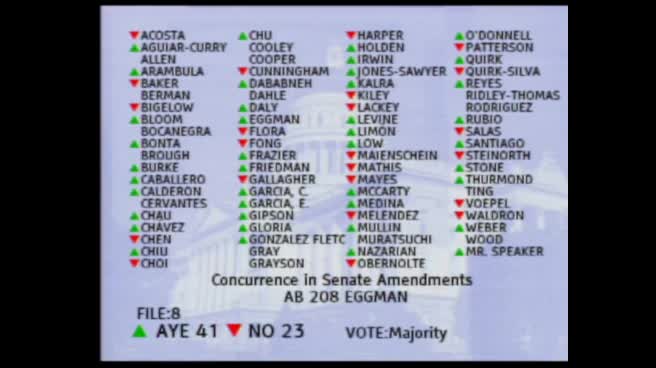 1MIN
Assembly Floor
 2MIN
Senate Floor
 1H
Senate Standing Committee on Appropriations
 8MIN
Senate Standing Committee on Elections and Constitutional Amendments
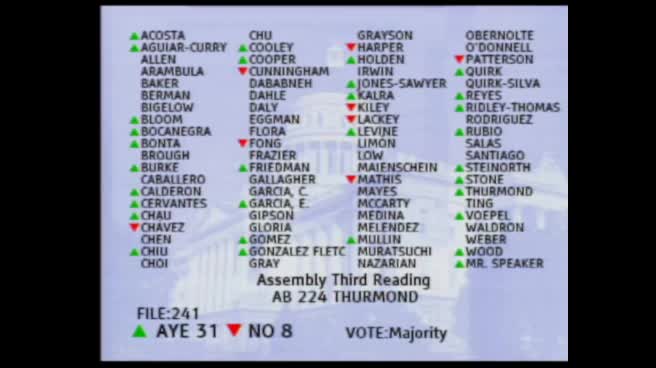 1MIN
Assembly Floor
 1H
Assembly Standing Committee on Appropriations
 7MIN
Assembly Standing Committee on Elections and Redistricting


Bill Co-Author(s):