AB 926: Cemeteries: endowment funds.
- Session Year: 2017-2018
- House: Assembly
- Latest Version Date: 2017-10-13
Existing law authorizes a cemetery authority which maintains a cemetery to place its cemetery under endowment care and establish, maintain, and operate an endowment care fund. Existing law requires the principal of all funds for endowment care to be invested, and only the net income to be used for the maintenance, repair, or restoration of the cemetery property. Existing law requires each cemetery authority to file a report with the Cemetery and Funeral Bureau setting forth specified information, including, among other things, the amount collected and deposited in both endowment care funds. Existing law authorizes the bureau to extend the date on which this report is due by 30 days.
This bill would authorize the Cemetery and Funeral Bureau to extend the date on which the above-mentioned report is due by no more than 9 months. The bill, if a cemetery authority establishes an endowment care fund, would make the fund automatically subject to a net income distribution method and would specify the requirements for distribution under that method. The bill would also authorize a cemetery authority, its directors, or its board of trustees to, on or after January 1, 2020, apply to the bureau to convert its endowment care fund from a net income distribution method to a unitrust distribution method, as defined, and would describe the conditions under which the bureau would approve that application. The bill would require the bureau to review, on an annual basis, whether a cemetery authority continues to meet the conditions of approval for the unitrust distribution method, and would authorize the bureau to require the use of the net income distribution method if the cemetery authority does not meet those conditions. The bill would require the bureau to evaluate the effectiveness of the unitrust distribution authority and to report at its next 2 hearings before the Joint Sunset Review Oversight Hearings of the Assembly Committee on Business and Professions and Senate Committee on Business, Professions and Economic Development that occurs after January 1, 2018.
Existing law authorizes a cemetery authority which maintains a cemetery to place its cemetery under endowment care and establish, maintain, and operate an endowment care fund. Existing law requires the principal of all funds for endowment care to be invested, and only the net income to be used for the maintenance, repair, or restoration of the cemetery property. Existing law requires each cemetery authority to file a report with the Cemetery and Funeral Bureau setting forth specified information, including, among other things, the amount collected and deposited in both endowment care funds. Existing law authorizes the bureau to extend the date on which this report is due by 30 days.
This bill would authorize the Cemetery and Funeral Bureau to extend the date on which the above-mentioned report is due by no more than 9 months. The bill, if a cemetery authority establishes an endowment care fund, would make the fund automatically subject to a net income distribution method and would specify the requirements for distribution under that method. The bill would also authorize a cemetery authority, its directors, or its board of trustees to, on or after January 1, 2020, apply to the bureau to convert its endowment care fund from a net income distribution method to a unitrust distribution method, as defined, and would describe the conditions under which the bureau would approve that application. The bill would require the bureau to review, on an annual basis, whether a cemetery authority continues to meet the conditions of approval for the unitrust distribution method, and would authorize the bureau to require the use of the net income distribution method if the cemetery authority does not meet those conditions. The bill would require the bureau to evaluate the effectiveness of the unitrust distribution authority and to report at its next 2 hearings before the Joint Sunset Review Oversight Hearings of the Assembly Committee on Business and Professions and Senate Committee on Business, Professions and Economic Development that occurs after January 1, 2018.
Existing law authorizes a cemetery authority which maintains a cemetery to place its cemetery under endowment care and establish, maintain, and operate an endowment care fund. Existing law requires the principal of all funds for endowment care to be invested, and only the net income to be used for the maintenance, repair, or restoration of the cemetery property. Existing law requires each cemetery authority to file a report with the Cemetery and Funeral Bureau setting forth specified information, including, among other things, the amount collected and deposited in both endowment care funds. Existing law authorizes the bureau to extend the date on which this report is due by 30 days.
This bill would authorize the Cemetery and Funeral Bureau to extend the date on which the above-mentioned report is due by no more than 9 months. The bill, if a cemetery authority establishes an endowment care fund, would make the fund automatically subject to a net income distribution method and would specify the requirements for distribution under that method. The bill would also authorize a cemetery authority, its directors, or its board of trustees to, on or after January 1, 2020, apply to the bureau to convert its endowment care fund from a net income distribution method to a unitrust distribution method, as defined, and would describe the conditions under which the bureau would approve that application. The bill would require the bureau to review, on an annual basis, whether a cemetery authority continues to meet the conditions of approval for the unitrust distribution method, and would authorize the bureau to require the use of the net income distribution method if the cemetery authority does not meet those conditions. The bill would require the bureau to evaluate the effectiveness of the unitrust distribution authority and to report at its next 2 hearings before the Joint Sunset Review Oversight Hearings of the Assembly Committee on Business and Professions and Senate Committee on Business, Professions and Economic Development that occurs after January 1, 2018.
Existing law authorizes a cemetery authority which maintains a cemetery to place its cemetery under endowment care and establish, maintain, and operate an endowment care fund. Existing law requires the principal of all funds for endowment care to be invested, and only the net income to be used for the maintenance, repair, or restoration of the cemetery property. Existing law requires each cemetery authority to file a report with the Cemetery and Funeral Bureau setting forth specified information, including, among other things, the amount collected and deposited in both endowment care funds. Existing law authorizes the bureau to extend the date on which this report is due by 30 days.
This bill would authorize the Cemetery and Funeral Bureau to extend the date on which the above-mentioned report is due by no more than 9 months. The bill, if a cemetery authority establishes an endowment care fund, would make the fund automatically subject to a net income distribution method and would specify the requirements for distribution under that method. The bill would also authorize a cemetery authority, its directors, or its board of trustees to, on or after January 1, 2020, apply to the Cemetery and Funeral Bureau bureau to convert its endowment care fund from a net income distribution method to a unitrust distribution method, as defined, and would describe the conditions under which the bureau would approve that application. The bill would require the bureau to evaluate the effectiveness of the unitrust distribution authority and to report at its next 2 hearings before the Joint Sunset Review Oversight Hearings of the Assembly Committee on Business and Professions and Senate Committee on Business, Professions and Economic Development that occurs after January 1, 2018.
Existing law authorizes a cemetery authority which maintains a cemetery to place its cemetery under endowment care and establish, maintain, and operate an endowment care fund. Existing law requires the principal of all funds for endowment care to be invested, and only the net income to be used for the maintenance, repair, or restoration of the cemetery property.
This bill, if a cemetery authority establishes an endowment care fund, would make the fund automatically subject to a net income distribution method and would specify the requirements for distribution under that method. The bill would also authorize a cemetery authority, its directors, or its board of trustees to to, on or after January 1, 2020, apply to the bureau Cemetery and Funeral Bureau to convert its endowment care fund from a net income distribution method to a unitrust distribution method, as defined, and would describe the conditions under which the bureau would approve that application. The bill would require the bureau to evaluate the effectiveness of the unitrust distribution authority and to report at its next hearing 2 hearings before the Joint Sunset Review Oversight Hearing Hearings of the Assembly Committee on Business and Professions and Senate Committee on Business, Professions and Economic Development that occurs after January 1, 2018.
Existing law authorizes a cemetery authority which maintains a cemetery to place its cemetery under endowment care and establish, maintain, and operate an endowment care fund. Existing law requires the principal of all funds for endowment care to be invested, and only the net income to be used for the maintenance, repair, or restoration of the cemetery property.
This bill bill, if a cemetery authority establishes an endowment care fund, would make the fund automatically subject to a net income distribution method and would specify the requirements for distribution under that method. The bill would also authorize a cemetery authority, its directors, or its board of trustees to elect to make distributions from the endowment care fund for the maintenance, repair, or restoration of the cemetery property according to either of two different methods. The bill would establish conditions under which a distribution from the endowment care fund could be made under each method. apply to the bureau to convert its endowment care fund from a net income distribution method to a unitrust distribution method, as defined, and would describe the conditions under which the bureau would approve that application. The bill would require the bureau to evaluate the effectiveness of the unitrust distribution authority and to report at its next hearing before the Joint Oversight Hearing of the Assembly Committee on Business and Professions and Senate Committee on Business, Professions and Economic Development that occurs after January 1, 2018.
Existing law authorizes a cemetery authority which maintains a cemetery to place its cemetery under endowment care and establish, maintain, and operate an endowment care fund. Existing law requires the principal of all funds for endowment care to be invested, and only the net income to be used for the maintenance, repair, or restoration of the cemetery property.
This bill would authorize a cemetery authority to request the trustee of an endowment care fund authority, its directors, or its board of trustees to elect to make distributions from the endowment care fund for the maintenance, repair, or restoration of the cemetery property according to either of two different methods. The bill would establish conditions under which a distribution from the endowment care fund could be made under each method.
Existing law authorizes a cemetery authority which maintains a cemetery to place its cemetery under endowment care and establish, maintain, and operate an endowment care fund. Existing law requires the principal of all funds for endowment care to be invested, and only the net income to be used for the maintenance, repair, or restoration of the cemetery property.
This bill would authorize a cemetery authority to request the trustee of an endowment care fund to make distributions from the fund for the maintenance, repair, or restoration of the cemetery property according to either of two different methods. The bill would establish conditions under which a distribution from the endowment care fund could be made under each method.
(a)Each cemetery authority shall file with the bureau annually, on or before June 1, or within five months after close of their fiscal year provided approval has been granted by the bureau as provided for in Section 7612.7, a written report in a form prescribed by the bureau setting forth the following:
(1)The number of square feet of grave space and the number of crypts and niches sold or disposed of under endowment care by specific periods as set forth in the form prescribed.
(2)The amount collected and deposited in both the general and special endowment care funds segregated as to the amounts for crypts, niches, and grave space by specific periods as set forth either on the accrual or cash basis at the option of the cemetery authority.
(3)A statement showing separately the total amount of the general and special endowment care funds invested in each of the investments authorized by law and the amount of cash on hand not invested, which statement shall actually show the financial condition of the funds.
(4)A statement showing separately the location, description, and character of the investments in which the special endowment care funds are invested. The statement shall show the valuations of any securities held in the endowment care fund as valued pursuant to Section 7614.7.
(5)A statement showing the transactions entered into between the corporation or any officer, employee, or stockholder thereof and the trustees of the endowment care funds with respect to those endowment care funds. The statement shall show the dates, amounts of the transactions, and shall contain a statement of the reasons for those transactions.
(b)The report shall be verified by the president or vice president and one other officer of the cemetery corporation. The information submitted pursuant to paragraphs (2), (3), (4), and (5) of subdivision (a) shall be accompanied by an annual audit report, prepared in accordance with generally accepted accounting principles, of the endowment care fund and special care fund signed by a certified public accountant or public accountant. The scope of the audit shall include the inspection, review, and audit of the general purpose financial statements of the endowment care fund and special care fund, which shall include the balance sheet, the statement of revenues, expenditures, and changes in fund balance.
(c)If a cemetery authority files a written request prior to the date the report is due, the bureau may, in its discretion, grant an extension for no more than an additional nine months within which to file the report.
SEC. 2.Section 8725 of the Health and Safety Code is amended to read:8725.A cemetery authority that maintains a cemetery may place its cemetery under endowment care and establish, maintain, and operate an endowment care fund. Endowment care and special care funds consisting of trust funds created by irrevocable trust agreements may be commingled for investment and the net income therefrom shall be divided between the endowment care and special care funds in the proportion that each fund contributed to the principal sum invested. Special care funds derived from trusts created by a revocable agreement shall not be commingled for investment and shall be accounted for separately from all other funds. The funds may be held in the name of the cemetery authority, its directors, or in the name of the trustees appointed by the cemetery authority.
SEC. 3.Section 8726 of the Health and Safety Code is amended to read:8726.(a)The principal of all funds for endowment care shall be invested and the income only may be used for the care, maintenance, and embellishment of the cemetery in accordance with the provisions of law and the resolutions, bylaws, rules, and regulations or other actions or instruments of the cemetery authority and for no other purpose. Endowment and special care funds shall be maintained separate and distinct from all other funds and the trustees shall keep separate records thereof.
(b)For purposes of this article, the following definitions shall apply:
(1)Income means distribution under either the net income distribution method or the unitrust distribution method.
(2)Unitrust distribution method means an income distribution method where the net income amount, known as the unitrust amount, is no more than 5 percent of the fair market value of the trust assets.
SEC. 4.Section 8726.1 of the Health and Safety Code is amended to read:8726.1.(a)If a cemetery authority establishes an endowment care fund, the fund shall be subject to a net income distribution method that requires all of the following:
(1)The trustee of the endowment care fund shall create a reserve from which principal losses may be replaced by setting aside a reasonable percentage of the income from the fund.
(2)The trustee may also set aside, out of income or net capital gains from investments, reserves for future maintenance, repair, replacement, or restoration of property or embellishments in the cemetery that may be necessary or desirable as a result of wear, deterioration, accident, damage, or destruction.
(3)The total amount of these reserves for maintenance, repair, and restoration shall not at any time exceed 10 percent of the endowment care fund.
(4)As used in this section, net capital gains means the amount by which cumulative realized capital gains since the establishment of the endowment care fund exceed the sum of cumulative realized capital losses since the establishment of the endowment care fund and capital gains previously set aside in reserve.
(5)Additions to the reserve in any year from net capital gains shall not exceed one-half the difference between the capital gains and the capital losses during the year.
(6)Net capital gains not set aside in reserve in any given year shall become a part of the principal of the endowment care fund.
(b)Notwithstanding subdivision (a), a cemetery authority may convert its endowment care fund from a net income distribution method to a unitrust distribution method if it obtains prior approval from the Cemetery and Funeral Bureau pursuant to Section 8726.2.
SEC. 5.Section 8726.2 is added to the Health and Safety Code, to read:8726.2.(a)On or after January 1, 2020, a cemetery authority, its board of trustees, or its corporate trustee may apply to the Cemetery and Funeral Bureau to convert its endowment care fund from a net income distribution method to a unitrust distribution method.
(b)The bureau shall approve the application described in subdivision (a) only if all of the following conditions are met:
(1)The cemetery authority, its board of trustees, or its corporate trustee provides the investment objectives of the trust and those objectives promote the mutual goals of (A) growing the principal assets to sufficiently cover the cost of future and ongoing care and maintenance of the cemetery and (B) generating income to support the cemetery, as described in Section 8726.
(2)Evidence is provided that the cemetery authority, its board of trustees, or its corporate trustee will invest and manage the trust under the prudent investor rule, as described in Article 2.5 (commencing with Section 16045) of Chapter 1 of Part 4 of Division 9 of the Probate Code.
(3)The cemetery authority, its board of trustees, or its corporate trustee demonstrates sufficient knowledge and expertise in investing and managing the endowment care fund under the unitrust distribution method.
(4)The unitrust amount is no more than 5 percent of the fair market value of the endowment care fund, determined by averaging the net fair market value of the assets as of the last trading day for each of the three preceding fiscal years.
(5)A reserve is created for future maintenance, repair, restoration of property, or embellishments in the cemetery for use when the endowment fund has inadequate funds for full distribution, as described in subparagraph (C) of paragraph (6). The cemetery authority, its board of trustees, or its corporate trustee may set aside a portion of the unitrust amount for the reserve.
(6)(A)The distribution of the unitrust amount may be made to the cemetery authority on a monthly, quarterly, semiannual, or annual basis, unless the endowment care fund has inadequate funds for full distribution.
(B)An endowment care fund has inadequate funds for full distribution if either of the following events occur:
(i)The fair market value of the endowment care fund, after the distribution, is less than 80 percent of the aggregate fair market value of the endowment care fund as of the end of the immediate preceding fiscal year.
(ii)The endowment care fund is less than the cumulative total of all principal contributions to the fund since inception.
(C)(i)If the endowment care fund has inadequate funds for full distribution, the distribution shall be limited to the lesser of net income distribution or an amount no more than a unitrust distribution of 1.5 percent of the fair market value of the assets as of the last trading day for each of the three preceding fiscal years.
(ii)The cemetery authority, its board of trustees, or its corporate trustee may draw from the reserve described in paragraph (5) only during a fiscal year where there are inadequate funds for full distribution. An amount drawn from the reserve during that fiscal year shall be the lesser of the difference between the unitrust amount described in paragraph (4) and the limited distribution amount described in clause (i), or one-third of the total amount of the reserve.
(7)Notwithstanding Section 8733 or 8733.5, the compensation of the trustee shall be reasonable and shall not exceed 0.1 percent of the net fair market value of the assets as of the last trading day for each of the three preceding fiscal years.
(8)The cemetery authority has submitted all annual reports, pursuant to Section 7612.6 of the Business and Professions Code, for the previous five consecutive years.
(c)The bureau shall deny a cemetery authoritys application if the bureau has found any of the conditions described in subdivisions (a) to (f), inclusive, of Section 7613.9 of the Business and Professions Code.
(d)To assist the bureau in making its determination, the cemetery authority, its board of trustees, or its corporate trustee shall provide all relevant trust documents, including a proposed trust instrument, if available. If relevant trust documents become available after the bureau makes a determination, the cemetery authority, its board of trustees, or its corporate trustee shall provide it to the bureau.
(e)(1)The bureau shall review on an annual basis whether a cemetery authority continues to meet the conditions of approval, described in subdivision (b), for the use of the unitrust distribution method.
(2)If a cemetery authority is determined not to meet the original conditions of approval described in subdivision (b), or has failed to file an annual report pursuant to Section 7612.6 of the Business and Professions Code, the cemetery authority may be required to revert to the use of the net income distribution method.
(f)The bureau may adopt rules to administer this section and ensure compliance, including, but not limited to, reporting requirements.
(g)The bureau shall evaluate the effectiveness of this section and report at its next two hearings before the Joint Sunset Review Oversight Hearings of the Assembly Committee on Business and Professions and Senate Committee on Business, Professions and Economic Development that occurs after January 1, 2018.
(a)Each cemetery authority shall file with the bureau annually, on or before June 1, or within five months after close of their fiscal year provided approval has been granted by the bureau as provided for in Section 7612.7, a written report in a form prescribed by the bureau setting forth the following:
(1)The number of square feet of grave space and the number of crypts and niches sold or disposed of under endowment care by specific periods as set forth in the form prescribed.
(2)The amount collected and deposited in both the general and special endowment care funds segregated as to the amounts for crypts, niches, and grave space by specific periods as set forth either on the accrual or cash basis at the option of the cemetery authority.
(3)A statement showing separately the total amount of the general and special endowment care funds invested in each of the investments authorized by law and the amount of cash on hand not invested, which statement shall actually show the financial condition of the funds.
(4)A statement showing separately the location, description, and character of the investments in which the special endowment care funds are invested. The statement shall show the valuations of any securities held in the endowment care fund as valued pursuant to Section 7614.7.
(5)A statement showing the transactions entered into between the corporation or any officer, employee, or stockholder thereof and the trustees of the endowment care funds with respect to those endowment care funds. The statement shall show the dates, amounts of the transactions, and shall contain a statement of the reasons for those transactions.
(b)The report shall be verified by the president or vice president and one other officer of the cemetery corporation. The information submitted pursuant to paragraphs (2), (3), (4), and (5) of subdivision (a) shall be accompanied by an annual audit report, prepared in accordance with generally accepted accounting principles, of the endowment care fund and special care fund signed by a certified public accountant or public accountant. The scope of the audit shall include the inspection, review, and audit of the general purpose financial statements of the endowment care fund and special care fund, which shall include the balance sheet, the statement of revenues, expenditures, and changes in fund balance.
(c)If a cemetery authority files a written request prior to the date the report is due, the bureau may, in its discretion, grant an extension for no more than an additional nine months within which to file the report.
SEC. 2.Section 8725 of the Health and Safety Code is amended to read:8725.A cemetery authority that maintains a cemetery may place its cemetery under endowment care and establish, maintain, and operate an endowment care fund. Endowment care and special care funds consisting of trust funds created by irrevocable trust agreements may be commingled for investment and the net income therefrom shall be divided between the endowment care and special care funds in the proportion that each fund contributed to the principal sum invested. Special care funds derived from trusts created by a revocable agreement shall not be commingled for investment and shall be accounted for separately from all other funds. The funds may be held in the name of the cemetery authority, its directors, or in the name of the trustees appointed by the cemetery authority.
SEC. 3.Section 8726 of the Health and Safety Code is amended to read:8726.(a)The principal of all funds for endowment care shall be invested and the income only may be used for the care, maintenance, and embellishment of the cemetery in accordance with the provisions of law and the resolutions, bylaws, rules, and regulations or other actions or instruments of the cemetery authority and for no other purpose. Endowment and special care funds shall be maintained separate and distinct from all other funds and the trustees shall keep separate records thereof.
(b)For purposes of this article, the following definitions shall apply:
(1)Income means distribution under either the net income distribution method or the unitrust distribution method.
(2)Unitrust distribution method means an income distribution method where the net income amount, known as the unitrust amount, is no more than 5 percent of the fair market value of the trust assets.
SEC. 4.Section 8726.1 of the Health and Safety Code is amended to read:8726.1.(a)If a cemetery authority establishes an endowment care fund, the fund shall be subject to a net income distribution method that requires all of the following:
(1)The trustee of the endowment care fund shall create a reserve from which principal losses may be replaced by setting aside a reasonable percentage of the income from the fund.
(2)The trustee may also set aside, out of income or net capital gains from investments, reserves for future maintenance, repair, replacement, or restoration of property or embellishments in the cemetery that may be necessary or desirable as a result of wear, deterioration, accident, damage, or destruction.
(3)The total amount of these reserves for maintenance, repair, and restoration shall not at any time exceed 10 percent of the endowment care fund.
(4)As used in this section, net capital gains means the amount by which cumulative realized capital gains since the establishment of the endowment care fund exceed the sum of cumulative realized capital losses since the establishment of the endowment care fund and capital gains previously set aside in reserve.
(5)Additions to the reserve in any year from net capital gains shall not exceed one-half the difference between the capital gains and the capital losses during the year.
(6)Net capital gains not set aside in reserve in any given year shall become a part of the principal of the endowment care fund.
(b)Notwithstanding subdivision (a), a cemetery authority may convert its endowment care fund from a net income distribution method to a unitrust distribution method if it obtains prior approval from the Cemetery and Funeral Bureau pursuant to Section 8726.2.
SEC. 5.Section 8726.2 is added to the Health and Safety Code, to read:8726.2.(a)On or after January 1, 2020, a cemetery authority, its board of trustees, or its corporate trustee may apply to the Cemetery and Funeral Bureau to convert its endowment care fund from a net income distribution method to a unitrust distribution method.
(b)The bureau shall approve the application described in subdivision (a) only if all of the following conditions are met:
(1)The cemetery authority, its board of trustees, or its corporate trustee provides the investment objectives of the trust and those objectives promote the mutual goals of (A) growing the principal assets to sufficiently cover the cost of future and ongoing care and maintenance of the cemetery and (B) generating income to support the cemetery, as described in Section 8726.
(2)Evidence is provided that the cemetery authority, its board of trustees, or its corporate trustee will invest and manage the trust under the prudent investor rule, as described in Article 2.5 (commencing with Section 16045) of Chapter 1 of Part 4 of Division 9 of the Probate Code.
(3)The cemetery authority, its board of trustees, or its corporate trustee demonstrates sufficient knowledge and expertise in investing and managing the endowment care fund under the unitrust distribution method.
(4)The unitrust amount is no more than 5 percent of the fair market value of the endowment care fund, determined by averaging the net fair market value of the assets as of the last trading day for each of the three preceding fiscal years.
(5)A reserve is created for future maintenance, repair, restoration of property, or embellishments in the cemetery for use when the endowment fund has inadequate funds for full distribution, as described in subparagraph (C) of paragraph (6). The cemetery authority, its board of trustees, or its corporate trustee may set aside a portion of the unitrust amount for the reserve.
(6)(A)The distribution of the unitrust amount may be made to the cemetery authority on a monthly, quarterly, semiannual, or annual basis, unless the endowment care fund has inadequate funds for full distribution.
(B)An endowment care fund has inadequate funds for full distribution if either of the following events occur:
(i)The fair market value of the endowment care fund, after the distribution, is less than 80 percent of the aggregate fair market value of the endowment care fund as of the end of the immediate preceding fiscal year.
(ii)The endowment care fund is less than the cumulative total of all principal contributions to the fund since inception.
(C)(i)If the endowment care fund has inadequate funds for full distribution, the distribution shall be limited to the lesser of net income distribution or an amount no more than a unitrust distribution of 1.5 percent of the fair market value of the assets as of the last trading day for each of the three preceding fiscal years.
(ii)The cemetery authority, its board of trustees, or its corporate trustee may draw from the reserve described in paragraph (5) only during a fiscal year where there are inadequate funds for full distribution. An amount drawn from the reserve during that fiscal year shall be the lesser of the difference between the unitrust amount described in paragraph (4) and the limited distribution amount described in clause (i), or one-third of the total amount of the reserve.
(7)Notwithstanding Section 8733 or 8733.5, the compensation of the trustee shall be reasonable and shall not exceed 0.1 percent of the net fair market value of the assets as of the last trading day for each of the three preceding fiscal years.
(8)The cemetery authority has submitted all annual reports, pursuant to Section 7612.6 of the Business and Professions Code, for the previous five consecutive years.
(c)The bureau shall deny a cemetery authoritys application if the bureau has found any of the conditions described in subdivisions (a) to (f), inclusive, of Section 7613.9 of the Business and Professions Code.
(d)To assist the bureau in making its determination, the cemetery authority, its board of trustees, or its corporate trustee shall provide all relevant trust documents, including a proposed trust instrument, if available. If relevant trust documents become available after the bureau makes a determination, the cemetery authority, its board of trustees, or its corporate trustee shall provide it to the bureau.
(e)(1)The bureau shall review on an annual basis whether a cemetery authority continues to meet the conditions of approval, described in subdivision (b), for the use of the unitrust distribution method.
(2)If a cemetery authority is determined not to meet the original conditions of approval described in subdivision (b), or has failed to file an annual report pursuant to Section 7612.6 of the Business and Professions Code, the cemetery authority may be required to revert to the use of the net income distribution method.
(f)The bureau may adopt rules to administer this section and ensure compliance, including, but not limited to, reporting requirements.
(g)The bureau shall evaluate the effectiveness of this section and report at its next two hearings before the Joint Sunset Review Oversight Hearings of the Assembly Committee on Business and Professions and Senate Committee on Business, Professions and Economic Development that occurs after January 1, 2018.
(a)Each cemetery authority shall file with the bureau annually, on or before June 1, or within five months after close of their fiscal year provided approval has been granted by the bureau as provided for in Section 7612.7, a written report in a form prescribed by the bureau setting forth the following:
(1)The number of square feet of grave space and the number of crypts and niches sold or disposed of under endowment care by specific periods as set forth in the form prescribed.
(2)The amount collected and deposited in both the general and special endowment care funds segregated as to the amounts for crypts, niches, and grave space by specific periods as set forth either on the accrual or cash basis at the option of the cemetery authority.
(3)A statement showing separately the total amount of the general and special endowment care funds invested in each of the investments authorized by law and the amount of cash on hand not invested, which statement shall actually show the financial condition of the funds.
(4)A statement showing separately the location, description, and character of the investments in which the special endowment care funds are invested. The statement shall show the valuations of any securities held in the endowment care fund as valued pursuant to Section 7614.7.
(5)A statement showing the transactions entered into between the corporation or any officer, employee, or stockholder thereof and the trustees of the endowment care funds with respect to those endowment care funds. The statement shall show the dates, amounts of the transactions, and shall contain a statement of the reasons for those transactions.
(b)The report shall be verified by the president or vice president and one other officer of the cemetery corporation. The information submitted pursuant to paragraphs (2), (3), (4), and (5) of subdivision (a) shall be accompanied by an annual audit report, prepared in accordance with generally accepted accounting principles, of the endowment care fund and special care fund signed by a certified public accountant or public accountant. The scope of the audit shall include the inspection, review, and audit of the general purpose financial statements of the endowment care fund and special care fund, which shall include the balance sheet, the statement of revenues, expenditures, and changes in fund balance.
(c)If a cemetery authority files a written request prior to the date the report is due, the bureau may, in its discretion, grant an extension for no more than an additional nine months within which to file the report.
SEC. 2.Section 8725 of the Health and Safety Code is amended to read:8725.A cemetery authority that maintains a cemetery may place its cemetery under endowment care and establish, maintain, and operate an endowment care fund. Endowment care and special care funds consisting of trust funds created by irrevocable trust agreements may be commingled for investment and the net income therefrom shall be divided between the endowment care and special care funds in the proportion that each fund contributed to the principal sum invested. Special care funds derived from trusts created by a revocable agreement shall not be commingled for investment and shall be accounted for separately from all other funds. The funds may be held in the name of the cemetery authority, its directors, or in the name of the trustees appointed by the cemetery authority.
SEC. 3.Section 8726 of the Health and Safety Code is amended to read:8726.(a)The principal of all funds for endowment care shall be invested and the income only may be used for the care, maintenance, and embellishment of the cemetery in accordance with the provisions of law and the resolutions, bylaws, rules, and regulations or other actions or instruments of the cemetery authority and for no other purpose. Endowment and special care funds shall be maintained separate and distinct from all other funds and the trustees shall keep separate records thereof.
(b)For purposes of this article, the following definitions shall apply:
(1)Income means distribution under either the net income distribution method or the unitrust distribution method.
(2)Unitrust distribution method means an income distribution method where the net income amount, known as the unitrust amount, is no more than 5 percent of the fair market value of the trust assets.
SEC. 4.Section 8726.1 of the Health and Safety Code is amended to read:8726.1.(a)If a cemetery authority establishes an endowment care fund, the fund shall be subject to a net income distribution method that requires all of the following:
(1)The trustee of the endowment care fund shall create a reserve from which principal losses may be replaced by setting aside a reasonable percentage of the income from the fund.
(2)The trustee may also set aside, out of income or net capital gains from investments, reserves for future maintenance, repair, replacement, or restoration of property or embellishments in the cemetery that may be necessary or desirable as a result of wear, deterioration, accident, damage, or destruction.
(3)The total amount of these reserves for maintenance, repair, and restoration shall not at any time exceed 10 percent of the endowment care fund.
(4)As used in this section, net capital gains means the amount by which cumulative realized capital gains since the establishment of the endowment care fund exceed the sum of cumulative realized capital losses since the establishment of the endowment care fund and capital gains previously set aside in reserve.
(5)Additions to the reserve in any year from net capital gains shall not exceed one-half the difference between the capital gains and the capital losses during the year.
(6)Net capital gains not set aside in reserve in any given year shall become a part of the principal of the endowment care fund.
(b)Notwithstanding subdivision (a), a cemetery authority may convert its endowment care fund from a net income distribution method to a unitrust distribution method if it obtains prior approval from the Cemetery and Funeral Bureau pursuant to Section 8726.2.
SEC. 5.Section 8726.2 is added to the Health and Safety Code, to read:8726.2.(a)On or after January 1, 2020, a cemetery authority, its board of trustees, or its corporate trustee may apply to the Cemetery and Funeral Bureau to convert its endowment care fund from a net income distribution method to a unitrust distribution method.
(b)The bureau shall approve the application described in subdivision (a) only if all of the following conditions are met:
(1)The cemetery authority, its board of trustees, or its corporate trustee provides the investment objectives of the trust and those objectives promote the mutual goals of (A) growing the principal assets to sufficiently cover the cost of future and ongoing care and maintenance of the cemetery and (B) generating income to support the cemetery, as described in Section 8726.
(2)Evidence is provided that the cemetery authority, its board of trustees, or its corporate trustee will invest and manage the trust under the prudent investor rule, as described in Article 2.5 (commencing with Section 16045) of Chapter 1 of Part 4 of Division 9 of the Probate Code.
(3)The cemetery authority, its board of trustees, or its corporate trustee demonstrates sufficient knowledge and expertise in investing and managing the endowment care fund under the unitrust distribution method.
(4)The unitrust amount is no more than 5 percent of the fair market value of the endowment care fund, determined by averaging the net fair market value of the assets as of the last trading day for each of the three preceding fiscal years.
(5)A reserve is created for future maintenance, repair, restoration of property, or embellishments in the cemetery for use when the endowment fund has inadequate funds for full distribution, as described in subparagraph (C) of paragraph (6). The cemetery authority, its board of trustees, or its corporate trustee may set aside a portion of the unitrust amount for the reserve.
(6)(A)The distribution of the unitrust amount may be made to the cemetery authority on a monthly, quarterly, semiannual, or annual basis, unless the endowment care fund has inadequate funds for full distribution.
(B)An endowment care fund has inadequate funds for full distribution if either of the following events occur:
(i)The fair market value of the endowment care fund, after the distribution, is less than 80 percent of the aggregate fair market value of the endowment care fund as of the end of the immediate preceding fiscal year.
(ii)The endowment care fund is less than the cumulative total of all principal contributions to the fund since inception.
(C)(i)If the endowment care fund has inadequate funds for full distribution, the distribution shall be limited to the lesser of net income distribution or an amount no more than a unitrust distribution of 1.5 percent of the fair market value of the assets as of the last trading day for each of the three preceding fiscal years.
(ii)The cemetery authority, its board of trustees, or its corporate trustee may draw from the reserve described in paragraph (5) only during a fiscal year where there are inadequate funds for full distribution. An amount drawn from the reserve during that fiscal year shall be the lesser of the difference between the unitrust amount described in paragraph (4) and the limited distribution amount described in clause (i), or one-third of the total amount of the reserve.
(7)Notwithstanding Section 8733 or 8733.5, the compensation of the trustee shall be reasonable and shall not exceed 0.1 percent of the net fair market value of the assets as of the last trading day for each of the three preceding fiscal years.
(8)The cemetery authority has submitted all annual reports, pursuant to Section 7612.6 of the Business and Professions Code, for the previous five consecutive years.
(c)The bureau shall deny a cemetery authoritys application if the bureau has found any of the conditions described in subdivisions (a) to (f), inclusive, of Section 7613.9 of the Business and Professions Code.
(d)To assist the bureau in making its determination, the cemetery authority, its board of trustees, or its corporate trustee shall provide all relevant trust documents, including a proposed trust instrument, if available. If relevant trust documents become available after the bureau makes a determination, the cemetery authority, its board of trustees, or its corporate trustee shall provide it to the bureau.
(e)(1)The bureau shall review on an annual basis whether a cemetery authority continues to meet the conditions of approval, described in subdivision (b), for the use of the unitrust distribution method.
(2)If a cemetery authority is determined not to meet the original conditions of approval described in subdivision (b), or has failed to file an annual report pursuant to Section 7612.6 of the Business and Professions Code, the cemetery authority may be required to revert to the use of the net income distribution method.
(e)(f)The bureau may adopt rules to administer this section and ensure compliance, including, but not limited to, reporting requirements.
(f)(g)The bureau shall evaluate the effectiveness of this section and report at its next two hearings before the Joint Sunset Review Oversight Hearings of the Assembly Committee on Business and Professions and Senate Committee on Business, Professions and Economic Development that occurs after January 1, 2018.
(a)Each cemetery authority shall file with the bureau annually, on or before June 1, or within five months after close of their fiscal year provided approval has been granted by the bureau as provided for in Section 7612.7, a written report in a form prescribed by the bureau setting forth the following:
(1)The number of square feet of grave space and the number of crypts and niches sold or disposed of under endowment care by specific periods as set forth in the form prescribed.
(2)The amount collected and deposited in both the general and special endowment care funds segregated as to the amounts for crypts, niches, and grave space by specific periods as set forth either on the accrual or cash basis at the option of the cemetery authority.
(3)A statement showing separately the total amount of the general and special endowment care funds invested in each of the investments authorized by law and the amount of cash on hand not invested, which statement shall actually show the financial condition of the funds.
(4)A statement showing separately the location, description, and character of the investments in which the special endowment care funds are invested. The statement shall show the valuations of any securities held in the endowment care fund as valued pursuant to Section 7614.7.
(5)A statement showing the transactions entered into between the corporation or any officer, employee, or stockholder thereof and the trustees of the endowment care funds with respect to those endowment care funds. The statement shall show the dates, amounts of the transactions, and shall contain a statement of the reasons for those transactions.
(b)The report shall be verified by the president or vice president and one other officer of the cemetery corporation. The information submitted pursuant to paragraphs (2), (3), (4), and (5) of subdivision (a) shall be accompanied by an annual audit report, prepared in accordance with generally accepted accounting principles, of the endowment care fund and special care fund signed by a certified public accountant or public accountant. The scope of the audit shall include the inspection, review, and audit of the general purpose financial statements of the endowment care fund and special care fund, which shall include the balance sheet, the statement of revenues, expenditures, and changes in fund balance.
(c)If a cemetery authority files a written request prior to the date the report is due, the bureau may, in its discretion, grant an additional 30 days extension for no more than an additional nine months within which to file the report.
SECTION 1.SEC. 2.Section 8725 of the Health and Safety Code is amended to read:8725.A cemetery authority that maintains a cemetery may place its cemetery under endowment care and establish, maintain, and operate an endowment care fund. Endowment care and special care funds consisting of trust funds created by irrevocable trust agreements may be commingled for investment and the net income therefrom shall be divided between the endowment care and special care funds in the proportion that each fund contributed to the principal sum invested. Special care funds derived from trusts created by a revocable agreement shall not be commingled for investment and shall be accounted for separately from all other funds. The funds may be held in the name of the cemetery authority, its directors, or in the name of the trustees appointed by the cemetery authority.
SEC. 2.SEC. 3.Section 8726 of the Health and Safety Code is amended to read:8726.(a)The principal of all funds for endowment care shall be invested and the income only may be used for the care, maintenance, and embellishment of the cemetery in accordance with the provisions of law and the resolutions, bylaws, rules, and regulations or other actions or instruments of the cemetery authority and for no other purpose. Endowment and special care funds shall be maintained separate and distinct from all other funds and the trustees shall keep separate records thereof.
(b)For purposes of this article, the following definitions shall apply:
(1)Income means distribution under either the net income distribution method or the unitrust distribution method.
(2)Unitrust distribution method means an income distribution method where the net income amount, known as the unitrust amount, is no more than 5 percent of the fair market value of the trust assets.
SEC. 3.SEC. 4.Section 8726.1 of the Health and Safety Code is amended to read:8726.1.(a)If a cemetery authority establishes an endowment care fund, the fund shall be subject to a net income distribution method that requires all of the following:
(1)The trustee of the endowment care fund shall create a reserve from which principal losses may be replaced by setting aside a reasonable percentage of the income from the fund.
(2)The trustee may also set aside, out of income or net capital gains from investments, reserves for future maintenance, repair, replacement, or restoration of property or embellishments in the cemetery that may be necessary or desirable as a result of wear, deterioration, accident, damage, or destruction.
(3)The total amount of these reserves for maintenance, repair, and restoration shall not at any time exceed 10 percent of the endowment care fund.
(4)As used in this section, net capital gains means the amount by which cumulative realized capital gains since the establishment of the endowment care fund exceed the sum of cumulative realized capital losses since the establishment of the endowment care fund and capital gains previously set aside in reserve.
(5)Additions to the reserve in any year from net capital gains shall not exceed one-half the difference between the capital gains and the capital losses during the year.
(6)Net capital gains not set aside in reserve in any given year shall become a part of the principal of the endowment care fund.
(b)Notwithstanding subdivision (a), a cemetery authority may convert its endowment care fund from a net income distribution method to a unitrust distribution method if it obtains prior approval from the Cemetery and Funeral Bureau pursuant to Section 8726.2.
SEC. 4.SEC. 5.Section 8726.2 is added to the Health and Safety Code, to read:8726.2.(a)On or after January 1, 2020, a cemetery authority, its board of trustees, or its corporate trustee may apply to the Cemetery and Funeral Bureau to convert its endowment care fund from a net income distribution method to a unitrust distribution method.
(b)The bureau shall approve the application described in subdivision (a) only if all of the following conditions are met:
(1)The cemetery authority, its board of trustees, or its corporate trustee provides the investment objectives of the trust and those objectives promote the mutual goals of (A) growing the principal assets to sufficiently cover the cost of future and ongoing care and maintenance of the cemetery and (B) generating income to support the cemetery, as described in Section 8726.
(2)Evidence is provided that the cemetery authority, its board of trustees, or its corporate trustee will invest and manage the trust under the prudent investor rule, as described in Article 2.5 (commencing with Section 16045) of Chapter 1 of Part 4 of Division 9 of the Probate Code.
(3)The cemetery authority, its board of trustees, or its corporate trustee demonstrates sufficient knowledge and expertise in investing and managing the endowment care fund under the unitrust distribution method.
(4)The unitrust amount is no more than 5 percent of the fair market value of the endowment care fund, determined by averaging the net fair market value of the assets as of the last trading day for each of the three preceding fiscal years.
(5)A reserve is created for future maintenance, repair, restoration of property, or embellishments in the cemetery for use when the endowment fund has inadequate funds for full distribution, as described in subparagraph (C) of paragraph (6). The cemetery authority, its board of trustees, or its corporate trustee may set aside a portion of the unitrust amount for the reserve.
(6)(A)The distribution of the unitrust amount may be made to the cemetery authority on a monthly, quarterly, semiannual, or annual basis, unless the endowment care fund has inadequate funds for full distribution.
(B)An endowment care fund has inadequate funds for full distribution if either of the following events occur:
(i)The fair market value of the endowment care fund, after the distribution, is less than 80 percent of the aggregate fair market value of the endowment care fund as of the end of the immediate preceding fiscal year.
(ii)The endowment care fund is less than the cumulative total of all principal contributions to the fund since inception.
(C)(i)If the endowment care fund has inadequate funds for full distribution, the distribution shall be limited to the lesser of net income distribution or an amount no more than a unitrust distribution of 1.5 percent of the fair market value of the assets as of the last trading day for each of the three preceding fiscal years.
(ii)The cemetery authority, its board of trustees, or its corporate trustee may draw from the reserve described in paragraph (5) only during a fiscal year where there are inadequate funds for full distribution. An amount drawn from the reserve during that fiscal year shall be the lesser of the difference between the unitrust amount described in paragraph (4) and the limited distribution amount described in clause (i), or one-third of the total amount of the reserve.
(7)Notwithstanding Section 8733 or 8733.5, the compensation of the trustee shall be reasonable and shall not exceed 0.1 percent of the net fair market value of the assets as of the last trading day for each of the three preceding fiscal years.
(c)The bureau shall deny a cemetery authoritys application if the bureau has found any of the conditions described in subdivisions (a) to (f), inclusive, of Section 7613.9 of the Business and Professions Code.
(d)To assist the bureau in making its determination, the cemetery authority, its board of trustees, or its corporate trustee shall provide all relevant trust documents, including a proposed trust instrument, if available. If relevant trust documents become available after the bureau makes a determination, the cemetery authority, its board of trustees, or its corporate trustee shall provide it to the bureau.
(e)The bureau may adopt rules to administer this section and ensure compliance, including, but not limited to, reporting requirements.
(f)The bureau shall evaluate the effectiveness of this section and report at its next two hearings before the Joint Sunset Review Oversight Hearings of the Assembly Committee on Business and Professions and Senate Committee on Business, Professions and Economic Development that occurs after January 1, 2018.
A cemetery authority that maintains a cemetery may place its cemetery under endowment care and establish, maintain, and operate an endowment care fund. Endowment care and special care funds consisting of trust funds created by irrevocable trust agreements may be commingled for investment and the net income therefrom shall be divided between the endowment care and special care funds in the proportion that each fund contributed to the principal sum invested. Special care funds derived from trusts created by a revocable agreement shall not be commingled for investment and shall be accounted for separately from all other funds. The funds may be held in the name of the cemetery authority, its directors, or in the name of the trustees appointed by the cemetery authority.
SEC. 2.Section 8726 of the Health and Safety Code is amended to read:8726.(a)The principal of all funds for endowment care shall be invested and the income only may be used for the care, maintenance, and embellishment of the cemetery in accordance with the provisions of law and the resolutions, bylaws, rules rules, and regulations or other actions or instruments of the cemetery authority and for no other purpose. Endowment and special care funds shall be maintained separate and distinct from all other funds and the trustees shall keep separate records thereof.
(b)For purposes of this article, the following definitions shall apply:
(1)Income means distribution under either the net income distribution method or the unitrust distribution method.
(2)Unitrust distribution method means an income distribution method where the net income amount, known as the unitrust amount, is no more than 5 percent of the fair market value of the trust assets.
SEC. 3.Section 8726.1 of the Health and Safety Code is amended to read:8726.1.(a)If a cemetery authority establishes an endowment care fund, the fund shall be subject to a net income distribution method that requires all of the following:
(1)The trustee of the endowment care fund shall create a reserve from which principal losses may be replaced by setting aside a reasonable percentage of the income from the fund.
(2)The trustee may also set aside, out of income or net capital gains from investments, reserves for future maintenance, repair, replacement, or restoration of property or embellishments in the cemetery that may be necessary or desirable as a result of wear, deterioration, accident, damage, or destruction.
(3)The total amount of these reserves for maintenance, repair, and restoration shall not at any time exceed 10 percent of the endowment care fund.
(4)As used in this section, net capital gains means the amount by which cumulative realized capital gains since the establishment of the endowment care fund exceed the sum of cumulative realized capital losses since the establishment of the endowment care fund and capital gains previously set aside in reserve.
(5)Additions to the reserve in any year from net capital gains shall not exceed one-half the difference between the capital gains and the capital losses during the year.
(6)Net capital gains not set aside in reserve in any given year shall become a part of the principal of the endowment care fund.
(b)Notwithstanding subdivision (a), a cemetery authority may convert its endowment care fund from a net income distribution method to a unitrust distribution method if it obtains prior approval from the Cemetery and Funeral Bureau pursuant to Section 8726.2.
SEC. 4.Section 8726.2 is added to the Health and Safety Code, to read:8726.2.(a)A On or after January 1, 2020, a cemetery authority, its board of trustees, or its corporate trustee may apply to the Cemetery and Funeral Bureau to convert its endowment care fund from a net income distribution method to a unitrust distribution method.
(b)The bureau shall approve the application described in subdivision (a) only if all of the following conditions are met:
(1)The cemetery authority, its board of trustees, or its corporate trustee provides the investment objectives of the trust and those objectives promote the mutual goals of (A) growing the principal assets to sufficiently cover the cost of future and ongoing care and maintenance of the cemetery and (B) generating income to support the cemetery, as described in Section 8726.
(2)Evidence is provided that the cemetery authority, its board of trustees, or its corporate trustee will invest and manage the trust under the prudent investor rule, as described in Article 2.5 (commencing with Section 16045) of Chapter 1 of Part 4 of Division 9 of the Probate Code.
(3)The cemetery authority, its board of trustees, or its corporate trustee demonstrates sufficient knowledge and expertise in investing and managing the endowment care fund under the unitrust distribution method.
(4)The unitrust amount is no more than 5 percent of the fair market value of the endowment care fund, determined by averaging the net fair market value of the assets as of the last trading day for each of the three preceding fiscal years.
(5)A reserve is created for future maintenance, repair, restoration of property, or embellishments in the cemetery for use when the endowment fund has inadequate funds for full distribution, as described in subparagraph (C) of paragraph (6). The cemetery authority, its board of trustees, or its corporate trustee may set aside a portion of the unitrust amount for the reserve.
(6)(A)The distribution of the unitrust amount may be made to the cemetery authority on a monthly, quarterly, semiannual, or annual basis, unless the endowment care fund has inadequate funds for full distribution.
(B)An endowment care fund has inadequate funds for full distribution if either of the following events occur:
(i)The fair market value of the endowment care fund, after the distribution, is less than 80 percent of the aggregate fair market value of the endowment care fund as of the end of the immediate preceding fiscal year.
(ii)The endowment care fund is less than the cumulative total of all principal contributions to the fund since inception.
(C)(i)If the endowment care fund has inadequate funds for full distribution, the distribution shall be limited to the lesser of net income distribution or an amount no more than a unitrust distribution of 1.5 percent of the fair market value of the assets as of the last trading day for each of the three preceding fiscal years.
(ii)The cemetery authority, its board of trustees, or its corporate trustee may draw from the reserve described in paragraph (5) only during a fiscal year where there are inadequate funds for full distribution. An amount drawn from the reserve during that fiscal year shall be the lesser of the difference between the unitrust amount described in paragraph (4) and the limited distribution amount described in clause (i), or one-third of the total amount of the reserve.
(7)Notwithstanding Section 8733 or 8733.5, the compensation of the trustee shall be reasonable and shall not to exceed 0.1 percent of the net fair market value of the assets as of the last trading day for each of the three preceding fiscal years.
(c)The bureau shall deny a cemetery authoritys application if the bureau has found any of the conditions described in subdivisions (a) to (f), inclusive, of Section 7613.9 of the Business and Professions Code.
(d)To assist the bureau in making its determination, the cemetery authority, its board of trustees, or its corporate trustee shall provide all relevant trust documents, including a proposed trust instrument, if available. If a trust document becomes relevant trust documents become available after the bureau makes a determination, the cemetery authority, its board of trustees, or its corporate trustee shall provide it to the bureau.
(e)The bureau may adopt rules to administer this section and ensure compliance, including, but not limited to, reporting requirements.
(f)The bureau shall evaluate the effectiveness of this section and report at its next hearing two hearings before the Joint Sunset Review Oversight Hearing Hearings of the Assembly Committee on Business and Professions and Senate Committee on Business, Professions and Economic Development that occurs after January 1, 2018.
A cemetery authority that maintains a cemetery may place its cemetery under endowment care and establish, maintain, and operate an endowment care fund. Endowment care and special care funds consisting of trust funds created by irrevocable trust agreements may be commingled for investment and the net income therefrom shall be divided between the endowment care and special care funds in the proportion that each fund contributed to the principal sum invested. Special care funds derived from trusts created by a revocable agreement shall not be commingled for investment and shall be accounted for separately from all other funds. The funds may be held in the name of the cemetery authority, its directors, or in the name of the trustees appointed by the cemetery authority.
SEC. 2.Section 8726 of the Health and Safety Code is amended to read:8726.(a)The principal of all funds for endowment care shall be invested and the income only may be used for the care, maintenance, and embellishment of the cemetery in accordance with the provisions of law and the resolutions, bylaws, rules and regulations or other actions or instruments of the cemetery authority and for no other purpose. Endowment and special care funds shall be maintained separate and distinct from all other funds and the trustees shall keep separate records thereof.
(b)For purposes of this article, the following definitions shall apply:
(1)Income means distribution under either the net income distribution method or the unitrust distribution method.
(2)Unitrust distribution method means an income distribution method where the net income amount, known as the unitrust amount, is no more than 5 percent of the fair market value of the trust assets.
SEC. 2.SEC. 3.Section 8726.1 of the Health and Safety Code is amended to read:8726.1.(a)A cemetery authority, its directors, or its board of trustees may elect either of the following methods for the distribution of income from the endowment care fund to be available for the purpose of maintenance, repair, replacement, or restoration of endowment cemetery property: If a cemetery authority establishes an endowment care fund, the fund shall be subject to a net income distribution method that requires all of the following:
(1)(A)All ordinary income plus capital gains, which for purposes of this article is money or property that a trustee receives as current return from a principal asset, including the collected dividends, interest, and other income of the trust reduced by taxes on income, fees, commissions, and costs. For purposes of this article, the method of distribution under this paragraph is a net income distribution method.(B)When using a net income distribution method, the(1)The trustee of the endowment care fund may shall create a reserve from which principal losses may be replaced by setting aside a reasonable percentage of the income from the fund. The
(2)The trustee may also set aside aside, out of income or net capital gains from investments, reserves for future maintenance, repair, replacement, or restoration of property or embellishments in the cemetery that may be necessary or desirable as a result of wear, deterioration, accident, damage, or destruction. The
(3)The total amount of these reserves for maintenance, repair, and restoration shall not at any time exceed 10 percent of the endowment care fund. Net capital gains, as
(4)As used in this section, net capital gains means the amount by which cumulative realized capital gains since the establishment of the endowment care fund exceed the sum of cumulative realized capital losses since the establishment of the endowment care fund and capital gains previously set aside in reserve. Additions
(5)Additions to the reserve in any year from realized net capital gains shall not exceed one-half the difference between the capital gains and the capital losses during the year. Any
(6)Net capital gains not set aside in reserve in any given year shall become a part of the principal of the endowment care fund.
(2)A unitrust amount, which shall be no less than 3 percent and no more than 5 percent of the fair market value of the endowment care fund, determined by averaging the net fair market value of the assets as of the last trading day for the end of each of the three preceding fiscal years. For the purposes of this article, the method of distribution under this paragraph is a unitrust distribution method.(b)If, in accordance with Section 8733.5, the cemetery authority has selected a bank or trust company as sole trustee, the cemetery authority shall request such trustee to make the election between the two distribution methods in subdivision (a).(c)If the cemetery authority has selected a bank or trust company as sole trustee in accordance with Section 8733.5 and does not request that trustee to elect the distribution method pursuant to paragraph (2) of subdivision (a), a distribution shall be made pursuant to the net income distribution method.(d)For the purposes of this article, net income or income means the amount of distributable funds calculated for distribution under either the net income distribution method or the unitrust distribution method.(b)Notwithstanding subdivision (a), a cemetery authority may convert its endowment care fund from a net income distribution method to a unitrust distribution method if it obtains prior approval from the Cemetery and Funeral Bureau pursuant to Section 8726.2.
SEC. 3.Section 8726.2 is added to the Health and Safety Code, to read:8726.2.(a)A cemetery authority, its directors, or its trustees may elect to convert from a net income distribution method to a unitrust distribution method. The election to convert to a unitrust method shall be documented by the cemetery authority, its directors, or its trustees in writing no later than 60 days prior to the beginning of the year in which the distribution will take place. A notice of that election shall also be provided to the Cemetery and Funeral Bureau. If a cemetery authority has selected a bank or trust company as sole trustee in accordance with Section 8733.5, that trustee may disapprove that request if it believes the request will not be in compliance with the objectives of the endowment care fund.(b)A cemetery authority may request the conversion from a unitrust distribution method to the net income distribution method upon obtaining a favorable determination from the Cemetery and Funeral Bureau or a competent court that the conversion would be beneficial to the care, maintenance, and embellishment of the cemetery.(c)Distributions pursuant to the unitrust distribution method from an endowment care fund may be made on a monthly, quarterly, semi-annual, or annual basis. If prior distributions have been less than the maximum 5 percent permitted, the accumulated difference between the maximum permitted distributions and the actual distributions may be distributed at any time.(d)(1)In order to withdraw income pursuant to the unitrust distribution method, all of the following conditions shall exist:(A)As of the end of the month prior to a distribution, the fair market value of the endowment care fund after the withdrawal shall be greater than the aggregate of 80 percent of the fair market value of the endowment care fund as of the end of the immediately preceding fiscal year.(B)Beginning with the third year of a unitrust distribution method, a three-year analysis of investment returns and distribution practices shows sufficient protections of the endowment care fund principal to ensure the market value of the endowment care fund as of the end of the month prior to a distribution is no less than the cumulative total of all principal contributions to the fund since inception.(2)If the condition in subparagraph (A) or (B) of paragraph (1) does not exist, distributions for that fiscal year shall be made in accordance with a net income distribution pursuant to paragraph (1) of subdivision (a) of Section 8726.1.(e)This section does not limit the authority of the cemetery authority, its directors, or its trustees to pay the normal operating expenses and taxes of the fund.(f)Failure by a cemetery authority to file a report required pursuant to Section 7612.6 of the Business and Professions Code prohibits the conversion to, or a continuation of, a unitrust distribution method.(g)The Funeral and Cemetery Bureau may adopt rules to administer this section and ensure compliance, including, but not limited to, reporting requirements.SEC. 4.Section 8733 of the Health and Safety Code is amended to read:8733.If the net income distribution method has been selected, no more than 5 percent of the net income derived from an endowment care fund, or special care fund, or both, in any year shall be paid as compensation to the board of trustees for its services as trustee. If the unitrust distribution method has been selected, no more than 0.1 percent of the fair market value at the end of the immediately preceding fiscal year may be paid as compensation to its board of trustees for its services as trustee. This amount shall be the total compensation from the fund to be paid to a trustee for services, except as provided for in Section 8733.5. For purposes of this section, net income means the amount of ordinary income remaining after reasonable administrative expenses, including bookkeeping, postage, taxes, and other costs directly related to generating income to the trust fund, have been deducted from the gross income derived from the fund.SEC. 5.Section 8733.5 of the Health and Safety Code is amended to read:8733.5.In lieu of the appointment of a board of trustees of its endowment care fund, any cemetery authority may appoint as sole trustee of its endowment care fund any bank or trust company qualified under the provisions of the Banking Law (Division 1 (commencing with Section 99) of the Financial Code) to engage in the trust business. If a cemetery authority appoints a bank or trust company, a reasonable sum may be paid to the bank or trust company from the net income derived from the endowment care fund, or special care fund, or both, notwithstanding Section 8733.SEC. 4.Section 8726.2 is added to the Health and Safety Code, to read:8726.2.(a)A cemetery authority, its board of trustees, or its corporate trustee may apply to the Cemetery and Funeral Bureau to convert its endowment care fund from a net income distribution method to a unitrust distribution method.
(b)The bureau shall approve the application described in subdivision (a) only if all of the following conditions are met:
(1)The cemetery authority, its board of trustees, or its corporate trustee provides the investment objectives of the trust and those objectives promote the mutual goals of (A) growing the principal assets to sufficiently cover the cost of future and ongoing care and maintenance of the cemetery and (B) generating income to support the cemetery, as described in Section 8726.
(2)Evidence is provided that the cemetery authority, its board of trustees, or its corporate trustee will invest and manage the trust under the prudent investor rule, as described in Article 2.5 (commencing with Section 16045) of Chapter 1 of Part 4 of Division 9 of the Probate Code.
(3)The cemetery authority, its board of trustees, or its corporate trustee demonstrates sufficient knowledge and expertise in investing and managing the endowment care fund under the unitrust distribution method.
(4)The unitrust amount is no more than 5 percent of the fair market value of the endowment care fund, determined by averaging the net fair market value of the assets as of the last trading day for each of the three preceding fiscal years.
(5)A reserve is created for future maintenance, repair, restoration of property, or embellishments in the cemetery for use when the endowment fund has inadequate funds for full distribution, as described in subparagraph (C) of paragraph (6). The cemetery authority, its board of trustees, or its corporate trustee may set aside a portion of the unitrust amount for the reserve.
(6)(A)The distribution of the unitrust amount may be made to the cemetery authority on a monthly, quarterly, semiannual, or annual basis, unless the endowment care fund has inadequate funds for full distribution.
(B)An endowment care fund has inadequate funds for full distribution if either of the following events occur:
(i)The fair market value of the endowment care fund, after the distribution, is less than 80 percent of the aggregate fair market value of the endowment care fund as of the end of the immediate preceding fiscal year.
(ii)The endowment care fund is less than the cumulative total of all principal contributions to the fund since inception.
(C)(i)If the endowment care fund has inadequate funds for full distribution, the distribution shall be limited to the lesser of net income distribution or an amount no more than a unitrust distribution of 1.5 percent of the fair market value of the assets as of the last trading day for each of the three preceding fiscal years.
(ii)The cemetery authority, its board of trustees, or its corporate trustee may draw from the reserve described in paragraph (5) only during a fiscal year where there are inadequate funds for full distribution. An amount drawn from the reserve during that fiscal year shall be the lesser of the difference between the unitrust amount described in paragraph (4) and the limited distribution amount described in clause (i), or one-third of the total amount of the reserve.
(7)Notwithstanding Section 8733 or 8733.5, the compensation of the trustee shall be reasonable and shall not to exceed 0.1 percent of the net fair market value of the assets as of the last trading day for each of the three preceding fiscal years.
(c)The bureau shall deny a cemetery authoritys application if the bureau has found any of the conditions described in subdivisions (a) to (f), inclusive, of Section 7613.9 of the Business and Professions Code.
(d)To assist the bureau in making its determination, the cemetery authority, its board of trustees, or its corporate trustee shall provide all relevant trust documents, including a proposed trust instrument, if available. If a trust document becomes available after the bureau makes a determination, the cemetery authority, its board of trustees, or its corporate trustee shall provide it to the bureau.
(e)The bureau may adopt rules to administer this section and ensure compliance, including, but not limited to, reporting requirements.
(f)The bureau shall evaluate the effectiveness of this section and report at its next hearing before the Joint Oversight Hearing of the Assembly Committee on Business and Professions and Senate Committee on Business, Professions and Economic Development that occurs after January 1, 2018.
A cemetery authority that maintains a cemetery may place its cemetery under endowment care and establish, maintain, and operate an endowment care fund. Endowment care and special care funds consisting of trust funds created by irrevocable trust agreements may be commingled for investment and the net income therefrom shall be divided between the endowment care and special care funds in the proportion that each fund contributed to the principal sum invested. Special care funds derived from trusts created by a revocable agreement shall not be commingled for investment and shall be accounted for separately from all other funds. The funds may be held in the name of the cemetery authority, its directors, or in the name of the trustees appointed by the cemetery authority.
SEC. 2.Section 8726.1 of the Health and Safety Code is amended to read:8726.1.(a)A cemetery authority may request the trustee to elect either of the following distribution methods from the endowment care fund: authority, its directors, or its board of trustees may elect either of the following methods for the distribution of income from the endowment care fund to be available for the purpose of maintenance, repair, replacement, or restoration of endowment cemetery property:
(1)(A)All ordinary income plus capital gains, which for purposes of this article is money or property that a trustee receives as current return from a principal asset, including the collected dividends, interest, net capital gains, and other income of the trust reduced by taxes on income, fees, commissions, and costs. For purposes of this article, the method of distribution under this paragraph is a net income distribution method.
(B)When using a net income distribution method, the trustee of the endowment care fund shall may create a reserve from which principal losses may be replaced by setting aside a reasonable percentage of the income from the fund. The trustee may also set aside reserves for future maintenance, repair, replacement, or restoration of property or embellishments in the cemetery that may be necessary or desirable as a result of wear, deterioration, accident, damage, or destruction. The total amount of these reserves for maintenance, repair, and restoration shall not at any time exceed 10 percent of the endowment care fund. Net capital gains, as used in this section, means the amount by which cumulative capital gains since the establishment of the endowment care fund exceed the sum of cumulative capital losses since the establishment of the endowment care fund and capital gains previously set aside in reserve. Additions to the reserve in any year from realized capital gains shall not exceed one-half the difference between the capital gains and the capital losses during the year. Any capital gains not set aside in reserve in any given year shall be become a part of the principal of the endowment care fund.
(2)A unitrust amount, which shall be no less than 3 percent and no more than 5 percent of the fair market value of the endowment care fund, either determined annually or averaged pursuant to paragraph (2) of subdivision (e) of Section 16328 of the Probate Code. determined by averaging the net fair market value of the assets as of the last trading day for the end of each of the three preceding fiscal years. For the purposes of this article, the method of distribution under this paragraph is a unitrust distribution method.
(b)If a cemetery authority does not request the trustee to elect the distribution method pursuant to paragraph (2) of subdivision (a), a distribution shall only be made pursuant to the net income distribution method.(b)If, in accordance with Section 8733.5, the cemetery authority has selected a bank or trust company as sole trustee, the cemetery authority shall request such trustee to make the election between the two distribution methods in subdivision (a).
(c)If the cemetery authority has selected a bank or trust company as sole trustee in accordance with Section 8733.5 and does not request that trustee to elect the distribution method pursuant to paragraph (2) of subdivision (a), a distribution shall be made pursuant to the net income distribution method.
(c)(d)For the purposes of this article, net income or income means the amount of distributable funds calculated for distribution under either the net income distribution method or the unitrust distribution method.
SEC. 3.Section 8726.2 is added to the Health and Safety Code, to read:8726.2.(a)A trustee may convert from a net income distribution method to a unitrust distribution method by following the procedures of Article 2 (commencing with Section 16335) of Chapter 3 of Part 4 of Division 9 of the Probate Code. cemetery authority, its directors, or its trustees may elect to convert from a net income distribution method to a unitrust distribution method. The election to convert to a unitrust method shall be documented by the cemetery authority, its directors, or its trustees in writing no later than 60 days prior to the beginning of the year in which the distribution will take place. A notice of that election shall also be provided to the Cemetery and Funeral Bureau. If a cemetery authority has selected a bank or trust company as sole trustee in accordance with Section 8733.5, that trustee may disapprove that request if it believes the request will not be in compliance with the objectives of the endowment care fund.
(b)If a cemetery authority requests that the trustee convert to a unitrust distribution method, that request shall be provided to the trustee in writing no later than 60 days prior to the beginning of the year in which the distribution will take place. The trustee may disapprove that request if it believes the request will not be in compliance with the objectives of the endowment care fund.(b)A cemetery authority may request the conversion from a unitrust distribution method to the net income distribution method upon obtaining a favorable determination from the Cemetery and Funeral Bureau or a competent court that the conversion would be beneficial to the care, maintenance, and embellishment of the cemetery.
(c)Distributions pursuant to the unitrust distribution method from an endowment care fund may be made on a monthly, quarterly, semi-annual, or annual basis, as agreed upon by the cemetery authority and the trustee of the fund. basis. If prior distributions have been less than the maximum 5 percent permitted, the accumulated difference between the maximum permitted distributions and the actual distributions may be distributed at any time.
(d)(1)In order to withdraw income pursuant to the unitrust distribution method, all of the following conditions shall exist:
(A)The As of the end of the month prior to a distribution, the fair market value of the endowment care fund after the withdrawal shall be greater than the aggregate of 80 percent of the fair market value of the endowment care fund as of the end of the immediately preceding fiscal year plus the total contributions made to the principal of the trust from the end of the immediately preceding fiscal year to the date that the method of calculation is selected. year.
(B)Beginning with the third year of a unitrust distribution method, a three-year analysis of investment returns and distribution practices shows sufficient protections of the endowment care fund principal. principal to ensure the market value of the endowment care fund as of the end of the month prior to a distribution is no less than the cumulative total of all principal contributions to the fund since inception.
(2)If the condition in subparagraph (A) or (B) of paragraph (1) does not exist, distributions for that fiscal year shall be made in accordance with a net income distribution pursuant to paragraph (1) of subdivision (a) of Section 8726.1.
(e)This section does not limit the authority of the trustee cemetery authority, its directors, or its trustees to pay the normal operating expenses and taxes of the fund.
(f)Failure by a cemetery authority to file a report required pursuant to Section 7612.6 of the Business and Professions Code prohibits the conversion to, or a continuation of, a unitrust distribution method.
(g)The Funeral and Cemetery Bureau may adopt rules to administer this section and ensure compliance, including, but not limited to, reporting requirements.
SEC. 4.Section 8733 of the Health and Safety Code is amended to read:8733.A sum in excess of If the net income distribution method has been selected, no more than 5 percent of the net income derived from an endowment care fund, or special care fund, or both, in any year shall not be paid as compensation to the board of trustees for its services as trustee. If the unitrust distribution method has been selected, no more than 0.1 percent of the fair market value at the end of the immediately preceding fiscal year may be paid as compensation to its board of trustees for its services as trustee. This amount shall be the total compensation from the fund to be paid to a trustee for services. services, except as provided for in Section 8733.5. For purposes of this section, net income means the amount of ordinary income remaining after reasonable administrative expenses, including bookkeeping, postage, taxes, and other costs directly related to generating income to the trust fund, have been deducted from the gross income derived from the fund.
SEC. 5.Section 8733.5 of the Health and Safety Code is amended to read:8733.5.In lieu of the appointment of a board of trustees of its endowment care fund, any cemetery authority may appoint as sole trustee of its endowment care fund any bank or trust company qualified under the provisions of the Banking Law (Division 1 (commencing with Section 99) of the Financial Code) to engage in the trust business. If a cemetery authority appoints a bank or trust company, the sum a reasonable sum may be paid to the bank or trust company may exceed 5 percent of from the net income derived from the endowment care fund, or special care fund, or both, notwithstanding Section 8733.
Every A cemetery authority which now or hereafter that maintains a cemetery may place its cemetery under endowment care and establish, maintain, and operate an endowment care fund. Endowment care and special care funds consisting of trust funds created by irrevocable trust agreements may be commingled for investment and the net income therefrom shall be divided between the endowment care and special care funds in the proportion that each fund contributed to the principal sum invested. Special care funds derived from trusts created by a revocable agreement shall not be commingled for investment and shall be accounted for separately from all other funds. The funds may be held in the name of the cemetery authority or authority, its directors directors, or in the name of the trustees appointed by the cemetery authority.
SEC. 2.Section 8726.1 of the Health and Safety Code is amended to read:8726.1.The (a)A cemetery authority may request the trustee to elect either of the following distribution methods from the endowment care fund:(1)(A)All ordinary income plus capital gains, which for purposes of this article is money or property that a trustee receives as current return from a principal asset, including the collected dividends, interest, net capital gains, and other income of the trust reduced by taxes on income, fees, commissions, and costs. For purposes of this article, the method of distribution under this paragraph is a net income distribution method.
(B)When using a net income distribution method, the trustee of the endowment care fund shall create a reserve from which principal losses may be replaced by setting aside a reasonable percentage of the income from the fund. The trustee may also set aside out of income or net capital gains from investments, reserves for future maintenance, repair repair, or restoration of property or embellishments in the cemetery which that may be necessary or desirable as a result of wear, deterioration, accident, damage damage, or destruction. The total amount of such these reserves for maintenance, repair repair, and replacement restoration shall not at any time exceed 10 percent of the endowment care fund. Net capital gains, as used in this section, means the amount by which cumulative capital gains since the establishment of the endowment care fund exceed the sum of cumulative capital losses since the establishment of the endowment care fund and capital gains previously set aside in reserve. Additions to the reserve in any year from capital gains shall not exceed one-half the difference between the capital gains and the capital losses during the year. Any capital gains not set aside in reserve shall be a part of the principal of the endowment care fund.
(2)A unitrust amount, which shall be no less than 3 percent and no more than 5 percent of the fair market value of the endowment care fund, either determined annually or averaged pursuant to paragraph (2) of subdivision (e) of Section 16328 of the Probate Code. For the purposes of this article, the method of distribution under this paragraph is a unitrust distribution method.
(b)If a cemetery authority does not request the trustee to elect the distribution method pursuant to paragraph (2) of subdivision (a), a distribution shall only be made pursuant to the net income distribution method.
(c)For the purposes of this article, income means distribution under either the net income distribution method or the unitrust distribution method.
SEC. 3.Section 8726.2 is added to the Health and Safety Code, to read:8726.2.(a)A trustee may convert from a net income distribution method to a unitrust distribution method by following the procedures of Article 2 (commencing with Section 16335) of Chapter 3 of Part 4 of Division 9 of the Probate Code.
(b)If a cemetery authority requests that the trustee convert to a unitrust distribution method, that request shall be provided to the trustee in writing no later than 60 days prior to the beginning of the year in which the distribution will take place. The trustee may disapprove that request if it believes the request will not be in compliance with the objectives of the endowment care fund.
(c)Distributions pursuant to the unitrust distribution method from an endowment care fund may be made on a monthly, quarterly, semi-annual, or annual basis, as agreed upon by the cemetery authority and the trustee of the fund.
(d)(1)In order to withdraw income pursuant to the unitrust distribution method, all of the following conditions shall exist:
(A)The fair market value of the endowment care fund after the withdrawal shall be greater than the aggregate of 80 percent of the fair market value of the endowment care fund as of the end of the immediately preceding fiscal year plus the total contributions made to the principal of the trust from the end of the immediately preceding fiscal year to the date that the method of calculation is selected.
(B)Beginning with the third year of a unitrust distribution method, a three-year analysis of investment returns and distribution practices shows sufficient protections of the endowment care fund principal.
(2)If the condition in subparagraph (A) or (B) does not exist, distributions for that fiscal year shall be made in accordance with a net income distribution pursuant to paragraph (1) of subdivision (a) of Section 8726.1.
(e)This section does not limit the authority of the trustee to pay the normal operating expenses and taxes of the fund.
(f)Failure by a cemetery authority to file a report required pursuant to Section 7612.6 of the Business and Professions Code prohibits the conversion to, or a continuation of, a unitrust distribution method.
(g)The Funeral and Cemetery Bureau may adopt rules to administer this section and ensure compliance, including, but not limited to, reporting requirements.
SEC. 4.Section 8733 of the Health and Safety Code is amended to read:8733.No A sum in excess of 5 percent of the net income derived from an endowment care fund, or special care fund, or both, in any year shall not be paid as compensation to the board of trustees for its services as trustee. This amount shall be the total compensation from the fund to be paid to a trustee for services. For purposes of this section, net income means the amount of ordinary income remaining after reasonable administrative expenses, including bookkeeping, postage, taxes, and other costs directly related to generating income to the trust fund, have been deducted from the gross income derived from the fund.
|
Date
|
Status
|
|---|---|
| Oct 13, 2017 | Chaptered by Secretary of State - Chapter 750, Statutes of 2017. |
| Oct 13, 2017 | Approved by the Governor. |
| Sep 19, 2017 | Enrolled and presented to the Governor at 3 p.m. |
| Sep 11, 2017 | Senate amendments concurred in. To Engrossing and Enrolling. |
| Sep 6, 2017 | In Assembly. Concurrence in Senate amendments pending. May be considered on or after September 8 pursuant to Assembly Rule 77. |
| Sep 6, 2017 | Read third time. Passed. Ordered to the Assembly. |
| Aug 31, 2017 | Read second time. Ordered to third reading. |
| Aug 30, 2017 | Read third time and amended. Ordered to second reading. |
| Aug 28, 2017 | Ordered to third reading. |
| Aug 23, 2017 | Ordered to special consent calendar. |
| Aug 22, 2017 | Read second time. Ordered to third reading. |
| Aug 21, 2017 | From committee: Do pass. (Ayes 7. Noes 0.) (August 21). |
| Jul 11, 2017 | From committee: Do pass and re-refer to Com. on APPR. (Ayes 9. Noes 0.) (July 10). Re-referred to Com. on APPR. |
| Jul 5, 2017 | From committee chair, with author's amendments: Amend, and re-refer to committee. Read second time, amended, and re-referred to Com. on B., P. & E.D. |
| Jun 27, 2017 | In committee: Hearing postponed by committee. |
| May 18, 2017 | Referred to Com. on B., P. & E.D. |
| May 4, 2017 | In Senate. Read first time. To Com. on RLS. for assignment. |
| May 4, 2017 | Read third time. Passed. Ordered to the Senate. (Ayes 75. Noes 0. Page 1382.) |
| May 1, 2017 | Read second time. Ordered to third reading. |
| Apr 27, 2017 | Read second time and amended. Ordered returned to second reading. |
| Apr 26, 2017 | From committee: Amend, and do pass as amended. (Ayes 16. Noes 0.) (April 26). |
| Apr 3, 2017 | Re-referred to Com. on APPR. |
| Mar 30, 2017 | Read second time and amended. |
| Mar 29, 2017 | From committee: Amend, and do pass as amended and re-refer to Com. on APPR. (Ayes 11. Noes 0.) (March 28). |
| Mar 23, 2017 | Re-referred to Com. on JUD. |
| Mar 22, 2017 | From committee chair, with author's amendments: Amend, and re-refer to Com. on JUD. Read second time and amended. |
| Mar 13, 2017 | In committee: Set, first hearing. Hearing canceled at the request of author. |
| Mar 2, 2017 | Referred to Com. on JUD. |
| Feb 17, 2017 | From printer. May be heard in committee March 19. |
| Feb 16, 2017 | Read first time. To print. |
|
Date
|
Description
|
Location
|
Votes
|
|
|---|---|---|---|---|
| Sep 11, 2017 | AB 926 IRWIN Concurrence in Senate Amendments | Assembly Floor |
Passed |
|
| Sep 6, 2017 | Assembly 3rd Reading AB926 Irwin By Wiener | Senate Floor |
Passed |
|
| Aug 21, 2017 | Do pass | Senate Standing Committee on Appropriations |
Passed |
|
| Jul 10, 2017 | Do pass, but first be re-referred to the Committee on [Appropriations] | Senate Standing Committee on Business, Professions and Economic Development |
Passed |
|
| May 4, 2017 | AB 926 IRWIN Assembly Third Reading | Assembly Floor |
Passed |
|
| Apr 26, 2017 | Do pass as amended. | Assembly Standing Committee on Appropriations |
Passed |
|
| Mar 28, 2017 | Do pass as amended and be re-referred to the Committee on [Appropriations] | Assembly Standing Committee on Judiciary |
Passed |
This list shows positions taken on this bill by organizations on the date displayed, which is linked to the original source.
Positions by individuals are not included.
|
Organization
|
Position
|
Date
|
|---|---|---|
| Cemetery and Mortuary Association of California | ** Support | Aug 31, 2017 |
CONCURRENCE IN SENATE AMENDMENTS
CSA1 Bill Id:AB 926
Author:(Irwin)
As Amended Ver:August 30, 2017
Majority vote
ASSEMBLY: | 75-0 | (May 4, 2017) | SENATE: | 40-0 | (September 6, 2017) |
Original Committee Reference: JUD.
SUMMARY: Allows a cemetery authority to convert its endowment care distribution method from a net-income distribution method to a unitrust distribution method, upon application to and approval by the Cemetery and Funeral Bureau after January 1, 2020, subject to specific requirements. Specifically, this bill, among other things:
- Provides that, on or after January 1, 2020, a cemetery authority may convert its endowment care fund from a net income distribution method to a unitrust distribution method if it obtains prior approval from the Cemetery and Funeral Bureau (Bureau), and allows the Bureau to approve or deny an application by a cemetery authority, its board of trustees, or its corporate trustee to convert its endowment care fund from a net income distribution method to a unitrust distribution method.
- Provides that the Bureau shall approve the application only if all of the following conditions are met:
- The cemetery authority, its board of trustees, or its corporate trustee has provided the investment objectives of the trust that promote the mutual goals of growing the principal assets to sufficiently cover the cost of future and ongoing care and maintenance of the cemetery and generating income to support the cemetery.
- The cemetery authority, its board of trustees, or its corporate trustee will invest and manage the trust under the prudent investor rule, as provided.
- The cemetery authority, its board of trustees, or its corporate trustee is able to demonstrate that it has sufficient knowledge and expertise in investing and managing the endowment care fund under the unitrust distribution method.
- The unitrust amount is no more than 5% of the fair market value of the endowment care fund determined by averaging the net fair market value of the assets as of the last trading day for each of the three preceding fiscal year-ends.
- The cemetery authority, its board of trustees, or its corporate trustee will create a reserve for future maintenance, repair, restoration of property, or embellishments in the cemetery for use when the endowment fund has inadequate funds for full distribution.
- The cemetery authority, its board of trustees, or its corporate trustee may set aside a portion of the unitrust amount for the reserve.
- The distribution of the unitrust amount may be made to the cemetery authority on a monthly, quarterly, semi-annual, or annual basis unless the endowment care fund has inadequate funds for full distribution.
- An endowment care fund has inadequate funds for full distribution if the fair market value of the endowment care fund after the distribution is less than 80% of the aggregate fair market value of the endowment care fund as of the end of the immediate preceding fiscal year, or the endowment care fund is less than the cumulative total of all principal contributions to the fund since inception.
- If the endowment care fund has inadequate funds for full distribution, the distribution shall be limited to the lesser of net income distribution or an amount no more than a unitrust distribution of 1.5% of the fair market value of the assets as of the last trading day for each of the three preceding fiscal years.
- The cemetery authority, its board of trustees, or its corporate trustee may draw from the reserve only during a fiscal year where there are inadequate funds for full distribution. An amount drawn from the reserve during that fiscal year shall not exceed the difference between the unitrust amount and the limited distribution amount described in i), and shall not exceed one-third of the total amount of the reserves, whichever is less.
- Provides that the compensation of the trustee will be reasonable, not to exceed 0.1% of the net fair market value of the assets as of the last trading day for each of the three preceding fiscal years-end, notwithstanding a provision relating to compensation of a corporate trustee.
- The cemetery authority has submitted all annual reports, as provided, for the previous five consecutive years.
- The cemetery authority continues to meet the conditions as determined under an annual review by the bureau.
- Allows the bureau to deny a cemetery's application if the bureau has found that the cemetery authority has not complied with certain provisions of existing law, as provided.
- Allows the bureau to grant an extension on when a cemetery authority may file an annual report.
- Provides that failure to meet the conditions required for conversion to the unitrust distribution method may require the cemetery authority to revert to the use of net income distribution method.
The Senate amendments
- Provide additional conditions for conversion to the unitrust distribution method by requiring the cemetery authority to submit annual reports for the previous five consecutive years and requiring that the cemetery authority continues to meet the conditions of approval based on an annual review by the bureau.
- Allow the bureau to grant an extension on when a cemetery authority may file its annual report.
- Provide that failure to meet the conditions required for conversion to the unitrust distribution method may require the cemetery authority to revert to the use of net income distribution method.
- Make other technical and conforming changes.
FISCAL EFFECT: According to the Senate Appropriations Committee, one-time costs of $60,000 and ongoing costs of $55,000 per year for the Cemetery and Funeral Bureau to review applications from licensees and conduct annual review of endowment care fund reports (Cemetery and Funeral Fund).
COMMENTS: An endowment care cemetery is a cemetery where a portion of the purchase price of a cemetery grave, niche, or crypt is deposited into an endowment care fund. The endowment care fund is invested by the cemetery authority, its board of trustees, or its corporate trustee with the goal of paying for the care and maintenance of the cemetery. Under existing law, all of the fund's principal must be invested and only the income generated from those investments may be used for the care and maintenance of the cemetery. In other words, principal assets may not be used to pay for the cemetery's care and maintenance. This care and maintenance includes trimming or mowing grass, removing shrubs and or trees, removing or suppressing weeds, and providing a sufficient amount of water to keep grass and plants green as seasonably possible. It appears that the ultimate purpose of an endowment care fund is to ensure that the cemetery has sufficient funds to maintain the care of the cemetery in perpetuity, especially after it sells its last remaining plot. Since the cemetery does not tend to generate revenue after all of its plots have been sold, a cemetery must rely on an endowment care fund to pay for its care and maintenance. A cemetery that lacks a robust endowment care fund has the risk of being neglected, abandoned, and becoming an eye-sore in the community.
Background about unitrusts. In a typical trust, it is common for conflicts to arise between current and future remainder beneficiaries. This occurs because the current beneficiaries receive the "income" or money generated by trust investments, while the future beneficiaries receive the ultimate "principal" (or corpus) of the trust. As a practical matter, current beneficiaries want the trustee to invest in income-producing assets, such as stocks that produce dividends, while future beneficiaries want the trustee to invest in assets that produce long-term growth. Because a trustee has fiduciary duties to all beneficiaries of the trust, the trustee must carefully balance these competing interests. To help resolve this tension, unitrusts were created. Unitrusts are a form of trust where the trustee pays current income beneficiaries a fixed percentage of the total value of all the assets, regardless of whether the asset is characterized as income or principal. It is believed that a unitrust provides a trustee more flexibility in asset management and encourages the trustee to maximize the total assets of a trust. Additionally, a unitrust is attractive for income beneficiaries because it is assumed that the income distributed under a unitrust is more constant, and less susceptible to market fluctuation than a typical trust.
Although unitrusts promote potentially conflicting goals of generating income and growing principal assets, there are still risks which can be mitigated by a trustee's fiduciary duties. It is generally recognized that unitrusts can advance both goals of generating income and growing the total assets, and minimize the conflict between different beneficiaries and the trustee. However, it is also generally recognized that there are significant risks to the health of the "principal" if a unitrust is not properly managed. Since income payments made to current income beneficiaries come from total assets, several years of bad investments in a poor market can negatively impact the overall "principal" of the trust. While a typical trust focused on generating income may not lead to significant growth to the principal, at least there is some assurance that the principal will remain intact.
Summary of this bill. This bill allows a cemetery authority to convert its endowment care distribution method from a net-income distribution method to a unitrust distribution method, upon application to and approval by the Cemetery and Funeral Bureau after January 1, 2020, subject to specific requirements.
This bill establishes appropriate standards that the Bureau must consider in making its determination. In making its determination whether to approve or deny an application by a cemetery authority to convert to a unitrust distribution method, the Bureau must consider the following: 1) whether the applicant's investment objectives promote the mutual goals of growing the principal, and generating income to support the cemetery for care and maintenance; 2) whether the applicant will invest and manage the trust under the prudent investor rule; 3) whether the applicant demonstrates sufficient knowledge and expertise in investing and managing the endowment care fund under the unitrust distribution method; 4) whether the unitrust amount is no more than 5% of the net fair market value of the assets; 5) whether the applicant will create a rainy day reserve that will be drawn when the endowment care fund has inadequate funds for full distribution; and 6) whether the compensation of the trustee will be reasonable and not exceed 0.1% of the net fair market value of the assets. Additionally, the bill also requires the Bureau to reject a unitrust conversion application if the cemetery authority has refused to comply with existing law that enables the Bureau to have oversight over cemetery authorities. The Senate amendments provide that failure to meet the conditions required for conversion to the unitrust distribution method may require the cemetery authority to revert to the use of net income distribution method.
This bill adopts investment and income principles consistent with existing unitrust law principles. This bill requires the cemetery authority to provide the Bureau with investment objects that promote the mutual goals of growing the principal assets to sufficiently cover the cost of future and ongoing care and maintenance of the cemetery and generating income to support the cemetery. Additionally, this bill appropriately requires the cemetery authority to invest and manage the trust under the prudent investor rule provided under law (e.g., duty to diversify, to consider economic conditions), and demonstrate knowledge and expertise in investing under the unitrust distribution method. Furthermore, this bill, consistent with the unitrust income distribution definition under existing law, provides that a unitrust amount shall not exceed 5% of the fair market value of the endowment care fund determined by averaging the net fair market value of the assets for the three preceding fiscal years-end.
To protect against depletion of the principal in years where the market performs poorly, the bill creates a shut-off valve and limits the income distribution during bad fiscal years. The bill provides that the unitrust amount cannot exceed 5% of the fair market value of the net fair market value of the assets. However, this bill provides that the distribution will reduce to the lesser of the net-income distribution or 1.5% if there are inadequate funds for full distribution—that is, when either: 1) the fair market value of the endowment care fund after the distribution is less than 80% of the aggregate fair market value of the endowment care fund as of the end of the immediate preceding fiscal year, or 2) the endowment care fund is less than the cumulative total of all principal contributions to the fund since inception. While this bill does not limit distribution altogether, the bill does ensure that full distributions are made only when the fund is adequately healthy.
This bill maintains the reserve fund required of a cemetery endowment care fund, and provides that the fund be used on a rainy day. This bill requires a trustee to create a reserve to be used when the endowment care fund has inadequate funds for full distribution. To create incentives for the cemetery authority to act prudently and make deposits into the reserve when the market performs well, this bill allows the cemetery authority to withdraw from the reserve only when there are inadequate funds for distribution. To ensure that the cemetery authority is not receiving more than the 5% unitrust amount during a bad fiscal year and to protect the overall reserve, the bill provides that the amount drawn from the reserve shall not exceed the difference between the unitrust amount and 1.5%, and shall not exceed one-third of the total amount of the reserves, whichever is less.
This bill also protects against compensation abuse and limits trustee compensation. Under current law, no sum in excess of 5% of the net income derived from an endowment care fund may be paid to a trustee for his or her services. Existing law provides that this 5% cap does not apply to corporate trustees. (Health and Safety Code Sections 8733, 8733.5.) Given the potential concern about depleting total assets, the bill provides a compensation cap that also applies to corporate trustees. Under the bill, the compensation of the trustee shall be reasonable and shall not exceed 0.1% of the net fair market value of the assets.
Analysis Prepared by: Eric Dang / JUD. / (916) 319-2334 FN: 0001944:
Office of Senate Floor Analyses (916) 651-1520 Fax: (916) 327-4478 | AB |
THIRD READING
Bill No: AB 926
Amended: 8/30/17 in Senate
SENATE BUS., PROF. & ECON. DEV. COMMITTEE: 9-0, 7/10/17
AYES: Hill, Fuller, Dodd, Galgiani, Glazer, Hernandez, Newman, Pan, Wilk
SENATE APPROPRIATIONS COMMITTEE: 7-0, 8/21/17
AYES: Lara, Bates, Beall, Bradford, Hill, Nielsen, Wiener
ASSEMBLY FLOOR: 75-0, 5/4/17 - See last page for vote
SOURCE: Cemetery and Mortuary Association of California
DIGEST:
This bill authorizes a cemetery authority to convert its endowment care fund distribution method to a unitrust distribution method, upon application and approval from the Cemetery and Funeral Bureau (Bureau), subject to specific requirements, beginning January 1, 2020.
Senate Floor Amendments of 8/30/17 clarify the Cemetery and Funeral Bureau’s authority to review and approve a cemetery authority’s request to utilize a “unitrust” model for endowment care fund distribution.
ANALYSIS:
Existing law:
- Establishes the Bureau under the jurisdiction of the Department of Consumer Affairs (DCA) to license and regulate cemeteries, funeral establishments, crematories, cemetery salespersons, brokers, managers, cremated remains disposers, and endowment care, as specified. (Business and Professions Code (BPC) § 7600 et seq.)
- Specifies that “endowment care” or “endowed care” includes both general and special care funds. (BPC § 7611.10)
- Requires the principal of all funds for endowment care to be invested and the income to only be used for the care, maintenance, and embellishment of the cemetery, as specified. (Health and Safety Code (HSC) § 8726)
- Specifies that endowment care and special care funds consisting of trust funds created by irrevocable trust agreements may be comingled for investment and the income therefrom must be divided between the endowment care and special care funds in the proportion that each fund contributed to the principal sum is vested; and special care funds derived from trusts created by a revocable agreement cannot be comingled for investment and must be accounted for separately from all other funds, as specified. (HSC) § 8725)
- Specifies that the trustee of an endowment care creates a reserve from which principal losses may be replaced by setting aside a reasonable percentage of the income from the fund, as specified. (HSC § 8726.1)
- Permits a cemetery authority to appoint a board of trustees of not less than three in number as trustees of its endowment care fund, as specified. (HSC § 8731(a))
- Requires a cemetery authority to file with the Bureau, annually or on or before June 1 or within five months after close of their fiscal years, provided approval has been granted by the Bureau, a written report providing information on the cemetery’s authority’s endowment care fund, as specified, and permits the Bureau to provide a 30-day extension of the report at its discretion. (BPC § 7612.6(a)(c))
This bill:
- Defines “income” to mean distribution under either the net income distribution method or the unitrust distribution method.
- Defines “unitrust distribution method” to mean an income distribution method where the net income amount, known as the unitrust amount, is no more than five percent of the fair market value of the trust assets.
- Authorizes a cemetery authority to convert its endowment care fund from a net distribution method if it obtains prior approval from the Bureau.
- Permits, beginning January 1, 2020, a cemetery authority, its board of trustees, or its corporate trustees to apply to the Bureau to convert its endowment care fund from a net income distribution method to a unitrust distribution method.
- Authorizes the Bureau to approve the application described in Item #4) above, if the following conditions are met:
- The cemetery authority, its board of trustees, or its corporate trustee provides the investment objectives of the trust and those objectives promote the mutual goals of: 1) growing the principal assets to sufficiently cover the cost of future and ongoing care and maintenance of the cemetery; and
2) generating income to support the cemetery, as specified; - Evidence is provided that the cemetery authority, its board of trustees, or its corporate trustee will invest and manage the trust under the prudent investor rule, as specified in the Probate Code;
- The cemetery authority, its board of trustees or its corporate trustee demonstrates sufficient knowledge and expertise in investing and managing the endowment care fund under the unitrust distribution method;
- The unitrust amount is no more than five percent of the fair market value of the endowment care fund, determined by averaging the net fair market value of the assets as of the last trading day for each of the three preceding fiscal years;
- A reserve is created for future maintenance, repair, restoration of property, or embellishments in the cemetery for use when the endowment fund has inadequate funds for full distribution, as specified, and the cemetery authority, its board of trustees, or its corporate trustee may set aside a portion of the unitrust amount for the reserve;
- The cemetery authority has submitted all annual reports, as specified, for the previous five consecutive years; and,
- The distribution of the unitrust amount may be made to the cemetery authority on a monthly, quarterly, semiannual, or annual basis, unless the endowment care fund has inadequate funds for full distribution.
- The cemetery authority, its board of trustees, or its corporate trustee provides the investment objectives of the trust and those objectives promote the mutual goals of: 1) growing the principal assets to sufficiently cover the cost of future and ongoing care and maintenance of the cemetery; and
- Specifies that an endowment care fund has inadequate funds for full distribution if the fair market value of the endowment care fund, after the distribution is less than 80 percent of the aggregate fair market value of the endowment care fund as of the end of the immediate preceding fiscal year and the endowment care fund is less than the cumulative total of all principal contributions to the fund since inception.
- Specifies that if the endowment care fund has inadequate funds for full distribution, the distribution is limited to the lesser of net income distribution or an amount no more than a unitrust distribution of 1.5 percent of the fair market value of the assets as of the last trading day for each of the three preceding fiscal years.
- Permits a cemetery authority, its board of trustees, or its corporate trustee to draw from the reserve described in Item #5(e) above, only during a fiscal year where there are inadequate funds for full distribution; an amount drawn from the reserve during that fiscal year must be lesser of the difference between the unitrust amount, in Item #5(d) above, and the limited distribution amount as described in clause I or one-third of the total amount of the reserve.
- Requires the compensation of the trustee be reasonable and does not exceed
0.1 percent of the net fair market value of the assets as of the last trading day for each of the three preceding fiscal years. - Requires the Bureau to deny a cemetery authority’s application for unitrust if the Bureau has found any that the cemetery authority has refused to submit its books to the Bureau; neglected to observe an order of the bureau; its management of endowment care funds is harmful to its members, the public or plot-holders; violated articles of incorporation; any officer, director, agent or employee refuses to be examined under oath; or, any person and willfully diverted or embezzled endowment care funds.
- Requires a cemetery authority, its board of trustees, or its corporate trustee, to assist the Bureau in making its determination, to provide all relevant trust documents, including a proposed trust instrument, if available; if those materials become available after the Bureau has made a determination, then the cemetery authority, its board of trustees or its corporate trustee must provide it to the Bureau.
- Requires the Bureau to review on annual basis whether a cemetery authority continues to meet the conditions of approval for the use of the a unitrust distribution method and specifies that if a cemetery authority is determined not to meet the original conditions of approval, or has failed to fine the required annual report, the cemetery authority may be required to revert to the use of the net income distribution method.
- Authorizes the Bureau to adopt rules to administer the provisions of this bill and ensure compliance, including, but not limited to, reporting requirements.
- Requires the Bureau to evaluate the effectiveness of the provisions of this bill and report at its next two hearings before the Joint Sunset Review Oversight Hearings of the Assembly Committee on Business and Professions and the Senate Committee on Business, Professions and Economic Development that occurs after January 1, 2018.
Background
The Cemetery and Funeral Bureau. The Bureau licenses and regulates more than 11,000 licensees in 13 different licensing categories. A Bureau-licensed cemetery is any private, non-religious cemetery established after 1939. The Bureau has the oversight responsibility for both fiduciary and operational activities of its licensing population. With respect to the financial aspect of the industry, the Bureau is responsible for the oversight and regulation of preneed funeral trust funds, cemetery endowment care trust funds, and cemetery special care trust funds.
Endowment Care. Any cemetery established after September 7, 1955 is required to be an endowment care cemetery (HSC § 8739.1). An endowment care cemetery is one in which a portion of the purchase price is contributed to an endowment care fund. Income generated from the fund is used to provide regular care of the cemetery. The intent of endowment care is to ensure that the maintenance and care of cemetery grounds is continuously met and to help prevent cemeteries from falling into disrepair. The endowment care funds are to be collected no later than at completion of the initial sale. The Bureau has the authority to inspect and audit endowment care funds, and BPC § 7612.6 specifically require cemeteries to report annually the status and conditions of such funds. Under the existing regulatory structure for endowment care fund distribution, all of the principal of the endowment care fund is required to be invested, and only the income generated from the trust can be used to support the cemetery’s care and maintenance cost. The intent of this type of a distribution model was to ensure that the cemeteries would be maintained well after the last plot was sold. This bill would allow for a different income distribution model—a unitrust—which would change how a cemetery authority is allowed to distribute income from the endowment care fund. This bill provides the Bureau with the authority to determine whether or not a cemetery authority can change their distribution model and aims to put safeguards in place to ensure that enough of the principal of the endowment care is reserved for future needs. Because a cemetery does not generate income when there is no more space to sell, the cemetery authority relies on the income in the endowment fund.
Reports to the Bureau. Current law requires each cemetery authority to annually file on or before June 1, or within five months after close of their fiscal year (provided the cemetery authority has received prior Bureau approval), a report containing specified information about the endowment care or special care fund including the amount collected and deposited into each fund; a statement of each fund; a statement showing the location, description and character of the investments; a statement showing the transactions between the corporation, agent or employee and the trustee of the endowment care fund, among others. Currently, if an entity submits a request to the Bureau for an extension of the report deadline, the Bureau has the discretion to grant an additional 30 days to file the report. This bill allows the Bureau to grant a cemetery authority an extension of up to nine months.
FISCAL EFFECT: Appropriation: Fiscal Com.: Local:
According to the Senate Appropriations Committee, this bill will result in one-time costs of $60,000 and ongoing costs of $55,000 per year for the Bureau to review applications from licensees and conduct annual review of endowment care fund reports (Cemetery and Funeral Fund).
SUPPORT: (Verified 8/28/17)
Cemetery and Mortuary Association of California (source)
OPPOSITION: (Verified 8/28/17)
None received
ARGUMENTS IN SUPPORT: The Cemetery and Mortuary Association of California writes in support, “[This bill] provides not only higher income distributions to properly care for cemeteries, but also more growth of the principal of the trust. If cemeteries are not maintained, they become a liability to the public. Ultimately the unitrust approach allows cemeteries the ability to extract enough income from their trust to provide for the ongoing care and maintenance of the cemetery while generating higher portfolio growth without sacrificing quality and diversification of investments. The enactment of [this bill] will create a consistent, predictable distribution approach to assist in cemetery planning and not allow inflation to erode the future value.”
ASSEMBLY FLOOR: 75-0, 5/4/17
AYES: Acosta, Aguiar-Curry, Arambula, Baker, Berman, Bloom, Bocanegra, Bonta, Brough, Burke, Caballero, Calderon, Cervantes, Chau, Chávez, Chen, Chiu, Choi, Chu, Cooley, Cooper, Cunningham, Dababneh, Dahle, Daly, Eggman, Flora, Fong, Frazier, Friedman, Gallagher, Eduardo Garcia, Gipson, Gloria, Gomez, Gonzalez Fletcher, Gray, Grayson, Harper, Holden, Irwin, Jones-Sawyer, Kalra, Kiley, Lackey, Levine, Limón, Low, Maienschein, Mathis, Mayes, McCarty, Medina, Melendez, Mullin, Muratsuchi, Nazarian, Obernolte, O'Donnell, Quirk, Quirk-Silva, Reyes, Rodriguez, Rubio, Salas, Santiago, Steinorth, Mark Stone, Thurmond, Ting, Voepel, Waldron, Weber, Wood, Rendon
NO VOTE RECORDED: Travis Allen, Bigelow, Cristina Garcia, Patterson, Ridley-Thomas
8/31/17 17:00:39
**** END ****
Office of Senate Floor Analyses (916) 651-1520 Fax: (916) 327-4478 | AB |
THIRD READING
Bill No: AB 926
:
SENATE BUS., PROF. & ECON. DEV. COMMITTEE: 9-0, 7/10/17
AYES: Hill, Fuller, Dodd, Galgiani, Glazer, Hernandez, Newman, Pan, Wilk
SENATE APPROPRIATIONS COMMITTEE: 7-0, 8/21/17
AYES: Lara, Bates, Beall, Bradford, Hill, Nielsen, Wiener
ASSEMBLY FLOOR: 75-0, 5/4/17 - See last page for vote
SOURCE: Cemetery and Mortuary Association of California
DIGEST:
This bill authorizes a cemetery authority to convert its endowment care fund distribution method to a unitrust distribution method, upon application and approval from the Cemetery and Funeral Bureau (Bureau), subject to specific requirements, beginning January 1, 2020.
Existing law:
- Establishes the Bureau under the jurisdiction of the Department of Consumer Affairs (DCA) to license and regulate cemeteries, funeral establishments, crematories, cemetery salespersons, brokers, managers, cremated remains disposers, and endowment care, as specified. (Business and Professions Code (BPC) § 7600 et seq.)
- Specifies that “endowment care” or “endowed care” includes both general and special care funds. (BPC § 7611.10)
- Requires the principal of all funds for endowment care to be invested and the income to only be used for the care, maintenance, and embellishment of the cemetery, as specified. (Health and Safety Code (HSC) § 8726)
- Specifies that endowment care and special care funds consisting of trust funds created by irrevocable trust agreements may be comingled for investment and the income therefrom must be divided between the endowment care and special care funds in the proportion that each fund contributed to the principal sum is vested; and special care funds derived from trusts created by a revocable agreement cannot be comingled for investment and must be accounted for separately from all other funds, as specified. (HSC) § 8725)
- Specifies that the trustee of an endowment care creates a reserve from which principal losses may be replaced by setting aside a reasonable percentage of the income from the fund, as specified. (HSC § 8726.1)
- Permits a cemetery authority to appoint a board of trustees of not less than three in number as trustees of its endowment care fund, as specified. (HSC § 8731(a))
- Requires a cemetery authority to file with the Bureau, annually or on or before June 1 or within five months after close of their fiscal years, provided approval has been granted by the Bureau, a written report providing information on the cemetery’s authority’s endowment care fund, as specified, and permits the Bureau to provide a 30-day extension of the report at its discretion. (BPC § 7612.6(a)(c))
This bill:
- Defines “income” to mean distribution under either the net income distribution method or the unitrust distribution method.
- Defines “unitrust distribution method” to mean an income distribution method where the net income amount, known as the unitrust amount, is no more than five percent of the fair market value of the trust assets.
- Authorizes a cemetery authority to convert its endowment care fund from a net distribution method if it obtains prior approval from the Bureau.
- Permits, beginning January 1, 2020, a cemetery authority, its board of trustees, or its corporate trustees to apply to the Bureau to convert its endowment care fund from a net income distribution method to a unitrust distribution method.
- Authorizes the Bureau to approve the application described in Item #4) above, if the following conditions are met:
- The cemetery authority, its board of trustees, or its corporate trustee provides the investment objectives of the trust and those objectives promote the mutual goals of: 1) growing the principal assets to sufficiently cover the cost of future and ongoing care and maintenance of the cemetery; and
2) generating income to support the cemetery, as specified; - Evidence is provided that the cemetery authority, its board of trustees, or its corporate trustee will invest and manage the trust under the prudent investor rule, as specified in the Probate Code;
- The cemetery authority, its board of trustees or its corporate trustee demonstrates sufficient knowledge and expertise in investing and managing the endowment care fund under the unitrust distribution method;
- The unitrust amount is no more than five percent of the fair market value of the endowment care fund, determined by averaging the net fair market value of the assets as of the last trading day for each of the three preceding fiscal years;
- A reserve is created for future maintenance, repair, restoration of property, or embellishments in the cemetery for use when the endowment fund has inadequate funds for full distribution, as specified, and the cemetery authority, its board of trustees, or its corporate trustee may set aside a portion of the unitrust amount for the reserve; and,
- The distribution of the unitrust amount may be made to the cemetery authority on a monthly, quarterly, semiannual, or annual basis, unless the endowment care fund has inadequate funds for full distribution.
- The cemetery authority, its board of trustees, or its corporate trustee provides the investment objectives of the trust and those objectives promote the mutual goals of: 1) growing the principal assets to sufficiently cover the cost of future and ongoing care and maintenance of the cemetery; and
- Specifies that an endowment care fund has inadequate funds for full distribution if the fair market value of the endowment care fund, after the distribution is less than 80 percent of the aggregate fair market value of the endowment care fund as of the end of the immediate preceding fiscal year and the endowment care fund is less than the cumulative total of all principal contributions to the fund since inception.
- Specifies that if the endowment care fund has inadequate funds for full distribution, the distribution is limited to the lesser of net income distribution or an amount no more than a unitrust distribution of 1.5 percent of the fair market value of the assets as of the last trading day for each of the three preceding fiscal years.
- Permits a cemetery authority, its board of trustees, or its corporate trustee to draw from the reserve described in Item #5(e) above, only during a fiscal year where there are inadequate funds for full distribution; an amount drawn from the reserve during that fiscal year must be lesser of the difference between the unitrust amount, in Item #5(d) above, and the limited distribution amount as described in clause I or one-third of the total amount of the reserve.
- Requires the compensation of the trustee be reasonable and does not exceed
0.1 percent of the net fair market value of the assets as of the last trading day for each of the three preceding fiscal years. - Requires the Bureau to deny a cemetery authority’s application for unitrust if the Bureau has found any that the cemetery authority has refused to submit its books to the Bureau; neglected to observe an order of the bureau; its management of endowment care funds is harmful to its members, the public or plot-holders; violated articles of incorporation; any officer, director, agent or employee refuses to be examined under oath; or, any person and willfully diverted or embezzled endowment care funds.
- Requires a cemetery authority, its board of trustees, or its corporate trustee, to assist the Bureau in making its determination, to provide all relevant trust documents, including a proposed trust instrument, if available; if those materials become available after the Bureau has made a determination, then the cemetery authority, its board of trustees or its corporate trustee must provide it to the Bureau.
- Authorizes the Bureau to adopt rules to administer the provisions of this bill and ensure compliance, including, but not limited to, reporting requirements.
- Requires the Bureau to evaluate the effectiveness of the provisions of this bill and report at its next two hearings before the Joint Sunset Review Oversight Hearings of the Assembly Committee on Business and Professions and the Senate Committee on Business, Professions and Economic Development that occurs after January 1, 2018.
Background
The Cemetery and Funeral Bureau. The Bureau licenses and regulates more than 11,000 licensees in 13 different licensing categories. A Bureau-licensed cemetery is any private, non-religious cemetery established after 1939. The Bureau has the oversight responsibility for both fiduciary and operational activities of its licensing population. With respect to the financial aspect of the industry, the Bureau is responsible for the oversight and regulation of preneed funeral trust funds, cemetery endowment care trust funds, and cemetery special care trust funds.
Endowment Care. Any cemetery established after September 7, 1955 is required to be an endowment care cemetery (HSC § 8739.1). An endowment care cemetery is one in which a portion of the purchase price is contributed to an endowment care fund. Income generated from the fund is used to provide regular care of the cemetery. The intent of endowment care is to ensure that the maintenance and care of cemetery grounds is continuously met and to help prevent cemeteries from falling into disrepair. The endowment care funds are to be collected no later than at completion of the initial sale. The Bureau has the authority to inspect and audit endowment care funds and BPC § 9650 specifically requires cemeteries to report annually the status and conditions of such funds. Under the existing regulatory structure for endowment care fund distribution, all of the principal of the endowment care fund is required to be invested, and only the income generated from the trust can be used to support the cemetery’s care and maintenance cost. The intent of this type of a distribution model was to ensure that the cemeteries would be maintained well after the last plot was sold. This bill would allow for a different income distribution model—a unitrust—which would change how a cemetery authority is allowed to distribute income from the endowment care fund. This bill provides the Bureau with the authority to determine whether or not a cemetery authority can change their distribution model and aims to put safeguards in place to ensure that enough of the principal of the endowment care is reserved for future needs. Because a cemetery does not generate income when there is no more space to sell, the cemetery authority relies on the income in the endowment fund.
Reports to the Bureau. Current law requires each cemetery authority to annually file on or before June 1, or within five months after close of their fiscal year (provided the cemetery authority has received prior Bureau approval), a report containing specified information about the endowment care or special care fund including the amount collected and deposited into each fund; a statement of each fund; a statement showing the location, description and character of the investments; a statement showing the transactions between the corporation, agent or employee and the trustee of the endowment care fund, among others. Currently, if an entity submits a request to the Bureau for an extension of the report deadline, the Bureau has the discretion to grant an additional 30 days to file the report. This bill would allow the Bureau to grant a cemetery authority an extension of up to nine months.
FISCAL EFFECT: Appropriation: Fiscal Com.: Local:
According to the Senate Appropriations Committee, this bill will result in one-time costs of $60,000 and ongoing costs of $55,000 per year for the Bureau to review applications from licensees and conduct annual review of endowment care fund reports (Cemetery and Funeral Fund).
Cemetery and Mortuary Association of California (source)
OPPOSITION: (Verified 8/22/17)
None received
ARGUMENTS IN SUPPORT: The Cemetery and Mortuary Association of California writes in support, “[This bill] provides not only higher income distributions to properly care for cemeteries, but also more growth of the principal of the trust. If cemeteries are not maintained, they become a liability to the public. Ultimately the unitrust approach allows cemeteries the ability to extract enough income from their trust to provide for the ongoing care and maintenance of the cemetery while generating higher portfolio growth without sacrificing quality and diversification of investments. The enactment of [this bill] will create a consistent, predictable distribution approach to assist in cemetery planning and not allow inflation to erode the future value.”
ASSEMBLY FLOOR: 75-0, 5/4/17
AYES: Acosta, Aguiar-Curry, Arambula, Baker, Berman, Bloom, Bocanegra, Bonta, Brough, Burke, Caballero, Calderon, Cervantes, Chau, Chávez, Chen, Chiu, Choi, Chu, Cooley, Cooper, Cunningham, Dababneh, Dahle, Daly, Eggman, Flora, Fong, Frazier, Friedman, Gallagher, Eduardo Garcia, Gipson, Gloria, Gomez, Gonzalez Fletcher, Gray, Grayson, Harper, Holden, Irwin, Jones-Sawyer, Kalra, Kiley, Lackey, Levine, Limón, Low, Maienschein, Mathis, Mayes, McCarty, Medina, Melendez, Mullin, Muratsuchi, Nazarian, Obernolte, O'Donnell, Quirk, Quirk-Silva, Reyes, Rodriguez, Rubio, Salas, Santiago, Steinorth, Mark Stone, Thurmond, Ting, Voepel, Waldron, Weber, Wood, Rendon
NO VOTE RECORDED: Travis Allen, Bigelow, Cristina Garcia, Patterson, Ridley-Thomas
8/23/17 15:26:58
**** END ****
SENATE COMMITTEE ON APPROPRIATIONS
Senator Ricardo Lara, Chair
2017 - 2018 Regular Session
AB 926 (Irwin) - Cemeteries: endowment funds
Version: July 5, 2017 | Policy Vote: B., P. & E.D. 9 - 0 |
Urgency: No | Mandate: No |
Hearing Date: August 21, 2017 | Consultant: Brendan McCarthy |
This bill does not meet the criteria for referral to the Suspense File.
Bill Summary:
AB 926 would authorize a cemetery authority to convert the distribution method for its endowment care fund from a net-income distribution method to a unitrust distribution method.
Fiscal Impact:
One-time costs of $60,000 and ongoing costs of $55,000 per year for the Cemetery and Funeral Bureau to review applications from licensees and conduct annual review of endowment care fund reports (Cemetery and Funeral Fund).
Background:
Under current law, the Cemetery and Funeral Bureau licenses and regulates individuals and institutions, including cemeteries. Under current law, cemeteries are required to maintain an endowment care fund. Cemeteries are required to contribute to their endowment care fund, so that there will be sufficient capital in the fund to pay for the continued maintenance of the cemetery once all the plots have been sold and there is no new revenue. Current law requires that only the net income from an endowment care fund can be withdrawn and used to pay for maintenance and upkeep of the cemetery. The Bureau oversees the operation of endowment care funds and has the authority to audit the funds.
Proposed Law:
AB 926 would authorize a cemetery authority to convert the distribution method for its endowment care fund from a net-income distribution method to a unitrust distribution method.
Specific provisions of the bill would:
- Authorize the Cemetery and Funeral Bureau to grant an extension of up to nine months for the filing a required annual report;
- Define “unitrust distribution method” to mean a distribution method where the net income amount is no more than 5% of the fair market value of the trust assets;
- Beginning on January 1, 2020, authorize a cemetery authority to apply to the Bureau to convert its endowment care fund from a net income distribution method to a unitrust distribution method;
- Specify the conditions that must be met before the Bureau may approve the conversion;
- Require the Bureau to evaluate the effectiveness of the bill at its next two sunset reviews by the Legislature.
Staff Comments:
According to the Assembly Committee on Judiciary: “Unitrusts are a form of trust where the trustee pays current income beneficiaries a fixed percentage of the total value of all the assets, regardless of whether the asset is characterized as income or principal. It is believed that a unitrust provides a trustee more flexibility in asset management and encourages the trustee to maximize the total assets of a trust. Additionally, a unitrust is attractive for income beneficiaries because it is assumed that the income distributed under a unitrust is more constant, and less susceptible to market fluctuation than a typical trust.”
-- END --
SENATE COMMITTEE ON
BUSINESS, PROFESSIONS AND ECONOMIC DEVELOPMENT
Senator Jerry Hill, Chair
2017 - 2018 Regular
Bill No: Hearing Date: July 10, 2017
Author: | |||
Version: | July 5, 2017 | ||
Urgency: | No | Fiscal: | Yes |
Consultant: | Elissa Silva | ||
Subject:
SUMMARY:
Authorizes a cemetery authority to convert its endowment care fund distribution method to a unitrust distribution method, upon application and approval from the Cemetery and Funeral Bureau (Bureau), subject to specific requirements, beginning January 1, 2020.
Existing law:
- Establishes the Bureau under the jurisdiction of the Department of Consumer Affairs (DCA) to license and regulate cemeteries, funeral establishments, crematories, cemetery salespersons, brokers, managers, cremated remains disposers, and endowment care, as specified. (Business and Professions Code (BPC) § 7600 et seq.)
- Requires the Bureau, in order to protect consumers, to adopt regulations that establish minimum standards of maintenance for endowment care cemeteries under the jurisdiction of the Bureau; the regulations must consider differences in cemetery size, location, typography, and type of internments, and also the extent to which funds are available from the cemetery’s endowment care funds to perform maintenance. (BPC § 7612.4(a))
- Specifies that “endowment care” or “endowed care” includes both general and special care funds. (BPC § 7611.10)
- Permits the Bureau to administer oaths and examine under oath any person relative the endowment care, as specified. (BPC § 7613.6)
- Requires each cemetery authority to file with the Bureau annually on or before
June 1, or within five months after close of their fiscal year provided approval has been granted, as specified, a written report in a form prescribed by the Bureau setting forth the following: (BPC § 7612.6(a))- The number of square feet of grave space and the number of crypts and niches sole or disposed of under endowment care by specified periods, as specified;
- The amount collected and deposited in both the general and special endowment care funds segregated as the amounts for crypts, niches, and grave space by specific periods as set forth either on the accrual or cash basis at the option of the cemetery authority;
- A statement showing separately the total amount of the general and special endowment care funds invested in each of the investments, and the amount of cash on hand not invested, which statement must show the financial condition of the funds;
- A statement showing separately the location, description, and character of the investments in which the special endowment care funds are invested, which must show the valuations of any securities held in the endowment care fund as valued, as specified; and,
- A statement showing the transactions entered into between the corporation or any officer, employee, or stockholder thereof and the trustees of the endowment care funds with respect to those endowment care funds, which must show the dates, amounts of the transactions and contain a statement of the reasons for those transactions.
- The number of square feet of grave space and the number of crypts and niches sole or disposed of under endowment care by specified periods, as specified;
- Requires the principal of all funds for endowment care to be invested and the income to only be used for the care, maintenance, and embellishment of the cemetery, as specified. (Health and Safety Code (HSC) § 8726)
- Specifies that endowment care and special care funds consisting of trust funds created by irrevocable trust agreements may be comingled for investment and the income therefrom must be divided between the endowment care and special care funds in the proportion that each fund contributed to the principal sum is vested; and special care funds derived from trusts created by a revocable agreement cannot be comingled for investment and must be accounted for separately from all other funds, as specified. (HSC) § 8725)
- Specifies that the trustee of an endowment care creates a reserve from which principal losses may be replaced by setting aside a reasonable percentage of the income from the fund, as specified. (HSC § 8726.1)
- Authorizes the cemetery authority to adopt plans for the general care, maintenance, embellishment of its cemetery and charge and collect from all subsequent purchasers of plots such reasonable sum as, in the judgment of the cemetery authority, will aggregate a fund, the reasonable income from which will provide care, maintenance and establishment. (HSC § 8728)
- Permits a cemetery authority to appoint a board of trustees of not less than three in number as trustees of its endowment care fund, as specified. (HSC § 8731(a))
- Requires a cemetery authority to file with the Bureau, annually or on or before
June 1 or within five months after close of their fiscal years, provided approval has been granted by the Bureau, a written report providing information on the cemetery’s authority’s endowment care fund, as specified, and permits the Bureau to provide a 30-day extension of the report at its discretion. (BPC § 7612.6(a)(c))
This bill:
- Defines “income” to mean distribution under either the net income distribution method or the unitrust distribution method.
- Defines “unitrust distribution method” to mean an income distribution method where the net income amount, known as the unitrust amount, is no more than five percent of the fair market value of the trust assets.
- Authorizes a cemetery authority to convert its endowment care fund from a net distribution method if it obtains prior approval from the Bureau.
- Permits, beginning January 1, 2020, a cemetery authority, its board of trustees, or its corporate trustees to apply to the Bureau to convert its endowment care fund from a net income distribution method to a unitrust distribution method.
- Authorizes the Bureau to approve the application described in Item #4) above, if the following conditions are met:
- The cemetery authority, its board of trustees, or its corporate trustee provides the investment objectives of the trust and those objectives promote the mutual goals of: 1) growing the principal assets to sufficiently cover the cost of future and ongoing care and maintenance of the cemetery; and 2) generating income to support the cemetery, as specified;
- Evidence is provided that the cemetery authority, its board of trustees, or its corporate trustee will invest and manage the trust under the prudent investor rule, as specified in the Probate Code;
- The cemetery authority, its board of trustees or its corporate trustee demonstrates sufficient knowledge and expertise in investing and managing the endowment care fund under the unitrust distribution method;
- The unitrust amount is no more than five percent of the fair market value of the endowment care fund, determined by averaging the net fair market value of the assets as of the last trading day for each of the three preceding fiscal years;
- A reserve is created for future maintenance, repair, restoration of property, or embellishments in the cemetery for use when the endowment fund has inadequate funds for full distribution, as specified, and the cemetery authority, its board of trustees, or its corporate trustee may set aside a portion of the unitrust amount for the reserve; and,
- The distribution of the unitrust amount may be made to the cemetery authority on a monthly, quarterly, semiannual, or annual basis, unless the endowment care fund has inadequate funds for full distribution.
- The cemetery authority, its board of trustees, or its corporate trustee provides the investment objectives of the trust and those objectives promote the mutual goals of: 1) growing the principal assets to sufficiently cover the cost of future and ongoing care and maintenance of the cemetery; and 2) generating income to support the cemetery, as specified;
- Specifies that an endowment care fund has inadequate funds for full distribution if the fair market value of the endowment care fund, after the distribution is less than 80 percent of the aggregate fair market value of the endowment care fund as of the end of the immediate preceding fiscal year and the endowment care fund is less than the cumulative total of all principal contributions to the fund since inception.
- Specifies that if the endowment care fund has inadequate funds for full distribution, the distribution is limited to the lesser of net income distribution or an amount no more than a unitrust distribution of 1.5 percent of the fair market value of the assets as of the last trading day for each of the three preceding fiscal years.
- Permits a cemetery authority, its board of trustees, or its corporate trustee to draw from the reserve described in Item #5(e) above, only during a fiscal year where there are inadequate funds for full distribution; an amount drawn from the reserve during that fiscal year must be lesser of the difference between the unitrust amount, in Item #5(d) above, and the limited distribution amount as described in clause I or one-third of the total amount of the reserve.
- Requires the compensation of the trustee be reasonable and does not exceed 0.1 percent of the net fair market value of the assets as of the last trading day for each of the three preceding fiscal years.
- Requires the Bureau to deny a cemetery authority’s application for unitrust if the Bureau has found any that the cemetery authority has refused to submit its books to the Bureau; neglected to observe an order of the bureau; its management of endowment care funds is harmful to its members, the public or plot-holders; violated articles of incorporation; any officer, director, agent or employee refuses to be examined under oath; or, any person and willfully diverted or embezzled endowment care funds.
- Requires a cemetery authority, its board of trustees, or its corporate trustee, to assist the Bureau in making its determination, to provide all relevant trust documents, including a proposed trust instrument, if available; if those materials become available after the Bureau has made a determination, then the cemetery authority, its board of trustees or its corporate trustee must provide it to the Bureau.
- Authorizes the Bureau to adopt rules to administer the provisions of this bill and ensure compliance, including, but not limited to, reporting requirements.
- Requires the Bureau to evaluate the effectiveness of the provisions of this bill and report at its next two hearings before the Joint Sunset Review Oversight Hearings of the Assembly Committee on Business and Professions and the Senate Committee on Business, Professions and Economic Development that occurs after January 1, 2018.
FISCAL EFFECT:
This bill is keyed fiscal by the Legislative Counsel. According to the Assembly Committee on Appropriations Analysis on April 26, 2017, “annual special fund costs of $55,000 to $65,000 (supported by regulatory fees) to the Bureau for one half-time Associate Management Auditor position as well as minor information technology changes.”
COMMENTS:
- Purpose. This bill is sponsored by the Cemetery and Mortuary Association of California. According to the Author, “[this bill] modernizes the endowment care fund statutes that are critical to ensuring that there will be sufficient funds for the ongoing care and maintenance of using the unitrust method, subject to approval by the Bureau, for income distributions.”
- The Cemetery and Funeral Bureau. The Bureau licenses and regulates more than 11,000 licensees in 13 different licensing categories. The Bureau has the oversight responsibility for both fiduciary and operational activities of its licensing population and has the statutory authority to enforce the licensing and practice acts in the BPC along with jurisdiction over specified provisions of the HSC dealing specifically with human remains, cemetery, and crematory provisions. The Bureau's licensing population includes cemetery brokers, cemetery managers, cemeteries, funeral directors, funeral establishments, embalmers and apprentice embalmers, crematory managers, crematories, and cremated remains disposers.
A Bureau-licensed cemetery is any private, non-religious cemetery established after 1939. The Bureau has the oversight responsibility for both fiduciary and operational activities of its licensing population. The Bureau has statutory authority to enforce the licensing and practice acts in the BPC along with jurisdiction over specified provisions of the Health and Safety Code (HSC) dealing specifically with human remains, cemetery, and crematory provisions. With respect to the financial aspect of the industry, the Bureau is responsible for the oversight and regulation of preneed funeral trust funds, cemetery endowment care trust funds, and cemetery special care trust funds.
- Endowment Care. Any cemetery established after September 7, 1955 is required to be an endowment care cemetery (HSC § 8739.1). An endowment care cemetery is one in which a portion of the purchase price is contributed to an endowment care fund. Income generated from the fund is used to provide regular care of the cemetery, including routine maintenance such as cutting grass, grave upkeep, planting and caring for trees, maintenance of water supply systems, roads, drainage, etc. The intent of endowment care is to ensure that the maintenance and care of cemetery grounds is continuously met and to help prevent cemeteries from falling into disrepair. The endowment care funds are to be collected no later than at completion of the initial sale. The Bureau has the authority to inspect and audit endowment care funds and BPC § 9650 specifically requires cemeteries to report annually the status and conditions of such funds. Under the existing regulatory structure for endowment care fund distribution, all of the principal of the endowment care fund is required to be invested, and only the income generated from the trust can be used to support the cemetery’s care and maintenance cost. The intent of this type of a distribution model was to ensure that the cemeteries would be maintained well after the last plot was sold. This bill would allow for a different income distribution model—a unitrust—which would change how a cemetery authority is allowed to distribute income from the endowment care fund. This bill provides the Bureau with the authority to determine whether or not a cemetery authority can change their distribution model and aims to put safeguards in place to ensure that enough of the principal of the endowment care is reserved for future needs. Because a cemetery does not generate income when there is no more space to sell, the cemetery authority relies on the income in the endowment fund.
- Audits of Funeral and Cemetery Funds. The Bureau hires auditors who have the responsibility to investigate and review books and records pertaining to preneed funeral trust funds, cemetery endowment care funds, and cemetery special trust funds. The Bureau may audit trust funds to ensure compliance with the laws, verify accounting and investing practices, and identify funding shortages. Audits may be initiated based on the review of an annual trust fund report, failure to file a trust report, consumer complaints, or for any reason if the funds appear to be at risk of possible abuse or noncompliance. Auditors are required to complete continuing education coursework which is only offered by an outside vendor.
BPC § 9650 requires cemeteries to file an annual report regarding the amount collected for endowment care funds and special care funds (preneed cemetery merchandise and services), the manner of investment of the funds, as well as other financial information and related documents. The annual report must be submitted with an audit report signed by a certified public accountant. The Bureau’s audit unit reviews each of those annual reports and assesses any potential risk to the funds.
BPC § 9652 requires the Bureau to examine (audit) the annual reports of a cemetery whenever it deems necessary and at least once every five years. In compliance with this provision, the Bureau’s audit unit performs periodic site visits to ensure cemeteries are adequately protecting consumer funds, including appropriately accounting for the endowment funds and special care funds and properly conserving the principal of the funds. During the site visits, the auditors interview management and staff at the cemeteries and obtain and review necessary documentation for their analysis. The documentation collected during these site visits typically include trust agreements, contracts, burial records, accounting records, and bank statements. At the conclusion of fieldwork, the auditors issue a written report detailing the audit findings and specifying any corrective actions the cemetery should take in order to comply with specified requirements.
The minimum amount to be contributed to the endowment care fund is governed by HSC § 8738, and specifies the amount of money to be deposited into the fund for each grave, niche, crypt, or for the scattering of remains. SB 1138 (Ducheney, Chapter 545, Statutes of 2008) increased the minimum amount of funding to ensure that cemeteries were collecting the proper amount of endowment care.
During the Bureau’s last sunset review in 2015, it was recommended in the Committee staff’s background paper that the Bureau should conduct an updated study on endowment care fund requirements and needs. As a result, the Bureau was required to conduct a study of endowment care funds and report back to the Legislature by November 1, 2018.
- Trust Funds. Endowment care funds are established under the HSC to be ongoing trust funds which are to be invested and reinvested by the trustees in such a manner that the trust will be protected from loss, and will earn income. According to the Assembly Committee on Judiciary’s policy analysis dated March 28, 2017:
In a typical trust, it is common for conflicts to arise between current and future remainder beneficiaries. This occurs because the current beneficiaries receive the “income” or money generated by trust investments, while the future beneficiaries receive the ultimate “principal” (or corpus) of the trust. As a practical matter, current beneficiaries want the trustee to invest in income-producing assets, such as stocks that produce dividends, while future beneficiaries want the trustee to invest in assets that produce long-term growth. Because a trustee has fiduciary duties to all beneficiaries of the trust, the trustee must carefully balance these competing interests. To help resolve this tension, unitrusts were created. Unitrusts are a form of trust where the trustee pays current income beneficiaries a fixed percentage of the total value of all the assets, regardless of whether the asset is characterized as income or principal. It is believed that a unitrust provides a trustee more flexibility in asset management and encourages the trustee to maximize the total assets of a trust. Additionally, a unitrust is attractive for income beneficiaries because it is assumed that the income distributed under a unitrust is more constant, and less susceptible to market fluctuation than a typical trust.
- Reports to the Bureau. Current law requires each cemetery authority to annually file on or before June 1, or within five months after close of their fiscal year (provided the cemetery authority has received prior Bureau approval), a report containing specified information about the endowment care or special care fund including the amount collected and deposited into each fund; a statement of each fund; a statement showing the location, description and character of the investments; a statement showing the transactions between the corporation, agent or employee and the trustee of the endowment care fund, among others. Currently, if an entity submits a request to the Bureau for an extension of the report deadline, the Bureau has the discretion to grant an additional 30 days to file the report. This bill would allow the Bureau to grant a cemetery authority an extension of up to 9 months.
- Implementation of This Measure.
- Bureau Authority. As part of the Bureau’s responsibility to protect consumers and provide regulatory oversight over the fiduciary aspects of cemeteries, this bill requires the Bureau determine whether or not a cemetery authority should be permitted to convert its endowment care to a unitrust distribution method. The conditions a cemetery authority will be required to meet in order to be eligible to convert include: 1) whether the applicant’s investment objectives promote the mutual goals of growing the principal, and generating income to support the cemetery for care and maintenance; 2) whether the applicant will invest and manage the trust under the prudent investor rule; 3) whether the applicant demonstrates sufficient knowledge and expertise in investing and managing the endowment care fund under the unitrust distribution method; 4) whether the unitrust amount is no more than 5% of the net fair market value of the assets;
5) whether the applicant will create a rainy day reserve that will be drawn when the endowment care fund has inadequate funds for full distribution; and
6) whether the compensation of the trustee will be reasonable and not exceed 0.1% of the net fair market value of the assets. In addition, this bill allows the Bureau to reject a conversion request if the cemetery authority has not complied with existing reporting requirements including refusal to submit books or records; neglected to observe an order of the Bureau; further management of funds by the cemetery authority would be hazardous to member or plot-holders; has violated articles of incorporation; any officer, director, or employee of the authority refuses to testify under oath; or, any person has embezzled or wrongfully diverted any funds.
The bill further requires the Bureau to report back to the Legislature on the effectiveness of the provisions of this bill. The Bureau is scheduled to be reviewed again as part of the Bureau’s sunset review process in 2019. - Delayed Implementation. This bill proposes a delayed implementation date to give the Bureau time to establish a regulatory structure to review and accept applications for trust conversions. On or after January 1, 2020, the Bureau will be able to receive applications from cemetery authorities interested transitioning to a unitrust distribution model.
- Adequate Reserve. Under the current endowment care fund structure, cemetery authorities are required to maintain a reserve as specified in HSC § 8726.1 for which principal losses may be replaced. Since the unitrust model allows for a percentage of the principal of the endowment care fund to be spent, this bill requires a reserve be created for use when the endowment care fund has inadequate funds for a full distribution.
- Limited Trustee Compensation. This bill specifically limits a trustee’s compensation. Under current law, (HSC § 8733), no sum in excess of 5% of the net income derived from an endowment care fund can be paid for compensation to a cemetery authority’s trustees. However, the 5% cap does not apply to corporate trustees. Under this bill, the proposed cap on compensation will apply to both trustees and corporate trustees. This bill proposes that compensation be reasonable and not exceed 0.1% of the fair market value of the assets.
- Bureau Authority. As part of the Bureau’s responsibility to protect consumers and provide regulatory oversight over the fiduciary aspects of cemeteries, this bill requires the Bureau determine whether or not a cemetery authority should be permitted to convert its endowment care to a unitrust distribution method. The conditions a cemetery authority will be required to meet in order to be eligible to convert include: 1) whether the applicant’s investment objectives promote the mutual goals of growing the principal, and generating income to support the cemetery for care and maintenance; 2) whether the applicant will invest and manage the trust under the prudent investor rule; 3) whether the applicant demonstrates sufficient knowledge and expertise in investing and managing the endowment care fund under the unitrust distribution method; 4) whether the unitrust amount is no more than 5% of the net fair market value of the assets;
- Arguments in Support. The Cemetery and Mortuary Association of California writes in support, “[This bill] provides not only higher income distributions to properly care for cemeteries, but also more growth of the principal of the trust. If cemeteries are not maintained, they become a liability to the public. Ultimately the unitrust approach allows cemeteries the ability to extract enough income from their trust to provide for the ongoing care and maintenance of the cemetery while generating higher portfolio growth without sacrificing quality and diversification of investments. The enactment of [this bill] will create a consistent, predictable distribution approach to assist in cemetery planning and not allow inflation to erode the future value.”
- Related Legislation This Session. AB 967 (Gloria of the current legislative session), establishes the regulatory process for hydrolysis facilities under the Bureau beginning January 1, 2019; imposes the same requirements on hydrolyzed remains as for cremated remains; specifies training standards for hydrolysis facility employees; and, specifies the requirements for disposal of hydrolysate. (Status: This bill is currently pending in the Senate Committee on Appropriations.)
- Prior Related Legislation. AB 180 (Bonilla, Chapter, 395 Statutes of 2015), merged the Funeral Directors and Embalmers Law and the Cemetery Act into one Cemetery and Funeral Act and merges the State Funeral Directors and Embalmers Fund and the Cemetery Fund into the combined Cemetery and Funeral Fund, and further requires the Bureau to report to the appropriate policy committees of the Legislature, before January 1, 2020, and conduct a review of endowment care fund requirements, as specified, by January 1, 2018.
SB 1135 (Ducheney, Chapter 545, Statutes of 2008) increased the minimum amounts an endowment care cemetery is required to have deposited in its endowment care fund.
AB 2946 (Hayashi, Chapter 504, Statutes of 2008), deleted the December 31, 2007, sunset date of, thereby extending indefinitely, the $8.50 quarterly fee the Bureau charges cemeteries for each burial, entombment, inurnment, or cremation made during the preceding quarter.
- Other Policy Considerations. This bill proposes to allow a cemetery authority to apply to the Bureau for the approval of a new distribution model of endowment care funds. Endowment care funds are specifically meant to protect consumers and purchasers of cemetery plots for the continued maintenance and care of a person or loved one’s final resting place. It is imperative that the Author and stakeholders continue to ensure that transition to the unitrust distribution model continues to protect consumers, as has been provided through the current net income distribution model. As such, it is imperative for the Bureau to have all of the tools necessary to conduct a full and thorough review of an application along with the tools to revoke an application should problems arise. The Author may wish to continue to work with the Bureau to ensure the Bureau is well equipped to determine the viability of transferring trust distributions.
This bill provides a two-year delay before the Board can begin accepting applications. In practice, if the Bureau begins accepting applications in January, 1, 2020, decisions will not happen until well into that calendar year; which may prohibit some cemetery authorities from transitioning in the middle of a calendar year, thereby delaying the conversion for an entire year. The Author may wish to continue working with the Bureau and stakeholders to ensure the program is able to take effect in a timely manner.
Lastly, this bill establishes the trustee compensation structure. The compensation model proposed by this bill does not differentiate between corporate trusts and trustee models unlike existing law in the income distribution method. The author may wish to continue working with stakeholders, the appropriate policy committees and the Bureau to ensure the compensation structure is reasonable and maintains protections for endowment care funds.
SUPPORT AND OPPOSITION:
Support:
Cemetery and Mortuary Association of California
Opposition:
None on File as of July 5, 2017.
-- END --
ASSEMBLY THIRD READING
ATR Bill Id:AB 926
Author:(Irwin)
As Amended Ver:April 27, 2017
Majority vote
Committee | Votes | Ayes | Noes |
Judiciary | 11-0 | Mark Stone, Cunningham, Chau, Chiu, Cristina Garcia, Holden, Kalra, Kiley, Maienschein, Reyes, Ting | |
Appropriations | 16-0 | Gonzalez Fletcher, Bigelow, Bloom, Bocanegra, Bonta, Brough, McCarty, Chau, Eggman, Fong, Friedman, Eduardo Garcia, Gray, Muratsuchi, Obernolte, Reyes |
|
SUMMARY: Allows a cemetery authority to convert its endowment care distribution method from a net-income distribution method to a unitrust distribution method, upon application to and approval by the Cemetery and Funeral Bureau after January 1, 2020, subject to specific requirements. Specifically, this bill, among other things:
- Provides that, on or after January 1, 2020, a cemetery authority may convert its endowment care fund from a net income distribution method to a unitrust distribution method if it obtains prior approval from the Cemetery and Funeral Bureau (Bureau), and allows the Bureau to approve or deny an application by a cemetery authority, its board of trustees, or its corporate trustee to convert its endowment care fund from a net income distribution method to a unitrust distribution method.
- Provides that the Bureau shall approve the application only if all of the following conditions are met:
- The cemetery authority, its board of trustees, or its corporate trustee has provided the investment objectives of the trust that promote the mutual goals of growing the principal assets to sufficiently cover the cost of future and ongoing care and maintenance of the cemetery and generating income to support the cemetery.
- The cemetery authority, its board of trustees, or its corporate trustee will invest and manage the trust under the prudent investor rule, as provided.
- The cemetery authority, its board of trustees, or its corporate trustee is able to demonstrate that it has sufficient knowledge and expertise in investing and managing the endowment care fund under the unitrust distribution method.
- The unitrust amount is no more than 5% of the fair market value of the endowment care fund determined by averaging the net fair market value of the assets as of the last trading day for each of the three preceding fiscal year-ends.
- The cemetery authority, its board of trustees, or its corporate trustee will create a reserve for future maintenance, repair, restoration of property, or embellishments in the cemetery for use when the endowment fund has inadequate funds for full distribution.
- The cemetery authority, its board of trustees, or its corporate trustee may set aside a portion of the unitrust amount for the reserve.
- The distribution of the unitrust amount may be made to the cemetery authority on a monthly, quarterly, semi-annual, or annual basis unless the endowment care fund has inadequate funds for full distribution.
- An endowment care fund has inadequate funds for full distribution if the fair market value of the endowment care fund after the distribution is less than 80% of the aggregate fair market value of the endowment care fund as of the end of the immediate preceding fiscal year, or the endowment care fund is less than the cumulative total of all principal contributions to the fund since inception.
- If the endowment care fund has inadequate funds for full distribution, the distribution shall be limited to the lesser of net income distribution or an amount no more than a unitrust distribution of 1.5% of the fair market value of the assets as of the last trading day for each of the three preceding fiscal years.
- The cemetery authority, its board of trustees, or its corporate trustee may draw from the reserve only during a fiscal year where there are inadequate funds for full distribution. An amount drawn from the reserve during that fiscal year shall not exceed the difference between the unitrust amount and the limited distribution amount described in i), and shall not exceed one-third of the total amount of the reserves, whichever is less.
- Provides that the compensation of the trustee will be reasonable, not to exceed 0.1% of the net fair market value of the assets as of the last trading day for each of the three preceding fiscal years-end, notwithstanding a provision relating to compensation of a corporate trustee.
- Allows the bureau to deny a cemetery's application if the bureau has found that the cemetery authority has not complied with certain provisions of existing law, as provided.
FISCAL EFFECT: According to the Assembly Appropriations Committee, annual special fund costs of $55,000 to $65,000 (supported by regulatory fees) to the Bureau for one half-time Associate Management Auditor position as well as minor information technology changes.
COMMENTS: An endowment care cemetery is a cemetery where a portion of the purchase price of a cemetery grave, niche, or crypt is deposited into an endowment care fund. The endowment care fund is invested by the cemetery authority, its board of trustees, or its corporate trustee with the goal of paying for the care and maintenance of the cemetery. Under existing law, all of the fund's principal must be invested and only the income generated from those investments may be used for the care and maintenance of the cemetery. In other words, principal assets may not be used to pay for the cemetery's care and maintenance. This care and maintenance includes trimming or mowing grass, removing shrubs and or trees, removing or suppressing weeds, and providing a sufficient amount of water to keep grass and plants green as seasonably possible. It appears that the ultimate purpose of an endowment care fund is to ensure that the cemetery has sufficient funds to maintain the care of the cemetery in perpetuity, especially after it sells its last remaining plot. Since the cemetery does not tend to generate revenue after all of its plots have been sold, a cemetery must rely on an endowment care fund to pay for its care and maintenance. A cemetery that lacks a robust endowment care fund has the risk of being neglected, abandoned, and becoming an eye-sore in the community.
Background about unitrusts. In a typical trust, it is common for conflicts to arise between current and future remainder beneficiaries. This occurs because the current beneficiaries receive the "income" or money generated by trust investments, while the future beneficiaries receive the ultimate "principal" (or corpus) of the trust. As a practical matter, current beneficiaries want the trustee to invest in income-producing assets, such as stocks that produce dividends, while future beneficiaries want the trustee to invest in assets that produce long-term growth. Because a trustee has fiduciary duties to all beneficiaries of the trust, the trustee must carefully balance these competing interests. To help resolve this tension, unitrusts were created. Unitrusts are a form of trust where the trustee pays current income beneficiaries a fixed percentage of the total value of all the assets, regardless of whether the asset is characterized as income or principal. It is believed that a unitrust provides a trustee more flexibility in asset management and encourages the trustee to maximize the total assets of a trust. Additionally, a unitrust is attractive for income beneficiaries because it is assumed that the income distributed under a unitrust is more constant, and less susceptible to market fluctuation than a typical trust.
Although unitrusts promote potentially conflicting goals of generating income and growing principal assets, there are still risks which can be mitigated by a trustee's fiduciary duties. It is generally recognized that unitrusts can advance both goals of generating income and growing the total assets, and minimize the conflict between different beneficiaries and the trustee. However, it is also generally recognized that there are significant risks to the health of the "principal" if a unitrust is not properly managed. Since income payments made to current income beneficiaries come from total assets, several years of bad investments in a poor market can negatively impact the overall "principal" of the trust. While a typical trust focused on generating income may not lead to significant growth to the principal, at least there is some assurance that the principal will remain intact.
Summary of this bill. This bill allows a cemetery authority to convert its endowment care distribution method from a net-income distribution method to a unitrust distribution method, upon application to and approval by the Cemetery and Funeral Bureau after January 1, 2020, subject to specific requirements.
This bill establishes appropriate standards that the Bureau must consider in making its determination. In making its determination whether to approve or deny an application by a cemetery authority to convert to a unitrust distribution method, the Bureau must consider the following: 1) whether the applicant's investment objectives promote the mutual goals of growing the principal, and generating income to support the cemetery for care and maintenance; 2) whether the applicant will invest and manage the trust under the prudent investor rule; 3) whether the applicant demonstrates sufficient knowledge and expertise in investing and managing the endowment care fund under the unitrust distribution method; 4) whether the unitrust amount is no more than 5% of the net fair market value of the assets; 5) whether the applicant will create a rainy day reserve that will be drawn when the endowment care fund has inadequate funds for full distribution; and 6) whether the compensation of the trustee will be reasonable and not exceed 0.1% of the net fair market value of the assets. Additionally, the bill also requires the Bureau to reject a unitrust conversion application if the cemetery authority has refused to comply with existing law that enables the Bureau to have oversight over cemetery authorities.
This bill adopts investment and income principles consistent with existing unitrust law principles. This bill requires the cemetery authority to provide the Bureau with investment objects that promote the mutual goals of growing the principal assets to sufficiently cover the cost of future and ongoing care and maintenance of the cemetery and generating income to support the cemetery. Additionally, this bill appropriately requires the cemetery authority to invest and manage the trust under the prudent investor rule provided under law (e.g., duty to diversify, to consider economic conditions), and demonstrate knowledge and expertise in investing under the unitrust distribution method. Furthermore, this bill, consistent with the unitrust income distribution definition under existing law, provides that a unitrust amount shall not exceed 5% of the fair market value of the endowment care fund determined by averaging the net fair market value of the assets for the three preceding fiscal years-end.
To protect against depletion of the principal in years where the market performs poorly, the bill creates a shut-off valve and limits the income distribution during bad fiscal years. The bill provides that the unitrust amount cannot exceed 5% of the fair market value of the net fair market value of the assets. However, this bill provides that the distribution will reduce to the lesser of the net-income distribution or 1.5% if there are inadequate funds for full distribution—that is, when either: 1) the fair market value of the endowment care fund after the distribution is less than 80% of the aggregate fair market value of the endowment care fund as of the end of the immediate preceding fiscal year, or 2) the endowment care fund is less than the cumulative total of all principal contributions to the fund since inception. While this bill does not limit distribution altogether, the bill does ensure that full distributions are made only when the fund is adequately healthy.
This bill maintains the reserve fund required of a cemetery endowment care fund, and provides that the fund be used on a rainy day. This bill requires a trustee to create a reserve to be used when the endowment care fund has inadequate funds for full distribution. To create incentives for the cemetery authority to act prudently and make deposits into the reserve when the market performs well, this bill allows the cemetery authority to withdraw from the reserve only when there are inadequate funds for distribution. To ensure that the cemetery authority is not receiving more than the 5% unitrust amount during a bad fiscal year and to protect the overall reserve, the bill provides that the amount drawn from the reserve shall not exceed the difference between the unitrust amount and 1.5%, and shall not exceed one-third of the total amount of the reserves, whichever is less.
This bill also protects against compensation abuse and limits trustee compensation. Under current law, no sum in excess of 5% of the net income derived from an endowment care fund may be paid to a trustee for his or her services. Existing law provides that this 5% cap does not apply to corporate trustees. (Health and Safety Code Sections 8733, 8733.5.) Given the potential concern about depleting total assets, the bill provides a compensation cap that also applies to corporate trustees. Under the bill, the compensation of the trustee shall be reasonable and shall not exceed 0.1% of the net fair market value of the assets.
Analysis Prepared by: Eric Dang / JUD. / (916) 319-2334 FN: 0000213
Date of Hearing: April 26, 2017
ASSEMBLY COMMITTEE ON APPROPRIATIONS
Lorena Gonzalez Fletcher, Chair
ABPCA Bill Id:AB 926
Author:(Irwin) – As Amended Ver:March 30, 2017
Policy Committee: | Judiciary | Vote: | 11 - 0 |
|
| ||
|
|
Urgency: No State Mandated Local Program: No Reimbursable: No
SUMMARY:
This bill allows a cemetery authority to convert its endowment care distribution method from a net-income distribution method to a unitrust distribution method (an income distribution method where the net income amount is no more than 5 percent of the fair market value of the trust assets), upon application to and approval by the Cemetery and Funeral Bureau (Bureau) and subject to specific requirements. In administering these provisions, the Bureau is authorized to adopt rules and ensure compliance, such as through required reporting. This bill also requires the Bureau to evaluate the implementation of these provisions at the next “sunset review” oversight hearing, occurring after January 1, 2018, of the Joint Oversight Hearing by the Assembly Committee on Business and Professions and Senate Committee on Business, Professions and Economic Development.
FISCAL EFFECT:
Annual special fund costs of $55,000 to $65,000 (supported by regulatory fees) to the Bureau for one half-time Associate Management Auditor position as well as minor information technology changes.
COMMENTS:
- Background. Existing law provides a cemetery authority may place its cemetery under endowment care and establish, maintain, and operate an endowment care fund. The purpose of an endowment care fund is to ensure that the cemetery has sufficient funds to maintain the care of the cemetery in perpetuity, especially after it sells its last remaining plot. Since the cemetery does not tend to generate revenue after all of its plots have been sold, a cemetery must rely on an endowment care fund to pay for its care and maintenance.
A cemetery that lacks a robust endowment care fund has the risk of being neglected, abandoned, and becoming an eye-sore in the community. As such, existing law also requires the principal of all funds for endowment care to be invested and only the income may be used for the care, maintenance, and embellishment of the cemetery in order to preserve the principal of the investment funds. However, by limiting funding for cemetery maintenance to only the income generated on the principal investment, cemeteries may not be able to access sufficient funding for proper maintenance.
- Purpose. According to the author, the existing requirements make it difficult for cemeteries to provide for ongoing care and maintenance. In addition, the author indicates that the current system does not create sufficient incentives to grow the assets in perpetuity.
- Proposed Amendments. The Bureau, which is under the Department of Consumer Affairs indicated that it cannot reasonably meet the timelines required to implement the provisions of this bill. Thus, attempting to meet these timelines would result in much higher than necessary costs. In addition, the required reporting to the joint sunset review committee is unlikely to yield valuable information about the effectiveness of this bill, since not enough time would have passed to allow for meaningful implementation, data collection, and analysis. Accordingly, the committee recommends amendments to:
- Specify that the Bureau shall accept applications on or after January 1, 2020, to convert an endowment care fund.
- Require the Bureau to evaluate the implementation and effectiveness of this section at the next two sunset review hearings. This would allow the Legislature to receive an update on the implementation at the next sunset review hearing, and to receive the desired information on the effectiveness of the provisions of the bill at the subsequent sunset review hearing.
Analysis Prepared by: Jessica Peters / APPR. / (916) 319-2081
Date of Hearing:
ASSEMBLY COMMITTEE ON
, Chair
ABPCA Bill Id:
Author:() – As Ver:
As Proposed to be Amended
SUBJECT:
KEY ISSUE: IN ORDER TO ENSURE THAT CEMETERY ENDOWMENT CARE FUNDS ARE MAINTAINED AT A HEALTHY LEVEL IN ORDER TO PROVIDE FOR ONGOING CARE AND MAINTENANCE OF CEMETARIES, SHOULD THE LEGISLATURE ALLOW CEMETERIES TO CONVERT FROM A NET-INCOME DISTRIBUTION METHOD TO A UNITRUST DISTRIBUTION METHOD, UPON APPROVAL BY THE CEMETERY AND FUNERAL BUREAU, WITH APPROPRIATE STANDARDS TO PROTECT THE PUBLIC’s INTEREST?
SYNOPSIS
An endowment care cemetery is a cemetery where a portion of the purchase price of a cemetery grave, niche, or crypt is deposited into an endowment care fund. These funds are invested and the income that is generated is used to pay for ongoing care and maintenance of the cemetery. According to the author, the existing statutory scheme regarding cemetery endowment funds makes it difficult for cemeteries to provide for ongoing care and maintenance. Furthermore, the current structure does not create sufficient incentives to grow the assets in perpetuity.
As currently in print, this bill would allow a cemetery authority to convert to a unitrust distribution method—a method where the trustee would pay a fixed percentage of the total value of the assets, regardless of whether the asset is characterized as income or principal. Given the Legislature’s recent attention to endowment care funds, the significant role that the Cemetery and Funeral Bureau plays in overseeing cemeteries and endowment care funds, and the potential abuse of trust funds, this bill, as proposed to be amended, allows a cemetery authority, its board of directors, or its corporate trustee to convert from its current net-income distribution method to a unitrust distribution method if it applies to, and obtains prior approval from, the Cemetery and Funeral Bureau, subject to specific conditions and standards. These standards, among other things, include imposing a trustee compensation cap, requiring a rainy day fund to be used during bad fiscal years, and ensuring that the trustee maintains investment strategies that promote both the goal of growing the assets and producing income for the cemetery authority. The bill is sponsored by the Cemetery and Mortuary Association of California and has no opposition on file.
SUMMARY: Allows a cemetery authority to convert its endowment care distribution method from a net-income distribution method to a unitrust distribution method, upon application to and approval by the Cemetery and Funeral Bureau, subject to specific requirements. Specifically, this bill:
- Provides that a cemetery authority may convert its endowment care fund from a net income distribution method to a unitrust distribution method if it obtains prior approval from the Cemetery and Funeral Bureau (Bureau), and allows the Bureau to approve or deny an application by a cemetery authority, its board of trustees, or its corporate trustee to convert its endowment care fund from a net income distribution method to a unitrust distribution method.
- Provides that the Bureau, in making its determination, to consider the following:
- The cemetery authority, its board of trustees, or its corporate trustee has provided the investment objectives of the trust that promote the mutual goals of growing the principal assets to sufficiently cover the cost of future and ongoing care and maintenance of the cemetery and generating income to support the cemetery.
- The cemetery authority, its board of trustees, or its corporate trustee will invest and manage the trust under the prudent investor rule, as provided.
- The cemetery authority, its board of trustees, or its corporate trustee is able to demonstrate that it has sufficient knowledge and expertise in investing and managing the endowment care fund under the unitrust distribution method.
- The unitrust amount is no more than 5 percent of the fair market value of the endowment care fund determined by averaging the net fair market value of the assets as of the last trading day for each of the three preceding fiscal year-ends.
- The cemetery authority, its board of trustees, or its corporate trustee will create a reserve for future maintenance, repair, restoration of property, or embellishments in the cemetery for use when the endowment fund has inadequate funds for full distribution.
- The cemetery authority, its board of trustees, or its corporate trustee may set aside a portion of the unitrust amount for the reserve.
- The distribution of the unitrust amount may be made to the cemetery authority on a monthly, quarterly, semi-annual, or annual basis unless the endowment care fund has inadequate funds for full distribution.
- An endowment care fund has inadequate funds for full distribution if the fair market value of the endowment care fund after the distribution is less than 80 percent of the aggregate fair market value of the endowment care fund as of the end of the immediate preceding fiscal year, or the endowment care fund is less than the cumulative total of all principal contributions to the fund since inception.
- If the endowment care fund has inadequate funds for full distribution, the distribution shall be limited to the lesser of net income distribution or an amount no more than a unitrust distribution of 1.5 percent of the fair market value of the assets as of the last trading day for each of the three preceding fiscal years.
- The cemetery authority, its board of trustees, or its corporate trustee may draw from the reserve only during a fiscal year where there are inadequate funds for full distribution. An amount drawn from the reserve during that fiscal year shall not exceed the difference between the unitrust amount and the limited distribution amount described in i), and shall not exceed one-third of the total amount of the reserves, whichever is less.
- Provides that the compensation of the trustee will be reasonable, not to exceed 0.1% of the net fair market value of the assets as of the last trading day for each of the three preceding fiscal years-end, notwithstanding a provision relating to compensation of a corporate trustee.
- Allows the bureau to deny a cemetery’s application if the bureau has found any of the following conditions about the cemetery authority:
- That the cemetery authority has refused to submit its books, papers, accounts, or affairs to the reasonable examination of the bureau.
- That the cemetery authority has neglected to observe an order of the bureau to make good within the time prescribed by law any deficiency in its investments of endowment care funds.
- That the cemetery authority is found, after an examination, to be in such condition that its further management of its endowment care funds will be hazardous to its members, plotholders, or to the public.
- That the cemetery authority has violated its articles of incorporation or any law of the state.
- That any officer, director, agent, servant, or employee of the cemetery authority person refuses to be examined under oath relative to the endowment care funds thereof.
- That any person has embezzled or otherwise wrongfully diverted any of the endowment care funds of the cemetery authority.
- Requires the cemetery authority, its board of trustees, or its corporate trustee to provide all relevant trust documents, including a proposed trust instrument if available, to assist the bureau in making its determination. If a trust document becomes available after the Bureau’s determination, the cemetery authority, its board of trustees, or its corporate trustee shall provide the trust document to the Bureau.
- Authorizes the Cemetery and Funeral Bureau to adopt rules to administer these provisions and ensure compliance, including, but not limited to, reporting requirements.
- Requires the Cemetery and Funeral Bureau to evaluate the effectiveness of its authority over conversion to a unitrust distribution method at its next oversight hearing before the Joint Oversight Hearing by the Assembly Committee on Business and Professions and Senate Committee on Business, Professions and Economic Development.
- Defines “unitrust distribution method” as an income distribution method where the net income amount, known as unitrust amount, is no more than 5 percent of the fair market value of the trust assets.
- Makes technical and conforming changes.
EXISTING LAW:
- Provides that a cemetery authority may place its cemetery under endowment care and establish, maintain, and operate an endowment care fund. (Health and Safety Code Section 8725.)
- Requires the principal of all funds for endowment care to be invested and the income only may be used for the care, maintenance, and embellishment of the cemetery in accordance with the provisions of law and the resolutions, bylaws, rules and regulations or other actions or instruments of the cemetery authority and for no other purpose. (Health and Safety Code Section 8726.)
- Prohibits endowment care funds from being used for any purpose other than to provide through income only for the reserves authorized by law and for the endowment care of the cemetery in accordance with the resolutions, by-laws, rules and regulations or other actions or instruments of the cemetery authority. (Health and Safety Code Section 8750.)
- Requires a trustee of the endowment care fund to create a reserve from which principal losses may be replaced by setting aside a reasonable percentage of the income from the fund. The trustee may also set aside out of income or net capital gains from investments, reserves for future maintenance, repair or restoration of property or embellishments in the cemetery which may be necessary or desirable as a result of wear, deterioration, accident, damage or destruction. The total amount of such reserves for maintenance, repair and replacement shall not at any time exceed 10 percent of the endowment care fund. (Health and Safety Code Section 8726.1.)
- Allows a cemetery authority to appoint a board of trustees of not less than three in number as trustees of its endowment care fund. The members of the board of trustees shall hold office subject to the direction of the cemetery authority. (Health and Safety Code Section 8731.)
- Provides that each member of the board of trustees to provide a signatory acknowledgement of understanding the role of a trustee in managing trust funds in several areas, including trustee duties, powers, and liabilities as contained in Part 4 (commencing with Section 16000) of Division 9 of the Probate Code. (Health and Safety Code Section 8731.)
- Prohibits a member of the board of trustees of an endowment care fund to have a proprietary interest in the cemetery authority. (Health and Safety Code Section 8732.)
- Provides that no sum in excess of 5 percent of the net income derived from an endowment care fund, or special care fund, or both, in any year shall be paid as compensation to the board of trustees for its services as trustee. This amount shall be the total compensation from the fund to be paid to a trustee for services. For purposes of this section, “net income” means the amount of income remaining after reasonable administrative expenses, including bookkeeping, postage, taxes, and other costs directly related to generating income to the trust fund, have been deducted from the gross income derived from the fund. (Health and Safety Code Section 8733.)
- Provides that, in lieu of the appointment of a board of trustees of its endowment care fund, any cemetery authority may appoint as sole trustee of its endowment care fund any bank or trust company qualified under the provisions of the Banking Law to engage in the trust business, in which case the sum paid to the bank or trust company may exceed 5 percent of the net income derived from the endowment care fund, or special care fund, or both, notwithstanding Section 8733. (Health and Safety Code Section 8733.5.)
- Requires each cemetery to at all times maintain and keep within the State of California all books, accounts, records, cash and evidences of investments of its general and special care funds, and shall be readily available for inspection and examination by the Cemetery and Funeral Bureau as provided. (Health and Safety Code Section 8747.5.)
- Requires each cemetery authority to file with the bureau a written report, as provided, that includes, among other things, the following:
- A statement showing separately the total amount of the general and special endowment care funds invested in each of the investments authorized by law and the amount of cash on hand not invested, which statement shall actually show the financial condition of the funds.
- A statement showing separately the location, description, and character of the investments in which the special endowment care funds are invested. The statement shall show the valuations of any securities held in the endowment care fund as valued as provided.
- A statement showing the transactions entered into between the corporation or any officer, employee, or stockholder thereof and the trustees of the endowment care funds with respect to those endowment care funds. The statement shall show the dates, amounts of the transactions, and shall contain a statement of the reasons for those transactions.
- The report shall be verified by the president or vice president and one other officer of the cemetery corporation. The information submitted as provided shall be accompanied by an annual audit report, prepared in accordance with generally accepted accounting principles, of the endowment care fund and special care fund signed by a certified public accountant or public accountant. The scope of the audit shall include the inspection, review, and audit of the general purpose financial statements of the endowment care fund and special care fund, which shall include the balance sheet, the statement of revenues, expenditures, and changes in fund balance. (Business and Professions Code Section 7612.6.)
- The report shall state the name of the trustee or trustees of the endowment care fund. Any change of trustee shall be reported to the bureau within a period of 30 days after the change is made. (Business and Professions Code Section 7612.8.)
- Requires the bureau to conduct a study to obtain information to determine if the endowment care fund levels of each licensee’s cemetery are sufficient to cover the cost of future maintenance. The bureau shall report its findings and recommendations to the appropriate policy committees of the Legislature by January 1, 2018. (Business and Professions Code Section 7612.11.)
- Provides that when it has been alleged by verified petition as provided or when the bureau on its own investigation determines that there is probable cause to believe that, among other events, that irreparable loss and injury to the endowment care funds of a cemetery authority has occurred or may occur unless the bureau so acts immediately, the bureau, without notice and before applying to the court for any order, may take possession of the endowment care funds and the books, records, and accounts relating thereto of the cemetery authority, and retain possession subject to the order of the court. (Business and Professions Code Section 7613.10.)
FISCAL EFFECT: As currently in print this bill is keyed fiscal.
COMMENTS: An endowment care cemetery is a cemetery where a portion of the purchase price of a cemetery grave, niche, or crypt is deposited into an endowment care fund. The endowment care fund is invested by the cemetery authority, its board of trustees, or its corporate trustee with the goal of paying for the care and maintenance of the cemetery. Under existing law, all of the fund’s principal must be invested and only the income generated from those investments may be used for the care and maintenance of the cemetery. In other words, principal assets may not be used to pay for the cemetery’s care and maintenance. This care and maintenance includes trimming or mowing grass, removing shrubs and or trees, removing or suppressing weeds, and providing a sufficient amount of water to keep grass and plants green as seasonably possible. If a cemetery chooses not to have an endowment care fund, the nonendowment care cemetery must notify consumers of this fact. This notification is intended to help inform consumers about whether the cemetery is an appropriate final resting place for themselves or for their loved ones because maintenance of the cemetery may not be provided in perpetuity.
It appears that the ultimate purpose of an endowment care fund is to ensure that the cemetery has sufficient funds to maintain the care of the cemetery in perpetuity, especially after it sells its last remaining plot. Since the cemetery does not tend to generate revenue after all of its plots have been sold, a cemetery must rely on an endowment care fund to pay for its care and maintenance. A cemetery that lacks a robust endowment care fund has the risk of being neglected, abandoned, and becoming an eye-sore in the community.
In 2008, the Cemetery and Funeral Bureau reported its Endowment Care Fund Survey to the Legislature, and suggested that endowment care fund requirements should be increased. After the Cemetery and Funeral Bureau (Bureau) reported to the Legislature the results of its survey of all licensed cemeteries on information regarding maintenance expenses, cemetery space and availability, and a five-year forecast for maintenance and expenses, the Bureau made several recommendations to the Legislature. The Bureau recommended that the Legislature do the following: (1) increase the minimum contribution rates; (2) revise existing law to make it more clear that cemeteries can collect more than the minimum required in an endowment care fund; (3) work with local governments interested in taking over financially strapped cemeteries; (4) encourage financially strapped cemeteries to come up with alternative sources of revenues; (5) provide financially strapped cemeteries with technical assistance from the Bureau; (6) educate licensees about investment options; and (7) create an abandoned cemetery fund.
As a result of this survey, the Legislature increased the required minimum endowment care fund contribution amounts. As a result of the Bureau’s 2008 survey, the Legislature enacted SB 1135 (Ducheney, Chap. 545, Stats. 2008), which increased the minimum amounts an endowment care cemetery is required to deposit in its endowment care fund. Funds were increased as follows: for each grave, increases from $2.25 to $4.50 per square foot; for each niche, increases from $35 to $70; and, for each crypt, increases from $110 to $220, and for companion crypts, increases from $110 to $220 for the first crypt and from $55 to $110 for each additional crypt. In addition, the bill required $70 as the minimum amount of endowment care for the cremated remains of each deceased person scattered in the cemetery at a garden or designated open area that is not an interment site. While the minimum endowment care fund contribution was increased in 2008, it does not appear that other recommendations by the Bureau have been implemented.
The Legislature recently examined the issue of cemetery endowment funds at sunset review hearing. During a 2015 Joint Oversight Hearing of the Senate Committee on Business, Professions and Economic Development and Assembly Committee on Business and Professions on the Cemetery and Funeral Bureau (Bureau), the Legislature inquired into whether cemeteries are adhering to proper guidelines about rules on endowment care funds, and whether the Legislature should consider raising the mandatory funds collected for endowment care. Indeed, the Committees made the following comment:
Given the state's current drought conditions and the unknown number of cemeteries which may lack the infrastructure necessary to maintain desired cemetery standards, it may be beneficial for the Bureau to reinvestigate endowment care fund requirements, regulations, and implemented policy provisions.
Thereafter, the Legislature enacted AB 180 (Bonilla, Chap. 395, Stats. 2015) which requires the Bureau to study whether endowment care fund levels of each licensee’s cemetery are sufficient to cover the cost of future maintenance. AB 180 also requires the Bureau to review the levels of endowment care funds that have previously been reported by licensed cemeteries. The Bureau is expected to release its report by January 1, 2018.
A Los Angeles cemetery’s misuse of endowment care funds has raised significant alarm. The Evergreen Cemetery in Boyle Heights has been under public scrutiny for its owner’s poor management practices. (Smith & Menezes, Evergreeen Cemetery is Awash in History, and Drowning in Blight, L.A. Times (Nov. 28, 2014).) The owner of the cemetery was accused of unlawfully spending endowment funds, burying multiple bodies in a single plot, desecrating graves, failing to inter remains within a reasonable time, and failing to keep records. Furthermore, the cemetery had fallen into decay. (Ibid.) The Bureau took several steps to protect the public by placing the cemetery on probation, temporarily revoking the cemetery’s license, and assessing fines. Additionally, the cemetery owner was required to reimburse more than $96,000 to the cemetery’s endowment trust fund. While the events at Evergreen may be isolated, the problems with endowment trust funds appears to be occurring nationwide. As noted in the Los Angeles Times, “Evergreen’s plight is part of a national crisis of historic cemeteries that have too little space for burials to sustain a healthy cash flow.” (Ibid.)
The problem posed by the author. According to the author, the existing statutory scheme on cemetery endowment care funds makes it difficult for cemeteries to provide for care and maintenance on a long-term basis. The author states that under current law, none of the principal of the endowment care funds can be used, and only realized income can be distributed. Therefore, a cemetery focuses on income producing investments, which typically results in a portfolio geared toward bonds vs. equities.
Summary of this bill. As proposed to be amended, this bill allows a cemetery authority, its board of directors, or its corporate trustee to convert from its current net-income distribution method to a unitrust distribution method if it applies to and obtains prior approval from the Cemetery and Funeral Bureau, subject to specific conditions and standards.
Background about unitrusts. In a typical trust, it is common for conflicts to arise between current and future remainder beneficiaries. This occurs because the current beneficiaries receive the “income” or money generated by trust investments, while the future beneficiaries receive the ultimate “principal” (or corpus) of the trust. As a practical matter, current beneficiaries want the trustee to invest in income-producing assets, such as stocks that produce dividends, while future beneficiaries want the trustee to invest in assets that produce long-term growth. Because a trustee has fiduciary duties to all beneficiaries of the trust, the trustee must carefully balance these competing interests. To help resolve this tension, unitrusts were created. Unitrusts are a form of trust where the trustee pays current income beneficiaries a fixed percentage of the total value of all the assets, regardless of whether the asset is characterized as income or principal. It is believed that a unitrust provides a trustee more flexibility in asset management and encourages the trustee to maximize the total assets of a trust. Additionally, a unitrust is attractive for income beneficiaries because it is assumed that the income distributed under a unitrust is more constant, and less susceptible to market fluctuation than a typical trust.
Although unitrusts promote potentially conflicting goals of generating income and growing principal assets, there are still risks which can be mitigated by a trustee’s fiduciary duties. It is generally recognized that unitrusts can advance both goals of generating income and growing the total assets, and minimize the conflict between different beneficiaries and the trustee. However, it is also generally recognized that there are significant risks to the health of the “principal” if a unitrust is not properly managed. Since income payments made to current income beneficiaries come from total assets, several years of bad investments in a poor market can negatively impact the overall “principal” of the trust. While a typical trust focused on generating income may not lead to significant growth to the principal, at least there is some assurance that the principal will remain intact.
Many financial planners argue that a strong diverse portfolio should protect the unitrust total assets or “principal” from depletion because there should be a healthy expected rate of return of 3-5%, so that over the life of the unitrust, the amount of the distribution to the income beneficiary will be less than overall growth to total assets – even when the market performs poorly. Additionally, the trustee of the unitrust still owes fiduciary duties to both the current income and remainder beneficiaries. So, in the event that the trustee breaches his or her fiduciary duty, all of the beneficiaries can rely on several causes of action. For example, a trustee owes a duty to take reasonable steps under the circumstances to take and keep control of and to preserve the trust property. (Probate Code Section 16006.) Furthermore, a trustee has a duty to make a trust property productive and further the purposes of the trust. (Probate Code Section 16007.) Indeed, our Probate Code provides a statutory scheme about trustee investments, liability, remedies, and damages. (Probate Code Section 16045, 16400 et seq.) In other words, the potential threat of trustee liability provides an additional layer of protection to the beneficiaries of a unitrust.
When it comes to an endowment care fund of a cemetery authority, it is unclear who is the income and remainder beneficiary. Under current law, income generated from investments of the endowment care fund flow toward the cemetery authority to pay for the care and maintenance of the cemetery. While the deceased (and their heirs) benefit from this income distribution, it appears that the cemetery authority would naturally be the income beneficiary. Currently, if the endowment care fund does not generate sufficient income to pay for care and maintenance, the cemetery authority must rely on its operating costs to pay for care and maintenance. So—just like income beneficiaries of a typical trust—the cemetery authority wants the trustee to invest the endowment care funds in a way that maximizes income. Which leads this Committee to ask: who is the remainder beneficiary of the endowment care fund? It would seem that it is in the public’s interest for the endowment care fund to have robust assets so that the cemetery can maintain care of the cemetery in perpetuity. Otherwise, the costs of neglect and abandonment will flow to the public and taxpayers. However, unlike a typical trust, it is unclear whether the deceased (or their heirs) can claim a breach of fiduciary duty if the trustee fails to maximize the total assets of the endowment care fund for future and ongoing care and maintenance. Admittedly, trustees of a cemetery authority’s endowment care fund must provide a signatory acknowledgment, stating that the trustee understands the role of a trustee in managing trust funds consistent with trustee duties, powers, and liabilities as provided in the Probate Code. However, it is easy to acknowledge a duty if the duty is not owed to anyone.
Since there are concerns about who is a remainder beneficiary of a cemetery endowment care fund of a unitrust (and whether or not a duty is owed to the public), measures should be taken to maintain the “principal” assets in order to protect the public interest. Given that unitrusts create the potential risk of allocating income from the “principal”—a problem not currently present with a trust with a net-income distribution method—and that it does not appear that there is a fiduciary duty to the heirs of the deceased resting in a cemetery that is poorly maintained, Committee staff has expressed concerns about ensuring that there are significant safeguards to protect the “principal” of the endowment trust fund and to help ensure that those funds can be maintained in perpetuity for the benefit of the public.
To that end, the bill, as proposed to be amended, rightfully adopts language that does the following: (1) highlights the important consumer protection role of the Cemetery and Funeral Bureau; (2) codifies appropriate investment practices, income distributions, and compensation limits; and (3) creates a rainy day fund.
This bill, as proposed to be amended, requires the Bureau to approve or deny an application by a cemetery authority to convert to a unitrust distribution method. Given the significant consumer protection role that the Bureau plays in ensuring that cemetery endowment care funds are maintained in perpetuity, this bill as proposed to be amended appropriately rests the conversion decision with the Bureau. Under existing law, if there is probable cause to believe that irreparable loss and injury to the endowment care funds of a cemetery authority has occurred or may occur unless the Bureau so acts immediately, the Bureau—without notice and before applying to the court for any order—may take possession of the endowment care fund and retain possession subject to a court order. Clearly, the Legislature intended to provide the Bureau with robust police power to protect endowment trust funds. Accordingly, giving the Bureau authority to decide whether a cemetery authority can convert into a unitrust distribution method is consistent with the Bureau’s existing responsibilities.
This bill, as proposed to be amended, establishes appropriate standards that the Bureau must consider in making its determination. In making its determination whether to approve or deny an application by a cemetery authority to convert to a unitrust distribution method, the Bureau must consider the following: (1) whether the applicant’s investment objectives promote the mutual goals of growing the principal, and generating income to support the cemetery for care and maintenance; (2) whether the applicant will invest and manage the trust under the prudent investor rule; (3) whether the applicant demonstrates sufficient knowledge and expertise in investing and managing the endowment care fund under the unitrust distribution method; (4) whether the unitrust amount is no more than 5% of the net fair market value of the assets; (5) whether the applicant will create a rainy day reserve that will be drawn when the endowment care fund has inadequate funds for full distribution; and (6) whether the compensation of the trustee will be reasonable and not exceed 0.1% of the net fair market value of the assets. Additionally, the bill, as proposed to be amended, also requires the Bureau to reject a unitrust conversion application if the cemetery authority has refused to comply with existing law that enables the Bureau to have oversight over cemetery authorities. To assist the Bureau in making its decision, this bill requires the cemetery authority to produce relevant trust documents, including the trust instrument if there is one and should it ever be created.
This bill adopts investment and income principles consistent with existing unitrust law principles. This bill requires the cemetery authority to provide the Bureau with investment objects that promote the mutual goals of growing the principal assets to sufficiently cover the cost of future and ongoing care and maintenance of the cemetery and generating income to support the cemetery. Additionally, this bill appropriately requires the cemetery authority to invest and manage the trust under the prudent investor rule provided under law (e.g., duty to diversify, to consider economic conditions), and demonstrate knowledge and expertise in investing under the unitrust distribution method. Furthermore, this bill, consistent with the unitrust income distribution definition under existing law, provides that a unitrust amount shall not exceed 5 percent of the fair market value of the endowment care fund determined by averaging the net fair market value of the assets for the three preceding fiscal years-end.
To protect against depletion of the principal in years where the market performs poorly, the bill, as proposed to be amended, creates a shut-off valve and limits the income distribution during bad fiscal years. As proposed to be amended, the unitrust amount cannot exceed 5% of the fair market value of the net fair market value of the assets. However, as proposed to be amended, this bill provides that the distribution will reduce to the lesser of the net-income distribution or 1.5% if there are inadequate funds for full distribution—that is, when either: (1) the fair market value of the endowment care fund after the distribution is less than 80 percent of the aggregate fair market value of the endowment care fund as of the end of the immediate preceding fiscal year, or (2) the endowment care fund is less than the cumulative total of all principal contributions to the fund since inception. While this bill does not limit distribution altogether, the proposed amendments does ensure that full distributions are made only when the fund is adequately healthy.
This bill, as proposed to be amended, maintains the reserve fund required of a cemetery endowment care fund, and provides that the fund be used on a rainy day. The bill as currently in print does not adopt the reserve fund required of existing endowment care funds. According to the sponsor, the reserve is not needed because assets that would have been deposited into a reserve would remain in the trust to be invested for long-term growth. Committee staff questioned whether it might be more appropriate to create a reserve so that when the trust generated significant revenue, the trustee could set aside a portion of that revenue to be used during a year where the markets did not perform well. Accordingly, this bill, as proposed to be amended, requires a trustee to create a reserve to be used when the endowment care fund has inadequate funds for full distribution. To create incentives for the cemetery authority to act prudently and make deposits into the reserve when the market performs well, this bill allows the cemetery authority to withdraw from the reserve only when there are inadequate funds for distribution. To ensure that the cemetery authority is not receiving more than the 5% unitrust amount during a bad fiscal year and to protect the overall reserve, the proposed amendments rightfully provide that the amount drawn from the reserve shall not exceed the difference between the unitrust amount and 1.5%, and shall not exceed one-third of the total amount of the reserves, whichever is less.
This bill also protects against compensation abuse and limits trustee compensation. Under current law, no sum in excess of 5% of the net income derived from an endowment care fund may be paid to a trustee for his or her services. Existing law provides that this 5% cap does not apply to corporate trustees. (Health and Safety Code Sections 8733, 8733.5.) Given the Committee’s concern about depleting total assets, the bill’s proposed amendments provides a compensation cap that also applies to corporate trustees. Under the amendments, the compensation of the trustee shall be reasonable and shall not exceed 0.1% of the net fair market value of the assets.
To maintain oversight, this bill requires the Bureau to evaluate this discretion at its next sunset review hearing. Given the Bureau’s central role under this proposed statutory scheme, this bill would require the Bureau to report to the Legislature the effectiveness of this bill, if it should be enacted. To enable the Bureau to manage its authority under this bill, the amendments also allow the Bureau to adopt compliance rules and reporting requirements.
Author’s statement. In support of the bill, the author writes:
AB 926 would provide for more growth of the principal of endowment care funds and higher distributions from those funds to properly care of cemeteries. This bill would authorize a cemetery authority to request the trustee of an endowment care fund to make distributions from the fund for the maintenance, repair, or restoration of a cemetery property according to either a net income distribution method or a unitrust method.
The bill allows for the creation of broader diversification which reduces volatility and spreads out market risk. Using the unitrust method, a certain preset percentage amount is distributed to the cemetery.
The bill provides not only potentially higher income distributions to properly care for cemeteries, but also more growth of the principal of the trust. If cemeteries are not maintained, they become a liability to the public. Ultimately, the unitrust approach allows cemeteries the ability to extract enough income from their trust to provide for the ongoing care and maintenance of the cemetery while generating higher portfolio growth without sacrificing quality and diversification of investments.
Other states have enacted laws allowing cemetery districts to use unitrust methods. Several states have recently adopted measures to allow cemetery authorities to convert to a unitrust distribution model, including Iowa, Missouri, Tennessee, Oklahoma, Florida, and Virginia. A handful of other states are currently considering legislative measures similar to this bill.
ARGUMENTS IN SUPPORT: The Cemetery and Mortuary Association of California (CMAC) supports this bill because it believes that allowing cemeteries to adopt a unitrust method will help to grow endowment care funds. CMAC writes:
Under current law, none of the principal of the endowment care fund can be used for cemetery upkeep and maintenance and only realized income can be distributed. Cemeteries are in existence forever, and therefore require care and maintenance forever. If cemeteries are not maintained, they become a liability to the public. A unitrust allows for the creation of broader diversification (which reduces volatility and spreads out market risk) by owning various assets classes, market capitalizations (large, mid, small) and investment styles (value vs. growth). AB 926 provides not only higher income distributions to properly care for cemeteries, but also more growth of the principal of the trust. AB 926 will create a consistent, predictable distribution approach to assist in cemetery planning and not allow inflation to erode the future value.
REGISTERED SUPPORT / OPPOSITION:
Support
Cemetery and Mortuary Association of California (sponsor)
Opposition
None on file
Analysis Prepared by:
Discussed in Hearing
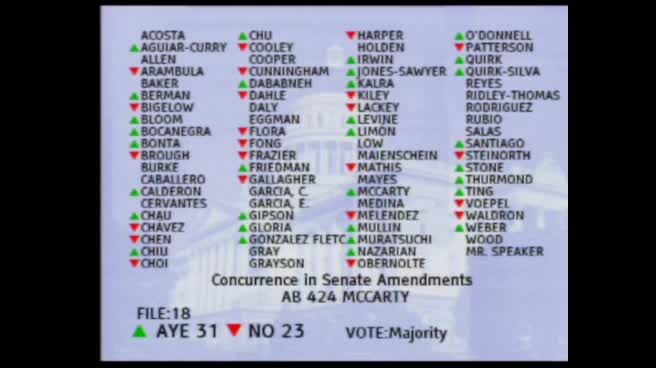 48SEC
Assembly Floor
 1MIN
Senate Floor
 2MIN
Senate Standing Committee on Appropriations
 6MIN
Senate Standing Committee on Business, Professions and Economic Development
 1MIN
Assembly Floor
 1MIN
Assembly Standing Committee on Appropriations
 4MIN
Assembly Standing Committee on Judiciary
Bill Author

Bill Co-Author(s):