AB 959: Developmental services: regional centers.
- Session Year: 2017-2018
- House: Assembly
- Latest Version Date: 2017-10-04
Under existing law, the Lanterman Developmental Disabilities Services Act, the State Department of Developmental Services is authorized to contract with regional centers to provide services and supports to individuals with developmental disabilities. Existing law requires a regional center to include specified information on its Internet Web site for the purpose of promoting transparency and access to public information, including, among other things, reports on all prior fiscal year expenditures from the regional center operations budget for all administrative services.
This bill would require the State Department of Developmental Services to establish and maintain a page on its Internet Web site that includes a list of services purchased or provided to consumers by regional centers and descriptions of those services. The bill would require a regional center to also include on its Internet Web site a link to that page on the departments Internet Web site.
Existing law states the right of individuals with developmental disabilities to make choices in their own lives, and requires public or private agencies that receive state funds to serve persons with developmental disabilities to respect the choices made by consumers and provide consumers with understandable information to aid in their choices. Existing law also grants these rights to consumers parents, legal guardians, or conservators.
This bill would extend the right to make choices and have those choices respected to consumers authorized representatives. The bill would require regional centers to provide information to a consumer or his or her parents, legal guardian, conservator, or authorized representative in a manner that is culturally and linguistically appropriate, as specified.
Under existing law, the Lanterman Developmental Disabilities Services Act, the State Department of Developmental Services is authorized to contract with regional centers to provide services and supports to individuals with developmental disabilities. Existing law requires a regional center to include specified information on its Internet Web site for the purpose of promoting transparency and access to public information, including, among other things, reports on all prior fiscal year expenditures from the regional center operations budget for all administrative services.
This bill would require the State Department of Social Services to establish and maintain a page on its Internet Web site that includes a list of services purchased or provided to consumers by regional centers and descriptions of those services. The bill would require a regional center to also include on its Internet Web site a link to that page on the departments Internet Web site.
Existing law states the right of individuals with developmental disabilities to make choices in their own lives, and requires public or private agencies that receive state funds to serve persons with developmental disabilities to respect the choices made by consumers and provide consumers with understandable information to aid in their choices. Existing law also grants these rights to consumers parents, legal guardians, or conservators.
This bill would extend the right to make choices and have those choices respected to consumers authorized representatives. The bill would require regional centers to provide information to a consumer or his or her parents, legal guardian, conservator, or authorized representative in a manner that is culturally and linguistically appropriate, as specified.
Under existing law, the Lanterman Developmental Disabilities Services Act, the State Department of Developmental Services is authorized to contract with regional centers to provide services and supports to individuals with developmental disabilities. Existing law requires a regional center to include specified information on its Internet Web site for the purpose of promoting transparency and access to public information, including, among other things, reports on all prior fiscal year expenditures from the regional center operations budget for all administrative services.
This bill would require the State Department of Social Services to establish and maintain a page on its Internet Web site that includes a list of services provided to consumers by regional centers and descriptions of those services. The bill would require a regional center to also include on its Internet Web site a link to that page on the departments Internet Web site.
Existing law states the right of individuals with developmental disabilities to make choices in their own lives, and requires public or private agencies that receive state funds to serve persons with developmental disabilities to respect the choices made by consumers and provide consumers with understandable information to aid in their choices. Existing law also grants these rights to consumers parents, legal guardians, or conservators.
This bill would extend the right to make choices and have those choices respected to consumers authorized representatives. The bill would require regional centers to provide information to a consumer or his or her parents, legal guardian, conservator, or authorized representative in a manner that is culturally and linguistically appropriate, as specified.
Under existing law, the Lanterman Developmental Disabilities Services Act, the State Department of Developmental Services is authorized to contract with regional centers to provide services and supports to individuals with developmental disabilities. Existing law requires a regional center to include specified information on its Internet Web site for the purpose of promoting transparency and access to public information, including, among other things, reports on all prior fiscal year expenditures from the regional center operations budget for all administrative services. The services and supports to be provided to a regional center consumer are contained in an individual program plan (IPP), developed in accordance with prescribed requirements, including, among other requirements, considering various qualities, including the consumers choice of providers, as specified, when selecting a provider of consumer services and supports.
This bill would require the State Department of Social Services to establish and maintain a page on its Internet Web site that includes a list of services provided to consumers by regional centers and descriptions of those services. The bill would require a regional center to also include on its Internet Website a list, in a standardized format prescribed by the department, of the services that are provided directly to consumers by the regional center or through service vendors or contractors. The bill would prohibit a consumer, parent, legal guardian, authorized representative, or conservator from being denied access to a provider that is vendorized by a regional center solely based on the fact that the provider is not in the consumers catchment area. Web site a link to that page on the departments Internet Web site.
Under existing law, the Lanterman Developmental Disabilities Services Act, the State Department of Developmental Services is authorized to contract with regional centers to provide services and supports to individuals with developmental disabilities. Existing law requires a regional center to include specified information on its Internet Web site for the purpose of promoting transparency and access to public information, including, among other things, reports on all prior fiscal year expenditures from the regional center operations budget for all administrative services. The services and supports to be provided to a regional center consumer are contained in an individual program plan (IPP), developed in accordance with prescribed requirements, including, among other requirements, considering various qualities, including the consumers choice of providers, as specified, when selecting a provider of consumer services and supports.
This bill would require a regional center to also include on its Internet Website a list, in a standardized format prescribed by the department, of the services that are provided directly to consumers by the regional center or through service vendors or contractors. The bill would prohibit a consumer, parent, legal guardian, authorized representative, or conservator from being denied access to a provider that is vendorized by a regional center solely based on the fact that the provider is not in the consumers catchment area.
(a)The right of individuals with developmental disabilities to make choices in their own lives requires that all public or private agencies receiving state funds for the purpose of serving persons with developmental disabilities, including, but not limited to, regional centers, shall respect the choices made by a consumer or, if appropriate, the consumers parents, legal guardian, conservator, or authorized representative. Those public or private agencies shall provide consumers with opportunities to exercise decisionmaking skills in any aspect of day-to-day living and shall provide consumers with relevant information in an understandable form to aid the consumer in making his or her choice.
(b)A regional center shall provide information in a manner that is culturally and linguistically appropriate for the consumer, or, when appropriate, the consumers parents, legal guardian, conservator, or authorized representative, including providing alternative communication services, as required by Article 9.5 (commencing with Section 11135) of Chapter 1 of Part 1 of Division 3 of Title 2 of the Government Code and the regulations implementing that article.
SEC. 2.Section 4629.5 of the Welfare and Institutions Code is amended to read:4629.5.(a)In addition to the requirements set forth in Section 4629, the departments contract with a regional center shall require the regional center to adopt, maintain, and post on its Internet Web site a board-approved policy regarding transparency and access to public information. The transparency and public information policy shall provide for timely public access to information, including, but not limited to, information regarding requests for proposals and contract awards, service provider rates, documentation related to establishment of negotiated rates, audits, and IRS Form 990. The transparency and public information policy shall be in compliance with applicable law relating to the confidentiality of consumer service information and records, including, but not limited to, Section 4514.
(b)To promote transparency, each regional center shall include on its Internet Web site, as expeditiously as possible, at least all of the following:
(1)Regional center annual independent audits.
(2)Biannual fiscal audits conducted by the department.
(3)Regional center annual reports pursuant to Section 4639.5.
(4)Contract awards, including the organization or entity awarded the contract, and the amount and purpose of the award.
(5)Purchase of service policies.
(6)The names, types of service, and contact information of all vendors, except consumers or family members of consumers.
(7)Board meeting agendas and approved minutes of open meetings of the board and all committees of the board.
(8)Bylaws of the regional center governing board.
(9)The annual performance contract and year-end performance contract entered into with the department pursuant to this division.
(10)The biannual Home and Community-based Services Waiver program review conducted by the department and the State Department of Health Care Services.
(11)The board-approved transparency and public information policy.
(12)The board-approved conflict-of-interest policy.
(13)Reports required pursuant to Section 4639.5.
(14)A link to the page on the departments Internet Web site specified in subdivision (d).
(c)The department shall establish and maintain a transparency portal on its Internet Web site that allows consumers, families, advocates, and others to access provider and regional center information. Posted information on the departments Internet Web site transparency portal shall include, but need not be limited to, all of the following:
(1)A link to each regional centers Internet Web site information referenced in subdivision (b).
(2)Biannual fiscal audits conducted by the department.
(3)Vendor audits.
(4)Biannual Home and Community-based Services Waiver program reviews conducted by the department and the State Department of Health Care Services.
(5)Biannual targeted case management program and federal nursing home reform program reviews conducted by the department.
(6)Early Start Program reviews conducted by the department.
(7)Annual performance contract and year-end performance contract reports.
(d)The department shall establish and maintain a page on its Internet Web site that includes both a list of services purchased by regional centers or provided directly to consumers by regional centers and a brief description of those services.
(a)The right of individuals with developmental disabilities to make choices in their own lives requires that all public or private agencies receiving state funds for the purpose of serving persons with developmental disabilities, including, but not limited to, regional centers, shall respect the choices made by a consumer or the parent of a consumer who is a minor and, or, if appropriate, the consumers parents, legal guardian, conservator, or authorized representative. Those public or private agencies shall provide consumers with opportunities to exercise decisionmaking skills in any aspect of day-to-day living and shall provide consumers with relevant information in an understandable form to aid the consumer in making his or her choice.
(b)A regional center shall provide information in a manner that is culturally and linguistically appropriate for the consumer, or, when appropriate, the consumers parents, legal guardian, conservator, or authorized representative, including providing alternative communication services, as required by Article 9.5 (commencing with Section 11135) of Chapter 1 of Part 1 of Division 3 of Title 2 of the Government Code and the regulations implementing that article.
SEC. 2.Section 4629.5 of the Welfare and Institutions Code is amended to read:4629.5.(a)In addition to the requirements set forth in Section 4629, the departments contract with a regional center shall require the regional center to adopt, maintain, and post on its Internet Web site a board-approved policy regarding transparency and access to public information. The transparency and public information policy shall provide for timely public access to information, including, but not limited to, information regarding requests for proposals and contract awards, service provider rates, documentation related to establishment of negotiated rates, audits, and IRS Form 990. The transparency and public information policy shall be in compliance with applicable law relating to the confidentiality of consumer service information and records, including, but not limited to, Section 4514.
(b)To promote transparency, each regional center shall include on its Internet Web site, as expeditiously as possible, at least all of the following:
(1)Regional center annual independent audits.
(2)Biannual fiscal audits conducted by the department.
(3)Regional center annual reports pursuant to Section 4639.5.
(4)Contract awards, including the organization or entity awarded the contract, and the amount and purpose of the award.
(5)Purchase of service policies.
(6)The names, types of service, and contact information of all vendors, except consumers or family members of consumers.
(7)Board meeting agendas and approved minutes of open meetings of the board and all committees of the board.
(8)Bylaws of the regional center governing board.
(9)The annual performance contract and year-end performance contract entered into with the department pursuant to this division.
(10)The biannual Home and Community-based Services Waiver program review conducted by the department and the State Department of Health Care Services.
(11)The board-approved transparency and public information policy.
(12)The board-approved conflict-of-interest policy.
(13)Reports required pursuant to Section 4639.5.
(14)A link to the page on the departments Internet Web site specified in subdivision (d).
(c)The department shall establish and maintain a transparency portal on its Internet Web site that allows consumers, families, advocates, and others to access provider and regional center information. Posted information on the departments Internet Web site transparency portal shall include, but need not be limited to, all of the following:
(1)A link to each regional centers Internet Web site information referenced in subdivision (b).
(2)Biannual fiscal audits conducted by the department.
(3)Vendor audits.
(4)Biannual Home and Community-based Services Waiver program reviews conducted by the department and the State Department of Health Care Services.
(5)Biannual targeted case management program and federal nursing home reform program reviews conducted by the department.
(6)Early Start Program reviews conducted by the department.
(7)Annual performance contract and year-end performance contract reports.
(d)The department shall establish and maintain a page on its Internet Web site that includes both a list of services purchased by regional centers or provided directly to consumers by regional centers and a brief description of those services.
(a)The right of individuals with developmental disabilities to make choices in their own lives requires that all public or private agencies receiving state funds for the purpose of serving persons with developmental disabilities, including, but not limited to, regional centers, shall respect the choices made by a consumer or, or the parent of a consumer who is a minor and, if appropriate, the consumers parents, legal guardian, conservator, or authorized representative. Those public or private agencies shall provide consumers with opportunities to exercise decisionmaking skills in any aspect of day-to-day living and shall provide consumers with relevant information in an understandable form to aid the consumer in making his or her choice.
(b)A regional center shall provide information in a manner that is culturally and linguistically appropriate for the consumer, or, when appropriate, the consumers parents, legal guardian, conservator, or authorized representative, including providing alternative communication services, as required by Article 9.5 (commencing with Section 11135) of Chapter 1 of Part 1 of Division 3 of Title 2 of the Government Code and the regulations implementing that article.
SEC. 2.Section 4629.5 of the Welfare and Institutions Code is amended to read:4629.5.(a)In addition to the requirements set forth in Section 4629, the departments contract with a regional center shall require the regional center to adopt, maintain, and post on its Internet Web site a board-approved policy regarding transparency and access to public information. The transparency and public information policy shall provide for timely public access to information, including, but not limited to, information regarding requests for proposals and contract awards, service provider rates, documentation related to establishment of negotiated rates, audits, and IRS Form 990. The transparency and public information policy shall be in compliance with applicable law relating to the confidentiality of consumer service information and records, including, but not limited to, Section 4514.
(b)To promote transparency, each regional center shall include on its Internet Web site, as expeditiously as possible, at least all of the following:
(1)Regional center annual independent audits.
(2)Biannual fiscal audits conducted by the department.
(3)Regional center annual reports pursuant to Section 4639.5.
(4)Contract awards, including the organization or entity awarded the contract, and the amount and purpose of the award.
(5)Purchase of service policies.
(6)The names, types of service, and contact information of all vendors, except consumers or family members of consumers.
(7)Board meeting agendas and approved minutes of open meetings of the board and all committees of the board.
(8)Bylaws of the regional center governing board.
(9)The annual performance contract and year-end performance contract entered into with the department pursuant to this division.
(10)The biannual Home and Community-based Services Waiver program review conducted by the department and the State Department of Health Care Services.
(11)The board-approved transparency and public information policy.
(12)The board-approved conflict-of-interest policy.
(13)Reports required pursuant to Section 4639.5.
(14)A link to the page on the departments Internet Web site specified in subdivision (d).
(c)The department shall establish and maintain a transparency portal on its Internet Web site that allows consumers, families, advocates, and others to access provider and regional center information. Posted information on the departments Internet Web site transparency portal shall include, but need not be limited to, all of the following:
(1)A link to each regional centers Internet Web site information referenced in subdivision (b).
(2)Biannual fiscal audits conducted by the department.
(3)Vendor audits.
(4)Biannual Home and Community-based Services Waiver program reviews conducted by the department and the State Department of Health Care Services.
(5)Biannual targeted case management program and federal nursing home reform program reviews conducted by the department.
(6)Early Start Program reviews conducted by the department.
(7)Annual performance contract and year-end performance contract reports.
(d)The department shall establish and maintain a page on its Internet Web site that includes both a list of services purchased by regional centers or provided directly to consumers by regional centers and a brief description of those services.
(a)The right of individuals with developmental disabilities to make choices in their own lives requires that all public or private agencies receiving state funds for the purpose of serving persons with developmental disabilities, including, but not limited to, regional centers, shall respect the choices made by consumers a consumer or, if appropriate, their the consumers parents, legal guardian, conservator, or authorized representative. Those public or private agencies shall provide consumers with opportunities to exercise decisionmaking skills in any aspect of day-to-day living and shall provide consumers with relevant information in an understandable form to aid the consumer in making his or her choice.
(b)A regional center shall provide information in a manner that is culturally and linguistically appropriate for the consumer, or, when appropriate, the consumers parents, legal guardian, conservator, or authorized representative, including providing alternative communication services, as required by Article 9.5 (commencing with Section 11135) of Chapter 1 of Part 1 of Division 3 of Title 2 of the Government Code and the regulations implementing that article.
SEC. 2.Section 4629.5 of the Welfare and Institutions Code is amended to read:4629.5.(a)In addition to the requirements set forth in Section 4629, the departments contract with a regional center shall require the regional center to adopt, maintain, and post on its Internet Web site a board-approved policy regarding transparency and access to public information. The transparency and public information policy shall provide for timely public access to information, including, but not limited to, information regarding requests for proposals and contract awards, service provider rates, documentation related to establishment of negotiated rates, audits, and IRS Form 990. The transparency and public information policy shall be in compliance with applicable law relating to the confidentiality of consumer service information and records, including, but not limited to, Section 4514.
(b)To promote transparency, each regional center shall include on its Internet Web site, as expeditiously as possible, at least all of the following:
(1)Regional center annual independent audits.
(2)Biannual fiscal audits conducted by the department.
(3)Regional center annual reports pursuant to Section 4639.5.
(4)Contract awards, including the organization or entity awarded the contract, and the amount and purpose of the award.
(5)Purchase of service policies.
(6)The names, types of service, and contact information of all vendors, except consumers or family members of consumers.
(7)Board meeting agendas and approved minutes of open meetings of the board and all committees of the board.
(8)Bylaws of the regional center governing board.
(9)The annual performance contract and year-end performance contract entered into with the department pursuant to this division.
(10)The biannual Home and Community-based Services Waiver program review conducted by the department and the State Department of Health Care Services.
(11)The board-approved transparency and public information policy.
(12)The board-approved conflict-of-interest policy.
(13)Reports required pursuant to Section 4639.5.
(13)(14)A link to the page on the departments Internet Web site specified in subdivision (d).
(c)The department shall establish and maintain a transparency portal on its Internet Web site that allows consumers, families, advocates, and others to access provider and regional center information. Posted information on the departments Internet Web site transparency portal shall include, but need not be limited to, all of the following:
(1)A link to each regional centers Internet Web site information referenced in subdivision (b).
(2)Biannual fiscal audits conducted by the department.
(3)Vendor audits.
(4)Biannual Home and Community-based Services Waiver program reviews conducted by the department and the State Department of Health Care Services.
(5)Biannual targeted case management program and federal nursing home reform program reviews conducted by the department.
(6)Early Start Program reviews conducted by the department.
(7)Annual performance contract and year-end performance contract reports.
(d)The department shall establish and maintain a page on its Internet Web site that includes both a list of services provided directly to consumers by regional centers and a brief description of those services.
(a)The right of individuals with developmental disabilities to make choices in their own lives requires that all public or private agencies receiving state funds for the purpose of serving persons with developmental disabilities, including, but not limited to, regional centers, shall respect the choices made by consumers or, where if appropriate, their parents, legal guardian, or conservator. conservator, or authorized representative. Those public or private agencies shall provide consumers with opportunities to exercise decisionmaking skills in any aspect of day-to-day living and shall provide consumers with relevant information in an understandable form to aid the consumer in making his or her choice.
(b)A regional center shall provide information in a manner that is culturally and linguistically appropriate for the consumer, or, when appropriate, the consumers parents, legal guardian, conservator, or authorized representative, including providing alternative communication services, as required by Article 9.5 (commencing with Section 11135) of Chapter 1 of Part 1 of Division 3 of Title 2 of the Government Code and the regulations implementing that article.
SECTION 1.SEC. 2.Section 4629.5 of the Welfare and Institutions Code is amended to read:4629.5.(a)In addition to the requirements set forth in Section 4629, the departments contract with a regional center shall require the regional center to adopt, maintain, and post on its Internet Web site a board-approved policy regarding transparency and access to public information. The transparency and public information policy shall provide for timely public access to information, including, but not limited to, information regarding requests for proposals and contract awards, service provider rates, documentation related to establishment of negotiated rates, audits, and IRS Form 990. The transparency and public information policy shall be in compliance with applicable law relating to the confidentiality of consumer service information and records, including, but not limited to, Section 4514.
(b)To promote transparency, each regional center shall include on its Internet Web site, as expeditiously as possible, at least all of the following:
(1)Regional center annual independent audits.
(2)Biannual fiscal audits conducted by the department.
(3)Regional center annual reports pursuant to Section 4639.5.
(4)Contract awards, including the organization or entity awarded the contract, and the amount and purpose of the award.
(5)Purchase of service policies.
(6)The names, types of service, and contact information of all vendors, except consumers or family members of consumers.
(7)Board meeting agendas and approved minutes of open meetings of the board and all committees of the board.
(8)Bylaws of the regional center governing board.
(9)The annual performance contract and year-end performance contract entered into with the department pursuant to this division.
(10)The biannual Home and Community-based Services Waiver program review conducted by the department and the State Department of Health Care Services.
(11)The board-approved transparency and public information policy.
(12)The board-approved conflict-of-interest policy.
(13)A link to the page on the departments Internet Web site specified in subdivision (d).
(c)The department shall establish and maintain a transparency portal on its Internet Web site that allows consumers, families, advocates, and others to access provider and regional center information. Posted information on the departments Internet Web site transparency portal shall include, but need not be limited to, all of the following:
(1)A link to each regional centers Internet Web site information referenced in subdivision (b).
(2)Biannual fiscal audits conducted by the department.
(3)Vendor audits.
(4)Biannual Home and Community-based Services Waiver program reviews conducted by the department and the State Department of Health Care Services.
(5)Biannual targeted case management program and federal nursing home reform program reviews conducted by the department.
(6)Early Start Program reviews conducted by the department.
(7)Annual performance contract and year-end performance contract reports.
(d)The department shall establish and maintain a page on its Internet Web site that includes both a list of services provided directly to consumers by regional centers and a brief description of those services.
(a)In addition to the requirements set forth in Section 4629, the departments contract with a regional center shall require the regional center to adopt, maintain, and post on its Internet Web site a board-approved policy regarding transparency and access to public information. The transparency and public information policy shall provide for timely public access to information, including, but not limited to, information regarding requests for proposals and contract awards, service provider rates, documentation related to establishment of negotiated rates, audits, and IRS Form 990. The transparency and public information policy shall be in compliance with applicable law relating to the confidentiality of consumer service information and records, including, but not limited to, Section 4514.
(b)To promote transparency, each regional center shall include on its Internet Web site, as expeditiously as possible, at least all of the following:
(1)Regional center annual independent audits.
(2)Biannual fiscal audits conducted by the department.
(3)Regional center annual reports pursuant to Section 4639.5.
(4)Contract awards, including the organization or entity awarded the contract, and the amount and purpose of the award.
(5)Purchase of service policies.
(6)The names, types of service, and contact information of all vendors, except consumers or family members of consumers.
(7)Board meeting agendas and approved minutes of open meetings of the board and all committees of the board.
(8)Bylaws of the regional center governing board.
(9)The annual performance contract and year-end performance contract entered into with the department pursuant to this division.
(10)The biannual Home and Community-based Services Waiver program review conducted by the department and the State Department of Health Care Services.
(11)The board-approved transparency and public information policy.
(12)The board-approved conflict-of-interest policy.
(13)Reports required pursuant to Section 4639.5.(14)A list of the services that are provided directly to consumers by the regional center or through service vendors or contractors. The list shall be in a standardized format prescribed by the department and shall be updated at least quarterly.(13)A link to the page on the departments Internet Web site specified in subdivision (d).
(c)The department shall establish and maintain a transparency portal on its Internet Web site that allows consumers, families, advocates, and others to access provider and regional center information. Posted information on the departments Internet Web site transparency portal shall include, but need not be limited to, all of the following:
(1)A link to each regional centers Internet Web site information referenced in subdivision (b).
(2)Biannual fiscal audits conducted by the department.
(3)Vendor audits.
(4)Biannual Home and Community-based Services Waiver program reviews conducted by the department and the State Department of Health Care Services.
(5)Biannual targeted case management program and federal nursing home reform program reviews conducted by the department.
(6)Early Start Program reviews conducted by the department.
(7)Annual performance contract and year-end performance contract reports.
(d)The department shall establish and maintain a page on its Internet Web site that includes both a list of services provided directly to consumers by regional centers and a brief description of those services.
SEC. 2.Section 4648 of the Welfare and Institutions Code is amended to read:4648.In order to achieve the stated objectives of a consumers individual program plan, the regional center shall conduct activities, including, but not limited to, all of the following:(a)Securing needed services and supports.(1)It is the intent of the Legislature that services and supports assist individuals with developmental disabilities in achieving the greatest self-sufficiency possible and in exercising personal choices. The regional center shall secure services and supports that meet the needs of the consumer, as determined in the consumers individual program plan, and within the context of the individual program plan, the planning team shall give highest preference to those services and supports which would allow minors with developmental disabilities to live with their families, adult persons with developmental disabilities to live as independently as possible in the community, and that allow all consumers to interact with persons without disabilities in positive, meaningful ways.(2)In implementing individual program plans, regional centers, through the planning team, shall first consider services and supports in natural community, home, work, and recreational settings. Services and supports shall be flexible and individually tailored to the consumer and, when appropriate, his or her family.(3)A regional center may, pursuant to vendorization or a contract, purchase services or supports for a consumer from any individual or agency that the regional center and consumer or, when appropriate, his or her parents, legal guardian, or conservator, or authorized representatives, determines will best accomplish all or any part of that consumers program plan.(A)Vendorization or contracting is the process for identification, selection, and utilization of service vendors or contractors, based on the qualifications and other requirements necessary in order to provide the service.(B)A regional center may reimburse an individual or agency for services or supports provided to a regional center consumer if the individual or agency has a rate of payment for vendored or contracted services established by the department, pursuant to this division, and is providing services pursuant to an emergency vendorization or has completed the vendorization procedures or has entered into a contract with the regional center and continues to comply with the vendorization or contracting requirements. The director shall adopt regulations governing the vendorization process to be utilized by the department, regional centers, vendors, and the individual or agency requesting vendorization.(C)Regulations shall include, but not be limited to: the vendor application process, and the basis for accepting or denying an application; the qualification and requirements for each category of services that may be provided to a regional center consumer through a vendor; requirements for emergency vendorization; procedures for termination of vendorization; the procedure for an individual or an agency to appeal a vendorization decision made by the department or regional center.(D)A regional center may vendorize a licensed facility for exclusive services to persons with developmental disabilities at a capacity equal to or less than the facilitys licensed capacity. A facility already licensed on January 1, 1999, shall continue to be vendorized at their full licensed capacity until the facility agrees to vendorization at a reduced capacity.(E)Effective July 1, 2009, notwithstanding any other law or regulation, a regional center shall not newly vendor a State Department of Social Services licensed 24-hour residential care facility with a licensed capacity of 16 or more beds, unless the facility qualifies for receipt of federal funds under the Medicaid Program.(4)Notwithstanding subparagraph (B) of paragraph (3), a regional center may contract or issue a voucher for services and supports provided to a consumer or family at a cost not to exceed the maximum rate of payment for that service or support established by the department. If a rate has not been established by the department, the regional center may, for an interim period, contract for a specified service or support with, and establish a rate of payment for, any provider of the service or support necessary to implement a consumers individual program plan. Contracts may be negotiated for a period of up to three years, with annual review and subject to the availability of funds.(5)In order to ensure the maximum flexibility and availability of appropriate services and supports for persons with developmental disabilities, the department shall establish and maintain an equitable system of payment to providers of services and supports identified as necessary to the implementation of a consumers individual program plan. The system of payment shall include a provision for a rate to ensure that the provider can meet the special needs of consumers and provide quality services and supports in the least restrictive setting as required by law.(6)The regional center and the consumer, or when appropriate, his or her parents, legal guardian, conservator, or authorized representative, including those appointed pursuant to subdivision (a) of Section 4541, subdivision (b) of Section 4701.6, or subdivision (e) of Section 4705, shall, pursuant to the individual program plan, consider all of the following when selecting a provider of consumer services and supports:(A)A providers ability to deliver quality services or supports that can accomplish all or part of the consumers individual program plan.(B)A providers success in achieving the objectives set forth in the individual program plan.(C)When appropriate, the existence of licensing, accreditation, or professional certification.(D)The cost of providing services or supports of comparable quality by different providers, if available, shall be reviewed, and the least costly available provider of comparable service, including the cost of transportation, who is able to accomplish all or part of the consumers individual program plan, consistent with the particular needs of the consumer and family as identified in the individual program plan, shall be selected. In determining the least costly provider, the availability of federal financial participation shall be considered. The consumer shall not be required to use the least costly provider if it will result in the consumer moving from an existing provider of services or supports to more restrictive or less integrated services or supports.(E)The consumers choice of providers, or, when appropriate, the consumers parents, legal guardians, authorized representatives, or conservators choice of providers. A consumer, parent, legal guardian, authorized representative, or conservator shall not be denied access to a provider that is vendorized by a regional center solely based on the fact that the provider is not vendorized by the regional center in the consumers catchment area.(7)No service or support provided by any agency or individual shall be continued unless the consumer or, when appropriate, his or her parents, legal guardian, or conservator, or authorized representative, including those appointed pursuant to subdivision (a) of Section 4541, subdivision (b) of Section 4701.6, or subdivision (e) of Section 4705, is satisfied and the regional center and the consumer or, when appropriate, the persons parents or legal guardian or conservator agree that planned services and supports have been provided, and reasonable progress toward objectives have been made.(8)Regional center funds shall not be used to supplant the budget of any agency that has a legal responsibility to serve all members of the general public and is receiving public funds for providing those services.(9)(A)A regional center may, directly or through an agency acting on behalf of the center, provide placement in, purchase of, or follow-along services to persons with developmental disabilities in, appropriate community living arrangements, including, but not limited to, support service for consumers in homes they own or lease, foster family placements, health care facilities, and licensed community care facilities. In considering appropriate placement alternatives for children with developmental disabilities, approval by the childs parent or guardian shall be obtained before placement is made.(B)Effective July 1, 2012, notwithstanding any other law or regulation, a regional center shall not purchase residential services from a State Department of Social Services licensed 24-hour residential care facility with a licensed capacity of 16 or more beds. This prohibition on regional center purchase of residential services shall not apply to any of the following:(i)A residential facility with a licensed capacity of 16 or more beds that has been approved to participate in the departments Home and Community Based Services Waiver or another existing waiver program or certified to participate in the Medi-Cal program.(ii)A residential facility service provider that has a written agreement and specific plan prior to July 1, 2012, with the vendoring regional center to downsize the existing facility by transitioning its residential services to living arrangements of 15 beds or less or restructure the large facility to meet federal Medicaid eligibility requirements on or before June 30, 2013.(iii)A residential facility licensed as a mental health rehabilitation center by the State Department of Mental Health or successor agency under any of the following circumstances:(I)The facility is eligible for Medicaid reimbursement.(II)The facility has a department-approved plan in place by June 30, 2013, to transition to a program structure eligible for federal Medicaid funding, and this transition will be completed by June 30, 2014. The department may grant an extension for the date by which the transition will be completed if the facility demonstrates that it has made significant progress toward transition, and states with specificity the timeframe by which the transition will be completed and the specified steps that will be taken to accomplish the transition. A regional center may pay for the costs of care and treatment of a consumer residing in the facility on June 30, 2012, until June 30, 2013, inclusive, and, if the facility has a department-approved plan in place by June 30, 2013, may continue to pay the costs under this subparagraph until June 30, 2014, or until the end of any period during which the department has granted an extension.(III)There is an emergency circumstance in which the regional center determines that it cannot locate alternate federally eligible services to meet the consumers needs. Under such an emergency circumstance, an assessment shall be completed by the regional center as soon as possible and within 30 days of admission. An individual program plan meeting shall be convened immediately following the assessment to determine the services and supports needed for stabilization and to develop a plan to transition the consumer from the facility into the community. If transition is not expected within 90 days of admission, an individual program plan meeting shall be held to discuss the status of transition and to determine if the consumer is still in need of placement in the facility. Commencing October 1, 2012, this determination shall be made after also considering resource options identified by the statewide specialized resource service. If it is determined that emergency services continue to be necessary, the regional center shall submit an updated transition plan that can cover a period of up to 90 days. In no event shall placements under these emergency circumstances exceed 180 days.(C)(i)Effective July 1, 2012, notwithstanding any other law or regulation, a regional center shall not purchase new residential services from, or place a consumer in, institutions for mental disease, as described in Part 5 (commencing with Section 5900) of Division 5, for which federal Medicaid funding is not available. Effective July 1, 2013, this prohibition applies regardless of the availability of federal funding.(ii)The prohibition described in clause (i) shall not apply to emergencies, as determined by the regional center, when a regional center cannot locate alternate services to meet the consumers needs. As soon as possible within 30 days of admission due to an emergency, an assessment shall be completed by the regional center. An individual program plan meeting shall be convened immediately following the assessment, to determine the services and supports needed for stabilization and to develop a plan to transition the consumer from the facility to the community. If transition is not expected within 90 days of admission, an emergency program plan meeting shall be held to discuss the status of the transition and to determine if the consumer is still in need of placement in the facility. If emergency services continue to be necessary, the regional center shall submit an updated transition plan to the department for an extension of up to 90 days. Placement shall not exceed 180 days.(iii)To the extent feasible, prior to any admission, the regional center shall consider resource options identified by the statewide specialized resource service established pursuant to subdivision (b) of Section 4418.25.(iv)The clients rights advocate shall be notified of each admission and individual program planning meeting pursuant to this subparagraph and may participate in all individual program planning meetings unless the consumer objects on his or her own behalf. For purposes of this clause, notification to the clients rights advocate shall include a copy of the most recent comprehensive assessment or updated assessment and the time, date, and location of the meeting, and shall be provided as soon as practicable, but not less than seven calendar days prior to the meeting.(v)If a consumer is placed in an institution for mental disease by another entity, the institution for mental disease shall inform the regional center of the placement within five days of the date the consumer is admitted. If an individuals records indicate that he or she is a regional center consumer, the institution for mental disease shall make every effort to contact the local regional center or department to determine which regional center to provide notice. As soon as possible within 30 days of admission to an institution for mental disease due to an emergency pursuant to clause (ii), or within 30 days of notification of admission to an institution for mental disease by an entity other than a regional center, an assessment shall be completed by the regional center.(vi)Regional centers shall complete a comprehensive assessment of any consumer residing in an institution for mental disease as of July 1, 2012, for which federal Medicaid funding is not available, and for any consumer residing in an institution for mental disease as of July 1, 2013, without regard to federal funding. The comprehensive assessment shall be completed prior to the consumers next scheduled individual program plan meeting and shall include identification of the services and supports needed and the timeline for identifying or developing those services needed to transition the consumer back to the community. Effective October 1, 2012, the regional center shall also consider resource options identified by the statewide specialized resource service. For each individual program plan meeting convened pursuant to this subparagraph, the clients rights advocate for the regional center shall be notified of the meeting and may participate in the meeting unless the consumer objects on his or her own behalf. For purposes of this clause, notification to the clients rights advocate shall include the time, date, and location of the meeting, and shall be provided as soon as practicable, but not less than seven calendar days prior to the meeting.(D)A person with developmental disabilities placed by the regional center in a community living arrangement shall have the rights specified in this division. These rights shall be brought to the persons attention by any means necessary to reasonably communicate these rights to each resident, provided that, at a minimum, the Director of Developmental Services prepare, provide, and require to be clearly posted in all residential facilities and day programs a poster using simplified language and pictures that is designed to be more understandable by persons with intellectual disabilities and that the rights information shall also be available through the regional center to each residential facility and day program in alternative formats, including, but not limited to, other languages, braille, and audiotapes, when necessary to meet the communication needs of consumers.(E)Consumers are eligible to receive supplemental services including, but not limited to, additional staffing, pursuant to the process described in subdivision (d) of Section 4646. Necessary additional staffing that is not specifically included in the rates paid to the service provider may be purchased by the regional center if the additional staff are in excess of the amount required by regulation and the individuals planning team determines the additional services are consistent with the provisions of the individual program plan. Additional staff should be periodically reviewed by the planning team for consistency with the individual program plan objectives in order to determine if continued use of the additional staff is necessary and appropriate and if the service is producing outcomes consistent with the individual program plan. Regional centers shall monitor programs to ensure that the additional staff is being provided and utilized appropriately.(10)Emergency and crisis intervention services including, but not limited to, mental health services and behavior modification services, may be provided, as needed, to maintain persons with developmental disabilities in the living arrangement of their own choice. Crisis services shall first be provided without disrupting a persons living arrangement. If crisis intervention services are unsuccessful, emergency housing shall be available in the persons home community. If dislocation cannot be avoided, every effort shall be made to return the person to his or her living arrangement of choice, with all necessary supports, as soon as possible.(11)Among other service and support options, planning teams shall consider the use of paid roommates or neighbors, personal assistance, technical and financial assistance, and all other service and support options which would result in greater self-sufficiency for the consumer and cost-effectiveness to the state.(12)When facilitation as specified in an individual program plan requires the services of an individual, the facilitator shall be of the consumers choosing.(13)The community support may be provided to assist individuals with developmental disabilities to fully participate in community and civic life, including, but not limited to, programs, services, work opportunities, business, and activities available to persons without disabilities. This facilitation shall include, but not be limited to, any of the following:(A)Outreach and education to programs and services within the community.(B)Direct support to individuals that would enable them to more fully participate in their community.(C)Developing unpaid natural supports when possible.(14)When feasible and recommended by the individual program planning team, for purposes of facilitating better and cost-effective services for consumers or family members, technology, including telecommunication technology, may be used in conjunction with other services and supports. Technology in lieu of a consumers in-person appearances at judicial proceedings or administrative due process hearings may be used only if the consumer or, when appropriate, the consumers parent, legal guardian, conservator, or authorized representative, gives informed consent. Technology may be used in lieu of, or in conjunction with, in-person training for providers, as appropriate.(15)Other services and supports may be provided as set forth in Sections 4685, 4686, 4687, 4688, and 4689, when necessary.(16)Notwithstanding any other law or regulation, effective July 1, 2009, regional centers shall not purchase experimental treatments, therapeutic services, or devices that have not been clinically determined or scientifically proven to be effective or safe or for which risks and complications are unknown. Experimental treatments or therapeutic services include experimental medical or nutritional therapy when the use of the product for that purpose is not a general physician practice. For regional center consumers receiving these services as part of their individual program plan (IPP) or individualized family service plan (IFSP) on July 1, 2009, this prohibition shall apply on August 1, 2009.(b)(1)Advocacy for, and protection of, the civil, legal, and service rights of persons with developmental disabilities as established in this division.(2)Whenever the advocacy efforts of a regional center to secure or protect the civil, legal, or service rights of any of its consumers prove ineffective, the regional center or the person with developmental disabilities or his or her parents, legal guardian, or other representative may request advocacy assistance from the state council.(c)The regional center may assist consumers and families directly, or through a provider, in identifying and building circles of support within the community.(d)In order to increase the quality of community services and protect consumers, the regional center shall, when appropriate, take either of the following actions:(1)Identify services and supports that are ineffective or of poor quality and provide or secure consultation, training, or technical assistance services for any agency or individual provider to assist that agency or individual provider in upgrading the quality of services or supports.(2)Identify providers of services or supports that may not be in compliance with local, state, and federal statutes and regulations and notify the appropriate licensing or regulatory authority to investigate the possible noncompliance.(e)When necessary to expand the availability of needed services of good quality, a regional center may take actions that include, but are not limited to, the following:(1)Soliciting an individual or agency by requests for proposals or other means, to provide needed services or supports not presently available.(2)Requesting funds from the Program Development Fund, pursuant to Section 4677, or community placement plan funds designated from that fund, to reimburse the startup costs needed to initiate a new program of services and supports.(3)Using creative and innovative service delivery models, including, but not limited to, natural supports.(f)Except in emergency situations, a regional center shall not provide direct treatment and therapeutic services, but shall utilize appropriate public and private community agencies and service providers to obtain those services for its consumers.(g)When there are identified gaps in the system of services and supports or when there are identified consumers for whom no provider will provide services and supports contained in his or her individual program plan, the department may provide the services and supports directly.(h)At least annually, regional centers shall provide the consumer, his or her parents, legal guardian, conservator, or authorized representative a statement of services and supports the regional center purchased for the purpose of ensuring that they are delivered. The statement shall include the type, unit, month, and cost of services and supports purchased.(a)In addition to the requirements set forth in Section 4629, the departments contract with a regional center shall require the regional center to adopt, maintain, and post on its Internet Web site a board-approved policy regarding transparency and access to public information. The transparency and public information policy shall provide for timely public access to information, including, but not limited to, information regarding requests for proposals and contract awards, service provider rates, documentation related to establishment of negotiated rates, audits, and IRS Form 990. The transparency and public information policy shall be in compliance with applicable law relating to the confidentiality of consumer service information and records, including, but not limited to, Section 4514.
(b)To promote transparency, each regional center shall include on its Internet Web site, as expeditiously as possible, at least all of the following:
(1)Regional center annual independent audits.
(2)Biannual fiscal audits conducted by the department.
(3)Regional center annual reports pursuant to Section 4639.5.
(4)Contract awards, including the organization or entity awarded the contract, and the amount and purpose of the award.
(5)Purchase of service policies.
(6)The names, types of service, and contact information of all vendors, except consumers or family members of consumers.
(7)Board meeting agendas and approved minutes of open meetings of the board and all committees of the board.
(8)Bylaws of the regional center governing board.
(9)The annual performance contract and year-end performance contract entered into with the department pursuant to this division.
(10)The biannual Home and Community-based Services Waiver program review conducted by the department and the State Department of Health Care Services.
(11)The board-approved transparency and public information policy.
(12)The board-approved conflict-of-interest policy.
(13)Reports required pursuant to Section 4639.5.
(14)A list of the services that are provided directly to consumers by the regional center or through service vendors or contractors. The list shall be in a standardized format prescribed by the department and shall be updated at least quarterly.
(c)The department shall establish and maintain a transparency portal on its Internet Web site that allows consumers, families, advocates, and others to access provider and regional center information. Posted information on the departments Internet Web site transparency portal shall include, but need not be limited to, all of the following:
(1)A link to each regional centers Internet Web site information referenced in subdivision (b).
(2)Biannual fiscal audits conducted by the department.
(3)Vendor audits.
(4)Biannual Home and Community-based Services Waiver program reviews conducted by the department and the State Department of Health Care Services.
(5)Biannual targeted case management program and federal nursing home reform program reviews conducted by the department.
(6)Early Start Program reviews conducted by the department.
(7)Annual performance contract and year-end performance contract reports.
SEC. 2.Section 4648 of the Welfare and Institutions Code is amended to read:4648.In order to achieve the stated objectives of a consumers individual program plan, the regional center shall conduct activities, including, but not limited to, all of the following:
(a)Securing needed services and supports.
(1)It is the intent of the Legislature that services and supports assist individuals with developmental disabilities in achieving the greatest self-sufficiency possible and in exercising personal choices. The regional center shall secure services and supports that meet the needs of the consumer, as determined in the consumers individual program plan, and within the context of the individual program plan, the planning team shall give highest preference to those services and supports which would allow minors with developmental disabilities to live with their families, adult persons with developmental disabilities to live as independently as possible in the community, and that allow all consumers to interact with persons without disabilities in positive, meaningful ways.
(2)In implementing individual program plans, regional centers, through the planning team, shall first consider services and supports in natural community, home, work, and recreational settings. Services and supports shall be flexible and individually tailored to the consumer and, where when appropriate, his or her family.
(3)A regional center may, pursuant to vendorization or a contract, purchase services or supports for a consumer from any individual or agency that the regional center and consumer or, when appropriate, his or her parents, legal guardian, or conservator, or authorized representatives, determines will best accomplish all or any part of that consumers program plan.
(A)Vendorization or contracting is the process for identification, selection, and utilization of service vendors or contractors, based on the qualifications and other requirements necessary in order to provide the service.
(B)A regional center may reimburse an individual or agency for services or supports provided to a regional center consumer if the individual or agency has a rate of payment for vendored or contracted services established by the department, pursuant to this division, and is providing services pursuant to an emergency vendorization or has completed the vendorization procedures or has entered into a contract with the regional center and continues to comply with the vendorization or contracting requirements. The director shall adopt regulations governing the vendorization process to be utilized by the department, regional centers, vendors, and the individual or agency requesting vendorization.
(C)Regulations shall include, but not be limited to: the vendor application process, and the basis for accepting or denying an application; the qualification and requirements for each category of services that may be provided to a regional center consumer through a vendor; requirements for emergency vendorization; procedures for termination of vendorization; the procedure for an individual or an agency to appeal any a vendorization decision made by the department or regional center.
(D)A regional center may vendorize a licensed facility for exclusive services to persons with developmental disabilities at a capacity equal to or less than the facilitys licensed capacity. A facility already licensed on January 1, 1999, shall continue to be vendorized at their full licensed capacity until the facility agrees to vendorization at a reduced capacity.
(E)Effective July 1, 2009, notwithstanding any other law or regulation, a regional center shall not newly vendor a State Department of Social Services licensed 24-hour residential care facility with a licensed capacity of 16 or more beds, unless the facility qualifies for receipt of federal funds under the Medicaid Program.
(4)Notwithstanding subparagraph (B) of paragraph (3), a regional center may contract or issue a voucher for services and supports provided to a consumer or family at a cost not to exceed the maximum rate of payment for that service or support established by the department. If a rate has not been established by the department, the regional center may, for an interim period, contract for a specified service or support with, and establish a rate of payment for, any provider of the service or support necessary to implement a consumers individual program plan. Contracts may be negotiated for a period of up to three years, with annual review and subject to the availability of funds.
(5)In order to ensure the maximum flexibility and availability of appropriate services and supports for persons with developmental disabilities, the department shall establish and maintain an equitable system of payment to providers of services and supports identified as necessary to the implementation of a consumers individual program plan. The system of payment shall include a provision for a rate to ensure that the provider can meet the special needs of consumers and provide quality services and supports in the least restrictive setting as required by law.
(6)The regional center and the consumer, or when appropriate, his or her parents, legal guardian, conservator, or authorized representative, including those appointed pursuant to subdivision (a) of Section 4541, subdivision (b) of Section 4701.6, or subdivision (e) of Section 4705, shall, pursuant to the individual program plan, consider all of the following when selecting a provider of consumer services and supports:
(A)A providers ability to deliver quality services or supports that can accomplish all or part of the consumers individual program plan.
(B)A providers success in achieving the objectives set forth in the individual program plan.
(C)Where When appropriate, the existence of licensing, accreditation, or professional certification.
(D)The cost of providing services or supports of comparable quality by different providers, if available, shall be reviewed, and the least costly available provider of comparable service, including the cost of transportation, who is able to accomplish all or part of the consumers individual program plan, consistent with the particular needs of the consumer and family as identified in the individual program plan, shall be selected. In determining the least costly provider, the availability of federal financial participation shall be considered. The consumer shall not be required to use the least costly provider if it will result in the consumer moving from an existing provider of services or supports to more restrictive or less integrated services or supports.
(E)The consumers choice of providers, or, when appropriate, the consumers parents, legal guardians, authorized representatives, or conservators choice of providers. A consumer, parent, legal guardian, authorized representative, or conservator shall not be denied access to a provider that is vendorized by a regional center solely based on the fact that the provider is not vendorized by the regional center in the consumers catchment area.
(7)No service or support provided by any agency or individual shall be continued unless the consumer or, when appropriate, his or her parents, legal guardian, or conservator, or authorized representative, including those appointed pursuant to subdivision (a) of Section 4541, subdivision (b) of Section 4701.6, or subdivision (e) of Section 4705, is satisfied and the regional center and the consumer or, when appropriate, the persons parents or legal guardian or conservator agree that planned services and supports have been provided, and reasonable progress toward objectives have been made.
(8)Regional center funds shall not be used to supplant the budget of any agency that has a legal responsibility to serve all members of the general public and is receiving public funds for providing those services.
(9)(A)A regional center may, directly or through an agency acting on behalf of the center, provide placement in, purchase of, or follow-along services to persons with developmental disabilities in, appropriate community living arrangements, including, but not limited to, support service for consumers in homes they own or lease, foster family placements, health care facilities, and licensed community care facilities. In considering appropriate placement alternatives for children with developmental disabilities, approval by the childs parent or guardian shall be obtained before placement is made.
(B)Effective July 1, 2012, notwithstanding any other law or regulation, a regional center shall not purchase residential services from a State Department of Social Services licensed 24-hour residential care facility with a licensed capacity of 16 or more beds. This prohibition on regional center purchase of residential services shall not apply to any of the following:
(i)A residential facility with a licensed capacity of 16 or more beds that has been approved to participate in the departments Home and Community Based Services Waiver or another existing waiver program or certified to participate in the Medi-Cal program.
(ii)A residential facility service provider that has a written agreement and specific plan prior to July 1, 2012, with the vendoring regional center to downsize the existing facility by transitioning its residential services to living arrangements of 15 beds or less or restructure the large facility to meet federal Medicaid eligibility requirements on or before June 30, 2013.
(iii)A residential facility licensed as a mental health rehabilitation center by the State Department of Mental Health or successor agency under any of the following circumstances:
(I)The facility is eligible for Medicaid reimbursement.
(II)The facility has a department-approved plan in place by June 30, 2013, to transition to a program structure eligible for federal Medicaid funding, and this transition will be completed by June 30, 2014. The department may grant an extension for the date by which the transition will be completed if the facility demonstrates that it has made significant progress toward transition, and states with specificity the timeframe by which the transition will be completed and the specified steps that will be taken to accomplish the transition. A regional center may pay for the costs of care and treatment of a consumer residing in the facility on June 30, 2012, until June 30, 2013, inclusive, and, if the facility has a department-approved plan in place by June 30, 2013, may continue to pay the costs under this subparagraph until June 30, 2014, or until the end of any period during which the department has granted an extension.
(III)There is an emergency circumstance in which the regional center determines that it cannot locate alternate federally eligible services to meet the consumers needs. Under such an emergency circumstance, an assessment shall be completed by the regional center as soon as possible and within 30 days of admission. An individual program plan meeting shall be convened immediately following the assessment to determine the services and supports needed for stabilization and to develop a plan to transition the consumer from the facility into the community. If transition is not expected within 90 days of admission, an individual program plan meeting shall be held to discuss the status of transition and to determine if the consumer is still in need of placement in the facility. Commencing October 1, 2012, this determination shall be made after also considering resource options identified by the statewide specialized resource service. If it is determined that emergency services continue to be necessary, the regional center shall submit an updated transition plan that can cover a period of up to 90 days. In no event shall placements under these emergency circumstances exceed 180 days.
(C)(i)Effective July 1, 2012, notwithstanding any other law or regulation, a regional center shall not purchase new residential services from, or place a consumer in, institutions for mental disease, as described in Part 5 (commencing with Section 5900) of Division 5, for which federal Medicaid funding is not available. Effective July 1, 2013, this prohibition applies regardless of the availability of federal funding.
(ii)The prohibition described in clause (i) shall not apply to emergencies, as determined by the regional center, when a regional center cannot locate alternate services to meet the consumers needs. As soon as possible within 30 days of admission due to an emergency, an assessment shall be completed by the regional center. An individual program plan meeting shall be convened immediately following the assessment, to determine the services and supports needed for stabilization and to develop a plan to transition the consumer from the facility to the community. If transition is not expected within 90 days of admission, an emergency program plan meeting shall be held to discuss the status of the transition and to determine if the consumer is still in need of placement in the facility. If emergency services continue to be necessary, the regional center shall submit an updated transition plan to the department for an extension of up to 90 days. Placement shall not exceed 180 days.
(iii)To the extent feasible, prior to any admission, the regional center shall consider resource options identified by the statewide specialized resource service established pursuant to subdivision (b) of Section 4418.25.
(iv)The clients rights advocate shall be notified of each admission and individual program planning meeting pursuant to this subparagraph and may participate in all individual program planning meetings unless the consumer objects on his or her own behalf. For purposes of this clause, notification to the clients rights advocate shall include a copy of the most recent comprehensive assessment or updated assessment and the time, date, and location of the meeting, and shall be provided as soon as practicable, but not less than seven calendar days prior to the meeting.
(v)If a consumer is placed in an institution for mental disease by another entity, the institution for mental disease shall inform the regional center of the placement within five days of the date the consumer is admitted. If an individuals records indicate that he or she is a regional center consumer, the institution for mental disease shall make every effort to contact the local regional center or department to determine which regional center to provide notice. As soon as possible within 30 days of admission to an institution for mental disease due to an emergency pursuant to clause (ii), or within 30 days of notification of admission to an institution for mental disease by an entity other than a regional center, an assessment shall be completed by the regional center.
(vi)Regional centers shall complete a comprehensive assessment of any consumer residing in an institution for mental disease as of July 1, 2012, for which federal Medicaid funding is not available, and for any consumer residing in an institution for mental disease as of July 1, 2013, without regard to federal funding. The comprehensive assessment shall be completed prior to the consumers next scheduled individual program plan meeting and shall include identification of the services and supports needed and the timeline for identifying or developing those services needed to transition the consumer back to the community. Effective October 1, 2012, the regional center shall also consider resource options identified by the statewide specialized resource service. For each individual program plan meeting convened pursuant to this subparagraph, the clients rights advocate for the regional center shall be notified of the meeting and may participate in the meeting unless the consumer objects on his or her own behalf. For purposes of this clause, notification to the clients rights advocate shall include the time, date, and location of the meeting, and shall be provided as soon as practicable, but not less than seven calendar days prior to the meeting.
(D)A person with developmental disabilities placed by the regional center in a community living arrangement shall have the rights specified in this division. These rights shall be brought to the persons attention by any means necessary to reasonably communicate these rights to each resident, provided that, at a minimum, the Director of Developmental Services prepare, provide, and require to be clearly posted in all residential facilities and day programs a poster using simplified language and pictures that is designed to be more understandable by persons with intellectual disabilities and that the rights information shall also be available through the regional center to each residential facility and day program in alternative formats, including, but not limited to, other languages, braille, and audiotapes, when necessary to meet the communication needs of consumers.
(E)Consumers are eligible to receive supplemental services including, but not limited to, additional staffing, pursuant to the process described in subdivision (d) of Section 4646. Necessary additional staffing that is not specifically included in the rates paid to the service provider may be purchased by the regional center if the additional staff are in excess of the amount required by regulation and the individuals planning team determines the additional services are consistent with the provisions of the individual program plan. Additional staff should be periodically reviewed by the planning team for consistency with the individual program plan objectives in order to determine if continued use of the additional staff is necessary and appropriate and if the service is producing outcomes consistent with the individual program plan. Regional centers shall monitor programs to ensure that the additional staff is being provided and utilized appropriately.
(10)Emergency and crisis intervention services including, but not limited to, mental health services and behavior modification services, may be provided, as needed, to maintain persons with developmental disabilities in the living arrangement of their own choice. Crisis services shall first be provided without disrupting a persons living arrangement. If crisis intervention services are unsuccessful, emergency housing shall be available in the persons home community. If dislocation cannot be avoided, every effort shall be made to return the person to his or her living arrangement of choice, with all necessary supports, as soon as possible.
(11)Among other service and support options, planning teams shall consider the use of paid roommates or neighbors, personal assistance, technical and financial assistance, and all other service and support options which would result in greater self-sufficiency for the consumer and cost-effectiveness to the state.
(12)When facilitation as specified in an individual program plan requires the services of an individual, the facilitator shall be of the consumers choosing.
(13)The community support may be provided to assist individuals with developmental disabilities to fully participate in community and civic life, including, but not limited to, programs, services, work opportunities, business, and activities available to persons without disabilities. This facilitation shall include, but not be limited to, any of the following:
(A)Outreach and education to programs and services within the community.
(B)Direct support to individuals that would enable them to more fully participate in their community.
(C)Developing unpaid natural supports when possible.
(14)When feasible and recommended by the individual program planning team, for purposes of facilitating better and cost-effective services for consumers or family members, technology, including telecommunication technology, may be used in conjunction with other services and supports. Technology in lieu of a consumers in-person appearances at judicial proceedings or administrative due process hearings may be used only if the consumer or, when appropriate, the consumers parent, legal guardian, conservator, or authorized representative, gives informed consent. Technology may be used in lieu of, or in conjunction with, in-person training for providers, as appropriate.
(15)Other services and supports may be provided as set forth in Sections 4685, 4686, 4687, 4688, and 4689, when necessary.
(16)Notwithstanding any other law or regulation, effective July 1, 2009, regional centers shall not purchase experimental treatments, therapeutic services, or devices that have not been clinically determined or scientifically proven to be effective or safe or for which risks and complications are unknown. Experimental treatments or therapeutic services include experimental medical or nutritional therapy when the use of the product for that purpose is not a general physician practice. For regional center consumers receiving these services as part of their individual program plan (IPP) or individualized family service plan (IFSP) on July 1, 2009, this prohibition shall apply on August 1, 2009.
(b)(1)Advocacy for, and protection of, the civil, legal, and service rights of persons with developmental disabilities as established in this division.
(2)Whenever the advocacy efforts of a regional center to secure or protect the civil, legal, or service rights of any of its consumers prove ineffective, the regional center or the person with developmental disabilities or his or her parents, legal guardian, or other representative may request advocacy assistance from the state council.
(c)The regional center may assist consumers and families directly, or through a provider, in identifying and building circles of support within the community.
(d)In order to increase the quality of community services and protect consumers, the regional center shall, when appropriate, take either of the following actions:
(1)Identify services and supports that are ineffective or of poor quality and provide or secure consultation, training, or technical assistance services for any agency or individual provider to assist that agency or individual provider in upgrading the quality of services or supports.
(2)Identify providers of services or supports that may not be in compliance with local, state, and federal statutes and regulations and notify the appropriate licensing or regulatory authority to investigate the possible noncompliance.
(e)When necessary to expand the availability of needed services of good quality, a regional center may take actions that include, but are not limited to, the following:
(1)Soliciting an individual or agency by requests for proposals or other means, to provide needed services or supports not presently available.
(2)Requesting funds from the Program Development Fund, pursuant to Section 4677, or community placement plan funds designated from that fund, to reimburse the startup costs needed to initiate a new program of services and supports.
(3)Using creative and innovative service delivery models, including, but not limited to, natural supports.
(f)Except in emergency situations, a regional center shall not provide direct treatment and therapeutic services, but shall utilize appropriate public and private community agencies and service providers to obtain those services for its consumers.
(g)When there are identified gaps in the system of services and supports or when there are identified consumers for whom no provider will provide services and supports contained in his or her individual program plan, the department may provide the services and supports directly.
(h)At least annually, regional centers shall provide the consumer, his or her parents, legal guardian, conservator, or authorized representative a statement of services and supports the regional center purchased for the purpose of ensuring that they are delivered. The statement shall include the type, unit, month, and cost of services and supports purchased.
|
Date
|
Status
|
|---|---|
| Oct 4, 2017 | Chaptered by Secretary of State - Chapter 474, Statutes of 2017. |
| Oct 4, 2017 | Approved by the Governor. |
| Sep 25, 2017 | Enrolled and presented to the Governor at 12 p.m. |
| Sep 14, 2017 | Senate amendments concurred in. To Engrossing and Enrolling. |
| Sep 14, 2017 | In Assembly. Concurrence in Senate amendments pending. |
| Sep 14, 2017 | Read third time. Passed. Ordered to the Assembly. |
| Sep 12, 2017 | Ordered to special consent calendar. |
| Sep 11, 2017 | Read second time. Ordered to third reading. |
| Sep 8, 2017 | Read third time and amended. Ordered to second reading. |
| Sep 5, 2017 | Read second time. Ordered to third reading. |
| Sep 1, 2017 | From committee: Amend, and do pass as amended. (Ayes 7. Noes 0.) (September 1). |
| Aug 21, 2017 | In committee: Referred to APPR. suspense file. |
| Jul 13, 2017 | Read second time and amended. Re-referred to Com. on APPR. |
| Jul 12, 2017 | From committee: Amend, and do pass as amended and re-refer to Com. on APPR. (Ayes 7. Noes 0.) (July 11). |
| Jun 22, 2017 | From committee chair, with author's amendments: Amend, and re-refer to committee. Read second time, amended, and re-referred to Com. on HUMAN S. |
| Jun 7, 2017 | In committee: Set, first hearing. Hearing canceled at the request of author. |
| May 24, 2017 | Referred to Com. on HUMAN S. |
| May 11, 2017 | In Senate. Read first time. To Com. on RLS. for assignment. |
| May 11, 2017 | Read third time. Passed. Ordered to the Senate. (Ayes 77. Noes 0. Page 1489.) |
| May 4, 2017 | Read second time. Ordered to Consent Calendar. |
| May 3, 2017 | From committee: Do pass. To Consent Calendar. (Ayes 16. Noes 0.) (May 3). |
| Apr 18, 2017 | Re-referred to Com. on APPR. |
| Apr 17, 2017 | Read second time and amended. |
| Apr 6, 2017 | From committee: Amend, and do pass as amended and re-refer to Com. on APPR. (Ayes 7. Noes 0.) (April 4). |
| Mar 21, 2017 | In committee: Set, first hearing. Hearing canceled at the request of author. |
| Mar 2, 2017 | Referred to Com. on HUM. S. |
| Feb 17, 2017 | From printer. May be heard in committee March 19. |
| Feb 16, 2017 | Read first time. To print. |
|
Date
|
Description
|
Location
|
Votes
|
|
|---|---|---|---|---|
| Sep 14, 2017 | AB 959 Holden Special Consent Calendar 1st Day Regular Session | Assembly Floor |
Passed |
|
| Sep 14, 2017 | Special Consent Calendar # AB959 | Senate Floor |
Passed |
|
| Sep 1, 2017 | Do pass as amended | Senate Standing Committee on Appropriations |
Passed |
|
| Aug 21, 2017 | Placed on suspense file | Senate Standing Committee on Appropriations |
Passed |
|
| Jul 11, 2017 | Do pass as amended, but first amend, and re-refer to the Committee on [Appropriations] | Senate Standing Committee on Human Services |
Passed |
|
| May 11, 2017 | AB 959 HOLDEN Consent Calendar Second Day Regular Session | Assembly Floor |
Passed |
|
| May 3, 2017 | Do pass. To Consent Calendar. | Assembly Standing Committee on Appropriations |
Passed |
|
| Apr 4, 2017 | Do pass as amended and be re-referred to the Committee on [Appropriations] | Assembly Standing Committee on Human Services |
Passed |
This list shows positions taken on this bill by organizations on the date displayed, which is linked to the original source.
Positions by individuals are not included.
|
Organization
|
Position
|
Date
|
|---|---|---|
| 22 Individuals | ** Support | Mar 31, 2017 |
| Ability First | * Support | Apr 10, 2017 |
| California Association For Health Services At Home | ** Support | Sep 11, 2017 |
| danny's farm | ** Support | Mar 31, 2017 |
| Dannys Farm | ** Support | Mar 31, 2017 |
| Disability Rights California | ** Support | Sep 11, 2017 |
| Education Spectrum | ** Support | Mar 31, 2017 |
| ETTA | ** Support | Mar 31, 2017 |
| Floortime Coalition of CA | ** Support | Mar 31, 2017 |
| Public Counsel's Children's Rights Project | ** Support | Sep 11, 2017 |
| State Council on Developmental Disabilities | ** Support | Mar 31, 2017 |
| The California Association For Health Services At Home | ** Support | Jul 7, 2017 |
CONCURRENCE IN SENATE AMENDMENTS
CSA1 Bill Id:AB 959
Author:(Holden)
As Amended Ver:September 8, 2017
Majority vote
ASSEMBLY: | 77-0 | (May 11, 2017) | SENATE: | 40-0 | (September 14, 2017) |
Original Committee Reference: HUM. S.
SUMMARY: Expands the list of parties that current law requires all public or private agencies receiving state funds for the provision of services to individuals with disabilities to respect the choices of, requires the Department of Developmental Services (DDS) to establish and maintain on its Internet Web site a page that includes a list and description of services purchased or provided by regional centers, and requires a regional center to include a link to this page on its Internet Web site.
Specifically, this bill:
- Includes authorized representatives in the list of parties that current law requires all public or private agencies receiving state funds for the provision of services to individuals with disabilities to respect the choices of, as specified.
- Requires a regional center to provide information in a culturally and linguistically appropriate manner to a consumer, or, when appropriate, the consumer's parents, legal guardian, conservator, or authorized representative, including providing alternative communication services, as required by current law.
- Requires DDS to establish and maintain a page on its Internet Web site that includes both a list of services purchased by regional centers or provided directly to consumers by regional centers and a brief description of those services, and requires each regional center to include a link to that page on its Internet Web site.
- Makes technical changes.
The Senate amendments:
- Add language including authorized representatives in the list of parties that current law requires all public or private agencies receiving state funds for the provision of services to individuals with disabilities to respect the choices of, as specified.
- Add language requiring a regional center to provide information in a culturally and linguistically appropriate manner to a consumer, or, when appropriate, the consumer's parents, legal guardian, conservator, or authorized representative, including providing alternative communication services, as required by current law.
- Reinsert language that requires regional centers to include on its Internet Web site reports, as specified, thereby reverting to current law.
- Add language that requires services purchased by regional centers be included on the Internet Web site page created by DDS pursuant to the provisions of this bill.
EXISTING LAW:
- Establishes an entitlement to services for individuals with developmental disabilities under the Lanterman Developmental Disabilities Services Act (Lanterman Act). (Welfare and Institutions Code (WIC) 4500 et seq.)
- Grants all individuals with developmental disabilities, among all other rights and responsibilities established for any individual by the United States Constitution and laws and the California Constitution and laws, the right to treatment and habilitation services and supports in the least restrictive environment. (WIC 4502)
- Establishes a system of 21 nonprofit regional centers throughout the state to identify needs and coordinate services for eligible individuals with developmental disabilities and requires the Department of Developmental Services (DDS) to contract with regional centers to provide case management services and arrange for or purchase services that meet the needs of individuals with developmental disabilities, as defined. (WIC 4620 et seq.)
- Provides that a consumer who is or has been determined to be eligible for services by a regional center shall also be considered eligible by any other regional center if he or she has moved to another location within the state. (WIC 4643.5)
- Prohibits a regional center from providing direct treatment and therapeutic services to a consumer and instead requires the utilization of appropriate public and private community agencies and service providers to obtain those services for its consumers, except in emergency situations. (WIC 4648)
- Creates a process by which regional centers may "vendorize" service providers, thereby providing a path to contract for services with that provider and ensuring maximum flexibility and availability of appropriate services and support for persons with developmental disabilities. (WIC 4648)
- Requires the development of an Individual Program Plan (IPP) for each regional center consumer, which specifies services to be provided to the consumer, based on his or her individualized needs determination and preferences, and defines that planning process as the vehicle to ensure that services and supports are customized to meet the needs of consumers who are served by regional centers. (WIC 4512)
- Requires the IPP planning processes to include:
- A statement of the individual's goals and objectives, a schedule of the type and nature of services to be provided and other information and considerations, as specified;
- Review and modification, as necessary, by the regional center's planning team no less frequently than every three years; and
- Statewide training and review of the IPP plan creation, as specified. (WIC 4646.5)
- Requires regional centers to provide the consumer, his or her parent, legal guardian, or other appropriate authorized representative, as specified, at least annually, a statement of services and supports the regional center purchased, for the purpose of ensuring that the services are delivered. (WIC 4648)
FISCAL EFFECT: According to the Senate Appropriations Committee on September 1, 2017, this bill may result in the following costs:
- Minor costs for DDS to compile a list of services and make the list available on the Department’s website (General Fund); and
- Unknown cost pressure to provide additional funding to regional centers to pay for the costs to provide additional translation services (General Fund and federal funds). This bill would require regional centers to communicate with consumers and their representatives in a culturally and linguistically appropriate manner. This requirement is generally duplicative of similar requirements already in law. The Association of Regional Center Agencies indicates that the bill could be interpreted as requiring regional centers to provide additional translation services, beyond what they are already providing – for example the immediate translation of documents generated in meetings with consumers. To the extent that regional centers are not currently providing translation services, the bill could result in additional consumers seeking those services, increasing costs. However, since the bill is largely duplicative of existing law, it is not clear that the bill itself would increase regional center costs.
COMMENTS:
Developmental Services: In 1969, the Lanterman Developmental Disabilities Act established that individuals with developmental disabilities and their families have a right to receive the services and supports necessary in order to live independently in the community. The Lanterman Act outlines the rights of individuals with developmental disabilities, the rights of their families, how regional centers and service providers may help these individuals, and what services and supports individuals may obtain. "Developmental disability" is defined as a disability that originates before an individual reaches 18 years of age, is expected to continue indefinitely, and constitutes a significant disability for that individual. Such disabilities include: cerebral palsy, epilepsy, and autism spectrum disorder. The Lanterman Act also established California's regional center system, which is a statewide network comprised of 21 regional centers that serve communities throughout the state. Regional centers are responsible for providing information to and helping coordinate services and supports for individuals with developmental disabilities and their families, but do not directly provide services to individuals.
Regional center vendors: Because regional centers do not directly provide services, their main function is to contract with and provide funding for providers in the area to provide services in the community to individuals with developmental disabilities. Prior to the provision of services, service providers undergo a "vendorization" process in which they apply for contracts that enable them to serve individuals with disabilities; the vendorization process allows regional centers to verify, prior to the provision of services to consumers, that an applicant meets specific requirements and standards required to best serve the needs of individuals. The vendorization process makes a provider eligible to provide services paid for by the regional centers, but does not guarantee the regional center will refer customers. There is also nothing that precludes a vendor from being vendorized by more than one regional center.
Current law does not prohibit a regional center from referring a consumer to, and paying for, a provider that is vendorized by another regional center without needing to vendorize the provider itself. This practice is often referred to as "courtesy vendorization." However, courtesy vendorization is often at the discretion of the regional center and is not always guaranteed.
Regional Center disparities: On March 14, 2017, the Senate Human Services Committee held a hearing in which lawmakers and stakeholders discussed the disparities in resources and services allocated to minority children with autism and other developmental disabilities. In 2012, a Senate oversight hearing prompted legislative requirements that DDS document and analyze disparities in services provided to regional center consumers. At that time, the disparity gap was the same as it is today: White consumers received $15,817 in services, while Black consumers received $12,270 and Latino consumers received $7,247.
In April 2012, the Senate Select Committee on Autism and Related Disorders held a hearing to discuss questions surrounding equal access to regional center services for consumers with autism spectrum disorders. The hearing followed a series of articles in the Los Angeles Times in December 2011 that found parents whose children receive services are wealthier, more sophisticated in navigating bureaucratic systems, and fluent in English. However, parents who worked multiple jobs, single parents, immigrants, those who could not speak English, and those who have multiple children were less able to access services.
In response to the Select Committee hearing, then-Senate President pro Tempore Darrell Steinberg appointed a 20-member Taskforce on Equity and Diversity for Regional Center Autism Services. The task force identified 19 recommendations in its report entitled "A Preliminary Report by the Taskforce on Equity and Diversity for Regional Center Autism Services." Several of the recommendations were made by the task force, and included: ensuring that consumers and family members receive information about their services and their IPPs in their native languages, and that key meetings be conducted in the consumer's and family's preferred language; including specific statutory language to require DDS and regional centers to provide clear, linguistically appropriate versions of key documents and to post them on their websites; and having DDS establish effective accountability to the Legislature including quality assurance language to ensure specific goals, outcomes and results related to equity and diversity issues, among others. As a result, members of the Legislature introduced legislation to address issues of disparity, including requiring efforts be made to communicate in the native language of a consumer or their family member during the IPP process, requiring annual training for regional center board members on cultural competency, and requiring regional centers to provide a written copy of an IPP to a consumer or their representative in a threshold language, as specified.
In January of 2017, DDS announced that it had approved projects to address disparities, including efforts to: hire bilingual service coordinators, provide cultural competency training for regional center staff, establish services for monolingual consumers, and provide person-centered training to regional center staff, providers and/or families.
Regional Center rates: Because regional centers do not provide services directly to consumers, they are tasked with purchasing services from providers. The rates at which services are purchased vary depending on the type of service and the type of provider; a large portion of rates are set by DDS or negotiated between a regional center and the provider. These rates are established based on a variety of factors, including historical cost statements, rate schedules, statutes, or regulations. Over time, rate-setting methodologies have proven to be complex and attempts to control budgetary increases have resulted in rate restrictions and freezes.
Beginning in 2003-04, community-based day programs, in-home respite, supported living services, and transportation services provided by vendors were subjected to rate freezes. By 2008-09, all vendors with rates negotiated with regional centers were subjected to rate freezes. Additionally, beginning in 2008-09, median rates were implemented and an upper limit was placed on new service providers. Median rates prevented regional centers from negotiating rates that exceeded the statewide median rate or the regional center median rate for the service, whichever is lower. Between 2009 and 2011, provider payment reductions were implemented such that all vendors, with the exception of supported employment providers, experienced a reduction. Funding for provider payments was restored by 2013-14.
Need for this bill: According to the author's office, "[This bill] is a pivotal step in reducing disparities in services purchased for minorities with developmental disabilities. People who face cultural or linguistic barriers should not be left unserved or served at a lower quality. This bill makes sure information is relayed to the family in a manner that can be comprehended to ensure the consumer is empowered. The goal is to align regional centers with the current efforts of agencies to make sure a person does not receive a less quality service due to language barriers. Broadening the protection of consumers and make sure they can advocate for themselves before and after meeting with regional center is an easy step to reduce disparities. This bill seeks to make it a priority to commit to reducing disparities while allowing regional centers to create an approach that works for their catchment area because each one may have a different need. Without this bill, there will remain a stagnant effort to ensuring access to quality care. [This bill] seeks to move the needle forward and ensure information about services is delivered no matter the language. When this provision is enacted, there will be more accessible knowledge about services purchased by the regional center for the consumer to properly utilize."
PRIOR LEGISLATION:
AB 279 (Holden), 2017, would have provided DDS and regional centers with the statutory authority to adjust rates for providers who operate in regions where the local minimum wage is higher than the minimum wage provided for in state law. This bill was held in the Senate Appropriations Committee.
AB 1753 (Holden), 2014, was substantially similar to this bill and would have authorized a service vendor to provide services in a consumer’s IPP upon the request of a consumer or his or her representative if the service vendor is not vendorized by the regional center serving the consumer but is vendorized by another regional center and met specified criteria. This bill was held in the Assembly Human Services Committee.
AB 1089 (Calderon) Chapter 761, Statutes of 2014, established timelines for the transfer of files and provision of services to children in foster care who are also receiving early intervention services and other developmental services through a regional center or local education agency.
SB 468 (Emmerson and Beall) Chapter 683, Statutes of 2013, required DDS, upon approval of federal funding, to establish and implement a state Self-Determination Program for regional center consumers that grants program participants and their families an individual budget and increased flexibility, choice, and greater control over decisions, resources, and services and supports to implement their IPP.
Analysis Prepared by: Kelsy Castillo / HUM. S. / (916) 319-2089 FN: 0002308
Office of Senate Floor Analyses (916) 651-1520 Fax: (916) 327-4478 | AB |
THIRD READING
Bill No: AB 959
:
SENATE HUMAN SERVICES COMMITTEE: 7-0, 7/11/17
AYES: Wiener, Berryhill, Glazer, Leyva, McGuire, Nguyen, Portantino
SENATE APPROPRIATIONS COMMITTEE: 7-0, 9/1/17
AYES: Lara, Bates, Beall, Bradford, Hill, Nielsen, Wiener
ASSEMBLY FLOOR: 77-0, 5/11/17 (Consent) - See last page for vote
DIGEST:
This bill requires the Department of Developmental Services (DDS) to maintain on its Internet Web site a list with brief descriptions of the services purchased by or provided directly to consumers by regional centers; requires each regional center’s Web site to link to the DDS list. This bill also requires regional centers to provide information to a consumer or his or her parents, legal guardian, conservator, or authorized representative in a manner that is culturally and linguistically appropriate.
Senate Floor Amendments of 9/8/17 remove language added in this bill that requires choices of consumers “or the parent of a consumer who is a minor,” to be considered in making decisions about services.
Existing law:
- Establishes the Lanterman Developmental Disabilities Services Act, which states that California is responsible for providing an array of services and supports sufficiently complete to meet the needs and choices of each person with developmental disabilities, regardless of age or degree of disability, and at each stage of life, and to support their integration into the community.
- Establishes a system of nonprofit regional centers, overseen by DDS, to provide fixed points of contact in the community for all persons with developmental disabilities and their families, to coordinate services and supports best suited to them throughout their lifetime.
- Establishes an Individual Program Plan (IPP) and defines that planning process as the vehicle to ensure that services and supports are customized to meet the needs of consumers who are served by regional centers.
- Requires each regional center to include on its Internet Web site, information including the regional center’s annual independent audits and biannual fiscal audits conducted by DDS, contract awards, purchase of service policies, the names, types of service, and contact information of all vendors, except consumers or family members of consumers.
- Prohibits any person in the State of California from, on the basis of sex, race, color, religion, ancestry, national origin, ethnic group identification, age, mental disability, physical disability, medical condition, genetic information, marital status, or sexual orientation, being unlawfully denied full and equal access to the benefits of, or being unlawfully subjected to discrimination under, any program or activity that is conducted, operated, or administered by the state or by any state agency, is funded directly by the state, or receives any financial assistance from the state.
- Requires a regional center to communicate in the consumer’s native language, or, when appropriate, the native language of his or her family, legal guardian, conservator, or authorized representative, during the IPP planning process, including the program plan meeting, including providing alternative communication services.
- Requires a regional center to document in a consumer’s IPP the native language of the consumer, or family, as specified, and to provide a copy of the IPP in the native language of the consumer or representative, as specified.
- Requires a regional center to ensure, at the time of development, scheduled review, or modification of a consumer’s IPP, the establishment of an internal process to adhere to federal and state law and regulation, as specified. Requires regional centers to provide the consumer and representatives, as specified, a statement of services and supports the regional center purchased for the purpose of ensuring that they are delivered. The statement shall include the type, unit, month, and cost of services and supports purchased.
- Requires regional centers and DDS to annually compile and post data about purchase of service authorization, use, and expenditure by each regional center, including the languages spoken by consumers and the number of instances when a written copy of the IPP was provided in a language other than a threshold language.
This bill:
- Adds a consumer’s authorized representative to the list of individuals whose choices a regional center must consider in making day-to-day living decisions for a consumer. The existing list includes the consumer, parents, legal guardian or conservator.
- Requires a regional center to provide information in a manner that is culturally and linguistically appropriate for the consumer, or, when appropriate, the consumer’s parents, legal guardian, conservator or authorized representative, including providing alternative communication services, as specified.
- Requires DDS to establish and maintain a page on its Internet Web site that includes a list of services purchased by or provided directly to consumers by regional centers and a brief description of those services.
- Requires that each regional center include on its Web site a link to the DDS Web page that lists and describes the services.
- Deletes the requirement that regional centers post on their Web sites reports required to be provided to DDS, including information on regional center salaries, fiscal year expenditures and use of salary increases, as specified.
Background
A developmental disability is a condition that originates before age 18, can be expected to continue indefinitely, and constitutes a substantial impairment in three or more areas of life activity. These may include intellectual disability, Autism Spectrum Disorders, epilepsy, cerebral palsy and other related conditions. Approximately 310,000 children and adults with developmental disabilities receive services under the state’s Lanterman Act, which entitles qualifying recipients to services and supports throughout their lifetimes. Virtually all of these consumers live in community settings, with the exception of about 775 who live in state-run institutions. DDS is responsible for overseeing services, however direct coordination of services is the responsibility of 21 nonprofit regional centers.
Service Disparities
The specifics of each consumer’s care is dictated by an IPP, which is updated annually and details the services and supports that will be provided and the goals attached to those services. For years there have been anecdotal reports of differences in access to services based on which regional center coordinates services for a consumer. Data recently made available by DDS confirms this. Average spending for all consumers statewide was $12,270 in 2014-15, but the average cost of services ranged from a low of $9,198 at Harbor Regional Center in Torrance to a high of $20,666 at Redwood Coast Regional Center in Eureka, which covers four rural northern counties.
Consistently, non-white consumers receive substantially fewer service dollars than their white counterparts. According to the data provided by DDS, the average spending[1] on services for a white consumer was $18,171 – more than double the average spent for a Latino consumer, which was $8,356, and more than the average spending for a black consumer, of $14,255. These differences in service funding remain consistent throughout the state and over time, with some local variations.
On March 14, the Senate Human Services Committee held an oversight hearing, “Moving Toward Equity: Addressing Disparities In Services Provided by the Regional Center System.” Panelists testified to the ongoing disparities, efforts to identify the root causes and to reduce the disparities in the system. The hearing came five years after the Senate Select Committee on Autism and Related Disorders held an informational hearing to discuss questions surrounding equal access to regional center services for consumers with autism spectrum disorders (ASD). Panelists noted that despite the findings and recommendations of a 20-member Taskforce on Equity and Diversity for Regional Center Autism Services, disparity levels had changed very little.
2nd Extraordinary Session of 2015-2016
The issue of access to the regional center system continues to be raised in the Legislature. The 2nd Extraordinary session package (AB 2 X1, Thurmond, Chapter 3, Statutes of 2016), included $11 million to address disparities. Funding was targeted at creating pay differentials supporting bilingual service coordinators at regional centers when fluency in the second language helps to address the language needs of the regional center’s catchment area. The bill also funds implementation of recommendations and plans to help reduce disparities in the purchase-of-service expenditures and to encourage the development and expansion of culturally and linguistically appropriate services.
Language Access
DDS states on its Web site that it strives to reduce and/or eliminate any language barriers for persons who are non-English speaking or who have limited English proficiency. DSS’s policy is to provide verbal interpretation and translation of written materials related to the DDS service delivery system in the languages that meet a five percent threshold of the persons served, as well as many of other non-threshold languages as possible by utilizing certified bi-lingual DDS staff or contracted services.
A 2014 report noted about 40 percent of Medi-Cal recipients, or more than 3.5 million people, reported a language other than English as their primary language. The report additionally noted that there were 13 distinct languages that qualified statewide as threshold languages, and that Spanish was the most frequently occurring threshold language, with more than one-third of all Medi-Cal eligible Californians identifying Spanish as their primary language. In addition to Spanish, threshold languages in California include Vietnamese, Cantonese, Armenian, Russian, Mandarin, Tagalog, Korean, Arabic, Hmong, Farsi, Cambodian, and other Chinese languages.
Service List
Advocates and family members have repeatedly asked DDS to establish a list of services for parents to use as a reference in IPP planning meetings with regional centers, including during testimony in the Senate Human Services Committee this spring. Regional centers have said that creation of a statewide list could be confusing because not every regional center provides every service and some services require interpretation for consumers and family members to understand their purpose. DDS has a list of some services and supports provided by regional centers on its Web site, which includes:
- Information and referral
- Assessment and diagnosis
- Counseling
- Lifelong individualized planning and service coordination
- Purchase of necessary services included in the individual program plan
- Resource development
- Outreach
- Assistance in finding and using community and other resources
- Advocacy for the protection of legal, civil and service rights
- Early intervention services for at risk infants and their families
- Genetic counseling
- Family support
- Planning, placement, and monitoring for 24-hour out-of-home care
- Training and educational opportunities for individuals and families
- Community education about developmental disabilities
Related/Prior Legislation
AB 1753 (Holden, 2014) would have required each regional center to post a list of services it provides to consumers, updated quarterly, and authorized a vendor to provide services to a consumer who requests services, if the consumer’s regional center did not vendorize that service provider. The bill was held in the Assembly Human Services Committee.
ABX2 1 (Thurmond, Chapter 3, Statutes of 2016) implemented targeted rate increases for the community-based developmental services system, including $11 million to address disparities in service provision.
SB 82 (Committee on Budget and Fiscal Review, Chapter 23, Statutes of 2015) required each regional center to offer, and upon request provide, a written copy of the IPP to the consumer and family members in a threshold language.
SB 555 (Correa, Chapter 685, Statutes of 2013) placed various requirements on regional centers to communicate and provide certain written materials in a consumer’s and/or family’s or other designated individual’s native language.
FISCAL EFFECT: Appropriation: Fiscal Com.: Local:
According to the Senate Appropriations Committee:
- Minor costs for DDS to compile a list of services and make the list available on DDS’s Web site (General Fund).
- Unknown cost pressure to provide additional funding to regional centers to pay for the costs to provide additional translation services (General Fund and federal funds). This bill requires regional centers to communicate consumers and their representatives in a culturally and linguistically appropriate manner. This requirement is generally duplicative of similar requirements already in law. The Association of Regional Center Agencies indicates that this bill could be interpreted as requiring regional centers to provide additional translation services, beyond what they are already providing – for example the immediate translation of documents generated in meetings with consumers. To the extent that regional centers are not currently providing translation services, this bill could result in additional consumers seeking those services, increasing costs. However, since this bill is largely duplicative of existing law, it is not clear that this bill itself would increase regional center costs.
California Association for Health Services at Home
Disability Rights California
Public Counsel’s Children’s Rights Project
None received
ASSEMBLY FLOOR: 77-0, 5/11/17
AYES: Acosta, Aguiar-Curry, Travis Allen, Arambula, Baker, Berman, Bigelow, Bloom, Bocanegra, Bonta, Brough, Burke, Caballero, Calderon, Cervantes, Chau, Chávez, Chen, Chiu, Choi, Chu, Cooley, Cooper, Cunningham, Dababneh, Daly, Eggman, Flora, Fong, Frazier, Friedman, Gallagher, Cristina Garcia, Eduardo Garcia, Gipson, Gloria, Gomez, Gonzalez Fletcher, Gray, Grayson, Harper, Holden, Irwin, Jones-Sawyer, Kalra, Kiley, Lackey, Levine, Limón, Low, Maienschein, Mathis, Mayes, McCarty, Medina, Melendez, Mullin, Muratsuchi, Nazarian, Obernolte, Quirk, Quirk-Silva, Reyes, Ridley-Thomas, Rodriguez, Rubio, Salas, Santiago, Steinorth, Mark Stone, Thurmond, Ting, Voepel, Waldron, Weber, Wood, Rendon
NO VOTE RECORDED: Dahle, O'Donnell, Patterson
9/11/17 21:58:55
**** END ****
Department of Developmental Services, 2014-2015 Census and Consumer Population by Ethnicity/Race ↑
SENATE COMMITTEE ON
Senator Ricardo Lara, Chair
2017 - 2018 Regular Session
AB 959 (Holden) - Developmental services: regional centers
Version: | Policy Vote: |
Urgency: | Mandate: |
Hearing Date: | Consultant: |
Bill Summary:
AB 959 would require a regional center to provide information to a consumer in a manner that is culturally and linguistically appropriate. The bill would require the Department of Developmental Services to establish a list on its website of services provided to consumers by regional centers.
*********** ANALYSIS ADDENDUM – SUSPENSE FILE ***********
The following information is revised to reflect amendments
adopted by the committee on September 1, 2017
Fiscal Impact:
- Minor costs for the Department of Developmental Services to compile a list of services and make the list available on the Department’s website (General Fund).
- Unknown cost pressure to provide additional funding to regional centers to pay for the costs to provide additional translation services (General Fund and federal funds). The bill would require regional centers to communicate consumers and their representatives in a culturally and linguistically appropriate manner. This requirement is generally duplicative of similar requirements already in law. The Association of Regional Center Agencies indicates that the bill could be interpreted as requiring regional centers to provide additional translation services, beyond what they are already providing – for example the immediate translation of documents generated in meetings with consumers. To the extent that regional centers are not currently providing translation services, the bill could result in additional consumers seeking those services, increasing costs. However, since the bill is largely duplicative of existing law, it is not clear that the bill itself would increase regional center costs.
Author Amendments:
make clarifying changes.
-- END --
SENATE COMMITTEE ON
Senator Ricardo Lara, Chair
2017 - 2018 Regular Session
AB 959 (Holden) - Developmental services: regional centers
Version: | Policy Vote: |
Urgency: | Mandate: |
Hearing Date: | Consultant: |
This bill meets the criteria for referral to the Suspense File.
Bill Summary:
AB 959 would require a regional center to provide information to a consumer in a manner that is culturally and linguistically appropriate. The bill would require the Department of Developmental Services to establish a list on its website of services provided to consumers by regional centers.
Fiscal Impact:
- Minor costs for the Department of Developmental Services to compile a list of services and make the list available on the Department’s website (General Fund).
- Unknown cost pressure to provide additional funding to regional centers to pay for the costs to provide additional translation services (General Fund and federal funds). The bill would require regional centers to communicate consumers and their representatives in a culturally and linguistically appropriate manner. This requirement is generally duplicative of similar requirements already in law. The Association of Regional Center Agencies indicates that the bill could be interpreted as requiring regional centers to provide additional translation services, beyond what they are already providing – for example the immediate translation of documents generated in meetings with consumers. To the extent that regional centers are not currently providing translation services, the bill could result in additional consumers seeking those services, increasing costs. However, since the bill is largely duplicative of existing law, it is not clear that the bill itself would increase regional center costs.
Background:
California provides community-based services to approximately 250,000 persons with developmental disabilities and their families through a statewide system of 21 regional centers. Regional centers are private, nonprofit agencies under contract with the Department of Developmental Services for the provision of various services and supports to people with developmental disabilities. As a single point of entry, regional centers provide diagnostic and assessment services to determine eligibility; convene planning teams to develop an Individual Program Plan for each eligible consumer; and either provide or obtain from generic agencies appropriate services for each consumer in accordance with the Individual Program Plan.
Current law either explicitly or implicitly requires services provided by the state to be provided in a manner that does not result in an eligible individual being denied services due to his or her lack of English language skills. For example, the Government Code prohibits discrimination in the provision of benefits based on ancestry or national origin. This has been interpreted to prohibit discrimination in providing public services based on language ability. Additionally, there are several specific requirements in the Welfare and Institutions Code that require regional centers to communicate and provide written materials in a family’s native language during intake and assessment for regional center services and during the planning process for an individualized family service plan or individual program plan.
Proposed Law:
AB 959 would require a regional center to provide information to a consumer in a manner that is culturally and linguistically appropriate.
The bill would require the Department of Developmental Services to establish a list on its website of services provided to consumers by regional centers.
Related Legislation:
- AB 1610 (Ridley-Thomas) included a requirement that regional centers communicate with consumers in a culturally and linguistically appropriate manner, amongst many other requirements. That bill was held on the Assembly Appropriations Committee’s Suspense File.
- AB 2809 (Rodriguez, 2016) would have required regional centers to provide specified information to consumers in certain languages. That bill died on the Senate Inactive File.
- SB 555 (Correa, Statutes of 2013) requires regional centers to communicate with consumers and provide certain materials in a consumer’s native language.
Staff Comments:
As noted above, the requirement in this bill that regional centers provide information to consumers in a culturally and linguistically appropriate manner is generally duplicative of existing requirements. To the extent that regional centers are not complying with those existing requirements and that this bill results in additional consumers seeking documents in non-English languages in a more timely way than is current practice, regional centers could face increased administrative costs. Any increase in regional center administrative budgets to offset additional costs would be subject to approval in the annual budget act.
-- END --
SENATE COMMITTEE ON HUMAN SERVICES
Senator Wiener, Chair
2017 - 2018 Regular
Bill No: AB 959
Author: | Holden | ||
Version: | June 22, 2017 | Hearing Date: | July 11, 2017 |
Urgency: | No | Fiscal: | Yes |
Consultant: | Mareva Brown | ||
Subject: Developmental services: regional centers
SUMMARY
This bill requires the Department of Developmental Services (DDS) to establish and maintain a page on its Internet Web site that includes a list with brief descriptions of the services provided to consumers by regional centers, and requires each regional center’s Web site to include a link to the DDS page of services. The bill also requires regional centers to provide information to a consumer or his or her parents, legal guardian, conservator, or authorized representative in a manner that is culturally and linguistically appropriate, as specified.
ABSTRACT
Existing law:
- Establishes the Lanterman Developmental Disabilities Services Act, which states that California is responsible for providing an array of services and supports sufficiently complete to meet the needs and choices of each person with developmental disabilities, regardless of age or degree of disability, and at each stage of life, and to support their integration into the mainstream life of the community. (WIC 4500, et seq.)
- Defines a “developmental disability” to mean a disability that originates before an individual attains 18 years of age which continues, or can be expected to continue, indefinitely and constitutes a substantial disability for that individual, including intellectual disability, cerebral palsy, epilepsy, and autism and related conditions, but excluding other handicapping conditions that are solely physical in nature. (WIC 4512)
- Establishes a system of nonprofit Regional Centers, overseen by DDS, to provide fixed points of contact in the community for all persons with developmental disabilities and their families, to coordinate services and supports best suited to them throughout their lifetime. (WIC 4620)
- Establishes an Individual Program Plan (IPP) and defines that planning process as the vehicle to ensure that services and supports are customized to meet the needs of consumers who are served by regional centers. (WIC 4512)
- Requires each regional center to include on its Internet Web site, information including the regional center’s annual independent audits and biannual fiscal audits conducted by DDS, contract awards, purchase of service policies, the names, types of service, and contact information of all vendors, except consumers or family members of consumers, and other specified information. (WIC 4629.5)
- Requires by December 1 of each year, that each regional center provide to DDS a complete current salary schedule for all personnel classifications used by the regional center and the prior fiscal year administrative services expenditures, as specified. (WIC 4639.5) Requires this information be posted on each regional center’s Web site (WIC 4629.5)
- Further, requires each regional center to post on its Internet Website certain reports that it must provide to DDS including fiscal year expenditures, including operations expenses, and use of funding allocation to regional centers to increase salaries of service coordinators, as specified. (WIC 4639.5)
- Prohibits any person in the State of California from, on the basis of sex, race, color, religion, ancestry, national origin, ethnic group identification, age, mental disability, physical disability, medical condition, genetic information, marital status, or sexual orientation, being unlawfully denied full and equal access to the benefits of, or being unlawfully subjected to discrimination under, any program or activity that is conducted, operated, or administered by the state or by any state agency, is funded directly by the state, or receives any financial assistance from the state. (GOV 11135, et seq.)
- Requires a regional center to communicate in the consumer’s native language, or, when appropriate, the native language of his or her family, legal guardian, conservator, or authorized representative, during the IPP planning process, including the program plan meeting, including providing alternative communication services. (WIC 4646 (h))
- Requires a regional center to document in a consumer’s IPP the native language of the consumer, or family, as specified, and to provide a copy of the IPP in the native language of the consumer or representative, as specified. (WIC 4646 (h))
- Requires a regional center to ensure, at the time of development, scheduled review, or modification of a consumer’s IPP, the establishment of an internal process to adhere to federal and state law and regulation, as specified. Requires regional centers to provide the consumer and representatives, as specified, a statement of services and supports the regional center purchased for the purpose of ensuring that they are delivered. The statement shall include the type, unit, month, and cost of services and supports purchased. (WIC 4646.4, WIC 4648 (h))
- Requires regional centers and DDS to annually compile and post data about purchase of service authorization, use, and expenditure by each regional center, including the languages spoken by consumers and the number of instances when a written copy of the IPP was provided in a language other than a threshold language. (WIC 4519.5)
- Defines in regulation a threshold language to mean one that has been identified as the primary language indicated on the Medi-Cal Eligibility Data system (MEDS) (CCR Title 9 1810.410 (a)(3))
This bill:
- Adds a consumer’s authorized representative to the list of individuals whose choices a regional center must consider in making day-to-day living decisions for a consumer. The existing list includes the consumer, parents, legal guardian or conservator.
- Requires a regional center to provide information in a manner that is culturally and linguistically appropriate for the consumer, or, when appropriate, the consumer’s parents, legal guardian, conservator or authorized representative, including providing alternative communication services, as specified.
- Requires DDS to establish and maintain a page on its Internet Web site that includes both a list of services provided directly to consumers by regional centers and a brief description of those services.
- Requires that each regional center include on its Web site a link to the DDS Web page that lists and describes the services.
- Deletes the requirement that regional centers post on their websites reports required to be provided to DDS, including information on regional center salaries, fiscal year expenditures and use of salary increases, as specified.
FISCAL IMPACT
An analysis by the Assembly Appropriations Committee identified minor costs to DDS.
BACKGROUND AND DISCUSSION
Purpose of the bill:
According to the author, this bill seeks to address concerns about disparities in service provision within the state’s regional center system by providing a list of services that is understandable and accessible to consumers and family members. “Disparities can only be reduced by empowering minority consumers through education,” the author states. “Providing a list of options and making it understandable will … empower (parents) to make a choice and be involved in the decision-making process.” The author states that the lack of transparency at many regional centers enables the regional center case manager to control what services are available because family members do not have enough information to advocate for other services.
Background:
A developmental disability is a condition that originates before age 18, can be expected to continue indefinitely, and constitutes a substantial impairment in three or more areas of life activity. These may include intellectual disability, Autism Spectrum Disorders, epilepsy, cerebral palsy and other related conditions.
Approximately 310,000 children and adults with developmental disabilities receive services under the state’s Lanterman Act, which entitles qualifying recipients to services and supports throughout their lifetimes. Virtually all of these consumers live in community settings. DDS is responsible for overseeing services, however direct coordination of services is the responsibility of 21 nonprofit regional centers.
In addition, 800 consumers live in three developmental centers, large institutions that once cared for the majority of the state’s consumers. DDS is in the process of shutting down the developmental centers, with the exception of 211 court-committed individuals in the state-run Porterville Developmental Center. Another 47 consumers live in a smaller, state-run facility.
Service Disparities
The specifics of each consumer’s care is dictated by an IPP, which is updated annually and details the services and supports that will be provided and the goals attached to those services. For years there have been anecdotal reports of differences in access to services based on which regional center coordinates services for a consumer. Data recently made available by DDS confirms this. Average spending for all consumers statewide was $12,270 in 2014-15, but the average cost of services ranged from a low of $9,198 at Harbor Regional Center in Torrance to a high of $20,666 at Redwood Coast Regional Center in Eureka, which covers four rural northern counties.
Consistently, non-white consumers receive substantially fewer service dollars than their white counterparts. According to the data provided by DDS, the average spending[1] on services for a white consumer was $18,171 – more than double the average spent for a Latino consumer, which was $8,356, and substantially above the average service cost for a Black consumer, of $14,255. These stark differences in service funding remain consistent throughout the state and over time, with some local variations.
On March 14, the Senate Human Services Committee held an oversight hearing, “Moving Toward Equity: Addressing Disparities In Services Provided by the Regional Center System.” Panelists testified to the ongoing disparities, efforts to identify the root causes and to reduce the disparities in the system. The hearing came five years after the Senate Select Committee on Autism and Related Disorders held an informational hearing to discuss questions surrounding equal access to regional center services for consumers with autism spectrum disorders (ASD). Panelists noted that despite the findings and recommendations of a 20-member Taskforce on Equity and Diversity for Regional Center Autism Services by then-Senate President pro Tempore Darrell Steinberg, disparity levels had changed very little.
2nd Extraordinary Session of 2015-2016
The issue of access to the regional center system continues to be raised in the Legislature. The 2nd Extraordinary session package (AB 2X1, Thurmond, Chapter 3, Statutes of 2016), included $11 million to address disparities. Funding was targeted at creating pay differentials supporting bilingual service coordinators at regional centers when fluency in the second language helps to address the language needs of the regional center’s catchment area. The bill also funds implementation of recommendations and plans to help reduce disparities in the purchase-of-service expenditures and to encourage the development and expansion of culturally and linguistically appropriate services.
Language access
DDS states on its website that it strives to reduce and/or eliminate any language barriers for persons who are non-English speaking or who have limited English proficiency. The department’s policy is to provide verbal interpretation and translation of written materials related to the DDS service delivery system in the languages that meet a 5 percent threshold of the persons served, as well as many of other non-threshold languages as possible by utilizing certified bi-lingual DDS staff or contracted services.
According to a 2014 report which analyzed California’s Medi-Cal data, about 40 percent of Medi-Cal recipients, or more than 3.5 million people, reported having a language other than English as their primary language.[2] The report additionally noted that there were 13 distinct languages that qualified statewide as threshold languages, and that Spanish was the most frequently occurring threshold language, with more than one-third of all Medi-Cal eligible Californians identifying Spanish as their primary language. Los Angeles had the greatest number of threshold languages of any single county, with 12. In addition to Spanish, threshold languages in California include Vietnamese, Cantonese, Armenian, Russian, Mandarin, Tagalog, Korean, Arabic, Hmong, Farsi, Cambodian, and other Chinese languages.
Service List
Advocates and family members have repeatedly asked DDS to establish a list of services for parents to use as a reference in IPP planning meetings with regional centers, including during testimony in the Senate Human Services Committee this spring. Regional centers have said that creation of a statewide list could be confusing because not every regional center provides every service and some services require interpretation for consumers and family members to understand their purpose. DDS has a list of some services and supports provided by regional centers on its Web site, which includes:
- Information and referral
- Assessment and diagnosis
- Counseling
- Lifelong individualized planning and service coordination
- Purchase of necessary services included in the individual program plan
- Resource development
- Outreach
- Assistance in finding and using community and other resources
- Advocacy for the protection of legal, civil and service rights
- Early intervention services for at risk infants and their families
- Genetic counseling
- Family support
- Planning, placement, and monitoring for 24-hour out-of-home care
- Training and educational opportunities for individuals and families
- Community education about developmental disabilities
Related legislation:
AB 2809 (Rodriguez, 2016) would have required regional centers to provide various documents in threshold languages of a consumer and the consumer’s family, as specified, and would have required a regional center to consider any barriers to a parent participating in intensive behavioral supports, as specified. The bill died on the Senate Inactive File.
AB 1753 (Holden, 2014) would have required each regional center to post a list of services it provides to consumers, updated quarterly, and authorized a vendor to provide services to a consumer who requests services, if the consumer’s regional center did not vendorize that service provider. The bill was held in the Assembly Human Services Committee.
ABX2 1 (Thurmond, Chapter 3, Statutes of 2016) implemented targeted rate increases for the community-based developmental services system, including $11 million to address disparities in service provision.
SB 82 (Committee on Budget and Fiscal Review, Chapter 23, Statutes of 2015) required each regional center to offer, and upon request provide, a written copy of the IPP to the consumer and family members, when appropriate, in a threshold language.
SB 555 (Correa, Chapter 685, Statutes of 2013) placed various requirements on regional centers to communicate and provide certain written materials in a consumer’s and/or family’s or other designated individual’s native language, as specified.
COMMENTS
Family members of people with developmental disabilities have asked for the establishment of a list of, and description of, services provided by regional centers. The DDS website does contain a sampling of services, but this bill seeks to establish a more comprehensive list with descriptions of the nature of services for families to use as a reference point in determining the best services for a child. While not officially opposed to the bill, the Association of Regional Center Agencies (ARCA) expressed concerns about this list: “Regional centers were developed to meet individual needs in unique and creative ways. A list of services available through regional centers could unintentionally lead to the belief that only those services are available regardless of circumstance. ARCA is concerned about the adverse impact this would have on the creativity of planning teams.”
The bill also includes a requirement to provide information that is culturally and linguistically appropriate to a consumer, family members and other appropriate consumer representatives. ARCA writes in concern that “the work of regional centers is centered around appropriately and sensitively communicating with families and individuals they serve. However, the sweeping language of §4502.1 (b) may mandate immediate access to documents that are normally provided on a broader timeline. Additionally, no funding is provided to meet this new mandate, despite the workload increases and additional costs that would be required to meet it.”
This bill includes the deletion of a requirement to post information on regional center websites that it must provide annually to DDS, including a current salary schedule for all personnel classifications used by the regional center, fiscal year expenditures, and use of funding allocation to regional centers to increase salaries of service coordinators, as specified. This deletion was in error.
Staff recommends amending the bill to reinsert accidentally deleted language, as follows:
WIC 4629.5
(b) To promote transparency, each regional center shall include on its Internet Web site, as expeditiously as possible, at least all of the following:
(1) Regional center annual independent audits.
(2) Biannual fiscal audits conducted by the department.
(3) Regional center annual reports pursuant to Section 4639.5.
(4) Contract awards, including the organization or entity awarded the contract, and the amount and purpose of the award.
(5) Purchase of service policies.
(6) The names, types of service, and contact information of all vendors, except consumers or family members of consumers.
(7) Board meeting agendas and approved minutes of open meetings of the board and all committees of the board.
(8) Bylaws of the regional center governing board.
(9) The annual performance contract and year-end performance contract entered into with the department pursuant to this division.
(10) The biannual Home and Community-based Services Waiver program review conducted by the department and the State Department of Health Care Services.
(11) The board-approved transparency and public information policy.
(12) The board-approved conflict-of-interest policy.
(13) Reports required pursuant to Section 4639.5.
(14) A link to the page on the department’s Internet Web site specified in subdivision (d).
PRIOR VOTES
Assembly Floor: | 77 - 0 |
Assembly Appropriations Committee: | 16 - 0 |
Assembly Human Services Committee: | 7 - 0 |
POSITIONS
Support:
The California Association for Health Services at Home
Oppose:
None received. -- END --
Department of Developmental Services, 2014-2015 Census and Consumer Population by Ethnicity/Race ↑
http://www.dhcs.ca.gov/dataandstats/statistics/Documents/RASB_Issue_Brief_Annual_Threshold_Language_Report.pdf ↑
Date of Hearing: May 3, 2017
ASSEMBLY COMMITTEE ON APPROPRIATIONS
Lorena Gonzalez Fletcher, Chair
ABPCA Bill Id:AB 959
Author:(Holden) – As Amended Ver:April 17, 2017
Policy Committee: | Human Services | Vote: | 7 - 0 |
|
| ||
|
|
Urgency: No State Mandated Local Program: No Reimbursable: No
SUMMARY: This bill requires the Department of Developmental Services (DDS) to establish and maintain a page on its Internet Web site that includes a list of services provided directly to consumers by regional centers and a brief description of those services. The bill further requires a regional center to include on its Internet Web site, a link to the DDS Web site.
FISCAL EFFECT:
Minor costs to the Department of Developmental Services (DDS).
COMMENTS:
- Purpose. According to the author’s office, “[This bill] will ensure every customer has access to quality and specific services for the needs of their children. Making a standardized list of provider services will empower consumers by knowing what services they offer and allowing them to advocate for a service where they believe their child would benefit. This solution will allow the consumer to be more informed and involved in the decision making process with regards to the services of their child or adult with special needs. Placing this information in a prominent location and in plain language that is understandable will enable parents to become more informed and engaged before and after the IPP consultation. The more a parent can understand the services being offered to their child, the more they can navigate the information to ensure the best opportunities for their child."
- Background. The Lanterman Act established California’s regional center system, which is a statewide network comprised of 21 regional centers that serve communities throughout the state. Regional centers are responsible for providing information to and helping coordinate services and supports for individuals with developmental disabilities and their families, but do not directly provide services to individuals. Instead, they contract with and provide funding for providers in the area to provide services in the community to individuals with developmental disabilities.
On March 14, 2017, the Senate Human Services Committee held a hearing in which lawmakers and stakeholders discussed the disparities in resources and services allocated to minority children with autism and other developmental disabilities. They found that the disparity gap was similar to what it was in 2012 when a Senate oversight hearing prompted legislative requirements that DDS document and analyze disparities in services provided to regional center consumers. In general, parents who worked multiple jobs, single parents, immigrants, those who could not speak English, and those who have multiple children were less able to access services.
Earlier this year, DDS announced it has approved projects to address identified disparities, including efforts to hire bilingual service coordinators, provide cultural competency training for regional center staff, establish services for monolingual consumers, and provide person-centered training to regional center staff, providers and/or families.
However, difficulties in accessing information about the scope of services available to regional center consumers remains a challenge. In an effort to provide easier access to information and to help families in their individual program plan (IPP) planning process, this bill requires each regional center to provide a website link to DDS's centralized list of all regional center services provided directly to consumers.
- Prior Legislation.
AB 1753 (Holden), of the 2013-14 Legislative Session, was substantially similar to the introduced version of this bill. That bill was held in the Assembly Human Services Committee.
SB 468 (Emmerson and Beall) Chapter 683, Statutes of 2013, required DDS, upon approval of federal funding, to establish and implement a state Self-Determination Program for regional center consumers that grants program participants and their families an individual budget and increased flexibility, choice, and greater control over decisions, resources, and services and supports to implement their IPP.
Analysis Prepared by: Jennifer Swenson / APPR. / (916) 319-2081
Date of Hearing: April 4, 2017
ASSEMBLY COMMITTEE ON HUMAN SERVICES
Blanca Rubio, Chair
ABPCA Bill Id:AB 959 (
Author:Holden) – As Introduced Ver:February 16, 2017
SUBJECT: Developmental services: regional centers
SUMMARY: Requires regional centers to make available additional information on its Internet Web site and increases regional center consumer access to vendors who are vendorized by a regional center outside of a consumer’s regional center catchment area.
Specifically, this bill:
- Adds to the information a regional center must provide on its Internet Web site a list of services provided directly to consumers by the regional center or through service vendors or contractors that adheres to a statewide formatting standards and is updated at least quarterly.
- Prohibits a consumer, parent, legal guardian, authorized representative, or conservator from being denied access to a provider that is vendorized by a regional center based solely on the fact that the provider is not vendorized by the regional center in the consumer’s catchment area.
- Makes technical changes.
EXISTING LAW:
- Establishes an entitlement to services for individuals with developmental disabilities under the Lanterman Developmental Disabilities Services Act (Lanterman Act). (WIC 4500 et seq.)
- Grants all individuals with developmental disabilities, among all other rights and responsibilities established for any individual by the United States Constitution and laws and the California Constitution and laws, the right to treatment and habilitation services and supports in the least restrictive environment. (WIC 4502)
- Establishes a system of 21 nonprofit regional centers throughout the state to identify needs and coordinate services for eligible individuals with developmental disabilities and requires the Department of Developmental Services (DDS) to contract with regional centers to provide case management services and arrange for or purchase services that meet the needs of individuals with developmental disabilities, as defined. (WIC 4620 et seq.)
- Provides that a consumer who is or has been determined to be eligible for services by a regional center shall also be considered eligible by any other regional center if he or she has moved to another location within the state. (WIC 4643.5)
- Prohibits a regional center from providing direct treatment and therapeutic services to a consumer and instead requires the utilization of appropriate public and private community agencies and service providers to obtain those services for its consumers, except in emergency situations. (WIC 4648)
- Creates a process by which regional centers may “vendorize” service providers, thereby providing a path to contract for services with that provider and ensuring maximum flexibility and availability of appropriate services and support for persons with developmental disabilities. (WIC 4648)
- Requires the development of an Individual Program Plan (IPP) for each regional center consumer, which specifies services to be provided to the consumer, based on his or her individualized needs determination and preferences, and defines that planning process as the vehicle to ensure that services and supports are customized to meet the needs of consumers who are served by regional centers. (WIC 4512)
- Requires the IPP planning processes to include:
- A statement of the individual’s goals and objectives, a schedule of the type and nature of services to be provided and other information and considerations, as specified;
- Review and modification, as necessary, by the regional center’s planning team no less frequently than every three years; and
- Statewide training and review of the IPP plan creation, as specified. (WIC 4646.5)
- Requires regional centers to provide the consumer, his or her parent, legal guardian, or other appropriate authorized representative, as specified, at least annually, a statement of services and supports the regional center purchased, for the purpose of ensuring that the services are delivered. (WIC 4648)
FISCAL EFFECT: Unknown.
COMMENTS:
Developmental Services: In 1969, the Lanterman Developmental Disabilities Act established that individuals with developmental disabilities and their families have a right to receive the services and supports necessary in order to live independently in the community. The Lanterman Act outlines the rights of individuals with developmental disabilities, the rights of their families, how regional centers and service providers may help these individuals, and what services and supports individuals may obtain. “Developmental disability” is defined as a disability that originates before an individual reaches 18 years of age, is expected to continue indefinitely, and constitutes a significant disability for that individual. Such disabilities include: cerebral palsy, epilepsy, and autism spectrum disorder. The Lanterman Act also established California’s regional center system, which is a statewide network comprised of 21 regional centers that serve communities throughout the state. Regional centers are responsible for providing information to and helping coordinate services and supports for individuals with developmental disabilities and their families, but do not directly provide services to individuals.
Regional center vendors: Because regional centers do not directly provide services, their main function is to contract with and provide funding for providers in the area to provide services in the community to individuals with developmental disabilities. Prior to the provision of services, service providers undergo a “vendorization” process in which they apply for contracts that enable them to serve individuals with disabilities; the vendorization process allows regional centers to verify, prior to the provision of services to consumers, that an applicant meets specific requirements and standards required to best serve the needs of individuals. The vendorization process makes a provider eligible to provide services paid for by the regional centers, but does not guarantee the regional center will refer customers. There is also nothing that precludes a vendor from being vendorized by more than one regional center.
Current law does not prohibit a regional center from referring a consumer to, and paying for, a provider that is vendorized by another regional center without needing to vendorize the provider itself. This practice is often referred to as “courtesy vendorization.” However, courtesy vendorization is often at the discretion of the regional center and is not always guaranteed.
Regional Center disparities: On March 14, 2017, the Senate Human Services Committee held a hearing in which lawmakers and stakeholders discussed the disparities in resources and services allocated to minority children with autism and other developmental disabilities. In 2012, a Senate oversight hearing prompted legislative requirements that DDS document and analyze disparities in services provided to regional center consumers. At that time, the disparity gap was the same as it is today: White consumers received $15,817 in services, while Black consumers received $12,270 and Latino consumers received $7,247.
In April 2012, the Senate Select Committee on Autism and Related Disorders held a hearing to discuss questions surrounding equal access to regional center services for consumers with autism spectrum disorders. The hearing followed a series of articles in the Los Angeles Times in December 2011 that found parents whose children receive services are wealthier, more sophisticated in navigating bureaucratic systems, and fluent in English. However, parents who worked multiple jobs, single parents, immigrants, those who could not speak English, and those who have multiple children were less able to access services.
In response to the Select Committee hearing, then-Senate President pro Tempore Darrell Steinberg appointed a 20-member Taskforce on Equity and Diversity for Regional Center Autism Services. The task force identified 19 recommendations in its report entitled “A Preliminary Report by the Taskforce on Equity and Diversity for Regional Center Autism Services.” Several of the recommendations were made by the task force, and included: ensuring that consumers and family members receive information about their services and their IPPs in their native languages, and that key meetings be conducted in the consumer’s and family’s preferred language; including specific statutory language to require DDS and regional centers to provide clear, linguistically appropriate versions of key documents and to post them on their websites; and having DDS establish effective accountability to the Legislature including quality assurance language to ensure specific goals, outcomes and results related to equity and diversity issues, among others. As a result, members of the Legislature introduced legislation to address issues of disparity, including requiring efforts be made to communicate in the native language of a consumer or their family member during the IPP process, requiring annual training for regional center board members on cultural competency, and requiring regional centers to provide a written copy of an IPP to a consumer or their representative in a threshold language, as specified.
In January of 2017, DDS announced that it had approved projects to address disparities, including efforts to: hire bilingual service coordinators, provide cultural competency training for regional center staff, establish services for monolingual consumers, and provide person-centered training to regional center staff, providers and/or families.
Regional Center rates: Because regional centers do not provide services directly to consumers, they are tasked with purchasing services from providers. The rates at which services are purchased vary depending on the type of service and the type of provider; a large portion of rates are set by DDS or negotiated between a regional center and the provider. These rates are established based on a variety of factors, including historical cost statements, rate schedules, statutes, or regulations. Over time, rate-setting methodologies have proven to be complex and attempts to control budgetary increases have resulted in rate restrictions and freezes.
Beginning in 2003-04, community-based day programs, in-home respite, supported living services, and transportation services provided by vendors were subjected to rate freezes. By 2008-09, all vendors with rates negotiated with regional centers were subjected to rate freezes. Additionally, beginning in 2008-09, median rates were implemented and an upper limit was placed on new service providers. Median rates prevented regional centers from negotiating rates that exceeded the statewide median rate or the regional center median rate for the service, whichever is lower. Between 2009 and 2011, provider payment reductions were implemented such that all vendors, with the exception of supported employment providers, experienced a reduction. Funding for provider payments was restored by 2013-14.
Need for this bill: According to the author’s office, “[This bill] will ensure every customer has access to quality and specific services for the needs of their children. Making a standardized list of provider services will empower consumers by knowing what services they offer and allowing them to advocate for a service where they believe their child would benefit. This solution will allow the consumer to be more informed and involved in the decision making process with regards to the services of their child or adult with special needs. Placing this information in a prominent location and in plain language that is understandable will enable parents to become more informed and engaged before and after the IPP consultation. The more a parent can understand the services being offered to their child, the more they can navigate the information to ensure the best opportunities for their child.
[This bill] will also make sure the consumer is not denied access to certain providers because of an individual regional center policy to refuse vendorization of a service provider based solely on their geographic location. This solution does not prohibit the denial of a service provider vendorization for reasons other than location. However, location cannot be the only reason for which to deny vendorization. There may be times the provider is less expensive and not far from other regional center catchment areas, particular in the Los Angeles region. For example, in the event that a family movies and a parent seeks to remain with their current service provider who is outside the catchment area of their new regional center, they should be able to have access to that service provider for their quality and continuum of care.”
Committee amendments: In order to address issues of disparity and to ensure that families have access to sufficient and useful information about available services prior to an IPP meeting, and in order to maintain consistency with the existing practices of courtesy vendorization and quality assurance, committee staff recommends the following amendments:
- In lines 8-12 on page 4 of the bill: make the following changes:
6
(12) The board-approved conflict-of-interest policy.
7
(13) Reports required pursuant to Section 4639.5.
8
(14) A list of the services that are provided directly to consumers
9
by the regional center or through service vendors or contractors.
10
The list shall be in a standardized format prescribed by the
11
department and shall be updated at least quarterly. A link to a webpage that shall be created by the Department of Developmental Services that includes both a list of services offered to regional center consumers and a brief description of those services.
12
(c) The department shall establish and maintain a transparency
13
portal on its Internet Web site that allows consumers, families,
14
advocates, and others to access provider and regional center
15
information. Posted information on the department’s Internet Web
16
site transparency portal shall include, but need not be limited to,
17
all of the following:
- On page 3 of the bill, strike lines 31-40, inclusive.
- Strike pages 4-13 of the bill, inclusive.
PRIOR LEGISLATION:
AB 279 (Holden), 2017, provides DDS and regional centers with the statutory authority to adjust rates for providers who operate in regions where the local minimum wage is higher than the minimum wage provided for in state law. This bill is currently awaiting hearing in the Assembly Appropriations Committee.
AB 1753 (Holden), 2014, was substantially similar to this bill and would have authorized a service vendor to provide services in a consumer’s IPP upon the request of a consumer or his or her representative if the service vendor is not vendorized by the regional center serving the consumer but is vendorized by another regional center and met specified criteria. This bill was held in the Assembly Human Services Committee.
AB 1089 (Calderon) Chapter 761, Statutes of 2014, established timelines for the transfer of files and provision of services to children in foster care who are also receiving early intervention services and other developmental services through a regional center or local education agency.
SB 468 (Emmerson and Beall) Chapter 683, Statutes of 2013, required DDS, upon approval of federal funding, to establish and implement a state Self-Determination Program for regional center consumers that grants program participants and their families an individual budget and increased flexibility, choice, and greater control over decisions, resources, and services and supports to implement their IPP.
REGISTERED SUPPORT / OPPOSITION:
Support
California Association for Health Services at Home (CAHSAH)
Danny’s Farm
DIR/Floortime Coalition of CA
Education Spectrum
ETTA
State Council on Developmental Disabilities
22 Individuals
Opposition
None on file.
Analysis Prepared by: Kelsy Castillo / HUM. S. / (916) 319-2089
Discussed in Hearing
 1H
Senate Standing Committee on Appropriations
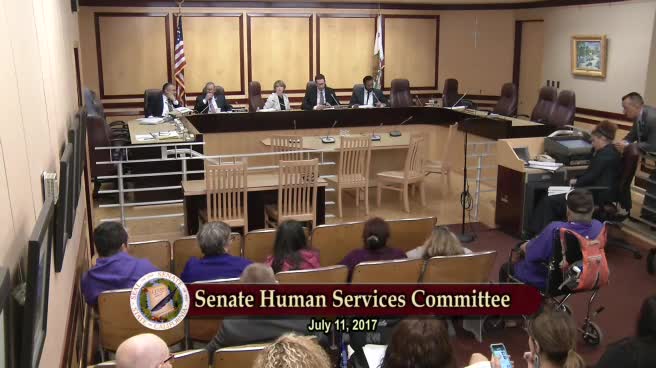 12MIN
Senate Standing Committee on Human Services
 12MIN
Assembly Standing Committee on Human Services
Bill Author

Bill Co-Author(s):