AB 972: Vehicles: driving offenses: labeling items.
- Session Year: 2017-2018
- House: Assembly
- Latest Version Date: 2017-03-28
Existing law authorizes a traffic officer with reason to believe that a vehicle is not safely loaded or that the measurements of a vehicles load are unlawful to require the driver to stop and submit to an inspection, measurement, or weighing of the vehicle. Existing law authorizes a traffic officer who determines that the vehicle is not safely loaded or that the measurements of the vehicles load are unlawful to require the driver to stop and reload or remove a portion of the load as necessary to make the vehicle load safe. A violation of the Vehicle Code is punishable as an infraction.
This bill would require a driver transporting any item that measures longer than 12 inches in length and weighs more than 5 pounds, except as specified, in the cargo area of a vehicle traveling on a highway to affix a label containing information that can be used to identify or contact the owner of the item. A violation of this requirement is an infraction punishable by a fine of $100 for a first offense, $200 for a 2nd offense occurring within one year of a prior offense, or $300 for a 3rd or subsequent offense occurring within one year of 2 or more prior offenses. By creating a new crime, this bill would impose a state-mandated local program.
The California Constitution requires the state to reimburse local agencies and school districts for certain costs mandated by the state. Statutory provisions establish procedures for making that reimbursement.
This bill would provide that no reimbursement is required by this act for a specified reason.
Under existing law, a traffic officer having reason to believe that a vehicle is not safely loaded or that the height, width, length, or weight of a vehicle and load is unlawful, may require the driver to stop and submit to an inspection, measurement, or weighing of the vehicle. Under existing law, if the traffic officer determines that the vehicle is not safely loaded or that the height, width, length, or weight is unlawful, he or she may require the driver to stop in a suitable place and reload or remove whatever portion of the load is necessary to render the load safe or to reduce it to the limits permitted under the Vehicle Code.This bill would make technical, nonsubstantive changes to the latter provision.Under existing law, a traffic officer having reason to believe that a vehicle is not safely loaded or that the height, width, length, or weight of a vehicle and load is unlawful, may require the driver to stop and submit to an inspection, measurement, or weighing of the vehicle. Under existing law, if the traffic officer determines that the vehicle is not safely loaded or that the height, width, length, or weight is unlawful, he or she may require the driver to stop in a suitable place and reload or remove whatever portion of the load is necessary to render the load safe or to reduce it to the limits permitted under the Vehicle Code.
This bill would make technical, nonsubstantive changes to the latter provision.
(a)A driver transporting any item that measures longer than 12 inches in length and weighs more than five pounds in the cargo area of a vehicle traveling on a highway shall affix a label to the item containing information that can be used to identify or contact the owner of the item.
(b)Subdivision (a) shall not apply to clear water, feathers from live birds, aggregate materials, as defined in subdivision (d) of Section 23114, any item described in subdivision (a) of Section 23115, any agricultural product or livestock animal, or any other item that is stored in the cargo area of a vehicle that is completely covered in a way that the item cannot fall free from the vehicle.
(c)Notwithstanding any other law, a violation of subdivision (a) is an infraction punishable as follows:
(1)By a fine of one hundred dollars ($100) for a first offense.
(2)By a fine of two hundred dollars ($200) for a second offense occurring within one year of a prior offense.
(3)By a fine of three hundred dollars ($300) for a third or subsequent offense occurring within one year of two or more prior offenses.
SEC. 2.No reimbursement is required by this act pursuant to Section 6 of Article XIIIB of the California Constitution because the only costs that may be incurred by a local agency or school district will be incurred because this act creates a new crime or infraction, eliminates a crime or infraction, or changes the penalty for a crime or infraction, within the meaning of Section 17556 of the Government Code, or changes the definition of a crime within the meaning of Section 6 of Article XIIIB of the California Constitution.
SECTION 1.Section 2803 of the Vehicle Code is amended to read:2803.(a)If the traffic officer determines that the vehicle is not safely loaded or that the height, width, length, or weight is unlawful, he or she may require the driver to stop in a suitable place and reload or remove whatever portion of the load is necessary to render the load safe or to reduce it to the limits permitted under this code. A suitable place is an area that allows the least obstruction to the highway and that requires the least travel on the highway by the vehicle. Determination of the suitability of an area shall be made by the traffic officer who requires the adjustment. All material so unloaded shall be cared for by the owner or operator of the vehicle at the risk of the owner or operator.(b)If a certified weight certificate or bill of lading accompanies a vehicle that has been determined to be overweight due to the load on the vehicle, the driver shall submit the certified weight certificate or bill of lading, whichever is appropriate, to the traffic officer when the overweight load is removed in the presence of the officer. The officer may note on the certified weight certificate or bill of lading submitted by the driver the fact that a portion of the load has been removed to bring the vehicle and load within the allowable weight limit specified in this code, and the officer shall return the certificate or bill of lading to the driver.(c)If the height, width, or length of the vehicle is unlawful, irrespective of any load on the vehicle, or if an unladen vehicle is overweight, the traffic officer may prohibit further movement of the vehicle until a permit is obtained as provided in Section 35780.(a)If the traffic officer determines that the vehicle is not safely loaded or that the height, width, length, or weight is unlawful, he or she may require the driver to stop in a suitable place and reload or remove such whatever portion of the load as may be is necessary to render the load safe or to reduce it to the limits permitted under this code. A suitable place is an area which that allows the least obstruction to the highway and which that requires the least travel on the highway by the vehicle. Determination of the suitability of an area shall be made by the traffic officer who requires the adjustment. All material so unloaded shall be cared for by the owner or operator of the vehicle at the risk of the owner or operator.
(b)If a certified weight certificate or bill of lading accompanies a vehicle which that has been determined to be overweight due to the load on the vehicle, the driver shall submit the certified weight certificate or bill of lading, whichever is appropriate, to the traffic officer when the overweight load is removed in the presence of the officer. The officer may note on the certified weight certificate or bill of lading submitted by the driver the fact that a portion of the load has been removed to bring the vehicle and load within the allowable weight limit specified in this code, and the officer shall return the certificate or bill of lading to the driver.
(c)If the height, width, or length of the vehicle is unlawful, irrespective of any load thereon, on the vehicle, or if an unladen vehicle is overweight, the traffic officer may prohibit further movement of the vehicle until a permit is obtained as provided in Section 35780.
|
Date
|
Status
|
|---|---|
| Feb 1, 2018 | From committee: Filed with the Chief Clerk pursuant to Joint Rule 56. |
| Jan 31, 2018 | Died pursuant to Art. IV, Sec. 10(c) of the Constitution. |
| Jan 8, 2018 | In committee: Hearing for testimony only. |
| Apr 24, 2017 | In committee: Set, second hearing. Hearing canceled at the request of author. |
| Apr 17, 2017 | In committee: Set, first hearing. Hearing canceled at the request of author. |
| Mar 29, 2017 | Re-referred to Com. on TRANS. |
| Mar 28, 2017 | From committee chair, with author's amendments: Amend, and re-refer to Com. on TRANS. Read second time and amended. |
| Mar 27, 2017 | Referred to Com. on TRANS. |
| Feb 17, 2017 | From printer. May be heard in committee March 19. |
| Feb 16, 2017 | Read first time. To print. |
This list shows positions taken on this bill by organizations on the date displayed, which is linked to the original source.
Positions by individuals are not included.
|
Organization
|
Position
|
Date
|
|---|---|---|
| California Trucking Association | ** Against | Jan 5, 2018 |
| self | * Support | Jan 8, 2018 |
Date of Hearing: January 8, 2018
ASSEMBLY COMMITTEE ON TRANSPORTATION
Jim Frazier, Chair
ABPCA Bill Id:AB 972 (
Author:Choi) – As Amended Ver:March 28, 2017
FOR TESTIMONY ONLY
SUBJECT: Vehicles: driving offenses: labeling items
SUMMARY: Requires items that are carried in a vehicle cargo area to be labeled so that the owner can be identified should the item fall from the vehicle. Specifically, this bill:
- Requires any item measuring longer than 12 inches in length and weighing more than 5 pounds that is being transported in the cargo area of a vehicle to be labeled with information that will allow the owner of the item to be identified or contacted.
- Exempts the following items from requirements the labeling requirements:
- Clear water;
- Live bird feathers;
- Aggregate, defined as rock fragments, pebbles, sand, dirt, gravel, cobbles, crushed base, asphalt, and other similar materials;
- Garbage, swill, used cans or bottles, wastepapers, waste cardboard, ashes, refuse, trash, or rubbish, or any noisome, nauseous, or offensive matter, or anything being transported for disposal or recycling;
- Any agricultural product or livestock animal; or,
- Any item that is stored in the cargo area of a vehicle that is completely covered in a way that the item cannot fall free from the vehicle.
- Provides, notwithstanding any other provision of law, violating the requirement to label items is an infraction punishable by:
- A fine of $100 for a first offense;
- A fine of $200 for a second offense that occurs within one year of a prior offense; and,
- A fine of $300 for a third or subsequent offense occurring within one year of two or more prior offenses.
EXISTING LAW:
- Requires vehicle loads to be secured so the load cannot escape the vehicle; failure to do so is punishable by a base fine of $35.
- Makes it unlawful to do any of the following:
- Throw or discharge onto a highway any lighted or non-lighted cigarette, cigar, match, or any flaming or glowing substance, punishable by a fine of $100.
- Throw or deposit on a highway any bottle, can, garbage, glass, nail, offal, paper, wire, any substance likely to injure or damage traffic, or any noisome, nauseous, or offensive matter of any kind, punishable by a fine of $100.
- Dump or spill hazardous material without appropriately notifying authorities, as prescribed, punishable by a mandatory fine of a least $2,000.
- Provides that a vehicle used for illegal dumping of waste matter on public property is subject to impoundment.
- Requires that any person that drops, dumps, deposits, places, or throws onto a highway any bottle, can, garbage, glass, nail, offal, paper, wire, any substance likely to injure or damage traffic, any noisome, nauseous, offensive matter of any kind, or aggregate material must immediately remove the material or cause it to be removed; failure to do so is punishable by a base fine of $100.
- Authorizes the government agency that is responsible for the maintenance of the highway to remove the material and charge the cost of removal from the person responsible for the dumping.
FISCAL EFFECT: Unknown
COMMENTS: The author introduced this bill to "bring accountability to highways" by requiring individuals transporting items large enough to cause harm (should they fall out of the vehicle) to label the items with owner identification information. The author cites as evidence to support the bill an August 2016 study published by the AAA Foundation for Traffic Safety entitled The Prevalence of Motor Vehicle Crashes Involving Road Debris, United States, 2011-2014 (2016). The study sought to identify the magnitude and characteristics of safety issues presented by vehicle-related road debris.
For purposes of the study, "road debris” was defined as debris from any source, including but not limited to vehicles that can pose a significant safety hazard. (Animals in the road, trees that fell onto vehicles, debris caused by a previous crash, and construction-related materials in active work zones were not included in the definition.) Also for purposes of the study, a crash was considered to have been debris-related if it involved a vehicle that:
- Struck or was struck by an object that fell from another vehicle;
- Struck a non-fixed object in the travel lane of the roadway; or,
- Attempted to avoid a non-fixed object in the travel lane of the roadway and subsequently crashed.
The study reported the following key findings:
- About two-thirds of debris-related crashes are the result of items falling from a vehicle due to improper maintenance and unsecured loads.
- The most common types of vehicle debris are:
- Parts becoming detached form a vehicle (e.g., tires, wheels, etc.) and falling onto the roadway;
- Unsecured cargo like furniture, appliances, and other items falling onto the roadway;
- Tow trailers becoming separated and hitting another vehicle or landing on the roadway.
The study also found that, of debris-related crashes in the United States between 2011 and 2014:
- An annual average of 38% (19,304) of crashes involved a vehicle being struck by or striking an object that fell from another vehicle. Of these crashes, an estimated annual average of 3,142 involved injuries and 27 involved deaths.
- An annual average of 46% (23,509) of crashes involved a vehicle striking a non-fixed object on the roadway. Of these crashes, an estimated annual average of 3,322 involved injuries and 52 involved deaths.
- An annual average of 15% (7,844) crashes were the result of the driver attempting to avoid a non-fixed object on the roadway. Of these crashes, an estimated 3,341 involved in injuries and 47 involved deaths.
As a result of this study, the AAA Foundation for Traffic Safety suggested drivers can decrease their chances of being involved in a road debris-related crash by doing the following:
- Maintaining their vehicles: Badly worn or underinflated tires often suffer blowouts that can leave pieces of tire on the roadway. Exhaust systems and the hardware that attach to the vehicle can also rust and corrode, causing mufflers and other parts to drag and eventually break loose.
- Securing vehicle loads: To properly secure a load, drivers should:
- Tie down the load with rope, netting or straps;
- Tie large objects directly to the vehicle or trailer;
- Cover the entire load with a sturdy tarp or netting;
- Avoid overloading the vehicle; and,
- Double check the load to make sure it is secure.
- Driving defensively: Drivers should avoid tailgating and should continually search the road at least 12 to 15 seconds ahead for debris.
The California Highway Patrol reports that it issues approximately 1,200 citations annually for violations involving a driver’s failure to adequately secure a load. It also reports that roughly 800 crashes occur annually for which the primary collision factor is debris on the roadway. Of these collisions, roughly 70 crashes annually result in injuries. Additionally, of these collisions, 3 crashes over a six-year period resulted in death: 1 in 2010 and 2 in 2015.
Committee concerns:
- The evidence that there is a substantial need to address the issue of road-related debris is questionable. For example, the author cites the 2016 AAA study as evidence to support the need for the bill. That study was intended to update information form a previous study, done in 2004, entitled The Safety Impact of Vehicle-Related Road Debris (Forbes & Robinson, 2004). The earlier study noted that a literature review of the issue found that debris-related crashes constitute a very small proportion of all crashes, ranging from 0.1% to 0.5%. Furthermore, road debris caused by lost cargo, at which this bill is focused, makes up only a portion of the universe of road debris reflected in the crash statistics cited. Other debris included, for example, tires, tire tread, and vehicle parts, such as wheel flaps.
- In many cases where the primary collision factor is roadway debris, the appropriate action is to cite the driver that collides with the debris for failure to follow the basic speed law. That law provides that no person shall drive a vehicle upon a highway at a speed greater than is reasonable or prudent having due regard for weather, visibility, traffic on the highway, and in no event at a speed which endangers the safety of persons or property.
- It is unclear what effect, if any, this bill would have on reducing the number of road-debris related crashes. Conversely, the committee was unable to find evidence to establish a correlation between an inability to identify the owner of road debris and the occurrence of road debris-related crashes.
Related legislation: AB 971 (Choi) increases fines for failing to secure a load (in a vehicle) and clarifies that a death caused by an object falling from a vehicle is grounds for a vehicular manslaughter conviction. AB 971 is scheduled to be heard in Assembly Transportation Committee on January 8, 2018.
AB 1395 (Chu) would require, by January 1, 2019, the California Department of Transportation to develop a litter and graffiti remediation plan to address debris buildup on the state highway and freeway systems. AB 1395 is scheduled to be heard in Assembly Transportation Committee on January 8, 2018.
REGISTERED SUPPORT / OPPOSITION:
Support
None on file
Opposition
California Trucking Association
Analysis Prepared by: Janet Dawson / TRANS. /
Discussed in Hearing
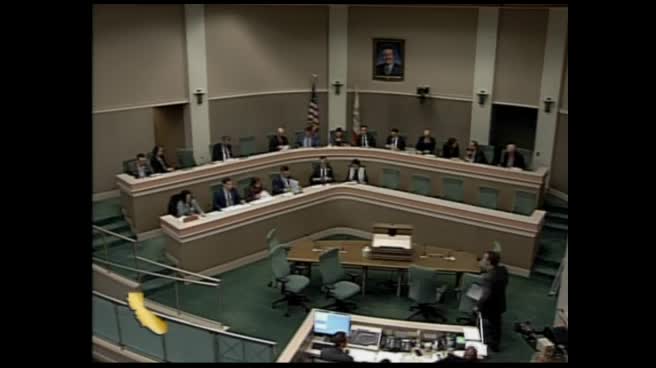 15MIN
Assembly Standing Committee on Transportation
Bill Author

Bill Co-Author(s):