AB 975: Natural resources: wild and scenic rivers.
- Session Year: 2017-2018
- House: Assembly
- Latest Version Date: 2017-05-04
Existing law establishes that it is the policy of the state that certain rivers that possess extraordinary scenic, recreational, fishery, or wildlife values shall be preserved in their free-flowing state, together with their immediate environments, for the benefit and enjoyment of the people of the state.
This bill would revise that policy to specify that certain rivers that possess scenic, recreational, fishery, wildlife, historical, cultural, geological, ecological, hydrological, botanical, or other similar values shall be preserved in their free-flowing state, together with their immediate environments, for the benefit and enjoyment of the people of the state, and would revise the definition of immediate environments, and define the term extraordinary value for purposes of that policy.
Existing law establishes that it is the policy of the state that certain rivers that possess extraordinary scenic, recreational, fishery, or wildlife values shall be preserved in their free-flowing state, together with their immediate environments, for the benefit and enjoyment of the people of the state.
This bill would revise that policy to specify that certain rivers that possess scenic, recreational, fishery, wildlife, historical, cultural, geological, ecological, hydrological, botanical, or other values shall be preserved in their free-flowing state, together with their immediate environments, for the benefit and enjoyment of the people of the state, and would revise the definition of immediate environments, and define the term extraordinary value for purposes of that policy.
It is the policy of the State of California that certain rivers that possess extraordinary scenic, recreational, fishery, wildlife, historical, cultural, geological, ecological, hydrological, botanical, or other similar values shall be preserved in their free-flowing state, together with their immediate environments, for the benefit and enjoyment of the people of the state. The Legislature declares that such use of these rivers is the highest and most beneficial use and is a reasonable and beneficial use of water within the meaning of Section 2 of Article X of the California Constitution. It is the purpose of this chapter to create a California Wild and Scenic Rivers System to be administered in accordance with the provisions of this chapter.
SEC. 2.Section 5093.52 of the Public Resources Code is amended to read:5093.52.As used in this chapter, the following terms have the following meaning:
(a)Secretary means the Secretary of the Natural Resources Agency.
(b)Resources Agency means the Natural Resources Agency and any constituent units of the Natural Resources Agency that the secretary determines to be necessary to accomplish the purposes of this chapter.
(c)River means the water, bed, and shoreline of rivers, streams, channels, lakes, bays, estuaries, marshes, wetlands, and lagoons, up to the first line of permanently established riparian vegetation.
(d)Free-flowing means existing or flowing without artificial impoundment, diversion, or other modification of the river. The presence of low dams, diversion works, and other minor structures does not automatically bar a rivers inclusion within the system. However, this subdivision does not authorize or encourage future construction of those structures on any component of the system.
(e)System means the California Wild and Scenic Rivers System.
(f)Land use regulation means the regulation by any state or local governmental entity, agency, or official of any activities that take place other than directly on the waters of the segments of the rivers designated in Section 5093.54.
(g)Director means the Director of Fish and Wildlife.
(h)Immediate environments means means, notwithstanding the special treatment areas defined in subdivision (i), the corridor of land within one-quarter mile of the segments of the rivers designated in Section 5093.54.
(i)Special treatment areas means, for purposes of this chapter, those areas defined as special treatment areas in Section 895.1 of Title 14 of the California Code of Regulations, as in effect on January 1, 2004, as that definition applies to wild and scenic river segments designated from time to time in Section 5093.54, and also includes areas within 200 feet of the watercourse transition line of a state-designated recreational river segment designated in Section 5093.54 that may be at risk during timber operations.
(j)Board means the State Board of Forestry and Fire Protection.
(k)Extraordinary value means a natural, cultural, scenic, recreational, fishery, wildlife, historical, cultural, geological, or similar value that is outstanding or remarkable in a local, regional, or statewide context.
It is the policy of the State of California that certain rivers that possess extraordinary scenic, recreational, fishery, wildlife, historical, cultural, geological, ecological, hydrological, botanical, or other similar values shall be preserved in their free-flowing state, together with their immediate environments, for the benefit and enjoyment of the people of the state. The Legislature declares that such use of these rivers is the highest and most beneficial use and is a reasonable and beneficial use of water within the meaning of Section 2 of Article X of the California Constitution. It is the purpose of this chapter to create a California Wild and Scenic Rivers System to be administered in accordance with the provisions of this chapter.
SEC. 2.Section 5093.52 of the Public Resources Code is amended to read:5093.52.As used in this chapter, the following terms have the following meaning:
(a)Secretary means the Secretary of the Natural Resources Agency.
(b)Resources Agency means the Natural Resources Agency and any constituent units of the Natural Resources Agency that the secretary determines to be necessary to accomplish the purposes of this chapter.
(c)River means the water, bed, and shoreline of rivers, streams, channels, lakes, bays, estuaries, marshes, wetlands, and lagoons, up to the first line of permanently established riparian vegetation.
(d)Free-flowing means existing or flowing without artificial impoundment, diversion, or other modification of the river. The presence of low dams, diversion works, and other minor structures does not automatically bar a rivers inclusion within the system. However, this subdivision does not authorize or encourage future construction of those structures on any component of the system.
(e)System means the California Wild and Scenic Rivers System.
(f)Land use regulation means the regulation by any state or local governmental entity, agency, or official of any activities that take place other than directly on the waters of the segments of the rivers designated in Section 5093.54.
(g)Director means the Director of Fish and Wildlife.
(h)Immediate environments means the corridor of land within one-quarter mile of the segments of the rivers designated in Section 5093.54.
(i)Special treatment areas means, for purposes of this chapter, those areas defined as special treatment areas in Section 895.1 of Title 14 of the California Code of Regulations, as in effect on January 1, 2004, as that definition applies to wild and scenic river segments designated from time to time in Section 5093.54, and also includes areas within 200 feet of the watercourse transition line of a state-designated recreational river segment designated in Section 5093.54 that may be at risk during timber operations.
(j)Board means the State Board of Forestry and Fire Protection.
(k)Extraordinary value means a natural, cultural, or similar value that is outstanding or remarkable in a local, regional, or statewide context.
It is the policy of the State of California that certain rivers which that possess extraordinary scenic, recreational, fishery, or wildlife wildlife, historical, cultural, geological, ecological, hydrological, botanical, or other values shall be preserved in their free-flowing state, together with their immediate environments, for the benefit and enjoyment of the people of the state. The Legislature declares that such use of these rivers is the highest and most beneficial use and is a reasonable and beneficial use of water within the meaning of Section 2 of Article X of the California Constitution. It is the purpose of this chapter to create a California Wild and Scenic Rivers System to be administered in accordance with the provisions of this chapter.
SEC. 2.Section 5093.52 of the Public Resources Code is amended to read:5093.52.As used in this chapter, the following terms have the following meaning:
(a)Secretary means the Secretary of the Natural Resources Agency.
(b)Resources Agency means the Secretary of the Natural Resources Agency and any constituent units of the Natural Resources Agency that the secretary determines to be necessary to accomplish the purposes of this chapter.
(c)River means the water, bed, and shoreline of rivers, streams, channels, lakes, bays, estuaries, marshes, wetlands, and lagoons, up to the first line of permanently established riparian vegetation.
(d)Free-flowing means existing or flowing without artificial impoundment, diversion, or other modification of the river. The presence of low dams, diversion works, and other minor structures does not automatically bar a rivers inclusion within the system. However, this subdivision does not authorize or encourage future construction of those structures on any component of the system.
(e)System means the California Wild and Scenic Rivers System.
(f)Land use regulation means the regulation by any state or local governmental entity, agency, or official of any activities that take place other than directly on the waters of the segments of the rivers designated in Section 5093.54.
(g)Director means the Director of Fish and Game. Wildlife.
(h)Immediate environments means the corridor of land immediately adjacent to within one-quarter mile of the segments of the rivers designated in Section 5093.54.
(i)Special treatment areas means, for purposes of this chapter, those areas defined as special treatment areas in Section 895.1 of Title 14 of the California Code of Regulations, as in effect on January 1, 2004, as that definition applies to wild and scenic river segments designated from time to time in Section 5093.54, and also includes areas within 200 feet of the watercourse transition line of a state-designated recreational river segment designated in Section 5093.54 that may be at risk during timber operations.
(j)Board means the State Board of Forestry and Fire Protection.
(k) Extraordinary value means a natural, cultural, or similar value that is outstanding or remarkable in a local, regional, or statewide context.
HeadingLine 2.|
Date
|
Status
|
|---|---|
| Feb 1, 2018 | Died on inactive file. |
| Jun 5, 2017 | Ordered to inactive file at the request of Assembly Member Friedman. |
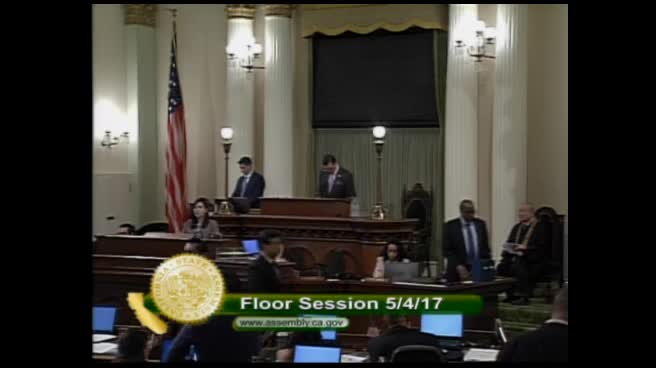
| May 4, 2017 | Read third time and amended. Ordered to third reading. (Ayes 47. Noes 21. Page 1374.) |
| Apr 6, 2017 | Read second time. Ordered to third reading. |
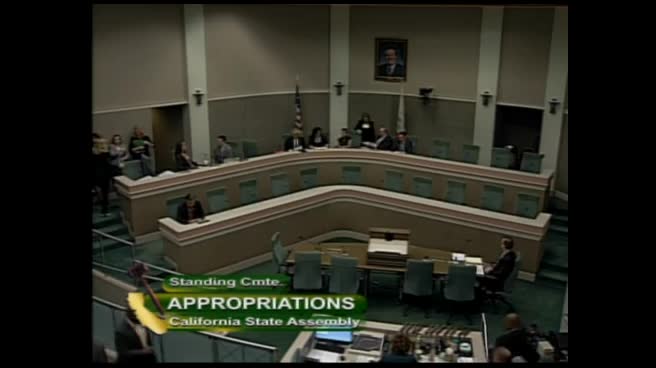
| Apr 5, 2017 | From committee: Do pass. (Ayes 11. Noes 5.) (April 5). |
| Mar 27, 2017 | Re-referred to Com. on APPR. |
| Mar 23, 2017 | Read second time and amended. |
| Mar 22, 2017 | From committee: Amend, and do pass as amended and re-refer to Com. on APPR. (Ayes 7. Noes 3.) (March 20). |
| Mar 2, 2017 | Referred to Com. on NAT. RES. |
| Feb 23, 2017 | Introduced measure version corrected. |
| Feb 17, 2017 | From printer. May be heard in committee March 19. |
| Feb 16, 2017 | Read first time. To print. |
|
Date
|
Description
|
Location
|
Votes
|
|
|---|---|---|---|---|
| May 4, 2017 | AB 975 FRIEDMAN Assembly Third Reading Amend By FRIEDMAN Set #1 | Assembly Floor |
Passed |
|
| Apr 5, 2017 | Do pass. | Assembly Standing Committee on Appropriations |
Passed |
|
| Mar 20, 2017 | Do pass as amended and be re-referred to the Committee on [Appropriations] | Assembly Standing Committee on Natural Resources |
Passed |
This list shows positions taken on this bill by organizations on the date displayed, which is linked to the original source.
Positions by individuals are not included.
|
Organization
|
Position
|
Date
|
|---|---|---|
| American Rivers | ** Support | Mar 17, 2017 |
| American Whitewater | ** Support | Mar 17, 2017 |
| Butte Environmental Council | ** Support | Mar 17, 2017 |
| California Farm Bureau | * Against | Apr 5, 2017 |
| California Forestry Association | * Indeterminate | Apr 5, 2017 |
| California Outdoors | ** Support | Mar 17, 2017 |
| California Sportfishing Protection Alliance | ** Support | Mar 17, 2017 |
| California Water Impact Network | ** Support | Mar 17, 2017 |
| California Wilderness Coalition | ** Support | Mar 17, 2017 |
| CalTrout | ** Support | Mar 17, 2017 |
| Coast Action Group | ** Support | Mar 17, 2017 |
| Defenders Of Wildlife | * Support | Mar 20, 2017 |
| Foothill Conservancy | ** Support | Mar 17, 2017 |
| Friends of the Eel River | ** Support | Mar 17, 2017 |
| Friends of the River | * Support | Apr 5, 2017 |
| KIER Associates | ** Support | Mar 17, 2017 |
| Merced River Conservation Committee | ** Support | Mar 17, 2017 |
| Natural Resources Defense Council | ** Support | Mar 17, 2017 |
| Natural Resources Defense Council (NRDC) | * Support | Mar 20, 2017 |
| North Fork American River Alliance | ** Support | Mar 17, 2017 |
| Northcoast Environmental Center | ** Support | Mar 17, 2017 |
| Northern California Council International Federation of Fly Fishers | ** Support | Mar 17, 2017 |
| Pacific Coast Federation Of Fishermen'S Associations | ** Support | Mar 17, 2017 |
| Pacific Coast Federation Of FishermenS Associations | ** Support | Mar 17, 2017 |
| Sacramento River Preservation Trust | ** Support | Mar 17, 2017 |
| Safe Alternatives For Our Forest Environment | ** Support | Mar 17, 2017 |
| Sierra Club | * Support | Mar 20, 2017 |
| South Yuba River Citizens League | ** Support | Mar 17, 2017 |
| Two individuals | ** Support | Mar 17, 2017 |
| Wildlife California | * Support | Mar 20, 2017 |
ASSEMBLY THIRD READING
ATR Bill Id:AB 975
Author:(Friedman)
As Amended Ver:May 4, 2017
Majority vote
Committee | Votes | Ayes | Noes |
Natural Resources | 7-3 | Cristina Garcia, Chau, Eggman, Limón, McCarty, Muratsuchi, Mark Stone | Acosta, Travis Allen, Flora |
Appropriations | 11-5 | Gonzalez Fletcher, Bloom, Bocanegra, Bonta, Calderon, Chau, Eggman, Friedman, Eduardo Garcia, Muratsuchi, Reyes | Bigelow, Brough, Fong, Gallagher, Obernolte |
SUMMARY: Adds "historical, cultural, geological or other similar values" to the values that certain rivers possess and the state should preserve. Expands the area protected in the Wild and Scenic Rivers System (System) from immediately adjacent to the river segment to within a quarter mile of the river.
EXISTING LAW, pursuant to the California Wild and Scenic Rivers Act (Act):
- Declares that it is the policy of the state that certain rivers that possess extraordinary scenic, recreational, fishery, or wildlife values be preserved in their "free-flowing" state, together with their immediate environments, for the benefit and enjoyment of the people of the state. Declares that such use of these rivers is the highest and most beneficial use and is a reasonable and beneficial use of water.
- Defines "free-flowing" as existing or flowing without artificial impoundment, diversion, or other modification of the river. (The presence of low dams, diversion works, and other minor structures does not automatically bar a river's inclusion within the System.)
- Requires that those rivers or segments of rivers included in the System be classified as one of the following:
- Wild rivers, which are those rivers or segments of rivers that are free of impoundments and generally inaccessible except by trail, with watersheds or shorelines essentially primitive and waters unpolluted;
- Scenic rivers, which are those rivers or segments of rivers that are free of impoundments, with shorelines or watersheds still largely primitive and shorelines largely undeveloped but accessible in places by roads; or
- Recreational rivers, which are those rivers or segments of rivers that are readily accessible by road or railroad, may have some development along their shorelines, and may have undergone some impoundment or diversion in the past.
- Designates several California rivers and segments thereof as components of the System.
- Requires the Natural Resources Agency (NRA) to be responsible for coordinating the activities of state agencies whose activities affect the rivers in the System with those of other state, local, and federal agencies with jurisdiction over matters that may affect the rivers.
FISCAL EFFECT: According to the Assembly Appropriations Committee, no additional state costs.
COMMENTS:
- The Act. The Act was passed in 1972 to preserve designated rivers possessing extraordinary scenic, recreation, fishery, or wildlife values. With its initial passage, the System protected segments of the Smith River and tributaries, Klamath River and tributaries, Scott River, Salmon River, Trinity River, Eel River, Van Duzen River, and American River. The System was subsequently expanded by the Legislature to include the East Carson and West Walker Rivers in 1989, the South Yuba River in 1999, the Albion River and Gualala Rivers in 2003, and Cache Creek in 2005. In addition, segments of the McCloud River, Deer Creek, and Mill Creek were protected under the Act in 1989 and 1995 respectively, although these segments were not formally designated as components of the System.
The Act defines "free-flowing" as "existing or flowing without artificial impoundment, diversion, or other modification of the river." The existence of minor structures, or even major dams located upstream or downstream of a specific segment, does not preclude a river from designation. Several rivers, such as the Klamath, Trinity, Eel, and Lower American, are included in the System despite substantial flow modifications by existing upstream dams and impoundments.
No dam, reservoir, diversion, or other water impoundment facility may be constructed on any river segment included in the System. However, there are exemptions, which include temporary flood storage facilities on the Eel River and temporary recreational impoundments on river segments with a history of such impoundments. NRA cannot authorize these temporary recreational impoundments without first making a number of findings.
- Consistency with the Federal Act. The Act was patterned after the 1968 National Wild and Scenic Rivers Act (Federal Act). The state and federal Acts share similar criteria and definitions in regard to the purpose of protecting rivers, the identification of free flowing rivers and extraordinary or outstanding values suitable for protection, establishing a study process to include rivers in the system, as well as an identical classification system. The state Act differs from the Federal Act in that it does not recognize as many river values. The additional values in the Federal Act include historical, cultural, geological, and "other similar" values. This bill adds the additional values considered by Federal agencies.
The Federal Act also creates protections within a quarter mile of a river in the system. The state Act defines immediate environments to be immediately adjacent to the river, and defines river to include up to the first line of permanently established riparian vegetation. This bill would align the state Act with the Federal Act by defining immediate environments to include within quarter mile of segments of the river. This change would have the effect of directing state and local governments to act in a manner that protects the additional immediate environment.
Analysis Prepared by: Michael Jarred / NAT. RES. / (916) 319-2092 FN: 0000249
ASSEMBLY THIRD READING
ATR Bill Id:AB 975
Author:(Friedman)
As Amended Ver:March 23, 2017
Majority vote
Committee | Votes | Ayes | Noes |
Natural Resources | 7-3 | Cristina Garcia, Chau, Eggman, Limón, McCarty, Muratsuchi, Mark Stone | Acosta, Travis Allen, Flora |
Appropriations | 11-5 | Gonzalez Fletcher, Bloom, Bocanegra, Bonta, Calderon, Chau, Eggman, Friedman, Eduardo Garcia, Muratsuchi, Reyes | Bigelow, Brough, Fong, Gallagher, Obernolte |
SUMMARY: Adds "historical, cultural, geological, ecological, hydrological (i.e., unique source, direction, or quantity of water flows), botanical or other similar values" to the values that certain rivers possess and the state should preserve. Expands the area protected in the Wild and Scenic Rivers System (System) from immediately adjacent to the river segment to within a quarter mile of the river.
EXISTING LAW, pursuant to the California Wild and Scenic Rivers Act (Act):
- Declares that it is the policy of the state that certain rivers that possess extraordinary scenic, recreational, fishery, or wildlife values be preserved in their "free-flowing" state, together with their immediate environments, for the benefit and enjoyment of the people of the state. Declares that such use of these rivers is the highest and most beneficial use and is a reasonable and beneficial use of water.
- Defines "free-flowing" as existing or flowing without artificial impoundment, diversion, or other modification of the river. (The presence of low dams, diversion works, and other minor structures does not automatically bar a river's inclusion within the System.)
- Requires that those rivers or segments of rivers included in the System be classified as one of the following:
- Wild rivers, which are those rivers or segments of rivers that are free of impoundments and generally inaccessible except by trail, with watersheds or shorelines essentially primitive and waters unpolluted;
- Scenic rivers, which are those rivers or segments of rivers that are free of impoundments, with shorelines or watersheds still largely primitive and shorelines largely undeveloped but accessible in places by roads; or
- Recreational rivers, which are those rivers or segments of rivers that are readily accessible by road or railroad, may have some development along their shorelines, and may have undergone some impoundment or diversion in the past.
- Designates several California rivers and segments thereof as components of the System.
- Requires the Natural Resources Agency (NRA) to be responsible for coordinating the activities of state agencies whose activities affect the rivers in the System with those of other state, local, and federal agencies with jurisdiction over matters that may affect the rivers.
FISCAL EFFECT: According to the Assembly Appropriations Committee, no additional state costs.
COMMENTS:
- The Act. The Act was passed in 1972 to preserve designated rivers possessing extraordinary scenic, recreation, fishery, or wildlife values. With its initial passage, the System protected segments of the Smith River and tributaries, Klamath River and tributaries, Scott River, Salmon River, Trinity River, Eel River, Van Duzen River, and American River. The System was subsequently expanded by the Legislature to include the East Carson and West Walker Rivers in 1989, the South Yuba River in 1999, the Albion River and Gualala Rivers in 2003, and Cache Creek in 2005. In addition, segments of the McCloud River, Deer Creek, and Mill Creek were protected under the Act in 1989 and 1995 respectively, although these segments were not formally designated as components of the System.
The Act defines "free-flowing" as "existing or flowing without artificial impoundment, diversion, or other modification of the river." The existence of minor structures, or even major dams located upstream or downstream of a specific segment, does not preclude a river from designation. Several rivers, such as the Klamath, Trinity, Eel, and Lower American, are included in the System despite substantial flow modifications by existing upstream dams and impoundments.
No dam, reservoir, diversion, or other water impoundment facility may be constructed on any river segment included in the System. However, there are exemptions, which include temporary flood storage facilities on the Eel River and temporary recreational impoundments on river segments with a history of such impoundments. NRA cannot authorize these temporary recreational impoundments without first making a number of findings.
- Consistency with the Federal Act. The Act was patterned after the 1968 National Wild and Scenic Rivers Act (Federal Act). The state and federal Acts share similar criteria and definitions in regard to the purpose of protecting rivers, the identification of free flowing rivers and extraordinary or outstanding values suitable for protection, establishing a study process to include rivers in the system, as well as an identical classification system. The state Act differs from the Federal Act in that it does not recognize as many river values. The additional values in the Federal Act include historical, cultural, geologic, and "other similar" values. Federal agencies have interpreted "similar" values to include ecological, botanical, and hydrological. When NRA studied the East Carson and West Walker Rivers they found them to have extraordinary hydrological values. However, that value is not in the Act. This bill adds the additional values considered by Federal agencies.
The Federal Act also creates protections within a quarter mile of a river in the system. The state Act defines immediate environments to be immediately adjacent to the river, and defines river to include up to the first line of permanently established riparian vegetation. This bill would align the state Act with the Federal Act by defining immediate environments to include within quarter mile of segments of the river. This change would have the effect of directing state and local governments to act in a manner that protects the additional immediate environment.
Analysis Prepared by: Michael Jarred / NAT. RES. / (916) 319-2092 FN: 0000113
Date of Hearing: April 5, 2017
ASSEMBLY COMMITTEE ON APPROPRIATIONS
Lorena Gonzalez Fletcher, Chair
ABPCA Bill Id:AB 975
Author:(Friedman) – As Amended Ver:March 23, 2017
Policy Committee: | Natural Resources | Vote: | 7 - 3 |
Urgency: No State Mandated Local Program: No Reimbursable: No
SUMMARY:
This bill revises the state's polices regarding the designation of California's wild and scenic rivers in their free-flowing states, together with their natural environments, for the enjoyment of the people of the state to better align with federal designations. Specifically, this bill:
- Adds the terms historical, cultural, geological, ecological, hydrological, botanical or other similar values to the existing list of values the state is required to consider and when classifying rivers as Wild rivers, Scenic rivers, or Recreational rivers under existing law requirements.
- Expands the area protected in the Wild and Scenic Rivers System (System) from immediately adjacent to the river segment to within a quarter mile of the river.
FISCAL EFFECT:
No additional state costs.
The California Wild and Scenic Rivers Act (Act) requires the Natural Resources Agency (NRA) to perform a study to consider future additions to the state wild and scenic river system, however, segments have been added to the system as a result of such studies, but also through legislative action, without studies. Although the last study required by the Legislature, on the Mokelumne River was estimated to cost $250,000, the addition of these new considerations in the bill will not add any additional cost to future required studies.
COMMENTS:
- Purpose. According to the author, this bill brings the California Wild and Scenic Rivers System more in line with the federal system, improving state management of rivers that enjoy dual state-federal designation, and allowing for the protection of existing and future state rivers that possess additional values beyond those currently mentioned in the Act.
- Background. The Act established State policy to protect the designated segments of these classified rivers in their free-flowing state for the benefit and enjoyment of the people. The Act contains a declaration that such use of rivers is the highest and most beneficial use of these rivers and constitutes a reasonable and beneficial use within the meaning of the State Constitution. Consequently, these segments are considered fully appropriated by the California Division of Water Rights. Those who obtain new water rights may not "impair" the designated segments of Wild and Scenic rivers.
The Act defines “free-flowing” as “existing or flowing without artificial impoundment, diversion, or other modification of the river.” The existence of minor structures, or even major dams located upstream or downstream of a specific segment, does not preclude a river from designation. Several rivers, such as the Klamath, Trinity, Eel, and lower American, are included in the System despite substantial flow modifications by existing upstream dams and impoundments.
- California's Wild and Scenic Rivers. The Act now considers segments of the Smith River and tributaries, Klamath River and tributaries, Scott River, Salmon River, East Carson and West Walker Rivers, South Yuba River, Albion and Gualala Rivers, and Cache Creek as Wild and Scenic.
Segments of the McCloud River, Deer Creek, and Mill Creek are also protected under the Act although not formally designated. The Cache Creek designation in 2005, which covers 31 miles of that stream, was the most recent designation.
The Act requires the Natural Resources Agency (NRA) to perform a study to consider future additions to the state wild and scenic river system, however, segments have been added to the system as a result of such studies, but also through legislative action, without studies.
- Previous legislation.
AB 142 (Bigelow), Chapter 661, Statutes of 2015, requires, prior to the designation of the Mokelumne River, the NRA to conduct a study analyzing the suitability or non-suitability of the Mokelumne River, its tributaries, or portions of the river for addition to the System.
SB 1199 (Hancock, 2014) would have designated a 37-mile portion of the Mokelumne River in Calaveras and Amador Counties in the Sierra Nevada as a wild and scenic river. SB 1199 was held in the Assembly Appropriation Committee.
Analysis Prepared by: Jennifer Galehouse / APPR. / (916) 319-2081
Date of Hearing: March 20, 2017
ASSEMBLY COMMITTEE ON NATURAL RESOURCES
Cristina Garcia, Chair
ABPCA Bill Id:AB 975 (
Author:Friedman) – As Introduced Ver:February 16, 2017
SUBJECT: Natural resources: wild and scenic rivers
SUMMARY: Adds “historical, cultural, geological, ecological, hydrological (i.e., unique source, direction, or quantity of water flows), botanical or other values” to the values that certain rivers possess and the state should preserve. Expands the area protected in the Wild and Scenic Rivers System (System) from immediately adjacent to the river segment to within a quarter mile of the river.
EXISTING LAW, pursuant to the California Wild and Scenic Rivers Act (Act):
- Declares that it is the policy of the state that certain rivers that possess extraordinary scenic, recreational, fishery, or wildlife values be preserved in their "free-flowing" state, together with their immediate environments, for the benefit and enjoyment of the people of the state. Declares that such use of these rivers is the highest and most beneficial use and is a reasonable and beneficial use of water.
- Defines "free-flowing" as existing or flowing without artificial impoundment, diversion, or other modification of the river. (The presence of low dams, diversion works, and other minor structures does not automatically bar a river's inclusion within the System.)
- Requires that those rivers or segments of rivers included in the System be classified as one of the following:
- Wild rivers, which are those rivers or segments of rivers that are free of impoundments and generally inaccessible except by trail, with watersheds or shorelines essentially primitive and waters unpolluted;
- Scenic rivers, which are those rivers or segments of rivers that are free of impoundments, with shorelines or watersheds still largely primitive and shorelines largely undeveloped but accessible in places by roads; or
- Recreational rivers, which are those rivers or segments of rivers that are readily accessible by road or railroad, may have some development along their shorelines, and may have undergone some impoundment or diversion in the past.
- Designates several California rivers and segments thereof as components of the System.
- Requires the Natural Resources Agency (NRA) to be responsible for coordinating the activities of state agencies whose activities affect the rivers in the System with those of other state, local, and federal agencies with jurisdiction over matters that may affect the rivers.
FISCAL EFFECT: Unknown
COMMENTS:
- Author’s statement:
AB 975 brings the California Wild and Scenic Rivers System more in line with the federal system, improving state management of rivers that enjoy dual state-federal designation, and allowing for the protection of existing and future state rivers that possess additional values beyond those currently mentioned in the Act.
- The Act. The Act was passed in 1972 to preserve designated rivers possessing extraordinary scenic, recreation, fishery, or wildlife values. With its initial passage, the System protected segments of the Smith River and tributaries, Klamath River and tributaries, Scott River, Salmon River, Trinity River, Eel River, Van Duzen River, and American River. The System was subsequently expanded by the Legislature to include the East Carson and West Walker Rivers in 1989, the South Yuba River in 1999, the Albion River and Gualala Rivers in 2003, and Cache Creek in 2005. In addition, segments of the McCloud River, Deer Creek, and Mill Creek were protected under the Act in 1989 and 1995 respectively, although these segments were not formally designated as components of the System.
The Act provides a number of legal protections for rivers included within the System, beginning with the following legislative declaration:
It is the policy of the State of California that certain rivers which possess extraordinary scenic, recreational, fishery, or wildlife values shall be preserved in their free-flowing state, together with their immediate environments, for the benefit and enjoyment of the people of the state. The Legislature declares that such use of these rivers is the highest and most beneficial use and is a reasonable and beneficial use of water within the meaning of Section 2 of Article X of the California Constitution.
The Act defines “free-flowing” as “existing or flowing without artificial impoundment, diversion, or other modification of the river.” The existence of minor structures, or even major dams located upstream or downstream of a specific segment, does not preclude a river from designation. Several rivers, such as the Klamath, Trinity, Eel, and Lower American, are included in the System despite substantial flow modifications by existing upstream dams and impoundments.
No dam, reservoir, diversion, or other water impoundment facility may be constructed on any river segment included in the System. However, there are exemptions, which include temporary flood storage facilities on the Eel River and temporary recreational impoundments on river segments with a history of such impoundments. NRA cannot authorize these temporary recreational impoundments without first making a number of findings.
A cornerstone of the Act is the non-degradation clause, which prohibits new projects and activities from adversely affecting the free-flowing condition and natural character of river segments included in the System.
The Act was patterned after the 1968 National Wild and Scenic Rivers Act (Federal Act). The state and federal Acts share similar criteria and definitions in regard to the purpose of protecting rivers, the identification of free flowing rivers and extraordinary or outstanding values suitable for protection, establishing a study process to include rivers in the system, as well as an identical classification system. The primary purpose of both the state and federal Acts is to prohibit new water impoundments on designated rivers.
- Consistency with the Federal Act. The state Act differs from the Federal Act in that it does not recognize as many river values. The additional values in the Federal Act include historical, cultural, geologic, and “other similar” values. Federal agencies have interpreted “similar” values to include ecological, botanical, and hydrological. When NRA studied the East Carson and West Walker Rivers they found them to have extraordinary hydrological values. However, that value is not in the Act. AB 975 adds the additional values considered by Federal agencies, but it also adds “other” values. This differs from the Federal Act because it is vague compared to “other similar” values. The author and committee may wish to consider amending the bill to reflect the Federal Act by using “other similar” values.
The Federal Act also creates protections within a quarter mile of a river in the system. The state Act defines immediate environments to be immediately adjacent to the river, and defines river to include up to the first line of permanently established riparian vegetation. AB 975 would align the state Act with the Federal Act by defining immediate environments to include within quarter mile of segments of the river. This change would have the effect of directing state and local governments to act in a manner that protects the additional immediate environment. In addition, AB 975 would provide more consistent direction for rivers in the federal System that the state manages.
- Previous legislation.
AB 142 (Bigelow), Chapter 661, Statutes of 2015, requires, prior to the designation of the Mokelumne River, the NRA to conduct a study analyzing the suitability or non-suitability of the Mokelumne River, its tributaries, or portions of the river for addition to the System.
SB 1199 (Hancock, 2014) would have designated a 37-mile portion of the Mokelumne River in Calaveras and Amador Counties in the Sierra Nevada as a wild and scenic river. SB 1199 was held in the Assembly Appropriation Committee.
SB 904 (Chesbro), Chapter 545, Statutes of 2004, requires state agencies to protect the free-flowing character and extraordinary values of designated rivers and to clarify that Special Treatment Areas under the Forest Practices Rules are applied to rivers classified as recreational or scenic as well as those classified as wild.
REGISTERED SUPPORT / OPPOSITION:
Support
American Rivers
American Whitewater
Butte Environmental Council
California Water Impact Network
California Sportfishing Protection Alliance
California Outdoors
California Wilderness Coalition
CalTrout
Coast Action Group
Defenders of Wildlife
Foothill Conservancy
Friends of the Eel River
Friends of the River
KIER Associates
Merced River Conservation Committee
Natural Resources Defense Council
Northcoast Environmental Center
Northern California Council International Federation of Fly Fishers
North Fork American River Alliance
Pacific Coast Federation of Fishermen’s Associations
Sacramento River Preservation Trust
Safe Alternatives For Our Forest Environment
Sierra Club California
South Yuba River Citizens League
Two individuals
Opposition
None on file
Analysis Prepared by: Michael Jarred / NAT. RES. /
Discussed in Hearing
 1MIN
Assembly Floor
 8MIN
Assembly Standing Committee on Appropriations
 15MIN
Assembly Standing Committee on Natural Resources
Bill Author

Bill Co-Author(s):
