AB 984: Courts: frivolous actions or tactics.
- Session Year: 2017-2018
- House: Assembly
- Latest Version Date: 2017-08-07
Existing law, until January 1, 2018, authorizes a trial court to order a party, the partys attorney, or both, to pay the reasonable expenses, including attorneys fees, incurred by another party as a result of bad-faith actions or tactics, as defined, that are frivolous or solely intended to cause unnecessary delay. Existing law requires a party filing a motion pursuant to those provisions to promptly transmit specified information to the California Research Bureau of the California State Library. Existing law requires the bureau to maintain a public record of transmitted information for at least 3 years, or until those provisions are repealed, as specified.
This bill would extend indefinitely the authorization of the trial court to order the payment of those reasonable expenses, but would not extend, and instead delete, the requirements on the filing party and the bureau relating to transmitting and maintaining the specified information, respectively. The bill would require the actions or tactics to be part of a civil case that was filed on or after January 1, 2015.
Existing law requires that any sanctions imposed pursuant to the above provisions be imposed consistently with the standards, conditions, and procedures set forth in specified provisions relating to sanctions.
This bill would delete that requirement and would instead impose various conditions and procedures on the sanctions ordered, as specified.
Existing law, operative on January 1, 2018, authorizes a trial court to make the above-described order only if the actions or tactics arise from a complaint filed, or a proceeding initiated, on or before December 31, 1994.
This bill would delete those provisions.
This bill would declare that it is to take effect immediately as an urgency statute.
Existing law, until January 1, 2018, authorizes a trial court to order a party, the partys attorney, or both, to pay the reasonable expenses, including attorneys fees, incurred by another party as a result of bad-faith actions or tactics, as defined, that are frivolous or solely intended to cause unnecessary delay. Existing law requires that any sanctions imposed pursuant to those provisions be imposed consistently with the standards, conditions, and procedures set forth in specified provisions relating to sanctions. Existing law requires a party filing a motion pursuant to those provisions to promptly transmit specified information to the California Research Bureau of the California State Library. Existing law requires the bureau to maintain a public record of transmitted information for at least 3 years, or until those provisions are repealed, as specified.
This bill would extend indefinitely the authorization of the trial court to order the payment of those reasonable expenses until January 1, 2019. expenses, but would not extend, and instead delete, the requirements on the filing party and the bureau relating to transmitting and maintaining the specified information, respectively. The bill would require the actions or tactics to be part of a civil case that was filed on or after January 1, 2015. The bill would delete the requirement that any sanctions imposed pursuant to these provisions be imposed consistently with the standards, conditions, and procedures set forth in the above-described provisions relating to sanctions, as specified.
The bill would, until January 1, 2019, allow a court that issues an order to pay the reasonable expenses incurred by another party as a result of bad-faith actions or tactics to impose an appropriate sanction on the party, the partys attorney, or both. The bill would impose various standards, conditions, and procedures on the imposition of these sanctions, as specified.Existing law requires that any sanctions imposed pursuant to the above provisions be imposed consistently with the standards, conditions, and procedures set forth in specified provisions relating to sanctions.
This bill would delete that requirement and would instead impose various conditions and procedures on the sanctions ordered, as specified.
Existing law, operative on January 1, 2018, authorizes a trial court to make the above-described order only if the actions or tactics arise from a complaint filed, or a proceeding initiated, on or before December 31, 1994.
This bill would delete those provisions.
Existing law, until January 1, 2018, authorizes a trial court to order a party, the partys attorney, or both, to pay the reasonable expenses, including attorneys fees, incurred by another party as a result of bad-faith actions or tactics, as defined, that are frivolous or solely intended to cause unnecessary delay. Existing law requires that any sanctions imposed pursuant to those provisions be imposed consistently with the standards, conditions, and procedures set forth in specified provisions relating to sanctions. Existing law requires a party filing a motion pursuant to those provisions to promptly transmit specified information to the California Research Bureau of the California State Library. Existing law requires the bureau to maintain a public record of transmitted information for at least 3 years, or until those provisions are repealed, as specified.
This bill would extend the authorization of the trial court to order the payment of those reasonable expenses until January 1, 2019. The bill would require the actions or tactics to be part of a civil case that was filed on or after January 1, 2015. The bill would also provide delete the requirement that any sanctions imposed pursuant to these provisions be imposed pursuant to the same consistently with the standards, conditions, and procedures set forth in all of the above-described provisions relating to sanctions, as specified.
The bill would, until January 1, 2019, allow a court that issues an order to pay the reasonable expenses incurred by another party as a result of bad-faith actions or tactics to impose an appropriate sanction on the party, the partys attorney, or both. The bill would impose various standards, conditions, and procedures on the imposition of these sanctions, as specified.
Existing law, until January 1, 2018, authorizes a trial court to order a party, the partys attorney, or both, to pay the reasonable expenses, including attorneys fees, incurred by another party as a result of bad-faith actions or tactics, as defined, that are frivolous or solely intended to cause unnecessary delay. Existing law requires that any sanctions imposed pursuant to those provisions be imposed consistently with the standards, conditions, and procedures set forth in specified provisions relating to sanctions. Existing law requires a party filing a motion pursuant to those provisions to promptly transmit specified information to the California Research Bureau of the California State Library. Existing law requires the bureau to maintain a public record of transmitted information for at least 3 years, or until those provisions are repealed, as specified.
This bill would extend the authorization of the trial court to order the payment of those reasonable expenses until January 1, 2019. The bill would require the actions or tactics to be part of a civil case that was filed on or after January 1, 2015. The bill would also provide that any sanctions imposed pursuant to these provisions be imposed pursuant to the same standards, conditions, and procedures set forth in all of the above-described provisions relating to sanctions, as specified.
(a)A trial court may order a party, the partys attorney, or both, to pay the reasonable expenses, including attorneys fees, incurred by another party as a result of actions or tactics, made in bad faith, that are frivolous or solely intended to cause unnecessary delay. This section also applies to judicial arbitration proceedings under Chapter 2.5 (commencing with Section 1141.10) of Title 3 of Part 3.
(b)For purposes of this section:
(1)Actions or tactics include, but are not limited to, the making or opposing of motions or the filing and service of a complaint, cross-complaint, answer, or other responsive pleading. The mere filing of a complaint without service thereof on an opposing party does not constitute actions or tactics for purposes of this section.
(2)Frivolous means totally and completely without merit or for the sole purpose of harassing an opposing party.
(c)Expenses pursuant to this section shall not be imposed except on notice contained in a partys moving or responding papers or, on the courts own motion, after notice and opportunity to be heard. An order imposing expenses shall be in writing and shall recite in detail the action or tactic or circumstances justifying the order.
(d)In addition to any award pursuant to this section for an action or tactic described in subdivision (a), the court may assess punitive damages against the plaintiff on a determination by the court that the plaintiffs action was an action maintained by a person convicted of a felony against the persons victim, or the victims heirs, relatives, estate, or personal representative, for injuries arising from the acts for which the person was convicted of a felony, and that the plaintiff is guilty of fraud, oppression, or malice in maintaining the action.
(e)This section shall not apply to disclosures and discovery requests, responses, objections, and motions.
(f)Sanctions ordered pursuant to this section shall be ordered pursuant to the following conditions and procedures:
(1)If, after notice and a reasonable opportunity to respond, the court issues an order pursuant to subdivision (a), the court may, subject to the conditions stated below, impose an appropriate sanction upon the party, the partys attorneys, or both, for an action or tactic described in subdivision (a). In determining what sanctions, if any, should be ordered, the court shall consider whether a party seeking sanctions has exercised due diligence.
(A)A motion for sanctions under this section shall be made separately from other motions or requests and shall describe the specific alleged action or tactic, made in bad faith, that is frivolous or solely intended to cause unnecessary delay.
(B)If the alleged action or tactic is the making or opposing of a written motion or the filing and service of a complaint, cross-complaint, answer, or other responsive pleading that can be withdrawn or appropriately corrected, a notice of motion shall be served as provided in Section 1010, but shall not be filed with or presented to the court, unless 21 days after service of the motion or any other period as the court may prescribe, the challenged action or tactic is not withdrawn or appropriately corrected.
(C)If warranted, the court may award to the party prevailing on the motion the reasonable expenses and attorneys fees incurred in presenting or opposing the motion. Absent exceptional circumstances, a law firm shall be held jointly responsible for violations committed by its partners, associates, and employees.
(D)If the alleged action or tactic is the making or opposing of a written motion or the filing and service of a complaint, cross-complaint, answer, or other responsive pleading that can be withdrawn or appropriately corrected, the court on its own motion may enter an order describing the specific action or tactic, made in bad faith, that is frivolous or solely intended to cause unnecessary delay, and direct an attorney, law firm, or party to show cause why it has made an action or tactic as defined in subdivision (b), unless, within 21 days of service of the order to show cause, the challenged action or tactic is withdrawn or appropriately corrected.
(2)An order for sanctions pursuant to this section shall be limited to what is sufficient to deter repetition of the action or tactic or comparable action or tactic by others similarly situated. Subject to the limitations in subparagraphs (A) and (B), the sanction may consist of, or include, directives of a nonmonetary nature, an order to pay a penalty into court, or, if imposed on motion and warranted for effective deterrence, an order directing payment to the movant of some or all of the reasonable attorneys fees and other expenses incurred as a direct result of the action or tactic described in subdivision (a).
(A)Monetary sanctions may not be awarded against a represented party for a violation of presenting a claim, defense, and other legal contentions that are warranted by existing law or by a nonfrivolous argument for the extension, modification, or reversal of existing law or the establishment of new law.
(B)Monetary sanctions may not be awarded on the courts motion unless the court issues its order to show cause before a voluntary dismissal or settlement of the claims made by or against the party that is, or whose attorneys are, to be sanctioned.
(g)A motion for sanctions brought by a party or a partys attorney primarily for an improper purpose, such as to harass or to cause unnecessary delay or needless increase in the cost of litigation, shall itself be subject to a motion for sanctions. It is the intent of the Legislature that courts shall vigorously use its sanction authority to deter the improper actions or tactics or comparable actions or tactics of others similarly situated.
(h)The liability imposed by this section is in addition to any other liability imposed by law for acts or omissions within the purview of this section.
(i)This section applies to actions or tactics that were part of a civil case filed on or after January 1, 2015.
SEC. 2.Section 128.5 of the Code of Civil Procedure, as added by Section 2 of Chapter 425 of the Statutes of 2014, is repealed.SEC. 3.This act is an urgency statute necessary for the immediate preservation of the public peace, health, or safety within the meaning of Article IV of the California Constitution and shall go into immediate effect. The facts constituting the necessity are:
In order to avoid further confusion or inconsistent decisions among courts regarding the application of Section 128.5 of the Code of Civil Procedure, as amended by Section 1 of Chapter 425 of the Statutes of 2014, including, among other things, the standards, conditions, and procedures that must be applied and whether the statute applies to a case that was filed on or after January 1, 2015, instead of applying to a case pending as of January 1, 2015; to apply the statute equally to similarly situated parties; and to prevent further injustice, as quickly as possible, it is necessary for this act to take effect immediately.
(a)A trial court may order a party, the partys attorney, or both, to pay the reasonable expenses, including attorneys fees, incurred by another party as a result of actions or tactics, made in bad faith, that are frivolous or solely intended to cause unnecessary delay. This section also applies to judicial arbitration proceedings under Chapter 2.5 (commencing with Section 1141.10) of Title 3 of Part 3.
(b)For purposes of this section:
(1)Actions or tactics include, but are not limited to, the making or opposing of motions or the filing and service of a complaint, cross-complaint, answer, or other responsive pleading. The mere filing of a complaint without service thereof on an opposing party does not constitute actions or tactics for purposes of this section.
(2)Frivolous means totally and completely without merit or for the sole purpose of harassing an opposing party.
(c)Expenses pursuant to this section shall not be imposed except on notice contained in a partys moving or responding papers or, on the courts own motion, after notice and opportunity to be heard. An order imposing expenses shall be in writing and shall recite in detail the action or tactic or circumstances justifying the order.
(d)In addition to any award pursuant to this section for an action or tactic described in subdivision (a), the court may assess punitive damages against the plaintiff on a determination by the court that the plaintiffs action was an action maintained by a person convicted of a felony against the persons victim, or the victims heirs, relatives, estate, or personal representative, for injuries arising from the acts for which the person was convicted of a felony, and that the plaintiff is guilty of fraud, oppression, or malice in maintaining the action.
(e)This section shall not apply to disclosures and discovery requests, responses, objections, and motions.
(f)Sanctions ordered pursuant to this section shall be ordered pursuant to the following conditions and procedures:
(1)If, after notice and a reasonable opportunity to respond, the court issues an order pursuant to subdivision (a), the court may, subject to the conditions stated below, impose an appropriate sanction upon the party, the partys attorneys, or both, for an action or tactic described in subdivision (a). In determining what sanctions, if any, should be ordered, the court shall consider whether a party seeking sanctions has exercised due diligence.
(A)A motion for sanctions under this section shall be made separately from other motions or requests and shall describe the specific alleged action or tactic, made in bad faith, that is frivolous or solely intended to cause unnecessary delay.
(B)If the alleged action or tactic is the making or opposing of a written motion or the filing and service of a complaint, cross-complaint, answer, or other responsive pleading that can be withdrawn or appropriately corrected, a notice of motion shall be served as provided in Section 1010, but shall not be filed with or presented to the court, unless 21 days after service of the motion or any other period as the court may prescribe, the challenged action or tactic is not withdrawn or appropriately corrected.
(C)If warranted, the court may award to the party prevailing on the motion the reasonable expenses and attorneys fees incurred in presenting or opposing the motion. Absent exceptional circumstances, a law firm shall be held jointly responsible for violations committed by its partners, associates, and employees.
(D)If the alleged action or tactic is the making or opposing of a written motion or the filing and service of a complaint, cross-complaint, answer, or other responsive pleading that can be withdrawn or appropriately corrected, the court on its own motion may enter an order describing the specific action or tactic, made in bad faith, that is frivolous or solely intended to cause unnecessary delay, and direct an attorney, law firm, or party to show cause why it has made an action or tactic as defined in subdivision (b), unless, within 21 days of service of the order to show cause, the challenged action or tactic is withdrawn or appropriately corrected.
(2)An order for sanctions pursuant to this section shall be limited to what is sufficient to deter repetition of the action or tactic or comparable action or tactic by others similarly situated. Subject to the limitations in paragraphs (1) and (2), subparagraphs (A) and (B), the sanction may consist of, or include, directives of a nonmonetary nature, an order to pay a penalty into court, or, if imposed on motion and warranted for effective deterrence, an order directing payment to the movant of some or all of the reasonable attorneys fees and other expenses incurred as a direct result of the action or tactic described in subdivision (a).
(A)Monetary sanctions may not be awarded against a represented party for a violation of presenting a claim, defense, and other legal contentions that are warranted by existing law or by a nonfrivolous argument for the extension, modification, or reversal of existing law or the establishment of new law.
(B)Monetary sanctions may not be awarded on the courts motion unless the court issues its order to show cause before a voluntary dismissal or settlement of the claims made by or against the party that is, or whose attorneys are, to be sanctioned.
(g)A motion for sanctions brought by a party or a partys attorney primarily for an improper purpose, such as to harass or to cause unnecessary delay or needless increase in the cost of litigation, shall itself be subject to a motion for sanctions. It is the intent of the Legislature that courts shall vigorously use its sanction authority to deter the improper actions or tactics or comparable actions or tactics of others similarly situated.
(h)The liability imposed by this section is in addition to any other liability imposed by law for acts or omissions within the purview of this section.
(i)This section applies to actions or tactics that were part of a civil case filed on or after January 1, 2015.
SEC. 2.Section 128.5 of the Code of Civil Procedure, as added by Section 2 of Chapter 425 of the Statutes of 2014, is repealed.SEC. 3.This act is an urgency statute necessary for the immediate preservation of the public peace, health, or safety within the meaning of Article IV of the California Constitution and shall go into immediate effect. The facts constituting the necessity are:
In order to avoid further confusion or inconsistent decisions among courts regarding the application of Section 128.5 of the Code of Civil Procedure, as amended by Section 1 of Chapter 425 of the Statutes of 2014, including, among other things, the standards, conditions, and procedures that must be applied and whether the statute applies to a case that was filed on or after January 1, 2015, instead of applying to a case pending as of January 1, 2015; to apply the statute equally to similarly situated parties; and to prevent further injustice, as quickly as possible, it is necessary for this act to take effect immediately.
(a)A trial court may order a party, the partys attorney, or both, to pay the reasonable expenses, including attorneys fees, incurred by another party as a result of actions or tactics, made in bad faith, that are frivolous or solely intended to cause unnecessary delay. This section also applies to judicial arbitration proceedings under Chapter 2.5 (commencing with Section 1141.10) of Title 3 of Part 3.
(b)For purposes of this section:
(1)Actions or tactics include, but are not limited to, the making or opposing of motions or the filing and service of a complaint, cross-complaint, answer, or other responsive pleading. The mere filing of a complaint without service thereof on an opposing party does not constitute actions or tactics for purposes of this section.
(2)Frivolous means totally and completely without merit or for the sole purpose of harassing an opposing party.
(c)Expenses pursuant to this section shall not be imposed except on notice contained in a partys moving or responding papers or, on the courts own motion, after notice and opportunity to be heard. An order imposing expenses shall be in writing and shall recite in detail the action or tactic or circumstances justifying the order.
(d)In addition to any award pursuant to this section for an action or tactic described in subdivision (a), the court may assess punitive damages against the plaintiff on a determination by the court that the plaintiffs action was an action maintained by a person convicted of a felony against the persons victim, or the victims heirs, relatives, estate, or personal representative, for injuries arising from the acts for which the person was convicted of a felony, and that the plaintiff is guilty of fraud, oppression, or malice in maintaining the action.
(e)This section shall not apply to disclosures and discovery requests, responses, objections, and motions.
(f)Sanctions ordered pursuant to this section shall be ordered pursuant to the following conditions and procedures:
(f)(1)If, after notice and a reasonable opportunity to respond, the court issues an order pursuant to subdivision (a), the court may, subject to the conditions stated below, impose an appropriate sanction upon the party, the partys attorneys, or both, for the violation an action or tactic described in subdivision (a). In determining what sanctions, if any, should be ordered, the court shall consider whether a party seeking sanctions has exercised due diligence.
(1)(A)A motion for sanctions under this section shall be made separately from other motions or requests and shall describe the specific action or tactic alleged to violate subdivision (a). alleged action or tactic, made in bad faith, that is frivolous or solely intended to cause unnecessary delay.
(2)(B)If the alleged action or tactic is the making or opposing of a written motion or the filing and service of a complaint, cross-complaint, answer, or other responsive pleading that can be withdrawn or appropriately corrected, a notice of motion shall be served as provided in Section 1010, but shall not be filed with or presented to the court, unless 21 days after service of the motion or any other period as the court may prescribe, the challenged action or tactic is not withdrawn or appropriately corrected.
(3)(C)If warranted, the court may award to the party prevailing on the motion the reasonable expenses and attorneys fees incurred in presenting or opposing the motion. Absent exceptional circumstances, a law firm shall be held jointly responsible for violations committed by its partners, associates, and employees.
(4)(D)If the alleged action or tactic is the making or opposing of a written motion or the filing and service of a complaint, cross-complaint, answer, or other responsive pleading that can be withdrawn or appropriately corrected, the court on its own motion may enter an order describing the specific action or tactic that violates subdivision (a) tactic, made in bad faith, that is frivolous or solely intended to cause unnecessary delay, and direct an attorney, law firm, or party to show cause why it has not violated subdivision (a), made an action or tactic as defined in subdivision (b), unless, within 21 days of service of the order to show cause, the challenged action or tactic is withdrawn or appropriately corrected.
(g)A sanction imposed for a violation of subdivision (a)(2)An order for sanctions pursuant to this section shall be limited to what is sufficient to deter repetition of the action or tactic or comparable action or tactic by others similarly situated. Subject to the limitations in paragraphs (1) and (2), the sanction may consist of, or include, directives of a nonmonetary nature, an order to pay a penalty into court, or, if imposed on motion and warranted for effective deterrence, and an order directing payment to the movant of some or all of the reasonable attorneys fees and other expenses incurred as a direct result of the violation. action or tactic described in subdivision (a).
(1)(A)Monetary sanctions may not be awarded against a represented party for a violation of presenting a claim, defense, and other legal contentions that are warranted by existing law or by a nonfrivolous argument for the extension, modification, or reversal of existing law or the establishment of new law.
(2)(B)Monetary sanctions may not be awarded on the courts motion unless the court issues its order to show cause before a voluntary dismissal or settlement of the claims made by or against the party that is, or whose attorneys are, to be sanctioned.
(h)(g)A motion for sanctions brought by a party or a partys attorney primarily for an improper purpose, such as to harass or to cause unnecessary delay or needless increase in the cost of litigation, shall itself be subject to a motion for sanctions. It is the intent of the Legislature that courts shall vigorously use its sanction authority to deter the improper actions or tactics or comparable actions or tactics of others similarly situated.
(i)(h)The liability imposed by this section is in addition to any other liability imposed by law for acts or omissions within the purview of this section.
(j)(i)This section applies to actions or tactics that were part of a civil case filed on or after January 1, 2015.
(k)(1)A party who files a motion pursuant to this section shall, promptly upon filing, transmit to the California Research Bureau of the California State Library, by email, a copy of the endorsed, filed caption page of the motion or opposition, a copy of any related notice of appeal or petition for a writ, and a conformed copy of any order issued pursuant to this section, including any order granting or denying the motion. The party shall also indicate whether a motion for sanctions was made pursuant to Section 128.7.(2)The California Research Bureau shall maintain a public record of information transmitted pursuant to this section for at least three years, or until this section is repealed, whichever occurs first, and may store the information on microfilm or other appropriate electronic media.(l)This section shall remain in effect only until January 1, 2019, and as of that date is repealed, unless a later enacted statute that is enacted before January 1, 2019, deletes or extends that date.SEC. 2.Section 128.5 of the Code of Civil Procedure, as added by Section 2 of Chapter 425 of the Statutes of 2014, is amended to read:128.5.(a)A trial court may order a party, the partys attorney, or both to pay any reasonable expenses, including attorneys fees, incurred by another party as a result of bad-faith actions or tactics that are frivolous or solely intended to cause unnecessary delay. This section also applies to judicial arbitration proceedings under Chapter 2.5 (commencing with Section 1141.10) of Title 3 of Part 3.(b)For purposes of this section:(1)Actions or tactics include, but are not limited to, the making or opposing of motions or the filing and service of a complaint or cross-complaint only if the actions or tactics arise from a complaint filed, or a proceeding initiated, on or before December 31, 1994. The mere filing of a complaint without service thereof on an opposing party does not constitute actions or tactics for purposes of this section.(2)Frivolous means totally and completely without merit or for the sole purpose of harassing an opposing party.(c)Expenses pursuant to this section shall not be imposed except on notice contained in a partys moving or responding papers, or the courts own motion, after notice and opportunity to be heard. An order imposing expenses shall be in writing and shall recite in detail the conduct or circumstances justifying the order.(d)In addition to any award pursuant to this section for conduct described in subdivision (a), the court may assess punitive damages against the plaintiff upon a determination by the court that the plaintiffs action was an action maintained by a person convicted of a felony against the persons victim, or the victims heirs, relatives, estate, or personal representative, for injuries arising from the acts for which the person was convicted of a felony, and that the plaintiff is guilty of fraud, oppression, or malice in maintaining the action.(e)The liability imposed by this section is in addition to any other liability imposed by law for acts or omissions within the purview of this section.(f)This section shall become operative on January 1, 2019.SEC. 2.Section 128.5 of the Code of Civil Procedure, as added by Section 2 of Chapter 425 of the Statutes of 2014, is repealed.128.5.(a)A trial court may order a party, the partys attorney, or both to pay any reasonable expenses, including attorneys fees, incurred by another party as a result of bad-faith actions or tactics that are frivolous or solely intended to cause unnecessary delay. This section also applies to judicial arbitration proceedings under Chapter 2.5 (commencing with Section 1141.10) of Title 3 of Part 3.(b)For purposes of this section:(1)Actions or tactics include, but are not limited to, the making or opposing of motions or the filing and service of a complaint or cross-complaint only if the actions or tactics arise from a complaint filed, or a proceeding initiated, on or before December 31, 1994. The mere filing of a complaint without service thereof on an opposing party does not constitute actions or tactics for purposes of this section.(2)Frivolous means totally and completely without merit or for the sole purpose of harassing an opposing party.(c)Expenses pursuant to this section shall not be imposed except on notice contained in a partys moving or responding papers, or the courts own motion, after notice and opportunity to be heard. An order imposing expenses shall be in writing and shall recite in detail the conduct or circumstances justifying the order.(d)In addition to any award pursuant to this section for conduct described in subdivision (a), the court may assess punitive damages against the plaintiff upon a determination by the court that the plaintiffs action was an action maintained by a person convicted of a felony against the persons victim, or the victims heirs, relatives, estate, or personal representative, for injuries arising from the acts for which the person was convicted of a felony, and that the plaintiff is guilty of fraud, oppression, or malice in maintaining the action.(e)The liability imposed by this section is in addition to any other liability imposed by law for acts or omissions within the purview of this section.(f)This section shall become operative on January 1, 2018.(a)A trial court may order a party, the partys attorney, or both, to pay the reasonable expenses, including attorneys fees, incurred by another party as a result of bad-faith actions or tactics tactics, made in bad faith, that are frivolous or solely intended to cause unnecessary delay. This section also applies to judicial arbitration proceedings under Chapter 2.5 (commencing with Section 1141.10) of Title 3 of Part 3.
(b)For purposes of this section:
(1)Actions or tactics include, but are not limited to, the making or opposing of motions or the filing and service of a complaint, cross-complaint, answer, or other responsive pleading, as part of a civil case that was filed on or after January 1, 2015. pleading. The mere filing of a complaint without service thereof on an opposing party does not constitute actions or tactics for purposes of this section.
(2)Frivolous means totally and completely without merit or for the sole purpose of harassing an opposing party.
(c)Expenses pursuant to this section shall not be imposed except on notice contained in a partys moving or responding papers or, on the courts own motion, after notice and opportunity to be heard. An order imposing expenses shall be in writing and shall recite in detail the conduct action or tactic or circumstances justifying the order.
(d)In addition to any award pursuant to this section for conduct an action or tactic described in subdivision (a), the court may assess punitive damages against the plaintiff on a determination by the court that the plaintiffs action was an action maintained by a person convicted of a felony against the persons victim, or the victims heirs, relatives, estate, or personal representative, for injuries arising from the acts for which the person was convicted of a felony, and that the plaintiff is guilty of fraud, oppression, or malice in maintaining the action.
(e)This section shall not apply to disclosures and discovery requests, responses, objections, and motions.
(f)Any sanctions imposed pursuant to this section shall be imposed pursuant to the same standards, conditions, and procedures set forth in all of the provisions under subdivisions (c), (d), and (h) of Section 128.7.(f)If, after notice and a reasonable opportunity to respond, the court issues an order pursuant to subdivision (a), the court may, subject to the conditions stated below, impose an appropriate sanction upon the party, the partys attorneys, or both, for the violation described in subdivision (a). In determining what sanctions, if any, should be ordered, the court shall consider whether a party seeking sanctions has exercised due diligence.
(1)A motion for sanctions under this section shall be made separately from other motions or requests and shall describe the specific action or tactic alleged to violate subdivision (a).
(2)If the alleged action or tactic is the making or opposing of a written motion or the filing and service of a complaint, cross-complaint, answer, or other responsive pleading that can be withdrawn or appropriately corrected, a notice of motion shall be served as provided in Section 1010, but shall not be filed with or presented to the court, unless 21 days after service of the motion or any other period as the court may prescribe, the challenged action or tactic is not withdrawn or appropriately corrected.
(3)If warranted, the court may award to the party prevailing on the motion the reasonable expenses and attorneys fees incurred in presenting or opposing the motion. Absent exceptional circumstances, a law firm shall be held jointly responsible for violations committed by its partners, associates, and employees.
(4)If the alleged action or tactic is the making or opposing of a written motion or the filing and service of a complaint, cross-complaint, answer, or other responsive pleading that can be withdrawn or appropriately corrected, the court on its own motion may enter an order describing the specific action or tactic that violates subdivision (a) and direct an attorney, law firm, or party to show cause why it has not violated subdivision (a), unless, within 21 days of service of the order to show cause, the challenged action or tactic is withdrawn or appropriately corrected.
(g)A sanction imposed for a violation of subdivision (a) shall be limited to what is sufficient to deter repetition of the action or tactic or comparable action or tactic by others similarly situated. Subject to the limitations in paragraphs (1) and (2), the sanction may consist of, or include, directives of a nonmonetary nature, an order to pay a penalty into court, or, if imposed on motion and warranted for effective deterrence, and order directing payment to the movant of some or all of the reasonable attorneys fees and other expenses incurred as a direct result of the violation.
(1)Monetary sanctions may not be awarded against a represented party for a violation of presenting a claim, defense, and other legal contentions that are warranted by existing law or by a nonfrivolous argument for the extension, modification, or reversal of existing law or the establishment of new law.
(2)Monetary sanctions may not be awarded on the courts motion unless the court issues its order to show cause before a voluntary dismissal or settlement of the claims made by or against the party that is, or whose attorneys are, to be sanctioned.
(h)A motion for sanctions brought by a party or a partys attorney primarily for an improper purpose, such as to harass or to cause unnecessary delay or needless increase in the cost of litigation, shall itself be subject to a motion for sanctions. It is the intent of the Legislature that courts shall vigorously use its sanction authority to deter the improper actions or tactics or comparable actions or tactics of others similarly situated.
(g)(i)The liability imposed by this section is in addition to any other liability imposed by law for acts or omissions within the purview of this section.
(j)This section applies to actions or tactics that were part of a civil case filed on or after January 1, 2015.
(h)(k)(1)A party who files a motion pursuant to this section shall, promptly upon filing, transmit to the California Research Bureau of the California State Library, by email, a copy of the endorsed, filed caption page of the motion or opposition, a copy of any related notice of appeal or petition for a writ, and a conformed copy of any order issued pursuant to this section, including any order granting or denying the motion. The party shall also indicate whether a motion for sanctions was made pursuant to Section 128.7.
(2)The California Research Bureau shall maintain a public record of information transmitted pursuant to this section for at least three years, or until this section is repealed, whichever occurs first, and may store the information on microfilm or other appropriate electronic media.
(i)
(l)This section shall remain in effect only until January 1, 2019, and as of that date is repealed, unless a later enacted statute that is enacted before January 1, 2019, deletes or extends that date.
SEC. 2.Section 128.5 of the Code of Civil Procedure, as added by Section 2 of Chapter 425 of the Statutes of 2014, is amended to read:128.5.(a)A trial court may order a party, the partys attorney, or both to pay any reasonable expenses, including attorneys fees, incurred by another party as a result of bad-faith actions or tactics that are frivolous or solely intended to cause unnecessary delay. This section also applies to judicial arbitration proceedings under Chapter 2.5 (commencing with Section 1141.10) of Title 3 of Part 3.
(b)For purposes of this section:
(1)Actions or tactics include, but are not limited to, the making or opposing of motions or the filing and service of a complaint or cross-complaint only if the actions or tactics arise from a complaint filed, or a proceeding initiated, on or before December 31, 1994. The mere filing of a complaint without service thereof on an opposing party does not constitute actions or tactics for purposes of this section.
(2)Frivolous means totally and completely without merit or for the sole purpose of harassing an opposing party.
(c)Expenses pursuant to this section shall not be imposed except on notice contained in a partys moving or responding papers, or the courts own motion, after notice and opportunity to be heard. An order imposing expenses shall be in writing and shall recite in detail the conduct or circumstances justifying the order.
(d)In addition to any award pursuant to this section for conduct described in subdivision (a), the court may assess punitive damages against the plaintiff upon a determination by the court that the plaintiffs action was an action maintained by a person convicted of a felony against the persons victim, or the victims heirs, relatives, estate, or personal representative, for injuries arising from the acts for which the person was convicted of a felony, and that the plaintiff is guilty of fraud, oppression, or malice in maintaining the action.
(e)The liability imposed by this section is in addition to any other liability imposed by law for acts or omissions within the purview of this section.
(f)This section shall become operative on January 1, 2018. January 1, 2019.
(a)A trial court may order a party, the partys attorney, or both both, to pay the reasonable expenses, including attorneys fees, incurred by another party as a result of bad-faith actions or tactics that are frivolous or solely intended to cause unnecessary delay. This section also applies to judicial arbitration proceedings under Chapter 2.5 (commencing with Section 1141.10) of Title 3 of Part 3.
(b)For purposes of this section:
(1)Actions or tactics include, but are not limited to, the making or opposing of motions or the filing and service of a complaint, cross-complaint, answer, or other responsive pleading. pleading, as part of a civil case that was filed on or after January 1, 2015. The mere filing of a complaint without service thereof on an opposing party does not constitute actions or tactics for purposes of this section.
(2)Frivolous means totally and completely without merit or for the sole purpose of harassing an opposing party.
(c)Expenses pursuant to this section shall not be imposed except on notice contained in a partys moving or responding papers or, on the courts own motion, after notice and opportunity to be heard. An order imposing expenses shall be in writing and shall recite in detail the conduct or circumstances justifying the order.
(d)In addition to any award pursuant to this section for conduct described in subdivision (a), the court may assess punitive damages against the plaintiff on a determination by the court that the plaintiffs action was an action maintained by a person convicted of a felony against the persons victim, or the victims heirs, relatives, estate, or personal representative, for injuries arising from the acts for which the person was convicted of a felony, and that the plaintiff is guilty of fraud, oppression, or malice in maintaining the action.
(e)This section shall not apply to disclosures and discovery requests, responses, objections, and motions.
(f)Any sanctions imposed pursuant to this section shall be imposed consistently with the pursuant to the same standards, conditions, and procedures set forth in all of the provisions under subdivisions (c), (d), and (h) of Section 128.7.
(g)The liability imposed by this section is in addition to any other liability imposed by law for acts or omissions within the purview of this section.
(h)(1)A party who files a motion pursuant to this section shall, promptly upon filing, transmit to the California Research Bureau of the California State Library, by email, a copy of the endorsed, filed caption page of the motion or opposition, a copy of any related notice of appeal or petition for a writ, and a conformed copy of any order issued pursuant to this section, including any order granting or denying the motion. The party shall also indicate whether a motion for sanctions was made pursuant to Section 128.7.
(2)The California Research Bureau shall maintain a public record of information transmitted pursuant to this section for at least three years, or until this section is repealed, whichever occurs first, and may store the information on microfilm or other appropriate electronic media.
(i)This section shall remain in effect only until January 1, 2018, 2019, and as of that date is repealed, unless a later enacted statute that is enacted before January 1, 2018, 2019, deletes or extends that date.
|
Date
|
Status
|
|---|---|
| Aug 7, 2017 | Chaptered by Secretary of State - Chapter 169, Statutes of 2017. |
| Aug 7, 2017 | Approved by the Governor. |
| Jul 31, 2017 | Enrolled and presented to the Governor at 3:30 p.m. |
| Jul 20, 2017 | In Assembly. Concurrence in Senate amendments pending. May be considered on or after July 22 pursuant to Assembly Rule 77. |
| Jul 20, 2017 | Read third time. Urgency clause adopted. Passed. Ordered to the Assembly. |
| Jul 20, 2017 | Read third time. Urgency clause adopted. Passed. Ordered to the Assembly. (Ayes 38. Noes 0. Page 2120.). |
| Jul 18, 2017 | Read second time. Ordered to third reading. |
| Jul 17, 2017 | From committee: Be ordered to second reading pursuant to Senate Rule 28.8. |
| Jul 13, 2017 | Re-referred to Com. on APPR. pursuant to Joint Rule 10.5. |
| Jul 13, 2017 | Read second time. Ordered to third reading. |
| Jul 12, 2017 | Read third time and amended. Ordered to second reading. |
| Jun 29, 2017 | Read second time. Ordered to third reading. |
| Jun 28, 2017 | From committee: Do pass. (Ayes 6. Noes 0.) (June 27). |
| Jun 19, 2017 | From committee chair, with author's amendments: Amend, and re-refer to committee. Read second time, amended, and re-referred to Com. on JUD. |
| May 24, 2017 | Referred to Com. on JUD. |
| May 15, 2017 | In Senate. Read first time. To Com. on RLS. for assignment. |
| May 15, 2017 | Read third time. Passed. Ordered to the Senate. (Ayes 73. Noes 1. Page 1542.) |
| May 11, 2017 | Read second time. Ordered to third reading. |
| May 10, 2017 | From committee: Do pass. (Ayes 16. Noes 0.) (May 10). |
| Apr 25, 2017 | From committee: Do pass and re-refer to Com. on APPR. (Ayes 10. Noes 0.) (April 25). Re-referred to Com. on APPR. |
| Apr 24, 2017 | Re-referred to Com. on JUD. |
| Apr 20, 2017 | From committee chair, with author's amendments: Amend, and re-refer to Com. on JUD. Read second time and amended. |
| Mar 27, 2017 | In committee: Hearing postponed by committee. |
| Mar 2, 2017 | Referred to Com. on JUD. |
| Feb 17, 2017 | From printer. May be heard in committee March 19. |
| Feb 16, 2017 | Read first time. To print. |
|
Date
|
Description
|
Location
|
Votes
|
|
|---|---|---|---|---|
| Jul 20, 2017 | AB 984 CALDERON Concurrence - Urgency Added | Assembly Floor |
Passed |
|
| Jul 20, 2017 | Assembly 3rd Reading AB984 Calderon By Hertzberg Urgency Clause | Senate Floor |
Passed |
|
| Jun 27, 2017 | Do pass | Senate Standing Committee on Judiciary |
Passed |
|
| May 15, 2017 | AB 984 CALDERON Assembly Third Reading | Assembly Floor |
Passed |
|
| May 10, 2017 | Do pass. | Assembly Standing Committee on Appropriations |
Passed |
|
| Apr 25, 2017 | Do pass and be re-referred to the Committee on [Appropriations] | Assembly Standing Committee on Judiciary |
Passed |
This list shows positions taken on this bill by organizations on the date displayed, which is linked to the original source.
Positions by individuals are not included.
|
Organization
|
Position
|
Date
|
|---|---|---|
| orbach, huff, suarez and henderson llp | ** Support | Jul 19, 2017 |
(Without Reference to File)
CONCURRENCE IN SENATE AMENDMENTS
CSA1 Bill Id:AB 984
Author:(Calderon)
As Amended Ver:July 12, 2017
2/3 vote. Urgency
ASSEMBLY: | 73-1 | (May 15, 2017) | SENATE: | 38-0 | (July 20, 2017) |
Original Committee Reference: JUD.
SUMMARY: Clarifies the standards, conditions, and procedures that a trial court must follow when it orders sanctions against a party, party's attorney, or both, as the result of an action or tactic made in bad faith. Specifically, this bill:
- Allows a trial court to order sanctions against a party, party's attorney, or both, as the result of actions or tactics, made in bad faith, after notice and a reasonable opportunity to respond.
- Provides that the sanctions shall be imposed pursuant to the following conditions, and procedures:
- In determining what sanctions, if any, should be ordered, the court shall consider whether a party seeking sanctions has exercised due diligence.
- A motion for sanctions under this section shall be made separately from other motions or requests and shall describe the specific alleged action or tactic, made in bad faith, that is frivolous or solely intended to cause unnecessary delay.
- If the alleged action or tactic is the making or opposing of a written motion or the filing and service of a complaint, cross-complaint, answer, or other responsive pleading that can be withdrawn or appropriately corrected, a notice of motion shall be served as provided, but shall not be filed with or presented to the court, unless 21 days after service of the motion or any other period as the court may prescribe, the challenged action or tactic is not withdrawn or appropriately corrected.
- If warranted, the court may award to the party prevailing on the motion the reasonable expenses and attorney's fees incurred in presenting or opposing the motion. Absent exceptional circumstances, a law firm shall be held jointly responsible for violations committed by its partners, associates, and employees.
- If the alleged action or tactic is the making or opposing of a written motion or the filing and service of a complaint, cross-complaint, answer, or other responsive pleading that can be withdrawn or appropriately corrected, the court on its own motion may enter an order describing the specific action or tactic, made in bad faith, that is frivolous or solely intended to cause unnecessary delay, and direct an attorney, law firm, or party to show cause, as described, unless, within 21 days of service of the order to show cause, the challenged action or tactic is withdrawn or appropriately corrected.
- An order for sanctions shall be limited to what is sufficient to deter repetition of the action or tactic or comparable action or tactic by others similarly situated. The sanction may consist of, or include, directives of a nonmonetary nature, an order to pay a penalty into court, or, if imposed on motion and warranted for effective deterrence, and order directing payment to the movant of some or all of the reasonable attorney's fees and other expenses incurred as a direct result of the action or tactic, as provided.
- Monetary sanctions may not be awarded against a represented party for a violation of presenting a claim, defense, and other legal contentions that are warranted by existing law or by a nonfrivolous argument for the extension, modification, or reversal of existing law or the establishment of new law.
- Monetary sanctions may not be awarded on the court's motion unless the court issues its order to show cause before a voluntary dismissal or settlement of the claims made by or against the party that is, or whose attorneys are, to be sanctioned.
- A motion for sanctions brought by a party or a party's attorney primarily for an improper purpose, such as to harass or to cause unnecessary delay or needless increase in the cost of litigation, shall itself be subject to a motion for sanctions. It is the intent of the Legislature that courts shall vigorously use its sanction authority to deter the improper actions or tactics or comparable actions or tactics of others similarly situated.
- Applies to actions or tactics that were part of a civil case filed on or after January 1, 2015.
The Senate amendments:
- Remove the sunset provision.
- Add an urgency clause.
- Delete the California Research Bureau reporting requirements.
- Make technical and conforming changes.
FISCAL EFFECT: According to the Senate Appropriations Committee, pursuant to Senate Rule 28.8, negligible state costs.
COMMENTS: Unlike federal courts, California state courts do not have inherent authority to sanction parties and attorneys for bad faith conduct with attorney's fees; rather, California courts must rely on statutory authority. The California Supreme Court has held that a court has no inherent power to award attorney's fees as sanctions, and must rely upon express statutory authority. (Bauguess v. Paine (1978) 22 Cal.3d 626, 637.) In response to Bauguess, the Legislature enacted SB 947 (Davis), Chapter 762, Statutes of 1981, which authorizes courts – under Code of Civil Procedure (CCP) Section 128.5 – to sanction parties by awarding attorney's fees for tactics or actions not based on good faith. The intent of the bill was to "broaden the powers of trial courts to manage their calendars and provide for expeditious processing of civil actions by authorizing monetary sanctions." SB 947 (Davis), Chapter 762, Statutes of 1981.
Over the years, the Legislature has amended CCP Section 128.5, replaced it (by enacting 128.7), and most recently, revived it. In 1994, the Legislature enacted AB 3594 (Weggeland), Chapter 1062, Statutes of 1994, which enacted CCP Section 128.7 – a different sanctioning statute. Its adoption was spurred on by the argument that the subjective standard provided under CCP Section 128.5 made it ineffective. (Levy, supra, 92 Cal.App.4th at 636.) Accordingly, the Legislature adopted CCP Section 128.7, modeled after Rule 11 of the Federal Rules of Civil Procedure. CCP Section 128.7 generally requires parties – when filing pleadings with the court – to warrant that: 1) the presentation was not presented primarily for an improper purpose; 2) the presentation provided claims or defenses warranted by existing law or by a nonfrivolous argument to extend or modify existing law; 3) any factual contentions were has evidentiary support, or likely to have evidentiary support after a reasonable opportunity for further investigation or discovery; and 4) any denials of factual contentions are warranted on the evidence, or reasonably based on a lack of information or belief.
When the Legislature enacted CCP Section 128.7, the Legislature also limited the application of CCP Section 128.5 to only those actions or tactics which arise from "a complaint filed, or proceeding initiated, on or before December 31, 1994." Essentially, the Legislature allowed CCP Section 128.7 to supersede CCP Section 128.5, but left CCP Section 128.5 in the Code.
A decade later, the Legislature revived CCP Section 128.5 because of concerns that courts had "lost an important tool used to ensure bad faith actions." In 2014, the Legislature enacted AB 2494 (Cooley), Chapter 425, Statutes of 2014, in order to revive CCP Section 128.5. However, given the protections afforded under CCP Section 128.7, the Legislature adopted several amendments to AB 2494 to ensure that CCP Section 128.5 would be "read in harmony with the salutary cognate provisions of section 128.7." (Ibid.) To that end (and relevant for our discussions here), AB 2494 included a provision that required the following:
Any sanction imposed pursuant to this section (Section 128.5) shall be imposed consistently with the standards, conditions, and procedures set forth in subdivisions (c), (d), and (h) of Section 128.7.
There is evidence of confusion of the application of the revived statute among local courts. Several trial courts have interpreted "standards, conditions, and procedures" differently. Accordingly, this bill seeks to clarify the intent behind the enactment of AB 2494 (Cooley), Chapter 425, Statutes of 2014).
Instead of referencing the standards, conditions, and procedures under CCP Section 128.7, this bill copies the provisions (basically the standards, conditions, and procedure) in CCP Section 128.7 and inserts them into CCP Section 128.5. This bill deletes the statutory reference under CCP Section 128.5 ("standards, conditions, and procedures set forth in all of the provisions under subdivisions (c), (d), and (h) of Section 128.7") and replaces it by taking language from subdivisions (c), (d), and (h) of CCP Section 128.7, and placing it into CCP Section 128.5. Granted, in order to make the language workable and grammatically consistent, the language lifted from subdivisions (c), (d), and (h) in CCP Section 128.7 had to be slightly modified and is therefore not identical to the language in CCP Section 128.5's subdivisions (f), (g), and (h). However, the policy approach is the same, but for one exception: this bill limits the safe harbor provisions to only those alleged actions and tactics that can be withdrawn or appropriately corrected (since oral statements cannot be withdrawn or appropriately corrected).
This bill clarifies that the standard applied in CCP Section 128.5 is a subjective bad faith standard. This bill makes a technical correction to clarify that sanctions for actions and tactics under CCP Section 128.5 must made in subjective bad faith – like it has always been interpreted. (See Levy v. Blum (2001) 92 Cal.App.4th 625, 635.) However, it should be noted that this bill does not affect the standard applied to CCP Section 128.7, which is reviewed under an objective reasonableness standard.
Analysis Prepared by: Eric Dang / JUD. / (916) 319-2334 FN: 0001248 FN:
Office of Senate Floor Analyses (916) 651-1520 Fax: (916) 327-4478 | AB |
THIRD READING
Bill No: AB 984
:
SENATE JUDICIARY COMMITTEE: 6-0, 6/27/17
AYES: Jackson, Moorlach, Anderson, Hertzberg, Stern, Wieckowski
NO VOTE RECORDED: Monning
SENATE APPROPRIATIONS COMMITTEE: Senate Rule 28.8
ASSEMBLY FLOOR: 73-1, 5/15/17 - See last page for vote
SOURCE: Orbach, Huff, Suarez and Henderson LLP
DIGEST:
This bill makes clear that Section 128.5 of the Code of Civil Procedure applies a subjective standard and only applies to cases filed after January 1, 2015. This bill clearly establishes the standards, conditions, and procedures by which sanctions under Section 128.5 must be imposed.
Senate Floor Amendments of 7/12/17 add an urgency clause to the bill in order to prevent further confusion or inconsistent decisions among the courts regarding the application of the relevant statutes.
Existing law:
- Provides that a trial court may order a party, the party’s attorney, or both to pay the reasonable expenses, including attorney’s fees, incurred by another party as a result of bad-faith actions or tactics that are frivolous or solely intended to cause unnecessary delay. This section also applies to judicial arbitration proceedings, as specified. “Actions or tactics” include, but are not limited to, the making or opposing of motions or the filing and service of a complaint, cross-complaint, answer, or other responsive pleading. The mere filing of a complaint without service thereof on an opposing party does not constitute “actions or tactics.” “Frivolous” means totally and completely without merit or for the sole purpose of harassing an opposing party. (Code Civ. Proc. Sec. 128.5(a), (b).)
- Provides that, subject to specified limitations, a court may impose sanctions and punitive damages on an attorney, law firm, or party who presents a paper to the court: (1) that is presented primarily for an improper purpose; (2) that contains claims, defenses, or other legal contentions unsupported by either existing law or a non-frivolous extension of existing law; (3) that contains allegations or factual contentions that do not have evidentiary support and are not likely to have evidentiary support after a reasonable opportunity for discovery; or (4) that contains denials of factual contentions that are not supported by evidence or reasonable information and belief. If, after notice and a reasonable opportunity to respond, the court determines there has been a violation of this section, the court may, subject to the conditions stated below, impose an appropriate sanction upon the attorneys, law firms, or parties that have violated this section or are responsible for the violation. In determining what sanctions, if any, should be ordered, the court shall consider whether a party seeking sanctions has exercised due diligence. (Code Civ. Proc. Sec. 128.7.)
- Provides that a sanction imposed for violation of the above shall be limited to what is sufficient to deter repetition of this conduct or comparable conduct by others similarly situated. Subject to specified limitations, the sanction may consist of, or include, directives of a nonmonetary nature, an order to pay a penalty into court, or, if imposed on motion and warranted for effective deterrence, an order directing payment to the movant of some or all of the reasonable attorney’s fees and other expenses incurred as a direct result of the violation. (Code Civ. Proc. Sec. 128.7.)
- Provides that a motion for sanctions brought by a party or a party’s attorney primarily for an improper purpose, such as to harass or to cause unnecessary delay or needless increase in the cost of litigation, shall itself be subject to a motion for sanctions. It is the intent of the Legislature that courts shall vigorously use its sanctions authority to deter that improper conduct or comparable conduct by others similarly situated. (Code Civ. Proc. Sec. 128.7.)
- Provides that the above provisions shall apply to a complaint or petition filed on or after January 1, 1995, and any other pleading, written notice of motion, or other similar paper filed in that matter. (Code Civ. Proc. Sec. 128.7.)
- Provides that a party who files a motion pursuant to Section 128.5 of the Code of Civil Procedure shall, promptly upon filing, transmit to the California Research Bureau of the California State Library, by email, a copy of the endorsed, filed caption page of the motion or opposition, a copy of any related notice of appeal or petition for a writ, and a conformed copy of any order issued, including any order granting or denying the motion. The party is required to also indicate whether a motion for sanctions was made pursuant to Section 128.7 of the Code of Civil Procedure. The California Research Bureau is required to maintain a public record of this information for at least three years, or until the section is repealed, whichever occurs first. (Code Civ. Proc. Sec. 128.5.)
- Provides that current Section 128.5 of the Code of Civil Procedure shall remain in effect only until January 1, 2018, and as of that date is repealed, unless a later enacted statute that is enacted before January 1, 2018, deletes or extends that date. Another version of Section 128.5 would take effect upon the existing statute’s repeal.
This bill:
- Permits a court to order a party, the party’s attorney, or both, to pay the reasonable expenses, including attorney’s fees, incurred by another party as a result of actions or tactics, made in bad faith. This clarifies the subjective standard to be applied under Section 128.5.
- Provides that if, after notice and a reasonable opportunity to respond, the court issues an order pursuant to Section 128.5(a) of the Code of Civil Procedure, the court may impose an appropriate sanction upon the party, the party’s attorneys, or both, for the violation. In determining what sanctions, if any, should be ordered, the court shall consider whether a party seeking sanctions has exercised due diligence.
- Requires that a motion for sanctions under Section 128.5 of the Code of Civil Procedure be made separately from other motions or requests and shall describe the specific action or tactic alleged to be a violation thereof. If the alleged action or tactic is the making or opposing of a written motion or the filing and service of a complaint, cross-complaint, answer, or other responsive pleading that can be withdrawn or appropriately corrected, a notice of motion shall be served as provided in Section 1010, but shall not be filed with or presented to the court, unless 21 days after service of the motion or any other period as the court may prescribe, the challenged action or tactic is not withdrawn or appropriately corrected.
- Provides that, if warranted, the court may award to the party prevailing on a motion pursuant to Section 128.5 of the Code of Civil Procedure the reasonable expenses and attorney’s fees incurred in presenting or opposing the motion. Absent exceptional circumstances, a law firm is jointly responsible for violations committed by its partners, associates, and employees.
- Provides that if the alleged action or tactic is the making or opposing of a written motion or the filing and service of a complaint, cross-complaint, answer, or other responsive pleading that can be withdrawn or appropriately corrected, the court on its own motion may enter an order describing the specific action or tactic that violates Section 128.5(a) of the Code of Civil Procedure and direct an attorney, law firm, or party to show cause why it has not so violated the statute, unless, within 21 days of service of the order to show cause, the challenged action or tactic is withdrawn or appropriately corrected.
- Provides that a sanction imposed for a violation of Section 128.5(a) of the Code of Civil Procedure shall be limited to what is sufficient to deter repetition by others similarly situated. The sanction may consist of nonmonetary directives, an order to pay a penalty, or, if imposed on motion and warranted, an order directing payment to the movant of some or all of the reasonable attorney’s fees and other expenses incurred as a direct result of the violation.
- Prohibits monetary sanctions from being awarded against a represented party for a violation of presenting a claim, defense, and other legal contentions that are warranted by existing law or by a nonfrivolous argument for the extension, modification, or reversal of existing law or the establishment of new law.
- Prohibits monetary sanctions from being awarded on the court’s motion unless the court issues its order to show cause before a voluntary dismissal or settlement of the claims made by or against the party that is, or whose attorneys are, to be sanctioned.
- Provides that a motion for sanctions brought by a party for an improper purpose shall itself be subject to a motion for sanctions. It states the intent of the Legislature is for courts to vigorously use sanction authority to deter the improper actions or tactics of others similarly situated.
- Provides that it applies to actions or tactics that were part of a civil case filed on or after January 1, 2015.
- Deletes the sunset date and the replacement version of Section 128.5 of the Code of Civil Procedure. It also deletes the provisions of the statute requiring parties to report to the California Research Bureau and the provisions regarding the California Research Bureau’s attendant responsibilities.
- States it is an urgency statute necessary for the immediate preservation of the public peace, health, or safety. It declares it is necessary to go into effect immediately in order to avoid further confusion or inconsistent decisions among courts regarding the application of the relevant statutes.
Background
In 1994, AB 3594 (Weggeland, Chapter 1062, Statutes of 1994) adopted the requirements set forth in FRCP Rule 11 and applied those requirements to cases filed on or after January 1, 1995. In justifying the adoption of Rule 11 in this state, the proponents of AB 3594 argued that sanctions for frivolous lawsuits provided under California’s Code of Civil Procedure, [1] Section 128.5, were “too lenient.” (See Senate Judiciary Committee, AB 3594 analysis, 1994.) The new statute was codified in Section 128.7 of the Code of Civil Procedure. Section 128.5 was limited to those filings or proceedings initiated on or before December 31, 1994. That statute permitted a trial court to order a party to pay reasonable expenses, including attorney’s fees incurred by another party as a result of bad-faith actions or tactics that are frivolous or solely intended to cause unnecessary delay. “Frivolous,” for these purposes, is defined to mean totally and completely without merit, or for the sole purpose of harassing an opposing party. The statute was consistently interpreted to apply a subjective standard.
In 2014, AB 2494 (Cooley, Chapter 425, Statutes of 2014) was enacted, deleting the December 31, 1994, limitation on a trial court’s authorization to award reasonable expenses incurred as a result of bad-faith actions or tactics that are “frivolous” or solely intended to cause unnecessary delay pursuant to Section 128.5. According to this committee’s analysis of that bill, the justification for rejuvenating Section 128.5 was based on its subjective nature:
In support of this bill, a coalition of supporters writes that “[a]lthough the Code of Civil Procedure Section 128.7 allows sanctions for frivolous filings, it does not apply to bad-faith tactics, such as deliberately violating a court order that may prejudice a party at trial. Assembly Bill 2494 would revive a previous code section that allowed sanctions for egregious behavior when a party shows that not only was the action objectively unreasonable, but also where that person had an improper motive.”
(See Senate Judiciary Committee, AB 2494 Analysis, 2014.) The idea was to bring back this “additional ‘judicial tool’ to address bad-faith tactics.”
Since AB 2494 took effect, courts have interpreted provisions of Section 128.5 inconsistently and, at times, at odds with the intent of the Legislature. This bill addresses the apparent confusion in the courts and makes the provisions of Section 128.5 clearer.
Comments
The author writes:
Applying the law equally to similarly situated parties is a foundational principle of justice and our judicial system. The Legislature has a clear, compelling interest in clarifying whether the statute is prospective or retroactive and what procedural requirements parties must comply with in order to prevent further injustice.
AB 984 clarifies that Code of Civil Procedure [Section] 128.5 applies only to actions filed after January 1, 2015. The bill also clarifies that parties and the court must comply with all sections of [Code of Civil Procedure Section] 128.7.
Inconsistent judicial application of Section 128.5
Courts have inconsistently applied Section 128.5. In San Diegans for Open Government v. City of San Diego (2016) 247 Cal.App.4th 1306 (San Diegans), the court reviewed an award of sanctions pursuant to Section 128.5. Based on a review of the legislative history of AB 2494, the court found that the statute was intended to apply to all cases pending as of January 1, 2015 and interpreted the provision requiring sanctions imposed pursuant to it, “be imposed consistently with the standards, conditions, and procedures set forth in subdivisions (c), (d), and (h) of Section 128.7.” Again based on a review of the legislative history, the court found this provision meant sanctions imposed pursuant to Section 128.5 needed to be imposed consistent with subdivision (c), (d), and (h) of Section 128.7, but not subdivision (c)(1) and (2). Finally, the court also found that Section 128.5 applies an objective standard rather than a subjective standard.
However, on these same issues, courts have come to the exact opposite conclusions, finding subdivisions (c)(1) and (2) applied to Section 128.5 motions, finding Section 128.5 applied a subjective standard, and finding Section 128.5 only applied to cases filed after January 1, 2015.
Clarifying the cases to which Section 128.5 of the Code of Civil Procedure applies
Many courts have interpreted the statute to apply to all cases as of its effective date, January 1, 2015, while some have applied it only to cases that were filed after the effective date. The language of the statute does not provide clear guidance on this issue. This bill amends Section 128.5 to make clear that it only applies to civil cases filed on or after January 1, 2015. As public policy dictates laws should be applied consistently, this provision of the bill at least makes it clear to which cases the statute should be applied going forward.
Importing the procedural provisions of Section 128.7
Section 128.5 requires that any sanctions be imposed “consistently with the standards, conditions, and procedures set forth in subdivisions (c), (d), and (h) of Section 128.7.” However, courts have inconsistently applied this provision. Some courts have found that the “safe harbor” provisions in Section 128.7(c)(1) and (c)(2) do not apply, while others have denied motions for not abiding by those very provisions. This bill imports the “standards, conditions, and procedures” found in subdivisions (c), (d), and (h) of Section 128.7 directly into Section 128.5, rather than simply cross-referencing them, making it clear what procedures apply. However, there are some practical concerns with applying the safe harbor provisions to Section 128.5 wholesale that are pointed out in San Diegans:
Finally, section 128.7 is limited to misconduct in the filing or advocacy of groundless claims made in signed pleadings and other papers. (§ 128.7, subd. (b).) The purpose of the safe harbor waiting period contained in section 128.7 is to allow a party to “avoid sanctions by withdrawing or otherwise appropriately correcting the offending paper, claim, defense, contention, allegation, or denial.” (Barnes v. Department of Corrections (1999) 74 Cal.App.4th 126, 132.) Section 128.5 is not limited to misconduct made in signed pleadings and other papers. (§ 128.5, subd. (a).) As a practical matter, requiring a party to comply with the safe harbor waiting period of section 128.7 before filing a sanctions motion under section 128.5 makes little sense as the waiting period cannot be used to “withdraw[] or appropriately correct[]” past bad faith actions or tactics. (§ 128.7, subd. (c)(1).)
San Diegans, 247 Cal.App.4th at 1317. To address this issue, this bill imports the safe harbor provisions from Section 128.7(c)(1) and (c)(2), but only applies them “[i]f the alleged action or tactic is the making or opposing of a written motion or the filing and service of a complaint, cross-complaint, answer, or other responsive pleading that can be withdrawn or appropriately corrected.”
Clarifying the applicable standard
The original Section 128.5 of the Code of Civil Procedure was consistently interpreted to apply a subjective standard. It seems clear that the intent was for Section 128.5 to continue to apply the subjective standard, supporting this bill’s clarification of the subjective, bad-faith requirement.
FISCAL EFFECT: Appropriation: Fiscal Com.: Local:
Orbach, Huff, Suarez and Henderson LLP (source)
OPPOSITION: (Verified 7/13/17)
None received
ASSEMBLY FLOOR: 73-1, 5/15/17
AYES: Acosta, Aguiar-Curry, Arambula, Baker, Berman, Bigelow, Bloom, Bocanegra, Bonta, Brough, Burke, Caballero, Calderon, Cervantes, Chau, Chávez, Chen, Chiu, Chu, Cooley, Cooper, Cunningham, Dababneh, Dahle, Daly, Eggman, Flora, Fong, Frazier, Friedman, Gallagher, Cristina Garcia, Eduardo Garcia, Gipson, Gloria, Gomez, Gonzalez Fletcher, Gray, Grayson, Harper, Irwin, Jones-Sawyer, Kalra, Lackey, Levine, Limón, Low, Maienschein, Mathis, Medina, Melendez, Mullin, Muratsuchi, Nazarian, Obernolte, O'Donnell, Patterson, Quirk, Quirk-Silva, Reyes, Ridley-Thomas, Rodriguez, Rubio, Salas, Santiago, Steinorth, Mark Stone, Thurmond, Ting, Waldron, Weber, Wood, Rendon
NOES: Mayes
NO VOTE RECORDED: Travis Allen, Choi, Holden, Kiley, McCarty, Voepel
Prepared by: Christian Kurpiewski / JUD. / (916) 651-4113
7/19/17 15:33:47
All further statutory references are to the Code of Civil Procedure, unless otherwise indicated. ↑
Office of Senate Floor Analyses (916) 651-1520 Fax: (916) 327-4478 | AB |
THIRD READING
Bill No: AB 984
:
SENATE JUDICIARY COMMITTEE: 6-0, 6/27/17
AYES: Jackson, Moorlach, Anderson, Hertzberg, Stern, Wieckowski
NO VOTE RECORDED: Monning
ASSEMBLY FLOOR: 73-1, 5/15/17 - See last page for vote
SOURCE: Orbach, Huff, Suarez and Henderson LLP
DIGEST:
This bill makes clear that Section 128.5 of the Code of Civil Procedure applies a subjective standard and only applies to cases filed after January 1, 2015. This bill clearly establishes the standards, conditions, and procedures by which sanctions under Section 128.5 must be imposed.
Existing law:
- Provides that a trial court may order a party, the party’s attorney, or both to pay the reasonable expenses, including attorney’s fees, incurred by another party as a result of bad-faith actions or tactics that are frivolous or solely intended to cause unnecessary delay. This section also applies to judicial arbitration proceedings, as specified. “Actions or tactics” include, but are not limited to, the making or opposing of motions or the filing and service of a complaint, cross-complaint, answer, or other responsive pleading. The mere filing of a complaint without service thereof on an opposing party does not constitute “actions or tactics.” “Frivolous” means totally and completely without merit or for the sole purpose of harassing an opposing party. (Code Civ. Proc. Sec. 128.5(a), (b).)
- Provides that, subject to specified limitations, a court may impose sanctions and punitive damages on an attorney, law firm, or party who presents a paper to the court: (1) that is presented primarily for an improper purpose; (2) that contains claims, defenses, or other legal contentions unsupported by either existing law or a non-frivolous extension of existing law; (3) that contains allegations or factual contentions that do not have evidentiary support and are not likely to have evidentiary support after a reasonable opportunity for discovery; or (4) that contains denials of factual contentions that are not supported by evidence or reasonable information and belief. If, after notice and a reasonable opportunity to respond, the court determines there has been a violation of this section, the court may, subject to the conditions stated below, impose an appropriate sanction upon the attorneys, law firms, or parties that have violated this section or are responsible for the violation. In determining what sanctions, if any, should be ordered, the court shall consider whether a party seeking sanctions has exercised due diligence. (Code Civ. Proc. Sec. 128.7.)
- Provides that a sanction imposed for violation of the above shall be limited to what is sufficient to deter repetition of this conduct or comparable conduct by others similarly situated. Subject to specified limitations, the sanction may consist of, or include, directives of a nonmonetary nature, an order to pay a penalty into court, or, if imposed on motion and warranted for effective deterrence, an order directing payment to the movant of some or all of the reasonable attorney’s fees and other expenses incurred as a direct result of the violation. (Code Civ. Proc. Sec. 128.7.)
- Provides that a motion for sanctions brought by a party or a party’s attorney primarily for an improper purpose, such as to harass or to cause unnecessary delay or needless increase in the cost of litigation, shall itself be subject to a motion for sanctions. It is the intent of the Legislature that courts shall vigorously use its sanctions authority to deter that improper conduct or comparable conduct by others similarly situated. (Code Civ. Proc. Sec. 128.7.)
- Provides that the above provisions shall apply to a complaint or petition filed on or after January 1, 1995, and any other pleading, written notice of motion, or other similar paper filed in that matter. (Code Civ. Proc. Sec. 128.7.)
- Provides that a party who files a motion pursuant to Section 128.5 of the Code of Civil Procedure shall, promptly upon filing, transmit to the California Research Bureau of the California State Library, by email, a copy of the endorsed, filed caption page of the motion or opposition, a copy of any related notice of appeal or petition for a writ, and a conformed copy of any order issued, including any order granting or denying the motion. The party is required to also indicate whether a motion for sanctions was made pursuant to Section 128.7 of the Code of Civil Procedure. The California Research Bureau is required to maintain a public record of this information for at least three years, or until the section is repealed, whichever occurs first. (Code Civ. Proc. Sec. 128.5.)
- Provides that current Section 128.5 of the Code of Civil Procedure shall remain in effect only until January 1, 2018, and as of that date is repealed, unless a later enacted statute that is enacted before January 1, 2018, deletes or extends that date. Another version of Section 128.5 would take effect upon the existing statute’s repeal.
This bill:
- Permits a court to order a party, the party’s attorney, or both, to pay the reasonable expenses, including attorney’s fees, incurred by another party as a result of actions or tactics, made in bad faith. This clarifies the subjective standard to be applied under Section 128.5.
- Provides that if, after notice and a reasonable opportunity to respond, the court issues an order pursuant to Section 128.5(a) of the Code of Civil Procedure, the court may impose an appropriate sanction upon the party, the party’s attorneys, or both, for the violation. In determining what sanctions, if any, should be ordered, the court shall consider whether a party seeking sanctions has exercised due diligence.
- Requires that a motion for sanctions under Section 128.5 of the Code of Civil Procedure be made separately from other motions or requests and shall describe the specific action or tactic alleged to be a violation thereof. If the alleged action or tactic is the making or opposing of a written motion or the filing and service of a complaint, cross-complaint, answer, or other responsive pleading that can be withdrawn or appropriately corrected, a notice of motion shall be served as provided in Section 1010, but shall not be filed with or presented to the court, unless 21 days after service of the motion or any other period as the court may prescribe, the challenged action or tactic is not withdrawn or appropriately corrected.
- Provides that, if warranted, the court may award to the party prevailing on a motion pursuant to Section 128.5 of the Code of Civil Procedure the reasonable expenses and attorney’s fees incurred in presenting or opposing the motion. Absent exceptional circumstances, a law firm is jointly responsible for violations committed by its partners, associates, and employees.
- Provides that if the alleged action or tactic is the making or opposing of a written motion or the filing and service of a complaint, cross-complaint, answer, or other responsive pleading that can be withdrawn or appropriately corrected, the court on its own motion may enter an order describing the specific action or tactic that violates Section 128.5(a) of the Code of Civil Procedure and direct an attorney, law firm, or party to show cause why it has not so violated the statute, unless, within 21 days of service of the order to show cause, the challenged action or tactic is withdrawn or appropriately corrected.
- Provides that a sanction imposed for a violation of Section 128.5(a) of the Code of Civil Procedure shall be limited to what is sufficient to deter repetition of the action or tactic or comparable action or tactic by others similarly situated. The sanction may consist of, or include, directives of a nonmonetary nature, an order to pay a penalty into court, or, if imposed on motion and warranted for effective deterrence, an order directing payment to the movant of some or all of the reasonable attorney’s fees and other expenses incurred as a direct result of the violation.
- Prohibits monetary sanctions from being awarded against a represented party for a violation of presenting a claim, defense, and other legal contentions that are warranted by existing law or by a nonfrivolous argument for the extension, modification, or reversal of existing law or the establishment of new law.
- Prohibits monetary sanctions from being awarded on the court’s motion unless the court issues its order to show cause before a voluntary dismissal or settlement of the claims made by or against the party that is, or whose attorneys are, to be sanctioned.
- Provides that a motion for sanctions brought by a party or a party’s attorney primarily for an improper purpose, such as to harass or to cause unnecessary delay or needless increase in the cost of litigation, shall itself be subject to a motion for sanctions. This bill states it is the intent of the Legislature that courts shall vigorously use its sanction authority to deter the improper actions or tactics or comparable actions or tactics of others similarly situated.
- Provides that it applies to actions or tactics that were part of a civil case filed on or after January 1, 2015.
- Deletes the sunset date and the replacement version of Section 128.5 of the Code of Civil Procedure. It also deletes the provisions of the statute requiring parties to report to the California Research Bureau and the provisions regarding the California Research Bureau’s attendant responsibilities.
Background
In 1994, AB 3594 (Weggeland, Chapter 1062, Statutes of 1994) adopted the requirements set forth in FRCP Rule 11 and applied those requirements to cases filed on or after January 1, 1995. In justifying the adoption of Rule 11 in this state, the proponents of AB 3594 argued that sanctions for frivolous lawsuits provided under California’s Code of Civil Procedure, [1] Section 128.5, were “too lenient.” (See Senate Judiciary Committee, AB 3594 analysis, 1994.) The new statute was codified in Section 128.7 of the Code of Civil Procedure.
AB 3594 also limited the application of that prior statute, Section 128.5, to those filings or proceedings initiated on or before December 31, 1994. That statute permitted a trial court, after notice and hearing, to order a party to pay reasonable expenses, including attorney’s fees incurred by another party as a result of bad-faith actions or tactics that are frivolous or solely intended to cause unnecessary delay. “Frivolous,” for these purposes, is defined to mean totally and completely without merit, or for the sole purpose of harassing an opposing party. The statute was consistently interpreted to apply a subjective standard.
In 2014, AB 2494 (Cooley, Chapter 425, Statutes of 2014) was enacted, deleting the December 31, 1994, limitation on a trial court’s authorization to award reasonable expenses incurred as a result of bad-faith actions or tactics that are “frivolous” or solely intended to cause unnecessary delay pursuant to Section 128.5. According to this committee’s analysis of that bill, the justification for rejuvenating Section 128.5 was based on its subjective nature:
In support of this bill, a coalition of supporters writes that “[a]lthough the Code of Civil Procedure Section 128.7 allows sanctions for frivolous filings, it does not apply to bad-faith tactics, such as deliberately violating a court order that may prejudice a party at trial. Assembly Bill 2494 would revive a previous code section that allowed sanctions for egregious behavior when a party shows that not only was the action objectively unreasonable, but also where that person had an improper motive.”
(See Senate Judiciary Committee, AB 2494 Analysis, 2014.) The idea was to bring back this “additional ‘judicial tool’ to address bad-faith tactics.”
Since AB 2494 took effect, courts have interpreted provisions of Section 128.5 inconsistently and, at times, at odds with the intent of the Legislature. This bill addresses the apparent confusion in the courts and makes the provisions of Section 128.5 clearer.
Comments
The author writes:
Applying the law equally to similarly situated parties is a foundational principle of justice and our judicial system. The Legislature has a clear, compelling interest in clarifying whether the statute is prospective or retroactive and what procedural requirements parties must comply with in order to prevent further injustice.
AB 984 clarifies that Code of Civil Procedure [Section] 128.5 applies only to actions filed after January 1, 2015. The bill also clarifies that parties and the court must comply with all sections of [Code of Civil Procedure Section] 128.7.
Inconsistent judicial application of Section 128.5
Numerous court opinions illustrate that courts have inconsistently applied Section 128.5 since it was rejuvenated on January 1, 2015. In San Diegans for Open Government v. City of San Diego (2016) 247 Cal.App.4th 1306 (San Diegans), the court reviewed an award of sanctions pursuant to Section 128.5. Based on a review of the legislative history of AB 2494, the court found that the statute was intended to apply to all cases pending as of January 1, 2015 and interpreted the provision requiring sanctions imposed pursuant to it, “be imposed consistently with the standards, conditions, and procedures set forth in subdivisions (c), (d), and (h) of Section 128.7.” Again based on a review of the legislative history, the court found this provision meant sanctions imposed pursuant to Section 128.5 needed to be imposed consistent with subdivision (c), (d), and (h) of Section 128.7, but not subdivision (c)(1) and (2). Finally, the court also found that Section 128.5 applies an objective standard rather than a subjective standard.
However, on these same issues, courts have come to the exact opposite conclusions, finding subdivisions (c)(1) and (2) applied to Section 128.5 motions, finding Section 128.5 applied a subjective standard, and finding Section 128.5 only applied to cases filed after January 1, 2015.
Clarifying the cases to which Section 128.5 of the Code of Civil Procedure applies
Many courts have interpreted the statute to apply to all cases as of its effective date, January 1, 2015, while some have applied it only to cases that were filed after the effective date. The language of the statute does not provide clear guidance on this issue. This bill amends Section 128.5 to make clear that it only applies to civil cases filed on or after January 1, 2015. As public policy dictates laws should be applied consistently, this provision of the bill at least makes it clear to which cases the statute should be applied going forward.
Importing the procedural provisions of Section 128.7
Currently, Section 128.5 requires that any sanctions imposed pursuant thereto be imposed “consistently with the standards, conditions, and procedures set forth in subdivisions (c), (d), and (h) of Section 128.7.” However, courts have inconsistently applied this provision. Some courts have found that the “safe harbor” provisions in Section 128.7(c)(1) and (c)(2) do not apply, while others have denied motions for not abiding by those very provisions. This bill imports the “standards, conditions, and procedures” found in subdivisions (c), (d), and (h) of Section 128.7 directly into Section 128.5, rather than simply cross-referencing them, making it clear what procedures apply. However, there are some practical concerns with applying the safe harbor provisions to Section 128.5 wholesale that are pointed out in San Diegans:
Finally, section 128.7 is limited to misconduct in the filing or advocacy of groundless claims made in signed pleadings and other papers. (§ 128.7, subd. (b).) The purpose of the safe harbor waiting period contained in section 128.7 is to allow a party to “avoid sanctions by withdrawing or otherwise appropriately correcting the offending paper, claim, defense, contention, allegation, or denial.” (Barnes v. Department of Corrections (1999) 74 Cal.App.4th 126, 132.) Section 128.5 is not limited to misconduct made in signed pleadings and other papers. (§ 128.5, subd. (a).) As a practical matter, requiring a party to comply with the safe harbor waiting period of section 128.7 before filing a sanctions motion under section 128.5 makes little sense as the waiting period cannot be used to “withdraw[] or appropriately correct[]” past bad faith actions or tactics. (§ 128.7, subd. (c)(1).)
San Diegans, 247 Cal.App.4th at 1317. To address this issue, this bill imports the safe harbor provisions from Section 128.7(c)(1) and (c)(2), but only applies them “[i]f the alleged action or tactic is the making or opposing of a written motion or the filing and service of a complaint, cross-complaint, answer, or other responsive pleading that can be withdrawn or appropriately corrected.”
Clarifying the applicable standard
The original Section 128.5 of the Code of Civil Procedure was consistently interpreted to apply a subjective standard. It seems clear that the intent was for Section 128.5 to continue to apply the subjective standard, supporting this bill’s clarification of the subjective, bad-faith requirement.
FISCAL EFFECT: Appropriation: Fiscal Com.: Local:
Orbach, Huff, Suarez and Henderson LLP (source)
OPPOSITION: (Verified 6/29/17)
None received
ASSEMBLY FLOOR: 73-1, 5/15/17
AYES: Acosta, Aguiar-Curry, Arambula, Baker, Berman, Bigelow, Bloom, Bocanegra, Bonta, Brough, Burke, Caballero, Calderon, Cervantes, Chau, Chávez, Chen, Chiu, Chu, Cooley, Cooper, Cunningham, Dababneh, Dahle, Daly, Eggman, Flora, Fong, Frazier, Friedman, Gallagher, Cristina Garcia, Eduardo Garcia, Gipson, Gloria, Gomez, Gonzalez Fletcher, Gray, Grayson, Harper, Irwin, Jones-Sawyer, Kalra, Lackey, Levine, Limón, Low, Maienschein, Mathis, Medina, Melendez, Mullin, Muratsuchi, Nazarian, Obernolte, O'Donnell, Patterson, Quirk, Quirk-Silva, Reyes, Ridley-Thomas, Rodriguez, Rubio, Salas, Santiago, Steinorth, Mark Stone, Thurmond, Ting, Waldron, Weber, Wood, Rendon
NOES: Mayes
NO VOTE RECORDED: Travis Allen, Choi, Holden, Kiley, McCarty, Voepel
Prepared by: Christian Kurpiewski / JUD. / (916) 651-4113
6/30/17 13:30:43
All further statutory references are to the Code of Civil Procedure, unless otherwise indicated. ↑
Senator Hannah-Beth Jackson, Chair
2017-2018 Regular Session
Bill No: AB 984 (Author:Calderon)
Version: June 19, 2017
Hearing Date: June 27, 2017
Fiscal: No
Urgency: No
Consultant: CK
SUBJECT
Courts: frivolous actions or tactics
DESCRIPTION
This bill would make clear that Section 128.5 of the Code of Civil Procedure applies a subjective standard and only applies to cases filed after January 1, 2015. This bill would clearly establish the standards, conditions, and procedures by which sanctions under Section 128.5 must be imposed.
BACKGROUND
Federal Rule of Civil Procedure (FRCP), Rule 11, which applies to federal court proceedings (except for disclosures and discovery requests, responses, objections, and motions), requires that every pleading, written motion, and other paper be signed by at least one attorney of record in the attorney’s name—or by a party personally if the party is unrepresented, as specified. The rule provides that by presenting to the court a pleading, written motion, or other paper—whether by signing, filing, submitting, or later advocating it—an attorney or unrepresented party certifies that to the best of the person’s knowledge, information, and belief, formed after an inquiry reasonable under the circumstances: (1) it is not being presented for any improper purpose, such as to harass, cause unnecessary delay, or needlessly increase the cost of litigation; (2) the claims, defenses, and other legal contentions are warranted by existing law or by a nonfrivolous argument for extending, modifying, or reversing existing law or for establishing new law; (3) the factual contentions have evidentiary support or, if specifically so identified, will likely have evidentiary support after a reasonable opportunity for further investigation or discovery; and (4) the denials of factual contentions are warranted on the evidence or, if specifically so identified, are reasonably based on belief or a lack of information. (FRCP Rule 11(b).) If, after notice and a reasonable opportunity to respond, the court determines that this rule has been violated, the court may impose an appropriate sanction on any attorney, law firm, or party that violated the rule or is responsible for the violation, as specified.
As reflected in the Advisory Committee notes to the 1993 amendments to Rule 11, “the purpose of Rule 11 sanctions is to deter rather than to compensate” – hence the requirement that any imposed monetary sanction should ordinarily be paid into court as a penalty. “However, under unusual circumstances, particularly for (b)(1) violations, deterrence may be ineffective unless the sanction not only requires the person violating the rule to make a monetary payment, but also directs that some or all of this payment be made to those injured by the violation. Accordingly, the rule authorizes the court, if requested in a motion and if so warranted, to award attorney’s fees to another party.”
In 1994, AB 3594 (Weggeland, Ch. 1062, Stats. 1994) adopted the requirements set forth in FRCP Rule 11 and applied those requirements to cases filed on or after January 1, 1995. In justifying the adoption of Rule 11 in this state, the proponents of AB 3594 argued that sanctions for frivolous lawsuits provided under California’s Code of Civil Procedure, [1] Section 128.5, were “too lenient.” (See Senate Judiciary Committee, AB 3594 analysis, 1994.) The new statute was codified in Section 128.7 of the Code of Civil Procedure.
AB 3594 also limited the application of that prior statute, Section 128.5, to those filings or proceedings initiated on or before December 31, 1994. That statute permitted a trial court, after notice and hearing, to order a party to pay reasonable expenses, including attorney’s fees incurred by another party as a result of bad-faith actions or tactics that are frivolous or solely intended to cause unnecessary delay. “Frivolous,” for these purposes, is defined to mean totally and completely without merit, or for the sole purpose of harassing an opposing party. The statute was consistently interpreted to apply a subjective standard.
In 2014, AB 2494 (Cooley, Ch. 425, Stats. 2014) was enacted, deleting the December 31, 1994, limitation on a trial court’s authorization to award reasonable expenses incurred as a result of bad-faith actions or tactics that are “frivolous” or solely intended to cause unnecessary delay pursuant to Section 128.5. According to this committee’s analysis of that bill, the justification for rejuvenating Section 128.5 was based on its subjective nature:
In support of this bill, a coalition of supporters writes that “[a]lthough the Code of Civil Procedure Section 128.7 allows sanctions for frivolous filings, it does not apply to bad-faith tactics, such as deliberately violating a court order that may prejudice a party at trial. Assembly Bill 2494 would revive a previous code section that allowed sanctions for egregious behavior when a party shows that not only was the action objectively unreasonable, but also where that person had an improper motive.”
(See Senate Judiciary Committee, AB 2494 Analysis, 2014.) The idea was to bring back this “additional ‘judicial tool’ to address bad-faith tactics.”
Since AB 2494 took effect, courts have interpreted provisions of Section 128.5 inconsistently and, at times, at odds with the intent of the Legislature. This bill seeks to address the apparent confusion in the courts and make the provisions of Section 128.5 completely clear.
CHANGES TO EXISTING LAW
Existing law provides a trial court may order a party, the party’s attorney, or both to pay the reasonable expenses, including attorney’s fees, incurred by another party as a result of bad-faith actions or tactics that are frivolous or solely intended to cause unnecessary delay. This section also applies to judicial arbitration proceedings, as specified. “Actions or tactics” include, but are not limited to, the making or opposing of motions or the filing and service of a complaint, cross-complaint, answer, or other responsive pleading. The mere filing of a complaint without service thereof on an opposing party does not constitute “actions or tactics.” “Frivolous” means totally and completely without merit or for the sole purpose of harassing an opposing party. (Code Civ. Proc. Sec. 128.5(a), (b).)
Existing law provides that, subject to specified limitations, a court may impose sanctions and punitive damages on an attorney, law firm, or party who presents a paper to the court: (1) that is presented primarily for an improper purpose; (2) that contains claims, defenses, or other legal contentions unsupported by either existing law or a non-frivolous extension of existing law; (3) that contains allegations or factual contentions that do not have evidentiary support and are not likely to have evidentiary support after a reasonable opportunity for discovery; or (4) that contains denials of factual contentions that are not supported by evidence or reasonable information and belief. If, after notice and a reasonable opportunity to respond, the court determines there has been a violation of this section, the court may, subject to the conditions stated below, impose an appropriate sanction upon the attorneys, law firms, or parties that have violated this section or are responsible for the violation. In determining what sanctions, if any, should be ordered, the court shall consider whether a party seeking sanctions has exercised due diligence. (Code Civ. Proc. Sec. 128.7.)
Existing law provides that a sanction imposed for violation of the above shall be limited to what is sufficient to deter repetition of this conduct or comparable conduct by others similarly situated. Subject to specified limitations, the sanction may consist of, or include, directives of a nonmonetary nature, an order to pay a penalty into court, or, if imposed on motion and warranted for effective deterrence, an order directing payment to the movant of some or all of the reasonable attorney’s fees and other expenses incurred as a direct result of the violation. (Code Civ. Proc. Sec. 128.7.)
Existing law provides that a motion for sanctions brought by a party or a party’s attorney primarily for an improper purpose, such as to harass or to cause unnecessary delay or needless increase in the cost of litigation, shall itself be subject to a motion for sanctions. It is the intent of the Legislature that courts shall vigorously use its sanctions authority to deter that improper conduct or comparable conduct by others similarly situated. (Code Civ. Proc. Sec. 128.7.)
Existing law provides that the above provisions shall apply to a complaint or petition filed on or after January 1, 1995, and any other pleading, written notice of motion, or other similar paper filed in that matter. (Code Civ. Proc. Sec. 128.7.)
Existing law provides that a party who files a motion pursuant to Section 128.5 of the Code of Civil Procedure shall, promptly upon filing, transmit to the California Research Bureau of the California State Library, by email, a copy of the endorsed, filed caption page of the motion or opposition, a copy of any related notice of appeal or petition for a writ, and a conformed copy of any order issued, including any order granting or denying the motion. The party is required to also indicate whether a motion for sanctions was made pursuant to Section 128.7 of the Code of Civil Procedure. The California Research Bureau is required to maintain a public record of this information for at least three years, or until the section is repealed, whichever occurs first. (Code Civ. Proc. Sec. 128.5.)
Existing law provides that current Section 128.5 of the Code of Civil Procedure shall remain in effect only until January 1, 2018, and as of that date is repealed, unless a later enacted statute that is enacted before January 1, 2018, deletes or extends that date. Another version of Section 128.5 would take effect upon the existing statute’s repeal.
This bill would permit a court to order a party, the party’s attorney, or both, to pay the reasonable expenses, including attorney’s fees, incurred by another party as a result of actions or tactics, made in bad faith. This would clarify the subjective standard to be applied under Section 128.5.
This bill would provide that if, after notice and a reasonable opportunity to respond, the court issues an order pursuant to Section 128.5(a) of the Code of Civil Procedure, the court may impose an appropriate sanction upon the party, the party’s attorneys, or both, for the violation. In determining what sanctions, if any, should be ordered, the court shall consider whether a party seeking sanctions has exercised due diligence.
This bill would require that a motion for sanctions under Section 128.5 of the Code of Civil Procedure be made separately from other motions or requests and shall describe the specific action or tactic alleged to be a violation thereof. If the alleged action or tactic is the making or opposing of a written motion or the filing and service of a complaint, cross-complaint, answer, or other responsive pleading that can be withdrawn or appropriately corrected, a notice of motion shall be served as provided in Section 1010, but shall not be filed with or presented to the court, unless 21 days after service of the motion or any other period as the court may prescribe, the challenged action or tactic is not withdrawn or appropriately corrected.
This bill would provide that, if warranted, the court may award to the party prevailing on a motion pursuant to Section 128.5 of the Code of Civil Procedure the reasonable expenses and attorney’s fees incurred in presenting or opposing the motion. Absent exceptional circumstances, a law firm would be held jointly responsible for violations committed by its partners, associates, and employees.
This bill would provide that if the alleged action or tactic is the making or opposing of a written motion or the filing and service of a complaint, cross-complaint, answer, or other responsive pleading that can be withdrawn or appropriately corrected, the court on its own motion may enter an order describing the specific action or tactic that violates Section 128.5(a) of the Code of Civil Procedure and direct an attorney, law firm, or party to show cause why it has not so violated the statute, unless, within 21 days of service of the order to show cause, the challenged action or tactic is withdrawn or appropriately corrected.
This bill would provide that a sanction imposed for a violation of Section 128.5(a) of the Code of Civil Procedure shall be limited to what is sufficient to deter repetition of the action or tactic or comparable action or tactic by others similarly situated. The sanction may consist of, or include, directives of a nonmonetary nature, an order to pay a penalty into court, or, if imposed on motion and warranted for effective deterrence, an order directing payment to the movant of some or all of the reasonable attorney’s fees and other expenses incurred as a direct result of the violation.
This bill would prohibit monetary sanctions from being awarded against a represented party for a violation of presenting a claim, defense, and other legal contentions that are warranted by existing law or by a nonfrivolous argument for the extension, modification, or reversal of existing law or the establishment of new law.
This bill would prohibit monetary sanctions from being awarded on the court’s motion unless the court issues its order to show cause before a voluntary dismissal or settlement of the claims made by or against the party that is, or whose attorneys are, to be sanctioned.
This bill would provide that a motion for sanctions brought by a party or a party’s attorney primarily for an improper purpose, such as to harass or to cause unnecessary delay or needless increase in the cost of litigation, shall itself be subject to a motion for sanctions. This bill would state it is the intent of the Legislature that courts shall vigorously use its sanction authority to deter the improper actions or tactics or comparable actions or tactics of others similarly situated.
This bill would provide that it applies to actions or tactics that were part of a civil case filed on or after January 1, 2015.
This bill would delete the sunset date and the replacement version of Section 128.5 of the Code of Civil Procedure. It would also delete the provisions of the statute requiring parties to report to the California Research Bureau and the provisions regarding the California Research Bureau’s attendant responsibilities.
COMMENT
1. Stated need for the bill
According to the author:
Applying the law equally to similarly situated parties is a foundational principle of justice and our judicial system. The Legislature has a clear, compelling interest in clarifying whether the statute is prospective or retroactive and what procedural requirements parties must comply with in order to prevent further injustice.
AB 984 clarifies that Code of Civil Procedure [Section] 128.5 applies only to actions filed after January 1, 2015. The bill also clarifies that parties and the court must comply with all sections of [Code of Civil Procedure Section] 128.7.
2. Inconsistent judicial application of Section 128.5
Numerous court opinions provided by the author illustrate that courts have inconsistently applied the provisions of Section 128.5 since it was rejuvenated on January 1, 2015.
In San Diegans for Open Government v. City of San Diego (2016) 247 Cal.App.4th 1306 (San Diegans), the court reviewed an award of sanctions pursuant to Section 128.5. Based on a review of the legislative history of AB 2494, the court found that the statute was intended to apply to all cases pending as of January 1, 2015. Furthermore, the court in San Diegans interpreted the provision of Section 128.5 that requires sanctions imposed pursuant to it, “be imposed consistently with the standards, conditions, and procedures set forth in subdivisions (c), (d), and (h) of Section 128.7.” Again based on a review of the legislative history, the court found this provision meant sanctions imposed pursuant to Section 128.5 needed to be imposed consistent with subdivision (c), (d), and (h) of Section 128.7, but not subdivision (c)(1) and (2). Finally, the court also found that Section 128.5 applies an objective standard rather than a subjective standard.
However, on these same issues, courts have come to the exact opposite conclusions, finding subdivisions (c)(1) and (2) applied to Section 128.5 motions, finding Section 128.5 applied a subjective standard, and finding Section 128.5 only applied to cases filed after January 1, 2015.
3. Clarifying the cases to which Section 128.5 of the Code of Civil Procedure applies
One issue that has surfaced is determining to what cases the newly resurrected Section 128.5 applies. Many courts have interpreted the statute to apply to all cases as of its effective date, January 1, 2015, while some have applied it only to cases that were filed after the effective date.
The language of the statute does not provide clear guidance on this issue. The legislative history is also largely silent or hints that any time limitation had been removed and therefore could be applied to any actions after its effective date. One exception is found in the analysis of AB 2494 by the Assembly Judiciary Committee, which explicitly stated: “This bill would apply a revised version of section 128.5 to new cases filed after the effective date of the measure.” (Assembly Judiciary Committee, AB 2494 Analysis, 2014.)
In any event, this bill would amend Section 128.5 to make clear that it only applies to civil cases filed on or after January 1, 2015. As public policy dictates laws should be applied consistently, this provision of the bill would at least make it clear to which cases the statute should be applied going forward, regardless of the conflicting conclusions on the original intent.
4. Importing the procedural provisions of Section 128.7 of the Code of Civil Procedure
Currently, Section 128.5 requires that any sanctions imposed pursuant thereto be imposed “consistently with the standards, conditions, and procedures set forth in subdivisions (c), (d), and (h) of Section 128.7.” However, courts have inconsistently applied this provision. Some courts have found that the “safe harbor” provisions in Section 128.7(c)(1) and (c)(2) do not apply, while others have denied motions for not abiding by those very provisions. Given the strong public policy in ensuring all laws are applied consistently and the evident issues in so applying the provisions of Section 128.5, the statute should make clear its intended application.
This bill would import the “standards, conditions, and procedures” found in subdivisions (c), (d), and (h) of Section 128.7 directly into Section 128.5, rather than simply cross-referencing them. This will make it clear what procedures apply to requesting and issuing sanctions pursuant to this statute and ensure the parties are on notice of that operation.
The San Diegans court found that sanctions imposed pursuant to Section 128.5 needed to be imposed consistent with subdivision (c), (d), and (h) of Section 128.7, but not subdivision (c)(1) and (2) because “the Legislature did not specify motions under section 128.5 needed to be imposed consistently with the safe harbor provisions of section 128.7, subdivision (c)(1) and (2).” (San Diegans, 247 Cal.App.4th at 1317.) This is arguably a questionable interpretation of Section 128.5’s clear mandate that “sanctions imposed pursuant to [it] shall be imposed consistently with the standards, conditions, and procedures set forth in subdivisions (c), (d), and (h) of Section 128.7,” and is inconsistent with other courts application of the statute.
Nevertheless, there are some practical concerns with applying the safe harbor provisions to Section 128.5 wholesale that are pointed out in San Diegans:
Finally, section 128.7 is limited to misconduct in the filing or advocacy of groundless claims made in signed pleadings and other papers. (§ 128.7, subd. (b).) The purpose of the safe harbor waiting period contained in section 128.7 is to allow a party to “avoid sanctions by withdrawing or otherwise appropriately correcting the offending paper, claim, defense, contention, allegation, or denial.” (Barnes v. Department of Corrections (1999) 74 Cal.App.4th 126, 132.) Section 128.5 is not limited to misconduct made in signed pleadings and other papers. (§ 128.5, subd. (a).) As a practical matter, requiring a party to comply with the safe harbor waiting period of section 128.7 before filing a sanctions motion under section 128.5 makes little sense as the waiting period cannot be used to “withdraw[] or appropriately correct[]” past bad faith actions or tactics. (§ 128.7, subd. (c)(1).)
San Diegans, 247 Cal.App.4th at 1317.
To address this issue, this bill imports the safe harbor provisions from Section 128.7(c)(1) and (c)(2), but would only apply them “[i]f the alleged action or tactic is the making or opposing of a written motion or the filing and service of a complaint, cross-complaint, answer, or other responsive pleading that can be withdrawn or appropriately corrected.”
5. Clarifying the applicable standard
The original Section 128.5 of the Code of Civil Procedure was consistently interpreted to apply a subjective standard. In fact, it was this higher, and more difficult to prove, threshold that motivated the shift to the objective standard applied by FRCP 11. Furthermore, the legislative history makes clear that Section 128.5 was brought back through AB 2494 in order to give courts the ability to go after bad-faith conduct under the old Section 128.5 standard. This Committee’s analysis of AB 2494 (Cooley, Ch. 425, Stats. 2014) states: “Courts would have the option of either using the FRCP Rule 11 standards or the revived older standard to address bad faith tactics.”
It seems clear that the intent was for Section 128.5 to continue to apply the subjective standard, supporting this bill’s clarification of the subjective, bad-faith requirement.
Support: None Known
Opposition: None Known
HISTORY
Source: Orbach, Huff, Suarez and Henderson LLP
Related Pending Legislation: None Known
Prior Legislation:
AB 2494 (Cooley, Ch. 425, Stats. 2014) See Background.
AB 3594 (Weggeland, Ch. 1062, Stats. 1994) See Background.
Prior Vote:
Assembly Floor (Ayes 73, Noes 1)
Assembly Appropriations Committee (Ayes 16, Noes 0)
Assembly Judiciary Committee (Ayes 10, Noes 0)
**************
All further statutory references are to the Code of Civil Procedure, unless otherwise indicated. ↑
ASSEMBLY THIRD READING
ATR Bill Id:AB 984
Author:(Calderon)
As Amended Ver:April 20, 2017
Majority vote
Committee | Votes | Ayes | Noes |
Judiciary | 10-0 | Mark Stone, Cunningham, Chau, Chiu, Cristina Garcia, Holden, Kalra, Maienschein, Reyes, Ting | |
Appropriations | 16-0 | Gonzalez Fletcher, Bigelow, Bloom, Bocanegra, Bonta, Calderon, Chau, Eggman, Fong, Friedman, Gallagher, Eduardo Garcia, Gray, Muratsuchi, Obernolte, Reyes |
|
SUMMARY: Clarifies the standards, conditions, and procedures that a trial court must follow when it orders sanctions against a party, party's attorney, or both, as the result of an action or tactic made in bad faith. Specifically, this bill:
- Allows a trial court to order sanctions against a party, party's attorney, or both, as the result of actions or tactics, made in bad faith.
- Provides that the sanctions shall be imposed pursuant to the following standards, conditions, and procedures:
- A motion for sanctions under this section shall be made separately from other motions or requests and shall describe the specific action or tactic alleged, as provided.
- If the alleged action or tactic is the making or opposing of a written motion or the filing and service of a complaint, cross-complaint, answer, or other responsive pleading that can be withdrawn or appropriately corrected, a notice of motion shall be served as provided, but shall not be filed with or presented to the court, unless 21 days after service of the motion or any other period as the court may prescribe, the challenged action or tactic is not withdrawn or appropriately corrected.
- If warranted, the court may award to the party prevailing on the motion the reasonable expenses and attorney's fees incurred in presenting or opposing the motion. Absent exceptional circumstances, a law firm shall be held jointly responsible for violations committed by its partners, associates, and employees.
- If the alleged action or tactic is the making or opposing of a written motion or the filing and service of a complaint, cross-complaint, answer, or other responsive pleading that can be withdrawn or appropriately corrected, the court on its own motion may enter an order describing the specific action or tactic, as provided, and direct an attorney, law firm, or party to show cause, as described, unless, within 21 days of service of the order to show cause, the challenged action or tactic is withdrawn or appropriately corrected.
- A sanction imposed as provided shall be limited to what is sufficient to deter repetition of the action or tactic or comparable action or tactic by others similarly situated. The sanction may consist of, or include, directives of a nonmonetary nature, an order to pay a penalty into court, or, if imposed on motion and warranted for effective deterrence, and order directing payment to the movant of some or all of the reasonable attorney's fees and other expenses incurred as a direct result of the violation.
- Monetary sanctions may not be awarded against a represented party for a violation of presenting a claim, defense, and other legal contentions that are warranted by existing law or by a nonfrivolous argument for the extension, modification, or reversal of existing law or the establishment of new law.
- Monetary sanctions may not be awarded on the court's motion unless the court issues its order to show cause before a voluntary dismissal or settlement of the claims made by or against the party that is, or whose attorneys are, to be sanctioned.
- A motion for sanctions brought by a party or a party's attorney primarily for an improper purpose, such as to harass or to cause unnecessary delay or needless increase in the cost of litigation, shall itself be subject to a motion for sanctions. It is the intent of the Legislature that courts shall vigorously use its sanction authority to deter the improper actions or tactics or comparable actions or tactics of others similarly situated.
- Applies to actions or tactics that were part of a civil case filed on or after January 1, 2015.
- Sunsets its provisions after January 1, 2019.
FISCAL EFFECT: According to the Assembly Appropriations Committee, negligible fiscal effect.
COMMENTS: Unlike federal courts, California state courts do not have inherent authority to sanction parties and attorneys for bad faith conduct with attorney's fees; rather, California courts must rely on statutory authority. The California Supreme Court has held that a court has no inherent power to award attorney's fees as sanctions, and must rely upon express statutory authority. (Bauguess v. Paine (1978) 22 Cal.3d 626, 637.) In response to Bauguess, the Legislature enacted SB 947 (Davis), Chapter 762, Statutes of 1981, which authorizes courts – under Code of Civil Procedure (CCP) Section 128.5 – to sanction parties by awarding attorney's fees for tactics or actions not based on good faith. The intent of the bill was to "broaden the powers of trial courts to manage their calendars and provide for expeditious processing of civil actions by authorizing monetary sanctions." SB 947 (Davis), Chapter 762, Statutes of 1981.
Over the years, the Legislature has amended CCP Section 128.5, replaced it (by enacting 128.7), and most recently, revived it. In 1994, the Legislature enacted AB 3594 (Weggeland), Chapter 1062, Statutes of 1994, which enacted CCP Section 128.7 – a different sanctioning statute. Its adoption was spurred on by the argument that the subjective standard provided under CCP Section 128.5 made it ineffective. (Levy, supra, 92 Cal.App.4th at 636.) Accordingly, the Legislature adopted CCP Section 128.7, modeled after Rule 11 of the Federal Rules of Civil Procedure. CCP Section 128.7 generally requires parties – when filing pleadings with the court – to warrant that: 1) the presentation was not presented primarily for an improper purpose; 2) the presentation provided claims or defenses warranted by existing law or by a nonfrivolous argument to extend or modify existing law; 3) any factual contentions were has evidentiary support, or likely to have evidentiary support after a reasonable opportunity for further investigation or discovery; and 4) any denials of factual contentions are warranted on the evidence, or reasonably based on a lack of information or belief.
When the Legislature enacted CCP Section 128.7, the Legislature also limited the application of CCP Section 128.5 to only those actions or tactics which arise from "a complaint filed, or proceeding initiated, on or before December 31, 1994." Essentially, the Legislature allowed CCP Section 128.7 to supersede CCP Section 128.5, but left CCP Section 128.5 in the Code.
A decade later, the Legislature revived CCP Section 128.5 because of concerns that courts had "lost an important tool used to ensure bad faith actions." In 2014, the Legislature enacted AB 2494 (Cooley), Chapter 425, Statutes of 2014, in order to revive CCP Section 128.5. However, given the protections afforded under CCP Section 128.7, the Legislature adopted several amendments to AB 2494 to ensure that CCP Section 128.5 would be "read in harmony with the salutary cognate provisions of section 128.7." (Ibid.) To that end (and relevant for our discussions here), AB 2494 included a provision that required the following:
Any sanction imposed pursuant to this section (Section 128.5) shall be imposed consistently with the standards, conditions, and procedures set forth in subdivisions (c), (d), and (h) of Section 128.7.
There is evidence of confusion of the application of the revived statute among local courts. Several trial courts have interpreted "standards, conditions, and procedures" differently. Accordingly, this bill seeks to clarify the intent behind the enactment of AB 2494 (Cooley), Chapter 425, Statutes of. 2014).
Instead of referencing the standards, conditions, and procedures under CCP Section 128.7, this bill copies the provisions (basically the standards, conditions, and procedure) in CCP Section 128.7 and inserts them into CCP Section 128.5. This bill deletes the statutory reference under CCP Section 128.5 ("standards, conditions, and procedures set forth in all of the provisions under subdivisions (c), (d), and (h) of Section 128.7") and replaces it by taking language from subdivisions (c), (d), and (h) of CCP Section 128.7, and placing it into CCP Section 128.5. Granted, in order to make the language workable and grammatically consistent, the language lifted from subdivisions (c), (d), and (h) in CCP Section 128.7 had to be slightly modified and is therefore not identical to the language in CCP Section 128.5's subdivisions (f), (g), and (h). However, the policy approach is the same, but for one exception: this bill limits the safe harbor provisions to only those alleged actions and tactics that can be withdrawn or appropriately corrected (since oral statements cannot be withdrawn or appropriately corrected).
This bill clarifies that the standard applied in CCP Section 128.5 is a subjective bad faith standard. This bill makes a technical correction to clarify that sanctions for actions and tactics under CCP Section 128.5 must made in subjective bad faith – like it has always been interpreted. (See Levy v. Blum (2001) 92 Cal.App.4th 625, 635.) However, it should be noted that this bill does not affect the standard applied to CCP Section 128.7, which is reviewed under an objective reasonableness standard.
Analysis Prepared by: Eric Dang / JUD. / (916) 319-2334 FN: 0000305
Date of Hearing: May 10, 2017
ASSEMBLY COMMITTEE ON APPROPRIATIONS
Lorena Gonzalez Fletcher, Chair
ABPCA Bill Id:AB 984
Author:(Calderon) – As Amended Ver:April 20, 2017
Policy Committee: | Judiciary | Vote: | 10 - 0 |
|
| ||
|
|
Urgency: No State Mandated Local Program: No Reimbursable: No
SUMMARY:
This bill clarifies the standards, conditions, and procedures that a trial court must follow when it orders sanctions against a party, party’s attorney, or both, as the result of an action or tactic made in bad faith.
FISCAL EFFECT:
Negligible fiscal effect.
COMMENTS:
Background and Purpose. According to the author, “AB 2494 (Cooley) took effect January 1, 2015, and was intended to be prospective and apply only to cases filed after January 1, 2015. In spite of the plain meaning of the statute and documented legislative intent, the Court of Appeal held in San Diegans for Open Government v. City of San Diego (247 Cal.App.4th 1306, 1311) that the statute applied retroactively to any actions pending as of January 1, 2015. This anomalous decision has caused confusion amongst trial courts as one Los Angeles Superior Court judge has followed the appellate court’s ruling while three other Superior Court judges have reached rulings inconsistent with the San Diegans case. The San Diegans decision has already led to similarly situated litigants receiving diametrically opposed rulings of law.”
Analysis Prepared by: Jessica Peters / APPR. / (916) 319-2081
Date of Hearing: April 25, 2017
ASSEMBLY COMMITTEE ON JUDICIARY
Mark Stone, Chair
ABPCA Bill Id:AB 984
Author:(Calderon) – As Amended Ver:April 20, 2017
SUBJECT: COURTS: SANCTIONS: FRIVOLOUS ACTIONS OR TACTICS
KEY ISSUE: IN ORDER TO PROVIDE CLARITY TO THE COURT ABOUT ITS ABILITY TO SANCTION PARTIES FOR BAD FAITH ACTIONS AND TACTICS, SHOULD one of THE two stATUTES to authorize sanctions BE CLARIFIED?
SYNOPSIS
Under existing law, there are two statutes that authorize a court to sanction parties by way of attorney’s fees: Section 128.5 and Section 128.7 of the Code of Civil Procedure. Over the years, the Legislature has amended Section 128.5, replaced it, and most recently, revived it. When Section 128.5 was revived in 2014, a series of amendments were taken to ensure that Section 128.5 would be “read in harmony with the salutary cognate provisions of section 128.7.” To that end, Section 128.5 provides that “any sanction imposed pursuant to this section shall be imposed consistently with the standards, conditions, and procedures set forth in subdivisions (c), (d), and (h) of Section 128.7.” However, this language has inadvertently created confusion and led to varying interpretations in various courts—specifically, in a recent appellate court decision, San Diegans for Open Government v. City of San Diego (247 Cal.App.4th 1306, 1311).
Accordingly, this bill seeks to clarify the previous legislative intent by amending Section 128.5. Specifically, the bill clarifies the applicability date of Section 128.5; takes the standards, conditions, and procedures from Section 128.7 and places them into Section 128.5; and clarifies that the standard applied in Section 128.5 is subjective bad faith. This bill is author-sponsored and has no opposition on file.
SUMMARY: Clarifies the standards, conditions, and procedures that a trial court must follow when it orders sanctions against a party, party’s attorney, or both, as the result of an action or tactic made in bad faith. Specifically, this bill:
- Allows a trial court to order sanctions against a party, party’s attorney, or both, as the result of actions or tactics, made in bad faith.
- Provides that the sanctions shall be imposed pursuant to the following standards, conditions, and procedures:
- A motion for sanctions under this section shall be made separately from other motions or requests and shall describe the specific action or tactic alleged, as provided.
- If the alleged action or tactic is the making or opposing of a written motion or the filing and service of a complaint, cross-complaint, answer, or other responsive pleading that can be withdrawn or appropriately corrected, a notice of motion shall be served as provided, but shall not be filed with or presented to the court, unless 21 days after service of the motion or any other period as the court may prescribe, the challenged action or tactic is not withdrawn or appropriately corrected.
- If warranted, the court may award to the party prevailing on the motion the reasonable expenses and attorney’s fees incurred in presenting or opposing the motion. Absent exceptional circumstances, a law firm shall be held jointly responsible for violations committed by its partners, associates, and employees.
- If the alleged action or tactic is the making or opposing of a written motion or the filing and service of a complaint, cross-complaint, answer, or other responsive pleading that can be withdrawn or appropriately corrected, the court on its own motion may enter an order describing the specific action or tactic, as provided, and direct an attorney, law firm, or party to show cause, as described, unless, within 21 days of service of the order to show cause, the challenged action or tactic is withdrawn or appropriately corrected.
- A sanction imposed as provided shall be limited to what is sufficient to deter repetition of the action or tactic or comparable action or tactic by others similarly situated. The sanction may consist of, or include, directives of a nonmonetary nature, an order to pay a penalty into court, or, if imposed on motion and warranted for effective deterrence, and order directing payment to the movant of some or all of the reasonable attorney’s fees and other expenses incurred as a direct result of the violation.
- Monetary sanctions may not be awarded against a represented party for a violation of presenting a claim, defense, and other legal contentions that are warranted by existing law or by a nonfrivolous argument for the extension, modification, or reversal of existing law or the establishment of new law.
- Monetary sanctions may not be awarded on the court’s motion unless the court issues its order to show cause before a voluntary dismissal or settlement of the claims made by or against the party that is, or whose attorneys are, to be sanctioned.
- A motion for sanctions brought by a party or a party’s attorney primarily for an improper purpose, such as to harass or to cause unnecessary delay or needless increase in the cost of litigation, shall itself be subject to a motion for sanctions. It is the intent of the Legislature that courts shall vigorously use its sanction authority to deter the improper actions or tactics or comparable actions or tactics of others similarly situated.
- Applies to actions or tactics that were part of a civil case filed on or after January 1, 2015.
- Sunsets its provisions after January 1, 2019.
EXISTING LAW:
- Provides that every court has the power to do all of the following:
- To provide for the orderly conduct of proceedings before it, or its officers.
- To compel obedience to its judgments, orders, and process, and to the orders of a judge out of court, in an action or proceeding pending therein.
- To control in furtherance of justice, the conduct of its ministerial officers, and of all other persons in any manner connected with a judicial proceeding before it, in every matter pertaining thereto. (Code of Civil Procedure Section 128. Unless otherwise provided, all other statutory references are to the Code of Civil Procedure.)
- Holds that trial courts may not award attorney fees as a sanction for misconduct unless they do so pursuant to statutory authority. (Bauguess v. Paine (1978) 22 Cal.3d 626; see also Olmstead v. Gallagher & Co. (2004) 32 Cal.4th 804, 809.)
- Allows a trial court to order a party, the party’s attorney, or both to pay the reasonable expenses, including attorney’s fees, incurred by another party as a result of bad-faith actions or tactics that are frivolous or solely intended to cause unnecessary delay, as provided.
- Defines “actions or tactics” to include, but are not limited to, the making or opposing of motions or the filing and service of a complaint, cross-complaint, answer, or other responsive pleading. The mere filing of a complaint without service thereof on an opposing party does not constitute “actions or tactics” for purposes of this section.
- Defines “frivolous” to mean totally and completely without merit or for the sole purpose of harassing an opposing party.
- Provides that expenses pursuant to this section shall not be imposed except on notice contained in a party’s moving or responding papers or, on the court’s own motion, after notice and opportunity to be heard. An order imposing expenses shall be in writing and shall recite in detail the conduct or circumstances justifying the order.
- Provides that this provision of law does not apply to disclosures and discovery requests, responses, objections, and motions.
- Provides that any sanctions imposed pursuant to this section shall be imposed consistently with the standards, conditions, and procedures set forth in subdivisions (c), (d), and (h) of Section 128.7.
- Requires a party who files a motion pursuant to this section shall, promptly upon filing, transmit to the California Research Bureau of the California State Library, by email, a copy of the endorsed, filed caption page of the motion or opposition, a copy of any related notice of appeal or petition for a writ, and a conformed copy of any order issued pursuant to this section, including any order granting or denying the motion. The party shall also indicate whether a motion for sanctions was made pursuant to Section 128.7.
- Requires the California Research Bureau to maintain a public record of information transmitted pursuant to this section for at least three years, or until this section is repealed, whichever occurs first, and may store the information on microfilm or other appropriate electronic media.
- Sunsets this provision after January 1, 2018. (Section 128.5.)
- Requires every pleading, petition, written notice of motion, or other similar paper to be signed by at least one attorney of record in the attorney’s individual name, or, if the party is not represented by an attorney, shall be signed by the party. Each paper shall state the signer’s address and telephone number, if any. Except when otherwise provided by law, pleadings need not be verified or accompanied by affidavit. An unsigned paper shall be stricken unless omission of the signature is corrected promptly after being called to the attention of the attorney or party. (Section 128.7 (a).)
- Establishes that by presenting to the court, whether by signing, filing, submitting, or later advocating, a pleading, petition, written notice of motion, or other similar paper, an attorney or unrepresented party is certifying that to the best of the person’s knowledge, information, and belief, formed after an inquiry reasonable under the circumstances, all of the following conditions are met:
- It is not being presented primarily for an improper purpose, such as to harass or to cause unnecessary delay or needless increase in the cost of litigation.
- The claims, defenses, and other legal contentions therein are warranted by existing law or by a nonfrivolous argument for the extension, modification, or reversal of existing law or the establishment of new law.
- The allegations and other factual contentions have evidentiary support or, if specifically so identified, are likely to have evidentiary support after a reasonable opportunity for further investigation or discovery.
- The denials of factual contentions are warranted on the evidence or, if specifically so identified, are reasonably based on a lack of information or belief. (Section 128.7 (b).)
- Provides that if, after notice and a reasonable opportunity to respond, the court determines that 5) has been violated, the court may, subject to the conditions stated below, impose an appropriate sanction upon the attorneys, law firms, or parties as described. In determining what sanctions, if any, should be ordered, the court shall consider whether a party seeking sanctions has exercised due diligence. (Section 128.7 (c).)
- A motion for sanctions under this section shall be made separately from other motions or requests and shall describe the specific conduct alleged as described. Notice of motion shall be served as provided in Section 1010, but shall not be filed with or presented to the court unless, within 21 days after service of the motion, or any other period as the court may prescribe, the challenged paper, claim, defense, contention, allegation, or denial is not withdrawn or appropriately corrected. If warranted, the court may award to the party prevailing on the motion the reasonable expenses and attorney’s fees incurred in presenting or opposing the motion. Absent exceptional circumstances, a law firm shall be held jointly responsible for violations committed by its partners, associates, and employees.
- On its own motion, the court may enter an order describing the specific conduct violated, as described, directing an attorney, law firm, or party to show cause why it has not violated the provision, unless, within 21 days of service of the order to show cause, the challenged paper, claim, defense, contention, allegation, or denial is withdrawn or appropriately corrected. (Ibid.)
- Provides that a sanction imposed for violation of 5) shall be limited to what is sufficient to deter repetition of this conduct or comparable conduct by others similarly situated. Subject to the limitations as described, the sanction may consist of, or include, directives of a nonmonetary nature, an order to pay a penalty into court, or, if imposed on motion and warranted for effective deterrence, an order directing payment to the movant of some or all of the reasonable attorney’s fees and other expenses incurred as a direct result of the violation. (Section 128.7 (d).)
- Monetary sanctions may not be awarded against a represented party for a violation as described.
- Monetary sanctions may not be awarded on the court’s motion unless the court issues its order to show cause before a voluntary dismissal or settlement of the claims made by or against the party that is, or whose attorneys are, to be sanctioned. (Ibid.)
- Provides that when imposing sanctions, the court shall describe the conduct determined to constitute a violation of this section and explain the basis for the sanction imposed. (Section 128.7 (e).)
- States that in addition to any award pursuant to these provisions, the court may assess punitive damages against the plaintiff upon a determination by the court that the plaintiff’s action was an action maintained by a person convicted of a felony against the person’s victim, or the victim’s heirs, relatives, estate, or personal representative, for injuries arising from the acts for which the person was convicted of a felony, and that the plaintiff is guilty of fraud, oppression, or malice in maintaining the action. (Section 128.7 (f).)
- States that this section shall not apply to disclosures and discovery requests, responses, objections, and motions. (Section 128.7 (g).)
- Provides that a motion for sanctions brought by a party or a party’s attorney primarily for an improper purpose, such as to harass or to cause unnecessary delay or needless increase in the cost of litigation, shall itself be subject to a motion for sanctions. It is the intent of the Legislature that courts shall vigorously use its sanctions authority to deter that improper conduct or comparable conduct by others similarly situated. (Section 128.7 (h).)
- States that provisions under Section 128.7 shall apply to a complaint or petition filed on or after January 1, 1995, and any other pleading, written notice of motion, or other similar paper filed in that matter. (Section 128.7 (i).)
FISCAL EFFECT: As currently in print this bill is keyed fiscal.
COMMENTS: Leroy and Donna Haeger were traveling in their family motorhome on an Arizona highway when their motorhome swerved off the road, flipped over, and seriously injured several members of their family. (Goodyear Tire & Rubber Company v. Haeger (2017) 581 U.S. ____.) The Haegers filed suit against Goodyear (among others), alleging that the Goodyear G159 tire was defective because it could not withstand the heat generated from highway use. (Ibid.) During an ugly discovery dispute, the Haegers asked Goodyear to turn over information about internal tire testing results, but Goodyear was “slow in coming and unrevealing in content.” (Ibid.) Eventually, the parties settled the case (for a still-undisclosed sum) right before trial. (Ibid.) Many months later—after the parties had already settled the case—Goodyear released its internal report on its G159 tire. It was discovered in federal court that Goodyear had engaged in a years-long course of bad faith behavior where the company and its lawyers repeatedly and deliberately withheld G159 testing results. (Ibid.) Relying on its inherent authority to sanction parties for acting in bad faith, the federal court sanctioned Goodyear for its conduct and awarded significant attorney’s fees to the Haegers. (Ibid.) These sanctions were contested all the way to the United States Supreme Court, and remain unresolved, despite the recent high court decision last week, which upheld the inherent authority of the trial court to award attorney’s fees on the basis of one party’s bad faith, but remanded the decision to the district court for recalculation of the amount that should have been awarded to the Haegers on the basis that an award of attorney’s fees is compensatory, not punitive, and therefore is “limited to the fees the innocent party incurred solely because of the misconduct—or put another way, to the fees that party would not have incurred but for the bad faith.” (Ibid.)
Unlike federal courts, California state courts do not have inherent authority to sanction parties and attorneys for bad faith conduct with attorney’s fees; rather, California courts must rely on statutory authority. The California Supreme Court has held that a court has no inherent power to award attorney’s fees as sanctions, and must rely upon express statutory authority. (Bauguess v. Paine (1978) 22 Cal.3d 626, 637.) The California Supreme Court cautioned the following:
The use of courts’ inherent power to punish misconduct by awarding attorney’s fees may imperil the independence for the bar and thereby undermine the adversary system….If this court were to hold that trial courts have the inherent power to impose sanctions in the form of attorney’s fees for alleged misconduct, trial courts would be given a power without procedural limits and potentially subject to abuse….Such power in the trial court, unfettered and unbridled, without appropriate safeguards and guidelines, could cancel out any benefits derived to the judicial process by generating a proliferation of appeals. (Id. at 638-639.)
In response to Bauguess, the Legislature enacted Senate Bill 947 (Davis, Chap. 762, Stats. 1981) which authorized the court—under Section 128.5 of the Code of Civil Procedure—to sanction parties by awarding attorney’s fees for tactics or actions not based on good faith. The intent of the bill was to “broaden the powers of trial courts to manage their calendars and provide for expeditious processing of civil actions by authorizing monetary sanctions.” (Senate Bill 947, Davis, Chap. 762, Stats. 1981.)
Under Section 128.5, there must be both an objective and subjective standard. In other words, there must be a showing of the following two things: (1) that “any reasonable attorney would agree it is totally and completely without merit”; and (2) that “an improper motive, i.e., subjective bad faith on the part of the attorney or party to be sanctioned.” (Levy v. Blum (2001) 92 Cal.App.4th 625, 635.)
Over the years, the Legislature has amended Section 128.5, replaced it (by enacting 128.7), and most recently, revived it. In 1994, the Legislature enacted AB 3594 (Weggeland, Chap. 91, Stats. 1994) which enacted Section 128.7—a different sanctioning statute. Its adoption was spurred on by the argument that the subjective standard provided under Section 128.5 made it ineffective. (Levy, supra, 92 Cal.App.4th at 636.) Accordingly, the Legislature adopted Section 128.7, modeled after Rule 11 of the Federal Rules of Civil Procedure. Section 128.7 generally requires parties—when filing pleadings with the court—to warrant that: (1) the presentation was not presented primarily for an improper purpose; (2) the presentation provided claims or defenses warranted by existing law or by a nonfrivolous argument to extend or modify existing law; (3) any factual contentions were has evidentiary support, or likely to have evidentiary support after a reasonable opportunity for further investigation or discovery; and (4) any denials of factual contentions are warranted on the evidence, or reasonably based on a lack of information or belief.
When the Legislature permanently enacted Section 128.7, the Legislature also limited the application of Section 128.5 to only those actions or tactics which arise from “a complaint filed, or proceeding initiated, on or before December 31, 1994.” Essentially, the Legislature allowed Section 128.7 to supersede Section 128.5, but left Section 128.5 in the Code.
Section 128.7 includes safeguards to protect litigants from potential judicial abuse of power. Section 128.7 includes important procedural protections for litigants that are not spelled out in Section 128.5. For example, a party seeking sanctions is required to file a motion for sanctions separately from other requests, and wait 21 days to allow the allegedly offending party to correct or withdraw the improper pleading. (Section 128.7 (c).) Also, Section 128.7 specifies that any sanction should be narrowly-tailored to what is sufficient to deter repetition, and may include non-monetary remedies. (Section 128.7 (d).) Finally, a motion for sanctions brought under Section 128.7 that is intended to harass or cause delay could itself be subject to a motion for sanctions. (Section 128.7 (h).)
A decade later, the Legislature revived 128.5 because of concerns that courts had “lost an important tool used to ensure bad faith actions.” In 2014, the Legislature enacted AB 2494 (Cooley, Chap. 425, Stats. 2014) in order to revive Section 128.5. This Committee’s analysis of that measure noted that the author believed a revival of Section 128.5 would “aid courts in addressing bad faith conduct.” (Assembly Judiciary Committee analysis of AB 2494; April 10, 2014.) Given the protections afforded under Section 128.7, this Committee adopted several amendments to AB 2494 to ensure that Section 128.5 would be “read in harmony with the salutary cognate provisions of section 128.7.” (Ibid.) To that end (and relevant for our discussions here), AB 2494 included a provision that required the following:
Any sanction imposed pursuant to this section (Section 128.5) shall be imposed consistently with the standards, conditions, and procedures set forth in subdivisions (c), (d), and (h) of Section 128.7.
The revived 128.5, including the amendment above, has created confusion among the courts. In San Diegans for Open Government v. City of San Diego (2016) 247 Cal.App.4th 1306, 1311, the City of San Diego sought sanctions against San Diegans for Open Government (SDOG) under the newly-revived Section 128.5. In that case, the City of San Diego alleged that SDOG had filed a complaint without providing any evidence, and the evidence that SDOG did provide was invented. (Id. at 1312.) Accordingly, the City sought sanctions under Section 128.5. In its defense, SDOG argued that the motion for sanctions was defective for several reasons. First, SDOG argued that Section 128.5 was not in effect when SDOG filed its suit against the City. Second, SDOG argued that the City did not comply with the safe harbor provisions (e.g., standards, conditions, and procedures from Section 128.7.) Third, SDOG argued that it acted in good faith when it sued the City of San Diego, so Section 128.5 didn’t apply.
Although the San Diegans court conducted a thorough and well-reasoned statutory analysis of Section 128.5, its interpretation is inconsistent with legislative history:
The retroactive application. First, the San Diegans court held that “section 128.5 applies to any action pending as of January 1, 2015.” [emphasis added]. (Id. at 1315.) While this legal analysis was well-reasoned, it was inconsistent with the compromise struck by the parties on the bill. In the synopsis of this Committee’s analysis, this Committee stated that AB 2492 would “apply the revised version of section 128.5 to new cases filed after the effective date of the measure.” (Assembly Judiciary Committee analysis of AB 2494; April 10, 2014. [emphasis added].)
The safe harbor. Second, the San Diegans court held that “a party filing a sanctions motion under 128.5 does not need to comply with the safe harbor waiting period described in section 128.7, subdivision (c)(1).” (Id. at 1317.) In the court’s reasoning, it held that since Section 128.5 is broader, safe harbor provisions of Section 128.7 “cannot be used to withdraw or appropriately correct past bad faith actions or tactics.” (Ibid.) Again, while this legal analysis appears to be well-reasoned, it is inconsistent with the legislative intent that Section128.5 should be imposed “consistently with the standards, conditions, and procedures set forth in subdivisions (c), (d), and (h) of Section 128.7.”
As previously noted, this Committee adopted several amendments to AB 2492 to ensure that Section 128.5 would be “read in harmony with the salutary cognate provisions of section 128.7.” Although this Committee’s analysis of AB 2492 did not fully explore what this Committee meant when it specified that the “standards, conditions, and procedures set forth in subdivisions (c), (d), and (h) of Section 128.7” should apply to Section 128.5, it is very likely that this Committee adopted these amendments out of concern for litigants who could be sanctioned by the court without having adequate procedural protections.
The standard. Third, the San Diegans court held that “the objective standard used to evaluate section 128.7 sanctions motions applies to section 128.5.” (Id. at 1318.) Although the standard under Section 128.7 has always been viewed under the objective standard, it has never been the view of this Committee that the objective standard would apply to Section 128.5. Indeed, the subjective standard under Section 128.5 was the very reason why the Legislature enacted Section 128.7.
There is evidence of confusion about the application of the statute among local courts. The confusion to the revived Section 128.5 has spiraled into our trial courts. Notwithstanding the San Diegans case, several trial courts have interpreted Section 128.5 in wildly different manners. For example, one court applied the safe harbor provisions of Section 128.7 to Section 128.5, [(Heflebower v. Desrosiers (Super. Ct. Fresno County, Law and Motion Minute Order 2016, No. 14CECG01418; see also Gutierrez v. Becerra (Super. Ct. Los Angeles County, Law and Motion Minute Order 2016, No. 14K11427).)], while another court applied the objective standard of Section 128.7 to Section 128.5. (Khosa v. Huff (Super. Ct. Fresno County, Law and Motion Minute Order 2015, No. 15CECG02044).)
Author’s statement. According to the author, this bill is intended to abrogate the holdings in San Diegans for Open Government. In support of the bill, the author writes:
AB 2494 (Cooley) took effect January 1, 2015 and was intended to be prospective and apply only to cases filed after January 1, 2015. In spite of the plain meaning of the statute and documented legislative intent, the Court of Appeal held in San Diegans for Open Government v. City of San Diego (247 Cal.App.4th 1306, 1311) that the statute applied retroactively to any actions pending as of January 1, 2015. This anomalous decision has caused confusion amongst trial courts as one Los Angeles Superior Court judge has followed the appellate court’s ruling while three other Superior Court judges have reached rulings inconsistent with San Diegans. The San Diegans decision has already led to similarly situated litigants receiving diametrically opposed rulings of law.
Accordingly, this bill, as recently amended, seeks to clarify the intent behind the enactment of AB 2494 (Cooley, Chap. 425, Stats. 2014) and abrogate several of the holdings under San Diegans. When this bill was introduced, its provisions were limited to addressing the San Diegans court’s holding on retroactive application. However, given the Committee’s concerns about the San Diegans court’s interpretation of “standards, conditions, and procedures,” this bill has been amended to address those issues.
This bill clarifies the applicability of the statute. This bill makes it abundantly clear that it applies to actions or tactics that were part of a civil case filed on or after January 1, 2015. Accordingly, this applies to cases filed on or after January 1, 2015. Obviously, if this bill were to become enacted and effective January 1, 2018, it would have some retroactive application. However, it would abrogate the San Diegan court’s holding about cases pending as of January 1, 2015.
Instead of referencing the standards, conditions, and procedures under Section 128.7, this bill copies the provisions (basically the standards, conditions, and procedure) in Section 128.7 and inserts them into Section 128.5. As amended, this bill deletes the statutory reference under Section 128.5 (“standards, conditions, and procedures set forth in all of the provisions under subdivisions (c), (d), and (h) of Section 128.7”) and replaces it by taking language from subdivisions (c), (d), and (h) of Section 128.7, and placing it into Section 128.5. Granted, in order to make the language workable and grammatically consistent, the language lifted from subdivisions (c), (d), and (h) in Section 128.7 had to be slightly modified and is therefore not identical to the language in Section 128.5’s subdivisions (f), (g), and (h). However, the policy approach is the same, but for one exception: this bill limits the safe harbor provisions to only those alleged actions and tactics that can be withdrawn or appropriately corrected, consistent with the interpretation under San Diegans for Open Government v. City of San Diego (247 Cal.App.4th 1306, 1311) and common sense. Obviously, some actions and tactics—such as oral statements or physical conduct—cannot be withdrawn or appropriately corrected.
This bill clarifies that the standard applied in Section 128.5 is a subjective bad faith standard. As previously stated, this Committee has consistently viewed Section 128.5 to be interpreted under a subjective bad faith standard—even when Section 128.5 was revived. Accordingly, consistent with this Committee’s interpretation, this bill makes a technical correction to clarify that sanctions for actions and tactics under Section 128.5 must made in subjective bad faith—like it has always been interpreted. (See Levy v. Blum (2001) 92 Cal.App.4th 625, 635.) However, it should be noted that this bill does not affect the standard applied to Section 128.7, which is reviewed under an objective reasonableness standard.
Should these provisions sunset? As currently in print, this bill will sunset after January 1, 2019, and the pre-revival Section 128.5—which only applies to cases before December 31, 1994—will come into effect. Given that this bill reasonably clarifies that the protections adopted under Section 128.7 must also apply to Section 128.5, this Committee may wish to consider whether the sunset should be removed or extended (and similarly, whether the pre-revival Section 128.5 should be removed from Code).
SIMILAR LEGISLATION. SB 947 (Davis, Ch. 762, Stats. 1981) enacted Section 128.5, which authorized the court to sanction parties for tactics or actions not based on good faith by awarding attorney’s fees.
AB 3594 (Weggeland, Ch. 91, Stats. 1994.) limited the effective date of Section 128.5, and enacted Section 128.7, which authorizes the court to sanction parties and attorneys who present unsubstantiated pleadings to the court if certain due process protections are provided.
AB 2494 (Cooley, Ch. 425, Stats. 2014.) revived Section 128.5 of the Code of Civil Procedure, which authorizes the court to sanction parties and attorneys who act in bad faith.
REGISTERED SUPPORT / OPPOSITION:
Support
None on file
Opposition
None on file
Analysis Prepared by: Eric Dang / JUD. / (916) 319-2334
Discussed in Hearing
 1MIN
Assembly Floor
 2MIN
Senate Floor
 3MIN
Senate Standing Committee on Judiciary
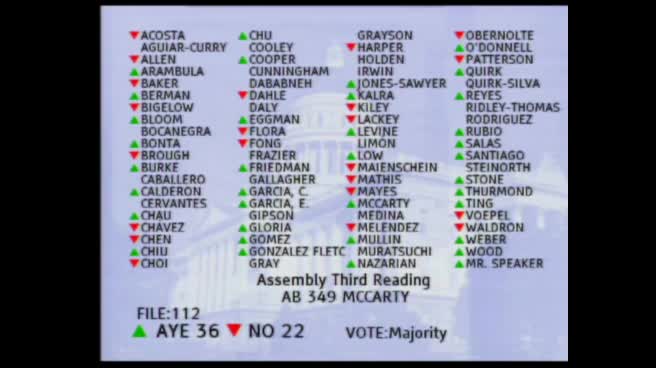 1MIN
Assembly Floor
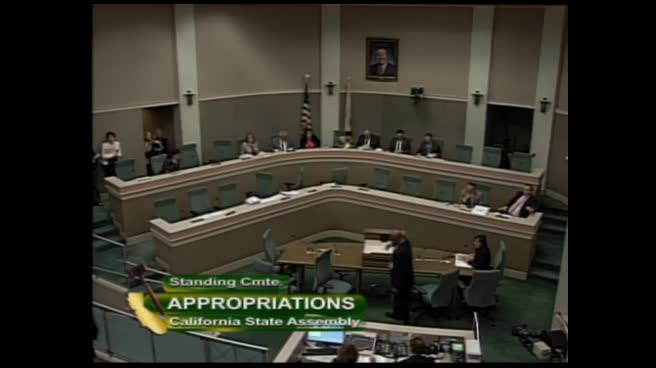 51SEC
Assembly Standing Committee on Appropriations
 2MIN
Assembly Standing Committee on Judiciary
Bill Author

Bill Co-Author(s):