AB 989: Income tax: health savings accounts.
- Session Year: 2017-2018
- House: Assembly
- Latest Version Date: 2017-04-06
The Personal Income Tax Law authorizes various deductions in computing income that is subject to tax under that law.
This bill, for taxable years beginning on or after January 1, 2019, would allow a deduction in computing adjusted gross income in connection with health savings accounts in conformity with federal law. In general, the deduction would be an amount equal to the aggregate amount paid in cash during the taxable year by, or on behalf of, an eligible individual, as defined, to a health savings account of that individual, as provided. The bill, for taxable years beginning on or after January 1, 2019, would also provide related conformity to that federal law with respect to the allowance of rollovers from Archer Medical Savings Accounts, health flexible spending arrangements, or health reimbursement accounts to a health savings account, and penalties in connection therewith. The bill would make these provisions operative on the effective date of any budget measure specifically appropriating funds to the Franchise Tax board for its costs to administer these provisions.
This bill would take effect immediately as a tax levy.
The Personal Income Tax Law authorizes various deductions in computing income that is subject to tax under that law.
This bill, for taxable years beginning on or after January 1, 2019, would allow a deduction in computing adjusted gross income in connection with health savings accounts in conformity with federal law. In general, the deduction would be an amount equal to the aggregate amount paid in cash during the taxable year by, or on behalf of, an eligible individual, as defined, to a health savings account of that individual, as provided. The bill, for taxable years beginning on or after January 1, 2019, would also provide related conformity to that federal law with respect to the allowance of rollovers from Archer Medical Savings Accounts, health flexible spending arrangements, or health reimbursement accounts to a health savings account, and penalties in connection therewith.
This bill would take effect immediately as a tax levy.
(a)Section 62 of the Internal Revenue Code, relating to adjusted gross income defined, shall apply, except as otherwise provided.
(b)Section 62(a)(2)(D) of the Internal Revenue Code, relating to certain expenses of elementary and secondary school teachers, shall not apply.
(c)Section 62(a)(21) of the Internal Revenue Code, relating to attorneys fees relating to awards to whistleblowers, shall not apply.
(d)For taxable years beginning on or after January 1, 2019, Section 62(a)(19) of the Internal Revenue Code, relating to health savings accounts, shall apply, as modified by Section 17217.
(e)The amendments made to this section by the act adding this subdivision shall become operative on the effective date of any budget measure specifically appropriating funds to the Franchise Tax Board for its costs to administer those amendments.
SEC. 2.Section 17131.4 of the Revenue and Taxation Code is amended to read:17131.4.(a)Section 106(d) of the Internal Revenue Code, relating to contributions to health savings accounts, shall not apply.
(b)This section shall apply to taxable years beginning on or after January 1, 2005, and before January 1, 2019.
(c)This section shall remain in effect only until January 1, 2024, and as of that date is repealed.
(d)The amendments made to this section by the act adding this subdivision shall become operative on the effective date of any budget measure specifically appropriating funds to the Franchise Tax Board for its costs to administer that act.
SEC. 3.Section 17131.5 of the Revenue and Taxation Code is amended to read:17131.5.(a)Section 125(d)(2)(D) of the Internal Revenue Code, relating to exception for health savings accounts, shall not apply.
(b)This section shall apply to taxable years beginning on or after January 1, 2005, and before January 1, 2019.
(c)This section shall remain in effect only until January 1, 2024, and as of that date is repealed.
(d)The amendments made to this section by the act adding this subdivision shall become operative on the effective date of any budget measure specifically appropriating funds to the Franchise Tax Board for its costs to administer that act.
SEC. 4.Section 17215.1 of the Revenue and Taxation Code is amended to read:17215.1.(a)Section 220(f)(5) of the Internal Revenue Code, relating to rollover contributions, shall not apply.
(b)This section shall apply to taxable years beginning on or after January 1, 2005, and before January 1, 2019.
(c)This section shall remain in effect only until January 1, 2024, and as of that date is repealed.
(d)The amendments made to this section by the act adding this subdivision shall become operative on the effective date of any budget measure specifically appropriating funds to the Franchise Tax Board for its costs to administer that act.
SEC. 5.Section 17215.4 of the Revenue and Taxation Code is amended to read:17215.4.(a)Section 223 of the Internal Revenue Code, relating to health savings accounts, shall not apply.
(b)This section shall apply to taxable years beginning on or after January 1, 2005, and before January 1, 2019.
(c)This section shall remain in effect only until January 1, 2024, and as of that date is repealed.
(d)The amendments made to this section by the act adding this subdivision shall become operative on the effective date of any budget measure specifically appropriating funds to the Franchise Tax Board for its costs to administer that act.
SEC. 6.Section 17217 is added to the Revenue and Taxation Code, to read:17217.For taxable years beginning on or after January 1, 2019, all of the following shall apply:
(a)Section 223 of the Internal Revenue Code, relating to health savings accounts, shall apply, except as otherwise provided.
(b)Section 223(e)(1) of the Internal Revenue Code shall be modified by substituting the phrase Section 17651 for the phrase Section 511 (relating to imposition of tax of unrelated business income of charitable, etc. organizations), contained therein.
(c)Section 223(f)(4)(A) of the Internal Revenue Code shall be modified by substituting 2.5 percent for 20 percent, contained therein.
(d)This section shall become operative on the effective date of any budget measure specifically appropriating funds to the Franchise Tax Board for its costs to administer this section.
SEC. 7.This act provides for a tax levy within the meaning of Article IV of the California Constitution and shall go into immediate effect.
(a)Section 62 of the Internal Revenue Code, relating to adjusted gross income defined, shall apply, except as otherwise provided.
(b)Section 62(a)(2)(D) of the Internal Revenue Code, relating to certain expenses of elementary and secondary school teachers, shall not apply.
(c)Section 62(a)(21) of the Internal Revenue Code, relating to attorneys fees relating to awards to whistleblowers, shall not apply.
(d)For taxable years beginning on or after January 1, 2019, Section 62(a)(19) of the Internal Revenue Code, relating to health savings accounts, shall apply, as modified by Section 17217.
SEC. 2.Section 17131.4 of the Revenue and Taxation Code is amended to read:17131.4.(a)Section 106(d) of the Internal Revenue Code, relating to contributions to health savings accounts, shall not apply.
(b)This section shall apply to taxable years beginning on or after January 1, 2005, and before January 1, 2019.
(c)This section shall remain in effect only until January 1, 2024, and as of that date is repealed.
SEC. 3.Section 17131.5 of the Revenue and Taxation Code is amended to read:17131.5.(a)Section 125(d)(2)(D) of the Internal Revenue Code, relating to the exception for health savings accounts, shall not apply.
(b)This section shall apply to taxable years beginning on or after January 1, 2005, and before January 1, 2019.
(c)This section shall remain in effect only until January 1, 2024, and as of that date is repealed.
SEC. 4.Section 17215.1 of the Revenue and Taxation Code is amended to read:17215.1.(a)Section 220(f)(5) of the Internal Revenue Code, relating to rollover contributions, shall not apply.
(b)This section shall apply to taxable years beginning on or after January 1, 2005, and before January 1, 2019.
(c)This section shall remain in effect only until January 1, 2024, and as of that date is repealed.
SEC. 5.Section 17215.4 of the Revenue and Taxation Code is amended to read:17215.4.(a)Section 223 of the Internal Revenue Code, relating to health savings accounts, shall not apply.
(b)This section shall apply to taxable years beginning on or after January 1, 2005, and before January 1, 2019.
(c)This section shall remain in effect only until January 1, 2024, and as of that date is repealed.
SEC. 6.Section 17217 is added to the Revenue and Taxation Code, to read:17217.For taxable years beginning on or after January 1, 2019, all of the following shall apply:
(a)Section 223 of the Internal Revenue Code, relating to health savings accounts, shall apply, except as otherwise provided.
(b)Section 223(e)(1) of the Internal Revenue Code shall be modified by substituting the phrase Section 17651 for the phrase Section 511 (relating to imposition of tax of unrelated business income of charitable, etc. organizations), contained therein.
(c)Section 223(f)(4)(A) of the Internal Revenue Code shall be modified by substituting 2.5 percent for 20 percent, contained therein.
SEC. 7.This act provides for a tax levy within the meaning of Article IV of the California Constitution and shall go into immediate effect.
|
Date
|
Status
|
|---|---|
| Feb 1, 2018 | From committee: Filed with the Chief Clerk pursuant to Joint Rule 56. |
| Jan 31, 2018 | Died pursuant to Art. IV, Sec. 10(c) of the Constitution. |
| May 26, 2017 | In committee: Held under submission. |
| Apr 26, 2017 | In committee: Set, first hearing. Referred to APPR. suspense file. |
| Apr 17, 2017 | Re-referred to Com. on APPR. |
| Apr 6, 2017 | Read second time and amended. |
| Apr 5, 2017 | From committee: Amend, and do pass as amended and re-refer to Com. on APPR. (Ayes 8. Noes 1.) (April 3). |
| Mar 27, 2017 | In committee: Set, first hearing. Hearing canceled at the request of author. |
| Mar 2, 2017 | Referred to Com. on REV. & TAX. |
| Feb 17, 2017 | From printer. May be heard in committee March 19. |
| Feb 16, 2017 | Read first time. To print. |
|
Date
|
Description
|
Location
|
Votes
|
|
|---|---|---|---|---|
| Apr 3, 2017 | Do pass as amended and be re-referred to the Committee on [Appropriations] | Assembly Standing Committee on Revenue and Taxation |
Passed |
This list shows positions taken on this bill by organizations on the date displayed, which is linked to the original source.
Positions by individuals are not included.
|
Organization
|
Position
|
Date
|
|---|---|---|
| California Association Of Health Underwriters | * Support | Apr 3, 2017 |
| California Association Of Joint Powers Authorities | * Support | Apr 3, 2017 |
| California Labor Federation | ** Against | Mar 30, 2017 |
| California Nurses Association | * Against | Apr 3, 2017 |
| California Pan-Ethnic Health Network | * Against | Apr 3, 2017 |
| California Professional Firefighters | ** Against | Mar 30, 2017 |
| California School Employees Assoication | ** Against | Mar 30, 2017 |
| California Tax Reform Association | * Against | Apr 3, 2017 |
| California Taxpayers Association | ** Support | Mar 30, 2017 |
| Consumers Union | ** Against | Mar 30, 2017 |
| Health Access California | * Against | Apr 3, 2017 |
| Independent Insurance Agents and Brokers of California | ** Support | Mar 30, 2017 |
| National Association of Insurance & Financial Advisors | * Support | Apr 3, 2017 |
| Western Center On Law And Poverty Inc. | * Against | Apr 3, 2017 |
Date of Hearing: April 26, 2017
ASSEMBLY COMMITTEE ON APPROPRIATIONS
Lorena Gonzalez Fletcher, Chair
ABPCA Bill Id:AB 989
Author:(Cooper) – As Amended Ver:April 6, 2017
Policy Committee: | Revenue and Taxation | Vote: | 8 - 1 |
|
|
Urgency: No State Mandated Local Program: No Reimbursable: No
SUMMARY:
This bill conforms California tax law to federal tax law with respect to health savings accounts (HSAs), with modifications, for taxable years beginning on or after January 1, 2019. The provisions of this bill become operative only when the Franchise Tax Board (FTB) receives an appropriation to administer them.
FISCAL EFFECT:
- Minor GF cost pressures for FTB’s administration of the proposed conformity to federal law. These costs only materialize if FTB receives a budget appropriation to administer the provisions of this bill, as required.
- Additional General Fund (GF) cost pressures of $50 million in 2018-19 and $85 million in 2019-20. These cost pressures reflect the potential GF revenue loss if the proposed federal conformity becomes operative once FTB receives an appropriation to administer it.
COMMENTS:
- Background. An HSA is a savings account that provides for tax-deductible deposits and allows tax-free withdrawals as long as the funds are used for qualified medical expenses. Federal law allows those with a high-deductible health plan and no other health plan to take advantage of HSAs and deduct some contributions to their HSAs from their income for federal tax purposes.
HSAs provide taxpayers considerable tax savings, but California state law does not conform to federal HSA provisions. Therefore, taxpayers who deduct their contributions to HSAs for federal tax purposes cannot take a similar deduction in calculating their state tax obligations. Moreover, any interest earned on the HSA must be added to California’s income for the purposes of determining state taxes owed, as must any employer contributions into an HSA.
In 2014, Californian taxpayers contributed $450 million to HSAs.
- Who benefits? Federal data on who utilize HSAs suggest that HSAs are not well targeted. A 2008 Government Accountability Office (GAO) found that the median income of HSA contributors was $139,000, and GAO found that many participants use the accounts as a tax shelter rather than for paying out-of-pocket medical expenses. Therefore, AB 989 may end up spending state dollars on purposes other than helping families afford medical bills.
- Previous legislation. AB 989 is similar to previous legislation that aimed to conform state law to federal law in terms of the tax treatment of HSAs. Those bills include:
AB 1129 (Gaines), in 2013/2014, died in the Assembly Committee on Revenue and Taxation.
AB 854 (Garrick), in 2011/2012, died in the Assembly Committee on Revenue and Taxation.
AB 326 (Garrick), in 2009/2010, died in the Assembly Committee on Revenue and Taxation.
SB 353 (Dutton), in 2009/2010, died in the Senate Committee on Revenue and Taxation.
SB 1262 (Aanestad), in 2009/2010, died in the Senate Committee on Public Employees and Retirement.
SBX6 13 (Dutton), in 2009/2010, died in the Senate Committee on Revenue and Taxation.
Analysis Prepared by: Luke Reidenbach / APPR. / (916) 319-2081
Date of Hearing: April 3, 2017
ASSEMBLY COMMITTEE ON REVENUE AND TAXATION
Sebastian Ridley-Thomas, Chair
ABPCA Bill Id:AB 989 (
Author:Cooper) – As Introduced Ver:February 16, 2017
Majority vote. Tax levy. Fiscal committee.
SUBJECT: Income tax: health savings accounts
SUMMARY: Conforms California tax law to federal tax law with respect to health savings accounts (HSAs) for taxable years beginning on or after January 1, 2019. Specifically, this bill:
- Conforms to Internal Revenue Code (IRC) Section 223, relating to HSAs, except as provided.
- Imposes a penalty for disqualified distributions from an HSA equal to 2½% of the distribution amount rather than 20% as provided by federal law.
- Allows eligible individuals to claim an above-the-line deduction related to their contributions to HSAs in computing their adjusted gross income (AGI).
- Excludes from an employee's gross income any contributions to an HSA made by an employer on the employee’s behalf.
- Includes HSAs as an approved option in a nontaxable cafeteria plan for employee benefits created by an employer.
- Allows a taxpayer to roll over the balance of an existing Archer medical savings account (Archer MSA) to an HSA without penalty.
- Takes effect immediately as a tax levy.
EXISTING FEDERAL LAW:
- Defines an "HSA" as a tax-exempt trust or custodial account created exclusively to pay for the qualified medical expenses of the account holder and his/her spouse and dependents.
- Allows individuals with a high deductible health plan (HDHP), and no other health plan other than a plan that provides certain permitted coverage, to establish an HSA.
- Allows a deduction for contributions to HSAs when computing AGI, if made by an eligible individual. Distributions from an HSA for qualified "medical expenses" of the eligible individual, spouse or dependents are not includible in gross income. Any balance in an HSA grows on a tax-free basis. However, distributions made for non-qualified medical expenses are includible in gross income and are also subject to an additional 20% penalty, unless the distributions are made after death, disability, or after the individual attains the age of 65.
- Defines “qualified medical expenses” as medical expenses including expenses for diagnosis, cure, mitigation, treatment, or prevention of disease, including prescription drugs, transportation primarily for and to such care, and qualified long-term care expenses.
- Specifies that medical expenses paid via distributions that are excludable from income may not be claimed as medical expenses for purposes of reporting itemized deductions.
- Excludes contributions to an HSA from income and employment taxes if made by the employer. Eligible individuals include those covered by HDHPs and, in general, those not eligible for other health coverage.
- Specifies the maximum aggregate annual contribution that may be made to an HSA by or on behalf of the eligible individual, which is $3,400 in the case of self-only coverage and $6,750 in the case of family coverage for the 2017 taxable year. Those limits are indexed for inflation. The maximum contribution is increased by $1,000 per year for catch-up contributions for persons over age 55. Contributions in excess of the maximum contribution amount are generally subject to a 6% excise tax.
- Defines a HDHP as a health plan that has an annual deductible, for the 2017 taxable year, that is at least $1,300 for self-only coverage or $2,600 for family coverage and that has an out-of-pocket expense limit that is no more than $6,550 in the case of self-only coverage and $13,100 in the case of family coverage. The maximum out-of-pocket expense limit is the most a person has to pay for covered services in a plan year. After reaching the maximum amount on deductibles, copayments, and coinsurance, the health plan pays 100% of the costs of coverage[1].
EXISTING STATE LAW does not conform to federal HSA provisions.
FISCAL EFFECT: The Franchise Tax Board estimates General Fund Revenue losses of $50 million in fiscal year (FY) 2018-19 and $95 million in FY 2019-20.
COMMENTS:
- The author has provided the following statement in support of this bill:
Healthcare expenses continue to be a primary concern for individuals and families while they are working, and into retirement. The consistent rise in premiums, deductibles and prescription drugs continue to make it difficult for individuals and families to meet their other financial obligations. Furthermore, contributions made to a HSA are not subject to “use it or lose it” and unused balances can be rolled over year-after year creating a stable and secure savings account dedicated to individual and family health care. AB 989 will provide a flexible option for workers and retired persons to take an active role to place them in the best possible position to supplement their medical expenses now and into the future.
- Supporters of this bill state that “HSAs have proven to be a great financial and medical benefit for employees and employers. California is one of five states that currently taxes contributions to HSAs. Employees throughout most of the nation enjoy both federal and state tax-free contributions to HSAs. It is very surprising that in such a high cost state as California, the same tax advantage has not been provided to California workers before now. A recent survey indicates that over 52% of all Americans use HSA dollars to pay for post-retirement medical care.”
- Opponents of the measure state that “[h]ealth savings accounts are bad health policy because they must be linked with high deductible health plans, and thus encourage underinsurance by shifting cost risks to consumers and essentially undercutting basic protections provided by comprehensive health plans. HSAs provide little assurance of affordable, quality health care to those with chronic illnesses, families with children, those on moderate incomes, or older Americans with more health-care needs.” Additionally, opponents state that HSAs are “bad tax policy because they disproportionately benefit high-income earners and are of little to no value to low- and moderate income earners, who cannot afford to set aside money for basic necessities like housing and food, let alone money to put into HSAs.”
- Committee Staff Comments:
- HSAs: Under federal law, individuals with a HDHP and no other health plan other than a plan that provides certain permitted coverage may establish an HSA. In general, HSAs are tax-exempt trusts or custodial accounts established exclusively to pay for the qualified medical expenses of the account holder, his/her spouse and dependents. Within certain limits, contributions to an HSA are deductible. An HSA is a savings account that provides for tax-deductible deposits and allows tax-free withdrawals as long as the funds are used for qualified medical expenses. In contrast, a traditional IRA allows tax-deductible contributions but subjects distributions to tax. Further, in the case of a Roth IRA, contributions to the account are taxable, but qualified distributions are tax-free. In addition, both a traditional IRA and a Roth IRA have income limitations restricting eligibility. HSAs have no income restrictions and are available to any person.
- Tax incentive for high-income taxpayers: In its 2008 report, the United States (U.S.) Government Accountability Office (GAO) found that the median income of tax filers reporting an HSA contribution in 2005 was $139,000 and 59% of those tax filers contributing to HSAs had an AGI of $60,000 or more. It appears that HSAs disproportionately benefit high-income individuals. According to the report, many HSA participants appear to be using their accounts purely or primarily as a tax shelter rather than paying for out-of-pocket health care costs. The GAO found that "a stunning 41 percent of tax filers reporting HSA contributions in 2005 did not withdraw any funds from their accounts at any time during the year." In recent Congressional testimony, the GAO stated that "this was consistent with the view held by industry experts that many HSA users are people who primarily use their HSAs as a tax-advantaged savings vehicle."
- HDHP: About one-half of the nation’s large employers are beginning to offer employees HDHPs as a way of reducing healthcare costs. HDHPs generally offer lower monthly premiums but require greater out-of-pocket costs before the insurance coverage begins. The high deductibles are designed to encourage employees to think twice before opting for expensive or unnecessary treatment and procedures. As compared to more comprehensive healthcare plans, HDHPs allow an employer to shift a large portion of the healthcare costs to their employees. HSAs are coupled with HDHPs to help offset the shift in cost that is borne by employees. By subsidizing contributions and distributions from an HSA, this bill may be encouraging more employers and employees to opt for HDHPs.
Unfortunately, HDHPs may sometimes discourage many individuals from getting necessary and even vital treatment; out-of-pocket spending limits can exceed $6,000 for individuals and $13,000 for families, which, for many Californians, is a significant percentage of their take home pay. As such, providing preferential tax treatment for HSAs does little for individuals with little or no discretionary income to contribute into their HSA. As noted earlier, the median income for tax filers reporting contributions to an HSA account is $139,000. Although any person with a HDHP can have an HSA account, HSAs are clearly utilized much more frequently by higher income earners. Therefore, higher income tax filers will likely benefit the most from this above-the-line deduction.
- California adjustments: Because California has not conformed to any of the federal HSA provisions, a taxpayer taking a deduction on his/her federal personal income tax return is required to increase his/her AGI on the California personal income tax return by the amount of that deduction. In addition, any interest earned on the HSA account must be added to the taxpayer’s AGI for California tax purposes, and any contributions made by the taxpayer’s employer to the HSA must be included in the taxpayer’s AGI.
- Penalty percentage: This bill imposes a state penalty of 2.5% for disqualified distributions. California generally imposes a lower tax rate than that of the Federal Government; for example, California generally modifies the 10% tax on nonqualified pension distributions to be a 2.5% additional tax for state purposes. The penalty is usually around 25% of the federal level. In order to be consistent with other provisions of existing law, the Committee may wish to increase the tax imposed in this bill from 2.5% to 5% for disqualified distributions.
- Implementation concerns: This bill does not address the impact of HSAs created before the effective date of this bill. According to FTB staff, nonqualified distributions from an HSA made after January 1, 2019 could be taxed twice because the contribution might have been made prior to January 1, 2019. FTB staff suggests a partial exclusion of nonqualified distributions for state tax purposes to the extent that contributions were previously nondeductible from California gross income
REGISTERED SUPPORT / OPPOSITION:
Support
California Association of Health Underwriters
California Association of Joint Powers Authorities
California Chapter of the American College of Emergency Physician
California Taxpayers Association
Independent Insurance Agents and Brokers of California
National Association of Insurance and Financial Advisors of California
Opposition
California Labor Federation
California Nurses Association
California Pan-Ethnic Health Network
California Professional Firefighters
California School Employees Assoication
California Tax Reform Association
Consumers Union
Health Access California
Western Center on Law & Poverty
Analysis Prepared by: Carlos Anguiano / REV. & TAX. / (916) 319-2098
As an example of how maximum out-of-pocket limits work, let us assume that a person has a HDHP with a $1,300 deductible, 20% co-insurance, and $4,400 out-of-pocket maximum. If the person needs a $20,000 surgery, the cost to the individual would be the $1,300 deductible plus 20% of the remaining balance of the surgery (.20 x $18,700 = $3,740), for a total cost of $5,040. However, because the person has an out-of-pocket maximum of $4,400, the insurance company covers all costs above the $4,400. ↑
Discussed in Hearing
 1H
Assembly Standing Committee on Appropriations
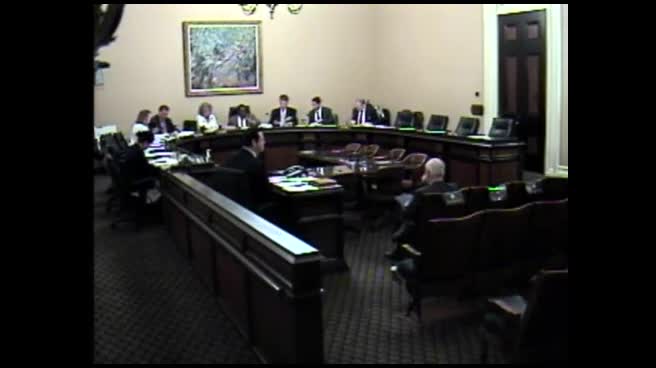 26MIN
Assembly Standing Committee on Revenue and Taxation


Bill Co-Author(s):
