AB 997: Alcoholic beverage licensees: winegrowers and beer manufacturers.
- Session Year: 2017-2018
- House: Assembly
- Latest Version Date: 2017-10-14
The Alcoholic Beverage Control Act provides for the issuance of various categories of alcoholic beverage licenses, including the imposition of fees, conditions, and restrictions in connection with the issuance of those licenses. Existing law prohibits a licensee to have upon the licensed premises any alcoholic beverages other than the alcoholic beverage for which the licensee is authorized to sell at the premises under his or her license. Existing law provides that a violation of this prohibition is punishable as a misdemeanor and authorizes the Department of Alcoholic Beverage Control to seize any alcoholic beverages found in violation of this prohibition.
This bill would authorize an exception to the above-described prohibition by allowing a licensed winegrower and a licensed beer manufacturer that holds a small beer manufacturers license, whose licensed premises of production are immediately adjacent to each other and which are not branch offices, to, with the approval of the department, share a common licensed area in which the consumption of alcoholic beverages is permitted under specified circumstances.
The Alcoholic Beverage Control Act provides for the issuance of various categories of alcoholic beverage licenses, including the imposition of fees, conditions, and restrictions in connection with the issuance of those licenses. Existing law prohibits a licensee to have upon the licensed premises any alcoholic beverages other than the alcoholic beverage for which the licensee is authorized to sell at the premises under his or her license. Existing law provides that a violation of this prohibition is punishable as a misdemeanor and authorizes the Department of Alcoholic Beverage Control to seize any alcoholic beverages found in violation of this prohibition.
This bill would authorize an exception to the above-described prohibition by allowing a winegrower and a beer manufacturer that share adjacent and contiguous licensed premises, as described, to have upon those premises, for consumption on or off either licensed premises, the wine or beer produced upon the licensed premises by the other licensee, upon approval of each licensee. a licensed winegrower and a licensed beer manufacturer that holds a small beer manufacturers license, whose licensed premises of production are immediately adjacent to each other and which are not branch offices, to, with the approval of the department, share a common licensed area in which the consumption of alcoholic beverages is permitted under specified circumstances.
The Alcoholic Beverage Control Act provides for the issuance of various categories of alcoholic beverage licenses, including the imposition of fees, conditions, and restrictions in connection with the issuance of those licenses. Existing law prohibits a licensee to have upon the licensed premises any alcoholic beverages other than the alcoholic beverage for which the licensee is authorized to sell at the premises under his or her license. Existing law provides that a violation of this prohibition is punishable as a misdemeanor and authorizes the Department of Alcoholic Beverage Control to seize any alcoholic beverages found in violation of this prohibition.
This bill would authorize an exception to the above-described prohibition by allowing a winegrower and a beer manufacturer that share adjacent or adjoining licensed premises and contiguous licensed premises, as described, to have upon those premises, for consumption on or off either licensed premises, the wine or beer produced upon the licensed premises by the other licensee, upon approval of each licensee.
The Alcoholic Beverage Control Act provides for the issuance of various categories of alcoholic beverage licenses, including the imposition of fees, conditions, and restrictions in connection with the issuance of those licenses. Existing law prohibits a licensee to have upon the licensed premises any alcoholic beverages other than the alcoholic beverage for which the licensee is authorized to sell at the premises under his or her license. Existing law provides that a violation of this prohibition is punishable as a misdemeanor and authorizes the Department of Alcoholic Beverage Control to seize any alcoholic beverages found in violation of this prohibition.
This bill would authorize an exception to the above-described prohibition by allowing a winegrower and a beer manufacturer that share adjacent or adjoining licensed premises to have upon those premises, and sell for consumption on or off either licensed premises, the wine or beer produced upon the licensed premises by the other licensee.
(a)Except as provided in subdivisions (b) and (c), it is unlawful for any person or licensee to have upon any premises for which a license has been issued any alcoholic beverages other than the alcoholic beverage which the licensee is authorized to sell at the premises under his or her license. It shall be presumed that all alcoholic beverages found or located upon premises for which licenses have been issued belong to the person or persons to whom the licenses were issued. Every person violating the provisions of this section is guilty of a misdemeanor. The department may seize any alcoholic beverages found in violation of this section.
(b)A bona fide public eating place for which an on-sale beer and wine license has been issued may have upon the premises brandy, rum, or liqueurs for use solely for cooking purposes.
(c)(1)A licensed winegrower and a licensed beer manufacturer that holds a small beer manufacturers license, whose licensed premises of production are immediately adjacent to each other and which are not branch offices, may, with the approval of the department and under such conditions as the department may require, share a common licensed area in which the consumption of alcoholic beverages is permitted, only under all of the following circumstances:
(A)The shared common licensed area is adjacent and contiguous to the licensed premises of both the licensed winegrower and the licensed beer manufacturer that holds a small beer manufacturers license.
(B)The licensed premises of both the licensed winegrower and the licensed beer manufacturer that holds a small beer manufacturers license are not branch offices.
(C)The shared common licensed area must be readily accessible from the premises of both the licensed winegrower and the licensed beer manufacturer without the necessity of using a public street, alley, or sidewalk.
(D)Except as otherwise authorized by this division, the alcoholic beverages that may be consumed in the shared common licensed area must be purchased by the consumer only from either the licensed winegrower or the licensed beer manufacturer.
(E)Both the licensed winegrower and the licensed beer manufacturer shall be jointly responsible for compliance with the provisions of this division and for any violations that may occur within the shared common licensed area.
(2)Nothing in this subdivision is intended to authorize either the licensed winegrower or the licensed beer manufacturer to sell, furnish, give, or have upon their respective licensed premises any alcoholic beverages, or to engage in any other activity, not otherwise authorized by this division.
(a)Except as provided in subdivisions (b) and (c), it is unlawful for any person or licensee to have upon any premises for which a license has been issued any alcoholic beverages other than the alcoholic beverage which the licensee is authorized to sell at the premises under his or her license. It shall be presumed that all alcoholic beverages found or located upon premises for which licenses have been issued belong to the person or persons to whom the licenses were issued. Every person violating the provisions of this section is guilty of a misdemeanor. The department may seize any alcoholic beverages found in violation of this section.
(b)A bona fide public eating place for which an on-sale beer and wine license has been issued may have upon the premises brandy, rum, or liqueurs for use solely for cooking purposes.
(c)A winegrower and a beer manufacturer that share adjacent and contiguous licensed premises, and access between the licensed premises is adequate and available for general public use without the necessity of using a public street, alley, or sidewalk, may have upon those premises, for consumption on or off either licensed premises, the wine or beer produced upon the licensed premises by the other licensee, upon approval of each licensee.(c)(1)A licensed winegrower and a licensed beer manufacturer that holds a small beer manufacturers license, whose licensed premises of production are immediately adjacent to each other and which are not branch offices, may, with the approval of the department and under such conditions as the department may require, share a common licensed area in which the consumption of alcoholic beverages is permitted, only under all of the following circumstances:
(A)The shared common licensed area is adjacent and contiguous to the licensed premises of both the licensed winegrower and the licensed beer manufacturer that holds a small beer manufacturers license.
(B)The licensed premises of both the licensed winegrower and the licensed beer manufacturer that holds a small beer manufacturers license are not branch offices.
(C)The shared common licensed area must be readily accessible from the premises of both the licensed winegrower and the licensed beer manufacturer without the necessity of using a public street, alley, or sidewalk.
(D)Except as otherwise authorized by this division, the alcoholic beverages that may be consumed in the shared common licensed area must be purchased by the consumer only from either the licensed winegrower or the licensed beer manufacturer.
(E)Both the licensed winegrower and the licensed beer manufacturer shall be jointly responsible for compliance with the provisions of this division and for any violations that may occur within the shared common licensed area.
(2)Nothing in this subdivision is intended to authorize either the licensed winegrower or the licensed beer manufacturer to sell, furnish, give, or have upon their respective licensed premises any alcoholic beverages, or to engage in any other activity, not otherwise authorized by this division.
(a)Except as provided in subdivisions (b) and (c), it is unlawful for any person or licensee to have upon any premises for which a license has been issued any alcoholic beverages other than the alcoholic beverage which the licensee is authorized to sell at the premises under his or her license. It shall be presumed that all alcoholic beverages found or located upon premises for which licenses have been issued belong to the person or persons to whom the licenses were issued. Every person violating the provisions of this section is guilty of a misdemeanor. The department may seize any alcoholic beverages found in violation of this section.
(b)A bona fide public eating place for which an on-sale beer and wine license has been issued may have upon the premises brandy, rum, or liqueurs for use solely for cooking purposes.
(c)A winegrower and a beer manufacturer that share adjacent or adjoining licensed premises and contiguous licensed premises, and access between the licensed premises is adequate and available for general public use without the necessity of using a public street, alley, or sidewalk, may have upon those premises, for consumption on or off either licensed premises, the wine or beer produced upon the licensed premises by the other licensee, upon approval of each licensee.
(a)Except as provided in subdivisions (b) and (c), it is unlawful for any person or licensee to have upon any premises for which a license has been issued any alcoholic beverages other than the alcoholic beverage which the licensee is authorized to sell at the premises under his or her license. It shall be presumed that all alcoholic beverages found or located upon premises for which licenses have been issued belong to the person or persons to whom the licenses were issued. Every person violating the provisions of this section is guilty of a misdemeanor. The department may seize any alcoholic beverages found in violation of this section.
(b)A bona fide public eating place for which an on-sale beer and wine license has been issued may have upon the premises brandy, rum, or liqueurs for use solely for cooking purposes.
(c)A winegrower and a beer manufacturer that share adjacent or adjoining licensed premises may have upon those premises, and sell for consumption on or off either licensed premises, the wine or beer produced upon the licensed premises by the other licensee.
(a)Except as provided in subdivision (b), subdivisions (b) and (c), it is unlawful for any person or licensee to have upon any premises for which a license has been issued any alcoholic beverages other than the alcoholic beverage which the licensee is authorized to sell at the premises under his or her license. It shall be presumed that all alcoholic beverages found or located upon premises for which licenses have been issued belong to the person or persons to whom the licenses were issued. Every person violating the provisions of this section is guilty of a misdemeanor. The department may seize any alcoholic beverages found in violation of this section.
(b)A bona fide public eating place for which an on-sale beer and wine license has been issued may have upon the premises brandy, rum, or liqueurs for use solely for cooking purposes.
(c)A winegrower and a beer manufacturer that share adjacent or adjoining licensed premises may have upon those premises, and sell for consumption on or off either licensed premises, the wine or beer produced upon the licensed premises by the other licensee.
|
Date
|
Status
|
|---|---|
| Oct 14, 2017 | Chaptered by Secretary of State - Chapter 788, Statutes of 2017. |
| Oct 14, 2017 | Approved by the Governor. |
| Sep 12, 2017 | Enrolled and presented to the Governor at 2:30 p.m. |
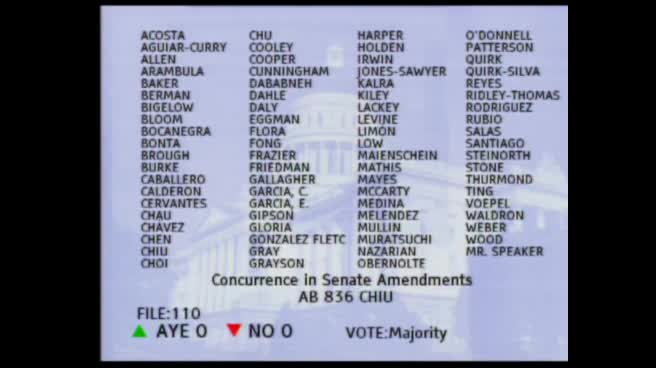
| Sep 5, 2017 | Senate amendments concurred in. To Engrossing and Enrolling. (Ayes 77. Noes 0.). |
| Aug 31, 2017 | In Assembly. Concurrence in Senate amendments pending. May be considered on or after September 2 pursuant to Assembly Rule 77. |
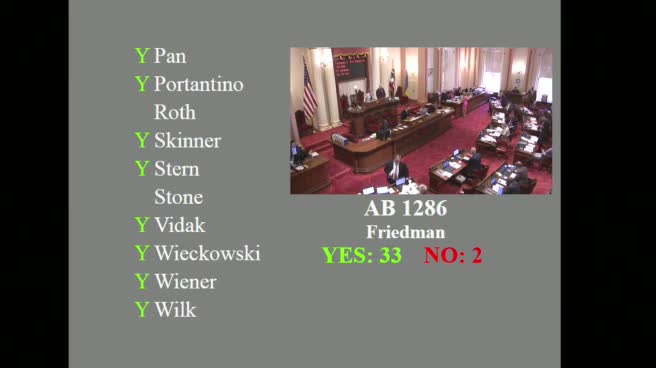
| Aug 31, 2017 | Read third time. Passed. Ordered to the Assembly. |
| Jul 11, 2017 | Read second time. Ordered to third reading. |
| Jul 10, 2017 | From committee: Be ordered to second reading pursuant to Senate Rule 28.8. |
| Jul 3, 2017 | From committee chair, with author's amendments: Amend, and re-refer to committee. Read second time, amended, and re-referred to Com. on APPR. |
| Jun 19, 2017 | Read second time and amended. Re-referred to Com. on APPR. |
| Jun 15, 2017 | From committee: Amend, and do pass as amended and re-refer to Com. on APPR. (Ayes 12. Noes 0.) (June 13). |
| May 18, 2017 | Referred to Com. on G.O. |
| May 4, 2017 | In Senate. Read first time. To Com. on RLS. for assignment. |
| May 4, 2017 | Read third time. Passed. Ordered to the Senate. (Ayes 76. Noes 0. Page 1393.) |
| Apr 27, 2017 | Read second time. Ordered to Consent Calendar. |
| Apr 26, 2017 | From committee: Do pass. To Consent Calendar. (Ayes 16. Noes 0.) (April 26). |
| Apr 6, 2017 | Re-referred to Com. on APPR. |
| Apr 5, 2017 | Read second time and amended. |
| Apr 4, 2017 | From committee: Amend, and do pass as amended and re-refer to Com. on APPR. (Ayes 20. Noes 0.) (March 29). |
| Mar 2, 2017 | Referred to Com. on G.O. |
| Feb 17, 2017 | From printer. May be heard in committee March 19. |
| Feb 16, 2017 | Read first time. To print. |
|
Date
|
Description
|
Location
|
Votes
|
|
|---|---|---|---|---|
| Sep 5, 2017 | AB 997 AGUIAR-CURRY Concurrence in Senate Amendments | Assembly Floor |
Passed |
|
| Aug 31, 2017 | Assembly 3rd Reading AB997 Aguiar-Curry By Berryhill | Senate Floor |
Passed |
|
| Jun 13, 2017 | Do pass as amended, but first amend, and re-refer to the Committee on [Appropriations] | Senate Standing Committee on Governmental Organization |
Passed |
|
| May 4, 2017 | AB 997 AGUIAR-CURRY Consent Calendar Second Day Regular Session | Assembly Floor |
Passed |
|
| Apr 26, 2017 | Do pass. To Consent Calendar. | Assembly Standing Committee on Appropriations |
Passed |
|
| Mar 29, 2017 | Do pass as amended and be re-referred to the Committee on [Appropriations] | Assembly Standing Committee on Governmental Organization |
Passed |
This list shows positions taken on this bill by organizations on the date displayed, which is linked to the original source.
Positions by individuals are not included.
|
Organization
|
Position
|
Date
|
|---|---|---|
| Alcohol Justice | ** Against | Jul 12, 2017 |
| Berryessa Brewery and Winery | * Support | Jun 13, 2017 |
| California Association Of Winegrape Growers | ** Support | Jul 12, 2017 |
| Wine Institute | ** Support | Jul 12, 2017 |
CONCURRENCE IN SENATE AMENDMENTS
CSA1 Bill Id:AB 997
Author:(Aguiar-Curry)
As Amended Ver:July 3, 2017
Majority vote
ASSEMBLY: | 76-0 | (May 04, 2017) | SENATE: | 40-0 | (August 31, 2017) |
Original Committee Reference: G.O.
SUMMARY: Allows a licensed winegrower and a licensed small beer manufacturer, whose premises of production are immediately adjacent to each other, to share a common area in which the consumption of alcoholic beverages is permitted, under specified circumstances.
The Senate amendments:
- Clarify that a licensed winegrower and a licensed beer manufacturer that holds a small beer manufacturer’s license, whose licensed premises of production are immediately adjacent to each other and which are not branch offices, to, with the approval of Alcoholic Beverage Control (ABC), share a common licensed area in which the consumption of alcoholic beverages is permitted under specified circumstances.
- State the shared common licensed area must be readily accessible from the premises of both the licensed winegrower and the licensed beer manufacturer without the necessity of using a public street, alley, or sidewalk.
EXISTING LAW:
- Establishes ABC and grants it exclusive authority to administer the provisions of the Alcoholic Beverage Control Act (Act) in accordance with laws enacted by the Legislature. This involves licensing individuals and businesses associated with the manufacture, importation and sale of alcoholic beverages in this state and the collection of license fees or occupation taxes for this purpose.
- Existing law, known as the "Tied-house law," separates the alcoholic beverage industry into three component parts, or tiers, of manufacturer (including breweries, wineries and distilleries), wholesaler, and retailer (both on-sale and off-sale).
- Allows a licensed beer manufacturer to apply to ABC for a brewery event permit that grants the licensee the privilege of selling beer it produces for consumption on property contiguous and adjacent to its licensed premises for special events (up to four such events in a calendar year).
- Authorizes a licensed beer or wine manufacturer, at the licensed premises of production, to sell to consumers for consumption off the premises beer or wine that is produced and bottled by, or produced and packaged for, that manufacturer.
- Authorizes licensed winegrowers to conduct wine tastings featuring their products either on or off the winegrower's premises, as provided for in rules and regulations adopted by ABC.
- Prohibits a licensee to have upon the licensed premises any alcoholic beverages other than the alcoholic beverage for which the licensee is authorized to sell at the premises under his or her license.
- Defines an "on-sale" license as authorizing the sale of all types of alcoholic beverages: namely, beer, wine and distilled spirits, for consumption on the premises (such as at a restaurant or bar). An "off-sale" license authorizes the sale of all types of alcoholic beverages for consumption off the premises in original, sealed containers.
FISCAL EFFECT: According to the Senate Appropriations Committee, pursuant to Senate Rule 28.8, negligible state costs.
COMMENTS: This bill, as amended in the Senate is consistent with Assembly actions.
Purpose of the bill: According to the author's office, "Californians and tourists have long been attracted to our state by the wine and craft beer industry. Visitors annually make significant contributions to the state's economy through purchasing alcohol products and spending money on lodging, food, and local activities. Wineries typically offer tastings to provide customers with the experience of trying the wine and learning about its production before purchasing. Similarly, California breweries and micro-breweries attract visitors to taste their different varieties of beer and see the brewing process for different brews first-hand."
The author notes that, "when a winery and a brewery are located in the same structure or adjacent to one another, licensing laws restrict consumers from enjoying both the wine and the beer produced there in one shared space. AB 997 will allow visitors to a collocated brewery and winery to consume products made by either location in one shared space. This will encourage customers to taste and enjoy more California-made beer and wine products, and incentivize tourism and sales in the surrounding areas."
As an example of the need for this bill, the author's office points out that the Berryessa Brewing Company and Berryessa Gap Winery are both located at 27260 Hwy. 128, Winters, CA. However, visitors to this address must elect to visit either the brewery or the winery to consume either beer or wine.
ABC licenses: ABC issues licenses in California for the legal manufacture and sale of alcoholic beverages. There are more than 80 different types of ABC licenses authorized in California. Each license has its own set of privileges and obligations specific to the category of license involved. The privileges of a license are expressly limited to those conferred by the specific type of license involved for the premises and time period covered by the license.
Under existing law, it is generally illegal for any licensed business to sell alcohol or have any type of alcohol on their premise that is not included in that license type. For example, if a restaurant obtains a license for beer and wine sales, the presence of distilled spirits on-site would be illegal. The law presumes that all alcoholic beverages found at licensed premises belong to the licensee, and therefore the person who obtained the license would be guilty of a misdemeanor.
In addition to issuing licenses for the sale of alcohol at restaurants, bars, businesses, and events, the ABC also provides licenses to manufacturers of beer, wine, brandy, and spirits. Specifically, a licensed beer manufacturer with a Type 01 or Type 23 license is authorized to sell beer to consumers for consumption on or off the manufacturer's licensed premises. Similarly, a winegrower with a Type 02 license is authorized to sell wine to consumers for consumption on or off the manufacturer’s licensed premises. In addition to other privileges, these licensees may conduct tastings under specified conditions.
This bill allows for a licensed winegrower (Type 02) and a licensed small beer manufacturer (Type 23), whose premises of production are immediately adjacent to each other, to share a common area in which the consumption of alcoholic beverages is permitted, under specified circumstances.
Tied-house laws: The "Tied-house" or "Three-tier" system, separates the alcoholic beverage industry into three component parts of the manufacturer (the first tier), wholesaler (the second tier), and retailer (the third tier). The original policy rationale for this body of law was to: (1) promote the state's interest in an orderly market; (2) prohibit the vertical integration and dominance by a single producer in the marketplace; (3) prohibit commercial bribery and protect the public from predatory marketing practices; and, (4) discourage and/or prevent the intemperate use of alcoholic beverages.
Exceptions to these restrictions have been enacted throughout the years in those specific instances where the Legislature determined that the public's interests are protected.
In support: The California Association of Winegrape Growers state that, "unfortunately, when a winery and a brewery are located adjacent to one another or in the same facility, licensing laws prohibit enthusiasts from tasting and enjoying wine and the beer produced there in one shared space."
In opposition: Alcohol Justice is opposed to this bill because, "separate licenses for on-sale consumption deserve to be separated, as liability for over serving is the duty of each licensee and cannot be monitored when sharing patrons."
Prior Legislation: AB 776 (Cooper), Chapter 519, Statutes of 2015, allowed a licensed beer manufacturer to apply to the ABC for a brewery event permit that grants the licensee the privilege of selling beer it produces for consumption on property contiguous and adjacent to its licensed premises for special events (up to four such events in a calendar year).
AB 2004 (Chesbro), Chapter 806, Statutes of 2014, authorized a licensed beer manufacturer to apply to the Department of ABC for a certified farmers' market beer sales permit, which allows the licensee to sell packaged beer at a farmers' market, including any specified area, under certain conditions. The bill also allowed a beer manufacturer to sell beer and wine on their own premises during private events.
AB 2134 (Chesbro), Chapter 149, Statutes of 2010, allowed licensed beer manufacturers to conduct and participates in events called "Beer Maker Dinners" for consumers held at an on-sale retail licensed premise.
AB 605 (Portantino), Chapter 230, Statutes of 2010, authorized, among other things, the ABC to issue to the holder of an off-sale retail license an instructional tasting license for the purpose of furnishing tastings of alcoholic beverages to consumers, subject to certain limitations.
AB 2004 (Evans), Chapter 127, Statutes of 2008, authorized, among other things, the consumption of wine on a winery's licensed premises in order to accommodate visitors interested in pairing wine with food in a picnic setting.
AB 111 (Koretz), Chapter 62, Statutes of 2005, enabled licensees with on-sale general licenses to apply to Department of ABC for an event permit which would authorize the licensee to sell beer, wine or other distilled spirits for consumption on property adjacent to the licensed premises or property owned or controlled by the licensee up to four times per year, as specified.
SB 113 (Thompson), Chapter 238, Statutes of 1993, permitted a licensed winegrower to sell wine and brandy to consumers for consumption off the premises or for consumption at a restaurant located at the winery or immediately contiguous to it.
Analysis Prepared by: Eric Johnson / G.O. / (916) 319-2531 FN: 0001617
Office of Senate Floor Analyses (916) 651-1520 Fax: (916) 327-4478 | AB |
THIRD READING
Bill No: AB 997
:
SENATE GOVERNMENTAL ORG. COMMITTEE: 12-0, 6/13/17
AYES: Dodd, Bradford, Cannella, Gaines, Galgiani, Glazer, Hill, Hueso, Lara, Mendoza, Portantino, Vidak
NO VOTE RECORDED: Berryhill
SENATE APPROPRIATIONS COMMITTEE: Senate Rule 28.8
ASSEMBLY FLOOR: 76-0, 5/4/17 (Consent) - See last page for vote
DIGEST: This bill allows a licensed winegrower and a licensed small beer manufacturer, whose premises of production are immediately adjacent to each other, to share a common area in which the consumption of alcoholic beverages is permitted, under specified circumstances.
ANALYSIS:
Existing law:
- Establishes the Department of Alcoholic Beverage Control (ABC) and grants it exclusive authority to administer the provisions of the ABC Act in accordance with laws enacted by the Legislature.
- Provides, under the ABC Act, for the issuance of various alcoholic beverage licenses, including the imposition of fees, conditions, and restrictions in connection with the issuance of those licenses.
- Separates the alcoholic beverage industry into three component parts, or tiers, of the manufacturer (including breweries, wineries, and distilleries), wholesaler, and retailer (both on-sale and off-sale). This is referred to as the “tied-house” law or “three-tier” system.
- Specifies, among other privileges, that a licensed beer manufacturer may, at the licensed premises of production, sell to consumers for consumption off or on the premises beer that is produced and bottled by, or produced and packaged for, that manufacturer.
- Authorizes a licensed beer manufacturer to conduct tastings of beer produced or bottled by, or produced or bottled for, the licensee, on or off the licensee’s premises, as specified.
- Allows a licensed beer manufacturer to apply to the Department of ABC for a brewery event permit that grants the licensee the privilege of selling beer it produces for consumption on property contiguous and adjacent to its licensed premises for special events (up to four such events in a calendar year).
- Specifies, among other privileges, that a licensed winegrower may sell to consumers for consumption off or on the premises wine which is produced and bottled by, or produced and packaged for, that manufacturer.
- Authorizes a licensed winegrower to conduct winetastings of wine produced or bottled by, or produced and packaged for, the licensee, either on or off the winegrower’s premises, as specified.
- Prohibits, in general, a licensee to have upon its licensed premises any alcoholic beverages other than the alcoholic beverages for which the licensee is authorized to sell at the premises under his or her license, and provides that a violation of this prohibition is punishable as a misdemeanor and authorizes the Department of ABC to seize any alcoholic beverages found in violation of this prohibition.
- Allows a bona fide public eating place for which an on-sale beer and wine license has been issued to have upon the premises brandy, rum, or liqueurs for use solely for cooking purposes.
- Defines an "on-sale" license as authorizing the sale of all types of alcoholic beverages: namely, beer, wine and distilled spirits, for consumption on the premises (such as at a restaurant or bar). Defines an "off-sale" license as authorizing the sale of all types of alcoholic beverages for consumption off the premises in original, sealed containers.
This bill allows a licensed winegrower and a licensed beer manufacturer that holds a small beer manufacturer’s license, whose licensed premises of production are immediately adjacent to each other, to, with the approval of the Department of ABC, share a common licensed area in which the consumption of alcoholic beverages is permitted, only under all of the following circumstances:
- The shared common licensed area is adjacent and contiguous to the licensed premises of both the licensed winegrower and the licensed beer manufacturer that holds a small beer manufacturer’s license.
- The licensed premises of both the licensed winegrower and the licensed beer manufacturer that holds a small beer manufacturer’s license are not branch offices.
- The shared common licensed area must be readily accessible from the premises of both the licensed winegrower and the licensed beer manufacturer without the necessity of using a public street, alley, or sidewalk.
- Except as otherwise authorized, the alcoholic beverages that may be consumed in the shared common licensed area must be purchased by the consumer only from either the licensed winegrower or the licensed beer manufacturer.
- Both the licensed winegrower and the licensed beer manufacturer shall be jointly responsible for compliance with the provisions of this division and for any violations that may occur within the shared common licensed area.
Background
Purpose of the bill. According to the author's office, “Californians and tourists have long been attracted to our state by the wine and craft beer industry. Visitors annually make significant contributions to the state’s economy through purchasing alcohol products and spending money on lodging, food, and local activities. Wineries typically offer tastings to provide customers with the experience of trying the wine and learning about its production before purchasing. Similarly, California breweries and micro-breweries attract visitors to taste their different varieties of beer and see the brewing process for different brews first-hand.”
The author notes that, “when a winery and a brewery are located in the same structure or adjacent to one another, licensing laws restrict consumers from enjoying both the wine and the beer produced there in one shared space. AB 997 will allow visitors to a collocated brewery and winery to consume products made by either location in one shared space. This will encourage customers to taste and enjoy more California-made beer and wine products, and incentivize tourism and sales in the surrounding areas.”
As an example of the need for this bill, the author’s office points out that the Berryessa Brewing Company and Berryessa Gap Winery are both located at 27260 Hwy. 128, Winters, CA. However, visitors to this address must elect to visit either the brewery or the winery to consume either beer or wine.
ABC licenses. The Department of ABC issues licenses in California for the legal manufacture and sale of alcoholic beverages. There are more than 80 different types of ABC licenses authorized in California. Each license has its own set of privileges and obligations specific to the category of license involved. The privileges of a license are expressly limited to those conferred by the specific type of license involved for the premises and time period covered by the license.
Under existing law, it is generally illegal for any licensed business to sell alcohol or have any type of alcohol on their premise that is not included in that license type. For example, if a restaurant obtains a license for beer and wine sales, the presence of distilled spirits on-site would be illegal. The law presumes that all alcoholic beverages found at licensed premises belong to the licensee, and therefore the person who obtained the license would be guilty of a misdemeanor.
In addition to issuing licenses for the sale of alcohol at restaurants, bars, businesses, and events, the Department of ABC also provides licenses to manufacturers of beer, wine, brandy, and spirits. Specifically, a licensed beer manufacturer with a Type 01 or Type 23 license is authorized to sell beer to consumers for consumption on or off the manufacturer’s licensed premises. Similarly, a winegrower with a Type 02 license is authorized to sell wine to consumers for consumption on or off the manufacturer’s licensed premises. In addition to other privileges, these licensees may conduct tastings under specified conditions.
This bill allows for a licensed winegrower (Type 02) and a licensed small beer manufacturer (Type 23), whose premises of production are immediately adjacent to each other, to share a common area in which the consumption of alcoholic beverages is permitted, under specified circumstances.
Tied-house laws. The "tied-house” or "three-tier" system, separates the alcoholic beverage industry into three component parts of the manufacturer (the first tier), wholesaler (the second tier), and retailer (the third tier). The original policy rationale for this body of law was to: (1) promote the state's interest in an orderly market; (2) prohibit the vertical integration and dominance by a single producer in the marketplace; (3) prohibit commercial bribery and protect the public from predatory marketing practices; and, (4) discourage and/or prevent the intemperate use of alcoholic beverages.
Exceptions to these restrictions have been enacted throughout the years in those specific instances where the Legislature determined that the public's interests are protected.
Related/Prior Legislation
AB 776 (Cooper, Chapter 519, Statutes of 2015) allowed a licensed beer manufacturer to apply to the Department of ABC for a brewery event permit that grants the licensee the privilege of selling beer it produces for consumption on property contiguous and adjacent to its licensed premises for special events (up to four such events in a calendar year).
AB 2004 (Chesbro, Chapter 806, Statutes of 2014) authorized a licensed beer manufacturer to apply to the Department of ABC for a certified farmers' market beer sales permit, which allows the licensee to sell packaged beer at a farmers' market, including any specified area, under certain conditions. The bill also allowed a beer manufacturer to sell beer and wine on their own premises during private events.
AB 2134 (Chesbro, Chapter 149, Statutes of 2010) allowed licensed beer manufacturers to conduct and participates in events called "Beer Maker Dinners" for consumers held at an on-sale retail licensed premise.
AB 605 (Portantino, Chapter 230, Statutes of 2010) authorized, among other things, the Department of ABC to issue to the holder of an off-sale retail license an instructional tasting license for the purpose of furnishing tastings of alcoholic beverages to consumers, subject to certain limitations.
AB 2004 (Evans, Chapter 127, Statutes of 2008) authorized, among other things, the consumption of wine on a winery’s licensed premises in order to accommodate visitors interested in pairing wine with food in a picnic setting.
AB 111 (Koretz, Chapter 62, Statutes of 2005) enabled licensees with on-sale general licenses to apply to Department of ABC for an event permit which would authorize the licensee to sell beer, wine or other distilled spirits for consumption on property adjacent to the licensed premises or property owned or controlled by the licensee up to four times per year, as specified.
SB 113 (Thompson, Chapter 238, Statutes of 1993) permitted a licensed
winegrower to sell wine and brandy to consumers for consumption off the premises or for consumption at a restaurant located at the winery or immediately contiguous to it.
FISCAL EFFECT: Appropriation: Fiscal Com.: Local:
California Association of Winegrape Growers
Wine Institute
OPPOSITION: (Verified 7/10/17)
Alcohol Justice
ARGUMENTS IN SUPPORT: The California Association of Winegrape Growers state that, “unfortunately, when a winery and a brewery are located adjacent to one another or in the same facility, licensing laws prohibit enthusiasts from tasting and enjoying wine and the beer produced there in one shared space.”
ARGUMENTS IN OPPOSITION: Alcohol Justice is opposed to AB 997 because, “separate licenses for on-sale consumption deserve to be separated, as liability for over serving is the duty of each licensee and cannot be monitored when sharing patrons.”
ASSEMBLY FLOOR: 76-0, 5/4/17
AYES: Acosta, Aguiar-Curry, Arambula, Baker, Berman, Bloom, Bocanegra, Bonta, Brough, Burke, Caballero, Calderon, Cervantes, Chau, Chávez, Chen, Chiu, Choi, Chu, Cooley, Cooper, Cunningham, Dababneh, Dahle, Daly, Eggman, Flora, Fong, Frazier, Friedman, Gallagher, Eduardo Garcia, Gipson, Gloria, Gomez, Gonzalez Fletcher, Gray, Grayson, Harper, Holden, Irwin, Jones-Sawyer, Kalra, Kiley, Lackey, Levine, Limón, Low, Maienschein, Mathis, Mayes, McCarty, Medina, Melendez, Mullin, Muratsuchi, Nazarian, Obernolte, O'Donnell, Quirk, Quirk-Silva, Reyes, Ridley-Thomas, Rodriguez, Rubio, Salas, Santiago, Steinorth, Mark Stone, Thurmond, Ting, Voepel, Waldron, Weber, Wood, Rendon
NO VOTE RECORDED: Travis Allen, Bigelow, Cristina Garcia, Patterson
7/12/17 8:47:38
**** END ****
SENATE COMMITTEE ON GOVERNMENTAL ORGANIZATION
Senator Bill Dodd
Chair
2017 - 2018 Regular
Bill No: 997 Hearing Date: 6/13/2017
Author: | |||
Version: | 4/5/2017 Amended | ||
Urgency: | No | Fiscal: | Yes |
Consultant: | Naomi Padron | ||
SUBJECT: Alcoholic beverage licensees: winegrowers and beer manufacturers
DIGEST: This bill allows a winegrower and a beer manufacturer that share adjacent or adjoining licensed premises to have upon those premises, for consumption on or off licensed premises, the wine or beer produced upon the licensed premises by the other licensee.
ANALYSIS:
Existing law:
- Establishes the Department of Alcoholic Beverage Control (ABC) and grants it exclusive authority to administer the provisions of the ABC Act in accordance with laws enacted by the Legislature.
- Provides, under the ABC Act, for the issuance of various alcoholic beverage licenses, including the imposition of fees, conditions, and restrictions in connection with the issuance of those licenses.
- Separates the alcoholic beverage industry into three component parts, or tiers, of the manufacturer (including breweries, wineries, and distilleries), wholesaler, and retailer (both on-sale and off-sale). This is referred to as the “tied-house” law or “three-tier” system.
- Specifies, among other privileges, that a licensed beer manufacturer may, at the licensed premises of production, sell to consumers for consumption off or on the premises beer that is produced and bottled by, or produced and packaged for, that manufacturer.
- Authorizes a licensed beer manufacturer to conduct tastings of beer produced or bottled by, or produced or bottled for, the licensee, on or off the licensee’s premises, as specified.
- Allows a licensed beer manufacturer to apply to the Department of ABC for a brewery event permit that grants the licensee the privilege of selling beer it produces for consumption on property contiguous and adjacent to its licensed premises for special events (up to four such events in a calendar year).
- Specifies, among other privileges, that a licensed winegrower may sell to consumers for consumption off or on the premises wine which is produced and bottled by, or produced and packaged for, that manufacturer.
- Authorizes a licensed winegrower to conduct winetastings of wine produced or bottled by, or produced and packaged for, the licensee, either on or off the winegrower’s premises, as specified.
- Prohibits, in general, a licensee to have upon its licensed premises any alcoholic beverages other than the alcoholic beverages for which the licensee is authorized to sell at the premises under his or her license, and provides that a violation of this prohibition is punishable as a misdemeanor and authorizes the Department of ABC to seize any alcoholic beverages found in violation of this prohibition.
- Allows a bona fide public eating place for which an on-sale beer and wine license has been issued to have upon the premises brandy, rum, or liqueurs for use solely for cooking purposes.
- Defines an "on-sale" license as authorizing the sale of all types of alcoholic beverages: namely, beer, wine and distilled spirits, for consumption on the premises (such as at a restaurant or bar).
- Defines an "off-sale" license as authorizing the sale of all types of alcoholic beverages for consumption off the premises in original, sealed containers.
This bill allows a winegrower and a beer manufacturer that share adjacent or adjoining licensed premises to have upon those premises, for consumption on or off licensed premises, the wine or beer produced upon the licensed premises by the other licensee.
Background
Purpose of the bill. According to the author's office, “Californians and tourists have long been attracted to our state by the wine and craft beer industry. Visitors annually make significant contributions to the state’s economy through purchasing alcohol products and spending money on lodging, food, and local activities. Wineries typically offer tastings to provide customers with the experience of trying the wine and learning about its production before purchasing. Similarly, California breweries and micro-breweries attract visitors to taste their different varieties of beer and see the brewing process for different brews first-hand.”
The author notes that, “when a winery and a brewery are located in the same structure or adjacent to one another, licensing laws restrict consumers from enjoying both the wine and the beer produced there in one shared space. AB 997 will allow visitors to a collocated brewery and winery to consume products made by either location in one shared space. This will encourage customers to taste and enjoy more California-made beer and wine products, and incentivize tourism and sales in the surrounding areas.”
Existing law generally prohibits a licensee to have upon his or her premises any alcoholic beverages other than the alcoholic beverage for which the licensee is authorized to sell at the premises under his or her license. The author’s office states that, “this creates a significant barrier to the enjoyment of and exposure to different California-made alcoholic products.”
As an example of the need for this bill, the author’s office points out that the Berryessa Brewing Company and Berryessa Gap Winery are both located at 27260 Hwy. 128, Winters, CA. However, visitors to this address must elect to visit either the brewery or the winery to consume either beer or wine.
Alcoholic Beverage Control Licenses. The Department of ABC issues licenses in California for the legal manufacture and sale of alcoholic beverages. There are more than 80 different types of ABC licenses authorized in California. Each license has its own set of privileges and obligations specific to the category of license involved. The privileges of a license are expressly limited to those conferred by the specific type of license involved for the premises and time period covered by the license.
Under existing law, it is generally illegal for any licensed business to sell alcohol or have any type of alcohol on their premise that is not included in that license type. For example, if a restaurant obtains a license for beer and wine sales, the presence of distilled spirits on-site would be illegal. The law presumes that all alcoholic beverages found at licensed premises belong to the licensee, and therefore the person who obtained the license would be guilty of a misdemeanor.
In addition to issuing licenses for the sale of alcohol at restaurants, bars, businesses, and events, the Department of ABC also provides licenses to manufacturers of beer, wine, brandy, and spirits.
Specifically, a licensed beer manufacturer with a Type 01 or Type 23 license is authorized to sell beer to consumers for consumption on or off the manufacturer’s licensed premises. Similarly, a winegrower with a Type 02 license is authorized to sell wine to consumers for consumption on or off the manufacturer’s licensed premises. In addition to other privileges, these licensees may conduct tastings under specified conditions.
Tied-house laws. The "tied-house” or "three-tier" system, separates the alcoholic beverage industry into three component parts of the manufacturer (the first tier), wholesaler (the second tier), and retailer (the third tier). The original policy rationale for this body of law was to: (a) promote the state's interest in an orderly market; (b) prohibit the vertical integration and dominance by a single producer in the marketplace; (c) prohibit commercial bribery and protect the public from predatory marketing practices; and, (d) discourage and/or prevent the intemperate use of alcoholic beverages.
Exceptions to these restrictions have been enacted throughout the years in those specific instances where the Legislature determined that the public's interests are protected.
Policy considerations. Existing law generally prohibits a licensee to have upon its licensed premises any alcoholic beverages other than the alcoholic beverages for which the licensee is authorized to sell. While there are exceptions to this prohibition, they are narrow in scope. Some of these include alcoholic beverages that are used for cooking purposes or at specified private events. This bill would create an additional exception that would afford certain licensed beer manufacturers and winegrowers the additional privilege of having alcoholic beverages the licensee is not allowed to sell on its premises.
If this measure becomes law, it would result in a scenario where similar establishments hold the same license but have varying privileges. This could create enforcement issues for the Department of ABC since there would be different rules for identical license types depending on where an establishment is located. Additionally, it raises questions of liability, and which licensee would ultimately be responsible for violations of the ABC Act.
Suggested amendments. The author’s office and the proponents of this bill have noted that the intent of the legislation is to allow consumers to enjoy both beer and wine products in a shared space when a brewery and winery are co-located. The author may wish to consider amendments that specify the need for the licensed premises to be contiguous and that the access between each licensed premise is adequate and available for general public use without the necessity of using any public street, alley, or sidewalk. Providing this additional clarity ensures that patrons of one location can easily and safely access the other location.
Additionally, the author may wish to consider an amendment that ensures that the provisions of the bill only apply upon agreement of both licensees. This allows the licensees to have a choice on whether or not they would like to exercise the new privileges this bill would provide.
With these amendments, Section 25607, subdivision (c) of the Business and Professions Code would read as follows:
(c) A winegrower and a beer manufacturer that share adjacent and contiguous licensed premises, and access between the licensed premises is adequate and available for general public use without the necessity of using a public street, alley, or sidewalk, may have upon those premises, for consumption on or off either licensed premises, the wine or beer produced upon the licensed premises by the other licensee, upon approval of each licensee.
Prior/Related Legislation
AB 776 (Cooper, Chapter 519, Statutes of 2015) allowed a licensed beer manufacturer to apply to the Department of ABC for a brewery event permit that grants the licensee the privilege of selling beer it produces for consumption on property contiguous and adjacent to its licensed premises for special events (up to four such events in a calendar year).
AB 2004 (Chesbro, Chapter 806, Statutes of 2014) authorized a licensed beer manufacturer to apply to the Department of ABC for a certified farmers' market beer sales permit, which allows the licensee to sell packaged beer at a farmers' market, including any specified area, under certain conditions. The bill also allowed a beer manufacturer to sell beer and wine on their own premises during private events.
AB 2134 (Chesbro, Chapter 149, Statutes of 2010) allowed licensed beer manufacturers to conduct and participates in events called "Beer Maker Dinners" for consumers held at an on-sale retail licensed premise.
AB 605 (Portantino, Chapter 230, Statutes of 2010) among other things, authorized Department of ABC to issue to the holder of an off-sale retail license an instructional tasting license for the purpose of furnishing tastings of alcoholic beverages to consumers, subject to certain limitations.
AB 2004 (Evans, Chapter 127, Statutes of 2008), among other things, authorized the consumption of wine on a winery’s licensed premises in order to accommodate visitors interested in pairing wine with food in a picnic setting.
AB 111 (Koretz, Chapter 62, Statutes of 2005) enabled licensees with on-sale general licenses to apply to Department of ABC for an event permit which would authorize the licensee to sell beer, wine or other distilled spirits for consumption on property adjacent to the licensed premises or property owned or controlled by the licensee up to four times per year, as specified.
SB 113 (Thompson, Chapter 238, Statutes of 1993) permitted a licensed
winegrower to sell wine and brandy to consumers for consumption off the premises or for consumption at a restaurant located at the winery or immediately contiguous to it.
FISCAL EFFECT: Appropriation: Fiscal Com.: Local:
SUPPORT:
California Association of Winegrape Growers
Wine Institute
OPPOSITION:
Alcohol Justice
ARGUMENTS IN SUPPORT: The California Association of Winegrape Growers state that, “unfortunately, when a winery and a brewery are located adjacent to one another or in the same facility, licensing laws prohibit enthusiasts from tasting and enjoying wine and the beer produced there in one shared space.”
ARGUMENTS IN OPPOSITION: Alcohol Justice is opposed to AB 997 because, “separate licenses for on-sale consumption deserve to be separated, as liability for over serving is the duty of each licensee and cannot be monitored when sharing patrons.”
Date of Hearing: April 26, 2017
ASSEMBLY COMMITTEE ON APPROPRIATIONS
Lorena Gonzalez Fletcher, Chair
ABPCA Bill Id:AB 997
Author:(Aguiar-Curry) – As Amended Ver:April 5, 2017
Policy Committee: | Governmental Organization | Vote: | 20 - 0 |
|
|
Urgency: No State Mandated Local Program: No Reimbursable: No
SUMMARY:
This bill allows a winegrower and a beer manufacturer that share adjacent or adjoining licensed premises to have, or sell for consumption, the wine or beer produced upon the licensed premises by the other licensee.
FISCAL EFFECT:
No additional state costs.
COMMENTS:
- Background. The Department of Alcoholic Beverage Control (ABC) issues licenses to California business operations for the legal manufacture and sale of alcoholic beverages. Each different license from ABC requires compliance with rules and regulations that are specific to that license type. There are various license combinations for alcohol and the locations where products can be sold and consumed. Under existing law, it is illegal for any licensed business to sell alcohol or have any type of alcohol on-site that is not included in that license type.
- Purpose. According to the author's office, AB 997 will allow consumers to enjoy both beer and wine products in a shared space when the brewery and winery are co-located. Examples of such arrangements include the Berryessa Brewing Company and the Berryessa Gap Winery, which are both located at the same location, and the Hovey Winery and Murphys Pourhouse, which are also co-located. Under current law, visitors must elect to go to the brewery or the wine tasting room, but they cannot drink both wine and beer in a shared space. Instead, there are designated areas for consumption of both products, with a physical separation between those designated areas.
Analysis Prepared by: Luke Reidenbach / APPR. / (916) 319-2081
Date of Hearing: March 29, 2017
ASSEMBLY COMMITTEE ON GOVERNMENTAL ORGANIZATION
Adam Gray, Chair
ABPCA Bill Id:AB 997 (
Author:Aguiar-Curry) – As Introduced Ver:February 16, 2017
SUBJECT: Alcoholic beverage licensees: winegrowers and beer manufacturers
SUMMARY: Provides a winegrower and a beer manufacturer that share adjacent or adjoining licensed premises may have upon those premises, and sell for consumption on or off licensed premises, the wine or beer produced upon the licensed premises by the other licensee.
EXISTING LAW:
1) Establishes ABC and grants it exclusive authority to administer the provisions of the Alcoholic Beverage Control Act (Act) in accordance with laws enacted by the Legislature. This involves licensing individuals and businesses associated with the manufacture, importation and sale of alcoholic beverages in this state and the collection of license fees or occupation taxes for this purpose.
2) Existing law, known as the "Tied-house law," separates the alcoholic beverage industry into three component parts, or tiers, of manufacturer (including breweries, wineries and distilleries), wholesaler, and retailer (both on-sale and off-sale).
3) Allows a licensed beer manufacturer to apply to ABC for a brewery event permit that grants the licensee the privilege of selling beer it produces for consumption on property contiguous and adjacent to its licensed premises for special events (up to four such events in a calendar year).
4) Authorizes a licensed beer or wine manufacturer, at the licensed premises of production, to sell to consumers for consumption off the premises beer or wine that is produced and bottled by, or produced and packaged for, that manufacturer.
5) Authorizes licensed winegrowers to conduct wine tastings featuring their products either on or off the winegrower's premises, as provided for in rules and regulations adopted by ABC.
6) Prohibits a licensee to have upon the licensed premises any alcoholic beverages other than the alcoholic beverage for which the licensee is authorized to sell at the premises under his or her license.
7) Defines an "on-sale" license as authorizing the sale of all types of alcoholic beverages: namely, beer, wine and distilled spirits, for consumption on the premises (such as at a restaurant or bar). An "off-sale" license authorizes the sale of all types of alcoholic beverages for consumption off the premises in original, sealed containers.
FISCAL EFFECT: Unknown
COMMENTS:
Background. The Department of Alcoholic Beverage Control (ABC) issues licenses to California business operations for the legal manufacture and sale of alcoholic beverages. Each different license from ABC requires compliance with rules and regulations that are specific to that license type. There are various license combinations for alcohol and the locations where products can be sold and consumed. Under existing law, it is illegal for any licensed business to sell alcohol or have any type of alcohol on-site that is not included in that license type. For example, if a restaurant obtains a license for beer and wine sales, the presence of distilled spirits on-site would be illegal. The law presumes that all alcoholic beverages found at licensed premises belong to the licensee, and therefore the person who obtained the license would be guilty of a misdemeanor.
In addition to issuing licenses for the sale of alcohol at restaurants, bars, businesses, and events, ABC also provides licenses to manufacturers of beer, wine, brandy, and spirits. A licensed “beer manufacturer” may sell his or her beer on-site, and similarly, a licensed “winegrower” may conduct tastings and sell wine on-site.
Wineries typically offer tastings to provide customers with the experience of trying the wine and learning about its production before purchasing. California breweries and microbreweries similarly attract visitors to taste the different varieties of beer and see the brewing process for different beers first-hand.
Purpose of the bill. According to the author's office, Californians and tourists have long been attracted to our state by the wine and craft beer industry. Visitors annually make significant contributions to the state’s economy through purchasing alcohol products and spending money on lodging, food, and local activities.
The author states that this bill will allow consumers to enjoy both beer and wine products in a shared space when a brewery and winery are co-located. Under the provision of this bill, visitors to such a location would be able to purchase beer from the brewery and wine from the winery, and then consume both products in an outdoor picnic area. This is prohibited under existing law.
When a winery and a brewery are located adjacent to one another, the Act licensing laws restricts consumers from enjoying the wine and the beer produced there in one shared space. This is because beer manufacturers can only have beer on site, and winemakers can only have wine. The author states that this creates a significant barrier to the enjoyment of and exposure to different California-made alcoholic products.
The author's office offers the following examples of how current law limits customer choice and convenience: 1) The Berryessa Brewing Company and Berryessa Gap Winery are both located at 27260 Hwy. 128, Winters, CA. However, visitors to this address must elect to visit either the brewery or the tasting room to consume either beer or wine. This can be a detriment to consumers’ enjoyment of both of the products manufactured on-site, and may create a disincentive from visiting the manufacturing location in comparison to a standard restaurant or bar; and 2) Hovey Winery and Murphys Pourhouse (a microbrewery) are both located at 350 Main Street, Murphys, CA. These two operations share an outdoor picnic area where visitors can enjoy their surroundings and consume the beer and wine products; however, existing law requires there to be physical separation across the open space to keep the beer drinkers apart from the wine drinkers.
In support. Writing in support of this measure, the California Association of Winegrape Growers states this bill will encourage customers to taste and enjoy more California-made beer and wine products, and incentivize tourism and sales in the surrounding areas.
Proponents further point out that this bill takes a common sense approach in addressing a flaw in current law by allowing visitors to a co-located brewery and winery to consume products made by either location in one shared space.
Policy consideration. To better achieve the stated intent of the bill, the author might consider an amendment, which would remove "right to sell" provision contained in the bill. This amendment would clarify that a winegrower and a beer manufacturer can only sell their product, not the product of the other licensee.
Therefore, the bill should be amended as follows: on page 2, line 19 strike "and sell".
Prior legislation. AB 776 (Cooper), Chapter 519, Statutes of 2015. Allowed a licensed beer manufacturer to apply to ABC for a brewery event permit that grants the licensee the privilege of selling beer it produces for consumption on property contiguous and adjacent to its licensed premises for special events (up to four such events in a calendar year).
AB 2004 (Chesbro), Chapter 806, Statutes of 2014. Authorized a licensed beer manufacturer to apply to ABC for a certified farmers' market beer sales permit, which allows the licensee to sell packaged beer at a farmers' market, including any specified area, under certain conditions. The bill also allowed a beer manufacturer to sell beer and wine on their own premises during private events.
AB 933 (Skinner), Chapter 366, Statutes of 2013. Granted licensed distilled spirits manufacturers and licensed brandy manufacturers the privilege to conduct consumer tastings on their licensed premises and to charge for those tastings.
AB 2134 (Chesbro), Chapter 149, Statutes of 2010. Allowed licensed brewers to conduct and participates in events called "Beer Maker Dinners" for consumers held at an on-sale retail licensed premise.
AB 605 (Portantino), Chapter 230, Statutes of 2010. Among other things, authorized ABC to issue to the holder of an "off-sale" retail license an "instructional tasting license" for the purpose of furnishing tastings of alcoholic beverages to consumers, subject to certain limitations.
SB 1548 (Murray), Chapter 670, Statutes of 2006. Authorized beer manufacturers and wholesalers to offer beer samples (not to exceed 8 ounces per person, per day) to individuals of legal drinking age at on-sale retail licensed premises under specified conditions.
AB 1407 (Wesson), Chapter 699, Statutes of 1999. Modified the Act relating to wine auction sales, event permits, and the manner by which a manufacturer or distributor may stock or rotate their products at off-sale establishments.
AB 81 (Wright), Chapter 103, Statutes of 1997. Enabled licensees with "on-sale" general licenses to apply to ABC for an event permit which would authorize the licensee to sell beer, wine or other distilled spirits for consumption on property adjacent to the licensed premises or property owned or controlled by the licensee once per quarter or up to four times per year. Requires that any event authorization by ABC will be subject to approval by the appropriate local law enforcement agency.
REGISTERED SUPPORT / OPPOSITION:
Support
California Association of Winegrape Growers
Wine Institute
Opposition
Alcohol Justice
Analysis Prepared by: Eric Johnson / G.O. / (916) 319-2531
Discussed in Hearing
 49SEC
Assembly Floor
 1MIN
Senate Floor
 5MIN
Senate Standing Committee on Governmental Organization
 3MIN
Assembly Standing Committee on Governmental Organization
Bill Author

Bill Co-Author(s):