SB 10: Pretrial release or detention: pretrial services.
- Session Year: 2017-2018
- House: Senate
- Latest Version Date: 2018-08-28
Existing law provides for the procedure of approving and accepting bail, and issuing an order for the appearance and release of an arrested person. Existing law requires that bail be set in a fixed amount and requires, in setting, reducing, or denying bail, a judge or magistrate to take into consideration the protection of the public, the seriousness of the offense charged, the previous criminal record of the defendant, and the probability of his or her appearing at trial or at a hearing of the case. Under existing law, the magistrate or commissioner to whom the application is made is authorized to set bail in an amount that he or she deems sufficient to ensure the defendants appearance or to ensure the protection of a victim, or family member of a victim, of domestic violence, and to set bail on the terms and conditions that he or she, in his or her discretion, deems appropriate, or he or she may authorize the defendants release on his or her own recognizance. Existing law provides that a defendant being held for a misdemeanor offense is entitled to be released on his or her own recognizance, unless the court makes a finding on the record that an own recognizance release would compromise public safety or would not reasonably ensure the appearance of the defendant as required.
This bill would, as of October 1, 2019, repeal existing laws regarding bail and require that any remaining references to bail refer to the procedures specified in the bill.
This bill would require, commencing October 1, 2019, persons arrested and detained to be subject to a pretrial risk assessment conducted by Pretrial Assessment Services, which the bill would define as an entity, division, or program that is assigned the responsibility to assess the risk level of persons charged with the commission of a crime, report the results of the risk determination to the court, and make recommendations for conditions of release of individuals pending adjudication of their criminal case. The bill would require the courts to establish pretrial assessment services, and would authorize the services to be performed by court employees or through a contract with a local public agency, as specified. The bill would require, if no local agency will agree to perform the pretrial assessments, and if the court elects not to perform the assessments, that the court may contract with a new local pretrial assessment services agency established specifically to perform the role.
The bill would require a person arrested or detained for a misdemeanor, except as specified, to be booked and released without being required to submit to a risk assessment by Pretrial Assessment Services. The bill would authorize Pretrial Assessment Services to release a person assessed as being a low risk, as defined, on his or her own recognizance, as specified. The bill would additionally require a superior court to adopt a rule authorizing Pretrial Assessment Services to release persons assessed as being a medium risk, as defined, on his or her own recognizance. The bill would prohibit Pretrial Assessment Services from releasing persons who meet specified conditions. If a person is not released, the bill would authorize the court to conduct a prearraignment review and release the person. The bill would allow the court to detain the person pending arraignment if there is a substantial likelihood that no condition or combination of conditions of pretrial supervision will reasonably assure public safety or the appearance of the person in court.
The bill would require the victim of the crime to be given notice of the arraignment by the prosecution and a chance to be heard on the matter of the defendants custody status. By imposing additional duties on local prosecutors, this bill would impose a state-mandated local program. The bill would create a presumption that the court will release the defendant on his or her own recognizance at arraignment with the least restrictive nonmonetary conditions that will reasonably assure public safety and the defendants return to court.
The bill would allow the prosecutor to file a motion seeking detention of the defendant pending trial under specified circumstances. If the court determines that there is a substantial likelihood that no conditions of pretrial supervision will reasonably assure the appearance of the defendant in court or reasonably assure public safety, the bill would authorize the court to detain the defendant pending a preventive detention hearing and require the court to state the reasons for the detention on the record. The bill would prohibit the court from imposing a financial condition.
In cases in which the defendant is detained in custody, the bill would require a preventive detention hearing to be held no later than 3 court days after the motion for preventive detention is filed. The bill would grant the defendant the right to be represented by counsel at the preventive detention hearing and would require the court to appoint counsel if the defendant is financially unable to obtain representation. By imposing additional duties on county public defenders, this bill would impose a state-mandated local program. The bill would require the prosecutor to give the victim notice of the preventive detention hearing. By imposing new duties on local prosecutors, this bill would impose a state-mandated local program. The bill would create a rebuttable presumption that no condition of pretrial supervision will reasonably assure public safety if, among other things, the crime was a violent felony or the defendant was convicted of a violent felony within the past 5 years. The bill would allow the court to order preventive detention of the defendant pending trial if the court determines by clear and convincing evidence that no condition or combination of conditions of pretrial supervision will reasonably assure public safety or the appearance of the defendant in court. If the court determines there is not a sufficient basis for detaining the defendant, the bill would require the court to release the defendant on his or her own recognizance or supervised own recognizance and impose the least restrictive nonmonetary conditions of pretrial release to reasonably assure public safety and the appearance of the defendant.
The bill would require the Judicial Council to adopt Rules of Court and forms to implement these provisions as specified, and to identify specified data to be reported by each court. The bill would require the Judicial Council to, on or before January 1, 2021, and every other year thereafter, to submit a report to the Governor and the Legislature. The bill would provide that upon appropriation by the Legislature, the Judicial Council would allocate funds to local courts for pretrial assessment services and the Department of Finance would allocate funds to local probation departments for pretrial supervision services, as specified.
The California Constitution requires the state to reimburse local agencies and school districts for certain costs mandated by the state. Statutory provisions establish procedures for making that reimbursement.
This bill would provide that, if the Commission on State Mandates determines that the bill contains costs mandated by the state, reimbursement for those costs shall be made pursuant to the statutory provisions noted above.
Existing law provides for the procedure of approving and accepting bail, and issuing an order for the appearance and release of an arrested person. Existing law requires that bail be set in a fixed amount, as specified, and requires, in setting, reducing, or denying bail, a judge or magistrate to take into consideration the protection of the public, the seriousness of the offense charged, the previous criminal record of the defendant, and the probability of his or her appearing at trial or at a hearing of the case. Under existing law, the magistrate or commissioner to whom the application is made is authorized to set bail in an amount that he or she deems sufficient to ensure the defendants appearance or to ensure the protection of a victim, or family member of a victim, of domestic violence, and to set bail on the terms and conditions that he or she, in his or her discretion, deems appropriate, or he or she may authorize the defendants release on his or her own recognizance. Existing law provides that a defendant being held for a misdemeanor offense is entitled to be released on his or her own recognizance, unless the court makes a finding on the record that an own recognizance release would compromise public safety or would not reasonably ensure the appearance of the defendant as required.This bill would declare the intent of the Legislature to enact legislation that would safely reduce the number of people detained pretrial, while addressing racial and economic disparities in the pretrial system, and to ensure that people are not held in pretrial detention simply because of their inability to afford money bail.This bill would, beginning January 1, 2020, implement a revised pretrial release procedure. The bill, among other things, would require, with exceptions, that a pretrial services agency conduct a pretrial risk assessment on an arrested person and prepare a pretrial services report that includes the results of the pretrial risk assessment and recommendations on conditions of release for the person immediately upon booking. The bill would require the pretrial services agency to transmit the report to a magistrate, judge, or court commissioner and the magistrate, judge, or court commissioner, within 6 hours, to issue an oral or written order to release the person, with or without release conditions, subject to the person signing a specified release agreement.The bill would, beginning January 1, 2020, require, if a person is in custody at the time of his or her arraignment, the judge or magistrate to consider the pretrial services report and any relevant information provided by the prosecuting attorney or the defendant and to order the pretrial release of the person, with or without conditions, subject to the person signing a specified release agreement. If the judge or magistrate determines that pretrial release, with or without conditions, will not reasonably ensure the appearance of the person in court as required, the bill would require the judge or magistrate to set monetary bail at the least restrictive level necessary to ensure the appearance of the defendant in court as required. The bill would authorize, if the judge or magistrate has set monetary bail, the person to execute an unsecured appearance bond, execute a secured appearance bond, or deposit a percentage of the sum mentioned in the order setting monetary bail.The bill would, beginning January 1, 2020, authorize a prosecuting attorney to file a motion seeking the pretrial detention of a person in certain circumstances, including when the person has been charged with a capital crime and the prosecuting attorney alleges that the facts are evident or the presumption great. The bill would require, if this motion has been filed, a hearing to be held to determine whether to release the person pending trial, unless the person waives the hearing. The bill would authorize the person to be detained pretrial only if the court makes one of several specified findings.The bill would, beginning January 1, 2020, require each county to establish a pretrial services agency that would be responsible for gathering information about newly arrested persons, conducting pretrial risk assessments, preparing individually tailored recommendations to the court regarding release options and conditions, and providing pretrial services and supervision to persons on pretrial release. The bill would require the Judicial Council to, among other things, adopt rules of court regarding pretrial risk assessment information and the imposition of pretrial release terms and conditions. The bill would require courts to provide specified information to the Judicial Council, and would require the Judicial Council to provide a biennial report to the Legislature.By imposing additional duties on local agencies, this bill would impose a state-mandated local program.The California Constitution requires the state to reimburse local agencies and school districts for certain costs mandated by the state. Statutory provisions establish procedures for making that reimbursement.This bill would provide that, if the Commission on State Mandates determines that the bill contains costs mandated by the state, reimbursement for those costs shall be made pursuant to the statutory provisions noted above.Existing law provides for the procedure of approving and accepting bail, and issuing an order for the appearance and release of an arrested person. Existing law requires that bail be set in a fixed amount, as specified, and requires, in setting, reducing, or denying bail, a judge or magistrate to take into consideration the protection of the public, the seriousness of the offense charged, the previous criminal record of the defendant, and the probability of his or her appearing at trial or at a hearing of the case. Under existing law, the magistrate or commissioner to whom the application is made is authorized to set bail in an amount that he or she deems sufficient to ensure the defendants appearance or to ensure the protection of a victim, or family member of a victim, of domestic violence, and to set bail on the terms and conditions that he or she, in his or her discretion, deems appropriate, or he or she may authorize the defendants release on his or her own recognizance. Existing law provides that a defendant being held for a misdemeanor offense is entitled to be released on his or her own recognizance, unless the court makes a finding on the record that an own recognizance release would compromise public safety or would not reasonably ensure the appearance of the defendant as required.
This bill would declare the intent of the Legislature to enact legislation that would safely reduce the number of people detained pretrial, while addressing racial and economic disparities in the pretrial system, and to ensure that people are not held in pretrial detention simply because of their inability to afford money bail.
This bill would, beginning January 1, 2020, implement a revised pretrial release procedure. The bill, among other things, would require, with exceptions, that a pretrial services agency conduct a pretrial risk assessment on an arrested person and prepare a pretrial services report that includes the results of the pretrial risk assessment and recommendations on conditions of release for the person immediately upon booking. The bill would require the pretrial services agency to transmit the report to a magistrate, judge, or court commissioner and the magistrate, judge, or court commissioner, within 6 hours, to issue an oral or written order to release the person, with or without release conditions, subject to the person signing a specified release agreement.
The bill would, beginning January 1, 2020, require, if a person is in custody at the time of his or her arraignment, the judge or magistrate to consider the pretrial services report and any relevant information provided by the prosecuting attorney or the defendant and to order the pretrial release of the person, with or without conditions, subject to the person signing a specified release agreement. If the judge or magistrate determines that pretrial release, with or without conditions, will not reasonably ensure the appearance of the person in court as required, the bill would require the judge or magistrate to set monetary bail at the least restrictive level necessary to ensure the appearance of the defendant in court as required. The bill would authorize, if the judge or magistrate has set monetary bail, the person to execute an unsecured appearance bond, execute a secured appearance bond, or deposit a percentage of the sum mentioned in the order setting monetary bail.
The bill would, beginning January 1, 2020, authorize a prosecuting attorney to file a motion seeking the pretrial detention of a person in certain circumstances, including when the person has been charged with a capital crime and the prosecuting attorney alleges that the facts are evident or the presumption great. The bill would require, if this motion has been filed, a hearing to be held to determine whether to release the person pending trial, unless the person waives the hearing. The bill would authorize the person to be detained pretrial only if the court makes one of several specified findings.
The bill would, beginning January 1, 2020, require each county to establish a pretrial services agency that would be responsible for gathering information about newly arrested persons, conducting pretrial risk assessments, preparing individually tailored recommendations to the court regarding release options and conditions, and providing pretrial services and supervision to persons on pretrial release. The bill would require an unspecified agency to take certain actions relating to the implementation of the revised pretrial release procedure, including, among others, selecting a pretrial risk assessment tool to be used in conducting pretrial risk assessments that meets specified requirements and reviewing collected data to monitor compliance with state law and guidelines relating to pretrial release. The bill would also authorize that agency, beginning January 1, 2020, to take certain actions relating to the implementation of the revised pretrial release procedure, including, among other things, providing training and assistance to judges, prosecutors, defense attorneys, pretrial services agencies, jail staff, and law enforcement agencies. The bill would require the Board of State and Community Corrections, in consultation with that unspecified agency, to develop a plan that establishes statewide requirements for counties relating to annual reporting of pretrial release and detention information. The bill would require the Judicial Council to, among other things, adopt rules of court regarding pretrial risk assessment information and the imposition of pretrial release terms and conditions. The bill would require courts to provide specified information to the Judicial Council, and would require the Judicial Council to provide a biennial report to the Legislature.
By imposing additional duties on local agencies, this bill would impose a state-mandated local program.
The California Constitution requires the state to reimburse local agencies and school districts for certain costs mandated by the state. Statutory provisions establish procedures for making that reimbursement.
This bill would provide that, if the Commission on State Mandates determines that the bill contains costs mandated by the state, reimbursement for those costs shall be made pursuant to the statutory provisions noted above.
Existing law provides for the procedure of approving and accepting bail, and issuing an order for the appearance and release of an arrested person. Existing law requires that bail be set in a fixed amount, as specified, and requires, in setting, reducing, or denying bail, a judge or magistrate to take into consideration the protection of the public, the seriousness of the offense charged, the previous criminal record of the defendant, and the probability of his or her appearing at trial or at a hearing of the case. Under existing law, the magistrate or commissioner to whom the application is made is authorized to set bail in an amount that he or she deems sufficient to ensure the defendants appearance or to ensure the protection of a victim, or family member of a victim, of domestic violence, and to set bail on the terms and conditions that he or she, in his or her discretion, deems appropriate, or he or she may authorize the defendants release on his or her own recognizance. Existing law provides that a defendant being held for a misdemeanor offense is entitled to be released on his or her own recognizance, unless the court makes a finding on the record that an own recognizance release would compromise public safety or would not reasonably ensure the appearance of the defendant as required.
This bill would declare the intent of the Legislature to enact legislation that would safely reduce the number of people detained pretrial, while addressing racial and economic disparities in the pretrial system, and to ensure that people are not held in pretrial detention simply because of their inability to afford money bail.
This bill would would, beginning January 1, 2020, implement a revised pretrial release procedure. The bill, among other things, would require, with exceptions, that a pretrial services agency conduct a pretrial risk assessment on an arrested person and prepare a pretrial services report that includes the results of the pretrial risk assessment and recommendations on conditions of release for the person immediately upon booking. The bill would require the pretrial services agency to transmit the report to a magistrate, judge, or court commissioner and the magistrate, judge, or court commissioner, within 6 hours, to issue an oral or written order to release the person, with or without release conditions, subject to the person signing a specified release agreement.
The bill would would, beginning January 1, 2020, require, if a person is in custody at the time of his or her arraignment, the judge or magistrate to consider the pretrial services report and any relevant information provided by the prosecuting attorney or the defendant and to order the pretrial release of the person, with or without conditions, subject to the person signing a specified release agreement. If the judge or magistrate determines that pretrial release, with or without conditions, will not reasonably ensure the appearance of the person in court as required, the bill would require the judge or magistrate to set monetary bail at the least restrictive level necessary to ensure the appearance of the defendant in court as required. The bill would authorize, if the judge or magistrate has set monetary bail, the person to execute an unsecured appearance bond, execute a secured appearance bond, or deposit a percentage of the sum mentioned in the order setting monetary bail.
The bill would would, beginning January 1, 2020, authorize a prosecuting attorney to file a motion seeking the pretrial detention of a person in certain circumstances, including when the person has been charged with a capital crime and the prosecuting attorney alleges that the facts are evident or the presumption great. The bill would require, if this motion has been filed, a hearing to be held to determine whether to release the person pending trial, unless the person waives the hearing. The bill would authorize the person to be detained pretrial only if the court makes one of several specified findings.
The bill would would, beginning January 1, 2020, require each county to establish a pretrial services agency that would be responsible for gathering information about newly arrested persons, conducting pretrial risk assessments, preparing individually tailored recommendations to the court regarding release options and conditions, and providing pretrial services and supervision to persons on pretrial release. The bill would require an unspecified agency to take certain actions relating to the implementation of the revised pretrial release procedure, including, among others, selecting a pretrial risk assessment tool to be used in conducting pretrial risk assessments that meets specified requirements and reviewing collected data to monitor compliance with state law and guidelines relating to pretrial release. The bill would also authorize that agency agency, beginning January 1, 2020, to take certain actions relating to the implementation of the revised pretrial release procedure, including, among other things, providing training and assistance to judges, prosecutors, defense attorneys, pretrial services agencies, jail staff, and law enforcement agencies. The bill would require the Board of State and Community Corrections, in consultation with that unspecified agency, to develop a plan that establishes statewide requirements for counties relating to annual reporting of pretrial release and detention information.
By imposing additional duties on local agencies, this bill would impose a state-mandated local program.
The California Constitution requires the state to reimburse local agencies and school districts for certain costs mandated by the state. Statutory provisions establish procedures for making that reimbursement.
This bill would provide that, if the Commission on State Mandates determines that the bill contains costs mandated by the state, reimbursement for those costs shall be made pursuant to the statutory provisions noted above.
Existing law provides for the procedure of approving and accepting bail, and issuing an order for the appearance and release of an arrested person. Existing law requires that bail be set in a fixed amount, as specified, and requires, in setting, reducing, or denying bail, a judge or magistrate to take into consideration the protection of the public, the seriousness of the offense charged, the previous criminal record of the defendant, and the probability of his or her appearing at trial or at a hearing of the case. Under existing law, the magistrate or commissioner to whom the application is made is authorized to set bail in an amount that he or she deems sufficient to ensure the defendants appearance or to ensure the protection of a victim, or family member of a victim, of domestic violence, and to set bail on the terms and conditions that he or she, in his or her discretion, deems appropriate, or he or she may authorize the defendants release on his or her own recognizance. Existing law provides that a defendant being held for a misdemeanor offense is entitled to be released on his or her own recognizance, unless the court makes a finding on the record that an own recognizance release would compromise public safety or would not reasonably ensure the appearance of the defendant as required.
This bill would declare the intent of the Legislature to enact legislation that would safely reduce the number of people detained pretrial, while addressing racial and economic disparities in the pretrial system, and to ensure that people are not held in pretrial detention simply because of their inability to afford money bail.
This bill would implement a revised pretrial release procedure. The bill bill, among other things, would require, except when a person is arrested for certain felonies, with exceptions, that a pretrial services agency conduct a pretrial risk assessment on an arrested person and prepare a pretrial services report that includes the results of the pretrial risk assessment and recommendations on conditions of release for the person immediately upon booking. The bill would require the pretrial services agency to transmit the report to a magistrate, judge, or court commissioner and the magistrate, judge, or court commissioner, within an unspecified number of 6 hours, to issue an oral or written order to release the person, with or without release conditions, subject to the person signing a specified release agreement.
The bill would require, if a person is in custody at the time of his or her arraignment, the judge or magistrate to consider the pretrial services report and any relevant information provided by the prosecuting attorney or the defendant and to order the pretrial release of the person, with or without conditions, subject to the person signing a specified release agreement. If the judge or magistrate determines that pretrial release, with or without conditions, will not reasonably assure ensure the appearance of the person in court as required, the bill would require the judge or magistrate to set monetary bail at the least restrictive level necessary to assure ensure the appearance of the defendant in court as required. The bill would authorize, if the judge or magistrate has set monetary bail, the person to execute an unsecured appearance bond, execute a secured appearance bond, or deposit a percentage of the sum mentioned in the order setting monetary bail.
The bill would authorize a prosecuting attorney to file a motion seeking the pretrial detention of a person in certain circumstances, including when the person has been charged with a capital crime and the prosecuting attorney alleges that the facts are evident or the presumption great. The bill would require, if this motion has been filed, a hearing to be held to determine whether to release the person pending trial, unless the person waives the hearing. The bill would authorize the person to be detained pretrial only if the court makes one of several specified findings.
The bill would require each county to establish a pretrial services agency that would be responsible for gathering information about newly arrested persons, conducting pretrial risk assessments, preparing individually tailored recommendations to the court regarding release options and conditions, and providing pretrial services and supervision to persons on pretrial release. The bill would require an unspecified agency to take certain actions relating to the implementation of the revised pretrial release procedure, including, among others, selecting a pretrial risk assessment tool to be used in conducting pretrial risk assessments that meets specified requirements and reviewing collected data to monitor compliance with state law and guidelines relating to pretrial release. The bill would also authorize that agency to take certain actions relating to the implementation of the revised pretrial release procedure, including, among other things, providing training and assistance to judges, prosecutors, defense attorneys, pretrial services agencies, jail staff, and law enforcement agencies. The bill would require the Board of State and Community Corrections, in consultation with that unspecified agency, to develop a plan that establishes statewide requirements for counties relating to annual reporting of pretrial release and detention information.
By imposing additional duties on local agencies, this bill would impose a state-mandated local program.
The California Constitution requires the state to reimburse local agencies and school districts for certain costs mandated by the state. Statutory provisions establish procedures for making that reimbursement.
This bill would provide that, if the Commission on State Mandates determines that the bill contains costs mandated by the state, reimbursement for those costs shall be made pursuant to the statutory provisions noted above.
Existing law provides for the procedure of approving and accepting bail, and issuing an order for the appearance and release of an arrested person. Existing law requires that bail be set in a fixed amount, as specified, and requires, in setting, reducing, or denying bail, a judge or magistrate to take into consideration the protection of the public, the seriousness of the offense charged, the previous criminal record of the defendant, and the probability of his or her appearing at trial or at a hearing of the case. Under existing law, the magistrate or commissioner to whom the application is made is authorized to set bail in an amount that he or she deems sufficient to ensure the defendants appearance or to ensure the protection of a victim, or family member of a victim, of domestic violence, and to set bail on the terms and conditions that he or she, in his or her discretion, deems appropriate, or he or she may authorize the defendants release on his or her own recognizance. Existing law provides that a defendant being held for a misdemeanor offense is entitled to be released on his or her own recognizance, unless the court makes a finding on the record that an own recognizance release would compromise public safety or would not reasonably ensure the appearance of the defendant as required.
This bill would require the court to release a defendant being held for a misdemeanor offense on his or her own recognizance unless the court makes an additional finding on the record that there is no condition or combination of conditions that would reasonably ensure public safety and the appearance of the defendant if the defendant is released on his or her own recognizance.This bill would declare the intent of the Legislature to enact legislation that would safely reduce the number of people detained pretrial, while addressing racial and economic disparities in the pretrial system, and to ensure that people are not held in pretrial detention simply because of their inability to afford money bail.
This bill would implement a revised pretrial release procedure. The bill would require, except when a person is arrested for certain felonies, that a pretrial services agency conduct a pretrial risk assessment on an arrested person and prepare a pretrial services report that includes the results of the pretrial risk assessment and recommendations on conditions of release for the person immediately upon booking. The bill would require the pretrial services agency to transmit the report to a magistrate, judge, or court commissioner and the magistrate, judge, or court commissioner, within an unspecified number of hours, to issue an oral or written order to release the person, with or without release conditions, subject to the person signing a specified release agreement.
The bill would require, if a person is in custody at the time of his or her arraignment, the judge or magistrate to consider the pretrial services report and any relevant information provided by the prosecuting attorney or the defendant and to order the pretrial release of the person, with or without conditions, subject to the person signing a specified release agreement. If the judge or magistrate determines that pretrial release, with or without conditions, will not reasonably assure the appearance of the person in court as required, the bill would require the judge or magistrate to set monetary bail at the least restrictive level necessary to assure the appearance of the defendant in court as required. The bill would authorize, if the judge or magistrate has set monetary bail, the person to execute an unsecured appearance bond, execute a secured appearance bond, or deposit a percentage of the sum mentioned in the order setting monetary bail.
The bill would authorize a prosecuting attorney to file a motion seeking the pretrial detention of a person in certain circumstances, including when the person has been charged with a capital crime and the prosecuting attorney alleges that the facts are evident or the presumption great. The bill would require, if this motion has been filed, a hearing to be held to determine whether to release the person pending trial, unless the person waives the hearing. The bill would authorize the person to be detained pretrial only if the court makes one of several specified findings.
The bill would require each county to establish a pretrial services agency that would be responsible for gathering information about newly arrested persons, conducting pretrial risk assessments, preparing individually tailored recommendations to the court regarding release options and conditions, and providing pretrial services and supervision to persons on pretrial release. The bill would require an unspecified agency to take certain actions relating to the implementation of the revised pretrial release procedure, including, among others, selecting a pretrial risk assessment tool to be used in conducting pretrial risk assessments that meets specified requirements and reviewing collected data to monitor compliance with state law and guidelines relating to pretrial release. The bill would also authorize that agency to take certain actions relating to the implementation of the revised pretrial release procedure, including, among other things, providing training and assistance to judges, prosecutors, defense attorneys, pretrial services agencies, jail staff, and law enforcement agencies. The bill would require the Board of State and Community Corrections, in consultation with that unspecified agency, to develop a plan that establishes statewide requirements for counties relating to annual reporting of pretrial release and detention information.
By imposing additional duties on local agencies, this bill would impose a state-mandated local program.
The California Constitution requires the state to reimburse local agencies and school districts for certain costs mandated by the state. Statutory provisions establish procedures for making that reimbursement.
This bill would provide that, if the Commission on State Mandates determines that the bill contains costs mandated by the state, reimbursement for those costs shall be made pursuant to the statutory provisions noted above.
Existing law provides for the procedure of approving and accepting bail, and issuing an order for the appearance and release of an arrested person. Existing law requires that bail be set in a fixed amount, as specified, and requires, in setting, reducing, or denying bail, a judge or magistrate to take into consideration the protection of the public, the seriousness of the offense charged, the previous criminal record of the defendant, and the probability of his or her appearing at trial or at a hearing of the case. Under existing law, the magistrate or commissioner to whom the application is made is authorized to set bail in an amount that he or she deems sufficient to ensure the defendants appearance or to ensure the protection of a victim, or family member of a victim, of domestic violence, and to set bail on the terms and conditions that he or she, in his or her discretion, deems appropriate, or he or she may authorize the defendants release on his or her own recognizance. Existing law provides that a defendant being held for a misdemeanor offense is entitled to be released on his or her own recognizance, unless the court makes a finding on the record that an own recognizance release would compromise public safety or would not reasonably ensure the appearance of the defendant as required.
This bill would require the court to release a defendant being held for a misdemeanor offense on his or her own recognizance unless the court makes an additional finding on the record that there is no condition or combination of conditions that would reasonably ensure public safety and the appearance of the defendant if the defendant is released on his or her own recognizance.
This bill would declare the intent of the Legislature to enact legislation that would safely reduce the number of people detained pretrial, while addressing racial and economic disparities in the pretrial system, and to ensure that people are not held in pretrial detention simply because of their inability to afford money bail.
Existing law provides for the procedure of approving and accepting bail, and issuing an order for the appearance and release of an arrested person. Existing law requires that bail be set in a fixed amount, as specified, and requires, in setting, reducing, or denying bail, a judge or magistrate to take into consideration the protection of the public, the seriousness of the offense charged, the previous criminal record of the defendant, and the probability of his or her appearing at trial or at a hearing of the case. Under existing law, the magistrate or commissioner to whom the application is made is authorized to set bail in an amount that he or she deems sufficient to ensure the defendants appearance or to ensure the protection of a victim, or family member of a victim, of domestic violence, and to set bail on the terms and conditions that he or she, in his or her discretion, deems appropriate, or he or she may authorize the defendants release on his or her own recognizance.
This bill would declare the intent of the Legislature to enact legislation that would safely reduce the number of people detained pretrial, while addressing racial and economic disparities in the pretrial system, and to ensure that people are not held in pretrial detention simply because of their inability to afford money bail.
It is the intent of the Legislature by enacting this measure to permit preventive detention of pretrial defendants only in a manner that is consistent with the United States Constitution, as interpreted by the United States Supreme Court, and only to the extent permitted by the California Constitution as interpreted by the California courts of review.
SEC. 2.Section 27771 of the Government Code is amended to read:27771.(a)The chief probation officer shall perform the duties and discharge the obligations imposed on the office by law or by order of the superior court, including the following:
(1)Community supervision of offenders subject to the jurisdiction of the juvenile court pursuant to Section 602 or 1766 of the Welfare and Institutions Code.
(2)Operation of juvenile halls pursuant to Section 852 of the Welfare and Institutions Code.
(3)Operation of juvenile camps and ranches established under Section 880 of the Welfare and Institutions Code.
(4)Community supervision of individuals subject to probation pursuant to conditions imposed under Section 1203 of the Penal Code.
(5)Community supervision of individuals subject to mandatory supervision pursuant to subparagraph (B) of paragraph (5) of subdivision (h) of Section 1170 of the Penal Code.
(6)Community supervision of individuals subject to postrelease community supervision pursuant to Section 3451 of the Penal Code.
(7)Administration of community-based corrections programming, including, but not limited to, programs authorized by Chapter 3 (commencing with Section 1228) of Title 8 of Part 2 of the Penal Code.
(8)Serving as chair of the Community Corrections Partnership pursuant to Section 1230 of the Penal Code.
(9)Making recommendations to the court, including, but not limited to, presentence investigative reports pursuant to Sections 1203.7 and 1203.10 of the Penal Code, or reports prepared pursuant to Section 1320.15 of the Penal Code.
(b)The chief probation officer may perform other duties that are consistent with those enumerated in subdivision (a) and may accept appointment to the Board of State and Community Corrections and collect the per diem authorized by Section 6025.1 of the Penal Code.
SEC. 3.Section 1320.6 is added to the Penal Code, to read:1320.6.This chapter shall remain in effect only until October 1, 2019, and as of that date is repealed.
SEC. 4.Chapter 1.5 (commencing with Section 1320.7) is added to Title 10 of Part 2 of the Penal Code, to read:1.5.Pretrial Custody Status1.Definitions1320.7.As used in this chapter, the following terms have the following meanings:
(a)The court as used in this chapter includes subordinate judicial officers, if authorized by the particular superior court, as authorized in Section 22 of Article VI of the California Constitution and specified in Rule 10.703 of the California Rules of Court.
(b)High risk means that an arrested person, after determination of the persons risk following an investigation by Pretrial Assessment Services, including the use of a validated risk assessment tool, is categorized as having a significant level of risk of failure to appear in court as required or risk to public safety due to the commission of a new criminal offense while released on the current criminal offense.
(c)Low risk means that an arrested person, after determination of the persons risk following an investigation by Pretrial Assessment Services, including the use of a validated risk assessment tool, is categorized as having a minimal level of risk of failure to appear in court as required or risk to public safety due to the commission of a new criminal offense while released on the current criminal offense.
(d)Medium risk means that an arrested person, after determination of the persons risk following an investigation by Pretrial Assessment Services, including the use of a validated risk assessment tool, is categorized as having a moderate level of risk of failure to appear in court as required or risk to public safety due to the commission of a new criminal offense while released on the current criminal offense.
(e)Own recognizance release means the pretrial release of an arrested person who promises in writing to appear in court as required, and without supervision.
(f)Pretrial risk assessment means an assessment conducted by Pretrial Assessment Services with the use of a validated risk assessment tool, designed to provide information about the risk of a persons failure to appear in court as required or the risk to public safety due to the commission of a new criminal offense if the person is released before adjudication of his or her current criminal offense.
(g)Pretrial Assessment Services means an entity, division, or program that is assigned the responsibility, pursuant to Section 1320.26, to assess the risk level of persons charged with the commission of a crime, report the results of the risk determination to the court, and make recommendations for conditions of release of individuals pending adjudication of their criminal case, and as directed under statute or rule of court, implement risk-based determinations regarding release and detention. The entity, division, or program, at the option of the particular superior court, may be employees of the court, or employees of a public entity contracting with the court for those services as provided in Section 1320.26, and may include an entity, division, or program from an adjoining county or one that provides services as a member of a regional consortium. In all circumstances persons acting on behalf of the entity, division, or program shall be officers of the court. Pretrial Assessment Services does not include supervision of persons released under this chapter.
(h)Risk refers to the likelihood that a person will not appear in court as required or the likelihood that a person will commit a new crime if the person is released before adjudication of his or her current criminal offense.
(i)Risk score refers to a descriptive evaluation of a persons risk of failing to appear in court as required or the risk to public safety due to the commission of a new criminal offense if the person is released before adjudication of his or her current criminal offense, as a result of conducting an assessment with a validated risk assessment tool and may include a numerical value or terms such as high, medium, or low risk.
(j)Supervised own recognizance release means the pretrial release of an arrested person who promises in writing, but without posting money or a secured bond, to appear in court as required, and upon whom the court or Pretrial Assessment Services imposes specified conditions of release.
(k)Validated risk assessment tool means a risk assessment instrument, selected and approved by the court, in consultation with Pretrial Assessment Services or another entity providing pretrial risk assessments, from the list of approved pretrial risk assessment tools maintained by the Judicial Council. The assessment tools shall be demonstrated by scientific research to be accurate and reliable in assessing the risk of a person failing to appear in court as required or the risk to public safety due to the commission of a new criminal offense if the person is released before adjudication of his or her current criminal offense and minimize bias.
(l)Witness means any person who has testified or is expected to testify, or who, by reason of having relevant information, is subject to call or likely to be called as a witness in an action or proceeding for the current offense, whether or not any action or proceeding has yet been commenced, and whether or not the person is a witness for the defense or prosecution.
2.Book and Release1320.8.A person arrested or detained for a misdemeanor, other than a misdemeanor listed in subdivision (e) of Section 1320.10, may be booked and released without being taken into custody or, if taken into custody, shall be released from custody without a risk assessment by Pretrial Assessment Services within 12 hours of booking. This section shall apply to any person who has been arrested for a misdemeanor other than those offenses or factors listed in subdivision (e) of Section 1320.10, whether arrested with or without a warrant.
3.Pretrial Assessment Services Investigation1320.9.(a)Prior to arraignment, or prior to prearraignment review for those persons eligible for review, Pretrial Assessment Services shall obtain all of the following information regarding each detained person, other than those persons booked and released under Section 1320.8:
(1)The results of a risk assessment using a validated risk assessment instrument, including the risk score or risk level.
(2)The criminal charge for which the person was arrested and the criminal history of the person, including the persons history of failure to appear in court within the past three years.
(3)Any supplemental information reasonably available that directly addresses the arrested persons risk to public safety or risk of failure to appear in court as required.
(b)The district attorney shall make a reasonable effort to contact the victim for comment on the persons custody status.
(c)Prior to prearraignment review pursuant to subdivision (a) or (b) of Section 1320.10 or Section 1320.13, or prior to arraignment, Pretrial Assessment Services shall prepare a report containing information obtained in accordance with subdivisions (a) and (b), and any recommendations for conditions of the persons release. Options for conditions of release shall be established by the Judicial Council and set forth in the California Rules of Court. A copy of the report shall be served on the court and counsel.
(d)The report described in subdivision (c), including the results of a risk assessment using a validated risk assessment instrument, shall not be used for any purpose other than that provided for in this chapter.
4.Release by Pretrial Assessment Services1320.10.(a)Pretrial Assessment Services shall conduct a prearraignment review of the facts and circumstances relevant to the arrested persons custody status, and shall consider any relevant and available information provided by law enforcement, the arrested person, any victim, and the prosecution or defense.
(b)Pretrial Assessment Services, using the information obtained pursuant to this section and Section 1320.9, and having assessed a person as having a low risk to public safety and low risk of failure to appear in court, shall release a low-risk person on his or her own recognizance, prior to arraignment, without review by the court, and with the least restrictive nonmonetary condition or combination of conditions that will reasonably assure public safety and the persons return to court. This subdivision does not apply to a person booked and released under Section 1320.8 or a person who is ineligible for consideration for release prior to arraignment as set forth in subdivision (e).
(c)Pretrial Assessment Services shall order the release or detention of medium-risk persons in accordance with the review and release standards set forth in the local rule of court authorized under Section 1320.11. A person released pursuant to the local rule of court shall be released on his or her own recognizance or on supervised own recognizance release, prior to arraignment, without review by the court, and with the least restrictive nonmonetary condition or combination of conditions that will reasonably assure public safety and the persons return to court. This subdivision shall not apply to a person booked and released under Section 1320.8 or a person ineligible for consideration prior to arraignment pursuant to subdivision (e) of this section. Pursuant to Section 1320.13, courts may conduct prearraignment reviews and make release decisions and may authorize subordinate judicial officers to conduct prearraignment reviews and make release decisions authorized by this chapter.
(d)A person shall not be required to pay for any nonmonetary condition or combination of conditions imposed pursuant to this section.
(e)Notwithstanding subdivisions (a) and (b), Pretrial Assessment Services shall not release:
(1)A person who has been assessed in the current case by Pretrial Assessment Services using a validated risk assessment tool pursuant to Section 1320.9 and is assessed as high risk.
(2)A person arrested for an offense listed in paragraph (2) or (3) of subdivision (d) of Section 290.
(3)A person arrested for any of the following misdemeanor offenses:
(A)A violation of Section 273.5.
(B)A violation of paragraph (1) of subdivision (e) of Section 243.
(C)A violation of Section 273.6 if the detained person is alleged to have made threats to kill or harm, engaged in violence against, or gone to the residence or the workplace of, the protected party.
(D)A violation of Section 646.9.
(4)A person arrested for a felony offense that includes, as an element of the crime for which the person was arrested, physical violence to another person, the threat of such violence, or the likelihood of great bodily injury, or a felony offense in which the person is alleged to have been personally armed with or personally used a deadly weapon or firearm in the commission of the crime, or alleged to have personally inflicted great bodily injury in the commission of the crime.
(5)A person arrested for a third offense within the past 10 years of driving under the influence of alcohol or drugs or any combination thereof, or for an offense of driving under the influence of alcohol or drugs with injury to another, or for an offense of driving with a blood alcohol level of .20 or above.
(6)A person arrested for a violation of any type of restraining order within the past five years.
(7)A person who has three or more prior warrants for failure to appear within the previous 12 months.
(8)A person who, at the time of arrest, was pending trial or pending sentencing for a misdemeanor or a felony.
(9)A person who, at the time of arrest, was on any form of postconviction supervision other than informal probation or court supervision.
(10)A person who has intimidated, dissuaded, or threatened retaliation against a witness or victim of the current crime.
(11)A person who has violated a condition of pretrial release within the past five years.
(12)A person who has been convicted of a serious felony, as defined in subdivision (c) of Section 1192.7, or a violent felony, as defined in subdivision (c) of Section 667.5, within the past five years.
(13)A person arrested with or without a warrant for a serious felony, as defined in subdivision (c) of Section 1192.7, or a violent felony, as defined in subdivision (c) of Section 667.5.
(f)Review of the persons custody status and release pursuant to subdivision (b) or (c) shall occur without unnecessary delay, and no later than 24 hours of the persons booking. The 24-hour period may be extended for good cause, but shall not exceed an additional 12 hours.
(g)A person shall not be released on his or her own recognizance in accordance with subdivision (b) or (c) until the person signs a release agreement that includes, at a minimum, all of the following from the person:
(1)A promise to appear at all times and places, as ordered by the court.
(2)A promise not to depart this state without the permission of the court.
(3)Agreement to waive extradition if the person fails to appear as required and is apprehended outside of the State of California.
(4)Acknowledgment that he or she has been informed of the consequences and penalties applicable to violation of these conditions of release.
(5)Agreement to obey all laws and orders of the court.
(h)Persons not released pursuant to this section shall be detained until arraignment unless the court provides prearraignment review pursuant to Section 1320.13.
5.Prearraignment Review by Pretrial Assessment Services or the Court1320.11.(a)A superior court, in consultation with Pretrial Assessment Services and other stakeholders, shall adopt a local rule of court consistent with the California Rules of Court adopted by the Judicial Council, as described in subdivision (a) of Section 1320.25, that sets forth review and release standards for Pretrial Assessment Services for persons assessed as medium risk and eligible for prearraignment release on own recognizance or supervised own recognizance. The local rule of court shall provide for the release or detention of medium-risk defendants, support an effective and efficient pretrial release or detention system that protects public safety and respects the due process rights of defendants. The local rule shall provide Pretrial Assessment Services with authority to detain or release on own recognizance or supervised own recognizance defendants assessed as medium risk, consistent with the standards for release or detention set forth in the rule. The local rule may further expand the list of offenses and factors for which prearraignment release of persons assessed as medium risk is not permitted but shall not provide for the exclusion of release of all medium-risk defendants by Pretrial Assessment Services. The authority of the local rule of court shall be limited to determinations made pursuant to subdivision (c) of Section 1320.10. On an annual basis, superior courts shall consider the impact of the rule on public safety, the due process rights of defendants, and the preceding years implementation of the rule.
(b)Pursuant to subdivision (d) of Rule 10.613 of the California Rules of Court, the court shall file with the Judicial Council an electronic copy of the rule and amendments to the rule adopted pursuant to this section in a format authorized by the Judicial Council.
1320.13.(a)The court may conduct prearraignment reviews, make release decisions, and may authorize subordinate judicial officers, as defined in Rule 10.703 of the California Rules of Court, to conduct prearraignment reviews and make release decisions authorized by this chapter.
(b)The authority for court prearraignment review and release granted by this section shall not apply to the following persons:
(1)Persons assessed as high risk.
(2)Persons charged with a serious felony, as defined in subdivision (c) of Section 1192.7, or a violent felony, as defined in subdivision (c) of Section 667.5.
(3)Persons who, at the time of arrest, were pending trial or sentencing in a felony matter.
(c)When making a prearraignment release or detention determination and ordering conditions of release, the information obtained under Section 1320.9 and any recommendations and options for conditions of release shall be considered, with significant weight given to the recommendations and assessment of Pretrial Assessment Services.
(d)The court shall consider any relevant and available information provided by law enforcement, the arrested person, any victim, and the prosecution or defense before making a pretrial release or detention determination.
(e)(1)If the court finds the person appropriate for prearraignment release, the arrested person shall be released on the persons own recognizance, or on supervised own recognizance, with the least restrictive nonmonetary condition or combination of conditions that will reasonably assure public safety and the arrested persons appearance in court as required.
(2)A person shall not be required to pay for any nonmonetary condition or combination of conditions imposed pursuant to this subdivision.
(f)A person released on his or her own recognizance shall sign a release agreement that includes, at a minimum, all of the following from the person:
(1)A promise to appear at all times and places, as ordered by the court.
(2)A promise not to depart this state without the permission of the court.
(3)Agreement to waive extradition if the person fails to appear as required and is apprehended outside of the State of California.
(4)Acknowledgment that he or she has been informed of the consequences and penalties applicable to violation of these conditions of release.
(5)Agreement to obey all laws and orders of the court.
(g)Options for conditions of release shall be established by the Judicial Council and set forth in the California Rules of Court.
(h)The court may decline to release a person pending arraignment if there is a substantial likelihood that no condition or combination of conditions of pretrial supervision will reasonably assure public safety or the appearance of the person as required.
(i)There shall be a presumption that no condition or combination of conditions of pretrial supervision will reasonably assure the safety of any other person and the community pending arraignment if it is shown that any of the following apply:
(1)The crime for which the person was arrested was committed with violence against a person, threatened violence or the likelihood of serious bodily injury, or one in which the person committing the offense was personally armed with or personally used a deadly weapon or firearm in the commission of the crime, or personally inflicted great bodily injury in the commission of the crime.
(2)At the time of arrest, the person was on any form of postconviction supervision, other than court supervision or informal probation.
(3)The arrested person intimidated, dissuaded, or threatened retaliation against a witness or victim of the current crime.
(4)The person is currently on pretrial release and has violated a condition of release.
1320.14.For good cause shown, the court may, at any time by its own motion, or upon ex parte application by the arrested person, the prosecution, or Pretrial Assessment Services, modify the conditions of release, with 24 hours notice, unless time and circumstances do not permit notice within 24 hours.
6.Release or Detention Determination at Arraignment1320.15.At or prior to the defendants arraignment, Pretrial Assessment Services shall, if the defendant was not released pursuant to Section 1320.8, submit all of the following information for consideration by the court:
(a)The results of a risk assessment, including the risk score or risk level, or both, obtained using a validated risk assessment instrument.
(b)The criminal charge for which the person was arrested and the criminal history of the person, including the persons history of failure to appear in court within the past three years.
(c)Any supplemental information reasonably available that directly addresses the defendants risk to public safety or risk of failure to appear in court as required.
(d)Recommendations to the court for conditions of release to impose upon a released defendant. Options for conditions of release shall be established by the Judicial Council and set forth in the California Rules of Court.
1320.16.(a)The victim of the crime for which the defendant was arrested shall be given notice of the arraignment by the prosecution and, if requested, any other hearing at which the custody status of the defendant will be determined. If requested by the victim, the victim shall be given a reasonable opportunity to be heard on the matter of the defendants custody status.
(b)The prosecution shall make a reasonable effort to contact the victim for comment on the defendants custody status.
(c)In instances where a victim cannot or does not wish to appear at the arraignment, the prosecution shall submit any of the victims comments on the defendants custody status in writing to the court.
(d)The appearance or nonappearance of the victim and any comments provided by the victim shall be included in the record.
(e)If requested by either party, the court may review and modify the conditions of the defendants release at arraignment.
1320.17.At arraignment, the court shall order a defendant released on his or her own recognizance or supervised own recognizance with the least restrictive nonmonetary condition or combination of conditions that will reasonably assure public safety and the defendants return to court unless the prosecution files a motion for preventive detention in accordance with Section 1320.18.
1320.18.(a)At the defendants arraignment, or at any other time during the criminal proceedings, the prosecution may file a motion seeking detention of the defendant pending a trial, based on any of the following circumstances:
(1)The crime for which the person was arrested was committed with violence against a person, threatened violence, or the likelihood of serious bodily injury, or was one in which the person was personally armed with or personally used a deadly weapon or firearm in the commission of the crime, or was one in which he or she personally inflicted great bodily injury in the commission of the crime.
(2)At the time of arrest, the defendant was on any form of postconviction supervision other than informal probation or court supervision.
(3)At the time of arrest, the defendant was subject to a pending trial or sentencing on a felony matter.
(4)The defendant intimidated or threatened retaliation against a witness or victim of the current crime.
(5)There is substantial reason to believe that no nonmonetary condition or combination of conditions of pretrial supervision will reasonably assure protection of the public or a victim, or the appearance of the defendant in court as required.
(b)The court shall hold a preventive detention hearing as set forth in Section 1320.19.
(c)Upon the filing of a motion for preventive detention, the court shall make a determination regarding release or detention of the defendant pending the preventive detention hearing. When making the release or detention determination and ordering conditions of release pending the preventive detention hearing, the court shall consider the information provided by Pretrial Assessment Services, including recommendations on conditions of release and shall give significant weight to recommendations and assessment of Pretrial Assessment Services.
(d)If the court determines there is a substantial likelihood that no nonmonetary condition or combination of conditions of pretrial supervision will reasonably assure the appearance of the defendant at the preventive detention hearing or reasonably assure public safety prior to the preventive detention hearing, the court may detain the defendant pending a preventive detention hearing, and shall state the reasons for detention on the record.
(e)(1)If the court determines there is not a sufficient basis for detaining the defendant pending the preventive detention hearing, the court shall release the defendant on his or her own recognizance or on supervised own recognizance and impose the least restrictive nonmonetary condition or combination of conditions of pretrial release to reasonably assure public safety and the appearance of the defendant in court as required.
(2)A person shall not be required to pay for any nonmonetary condition or combination of conditions imposed pursuant to this subdivision.
7.Preventive Detention Hearing1320.19.(a)If the defendant is detained in custody, the preventive detention hearing shall be held no later than three court days after the motion for preventive detention is filed. If the defendant is not detained in custody, the preventive detention hearing shall be held no later than three court days after the defendant is brought into custody as a result of a warrant issued in accordance with subdivision (c). If the defendant is not in custody at the time of the request for a preventive detention hearing and the court does not issue a warrant in connection with the request for a hearing, the preventive detention hearing shall be held within five court days of the request for the hearing. By stipulation of counsel and with agreement of the court, the preventive detention hearing may be held in conjunction with the arraignment, or within three days after arraignment.
(b)For good cause, the defense or the prosecution may seek a continuance of the preventive detention hearing. If a request for a continuance is granted, the continuance may not exceed three court days unless stipulated by the parties.
(c)The hearing shall be completed at one session, unless the defendant personally waives his or her right to a continuous preventive detention hearing. If the defendant is out of custody at the time the preventive detention hearing is requested, the court, upon the filing of an application for a warrant in conjunction with the motion for preventive detention, may issue a warrant requiring the defendants placement in custody pending the completion of the preventive detention hearing.
(d)The defendant shall have the right to be represented by counsel at the hearing. If financially unable to obtain representation, the defendant has a right to have counsel appointed. The defendant has the right to be heard at the preventive detention hearing.
(e)Upon request of the victim of the crime, the victim shall be given notice by the prosecution of the preventive detention hearing. If requested, the victim shall be given a reasonable opportunity to be heard on the matter of the defendants custody status.
(f)The prosecution shall make a reasonable effort to contact the victim for comment on the defendants custody status. In instances where a victim cannot or does not wish to appear at the preventive detention hearing, the prosecution shall submit the victims comments, if any, on the defendants custody status in writing to the court and counsel.
(g)The appearance or nonappearance of a victim, and comments provided by a victim, shall be included in the record.
1320.20.(a)There shall be a rebuttable presumption that no condition or combination of conditions of pretrial supervision will reasonably assure public safety if the court finds probable cause to believe either of the following:
(1)The current crime is a violent felony as defined in subdivision (c) of Section 667.5, or was a felony offense committed with violence against a person, threatened violence, or with a likelihood of serious bodily injury, or one in which the defendant was personally armed with or personally used a deadly weapon or firearm in the commission of the crime, or was one in which he or she personally inflicted great bodily injury in the commission of the crime; or
(2)The defendant is assessed as high risk to the safety of the public or a victim and any of the following:
(A)The defendant was convicted of a serious felony as defined in subdivision (c) of Section 1192.7 or a violent felony as defined in subdivision (c) of Section 667.5, within the past 5 years.
(B)The defendant committed the current crime while pending sentencing for a crime described in paragraph (1) of subdivision (a).
(C)The defendant has intimidated, dissuaded, or threatened retaliation against a witness or victim of the current crime.
(D)At the time of arrest, the defendant was on any form of postconviction supervision other than informal probation or court supervision.
(b)The prosecution shall establish at the preventive detention hearing that there is probable cause to believe the defendant committed the charged crime or crimes in cases where there is no indictment, or if the defendant has not been held to answer following a preliminary hearing or waiver of a preliminary hearing, and the defendant challenges the sufficiency of the evidence showing that he or she committed the charged crime or crimes.
(c)The court shall make its decision regarding preventive detention, including the determination of probable cause to believe the defendant committed the charged crime or crimes, based on the statements, if any, of the defendant, offers of proof and argument of counsel, input from a victim, if any, and any evidence presented at the hearing. The court may consider reliable hearsay in making any decision under this section. The defendant shall have the right to testify at the hearing.
(d)(1)At the detention hearing, the court may order preventive detention of the defendant pending trial or other hearing only if the detention is permitted under the United States Constitution and under the California Constitution, and the court determines by clear and convincing evidence that no nonmonetary condition or combination of conditions of pretrial supervision will reasonably assure public safety or the appearance of the defendant in court as required. The court shall state the reasons for ordering preventive detention on the record.
(2)Upon the request of either party, a transcript of the hearing shall be provided within two court days after the request is made.
(3)If either party files a writ challenging the decision, the court of appeal shall expeditiously consider that writ.
(e)(1)If the court determines there is not a sufficient basis for detaining the defendant, the court shall release the defendant on his or her own recognizance or supervised own recognizance and impose the least restrictive nonmonetary condition or combination of conditions of pretrial release to reasonably assure public safety and the appearance of the defendant in court as required.
(2)A person shall not be required to pay for any nonmonetary condition or combination of conditions imposed pursuant to this subdivision.
(f)Solely for the purpose of determining whether the person should be detained or to establish the least restrictive nonmonetary conditions of pretrial release to impose, the court may take into consideration any relevant information, as set forth in a California Rule of Court, including, but not limited to, all of the following:
(1)The nature and circumstances of the crime charged.
(2)The weight of the evidence against the defendant, except that the court may consider the admissibility of any evidence sought to be excluded.
(3)The defendants past conduct, family and community ties, criminal history, and record concerning appearance at court proceedings.
(4)Whether, at the time of the current crime or arrest, the defendant was on probation, parole, or on another form of supervised release pending trial, sentencing, appeal, or completion of sentence for an offense under federal law, or the law of this or any other state.
(5)The nature and seriousness of the risk to the safety of any other person or the community posed by the defendants release, if applicable.
(6)The recommendation of Pretrial Assessment Services obtained using a validated risk assessment instrument.
(7)The impact of detention on the defendants family responsibilities and community ties, employment, and participation in education.
(8)Any proposed plan of supervision.
(g)If a defendant is released from custody following a preventive detention hearing, the court, in the document authorizing the defendants release, shall notify the defendant of both of the following:
(1)All the conditions, if any, to which the release is subject, in a manner sufficiently clear and specific to serve as a guide for the defendants conduct.
(2)The penalties for and other consequences of violating a condition of release, which may include the immediate arrest or issuance of a warrant for the defendants arrest.
1320.21.(a)Upon a showing of newly discovered evidence, facts, or material change in circumstances, the prosecution or defense may file a motion to reopen a preventive detention hearing or for a new hearing at any time before trial. The court, on its own motion, may reopen a preventive detention hearing based on newly discovered evidence, facts, or a material change in circumstances brought to the courts attention by Pretrial Assessment Services.
(b)Any motion for a hearing after the initial preventive detention hearing shall state the evidence or circumstances not known at the time of the preventive detention hearing or the material change in circumstances warranting a reopened or new preventive detention hearing, including whether there are conditions of release that will reasonably assure public safety and the defendants return to court as required.
(c)Upon request of the victim of the crime, the victim shall be given notice by the prosecution of the reopened preventive detention hearing. If requested, the victim shall be given a reasonable opportunity to be heard on the matter of the defendants custody status.
(d)The court may grant the motion to reopen a preventive detention hearing or for a new hearing upon good cause shown.
(e)The courts determination regarding the custody status of the defendant shall be made in accordance with the provisions of this chapter.
1320.22.The court may issue a warrant for the defendants arrest upon an ex parte application showing that the defendant has violated a condition of release imposed by the court. Upon the defendants arrest, his or her custody status shall be reviewed in accordance with this chapter.
1320.23.(a)If the court issues an arrest warrant, or a bench warrant based upon a defendants failure to appear in court as required, or upon allegations that the defendant has violated a condition of pretrial or postconviction supervision, the court may indicate on the face of the warrant whether, at the time the defendant is arrested on the warrant, the defendant should be booked and released, detained for an initial review, detained pending arraignment, or detained pending a hearing on the violation of supervision.
(b)If the prosecution, law enforcement, or supervising agency requests a warrant with a custody status for the defendant other than book and release, the agency shall provide the court with the factors justifying a higher level of supervision or detention.
(c)The courts release or detention indication on the warrant shall be binding on the arresting and booking agency and the custody facility, but is not binding on any subsequent decision by a court or Pretrial Assessment Services. The indication is, however, one factor that may be considered by Pretrial Assessment Services or the court when determining the persons custody status in subsequent proceedings.
(d)If the person is arrested on a misdemeanor warrant, the determination of the persons custody status shall start with the procedures set forth in Section 1320.8. If the person is arrested on a felony warrant, the determination of the persons custody status shall start with the procedures set forth in Section 1320.9.
8.Administrative Responsibilities of the Judicial Council1320.24.(a)The Judicial Council shall adopt California Rules of Court and forms, as needed, to do all of the following:
(1)Prescribe the proper use of pretrial risk assessment information by the court when making pretrial release and detention decisions that take into consideration the safety of the public and victims, the due process rights of the defendant, specific characteristics or needs of the defendant, and availability of local resources to effectively supervise individuals while maximizing efficiency.
(2)Describe the elements of validation, address the necessity and frequency of validation of risk assessment tools on local populations, and address the identification and mitigation of any implicit bias in assessment instruments.
(3)Prescribe standards for review, release, and detention by Pretrial Assessment Services and the court, that shall include a standard authorizing prearraignment detention if there is a substantial likelihood that no nonmonetary condition or combination of conditions of pretrial supervision will reasonably assure public safety or the appearance of the person as required.
(4)Prescribe the parameters of the local rule of court authorized in Section 1320.11, taking into consideration the safety of the public and the victims, the due process rights of the defendant, and availability of local resources to effectively supervise individuals while maximizing efficiency.
(5)Prescribe the imposition of pretrial release conditions, including the designation of risk levels or categories.
(b)The Judicial Council shall identify and define the minimum required data to be reported by each court. Courts shall submit data twice a year to the Judicial Council. Data will include, but not be limited to, the number of incidences in which individuals are:
(1)Assessed using a validated risk assessment tool, and the risk level of those individuals.
(2)Released on own recognizance or supervised own recognizance pursuant to:
(A)Subdivision (b) of Section 1320.10.
(B)Subdivision (c) of Section 1320.10.
(C)Section 1320.12, disaggregated by risk level.
(D)Section 1320.13, disaggregated by risk level.
(3)Detained at:
(A)Arraignment, disaggregated by risk level.
(B)A pretrial detention hearing, disaggregated by risk level.
(4)Released pretrial on own recognizance or on supervised own recognizance release who:
(A)Fail to appear at a required court appearance.
(B)Have charges filed for a new crime.
(5)Considered for release or detention at a preventive detention hearing.
(c)Pursuant to a contract under subdivision (a) of Section 1320.26, courts may require the entity providing pretrial assessment services to report the data in this section to the Judicial Council, where appropriate.
(d)On an annual basis, each court shall provide the following information to the Judicial Council:
(1)Whether the court conducts prearraignment reviews pursuant to Section 1320.13.
(2)The estimated amount of time required for making release and detention decisions at arraignment and preventive detention hearings.
(3)The validated risk assessment tool used by Pretrial Assessment Services.
(e)The Judicial Council shall do all of the following:
(1)Compile and maintain a list of validated pretrial risk assessment tools including those that are appropriate to assess for domestic violence, sex crimes, and other crimes of violence. The Judicial Council shall consult with Pretrial Assessment Services and other stakeholders in compiling the list of assessment tools.
(2)Collect data as prescribed in subdivision (b).
(3)Train judges on the use of pretrial risk assessment information when making pretrial release and detention decisions, and on the imposition of pretrial release conditions.
(4)In consultation with the Chief Probation Officers of California, assist courts in developing contracts with local public entities regarding the provision of pretrial assessment services.
(5)On or before January 1, 2021, and every other year thereafter, submit a report to the Governor and the Legislature documenting program implementation activities and providing data on program outputs and outcomes. The initial report shall focus on program implementation, and subsequent reports shall contain the data described in subdivision (b). A report to be submitted pursuant to this paragraph shall be submitted in compliance with Section 9795 of the Government Code.
(6)Develop, in collaboration with the superior courts, an estimate of the amount of time taken at arraignment to make a release or detention determination when the determination is initially made at arraignment, and the estimated amount of time required for a preventive detention hearing.
(7)Convene a panel of subject matter experts and judicial officers to carry out the responsibilities described in subdivision (a) of Section 1320.25 and make the information available to courts.
1320.25.(a)The panel of experts and judicial officers as set forth in paragraph (7) of subdivision (e) of Section 1320.24 shall designate low, medium, and high risk levels based upon the scores or levels provided by the instrument for use by Pretrial Assessment Services in carrying out their responsibilities pursuant to Section 1320.9.
(b)The Chief Justice shall designate four individuals with specific subject matter expertise on scoring pretrial risk assessment instruments and three judicial officers with criminal law expertise, one of whom shall be the chair, to serve on this panel. At least one of the experts must have expertise in the potential impact of bias in risk assessment instruments in addition to scoring risk assessments.
1320.26.(a)The courts shall establish pretrial assessment services. The services may be performed by court employees or the court may contract for those services with a qualified local public agency with relevant experience.
(b)Before the court decides to not enter into a contract with a qualified local public agency, the court shall find that agency will not agree to perform this function with the resources available or does not have the capacity to perform the function.
(c)If no qualified local agency will agree to perform this pretrial assessment function for a superior court, and the court elects not to perform this function, the court may contract with a new local pretrial assessment services agency established to specifically perform this role.
(d)For the purpose of the provision of pretrial assessment services, the court may not contract with a qualified local public agency that has primary responsibility for making arrests and detentions within the jurisdiction.
(e)Pretrial assessment services shall be performed by public employees.
(f)Notwithstanding subdivision (h), the Superior Court of the County of Santa Clara may contract with the Office of Pretrial Services of the County of Santa Clara to provide pretrial assessment services within the County of Santa Clara and that office shall be eligible for funding allocations pursuant to subdivision (c) of Section 1320.27 and Section 1320.28.
(g)On or before February 1, 2019, the presiding judge of the superior court and the chief probation officer of each county, or the director of the County of Santa Claras Office of Pretrial Services for that county, shall submit to the Judicial Council a letter confirming their intent to contract for pretrial assessment services pursuant to this section.
(h)For the purposes of this section:
(1)Pretrial Assessment Services does not include supervision of persons released under this chapter.
(2)A qualified local public agency is one with experience in all of the following:
(A)Relevant expertise in making risk-based determinations.
(B)Making recommendations to the courts pursuant to Section 1203.
(C)Supervising offenders in the community.
(D)Employing peace officers.
1320.27.(a)On or before January 10 of each year, the Department of Finance, in consultation with the Judicial Council and the Chief Probation Officers of California, shall estimate the level of funding needed to adequately support the pretrial assessment services provided pursuant to this chapter. The estimate shall be based on a methodology developed by the Department of Finance, in consultation with the Judicial Council of California, that will incorporate the estimated number of defendants charged with a criminal offense who receive a risk assessment, direct and indirect costs associated with conducting risk assessments, and all costs associated with making release and detention decisions by the court and pretrial services. The estimate shall also reflect the direct and indirect cost of staff necessary to perform this function. The department shall publish its estimate and transmit it to the Legislature at the time of the submission of the Governors Budget pursuant to Section 12 of Article IV of the California Constitution.
(b)Upon appropriation by the Legislature, the Judicial Council shall allocate funds to local courts for Pretrial Assessment Services. Funds shall be allocated after consultation with key stakeholders, including court executives, representatives of employees, and the Chief Probation Officers of California. As determined by the Judicial Council, the allocation shall include a base amount to support pretrial assessment services across the state and additional funding based on appropriate criteria. The Judicial Council shall consider regional variances in costs, pay scales, and other factors when making allocation determinations. The statewide allocation of the annual funding for pretrial services shall be adopted by the Judicial Council at a public meeting and shall be published publicly.
(c)All funds for pretrial assessment services shall be spent on direct and indirect costs exclusively related to the delivery of those services. Local courts contracting for pretrial assessment services entering into contracts pursuant to Section 1320.26 shall provide al funds received through this allocation directly to the contracting public entity.
(d)Local public entities receiving an allocation pursuant to this section shall separately account for these funds and annually certify that funds have been spent in accordance with relevant state law, including the requirements of this section.
(e)Funds allocated pursuant to this section shall supplement and not supplant current local funding to support pretrial assessment services.
1320.28.(a)By January 10 of each year, the Department of Finance, in consultation with the Judicial Council and the Chief Probation Officers of California, shall estimate the level of resources needed to adequately support the provision of pretrial supervision services provided pursuant to this chapter. The estimate shall reflect the number of individuals being supervised and the level of supervision required. The estimate shall also reflect the direct and indirect cost of personnel necessary to provide these services. The department shall publish its estimate and transmit it to the Legislature at the time of the submission of the Governors Budget pursuant to Section 12 of Article IV of the California Constitution.
(b)Upon appropriation by the Legislature, the Department of Finance shall allocate funds to local probation departments for pretrial supervision services. For the purposes of this subdivision, the County of Santa Claras Office of Pretrial Services shall be eligible for funding within that county. In allocating the funds, the department shall consider regional variances in costs, pay scales, and other factors when making allocation determinations. Allocations shall include a base portion to support pretrial supervision across the state, and an additional amount based at least in part on the countys population of adults between 18 and 50 years of age, and local arrest rates. The Department of Finance shall consult with the Judicial Council, the Chief Probation Officers of California, and key stakeholders, including representatives of employees, when adopting the annual allocation methodology.
(c)All funds for pretrial supervision shall be spent on direct and indirect costs exclusively related to the delivery of these services. All funds appropriated to support pretrial services shall be allocated to local entities to support pretrial supervision.
(d)Local public entities receiving an allocation pursuant to this section shall separately account for these funds and annually certify that funds have been spent in accordance with relevant state law, including the requirements of this section.
(e)Local public entities shall only be eligible for this funding when they contract with a court for the provision of pretrial assessment services.
(f)Funds allocated pursuant to this section shall supplement and not supplant current local funding to support pretrial assessment services.
1320.29.By January 10 of each year, the Department of Finance, in consultation with the Judicial Council, shall estimate the level of resources needed to adequately support the Judiciarys workload under this chapter. The estimate shall reflect the number of cases where the court is making detention determinations at arraignment, the volume of preventive detention hearings, the average amount of time required to make these determinations and to conduct the hearings, administrative costs associated with contracts for pretrial assessment services, and other factors relating to the Judiciarys workload pursuant to this act. The estimate shall also reflect average direct and indirect cost per minute of trial court proceedings. The department shall publish its estimate and transmit it to the Legislature at the time of the submission of the Governors Budget pursuant to Section 12 of Article IV of the California Constitution.
1320.30.(a)Upon appropriation by the Legislature, the Board of State and Community Corrections shall contract with an academic institution, public policy center, or other research entity for an independent evaluation of the act that enacted this section, particularly of the impact of the act by race, ethnicity, gender, and income level. This evaluation shall be submitted to the Secretary of the State Senate and the Chief Clerk of the State Assembly by no later than January 1, 2024.
(b)Beginning in the 201920 fiscal year, state funds shall supplement, not supplant, local funds allocated to pretrial supervision, assessments, services or other purposes related to pretrial activities, excluding detention.
1320.31.(a)It is the intent of the Legislature that, to the extent practicable, priority for available jail capacity shall be for the postconviction population.
(b)The Legislature finds and declares that implementation of this chapter will require funds necessary to support pretrial risk assessment services, pretrial supervision, increased trial court workload, and necessary statewide activities to support effective implementation. These funds are reflected in the most recent longer term state spending plan and will be subject to appropriation in the annual Budget Act.
1320.32.Commencing October 1, 2019, all references in this code to bail shall refer to the procedures specified in this chapter.
1320.33.(a)Defendants released on bail before October 1, 2019, shall remain on bail pursuant to the terms of their release.
(b)Defendants in custody on October 1, 2019, shall be considered for release pursuant to Section 1320.8, and, if not released, shall receive a risk assessment and be considered for release or detention pursuant to this chapter.
1320.34.This chapter shall become operative on October 1, 2019.
SEC. 5.To the extent practicable, Judicial Council shall coordinate with the Chief Probation Officers of California to provide training efforts, conduct joint training, and otherwise collaborate in necessary startup functions to carry out this act.
SEC. 6.If the Commission on State Mandates determines that this act contains costs mandated by the state, reimbursement to local agencies and school districts for those costs shall be made pursuant to Part 7 (commencing with Section 17500) of Division 4 of Title 2 of the Government Code.
It is the intent of the Legislature by enacting this measure to permit preventive detention of pretrial defendants only in a manner that is consistent with the United States Constitution, as interpreted by the United States Supreme Court, and only to the extent permitted by the California Constitution as interpreted by the California courts of review.
SEC. 2.Section 27771 of the Government Code is amended to read:27771.(a)The chief probation officer shall perform the duties and discharge the obligations imposed on the office by law or by order of the superior court, including the following:
(1)Community supervision of offenders subject to the jurisdiction of the juvenile court pursuant to Section 602 or 1766 of the Welfare and Institutions Code.
(2)Operation of juvenile halls pursuant to Section 852 of the Welfare and Institutions Code.
(3)Operation of juvenile camps and ranches established under Section 880 of the Welfare and Institutions Code.
(4)Community supervision of individuals subject to probation pursuant to conditions imposed under Section 1203 of the Penal Code.
(5)Community supervision of individuals subject to mandatory supervision pursuant to subparagraph (B) of paragraph (5) of subdivision (h) of Section 1170 of the Penal Code.
(6)Community supervision of individuals subject to postrelease community supervision pursuant to Section 3451 of the Penal Code.
(7)Administration of community-based corrections programming, including, but not limited to, programs authorized by Chapter 3 (commencing with Section 1228) of Title 8 of Part 2 of the Penal Code.
(8)Serving as chair of the Community Corrections Partnership pursuant to Section 1230 of the Penal Code.
(9)Making recommendations to the court, including, but not limited to, pre-sentence investigative reports pursuant to Sections 1203.7 and 1203.10 of the Penal Code, or reports prepared pursuant to Section 1320.15 of the Penal Code.
(b)The chief probation officer may perform other duties that are consistent with those enumerated in subdivision (a) and may accept appointment to the Board of State and Community Corrections and collect the per diem authorized by Section 6025.1 of the Penal Code.
SEC. 3.Section 1320.6 is added to the Penal Code, to read:1320.6.This chapter shall remain in effect only until October 1, 2019, and as of that date is repealed.
SEC. 4.Chapter 1.5 (commencing with Section 1320.7) is added to Title 10 of Part 2 of the Penal Code, to read:1.5.Pretrial Custody Status1.Definitions1320.7.As used in this chapter, the following terms have the following meanings:
(a)The court as used in this chapter includes subordinate judicial officers, if authorized by the particular superior court, as authorized in Section 22 of Article VI of the California Constitution and specified in Rule 10.703 of the California Rules of Court.
(b)High risk means that an arrested person, after determination of the persons risk following an investigation by Pretrial Assessment Services, including the use of a validated risk assessment tool, is categorized as having a significant level of risk of failure to appear in court as required or risk to public safety due to the commission of a new criminal offense while released on the current criminal offense.
(c)Low risk means that an arrested person, after determination of the persons risk following an investigation by Pretrial Assessment Services, including the use of a validated risk assessment tool, is categorized as having a minimal level of risk of failure to appear in court as required or risk to public safety due to the commission of a new criminal offense while released on the current criminal offense.
(d)Medium risk means that an arrested person, after determination of the persons risk following an investigation by Pretrial Assessment Services, including the use of a validated risk assessment tool, is categorized as having a moderate level of risk of failure to appear in court as required or risk to public safety due to the commission of a new criminal offense while released on the current criminal offense.
(e)Own recognizance release means the pretrial release of an arrested person who promises in writing to appear in court as required, and without supervision.
(f)Pretrial risk assessment means an assessment conducted by Pretrial Assessment Services with the use of a validated risk assessment tool, designed to provide information about the risk of a persons failure to appear in court as required or the risk to public safety due to the commission of a new criminal offense if the person is released before adjudication of his or her current criminal offense.
(g)Pretrial Assessment Services means an entity, division, or program that is assigned the responsibility, pursuant to Section 1320.26, to assess the risk level of persons charged with the commission of a crime, report the results of the risk determination to the court, and make recommendations for conditions of release of individuals pending adjudication of their criminal case, and as directed under statute or rule of court, implement risk-based determinations regarding release and detention. The entity, division, or program, at the option of the particular superior court, may be employees of the court, or employees of a public entity contracting with the court for those services as provided in Section 1320.26, and may include an entity, division, or program from an adjoining county or one that provides services as a member of a regional consortium. In all circumstances persons acting on behalf of the entity, division, or program shall be officers of the court. Pretrial Assessment Services does not include supervision of persons released under this chapter.
(h)Risk refers to the likelihood that a person will not appear in court as required or the likelihood that a person will commit a new crime if the person is released before adjudication of his or her current criminal offense.
(i)Risk score refers to a descriptive evaluation of a persons risk of failing to appear in court as required or the risk to public safety due to the commission of a new criminal offense if the person is released before adjudication of his or her current criminal offense, as a result of conducting an assessment with a validated risk assessment tool and may include a numerical value or terms such as high, medium, or low risk.
(j)Supervised own recognizance release means the pretrial release of an arrested person who promises in writing, but without posting money or a secured bond, to appear in court as required, and upon whom the court or Pretrial Assessment Services imposes specified conditions of release.
(k)Validated risk assessment tool means a risk assessment instrument, selected and approved by the court, in consultation with Pretrial Assessment Services or another entity providing pretrial risk assessments, from the list of approved pretrial risk assessment tools maintained by the Judicial Council. The assessment tools shall be demonstrated by scientific research to be accurate and reliable in assessing the risk of a person failing to appear in court as required or the risk to public safety due to the commission of a new criminal offense if the person is released before adjudication of his or her current criminal offense and minimize bias.
(l)Witness means any person who has testified or is expected to testify, or who, by reason of having relevant information, is subject to call or likely to be called as a witness in an action or proceeding for the current offense, whether or not any action or proceeding has yet been commenced, and whether or not the person is a witness for the defense or prosecution.
2.Book and Release1320.8.A person arrested or detained for a misdemeanor, other than a misdemeanor listed in subdivision (e) of Section 1320.10, may be booked and released without being taken into custody or, if taken into custody, shall be released from custody without a risk assessment by Pretrial Assessment Services within 12 hours of booking. This section shall apply to any person who has been arrested for a misdemeanor other than those offenses or factors listed in subdivision (e) of Section 1320.10, whether arrested with or without a warrant.
3.Pretrial Assessment Services Investigation1320.9.(a)Prior to arraignment, or prior to prearraignment review for those persons eligible for review, Pretrial Assessment Services shall obtain all of the following information regarding each detained person, other than those persons booked and released under Section 1320.8:
(1)The results of a risk assessment using a validated risk assessment instrument, including the risk score or risk level.
(2)The criminal charge for which the person was arrested and the criminal history of the person, including the persons history of failure to appear in court within the past three years.
(3)Any supplemental information reasonably available that directly addresses the arrested persons risk to public safety or risk of failure to appear in court as required.
(b)The district attorney shall make a reasonable effort to contact the victim for comment on the persons custody status.
(c)Prior to prearraignment review pursuant to subdivision (a) or (b) of Section 1320.10 or Section 1320.13, or prior to arraignment, Pretrial Assessment Services shall prepare a report containing information obtained in accordance with subdivisions (a) and (b), and any recommendations for conditions of the persons release. Options for conditions of release shall be established by the Judicial Council and set forth in the California Rules of Court. A copy of the report shall be served on the court and counsel.
(d)The report described in subdivision (c), including the results of a risk assessment using a validated risk assessment instrument, shall not be used for any purpose other than that provided for in this chapter.
4.Release by Pretrial Assessment Services1320.10.(a)Pretrial Assessment Services shall conduct a prearraignment review of the facts and circumstances relevant to the arrested persons custody status, and shall consider any relevant and available information provided by law enforcement, the arrested person, any victim, and the prosecution or defense.
(b)Pretrial Assessment Services, using the information obtained pursuant to this section and Section 1320.9, and having assessed a person as having a low risk to public safety and low risk of failure to appear in court, shall release a low risk person on his or her own recognizance, prior to arraignment, without review by the court, and with the least restrictive nonmonetary condition or combination of conditions that will reasonably assure public safety and the persons return to court. This subdivision does not apply to a person booked and released under Section 1320.8 or a person who is ineligible for consideration for release prior to arraignment as set forth in subdivision (e).
(c)Pretrial Assessment Services shall order the release or detention of medium risk persons in accordance with the review and release standards set forth in the local rule of court authorized under Section 1320.11. A person released pursuant to the local rule of court shall be released on his or her own recognizance or on supervised own recognizance release, prior to arraignment, without review by the court, and with the least restrictive nonmonetary condition or combination of conditions that will reasonably assure public safety and the persons return to court. This subdivision shall not apply to a person booked and released under Section 1320.8 or a person ineligible for consideration prior to arraignment pursuant to subdivision (e) of this section. Pursuant to Section 1320.13, courts may conduct prearraignment reviews and make release decisions and may authorize subordinate judicial officers to conduct prearraignment reviews and make release decisions authorized by this chapter.
(d)A person shall not be required to pay for any nonmonetary condition or combination of conditions imposed pursuant to this section.
(e)Notwithstanding subdivisions (a) and (b), Pretrial Assessment Services shall not release:
(1)A person who has been assessed in the current case by Pretrial Assessment Services using a validated risk assessment tool pursuant to Section 1320.9 and is assessed as high risk.
(2)A person arrested for an offense listed in paragraph (2) or (3) of subdivision (d) of Section 290.
(3)A person arrested for any of the following misdemeanor offenses:
(A)A violation of Section 273.5.
(B)A violation of paragraph (1) of subdivision (e) of Section 243.
(C)A violation of Section 273.6 if the detained person is alleged to have made threats to kill or harm, engaged in violence against, or gone to the residence or the workplace of, the protected party.
(D)A violation of Section 646.9.
(4)A person arrested for a felony offense that includes, as an element of the crime for which the person was arrested, physical violence to another person, the threat of such violence, or the likelihood of great bodily injury, or a felony offense in which the person is alleged to have been personally armed with or personally used a deadly weapon or firearm in the commission of the crime, or alleged to have personally inflicted great bodily injury in the commission of the crime.
(5)A person arrested for a third offense within the past 10 years of driving under the influence of alcohol or drugs or any combination thereof, or for an offense of driving under the influence of alcohol or drugs with injury to another, or for an offense of driving with a blood alcohol level of .20 or above.
(6)A person arrested for a violation of any type of restraining order within the past five years.
(7)A person who has three or more prior warrants for failure to appear within the previous 12 months.
(8)A person who, at the time of arrest, was pending trial or pending sentencing for a misdemeanor or a felony.
(9)A person who, at the time of arrest, was on any form of postconviction supervision other than informal probation or court supervision.
(10)A person who has intimidated, dissuaded, or threatened retaliation against a witness or victim of the current crime.
(11)A person who has violated a condition of pretrial release within the past five years.
(12)A person who has been convicted of a serious felony, as defined in subdivision (c) of Section 1192.7, or a violent felony, as defined in subdivision (c) of Section 667.5, within the past five years.
(13)A person arrested with or without a warrant for a serious felony, as defined in subdivision (c) of Section 1192.7, or a violent felony, as defined in subdivision (c) of Section 667.5.
(f)Review of the persons custody status and release pursuant to subdivision (b) or (c) shall occur without unnecessary delay, and no later than 24 hours of the persons booking. The 24-hour period may be extended for good cause, but shall not exceed an additional 12 hours.
(g)A person shall not be released on his or her own recognizance in accordance with subdivision (b) or (c) until the person signs a release agreement that includes, at a minimum, all of the following from the person:
(1)A promise to appear at all times and places, as ordered by the court.
(2)A promise not to depart this state without the permission of the court.
(3)Agreement to waive extradition if the person fails to appear as required and is apprehended outside of the State of California.
(4)Acknowledgment that he or she has been informed of the consequences and penalties applicable to violation of these conditions of release.
(5)Agreement to obey all laws and orders of the court.
(h)Persons not released pursuant to this section shall be detained until arraignment unless the court provides prearraignment review pursuant to Section 1320.13.
5.Prearraignment Review by Pretrial Assessment Services or the Court1320.11.(a)A superior court, in consultation with Pretrial Assessment Services and other stakeholders, shall adopt a local rule of court consistent with the California Rules of Court adopted by the Judicial Council, as described in subdivision (a) of Section 1320.25, that sets forth review and release standards for Pretrial Assessment Services for persons assessed as medium risk and eligible for prearraignment release on own recognizance or supervised own recognizance. The local rule of court shall provide for the release or detention of medium risk defendants, support an effective and efficient pretrial release or detention system that protects public safety and respects the due process rights of defendants. The local rule shall provide Pretrial Assessment Services with authority to detain or release on own recognizance or supervised own recognizance defendants assessed as medium risk, consistent with the standards for release or detention set forth in the rule. The local rule may further expand the list of offenses and factors for which prearraignment release of persons assessed as medium risk is not permitted but shall not provide for the exclusion of release of all medium risk defendants by Pretrial Assessment Services. The authority of the local rule of court shall be limited to determinations made pursuant to subdivision (c) of Section 1320.10. On an annual basis, superior courts shall consider the impact of the rule on public safety, the due process rights of defendants, and the preceding years implementation of the rule.
(b)Pursuant to subdivision (d) of Rule 10.613 of the California Rules of Court, the court shall file with the Judicial Council an electronic copy of the rule and amendments to the rule adopted pursuant to this section in a format authorized by the Judicial Council.
1320.13.(a)The court may conduct prearraignment reviews, make release decisions, and may authorize subordinate judicial officers, as defined in Rule 10.703 of the California Rules of Court, to conduct prearraignment reviews and make release decisions authorized by this chapter.
(b)The authority for court prearraignment review and release granted by this section shall not apply to the following persons:
(1)Persons assessed as high risk.
(2)Persons charged with a serious felony, as defined in subdivision (c) of Section 1192.7, or a violent felony, as defined in subdivision (c) of Section 667.5.
(3)Persons who, at the time of arrest, were pending trial or sentencing in a felony matter.
(c)When making a prearraignment release or detention determination and ordering conditions of release, the information obtained under Section 1320.9 and any recommendations and options for conditions of release shall be considered, with significant weight given to the recommendations and assessment of Pretrial Assessment Services.
(d)The court shall consider any relevant and available information provided by law enforcement, the arrested person, any victim, and the prosecution or defense before making a pretrial release or detention determination.
(e)(1)If the court finds the person appropriate for prearraignment release, the arrested person shall be released on the persons own recognizance, or on supervised own recognizance, with the least restrictive nonmonetary condition or combination of conditions that will reasonably assure public safety and the arrested persons appearance in court as required.
(2)A person shall not be required to pay for any nonmonetary condition or combination of conditions imposed pursuant to this subdivision.
(f)A person released on his or her own recognizance shall sign a release agreement that includes, at a minimum, all of the following from the person:
(1)A promise to appear at all times and places, as ordered by the court.
(2)A promise not to depart this state without the permission of the court.
(3)Agreement to waive extradition if the person fails to appear as required and is apprehended outside of the State of California.
(4)Acknowledgment that he or she has been informed of the consequences and penalties applicable to violation of these conditions of release.
(5)Agreement to obey all laws and orders of the court.
(g)Options for conditions of release shall be established by the Judicial Council and set forth in the California Rules of Court.
(h)The court may decline to release a person pending arraignment if there is a substantial likelihood that no condition or combination of conditions of pretrial supervision will reasonably assure public safety or the appearance of the person as required.
(i)There shall be a presumption that no condition or combination of conditions of pretrial supervision will reasonably assure the safety of any other person and the community pending arraignment if it is shown that any of the following apply:
(1)The crime for which the person was arrested was committed with violence against a person, threatened violence or the likelihood of serious bodily injury, or one in which the person committing the offense was personally armed with or personally used a deadly weapon or firearm in the commission of the crime, or personally inflicted great bodily injury in the commission of the crime.
(2)At the time of arrest, the person was on any form of postconviction supervision, other than court supervision or informal probation.
(3)The arrested person intimidated, dissuaded, or threatened retaliation against a witness or victim of the current crime.
(4)The person is currently on pretrial release and has violated a condition of release.
1320.14.For good cause shown, the court may, at any time by its own motion, or upon ex parte application by the arrested person, the prosecution, or Pretrial Assessment Services, modify the conditions of release, with 24 hours notice, unless time and circumstances do not permit notice within 24 hours.
6.Release or Detention Determination at Arraignment1320.15.At or prior to the defendants arraignment, Pretrial Assessment Services shall, if the defendant was not released pursuant to Section 1320.8, submit all of the following information for consideration by the court:
(a)The results of a risk assessment, including the risk score or risk level, or both, obtained using a validated risk assessment instrument.
(b)The criminal charge for which the person was arrested and the criminal history of the person, including the persons history of failure to appear in court within the past three years.
(c)Any supplemental information reasonably available that directly addresses the defendants risk to public safety or risk of failure to appear in court as required.
(d)Recommendations to the court for conditions of release to impose upon a released defendant. Options for conditions of release shall be established by the Judicial Council and set forth in the California Rules of Court.
1320.16.(a)The victim of the crime for which the defendant was arrested shall be given notice of the arraignment by the prosecution and, if requested, any other hearing at which the custody status of the defendant will be determined. If requested by the victim, the victim shall be given a reasonable opportunity to be heard on the matter of the defendants custody status.
(b)The prosecution shall make a reasonable effort to contact the victim for comment on the defendants custody status.
(c)In instances where a victim cannot or does not wish to appear at the arraignment, the prosecution shall submit any of the victims comments on the defendants custody status in writing to the court.
(d)The appearance or nonappearance of the victim and any comments provided by the victim shall be included in the record.
(e)If requested by either party, the court may review and modify the conditions of the defendants release at arraignment.
1320.17.At arraignment, the court shall order a defendant released on his or her own recognizance or supervised own recognizance with the least restrictive nonmonetary condition or combination of conditions that will reasonably assure public safety and the defendants return to court unless the prosecution files a motion for preventive detention in accordance with Section 1320.18.
1320.18.(a)At the defendants arraignment, or at any other time during the criminal proceedings, the prosecution may file a motion seeking detention of the defendant pending a trial, based on any of the following circumstances:
(1)The crime for which the person was arrested was committed with violence against a person, threatened violence, or the likelihood of serious bodily injury, or was one in which the person was personally armed with or personally used a deadly weapon or firearm in the commission of the crime, or was one in which he or she personally inflicted great bodily injury in the commission of the crime.
(2)At the time of arrest, the defendant was on any form of postconviction supervision other than informal probation or court supervision.
(3)At the time of arrest, the defendant was subject to a pending trial or sentencing on a felony matter.
(4)The defendant intimidated or threatened retaliation against a witness or victim of the current crime.
(5)There is substantial reason to believe that no nonmonetary condition or combination of conditions of pretrial supervision will reasonably assure protection of the public or a victim, or the appearance of the defendant in court as required.
(b)The court shall hold a preventive detention hearing as set forth in Section 1320.19.
(c)Upon the filing of a motion for preventive detention, the court shall make a determination regarding release or detention of the defendant pending the preventive detention hearing. When making the release or detention determination and ordering conditions of release pending the preventive detention hearing, the court shall consider the information provided by Pretrial Assessment Services, including recommendations on conditions of release and shall give significant weight to recommendations and assessment of Pretrial Assessment Services.
(d)If the court determines there is a substantial likelihood that no nonmonetary condition or combination of conditions of pretrial supervision will reasonably assure the appearance of the defendant at the preventive detention hearing or reasonably assure public safety prior to the preventive detention hearing, the court may detain the defendant pending a preventive detention hearing, and shall state the reasons for detention on the record.
(e)(1)If the court determines there is not a sufficient basis for detaining the defendant pending the preventive detention hearing, the court shall release the defendant on his or her own recognizance or on supervised own recognizance and impose the least restrictive nonmonetary condition or combination of conditions of pretrial release to reasonably assure public safety and the appearance of the defendant in court as required.
(2)A person shall not be required to pay for any nonmonetary condition or combination of conditions imposed pursuant to this subdivision.
7.Preventive Detention Hearing1320.19.(a)If the defendant is detained in custody, the preventive detention hearing shall be held no later than three court days after the motion for preventive detention is filed. If the defendant is not detained in custody, the preventive detention hearing shall be held no later than three court days after the defendant is brought into custody as a result of a warrant issued in accordance with subdivision (c). If the defendant is not in custody at the time of the request for a preventive detention hearing and the court does not issue a warrant in connection with the request for a hearing, the preventive detention hearing shall be held within five court days of the request for the hearing. By stipulation of counsel and with agreement of the court, the preventive detention hearing may be held in conjunction with the arraignment, or within three days after arraignment.
(b)For good cause, the defense or the prosecution may seek a continuance of the preventive detention hearing. If a request for a continuance is granted, the continuance may not exceed three court days unless stipulated by the parties.
(c)The hearing shall be completed at one session, unless the defendant personally waives his or her right to a continuous preventive detention hearing. If the defendant is out of custody at the time the preventive detention hearing is requested, the court, upon the filing of an application for a warrant in conjunction with the motion for preventive detention, may issue a warrant requiring the defendants placement in custody pending the completion of the preventive detention hearing.
(d)The defendant shall have the right to be represented by counsel at the hearing. If financially unable to obtain representation, the defendant has a right to have counsel appointed. The defendant has the right to be heard at the preventive detention hearing.
(e)Upon request of the victim of the crime, the victim shall be given notice by the prosecution of the preventive detention hearing. If requested, the victim shall be given a reasonable opportunity to be heard on the matter of the defendants custody status.
(f)The prosecution shall make a reasonable effort to contact the victim for comment on the defendants custody status. In instances where a victim cannot or does not wish to appear at the preventive detention hearing, the prosecution shall submit the victims comments, if any, on the defendants custody status in writing to the court and counsel.
(g)The appearance or nonappearance of a victim, and comments provided by a victim, shall be included in the record.
1320.20.(a)There shall be a rebuttable presumption that no condition or combination of conditions of pretrial supervision will reasonably assure public safety if the court finds probable cause to believe either of the following:
(1)The current crime is a violent felony as defined in subdivision (c) of Section 667.5, or was a felony offense committed with violence against a person, threatened violence, or with a likelihood of serious bodily injury, or one in which the defendant was personally armed with or personally used a deadly weapon or firearm in the commission of the crime, or was one in which he or she personally inflicted great bodily injury in the commission of the crime; or
(2)The defendant is assessed as high risk to the safety of the public or a victim and any of the following:
(A)The defendant was convicted of a serious felony as defined in subdivision (c) of Section 1192.7 or a violent felony as defined in subdivision (c) of Section 667.5, within the past 5 years.
(B)The defendant committed the current crime while pending sentencing for a crime described in paragraph (1) of subdivision (a).
(C)The defendant has intimidated, dissuaded, or threatened retaliation against a witness or victim of the current crime.
(D)At the time of arrest, the defendant was on any form of postconviction supervision other than informal probation or court supervision.
(b)The prosecution shall establish at the preventive detention hearing that there is probable cause to believe the defendant committed the charged crime or crimes in cases where there is no indictment, or if the defendant has not been held to answer following a preliminary hearing or waiver of a preliminary hearing, and the defendant challenges the sufficiency of the evidence showing that he or she committed the charged crime or crimes.
(c)The court shall make its decision regarding preventive detention, including the determination of probable cause to believe the defendant committed the charged crime or crimes, based on the statements, if any, of the defendant, offers of proof and argument of counsel, input from a victim, if any, and any evidence presented at the hearing. The court may consider reliable hearsay in making any decision under this section. The defendant shall have the right to testify at the hearing.
(d)(1)At the detention hearing, the court may order preventive detention of the defendant pending trial or other hearing only if the detention is permitted under the United States Constitution and under the California Constitution, and the court determines by clear and convincing evidence that no nonmonetary condition or combination of conditions of pretrial supervision will reasonably assure public safety or the appearance of the defendant in court as required. The court shall state the reasons for ordering preventive detention on the record.
(2)Upon the request of either party, a transcript of the hearing shall be provided within two court days after the request is made.
(3)If either party files a writ challenging the decision, the court of appeal shall expeditiously consider that writ.
(e)(1)If the court determines there is not a sufficient basis for detaining the defendant, the court shall release the defendant on his or her own recognizance or supervised own recognizance and impose the least restrictive nonmonetary condition or combination of conditions of pretrial release to reasonably assure public safety and the appearance of the defendant in court as required.
(2)A person shall not be required to pay for any nonmonetary condition or combination of conditions imposed pursuant to this subdivision.
(f)Solely for the purpose of determining whether the person should be detained or to establish the least restrictive nonmonetary conditions of pretrial release to impose, the court may take into consideration any relevant information, as set forth in a California Rule of Court, including, but not limited to, all of the following:
(1)The nature and circumstances of the crime charged.
(2)The weight of the evidence against the defendant, except that the court may consider the admissibility of any evidence sought to be excluded.
(3)The defendants past conduct, family and community ties, criminal history, and record concerning appearance at court proceedings.
(4)Whether, at the time of the current crime or arrest, the defendant was on probation, parole, or on another form of supervised release pending trial, sentencing, appeal, or completion of sentence for an offense under federal law, or the law of this or any other state.
(5)The nature and seriousness of the risk to the safety of any other person or the community posed by the defendants release, if applicable.
(6)The recommendation of Pretrial Assessment Services obtained using a validated risk assessment instrument.
(7)The impact of detention on the defendants family responsibilities and community ties, employment, and participation in education.
(8)Any proposed plan of supervision.
(g)If a defendant is released from custody following a preventive detention hearing, the court, in the document authorizing the defendants release, shall notify the defendant of both of the following:
(1)All the conditions, if any, to which the release is subject, in a manner sufficiently clear and specific to serve as a guide for the defendants conduct.
(2)The penalties for and other consequences of violating a condition of release, which may include the immediate arrest or issuance of a warrant for the defendants arrest.
1320.21.(a)Upon a showing of newly discovered evidence, facts, or material change in circumstances, the prosecution or defense may file a motion to reopen a preventive detention hearing or for a new hearing at any time before trial. The court, on its own motion, may reopen a preventive detention hearing based on newly discovered evidence, facts, or a material change in circumstances brought to the courts attention by Pretrial Assessment Services.
(b)Any motion for a hearing after the initial preventive detention hearing shall state the evidence or circumstances not known at the time of the preventive detention hearing or the material change in circumstances warranting a reopened or new preventive detention hearing, including whether there are conditions of release that will reasonably assure public safety and the defendants return to court as required.
(c)Upon request of the victim of the crime, the victim shall be given notice by the prosecution of the reopened preventive detention hearing. If requested, the victim shall be given a reasonable opportunity to be heard on the matter of the defendants custody status.
(d)The court may grant the motion to reopen a preventive detention hearing or for a new hearing upon good cause shown.
(e)The courts determination regarding the custody status of the defendant shall be made in accordance with the provisions of this chapter.
1320.22.The court may issue a warrant for the defendants arrest upon an ex parte application showing that the defendant has violated a condition of release imposed by the court. Upon the defendants arrest, his or her custody status shall be reviewed in accordance with this chapter.
1320.23.(a)If the court issues an arrest warrant, or a bench warrant based upon a defendants failure to appear in court as required, or upon allegations that the defendant has violated a condition of pretrial or postconviction supervision, the court may indicate on the face of the warrant whether, at the time the defendant is arrested on the warrant, the defendant should be booked and released, detained for an initial review, detained pending arraignment, or detained pending a hearing on the violation of supervision.
(b)If the prosecution, law enforcement, or supervising agency requests a warrant with a custody status for the defendant other than book and release, the agency shall provide the court with the factors justifying a higher level of supervision or detention.
(c)The courts release or detention indication on the warrant shall be binding on the arresting and booking agency and the custody facility, but is not binding on any subsequent decision by a court or Pretrial Assessment Services. The indication is, however, one factor that may be considered by Pretrial Assessment Services or the court when determining the persons custody status in subsequent proceedings.
(d)If the person is arrested on a misdemeanor warrant, the determination of the persons custody status shall start with the procedures set forth in Section 1320.8. If the person is arrested on a felony warrant, the determination of the persons custody status shall start with the procedures set forth in Section 1320.9.
8.Administrative Responsibilities of the Judicial Council1320.24.(a)The Judicial Council shall adopt California Rules of Court and forms, as needed, to do all of the following:
(1)Prescribe the proper use of pretrial risk assessment information by the court when making pretrial release and detention decisions that take into consideration the safety of the public and victims, the due process rights of the defendant, specific characteristics or needs of the defendant, and availability of local resources to effectively supervise individuals while maximizing efficiency.
(2)Describe the elements of validation, address the necessity and frequency of validation of risk assessment tools on local populations, and address the identification and mitigation of any implicit bias in assessment instruments.
(3)Prescribe standards for review, release, and detention by Pretrial Assessment Services and the court, that shall include a standard authorizing prearraignment detention if there is a substantial likelihood that no nonmonetary condition or combination of conditions of pretrial supervision will reasonably assure public safety or the appearance of the person as required.
(4)Prescribe the parameters of the local rule of court authorized in Section 1320.11, taking into consideration the safety of the public and the victims, the due process rights of the defendant, and availability of local resources to effectively supervise individuals while maximizing efficiency.
(5)Prescribe the imposition of pretrial release conditions, including the designation of risk levels or categories.
(b)The Judicial Council shall identify and define the minimum required data to be reported by each court. Courts shall submit data twice a year to the Judicial Council. Data will include, but not be limited to, the number of incidences in which individuals are:
(1)Assessed using a validated risk assessment tool, and the risk level of those individuals.
(2)Released on own recognizance or supervised own recognizance pursuant to:
(A)Subdivision (b) of Section 1320.10.
(B)Subdivision (c) of Section 1320.10.
(C)Section 1320.12, disaggregated by risk level.
(D)Section 1320.13, disaggregated by risk level.
(3)Detained at:
(A)Arraignment, disaggregated by risk level.
(B)A pretrial detention hearing, disaggregated by risk level.
(4)Released pretrial on own recognizance or on supervised own recognizance release who:
(A)Fail to appear at a required court appearance.
(B)Have charges filed for a new crime.
(5)Considered for release or detention at a preventive detention hearing.
(c)Pursuant to a contract under subdivision (a) of Section 1320.26, courts may require the entity providing pretrial assessment services to report the data in this section to the Judicial Council, where appropriate.
(d)On an annual basis, each court shall provide the following information to the Judicial Council:
(1)Whether the court conducts prearraignment reviews pursuant to Section 1320.13.
(2)The estimated amount of time required for making release and detention decisions at arraignment and preventive detention hearings.
(3)The validated risk assessment tool used by Pretrial Assessment Services.
(e)The Judicial Council shall do all of the following:
(1)Compile and maintain a list of validated pretrial risk assessment tools including those that are appropriate to assess for domestic violence, sex crimes, and other crimes of violence. The Judicial Council shall consult with Pretrial Assessment Services and other stakeholders in compiling the list of assessment tools.
(2)Collect data as prescribed in subdivision (b).
(3)Train judges on the use of pretrial risk assessment information when making pretrial release and detention decisions, and on the imposition of pretrial release conditions.
(4)In consultation with the Chief Probation Officers of California, assist courts in developing contracts with local public entities regarding the provision of pretrial assessment services.
(5)On or before January 1, 2021, and every other year thereafter, submit a report to the Governor and the Legislature documenting program implementation activities and providing data on program outputs and outcomes. The initial report shall focus on program implementation, and subsequent reports shall contain the data described in subdivision (b). A report to be submitted pursuant to this paragraph shall be submitted in compliance with Section 9795 of the Government Code.
(6)Develop, in collaboration with the superior courts, an estimate of the amount of time taken at arraignment to make a release or detention determination when the determination is initially made at arraignment, and the estimated amount of time required for a preventive detention hearing.
(7)Convene a panel of subject matter experts and judicial officers to carry out the responsibilities described in subdivision (a) of Section 1320.25 and make the information available to courts.
1320.25.(a)The panel of experts and judicial officers as set forth in paragraph (7) of subdivision (e) of Section 1320.24 shall designate low, medium, and high risk levels based upon the scores or levels provided by the instrument for use by Pretrial Assessment Services in carrying out their responsibilities pursuant to Section 1320.9.
(b)The Chief Justice shall designate four individuals with specific subject matter expertise on scoring pretrial risk assessment instruments and three judicial officers with criminal law expertise, one of whom shall be the chair, to serve on this panel. At least one of the experts must have expertise in the potential impact of bias in risk assessment instruments in addition to scoring risk assessments.
1320.26.(a)The courts shall establish pretrial assessment services. The services may be performed by court employees or the court may contract for those services with a qualified local public agency with relevant experience.
(b)Before the court decides to not enter into a contract with a qualified local public agency, the court shall find that agency will not agree to perform this function with the resources available or does not have the capacity to perform the function.
(c)If no qualified local agency will agree to perform this pretrial assessment function for a superior court, and the court elects not to perform this function, the court may contract with a new local pretrial assessment services agency established to specifically perform this role.
(d)For the purpose of the provision of pretrial assessment services, the court may not contract with a qualified local public agency that has primary responsibility for making arrests and detentions within the jurisdiction.
(e)Pretrial assessment services shall be performed by public employees.
(f)Notwithstanding subdivision (h), the Superior Court of the County of Santa Clara may contract with the Office of Pretrial Services of the County of Santa Clara to provide pretrial assessment services within the County of Santa Clara and that office shall be eligible for funding allocations pursuant to subdivision (c) of Section 1320.27 and Section 1320.28.
(g)On or before February 1, 2019, the presiding judge of the superior court and the chief probation officer of each county, or the director of the County of Santa Claras Office of Pretrial Services for that county, shall submit to the Judicial Council a letter confirming their intent to contract for pretrial assessment services pursuant to this section.
(h)For the purposes of this section:
(1)Pretrial Assessment Services does not include supervision of persons released under this chapter.
(2)A qualified local public agency is one with experience in all of the following:
(A)Relevant expertise in making risk-based determinations.
(B)Making recommendations to the courts pursuant to Section 1203.
(C)Supervising offenders in the community.
(D)Employing peace officers.
1320.27.(a)On or before January 10 of each year, the Department of Finance, in consultation with the Judicial Council and the Chief Probation Officers of California, shall estimate the level of funding needed to adequately support the pretrial assessment services provided pursuant to this chapter. The estimate shall be based on a methodology developed by the Department of Finance, in consultation with the Judicial Council of California, that will incorporate the estimated number of defendants charged with a criminal offense who receive a risk assessment, direct and indirect costs associated with conducting risk assessments, and all costs associated with making release and detention decisions by the court and pretrial services. The estimate shall also reflect the direct and indirect cost of staff necessary to perform this function. The department shall publish its estimate and transmit it to the Legislature at the time of the submission of the Governors Budget pursuant to Section 12 of Article IV of the California Constitution.
(b)Upon appropriation by the Legislature, the Judicial Council shall allocate funds to local courts for Pretrial Assessment Services. Funds shall be allocated after consultation with key stakeholders, including court executives, representatives of employees, and the Chief Probation Officers of California. As determined by the Judicial Council, the allocation shall include a base amount to support pretrial assessment services across the state and additional funding based on appropriate criteria. The Judicial Council shall consider regional variances in costs, pay scales, and other factors when making allocation determinations. The statewide allocation of the annual funding for pretrial services shall be adopted by the Judicial Council at a public meeting and shall be published publicly.
(c)All funds for pretrial assessment services shall be spent on direct and indirect costs exclusively related to the delivery of those services. Local courts contracting for pretrial assessment services entering into contracts pursuant to Section 1320.26 shall provide al funds received through this allocation directly to the contracting public entity.
(d)Local public entities receiving an allocation pursuant to this section shall separately account for these funds and annually certify that funds have been spent in accordance with relevant state law, including the requirements of this section.
(e)Funds allocated pursuant to this section shall supplement and not supplant current local funding to support pretrial assessment services.
1320.28.(a)By January 10 of each year, the Department of Finance, in consultation with the Judicial Council and the Chief Probation Officers of California, shall estimate the level of resources needed to adequately support the provision of pretrial supervision services provided pursuant to this chapter. The estimate shall reflect the number of individuals being supervised and the level of supervision required. The estimate shall also reflect the direct and indirect cost of personnel necessary to provide these services. The department shall publish its estimate and transmit it to the Legislature at the time of the submission of the Governors Budget pursuant to Section 12 of Article IV of the California Constitution.
(b)Upon appropriation by the Legislature, the Department of Finance shall allocate funds to local probation departments for pretrial supervision services. For the purposes of this subdivision, the County of Santa Claras Office of Pretrial Services shall be eligible for funding within that county. In allocating the funds, the department shall consider regional variances in costs, pay scales, and other factors when making allocation determinations. Allocations shall include a base portion to support pretrial supervision across the state, and an additional amount based at least in part on the countys population of adults between 18 and 50 years of age, and local arrest rates. The Department of Finance shall consult with the Judicial Council, the Chief Probation Officers of California, and key stakeholders, including representatives of employees, when adopting the annual allocation methodology.
(c)All funds for pretrial supervision shall be spent on direct and indirect costs exclusively related to the delivery of these services. All funds appropriated to support pretrial services shall be allocated to local entities to support pretrial supervision.
(d)Local public entities receiving an allocation pursuant to this section shall separately account for these funds and annually certify that funds have been spent in accordance with relevant state law, including the requirements of this section.
(e)Local public entities shall only be eligible for this funding when they contract with a court for the provision of pretrial assessment services.
(f)Funds allocated pursuant to this section shall supplement and not supplant current local funding to support pretrial assessment services.
1320.29.By January 10 of each year, the Department of Finance, in consultation with the Judicial Council, shall estimate the level of resources needed to adequately support the Judiciarys workload under this chapter. The estimate shall reflect the number of cases where the court is making detention determinations at arraignment, the volume of preventive detention hearings, the average amount of time required to make these determinations and to conduct the hearings, administrative costs associated with contracts for pretrial assessment services, and other factors relating to the Judiciarys workload pursuant to this act. The estimate shall also reflect average direct and indirect cost per minute of trial court proceedings. The department shall publish its estimate and transmit it to the Legislature at the time of the submission of the Governors Budget pursuant to Section 12 of Article IV of the California Constitution.
1320.30.(a)Upon appropriation by the Legislature, the Board of State and Community Corrections shall contract with an academic institution, public policy center, or other research entity for an independent evaluation of the act that enacted this section, particularly of the impact of the act by race, ethnicity, gender, and income level. This evaluation shall be submitted to the Secretary of the State Senate and the Chief Clerk of the State Assembly by no later than January 1, 2024.
(b)Beginning in the 201920 fiscal year, state funds shall supplement, not supplant, local funds allocated to pretrial supervision, assessments, services or other purposes related to pretrial activities, excluding detention.
1320.31.(a)It is the intent of the Legislature that, to the extent practicable, priority for available jail capacity shall be for the postconviction population.
(b)The Legislature finds and declares that implementation of this chapter will require funds necessary to support pretrial risk assessment services, pretrial supervision, increased trial court workload, and necessary statewide activities to support effective implementation. These funds are reflected in the most recent longer term state spending plan and will be subject to appropriation in the annual Budget Act.
1320.32.Commencing October 1, 2019, all references in this code to bail shall refer to the procedures specified in this chapter.
1320.33.(a)Defendants released on bail before October 1, 2019, shall remain on bail pursuant to the terms of their release.
(b)Defendants in custody on October 1, 2019, shall be considered for release pursuant to Section 1320.8, and, if not released, shall receive a risk assessment and be considered for release or detention pursuant to this chapter.
1320.34.This chapter shall become operative on October 1, 2019.
SEC. 5.To the extent practicable, Judicial Council shall coordinate with the Chief Probation Officers of California to provide training efforts, conduct joint training, and otherwise collaborate in necessary startup functions to carry out this act.
SEC. 6.If the Commission on State Mandates determines that this act contains costs mandated by the state, reimbursement to local agencies and school districts for those costs shall be made pursuant to Part 7 (commencing with Section 17500) of Division 4 of Title 2 of the Government Code.
SECTION 1.The Legislature finds and declares all of the following:(a)Modernization of the pretrial system is urgently needed in California, where thousands of individuals held in county jails across the state have not been convicted of a crime and are detained while awaiting trial simply because they cannot afford to post money bail or pay a commercial bail bond company. In 2015, 63 percent of people in California jails were either awaiting trial or sentencing. In 2016, the percentage of people in California jails awaiting trial or sentencing rose to 66 percent. As compared with the rest of the country, California has relied on pretrial detention at much higher rates than other states.(b)Californias existing pretrial detention practices allow a persons wealth rather than the persons likelihood of success on pretrial release to determine whether the person will remain in jail before the persons case is resolved. Detaining people simply due to an inability to afford money bail violates the American principles of equal protection and fundamental fairness. Nationwide, the majority of people who are unable to meet money bail fall within the poorest third of society.(c)The consequences of pretrial detention which include a greater likelihood of innocent people pleading guilty to a crime, longer sentences upon conviction, loss of employment, income, and housing, and traumatic family disruption disproportionately affect people of color and low-income people.(d)The commercial money bail system, which requires people to pay nonrefundable deposits to private companies in order to secure release from jail, often leaves people in debt and drives them and their families further into poverty. The commercial money bail system does not improve rates of appearance in court or enhance public safety.(e)California should follow the lead of the federal government and jurisdictions across the country that have stopped making wealth-based decisions on pretrial detention and instead have shifted to a system that evaluates whether an individual can be safely returned to the community as well as make required court appearances, and, if so, under what conditions.(f)It is far more expensive to house a person in jail than to safely release him or her pending trial with conditions of release or pretrial supervision.(g)While unnecessary pretrial detention has been found to increase the likelihood that some defendants will commit new crimes, appropriate pretrial release can reduce recidivism.(h)Pretrial services programs have already been successfully implemented in many California jurisdictions and have helped to reduce pretrial jail populations, save money, increase rates of appearance in court, and protect the public.(i)Increasing the use of evidence-based practices in pretrial decisions will provide judges, law enforcement agencies, and pretrial service providers with additional tools to both assist them in assessing a defendants likelihood of success on pretrial release and to identify and meet the needs of those defendants and the community to ensure constitutional and statutory objectives.(j)Modernizing pretrial practices will support the goals of the Public Safety Realignment Act of 2011 by providing additional options to manage pretrial populations using best practices developed over many years across many jurisdictions.SEC. 2.It is the intent of the Legislature in enacting this act to safely reduce the number of people detained pretrial, while addressing racial and economic disparities in the pretrial system, and to ensure that people are not held in pretrial detention simply because of their inability to afford money bail.SEC. 3.Section 825 of the Penal Code is amended to read:825.(a)(1)Except as provided in paragraph (2), the defendant shall in all cases be taken before the magistrate without unnecessary delay, and, in any event, within 48 hours after his or her arrest, excluding Sundays and holidays.(2)When the 48 hours prescribed by paragraph (1) expire at a time when the court in which the magistrate is sitting is not in session, that time shall be extended to include the duration of the next court session on the judicial day immediately following. If the 48-hour period expires at a time when the court in which the magistrate is sitting is in session, the arraignment may take place at any time during that session. However, when the defendants arrest occurs on a Wednesday after the conclusion of the days court session, and if the Wednesday is not a court holiday, the defendant shall be taken before the magistrate not later than the following Friday, if the Friday is not a court holiday.(b)After the arrest, any attorney at law entitled to practice in the courts of record of California, may, at the request of the prisoner or any relative of the prisoner, visit the prisoner. Any officer having charge of the prisoner who willfully refuses or neglects to allow that attorney to visit a prisoner is guilty of a misdemeanor. Any officer having a prisoner in charge, who refuses to allow the attorney to visit the prisoner when proper application is made, shall forfeit and pay to the party aggrieved the sum of five hundred dollars ($500), to be recovered by action in any court of competent jurisdiction.(c)This section shall remain in effect only until January 1, 2020, and as of that date is repealed.SEC. 4.Section 825 is added to the Penal Code, to read:825.(a)(1)Except as provided in paragraph (2), the defendant shall in all cases be taken before the magistrate without unnecessary delay, and, in any event, within 48 hours after his or her arrest, excluding Sundays and holidays.(2)When the 48 hours prescribed by paragraph (1) expire at a time when the court in which the magistrate is sitting is not in session, that time shall be extended to include the duration of the next court session on the judicial day immediately following. If the 48-hour period expires at a time when the court in which the magistrate is sitting is in session, the arraignment may take place at any time during that session. However, if the defendants arrest occurs on a Wednesday after the conclusion of the days court session and if the Wednesday is not a court holiday, the defendant shall be taken before the magistrate not later than the following Friday, if the Friday is not a court holiday.(b)After the arrest, any attorney at law entitled to practice in the courts of record of California may, at the request of the detainee or any relative of the detainee, visit the detainee. Any officer having charge of the detainee who willfully refuses or neglects to allow that attorney to visit a detainee is guilty of a misdemeanor. Any officer having a detainee in charge, who refuses to allow the attorney to visit the detainee when proper application is made, shall forfeit and pay to the party aggrieved the sum of five hundred dollars ($500), to be recovered by action in any court of competent jurisdiction.(c)This section shall become operative on January 1, 2020.SEC. 5.Section 1269 of the Penal Code is amended to read:1269.(a)The taking of bail consists in the acceptance, by a competent court or magistrate, of the undertaking of sufficient bail for the appearance of the defendant, according to the terms of the undertaking, or that the bail will pay to the people of this state a specified sum. Upon filing, the clerk shall enter in the register of actions the date and amounts of such bond and the name or names of the surety or sureties thereon. In the event of the loss or destruction of the bond, the entries so made shall be prima facie evidence of the due execution of the bond as required by law.(b)Whenever any bail bond has been deposited in any criminal action or proceeding in a municipal or superior court or in any proceeding in habeas corpus in a superior court, and it is made to appear to the satisfaction of the court by affidavit or by testimony in open court that more than three years have elapsed since the exoneration or release of said bail, the court must direct that the bond be destroyed.(c)This section shall remain in effect only until January 1, 2020, and as of that date is repealed.SEC. 6.Section 1269 is added to the Penal Code, to read:1269.(a)The taking of monetary bail consists in the acceptance, by a competent court or magistrate, of the undertaking of sufficient monetary bail for the appearance of the defendant, according to the terms of the undertaking, or that the bail will pay to the people of this state a specified sum. Upon filing, the clerk shall enter in the register of actions the date and amounts of the bond, the defendants name, and, if applicable, the name or names of the surety or sureties thereon. In the event of the loss or destruction of the bond, the entries so made shall be prima facie evidence of the due execution of the bond as required by law.(b)Whenever any bail bond has been deposited in any criminal action or proceeding in a municipal or superior court or in any proceeding in habeas corpus in a superior court, and it is made to appear to the satisfaction of the court by affidavit or by testimony in open court that more than three years have elapsed since the exoneration or release of said bail, the court must direct that the bond be destroyed.(c)This section shall become operative on January 1, 2020.SEC. 7.Section 1269a of the Penal Code is amended to read:1269a.(a)Except as otherwise provided by law, a defendant charged in a warrant of arrest with any public offense shall not be discharged from custody upon bail except upon a written order of a competent court or magistrate admitting the defendant to bail in the amount specified in the indorsement referred to in Section 815a, and where an undertaking is furnished, upon a written order of the court or magistrate approving the undertaking. All those orders shall be signed by the court or magistrate and delivered to the officer having custody of the defendant before the defendant is released. Any officer releasing any defendant upon bail otherwise than as herein provided shall be guilty of a misdemeanor.(b)This section shall remain in effect only until January 1, 2020, and as of that date is repealed.SEC. 8.Section 1269a is added to the Penal Code, to read:1269a.(a)Except as otherwise provided by law, a defendant charged in a warrant of arrest with any public offense shall not be discharged from custody upon monetary bail except upon a written order of a competent court or magistrate admitting the defendant to bail in the amount determined pursuant to subdivision (c) of Section 1275a and where an undertaking is furnished, upon a written order of the court or magistrate approving the undertaking. All those orders shall be signed by the court or magistrate and delivered to the officer having custody of the defendant before the defendant is released. Any officer releasing any defendant upon bail otherwise than as herein provided shall be guilty of a misdemeanor.(b)This section shall become operative on January 1, 2020.SEC. 9.Section 1269b of the Penal Code is amended to read:1269b.(a)The officer in charge of a jail in which an arrested person is held in custody, an officer of a sheriffs department or police department of a city who is in charge of a jail or is employed at a fixed police or sheriffs facility and is acting under an agreement with the agency that keeps the jail in which an arrested person is held in custody, an employee of a sheriffs department or police department of a city who is assigned by the department to collect bail, the clerk of the superior court of the county in which the offense was alleged to have been committed, and the clerk of the superior court in which the case against the defendant is pending may approve and accept bail in the amount fixed by the warrant of arrest, schedule of bail, or order admitting to bail in cash or surety bond executed by a certified, admitted surety insurer as provided in the Insurance Code, to issue and sign an order for the release of the arrested person, and to set a time and place for the appearance of the arrested person before the appropriate court and give notice thereof.(b)If a defendant has appeared before a judge of the court on the charge contained in the complaint, indictment, or information, the bail shall be in the amount fixed by the judge at the time of the appearance. If that appearance has not been made, the bail shall be in the amount fixed in the warrant of arrest or, if no warrant of arrest has been issued, the amount of bail shall be pursuant to the uniform countywide schedule of bail for the county in which the defendant is required to appear, previously fixed and approved as provided in subdivisions (c) and (d).(c)It is the duty of the superior court judges in each county to prepare, adopt, and annually revise a uniform countywide schedule of bail for all bailable felony offenses and for all misdemeanor and infraction offenses except Vehicle Code infractions. The penalty schedule for infraction violations of the Vehicle Code shall be established by the Judicial Council in accordance with Section 40310 of the Vehicle Code.(d)A court may, by local rule, prescribe the procedure by which the uniform countywide schedule of bail is prepared, adopted, and annually revised by the judges. If a court does not adopt a local rule, the uniform countywide schedule of bail shall be prepared, adopted, and annually revised by a majority of the judges.(e)In adopting a uniform countywide schedule of bail for all bailable felony offenses the judges shall consider the seriousness of the offense charged. In considering the seriousness of the offense charged the judges shall assign an additional amount of required bail for each aggravating or enhancing factor chargeable in the complaint, including, but not limited to, additional bail for charges alleging facts that would bring a person within any of the following sections: Section 667.5, 667.51, 667.6, 667.8, 667.85, 667.9, 667.10, 12022, 12022.1, 12022.2, 12022.3, 12022.4, 12022.5, 12022.53, 12022.6, 12022.7, 12022.8, or 12022.9 of this code, or Section 11356.5, 11370.2, or 11370.4 of the Health and Safety Code.In considering offenses in which a violation of Chapter 6 (commencing with Section 11350) of Division 10 of the Health and Safety Code is alleged, the judge shall assign an additional amount of required bail for offenses involving large quantities of controlled substances.(f)The countywide bail schedule shall contain a list of the offenses and the amounts of bail applicable for each as the judges determine to be appropriate. If the schedule does not list all offenses specifically, it shall contain a general clause for designated amounts of bail as the judges of the county determine to be appropriate for all the offenses not specifically listed in the schedule. A copy of the countywide bail schedule shall be sent to the officer in charge of the county jail, to the officer in charge of each city jail within the county, to each superior court judge and commissioner in the county, and to the Judicial Council.(g)Upon posting bail, the defendant or arrested person shall be discharged from custody as to the offense on which the bail is posted.All money and surety bonds so deposited with an officer authorized to receive bail shall be transmitted immediately to the judge or clerk of the court by which the order was made or warrant issued or bail schedule fixed. If, in the case of felonies, an indictment is filed, the judge or clerk of the court shall transmit all of the money and surety bonds to the clerk of the court.(h)If a defendant or arrested person so released fails to appear at the time and in the court so ordered upon his or her release from custody, Sections 1305 and 1306 apply.(i)This section shall remain in effect only until January 1, 2020, and as of that date is repealed.SEC. 10.Section 1269b is added to the Penal Code, to read:1269b.(a)The officer in charge of a jail in which an arrested person is held in custody, an officer of a sheriffs department or police department of a city who is in charge of a jail or is employed at a fixed police or sheriffs facility and is acting under an agreement with the agency that keeps the jail in which an arrested person is held in custody, an employee of a sheriffs department or police department of a city who is assigned by the department to collect bail, the clerk of the superior court of the county in which the offense was alleged to have been committed, a pretrial services agent, and the clerk of the superior court in which the case against the defendant is pending, may approve and accept an order authorizing pretrial release or admitting to bail, to issue and sign an order for the release of the arrested person, and to set a time and place for the appearance of the arrested person before the appropriate court and give notice thereof.(b)Except as provided in Section 821, a person who is arrested and booked into jail for a violent felony, as defined in subdivision (c) of Section 667.5, shall not be considered for release until the person appears before a judge or a magistrate for a hearing in accordance with Section 1275a or 1275b. The pretrial services agency shall not conduct a risk assessment or prepare a pretrial services report for any person who is arrested and booked into jail for a violent felony except in accordance with subdivision (f) of Section 1275a.(c)Except as provided in Section 821, the pretrial services agency shall, within 24 hours of arrest, conduct a risk assessment on a person arrested and booked into jail for one of the following offenses and prepare a pretrial services report with recommendations for conditions of release, however, the person shall not be considered for release until the person appears before a judge or magistrate for a hearing in accordance with Section 1275a or 1275b:(1)A serious felony, as defined in subdivision (c) of Section 1192.7, except a violation of subdivision (a) of Section 460.(2)A violation of subdivision (c) of Section 136.1, or a violation of Section 262, 273.5, or 646.9.(3)A violation of paragraph (1) of subdivision (e) of Section 243.(4)A violation of Section 273.6 if the detained person is alleged to have made threats to kill or harm, engaged in violence against, or gone to the residence or workplace of, the protected party.(5)Any felony committed while the person is on pretrial release for a separate offense.(d)Except as provided in subdivisions (b) and (c) of this section and Section 821, if a person is arrested and booked into jail, the pretrial services agency shall, immediately upon booking and, except where physically impossible, no later than six hours after booking, conduct a pretrial risk assessment on the person and prepare a pretrial services report with recommendations for conditions of release.(e)If a person who is arrested and booked for a misdemeanor is not first released pursuant to Section 853.6, and except as otherwise provided in subdivisions (c) and (f), the person shall be released by the pretrial services agency subject to signing a release agreement under Section 1318 without further conditions. A person who is arrested and booked for a misdemeanor and who is currently on pretrial release with or without conditions shall not be eligible for release under this subdivision and shall instead be considered for release pursuant to subdivision (f).(f)(1)Except as otherwise provided in subdivisions (b), (c), and (e) of this section and Section 821, upon completion of the pretrial risk assessment and preparation of a pretrial services report with recommendations for conditions of release, the pretrial services agency shall immediately transmit the pretrial services report and recommendations on conditions of release to a magistrate, judge, or court commissioner. The magistrate, judge, or court commissioner shall, no later than six hours after receipt of the pretrial services agencys pretrial risk assessment and pretrial services report with recommendations for conditions of release, issue an oral or written order for release subject to a release agreement under Section 1318 without further conditions or subject to a condition or conditions in accordance with Section 1275a.(2)The fact that the court has not received the report required under this section shall not preclude release pursuant to this subdivision.(g)When an arrested person is released from custody under this section, the court in which the charge is pending may, upon a petition by either party alleging that there has been a change in circumstances, amend the release order to impose different or additional conditions of release at the time of arraignment.(h)If the judge or magistrate orders the pretrial release of a person under this section, the person shall be released with or without conditions in accordance with Section 1318.(i)An arrested person who is not released under this section shall be considered for release pursuant to Section 1275a or 1275b within the time period prescribed in Section 825.(j)The judicial duties to be performed under this section are subordinate judicial duties within the meaning of Section 22 of Article VI of the California Constitution and may be performed by appointed officers such as court commissioners.(k)This section shall become operative on January 1, 2020.SEC. 11.Section 1269c of the Penal Code is amended to read:1269c.(a)If a defendant is arrested without a warrant for a bailable felony offense or for the misdemeanor offense of violating a domestic violence restraining order, and a peace officer has reasonable cause to believe that the amount of bail set forth in the schedule of bail for that offense is insufficient to ensure the defendants appearance or to ensure the protection of a victim, or family member of a victim, of domestic violence, the peace officer shall prepare a declaration under penalty of perjury setting forth the facts and circumstances in support of his or her belief and file it with a magistrate, as defined in Section 808, or his or her commissioner, in the county in which the offense is alleged to have been committed or having personal jurisdiction over the defendant, requesting an order setting a higher bail. Except where the defendant is charged with an offense listed in subdivision (a) of Section 1270.1, the defendant, either personally or through his or her attorney, friend, or family member, also may make application to the magistrate for release on bail lower than that provided in the schedule of bail or on his or her own recognizance. The magistrate or commissioner to whom the application is made is authorized to set bail in an amount that he or she deems sufficient to ensure the defendants appearance or to ensure the protection of a victim, or family member of a victim, of domestic violence, and to set bail on the terms and conditions that he or she, in his or her discretion, deems appropriate, or he or she may authorize the defendants release on his or her own recognizance. If, after the application is made, no order changing the amount of bail is issued within eight hours after booking, the defendant shall be entitled to be released on posting the amount of bail set forth in the applicable bail schedule.(b)This section shall remain in effect only until January 1, 2020, and as of that date is repealed.SEC. 12.Section 1269c is added to the Penal Code, to read:1269c.(a)If a defendant is arrested without a warrant for a bailable felony offense or for the misdemeanor offense of violating a domestic violence restraining order, and a peace officer has reasonable cause to believe that release subject to a release agreement under Section 1318 without further conditions is insufficient to ensure the defendants appearance or to ensure the protection of a victim, or family member of a victim, of domestic violence, the peace officer shall, no later than six hours after the arrest, prepare a declaration under penalty of perjury setting forth the facts and circumstances in support of his or her belief and file it with a magistrate, as defined in Section 808, or his or her commissioner, in the county in which the offense is alleged to have been committed or having personal jurisdiction over the defendant, requesting an order pursuant to subdivision (f) of Section 1269b imposing a condition or conditions of release.(b)This section shall become operative on January 1, 2020.SEC. 13.Section 1270 of the Penal Code is amended to read:1270.(a)Any person who has been arrested for, or charged with, an offense other than a capital offense may be released on his or her own recognizance by a court or magistrate who could release a defendant from custody upon the defendant giving bail, including a defendant arrested upon an out-of-county warrant. A defendant who is in custody and is arraigned on a complaint alleging an offense which is a misdemeanor, and a defendant who appears before a court or magistrate upon an out-of-county warrant arising out of a case involving only misdemeanors, shall be entitled to an own recognizance release unless the court makes a finding on the record, in accordance with Section 1275, that an own recognizance release will compromise public safety or will not reasonably assure the appearance of the defendant as required. Public safety shall be the primary consideration. If the court makes one of those findings, the court shall then set bail and specify the conditions, if any, whereunder the defendant shall be released.(b)Article 9 (commencing with Section 1318) shall apply to any person who is released pursuant to this section.(c)This section shall remain in effect only until January 1, 2020, and as of that date is repealed.SEC. 14.Section 1270.1 of the Penal Code is amended to read:1270.1.(a)Except as provided in subdivision (e), before any person who is arrested for any of the following crimes may be released on bail in an amount that is either more or less than the amount contained in the schedule of bail for the offense, or may be released on his or her own recognizance, a hearing shall be held in open court before the magistrate or judge:(1)A serious felony, as defined in subdivision (c) of Section 1192.7, or a violent felony, as defined in subdivision (c) of Section 667.5, but not including a violation of subdivision (a) of Section 460 (residential burglary).(2)A violation of Section 136.1 where punishment is imposed pursuant to subdivision (c) of Section 136.1, Section 262, 273.5, or 422 where the offense is punished as a felony, or Section 646.9.(3)A violation of paragraph (1) of subdivision (e) of Section 243.(4)A violation of Section 273.6 if the detained person made threats to kill or harm, has engaged in violence against, or has gone to the residence or workplace of, the protected party.(b)The prosecuting attorney and defense attorney shall be given a two-court-day written notice and an opportunity to be heard on the matter. If the detained person does not have counsel, the court shall appoint counsel for purposes of this section only. The hearing required by this section shall be held within the time period prescribed in Section 825.(c)At the hearing, the court shall consider evidence of past court appearances of the detained person, the maximum potential sentence that could be imposed, and the danger that may be posed to other persons if the detained person is released. In making the determination whether to release the detained person on his or her own recognizance, the court shall consider the potential danger to other persons, including threats that have been made by the detained person and any past acts of violence. The court shall also consider any evidence offered by the detained person regarding his or her ties to the community and his or her ability to post bond.(d)If the judge or magistrate sets the bail in an amount that is either more or less than the amount contained in the schedule of bail for the offense, the judge or magistrate shall state the reasons for that decision and shall address the issue of threats made against the victim or witness, if they were made, in the record. This statement shall be included in the record.(e)Notwithstanding subdivision (a), a judge or magistrate, pursuant to Section 1269c, may, with respect to a bailable felony offense or a misdemeanor offense of violating a domestic violence order, increase bail to an amount exceeding that set forth in the bail schedule without a hearing, provided an oral or written declaration of facts justifying the increase is presented under penalty of perjury by a sworn peace officer.(f)This section shall remain in effect only until January 1, 2020, and as of that date is repealed.SEC. 15.Section 1270.2 of the Penal Code is amended to read:1270.2.(a)When a person is detained in custody on a criminal charge prior to conviction for want of bail, that person is entitled to an automatic review of the order fixing the amount of the bail by the judge or magistrate having jurisdiction of the offense. That review shall be held not later than five days from the time of the original order fixing the amount of bail on the original accusatory pleading. The defendant may waive this review.(b)This section shall remain in effect only until January 1, 2020, and as of that date is repealed.SEC. 16.Section 1275 of the Penal Code is amended to read:1275.(a)(1)In setting, reducing, or denying bail, a judge or magistrate shall take into consideration the protection of the public, the seriousness of the offense charged, the previous criminal record of the defendant, and the probability of his or her appearing at trial or at a hearing of the case. The public safety shall be the primary consideration. In setting bail, a judge or magistrate may consider factors such as the information included in a report prepared in accordance with Section 1318.1.(2)In considering the seriousness of the offense charged, a judge or magistrate shall include consideration of the alleged injury to the victim, and alleged threats to the victim or a witness to the crime charged, the alleged use of a firearm or other deadly weapon in the commission of the crime charged, and the alleged use or possession of controlled substances by the defendant.(b)In considering offenses wherein a violation of Chapter 6 (commencing with Section 11350) of Division 10 of the Health and Safety Code is alleged, a judge or magistrate shall consider the following: (1) the alleged amounts of controlled substances involved in the commission of the offense, and (2) whether the defendant is currently released on bail for an alleged violation of Chapter 6 (commencing with Section 11350) of Division 10 of the Health and Safety Code.(c)Before a court reduces bail to below the amount established by the bail schedule approved for the county, in accordance with subdivisions (b) and (c) of Section 1269b, for a person charged with a serious felony, as defined in subdivision (c) of Section 1192.7, or a violent felony, as defined in subdivision (c) of Section 667.5, the court shall make a finding of unusual circumstances and shall set forth those facts on the record. For purposes of this subdivision, unusual circumstances does not include the fact that the defendant has made all prior court appearances or has not committed any new offenses.(d)This section shall remain in effect only until January 1, 2020, and as of that date is repealed.SEC. 17.Section 1275 is added to the Penal Code, to read:1275.(a)(1)In making a pretrial release or detention decision pursuant to Section 1275a or 1275b, a judge or magistrate shall take into consideration the protection of the public, the seriousness of the offense charged, the previous criminal record of the defendant, the probability of his or her appearing at trial or at a hearing of the case, and the presumption of innocence. The public safety, the safety of the victim, and the probability of the accused appearing in court as required shall be the primary considerations.(2)In considering the seriousness of the offense charged, a judge or magistrate shall include consideration of the alleged injury to the victim, alleged threats to the victim or a witness to the crime charged, and the alleged use of a firearm or other deadly weapon in the commission of the crime charged.(3)It shall be the duty of the court to determine what condition or conditions will ensure the safety of the community, secure the defendants appearance at trial or at a hearing of the case, and facilitate pretrial release. If, pursuant to Section 1275b, the court finds that no conditions will reasonably ensure the defendants appearance in court or at a hearing of the court and protect public safety, the court shall issue an order with findings of fact and a statement explaining what condition or conditions it considered and why those conditions were inadequate.(b)The judge or magistrate shall make a pretrial release or detention decision for a person without unnecessary delay, and in any event, within the time period prescribed in Section 825.(c)In making a pretrial release decision pursuant to Section 1275a, the judge or magistrate shall consider the pretrial services agencys risk assessment, recommendations on conditions of release, and the pretrial services report in accordance with Section 1318.3. If a judge or magistrates release decision is not consistent with the pretrial services programs risk assessment and recommendations on conditions of release, the judge or magistrate shall include in its order for release a statement of the reasons.(d)In making a pretrial detention decision following a detention hearing pursuant to Section 1275b, a judge or magistrate shall not consider the pretrial services agencys risk assessment or the results of the risk assessment and shall instead determine whether the person meets the description of subdivision (a) of Section 1275b, pursuant to Section 12 of Article 1 of the California Constitution.(e)If a person is arrested for a serious felony, the prosecutor shall provide notice of the hearing required by Section 1275a or 1275b to the alleged victim or next of kin of the alleged victim of the offense for which the person was arrested, pursuant to paragraph (3) of subdivision (f) of Section 28 of Article I of the California Constitution.(f)This section shall become operative on January 1, 2020.SEC. 18.Section 1275a is added to the Penal Code, to read:1275a.(a)Except as provided in subdivision (f) and Section 1275b, at the arraignment of a person who is in custody, the judge or magistrate shall, after considering the pretrial services report with recommendations for conditions of release and any relevant information provided by the prosecuting attorney or the defendant, order the pretrial release of the person subject to a release agreement under Section 1318 without further conditions, unless the judge or magistrate determines that the release will not reasonably ensure the appearance of the person as required, the safety of the victim, or public safety. If the judge or magistrate releases the person subject to a release agreement under Section 1318 without further conditions, the reasons for that decision shall be stated in the record and included in the courts minutes.(b)(1)If, after considering the pretrial services report with recommendations for conditions of release and any relevant information provided by the prosecuting attorney or the defendant, the judge or magistrate determines that the release described in subdivision (a) will not reasonably ensure the appearance of the person as required, the safety of the victim, or public safety, the judge or magistrate shall order pretrial release subject to a release agreement under Section 1318 and to the least restrictive further nonmonetary condition or conditions that the judge or magistrate determines will reasonably ensure the appearance of the person as required, the safety of the victim, and public safety. The judge or magistrate shall include in its release order findings of fact and a statement of the reasons for the determination that the release described in subdivision (a) is not appropriate and the reasons for imposing each condition that are specific to the person before the court.(2)The judge or magistrate shall not be required to specify the reasons for ordering that the defendant be provided either of the following services upon release:(A)A reminder notification to come to court.(B)Assistance with transportation to and from court.(3)(A)If a person for whom any nonmonetary condition or combination of conditions is imposed has the financial ability to pay all or part of the costs associated with that condition or conditions, the court may order the defendant to pay a reasonable fee, which shall not exceed the actual cost of the condition or conditions. Inability to pay all or a portion of the costs shall not serve as grounds to impose more restrictive conditions.(B)In cases of fraud or embezzlement prohibited in Section 186.11, the prosecutor may seek the remedies provided in that section to preserve property or assets in the control of the defendant or transferred by that person to a third party subsequent to the alleged commission of the crime.(c)(1)If, after considering the pretrial services report with recommendations for conditions of release and any relevant information provided by the prosecuting attorney or the defendant, the judge or magistrate determines that the release described in subdivision (b) will not reasonably ensure the appearance of the person as required, the judge or magistrate shall set monetary bail as determined pursuant to paragraph (2). The court may also order monetary bail in combination with the least restrictive nonmonetary condition or combination of nonmonetary conditions that the judge or magistrate determines will reasonably ensure the appearance of the person as required, the safety of the victim, and public safety.(2)(A)Monetary bail shall be set at the least restrictive level necessary to ensure the appearance of the defendant in court as required. In setting monetary bail, the court shall conduct an inquiry into the persons ability to pay.(B)For purposes of this paragraph, ability to pay means the defendants ability as defined in paragraph (2) of subdivision (g) of Section 987.8 or as defined by the California Rules of Court developed by the Judicial Council for this purpose.(3)A judge or magistrate shall not set monetary bail in an amount that results in the pretrial detention of a defendant solely because of his or her inability to pay.(d)If the defendant has not retained counsel, the court shall offer to appoint counsel to represent him or her at his or her arraignment. If the defendant requests that counsel be appointed, or if the court finds that the defendant is not competent to represent himself or herself, the court shall appoint counsel.(e)The fact that the court has not received the report at the time of release consideration shall not preclude that release.(f)(1)For a defendant charged with a violent felony, as defined in subdivision (c) of Section 667.5, the pretrial services agency shall conduct a pretrial risk assessment and prepare a pretrial services report only if the defendant, either directly or through counsel if the person is represented by counsel, requests a pretrial risk assessment and report.(2)If the defendant requests a pretrial risk assessment, the assessment and report shall be completed within 12 hours, and within 24 hours the defendant shall be considered for release pursuant to subdivisions (a), (b), and (c).(g)A defendant for whom conditions of release are imposed and who, five days after the imposition of the conditions, continues to be detained as a result of an inability to meet the conditions of release, shall be entitled to an automatic review of the conditions by the court. The defendant may waive this review.(h)For purposes of this section, least restrictive means those release terms necessary to reasonably ensure the appearance of the specific person, the safety of the victim, and public safety, as determined by the court.(i)This section shall become operative on January 1, 2020.SEC. 19.Section 1275b is added to the Penal Code, to read:1275b.(a)A prosecuting attorney may file a motion with the court at any time, including any time before or after a defendants release pursuant to Section 1269b, seeking the pretrial detention of the defendant in any of the following circumstances:(1)The defendant is charged with a capital crime and the prosecuting attorney alleges that the facts are evident or the presumption great.(2)The defendant is charged with a felony offense involving acts of violence on another person, or a felony sexual assault offense on another person and the prosecuting attorney alleges all of the following:(A)The facts are evident or the presumption great.(B)There is no condition or combination of conditions of pretrial release that would reasonably ensure the physical safety of another person or persons.(C)There is a substantial likelihood the defendants release would result in great bodily harm to others.(3)The defendant is charged with a felony offense and the prosecuting attorney alleges all of the following:(A)The facts are evident or the presumption great.(B)The defendant has threatened another with great bodily harm.(C)There is no condition or combination of conditions of pretrial release that would reasonably ensure the safety of the person who has been threatened.(D)There is a substantial likelihood that the defendant would carry out the threat if released.(b)(1)If a motion for pretrial detention is filed pursuant to subdivision (a), a hearing shall be held before a magistrate or judge to determine whether to release the defendant pending trial unless the hearing is waived by the defendant, either directly or, if he or she is represented by counsel, through counsel. The defense attorney shall be given notice and a reasonable opportunity to be heard on the matter. If the defendant does not have counsel, the court shall appoint counsel. The hearing shall be held within 48 hours after filing the motion unless waived by the defendant either directly or, if represented by counsel, through counsel.(2)If the defendant waives a hearing under this section and a pretrial risk assessment was conducted and a pretrial services report was prepared, they shall not be provided to the parties named in paragraph (2) of subdivision (f) and the defendant shall be ordered detained.(c)The defendant shall be afforded an opportunity to present witnesses, to cross-examine witnesses who appear at the hearing, and to present relevant evidence.(d)In determining whether the facts are evident or the presumption great as specified in paragraph (1), (2), or (3) of subdivision (a), the finding of an indictment or a holding order shall not add to the strength of the proof or create a presumption that the facts are evident or the presumption great.(e)In making the determination whether there is a substantial likelihood that the defendants release would result in great bodily harm to others, as specified in subparagraph (C) of paragraph (2) of subdivision (a), or whether there is a substantial likelihood that the defendant would carry out the threat of great bodily harm if released, as specified in subparagraph (D) of paragraph (3) of subdivision (a), the court shall consider all of the following:(1)If any condition or combination of conditions of pretrial release would reasonably ensure the physical safety of another person or persons from great bodily harm.(2)The nature and seriousness of the physical harm to any person or persons that might be posed by the defendants release.(3)Any relevant history or facts about the defendant that directly correspond to whether his or her release is likely to result in great bodily harm to others, as specified in subparagraph (C) of paragraph (2) of subdivision (a), or to the threatened person, as specified in subparagraph (D) of paragraph (3) of subdivision (a).(f)In addition to the above factors, the court shall consider all of the following:(1)The protection of the public.(2)The safety of the victim.(3)The nature and circumstances of the offense charged.(4)The weight of the evidence against the defendant.(5)The previous criminal record of the defendant.(6)The probability of the defendant appearing at the trial or hearing of the case.(7)The presumption of innocence and the presumption of release pending trial.(g)If, after considering any relevant evidence provided by the prosecuting attorney or the defendant, and if no condition or combination of conditions would reasonably ensure the safety of another person or persons from great bodily harm, the court shall order the person detained pending trial only if, pursuant to Section 12 of Article 1 of the Constitution, the court finds that the defendant meets one of the following descriptions:(1)The defendant has been charged with a capital crime and the facts are evident or the presumption great.(2)The defendant has been charged with a felony offense involving an act of violence on another person, or a felony sexual assault offense on another person, the facts are evident or the presumption great, and the court finds based upon clear and convincing evidence that there is a substantial likelihood the persons release would result in great bodily harm to another person or persons.(3)The defendant has been charged with a felony offense, the facts are evident or the presumption great, and the court finds based on clear and convincing evidence that the person has threatened another with great bodily harm in the charged case and that there is a substantial likelihood that the person would carry out the threat if released.(h)In a detention order issued under subdivision (g), the court shall include findings of fact and a statement of the reasons for the detention, including the specific likelihood of great bodily harm, if applicable, and why no condition or conditions could reasonably mitigate that likelihood.(i)If the court does not order the pretrial detention of the person at the conclusion of the hearing under this section, pretrial services shall conduct a risk assessment and prepare a pretrial services report with recommendations for conditions of release and the court shall order the release of the person, with or without conditions, pursuant to Section 1275a.(j)This section shall become operative on January 1, 2020.SEC. 20.Section 1275.1 of the Penal Code is amended to read:1275.1.(a)Bail, pursuant to this chapter, shall not be accepted unless a judge or magistrate finds that no portion of the consideration, pledge, security, deposit, or indemnification paid, given, made, or promised for its execution was feloniously obtained.(b)A hold on the release of a defendant from custody shall only be ordered by a magistrate or judge if any of the following occurs:(1)A peace officer, as defined in Section 830, files a declaration executed under penalty of perjury setting forth probable cause to believe that the source of any consideration, pledge, security, deposit, or indemnification paid, given, made, or promised for its execution was feloniously obtained.(2)A prosecutor files a declaration executed under penalty of perjury setting forth probable cause to believe that the source of any consideration, pledge, security, deposit, or indemnification paid, given, made, or promised for its execution was feloniously obtained. A prosecutor shall have absolute civil immunity for executing a declaration pursuant to this paragraph.(3)The magistrate or judge has probable cause to believe that the source of any consideration, pledge, security, deposit, or indemnification paid, given, made, or promised for its execution was feloniously obtained.(c)Once a magistrate or judge has determined that probable cause exists, as provided in subdivision (b), a defendant bears the burden by a preponderance of the evidence to show that no part of any consideration, pledge, security, deposit, or indemnification paid, given, made, or promised for its execution was obtained by felonious means. Once a defendant has met such burden, the magistrate or judge shall release the hold previously ordered and the defendant shall be released under the authorized amount of bail.(d)The defendant and his or her attorney shall be provided with a copy of the declaration of probable cause filed under subdivision (b) no later than the date set forth in Section 825.(e)Nothing in this section shall prohibit a defendant from obtaining a loan of money so long as the loan will be funded and repaid with funds not feloniously obtained.(f)At the request of any person providing any portion of the consideration, pledge, security, deposit, or indemnification paid, given, made, or promised for its execution, the magistrate or judge, at an evidentiary hearing to determine the source of the funds, may close it to the general public to protect the persons right to privacy in his or her financial affairs.(g)If the declaration, having been filed with a magistrate or judge, is not acted on within 24 hours, the defendant shall be released from custody upon posting of the amount of bail set.(h)Nothing in this code shall deny the right of the defendant, either personally or through his or her attorney, bail agent licensed by the Department of Insurance, admitted surety insurer licensed by the Department of Insurance, friend, or member of his or her family from making an application to the magistrate or judge for the release of the defendant on bail.(i)The bail of any defendant found to have willfully misled the court regarding the source of bail may be increased as a result of the willful misrepresentation. The misrepresentation may be a factor considered in any subsequent bail hearing.(j)If a defendant has met the burden under subdivision (c), and a defendant will be released from custody upon the issuance of a bail bond issued pursuant to authority of Section 1269 or 1269b by any admitted surety insurer or any bail agent, approved by the Insurance Commissioner, the magistrate or judge shall vacate the holding order imposed under subdivision (b) upon the condition that the consideration for the bail bond is approved by the court.(k)As used in this section, feloniously obtained means any consideration, pledge, security, deposit, or indemnification paid, given, made, or promised for its execution which is possessed, received, or obtained through an unlawful act, transaction, or occurrence constituting a felony.(l)This section shall remain in effect only until January 1, 2020, and as of that date is repealed.SEC. 21.Section 1275.1 is added to the Penal Code, to read:1275.1.(a)Monetary bail, pursuant to this chapter, shall not be accepted unless a judge or magistrate finds that no portion of the consideration, pledge, security, deposit, or indemnification paid, given, made, or promised for its execution was feloniously obtained.(b)A hold on the release of a defendant from custody shall only be ordered by a magistrate or judge if any of the following occurs:(1)A peace officer, as defined in Section 830, files a declaration executed under penalty of perjury setting forth probable cause to believe that the source of any consideration, pledge, security, deposit, or indemnification paid, given, made, or promised for its execution was feloniously obtained.(2)A prosecutor files a declaration executed under penalty of perjury setting forth probable cause to believe that the source of any consideration, pledge, security, deposit, or indemnification paid, given, made, or promised for its execution was feloniously obtained. A prosecutor shall have absolute civil immunity for executing a declaration pursuant to this paragraph.(3)The magistrate or judge has probable cause to believe that the source of any consideration, pledge, security, deposit, or indemnification paid, given, made, or promised for its execution was feloniously obtained.(c)Once a magistrate or judge has determined that probable cause exists, as provided in subdivision (b), a defendant bears the burden by a preponderance of the evidence to show that no part of any consideration, pledge, security, deposit, or indemnification paid, given, made, or promised for its execution was obtained by felonious means. Once a defendant has met such burden, the magistrate or judge shall release the hold previously ordered and the defendant shall be released under the authorized amount of bail.(d)The defendant and his or her attorney shall be provided with a copy of the declaration of probable cause filed under subdivision (b) no later than the date set forth in Section 825.(e)Nothing in this section shall prohibit a defendant from obtaining a loan of money so long as the loan will be funded and repaid with funds not feloniously obtained.(f)At the request of any person providing any portion of the consideration, pledge, security, deposit, or indemnification paid, given, made, or promised for its execution, the magistrate or judge, at an evidentiary hearing to determine the source of the funds, may close it to the general public to protect the persons right to privacy in his or her financial affairs.(g)If the declaration, having been filed with a magistrate or judge, is not acted on within 24 hours, the defendant shall be released from custody upon posting of the amount of bail set.(h)Nothing in this code shall deny the right of the defendant, either personally or through his or her attorney, bail agent licensed by the Department of Insurance, admitted surety insurer licensed by the Department of Insurance, friend, or member of his or her family from making an application to the magistrate or judge for the release of the defendant on monetary bail.(i)The bail of any defendant found to have willfully misled the court regarding the source of bail may be increased as a result of the willful misrepresentation, so long as the amount conforms with subdivision (c) of Section 1275a. The misrepresentation may be a factor considered in any subsequent bail hearing.(j)If a defendant has met the burden under subdivision (c), and a defendant will be released from custody upon the issuance of a bail bond issued pursuant to authority of Section 1269 by any admitted surety insurer or any bail agent, approved by the Insurance Commissioner, the magistrate or judge shall vacate the holding order imposed under subdivision (b) upon the condition that the consideration for the bail bond is approved by the court.(k)As used in this section, feloniously obtained means any consideration, pledge, security, deposit, or indemnification paid, given, made, or promised for its execution which is possessed, received, or obtained through an unlawful act, transaction, or occurrence constituting a felony.(l)This section shall become operative on January 1, 2020.SEC. 22.Section 1277 of the Penal Code is amended to read:1277.(a)When the defendant has been held to answer upon an examination for a public offense, the admission to bail may be by the magistrate by whom he or she is so held, or by any magistrate who has power to issue the writ of habeas corpus.(b)This section shall remain in effect only until January 1, 2020, and as of that date is repealed.SEC. 23.Section 1277 is added to the Penal Code, to read:1277.(a)When the defendant has been held to answer upon an examination for a public offense, pretrial release pursuant to Section 1275a or admission to bail may be by the magistrate by whom he or she is so held, or by any magistrate who has power to issue the writ of habeas corpus.(b)This section shall become operative on January 1, 2020.SEC. 24.Section 1278 of the Penal Code is amended to read:1278.(a)Bail is put in by a written undertaking, executed by two sufficient sureties (with or without the defendant, in the discretion of the magistrate), and acknowledged before the court or magistrate, in substantially the following form:An order having been made on the ____ day of ____, 20__, by ____, a judge of the ____ Court of ____ County, that ____ be held to answer upon a charge of (stating briefly the nature of the offense), upon which he or she has been admitted to bail in the sum of ____ dollars ($____); we, ____ and ____, of ____ (stating their place of residence and occupation), hereby undertake that the above-named ____ will appear and answer any charge in any accusatory pleading based upon the acts supporting the charge above mentioned, in whatever court it may be prosecuted, and will at all times hold himself or herself amenable to the orders and process of the court, and if convicted, will appear for pronouncement of judgment or grant of probation, or if he or she fails to perform either of these conditions, that we will pay to the people of the State of California the sum of ____ dollars ($____) (inserting the sum in which the defendant is admitted to bail). If the forfeiture of this bond be ordered by the court, judgment may be summarily made and entered forthwith against the said (naming the sureties), and the defendant if he or she be a party to the bond, for the amount of their respective undertakings herein, as provided by Sections 1305 and 1306.(b)Every undertaking of bail shall contain the bail agent license number of the owner of the bail agency issuing the undertaking along with the name, address, and phone number of the agency, regardless of whether the owner is an individual, partnership, or corporation. The bail agency name on the undertaking shall be a business name approved by the Insurance Commissioner for use by the bail agency owner, and be so reflected in the public records of the commissioner. The license number of the bail agent appearing on the undertaking shall be in the same type size as the name, address, and phone number of the agency.(c)This section shall remain in effect only until January 1, 2020, and as of that date is repealed.SEC. 25.Section 1278 is added to the Penal Code, to read:1278.(a)(1)Upon a finding that monetary bail should be set pursuant to subdivision (c) of Section 1275a, the defendant may execute an unsecured appearance bond or a secured bond in the amount specified by the court. The court may require, and the defendant may request, that an unsecured appearance bond be signed by uncompensated third parties.(2)For the purposes of this subdivision, unsecured appearance bond means an order to release a person upon his or her promise to appear in court and his or her unsecured promise to pay an amount of money, specified by the court, if he or she fails to appear as promised.(b)A secured bond is put in by a written undertaking, executed by two sufficient sureties (with or without the defendant, in the discretion of the magistrate), and acknowledged before the court or magistrate, in substantially the following form:An order having been made on the ____ day of ____, 20__, by ____, a judge of the ____ Court of ____ County, that ____ be held to answer upon a charge of (stating briefly the nature of the offense), upon which he or she has been admitted to bail in the sum of ____ dollars ($____); we, ____ and ____, of ____ (stating their place of residence and occupation), hereby undertake that the above-named ____ will appear and answer any charge in any accusatory pleading based upon the acts supporting the charge above mentioned, in whatever court it may be prosecuted, and will at all times hold himself or herself amenable to the orders and process of the court, and if convicted, will appear for pronouncement of judgment or grant of probation, or if he or she fails to perform either of these conditions, that we will pay to the people of the State of California the sum of ____ dollars ($____) (inserting the sum in which the defendant is admitted to bail). If the forfeiture of this bond be ordered by the court, judgment may be summarily made and entered forthwith against the said (naming the sureties), and the defendant if he or she be a party to the bond, for the amount of their respective undertakings herein, as provided by Sections 1305 and 1306.(c)Every undertaking of bail shall contain the bail agent license number of the owner of the bail agency issuing the undertaking along with the name, address, and phone number of the agency, regardless of whether the owner is an individual, partnership, or corporation. The bail agency name on the undertaking shall be a business name approved by the Insurance Commissioner for use by the bail agency owner, and be so reflected in the public records of the commissioner. The license number of the bail agent appearing on the undertaking shall be in the same type size as the name, address, and phone number of the agency.(d)This section shall become operative on January 1, 2020.SEC. 26.Section 1284 of the Penal Code is amended to read:1284.(a)When the offense charged is not punishable with death, the officer serving the bench warrant must, if required, take the defendant before a magistrate in the county in which it is issued, or in which he or she is arrested, for the purpose of giving bail. If the defendant appears before the magistrate without the bench warrant having been served upon him or her, the magistrate shall deliver him or her into the custody of the sheriff for the purpose of immediate booking and the recording of identification data, whereupon the sheriff shall deliver the defendant back before the magistrate for the purpose of giving bail.(b)This section shall remain in effect only until January 1, 2020, and as of that date is repealed.SEC. 27.Section 1284 is added to the Penal Code, to read:1284.(a)When the offense charged is not punishable with death, the officer serving the bench warrant must, if required, take the defendant before a magistrate in the county in which it is issued, or in which he or she is arrested, for the purpose of a pretrial release hearing. If the defendant appears before such magistrate without the bench warrant having been served upon him or her, the magistrate shall deliver him or her into the custody of the sheriff for the purpose of immediate booking and the recording of identification data, whereupon the sheriff shall deliver the defendant back before the magistrate for the purpose of a pretrial release hearing.(b)This section shall become operative on January 1, 2020.SEC. 28.Section 1288 of the Penal Code is amended to read:1288.(a)The provisions contained in Sections 1279, 1280, 1280a, and 1281, in relation to bail before indictment, apply to bail after indictment.(b)This section shall remain in effect only until January 1, 2020, and as of that date is repealed.SEC. 29.Section 1289 of the Penal Code is amended to read:1289.(a)After a defendant has been admitted to bail upon an indictment or information, the court in which the charge is pending may, upon good cause shown, either increase or reduce the amount of bail. If the amount be increased, the court may order the defendant to be committed to actual custody, unless he or she give bail in such increased amount. If application be made by the defendant for a reduction of the amount, notice of the application must be served upon the district attorney.(b)This section shall remain in effect only until January 1, 2020, and as of that date is repealed.SEC. 30.Section 1289 is added to the Penal Code, to read:1289.(a)After a defendant has been released from custody upon an indictment or information pursuant to Section 1275a, the court in which the charge is pending may, upon a change in circumstances, amend the release order to change the conditions of release, including the amount of any monetary bail. If, upon motion of the prosecuting attorney, the amount of monetary bail is increased, the court shall set bail in accordance with subdivision (c) of Section 1275a. If the defendant requests a change in the conditions of release, notice of the request shall be served upon the prosecuting attorney.(b)If the defendant has not retained counsel, the court shall offer to appoint counsel for purposes of this section. If the defendant requests that counsel be appointed, or if the court finds that the defendant is not competent to represent himself or herself, the court shall appoint counsel.(c)This section shall become operative on January 1, 2020.SEC. 31.Section 1295 of the Penal Code is amended to read:1295.(a)The defendant, or any other person, at any time after an order admitting the defendant to bail or after the arrest and booking of a defendant for having committed a misdemeanor, instead of giving bail may deposit, with the clerk of the court in which the defendant is held to answer or notified to appear for arraignment, the sum mentioned in the order or, if no order, in the schedule of bail previously fixed by the judges of the court, and, upon delivering to the officer in whose custody defendant is a certificate of the deposit, the defendant shall be discharged from custody.(b)Where more than one deposit is made with respect to any charge in any accusatory pleading based upon the acts supporting the original charge as a result of which an earlier deposit was made, the defendant shall receive credit in the amount of any earlier deposit.(c)The clerk of the court shall not accept a general assistance check for this deposit or any part thereof.(d)This section shall remain in effect only until January 1, 2020, and as of that date is repealed.SEC. 32.Section 1295 is added to the Penal Code, to read:1295.(a)The defendant, at any time after an order admitting the defendant to bail pursuant to Section 1275a, instead of giving bail may deposit, with the clerk of the court in which the defendant is held to answer or notified to appear for arraignment, the sum mentioned in the order or a percentage of the sum mentioned in the order, not to exceed 10 percent, and, upon delivering to the officer in whose custody defendant is a certificate of the deposit, the defendant shall be discharged from custody.(b)Where more than one deposit is made with respect to any charge in any accusatory pleading based upon the acts supporting the original charge as a result of which an earlier deposit was made, the defendant shall receive credit in the amount of any earlier deposit.(c)The clerk of the court shall not accept a general assistance check for this deposit or any part thereof.(d)This section shall become operative on January 1, 2020.SEC. 33.Section 1318 of the Penal Code is amended to read:1318.(a)The defendant shall not be released from custody under an own recognizance until the defendant files with the clerk of the court or other person authorized to accept bail a signed release agreement which includes:(1)The defendants promise to appear at all times and places, as ordered by the court or magistrate and as ordered by any court in which, or any magistrate before whom the charge is subsequently pending.(2)The defendants promise to obey all reasonable conditions imposed by the court or magistrate.(3)The defendants promise not to depart this state without leave of the court.(4)Agreement by the defendant to waive extradition if the defendant fails to appear as required and is apprehended outside of the State of California.(5)The acknowledgment of the defendant that he or she has been informed of the consequences and penalties applicable to violation of the conditions of release.(b)This section shall remain in effect only until January 1, 2020, and as of that date is repealed.SEC. 34.Section 1318 is added to the Penal Code, to read:1318.(a)The defendant shall not be released from custody under his or her own recognizance with no further conditions, or released with a further condition or conditions, until the defendant files with the clerk of the court or other person authorized to accept bail a signed release agreement which includes:(1)The defendants promise to appear at all times and places, as ordered by the court or magistrate and as ordered by any court in which, or any magistrate before whom the charge is subsequently pending.(2)The defendants promise to obey all reasonable conditions imposed by the court or magistrate.(3)The defendants promise not to depart this state without leave of the court.(4)Agreement by the defendant to waive extradition if the defendant fails to appear as required and is apprehended outside of the State of California.(5)The acknowledgment of the defendant that he or she has been informed of the consequences and penalties applicable to violation of the conditions of release.(b)This section shall become operative on January 1, 2020.SEC. 35.Section 1318.1 of the Penal Code is amended to read:1318.1.(a)A court, with the concurrence of the board of supervisors, may employ an investigative staff for the purpose of recommending whether a defendant should be released on his or her own recognizance.(b)Whenever a court has employed an investigative staff pursuant to subdivision (a), an investigative report shall be prepared in all cases involving a violent felony, as described in subdivision (c) of Section 667.5, or a felony in violation of subdivision (a) of Section 23153 of the Vehicle Code, recommending whether the defendant should be released on his or her own recognizance. The report shall include all of the following:(1)Written verification of any outstanding warrants against the defendant.(2)Written verification of any prior incidents where the defendant has failed to make a court appearance.(3)Written verification of the criminal record of the defendant.(4)Written verification of the residence of the defendant during the past year.After the report is certified pursuant to this subdivision, it shall be submitted to the court for review, prior to a hearing held pursuant to Section 1319.(c)The salaries of the staff are a proper charge against the county.(d)This section shall remain in effect only until January 1, 2020, and as of that date is repealed.SEC. 36.Section 1318.1 is added to the Penal Code, to read:1318.1.(a)Each county shall establish a pretrial services agency, which shall be responsible for gathering information about newly arrested defendants, conducting risk assessments on pretrial defendants, preparing individually tailored recommendations to the court regarding release options and conditions, and providing pretrial services and supervision to defendants on pretrial release. Pretrial services agencies shall do all of the following:(1)Use methods that research has proven to be effective in reducing unnecessary detention while ensuring court appearance and the safety of the community during the pretrial stage.(2)Assist defendants on pretrial release in remaining free from custody and to employ the least restrictive interventions and practices.(3)Ensure that services provided are culturally and linguistically competent.(4)Ensure that all policies and practices are developed and applied to reduce or eliminate bias based on race, ethnicity, national origin, immigration status, gender, religion, and sexual orientation.(b)Each county shall develop a pretrial services agency. The agency shall follow the standards and guidelines set by the Judicial Councilpursuant to Sections 1318.2 and 1318.3, as well as current best practices and standards for pretrial services agencies and professionals.(c)Pretrial services agencies shall make every effort to assist pretrial defendants with complying with their conditions of release and to address noncompliance with pretrial services requirements administratively.(d)Pretrial services agencies shall, at a minimum, notify released defendants of their court dates.(e)In carrying out its duties, pretrial services agencies may do any of the following:(1)Through appropriate referral, and at the request of a defendant, assist a defendant released pretrial to access medical, legal, and social services that would increase the chances of successful compliance with conditions of pretrial release.(2)Coordinate the services of community release projects, other agencies, nonprofit organizations, or individuals that serve as third-party custodians for released defendants.(f)When ordered by the court, a pretrial service agency shall monitor the compliance of released defendants with ordered release conditions through appropriate supervision. In supervising pretrial defendants, pretrial services agencies shall utilize the least restrictive interventions and practices to promote compliance with court-ordered conditions.(g)This section shall become operative on January 1, 2020.SEC. 37.Section 1318.2 is added to the Penal Code, to read:1318.2.(a)The Judicial Council shall do all of the following:(1)Adopt a Rule of Court regarding the proper use of pretrial risk assessment information by judicial officer when making pretrial release and detention decisions. The rule shall address the necessity and frequency of validation of risk assessment tools on local populations.(2)Adopt a Rule of Court regarding the imposition of pretrial release terms and conditions, including designation of risk levels or categories.(3)Train judges on the use of pretrial risk assessment information when making pretrial release and detention decisions, and on the imposition of pretrial release terms and conditions.(4)Compile and maintain in a list of validated pretrial risk assessment tools that are available in the public domain.(b)Courts shall provide, at a minimum, the following data to the Judicial Council at least two times per year as directed by the Judicial Council:(1)The number of individuals assessed using a pretrial risk assessment tool.(2)The number of individuals released on their own recognizance without further conditions.(3)The number of individuals released subject to further conditions.(4)The number of individuals detained pretrial.(5)The number of individuals released pretrial who fail to appear at a scheduled court appearance.(c)When possible, the courts shall provide the following data to the Judicial Council:(1)Demographic data of those released and detained, including race or ethnicity and gender.(2)Other data necessary to evaluate the effectiveness of pretrial programs as identified by the Judicial Council.(d)(1)The Judicial Council shall provide a biennial report to the Legislature that includes the information contained in paragraph (4) of subdivision (a) and subdivisions (b) and (c).(2)A report to be submitted pursuant to this subdivision shall be submitted in compliance with Section 9795 of the Government Code.(e)Each countys pretrial services agency, in coordination with the trial court and local law enforcement agencies shall provide data two times a year as directed by the Judicial Council regarding the following:(1)The number of individuals on pretrial release who are charged with a new crime while on pretrial release.(2)The number of individuals on pretrial release who are charged with a new violent crime while on pretrial release.(f)The Judicial Council shall review data collected to inform its duties under this section in a manner that is consistent with state law and best practices related to pretrial release.(g)This section shall become operative on January 1, 2020.SEC. 38.Section 1318.3 is added to the Penal Code, to read:1318.3.(a)For purposes of this section, the following terms have the following meanings:(1)Pretrial risk assessment tool is the objective, standardized analysis of information about an arrested person that accurately measures the persons probability of appearing in court as required and the persons potential risk of criminal conduct while on pretrial release pending trial.(2)Pretrial services report is a report containing the results of the pretrial risk assessment tool and the pretrial services agencys recommendations on conditions of release.(3)Validated means developed through peer-reviewed research and statistical analysis and proven to produce results that are accurate, based on the characteristics of the population being assessed, in predicting the likelihood that a person will fail to appear for trial or act as a threat to the safety of the community during the period of time between the initial arrest and the subsequent trial for the offense.(b)A pretrial risk assessment tool used for pretrial decisionmaking under Sections 1269b, 1275, and 1275a shall meet all of the following specifications:(1)It shall be objective, standardized, and developed based on analysis of empirical data and risk factors relevant to the risk of failure to appear in court when required and risk to public safety.(2)It shall be consistent with and guided by current research and evidence-based best practices.(3)It shall be regularly validated according to current best practices and standards to ensure that it accurately predicts risk of failure to appear in court and risk to public safety.(4)Consistent with paragraph (3), it shall be regularly validated and adjusted, as appropriate, to ensure that the assessment tool is equally accurate across all racial groups, ethnic groups, and genders. The validation study shall include testing for predictive bias, and disparate results by race, ethnicity, and gender. The tool shall be adjusted to ensure accuracy and to minimize disparate results.(5)It shall not include race, ethnicity, national origin, immigration status, gender, religion, sexual orientation, education level, employment status, socioeconomic status, arrests that did not lead to conviction, or housing status as factors used in assessing risk or determining a risk score or level.(6)Consistent with paragraph (3), it shall give appropriate weight to factors, including criminal history, in a manner that ensures accuracy while minimizing racial and economic disparities.(7)It shall not require an in-person interview of an arrested person, however, the pretrial services agency may, if necessary and for administrative purposes only, ask the arrested person to identify a place of residence.(c)Each county shall select a validated risk assessment tool that meets the requirements of subdivision (b). The agency responsible for pretrial assessment shall make an annual report to the Judicial Council of California, demonstrating that the tool meets the requirements of subdivision (b).(d)Pursuant to Sections 1269b and 1275a, the pretrial services agency shall conduct a pretrial risk assessment using the pretrial risk assessment tool selected by the county pursuant to subdivision (c).(e)(1)The pretrial services agency shall prepare a pretrial services report following the administration of the pretrial risk assessment tool that contains the results of the pretrial risk assessment tool, the offense charged, and a recommendation for release under Section 1318 without further conditions or release subject to the least restrictive further condition or conditions that will reasonably ensure the arrested persons appearance in court as required and public safety.(2)The pretrial services agency shall provide copies of its report to the court, the prosecuting attorney, and to counsel for the arrested person or, if the person is not represented, to the defendant.(3)The report shall not be used for any purpose other than that provided for in this section and Sections 1269b and 1275a.(f)Judges, magistrates, and commissioners who make pretrial release decisions shall be trained in the proper use of the information contained in a pretrial services report, including the results of the risk assessment.(g)Pretrial services staff who administer pretrial risk assessment tools shall be trained in conducting the pretrial risk assessment tool and interpreting the results.(h)Each county shall make publicly available its risk assessment tool guidelines, factors, weights, studies, data upon which validation studies rely, and information about how a risk assessment tool was renormed.(i)It is the intent of the Legislature in enacting this section to reduce racial, ethnic, and gender bias and disparate impact in pretrial release decisionmaking.(j)This section shall become operative on January 1, 2020.SEC. 39.Section 1319 of the Penal Code is amended to read:1319.(a)No person arrested for a violent felony, as described in subdivision (c) of Section 667.5, may be released on his or her own recognizance until a hearing is held in open court before the magistrate or judge, and until the prosecuting attorney is given notice and a reasonable opportunity to be heard on the matter. In all cases, these provisions shall be implemented in a manner consistent with the defendants right to be taken before a magistrate or judge without unreasonable delay pursuant to Section 825.(b)A defendant charged with a violent felony, as described in subdivision (c) of Section 667.5, shall not be released on his or her own recognizance where it appears, by clear and convincing evidence, that he or she previously has been charged with a felony offense and has willfully and without excuse from the court failed to appear in court as required while that charge was pending. In all other cases, in making the determination as to whether or not to grant release under this section, the court shall consider all of the following:(1)The existence of any outstanding felony warrants on the defendant.(2)Any other information presented in the report prepared pursuant to Section 1318.1. The fact that the court has not received the report required by Section 1318.1, at the time of the hearing to decide whether to release the defendant on his or her own recognizance, shall not preclude that release.(3)Any other information presented by the prosecuting attorney.(c)The judge or magistrate who, pursuant to this section, grants or denies release on a persons own recognizance, within the time period prescribed in Section 825, shall state the reasons for that decision in the record. This statement shall be included in the courts minutes. The report prepared by the investigative staff pursuant to subdivision (b) of Section 1318.1 shall be placed in the court file for that particular matter.(d)This section shall remain in effect only until January 1, 2020, and as of that date is repealed.SEC. 40.Section 1319.5 of the Penal Code is amended to read:1319.5.(a)No person described in subdivision (b) who is arrested for a new offense may be released on his or her own recognizance until a hearing is held in open court before the magistrate or judge.(b)Subdivision (a) shall apply to the following:(1)Any person who is currently on felony probation or felony parole.(2)Any person who has failed to appear in court as ordered, resulting in a warrant being issued, three or more times over the three years preceding the current arrest, except for infractions arising from violations of the Vehicle Code, and who is arrested for any of the following offenses:(A)Any felony offense.(B)Any violation of the California Street Terrorism Enforcement and Prevention Act (Chapter 11 (commencing with Section 186.20) of Title 7 of Part 1).(C)Any violation of Chapter 9 (commencing with Section 240) of Title 8 of Part 1 (assault and battery).(D)A violation of Section 484 (theft).(E)A violation of Section 459 (burglary).(F)Any offense in which the defendant is alleged to have been armed with or to have personally used a firearm.(c)This section shall remain in effect only until January 1, 2020, and as of that date is repealed.SEC. 41.If the Commission on State Mandates determines that this act contains costs mandated by the state, reimbursement to local agencies and school districts for those costs shall be made pursuant to Part 7 (commencing with Section 17500) of Division 4 of Title 2 of the Government Code.The Legislature finds and declares all of the following:
(a)Modernization of the pretrial system is urgently needed in California, where thousands of individuals held in county jails across the state have not been convicted of a crime and are detained while awaiting trial simply because they cannot afford to post money bail or pay a commercial bail bond company. In 2015, 63 percent of people in California jails were either awaiting trial or sentencing. In 2016, the percentage of people in California jails awaiting trial or sentencing rose to 66 percent. As compared with the rest of the country, California has relied on pretrial detention at much higher rates than other states.
(b)Californias existing pretrial detention practices allow a persons wealth rather than the persons likelihood of success on pretrial release to determine whether the person will remain in jail before the persons case is resolved. Detaining people simply due to an inability to afford money bail violates the American principles of equal protection and fundamental fairness. Nationwide, the majority of people who are unable to meet money bail fall within the poorest third of society.
(c)The consequences of pretrial detention which include a greater likelihood of innocent people pleading guilty to a crime, longer sentences upon conviction, loss of employment, income, and housing, and traumatic family disruption disproportionately affect people of color and low-income people.
(d)The commercial money bail system, which requires people to pay nonrefundable deposits to private companies in order to secure release from jail, often leaves people in debt and drives them and their families further into poverty. The commercial money bail system does not improve rates of appearance in court or enhance public safety.
(e)California should follow the lead of the federal government and jurisdictions across the country that have stopped making wealth-based decisions on pretrial detention and instead have shifted to a system that evaluates whether an individual can be safely returned to the community as well as make required court appearances, and, if so, under what conditions.
(f)It is far more expensive to house a person in jail than to safely release him or her pending trial with conditions of release or pretrial supervision.
(g)While unnecessary pretrial detention has been found to increase the likelihood that some defendants will commit new crimes, appropriate pretrial release can reduce recidivism.
(h)Pretrial services programs have already been successfully implemented in many California jurisdictions and have helped to reduce pretrial jail populations, save money, increase rates of appearance in court, and protect the public.
(i)Increasing the use of evidence-based practices in pretrial decisions will provide judges, law enforcement agencies, and pretrial service providers with additional tools to both assist them in assessing a defendants likelihood of success on pretrial release and to identify and meet the needs of those defendants and the community to ensure constitutional and statutory objectives.
(j)Modernizing pretrial practices will support the goals of the Public Safety Realignment Act of 2011 by providing additional options to manage pretrial populations using best practices developed over many years across many jurisdictions.
SEC. 2.It is the intent of the Legislature in enacting this act to safely reduce the number of people detained pretrial, while addressing racial and economic disparities in the pretrial system, and to ensure that people are not held in pretrial detention simply because of their inability to afford money bail.
SEC. 3.Section 825 of the Penal Code is amended to read:825.(a)(1)Except as provided in paragraph (2), the defendant shall in all cases be taken before the magistrate without unnecessary delay, and, in any event, within 48 hours after his or her arrest, excluding Sundays and holidays.
(2)When the 48 hours prescribed by paragraph (1) expire at a time when the court in which the magistrate is sitting is not in session, that time shall be extended to include the duration of the next court session on the judicial day immediately following. If the 48-hour period expires at a time when the court in which the magistrate is sitting is in session, the arraignment may take place at any time during that session. However, when the defendants arrest occurs on a Wednesday after the conclusion of the days court session, and if the Wednesday is not a court holiday, the defendant shall be taken before the magistrate not later than the following Friday, if the Friday is not a court holiday.
(b)After the arrest, any attorney at law entitled to practice in the courts of record of California, may, at the request of the prisoner or any relative of the prisoner, visit the prisoner. Any officer having charge of the prisoner who willfully refuses or neglects to allow that attorney to visit a prisoner is guilty of a misdemeanor. Any officer having a prisoner in charge, who refuses to allow the attorney to visit the prisoner when proper application is made, shall forfeit and pay to the party aggrieved the sum of five hundred dollars ($500), to be recovered by action in any court of competent jurisdiction.
(c)This section shall remain in effect only until January 1, 2020, and as of that date is repealed.
SEC. 4.Section 825 is added to the Penal Code, to read:825.(a)(1)Except as provided in paragraph (2), the defendant shall in all cases be taken before the magistrate without unnecessary delay, and, in any event, within 48 hours after his or her arrest, excluding Sundays and holidays.
(2)When the 48 hours prescribed by paragraph (1) expire at a time when the court in which the magistrate is sitting is not in session, that time shall be extended to include the duration of the next court session on the judicial day immediately following. If the 48-hour period expires at a time when the court in which the magistrate is sitting is in session, the arraignment may take place at any time during that session. However, if the defendants arrest occurs on a Wednesday after the conclusion of the days court session and if the Wednesday is not a court holiday, the defendant shall be taken before the magistrate not later than the following Friday, if the Friday is not a court holiday.
(b)After the arrest, any attorney at law entitled to practice in the courts of record of California may, at the request of the detainee or any relative of the detainee, visit the detainee. Any officer having charge of the detainee who willfully refuses or neglects to allow that attorney to visit a detainee is guilty of a misdemeanor. Any officer having a detainee in charge, who refuses to allow the attorney to visit the detainee when proper application is made, shall forfeit and pay to the party aggrieved the sum of five hundred dollars ($500), to be recovered by action in any court of competent jurisdiction.
(c)This section shall become operative on January 1, 2020.
SEC. 5.Section 1269 of the Penal Code is amended to read:1269.(a)The taking of bail consists in the acceptance, by a competent court or magistrate, of the undertaking of sufficient bail for the appearance of the defendant, according to the terms of the undertaking, or that the bail will pay to the people of this state a specified sum. Upon filing, the clerk shall enter in the register of actions the date and amounts of such bond and the name or names of the surety or sureties thereon. In the event of the loss or destruction of the bond, the entries so made shall be prima facie evidence of the due execution of the bond as required by law.
(b)Whenever any bail bond has been deposited in any criminal action or proceeding in a municipal or superior court or in any proceeding in habeas corpus in a superior court, and it is made to appear to the satisfaction of the court by affidavit or by testimony in open court that more than three years have elapsed since the exoneration or release of said bail, the court must direct that the bond be destroyed.
(c)This section shall remain in effect only until January 1, 2020, and as of that date is repealed.
SEC. 6.Section 1269 is added to the Penal Code, to read:1269.(a)The taking of monetary bail consists in the acceptance, by a competent court or magistrate, of the undertaking of sufficient monetary bail for the appearance of the defendant, according to the terms of the undertaking, or that the bail will pay to the people of this state a specified sum. Upon filing, the clerk shall enter in the register of actions the date and amounts of the bond, the defendants name, and, if applicable, the name or names of the surety or sureties thereon. In the event of the loss or destruction of the bond, the entries so made shall be prima facie evidence of the due execution of the bond as required by law.
(b)Whenever any bail bond has been deposited in any criminal action or proceeding in a municipal or superior court or in any proceeding in habeas corpus in a superior court, and it is made to appear to the satisfaction of the court by affidavit or by testimony in open court that more than three years have elapsed since the exoneration or release of said bail, the court must direct that the bond be destroyed.
(c)This section shall become operative on January 1, 2020.
SEC. 7.Section 1269a of the Penal Code is amended to read:1269a.(a)Except as otherwise provided by law, a defendant charged in a warrant of arrest with any public offense shall not be discharged from custody upon bail except upon a written order of a competent court or magistrate admitting the defendant to bail in the amount specified in the indorsement referred to in Section 815a, and where an undertaking is furnished, upon a written order of the court or magistrate approving the undertaking. All those orders shall be signed by the court or magistrate and delivered to the officer having custody of the defendant before the defendant is released. Any officer releasing any defendant upon bail otherwise than as herein provided shall be guilty of a misdemeanor.
(b)This section shall remain in effect only until January 1, 2020, and as of that date is repealed.
SEC. 8.Section 1269a is added to the Penal Code, to read:1269a.(a)Except as otherwise provided by law, a defendant charged in a warrant of arrest with any public offense shall not be discharged from custody upon monetary bail except upon a written order of a competent court or magistrate admitting the defendant to bail in the amount determined pursuant to subdivision (c) of Section 1275a and where an undertaking is furnished, upon a written order of the court or magistrate approving the undertaking. All those orders shall be signed by the court or magistrate and delivered to the officer having custody of the defendant before the defendant is released. Any officer releasing any defendant upon bail otherwise than as herein provided shall be guilty of a misdemeanor.
(b)This section shall become operative on January 1, 2020.
SEC. 9.Section 1269b of the Penal Code is amended to read:1269b.(a)The officer in charge of a jail in which an arrested person is held in custody, an officer of a sheriffs department or police department of a city who is in charge of a jail or is employed at a fixed police or sheriffs facility and is acting under an agreement with the agency that keeps the jail in which an arrested person is held in custody, an employee of a sheriffs department or police department of a city who is assigned by the department to collect bail, the clerk of the superior court of the county in which the offense was alleged to have been committed, and the clerk of the superior court in which the case against the defendant is pending may approve and accept bail in the amount fixed by the warrant of arrest, schedule of bail, or order admitting to bail in cash or surety bond executed by a certified, admitted surety insurer as provided in the Insurance Code, to issue and sign an order for the release of the arrested person, and to set a time and place for the appearance of the arrested person before the appropriate court and give notice thereof.
(b)If a defendant has appeared before a judge of the court on the charge contained in the complaint, indictment, or information, the bail shall be in the amount fixed by the judge at the time of the appearance. If that appearance has not been made, the bail shall be in the amount fixed in the warrant of arrest or, if no warrant of arrest has been issued, the amount of bail shall be pursuant to the uniform countywide schedule of bail for the county in which the defendant is required to appear, previously fixed and approved as provided in subdivisions (c) and (d).
(c)It is the duty of the superior court judges in each county to prepare, adopt, and annually revise a uniform countywide schedule of bail for all bailable felony offenses and for all misdemeanor and infraction offenses except Vehicle Code infractions. The penalty schedule for infraction violations of the Vehicle Code shall be established by the Judicial Council in accordance with Section 40310 of the Vehicle Code.
(d)A court may, by local rule, prescribe the procedure by which the uniform countywide schedule of bail is prepared, adopted, and annually revised by the judges. If a court does not adopt a local rule, the uniform countywide schedule of bail shall be prepared, adopted, and annually revised by a majority of the judges.
(e)In adopting a uniform countywide schedule of bail for all bailable felony offenses the judges shall consider the seriousness of the offense charged. In considering the seriousness of the offense charged the judges shall assign an additional amount of required bail for each aggravating or enhancing factor chargeable in the complaint, including, but not limited to, additional bail for charges alleging facts that would bring a person within any of the following sections: Section 667.5, 667.51, 667.6, 667.8, 667.85, 667.9, 667.10, 12022, 12022.1, 12022.2, 12022.3, 12022.4, 12022.5, 12022.53, 12022.6, 12022.7, 12022.8, or 12022.9 of this code, or Section 11356.5, 11370.2, or 11370.4 of the Health and Safety Code.
In considering offenses in which a violation of Chapter 6 (commencing with Section 11350) of Division 10 of the Health and Safety Code is alleged, the judge shall assign an additional amount of required bail for offenses involving large quantities of controlled substances.
(f)The countywide bail schedule shall contain a list of the offenses and the amounts of bail applicable for each as the judges determine to be appropriate. If the schedule does not list all offenses specifically, it shall contain a general clause for designated amounts of bail as the judges of the county determine to be appropriate for all the offenses not specifically listed in the schedule. A copy of the countywide bail schedule shall be sent to the officer in charge of the county jail, to the officer in charge of each city jail within the county, to each superior court judge and commissioner in the county, and to the Judicial Council.
(g)Upon posting bail, the defendant or arrested person shall be discharged from custody as to the offense on which the bail is posted.
All money and surety bonds so deposited with an officer authorized to receive bail shall be transmitted immediately to the judge or clerk of the court by which the order was made or warrant issued or bail schedule fixed. If, in the case of felonies, an indictment is filed, the judge or clerk of the court shall transmit all of the money and surety bonds to the clerk of the court.
(h)If a defendant or arrested person so released fails to appear at the time and in the court so ordered upon his or her release from custody, Sections 1305 and 1306 apply.
(i)This section shall remain in effect only until January 1, 2020, and as of that date is repealed.
SEC. 10.Section 1269b is added to the Penal Code, to read:1269b.(a)The officer in charge of a jail in which an arrested person is held in custody, an officer of a sheriffs department or police department of a city who is in charge of a jail or is employed at a fixed police or sheriffs facility and is acting under an agreement with the agency that keeps the jail in which an arrested person is held in custody, an employee of a sheriffs department or police department of a city who is assigned by the department to collect bail, the clerk of the superior court of the county in which the offense was alleged to have been committed, a pretrial services agent, and the clerk of the superior court in which the case against the defendant is pending, may approve and accept an order authorizing pretrial release or admitting to bail, to issue and sign an order for the release of the arrested person, and to set a time and place for the appearance of the arrested person before the appropriate court and give notice thereof.
(b)Except as provided in Section 821, a person who is arrested and booked into jail for a violent felony, as defined in subdivision (c) of Section 667.5, shall not be considered for release until the person appears before a judge or a magistrate for a hearing in accordance with Section 1275a or 1275b. The pretrial services agency shall not conduct a risk assessment or prepare a pretrial services report for any person who is arrested and booked into jail for a violent felony except in accordance with subdivision (f) of Section 1275a.
(c)Except as provided in Section 821, the pretrial services agency shall, within 24 hours of arrest, conduct a risk assessment on a person arrested and booked into jail for one of the following offenses and prepare a pretrial services report with recommendations for conditions of release, however, the person shall not be considered for release until the person appears before a judge or magistrate for a hearing in accordance with Section 1275a or 1275b:
(1)A serious felony, as defined in subdivision (c) of Section 1192.7, except a violation of subdivision (a) of Section 460.
(2)A violation of subdivision (c) of Section 136.1, or a violation of Section 262, 273.5, or 646.9.
(3)A violation of paragraph (1) of subdivision (e) of Section 243.
(4)A violation of Section 273.6 if the detained person is alleged to have made threats to kill or harm, engaged in violence against, or gone to the residence or workplace of, the protected party.
(5)Any felony committed while the person is on pretrial release for a separate offense.
(d)Except as provided in subdivisions (b) and (c) of this section and Section 821, if a person is arrested and booked into jail, the pretrial services agency shall, immediately upon booking and, except where physically impossible, no later than six hours after booking, conduct a pretrial risk assessment on the person and prepare a pretrial services report with recommendations for conditions of release.
(e)If a person who is arrested and booked for a misdemeanor is not first released pursuant to Section 853.6, and except as otherwise provided in subdivisions (c) and (f), the person shall be released by the pretrial services agency subject to signing a release agreement under Section 1318 without further conditions. A person who is arrested and booked for a misdemeanor and who is currently on pretrial release with or without conditions shall not be eligible for release under this subdivision and shall instead be considered for release pursuant to subdivision (f).
(f)(1)Except as otherwise provided in subdivisions (b), (c), and (e) of this section and Section 821, upon completion of the pretrial risk assessment and preparation of a pretrial services report with recommendations for conditions of release, the pretrial services agency shall immediately transmit the pretrial services report and recommendations on conditions of release to a magistrate, judge, or court commissioner. The magistrate, judge, or court commissioner shall, no later than six hours after receipt of the pretrial services agencys pretrial risk assessment and pretrial services report with recommendations for conditions of release, issue an oral or written order for release subject to a release agreement under Section 1318 without further conditions or subject to a condition or conditions in accordance with Section 1275a.
(2)The fact that the court has not received the report required under this section shall not preclude release pursuant to this subdivision.
(g)When an arrested person is released from custody under this section, the court in which the charge is pending may, upon a petition by either party alleging that there has been a change in circumstances, amend the release order to impose different or additional conditions of release at the time of arraignment.
(h)If the judge or magistrate orders the pretrial release of a person under this section, the person shall be released with or without conditions in accordance with Section 1318.
(i)An arrested person who is not released under this section shall be considered for release pursuant to Section 1275a or 1275b within the time period prescribed in Section 825.
(j)The judicial duties to be performed under this section are subordinate judicial duties within the meaning of Section 22 of Article VI of the California Constitution and may be performed by appointed officers such as court commissioners.
(k)This section shall become operative on January 1, 2020.
SEC. 11.Section 1269c of the Penal Code is amended to read:1269c.(a)If a defendant is arrested without a warrant for a bailable felony offense or for the misdemeanor offense of violating a domestic violence restraining order, and a peace officer has reasonable cause to believe that the amount of bail set forth in the schedule of bail for that offense is insufficient to ensure the defendants appearance or to ensure the protection of a victim, or family member of a victim, of domestic violence, the peace officer shall prepare a declaration under penalty of perjury setting forth the facts and circumstances in support of his or her belief and file it with a magistrate, as defined in Section 808, or his or her commissioner, in the county in which the offense is alleged to have been committed or having personal jurisdiction over the defendant, requesting an order setting a higher bail. Except where the defendant is charged with an offense listed in subdivision (a) of Section 1270.1, the defendant, either personally or through his or her attorney, friend, or family member, also may make application to the magistrate for release on bail lower than that provided in the schedule of bail or on his or her own recognizance. The magistrate or commissioner to whom the application is made is authorized to set bail in an amount that he or she deems sufficient to ensure the defendants appearance or to ensure the protection of a victim, or family member of a victim, of domestic violence, and to set bail on the terms and conditions that he or she, in his or her discretion, deems appropriate, or he or she may authorize the defendants release on his or her own recognizance. If, after the application is made, no order changing the amount of bail is issued within eight hours after booking, the defendant shall be entitled to be released on posting the amount of bail set forth in the applicable bail schedule.
(b)This section shall remain in effect only until January 1, 2020, and as of that date is repealed.
SEC. 12.Section 1269c is added to the Penal Code, to read:1269c.(a)If a defendant is arrested without a warrant for a bailable felony offense or for the misdemeanor offense of violating a domestic violence restraining order, and a peace officer has reasonable cause to believe that release subject to a release agreement under Section 1318 without further conditions is insufficient to ensure the defendants appearance or to ensure the protection of a victim, or family member of a victim, of domestic violence, the peace officer shall, no later than six hours after the arrest, prepare a declaration under penalty of perjury setting forth the facts and circumstances in support of his or her belief and file it with a magistrate, as defined in Section 808, or his or her commissioner, in the county in which the offense is alleged to have been committed or having personal jurisdiction over the defendant, requesting an order pursuant to subdivision (f) of Section 1269b imposing a condition or conditions of release.
(b)This section shall become operative on January 1, 2020.
SEC. 13.Section 1270 of the Penal Code is amended to read:1270.(a)Any person who has been arrested for, or charged with, an offense other than a capital offense may be released on his or her own recognizance by a court or magistrate who could release a defendant from custody upon the defendant giving bail, including a defendant arrested upon an out-of-county warrant. A defendant who is in custody and is arraigned on a complaint alleging an offense which is a misdemeanor, and a defendant who appears before a court or magistrate upon an out-of-county warrant arising out of a case involving only misdemeanors, shall be entitled to an own recognizance release unless the court makes a finding on the record, in accordance with Section 1275, that an own recognizance release will compromise public safety or will not reasonably assure the appearance of the defendant as required. Public safety shall be the primary consideration. If the court makes one of those findings, the court shall then set bail and specify the conditions, if any, whereunder the defendant shall be released.
(b)Article 9 (commencing with Section 1318) shall apply to any person who is released pursuant to this section.
(c)This section shall remain in effect only until January 1, 2020, and as of that date is repealed.
SEC. 14.Section 1270.1 of the Penal Code is amended to read:1270.1.(a)Except as provided in subdivision (e), before any person who is arrested for any of the following crimes may be released on bail in an amount that is either more or less than the amount contained in the schedule of bail for the offense, or may be released on his or her own recognizance, a hearing shall be held in open court before the magistrate or judge:
(1)A serious felony, as defined in subdivision (c) of Section 1192.7, or a violent felony, as defined in subdivision (c) of Section 667.5, but not including a violation of subdivision (a) of Section 460 (residential burglary).
(2)A violation of Section 136.1 where punishment is imposed pursuant to subdivision (c) of Section 136.1, Section 262, 273.5, or 422 where the offense is punished as a felony, or Section 646.9.
(3)A violation of paragraph (1) of subdivision (e) of Section 243.
(4)A violation of Section 273.6 if the detained person made threats to kill or harm, has engaged in violence against, or has gone to the residence or workplace of, the protected party.
(b)The prosecuting attorney and defense attorney shall be given a two-court-day written notice and an opportunity to be heard on the matter. If the detained person does not have counsel, the court shall appoint counsel for purposes of this section only. The hearing required by this section shall be held within the time period prescribed in Section 825.
(c)At the hearing, the court shall consider evidence of past court appearances of the detained person, the maximum potential sentence that could be imposed, and the danger that may be posed to other persons if the detained person is released. In making the determination whether to release the detained person on his or her own recognizance, the court shall consider the potential danger to other persons, including threats that have been made by the detained person and any past acts of violence. The court shall also consider any evidence offered by the detained person regarding his or her ties to the community and his or her ability to post bond.
(d)If the judge or magistrate sets the bail in an amount that is either more or less than the amount contained in the schedule of bail for the offense, the judge or magistrate shall state the reasons for that decision and shall address the issue of threats made against the victim or witness, if they were made, in the record. This statement shall be included in the record.
(e)Notwithstanding subdivision (a), a judge or magistrate, pursuant to Section 1269c, may, with respect to a bailable felony offense or a misdemeanor offense of violating a domestic violence order, increase bail to an amount exceeding that set forth in the bail schedule without a hearing, provided an oral or written declaration of facts justifying the increase is presented under penalty of perjury by a sworn peace officer.
(f)This section shall remain in effect only until January 1, 2020, and as of that date is repealed.
SEC. 15.Section 1270.2 of the Penal Code is amended to read:1270.2.(a)When a person is detained in custody on a criminal charge prior to conviction for want of bail, that person is entitled to an automatic review of the order fixing the amount of the bail by the judge or magistrate having jurisdiction of the offense. That review shall be held not later than five days from the time of the original order fixing the amount of bail on the original accusatory pleading. The defendant may waive this review.
(b)This section shall remain in effect only until January 1, 2020, and as of that date is repealed.
SEC. 16.Section 1275 of the Penal Code is amended to read:1275.(a)(1)In setting, reducing, or denying bail, a judge or magistrate shall take into consideration the protection of the public, the seriousness of the offense charged, the previous criminal record of the defendant, and the probability of his or her appearing at trial or at a hearing of the case. The public safety shall be the primary consideration. In setting bail, a judge or magistrate may consider factors such as the information included in a report prepared in accordance with Section 1318.1.
(2)In considering the seriousness of the offense charged, a judge or magistrate shall include consideration of the alleged injury to the victim, and alleged threats to the victim or a witness to the crime charged, the alleged use of a firearm or other deadly weapon in the commission of the crime charged, and the alleged use or possession of controlled substances by the defendant.
(b)In considering offenses wherein a violation of Chapter 6 (commencing with Section 11350) of Division 10 of the Health and Safety Code is alleged, a judge or magistrate shall consider the following: (1) the alleged amounts of controlled substances involved in the commission of the offense, and (2) whether the defendant is currently released on bail for an alleged violation of Chapter 6 (commencing with Section 11350) of Division 10 of the Health and Safety Code.
(c)Before a court reduces bail to below the amount established by the bail schedule approved for the county, in accordance with subdivisions (b) and (c) of Section 1269b, for a person charged with a serious felony, as defined in subdivision (c) of Section 1192.7, or a violent felony, as defined in subdivision (c) of Section 667.5, the court shall make a finding of unusual circumstances and shall set forth those facts on the record. For purposes of this subdivision, unusual circumstances does not include the fact that the defendant has made all prior court appearances or has not committed any new offenses.
(d)This section shall remain in effect only until January 1, 2020, and as of that date is repealed.
SEC. 17.Section 1275 is added to the Penal Code, to read:1275.(a)(1)In making a pretrial release or detention decision pursuant to Section 1275a or 1275b, a judge or magistrate shall take into consideration the protection of the public, the seriousness of the offense charged, the previous criminal record of the defendant, the probability of his or her appearing at trial or at a hearing of the case, and the presumption of innocence. The public safety, the safety of the victim, and the probability of the accused appearing in court as required shall be the primary considerations.
(2)In considering the seriousness of the offense charged, a judge or magistrate shall include consideration of the alleged injury to the victim, alleged threats to the victim or a witness to the crime charged, and the alleged use of a firearm or other deadly weapon in the commission of the crime charged.
(3)It shall be the duty of the court to determine what condition or conditions will ensure the safety of the community, secure the defendants appearance at trial or at a hearing of the case, and facilitate pretrial release. If, pursuant to Section 1275b, the court finds that no conditions will reasonably ensure the defendants appearance in court or at a hearing of the court and protect public safety, the court shall issue an order with findings of fact and a statement explaining what condition or conditions it considered and why those conditions were inadequate.
(b)The judge or magistrate shall make a pretrial release or detention decision for a person without unnecessary delay, and in any event, within the time period prescribed in Section 825.
(c)In making a pretrial release decision pursuant to Section 1275a, the judge or magistrate shall consider the pretrial services agencys risk assessment, recommendations on conditions of release, and the pretrial services report in accordance with Section 1318.3. If a judge or magistrates release decision is not consistent with the pretrial services programs risk assessment and recommendations on conditions of release, the judge or magistrate shall include in its order for release a statement of the reasons.
(d)In making a pretrial detention decision following a detention hearing pursuant to Section 1275b, a judge or magistrate shall not consider the pretrial services agencys risk assessment or the results of the risk assessment and shall instead determine whether the person meets the description of subdivision (a) of Section 1275b, pursuant to Section 12 of Article 1 of the California Constitution.
(e)If a person is arrested for a serious felony, the prosecutor shall provide notice of the hearing required by Section 1275a or 1275b to the alleged victim or next of kin of the alleged victim of the offense for which the person was arrested, pursuant to paragraph (3) of subdivision (f) of Section 28 of Article I of the California Constitution.
(f)This section shall become operative on January 1, 2020.
SEC. 18.Section 1275a is added to the Penal Code, to read:1275a.(a)Except as provided in subdivision (f) and Section 1275b, at the arraignment of a person who is in custody, the judge or magistrate shall, after considering the pretrial services report with recommendations for conditions of release and any relevant information provided by the prosecuting attorney or the defendant, order the pretrial release of the person subject to a release agreement under Section 1318 without further conditions, unless the judge or magistrate determines that the release will not reasonably ensure the appearance of the person as required, the safety of the victim, or public safety. If the judge or magistrate releases the person subject to a release agreement under Section 1318 without further conditions, the reasons for that decision shall be stated in the record and included in the courts minutes.
(b)(1)If, after considering the pretrial services report with recommendations for conditions of release and any relevant information provided by the prosecuting attorney or the defendant, the judge or magistrate determines that the release described in subdivision (a) will not reasonably ensure the appearance of the person as required, the safety of the victim, or public safety, the judge or magistrate shall order pretrial release subject to a release agreement under Section 1318 and to the least restrictive further nonmonetary condition or conditions that the judge or magistrate determines will reasonably ensure the appearance of the person as required, the safety of the victim, and public safety. The judge or magistrate shall include in its release order findings of fact and a statement of the reasons for the determination that the release described in subdivision (a) is not appropriate and the reasons for imposing each condition that are specific to the person before the court.
(2)The judge or magistrate shall not be required to specify the reasons for ordering that the defendant be provided either of the following services upon release:
(A)A reminder notification to come to court.
(B)Assistance with transportation to and from court.
(3)(A)If a person for whom any nonmonetary condition or combination of conditions is imposed has the financial ability to pay all or part of the costs associated with that condition or conditions, the court may order the defendant to pay a reasonable fee, which shall not exceed the actual cost of the condition or conditions. Inability to pay all or a portion of the costs shall not serve as grounds to impose more restrictive conditions.
(B)In cases of fraud or embezzlement prohibited in Section 186.11, the prosecutor may seek the remedies provided in that section to preserve property or assets in the control of the defendant or transferred by that person to a third party subsequent to the alleged commission of the crime.
(c)(1)If, after considering the pretrial services report with recommendations for conditions of release and any relevant information provided by the prosecuting attorney or the defendant, the judge or magistrate determines that the release described in subdivision (b) will not reasonably ensure the appearance of the person as required, the judge or magistrate shall set monetary bail as determined pursuant to paragraph (2). The court may also order monetary bail in combination with the least restrictive nonmonetary condition or combination of nonmonetary conditions that the judge or magistrate determines will reasonably ensure the appearance of the person as required, the safety of the victim, and public safety.
(2)(A)Monetary bail shall be set at the least restrictive level necessary to ensure the appearance of the defendant in court as required. In setting monetary bail, the court shall conduct an inquiry into the persons ability to pay.
(B)For purposes of this paragraph, ability to pay means the defendants ability as defined in paragraph (2) of subdivision (g) of Section 987.8 or as defined by the California Rules of Court developed by the Judicial Council for this purpose.
(3)A judge or magistrate shall not set monetary bail in an amount that results in the pretrial detention of a defendant solely because of his or her inability to pay.
(d)If the defendant has not retained counsel, the court shall offer to appoint counsel to represent him or her at his or her arraignment. If the defendant requests that counsel be appointed, or if the court finds that the defendant is not competent to represent himself or herself, the court shall appoint counsel.
(e)The fact that the court has not received the report at the time of release consideration shall not preclude that release.
(f)(1)For a defendant charged with a violent felony, as defined in subdivision (c) of Section 667.5, the pretrial services agency shall conduct a pretrial risk assessment and prepare a pretrial services report only if the defendant, either directly or through counsel if the person is represented by counsel, requests a pretrial risk assessment and report.
(2)If the defendant requests a pretrial risk assessment, the assessment and report shall be completed within 12 hours, and within 24 hours the defendant shall be considered for release pursuant to subdivisions (a), (b), and (c).
(g)A defendant for whom conditions of release are imposed and who, five days after the imposition of the conditions, continues to be detained as a result of an inability to meet the conditions of release, shall be entitled to an automatic review of the conditions by the court. The defendant may waive this review.
(h)For purposes of this section, least restrictive means those release terms necessary to reasonably ensure the appearance of the specific person, the safety of the victim, and public safety, as determined by the court.
(i)This section shall become operative on January 1, 2020.
SEC. 19.Section 1275b is added to the Penal Code, to read:1275b.(a)A prosecuting attorney may file a motion with the court at any time, including any time before or after a defendants release pursuant to Section 1269b, seeking the pretrial detention of the defendant in any of the following circumstances:
(1)The defendant is charged with a capital crime and the prosecuting attorney alleges that the facts are evident or the presumption great.
(2)The defendant is charged with a felony offense involving acts of violence on another person, or a felony sexual assault offense on another person and the prosecuting attorney alleges all of the following:
(A)The facts are evident or the presumption great.
(B)There is no condition or combination of conditions of pretrial release that would reasonably ensure the physical safety of another person or persons.
(C)There is a substantial likelihood the defendants release would result in great bodily harm to others.
(3)The defendant is charged with a felony offense and the prosecuting attorney alleges all of the following:
(A)The facts are evident or the presumption great.
(B)The defendant has threatened another with great bodily harm.
(C)There is no condition or combination of conditions of pretrial release that would reasonably ensure the safety of the person who has been threatened.
(D)There is a substantial likelihood that the defendant would carry out the threat if released.
(b)(1)If a motion for pretrial detention is filed pursuant to subdivision (a), a hearing shall be held before a magistrate or judge to determine whether to release the defendant pending trial unless the hearing is waived by the defendant, either directly or, if he or she is represented by counsel, through counsel. The defense attorney shall be given notice and a reasonable opportunity to be heard on the matter. If the defendant does not have counsel, the court shall appoint counsel. The hearing shall be held within 48 hours after filing the motion unless waived by the defendant either directly or, if represented by counsel, through counsel.
(2)If the defendant waives a hearing under this section and a pretrial risk assessment was conducted and a pretrial services report was prepared, they shall not be provided to the parties named in paragraph (2) of subdivision (f) and the defendant shall be ordered detained.
(c)The defendant shall be afforded an opportunity to present witnesses, to cross-examine witnesses who appear at the hearing, and to present relevant evidence.
(d)In determining whether the facts are evident or the presumption great as specified in paragraph (1), (2), or (3) of subdivision (a), the finding of an indictment or a holding order shall not add to the strength of the proof or create a presumption that the facts are evident or the presumption great.
(e)In making the determination whether there is a substantial likelihood that the defendants release would result in great bodily harm to others, as specified in subparagraph (C) of paragraph (2) of subdivision (a), or whether there is a substantial likelihood that the defendant would carry out the threat of great bodily harm if released, as specified in subparagraph (D) of paragraph (3) of subdivision (a), the court shall consider all of the following:
(1)If any condition or combination of conditions of pretrial release would reasonably ensure the physical safety of another person or persons from great bodily harm.
(2)The nature and seriousness of the physical harm to any person or persons that might be posed by the defendants release.
(3)Any relevant history or facts about the defendant that directly correspond to whether his or her release is likely to result in great bodily harm to others, as specified in subparagraph (C) of paragraph (2) of subdivision (a), or to the threatened person, as specified in subparagraph (D) of paragraph (3) of subdivision (a).
(f)In addition to the above factors, the court shall consider all of the following:
(1)The protection of the public.
(2)The safety of the victim.
(3)The nature and circumstances of the offense charged.
(4)The weight of the evidence against the defendant.
(5)The previous criminal record of the defendant.
(6)The probability of the defendant appearing at the trial or hearing of the case.
(7)The presumption of innocence and the presumption of release pending trial.
(g)If, after considering any relevant evidence provided by the prosecuting attorney or the defendant, and if no condition or combination of conditions would reasonably ensure the safety of another person or persons from great bodily harm, the court shall order the person detained pending trial only if, pursuant to Section 12 of Article 1 of the Constitution, the court finds that the defendant meets one of the following descriptions:
(1)The defendant has been charged with a capital crime and the facts are evident or the presumption great.
(2)The defendant has been charged with a felony offense involving an act of violence on another person, or a felony sexual assault offense on another person, the facts are evident or the presumption great, and the court finds based upon clear and convincing evidence that there is a substantial likelihood the persons release would result in great bodily harm to another person or persons.
(3)The defendant has been charged with a felony offense, the facts are evident or the presumption great, and the court finds based on clear and convincing evidence that the person has threatened another with great bodily harm in the charged case and that there is a substantial likelihood that the person would carry out the threat if released.
(h)In a detention order issued under subdivision (g), the court shall include findings of fact and a statement of the reasons for the detention, including the specific likelihood of great bodily harm, if applicable, and why no condition or conditions could reasonably mitigate that likelihood.
(i)If the court does not order the pretrial detention of the person at the conclusion of the hearing under this section, pretrial services shall conduct a risk assessment and prepare a pretrial services report with recommendations for conditions of release and the court shall order the release of the person, with or without conditions, pursuant to Section 1275a.
(j)This section shall become operative on January 1, 2020.
SEC. 20.Section 1275.1 of the Penal Code is amended to read:1275.1.(a)Bail, pursuant to this chapter, shall not be accepted unless a judge or magistrate finds that no portion of the consideration, pledge, security, deposit, or indemnification paid, given, made, or promised for its execution was feloniously obtained.
(b)A hold on the release of a defendant from custody shall only be ordered by a magistrate or judge if any of the following occurs:
(1)A peace officer, as defined in Section 830, files a declaration executed under penalty of perjury setting forth probable cause to believe that the source of any consideration, pledge, security, deposit, or indemnification paid, given, made, or promised for its execution was feloniously obtained.
(2)A prosecutor files a declaration executed under penalty of perjury setting forth probable cause to believe that the source of any consideration, pledge, security, deposit, or indemnification paid, given, made, or promised for its execution was feloniously obtained. A prosecutor shall have absolute civil immunity for executing a declaration pursuant to this paragraph.
(3)The magistrate or judge has probable cause to believe that the source of any consideration, pledge, security, deposit, or indemnification paid, given, made, or promised for its execution was feloniously obtained.
(c)Once a magistrate or judge has determined that probable cause exists, as provided in subdivision (b), a defendant bears the burden by a preponderance of the evidence to show that no part of any consideration, pledge, security, deposit, or indemnification paid, given, made, or promised for its execution was obtained by felonious means. Once a defendant has met such burden, the magistrate or judge shall release the hold previously ordered and the defendant shall be released under the authorized amount of bail.
(d)The defendant and his or her attorney shall be provided with a copy of the declaration of probable cause filed under subdivision (b) no later than the date set forth in Section 825.
(e)Nothing in this section shall prohibit a defendant from obtaining a loan of money so long as the loan will be funded and repaid with funds not feloniously obtained.
(f)At the request of any person providing any portion of the consideration, pledge, security, deposit, or indemnification paid, given, made, or promised for its execution, the magistrate or judge, at an evidentiary hearing to determine the source of the funds, may close it to the general public to protect the persons right to privacy in his or her financial affairs.
(g)If the declaration, having been filed with a magistrate or judge, is not acted on within 24 hours, the defendant shall be released from custody upon posting of the amount of bail set.
(h)Nothing in this code shall deny the right of the defendant, either personally or through his or her attorney, bail agent licensed by the Department of Insurance, admitted surety insurer licensed by the Department of Insurance, friend, or member of his or her family from making an application to the magistrate or judge for the release of the defendant on bail.
(i)The bail of any defendant found to have willfully misled the court regarding the source of bail may be increased as a result of the willful misrepresentation. The misrepresentation may be a factor considered in any subsequent bail hearing.
(j)If a defendant has met the burden under subdivision (c), and a defendant will be released from custody upon the issuance of a bail bond issued pursuant to authority of Section 1269 or 1269b by any admitted surety insurer or any bail agent, approved by the Insurance Commissioner, the magistrate or judge shall vacate the holding order imposed under subdivision (b) upon the condition that the consideration for the bail bond is approved by the court.
(k)As used in this section, feloniously obtained means any consideration, pledge, security, deposit, or indemnification paid, given, made, or promised for its execution which is possessed, received, or obtained through an unlawful act, transaction, or occurrence constituting a felony.
(l)This section shall remain in effect only until January 1, 2020, and as of that date is repealed.
SEC. 21.Section 1275.1 is added to the Penal Code, to read:1275.1.(a)Monetary bail, pursuant to this chapter, shall not be accepted unless a judge or magistrate finds that no portion of the consideration, pledge, security, deposit, or indemnification paid, given, made, or promised for its execution was feloniously obtained.
(b)A hold on the release of a defendant from custody shall only be ordered by a magistrate or judge if any of the following occurs:
(1)A peace officer, as defined in Section 830, files a declaration executed under penalty of perjury setting forth probable cause to believe that the source of any consideration, pledge, security, deposit, or indemnification paid, given, made, or promised for its execution was feloniously obtained.
(2)A prosecutor files a declaration executed under penalty of perjury setting forth probable cause to believe that the source of any consideration, pledge, security, deposit, or indemnification paid, given, made, or promised for its execution was feloniously obtained. A prosecutor shall have absolute civil immunity for executing a declaration pursuant to this paragraph.
(3)The magistrate or judge has probable cause to believe that the source of any consideration, pledge, security, deposit, or indemnification paid, given, made, or promised for its execution was feloniously obtained.
(c)Once a magistrate or judge has determined that probable cause exists, as provided in subdivision (b), a defendant bears the burden by a preponderance of the evidence to show that no part of any consideration, pledge, security, deposit, or indemnification paid, given, made, or promised for its execution was obtained by felonious means. Once a defendant has met such burden, the magistrate or judge shall release the hold previously ordered and the defendant shall be released under the authorized amount of bail.
(d)The defendant and his or her attorney shall be provided with a copy of the declaration of probable cause filed under subdivision (b) no later than the date set forth in Section 825.
(e)Nothing in this section shall prohibit a defendant from obtaining a loan of money so long as the loan will be funded and repaid with funds not feloniously obtained.
(f)At the request of any person providing any portion of the consideration, pledge, security, deposit, or indemnification paid, given, made, or promised for its execution, the magistrate or judge, at an evidentiary hearing to determine the source of the funds, may close it to the general public to protect the persons right to privacy in his or her financial affairs.
(g)If the declaration, having been filed with a magistrate or judge, is not acted on within 24 hours, the defendant shall be released from custody upon posting of the amount of bail set.
(h)Nothing in this code shall deny the right of the defendant, either personally or through his or her attorney, bail agent licensed by the Department of Insurance, admitted surety insurer licensed by the Department of Insurance, friend, or member of his or her family from making an application to the magistrate or judge for the release of the defendant on monetary bail.
(i)The bail of any defendant found to have willfully misled the court regarding the source of bail may be increased as a result of the willful misrepresentation, so long as the amount conforms with subdivision (c) of Section 1275a. The misrepresentation may be a factor considered in any subsequent bail hearing.
(j)If a defendant has met the burden under subdivision (c), and a defendant will be released from custody upon the issuance of a bail bond issued pursuant to authority of Section 1269 by any admitted surety insurer or any bail agent, approved by the Insurance Commissioner, the magistrate or judge shall vacate the holding order imposed under subdivision (b) upon the condition that the consideration for the bail bond is approved by the court.
(k)As used in this section, feloniously obtained means any consideration, pledge, security, deposit, or indemnification paid, given, made, or promised for its execution which is possessed, received, or obtained through an unlawful act, transaction, or occurrence constituting a felony.
(l)This section shall become operative on January 1, 2020.
SEC. 22.Section 1277 of the Penal Code is amended to read:1277.(a)When the defendant has been held to answer upon an examination for a public offense, the admission to bail may be by the magistrate by whom he or she is so held, or by any magistrate who has power to issue the writ of habeas corpus.
(b)This section shall remain in effect only until January 1, 2020, and as of that date is repealed.
SEC. 23.Section 1277 is added to the Penal Code, to read:1277.(a)When the defendant has been held to answer upon an examination for a public offense, pretrial release pursuant to Section 1275a or admission to bail may be by the magistrate by whom he or she is so held, or by any magistrate who has power to issue the writ of habeas corpus.
(b)This section shall become operative on January 1, 2020.
SEC. 24.Section 1278 of the Penal Code is amended to read:1278.(a)Bail is put in by a written undertaking, executed by two sufficient sureties (with or without the defendant, in the discretion of the magistrate), and acknowledged before the court or magistrate, in substantially the following form:
An order having been made on the ____ day of ____, 20__, by ____, a judge of the ____ Court of ____ County, that ____ be held to answer upon a charge of (stating briefly the nature of the offense), upon which he or she has been admitted to bail in the sum of ____ dollars ($____); we, ____ and ____, of ____ (stating their place of residence and occupation), hereby undertake that the above-named ____ will appear and answer any charge in any
accusatory pleading based upon the acts supporting the charge above mentioned, in whatever court it may be prosecuted, and will at all times hold himself or herself amenable to the orders and process of the court, and if convicted, will appear for pronouncement of judgment or grant of probation, or if he or she fails to perform either of these conditions, that we will pay to the people of the State of California the sum of ____ dollars ($____) (inserting the sum in which the defendant is admitted to bail). If the forfeiture of this bond be ordered by the court, judgment may be summarily made and entered forthwith against the said (naming the sureties), and the defendant if he or she be a party to the bond, for the amount of their respective undertakings herein, as provided by Sections 1305 and 1306.
(b)Every undertaking of bail shall contain the bail agent license number of the owner of the bail agency issuing the undertaking along with the name, address, and phone number of the agency, regardless of whether the owner is an individual, partnership, or corporation. The bail agency name on the undertaking shall be a business name approved by the Insurance Commissioner for use by the bail agency owner, and be so reflected in the public records of the commissioner. The license number of the bail agent appearing on the undertaking shall be in the same type size as the name, address, and phone number of the agency.
(c)This section shall remain in effect only until January 1, 2020, and as of that date is repealed.
SEC. 25.Section 1278 is added to the Penal Code, to read:1278.(a)(1)Upon a finding that monetary bail should be set pursuant to subdivision (c) of Section 1275a, the defendant may execute an unsecured appearance bond or a secured bond in the amount specified by the court. The court may require, and the defendant may request, that an unsecured appearance bond be signed by uncompensated third parties.
(2)For the purposes of this subdivision, unsecured appearance bond means an order to release a person upon his or her promise to appear in court and his or her unsecured promise to pay an amount of money, specified by the court, if he or she fails to appear as promised.
(b)A secured bond is put in by a written undertaking, executed by two sufficient sureties (with or without the defendant, in the discretion of the magistrate), and acknowledged before the court or magistrate, in substantially the following form:
An order having been made on the ____ day of ____, 20__, by ____, a judge of the ____ Court of ____ County, that ____ be held to answer upon a charge of (stating briefly the nature of the offense), upon which he or she has been admitted to bail in the sum of ____ dollars ($____); we, ____ and ____, of ____ (stating their place of residence and occupation), hereby undertake that the above-named ____ will appear and answer any charge in any accusatory pleading based upon the acts supporting the charge above mentioned, in whatever court it may be prosecuted,
and will at all times hold himself or herself amenable to the orders and process of the court, and if convicted, will appear for pronouncement of judgment or grant of probation, or if he or she
fails to perform either of these conditions, that we will pay to the people of the State of California the sum of ____ dollars ($____) (inserting the sum in which the defendant is admitted to bail). If the forfeiture of this bond be ordered by the court, judgment may be summarily made and entered forthwith against the said (naming the sureties), and the defendant if he or she be a party to the bond, for the amount of their respective undertakings herein, as provided by Sections 1305 and 1306.
(c)Every undertaking of bail shall contain the bail agent license number of the owner of the bail agency issuing the undertaking along with the name, address, and phone number of the agency, regardless of whether the owner is an individual, partnership, or corporation. The bail agency name on the undertaking shall be a business name approved by the Insurance Commissioner for use by the bail agency owner, and be so reflected in the public records of the commissioner. The license number of the bail agent appearing on the undertaking shall be in the same type size as the name, address, and phone number of the agency.
(d)This section shall become operative on January 1, 2020.
SEC. 26.Section 1284 of the Penal Code is amended to read:1284.(a)When the offense charged is not punishable with death, the officer serving the bench warrant must, if required, take the defendant before a magistrate in the county in which it is issued, or in which he or she is arrested, for the purpose of giving bail. If the defendant appears before the magistrate without the bench warrant having been served upon him or her, the magistrate shall deliver him or her into the custody of the sheriff for the purpose of immediate booking and the recording of identification data, whereupon the sheriff shall deliver the defendant back before the magistrate for the purpose of giving bail.
(b)This section shall remain in effect only until January 1, 2020, and as of that date is repealed.
SEC. 27.Section 1284 is added to the Penal Code, to read:1284.(a)When the offense charged is not punishable with death, the officer serving the bench warrant must, if required, take the defendant before a magistrate in the county in which it is issued, or in which he or she is arrested, for the purpose of a pretrial release hearing. If the defendant appears before such magistrate without the bench warrant having been served upon him or her, the magistrate shall deliver him or her into the custody of the sheriff for the purpose of immediate booking and the recording of identification data, whereupon the sheriff shall deliver the defendant back before the magistrate for the purpose of a pretrial release hearing.
(b)This section shall become operative on January 1, 2020.
SEC. 28.Section 1288 of the Penal Code is amended to read:1288.(a)The provisions contained in Sections 1279, 1280, 1280a, and 1281, in relation to bail before indictment, apply to bail after indictment.
(b)This section shall remain in effect only until January 1, 2020, and as of that date is repealed.
SEC. 29.Section 1289 of the Penal Code is amended to read:1289.(a)After a defendant has been admitted to bail upon an indictment or information, the court in which the charge is pending may, upon good cause shown, either increase or reduce the amount of bail. If the amount be increased, the court may order the defendant to be committed to actual custody, unless he or she give bail in such increased amount. If application be made by the defendant for a reduction of the amount, notice of the application must be served upon the district attorney.
(b)This section shall remain in effect only until January 1, 2020, and as of that date is repealed.
SEC. 30.Section 1289 is added to the Penal Code, to read:1289.(a)After a defendant has been released from custody upon an indictment or information pursuant to Section 1275a, the court in which the charge is pending may, upon a change in circumstances, amend the release order to change the conditions of release, including the amount of any monetary bail. If, upon motion of the prosecuting attorney, the amount of monetary bail is increased, the court shall set bail in accordance with subdivision (c) of Section 1275a. If the defendant requests a change in the conditions of release, notice of the request shall be served upon the prosecuting attorney.
(b)If the defendant has not retained counsel, the court shall offer to appoint counsel for purposes of this section. If the defendant requests that counsel be appointed, or if the court finds that the defendant is not competent to represent himself or herself, the court shall appoint counsel.
(c)
This section shall become operative on January 1, 2020.
SEC. 31.Section 1295 of the Penal Code is amended to read:1295.(a)The defendant, or any other person, at any time after an order admitting the defendant to bail or after the arrest and booking of a defendant for having committed a misdemeanor, instead of giving bail may deposit, with the clerk of the court in which the defendant is held to answer or notified to appear for arraignment, the sum mentioned in the order or, if no order, in the schedule of bail previously fixed by the judges of the court, and, upon delivering to the officer in whose custody defendant is a certificate of the deposit, the defendant shall be discharged from custody.
(b)Where more than one deposit is made with respect to any charge in any accusatory pleading based upon the acts supporting the original charge as a result of which an earlier deposit was made, the defendant shall receive credit in the amount of any earlier deposit.
(c)The clerk of the court shall not accept a general assistance check for this deposit or any part thereof.
(d)This section shall remain in effect only until January 1, 2020, and as of that date is repealed.
SEC. 32.Section 1295 is added to the Penal Code, to read:1295.(a)The defendant, at any time after an order admitting the defendant to bail pursuant to Section 1275a, instead of giving bail may deposit, with the clerk of the court in which the defendant is held to answer or notified to appear for arraignment, the sum mentioned in the order or a percentage of the sum mentioned in the order, not to exceed 10 percent, and, upon delivering to the officer in whose custody defendant is a certificate of the deposit, the defendant shall be discharged from custody.
(b)Where more than one deposit is made with respect to any charge in any accusatory pleading based upon the acts supporting the original charge as a result of which an earlier deposit was made, the defendant shall receive credit in the amount of any earlier deposit.
(c)The clerk of the court shall not accept a general assistance check for this deposit or any part thereof.
(d)This section shall become operative on January 1, 2020.
SEC. 33.Section 1318 of the Penal Code is amended to read:1318.(a)The defendant shall not be released from custody under an own recognizance until the defendant files with the clerk of the court or other person authorized to accept bail a signed release agreement which includes:
(1)The defendants promise to appear at all times and places, as ordered by the court or magistrate and as ordered by any court in which, or any magistrate before whom the charge is subsequently pending.
(2)The defendants promise to obey all reasonable conditions imposed by the court or magistrate.
(3)The defendants promise not to depart this state without leave of the court.
(4)Agreement by the defendant to waive extradition if the defendant fails to appear as required and is apprehended outside of the State of California.
(5)The acknowledgment of the defendant that he or she has been informed of the consequences and penalties applicable to violation of the conditions of release.
(b)This section shall remain in effect only until January 1, 2020, and as of that date is repealed.
SEC. 34.Section 1318 is added to the Penal Code, to read:1318.(a)The defendant shall not be released from custody under his or her own recognizance with no further conditions, or released with a further condition or conditions, until the defendant files with the clerk of the court or other person authorized to accept bail a signed release agreement which includes:
(1)The defendants promise to appear at all times and places, as ordered by the court or magistrate and as ordered by any court in which, or any magistrate before whom the charge is subsequently pending.
(2)The defendants promise to obey all reasonable conditions imposed by the court or magistrate.
(3)The defendants promise not to depart this state without leave of the court.
(4)Agreement by the defendant to waive extradition if the defendant fails to appear as required and is apprehended outside of the State of California.
(5)The acknowledgment of the defendant that he or she has been informed of the consequences and penalties applicable to violation of the conditions of release.
(b)This section shall become operative on January 1, 2020.
SEC. 35.Section 1318.1 of the Penal Code is amended to read:1318.1.(a)A court, with the concurrence of the board of supervisors, may employ an investigative staff for the purpose of recommending whether a defendant should be released on his or her own recognizance.
(b)Whenever a court has employed an investigative staff pursuant to subdivision (a), an investigative report shall be prepared in all cases involving a violent felony, as described in subdivision (c) of Section 667.5, or a felony in violation of subdivision (a) of Section 23153 of the Vehicle Code, recommending whether the defendant should be released on his or her own recognizance. The report shall include all of the following:
(1)Written verification of any outstanding warrants against the defendant.
(2)Written verification of any prior incidents where the defendant has failed to make a court appearance.
(3)Written verification of the criminal record of the defendant.
(4)Written verification of the residence of the defendant during the past year.
After the report is certified pursuant to this subdivision, it shall be submitted to the court for review, prior to a hearing held pursuant to Section 1319.
(c)The salaries of the staff are a proper charge against the county.
(d)This section shall remain in effect only until January 1, 2020, and as of that date is repealed.
SEC. 36.Section 1318.1 is added to the Penal Code, to read:1318.1.(a)Each county shall establish a pretrial services agency, which shall be responsible for gathering information about newly arrested defendants, conducting risk assessments on pretrial defendants, preparing individually tailored recommendations to the court regarding release options and conditions, and providing pretrial services and supervision to defendants on pretrial release. Pretrial services agencies shall do all of the following:
(1)Use methods that research has proven to be effective in reducing unnecessary detention while ensuring court appearance and the safety of the community during the pretrial stage.
(2)Assist defendants on pretrial release in remaining free from custody and to employ the least restrictive interventions and practices.
(3)Ensure that services provided are culturally and linguistically competent.
(4)Ensure that all policies and practices are developed and applied to reduce or eliminate bias based on race, ethnicity, national origin, immigration status, gender, religion, and sexual orientation.
(b)Each county shall develop a pretrial services agency. The agency shall follow the standards and guidelines set by _____ the Judicial Councilpursuant to Sections 1318.2 and 1318.3, as well as current best practices and standards for pretrial services agencies and professionals.
(c)Pretrial services agencies shall make every effort to assist pretrial defendants with complying with their conditions of release and to address noncompliance with pretrial services requirements administratively.
(d)Pretrial services agencies shall, at a minimum, notify released defendants of their court dates.
(e)In carrying out its duties, pretrial services agencies may do any of the following:
(1)Through appropriate referral, and at the request of a defendant, assist a defendant released pretrial to access medical, legal, and social services that would increase the chances of successful compliance with conditions of pretrial release.
(2)Coordinate the services of community release projects, other agencies, nonprofit organizations, or individuals that serve as third-party custodians for released defendants.
(f)When ordered by the court, a pretrial service agency shall monitor the compliance of released defendants with ordered release conditions through appropriate supervision. In supervising pretrial defendants, pretrial services agencies shall utilize the least restrictive interventions and practices to promote compliance with court-ordered conditions.
(g)This section shall become operative on January 1, 2020.
SEC. 37.Section 1318.2 is added to the Penal Code, to read:1318.2.(a)The _____ Judicial Council shall do all of the following:
(1)(A)Develop guidelines as provided in Section 1318.3.(B)Promulgate and periodically revise guidelines related to pretrial risk and needs assessment tools.(C)Promulgate and periodically revise guidelines related to the imposition of pretrial release conditions that are consistent with Sections 1275a and 1318.(2)Provide technical assistance to counties in improving their pretrial release and detention policies and procedures and in promoting compliance by counties with the requirements of state law relating to pretrial release and detention.(3)(A)No later than _____, select a pretrial risk assessment tool that meets the requirements of subdivision (b) of Section 1318.3 and make that tool available to counties.(B)Analyze new pretrial risk assessment tools as they become available and make recommendations for the replacement of the existing pretrial risk assessment tool.(4)No later than _____, the _____ shall develop a plan to provide technical assistance to counties regarding the implementation of the pretrial risk assessment selected pursuant to paragraph (3).(5)Review data collected by the Board of State and Community Corrections to monitor compliance with state law and guidelines relating to pretrial release.(6)Investigate the existence of discrimination or inequities in pretrial release.(b)In discharging its responsibilities under this section the _____ may do any of the following:(1)Collect data related to pretrial release, pretrial detention, and pretrial decisionmaking.(2)Survey pretrial services resources across state and local governments.(3)Consult available research and data on the current effectiveness of pretrial release conditions.(4)Enter partnerships or joint agreements with organizations and agencies from this and other jurisdictions to perform needed research and analysis.(5)Develop manuals, forms, and other controls to assist with the administration of the guidelines developed pursuant to paragraph (1) of subdivision (a).(6)Provide training and assistance on pretrial release to judges, prosecutors, defense attorneys, pretrial services agencies, jail staff, and law enforcement agencies.(1)Adopt a Rule of Court regarding the proper use of pretrial risk assessment information by judicial officer when making pretrial release and detention decisions. The rule shall address the necessity and frequency of validation of risk assessment tools on local populations.
(2)Adopt a Rule of Court regarding the imposition of pretrial release terms and conditions, including designation of risk levels or categories.
(3)Train judges on the use of pretrial risk assessment information when making pretrial release and detention decisions, and on the imposition of pretrial release terms and conditions.
(4)Compile and maintain in a list of validated pretrial risk assessment tools that are available in the public domain.
(b)Courts shall provide, at a minimum, the following data to the Judicial Council at least two times per year as directed by the Judicial Council:
(1)The number of individuals assessed using a pretrial risk assessment tool.
(2)The number of individuals released on their own recognizance without further conditions.
(3)The number of individuals released subject to further conditions.
(4)The number of individuals detained pretrial.
(5)The number of individuals released pretrial who fail to appear at a scheduled court appearance.
(c)When possible, the courts shall provide the following data to the Judicial Council:
(1)Demographic data of those released and detained, including race or ethnicity and gender.
(2)Other data necessary to evaluate the effectiveness of pretrial programs as identified by the Judicial Council.
(d)(1)The Judicial Council shall provide a biennial report to the Legislature that includes the information contained in paragraph (4) of subdivision (a) and subdivisions (b) and (c).
(2)A report to be submitted pursuant to this subdivision shall be submitted in compliance with Section 9795 of the Government Code.
(e)Each countys pretrial services agency, in coordination with the trial court and local law enforcement agencies shall provide data two times a year as directed by the Judicial Council regarding the following:
(1)The number of individuals on pretrial release who are charged with a new crime while on pretrial release.
(2)The number of individuals on pretrial release who are charged with a new violent crime while on pretrial release.
(f)The Judicial Council shall review data collected to inform its duties under this section in a manner that is consistent with state law and best practices related to pretrial release.
(c)(g)This section shall become operative on January 1, 2020.
SEC. 38.Section 1318.3 is added to the Penal Code, to read:1318.3.(a)For purposes of this section, the following terms have the following meanings:
(1)Pretrial risk assessment tool is the objective, standardized analysis of information about an arrested person that accurately measures the persons probability of appearing in court as required and the persons potential risk of criminal conduct while on pretrial release pending trial.
(2)Pretrial services report is a report containing the results of the pretrial risk assessment tool and the pretrial services agencys recommendations on conditions of release.
(3)Validated means developed through peer-reviewed research and statistical analysis and proven to produce results that are accurate, based on the characteristics of the population being assessed, in predicting the likelihood that a person will fail to appear for trial or act as a threat to the safety of the community during the period of time between the initial arrest and the subsequent trial for the offense.
(b)The A pretrial risk assessment tool selected by _____pursuant to Section 1318.2 used for pretrial decisionmaking under Sections 1269b, 1275, and 1275a shall meet all of the following specifications:
(1)It shall be objective, standardized, and developed based on analysis of empirical data and risk factors relevant to the risk of failure to appear in court when required and risk to public safety.
(2)It shall be consistent with and guided by current research and evidence-based best practices.
(3)It shall be regularly validated according to current best practices and standards to ensure that it accurately predicts risk of failure to appear in court and risk to public safety.
(4)It Consistent with paragraph (3), it shall be regularly validated and adjusted, as appropriate, to ensure that the assessment instrument tool is equally accurate across all racial groups, ethnic groups, and genders. The validation study shall include testing for predictive bias, and disparate results by race, ethnicity, and gender. The tool shall be adjusted to ensure accuracy and to minimize disparate results.
(5)It shall not include race, ethnicity, national origin, immigration status, gender, religion, sexual orientation, education level, employment status, socioeconomic status, arrests that did not lead to conviction, or housing status as factors used in assessing risk or determining a risk score or level.
(6)It Consistent with paragraph (3), it shall give appropriate weight to factors, including criminal history, in a manner that ensures accuracy while minimizing racial and economic disparities.
(7)It shall not require an in-person interview of an arrested person. person, however, the pretrial services agency may, if necessary and for administrative purposes only, ask the arrested person to identify a place of residence.
(8)It shall distinguish between failure to appear and willful failure to appear.(c)If, prior to the effective date of the act that added this section, a county is using a pretrial risk assessment tool, the county may elect to continue using that pretrial risk assessment tool, provided the tool meets the requirements of subdivision (b). For counties that elect to continue use of an existing pretrial risk assessment tool under this subdivision, the _____ shall review the tool to determine whether it meets the requirements of subdivision (b). The _____ shall also review the countys standards for the results produced using the tool to determine whether it meets the requirements contained in the policies developed pursuant to subdivision (f). The countys pretrial risk assessment tool shall be in compliance with the requirements in subdivisions (b) and (g) by _____, as confirmed by the _____. If the countys pretrial risk assessment tool is not in compliance by that date, the county shall use the pretrial risk assessment tool selected by the _____ pursuant to Section 1318.2.(c)Each county shall select a validated risk assessment tool that meets the requirements of subdivision (b). The agency responsible for pretrial assessment shall make an annual report to the Judicial Council of California, demonstrating that the tool meets the requirements of subdivision (b).
(d)Pursuant to Sections 1269b and 1275a, the pretrial services agency shall conduct a pretrial risk assessment using the pretrial risk assessment tool selected by _____ pursuant to Section 1318.2 or the pretrial risk assessment tool reviewed the county pursuant to subdivision (c).
(e)(1)The pretrial services agency shall prepare a pretrial services report following the administration of the pretrial risk assessment tool that contains the results of the pretrial risk assessment tool, the offense charged, and a recommendation for release under Section 1318 without further conditions or release subject to the least restrictive further condition or conditions that will reasonably ensure the arrested persons appearance in court as required and public safety.
(2)The pretrial services agency shall provide copies of its report to the court, the prosecuting attorney, and to counsel for the arrested person or, if the person is not represented, to the defendant.
(3)The report shall not be used for any purpose other than that provided for in this section and Sections 1269b and 1275a.
(f)The ____ shall develop policies regarding, at a minimum, all of the following:(1)Designation of risk levels or categories, if applicable.(2)Guidelines for identification of pretrial release conditions based on risk assessment results.(3)Validation of risk assessment tools.(4)Guidelines for collection of data.(g)(f)Judges, magistrates, and commissioners who make pretrial release decisions shall be trained in the proper use of the information contained in a pretrial services report, including the results of the risk assessment.
(h)(g)Pretrial services staff who administer pretrial risk assessment tools shall be trained in conducting the pretrial risk assessment tool and interpreting the results.
(i)The Board of State and Community Corrections, in consultation with the _____, shall develop a plan that establishes statewide requirements for counties relating to annual reporting of pretrial release and detention information. At a minimum, the plan shall require counties to submit the following data, disaggregated by race or ethnicity and gender, annually:(1)The percentage of individuals released pretrial.(2)The percentage of individuals released pretrial who fail to appear as required.(3)The percentage of individuals released pretrial who commit new crimes while on pretrial release and the percentage of those released who commit new violent crimes while on pretrial release.(4)The rate of judicial concurrence with recommended conditions of release.(j)The _____ shall use the information reported by a county pursuant to subdivision (i) to monitor the effectiveness of the countys pretrial release policies, standards, and procedures and to ensure compliance with the requirements of state law. In monitoring effectiveness, the _____ shall compare the data specified in subdivision (i) with available data on pretrial release prior to the effective date of the act that added this section. The _____ may work with the Board of State and Community Corrections to revise the reporting plan described in subdivision (i) as necessary to improve monitoring of pretrial release in the state.(k)(h)Each county shall make publicly available its risk assessment tool guidelines, factors, weights, studies, data upon which validation studies rely, and information about how a risk assessment tool was renormed.
(l)(i)It is the intent of the Legislature in enacting this section to reduce racial, ethnic, and gender bias and disparate impact in pretrial release decisionmaking.
(m)(j)This section shall become operative on January 1, 2020.
SEC. 39.Section 1319 of the Penal Code is amended to read:1319.(a)No person arrested for a violent felony, as described in subdivision (c) of Section 667.5, may be released on his or her own recognizance until a hearing is held in open court before the magistrate or judge, and until the prosecuting attorney is given notice and a reasonable opportunity to be heard on the matter. In all cases, these provisions shall be implemented in a manner consistent with the defendants right to be taken before a magistrate or judge without unreasonable delay pursuant to Section 825.
(b)A defendant charged with a violent felony, as described in subdivision (c) of Section 667.5, shall not be released on his or her own recognizance where it appears, by clear and convincing evidence, that he or she previously has been charged with a felony offense and has willfully and without excuse from the court failed to appear in court as required while that charge was pending. In all other cases, in making the determination as to whether or not to grant release under this section, the court shall consider all of the following:
(1)The existence of any outstanding felony warrants on the defendant.
(2)Any other information presented in the report prepared pursuant to Section 1318.1. The fact that the court has not received the report required by Section 1318.1, at the time of the hearing to decide whether to release the defendant on his or her own recognizance, shall not preclude that release.
(3)Any other information presented by the prosecuting attorney.
(c)The judge or magistrate who, pursuant to this section, grants or denies release on a persons own recognizance, within the time period prescribed in Section 825, shall state the reasons for that decision in the record. This statement shall be included in the courts minutes. The report prepared by the investigative staff pursuant to subdivision (b) of Section 1318.1 shall be placed in the court file for that particular matter.
(d)This section shall remain in effect only until January 1, 2020, and as of that date is repealed.
SEC. 40.Section 1319.5 of the Penal Code is amended to read:1319.5.(a)No person described in subdivision (b) who is arrested for a new offense may be released on his or her own recognizance until a hearing is held in open court before the magistrate or judge.
(b)Subdivision (a) shall apply to the following:
(1)Any person who is currently on felony probation or felony parole.
(2)Any person who has failed to appear in court as ordered, resulting in a warrant being issued, three or more times over the three years preceding the current arrest, except for infractions arising from violations of the Vehicle Code, and who is arrested for any of the following offenses:
(A)Any felony offense.
(B)Any violation of the California Street Terrorism Enforcement and Prevention Act (Chapter 11 (commencing with Section 186.20) of Title 7 of Part 1).
(C)Any violation of Chapter 9 (commencing with Section 240) of Title 8 of Part 1 (assault and battery).
(D)A violation of Section 484 (theft).
(E)A violation of Section 459 (burglary).
(F)Any offense in which the defendant is alleged to have been armed with or to have personally used a firearm.
(c)This section shall remain in effect only until January 1, 2020, and as of that date is repealed.
SEC. 41.If the Commission on State Mandates determines that this act contains costs mandated by the state, reimbursement to local agencies and school districts for those costs shall be made pursuant to Part 7 (commencing with Section 17500) of Division 4 of Title 2 of the Government Code.
The Legislature finds and declares all of the following:
(a)Modernization of the pretrial system is urgently needed in California, where thousands of individuals held in county jails across the state have not been convicted of a crime and are detained while awaiting trial simply because they cannot afford to post money bail or pay a commercial bail bond company. In 2015, 63 percent of people in California jails were either awaiting trial or sentencing. As compared with the rest of the country, California has relied on pretrial detention at much higher rates than other states.
(b)Californias existing pretrial detention practices allow a persons wealth rather than the persons likelihood of success on pretrial release to determine whether the person will remain in jail before the persons case is resolved. Detaining people simply due to an inability to afford money bail violates the American principles of equal protection and fundamental fairness. Nationwide, the majority of people who are unable to meet money bail fall within the poorest third of society.
(c)The consequences of pretrial detention which include a greater likelihood of innocent people pleading guilty to a crime, longer sentences upon conviction, loss of employment, income, and housing, and traumatic family disruption disproportionately affect people of color and low-income people.
(d)The commercial money bail system, which requires people to pay nonrefundable deposits to private companies in order to secure release from jail, often leaves people in debt and drives them and their families further into poverty. The commercial money bail system does not improve rates of appearance in court or enhance public safety.
(e)California should follow the lead of the federal government and jurisdictions across the country that have stopped making wealth-based decisions on pretrial detention and instead have shifted to a system that evaluates whether an individual can be safely returned to the community as well as make required court appearances, and, if so, under what conditions.
(f)It is far more expensive to house a person in jail than to safely release him or her pending trial with conditions of release or pretrial supervision.
(g)While unnecessary pretrial detention has been found to increase the likelihood that some defendants will commit new crimes, appropriate pretrial release can reduce recidivism.
(h)Pretrial services programs have already been successfully implemented in many California jurisdictions and have helped to reduce pretrial jail populations, save money, increase rates of appearance in court, and protect the public.
(i)Increasing the use of evidence-based practices in pretrial decisions will provide judges, law enforcement agencies, and pretrial service providers with additional tools to both assist them in assessing a defendants likelihood of success on pretrial release and to identify and meet the needs of those defendants and the community to ensure constitutional and statutory objectives.
(j)Modernizing pretrial practices will support the goals of the Public Safety Realignment Act of 2011 by providing additional options to manage pretrial populations using best practices developed over many years across many jurisdictions.
SEC. 2.It is the intent of the Legislature in enacting this act to safely reduce the number of people detained pretrial, while addressing racial and economic disparities in the pretrial system, and to ensure that people are not held in pretrial detention simply because of their inability to afford money bail.
SEC. 3.Section 815a of the Penal Code is repealed.SEC. 4.Section 821 of the Penal Code is amended to read:821.(a)If the offense charged is a felony, and the arrest occurs in the county in which the warrant was issued, the officer making the arrest must take the defendant before the magistrate who issued the warrant or some other magistrate of the same county.(b)If the defendant is arrested in another county, the officer must, without unnecessary delay, inform the defendant in writing of his or her right to be taken before a magistrate in that county, note on the warrant that he or she has so informed defendant, and, upon being required by defendant, take him or her before a magistrate in that county, who must release the defendant subject to a release agreement under Section 1318, with or without conditions, or set monetary bail pursuant to Section 1275a if the warrant authorizes pretrial release pursuant to that section, and direct the defendant to appear before the court or magistrate by whom the warrant was issued on or before a day certain which shall in no case be more than 25 days after pretrial release or admission to bail. If bail or pretrial release is granted, the magistrate shall endorse a memorandum of the order for the appearance of the defendant, or may release the defendant pursuant to Section 1269b, without an appearance if the warrant authorizes pretrial release pursuant to that section.(c)If the warrant on which the defendant is arrested in another county does not authorize pretrial release or admission to bail, or if the defendant arrested in another county does not require the arresting officer to take him or her before a magistrate in that county for the purpose of pretrial release or admission to bail, or if such defendant, after being admitted to bail, does not provide bail, the arresting officer shall immediately notify the law enforcement agency requesting the arrest in the county in which the warrant was issued that such defendant is in custody, and the law enforcement agency shall take custody of the defendant within five days, or five court days if the law enforcement agency requesting the arrest is more than 400 miles from the county in which the defendant is held in custody, in the county in which he or she was arrested and shall take the defendant before the magistrate who issued the warrant, or before some other magistrate of the same county.SEC. 5.Section 825 of the Penal Code is amended to read:825.(a)(1)Except as provided in paragraph (2), the defendant shall in all cases be taken before the magistrate without unnecessary delay, and, in any event, within 48 hours after his or her arrest, excluding Sundays and holidays.(2)When the 48 hours prescribed by paragraph (1) expire at a time when the court in which the magistrate is sitting is not in session, that time shall be extended to include the duration of the next court session on the judicial day immediately following. If the 48-hour period expires at a time when the court in which the magistrate is sitting is in session, the arraignment may take place at any time during that session. However, if the defendants arrest occurs on a Wednesday after the conclusion of the days court session and if the Wednesday is not a court holiday, the defendant shall be taken before the magistrate not later than the following Friday, if the Friday is not a court holiday.(b)After the arrest, any attorney at law entitled to practice in the courts of record of California, may, at the request of the detainee or any relative of the detainee, visit the detainee. Any officer having charge of the detainee who willfully refuses or neglects to allow that attorney to visit a detainee is guilty of a misdemeanor. Any officer having a detainee in charge, who refuses to allow the attorney to visit the detainee when proper application is made, shall forfeit and pay to the party aggrieved the sum of five hundred dollars ($500), to be recovered by action in any court of competent jurisdiction.SEC. 6.Section 1269 of the Penal Code is amended to read:1269.The taking of monetary bail consists in the acceptance, by a competent court or magistrate, of the undertaking of sufficient monetary bail for the appearance of the defendant, according to the terms of the undertaking, or that the bail will pay to the people of this state a specified sum. Upon filing, the clerk shall enter in the register of actions the date and amounts of the bond, the defendants name, and, if applicable, the name or names of the surety or sureties thereon. In the event of the loss or destruction of such bond, such entries so made shall be prima facie evidence of the due execution of such bond as required by law.Whenever any bail bond has been deposited in any criminal action or proceeding in a municipal or superior court or in any proceeding in habeas corpus in a superior court, and it is made to appear to the satisfaction of the court by affidavit or by testimony in open court that more than three years have elapsed since the exoneration or release of said bail, the court must direct that such bond be destroyed.SEC. 7.Section 1269a of the Penal Code is amended to read:1269a.Except as otherwise provided by law, a defendant charged in a warrant of arrest with any public offense shall not be discharged from custody upon monetary bail except upon a written order of a competent court or magistrate admitting the defendant to bail in the amount determined pursuant to subdivision (c) of Section 1275a and where an undertaking is furnished, upon a written order of the court or magistrate approving the undertaking. All those orders shall be signed by the court or magistrate and delivered to the officer having custody of the defendant before the defendant is released. Any officer releasing any defendant upon bail otherwise than as herein provided shall be guilty of a misdemeanor.SEC. 8.Section 1269b of the Penal Code is repealed.SEC. 3.Section 825 of the Penal Code is amended to read:825.(a)(1)Except as provided in paragraph (2), the defendant shall in all cases be taken before the magistrate without unnecessary delay, and, in any event, within 48 hours after his or her arrest, excluding Sundays and holidays.
(2)When the 48 hours prescribed by paragraph (1) expire at a time when the court in which the magistrate is sitting is not in session, that time shall be extended to include the duration of the next court session on the judicial day immediately following. If the 48-hour period expires at a time when the court in which the magistrate is sitting is in session, the arraignment may take place at any time during that session. However, when the defendants arrest occurs on a Wednesday after the conclusion of the days court session, and if the Wednesday is not a court holiday, the defendant shall be taken before the magistrate not later than the following Friday, if the Friday is not a court holiday.
(b)After the arrest, any attorney at law entitled to practice in the courts of record of California, may, at the request of the prisoner or any relative of the prisoner, visit the prisoner. Any officer having charge of the prisoner who willfully refuses or neglects to allow that attorney to visit a prisoner is guilty of a misdemeanor. Any officer having a prisoner in charge, who refuses to allow the attorney to visit the prisoner when proper application is made, shall forfeit and pay to the party aggrieved the sum of five hundred dollars ($500), to be recovered by action in any court of competent jurisdiction.
(c)This section shall remain in effect only until January 1, 2020, and as of that date is repealed.
SEC. 4.Section 825 is added to the Penal Code, to read:825.(a)(1)Except as provided in paragraph (2), the defendant shall in all cases be taken before the magistrate without unnecessary delay, and, in any event, within 48 hours after his or her arrest, excluding Sundays and holidays.
(2)When the 48 hours prescribed by paragraph (1) expire at a time when the court in which the magistrate is sitting is not in session, that time shall be extended to include the duration of the next court session on the judicial day immediately following. If the 48-hour period expires at a time when the court in which the magistrate is sitting is in session, the arraignment may take place at any time during that session. However, if the defendants arrest occurs on a Wednesday after the conclusion of the days court session and if the Wednesday is not a court holiday, the defendant shall be taken before the magistrate not later than the following Friday, if the Friday is not a court holiday.
(b)After the arrest, any attorney at law entitled to practice in the courts of record of California may, at the request of the detainee or any relative of the detainee, visit the detainee. Any officer having charge of the detainee who willfully refuses or neglects to allow that attorney to visit a detainee is guilty of a misdemeanor. Any officer having a detainee in charge, who refuses to allow the attorney to visit the detainee when proper application is made, shall forfeit and pay to the party aggrieved the sum of five hundred dollars ($500), to be recovered by action in any court of competent jurisdiction.
(c)This section shall become operative on January 1, 2020.
SEC. 5.Section 1269 of the Penal Code is amended to read:1269.(a)The taking of bail consists in the acceptance, by a competent court or magistrate, of the undertaking of sufficient bail for the appearance of the defendant, according to the terms of the undertaking, or that the bail will pay to the people of this state a specified sum. Upon filing, the clerk shall enter in the register of actions the date and amounts of such bond and the name or names of the surety or sureties thereon. In the event of the loss or destruction of such the bond, such the entries so made shall be prima facie evidence of the due execution of such the bond as required by law.
Whenever(b)Whenever any bail bond has been deposited in any criminal action or proceeding in a municipal or superior court or in any proceeding in habeas corpus in a superior court, and it is made to appear to the satisfaction of the court by affidavit or by testimony in open court that more than three years have elapsed since the exoneration or release of said bail, the court must direct that such the bond be destroyed.
(c)This section shall remain in effect only until January 1, 2020, and as of that date is repealed.
SEC. 6.Section 1269 is added to the Penal Code, to read:1269.(a)The taking of monetary bail consists in the acceptance, by a competent court or magistrate, of the undertaking of sufficient monetary bail for the appearance of the defendant, according to the terms of the undertaking, or that the bail will pay to the people of this state a specified sum. Upon filing, the clerk shall enter in the register of actions the date and amounts of the bond, the defendants name, and, if applicable, the name or names of the surety or sureties thereon. In the event of the loss or destruction of the bond, the entries so made shall be prima facie evidence of the due execution of the bond as required by law.
(b)Whenever any bail bond has been deposited in any criminal action or proceeding in a municipal or superior court or in any proceeding in habeas corpus in a superior court, and it is made to appear to the satisfaction of the court by affidavit or by testimony in open court that more than three years have elapsed since the exoneration or release of said bail, the court must direct that the bond be destroyed.
(c)This section shall become operative on January 1, 2020.
SEC. 7.Section 1269a of the Penal Code is amended to read:1269a.(a)Except as otherwise provided by law, no a defendant charged in a warrant of arrest with any public offense shall not be discharged from custody upon bail except upon a written order of a competent court or magistrate admitting the defendant to bail in the amount specified in the indorsement referred to in Section 815a, and where an undertaking is furnished, upon a written order of such the court or magistrate approving the undertaking. All such those orders must shall be signed by such the court or magistrate and delivered to the officer having custody of the defendant before the defendant is released. Any officer releasing any defendant upon bail otherwise than as herein provided shall be guilty of a misdemeanor.
(b)This section shall remain in effect only until January 1, 2020, and as of that date is repealed.
SEC. 8.Section 1269a is added to the Penal Code, to read:1269a.(a)Except as otherwise provided by law, a defendant charged in a warrant of arrest with any public offense shall not be discharged from custody upon monetary bail except upon a written order of a competent court or magistrate admitting the defendant to bail in the amount determined pursuant to subdivision (c) of Section 1275a and where an undertaking is furnished, upon a written order of the court or magistrate approving the undertaking. All those orders shall be signed by the court or magistrate and delivered to the officer having custody of the defendant before the defendant is released. Any officer releasing any defendant upon bail otherwise than as herein provided shall be guilty of a misdemeanor.
(b)This section shall become operative on January 1, 2020.
SEC. 9.Section 1269b of the Penal Code is amended to read:1269b.(a)The officer in charge of a jail in which an arrested person is held in custody, an officer of a sheriffs department or police department of a city who is in charge of a jail or is employed at a fixed police or sheriffs facility and is acting under an agreement with the agency that keeps the jail in which an arrested person is held in custody, an employee of a sheriffs department or police department of a city who is assigned by the department to collect bail, the clerk of the superior court of the county in which the offense was alleged to have been committed, and the clerk of the superior court in which the case against the defendant is pending may approve and accept bail in the amount fixed by the warrant of arrest, schedule of bail, or order admitting to bail in cash or surety bond executed by a certified, admitted surety insurer as provided in the Insurance Code, to issue and sign an order for the release of the arrested person, and to set a time and place for the appearance of the arrested person before the appropriate court and give notice thereof.
(b)If a defendant has appeared before a judge of the court on the charge contained in the complaint, indictment, or information, the bail shall be in the amount fixed by the judge at the time of the appearance. If that appearance has not been made, the bail shall be in the amount fixed in the warrant of arrest or, if no warrant of arrest has been issued, the amount of bail shall be pursuant to the uniform countywide schedule of bail for the county in which the defendant is required to appear, previously fixed and approved as provided in subdivisions (c) and (d).
(c)It is the duty of the superior court judges in each county to prepare, adopt, and annually revise a uniform countywide schedule of bail for all bailable felony offenses and for all misdemeanor and infraction offenses except Vehicle Code infractions. The penalty schedule for infraction violations of the Vehicle Code shall be established by the Judicial Council in accordance with Section 40310 of the Vehicle Code.
(d)A court may, by local rule, prescribe the procedure by which the uniform countywide schedule of bail is prepared, adopted, and annually revised by the judges. If a court does not adopt a local rule, the uniform countywide schedule of bail shall be prepared, adopted, and annually revised by a majority of the judges.
(e)In adopting a uniform countywide schedule of bail for all bailable felony offenses the judges shall consider the seriousness of the offense charged. In considering the seriousness of the offense charged the judges shall assign an additional amount of required bail for each aggravating or enhancing factor chargeable in the complaint, including, but not limited to, additional bail for charges alleging facts that would bring a person within any of the following sections: Section 667.5, 667.51, 667.6, 667.8, 667.85, 667.9, 667.10, 12022, 12022.1, 12022.2, 12022.3, 12022.4, 12022.5, 12022.53, 12022.6, 12022.7, 12022.8, or 12022.9 of this code, or Section 11356.5, 11370.2, or 11370.4 of the Health and Safety Code.
In considering offenses in which a violation of Chapter 6 (commencing with Section 11350) of Division 10 of the Health and Safety Code is alleged, the judge shall assign an additional amount of required bail for offenses involving large quantities of controlled substances.
(f)The countywide bail schedule shall contain a list of the offenses and the amounts of bail applicable for each as the judges determine to be appropriate. If the schedule does not list all offenses specifically, it shall contain a general clause for designated amounts of bail as the judges of the county determine to be appropriate for all the offenses not specifically listed in the schedule. A copy of the countywide bail schedule shall be sent to the officer in charge of the county jail, to the officer in charge of each city jail within the county, to each superior court judge and commissioner in the county, and to the Judicial Council.
(g)Upon posting bail, the defendant or arrested person shall be discharged from custody as to the offense on which the bail is posted.
All money and surety bonds so deposited with an officer authorized to receive bail shall be transmitted immediately to the judge or clerk of the court by which the order was made or warrant issued or bail schedule fixed. If, in the case of felonies, an indictment is filed, the judge or clerk of the court shall transmit all of the money and surety bonds to the clerk of the court.
(h)If a defendant or arrested person so released fails to appear at the time and in the court so ordered upon his or her release from custody, Sections 1305 and 1306 apply.
(i)This section shall remain in effect only until January 1, 2020, and as of that date is repealed.
SEC. 9.SEC. 10.Section 1269b is added to the Penal Code, to read:1269b.(a)The officer in charge of a jail in which an arrested person is held in custody, an officer of a sheriffs department or police department of a city who is in charge of a jail or is employed at a fixed police or sheriffs facility and is acting under an agreement with the agency that keeps the jail in which an arrested person is held in custody, an employee of a sheriffs department or police department of a city who is assigned by the department to collect bail, the clerk of the superior court of the county in which the offense was alleged to have been committed, a pretrial services agent, and the clerk of the superior court in which the case against the defendant is pending, may approve and accept an order authorizing pretrial release or admitting to bail, to issue and sign an order for the release of the arrested person, and to set a time and place for the appearance of the arrested person before the appropriate court and give notice thereof.
(b)Except as provided in Section 821, a person who is arrested and booked into jail for a violent felony, as defined in subdivision (c) of Section 667.5, shall not be considered for release until the person appears before a judge or a magistrate for a hearing in accordance with Section 1275a or 1275b. The pretrial services agency shall not conduct a risk assessment or prepare a pretrial services report for any person who is arrested and booked into jail for a violent felony except in accordance with subdivision (f) of Section 1275a.
(c)Except as provided in Section 821, the pretrial services agency shall, within 24 hours of arrest, conduct a risk assessment on a person arrested and booked into jail for one of the following offenses and prepare a pretrial services report with recommendations for conditions of release, however, the person shall not be considered for release until the person appears before a judge or magistrate for a hearing in accordance with Section 1275a or 1275b:
(1)A serious felony, as defined in subdivision (c) of Section 1192.7, except a violation of subdivision (a) of Section 460.
(2)A violation of subdivision (c) of Section 136.1, or a violation of Section 262, 273.5, or 646.9.
(3)A violation of paragraph (1) of subdivision (e) of Section 243.
(4)A violation of Section 273.6 if the detained person is alleged to have made threats to kill or harm, engaged in violence against, or gone to the residence or workplace of, the protected party.
(5)Any felony committed while the person is on pretrial release for a separate offense.
(d)Except as provided in subdivisions (b) and (c) of this section and Section 821, if a person is arrested and booked into jail, the pretrial services agency shall, immediately upon booking and, except where physically impossible, no later than six hours after booking, conduct a pretrial risk assessment on the person and prepare a pretrial services report with recommendations for conditions of release.
(e)If a person who is arrested and booked for a misdemeanor is not first released pursuant to Section 853.6, and except as otherwise provided in subdivisions (c) and (f), the person shall be released by the pretrial services agency subject to signing a release agreement under Section 1318 without further conditions. A person who is arrested and booked for a misdemeanor and who is currently on pretrial release with or without conditions shall not be eligible for release under this subdivision and shall instead be considered for release pursuant to subdivision (f).
(f)(1)Except as otherwise provided in subdivisions (b), (c), and (e) of this section and Section 821, upon completion of the pretrial risk assessment and preparation of a pretrial services report with recommendations for conditions of release, the pretrial services agency shall immediately transmit the pretrial services report and recommendations on conditions of release to a magistrate, judge, or court commissioner. The magistrate, judge, or court commissioner shall, no later than six hours after receipt of the pretrial services agencys pretrial risk assessment and pretrial services report with recommendations for conditions of release, issue an oral or written order for release subject to a release agreement under Section 1318 without further conditions or subject to a condition or conditions in accordance with Section 1275a.
(2)The fact that the court has not received the report required under this section shall not preclude release pursuant to this subdivision.
(g)When an arrested person is released from custody under this section, the court in which the charge is pending may, upon a petition by either party alleging that there has been a change in circumstances, amend the release order to impose different or additional conditions of release at the time of arraignment.
(h)If the judge or magistrate orders the pretrial release of a person under this section, the person shall be released with or without conditions in accordance with Section 1318.
(i)An arrested person who is not released under this section shall be considered for release pursuant to Section 1275a or 1275b within the time period prescribed in Section 825.
(j)The judicial duties to be performed under this section are subordinate judicial duties within the meaning of Section 22 of Article VI of the California Constitution and may be performed by appointed officers such as court commissioners.
(k)This section shall become operative on January 1, 2020.
SEC. 10.Section 1269c of the Penal Code is amended to read:1269c.If a defendant is arrested without a warrant for a bailable felony offense or for the misdemeanor offense of violating a domestic violence restraining order, and a peace officer has reasonable cause to believe that release subject to a release agreement under Section 1318 without further conditions is insufficient to ensure the defendants appearance or to ensure the protection of a victim, or family member of a victim, of domestic violence, the peace officer shall, no later than six hours after the arrest, prepare a declaration under penalty of perjury setting forth the facts and circumstances in support of his or her belief and file it with a magistrate, as defined in Section 808, or his or her commissioner, in the county in which the offense is alleged to have been committed or having personal jurisdiction over the defendant, requesting an order pursuant to subdivision (f) of Section 1269b imposing a condition or conditions of release.SEC. 11.Section 1270 of the Penal Code is repealed.SEC. 12.Section 1270.1 of the Penal Code is repealed.SEC. 13.Section 1270.2 of the Penal Code is repealed.SEC. 14.Section 1275 of the Penal Code is repealed.SEC. 11.Section 1269c of the Penal Code is amended to read:1269c.(a)If a defendant is arrested without a warrant for a bailable felony offense or for the misdemeanor offense of violating a domestic violence restraining order, and a peace officer has reasonable cause to believe that the amount of bail set forth in the schedule of bail for that offense is insufficient to ensure the defendants appearance or to ensure the protection of a victim, or family member of a victim, of domestic violence, the peace officer shall prepare a declaration under penalty of perjury setting forth the facts and circumstances in support of his or her belief and file it with a magistrate, as defined in Section 808, or his or her commissioner, in the county in which the offense is alleged to have been committed or having personal jurisdiction over the defendant, requesting an order setting a higher bail. Except where the defendant is charged with an offense listed in subdivision (a) of Section 1270.1, the defendant, either personally or through his or her attorney, friend, or family member, also may make application to the magistrate for release on bail lower than that provided in the schedule of bail or on his or her own recognizance. The magistrate or commissioner to whom the application is made is authorized to set bail in an amount that he or she deems sufficient to ensure the defendants appearance or to ensure the protection of a victim, or family member of a victim, of domestic violence, and to set bail on the terms and conditions that he or she, in his or her discretion, deems appropriate, or he or she may authorize the defendants release on his or her own recognizance. If, after the application is made, no order changing the amount of bail is issued within eight hours after booking, the defendant shall be entitled to be released on posting the amount of bail set forth in the applicable bail schedule.
(b)This section shall remain in effect only until January 1, 2020, and as of that date is repealed.
SEC. 12.Section 1269c is added to the Penal Code, to read:1269c.(a)If a defendant is arrested without a warrant for a bailable felony offense or for the misdemeanor offense of violating a domestic violence restraining order, and a peace officer has reasonable cause to believe that release subject to a release agreement under Section 1318 without further conditions is insufficient to ensure the defendants appearance or to ensure the protection of a victim, or family member of a victim, of domestic violence, the peace officer shall, no later than six hours after the arrest, prepare a declaration under penalty of perjury setting forth the facts and circumstances in support of his or her belief and file it with a magistrate, as defined in Section 808, or his or her commissioner, in the county in which the offense is alleged to have been committed or having personal jurisdiction over the defendant, requesting an order pursuant to subdivision (f) of Section 1269b imposing a condition or conditions of release.
(b)This section shall become operative on January 1, 2020.
SEC. 13.Section 1270 of the Penal Code is amended to read:1270.(a)Any person who has been arrested for, or charged with, an offense other than a capital offense may be released on his or her own recognizance by a court or magistrate who could release a defendant from custody upon the defendant giving bail, including a defendant arrested upon an out-of-county warrant. A defendant who is in custody and is arraigned on a complaint alleging an offense which is a misdemeanor, and a defendant who appears before a court or magistrate upon an out-of-county warrant arising out of a case involving only misdemeanors, shall be entitled to an own recognizance release unless the court makes a finding on the record, in accordance with Section 1275, that an own recognizance release will compromise public safety or will not reasonably assure the appearance of the defendant as required. Public safety shall be the primary consideration. If the court makes one of those findings, the court shall then set bail and specify the conditions, if any, whereunder the defendant shall be released.
(b)Article 9 (commencing with Section 1318) shall apply to any person who is released pursuant to this section.
(c)This section shall remain in effect only until January 1, 2020, and as of that date is repealed.
SEC. 14.Section 1270.1 of the Penal Code is amended to read:1270.1.(a)Except as provided in subdivision (e), before any person who is arrested for any of the following crimes may be released on bail in an amount that is either more or less than the amount contained in the schedule of bail for the offense, or may be released on his or her own recognizance, a hearing shall be held in open court before the magistrate or judge:
(1)A serious felony, as defined in subdivision (c) of Section 1192.7, or a violent felony, as defined in subdivision (c) of Section 667.5, but not including a violation of subdivision (a) of Section 460 (residential burglary).
(2)A violation of Section 136.1 where punishment is imposed pursuant to subdivision (c) of Section 136.1, Section 262, 273.5, or 422 where the offense is punished as a felony, or Section 646.9.
(3)A violation of paragraph (1) of subdivision (e) of Section 243.
(4)A violation of Section 273.6 if the detained person made threats to kill or harm, has engaged in violence against, or has gone to the residence or workplace of, the protected party.
(b)The prosecuting attorney and defense attorney shall be given a two-court-day written notice and an opportunity to be heard on the matter. If the detained person does not have counsel, the court shall appoint counsel for purposes of this section only. The hearing required by this section shall be held within the time period prescribed in Section 825.
(c)At the hearing, the court shall consider evidence of past court appearances of the detained person, the maximum potential sentence that could be imposed, and the danger that may be posed to other persons if the detained person is released. In making the determination whether to release the detained person on his or her own recognizance, the court shall consider the potential danger to other persons, including threats that have been made by the detained person and any past acts of violence. The court shall also consider any evidence offered by the detained person regarding his or her ties to the community and his or her ability to post bond.
(d)If the judge or magistrate sets the bail in an amount that is either more or less than the amount contained in the schedule of bail for the offense, the judge or magistrate shall state the reasons for that decision and shall address the issue of threats made against the victim or witness, if they were made, in the record. This statement shall be included in the record.
(e)Notwithstanding subdivision (a), a judge or magistrate, pursuant to Section 1269c, may, with respect to a bailable felony offense or a misdemeanor offense of violating a domestic violence order, increase bail to an amount exceeding that set forth in the bail schedule without a hearing, provided an oral or written declaration of facts justifying the increase is presented under penalty of perjury by a sworn peace officer.
(f)This section shall remain in effect only until January 1, 2020, and as of that date is repealed.
SEC. 15.Section 1270.2 of the Penal Code is amended to read:1270.2.(a)When a person is detained in custody on a criminal charge prior to conviction for want of bail, that person is entitled to an automatic review of the order fixing the amount of the bail by the judge or magistrate having jurisdiction of the offense. That review shall be held not later than five days from the time of the original order fixing the amount of bail on the original accusatory pleading. The defendant may waive this review.
(b)This section shall remain in effect only until January 1, 2020, and as of that date is repealed.
SEC. 16.Section 1275 of the Penal Code is amended to read:1275.(a)(1)In setting, reducing, or denying bail, a judge or magistrate shall take into consideration the protection of the public, the seriousness of the offense charged, the previous criminal record of the defendant, and the probability of his or her appearing at trial or at a hearing of the case. The public safety shall be the primary consideration. In setting bail, a judge or magistrate may consider factors such as the information included in a report prepared in accordance with Section 1318.1.
(2)In considering the seriousness of the offense charged, a judge or magistrate shall include consideration of the alleged injury to the victim, and alleged threats to the victim or a witness to the crime charged, the alleged use of a firearm or other deadly weapon in the commission of the crime charged, and the alleged use or possession of controlled substances by the defendant.
(b)In considering offenses wherein a violation of Chapter 6 (commencing with Section 11350) of Division 10 of the Health and Safety Code is alleged, a judge or magistrate shall consider the following: (1) the alleged amounts of controlled substances involved in the commission of the offense, and (2) whether the defendant is currently released on bail for an alleged violation of Chapter 6 (commencing with Section 11350) of Division 10 of the Health and Safety Code.
(c)Before a court reduces bail to below the amount established by the bail schedule approved for the county, in accordance with subdivisions (b) and (c) of Section 1269b, for a person charged with a serious felony, as defined in subdivision (c) of Section 1192.7, or a violent felony, as defined in subdivision (c) of Section 667.5, the court shall make a finding of unusual circumstances and shall set forth those facts on the record. For purposes of this subdivision, unusual circumstances does not include the fact that the defendant has made all prior court appearances or has not committed any new offenses.
(d)This section shall remain in effect only until January 1, 2020, and as of that date is repealed.
SEC. 15.SEC. 17.Section 1275 is added to the Penal Code, to read:1275.(a)(1)In making a pretrial release or detention decision pursuant to Section 1275a or 1275b, a judge or magistrate shall take into consideration the protection of the public, the seriousness of the offense charged, the previous criminal record of the defendant, the probability of his or her appearing at trial or at a hearing of the case, and the presumption of innocence. The public safety, the safety of the victim, and the probability of the accused appearing in court as required shall be the primary considerations.
(2)In considering the seriousness of the offense charged, a judge or magistrate shall include consideration of the alleged injury to the victim, alleged threats to the victim or a witness to the crime charged, and the alleged use of a firearm or other deadly weapon in the commission of the crime charged.
(3)It shall be the duty of the court to determine what condition or conditions will ensure the safety of the community, secure the defendants appearance at trial or at a hearing of the case, and facilitate pretrial release. If, pursuant to Section 1275b, the court finds that no conditions will reasonably ensure the defendants appearance in court or at a hearing of the court and protect public safety, the court shall issue an order with findings of fact and a statement explaining what condition or conditions it considered and why those conditions were inadequate.
(b)The judge or magistrate shall make a pretrial release or detention decision for a person without unnecessary delay, and in any event, within the time period prescribed in Section 825.
(c)In making a pretrial release decision pursuant to Section 1275a, the judge or magistrate shall consider the pretrial services agencys risk assessment, recommendations on conditions of release, and the pretrial services report in accordance with Section 1318.3. If a judge or magistrates release decision is not consistent with the pretrial services programs risk assessment and recommendations on conditions of release, the judge or magistrate shall include in its order for release a statement of the reasons.
(d)In making a pretrial detention decision following a detention hearing pursuant to Section 1275b, a judge or magistrate shall not consider the pretrial services agencys risk assessment or the results of the risk assessment and shall instead determine whether the person meets the description of subdivision (a) of Section 1275b, pursuant to Section 12 of Article 1 of the California Constitution.
(e)If a person is arrested for a serious felony, the prosecutor shall provide notice of the hearing required by Section 1275a or 1275b to the alleged victim or next of kin of the alleged victim of the offense for which the person was arrested, pursuant to paragraph (3) of subdivision (f) of Section 28 of Article I of the California Constitution.
(f)This section shall become operative on January 1, 2020.
SEC. 16.SEC. 18.Section 1275a is added to the Penal Code, to read:1275a.(a)Except as provided in subdivision (f) and Section 1275b, at the arraignment of a person who is in custody, the judge or magistrate shall, after considering the pretrial services report with recommendations for conditions of release and any relevant information provided by the prosecuting attorney or the defendant, order the pretrial release of the person subject to a release agreement under Section 1318 without further conditions, unless the judge or magistrate determines that the release will not reasonably ensure the appearance of the person as required, the safety of the victim, or public safety. If the judge or magistrate releases the person subject to a release agreement under Section 1318 without further conditions, the reasons for that decision shall be stated in the record and included in the courts minutes.
(b)(1)If, after considering the pretrial services report with recommendations for conditions of release and any relevant information provided by the prosecuting attorney or the defendant, the judge or magistrate determines that the release described in subdivision (a) will not reasonably ensure the appearance of the person as required, the safety of the victim, or public safety, the judge or magistrate shall order pretrial release subject to a release agreement under Section 1318 and to the least restrictive further nonmonetary condition or conditions that the judge or magistrate determines will reasonably ensure the appearance of the person as required, the safety of the victim, and public safety. The judge or magistrate shall include in its release order findings of fact and a statement of the reasons for the determination that the release described in subdivision (a) is not appropriate and the reasons for imposing each condition that are specific to the person before the court.
(2)The judge or magistrate shall not be required to specify the reasons for ordering that the defendant be provided either of the following services upon release:
(A)A reminder notification to come to court.
(B)Assistance with transportation to and from court.
(3)(A)If a person for whom any nonmonetary condition or combination of conditions is imposed has the financial ability to pay all or part of the costs associated with that condition or conditions, the court may order the defendant to pay a reasonable fee, which shall not exceed the actual cost of the condition or conditions. Inability to pay all or a portion of the costs shall not serve as grounds to impose more restrictive conditions.
(B)In cases of fraud or embezzlement prohibited in Section 186.11, the prosecutor may seek the remedies provided in that section to preserve property or assets in the control of the defendant or transferred by that person to a third party subsequent to the alleged commission of the crime.
(c)(1)If, after considering the pretrial services report with recommendations for conditions of release and any relevant information provided by the prosecuting attorney or the defendant, the judge or magistrate determines that the release described in subdivision (b) will not reasonably ensure the appearance of the person as required, the judge or magistrate shall set monetary bail as determined pursuant to paragraph (2). The court may also order monetary bail in combination with the least restrictive nonmonetary condition or combination of nonmonetary conditions that the judge or magistrate determines will reasonably ensure the appearance of the person as required, the safety of the victim, and public safety.
(2)(A)Monetary bail shall be set at the least restrictive level necessary to ensure the appearance of the defendant in court as required. In setting monetary bail, the court shall conduct an inquiry into the persons ability to pay.
(B)For purposes of this paragraph, ability to pay means the defendants ability as defined in paragraph (2) of subdivision (g) of Section 987.8 or as defined by the California Rules of Court developed by the Judicial Council for this purpose.
(3)A judge or magistrate shall not set monetary bail in an amount that results in the pretrial detention of a defendant solely because of his or her inability to pay.
(d)If the defendant has not retained counsel, the court shall offer to appoint counsel to represent him or her at his or her arraignment. If the defendant requests that counsel be appointed, or if the court finds that the defendant is not competent to represent himself or herself, the court shall appoint counsel.
(e)The fact that the court has not received the report at the time of release consideration shall not preclude that release.
(f)(1)For a defendant charged with a violent felony, as defined in subdivision (c) of Section 667.5, the pretrial services agency shall conduct a pretrial risk assessment and prepare a pretrial services report only if the defendant, either directly or through counsel if the person is represented by counsel, requests a pretrial risk assessment and report.
(2)If the defendant requests a pretrial risk assessment, the assessment and report shall be completed within 12 hours, and within 24 hours the defendant shall be considered for release pursuant to subdivisions (a), (b), and (c).
(g)A defendant for whom conditions of release are imposed and who, five days after the imposition of the conditions, continues to be detained as a result of an inability to meet the conditions of release, shall be entitled to an automatic review of the conditions by the court. The defendant may waive this review.
(h)For purposes of this section, least restrictive means those release terms necessary to reasonably ensure the appearance of the specific person, the safety of the victim, and public safety, as determined by the court.
(i)This section shall become operative on January 1, 2020.
SEC. 17.SEC. 19.Section 1275b is added to the Penal Code, to read:1275b.(a)A prosecuting attorney may file a motion with the court at any time, including any time before or after a defendants release pursuant to Section 1269b, seeking the pretrial detention of the defendant in any of the following circumstances:
(1)The defendant is charged with a capital crime and the prosecuting attorney alleges that the facts are evident or the presumption great.
(2)The defendant is charged with a felony offense involving acts of violence on another person, or a felony sexual assault offense on another person and the prosecuting attorney alleges all of the following:
(A)The facts are evident or the presumption great.
(B)There is no condition or combination of conditions of pretrial release that would reasonably ensure the physical safety of another person or persons.
(C)There is a substantial likelihood the defendants release would result in great bodily harm to others.
(3)The defendant is charged with a felony offense and the prosecuting attorney alleges all of the following:
(A)The facts are evident or the presumption great.
(B)The defendant has threatened another with great bodily harm.
(C)There is no condition or combination of conditions of pretrial release that would reasonably ensure the safety of the person who has been threatened.
(D)There is a substantial likelihood that the defendant would carry out the threat if released.
(b)(1)If a motion for pretrial detention is filed pursuant to subdivision (a), a hearing shall be held before a magistrate or judge to determine whether to release the defendant pending trial unless the hearing is waived by the defendant, either directly or, if he or she is represented by counsel, through counsel. The defense attorney shall be given notice and a reasonable opportunity to be heard on the matter. If the defendant does not have counsel, the court shall appoint counsel. The hearing shall be held within 48 hours after filing the motion unless waived by the defendant either directly or, if represented by counsel, through counsel.
(2)If the defendant waives a hearing under this section and a pretrial risk assessment was conducted and a pretrial services report was prepared, they shall not be provided to the parties named in paragraph (2) of subdivision (f) and the defendant shall be ordered detained.
(c)The defendant shall be afforded an opportunity to present witnesses, to cross-examine witnesses who appear at the hearing, and to present relevant evidence.
(d)In determining whether the facts are evident or the presumption great as specified in paragraph (1), (2), or (3) of subdivision (a), the finding of an indictment or a holding order shall not add to the strength of the proof or create a presumption that the facts are evident or the presumption great.
(e)In making the determination whether there is a substantial likelihood that the defendants release would result in great bodily harm to others, as specified in subparagraph (C) of paragraph (2) of subdivision (a), or whether there is a substantial likelihood that the defendant would carry out the threat of great bodily harm if released, as specified in subparagraph (D) of paragraph (3) of subdivision (a), the court shall consider all of the following:
(1)If any condition or combination of conditions of pretrial release would reasonably ensure the physical safety of another person or persons from great bodily harm.
(2)The nature and seriousness of the physical harm to any person or persons that might be posed by the defendants release.
(3)Any relevant history or facts about the defendant that directly correspond to whether his or her release is likely to result in great bodily harm to others, as specified in subparagraph (C) of paragraph (2) of subdivision (a), or to the threatened person, as specified in subparagraph (D) of paragraph (3) of subdivision (a).
(f)In addition to the above factors, the court shall consider all of the following:
(1)The protection of the public.
(2)The safety of the victim.
(3)The nature and circumstances of the offense charged.
(4)The weight of the evidence against the defendant.
(5)The previous criminal record of the defendant.
(6)The probability of the defendant appearing at the trial or hearing of the case.
(7)The presumption of innocence and the presumption of release pending trial.
(g)If, after considering any relevant evidence provided by the prosecuting attorney or the defendant, and if no condition or combination of conditions would reasonably ensure the safety of another person or persons from great bodily harm, the court shall order the person detained pending trial only if, pursuant to Section 12 of Article 1 of the Constitution, the court finds that the defendant meets one of the following descriptions:
(1)The defendant has been charged with a capital crime and the facts are evident or the presumption great.
(2)The defendant has been charged with a felony offense involving an act of violence on another person, or a felony sexual assault offense on another person, the facts are evident or the presumption great, and the court finds based upon clear and convincing evidence that there is a substantial likelihood the persons release would result in great bodily harm to another person or persons.
(3)The defendant has been charged with a felony offense, the facts are evident or the presumption great, and the court finds based on clear and convincing evidence that the person has threatened another with great bodily harm in the charged case and that there is a substantial likelihood that the person would carry out the threat if released.
(h)In a detention order issued under subdivision (g), the court shall include findings of fact and a statement of the reasons for the detention, including the specific likelihood of great bodily harm, if applicable, and why no condition or conditions could reasonably mitigate that likelihood.
(i)If the court does not order the pretrial detention of the person at the conclusion of the hearing under this section, pretrial services shall conduct a risk assessment and prepare a pretrial services report with recommendations for conditions of release and the court shall order the release of the person, with or without conditions, pursuant to Section 1275a.
(j)This section shall become operative on January 1, 2020.
SEC. 18.Section 1275.1 of the Penal Code is amended to read:1275.1.(a)Monetary bail, pursuant to this chapter, shall not be accepted unless a judge or magistrate finds that no portion of the consideration, pledge, security, deposit, or indemnification paid, given, made, or promised for its execution was feloniously obtained.(b)A hold on the release of a defendant from custody shall only be ordered by a magistrate or judge if any of the following occurs:(1)A peace officer, as defined in Section 830, files a declaration executed under penalty of perjury setting forth probable cause to believe that the source of any consideration, pledge, security, deposit, or indemnification paid, given, made, or promised for its execution was feloniously obtained.(2)A prosecutor files a declaration executed under penalty of perjury setting forth probable cause to believe that the source of any consideration, pledge, security, deposit, or indemnification paid, given, made, or promised for its execution was feloniously obtained. A prosecutor shall have absolute civil immunity for executing a declaration pursuant to this paragraph.(3)The magistrate or judge has probable cause to believe that the source of any consideration, pledge, security, deposit, or indemnification paid, given, made, or promised for its execution was feloniously obtained.(c)Once a magistrate or judge has determined that probable cause exists, as provided in subdivision (b), a defendant bears the burden by a preponderance of the evidence to show that no part of any consideration, pledge, security, deposit, or indemnification paid, given, made, or promised for its execution was obtained by felonious means. Once a defendant has met such burden, the magistrate or judge shall release the hold previously ordered and the defendant shall be released under the authorized amount of bail.(d)The defendant and his or her attorney shall be provided with a copy of the declaration of probable cause filed under subdivision (b) no later than the date set forth in Section 825.(e)Nothing in this section shall prohibit a defendant from obtaining a loan of money so long as the loan will be funded and repaid with funds not feloniously obtained.(f)At the request of any person providing any portion of the consideration, pledge, security, deposit, or indemnification paid, given, made, or promised for its execution, the magistrate or judge, at an evidentiary hearing to determine the source of the funds, may close it to the general public to protect the persons right to privacy in his or her financial affairs.(g)If the declaration, having been filed with a magistrate or judge, is not acted on within 24 hours, the defendant shall be released from custody upon posting of the amount of bail set.(h)Nothing in this code shall deny the right of the defendant, either personally or through his or her attorney, bail agent licensed by the Department of Insurance, admitted surety insurer licensed by the Department of Insurance, friend, or member of his or her family from making an application to the magistrate or judge for the release of the defendant on monetary bail.(i)The bail of any defendant found to have willfully misled the court regarding the source of bail may be increased as a result of the willful misrepresentation, so long as the amount conforms with subdivision (c) of Section 1275a. The misrepresentation may be a factor considered in any subsequent bail hearing.(j)If a defendant has met the burden under subdivision (c), and a defendant will be released from custody upon the issuance of a bail bond issued pursuant to authority of Section 1269 by any admitted surety insurer or any bail agent, approved by the Insurance Commissioner, the magistrate or judge shall vacate the holding order imposed under subdivision (b) upon the condition that the consideration for the bail bond is approved by the court.(k)As used in this section, feloniously obtained means any consideration, pledge, security, deposit, or indemnification paid, given, made, or promised for its execution which is possessed, received, or obtained through an unlawful act, transaction, or occurrence constituting a felony.SEC. 19.Section 1277 of the Penal Code is amended to read:1277.When the defendant has been held to answer upon an examination for a public offense, pretrial release pursuant to Section 1275a or admission to bail may be by the magistrate by whom he or she is so held, or by any magistrate who has power to issue the writ of habeas corpus.SEC. 20.Section 1278 of the Penal Code is amended to read:1278.(a)(1)Upon a finding that monetary bail should be set pursuant to subdivision (c) of Section 1275a, the defendant may execute an unsecured appearance bond or a secured bond in the amount specified by the court. The court may require, and the defendant may request, that an unsecured appearance bond be signed by uncompensated third parties.(2)For the purposes of this subdivision, unsecured appearance bond means an order to release a person upon his or her promise to appear in court and his or her unsecured promise to pay an amount of money, specified by the court, if he or she fails to appear as promised.(b)A secured bond is put in by a written undertaking, executed by two sufficient sureties (with or without the defendant, in the discretion of the magistrate), and acknowledged before the court or magistrate, in substantially the following form:An order having been made on the ____ day of ____, 20__, by ____, a judge of the ____ Court of ____ County, that ____ be held to answer upon a charge of (stating briefly the nature of the offense), upon which he or she has been admitted to bail in the sum of ____ dollars ($____); we, ____ and ____, of ____ (stating their place of residence and occupation), hereby undertake that the above-named ____ will appear and answer any charge in any accusatory pleading based upon the acts supporting the charge above mentioned, in whatever court it may be prosecuted, and will at all times hold himself or herself amenable to the orders and process of the court, and if convicted, will appear for pronouncement of judgment or grant of probation, or if he or she fails to perform either of these conditions, that we will pay to the people of the State of California the sum of ____ dollars ($____) (inserting the sum in which the defendant is admitted to bail). If the forfeiture of this bond be ordered by the court, judgment may be summarily made and entered forthwith against the said (naming the sureties), and the defendant if he or she be a party to the bond, for the amount of their respective undertakings herein, as provided by Sections 1305 and 1306.(c)Every undertaking of bail shall contain the bail agent license number of the owner of the bail agency issuing the undertaking along with the name, address, and phone number of the agency, regardless of whether the owner is an individual, partnership, or corporation. The bail agency name on the undertaking shall be a business name approved by the Insurance Commissioner for use by the bail agency owner, and be so reflected in the public records of the commissioner. The license number of the bail agent appearing on the undertaking shall be in the same type size as the name, address, and phone number of the agency.SEC. 21.Section 1284 of the Penal Code is amended to read:1284.When the offense charged is not punishable with death, the officer serving the bench warrant must, if required, take the defendant before a magistrate in the county in which it is issued, or in which he or she is arrested, for the purpose of a pretrial release hearing. If the defendant appears before such magistrate without the bench warrant having been served upon him or her, the magistrate shall deliver him or her into the custody of the sheriff for the purpose of immediate booking and the recording of identification data, whereupon the sheriff shall deliver the defendant back before the magistrate for the purpose of a pretrial release hearing.SEC. 22.Section 1288 of the Penal Code is repealed.SEC. 23.Section 1289 of the Penal Code is repealed.SEC. 20.Section 1275.1 of the Penal Code is amended to read:1275.1.(a)Bail, pursuant to this chapter, shall not be accepted unless a judge or magistrate finds that no portion of the consideration, pledge, security, deposit, or indemnification paid, given, made, or promised for its execution was feloniously obtained.
(b)A hold on the release of a defendant from custody shall only be ordered by a magistrate or judge if any of the following occurs:
(1)A peace officer, as defined in Section 830, files a declaration executed under penalty of perjury setting forth probable cause to believe that the source of any consideration, pledge, security, deposit, or indemnification paid, given, made, or promised for its execution was feloniously obtained.
(2)A prosecutor files a declaration executed under penalty of perjury setting forth probable cause to believe that the source of any consideration, pledge, security, deposit, or indemnification paid, given, made, or promised for its execution was feloniously obtained. A prosecutor shall have absolute civil immunity for executing a declaration pursuant to this paragraph.
(3)The magistrate or judge has probable cause to believe that the source of any consideration, pledge, security, deposit, or indemnification paid, given, made, or promised for its execution was feloniously obtained.
(c)Once a magistrate or judge has determined that probable cause exists, as provided in subdivision (b), a defendant bears the burden by a preponderance of the evidence to show that no part of any consideration, pledge, security, deposit, or indemnification paid, given, made, or promised for its execution was obtained by felonious means. Once a defendant has met such burden, the magistrate or judge shall release the hold previously ordered and the defendant shall be released under the authorized amount of bail.
(d)The defendant and his or her attorney shall be provided with a copy of the declaration of probable cause filed under subdivision (b) no later than the date set forth in Section 825.
(e)Nothing in this section shall prohibit a defendant from obtaining a loan of money so long as the loan will be funded and repaid with funds not feloniously obtained.
(f)At the request of any person providing any portion of the consideration, pledge, security, deposit, or indemnification paid, given, made, or promised for its execution, the magistrate or judge, at an evidentiary hearing to determine the source of the funds, may close it to the general public to protect the persons right to privacy in his or her financial affairs.
(g)If the declaration, having been filed with a magistrate or judge, is not acted on within 24 hours, the defendant shall be released from custody upon posting of the amount of bail set.
(h)Nothing in this code shall deny the right of the defendant, either personally or through his or her attorney, bail agent licensed by the Department of Insurance, admitted surety insurer licensed by the Department of Insurance, friend, or member of his or her family from making an application to the magistrate or judge for the release of the defendant on bail.
(i)The bail of any defendant found to have willfully misled the court regarding the source of bail may be increased as a result of the willful misrepresentation. The misrepresentation may be a factor considered in any subsequent bail hearing.
(j)If a defendant has met the burden under subdivision (c), and a defendant will be released from custody upon the issuance of a bail bond issued pursuant to authority of Section 1269 or 1269b by any admitted surety insurer or any bail agent, approved by the Insurance Commissioner, the magistrate or judge shall vacate the holding order imposed under subdivision (b) upon the condition that the consideration for the bail bond is approved by the court.
(k)As used in this section, feloniously obtained means any consideration, pledge, security, deposit, or indemnification paid, given, made, or promised for its execution which is possessed, received, or obtained through an unlawful act, transaction, or occurrence constituting a felony.
(l)This section shall remain in effect only until January 1, 2020, and as of that date is repealed.
SEC. 21.Section 1275.1 is added to the Penal Code, to read:1275.1.(a)Monetary bail, pursuant to this chapter, shall not be accepted unless a judge or magistrate finds that no portion of the consideration, pledge, security, deposit, or indemnification paid, given, made, or promised for its execution was feloniously obtained.
(b)A hold on the release of a defendant from custody shall only be ordered by a magistrate or judge if any of the following occurs:
(1)A peace officer, as defined in Section 830, files a declaration executed under penalty of perjury setting forth probable cause to believe that the source of any consideration, pledge, security, deposit, or indemnification paid, given, made, or promised for its execution was feloniously obtained.
(2)A prosecutor files a declaration executed under penalty of perjury setting forth probable cause to believe that the source of any consideration, pledge, security, deposit, or indemnification paid, given, made, or promised for its execution was feloniously obtained. A prosecutor shall have absolute civil immunity for executing a declaration pursuant to this paragraph.
(3)The magistrate or judge has probable cause to believe that the source of any consideration, pledge, security, deposit, or indemnification paid, given, made, or promised for its execution was feloniously obtained.
(c)Once a magistrate or judge has determined that probable cause exists, as provided in subdivision (b), a defendant bears the burden by a preponderance of the evidence to show that no part of any consideration, pledge, security, deposit, or indemnification paid, given, made, or promised for its execution was obtained by felonious means. Once a defendant has met such burden, the magistrate or judge shall release the hold previously ordered and the defendant shall be released under the authorized amount of bail.
(d)The defendant and his or her attorney shall be provided with a copy of the declaration of probable cause filed under subdivision (b) no later than the date set forth in Section 825.
(e)Nothing in this section shall prohibit a defendant from obtaining a loan of money so long as the loan will be funded and repaid with funds not feloniously obtained.
(f)At the request of any person providing any portion of the consideration, pledge, security, deposit, or indemnification paid, given, made, or promised for its execution, the magistrate or judge, at an evidentiary hearing to determine the source of the funds, may close it to the general public to protect the persons right to privacy in his or her financial affairs.
(g)If the declaration, having been filed with a magistrate or judge, is not acted on within 24 hours, the defendant shall be released from custody upon posting of the amount of bail set.
(h)Nothing in this code shall deny the right of the defendant, either personally or through his or her attorney, bail agent licensed by the Department of Insurance, admitted surety insurer licensed by the Department of Insurance, friend, or member of his or her family from making an application to the magistrate or judge for the release of the defendant on monetary bail.
(i)The bail of any defendant found to have willfully misled the court regarding the source of bail may be increased as a result of the willful misrepresentation, so long as the amount conforms with subdivision (c) of Section 1275a. The misrepresentation may be a factor considered in any subsequent bail hearing.
(j)If a defendant has met the burden under subdivision (c), and a defendant will be released from custody upon the issuance of a bail bond issued pursuant to authority of Section 1269 by any admitted surety insurer or any bail agent, approved by the Insurance Commissioner, the magistrate or judge shall vacate the holding order imposed under subdivision (b) upon the condition that the consideration for the bail bond is approved by the court.
(k)As used in this section, feloniously obtained means any consideration, pledge, security, deposit, or indemnification paid, given, made, or promised for its execution which is possessed, received, or obtained through an unlawful act, transaction, or occurrence constituting a felony.
(l)This section shall become operative on January 1, 2020.
SEC. 22.Section 1277 of the Penal Code is amended to read:1277.(a)When the defendant has been held to answer upon an examination for a public offense, the admission to bail may be by the magistrate by whom he or she is so held, or by any magistrate who has power to issue the writ of habeas corpus.
(b)This section shall remain in effect only until January 1, 2020, and as of that date is repealed.
SEC. 23.Section 1277 is added to the Penal Code, to read:1277.(a)When the defendant has been held to answer upon an examination for a public offense, pretrial release pursuant to Section 1275a or admission to bail may be by the magistrate by whom he or she is so held, or by any magistrate who has power to issue the writ of habeas corpus.
(b)This section shall become operative on January 1, 2020.
SEC. 24.Section 1278 of the Penal Code is amended to read:1278.(a)Bail is put in by a written undertaking, executed by two sufficient sureties (with or without the defendant, in the discretion of the magistrate), and acknowledged before the court or magistrate, in substantially the following form:
An order having been made on the ____ day of ____, 20__, by ____, a judge of the ____ Court of ____ County, that ____ be held to answer upon a charge of (stating briefly the nature of the offense), upon which he or she has been admitted to bail in the sum of ____ dollars ($____); we, ____ and ____, of ____ (stating their place of residence and occupation), hereby undertake that the above-named ____ will appear and answer any charge in any accusatory pleading based upon the acts supporting the charge above
mentioned, in whatever court it may be prosecuted, and will at all times hold himself or herself amenable to the orders and process of the court, and if convicted, will appear for pronouncement of judgment or grant of probation, or if he or she fails to perform either of these conditions, that we will pay to the people of the State of California the sum of ____ dollars ($____) (inserting the sum in which the defendant is admitted to bail). If the forfeiture of this bond be ordered by the court, judgment may be summarily made and entered forthwith against the said (naming the sureties), and the defendant if he or she be a party to the bond, for the amount of their respective undertakings herein, as provided by Sections 1305 and 1306.
(b)Every undertaking of bail shall contain the bail agent license number of the owner of the bail agency issuing the undertaking along with the name, address, and phone number of the agency, regardless of whether the owner is an individual, partnership, or corporation. The bail agency name on the undertaking shall be a business name approved by the Insurance Commissioner for use by the bail agency owner, and be so reflected in the public records of the commissioner. The license number of the bail agent appearing on the undertaking shall be in the same type size as the name, address, and phone number of the agency.
(c)This section shall remain in effect only until January 1, 2020, and as of that date is repealed.
SEC. 25.Section 1278 is added to the Penal Code, to read:1278.(a)(1)Upon a finding that monetary bail should be set pursuant to subdivision (c) of Section 1275a, the defendant may execute an unsecured appearance bond or a secured bond in the amount specified by the court. The court may require, and the defendant may request, that an unsecured appearance bond be signed by uncompensated third parties.
(2)For the purposes of this subdivision, unsecured appearance bond means an order to release a person upon his or her promise to appear in court and his or her unsecured promise to pay an amount of money, specified by the court, if he or she fails to appear as promised.
(b)A secured bond is put in
by a written undertaking, executed by two sufficient sureties (with or without the defendant, in the discretion of the magistrate), and acknowledged before the court or magistrate, in substantially the following form:
An order having been made on the ____ day of ____, 20__, by ____, a judge of the ____ Court of ____ County, that ____ be held to answer upon a charge of (stating briefly the nature of the offense), upon which he or she has been admitted to bail in the sum of ____ dollars ($____); we, ____ and ____, of ____ (stating their place of residence and occupation), hereby undertake that the above-named ____ will appear and answer any charge in any accusatory pleading based upon the acts supporting the charge above mentioned, in whatever court it may be prosecuted, and will at all times hold himself or herself amenable to the orders and process of the court, and if convicted, will appear for pronouncement of judgment or grant of probation, or if he or she
fails to perform either of these conditions, that we will pay to the people of the State of California the sum of ____ dollars ($____) (inserting the sum in which the defendant is admitted to bail). If the forfeiture of this bond be ordered by the court, judgment may be summarily made and entered forthwith against the said (naming the sureties), and the defendant if he or she be a party to the bond, for the amount of their respective undertakings herein, as provided by Sections 1305 and 1306.
(c)Every undertaking of bail shall contain the bail agent license number of the owner of the bail agency issuing the undertaking along with the name, address, and phone number of the agency, regardless of whether the owner is an individual, partnership, or corporation. The bail agency name on the undertaking shall be a business name approved by the Insurance Commissioner for use by the bail agency owner, and be so reflected in the public records of the commissioner. The license number of the bail agent appearing on the undertaking shall be in the same type size as the name, address, and phone number of the agency.
(d)This section shall become operative on January 1, 2020.
SEC. 26.Section 1284 of the Penal Code is amended to read:1284.(a)When the offense charged is not punishable with death, the officer serving the bench warrant must, if required, take the defendant before a magistrate in the county in which it is issued, or in which he or she is arrested, for the purpose of giving bail. If the defendant appears before such the magistrate without the bench warrant having been served upon him, him or her, the magistrate shall deliver him or her into the custody of the sheriff for the purpose of immediate booking and the recording of identification data, whereupon the sheriff shall deliver the defendant back before the magistrate for the purpose of giving bail.
(b)This section shall remain in effect only until January 1, 2020, and as of that date is repealed.
SEC. 27.Section 1284 is added to the Penal Code, to read:1284.(a)When the offense charged is not punishable with death, the officer serving the bench warrant must, if required, take the defendant before a magistrate in the county in which it is issued, or in which he or she is arrested, for the purpose of a pretrial release hearing. If the defendant appears before such magistrate without the bench warrant having been served upon him or her, the magistrate shall deliver him or her into the custody of the sheriff for the purpose of immediate booking and the recording of identification data, whereupon the sheriff shall deliver the defendant back before the magistrate for the purpose of a pretrial release hearing.
(b)This section shall become operative on January 1, 2020.
SEC. 28.Section 1288 of the Penal Code is amended to read:1288.(a)The provisions contained in sections Sections 1279, 1280, 1280a 1280a, and 1281, in relation to bail before indictment, apply to bail after indictment.
(b)This section shall remain in effect only until January 1, 2020, and as of that date is repealed.
SEC. 29.Section 1289 of the Penal Code is amended to read:1289.(a)After a defendant has been admitted to bail upon an indictment or information, the Court court in which the charge is pending may, upon good cause shown, either increase or reduce the amount of bail. If the amount be increased, the Court court may order the defendant to be committed to actual custody, unless he or she give bail in such increased amount. If application be made by the defendant for a reduction of the amount, notice of the application must be served upon the District Attorney. district attorney.
(b)This section shall remain in effect only until January 1, 2020, and as of that date is repealed.
SEC. 24.SEC. 30.Section 1289 is added to the Penal Code, to read:1289.(a)After a defendant has been released from custody upon an indictment or information pursuant to Section 1275a, the court in which the charge is pending may, upon a change in circumstances, amend the release order to change the conditions of release, including the amount of any monetary bail. If, upon motion of the prosecuting attorney, the amount of monetary bail is increased, the court shall set bail in accordance with subdivision (c) of Section 1275a. If the defendant requests a change in the conditions of release, notice of the request shall be served upon the prosecuting attorney.
(b)If the defendant has not retained counsel, the court shall offer to appoint counsel for purposes of this section. If the defendant requests that counsel be appointed, or if the court finds that the defendant is not competent to represent himself or herself, the court shall appoint counsel.
(c)This section shall become operative on January 1, 2020.
SEC. 25.Section 1295 of the Penal Code is amended to read:1295.(a)The defendant, at any time after an order admitting the defendant to bail pursuant to Section 1275a, instead of giving bail may deposit, with the clerk of the court in which the defendant is held to answer or notified to appear for arraignment, the sum mentioned in the order or a percentage of the sum mentioned in the order, not to exceed 10 percent, and, upon delivering to the officer, in whose custody defendant is a certificate of the deposit, the defendant shall be discharged from custody.(b)Where more than one deposit is made with respect to any charge in any accusatory pleading based upon the acts supporting the original charge as a result of which an earlier deposit was made, the defendant shall receive credit in the amount of any earlier deposit.(c)The clerk of the court shall not accept a general assistance check for this deposit or any part thereof.SEC. 26.Section 1318 of the Penal Code is amended to read:1318.The defendant shall not be released from custody under his or her own recognizance with no further conditions, or released with a further condition or conditions, until the defendant files with the clerk of the court or other person authorized to accept bail a signed release agreement which includes:(a)The defendants promise to appear at all times and places, as ordered by the court or magistrate and as ordered by any court in which, or any magistrate before whom the charge is subsequently pending.(b)The defendants promise to obey all reasonable conditions imposed by the court or magistrate.(c)The defendants promise not to depart this state without leave of the court.(d)Agreement by the defendant to waive extradition if the defendant fails to appear as required and is apprehended outside of the State of California.(e)The acknowledgment of the defendant that he or she has been informed of the consequences and penalties applicable to violation of the conditions of release.SEC. 27.Section 1318.1 of the Penal Code is repealed.SEC. 31.Section 1295 of the Penal Code is amended to read:1295.(a)The defendant, or any other person, at any time after an order admitting the defendant to bail or after the arrest and booking of a defendant for having committed a misdemeanor, instead of giving bail may deposit, with the clerk of the court in which the defendant is held to answer or notified to appear for arraignment, the sum mentioned in the order or, if no order, in the schedule of bail previously fixed by the judges of the court, and, upon delivering to the officer in whose custody defendant is a certificate of the deposit, the defendant must shall be discharged from custody.
(b)Where more than one deposit is made with respect to any charge in any accusatory pleading based upon the acts supporting the original charge as a result of which an earlier deposit was made, the defendant shall receive credit in the amount of any earlier deposit.
(c)The clerk of the court shall not accept a general assistance check for this deposit or any part thereof.
(d)This section shall remain in effect only until January 1, 2020, and as of that date is repealed.
SEC. 32.Section 1295 is added to the Penal Code, to read:1295.(a)The defendant, at any time after an order admitting the defendant to bail pursuant to Section 1275a, instead of giving bail may deposit, with the clerk of the court in which the defendant is held to answer or notified to appear for arraignment, the sum mentioned in the order or a percentage of the sum mentioned in the order, not to exceed 10 percent, and, upon delivering to the officer in whose custody defendant is a certificate of the deposit, the defendant shall be discharged from custody.
(b)Where more than one deposit is made with respect to any charge in any accusatory pleading based upon the acts supporting the original charge as a result of which an earlier deposit was made, the defendant shall receive credit in the amount of any earlier deposit.
(c)The clerk of the court shall not accept a general assistance check for this deposit or any part thereof.
(d)This section shall become operative on January 1, 2020.
SEC. 33.Section 1318 of the Penal Code is amended to read:1318.(a)The defendant shall not be released from custody under an own recognizance until the defendant files with the clerk of the court or other person authorized to accept bail a signed release agreement which includes:
(1)The defendants promise to appear at all times and places, as ordered by the court or magistrate and as ordered by any court in which, or any magistrate before whom the charge is subsequently pending.
(2)The defendants promise to obey all reasonable conditions imposed by the court or magistrate.
(3)The defendants promise not to depart this state without leave of the court.
(4)Agreement by the defendant to waive extradition if the defendant fails to appear as required and is apprehended outside of the State of California.
(5)The acknowledgment of the defendant that he or she has been informed of the consequences and penalties applicable to violation of the conditions of release.
(b)This section shall remain in effect only until January 1, 2020, and as of that date is repealed.
SEC. 34.Section 1318 is added to the Penal Code, to read:1318.(a)The defendant shall not be released from custody under his or her own recognizance with no further conditions, or released with a further condition or conditions, until the defendant files with the clerk of the court or other person authorized to accept bail a signed release agreement which includes:
(1)The defendants promise to appear at all times and places, as ordered by the court or magistrate and as ordered by any court in which, or any magistrate before whom the charge is subsequently pending.
(2)The defendants promise to obey all reasonable conditions imposed by the court or magistrate.
(3)The defendants promise not to depart this state without leave of the court.
(4)Agreement by the defendant to waive extradition if the defendant fails to appear as required and is apprehended outside of the State of California.
(5)The acknowledgment of the defendant that he or she has been informed of the consequences and penalties applicable to violation of the conditions of release.
(b)This section shall become operative on January 1, 2020.
SEC. 35.Section 1318.1 of the Penal Code is amended to read:1318.1.(a)A court, with the concurrence of the board of supervisors, may employ an investigative staff for the purpose of recommending whether a defendant should be released on his or her own recognizance.
(b)Whenever a court has employed an investigative staff pursuant to subdivision (a), an investigative report shall be prepared in all cases involving a violent felony, as described in subdivision (c) of Section 667.5, or a felony in violation of subdivision (a) of Section 23153 of the Vehicle Code, recommending whether the defendant should be released on his or her own recognizance. The report shall include all of the following:
(1)Written verification of any outstanding warrants against the defendant.
(2)Written verification of any prior incidents where the defendant has failed to make a court appearance.
(3)Written verification of the criminal record of the defendant.
(4)Written verification of the residence of the defendant during the past year.
After the report is certified pursuant to this subdivision, it shall be submitted to the court for review, prior to a hearing held pursuant to Section 1319.
(c)The salaries of the staff are a proper charge against the county.
(d)This section shall remain in effect only until January 1, 2020, and as of that date is repealed.
SEC. 28.SEC. 36.Section 1318.1 is added to the Penal Code, to read:1318.1.(a)Each county shall establish a pretrial services agency, which shall be responsible for gathering information about newly arrested defendants, conducting risk assessments on pretrial defendants, preparing individually tailored recommendations to the court regarding release options and conditions, and providing pretrial services and supervision to defendants on pretrial release. Pretrial services agencies shall do all of the following:
(1)Use methods that research has proven to be effective in reducing unnecessary detention while ensuring court appearance and the safety of the community during the pretrial stage.
(2)Assist defendants on pretrial release in remaining free from custody and to employ the least restrictive interventions and practices.
(3)Ensure that services provided are culturally and linguistically competent.
(4)Ensure that all policies and practices are developed and applied to reduce or eliminate bias based on race, ethnicity, national origin, immigration status, gender, religion, and sexual orientation.
(b)Each county shall develop a pretrial services agency. The agency shall follow the standards and guidelines set by _____ pursuant to Sections 1318.2 and 1318.3, as well as current best practices and standards for pretrial services agencies and professionals.
(c)Pretrial services agencies shall make every effort to assist pretrial defendants with complying with their conditions of release and to address noncompliance with pretrial services requirements administratively.
(d)Pretrial services agencies shall, at a minimum, notify released defendants of their court dates.
(e)In carrying out its duties, pretrial services agencies may do any of the following:
(1)Through appropriate referral, and at the request of a defendant, assist a defendant released pretrial to access medical, legal, and social services that would increase the chances of successful compliance with conditions of pretrial release.
(2)Coordinate the services of community release projects, other agencies, nonprofit organizations, or individuals that serve as third-party custodians for released defendants.
(f)When ordered by the court, a pretrial service agency shall monitor the compliance of released defendants with ordered release conditions through appropriate supervision. In supervising pretrial defendants, pretrial services agencies shall utilize the least restrictive interventions and practices to promote compliance with court-ordered conditions.
(g)This section shall become operative on January 1, 2020.
SEC. 29.SEC. 37.Section 1318.2 is added to the Penal Code, to read:1318.2.(a)The _____ shall do all of the following:
(1)(A)Develop guidelines as provided in Section 1318.3.
(B)Promulgate and periodically revise guidelines related to pretrial risk and needs assessment tools.
(C)Promulgate and periodically revise guidelines related to the imposition of pretrial release conditions that are consistent with Sections 1275a and 1318.
(2)Provide technical assistance to counties in improving their pretrial release and detention policies and procedures and in promoting compliance by counties with the requirements of state law relating to pretrial release and detention.
(3)(A)No later than _____, select a pretrial risk assessment tool that meets the requirements of subdivision (b) of Section 1318.3 and make that tool available to counties.
(B)Analyze new pretrial risk assessment tools as they become available and make recommendations for the replacement of the existing pretrial risk assessment tool.
(4)No later than _____, the _____ shall develop a plan to provide technical assistance to counties regarding the implementation of the pretrial risk assessment selected pursuant to paragraph (3).
(5)Review data collected by the Board of State and Community Corrections to monitor compliance with state law and guidelines relating to pretrial release.
(6)Investigate the existence of discrimination or inequities in pretrial release.
(b)In discharging its responsibilities under this section the _____ may do any of the following:
(1)Collect data related to pretrial release, pretrial detention, and pretrial decisionmaking.
(2)Survey pretrial services resources across state and local governments.
(3)Consult available research and data on the current effectiveness of pretrial release conditions.
(4)Enter partnerships or joint agreements with organizations and agencies from this and other jurisdictions to perform needed research and analysis.
(5)Develop manuals, forms, and other controls to assist with the administration of the guidelines developed pursuant to paragraph (1) of subdivision (a).
(6)Provide training and assistance on pretrial release to judges, prosecutors, defense attorneys, pretrial services agencies, jail staff, and law enforcement agencies.
(c)This section shall become operative on January 1, 2020.
SEC. 30.SEC. 38.Section 1318.3 is added to the Penal Code, to read:1318.3.(a)For purposes of this section, the following terms have the following meanings:
(1)Pretrial risk assessment tool is the objective, standardized analysis of information about an arrested person that accurately measures the persons probability of appearing in court as required and the persons potential risk of criminal conduct while on pretrial release pending trial.
(2)Pretrial services report is a report containing the results of the pretrial risk assessment tool and the pretrial services agencys recommendations on conditions of release.
(3)Validated means developed through peer-reviewed research and statistical analysis and proven to produce results that are accurate, based on the characteristics of the population being assessed, in predicting the likelihood that a person will fail to appear for trial or act as a threat to the safety of the community during the period of time between the initial arrest and the subsequent trial for the offense.
(b)The pretrial risk assessment tool selected by _____pursuant to Section 1318.2 shall meet all of the following specifications:
(1)It shall be objective, standardized, and developed based on analysis of empirical data and risk factors relevant to the risk of failure to appear in court when required and risk to public safety.
(2)It shall be consistent with and guided by current research and evidence-based best practices.
(3)It shall be regularly validated according to current best practices and standards to ensure that it accurately predicts risk of failure to appear in court and risk to public safety.
(4)It shall be regularly validated and adjusted, as appropriate, to ensure that the assessment instrument is equally accurate across all racial groups, ethnic groups, and genders. The validation study shall include testing for predictive bias, and disparate results by race, ethnicity, and gender. The tool shall be adjusted to ensure accuracy and to minimize disparate results.
(5)It shall not include race, ethnicity, national origin, immigration status, gender, religion, sexual orientation, education level, employment status, socioeconomic status, arrests that did not lead to conviction, or housing status as factors used in assessing risk or determining a risk score or level.
(6)It shall give appropriate weight to factors, including criminal history, in a manner that ensures accuracy while minimizing racial and economic disparities.
(7)It shall not require an in-person interview of an arrested person.
(8)It shall distinguish between failure to appear and willful failure to appear.
(c)If, prior to the effective date of the act that added this section, a county is using a pretrial risk assessment tool, the county may elect to continue using that pretrial risk assessment tool, provided the tool meets the requirements of subdivision (b). For counties that elect to continue use of an existing pretrial risk assessment tool under this subdivision, the _____ shall review the tool to determine whether it meets the requirements of subdivision (b). The _____ shall also review the countys standards for the results produced using the tool to determine whether it meets the requirements contained in the policies developed pursuant to subdivision (f). The countys pretrial risk assessment tool shall be in compliance with the requirements in subdivisions (b) and (g) by _____, as confirmed by the _____. If the countys pretrial risk assessment tool is not in compliance by that date, the county shall use the pretrial risk assessment tool selected by the _____ pursuant to Section 1318.2.
(d)Pursuant to Sections 1269b and 1275a, the pretrial services agency shall conduct a pretrial risk assessment using the pretrial risk assessment tool selected by _____ pursuant to Section 1318.2 or the pretrial risk assessment tool reviewed pursuant to subdivision (c).
(e)(1)The pretrial services agency shall prepare a pretrial services report following the administration of the pretrial risk assessment tool that contains the results of the pretrial risk assessment tool, the offense charged, and a recommendation for release under Section 1318 without further conditions or release subject to the least restrictive further condition or conditions that will reasonably ensure the arrested persons appearance in court as required and public safety.
(2)The pretrial services agency shall provide copies of its report to the court, the prosecuting attorney, and to counsel for the arrested person or, if the person is not represented, to the defendant.
(3)The report shall not be used for any purpose other than that provided for in this section and Sections 1269b and 1275a.
(f)The ____ shall develop policies regarding, at a minimum, all of the following:
(1)Designation of risk levels or categories, if applicable.
(2)Guidelines for identification of pretrial release conditions based on risk assessment results.
(3)Validation of risk assessment tools.
(4)Guidelines for collection of data.
(g)Judges, magistrates, and commissioners who make pretrial release decisions shall be trained in the proper use of the information contained in a pretrial services report, including the results of the risk assessment.
(h)Pretrial services staff who administer pretrial risk assessment tools shall be trained in conducting the pretrial risk assessment tool and interpreting the results.
(i)The Board of State and Community Corrections, in consultation with the _____, shall develop a plan that establishes statewide requirements for counties relating to annual reporting of pretrial release and detention information. At a minimum, the plan shall require counties to submit the following data, disaggregated by race or ethnicity and gender, annually:
(1)The percentage of individuals released pretrial.
(2)The percentage of individuals released pretrial who fail to appear as required.
(3)The percentage of individuals released pretrial who commit new crimes while on pretrial release and the percentage of those released who commit new violent crimes while on pretrial release.
(4)The rate of judicial concurrence with recommended conditions of release.
(j)The _____ shall use the information reported by a county pursuant to subdivision (i) to monitor the effectiveness of the countys pretrial release policies, standards, and procedures and to ensure compliance with the requirements of state law. In monitoring effectiveness, the _____ shall compare the data specified in subdivision (i) with available data on pretrial release prior to the effective date of the act that added this section. The _____ may work with the Board of State and Community Corrections to revise the reporting plan described in subdivision (i) as necessary to improve monitoring of pretrial release in the state.
(k)Each county shall make publicly available its risk assessment tool guidelines, factors, weights, studies, data upon which validation studies rely, and information about how a risk assessment tool was renormed.
(l)It is the intent of the Legislature in enacting this section to reduce racial, ethnic, and gender bias and disparate impact in pretrial release decisionmaking.
(m)This section shall become operative on January 1, 2020.
SEC. 31.Section 1319 of the Penal Code is repealed.SEC. 32.Section 1319.5 of the Penal Code is repealed.SEC. 39.Section 1319 of the Penal Code is amended to read:1319.(a)No person arrested for a violent felony, as described in subdivision (c) of Section 667.5, may be released on his or her own recognizance until a hearing is held in open court before the magistrate or judge, and until the prosecuting attorney is given notice and a reasonable opportunity to be heard on the matter. In all cases, these provisions shall be implemented in a manner consistent with the defendants right to be taken before a magistrate or judge without unreasonable delay pursuant to Section 825.
(b)A defendant charged with a violent felony, as described in subdivision (c) of Section 667.5, shall not be released on his or her own recognizance where it appears, by clear and convincing evidence, that he or she previously has been charged with a felony offense and has willfully and without excuse from the court failed to appear in court as required while that charge was pending. In all other cases, in making the determination as to whether or not to grant release under this section, the court shall consider all of the following:
(1)The existence of any outstanding felony warrants on the defendant.
(2)Any other information presented in the report prepared pursuant to Section 1318.1. The fact that the court has not received the report required by Section 1318.1, at the time of the hearing to decide whether to release the defendant on his or her own recognizance, shall not preclude that release.
(3)Any other information presented by the prosecuting attorney.
(c)The judge or magistrate who, pursuant to this section, grants or denies release on a persons own recognizance, within the time period prescribed in Section 825, shall state the reasons for that decision in the record. This statement shall be included in the courts minutes. The report prepared by the investigative staff pursuant to subdivision (b) of Section 1318.1 shall be placed in the court file for that particular matter.
(d)This section shall remain in effect only until January 1, 2020, and as of that date is repealed.
SEC. 40.Section 1319.5 of the Penal Code is amended to read:1319.5.(a)No person described in subdivision (b) who is arrested for a new offense may be released on his or her own recognizance until a hearing is held in open court before the magistrate or judge.
(b)Subdivision (a) shall apply to the following:
(1)Any person who is currently on felony probation or felony parole.
(2)Any person who has failed to appear in court as ordered, resulting in a warrant being issued, three or more times over the three years preceding the current arrest, except for infractions arising from violations of the Vehicle Code, and who is arrested for any of the following offenses:
(A)Any felony offense.
(B)Any violation of the California Street Terrorism Enforcement and Prevention Act (Chapter 11 (commencing with Section 186.20) of Title 7 of Part 1).
(C)Any violation of Chapter 9 (commencing with Section 240) of Title 8 of Part 1 (assault and battery).
(D)A violation of Section 484 (theft).
(E)A violation of Section 459 (burglary).
(F)Any offense in which the defendant is alleged to have been armed with or to have personally used a firearm.
(c)This section shall remain in effect only until January 1, 2020, and as of that date is repealed.
SEC. 33.SEC. 41.If the Commission on State Mandates determines that this act contains costs mandated by the state, reimbursement to local agencies and school districts for those costs shall be made pursuant to Part 7 (commencing with Section 17500) of Division 4 of Title 2 of the Government Code.
The Legislature finds and declares all of the following:
(a)Modernization of the pretrial system is urgently needed in California, where thousands of individuals held in county jails across the state have not been convicted of a crime and are detained while awaiting trial simply because they cannot afford to post money bail or pay a commercial bail bond company. In 2015, 63 percent of people in California jails were either awaiting trial or sentencing. As compared with the rest of the country, California has relied on pretrial detention at much higher rates than other states.
(b)Californias existing pretrial detention practices allow a persons wealth rather than the persons likelihood of success on pretrial release to determine whether the person will remain in jail before the persons case is resolved. Detaining people simply due to an inability to afford money bail violates the American principles of equal protection and fundamental fairness. Nationwide, the majority of people who are unable to meet money bail fall within the poorest third of society.
(c)The consequences of pretrial detention which include a greater likelihood of innocent people pleading guilty to a crime, longer sentences upon conviction, loss of employment, income, and housing, and traumatic family disruption disproportionately affect people of color and low-income people.
(d)The commercial money bail system, which requires people to pay nonrefundable deposits to private companies in order to secure release from jail, often leaves people in debt and drives them and their families further into poverty. The commercial money bail system does not improve rates of appearance in court or enhance public safety.
(e)California should follow the lead of the federal government and jurisdictions across the country that have stopped making wealth-based decisions on pretrial detention and instead have shifted to a system that evaluates whether an individual can be safely returned to the community as well as make required court appearances, and, if so, under what conditions.
(f)It is far more expensive to house a person in jail than to safely release him or her pending trial with conditions of release or pretrial supervision.
(g)While unnecessary pretrial detention has been found to increase the likelihood that some defendants will commit new crimes, appropriate pretrial release can reduce recidivism.
(h)Pretrial services programs have already been successfully implemented in many California jurisdictions and have helped to reduce pretrial jail populations, save money, increase rates of appearance in court, and protect the public.
(i)Increasing the use of evidence-based practices in pretrial decisions will provide judges, law enforcement agencies, and pretrial service providers with additional tools to both assist them in assessing a defendants likelihood of success on pretrial release and to identify and meet the needs of those defendants and the community to ensure constitutional and statutory objectives.
(j)Modernizing pretrial practices will support the goals of the Public Safety Realignment Act of 2011 by providing additional options to manage pretrial populations using best practices developed over many years across many jurisdictions.
SEC. 2.It is the intent of the Legislature in enacting this act to safely reduce the number of people detained pretrial, while addressing racial and economic disparities in the pretrial system, and to ensure that people are not held in pretrial detention simply because of their inability to afford money bail.
SEC. 3.Section 815a of the Penal Code is repealed.SEC. 4.Section 821 of the Penal Code is amended to read:821.(a)If the offense charged is a felony, and the arrest occurs in the county in which the warrant was issued, the officer making the arrest must take the defendant before the magistrate who issued the warrant or some other magistrate of the same county.
If(b)If the defendant is arrested in another county, the officer must, without unnecessary delay, inform the defendant in writing of his or her right to be taken before a magistrate in that county, note on the warrant that he or she has so informed defendant, and, upon being required by defendant, take him or her before a magistrate in that county, who must admit him to bail in the amount specified in the endorsement referred to in Section 815a, release the defendant subject to a release agreement under Section 1318, with or without conditions, or set monetary bail pursuant to Section 1275a if the warrant authorizes pretrial release pursuant to that section, and direct the defendant to appear before the court or magistrate by whom the warrant was issued on or before a day certain which shall in no case be more than 25 days after such admittance to bail. If bail be forthwith given, the magistrate shall take the same and endorse thereon a memorandum of the aforesaid order for the appearance of the defendant, or, if the defendant so requires, he may be released on bail set on the warrant by the issuing court, as provided in Section 1269b of this code, without an appearance before a magistrate. pretrial release or admission to bail. If bail or pretrial release is granted, the magistrate shall endorse a memorandum of the order for the appearance of the defendant, or may release the defendant pursuant to Section 1269b, without an appearance if the warrant authorizes pretrial release pursuant to that section.
If(c)If the warrant on which the defendant is arrested in another county does not have bail set thereon, authorize pretrial release or admission to bail, or if the defendant arrested in another county does not require the arresting officer to take him or her before a magistrate in that county for the purpose of being admitted to bail, pretrial release or admission to bail, or if such defendant, after being admitted to bail, does not forthwith give provide bail, the arresting officer shall immediately notify the law enforcement agency requesting the arrest in the county in which the warrant was issued that such defendant is in custody, and thereafter such the law enforcement agency shall take custody of the defendant within five days, or five court days if the law enforcement agency requesting the arrest is more than 400 miles from the county in which the defendant is held in custody, in the county in which he or she was arrested and shall take such the defendant before the magistrate who issued the warrant, or before some other magistrate of the same county.
SEC. 4.SEC. 5.Section 825 of the Penal Code is amended to read:825.(a)(1)Except as provided in paragraph (2), the defendant shall in all cases be taken before the magistrate without unnecessary delay, and, in any event, within 48 hours after his or her arrest, excluding Sundays and holidays.
(2)When the 48 hours prescribed by paragraph (1) expire at a time when the court in which the magistrate is sitting is not in session, that time shall be extended to include the duration of the next court session on the judicial day immediately following. If the 48-hour period expires at a time when the court in which the magistrate is sitting is in session, the arraignment may take place at any time during that session. However, when if the defendants arrest occurs on a Wednesday after the conclusion of the days court session, or if the arrest occurs at any time on a Wednesday session and if the Wednesday is not a court holiday, the defendant shall be taken before the magistrate not later than the following Friday, if the Friday is not a court holiday. If the Friday is a court holiday, the defendant shall be taken before the magistrate no later than the Thursday immediately following the Wednesday arrest.
(b)After the arrest, any attorney at law entitled to practice in the courts of record of California, may, at the request of the detainee or any relative of the detainee, visit the detainee. Any officer having charge of the detainee who willfully refuses or neglects to allow that attorney to visit a detainee is guilty of a misdemeanor. Any officer having a detainee in charge, who refuses to allow the attorney to visit the detainee when proper application is made, shall forfeit and pay to the party aggrieved the sum of five hundred dollars ($500), to be recovered by action in any court of competent jurisdiction.
SEC. 5.SEC. 6.Section 1269 of the Penal Code is amended to read:1269.The taking of monetary bail consists in the acceptance, by a competent court or magistrate, of the undertaking of sufficient monetary bail for the appearance of the defendant, according to the terms of the undertaking, or that the bail will pay to the people of this state a specified sum. Upon filing, the clerk shall enter in the register of actions the date and amounts of the bond, the defendants name, and, if applicable, the name or names of the surety or sureties thereon. In the event of the loss or destruction of such bond, such entries so made shall be prima facie evidence of the due execution of such bond as required by law.
Whenever any bail bond has been deposited in any criminal action or proceeding in a municipal or superior court or in any proceeding in habeas corpus in a superior court, and it is made to appear to the satisfaction of the court by affidavit or by testimony in open court that more than three years have elapsed since the exoneration or release of said bail, the court must direct that such bond be destroyed.
SEC. 6.SEC. 7.Section 1269a of the Penal Code is amended to read:1269a.Except as otherwise provided by law, a defendant charged in a warrant of arrest with any public offense shall not be discharged from custody upon monetary bail except upon a written order of a competent court or magistrate admitting the defendant to bail in the amount determined pursuant to subdivision (c) of Section 1275a and where an undertaking is furnished, upon a written order of the court or magistrate approving the undertaking. All those orders shall be signed by the court or magistrate and delivered to the officer having custody of the defendant before the defendant is released. Any officer releasing any defendant upon bail otherwise than as herein provided shall be guilty of a misdemeanor.
SEC. 7.SEC. 8.Section 1269b of the Penal Code is repealed.SEC. 8.SEC. 9.Section 1269b is added to the Penal Code, to read:1269b.(a)The officer in charge of a jail in which an arrested person is held in custody, an officer of a sheriffs department or police department of a city who is in charge of a jail or is employed at a fixed police or sheriffs facility and is acting under an agreement with the agency that keeps the jail in which an arrested person is held in custody, an employee of a sheriffs department or police department of a city who is assigned by the department to collect bail, the clerk of the superior court of the county in which the offense was alleged to have been committed, a pretrial services agent, and the clerk of the superior court in which the case against the defendant is pending, may approve and accept an order authorizing pretrial release or admitting to bail, to issue and sign an order for the release of the arrested person, and to set a time and place for the appearance of the arrested person before the appropriate court and give notice thereof.
(b)A Except as provided in Section 821, a person who is arrested and booked into jail for a violent felony, as defined in subdivision (c) of Section 667.5, shall not be considered for release until the person appears before a judge or a magistrate for a hearing in accordance with Section 1275a or 1275b. The pretrial services agency shall not conduct a risk assessment or prepare a pretrial services report for any person who is arrested and booked into jail for a violent felony except in accordance with subdivision (f) of Section 1275a.
(c)The Except as provided in Section 821, the pretrial services agency shall, within _____ 24 hours of arrest, conduct a risk assessment on a person arrested and booked into jail for one of the following offenses and prepare a pretrial services report with recommendations for conditions of release, however, the person shall not be considered for release until the person appears before a judge or magistrate for a hearing in accordance with Section 1275a or 1275b:
(1)A serious felony, as defined in subdivision (c) of Section 1192.7, except a violation of subdivision (a) of Section 460.
(2)A violation of subdivision (c) of Section 136.1, or a violation of Section 262, 273.5, or 646.9.
(3)A violation of paragraph (1) of subdivision (e) of Section 243.
(4)A violation of Section 273.6 if the detained person is alleged to have made threats to kill or harm, engaged in violence against, or gone to the residence or workplace of, the protected party.
(5)Any felony committed while the person is on pretrial release for a separate offense.
(d)Except as provided in subdivisions (b) and (c), (c) of this section and Section 821, if a person is arrested and booked into jail, the pretrial services agency shall, immediately upon booking and, except where physically impossible, no later than _____ six hours after booking, conduct a pretrial risk assessment on the person and prepare a pretrial services report with recommendations for conditions of release.
(e)If a person who is arrested and booked for a misdemeanor is not first released pursuant to Section 853.6, and except as otherwise provided in subdivisions (c) and (f), the person shall be released by the pretrial services agency subject to signing a release agreement under Section 1318 without further conditions. A person who is arrested and booked for a misdemeanor and who is currently on pretrial release with or without conditions shall not be eligible for release under this subdivision and shall instead be considered for release pursuant to subdivision (f).
(f)(1)Except as otherwise provided in subdivisions (b), (c), and (e), (e) of this section and Section 821, upon completion of the pretrial risk assessment and preparation of a pretrial services report with recommendations for conditions of release, the pretrial services agency shall immediately transmit the pretrial services report and recommendations on conditions of release to a magistrate, judge, or court commissioner. The magistrate, judge, or court commissioner shall, no later than _____ six hours after receipt of the pretrial services agencys pretrial risk assessment and pretrial services report with recommendations for conditions of release, issue an oral or written order for release subject to a release agreement under Section 1318 without further conditions or subject to a condition or conditions in accordance with Section 1275a.
(2)If the pretrial services report prepared by the pretrial services agency is not available, the magistrate, judge, or court commissioner shall release the person subject to a release agreement under Section 1318 without further conditions or subject to a condition or conditions in accordance with Section 1275a. The(2)The fact that the court has not received the report required under this section shall not preclude release pursuant to this paragraph. subdivision.
(g)When an arrested person is released from custody under this section, the court in which the charge is pending may, upon a petition by either party alleging that there has been a change in circumstances, amend the release order to impose different or additional conditions of release at the time of arraignment.
(h)If the judge or magistrate orders the pretrial release of a person under this section, the person shall be released with or without conditions in accordance with Section 1318.
(i)An arrested person who is not released under this section shall be considered for release pursuant to Section 1275a or 1275b within the time period prescribed in Section 825.
(j)The judicial duties to be performed under this section are subordinate judicial duties within the meaning of Section 22 of Article VI of the California Constitution and may be performed by appointed officers such as court commissioners.
SEC. 9.SEC. 10.Section 1269c of the Penal Code is amended to read:1269c.If a defendant is arrested without a warrant for a bailable felony offense or for the misdemeanor offense of violating a domestic violence restraining order, and a peace officer has reasonable cause to believe that release subject to a release agreement under Section 1318 without further conditions is insufficient to ensure the defendants appearance or to ensure the protection of a victim, or family member of a victim, of domestic violence, the peace officer shall, no later than _____ six hours after the arrest, prepare a declaration under penalty of perjury setting forth the facts and circumstances in support of his or her belief and file it with a magistrate, as defined in Section 808, or his or her commissioner, in the county in which the offense is alleged to have been committed or having personal jurisdiction over the defendant, requesting an order pursuant to subdivision (f) of Section 1269b imposing a condition or conditions of release.
SEC. 10.SEC. 11.Section 1270 of the Penal Code is repealed.SEC. 11.SEC. 12.Section 1270.1 of the Penal Code is repealed.SEC. 12.SEC. 13.Section 1270.2 of the Penal Code is repealed.SEC. 13.SEC. 14.Section 1275 of the Penal Code is repealed.SEC. 14.SEC. 15.Section 1275 is added to the Penal Code, to read:1275.(a)(1)In making a pretrial release or detention decision pursuant to Section 1275a or 1275b, a judge or magistrate shall take into consideration the protection of the public, the seriousness of the offense charged, the previous criminal record of the defendant, the probability of his or her appearing at trial or at a hearing of the case, and the presumption of innocence. The public safety, the safety of the victim, and the probability of the accused appearing in court as required shall be the primary considerations.
(2)In considering the seriousness of the offense charged, a judge or magistrate shall include consideration of the alleged injury to the victim, alleged threats to the victim or a witness to the crime charged, and the alleged use of a firearm or other deadly weapon in the commission of the crime charged.
(3)It shall be the duty of the court to determine what condition or conditions will ensure the safety of the community, secure the defendants appearance at trial or at a hearing of the case, and facilitate pretrial release. If, pursuant to Section 1275b, the court finds that no conditions will reasonably assure ensure the defendants appearance in court or at a hearing of the court and protect public safety, the court shall issue an order with findings of fact and a statement explaining what condition or conditions it considered and why those conditions were inadequate.
(b)The judge or magistrate shall make a pretrial release or detention decision for a person without unnecessary delay, and in any event, within the time period prescribed in Section 825.
(c)In making a pretrial release decision pursuant to Section 1275a, the judge or magistrate shall consider the pretrial services agencys risk assessment, recommendations on conditions of release, and the pretrial services report in accordance with Section 1318.3. If a judge or magistrates release decision is not consistent with the pretrial services programs risk assessment and recommendations on conditions of release, the judge or magistrate shall include in its order for release a statement of the reasons.
(d)In making a pretrial detention decision following a detention hearing pursuant to Section 1275b, a judge or magistrate shall not consider the pretrial services agencys risk assessment or the results of the risk assessment and shall instead determine whether the person meets the description of subdivision (a) of Section 1275b, pursuant to Section 12 of Article 1 of the California Constitution.
(e)If a person is arrested for a serious felony, the prosecutor shall provide notice of the hearing required by Section 1275a or 1275b to the alleged victim or next of kin of the alleged victim of the offense for which the person was arrested, pursuant to paragraph (3) of subdivision (f) of Section 28 of Article I of the California Constitution.
SEC. 15.SEC. 16.Section 1275a is added to the Penal Code, to read:1275a.(a)Except as provided in subdivision (f) and Section 1275b, at the arraignment of a person who is in custody, the judge or magistrate shall, after considering the pretrial services report with recommendations for conditions of release and any relevant information provided by the prosecuting attorney or the defendant, order the pretrial release of the person subject to a release agreement under Section 1318 without further conditions, unless the judge or magistrate determines that the release will not reasonably assure ensure the appearance of the person as required, the safety of the victim, or public safety. If the judge or magistrate releases the person subject to a release agreement under Section 1318 without further conditions, the reasons for that decision shall be stated in the record and included in the courts minutes.
(b)(1)If, after considering the pretrial services report with recommendations for conditions of release and any relevant information provided by the prosecuting attorney or the defendant, the judge or magistrate determines that the release described in subdivision (a) will not reasonably assure ensure the appearance of the person as required, the safety of the victim, or public safety, the judge or magistrate shall order pretrial release subject to a release agreement under Section 1318 and to the least restrictive further nonmonetary condition or conditions that the judge or magistrate determines will reasonably assure ensure the appearance of the person as required, the safety of the victim, and public safety. The judge or magistrate shall include in its release order findings of fact and a statement of the reasons for the determination that the release described in subdivision (a) is not appropriate and the reasons for imposing each condition that are specific to the person before the court.
(2)The judge or magistrate shall not be required to specify the reasons for ordering that the defendant be provided either of the following services upon release:
(A)A reminder notification to come to court.
(B)Assistance with transportation to and from court.
(3)A person for whom any nonmonetary condition or combination of conditions is imposed shall not be required to pay for those conditions.(3)(A)If a person for whom any nonmonetary condition or combination of conditions is imposed has the financial ability to pay all or part of the costs associated with that condition or conditions, the court may order the defendant to pay a reasonable fee, which shall not exceed the actual cost of the condition or conditions. Inability to pay all or a portion of the costs shall not serve as grounds to impose more restrictive conditions.
(B)In cases of fraud or embezzlement prohibited in Section 186.11, the prosecutor may seek the remedies provided in that section to preserve property or assets in the control of the defendant or transferred by that person to a third party subsequent to the alleged commission of the crime.
(c)(1)If, after considering the pretrial services report with recommendations for conditions of release and any relevant information provided by the prosecuting attorney or the defendant, the judge or magistrate determines that the release described in subdivision (b) will not reasonably assure ensure the appearance of the person as required, the judge or magistrate shall set monetary bail as determined pursuant to paragraph (2). The court may also order monetary bail in combination with the least restrictive nonmonetary condition or combination of nonmonetary conditions that the judge or magistrate determines will reasonably assure ensure the appearance of the person as required, the safety of the victim, and public safety.
(2)(A)Monetary bail shall be set at the least restrictive level necessary to assure ensure the appearance of the defendant in court as required. In setting monetary bail, the court shall conduct an inquiry into the persons ability to pay and shall make a finding that the defendant has the present ability to pay the amount of monetary bail set without substantial hardship. pay.
(B)For the purposes of this paragraph, the following terms have the following meanings:(i)Ability to pay means the defendants present ability to pay a specified amount without borrowing money, obtaining a loan, or paying for a bond.(ii)Substantial hardship means a significant infringement on a defendants ability to meet the basic necessities of life for himself or herself and his or her dependents. These basic necessities include, but are not limited to, food, shelter, communication, clothing, transportation, medical and dental care, child care, and education.(B)For purposes of this paragraph, ability to pay means the defendants ability as defined in paragraph (2) of subdivision (g) of Section 987.8 or as defined by the California Rules of Court developed by the Judicial Council for this purpose.
(3)A judge or magistrate shall not set monetary bail in an amount that results in the pretrial detention of a defendant solely because of his or her inability to pay.
(d)If the defendant has not retained counsel, the court shall offer to appoint counsel to represent him or her at his or her arraignment. If the defendant requests that counsel be appointed, or if the court finds that the defendant is not competent to represent himself or herself, the court shall appoint counsel.
(e)Except as provided in subdivision (f), if the pretrial services report with recommendations for conditions of release is not available at the time the court makes a pretrial detention determination under this section, the court shall, consistent with this section, release the person on the least restrictive condition or conditions that will reasonably assure the appearance of the person in court, the safety of the victim, and public safety, including without further conditions, if appropriate. The(e)The fact that the court has not received the report at the time of release consideration shall not preclude that release.
(f)(1)For a defendant charged with a violent felony, as defined in subdivision (c) of Section 667.5, the pretrial services agency shall conduct a pretrial risk assessment and prepare a pretrial services report only if the defendant, either directly or through counsel if the person is represented by counsel, requests a pretrial risk assessment and report.
(2)If the defendant requests a pretrial risk assessment, the assessment and report shall be completed within _____, 12 hours, and within _____ 24 hours the defendant shall be considered for release pursuant to subdivisions (a), (b), and (c).
(g)A defendant for whom conditions of release are imposed and who, five days after the imposition of the conditions, continues to be detained as a result of an inability to meet the conditions of release, shall be entitled to an automatic review of the conditions by the court. The defendant may waive this review.
(h)For purposes of this section, least restrictive means those release terms necessary to reasonably ensure the appearance of the specific person, the safety of the victim, and public safety, as determined by the court.
SEC. 16.SEC. 17.Section 1275b is added to the Penal Code, to read:1275b.(a)A prosecuting attorney may file a motion with the court at any time, including any time before or after a defendants release pursuant to Section 1269b, seeking the pretrial detention of the defendant in any of the following circumstances:
(1)The defendant is charged with a capital crime and the prosecuting attorney alleges that the facts are evident or the presumption great.
(2)The defendant is charged with a felony offense involving acts of violence on another person, or a felony sexual assault offense on another person and the prosecuting attorney alleges all of the following:
(A)The facts are evident or the presumption great.
(B)There is no condition or combination of conditions of pretrial release that would reasonably assure ensure the physical safety of another person or persons.
(C)There is a substantial likelihood the defendants release would result in great bodily harm to others.
(3)The defendant is charged with a felony offense and the prosecuting attorney alleges all of the following:
(A)The facts are evident or the presumption great.
(B)The defendant has threatened another with great bodily harm.
(C)There is no condition or combination of conditions of pretrial release that would reasonably assure ensure the safety of the person who has been threatened.
(D)There is a substantial likelihood that the defendant would carry out the threat if released.
(b)(1)If a motion for pretrial detention is filed pursuant to subdivision (a), a hearing shall be held before a magistrate or judge to determine whether to release the defendant pending trial unless the hearing is waived by the defendant, either directly or, if he or she is represented by counsel, through counsel. The defense attorney shall be given notice and a reasonable opportunity to be heard on the matter. If the defendant does not have counsel, the court shall appoint counsel. The hearing shall be held within the time period prescribed by Section 825, unless the hearing is held after arraignment, in which case the hearing shall be held within 48 hours, or within 48 hours after filing the motion unless waived by the defendant either directly or, if represented by counsel, through counsel.
(2)If the defendant waives a hearing under this section and a pretrial risk assessment was conducted and a pretrial services report was prepared, they shall not be provided to the parties named in paragraph (2) of subdivision (f) and the defendant shall be ordered detained.
(c)The defendant shall be afforded an opportunity to present witnesses, to cross-examine witnesses who appear at the hearing, and to present relevant evidence.
(d)In determining whether the facts are evident or the presumption great as specified in paragraph (1), (2), or (3) of subdivision (a), the finding of an indictment or a holding order shall not add to the strength of the proof or create a presumption that the facts are evident or the presumption great.
(e)In making the determination whether there is a substantial likelihood that the defendants release would result in great bodily harm to others, as specified in subparagraph (C) of paragraph (2) of subdivision (a), or whether there is a substantial likelihood that the defendant would carry out the threat of great bodily harm if released, as specified in subparagraph (D) of paragraph (3) of subdivision (a), the court shall consider all of the following:
(1)If any condition or combination of conditions of pretrial release would reasonably assure ensure the physical safety of another person or persons from great bodily harm.
(2)The nature and seriousness of the physical harm to any person or persons that might be posed by the defendants release.
(3)Any relevant history or facts about the defendant that directly correspond to whether his or her release is likely to result in great bodily harm to others, as specified in subparagraph (C) of paragraph (2) of subdivision (a), or to the threatened person, as specified in subparagraph (D) of paragraph (3) of subdivision (a).
(f)In addition to the above factors, the court shall consider all of the following:
(1)The protection of the public.
(2)The safety of the victim.
(3)The nature and circumstances of the offense charged.
(4)The weight of the evidence against the defendant.
(5)The previous criminal record of the defendant.
(6)The probability of the defendant appearing at the trial or hearing of the case.
(7)The presumption of innocence and the presumption of release pending trial.
(g)If, after considering any relevant evidence provided by the prosecuting attorney or the defendant, and if no condition or combination of conditions would reasonably assure ensure the safety of another person or persons from great bodily harm, the court shall order the person detained pending trial only if, pursuant to Section 12 of Article 1 of the Constitution, the court finds that the defendant meets one of the following descriptions:
(1)The defendant has been charged with a capital crime and the facts are evident or the presumption great.
(2)The defendant has been charged with a felony offense involving an act of violence on another person, or a felony sexual assault offense on another person, the facts are evident or the presumption great, and the court finds based upon clear and convincing evidence that there is a substantial likelihood the persons release would result in great bodily harm to another person or persons.
(3)The defendant has been charged with a felony offense, the facts are evident or the presumption great, and the court finds based on clear and convincing evidence that the person has threatened another with great bodily harm in the charged case and that there is a substantial likelihood that the person would carry out the threat if released.
(h)In a detention order issued under paragraph subdivision (g), the court shall include findings of fact and a statement of the reasons for the detention, including the specific likelihood of great bodily harm, if applicable, and why no condition or conditions could reasonably mitigate that likelihood.
(i)If the court does not order the pretrial detention of the person at the conclusion of the hearing under this section, pretrial services shall conduct a risk assessment and prepare a pretrial services report with recommendations for conditions of release and the court shall order the release of the person, with or without conditions, pursuant to Section 1275a.
SEC. 17.SEC. 18.Section 1275.1 of the Penal Code is amended to read:1275.1.(a)Monetary bail, pursuant to this chapter, shall not be accepted unless a judge or magistrate finds that no portion of the consideration, pledge, security, deposit, or indemnification paid, given, made, or promised for its execution was feloniously obtained.
(b)A hold on the release of a defendant from custody shall only be ordered by a magistrate or judge if any of the following occurs:
(1)A peace officer, as defined in Section 830, files a declaration executed under penalty of perjury setting forth probable cause to believe that the source of any consideration, pledge, security, deposit, or indemnification paid, given, made, or promised for its execution was feloniously obtained.
(2)A prosecutor files a declaration executed under penalty of perjury setting forth probable cause to believe that the source of any consideration, pledge, security, deposit, or indemnification paid, given, made, or promised for its execution was feloniously obtained. A prosecutor shall have absolute civil immunity for executing a declaration pursuant to this paragraph.
(3)The magistrate or judge has probable cause to believe that the source of any consideration, pledge, security, deposit, or indemnification paid, given, made, or promised for its execution was feloniously obtained.
(c)Once a magistrate or judge has determined that probable cause exists, as provided in subdivision (b), a defendant bears the burden by a preponderance of the evidence to show that no part of any consideration, pledge, security, deposit, or indemnification paid, given, made, or promised for its execution was obtained by felonious means. Once a defendant has met such burden, the magistrate or judge shall release the hold previously ordered and the defendant shall be released under the authorized amount of bail.
(d)The defendant and his or her attorney shall be provided with a copy of the declaration of probable cause filed under subdivision (b) no later than the date set forth in Section 825.
(e)Nothing in this section shall prohibit a defendant from obtaining a loan of money so long as the loan will be funded and repaid with funds not feloniously obtained.
(f)At the request of any person providing any portion of the consideration, pledge, security, deposit, or indemnification paid, given, made, or promised for its execution, the magistrate or judge, at an evidentiary hearing to determine the source of the funds, may close it to the general public to protect the persons right to privacy in his or her financial affairs.
(g)If the declaration, having been filed with a magistrate or judge, is not acted on within 24 hours, the defendant shall be released from custody upon posting of the amount of bail set.
(h)Nothing in this code shall deny the right of the defendant, either personally or through his or her attorney, bail agent licensed by the Department of Insurance, admitted surety insurer licensed by the Department of Insurance, friend, or member of his or her family from making an application to the magistrate or judge for the release of the defendant on monetary bail.
(i)The bail of any defendant found to have willfully misled the court regarding the source of bail may be increased as a result of the willful misrepresentation, so long as the amount conforms with subdivision (c) of Section 1275a. The misrepresentation may be a factor considered in any subsequent bail hearing.
(j)If a defendant has met the burden under subdivision (c), and a defendant will be released from custody upon the issuance of a bail bond issued pursuant to authority of Section 1269 by any admitted surety insurer or any bail agent, approved by the Insurance Commissioner, the magistrate or judge shall vacate the holding order imposed under subdivision (b) upon the condition that the consideration for the bail bond is approved by the court.
(k)As used in this section, feloniously obtained means any consideration, pledge, security, deposit, or indemnification paid, given, made, or promised for its execution which is possessed, received, or obtained through an unlawful act, transaction, or occurrence constituting a felony.
SEC. 18.SEC. 19.Section 1277 of the Penal Code is amended to read:1277.When the defendant has been held to answer upon an examination for a public offense, pretrial release pursuant to Section 1275a or admission to bail may be by the magistrate by whom he or she is so held, or by any magistrate who has power to issue the writ of habeas corpus.
SEC. 19.SEC. 20.Section 1278 of the Penal Code is amended to read:1278.(a)(1)Upon a finding that monetary bail should be set pursuant to subdivision (c) of Section 1275a, the defendant may execute an unsecured appearance bond or a secured bond in the amount specified by the court. The court may require, and the defendant may request, that an unsecured appearance bond be signed by uncompensated third parties.
(2)For the purposes of this subdivision, unsecured appearance bond means an order to release a person upon his or her promise to appear in court and his or her unsecured promise to pay an amount of money, specified by the court, if he or she fails to appear as promised.
(b)A secured bond is put in by
a written undertaking, executed by two sufficient sureties (with or without the defendant, in the discretion of the magistrate), and acknowledged before the court or magistrate, in substantially the following form:
An order having been made on the ____ day of ____, 20__, by ____, a judge of the ____ Court of ____ County, that ____ be held to answer upon a charge of (stating briefly the nature of the offense), upon which he or she has been admitted to bail in the sum of ____ dollars ($____); we, ____ and ____, of ____ (stating their place of residence and occupation), hereby undertake that the above-named ____ will appear and answer any charge in any accusatory pleading based upon the acts supporting the charge above mentioned, in whatever court it may be prosecuted, and will at all times hold himself or herself amenable to the orders and process of the court, and if convicted, will appear for pronouncement of judgment or grant of probation, or if he or she
fails to perform either of these conditions, that we will pay to the people of the State of California the sum of ____ dollars ($____) (inserting the sum in which the defendant is admitted to bail). If the forfeiture of this bond be ordered by the court, judgment may be summarily made and entered forthwith against the said (naming the sureties), and the defendant if he or she be a party to the bond, for the amount of their respective undertakings herein, as provided by Sections 1305 and 1306.
(c)Every undertaking of bail shall contain the bail agent license number of the owner of the bail agency issuing the undertaking along with the name, address, and phone number of the agency, regardless of whether the owner is an individual, partnership, or corporation. The bail agency name on the undertaking shall be a business name approved by the Insurance Commissioner for use by the bail agency owner, and be so reflected in the public records of the commissioner. The license number of the bail agent appearing on the undertaking shall be in the same type size as the name, address, and phone number of the agency.
SEC. 20.SEC. 21.Section 1284 of the Penal Code is amended to read:1284.When the offense charged is not punishable with death, the officer serving the bench warrant must, if required, take the defendant before a magistrate in the county in which it is issued, or in which he or she is arrested, for the purpose of a pretrial release hearing. If the defendant appears before such magistrate without the bench warrant having been served upon him, him or her, the magistrate shall deliver him or her into the custody of the sheriff for the purpose of immediate booking and the recording of identification data, whereupon the sheriff shall deliver the defendant back before the magistrate for the purpose of a pretrial release hearing.
SEC. 21.SEC. 22.Section 1288 of the Penal Code is repealed.SEC. 22.SEC. 23.Section 1289 of the Penal Code is repealed.SEC. 23.SEC. 24.Section 1289 is added to the Penal Code, to read:1289.(a)After a defendant has been released from custody upon an indictment or information pursuant to Section 1275a, the court in which the charge is pending may, upon a change in circumstances, amend the release order to change the conditions of release, including the amount of any monetary bail. If, upon motion of the prosecuting attorney, the amount of monetary bail is increased, the court shall set bail in accordance with subdivision (c) of Section 1275a. If the defendant requests a change in the conditions of release, notice of the request shall be served upon the prosecuting attorney.
(b)A defendant who has violated the terms or conditions of release ordered by the court may be held in contempt of court pursuant to Title 5 (commencing with Section 1209) of Part 3 of the Code of Civil Procedure upon motion of the prosecuting attorney. An order of contempt shall not issue unless, after a hearing, the court finds both of the following:(1)That there is either of the following:(A)Probable cause to believe that the defendant has committed a federal, state, or local crime while on pretrial release.(B)Evidence that the defendant has violated any condition of release.(2)That either of the following:(A)There is no condition or combination of conditions of release that would reasonably assure that the defendant will not flee or pose a danger to any other person or the community.(B)The defendant is unlikely to abide by any condition or combination of conditions of release.(c)(b)If the defendant has not retained counsel, the court shall offer to appoint counsel for purposes of this section. If the defendant requests that counsel be appointed, or if the court finds that the defendant is not competent to represent himself or herself, the court shall appoint counsel.
SEC. 24.SEC. 25.Section 1295 of the Penal Code is amended to read:1295.(a)The defendant, at any time after an order admitting the defendant to bail pursuant to Section 1275a, instead of giving bail may deposit, with the clerk of the court in which the defendant is held to answer or notified to appear for arraignment, the sum mentioned in the order or a percentage of the sum mentioned in the order, not to exceed 10 percent, and, upon delivering to the officer officer, in whose custody defendant is a certificate of the deposit, the defendant shall be discharged from custody.
(b)Where more than one deposit is made with respect to any charge in any accusatory pleading based upon the acts supporting the original charge as a result of which an earlier deposit was made, the defendant shall receive credit in the amount of any earlier deposit.
(c)The clerk of the court shall not accept a general assistance check for this deposit or any part thereof.
SEC. 25.SEC. 26.Section 1318 of the Penal Code is amended to read:1318.The defendant shall not be released from custody under an his or her own recognizance with no further conditions, or released with a further condition or conditions, until the defendant files with the clerk of the court or other person authorized to accept bail a signed release agreement which includes:
(a)The defendants promise to appear at all times and places, as ordered by the court or magistrate and as ordered by any court in which, or any magistrate before whom the charge is subsequently pending.
(b)The defendants promise to obey all reasonable conditions imposed by the court or magistrate.
(c)The defendants promise not to depart this state without leave of the court.
(d)Agreement by the defendant to waive extradition if the defendant fails to appear as required and is apprehended outside of the State of California.
(e)The acknowledgment of the defendant that he or she has been informed of the consequences and penalties applicable to violation of the conditions of release.
SEC. 26.SEC. 27.Section 1318.1 of the Penal Code is repealed.SEC. 27.SEC. 28.Section 1318.1 is added to the Penal Code, to read:1318.1.(a)Each county shall establish a pretrial services agency, which shall be responsible for gathering information about newly arrested defendants, conducting risk assessments on pretrial defendants, preparing individually tailored recommendations to the court regarding release options and conditions, and providing pretrial services and supervision to defendants on pretrial release. Pretrial services agencies shall do all of the following:
(1)Use methods that research has proven to be effective in reducing unnecessary detention while assuring ensuring court appearance and the safety of the community during the pretrial stage.
(2)Assist defendants on pretrial release in remaining free from custody and to employ the least restrictive interventions and practices.
(3)Ensure that services provided are culturally and linguistically competent.
(4)Ensure that all policies and practices are developed and applied to reduce or eliminate bias based on race, ethnicity, national origin, immigration status, gender, religion, and sexual orientation.
(b)Each county shall develop a pretrial services agency. The agency shall follow the standards and guidelines set by _____ pursuant to Sections 1318.2 and 1318.3, as well as current best practices and standards for pretrial services agencies and professionals.
(c)Pretrial services agencies shall make every effort to assist pretrial defendants with complying with their conditions of release and to address noncompliance with pretrial services requirements administratively.
(d)Pretrial services agencies shall, at a minimum, notify released defendants of their court dates.
(e)In carrying out its duties, pretrial services agencies may do any of the following:
(1)Through appropriate referral, and at the request of a defendant, assist a defendant released pretrial to access medical, legal, and social services that would increase the chances of successful compliance with conditions of pretrial release.
(2)Coordinate the services of community release projects, other agencies, nonprofit organizations, or individuals that serve as third-party custodians for released defendants.
(f)When ordered by the court, a pretrial service agency shall monitor the compliance of released defendants with ordered release conditions through appropriate supervision. In supervising pretrial defendants, pretrial services agencies shall utilize the least restrictive interventions and practices to promote compliance with court-ordered conditions.
SEC. 28.SEC. 29.Section 1318.2 is added to the Penal Code, to read:1318.2.(a)The _____ shall do all of the following:
(1)(A)Develop guidelines as provided in Section 1318.3.
(B)Promulgate and periodically revise guidelines related to pretrial risk and needs assessment tools.
(C)Promulgate and periodically revise guidelines related to the imposition of pretrial release conditions that are consistent with Sections 1275a and 1318.
(2)Provide technical assistance to counties in improving their pretrial release and detention policies and procedures and in promoting compliance by counties with the requirements of state law relating to pretrial release and detention.
(3)(A)No later than _____, select a pretrial risk assessment tool that meets the requirements of subdivision (b) of Section 1318.3 and make that tool available to counties.
(B)Analyze new pretrial risk assessment tools as they become available and make recommendations for the replacement of the existing pretrial risk assessment tool.
(4)No later than _____, the _____ shall develop a plan to provide technical assistance to counties regarding the implementation of the pretrial risk assessment selected pursuant to paragraph (3).
(5)Review data collected by the Board of State and Community Corrections to monitor compliance with state law and guidelines relating to pretrial release.
(6)Investigate the existence of discrimination or inequities in pretrial release.
(b)In discharging its responsibilities under this section the _____ may do any of the following:
(1)Collect data related to pretrial release, pretrial detention, and pretrial decisionmaking.
(2)Survey pretrial services resources across state and local governments.
(3)Consult available research and data on the current effectiveness of pretrial release conditions.
(4)Enter partnerships or joint agreements with organizations and agencies from this and other jurisdictions to perform needed research and analysis.
(5)Develop manuals, forms, and other controls to assist with the administration of the guidelines developed pursuant to paragraph (1) of subdivision (a).
(6)Provide training and assistance on pretrial release to judges, prosecutors, defense attorneys, pretrial services agencies, jail staff, and law enforcement agencies.
SEC. 29.SEC. 30.Section 1318.3 is added to the Penal Code, to read:1318.3.(a)For purposes of this section, the following terms have the following meanings:
(1)Pretrial risk assessment tool is the objective, standardized analysis of information about an arrested person that accurately measures the persons probability of appearing in court as required and the persons potential risk of criminal conduct while on pretrial release pending trial.
(2)Pretrial services report is a report containing the results of the pretrial risk assessment tool and the pretrial services agencys recommendations on conditions of release.
(3)Validated means developed through peer-reviewed research and statistical analysis and proven to produce results that are accurate, based on the characteristics of the population being assessed, in predicting the likelihood that a person will fail to appear for trial or act as a threat to the safety of the community during the period of time between the initial arrest and the subsequent trial for the offense.
(b)The pretrial risk assessment tool selected by _____pursuant to Section 1318.2 shall meet all of the following specifications:
(1)It shall be objective, standardized, and developed based on analysis of empirical data and risk factors relevant to the risk of failure to appear in court when required and risk to public safety.
(2)It shall be consistent with and guided by current research and evidence-based best practices.
(3)It shall be regularly validated according to current best practices and standards to ensure that it accurately predicts risk of failure to appear in court and risk to public safety.
(4)It shall be regularly validated and adjusted, as appropriate, to ensure that the assessment instrument is equally accurate across all racial groups, ethnic groups, and genders. The validation study shall include testing for predictive bias, and disparate results by race, ethnicity, and gender. The tool shall be adjusted to ensure accuracy and to minimize disparate results.
(5)It shall not include race, ethnicity, national origin, immigration status, gender, religion, sexual orientation, education level, employment status, socioeconomic status, arrests that did not lead to conviction, or housing status as factors used in assessing risk or determining a risk score or level.
(6)It shall not give undue weight to factors such as criminal history and other factors that correlate with race and class.(6)It shall give appropriate weight to factors, including criminal history, in a manner that ensures accuracy while minimizing racial and economic disparities.
(7)It shall not require an in-person interview of an arrested person.
(8)It shall distinguish between failure to appear and willful failure to appear.
(c)If, prior to the effective date of the act that added this section, a county is using a pretrial risk assessment tool, the county may elect to continue using that pretrial risk assessment tool, provided the tool meets the requirements of subdivision (b). For counties that elect to continue use of an existing pretrial risk assessment tool under this subdivision, the _____ shall review the tool to determine whether it meets the requirements of subdivision (b). The _____ shall also review the countys standards for the results produced using the tool to determine whether it meets the requirements contained in the policies developed pursuant to subdivision (f). The countys pretrial risk assessment tool shall be in compliance with the requirements in subdivisions (b) and (g) by _____, as confirmed by the _____. If the countys pretrial risk assessment tool is not in compliance by that date, the county shall use the pretrial risk assessment tool selected by the _____ pursuant to Section 1318.2.
(d)Pursuant to Sections 1269b and 1275a, the pretrial services agency shall conduct a pretrial risk assessment using the pretrial risk assessment tool selected by _____ pursuant to Section 1318.2 or the pretrial risk assessment tool reviewed pursuant to subdivision (c).
(e)(1)The pretrial services agency shall prepare a pretrial services report following the administration of the pretrial risk assessment tool that contains the results of the pretrial risk assessment tool, the offense charged, and a recommendation for release under Section 1318 without further conditions or release subject to the least restrictive further condition or conditions that will reasonably assure ensure the arrested persons appearance in court as required and public safety.
(2)The pretrial services agency shall provide copies of its report to the court, the prosecuting attorney, and to counsel for the arrested person or, if the person is not represented, to the defendant.
(3)The report shall not be used for any purpose other than that provided for in this section and Sections 1269b and 1275a.
(f)The ____ shall develop policies regarding, at a minimum, all of the following:
(1)Designation of risk levels or categories, if applicable.
(2)Guidelines for identification of pretrial release conditions based on risk assessment results.
(3)Validation of risk assessment tools.
(4)Guidelines for collection of data.
(g)Judges, magistrates, and commissioners who make pretrial release decisions shall be trained in the proper use of the information contained in a pretrial services report, including the results of the risk assessment.
(h)Pretrial services staff who administer pretrial risk assessment tools shall be trained in conducting the pretrial risk assessment tool and interpreting the results.
(i)The Board of State and Community Corrections, in consultation with the _____, shall develop a plan that establishes statewide requirements for counties relating to annual reporting of pretrial release and detention information. At a minimum, the plan shall require counties to submit the following data, disaggregated by race or ethnicity and gender, annually:
(1)The percentage of individuals released pretrial.
(2)The percentage of individuals released pretrial who fail to appear as required.
(3)The percentage of individuals released pretrial who commit new crimes while on pretrial release and the percentage of those released who commit new violent crimes while on pretrial release.
(4)The rate of judicial concurrence with recommended conditions of release.
(j)The _____ shall use the information reported by a county pursuant to subdivision (i) to monitor the effectiveness of the countys pretrial release policies, standards, and procedures and to ensure compliance with the requirements of state law. In monitoring effectiveness, the _____ shall compare the data specified in subdivision (i) with available data on pretrial release prior to the effective date of the act that added this section. The _____ may work with the Board of State and Community Corrections to revise the reporting plan described in subdivision (i) as necessary to improve monitoring of pretrial release in the state.
(k)Each county shall make publicly available its risk assessment tool guidelines, factors, weights, studies, data upon which validation studies rely, and information about how a risk assessment tool was renormed.
(l)It is the intent of the Legislature in enacting this section to reduce racial, ethnic, and gender bias and disparate impact in pretrial release decisionmaking.
SEC. 30.SEC. 31.Section 1319 of the Penal Code is repealed.SEC. 31.SEC. 32.Section 1319.5 of the Penal Code is repealed.SEC. 32.SEC. 33.If the Commission on State Mandates determines that this act contains costs mandated by the state, reimbursement to local agencies and school districts for those costs shall be made pursuant to Part 7 (commencing with Section 17500) of Division 4 of Title 2 of the Government Code.
REVISIONS: HeadingLine 4.The Legislature finds and declares all of the following:
(a)Modernization of the pretrial system is urgently needed in California, where thousands of individuals held in county jails across the state have not been convicted of a crime and are detained while awaiting trial simply because they cannot afford to post money bail or pay a commercial bail bond company. In 2015, 63 percent of people in California jails were either awaiting trial or sentencing. As compared with the rest of the country, California has relied on pretrial detention at much higher rates than other states.
(b)Californias existing pretrial detention practices allow a persons wealth rather than the persons likelihood of success on pretrial release to determine whether the person will remain in jail before the persons case is resolved. Detaining people simply due to an inability to afford money bail violates the American principles of equal protection and fundamental fairness. Nationwide, the majority of people who are unable to meet money bail fall within the poorest third of society.
(c)The consequences of pretrial detention which include a greater likelihood of innocent people pleading guilty to a crime, longer sentences upon conviction, loss of employment, income, and housing, and traumatic family disruption disproportionately affect people of color and low-income people.
(d)The commercial money bail system, which requires people to pay nonrefundable deposits to private companies in order to secure release from jail, often leaves people in debt and drives them and their families further into poverty. The commercial money bail system does not improve rates of appearance in court or enhance public safety.
(e)California should follow the lead of the federal government and jurisdictions across the country that have stopped making wealth-based decisions on pretrial detention and instead have shifted to a system that evaluates whether an individual can be safely returned to the community as well as make required court appearances, and, if so, under what conditions.
(f)It is far more expensive to house a person in jail than to safely release him or her pending trial with conditions of release or pretrial supervision.
(g)While unnecessary pretrial detention has been found to increase the likelihood that some defendants will commit new crimes, appropriate pretrial release can reduce recidivism.
(h)Pretrial services programs have already been successfully implemented in many California jurisdictions and have helped to reduce pretrial jail populations, save money, increase rates of appearance in court, and protect the public.
(i)Increasing the use of evidence-based practices in pretrial decisions will provide judges, law enforcement agencies, and pretrial service providers with additional tools to both assist them in assessing a defendants likelihood of success on pretrial release and to identify and meet the needs of those defendants and the community to ensure constitutional and statutory objectives.
(j)Modernizing pretrial practices will support the goals of the Public Safety Realignment Act of 2011 by providing additional options to manage pretrial populations using best practices developed over many years across many jurisdictions.
SEC. 2.It is the intent of the Legislature to enact legislation that would in enacting this act to safely reduce the number of people detained pretrial, while addressing racial and economic disparities in the pretrial system, and to ensure that people are not held in pretrial detention simply because of their inability to afford money bail.
SEC. 3.Section 1270 of the Penal Code is amended to read:1270.(a)A person who has been arrested for, or charged with, an offense other than a capital offense may be released on his or her own recognizance by a court or magistrate who could release a defendant from custody upon the defendant giving monetary bail, including a defendant arrested upon an out-of-county warrant. A defendant who is in custody and is arraigned on a complaint alleging an offense which is a misdemeanor, and a defendant who appears before a court or magistrate upon an out-of-county warrant arising out of a case involving only misdemeanors, shall be entitled to an own recognizance release unless the court makes a finding on the record that there is no condition or combination of conditions that would reasonably ensure public safety and the appearance of the defendant as required, and that, in accordance with Section 1275, an own recognizance release will compromise public safety or will not reasonably ensure the appearance of the defendant as required. Public safety shall be the primary consideration. If the court makes one of those findings, the court shall then set monetary bail and specify the conditions, if any, whereunder the defendant shall be released.(b)Article 9 (commencing with Section 1318) shall apply to any person who is released pursuant to this section.SEC. 3.Section 815a of the Penal Code is repealed.815a.At the time of issuing a warrant of arrest, the magistrate shall fix the amount of bail which in his judgment in accordance with the provisions of section 1275 will be reasonable and sufficient for the appearance of the defendant following his arrest, if the offense is bailable, and said magistrate shall endorse upon said warrant a statement signed by him, with the name of his office, dated at the county, city or town where it is made to the following effect The defendant is to be admitted to bail in the sum of ____ dollars (stating the amount).SEC. 4.Section 825 of the Penal Code is amended to read:825.(a)(1)Except as provided in paragraph (2), the defendant shall in all cases be taken before the magistrate without unnecessary delay, and, in any event, within 48 hours after his or her arrest, excluding Sundays and holidays.
(2)When the 48 hours prescribed by paragraph (1) expire at a time when the court in which the magistrate is sitting is not in session, that time shall be extended to include the duration of the next court session on the judicial day immediately following. If the 48-hour period expires at a time when the court in which the magistrate is sitting is in session, the arraignment may take place at any time during that session. However, when the defendants arrest occurs on a Wednesday after the conclusion of the days court session, or if the arrest occurs at any time on a Wednesday and if the Wednesday is not a court holiday, the defendant shall be taken before the magistrate not later than the following Friday, if the Friday is not a court holiday. If the Friday is a court holiday, the defendant shall be taken before the magistrate no later than the Thursday immediately following the Wednesday arrest.
(b)After the arrest, any attorney at law entitled to practice in the courts of record of California, may, at the request of the prisoner detainee or any relative of the prisoner, detainee, visit the prisoner. detainee. Any officer having charge of the prisoner detainee who willfully refuses or neglects to allow that attorney to visit a prisoner detainee is guilty of a misdemeanor. Any officer having a prisoner detainee in charge, who refuses to allow the attorney to visit the prisoner detainee when proper application is made, shall forfeit and pay to the party aggrieved the sum of five hundred dollars ($500), to be recovered by action in any court of competent jurisdiction.
SEC. 5.Section 1269 of the Penal Code is amended to read:1269.The taking of monetary bail consists in the acceptance, by a competent court or magistrate, of the undertaking of sufficient monetary bail for the appearance of the defendant, according to the terms of the undertaking, or that the bail will pay to the people of this state a specified sum. Upon filing, the clerk shall enter in the register of actions the date and amounts of such bond and the bond, the defendants name, and, if applicable, the name or names of the surety or sureties thereon. In the event of the loss or destruction of such bond, such entries so made shall be prima facie evidence of the due execution of such bond as required by law.
Whenever any bail bond has been deposited in any criminal action or proceeding in a municipal or superior court or in any proceeding in habeas corpus in a superior court, and it is made to appear to the satisfaction of the court by affidavit or by testimony in open court that more than three years have elapsed since the exoneration or release of said bail, the court must direct that such bond be destroyed.
SEC. 6.Section 1269a of the Penal Code is amended to read:1269a.Except as otherwise provided by law, no a defendant charged in a warrant of arrest with any public offense shall not be discharged from custody upon monetary bail except upon a written order of a competent court or magistrate admitting the defendant to bail in the amount specified in the indorsement referred to in Section 815a, determined pursuant to subdivision (c) of Section 1275a and where an undertaking is furnished, upon a written order of such the court or magistrate approving the undertaking. All such those orders must shall be signed by such the court or magistrate and delivered to the officer having custody of the defendant before the defendant is released. Any officer releasing any defendant upon bail otherwise than as herein provided shall be guilty of a misdemeanor.
SEC. 7.Section 1269b of the Penal Code is repealed.1269b.(a)The officer in charge of a jail in which an arrested person is held in custody, an officer of a sheriffs department or police department of a city who is in charge of a jail or is employed at a fixed police or sheriffs facility and is acting under an agreement with the agency that keeps the jail in which an arrested person is held in custody, an employee of a sheriffs department or police department of a city who is assigned by the department to collect bail, the clerk of the superior court of the county in which the offense was alleged to have been committed, and the clerk of the superior court in which the case against the defendant is pending may approve and accept bail in the amount fixed by the warrant of arrest, schedule of bail, or order admitting to bail in cash or surety bond executed by a certified, admitted surety insurer as provided in the Insurance Code, to issue and sign an order for the release of the arrested person, and to set a time and place for the appearance of the arrested person before the appropriate court and give notice thereof.(b)If a defendant has appeared before a judge of the court on the charge contained in the complaint, indictment, or information, the bail shall be in the amount fixed by the judge at the time of the appearance. If that appearance has not been made, the bail shall be in the amount fixed in the warrant of arrest or, if no warrant of arrest has been issued, the amount of bail shall be pursuant to the uniform countywide schedule of bail for the county in which the defendant is required to appear, previously fixed and approved as provided in subdivisions (c) and (d).(c)It is the duty of the superior court judges in each county to prepare, adopt, and annually revise a uniform countywide schedule of bail for all bailable felony offenses and for all misdemeanor and infraction offenses except Vehicle Code infractions. The penalty schedule for infraction violations of the Vehicle Code shall be established by the Judicial Council in accordance with Section 40310 of the Vehicle Code.(d)A court may, by local rule, prescribe the procedure by which the uniform countywide schedule of bail is prepared, adopted, and annually revised by the judges. If a court does not adopt a local rule, the uniform countywide schedule of bail shall be prepared, adopted, and annually revised by a majority of the judges.(e)In adopting a uniform countywide schedule of bail for all bailable felony offenses the judges shall consider the seriousness of the offense charged. In considering the seriousness of the offense charged the judges shall assign an additional amount of required bail for each aggravating or enhancing factor chargeable in the complaint, including, but not limited to, additional bail for charges alleging facts that would bring a person within any of the following sections: Section 667.5, 667.51, 667.6, 667.8, 667.85, 667.9, 667.10, 12022, 12022.1, 12022.2, 12022.3, 12022.4, 12022.5, 12022.53, 12022.6, 12022.7, 12022.8, or 12022.9 of this code, or Section 11356.5, 11370.2, or 11370.4 of the Health and Safety Code.In considering offenses in which a violation of Chapter 6 (commencing with Section 11350) of Division 10 of the Health and Safety Code is alleged, the judge shall assign an additional amount of required bail for offenses involving large quantities of controlled substances.(f)The countywide bail schedule shall contain a list of the offenses and the amounts of bail applicable for each as the judges determine to be appropriate. If the schedule does not list all offenses specifically, it shall contain a general clause for designated amounts of bail as the judges of the county determine to be appropriate for all the offenses not specifically listed in the schedule. A copy of the countywide bail schedule shall be sent to the officer in charge of the county jail, to the officer in charge of each city jail within the county, to each superior court judge and commissioner in the county, and to the Judicial Council.(g)Upon posting bail, the defendant or arrested person shall be discharged from custody as to the offense on which the bail is posted.All money and surety bonds so deposited with an officer authorized to receive bail shall be transmitted immediately to the judge or clerk of the court by which the order was made or warrant issued or bail schedule fixed. If, in the case of felonies, an indictment is filed, the judge or clerk of the court shall transmit all of the money and surety bonds to the clerk of the court.(h)If a defendant or arrested person so released fails to appear at the time and in the court so ordered upon his or her release from custody, Sections 1305 and 1306 apply.SEC. 8.Section 1269b is added to the Penal Code, to read:1269b.(a)The officer in charge of a jail in which an arrested person is held in custody, an officer of a sheriffs department or police department of a city who is in charge of a jail or is employed at a fixed police or sheriffs facility and is acting under an agreement with the agency that keeps the jail in which an arrested person is held in custody, an employee of a sheriffs department or police department of a city who is assigned by the department to collect bail, the clerk of the superior court of the county in which the offense was alleged to have been committed, a pretrial services agent, and the clerk of the superior court in which the case against the defendant is pending, may approve and accept an order authorizing pretrial release or admitting to bail, to issue and sign an order for the release of the arrested person, and to set a time and place for the appearance of the arrested person before the appropriate court and give notice thereof.
(b)A person who is arrested and booked into jail for a violent felony, as defined in subdivision (c) of Section 667.5, shall not be considered for release until the person appears before a judge or a magistrate for a hearing in accordance with Section 1275a or 1275b. The pretrial services agency shall not conduct a risk assessment or prepare a pretrial services report for any person who is arrested and booked into jail for a violent felony except in accordance with subdivision (f) of Section 1275a.
(c)The pretrial services agency shall, within _____ hours of arrest, conduct a risk assessment on a person arrested and booked into jail for one of the following offenses and prepare a pretrial services report with recommendations for conditions of release, however, the person shall not be considered for release until the person appears before a judge or magistrate for a hearing in accordance with Section 1275a or 1275b:
(1)A serious felony, as defined in subdivision (c) of Section 1192.7, except a violation of subdivision (a) of Section 460.
(2)A violation of subdivision (c) of Section 136.1, or a violation of Section 262, 273.5, or 646.9.
(3)A violation of paragraph (1) of subdivision (e) of Section 243.
(4)A violation of Section 273.6 if the detained person is alleged to have made threats to kill or harm, engaged in violence against, or gone to the residence or workplace of, the protected party.
(5)Any felony committed while the person is on pretrial release for a separate offense.
(d)Except as provided in subdivisions (b) and (c), if a person is arrested and booked into jail, the pretrial services agency shall, immediately upon booking and, except where physically impossible, no later than _____ hours after booking, conduct a pretrial risk assessment on the person and prepare a pretrial services report with recommendations for conditions of release.
(e)If a person who is arrested and booked for a misdemeanor is not first released pursuant to Section 853.6, and except as otherwise provided in subdivisions (c) and (f), the person shall be released by the pretrial services agency subject to signing a release agreement under Section 1318 without further conditions. A person who is arrested and booked for a misdemeanor and who is currently on pretrial release with or without conditions shall not be eligible for release under this subdivision and shall instead be considered for release pursuant to subdivision (f).
(f)(1)Except as otherwise provided in subdivisions (b), (c), and (e), upon completion of the pretrial risk assessment and preparation of a pretrial services report with recommendations for conditions of release, the pretrial services agency shall immediately transmit the pretrial services report and recommendations on conditions of release to a magistrate, judge, or court commissioner. The magistrate, judge, or court commissioner shall, no later than _____ hours after receipt of the pretrial services agencys pretrial risk assessment and pretrial services report with recommendations for conditions of release, issue an oral or written order for release subject to a release agreement under Section 1318 without further conditions or subject to a condition or conditions in accordance with Section 1275a.
(2)If the pretrial services report prepared by the pretrial services agency is not available, the magistrate, judge, or court commissioner shall release the person subject to a release agreement under Section 1318 without further conditions or subject to a condition or conditions in accordance with Section 1275a. The fact that the court has not received the report required under this section shall not preclude release pursuant to this paragraph.
(g)When an arrested person is released from custody under this section, the court in which the charge is pending may, upon a petition by either party alleging that there has been a change in circumstances, amend the release order to impose different or additional conditions of release at the time of arraignment.
(h)If the judge or magistrate orders the pretrial release of a person under this section, the person shall be released with or without conditions in accordance with Section 1318.
(i)An arrested person who is not released under this section shall be considered for release pursuant to Section 1275a or 1275b within the time period prescribed in Section 825.
(j)The judicial duties to be performed under this section are subordinate judicial duties within the meaning of Section 22 of Article VI of the California Constitution and may be performed by appointed officers such as court commissioners.
SEC. 9.Section 1269c of the Penal Code is amended to read:1269c.If a defendant is arrested without a warrant for a bailable felony offense or for the misdemeanor offense of violating a domestic violence restraining order, and a peace officer has reasonable cause to believe that the amount of bail set forth in the schedule of bail for that offense release subject to a release agreement under Section 1318 without further conditions is insufficient to ensure the defendants appearance or to ensure the protection of a victim, or family member of a victim, of domestic violence, the peace officer shall shall, no later than _____ hours after the arrest, prepare a declaration under penalty of perjury setting forth the facts and circumstances in support of his or her belief and file it with a magistrate, as defined in Section 808, or his or her commissioner, in the county in which the offense is alleged to have been committed or having personal jurisdiction over the defendant, requesting an order setting a higher bail. Except where the defendant is charged with an offense listed in subdivision (a) of Section 1270.1, the defendant, either personally or through his or her attorney, friend, or family member, also may make application to the magistrate for release on bail lower than that provided in the schedule of bail or on his or her own recognizance. The magistrate or commissioner to whom the application is made is authorized to set bail in an amount that he or she deems sufficient to ensure the defendants appearance or to ensure the protection of a victim, or family member of a victim, of domestic violence, and to set bail on the terms and conditions that he or she, in his or her discretion, deems appropriate, or he or she may authorize the defendants release on his or her own recognizance. If, after the application is made, no order changing the amount of bail is issued within eight hours after booking, the defendant shall be entitled to be released on posting the amount of bail set forth in the applicable bail schedule. pursuant to subdivision (f) of Section 1269b imposing a condition or conditions of release.
SEC. 10.Section 1270 of the Penal Code is repealed.1270.(a)Any person who has been arrested for, or charged with, an offense other than a capital offense may be released on his or her own recognizance by a court or magistrate who could release a defendant from custody upon the defendant giving bail, including a defendant arrested upon an out-of-county warrant. A defendant who is in custody and is arraigned on a complaint alleging an offense which is a misdemeanor, and a defendant who appears before a court or magistrate upon an out-of-county warrant arising out of a case involving only misdemeanors, shall be entitled to an own recognizance release unless the court makes a finding on the record, in accordance with Section 1275, that an own recognizance release will compromise public safety or will not reasonably assure the appearance of the defendant as required. Public safety shall be the primary consideration. If the court makes one of those findings, the court shall then set bail and specify the conditions, if any, whereunder the defendant shall be released.(b)Article 9 (commencing with Section 1318) shall apply to any person who is released pursuant to this section.SEC. 11.Section 1270.1 of the Penal Code is repealed.1270.1.(a)Except as provided in subdivision (e), before any person who is arrested for any of the following crimes may be released on bail in an amount that is either more or less than the amount contained in the schedule of bail for the offense, or may be released on his or her own recognizance, a hearing shall be held in open court before the magistrate or judge:(1)A serious felony, as defined in subdivision (c) of Section 1192.7, or a violent felony, as defined in subdivision (c) of Section 667.5, but not including a violation of subdivision (a) of Section 460 (residential burglary).(2)A violation of Section 136.1 where punishment is imposed pursuant to subdivision (c) of Section 136.1, Section 262, 273.5, or 422 where the offense is punished as a felony, or Section 646.9.(3)A violation of paragraph (1) of subdivision (e) of Section 243.(4)A violation of Section 273.6 if the detained person made threats to kill or harm, has engaged in violence against, or has gone to the residence or workplace of, the protected party.(b)The prosecuting attorney and defense attorney shall be given a two-court-day written notice and an opportunity to be heard on the matter. If the detained person does not have counsel, the court shall appoint counsel for purposes of this section only. The hearing required by this section shall be held within the time period prescribed in Section 825.(c)At the hearing, the court shall consider evidence of past court appearances of the detained person, the maximum potential sentence that could be imposed, and the danger that may be posed to other persons if the detained person is released. In making the determination whether to release the detained person on his or her own recognizance, the court shall consider the potential danger to other persons, including threats that have been made by the detained person and any past acts of violence. The court shall also consider any evidence offered by the detained person regarding his or her ties to the community and his or her ability to post bond.(d)If the judge or magistrate sets the bail in an amount that is either more or less than the amount contained in the schedule of bail for the offense, the judge or magistrate shall state the reasons for that decision and shall address the issue of threats made against the victim or witness, if they were made, in the record. This statement shall be included in the record.(e)Notwithstanding subdivision (a), a judge or magistrate, pursuant to Section 1269c, may, with respect to a bailable felony offense or a misdemeanor offense of violating a domestic violence order, increase bail to an amount exceeding that set forth in the bail schedule without a hearing, provided an oral or written declaration of facts justifying the increase is presented under penalty of perjury by a sworn peace officer.SEC. 12.Section 1270.2 of the Penal Code is repealed.1270.2.When a person is detained in custody on a criminal charge prior to conviction for want of bail, that person is entitled to an automatic review of the order fixing the amount of the bail by the judge or magistrate having jurisdiction of the offense. That review shall be held not later than five days from the time of the original order fixing the amount of bail on the original accusatory pleading. The defendant may waive this review.SEC. 13.Section 1275 of the Penal Code is repealed.1275.(a)(1)In setting, reducing, or denying bail, a judge or magistrate shall take into consideration the protection of the public, the seriousness of the offense charged, the previous criminal record of the defendant, and the probability of his or her appearing at trial or at a hearing of the case. The public safety shall be the primary consideration. In setting bail, a judge or magistrate may consider factors such as the information included in a report prepared in accordance with Section 1318.1.(2)In considering the seriousness of the offense charged, a judge or magistrate shall include consideration of the alleged injury to the victim, and alleged threats to the victim or a witness to the crime charged, the alleged use of a firearm or other deadly weapon in the commission of the crime charged, and the alleged use or possession of controlled substances by the defendant.(b)In considering offenses wherein a violation of Chapter 6 (commencing with Section 11350) of Division 10 of the Health and Safety Code is alleged, a judge or magistrate shall consider the following: (1) the alleged amounts of controlled substances involved in the commission of the offense, and (2) whether the defendant is currently released on bail for an alleged violation of Chapter 6 (commencing with Section 11350) of Division 10 of the Health and Safety Code.(c)Before a court reduces bail to below the amount established by the bail schedule approved for the county, in accordance with subdivisions (b) and (c) of Section 1269b, for a person charged with a serious felony, as defined in subdivision (c) of Section 1192.7, or a violent felony, as defined in subdivision (c) of Section 667.5, the court shall make a finding of unusual circumstances and shall set forth those facts on the record. For purposes of this subdivision, unusual circumstances does not include the fact that the defendant has made all prior court appearances or has not committed any new offenses.SEC. 14.Section 1275 is added to the Penal Code, to read:1275.(a)(1)In making a pretrial release or detention decision pursuant to Section 1275a or 1275b, a judge or magistrate shall take into consideration the protection of the public, the seriousness of the offense charged, the previous criminal record of the defendant, the probability of his or her appearing at trial or at a hearing of the case, and the presumption of innocence. The public safety, the safety of the victim, and the probability of the accused appearing in court as required shall be the primary considerations.
(2)In considering the seriousness of the offense charged, a judge or magistrate shall include consideration of the alleged injury to the victim, alleged threats to the victim or a witness to the crime charged, and the alleged use of a firearm or other deadly weapon in the commission of the crime charged.
(3)It shall be the duty of the court to determine what condition or conditions will ensure the safety of the community, secure the defendants appearance at trial or at a hearing of the case, and facilitate pretrial release. If, pursuant to Section 1275b, the court finds that no conditions will reasonably assure the defendants appearance in court or at a hearing of the court and protect public safety, the court shall issue an order with findings of fact and a statement explaining what condition or conditions it considered and why those conditions were inadequate.
(b)The judge or magistrate shall make a pretrial release or detention decision for a person without unnecessary delay, and in any event, within the time period prescribed in Section 825.
(c)In making a pretrial release decision pursuant to Section 1275a, the judge or magistrate shall consider the pretrial services agencys risk assessment, recommendations on conditions of release, and the pretrial services report in accordance with Section 1318.3. If a judge or magistrates release decision is not consistent with the pretrial services programs risk assessment and recommendations on conditions of release, the judge or magistrate shall include in its order for release a statement of the reasons.
(d)In making a pretrial detention decision following a detention hearing pursuant to Section 1275b, a judge or magistrate shall not consider the pretrial services agencys risk assessment or the results of the risk assessment and shall instead determine whether the person meets the description of subdivision (a) of Section 1275b, pursuant to Section 12 of Article 1 of the California Constitution.
SEC. 15.Section 1275a is added to the Penal Code, to read:1275a.(a)Except as provided in subdivision (f) and Section 1275b, at the arraignment of a person who is in custody, the judge or magistrate shall, after considering the pretrial services report with recommendations for conditions of release and any relevant information provided by the prosecuting attorney or the defendant, order the pretrial release of the person subject to a release agreement under Section 1318 without further conditions, unless the judge or magistrate determines that the release will not reasonably assure the appearance of the person as required, the safety of the victim, or public safety. If the judge or magistrate releases the person subject to a release agreement under Section 1318 without further conditions, the reasons for that decision shall be stated in the record and included in the courts minutes.
(b)(1)If, after considering the pretrial services report with recommendations for conditions of release and any relevant information provided by the prosecuting attorney or the defendant, the judge or magistrate determines that the release described in subdivision (a) will not reasonably assure the appearance of the person as required, the safety of the victim, or public safety, the judge or magistrate shall order pretrial release subject to a release agreement under Section 1318 and to the least restrictive further nonmonetary condition or conditions that the judge or magistrate determines will reasonably assure the appearance of the person as required, the safety of the victim, and public safety. The judge or magistrate shall include in its release order findings of fact and a statement of the reasons for the determination that the release described in subdivision (a) is not appropriate and the reasons for imposing each condition that are specific to the person before the court.
(2)The judge or magistrate shall not be required to specify the reasons for ordering that the defendant be provided either of the following services upon release:
(A)A reminder notification to come to court.
(B)Assistance with transportation to and from court.
(3)A person for whom any nonmonetary condition or combination of conditions is imposed shall not be required to pay for those conditions.
(c)(1)If, after considering the pretrial services report with recommendations for conditions of release and any relevant information provided by the prosecuting attorney or the defendant, the judge or magistrate determines that the release described in subdivision (b) will not reasonably assure the appearance of the person as required, the judge or magistrate shall set monetary bail as determined pursuant to paragraph (2). The court may also order monetary bail in combination with the least restrictive nonmonetary condition or combination of nonmonetary conditions that the judge or magistrate determines will reasonably assure the appearance of the person as required, the safety of the victim, and public safety.
(2)(A)Monetary bail shall be set at the least restrictive level necessary to assure the appearance of the defendant in court as required. In setting monetary bail, the court shall conduct an inquiry into the persons ability to pay and shall make a finding that the defendant has the present ability to pay the amount of monetary bail set without substantial hardship.
(B)For the purposes of this paragraph, the following terms have the following meanings:
(i)Ability to pay means the defendants present ability to pay a specified amount without borrowing money, obtaining a loan, or paying for a bond.
(ii)Substantial hardship means a significant infringement on a defendants ability to meet the basic necessities of life for himself or herself and his or her dependents. These basic necessities include, but are not limited to, food, shelter, communication, clothing, transportation, medical and dental care, child care, and education.
(3)A judge or magistrate shall not set monetary bail in an amount that results in the pretrial detention of a defendant because of his or her inability to pay.
(d)If the defendant has not retained counsel, the court shall offer to appoint counsel to represent him or her at his or her arraignment. If the defendant requests that counsel be appointed, or if the court finds that the defendant is not competent to represent himself or herself, the court shall appoint counsel.
(e)Except as provided in subdivision (f), if the pretrial services report with recommendations for conditions of release is not available at the time the court makes a pretrial detention determination under this section, the court shall, consistent with this section, release the person on the least restrictive condition or conditions that will reasonably assure the appearance of the person in court, the safety of the victim, and public safety, including without further conditions, if appropriate. The fact that the court has not received the report at the time of release consideration shall not preclude that release.
(f)(1)For a defendant charged with a violent felony, as defined in subdivision (c) of Section 667.5, the pretrial services agency shall conduct a pretrial risk assessment and prepare a pretrial services report only if the defendant, either directly or through counsel if the person is represented by counsel, requests a pretrial risk assessment and report.
(2)If the defendant requests a pretrial risk assessment, the assessment and report shall be completed within _____, and within _____ the defendant shall be considered for release pursuant to subdivisions (a), (b), and (c).
(g)A defendant for whom conditions of release are imposed and who, five days after the imposition of the conditions, continues to be detained as a result of an inability to meet the conditions of release, shall be entitled to an automatic review of the conditions by the court. The defendant may waive this review.
SEC. 16.Section 1275b is added to the Penal Code, to read:1275b.(a)A prosecuting attorney may file a motion with the court at any time, including any time before or after a defendants release pursuant to 1269b, seeking the pretrial detention of the defendant in any of the following circumstances:
(1)The defendant is charged with a capital crime and the prosecuting attorney alleges that the facts are evident or the presumption great.
(2)The defendant is charged with a felony offense involving acts of violence on another person, or a felony sexual assault offense on another person and the prosecuting attorney alleges all of the following:
(A)The facts are evident or the presumption great.
(B)There is no condition or combination of conditions of pretrial release that would reasonably assure the physical safety of another person or persons.
(C)There is a substantial likelihood the defendants release would result in great bodily harm to others.
(3)The defendant is charged with a felony offense and the prosecuting attorney alleges all of the following:
(A)The facts are evident or the presumption great.
(B)The defendant has threatened another with great bodily harm.
(C)There is no condition or combination of conditions of pretrial release that would reasonably assure the safety of the person who has been threatened.
(D)There is a substantial likelihood that the defendant would carry out the threat if released.
(b)(1)If a motion for pretrial detention is filed pursuant to subdivision (a), a hearing shall be held before a magistrate or judge to determine whether to release the defendant pending trial unless the hearing is waived by the defendant, either directly or, if he or she is represented by counsel, through counsel. The defense attorney shall be given notice and a reasonable opportunity to be heard on the matter. If the defendant does not have counsel, the court shall appoint counsel. The hearing shall be held within the time period prescribed by Section 825, unless the hearing is held after arraignment, in which case the hearing shall be held within 48 hours, or unless waived by the defendant either directly or, if represented by counsel, through counsel.
(2)If the defendant waives a hearing under this section and a pretrial risk assessment was conducted and a pretrial services report was prepared, they shall not be provided to the parties named in paragraph (2) of subdivision (f) and the defendant shall be ordered detained.
(c)The defendant shall be afforded an opportunity to present witnesses, to cross-examine witnesses who appear at the hearing, and to present relevant evidence.
(d)In determining whether the facts are evident or the presumption great as specified in paragraph (1), (2), or (3) of subdivision (a), the finding of an indictment or a holding order shall not add to the strength of the proof or create a presumption that the facts are evident or the presumption great.
(e)In making the determination whether there is a substantial likelihood that the defendants release would result in great bodily harm to others, as specified in subparagraph (C) of paragraph (2) of subdivision (a), or whether there is a substantial likelihood that the defendant would carry out the threat of great bodily harm if released, as specified in subparagraph (D) of paragraph (3) of subdivision (a), the court shall consider all of the following:
(1)If any condition or combination of conditions of pretrial release would reasonably assure the physical safety of another person or persons from great bodily harm.
(2)The nature and seriousness of the physical harm to any person or persons that might be posed by the defendants release.
(3)Any relevant history or facts about the defendant that directly correspond to whether his or her release is likely to result in great bodily harm to others, as specified in subparagraph (C) of paragraph (2) of subdivision (a), or to the threatened person, as specified in subparagraph (D) of paragraph (3) of subdivision (a).
(f)In addition to the above factors, the court shall consider all of the following:
(1)The protection of the public.
(2)The safety of the victim.
(3)The nature and circumstances of the offense charged.
(4)The weight of the evidence against the defendant.
(5)The previous criminal record of the defendant.
(6)The probability of the defendant appearing at the trial or hearing of the case.
(7)The presumption of innocence and the presumption of release pending trial.
(g)If, after considering any relevant evidence provided by the prosecuting attorney or the defendant, and if no condition or combination of conditions would reasonably assure the safety of another person or persons from great bodily harm, the court shall order the person detained pending trial only if, pursuant to Section 12 of Article 1 of the Constitution, the court finds that the defendant meets one of the following descriptions:
(1)The defendant has been charged with a capital crime and the facts are evident or the presumption great.
(2)The defendant has been charged with a felony offense involving an act of violence on another person, or a felony sexual assault offense on another person, the facts are evident or the presumption great, and the court finds based upon clear and convincing evidence that there is a substantial likelihood the persons release would result in great bodily harm to another person or persons.
(3)The defendant has been charged with a felony offense, the facts are evident or the presumption great, and the court finds based on clear and convincing evidence that the person has threatened another with great bodily harm in the charged case and that there is a substantial likelihood that the person would carry out the threat if released.
(h)In a detention order issued under paragraph (g), the court shall include findings of fact and a statement of the reasons for the detention, including the specific likelihood of great bodily harm, if applicable, and why no condition or conditions could reasonably mitigate that likelihood.
(i)If the court does not order the pretrial detention of the person at the conclusion of the hearing under this section, pretrial services shall conduct a risk assessment and prepare a pretrial services report with recommendations for conditions of release and the court shall order the release of the person, with or without conditions, pursuant to Section 1275a.
SEC. 17.Section 1275.1 of the Penal Code is amended to read:1275.1.(a)Bail, Monetary bail, pursuant to this chapter, shall not be accepted unless a judge or magistrate finds that no portion of the consideration, pledge, security, deposit, or indemnification paid, given, made, or promised for its execution was feloniously obtained.
(b)A hold on the release of a defendant from custody shall only be ordered by a magistrate or judge if any of the following occurs:
(1)A peace officer, as defined in Section 830, files a declaration executed under penalty of perjury setting forth probable cause to believe that the source of any consideration, pledge, security, deposit, or indemnification paid, given, made, or promised for its execution was feloniously obtained.
(2)A prosecutor files a declaration executed under penalty of perjury setting forth probable cause to believe that the source of any consideration, pledge, security, deposit, or indemnification paid, given, made, or promised for its execution was feloniously obtained. A prosecutor shall have absolute civil immunity for executing a declaration pursuant to this paragraph.
(3)The magistrate or judge has probable cause to believe that the source of any consideration, pledge, security, deposit, or indemnification paid, given, made, or promised for its execution was feloniously obtained.
(c)Once a magistrate or judge has determined that probable cause exists, as provided in subdivision (b), a defendant bears the burden by a preponderance of the evidence to show that no part of any consideration, pledge, security, deposit, or indemnification paid, given, made, or promised for its execution was obtained by felonious means. Once a defendant has met such burden, the magistrate or judge shall release the hold previously ordered and the defendant shall be released under the authorized amount of bail.
(d)The defendant and his or her attorney shall be provided with a copy of the declaration of probable cause filed under subdivision (b) no later than the date set forth in Section 825.
(e)Nothing in this section shall prohibit a defendant from obtaining a loan of money so long as the loan will be funded and repaid with funds not feloniously obtained.
(f)At the request of any person providing any portion of the consideration, pledge, security, deposit, or indemnification paid, given, made, or promised for its execution, the magistrate or judge, at an evidentiary hearing to determine the source of the funds, may close it to the general public to protect the persons right to privacy in his or her financial affairs.
(g)If the declaration, having been filed with a magistrate or judge, is not acted on within 24 hours, the defendant shall be released from custody upon posting of the amount of bail set.
(h)Nothing in this code shall deny the right of the defendant, either personally or through his or her attorney, bail agent licensed by the Department of Insurance, admitted surety insurer licensed by the Department of Insurance, friend, or member of his or her family from making an application to the magistrate or judge for the release of the defendant on monetary bail.
(i)The bail of any defendant found to have willfully misled the court regarding the source of bail may be increased as a result of the willful misrepresentation. misrepresentation, so long as the amount conforms with subdivision (c) of Section 1275a. The misrepresentation may be a factor considered in any subsequent bail hearing.
(j)If a defendant has met the burden under subdivision (c), and a defendant will be released from custody upon the issuance of a bail bond issued pursuant to authority of Section 1269 or 1269b by any admitted surety insurer or any bail agent, approved by the Insurance Commissioner, the magistrate or judge shall vacate the holding order imposed under subdivision (b) upon the condition that the consideration for the bail bond is approved by the court.
(k)As used in this section, feloniously obtained means any consideration, pledge, security, deposit, or indemnification paid, given, made, or promised for its execution which is possessed, received, or obtained through an unlawful act, transaction, or occurrence constituting a felony.
SEC. 18.Section 1277 of the Penal Code is amended to read:1277.When the defendant has been held to answer upon an examination for a public offense, the pretrial release pursuant to Section 1275a or admission to bail may be by the magistrate by whom he is so held, or by any magistrate who has power to issue the writ of habeas corpus.
SEC. 19.Section 1278 of the Penal Code is amended to read:1278.(a)Bail is (1)Upon a finding that monetary bail should be set pursuant to subdivision (c) of Section 1275a, the defendant may execute an unsecured appearance bond or a secured bond in the amount specified by the court. The court may require, and the defendant may request, that an unsecured appearance bond be signed by uncompensated third parties.
(2)For the purposes of this subdivision, unsecured appearance bond means an order to release a person upon his or her promise to appear in court and his or her unsecured promise to pay an amount of money, specified by the court, if he or she fails to appear as promised.
(b)A secured bond is put in by a written undertaking, executed by two sufficient sureties (with or without the defendant, in the discretion of the magistrate), and acknowledged before the court or magistrate, in substantially the following form:
An order having been made on the ____ day of ____, 20__, by ____, a judge of the ____ Court of ____ County, that ____ be held to answer upon a charge of (stating briefly the nature of the offense), upon which he or she has been admitted to bail in the sum of ____
dollars ($____); we, ____ and ____, of ____ (stating their place of residence and occupation), hereby undertake that the above-named ____ will appear and answer any charge in any accusatory pleading based upon the acts supporting the charge above mentioned, in whatever court it may be prosecuted, and will at all times hold himself or herself amenable to the orders and process of the court, and if convicted, will appear for pronouncement of judgment or grant of probation, or if he or she fails to perform either of these conditions, that we will pay to the people of the State of California the sum of ____ dollars ($____) (inserting the sum in which the defendant is admitted to bail). If the forfeiture of this bond be ordered by the court, judgment may be summarily made and entered forthwith against the said (naming the sureties), and the defendant if he or she be a party to the bond, for the amount of their respective undertakings herein, as provided by Sections 1305 and 1306.
(c)Every undertaking of bail shall contain the bail agent license number of the owner of the bail agency issuing the undertaking along with the name, address, and phone number of the agency, regardless of whether the owner is an individual, partnership, or corporation. The bail agency name on the undertaking shall be a business name approved by the Insurance Commissioner for use by the bail agency owner, and be so reflected in the public records of the commissioner. The license number of the bail agent appearing on the undertaking shall be in the same type size as the name, address, and phone number of the agency.
SEC. 20.Section 1284 of the Penal Code is amended to read:1284.When the offense charged is not punishable with death, the officer serving the bench warrant must, if required, take the defendant before a magistrate in the county in which it is issued, or in which he is arrested, for the purpose of giving bail. a pretrial release hearing. If the defendant appears before such magistrate without the bench warrant having been served upon him, the magistrate shall deliver him into the custody of the sheriff for the purpose of immediate booking and the recording of identification data, whereupon the sheriff shall deliver the defendant back before the magistrate for the purpose of giving bail. a pretrial release hearing.
SEC. 21.Section 1288 of the Penal Code is repealed.1288.The provisions contained in sections 1279, 1280, 1280a and 1281, in relation to bail before indictment, apply to bail after indictment.SEC. 22.Section 1289 of the Penal Code is repealed.1289.After a defendant has been admitted to bail upon an indictment or information, the Court in which the charge is pending may, upon good cause shown, either increase or reduce the amount of bail. If the amount be increased, the Court may order the defendant to be committed to actual custody, unless he give bail in such increased amount. If application be made by the defendant for a reduction of the amount, notice of the application must be served upon the District Attorney.SEC. 23.Section 1289 is added to the Penal Code, to read:1289.(a)After a defendant has been released from custody upon an indictment or information pursuant to Section 1275a, the court in which the charge is pending may, upon a change in circumstances, amend the release order to change the conditions of release, including the amount of any monetary bail. If, upon motion of the prosecuting attorney, the amount of monetary bail is increased, the court shall set bail in accordance with subdivision (c) of Section 1275a. If the defendant requests a change in the conditions of release, notice of the request shall be served upon the prosecuting attorney.
(b)A defendant who has violated the terms or conditions of release ordered by the court may be held in contempt of court pursuant to Title 5 (commencing with Section 1209) of Part 3 of the Code of Civil Procedure upon motion of the prosecuting attorney. An order of contempt shall not issue unless, after a hearing, the court finds both of the following:
(1)That there is either of the following:
(A)Probable cause to believe that the defendant has committed a federal, state, or local crime while on pretrial release.
(B)Evidence that the defendant has violated any condition of release.
(2)That either of the following:
(A)There is no condition or combination of conditions of release that would reasonably assure that the defendant will not flee or pose a danger to any other person or the community.
(B)The defendant is unlikely to abide by any condition or combination of conditions of release.
(c)If the defendant has not retained counsel, the court shall offer to appoint counsel for purposes of this section. If the defendant requests that counsel be appointed, or if the court finds that the defendant is not competent to represent himself or herself, the court shall appoint counsel.
SEC. 24.Section 1295 of the Penal Code is amended to read:1295.(a)The defendant, or any other person, at any time after an order admitting defendant to bail or after the arrest and booking of a defendant for having committed a misdemeanor, pursuant to Section 1275a, instead of giving bail may deposit, with the clerk of the court in which the defendant is held to answer or notified to appear for arraignment, the sum mentioned in the order or, if no order, in the schedule of bail previously fixed by the judges of the court, or a percentage of the sum mentioned in the order, not to exceed 10 percent, and, upon delivering to the officer in whose custody defendant is a certificate of the deposit, the defendant must shall be discharged from custody.
(b)Where more than one deposit is made with respect to any charge in any accusatory pleading based upon the acts supporting the original charge as a result of which an earlier deposit was made, the defendant shall receive credit in the amount of any earlier deposit.
(c)The clerk of the court shall not accept a general assistance check for this deposit or any part thereof.
SEC. 25.Section 1318 of the Penal Code is amended to read:1318.(a)The defendant shall not be released from custody under an own recognizance with no further conditions, or released with a further condition or conditions, until the defendant files with the clerk of the court or other person authorized to accept bail a signed release agreement which includes:
(1)(a)The defendants promise to appear at all times and places, as ordered by the court or magistrate and as ordered by any court in which, or any magistrate before whom the charge is subsequently pending.
(2)(b)The defendants promise to obey all reasonable conditions imposed by the court or magistrate.
(3)(c)The defendants promise not to depart this state without leave of the court.
(4)(d)Agreement by the defendant to waive extradition if the defendant fails to appear as required and is apprehended outside of the State of California.
(5)(e)The acknowledgment of the defendant that he or she has been informed of the consequences and penalties applicable to violation of the conditions of release.
SEC. 26.Section 1318.1 of the Penal Code is repealed.1318.1.(a)A court, with the concurrence of the board of supervisors, may employ an investigative staff for the purpose of recommending whether a defendant should be released on his or her own recognizance.(b)Whenever a court has employed an investigative staff pursuant to subdivision (a), an investigative report shall be prepared in all cases involving a violent felony, as described in subdivision (c) of Section 667.5, or a felony in violation of subdivision (a) of Section 23153 of the Vehicle Code, recommending whether the defendant should be released on his or her own recognizance. The report shall include all of the following:(1)Written verification of any outstanding warrants against the defendant.(2)Written verification of any prior incidents where the defendant has failed to make a court appearance.(3)Written verification of the criminal record of the defendant.(4)Written verification of the residence of the defendant during the past year.After the report is certified pursuant to this subdivision, it shall be submitted to the court for review, prior to a hearing held pursuant to Section 1319.(c)The salaries of the staff are a proper charge against the county.SEC. 27.Section 1318.1 is added to the Penal Code, to read:1318.1.(a)Each county shall establish a pretrial services agency, which shall be responsible for gathering information about newly arrested defendants, conducting risk assessments on pretrial defendants, preparing individually tailored recommendations to the court regarding release options and conditions, and providing pretrial services and supervision to defendants on pretrial release. Pretrial services agencies shall do all of the following:
(1)Use methods that research has proven to be effective in reducing unnecessary detention while assuring court appearance and the safety of the community during the pretrial stage.
(2)Assist defendants on pretrial release in remaining free from custody and to employ the least restrictive interventions and practices.
(3)Ensure that services provided are culturally and linguistically competent.
(4)Ensure that all policies and practices are developed and applied to reduce or eliminate bias based on race, ethnicity, national origin, immigration status, gender, religion, and sexual orientation.
(b)Each county shall develop a pretrial services agency. The agency shall follow the standards and guidelines set by _____ pursuant to Sections 1318.2 and 1318.3, as well as current best practices and standards for pretrial services agencies and professionals.
(c)Pretrial services agencies shall make every effort to assist pretrial defendants with complying with their conditions of release and to address noncompliance with pretrial services requirements administratively.
(d)Pretrial services agencies shall, at a minimum, notify released defendants of their court dates.
(e)In carrying out its duties, pretrial services agencies may do any of the following:
(1)Through appropriate referral, and at the request of a defendant, assist a defendant released pretrial to access medical, legal, and social services that would increase the chances of successful compliance with conditions of pretrial release.
(2)Coordinate the services of community release projects, other agencies, nonprofit organizations, or individuals that serve as third-party custodians for released defendants.
(f)When ordered by the court, a pretrial service agency shall monitor the compliance of released defendants with ordered release conditions through appropriate supervision. In supervising pretrial defendants, pretrial services agencies shall utilize the least restrictive interventions and practices to promote compliance with court-ordered conditions.
SEC. 28.Section 1318.2 is added to the Penal Code, to read:1318.2.(a)The _____ shall do all of the following:
(1)(A)Develop guidelines as provided in Section 1318.3.
(B)Promulgate and periodically revise guidelines related to pretrial risk and needs assessment tools.
(C)Promulgate and periodically revise guidelines related to the imposition of pretrial release conditions that are consistent with Sections 1275a and 1318.
(2)Provide technical assistance to counties in improving their pretrial release and detention policies and procedures and in promoting compliance by counties with the requirements of state law relating to pretrial release and detention.
(3)(A)No later than _____, select a pretrial risk assessment tool that meets the requirements of subdivision (b) of Section 1318.3 and make that tool available to counties.
(B)Analyze new pretrial risk assessment tools as they become available and make recommendations for the replacement of the existing pretrial risk assessment tool.
(4)No later than _____, the _____ shall develop a plan to provide technical assistance to counties regarding the implementation of the pretrial risk assessment selected pursuant to paragraph (3).
(5)Review data collected by the Board of State and Community Corrections to monitor compliance with state law and guidelines relating to pretrial release.
(6)Investigate the existence of discrimination or inequities in pretrial release.
(b)In discharging its responsibilities under this section the _____ may do any of the following:
(1)Collect data related to pretrial release, pretrial detention, and pretrial decisionmaking.
(2)Survey pretrial services resources across state and local governments.
(3)Consult available research and data on the current effectiveness of pretrial release conditions.
(4)Enter partnerships or joint agreements with organizations and agencies from this and other jurisdictions to perform needed research and analysis.
(5)Develop manuals, forms, and other controls to assist with the administration of the guidelines developed pursuant to paragraph (1) of subdivision (a).
(6)Provide training and assistance on pretrial release to judges, prosecutors, defense attorneys, pretrial services agencies, jail staff, and law enforcement agencies.
SEC. 29.Section 1318.3 is added to the Penal Code, to read:1318.3.(a)For purposes of this section, the following terms have the following meanings:
(1)Pretrial risk assessment tool is the objective, standardized analysis of information about an arrested person that accurately measures the persons probability of appearing in court as required and the persons potential risk of criminal conduct while on pretrial release pending trial.
(2)Pretrial services report is a report containing the results of the pretrial risk assessment tool and the pretrial services agencys recommendations on conditions of release.
(3)Validated means developed through peer-reviewed research and statistical analysis and proven to produce results that are accurate, based on the characteristics of the population being assessed, in predicting the likelihood that a person will fail to appear for trial or act as a threat to the safety of the community during the period of time between the initial arrest and the subsequent trial for the offense.
(b)The pretrial risk assessment tool selected by _____pursuant to Section 1318.2 shall meet all of the following specifications:
(1)It shall be objective, standardized, and developed based on analysis of empirical data and risk factors relevant to the risk of failure to appear in court when required and risk to public safety.
(2)It shall be consistent with and guided by current research and evidence-based best practices.
(3)It shall be regularly validated according to current best practices and standards to ensure that it accurately predicts risk of failure to appear in court and risk to public safety.
(4)It shall be regularly validated and adjusted, as appropriate, to ensure that the assessment instrument is equally accurate across all racial groups, ethnic groups, and genders. The validation study shall include testing for predictive bias, and disparate results by race, ethnicity, and gender. The tool shall be adjusted to ensure accuracy and to minimize disparate results.
(5)It shall not include race, ethnicity, national origin, immigration status, gender, religion, sexual orientation, education level, employment status, socioeconomic status, arrests that did not lead to conviction, or housing status as factors used in assessing risk or determining a risk score or level.
(6)It shall not give undue weight to factors such as criminal history and other factors that correlate with race and class.
(7)It shall not require an in-person interview of an arrested person.
(8)It shall distinguish between failure to appear and willful failure to appear.
(c)If, prior to the effective date of the act that added this section, a county is using a pretrial risk assessment tool, the county may elect to continue using that pretrial risk assessment tool, provided the tool meets the requirements of subdivision (b). For counties that elect to continue use of an existing pretrial risk assessment tool under this subdivision, the _____ shall review the tool to determine whether it meets the requirements of subdivision (b). The _____ shall also review the countys standards for the results produced using the tool to determine whether it meets the requirements contained in the policies developed pursuant to subdivision (f). The countys pretrial risk assessment tool shall be in compliance with the requirements in subdivisions (b) and (g) by _____, as confirmed by the _____. If the countys pretrial risk assessment tool is not in compliance by that date, the county shall use the pretrial risk assessment tool selected by the _____ pursuant to Section 1318.2.
(d)Pursuant to Sections 1269b and 1275a, the pretrial services agency shall conduct a pretrial risk assessment using the pretrial risk assessment tool selected by _____ pursuant to Section 1318.2 or the pretrial risk assessment tool reviewed pursuant to subdivision (c).
(e)(1)The pretrial services agency shall prepare a pretrial services report following the administration of the pretrial risk assessment tool that contains the results of the pretrial risk assessment tool, the offense charged, and a recommendation for release under Section 1318 without further conditions or release subject to the least restrictive further condition or conditions that will reasonably assure the arrested persons appearance in court as required and public safety.
(2)The pretrial services agency shall provide copies of its report to the court, the prosecuting attorney, and to counsel for the arrested person or, if the person is not represented, to the defendant.
(3)The report shall not be used for any purpose other than that provided for in this section and Sections 1269b and 1275a.
(f)The ____ shall develop policies regarding, at a minimum, all of the following:
(1)Designation of risk levels or categories, if applicable.
(2)Guidelines for identification of pretrial release conditions based on risk assessment results.
(3)Validation of risk assessment tools.
(4)Guidelines for collection of data.
(g)Judges, magistrates, and commissioners who make pretrial release decisions shall be trained in the proper use of the information contained in a pretrial services report, including the results of the risk assessment.
(h)Pretrial services staff who administer pretrial risk assessment tools shall be trained in conducting the pretrial risk assessment tool and interpreting the results.
(i)The Board of State and Community Corrections, in consultation with the _____, shall develop a plan that establishes statewide requirements for counties relating to annual reporting of pretrial release and detention information. At a minimum, the plan shall require counties to submit the following data, disaggregated by race or ethnicity and gender, annually:
(1)The percentage of individuals released pretrial.
(2)The percentage of individuals released pretrial who fail to appear as required.
(3)The percentage of individuals released pretrial who commit new crimes while on pretrial release and the percentage of those released who commit new violent crimes while on pretrial release.
(4)The rate of judicial concurrence with recommended conditions of release.
(j)The _____ shall use the information reported by a county pursuant to subdivision (i) to monitor the effectiveness of the countys pretrial release policies, standards, and procedures and to ensure compliance with the requirements of state law. In monitoring effectiveness, the _____ shall compare the data specified in subdivision (i) with available data on pretrial release prior to the effective date of the act that added this section. The _____ may work with the Board of State and Community Corrections to revise the reporting plan described in subdivision (i) as necessary to improve monitoring of pretrial release in the state.
(k)Each county shall make publicly available its risk assessment tool guidelines, factors, weights, studies, data upon which validation studies rely, and information about how a risk assessment tool was renormed.
(l)It is the intent of the Legislature in enacting this section to reduce racial, ethnic, and gender bias and disparate impact in pretrial release decisionmaking.
SEC. 30.Section 1319 of the Penal Code is repealed.1319.(a)No person arrested for a violent felony, as described in subdivision (c) of Section 667.5, may be released on his or her own recognizance until a hearing is held in open court before the magistrate or judge, and until the prosecuting attorney is given notice and a reasonable opportunity to be heard on the matter. In all cases, these provisions shall be implemented in a manner consistent with the defendants right to be taken before a magistrate or judge without unreasonable delay pursuant to Section 825.(b)A defendant charged with a violent felony, as described in subdivision (c) of Section 667.5, shall not be released on his or her own recognizance where it appears, by clear and convincing evidence, that he or she previously has been charged with a felony offense and has willfully and without excuse from the court failed to appear in court as required while that charge was pending. In all other cases, in making the determination as to whether or not to grant release under this section, the court shall consider all of the following:(1)The existence of any outstanding felony warrants on the defendant.(2)Any other information presented in the report prepared pursuant to Section 1318.1. The fact that the court has not received the report required by Section 1318.1, at the time of the hearing to decide whether to release the defendant on his or her own recognizance, shall not preclude that release.(3)Any other information presented by the prosecuting attorney.(c)The judge or magistrate who, pursuant to this section, grants or denies release on a persons own recognizance, within the time period prescribed in Section 825, shall state the reasons for that decision in the record. This statement shall be included in the courts minutes. The report prepared by the investigative staff pursuant to subdivision (b) of Section 1318.1 shall be placed in the court file for that particular matter.SEC. 31.Section 1319.5 of the Penal Code is repealed.1319.5.(a)No person described in subdivision (b) who is arrested for a new offense may be released on his or her own recognizance until a hearing is held in open court before the magistrate or judge.(b)Subdivision (a) shall apply to the following:(1)Any person who is currently on felony probation or felony parole.(2)Any person who has failed to appear in court as ordered, resulting in a warrant being issued, three or more times over the three years preceding the current arrest, except for infractions arising from violations of the Vehicle Code, and who is arrested for any of the following offenses:(A)Any felony offense.(B)Any violation of the California Street Terrorism Enforcement and Prevention Act (Chapter 11 (commencing with Section 186.20) of Title 7 of Part 1).(C)Any violation of Chapter 9 (commencing with Section 240) of Title 8 of Part 1 (assault and battery).(D)A violation of Section 484 (theft).(E)A violation of Section 459 (burglary).(F)Any offense in which the defendant is alleged to have been armed with or to have personally used a firearm.SEC. 32.If the Commission on State Mandates determines that this act contains costs mandated by the state, reimbursement to local agencies and school districts for those costs shall be made pursuant to Part 7 (commencing with Section 17500) of Division 4 of Title 2 of the Government Code.
The Legislature finds and declares all of the following:
(a)Modernization of the pretrial system is urgently needed in California, where thousands of individuals held in county jails across the state have not been convicted of a crime and are detained while awaiting trial simply because they cannot afford to post money bail or pay a commercial bail bond company. In 2015, 63 percent of people in California jails were either awaiting trial or sentencing. As compared with the rest of the country, California has relied on pretrial detention at much higher rates than other states.
(b)Californias existing pretrial detention practices allow a persons wealth rather than the persons likelihood of success on pretrial release to determine whether the person will remain in jail before the persons case is resolved. Detaining people simply due to an inability to afford money bail violates the American principles of equal protection and fundamental fairness. Nationwide, the majority of people who are unable to meet money bail fall within the poorest third of society.
(c)The consequences of pretrial detention which include a greater likelihood of innocent people pleading guilty to a crime, longer sentences upon conviction, loss of employment, income, and housing, and traumatic family disruption disproportionately affect people of color and low-income people.
(d)The commercial money bail system, which requires people to pay nonrefundable deposits to private companies in order to secure release from jail, often leaves people in debt and drives them and their families further into poverty. The commercial money bail system does not improve rates of appearance in court or enhance public safety.
(e)California should follow the lead of the federal government and jurisdictions across the country that have stopped making wealth-based decisions on pretrial detention and instead have shifted to a system that evaluates whether an individual can be safely returned to the community as well as make required court appearances, and, if so, under what conditions.
(f)It is far more expensive to house a person in jail than to safely release him or her pending trial with conditions of release or pretrial supervision.
(g)While unnecessary pretrial detention has been found to increase the likelihood that some defendants will commit new crimes, appropriate pretrial release can reduce recidivism.
(h)Pretrial services programs have already been successfully implemented in many California jurisdictions and have helped to reduce pretrial jail populations, save money, increase rates of appearance in court, and protect the public.
(i)Increasing the use of evidence-based practices in pretrial decisions will provide judges, law enforcement agencies, and pretrial service providers with additional tools to both assist them in assessing a defendants likelihood of success on pretrial release and to identify and meet the needs of those defendants and the community to ensure constitutional and statutory objectives.
(j)Modernizing pretrial practices will support the goals of the Public Safety Realignment Act of 2011 by providing additional options to manage pretrial populations using best practices developed over many years across many jurisdictions.
SEC. 2.It is the intent of the Legislature to enact legislation that would safely reduce the number of people detained pretrial, while addressing racial and economic disparities in the pretrial system, and to ensure that people are not held in pretrial detention simply because of their inability to afford money bail.
SEC. 3.Section 1270 of the Penal Code is amended to read:1270.(a)Any A person who has been arrested for, or charged with, an offense other than a capital offense may be released on his or her own recognizance by a court or magistrate who could release a defendant from custody upon the defendant giving monetary bail, including a defendant arrested upon an out-of-county warrant. A defendant who is in custody and is arraigned on a complaint alleging an offense which is a misdemeanor, and a defendant who appears before a court or magistrate upon an out-of-county warrant arising out of a case involving only misdemeanors, shall be entitled to an own recognizance release unless the court makes a finding on the record, record that there is no condition or combination of conditions that would reasonably ensure public safety and the appearance of the defendant as required, and that, in accordance with Section 1275, that an own recognizance release will compromise public safety or will not reasonably assure ensure the appearance of the defendant as required. Public safety shall be the primary consideration. If the court makes one of those findings, the court shall then set monetary bail and specify the conditions, if any, whereunder the defendant shall be released.
(b)Article 9 (commencing with Section 1318) shall apply to any person who is released pursuant to this section.
The Legislature finds and declares all of the following:
(a)Modernization of the pretrial system is urgently needed in California, where thousands of individuals held in county jails across the state have not been convicted of a crime and are detained while awaiting trial simply because they cannot afford to post money bail or pay a commercial bail bond company. In 2015, 63 percent of people in California jails were either awaiting trial or sentencing. As compared with the rest of the country, California has relied on pretrial detention at much higher rates than other states.
(b)Californias existing pretrial detention practices allow a persons wealth rather than the persons likelihood of success on pretrial release to determine whether the person will remain in jail before the persons case is resolved. Detaining people simply due to an inability to afford money bail violates the American principles of equal protection and fundamental fairness. Nationwide, the majority of people who are unable to meet money bail fall within the poorest third of society.
(c)The consequences of pretrial detention which include a greater likelihood of innocent people pleading guilty to a crime, longer sentences upon conviction, loss of employment, income, and housing, and traumatic family disruption disproportionately affect people of color and low-income people.
(d)The commercial money bail system, which requires people to pay nonrefundable deposits to private companies in order to secure release from jail, often leaves people in debt and drives them and their families further into poverty. The commercial money bail system does not improve rates of appearance in court or enhance public safety.
(e)California should follow the lead of the federal government and jurisdictions across the country that have stopped making wealth-based decisions on pretrial detention and instead have shifted to a system that evaluates whether an individual can be safely returned to the community as well as make required court appearances, and, if so, under what conditions.
(f)It is far more expensive to house a person in jail than to safely release him or her pending trial with conditions of release or pretrial supervision.
(g)While unnecessary pretrial detention has been found to increase the likelihood that some defendants will commit new crimes, appropriate pretrial release can reduce recidivism.
(h)Pretrial services programs have already been successfully implemented in many California jurisdictions and have helped to reduce pretrial jail populations, save money, increase rates of appearance in court, and protect the public.
(i)Increasing the use of evidence-based practices in pretrial decisions will provide judges, law enforcement agencies, and pretrial service providers with additional tools to both assist them in assessing a defendants likelihood of success on pretrial release and to identify and meet the needs of those defendants and the community to ensure constitutional and statutory objectives.
(j)Modernizing pretrial practices will support the goals of the Public Safety Realignment Act of 2011 by providing additional options to manage pretrial populations using best practices developed over many years across many jurisdictions.
SEC. 2.It is the intent of the Legislature to enact legislation that would safely reduce the number of people detained pretrial, while addressing racial and economic disparities in the pretrial system, and to ensure that people are not held in pretrial detention simply because of their inability to afford money bail.
|
Date
|
Status
|
|---|---|
| Aug 28, 2018 | Chaptered by Secretary of State. Chapter 244, Statutes of 2018. |
| Aug 28, 2018 | Approved by the Governor. |
| Aug 28, 2018 | Enrolled and presented to the Governor at 10 a.m. |
| Aug 21, 2018 | Assembly amendments concurred in. (Ayes 26. Noes 12.) Ordered to engrossing and enrolling. |
| Aug 21, 2018 | In Senate. Concurrence in Assembly amendments pending. |
| Aug 20, 2018 | Read third time. Passed. Ordered to the Senate. |
| Aug 20, 2018 | Assembly Rule 63 suspended. |
| Aug 20, 2018 | Read second time and amended. Ordered to second reading. |
| Aug 16, 2018 | From committee: Do pass as amended. (Ayes 11. Noes 1.) (August 16). |
| Aug 16, 2018 | Joint Rule 62(a) suspended. |
| Aug 15, 2018 | August 15 set for second hearing. Placed on suspense file. |
| Sep 6, 2017 | From committee with author's amendments. Read second time and amended. Re-referred to Com. on APPR. |
| Aug 30, 2017 | August 30 set for first hearing canceled at the request of author. |
| Aug 21, 2017 | From committee with author's amendments. Read second time and amended. Re-referred to Com. on APPR. |
| Jul 12, 2017 | From committee: Do pass and re-refer to Com. on APPR. (Ayes 4. Noes 2.) (July 11). Re-referred to Com. on APPR. |
| Jul 5, 2017 | From committee with author's amendments. Read second time and amended. Re-referred to Com. on PUB. S. |
| Jun 26, 2017 | Referred to Com. on PUB. S. |
| Jun 1, 2017 | In Assembly. Read first time. Held at Desk. |
| May 31, 2017 | Read third time. Passed. (Ayes 26. Noes 11. Page 1308.) Ordered to the Assembly. |
| May 26, 2017 | Read second time. Ordered to third reading. |
| May 25, 2017 | From committee: Do pass. (Ayes 5. Noes 2. Page 1175.) (May 25). |
| May 19, 2017 | Set for hearing May 25. |
| May 15, 2017 | May 15 hearing: Placed on APPR. suspense file. |
| May 4, 2017 | Set for hearing May 15. |
| May 1, 2017 | May 8 set for first hearing canceled at the request of author. |
| May 1, 2017 | Set for hearing May 8. |
| Apr 4, 2017 | From committee: Do pass and re-refer to Com. on APPR. (Ayes 5. Noes 1. Page 598.) (April 4). Re-referred to Com. on APPR. |
| Mar 27, 2017 | From committee with author's amendments. Read second time and amended. Re-referred to Com. on PUB. S. |
| Mar 9, 2017 | Set for hearing April 4. |
| Jan 26, 2017 | Re-referred to Com. on PUB. S. |
| Jan 17, 2017 | From committee with author's amendments. Read second time and amended. Re-referred to Com. on RLS. |
| Jan 12, 2017 | Referred to Com. on RLS. |
| Dec 6, 2016 | From printer. May be acted upon on or after January 5. |
| Dec 5, 2016 | Introduced. Read first time. To Com. on RLS. for assignment. To print. |
|
Date
|
Description
|
Location
|
Votes
|
|
|---|---|---|---|---|
| Aug 21, 2018 | Unfinished Business SB10 Hertzberg et al. Concurrence | Senate Floor |
Passed |
|
| Aug 20, 2018 | SB 10 Hertzberg Senate Third Reading By BONTA | Assembly Floor |
Passed |
|
| Aug 16, 2018 | Do pass as amended. | Assembly Standing Committee on Appropriations |
Passed |
|
| Jul 11, 2017 | Do pass and be re-referred to the Committee on [Appropriations] | Assembly Standing Committee on Public Safety |
Passed |
|
| May 31, 2017 | Senate 3rd Reading SB10 Hertzberg et al. | Senate Floor |
Passed |
|
| May 25, 2017 | Do pass | Senate Standing Committee on Appropriations |
Passed |
|
| May 15, 2017 | Placed on suspense file | Senate Standing Committee on Appropriations |
Passed |
|
| Apr 4, 2017 | Do pass, but first be re-referred to the Committee on [Appropriations] | Senate Standing Committee on Public Safety |
Passed |
This list shows positions taken on this bill by organizations on the date displayed, which is linked to the original source.
Positions by individuals are not included.
Office of Senate Floor Analyses (916) 651-1520 Fax: (916) 327-4478 | SB |
UNFINISHED BUSINESS
Bill No: SB 10
: 8/20/18
SENATE PUBLIC SAFETY COMMITTEE: 5-1, 4/4/17
AYES: Skinner, Bradford, Jackson, Mitchell, Wiener
NOES: Stone
NO VOTE RECORDED: Anderson
SENATE APPROPRIATIONS COMMITTEE: 5-2, 5/25/17
AYES: Lara, Beall, Bradford, Hill, Wiener
NOES: Bates, Nielsen
SENATE FLOOR: 26-11, 5/31/17
AYES: Allen, Anderson, Atkins, Beall, Bradford, De León, Dodd, Glazer, Hernandez, Hertzberg, Hill, Hueso, Jackson, Lara, Leyva, McGuire, Mendoza, Mitchell, Monning, Moorlach, Pan, Roth, Skinner, Stern, Wieckowski, Wiener
NOES: Bates, Berryhill, Cannella, Fuller, Morrell, Newman, Nguyen, Nielsen, Stone, Vidak, Wilk
NO VOTE RECORDED: Gaines, Galgiani, Portantino
ASSEMBLY FLOOR: 42-31, 8/20/18 - See last page for vote
SUBJECT: Pretrial release or detention: pretrial services
DIGEST:
This bill creates a risk-based non-monetary prearraignment and pretrial release system for people arrested for criminal offenses including preventative detention procedures for person’s determined to be too high a risk to assure public safety if released.
Assembly Amendments
make a number of changes described in detail in the analysis section below, including: requiring booking and release for most people charged with misdemeanors in 12 hours; requiring release by a pretrial assessment services for most individuals deemed low risk within 24 hours; providing prearraignment release for some medium risk defendants, high-risk defendants may be released at arraignment if conditions are found safe for release, and preventative detention of high-risk defendants is permitted if no conditions of supervision can reasonably assure public safety and return to court; providing a person cannot be charged for conditions of release; requiring courts to establish pretrial assessment services and adopt local rules of court; and requiring court to provide Judicial Council data related to the implementation of the law.
Existing law:
- Declares that a person shall be released on bail by sufficient sureties, except for:
- Capital crimes when the facts are evident or the presumption great;
- Felony offenses involving acts of violence on another person, or felony sexual assault offenses on another person, when the facts are evident or the presumption great and the court finds based upon clear and convincing evidence that there is a substantial likelihood the person's release would result in great bodily harm to others; or
- Felony offenses when the facts are evident or the presumption great and the court finds based on clear and convincing evidence that the person has threatened another with great bodily harm and that there is a substantial likelihood that the person would carry out the threat if released. (Cal. Const., art. I, section 12.)
- Prohibits excessive bail. (Id.)
- Sets forth a system of when a person shall be released on bail or on his or her own recognizance. (see Penal Code §§ 815a, 1269b, 1270, 1270.1, 1270.2, 1275, 1318.1(a).).)
This bill:
- Enacts a risk based system instead of a money bail system for determining when a person is released from custody.
- Requires each superior court to have an entity, division or program that provides “pretrial assessment services” to assess the risk level of persons charged with a criminal offense and to make recommendations for conditions of release of those individuals pending adjudication of their case.
- Provides that prior to arraignment, Pretrial Assessment services shall obtain the following information from each detained person: the results of a validated risk assessment; the criminal charge; the criminal history and any history of failure to appear; and, any other information that directly addresses a person’s risk to public safety.
- Provides that a person arrested or detained for a misdemeanor, with some exceptions, may be booked and released, or if taken into custody shall be released within 12 hours without a risk assessment, whether arrested with or without a warrant. The exceptions include; domestic violence, stalking, and violation of a protective order.
- Provides that a person shall not be required to pay for any nonmonetary condition or combination of conditions imposed for release on one’s own recognizance or supervised own recognizance.
- Provides that Pretrial Assessment Services shall conduct a prearraignment review of the facts and circumstances relevant to the arrested person’s custody.
- Provides that if a person has been assessed as having a low risk to public safety and a low risk of failure to appear, he or she should be released on his or her own recognizance prior to arraignment without review by the court and with the least restrictive nonmonetary condition or combination of conditions that would reasonably assure public safety and the person’s return to court within 24 hours.
- Provides that a superior court, in consultation with Pretrial Assessment Services and other stake holders shall adopt a local rule that sets forth the review and release standards for those persons assessed as medium risk and eligible for prearraignment release on their own recognizance or supervised own recognizance.
- Provides that specified offenders should not be released prearraignment and that the local rule may expand the list of medium risk offenders who may not be released prearraignment but cannot exclude all medium risk offenders from pretrial release. Those who cannot be released prearraignment include: those arrested for specified sex offenses, domestic violence, stalking, violating a protective or restraining order, a crime that includes violence, a third DUI, a DUI with .20% blood alcohol level; a person who had three or more failure to appears in the last year; a person who was pending trial or sentencing for another offense; a person who was on post-conviction supervision; a person who threatened a witness; a person who violated a condition of pretrial release in the past; a person convicted of a serious or violent felony in the last five years.
- Provides that high risk defendants, and medium risk defendants who are not released prior, shall be brought before a judge at arraignment to consider whether there are conditions that would allow a safe release of the defendant with the least restrictive nonmonetary condition or combination of conditions that will reasonably assure the public safety and defendant’s return to court.
- Provides that at arraignment or at any other time during the criminal proceedings, the prosecution may file a motion seeking preventative detention based on the following circumstances:
- The crime was committed with violence against a person, threatened violence or the likelihood of serious bodily injury or was one in which the defendant was personally armed or used a deadly weapon or personally inflicted great bodily injury.
- At the time of arrest, the defendant was on any form of post-conviction supervision other than informal probation or court supervision.
- At the time of arrest the defendant was subject to pending trial or sentencing for a felony.
- The defendant has intimidated or threatened against a witness or victim of the current crime.
- There is substantial reason to believe no nonmonetary condition or combination of conditions of pretrial supervision will reasonably assure protection of the public or a victim, or the appearance of the defendant in court as required.
- Provides that if a preventative detention motion is filed the court shall determine whether a person shall be released pending the hearing. If a person is not released then the hearing shall be held no later than three court days after the motion is filed.
- Provides that a person shall have the right to counsel at a preventative detention hearing.
- Provides that if requested, victims shall be given notice of the preventative detention hearing.
- Provides that if court finds probable cause to believe that the current crime is a violent felony, a crime committed with violence or the personal use of a firearm or the infliction of great bodily injury or the defendant has specified risk factors then there is a rebuttable presumption that no condition or combination of conditions of pretrial supervision will reasonably assure public safety.
- Provides that at the preventative detention hearing the court must establish there is probable cause to believe the defendant committed the charged crime.
- Provides the court may order preventative detention pending trial only if the detention is permitted under the US and California Constitutions and the court determines by clear and convincing evidence that no non-monetary condition or combination of conditions of pretrial supervision will reasonably assure public safety or the appearance of the defendant as required. The court shall state the reasons for ordering preventative detention on the record.
- Provides that if either party flies a writ challenging the preventative detention hearing the appellate court shall expeditiously consider that writ.
- Provides that either party can reopen a preventative detention hearing or ask for a new hearing any time before trial upon a showing of newly discovered, evidence, facts or a material change in circumstances.
- Provides that the court may issue a warrant for the defendant’s arrest upon an ex parte application showing that a defendant has violated a condition of release imposed by the court and once arrested the determination of custody status shall comply with the provisions of this bill.
- Provides that the Judicial Council shall adopt California Rules of Court and forms to do a number of things relating to the implementation of this bill including:
- Prescribe the proper use of pretrial risk assessment information by the court when making pretrial release and detention decisions.
- Describe the elements of “validation” address the necessity and frequency of validation risk assessment tools on local populations and address the identification and mitigation of any implicit bias in assessment instruments.
- Prescribe standards for review, release and detention by Pretrial Assessments Services and the court.
- Prescribe the parameters of the local rules authorized by this bill.
- Prescribe the imposition of pretrial release conditions, including designation of risk levels or categories.
- Requires courts to submit data as specified to Judicial Council twice a year and requires Judicial Council to collect that data.
- Provides that the Judicial Council shall compile a list of validated pretrial risk assessment tools.
- Provides that Judicial Council shall train judges on the use of pretrial risk assessment information when making pretrial release and detention decisions and on the imposition of pretrial release conditions.
- Provides that in consultation with the Chief Probation Officers of California, Judicial Council shall assist court in developing contracts with local public entities regarding the provision of pretrial services.
- Provides that starting in January 2021 Judicial Council shall submit a report to the Governor and Legislature documenting program implementation activities and providing data on program outputs and outcomes.
- Provides that the courts shall establish pretrial assessment services which may be performed by court employees or the court may contract for those services with a qualified local public agency with relevant experience.
- Provides that there shall be funding for the courts to contract with local justice system partners to provide pretrial assessment services.
- Provides funding for local justice system partners to provide pretrial supervision services if they contract with the courts to provide pretrial assessment services.
- Defines the relevant terms used in this bill.
- Provides for uncodified intent stating that it is the intent of the Legislature to permit preventative detention of pretrial defendants only in a manner that is consistent with the US and California Constitutions and related cases law.
- Provides for a delayed operative date of October 1, 2019.
FISCAL EFFECT: Appropriation: Fiscal Com.: Local:
According to the Assembly Appropriations Committee, this bill revises, beginning January 1, 2020, the pretrial release system by requiring counties to establish pretrial services agencies tasked with conducting risk assessments of arrested person, preparing reports with recommendations for conditions of release, and supervising defendants released into the community. This bill also requires the Judicial Council take several steps to ensure the consistent implementation of pretrial services, such as adopting a rule of court on the proper use of pretrial risk assessment information, training judges, compiling a list of validated risk assessment tools, and collecting and reporting data. In addition, this bill makes numerous other changes to the pretrial release system.
Californians for Safety and Justice
Chief Probation Officers of California
Judicial Council
OPPOSITION: (Verified 8/20/18)
American Civil Liberties Union
California Attorneys for Criminal Justice
Golden State Bail Agents Association
ARGUMENTS IN SUPPORT: Judicial Council states, “SB 10 provides for immediate release of most misdemeanants and those assessed as low risk to public safety and for failure to return to court, and supports informed judicial determination of release for those assessed as moderate or high risk, with limitations on the use of preventive detention. It is an appropriate and effective alternative to the current pretrial release and detention system that results in pretrial outcomes that are often unsafe and unfair. The current system permits wealthy defendants to secure their release regardless of the level of risk they may pose to public safety or failure to return to court as required, and denies pretrial release to low and moderate risk defendants who do not have the financial means to purchase their freedom with monetary bail. It also has the deleterious effect of imposing debt on persons with limited financial means who secure their release through monetary bail, even if charges are never filed or dismissed.”
ARGUMENTS IN OPPOSITION: In opposition, the California Attorneys for Criminal Justice state:
Prior to the amendments dated August 20, 2018, CACJ supported SB 10. While we recognized that the bill was not perfect and we disagreed with several provisions, we also recognized it was a balanced approach that provided relief from excessive bail and offered an effective pathway for individuals to return to work and their families. The prior version of SB 10 stayed loyal to the "presumption of innocence" that is the bedrock of our criminal justice system. The proponents and authors of the bill should be applauded for their effort on this policy issue.
However, the recently amended version of SB 10 departs from key legal principles in too many ways. As attorneys who represent the individuals who will be directly impacted by this bill, we believe there is a substantial likelihood that more people will be incarcerated pretrial than under current law.
Despite our support for the overarching goals of SB 10, we cannot stand on the sidelines and allow the bill to move forward as is. It is disappointing on many levels that we must oppose this bill. We are familiar and sensitive to the challenges faced by the SB 10 proponents in trying to legislate such titanic shifts in criminal justice policy. However, as drafted, SB 10 creates a byzantine maze of court hearings that will ultimately result in greater pretrial incarceration, and at a minimum, new opportunities to incarcerate someone before he/she is determined to have actually committed a crime.
While SB 10 eliminates money bail, the replacement could reduce the options for pretrial release for tens of thousands of Californians each year. CACJ is entrenched in our pursuit of a fair system that will enable individuals to be returned to their families, employment, and daily lives pretrial. Getting rid of money bail is meritorious; however, doing so by potentially expanding pretrial incarceration is unacceptable. We know too well how often individuals are arrested without proper justification; we stand shoulder-to-shoulder with the wives, children and friends of loved ones who face overcharging and excessive bail and want desperately to return home. We fight for them in courtrooms daily to ensure their due process rights, and to preserve their right to be "presumed innocent" even when it may not be popular. Popularity is not our end goal; instead we are determined to ensure that those accused of offenses are not overrun by an out of control criminal justice system.
While "public safety" and other terms are commonly articulated as key principles for our system, CACJ members are personally and professionally committed to securing the delicate balance embodied by the scales of justice. Despite its good intentions, SB 10 takes us in the wrong direction and undermines many essential principles necessary to for a balanced system, due process, and the presumption of innocence.
ASSEMBLY FLOOR: 42-31, 8/20/18
AYES: Aguiar-Curry, Berman, Bloom, Bonta, Burke, Caballero, Calderon, Carrillo, Chau, Chiu, Chu, Eggman, Frazier, Friedman, Gabriel, Eduardo Garcia, Gipson, Gloria, Gonzalez Fletcher, Grayson, Holden, Irwin, Jones-Sawyer, Kalra, Kamlager-Dove, Levine, Limón, Low, McCarty, Medina, Mullin, Muratsuchi, Nazarian, Quirk, Reyes, Santiago, Mark Stone, Thurmond, Ting, Weber, Wood, Rendon
NOES: Acosta, Travis Allen, Baker, Bigelow, Brough, Cervantes, Chen, Choi, Cooley, Cooper, Cunningham, Dahle, Flora, Fong, Gallagher, Cristina Garcia, Gray, Harper, Kiley, Lackey, Maienschein, Mathis, Mayes, Melendez, Obernolte, Patterson, Quirk-Silva, Salas, Steinorth, Voepel, Waldron
NO VOTE RECORDED: Arambula, Chávez, Daly, O'Donnell, Rivas, Rodriguez, Rubio
8/21/18 13:33:02
**** END ****
(Without Reference to File)
SENATE THIRD READING
STR Bill Id:SB 10
Author:(Hertzberg, et al.)
As Amended Ver:August 20, 2018
Majority vote
SENATE VOTE: 26-11
Committee | Votes | Ayes | Noes |
Public Safety | 4-2 | Jones-Sawyer, Gonzalez Fletcher, Quirk, Santiago | Lackey, Flora |
Appropriations | 11-1 | Gonzalez Fletcher, Bloom, Bonta, Carrillo, Chau, Eggman, Friedman, Eduardo Garcia, Nazarian, Quirk, Reyes | Fong |
SUMMARY: Repeals the current commercial bail system and enacts a risk-based preventative detention system. Specifically, this bill:
- States legislative intent to permit preventative detention of pretrial defendants only in a manner that is consistent with the United States (U.S.) Constitution as interpreted by the U.S. Supreme Court, and only to the extent permitted by the California Constitution as interpreted by the state Courts of Appeal and Supreme Court.
- Repeals existing Penal Code provisions regarding bail as of October 1, 2019.
- Requires courts to establish pretrial assessment services which are to be provided either by the courts or by public agencies, such as county probation departments, under contracts with the courts.
- Requires persons arrested or detained for most misdemeanors to be booked and released without being taken into custody, or if taken into custody, released within 12 hours of booking.
- Requires a pretrial assessment services investigation of all eligible persons detained for a crime, other than those booked and released for a misdemeanor, and preparation of a report containing information from the investigation and any recommendations for conditions of the person's release.
- Requires pre-arraignment, own-recognizance release of a person having been assessed as low risk to both public safety and failure to appear in court. Release shall be with the least restrictive non-monetary conditions needed to assure public safety and return to court.
- Requires pretrial assessment services to release or detain a person assessed as medium risk based on standards as determined by locally adopted court policies. For those persons released, release shall be with the least restrictive non-monetary conditions needed to assure public safety and return to court.
- Prohibits pretrial assessment services from releasing any of the following persons:
- A person who has been assessed in the current case as high risk;
- A person arrested for specified offenses requiring sex offender registration;
- A person arrested for specified misdemeanor violations;
- A person arrested for a felony involving physical violence or likelihood of great bodily injury as an element of the crime, or a felony in which the person is alleged to have personally inflicted great bodily injury or have been armed with, or used a deadly weapon or firearm;
- A person arrested for driving under the influence under specified circumstances;
- A person arrested for violation of a restraining order within five years;
- A person who has three or more failures to appear in court within the prior 12 months;
- A person who, at the time of arrest, was pending trial or sentencing in another felony or misdemeanor matter;
- A person who has intimidated, threatened, or dissuaded a victim or witness;
- A person who has violated a condition of pretrial release in the past five years;
- A person who has been convicted of a serious or violent felony, as specified, in the past five years; and,
- A person who has been arrested for a serious or violent felony, as specified.
- Provides that review of a person's custody status and release must occur with unnecessary delay, and no later than 24 hours from booking, unless there is good cause to extend this time for an additional 12 hours.
- States that a released person shall not be required to pay for the costs of any non-monetary conditions of release.
- Requires a person to be released on his or her own recognizance to sign a release agreement which includes specified minimum conditions.
- Provides that persons not granted pre-arraignment release shall be detained unless the court provides pre-arraignment review.
- Allows courts to conduct pre-arraignment reviews and make release decisions, as specified, except that this authority does not apply to persons assessed as high risk, those charged with a serious or violent felony, or persons who at the time of arrest were pending trial or sentencing in another felony matter. The court may on its own motion modify the conditions of release for good cause.
- Requires pretrial assessment services to submit the following information to the court at or before the defendant's arraignment for its consideration:
- The results of a risk assessment;
- The person's criminal history information and current criminal charges;
- Any supplemental information reasonably available affecting the person's risk to public safety or risk of failure to appear in court; and,
- Recommendations to the court for conditions of release.
- Requires the prosecution to notify the victim of the arraignment and any other hearing regarding the defendant's custody status, if requested.
- Allows the prosecution or the defendant to request review and modification of the defendant's release conditions at arraignment.
- Allows the prosecutor to file a motion for preventative detention at arraignment or at any other time during the criminal proceedings based on any of the following circumstances:
- The alleged crime was committed with violence, threat thereof, or likelihood of serious bodily injury, or was one which involved use of a deadly weapon, or the infliction of great bodily injury;
- At the time of arrest, the defendant was on post-conviction supervision, as specified, or was pending trial or sentencing in another felony matter;
- The defendant intimidated a witness or victim; or,
- There is substantial reason to believe that pretrial-supervision conditions will not reasonably assure the defendant's appearance in court or public safety.
- Establishes procedures for release or detention determinations by the court at arraignments and sets forth the rights of the parties, including:
- The defendant has the right to counsel, the right to be heard, and the right to a continuous hearing at one session;
- The victim has a right to notice of the proceeding and the right to be heard;
- A rebuttable presumption that the person should not be released if either:
- The alleged offense is a violent felony, as specified, or committed with violence, likelihood of serious bodily injury, or involved a deadly weapon; or,
- The defendant is assessed as high risk and either has a prior conviction for a serious or violent felony within the past five years; was pending sentencing for a violent felony or one involving violence or use of a deadly weapon; has intimidated or dissuaded a victim or witness of the current crime; or, at the time of arrest was on was on any form of post-conviction supervision other than informal probation;
- Standard of proof of clear and convincing evidence; and,
- The right to appellate writ review of the decision.
- Allows either the prosecution or the defense to file a motion to reopen a preventative detention hearing, or for a new hearing at any time before trial upon a showing of newly discovered evidence, facts, or material change in circumstances, as specified.
- Requires Judicial Council to adopt rules of court to prescribe the proper use of risk assessment information; the standards for review, release, and detention by pretrial assessment services and the courts; the parameters of local court rules, and the imposition of pretrial release conditions, including the designation of risk levels or categories.
- Requires superior courts to adopt a local court rule, consistent with the Rules of Court adopted by the Judicial Council, which sets forth review and release standards for persons assessed as medium risk, as specified. The local rule may further expand the list of offenses and factors for which pre-arraignment release of persons assessed as medium risk is not permitted, but cannot provide for the exclusion of release of all medium risk defendants.
- Places limitations on the agencies which can contract with the courts to perform pretrial risk assessment services, but exempts the Superior Court of Santa Clara County from these limitations.
- Requires data collection by the courts to be reported to the Judicial Council which will in turn submit annual reports, beginning January 1, 2021, to the Governor and the Legislature.
- Requires the Department of Finance in consultation with the Judicial Council and the Chief Probation Officers of California to annually estimate the level of funding and resources needed for pretrial assessment services so that funding needs are submitted to the Legislature along with the Governor's annual budget. Upon appropriation by the Legislature, the Judicial Council and Department of Finance shall allocate funds to local courts and probation departments for pretrial assessment services, as specified.
- Delays implementation of these provisions until October 1, 2019.
- States legislative intent that, to the extent practicable, priority for available jail capacity shall be for the post-conviction population.
- Defines various terms for purposes of these provisions.
EXISTING LAW:
- Prohibits excessive bail.
- States that a person shall be granted release on bail except for the following crimes when the facts are evident or the presumption great:
- Capital crimes;
- Felonies involving violence or sexual assault if the court finds by clear and convincing evidence that there is a substantial likelihood the person's release would result in great bodily harm to others; and,
- Felonies where the court finds by clear and convincing evidence that the person has threatened another with great bodily harm and that there is a substantial likelihood that the person would carry out the threat if released.
- Lists several factors that the court must consider in setting, reducing, or denying bail: the protection of the public; the seriousness of the charged offense; the defendant's prior criminal record; and, the probability of his or her appearing at trial or hearing of the case. Public safety is the primary consideration.
- States that in considering the seriousness of the offense charged, the judge or magistrate shall include consideration of the alleged injury to the victim, and alleged threats to the victim or a witness to the crime charged, the alleged use of a firearm or other deadly weapon in the commission of the crime charged, and the alleged use or possession of controlled substances by the defendant.
- Requires the court to consider the safety of the victim and the victim's family in setting bail and release conditions for a defendant.
- Requires the superior court judges in each county to prepare, adopt, and annually revise a uniform, countywide bail schedule.
- Requires the countywide bail schedule to contain a list of the offenses and the amounts of bail applicable for each. If the schedule does not list all offenses specifically, then the bail schedule shall contain a general clause for designated amounts of bail for the offenses not specifically listed.
- Provides that at the time of issuing an arrest warrant, the magistrate shall fix the amount of bail which, in the magistrate's judgment, will be reasonable and sufficient for the defendant to appear, if the offense is bailable.
- Provides that an arrested person must be taken before the magistrate with 48 hours of arrest, excluding Sundays and holidays.
- Authorizes the officer in charge of a jail, or the clerk of the superior court to approve and accept bail in the amount fixed by the arrest warrant, the bail schedule, or an order admitting to bail in case or surety bond, and to issue and sign an order for the release of the arrested person, and to set a time and place for the person's appearance in court.
- Authorizes a court to release a person who has been arrested for, or charged with, any offense other than a capital offense, on his or her own recognizance (OR). (Pen. Code, § 1270.)
- Prohibits the release of a defendant on his or her OR for any violent felony until a hearing is held in open court and the prosecuting attorney is given notice and an opportunity to be heard on the matter.
- Specifies conditions for a defendant's release on his or her own recognizance (OR).
- Authorizes a court, with the concurrence of the board of supervisors, to employ an investigative staff for the purpose of recommending whether a defendant should be released on OR.
- States that whenever a court has employed investigative staff for the purpose of recommending whether a defendant should be released on OR, an investigative report shall be prepared in all cases involved in a violent felony listed in Penal Code Section 667.5(c), or a felony violation of driving under the influence and causing bodily injury to another person, recommending whether the defendant should be released on OR. The report shall include all of the following:
- Written verification of any outstanding warrants against the defendant;
- Written verification of any prior incidents where the defendant has failed to make a court appearance;
- Written verification of the criminal record of the defendant; and,
- Written verification of the residence of the defendant during the past year.
- Provides that a defendant released on bail for a felony who willfully fails to appear in court, as specified, is guilty of a crime.
- Specifies that if an on-bail defendant fails to appear for any scheduled court appearance, the bail is forfeited unless the clerk of the court fails to give proper notice to the surety or depositor within 30 days, or the defendant is brought before the court within 180 days.
FISCAL EFFECT: According to the Assembly Appropriations Committee, unknown costs, likely in the low hundreds of millions of dollars annually upon full implementation of the new pretrial release system for the courts to provide, or contract for, pretrial assessment services. According to budget staff, pretrial reform legislation is estimated to have an annual cost of $200 million, which is planned for in the multi-year state spending projections. For example, AB 1828 (Committee on Budget) includes $15 million for the judicial branch in the 2018-19 fiscal year for start-up activities to implement the new pretrial release system. AB 1828 also references the long-term funding estimate of $200 million and states that this amount is reflected in the most recent longer-term state spending plan.
COMMENTS: According to the author, "SB 10 will completely eliminate money bail in California. The current system is both unsafe and unfair. Detention decisions that are based on money and personal wealth are inherently inequitable and does nothing to keep us safer. Right now, release decisions are based solely on your personal wealth, not on whether you are a public safety risk or a flight risk. SB 10 resolves this in our justice system and replaces it with one that will keep us safer and treat individuals more fairly."
Analysis Prepared by: Sandy Uribe / PUB. S. / (916) 319-3744 FN: 0004286
Date of Hearing: August 15, 2018
ASSEMBLY COMMITTEE ON APPROPRIATIONS
Lorena Gonzalez Fletcher, Chair
SBPCA Bill Id:SB 10
Author:(Hertzberg) – As Amended Ver:September 6, 2017
Policy Committee: | Public Safety | Vote: | 4 - 2 |
|
| ||
|
|
Urgency: No State Mandated Local Program: Yes Reimbursable: Yes
SUMMARY:
This bill revises, beginning January 1, 2020, the pretrial release system by requiring counties to establish pretrial services agencies tasked with conducting risk assessments of arrested person, preparing reports with recommendations for conditions of release, and supervising defendants released into the community. This bill also requires the Judicial Council take several steps to ensure the consistent implementation of pretrial services, such as adopting a rule of court on the proper use of pretrial risk assessment information, training judges, compiling a list of validated risk assessment tools, and collecting and reporting data. In addition, this bill makes numerous other changes to the pretrial release system.
FISCAL EFFECT:
- Unknown significant mandated local costs, likely in the hundreds of millions of dollars annually, for counties to establish pretrial services agencies to conduct risk assessments, supervise defendants who are released, and conduct various other required activities.
- Unknown significant costs (GF/Trial Court Trust Fund), likely in the millions of dollars to tens of millions of dollars annually, for Judicial Council to develop a rule of court related to the use of pretrial risk assessment information, train judges, compile and update a list of validated assessment tools, and for courts to hold additional or longer hearings.
- Unknown significant mandated local costs, likely in the millions of dollars annually, for various local agencies to perform activities necessary to implement the new pretrial service system.
- Unknown significant savings, likely in the millions of dollars or more annually, for county jails to incarcerate fewer defendants awaiting a trial. However, savings may not materialize as monetary savings, to the extent jail administrators utilize the freed up jail beds to hold inmates who have been convicted for longer periods of time, rather than releasing convicted-persons early due to lack of space.
COMMENTS:
- Background. In California, bail is a constitutional right except when the defendant is charged with: (a) a capital crime; (b) a felony involving violence or sex and the court finds that the person’s release would result in great bodily harm to another; or (c) when the defendant has threatened another and the court finds it likely that the defendant might carry out that threat. The constitution also allows for a defendant to be released upon a written promise to appear, known as release on own recognizance. The constitution also prohibits excessive bail.
Many defendants are required to deposit monetary bail (also known as “money bail”) to be released from custody. A bail schedule is used by the arresting officer to determine the monetary bail amount and allow a defendant to post bail before their court appearance. Currently, each county sets a bail schedule based exclusively on the charged offense. Money bail is intended to act as a financial guarantee to the court that the defendant will appear for all required court hearings. Once a defendant is brought before the court, the court can set an individualized amount of bail that may differ from the bail schedule. A defendant may post bail with their own cash, or may post bail using a bail bond.
Another function of the money bail system is to protect the community from defendants that may pose a danger if released.
- Concerns about the money bail system. A growing number of people acknowledge that the bail system harms communities of color and economically poor people. In short, those who have money have the ability to confront their criminal charges while free from confinement in county jail. Those who cannot afford to post bail are forced to remain incarcerated and are more likely to plead guilty in order to get out of custody. Prior to the initial court appearance, the determination as to who remains detained while awaiting resolution of criminal charges is made based on a defendant’s ability to post money bail, and not whether the person is a present danger to the community or whether they will return to court. Arguably, the current bail system does not address community safety concerns because there is no assessment of risk, at least when bail is posted before the defendant appears before the court.
The ability to be out of custody while facing criminal charges carries a number of inherent advantages. A defendant who is released on bail is able to carry on with their life while awaiting the disposition of the criminal case. For instance, criminal defendants who are out on bail are able to maintain employment.
The current money bail system results in California jails being crowded with individuals who are awaiting trial and have not been convicted. Many of these individuals would not pose a danger to the community if released and some are likely innocent. Due to overcrowding, in large part from the significant number of defendants awaiting trial, jails are often forced to release inmates who have been convicted and sentenced and should be serving their criminal sentences.
- Purpose. This bill establishes a new pretrial release system to assess the risks of releasing an individual after they are arrested and before they face a trial in order to establish a system that is more fair and better protects communities. According to the author:
California’s current money bail system comes at great cost not only to the detained individual and his or her family, but also to California communities. When wealth and charges alone determine whether or not someone will be released pending trial, community safety suffers. Under a wealth-based, bail-schedule-based system, as long as a person can afford the amount of bail set, that person will typically go free even if the person cannot be safely released. Under this same system, people who can be safely released often remain in jail and potentially increasing the likelihood that they will commit new crimes once released. Research has shown that detaining low-and moderate-risk defendants, even for just a few days, is strongly correlated with higher rates of new criminal activity both during the pretrial period and years after case disposition.
SB 10 seeks to remedy California’s failing pretrial system by reducing reliance on money bail, supporting pretrial defendants with pretrial services, focusing detention resources on those who pose a risk of danger, reducing racial disparities, and ensuring that people are not left in jail simply because they cannot afford to pay for their release.
Analysis Prepared by: Jessica Peters / APPR. / (916) 319-2081
Date of Hearing: July 11, 2017
Counsel: Sandy Uribe
ASSEMBLY COMMITTEE ON PUBLIC SAFETY
Reginald Byron Jones-Sawyer, Sr., Chair
SBPCA Bill Id:SB 10
Author:(Hertzberg) – As Amended Ver:July 5, 2017
SUMMARY: Revises the pretrial release system by limiting pretrial detention to specified persons, eliminating the use of bail schedules, and establishing pretrial services agencies tasked with conducting risk assessments on arrested person and preparing reports with recommendations for conditions of release. Specifically, this bill:
- Contains legislative findings and declarations regarding money bail and pretrial release.
- States legislative intent to safely reduce the number of pretrial detainees.
- Repeals Penal Code sections 815a, 1269b, 1270, 1270.1, 1270.2, 1275, 1288, 1289, 1318, and 1319.
- Provides that if a person is arrested based upon a warrant issued in another county, a magistrate in the county of arrest can release the detainee subject to a release agreement, with or without conditions or release, or set monetary bail.
- States that specified persons may approve and accept an order authorizing pretrial release or admitting to bail, issue and sign an order for the release of a detainee, and set a time and place for the person’s appearance before the court.
- Requires each county to establish a pretrial services agency that will be responsible for gathering information about newly arrested persons, conducting pretrial risk assessments, preparing individually tailored recommendations to the court, and providing pretrial services and supervision to persons on pretrial release.
- Requires the pretrial services agency to conduct a pretrial risk assessment of a detainee upon booking into jail, except for those charged with violent felonies, and to prepare a pretrial services report with recommendations for release.
- Prohibits use of pretrial service reports for any purpose other than for decisions on pretrial release. Copies of the report shall be provided to the court, the prosecutor, defense counsel, or the arrested person if not represented by counsel.
- Establishes the following pre-arraignment classifications for release:
- Prohibits pre-arraignment release of a person charged with a serious felony, a violent felony, felony witness intimidation, spousal rape, domestic violence, stalking, violation of protective orders, or any felony while the person was on pretrial release for a separate offense;
- Requires the release of persons charged with all other felonies, either with no conditions of release or with the least restrictive conditions deemed necessary; and,
- Requires the pretrial release of a person who is arrested and booked for a misdemeanor, rather than cited and released, except if the person is charged with a misdemeanor while on pretrial release. Release is subject to signing a release agreement and no release conditions may be imposed.
- Prohibits pre-arraignment release of a person charged with a serious felony, a violent felony, felony witness intimidation, spousal rape, domestic violence, stalking, violation of protective orders, or any felony while the person was on pretrial release for a separate offense;
- Establishes the following pre-arraignment procedures for release:
- The pretrial services agency shall immediately transmit the pretrial services report with recommendations to the court, except as specified;
- The court shall issue an oral or written order for release, either with or without conditions and subject to a release agreement, no later than six hours after receipt of the risk assessment and pretrial services report have been received; and,
- The court can release the detainee regardless of the fact that a pretrial services report has not been received.
- The pretrial services agency shall immediately transmit the pretrial services report with recommendations to the court, except as specified;
- Provides that, when a person is released before arraignment, either the defendant or the prosecutor may file a motion to amend the release order alleging changed circumstances and requesting different or additional conditions of release at the time of arraignment.
- Authorizes court commissioners to order the pre-arraignment, pre-trial release of arrested persons.
- Allows an officer arresting a person for a bailable felony offense, or for a misdemeanor violation of a domestic-violence restraining order, to file a declaration alleging that he or she has reasonable cause to believe that pre-arraignment pre-trial release with no conditions of release would be insufficient to either ensure the defendant’s appearance in court or the safety of the victim and/or his or her family.
- Establishes the following rules for pretrial release at arraignment and for detention hearings:
- Requires the court, in making a decision for pretrial release at arraignment or at a detention hearing, to consider the protection of the public, the seriousness of the charged offense, the defendant’s prior criminal record, the probability of appearing in court, and the presumption of innocence; but public safety and that of the victim, along with probability of appearance shall be the primary considerations;
- States that, in considering the seriousness of the offense, the factors to be considered are the alleged injury to the victim, alleged threats to the victim or a witness, and alleged use of a firearm or other deadly weapon;
- Imposes upon the court the duty to determine what condition or conditions of release will ensure public safety, the defendant’s appearance in court, and facilitate pretrial release. Upon a finding at a detention hearing that no such conditions will reasonably ensure this, the court’s order must provide findings of fact and a statement of reasons;
- Requires the court to consider the pretrial agency’s risk assessment, report, and recommendations of release, except as specified. If the release decision is inconsistent with the recommendations of the pretrial services agency, the court’s order must include a statement of reasons; and
- Requires the court to make a pretrial release or detention decision without undue delay, as specified.
- Requires the court, in making a decision for pretrial release at arraignment or at a detention hearing, to consider the protection of the public, the seriousness of the charged offense, the defendant’s prior criminal record, the probability of appearing in court, and the presumption of innocence; but public safety and that of the victim, along with probability of appearance shall be the primary considerations;
- Establishes the following protocol for pre-trial release at arraignment:
- All persons who have not been released before arraignment and who have not been ordered detained will be released using the least restrictive conditions necessary to ensure appearance and public safety;
- First, the court shall consider the pretrial services report and any relevant information provided by the prosecutor and the defendant and order release without conditions, subject to the signing of a release agreement. The reason for the decision shall be stated on the record;
- Next, if the court determines that pretrial release without conditions will not reasonably ensure the person’s appearance in court, the safety of the victim, or the public safety, the court shall order pretrial release subject to a release agreement with the least restrictive nonmonetary conditions determined reasonable to ensure court appearance and safety. A statement of reasons for the determination is required; and,
- Lastly, if the court determines that the person cannot be released with non-monetary conditions alone, then the court is authorized to set monetary bail, as specified, or a combination of monetary bail and other conditions to ensure the defendant’s appearance. The court must state its reasons for the determination.
- All persons who have not been released before arraignment and who have not been ordered detained will be released using the least restrictive conditions necessary to ensure appearance and public safety;
- Requires the court to set money bail be set at the least restrictive amount necessary to ensure the defendant’s appearance and to consider the defendant’s present ability to pay.
- Defines “ability to pay” as either: (1) the overall capability of the defendant to reimburse the costs, or a portion of the costs, of the legal assistance provided to him or her, including but not be limited to, the defendant’s present financial position, the defendant’s reasonably discernible future financial position in the next six months including likelihood of obtaining employment, and any other factor or factors that may bear upon the defendant’s financial capability; or (2) as defined by the Judicial Council in a Rule of Court developed for this purpose.
- Defines “least restrictive” as “those release terms necessary to reasonably ensure the appearance of the specific person, the safety of the victim, and public safety, as determined by the court.”
- Prohibits the judge from setting bail in an amount which results in pretrial detention solely because of inability to pay.
- Provides that for defendants charged with violent felonies, the risk assessment and report with recommendations will only be prepared if the defendant requests them. If the defendant requests an assessment and report, it must be completed within 12 hours, and the defendant must be considered for release within 24 hours.
- Provides that a defendant for who conditions of release have been imposed and who, five days after such imposition continues to be detained because of an inability to meet the conditions of release, is entitled to an automatic review of the conditions, unless he or she waives such review.
- Permits the prosecutor, in cases alleging an aggravated white collar crime enhancement, to seek asset forfeiture in order to preserve property or assets in the defendant’s control.
- Allows the prosecutor to file a motion for pretrial detention at any time alleging any of the following:
- The person is charged with a capital crime and the facts are evident or the presumption great;
- The person is charged with a violent felony or a felony sexual assault and the facts are evident or presumption great, there is no condition or combination thereof that would reasonably ensure the safety of others, and, there is a substantial likelihood that release would result in great bodily harm to others; or when,
- The person is charged with a felony and the facts are evident or presumption great, the defendant has threatened another with great bodily harm, there is no condition or combination thereof that would reasonably ensure the safety of person threatened, and there is substantial likelihood that the person would carry out the threat if released.
- The person is charged with a capital crime and the facts are evident or the presumption great;
- Requires the court, upon the filing of a motion for pretrial detention, to hold a hearing within 48 hours after the filing of the motion, unless the defendant waives a hearing.
- Requires the prosecutor to provide notice of a pretrial detention hearing to the alleged victim or victim’s next of kin, in cases where the defendant has been arrested for a serious felony.
- Prohibits the court from considering the results of a pretrial risk assessment at a detention hearing.
- Allows the court to order pretrial detention of the defendant only if the court makes all of the findings above, which are consistent with the California Constitution. The standard of proof is clear and convincing evidence.
- Provides that if the person is ordered detained, then the court’s order must include findings of fact and a statement of reasons.
- Provides that if the court does not order pretrial detention after a hearing on a motion to detain, then pretrial services shall conduct a risk assessment and issue a report with recommendations for conditions of release, and the court shall order the person released either with or without conditions.
- Provides that when money bail is set, a defendant may execute an unsecured appearance bond, as specified, which may be required to be signed by uncompensated third parties, or may execute a secured bond.
- Defines “unsecured appearance bond” as “an order to release a person upon his or her promise to appear in court and his or her unsecured promise to pay an amount of money, specified by the court, if he or she fails to appear as promised.”
- Allows the court to modify a pretrial release order upon a change in circumstances, to change the conditions of release, including the amount of any money bail. A request for modification may be brought by the prosecutor or the defendant.
- Requires pretrial services agencies to make every effort to assist pretrial defendant in complying with conditions of release, and must at a minimum, notify defendants of court dates. The agency may also assist defendants in obtaining community services.
- Permits the court to order a pretrial services agency to supervise and monitor the compliance of released defendants.
- Authorizes an unnamed agency to oversee pretrial services agencies, to select a statewide pretrial assessment tool, to develop guidelines, and to provide training and assistance on pretrial release to judges, prosecutors, defense counsel, pretrial services agencies, jail staff, and law enforcement.
- Provides guidelines for the pretrial risk assessment tool which shall be selected by the unnamed agency and for existing pretrial risk assessment tools that comply with these guidelines and that had been in use by counties prior to the effective date of this bill.
- Requires the risk assessment tool to appropriately weigh risk factors, including criminal history, in a manner that ensures accuracy while minimizing racial and economic disparities.
- Requires the Board of State and Community Corrections (BSCC), in consultation with the unnamed agency, to develop a plan that establishes statewide requirements for counties related to annual reporting of pretrial release and detention data which must include the percentage of individuals released on pretrial, the percentage of those who fail to appear, those who commit new crimes while on pretrial release, and the rate of judicial concurrence with recommended conditions of release. This data must be disaggregated by race or ethnicity and gender.
- Requires the unspecified agency to use the data reported by counties to monitor the effectiveness of the county’s pretrial release policies, standards, and procedures to ensure compliance with state law.
- Requires each county to make publicly available its risk assessment tool guidelines, factors, weights, studies, data upon which validation studies rely, and information about how a risk assessment tool was re-normed.
- Makes conforming changes to other Penal Code provisions.
EXISTING LAW:
- Prohibits excessive bail. (U.S. Const., 8th Amend. & Cal. Const., art. I, sec. 12.)
- States that a person shall be granted release on bail except for the following crimes when the facts are evident or the presumption great:
- Capital crimes;
- Felonies involving violence or sexual assault if the court finds by clear and convincing evidence that there is a substantial likelihood the person's release would result in great bodily harm to others; and,
- Felonies where the court finds by clear and convincing evidence that the person has threatened another with great bodily harm and that there is a substantial likelihood that the person would carry out the threat if released. (Cal. Const., art. I, sec. 12.)
- Capital crimes;
- Lists several factors that the court must consider in setting, reducing, or denying bail: the protection of the public; the seriousness of the charged offense; the defendant's prior criminal record; and, the probability of his or her appearing at trial or hearing of the case. Public safety is the primary consideration. (Pen. Code, § 1275, subd. (a).)
- States that in considering the seriousness of the offense charged, the judge or magistrate shall include consideration of the alleged injury to the victim, and alleged threats to the victim or a witness to the crime charged, the alleged use of a firearm or other deadly weapon in the commission of the crime charged, and the alleged use or possession of controlled substances by the defendant. (Pen. Code, § 1275, subd. (a).)
- Requires the court to consider the safety of the victim and the victim's family in setting bail and release conditions for a defendant. (Cal. Const., art. I, sec. 28, subd. (b)(3).)
- Requires the superior court judges in each county to prepare, adopt, and annually revise a uniform, countywide bail schedule. (Pen. Code, § 1269b, subd. (c).)
- Requires the countywide bail schedule to contain a list of the offenses and the amounts of bail applicable for each. If the schedule does not list all offenses specifically, then the bail schedule shall contain a general clause for designated amounts of bail for the offenses not specifically listed. (Pen. Code, § 1269b, subd. (f).)
- Provides that at the time of issuing an arrest warrant, the magistrate shall fix the amount of bail which, in the magistrate’s judgment, will be reasonable and sufficient for the defendant to appear, if the offense is bailable. (Pen. Code, § 815a.)
- Provides that an arrested person must be taken before the magistrate with 48 hours of arrest, excluding Sundays and holidays. (Pen. Code, 825, subd. (a).)
- Authorizes the officer in charge of a jail, or the clerk of the superior court to approve and accept bail in the amount fixed by the arrest warrant, the bail schedule, or an order admitting to bail in case or surety bond, and to issue and sign an order for the release of the arrested person, and to set a time and place for the person’s appearance in court. (Pen. Code, 1269b, subd. (a).)
- Authorizes a court to release a person who has been arrested for, or charged with, any offense other than a capital offense, on his or her own recognizance (OR). (Pen. Code, § 1270.)
- Prohibits the release of a defendant on his or her OR for any violent felony until a hearing is held in open court and the prosecuting attorney is given notice and an opportunity to be heard on the matter. (Pen. Code, § 1319.)
- Specifies conditions for a defendant's release on his or her own recognizance (OR). (Pen. Code, § 1318.)
- Authorizes a court, with the concurrence of the board of supervisors, to employ an investigative staff for the purpose of recommending whether a defendant should be released on OR. (Pen. Code, § 1318.1, subd. (a).)
- States that whenever a court has employed investigative staff for the purpose of recommending whether a defendant should be released on OR, an investigative report shall be prepared in all cases involved in a violent felony listed in Penal Code Section 667.5(c), or a felony violation of driving under the influence and causing bodily injury to another person, recommending whether the defendant should be released on OR. The report shall include all of the following:
- Written verification of any outstanding warrants against the defendant;
- Written verification of any prior incidents where the defendant has failed to make a court appearance;
- Written verification of the criminal record of the defendant; and,
- Written verification of the residence of the defendant during the past year. (Pen. Code, § 1318.1(b).)
- Written verification of any outstanding warrants against the defendant;
- Provides that a defendant released on bail for a felony who willfully fails to appear in court, as specified, is guilty of a crime. (Pen. Code, § 1320.5.)
- Specifies that if an on-bail defendant fails to appear for any scheduled court appearance, the bail is forfeited unless the clerk of the court fails to give proper notice to the surety or depositor within 30 days, or the defendant is brought before the court within 180 days. (Pen. Code, § 1305, subds. (a) & (b).)
FISCAL EFFECT: Unknown.
COMMENTS:
- Author's Statement: According to the author, “California’s current money bail system comes at great cost not only to the detained individual and his or her family, but also to California communities. When wealth and charges alone determine whether or not someone will be released pending trial, community safety suffers. Under a wealth-based, bail-schedule-based system, as long as a person can afford the amount of bail set, that person will typically go free even if the person cannot be safely released. Under this same system, people who can be safely released often remain in jail and potentially increasing the likelihood that they will commit new crimes once released. Research has shown that detaining low-and moderate-risk defendants, even for just a few days, is strongly correlated with higher rates of new criminal activity both during the pretrial period and years after case disposition. When held even 2-3 days, low risk defendants are almost 40% more likely to commit new crimes before trial than equivalent defendants held no more than 24 hours. When held for 8-14 days, these defendants are 51% more likely to commit another crime within two years after completion of their cases than equivalent defendants held no more than 24 hours.
“Unnecessary pretrial detention comes at great cost to taxpayers as well. It costs roughly $114 per day to house a person in jail California. There are 123 jails across the state, with a combined average daily population of 72,500 people. All the while the state and local jurisdictions are wasting taxpayer dollars to detain people who have not yet been convicted of a crime and may not be convicted of a crime, as well as people who, when convicted, will not be sentenced to incarceration. One in three felony arrests did not result in conviction, and only 14% of felony convictions in California result in a prison sentence.
“Nationwide, people who are unable to meet bail fall within the poorest third of society. In the 75 largest urban counties in the United States, roughly 9 out of every 10 defendants detained pretrial had had a bail amount set but were unable to meet the financial conditions to secure release from jail. When asked whether they could afford an emergency expense costing just $400, 46% of American adults said they could either not cover the expense, or they would have to cover it by selling something or borrowing money. Nationally, the median bail amount is $10,000, which represents eight months of pay for the typical detained defendant.
“SB 10 seeks to remedy California’s failing pretrial system by reducing reliance on money bail, supporting pretrial defendants with pretrial services, focusing detention resources on those who pose a risk of danger, reducing racial disparities, and ensuring that people are not left in jail simply because they cannot afford to pay for their release. Under SB 10, courts will evaluate whether an individual can be safely released from jail pending trial, and if so under what set of conditions to assure that the person will come to court as required and avoid committing crimes.
“SB 10 draws from successful models around the country and in California. For example, Kentucky utilizes a risk-assessment system and no longer relies on commercial bail and releases 70% of its pretrial defendants (68% on non-financial releases). In Kentucky, 89% of released defendants make all future court appearances, and 92% are not re-arrested while on pretrial release. Santa Clara County has implemented a successful pretrial services model and has saved $33 million in six months by keeping 1,400 defendants out of jail.
“California should follow the lead of Chief Justice Tani Cantil-Sakauye, the American Bar Association, the U.S. Department of Justice, the Council of Chief Justices, and countless state and local lawmakers, officials, and advocates across the country calling for reform.”
- Background: In California, bail is a constitutional right except when the defendant is charged with: (1) a capital crime; (2) a felony involving violence or sex and the court finds that the person’s release would result in great bodily harm to another; or (3) when the defendant has threatened another and the court finds it likely that the defendant might carry out that threat. The constitution also allows for an arrestee to be released upon a written promise to appear, known as release on own recognizance. The constitution prohibits excessive bail. (Cal. Const. art. I, § 12.)
Courts require many defendants to deposit monetary bail in order to be released from custody. Bail is intended to act as a financial guarantee to the court that the defendant will appear for all required court hearings. An arrestee may post bail with his or her own cash, or may post bail using a bail bond.
Currently, each county sets a bail schedule based exclusively on the charged offense. The bail schedule is used by the arresting officer to allow an arrestee to post bail before his or her court appearance. Once a defendant is brought before the court, there must be an individualized determination of the appropriate amount of bail.
Another function of the bail system is protection of the community. Arguably, the current bail system does not actually address community safety concerns because there is no assessment of risk, at least when bail is posted before the arrestee appears before the court. - Challenges Presented by Money Bail System: There are a number of challenges that the bail system faces. A growing number of people acknowledge that the bail system has a negative impact on communities of color and those who come from the lower end of the socio-economic spectrum. In short, those who have money have the ability to confront their criminal charges while free from confinement in county jail. Those who are too poor to post bail are forced to remain incarcerated, and are more likely to plead guilty in order to get out of custody. Prior to the initial court appearance, the determination as to who remains detained while awaiting resolution of criminal charges is made based on money, and not whether the person is a present danger to the community or whether he or she will return to court.
The ability to be out of custody while facing criminal charges carries a number of inherent advantages. A defendant who is released on bail is able to carry on with his or her life while awaiting the disposition of the criminal case. For instance, criminal defendants who are out on bail are not only able to maintain employment but they are also encouraged to do so.
The current system results in California jails being crowded with individuals who are occupying jail beds while they are facing criminal charges. Due to overcrowding, jails are often forced to release inmates who have already been convicted and sentenced and should be serving their criminal sentences. - Public Policy Institute of California Report on Jail Capacity and Pretrial Inmates: In 2015, the Public Policy Institute of California (PPIC) issued a report on pretrial release and jail overcrowding. The report noted that as of September 2014, 62% of jail beds were filled with inmates awaiting either trial or sentencing. The report stated that California uses pretrial detention more than the rest of the country. However, the state’s high rates of pretrial detention have not been associated with lower rates of failures to appear or lower levels of felony rearrests. In fact, California has had higher rates of both failures to appear and rearrests for non-violent felonies. (Pretrial Detention and Jail Capacity in California, S. Tafoya, July 2015, http://www.ppic.org/main/publication_quick.asp?i=1154.)
“Given that the legal rationale for pretrial detention is to ensure court appearances and preserve public safety, the data presented here indicate that California may not be getting a good return on the high levels of pretrial detention it has maintained. California’s pretrial practices are associated with lower rates of rearrests for violent felonies, but this result may have been achieved at the cost of detaining many defendants who might have safely been released under some form of pretrial supervision. Moreover, as critics of the bail system have long argued, releasing defendants based on their ability to post bail is both inequitable and unnecessarily risky: defendants with financial resources can purchase release even if there is a high risk that they will engage in pretrial misconduct, while low-risk defendants who are poor may be needlessly held in jail.” (Id.)
The report found that “pretrial services programs—if properly implemented and embraced by the courts, probation, and the jails—could address jail overcrowding and improve the efficiency, equitability, and transparency of pretrial release decision making.”
(Id.)
- Pretrial Services: According to the California Association of Pretrial Services Website, pretrial services agencies are important because they improve the court’s release and detention decision-making process. They also protect public safety by ensuring that only those defendants who can safely be released are released. Use of pretrial services agencies also increases the use of non-financial release alternatives, which reduces the percentage of pretrial detainees in the jail. Finally, pretrial services agencies can save taxpayer dollars by reducing the costs of jailing pretrial defendants (http://pretrialservicesca.org/about)
Services provided by pretrial services can include: jail screening and interviewing of all arrestees; investigation of the arrestee's ties to the community, past record, potential dangerousness to the community, past history of failures to appear, and the seriousness of the current criminal charges; preparation of a written report to the court and the presiding magistrate, summarizing the defendant's ties to the community and a recommendation for or against release; case monitoring of conditions of release and court date notification system for defendants; supervised release for selected defendants; social services referrals for defendants; and follow-up services to locate defendants who have failed to appear and return them to the court system without the unnecessary costs of an arrest. (http://pretrialservicesca.org/about)
This bill would require every county to establish a pretrial services agency. The agencies would be tasked with conducting risk assessments on arrested persons, preparing pretrial services reports with recommendation for release. The agencies would also be required to assist pretrial defendants in complying with conditions of release, and must at a minimum, notify defendants of court dates.
This committee has been unable to determine how many out of the 58 counties have pretrial services agencies. Would each county be able to establish the required pretrial services agency by the effective date? Should the effective date of this legislation be delayed to ensure counties can effectively comply with the mandates imposed, particularly since this is such a broad and sweeping change in pretrial practice?
- Preventative Detention: Consistent with the California Constitution, this bill allows for preventative detention under the following circumstances: (1) if the person is charged with a capital crime; or (2) the person is charged with either a violent felony or a felony sex assault, there is no condition or combination thereof that would reasonably ensure the safety of others, and, there is a substantial likelihood that release would result in great bodily harm to others; or (3) when the person is charged with a felony and the defendant has threatened another person with great bodily harm, and there is substantial likelihood that the person would carry out the threat if released.
Other than those three narrow categories, all other defendants should be released at arraignment using the least restrictive means of release, either with no release conditions, non-financial conditions of release, or on money bail, with or without other conditions, as a last resort. Additionally, if the court chooses money bail, the bail must be set at the least restrictive amount needed to ensure the defendant’s appearance in court, and in an amount that the defendant can afford to pay. The bail amount cannot cause hardship to the defendant. The court is prohibited from setting bail in an amount which results in a defendant’s pretrial detention only because of inability to pay.
This bill would define “ability to pay” using the current definition of assessing ability to pay costs of legal representation at the end of trial court process. In that context “ability to pay” is defined as:
“the overall capability of the defendant to reimburse the costs, or a portion of the costs, of the legal assistance provided to him or her, and shall include, but not be limited to, all of the following:
(A) The defendant’s present financial position.
(B) The defendant’s reasonably discernible future financial position. In no event shall the court consider a period of more than six months from the date of the hearing for purposes of determining the defendant’s reasonably discernible future financial position. Unless the court finds unusual circumstances, a defendant sentenced to state prison, or to county jail for a period longer than 364 days, including, but not limited to, a sentence imposed pursuant to subdivision (h) of Section 1170, shall be determined not to have a reasonably discernible future financial ability to reimburse the costs of his or her defense.
(C) The likelihood that the defendant shall be able to obtain employment within a six-month period from the date of the hearing.
(D) Any other factor or factors that may bear upon the defendant’s financial capability to reimburse the county for the costs of the legal assistance provided to the defendant.” (See Pen. Code, § 987.8, subd. (g)(2).)[1]
As recently amended, this bill appears to allow for preventative detention. While the court is prohibited from setting bail in an amount which results in a defendant’s pretrial detention solely because of inability to pay, all the court needs do is state other grounds for setting bail in an amount that the defendant cannot afford to pay, for example, based on public safety, the defendant’s flight risk, or the safety of the victim.
- Arguments in Support:
- According to the American Civil Liberties Union of California, a Co-sponsor of this bill, “Groups as diverse as the U.S. Department of Justice, the Council of Chief Justices, the American Bar Association, the Movement for Black Lives, the Cato Institute, and Right on Crime have spoken out against discriminatory bail practices across the country. Here in California, in her last two State of the Judiciary addresses, Chief Justice Tani Canti-Sakauye has identified the need for pretrial reform in our state; and a bipartisan coalition of legislators, communities, families, organizations, professors, attorneys, political organizations, judges, and local officials have joined the movement for reform. The time is ripe for change.
“Here in California, about 63% of people in jail in California on any given day (or 46,000 people) are either awaiting trial or sentencing, at a high financial and social cost to taxpayers. Many Californians cannot afford to post bail and so must either stay in jail or pay substantial nonrefundable fees to a bail bond company. These fees are not refunded – even if the court finds that a person is innocent or was wrongfully arrested.
“California’s current bail system is likewise punishing whole families and communities. Over-policing of communities of color results in more arrests, exacting a disproportionate price from these communities. Whole families suffer, as they take on long-term debt to purchase the safety and freedom of a loved one, and women are hit the hardest….
“Successful models for reform can be found in California and other states. For example, in Kentucky, about 70% of pretrial defendants are released (68% on non-financial releases), 89% make all future court appearances, and 92% are not re-arrested while on pretrial release. Santa Clara County has implemented a successful pretrial services model and has saved $33 million in six months by keeping 1,400 defendants out of jail. Like with these systems, under the California Bail Reform Act, judges will have access to helpful tools and resources to assist them in their pretrial decision-making. These resources help to protect public safety while reducing the number of people kept in jail after arrest. It is time for California to implement these proven and cost-effective systems across the state.” - According to Ella Baker Center for Human Rights, another Co-sponsor of this bill, “This bill seeks to significantly reduce the reliance on the money bail system that punishes poverty. In its place, the bill establishes a robust pre-trial services program and the use of a validated risk-assessment tool to determine the safe release of people, pending the resolution of their cases. It is a common sense, practical approach to enhancing public safety in California and is in line with a growing momentum of jurisdictions across the country to reduce the impact of the predatory money bail system.
“In California, nearly 2/3 of the people sitting in jail are either awaiting trial or sentencing, at a significant cost to the state and vulnerable families. The State spends $5 million per day to lock up people who are waiting to go to court—totaling more than $1.8 billion annually. Families are forced to make the difficult decision between covering their basic needs like housing and paying the bail bonds agency. Families that cannot afford the 10% fee often go on payment plans that perpetuate the cycle of poverty. When a person remains in jail because they cannot afford bail, others may need to fill the financial gap he or she leaves behind, forcing family members to drop out of school to get a job, or quitting a job to take care of children that are left behind.
“Further, people forced to stay in jail because they cannot afford bail face a number of additional obstacles. Many people take coercive plea deals in order to avoid waiting for trial so they can get back to their lives and familial obligations. Research has shown that compared to people who are released prior to trial, those held for their entire pretrial detention have a greater likelihood of being sentenced to jail. Studies have also shown a strong correlation between length of detention and recidivism. Compared to people who were held no more than 24 hours, those held for 8 to 14 days were 51% more likely to go back to jail for another crime. Pre-trial detention as a result of inability to pay bail can also result in loss of employment, housing, child custody rights, etc. Black men are not only less likely to be released on their own recognizance, their bail amounts are also 35% higher on average than white men. Most alarmingly, nearly 80% of all jail deaths in California occur among people who are detained pre-trial.
“People of color are already over-represented in the criminal justice system and current pre-trial detention practices exacerbate these disparities. The current system of bail was designed to most severely impact those who can least afford it. SB 10 provides California with the opportunity to decriminalize poverty, reduce racial disparities, and enhances public safety outcomes.”
- According to the American Civil Liberties Union of California, a Co-sponsor of this bill, “Groups as diverse as the U.S. Department of Justice, the Council of Chief Justices, the American Bar Association, the Movement for Black Lives, the Cato Institute, and Right on Crime have spoken out against discriminatory bail practices across the country. Here in California, in her last two State of the Judiciary addresses, Chief Justice Tani Canti-Sakauye has identified the need for pretrial reform in our state; and a bipartisan coalition of legislators, communities, families, organizations, professors, attorneys, political organizations, judges, and local officials have joined the movement for reform. The time is ripe for change.
- Arguments in Opposition:
- According to the Judicial Council of California, “The Judicial Council is concerned that SB 10 would infringe on judicial discretion and independence for the following reasons:
“Balance of system interests: The council is concerned that SB 10 does not establish a reasonable or realistic balance between the interest in releasing all defendants who can be safely released pretrial, and a concern for public safety (including safety of victims) and the administration of justice (fleeing jurisdiction/failure to appear). Judges have constitutional and statutory responsibility for implementing the law in ways that ensure appropriate consideration for protecting the rights of the accused, protecting the public and victim(s), and providing for the fair and efficient administration of justice. In that regard, the council is concerned that SB 10 would require the pre-arraignment release by the pretrial services agency of any person charged with a misdemeanor (unless the defendant is already on pretrial release), without providing an opportunity for a judge to determine whether the defendant (who may be charged with a serious misdemeanor, including domestic violence) is a risk to public safety or the safety of the victim(s), or is likely to flee.…
“Information provided to the court: The bill appears to significantly limit information provided to the judge at pre-arraignment as a basis for the release determination….
“Balance between judicial authority and pretrial services authority: Substantial burdens are imposed on judges to justify any departure from recommendations of the pretrial services agency, including requiring courts, if the release decision is inconsistent with the recommendations of the pretrial services agency, to include a statement of reasons….
“The Judicial Council is concerned that the bill would impose unrealistic (and unspecified) timelines on courts. The bill would require informed decision-making on timelines that are unrealistic for courts and criminal justice partners. For example, the bill would: (a) require pretrial services agencies to gather and courts to process a significant amount of information regarding a defendant on very tight timelines; (b) require judges to issue findings of fact and a statement of the reasons for imposing each condition that are specific to the person in each case where conditions are imposed; and (c) require up to five pre-arraignment hearings on very tight timelines….
- According to the Judicial Council of California, “The Judicial Council is concerned that SB 10 would infringe on judicial discretion and independence for the following reasons:
“Finally, the Judicial Council is concerned that SB 10 would create a non-linear and highly complex system. More specifically, the council is concerned that the operational impact on courts would be profound and, without adequate funding, unachievable. The council is also concerned that SB 10 would attempt to graft at least four different release and detention elements onto the current statutory structure for the bail system: risk-based release; unsecured bonds; ability-to-pay determinations; and preventive detention. Further, in many counties, a significant portion of the pretrial population is ineligible for release due to probation or parole holds, immigration (ICE) holds, holds for multiple failures to appear, or other legal circumstances that prevent their release. The council believes that it would be inefficient to use resources to assess defendants, process paperwork, hold hearings, etc. for defendants who will not be eligible for release due to circumstances that arise from legal issues unrelated to the current charge.”
- According to the California District Attorneys Association, “While we agree that California’s bail system should be reviewed and opportunities for thoughtful improvement identified, this bill simply goes too far, too fast.
“As you know, Chief Justice Tani Cantil-Sakauye has put together a Pretrial Detention Reform Work Group to study current pretrial detention practices and provide recommendations for potential reforms. This work group is expected to report back to the Chief Justice with recommendations by December 2017. In light of that timeline, we believe that any legislative efforts to repeal and replace the current bail system are premature.
“California’s current pretrial release procedures help to ensure that dangerous defendants are not released to commit new crimes and harm victims and witnesses before trial. Under these procedures, the court already has wide discretion to release a defendant on his or her own recognizance, or to reduce bail for defendants that do not pose such risks. Whatever the deficiencies in the current system, it hardly seems prudent to take it apart and start from scratch.
“SB 10 focuses on the costs of incarceration and hardships to the defendant caused by pretrial detention, but wholesale pretrial release has many other costs. When a defendant fails to appear, there is no bail agent with motivation to go find the defendant. The police have no additional resources to find and arrest defendants who fail to appear – and even those who are apprehended after failing to appear are only be subject to a maximum five-day flash incarceration, following a civil contempt hearing.
“There are also tremendous logistical problems with the proposed pretrial release scheme. Under the bill, when Friday is a court holiday, a Wednesday arrestee must be charged by Thursday. So, when someone is arrested on Wednesday at 11:00 p.m., the police must complete reports, present them to the district attorney on Thursday, and expect the district attorney to make a careful charging decision in time for an afternoon court arraignment. This compressed timeline will undoubtedly result in the release of dangerous individuals.
“Even when given a full two days before arraignment, SB 10 makes it extremely onerous to achieve pretrial detention for dangerous defendants. The district attorney must file a written motion at arraignment, containing myriad required allegations, and be expected to prove those allegations in a contested hearing – all of this within 48 hours of the arrest. The existing bail schedule system allows judges to exercise discretion to raise or lower bail for violent felons, in a sensible period of time.
“Changing the pretrial release system to address actual injustices is a laudable goal. However, these changes should be careful and measured, particularly for offenses greater than misdemeanors and low-level felonies.” - According to the Chief Probation Officers of California, “While we generally support and commend your effort to move California away from a system based heavily on money bail and move toward a system based on risk, we have serious concerns with the legislation in its current form from a procedural and operative perspective. In particular, we are concerned that SB 10 would disrupt, and in many cases undo, successful pre-trial programs currently taking place in many counties. …
- According to the California District Attorneys Association, “While we agree that California’s bail system should be reviewed and opportunities for thoughtful improvement identified, this bill simply goes too far, too fast.
“Specifically, SB 10, as currently drafted, inhibits local control and flexibility relative to allowing each jurisdiction to determine who will handle the various parts of the pretrial program including assessments, reports, and monitoring. Rather than a single county pretrial services agency, we believe it is important that each jurisdiction be allowed to determine and assign pre-trial responsibilities through a thoughtful and collaborative process as determined appropriate at the local level….
“Additionally, we are concerned about the provisions that set forth a yet to be named statewide oversight entity for assessment tools. Probation strongly supports the use of research-based, and outcome driven, pretrial assessment tools. While we recognize the importance of making sure there are minimum standards a pretrial assessment tool should meet, the determinations on the use of tools should be driven by local decisions and not directed on a statewide basis. Further, while it is important to probation to have a tool that is ‘validated’ to the local jurisdiction, requiring validation immediately upon implementation of an assessment tool is unrealistic…. A research tool can be very effective and still used in accordance with best practices before enough data is available to validate the tool.”
- Related Legislation:
- AB 42 (Bonta) was substantially similar to this bill. AB 42 failed passage on the Assembly Floor.
- AB 789 (Rubio) allows a court to approve, without a hearing, own recognizance (OR) release under a court-operated or court-approved pretrial release program for arrestees of specified offenses with three or more prior failures to appear. AB 789 is pending a vote on the Senate Floor.
- AB 42 (Bonta) was substantially similar to this bill. AB 42 failed passage on the Assembly Floor.
- Prior Legislation:
- AB 805 (Jones-Sawyer), Chapter 17, Statutes of 2013, provides that in setting bail, a judge or magistrate may consider factors such as the report prepared by investigative staff for the purpose of recommending whether a defendant should be released on his/her own recognizance.
- AB 2388 (Hagman) of the 2013-2014 Legislative Session, would have required the Judicial Council to prepare, adopt, and annually revise an advisory statewide bail schedule for all bailable felony offenses and for all misdemeanor and infraction offenses, except Vehicle Code infractions, that counties could reference when setting a countywide bail schedule. AB 2388 was held on the Appropriations suspense file.
- SB 210 (Hancock), of the 2013-2014 Legislative Session, would have revised the criteria for determining eligibility for pretrial release from custody. SB 210 was ordered to the Assembly Inactive File.
- SB 210 (Hancock), of the 2011-12 Legislative Session, would have required a court to determine, with public safety as the primary consideration, whether a defendant charged with a jail felony is eligible for release on his or her own recognizance (OR). SB 210 failed passage on the Assembly Floor.
- SB 1180 (Hancock) of the 2011-12 Legislative Session, was substantially similar to SB 210. SB 1180 was ordered to the Senate Inactive File.
- AB 805 (Jones-Sawyer), Chapter 17, Statutes of 2013, provides that in setting bail, a judge or magistrate may consider factors such as the report prepared by investigative staff for the purpose of recommending whether a defendant should be released on his/her own recognizance.
REGISTERED SUPPORT / OPPOSITION:
Support
American Civil Liberties Union (Co-Sponsor)
Anti-Recidivism Coalition (Co-Sponsor)
Californians for Safety and Justice (Co-Sponsor)
California Public Defenders Association (Co-Sponsor)
Ella Baker Center for Human Rights (Co-Sponsor)
Essie Justice Group (Co-Sponsor)
SEIU California (Co-Sponsor)
Silicon Valley De-Bug (Co-Sponsor)
Western Center on Law and Poverty (Co-Sponsor)
A New Path
A New Way of Life Reentry Project
Access Women’s Health Justice
Advokids
Alameda County Democratic Central Committee
All Saints Church
Alliance for Men and Boys of Color
Alliance San Diego
American Academy of Pediatrics
American Friends Service Committee
Amity Foundation
Ann Martin Center
Arts for Incarcerated Youth Network
Asian American Criminal Trial Lawyers Association
Asian Americans Advancing Justice, California
Asian Law Alliance
Bay Area Equal Voice Coalition
Bay Area Resource Generation
Bend the Arc
Black Women for Wellness
Bill Wilson Center
California Association of Alcohol and Drug Treatment Program Executives
California Attorneys for Criminal Justice
California Calls
California Catholic Conference, Inc.
California Coalition for Mental Health
California Coalition for Women Prisoners
California Immigrant Policy Center
California Labor Federation
California Latinas for Reproductive Justice
California Mental Health Planning Council
California Partnership
California Partnership to End Domestic Violence
California State Strong
California Women’s Law Center
California Youth Empowerment Network
Center on Juvenile and Criminal Justice
Children’s Defense Fund
City and County of San Francisco
Clergy and Laity United for Economic Justice
Coalition for Humane Immigrant Rights
Communities United for Restorative Youth Justice
Community Oriented Correctional Health Services
Contra Costa County Defenders Association
Contra Costa Democratic Party
Contra Costa County Public Defender
Contra Costa County Racial Justice Coalition
Council on American-Islamic Relations, California
Courage Campaign
David Bohnett Foundation
Disability Rights California
Drug Policy Alliance
Fair Chance Project
Financial Justice Project, City and County of San Francisco Office of Treasurer & Tax Collector
Forward Together
Friends Committee on Legislation of California
Further the Work
Future Justice Fund
FWD.us
Greenbridge Corporate Counsel
Harm Reduction Services
Homeboy Industries
Homies Unidos
House Keys Not Handcuffs
Housing and Economic Rights Advocates
Human Impact Partners
Human Rights Watch
Hunger Action Los Angeles
Immigrant Legal Resource Center
Inland Congregation United for Change
John Burton Advocates for Youth
John Gioia, Contra Costa County Supervisor, District One
LA Voice
Law Enforcement Action Partnership
Law Foundation of Silicon Valley
League of Women Voters of California
Legal Aid at Work
Los Angeles Regional Reentry Partnership
Lutheran Office of Public Policy, California
Marijuana Lifer Project
Mental Health America of California
Mental Health America of Los Angeles
Mujeres Unidas y Activas
Napa County Public Defender
National Alliance on Mental Illness, Los Angeles County Council
National Alliance on Mental Illness, Santa Clara County Board
National Association for the Advancement of Colored People, San Jose/Silicon Valley
National Association of Social Workers, California Chapter
National Council of Jewish Women, CA
National Council of La Raza
National Immigration Law Center
National Organization for Women, California
National Organization for Women, Hollywood
Oakland Privacy
Pangea Legal Services
Peace United Church of Christ
People’s Life Fund
PICO California
Progressive Christians Uniting
R Street Institute
Religious Action Center of Reform Judaism and Reform CA
Riverside Temple Beth El
Root and Rebound
Rubicon Programs
San Diego Organizing Project
San Francisco Coalition on Homelessness
San Francisco Public Defender
San Francisco Senior and Disability Action
San Jose University Human Rights Watch
Showing Up for Racial Justice, Peninsula Chapter
Solano County Public Defender
Sonoma County Public Defender
Starting Over, Inc.
Steinberg Institute
Strike Debt Bay Area
SURJ Bay Area
Tarzana Treatment Centers
Temple Beth El Jewish Community Center
The Advocacy Fund
The Kitchen
T’ruah: The Rabbinic Call for Human Rights
United Advocates for Children and Families
United Domestic Workers of America, AFSCME Local 3930
United Food and Commercial Workers Union, Western States Council
Urban Habitat
Urban Peace Institute
Voices for Progress Education Fund
W. Haywood Burns Institute
William C. Velasquez Institute
Women’s Foundation of California
Youth for Environmental Sanity
Youth Justice Coalition
9to5 Working Women
102 Private Individuals
Opposition
Aladdin Bail Bonds
Association for Los Angeles Deputy Sheriffs
Association of Deputy District Attorneys
Brotherhood Organization of a New Destiny
California Association of Code Enforcement Officers
California Bail Agents Association
California College and University Police Chiefs Association
California District Attorneys Association
California Narcotic Officers Association
California State Association of Counties
California Police Chiefs Association
Chief Probation Officers of California
City of Redding
Congress of Racial Equality
Crime Survivors
Crime Victims United of California
Golden State Bail Agents Association
Judicial Council of California
Los Angeles County Professional Peace Officers Association
Los Angeles Police Protective League
Office of the San Diego District Attorney
Orange County Board of Supervisors
Peace Officers Research Association of California
Professional Bail Agents of the United States
Riverside Sheriffs’ Association
Three Private Individuals
Analysis Prepared by: Sandy Uribe / PUB. S. / (916) 319-3744
The definition of ability to pay for purposes of reimbursing the county for legal services does not fit squarely into the bail context. At a minimum, the references to legal representation and presumptions of inability to pay due to incarceration should be omitted. ↑
Office of Senate Floor Analyses (916) 651-1520 Fax: (916) 327-4478 | SB |
THIRD READING
Bill No: SB 10
:
SENATE PUBLIC SAFETY COMMITTEE: 5-1, 4/4/17
AYES: Skinner, Bradford, Jackson, Mitchell, Wiener
NOES: Stone
NO VOTE RECORDED: Anderson
SENATE APPROPRIATIONS COMMITTEE: 5-2, 5/25/17
AYES: Lara, Beall, Bradford, Hill, Wiener
NOES: Bates, Nielsen
SUBJECT: Bail: pretrial release
SOURCE: American Civil Liberties Union of California
Anti-Recidivism Coalition
California Public Defenders Association
Californians for Safety and Justice
Ella Baker Center for Human Rights
Essie Justice Group
SEIU California
Silicon Valley De-Bug
Western Center on Law and Poverty
DIGEST:
This bill revises existing pretrial release procedures by limiting pretrial detention to specified persons, eliminating the use of bail schedules, and requiring each county to establish a pretrial services agency.
Existing law:
- Prohibits excessive bail. (U.S. Const., 8th Amend. & Cal. Const., art. I, sec. 12.)
- States that a person shall be granted release on bail except for the following crimes when the facts are evident or the presumption great:
- Capital crimes;
- Felonies involving violence or sexual assault if the court finds by clear and convincing evidence that there is a substantial likelihood the person's release would result in great bodily harm to others; and,
- Felonies where the court finds by clear and convincing evidence that the person has threatened another with great bodily harm and that there is a substantial likelihood that the person would carry out the threat if released. (Cal. Const., art. I, sec. 12.)
- Lists several factors that the court must consider in setting, reducing, or denying bail: the protection of the public; the seriousness of the charged offense; the defendant's prior criminal record; and, the probability of his or her appearing at trial or hearing of the case. Public safety is the primary consideration. (Pen. Code, § 1275, subd. (a).)
- States that in considering the seriousness of the offense charged, the judge or magistrate shall include consideration of the alleged injury to the victim, and alleged threats to the victim or a witness to the crime charged, the alleged use of a firearm or other deadly weapon in the commission of the crime charged, and the alleged use or possession of controlled substances by the defendant. (Pen. Code, § 1275, subd. (a).)
- Requires the superior court judges in each county to prepare, adopt, and annually revise a uniform, countywide bail schedule. (Pen. Code, § 1269b, subd. (c).)
- Provides that at the time of issuing an arrest warrant, the magistrate shall fix the amount of bail which, in the magistrate’s judgment, will be reasonable and sufficient for the defendant to appear, if the offense is bailable. (Pen. Code, § 815a.)
- Provides that an arrested person must be taken before the magistrate with 48 hours of arrest, excluding Sundays and holidays. (Pen. Code, § 825, subd. (a).)
- Authorizes the officer in charge of a jail, or the clerk of the superior court to approve and accept bail in the amount fixed by the arrest warrant, the bail schedule, or an order admitting to bail in case or surety bond, and to issue and sign an order for the release of the arrested person, and to set a time and place for the person’s appearance in court. (Pen. Code, § 1269b, subd. (a).)
- Authorizes a court to release a person who has been arrested for, or charged with, any offense other than a capital offense, on his or her own recognizance (OR). (Pen. Code, § 1270.)
- Prohibits the release of a defendant on his or her OR for any violent felony until a hearing is held in open court and the prosecuting attorney is given notice and an opportunity to be heard on the matter. (Pen. Code, § 1319.)
- Specifies conditions for a defendant's release on OR. (Pen. Code, § 1318.)
This bill:
- Specifies times for an arrested person to be taken before a magistrate when the arrest date occurs on a Wednesday that is a court holiday.
- Provides that for specified offenses, a pretrial services agency shall conduct a risk assessment on a person arrested and booked into jail but the person shall not be considered for release until he or she appears before a judge or magistrate for a hearing.
- Requires, except for when a person is arrested for specified crimes, a pretrial services agency to immediately upon booking conduct a pretrial risk assessment on the arrested person and prepare a pretrial services report with recommendations for conditions of release.
- Provides that a person who is arrested and booked for a misdemeanor, who is not first cited and released with a signed promise to appear in court, shall be released by the pretrial services agency subject to signing a release agreement without further conditions.
- Requires the pretrial services agency to transmit the report with recommendations for conditions of release to the court and requires the court to issue an oral or written order to release the person, with or without release conditions, subject to the person signing a specified release agreement.
- States that if the pretrial services report is not available, the court shall release the person subject to a release agreement without further conditions or subject to conditions.
- Provides that the fact that the court has not received the pretrial services report shall not preclude pretrial release.
- Authorizes the court in which the charge is pending, upon petition by either party that there has been a change in circumstances, to amend the release order to impose different or additional conditions of release at the time of arraignment.
- Authorizes court commissioners to order the pretrial release of arrested persons prior to arraignment.
- Creates a pretrial release hearing where a judge or magistrate, in making a determination to release an individual, shall consider the protection of the public, the seriousness of the offense charged, the previous criminal record of the defendant, the probability of his or her appearing at trial or at a hearing of the case, and the presumption of innocence. The public safety, the safety of the victim, and the probability of the accused appearing in court as required shall be the primary considerations.
- States that in considering the seriousness of the offense charged, the court shall include consideration of the alleged injury to the victim, alleged threats to the victim or a witness to the crime charged, and the alleged use of a firearm or other deadly weapon in the commission of the crime charged.
- States that it shall be the duty of the court to determine what condition or conditions will ensure the safety of the community, secure the defendant’s appearance at trial or at a hearing of the case, and facilitate pretrial release. If, after a hearing, the court finds that no conditions will reasonably assure the defendant’s appearance in court or at a hearing of the court and protect public safety, the court shall issue an order explaining what condition or conditions it considered and why those conditions were inadequate.
- Provides that in making a pretrial release decision, the court shall consider the pretrial services agency’s risk assessment and recommendations on conditions of release. If the court’s release decision is not consistent with the pretrial services agency’s assessment and recommendations, the court shall include in its order for release a statement of the reasons.
- Provides that, if a person is in custody at the time of his or her arraignment, the judge or magistrate shall consider the pretrial services report and any relevant information provided by the prosecuting attorney or the defendant and order the pretrial release of the person without further conditions, subject to the person signing a release agreement. The reason for this decision shall be stated in the record.
- States that if a judge or magistrate determines that pretrial release, without conditions, will not reasonably assure the appearance of the person in court, the safety of the victim, or public safety, the judge or magistrate shall order pretrial release subject to a release agreement with the least restrictive further nonmonetary conditions that the judge or magistrate determines will reasonably assure the appearance of the person as required, the safety of the victim, and public safety. The court shall include in its release order a statement of the reasons for its determination.
- Specifies that a court is not required to specify the reasons for ordering the defendant be provided the following services upon release: a reminder notification to come to court or assistance with transportation to and from court.
- Authorizes the court to set monetary bail at the least restrictive level necessary or a combination of monetary bail and other conditions, to assure the appearance of the defendant in court and requires the court include in the release order a statement of the reasons for its determination.
- Requires the court, in setting monetary bail, to conduct an inquiry into a person’s ability to pay and to make a finding that the defendant has the present ability to pay the monetary bail set without substantial hardship.
- Provides that a defendant for whom conditions of release are imposed and who, five days after the imposition of the conditions, continues to be detained as a result of an inability to meet the conditions of release, shall be entitled to an automatic review of the conditions by the court. The defendant may waive this review.
- Authorizes a district attorney to file a motion seeking the pretrial detention of a person in certain circumstances, including when a person has been charged with a capital crime, a felony involving violence or sexual assault and the person’s release would likely result in great bodily harm to another person or persons, or a felony offense and the person threatened another with great bodily harm and it is likely that the person would carry out the threat if released.
- Provides that if a district attorney files a pretrial detention motion, a hearing shall be held within 48 hours to determine whether to release the person pending trial, unless the person waives the hearing.
- Specifies that a person may be detained pretrial after a detention hearing if the court makes the following findings, which are consistent with the California Constitution:
- The defendant has been charged with a capital crime and the facts are evident or the presumption great;
- The defendant has been charged with a felony offense involving an act of violence on another person, or a felony sexual assault offense on another person, the facts are evident or the presumption great, and the court finds based upon clear and convincing evidence that there is a substantial likelihood the person’s release would result in great bodily harm to another person or persons; or,
- The defendant has been charged with a felony offense, the facts are evident or the presumption great, and the court finds based on clear and convincing evidence that the person has threatened another with great bodily harm in the charged case and that there is a substantial likelihood that the person would carry out the threat if released.
- Authorizes a defendant to execute an unsecured appearance bond, which may be required to be signed by uncompensated third parties, or a secured bond in the amount specified by the court.
- Authorizes a court, after a defendant has been released from custody, amend the release order to change the conditions of release, including any monetary bail, upon a change in circumstances.
- Provides that a defendant who has violated the terms or conditions of release may be held in contempt upon a motion of the prosecuting attorney if the court makes specified findings.
- Requires each county to establish a pretrial services agency that will be responsible for gathering information about newly arrested persons, conducting pretrial risk assessments, preparing individually tailored recommendations to the court, and providing pretrial services and supervision to persons on pretrial release.
- Requires the pretrial services agency to conduct a pretrial risk assessment of a detainee upon booking into jail, except for those charged with violent felonies, and to prepare a pretrial services report with recommendations for release.
- Prohibits use of pretrial service reports for any purpose other than for decisions on pretrial release. Copies of the report shall be provided to the court, the prosecutor, defense counsel, or the arrested person if not represented by counsel.
- Provides that, when a person is released before arraignment, either the defendant or the prosecutor may file a motion to amend the release order alleging changed circumstances and requesting different or additional conditions of release at the time of arraignment.
- Authorizes an unnamed agency to oversee pretrial services agencies, to select a statewide pretrial assessment tool, to develop guidelines, and to provide training and assistance on pretrial release to judges, prosecutors, defense counsel, pretrial services agencies, jail staff, and law enforcement.
- Provides guidelines for the pretrial risk assessment tool which shall be selected by the unnamed agency and for existing pretrial risk assessment tools that comply with these guidelines and that had been in use by counties prior to the effective date of this bill.
- Requires the Board of State and Community Corrections (BSCC), in consultation with the unnamed agency, to develop a plan that establishes statewide requirements for counties related to annual reporting of pretrial release and detention data which must include the percentage of individuals released on pretrial, the percentage of those who fail to appear, those who commit new crimes while on pretrial release, and the rate of judicial concurrence with recommended conditions of release. This data must be disaggregated by race or ethnicity and gender.
- Requires the unspecified agency to use the data reported by counties to monitor the effectiveness of the county’s pretrial release policies, standards, and procedures to ensure compliance with state law.
- Requires each county to make publicly available its risk assessment tool guidelines, factors, weights, studies, data upon which validation studies rely, and information about how a risk assessment tool was re-normed.
FISCAL EFFECT: Appropriation: Fiscal Com.: Local:
According to the Senate Committee on Appropriations:
- Pretrial Services Agencies: Major likely-reimbursable costs in the hundreds of millions of dollars annually (local funds/General Fund) to counties to establish and operate pretrial services agencies with all the entailing responsibilities imposed by this bill.
- Detention: Unknown, potentially significant cost savings (local funds) in lower detention costs if additional pre-sentenced defendants are released from county jails based on the pretrial risk assessment who otherwise would not have been released awaiting their case disposition under the monetary bail system.
- Compliance monitoring and training: Unknown, major workload costs, in the millions of dollars ongoing (General Fund), for the unspecified entity to monitor each county’s compliance with state law and guidelines related to pretrial service through collecting and reviewing data, to survey pretrial services resources, to investigate discrimination and inequities in pretrial release, and to provide training and assistance on pretrial release to judges, prosecutors, defense attorneys, pretrial services agencies, jail staff, and law enforcement agencies.
- Courts: Unknown workload costs (Trial Court Trust Fund) to conduct new or longer bail determination hearings and hearings related to allegations of bail condition violations. Minor costs (Trial Court Trust Fund) to train judges, magistrates, and commissioners in the proper use of information contained in a pretrial services report.
- Risk assessment tools: Unknown procurement and workload costs, potentially in the tens of thousands to hundreds of thousands of dollars (General Fund) for the unspecified entity to obtain a risk assessment tool for all counties, to determine if assessment tools currently used by counties satisfy specified criteria, and to promulgate and periodically revise guidelines related to the tool and pretrial release conditions, as specified.
- Appointed counsel: Moderate to significant possibly-reimbursable costs in the tens of thousands to the hundreds of thousands of dollars (local funds/General Fund) to the counties in the appointment of counsel for defendants upon request of the defendants to the extent that the defendants otherwise were not entitled to court-appointed counsel.
- Data reporting: Significant costs in the range of $200,000 to $300,000 (General Fund) to BSCC to develop requirements for counties to report annually pretrial release and detention information. Minor ongoing costs ongoing to facilitate collection of data.
American Civil Liberties Union of California (co-source)
Anti-Recidivism Coalition (co-source)
California Public Defenders Association (co-source)
Californians for Safety and Justice (co-source)
Ella Baker Center for Human Rights (co-source)
Essie Justice Group (co-source)
SEIU California (co-source)
Silicon Valley De-Bug (co-source)
Western Center on Law and Poverty (co-source)
Alliance for Boys and Men of Color
American Academy of Pediatrics, California
American Friends Service Committee
Asian Law Alliance
Bend the Arc: A Jewish Partnership for Justice
Black Women for Wellness
California Attorneys for Criminal Justice
California Catholic Conference
California Coalition for Mental Health
California Latinas for Reproductive Justice
California Youth Empowerment Network
Center on Juvenile and Criminal Justice
Children’s Defense Fund-California
Community Oriented Correctional Health Services
Contra Costa County Democratic Party
Contra Costa County Office of the Public Defender
Courage Campaign
Disability Rights California
Drug Policy Alliance
El Grupo
Fair Chance Project
Fathers and Families of San Joaquin
Financial Justice Project in the City and County of San Francisco Office of the Treasurer & Tax Collector
Friends Committee on Legislation of California
FWD.us
Housing and Economic Rights Advocates
Human Impact Partners
Hunger Action Los Angeles
John Burton Advocates for Youth
Marin County Office of the Public Defender
Mental Health America of Los Angeles
Monterey County Office of the Public Defender
Napa County Public Defender
National Association of Social Workers, California Chapter
Oakland Privacy
Pangea Legal Services
Peace United Church of Christ
People’s Life Fund
Root & Rebound
Rubicon Programs
San Francisco Public Defender
San Francisco Senior & Disability Action
San Jose/Silicon Valley NAACP
Santa Barbara County Public Defender
Santa Clara County Public Defender
Solano County Public Defender’s Office
Sonoma County Public Defender
Steinberg Institute
Strike Debt California
Tulare County Public Defender
Temple Beth El
UDW/AFSCME Local 3930
United Food & Commercial Workers Union
Urban Game Changer
Urban Peace Institute
Voices for Progress Education Fund
W. Hayward Burns Institute
Western Regional Advocacy Project
Women’s Foundation of California
Youth for Environmental Sanity
Youth Justice Coalition
9to5 Working Women
341 individuals
OPPOSITION: (Verified 5/30/17)
Association for Los Angeles Deputy Sheriffs
Association for Deputy District Attorneys
California Association of Code Enforcement Officers
California Bail Agents Association
California College and University Police Chiefs Association
California Narcotic Officers Association
City of Redding
Golden State Bail Agents Association
Los Angeles County Professional Peace Officers Association
Los Angeles Police Protective League
Riverside Sheriffs’ Association
Speedy Bail Bonds
16 individuals
5/30/17 17:57:07
**** END ****
SENATE COMMITTEE ON APPROPRIATIONS
Senator Ricardo Lara, Chair
2017 - 2018 Regular Session
SB 10 (Hertzberg) - Bail: pretrial release
Version: March 27, 2017 | Policy Vote: PUB. S. 5 - 1 |
Urgency: No | Mandate: Yes |
Hearing Date: May 15, 2017 | Consultant: Shaun Naidu |
This bill meets the criteria for referral to the Suspense File.
Bill Summary:
SB 10 would revise pretrial release procedures by, among other things, requiring each county to establish a pretrial services agency, as specified.
Fiscal Impact:
- Pretrial Services Agencies: Major likely-reimbursable costs in the hundreds of millions of dollars annually (local funds/General Fund) to counties to establish and operate pretrial services agencies with all the entailing responsibilities imposed by this measure.
- Detention: Unknown, potentially significant cost savings (local funds) in lower detention costs if additional pre-sentenced defendants are released from county jails based on the pretrial risk assessment who otherwise would not have been released awaiting their case disposition under the monetary bail system.
- Compliance monitoring and training: Unknown, major workload costs, in the millions of dollars ongoing (General Fund), for the unspecified entity to monitor each county’s compliance with state law and guidelines related to pretrial service through collecting and reviewing data, to survey pretrial services resources, to investigate discrimination and inequities in pretrial release, and to provide training and assistance on pretrial release to judges, prosecutors, defense attorneys, pretrial services agencies, jail staff, and law enforcement agencies. See more detail below.
- Courts: Unknown workload costs (Trial Court Trust Fund) to conduct new or longer bail determination hearings and hearings related to allegations of bail condition violations. Minor costs (Trial Court Trust Fund) to train judges, magistrates, and commissioners in the proper use of information contained in a pretrial services report.
- Risk assessment tools: Unknown procurement and workload costs, potentially in the tens of thousands to hundreds of thousands of dollars (General Fund) for the unspecified entity to obtain a risk assessment tool for all counties, to determine if assessment tools currently used by counties satisfy specified criteria, and to promulgate and periodically revise guidelines related to the tool and pretrial release conditions, as specified.
- Appointed counsel: Moderate to significant possibly-reimbursable costs in the tens of thousands to the hundreds of thousands of dollars (local funds/General Fund) to the counties in the appointment of counsel for defendants upon request of the defendants to the extent that the defendants otherwise were not entitled to court-appointed counsel.
- Data reporting: Significant costs in the range of $200,000 to $300,000 (General Fund) to the Board of State and Community Corrections (BSCC) to develop requirements for counties to report annually pretrial release and detention information. Minor ongoing costs ongoing to facilitate collection of data.
Background:
The California Constitution requires that a person be released on bail by sufficient sureties, except under the following circumstances:
- Capital crimes when the facts are evident or the presumption great;
- Felony offenses involving acts of violence on another person, or felony sexual assault offenses on another person, when the facts are evident or the presumption great and the court finds based upon clear and convincing evidence that there is a substantial likelihood the person's release would result in great bodily harm to others; or,
- Felony offenses when the facts are evident or the presumption great and the court finds based on clear and convincing evidence that the person has threatened another with great bodily harm and that there is a substantial likelihood that the person would carry out the threat if released.
In determining bail, the California Constitution also forbids the setting of excessive bail. Existing statutory law provides for the procedure of approving and accepting bail, and issuing an order for the appearance and release of an arrested person. Bail is to be set in a fixed amount, as specified, and the court is to take into consideration the protection of the public, the seriousness of the offense charged, the previous criminal record of the defendant, and the probability of his or her appearing at trial or at a hearing of the case in setting, reducing, or denying bail. The court may set bail in an amount that it deems sufficient to ensure the defendant’s appearance or to ensure the protection of a victim, or family member of a victim, of domestic violence, and may set bail on the terms and conditions that the court, in its discretion, deems appropriate. In the alternative, the court may authorize the defendant’s release on his or her own recognizance (OR). A defendant being held for a misdemeanor offense is entitled to be released on OR, unless the court makes a finding on the record that an OR release would compromise public safety or would not reasonably ensure the appearance of the defendant as required.
Proposed Law:
This bill would:
- Require, except when a person is arrested for certain felonies, that a pretrial services agency conduct a pretrial risk assessment on an arrested person and prepare a pretrial services report that includes the results of the pretrial risk assessment and recommendations on conditions of release for the person immediately upon booking.
- Require the pretrial services agency to transmit the report to a magistrate, judge, or court commissioner and the magistrate, judge, or court commissioner, within an unspecified number of hours, to issue an oral or written order to release the person, with or without release conditions, subject to the person signing a specified release agreement.
- Require, if a person is in custody at the time of his or her arraignment, the judge or magistrate to consider the pretrial services report and any relevant information provided by the prosecuting attorney or the defendant and to order the pretrial release of the person, with or without conditions, subject to the person signing a specified release agreement.
- Require the judge or magistrate to set monetary bail at the least restrictive level necessary to assure the appearance of the defendant in court as required if the judge or magistrate determines that pretrial release, with or without conditions, will not reasonably assure the appearance of the person in court as required.
- Allow, if the judge or magistrate has set monetary bail, the person to execute an unsecured appearance bond, execute a secured appearance bond, or deposit a percentage of the sum mentioned in the order setting monetary bail.
- Allow a prosecuting attorney to file a motion seeking the pretrial detention of a person in certain circumstances, including when the person has been charged with a capital crime and the prosecuting attorney alleges that the facts are evident or the presumption great. If this motion has been filed, a hearing would be required to be held to determine whether to release the person pending trial, unless the person waives the hearing. Authorize the person to be detained pretrial only if the court makes one of several specified findings.
- Require each county to establish a pretrial services agency that would be responsible for gathering information about newly-arrested persons, conducting pretrial risk assessments, preparing individually-tailored recommendations to the court regarding release options and conditions, and providing pretrial services and supervision to persons on pretrial release.
- Require an unspecified agency to take certain actions relating to the implementation of the revised pretrial release procedure, including, among others, selecting a pretrial risk assessment tool to be used in conducting pretrial risk assessments that meets specified requirements and reviewing collected data to monitor compliance with state law and guidelines relating to pretrial release. This agency also would be authorized to take certain actions relating to the implementation of the revised pretrial release procedure, including, among other things, providing training and assistance to judges, prosecutors, defense attorneys, pretrial services agencies, jail staff, and law enforcement agencies.
- Require the Board of State and Community Corrections, in consultation with that unspecified agency, to develop a plan that establishes statewide requirements for counties relating to annual reporting of pretrial release and detention information.
- Make specified legislative findings and declarations.
Related Legislation:
AB 42 (Bonta, 2017) is identical to this bill. AB 42 is pending in the Assembly Committee on Appropriations.
Staff Comments:
Potential detention cost savings resulting from a risk assessment bail system is premised on the assertion that the assessment would result in the release from custody of additional pre-sentenced defendants as compared to the monetary bail system, specifically capturing those defendants who could not afford to pay the monetary bail set by the court or a bond but otherwise were suitable for release pending the disposition of their cases. Washington, D.C. and Kentucky, both of which employ different risk assessment tools to determine bail suitability, have pretrial defendant release rates of 88 percent and 68 percent (70 percent including financial releases), respectively, while California’s release rate of pre-sentence defendants, based on a sampling of 11 counties from 2011 to 2015, is 42 percent. Any cost savings would be realized at the local level only.
To operate Santa Clara County’s Office of Pretrial Services costs $6.5 million annually. Based on an informal polling of counties, it would cost a county between roughly $2 million and $8 million annually to operate a pretrial services agency as required by this bill. It is important to point out, however, that Los Angeles County figures are not represented here. Given the sheer size of the county’s population compared to the other jurisdictions, it is presumed from a preliminary analysis of this bill that pretrial services agency costs there would be in the range of $40 million annually. Taken on a statewide basis, costs to operate pretrial services agencies would run into the hundreds of millions of dollars annually. These local costs would be subject to reimbursement by the state to the extent that the Commission on State Mandates determines that the services this bill requires counties to perform are a state mandate.
This bill would require county pretrial services agencies to perform a baseline of functions (that is, gathering information about newly-arrested persons, conducting pretrial risk assessments, preparing individually-tailored recommendations to the court regarding release options and conditions, and providing pretrial services and supervision to persons on pretrial release). Should counties choose to provide additional pretrial services or treatments, which this bill may help facilitate through the required establishment of pretrial services agencies, such as ones offered by other jurisdictions like Washington, D.C. (e.g., in-house treatment, in-house forensic toxicology, in-house substance use disorder assessment, or forensic research), local cost would increase commensurately with any additional service or treatment offered. The costs to provide these additional services, however, would not be subject to state reimbursement. Counties may feel political pressure from stakeholders to provide them nonetheless, either in whole or in part, resulting in local cost pressures.
For counties with relatively smaller populations, operating its own pretrial services agency would represent an immense undertaking, as they have fewer benefits of economies of scale. Consequently, to lessen the obligations to these (and all counties), the author may wish to consider allowing counties to enter into joint power authorities among themselves to allow for the operation of multi-jurisdictional pretrial services agencies, allowing counties to contract out for some or all of the pretrial service responsibilities, or if other entities would be suitable to take on some of the pretrial duties.
The costs to conduct statewide compliance monitoring and training on risk assessments is unknown currently. It is also unknown if this statewide entity would be created anew for this purpose or if it would be housed in a preexisting agency. While not analogous in purpose, there are many parallels that can be made with the functions of the yet-to-be determined entity and the current functions of BSCC. The mission of BSCC is to provide statewide leadership, coordination, and technical assistance to promote effective state and local efforts and partnerships in California's adult and juvenile criminal justice system, including technical assistance and coordination to local governments related to 2011 public safety realignment. The goal is to promote a justice investment strategy that fits each county and is consistent with the integrated statewide goal of improved public safety through cost-effective, promising, and evidence-based strategies for managing criminal justice populations. The budget for BSCC, over a three-year average, is approximately $25 million for administration, research, and program support and for standards and training for local corrections. If these state-level functions and responsibilities were placed in a pre-existing agency, some of the overhead and support costs would be reduced as they already would be built into the existing agency’s structure.
-- END --
SENATE COMMITTEE ON PUBLIC SAFETY
Senator Nancy Skinner, Chair
2017 - 2018 Regular
Bill No: SB 10 Hearing Date: April 4, 2017
Author: | Hertzberg | ||
Version: | March 27, 2017 | ||
Urgency: | No | Fiscal: | Yes |
Consultant: | SC | ||
Subject: Bail: Pretrial Release
HISTORY
Source: American Civil Liberties Union of California
Anti-Recidivism Coalition
California Public Defenders Association
Californians for Safety and Justice
Ella Baker Center for Human Rights
Essie Justice Group
SEIU California
Silicon Valley De-Bug
Western Center on Law & Poverty
Prior Legislation: SB 163 (Hertzberg), amended but not referred to Committee (2016)
SB 210 (Hancock), failed passage on the Assembly Floor (2014)
AB 805 (Jones-Sawyer), Ch. 17, Stats. 2013
SB 210 (Hancock), failed passage on the Assembly Floor (2012)
SB 1180 (Hancock), failed passage on the Senate Floor (2012)
Support: American Academy of Pediatrics, California; American Friends Service Committee; Asian Law Alliance; Bend the Arc: A Jewish Partnership for Justice; Black Women for Wellness; California Attorneys for Criminal Justice; California Catholic Conference; California Coalition for Mental Health; California Latinas for Reproductive Justice; Center on Juvenile and Criminal Justice; Children’s Defense Fund-California; Community Oriented Correctional Health Services; Contra Costa County Democratic Party; Contra Costa County Office of the Public Defender; Courage Campaign; Drug Policy Alliance; El Grupo; Fathers and Families of San Joaquin; Financial Justice Project in the City and County of San Francisco Office of the Treasurer & Tax Collector; Friends Committee on Legislation of California; Human Impact Partners; Hunger Action Los Angeles; John Burton Advocates for Youth; Marin County Office of the Public Defender; Monterey County Office of the Public Defender; Napa County Public Defender; National Association of Social Workers, California Chapter; Oakland Privacy; Peace United Church of Christ; People’s Life Fund; Root & Rebound; Rubicon Programs; San Francisco Public Defender; San Francisco Senior & Disability Action; San Jose/Silicon Valley NAACP; Santa Barbara County Public Defender; Santa Clara County Public Defender; Solano County Public Defender’s Office; Sonoma County Public Defender; Steinberg Institute; Tulare County Public Defender; Temple Beth El; UDW/AFSCME Local 3930; United Food & Commercial Workers Union; Urban Peace Institute; Voices for Progress Education Fund; Western Regional Advocacy Project; Women’s Foundation of California; Youth for Environmental Sanity; 9to5 Working Women; 325 private individuals
Opposition: Association for Los Angeles Deputy Sheriffs; Association for Deputy District Attorneys; California Association of Code Enforcement Officers; California College and University Police Chiefs Association; California Narcotic Officers Association; Golden State Bail Agents Association; Los Angeles County Professional Peace Officers Association; Los Angeles Police Protective League; Riverside Sheriffs’ Association; Speedy Bail Bonds; 8 private individuals
PURPOSE
The purpose of this bill is to reduce the amount of people held in pretrial detention because of the inability to afford money bail and to require each county to establish a pretrial services agency that meets certain specifications.
Existing law declares that a person shall be released on bail by sufficient sureties, except for:
- Capital crimes when the facts are evident or the presumption great;
- Felony offenses involving acts of violence on another person, or felony sexual assault offenses on another person, when the facts are evident or the presumption great and the court finds based upon clear and convincing evidence that there is a substantial likelihood the person's release would result in great bodily harm to others; or
- Felony offenses when the facts are evident or the presumption great and the court finds based on clear and convincing evidence that the person has threatened another with great bodily harm and that there is a substantial likelihood that the person would carry out the threat if released. (Cal. Const., art. I, section 12.)
Existing law prohibits excessive bail. (Id.)
Existing law states that in setting, reducing, or denying bail, the judge or magistrate shall take into consideration the protection of the public, the seriousness of the offense charged, the previous criminal record of the defendant, and the probability of his or her appearing at trail or hearing of the case. The public safety shall be the primary consideration. (Pen. Code § 1275, subd. (a).)
Existing law provides that in considering the seriousness of the offense charged, the judge or magistrate shall include consideration of the alleged injury to the victim, and alleged threats to the victim or a witness to the crime charged, the alleged use of a firearm or other deadly weapon in the commission of the crime charged, and the alleged use or possession of controlled substances by the defendant. (Id.)
This bill repeals Penal Code section 1275.
Existing law authorizes a court, with the concurrence of the board of supervisors, to employ an investigative staff for the purpose of recommending whether a defendant should be released on his or her own recognize. (Pen. Code § 1318.1, subd. (a).)
Existing law provides that at the time of issuing a warrant of arrest, the magistrate shall fix the amount of bail which in his judgment will be reasonable and sufficient for the appearance of the defendant following his arrest, if the offense is bailable. (Pen. Code § 815a.)
This bill repeals Penal Code section 1318.1.
Existing law provides that that an arrested defendant must be taken before the magistrate within 48 hours after arrest, excluding Sundays and holiday. (Pen. Code § 825, subd. (a).)
This bill specifies that if the arrest occurs on a Wednesday if the Wednesday is a court holiday, the defendant shall be taken before the magistrate no later than Friday, and if the Friday is a court holiday, the defendant shall be taken before the magistrate no later than Thursday.
Existing law authorizes the officer in charge of a jail or the clerk of the superior court to approve and accept bail in the amount fixed by the arrest warrant, schedule of bail, or an order admitting to bail in cash or surety bond and to issue and sign an order for the release of the arrested person and to set a time and place for the appearance of the arrested person in court. (Pen. Code § 1269b, subd. (a).)
This bill instead provides that the officer in charge of the jail or the clerk of the superior court may approve and accept an order authorizing pretrial release or admitting to bail and to issue and sign an order for the release of the arrested person and to set a time and place for the appearance of the arrested person in court.
Existing law states that it is the duty of the superior court judges in each county to prepare, adopt, and annually revise a uniform countywide schedule of bail for all bailable felony offenses and for all misdemeanor and infraction offenses except Vehicle Code infractions. The penalty schedule for infraction violations of the Vehicle Code shall be established by the Judicial Council. (Pen. Code § 1269b, subd. (c).)
Existing law requires the countywide bail schedule to contain a list of the offenses and the amounts of bail applicable for each as the judges determine to be appropriate. If the schedule does not list all offenses specifically, it shall contain a general clause for designated amounts of bail as the judges of the county determine to be appropriate for all the offenses not specifically listed in the schedule. A copy of the countywide bail schedule shall be sent to the officer in charge of the county jail, to the officer in charge of each city jail within the county, to each superior court judge and commissioner in the county, and to the Judicial Council. (Pen. Code § 1269b, subd. (f).)
This bill repeals Penal Code section 1269b.
This bill provides that a person who is arrested and booked into jail for an enumerated violent felony shall not be considered for release until the person appears before a judge or magistrate for a hearing and states that a pretrial services report shall not be prepared unless the defendant requests a pretrial risk assessment and report.
This bill provides that for the following specified offenses, a pretrial services agency shall conduct a risk assessment on a person arrested and booked into jail but the person shall not be considered for release until he or she appears before a judge or magistrate for a hearing:
- A serious felony as defined, except for first degree burglary;
- Intimidating a witness under certain circumstances, spousal rape, domestic violence, or stalking;
- Domestic violence battery;
- Violation of a court order, if the person is alleged to have made threats to kill or harm, engaged in violence against, or gone to the residence or workplace of, the protected party; or
- Any felony committed while the person is on pretrial release for a separate offense.
This bill requires, except for when a person is arrested for specified crimes, a pretrial services agency to immediately upon booking conduct a pretrial risk assessment on the arrested person and prepare a pretrial services report with recommendations for conditions of release.
This bill provides that a person who is arrested and booked for a misdemeanor, who is not first cited and released with a signed promise to appear in court, shall be released by the pretrial services agency subject to signing a release agreement without further conditions.
This bill requires the pretrial services agency to transmit the report with recommendations for conditions of release to the court and requires the court to issue an oral or written order to release the person, with or without release conditions, subject to the person signing a specified release agreement.
This bill states that if the pretrial services report is not available, the court shall release the person subject to a release agreement without further conditions or subject to conditions.
This bill provides that the fact that the court has not received the pretrial services report shall not preclude pretrial release.
This bill authorizes the court in which the charge is pending, upon petition by either party that there has been a change in circumstances, to amend the release order to impose different or additional conditions of release at the time of arraignment.
This bill authorizes court commissioners to order the pretrial release of arrested persons prior to arraignment.
Existing law authorizes a court to release a person who has been arrested for, or charged with any offense other than a capital offense, on his or her own recognizance. (Pen. Code § 1270.)
Existing law requires a person arrested for a misdemeanor to be released on his or own recognizance unless the court makes a finding on the record that there is no condition or combination of conditions that would reasonably ensure public safety and the appearance of the defendant as required, an own recognizance release will compromise public safety or will not reasonably ensure the appearance of the defendant. Public safety shall be the primary consideration. If the court makes one of those findings, the court shall then set monetary bail and specify the conditions, if any, under which the defendant shall be released. (Id.)
This bill repeals Penal Code section 1270.
Existing law authorizes a court to release a person on bail in an amount that is more or less than the amount contained in the bail schedule, or release the person on his or her own recognizance after conducting a hearing in open court. If bail is set in an amount that is different from that contained in the bail schedule, the judge or magistrate shall state the reasons for that decision on the record. (Pen. Code § 1270.1.)
This bill repeals Penal Code section 1270.1.
Existing law requires an automatic review, not more than five days from the original order fixing the bail amount, when a person is detained in custody on a criminal charge for want of bail. The defendant may waive this review. (Pen. Code § 1270.2.)
This bill repeals Penal Code section 1270.2.
Existing law states that in setting, reducing, or denying bail, a judge or magistrate shall take into consideration the protection of the public, the seriousness of the offense charged, the previous criminal record of the defendant, and the probability of his or her appearing at trial or at a hearing of the case. The public safety shall be the primary consideration. (Pen. Code § 1275.)
This bill repeals Penal Code section 1275 and instead creates a pretrial release hearing where a judge or magistrate, in making a determination to release an individual, shall consider the protection of the public, the seriousness of the offense charged, the previous criminal record of the defendant, the probability of his or her appearing at trial or at a hearing of the case, and the presumption of innocence. The public safety, the safety of the victim, and the probability of the accused appearing in court as required shall be the primary considerations.
This bill states that in considering the seriousness of the offense charged, the court shall include consideration of the alleged injury to the victim, alleged threats to the victim or a witness to the crime charged, and the alleged use of a firearm or other deadly weapon in the commission of the crime charged.
This bill states that it shall be the duty of the court to determine what condition or conditions will ensure the safety of the community, secure the defendant’s appearance at trial or at a hearing of the case, and facilitate pretrial release. If, after a hearing, the court finds that no conditions will reasonably assure the defendant’s appearance in court or at a hearing of the court and protect public safety, the court shall issue an order explaining what condition or conditions it considered and why those conditions were inadequate.
This bill provides that in making a pretrial release decision, the court shall consider the pretrial services agency’s risk assessment and recommendations on conditions of release. If the court’s release decision is not consistent with the pretrial services agency’s assessment and recommendations, the court shall include in its order for release a statement of the reasons.
This bill specifies that for persons who had a hearing after the district attorney filed a motion for pretrial detention, the court shall not consider the pretrial services agency’s risk assessment and shall instead determine whether the person meets one of the following descriptions in order to keep detained:
- The person is charged with a capital crime;
- The person is charged with a felony involving violence or sexual assault and the person’s release would likely result in great bodily harm to another person or persons;
- The person is charged with a felony offense and the person threatened another with great bodily harm and it is likely that the person would carry out the threat if released.
This bill provides that, if a person is in custody at the time of his or her arraignment, the judge or magistrate shall consider the pretrial services report and any relevant information provided by the prosecuting attorney or the defendant and order the pretrial release of the person without further conditions, subject to the person signing a release agreement. The reason for this decision shall be stated in the record.
This bill states that if a judge or magistrate determines that pretrial release, without conditions, will not reasonably assure the appearance of the person in court, the safety of the victim, or public safety, the judge or magistrate shall order pretrial release subject to a release agreement with the least restrictive further nonmonetary conditions that the judge or magistrate determines will reasonably assure the appearance of the person as required, the safety of the victim, and public safety. The court shall include in its release order a statement of the reasons for its determination.
This bill specifies that a court is not required to specify the reasons for ordering the defendant be provided the following services upon release: a reminder notification to come to court or assistance with transportation to and from court.
This bill authorizes the court to set monetary bail at the least restrictive level necessary or a combination of monetary bail and other conditions, to assure the appearance of the defendant in court and requires the court include in the release order a statement of the reasons for its determination.
This bill requires the court, in setting monetary bail, to conduct an inquiry into a person’s ability to pay and to make a finding that the defendant has the present ability to pay the monetary bail set without substantial hardship.
This bill provides that a defendant for whom conditions of release are imposed and who, five days after the imposition of the conditions, continues to be detained as a result of an inability to meet the conditions of release, shall be entitled to an automatic review of the conditions by the court. The defendant may waive this review.
This bill authorizes a district attorney to file a motion seeking the pretrial detention of a person in certain circumstances, including when a person has been charged with a capital crime, a felony involving violence or sexual assault and the person’s release would likely result in great bodily harm to another person or persons, or a felony offense and the person threatened another with great bodily harm and it is likely that the person would carry out the threat if released.
This bill provides that if a district attorney files a pretrial detention motion, a hearing shall be held within 48 hours to determine whether to release the person pending trial, unless the person waives the hearing.
This bill specifies that a person may be detained pretrial after a detention hearing if the court makes the following findings, which are consistent with the California Constitution:
- The defendant has been charged with a capital crime and the facts are evident or the presumption great;
- The defendant has been charged with a felony offense involving an act of violence on another person, or a felony sexual assault offense on another person, the facts are evident or the presumption great, and the court finds based upon clear and convincing evidence that there is a substantial likelihood the person’s release would result in great bodily harm to another person or persons; or,
- The defendant has been charged with a felony offense, the facts are evident or the presumption great, and the court finds based on clear and convincing evidence that the person has threatened another with great bodily harm in the charged case and that there is a substantial likelihood that the person would carry out the threat if released.
This bill authorizes a defendant to execute an unsecured appearance bond, which may be required to be signed by uncompensated third parties, or a secured bond in the amount specified by the court.
This bill defines an “unsecured appearance bond” to mean an order to release a person upon his or her promise to appear in court and his or her unsecured promise to pay an amount of money, specified by the court, if he or she fails to appear as promised.
This bill authorizes a court, after a defendant has been released from custody, amend the release order to change the conditions of release, including any monetary bail, upon a change in circumstances.
This bill provides that a defendant who has violated the terms or conditions of release may be held in contempt upon a motion of the prosecuting attorney if the court finds:
- There is probable cause that the defendant has committed a crime while on pretrial release or there is evidence that the defendant has violated any condition of release; and,
- There is no condition or combination of conditions of release that would reasonably assure that the defendant will not flee or pose a danger to any other person or the community or the defendant is unlikely to abide by any condition or combination of conditions of release.
This bill requires each county to establish a pretrial services agency that would be responsible for gathering information about newly arrested persons, conducting pretrial risk assessments, preparing individually tailored recommendations to the court, and providing pretrial services and supervision to persons on pretrial release.
This bill authorizes an unnamed agency to oversee pretrial services agencies and to provide training and assistance on pretrial release to judges, prosecutors, defense attorneys, jail staff, law enforcement agencies, and pretrial services agencies.
This bill provides guidelines for the pretrial risk assessment tool which shall be selected by the unnamed agency or for existing pretrial risk assessment tools that are in compliance with these guidelines and that had been used by counties prior to the effective date of this bill.
This bill requires the Board of State and Community Corrections (BSCC), in consultation with the unnamed agency, to develop a plan that establishes statewide requirements for counties related to annual reporting of pretrial release and detention information, which includes at minimum information about the percentage of individuals released on pretrial, the percentage of those who fail to appear, those who commit new crimes while on pretrial release, and the rate of judicial concurrence with recommended conditions of release.
This bill requires each county to make publicly available its risk assessment tool guidelines, factors, weights, studies, data upon which validation studies rely, and information about how a risk assessment tool was renormed.
This bill states that it is the intent of the Legislature in enacting this act to safely reduce the number of people detained pretrial, while addressing racial and economic disparities in the pretrial system, and to ensure that people are not held in pretrial detention simply because of their inability to afford money bail.
This bill makes other conforming changes.
COMMENTS
1. Need for This Bill
According to the author of this bill:
In California, the median bail amount is $50,000 – five times higher than the national median. On any given day, approximately 60% of people in jail in California are either awaiting trial or sentencing. Many of those in California’s jails are there for no reason other than the fact that they are unable to afford money bail.
Unnecessary pretrial detention compromises defendants’ ability to defend themselves against their accusers and threatens the integrity of the criminal system. Detained defendants are 25% more likely than similarly situated released defendants to plead guilty to a crime. The incentive to get out of pretrial detention is so strong that people even plead guilty to crimes they did not commit. Studies have likewise shown that, holding all other factors constant, individuals who are detained prior to trial suffer from greater conviction rates and more severe sentencing that those who are released prior to trial.
High bail amounts and pretrial detention also disproportionately impact people of color. Studies have shown that bail amounts are 35% higher and 19% higher for African American men and Hispanic men, respectively, than for white men. Among defendants for whom monetary bail is set, Black and Hispanic defendants are twice as likely to be detained pretrial than white defendants. The disparity in drug offenses is even more stark, with the likelihood of detention for Black and Hispanic defendants being 96% and 150% higher respectively, than the odds of detention for white defendants.
In addition to penalizing pretrial defendants, our current money bail system burdens California families as well. Even a short period of pretrial detention can result in loss of employment, housing, and public benefits for the detained person – costs that then must be borne by family members already struggling to make ends meet. Family members who are able to scrape together enough money to pay a non-refundable fee to a for-profit bail company to secure a loved-one’s release from jail often end up with long-term debt to the bail company, even when their loved one is innocent of any wrongdoing and is never convicted of a crime. These costs hit women the hardest, with 83% of court-related costs on behalf of a loved one being taken on by women.
. . .
SB 10 seeks to remedy California’s failing pretrial system by reducing reliance on money bail, supporting pretrial defendants with pretrial services, focusing detention resources on those who pose a risk of danger, reducing racial disparities, and ensuring that people are not left in jail simply because they cannot afford to pay for their release. Under SB 10, courts will evaluate whether an individual can be safely released from jail pending trial, and if so under what set of conditions to assure that the person will come to court as required and avoid committing crimes.
SB 10 draws from successful models around the country and in California. For example, Kentucky utilizes a risk-assessment system and no longer relies on commercial bail and releases 70% of its pretrial defendants (68% on non-financial releases). In Kentucky, 89% of released defendants make all future court appearances, and 92% are not re-arrested while on pretrial release. Santa Clara County has implemented a successful pretrial services model and has saved $33 million in six months by keeping 1,400 defendants out of jail.
2. Bail Generally
Existing law provides a process whereby the court may set a bail amount for a criminal defendant. (Penal Code Section 1269b.) Additionally, Section 12 of Article 1 of the California Constitution provides, with limited exceptions, that a criminal defendant has a right to bail and what conditions shall be taken into consideration in setting bail. A defendant may post bail by depositing cash or an equivalent form of currency, provide a security in real property, or undertake bail using a bail bond.
The bail bond is the most likely means by which a person posts bail and is essentially a private-party contract that provides the court with a guarantee that the defendant will appear for a hearing or trial. A defendant pays a licensed bail agent a percentage of the total amount of bail ordered as a non-refundable fee – often an amount in the range of 10%. The bail agent will contract with a surety company to issue a bail bond – essentially, an insurance policy. The bond is issued providing that if the defendant fails to appear, the county will receive the full amount of bail set by the court. The bond is provided to the court and, if accepted, the defendant is released. As designed, the bail system often allows the court to rely on the private sector to ensure appearances and provide a means for the county to be made whole in the event that a person fails to appear.
While the main purpose of a bail bond is to provide some assurance that a defendant will return to court to resolve the pending charges, courts also consider the danger a released defendant will pose to the public or specific persons. Bail is set through a bail schedule that lists preset amounts of bail for various crimes. A committee of judges in each county promulgates the bail schedule for that county. (Pen. Code § 1269b, subd. (c).) A defendant or the prosecution can move the judge presiding over a particular case to raise or lower the amount of bail, or the defendant can request release on his or her own recognizance. (Pen. Code § 1275.) Additional statutory rules apply if the defendant is charged with a serious felony or domestic violence. (Pen. Code § 1270.1.)
The existing bail system has come under scrutiny because of claims that it does not promote public safety and it unfairly penalizes defendants who are poor while allowing defendants who have means to buy their way out of jail. (California's Bail System Punishes the Poor, and It's Time for the Government to Do Something About It, Skelton, Los Angeles Times (Jan. 16, 2017) < http://www.latimes.com/politics/la-pol-sac-skelton-california-bail-system-20170116-story.html> [as of Mar. 18, 2017].) Lawsuits have been filed across the country, including the cities of Sacramento and San Francisco, under the theory that the current bail system unfairly discriminates against the poor in violation of the Fourteenth Amendment’s Equal Protection Clause. (See < http://equaljusticeunderlaw.org/wp/current-cases/ending-the-american-money-bail-system/> [as of Mar. 28, 2018].)
The Legislature has responded to the push for bail reform with bills that would implement major changes to the system, such as this bill and AB 42 (Bonta). The Judiciary has separately set up a working group to study current pretrial detention practices and provide recommendations for potential reforms. (Chief Justice Appoints Working Group to Recommend Changes in Pretrial Detention (Oct. 28, 2016) <http://newsroom.courts.ca.gov/news/chief-justice-appoints-working-group-to-recommend-changes-in-pre-trial-detention> [as of Mar. 18, 2017].)
3. Alternative to Bail: Own Recognizance Release
In cases where the defendant is likely to return to court and where the safety of the public or specific persons will not be put at risk, a court can release someone on his or her own recognizance (OR). This includes both felonies and misdemeanors. An OR release is essentially release without payment of bail pending trial or other resolution of a criminal case.
In order to be released on OR,
[T]he defendant signs a release agreement promising to appear at all required court hearings in lieu of posting bail. Before granting an OR release, the judge must evaluate the defendants flight risk by considering the defendants ties to the community, whether the defendant has a past record of failures to appear in court, and the possible sentence the defendant faces if convicted. The judge must also evaluate risk to public safety by considering any threats that have been made by the defendant, as well as any record of violent acts.
In counties with active pretrial programs, the judge may consider pretrial reports and recommendations based on interviews and evaluations that assess the defendant’s public safety and flight risk. For example, in Marin County, the county probation department contracts with an independent agency that provides pretrial services. Using an evidence-based pretrial risk-assessment tool, agency staff evaluates eligible defendants along three
dimensions: criminal history, employment and residential stability, and drug use. Following a verification process and an evaluation of danger to self or others, the agency prepares a recommendation along with a report. After approval by the probation department, the report is submitted to the court. In addition to supplying the court with recommendations and reports, these programs may also offer a range of conditional release options. These release options may include release on electronic monitoring, release with alcohol monitoring, or release to home detention. If pretrial release is not granted and bail is fixed by the court, realignment legislation also permits the sheriff to authorize the pretrial release of inmates. Under the legislation, a county board of supervisors must first designate the sheriff as the county’s correctional administrator and may then authorize the correctional administrator to place pretrial jail inmates who do not pose a significant threat to public safety in an electronic monitoring program when specified conditions are met.
In some instances, an unsentenced jail inmate who has not posted bail may be released due to jail overcrowding. At implementation of realignment, 17 counties were operating under court orders that limit the number of inmates they can hold at one or more of their county facilities. Statewide, in the year before realignment, the average annual jail population was 71,060, and releases due to lack of capacity numbered 6,800 per month for unsentenced inmates and 3,900 per month for sentenced offenders.
(Tafoya, Assessing the Impact of Bail on California's Jail Population, Public Policy Institute of California (June 2013), p. 8 (citations omitted).) If a judge determines that a person should not be released on OR, then the judge can set bail with the bail schedule as a guide.
This bill repeals the current section in the Penal Code authorizing OR release and instead implement a new pretrial release procedure that would allow most people to be released, either with or without conditions, or with money bail if the court determines that it is necessary.
4. Ongoing Concerns over County Jail Populations
The most recently available data from the BSCC shows that the majority of jail inmates are unsentenced, roughly 62 percent of the population. Data shows that California relies more heavily on pretrial detention than the rest of the United States. (Sonya Tafoya, Pretrial Detention and Jail Capacity in California, Public Policy Institute of California (July 2015) <http://www.ppic.org/main/publication_quick.asp?i=1154> [as of March 15, 2017].) This dynamic strains the capacity of county jails making it necessary to release sentenced inmates, while people who have not been found guilty of any crimes wait in jail because they have not been released on OR and cannot afford to post bail.
This bill would help relieve jail overcrowding by limiting the persons who could be detained pretrial to offenders who have committed certain violent crimes.
5. The Effect of this Legislation
This bill makes several changes to the pretrial release procedures in current law.
Existing law requires each county to establish a countywide bail schedule which is used by the jails upon arrest and by the courts during arraignment to determine the amount of bail in each case. This bill does away with the countywide bail schedules and instead provides that upon arrest and booking into a county jail, the pretrial services agency shall conduct a pretrial assessment on the person and prepare a report that contains recommendations for whether the person should be released without conditions or with the least restrictive condition or conditions. In most cases involving a misdemeanor, the arrested person must be released by pretrial services upon signing a release agreement. In most felony cases, pretrial services will transmit the pretrial services report to an on-call judge, magistrate, or commissioner who will then review the pretrial services report and order that the person be released either without conditions, or with the least restrictive conditions. If a person is arrested for certain specified felonies or misdemeanors involving violence, the person cannot be released until his or her arraignment.
Existing law requires a person to be arraigned on their case within 48 hours, unless the person is arrested on Wednesday night and Friday is holiday which means that a person can remain in jail prior to arraignment for 4 days. This bill requires, if a person is arrested on a Wednesday night and that following Friday is a court holiday, the person to be arraigned on Thursday.
Existing law authorizes a judge to set bail at arraignment or separate bail hearing using the countywide bail schedule as a guide, with the ability to set bail at a higher or lower amount. The judge may also deny bail in certain situations or set bail in an amount that is restrictively high that would result in a defendant remaining in custody. The judge may also use his or her discretion to release a person on OR in any case not involving a capital crime.
As stated above, this bill gets rid of the county bail schedules and instead requires release at arraignment unless a pretrial detention motion is filed by the district attorney. At arraignment, the court is first required to consider releasing the person without any conditions, and if the court determines that releasing the person without conditions will not reasonably assure that the person will come back to court as required and assure that the defendant will not commit new crimes, the court can place nonmonetary conditions on the defendant. These conditions must be the least restrictive and the person cannot be required to pay for any conditions. Only if the court finds that the person cannot be released with nonmonetary conditions in such a way that will reasonably assure that the person will come back to court as required, can the court consider money bail. If the court imposes money bail, it must make a determination that the person has the present ability to pay and that the amount of bail ordered does not cause substantial hardship on the defendant, as defined. This bill authorizes the use of an unsecured bond or a secured bond to make bail.
This bill also provides that a person who is released pretrial may have the order modified by motion of the district attorney or defense based on a change in circumstances. Also, if a defendant has been ordered released but is still in custody after five days due to a condition of release that the defendant cannot meet, the defendant is entitled to automatic review of the order.
This bill only authorizes the pretrial detention of a person if the court finds that the person falls into one of the following categories, which is consistent with the California Constitution provisions on bail:
- The defendant has been charged with a capital crime and the facts are evident or the presumption great;
- The defendant has been charged with a felony offense involving an act of violence on another person, or a felony sexual assault offense on another person, the facts are evident or the presumption great, and the court finds based upon clear and convincing evidence that there is a substantial likelihood the person’s release would result in great bodily harm to another person or persons; or,
- The defendant has been charged with a felony offense, the facts are evident or the presumption great, and the court finds based on clear and convincing evidence that the person has threatened another with great bodily harm in the charged case and that there is a substantial likelihood that the person would carry out the threat if released.
Existing law does not require counties to use a pretrial risk assessment tool and does not provide any statewide standards for pretrial assessment tools used by counties. This bill requires an agency, to be later determined, to pick a pretrial assessment tool for counties to use that meet certain specifications that are designed to avoid bias in release decisions. Counties that are already using pretrial assessment tools may continue to use them as long as they meet the required specifications. This bill requires counties to annually report to the state pretrial release and detention information, which includes at minimum information about the percentage of individuals released on pretrial, the percentage of those who fail to appear, those who commit new crimes while on pretrial release, and the rate of judicial concurrence with recommended conditions of release.
This bill requires each county to develop a pretrial services agency that meets the following specifications:
- Uses methods that research has proven to be effective in reducing unnecessary detention and to employ the least restrictive interventions and practices;
- Ensures that services provided are culturally and linguistically competent;
- Ensures that all policies and practices are developed and applied to reduce or eliminate bias based on race, ethnicity, national origin, immigration status, gender, religion, and sexual orientation; and,
- Assists pretrial defendants with complying with their conditions of release and to address noncompliance with pretrial services requirements administratively.
Under existing law, if a person is released on OR and he or she violates the terms of release or is arrested on a new charge, the person’s release may be revoked and the court may either set money bail, re-release the person with new conditions or hold the person in contempt. Under the provisions of this bill, if a person is believed to be in violation of a condition of release the court may modify the release order to add conditions. In order to hold a person in contempt, the court must hold a hearing to determine whether there is probable cause that the person has committed a crime while on pretrial release or that the person has violated a condition of release and the court must determine that there is no condition or combination of conditions of release that would reasonably assure that the defendant will not flee or pose a danger to any person in the community, or that the person is unlikely to abide by any conditions of release.
6. Arguments in Support
According to Ella Baker Center for Human Rights, a co-sponsor of this bill:
This bill seeks to significantly reduce the reliance on the money bail system that punishes poverty. In its place, the bill establishes a robust pre-trial services program and the usage of a validated risk-assessment tool to determine the safe release of people, pending the resolution of their cases. It is a common sense, practical approach to enhancing public safety in California and is in line with a growing momentum of jurisdictions across the country to reduce the impact of the predatory money bail system.
In California, nearly 2/3 of the people sitting in jail are either awaiting trial or sentencing, at a significant cost to the state and vulnerable families. The State spends $5 million per day to lock up people who are waiting to go to court—totaling more than $1.8 billion annually. Families are forced to make the difficult decision between covering their basic needs like housing and paying the bail bonds agency. Families that cannot afford the 10% fee often go on payment plans that perpetuate the cycle of poverty. When a person remains in jail because they cannot afford bail, others may need to fill the financial gap he or she leaves behind, forcing family members to drop out of school to get a job, or quitting a job to take care of children that are left behind.
Further, people forced to stay in jail because they cannot afford bail face a number of additional obstacles. Many people take coercive plea deals in order to avoid waiting for trial so they can get back to their lives and familial obligations. Research has shown that compared to people who are released prior to trial, those held for their entire pretrial detention have a greater likelihood of being sentenced to jail. Studies have also shown a strong correlation between length of detention and recidivism. Compared to people who were held no more than 24 hours, those held for 8 to 14 days were 51% more likely to go back to jail for another crime. Pre-trial detention as a result of inability to pay bail can also result in loss of employment, housing, child custody rights, etc. Black men are not only less likely to be released on their own recognizance, their bail amounts are also 35% higher on average than white men. Most alarmingly, nearly 80% of all jail deaths in California occur among people who are detained pre-trial.
People of color are already over-represented in the criminal justice system and current pre-trial detention practices exacerbate these disparities. The current system of bail was designed to most severely impact those who can least afford it. SB 10 provides California with the opportunity to decriminalize poverty, reduce racial disparities, and enhances public safety outcomes.
7. Arguments in Opposition
According to the Golden State Bail Agents Association:
This bill would require the court to release a defendant being held for a misdemeanor offense on his or her own recognizance unless the court makes an additional finding on the record that there is no condition or combination of conditions that would reasonably ensure public safety and the appearance of the defendant if the defendant is released on his or her own recognizance.
SB 10 would endanger public safety by forcing the release of these high risk misdemeanor defendants without bail. Bail is an important public safety tool because it is paid for by the defendants family and close friends who cosign the bail agreement vouch for the defendant. These cosigners now have a financial incentive to make sure defendant attends all of his or her court dates. It is only going to court that defendant can be compelled to attend drunk driving and domestic violence intervention programs that can make a positive difference in a defendant’s life and end the cycle of domestic abuse or drunk driving.
According to the Los Angeles Police Protective League:
California Chief Justice Cantil-Sakauye has formed the Pretrial Detention Reform Work Group to address the bail issues from a global perspective. Our understanding is that the Work Group’s recommendations will be provided to Chief Justice Cantil-Sakauye in December 2017.
In order to assure that any Legislative action is made with full knowledge of the Judicial Council’s Pretrial Detention Reform Work Group’s recommendation we believe that Senate Bill 10 should be deferred until after those recommendations are available.
-- END –
Discussed in Hearing
 1H
Senate Floor
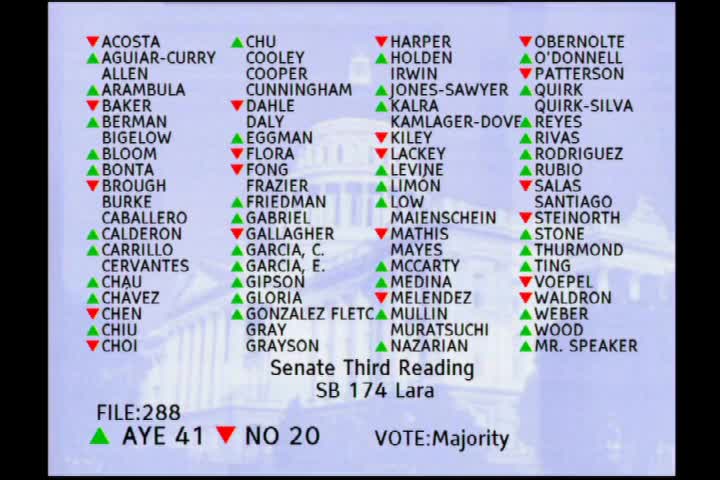 1H
Assembly Floor
 1H
Assembly Standing Committee on Appropriations
 7MIN
Assembly Standing Committee on Appropriations
 1H
Assembly Standing Committee on Public Safety
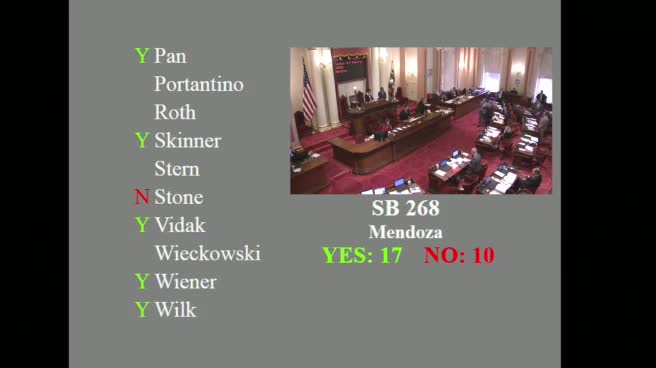 44MIN
Senate Floor
 48MIN
Senate Standing Committee on Appropriations
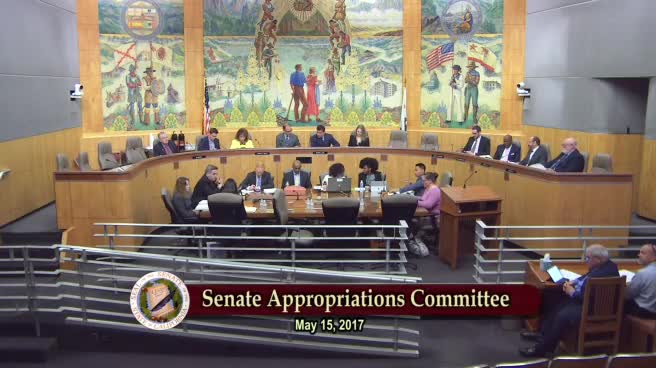 21MIN
Senate Standing Committee on Appropriations
Bill Author





















