SB 1012: Homeless multidisciplinary personnel team.
- Session Year: 2017-2018
- House: Senate
- Latest Version Date: 2018-09-26
Existing law authorizes counties to establish a homeless adult and family multidisciplinary personnel team with the goal of facilitating the expedited identification, assessment, and linkage of homeless individuals to housing and supportive services within that county and to allow provider agencies to share confidential information, for the purpose of coordinating housing and supportive services to ensure continuity of care.
This bill would, if a city within a county that has established a homeless adult and family multidisciplinary personnel team requests to participate in that team, require the county to allow for the participation of appropriate city personnel, as determined by the county, unless the county determines that participation by the city would hinder compliance with the requirements and obligations set forth in the above-mentioned provisions or otherwise conflict with the countys goals and objectives.
Existing law authorizes counties to establish a homeless adult and family multidisciplinary personnel team with the goal of facilitating the expedited identification, assessment, and linkage of homeless individuals to housing and supportive services within that county and to allow provider agencies to share confidential information, for the purpose of coordinating housing and supportive services to ensure continuity of care.
This bill would authorize a city to elect to establish a homeless adult and family multidisciplinary personnel team if the county does not establish this team. would, if a city within a county that has established a homeless adult and family multidisciplinary personnel team requests to participate in that team, require the county to allow for the participation of appropriate city personnel, as determined by the county, unless the county determines that participation by the city would hinder compliance with the requirements and obligations set forth in this chapter or otherwise conflict with the countys goals and objectives.
Existing law authorizes counties to establish a homeless adult and family multidisciplinary personnel team with the goal of facilitating the expedited identification, assessment, and linkage of homeless individuals to housing and supportive services within that county and to allow provider agencies to share confidential information, for the purpose of coordinating housing and supportive services to ensure continuity of care.
This bill would authorize a city to elect to establish a homeless adult and family multidisciplinary personnel team if the county does not establish this team.
Existing law requires an action or special proceeding to be treated as a limited civil case if certain conditions exist, including, among others, that the amount in controversy does not exceed $25,000.This bill would increase the amount in controversy for an action or special proceeding to be treated as a limited civil case to not exceed $50,000. The bill would also make technical, nonsubstantive changes to these provisions.Existing law requires an action or special proceeding to be treated as a limited civil case if certain conditions exist, including, among others, that the amount in controversy does not exceed $25,000.
This bill would increase the amount in controversy for an action or special proceeding to be treated as a limited civil case to not exceed $50,000. The bill would also make technical, nonsubstantive changes to these provisions.
(a)(1)Notwithstanding any other law, a county may establish a homeless adult and family multidisciplinary personnel team with the goal of facilitating the expedited identification, assessment, and linkage of homeless individuals to housing and supportive services within that county and to allow provider agencies to share confidential information for the purpose of coordinating housing and supportive services to ensure continuity of care.
(2)If a city within a county that has established a homeless adult and family multidisciplinary personnel team pursuant to this chapter requests to participate in that team, the county shall allow for the participation of appropriate city personnel, as determined by the county, unless the county determines that participation by the city would hinder compliance with the requirements and obligations set forth in this chapter or otherwise conflict with the countys goals and objectives.
(b)For the purposes of this section, the following terms have the following meanings:
(1)Homeless means any recorded instance of an adult or family self-identifying as homeless within the most recent 12 months, or any element contained in service utilization records indicating that an adult or family experienced homelessness within the most recent 12 months.
(2)Homeless adult and family multidisciplinary personnel team means any team of two or more persons who are trained in the identification and treatment of homeless adults and families, and who are qualified to provide a broad range of services related to homelessness. The team may include, but shall not be limited to, all of the following:
(A)Mental health and substance abuse services personnel and practitioners or other trained counseling personnel.
(B)Police officers, probation officers, or other law enforcement agents.
(C)Legal counsel for the adult or family representing them in a criminal matter.
(D)Medical personnel with sufficient training to provide health services.
(E)Social services workers with experience or training in the provision of services to homeless adults or families or funding and eligibility for services.
(F)Veterans services providers and counselors.
(G)Domestic violence victim service organizations, as defined in subdivision (b) of Section 1037.1 of the Evidence Code.
(H)Any public or private school teacher, administrative officer, or certified pupil personnel employee.
(I)Housing or homeless services provider agencies and designated personnel.
(3)Homeless services provider agency means any governmental or other agency that has as one of its purposes the identification, assessment, and linkage of housing or supportive services to homeless adults or families. The homeless services provider agencies serving adults or families that may share information under this section include, but are not limited to, all of the following entities or service agencies:
(A)Social services.
(B)Health services.
(C)Mental health services.
(D)Substance abuse services.
(E)Probation.
(F)Law enforcement.
(G)Legal counsel for the adult or family representing them in a criminal matter.
(H)Veterans services and counseling.
(I)Domestic violence victim service organizations, as defined in subdivision (b) of Section 1037.1 of the Evidence Code.
(J)Schools.
(K)Homeless services.
(L)Housing.
(c)(1)Members of a homeless adult and family multidisciplinary personnel team engaged in the identification, assessment, and linkage of housing and supportive services to homeless adults or families may disclose to, and exchange with, one another information and writings that relate to any information that may be designated as confidential under state law if the member of the team having that information or writing reasonably believes it is generally relevant to the identification, reduction, or elimination of homelessness or the provision of services. Any discussion relative to the disclosure or exchange of the information or writings during a team meeting is confidential and, notwithstanding any other law, testimony concerning that discussion is not admissible in any criminal, civil, or juvenile court proceeding.
(2)Disclosure and exchange of information pursuant to this section may occur telephonically and electronically if there is adequate verification of the identity of the homeless adult and family multidisciplinary personnel who are involved in that disclosure or exchange of information.
(3)Disclosure and exchange of information pursuant to this section shall not be made to anyone other than members of the homeless adult and family multidisciplinary personnel team, and those qualified to receive information as set forth in subdivision (d).
(4)Representatives of domestic violence victim service organizations, as defined in subdivision (b) of Section 1037.1 of the Evidence Code, shall obtain an individuals informed consent, in accordance with all applicable state and federal confidentiality laws, before disclosing confidential information about that individual to another team member as specified in this section.
(d)The homeless adult and family multidisciplinary personnel team may designate persons qualified pursuant to paragraph (2) of subdivision (b) to be a member of the team for a particular case. A person designated as a team member pursuant to this subdivision may receive and disclose relevant information and records, subject to the confidentiality provisions of subdivision (f).
(e)(1)The sharing of information permitted under subdivision (c) shall be governed by protocols developed in each county describing how and what information may be shared by the homeless adult and family multidisciplinary personnel team to ensure that confidential information gathered by the team is not disclosed in violation of state or federal law. A copy of the protocols shall be distributed to each participating agency and to persons in those agencies who participate in the homeless adult and family multidisciplinary personnel team, and shall be posted on the countys Internet Web site on the homepage of the office of homelessness, social services department, or human services agency within 30 days of adoption. Each county shall provide a copy of its protocols to the State Department of Social Services. This subdivision shall not be construed to require the department to review or approve any homeless multidisciplinary personnel team county protocols that it receives.
(2)A protocol developed in a county pursuant to paragraph (1) shall include, but not be limited to, all of the following:
(A)The items of information or data elements that will be shared.
(B)The participating agencies.
(C)A description of how the information shared pursuant to this section will be used by the homeless adult and family multidisciplinary personnel team only for the intended purposes specified in subdivision (a).
(D)The information retention schedule that participating agencies shall follow.
(E)A requirement that no confidential information or writings be disclosed to persons who are not members of the homeless adult and family multidisciplinary personnel team, except to the extent required or permitted under applicable law.
(F)A requirement that participating agencies develop uniform written policies and procedures that include security and privacy awareness training for employees who will have access to information pursuant to this protocol.
(G)A requirement that all persons who have access to information shared by participating agencies sign a confidentiality statement that includes, at a minimum, general use, security safeguards, acceptable use, and enforcement policies.
(H)A requirement that participating agencies employ security controls that meet applicable federal and state standards, including reasonable administrative, technical, and physical safeguards to ensure data confidentiality, integrity, and availability and to prevent unauthorized or inappropriate access, use, or disclosure.
(I)A requirement that participating agencies take reasonable steps to ensure information is complete, accurate, and up to date to the extent necessary for the agencys intended purposes and that the information has not been altered or destroyed in an unauthorized manner.
(f)Every member of the homeless adult and family multidisciplinary personnel team who receives information or records regarding adults and families in his or her capacity as a member of the team shall be under the same privacy and confidentiality obligations and subject to the same confidentiality penalties as the person disclosing or providing the information or records. The information or records obtained shall be maintained in a manner that ensures the maximum protection of privacy and confidentiality rights.
(g)This section shall not be construed to restrict guarantees of confidentiality provided under state or federal law.
(h)Information and records communicated or provided to the team members by all providers and agencies shall be deemed private and confidential and shall be protected from discovery and disclosure by all applicable statutory and common law protections. Existing civil and criminal penalties shall apply to the inappropriate disclosure of information held by the team members.
(a)(1)Notwithstanding any other law, a county may establish a homeless adult and family multidisciplinary personnel team with the goal of facilitating the expedited identification, assessment, and linkage of homeless individuals to housing and supportive services within that county and to allow provider agencies to share confidential information for the purpose of coordinating housing and supportive services to ensure continuity of care.
(b)If a county does not establish a homeless adult and family multidisciplinary personnel team, as described under subdivision (a), a city may elect to establish this team.(2)If a city within a county that has established a homeless adult and family multidisciplinary personnel team pursuant to this chapter requests to participate in that team, the county shall allow for the participation of appropriate city personnel, as determined by the county, unless the county determines that participation by the city would hinder compliance with the requirements and obligations set forth in this chapter or otherwise conflict with the countys goals and objectives.
(c)(b)For the purposes of this section, the following terms have the following meanings:
(1)Homeless means any recorded instance of an adult or family self-identifying as homeless within the most recent 12 months, or any element contained in service utilization records indicating that an adult or family experienced homelessness within the most recent 12 months.
(2)Homeless adult and family multidisciplinary personnel team means any team of two or more persons who are trained in the identification and treatment of homeless adults and families, and who are qualified to provide a broad range of services related to homelessness. The team may include, but shall not be limited to, all of the following:
(A)Mental health and substance abuse services personnel and practitioners or other trained counseling personnel.
(B)Police officers, probation officers, or other law enforcement agents.
(C)Legal counsel for the adult or family representing them in a criminal matter.
(D)Medical personnel with sufficient training to provide health services.
(E)Social services workers with experience or training in the provision of services to homeless adults or families or funding and eligibility for services.
(F)Veterans services providers and counselors.
(G)Domestic violence victim service organizations, as defined in subdivision (b) of Section 1037.1 of the Evidence Code.
(H)Any public or private school teacher, administrative officer, or certified pupil personnel employee.
(I)Housing or homeless services provider agencies and designated personnel.
(3)Homeless services provider agency means any governmental or other agency that has as one of its purposes the identification, assessment, and linkage of housing or supportive services to homeless adults or families. The homeless services provider agencies serving adults or families that may share information under this section include, but are not limited to, all of the following entities or service agencies:
(A)Social services.
(B)Health services.
(C)Mental health services.
(D)Substance abuse services.
(E)Probation.
(F)Law enforcement.
(G)Legal counsel for the adult or family representing them in a criminal matter.
(H)Veterans services and counseling.
(I)Domestic violence victim service organizations, as defined in subdivision (b) of Section 1037.1 of the Evidence Code.
(J)Schools.
(K)Homeless services.
(L)Housing.
(d)(c)(1)Members of a homeless adult and family multidisciplinary personnel team engaged in the identification, assessment, and linkage of housing and supportive services to homeless adults or families may disclose to, and exchange with, one another information and writings that relate to any information that may be designated as confidential under state law if the member of the team having that information or writing reasonably believes it is generally relevant to the identification, reduction, or elimination of homelessness or the provision of services. Any discussion relative to the disclosure or exchange of the information or writings during a team meeting is confidential and, notwithstanding any other law, testimony concerning that discussion is not admissible in any criminal, civil, or juvenile court proceeding.
(2)Disclosure and exchange of information pursuant to this section may occur telephonically and electronically if there is adequate verification of the identity of the homeless adult and family multidisciplinary personnel who are involved in that disclosure or exchange of information.
(3)Disclosure and exchange of information pursuant to this section shall not be made to anyone other than members of the homeless adult and family multidisciplinary personnel team, and those qualified to receive information as set forth in subdivision (e). (d).
(4)Representatives of domestic violence victim service organizations, as defined in subdivision (b) of Section 1037.1 of the Evidence Code, shall obtain an individuals informed consent, in accordance with all applicable state and federal confidentiality laws, before disclosing confidential information about that individual to another team member as specified in this section.
(e)(d)The homeless adult and family multidisciplinary personnel team may designate persons qualified pursuant to paragraph (2) of subdivision (c) (b) to be a member of the team for a particular case. A person designated as a team member pursuant to this subdivision may receive and disclose relevant information and records, subject to the confidentiality provisions of subdivision (g). (f).
(f)(e)(1)The sharing of information permitted under subdivision (d) (c) shall be governed by protocols developed in each county or city describing how and what information may be shared by the homeless adult and family multidisciplinary personnel team to ensure that confidential information gathered by the team is not disclosed in violation of state or federal law. A copy of the protocols shall be distributed to each participating agency and to persons in those agencies who participate in the homeless adult and family multidisciplinary personnel team, and shall be posted on the countys Internet Web site on the homepage of the countys or citys office of homelessness, social services department, or human services agency within 30 days of adoption. Each county or city shall provide a copy of its protocols to the State Department of Social Services. This subdivision shall not be construed to require the department to review or approve any homeless multidisciplinary personnel team county or city protocols that it receives.
(2)A protocol developed in a county or city pursuant to paragraph (1) shall include, but not be limited to, all of the following:
(A)The items of information or data elements that will be shared.
(B)The participating agencies.
(C)A description of how the information shared pursuant to this section will be used by the homeless adult and family multidisciplinary personnel team only for the intended purposes specified in subdivision (a).
(D)The information retention schedule that participating agencies shall follow.
(E)A requirement that no confidential information or writings be disclosed to persons who are not members of the homeless adult and family multidisciplinary personnel team, except to the extent required or permitted under applicable law.
(F)A requirement that participating agencies develop uniform written policies and procedures that include security and privacy awareness training for employees who will have access to information pursuant to this protocol.
(G)A requirement that all persons who have access to information shared by participating agencies sign a confidentiality statement that includes, at a minimum, general use, security safeguards, acceptable use, and enforcement policies.
(H)A requirement that participating agencies employ security controls that meet applicable federal and state standards, including reasonable administrative, technical, and physical safeguards to ensure data confidentiality, integrity, and availability and to prevent unauthorized or inappropriate access, use, or disclosure.
(I)A requirement that participating agencies take reasonable steps to ensure information is complete, accurate, and up to date to the extent necessary for the agencys intended purposes and that the information has not been altered or destroyed in an unauthorized manner.
(g)(f)Every member of the homeless adult and family multidisciplinary personnel team who receives information or records regarding adults and families in his or her capacity as a member of the team shall be under the same privacy and confidentiality obligations and subject to the same confidentiality penalties as the person disclosing or providing the information or records. The information or records obtained shall be maintained in a manner that ensures the maximum protection of privacy and confidentiality rights.
(h)(g)This section shall not be construed to restrict guarantees of confidentiality provided under state or federal law.
(i)(h)Information and records communicated or provided to the team members by all providers and agencies shall be deemed private and confidential and shall be protected from discovery and disclosure by all applicable statutory and common law protections. Existing civil and criminal penalties shall apply to the inappropriate disclosure of information held by the team members.
(a)Notwithstanding any other law, a county may establish a homeless adult and family multidisciplinary personnel team with the goal of facilitating the expedited identification, assessment, and linkage of homeless individuals to housing and supportive services within that county and to allow provider agencies to share confidential information for the purpose of coordinating housing and supportive services to ensure continuity of care.
(b)If a county does not establish a homeless adult and family multidisciplinary personnel team, as described under subdivision (a), a city may elect to establish this team.
(b)(c)For the purposes of this section, the following terms have the following meanings:
(1)Homeless means any recorded instance of an adult or family self-identifying as homeless within the most recent 12 months, or any element contained in service utilization records indicating that an adult or family experienced homelessness within the most recent 12 months.
(2)Homeless adult and family multidisciplinary personnel team means any team of two or more persons who are trained in the identification and treatment of homeless adults and families, and who are qualified to provide a broad range of services related to homelessness. The team may include, but shall not be limited to, the following:
(A)Mental health and substance abuse services personnel and practitioners or other trained counseling personnel.
(B)Police officers, probation officers, or other law enforcement agents.
(C)Legal counsel for the adult or family representing them in a criminal matter.
(D)Medical personnel with sufficient training to provide health services.
(E)Social services workers with experience or training in the provision of services to homeless adults or families or funding and eligibility for services.
(F)Veterans services providers and counselors.
(G)Domestic violence victim service organizations, as defined in subdivision (b) of Section 1037.1 of the Evidence Code.
(H)Any public or private school teacher, administrative officer, or certified pupil personnel employee.
(I)Housing or homeless services provider agencies and designated personnel.
(3)Homeless services provider agency means any governmental or other agency that has as one of its purposes the identification, assessment, and linkage of housing or supportive services to homeless adults or families. The homeless services provider agencies serving adults or families that may share information under this section include, but are not limited to, the following entities or service agencies:
(A)Social services.
(B)Health services.
(C)Mental health services.
(D)Substance abuse services.
(E)Probation.
(F)Law enforcement.
(G)Legal counsel for the adult or family representing them in a criminal matter.
(H)Veterans services and counseling.
(I)Domestic violence victim service organizations, as defined in subdivision (b) of Section 1037.1 of the Evidence Code.
(J)Schools.
(K)Homeless services.
(L)Housing.
(c)(d)(1)Members of a homeless adult and family multidisciplinary personnel team engaged in the identification, assessment, and linkage of housing and supportive services to homeless adults or families may disclose to, and exchange with, one another information and writings that relate to any information that may be designated as confidential under state law if the member of the team having that information or writing reasonably believes it is generally relevant to the identification, reduction, or elimination of homelessness or the provision of services. Any discussion relative to the disclosure or exchange of the information or writings during a team meeting is confidential and, notwithstanding any other law, testimony concerning that discussion is not admissible in any criminal, civil, or juvenile court proceeding.
(2)Disclosure and exchange of information pursuant to this section may occur telephonically and electronically if there is adequate verification of the identity of the homeless adult and family multidisciplinary personnel who are involved in that disclosure or exchange of information.
(3)Disclosure and exchange of information pursuant to this section shall not be made to anyone other than members of the homeless adult and family multidisciplinary personnel team, and those qualified to receive information as set forth in subdivision (d). (e).
(4)Representatives of domestic violence victim service organizations, as defined in subdivision (b) of Section 1037.1 of the Evidence Code, shall obtain an individuals informed consent, in accordance with all applicable state and federal confidentiality laws, before disclosing confidential information about that individual to another team member as specified in this section.
(d)(e)The homeless adult and family multidisciplinary personnel team may designate persons qualified pursuant to paragraph (2) of subdivision (b) (c) to be a member of the team for a particular case. A person designated as a team member pursuant to this subdivision may receive and disclose relevant information and records, subject to the confidentiality provisions of subdivision (f). (g).
(e)(f)(1)The sharing of information permitted under subdivision (c) (d) shall be governed by protocols developed in each county or city describing how and what information may be shared by the homeless adult and family multidisciplinary personnel team to ensure that confidential information gathered by the team is not disclosed in violation of state or federal law. A copy of the protocols shall be distributed to each participating agency and to persons in those agencies who participate in the homeless adult and family multidisciplinary personnel team, and shall be posted on the countys Internet Web site on the homepage of the countys or citys office of homelessness, social services department, or human services agency within 30 days of adoption. Each county or city shall provide a copy of its protocols to the State Department of Social Services. This subdivision shall not be construed to require the department to review or approve any homeless multidisciplinary personnel team county or city protocols that it receives.
(2)A protocol developed in a county or city pursuant to paragraph (1) shall include, but not be limited to, all of the following:
(A)The items of information or data elements that will be shared.
(B)The participating agencies.
(C)A description of how the information shared pursuant to this section will be used by the homeless adult and family multidisciplinary personnel team only for the intended purposes specified in subdivision (a).
(D)The information retention schedule that participating agencies shall follow.
(E)A requirement that no confidential information or writings be disclosed to persons who are not members of the homeless adult and family multidisciplinary personnel team, except to the extent required or permitted under applicable law.
(F)A requirement that participating agencies develop uniform written policies and procedures that include security and privacy awareness training for employees who will have access to information pursuant to this protocol.
(G)A requirement that all persons who have access to information shared by participating agencies sign a confidentiality statement that includes, at a minimum, general use, security safeguards, acceptable use, and enforcement policies.
(H)A requirement that participating agencies employ security controls that meet applicable federal and state standards, including reasonable administrative, technical, and physical safeguards to ensure data confidentiality, integrity, and availability and to prevent unauthorized or inappropriate access, use, or disclosure.
(I)A requirement that participating agencies take reasonable steps to ensure information is complete, accurate, and up to date to the extent necessary for the agencys intended purposes and that the information has not been altered or destroyed in an unauthorized manner.
(f)(g)Every member of the homeless adult and family multidisciplinary personnel team who receives information or records regarding adults and families in his or her capacity as a member of the team shall be under the same privacy and confidentiality obligations and subject to the same confidentiality penalties as the person disclosing or providing the information or records. The information or records obtained shall be maintained in a manner that ensures the maximum protection of privacy and confidentiality rights.
(g)(h)This section shall not be construed to restrict guarantees of confidentiality provided under state or federal law.
(h)(i)Information and records communicated or provided to the team members by all providers and agencies shall be deemed private and confidential and shall be protected from discovery and disclosure by all applicable statutory and common law protections. Existing civil and criminal penalties shall apply to the inappropriate disclosure of information held by the team members.
SECTION 1.Section 85 of the Code of Civil Procedure is amended to read:85.Notwithstanding any law, including, but not limited to, a law that classifies an action or special proceeding as a limited civil case, an action or special proceeding shall be treated as a limited civil case only if all of the following conditions are satisfied:(a)The amount in controversy does not exceed fifty thousand dollars ($50,000). As used in this section, amount in controversy means the amount of the demand, or the recovery sought, or the value of the property, or the amount of the lien, that is in controversy in the action, exclusive of attorneys fees, interest, and costs.(b)The relief sought is a type that may be granted in a limited civil case.(c)The relief sought, whether in the complaint, a cross-complaint, or otherwise, is exclusively of a type described in one or more laws that classify an action or special proceeding as a limited civil case or that provide that an action or special proceeding is within the original jurisdiction of the superior court, including, but not limited to, the following provisions:(1)Section 798.61 or 798.88 of the Civil Code.(2)Section 1719 of the Civil Code.(3)Section 3342.5 of the Civil Code.(4)Section 86.(5)Section 86.1.(6)Section 1710.20.(7)Section 7581 of the Food and Agricultural Code.(8)Section 12647 of the Food and Agricultural Code.(9)Section 27601 of the Food and Agricultural Code.(10)Section 31503 of the Food and Agricultural Code.(11)Section 31621 of the Food and Agricultural Code.(12)Section 52514 of the Food and Agricultural Code.(13)Section 53564 of the Food and Agricultural Code.(14)Section 53069.4 of the Government Code.(15)Section 53075.6 of the Government Code.(16)Section 53075.61 of the Government Code.(17)Section 5411.5 of the Public Utilities Code.(18)Section 9872.1 of the Vehicle Code.(19)Section 10751 of the Vehicle Code.(20)Section 14607.6 of the Vehicle Code.(21)Section 40230 of the Vehicle Code.(22)Section 40256 of the Vehicle Code.An action or special proceeding shall be treated as a limited civil case if all of the following conditions are satisfied, and, notwithstanding any statute that classifies an action or special proceeding as a limited civil case, an Notwithstanding any law, including, but not limited to, a law that classifies an action or special proceeding as a limited civil case, an action or special proceeding shall not be treated as a limited civil case unless only if all of the following conditions are satisfied:
(a)The amount in controversy does not exceed twenty-five thousand dollars ($25,000). fifty thousand dollars ($50,000). As used in this section, amount in controversy means the amount of the demand, or the recovery sought, or the value of the property, or the amount of the lien, that is in controversy in the action, exclusive of attorneys fees, interest, and costs.
(b)The relief sought is a type that may be granted in a limited civil case.
(c)The relief sought, whether in the complaint, a cross-complaint, or otherwise, is exclusively of a type described in one or more statutes laws that classify an action or special proceeding as a limited civil case or that provide that an action or special proceeding is within the original jurisdiction of the municipal superior court, including, but not limited to, the following provisions:
(1)Section 798.61 or 798.88 of the Civil Code.
(2)Section 1719 of the Civil Code.
(3)Section 3342.5 of the Civil Code.
(4)Section 86.
(5)Section 86.1.
(6)Section 1710.20.
(7)Section 7581 of the Food and Agricultural Code.
(8)Section 12647 of the Food and Agricultural Code.
(9)Section 27601 of the Food and Agricultural Code.
(10)Section 31503 of the Food and Agricultural Code.
(11)Section 31621 of the Food and Agricultural Code.
(12)Section 52514 of the Food and Agricultural Code.
(13)Section 53564 of the Food and Agricultural Code.
(14)Section 53069.4 of the Government Code.
(15)Section 53075.6 of the Government Code.
(16)Section 53075.61 of the Government Code.
(17)Section 5411.5 of the Public Utilities Code.
(18)Section 9872.1 of the Vehicle Code.
(19)Section 10751 of the Vehicle Code.
(20)Section 14607.6 of the Vehicle Code.
(21)Section 40230 of the Vehicle Code.
(22)Section 40256 of the Vehicle Code.
|
Date
|
Status
|
|---|---|
| Sep 26, 2018 | Chaptered by Secretary of State. Chapter 786, Statutes of 2018. |
| Sep 26, 2018 | Approved by the Governor. |
| Sep 12, 2018 | Enrolled and presented to the Governor at 5 p.m. |
| Aug 31, 2018 | Assembly amendments concurred in. (Ayes 39. Noes 0.) Ordered to engrossing and enrolling. |
| Aug 31, 2018 | From committee: That the Assembly amendments be concurred in. (Ayes 6. Noes 0.) |
| Aug 31, 2018 | From committee: Be re-referred to Com. on HUMAN S. pursuant to Senate Rule 29.10(d). (Ayes 4. Noes 0.) Re-referred to Com. on HUMAN S. |
| Aug 31, 2018 | Re-referred to Com. on RLS. pursuant to Senate Rule 29.10(d). |
| Aug 31, 2018 | In Senate. Concurrence in Assembly amendments pending. |
| Aug 31, 2018 | Read third time. Passed. Ordered to the Senate. |
| Aug 29, 2018 | Read second time. Ordered to third reading. |
| Aug 28, 2018 | Read second time and amended. Ordered to second reading. |
| Aug 27, 2018 | From committee: Do pass as amended. (Ayes 6. Noes 0.) (August 27). |
| Aug 24, 2018 | Re-referred to Com. on HUM. S. pursuant to Assembly Rule 77.2. |
| Aug 24, 2018 | Read third time and amended. |
| Jul 5, 2018 | Read second time. Ordered to third reading. |
| Jul 3, 2018 | From committee: Do pass. (Ayes 9. Noes 1.) (July 3). |
| Jun 11, 2018 | June 12 set for first hearing canceled at the request of author. |
| May 17, 2018 | Referred to Com. on JUD. |
| May 7, 2018 | In Assembly. Read first time. Held at Desk. |
| May 7, 2018 | Read third time. Passed. (Ayes 25. Noes 10.) Ordered to the Assembly. |
| May 2, 2018 | Read second time. Ordered to third reading. |
| May 1, 2018 | From committee: Do pass. (Ayes 5. Noes 2.) (April 24). |
| Apr 11, 2018 | Set for hearing April 24. |
| Feb 14, 2018 | Referred to Com. on JUD. |
| Feb 7, 2018 | From printer. May be acted upon on or after March 9. |
| Feb 6, 2018 | Introduced. Read first time. To Com. on RLS. for assignment. To print. |
|
Date
|
Description
|
Location
|
Votes
|
|
|---|---|---|---|---|
| Aug 31, 2018 | SB 1012 Delgado Senate Third Reading By LIMÓN | Assembly Floor |
Passed |
|
| Aug 31, 2018 | Unfinished Business SB1012 Delgado Concurrence | Senate Floor |
Passed |
|
| Aug 31, 2018 | That the Assembly amendments be concurred in | Senate Standing Committee on Human Services |
Passed |
|
| Aug 27, 2018 | Do pass as amended. | Assembly Standing Committee on Human Services |
Passed |
|
| Jul 3, 2018 | Do pass. | Assembly Standing Committee on Judiciary |
Passed |
|
| May 7, 2018 | Senate 3rd Reading SB1012 Hertzberg | Senate Floor |
Passed |
|
| Apr 24, 2018 | Do pass | Senate Standing Committee on Judiciary |
Passed |
This list shows positions taken on this bill by organizations on the date displayed, which is linked to the original source.
Positions by individuals are not included.
|
Organization
|
Position
|
Date
|
|---|---|---|
| American Insurance Association | ** Against | Jun 29, 2018 |
| California Employment Lawyers Association | * Indeterminate | Apr 24, 2018 |
| Civil Justice Association Of California | ** Against | May 2, 2018 |
| Consumer Attorneys Of California | ** Support | Jun 29, 2018 |
| League Of California Cities | ** Support | Aug 31, 2018 |
| League Of California Cities | * Support | Aug 31, 2018 |
| National Association of Mutual Insurance Companies | ** Against | Jun 29, 2018 |
| Personal Insurance Federation Of California | ** Against | Jun 29, 2018 |
| Property Casualty Insurers Association of America | ** Against | Jun 29, 2018 |
| the league of california cities | ** Support | Aug 31, 2018 |
SENATE COMMITTEE ON HUMAN SERVICES
Senator Wiener, Chair
2017 - 2018 Regular
Bill No: SB 1012
Author: | Delgado | ||
Version: | August 28, 2018 | Hearing Date: | August 31, 2018 |
Urgency: | No | Fiscal: | No |
Consultant: | Marisa Shea | ||
Subject: Homeless multidisciplinary personnel team.
SUMMARY
This bill allows personnel of a city within a county that has established a homeless adult and family multidisciplinary personnel team (MDT) to request to participate in that MDT and requires the county to allow for city personnel participation, unless the county determines that such participation would hinder compliance with the requirements and obligations of the MDT or otherwise conflict with the county’s goals and objectives.
ABSTRACT
Existing law:
- Allows a county to establish a homeless adult and family multidisciplinary personnel team with the goal of facilitating the expedited identification, assessment, and linkage of homeless individuals to housing and supportive services within that county and to allow provider agencies to share confidential information for the purpose of coordinating housing and supportive services in order to ensure continuity of care. (WIC 18999.8 (a))
- Defines “homeless adult and family multidisciplinary personnel team” as any team of two or more persons who are trained in the identification and treatment of homeless adults and families, and who are qualified to provide a broad range of services related to homelessness, and includes mental health and substance abuse services personnel, police officers and other law enforcement agents, and medical personnel, among others. (WIC 18999.8 (b)(2))
- Defines “homeless services provider agency” as any governmental or other agency that has as one of its purposes the identification, assessment, and linkage of housing or supportive services to homeless adults or families, and includes, but is not limited to, social services, mental health services, probation, and law enforcement entities or services agencies, among others. (WIC 18999.8 (b)(3))
- Defines “children’s multidisciplinary services team” as a team of two or more persons trained and qualified to provide certain services, including, but not limited to: health care, substance abuse prevention and treatment, and nutrition services, who are responsible in the program for identifying the educational, health, or social service needs of a child and his or her family, and for developing a plan to address those needs. (WIC 18986.40(b))
- Requires, when a child enters an integrated children’s services program that utilizes a children’s multidisciplinary services team, a parent, guardian, judicial office with jurisdiction over the minor, or a minor with legal power to consent, or nonminor dependent be asked to sign a single authorization that gives knowing and informed consent, in writing, and that complies with all other applicable provisions of state law governing release of medical, mental health, social service, and educational records, in order to permit the release of records to the program. (WIC 18986.46 (e))
- Defines “child abuse multidisciplinary personnel team” as any team of two or more people trained in the prevention, identification, and treatment of child abuse and neglect cases and who are qualified to provide a broad range of child abuse-related services, and may include, but not be limited to, psychiatrists, police officers or other law enforcement agents, and medical personnel, among others. (WIC 18961(b)(1))
- Allows members of a child abuse MDT to disclose to and exchange with one another information and writings that relate to any incident of child abuse that may also be designated as confidential under state law if the member of the team having that information or writing reasonably believes it is generally relevant to the prevention, identification, or treatment of child abuse. Further, limits the disclosure of this information to a 30-day period, or longer if documented good cause exists, following a report of suspected child abuse or neglect. (WIC 18961.7 (c)(1))
This bill:
Provides that if a city within a county that has established a homeless adult and family MDT, as provided, requests to participate in that MDT, the county shall allow for the participation of appropriate city personnel, as determined by the county, unless the county determines that participation by the city would hinder compliance with the MDT’s existing requirements and obligations or otherwise conflict with the county’s goals and objectives.
FISCAL IMPACT
This bill has been tagged nonfiscal.
BACKGROUND AND DISCUSSION
Purpose of the bill:
According to the author, “SB 1012 simply allows for cities to work with counties on homeless adult and family MDT. This ensures county and city personnel work together to address the service needs of individuals and families experiencing homelessness in their neighborhoods. This will prevent duplication of services and ensure that the $500 million in the state budget for homelessness is used in a productive manner.”
Homelessness in California
According to the Annual Homeless Assessment Report produced by the U.S. Department of Housing and Urban Development on a single night in 2017, there were 134,278 homeless people in California. Of those, 91,642 were unsheltered. According to this report, California has the nation’s largest homeless population -- 25 percent of the nation’s total. Additionally, California accounted for nearly half, 49 percent, of all unsheltered people in the country in 2017.[1]
The health, personal, and economic challenges that chronically homeless individuals and families face and the lack of effective, coordinated services to address these problems often lead to a cycle of housing instability and health deterioration. Health conditions of those experiencing long-term homelessness often prevent housing stability, while persistent homelessness impedes access to needed health and employment services. Consequently, people who are chronically homeless cycle through costly emergency-driven public systems – emergency shelters, emergency rooms, detoxification centers, criminal justice facilities – without getting the ongoing care they need to address severe mental illness, substance abuse disorders, or chronic health conditions.
In response to California’s high rates of homelessness, this year’s budget (See SB 850 (Senate Committee on Budget and Fiscal Review, Chapter 48, Statutes 2018)) established the Homeless Emergency Aid Program to provide administrative entities with $500 million in one-time, flexible block grant funds to address immediate homelessness challenges.
Housing First
Housing First approaches homelessness by providing permanent, affordable housing for families and individuals, and then providing supportive services in order to help people avoid returning to homelessness. Housing First is premised on the idea that housing should not be denied to anyone, even if they are abusing alcohol or other substances. Under Housing First, supportive services are offered to maximize housing stability and prevent returns to homelessness as opposed to addressing predetermined treatment goals prior to providing housing.
As a result of SB 1830 (Mitchell, Chapter 847, Statues of 2016), state programs that did not already incorporate the core components of Housing First were required to revise or adopt guidelines and regulations that incorporate the core components of Housing First. Furthermore, programs created after the enactment of SB 1830, such as this bill, are required to adopt guidelines and regulations that incorporate the core components of Housing First.
Multidisciplinary Teams
In 1987, AB 1049 (Bader, Chapter 353, Statutes of 1987) first authorized the use of MDTs in California by allowing for a coordinated interagency response to elder and child abuse cases. Child abuse MDTs, typically formed and operated at the county level, allow members to share otherwise confidential information for the purpose of preventing, identifying, or treating child abuse. MDTs represent a variety of disciplines that interact and coordinate their efforts to diagnose, treat, and plan for children and families receiving child welfare services – for example a team might include a county social worker, school counselor, probation officer, mental health provider, and regional center caseworker.
Some teams have been formed solely for investigatory purposes – team members coordinate in interviewing and prosecuting child abuse cases. Other MDTs are formed to allow coordination among the different agencies and entities participating on the team so that decisions can be made through team decision-making. Each county establishes its own data sharing protocol.
AB 210 (Santiago, Chapter 544, Statutes of 2017) allowed counties to develop a homeless adult and family MDT in order to facilitate identification and assessment of individuals experiencing homelessness, as well as connect those individuals to housing and supportive services. AB 210 also allows service providers to share confidential information to ensure continuity of care for individuals experiencing homelessness. Prior to the passage of AB 210, California law did not allow for county agencies to share data on homeless youth, families, or single adults between departments and services providers. AB 210 pushed for the MDT model so that counties could holistically address the needs of homeless adults and families without different departments duplicating efforts in an attempt to meet the needs of individuals who were potentially eligible for services across departments.
This bill provides city personnel with the ability to be part of a county’s homeless adult and family MDT, upon request. This furthers the work of a county’s homeless adult and family MDT by ensuring both city and county government efforts to combat homelessness will be considered when determining what services are available to address the needs of a particular individual or family. Additionally, this bill gives counties the ability to deny city personnel’s participation if such participation would hinder the county’s compliance with existing law or otherwise conflict with the county’s goals and objectives.
Related legislation:
SB 850 (Senate Committee on Budget and Fiscal Review, Chapter 48, Statutes of 2018) the
Housing trailer bill, among other things, established the Homeless Emergency Aid Program for
the purpose of providing localities with one-time flexible block grant funds to address their
immediate homeless challenges.
AB 210 (Santiago, Chapter 544, Statutes of 2017) permitted counties to establish a homeless
adult and family MDT in order to identify and serve individuals experiencing homelessness, as
well as allow certain entities to share confidential information to ensure continuity of care.
AB 2229 (Brownley, Chapter 464, Statutes of 2010) established time-limited authority for
counties to create two-person multidisciplinary teams engaged in the investigation of suspected
child abuse or neglect.
AB 2322 (Feuer & Bass, Chapter 551, Statutes of 2010) broadened the scope of information
that may be included in a county MDT computerized database to include information regarding
nonrelatives living in the home of a child.
AB 1518 (Soto, Chapter 919, Statutes of 1999) established a three-year, three county pilot in
Alameda, San Bernardino, and Ventura counties to create an integrated coordinated case
management system using MDTs for CalWORKs families with multiple barriers to employment.
PRIOR VOTES
Assembly Floor:* | TBD |
Assembly Human Services | 6 - 0 |
*Votes from the Assembly floor were not available at the time this analysis was published.
POSITIONS
Support:
League of California Cities
Oppose:
None received
-- END --
The 2017 Annual Homeless Assessment Report to Congress, The U.S. Department of Housing and Urban Development (December 2017) < https://www.hudexchange.info/resources/documents/2017-AHAR-Part-1.pdf> (as of June 19, 2018). ↑
Office of Senate Floor Analyses (916) 651-1520 Fax: (916) 327-4478 | SB |
UNFINISHED BUSINESS
Bill No: SB 1012
:
PRIOR SENATE VOTES NOT RELEVANT
SENATE HUMAN SERVICES COMMITTEE: 6-0, 8/31/18 (Pursuant to Senate Rule 29.10)
AYES: Wiener, Glazer, Leyva, McGuire, Nguyen, Portantino
NO VOTE RECORDED: Berryhill
ASSEMBLY FLOOR: Not available
SUBJECT: Homeless multidisciplinary personnel team
DIGEST:
This bill allows personnel of a city within a county that has established a homeless adult and family multidisciplinary personnel team (MDT) to request to participate in that MDT and requires the county to allow for city personnel participation, unless the county determines that such participation would hinder compliance with the requirements and obligations of the MDT or otherwise conflict with the county’s goals and objectives.
Assembly Amendments
remove the original content of this bill and add the language that is the subject of the following analysis.
Existing law:
- Allows a county to establish a homeless adult and family multidisciplinary personnel team with the goal of facilitating the expedited identification, assessment, and linkage of homeless individuals to housing and supportive services within that county and to allow provider agencies to share confidential information for the purpose of coordinating housing and supportive services in order to ensure continuity of care. (WIC 18999.8 (a))
- Defines “homeless adult and family multidisciplinary personnel team” as any team of two or more persons who are trained in the identification and treatment of homeless adults and families, and who are qualified to provide a broad range of services related to homelessness, and includes mental health and substance abuse services personnel, police officers and other law enforcement agents, and medical personnel, among others. (WIC 18999.8 (b)(2))
- Defines “homeless services provider agency” as any governmental or other agency that has as one of its purposes the identification, assessment, and linkage of housing or supportive services to homeless adults or families, and includes, but is not limited to, social services, mental health services, probation, and law enforcement entities or services agencies, among others. (WIC 18999.8 (b)(3))
- Defines “children’s multidisciplinary services team” as a team of two or more persons trained and qualified to provide certain services, including, but not limited to: health care, substance abuse prevention and treatment, and nutrition services, who are responsible in the program for identifying the educational, health, or social service needs of a child and his or her family, and for developing a plan to address those needs. (WIC 18986.40(b))
- Requires, when a child enters an integrated children’s services program that utilizes a children’s multidisciplinary services team, a parent, guardian, judicial office with jurisdiction over the minor, or a minor with legal power to consent, or nonminor dependent be asked to sign a single authorization that gives knowing and informed consent, in writing, and that complies with all other applicable provisions of state law governing release of medical, mental health, social service, and educational records, in order to permit the release of records to the program. (WIC 18986.46 (e))
- Defines “child abuse multidisciplinary personnel team” as any team of two or more people trained in the prevention, identification, and treatment of child abuse and neglect cases and who are qualified to provide a broad range of child abuse-related services, and may include, but not be limited to, psychiatrists, police officers or other law enforcement agents, and medical personnel, among others. (WIC 18961(b)(1))
- Allows members of a child abuse MDT to disclose to and exchange with one another information and writings that relate to any incident of child abuse that may also be designated as confidential under state law if the member of the team having that information or writing reasonably believes it is generally relevant to the prevention, identification, or treatment of child abuse. Further, limits the disclosure of this information to a 30-day period, or longer if documented good cause exists, following a report of suspected child abuse or neglect. (WIC 18961.7 (c)(1))
This bill provides that if a city within a county that has established a homeless adult and family MDT, as provided, requests to participate in that MDT, the county shall allow for the participation of appropriate city personnel, as determined by the county, unless the county determines that participation by the city would hinder compliance with the MDT’s existing requirements and obligations or otherwise conflict with the county’s goals and objectives.
Comments
According to the author, “SB 1012 simply allows for cities to work with counties on homeless adult and family MDT. This ensures county and city personnel work together to address the service needs of individuals and families experiencing homelessness in their neighborhoods. This will prevent duplication of services and ensure that the $500 million in the state budget for homelessness is used in a productive manner.”
Homelessness in California
According to the Annual Homeless Assessment Report produced by the U.S. Department of Housing and Urban Development on a single night in 2017, there were 134,278 homeless people in California. Of those, 91,642 were unsheltered. According to this report, California has the nation’s largest homeless population -- 25 percent of the nation’s total. Additionally, California accounted for nearly half, 49 percent, of all unsheltered people in the country in 2017.[1]
The health, personal, and economic challenges that chronically homeless individuals and families face and the lack of effective, coordinated services to address these problems often lead to a cycle of housing instability and health deterioration. Health conditions of those experiencing long-term homelessness often prevent housing stability, while persistent homelessness impedes access to needed health and employment services. Consequently, people who are chronically homeless cycle through costly emergency-driven public systems – emergency shelters, emergency rooms, detoxification centers, criminal justice facilities – without getting the ongoing care they need to address severe mental illness, substance abuse disorders, or chronic health conditions.
In response to California’s high rates of homelessness, this year’s budget (See SB 850, Senate Committee on Budget and Fiscal Review, Chapter 48, Statutes 2018) established the Homeless Emergency Aid Program to provide administrative entities with $500 million in one-time, flexible block grant funds to address immediate homelessness challenges.
Housing First
Housing First approaches homelessness by providing permanent, affordable housing for families and individuals, and then providing supportive services in order to help people avoid returning to homelessness. Housing First is premised on the idea that housing should not be denied to anyone, even if they are abusing alcohol or other substances. Under Housing First, supportive services are offered to maximize housing stability and prevent returns to homelessness as opposed to addressing predetermined treatment goals prior to providing housing.
As a result of SB 1830 (Mitchell, Chapter 847, Statues of 2016), state programs that did not already incorporate the core components of Housing First were required to revise or adopt guidelines and regulations that incorporate the core components of Housing First. Furthermore, programs created after the enactment of SB 1830, such as this bill, are required to adopt guidelines and regulations that incorporate the core components of Housing First.
Multidisciplinary Teams
In 1987, AB 1049 (Bader, Chapter 353, Statutes of 1987) first authorized the use of MDTs in California by allowing for a coordinated interagency response to elder and child abuse cases. Child abuse MDTs, typically formed and operated at the county level, allow members to share otherwise confidential information for the purpose of preventing, identifying, or treating child abuse. MDTs represent a variety of disciplines that interact and coordinate their efforts to diagnose, treat, and plan for children and families receiving child welfare services – for example a team might include a county social worker, school counselor, probation officer, mental health provider, and regional center caseworker.
Some teams have been formed solely for investigatory purposes – team members coordinate in interviewing and prosecuting child abuse cases. Other MDTs are formed to allow coordination among the different agencies and entities participating on the team so that decisions can be made through team decision-making. Each county establishes its own data sharing protocol.
AB 210 (Santiago, Chapter 544, Statutes of 2017) allowed counties to develop a homeless adult and family MDT in order to facilitate identification and assessment of individuals experiencing homelessness, as well as connect those individuals to housing and supportive services. AB 210 also allowed service providers to share confidential information to ensure continuity of care for individuals experiencing homelessness. Prior to the passage of AB 210, California law did not allow for county agencies to share data on homeless youth, families, or single adults between departments and services providers. AB 210 pushed for the MDT model so that counties could holistically address the needs of homeless adults and families without different departments duplicating efforts in an attempt to meet the needs of individuals who were potentially eligible for services across departments.
This bill provides city personnel with the ability to be part of a county’s homeless adult and family MDT, upon request. This furthers the work of a county’s homeless adult and family MDT by ensuring both city and county government efforts to combat homelessness will be considered when determining what services are available to address the needs of a particular individual or family. Additionally, this bill gives counties the ability to deny city personnel’s participation if such participation would hinder the county’s compliance with existing law or otherwise conflict with the county’s goals and objectives.
Related/Prior Legislation
SB 850 (Senate Committee on Budget and Fiscal Review, Chapter 48, Statutes of 2018), the Housing Trailer Bill, among other things, established the Homeless Emergency Aid Program for the purpose of providing localities with one-time flexible block grant funds to address their immediate homeless challenges.
AB 210 (Santiago, Chapter 544, Statutes of 2017) permitted counties to establish a homeless adult and family MDT in order to identify and serve individuals experiencing homelessness, as well as allow certain entities to share confidential information to ensure continuity of care.
AB 2229 (Brownley, Chapter 464, Statutes of 2010) established time-limited authority for counties to create two-person multidisciplinary teams engaged in the investigation of suspected child abuse or neglect.
AB 2322 (Feuer & Bass, Chapter 551, Statutes of 2010) broadened the scope of information that may be included in a county MDT computerized database to include information regarding nonrelatives living in the home of a child.
AB 1518 (Soto, Chapter 919, Statutes of 1999) established a three-year, three county pilot in Alameda, San Bernardino, and Ventura counties to create an integrated coordinated case management system using MDTs for CalWORKs families with multiple barriers to employment.
AB 1049 (Bader, Chapter 353, Statutes of 1987) authorized the use of MDTs for both child and elder abuse.
FISCAL EFFECT: Appropriation: Fiscal Com.: Local:
The League of California Cities
OPPOSITION: (Verified 8/31/18)
8/31/18 20:49:16
**** END ****
The 2017 Annual Homeless Assessment Report to Congress, The U.S. Department of Housing and Urban Development (December 2017) < https://www.hudexchange.info/resources/documents/2017-AHAR-Part-1.pdf> (as of June 19, 2018). ↑
SENATE THIRD READING
STR Bill Id:SB 1012
Author:(Delgado)
As Amended Ver:August 28, 2018
Majority vote
SENATE VOTE: Vote not relevant
Committee | Votes | Ayes | Noes |
Judiciary | 9-1 | Mark Stone, Cunningham, Chau, Chiu, Holden, Kalra, Maienschein, Reyes, Gonzalez Fletcher | Kiley |
Human Services | 6-0 | Rubio, Choi, Arambula, Reyes, Mark Stone, Thurmond |
SUMMARY: Requires a county to allow a city existing within that county to participate in a homeless adult and family multidisciplinary personnel team (MDT) if the city requests to participate, unless the county determines that the city's participation would hinder compliance with requirements and obligations described in current law, or would otherwise conflict with the county's goals and objectives, and makes technical changes.
EXISTING LAW:
- Allows a county to establish a homeless adult and family multidisciplinary personnel team with the goal of facilitating the expedited identification, assessment, and linkage of homeless individuals to housing and supportive services within that county and to allow provider agencies to share confidential information for the purpose of coordinating housing and supportive services in order to ensure continuity of care. (Welfare and Institutions Code Section (WIC) 18999.8(a))
- Defines "homeless adult and family multidisciplinary personnel team" as any team of two or more persons who are trained in the identification and treatment of homeless adults and families, and who are qualified to provide a broad range of services related to homelessness, and includes mental health and substance abuse services personnel, police officers and other law enforcement agents, and medical personnel, among others. (WIC 18999.8(b)(2))
- Defines "homeless services provider agency" as any governmental or other agency that has as one of its purposes the identification, assessment, and linkage of housing or supportive services to homeless adults or families, and includes, but is not limited to, social services, mental health services, probation, and law enforcement entities or services agencies, among others. (WIC 18999.8(b)(3))
- Defines "children's multidisciplinary services team" as a team of two or more persons trained and qualified to provide certain services, including, but not limited to: health care, substance abuse prevention and treatment, and nutrition services, who are responsible in the program for identifying the educational, health, or social service needs of a child and his or her family, and for developing a plan to address those needs. (WIC 18986.40(b))
- Requires, when a child enters an integrated children's services program that utilizes a children's multidisciplinary services team, a parent, guardian, judicial office with jurisdiction over the minor, or a minor with legal power to consent, or nonminor dependent be asked to sign a single authorization that gives knowing and informed consent, in writing, and that complies with all other applicable provisions of state law governing release of medical, mental health, social service, and educational records, in order to permit the release of records to the program. (WIC 18986.46(e))
- Defines "child abuse multidisciplinary personnel team" as any team of two or more people trained in the prevention, identification, and treatment of child abuse and neglect cases and who are qualified to provide a broad range of child abuse-related services, and may include, but not be limited to, psychiatrists, police officers or other law enforcement agents, and medical personnel, among others. (WIC 18961(b)(1))
- Allows members of a child abuse MDT to disclose to and exchange with one another information and writings that relate to any incident of child abuse that may also be designated as confidential under state law if the member of the team having that information or writing reasonably believes it is generally relevant to the prevention, identification, or treatment of child abuse. Further, limits the disclosure of this information to a 30-day period, or longer if documented good cause exists, following a report of suspected child abuse or neglect. (WIC 18961.7(c)(1))
FISCAL EFFECT: None. This bill has been keyed non-fiscal by the Legislative Counsel.
COMMENTS:
Homelessness in California: The United States Department of Housing and Urban Development (HUD) defines "homeless" as a person who lacks a fixed, regular, and adequate residence, and further defines a chronically homeless individual as a person with a disability who has been continuously homeless for one year or more or has experienced at least four episodes of homelessness in the last three years where the combined length of time of homeless in those occasions is at least 12 months.
In December 2017, HUD submitted its Annual Homeless Assessment Report to Congress, which determined that on a single night in January 2017, 553,742 people in the United States were experiencing homelessness. More than half (64% or 360,867) were staying in unsheltered locations, over one-fifth (21% or 114,829) were children, 70% were over the age of 24, and 10% were between the ages of 18 and 24. HUD's report revealed that in California, the 134,278 individuals experiencing homelessness accounted for 25% of the nation's homeless population. Of those individuals, 91,642 were staying in unsheltered locations, accounting for nearly half of all unsheltered people in the country in 2017. According to the report, three major cities, all of which were in California, reported 80% of homeless individuals were unsheltered and included Fresno (88%), Los Angeles (84%), and San Jose (82%).
In response to California's high rates of homelessness, SB 850 (Senate Committee on Budget and Fiscal Review), Chapter 48, Statutes of 2018 established the Homeless Emergency Aid Program in order to provide administrative entities with $500 million one-time flexible block grant funds to address immediate homelessness challenges. SB 850 is one step, among many, being taken by California to address the homelessness crisis facing the state.
Multidisciplinary teams: AB 1049 (Bader), Chapter 353, Statutes of 1987, first authorized the use of MDTs in California by allowing for a coordinated interagency response to elder and child abuse cases. Prior to that, MDTs existed primarily as pilot projects in individual counties and were a relatively new concept. Child abuse MDTs, typically formed and operated at the county level, often have the ability to share confidential information among MDT members in order to prevent, identify, and treat cases of child abuse and neglect. MDTs also promote coordination among the various city and county entities of which the MDT is comprised, in order to facilitate a cohesive approach to serving vulnerable populations.
AB 210 (Santiago), Chapter 544, Statutes of 2017, allowed counties to develop a homeless adult and family MDT in order to facilitate identification and assessment of individuals experiencing homelessness, as well as connect those individuals to housing and supportive services. The provisions of AB 210 also allowed service providers to share confidential information to ensure continuity of care for individuals experiencing homelessness.
In March 2017, voters in Los Angeles County passed Measure H, which authorized the County of Los Angeles to impose a 0.25% special transactions tax on the gross receipts of any retailer from the sale of all personal property. One specific purpose of Measure H was to implement and sustain strategies identified by Los Angeles County's Homeless Initiative in a February 2016 report entitled "Approved Strategies to Combat Homelessness," and which was later adopted by the Board of Supervisors on February 9, 2016. The Initiative recommended exploring the use of passive consent, to the extent allowable by law, as it pertains to the use of data at an individual level, rather than at an aggregate level.
Prior to the passage of AB 210, California law did not allow for county agencies to share data on homeless youth, families, or single adults between departments and service providers. As such, public agencies and service providers, who often provide different services to the same individuals (e.g., public assistance benefits, housing, or employment training), were precluded from sharing information that may be useful in addressing the underlying needs of populations facing homelessness. The provisions of AB 210 allowed these entities to share otherwise confidential information about these individuals in order to provide long-term solutions to addressing California's high rates of homelessness.
Need for this bill: According to the author, "The purpose of [this bill] is to assist counties in the creation and management of homelessness multidisciplinary teams. This bill seeks to simply fill in the gaps, not duplicate services that the county is already providing. In addition, I believe that this is a responsible measure assuring that the $500 million in the state budget for homelessness is used in a productive manner. This is a great way for the cities and counties of California to work together."
PRIOR LEGISLATION:
SB 850 (Budget and Fiscal Review Committee), Chapter 48, Statutes of 2018, the Housing trailer bill, among other things, established the Homeless Emergency Aid Program for the purpose of providing localities with one-time flexible block grant funds to address their immediate homeless challenges.
AB 210 (Santiago), Chapter 544, Statutes of 2017, permitted counties to establish a homeless adult and family MDT in order to identify and serve individuals experiencing homelessness, as well as allow certain entities to share confidential information to ensure continuity of care.
AB 2229 (Brownley) Chapter 464, Statutes of 2010, established time-limited authority for counties to create two-person multidisciplinary teams engaged in the investigation of suspected child abuse or neglect.
AB 2322 (Feuer), Chapter 551, Statutes of 2010, broadened the scope of information that may be included in a county MDT computerized database to include information regarding nonrelatives living in the home of a child.
AB 1518 (Soto), Chapter 919, Statutes of 1999, established a three-year, three county pilot in Alameda, San Bernardino, and Ventura counties to create an integrated coordinated case management system using MDTs for CalWORKs families with multiple barriers to employment.
AB 1049 (Bader), Chapter 353, Statutes of 1987, authorized the use of MDTs for both child and
elder abuse.
Analysis Prepared by: Kelsy Castillo / HUM. S. / (916) 319-2089 FN: 0005016
Date of Hearing: August 27, 2018
ASSEMBLY COMMITTEE ON HUMAN SERVICES
Blanca Rubio, Chair
SBPCA Bill Id:SB 1012
Author:(Delgado) – As Amended Ver:August 24, 2018
SENATE VOTE: Not relevant
***Please note that this analysis reflects SB 1012 as amended on August 24, 2018.***
SUBJECT: Homeless multidisciplinary personnel team
SUMMARY: Permits a city, in the event that a county does not establish a homeless adult and family multidisciplinary personnel team (MDT) as defined in current law, to elect to establish such a team, and subjects that MDT to protocols described in current law.
EXISTING LAW:
- Allows a county to establish a homeless adult and family multidisciplinary personnel team with the goal of facilitating the expedited identification, assessment, and linkage of homeless individuals to housing and supportive services within that county and to allow provider agencies to share confidential information for the purpose of coordinating housing and supportive services in order to ensure continuity of care. (WIC 18999.8 (a))
- Defines “homeless adult and family multidisciplinary personnel team” as any team of two or more persons who are trained in the identification and treatment of homeless adults and families, and who are qualified to provide a broad range of services related to homelessness, and includes mental health and substance abuse services personnel, police officers and other law enforcement agents, and medical personnel, among others. (WIC 18999.8 (b)(2))
- Defines “homeless services provider agency” as any governmental or other agency that has as one of its purposes the identification, assessment, and linkage of housing or supportive services to homeless adults or families, and includes, but is not limited to, social services, mental health services, probation, and law enforcement entities or services agencies, among others. (WIC 18999.8 (b)(3))
- Defines “children’s multidisciplinary services team” as a team of two or more persons trained and qualified to provide certain services, including, but not limited to: health care, substance abuse prevention and treatment, and nutrition services, who are responsible in the program for identifying the educational, health, or social service needs of a child and his or her family, and for developing a plan to address those needs. (WIC 18986.40(b))
- Requires, when a child enters an integrated children’s services program that utilizes a children’s multidisciplinary services team, a parent, guardian, judicial office with jurisdiction over the minor, or a minor with legal power to consent, or nonminor dependent be asked to sign a single authorization that gives knowing and informed consent, in writing, and that complies with all other applicable provisions of state law governing release of medical, mental health, social service, and educational records, in order to permit the release of records to the program. (WIC 18986.46 (e))
- Defines “child abuse multidisciplinary personnel team” as any team of two or more people trained in the prevention, identification, and treatment of child abuse and neglect cases and who are qualified to provide a broad range of child abuse-related services, and may include, but not be limited to, psychiatrists, police officers or other law enforcement agents, and medical personnel, among others. (WIC 18961(b)(1))
- Allows members of a child abuse MDT to disclose to and exchange with one another information and writings that relate to any incident of child abuse that may also be designated as confidential under state law if the member of the team having that information or writing reasonably believes it is generally relevant to the prevention, identification, or treatment of child abuse. Further, limits the disclosure of this information to a 30-day period, or longer if documented good cause exists, following a report of suspected child abuse or neglect. (WIC 18961.7 (c)(1))
FISCAL EFFECT: Unknown.
COMMENTS:
Homelessness in California: The U.S. Department of Housing and Urban Development (HUD) defines “homeless” as a person who lacks a fixed, regular, and adequate residence, and further defines a chronically homeless individual as a person with a disability who has been continuously homeless for one year or more or has experienced at least four episodes of homelessness in the last three years where the combined length of time of homeless in those occasions is at least 12 months.
In December 2017, HUD submitted its Annual Homeless Assessment Report to Congress, which determined that on a single night in January 2017, 553,742 people in the United States were experiencing homelessness. More than half (64% or 360,867) were staying in unsheltered locations, over one-fifth (21% or 114,829) were children, 70% were over the age of 24, and 10% were between the ages of 18 and 24. HUD’s report revealed that in California, the 134,278 individuals experiencing homelessness accounted for 25% of the nation’s homeless population. Of those individuals, 91,642 were staying in unsheltered locations, accounting for nearly half of all unsheltered people in the country in 2017. According to the report, three major cities, all of which were in California, reported 80% of homeless individuals were unsheltered and included Fresno (88%), Los Angeles (84%), and San Jose (82%).
In response to California’s high rates of homelessness, SB 850 (Senate Committee on Budget and Fiscal Review), Chapter 48, Statutes of 2018 established the Homeless Emergency Aid Program in order to provide administrative entities with $500 million one-time flexible block grant funds to address immediate homelessness challenges. SB 850 is one step, among many, being taken by California to address the homelessness crisis facing the state.
Multidisciplinary teams: AB 1049 (Bader), Chapter 353, Statutes of 1987, first authorized the use of MDTs in California by allowing for a coordinated interagency response to elder and child abuse cases. Prior to that, MDTs existed primarily as pilot projects in individual counties and were a relatively new concept. Child abuse MDTs, typically formed and operated at the county level, often have the ability to share confidential information among MDT members in order to prevent, identify, and treat cases of child abuse and neglect. MDTs also promote coordination among the various city and county entities of which the MDT is comprised, in order to facilitate a cohesive approach to serving vulnerable populations.
AB 210 (Santiago), Chapter 544, Statutes of 2017, allowed counties to develop a homeless adult and family MDT in order to facilitate identification and assessment of individuals experiencing homelessness, as well as connect those individuals to housing and supportive services. The provisions of AB 210 also allowed service providers to share confidential information to ensure continuity of care for individuals experiencing homelessness.
In March 2017, voters in Los Angeles County passed Measure H, which authorized the County of Los Angeles to impose a one-quarter percent (0.25%) special transactions tax on the gross receipts of any retailer from the sale of all personal property. One specific purpose of Measure H was to implement and sustain strategies identified by Los Angeles County’s Homeless Initiative in a February 2016 report entitled “Approved Strategies to Combat Homelessness,” and which was later adopted by the Board of Supervisors on February 9, 2016. The Initiative recommended exploring the use of passive consent, to the extent allowable by law, as it pertains to the use of data at an individual level, rather than at an aggregate level.
Prior to the passage of AB 210, California law did not allow for county agencies to share data on homeless youth, families, or single adults between departments and service providers. As such, public agencies and service providers, who often provide different services to the same individuals (e.g., public assistance benefits, housing, or employment training), were precluded from sharing information that may be useful in addressing the underlying needs of populations facing homelessness. The provisions of AB 210 allowed these entities to share otherwise confidential information about these individuals in order to provide long-term solutions to addressing California’s high rates of homelessness.
The provisions of this bill would permit cities, in the event that a county has not established a homeless adult and family MDT, to elect to create an MDT in order to expedite the identification and assessment of individuals experiencing homelessness, provide those individuals with housing and supportive services, and allow service providers to share confidential information so those entities may coordinate housing and services.
Need for this bill: According to the author, “The purpose of [this bill] is to assist counties in the creation and management of homelessness multidisciplinary teams. This bill seeks to simply fill in the gaps, not duplicate services that the county is already providing. In addition, I believe that this is a responsible measure assuring that the $500 million in the state budget for homelessness is used in a productive manner. This is a great way for the cities and counties of California to work together.”
Staff comments: The provisions of this bill seek to help address California’s homelessness crisis by permitting cities to create homeless adult and family multidisciplinary personnel teams in the event that a county has not already done so. While this bill allows cities to create an MDT only if the county in which the city is situated has not already done so, it offers no timelines or instruction regarding primacy, leaving unanswered such questions as: Could a county establish an MDT subsequent to one being established by a city within its boundaries? If so, could the city maintain its MDT after the establishment of one at the county level? Would the provisions of this bill unintentionally create a “race” to see which jurisdiction establishes an MDT first? These uncertainties create the possibility for division and confusion, arguably going directly counter to the very goals of MDT creation.
Current law already specifies that homeless adult and family MDTs established by counties may consist of both city and county governmental agencies, as well as private entities, including police, probation, social services, veterans service providers, and domestic violence victim service organizations, among others. In the event that both a city and county within the same jurisdiction establish homeless adult and family MDTs, it is likely that the same entities would participate in both MDTs, thereby potentially creating duplicative, redundant, and confusing teams and processes ultimately resulting in inefficient uses of governmental agency resources.
Current law identifies the goal of a homeless adult and family MDT as expediting identification, assessment, and linkage of homeless individuals to housing and supportive services; in order to provide expedited services, it is important that local governmental agencies, be they city- or county-operated, work together to provide efficient and timely services. Therefore, in order to strike a balance between ensuring that individuals experiencing homelessness receive timely services and ensuring efficient use of local governmental agency resources, committee staff recommends the following amendments:
WIC 18999.8 (a) Notwithstanding any other law, a county may establish a homeless adult and family multidisciplinary personnel team with the goal of facilitating the expedited identification, assessment, and linkage of homeless individuals to housing and supportive services within that county and to allow provider agencies to share confidential information for the purpose of coordinating housing and supportive services to ensure continuity of care. If a city existing within a county that has established a homeless adult and family multidisciplinary personnel team pursuant to this chapter requests to participate in that multidisciplinary personnel team, the county shall allow for such participation by appropriate city personnel, as determined by the county, unless it determines that participation by the city would hinder compliance with the requirements and obligations set forth in this chapter or otherwise conflict with the county’s goals and objectives.
(b) If a county does not establish a homeless adult and family multidisciplinary personnel team, as described under subdivision (a), a city may elect to establish this team.
(f)(1) The sharing of information permitted under subdivision (e) shall be governed by protocols developed in each county or city describing how and what information may be shared by the homeless adult and family multidisciplinary personnel team to ensure that confidential information gathered by the team is not disclosed in violation of state or federal law. A copy of the protocols shall be distributed to each participating agency and to persons in those agencies who participate in the homeless adult and family multidisciplinary personnel team, and shall be posted on the county’s Internet Web site on the homepage of the county’s or city’s office of homelessness, social services department, or human services agency within 30 days of adoption. Each county or city- shall provide a copy of its protocols to the State Department of Social Services. This subdivision shall not be construed to require the department to review or approve any homeless multidisciplinary personnel team county or city protocols that it receives.
(2) A protocol developed in a county or city pursuant to paragraph (1) shall include, but not be limited to, all of the following:
PRIOR LEGISLATION:
SB 850 (Senate Committee on Budget and Fiscal Review), Chapter 48, Statutes of 2018, the Housing trailer bill, among other things, established the Homeless Emergency Aid Program for the purpose of providing localities with one-time flexible block grant funds to address their immediate homeless challenges.
AB 210 (Santiago), Chapter 544, Statutes of 2017, permitted counties to establish a homeless adult and family MDT in order to identify and serve individuals experiencing homelessness, as well as allow certain entities to share confidential information to ensure continuity of care.
AB 2229 (Brownley) Chapter 464, Statutes of 2010, established time-limited authority for counties to create two-person multidisciplinary teams engaged in the investigation of suspected child abuse or neglect.
AB 2322 (Feuer & Bass), Chapter 551, Statutes of 2010, broadened the scope of information that may be included in a county MDT computerized database to include information regarding nonrelatives living in the home of a child.
AB 1518 (Soto), Chapter 919, Statutes of 1999, established a three-year, three county pilot in Alameda, San Bernardino, and Ventura counties to create an integrated coordinated case management system using MDTs for CalWORKs families with multiple barriers to employment.
AB 1049 (Bader), Chapter 353, Statutes of 1987, authorized the use of MDTs for both child and
elder abuse.
REGISTERED SUPPORT / OPPOSITION:
Support
None on file.
Opposition
None on file.
Analysis Prepared by: Kelsy Castillo / HUM. S. / (916) 319-2089
SENATE THIRD READING
STR Bill Id:SB 1012
Author:(Hertzberg)
As Introduced Ver:February 6, 2018
Majority vote
SENATE VOTE: 25-10
Committee | Votes | Ayes | Noes |
Judiciary | 9-1 | Mark Stone, Cunningham, Chau, Chiu, Holden, Kalra, Maienschein, Reyes, Gonzalez Fletcher | Kiley |
SUMMARY: Doubles the amount in controversy limits imposed on the jurisdiction of limited civil cases. Specifically, this bill:
- Increases the amount in controversy jurisdictional limitation for limited civil cases from $25,000 to $50,000.
- Makes technical and conforming changes.
EXISTING LAW:
- Establishes small claims divisions in each superior court and establishes procedural guidelines for minor civil disputes in order to expeditiously, inexpensively, and fairly resolve such matters. (Code of Civil Procedure Section 116.110 et seq.)
- Provides that small claims divisions, generally, have jurisdiction over cases for recovery of money, if the amount demanded does not exceed $5,000. (Code of Civil Procedure Section 116.220.)
- Provides that the limits established in 2), in the case of a claim brought by a natural person, is increased to $10,000. (Code of Civil Procedure Section 116.221.)
- Provides that an action or proceeding shall be treated as a limited civil case if the action or proceeding meets all of the following requirements:
- The amount in controversy does not exceed $25,000, with "amount in controversy" defined as the amount of the demand, the recovery sought, the value of the property, or the amount of the lien that is in controversy in the action, exclusive of attorneys' fees, interest, and costs;
- The relief sought is a type that may be granted in a limited civil case; and
- The relief sought is exclusively of a type described in one or more statutes that classify an action or special proceeding as a limited civil case or that provide that an action or special proceeding is within the original jurisdiction of the municipal court, including 22 specified provisions of existing law. (Code of Civil Procedure Section 85.)
- Provides that a civil action or proceeding other than a limited civil case may be referred to as an unlimited civil case. (Code of Civil Procedure Section 88.)
- Provides that a judgment or final order in a limited civil case, in respect to the matter directly adjudged, is conclusive between the parties and their successors in interest. However, that judgment does not operate as collateral estoppel against a party or a successor in interest to a party in other litigation with a person who was not a party or a successor in interest to a party to the action in which the judgment or order is rendered. (Code of Civil Procedure Section 99.)
- Provides any party to a limited civil case the ability to appeal any judgment or final order consistent with the law governing appeals. (Code of Civil Procedure Section 100.)
- Requires an action or special proceeding treated as a limited civil case to be conducted as a mandatory expedited jury trial, as specified. (Code of Civil Procedure Section 630.20.)
- Provides that prejudgment cost recovery is permissible in limited civil actions pursuant to rules established by the Judicial Council of California. (Code of Civil Procedure Section 1034.)
- Provides that costs or any portion of claimed costs shall be determined by the court in its discretion in any case, other than a limited civil case, where the prevailing party recovers a judgment that could have been rendered in a limited civil case. (Code of Civil Procedure Section 1033.)
FISCAL EFFECT: None
COMMENTS: This bill seeks to codify one aspect of the Commission on the Future of California's Court System (Futures Commission) report for streamlining court procedures. The Judicial Council recently closed public comment on the entirety of the Futures Commission's recommendations and is currently evaluating the public's feedback; nonetheless, the proponents of this bill are seeking to advance the relatively straightforward recommendation to expand the amount in controversy, or total level of damages sought to be recovered in a civil action, jurisdictional limitation for limited civil cases from $25,000 to $50,000.
Limited civil cases can trace their origins to the municipals courts that were authorized by the Legislature in 1924 as a means of easing the caseloads that were being filed in the Superior Court. (Alden Ames, The Origin and Jurisdiction of the Municipal Courts in California, 21 Cal. L. Rev. 117 (1933).) Although fully incorporated into California's modern unified court system, limited civil cases still provide a means to lessen the procedural burden of civil cases on the parties and the courts by providing a lower cost, more efficient method for handling cases with an amount in controversy of $25,000 or less. Recent legislative changes, AB 555 (Alejo), Chapter 330, Statutes of 2015, provided additional efficiencies by making most limited civil cases subject to expedited jury trial procedures that limit certain motions and aspects of discovery in these relatively simple legal matters. Utilizing expedited procedures in limited civil trials is growing in popularity. Accordingly, the Judiciary Committee introduced a measure, AB 3248 (Committee on Judiciary), of the current legislative session, to permanently maintain the procedures.
Upon releasing their final report in 2017, the Futures Commission noted that at current jurisdictional levels litigation costs are outpacing the value of cases, causing fewer and fewer cases to be resolved on the merits. The author notes that rising litigation costs are primarily due to discovery costs and the significant length of time it takes to process cases through the court system. Higher litigation costs undermine the public's access to justice, especially for parties with limited financial means. The public and courts, accordingly, benefit when new efficiencies are introduced into the legal system, especially if the efficiencies are able to decrease litigation costs and streamline procedures while maintaining adequate legal protections for parties.
After identifying that cost pressures are forcing early settlements, and serving as a deterrent to resolving cases on the merits, the Futures Commission suggested expanding the amount in controversy of limited civil cases from $25,000 to $50,000. It should be noted that the jurisdictional limit for limited civil cases has not increased in over 30 years, and adjusted for inflation a $25,000 amount in controversy in 1986 would now be approximately $55,000. The proponents of this measure, and the Futures Commission, believe adjusting the jurisdictional limit would ensure that cases that were originally intended to be subject to a limited case regime are not being left to unlimited jurisdiction simply because of inflation. Accordingly, this bill seeks to implement the recommendation that jurisdictional limits for limited civil cases be doubled.
Analysis Prepared by: Nicholas Liedtke / JUD. / (916) 319-2334 FN: 0003723
Date of Hearing: July 3, 2018
ASSEMBLY COMMITTEE ON JUDICIARY
Mark Stone, Chair
SBPCA Bill Id:SB 1012
Author:(Hertzberg) – As Introduced Ver:February 6, 2018
SENATE VOTE: 25-10
SUBJECT: Jurisdiction: limited civil caseS
KEY ISSUE: SHOULD THE AMOUNT IN CONTROVERSY LIMIT FOR FILING LIMITED CIVIL CASES BE INCREASED FROM $25,000 TO $50,000?
SYNOPSIS
This measure would implement one of the proposals contained in a report by the Commission on the Future of California’s Court System regarding streamlining court procedures and adding efficiencies to California’s judicial system. The bill would double the amount in controversy level for cases filed in limited civil jurisdiction from $25,000 to $50,000. By expanding these limits, this bill would broaden the universe of litigation that would be eligible to utilize expedited jury trial procedures that save litigants time and money.
The bill is sponsored by the Consumer Attorneys of California who support the judicial efficiencies this bill will generate. This measure is opposed by a coalition of insurance industry trade organizations who argue that the increased amount in controversy limit, and corresponding increase in cases utilizing expedited jury trial procedures, expands the universe of civil cases subjected to limits regarding depositions, discovery, and testimony in civil cases, limits that the insurers believe are unnecessary and harmful to their clients. Several additional stakeholders including the California Employment Lawyers Association and the Judicial Council of California continue to work with the sponsors to minimize any unforeseen consequences of this bill. These parties have agreed to continue discussions through the remainder of the legislative session, as needed. This measure passed the Senate by a 25 to 10 vote.
SUMMARY: Doubles the amount in controversy limits imposed on the jurisdiction of limited civil cases. Specifically, this bill:
- Increases the amount in controversy jurisdictional limitation for limited civil cases from $25,000 to $50,000.
- Makes technical and conforming changes.
EXISTING LAW:
- Establishes small claims divisions in each superior court and establishes procedural guidelines for minor civil disputes in order to expeditiously, inexpensively, and fairly resolve such matters. (Code of Civil Procedure Section 116.110 et seq.)
- Provides that small claims divisions, generally, have jurisdiction over cases for recovery of money, if the amount demanded does not exceed $5,000. (Code of Civil Procedure Section 116.220.)
- Provides that the limits established in 2), in the case of a claim brought by a natural person, is increased to $10,000. (Code of Civil Procedure Section 116.221.)
- Provides that an action or proceeding shall be treated as a limited civil case if the action or proceeding meets all of the following requirements:
- The amount in controversy does not exceed $25,000, with "amount in controversy” defined as the amount of the demand, the recovery sought, the value of the property, or the amount of the lien that is in controversy in the action, exclusive of attorneys’ fees, interest, and costs;
- The relief sought is a type that may be granted in a limited civil case; and
- The relief sought is exclusively of a type described in one or more statutes that classify an action or special proceeding as a limited civil case or that provide that an action or special proceeding is within the original jurisdiction of the municipal court, including 22 specified provisions of existing law. (Code of Civil Procedure Section 85.)
- Provides that a civil action or proceeding other than a limited civil case may be referred to as an unlimited civil case. (Code of Civil Procedure Section 88.)
- Provides that a judgment or final order in a limited civil case, in respect to the matter directly adjudged, is conclusive between the parties and their successors in interest. However, that judgment does not operate as collateral estoppel against a party or a successor in interest to a party in other litigation with a person who was not a party or a successor in interest to a party to the action in which the judgment or order is rendered. (Code of Civil Procedure Section 99.)
- Provides any party to a limited civil case the ability to appeal any judgment or final order consistent with the law governing appeals. (Code of Civil Procedure Section 100.)
- Requires an action or special proceeding treated as a limited civil case to be conducted as a mandatory expedited jury trial, as specified. (Code of Civil Procedure Section 630.20.)
- Provides that prejudgment cost recovery is permissible in limited civil actions pursuant to rules established by the Judicial Council of California. (Code of Civil Procedure Section 1034.)
- Provides that costs or any portion of claimed costs shall be determined by the court in its discretion in any case, other than a limited civil case, where the prevailing party recovers a judgment that could have been rendered in a limited civil case. (Code of Civil Procedure Section 1033.)
FISCAL EFFECT: As currently in print the bill is keyed non-fiscal.
COMMENTS: This bill seeks to codify one aspect of the Commission on the Future of California’s Court System (Futures Commission) report for streamlining court procedures. The Judicial Council recently closed public comment on the entirety of the Futures Commission’s recommendations and is currently evaluating the public’s feedback; nonetheless, the proponents of this bill are seeking to advance the relatively straightforward recommendation to expand the amount in controversy, or total level of damages sought to be recovered in a civil action, jurisdictional limitation for limited civil cases from $25,000 to $50,000.
Existing procedures for limited civil cases are designed to lower litigation costs and streamline court proceedings in relatively minor legal matters. Limited civil cases can trace their origins to the municipals courts that were authorized by the Legislature in 1924 as a means of easing the caseloads that were being filed in the Superior Court. (Alden Ames, The Origin and Jurisdiction of the Municipal Courts in California, 21 Cal. L. Rev. 117 (1933).) Although fully incorporated into California’s modern unified court system, limited civil cases still provide a means to lessen the procedural burden of civil cases on the parties and the courts by providing a lower cost, more efficient method for handling cases with an amount in controversy of $25,000 or less. Recent legislative changes, AB 555 (Alejo, Chap. 330, Stats. 2015), provided additional efficiencies by making most limited civil cases subject to expedited jury trial procedures that limit certain motions and aspects of discovery in these relatively simple legal matters. Utilizing expedited procedures in limited civil trials is growing in popularity. Accordingly, this Committee introduced a measure, AB 3248 (Committee on Judiciary, 2018), to permanently maintain the procedures.
Upon releasing their final report in 2017, the Futures Commission noted that at current jurisdictional levels litigation costs are outpacing the value of cases, causing fewer and fewer cases to be resolved on the merits. The author notes that rising litigation costs are primarily due to discovery costs and the significant length of time it takes to process cases through the court system. Higher litigation costs undermine the public’s access to justice, especially for parties with limited financial means. The public and courts, accordingly, benefit when new efficiencies are introduced into the legal system, especially if the efficiencies are able to decrease litigation costs and streamline procedures while maintaining adequate legal protections for parties.
Author’s Statement. In support of this measure the author notes the potential cost savings to litigants that result from the streamlined nature of limited civil cases. The author contends that lower costs remove barriers to the justice system. The author notes:
SB 1012 will increase the limited civil case jurisdictional limit from $25,000 to $50,000. Under current law, the cost of going through a complete trial can easily surpass the actual value of a case, which discourages people from seeking justice in the first place. By increasing the limited civil case jurisdictional limit, SB 1012 will pave the way for reform that will allow Californians to more easily access our court system.
This bill. After identifying that cost pressures are forcing early settlements, and serving as a deterrent to resolving cases on the merits, the Futures Commission suggested expanding the amount in controversy of limited civil cases from $25,000 to $50,000. The sponsors of this bill, the Consumer Attorneys of California, note that the jurisdictional limit for limited civil cases has not increased in over 30 years, and adjusted for inflation a $25,000 amount in controversy in 1986 would now be approximately $55,000. The proponents of this measure, and the Futures Commission, believe adjusting the jurisdictional limit would ensure that cases that were originally intended to be subject to a limited case regime are not being left to unlimited jurisdiction simply because of inflation. Accordingly, this bill seeks to implement the recommendation that jurisdictional limits for limited civil cases be doubled.
Doubling jurisdiction limits doubles the risk of not recovering costs in certain litigation regarding individual rights. In order to support court efficiency and increase the willingness of attorneys to file cases with anticipated damages below $25,000 in limited civil court, the existing law provides the judge with the discretion to award attorney costs and fees in civil matters that award final damages of less than $25,000 in unlimited civil jurisdictions. Several important personal and civil rights matters frequently award damages of less than $25,000 including cases involving enforcement of the Fair Employment and Housing Act. Despite potentially low amounts in controversy, these complex matters are not always well suited for the expedited procedures applied in limited civil jurisdictions. Ideally, in these matters judges will award attorney’s fees to a prevailing party in all circumstances, recognizing the need to file these matters in an unlimited civil jurisdiction despite the potentially low level of monetary damages. However, the California Supreme Court upheld judicial discretion in awarding attorney’s fees even in cases seeking to vindicate important rights for litigants. (Chavez v. City of Los Angeles (2010) 47 Cal.4th 970.) Prior legislative efforts to overturn the existing law’s grant of judicial discretion in awarding costs and fees in these matters have stalled, including a veto of AB 2773 (Swanson, 2010) by then-Governor Schwarzenegger.
Once the Chavez decision upheld a strict interpretation of the existing law, attorneys for low-income clients seeking to vindicate rights were faced with a difficult challenge: risk compensation or file in a venue not wholly appropriate for handling complex litigation. Following the Chavez decision the UCLA/Rand Center for Law and Public Policy noted, “any attorney who considers accepting a case that may result in a verdict under the jurisdictional amount risks being paid nothing at all, even if he or she prevails at trial, based on his or her inability to predict a jury verdict.” (G. Blasi & J. Doherty, California Employment Discrimination Law and Its Enforcement: The Fair Employment and Housing Act at 50 (2010), available at www.law.ucla.edu/UCLARAND.) To the degree that this bill would double the amount of controversy level for limited civil cases, it would simultaneously increase the risk to attorneys seeking to assist low-income clients.
Although there is no formal opposition to this measure as the result of the risk posed by doubling the amount in controversy limit for limited civil cases to low income clients, several organizations have expressed concerns to this Committee. The bill’s sponsor, the Consumer Attorneys of California -- whose own membership frequently represent vulnerable clients in cases with potential damages below $50,000 -- acknowledges the potential issue posed by increasing the limit. Accordingly, as the bill progresses and the summer recess commences, the Consumer Attorneys are pledging to work with legal organizations representing vulnerable populations in cases involving low damages to ensure that the increasing amount in controversy limit for limited civil cases does not impact vulnerable populations’ ability to obtain quality legal representation. Many of the organizations representing vulnerable populations have agreed to continue these discussions should this bill advance.
Those with deeper pockets also worry about the impact of increasing the amount in controversy level for limited civil cases. This measure is formally opposed by several trade organizations representing large insurers. Most personal and property casualty insurance companies step into the shoes of their client and provide legal representation to their insured in the event of litigation. These organizations object to the expansion of the expedited trial procedures to cases involving potential damages up to $50,000. In particular, these organizations object to the limited number of depositions, demands for documents, and interrogatories that are the default in limited civil proceedings.
As noted by the Future’s Commission, the cost of litigation is a primary factor in parties seeking to resolve cases prior to a final decision in court. One of the largest costs associated with litigation is discovery, particularly the cost of depositions and written disclosures. Although not popular with the opposition to this bill, limiting costly discovery is a primary justification of increasing the limit for limited civil cases in order to keep costs down. Furthermore, as these groups point out in their own letter of opposition, attorneys on all sides can bring motions to increase the number of depositions taken if necessary. Additionally, for any case involving alleged damages in excess of an insurance policy limit, that case may be excluded from the use of expedited jury trial procedures upon the motion of one party.
Expedited trial procedures are producing balanced outcomes. Despite the concerns about expanding limiting discovery and other procedural constraints to a greater number of civil cases, California’s current experience with expedited civil trial procedures in limited civil cases has been generally positive. To safeguard all parties’ due process rights, existing procedures presume that all rules of evidence apply; however, the existing program permits parties to mutually agree to waive or modify certain rules of evidence. Furthermore, parties are able to agree to a range of potential damages prior to conducting the trial, thus ensuring a minimum recovery for plaintiffs and limiting damages for defendants, notwithstanding the verdict of the jury. Despite these modified procedures, the mandated expedited jury trial statute permits the parties to appeal any decision to the appellate division of the superior court in which the case was tried, thereby providing parties the ability to contest the decision in the event errors do occur. Furthermore, Judicial Council data suggest the expedited procedures do not produce verdicts heavily skewed in favor of any party to a case. According to data provided by the Judicial Council, between 2015 and 2017, in cases that were sent to the jury for deliberations after utilizing the expedited procedures, the plaintiff prevailed in 47.4 percent of cases, the defendant prevailed in 44.7 percent of cases, and the remaining 7.9 percent of cases resulted in a settlement prior to a verdict being rendered or a mistrial.
ARGUMENTS IN SUPPORT: In support of this measure, the Consumer Attorneys of California highlight that the judicial efficiencies this bill would generate would likely lead to more cases reaching a verdict. They suggest:
The Futures Commission found that litigation costs are outpacing the value of cases, causing fewer and fewer cases to be resolved on the merits. Studies show that rising litigation costs are primarily due to the longer length of time it takes to process cases through the system and discovery costs. This undermines the public’s access to justice. The public and courts benefit when courts implement changes to decrease litigation costs and streamline processes.
Increasing the limited jurisdiction amount will allow litigation to move through the system in a more efficient and cost effective way.
ARGUMENTS IN OPPOSITION: In opposition, a coalition of insurance providers worry that this bill will further expand expedited trial procedures and limit their ability to conduct robust discovery in civil matters. They contend:
Currently, limited civil cases are a useful tool for our court system to efficiently handle cases that rise above a small claims court, but fall below an unlimited civil case. By raising the jurisdictional threshold for limited civil cases, the bill would severely restrict a defendant’s ability to adequately discover and defend the lawsuit, where there is a significant amount in controversy. Discovery in limited civil cases is significantly restricted to only one oral or written deposition and a combination of 35 interrogatories (with no subparts), demands for document production, and requests for admission (without subparts).
This is simply not enough discovery for the proposed higher threshold cases of $50,000, particularly if liability is in dispute. Practically speaking, this would mean the defendant would only be allowed to depose the plaintiff, even though there may be numerous other fact and expert witnesses that can help the jury fully and fairly understand the facts of the case.
The insurance industry has concerns that this expansion will result in the filing of more complex matters in courts of limited civil jurisdiction. With the limited opportunity to discover the facts of the case insurers will be prevented from providing an adequate defense to our policyholders.
REGISTERED SUPPORT / OPPOSITION:
Support
Consumer Attorneys of California (sponsor)
Opposition
American Insurance Association
National Association of Mutual Insurance Companies
Personal Insurance Federation of California
Property Casualty Insurers Association of America
Analysis Prepared by: Nicholas Liedtke / JUD. / (916) 319-2334
Office of Senate Floor Analyses (916) 651-1520 Fax: (916) 327-4478 | SB |
THIRD READING
Bill No: SB 1012
:
SENATE JUDICIARY COMMITTEE: 5-2, 4/24/18
AYES: Jackson, Hertzberg, Monning, Stern, Wieckowski
NOES: Moorlach, Anderson
SOURCE: Consumer Attorneys of California
DIGEST:
This bill raises the jurisdictional threshold for limited civil cases from $25,000 to $50,000.
Existing law:
- Establishes, in the Small Claims Act, small claims divisions in each superior court and establishes procedural guidelines for minor civil disputes in order to expeditiously, inexpensively, and fairly resolve such matters (Code Civ. Proc. Sec. 116.110 et seq.) Small claims divisions generally have jurisdiction over cases for recovery of money, if the amount demanded does not exceed $5,000, or in the case of a claim brought by a natural person, $10,000. (Code Civ. Proc. Secs. 116.220, 116.221.) Each county is required to make available individual assistance to advise small claims litigants and potential litigants without charge. (Code Civ. Proc. Sec. 116.260.)
- Provides that small claims actions do not require formal pleadings outside of a simplified claim form and do not permit pretrial discovery. Plaintiffs may not be represented by an attorney and have a limited right to appeal. The hearing and disposition must be informal in order to dispense justice promptly, fairly, and inexpensively. (Code Civ. Proc. Secs. 116.310-116.330, 116.510.)
- Provides that an action or special proceeding shall be treated as a limited civil case if all of the following conditions are satisfied, and, notwithstanding any statute that classifies an action or special proceeding as a limited civil case, an action or special proceeding shall not be treated as a limited civil case unless all of the following conditions are satisfied:
- The amount in controversy does not exceed $25,000. As used herein, “amount in controversy” means the amount of the demand, or the recovery sought, or the value of the property, or the amount of the lien, that is in controversy in the action, exclusive of attorneys’ fees, interest, and costs;
- The relief sought is a type that may be granted in a limited civil case; and
- The relief sought, whether in the complaint, a cross-complaint, or otherwise, is exclusively of a type described in one or more statutes that classify an action or special proceeding as a limited civil case or that provide that an action or special proceeding is within the original jurisdiction of the municipal court, including 22 specified provisions. (Code Civ. Proc. Sec. 85.)
- Provides that a civil action or proceeding other than a limited civil case may be referred to as an unlimited civil case. (Code Civ. Proc. Sec. 88.)
- Provides that the existence of a statute relating to the authority of the court in a limited civil case does not, by itself, imply that the same authority does or does not exist in an unlimited civil case. The existence of a statute relating to the authority of the court in an unlimited civil case does not, by itself, imply that the same authority does or does not exist in a limited civil case. (Code Civ. Proc. Sec. 89.)
- Provides that any action may, upon noticed motion, be withdrawn from the provisions governing limited civil cases, upon a showing that it is impractical to prosecute or defend the action within the limitations applied thereto. (Code Civ. Proc. Sec. 91(c).)
- Provides that in limited civil cases the pleadings allowed are complaints, answers, cross–complaints, answers to cross-complaints and general demurrers. Special demurrers are not allowed, and motions to strike are only allowed on the ground that the damages or relief sought are not supported by the allegations of the complaint. (Code Civ. Proc. Sec. 92.) A plaintiff may serve, and a defendant must then also complete, case questionnaires to elicit fundamental information regarding each party’s case. (Code Civ. Proc. Sec. 93.)
- Places limits on discovery in limited civil cases. Parties may only use a combination of 35 of interrogatories (with no subparts), demands for document production, and requests for admission (without subparts). They are limited to one oral or written deposition. (Code Civ. Proc. Sec. 94.) The court may, on noticed motion and subject to such terms and conditions as are just, authorize a party to conduct additional discovery, but only upon a showing that the moving party will be unable to prosecute or defend the action effectively without the additional discovery. In making a determination of whether such additional discovery is warranted, the court shall take into account whether the moving party has used all applicable discovery in good faith, and whether the party has attempted to secure the additional discovery by stipulation or by means other than formal discovery. The parties may also stipulate to additional discovery. (Code Civ. Proc. Sec. 95.)
- Provides that a judgment or final order, in respect to the matter directly adjudged, is conclusive between the parties and their successors in interest in a limited civil case, but does not operate as collateral estoppel of a party or a successor in interest to a party in other litigation with a person who was not a party or a successor in interest to a party to the action in which the judgment or order is rendered. Any party may appeal any judgment or final order in such cases in accordance with the law governing appeals. (Code Civ. Proc. Secs. 99-100.)
- Provides that limited civil cases shall be conducted as mandatory expedited jury trials unless a party opts out where one of the following criteria is met:
- Punitive damages are sought;
- Damages in excess of insurance policy limits are sought;
- A party’s insurer is providing a legal defense subject to a reservation of rights;
- The case involves a claim reportable to a governmental entity;
- The case involves a claim of moral turpitude that may affect an individual’s professional licensing;
- The case involves claims of intentional conduct;
- The case has been reclassified as unlimited pursuant to Section 403.020;
- The complaint contains a demand for attorney’s fees, as specified; or
- The judge finds good cause exists for the action not to proceed as an expedited jury trial. Good cause includes, but is not limited to, a showing that a party needs more than five hours to present or defend the action and that the parties have been unable to stipulate to additional time. (Code Civ. Proc. Sec. 630.20.) The provisions governing mandatory expedited jury trials are only in effect until July 1, 2019. (Code Civ. Proc. Sec. 630.30.)
- Provides that costs or any portion of claimed costs shall be as determined by the court in its discretion in a case other than a limited civil case in accordance with Section 1034 where the prevailing party recovers a judgment that could have been rendered in a limited civil case. (Code Civ. Proc. Sec. 1033(a).)
This bill increases the amount in controversy jurisdictional limitation for limited civil cases from $25,000 to $50,000 and makes other technical amendments.
Background
In California, civil cases are divided into three separate categories roughly depending on the amount of money in controversy. Cases that involve a demand of $5,000 or less, or $10,000 or less for natural persons, are adjudicated in small claims courts. Each county is mandated to establish such small claims divisions and to provide individual assistance to advise small claims litigants and potential litigants without charge. These cases are extremely informal, attorneys are generally not permitted to take part, and plaintiffs have a limited right to appeal. The object of such procedures is to dispense justice promptly, fairly, and inexpensively.
Limited civil cases are the next tier above small claims matters. The jurisdictional limit for such cases is $25,000. Such cases have limitations on the pleadings allowed and provide for case questionnaires to be served to facilitate the exchange of fundamental information regarding each party’s case. Discovery is carefully restricted in such cases, with parties only being authorized to serve a combination of 35 of interrogatories (with no subparts), demands for document production, and requests for admission (without subparts). The parties are also limited to one oral or written deposition. Additional discovery may be conducted by stipulation of the parties or by authorization of the court, but only upon a showing that the moving party will be unable to prosecute or defend the action effectively without the additional discovery. Certain limited civil cases must be conducted as expedited jury trials unless a party opts out where certain criteria are met.
Unlimited civil cases are the remainder of cases. Generally, these include cases where more than $25,000 is demanded or in cases involving other types of claims, such as certain title disputes or cases involving civil restraining orders.
This bill raises the jurisdictional limit on limited civil cases from $25,000 to $50,000.
Comments
The author states, “Under current law, the cost of going through a complete trial can easily surpass the actual value of a case, which discourages people from seeking justice in the first place. By increasing the limited civil case jurisdictional limit, SB 1012 will pave the way for reform that will allow Californians to more easily access our court system.”
The Futures Commission Recommendation
In 2017, the Commission on the Future of California’s Court System issued their final report to the Chief Justice. The task placed upon the Commission was to identify practical ways to more efficiently adjudicate cases, achieve greater fiscal stability for the branch, and use technology to enhance the public’s access to courts. The Futures Commission found that litigation costs are outpacing the value of cases, causing fewer and fewer cases to be resolved on the merits. Studies show that rising litigation costs are primarily due to the longer length of time it takes to process cases through the system and discovery costs. This undermines the public’s access to justice. The public and courts benefit when courts implement changes to decrease litigation costs and streamline processes.
One of the proposed changes was to increase the limited civil case tier to $50,000. This bill implements this recommendation. According to the Commission:
The Futures Commission’s focus on changing the limited case jurisdictional limit takes into account the changes in the value of the dollar since jurisdictional amounts were last increased in 1986. If more cases come within the ambit of the existing economic litigation procedures, the cost of litigation could be reduced and public access increased.
Changing the jurisdictional limit can also result in efficiencies for the courts. Because more cases would be subject to these provisions, in-person case management conferences would not be required . . . and expedited jury trial rules will apply, resulting in smaller juries and less time for jury selection and deliberation.
(Commission on the Future of California’s Court System, Report to the Chief Justice (Apr. 26, 2017) < http://www.courts.ca.gov/documents/futures-commission -final-report.pdf [as of Apr. 30, 2018].)
Expanding the scope of limited civil cases extends the judicial efficiencies and cost savings of the applicable procedures and restrictions to a wider cross-section of cases. The current jurisdictional amount of $25,000 was set in 1986. With inflation, that amount would be worth approximately $55,000 today. Therefore, the raise is proportionate to what was previously deemed appropriate.
Unintended Consequences of Raising the Jurisdictional Amount
Section 1033(a) of the Code of Civil Procedure provides that costs or any portion of claimed costs shall be as determined by the court in its discretion in a case other than a limited civil case in accordance with Section 1034 where the prevailing party recovers a judgment that could have been rendered in a limited civil case. Essentially, where a prevailing plaintiff does not recover damages above the $25,000 limit in an unlimited civil case, the court may refuse to award attorneys’ fees and costs to that party. While this generally makes sense to encourage cases to be brought in the more streamlined limited civil case track when potential recovery is low, it can be problematic in certain contexts.
For instance, in cases brought under the Fair Employment and Housing Act, such as sexual harassment or racial discrimination cases, plaintiffs generally need the benefit of the expanded discovery provided by the unlimited civil case track, regardless of the amount in controversy. This is especially true for claims involving lower-wage workers, where cases are no easier to prove, but where the ultimate payout is often not going to meet the jurisdictional limit set for unlimited civil cases.
By raising the jurisdictional limit to $50,000, this bill could inadvertently further disincentivize attorneys from taking meritorious cases, for fear of being denied fees and costs at the end of protracted litigation if the ultimate recovery by a prevailing plaintiff falls below $50,000. The author and sponsor have committed to working with relevant stakeholders moving forward, in order to address this concern.
FISCAL EFFECT: Appropriation: Fiscal Com.: Local:
Consumer Attorneys of California (source)
Civil Justice Association of California
ARGUMENTS IN SUPPORT: The Consumer Attorneys of California writes, “The jurisdictional limit for limited civil cases has not changed since 1986. Due to inflation a case worth $25,000 in 1986 would be worth over $55,000 in 2017. Increasing the limited jurisdiction amount will allow litigation to move through the system in a more efficient and cost effective way.”
ARGUMENTS IN OPPOSITION: The Civil Justice Association of California writes in opposition that “doubling the jurisdictional level does not appear to be warranted at this time. Limited jurisdiction actions often involve small business owners and individuals. For many of these defendants, $25,000 well exceeds available resources. A $50,000 judgment could cause a bankruptcy, a business to shut down, or even greater financial hardship. When that amount of financial resources are at stake, the summary nature of these courts, with expedited consideration and limited discovery, are no longer appropriate.”
5/2/18 14:27:17
**** END ****
Senator Hannah-Beth Jackson, Chair
2017-2018 Regular Session
Bill No: SB 1012 (Author:Hertzberg)
Version: February 6, 2018
Hearing Date: April 24, 2018
Fiscal: No
Urgency: No
Consultant: CK
SUBJECT
Jurisdiction: limited civil case
DESCRIPTION
This bill would raise the jurisdictional threshold for limited civil cases from $25,000 to $50,000.
BACKGROUND
In California, civil cases are divided into three separate categories roughly depending on the amount of money in controversy. Cases that involve a demand of $5000 or less, or $10,000 or less for natural persons, are adjudicated in small claims courts. Each county is mandated to establish such small claims divisions and to provide individual assistance to advise small claims litigants and potential litigants without charge. These cases are extremely informal, attorneys are generally not permitted to take part, and plaintiffs have a limited right to appeal. The object of such procedures is to dispense justice promptly, fairly, and inexpensively.
Limited civil cases are the next tier above small claims matters. The jurisdictional limit for such cases is $25,000. Such cases have limitations on the pleadings allowed and provide for case questionnaires to be served to facilitate the exchange of fundamental information regarding each party’s case. Discovery is carefully restricted in such cases, with parties only being authorized to serve a combination of 35 of interrogatories (with no subparts), demands for document production, and requests for admission (without subparts). The parties are also limited to one oral or written deposition. Additional discovery may be conducted by stipulation of the parties or by authorization of the court, but only upon a showing that the moving party will be unable to prosecute or defend the action effectively without the additional discovery. Certain limited civil cases must be conducted as expedited jury trials unless a party opts out where certain criteria are met.
Unlimited civil cases are the remainder of cases. Generally, these include cases where more than $25,000 is demanded or in cases involving other types of claims, such as certain title disputes or cases involving civil restraining orders.
This bill would raise the jurisdictional limit on limited civil cases from $25,000 to $50,000.
CHANGES TO EXISTING LAW
Existing law, the Small Claims Act, establishes small claims divisions in each superior court and establishes procedural guidelines for minor civil disputes in order to expeditiously, inexpensively, and fairly resolve such matters (Code Civ. Proc. Sec. 116.110 et seq.) Small claims divisions generally have jurisdiction over cases for recovery of money, if the amount demanded does not exceed $5000, or in the case of a claim brought by a natural person, $10,000. (Code Civ. Proc. Secs. 116.220, 116.221.) Each county is required to make available individual assistance to advise small claims litigants and potential litigants without charge. (Code Civ. Proc. Sec. 116.260.)
Existing law provides that small claims actions do not require formal pleadings outside of a simplified claim form and do not permit pretrial discovery. Plaintiffs may not be represented by an attorney and have a limited right to appeal. The hearing and disposition must be informal in order to dispense justice promptly, fairly, and inexpensively. (Code Civ. Proc. Secs. 116.310-116.330, 116.510.)
Existing law provides that an action or special proceeding shall be treated as a limited civil case if all of the following conditions are satisfied, and, notwithstanding any statute that classifies an action or special proceeding as a limited civil case, an action or special proceeding shall not be treated as a limited civil case unless all of the following conditions are satisfied:
- the amount in controversy does not exceed twenty-five thousand dollars ($25,000). As used herein, “amount in controversy” means the amount of the demand, or the recovery sought, or the value of the property, or the amount of the lien, that is in controversy in the action, exclusive of attorneys’ fees, interest, and costs;
- the relief sought is a type that may be granted in a limited civil case; and
- the relief sought, whether in the complaint, a cross-complaint, or otherwise, is exclusively of a type described in one or more statutes that classify an action or special proceeding as a limited civil case or that provide that an action or special proceeding is within the original jurisdiction of the municipal court, including 22 specified provisions. (Code Civ. Proc. Sec. 85.)
Existing law provides that a civil action or proceeding other than a limited civil case may be referred to as an unlimited civil case. (Code Civ. Proc. Sec. 88.)
Existing law provides that the existence of a statute relating to the authority of the court in a limited civil case does not, by itself, imply that the same authority does or does not exist in an unlimited civil case. The existence of a statute relating to the authority of the court in an unlimited civil case does not, by itself, imply that the same authority does or does not exist in a limited civil case. (Code Civ. Proc. Sec. 89.)
Existing law provides that any action may, upon noticed motion, be withdrawn from the provisions governing limited civil cases, upon a showing that it is impractical to prosecute or defend the action within the limitations applied thereto. (Code Civ. Proc. Sec. 91(c).)
Existing law provides that in limited civil cases the pleadings allowed are complaints, answers, cross–complaints, answers to cross-complaints and general demurrers. Special demurrers are not allowed, and motions to strike are only allowed on the ground that the damages or relief sought are not supported by the allegations of the complaint. (Code Civ. Proc. Sec. 92.) A plaintiff may serve, and a defendant must then also complete, case questionnaires to elicit fundamental information regarding each party’s case. (Code Civ. Proc. Sec. 93.)
Existing law places limits on discovery in limited civil cases. Parties may only use a combination of 35 of interrogatories (with no subparts), demands for document production, and requests for admission (without subparts). They are limited to one oral or written deposition. (Code Civ. Proc. Sec. 94.) The court may, on noticed motion and subject to such terms and conditions as are just, authorize a party to conduct additional discovery, but only upon a showing that the moving party will be unable to prosecute or defend the action effectively without the additional discovery. In making a determination of whether such additional discovery is warranted, the court shall take into account whether the moving party has used all applicable discovery in good faith, and whether the party has attempted to secure the additional discovery by stipulation or by means other than formal discovery. The parties may also stipulate to additional discovery. (Code Civ. Proc. Sec. 95.)
Existing law provides that a judgment or final order, in respect to the matter directly adjudged, is conclusive between the parties and their successors in interest in a limited civil case, but does not operate as collateral estoppel of a party or a successor in interest to a party in other litigation with a person who was not a party or a successor in interest to a party to the action in which the judgment or order is rendered. Any party may appeal any judgment or final order in such cases in accordance with the law governing appeals. (Code Civ. Proc. Secs. 99-100.)
Existing law provides that limited civil cases shall be conducted as mandatory expedited jury trials unless a party opts out where one of the following criteria is met:
- punitive damages are sought;
- damages in excess of insurance policy limits are sought;
- a party’s insurer is providing a legal defense subject to a reservation of rights;
- the case involves a claim reportable to a governmental entity;
- the case involves a claim of moral turpitude that may affect an individual’s professional licensing;
- the case involves claims of intentional conduct;
- the case has been reclassified as unlimited pursuant to Section 403.020;
- the complaint contains a demand for attorney’s fees, as specified; or
- the judge finds good cause exists for the action not to proceed as an expedited jury trial. Good cause includes, but is not limited to, a showing that a party needs more than five hours to present or defend the action and that the parties have been unable to stipulate to additional time. (Code Civ. Proc. Sec. 630.20.) The provisions governing mandatory expedited jury trials are only in effect until July 1, 2019. (Code Civ. Proc. Sec. 630.30.)
Existing law provides that costs or any portion of claimed costs shall be as determined by the court in its discretion in a case other than a limited civil case in accordance with Section 1034 where the prevailing party recovers a judgment that could have been rendered in a limited civil case. (Code Civ. Proc. Sec. 1033(a).)
This bill would increase the amount in controversy jurisdictional limitation for limited civil cases from $25,000 to $50,000.
This bill would make other technical amendments.
COMMENT
1. Stated need for the bill
According to the author:
Under current law, the cost of going through a complete trial can easily surpass the actual value of a case, which discourages people from seeking justice in the first place. By increasing the limited civil case jurisdictional limit, SB 1012 will pave the way for reform that will allow Californians to more easily access our court system.
2. The Futures Commission recommendation
In 2017, the Commission on the Future of California’s Court System issued their final report to the Chief Justice. The task placed upon the Commission was to identify practical ways to more efficiently adjudicate cases, achieve greater fiscal stability for the branch, and use technology to enhance the public’s access to courts. The Futures Commission found that litigation costs are outpacing the value of cases, causing fewer and fewer cases to be resolved on the merits. Studies show that rising litigation costs are primarily due to the longer length of time it takes to process cases through the system and discovery costs. This undermines the public’s access to justice. The public and courts benefit when courts implement changes to decrease litigation costs and streamline processes.
One of the proposed changes was to increase the limited civil case tier to $50,000. This bill would implement this recommendation. According to the Commission:
The Futures Commission’s focus on changing the limited case jurisdictional limit takes into account the changes in the value of the dollar since jurisdictional amounts were last increased in 1986. If more cases come within the ambit of the existing economic litigation procedures, the cost of litigation could be reduced and public access increased.
Changing the jurisdictional limit can also result in efficiencies for the courts. Because more cases would be subject to these provisions, in-person case management conferences would not be required . . . and expedited jury trial rules will apply, resulting in smaller juries and less time for jury selection and deliberation.
(Commission on the Future of California’s Court System, Report to the Chief Justice (Apr. 26, 2017) < http://www.courts.ca.gov/documents/futures-commission-final-report.pdf> [as of Apr. 9, 2018].)
Expanding the scope of limited civil cases extends the judicial efficiencies and cost savings of the applicable procedures and restrictions to a wider cross-section of cases. The current jurisdictional amount of $25,000 was set in 1986. With inflation, that amount would be worth approximately $55,000 today. Therefore, the raise is proportionate to what was previously deemed appropriate.
3. Unintended consequences of raising the jurisdictional amount
Section 1033(a) of the Code of Civil Procedure provides that costs or any portion of claimed costs shall be as determined by the court in its discretion in a case other than a limited civil case in accordance with Section 1034 where the prevailing party recovers a judgment that could have been rendered in a limited civil case. Essentially, where a prevailing plaintiff does not recover damages above the $25,000 limit in an unlimited civil case, the court may refuse to award attorneys’ fees and costs to that party. While this generally makes sense to encourage cases to be brought in the more streamlined limited civil case track when potential recovery is low, it can be problematic in certain contexts.
For instance, in cases brought under the Fair Employment and Housing Act, such as sexual harassment or racial discrimination cases, plaintiffs generally need the benefit of the expanded discovery provided by the unlimited civil case track, regardless of the amount in controversy. This is especially true for claims involving lower-wage workers, where cases are no easier to prove, but where the ultimate payout is often not going to meet the jurisdictional limit set for unlimited civil cases.
By raising the jurisdictional limit to $50,000, this bill could inadvertently further disincentivize attorneys from taking meritorious cases, for fear of being denied fees and costs at the end of protracted litigation if the ultimate recovery by a prevailing plaintiff falls below $50,000. The author and sponsor have committed to working with relevant stakeholders and this Committee moving forward, in order to address this concern.
Support: None Known
Opposition: Civil Justice Association of California
HISTORY
Source: Consumer Attorneys of California
Related Pending Legislation: AB 3248 (Assembly Committee on Judiciary, 2018) would lift the sunset date for Mandatory Expedited Jury Trials in Limited Civil Cases. This bill is currently in the Assembly Judiciary Committee.
Prior Legislation: AB 555 (Alejo, Ch. 330, Stats. 2015) extended the provisions of the Expedited Jury Trials Act indefinitely and made the Expedited Jury Trial process mandatory for certain limited civil cases. The latter provision would sunset on July 1, 2019.
**************
Discussed in Hearing
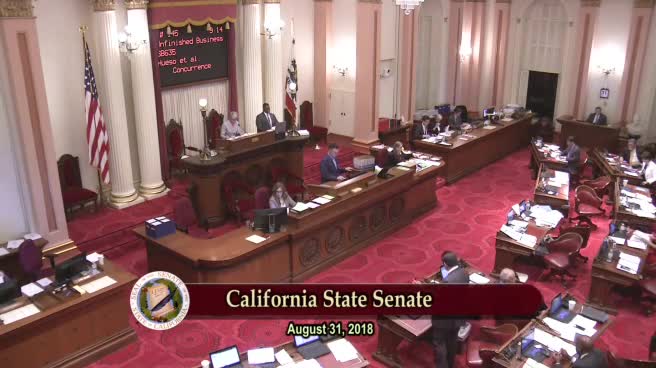 3MIN
Senate Floor
 4MIN
Senate Standing Committee on Human Services
 1MIN
Assembly Floor
 3MIN
Assembly Standing Committee on Human Services
 5MIN
Senate Floor
 5MIN
Senate Standing Committee on Judiciary


Bill Co-Author(s):