SB 1023: Reproductive health care coverage.
- Session Year: 2017-2018
- House: Senate
- Latest Version Date: 2018-08-23
Existing law provides for the Medi-Cal program, which is administered by the State Department of Health Care Services and under which qualified low-income persons receive health care benefits. The Medi-Cal program is, in part, governed and funded by federal Medicaid program provisions. Existing law requires family planning services to be offered to all former, current, or potential Medi-Cal recipients of childbearing age and provided to all eligible individuals who voluntarily request the services. Existing law also establishes the Family Planning, Access, Care, and Treatment (Family PACT) Program, administered by the Office of Family Planning within the department, Planning, under which comprehensive clinical family planning services are provided to a person who has a family income at or below 200% of the federal poverty level, as revised annually, and who is eligible to receive these services.
This bill would clarify that the requirement to provide family planning benefits under the Medi-Cal program does not prohibit family planning services from being delivered through telehealth, including mobile telehealth delivered according to clinical guidelines. The bill would, beginning January 1, 2020, require the Family PACT Program to cover services provided by a Family PACT provider through direct video and telephonic communications with a provider and direct or asynchronous care provided through a smartphone application that is appropriate to be delivered remotely based on current clinical guidelines. Beginning January 1, 2020, the bill would allow Family PACT providers to determine program eligibility remotely and to enroll clients remotely, as specified, and would authorize the State Department of Health Care Services to develop program policies to support implementation of offsite eligibility determination and enrollment. The bill would, if a patient is ineligible for the Family PACT Program, but may be eligible for more comprehensive health care coverage through Medi-Cal or Covered California, require the Family PACT provider to share information with the patient about his or her coverage options, beginning January 1, 2020.
Existing law, the Knox-Keene Health Care Service Plan Act of 1975, provides for the licensure and regulation of health care service plans by the Department of Managed Health Care and makes a willful violation of the act a crime. Existing law also provides for the regulation of health insurers by the Department of Insurance. Existing law, among other things, states the intent of the Legislature to recognize the practice of telehealth as a legitimate means by which an individual may receive health care services from a health care provider without in-person contact with the health care provider.
This bill would clarify that health care service plans, health insurers, and Medi-Cal managed care plans may cover sexual and reproductive health services that are provided appropriately through telehealth according to clinical guidelines.
Existing law provides for the Medi-Cal program, which is administered by the State Department of Health Care Services and under which qualified low-income persons receive health care benefits. The Medi-Cal program is, in part, governed and funded by federal Medicaid program provisions. Existing law also establishes the Family Planning, Access, Care, and Treatment (Family PACT) Program, administered by the Office of Family Planning within the department, under which comprehensive clinical family planning services are provided to a person who has a family income at or below 200% of the federal poverty level, as revised annually, and who is eligible to receive these services.
This bill would would, beginning January 1, 2020, require the Family PACT Program to cover services provided by a Family PACT provider through direct video and telephonic communications with a provider and direct or asynchronous care provided through a smart phone smartphone application that is appropriate to be delivered remotely based on current clinical guidelines. The Beginning January 1, 2020, the bill would allow Family PACT providers to determine program eligibility remotely and to enroll clients remotely, as specified, and would authorize the State Department of Health Care Services to develop program policies to support implementation of offsite eligibility determination and enrollment. The bill would, if a patient is ineligible for the Family PACT Program, but may be eligible for more comprehensive health care coverage through Medi-Cal or Covered California, require the Family PACT provider to share information with the patient about his or her coverage options. options, beginning January 1, 2020.
Existing law, the Knox-Keene Health Care Service Plan Act of 1975, provides for the licensure and regulation of health care service plans by the Department of Managed Health Care and makes a willful violation of the act a crime. Existing law also provides for the regulation of health insurers by the Department of Insurance. Existing law, among other things, states the intent of the Legislature to recognize the practice of telehealth as a legitimate means by which an individual may receive health care services from a health care provider without in-person contact with the health care provider.
This bill would clarify that health care service plans, health insurers, and Medi-Cal managed care plans may cover sexual and reproductive health services that are provided appropriately through telehealth according to clinical guidelines.
Existing law provides for the Medi-Cal program, which is administered by the State Department of Health Care Services and under which qualified low-income persons receive health care benefits. The Medi-Cal program is, in part, governed and funded by federal Medicaid program provisions. Existing law also establishes the Family Planning, Access, Care, and Treatment (Family PACT) Program, administered by the Office of Family Planning within the department, under which comprehensive clinical family planning services are provided to a person who has a family income at or below 200% of the federal poverty level, as revised annually, and who is eligible to receive these services.
This bill would require the Family PACT Program to cover services provided by a Family PACT Provider provider through direct video and telephonic communications with a provider and direct or asynchronous care provided through a smart phone application that is appropriate to be delivered remotely based on current clinical guidelines. The bill would allow Family PACT providers to determine program eligibility remotely and to enroll clients remotely, as specified, and would authorize the State Department of Health Care Services to develop program policies to support implementation of off-site offsite eligibility determination and enrollment. The bill would, if a patient is ineligible for the Family PACT Program, but may be eligible for more comprehensive health care coverage through Medi-Cal or Covered California, require the Family PACT provider to share information with the patient about his or her coverage options.
Existing law, the Knox-Keene Health Care Service Plan Act of 1975, provides for the licensure and regulation of health care service plans by the Department of Managed Health Care and makes a willful violation of the act a crime. Existing law also provides for the regulation of health insurers by the Department of Insurance. Existing law prohibits a health care service plan contract or health insurance policy issued, amended, renewed, or delivered on or after January 1, 2017, from requiring an enrollee or insured to receive a referral prior to receiving coverage or services for reproductive or sexual health care. Existing law, among other things, states the intent of the Legislature to recognize the practice of telehealth as a legitimate means by which an individual may receive health care services from a health care provider without in-person contact with the health care provider.
This bill would declare the intent of the Legislature to amend this bill to include provisions that would provide access to sexual and reproductive health care by ensuring care modalities through alternative delivery systems and platforms.This bill would clarify that health care service plans, health insurers, and Medi-Cal managed care plans may cover sexual and reproductive health services that are provided appropriately through telehealth according to clinical guidelines.
Existing law provides for the Medi-Cal program, which is administered by the State Department of Health Care Services and under which qualified low-income persons receive health care benefits. The Medi-Cal program is, in part, governed and funded by federal Medicaid program provisions. Existing law also establishes the Family Planning, Access, Care, and Treatment (Family PACT) Program, administered by the Office of Family Planning within the department, under which comprehensive clinical family planning services are provided to a person who has a family income at or below 200% of the federal poverty level, as revised annually, and who is eligible to receive these services.
This bill would require the Family PACT Program to cover services provided by a Family PACT Provider through direct video and telephonic communications with a provider and direct or asynchronous care provided through a smart phone application that is appropriate to be delivered remotely based on current clinical guidelines. The bill would allow Family PACT providers to determine program eligibility remotely and to enroll clients remotely, as specified, and would authorize the State Department of Health Care Services to develop program policies to support implementation of off-site eligibility determination and enrollment. The bill would, if a patient is ineligible for the Family PACT Program, but may be eligible for more comprehensive health care coverage through Medi-Cal or Covered California, require the Family PACT provider to share information with the patient about his or her coverage options.
Existing law, the Knox-Keene Health Care Service Plan Act of 1975, provides for the licensure and regulation of health care service plans by the Department of Managed Health Care and makes a willful violation of the act a crime. Existing law also provides for the regulation of health insurers by the Department of Insurance. Existing law prohibits a health care service plan contract or health insurance policy issued, amended, renewed, or delivered on or after January 1, 2017, from requiring an enrollee or insured to receive a referral prior to receiving coverage or services for reproductive or sexual health care.
This bill would declare the intent of the Legislature to amend this bill to include provisions that would provide access to sexual and reproductive health care by ensuring care modalities through alternative delivery systems and platforms.
(a)The Legislature finds and declares all of the following:
(1)California has a long history of, and commitment to, expanding access to services that aim to reduce the risk of unintended pregnancies and improving reproductive health outcomes.
(2)Californias Family Planning, Access, Care, and Treatment (Family PACT) Waiver Program, created in 1999, is viewed nationally as the gold standard of publicly funded programs providing access to reproductive health care and related services.
(3)The Affordable Care Act (ACA) and subsequent federal regulations mandated coverage for preventive services without cost sharing under most private health insurance plans to enhance access to the full range of FDA-approved prescription contraceptives and sexually transmitted disease (STD) screening.
(4)Since the passage of the ACA, many states have passed laws strengthening or expanding these preventive health coverage requirements. In 2014, California passed the Contraceptive Coverage Equity Act of 2014, which requires plans to cover all prescribed FDA-approved contraceptives for women without cost sharing, and requires plans to cover at least one therapeutic equivalent of a prescribed contraceptive drug, device, or product.
(5)Despite the gains we have made in reducing unintended pregnancy rates, in 2014, nearly 3,000,000 women in California were still in need of publicly supported family planning and there are significant disparities in unintended pregnancy and teen birth rates based on geography, race, and ethnicity.
(6)In addition, rates of STDs are at a historic high. While all Californians are at risk of contracting an STD, men who have sex with men, African Americans, and youth are disproportionately impacted in high morbidity counties throughout the state. If left untreated, STDs can lead to long-term and severe health issues, including cancer, infertility, and blindness, and greatly increase an individuals risk of contracting HIV/AIDS.
(7)Preventing unintended pregnancy and the spread of STDs brings significant cost savings to the state and federal governments. Providing safe and effective sexual and reproductive health care outside of an onsite, face-to-face consultation can advance the triple aim of improving patient experience and satisfaction, improving population health, and reducing costs.
(b)It is the intent of the Legislature to provide access to sexual and reproductive health care by ensuring care modalities through alternative delivery systems and platforms.
SEC. 2.Section 1374.13 of the Health and Safety Code is amended to read:1374.13.(a)For the purposes of this section, the definitions in subdivision (a) of Section 2290.5 of the Business and Professions Code shall apply.(b)It is the intent of the Legislature to recognize the practice of telehealth as a legitimate means by which an individual may receive health care services from a health care provider without in-person contact with the health care provider.(c)A health care service plan shall not require that in-person contact occur between a health care provider and a patient before payment is made for the covered services appropriately provided through telehealth, subject to the terms and conditions of the contract entered into between the enrollee or subscriber and the health care service plan, and between the health care service plan and its participating providers or provider groups.(d)A health care service plan shall not limit the type of setting where services are provided for the patient or by the health care provider before payment is made for the covered services appropriately provided through telehealth, subject to the terms and conditions of the contract entered into between the enrollee or subscriber and the health care service plan, and between the health care service plan and its participating providers or provider groups.(e)A health care service plan may cover sexual and reproductive health services that are provided appropriately through telehealth according to clinical guidelines.(f)The requirements of this section shall also apply to health care service plan and Medi-Cal managed care plan contracts with the State Department of Health Care Services pursuant to Chapter 7 (commencing with Section 14000) or Chapter 8 (commencing with Section 14200) of Part 3 of Division 9 of the Welfare and Institutions Code.(g)Notwithstanding any other provision, this section shall not be interpreted to authorize a health care service plan to require the use of telehealth when the health care provider has determined that it is not appropriate.SEC. 3.Section 10123.85 of the Insurance Code is amended to read:10123.85.(a)For purposes of this section, the definitions in subdivision (a) of Section 2290.5 of the Business and Professions Code shall apply.(b)It is the intent of the Legislature to recognize the practice of telehealth as a legitimate means by which an individual may receive health care services from a health care provider without in-person contact with the health care provider.(c)A health insurer shall not require that in-person contact occur between a health care provider and a patient before payment is made for the services appropriately provided through telehealth, subject to the terms and conditions of the contract entered into between the policyholder or contractholder and the insurer, and between the insurer and its participating providers or provider groups.(d)A health insurer shall not limit the type of setting where services are provided for the patient or by the health care provider before payment is made for the covered services appropriately provided by telehealth, subject to the terms and conditions of the contract between the policyholder or contractholder and the insurer, and between the insurer and its participating providers or provider groups.(e)A health insurer may cover sexual and reproductive health services that are provided appropriately through telehealth according to clinical guidelines.(f)Notwithstanding any other provision, this section shall not be interpreted to authorize a health insurer to require the use of telehealth when the health care provider has determined that it is not appropriate.SEC. 4.Section 14132.72 of the Welfare and Institutions Code is amended to read:14132.72.(a)For purposes of this section, the definitions in subdivision (a) of Section 2290.5 of the Business and Professions Code shall apply.(b)It is the intent of the Legislature to recognize the practice of telehealth as a legitimate means by which an individual may receive health care services from a health care provider without in-person contact with the provider.(c)In-person contact between a health care provider and a patient shall not be required under the Medi-Cal program for services appropriately provided through telehealth, subject to reimbursement policies adopted by the department to compensate a licensed health care provider who provides health care services through telehealth that are otherwise reimbursed pursuant to the Medi-Cal program. This section and the Telehealth Advancement Act of 2011 shall not be construed to conflict with or supersede existing state laws or regulations related to reimbursement for services provided by a noncontracted provider.(d)The department shall not require a health care provider to document a barrier to an in-person visit for Medi-Cal coverage of services provided via telehealth.(e)(1)A Medi-Cal managed care plan may cover sexual and reproductive health services that are provided appropriately through telehealth according to clinical guidelines.(2)The department shall seek any federal approvals as necessary to implement this subdivision.(f)For the purposes of payment for covered treatment or services provided through telehealth, the department shall not limit the type of setting where services are provided for the patient or by the health care provider.(g)Nothing in this section shall be interpreted to authorize the department to require the use of telehealth when the health care provider has determined that it is not appropriate.(h)Notwithstanding Chapter 3.5 (commencing with Section 11340) of Part 1 of Division 3 of Title 2 of the Government Code, the department may implement, interpret, and make specific this section by means of all-county letters, provider bulletins, and similar instructions.SEC. 2.Section 14503 of the Welfare and Institutions Code is amended to read:14503.(a)Family planning services shall be offered to all former, current, or potential recipients of childbearing age (as provided by Public Law 92-603) and provided to all eligible individuals who voluntarily request the services. The services shall be offered and provided without regard to marital status, age, or parenthood. Notwithstanding any other provisions of law, the furnishing of these family planning services shall not require the consent of anyone other than the person who is to receive them. Within the meaning of this section, the term former, current, or potential recipient means all persons eligible for Medi-Cal benefits under Chapter 7 (commencing with Section 14000) and all persons eligible for public social services for which federal reimbursement is available under the federal Social Security Act (42 U.S.C. Sec. 301 et seq.), except that the term potential recipients includes all persons in a family where current social, economic, and health conditions of the family indicate that the family would likely become a recipient of financial assistance within the next five years.
(b)Family planning services shall include, but not be limited to:
(1)Medical treatment and procedures defined as family planning services under the published Medi-Cal scope of benefits.
(2)Medical contraceptive services such as diagnosis, treatment, supplies, and followup.
(3)Informational and educational services.
(4)Facilitating services such as transportation and child care services needed to attend clinic or other appointments.
(5)Screening for chlamydia.
(c)To the extent the services under this section are not available under the Medi-Cal program, they shall be provided by a grantee pursuant to a grant awarded by the Office of Family Planning. These grants shall include to the maximum extent possible, cooperative funding and other financial arrangements that permit maximum use of available federal funds. All grants awarded by the Office of Family Planning shall be exempt from Division 2 (commencing with Section 1100) of the Public Contract Code. Information and referral services only shall be available to all other families and children.
(d)As the single state agency responsible for the state plan under Title XX of the federal Social Security Act (42 U.S.C. Sec. 1397 et seq.), the State Department of Social Services may provide family planning services pursuant to a purchase of services agreement with the department from funds appropriated for those services. The agreement shall authorize the Office of Family Planning to implement a sliding fee schedule for family planning services provided to clients pursuant to Title XX of the federal Social Security Act in accordance with Section 14501.5.
(e)Nothing in this section prohibits family planning services from being delivered through telehealth, including mobile telehealth delivered according to clinical guidelines.
SEC. 5.SEC. 3.Section 24005 of the Welfare and Institutions Code is amended to read:24005.(a)This section applies to the Family Planning, Access, Care, and Treatment (Family PACT) Program identified in subdivision (aa) of Section 14132 and this program.
(b)Only licensed medical personnel with family planning skills, knowledge, and competency may provide the full range of family planning medical services covered in this program.
(c)Medi-Cal enrolled providers, as determined by the department, shall be eligible to provide family planning services under the program when these services are within their scope of practice and licensure. Those clinical providers electing to participate in the program and approved by the department shall provide the full scope of family planning education, counseling, and medical services specified for the program, either directly or by referral, consistent with standards of care issued by the department.
(d)The department shall require providers to enter into clinical agreements with the department to ensure compliance with standards and requirements to maintain the fiscal integrity of the program. Provider applicants, providers, and persons with an ownership or control interest, as defined in federal Medicaid regulations, shall be required to submit to the department their social security numbers to the full extent allowed under federal law. All state and federal statutes and regulations pertaining to the audit or examination of Medi-Cal providers apply to this program.
(e)Clinical provider agreements shall be signed by the provider under penalty of perjury. The department may screen applicants at the initial application and at any reapplication pursuant to requirements developed by the department to determine provider suitability for the program.
(f)The department may complete a background check on clinical provider applicants for the purpose of verifying the accuracy of information provided to the department for purposes of enrolling in the program and in order to prevent fraud and abuse. The background check may include, but not be limited to, unannounced onsite inspection prior to enrollment, review of business records, and data searches. If discrepancies are found to exist during the preenrollment period, the department may conduct additional inspections prior to enrollment. Failure to remediate significant discrepancies as prescribed by the director may result in denial of the application for enrollment. Providers that do not provide services consistent with the standards of care or that do not comply with the departments rules related to the fiscal integrity of the program may be disenrolled as a provider from the program at the sole discretion of the department.
(g)The department shall not enroll any applicant who, within the previous 10 years:
(1)Has been convicted of any felony or misdemeanor that involves fraud or abuse in any government program, that relates to neglect or abuse of a patient in connection with the delivery of a health care item or service, or that is in connection with the interference with, or obstruction of, any investigation into health care related fraud or abuse.
(2)Has been found liable for fraud or abuse in any civil proceeding, or that has entered into a settlement in lieu of conviction for fraud or abuse in any government program.
(h)In addition, the department may deny enrollment to any applicant that, at the time of application, is under investigation by the department or any local, state, or federal government law enforcement agency for fraud or abuse. The department shall not deny enrollment to an otherwise qualified applicant whose felony or misdemeanor charges did not result in a conviction solely on the basis of the prior charges. If it is discovered that a provider is under investigation by the department or any local, state, or federal government law enforcement agency for fraud or abuse, that provider shall be subject to immediate disenrollment from the program.
(i)(1)The program shall disenroll as a program provider any individual who, or any entity that, has a license, certificate, or other approval to provide health care that is revoked or suspended by a federal, California, or other states licensing, certification, or other approval authority, has otherwise lost that license, certificate, or approval, or has surrendered that license, certificate, or approval while a disciplinary hearing on the license, certificate, or approval was pending. The disenrollment shall be effective on the date the license, certificate, or approval is revoked, lost, or surrendered.
(2)A provider shall be subject to disenrollment if the provider submits claims for payment for the services, goods, supplies, or merchandise provided, directly or indirectly, to a program beneficiary, by an individual or entity that has been previously suspended, excluded, or otherwise made ineligible to receive, directly or indirectly, reimbursement from the program or from the Medi-Cal program and the individual has previously been listed on either the Suspended and Ineligible Provider List, which is published by the department, to identify suspended and otherwise ineligible providers or any list published by the federal Office of the Inspector General regarding the suspension or exclusion of individuals or entities from the federal Medicare and Medicaid programs, to identify suspended, excluded, or otherwise ineligible providers.
(3)The department shall deactivate, immediately and without prior notice, the provider numbers used by a provider to obtain reimbursement from the program when warrants or documents mailed to a providers mailing address, its pay to address, or its service address, if any, are returned by the United States Postal Service as not deliverable or when a provider has not submitted a claim for reimbursement from the program for one year. Prior to taking this action, the department shall use due diligence in attempting to contact the provider at its last known telephone number and to ascertain if the return by the United States Postal Service is by mistake and shall use due diligence in attempting to contact the provider by telephone or in writing to ascertain whether the provider wishes to continue to participate in the Medi-Cal program. If deactivation pursuant to this section occurs, the provider shall meet the requirements for reapplication as specified in regulation.
(4)For purposes of this subdivision:
(A)Mailing address means the address that the provider has identified to the department in its application for enrollment as the address at which it wishes to receive general program correspondence.
(B)Pay to address means the address that the provider has identified to the department in its application for enrollment as the address at which it wishes to receive warrants.
(C)Service address means the address that the provider has identified to the department in its application for enrollment as the address at which the provider will provide services to program beneficiaries.
(j)Subject to Article 4 (commencing with Section 19130) of Chapter 5 of Part 2 of Division 5 of Title 2 of the Government Code, the department may enter into contracts to secure consultant services or information technology including, but not limited to, software, data, or analytical techniques or methodologies for the purpose of fraud or abuse detection and prevention. Contracts under this section shall be exempt from the Public Contract Code.
(k)Enrolled providers shall attend specific orientation approved by the department in comprehensive family planning services. Enrolled providers who insert IUDs or contraceptive implants shall have received prior clinical training specific to these procedures.
(l)Upon receipt of reliable evidence that would be admissible under the administrative adjudication provisions of Chapter 5 (commencing with Section 11500) of Part 1 of Division 3 of Title 2 of the Government Code, of fraud or willful misrepresentation by a provider under the program or commencement of a suspension under Section 14123, the department may do any of the following:
(1)Collect any State-Only Family Planning program or Family Planning, Access, Care, and Treatment Program overpayment identified through an audit or examination, or any portion thereof from any provider. Notwithstanding Section 100171 of the Health and Safety Code, a provider may appeal the collection of overpayments under this section pursuant to procedures established in Article 5.3 (commencing with Section 14170) of Chapter 7 of Part 3 of Division 9. Overpayments collected under this section shall not be returned to the provider during the pendency of any appeal and may be offset to satisfy audit or appeal findings, if the findings are against the provider. Overpayments shall be returned to a provider with interest if findings are in favor of the provider.
(2)Withhold payment for any goods or services, or any portion thereof, from any State-Only Family Planning program or Family Planning, Access, Care, and Treatment Program provider. The department shall notify the provider within five days of any withholding of payment under this section. The notice shall do all of the following:
(A)State that payments are being withheld in accordance with this paragraph and that the withholding is for a temporary period and will not continue after it is determined that the evidence of fraud or willful misrepresentation is insufficient or when legal proceedings relating to the alleged fraud or willful misrepresentation are completed.
(B)Cite the circumstances under which the withholding of the payments will be terminated.
(C)Specify, when appropriate, the type or types of claimed payments being withheld.
(D)Inform the provider of the right to submit written evidence that is evidence that would be admissible under the administrative adjudication provisions of Chapter 5 (commencing with Section 11500) of Part 1 of Division 3 of Title 2 of the Government Code, for consideration by the department.
(3)Notwithstanding Section 100171 of the Health and Safety Code, a provider may appeal a withholding of payment under this section pursuant to Section 14043.65. Payments withheld under this section shall not be returned to the provider during the pendency of any appeal and may be offset to satisfy audit or appeal findings.
(m)As used in this section:
(1)Abuse means either of the following:
(A)Practices that are inconsistent with sound fiscal or business practices and result in unnecessary cost to the Medicaid program, the Medicare Program, the Medi-Cal program, including the Family Planning, Access, Care, and Treatment Program, identified in subdivision (aa) of Section 14132, another states Medicaid program, or the State-Only Family Planning program, or other health care programs operated, or financed in whole or in part, by the federal government or any state or local agency in this state or any other state.
(B)Practices that are inconsistent with sound medical practices and result in reimbursement, by any of the programs referred to in subparagraph (A) or other health care programs operated, or financed in whole or in part, by the federal government or any state or local agency in this state or any other state, for services that are unnecessary or for substandard items or services that fail to meet professionally recognized standards for health care.
(2)Fraud means an intentional deception or misrepresentation made by a person with the knowledge that the deception could result in some unauthorized benefit to himself or herself or some other person. It includes any act that constitutes fraud under applicable federal or state law.
(3)Provider means any individual, partnership, group, association, corporation, institution, or other entity, and the officers, directors, owners, managing employees, or agents of any partnership, group, association, corporation, institution, or other entity, that provides services, goods, supplies, or merchandise, directly or indirectly, to a beneficiary and has been enrolled in the program.
(4)Convicted means any of the following:
(A)A judgment of conviction has been entered against an individual or entity by a federal, state, or local court, regardless of whether there is a post-trial motion or an appeal pending or the judgment of conviction or other record relating to the criminal conduct has been expunged or otherwise removed.
(B)A federal, state, or local court has made a finding of guilt against an individual or entity.
(C)A federal, state, or local court has accepted a plea of guilty or nolo contendere by an individual or entity.
(D)An individual or entity has entered into participation in a first offender, deferred adjudication, or other program or arrangement in which judgment of conviction has been withheld.
(5)Professionally recognized standards of health care means statewide or national standards of care, whether in writing or not, that professional peers of the individual or entity whose provision of care is an issue, recognize as applying to those peers practicing or providing care within a state. When the United States Department of Health and Human Services has declared a treatment modality not to be safe and effective, practitioners that employ that treatment modality shall be deemed not to meet professionally recognized standards of health care. This definition shall not be construed to mean that all other treatments meet professionally recognized standards of care.
(6)Unnecessary or substandard items or services means those that are either of the following:
(A)Substantially in excess of the providers usual charges or costs for the items or services.
(B)Furnished, or caused to be furnished, to patients, whether or not covered by Medicare, Medicaid, or any of the state health care programs to which the definitions of applicant and provider apply, and which are substantially in excess of the patients needs, or of a quality that fails to meet professionally recognized standards of health care. The departments determination that the items or services furnished were excessive or of unacceptable quality shall be made on the basis of information, including sanction reports, from the following sources:
(i)The professional review organization for the area served by the individual or entity.
(ii)State or local licensing or certification authorities.
(iii)Fiscal agents or contractors, or private insurance companies.
(iv)State or local professional societies.
(v)Any other sources deemed appropriate by the department.
(7)Enrolled or enrollment in the program means authorized under any and all processes by the department or its agents or contractors to receive, directly or indirectly, reimbursement for the provision of services, goods, supplies, or merchandise to a program beneficiary.
(n)In lieu of, or in addition to, the imposition of any other sanctions available, including the imposition of a civil penalty under Section 14123.2 or 14171.6, the program may impose on providers any or all of the penalties pursuant to Section 14123.25, in accordance with the provisions of that section. In addition, program providers shall be subject to the penalties contained in Section 14107.
(o)(1)Notwithstanding any other law, every primary supplier of pharmaceuticals, medical equipment, or supplies shall maintain accounting records to demonstrate the manufacture, assembly, purchase, or acquisition and subsequent sale, of any pharmaceuticals, medical equipment, or supplies, to providers. Accounting records shall include, but not be limited to, inventory records, general ledgers, financial statements, purchase and sales journals, and invoices, prescription records, bills of lading, and delivery records.
(2)For purposes of this subdivision, the term primary supplier means any manufacturer, principal labeler, assembler, wholesaler, or retailer.
(3)Accounting records maintained pursuant to paragraph (1) are subject to audit or examination by the department or its agents. The audit or examination may include, but is not limited to, verification of what was claimed by the provider. These accounting records shall be maintained for three years from the date of sale or the date of service.
(p)Each provider of health care services rendered to any program beneficiary shall keep and maintain records of each service rendered, the beneficiary to whom rendered, the date, and any additional information that the department may by regulation require. Records required to be kept and maintained pursuant to this subdivision shall be retained by the provider for a period of three years from the date the service was rendered.
(q)A program provider applicant or a program provider shall furnish information or copies of records and documentation requested by the department. Failure to comply with the departments request shall be grounds for denial of the application or automatic disenrollment of the provider.
(r)A program provider may assign signature authority for transmission of claims to a billing agent subject to Sections 14040, 14040.1, and 14040.5.
(s)Moneys payable or rights existing under this division shall be subject to any claim, lien, or offset of the State of California, and any claim of the United States of America made pursuant to federal statute, but shall not otherwise be subject to enforcement of a money judgment or other legal process, and no transfer or assignment, at law or in equity, of any right of a provider of health care to any payment shall be enforceable against the state, a fiscal intermediary, or carrier.
(t)(1)Notwithstanding any other law, within 30 calendar days of receiving a complete application for enrollment into the Family PACT Program from an affiliate primary care clinic licensed under Section 1218.1 of the Health and Safety Code, the department shall do one of the following:
(A)Approve the providers Family PACT Program application, provided the applicant meets the Family PACT Program provider enrollment requirements set forth in this section.
(B)If the provider is an enrolled Medi-Cal provider in good standing, notify the applicant in writing of any discrepancies in the Family PACT Program enrollment application. The applicant shall have 30 days from the date of written notice to correct any identified discrepancies. Upon receipt of all requested corrections, the department shall approve the application within 30 calendar days.
(C)If the provider is not an enrolled Medi-Cal provider in good standing, the department shall not proceed with the actions described in this subdivision until the department receives confirmation of good standing and enrollment as a Medi-Cal provider.
(2)The effective date of enrollment into the Family PACT Program shall be the later of the date the department receives confirmation of enrollment as a Medi-Cal provider, or the date the applicant meets all Family PACT Program provider enrollment requirements set forth in this section.
(u)Providers, or the enrolling entity, shall make available to all applicants and beneficiaries prior to, or concurrent with, enrollment, information on the manner in which to apply for insurance affordability programs, in a manner determined by the State Department of Health Care Services. The information provided shall include the manner in which applications can be submitted for insurance affordability programs, information about the open enrollment periods for the California Health Benefit Exchange, and the continuous enrollment aspect of the Medi-Cal program.
(v)(1)Commencing January 1, 2020, services provided by a Family PACT provider through direct video and telephonic communications with a provider, or direct or asynchronous care provided through a smartphone application, that are appropriate to be delivered remotely based on current clinical guidelines, shall be covered services under the Family PACT Program.
(2)Commencing January 1, 2020, providers may determine program eligibility remotely based on the most current Family PACT Program eligibility form. The State Department of Health Care Services may develop program policies to support implementation of offsite eligibility determination and enrollment. If clients are eligible for the program, they may be enrolled by a Family PACT provider remotely. If a patient is ineligible for the Family PACT Program, but may be eligible for more comprehensive health care coverage through Medi-Cal or Covered California, the Family PACT Program provider shall share information with the patient about his or her coverage options.
(3)The department shall seek any federal approvals as necessary to implement this subdivision.
(a)The Legislature finds and declares all of the following:
(1)California has a long history of, and commitment to, expanding access to services that aim to reduce the risk of unintended pregnancies and improving reproductive health outcomes.
(2)Californias Family Planning, Access, Care, and Treatment (Family PACT) Waiver Program, created in 1999, is viewed nationally as the gold standard of publicly funded programs providing access to reproductive health care and related services.
(3)The Affordable Care Act (ACA) and subsequent federal regulations mandated coverage for preventive services without cost sharing under most private health insurance plans to enhance access to the full range of FDA-approved prescription contraceptives and sexually transmitted disease (STD) screening.
(4)Since the passage of the ACA, many states have passed laws strengthening or expanding these preventive health coverage requirements. In 2014, California passed the Contraceptive Coverage Equity Act of 2014, which requires plans to cover all prescribed FDA-approved contraceptives for women without cost sharing, and requires plans to cover at least one therapeutic equivalent of a prescribed contraceptive drug, device, or product.
(5)Despite the gains we have made in reducing unintended pregnancy rates, in 2014, nearly 3,000,000 women in California were still in need of publicly supported family planning and there are significant disparities in unintended pregnancy and teen birth rates based on geography, race, and ethnicity.
(6)In addition, rates of STDs are at a historic high. While all Californians are at risk of contracting an STD, men who have sex with men, African Americans, and youth are disproportionately impacted in high morbidity counties throughout the state. If left untreated, STDs can lead to long-term and severe health issues, including cancer, infertility, and blindness, and greatly increase an individuals risk of contracting HIV/AIDS.
(7)Preventing unintended pregnancy and the spread of STDs brings significant cost savings to the state and federal governments. Providing safe and effective sexual and reproductive health care outside of an onsite, face-to-face consultation can advance the triple aim of improving patient experience and satisfaction, improving population health, and reducing costs.
(b)It is the intent of the Legislature to provide access to sexual and reproductive health care by ensuring care modalities through alternative delivery systems and platforms.
SEC. 2.Section 1374.13 of the Health and Safety Code is amended to read:1374.13.(a)For the purposes of this section, the definitions in subdivision (a) of Section 2290.5 of the Business and Professions Code shall apply.
(b)It is the intent of the Legislature to recognize the practice of telehealth as a legitimate means by which an individual may receive health care services from a health care provider without in-person contact with the health care provider.
(c)A health care service plan shall not require that in-person contact occur between a health care provider and a patient before payment is made for the covered services appropriately provided through telehealth, subject to the terms and conditions of the contract entered into between the enrollee or subscriber and the health care service plan, and between the health care service plan and its participating providers or provider groups.
(d)A health care service plan shall not limit the type of setting where services are provided for the patient or by the health care provider before payment is made for the covered services appropriately provided through telehealth, subject to the terms and conditions of the contract entered into between the enrollee or subscriber and the health care service plan, and between the health care service plan and its participating providers or provider groups.
(e)A health care service plan may cover sexual and reproductive health services that are provided appropriately through telehealth according to clinical guidelines.
(f)The requirements of this section shall also apply to health care service plan and Medi-Cal managed care plan contracts with the State Department of Health Care Services pursuant to Chapter 7 (commencing with Section 14000) or Chapter 8 (commencing with Section 14200) of Part 3 of Division 9 of the Welfare and Institutions Code.
(g)Notwithstanding any other provision, this section shall not be interpreted to authorize a health care service plan to require the use of telehealth when the health care provider has determined that it is not appropriate.
SEC. 3.Section 10123.85 of the Insurance Code is amended to read:10123.85.(a)For purposes of this section, the definitions in subdivision (a) of Section 2290.5 of the Business and Professions Code shall apply.
(b)It is the intent of the Legislature to recognize the practice of telehealth as a legitimate means by which an individual may receive health care services from a health care provider without in-person contact with the health care provider.
(c)A health insurer shall not require that in-person contact occur between a health care provider and a patient before payment is made for the services appropriately provided through telehealth, subject to the terms and conditions of the contract entered into between the policyholder or contractholder and the insurer, and between the insurer and its participating providers or provider groups.
(d)A health insurer shall not limit the type of setting where services are provided for the patient or by the health care provider before payment is made for the covered services appropriately provided by telehealth, subject to the terms and conditions of the contract between the policyholder or contract holder contractholder and the insurer, and between the insurer and its participating providers or provider groups.
(e)A health insurer may cover sexual and reproductive health services that are provided appropriately through telehealth according to clinical guidelines.
(f)Notwithstanding any other provision, this section shall not be interpreted to authorize a health insurer to require the use of telehealth when the health care provider has determined that it is not appropriate.
SEC. 4.Section 14132.72 of the Welfare and Institutions Code is amended to read:14132.72.(a)For purposes of this section, the definitions in subdivision (a) of Section 2290.5 of the Business and Professions Code shall apply.
(b)It is the intent of the Legislature to recognize the practice of telehealth as a legitimate means by which an individual may receive health care services from a health care provider without in-person contact with the provider.
(c)In-person contact between a health care provider and a patient shall not be required under the Medi-Cal program for services appropriately provided through telehealth, subject to reimbursement policies adopted by the department to compensate a licensed health care provider who provides health care services through telehealth that are otherwise reimbursed pursuant to the Medi-Cal program. Nothing in this This section or and the Telehealth Advancement Act of 2011 shall not be construed to conflict with or supersede the provisions of Section 14091.3 of this code or any other existing state laws or regulations related to reimbursement for services provided by a noncontracted provider.
(d)The department shall not require a health care provider to document a barrier to an in-person visit for Medi-Cal coverage of services provided via telehealth.
(e)(1)A Medi-Cal managed care plan may cover sexual and reproductive health services that are provided appropriately through telehealth according to clinical guidelines.
(2)The department shall seek any federal approvals as necessary to implement this subdivision.
(f)For the purposes of payment for covered treatment or services provided through telehealth, the department shall not limit the type of setting where services are provided for the patient or by the health care provider.
(g)Nothing in this section shall be interpreted to authorize the department to require the use of telehealth when the health care provider has determined that it is not appropriate.
(h)Notwithstanding Chapter 3.5 (commencing with Section 11340) of Part 1 of Division 3 of Title 2 of the Government Code, the department may implement, interpret, and make specific this section by means of all-county letters, provider bulletins, and similar instructions.
SEC. 5.Section 24005 of the Welfare and Institutions Code is amended to read:24005.(a)This section applies to the Family Planning, Access, Care, and Treatment (Family PACT) Program identified in subdivision (aa) of Section 14132 and this program.
(b)Only licensed medical personnel with family planning skills, knowledge, and competency may provide the full range of family planning medical services covered in this program.
(c)Medi-Cal enrolled providers, as determined by the department, shall be eligible to provide family planning services under the program when these services are within their scope of practice and licensure. Those clinical providers electing to participate in the program and approved by the department shall provide the full scope of family planning education, counseling, and medical services specified for the program, either directly or by referral, consistent with standards of care issued by the department.
(d)The department shall require providers to enter into clinical agreements with the department to ensure compliance with standards and requirements to maintain the fiscal integrity of the program. Provider applicants, providers, and persons with an ownership or control interest, as defined in federal Medicaid regulations, shall be required to submit to the department their social security numbers to the full extent allowed under federal law. All state and federal statutes and regulations pertaining to the audit or examination of Medi-Cal providers apply to this program.
(e)Clinical provider agreements shall be signed by the provider under penalty of perjury. The department may screen applicants at the initial application and at any reapplication pursuant to requirements developed by the department to determine provider suitability for the program.
(f)The department may complete a background check on clinical provider applicants for the purpose of verifying the accuracy of information provided to the department for purposes of enrolling in the program and in order to prevent fraud and abuse. The background check may include, but not be limited to, unannounced onsite inspection prior to enrollment, review of business records, and data searches. If discrepancies are found to exist during the preenrollment period, the department may conduct additional inspections prior to enrollment. Failure to remediate significant discrepancies as prescribed by the director may result in denial of the application for enrollment. Providers that do not provide services consistent with the standards of care or that do not comply with the departments rules related to the fiscal integrity of the program may be disenrolled as a provider from the program at the sole discretion of the department.
(g)The department shall not enroll any applicant who, within the previous 10 years:
(1)Has been convicted of any felony or misdemeanor that involves fraud or abuse in any government program, that relates to neglect or abuse of a patient in connection with the delivery of a health care item or service, or that is in connection with the interference with, or obstruction of, any investigation into health care related fraud or abuse.
(2)Has been found liable for fraud or abuse in any civil proceeding, or that has entered into a settlement in lieu of conviction for fraud or abuse in any government program.
(h)In addition, the department may deny enrollment to any applicant that, at the time of application, is under investigation by the department or any local, state, or federal government law enforcement agency for fraud or abuse. The department shall not deny enrollment to an otherwise qualified applicant whose felony or misdemeanor charges did not result in a conviction solely on the basis of the prior charges. If it is discovered that a provider is under investigation by the department or any local, state, or federal government law enforcement agency for fraud or abuse, that provider shall be subject to immediate disenrollment from the program.
(i)(1)The program shall disenroll as a program provider any individual who, or any entity that, has a license, certificate, or other approval to provide health care that is revoked or suspended by a federal, California, or other states licensing, certification, or other approval authority, has otherwise lost that license, certificate, or approval, or has surrendered that license, certificate, or approval while a disciplinary hearing on the license, certificate, or approval was pending. The disenrollment shall be effective on the date the license, certificate, or approval is revoked, lost, or surrendered.
(2)A provider shall be subject to disenrollment if the provider submits claims for payment for the services, goods, supplies, or merchandise provided, directly or indirectly, to a program beneficiary, by an individual or entity that has been previously suspended, excluded, or otherwise made ineligible to receive, directly or indirectly, reimbursement from the program or from the Medi-Cal program and the individual has previously been listed on either the Suspended and Ineligible Provider List, which is published by the department, to identify suspended and otherwise ineligible providers or any list published by the federal Office of the Inspector General regarding the suspension or exclusion of individuals or entities from the federal Medicare and Medicaid programs, to identify suspended, excluded, or otherwise ineligible providers.
(3)The department shall deactivate, immediately and without prior notice, the provider numbers used by a provider to obtain reimbursement from the program when warrants or documents mailed to a providers mailing address, its pay to address, or its service address, if any, are returned by the United States Postal Service as not deliverable or when a provider has not submitted a claim for reimbursement from the program for one year. Prior to taking this action, the department shall use due diligence in attempting to contact the provider at its last known telephone number and to ascertain if the return by the United States Postal Service is by mistake and shall use due diligence in attempting to contact the provider by telephone or in writing to ascertain whether the provider wishes to continue to participate in the Medi-Cal program. If deactivation pursuant to this section occurs, the provider shall meet the requirements for reapplication as specified in regulation.
(4)For purposes of this subdivision:
(A)Mailing address means the address that the provider has identified to the department in its application for enrollment as the address at which it wishes to receive general program correspondence.
(B)Pay to address means the address that the provider has identified to the department in its application for enrollment as the address at which it wishes to receive warrants.
(C)Service address means the address that the provider has identified to the department in its application for enrollment as the address at which the provider will provide services to program beneficiaries.
(j)Subject to Article 4 (commencing with Section 19130) of Chapter 5 of Part 2 of Division 5 of Title 2 of the Government Code, the department may enter into contracts to secure consultant services or information technology including, but not limited to, software, data, or analytical techniques or methodologies for the purpose of fraud or abuse detection and prevention. Contracts under this section shall be exempt from the Public Contract Code.
(k)Enrolled providers shall attend specific orientation approved by the department in comprehensive family planning services. Enrolled providers who insert IUDs or contraceptive implants shall have received prior clinical training specific to these procedures.
(l)Upon receipt of reliable evidence that would be admissible under the administrative adjudication provisions of Chapter 5 (commencing with Section 11500) of Part 1 of Division 3 of Title 2 of the Government Code, of fraud or willful misrepresentation by a provider under the program or commencement of a suspension under Section 14123, the department may do any of the following:
(1)Collect any State-Only Family Planning program or Family Planning, Access, Care, and Treatment Program overpayment identified through an audit or examination, or any portion thereof from any provider. Notwithstanding Section 100171 of the Health and Safety Code, a provider may appeal the collection of overpayments under this section pursuant to procedures established in Article 5.3 (commencing with Section 14170) of Chapter 7 of Part 3 of Division 9. Overpayments collected under this section shall not be returned to the provider during the pendency of any appeal and may be offset to satisfy audit or appeal findings, if the findings are against the provider. Overpayments shall be returned to a provider with interest if findings are in favor of the provider.
(2)Withhold payment for any goods or services, or any portion thereof, from any State-Only Family Planning program or Family Planning, Access, Care, and Treatment Program provider. The department shall notify the provider within five days of any withholding of payment under this section. The notice shall do all of the following:
(A)State that payments are being withheld in accordance with this paragraph and that the withholding is for a temporary period and will not continue after it is determined that the evidence of fraud or willful misrepresentation is insufficient or when legal proceedings relating to the alleged fraud or willful misrepresentation are completed.
(B)Cite the circumstances under which the withholding of the payments will be terminated.
(C)Specify, when appropriate, the type or types of claimed payments being withheld.
(D)Inform the provider of the right to submit written evidence that is evidence that would be admissible under the administrative adjudication provisions of Chapter 5 (commencing with Section 11500) of Part 1 of Division 3 of Title 2 of the Government Code, for consideration by the department.
(3)Notwithstanding Section 100171 of the Health and Safety Code, a provider may appeal a withholding of payment under this section pursuant to Section 14043.65. Payments withheld under this section shall not be returned to the provider during the pendency of any appeal and may be offset to satisfy audit or appeal findings.
(m)As used in this section:
(1)Abuse means either of the following:
(A)Practices that are inconsistent with sound fiscal or business practices and result in unnecessary cost to the Medicaid program, the Medicare Program, the Medi-Cal program, including the Family Planning, Access, Care, and Treatment Program, identified in subdivision (aa) of Section 14132, another states Medicaid program, or the State-Only Family Planning program, or other health care programs operated, or financed in whole or in part, by the federal government or any state or local agency in this state or any other state.
(B)Practices that are inconsistent with sound medical practices and result in reimbursement, by any of the programs referred to in subparagraph (A) or other health care programs operated, or financed in whole or in part, by the federal government or any state or local agency in this state or any other state, for services that are unnecessary or for substandard items or services that fail to meet professionally recognized standards for health care.
(2)Fraud means an intentional deception or misrepresentation made by a person with the knowledge that the deception could result in some unauthorized benefit to himself or herself or some other person. It includes any act that constitutes fraud under applicable federal or state law.
(3)Provider means any individual, partnership, group, association, corporation, institution, or other entity, and the officers, directors, owners, managing employees, or agents of any partnership, group, association, corporation, institution, or other entity, that provides services, goods, supplies, or merchandise, directly or indirectly, to a beneficiary and has been enrolled in the program.
(4)Convicted means any of the following:
(A)A judgment of conviction has been entered against an individual or entity by a federal, state, or local court, regardless of whether there is a post-trial motion or an appeal pending or the judgment of conviction or other record relating to the criminal conduct has been expunged or otherwise removed.
(B)A federal, state, or local court has made a finding of guilt against an individual or entity.
(C)A federal, state, or local court has accepted a plea of guilty or nolo contendere by an individual or entity.
(D)An individual or entity has entered into participation in a first offender, deferred adjudication, or other program or arrangement in which judgment of conviction has been withheld.
(5)Professionally recognized standards of health care means statewide or national standards of care, whether in writing or not, that professional peers of the individual or entity whose provision of care is an issue, recognize as applying to those peers practicing or providing care within a state. When the United States Department of Health and Human Services has declared a treatment modality not to be safe and effective, practitioners that employ that treatment modality shall be deemed not to meet professionally recognized standards of health care. This definition shall not be construed to mean that all other treatments meet professionally recognized standards of care.
(6)Unnecessary or substandard items or services means those that are either of the following:
(A)Substantially in excess of the providers usual charges or costs for the items or services.
(B)Furnished, or caused to be furnished, to patients, whether or not covered by Medicare, Medicaid, or any of the state health care programs to which the definitions of applicant and provider apply, and which are substantially in excess of the patients needs, or of a quality that fails to meet professionally recognized standards of health care. The departments determination that the items or services furnished were excessive or of unacceptable quality shall be made on the basis of information, including sanction reports, from the following sources:
(i)The professional review organization for the area served by the individual or entity.
(ii)State or local licensing or certification authorities.
(iii)Fiscal agents or contractors, or private insurance companies.
(iv)State or local professional societies.
(v)Any other sources deemed appropriate by the department.
(7)Enrolled or enrollment in the program means authorized under any and all processes by the department or its agents or contractors to receive, directly or indirectly, reimbursement for the provision of services, goods, supplies, or merchandise to a program beneficiary.
(n)In lieu of, or in addition to, the imposition of any other sanctions available, including the imposition of a civil penalty under Section 14123.2 or 14171.6, the program may impose on providers any or all of the penalties pursuant to Section 14123.25, in accordance with the provisions of that section. In addition, program providers shall be subject to the penalties contained in Section 14107.
(o)(1)Notwithstanding any other law, every primary supplier of pharmaceuticals, medical equipment, or supplies shall maintain accounting records to demonstrate the manufacture, assembly, purchase, or acquisition and subsequent sale, of any pharmaceuticals, medical equipment, or supplies, to providers. Accounting records shall include, but not be limited to, inventory records, general ledgers, financial statements, purchase and sales journals, and invoices, prescription records, bills of lading, and delivery records.
(2)For purposes of this subdivision, the term primary supplier means any manufacturer, principal labeler, assembler, wholesaler, or retailer.
(3)Accounting records maintained pursuant to paragraph (1) are subject to audit or examination by the department or its agents. The audit or examination may include, but is not limited to, verification of what was claimed by the provider. These accounting records shall be maintained for three years from the date of sale or the date of service.
(p)Each provider of health care services rendered to any program beneficiary shall keep and maintain records of each service rendered, the beneficiary to whom rendered, the date, and any additional information that the department may by regulation require. Records required to be kept and maintained pursuant to this subdivision shall be retained by the provider for a period of three years from the date the service was rendered.
(q)A program provider applicant or a program provider shall furnish information or copies of records and documentation requested by the department. Failure to comply with the departments request shall be grounds for denial of the application or automatic disenrollment of the provider.
(r)A program provider may assign signature authority for transmission of claims to a billing agent subject to Sections 14040, 14040.1, and 14040.5.
(s)Moneys payable or rights existing under this division shall be subject to any claim, lien, or offset of the State of California, and any claim of the United States of America made pursuant to federal statute, but shall not otherwise be subject to enforcement of a money judgment or other legal process, and no transfer or assignment, at law or in equity, of any right of a provider of health care to any payment shall be enforceable against the state, a fiscal intermediary, or carrier.
(t)(1)Notwithstanding any other law, within 30 calendar days of receiving a complete application for enrollment into the Family PACT Program from an affiliate primary care clinic licensed under Section 1218.1 of the Health and Safety Code, the department shall do one of the following:
(A)Approve the providers Family PACT Program application, provided the applicant meets the Family PACT Program provider enrollment requirements set forth in this section.
(B)If the provider is an enrolled Medi-Cal provider in good standing, notify the applicant in writing of any discrepancies in the Family PACT Program enrollment application. The applicant shall have 30 days from the date of written notice to correct any identified discrepancies. Upon receipt of all requested corrections, the department shall approve the application within 30 calendar days.
(C)If the provider is not an enrolled Medi-Cal provider in good standing, the department shall not proceed with the actions described in this subdivision until the department receives confirmation of good standing and enrollment as a Medi-Cal provider.
(2)The effective date of enrollment into the Family PACT Program shall be the later of the date the department receives confirmation of enrollment as a Medi-Cal provider, or the date the applicant meets all Family PACT Program provider enrollment requirements set forth in this section.
(u)Providers, or the enrolling entity, shall make available to all applicants and beneficiaries prior to, or concurrent with, enrollment, information on the manner in which to apply for insurance affordability programs, in a manner determined by the State Department of Health Care Services. The information provided shall include the manner in which applications can be submitted for insurance affordability programs, information about the open enrollment periods for the California Health Benefit Exchange, and the continuous enrollment aspect of the Medi-Cal program.
(v)(1)Services Commencing January 1, 2020, services provided by a Family PACT provider through direct video and telephonic communications with a provider, or direct or asynchronous care provided through a smart phone smartphone application, that are appropriate to be delivered remotely based on current clinical guidelines, shall be covered services under the Family PACT Program.
(2)Providers Commencing January 1, 2020, providers may determine program eligibility remotely based on the most current Family PACT Program eligibility form. The State Department of Health Care Services may develop program policies to support implementation of offsite eligibility determination and enrollment. If clients are eligible for the program, they may be enrolled by a Family PACT provider remotely. If a patient is ineligible for the Family PACT Program, but may be eligible for more comprehensive health care coverage through Medi-Cal or Covered California, the Family PACT Program provider shall share information with the patient about his or her coverage options.
(3)The department shall seek any federal approvals as necessary to implement this subdivision.
(a)The Legislature finds and declares all of the following:
(1)California has a long history of, and commitment to, expanding access to services that aim to reduce the risk of unintended pregnancies and improving reproductive health outcomes.
(2)Californias Family Planning, Access, Care, and Treatment (Family PACT) Waiver Program, created in 1999, is viewed nationally as the gold standard of publicly funded programs providing access to reproductive health care and related services.
(3)The Affordable Care Act (ACA) and subsequent federal regulations mandated coverage for preventive services without cost sharing under most private health insurance plans to enhance access to the full range of FDA-approved prescription contraceptives and sexually transmitted disease (STD) screening.
(4)Since the passage of the ACA, many states have passed laws strengthening or expanding these preventive health coverage requirements. In 2014, California passed the Contraceptive Coverage Equity Act of 2014, which requires plans to cover all prescribed FDA-approved contraceptives for women without cost sharing, and requires plans to cover at least one therapeutic equivalent of a prescribed contraceptive drug, device, or product.
(5)Despite the gains we have made in reducing unintended pregnancy rates, in 2014, nearly 3,000,000 women in California were still in need of publicly supported family planning and there are significant disparities in unintended pregnancy and teen birth rates based on geography, race, and ethnicity.
(6)In addition, rates of STDs are at a historic high. While all Californians are at risk of contracting an STD, men who have sex with men, African Americans, and youth are disproportionately impacted in high morbidity counties throughout the state. If left untreated, STDs can lead to long-term and severe health issues, including cancer, infertility, and blindness, and greatly increase an individuals risk of contracting HIV/AIDS.
(7)Preventing unintended pregnancy and the spread of STDs brings significant cost savings to the state and federal governments. Providing safe and effective sexual and reproductive health care outside of an onsite, face-to-face consultation can advance the triple aim of improving patient experience and satisfaction, improving population health, and reducing costs.
(b)It is the intent of the Legislature to provide access to sexual and reproductive health care by ensuring care modalities through alternative delivery systems and platforms.
SEC. 2.Section 1374.13 of the Health and Safety Code is amended to read:1374.13.(a)For the purposes of this section, the definitions in subdivision (a) of Section 2290.5 of the Business and Professions Code shall apply.
(b)It is the intent of the Legislature to recognize the practice of telehealth as a legitimate means by which an individual may receive health care services from a health care provider without in-person contact with the health care provider.
(c)A health care service plan shall not require that in-person contact occur between a health care provider and a patient before payment is made for the covered services appropriately provided through telehealth, subject to the terms and conditions of the contract entered into between the enrollee or subscriber and the health care service plan, and between the health care service plan and its participating providers or provider groups.
(d)A health care service plan shall not limit the type of setting where services are provided for the patient or by the health care provider before payment is made for the covered services appropriately provided through telehealth, subject to the terms and conditions of the contract entered into between the enrollee or subscriber and the health care service plan, and between the health care service plan and its participating providers or provider groups.
(e)A health care service plan may cover sexual and reproductive health services that are provided appropriately through telehealth according to clinical guidelines.
(f)The requirements of this section shall also apply to health care service plan and Medi-Cal managed care plan contracts with the State Department of Health Care Services pursuant to Chapter 7 (commencing with Section 14000) or Chapter 8 (commencing with Section 14200) of Part 3 of Division 9 of the Welfare and Institutions Code.
(g)Notwithstanding any other provision, this section shall not be interpreted to authorize a health care service plan to require the use of telehealth when the health care provider has determined that it is not appropriate.
SEC. 3.Section 10123.85 of the Insurance Code is amended to read:10123.85.(a)For purposes of this section, the definitions in subdivision (a) of Section 2290.5 of the Business and Professions Code shall apply.
(b)It is the intent of the Legislature to recognize the practice of telehealth as a legitimate means by which an individual may receive health care services from a health care provider without in-person contact with the health care provider.
(c)A health insurer shall not require that in-person contact occur between a health care provider and a patient before payment is made for the services appropriately provided through telehealth, subject to the terms and conditions of the contract entered into between the policyholder or contractholder and the insurer, and between the insurer and its participating providers or provider groups.
(d)A health insurer shall not limit the type of setting where services are provided for the patient or by the health care provider before payment is made for the covered services appropriately provided by telehealth, subject to the terms and conditions of the contract between the policyholder or contract holder and the insurer, and between the insurer and its participating providers or provider groups.
(e)A health insurer may cover sexual and reproductive health services that are provided appropriately through telehealth according to clinical guidelines.
(f)Notwithstanding any other provision, this section shall not be interpreted to authorize a health insurer to require the use of telehealth when the health care provider has determined that it is not appropriate.
SEC. 4.Section 14132.72 of the Welfare and Institutions Code is amended to read:14132.72.(a)For purposes of this section, the definitions in subdivision (a) of Section 2290.5 of the Business and Professions Code shall apply.
(b)It is the intent of the Legislature to recognize the practice of telehealth as a legitimate means by which an individual may receive health care services from a health care provider without in-person contact with the provider.
(c)In-person contact between a health care provider and a patient shall not be required under the Medi-Cal program for services appropriately provided through telehealth, subject to reimbursement policies adopted by the department to compensate a licensed health care provider who provides health care services through telehealth that are otherwise reimbursed pursuant to the Medi-Cal program. Nothing in this section or the Telehealth Advancement Act of 2011 shall be construed to conflict with or supersede the provisions of Section 14091.3 of this code or any other existing state laws or regulations related to reimbursement for services provided by a noncontracted provider.
(d)The department shall not require a health care provider to document a barrier to an in-person visit for Medi-Cal coverage of services provided via telehealth.
(e)(1)A Medi-Cal managed care plan may cover sexual and reproductive health services that are provided appropriately through telehealth according to clinical guidelines.
(2)The department shall seek any federal approvals as necessary to implement this subdivision.
(f)For the purposes of payment for covered treatment or services provided through telehealth, the department shall not limit the type of setting where services are provided for the patient or by the health care provider.
(g)Nothing in this section shall be interpreted to authorize the department to require the use of telehealth when the health care provider has determined that it is not appropriate.
(h)Notwithstanding Chapter 3.5 (commencing with Section 11340) of Part 1 of Division 3 of Title 2 of the Government Code, the department may implement, interpret, and make specific this section by means of all-county letters, provider bulletins, and similar instructions.
SEC. 5.Section 24005 of the Welfare and Institutions Code is amended to read:24005.(a)This section applies to the Family Planning, Access, Care, and Treatment (Family PACT) Program identified in subdivision (aa) of Section 14132 and this program.
(b)Only licensed medical personnel with family planning skills, knowledge, and competency may provide the full range of family planning medical services covered in this program.
(c)Medi-Cal enrolled providers, as determined by the department, shall be eligible to provide family planning services under the program when these services are within their scope of practice and licensure. Those clinical providers electing to participate in the program and approved by the department shall provide the full scope of family planning education, counseling, and medical services specified for the program, either directly or by referral, consistent with standards of care issued by the department.
(d)The department shall require providers to enter into clinical agreements with the department to ensure compliance with standards and requirements to maintain the fiscal integrity of the program. Provider applicants, providers, and persons with an ownership or control interest, as defined in federal Medicaid regulations, shall be required to submit to the department their social security numbers to the full extent allowed under federal law. All state and federal statutes and regulations pertaining to the audit or examination of Medi-Cal providers apply to this program.
(e)Clinical provider agreements shall be signed by the provider under penalty of perjury. The department may screen applicants at the initial application and at any reapplication pursuant to requirements developed by the department to determine provider suitability for the program.
(f)The department may complete a background check on clinical provider applicants for the purpose of verifying the accuracy of information provided to the department for purposes of enrolling in the program and in order to prevent fraud and abuse. The background check may include, but not be limited to, unannounced onsite inspection prior to enrollment, review of business records, and data searches. If discrepancies are found to exist during the preenrollment period, the department may conduct additional inspections prior to enrollment. Failure to remediate significant discrepancies as prescribed by the director may result in denial of the application for enrollment. Providers that do not provide services consistent with the standards of care or that do not comply with the departments rules related to the fiscal integrity of the program may be disenrolled as a provider from the program at the sole discretion of the department.
(g)The department shall not enroll any applicant who, within the previous 10 years:
(1)Has been convicted of any felony or misdemeanor that involves fraud or abuse in any government program, that relates to neglect or abuse of a patient in connection with the delivery of a health care item or service, or that is in connection with the interference with, or obstruction of, any investigation into health care related fraud or abuse.
(2)Has been found liable for fraud or abuse in any civil proceeding, or that has entered into a settlement in lieu of conviction for fraud or abuse in any government program.
(h)In addition, the department may deny enrollment to any applicant that, at the time of application, is under investigation by the department or any local, state, or federal government law enforcement agency for fraud or abuse. The department shall not deny enrollment to an otherwise qualified applicant whose felony or misdemeanor charges did not result in a conviction solely on the basis of the prior charges. If it is discovered that a provider is under investigation by the department or any local, state, or federal government law enforcement agency for fraud or abuse, that provider shall be subject to immediate disenrollment from the program.
(i)(1)The program shall disenroll as a program provider any individual who, or any entity that, has a license, certificate, or other approval to provide health care that is revoked or suspended by a federal, California, or other states licensing, certification, or other approval authority, has otherwise lost that license, certificate, or approval, or has surrendered that license, certificate, or approval while a disciplinary hearing on the license, certificate, or approval was pending. The disenrollment shall be effective on the date the license, certificate, or approval is revoked, lost, or surrendered.
(2)A provider shall be subject to disenrollment if the provider submits claims for payment for the services, goods, supplies, or merchandise provided, directly or indirectly, to a program beneficiary, by an individual or entity that has been previously suspended, excluded, or otherwise made ineligible to receive, directly or indirectly, reimbursement from the program or from the Medi-Cal program and the individual has previously been listed on either the Suspended and Ineligible Provider List, which is published by the department, to identify suspended and otherwise ineligible providers or any list published by the federal Office of the Inspector General regarding the suspension or exclusion of individuals or entities from the federal Medicare and Medicaid programs, to identify suspended, excluded, or otherwise ineligible providers.
(3)The department shall deactivate, immediately and without prior notice, the provider numbers used by a provider to obtain reimbursement from the program when warrants or documents mailed to a providers mailing address, its pay to address, or its service address, if any, are returned by the United States Postal Service as not deliverable or when a provider has not submitted a claim for reimbursement from the program for one year. Prior to taking this action, the department shall use due diligence in attempting to contact the provider at its last known telephone number and to ascertain if the return by the United States Postal Service is by mistake and shall use due diligence in attempting to contact the provider by telephone or in writing to ascertain whether the provider wishes to continue to participate in the Medi-Cal program. If deactivation pursuant to this section occurs, the provider shall meet the requirements for reapplication as specified in regulation.
(4)For purposes of this subdivision:
(A)Mailing address means the address that the provider has identified to the department in its application for enrollment as the address at which it wishes to receive general program correspondence.
(B)Pay to address means the address that the provider has identified to the department in its application for enrollment as the address at which it wishes to receive warrants.
(C)Service address means the address that the provider has identified to the department in its application for enrollment as the address at which the provider will provide services to program beneficiaries.
(j)Subject to Article 4 (commencing with Section 19130) of Chapter 5 of Part 2 of Division 5 of Title 2 of the Government Code, the department may enter into contracts to secure consultant services or information technology including, but not limited to, software, data, or analytical techniques or methodologies for the purpose of fraud or abuse detection and prevention. Contracts under this section shall be exempt from the Public Contract Code.
(k)Enrolled providers shall attend specific orientation approved by the department in comprehensive family planning services. Enrolled providers who insert IUDs or contraceptive implants shall have received prior clinical training specific to these procedures.
(l)Upon receipt of reliable evidence that would be admissible under the administrative adjudication provisions of Chapter 5 (commencing with Section 11500) of Part 1 of Division 3 of Title 2 of the Government Code, of fraud or willful misrepresentation by a provider under the program or commencement of a suspension under Section 14123, the department may do any of the following:
(1)Collect any State-Only Family Planning program or Family Planning, Access, Care, and Treatment Program overpayment identified through an audit or examination, or any portion thereof from any provider. Notwithstanding Section 100171 of the Health and Safety Code, a provider may appeal the collection of overpayments under this section pursuant to procedures established in Article 5.3 (commencing with Section 14170) of Chapter 7 of Part 3 of Division 9. Overpayments collected under this section shall not be returned to the provider during the pendency of any appeal and may be offset to satisfy audit or appeal findings, if the findings are against the provider. Overpayments shall be returned to a provider with interest if findings are in favor of the provider.
(2)Withhold payment for any goods or services, or any portion thereof, from any State-Only Family Planning program or Family Planning, Access, Care, and Treatment Program provider. The department shall notify the provider within five days of any withholding of payment under this section. The notice shall do all of the following:
(A)State that payments are being withheld in accordance with this paragraph and that the withholding is for a temporary period and will not continue after it is determined that the evidence of fraud or willful misrepresentation is insufficient or when legal proceedings relating to the alleged fraud or willful misrepresentation are completed.
(B)Cite the circumstances under which the withholding of the payments will be terminated.
(C)Specify, when appropriate, the type or types of claimed payments being withheld.
(D)Inform the provider of the right to submit written evidence that is evidence that would be admissible under the administrative adjudication provisions of Chapter 5 (commencing with Section 11500) of Part 1 of Division 3 of Title 2 of the Government Code, for consideration by the department.
(3)Notwithstanding Section 100171 of the Health and Safety Code, a provider may appeal a withholding of payment under this section pursuant to Section 14043.65. Payments withheld under this section shall not be returned to the provider during the pendency of any appeal and may be offset to satisfy audit or appeal findings.
(m)As used in this section:
(1)Abuse means either of the following:
(A)Practices that are inconsistent with sound fiscal or business practices and result in unnecessary cost to the Medicaid program, the Medicare program, the Medi-Cal program, including the Family Planning, Access, Care, and Treatment Program, identified in subdivision (aa) of Section 14132, another states Medicaid program, or the State-Only Family Planning program, or other health care programs operated, or financed in whole or in part, by the federal government or any state or local agency in this state or any other state.
(B)Practices that are inconsistent with sound medical practices and result in reimbursement, by any of the programs referred to in subparagraph (A) or other health care programs operated, or financed in whole or in part, by the federal government or any state or local agency in this state or any other state, for services that are unnecessary or for substandard items or services that fail to meet professionally recognized standards for health care.
(2)Fraud means an intentional deception or misrepresentation made by a person with the knowledge that the deception could result in some unauthorized benefit to himself or herself or some other person. It includes any act that constitutes fraud under applicable federal or state law.
(3)Provider means any individual, partnership, group, association, corporation, institution, or other entity, and the officers, directors, owners, managing employees, or agents of any partnership, group, association, corporation, institution, or other entity, that provides services, goods, supplies, or merchandise, directly or indirectly, to a beneficiary and has been enrolled in the program.
(4)Convicted means any of the following:
(A)A judgment of conviction has been entered against an individual or entity by a federal, state, or local court, regardless of whether there is a post-trial motion or an appeal pending or the judgment of conviction or other record relating to the criminal conduct has been expunged or otherwise removed.
(B)A federal, state, or local court has made a finding of guilt against an individual or entity.
(C)A federal, state, or local court has accepted a plea of guilty or nolo contendere by an individual or entity.
(D)An individual or entity has entered into participation in a first offender, deferred adjudication, or other program or arrangement in which judgment of conviction has been withheld.
(5)Professionally recognized standards of health care means statewide or national standards of care, whether in writing or not, that professional peers of the individual or entity whose provision of care is an issue, recognize as applying to those peers practicing or providing care within a state. When the United States Department of Health and Human Services has declared a treatment modality not to be safe and effective, practitioners that employ that treatment modality shall be deemed not to meet professionally recognized standards of health care. This definition shall not be construed to mean that all other treatments meet professionally recognized standards of care.
(6)Unnecessary or substandard items or services means those that are either of the following:
(A)Substantially in excess of the providers usual charges or costs for the items or services.
(B)Furnished, or caused to be furnished, to patients, whether or not covered by Medicare, Medicaid, or any of the state health care programs to which the definitions of applicant and provider apply, and which are substantially in excess of the patients needs, or of a quality that fails to meet professionally recognized standards of health care. The departments determination that the items or services furnished were excessive or of unacceptable quality shall be made on the basis of information, including sanction reports, from the following sources:
(i)The professional review organization for the area served by the individual or entity.
(ii)State or local licensing or certification authorities.
(iii)Fiscal agents or contractors, or private insurance companies.
(iv)State or local professional societies.
(v)Any other sources deemed appropriate by the department.
(7)Enrolled or enrollment in the program means authorized under any and all processes by the department or its agents or contractors to receive, directly or indirectly, reimbursement for the provision of services, goods, supplies, or merchandise to a program beneficiary.
(n)In lieu of, or in addition to, the imposition of any other sanctions available, including the imposition of a civil penalty under Section 14123.2 or 14171.6, the program may impose on providers any or all of the penalties pursuant to Section 14123.25, in accordance with the provisions of that section. In addition, program providers shall be subject to the penalties contained in Section 14107.
(o)(1)Notwithstanding any other law, every primary supplier of pharmaceuticals, medical equipment, or supplies shall maintain accounting records to demonstrate the manufacture, assembly, purchase, or acquisition and subsequent sale, of any pharmaceuticals, medical equipment, or supplies, to providers. Accounting records shall include, but not be limited to, inventory records, general ledgers, financial statements, purchase and sales journals, and invoices, prescription records, bills of lading, and delivery records.
(2)For purposes of this subdivision, the term primary supplier means any manufacturer, principal labeler, assembler, wholesaler, or retailer.
(3)Accounting records maintained pursuant to paragraph (1) are subject to audit or examination by the department or its agents. The audit or examination may include, but is not limited to, verification of what was claimed by the provider. These accounting records shall be maintained for three years from the date of sale or the date of service.
(p)Each provider of health care services rendered to any program beneficiary shall keep and maintain records of each service rendered, the beneficiary to whom rendered, the date, and any additional information that the department may by regulation require. Records required to be kept and maintained pursuant to this subdivision shall be retained by the provider for a period of three years from the date the service was rendered.
(q)A program provider applicant or a program provider shall furnish information or copies of records and documentation requested by the department. Failure to comply with the departments request shall be grounds for denial of the application or automatic disenrollment of the provider.
(r)A program provider may assign signature authority for transmission of claims to a billing agent subject to Sections 14040, 14040.1, and 14040.5.
(s)Moneys payable or rights existing under this division shall be subject to any claim, lien, or offset of the State of California, and any claim of the United States of America made pursuant to federal statute, but shall not otherwise be subject to enforcement of a money judgment or other legal process, and no transfer or assignment, at law or in equity, of any right of a provider of health care to any payment shall be enforceable against the state, a fiscal intermediary, or carrier.
(t)(1)Notwithstanding any other law, within 30 calendar days of receiving a complete application for enrollment into the Family PACT Program from an affiliate primary care clinic licensed under Section 1218.1 of the Health and Safety Code, the department shall do one of the following:
(A)Approve the providers Family PACT Program application, provided the applicant meets the Family PACT Program provider enrollment requirements set forth in this section.
(B)If the provider is an enrolled Medi-Cal provider in good standing, notify the applicant in writing of any discrepancies in the Family PACT Program enrollment application. The applicant shall have 30 days from the date of written notice to correct any identified discrepancies. Upon receipt of all requested corrections, the department shall approve the application within 30 calendar days.
(C)If the provider is not an enrolled Medi-Cal provider in good standing, the department shall not proceed with the actions described in this subdivision until the department receives confirmation of good standing and enrollment as a Medi-Cal provider.
(2)The effective date of enrollment into the Family PACT Program shall be the later of the date the department receives confirmation of enrollment as a Medi-Cal provider, or the date the applicant meets all Family PACT Program provider enrollment requirements set forth in this section.
(u)Providers, or the enrolling entity, shall make available to all applicants and beneficiaries prior to, or concurrent with, enrollment, information on the manner in which to apply for insurance affordability programs, in a manner determined by the State Department of Health Care Services. The information provided shall include the manner in which applications can be submitted for insurance affordability programs, information about the open enrollment periods for the California Health Benefit Exchange, and the continuous enrollment aspect of the Medi-Cal program.
(v)(1)Services provided by a Family PACT provider through direct video and telephonic communications with a provider, or direct or asynchronous care provided through a smart phone application, that are appropriate to be delivered remotely based on current clinical guidelines, shall be covered services under the Family PACT Program.
(2)Providers may determine program eligibility remotely based on the most current Family PACT Program eligibility form. The State Department of Health Care Services may develop program policies to support implementation of off-site offsite eligibility determination and enrollment. If clients are eligible for the program, they may be enrolled by a Family PACT provider remotely. If a patient is ineligible for the Family PACT Program, but may be eligible for more comprehensive health care coverage through Medi-Cal or Covered California, the Family PACT Program provider shall share information with the patient about his or her coverage options.
(a)The Legislature finds and declares all of the following:
(1)California has a long history of, and commitment to, expanding access to services that aim to reduce the risk of unintended pregnancies and improving reproductive health outcomes.
(2)Californias Family Planning, Access, Care, and Treatment (Family PACT) Waiver Program, created in 1999, is viewed nationally as the gold standard of publicly funded programs providing access to reproductive health care and related services.
(3)The Affordable Care Act (ACA) and subsequent federal regulations mandated coverage for preventive services without cost sharing under most private health insurance plans to enhance access to the full range of FDA-approved prescription contraceptives and sexually transmitted disease STD (STD) screening.
(4)Since the passage of the ACA, many states have passed laws strengthening or expanding these preventive health coverage requirements. In 2014, California passed the Contraceptive Coverage Equity Act of 2014, which requires plans to cover all prescribed FDA-approved contraceptives for women without cost sharing, and requires plans to cover at least one therapeutic equivalent of a prescribed contraceptive drug, device, or product.
(5)Despite the gains we have made in reducing unintended pregnancy rates, in 2014, nearly 3,000,000 women in California were still in need of publicly supported family planning and there are significant disparities in unintended pregnancy and teen birth rates based on geography, race, and ethnicity.
(6)In addition, rates of STDs are at a historic high. While all Californians are at risk of contracting an STD, men who have sex with men, African Americans, and youth are disproportionately impacted in high morbidity counties throughout the state. If left untreated, STDs can lead to long-term and severe health issues, including cancer, infertility, and blindness, and greatly increase an individuals risk of contracting HIV/AIDS.
(7)Preventing unintended pregnancy and the spread of STDs brings significant cost savings to the state and federal governments. Providing safe and effective sexual and reproductive health care outside of an on-site, face-to-face consultation can advance the triple aim of improving patient experience and satisfaction, improving population health, and reducing costs.
(b)It is the intent of the Legislature to subsequently amend this measure to include provisions that would provide access to sexual and reproductive health care by ensuring care modalities through alternative delivery systems and platforms.
SEC. 2.Section 1374.13 of the Health and Safety Code is amended to read:1374.13.(a)For the purposes of this section, the definitions in subdivision (a) of Section 2290.5 of the Business and Professions Code shall apply.
(b)It is the intent of the Legislature to recognize the practice of telehealth as a legitimate means by which an individual may receive health care services from a health care provider without in-person contact with the health care provider.
(c)No A health care service plan shall not require that in-person contact occur between a health care provider and a patient before payment is made for the covered services appropriately provided through telehealth, subject to the terms and conditions of the contract entered into between the enrollee or subscriber and the health care service plan, and between the health care service plan and its participating providers or provider groups.
(d)No A health care service plan shall not limit the type of setting where services are provided for the patient or by the health care provider before payment is made for the covered services appropriately provided through telehealth, subject to the terms and conditions of the contract entered into between the enrollee or subscriber and the health care service plan, and between the health care service plan and its participating providers or provider groups.
(e)A health care service plan may cover sexual and reproductive health services that are provided appropriately through telehealth according to clinical guidelines.
(e)(f)The requirements of this section shall also apply to health care service plan and Medi-Cal managed care plan contracts with the State Department of Health Care Services pursuant to Chapter 7 (commencing with Section 14000) or Chapter 8 (commencing with Section 14200) of Part 3 of Division 9 of the Welfare and Institutions Code.
(f)(g)Notwithstanding any other provision, this section shall not be interpreted to authorize a health care service plan to require the use of telehealth when the health care provider has determined that it is not appropriate.
SEC. 3.Section 10123.85 of the Insurance Code is amended to read:10123.85.(a)For purposes of this section, the definitions in subdivision (a) of Section 2290.5 of the Business and Professions Code shall apply.
(b)It is the intent of the Legislature to recognize the practice of telehealth as a legitimate means by which an individual may receive health care services from a health care provider without in-person contact with the health care provider.
(c)No A health insurer shall not require that in-person contact occur between a health care provider and a patient before payment is made for the services appropriately provided through telehealth, subject to the terms and conditions of the contract entered into between the policyholder or contractholder and the insurer, and between the insurer and its participating providers or provider groups.
(d)No A health insurer shall not limit the type of setting where services are provided for the patient or by the health care provider before payment is made for the covered services appropriately provided by telehealth, subject to the terms and conditions of the contract between the policyholder or contract holder and the insurer, and between the insurer and its participating providers or provider groups.
(e)A health insurer may cover sexual and reproductive health services that are provided appropriately through telehealth according to clinical guidelines.
(e)(f)Notwithstanding any other provision, this section shall not be interpreted to authorize a health insurer to require the use of telehealth when the health care provider has determined that it is not appropriate.
SEC. 4.Section 14132.72 of the Welfare and Institutions Code is amended to read:14132.72.(a)For purposes of this section, the definitions in subdivision (a) of Section 2290.5 of the Business and Professions Code shall apply.
(b)It is the intent of the Legislature to recognize the practice of telehealth as a legitimate means by which an individual may receive health care services from a health care provider without in-person contact with the provider.
(c)In-person contact between a health care provider and a patient shall not be required under the Medi-Cal program for services appropriately provided through telehealth, subject to reimbursement policies adopted by the department to compensate a licensed health care provider who provides health care services through telehealth that are otherwise reimbursed pursuant to the Medi-Cal program. Nothing in this section or the Telehealth Advancement Act of 2011 shall be construed to conflict with or supersede the provisions of Section 14091.3 of this code or any other existing state laws or regulations related to reimbursement for services provided by a noncontracted provider.
(d)The department shall not require a health care provider to document a barrier to an in-person visit for Medi-Cal coverage of services provided via telehealth.
(e)A Medi-Cal managed care plan may cover sexual and reproductive health services that are provided appropriately through telehealth according to clinical guidelines.
(e)(f)For the purposes of payment for covered treatment or services provided through telehealth, the department shall not limit the type of setting where services are provided for the patient or by the health care provider.
(f)(g)Nothing in this section shall be interpreted to authorize the department to require the use of telehealth when the health care provider has determined that it is not appropriate.
(g)(h)Notwithstanding Chapter 3.5 (commencing with Section 11340) of Part 1 of Division 3 of Title 2 of the Government Code, the department may implement, interpret, and make specific this section by means of all-county letters, provider bulletins, and similar instructions.
SEC. 5.Section 24005 of the Welfare and Institutions Code is amended to read:24005.(a)This section applies to the Family Planning, Access, Care, and Treatment (Family PACT) Program identified in subdivision (aa) of Section 14132 and this program.
(b)Only licensed medical personnel with family planning skills, knowledge, and competency may provide the full range of family planning medical services covered in this program.
(c)Medi-Cal enrolled providers, as determined by the department, shall be eligible to provide family planning services under the program when these services are within their scope of practice and licensure. Those clinical providers electing to participate in the program and approved by the department shall provide the full scope of family planning education, counseling, and medical services specified for the program, either directly or by referral, consistent with standards of care issued by the department.
(d)The department shall require providers to enter into clinical agreements with the department to ensure compliance with standards and requirements to maintain the fiscal integrity of the program. Provider applicants, providers, and persons with an ownership or control interest, as defined in federal Medicaid regulations, shall be required to submit to the department their social security numbers to the full extent allowed under federal law. All state and federal statutes and regulations pertaining to the audit or examination of Medi-Cal providers apply to this program.
(e)Clinical provider agreements shall be signed by the provider under penalty of perjury. The department may screen applicants at the initial application and at any reapplication pursuant to requirements developed by the department to determine provider suitability for the program.
(f)The department may complete a background check on clinical provider applicants for the purpose of verifying the accuracy of information provided to the department for purposes of enrolling in the program and in order to prevent fraud and abuse. The background check may include, but not be limited to, unannounced onsite inspection prior to enrollment, review of business records, and data searches. If discrepancies are found to exist during the preenrollment period, the department may conduct additional inspections prior to enrollment. Failure to remediate significant discrepancies as prescribed by the director may result in denial of the application for enrollment. Providers that do not provide services consistent with the standards of care or that do not comply with the departments rules related to the fiscal integrity of the program may be disenrolled as a provider from the program at the sole discretion of the department.
(g)The department shall not enroll any applicant who, within the previous 10 years:
(1)Has been convicted of any felony or misdemeanor that involves fraud or abuse in any government program, that relates to neglect or abuse of a patient in connection with the delivery of a health care item or service, or that is in connection with the interference with, or obstruction of, any investigation into health care related fraud or abuse.
(2)Has been found liable for fraud or abuse in any civil proceeding, or that has entered into a settlement in lieu of conviction for fraud or abuse in any government program.
(h)In addition, the department may deny enrollment to any applicant that, at the time of application, is under investigation by the department or any local, state, or federal government law enforcement agency for fraud or abuse. The department shall not deny enrollment to an otherwise qualified applicant whose felony or misdemeanor charges did not result in a conviction solely on the basis of the prior charges. If it is discovered that a provider is under investigation by the department or any local, state, or federal government law enforcement agency for fraud or abuse, that provider shall be subject to immediate disenrollment from the program.
(i)(1)The program shall disenroll as a program provider any individual who, or any entity that, has a license, certificate, or other approval to provide health care that is revoked or suspended by a federal, California, or other states licensing, certification, or other approval authority, has otherwise lost that license, certificate, or approval, or has surrendered that license, certificate, or approval while a disciplinary hearing on the license, certificate, or approval was pending. The disenrollment shall be effective on the date the license, certificate, or approval is revoked, lost, or surrendered.
(2)A provider shall be subject to disenrollment if the provider submits claims for payment for the services, goods, supplies, or merchandise provided, directly or indirectly, to a program beneficiary, by an individual or entity that has been previously suspended, excluded, or otherwise made ineligible to receive, directly or indirectly, reimbursement from the program or from the Medi-Cal program and the individual has previously been listed on either the Suspended and Ineligible Provider List, which is published by the department, to identify suspended and otherwise ineligible providers or any list published by the federal Office of the Inspector General regarding the suspension or exclusion of individuals or entities from the federal Medicare and Medicaid programs, to identify suspended, excluded, or otherwise ineligible providers.
(3)The department shall deactivate, immediately and without prior notice, the provider numbers used by a provider to obtain reimbursement from the program when warrants or documents mailed to a providers mailing address, its pay to address, or its service address, if any, are returned by the United States Postal Service as not deliverable or when a provider has not submitted a claim for reimbursement from the program for one year. Prior to taking this action, the department shall use due diligence in attempting to contact the provider at its last known telephone number and to ascertain if the return by the United States Postal Service is by mistake and shall use due diligence in attempting to contact the provider by telephone or in writing to ascertain whether the provider wishes to continue to participate in the Medi-Cal program. If deactivation pursuant to this section occurs, the provider shall meet the requirements for reapplication as specified in regulation.
(4)For purposes of this subdivision:
(A)Mailing address means the address that the provider has identified to the department in its application for enrollment as the address at which it wishes to receive general program correspondence.
(B)Pay to address means the address that the provider has identified to the department in its application for enrollment as the address at which it wishes to receive warrants.
(C)Service address means the address that the provider has identified to the department in its application for enrollment as the address at which the provider will provide services to program beneficiaries.
(j)Subject to Article 4 (commencing with Section 19130) of Chapter 5 of Part 2 of Division 5 of Title 2 of the Government Code, the department may enter into contracts to secure consultant services or information technology including, but not limited to, software, data, or analytical techniques or methodologies for the purpose of fraud or abuse detection and prevention. Contracts under this section shall be exempt from the Public Contract Code.
(k)Enrolled providers shall attend specific orientation approved by the department in comprehensive family planning services. Enrolled providers who insert IUDs or contraceptive implants shall have received prior clinical training specific to these procedures.
(l)Upon receipt of reliable evidence that would be admissible under the administrative adjudication provisions of Chapter 5 (commencing with Section 11500) of Part 1 of Division 3 of Title 2 of the Government Code, of fraud or willful misrepresentation by a provider under the program or commencement of a suspension under Section 14123, the department may do any of the following:
(1)Collect any State-Only Family Planning program or Family Planning, Access, Care, and Treatment Program overpayment identified through an audit or examination, or any portion thereof from any provider. Notwithstanding Section 100171 of the Health and Safety Code, a provider may appeal the collection of overpayments under this section pursuant to procedures established in Article 5.3 (commencing with Section 14170) of Chapter 7 of Part 3 of Division 9. Overpayments collected under this section shall not be returned to the provider during the pendency of any appeal and may be offset to satisfy audit or appeal findings, if the findings are against the provider. Overpayments shall be returned to a provider with interest if findings are in favor of the provider.
(2)Withhold payment for any goods or services, or any portion thereof, from any State-Only Family Planning program or Family Planning, Access, Care, and Treatment Program provider. The department shall notify the provider within five days of any withholding of payment under this section. The notice shall do all of the following:
(A)State that payments are being withheld in accordance with this paragraph and that the withholding is for a temporary period and will not continue after it is determined that the evidence of fraud or willful misrepresentation is insufficient or when legal proceedings relating to the alleged fraud or willful misrepresentation are completed.
(B)Cite the circumstances under which the withholding of the payments will be terminated.
(C)Specify, when appropriate, the type or types of claimed payments being withheld.
(D)Inform the provider of the right to submit written evidence that is evidence that would be admissible under the administrative adjudication provisions of Chapter 5 (commencing with Section 11500) of Part 1 of Division 3 of Title 2 of the Government Code, for consideration by the department.
(3)Notwithstanding Section 100171 of the Health and Safety Code, a provider may appeal a withholding of payment under this section pursuant to Section 14043.65. Payments withheld under this section shall not be returned to the provider during the pendency of any appeal and may be offset to satisfy audit or appeal findings.
(m)As used in this section:
(1)Abuse means either of the following:
(A)Practices that are inconsistent with sound fiscal or business practices and result in unnecessary cost to the Medicaid program, the Medicare program, the Medi-Cal program, including the Family Planning, Access, Care, and Treatment Program, identified in subdivision (aa) of Section 14132, another states Medicaid program, or the State-Only Family Planning program, or other health care programs operated, or financed in whole or in part, by the federal government or any state or local agency in this state or any other state.
(B)Practices that are inconsistent with sound medical practices and result in reimbursement, by any of the programs referred to in subparagraph (A) or other health care programs operated, or financed in whole or in part, by the federal government or any state or local agency in this state or any other state, for services that are unnecessary or for substandard items or services that fail to meet professionally recognized standards for health care.
(2)Fraud means an intentional deception or misrepresentation made by a person with the knowledge that the deception could result in some unauthorized benefit to himself or herself or some other person. It includes any act that constitutes fraud under applicable federal or state law.
(3)Provider means any individual, partnership, group, association, corporation, institution, or other entity, and the officers, directors, owners, managing employees, or agents of any partnership, group, association, corporation, institution, or other entity, that provides services, goods, supplies, or merchandise, directly or indirectly, to a beneficiary and has been enrolled in the program.
(4)Convicted means any of the following:
(A)A judgment of conviction has been entered against an individual or entity by a federal, state, or local court, regardless of whether there is a post-trial motion or an appeal pending or the judgment of conviction or other record relating to the criminal conduct has been expunged or otherwise removed.
(B)A federal, state, or local court has made a finding of guilt against an individual or entity.
(C)A federal, state, or local court has accepted a plea of guilty or nolo contendere by an individual or entity.
(D)An individual or entity has entered into participation in a first offender, deferred adjudication, or other program or arrangement in which judgment of conviction has been withheld.
(5)Professionally recognized standards of health care means statewide or national standards of care, whether in writing or not, that professional peers of the individual or entity whose provision of care is an issue, recognize as applying to those peers practicing or providing care within a state. When the United States Department of Health and Human Services has declared a treatment modality not to be safe and effective, practitioners that employ that treatment modality shall be deemed not to meet professionally recognized standards of health care. This definition shall not be construed to mean that all other treatments meet professionally recognized standards of care.
(6)Unnecessary or substandard items or services means those that are either of the following:
(A)Substantially in excess of the providers usual charges or costs for the items or services.
(B)Furnished, or caused to be furnished, to patients, whether or not covered by Medicare, Medicaid, or any of the state health care programs to which the definitions of applicant and provider apply, and which are substantially in excess of the patients needs, or of a quality that fails to meet professionally recognized standards of health care. The departments determination that the items or services furnished were excessive or of unacceptable quality shall be made on the basis of information, including sanction reports, from the following sources:
(i)The professional review organization for the area served by the individual or entity.
(ii)State or local licensing or certification authorities.
(iii)Fiscal agents or contractors, or private insurance companies.
(iv)State or local professional societies.
(v)Any other sources deemed appropriate by the department.
(7)Enrolled or enrollment in the program means authorized under any and all processes by the department or its agents or contractors to receive, directly or indirectly, reimbursement for the provision of services, goods, supplies, or merchandise to a program beneficiary.
(n)In lieu of, or in addition to, the imposition of any other sanctions available, including the imposition of a civil penalty under Section 14123.2 or 14171.6, the program may impose on providers any or all of the penalties pursuant to Section 14123.25, in accordance with the provisions of that section. In addition, program providers shall be subject to the penalties contained in Section 14107.
(o)(1)Notwithstanding any other law, every primary supplier of pharmaceuticals, medical equipment, or supplies shall maintain accounting records to demonstrate the manufacture, assembly, purchase, or acquisition and subsequent sale, of any pharmaceuticals, medical equipment, or supplies, to providers. Accounting records shall include, but not be limited to, inventory records, general ledgers, financial statements, purchase and sales journals, and invoices, prescription records, bills of lading, and delivery records.
(2)For purposes of this subdivision, the term primary supplier means any manufacturer, principal labeler, assembler, wholesaler, or retailer.
(3)Accounting records maintained pursuant to paragraph (1) are subject to audit or examination by the department or its agents. The audit or examination may include, but is not limited to, verification of what was claimed by the provider. These accounting records shall be maintained for three years from the date of sale or the date of service.
(p)Each provider of health care services rendered to any program beneficiary shall keep and maintain records of each service rendered, the beneficiary to whom rendered, the date, and any additional information that the department may by regulation require. Records required to be kept and maintained pursuant to this subdivision shall be retained by the provider for a period of three years from the date the service was rendered.
(q)A program provider applicant or a program provider shall furnish information or copies of records and documentation requested by the department. Failure to comply with the departments request shall be grounds for denial of the application or automatic disenrollment of the provider.
(r)A program provider may assign signature authority for transmission of claims to a billing agent subject to Sections 14040, 14040.1, and 14040.5.
(s)Moneys payable or rights existing under this division shall be subject to any claim, lien, or offset of the State of California, and any claim of the United States of America made pursuant to federal statute, but shall not otherwise be subject to enforcement of a money judgment or other legal process, and no transfer or assignment, at law or in equity, of any right of a provider of health care to any payment shall be enforceable against the state, a fiscal intermediary, or carrier.
(t)(1)Notwithstanding any other law, within 30 calendar days of receiving a complete application for enrollment into the Family PACT Program from an affiliate primary care clinic licensed under Section 1218.1 of the Health and Safety Code, the department shall do one of the following:
(A)Approve the providers Family PACT Program application, provided the applicant meets the Family PACT Program provider enrollment requirements set forth in this section.
(B)If the provider is an enrolled Medi-Cal provider in good standing, notify the applicant in writing of any discrepancies in the Family PACT Program enrollment application. The applicant shall have 30 days from the date of written notice to correct any identified discrepancies. Upon receipt of all requested corrections, the department shall approve the application within 30 calendar days.
(C)If the provider is not an enrolled Medi-Cal provider in good standing, the department shall not proceed with the actions described in this subdivision until the department receives confirmation of good standing and enrollment as a Medi-Cal provider.
(2)The effective date of enrollment into the Family PACT Program shall be the later of the date the department receives confirmation of enrollment as a Medi-Cal provider, or the date the applicant meets all Family PACT Program provider enrollment requirements set forth in this section.
(u)Providers, or the enrolling entity, shall make available to all applicants and beneficiaries prior to, or concurrent with, enrollment, information on the manner in which to apply for insurance affordability programs, in a manner determined by the State Department of Health Care Services. The information provided shall include the manner in which applications can be submitted for insurance affordability programs, information about the open enrollment periods for the California Health Benefit Exchange, and the continuous enrollment aspect of the Medi-Cal program.
(v)(1)Services provided by a Family PACT provider through direct video and telephonic communications with a provider, or direct or asynchronous care provided through a smart phone application, that are appropriate to be delivered remotely based on current clinical guidelines, shall be covered services under the Family PACT Program.
(2)Providers may determine program eligibility remotely based on the most current Family PACT Program eligibility form. The State Department of Health Care Services may develop program policies to support implementation of off-site eligibility determination and enrollment. If clients are eligible for the program, they may be enrolled by a Family PACT provider remotely. If a patient is ineligible for the Family PACT Program, but may be eligible for more comprehensive health care coverage through Medi-Cal or Covered California, the Family PACT Program provider shall share information with the patient about his or her coverage options.
(a)The Legislature finds and declares all of the following:
(1)California has a long history of, and commitment to, expanding access to services that aim to reduce the risk of unintended pregnancies and improving reproductive health outcomes.
(2)Californias Family Planning, Access, Care, and Treatment (Family PACT) Waiver Program, created in 1999, is viewed nationally as the gold standard of publicly funded programs providing access to reproductive health care and related services.
(3)The Affordable Care Act (ACA) and subsequent federal regulations mandated coverage for preventive services without cost sharing under most private health insurance plans to enhance access to the full range of FDA-approved prescription contraceptives and sexually transmitted disease STD screening.
(4)Since the passage of the ACA, many states have passed laws strengthening or expanding these preventive health coverage requirements. In 2014, California passed the Contraceptive Coverage Equity Act of 2014, which requires plans to cover all prescribed FDA-approved contraceptives for women without cost sharing, and requires plans to cover at least one therapeutic equivalent of a prescribed contraceptive drug, device, or product.
(5)Despite the gains we have made in reducing unintended pregnancy rates, in 2014, nearly 3,000,000 women in California were still in need of publicly supported family planning and there are significant disparities in unintended pregnancy and teen birth rates based on geography, race, and ethnicity.
(6)In addition, rates of STDs are at historic high. While all Californians are at risk of contracting an STD, men who have sex with men, African Americans, and youth are disproportionately impacted in high morbidity counties throughout the state. If left untreated, STDs can lead to long-term and severe health issues, including cancer, infertility, and blindness, and greatly increase an individuals risk of contracting HIV/AIDS.
(7)Preventing unintended pregnancy and the spread of STDs brings significant cost savings to the state and federal governments. Providing safe and effective sexual and reproductive health care outside of an on-site, face-to-face consultation can advance the triple aim of improving patient experience and satisfaction, improving population health, and reducing costs.
(b)It is the intent of the Legislature to subsequently amend this measure to include provisions that would provide access to sexual and reproductive health care by ensuring care modalities through alternative delivery systems and platforms.
|
Date
|
Status
|
|---|---|
| Aug 31, 2018 | Ordered to inactive file on request of Assembly Member Calderon. |
| Aug 23, 2018 | Read third time and amended. |
| Aug 20, 2018 | Read second time. Ordered to third reading. |
| Aug 16, 2018 | From committee: Do pass. (Ayes 14. Noes 1.) (August 16). |
| Aug 8, 2018 | August 8 set for first hearing. Placed on suspense file. |
| Aug 6, 2018 | From committee with author's amendments. Read second time and amended. Re-referred to Com. on APPR. |
| Jun 27, 2018 | From committee: Do pass and re-refer to Com. on APPR. (Ayes 13. Noes 1.) (June 26). Re-referred to Com. on APPR. |
| Jun 7, 2018 | Referred to Com. on HEALTH. |
| May 31, 2018 | In Assembly. Read first time. Held at Desk. |
| May 30, 2018 | Read third time. Passed. (Ayes 24. Noes 5.) Ordered to the Assembly. |
| May 29, 2018 | Read second time. Ordered to third reading. |
| May 25, 2018 | From committee: Do pass as amended. (Ayes 5. Noes 1.) (May 25). |
| May 18, 2018 | Set for hearing May 25. |
| May 14, 2018 | May 14 hearing: Placed on APPR. suspense file. |
| May 9, 2018 | Set for hearing May 14. |
| Apr 19, 2018 | From committee: Do pass and re-refer to Com. on APPR. (Ayes 8. Noes 0.) (April 18). Re-referred to Com. on APPR. |
| Mar 22, 2018 | Set for hearing April 18. |
| Mar 21, 2018 | Re-referred to Com. on HEALTH. |
| Mar 12, 2018 | From committee with author's amendments. Read second time and amended. Re-referred to Com. on RLS. |
| Feb 14, 2018 | Referred to Com. on RLS. |
| Feb 8, 2018 | From printer. May be acted upon on or after March 10. |
| Feb 7, 2018 | Introduced. Read first time. To Com. on RLS. for assignment. To print. |
|
Date
|
Description
|
Location
|
Votes
|
|
|---|---|---|---|---|
| Aug 16, 2018 | Do pass. | Assembly Standing Committee on Appropriations |
Passed |
|
| Jun 26, 2018 | Do pass and be re-referred to the Committee on [Appropriations] | Assembly Standing Committee on Health |
Passed |
|
| May 30, 2018 | Senate 3rd Reading SB1023 Hernandez | Senate Floor |
Passed |
|
| May 25, 2018 | Do pass as amended | Senate Standing Committee on Appropriations |
Passed |
|
| May 14, 2018 | Placed on suspense file | Senate Standing Committee on Appropriations |
Passed |
|
| Apr 18, 2018 | Do pass, but first be re-referred to the Committee on [Appropriations] | Senate Standing Committee on Health |
Passed |
This list shows positions taken on this bill by organizations on the date displayed, which is linked to the original source.
Positions by individuals are not included.
|
Organization
|
Position
|
Date
|
|---|---|---|
| Act for Women and Girls | ** Support | Jun 22, 2018 |
| American College of Obstetricians and Gynecologists | ** Support | Jun 22, 2018 |
| California Academy Of Family Physicians | ** Support | Jun 22, 2018 |
| California Department of Insurance | ** Support | Jun 22, 2018 |
| California Latinas for Reproductive Justice | ** Support | May 28, 2018 |
| California National Organization For Women | ** Support | May 28, 2018 |
| California Nurse-Midwives Association | ** Support | Jun 22, 2018 |
| California Women's Law Center | ** Support | Jun 22, 2018 |
| CaliforniaHealth+ Advocates | ** Support | Jun 22, 2018 |
| Californians for Disability Rights | * Support | Apr 18, 2018 |
| Citizens for Choice | ** Support | Jun 22, 2018 |
| Department of Health Care Services | ** Against | Jun 22, 2018 |
| Essential Access Health | ** Support | Jun 22, 2018 |
| Feminist Majority | ** Support | May 28, 2018 |
| NARAL Pro-Choice California | ** Support | Jun 22, 2018 |
| National Health Law Program | ** Support | Jun 22, 2018 |
| Planned Parenthood | ** Support | Apr 18, 2018 |
SENATE THIRD READING
STR Bill Id:SB 1023
Author:(Hernandez)
As Amended Ver:August 23, 2018
Majority vote
SENATE VOTE: 27-7
Committee | Votes | Ayes | Noes |
Health | 13-1 | Wood, Aguiar-Curry, Bigelow, Bonta, Burke, Carrillo, Limón, McCarty, Nazarian, Rodriguez, Santiago, Thurmond, Waldron | Mayes |
Appropriations | 14-1 | Gonzalez Fletcher, Bigelow, Bloom, Bonta, Calderon, Carrillo, Chau, Eggman, Friedman, Eduardo Garcia, Nazarian, Obernolte, Quirk, Reyes | Gallagher |
SUMMARY: Requires services provided by a Family Planning, Access, Care, Treatment (PACT) provider through telehealth, as specified, to be covered services. Allows Family PACT providers to determine program eligibility remotely, as specified, and allows the Department of Health Care Services (DHCS) to develop program policies to support implementation of off-site eligibility determination and enrollment. Specifically, this bill:
- Clarifies existing law requiring the offer of family planning services to all former, current, or potential recipients of Medi-Cal benefits, as specified, that nothing in this bill prohibits family planning services from being delivered through telehealth, including mobile telehealth delivered according to clinical guidelines.
- Requires services provided by a Family PACT provider through direct video and telephonic communications with a provider, or direct or asynchronous care provided through a smart phone application, that are appropriate to be delivered remotely based on current clinical guidelines, to be covered services under the Family PACT Program, beginning on January 1, 2020.
- Allows Family PACT providers to determine program eligibility remotely based on the most current Family PACT Program eligibility form, beginning on January 1, 2020. Allows DHCS to develop program policies to support implementation of off-site eligibility determination and enrollment.
- Allows eligible Family PACT clients to be enrolled by a Family PACT provider remotely. Requires a Family PACT provider, if a patient is ineligible for the program, but may be eligible for more comprehensive health care coverage through Medi-Cal or Covered California, to share information with the patient about their coverage options.
- Requires DHCS to seek any federal approvals necessary to implement this bill.
- Makes other technical and non-substantive changes.
FISCAL EFFECT: According to the Assembly Appropriations Committee, indeterminate Medi-Cal costs (General Fund (GF)/federal). Costs are dependent on federal Center for Medicaid Services (CMS) approval and the reimbursement rate structure, as well as which services would potentially be provided through telehealth. Currently Family PACT does not cover telehealth services, as DHCS notes CMS does not recognize the types of telehealth services specified in the bill (telephonic and direct or asynchronous care) as reimbursable. Costs could be significant if increased access leads to increased utilization of services or if the design of reimbursement policies leads to increased billing. To the extent some services prevent unintended pregnancy or reduce the spread of sexually transmitted diseases, this may also reduce overall Medi-Cal costs. The net impact is unknown.
COMMENTS: According to the author, new technologies are changing the way health care practitioners provide services and how patients access those services. These tools help eliminate geographic barriers and can improve access to health care in rural and low income communities. Mobile apps, for example, have the potential to transform health care by allowing advanced practice clinicians to diagnose patients outside of traditional health care settings and helping consumers manage their own health and wellness and gain access to useful information when needed. Some sexual and reproductive health care services can be provided through phone, video consultation, and mobile apps. However, coverage varies and out of pocket costs remain a barrier. Other health services like ophthalmology, dermatology, dentistry, and mental health are provided through telehealth and mobile medical homes. CMS recognizes that telehealth is a cost effective alternative and capable of meeting the federal requirements of efficiency, economy, and quality of care. This bill will expand access to sexual and reproductive health services, including contraception and sexually transmitted disease (STD) testing, prevention, and treatment, by ensuring coverage for those services via telehealth.
- Family PACT. Family PACT was created in 1996 and is administered by DHCS Office of Family Planning. Family PACT is California's innovative approach to provide comprehensive family planning services to eligible low income (under 200% federal poverty level) men and women. Family PACT serves 1.6 million income eligible men and women of childbearing age through a network of 2,400 public and private providers. Family PACT provides comprehensive family planning services to women and men including all FDA-approved forms of contraception, emergency contraception, pregnancy testing with counseling, preconception counseling, male and female sterilization, limited infertility services, sexually transmitted infection (STI) testing and treatment, cancer screening, and HIV screening. Licensed Medi-Cal providers in good standing are eligible to serve clients once they have attended a mandatory Provider Orientation and have an accepted Application and Enrollment Agreement. Reimbursement is generally consistent with California's Medi-Cal fee-for-service rates. Eligibility determination and enrollment are conducted at the provider's office. Family PACT clinician providers include private physicians in individual or group settings, nonprofit community-based clinics, OB/GYNs and physicians representing general practice, family practice, internal medicine and pediatrics. Medi-Cal licensed pharmacies and laboratories also participate by referrals from enrolled Family PACT clinicians.
- Sexual and reproductive health websites/apps. A 2016 New York Times article reported that at least six digital ventures, by private companies and nonprofits, including Planned Parenthood, now provide prescriptions written by clinicians after women answer questions about their health online or by video. All prescribe birth control pills, and some prescribe patches, rings, and morning-after pills. Some ship contraceptives directly to women's doors. Some accept insurance, including Medicaid for women with low incomes, while some charge modest fees. Some send prescriptions to local pharmacies, where women can present their insurance information when picking up the contraceptives.
In June 2015, Planned Parenthood Affiliates of California launched a mobile application called Planned Parenthood Direct, which allows individuals to order confidential STI testing kits through their mobile phone and, if they test positive, receive treatment. The mobile app allows people to talk to a Planned Parenthood provider online and face-to-face through a secure video consultation system, and then receive birth control or an STI test kit and treatment, if necessary, in the mail. There are at least three other apps that are operated in California: Nurx, which provides access to hormonal birth control and Pre-exposure prophylaxis (PrEP) for HIV; Lemonaid Health, which provides access to a range of treatment services (such as STI, urinary tract infections, smoking cessation, erectile dysfunction, and sinus infections) and lab tests (such as for STIs, cholesterol, and blood sugar); and, The Pill Club, which provides access to hormonal birth control.
Essential Access Health, sponsor of this bill, states that this bill seeks to expand access to sexual and reproductive health services, including contraception and STD testing, prevention, and treatment, by enhancing coverage for those services through mobile telehealth technologies like video, phone and smartphone applications.
DMHC writes in opposition to a prior version that this bill's drafting could actually restrict coverage of telehealth services. The author has since amended this bill to address this concern, but it is unknown whether DMHC considers the concern sufficiently addressed to remove its opposition.
DHCS writes in opposition to a previous version of this bill that this bill is premature as DHCS is currently working to increase access to telehealth services.
Analysis Prepared by: Kristene Mapile / HEALTH / (916) 319-2097 FN: 0004610
SENATE THIRD READING
STR Bill Id:SB 1023
Author:(Hernandez)
As Amended Ver:August 6, 2018
Majority vote
SENATE VOTE: 27-7
Committee | Votes | Ayes | Noes |
Health | 13-1 | Wood, Aguiar-Curry, Bigelow, Bonta, Burke, Carrillo, Limón, McCarty, Nazarian, Rodriguez, Santiago, Thurmond, Waldron | Mayes |
Appropriations | 14-1 | Gonzalez Fletcher, Bigelow, Bloom, Bonta, Calderon, Carrillo, Chau, Eggman, Friedman, Eduardo Garcia, Nazarian, Obernolte, Quirk, Reyes | Gallagher |
SUMMARY: Clarifies that health care service plans (health plans), insurers, and Medi-Cal managed care (MCMC) plans are authorized to cover sexual and reproductive health services through telehealth, as specified. Requires services provided by a Family Planning, Access, Care, Treatment (PACT) provider through telehealth, as specified, to be covered services. Allows Family PACT providers to determine program eligibility remotely, as specified, and allows the Department of Health Care Services (DHCS) to develop program policies to support implementation of off-site eligibility determination and enrollment. Specifically, this bill:
- Clarifies that health plans, insurers, and MCMC plans are authorized to cover sexual and reproductive health services that are provided appropriately through telehealth according to clinical guidelines.
- Requires services provided by a Family PACT provider through direct video and telephonic communications with a provider, or direct or asynchronous care provided through a smart phone application, that are appropriate to be delivered remotely based on current clinical guidelines, to be covered services under the Family PACT Program, beginning on January 1, 2020.
- Allows Family PACT providers to determine program eligibility remotely based on the most current Family PACT Program eligibility form, beginning on January 1, 2020. Allows DHCS to develop program policies to support implementation of off-site eligibility determination and enrollment.
- Allows eligible Family PACT clients to be enrolled by a Family PACT provider remotely. Requires a Family PACT provider, if a patient is ineligible for the program, but may be eligible for more comprehensive health care coverage through Medi-Cal or Covered California, to share information with the patient about their coverage options.
- Requires DHCS to seek any federal approvals necessary to implement this bill.
- Makes other technical and non-substantive changes.
FISCAL EFFECT: According to the Assembly Appropriations Committee, indeterminate Medi-Cal costs (General Fund (GF)/federal). Costs are dependent on federal Center for Medicaid Services (CMS) approval and the reimbursement rate structure, as well as which services would potentially be provided through telehealth. Currently Family PACT does not cover telehealth services, as DHCS notes CMS does not recognize the types of telehealth services specified in the bill (telephonic and direct or asynchronous care) as reimbursable. Costs could be significant if increased access leads to increased utilization of services or if the design of reimbursement policies leads to increased billing. To the extent some services prevent unintended pregnancy or reduce the spread of sexually transmitted diseases, this may also reduce overall Medi-Cal costs. The net impact is unknown.
COMMENTS: According to the author, new technologies are changing the way health care practitioners provide services and how patients access those services. These tools help eliminate geographic barriers and can improve access to health care in rural and low income communities. Mobile apps, for example, have the potential to transform health care by allowing advanced practice clinicians to diagnose patients outside of traditional health care settings and helping consumers manage their own health and wellness and gain access to useful information when needed. Some sexual and reproductive health care services can be provided through phone, video consultation, and mobile apps. However, coverage varies and out of pocket costs remain a barrier. Other health services like ophthalmology, dermatology, dentistry, and mental health are provided through telehealth and mobile medical homes. CMS recognizes that telehealth is a cost effective alternative and capable of meeting the federal requirements of efficiency, economy, and quality of care. This bill will expand access to sexual and reproductive health services, including contraception and sexually transmitted disease (STD) testing, prevention, and treatment, by ensuring coverage for those services via telehealth.
- Family PACT. Family PACT was created in 1996 and is administered by DHCS Office of Family Planning. Family PACT is California's innovative approach to provide comprehensive family planning services to eligible low income (under 200% federal poverty level) men and women. Family PACT serves 1.6 million income eligible men and women of childbearing age through a network of 2,400 public and private providers. Family PACT provides comprehensive family planning services to women and men including all FDA-approved forms of contraception, emergency contraception, pregnancy testing with counseling, preconception counseling, male and female sterilization, limited infertility services, sexually transmitted infection (STI) testing and treatment, cancer screening, and HIV screening. Licensed Medi-Cal providers in good standing are eligible to serve clients once they have attended a mandatory Provider Orientation and have an accepted Application and Enrollment Agreement. Reimbursement is generally consistent with California's Medi-Cal fee-for-service rates. Eligibility determination and enrollment are conducted at the provider's office. Family PACT clinician providers include private physicians in individual or group settings, nonprofit community-based clinics, OB/GYNs and physicians representing general practice, family practice, internal medicine and pediatrics. Medi-Cal licensed pharmacies and laboratories also participate by referrals from enrolled Family PACT clinicians.
- Sexual and reproductive health websites/apps. A 2016 New York Times article reported that at least six digital ventures, by private companies and nonprofits, including Planned Parenthood, now provide prescriptions written by clinicians after women answer questions about their health online or by video. All prescribe birth control pills, and some prescribe patches, rings, and morning-after pills. Some ship contraceptives directly to women's doors. Some accept insurance, including Medicaid for women with low incomes, while some charge modest fees. Some send prescriptions to local pharmacies, where women can present their insurance information when picking up the contraceptives.
In June 2015, Planned Parenthood Affiliates of California launched a mobile application called Planned Parenthood Direct, which allows individuals to order confidential STI testing kits through their mobile phone and, if they test positive, receive treatment. The mobile app allows people to talk to a Planned Parenthood provider online and face-to-face through a secure video consultation system, and then receive birth control or an STI test kit and treatment, if necessary, in the mail. There are at least three other apps that are operated in California: Nurx, which provides access to hormonal birth control and Pre-exposure prophylaxis (PrEP) for HIV; Lemonaid Health, which provides access to a range of treatment services (such as STI, urinary tract infections, smoking cessation, erectile dysfunction, and sinus infections) and lab tests (such as for STIs, cholesterol, and blood sugar); and, The Pill Club, which provides access to hormonal birth control.
Essential Access Health, sponsor of this bill, states that this bill seeks to expand access to sexual and reproductive health services, including contraception and STD testing, prevention, and treatment, by enhancing coverage for those services through mobile telehealth technologies like video, phone and smartphone applications.
DMHC writes in opposition to a prior version that this bill's drafting could actually restrict coverage of telehealth services. The author has since amended this bill to address this concern, but it is unknown whether DMHC considers the concern sufficiently addressed to remove its opposition.
DHCS writes in opposition that the bill is premature as DHCS is currently working to increase access to telehealth services.
Analysis Prepared by: Kristene Mapile / HEALTH / (916) 319-2097 FN: 0004196
Date of Hearing: August 8, 2018
ASSEMBLY COMMITTEE ON APPROPRIATIONS
Lorena Gonzalez Fletcher, Chair
SBPCA Bill Id:SB 1023
Author:(Hernandez) – As Amended Ver:August 6, 2018
Policy Committee: | Health | Vote: | 13 - 1 |
Urgency: No State Mandated Local Program: No Reimbursable: No
SUMMARY:
This bill clarifies health plans, insurers, and Medi-Cal managed care plans are authorized to cover sexual and reproductive health services through telehealth.
Beginning January 1, 2020, it also requires the Family Planning, Access, Care, Treatment (FPACT) program to cover services provided through telehealth, as specified, and requires the department to seek federal approvals necessary to implement the new coverage.
FISCAL EFFECT:
Indeterminate Medi-Cal costs (GF/federal). Costs are dependent on federal Center for Medicaid Services (CMS) approval and the reimbursement rate structure, as well as which services would potentially be provided through telehealth. Currently FPACT does not cover telehealth services, as DHCS notes CMS does not recognize the types of telehealth services specified in the bill (telephonic and direct or asynchronous care) as reimbursable. Costs could be significant if increased access leads to increased utilization of services or if the design of reimbursement policies leads to increased billing. To the extent some services prevent unintended pregnancy or reduce the spread of sexually transmitted diseases, this may also reduce overall Medi-Cal costs. The net impact is unknown.
COMMENTS:
- Purpose. According to the author, new technologies are changing the way health care practitioners provide services and how patients access those services. These tools help eliminate geographic barriers and can improve access to health care in rural and low income communities. This bill will expand access to sexual and reproductive health services, including contraception and sexually transmitted disease (STD) testing, prevention, and treatment, by ensuring coverage for those services via telehealth.
- FPACT. The FPACT program serves 1.6 million income-eligible men and women of childbearing age through a network of 2,400 public and private providers. It provides comprehensive family planning services including all FDA-approved forms of contraception, pregnancy testing with counseling, preconception counseling, male and female sterilization, limited infertility services, sexually transmitted infection (STI) testing and treatment, cancer screening, and HIV screening.
- Administration Opposition. DMHC writes in opposition to a prior version that the bill's drafting could actually restrict coverage of telehealth services. The author has since amended the bill to address this concern, but at the time of writing it is unknown whether DMHC considers the concern sufficiently addressed to remove its opposition.
DHCS writes in opposition that the bill is premature as the department is currently working to increase access to telehealth services.
- Staff Comments. Although there appear to be many innovative telehealth approaches that would improve access to care in the FPACT program (for instance, through smartphone app), reimbursement for telehealth services should be carefully designed such that telehealth services do not cost the state more than provision of services in-person. Unique service delivery methods should be assessed and appropriately reimbursed in order to improve access to services in a cost-effective way. In addition, DHCS states federal rules do not allow telehealth reimbursement for the specified FPACT services. The author may wish to address these concerns, perhaps by providing less specificity and broader authority for DHCS to define coverage of telehealth so that it is eligible for federal reimbursement and covered in a cost-effective manner.
Analysis Prepared by: Lisa Murawski / APPR. / (916) 319-2081
Date of Hearing: June 26, 2018
ASSEMBLY COMMITTEE ON HEALTH
Jim Wood, Chair
SBPCA Bill Id:SB 1023
Author:(Hernandez) – As Amended Ver:May 25, 2018
SENATE VOTE: 27-7
SUBJECT: Reproductive health care coverage.
SUMMARY: Clarifies that health care service plans (health plans), insurers, and Medi-Cal managed care (MCMC) plans are authorized to cover sexual and reproductive health services through telehealth, as specified. Requires services provided by a Family Planning, Access, Care, Treatment (PACT) provider through telehealth, as specified, to be covered services. Allows Family PACT providers to determine program eligibility remotely, as specified, and allows the Department of Health Care Services (DHCS) to develop program policies to support implementation of off-site eligibility determination and enrollment. Specifically, this bill:
- Clarifies that health plans, insurers, and MCMC plans are authorized to cover sexual and reproductive health services that are provided appropriately through telehealth according to clinical guidelines.
- Requires services provided by a Family PACT provider through direct video and telephonic communications with a provider, or direct or asynchronous care provided through a smart phone application, that are appropriate to be delivered remotely based on current clinical guidelines, to be covered services under the Family PACT Program.
- Allows Family PACT providers to determine program eligibility remotely based on the most current Family PACT Program eligibility form. Allows DHCS to develop program policies to support implementation of off-site eligibility determination and enrollment.
- Allows eligible Family PACT clients to be enrolled by a Family PACT provider remotely. Requires a Family PACT provider, if a patient is ineligible for the program, but may be eligible for more comprehensive health care coverage through Medi-Cal or Covered California, to share information with the patient about their coverage options.
- Requires DHCS to seek any federal approvals necessary to implement this bill.
- Makes other technical and non-substantive changes.
EXISTING LAW:
- Establishes the Department of Managed Health Care to regulate health plans and the California Department of Insurance (CDI) to regulate health insurance.
- Establishes the Medi-Cal program, which is administered by DHCS, under which qualified low-income individuals receive health care services, as specified.
- Provides that, to the extent that federal financial participation is available, face-to-face contact between a health care provider and a patient is not required under the Medi-Cal program for “teleophthalmology, teledermatology, and teledentistry by store and forward,” as defined to mean the asynchronous transmission of medical information to be reviewed at a later time by a licensed physician or optometrist, as specified, at a distant site.
- Provides that in-person contact between a health care provider and a patient is not required under the Medi-Cal program for services appropriately provided through telehealth, as defined, subject to reimbursement policies adopted by DHCS to compensate a licensed health care provider who provides health care services through telehealth that are otherwise reimbursed under the Medi-Cal program. Prohibits, for purposes of payment for covered treatment or services provided through telehealth, DHCS from limiting the type of setting where services are provided for the patient or by the health care provider.
- States legislative intent to recognize the practice of telehealth as a legitimate means by which an individual may receive health care services from a health care provider without in-person contact with the provider. Prohibits a health plan or health insurer from requiring in-person contact between a health care provider and a patient before payment is made for the covered services appropriately provided through telehealth, subject to the terms and conditions of the contract entered into between the enrollee and the health plan or the insured and health insurer, and between the health plan or health insurer and its participating providers or provider groups.
- Prohibits a health plan or health insurer from limiting the type of setting where services are provided for the patient or by the health care provider before payment is made for the covered services appropriately provided through telehealth, subject to the terms and conditions of the contract entered into between the enrollee and the health plan or the insured and the health insurer, and between the health plan or health insurer and its participating providers or provider groups.
- Applies 5) and 6) above to MCMC plan contracts with the DHCS.
- Prohibits existing telehealth law from being interpreted to authorize a health plan or health insurer to require the use of telehealth when the health care provider has determined that it is not appropriate.
- Establishes the Family PACT program, which is administered by DHCS, to provide comprehensive clinical family planning services, including, but not limited to, preconception counseling, maternal and fetal health counseling, general reproductive health care, including diagnosis and treatment of infections and conditions, including cancer, that threaten reproductive capability, medical family planning treatment and procedures, including supplies and follow-up, and informational, counseling, and educational services, to qualified, low income individuals.
- Defines telehealth as the mode of delivering health care services and public health via information and communication technologies to facilitate the diagnosis, consultation, treatment, education, care management, and self-management of a patient's health care while the patient is at the originating site and the health care provider is at a distant site. States that telehealth facilitates patient self-management and caregiver support for patients and includes synchronous interactions and asynchronous store and forward transfers.
- Defines originating site as a site where a patient is located at the time health care services are provided via a telecommunications system or where the asynchronous store and forward service originates.
- Prohibits providers from prescribing or dispensing dangerous drugs or dangerous devices on the Internet without an appropriate prior examination and medical indication.
FISCAL EFFECT: According to Senate Appropriations Committee:
- The CDI noted no fiscal impact.
- Indeterminate fiscal for the DHCS, as costs are dependent on the Center for Medicaid Services (CMS) approval and the reimbursement rate structure for the proposed telehealth services are unknown.
COMMENTS:
- PURPOSE OF THIS BILL. According to the author, new technologies are changing the way health care practitioners provide services and how patients access those services. These tools help eliminate geographic barriers and can improve access to health care in rural and low income communities. Mobile apps, for example, have the potential to transform health care by allowing advanced practice clinicians to diagnose patients outside of traditional health care settings and helping consumers manage their own health and wellness and gain access to useful information when needed. Some sexual and reproductive health care services can be provided through phone, video consultation, and mobile apps. However, coverage varies and out of pocket costs remain a barrier. Other health services like ophthalmology, dermatology, dentistry, and mental health are provided through telehealth and mobile medical homes. CMS recognizes that telehealth is a cost effective alternative and capable of meeting the federal requirements of efficiency, economy, and quality of care. This bill will expand access to sexual and reproductive health services, including contraception and sexually transmitted disease (STD) testing, prevention, and treatment, by ensuring coverage for those services via telehealth.
- BACKGROUND. According to an August 2016 Centers for Disease Control and Prevention (CDC) report, CDC estimates that roughly 1.2 million people in the United States are living with HIV and nearly one in eight of those are not aware they are infected. In California, about half of all pregnancies are unintended. According to a 2015 study by the Guttmacher Institute, the annual public cost of unintended pregnancies in California is more than $1.75 billion. Women with unintended pregnancies are less likely to receive prenatal care, and health outcomes are worse for both mother and baby.
- Telehealth. Access to providers and health care services is an ongoing concern among stakeholders and policymakers throughout the state. In an effort to ensure quality services are accessible to patients, health reform policies have focused on innovative methods, such as telehealth, to deliver care. Telehealth uses telecommunication tools and technologies to connect providers to patients who may otherwise have limited access to care. In doing so, it provides a means of delivering care and services, including diagnosis, treatment, and patient education. The California HealthCare Foundation reports that health plans, providers, and information technology vendors are currently using telehealth applications to increase quality of care, reduce costs, and increase access for the underserved, and that studies have demonstrated telehealth services have improved outcomes and continuity of care for patients, particularly in rural settings. AB 415 (Logue), Chapter 547, Statutes of 2011, established the Telehealth Advancement Act to revise and update existing law to facilitate the advancement of telehealth as a service delivery mode in managed care and the Medi-Cal program.
- Family PACT. Family PACT was created in 1996 and is administered by DHCS Office of Family Planning. Family PACT is California’s innovative approach to provide comprehensive family planning services to eligible low income (under 200% federal poverty level) men and women. Family PACT serves 1.6 million income eligible men and women of childbearing age through a network of 2,400 public and private providers. Family PACT provides comprehensive family planning services to women and men including all FDA-approved forms of contraception, emergency contraception, pregnancy testing with counseling, preconception counseling, male and female sterilization, limited infertility services, sexually transmitted infection (STI) testing and treatment, cancer screening, and HIV screening. Licensed Medi-Cal providers in good standing are eligible to serve clients once they have attended a mandatory Provider Orientation and have an accepted Application and Enrollment Agreement. Reimbursement is generally consistent with California’s Medi-Cal fee-for-service rates. Eligibility determination and enrollment are conducted at the provider’s office. Family PACT clinician providers include private physicians in individual or group settings, nonprofit community-based clinics, OB/GYNs and physicians representing general practice, family practice, internal medicine and pediatrics. Medi-Cal licensed pharmacies and laboratories also participate by referrals from enrolled Family PACT clinicians.
- Sexual and reproductive health websites/apps. A 2016 New York Times article reported that at least six digital ventures, by private companies and nonprofits, including Planned Parenthood, now provide prescriptions written by clinicians after women answer questions about their health online or by video. All prescribe birth control pills, and some prescribe patches, rings, and morning-after pills. Some ship contraceptives directly to women’s doors. Some accept insurance, including Medicaid for women with low incomes, while some charge modest fees. Some send prescriptions to local pharmacies, where women can present their insurance information when picking up the contraceptives.
In June 2015, Planned Parenthood Affiliates of California (PPAC) launched a mobile application called Planned Parenthood Direct, which allows individuals to order confidential STI testing kits through their mobile phone and, if they test positive, receive treatment. The mobile app allows people to talk to a Planned Parenthood provider online and face-to-face through a secure video consultation system, and then receive birth control or an STI test kit and treatment, if necessary, in the mail. There are at least three other apps that are operated in California: Nurx, which provides access to hormonal birth control and Pre-exposure prophylaxis (PrEP) for HIV; Lemonaid Health, which provides access to a range of treatment services (such as STI, urinary tract infections, smoking cessation, erectile dysfunction, and sinus infections) and lab tests (such as for STIs, cholesterol, and blood sugar); and, The Pill Club, which provides access to hormonal birth control.
- SUPPORT. Essential Access Health, sponsor of this bill, states that this bill seeks to expand access to sexual and reproductive health services, including contraception and STD testing, prevention, and treatment, by enhancing coverage for those services through mobile telehealth technologies like video, phone and smartphone applications.
- OPPOSITION. DHCS contends that this bill would impose requirements for Family PACT services that exceed what is currently offered through telehealth in the Medi-Cal program and are recognized by CMS.
- RELATED LEGISLATION. AB 2861 (Salas) requires DHCS to allow a licensed practitioner of the healing arts or a certified substance use disorder (SUD) counselor to receive Medi-Cal reimbursement for covered individual outpatient counseling services for SUD services provided through telehealth, as defined, in accordance with the Medicaid state plan. AB 2861 is pending in Senate Health Committee.
- PREVIOUS LEGISLATION.
- AB 205 (Wood), Chapter 738, Statutes of 2017, authorizes the use of clinically appropriate telecommunications technology, including telehealth, as a means of determining annual compliance with the time and distance standards, as specified, or the DHCS’s approval of a request for alternative access standards.
- AB 2507 (Gordon) of 2016 would have added video communications and telephone communications to the definition of telehealth. AB 2507 would have provided that the required prior consent for telehealth services may be digital as well as oral or written. AB 2507 was held in the Assembly Appropriations Committee.
- SB 289 (Mitchell) of 2015 would have required health plans or health insurers to cover telephonic and electronic patient management services provided by a physician or non-physician health care provider and reimburse those services based on their complexity and time expenditure. SB 289 was held in the Senate Appropriations Committee.
- AB 1771 (V. Manuel Pérez) of 2014 would have required health plans and health insurers, with respect to plan contracts and insurance policies issued, amended, or renewed on or after January 1, 2016, to cover telephone visits provided by a physician. AB 1771 was held in the Senate Appropriations Committee.
- AB 809 (Logue), Chapter 404, Statutes of 2014, revises the informed consent requirements relating to the delivery of health care via telehealth by permitting consent to be made verbally or in writing, and by deleting the requirement that the health care provider who obtains the consent be at the originating site where the patient is physically located.
- AB 1733 (Logue), Chapter 782, Statutes of 2012, specifies that the prohibition on requiring in-person contact also applies to other health care service plan contracts with the DHCS for services under the Medi-Cal program, and publicly supported programs other than Medi-Cal, as well as to the organizations implementing Programs of All-Inclusive Care for the Elderly.
- AB 415 among other provisions, prohibits DHCS from requiring that a health care provider document a barrier to an in-person visit prior to paying for services provided via telehealth to a Medi-Cal beneficiary. Repeals the prohibition of paying for a service provided by telephone or facsimile and would instead prohibit DHCS from limiting the type of setting where services are provided for the patient. Prohibits health plans and insurers from requiring that in-person contact occur between a health care provider and a patient before payment is made for the services appropriately provided through telehealth, subject to the terms of the relevant contract. Repeals the prohibition for paying for a service provided by telephone or facsimile and would instead prohibit health plans and insurers from limiting the type of setting where services are provided for the patient or by the health care provider.
- SB 1665 (Thompson), Chapter 864, Statutes of 1996, established the Telemedicine Development Act (TDA) to set standards for the use of telemedicine by health care practitioners and insurers. TDA specifies, in part, that face-to-face contact between a health care provider and a patient shall not be required under the Medi-Cal program for services appropriately provided through telemedicine, when those services are otherwise covered by the Medi-Cal program, and requires a health care practitioner to obtain verbal and written consent prior to providing services through telemedicine.
REGISTERED SUPPORT / OPPOSITION:
Support
ACT for Women and Girls
American College of Obstetricians and Gynecologists
California Academy of Family Physicians
California Department of Insurance
California Nurse-Midwives Association
California Women’s Law Center
CaliforniaHealth+ Advocates
Citizens for Choice
Essential Access Health
NARAL Pro-Choice California
National Health Law Program
Opposition
Department of Health Care Services
Analysis Prepared by: Kristene Mapile / HEALTH / (916) 319-2097
Office of Senate Floor Analyses (916) 651-1520 Fax: (916) 327-4478 | SB 1023 |
THIRD READING
Bill No: SB 1023
Amended: 5/25/18
SENATE HEALTH COMMITTEE: 8-0, 4/18/18
AYES: Hernandez, Nguyen, Leyva, Mitchell, Monning, Newman, Pan, Roth
NO VOTE RECORDED: Nielsen
SENATE APPROPRIATIONS COMMITTEE: 5-1, 5/25/18
AYES: Lara, Beall, Bradford, Hill, Wiener
NOES: Nielsen
NO VOTE RECORDED: Bates
SUBJECT: Reproductive health care coverage
SOURCE: Essential Access Health
DIGEST:
- This bill clarifies that health plans, insurers, and Medi-Cal managed care plans are permitted to cover sexual and reproductive health services through telehealth, as specified. This bill requires services provided by a Family PACT provider through telehealth, as specified, to be covered services. This bill permits Family PACT providers to determine program eligibility remotely, as specified, and permits DHCS to develop program policies to support implementation of off-site eligibility determination and enrollment.
Existing law:
- Establishes the Department of Managed Health Care (DMHC) to regulate health plans and the California Department of Insurance (CDI) to regulate health insurance. [HSC §1340, et seq. and IC §106, et seq.]
- Establishes the Medi-Cal program, which is administered by the Department of Health Care Services (DHCS), under which qualified low-income individuals receive health care services, including certain dental services, as specified. [WIC §14000, et seq.]
- Provides that, to the extent that federal financial participation is available, face-to-face contact between a health care provider and a patient is not required under the Medi-Cal program for “teleophthalmology, teledermatology and teledentistry by store and forward,” as defined to mean the asynchronous transmission of medical information to be reviewed at a later time by a licensed physician or optometrist, as specified, at a distant site. [WIC §14132.725]
- States legislative intent to recognize the practice of telehealth as a legitimate means by which an individual may receive health care services from a health care provider without in-person contact with the provider. Prohibits a health plan or health insurer from requiring in-person contact between a health care provider and a patient before payment is made for the covered services appropriately provided through telehealth, subject to the terms and conditions of the contract entered into between the enrollee and the health plan or the insured and health insurer, and between the health plan or health insurer and its participating providers or provider groups. [HSC §1374.13 and IC §10123.85]
- Prohibits a health plan or health insurer from limiting the type of setting where services are provided for the patient or by the health care provider before payment is made for the covered services appropriately provided through telehealth, subject to the terms and conditions of the contract entered into between the enrollee and the health plan or the insured and the health insurer, and between the health plan or health insurer and its participating providers or provider groups. [HSC §1374.13 and IC §10123.85]
- Applies 4) and 5) above to Medi-Cal managed care plan contracts with DHCS. [HSC §1374.13]
- Prohibits existing law from being interpreted to authorize a health plan or insurer to require the use of telehealth when the health care provider has determined that it is not appropriate. [HSC §1374.13 and IC §10123.85]
- Establishes the Family PACT program, which is administered by DHCS, to provide comprehensive clinical family planning services, including, but not limited to, preconception counseling, maternal and fetal health counseling, general reproductive health care, including diagnosis and treatment of infections and conditions, including cancer, that threaten reproductive capability, medical family planning treatment and procedures, including supplies and follow-up, and informational, counseling, and educational services, to qualified, low income individuals. [WIC §14132 (aa)]
This bill:
- Clarifies that health plans, insurers, and Medi-Cal managed care plans are permitted to cover sexual and reproductive health services that are provided appropriately through telehealth according to clinical guidelines.
- Requires services provided by a Family PACT provider through direct video and telephonic communications with a provider, or direct or asynchronous care provided through a smart phone application, that are appropriate to be delivered remotely based on current clinical guidelines, to be covered services under the Family PACT Program.
- Permits Family PACT providers to determine program eligibility remotely based on the most current Family PACT Program eligibility form. Permits DHCS to develop program policies to support implementation of off-site eligibility determination and enrollment.
- Permits eligible Family PACT clients to be enrolled by a Family PACT provider remotely. Requires a Family PACT provider, if a patient is ineligible for the program, but may be eligible for more comprehensive health care coverage through Medi-Cal or Covered California, to share information with the patient about his or her coverage options.
- Requires DHCS to seek any federal approvals necessary to implement this bill.
Comments
- Author’s statement. According to the author, new technologies are changing the way health care practitioners provide services and how patients access those services. These tools help eliminate geographic barriers and can improve access to health care in rural and low-income communities. Mobile apps, for example, have the potential to transform health care by allowing advanced practice clinicians to diagnose patients outside of traditional health care settings and helping consumers manage their own health and wellness and gain access to useful information when needed. Some sexual and reproductive health care services can be provided through phone, video consultation, and mobile apps. However, coverage varies and out of pocket costs remain a barrier. Other health services like ophthalmology, dermatology, dentistry, and mental health are provided through telehealth and mobile medical homes. The Centers for Medicare and Medicaid Services recognizes that telehealth is a cost effective alternative and capable of meeting the federal requirements of efficiency, economy, and quality of care. This bill will expand access to sexual and reproductive health services, including contraception sexually transmitted infection (STI) testing, prevention, and treatment, by ensuring coverage for those services via telehealth.
- Undiagnosed disease and unintended pregnancies. About one in eight U.S. residents with HIV do not realize they are infected, and they cause nearly one-third of HIV transmissions, according to an August 2016 Centers for Disease Control and Prevention (CDC) report. With regard to bacterial STIs, in September of 2017, the CDC released data showing that cases of chlamydia, gonorrhea, and syphilis have been increasing nationally since 2014, reversing a downward trend that began in 2006. California was ranked first among all states in 2016 for the total number of these STI cases. Experts believe that the rates reflect decreasing condom usage, a lack of awareness about STIs among doctors and patients, and a falling number of STI clinics. According to the Department of Public Health (DPH), disparities persisted in 2016, with the highest rates found among young people, African-Americans, and gay, bisexual and other men who have sex with men. Untreated STIs can lead to serious long-term health consequences, especially for adolescent girls and young women. Finally, in California, about half of all pregnancies are unintended. Women with unintended pregnancies are less likely to receive prenatal care, and health outcomes are worse for both mother and baby. According to a 2015 study by the Guttmacher Institute, the annual public cost of unintended pregnancies in California is more than $1.75 billion.
- Telehealth. Existing law defines “telehealth” as the mode of delivering health care services and public health via information and communication technologies to facilitate the diagnosis, consultation, treatment, education, care management, and self-management of a patient’s health care while the patient is at the originating site and the health care provider is at a distant site. A 2014 report by the California Health Benefits Review Program on AB 1771 (V. Perez, 2014) found these services, especially in underserved areas, could substitute for 60% of current, more costly face-to-face visits, while improving access by increasing capacity for more patient visits to occur.
- Sexual and reproductive health websites/apps. In June 2015, Planned Parenthood Affiliates of California (PPAC) launched a mobile application called Planned Parenthood Direct, which allows individuals to order confidential STI testing kits through their mobile phone and, if they test positive, receive treatment. The mobile app had been available in Minnesota and Washington since 2014, and it allows people to talk to a Planned Parenthood provider online and face-to-face through a secure video consultation system, and then receive birth control or an STI test kit and treatment, if necessary, in the mail. There are at least three other apps that are operated in California: Nurx, which provides access to hormonal birth control and Pre-exposure prophylaxis (PrEP) for HIV; Lemonaid Health, which provides access to a range of treatment services (such as STI, urinary tract infections, smoking cessation, erectile dysfunction, and sinus infections) and lab tests (such as for STIs, cholesterol, and blood sugar); and, The Pill Club, which provides access to hormonal birth control.
- Family PACT. Family PACT was created in 1996 and is administered by DHCS Office of Family Planning. The program serves 1.1 million income eligible men and women of childbearing age through a network of 2,200 public and private providers. Family PACT provides comprehensive family planning services to women and men including all FDA- approved forms of contraception, emergency contraception, pregnancy testing with counseling, preconception counseling, male and female sterilization, limited infertility services, STI testing and treatment, cancer screening, and HIV screening. Licensed Medi-Cal providers in good standing are eligible to serve clients once they have attended a mandatory Provider Orientation and have an accepted Application and Enrollment Agreement. Reimbursement is generally consistent with California’s Medi-Cal fee-for-service rates. Family PACT clients are female and male residents of California with a family income at or below 200% of the federal poverty level with no other source of family planning coverage. Medi-Cal patients with an unmet share of cost may also be eligible. Eligibility determination and enrollment are conducted at the provider’s office. Family PACT clinician providers include private physicians in individual or group settings, nonprofit community-based clinics, OB/GYNs and physicians representing general practice, family practice, internal medicine and pediatrics. Medi-Cal licensed pharmacies and laboratories also participate by referrals from enrolled Family PACT clinicians.
FISCAL EFFECT: Appropriation: No Fiscal Com.: Yes Local: No
According to the Senate Committee on Appropriations:
- CDI noted no fiscal impact.
- Indeterminate fiscal for the DHCS, as costs are dependent on the Center for Medicaid Services (CMS) approval and the reimbursement rate structure for the proposed telehealth services are unknown.
Essential Access Health (source)
ACT for Women and Girls
American College of Obstetricians and Gynecologists
California Academy of Family Physicians
CaliforniaHealth+ Advocates
California Latinas for Reproductive Justice
California National Organization for Women
California Nurse-Midwives Association
California Women's Law Center
Feminist Majority
National Health Law Program
NARAL Pro-Choice California
OPPOSITION: (Verified 5/24/18)
None received
ARGUMENTS IN SUPPORT: Essential Access Health, the sponsor of this bill, and numerous supporters write that many Californians in rural and urban regions and low-income communities still face barriers in accessing time-sensitive sexual and reproductive health services, including geographic, transportation and time barriers, confidentiality issues, and timely access to care caused by workforce shortages. It is no coincidence that these contraceptive and health care “desert” regions – like rural Central Valley communities, and urban centers like the Bay Area and Los Angeles county – are experiencing the highest rates of unintended pregnancy and STDs in the state. Supporters state that despite progress in reducing unintended pregnancy rates, California’s rates remain nearly double those in other developed countries and geographic and ethnic disparities remain. The most effective way to prevent unintended pregnancy is the use of hormonal contraceptives, but 95% of unintended pregnancies are attributable to women who do not use contraceptives or use them inconsistently. Supporters contend that unintended pregnancies are costly to the federal and state governments: in California, 64% of unplanned births were publicly funded in 2010. Supporters write that this bill seeks to eliminate barriers to care by explicitly allowing commercial and public health plans to cover sexual and reproductive health services delivered through mobile telehealth technologies like video, phone and smartphone applications. The bill would also require the Family PACT program to cover family planning and related services provided through mobile telehealth systems. In reducing these barriers to care, California can continue to reduce unintended pregnancy rates and address the current STD public health crisis.
5/28/18 9:19:13
**** END ****
SENATE COMMITTEE ON APPROPRIATIONS
Senator Ricardo Lara, Chair
2017 - 2018 Regular Session
SB 1023 (Hernandez) - Reproductive health care coverage
Version: March 12, 2018 | Policy Vote: HEALTH 8 - 0 |
Urgency: No | Mandate: No |
Hearing Date: May 25, 2018 | Consultant: Samantha Lui |
*********** ANALYSIS ADDENDUM – SUSPENSE FILE ***********
The following information is revised to reflect amendments
adopted by the committee on May 25, 2018
Bill Summary:
Senate Bill 1023 clarifies that health plans, insurers, and Medi-Cal managed care plans are permitted to cover sexual and reproductive health services that are provided appropriately and, as specified, through telehealth, according to clinical guidelines.
Fiscal Impact:
- The California Department of Insurance noted no fiscal impact.
- Indeterminate fiscal for the Department of Health Care Services, as costs are dependent on the Center for Medicaid Services (CMS) approval and the reimbursement rate structure for the proposed telehealth services are unknown.
Committee Amendments:
The amendments provide that the department shall seek any federal approvals, as necessary, to implement the bill.
-- END --
SENATE COMMITTEE ON
Senator Ricardo Lara, Chair
2017 - 2018 Regular Session
SB 1023 (Hernandez) - Reproductive health care coverage
Version: | Policy Vote: |
Urgency: | Mandate: |
Hearing Date: May 14, 2018 | Consultant: |
This bill may meet the criteria for referral to the Suspense File.
Bill Summary:
Senate Bill 1023 clarifies that health plans, insurers, and Medi-Cal managed care plans are permitted to cover sexual and reproductive health services that are provided appropriately and, as specified, through telehealth, according to clinical guidelines.
Fiscal Impact:
- The California Department of Insurance noted no fiscal impact.
- Indeterminate fiscal for the Department of Health Care Services, as costs are dependent on the Center for Medicaid Services (CMS) approval and the reimbursement rate structure for the proposed telehealth services are unknown.
Background:
The Department of Health Care Services administers the Family PACT program, which provides comprehensive clinical family planning services, including, but is not limited to, preconception counseling, maternal and fetal health counseling, general reproductive health care, medical family planning treatment and procedures, and information, counseling, and education services to specified individuals who are low-income.
Proposed Law:
Senate Bill 1023 clarifies that health plans, insurers, and Medi-Cal managed care plans are permitted to cover sexual and reproductive health services that are provided appropriately and, as specified, through telehealth, according to clinical guidelines.
The bill also requires a Family PACT provider through video and telephonic communication with a provider, or direct or asynchronous care through a smart phone application, are appropriate to deliver remotely based on current clinical guidelines, to be covered services under the Family PACT program. In addition, the bill authorizes Family PACT providers to determine, remotely, eligibility, and DHCS may develop program policies to support off-site eligibility and determination.
The bill authorizes a Family PACT client to be enrolled by a Family PACT provider remotely. The provider must share information with the client about overage options, if the client is not eligible for the program but is eligible for Medi-Cal or Covered California health coverage.
Staff Comments:
Currently, Medi-Cal managed care plans and fee-for-service (FFS) providers may provide telehealth pursuant to the current Medi-Cal policy outlined in the provider manual. SB 1023 would codify Medi-Cal’s existing authority to provide health care services via telehealth in managed care and FFS. There is no anticipated fiscal impact related to these provisions.
The federal Centers for Medicare and Medicaid Services (CMS) do not recognize the bill’s specified telephone and direct asynchronous care as acceptable modes of providing telehealth. Therefore, the department notes that these modes of electronic communication are not currently utilized for this purpose in Medi-Cal managed care or FFS.
The department also notes that the Family PACT program does not currently cover any form of telehealth; so, the addition of services proposed in SB 1023 for Family PACT would require DHCS to submit a State Plan Amendment (SPA) for CMS approval. The fiscal impact to DHCS for reimbursing these telephone and electronic visits in Family PACT is indeterminate and would depend upon CMS approval and the rates set by DHCS subsequent to CMS approval.
Staff notes no known anticipated fiscal costs associated for the Department of Managed Health Care. No NoNof
-- END --
SENATE COMMITTEE ON HEALTH
Senator Ed Hernandez, O.D., Chair
BILL NO: SB 1023
AUTHOR: | Hernandez | ||
VERSION: | March 12, 2018 | ||
HEARING DATE: | April 18, 2018 | ||
CONSULTANT: | Melanie Moreno | ||
SUBJECT: Reproductive health care coverage
SUMMARY:
- Clarifies that health plans, insurers, and Medi-Cal managed care plans are permitted to cover sexual and reproductive health services that are provided appropriately, as specified, through telehealth according to clinical guidelines. Requires services provided by a Family PACT provider through telehealth appropriately, as specified, to be covered services under Family PACT. Permits Family PACT providers to determine program eligibility remotely, as specified, and permits DHCS to develop program policies to support implementation of off-site eligibility determination and enrollment.
Existing law:
- Establishes the Department of Managed Health Care (DMHC) to regulate health plans and the California Department of Insurance (CDI) to regulate health insurance. [HSC §1340, et. seq. and IC §106, et seq.]
- Establishes the Medi-Cal program, which is administered by the Department of Health Care Services (DHCS), under which qualified low-income individuals receive health care services, including certain dental services, as specified. [WIC §14000 et seq.]
- Provides that, to the extent that federal financial participation is available, face-to-face contact between a health care provider and a patient is not required under the Medi-Cal program for “teleophthalmology, teledermatology and teledentistry by store and forward,” as defined to mean the asynchronous transmission of medical information to be reviewed at a later time by a licensed physician or optometrist, as specified, at a distant site. [WIC §14132.725]
- States legislative intent to recognize the practice of telehealth as a legitimate means by which an individual may receive health care services from a health care provider without in-person contact with the provider. Prohibits a health plan or health insurer from requiring in-person contact between a health care provider and a patient before payment is made for the covered services appropriately provided through telehealth, subject to the terms and conditions of the contract entered into between the enrollee and the health plan or the insured and health insurer, and between the health plan or health insurer and its participating providers or provider groups. [HSC §1374.13 and IC §10123.85]
- Prohibits a health plan or health insurer from limiting the type of setting where services are provided for the patient or by the health care provider before payment is made for the covered services appropriately provided through telehealth, subject to the terms and conditions of the contract entered into between the enrollee and the health plan or the insured and the health insurer, and between the health plan or health insurer and its participating providers or provider groups. [HSC §1374.13 and IC §10123.85]
- Applies 4) and 5) above to Medi-Cal managed care plan contracts with the DHCS. [HSC §1374.13]
- Prohibits existing law from being interpreted to authorize a health plan or health insurer to require the use of telehealth when the health care provider has determined that it is not appropriate. [HSC §1374.13 and IC §10123.85]
- Establishes the Family PACT program, which is administered by DHCS, to provide comprehensive clinical family planning services, including, but not limited to, preconception counseling, maternal and fetal health counseling, general reproductive health care, including diagnosis and treatment of infections and conditions, including cancer, that threaten reproductive capability, medical family planning treatment and procedures, including supplies and follow-up, and informational, counseling, and educational services, to qualified, low income individuals. [WIC §14132 (aa)]
This bill:
- Clarifies that health plans, insurers, and Medi-Cal managed care plans are permitted to cover sexual and reproductive health services that are provided appropriately through telehealth according to clinical guidelines.
- Requires services provided by a Family PACT provider through direct video and telephonic communications with a provider, or direct or asynchronous care provided through a smart phone application, that are appropriate to be delivered remotely based on current clinical guidelines, to be covered services under the Family PACT Program.
- Permits Family PACT providers to determine program eligibility remotely based on the most current Family PACT Program eligibility form. Permits DHCS to develop program policies to support implementation of off-site eligibility determination and enrollment.
- Permits eligible Family PACT clients to be enrolled by a Family PACT provider remotely. Requires a Family PACT provider, if a patient is ineligible for the program, but may be eligible for more comprehensive health care coverage through Medi-Cal or Covered California, to share information with the patient about his or her coverage options.
FISCAL EFFECT:
This bill has not been analyzed by a fiscal committee.
COMMENTS:
- Author’s statement. According to the author, new technologies are changing the way health care practitioners provide services and how patients access those services. These tools help eliminate geographic barriers and can improve access to health care in rural and low-income communities. Mobile apps, for example, have the potential to transform health care by allowing advanced practice clinicians to diagnose patients outside of traditional health care settings and helping consumers manage their own health and wellness and gain access to useful information when needed. Some sexual and reproductive health care services can be provided through phone, video consultation, and mobile apps. However, coverage varies and out of pocket costs remain a barrier. Other health services like ophthalmology, dermatology, dentistry, and mental health are provided through telehealth and mobile medical homes. The Centers for Medicare and Medicaid Services recognizes that telehealth is a cost effective alternative and capable of meeting the federal requirements of efficiency, economy, and quality of care. This bill will expand access to sexual and reproductive health services, including contraception and sexually transmitted disease (STD) testing, prevention, and treatment, by ensuring coverage for those services via telehealth.
- Undiagnosed disease and unintended pregnancies. About one in eight U.S. residents with HIV do not realize they are infected, and they cause nearly one-third of HIV transmissions, according to an August 2016 Centers for Disease Control and Prevention (CDC) report. With regard to bacterial sexually transmitted infections (STIs), in September of 2017, the CDC released data showing that cases of chlamydia, gonorrhea, and syphilis have been increasing nationally since 2014, reversing a downward trend that began in 2006. California was ranked first among all states in 2016 for the total number of these STI cases. Experts believe that the rates reflect decreasing condom usage, a lack of awareness about STIs among doctors and patients, and a falling number of STI clinics. According to the Department of Public Health (DPH), disparities persisted in 2016, with the highest rates found among young people, African-Americans, and gay, bisexual and other men who have sex with men. Untreated STIs can lead to serious long-term health consequences, especially for adolescent girls and young women. Finally, in California, about half of all pregnancies are unintended. Women with unintended pregnancies are less likely to receive prenatal care, and health outcomes are worse for both mother and baby. According to a 2015 study by the Guttmacher Institute, the annual public cost of unintended pregnancies in California is more than $1.75 billion.
- Telehealth. Existing law defines “telehealth” as the mode of delivering health care services and public health via information and communication technologies to facilitate the diagnosis, consultation, treatment, education, care management, and self-management of a patient’s health care while the patient is at the originating site and the health care provider is at a distant site. A 2014 report by the California Health Benefits Review Program on AB 1771 (Perez of 2014) found these services, especially in underserved areas, could substitute for 60% of current, more costly face-to-face visits, while improving access by increasing capacity for more patient visits to occur.
- Sexual and reproductive health websites/apps. In June 2015, Planned Parenthood Affiliates of California (PPAC) launched a mobile application called Planned Parenthood Direct, which allows individuals to order confidential STI testing kits through their mobile phone and, if they test positive, receive treatment. The mobile app had been available in Minnesota and Washington since 2014, and it allows people to talk to a Planned Parenthood provider online and face-to-face through a secure video consultation system, and then receive birth control or an STI test kit and treatment, if necessary, in the mail. There are at least three other apps that are operated in California: Nurx, which provides access to hormonal birth control and Pre-exposure prophylaxis (PrEP) for HIV; Lemonaid Health, which provides access to a range of treatment services (such as STI, urinary tract infections, smoking cessation, erectile dysfunction, and sinus infections) and lab tests (such as for STIs, cholesterol, and blood sugar); and, The Pill Club, which provides access to hormonal birth control.
- Family PACT. Family PACT was created in 1996 and is administered by DHCS - Office of Family Planning. The program serves 1.1 million income eligible men and women of childbearing age through a network of 2,200 public and private providers. Family PACT provides comprehensive family planning services to women and men including all FDA- approved forms of contraception, emergency contraception, pregnancy testing with counseling, preconception counseling, male and female sterilization, limited infertility services, STI testing and treatment, cancer screening, and HIV screening. Licensed Medi-Cal providers in good standing are eligible to serve clients once they have attended a mandatory Provider Orientation and have an accepted Application and Enrollment Agreement. Reimbursement is generally consistent with California’s Medi-Cal fee-for-service rates. Family PACT clients are female and male residents of California with a family income at or below 200% of the federal poverty level with no other source of family planning coverage. Individuals with a medical necessity for family planning services who do not have Medi-Cal and do not have access to health insurance are eligible for Family PACT. Medi-Cal clients with an unmet share of cost may also be eligible. Eligibility determination and enrollment are conducted at the provider’s office. Family PACT clinician providers include private physicians in individual or group settings, nonprofit community-based clinics, OB/GYNs and physicians representing general practice, family practice, internal medicine and pediatrics. Medi-Cal licensed pharmacies and laboratories also participate by referrals from enrolled Family PACT clinicians.
- Related legislation. AB 2315 (Quirk-Silva) establishes a telehealth pilot program in three school districts, allocates funding from the Mental Health Services Fund for the purchase of telehealth equipment and technology, and specifies that providers qualify for Medi-Cal reimbursement for mental and behavioral health services provided to a pupil via telehealth.
- Prior legislation. SB 289 (Mitchell of 2015) would have required health insurers and health plans to provide coverage for telephonic and electronic patient management services provided by a contracted physician or non-physician health care provider. SB 289 was held on suspense in the Senate Appropriations Committee.
SB 960 (Hernandez of 2015) would have required reproductive health care services provided through telehealth and telephonic and electronic patient management services to be covered by the Medi-Cal program. SB 960 was held on suspense in the Senate Appropriations Committee.
AB 2507 (Gordon of 2016) would have expanded the definition of telehealth to also include telephone, email and synchronous text, and chat conferencing as billable telehealth modalities and requires health plans and insurers to reimburse telehealth services to the same extent as services provided through in person. AB 2507 was held on suspense in the Senate Appropriations Committee.
AB 1771 (V. Manuel Pérez of 2014) would have required health plans and health insurers to cover telephone visits provided by a physician. AB 1771 was held on suspense in the Senate Appropriations Committee.
AB 415 (Logue, Chapter 547, Statutes of 2011) among other provisions, prohibits DHCS from requiring that a health care provider document a barrier to an in-person visit prior to paying for services provided via telehealth to a Medi-Cal beneficiary. Repeals the prohibition of paying for a service provided by telephone or facsimile and would instead prohibit DHCS from limiting the type of setting where services are provided for the patient. Prohibits health plans and insurers from requiring that in-person contact occur between a health care provider and a patient before payment is made for the services appropriately provided through telehealth, subject to the terms of the relevant contract. Repeals the prohibition for paying for a service provided by telephone or facsimile and would instead prohibit health plans and insurers from limiting the type of setting where services are provided for the patient or by the health care provider.
SB 1665 (Thompson, Chapter 864, Statutes of 1996) establishes the Telemedicine Development Act (TDA) to set standards for the use of telemedicine by health care practitioners and insurers. TDA specifies, in part, that face-to-face contact between a health care provider and a patient is not required under the Medi-Cal program for services appropriately provided through telemedicine, when those services are otherwise covered by Medi-Cal, and requires a health care practitioner to obtain verbal and written consent prior to providing services through telemedicine.
- Support. Essential Access Health, the sponsor of this bill, and numerous supporters write that many Californians in rural and urban regions and low-income communities still face barriers in accessing time-sensitive sexual and reproductive health services, including geographic, transportation and time barriers, confidentiality issues, and timely access to care caused by workforce shortages. It is no coincidence that these contraceptive and health care “desert” regions – like rural Central Valley communities, and urban centers like the Bay Area and Los Angeles county – are experiencing the highest rates of unintended pregnancy and STDs in the state. Supporters state that despite progress in reducing unintended pregnancy rates, California’s rates remain nearly double those in other developed countries and geographic and ethnic disparities remain. The most effective way to prevent unintended pregnancy is the use of hormonal contraceptives, but 95% of unintended pregnancies are attributable to women who do not use contraceptives or use them inconsistently. Supporters contend that unintended pregnancies are costly to the federal and state governments: in California, 64% of unplanned births were publicly funded in 2010. Supporters write that this bill seeks to eliminate barriers to care by explicitly allowing commercial and public health plans to cover sexual and reproductive health services delivered through mobile telehealth technologies like video, phone and smartphone applications. The bill would also require the Family PACT program to cover family planning and related services provided through mobile telehealth systems. In reducing these barriers to care, California can continue to reduce unintended pregnancy rates and address the current STD public health crisis.
SUPPORT AND OPPOSITION:
Support: Essential Access Health (sponsor)
ACT for Women and Girls
California Academy of Family Physicians
CaliforniaHealth+ Advocates
California Latinas for Reproductive Justice
California National Organization for Women
California Nurse-Midwives Association
California Women's Law Center
National Health Law Program
NARAL Pro-Choice California
Oppose: None received
-- END --
Discussed in Hearing
 1H
Assembly Standing Committee on Appropriations
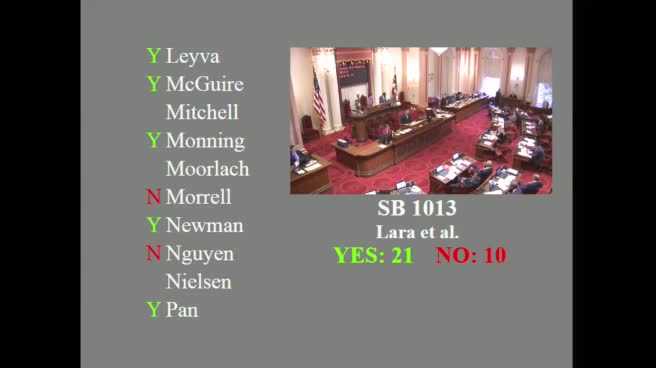 2MIN
Senate Floor
 4MIN
Senate Standing Committee on Health
Bill Author