SB 1025: Probation: eligibility: crimes relating to controlled substances.
- Session Year: 2017-2018
- House: Senate
- Latest Version Date: 2018-06-21
Existing law prohibits granting probation or suspending a sentence for persons convicted of specified crimes relating to controlled substances, including possessing or agreeing to sell or transport opiates or opium derivatives, possessing or transporting cannabis, planting or cultivating peyote, and various crimes relating to forging or altering prescriptions, among other crimes, if the person has previously been convicted of any one of specified felony offenses relating to controlled substances. Existing law also prohibits granting probation or suspending a sentence for persons convicted of specified crimes relating to controlled substances, including possessing for sale or selling 14.25 grams or more of a substance containing heroin and possessing for sale 14.25 grams or more of any salt or solution of phencyclidine or its analogs, among other crimes.
This bill would delete various crimes relating to controlled substances, including, but not limited to, the crimes described above, from those prohibitions against granting probation or a suspended sentence. By making additional persons eligible for probation, the bill would impose a state-mandated local program.
Existing law authorizes granting probation to persons convicted of specified felonies only in an unusual case where the interests of justice would best be served. Existing law requires the court, when granting probation in such a case, to specify on the record and enter in the minutes the circumstances indicating that the interests of justice would best be served by such a disposition.
This bill would repeal those provisions. The bill would also make conforming changes. By making additional persons eligible for probation, the bill would impose a state-mandated local program.
The California Constitution requires the state to reimburse local agencies and school districts for certain costs mandated by the state. Statutory provisions establish procedures for making that reimbursement.
This bill would provide that, if the Commission on State Mandates determines that the bill contains costs mandated by the state, reimbursement for those costs shall be made pursuant to the statutory provisions noted above.
Existing law prohibits granting probation or suspending a sentence for persons convicted of specified crimes relating to controlled substances, including possessing or agreeing to sell or transport opiates or opium derivatives, possessing or transporting cannabis, planting or cultivating peyote, and various crimes relating to forging or altering prescriptions, among other crimes, if the person has previously been convicted of any one of specified felony offenses relating to controlled substances. Existing law also prohibits granting probation or suspending a sentence for persons convicted of specified crimes relating to controlled substances, including possessing for sale or selling 14.25 grams or more of a substance containing heroin and possessing for sale 14.25 grams or more of any salt or solution of phencyclidine or its analogs, among other crimes.
This bill would delete various crimes relating to controlled substances, including, but not limited to, the crimes described above, from those prohibitions against granting probation or a suspended sentence. By making additional persons eligible for probation, the bill would impose a state-mandated local program.
The California Constitution requires the state to reimburse local agencies and school districts for certain costs mandated by the state. Statutory provisions establish procedures for making that reimbursement.
This bill would provide that, if the Commission on State Mandates determines that the bill contains costs mandated by the state, reimbursement for those costs shall be made pursuant to the statutory provisions noted above.
(a)Any person convicted of violating Section 11353 or 11361, or of committing any offense referred to in those sections, shall not, in any case, be granted probation by the trial court or have the execution of the sentence imposed upon him or her suspended by the court, if he or she has been previously convicted of any offense described in subdivision (c).
(b)Any person who was 18 years of age or over at the time of the commission of the offense and is convicted for the first time of selling, furnishing, administering, or giving a controlled substance which is (1) specified in subdivision (b), (c), (e), or paragraph (1) of subdivision (f) of Section 11054, specified in paragraph (14), (15), or (20) of subdivision (d) of Section 11054, or specified in subdivision (b) or (c) of Section 11055, or (2) which is a narcotic drug classified in Schedule III, IV, or V, to a minor or inducing a minor to use such a controlled substance in violation of law shall not, in any case, be granted probation by the trial court or have the execution of the sentence imposed upon him or her suspended by the court.
(c)Any previous conviction of any of the following offenses, or of an offense under the laws of another state or of the United States which, if committed in this state, would have been punishable as such an offense, shall render a person ineligible for probation or suspension of sentence pursuant to subdivision (a) of this section:
(1)Any felony offense described in this division involving a controlled substance specified in subdivision (b), (c), (e), or paragraph (1) of subdivision (f) of Section 11054, specified in paragraph (13), (14), (15), or (20) of subdivision (d) of Section 11054, or specified in subdivision (b) or (c) of Section 11055.
(2)Any felony offense described in this division involving a narcotic drug classified in Schedule III, IV, or V.
(d)The existence of any previous conviction or fact which would make a person ineligible for suspension of sentence or probation under this section shall be alleged in the information or indictment, and either admitted by the defendant in open court, or found to be true by the jury trying the issue of guilt or by the court where guilt is established by a plea of guilty or nolo contendere or by trial by the court sitting without a jury.
SEC. 2.Section 1203.07 of the Penal Code is amended to read:1203.07.(a)Notwithstanding Section 1203, probation shall not be granted to, nor shall the execution or imposition of sentence be suspended for, any of the following persons:
(1)Any person who is convicted of violating Section 11380 of the Health and Safety Code by using, soliciting, inducing, encouraging, or intimidating a minor to act as an agent to manufacture, compound, or sell any controlled substance specified in subdivision (d) of Section 11054 of the Health and Safety Code, except paragraphs (13), (14), (15), (20), (21), (22), and (23) of subdivision (d), or specified in subdivision (d), (e), or (f) of Section 11055 of the Health and Safety Code, except paragraph (3) of subdivision (e) and subparagraphs (A) and (B) of paragraph (2) of subdivision (f).
(2)Any person who is convicted of violating Section 11380 of the Health and Safety Code by the use of a minor as an agent or who solicits, induces, encourages, or intimidates a minor with the intent that the minor shall violate the provisions of Section 11378.5, 11379.5, or 11379.6 of the Health and Safety Code insofar as the violation relates to phencyclidine or any of its analogs or precursors.
(3)A person who is convicted of violating Section 11353 or 11380 of the Health and Safety Code by using, soliciting, inducing, encouraging, or intimidating a minor to manufacture, compound, or sell heroin, cocaine base as specified in paragraph (1) of subdivision (f) of Section 11054 of the Health and Safety Code, cocaine as specified in paragraph (6) of subdivision (b) of Section 11055 of the Health and Safety Code, or methamphetamine.
(b)The existence of any fact which would make a person ineligible for probation under subdivision (a) shall be alleged in the information or indictment, and either admitted by the defendant in open court, or found to be true by the jury trying the issue of guilt or by the court where guilt is established by plea of guilty or nolo contendere or by trial by the court sitting without a jury.
SEC. 3.Section 1203.073 of the Penal Code is repealed.1203.073.(a)A person convicted of a felony specified in subdivision (b) may be granted probation only in an unusual case where the interests of justice would best be served. When probation is granted in such a case, the court shall specify on the record and shall enter in the minutes the circumstances indicating that the interests of justice would best be served by such a disposition.(b)Except as provided in subdivision (a), probation shall not be granted to, nor shall the execution or imposition of sentence be suspended for, any of the following persons:(1)Any person who is convicted of violating Section 11351 or 11351.5 of the Health and Safety Code by possessing for sale, or Section 11352 of the Health and Safety Code by selling, a substance containing 28.5 grams or more of cocaine as specified in paragraph (6) of subdivision (b) of Section 11055 of, or cocaine base as specified in paragraph (1) of subdivision (f) of Section 11054 of, the Health and Safety Code, or 57 grams or more of a substance containing at least five grams of cocaine as specified in paragraph (6) of subdivision (b) of Section 11055 of, or cocaine base as specified in paragraph (1) of subdivision (f) of Section 11054 of, the Health and Safety Code.(2)Any person who is convicted of violating Section 11378 of the Health and Safety Code by possessing for sale, or Section 11379 of the Health and Safety Code by selling a substance containing 28.5 grams or more of methamphetamine or 57 grams or more of a substance containing methamphetamine.(3)Any person who is convicted of violating subdivision (a) of Section 11379.6 of the Health and Safety Code, except those who manufacture phencyclidine, or who is convicted of an act which is punishable under subdivision (b) of Section 11379.6 of the Health and Safety Code, except those who offer to perform an act which aids in the manufacture of phencyclidine.(4)Except as otherwise provided in Section 1203.07, any person who is convicted of violating Section 11353 or 11380 of the Health and Safety Code by using, soliciting, inducing, encouraging, or intimidating a minor to manufacture, compound, or sell heroin, cocaine base as specified in paragraph (1) of subdivision (f) of Section 11054 of the Health and Safety Code, cocaine as specified in paragraph (6) of subdivision (b) of Section 11055 of the Health and Safety Code, or methamphetamine.(5)Any person convicted of violating Section 11379.6, 11382, or 11383 of the Health and Safety Code with respect to methamphetamine, if he or she has one or more prior convictions for a violation of Section 11378, 11379, 11379.6, 11380, 11382, or 11383 of the Health and Safety Code with respect to methamphetamine.(c)As used in this section, the term manufacture refers to the act of any person who manufactures, compounds, converts, produces, derives, processes, or prepares, either directly or indirectly by chemical extraction or independently by means of chemical synthesis.(d)The existence of any previous conviction or fact which would make a person ineligible for probation under this section shall be alleged in the information or indictment, and either admitted by the defendant in open court, or found to be true by the jury trying the issue of guilt or by the court where guilt is established by a plea of guilty or nolo contendere or by trial by the court sitting without a jury.SEC. 4.Section 29820 of the Penal Code is amended to read:29820.(a)This section applies to any person who satisfies both of the following requirements:
(1)The person is alleged to have committed an offense listed in subdivision (b) of Section 707 of the Welfare and Institutions Code, an offense described in subdivision (b) of Section 1203.073, paragraph (3) of subdivision (a) of Section 1203.07, any offense enumerated in Section 29805, or any offense described in Section 25850, subdivision (a) of Section 25400, or subdivision (a) of Section 26100.
(2)The person is subsequently adjudged a ward of the juvenile court within the meaning of Section 602 of the Welfare and Institutions Code because the person committed an offense listed in subdivision (b) of Section 707 of the Welfare and Institutions Code, an offense described in subdivision (b) of Section 1203.073, paragraph (3) of subdivision (a) of Section 1203.07, any offense enumerated in Section 29805, or any offense described in Section 25850, subdivision (a) of Section 25400, or subdivision (a) of Section 26100.
(b)Any person described in subdivision (a) shall not own, or have in possession or under custody or control, any firearm until the age of 30 years.
(c)A violation of this section shall be punishable by imprisonment in a county jail not exceeding one year or in the state prison, by a fine not exceeding one thousand dollars ($1,000), or by both that imprisonment and fine.
(d)The juvenile court, on forms prescribed by the Department of Justice, shall notify the department of persons subject to this section. Notwithstanding any other law, the forms required to be submitted to the department pursuant to this section may be used to determine eligibility to acquire a firearm.
SEC. 3.SEC. 5.If the Commission on State Mandates determines that this act contains costs mandated by the state, reimbursement to local agencies and school districts for those costs shall be made pursuant to Part 7 (commencing with Section 17500) of Division 4 of Title 2 of the Government Code.
(a) Any person convicted of violating Section 11350, 11351, 11351.5, 11352, 11353, 11355, 11357, 11359, 11360, 11361, 11363, 11366, or 11368, 11353 or 11361, or of committing any offense referred to in those sections, shall not, in any case, be granted probation by the trial court or have the execution of the sentence imposed upon him or her suspended by the court, if he or she has been previously convicted of any offense described in subdivision (c).
(b) Any person who was 18 years of age or over at the time of the commission of the offense and is convicted for the first time of selling, furnishing, administering, or giving a controlled substance which is (1) specified in subdivision (b), (c), (e), or paragraph (1) of subdivision (f) of Section 11054, specified in paragraph (14), (15), or (20) of subdivision (d) of Section 11054, or specified in subdivision (b) or (c) of Section 11055, or (2) which is a narcotic drug classified in Schedule III, IV, or V, to a minor or inducing a minor to use such a controlled substance in violation of law shall not, in any case, be granted probation by the trial court or have the execution of the sentence imposed upon him or her suspended by the court.
(c) Any previous conviction of any of the following offenses, or of an offense under the laws of another state or of the United States which, if committed in this state, would have been punishable as such an offense, shall render a person ineligible for probation or suspension of sentence pursuant to subdivision (a) of this section:
(1) Any felony offense described in this division involving a controlled substance specified in subdivision (b), (c), (e), or paragraph (1) of subdivision (f) of Section 11054, specified in paragraph (13), (14), (15), or (20) of subdivision (d) of Section 11054, or specified in subdivision (b) or (c) of Section 11055.
(2) Any felony offense described in this division involving a narcotic drug classified in Schedule III, IV, or V.
(d) The existence of any previous conviction or fact which would make a person ineligible for suspension of sentence or probation under this section shall be alleged in the information or indictment, and either admitted by the defendant in open court, or found to be true by the jury trying the issue of guilt or by the court where guilt is established by a plea of guilty or nolo contendere or by trial by the court sitting without a jury.
SEC. 2.Section 1203.07 of the Penal Code is amended to read:1203.07.(a)Notwithstanding Section 1203, probation shall not be granted to, nor shall the execution or imposition of sentence be suspended for, any of the following persons:
(1)Any person who is convicted of violating Section 11351 of the Health and Safety Code by possessing for sale 14.25 grams or more of a substance containing heroin.(2)Any person who is convicted of violating Section 11352 of the Health and Safety Code by selling or offering to sell 14.25 grams or more of a substance containing heroin.(3)Any person convicted of violating Section 11351 of the Health and Safety Code by possessing heroin for sale or convicted of violating Section 11352 of the Health and Safety Code by selling or offering to sell heroin, and who has one or more prior convictions for violating Section 11351 or Section 11352 of the Health and Safety Code.(4)Any person who is convicted of violating Section 11378.5 of the Health and Safety Code by possessing for sale 14.25 grams or more of any salt or solution of phencyclidine or any of its analogs as specified in paragraph (21), (22), or (23) of subdivision (d) of Section 11054 or in paragraph (3) of subdivision (e) of Section 11055 of the Health and Safety Code, or any of the precursors of phencyclidine as specified in paragraph (2) of subdivision (f) of Section 11055 of the Health and Safety Code.(5)Any person who is convicted of violating Section 11379.5 of the Health and Safety Code by transporting for sale, importing for sale, or administering, or offering to transport for sale, import for sale, or administer, or by attempting to import for sale or transport for sale, phencyclidine or any of its analogs or precursors.(6)Any person who is convicted of violating Section 11379.5 of the Health and Safety Code by selling or offering to sell phencyclidine or any of its analogs or precursors.(7)Any person who is convicted of violating Section 11379.6 of the Health and Safety Code by manufacturing or offering to perform an act involving the manufacture of phencyclidine or any of its analogs or precursors.As used in this section manufacture refers to the act of any person who manufactures, compounds, converts, produces, derives, processes, or prepares, either directly or indirectly by chemical extraction or independently by means of chemical synthesis.(8)(1)Any person who is convicted of violating Section 11380 of the Health and Safety Code by using, soliciting, inducing, encouraging, or intimidating a minor to act as an agent to manufacture, compound, or sell any controlled substance specified in subdivision (d) of Section 11054 of the Health and Safety Code, except paragraphs (13), (14), (15), (20), (21), (22), and (23) of subdivision (d), or specified in subdivision (d), (e), or (f) of Section 11055 of the Health and Safety Code, except paragraph (3) of subdivision (e) and subparagraphs (A) and (B) of paragraph (2) of subdivision (f).
(9)(2)Any person who is convicted of violating Section 11380.5 11380 of the Health and Safety Code by the use of a minor as an agent or who solicits, induces, encourages, or intimidates a minor with the intent that the minor shall violate the provisions of Section 11378.5, 11379.5, or 11379.6 of the Health and Safety Code insofar as the violation relates to phencyclidine or any of its analogs or precursors.
(10)Any person who is convicted of violating subdivision (b) of Section 11383 of the Health and Safety Code by possessing piperidine, pyrrolidine, or morpholine, and cyclohexanone, with intent to manufacture phencyclidine or any of its analogs.(11)Any person convicted of violating Section 11351, 11351.5, or 11378 of the Health and Safety Code by possessing for sale cocaine base, cocaine, or methamphetamine, or convicted of violating Section 11352 or 11379 of the Health and Safety Code, by selling or offering to sell cocaine base, cocaine, or methamphetamine and who has one or more convictions for violating Section 11351, 11351.5, 11352, 11378, 11378.5, 11379, or 11379.5 of the Health and Safety Code. For purposes of prior convictions under Sections 11352, 11379, and 11379.5 of the Health and Safety Code, this subdivision shall not apply to the transportation, offering to transport, or attempting to transport a controlled substance.(b)The existence of any fact which would make a person ineligible for probation under subdivision (a) shall be alleged in the information or indictment, and either admitted by the defendant in open court, or found to be true by the jury trying the issue of guilt or by the court where guilt is established by plea of guilty or nolo contendere or by trial by the court sitting without a jury.
SEC. 3.If the Commission on State Mandates determines that this act contains costs mandated by the state, reimbursement to local agencies and school districts for those costs shall be made pursuant to Part 7 (commencing with Section 17500) of Division 4 of Title 2 of the Government Code.
|
Date
|
Status
|
|---|---|
| Aug 20, 2018 | Read second time. Ordered to third reading. |
| Aug 16, 2018 | From committee: Do pass. (Ayes 12. Noes 5.) (August 16). |
| Aug 8, 2018 | August 8 set for first hearing. Placed on suspense file. |
| Jun 21, 2018 | Read second time and amended. Re-referred to Com. on APPR. |
| Jun 20, 2018 | From committee: Do pass as amended and re-refer to Com. on APPR. (Ayes 5. Noes 2.) (June 19). |
| Jun 7, 2018 | Referred to Com. on PUB. S. |
| May 31, 2018 | In Assembly. Read first time. Held at Desk. |
| May 31, 2018 | Read third time. Passed. (Ayes 26. Noes 9.) Ordered to the Assembly. |
| May 25, 2018 | From committee: Do pass. (Ayes 5. Noes 2.) (May 25). |
| May 18, 2018 | Set for hearing May 25. |
| Apr 16, 2018 | April 16 hearing: Placed on APPR. suspense file. |
| Apr 9, 2018 | Set for hearing April 16. |
| Mar 13, 2018 | From committee: Do pass and re-refer to Com. on APPR. (Ayes 6. Noes 1.) (March 13). Re-referred to Com. on APPR. |
| Mar 6, 2018 | Set for hearing March 13. |
| Feb 14, 2018 | Referred to Com. on PUB. S. |
| Feb 8, 2018 | From printer. May be acted upon on or after March 10. |
| Feb 7, 2018 | Introduced. Read first time. To Com. on RLS. for assignment. To print. |
|
Date
|
Description
|
Location
|
Votes
|
|
|---|---|---|---|---|
| Aug 16, 2018 | Do pass. | Assembly Standing Committee on Appropriations |
Passed |
|
| Jun 19, 2018 | Do pass as amended and be re-referred to the Committee on [Appropriations] | Assembly Standing Committee on Public Safety |
Passed |
|
| May 31, 2018 | Senate 3rd Reading SB1025 Skinner | Senate Floor |
Passed |
|
| May 25, 2018 | Do pass | Senate Standing Committee on Appropriations |
Passed |
|
| Apr 16, 2018 | Placed on suspense file | Senate Standing Committee on Appropriations |
Passed |
|
| Mar 13, 2018 | Do pass, but first be re-referred to the Committee on [Appropriations] | Senate Standing Committee on Public Safety |
Passed |
This list shows positions taken on this bill by organizations on the date displayed, which is linked to the original source.
Positions by individuals are not included.
|
Organization
|
Position
|
Date
|
|---|---|---|
| 9to5 working women | ** Support | Jun 18, 2018 |
| A New PATH | ** Support | Jun 18, 2018 |
| A New Way of Life Re-Entry Project | ** Support | Jun 18, 2018 |
| Alameda County Board of Supervisors | * Support | Jun 19, 2018 |
| alameda county public defender's office | ** Support | May 26, 2018 |
| American Civil Liberties Union of California | ** Support | Jun 18, 2018 |
| Amity Foundation | ** Support | Jun 18, 2018 |
| Asian Americans Advancing Justice | ** Support | Jun 18, 2018 |
| Berkeley Youth Alternatives | ** Support | Jun 18, 2018 |
| California Attorneys For Criminal Justice | ** Support | Jun 18, 2018 |
| California Drug Policy Alliance | * Support | Jun 19, 2018 |
| California Police Chiefs Association | ** Against | Jun 18, 2018 |
| California Public Defenders Association | ** Support | Jun 18, 2018 |
| Californians for Safety and Justice | ** Support | Jun 18, 2018 |
| Californians United for a Responsible Budget | ** Support | Jun 18, 2018 |
| Center for Living and Learning | ** Support | Jun 18, 2018 |
| Center of Juvenile and Criminal Justice | ** Support | Jun 18, 2018 |
| Centro Legal de la Raza | ** Support | Jun 18, 2018 |
| Community Oriented Correctional Health Services | ** Support | Jun 18, 2018 |
| Contra Costa County | * Support | Mar 13, 2018 |
| Contra Costa County Public Defenders Association | ** Support | May 26, 2018 |
| Contra Costa Public Defenders Union | ** Support | Jun 18, 2018 |
| Courage Campaign | ** Support | Jun 18, 2018 |
| Ella Baker Center For Human Rights | ** Support | Jun 18, 2018 |
| Equal Justice Society | ** Support | Jun 18, 2018 |
| Fair Chance Project | ** Support | Jun 18, 2018 |
| Families Against Mandatory Minimums | ** Support | Jun 18, 2018 |
| Friends Committee On Legislation Of California | ** Support | Jun 18, 2018 |
| Harm Reduction Coalition | ** Support | Jun 18, 2018 |
| Harm Reduction Services | ** Support | Jun 18, 2018 |
| Health Right 360 | ** Support | Jun 18, 2018 |
| Homeboy Recycling | ** Support | Jun 18, 2018 |
| Homeless Health Care Los Angeles | ** Support | Jun 18, 2018 |
| Hope Without Limits | ** Support | May 26, 2018 |
| Housing And Economics Rights Advocates | ** Support | Jun 18, 2018 |
| Human Impact Partners | ** Support | Jun 18, 2018 |
| Law Enforcement Action Partnership | ** Support | Jun 18, 2018 |
| League Of Women Voters Of California | ** Support | Jun 18, 2018 |
| Legal Services for Prisoners with Children | ** Support | Jun 18, 2018 |
| Los Angeles Regional Reentry Partnership | ** Support | Jun 18, 2018 |
| Monterey Bay Central Labor Council, AFL-CIO | ** Support | Jun 18, 2018 |
| National Association of Social Workers | * Support | Jun 19, 2018 |
| National Association Of Social Workers, California Chapter | ** Support | Jun 18, 2018 |
| Pilipino Workers Center of Southern California | ** Support | Jun 18, 2018 |
| Positive Women's Network - USA | ** Support | Jun 18, 2018 |
| Prisoner Hunger Strike Solidarity Coalition | ** Support | Jun 18, 2018 |
| Riverside Temple Beth El | ** Support | Jun 18, 2018 |
| Root and Rebound | ** Support | Jun 18, 2018 |
| Rubicon Programs | ** Support | Jun 18, 2018 |
| San Francisco Public Defender | ** Support | Jun 18, 2018 |
| SHIELDS for Families | ** Support | Jun 18, 2018 |
| Sin Barras | ** Support | Jun 18, 2018 |
| Tarzana Treatment Centers | ** Support | Jun 18, 2018 |
| The Advocacy Fund | ** Support | Jun 18, 2018 |
| Transitions Clinic | ** Support | Jun 18, 2018 |
| Unidos Us | ** Support | Jun 18, 2018 |
| W. Haywood Burns Institute | ** Support | Jun 18, 2018 |
| William C. Velasquez Institute | ** Support | Jun 18, 2018 |
| Women's Foundation of California | ** Support | Jun 18, 2018 |
SENATE THIRD READING
STR Bill Id:
Author:(Skinner)
As Amended Ver:June 21, 2018
Majority vote
SENATE VOTE: 28-10
Committee | Votes | Ayes | Noes |
Public Safety | 5-2 | Jones-Sawyer, Carrillo, Kamlager-Dove, Quirk, Santiago | Lackey, Kiley |
Appropriations | 12-5 | Gonzalez Fletcher, Bloom, Bonta, Calderon, Carrillo, Chau, Eggman, Friedman, Eduardo Garcia, Nazarian, Quirk, Reyes | Bigelow, Brough, Fong, Gallagher, Obernolte |
SUMMARY: Authorizes the court to grant probation for specified drug offenses which are currently either ineligible or presumptively ineligible for probation, except in cases where a minor is used as an agent, in which case probation is prohibited.
EXISTING LAW:
- Defines ''probation'' as ''the suspension of the imposition or execution of a sentence and the order of conditional and revocable release in the community under the supervision of a probation officer.''
- Prohibits the granting of probation to any person who is convicted of violating the following drug crimes:
- Possession for sale of 14.25 grams or more of a substance containing heroin;
- Sale of, or offering to sell, 14.25 grams or more of a substance containing of heroin;
- Possession for sale, sale, or offering to sell heroin, with one or more prior convictions for those offenses;
- Possession for sale of 14.25 grams or more of any salt or solution of phencyclidine (PCP), or any of its analogs or precurors;
- Transporting for sale, importing for sale, administering, or offering to transport for sale, import for sale, or administer, or attempt to import for sale or transport for sale, PCP or any of its analogs or precursors;
- Sale of, or offering to sell, PCP or any of its analogs or precursors;
- Manufacture of PCP or any of its analogs or precursors, as specified;
- Using, soliciting, inducing, encouraging, or intimidating a minor to act as an agent to manufacture or sell any specified controlled substance;
- Using a minor as an agent or who solicits, induces, encourages, or intimidates a minor with the intent that the minor be in possession of PCP for sale, sells, distributes, or transports PCP, or manufactures PCP or any of its analogs or precursors;
- Possession of specified substances, with intent to manufacture PCP or any of its analogs; and,
- Possession for sale, sale, or offering to sell cocaine, cocaine base, or methamphetamine, with one or more prior convictions for those offenses.
- Requires the existence of any fact which makes the defendant ineligible for probation to be alleged in the charging document, and either admitted by the defendant or found to be true by the trier of fact.
- Restricts the granting of probation, except in an unusual case where the interests of justice would be served, when a defendant is convicted of the following drug crimes:
- Possession for sale or sale of a substance containing 28.5 grams or more of cocaine or cocaine base;
- Possession for sale or sale of a substance containing 28.5 grams or more of methamphetamine;
- Manufacture of specified controlled substances, except PCP;
- Using, soliciting, inducing, encouraging, or intimidating a minor to manufacture, compound, or sell heroin, cocaine base, cocaine, or methamphetamine; and,
- Manufacture or sale of methamphetamine, with one or more specified prior convictions involving methamphetamine;
- Requires the existence of any fact which makes the defendant presumptively ineligible for probation to be alleged in the charging document, and either admitted by the defendant or found to be true by the trier of fact.
FISCAL EFFECT: According to the Assembly Appropriations Committee:
- Unknown potentially reimbursable mandate, in the millions of dollars, on county probation departments. Under Proposition 30 (2012) counties are not obligated to provide an increased level of service unless funding is provided by the state.
- General Fund costs to the Department of Justice of $56,000 in 2018-19, $135,000 in 2019-20, and $94,000 in 2020-21 and ongoing to handle an estimate increase in litigation.
- Unknown potentially significant savings to the California Department of Corrections and Rehabilitation to the extent offenders receive a sentence of probation and are not sent to state prison.
COMMENTS: According to the author, ''California law currently prohibits judges from factoring the specifics of the case before them when individuals are charged with certain nonviolent drug crimes. Instead the judge must apply a mandatory sentence, rather than, for example, considering probation or other alternatives.
''Mandatory sentences force judges to imprison individuals who in some cases might be better treated and supervised in the community. Drug crimes often are a result of a person's addiction. Requiring a mandatory sentence to such individuals overcrowds county jails, strains state and local budgets, and has failed to reduce drug use, crime, and harm.
''Judges hands are not tied in this manner when sentencing for most violent crimes, including domestic violence and offenses involving deadly weapons. Judges should be allowed a comparable level of discretion when deciding nonviolent drug cases.
''Overwhelming evidence shows that mandatory sentences for drug crimes not only do not improve public safety but exacerbate existing racial disparities in our criminal justice system and disproportionately impact those suffering from mental illness.
''Restoring a modest level of judicial discretion, SB 1025 addresses sentencing inflation and strengthens the state's ability to reinvest in drug prevention and mental health treatment.''
Please see the policy committee analysis for a full discussion of this bill.
Analysis Prepared by: Sandy Uribe / PUB. S. / (916) 319-3744 FN: 0004092
Date of Hearing: August 8, 2018
ASSEMBLY COMMITTEE ON APPROPRIATIONS
Lorena Gonzalez Fletcher, Chair
SBPCA Bill Id:SB 1025
Author:(Skinner) – As Amended Ver:June 21, 2018
Policy Committee: | Public Safety | Vote: | 5 - 2 |
|
| ||
|
|
Urgency: No State Mandated Local Program: Yes Reimbursable: Yes
SUMMARY:
This bill authorizes a court to grant probation for specified drug offenses which are currently either ineligible or presumptively ineligible for probation. This bill does not authorize a court to grant probation in cases where a minor is used as an agent.
FISCAL EFFECT:
- Unknown potentially reimbursable mandate, in the millions of dollars, on county probation departments. Under Proposition 30 (2012) counties are not obligated to provide an increased level of service unless funding is provided by the state.
- GF costs to the Department of Justice of $56,000 in 2018-19, $135,000 in 2019-20, and $94,000 in 2020-21 and ongoing to handle an estimate increase in litigation.
- Unknown potentially significant savings to the California Department of Corrections and Rehabilitation to the extent offenders receive a sentence of probation and are not sent to state prison.
COMMENTS:
- Background. Probation is the suspension of the imposition or the execution of a criminal sentence and the order of conditional release to the community. As a general rule, most felony and misdemeanor cases are eligible for probation. However, a number of statutes prohibit the granting of probation for certain crimes or offenders.
- Purpose. This bill would allow a court to grant probation for controlled substance offenses that are currently either ineligible or presumptively ineligible for probation, except in those cases in which a person uses, solicits, induces, encourages, or intimidates a minor to act as an agent to manufacture or sell controlled substances. According to the author:
Restoring a modest level of judicial discretion, SB 1025 addresses sentencing inflation and strengthens the state's ability to reinvest in drug prevention and mental health treatment.
Analysis Prepared by: Jessica Peters / APPR. / (916) 319-2081
Date of Hearing: June 19, 2018
Counsel: Sandy Uribe
ASSEMBLY COMMITTEE ON PUBLIC SAFETY
Reginald Byron Jones-Sawyer, Sr., Chair
SBPCA Bill Id:SB 1025
Author:(Skinner) – As Introduced Ver:February 7, 2018
As Proposed to be Amended in Committee
SUMMARY: Authorizes the court to grant probation for specified drug offenses which are currently either ineligible or presumptively ineligible for probation, except in cases where a minor is used as an agent, in which case probation is prohibited.
EXISTING LAW:
- Defines “probation” as “the suspension of the imposition or execution of a sentence and the order of conditional and revocable release in the community under the supervision of a probation officer.” (Pen. Code, § 1203, subd. (a).)
- Prohibits the granting of probation to any person who is convicted of violating the following drug crimes:
- Possession for sale of 14.25 grams or more of a substance containing heroin;
- Sale of, or offering to sell, 14.25 grams or more of a substance containing of heroin;
- Possession for sale, sale, or offering to sell heroin, with one or more prior convictions for those offenses;
- Possession for sale of 14.25 grams or more of any salt or solution of phencyclidine (PCP), or any of its analogs or precurors;
- Transporting for sale, importing for sale, administering, or offering to transport for sale, import for sale, or administer, or attempt to import for sale or transport for sale, PCP or any of its analogs or precursors;
- Sale of, or offering to sell, PCP or any of its analogs or precursors;
- Manufacture of PCP or any of its analogs or precursors, as specified;
- Using, soliciting, inducing, encouraging, or intimidating a minor to act as an agent to manufacture or sell any specified controlled substance;
- Using a minor as an agent or who solicits, induces, encourages, or intimidates a minor with the intent that the minor be in possession of PCP for sale, sells, distributes, or transports PCP, or manufactures PCP or any of its analogs or precursors;
- Possession of specified substances, with intent to manufacture PCP or any of its analogs; and,
- Possession for sale, sale, or offering to sell cocaine, cocaine base, or methamphetamine, with one or more prior convictions for those offenses. (Pen. Code, § 1203.07. subd. (a).)
- Requires the existence of any fact which makes the defendant ineligible for probation to be alleged in the charging document, and either admitted by the defendant or found to be true by the trier of fact. (Pen. Code, § 1203.07. subd. (b).)
- Restricts the granting of probation, except in an unusual case where the interests of justice would be served, when a defendant is convicted of the following drug crimes:
- Possession for sale or sale of a substance containing 28.5 grams or more of cocaine or cocaine base;
- Possession for sale or sale of a substance containing 28.5 grams or more of methamphetamine;
- Manufacture of specified controlled substances, except PCP;
- Using, soliciting, inducing, encouraging, or intimidating a minor to manufacture, compound, or sell heroin, cocaine base, cocaine, or methamphetamine; and,
- Manufacture or sale of methamphetamine, with one or more specified prior convictions involving methamphetamine; (Pen. Code, § 1203.073, subds. (a) & (b).)
- Possession for sale or sale of a substance containing 28.5 grams or more of cocaine or cocaine base;
- Requires the existence of any fact which makes the defendant presumptively ineligible for probation to be alleged in the charging document, and either admitted by the defendant or found to be true by the trier of fact. (Pen. Code, § 1203.073. subd. (d).)
FISCAL EFFECT: Unknown.
COMMENTS:
- Author's Statement: According to the author, “California law currently prohibits judges from factoring the specifics of the case before them when individuals are charged with certain nonviolent drug crimes. Instead the judge must apply a mandatory sentence, rather than, for example, considering probation or other alternatives.
“Mandatory sentences force judges to imprison individuals who in some cases might be better treated and supervised in the community. Drug crimes often are a result of a person's addiction. Requiring a mandatory sentence to such individuals overcrowds county jails, strains state and local budgets, and has failed to reduce drug use, crime, and harm.
“Judges hands are not tied in this manner when sentencing for most violent crimes, including domestic violence and offenses involving deadly weapons. Judges should be allowed a comparable level of discretion when deciding nonviolent drug cases.
“Overwhelming evidence shows that mandatory sentences for drug crimes not only do not improve public safety but exacerbate existing racial disparities in our criminal justice system and disproportionately impact those suffering from mental illness.
“Restoring a modest level of judicial discretion, SB 1025 addresses sentencing inflation and strengthens the state's ability to reinvest in drug prevention and mental health treatment.” - Probation Eligibility: Probation is the suspension of the imposition or the execution of a criminal sentence and the order of conditional release to the community. (Pen. Code, § 1203, subd. (a).)
As a general rule, most felony and misdemeanor cases are eligible for probation. However, a number of statutes prohibit the granting of probation for certain crimes or offenders. (See e.g., Pen. Code, §§ 1203.06 [certain violent felonies]; 1203.065 [certain sex offenses]; 1203.07 [certain drug offenses]; 1203.075 [specified crimes when defendant inflicts great bodily injury].) The existence of the fact which makes the defendant ineligible for probation must be alleged in the accusatory pleading and either admitted by the defendant in open court, or found to be true by the jury or judge. (People v. Lo Cicero (1969) 71 Cal.2d 1186, 1192-1193.)
There are other circumstances and enumerated offenses which are presumptively ineligible for probation and for which probation may be granted only in unusual circumstances where the interests of justice would best be served if the person is granted probation. Some examples include use of a weapon during the commission of a crime (Pen. Code, 1203, subd. (e)(2)); infliction of great bodily injury during the commission of the offense crime (Pen. Code, 1203, subd. (e)(3)); defendants previously convicted of two or more felonies (Pen. Code, 1203, subd. (e)(4)); theft cases involving over $100,000 (Pen. Code, § 1203.045); using, soliciting, or encouraging a minor to commit a felony (Pen. Code, § 1203.046); and certain drug offenses (Pen. Code, § 1203.073). In such instances, the defendant bears the burden of demonstrating that his or her case is the unusual case in which justice would be served by a granting of probation.
The Rules of Court list certain factors that may indicate the existence of unusual circumstances warranting probation eligibility for such offenses. Specifically, the court may consider whether the factor giving rise to the probation limitation is less serious than typically present coupled with the defendant’s lack of similar criminal history. (Cal. Rules of Court, rule 4.413(c)(1)(A).) The court may also consider whether the current offense is less serious than a prior conviction which is the basis for the probation limitation, coupled with the defendant remaining free from incarceration for a substantial time before the present offense. (Cal. Rules of Court, rule 4.413(c)(1)(B).) Finally, the court may also consider factors not amounting to a defense, but reducing culpability, including: (1) that the defendant participated in the crime under provocation, coercion or duress and does not have a recent record involving crimes of violence; (2) that the defendant committed the crime because of a mental condition and there is a likelihood that he or she would respond to treatment that would be required as a condition of probation. (Cal. Rules of Court, rule 4.413(c)(2).) The trial court may, but is not required to, find the case unusual if the relevant criteria is met. (People v. Cattaneo (1990) 217 Cal.App.3d 1577, 1587.) In this respect, the court has broad discretion and its decision will only be overturned if there was an abuse of discretion. (People v. Superior Court (Du) (1992) 5 Cal.App.4th 822, 831.)[1]
This bill would allow a court to grant probation for controlled substance offenses that are currently either ineligible or presumptively-ineligible for probation, except in those cases in which a person uses, solicits, induces, encourages, or intimidates a minor to act as an agent to manufacture or sell controlled substances.
- Argument in Support: According to the Drug Policy Alliance, a co-sponsor of this bill, “SB 1025 will not change the upper penalty for any offense, but will provide judges the discretion to grant probation or to suspend a sentence in the interests of justice, and consistent with local values and local resources. Current state law ties the hands of judges, prohibiting them from ordering probation or suspending a sentence for a person convicted of nonviolent drug offenses, including possessing or agreeing to sell or transport opiates or opium derivatives, possessing or transporting cannabis, planting or cultivating peyote, and various crimes relating to forging or altering prescriptions, if the person has previously been convicted of any one of an expansive list of drug felonies. Existing law also prohibits judges from granting probation or suspending a sentence for persons convicted of specified nonviolent drug offenses, including possessing for sale or selling 14.25 grams or more of a substance containing heroin and possessing for sale 14.25 grams or more of any salt or solution of phencyclidine or its analogs, even if it is their first offense.
“Precluding probation eligibility for these offenses requires a mandatory term of incarceration ranging from two to seven or more years depending on the offense. By allowing judges the discretion to grant probation, this bill reflects the growing bipartisan consensus that mandatory minimum sentencing has failed to protect or enhance public safety, and robbed judges of their traditional and appropriate role in weighing the facts of each case before imposing a sentence. There is ample evidence that long sentences and mandatory minimums have had no effect on the availability, cost or potency of controlled substances. Controlled substances are cheaper, stronger and more widely available than in any time in our nation’s history.
“Advocates from across the political spectrum recognize that mandatory sentences are unjust and ineffective.” - Argument in Opposition: According to the California Police Chiefs Association, “This is problematic for law enforcement because some of these offenses include the possession for sale of heroin, cocaine, and phencyclidine (PCP). While these offenses are themselves non-violent these drugs have shown to be fatal. The Office of Statewide Health Planning and Development reported that ‘in the first three months of 2016, 412 adults age 20 to 29 went to emergency room departments due to heroin… double the number for the same time period in 2012.’ Heroin, cocaine, and PCP have taken the lives of over 4,000 innocent victims in 2017 alone, according to the Pew Charitable Trust. Our members are concerned that these numbers will continue to rise if these individuals are granted probation in lieu of time spent in a county jail or state prison.”
- Related Legislation: AB 1941 (Jones-Sawyer), Chapter 18, Statutes of 2018, authorizes the court to reduce an offense punishable as either a felony or a misdemeanor to a misdemeanor upon successful completion of probation, regardless of whether the court had previously imposed a felony sentence.
- Prior Legislation: SB 1010 (Mitchell), Chapter 749, Statutes of 2014, reduced the penalty for possession for sale of cocaine base to be the same as that for powder cocaine; and revised the guidelines for probation eligibility for both the possession for sale of powder cocaine and cocaine base, as specified.
REGISTERED SUPPORT / OPPOSITION:
Support
Drug Policy Alliance (Sponsor)
California Public Defenders Association (Co-Sponsor)
A New Path
A New Way of Life Re-Entry Project
Access Support Network of San Luis Obispo & Monterey Counties
Alameda County Board of Supervisors
American Civil Liberties Union of California
Amity Foundation
Asian Americans Advancing Justice
Berkeley Youth Alternatives
California Attorneys for Criminal Justice
Californians for Safety and Justice
Californians United for a Responsible Budget
Center of Juvenile and Criminal Justice
Center for Living and Learning
Centro Legal de la Raza
Community Oriented Correctional Health Services
Contra Costa Public Defenders Union
Courage Campaign
Ella Baker Center for Human Rights
Equal Justice Society
Fair Chance Project
Families Against Mandatory Minimums
Friends Committee on Legislation of California
Harm Reduction Coalition
Harm Reduction Services
Health Right 360
Homeboy Recycling
Homeless Health Care Los Angeles
Housing and Economics Rights Advocates
Human Impact Partners
Law Enforcement Action Partnership
League of Women Voters of California
Legal Services for Prisoners with Children
Los Angeles Regional Reentry Partnership
Monterey Bay Central Labor Council, AFL-CIO
National Association of Social Workers, California Chapter
Pilipino Workers Center of Southern California
Positive Women’s Network – USA
Prisoner Hunger Strike Solidarity Coalition
Riverside Temple Beth El
Root and Rebound
Rubicon Programs
San Francisco Public Defender
Shields for Families
Sin Barras
Tarzana Treatment Centers
The Advocacy Fund
Transitions Clinic
Unidos US
Women’s Foundation of California
W. Haywood Burns Institute
William C. Velasquez Institute
9to5 Working Women
Two private individuals
Opposition
California Police Chiefs Association
Analysis Prepared by: Sandy Uribe / PUB. S. / (916) 319-3744
After the trial court determines that the presumption against probation is overcome, it then must evaluate whether or not to grant probation using the suitability factors listed in the Rules of Court. (See Cal. Rules of Court, rule 4.414.) ↑
Office of Senate Floor Analyses (916) 651-1520 Fax: (916) 327-4478 | SB |
THIRD READING
Bill No: SB 1025
:
SENATE PUBLIC SAFETY COMMITTEE: 6-1, 3/13/18
AYES: Skinner, Anderson, Bradford, Jackson, Mitchell, Wiener
NOES: Stone
SENATE APPROPRIATIONS COMMITTEE: 5-2, 5/25/18
AYES: Lara, Beall, Bradford, Hill, Wiener
NOES: Bates, Nielsen
SOURCE: California Public Defender’s Association
Drug Policy Alliance
DIGEST:
This bill permits a court to grant probation or suspend the imposition of a sentence for specified drug offenses.
Existing law:
- Prohibits the court from granting probation to or suspending the imposition of a sentence for any person convicted of specified drug offenses, if the person has previously been convicted of one of several specified drug offenses. (Health & Saf. Code, §11370, subd. (a).)
- Prohibits the court from granting probation to or suspending the imposition of the sentence for any person convicted of any of the following offenses:
- Possession for sale of 14.25 grams or more of a substance containing heroin.
- Selling or offering to sell 14.25 grams or more of a substance containing heroin.
- Possession of heroin for sale or offering to sell heroin, and who has one or more prior convictions for either offense.
- Possession for sale of 14.25 grams or more of any salt or solution of phencyclidine (PCP) or any of its analogs, as specified, or any of the precursors of PCP.
- Transporting for sale, importing for sale, or administering, or offering to transport for sale, import for sale, or administer, or by attempting to import for sale or transport for sale, PCP or any of its analogs or precursors.
- Selling or offering to sell PCP or any of its analogs or precursors.
- Manufacturing or offering to perform an act involving the manufacture of PCP or any of its analogs or precursors.
- Using, soliciting, inducing, encouraging, or intimidating a minor to act as an agent to manufacture, compound, or sell any controlled substance, as specified.
- Using a minor as an agent or who solicits, induces, encourages, or intimidates a minor with the intent that the minor be in possession of PCP for sale, sells, distributes, or transports PCP, or manufactures PCP or any of its analogs or precursors.
- Possession of piperidine, pyrrolidine, or morpholine, and cyclohexanone, with intent to manufacture PCP or any of its analogs.
- Possession for sale, selling, or offering to sell cocaine base, cocaine, or methamphetamine, and who has one or more prior drug offense convictions, as specified. (Pen. Code, § 1203.07, subd. (a).)
This bill removes the above listed drug offenses from the prohibition against granting probation or suspending a sentence except for those offenses involving minors.
Background
The prohibition on granting probation or suspending the imposition of a sentence of any person convicted of specified drug offenses can be traced back to the early 1970s. This prohibition was initially limited to those cases in which a person had a prior felony drug conviction, and was later expanded to include any person convicted of specified drug offenses with no prior drug convictions through SB 268 (Robbins, Chapter 1087, Statutes of 1975), which made anyone convicted of possessing for sale, selling or offering to sell one-half ounce or more of heroin ineligible for probation. Subsequent legislation further expanded the list of drug offenses for which a person would no longer be eligible for probation.
FISCAL EFFECT: Appropriation: Fiscal Com.: Local:
According to the Senate Appropriations Committee:
- Local supervision: Unknown, potentially-significant costs (local funds, General Fund) for probation departments to supervise additional individuals who otherwise would be mandated to serve a sentence of incarceration.
- Prison: Unknown, potentially-significant savings (General Fund) in avoided incarceration costs to the extent the court imposes a term of probation for defendants convicted of the specified crimes. The proposed 2018-19 per capita cost to house a person in a state prison is $80,729 annually, with an annual marginal rate per inmate of between $10,000 and $12,000. The average contract-prison rate cost per inmate is over $30,000 annually.
California Public Defender’s Association (co-source)
Drug Policy Alliance (co-source)
9to5 Working Women
A New Way of Life
Access Support Network of San Luis Obispo and Monterey Counties
ACLU of California, Center for Advocacy and Policy
Alameda County Public Defender’s Office
Amity Foundation
California Attorneys for Criminal Justice
Californians United for a Responsible Budget
Center for Living and Learning
Center on Juvenile and Criminal Justice
Community Oriented Correctional Health Services
Contra Costa County Public Defenders Association
Courage Campaign
Ella Baker Center for Human Rights
Fair Chance Project
Friends Committee on Legislation of California
HealthRIGHT 360
Homeless Health Care Los Angeles
Hope Without Limits
Law Enforcement Action Partnership
League of Women Voters of California
Legal Services for Prisoners with Children
Los Angeles Regional Reentry Partnership
Prisoner Hunger Strike Solidarity Coalition
Riverside Temple Beth El
Root and Rebound
Rubicon Programs
San Francisco Public Defender’s Office
Shields for Families
Tarzana Treatment Centers, Inc.
Transitions Clinic Network
William C. Velasquez Institute
One individual
OPPOSITION: (Verified 5/25/18)
None received
ARGUMENT IN SUPPORT: According to Drug Policy Alliance:
SB 1025 will not change the upper penalty for any offense, but will provide judges the discretion to grant probation or to suspend a sentence in the interests of justice, and consistent with local values and local resources. Current state law ties the hands of judges, prohibiting them from ordering probation or suspending a sentence for a person convicted of nonviolent drug offenses, including possessing or agreeing to sell or transport opiates or opium derivatives, possessing or transporting cannabis, planting or cultivating peyote, and various crimes relating to forging or altering prescriptions, if the person has previously been convicted of any one of an expansive list of drug felonies. Existing law also prohibits judges from granting probation or suspending a sentence for persons convicted of specified nonviolent drug offenses, including possessing for sale or selling 14.25 grams or more of a substance containing heroin and possessing for sale 14.25 grams or more of any salt or solution of phencyclidine or its analogs, even if it is their first offense.
Precluding probation eligibility for these offenses requires a mandatory term of incarceration ranging from two to seven or more years depending on the offense. By allowing judges the discretion to grant probation, this bill reflects the growing bipartisan consensus that mandatory minimum sentencing has failed to protect or enhance public safety, and robbed judges of their traditional and appropriate role in weighing the facts of each case before imposing a sentence. There is ample evidence that long sentences and mandatory minimums have had no effect on the availability, cost or potency of controlled substances. Controlled substances are cheaper, stronger and more widely available than in any time in our nation’s history.
…It is widely acknowledged that the war on drugs has been disproportionately waged against black and Latino families, separating parents from children and causing long-term collateral consequences, including loss of job opportunities, housing and education benefits. This continues to be true, even in light of evidence that drug use and drug sale rates between whites, blacks and Latinos are approximately equal in our state and in our country. According the California Attorney General’s Office, in 2016 blacks made up 16.5% of felony drug arrests (while blacks make up only 6.6% of the state population), and Latinos made up 41.3% of felony drug arrests (while Latinos make up 38.9% of the state population).
SB 1025 by Senator Skinner is an incremental step away from a costly, failed, and racist policy of locking up low-level nonviolent drug offenders for long periods of time. A fair and impartial criminal justice system, like all forms of good government, needs checks and balances. While prosecutors have charging discretion, the final say over a person’s sentence must come from independent judges who have no personal or institutional stake in the outcome of a case other than to ensure justice is done and rights are respected.
5/26/18 15:11:23
**** END ****
SENATE COMMITTEE ON APPROPRIATIONS
Senator Ricardo Lara, Chair
2017 - 2018 Regular Session
SB 1025 (Skinner) - Probation: eligibility: crimes relating to controlled substances
Version: February 7, 2018 | Policy Vote: PUB. S. 6 - 1 |
Urgency: No | Mandate: Yes |
Hearing Date: April 16, 2018 | Consultant: Shaun Naidu |
This bill meets the criteria for referral to the Suspense File.
Bill Summary:
SB 1025 would strike mandatory sentences for specified drug commerce crimes.
Fiscal Impact:
- Local supervision: Unknown, potentially-significant costs (local funds, General Fund*) for probation departments to supervise additional individuals who otherwise would be mandated to serve a sentence of incarceration.
- Prison: Unknown, potentially-significant savings (General Fund) in avoided incarceration costs to the extent the court imposes a term of probation for defendants convicted of the specified crimes. The proposed 2018-19 per capita cost to house a person in a state prison is $80,729 annually, with an annual marginal rate per inmate of between $10,000 and $12,000. The average contract-prison rate cost per inmate is over $30,000 annually.
*Proposition 30 (2012) exempts the state from mandate reimbursement for realigned responsibilities for “Public Safety Services” including the managing of local jails and the provision of services for and supervision of youth and adults. The constitutional amendment, however, provides that legislation enacted after September 30, 2012 that has an overall effect of increasing the costs already borne by a local agency for public safety services transferred by the 2011 Realignment Legislation apply to local agencies only to the extent that the state provides annual funding for the costs increase. If the local costs resulting from this measure are determined to be included within the scope of Proposition 30, the local agency would not be obligated to provide the level of service required by this bill above the level for which funding is provided by the state. The provisions of this bill may lead to the additional subvention of funds to obtain local compliance, resulting cost pressure on the General Fund.
Background:
Existing law prohibits the court from granting probation or suspending a sentence for persons convicted of specified crimes relating to controlled substances, including possessing or agreeing to sell or transport opiates or opium derivatives, possessing or transporting marijuana, planting or cultivating peyote, and various crimes relating to forging or altering prescriptions, among other crimes, if the person has previously been convicted of any one of specified felony offenses relating to controlled substances. Existing law also prohibits granting probation or suspending a sentence for persons convicted of specified crimes relating to controlled substances, including possessing for sale or selling 14.25 grams or more of a substance containing heroin and possessing for sale 14.25 grams or more of any salt or solution of phencyclidine or its analogs, among other crimes.
Proposed Law:
This bill would remove the prohibition on the court from granting probation or suspending the imposition or execution of the sentence for the following crimes:
- Possession for sale of 14.25 grams or more of a substance containing heroin;
- Selling or offering to sell 14.25 grams or more of a substance containing heroin;
- Possession of heroin for sale or offering to sell heroin by a person who has one or more prior convictions for either offense;
- Possession for sale of 14.25 grams or more of any salt or solution of phencyclidine (PCP) or any of its analogs, as specified, or any of the precursors of PCP;
- Transporting for sale; importing for sale; administering; offering to transport for sale, import for sale, or administer; or attempting to import for sale or transport for sale, PCP or any of its analogs or precursors;
- Selling or offering to sell PCP or any of its analogs or precursors;
- Manufacturing or offering to perform an act involving the manufacture of PCP or any of its analogs or precursors;
- Possession of piperidine, pyrrolidine, or morpholine, and cyclohexanone, with intent to manufacture phencyclidine or any of its analogs; and
- Possession for sale, selling, or offering to sell cocaine base, cocaine, or methamphetamine, and who has one or more prior drug offense convictions, as specified.
Staff Comments:
While county probation departments supervise more individuals than all other correctional agencies combined, in the last few years, the total number of individuals under supervision by probation departments has declined (e.g., 419,221 adults in 2014 compared to 367,515 in 2016). As of June 30, 2016, there were almost 403,000 people supervised by probation departments in California, including adult and youth populations and individuals on probation (both felony and misdemeanor), post-release community supervision, and mandatory supervision.
In a December 2015 report, the Public Policy Institute of California estimated that the cost of local probation in California was $4,438 per person supervised. Given the criminal justice reforms in recent years (e.g., Public Safety Realignment and Proposition 47 (2014)), probation caseloads have shifted toward supervising people who have committed more serious offenses. This shift in population and other factors likely have led to increased probation operating costs. Despite the growing costs, however, probation supervision has widely remained the least costly form of correctional control. As noted by the Public Policy Institute of California:
According to the California State Controller, probation operating costs grew by $372 million (33.6%) from 2011 to 2015. During the same period, operating costs for adult detention (i.e., jail) grew by $319 million (11.3%) and operating costs for juvenile detention grew by $50 million (4.8%). These figures do not include capital outlays. By comparison, according to the California Department of Finance, costs for the state correctional system—prisons and parole—increased from $9.8 billion in financial year 2011–12 to $12.6 billion in financial year 2015–16 (an increase of 28.5%) (California Department of Finance 2017).[1]
The actual fiscal impact of this bill to county probation departments is unknown, as it depends on multiple factors, including, but not limited to, how many defendants are convicted of the subject offenses, how often the court exercises its discretion to impose probation, and the variable costs of supervision to each county. But, to the extent the court imposes a term of probation for individuals charged with the specified drug commerce crimes, it would lead to an increased workload for probation departments. The increased workload to probation departments would be equal to the amount of time these individuals otherwise would have been in custody in state prison or serving a (whole or) split sentence in county jail. Under existing law, after the period of incarceration, these individuals ultimately would be placed under the supervision of the probation department, either through post-release community supervision (upon release from prison) or mandatory supervision (upon release from jail). As the general costs of supervising a person on mandatory supervision compared to felony probation is largely the same, this bill would have a neutral fiscal impact at that point. If using the 2015 $4,438 per person cost estimate, having twelve or more individuals supervised on probation for at least one year because of this bill would create a sufficient amount of workload costs to surpass the Suspense File threshold.
Alternatively, this bill could result in costs savings to the state and counties through avoided incarceration. The actual fiscal impact is unknown, as it would be dependent on the number of defendants convicted of the drug commerce crimes, if the court exercises its discretion, and other factors.
-- END --
Public Policy Inst. of Cal., California Probation in the Era of Reform (August 2017) page 5, footnote 1. ↑
SENATE COMMITTEE ON PUBLIC SAFETY
Senator Nancy Skinner, Chair
2017 - 2018 Regular
Bill No: SB 1025 Hearing Date: March 13, 2018
Author: | Skinner | ||
Version: | February 7, 2018 | ||
Urgency: | No | Fiscal: | Yes |
Consultant: | SJ | ||
Subject: Probation: Eligibility: Crimes Relating to Controlled Substances
HISTORY
Source: California Public Defender’s Association; Drug Policy Alliance
Prior Legislation: AB 1667 (Condit), Ch. 1135, Stats. of 1989
SB 1960 (Seymour), Ch. 1044, Stats. of 1986
SB 268 (Robbins), Ch. 1087, Stats. of 1975
Support: ACLU of California, Center for Advocacy and Policy; Community Oriented Correctional Health Services; Courage Campaign; Ella Baker Center for Human Rights; Fair Chance Project; Friends Committee on Legislation of California; Riverside Temple Beth El; Rubicon Programs; San Francisco Public Defender’s Office; Tarzana Treatment Centers, Inc.; Transitions Clinic Network; Individual
Opposition: None known
PURPOSE
The purpose of this bill is to permit a court to grant probation or suspend the imposition of a sentence for specified drug offenses.
Existing law prohibits the court from granting probation to or suspending the imposition of a sentence for any person convicted of specified drug offenses, if the person has previously been convicted of one of several specified drug offenses. (Health & Saf. Code, §11370, subd. (a).)
Existing law prohibits the court from granting probation to or suspending the imposition of the sentence for any person convicted of any of the following offenses:
- Possession for sale of 14.25 grams or more of a substance containing heroin.
- Selling or offering to sell 14.25 grams or more of a substance containing heroin.
- Possession of heroin for sale or offering to sell heroin, and who has one or more prior convictions for either offense.
- Possession for sale of 14.25 grams or more of any salt or solution of phencyclidine (PCP) or any of its analogs, as specified, or any of the precursors of PCP.
- Transporting for sale, importing for sale, or administering, or offering to transport for sale, import for sale, or administer, or by attempting to import for sale or transport for sale, PCP or any of its analogs or precursors.
- Selling or offering to sell PCP or any of its analogs or precursors.
- Manufacturing or offering to perform an act involving the manufacture of PCP or any of its analogs or precursors.
- Using, soliciting, inducing, encouraging, or intimidating a minor to act as an agent to manufacture, compound, or sell any controlled substance, as specified.
- Using a minor as an agent or who solicits, induces, encourages, or intimidates a minor with the intent that the minor be in possession of PCP for sale, sells, distributes, or transports PCP, or manufactures PCP or any of its analogs or precursors.
- Possession of piperidine, pyrrolidine, or morpholine, and cyclohexanone, with intent to manufacture phencyclidine or any of its analogs.
- Possession for sale, selling, or offering to sell cocaine base, cocaine, or methamphetamine, and who has one or more prior drug offense convictions, as specified. (Pen. Code, § 1203.07, subd. (a).)
This bill would remove the above listed drug offenses from the prohibition against granting probation or suspending a sentence except those offenses involving minors.
COMMENTS
1. Need for This Bill
According to the author:
Long prison sentences for nonviolent drug offenses fail to reduce drug use or crime. Yet, California law currently prohibits judges from granting probation to individuals charged with certain nonviolent drug crimes.
Mass incarceration continues to have a devastating effect on California families and our state’s budget. Mandatory sentences for nonviolent drug crimes force judges to imprison individuals who would be better treated and supervised in the community. The result is overcrowding in county jails, unnecessary strain on state and local budgets, and a destructive ripple effect throughout California communities and families.
Overwhelming evidence shows that lengthy sentences for drug crimes, do not improve public safety, but exacerbate existing racial disparities in our criminal justice system and disproportionately impact those suffering from mental illness.
Current law prohibits a judge from ordering probation for a number of nonviolent drug offenses related to personal use, possession, or sale.
Under current law, judges cannot order probation for any of the following offenses if a person has a prior felony drug conviction:
- Possession for personal use
- Possession for sale
- Sale
- Transportation
- Maintaining a place for the unlawful use of controlled substance
- Forging a prescription
Additionally, current law prohibits probation for the following offenses:
- Possession for sale, selling, or offering to sell cocaine, cocaine base, or methamphetamine if the person has one or more prior convictions for the same offense
- Possession for sale of 14.25 grams or more of heroin
- Possession for sale of 14.25 grams or more of phencyclidine (PCP)
- Selling or offering to sell PCP
- Transporting, importing, administration of, or offering to transport, import or administer PCP
- Possessing specified precursors with intent to manufacture PCP
Excluding probation eligibility for these offenses requires a mandatory term of incarceration ranging from two to seven or more years depending on the offense. This mandatory sentencing prevents judges from playing their appropriate role in weighing the facts of each case before imposing a sentence.
SB 1025 provides an option for judges to weigh the facts of the case in determining the appropriate resolution. SB 1025 addresses undue sentencing inflation and paves the way for California to increases investments in drug prevention efforts, drug use treatment, and mental health treatment.
This bill does not change the maximum penalty or affect sentencing enhancements. It also does not change penalties for drug crimes involving a minor. It simply provides discretion to the courts to grant probation in the interest of justice.
2. History of Prohibiting Probation for Drug Offenses
The prohibition on granting probation or suspending the imposition of a sentence of any person convicted of specified drug offenses can be traced back to the early 1970s. The prohibition on granting probation was initially limited to those cases in which a person had a prior felony drug conviction. This prohibition was expanded to include any person convicted of specified drug offenses with no prior drug convictions through SB 268 (Robbins), Chapter 1087, Statutes of 1975, which made anyone convicted of possessing for sale, selling or offering to sell one-half ounce or more of heroin ineligible for probation. Subsequent legislation further expanded the list of drug offenses for which a person would no longer be eligible for probation.
3. Research on Mandatory Minimum Sentences
The effect of the current prohibition on probation for the above listed drug offenses has been the imposition of mandatory sentences. The legislation that created the current prohibition on probation for these drug offenses arose during the “war on drugs” and a time when mandatory sentences were widely viewed as an effective tool to address crime, particularly drug offenses. However, research indicates that “incarceration has had only a limited impact on crime rates” and “[t]here is little evidence that longer sentences have more than a marginal effect in reducing recidivism.” (<https://www.prisonpolicy.org/scans/vera/mandatory-sentences-policy-report-v2b.pdf> (citing several studies and reports) [as of Mar. 7, 2018].)
In addition to examining the efficacy of mandatory sentences on reducing crime and recidivism, researchers have studied the consequences of mandatory sentences, including racial disparities in charging decisions and sentences. One recently published law review article analyzed federal sentencing data and concluded that “racial disparities in recent years have been largely driven by the cases in which judges have the least sentencing discretion: those with mandatory minimums” and that “prosecutors file mandatory minimums twice as often against black men as against comparable white men.” (Starr & Rehavi, Mandatory Sentencing and Racial Disparity: Assessing the Role of Prosecutors and the Effects of Booker (2013)123 Yale L.J. 1, 78.)
This bill seeks to restore judicial discretion in these cases given the growing body of research questioning the efficacy of mandatory minimums and the downstream effects of those policies.
4. Argument in Support
Drug Policy Alliance, a co-sponsor of the bill, writes:
SB 1025 will not change the upper penalty for any offense, but will provide judges the discretion to grant probation or to suspend a sentence in the interests of justice, and consistent with local values and local resources. Current state law ties the hands of judges, prohibiting them from ordering probation or suspending a sentence for a person convicted of nonviolent drug offenses, including possessing or agreeing to sell or transport opiates or opium derivatives, possessing or transporting cannabis, planting or cultivating peyote, and various crimes relating to forging or altering prescriptions, if the person has previously been convicted of any one of an expansive list of drug felonies. Existing law also prohibits judges from granting probation or suspending a sentence for persons convicted of specified nonviolent drug offenses, including possessing for sale or selling 14.25 grams or more of a substance containing heroin and possessing for sale 14.25 grams or more of any salt or solution of phencyclidine or its analogs, even if it is their first offense.
Precluding probation eligibility for these offenses requires a mandatory term of incarceration ranging from two to seven or more years depending on the offense. By allowing judges the discretion to grant probation, this bill reflects the growing bipartisan consensus that mandatory minimum sentencing has failed to protect or enhance public safety, and robbed judges of their traditional and appropriate role in weighing the facts of each case before imposing a sentence. There is ample evidence that long sentences and mandatory minimums have had no effect on the availability, cost or potency of controlled substances. Controlled substances are cheaper, stronger and more widely available than in any time in our nation’s history.
…It is widely acknowledged that the war on drugs has been disproportionately waged against black and Latino families, separating parents from children and causing long-term collateral consequences, including loss of job opportunities, housing and education benefits. This continues to be true, even in light of evidence that drug use and drug sale rates between whites, blacks and Latinos are approximately equal in our state and in our country. According the California Attorney General’s Office, in 2016 blacks made up 16.5% of felony drug arrests (while blacks make up only 6.6% of the state population), and Latinos made up 41.3% of felony drug arrests (while Latinos make up 38.9% of the state population).
SB 1025 by Senator Skinner is an incremental step away from a costly, failed, and racist policy of locking up low-level nonviolent drug offenders for long periods of time. A fair and impartial criminal justice system, like all forms of good government, needs checks and balances. While prosecutors have charging discretion, the final say over a person’s sentence must come from independent judges who have no personal or institutional stake in the outcome of a case other than to ensure justice is done and rights are respected.
-- END --
Discussed in Hearing
 1H
Assembly Standing Committee on Appropriations
 5MIN
Assembly Standing Committee on Public Safety
 2MIN
Senate Floor
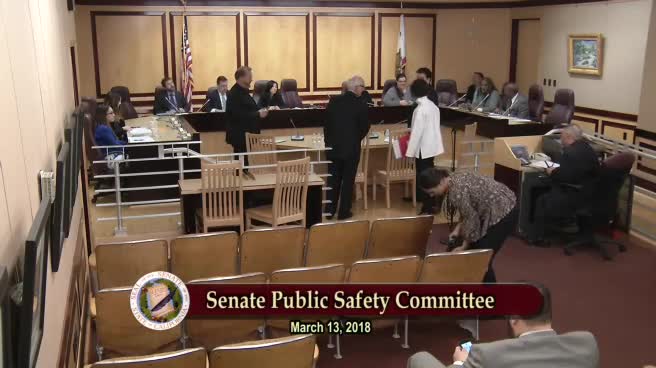 10MIN
Senate Standing Committee on Public Safety
Bill Author

Bill Co-Author(s):