SB 1026: Older adults and persons with disabilities: fall prevention.
- Session Year: 2017-2018
- House: Senate
- Latest Version Date: 2018-04-30
Existing law, the Mello-Granlund Older Californians Act, finds and declares that one in 3 Americans over 65 years of age suffers a fall each year, often in the home, which can cause serious injury and depression. The act establishes the California Department of Aging, and sets forth its duties and powers, including, among other things, entering into a contract for the development of information and materials to educate Californians on the concept of aging in place and the benefits of home modification.
Existing law also establishes the Senior Housing Information and Support Center within the department for the purpose of providing information and training relating to available innovative resources and senior services, and housing options and home modification alternatives designed to support independent living or living with family.
This bill would repeal those provisions relating to the departments provision of information on housing and home modifications for seniors.
Existing law establishes the Program for Injury Prevention in the Home Environment, under which the department, through the Senior Housing and Information Support Center, is required to award grants to eligible local level entities for injury prevention information and educational programs and services.
This bill would repeal those provisions and would instead establish the Dignity at Home and Fall Prevention Program, which would require the department to provide grants to area agencies on aging for injury prevention information, education, and services for the purpose of enabling older adults and persons with disabilities to live independently in the home environment for as long as possible, as specified. The bill would require the department, in consultation with specified experts knowledgeable in injury prevention for older adults and persons with disabilities, to develop and compile training materials and program standards for the implementation of, and to establish a methodology for awarding grants pursuant to, these provisions. to develop a grant application process, specific performance measures for which grant recipients would be required to report, and training materials for the implementation of these provisions. The bill would require the application process to include the submission of a plan that includes, among other things, the projected number of clients to be served and the array of services to be provided. The bill would provide that funding of these grants is subject to the appropriation of funds by the Legislature in the Budget Act or another statute.
Existing law, the Mello-Granlund Older Californians Act, finds and declares that one in 3 Americans over 65 years of age suffers a fall each year, often in the home, which can cause serious injury and depression. The act establishes the California Department of Aging, and sets forth its duties and powers, including, among other things, entering into a contract for the development of information and materials to educate Californians on the concept of aging in place and the benefits of home modification.
Existing law also establishes the Senior Housing Information and Support Center within the department for the purpose of providing information and training relating to available innovative resources and senior services, and housing options and home modification alternatives designed to support independent living or living with family.
This bill would declare the intent of the Legislature to enact legislation relating to fall prevention for seniors. repeal those provisions relating to the departments provision of information on housing and home modifications for seniors.
Existing law establishes the Program for Injury Prevention in the Home Environment, under which the department, through the Senior Housing and Information Support Center, is required to award grants to eligible local level entities for injury prevention information and educational programs and services.
This bill would repeal those provisions and would instead establish the Dignity at Home and Fall Prevention Program, which would require the department to provide grants to area agencies on aging for injury prevention information, education, and services for the purpose of enabling older adults and persons with disabilities to live independently in the home environment for as long as possible, as specified. The bill would require the department, in consultation with specified experts knowledgeable in injury prevention for older adults and persons with disabilities, to develop and compile training materials and program standards for the implementation of, and to establish a methodology for awarding grants pursuant to, these provisions. The bill would provide that funding of these grants is subject to the appropriation of funds by the Legislature in the Budget Act or another statute.
Existing law, the Mello-Granlund Older Californians Act, finds and declares that one in 3 Americans over 65 years of age suffers a fall each year, often in the home, which can cause serious injury and depression. The act establishes the California Department of Aging, and sets forth its duties and powers, including, among other things, entering into a contract for the development of information and materials to educate Californians on the concept of aging in place and the benefits of home modification.
This bill would declare the intent of the Legislature to enact legislation relating to fall prevention for seniors.
The Legislature finds and declares all of the following:
(a)Older Californians are living longer with mobility challenges, the most common of which is walking and climbing stairs.
(b)One in three people over 65 years of age suffers a fall each year, often in the home, which can cause serious injury and depression. Common causes of injury in the home include front steps, staircases, narrow doorways, low electric sockets, low light levels, round door handles, high kitchen cabinets, low toilets, and bathrooms without grab bars or moveable shower heads.
(c)Studies show that nearly 1.4 million Californians who are at risk of falling live alone.
(d)Studies show that basic home modifications to improve safety and make it easier to maneuver about the home can forestall hospitalization and nursing home placement.
SEC. 2.Article 2 (commencing with Section 9115) of Chapter 2 of Division 8.5 of the Welfare and Institutions Code is repealed.SEC. 3.Chapter 4.5 (commencing with Section 9450) of Division 8.5 of the Welfare and Institutions Code is repealed.SEC. 4.Article 3 (commencing with Section 9675) of Chapter 10.5 of Division 8.5 of the Welfare and Institutions Code is repealed.SEC. 5.Article 3 (commencing with Section 9675) is added to Chapter 10.5 of Division 8.5 of the Welfare and Institutions Code, to read:3.Dignity at Home and Fall Prevention Act9675.This article shall be known and may be cited as the Dignity at Home and Fall Prevention Act.
9676.The Dignity at Home and Fall Prevention Program is hereby established. Under the program, the department shall provide grants to area agencies on aging for injury prevention information, education, and services pursuant to this article for the purpose of enabling older adults and persons with disabilities to live independently in the home environment for as long as possible.
9677.(a)A participating area agency on aging with grant funds provided pursuant to this article shall provide all of the following:
(1)Information and education on injury prevention to older adults and persons with disabilities living in the community.
(2)Referral-related resources and services in the community.
(3)Home environmental assessments and assessments of individual injury prevention needs, including instruction on behavioral, physical, and environmental aspects of injury prevention.
(b)In carrying out the responsibilities of a grant provided pursuant to this article, a participating area agency on aging shall partner with local public and private nonprofit agencies that are experienced in injury prevention services, including, but not limited to, medical providers and hospital systems, fire departments, independent living centers, and home modification providers.
9678.(a)The Dignity at Home and Fall Prevention Program shall include funding for injury prevention needs, including injury prevention equipment and activities and material and labor costs, equipment, services, materials, and labor costs for homeowners and renters meeting income requirements established pursuant to subdivision (c). A participating area agency on aging shall comply with all of the requirements of this section in implementing the program.
(b)Equipment and activities services covered under the program shall include, but not be limited to, all of the following:
(1)Grab bars, nonskid surfaces, toilet seat risers, shower seats, and transfer benches.
(2)Indoor and outdoor handrails and threshold modifications.
(3)Reconfiguration of furniture and other elements of the physical home environment to reduce hazards.
(4)Wearable medical alert devices.
(c)Eligibility for equipment and services, as described in this section, shall be limited to older adults and persons with disabilities who have fallen, are at risk for falling, or are at risk for institutionalization, and who otherwise could not afford the purchase of those items. Services shall be provided based on determination of need. meet both of the following requirements:
(1)The older adult or person with a disability has an adjusted household income that does not exceed 80 percent of the area median income.
(2)The older adult or person with a disability has fallen, is at risk for falling, or is at risk for institutionalization, and is otherwise unable to afford the equipment or services to be provided by the program.
(d)All other potential funding sources for these equipment and services shall be exhausted before funds appropriated for purposes of this article may be used.
9679.The department, in consultation with experts knowledgeable in injury prevention for older adults and persons with disabilities, including, but not limited to, the Fall Prevention Center of Excellence at the University of Southern California, local fall prevention coalitions, and local public health agencies, shall develop and compile training materials and program standards for implementation of this article.
9680.(a)The director, in consultation with the entities described in Section 9679, shall establish a an application process and a selection methodology for awarding grants under this article. grants authorized pursuant to this article.
(b)The department, as part of the grant application process established pursuant to this section, shall require an applicant to submit a plan that details how the area agency on aging will provide injury prevention education, assessment services, equipment, and activities in an effective and cost-appropriate manner. The plan shall include, but not be limited to, all of the following information:
(1)The projected number of clients to be served.
(2)A description of the local population to be served.
(3)The geographic locations at which services will be provided.
(4)The array of services that will be offered.
(5)The ability of the area agency on aging to administer an effective service program.
(6)The ability of the area agency on aging to collaborate with local entities, including, but not limited to, public and private nonprofit agencies that are experienced in injury prevention services, home modification services, home safety services, and services for seniors and persons with disabilities, for purposes of program coordination.
(7)The ability of the area agency on aging to gather and utilize other resources to supplant funding provided by the department and whether any local funding match is available.
(b)(c)The grant funding awarded to participating area agencies on aging pursuant to this article shall, to the extent provided in subdivision (b) of Section 9681, 9682 be sufficient to provide injury prevention education, assessment services, and equipment equipment, and activities necessary for injury prevention in the home.
(d)The director, in consultation with the entities described in Section 9679, shall identify specific performance measures for grant recipients to include in the report required by Section 9681. These performance measures shall include, but not be limited to, both of the following:
(1)The number of people served.
(2)The types of services received by program participants.
9681.An area agency on aging that receive a grant pursuant to this article shall submit a report to the department and to the appropriate fiscal and policy committees of each house of the Legislature that includes the specific performance measures identified by the department pursuant to subdivision (d) of Section 9680. The report shall also provide information on the administrative costs incurred by the agency in carrying out the program and any barriers to service that the agency encountered. A report submitted pursuant to this section shall comply with Section 9795 of the Government Code.
9681. 9682.(a)Funding of grants pursuant to this article shall be subject to the appropriation of funds by the Legislature in the Budget Act or another statute.
(b)Appropriations made pursuant to subdivision (a) shall be expended to fund grants to eligible area agencies on aging in an amount not to exceed one hundred fifty thousand dollars ($150,000) each.
The Legislature finds and declares all of the following:
(a)Older Californians are living longer with mobility challenges, the most common of which is walking and climbing stairs.
(b)One in three people over 65 years of age suffers a fall each year, often in the home, which can cause serious injury and depression. Common causes of injury in the home include front steps, staircases, narrow doorways, low electric sockets, low light levels, round door handles, high kitchen cabinets, low toilets, and bathrooms without grab bars or moveable shower heads.
(c)Studies show that nearly 1.4 million Californians who are at risk of falling live alone.
(d)Studies show that basic home modifications to improve safety and make it easier to maneuver about the home can forestall hospitalization and nursing home placement.
SEC. 2.Article 2 (commencing with Section 9115) of Chapter 2 of Division 8.5 of the Welfare and Institutions Code is repealed.SEC. 3.Chapter 4.5 (commencing with Section 9450) of Division 8.5 of the Welfare and Institutions Code is repealed.SEC. 4.Article 3 (commencing with Section 9675) of Chapter 10.5 of Division 8.5 of the Welfare and Institutions Code is repealed.SEC. 5.Article 3 (commencing with Section 9675) is added to Chapter 10.5 of Division 8.5 of the Welfare and Institutions Code, to read:3.Dignity at Home and Fall Prevention Act9675.This article shall be known and may be cited as the Dignity at Home and Fall Prevention Act.
9676.The Dignity at Home and Fall Prevention Program is hereby established. Under the program, the department shall provide grants to area agencies on aging for injury prevention information, education, and services pursuant to this article for the purpose of enabling older adults and persons with disabilities to live independently in the home environment for as long as possible.
9677.(a)A participating area agency on aging with grant funds provided pursuant to this article shall provide all of the following:
(1)Information and education on injury prevention to older adults and persons with disabilities living in the community.
(2)Referral-related resources and services in the community.
(3)Home environmental assessments and assessments of individual injury prevention needs, including instruction on behavioral, physical, and environmental aspects of injury prevention.
(b)In carrying out the responsibilities of a grant provided pursuant to this article, a participating area agency on aging shall partner with local public and private nonprofit agencies that are experienced in injury prevention services, including, but not limited to, medical providers and hospital systems, fire departments, independent living centers, and home modification providers.
9678.(a)The Dignity at Home and Fall Prevention Program shall include funding for injury prevention needs, including injury prevention equipment and activities and material and labor costs, for homeowners and renters meeting income requirements established pursuant to subdivision (c). A participating area agency on aging shall comply with all of the requirements of this section in implementing the program.
(b)Equipment and activities covered under the program shall include, but not be limited to, all of the following:
(1)Grab bars, nonskid surfaces, toilet seat risers, shower seats, and transfer benches.
(2)Indoor and outdoor handrails and threshold modifications.
(3)Reconfiguration of furniture and other elements of the physical home environment to reduce hazards.
(4)Wearable medical alert devices.
(c)Eligibility for equipment and services, as described in this section, shall be limited to older adults and persons with disabilities who have fallen, are at risk for falling, or are at risk for institutionalization, and who otherwise could not afford the purchase of those items. Services shall be provided based on determination of need.
(d)All other potential funding sources for these equipment and services shall be exhausted before funds appropriated for purposes of this article may be used.
9679.The department, in consultation with experts knowledgeable in injury prevention for older adults and persons with disabilities, including, but not limited to, the Fall Prevention Center of Excellence at the University of Southern California, local fall prevention coalitions, and local public health agencies, shall develop and compile training materials and program standards for implementation of this article.
9680.(a)The director, in consultation with entities described in Section 9679, shall establish a methodology for awarding grants under this article.
(b)The grant funding awarded to participating area agencies on aging pursuant to this article shall, to the extent provided in subdivision (b) of Section 9681, be sufficient to provide injury prevention education, assessment services, and equipment and activities necessary for injury prevention in the home.
9681.(a)Funding of grants pursuant to this article shall be subject to the appropriation of funds by the Legislature in the Budget Act or another statute.
(b)Appropriations made pursuant to subdivision (a) shall be expended to fund grants to eligible area agencies on aging in an amount not to exceed one hundred fifty thousand dollars ($150,000) each.
SECTION 1.It is the intent of the Legislature to enact legislation relating to fall prevention for seniors.It is the intent of the Legislature to enact legislation relating to fall prevention for seniors.
|
Date
|
Status
|
|---|---|
| Aug 16, 2018 | August 16 hearing: Held in committee and under submission. |
| Aug 8, 2018 | August 8 set for first hearing. Placed on suspense file. |
| Jun 20, 2018 | From committee: Do pass and re-refer to Com. on APPR. (Ayes 6. Noes 0.) (June 19). Re-referred to Com. on APPR. |
| Jun 7, 2018 | Referred to Com. on AGING & L.T.C. |
| May 31, 2018 | In Assembly. Read first time. Held at Desk. |
| May 31, 2018 | Read third time. Passed. (Ayes 39. Noes 0.) Ordered to the Assembly. |
| May 29, 2018 | Ordered to special consent calendar. |
| May 25, 2018 | Read second time. Ordered to third reading. |
| May 18, 2018 | Set for hearing May 25. |
| May 14, 2018 | May 14 hearing: Placed on APPR. suspense file. |
| May 4, 2018 | Set for hearing May 14. |
| Apr 30, 2018 | Read second time and amended. Re-referred to Com. on APPR. |
| Apr 26, 2018 | From committee: Do pass as amended and re-refer to Com. on APPR. with recommendation: To consent calendar. (Ayes 6. Noes 0.) (April 24). |
| Apr 6, 2018 | Set for hearing April 24. |
| Apr 4, 2018 | Re-referred to Com. on HUMAN S. |
| Mar 22, 2018 | From committee with author's amendments. Read second time and amended. Re-referred to Com. on RLS. |
| Feb 14, 2018 | Referred to Com. on RLS. |
| Feb 8, 2018 | From printer. May be acted upon on or after March 10. |
| Feb 7, 2018 | Introduced. Read first time. To Com. on RLS. for assignment. To print. |
|
Date
|
Description
|
Location
|
Votes
|
|
|---|---|---|---|---|
| Jun 19, 2018 | Do pass and be re-referred to the Committee on [Appropriations] | Assembly Standing Committee on Aging and Long-Term Care |
Passed |
|
| May 31, 2018 | Special Consent SB1026 | Senate Floor |
Passed |
|
| May 25, 2018 | Do pass | Senate Standing Committee on Appropriations |
Passed |
|
| May 14, 2018 | Placed on suspense file | Senate Standing Committee on Appropriations |
Passed |
|
| Apr 24, 2018 | Do pass as amended, but first amend, and re-refer to the Committee on [Appropriations] with the recommendation: To Consent Calendar | Senate Standing Committee on Human Services |
Passed |
This list shows positions taken on this bill by organizations on the date displayed, which is linked to the original source.
Positions by individuals are not included.
|
Organization
|
Position
|
Date
|
|---|---|---|
| 1 individual | ** Support | Apr 20, 2018 |
| AARP | * Support | Jun 19, 2018 |
| California Association For Health Services At Home | ** Support | Jun 15, 2018 |
| California Association Of Area Agencies On Aging | * Support | Jun 19, 2018 |
| California Disability Rights | * Support | Jun 19, 2018 |
| California Senior Legislature | ** Support | Jun 15, 2018 |
| Congress of California Seniors | * Support | May 14, 2018 |
| County Of San Diego | ** Support | Jun 15, 2018 |
| Monterey County Board of Supervisors | ** Support | Jun 15, 2018 |
| National Multiple Sclerosis Society | ** Support | Jun 15, 2018 |
| San Francisco Human Services Agency | ** Support | Jun 15, 2018 |
| Santa Barbara County Board of Supervisors | ** Support | Jun 15, 2018 |
| Santa Barbara Village | ** Support | Jun 15, 2018 |
| Smooth | ** Support | May 30, 2018 |
| Sonoma County Area Agency on Aging | ** Support | Jun 15, 2018 |
| The Arc and United Cerebral Palsy California Collaboration | ** Support | Jun 15, 2018 |
| The National Multiple Sclerosis Society | ** Support | Apr 20, 2018 |
| Ventura Board of Supervisors | * Support | Jun 19, 2018 |
| Ventura County Board of Supervisors | ** Support | Jun 15, 2018 |
Date of Hearing: August 8, 2018
ASSEMBLY COMMITTEE ON APPROPRIATIONS
Lorena Gonzalez Fletcher, Chair
SBPCA Bill Id:SB 1026
Author:(Jackson) – As Amended Ver:April 30, 2018
Policy Committee: | Aging and Long Term Care | Vote: | 6 - 0 |
Urgency: No State Mandated Local Program: No Reimbursable: No
SUMMARY:
This bill repeals obsolete statutes that establish programs within the California Department of Aging (CDA) and instead establishes the Dignity at Home and Fall Prevention Program, which requires CDA to provide grants to area agencies on aging (AAAs) for injury prevention services, as specified.
FISCAL EFFECT:
- Cost pressure, likely in the range of $1 million - $5 million GF annually, to provide grants to regional AAAs for fall prevention programs, as specified.
- Costs of $350,000 GF annually to CDA to administer the program.
COMMENTS:
- Purpose. This bill seeks to prevent the medical and social consequences of falls by older adults by providing fall prevention interventions such as installing grabs bar in home bathroom showers. This public health injury prevention program will provide funding for injury prevention equipment, activities, and labor costs.
- Background. Established pursuant to federal law, AAAs are required to coordinate local systems to enable individuals to live with maximum independence in their communities. Falls are a top public health concern, causing 41% of injury deaths and 70% of injury-related hospitalizations among seniors. The California Department of Public Health has a fall prevention program that works to increase the number of interventions and policies implemented at the community level. Fall prevention interventions are also being provided through some managed health care plans and some state and local health care and social services programs.
Analysis Prepared by: Lisa Murawski / APPR. / (916) 319-2081
Date of Hearing: June 19, 2018
ASSEMBLY COMMITTEE ON AGING AND LONG-TERM CARE
Ash Kalra, Chair
SBPCA Bill Id:SB 1026
Author:(Jackson) – As Amended Ver:April 30, 2018
SENATE VOTE: 39-0
SUBJECT: Older adults and persons with disabilities: fall prevention
SUMMARY: Establishes the Dignity at Home and Fall Prevention Program and requires California Department of Aging (CDA) to provide grants to Area Agencies on Aging (AAAs) for injury prevention services. Specifically, this bill:
- Establishes the Dignity at Home and Fall Prevention Program within CDA and requires the CDA to provide grants to AAAs for injury prevention information, education, and services for the purpose of enabling older adults and persons with disabilities to live independently in the home environment for as long as possible, as specified;
- Requires a participating AAA with grant funds to provide information and education on injury prevention to older adults and persons with disabilities living in the community, referral-related resources and services in the community. Also requires AAAs to provide home environmental assessments and assessments of individual injury prevention needs, including instruction on behavioral, physical, and environmental aspects of injury prevention;
- Requires a participating AAA to partner with local public and private nonprofit agencies that are experienced in injury prevention services, as specified;
- Requires the Dignity at Home and Fall Prevention Program to include funding for injury prevention needs, including injury prevention equipment, services, materials, and labor costs for homeowners and renters meeting income requirements;
- Specifies required equipment and activities covered under the program;
- Provides limitations for eligibility for services and equipment;
- Requires that all other potential funding sources be exhausted before funds appropriated for these provision be used;
- Requires the CDA, in consultation with experts knowledgeable in injury prevention for older adults and persons with disabilities, to develop and compile training materials and program standards for implementation of these provisions;
- Requires the director, in consultation with experts knowledgeable in injury prevention for older adults and persons with disabilities, to establish an application process and a selection methodology for grants;
- Requires the CDA, to ask a grant applicant to submit a plan that details how the AAA will provide injury prevention education, assessment services, equipment, and activities in an effective and cost-appropriate manner, as specified;
- Requires the grant funding to be sufficient to provide injury prevention education, assessment services, equipment, and activities necessary for injury prevention in the home;
- Requires the director of CDA, in consultation with experts knowledgeable in injury prevention for older adults and persons with disabilities, to identify specific performance measures for grant recipients to include in their report, as specified;
- Requires an AAA that receives a grant to submit a report to CDA and to the appropriate fiscal and policy committees of each house of the Legislature that includes the specific performance measures identified by CDA, information on the administrative costs incurred by the agency in carrying out the program, and any barriers to service that the agency encountered;
- Requires funding of grants to be subject to the appropriation of funds by the Legislature in the Budget Act or another statute;
- Requires that grants do not exceed $150,000 to each AAA;
- Repeals the statute that created the Senior Housing Information and Support Center within CDA and that created the center’s functions; and,
- Repeals the statute that created the Program for Injury Prevention in the Home Environment;
EXISTING LAW:
The Mello-Granlund Older Californians Act, finds and declares that one in 3 Americans over 65 years of age suffers a fall each year, often in the home, which can cause serious injury and depression. The act establishes the California Department of Aging, and sets forth its duties and powers, including, among other things, entering into a contract for the development of information and materials to educate Californians on the concept of “aging in place” and the benefits of home modification.
Also establishes the Senior Housing Information and Support Center within the department for the purpose of providing information and training relating to available innovative resources and senior services, and housing options and home modification alternatives designed to support independent living or living with family.
Establishes the Program for Injury Prevention in the Home Environment, under which the department, through the Senior Housing and Information Support Center, is required to award grants to eligible local level entities for injury prevention information and educational programs and services.
FISCAL EFFECT: According to the Senate Appropriations Committee:
- Ongoing costs of approximately $370,000 per year to CDA for oversight, operating expenses, and administrative expenses.
- Significant costs for awarding grants to AAAs. Each AAA can be awarded up to $150,000. There are currently 33 AAAs for a potential total of up to $4.95 million if all 33 AAAs were awarded the maximum grant amount.
COMMENTS:
The author states, “For elder and disabled Californians, the risk of fall at home is very real and can have long-lasting repercussions. For too many, the difference between aging in place and institutionalization may be simple home modifications to prevent falls and ease access.
“SB 1026 creates the Dignity at Home and Fall Prevention Program, which tasks the state’s Department of Aging with making grants to area Agencies on Aging for injury prevention information, education and services to enable older adults and those with disabilities to live independently in their own homes, with modifications. The program will provide funding for injury prevention equipment, activities and labor costs, and asks the Agencies on Aging to partner with local public and private agencies with experience in injury prevention – medical providers and hospital systems, fire departments, independent living centers, and home modification providers – in the provision of these services. Studies show that basic home modifications can improve safety and make it easier to maneuver about the home – all while forestalling hospitalizations and nursing home placements.”
DEPARTMENT OF AGING AND AAA
The California Department of Aging (CDA) administers programs that serve older adults, adults with disabilities, family caregivers, and residents in long-term care facilities throughout the state. It administers funds allocated under the federal Older Americans Act, the state Older Californians Act, and through the Medicaid (Medi-Cal in California) program.
CDA contracts with and provides leadership and direction to the 33 AAAs operating in California. The AAAs play a key role in planning, developing, coordinating and delivering a wide range of services and supports to consumers in their local planning service areas. They directly manage federal and state-funded services that help older adults find employment; support older and disabled individuals to live as independently as possible in the community; promote healthy aging and community involvement; and assist family members as care givers. They function as a community link at the local level for development of home and community-based services provided under the department’s programs.
AAAs are required to implement CDA’s mission at the local level, with particular emphasis on coordinating with local systems to enable individuals to live out their lives with maximum independence and dignity in their own homes and communities through development of comprehensive and coordinated systems of home and community-based care.
Fall Prevention
One in three people over age 65 suffers a fall each year, often in the home. Falls can cause injuries as simple as bumps and bruises, or as complex as broken hips. The more severe the injury, the more likely a fall could result in hospitalization and institutionalization.
The Centers for Disease Control and Prevention (CDCP) reports that falls for seniors can be costly. In 2015, the medical costs for falls totaled more than $50 billion. Medicare and Medicaid paid 70 percent of these costs. According to CDCP, one out of five falls causes a serious injury such as broken bones or head injury; 2.8 million older people are treated in emergency rooms a year for fall injuries; and over 800,000 patients a years are hospitalized because of a fall injury, most often because of head injury or hip fracture.
CDCP recommends the following home modifications to help prevent falls:
- Add grab bars inside and outside the tub or shower and next to the toilet.
- Install railings on both sides of stairs.
- Improve lighting in the home by adding more or brighter light bulbs.
- Remove items that can cause falls, including small throw rugs.
CDA and AAAs offer a wide array of programs, at least two of which currently offer services in fall prevention.
The Disease Prevention and Health Promotion Program distributes state and federal funds to local AAAs to support healthy lifestyles and promote healthy behaviors at multipurpose senior centers, at congregate meal sites, through home delivered meal programs, and at other appropriate sites. These evidence-based programs seek to reduce the risk of chronic diseases among California’s older adults by teaching techniques and strategies that delay and/or manage chronic health conditions. Activities promote improved nutrition, emotional and social well-being, physical fitness, and fall prevention. However, funds are not typically used to make improvements in the home that would reduce risk of falls.
Local Multipurpose Senior Service Program (MSSP) sites provide social and health care management for frail elderly clients who are certifiable for placement in a nursing facility but who wish to remain in the community. The goal of the program is to arrange for and monitor the use of community services to prevent or delay premature institutional placement of frail clients.
MSSP funds may be used to provide an array of services including adult day care, chore and personal care assistance, protective supervision, care management, respite, transportation, meals, social services and communication services. MSSP funds can also be used for housing assistance, which may include provision of physical adaptations and assistive devices, emergency assistance in situations that demand relocation, temporary lodging expenses in particular situations, and assistance to restore utility services.
Staff Comments: This bill would repeal the Senior Housing Information and Support Center and the Program for Injury Prevention in the Home Environment. Both of these programs were funded via the General Fund from 2000-2002; however, neither have been funded since December 2002. Therefore, repealing these programs will have no fiscal effect on CDA.
Argument in Support: In their letter, the California Association for Health Services at Home (CAHSAH) states, “This bill will enhance California’s Area Aging Agencies (AAAs) by creating the Dignity at Home and Fall Prevention Program which would provide grant opportunities to inform and educate the public about injury and fall prevention services, including home modifications specifically designed to prevent falls.”
Argument in Opposition: None.
REGISTERED SUPPORT / OPPOSITION:
Support
AARP
The Arc and United Cerebral Palsy California Collaboration
California Association of Area Agencies on Aging (C4A)
California Association for Health Services at Home (CAHSAH)
California Senior Legislature
County of San Diego
Disability Rights California (DRC)
Monterey County Board of Supervisors
National Multiple Sclerosis Society
San Francisco Human Services Agency
Santa Barbara County Board of Supervisors
Santa Barbara Village
Sonoma County Area Agency on Aging (AAA)
Ventura County Board of Supervisors
One individual.
Opposition
None on file.
Analysis Prepared by: Barry Brewer / AGING & L.T.C. / (916) 319-3990
Office of Senate Floor Analyses (916) 651-1520 Fax: (916) 327-4478 | SB |
THIRD READING
Bill No: SB 1026
:
SENATE HUMAN SERVICES COMMITTEE: 6-0, 4/24/18
AYES: Wiener, Glazer, Leyva, McGuire, Nguyen, Portantino
NO VOTE RECORDED: Berryhill
SENATE APPROPRIATIONS COMMITTEE: 7-0, 5/25/18
AYES: Lara, Bates, Beall, Bradford, Hill, Nielsen, Wiener
DIGEST:
This bill repeals statutes (1) establishing the Senior Housing Information and Support Center, (2) requiring the California Department of Aging (CDA) to develop materials on aging in place, and (3) requiring CDA to administer the Program for Injury Prevention; and, instead, establishes the Dignity at Home and Fall Prevention Program and requires CDA to provide grants to area agencies on aging (AAAs) for injury prevention services, as specified.
Existing law:
- Establishes the Mello-Granlund Older Californians Act, finds and declares that one in three Americans over 65 years of age suffers a fall each year, often in the home, which can cause serious injury and depression. The Act establishes the CDA, and sets forth its duties and powers, including, among other things, entering into a contract for the development of information and materials to educate Californians on the concept of “aging in place” and the benefits of home modification. (WIC 9100 et seq.)
- Establishes the Senior Housing Information and Support Center within CDA for the purpose of providing information, or contracting with another entity, to provide information concerning housing options and home modification alternatives, to enable seniors to live independently or with their families as often as possible, as specified. (WIC 9115 et seq.)
- States legislative intent regarding aging in place and requires CDA, subject to budget appropriation, to develop information and materials which shall be used to educate Californians on the concept of aging in place and the benefits of home modification, as specified. (WIC 9450 et seq.)
- Establishes the Program for Injury Prevention in the Home Environment, under which CDA, through the Senior Housing and Information Support Center, is required to provide grants to eligible local entities for injury prevention educational programs and services for the purpose of increasing the awareness and prevention of injuries, and for provision of certain defined home modifications. (WIC 9675 et seq.)
This bill:
- Makes a series of legislative finding and declarations regarding older adults, their risk of falling and the benefits of home modifications to reduce those risks.
- Repeals statute that created the Senior Housing Information and Support Center within CDA and created the center’s functions.
- Repeals Legislative findings, declarations and intent with regard to “aging in place” concept being recognized and supported by the state; that funding for education and home improvements be facilitated through public and private sources; and that recommendations for changes in home modification policies and information for home modification projects and products be developed.
- Repeals statute that created the Program for Injury Prevention in the Home Environment.
- Provides that it shall be known and may be cited as the Dignity at Home and Fall Prevention Act.
- Establishes the Dignity at Home and Fall Prevention Program with CDA and requires CDA to provide grants to AAAs for injury prevention information, education, and services for the purpose of enabling older adults and persons with disabilities to live independently in the home environment for as long as possible, as specified.
- Requires a participating AAA with grant funds to provide information and education on injury prevention to older adults and persons with disabilities living in the community; referral-related resources and services in the community; and home environmental assessments and assessments of individual injury prevention needs, including instruction on behavioral, physical, and environmental aspects of injury prevention, as specified.
- Requires a participating AAA to partner with local public and private nonprofit agencies that are experienced in injury prevention services, including, but not limited to, medical providers and hospital systems, fire departments, independent living centers, and home modification providers.
- Requires the Dignity at Home and Fall Prevention Program to include funding for injury prevention needs, including injury prevention equipment, services, materials and labor costs for homeowners and renters meeting income requirements, as specified. Further requires a participating AAA to comply with all program requirements.
- Requires that equipment and services covered under the program shall include, but not be limited to, all of the following:
- Grab bars, nonskid surfaces, toilet seat risers, shower seats, and transfer benches.
- Indoor and outdoor handrails and threshold modifications.
- Reconfiguration of furniture and other elements of the physical home environment to reduce hazards.
- Wearable medical alert devices.
- Requires that eligibility for equipment and services shall be limited to older adults and persons with disabilities who have an adjusted household income that does not exceed 80 percent of the area median income and have fallen, is at risk for falling, or is at risk for institutionalization, and is otherwise unable to afford the equipment or services to be provided by the program.
- Requires that all other potential funding sources for these equipment and services shall be exhausted before funds appropriated for purposes of this article may be used.
- Requires CDA, in consultation with experts knowledgeable in injury prevention for older adults and persons with disabilities, as specified, to develop and compile training materials and program standards for implementation of the Dignity at Home and Fall Prevention Act.
- Requires the director, in consultation with specified entities, to establish an application process and selection methodology for awarding grants under the Dignity at Home and Fall Prevention Act, as specified.
- Requires the grant funding awarded to participating AAA to be sufficient to provide injury prevention education, assessment services, and equipment and activities necessary for injury prevention in the home.
- Requires the director, in consultation with specified entities, to identify specific performance measures for grant recipients, which shall include, but not be limited to, the number of people served and the types of services received by program participants.
- Requires an AAA that receives a grant to submit a report CDA and to the Legislature that includes the specific performance measures identified by CDA and provides information on the administrative costs incurred by the agency in carrying out the program and any barriers to service that the agency encountered.
- Provides that funding of grants shall be subject to the appropriation of funds by the Legislature in the Budget Act or another statute.
- Requires that grants amounts to eligible AAA shall not to exceed $150,000 each.
Background
CDA and AAAs
More than 7.8 million Californians are age 60 and older today. By 2030, that number is estimated to increase by 40 percent. By 2030, the number of Californians age 85 and older is expected to grow by over 37 percent.
CDA administers programs that serve older adults, adults with disabilities, family caregivers, and residents in long-term care facilities throughout the state. It administers funds allocated under the federal Older Americans Act, the state Older Californians Act, and through the Medicaid (Medi-Cal in California) program.
CDA contracts with and provides leadership and direction to the 33 AAAs operating in California. The AAAs play a key role in planning, developing, coordinating and delivering a wide range of services and supports to consumers in their local planning service areas. They directly manage federal and state-funded services that help older adults find employment; support older and disabled individuals to live as independently as possible in the community; promote healthy aging and community involvement; and assist family members as care givers. They function as a community link at the local level for development of home- and community-based services provided under the department’s programs.
AAAs are required to implement CDA’s mission at the local level, with particular emphasis on coordinating with local systems to enable individuals to live out their lives with maximum independence and dignity in their own homes and communities through development of comprehensive and coordinated systems of home- and community-based care.
This requirement for AAAs is consistent with recently adopted federal regulations regarding Home- and Community-Based Settings (HCBS). Those regulations articulate the characteristics and qualities that home- and community-based long term services and supports must comply with in order to continue receiving Medicaid funding. The regulations seek to maximize Medicaid beneficiaries’ opportunities to participate in community living in the most integrated setting possible by incorporating person-centered planning approaches to identify beneficiaries’ goals, preferences, and experience(s).
CDA reports that they are working with several programs that receive Medicaid to ensure compliance with the HCBS regulations by March 2019, which is well within the federal deadline for compliance.
Fall Prevention
One in three people over age 65 suffers a fall each year, often in the home. Falls can cause injuries as simple as bumps and bruises, or as complex as broken hips. The more severe the injury, the more likely a fall could result in hospitalization and institutionalization.
The Centers for Disease Control and Prevention (CDCP) reports that falls for seniors can be costly. In 2015, the medical costs for falls totaled more than $50 billion. Medicare and Medicaid paid 70 percent of these costs. According to CDCP, one out of five falls causes a serious injury such as broken bones or head injury; 2.8 million older people are treated in emergency rooms a year for fall injuries; and over 800,000 patients a years are hospitalized because of a fall injury, most often because of head injury or hip fracture.
CDCP recommends the following home modifications to help prevent falls:
- Add grab bars inside and outside the tub or shower and next to the toilet.
- Install railings on both sides of stairs.
- Improve lighting in the home by adding more or brighter light bulbs.
- Remove items that can cause falls, including small throw rugs.
CDA and AAAs offer a wide array of programs, at least two of which currently offer services in fall prevention.
The Disease Prevention and Health Promotion Program distributes state and federal funds to local AAAs to support healthy lifestyles and promote healthy behaviors at multipurpose senior centers, at congregate meal sites, through home delivered meal programs, and at other appropriate sites. These evidence-based programs seek to reduce the risk of chronic diseases among California’s older adults by teaching techniques and strategies that delay and/or manage chronic health conditions. Activities promote improved nutrition, emotional and social well-being, physical fitness, and fall prevention. However, funds are not typically used to make improvements in the home that would reduce risk of falls.
Local Multipurpose Senior Service Program (MSSP) sites provide social and health care management for frail elderly clients who are certifiable for placement in a nursing facility but who wish to remain in the community. The goal of the program is to arrange for and monitor the use of community services to prevent or delay premature institutional placement of frail clients.
MSSP funds may be used to provide an array of services including adult day care, chore and personal care assistance, protective supervision, care management, respite, transportation, meals, social services and communication services. MSSP funds can also be used for housing assistance, which may include provision of physical adaptations and assistive devices, emergency assistance in situations that demand relocation, temporary lodging expenses in particular situations, and assistance to restore utility services.
Unfunded Programs
The budget for Fiscal Year 2000-01 provided $516 million in funding to implement the Aging with Dignity Initiative, which was intended to expand in-home and community-based care options for elderly Californians and disabled adults. Under this initiative, CDA received funding for the Senior Housing Information Support Center. The Senior Housing Information and Support Center and the Program for Injury Prevention were funded from Fiscal Year 2000-01 to Fiscal Year 2001-02. However, the funding was eliminated in December 2002 during the state’s energy crisis. Both programs to continue to be in statute under the Older California’s Act as unfunded programs.
Comments
Purpose of this bill. The risk of falling at home is very real and can have long-lasting repercussions for older Californians. According to the author, “the difference between aging in place and institutionalization may be simple home modifications to prevent falls and ease access.”
SB 1026 creates the Dignity at Home and Fall Prevention Program, which tasks CDA with making grants to AAA for injury prevention information, education and services to enable older adults and those with disabilities to live independently in their own homes, with modifications. The program will provide funding for injury prevention equipment, activities and labor costs and asks the AAA to partner with local public and private agencies with experience in injury prevention in the provision of these services.
According to the author, “SB 1026 will help those at risk of falling or institutionalization make home modifications and take steps to reduce the risk of falls in the home by providing grants to fund these modifications and education through AAAs.”
Related/Prior Legislation
SBX1-24 (Committee on Budget, Chapter 24, Statutes of 2003, 1st Extraordinary Session) provided that provisions pertaining to the Senior Housing Information and Support Center would be implemented only to the extent that funds for these purposes are appropriated by the Legislature in the annual Budget Act or other statute.
SB 370 (Ortiz, Chapter 689, Statutes of 2001) established the Program for Injury Prevention in the Home Environment to award grants to eligible local level entities for injury prevention information and educational programs and services.
SB 1846 (Lowenthal, Chapter 797, Statutes of 2000) established the Senior Housing Information and Support Center within CDA for the purpose of providing information and training relating to specified subjects, including housing options and home modification alternatives designed to support independent living, and available innovative resources and senior services.
FISCAL EFFECT: Appropriation: Fiscal Com.: Local:
According to the Senate Appropriations Committee:
- Ongoing costs of approximately $370,000 per year to CDA for oversight, operating expenses, and administrative expenses.
- Significant costs for awarding grants to AAAs. Each AAA can be awarded up to $150,000. There are currently 33 AAAs for a potential total of up to $4.95 million if all AAAs were awarded the maximum grant amount.
AARP California
California Association of Area Agencies on Aging
County of San Diego
National Multiple Sclerosis Society
SMOOTH
Ventura County Board of Supervisors
One individual
OPPOSITION: (Verified 5/30/18)
None received
5/30/18 9:56:18
**** END ****
SENATE COMMITTEE ON APPROPRIATIONS
Senator Ricardo Lara, Chair
2017 - 2018 Regular Session
SB 1026 (Jackson) - Older adults and persons with disabilities: fall prevention
Version: April 30, 2018 | Policy Vote: HUMAN S. 6 - 0 |
Urgency: No | Mandate: No |
Hearing Date: May 14, 2018 | Consultant: Debra Cooper |
This bill meets the criteria for referral to the Suspense File.
Bill Summary:
SB 1026 would repeal statutes that establish the Senior Housing Information and Support Center and the Program for Injury Prevention, and that require the California Department of Aging (CDA) to develop materials on aging in place, and instead establish the Dignity at Home and Fall Prevention Program and require CDA to provide grants to area agencies on aging (AAAs) for injury prevention services, as specified.
Fiscal Impact:
- Ongoing costs of approximately $370,000 per year to CDA for oversight, operating expenses, and administrative expenses.
- Significant costs for awarding grants to AAAs. Each AAA can be awarded up to $150,000. There are currently 33 AAAs for a potential total of up to $4.95 million if all 33 AAAs were awarded the maximum grant amount.
Background:
CDA administers programs that serve older adults, adults with disabilities, family caregivers, and residents in long-term care facilities throughout the state. It administers funds allocated under the federal Older Americans Act, the state Older Californians Act, and through the Medicaid (Medi-Cal in California) program.
CDA contracts with and provides leadership and direction to the 33 AAAs operating in California. The AAAs play a key role in planning, developing, coordinating and delivering a wide range of services and supports to consumers in their local planning service areas. They directly manage federal and state-funded services that help older adults find employment; support older and disabled individuals to live as independently as possible in the community; promote healthy aging and community involvement; and assist family members as care givers. They function as a community link at the local level for development of home- and community-based services provided under the department’s programs. CDA and AAAs offer a wide array of programs, at least two of which currently offer services in fall prevention.
More than 7.8 million Californians are age 60 and older today. By 2030, that number is estimated to increase by 40%. By 2030, the number of Californians age 85 and older is expected to grow by over 37%. One in three people over age 65 suffers a fall each year, often in the home. Falls can cause injuries as simple as bumps and bruises, or as complex as broken hips. The more severe the injury, the more likely a fall could result in hospitalization and institutionalization. In 2015, the medical costs for falls totaled more than $50 billion. Medicare and Medicaid paid 70% of these costs.
The budget for FY 2000-01 provided $516 million in funding to implement the Aging with Dignity Initiative, which was intended to expand in-home and community-based care options for elderly Californians and disabled adults. Under this initiative, CDA received funding for the Senior Housing Information Support Center. The Senior Housing Information and Support Center and the Program for Injury Prevention were funded from FY 2000-01 to FY 2001-02. However, the funding was eliminated in December 2002 during the state’s energy crisis. Both programs continue to be in statute under the Older California’s Act as unfunded programs.
Proposed Law:
This bill would:
- Make Legislative findings and declarations regarding older adults, their risk of falling, and the benefits of home modification to reduce those risks;
- Repeal statute that created the Senior Housing Information and Support Center within CDA and that created the center’s functions;
- Repeal statute that created the Program for Injury Prevention in the Home Environment;
- Establish the Dignity at Home and Fall Prevention Program within CDA and require CDA to provide grants to AAAs for injury prevention information, education, and services for the purpose of enabling older adults and persons with disabilities to live independently in the home environment for as long as possible, as specified;
- Require a participating AAA with grant funds to provide information and education on injury prevention to older adults and persons with disabilities living in the community, referral-related resources and services in the community, and home environmental assessments and assessments of individual injury prevention needs, as specified;
- Require a participating AAA to partner with local public and private nonprofit agencies that are experienced in injury prevention services, as specified;
- Require the Dignity at Home and Fall Prevention Program to include funding for injury prevention needs including injury prevention equipment, services, materials, and labor costs for homeowners and renters meeting income requirements;
- Specify required equipment and activities covered under the program;
- Provide limitations for eligibility for services and equipment;
- Require that all other potential funding sources be exhausted before funds appropriated for these provision be used;
- Require CDA, in consultation with experts knowledgeable in injury prevention for older adults and persons with disabilities, to develop and compile training materials and program standards for implementation of these provisions;
- Require the director, in consultation with experts knowledgeable in injury prevention for older adults and persons with disabilities, to establish an application process and a selection methodology for grants;
- Require CDA, to require a grant applicant to submit a plan that details how the AAA will provide injury prevention education, assessment services, equipment, and activities in an effective and cost-appropriate manner, as specified;
- Require the grant funding to be sufficient to provide injury prevention education, assessment services, equipment, and activities necessary for injury prevention in the home;
- Require the director, in consultation with experts knowledgeable in injury prevention for older adults and persons with disabilities, to identify specific performance measures for grant recipients to include in their report, as specified;
- Require an AAA that receives a grant to submit a report to CDA and to the appropriate fiscal and policy committees of each house of the Legislature that includes the specific performance measures identified by CDA, information on the administrative costs incurred by the agency in carrying out the program, and any barriers to service that the agency encountered;
- Require funding of grants to be subject to the appropriation of funds by the Legislature in the Budget Act or another statute;
- Require that grants do not exceed $150,000 to each AAA.
Related Legislation:
SB X1 24 (Committee on Budget, Chapter 24, Statutes of 2003) provided that provisions pertaining to the Senior Housing Information and Support Center would be implemented only to the extent that funds for these purposes are appropriated by the Legislature in the annual Budget Act or other statute.
SB 370 (Ortiz, Chapter 689, Statutes of 2001) established the Program for Injury Prevention in the Home Environment to award grants to eligible local level entities for injury prevention information and educational programs and services.
SB 1846 (Lowenthal, Chapter 797, Statutes of 2000) established the Senior Housing Information and Support Center within CDA for the purpose of providing information and training relating to specified subjects, including housing options and home modification alternatives designed to support independent living, and available innovative resources and senior services.
Staff Comments:
This bill would repeal the Senior Housing Information and Support Center and the Program for Injury Prevention in the Home Environment. Both of these programs were funded via the General Fund from 2000-2002; however, neither have been funded since December 2002. Therefore, repealing these programs will have no fiscal effect on CDA.
-- END --
SENATE COMMITTEE ON HUMAN SERVICES
Senator Wiener, Chair
2017 - 2018 Regular
Bill No: SB 1026
Author: | Jackson | ||
Version: | March 22, 2018 | Hearing Date: | April 24, 2018 |
Urgency: | No | Fiscal: | Yes |
Consultant: | Taryn Smith | ||
Subject: Older adults and persons with disabilities: fall prevention
SUMMARY
This bill repeals statutes that establish the Senior Housing Information and Support Center, require the California Department of Aging (CDA) to develop materials on aging in place, and the Program for Injury Prevention and instead establishes the Dignity at Home and Fall Prevention Program and requires CDA to provide grants to area agencies on aging (AAAs) for injury prevention services, as specified.
ABSTRACT
Existing law:
- Establishes the Mello-Granlund Older Californians Act, finds and declares that one in three Americans over 65 years of age suffers a fall each year, often in the home, which can cause serious injury and depression. The Act establishes the CDA, and sets forth its duties and powers, including, among other things, entering into a contract for the development of information and materials to educate Californians on the concept of “aging in place” and the benefits of home modification. (WIC 9100 et seq.)
- Establishes the Senior Housing Information and Support Center within CDA for the purpose of providing information, or contracting with another entity, to provide information concerning housing options and home modification alternatives, to enable seniors to live independently or with their families as often as possible, as specified. (WIC 9115 et seq.)
States Legislative intent regarding aging in place and requires CDA, subject to budget appropriation, to develop information and materials which shall be used to educate Californians on the concept of aging in place and the benefits of home modification, as specified. (WIC 9450 et seq.)
- Establishes the Program for Injury Prevention in the Home Environment, under which CDA, through the Senior Housing and Information Support Center, is required to provide grants to eligible local entities for injury prevention educational programs and services for the purpose of increasing the awareness and prevention of injuries, and for provision of certain defined home modifications. (WIC 9675 et seq.)
This bill:
- Makes a series of Legislative finding and declarations regarding older adults, their risk of falling and the benefits of home modifications to reduce those risks.
- Repeals statute that created the Senior Housing Information and Support Center within CDA and created the center’s functions.
- Repeals Legislative findings, declarations and intent with regard to “aging in place” concept being recognized and supported by the state; that funding for education and home improvements be facilitated through public and private sources; and that recommendations for changes in home modification policies and information for home modification projects and products be developed.
- Repeals statute that created the Program for Injury Prevention in the Home Environment.
- Provides that it shall be known and may be cited as the Dignity at Home and Fall Prevention Act.
- Establishes the Dignity at Home and Fall Prevention Program with CDA and requires CDA to provide grants to AAAs for injury prevention information, education, and services for the purpose of enabling older adults and persons with disabilities to live independently in the home environment for as long as possible, as specified.
- Requires a participating AAA with grant funds to provide information and education on injury prevention to older adults and persons with disabilities living in the community; referral-related resources and services in the community; and home environmental assessments and assessments of individual injury prevention needs, including instruction on behavioral, physical, and environmental aspects of injury prevention, as specified.
- Requires a participating AAA to partner with local public and private nonprofit agencies that are experienced in injury prevention services, including, but not limited to, medical providers and hospital systems, fire departments, independent living centers, and home modification providers.
- Requires the Dignity at Home and Fall Prevention Program to include funding for injury prevention needs, including injury prevention equipment and activities and material and labor costs for homeowners and renters meeting income requirements, as specified. Further requires a participating AAA to comply with all program requirements.
- Requires that equipment and activities covered under the program shall include, but not be limited to, all of the following:
- Grab bars, nonskid surfaces, toilet seat risers, shower seats, and transfer benches
- Indoor and outdoor handrails and threshold modifications
- Reconfiguration of furniture and other elements of the physical home environment to reduce hazards
- Wearable medical alert devices
- Requires that eligibility for equipment and services shall be limited to older adults and persons with disabilities who have fallen, are at risk for falling, or are at risk for institutionalization, and who otherwise could not afford the purchase of those items. Further requires that services shall be provided based on determination of need.
- Requires that all other potential funding sources for these equipment and services shall be exhausted before funds appropriated for purposes of this article may be used.
- Requires CDA, in consultation with experts knowledgeable in injury prevention for older adults and persons with disabilities, as specified, to develop and compile training materials and program standards for implementation of the Dignity at Home and Fall Prevention Act.
- Requires the director, in consultation with specified entities, to establish a methodology for awarding grants under the Dignity at Home and Fall Prevention Act.
- Requires the grant funding awarded to participating AAA to be sufficient to provide injury prevention education, assessment services, and equipment and activities necessary for injury prevention in the home.
- Provides that funding of grants shall be subject to the appropriation of funds by the Legislature in the Budget Act or another statute.
- Requires that grants amounts to eligible AAA shall not to exceed $150,000 each.
FISCAL IMPACT
This bill has not been heard by a fiscal committee yet.
BACKGROUND AND DISCUSSION
Purpose of the bill:
The risk of falling at home is very real and can have long-lasting repercussions for older Californians. According to the author, “the difference between aging in place and institutionalization may be simple home modifications to prevent falls and ease access.”
SB 1026 creates the Dignity at Home and Fall Prevention Program, which tasks CDA with making grants to AAA for injury prevention information, education and services to enable older adults and those with disabilities to live independently in their own homes, with modifications. The program will provide funding for injury prevention equipment, activities and labor costs and asks the AAA to partner with local public and private agencies with experience in injury prevention in the provision of these services.
According to the author, “SB 1026 will help those at risk of falling or institutionalization make home modifications and take steps to reduce the risk of falls in the home by providing grants to fund these modifications and education through AAAs.”
California Department of Aging (CDA) and Area Agencies on Aging (AAA)
More than 7.8 million Californians are age 60 and older today. By 2030, that number is estimated to increase by 40 percent. By 2030, the number of Californians age 85 and older is expected to grow by over 37 percent.
CDA administers programs that serve older adults, adults with disabilities, family caregivers, and residents in long-term care facilities throughout the state. It administers funds allocated under the federal Older Americans Act, the state Older Californians Act, and through the Medicaid (Medi-Cal in California) program.
CDA contracts with and provides leadership and direction to the 33 AAAs operating in California. The AAAs play a key role in planning, developing, coordinating and delivering a wide range of services and supports to consumers in their local planning service areas. They directly manage federal and state-funded services that help older adults find employment; support older and disabled individuals to live as independently as possible in the community; promote healthy aging and community involvement; and assist family members as care givers. They function as a community link at the local level for development of home- and community-based services provided under the department’s programs.
AAAs are required to implement CDA’s mission at the local level, with particular emphasis on coordinating with local systems to enable individuals to live out their lives with maximum independence and dignity in their own homes and communities through development of comprehensive and coordinated systems of home- and community-based care.
This requirement for AAAs is consistent with recently adopted federal regulations regarding Home- and Community-Based Settings (HCBS). Those regulations articulate the characteristics and qualities that home- and community-based long term services and supports must comply with in order to continue receiving Medicaid funding. The regulations seek to maximize Medicaid beneficiaries’ opportunities to participate in community living in the most integrated setting possible by incorporating person-centered planning approaches to identify beneficiaries’ goals, preferences, and experience(s).
CDA reports that they are working with several programs that receive Medicaid to ensure compliance with the HCBS regulations by March 2019, which is well within the federal deadline for compliance.
Fall Prevention
One in three people over age 65 suffers a fall each year, often in the home. Falls can cause injuries as simple as bumps and bruises, or as complex as broken hips. The more severe the injury, the more likely a fall could result in hospitalization and institutionalization.
The Centers for Disease Control and Prevention (CDCP) reports that falls for seniors can be costly. In 2015, the medical costs for falls totaled more than $50 billion. Medicare and Medicaid paid 70 percent of these costs. According to CDCP, one out of five falls causes a serious injury such as broken bones or head injury; 2.8 million older people are treated in emergency rooms a year for fall injuries; and over 800,000 patients a years are hospitalized because of a fall injury, most often because of head injury or hip fracture.
CDCP recommends the following home modifications to help prevent falls:
- Add grab bars inside and outside the tub or shower and next to the toilet
- Install railings on both sides of stairs
- Improve lighting in the home by adding more or brighter light bulbs
- Remove items that can cause falls, including small throw rugs
CDA and AAAs offer a wide array of programs, at least two of which currently offer services in fall prevention.
The Disease Prevention and Health Promotion Program distributes state and federal funds to local AAAs to support healthy lifestyles and promote healthy behaviors at multipurpose senior centers, at congregate meal sites, through home delivered meal programs, and at other appropriate sites. These evidence-based programs seek to reduce the risk of chronic diseases among California’s older adults by teaching techniques and strategies that delay and/or manage chronic health conditions. Activities promote improved nutrition, emotional and social well-being, physical fitness, and fall prevention. However, funds are not typically used to make improvements in the home that would reduce risk of falls.
Local Multipurpose Senior Service Program (MSSP) sites provide social and health care management for frail elderly clients who are certifiable for placement in a nursing facility but who wish to remain in the community. The goal of the program is to arrange for and monitor the use of community services to prevent or delay premature institutional placement of frail clients.
MSSP funds may be used to provide an array of services including adult day care, chore and personal care assistance, protective supervision, care management, respite, transportation, meals, social services and communication services. MSSP funds can also be used for housing assistance, which may include provision of physical adaptations and assistive devices, emergency assistance in situations that demand relocation, temporary lodging expenses in particular situations, and assistance to restore utility services.
Unfunded Programs
The budget for Fiscal Year 2000-01 provided $516 million in funding to implement the Aging with Dignity Initiative, which was intended to expand in-home and community-based care options for elderly Californians and disabled adults. Under this initiative, CDA received funding for the Senior Housing Information Support Center. The Senior Housing Information and Support Center and the Program for Injury Prevention were funded from Fiscal Year 2000-01 to Fiscal Year 2001-02. However, the funding was eliminated in December 2002 during the state’s energy crisis. Both programs to continue to be in statute under the Older California’s Act as unfunded programs.
Related legislation:
SB 24X (Committee on Budget, Chapter 24, Statutes of 2003) provided that provisions pertaining to the Senior Housing Information and Support Center would be implemented only to the extent that funds for these purposes are appropriated by the Legislature in the annual Budget Act or other statute.
SB 370 (Ortiz, Chapter 689, Statutes of 2001) established the Program for Injury Prevention in the Home Environment to award grants to eligible local level entities for injury prevention information and educational programs and services.
SB 1846 (Lowenthal, Chapter 797, Statutes of 2000) established the Senior Housing Information and Support Center within CDA for the purpose of providing information and training relating to specified subjects, including housing options and home modification alternatives designed to support independent living, and available innovative resources and senior services.
COMMENTS
This bill proposes to repeal statutes that created the Senior Housing Information and Support Center, an aging in place outreach and education program, and the Program for Injury Prevention in the Home Environment. None of these programs has been operational since 2003, due to lack of funding.
SB 1026 replaces these programs with a new more-focused Dignity at Home and Fall Prevention Program and creates a new grant program to AAAs for injury prevention information, education and services, including installing modification to a home designed and intended to prevent falls. AAAs are closely connected to their local communities and likely have existing public private relationships to partner and work in the field to identify need and get services.
A request to fund the Dignity at Home and Fall Prevention Program is under consideration with Assembly and Senate Budget Committees.
In order to provide more structure around the newly created program, the committee recommends the author consider the following amendments:
On page 4, line 3:
9678. (a) The Dignity at Home and Fall Prevention Program shall include funding for injury prevention needs, including injury prevention equipment, and activities, and material and labor costs, for homeowners and renters meeting income requirements established pursuant to subdivision (c). A participating area agency on aging shall comply with all of the requirements of this section in implementing the program.
On page 4, line 18:
(c) Eligibility for equipment and services, as described in this section, shall be limited to older adults and persons with disabilities whose incomes do not exceed 80 percent of the area median income, with adjustments for family and household size and who have fallen, are at risk for falling, or are at risk for institutionalization, and who otherwise could not afford the purchase of those items. Services shall be provided based on determination of need.
On Page 4, line 34:
9680. (a) The director, in consultation with entities described in Section 9679, shall establish a methodology for awarding grants and identify specific performance measures under this article.
(b) The criteria to be considered in the award of grants shall include, but not be limited to, all of the following:
(1) The plan for providing injury prevention education, assessment services, and equipment and activities in a cost appropriate manner. The plan shall include the projected number of clients to be served and the array services that will be offered.
(2) The ability of the area agency on aging to collaborate with local entities for purposes of program coordination, including, but not limited to, public and private nonprofit agencies that are experienced in injury prevention services, home modification services, home safety services, and services for seniors and persons with disabilities.
(3) The ability of the area agency on aging to gather and utilize other resources to supplant funding provided by the department.
(4) The description of the local population to be served, the ability to administer an effective service program, and the degree to which area agency on aging and advocates will support and collaborate with program efforts.
(5) The geographical representation of the applicants.
(6) The provision of a local match in funds.
(b) (c) The grant funding awarded to participating area agencies on aging pursuant to this article shall, to the extent provided in subdivision (b) of Section 9681, be sufficient to provide injury prevention education, assessment services, and equipment and activities necessary for injury prevention in the home.
(d) Area agencies on aging that receive grants shall submit a report on performance measures, as defined by the department, to the department and to the appropriate fiscal and policy committees. The performance measures shall include, but not be limited to, the number people served, type of services received, administrative costs, and barriers to service.
POSITIONS
Support:
SMOOTH
The California Association of Area Agencies on Aging (C4A)
The National Multiple Sclerosis Society
Ventura County Board of Supervisors
1 individual
Oppose:
None received
-- END --
Discussed in Hearing
 1H
Assembly Standing Committee on Appropriations
 11MIN
Assembly Standing Committee on Aging and Long-Term Care
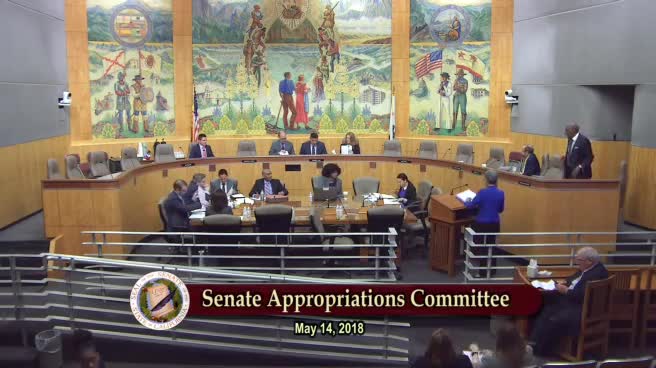 6MIN
Senate Standing Committee on Appropriations
Bill Author

Bill Co-Author(s):