SB 1030: Driver records: points: distracted driving.
- Session Year: 2017-2018
- House: Senate
- Latest Version Date: 2018-02-08
Existing law prohibits a person from driving a motor vehicle while using a wireless telephone unless that telephone is specifically designed and configured to allow hands-free listening and talking, and is used in that manner while driving. Existing law also prohibits a person from driving while holding and operating a handheld wireless telephone or an electronic wireless communications device unless the telephone or device is specifically designed and configured to allow voice-operated and hands-free operation, and is used in that manner while driving. A person who is 18 years of age or younger is prohibited from driving while using a wireless telephone or an electronic wireless communications device, even if equipped with a hands-free device.
Existing law establishes that specified convictions and violations under the Vehicle Code and traffic-related incidents count as points against a drivers record for purposes of suspension or revocation of the privilege to drive and that certain other violations do not result in a violation point. Existing law provides an exemption for the electronic device violations described above from being counted as points against a drivers record for purposes of suspension or revocation of the privilege to drive.
This bill would abolish that exemption, thereby making those violations subject to a violation point against the drivers record.
|
Date
|
Status
|
|---|---|
| Jun 11, 2018 | June 11 set for first hearing canceled at the request of author. |
| May 7, 2018 | Referred to Com. on TRANS. |
| Apr 30, 2018 | In Assembly. Read first time. Held at Desk. |
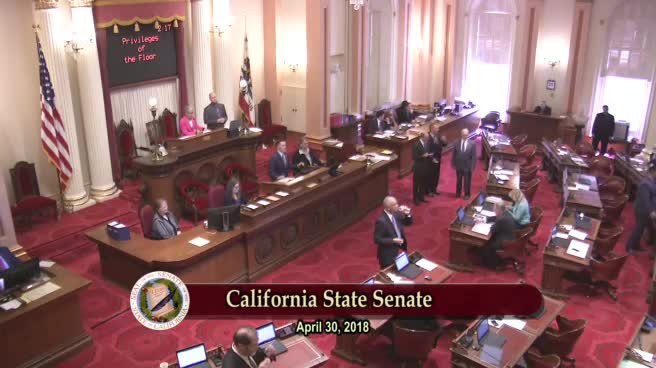
| Apr 30, 2018 | Read third time. Passed. (Ayes 36. Noes 0.) Ordered to the Assembly. |
| Apr 17, 2018 | Read second time. Ordered to third reading. |
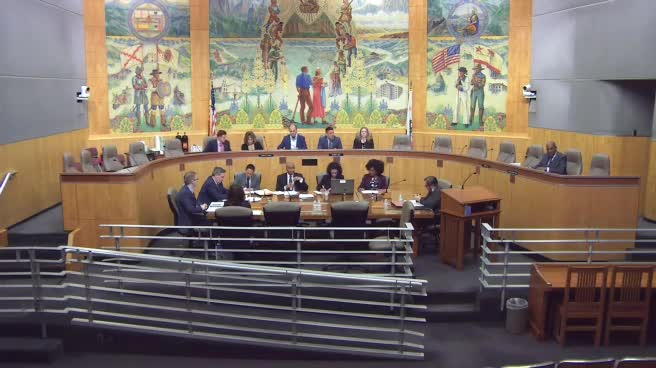
| Apr 16, 2018 | From committee: Do pass. (Ayes 7. Noes 0.) (April 16). |
| Apr 9, 2018 | Set for hearing April 16. |
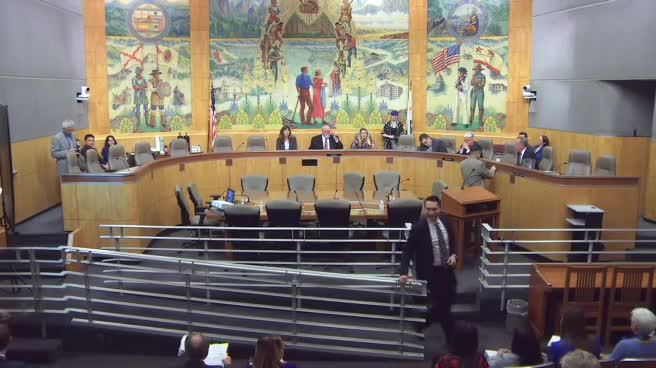
| Apr 3, 2018 | From committee: Do pass and re-refer to Com. on APPR. (Ayes 12. Noes 0.) (April 3). Re-referred to Com. on APPR. |
| Mar 29, 2018 | Set for hearing April 3. |
| Feb 22, 2018 | Referred to Com. on T. & H. |
| Feb 9, 2018 | From printer. May be acted upon on or after March 11. |
| Feb 8, 2018 | Introduced. Read first time. To Com. on RLS. for assignment. To print. |
|
Date
|
Description
|
Location
|
Votes
|
|
|---|---|---|---|---|
| Apr 30, 2018 | Senate 3rd Reading SB1030 Newman | Senate Floor |
Passed |
|
| Apr 16, 2018 | Do pass | Senate Standing Committee on Appropriations |
Passed |
|
| Apr 3, 2018 | Do pass, but first be re-referred to the Committee on [Appropriations] | Senate Standing Committee on Transportation and Housing |
Passed |
This list shows positions taken on this bill by organizations on the date displayed, which is linked to the original source.
Positions by individuals are not included.
|
Organization
|
Position
|
Date
|
|---|---|---|
| AAA Northern California, Nevada, and Utah | ** Support | Apr 18, 2018 |
| American Insurance Association | ** Support | Apr 18, 2018 |
| Auto Club of Southern California | ** Support | Apr 18, 2018 |
| Automobile Club of Southern California | * Support | Apr 3, 2018 |
| Cal Fire Local 2881 | ** Support | Apr 18, 2018 |
| California Association Of Highway Patrolmen | ** Support | Apr 18, 2018 |
| California Coalition for Children's Safety and Health | ** Support | Apr 18, 2018 |
| Century Insurance | * Support | Apr 3, 2018 |
| Impact Teen Drivers | ** Support | Apr 18, 2018 |
| Liberty Mutual Insurance | ** Support | Apr 18, 2018 |
| Pacific Association Of Domestic Insurance Companies | ** Support | Apr 18, 2018 |
| Peace Officers Research Association Of California | ** Support | Apr 18, 2018 |
| Personal Insurance Federation Of California | ** Support | Apr 18, 2018 |
| Property Casualty Insurers Association of America | ** Support | Apr 18, 2018 |
| sentry insurance | ** Support | Apr 18, 2018 |
| United Services Automobile Association (Usaa) | * Support | Apr 3, 2018 |
Office of Senate Floor Analyses (916) 651-1520 Fax: (916) 327-4478 | SB |
THIRD READING
Bill No: SB 1030
:
SENATE TRANS. & HOUSING COMMITTEE: 12-0, 4/3/18
AYES: Beall, Cannella, Allen, Dodd, Gaines, Galgiani, McGuire, Morrell, Roth, Skinner, Vidak, Wiener
NO VOTE RECORDED: Wieckowski
SENATE APPROPRIATIONS COMMITTEE: 7-0, 4/16/18
AYES: Lara, Bates, Beall, Bradford, Hill, Nielsen, Wiener
DIGEST:
This bill makes driving while operating a wireless communications device punishable by a violation point.
Existing law:
- Prohibits driving a vehicle while holding and operating a handheld wireless telephone or an electronic wireless communications device, unless the device is designed to allow voice operated, hands-free operation and is used in that manner.
- Allows a driver to activate or deactivate a feature on the device with a single swipe or tap of the driver’s finger if the device is mounted, as specified.
- Exempts manufacturer-installed systems that are embedded in the vehicle.
- Exempts emergency services professionals operating an emergency vehicle.
- Treats violations as an infraction punishable by a base fine of $20 for a first offense and $50 for subsequent offenses.
This bill provides that driving a vehicle while holding and operating a handheld wireless telephone or an electronic wireless communications device is punishable by a violation point.
Background
Under the Negligent Operator Treatment System program, the Department of Motor Vehicles (DMV) assigns “points” to an individual’s driving record for certain traffic offenses to identify a driver as a negligent operator. DMV assigns points upon receipt of conviction notices from courts and collision reports from law enforcement indicating that the driver contributed, was at fault, or was responsible to any degree for the collision. Each occurrence remains on the driver’s record for at least 36 months, depending on the type of conviction. The driver may present credible evidence at an administrative hearing to refute such reports.
Violation points vary with the gravity of the offense; for example, a “fix-it” ticket does not count for any violation points, a speeding ticket counts for one violation point, and driving while under the influence of alcohol or drugs counts for two violation points. DMV issues warning letters to negligent operators for each offense. DMV may suspend an individual’s driver’s license for six months if he or she receives four points in one year, six points in two years, or eight points in three years. In severe cases, DMV may revoke the license. For hardship cases, DMV may issue a restricted license rather than suspending or revoking a license.
Comments
- Purpose. The author states that distracted driving is equally as dangerous as driving while intoxicated, and needs to be penalized in a similar manner. This bill aims not only to curb this dangerous behavior but also to cut down on the number of deadly car crashes caused by distracted driving. Teen drivers especially are at risk and are reported to be distracted almost a quarter of the time they are behind the wheel. Distraction is among the top three factors that commonly result in deadly crashes for teen drivers. Distraction plays a role in six out of 10 teen crashes, according to the American Automobile Association.
- Most other traffic safety violations carry a point. Existing state law specifies traffic offenses for which a violation point may be assessed. These include running a red light, driving on a sidewalk, tailgating, exceeding the speed limit, drinking while driving, unsafe passing, and carrying an overweight load, among others. Violations for which two points may be assessed include offenses such as evading a peace officer, driving on the wrong side of the road, and driving with a blood alcohol level exceeding the legal limit. Statute requires DMV to assess one point to any conviction “involving the safe operation of a motor vehicle upon the highway.” However, statute explicitly exempts use of a phone while driving from violation points.
- Potential insurance consequences. Safety infractions can impact a driver’s automobile insurance. When an insurance company issues or renews a policy, it obtains the individual’s driving record from DMV. When a driver is cited for a single violation point offense, the judge may allow him or her to attend a traffic violator school. In that case, the conviction is “masked” on the driving record and insurance companies cannot see it. Otherwise, the insurance company can see any violation points and may adjust the driver’s premium accordingly or potentially even refuse coverage.
- Base fine vs. actual cost. Existing law provides that operating a handheld wireless telephone or an electronic wireless communications device while driving is an infraction punishable by a base fine of $20 for a first offense and $50 for subsequent offenses. The state Judicial Council annually adopts a uniform traffic penalty schedule for all non-parking infractions outlined in the Vehicle Code that calculates additional surcharges, penalties, and assessments. According to the uniform traffic penalty schedule, a $20 base fine is equivalent to a total of more than $200 and a $50 base fine is equivalent to a total of more than $500. The author notes that in 2017, the California Highway Patrol issued more than 47,000 citations for persons holding a wireless device while driving, raising the question of whether an infraction is a sufficient deterrent.
- Do violation points work? The negligent operator program includes four intervention levels: a warning letter (Level I); a notice of DMV’s intent to suspend the individual’s driver’s license if the driver is convicted of one more infraction (Level II); an administrative hearing regarding a possible license suspension (Level III); and additional suspension time or possible revocation (Level IV). DMV has conducted multiple evaluations of the program, all of which have deemed the program successful. The most recent report, in 2009, found the program “to be effective in reducing subsequent total crashes and citations of treated drivers.” A 2004 report found that “slightly fewer than 32% of the approximately 484,700 drivers who qualified for a NOTS intervention between June 1, 2000 and December 31, 2001 persisted in their negligent driving behaviors and became eligible for higher-level interventions” beyond Level 1.
- Prior attempts to assess a violation point have been unsuccessful. The first bill to ban the use of a cell phone while driving, SB 1613 (Simitian, Chapter 290, Statutes of 2006), was amended late in the process to explicitly prohibit the assignment of a violation point for the offense. This prohibition was held intact in several subsequent related bills, with two exceptions that were both vetoed.
- SB 1310 (Simitian) of 2012 would have assessed a violation point for a second offense related to using a cell phone while driving. Governor Brown’s veto message stated that “Upping the fines may satisfy the punitive instincts of some, but I severely doubt that it will reduce further violations.”
- AB 1646 (Frazier) of 2014 would have imposed a violation point for an offense related to the use of a cell phone while driving. Governor Brown’s veto message stated that the bill was unnecessary and pointed to a pending DMV review and analysis of distracted driving data. A study published by DMV shortly afterward found that although cell phone-related injury crashes dropped off after 2008, when the first California law banning hands-on cell phone use while driving took effect, other variables such as the declining economy could have also been factors.
AB 1222 (Quirk, Chapter 297, Statutes of 2017) removes “specialized mobile radio device” and “two way messaging device” as examples of an “electronic communications device” that is prohibited from being used while driving.
AB 1785 (Quirk, Chapter 660, Statutes of 2016) replaced the existing prohibition on texting while driving with a broader prohibition on operating a cell phone or electronic wireless communications device while driving, unless the device is mounted in a manner that does not hinder the driver’s view of the road and can be operated using a single tap or swipe.
SB 194 (Galgiani, Chapter 754, Statutes of 2013) prohibited individuals under 18 years of age from operating an electronic wireless communications device while driving, even if it is equipped with a hands-free device.
AB 313 (Frazier, 2013) would have repealed the provisions of AB 1536 (see below). This bill failed in the Assembly Appropriations Committee.
AB 1536 (Miller, Chapter 92, Statutes of 2012) allowed drivers to dictate, send, or listen to text-based communications, as long as they do so using technology specifically designed and configured to allow voice-operated and hands-free operation.
SB 33 (Simitian, Chapter 214, Statutes of 2007) prohibited an individual under 18 years of age from using a wireless telephone or other electronic device equipped with a hands-free device while driving a motor vehicle.
SB 28 (Simitian, Chapter 270, Statutes of 2007) prohibited an individual from writing, sending, or reading text-based communications while operating a motor vehicle, even if the device is equipped with a hands-free device.
FISCAL EFFECT: Appropriation: Fiscal Com.: Local:
According to the Senate Appropriations Committee, moderate one-time (DMV) programming costs, likely under $75,000, related to the imposition of a violation point for convictions of specified distracted driving violations. (Motor Vehicle Account)
AAA Northern California, Nevada, and Utah
American Insurance Association
Auto Club of Southern California
CAL FIRE Local 2881
California Association of Highway Patrolmen
California Coalition for Children’s Safety and Health
Impact Teen Drivers
Liberty Mutual Insurance
Pacific Association of Domestic Insurance Companies
Peace Officers Research Association of California
Personal Insurance Federation of California
Property Casualty Insurers Association of America
Sentry Insurance
OPPOSITION: (Verified 4/17/18)
None received
ARGUMENTS IN SUPPORT: Supporters state that the current infraction penalty has not proven to be a strong enough deterrent; assessing a violation point will strengthen the law and hold drivers accountable for their actions.
4/18/18 11:36:47
**** END ****
SENATE COMMITTEE ON APPROPRIATIONS
Senator Ricardo Lara, Chair
2017 - 2018 Regular Session
SB 1030 (Newman) - Driver records: points: distracted driving
Version: February 8, 2018 | Policy Vote: T. & H. 12 - 0 |
Urgency: No | Mandate: No |
Hearing Date: April 16, 2018 | Consultant: Mark McKenzie |
This bill does not meet the criteria for referral to the Suspense File.
Bill Summary:
SB 1030 would impose a violation point on a driver’s record for convictions related to the use of a handheld cellular phone or wireless communication device while driving.
Fiscal Impact:
- Moderate one-time Department of Motor Vehicles (DMV) programming costs, likely under $75,000, related to the imposition of a violation point for convictions of specified distracted driving violations. (Motor Vehicle Account)
Background:
Existing law generally prohibits a person from operating a motor vehicle while using a handheld wireless telephone or an electronic wireless communications device, unless the device is designed to allow for voice-operated, hands-free operation and is used in that manner, as specified. A driver who is under the age of 18 is prohibited from using a cell phone to talk or text, even if the device is hands-free. The base fine for a violation of these prohibitions is $20 for an initial offense and $50 for each subsequent offense. Current law prohibits the imposition of a violation point for a conviction of these offenses.
DMV assigns violation points against a driver’s license for certain traffic offenses to identify an individual as a negligent operator. Violation points vary with the gravity of the offense; for example, a “fix-it” ticket does not count for any violation points, a speeding ticket counts for one violation point, and driving while under the influence of alcohol or drugs counts for two violation points. DMV may suspend a driver’s license for six months if a person receives four points in one year, six points in two years, or eight points in three years.
Proposed Law:
SB 1030 would repeal a statute that explicitly prohibits the imposition of a violation point for a conviction of specified distracted driving violations.
Related Legislation:
SB 1613 (Simitian), Chapter 290/2006, which imposed the original ban on the use of a cell phone while driving, was amended late in the process to explicitly prohibit the assignment of a violation point for the offense.
SB 1310 (Simitian), which was vetoed by Governor Brown in 2012, would have increased the base fines for violations related to using a cell phone while driving and assessed a violation point for a second offense. The veto message stated, in part, that “Upping the fines may satisfy the punitive instincts of some, but I severely doubt that it will reduce further violations.”
AB 1646 (Frazier), which was vetoed by Governor Brown in 2014, would have imposed a violation point for an offense related to the use of a cell phone while driving. The veto message stated that the bill was unnecessary and pointed to a pending DMV review and analysis of distracted driving data. A subsequent study published by DMV found that although cell phone-related injury crashes dropped off after 2008, when the first California law banning hands-on cell phone use while driving took effect, other variables such as the declining economy could have also been factors.
Staff Comments:
DMV would incur one-time costs to make programming changes that enable the assignment of a violation point to driver’s license records for convictions of the specified violations related to distracted driving.
Recommended Amendments:
The author may wish to consider amending the bill to provide for a delayed operative date to avoid impacts on DMV’s priority programming efforts that are currently underway.
-- END --
SENATE COMMITTEE ON TRANSPORTATION AND HOUSING
Senator Jim Beall, Chair
2017 - 2018 Regular
Bill No: Hearing Date: 4/3/2018
Author: | Newman | ||
Version: | 2/8/2018 | ||
Urgency: | No | Fiscal: | Yes |
Consultant: | Erin Riches | ||
SUBJECT:
DIGEST: This bill makes driving while operating a wireless communications device punishable by a violation point.
ANALYSIS:
Existing law:
- Prohibits driving a vehicle while holding and operating a handheld wireless telephone or an electronic wireless communications device, unless the device is designed to allow voice operated, hands-free operation and is used in that manner.
- Allows a driver to activate or deactivate a feature on the device with a single swipe or tap of the driver’s finger if the device is mounted, as specified.
- Exempts manufacturer-installed systems that are embedded in the vehicle.
- Exempts emergency services professionals operating an emergency vehicle.
- Treats violations as an infraction punishable by a base fine of $20 for a first offense and $50 for subsequent offenses.
This bill provides that driving a vehicle while holding and operating a handheld wireless telephone or an electronic wireless communications device is punishable by a violation point.
COMMENTS
- Purpose. The author states that distracted driving is equally as dangerous as driving while intoxicated, and needs to be penalized in a similar manner. This bill aims not only to curb this dangerous behavior but also to cut down on the number of deadly car crashes caused by distracted driving. Teen drivers especially are at risk and are reported to be distracted almost a quarter of the time they are behind the wheel. Distraction is among the top three factors that commonly result in deadly crashes for teen drivers. Distraction plays a role in six out of 10 teen crashes, according to the American Automobile Association.
- Violation points. Under the Negligent Operator Treatment System program, the Department of Motor Vehicles (DMV) assigns “points” to an individual’s driving record for certain traffic offenses to identify a driver as a negligent operator. DMV assigns points upon receipt of conviction notices from courts and collision reports from law enforcement indicating that the driver contributed, was at fault, or was responsible to any degree for the collision. Each occurrence remains on the driver’s record for at least 36 months, depending on the type of conviction. The driver may present credible evidence at an administrative hearing to refute such reports.
Violation points vary with the gravity of the offense; for example, a “fix-it” ticket does not count for any violation points, a speeding ticket counts for one violation point, and driving while under the influence of alcohol or drugs counts for two violation points. DMV issues warning letters to negligent operators for each offense. DMV may suspend an individual’s driver’s license for six months if he or she receives four points in one year, six points in two years, or eight points in three years. In severe cases, DMV may revoke the license. For hardship cases, DMV may issue a restricted license rather than suspending or revoking a license.
- Most other traffic safety violations carry a point. Existing state law specifies traffic offenses for which a violation point may be assessed. These include running a red light, driving on a sidewalk, tailgating, exceeding the speed limit, drinking while driving, unsafe passing, and carrying an overweight load, among others. Violations for which two points may be assessed include offenses such as evading a peace officer, driving on the wrong side of the road, and driving with a blood alcohol level exceeding the legal limit. Statute requires DMV to assess one point to any conviction “involving the safe operation of a motor vehicle upon the highway.” However, statute explicitly exempts use of a phone while driving from violation points.
- Potential insurance consequences. Safety infractions can impact a driver’s automobile insurance. When an insurance company issues or renews a policy, it obtains the individual’s driving record from DMV. When a driver is cited for a single violation point offense, the judge may allow him or her to attend a traffic violator school. In that case, the conviction is “masked” on the driving record and insurance companies cannot see it. Otherwise, the insurance company can see any violation points and may adjust the driver’s premium accordingly or potentially even refuse coverage.
- Base fine vs. actual cost. Existing law provides that operating a handheld wireless telephone or an electronic wireless communications device while driving is an infraction punishable by a base fine of $20 for a first offense and $50 for subsequent offenses. The state Judicial Council annually adopts a uniform traffic penalty schedule for all non-parking infractions outlined in the Vehicle Code that calculates additional surcharges, penalties, and assessments. According to the uniform traffic penalty schedule, a $20 base fine is equivalent to a total of more than $200 and a $50 base fine is equivalent to a total of more than $500. The author notes that in 2017, the California Highway Patrol issued more than 47,000 citations for persons holding a wireless device while driving, raising the question of whether an infraction is a sufficient deterrent.
- Do violation points work? The negligent operator program includes four intervention levels: a warning letter (Level I); a notice of DMV’s intent to suspend the individual’s driver’s license if the driver is convicted of one more infraction (Level II); an administrative hearing regarding a possible license suspension (Level III); and additional suspension time or possible revocation (Level IV). DMV has conducted multiple evaluations of the program, all of which have deemed the program successful. The most recent report, in 2009, found the program “to be effective in reducing subsequent total crashes and citations of treated drivers.” A 2004 report found that “slightly fewer than 32% of the approximately 484,700 drivers who qualified for a NOTS intervention between June 1, 2000 and December 31, 2001 persisted in their negligent driving behaviors and became eligible for higher-level interventions” beyond Level 1.[1]
- Prior legislation. The first bill to ban the use of a cell phone while driving, AB 1613 (Simitian) of 2006 (see “Related Legislation below), was amended late in the process to explicitly prohibit the assignment of a violation point for the offense. This prohibition was held intact in several subsequent related bills, with two exceptions that were both vetoed.
- SB 1310 (Simitian) of 2012 would have assessed a violation point for a second offense related to using a cell phone while driving. Governor Brown’s veto message stated that “Upping the fines may satisfy the punitive instincts of some, but I severely doubt that it will reduce further violations.”
- AB 1646 (Frazier) of 2014 would have imposed a violation point for an offense related to the use of a cell phone while driving. Governor Brown’s veto message stated that the bill was unnecessary and pointed to a pending DMV review and analysis of distracted driving data. A study published by DMV shortly afterward[2] found that although cell phone-related injury crashes dropped off after 2008, when the first California law banning hands-on cell phone use while driving took effect, other variables such as the declining economy could have also been factors.
Related Legislation:
AB 1222 (Quirk, Chapter 297, Statutes of 2017) — removes “specialized mobile radio device” and “two way messaging device” as examples of an “electronic communications device” that is prohibited from being used while driving.
AB 1785 (Quirk, Chapter 660, Statutes of 2016) — replaces the existing prohibition on texting while driving with a broader prohibition on operating a cell phone or electronic wireless communications device while driving, unless the device is mounted in a manner that does not hinder the driver’s view of the road and can be operated using a single tap or swipe.
AB 1646 (Frazier, 2014) — would have imposed a violation point for convictions related to the use of a cell phone while driving, and would have required the driver’s license examination to assess knowledge of the dangers of using handheld devices while driving. This bill was vetoed by the Governor.
SB 194 (Galgiani, Chapter 754, Statutes of 2013) — prohibits individuals under 18 years of age from operating an electronic wireless communications device while driving, even if it is equipped with a hands-free device.
AB 313 (Frazier, 2013) — would have repealed the provisions of AB 1536 (see below). This bill failed in the Assembly Appropriations Committee.
AB 1536 (Miller, Chapter 92, Statutes of 2012) — allows drivers to dictate, send, or listen to text-based communications, as long as they do so using technology specifically designed and configured to allow voice-operated and hands-free operation.
SB 1310 (Simitian, 2012) — would have increased the penalties related to using a wireless communications device while operating a vehicle, and would have required the driver’s license examination to assess knowledge of the dangers of texting while driving. This bill was vetoed by the Governor.
SB 33 (Simitian, Chapter 214, Statutes of 2007) — prohibited an individual under 18 years of age from using a wireless telephone or other electronic device equipped with a hands-free device while driving a motor vehicle.
SB 28 (Simitian, Chapter 270, Statutes of 2007) — prohibited an individual from writing, sending, or reading text-based communications while operating a motor vehicle, even if the device is equipped with a hands-free device.
SB 1613 (Simitian), Chapter 290, Statutes of 2006) — made it an infraction for any individual to drive a motor vehicle while using a wireless phone, unless it is designed and configured to allow hands-free listening and talking and is used in that manner while driving.
FISCAL EFFECT: Appropriation: No Fiscal Com.: Yes Local: No
POSITIONS: (Communicated to the committee before noon on Wednesday,
March 28, 2018.)
SUPPORT:
AAA Northern California, Nevada, and Utah
American Insurance Association
Auto Club of Southern California
CAL FIRE Local 2881
California Association of Highway Patrolmen (CAHP)
California Coalition for Children’s Safety and Health (CCCSH)
Impact Teen Drivers
Liberty Mutual Insurance
Pacific Association of Domestic Insurance Companies
Peace Officers Research Association of California (PORAC)
Personal Insurance Federation of California
Property Casualty Insurers Association of America
Sentry Insurance
OPPOSITION:
None received.
-- END --
State of California Department of Motor Vehicles, Characteristics of Negligent Operators in California, May 2004 and Enhanced Negligent Operator Treatment Evaluation System: Program Effectiveness Report #1 (Summary of Findings), June 2009. ↑
State of California Department of Motor Vehicles, Cellular Phone Distracted Driving: A Review of the Literature and Summary of Crash and Driver Characteristics in California (October 2014). ↑
Discussed in Hearing
 3MIN
Senate Floor
 9MIN
Senate Standing Committee on Appropriations
 19MIN
Senate Standing Committee on Transportation and Housing
19MIN
Senate Budget and Fiscal Review Subcommittee No. 2 on Resources, Environmental Protection, Energy and Transportation
Bill Author

Bill Co-Author(s):