SB 1031: Public employees’ retirement: cost-of-living adjustments: prohibitions.
- Session Year: 2017-2018
- House: Senate
- Latest Version Date: 2018-04-05
The Public Employees Retirement Law establishes the Public Employees Retirement System and the Teachers Retirement Law establishes the State Teachers Retirement System for the purpose of providing pension benefits to specified public employees and teachers. Existing law establishes the Judges Retirement System II, which provides pension benefits to elected judges, and the Legislators Retirement System, which provides pension benefits to elective officers of the state other than judges and to legislative statutory officers. The County Employees Retirement Law of 1937 authorizes counties to establish retirement systems pursuant to its provisions in order to provide pension benefits to county, city, and district employees. Existing law provides for the application of cost-of-living adjustments to allowances paid to persons retired under, or survivors or beneficiaries of persons retired under, various public retirement systems. The California Public Employees Pension Reform Act of 2013, on and after January 1, 2013, requires a public retirement system, as defined, to modify its plan or plans to comply with the act and, for its purposes, defines pensionable compensation, establishes limits on benefits, and requires the sharing of normal costs between members and employers for the pension systems to which it applies.
The bill would prohibit a public retirement system, as defined, from making a cost-of-living adjustment to any allowance payable to, or on behalf of, a person retired under the system, system who becomes a new member on or after January 1, 2019, or to any survivor or beneficiary of a that member or person retired under the system, for any year beginning on or after January 1, 2019, in which the unfunded actuarial liability of that system is greater than 20%. The bill would require that the determination of unfunded actuarial liability be based on a specified financial report and would apply the prohibition on cost-of-living adjustments, if any, to the calendar year following the fiscal year upon which the report is based.
The Public Employees Retirement Law establishes the Public Employees Retirement System and the Teachers Retirement Law establishes the State Teachers Retirement System for the purpose of providing pension benefits to specified public employees and teachers. Existing law establishes the Judges Retirement System II, which provides pension benefits to elected judges, and the Legislators Retirement System, which provides pension benefits to elective officers of the state other than judges and to legislative statutory officers. The County Employees Retirement Law of 1937 authorizes counties to establish retirement systems pursuant to its provisions in order to provide pension benefits to county, city, and district employees. Existing law provides for the application of cost-of-living adjustments to allowances paid to persons retired under, or survivors or beneficiaries of persons retired under, various public retirement systems. The California Public Employees Pension Reform Act of 2013, on and after January 1, 2013, requires a public retirement system, as defined, to modify its plan or plans to comply with the act and, for its purposes, defines pensionable compensation, establishes limits on benefits, and requires the sharing of normal costs between members and employers for the pension systems to which it applies.
The bill would prohibit a public retirement system, as defined, from making a cost-of-living adjustment to any allowance payable to, or on behalf of, a person retired under the system, or to any survivor or beneficiary of a member or person retired under the system, for any year beginning on or after January 1, 2019, in which the unfunded actuarial liability of that system is greater than 20%. The bill would require that the determination of unfunded actuarial liability be based on a specified financial report and would apply the prohibition on cost-of-living adjustments, if any, to the calendar year following the fiscal year upon which the report is based.
(a)For purposes of this section:
(1)Public retirement system means the Public Employees Retirement System, the State Teachers Retirement System, the Legislators Retirement System, the Judges Retirement System, the Judges Retirement System II, county and district retirement systems created pursuant to the County Employees Retirement Law of 1937 (Chapter 3 (commencing with Section 31450) of Part 3 of Division 4 of Title 3), independent public retirement systems, and individual retirement plans offered by public employers.
(2)Notwithstanding paragraph (1), public retirement system does not include a retirement system created by an entity described in Section 9 of Article IX of, or Section 4 or 5 of Article XI of, the California Constitution, except to the extent that the entity elects to make this section applicable to the entity.
(b)(1)Notwithstanding any other law, except as otherwise required by Section 9 of Article I of the California Constitution, a public retirement system shall not make a cost-of-living adjustment to any allowance payable to, or on behalf of, a person retired under the system, system who becomes a new member on or after January 1, 2019, or to any survivor or beneficiary of a that member or person retired under the system, for any year beginning on or after January 1, 2019, in which the unfunded actuarial liability of the system is greater than 20 percent. If a system is found to have an unfunded liability of greater than 20 percent pursuant to the comprehensive annual financial report described in paragraph (2), the prohibition on cost-of-living adjustments shall apply to the calendar year following the fiscal year upon which the report is based.
(2)For purposes of paragraph (1), the determination of unfunded actuarial liability shall be based upon the comprehensive annual financial report that Section 7503 requires each state or local public retirement system to create.
(a)For purposes of this section:
(1)Public retirement system means the Public Employees Retirement System, the State Teachers Retirement System, the Legislators Retirement System, the Judges Retirement System, the Judges Retirement System II, county and district retirement systems created pursuant to the County Employees Retirement Law of 1937 (Chapter 3 (commencing with Section 31450) of Part 3 of Division 4 of Title 3), independent public retirement systems, and individual retirement plans offered by public employers.
(2)Notwithstanding paragraph (1), public retirement system does not include a retirement system created by an entity described in Section 9 of Article IX of, or Section 4 or 5 of Article XI of, the California Constitution, except to the extent that the entity elects to make this section applicable to the entity.
(b)(1)Notwithstanding any other law, except as otherwise required by Section 9 of Article I of the California Constitution, a public retirement system shall not make a cost-of-living adjustment to any allowance payable to, or on behalf of, a person retired under the system, or to any survivor or beneficiary of a member or person retired under the system, for any year beginning on or after January 1, 2019, in which the unfunded actuarial liability of the system is greater than 20 percent. If a system is found to have an unfunded liability of greater than 20 percent pursuant to the comprehensive annual financial report described in paragraph (2), the prohibition on cost-of-living adjustments shall apply to the calendar year following the fiscal year upon which the report is based.
(2)For purposes of paragraph (1), the determination of unfunded actuarial liability shall be based upon the comprehensive annual financial report that Section 7503 requires each state or local public retirement system to create.
|
Date
|
Status
|
|---|---|
| Apr 24, 2018 | April 23 set for first hearing. Failed passage in committee. (Ayes 1. Noes 3.) Reconsideration granted. |
| Apr 5, 2018 | From committee with author's amendments. Read second time and amended. Re-referred to Com. on P.E. & R. |
| Mar 15, 2018 | Set for hearing April 23. |
| Feb 22, 2018 | Referred to Com. on P.E. & R. |
| Feb 9, 2018 | From printer. May be acted upon on or after March 11. |
| Feb 8, 2018 | Introduced. Read first time. To Com. on RLS. for assignment. To print. |
|
Date
|
Description
|
Location
|
Votes
|
|
|---|---|---|---|---|
| Apr 23, 2018 | [First] hearing set for [04-23-2018]: Failed passage in Committee. Reconsideration granted | Senate Standing Committee on Public Employment and Retirement |
Passed |
|
| Apr 23, 2018 | Do pass, but first be re-referred to the Committee on [Appropriations] | Senate Standing Committee on Public Employment and Retirement |
Failed |
This list shows positions taken on this bill by organizations on the date displayed, which is linked to the original source.
Positions by individuals are not included.
|
Organization
|
Position
|
Date
|
|---|---|---|
| 1 Individual Letter | ** Against | Apr 24, 2018 |
| American Federation of State, County and Municipal Employees | ** Against | Apr 24, 2018 |
| Association of California Cities-Orange County | ** Support | Apr 24, 2018 |
| Cal Fire Local 2881 | ** Against | Apr 24, 2018 |
| California Alliance For Retired Americans | ** Against | Apr 24, 2018 |
| California Association Of Highway Patrolmen | ** Against | Apr 24, 2018 |
| California Association Of Professional Scientists | ** Against | Apr 24, 2018 |
| California Association of Pyschiatric Technicians | * Against | Apr 23, 2018 |
| California Conference Board Of The Amalgamated Transit Union | ** Against | Apr 24, 2018 |
| California Conference Of Machinists | ** Against | Apr 24, 2018 |
| California Federation of Teachers, AFT, AFL-CIO | ** Against | Apr 24, 2018 |
| California Professional Firefighters | * Against | Apr 23, 2018 |
| California Retired Teachers Association | ** Against | Apr 24, 2018 |
| California School Employees Association | * Against | Apr 23, 2018 |
| California State Retirees | * Against | Apr 23, 2018 |
| California State Teaches' Retirement System | ** Against | Apr 24, 2018 |
| California Teachers Association | ** Against | Apr 24, 2018 |
| California Teamsters Public Affairs Council | ** Against | Apr 24, 2018 |
| City Of Fullerton | ** Support | Apr 24, 2018 |
| City Of Huntington Beach | * Support | Apr 23, 2018 |
| City of La Habra | ** Support | Apr 24, 2018 |
| City Of Mission Viejo | ** Support | Apr 24, 2018 |
| City of San Marcos | ** Support | Apr 24, 2018 |
| Los Angeles County Employees Retirement Association | ** Against | Apr 18, 2018 |
| Los Angeles County Professional Peace Officers Association | ** Against | Apr 24, 2018 |
| Orange County Employees Association | ** Against | Apr 24, 2018 |
| Organization Of Smud Employees | ** Against | Apr 24, 2018 |
| Peace Officers Research Association Of California | ** Against | Apr 24, 2018 |
| Professional & Technical Engineers, Ifpte, Local 21, Afl-Cio | ** Against | Apr 24, 2018 |
| Professional Engineers In California Government | * Against | Apr 23, 2018 |
| Retired Public Employees Association | ** Against | Apr 24, 2018 |
| Riverside Sheriff's Association | * Against | Apr 23, 2018 |
| San Diego County Court Employees Association | ** Against | Apr 24, 2018 |
| School Employers Association Of California | * Against | Apr 23, 2018 |
| Service Employees International Union, Local 1000 | ** Against | Apr 24, 2018 |
| Small School Districts Association | ** Against | Apr 23, 2018 |
| United Public Employees | ** Against | Apr 24, 2018 |
SENATE COMMITTEE ON
PUBLIC EMPLOYMENT AND RETIREMENT
Dr. Richard Pan, Chair
2017 - 2018 Regular
Bill No: SB 1031 Hearing Date: 4/23/18
Author: | Moorlach | ||
Version: | 4/5/18 As amended | ||
Urgency: | No | Fiscal: | Yes |
Consultant: | Glenn Miles | ||
Subject: Public employees’ retirement: cost-of-living adjustments: prohibitions
SOURCE: Author
DIGEST: This bill would prohibit a public retirement system from making a cost-of-living adjustment to any allowance payable to, or on behalf of, a person retired under the system who becomes a new member on or after January 1, 2019, or to any survivor or beneficiary of that member or person retired under the system, for any year in which the unfunded actuarial liability of the system is greater than 20 percent.
ANALYSIS:
Existing law:
- Provides pension benefits, as specified, to California public employees under various statutory bodies of law including the Public Employees’ Retirement Law (PERL), the Teachers’ Retirement Law (TRL), and the County Employees Retirement Law of 1937 (’37 Act).
- Creates various pension systems, including the California Public Employees’ Retirement System (CalPERS), the California State Teachers’ Retirement System (CalSTRS), several county retirement systems, as well as independent local systems, to administer public employee pension plans and invest plan assets.
- Establishes, under the various pension plan benefit structures, cost-of living adjustments (COLAs) to retiree allowances to mitigate the erosion of the purchasing power of those allowances over time due to inflation.
- Establishes, under various plan benefit structures, purchasing power protection benefits designed to restore the original purchasing power of allowances whose purchasing power has fallen below a specified amount.
- Requires public employers and employees to collectively bargain over terms and conditions of employment, including compensation, through various statutory frameworks governing labor relations among public employers and their employees.
- Makes comprehensive reforms to public employee pension plans through the enactment of the California Public Employees’ Pension Reform Act of 2013 (PEPRA) that apply to all public employers and public pension plans on and after January 1, 2013, excluding the University of California and charter cities and counties that do not participate in a retirement system governed by state statute.
This bill:
- Prohibits a public retirement system, as specified, from making a cost-of-living adjustment to any allowance payable to, or on behalf of, a person retired under the system who becomes a new member on or after January 1, 2019, or to any survivor or beneficiary of that member or person retired under the system, for any year in which the unfunded actuarial liability of the system is greater than 20 percent. The COLA prohibition shall supersede any other law except as otherwise required by the provision of the California Constitution prohibiting bills of attainder, ex post facto laws, or laws impairing the obligation of contracts.
- Does not apply to a retirement system established by the University of California, a charter county, or a charter city, unless the respective entity elects to apply the bill’s provisions to itself.
- Provides that if a system is found to have an unfunded liability of greater than 20 percent pursuant to the comprehensive annual financial report (CAFR), as specified, the specified COLA prohibition shall apply to the calendar year following the fiscal year upon which the CAFR is based.
Background
According to the author, public pension systems face additional increases in unfunded liability when inflation drives up costs associated with COLAs to provide higher pension beneficiary payments to current retirees. “Effecting freezes on COLAs will help to curb accruing further unfunded pension liabilities. Per the CalPERS Comprehensive Annual Financial Report, the total [CalPERS] unfunded actuarial accrued liability has reached $142,053,672,000, and this number is expected to increase.”
Committee Concerns
This bill would impose a prohibition on one aspect of deferred compensation for public employees. Existing labor relations laws require compensation, including elements of deferred compensation, to be collectively bargained between public employers and their employees, as parts of the terms and conditions of employment. This bill is premature in that no bargaining and agreement over the terms of a ban or limitation on COLAs for new plan members has occurred.
The committee sets aside any discussion about vested or constitutionally protected contractual rights to the existing provision of COLAs since this bill does not apply to current retirees or existing members of a retirement system but only to allowances derived from the service of a person who becomes a new member of a public retirement system on or after January 1, 2019. However, the committee notes that it is unclear how SB 1031 could substantially slow the growth of the existing unfunded liability of CalPERS or any of its companion pension systems since that liability arises from benefits promised to current retirees and existing members. Any savings from the COLA freeze proposed by SB 1031 would be many years away and dependent on inflationary conditions far in the future. Thus, any costs associated with the benefit could be adequately addressed through prefunding. Since the bill does not address a need sufficiently urgent as to break with established laws governing public employer and employee labor relations without first engaging in the collective bargaining process, it is premature.
Related/Prior Legislation
SB 32 (Moorlach, 2017), Died in Senate Public Employment and Retirement Committee, would have made several changes to California public pension plans (except those of the University of California, Charter Counties, and Charter Cities, for which the bill’s changes would be optional at the election of the respective entity), including prohibiting any COLA for public pension plans, as specified.
FISCAL EFFECT: Appropriation: No Fiscal Com.: Yes Local: No
SUPPORT:
Association of California Cities-Orange County
City of Fullerton
City of La Habra
City of Mission Viejo
City of San Marcos
OPPOSITION:
American Federation of State, County and Municipal Employees
CAL FIRE Local 2881
California Alliance for Retired Americans
California Association of Highway Patrolmen
California Association of Professional Scientists
California Conference Board of the Amalgamated Transit Union
California Conference of Machinists
California Federation of Teachers, AFT, AFL-CIO
California Retired Teachers Association
California State Teaches’ Retirement System
California Teachers Association
California Teamsters Public Affairs Council
Los Angeles County Professional Peace Officers Association
Orange County Employees Association
Organization of SMUD Employees
Peace Officers Research Association of California
Professional & Technical Engineers, IFPTE, Local 21, AFL-CIO
Retired Public Employees Association
San Diego County Court Employees Association
Service Employees International Union, Local 1000
United Public Employees
1 Individual Letter
ARGUMENTS IN SUPPORT: According to the City of Fullerton,
While local governments such as Fullerton are taking steps to address long-term fiscal sustainability to include partnering with our employees to forgo compensation increases or shared pick-up of pension costs, we have no control over the increased unfunded liability caused by retiree COLAs. Fullerton has twice as many retirees as active employees and, even when in partnership with our employees, we have no control over increased unfunded liabilities associated with retiree COLAs, thereby putting future sustainability in question.
ARGUMENTS IN OPPOSITION: According to the Retired Public Employees Association,
The Cost-of-Living Adjustment (COLA) is a benefit to ensure your value of money at retirement keeps up with the rate of inflation. The average annual salary allowance of CalPERS retirees is around $34,000, which is a modest sum, especially in a high cost state like California.
The COLA received by retirees is small and most of the time does not cover the rising costs for healthcare and medicine that retirees generally spend more for than active employees.
SB 1031 is punitive and affects the most vulnerable of California citizens; retirees.
Discussed in Hearing
 19MIN
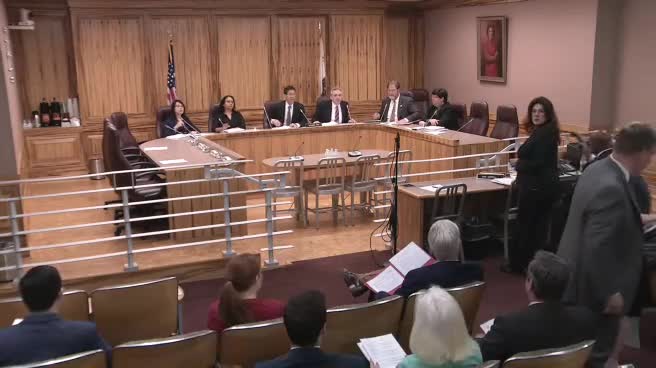
Senate Standing Committee on Public Employment and Retirement
Bill Author
Bill Co-Author(s):