SB 1040: In-home supportive services: natural disaster.
- Session Year: 2017-2018
- House: Senate
- Latest Version Date: 2018-09-26
(1)Existing law establishes the In-Home Supportive Services (IHSS) program, administered by the State Department of Social Services and counties, under which qualified aged, blind, and disabled persons are provided with supportive services, as defined, in order to permit them to remain in their own homes. The California Emergency Services Act authorizes the Governor to declare a state of emergency under specified conditions and requires a county, including a city and county, to update its emergency plan to address, among other things, how the access and functional needs population, as defined, is served by emergency communications, evacuation, and sheltering.
This bill would require a county to use a void and reissue warrant process for any provider who lost or had damaged an uncashed warrant because of a natural disaster resulting in a state of emergency. The bill would require a county, including a city and county, at the next update to its emergency plan, to integrate and require the assessment and provision of supportive services to IHSS recipients.
(2)Existing law establishes the Predevelopment Loan Fund for the purpose of making predevelopment loans and land purchase loans to eligible sponsors, as defined, for assisted housing for occupancy primarily by persons of low income. Existing law requires the Department of Housing and Community Development to award those funds to provide disaster relief in communities subject to a natural disaster, if the funds have been made available for that purpose. Existing law requires those funds to be used for housing persons of low income and moderate income, with first priority given to funding housing for persons of low and moderate income.
This bill would require first priority for those funds in providing disaster relief to also be given to fund housing for IHSS recipients.
(3)Existing law requires a county welfare department to establish an IHSS recipients weekly authorized number of hours of services, pursuant to a specified formula. Under existing law, the county welfare department may temporarily adjust the authorized weekly hours of a recipient at the request of the recipient to accommodate unexpected extraordinary circumstances.
This bill would specify that the extraordinary circumstance may include a situation arising out of a natural disaster.
(4)By increasing the duties of counties, this bill would impose a state-mandated local program.
(5)The California Constitution requires the state to reimburse local agencies and school districts for certain costs mandated by the state. Statutory provisions establish procedures for making that reimbursement.
This bill would provide that, if the Commission on State Mandates determines that the bill contains costs mandated by the state, reimbursement for those costs shall be made pursuant to the statutory provisions noted above.
(1)Existing law establishes the In-Home Supportive Services (IHSS) program, administered by the State Department of Social Services and counties, under which qualified aged, blind, and disabled persons are provided with supportive services, as defined, in order to permit them to remain in their own homes. The California Emergency Services Act authorizes the Governor to declare a state of emergency under specified conditions and requires a county, including a city and county, to update its emergency plan to address, among other things, how the access and functional needs population, as defined, is served by emergency communications, evacuation, and sheltering.
This bill would require a county to use a void and reissue warrant process for any provider who lost or had damaged an uncashed warrant because of a natural disaster resulting in a state of emergency. The bill would require a county, including a city and county, at the next update to its emergency plan, to integrate and require the assessment and provision of supportive services to IHSS recipients.
(2)Existing law establishes the Predevelopment Loan Fund for the purpose of making predevelopment loans and land purchase loans to eligible sponsors, as defined, for assisted housing for occupancy primarily by persons of low income. Existing law requires the Department of Housing and Community Development to award those funds to provide disaster relief in communities subject to a natural disaster, if the funds have been made available for that purpose. Existing law requires those funds to be used for housing persons of low income and moderate income, with first priority given to funding housing for persons of low and moderate income. Existing law also requires the funds to be expended only for rehabilitation or reconstruction of housing and related infrastructure that has been damaged as a result of a natural disaster.
This bill would require first priority for those funds in providing disaster relief to also be given to fund housing for IHSS recipients and for remediation and restoration necessary to return the IHSS recipient to his or her home that has been damaged by a natural disaster. recipients.
(3)Existing law requires a county welfare department to establish an IHSS recipients weekly authorized number of hours of services, pursuant to a specified formula. Under existing law, the county welfare department may temporarily adjust the authorized weekly hours of a recipient at the request of the recipient to accommodate unexpected extraordinary circumstances.
This bill would specify that the extraordinary circumstance may include a situation arising out of a natural disaster.
(4)By increasing the duties of counties, this bill would impose a state-mandated local program.
(5)The California Constitution requires the state to reimburse local agencies and school districts for certain costs mandated by the state. Statutory provisions establish procedures for making that reimbursement.
This bill would provide that, if the Commission on State Mandates determines that the bill contains costs mandated by the state, reimbursement for those costs shall be made pursuant to the statutory provisions noted above.
(1)Existing law establishes the In-Home Supportive Services (IHSS) program, administered by the State Department of Social Services and counties, under which qualified aged, blind, and disabled persons are provided with supportive services, as defined, in order to permit them to remain in their own homes. The California Emergency Services Act authorizes the Governor to declare a state of emergency under specified conditions and requires a county, including a city and county, to update its emergency plan to address, among other things, how the access and functional needs population, as defined, is served by emergency communications, evacuation, and sheltering.
This bill would require a county to use a void and reissue warrant process for any provider who lost or had damaged an uncashed warrant because of a natural disaster resulting in a state of emergency. The bill would require a county, including a city and county, at the next update to its emergency plan, to integrate and require the assessment and provision of supportive services to IHSS recipients.
(2)Existing law establishes the Predevelopment Loan Fund for the purpose of making predevelopment loans and land purchase loans to eligible sponsors, as defined, for assisted housing for occupancy primarily by persons of low income. Existing law requires the Department of Housing and Community Development to award those funds to provide disaster relief in communities subject to a natural disaster, if the funds have been made available for that purpose. Existing law requires those funds to be used for housing persons of low income and moderate income, with first priority given to funding housing for persons of low and moderate income. Existing law also requires the funds to be expended only for rehabilitation or reconstruction of housing and related infrastructure that has been damaged as a result of a natural disaster.
This bill would require first priority for those funds in providing disaster relief to also be given to fund housing for IHSS recipients and for remediation and restoration necessary to return the IHSS recipient to his or her home that has been damaged by a natural disaster.
(3)Existing law requires a county welfare department to establish an IHSS recipients weekly authorized number of hours of services, pursuant to a specified formula. Under existing law, the county welfare department may temporarily adjust the authorized weekly hours of a recipient at the request of the recipient to accommodate unexpected extraordinary circumstances.
This bill would specify that the extraordinary circumstance may include a situation arising out of a natural disaster.
(4)Existing law requires all prospective IHSS providers to complete a provider orientation at the time of enrollment and requires the applicant to sign a statement specifying, among other things, that the provider has attended the orientation and understands that failure to comply with the program rules and requirements may result in the provider being terminated from providing services. Existing law requires a county to investigate the criminal background of a person who seeks to become an IHSS provider, and upon notice that the applicant has been convicted of specified crimes, to deny the application. Existing law prohibits a person from providing, or receiving payment for providing, supportive services for 10 years following a conviction or incarceration for fraud against a government health care or supportive services program, or for a conviction or incarceration for a violent or serious felony, as defined.This bill would authorize a person who has not yet completed the orientation and enrollment requirements, or for whom a criminal background check has not yet been completed, but who is providing services to a recipient, to be paid for services rendered to that recipient, for a period not to exceed 3 months, if the county welfare department has approved the services by that provider and a natural disaster resulting in a declared state of emergency has left the recipient without his or her preferred provider. (5)(4)By increasing the duties of counties, this bill would impose a state-mandated local program.
(6)(5)The California Constitution requires the state to reimburse local agencies and school districts for certain costs mandated by the state. Statutory provisions establish procedures for making that reimbursement.
This bill would provide that, if the Commission on State Mandates determines that the bill contains costs mandated by the state, reimbursement for those costs shall be made pursuant to the statutory provisions noted above.
(1)Existing law establishes the In-Home Supportive Services (IHSS) program, administered by the State Department of Social Services and counties, under which qualified aged, blind, and disabled persons are provided with supportive services, as defined, in order to permit them to remain in their own homes. The California Emergency Services Act authorizes the Governor to declare a state of emergency under specified conditions and requires a county, including a city and county, to update its emergency plan to address, among other things, how the access and functional needs population, as defined, is served by emergency communications, evacuation, and sheltering.
This bill would expand the definition of supportive services to include all needs and services required during a natural disaster resulting in a declared state of emergency, and authorize, under those same circumstances, a county to allocate additional hours of supportive services, as specified. TheThis bill would require a county to use a void and reissue warrant process for any provider who lost or had damaged an uncashed warrant because of a natural disaster resulting in a state of emergency. The bill would require a county, including a city and county, at the next update to its emergency plan, to integrate and require the assessment and provision of supportive services to IHSS recipients. By
(2)Existing law establishes the Predevelopment Loan Fund for the purpose of making predevelopment loans and land purchase loans to eligible sponsors, as defined, for assisted housing for occupancy primarily by persons of low income. Existing law requires the Department of Housing and Community Development to award those funds to provide disaster relief in communities subject to a natural disaster, if the funds have been made available for that purpose. Existing law requires those funds to be used for housing persons of low income and moderate income, with first priority given to funding housing for persons of low and moderate income. Existing law also requires the funds to be expended only for rehabilitation or reconstruction of housing and related infrastructure that has been damaged as a result of a natural disaster.
This bill would require first priority for those funds in providing disaster relief to also be given to fund housing for IHSS recipients and for remediation and restoration necessary to return the IHSS recipient to his or her home that has been damaged by a natural disaster.
(3)Existing law requires a county welfare department to establish an IHSS recipients weekly authorized number of hours of services, pursuant to a specified formula. Under existing law, the county welfare department may temporarily adjust the authorized weekly hours of a recipient at the request of the recipient to accommodate unexpected extraordinary circumstances.
This bill would specify that the extraordinary circumstance may include a situation arising out of a natural disaster.
(4)Existing law requires all prospective IHSS providers to complete a provider orientation at the time of enrollment and requires the applicant to sign a statement specifying, among other things, that the provider has attended the orientation and understands that failure to comply with the program rules and requirements may result in the provider being terminated from providing services. Existing law requires a county to investigate the criminal background of a person who seeks to become an IHSS provider, and upon notice that the applicant has been convicted of specified crimes, to deny the application. Existing law prohibits a person from providing, or receiving payment for providing, supportive services for 10 years following a conviction or incarceration for fraud against a government health care or supportive services program, or for a conviction or incarceration for a violent or serious felony, as defined.
This bill would authorize a person who has not yet completed the orientation and enrollment requirements, or for whom a criminal background check has not yet been completed, but who is providing services to a recipient, to be paid for services rendered to that recipient, for a period not to exceed 3 months, if the county welfare department has approved the services by that provider and a natural disaster resulting in a declared state of emergency has left the recipient without his or her preferred provider.
(5)By increasing the duties of counties, this bill would impose a state-mandated local program.
(2)(6)The California Constitution requires the state to reimburse local agencies and school districts for certain costs mandated by the state. Statutory provisions establish procedures for making that reimbursement.
This bill would provide that, if the Commission on State Mandates determines that the bill contains costs mandated by the state, reimbursement for those costs shall be made pursuant to the statutory provisions noted above.
(1)Existing law establishes the In-Home Supportive Services (IHSS) program, administered by the State Department of Social Services and counties, under which qualified aged, blind, and disabled persons are provided with supportive services, as defined, in order to permit them to remain in their own homes. The California Emergency Services Act authorizes the Governor to declare a state of emergency under specified conditions and requires a county, including a city and county, to update its emergency plan to address, among other things, how the access and functional needs population, as defined, is served by emergency communications, evacuation, and sheltering.
This bill would expand the definition of supportive services to include all needs and services required during a natural disaster resulting in a declared state of emergency, and authorize, under those same circumstances, a county to allocate additional hours of supportive services, as specified. The bill would require a county to use a void and reissue warrant process for any provider who lost or had damaged an uncashed warrant because of a natural disaster resulting in a state of emergency. The bill would require a county, including a city and county, at the next update to its emergency plan, to integrate and require the assessment and provision of supportive services to IHSS recipients. By increasing the duties of counties, this bill would impose a state-mandated local program.
(2)The California Constitution requires the state to reimburse local agencies and school districts for certain costs mandated by the state. Statutory provisions establish procedures for making that reimbursement.
This bill would provide that, if the Commission on State Mandates determines that the bill contains costs mandated by the state, reimbursement for those costs shall be made pursuant to the statutory provisions noted above.
This act shall be known as the In-Home Supportive Services Emergency Preparedness, Response, and Consumer Safety Act.
SEC. 2.The Legislature finds and declares all of the following:
(a)In-home supportive services (IHSS) consumers have unique and specific needs for which they are statutorily entitled to care and service with dignity.
(b)During a natural disaster resulting in the declaration of a state of emergency, there is currently no comprehensive statewide approach or mandate in relation to how much additional supportive services are required to be provided to IHSS consumers, or even that additional supportive services are required to be provided at all.
(c)The lack of a comprehensive statewide approach or mandate leaves IHSS consumers unacceptably vulnerable.
(d)The unique and specific needs of IHSS consumers during a natural disaster resulting in the declaration of a state of emergency may require the provision of additional hours of supportive services, as determined by county social workers.
SEC. 3.Section 34052 of the Health and Safety Code is amended to read:34052.For the purpose of providing disaster relief in communities subject to a natural disaster, the department shall award funds pursuant to Chapter 3.5 (commencing with Section 50530) of Part 2 of Division 31 if funds have been made available for this purpose. Notwithstanding subdivision (b) of Section 50531, funds shall be used for housing for persons of low and moderate income, including persons who are recipients of in-home supportive services, with first priority given to funding housing for persons of low income, including recipients of in-home supportive services.
SEC. 4.Section 12301.1 of the Welfare and Institutions Code is amended to read:12301.1.(a)The department shall adopt regulations establishing a uniform range of services available to all eligible recipients based upon individual needs. The availability of services under these regulations is subject to the provisions of Section 12301 and county plans developed pursuant to Section 12302.
(b)(1)The county welfare department shall assess each recipients continuing monthly need for in-home supportive services at varying intervals as necessary, but at least once every 12 months. The results of this assessment of monthly need for hours of in-home supportive services shall be divided by 4.33, to establish a recipients weekly authorized number of hours of in-home supportive services, subject to any of the following, as applicable:
(A)Within the limit of the assessed monthly need for hours of in-home supportive services, a county welfare department may adjust the authorized weekly hours of a recipient for any particular week for known recurring or periodic needs of the recipient.
(B)Within the limit of the assessed monthly need for hours of in-home supportive services, a county welfare department may temporarily adjust the authorized weekly hours of a recipient at the request of the recipient, to accommodate unexpected extraordinary circumstances, including, but not limited to, a situation arising out of a natural disaster.
(C)In addition to the flexibility provided to a recipient pursuant to subparagraph (C) of paragraph (4) of subdivision (b) of Section 12300.4, a recipient may request the county welfare department to adjust his or her weekly authorized hours of services to exceed 40 hours of weekly authorized hours of services per week, within his or her total monthly authorized hours of services. A request for adjustment may be made retroactive to the hours actually worked. The county welfare department shall not unreasonably withhold approval of a recipient request made pursuant to this subparagraph.
(2)For purposes of subparagraph (C) of paragraph (1), and prior to its implementation, the State Department of Social Services shall develop a process for requests made pursuant to that subparagraph. The process shall include all of the following:
(A)The procedure, standards, and timeline for making a request to adjust the authorized weekly hours of service for a recipient described in this section.
(B)The language to be used for notices about the process.
(C)Provisions for adjustments to authorization, and for authorization after services have been provided, when the criteria for approval have been met.
(D)A requirement that the opportunity for a revision to the limitations of this section shall be discussed at each annual reassessment, and also may be authorized by the county welfare department outside of the reassessment process.
(3)Recipients shall be timely informed of their total monthly and weekly authorized hours.
(4)The weekly authorization of services defined in this section shall be used solely for the purposes of ensuring compliance with the federal Fair Labor Standards Act and its implementing regulations.
(5)Notwithstanding the rulemaking provisions of the Administrative Procedure Act (Chapter 3.5 (commencing with Section 11340) of Part 1 of Division 3 of Title 2 of the Government Code), the department may implement, interpret, or make specific this subdivision by means of all-county letters, or similar instructions, without taking any regulatory action.
(c)(1)Notwithstanding subdivision (b), at the countys option, assessments may be extended, on a case-by-case basis, for up to six months beyond the regular 12-month period, provided that the county documents that all of the following conditions exist:
(A)The recipient has had at least one reassessment since the initial program intake assessment.
(B)The recipients living arrangement has not changed since the last annual reassessment and the recipient lives with others, or has regular meaningful contact with persons other than his or her service provider.
(C)The recipient or, if the recipient is a minor, his or her parent or legal guardian, or if incompetent, his or her conservator, is able to satisfactorily direct the recipients care.
(D)There has not been a known change in the recipients supportive service needs within the previous 24 months.
(E)A report has not been made to, and there has been no involvement of, an adult protective services agency or agencies since the county last assessed the recipient.
(F)The recipient has not had a change in provider or providers for at least six months.
(G)The recipient has not reported a change in his or her need for supportive services that requires a reassessment.
(H)The recipient has not been hospitalized within the last three months.
(2)If some, but not all, of the conditions specified in paragraph (1) are met, the county may consider other factors in determining whether an extended assessment interval is appropriate, including, but not limited to, involvement in the recipients care of a social worker, case manager, or other similar representative from another human services agency, such as a regional center or county mental health program, or communications, or other instructions from a physician or other licensed health care professional that the recipients medical condition is unlikely to change.
(3)A county may reassess a recipients need for services at a time interval of less than 12 months from a recipients initial intake or last assessment if the county social worker has information indicating that the recipients need for services is expected to decrease in less than 12 months.
(d)A county shall assess a recipients need for supportive services any time that the recipient notifies the county of a need to adjust the supportive services hours authorized, or if there are other indications or expectations of a change in circumstances affecting the recipients need for supportive services.
(e)(1)Notwithstanding the rulemaking provisions of the Administrative Procedure Act, Chapter 3.5 (commencing with Section 11340) of Part 1 of Division 3 of Title 2 of the Government Code, until emergency regulations are filed with the Secretary of State, the department may implement this section through all-county letters or similar instructions from the director. The department shall adopt emergency regulations implementing this section no later than September 30, 2005, unless notification of a delay is made to the Chair of the Joint Legislative Budget Committee prior to that date. The notification shall include the reason for the delay, the current status of the emergency regulations, a date by which the emergency regulations shall be adopted, and a statement of need to continue use of all-county letters or similar instructions. The adoption of emergency regulations shall not be delayed, or the use of all-county letters or similar instructions be extended, beyond June 30, 2006.
(2)The adoption of regulations implementing this section shall be deemed an emergency and necessary for the immediate preservation of the public peace, health, safety, or general welfare. The emergency regulations authorized by this section are exempt from review by the Office of Administrative Law. The emergency regulations authorized by this section shall be submitted to the Office of Administrative Law for filing with the Secretary of State and shall remain in effect for no more than 180 days by which time final regulations shall be adopted. The department shall seek input from the entities listed in Section 12305.72 when developing all-county letters or similar instructions and the regulations.
SEC. 5.Section 12304.41 is added to the Welfare and Institutions Code, to read:12304.41.If a natural disaster has resulted in a declared state of emergency, affected counties shall use a void and reissue warrant process for any provider who lost or had damaged an uncashed warrant because of the natural disaster. When reissuing the uncashed warrant, a county shall verify the providers current mailing address and update the mailing address in the Case Management Information and Payroll System to ensure that the reissued warrant will be mailed to the providers current address.
SEC. 6.Section 12312 is added to the Welfare and Institutions Code, to read:12312.A county, including a city and county, shall, upon the next update to its emergency plan, integrate and require the assessment and provision of supportive services to in-home supportive services (IHSS) recipients, including, but not limited to, the following requirements:
(a)Protocols and authorization for county social workers to make expedited assessments of the needs of current and potential IHSS recipients during times of a natural disaster.
(b)Protocols to ensure that authorized services will continue to be provided to recipients during times of displacement resulting from a natural disaster.
(c)Protocols to address any specific and unique needs of IHSS recipients that have not previously been addressed in the countys or the city and countys emergency plan pursuant to Section 8593.3 of the Government Code.
SEC. 7.If the Commission on State Mandates determines that this act contains costs mandated by the state, reimbursement to local agencies and school districts for those costs shall be made pursuant to Part 7 (commencing with Section 17500) of Division 4 of Title 2 of the Government Code.
This act shall be known as the In-Home Supportive Services Emergency Preparedness, Response, and Consumer Safety Act.
SEC. 2.The Legislature finds and declares all of the following:
(a)In-home supportive services (IHSS) consumers have unique and specific needs for which they are statutorily entitled to care and service with dignity.
(b)During a natural disaster resulting in the declaration of a state of emergency, there is currently no comprehensive statewide approach or mandate in relation to how much additional supportive services are required to be provided to IHSS consumers, or even that additional supportive services are required to be provided at all.
(c)The lack of a comprehensive statewide approach or mandate leaves IHSS consumers unacceptably vulnerable.
(d)The unique and specific needs of IHSS consumers during a natural disaster resulting in the declaration of a state of emergency may require the provision of additional hours of supportive services, as determined by county social workers.
SEC. 3.Section 34052 of the Health and Safety Code is amended to read:34052.For the purpose of providing disaster relief in communities subject to a natural disaster, the department shall award funds pursuant to Chapter 3.5 (commencing with Section 50530) of Part 2 of Division 31 if funds have been made available for this purpose. Notwithstanding subdivision (b) of Section 50531, funds shall be used for housing for persons of low and moderate income, including persons who are recipients of in-home supportive services, with first priority given to funding housing for persons of low income, including recipients of in-home supportive services.
SEC. 4.Section 34054 of the Health and Safety Code is amended to read:34054.Funds appropriated for the purposes of Section 34052 shall only be expended for rehabilitation or reconstruction of housing and related infrastructure, including, in the case of a recipient of in-home supportive services, remediation and restoration of housing and infrastructure necessary to return the recipient to his or her home, that has been damaged as a result of a natural disaster.SEC. 5.SEC. 4.Section 12301.1 of the Welfare and Institutions Code is amended to read:12301.1.(a)The department shall adopt regulations establishing a uniform range of services available to all eligible recipients based upon individual needs. The availability of services under these regulations is subject to the provisions of Section 12301 and county plans developed pursuant to Section 12302.
(b)(1)The county welfare department shall assess each recipients continuing monthly need for in-home supportive services at varying intervals as necessary, but at least once every 12 months. The results of this assessment of monthly need for hours of in-home supportive services shall be divided by 4.33, to establish a recipients weekly authorized number of hours of in-home supportive services, subject to any of the following, as applicable:
(A)Within the limit of the assessed monthly need for hours of in-home supportive services, a county welfare department may adjust the authorized weekly hours of a recipient for any particular week for known recurring or periodic needs of the recipient.
(B)Within the limit of the assessed monthly need for hours of in-home supportive services, a county welfare department may temporarily adjust the authorized weekly hours of a recipient at the request of the recipient, to accommodate unexpected extraordinary circumstances, including, but not limited to, a situation arising out of a natural disaster.
(C)In addition to the flexibility provided to a recipient pursuant to subparagraph (C) of paragraph (4) of subdivision (b) of Section 12300.4, a recipient may request the county welfare department to adjust his or her weekly authorized hours of services to exceed 40 hours of weekly authorized hours of services per week, within his or her total monthly authorized hours of services. A request for adjustment may be made retroactive to the hours actually worked. The county welfare department shall not unreasonably withhold approval of a recipient request made pursuant to this subparagraph.
(2)For purposes of subparagraph (C) of paragraph (1), and prior to its implementation, the State Department of Social Services shall develop a process for requests made pursuant to that subparagraph. The process shall include all of the following:
(A)The procedure, standards, and timeline for making a request to adjust the authorized weekly hours of service for a recipient described in this section.
(B)The language to be used for notices about the process.
(C)Provisions for adjustments to authorization, and for authorization after services have been provided, when the criteria for approval have been met.
(D)A requirement that the opportunity for a revision to the limitations of this section shall be discussed at each annual reassessment, and also may be authorized by the county welfare department outside of the reassessment process.
(3)Recipients shall be timely informed of their total monthly and weekly authorized hours.
(4)The weekly authorization of services defined in this section shall be used solely for the purposes of ensuring compliance with the federal Fair Labor Standards Act and its implementing regulations.
(5)Notwithstanding the rulemaking provisions of the Administrative Procedure Act (Chapter 3.5 (commencing with Section 11340) of Part 1 of Division 3 of Title 2 of the Government Code), the department may implement, interpret, or make specific this subdivision by means of all-county letters, or similar instructions, without taking any regulatory action.
(c)(1)Notwithstanding subdivision (b), at the countys option, assessments may be extended, on a case-by-case basis, for up to six months beyond the regular 12-month period, provided that the county documents that all of the following conditions exist:
(A)The recipient has had at least one reassessment since the initial program intake assessment.
(B)The recipients living arrangement has not changed since the last annual reassessment and the recipient lives with others, or has regular meaningful contact with persons other than his or her service provider.
(C)The recipient or, if the recipient is a minor, his or her parent or legal guardian, or if incompetent, his or her conservator, is able to satisfactorily direct the recipients care.
(D)There has not been a known change in the recipients supportive service needs within the previous 24 months.
(E)A report has not been made to, and there has been no involvement of, an adult protective services agency or agencies since the county last assessed the recipient.
(F)The recipient has not had a change in provider or providers for at least six months.
(G)The recipient has not reported a change in his or her need for supportive services that requires a reassessment.
(H)The recipient has not been hospitalized within the last three months.
(2)If some, but not all, of the conditions specified in paragraph (1) are met, the county may consider other factors in determining whether an extended assessment interval is appropriate, including, but not limited to, involvement in the recipients care of a social worker, case manager, or other similar representative from another human services agency, such as a regional center or county mental health program, or communications, or other instructions from a physician or other licensed health care professional that the recipients medical condition is unlikely to change.
(3)A county may reassess a recipients need for services at a time interval of less than 12 months from a recipients initial intake or last assessment if the county social worker has information indicating that the recipients need for services is expected to decrease in less than 12 months.
(d)A county shall assess a recipients need for supportive services any time that the recipient notifies the county of a need to adjust the supportive services hours authorized, or if there are other indications or expectations of a change in circumstances affecting the recipients need for supportive services.
(e)(1)Notwithstanding the rulemaking provisions of the Administrative Procedure Act, Chapter 3.5 (commencing with Section 11340) of Part 1 of Division 3 of Title 2 of the Government Code, until emergency regulations are filed with the Secretary of State, the department may implement this section through all-county letters or similar instructions from the director. The department shall adopt emergency regulations implementing this section no later than September 30, 2005, unless notification of a delay is made to the Chair of the Joint Legislative Budget Committee prior to that date. The notification shall include the reason for the delay, the current status of the emergency regulations, a date by which the emergency regulations shall be adopted, and a statement of need to continue use of all-county letters or similar instructions. The adoption of emergency regulations shall not be delayed, or the use of all-county letters or similar instructions be extended, beyond June 30, 2006.
(2)The adoption of regulations implementing this section shall be deemed an emergency and necessary for the immediate preservation of the public peace, health, safety, or general welfare. The emergency regulations authorized by this section are exempt from review by the Office of Administrative Law. The emergency regulations authorized by this section shall be submitted to the Office of Administrative Law for filing with the Secretary of State and shall remain in effect for no more than 180 days by which time final regulations shall be adopted. The department shall seek input from the entities listed in Section 12305.72 when developing all-county letters or similar instructions and the regulations.
SEC. 6.SEC. 5.Section 12304.41 is added to the Welfare and Institutions Code, to read:12304.41.If a natural disaster has resulted in a declared state of emergency, affected counties shall use a void and reissue warrant process for any provider who lost or had damaged an uncashed warrant because of the natural disaster. When reissuing the uncashed warrant, a county shall verify the providers current mailing address and update the mailing address in the Case Management Information and Payroll System to ensure that the reissued warrant will be mailed to the providers current address.
SEC. 7.SEC. 6.Section 12312 is added to the Welfare and Institutions Code, to read:12312.A county, including a city and county, shall, upon the next update to its emergency plan, integrate and require the assessment and provision of supportive services to in-home supportive services (IHSS) recipients, including, but not limited to, the following requirements:
(a)Protocols and authorization for county social workers to make expedited assessments of the needs of current and potential IHSS recipients during times of a natural disaster.
(b)Protocols to ensure that authorized services will continue to be provided to recipients during times of displacement resulting from a natural disaster.
(c)Protocols to address any specific and unique needs of IHSS recipients that have not previously been addressed in the countys or the city and countys emergency plan pursuant to Section 8593.3 of the Government Code.
SEC. 8.SEC. 7.If the Commission on State Mandates determines that this act contains costs mandated by the state, reimbursement to local agencies and school districts for those costs shall be made pursuant to Part 7 (commencing with Section 17500) of Division 4 of Title 2 of the Government Code.
This act shall be known as the In-Home Supportive Services Emergency Preparedness, Response, and Consumer Safety Act.
SEC. 2.The Legislature finds and declares all of the following:
(a)In-home supportive services (IHSS) consumers have unique and specific needs for which they are statutorily entitled to care and service with dignity.
(b)During a natural disaster resulting in the declaration of a state of emergency, there is currently no comprehensive statewide approach or mandate in relation to how much additional supportive services are required to be provided to IHSS consumers, or even that additional supportive services are required to be provided at all.
(c)The lack of a comprehensive statewide approach or mandate leaves IHSS consumers unacceptably vulnerable.
(d)The unique and specific needs of IHSS consumers during a natural disaster resulting in the declaration of a state of emergency may require the provision of additional hours of supportive services, as determined by county social workers.
SEC. 3.Section 34052 of the Health and Safety Code is amended to read:34052.For the purpose of providing disaster relief in communities subject to a natural disaster, the department shall award funds pursuant to Chapter 3.5 (commencing with Section 50530) of Part 2 of Division 31 if funds have been made available for this purpose. Notwithstanding subdivision (b) of Section 50531, funds shall be used for housing for persons of low and moderate income, including persons who are recipients of in-home supportive services, with first priority given to funding housing for persons of low income, including recipients of in-home supportive services.
SEC. 4.Section 34054 of the Health and Safety Code is amended to read:34054.Funds appropriated for the purposes of Section 34052 shall only be expended for rehabilitation or reconstruction of housing and related infrastructure, including, in the case of a recipient of in-home supportive services, remediation and restoration of housing and infrastructure necessary to return the recipient to his or her home, that has been damaged as a result of the a natural disaster.
SEC. 5.Section 12301.1 of the Welfare and Institutions Code is amended to read:12301.1.(a)The department shall adopt regulations establishing a uniform range of services available to all eligible recipients based upon individual needs. The availability of services under these regulations is subject to the provisions of Section 12301 and county plans developed pursuant to Section 12302.
(b)(1)The county welfare department shall assess each recipients continuing monthly need for in-home supportive services at varying intervals as necessary, but at least once every 12 months. The results of this assessment of monthly need for hours of in-home supportive services shall be divided by 4.33, to establish a recipients weekly authorized number of hours of in-home supportive services, subject to any of the following, as applicable:
(A)Within the limit of the assessed monthly need for hours of in-home supportive services, a county welfare department may adjust the authorized weekly hours of a recipient for any particular week for known recurring or periodic needs of the recipient.
(B)Within the limit of the assessed monthly need for hours of in-home supportive services, a county welfare department may temporarily adjust the authorized weekly hours of a recipient at the request of the recipient, to accommodate unexpected extraordinary circumstances, including, but not limited to, a situation arising out of a natural disaster.
(C)In addition to the flexibility provided to a recipient pursuant to subparagraph (C) of paragraph (4) of subdivision (b) of Section 12300.4, a recipient may request the county welfare department to adjust his or her weekly authorized hours of services to exceed 40 hours of weekly authorized hours of services per week, within his or her total monthly authorized hours of services. A request for adjustment may be made retroactive to the hours actually worked. The county welfare department shall not unreasonably withhold approval of a recipient request made pursuant to this subparagraph.
(2)For purposes of subparagraph (C) of paragraph (1), and prior to its implementation, the State Department of Social Services shall develop a process for requests made pursuant to that subparagraph. The process shall include all of the following:
(A)The procedure, standards, and timeline for making a request to adjust the authorized weekly hours of service for a recipient described in this section.
(B)The language to be used for notices about the process.
(C)Provisions for adjustments to authorization, and for authorization after services have been provided, when the criteria for approval have been met.
(D)A requirement that the opportunity for a revision to the limitations of this section shall be discussed at each annual reassessment, and also may be authorized by the county welfare department outside of the reassessment process.
(3)Recipients shall be timely informed of their total monthly and weekly authorized hours.
(4)The weekly authorization of services defined in this section shall be used solely for the purposes of ensuring compliance with the federal Fair Labor Standards Act and its implementing regulations.
(5)Notwithstanding the rulemaking provisions of the Administrative Procedure Act (Chapter 3.5 (commencing with Section 11340) of Part 1 of Division 3 of Title 2 of the Government Code), the department may implement, interpret, or make specific this subdivision by means of all-county letters, or similar instructions, without taking any regulatory action.
(c)(1)Notwithstanding subdivision (b), at the countys option, assessments may be extended, on a case-by-case basis, for up to six months beyond the regular 12-month period, provided that the county documents that all of the following conditions exist:
(A)The recipient has had at least one reassessment since the initial program intake assessment.
(B)The recipients living arrangement has not changed since the last annual reassessment and the recipient lives with others, or has regular meaningful contact with persons other than his or her service provider.
(C)The recipient or, if the recipient is a minor, his or her parent or legal guardian, or if incompetent, his or her conservator, is able to satisfactorily direct the recipients care.
(D)There has not been a known change in the recipients supportive service needs within the previous 24 months.
(E)A report has not been made to, and there has been no involvement of, an adult protective services agency or agencies since the county last assessed the recipient.
(F)The recipient has not had a change in provider or providers for at least six months.
(G)The recipient has not reported a change in his or her need for supportive services that requires a reassessment.
(H)The recipient has not been hospitalized within the last three months.
(2)If some, but not all, of the conditions specified in paragraph (1) are met, the county may consider other factors in determining whether an extended assessment interval is appropriate, including, but not limited to, involvement in the recipients care of a social worker, case manager, or other similar representative from another human services agency, such as a regional center or county mental health program, or communications, or other instructions from a physician or other licensed health care professional that the recipients medical condition is unlikely to change.
(3)A county may reassess a recipients need for services at a time interval of less than 12 months from a recipients initial intake or last assessment if the county social worker has information indicating that the recipients need for services is expected to decrease in less than 12 months.
(d)A county shall assess a recipients need for supportive services any time that the recipient notifies the county of a need to adjust the supportive services hours authorized, or if there are other indications or expectations of a change in circumstances affecting the recipients need for supportive services.
(e)(1)Notwithstanding the rulemaking provisions of the Administrative Procedure Act, Chapter 3.5 (commencing with Section 11340) of Part 1 of Division 3 of Title 2 of the Government Code, until emergency regulations are filed with the Secretary of State, the department may implement this section through all-county letters or similar instructions from the director. The department shall adopt emergency regulations implementing this section no later than September 30, 2005, unless notification of a delay is made to the Chair of the Joint Legislative Budget Committee prior to that date. The notification shall include the reason for the delay, the current status of the emergency regulations, a date by which the emergency regulations shall be adopted, and a statement of need to continue use of all-county letters or similar instructions. The adoption of emergency regulations shall not be delayed, or the use of all-county letters or similar instructions be extended, beyond June 30, 2006.
(2)The adoption of regulations implementing this section shall be deemed an emergency and necessary for the immediate preservation of the public peace, health, safety, or general welfare. The emergency regulations authorized by this section are exempt from review by the Office of Administrative Law. The emergency regulations authorized by this section shall be submitted to the Office of Administrative Law for filing with the Secretary of State and shall remain in effect for no more than 180 days by which time final regulations shall be adopted. The department shall seek input from the entities listed in Section 12305.72 when developing all-county letters or similar instructions and the regulations.
SEC. 6.Section 12304.41 is added to the Welfare and Institutions Code, to read:12304.41.If a natural disaster has resulted in a declared state of emergency, affected counties shall use a void and reissue warrant process for any provider who lost or had damaged an uncashed warrant because of the natural disaster. When reissuing the uncashed warrant, a county shall verify the providers current mailing address and update the mailing address in the Case Management Information and Payroll System to ensure that the reissued warrant will be mailed to the providers current address.
SEC. 7.Section 12305.88 is added to the Welfare and Institutions Code, to read:12305.88.Notwithstanding Sections 12305.81 and 12305.87, a person who has not yet completed the orientation and enrollment requirements pursuant to Section 12301.24, or for whom a criminal background check has not yet been completed pursuant to Section 12305.86, but who is providing services to a recipient, may be paid for services rendered to that recipient, for a period not to exceed three months, if both of the following conditions are met:(a)The county welfare department has approved the services by that provider.(b)A natural disaster resulting in a declared state of emergency has left the recipient without his or her preferred provider.SEC. 8.SEC. 7.Section 12312 is added to the Welfare and Institutions Code, to read:12312.A county, including a city and county, shall, upon the next update to its emergency plan, integrate and require the assessment and provision of supportive services to in-home supportive services (IHSS) recipients, including, but not limited to, the following requirements:
(a)Protocols and authorization for county social workers to make expedited assessments of the needs of current and potential IHSS recipients during times of a natural disaster.
(b)Protocols to ensure that authorized services will continue to be provided to recipients during times of displacement resulting from a natural disaster.
(c)Protocols to address any specific and unique needs of IHSS recipients that have not previously been addressed in the countys or the city and countys emergency plan pursuant to Section 8593.3 of the Government Code.
SEC. 9.SEC. 8.If the Commission on State Mandates determines that this act contains costs mandated by the state, reimbursement to local agencies and school districts for those costs shall be made pursuant to Part 7 (commencing with Section 17500) of Division 4 of Title 2 of the Government Code.
This act shall be known as the In-Home Supportive Services Emergency Preparedness, Response, and Consumer Safety Act.
SEC. 2.The Legislature finds and declares all of the following:
(a)In-home supportive services (IHSS) consumers have unique and specific needs for which they are statutorily entitled to care and service with dignity.
(b)During a natural disaster resulting in the declaration of a state of emergency, there is currently no comprehensive statewide approach or mandate in relation to how much additional supportive services are required to be provided to IHSS consumers, or even that additional supportive services are required to be provided at all.
(c)The lack of a comprehensive statewide approach or mandate leaves IHSS consumers unacceptably vulnerable.
(d)The unique and specific needs of IHSS consumers during a natural disaster resulting in the declaration of a state of emergency may require the provision of additional hours of supportive services, as determined by county social workers, and the Legislature, in past circumstances, has found that the provision of additional hours of supportive services to IHSS consumers was appropriate and necessary. workers.
SEC. 3.Section 12300 of the Welfare and Institutions Code is amended to read:12300.(a)The purpose of this article is to provide in every county in a manner consistent with this chapter and the annual Budget Act those supportive services identified in this section to aged, blind, or disabled persons, as defined under this chapter, who are unable to perform the services themselves and who cannot safely remain in their homes or abodes of their own choosing unless these services are provided.(b)Supportive services shall include domestic services and services related to domestic services, heavy cleaning, personal care services, accompaniment by a provider when needed during necessary travel to health-related appointments or to alternative resource sites, yard hazard abatement, protective supervision, teaching and demonstration directed at reducing the need for other supportive services, paramedical services which make it possible for the recipient to establish and maintain an independent living arrangement, and all needs and services required during a natural disaster resulting in a declared state of emergency.(c)Personal care services shall mean all of the following:(1)Assistance with ambulation.(2)Bathing, oral hygiene, and grooming.(3)Dressing.(4)Care and assistance with prosthetic devices.(5)Bowel, bladder, and menstrual care.(6)Repositioning, skin care, range of motion exercises, and transfers.(7)Feeding and assurance of adequate fluid intake.(8)Respiration.(9)Assistance with self-administration of medications.(d)Personal care services are available if these services are provided in the beneficiarys home and other locations as may be authorized by the director. Among the locations that may be authorized by the director under this paragraph is the recipients place of employment if all of the following conditions are met:(1)The personal care services are limited to those that are currently authorized for a recipient in the recipients home and those services are to be utilized by the recipient at the recipients place of employment to enable the recipient to obtain, retain, or return to work. Authorized services utilized by the recipient at the recipients place of employment shall be services that are relevant and necessary in supporting and maintaining employment. However, workplace services shall not be used to supplant any reasonable accommodations required of an employer by the Americans with Disabilities Act (42 U.S.C. Sec. 12101 et seq.; ADA) or other legal entitlements or third-party obligations.(2)The provision of personal care services at the recipients place of employment shall be authorized only to the extent that the total hours utilized at the workplace are within the total personal care services hours authorized for the recipient in the home. Additional personal care services hours may not be authorized in connection with a recipients employment.(e)When supportive services are provided by a person having the legal duty pursuant to the Family Code to provide for the care of his or her child who is the recipient, the provider of supportive services shall receive remuneration for the services only when the provider leaves full-time employment or is prevented from obtaining full-time employment because no other suitable provider is available and where the inability of the provider to provide supportive services may result in inappropriate placement or inadequate care.These providers shall be paid only for the following:(1)Services related to domestic services.(2)Personal care services.(3)Accompaniment by a provider when needed during necessary travel to health-related appointments or to alternative resource sites.(4)Protective supervision only as needed because of the functional limitations of the child.(5)Paramedical services.(f)To encourage maximum voluntary services, so as to reduce governmental costs, respite care shall also be provided. Respite care is temporary or periodic service for eligible recipients to relieve persons who are providing care without compensation.(g)A person who is eligible to receive a service or services under an approved federal waiver authorized pursuant to Section 14132.951, or a person who is eligible to receive a service or services authorized pursuant to Section 14132.95, shall not be eligible to receive the same service or services pursuant to this article. In the event that the waiver authorized pursuant to Section 14132.951, as approved by the federal government, does not extend eligibility to all persons otherwise eligible for services under this article, or does not cover a service or particular services, or does not cover the scope of a service that a person would otherwise be eligible to receive under this article, those persons who are not eligible for services, or for a particular service under the waiver or Section 14132.95 shall be eligible for services under this article.(h)(1)All services provided pursuant to this article shall be equal in amount, scope, and duration to the same services provided pursuant to Section 14132.95, including any adjustments that may be made to those services pursuant to subdivision (e) of Section 14132.95.(2)Notwithstanding any other provision of this article, the rate of reimbursement for in-home supportive services provided through any mode of service shall not exceed the rate of reimbursement established under subdivision (j) of Section 14132.95 for the same mode of service unless otherwise provided in the annual Budget Act.(3)(A)Except as provided in subparagraph (B), the maximum number of hours available under Section 14132.95, Section 14132.951, and this section, combined, shall be 283 hours per month. Any recipient of services under this article shall receive no more than the applicable maximum specified in Section 12303.4.(B)Notwithstanding subparagraph (A), in the situation of a natural disaster resulting in a declared state of emergency, additional assessed hours may be allocated, as determined by the county.SEC. 3.Section 34052 of the Health and Safety Code is amended to read:34052.For the purpose of providing disaster relief in communities subject to a natural disaster, the department shall award funds pursuant to Chapter 3.5 (commencing with Section 50530) of Part 2 of Division 31 if funds have been made available for this purpose. Notwithstanding subdivision (b) of Section 50531, funds shall be used for housing for persons of low and moderate income, including persons who are recipients of in-home supportive services, with first priority given to funding housing for persons of low income. income, including recipients of in-home supportive services.
SEC. 4.Section 34054 of the Health and Safety Code is amended to read:34054.Funds appropriated for the purposes of Section 34052, 34052 shall only be expended for rehabilitation or reconstruction of housing and related infrastructure which infrastructure, including, in the case of a recipient of in-home supportive services, remediation and restoration of housing and infrastructure necessary to return the recipient to his or her home, that has been damaged as a result of the natural disaster.
SEC. 5.Section 12301.1 of the Welfare and Institutions Code is amended to read:12301.1.(a)The department shall adopt regulations establishing a uniform range of services available to all eligible recipients based upon individual needs. The availability of services under these regulations is subject to the provisions of Section 12301 and county plans developed pursuant to Section 12302.
(b)(1)The county welfare department shall assess each recipients continuing monthly need for in-home supportive services at varying intervals as necessary, but at least once every 12 months. The results of this assessment of monthly need for hours of in-home supportive services shall be divided by 4.33, to establish a recipients weekly authorized number of hours of in-home supportive services, subject to any of the following, as applicable:
(A)Within the limit of the assessed monthly need for hours of in-home supportive services, a county welfare department may adjust the authorized weekly hours of a recipient for any particular week for known recurring or periodic needs of the recipient.
(B)Within the limit of the assessed monthly need for hours of in-home supportive services, a county welfare department may temporarily adjust the authorized weekly hours of a recipient at the request of the recipient, to accommodate unexpected extraordinary circumstances. circumstances, including, but not limited to, a situation arising out of a natural disaster.
(C)In addition to the flexibility provided to a recipient pursuant to subparagraph (C) of paragraph (4) of subdivision (b) of Section 12300.4, a recipient may request the county welfare department to adjust his or her weekly authorized hours of services to exceed 40 hours of weekly authorized hours of services per week, within his or her total monthly authorized hours of services. A request for adjustment may be made retroactive to the hours actually worked. The county welfare department shall not unreasonably withhold approval of a recipient request made pursuant to this subparagraph.
(2)For purposes of subparagraph (C) of paragraph (1), and prior to its implementation, the State Department of Social Services shall develop a process for requests made pursuant to that subparagraph. The process shall include all of the following:
(A)The procedure, standards, and timeline for making a request to adjust the authorized weekly hours of service for a recipient described in this section.
(B)The language to be used for notices about the process.
(C)Provisions for adjustments to authorization, and for authorization after services have been provided, when the criteria for approval have been met.
(D)A requirement that the opportunity for a revision to the limitations of this section shall be discussed at each annual reassessment, and also may be authorized by the county welfare department outside of the reassessment process.
(3)Recipients shall be timely informed of their total monthly and weekly authorized hours.
(4)The weekly authorization of services defined in this section shall be used solely for the purposes of ensuring compliance with the federal Fair Labor Standards Act and its implementing regulations.
(5)Notwithstanding the rulemaking provisions of the Administrative Procedure Act (Chapter 3.5 (commencing with Section 11340) of Part 1 of Division 3 of Title 2 of the Government Code), the department may implement, interpret, or make specific this subdivision by means of all-county letters, or similar instructions, without taking any regulatory action.
(c)(1)Notwithstanding subdivision (b), at the countys option, assessments may be extended, on a case-by-case basis, for up to six months beyond the regular 12-month period, provided that the county documents that all of the following conditions exist:
(A)The recipient has had at least one reassessment since the initial program intake assessment.
(B)The recipients living arrangement has not changed since the last annual reassessment and the recipient lives with others, or has regular meaningful contact with persons other than his or her service provider.
(C)The recipient or, if the recipient is a minor, his or her parent or legal guardian, or if incompetent, his or her conservator, is able to satisfactorily direct the recipients care.
(D)There has not been a known change in the recipients supportive service needs within the previous 24 months.
(E)A report has not been made to, and there has been no involvement of, an adult protective services agency or agencies since the county last assessed the recipient.
(F)The recipient has not had a change in provider or providers for at least six months.
(G)The recipient has not reported a change in his or her need for supportive services that requires a reassessment.
(H)The recipient has not been hospitalized within the last three months.
(2)If some, but not all, of the conditions specified in paragraph (1) are met, the county may consider other factors in determining whether an extended assessment interval is appropriate, including, but not limited to, involvement in the recipients care of a social worker, case manager, or other similar representative from another human services agency, such as a regional center or county mental health program, or communications, or other instructions from a physician or other licensed health care professional that the recipients medical condition is unlikely to change.
(3)A county may reassess a recipients need for services at a time interval of less than 12 months from a recipients initial intake or last assessment if the county social worker has information indicating that the recipients need for services is expected to decrease in less than 12 months.
(d)A county shall assess a recipients need for supportive services any time that the recipient notifies the county of a need to adjust the supportive services hours authorized, or if there are other indications or expectations of a change in circumstances affecting the recipients need for supportive services.
(e)(1)Notwithstanding the rulemaking provisions of the Administrative Procedure Act, Chapter 3.5 (commencing with Section 11340) of Part 1 of Division 3 of Title 2 of the Government Code, until emergency regulations are filed with the Secretary of State, the department may implement this section through all-county letters or similar instructions from the director. The department shall adopt emergency regulations implementing this section no later than September 30, 2005, unless notification of a delay is made to the Chair of the Joint Legislative Budget Committee prior to that date. The notification shall include the reason for the delay, the current status of the emergency regulations, a date by which the emergency regulations shall be adopted, and a statement of need to continue use of all-county letters or similar instructions. The adoption of emergency regulations shall not be delayed, or the use of all-county letters or similar instructions be extended, beyond June 30, 2006.
(2)The adoption of regulations implementing this section shall be deemed an emergency and necessary for the immediate preservation of the public peace, health, safety, or general welfare. The emergency regulations authorized by this section are exempt from review by the Office of Administrative Law. The emergency regulations authorized by this section shall be submitted to the Office of Administrative Law for filing with the Secretary of State and shall remain in effect for no more than 180 days by which time final regulations shall be adopted. The department shall seek input from the entities listed in Section 12305.72 when developing all-county letters or similar instructions and the regulations.
SEC. 4. SEC. 6.Section 12304.41 is added to the Welfare and Institutions Code, to read:12304.41.If a natural disaster has resulted in a declared state of emergency, affected counties shall use a void and reissue warrant process for any provider who lost or had damaged an uncashed warrant because of the natural disaster. When reissuing the uncashed warrant, a county shall verify the providers current mailing address and update the mailing address in the Case Management Information and Payroll System to ensure that the reissued warrant will be mailed to the providers current address.
SEC. 7.Section 12305.88 is added to the Welfare and Institutions Code, to read:12305.88.Notwithstanding Sections 12305.81 and 12305.87, a person who has not yet completed the orientation and enrollment requirements pursuant to Section 12301.24, or for whom a criminal background check has not yet been completed pursuant to Section 12305.86, but who is providing services to a recipient, may be paid for services rendered to that recipient, for a period not to exceed three months, if both of the following conditions are met:
(a)The county welfare department has approved the services by that provider.
(b)A natural disaster resulting in a declared state of emergency has left the recipient without his or her preferred provider.
SEC. 5.SEC. 8.Section 12312 is added to the Welfare and Institutions Code, to read:12312.A county, including a city and county, shall, upon the next update to its emergency plan, integrate and require the assessment and provision of supportive services to in-home supportive services (IHSS) recipients, including, but not limited to, the following requirements:
(1)County social workers trained in IHSS assessment to be onsite at emergency response facilities.(a)Protocols and authorization for county social workers to make expedited assessments of the needs of current and potential IHSS recipients during times of a natural disaster.
(2)(b)Protocols to ascertain identification and needs of IHSS recipients. ensure that authorized services will continue to be provided to recipients during times of displacement resulting from a natural disaster.
(3)(c)Protocols to address any specific and unique needs of IHSS recipients that have not previously been addressed in the countys or the city and countys emergency plan pursuant to 8593.3 of the Government Code.
SEC. 6.SEC. 9.If the Commission on State Mandates determines that this act contains costs mandated by the state, reimbursement to local agencies and school districts for those costs shall be made pursuant to Part 7 (commencing with Section 17500) of Division 4 of Title 2 of the Government Code.
This act shall be known as the In-Home Supportive Services Emergency Preparedness, Response, and Consumer Safety Act.
SEC. 2.The Legislature finds and declares all of the following:
(a)In-home supportive services (IHSS) consumers have unique and specific needs for which they are statutorily entitled to care and service with dignity.
(b)During a natural disaster resulting in the declaration of a state of emergency, there is currently no comprehensive statewide approach or mandate in relation to how much additional supportive services are required to be provided to IHSS consumers, or even that additional supportive services are required to be provided at all.
(c)The lack of a comprehensive statewide approach or mandate leaves IHSS consumers unacceptably vulnerable.
(d)The unique and specific needs of IHSS consumers during a natural disaster resulting in the declaration of a state of emergency may require the provision of additional hours of supportive services, as determined by county social workers, and the Legislature, in past circumstances, has found that the provision of additional hours of supportive services to IHSS consumers was appropriate and necessary.
SEC. 3.Section 12300 of the Welfare and Institutions Code is amended to read:12300.(a)The purpose of this article is to provide in every county in a manner consistent with this chapter and the annual Budget Act those supportive services identified in this section to aged, blind, or disabled persons, as defined under this chapter, who are unable to perform the services themselves and who cannot safely remain in their homes or abodes of their own choosing unless these services are provided.
(b)Supportive services shall include domestic services and services related to domestic services, heavy cleaning, personal care services, accompaniment by a provider when needed during necessary travel to health-related appointments or to alternative resource sites, yard hazard abatement, protective supervision, teaching and demonstration directed at reducing the need for other supportive services, and paramedical services which make it possible for the recipient to establish and maintain an independent living arrangement. arrangement, and all needs and services required during a natural disaster resulting in a declared state of emergency.
(c)Personal care services shall mean all of the following:
(1)Assistance with ambulation.
(2)Bathing, oral hygiene, and grooming.
(3)Dressing.
(4)Care and assistance with prosthetic devices.
(5)Bowel, bladder, and menstrual care.
(6)Repositioning, skin care, range of motion exercises, and transfers.
(7)Feeding and assurance of adequate fluid intake.
(8)Respiration.
(9)Assistance with self-administration of medications.
(d)Personal care services are available if these services are provided in the beneficiarys home and other locations as may be authorized by the director. Among the locations that may be authorized by the director under this paragraph is the recipients place of employment if all of the following conditions are met:
(1)The personal care services are limited to those that are currently authorized for a recipient in the recipients home and those services are to be utilized by the recipient at the recipients place of employment to enable the recipient to obtain, retain, or return to work. Authorized services utilized by the recipient at the recipients place of employment shall be services that are relevant and necessary in supporting and maintaining employment. However, workplace services shall not be used to supplant any reasonable accommodations required of an employer by the Americans with Disabilities Act (42 U.S.C. Sec. 12101 et seq.; ADA) or other legal entitlements or third-party obligations.
(2)The provision of personal care services at the recipients place of employment shall be authorized only to the extent that the total hours utilized at the workplace are within the total personal care services hours authorized for the recipient in the home. Additional personal care services hours may not be authorized in connection with a recipients employment.
(e)Where When supportive services are provided by a person having the legal duty pursuant to the Family Code to provide for the care of his or her child who is the recipient, the provider of supportive services shall receive remuneration for the services only when the provider leaves full-time employment or is prevented from obtaining full-time employment because no other suitable provider is available and where the inability of the provider to provide supportive services may result in inappropriate placement or inadequate care.
These providers shall be paid only for the following:
(1)Services related to domestic services.
(2)Personal care services.
(3)Accompaniment by a provider when needed during necessary travel to health-related appointments or to alternative resource sites.
(4)Protective supervision only as needed because of the functional limitations of the child.
(5)Paramedical services.
(f)To encourage maximum voluntary services, so as to reduce governmental costs, respite care shall also be provided. Respite care is temporary or periodic service for eligible recipients to relieve persons who are providing care without compensation.
(g)A person who is eligible to receive a service or services under an approved federal waiver authorized pursuant to Section 14132.951, or a person who is eligible to receive a service or services authorized pursuant to Section 14132.95, shall not be eligible to receive the same service or services pursuant to this article. In the event that the waiver authorized pursuant to Section 14132.951, as approved by the federal government, does not extend eligibility to all persons otherwise eligible for services under this article, or does not cover a service or particular services, or does not cover the scope of a service that a person would otherwise be eligible to receive under this article, those persons who are not eligible for services, or for a particular service under the waiver or Section 14132.95 shall be eligible for services under this article.
(h)(1)All services provided pursuant to this article shall be equal in amount, scope, and duration to the same services provided pursuant to Section 14132.95, including any adjustments that may be made to those services pursuant to subdivision (e) of Section 14132.95.
(2)Notwithstanding any other provision of this article, the rate of reimbursement for in-home supportive services provided through any mode of service shall not exceed the rate of reimbursement established under subdivision (j) of Section 14132.95 for the same mode of service unless otherwise provided in the annual Budget Act.
(3)The (A)Except as provided in subparagraph (B), the maximum number of hours available under Section 14132.95, Section 14132.951, and this section, combined, shall be 283 hours per month. Any recipient of services under this article shall receive no more than the applicable maximum specified in Section 12303.4.
(B)Notwithstanding subparagraph (A), in the situation of a natural disaster resulting in a declared state of emergency, additional assessed hours may be allocated, as determined by the county.
SEC. 4.Section 12304.41 is added to the Welfare and Institutions Code, to read:12304.41.If a natural disaster has resulted in a declared state of emergency, affected counties shall use a void and reissue warrant process for any provider who lost or had damaged an uncashed warrant because of the natural disaster. When reissuing the uncashed warrant, a county shall verify the providers current mailing address and update the mailing address in the Case Management Information and Payroll System to ensure that the reissued warrant will be mailed to the providers current address.
SEC. 5.Section 12312 is added to the Welfare and Institutions Code, to read:12312.A county, including a city and county, shall, upon the next update to its emergency plan, integrate and require the assessment and provision of supportive services to in-home supportive services (IHSS) recipients, including, but not limited to, the following requirements:
(1)County social workers trained in IHSS assessment to be onsite at emergency response facilities.
(2)Protocols to ascertain identification and needs of IHSS recipients.
(3)Protocols to address any specific and unique needs of IHSS recipients that have not previously been addressed in the countys or the city and countys emergency plan pursuant to 8593.3 of the Government Code.
SEC. 6.If the Commission on State Mandates determines that this act contains costs mandated by the state, reimbursement to local agencies and school districts for those costs shall be made pursuant to Part 7 (commencing with Section 17500) of Division 4 of Title 2 of the Government Code.
|
Date
|
Status
|
|---|---|
| Sep 26, 2018 | Chaptered by Secretary of State. Chapter 789, Statutes of 2018. |
| Sep 26, 2018 | Approved by the Governor. |
| Aug 24, 2018 | Enrolled and presented to the Governor at 4 p.m. |
| Aug 20, 2018 | Assembly amendments concurred in. (Ayes 38. Noes 0.) Ordered to engrossing and enrolling. |
| Aug 16, 2018 | In Senate. Concurrence in Assembly amendments pending. |
| Aug 16, 2018 | Read third time. Passed. Ordered to the Senate. |
| Aug 9, 2018 | Read second time. Ordered to consent calendar. |
| Aug 8, 2018 | From committee: Do pass. Ordered to consent calendar. (Ayes 17. Noes 0.) (August 8). |
| Jun 27, 2018 | From committee: Do pass and re-refer to Com. on APPR. (Ayes 7. Noes 0.) (June 27). Re-referred to Com. on APPR. |
| Jun 19, 2018 | From committee with author's amendments. Read second time and amended. Re-referred to Com. on H. & C.D. |
| Jun 13, 2018 | From committee: Do pass and re-refer to Com. on H. & C.D. with recommendation: To consent calendar. (Ayes 7. Noes 0.) (June 12). Re-referred to Com. on H. & C.D. |
| Jun 4, 2018 | From committee with author's amendments. Read second time and amended. Re-referred to Com. on HUM. S. |
| May 10, 2018 | Referred to Coms. on HUM. S. and H. & C.D. |
| May 3, 2018 | In Assembly. Read first time. Held at Desk. |
| May 3, 2018 | Read third time. Passed. (Ayes 38. Noes 0.) Ordered to the Assembly. |
| May 1, 2018 | Read second time. Ordered to third reading. |
| Apr 30, 2018 | From committee: Be ordered to second reading pursuant to Senate Rule 28.8. |
| Apr 20, 2018 | Set for hearing April 30. |
| Apr 18, 2018 | April 23 hearing postponed by committee. |
| Apr 13, 2018 | Set for hearing April 23. |
| Apr 11, 2018 | From committee: Do pass and re-refer to Com. on APPR. (Ayes 6. Noes 0.) (April 10). Re-referred to Com. on APPR. |
| Apr 3, 2018 | From committee with author's amendments. Read second time and amended. Re-referred to Com. on HUMAN S. |
| Feb 27, 2018 | Set for hearing April 10. |
| Feb 22, 2018 | Referred to Com. on HUMAN S. |
| Feb 9, 2018 | From printer. May be acted upon on or after March 11. |
| Feb 8, 2018 | Introduced. Read first time. To Com. on RLS. for assignment. To print. |
|
Date
|
Description
|
Location
|
Votes
|
|
|---|---|---|---|---|
| Aug 20, 2018 | Unfinished Business SB1040 Dodd Concurrence | Senate Floor |
Passed |
|
| Aug 16, 2018 | SB 1040 Dodd Consent Calendar Second Day Regular Session | Assembly Floor |
Passed |
|
| Aug 8, 2018 | Do pass. To Consent Calendar. | Assembly Standing Committee on Appropriations |
Passed |
|
| Jun 27, 2018 | Do pass and be re-referred to the Committee on [Appropriations] | Assembly Standing Committee on Housing and Community Development |
Passed |
|
| Jun 12, 2018 | Do pass as amended, and be re-referred to the Committee on [Housing and Community Development] with recommendation: To Consent Calendar | Assembly Standing Committee on Human Services |
Passed |
|
| Jun 12, 2018 | Do pass and be re-referred to the Committee on [Housing and Community Development] with recommendation: To Consent Calendar | Assembly Standing Committee on Human Services |
Passed |
|
| May 3, 2018 | Senate 3rd Reading SB1040 Dodd | Senate Floor |
Passed |
|
| Apr 10, 2018 | Do pass, but first be re-referred to the Committee on [Appropriations] | Senate Standing Committee on Human Services |
Passed |
This list shows positions taken on this bill by organizations on the date displayed, which is linked to the original source.
Positions by individuals are not included.
|
Organization
|
Position
|
Date
|
|---|---|---|
| AARP California | ** Support | Aug 18, 2018 |
| AFSCME Local 3930 | ** Support | Aug 18, 2018 |
| Area Agency on Aging | ** Support | Jun 8, 2018 |
| Area Agency On Aging Advisory Council | ** Support | Jun 25, 2018 |
| California Alliance For Retired Americans | ** Support | Jun 25, 2018 |
| California Association Of Area Agencies On Aging | ** Support | Aug 18, 2018 |
| California Association of Public Authorities | ** Support | Aug 18, 2018 |
| California Association Of Public Authorities For Ihss | ** Support | Jun 25, 2018 |
| California Association Of Public Authorities For Ihss, Sponsor | ** Support | Jun 8, 2018 |
| California Commission on Aging | ** Support | Aug 18, 2018 |
| California Foundation For Independent Living Centers | ** Support | Jun 25, 2018 |
| California Long-Term Care Ombudsman Association | ** Support | Jun 25, 2018 |
| Congress of California Seniors | ** Support | Jun 8, 2018 |
| Disability Rights California | ** Support | Aug 18, 2018 |
| Educate. Advocate. | * Support | Apr 10, 2018 |
| In-Home Supportive Services | * Support | Apr 10, 2018 |
| SEIU | ** Support | Aug 18, 2018 |
| Sonoma County Area Agency on Aging | ** Support | Aug 18, 2018 |
| The Arc | ** Support | Jun 25, 2018 |
| United Cerebral Palsy California Collaboration | ** Support | Jun 25, 2018 |
Office of Senate Floor Analyses (916) 651-1520 Fax: (916) 327-4478 | SB |
UNFINISHED BUSINESS
Bill No: SB 1040
:
SENATE HUMAN SERVICES COMMITTEE: 6-0, 4/10/18
AYES: Wiener, Glazer, Leyva, McGuire, Nguyen, Portantino
NO VOTE RECORDED: Berryhill
SENATE APPROPRIATIONS COMMITTEE: Senate Rule 28.8
SENATE FLOOR: 38-0, 5/3/18
AYES: Allen, Anderson, Atkins, Bates, Beall, Berryhill, Bradford, Cannella, Dodd, Fuller, Gaines, Galgiani, Glazer, Hernandez, Hertzberg, Hill, Hueso, Jackson, Lara, Leyva, McGuire, Mitchell, Monning, Moorlach, Morrell, Newman, Nguyen, Nielsen, Pan, Portantino, Roth, Skinner, Stern, Stone, Vidak, Wieckowski, Wiener, Wilk
NO VOTE RECORDED: De León
ASSEMBLY FLOOR: 76-0, 8/16/18 (Consent) - See last page for vote
SOURCE: California Association of Public Authorities
UDW/AFSCME Local 3930
DIGEST:
This bill makes adjustments to the In-Home Supportive Services (IHSS) program that would take effect in the event of a state of emergency to allow recipients to continue receiving services and providers to obtain replacement payroll checks, if their checks were damaged or uncashed as a result of the emergency. This bill specifies that recipients of IHSS services are among the low-income persons given first priority for loans from the Predevelopment Loans Fund, in the event of a natural disaster. This bill also requires a county, including a city and county, at the next update to its emergency plan, to integrate and require the assessment and provision of supportive services to IHSS recipients.
Assembly Amendments delete the requirement that Predevelopment Loan Funds must be expended for rehabilitation or reconstruction of housing and infrastructure necessary to return an IHSS recipient to his or her home if the home was damaged as a result of a natural disaster; and delete provisions that would have allowed IHSS providers to be paid for services before they completed the mandatory orientation and background checks under certain specified circumstances.
Existing law:
- Requires the Department of Housing and Community Development (HCD), for the purpose of providing disaster relief in communities subject to a natural disaster, to award predevelopment loans for housing for persons of low and moderate income, with first priority given to funding housing for persons of low income.
- Requires that funds appropriated through predevelopment loans for the purpose of housing persons with low and moderate income shall only be expended for rehabilitation or reconstruction of housing and related infrastructure which has been damaged as a result of the natural disaster.
- Establishes the IHSS program to provide supportive services for aged, blind, or disabled persons who are unable to perform the tasks themselves and who cannot safely remain in their homes unless such services are provided.
- Requires the California Department of Social Services (CDSS) to adopt regulations establishing a uniform range of services available to all eligible IHSS recipients based upon individual needs, as specified. Requires the county welfare department to assess each recipient’s continuing monthly need for IHSS services. Permits a county welfare department to, within the limit of the assessed monthly need, to temporarily adjust the authorized weekly hours of a recipient at the request of the recipient, to accommodate unexpected extraordinary circumstances.
- Requires a county welfare department to establish an IHSS recipient’s weekly authorized number of hours of services, pursuant to a specified formula. Permits the county welfare department to temporarily adjust the authorized weekly hours of a recipient at the request of the recipient to accommodate unexpected extraordinary circumstances.
- Defines “state of emergency” to mean the duly proclaimed existence of conditions of disaster or of extreme peril to the safety of persons and property within the state caused by certain defined conditions which, by reason of their magnitude, are or are likely to be beyond the control of the services, personnel, equipment, and facilities of any single county, city and county, or city and require the combined forces of a mutual aid region or regions to combat, or with respect to regulated energy utilities, as specified.
- Defines “emergency plans” to mean official and approved documents which describe the principles and methods to be applied in carrying out emergency operations or rendering mutual aid during emergencies, as specified.
- Requires a county, including a city and county, to integrate access and functional needs into its emergency plan by addressing, at a minimum, how the access and functional needs population is served by emergency communications, emergency evacuation and emergency sheltering.
- Defines the “access and functional needs population” to consist of individuals who have developmental or intellectual disabilities, physical disabilities, chronic conditions, injuries, limited English proficiency or who are non-English speaking, older adults, children, people living in institutionalized settings, or those who are low income, homeless, or transportation disadvantaged, including, but not limited to, those who are dependent on public transit or those who are pregnant.
This bill:
- Makes a series of legislative findings and declarations regarding the unique and specific needs of IHSS consumers and the need for a comprehensive statewide approach to address those needs in the event of a natural disaster resulting in the declaration of a state of emergency.
- Requires HCD, for the purpose of providing disaster relief in communities subject to a natural disaster, to award predevelopment loans for housing for persons of low and moderate income, including persons who are recipients of IHSS, with first priority given to funding housing for persons of low income, including recipients of IHSS.
- Specifies that the extraordinary circumstance under which a county may temporarily adjust authorized weekly IHSS hours, within the limit of the assessed monthly need for hours, may include a situation arising out of a natural disaster.
- Requires a county to use a void and reissue warrant process for any IHSS provider who lost or had damaged an uncashed warrant because of a natural disaster resulting in a state of emergency. Requires a county to verify the provider’s current mailing address and update the mailing address in the Case Management Information and Payroll System to ensure that the reissued warrant will be mailed to the provider’s current address.
- Requires a county, including a city and county, at the next update of its emergency plan, to integrate and require the assessment and provision of supportive services to IHSS recipients, as specified.
Background
This bill seeks to better address the needs of IHSS recipients and providers in instances when a natural disaster has resulted in a declared state of emergency. The 2017 disasters exposed a lack of specific protocols to address the needs of IHSS recipients. According to the author, “The 2017 fires and mudslides in Northern and Southern California highlighted the unique challenges facing IHSS consumers during states of emergencies, and brought the limitations of the system into sharp focus.” The author reports that during these disasters, IHSS consumers were left without their providers, and providers were left without paychecks.
This bill seeks to better ensure that program or local level emergency response protocols do not have shortcomings or gaps as they relate to IHSS consumers during natural disasters, per the author.
IHSS Program
The IHSS program provides in-home services for low-income aged, blind and disabled individuals who are unable to perform certain tasks themselves and who cannot safely remain in their homes unless these services are provided. IHSS services may include domestic and related services (housework, meal preparation, laundry and shopping) and personal care services (toileting, bathing, and grooming).
Applicants for IHSS services must undergo an initial application and review process, during which a social worker will conduct a home visit and a needs assessment. Upon determining that an individual is eligible for IHSS services, the county social worker will notify the recipient of the monthly maximum authorized hours of care. The monthly hours are used to calculate a weekly hourly limit. Under current law, the county welfare department may temporarily adjust the authorized weekly hours, within the limit of the monthly maximum, at the request of the recipient, in order to accommodate unexpected extraordinary circumstances. This bill specifies that a situation arising out of a natural disaster would qualify for that redistribution of weekly hours.
Applicants to be IHSS providers must complete an enrollment process, which includes submitting the necessary forms to the county, submitting fingerprint images to the Department of Justice for a criminal background check, and participating in a provider orientation. Completion of the enrollment process is required before a provider will receive payment for services.
Disaster Response
The recent fires, floods and mudslides in California tested state and local resources and response plans and, according to the author, resulted in situations where IHSS recipients were left without their providers, or their needs not being met, thereby resulting in otherwise unnecessary hospital stays. There are also reports that, in the October 2017 North Bay fires, a lack of appropriate protocols for IHSS recipients displaced in emergency shelters left some individuals without appropriate care for personal services.
Local government entities adopt emergency plans that describe the principles and methods used in carrying out emergency operations or rendering mutual aid during emergencies. These plans include continuity of government, the emergency services of governmental agencies, mobilization of resources, mutual aid, and public information.
Emergency plans are required to address how individuals who have developmental or intellectual disabilities, physical disabilities, chronic conditions, injuries, limited English proficiency or who are non-English speaking, older adults, children, people living in institutionalized settings will be served by emergency communications, emergency evacuation and emergency sheltering. The plans also must address how people who are low income, homeless, or transportation disadvantaged, including, but not limited to, those who are dependent on public transit or those who are pregnant will be served by emergency communications, emergency evacuation and emergency sheltering.
This bill proposes to explicitly require local emergency plans to integrate and require the assessment and provision of IHSS services.
Replacement Warrants and Change of Address
During the 2017 wildfires, CDSS received reports that some providers’ payroll checks were lost or damaged in the fires. In response to requests for replacement warrants, CDSS issued temporary instructions to expedite replacement warrants and update mailing addresses for displaced IHSS providers who were impacted by the wildfires. Once the state of emergency was over in the fire-affected areas, those counties were required to resume normal procedures for duplicate checks and changes of addresses. This bill proposes to codify those instructions in the event of a natural disaster in a state of emergency.
Predevelopment Loan Fund
The Predevelopment Loan Fund was established to provide predevelopment capital to finance the start of low-income housing projects. Eligible activities for use of these funds include predevelopment costs of projects to construct, rehabilitate, convert, or preserve assisted housing, including manufactured housing and mobile home parks. Eligible costs include, but are not limited to, site control, site acquisition for future low-income housing development, engineering studies, architectural plans, application fees, legal services, permits, bonding, and site preparation. Priority is given to developments that are rural, located in the public transit corridors, or that preserve and acquire existing government-assisted rental housing at risk of conversion to market rents.
HCD is also required to award Predevelopment Loan Funds for disaster relief in communities subject to a natural disaster, if the funds have been made available, for housing for persons of low and moderate income, with first priority given to funding housing for persons of low income. The funds are to be expended only for rehabilitation or reconstruction of housing and related infrastructure that has been damaged as a result of a natural disaster. This bill specifically includes IHSS recipients as low-income persons who are a priority for the purpose of providing disaster relief for housing in communities subject to a natural disaster.
Related/Prior Legislation
AB 606 (Gloria, Chapter 501, Statutes of 2017) required certain specified actions on the part of the CDSS and county human services agencies in order to prepare for and respond to the needs of low-income residents in the event of a disaster.
AB 2311 (Brown, Chapter 520, Statutes of 2016) required county disaster plans to be updated to address the needs of individuals with disabilities and the elderly.
FISCAL EFFECT: Appropriation: No Fiscal Com.: Yes Local: Yes
According to the Assembly Appropriations Committee:
- Minor costs to counties, likely in the tens of thousands of dollars annually statewide, to make the necessary administrative adjustments and to replace paychecks during emergencies.
- Negligible fiscal impact to CDSS and HCD.
California Association of Public Authorities (co-source)
UDW/AFSCME Local 3930 (co- source)
AARP California
AFSCME
California Association of Area Agencies on Aging
California Commission on Aging
Disability Rights California
SEIU
Sonoma County Area Agency on Aging
OPPOSITION: (Verified 8/16/18)
None received
ASSEMBLY FLOOR: 76-0, 8/16/18
AYES: Acosta, Aguiar-Curry, Travis Allen, Arambula, Baker, Berman, Bigelow, Bonta, Brough, Burke, Caballero, Calderon, Carrillo, Cervantes, Chau, Chávez, Chen, Chiu, Choi, Chu, Cooley, Cooper, Cunningham, Dahle, Daly, Eggman, Flora, Fong, Frazier, Friedman, Gabriel, Gallagher, Eduardo Garcia, Gipson, Gloria, Gonzalez Fletcher, Gray, Grayson, Harper, Holden, Irwin, Jones-Sawyer, Kalra, Kamlager-Dove, Kiley, Lackey, Levine, Limón, Maienschein, Mathis, Mayes, Medina, Melendez, Mullin, Muratsuchi, Nazarian, Obernolte, O'Donnell, Patterson, Quirk, Quirk-Silva, Reyes, Rivas, Rodriguez, Rubio, Salas, Santiago, Steinorth, Mark Stone, Thurmond, Ting, Voepel, Waldron, Weber, Wood, Rendon
NO VOTE RECORDED: Bloom, Cristina Garcia, Low, McCarty
8/18/18 12:32:57
Date of Hearing: August 8, 2018
ASSEMBLY COMMITTEE ON APPROPRIATIONS
Lorena Gonzalez Fletcher, Chair
SBPCA Bill Id:SB 1040
Author:(Dodd) – As Amended Ver:June 19, 2018
Policy Committee: | Human Services | Vote: | 7 - 0 |
Housing and Community Development | 7 - 0 | ||
|
|
Urgency: No State Mandated Local Program: Yes Reimbursable: Yes
SUMMARY:
This bill establishes the In-Home Supportive Services (IHSS) Emergency Preparedness, Response, and Consumer Safety Act. Specifically, this bill:
- Clarifies the eligibility of IHSS recipients for certain housing-related loans made available for disaster relief.
- Enables flexibility in weekly authorized hours for IHSS recipients in the event of a natural disaster.
- Directs counties to include protocols regarding supportive services for IHSS recipients in their emergency plans.
- Requires the replacement of IHSS providers’ paychecks that are lost or damaged due to certain natural disasters.
FISCAL EFFECT:
- Minor costs to counties, likely in the tens of thousands of dollars annually statewide, to make the necessary administrative adjustments and to replace paychecks during emergencies.
- Negligible fiscal impact to the Department of Social Services (DSS) and the Department of Housing and Community Development (HCD).
COMMENTS:
- Purpose. This bill seeks to ensure that appropriate local emergency response protocols are in place for IHSS consumers and providers during natural disasters. According to the author:
This bill seeks to better address the needs of IHSS Consumers and Providers in instances where a natural disaster has resulted in a declared state of emergency. During this time when a provider is likely to have been displaced from their home, it becomes much more difficult to meet challenging programming requirements. This, combined with lack of specific protocols to address their needs, make meeting their needs during a state of emergency incredibly difficult.
During natural disasters it is even more important that we properly care for the most vulnerable among us. This bill is an important step in ensuring the proper care of IHSS consumers during states of emergency.
- Background. The California Emergency Services Act requires the governor to coordinate a state emergency plan to provide overall statewide authorities and responsibilities and detail the functions and operations of all levels of government during extraordinary emergencies. This plan is required to be in effect in each of the state’s political subdivisions; local emergency plans function as extensions of the State Emergency Plan.
The 2017 fires and mudslides in northern and southern California highlighted the unique challenges facing IHSS consumers during states of emergencies and revealed limitations of the system. During the 2017 disasters, IHSS consumers were left without providers and providers were left without paychecks. This bill seeks to remedy these shortcomings.
- Prior Legislation.
AB 607 (Gloria), Chapter 501, Statutes of 2017, established the Community Resiliency and Disaster Preparedness Act of 2017 to provide for expanded and improved disaster readiness and response in the California Work Opportunity and Responsibility to Kids (CalWORKs) and CalFresh programs.
AB 2311 (Brown), Chapter 520, Statutes of 2016, required each county to integrate into its emergency plan access and functional needs for individuals who have developmental or intellectual disabilities, physical disabilities, chronic conditions, injuries, limited English proficiency or who are non-English speaking, older adults, children, people living in institutionalized settings or those who are low-income, homeless, or transportation disadvantaged, including, but not limited to, those who are dependent on public transit or those who are pregnant.
Analysis Prepared by: Jennifer Swenson / APPR. / (916) 319-2081
Date of Hearing: June 27, 2018
ASSEMBLY COMMITTEE ON HOUSING AND COMMUNITY DEVELOPMENT
David Chiu, Chair
SBPCA Bill Id:SB 1040
Author:(Dodd) – As Amended Ver:June 19, 2018
SENATE VOTE: 38-0
SUBJECT: In-home supportive services: natural disaster
SUMMARY: Establishes the In-Home Supportive Services (IHSS) Emergency Preparedness, Response, and Consumer Safety Act to: clarify the eligibility of IHSS recipients for certain housing-related loans made available for disaster relief; enable flexibility in weekly authorized hours for IHSS recipients in the event of a natural disaster; direct counties to include protocols regarding supportive services for IHSS recipients in their emergency plans; and require the replacement of IHSS providers’ paychecks that are lost or damaged due to certain natural disasters. Specifically, this bill:
Housing provisions:
- Clarifies that IHSS recipients are among the persons of low and moderate income eligible per current law for, and persons of low income prioritized per current law for, housing funded through the Predevelopment Loan Program, if such funds are made available for the purpose of providing disaster relief in communities subject to a natural disaster, as specified.
Human Services provisions:
- Makes Legislative findings and declarations related to the unique needs of IHSS consumers, their particular vulnerability during natural disasters resulting in the declaration of a state of emergency, and the lack of a comprehensive statewide approach or mandate for addressing IHSS consumers’ heightened needs during such disasters, as specified.
- Clarifies that a situation arising out of a natural disaster constitutes an extraordinary circumstance for which, pursuant to current law, a county welfare department may temporarily adjust the authorized weekly hours of an IHSS recipient at the request of the recipient and within the limit of the assessed monthly need for hours of IHSS.
- Requires affected counties, if a natural disaster has resulted in a declared state of emergency, to use a void-and-reissue warrant process for any IHSS provider who lost or had damaged an uncashed payroll warrant (generally referred to as a paycheck) because of the natural disaster and, further, requires a county, when reissuing an uncashed warrant, to ensure that the reissued warrant will be mailed to the provider’s current address, as specified.
- Requires a county, including a city and county, to, upon next updating its emergency plan, integrate and require the assessment and provision of supportive services to IHSS recipients, including, but not limited, to, as specified:
- Protocols and authorization for county social workers to make expedited assessments of the needs of current and potential IHSS recipients during a natural disaster;
- Protocols to ensure the continued provision of authorized services to IHSS recipients during displacement due to natural disaster; and
- Protocols to address any specific and unique needs of IHSS recipients that have not previously been addressed in the county’s, or the city and county’s, emergency plan, as specified.
EXISTING LAW:
- Establishes the IHSS program to provide supportive services, including domestic, protective supervision, personal care, and paramedical services as specified, to individuals who are aged, blind, or living with disabilities, and who are unable to perform the services themselves or remain safely in their homes without receiving these services. (WIC 12300 et seq.)
- Authorizes counties to choose to contract with a nonprofit consortium or establish a public authority for the provision of IHSS services. Requires nonprofit consortia and public authorities to, among other things, establish a registry to assist recipients in locating IHSS providers, and to investigate the background and qualifications of potential providers, as specified. (WIC 12301.6)
- Maintains an IHSS recipient’s right to hire, fire, and supervise the work of any IHSS provider, regardless of the employer responsibilities of a public authority or nonprofit consortium, as specified. (WIC 12301.6 (c))
- Requires a county welfare department to assess each IHSS recipient’s continuing monthly need for services and to divide the monthly need for hours of IHSS by 4.33 to establish a recipient’s weekly authorized number of hours of IHSS, with certain exceptions, as specified. (WIC 12301.1 (b))
- Permits a county welfare department to, within the limit of the assessed monthly need for hours of IHSS, temporarily adjust a recipient’s weekly hours at the request of the recipient to accommodate for unexpected extraordinary circumstances. (WIC 12301.1 (b)(1)(B))
- Defines “natural disaster” to mean a fire, flood, storm, tidal wave, earthquake, terrorism, epidemic, or other similar public calamity that the Governor determines presents a threat to public safety. (HSC 34050.5 (b))
- Empowers the Governor to proclaim a state of emergency in an area affected or likely to be affected when:
- The Governor finds that there is the existence of conditions of disaster or extreme peril to the safety of persons and property within the state which, due to their magnitude, are or are likely to be beyond the control of the services, personnel, equipment, and facilities of any single jurisdiction and require the combined forces of a mutual aid region or regions to combat, as specified; and
- Either:
- The Governor is requested to do so by a mayor or chief executive or chairperson of the board of supervisors or county administrative officer, as applicable; or
- The Governor finds that local authority is inadequate to cope with the emergency. (GOV 8625)
- Defines “access and functional needs population” for purposes of provisions of law related to accessibility to emergency information and services as: individuals who have developmental or intellectual disabilities, physical disabilities, chronic conditions, injuries, limited English proficiency or who are non-English speaking, older adults, children, people living in institutionalized settings, or those who are low income, homeless, or transportation disadvantaged, including, but not limited to, those who are dependent on public transit or those who are pregnant. (GOV 8593.3)
- Requires a county, including a city and a county, to, upon next updating its emergency plan, integrate access and functional needs into the plan by addressing, at the least, how the access and functional needs population is served by emergency communications, emergency evacuation, and emergency shelter, as specified. (GOV 8593.3)
- Defines “predevelopment loan” to mean a loan for required expenses, other than administrative and construction, which are incurred by eligible sponsors in the process of, and prior to, securing long-term financing for construction, conversion, preservation, or rehabilitation of assisted housing, and which are recoverable once long-term financing is obtained, and, further, delineates the purposes for which predevelopment loans may be made, as specified, and permits these loan funds to be deposited in banks as compensating balances to establish lines of credit for participating nonprofit corporations. (HSC 50530.5 (b))
- Establishes a Predevelopment Loan Program for purposes of providing interim financing for the Department of Housing and Community Development’s (HCD’s) urban and rural predevelopment programs, as specified. (HSC 50530 – 50532)
- Requires HCD to award predevelopment loan funds for the purpose of providing disaster relief in communities if funds have been made available for that purpose and requires those funds to be used for housing for persons of low and moderate income, with first priority given to funding housing for persons of low income. Further, requires funds appropriated in this manner to be only spent on rehabilitation or reconstruction of housing and related infrastructure that has been damaged as a result of the natural disaster. (HSC 34052, 34054)
FISCAL EFFECT: Unknown.
COMMENTS:
Predevelopment Loan Program: State law (Health and Safety Code Section 50530.5) defines a “predevelopment loan” to mean a loan for required expenses, other than administrative and construction, which are incurred by eligible sponsors in the process of, and prior to, securing long-term financing for construction, conversion, preservation, or rehabilitation of assisted housing, and which is recoverable once long-term financing is obtained.
The Predevelopment Loan Program, administered by HCD, provides loans to finance the start of low-income housing projects. According to HCD, eligible activities can include, “predevelopment costs of projects to construct, rehabilitate, convert, or preserve assisted housing, including manufactured housing and mobile home parks.” Additionally, HCD states that, “Eligible costs include but are not limited to site control, site acquisition for future low-income housing development, engineering studies, architectural plans, application fees, legal services, permits, bonding, and site preparation. Priority will be given to developments which are rural, located in the public transit corridors, or which preserve and acquire existing government-assisted rental housing at risk of conversion to market rents.”
Additionally, state law (Health and Safety Code Sections 34052 and 34054) requires HCD to award predevelopment loan funds for the purpose of providing disaster relief in communities if funds have been made available for that purpose, and it requires those funds to be used for housing for low- and moderate-income individuals, with first priority given to funding housing for low-income individuals. State law also requires funds appropriated in this manner to be only spent on rehabilitation or reconstruction of housing and related infrastructure that has been damaged as a result of the natural disaster.
This bill would state that persons who are recipients of in home supportive services who are low-income shall have priority to live in housing crated through the Predevelopment Loan Program.
In-Home Supportive Services: The IHSS program assists eligible low-income individuals in California who are at least 65 years old, living with disabilities, or blind, by providing for services that enable them to remain in their own homes. The program pays care providers to assist with personal care services (such as bathing, toileting, and grooming), domestic and related services (meal preparation, housecleaning, and the like), paramedical services, and protective supervision. As of January, there were 570,838 Californians who received IHSS; 98.5% of these individuals received it as a Medicaid benefit.
The IHSS program is overseen by DSS, and administered at the county level. After applying, applicants are assessed by a county social worker for eligibility and need. If determined eligible, an individual is authorized for certain services and number of monthly hours of care; the authorized monthly hours of care are divided by 4.33 to arrive at a recipient’s weekly authorized number of hours of IHSS. However, certain exceptions exist – for example, upon approved request of a recipient based on unexpected extraordinary circumstances – whereby a county may adjust the authorized weekly hours of a recipient within the limit of the assessed monthly need for hours of IHSS.
IHSS recipients are responsible for selecting, hiring, firing, directing, and supervising their IHSS workers. These responsibilities also include some administrative duties, such as scheduling and signing timesheets; however, the state handles payroll – IHSS provider paychecks are referred to as payroll “warrants.” As of January, there were 485,411 IHSS providers in California; 69% of these providers were relatives and 53% of these providers lived in the same residence as the recipient. Providers must complete an enrollment process that includes providing fingerprint images and submitting to a criminal background check. Prospective IHSS providers are also required to participate in an on-site orientation developed by DSS and the counties prior to receiving payment for services.
Emergency preparedness and response: State law (Government Code Section 8625) empowers the Governor to proclaim a state of emergency in an area affected or likely to be affected when; a) the Governor finds that there is the existence of conditions of disaster or extreme peril to the safety of persons and property within the state which, due to their magnitude, are or are likely to be beyond the control of the services, personnel, equipment, and facilities of any single jurisdiction and require the combined forces of a mutual aid region or regions to combat, and b) either the Governor is requested to declare a state of emergency by a certain city or county officials, or the Governor finds that local authority is inadequate to cope with the emergency. Proclaiming a state of emergency grants the Governor certain powers and enables the availability of response and recovery funding, among other things.
The California Emergency Services Act (Government Code Section 8550 et seq.) requires the Governor to coordinate a State Emergency Plan to provide overall statewide authorities and responsibilities and detail the functions and operations of all levels of government during extraordinary emergencies. This plan is required to be in effect in each of the state’s political subdivisions; local emergency plans function as extensions of the State Emergency Plan.
Need for this bill: Vulnerability to natural disasters has been found to be higher for lower-income households, and the ability for low-income individuals and families to recover from such disasters has been found to be more difficult. A 2007 article in the journal Ecological Economics looking at the distribution of impacts of natural disasters across income groups stated that, “A recent review of studies on the relationship between poverty and disasters in the U.S.…revealed that socio-economic status is a significant predictor of the physical and the psychological impacts in the pre- and post-disaster stages. According to these studies, the poor are more likely to die, suffer from injuries, have proportionately higher material losses; have more psychological trauma; and face more obstacles during the phases of response, recovery, and reconstruction,” and that, “… low-income households and communities are more vulnerable to natural disasters than wealthier ones; they tend to live in more hazardous places, have less protection, and have fewer reserves, insurance, and alternatives. ...Community-level factors, such as urban versus rural setting, infrastructure, medical services, and available social services also affect hazard vulnerability.” Not only are IHSS consumers particularly vulnerable during natural disasters due to issues related to having low incomes, but also because of their need for assistance with activities of daily living; this is a population that can face greater barriers to relocation and reduced options for alternative living arrangements in the event of evacuation.
Additionally, recent experiences with the wildfires of 2017 pointed to the need for responsiveness to replacing IHSS provider paychecks lost or damaged due to natural disasters. In October of 2017, the Department of Social Services (DSS) sent a notice to counties acknowledging the department’s receipt of reports that some provider checks had been lost or damaged in the fires. DSS established a temporary, expedited process in response, whereby IHSS providers displaced by the fires were able to have their addresses verified and their paychecks voided and reissued in quick turnaround. Upon conclusion of the state of emergency in the fire-affected regions, counties were directed to resume normal procedures.
Prior legislation:
AB 607 (Gloria), Chapter 501, Statutes of 2017, established the Community Resiliency and Disaster Preparedness Act of 2017 to provide for expanded and improved disaster readiness and response in the California Work Opportunity and Responsibility to Kids (CalWORKs) and CalFresh programs.
AB 2311 (Brown), Chapter 520, Statutes of 2016, required each county, including a city and county, to integrate into its emergency plan access and functional needs for individuals who have developmental or intellectual disabilities, physical disabilities, chronic conditions, injuries, limited English proficiency or who are non-English speaking, older adults, children, people living in institutionalized settings, or those who are low income, homeless, or transportation disadvantaged, including, but not limited to, those who are dependent on public transit or those who are pregnant.
Double referred: This bill is double referred. It was heard in the Assembly Committee on Human Services and passed out on a vote of 7-0 on June 12, 2018.
REGISTERED SUPPORT / OPPOSITION:
Support
AARP California
American Federation of State, County and Municipal Employees
The Arc
United Cerebral Palsy California Collaboration
Area Agency on Aging Advisory Council
California Alliance For Retired Americans
California Association of Public Authorities for IHSS
California Commission on Aging
California Foundation for Independent Living Centers
California Long-Term Care Ombudsman Association
Disability Rights California
SEIU California
UDW/AFSCME Local 3930, The Homecare Providers Union
Opposition None on file
Analysis Prepared by: Lisa Engel / H. & C.D. / (916) 319-2085
Date of Hearing: June 12, 2018
ASSEMBLY COMMITTEE ON HUMAN SERVICES
Blanca Rubio, Chair
SBPCA Bill Id:SB 1040
Author:(Dodd) – As Amended Ver:June 4, 2018
SENATE VOTE: 38-0
SUBJECT: In-home supportive services: natural disaster
SUMMARY: Establishes the In-Home Supportive Services (IHSS) Emergency Preparedness, Response, and Consumer Safety Act to: clarify the eligibility of IHSS recipients for certain housing-related loans made available for disaster relief; enable flexibility in weekly authorized hours for IHSS recipients in the event of a natural disaster; direct counties to include protocols regarding supportive services for IHSS recipients in their emergency plans; and require the replacement of IHSS providers’ paychecks that are lost or damaged due to certain natural disasters.
Specifically, this bill:
- Makes Legislative findings and declarations related to the unique needs of IHSS consumers, their particular vulnerability during natural disasters resulting in the declaration of a state of emergency, and the lack of a comprehensive statewide approach or mandate for addressing IHSS consumers’ heightened needs during such disasters, as specified.
- Clarifies that IHSS recipients are among the persons of low and moderate income eligible per current law for, and persons of low income prioritized per current law for, housing funded through the Predevelopment Loan Program, if such funds are made available for the purpose of providing disaster relief in communities subject to a natural disaster, as specified.
- Clarifies that the requirement in current law that use of Predevelopment Loan Program funds related to natural disasters, as specified, be restricted to rehabilitation or reconstruction of housing and related infrastructure damaged as a result of a natural disaster also allows for, in the case of an IHSS recipient, remediation and restoration of housing and infrastructure necessary to return the recipient to his or her home.
- Clarifies that a situation arising out of a natural disaster constitutes an extraordinary circumstance for which, pursuant to current law, a county welfare department may temporarily adjust the authorized weekly hours of an IHSS recipient at the request of the recipient and within the limit of the assessed monthly need for hours of IHSS.
- Requires affected counties, if a natural disaster has resulted in a declared state of emergency, to use a void-and-reissue warrant process for any IHSS provider who lost or had damaged an uncashed payroll warrant (generally referred to as a paycheck) because of the natural disaster and, further, requires a county, when reissuing an uncashed warrant, to ensure that the reissued warrant will be mailed to the provider’s current address, as specified.
- Requires a county, including a city and county, to, upon next updating its emergency plan, integrate and require the assessment and provision of supportive services to IHSS recipients, including, but not limited, to, as specified:
- Protocols and authorization for county social workers to make expedited assessments of the needs of current and potential IHSS recipients during a natural disaster;
- Protocols to ensure the continued provision of authorized services to IHSS recipients during displacement due to natural disaster; and
- Protocols to address any specific and unique needs of IHSS recipients that have not previously been addressed in the county’s, or the city and county’s, emergency plan, as specified.
EXISTING LAW:
- Establishes the IHSS program to provide supportive services, including domestic, protective supervision, personal care, and paramedical services as specified, to individuals who are aged, blind, or living with disabilities, and who are unable to perform the services themselves or remain safely in their homes without receiving these services. (WIC 12300 et seq.)
- Authorizes counties to choose to contract with a nonprofit consortium or establish a public authority for the provision of IHSS services. Requires nonprofit consortia and public authorities to, among other things, establish a registry to assist recipients in locating IHSS providers, and to investigate the background and qualifications of potential providers, as specified. (WIC 12301.6)
- Maintains an IHSS recipient’s right to hire, fire, and supervise the work of any IHSS provider, regardless of the employer responsibilities of a public authority or nonprofit consortium, as specified. (WIC 12301.6 (c))
- Requires a county welfare department to assess each IHSS recipient’s continuing monthly need for services and to divide the monthly need for hours of IHSS by 4.33 to establish a recipient’s weekly authorized number of hours of IHSS, with certain exceptions, as specified. (WIC 12301.1 (b))
- Permits a county welfare department to, within the limit of the assessed monthly need for hours of IHSS, temporarily adjust a recipient’s weekly hours at the request of the recipient to accommodate for unexpected extraordinary circumstances. (WIC 12301.1 (b)(1)(B))
- Defines “natural disaster” to mean a fire, flood, storm, tidal wave, earthquake, terrorism, epidemic, or other similar public calamity that the Governor determines presents a threat to public safety. (HSC 34050.5 (b))
- Empowers the Governor to proclaim a state of emergency in an area affected or likely to be affected when:
- The Governor finds that there is the existence of conditions of disaster or extreme peril to the safety of persons and property within the state which, due to their magnitude, are or are likely to be beyond the control of the services, personnel, equipment, and facilities of any single jurisdiction and require the combined forces of a mutual aid region or regions to combat, as specified; and
- Either:
- The Governor is requested to do so by a mayor or chief executive or chairperson of the board of supervisors or county administrative officer, as applicable; or
- The Governor finds that local authority is inadequate to cope with the emergency. (GOV 8625)
- Defines “access and functional needs population” for purposes of provisions of law related to accessibility to emergency information and services as: individuals who have developmental or intellectual disabilities, physical disabilities, chronic conditions, injuries, limited English proficiency or who are non-English speaking, older adults, children, people living in institutionalized settings, or those who are low income, homeless, or transportation disadvantaged, including, but not limited to, those who are dependent on public transit or those who are pregnant. (GOV 8593.3)
- Requires a county, including a city and a county, to, upon next updating its emergency plan, integrate access and functional needs into the plan by addressing, at the least, how the access and functional needs population is served by emergency communications, emergency evacuation, and emergency shelter, as specified. (GOV 8593.3)
- Defines “predevelopment loan” to mean a loan for required expenses, other than administrative and construction, which are incurred by eligible sponsors in the process of, and prior to, securing long-term financing for construction, conversion, preservation, or rehabilitation of assisted housing, and which are recoverable once long-term financing is obtained, and, further, delineates the purposes for which predevelopment loans may be made, as specified, and permits these loan funds to be deposited in banks as compensating balances to establish lines of credit for participating nonprofit corporations. (HSC 50530.5 (b))
- Establishes a Predevelopment Loan Program for purposes of providing interim financing for the Department of Housing and Community Development’s (HCD’s) urban and rural predevelopment programs, as specified. (HSC 50530 – 50532)
- Requires HCD to award predevelopment loan funds for the purpose of providing disaster relief in communities if funds have been made available for that purpose and requires those funds to be used for housing for persons of low and moderate income, with first priority given to funding housing for persons of low income. Further, requires funds appropriated in this manner to be only spent on rehabilitation or reconstruction of housing and related infrastructure that has been damaged as a result of the natural disaster. (HSC 34052, 34054)
FISCAL EFFECT: According to the Senate Appropriations Committee, pursuant to Senate Rule 28.8, this bill will result in negligible state costs.
COMMENTS:
In-Home Supportive Services: The IHSS program assists eligible low-income individuals in California who are at least 65 years old, living with disabilities, or blind, by providing for services that enable them to remain in their own homes. The program pays care providers to assist with personal care services (such as bathing, toileting, and grooming), domestic and related services (meal preparation, housecleaning, and the like), paramedical services, and protective supervision. As of January, there were 570,838 Californians who received IHSS; 98.5% of these individuals received it as a Medicaid benefit.
The IHSS program is overseen by DSS, and administered at the county level. After applying, applicants are assessed by a county social worker for eligibility and need. If determined eligible, an individual is authorized for certain services and number of monthly hours of care; the authorized monthly hours of care are divided by 4.33 to arrive at a recipient’s weekly authorized number of hours of IHSS. However, certain exceptions exist – for example, upon approved request of a recipient based on unexpected extraordinary circumstances – whereby a county may adjust the authorized weekly hours of a recipient within the limit of the assessed monthly need for hours of IHSS.
IHSS recipients are responsible for selecting, hiring, firing, directing, and supervising their IHSS workers. These responsibilities also include some administrative duties, such as scheduling and signing timesheets; however, the state handles payroll – IHSS provider paychecks are referred to as payroll “warrants.” As of January, there were 485,411 IHSS providers in California; 69% of these providers were relatives and 53% of these providers lived in the same residence as the recipient. Providers must complete an enrollment process that includes providing fingerprint images and submitting to a criminal background check. Prospective IHSS providers are also required to participate in an on-site orientation developed by DSS and the counties prior to receiving payment for services.
Emergency preparedness and response: State law (Government Code Section 8625) empowers the Governor to proclaim a state of emergency in an area affected or likely to be affected when; a) the Governor finds that there is the existence of conditions of disaster or extreme peril to the safety of persons and property within the state which, due to their magnitude, are or are likely to be beyond the control of the services, personnel, equipment, and facilities of any single jurisdiction and require the combined forces of a mutual aid region or regions to combat, and b) either the Governor is requested to declare a state of emergency by a certain city or county officials, or the Governor finds that local authority is inadequate to cope with the emergency. Proclaiming a state of emergency grants the Governor certain powers and enables the availability of response and recovery funding, among other things.
The California Emergency Services Act (Government Code Section 8550 et seq.) requires the Governor to coordinate a State Emergency Plan to provide overall statewide authorities and responsibilities and detail the functions and operations of all levels of government during extraordinary emergencies. This plan is required to be in effect in each of the state’s political subdivisions; local emergency plans function as extensions of the State Emergency Plan.
Predevelopment Loan Program: State law (Health and Safety Code Section 50530.5) defines a “predevelopment loan” to mean a loan for required expenses, other than administrative and construction, which are incurred by eligible sponsors in the process of, and prior to, securing long-term financing for construction, conversion, preservation, or rehabilitation of assisted housing, and which is recoverable once long-term financing is obtained.
The Predevelopment Loan Program, administered by HCD, provides loans to finance the start of low-income housing projects. According to HCD, eligible activities can include, “predevelopment costs of projects to construct, rehabilitate, convert, or preserve assisted housing, including manufactured housing and mobile home parks.” Additionally, HCD states that, “Eligible costs include but are not limited to site control, site acquisition for future low-income housing development, engineering studies, architectural plans, application fees, legal services, permits, bonding, and site preparation. Priority will be given to developments which are rural, located in the public transit corridors, or which preserve and acquire existing government-assisted rental housing at risk of conversion to market rents.”
Additionally, state law (Health and Safety Code Sections 34052 and 34054) requires HCD to award predevelopment loan funds for the purpose of providing disaster relief in communities if funds have been made available for that purpose, and it requires those funds to be used for housing for low- and moderate-income individuals, with first priority given to funding housing for low-income individuals. State law also requires funds appropriated in this manner to be only spent on rehabilitation or reconstruction of housing and related infrastructure that has been damaged as a result of the natural disaster.
Need for this bill: Vulnerability to natural disasters has been found to be higher for lower-income households, and the ability for low-income individuals and families to recover from such disasters has been found to be more difficult. A 2007 article in the journal Ecological Economics looking at the distribution of impacts of natural disasters across income groups stated that, “A recent review of studies on the relationship between poverty and disasters in the U.S.…revealed that socio-economic status is a significant predictor of the physical and the psychological impacts in the pre- and post-disaster stages. According to these studies, the poor are more likely to die, suffer from injuries, have proportionately higher material losses; have more psychological trauma; and face more obstacles during the phases of response, recovery, and reconstruction,” and that, “… low-income households and communities are more vulnerable to natural disasters than wealthier ones; they tend to live in more hazardous places, have less protection, and have fewer reserves, insurance, and alternatives. ...Community-level factors, such as urban versus rural setting, infrastructure, medical services, and available social services also affect hazard vulnerability.” Not only are IHSS consumers particularly vulnerable during natural disasters due to issues related to having low incomes, but also because of their need for assistance with activities of daily living; this is a population that can face greater barriers to relocation and reduced options for alternative living arrangements in the event of evacuation.
Additionally, recent experiences with the wildfires of 2017 pointed to the need for responsiveness to replacing IHSS provider paychecks lost or damaged due to natural disasters. In October of 2017, the Department of Social Services (DSS) sent a notice to counties acknowledging the department’s receipt of reports that some provider checks had been lost or damaged in the fires. DSS established a temporary, expedited process in response, whereby IHSS providers displaced by the fires were able to have their addresses verified and their paychecks voided and reissued in quick turnaround. Upon conclusion of the state of emergency in the fire-affected regions, counties were directed to resume normal procedures.
According to the author:
“This bill seeks to better address the needs of IHSS Consumers and Providers in instances where a natural disaster has resulted in a declared state of emergency. During this time when a provider is likely to have been displaced from their home, it becomes much more difficult to meet challenging programming requirements. This, combined with lack of specific protocols to address their needs, make meeting their needs during a state of emergency incredibly difficult.
The 2017 fires and mudslides in Northern and Southern California highlighted the unique challenges facing IHSS consumers during states of emergencies, and brought the limitations of the system into sharp focus. During the 2017 disasters, IHSS consumers were left without their providers, and providers were left without paychecks. This bill takes a comprehensive approach in an attempt to better ensure that any programing or local level emergency response protocols do not have shortcomings or gaps as they relate to IHSS consumers during natural disasters.
This bill makes several specific changes designed to address the critically important needs of IHSS consumers during states of emergency. First, the bill requires that local emergency response plans be amended to address the needs of IHSS consumers. Second, the bill requires that a recently relied upon provider paycheck replacement protocol be statutorily codified. Third, that the law be clarified to ensure that consumers in need of additional hours within the statutory cap may be allotted those hours during times of natural disaster and, finally, that the law be clarified to ensure that IHSS consumers are eligible for certain funding for purposes of restoration and remediation of homes which have been damaged in natural disasters.
During natural disasters it is even more important that we properly care for the most vulnerable among us. This bill is an important step in ensuring the proper care of IHSS consumers during states of emergency.”
PRIOR LEGISLATION:
AB 607 (Gloria), Chapter 501, Statutes of 2017, established the Community Resiliency and Disaster Preparedness Act of 2017 to provide for expanded and improved disaster readiness and response in the California Work Opportunity and Responsibility to Kids (CalWORKs) and CalFresh programs.
AB 2311 (Brown), Chapter 520, Statutes of 2016, required each county, including a city and county, to integrate into its emergency plan access and functional needs for individuals who have developmental or intellectual disabilities, physical disabilities, chronic conditions, injuries, limited English proficiency or who are non-English speaking, older adults, children, people living in institutionalized settings, or those who are low income, homeless, or transportation disadvantaged, including, but not limited to, those who are dependent on public transit or those who are pregnant.
DOUBLE REFERRAL. This bill has been double-referred. Should this bill pass out of this committee, it will be referred to the Assembly Committee on Housing and Community Development.
REGISTERED SUPPORT / OPPOSITION:
Support
AARP
American Federation of State, County and Municipal Employees
ARC and United Cerebral Palsy California Collaboration
Area Agency on Aging
California Alliance for Retired Americans
California Association of Public Authorities for IHSS, sponsor
California Commission on Aging
California Foundation for Independent Living Centers
California Long-Term Care Ombudsman Association
Congress of California Seniors
Disability Rights California
Service Employees International Union
UDW, co-sponsor
Opposition
None on file.
Analysis Prepared by: Daphne Hunt / HUM. S. / (916) 319-2089
Office of Senate Floor Analyses (916) 651-1520 Fax: (916) 327-4478 | SB |
THIRD READING
Bill No: SB 1040
:
SENATE HUMAN SERVICES COMMITTEE: 6-0, 4/10/18
AYES: Wiener, Glazer, Leyva, McGuire, Nguyen, Portantino
NO VOTE RECORDED: Berryhill
SENATE APPROPRIATIONS COMMITTEE: Senate Rule 28.8
SOURCE: California Association of Public Authorities
UDW/AFSCME Local 3930
DIGEST:
This bill makes adjustments to the In-Home Supportive Services (IHSS) program that would take effect in the event of a state of emergency to allow recipients to continue receiving services and providers to obtain replacement payroll checks, if their checks were damaged or uncashed as a result of the emergency. This bill specifies that recipients of IHSS services are among the low-income persons given first priority for loans from the Predevelopment Loans Fund, in the event of a natural disaster. This bill also requires a county, including a city and county, at the next update to its emergency plan, to integrate and require the assessment and provision of supportive services to IHSS recipients.
Existing law:
- Requires the Department of Housing and Community Development (HCD), for the purpose of providing disaster relief in communities subject to a natural disaster, to award predevelopment loans for housing for persons of low and moderate income, with first priority given to funding housing for persons of low income.
- Requires that funds appropriated through predevelopment loans for the purpose of housing persons with low and moderate income shall only be expended for rehabilitation or reconstruction of housing and related infrastructure which has been damaged as a result of the natural disaster.
- Establishes the IHSS program to provide supportive services for aged, blind, or disabled persons who are unable to perform the tasks themselves and who cannot safely remain in their homes unless such services are provided. Those supportive services include, but are not limited to, domestic services, heavy cleaning, personal care services, and accompaniment during travel to health-related appointments or to alternative resource sites, yard hazard abatement, protective supervision, and paramedical services, as defined.
- Requires the California Department of Social Services (CDSS) to adopt regulations establishing a uniform range of services available to all eligible IHSS recipients based upon individual needs, as specified. Requires the county welfare department to assess each recipient’s continuing monthly need for IHSS services. Permits a county welfare department to, within the limit of the assessed monthly need, to temporarily adjust the authorized weekly hours of a recipient at the request of the recipient, to accommodate unexpected extraordinary circumstances.
- Requires a county welfare department to establish an IHSS recipient’s weekly authorized number of hours of services, pursuant to a specified formula. Permits the county welfare department to temporarily adjust the authorized weekly hours of a recipient at the request of the recipient to accommodate unexpected extraordinary circumstances.
- Requires all prospective IHSS providers to complete a provider orientation at the time of enrollment, as developed by CDSS in consultation with counties, as specified.
- Prohibits a person from being eligible to provide or receive payment for providing IHSS services for 10 years following a conviction for, or incarceration following a conviction for, specified abuse of a child, abuse of an elder or dependent adult or fraud against a government health care or supportive services program.
- Requires a county to investigate the background of a person who seeks to become an IHSS provider and who is not listed on the registry of a public authority or nonprofit consortium. This investigation shall include criminal background checks conducted by the Department of Justice.
- Permits a person who was convicted of a violent or serious felony, as specified, a felony offense for which a person is required to register as a sex offender, or a felony offense for fraud against a public social services program within the past 10 years, to be an approved IHSS provider if they obtain an expungement, individual waiver of exclusion, or a general exception, as defined.
- Defines “state of emergency” to mean the duly proclaimed existence of conditions of disaster or of extreme peril to the safety of persons and property within the state caused by certain defined conditions which, by reason of their magnitude, are or are likely to be beyond the control of the services, personnel, equipment, and facilities of any single county, city and county, or city and require the combined forces of a mutual aid region or regions to combat, or with respect to regulated energy utilities, as specified.
- Defines “emergency plans” to mean official and approved documents which describe the principles and methods to be applied in carrying out emergency operations or rendering mutual aid during emergencies, as specified.
- Requires a county, including a city and county, to integrate access and functional needs into its emergency plan by addressing, at a minimum, how the access and functional needs population is served by emergency communications, emergency evacuation and emergency sheltering.
- Defines the “access and functional needs population” to consist of individuals who have developmental or intellectual disabilities, physical disabilities, chronic conditions, injuries, limited English proficiency or who are non-English speaking, older adults, children, people living in institutionalized settings, or those who are low income, homeless, or transportation disadvantaged, including, but not limited to, those who are dependent on public transit or those who are pregnant.
This bill:
- Makes a series of legislative findings and declarations regarding the unique and specific needs of IHSS consumers and the need for a comprehensive statewide approach to address those needs in the event of a natural disaster resulting in the declaration of a state of emergency.
- Requires HCD, for the purpose of providing disaster relief in communities subject to a natural disaster, to award predevelopment loans for housing for persons of low and moderate income, including persons who are recipients of IHSS, with first priority given to funding housing for persons of low income, including recipients of IHSS.
- Requires that funds appropriated through predevelopment loans for the purpose of housing persons with low and moderate income shall only be expended for rehabilitation or reconstruction of housing and related infrastructure, including, in the case of a recipient of IHSS, remediation and restoration of housing and infrastructure necessary to return the recipient to his or her home, that has been damaged as a result of the natural disaster.
- Specifies that the extraordinary circumstance under which a county may temporarily adjust authorized weekly IHSS hours, within the limit of the assessed monthly need for hours, may include a situation arising out of a natural disaster.
- Requires a county to use a void and reissue warrant process for any IHSS provider who lost or had damaged an uncashed warrant because of a natural disaster resulting in a state of emergency. Requires a county to verify the provider’s current mailing address and update the mailing address in the Case Management Information and Payroll System to ensure that the reissued warrant will be mailed to the provider’s current address.
- Authorizes a person who has not yet completed the orientation and enrollment requirements, or for whom a criminal background check has not yet been completed, but who is providing services to a recipient, to be paid for services for a period not to exceed three months, if the county welfare department has approved the services by that provider and a natural disaster resulting in a declared state of emergency has left the recipient without his or her preferred provider.
- Requires a county, including a city and county, at the next update of its emergency plan, to integrate and require the assessment and provision of supportive services to IHSS recipients, as specified.
Background
This bill seeks to better address the needs of IHSS recipients and providers in instances when a natural disaster has resulted in a declared state of emergency. The 2017 disasters exposed a lack of specific protocols to address the needs of IHSS recipients. According to the author, “The 2017 fires and mudslides in Northern and Southern California highlighted the unique challenges facing IHSS consumers during states of emergencies, and brought the limitations of the system into sharp focus.” The author reports that during these disasters, IHSS consumers were left without their providers, and providers were left without paychecks.
This bill seeks to better ensure that program or local level emergency response protocols do not have shortcomings or gaps as they relate to IHSS consumers during natural disasters, per the author.
IHSS
The IHSS program provides in-home services for low-income aged, blind and disabled individuals who are unable to perform certain tasks themselves and who cannot safely remain in their homes unless these services are provided. IHSS services may include domestic and related services (housework, meal preparation, laundry and shopping) and personal care services (toileting, bathing, and grooming).
Applicants for IHSS services must undergo an initial application and review process, during which a social worker will conduct a home visit and a needs assessment. Upon determining that an individual is eligible for IHSS services, the county social worker will notify the recipient of the monthly maximum authorized hours of care. The monthly hours are used to calculate a weekly hourly limit. Under current law, the county welfare department may temporarily adjust the authorized weekly hours, within the limit of the monthly maximum, at the request of the recipient, in order to accommodate unexpected extraordinary circumstances. This bill specifies that a situation arising out of a natural disaster would qualify for that redistribution of weekly hours.
Applicants to be IHSS providers must complete an enrollment process, which includes submitting the necessary forms to the county, submitting fingerprint images to the Department of Justice for a criminal background check, and participating in a provider orientation. Completion of the enrollment process is required before a provider will receive payment for services.
If the criminal background check reveals that a provider applicant has a conviction for, or was incarcerated following a conviction for, specified abuse of a child, abuse of an elder or dependent adult or fraud against a government health care or supportive services program within the past 10 years, they cannot become an authorized provider.
If the criminal background check reveals that an applicant to be an IHSS provider was convicted of a violent or serious felony (as specified), a felony offense for which a person is required to register as a sex offender, or a felony offense for fraud against a public social services program within the past 10 years, that applicant can be approved if they obtain an expungement, individual waiver of exclusion, or a general exception, as defined.
This bill permits a person who has not completed the orientation or the criminal background check to be paid for IHSS services for a period not to exceed three months, if the county welfare department has approved the services by that provider and a natural disaster resulting in a declared state of emergency has left the recipient without his or her preferred provider.
Disaster Response
The recent fires, floods and mudslides in California tested state and local resources and response plans and, according to the author, resulted in situations where IHSS recipients were left without their providers, or their needs not being met, thereby resulting in otherwise unnecessary hospital stays. There are also reports that, in the October 2017 North Bay fires, a lack of appropriate protocols for IHSS recipients displaced in emergency shelters left some individuals without appropriate care for personal services.
Local government entities adopt emergency plans that describe the principles and methods used in carrying out emergency operations or rendering mutual aid during emergencies. These plans include continuity of government, the emergency services of governmental agencies, mobilization of resources, mutual aid, and public information.
Emergency plans are required to address how individuals who have developmental or intellectual disabilities, physical disabilities, chronic conditions, injuries, limited English proficiency or who are non-English speaking, older adults, children, people living in institutionalized settings will be served by emergency communications, emergency evacuation and emergency sheltering. The plans also must address how people who are low income, homeless, or transportation disadvantaged, including, but not limited to, those who are dependent on public transit or those who are pregnant will be served by emergency communications, emergency evacuation and emergency sheltering.
This bill proposes to explicitly require local emergency plans to integrate and require the assessment and provision of IHSS services.
Replacement Warrants and Change of Address
During the 2017 wildfires, CDSS received reports that some providers’ payroll checks were lost or damaged in the fires. In response to requests for replacement warrants, CDSS issued temporary instructions to expedite replacement warrants and update mailing addresses for displaced IHSS providers who were impacted by the wildfires. Once the state of emergency was over in the fire-affected areas, those counties were required to resume normal procedures for duplicate checks and changes of addresses. This bill proposes to codify those instructions in the event of a natural disaster in a state of emergency.
Predevelopment Loan Fund
The Predevelopment Loan Fund was established to provide predevelopment capital to finance the start of low-income housing projects. Eligible activities for use of these funds include predevelopment costs of projects to construct, rehabilitate, convert, or preserve assisted housing, including manufactured housing and mobilehome parks. Eligible costs include, but are not limited to, site control, site acquisition for future low-income housing development, engineering studies, architectural plans, application fees, legal services, permits, bonding, and site preparation. Priority is given to developments that are rural, located in the public transit corridors, or that preserve and acquire existing government-assisted rental housing at risk of conversion to market rents.
HCD is also required to award Predevelopment Loan Funds for disaster relief in communities subject to a natural disaster, if the funds have been made available, for housing for persons of low and moderate income, with first priority given to funding housing for persons of low income. The funds are to be expended only for rehabilitation or reconstruction of housing and related infrastructure that has been damaged as a result of a natural disaster.
This bill specifically includes IHSS recipients as low-income persons who are a priority for those funds in providing disaster relief to be given to fund housing for IHSS recipients and for remediation and restoration necessary to return the IHSS recipient to his or her home that has been damaged by a natural disaster.
Related/Prior Legislation
AB 606 (Gloria, Chapter 501, Statutes of 2017) required certain specified actions on the part of the CDSS and county human services agencies in order to prepare for and respond to the needs of low-income residents in the event of a disaster.
AB 2311 (Brown, Chapter 520, Statutes of 2016) required county disaster plans to be updated to address the needs of individuals with disabilities and the elderly.
FISCAL EFFECT: Appropriation: No Fiscal Com.: Yes Local: Yes
California Association of Public Authorities (co-source)
UDW/AFSCME Local 3930 (co- source)
AFSCME
California Association of Area Agencies on Aging
California Commission on Aging
Disability Rights California
SEIU
Sonoma County Area Agency on Aging
OPPOSITION: (Verified 4/30/18)
None received
5/2/18 14:57:06
SENATE COMMITTEE ON HUMAN SERVICES
Senator Wiener, Chair
2017 - 2018 Regular
Bill No: SB 1040
Author: | Dodd | ||
Version: | April 3, 2018 | Hearing Date: | April 10, 2018 |
Urgency: | No | Fiscal: | Yes |
Consultant: | Taryn Smith | ||
Subject: In-home supportive services: natural disaster
SUMMARY
This bill makes adjustments to the In-Home Supportive Services (IHSS) program that would take effect in the event of a state of emergency to allow recipients to continue receiving services and providers to obtain replacement payroll checks, if their checks were damaged or uncashed as a result of the emergency. This bill specifies that recipients of IHSS services are among the low-income persons given first priority for loans from the Predevelopment Loans Fund, in the event of a natural disaster. The bill would also require a county, including a city and county, at the next update to its emergency plan, to integrate and require the assessment and provision of supportive services to IHSS recipients.
ABSTRACT
Existing law:
- Requires the Department of Housing and Community Development (HCD), for the purpose of providing disaster relief in communities subject to a natural disaster, to award predevelopment loans for housing for persons of low and moderate income, with first priority given to funding housing for persons of low income. (HSC 34052)
- Requires that funds appropriated through predevelopment loans for the purpose of housing persons with low and moderate income shall only be expended for rehabilitation or reconstruction of housing and related infrastructure which has been damaged as a result of the natural disaster. (HSC 34054)
- Establishes the IHSS program to provide supportive services for aged, blind, or disabled persons who are unable to perform the tasks themselves and who cannot safely remain in their homes unless such services are provided. Those supportive services include, but are not limited to, domestic services, heavy cleaning, personal care services, and accompaniment during travel to health-related appointments or to alternative resource sites, yard hazard abatement, protective supervision, and paramedical services, as defined. (WIC 12300 et seq.)
- Requires the California Department of Social Services (CDSS) to adopt regulations establishing a uniform range of services available to all eligible IHSS recipients based upon individual needs, as specified. Requires the county welfare department to assess each recipient’s continuing monthly need for IHSS services. Permits a county welfare department to, within the limit of the assessed monthly need, to temporarily adjust the authorized weekly hours of a recipient at the request of the recipient, to accommodate unexpected extraordinary circumstances. (WIC 12301)
- Requires a county welfare department to establish an IHSS recipient’s weekly authorized number of hours of services, pursuant to a specified formula. Permits the county welfare department to temporarily adjust the authorized weekly hours of a recipient at the request of the recipient to accommodate unexpected extraordinary circumstances. (WIC 12301.1 (b)(1)(C))
- Requires all prospective IHSS providers to complete a provider orientation at the time of enrollment, as developed by CDSS in consultation with counties, as specified. (WIC 12301.24)
- Prohibits a person from being eligible to provide or receive payment for providing IHSS services for 10 years following a conviction for, or incarceration following a conviction for, specified abuse of a child, abuse of an elder or dependent adult or fraud against a government health care or supportive services program. (WIC 12305.81)
- Requires a county to investigate the background of a person who seeks to become an IHSS provider and who is not listed on the registry of a public authority or nonprofit consortium. This investigation shall include criminal background checks conducted by the Department of Justice. (WIC 12305.86)
- Permits a person who was convicted of a violent or serious felony, as specified, a felony offense for which a person is required to register as a sex offender, or a felony offense for fraud against a public social services program within the past 10 years to be an approved IHSS provider if they obtain an expungement, individual waiver of exclusion, or a general exception, as defined. (WIC 12305.87)
- Defines “state of emergency” to mean the duly proclaimed existence of conditions of disaster or of extreme peril to the safety of persons and property within the state caused by certain defined conditions which, by reason of their magnitude, are or are likely to be beyond the control of the services, personnel, equipment, and facilities of any single county, city and county, or city and require the combined forces of a mutual aid region or regions to combat, or with respect to regulated energy utilities, a sudden and severe energy shortage requires extraordinary measures beyond the authority vested in the California Public Utilities Commission. (GOV 8558)
- Defines “emergency plans” to mean official and approved documents which describe the principles and methods to be applied in carrying out emergency operations or rendering mutual aid during emergencies. These plans include such elements as continuity of government, the emergency services of governmental agencies, mobilization of resources, mutual aid, and public information. (GOV 5860)
- Requires a county, including a city and county, to integrate access and functional needs into its emergency plan by addressing, at a minimum, how the access and functional needs population is served by emergency communications, emergency evacuation and emergency sheltering. (GOV 8593.3)
- Defines the “access and functional needs population” to consist of individuals who have developmental or intellectual disabilities, physical disabilities, chronic conditions, injuries, limited English proficiency or who are non-English speaking, older adults, children, people living in institutionalized settings, or those who are low income, homeless, or transportation disadvantaged, including, but not limited to, those who are dependent on public transit or those who are pregnant. (GOV 8593.3(d))
This bill:
- Makes a series of legislative findings and declarations regarding the unique and specific needs of IHSS consumers and the need for a comprehensive statewide approach to address those needs in the event of a natural disaster resulting in the declaration of a state of emergency
- Requires HCD, for the purpose of providing disaster relief in communities subject to a natural disaster, to award predevelopment loans for housing for persons of low and moderate income, including persons who are recipients of IHSS, with first priority given to funding housing for persons of low income, including recipients of IHSS.
- Requires that funds appropriated through predevelopment loans for the purpose of housing persons with low and moderate income shall only be expended for rehabilitation or reconstruction of housing and related infrastructure, including, in the case of a recipient of IHSS, remediation and restoration of housing and infrastructure necessary to return the recipient to his or her home, that has been damaged as a result of the natural disaster.
- Specifies that the extraordinary circumstance under which a county may temporarily adjust authorized weekly IHSS hours, within the limit of the assessed monthly need for hours, may include a situation arising out of a natural disaster.
- Requires a county to use a void and reissue warrant process for any IHSS provider who lost or had damaged an uncashed warrant because of a natural disaster resulting in a state of emergency. Requires a county to verify the provider’s current mailing address and update the mailing address in the Case Management Information and Payroll System to ensure that the reissued warrant will be mailed to the provider’s current address.
- Authorizes a person who has not yet completed the orientation and enrollment requirements, or for whom a criminal background check has not yet been completed, but who is providing services to a recipient, to be paid for services for a period not to exceed 3 months, if the county welfare department has approved the services by that provider and a natural disaster resulting in a declared state of emergency has left the recipient without his or her preferred provider.
- Requires a county, including a city and county, at the next update of its emergency plan, to integrate and require the assessment and provision of supportive services to IHSS recipients, as specified.
FISCAL IMPACT
This bill has not been analyzed by a fiscal committee.
BACKGROUND AND DISCUSSION
Purpose of the bill:
This bill seeks to better address the needs of IHSS recipients and providers in instances when a natural disaster has resulted in a declared state of emergency. During a state of emergency, IHSS providers and recipients may be displaced from their homes making it difficult to meet program requirements.
The 2017 disasters exposed a lack of specific protocols to address the needs of IHSS recipients. According to the author, “The 2017 fires and mudslides in Northern and Southern California highlighted the unique challenges facing IHSS consumers during states of emergencies, and brought the limitations of the system into sharp focus.” The author reports that during these disasters, IHSS consumers were left without their providers, and providers were left without paychecks.
This bill takes a comprehensive approach to better ensure that any program or local level emergency response protocols do not have shortcomings or gaps as they relate to IHSS consumers during natural disasters, per the author.
In-Home Supportive Services (IHSS)
The IHSS program provides in-home services for low-income aged, blind and disabled individuals who are unable to perform certain tasks themselves and who cannot safely remain in their homes unless these services are provided. IHSS is administered at the state level by CDSS and at the local level by counties.
IHSS services may include domestic and related services (housework, meal preparation, laundry and shopping) and personal care services (toileting, bathing, and grooming). IHSS services also may include accompaniment to medical appointments, protective supervision for mentally-impaired recipients who may place themselves at risk of injury, hazard or accident and paramedical services, when directed by a physician.
Applicants for IHSS services must undergo an initial application and review process, during which a social worker will conduct a home visit and a needs assessment. Upon determining that an individual is eligible for IHSS services, the county social worker will notify the recipient of the monthly maximum authorized hours of care. The monthly hours are used to calculate a weekly hourly limit. Under current law, the county welfare department may temporarily adjust the authorized weekly hours, within the limit of the monthly maximum, at the request of the recipient, in order to accommodate unexpected extraordinary circumstances. This bill specifies that a situation arising out of a natural disaster would qualify for that redistribution of weekly hours.
Applicants to be IHSS providers must complete an enrollment process, which includes submitting the necessary forms to the county, submitting fingerprint images to the Department of Justice for a criminal background check, and participating in a provider orientation. Completion of the enrollment process is required before a provider will receive payment for services.
If the criminal background check reveals that a provider applicant has a conviction for, or was incarcerated following a conviction for, specified abuse of a child, abuse of an elder or dependent adult or fraud against a government health care or supportive services program within the past ten years, they cannot become an authorized provider.
If the criminal background check reveals that an applicant to be an IHSS provider was convicted of a violent or serious felony (as specified), a felony offense for which a person is required to register as a sex offender, or a felony offense for fraud against a public social services program within the past 10 years, that applicant can be approved if they obtain an expungement, individual waiver of exclusion, or a general exception, as defined.
This bill permits a person who has not completed the orientation or the criminal background check to be paid for IHSS services for a period not to exceed three months, if the county welfare department has approved the services by that provider and a natural disaster resulting in a declared state of emergency has left the recipient without his or her preferred provider.
Disaster Response
The recent fires, floods and mudslides in California tested state and local resources and response plans and, according to the author, resulted in situations where IHSS recipients were left without their providers, or their needs not being met, thereby resulting in otherwise unnecessary hospital stays. There are also reports that, in the October 2017 North Bay fires, a lack of appropriate protocols for IHSS recipients displaced in emergency shelters left some individuals without appropriate care for personal services.
Local government entities adopt emergency plans that describe the principles and methods used in carrying out emergency operations or rendering mutual aid during emergencies. These plans include continuity of government, the emergency services of governmental agencies, mobilization of resources, mutual aid, and public information.
Emergency plans are required to address how individuals who have developmental or intellectual disabilities, physical disabilities, chronic conditions, injuries, limited English proficiency or who are non-English speaking, older adults, children, people living in institutionalized settings will be served by emergency communications, emergency evacuation and emergency sheltering. The plans also must address how people who are low income, homeless, or transportation disadvantaged, including, but not limited to, those who are dependent on public transit or those who are pregnant will be served by emergency communications, emergency evacuation and emergency sheltering.
The Federal Emergency Management Agency issued Guidance on Planning for Integration of Functional Needs Supportive Services General Population Shelters, which states, “In the past, some shelter operators maintained policies that prevented people with disabilities who regularly use attendant care from entering mass care shelters unless they were accompanied by their own personal care attendants. These policies denied access to many people with disabilities. During emergencies, many personal care attendants – like other people – evacuate or shelter with their own families instead of staying with their clients. Shelter operators should provide support services in mass care shelters to accommodate people with disabilities who are not medically fragile but need some assistance with daily living activities unless doing so would impose an undue financial and administrative burden. Such assistance can be provided by medical personnel or trained volunteers.”
This bill proposes to explicitly require local emergency plans to integrate and require the assessment and provision of IHSS services.
Replacement Warrants and Change of Address
During the 2017 wildfires, CDSS received reports that some providers’ payroll checks were lost or damaged in the fires. In response to requests for replacement warrants, CDSS issued temporary instructions to expedite replacement warrants and update mailing addresses for displaced IHSS providers who were impacted by the wildfires. Once the state of emergency was over in the fire-affected areas, those counties were required to resume normal procedures for duplicate checks and changes of addresses. This bill proposes to codify those instructions in the event of a natural disaster in a state of emergency.
Predevelopment Loan Fund
The Predevelopment Loan Fund was established provide predevelopment capital to finance the start of low-income housing projects.
Eligible activities for use of these funds include predevelopment costs of projects to construct, rehabilitate, convert, or preserve assisted housing, including manufactured housing and mobilehome parks. Eligible costs include but are not limited to site control, site acquisition for future low-income housing development, engineering studies, architectural plans, application fees, legal services, permits, bonding, and site preparation. Priority is given to developments that are rural, located in the public transit corridors, or that preserve and acquire existing government-assisted rental housing at risk of conversion to market rents.
HCD is also required to award Predevelopment Loan Funds for disaster relief in communities subject to a natural disaster, if the funds have been made available, for housing for persons of low and moderate income, with first priority given to funding housing for persons of low income. The funds are to be expended only for rehabilitation or reconstruction of housing and related infrastructure that has been damaged as a result of a natural disaster.
This bill specifically includes IHSS recipients as low-income persons who are a priority for those funds in providing disaster relief to be given to fund housing for IHSS recipients and for remediation and restoration necessary to return the IHSS recipient to his or her home that has been damaged by a natural disaster.
Related legislation:
AB 606 (Gloria, Chapter 501, Statutes of 2017) required certain specified actions on the part of the CDSS and county human services agencies in order to prepare for and respond to the needs of low-income residents in the event of a disaster.
AB 2311 (Brown, Chapter 520, Statutes of 2016) required county disaster plans to be updated to address the needs of individuals with disabilities and the elderly.
POSITIONS
Support:
California Association of Public Authorities (Co-Sponsor)
UDW/AFSCME Local 3930 (Co- Sponsor)
AFSCME
California Commission on Aging
Disability Rights California
SEIU
Sonoma County Area Agency on Aging
The California Association of Area Agencies on Aging
Oppose:
None received
-- END --
Discussed in Hearing
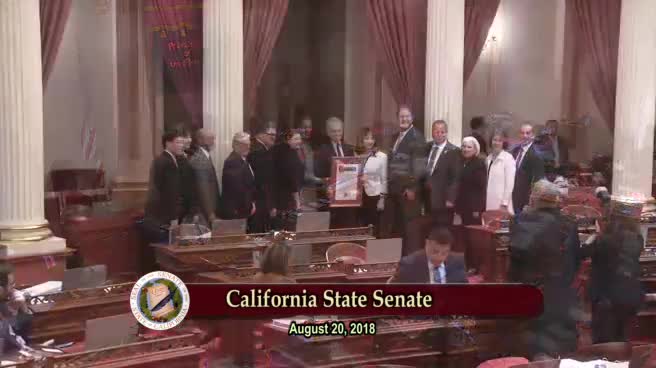 2MIN
Senate Floor
 1MIN
Senate Floor
 14MIN
Senate Standing Committee on Human Services
Bill Author

Bill Co-Author(s):