SB 1043: Department of Veterans Affairs: veterans’ services.
- Session Year: 2017-2018
- House: Senate
- Latest Version Date: 2018-02-08
Existing law requires the Department of Veterans Affairs to disburse funds, appropriated to the department for the purpose of supporting county veterans service officers pursuant to the annual Budget Act, on a pro rata basis, to counties that have established and maintain a county veterans service officer in accordance with the staffing level and workload of each county veterans service officer under a formula based upon performance developed by the department.
This bill would define a workload unit for purposes of these provisions to mean a specific claim activity that is used to allocate subvention funds to counties, which is approved by the department, and performed by county veterans service officers. The bill would appropriate on an annual basis the sum of $7,000,000 from the General Fund to the Department of Veterans Affairs to be available for allocation to counties to fund the activities of county veterans service officers, as specified. The bill would also delete obsolete provisions and would make conforming changes.
This bill would declare that it is to take effect immediately as an urgency statute.
The Legislature finds and declares all of the following:
(a)Since 2001, the ongoing conflicts in the Middle East and Africa have created a new generation of veterans who may be eligible for federal veterans benefits because of their war service and their physical and mental conditions.
(b)Californians make up to 10 percent of the federal military forces used in these conflicts. Furthermore, the California National Guard and California-based reserve units have contributed significantly to these current conflicts.
(c)Many of the more than 400,000 returning California veterans are not aware of the federal and state benefits that are available to them.
(d)Additionally, it is estimated that in California there are hundreds of thousands of veterans, as well as their widows or widowers, who are unaware that they may be eligible for pensions from the federal government based upon their, or their spouses, past military service in World War II, Korea, Vietnam, or the Gulf War.
(e)Californias county veterans service officers are the initial local point of contact for claimants accessing the United States Department of Veterans Affairs.
(f)Californias veteran benefits delivery model is similar to many other states with a close partnership between the California Department of Veterans Affairs and the county veterans services officers who are the boots on the ground and act as the distributed network for outreach, claim initiation, and development.
(h)A California Department of Veterans Affairs report to the Legislature in 2007 titled Strategies to Improve Californias Utilization of Veteran Benefits noted that in comparison to Florida and Texas, states with comparable veterans populations, California could increase federal benefits into the state if it put more trained, professional veteran service representatives in the field. This finding was also supported by independent research.
(i)Performance metrics gathered when county veterans service officer funding was first authorized shows a direct correlation between increased state funding for new hires and increased monetary benefits for veterans.
(j)The cost of maintaining county veterans service officers are shared from county general funds and state reimbursement to the counties. In 1997, in order to track performance, the Legislature enacted, and the Governor signed into law, Senate Bill 608, which required the California Department of Veterans Affairs to annually report the amount of monetary benefits paid to veterans by the federal government that were attributable to the assistance of county veterans service officers. Senate Bill 608 also required the Department of Finance to consider an increase in the annual budget for county veterans service officers of up to $5 million, if approved in the annual budget process. In 2009, the Legislature enacted, and the Governor signed into law, Senate Bill 419, which raised this amount to $11 million, if approved in the annual budget process.
(k)As a result of this annual reporting, by the end of 2016, it was determined that from 1995 to 2016, inclusive, the state had cumulatively budgeted $58.2 million for its share of the cost of the county veterans service officers. As a result of this investment, county veterans service officers were able to assist local veterans in obtaining $5.4 billion in new federal moneys. This is a return of about $93 for every $1 the state allocates to county veterans service officers. Furthermore, the $5.4 billion only reflects the actual monetary benefits qualified for in a given year. The monetary benefits qualified for in prior years are not tracked, yet the veterans and their dependents may continue to receive those benefits for the rest of their lives. Added to this stellar return on the states investment, but not counted in the annual reporting, are the Medi-Cal cost avoidance savings incurred as a result of county veterans service officers qualifying and shifting veterans away from Medi-Cal and into the appropriate federal veterans program.
(l)County veterans service officers accomplished all of this without ever reaching the allowable state budget allocation of $11 million, set in 2009. To date, county veterans service officers have not received more than $5.6 million per year from the state.
(m)It is critical that the county veterans service officers receive a steady stream of funding because there continues to be a large number of underserved veterans and dependents who are not aware of the federal benefits available to them as a result of their military service. Studies from other states show that increases in county veterans service officers result in larger amounts of federal moneys to veterans. These new federal moneys and benefits are paid directly from the United States Department of Veterans Affairs to the qualifying veterans or their dependents and are used in the local economy.
SEC. 2.Section 972.1 of the Military and Veterans Code is repealed.972.1.(a)The sum of five hundred thousand dollars ($500,000) is hereby appropriated from the General Fund to the Department of Veterans Affairs for allocation, during the 198990 fiscal year, for purposes of funding the activities of county veterans service officers pursuant to this section. Funds for allocation in future years shall be as provided in the annual Budget Act.(b)Funds shall be disbursed each fiscal year on a pro rata basis to counties that have established and maintain a county veterans service officer in accordance with the staffing level and workload of each county veterans service officer under a formula based upon performance that shall be developed by the Department of Veterans Affairs for these purposes, and that shall allocate county funds in any fiscal year for county veterans service officers in an amount not less than the amount allocated in the 198889 fiscal year.(c)The department shall annually determine the amount of new or increased monetary benefits paid to eligible veterans by the federal government attributable to the assistance of county veterans service officers. The department shall, on or before October 1 of each year, prepare and transmit its determination for the preceding fiscal year to the Department of Finance and the Legislature. The Department of Finance shall review the departments determination in time to use the information in the annual Budget Act for the budget of the department for the next fiscal year.(d)(1)The Legislature finds and declares that 50 percent of the amount annually budgeted for county veterans service officers is approximately eleven million dollars ($11,000,000). The Legislature further finds and declares that it is an efficient and reasonable use of state funds to increase the annual budget for county veterans service officers in an amount not to exceed eleven million dollars ($11,000,000) if it is justified by the monetary benefits to the states veterans attributable to the effort of these officers.(2)It is the intent of the Legislature, after reviewing the departments determination in subdivision (c), to consider an increase in the annual budget for county veterans service officers in an amount not to exceed five million dollars ($5,000,000), if the monetary benefits to the states veterans attributable to the assistance of county veteran service officers justify that increase in the budget.(e)This section shall become operative January 1, 2016.SEC. 3.Section 972.1 is added to the Military and Veterans Code, to read:972.1.(a)Funds shall be disbursed each fiscal year on a pro rata basis to counties that have established and maintain a county veterans service officer in accordance with the staffing level and workload of each county veterans service officer under a formula based upon performance that shall be developed by the Department of Veterans Affairs for these purposes.
(b)For the purposes of this section, workload unit means a specific claim activity that is used to allocate subvention funds to counties, which is approved by the department, and performed by county veterans service officers.
(c)The department shall annually determine the amount of new or increased monetary benefits paid to eligible veterans by the federal government attributable to the assistance of county veterans service officers. The department shall, on or before October 1 of each year, prepare and transmit its determination for the preceding fiscal year to the Department of Finance and the Legislature. The Department of Finance shall review the departments determination in time to use the information in the annual Budget Act for the budget of the department for the next fiscal year.
(d)The Legislature finds and declares that it is an efficient and reasonable use of state funds to increase the annual budget for county veterans service officers up to a total of eleven million dollars ($11,000,000) if it is justified by the monetary benefits to the states veterans attributable to the effort of these officers.
SEC. 4.Section 972.3 is added to the Military and Veterans Code, to read:972.3.(a)Notwithstanding Section 13340 of the Government Code, the sum of seven million dollars ($7,000,000) is hereby appropriated annually from the General Fund each fiscal year commencing July 1, 2018, to the Department of Veterans Affairs to be available for allocation to counties to fund the activities of county veterans service officers pursuant to subdivision (a) of Section 972.1.
SEC. 5.This act is an urgency statute necessary for the immediate preservation of the public peace, health, or safety within the meaning of Article IV of the California Constitution and shall go into immediate effect. The facts constituting the necessity are:
In order to provide for uninterrupted continuity of services critical to the successful reintegration of Californias veterans, to increase Californias utilization of veteran benefits at the earliest possible time, and to ensure veterans claims for benefits are processed in a timely manner, it is necessary that this act take effect immediately.
|
Date
|
Status
|
|---|---|
| Jun 7, 2018 | Referred to Com. on V.A. |
| May 31, 2018 | In Assembly. Read first time. Held at Desk. |
| May 31, 2018 | Read third time. Urgency clause adopted. Passed. (Ayes 39. Noes 0.) Ordered to the Assembly. |
| May 29, 2018 | Ordered to special consent calendar. |
| May 25, 2018 | From committee: Do pass. (Ayes 7. Noes 0.) (May 25). |
| May 18, 2018 | Set for hearing May 25. |
| May 7, 2018 | May 7 hearing: Placed on APPR. suspense file. |
| Apr 27, 2018 | Set for hearing May 7. |
| Apr 24, 2018 | From committee: Do pass and re-refer to Com. on APPR. (Ayes 7. Noes 0.) (April 24). Re-referred to Com. on APPR. |
| Mar 23, 2018 | Set for hearing April 24. |
| Feb 22, 2018 | Referred to Com. on V.A. |
| Feb 9, 2018 | From printer. May be acted upon on or after March 11. |
| Feb 8, 2018 | Introduced. Read first time. To Com. on RLS. for assignment. To print. |
|
Date
|
Description
|
Location
|
Votes
|
|
|---|---|---|---|---|
| May 31, 2018 | Special Consent SB1043 Newman Urgency Clause | Senate Floor |
Passed |
|
| May 25, 2018 | Do pass | Senate Standing Committee on Appropriations |
Passed |
|
| May 7, 2018 | Placed on suspense file | Senate Standing Committee on Appropriations |
Passed |
|
| Apr 24, 2018 | Do pass, but first be re-referred to the Committee on [Appropriations] | Senate Standing Committee on Veterans Affairs |
Passed |
This list shows positions taken on this bill by organizations on the date displayed, which is linked to the original source.
Positions by individuals are not included.
|
Organization
|
Position
|
Date
|
|---|---|---|
| American GI Forum of California | ** Support | May 26, 2018 |
| American Legion-Department of California | ** Support | May 26, 2018 |
| AMVETS-Department of California | ** Support | May 26, 2018 |
| Blythe, City Of | ** Support | Apr 22, 2018 |
| California Association Of County Veterans Service Officers | ** Support | May 26, 2018 |
| California State Commanders Veterans Council | ** Support | May 26, 2018 |
| City Of Blythe | ** Support | May 26, 2018 |
| City of Indian Wells | ** Support | May 26, 2018 |
| City of Palm Desert | ** Support | May 26, 2018 |
| Contra Costa County | * Support | Apr 24, 2018 |
| County of Riverside | ** Support | May 26, 2018 |
| county of sacramento | ** Support | May 26, 2018 |
| Indian Well, City Of | ** Support | Apr 22, 2018 |
| Military Officers Association of America-California Council of Chapters | ** Support | May 26, 2018 |
| Reeb Government Relations | * Support | Apr 24, 2018 |
| Rural County Representatives of California | ** Support | May 26, 2018 |
| Veterans of Foreign Wars District 17 | * Support | Apr 24, 2018 |
| Vietnam Veterans of America | * Support | Apr 24, 2018 |
| Vietnam Veterans of America-California State Council | ** Support | May 26, 2018 |
Office of Senate Floor Analyses (916) 651-1520 Fax: (916) 327-4478 | SB |
THIRD READING
Bill No: SB 1043
:
SENATE VETERANS AFFAIRS COMMITTEE: 7-0, 4/24/18
AYES: Newman, Nielsen, Dodd, Hueso, Nguyen, Roth, Wilk
SENATE APPROPRIATIONS COMMITTEE: 7-0, 5/25/18
AYES: Lara, Bates, Beall, Bradford, Hill, Nielsen, Wiener
SOURCE: California Association of County Veterans Service Officers
DIGEST:
This bill establishes a continuous appropriation – for each fiscal year, commencing July 1, 2018 – of $7 million from the General Fund to the Department of Veterans Affairs (CalVet) and makes it available for allocation to counties to fund the activities of county veterans service officers (CVSOs). This bill also designates its provisions as an urgency statute.
Existing law:
- Provides for CVSOs, who assist veterans in making claims for veterans benefits (federal/state/local), and who perform other veteran-related services requested by the board of supervisors.
- Provides that the compensation and expenses of the CVSO shall be a county charge, but CalVet, out of state moneys made available, shall pay each county a portion of those costs in an amount determined by CalVet.
- Provides for an annual state appropriation for the CVSOs as determined in each year's Budget Act, currently funded at $5.6 million.
- Requires CalVet to determine and report to the Department of Finance (DOF):
- The number of claims filed to achieve benefits such as pension, disability compensation, and health care on behalf of veterans and their dependents.
- The annualized monetary value of benefits received by veterans and their dependents due to the efforts of CVSOs, broken down by type of benefit.
- A summary of other services provided by CVSOs and participation in outreach activities, such as homeless veteran “Stand Downs,” and job fairs.
- Requires CalVet, on or before October 1 of each year, to prepare and transmit its determination for the preceding fiscal year to DOF and the Legislature.
- Directs DOF to review CalVet's determination in time to use the information in the annual Budget Act with regard to CalVet’s budget for the next fiscal year.
- Provides that state subvention funds shall be disbursed each fiscal year on a pro rata basis to counties that have established and maintain a CVSO in accordance with the staffing level and workload of each CVSO under a formula based upon performance, as specified, developed by CalVet.
- Provides for a current budget allocation cap of $11 million of state funds and the consideration for the annual budget to not exceed $5 million.
This bill:
- Makes findings and declarations pertaining to the size, evolving demographic profile, and emerging needs of California’s veteran population; the responsibilities of CVSOs in meeting those needs; and the recent history of state funding of CVSO operations.
- Defines “workload unit” to mean a specific claim activity used to allocate subvention funds to counties, approved by CalVet and performed by CVSOs.
- Establishes a continuous appropriation – for each fiscal year commencing July 1, 2018 – of $7 million from the General Fund to CalVet to be available for allocation to counties to fund CVSO activities.
- Deletes obsolete provisions, makes conforming changes, and code cleanup.
- Designates its provisions as an urgency statute.
Background
Federal veterans benefits. Veterans generally are eligible for a broad range of programs and services provided by the U.S. Department of Veterans Affairs (USDVA). These federal benefits are legislated in Title 38 of the United States Code and generally fall within the following categories:
- Education & Training
- Vocational Rehab & Employment
- Disability Compensation & Pension
- Health Care
- Home Loan Guaranty
- Life Insurance
- Burial
Filing for veteran benefits involves a complex, highly technical process. The Code of Federal Regulations Title 38, which governs veterans’ claims, contains more than 1,600 pages of fine print, and the accompanying manual also is over 1,600 pages in length. To assist veterans and their families in navigating the claims process, 28 states, including California, use the CVSO model.
County veterans service officers. CVSOs are trained, accredited professionals, who work at the county level of government and partner with CalVet. CVSOs may legally represent veterans in the federal benefits claims process, and also help connect veterans with state- and locally-provided benefits. Veterans service representatives (VSRs) are claims workers who work under the supervision of CVSOs.
Collectively, the CVSOs, through claims initiation and development, and CalVet, through claims development and representation, provide assistance to veterans and their dependents in preparing and submitting claims and in representing claimants before the federal, state and local agencies providing veterans benefits. CVSOs use the CalVet-sponsored VetPro software program to enhance their claims reporting and tracking.
CVSO funding. CVSOs are independent local agencies funded from a combination of local and state resources. The state provides limited local assistance funding from various sources, including the General Fund (subvention), Veterans Service Office Fund, and reimbursements (Medi-Cal cost avoidance). The subvention funding is appropriated to CalVet, which allocates the funds to the CVSOs.
From 2004 until recently, the state contribution to CVSO funding had languished at $2.6 million. The Legislature enacted consecutive “one-time” augmentations of $3 million, which were included, respectively, in the 2013-14 and 2014-15 Budget Bills. The 2015-16 state budget process established the level of $5.6 as a new budgetary baseline.
The single-year augmentations were dedicated to one of three main themes from the CalVet/CVSO best practices manual:
- Contacting veterans.
- Connecting veterans to their benefits and services.
- Continuous communication with veterans.
Recent funding increases boosted the abilities of CVSOs and CalVet to connect with veterans through the expansion of outreach activities, thereby linking more veterans with their community-based system of care and local service providers. The funds allowed for deployment of 32.5 additional professional VSRs and 30 support staff to connect veterans with their compensation and pension benefits available through the USDVA, resulting in an increase of federal dollars drawn down to the state this year and continuing into future years.
Related/Prior Legislation
AB 171 (Quirk-Silva, 2015) would have modified the formula by which CalVet allocates state funds to CVSOs, and adds reporting requirements to help determine how effectively and efficiently state funds are being spent. (Died, Senate Inactive File)
AB 2703 (Irwin, 2014) would have (1) required CalVet, no later than January 1, 2015, to develop an allocation formula based upon performance standards that incentivize CVSO performance; and (2) declared the Legislature’s intent to fund specified CVSO activities and to provide an additional $400,000 for disbursement to the counties to encourage innovation and reward outstanding service by CVSOs. (Held, suspense, Senate Committee on Appropriations)
SB 419 (Committee on Veterans Affairs, Chapter 48, Statutes of 2009) (1) revised findings and declarations in existing law by declaring that 50 percent of the amount annually budgeted for CVSOs is (should be) approximately $11 million (rather than the existing $5 million), and (2) sunset after January 1, 2016.
SB 418 (Committee on Veterans Affairs, Chapter 48, Statutes of 2009) revised existing legislative findings and declarations with regard to the use of General Fund moneys for services provided by veterans service organizations by clarifying that the General Fund monies shall not be allocated until the annual budget for CVSOs reaches $5 million.
SB 608 (Johannessen, Chapter 318, Statutes of 1997) required an annual report from CalVet to Department of Finance (DOF) concerning the monetary benefits obtained for veterans from the federal government by county veteran services officers. The bill required DOF to consider the reported data in constructing the annual budget of funding increases for CVSOs. The bill placed a limit on any increase based on this report of no more than $5 million from the General Fund for this purpose.
FISCAL EFFECT: Appropriation: Yes Fiscal Com.: Yes Local: No
According to the Senate Appropriations Committee, the fiscal impact would be an ongoing $7 million appropriation to fund the activities of CVSOs (GF).
California Association of County Veterans Service Officers (source)
American GI Forum of California
American Legion-Department of California
AMVETS-Department of California
California State Commanders Veterans Council
City of Blythe
City of Indian Wells
City of Palm Desert
County of Riverside
County of Sacramento
Military Officers Association of America-California Council of Chapters
Rural County Representatives of California
Vietnam Veterans of America-California State Council
OPPOSITION: (Verified 5/25/18)
5/26/18 15:11:23
**** END ****
SENATE COMMITTEE ON APPROPRIATIONS
Senator Ricardo Lara, Chair
2017 - 2018 Regular Session
SB 1043 (Newman) - Department of Veterans Affairs: veterans’ services
Version: February 8, 2018 | Policy Vote: V.A. 7 - 0 |
Urgency: Yes | Mandate: No |
Hearing Date: May 7, 2018 | Consultant: Debra Cooper |
This bill meets the criteria for referral to the Suspense File.
Bill Summary:
SB 1043 would continuously appropriate $7 million annually from the General Fund to the Department of Veterans Affairs (CalVet) to be available for allocation to counties to fund the activities of county veterans service officers (CVSOs), as specified.
Fiscal Impact:
Ongoing $7 million appropriation to fund the activities of CVSOs. (GF)
Background:
Veterans are generally eligible for a range of programs and services provided by the U.S. Department of Veterans Affairs. Applying and filing for those benefits can often be a complex and highly technical process. To assist veterans and their families in navigating the claims process, 28 states, including California, use the CVSO model. CVSOs are trained, accredited professionals who work at the county level of government and partner with CalVet. Among other things, CVSOs help connect veterans with federal-, state-, and locally-provided benefits.
While CVSOs are independent local agencies, funding is derived from a combination of local and state resources including the General Fund (subvention), the Veterans Service Office Fund, and reimbursement. The subvention fund is appropriated to CalVet, which allocates the funds to the CVSOs. From 2004 until recently, the state contribution to CVSO funding was $2.6 million. The Legislature enacted consecutive “one-time” augmentations of $3 million, which were included in the 2013-14 and 2014-15 Budget Bills. The 2015-16 state budget process established the level of $5.6 as a new budgetary baseline.
Proposed Law:
This bill would:
- Make various findings and declaration regarding California’s veteran population and CVSOs;
- Define the term “workload unit”;
- Delete obsolete provisions, make conforming changes, and clean up Military and Veterans code relating to disbursing funds to counties that have established and maintain a CVSO, as specified;
- Appropriate $7 million annually from the General Fund each fiscal year commencing July 1, 2018, to CalVet to be available for allocation to counties to fund the activities of CVSOs;
- Designate the provisions of this bill as an urgency statute.
Related Legislation:
AB 171 (Quirk-Silva, 2015) would have modified the formula by which CalVet allocates state funds to CVSOs, and added reporting requirements to help determine how effectively and efficiently state funds are being spent. This bill died on the Senate Inactive File.
AB 2703 (Irwin, 2014) would have required CalVet, by January 1, 2015, to develop an allocation formula based upon performance standards that incentivize CVSO performance, and would have declared the Legislature’s intent to fund specified CVSO activities and to provide an additional $400,000 for disbursement to the counties to encourage innovation and reward outstanding service by CVSOs. This bill was held in the Senate Appropriations Committee.
SB 419 (Committee on Veterans Affairs, Chapter 48, Statutes of 2009) revises findings and declarations in existing law by declaring that 50% of the amount annually budgeted for CVSOs would be approximately $11 million (rather than the previously existing $5 million) and sunsets January 1, 2016.
SB 418 (Committee on Veterans Affairs, Chapter 48, Statutes of 2009) revises existing legislative findings and declarations with regard to the use of General Fund moneys for services provided by veterans service organizations by clarifying that the General Fund monies shall not be allocated until the annual budget for CVSOs reaches $5 million.
-- END --
SENATE COMMITTEE ON VETERANS AFFAIRS
Senator Josh Newman, Chair
2017 - 2018 Regular
Bill No: SB 1043 Hearing Date: 4/24/18
Author: | |||
Version: | 2/8/18 Introduced | ||
Urgency: | Yes | Fiscal: | Yes |
Consultant: | Wade Teasdale | ||
Subject: Department of Veterans Affairs: veterans’ services
DESCRIPTION
Summary:
This bill establishes a continuous appropriation – for each fiscal year commencing July 1, 2018 – of $7 million from the General Fund to the Department of Veterans Affairs (CalVet) and makes it available for allocation to counties to fund the activities of county veterans service officers (CVSOs). The bill also designates its provisions as an urgency statute.
Existing law:
- Provides for CVSOs, who assist veterans in making claims for veterans benefits (federal/state/local), and who perform other veteran-related services requested by the board of supervisors.
- Provides that the compensation and expenses of the CVSO shall be a county charge, but CalVet, out of state moneys made available, shall pay each county a portion of those costs in an amount determined by CalVet.
- Provides for an annual state appropriation for the CVSOs as determined in each year's Budget Act, currently funded at $5.6 million.
- Requires CalVet to determine and report to the Department of Finance (DOF):
- The number of claims filed to achieve benefits such as pension, disability compensation, and health care on behalf of veterans and their dependents.
- The annualized monetary value of benefits received by veterans and their dependents as a result of the efforts of CVSOs, broken down by type of benefit.
- A summary of other services provided by CVSOs and participation in outreach activities, such as homeless veteran “Stand Downs,” and job fairs.
- Requires CalVet, on or before October 1 of each year, to prepare and transmit its determination for the preceding fiscal year to DOF and the Legislature.
- Directs DOF to review CalVet's determination in time to use the information in the annual Budget Act with regard to CalVet’s budget for the next fiscal year.
- Provides that state subvention funds shall be disbursed each fiscal year on a pro rata basis to counties that have established and maintain a CVSO in accordance with the staffing level and workload of each CVSO under a formula based upon performance, as specified, developed by CalVet.
- Provides for a current budget allocation cap of $11 million of state funds and the consideration for the annual budget to not exceed $5 million.
This bill:
- Makes findings and declarations, including:
- The size, evolving demographic profile, and emerging needs of California’s veteran population, and the responsibilities of CVSOs in meeting those needs.
- The recent history of state funding of CVSO operations.
- Defines the term “workload unit” to mean a specific claim activity that is used to allocate subvention funds to counties, which is approved by CalVet, and performed by CVSOs.
- Establishes a continuous appropriation – for each fiscal year commencing July 1, 2018 – of $7 million from the General Fund to CalVet to be available for allocation to counties to fund CVSO activities.
- Deletes obsolete provisions, makes conforming changes, and other code cleanup.
- Designates its provisions as an urgency statute.
BACKGROUND
Federal Veterans Benefits. Veterans generally are eligible for a broad range of programs and services provided by the U.S. Department of Veterans Affairs (USDVA). These federal benefits are legislated in Title 38 of the United States Code and generally fall within the following categories:
- Education & Training
- Vocational Rehab & Employment
- Disability Compensation & Pension
- Health Care
- Home Loan Guaranty
- Life Insurance
- Burial
Filing for VA benefits involves a complex, highly technical process. The Code of Federal Regulations (CFR) Title 38, which governs veterans’ claims, contains more than 1,600 pages of fine print, and the accompanying manual also is over 1,600 pages in length.
To assist veterans and their families in navigating the claims process, 28 states, including California, use the CVSO model.
County veterans service officers. CVSOs are trained, accredited professionals, who work at the county level of government and partner with CalVet. CVSOs may legally represent veterans in the federal benefits claims process, and also help connect veterans with state- and locally-provided benefits. VSRs are claims workers who work under the supervision of CVSOs.
Collectively, the CVSOs, through claims initiation and development, and CalVet, through claims development and representation, provide assistance to veterans and their dependents in preparing and submitting claims and in representing claimants before the federal, state and local agencies providing veterans benefits. CVSOs use the CalVet-sponsored VetPro software program to enhance their claims reporting and tracking.
CVSO funding. While CVSOs are independent local agencies, funding is derived from a combination of local and state resources. The state provides limited local assistance funding from various sources, including the General Fund (subvention), Veterans Service Office Fund, and reimbursements (Medi-Cal cost avoidance). The subvention funding is appropriated to CalVet, which allocates the funds to the CVSOs.
From 2004 until recently, the state contribution to CVSO funding had languished at $2.6 million. The Legislature enacted consecutive “one-time” augmentations of $3 million, which were included, respectively, in the 2013-14 and 2014-15 Budget Bills. The 2015-16 state budget process established the level of $5.6 as a new budgetary baseline.
The single-year augmentations were dedicated to one of three main themes from the CalVet/CVSO best practices manual:
- Contacting veterans.
- Connecting veterans to their benefits and services.
- Continuous communication with veterans.
The recent funding increases boosted the abilities of CVSOs and CalVet to connect veterans in their communities with the expansion of outreach activities, thereby linking more veterans with their community-based system of care and local service providers. The funds allowed for the deployment of 32.5 additional professional veterans service representatives and 30 support staff to connect veterans with their compensation and pension benefits available through the USDVA, resulting in an increase of federal dollars drawn down to the state this year and continuing into future years.
COMMENT
Author Statement: The author and sponsor offer the following information as presented in the Findings and Declarations portion of the bill:
“The cost of maintaining county veterans service officers are shared from county general funds and state reimbursement to the counties. In 1997, in order to track performance, the Legislature enacted, and the Governor signed into law, Senate Bill 608, which required the California Department of Veterans Affairs to annually report the amount of monetary benefits paid to veterans by the federal government that were attributable to the assistance of county veterans service officers. Senate Bill 608 also required the Department of Finance to consider an increase in the annual budget for county veterans service officers of up to $5 million, if approved in the annual budget process. In 2009, the Legislature enacted, and the Governor signed into law, Senate Bill 419, which raised this amount to $11 million, if approved in the annual budget process.
“As a result of this annual reporting, by the end of 2016, it was determined that from 1995 to 2016, inclusive, the state had cumulatively budgeted $58.2 million for its share of the cost of the county veterans service officers. As a result of this investment, county veterans service officers were able to assist local veterans in obtaining $5.4 billion in new federal moneys. This is a return of about $93 for every $1 the state allocates to county veterans service officers. Furthermore, the $5.4 billion only reflects the actual monetary benefits qualified for in a given year. The monetary benefits qualified for in prior years are not tracked, yet the veterans and their dependents may continue to receive those benefits for the rest of their lives. Added to this stellar return on the state’s investment, but not counted in the annual reporting, are the Medi-Cal cost avoidance savings incurred as a result of county veterans service officers qualifying and shifting veterans away from Medi-Cal and into the appropriate federal veterans program.
“County veterans service officers accomplished all of this without ever reaching the allowable state budget allocation of $11 million, set in 2009. To date, county veterans service officers have not received more than $5.6 million per year from the state.
“It is critical that the county veterans service officers receive a steady stream of funding because there continues to be a large number of underserved veterans and dependents who are not aware of the federal benefits available to them as a result of their military service. Studies from other states show that increases in county veterans service officers result in larger amounts of federal moneys to veterans. These new federal moneys and benefits are paid directly from the United States Department of Veterans Affairs to the qualifying veterans or their dependents and are used in the local economy.”
Prior/Related legislation:
AB 171 (Quirk-Silva, 2015) would have modified the formula by which CalVet allocates state funds to county veterans service officers (CVSOs), and adds reporting requirements to help determine how effectively and efficiently state funds are being spent. (Died, Senate Inactive File)
AB 2703 (Irwin, 2014) (1) would have required CalVet, no later than January 1, 2015, to develop an allocation formula based upon performance standards that incentivize CVSO performance; and (2) would have declared the Legislature’s intent to fund specified CVSO activities and to provide an additional $400,000 for disbursement to the counties to encourage innovation and reward outstanding service by CVSOs. (Held, suspense, Senate Committee on Appropriations)
SB 419 (Committee on Veterans Affairs, Chapter 48, Statutes of 2009) (1) revises findings and declarations in existing law by declaring that 50 percent of the amount annually budgeted for CVSOs is (should be) approximately $11 million (rather than the existing $5 million), and (2) sunsets after January 1, 2016.
SB 418 (Committee on Veterans Affairs, Chapter 48, Statutes of 2009) revises existing legislative findings and declarations with regard to the use of General Fund moneys for services provided by veterans service organizations by clarifying that the General Fund monies shall not be allocated until the annual budget for CVSOs reaches $5 million.
SB 608 (Johannessen, Chapter 318, Statutes of 1997) requires an annual report from CalVet to Department of Finance (DOF) concerning the monetary benefits obtained for veterans from the federal government by county veteran services officers. The bill requires DOF to consider the reported data in constructing the annual budget of funding increases for CVSOs. The bill places a limit on any increase based on this report of no more than $5 million from the General Fund for this purpose.
POSITIONS
Sponsor: California Association of County Veterans Service Officers
Support:
American GI Forum of California
American Legion-Department of California
AMVETS-Department of California, California State Commanders Veterans Council,
Blythe, City of
Indian Well, City of
Military Officers Association of America-California Council of Chapters
Riverside, County of
Rural County Representatives of California (RCRC)
Sacramento, County of
Vietnam Veterans of America-California State Council
Oppose: None received
-- END --
Discussed in Hearing
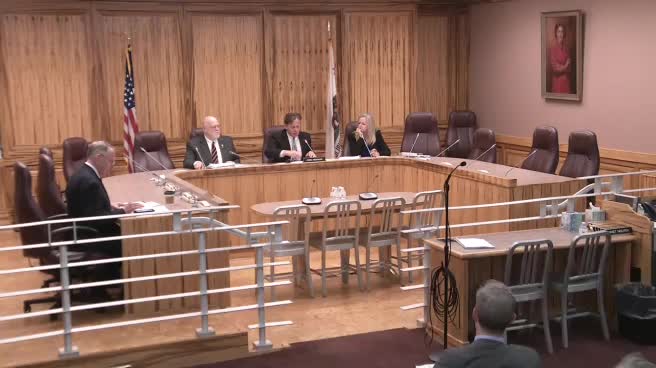 9MIN
Senate Standing Committee on Veterans Affairs
Bill Author

Bill Co-Author(s):