SB 1080: Transportation network companies: driver requirements and identification.
- Session Year: 2017-2018
- House: Senate
- Latest Version Date: 2018-09-18
(1)The Passenger Charter-party Carriers Act, with certain exceptions, prohibits a charter-party carrier of passengers from engaging in transportation services subject to regulation by the Public Utilities Commission without obtaining a specified certificate or permit, as appropriate, from the commission and imposes various other requirements. The act defines a transportation network company as an organization, whether a corporation, partnership, sole proprietor, or other form, operating in California that provides prearranged transportation services for compensation using an online-enabled platform to connect passengers with drivers using their personal vehicles. The act also defines a participating driver or driver as any person who uses a vehicle in connection with a transportation network companys online-enabled application or platform to connect with passengers. Existing law also provides that a violation of the act is a crime.
This bill would require a participating driver to possess either a valid drivers license issued by the State of California or, in the case of a nonresident active duty military member or a nonresident dependent of an active duty military member, a valid drivers license issued by the other state or territory of the United States in which the member or dependent is a resident. The bill would also require a transportation network company to comply with specified provisions of the act, obtain and review the driving history report from the state or territory of the United States that issued the individuals drivers license before permitting a nonresident active duty military member or a nonresident dependent of an active duty military member to act as a participating driver, and to ensure that the driver satisfies all requirements applicable to participating drivers, including, but not limited to, the regulations of the commission and the applicable requirements of the Vehicle Code.
The bill would also require a transportation network company to notify all participating drivers of the applicability of the Vehicle Code and of the codes availability, including, in particular, specified sections of the code relating to the hands-free device laws, the Three Feet for Safety Act, and the rules of the road relating to schoolbuses, to all participating drivers, either on the transportation network companys Internet Web site or on its application.
By creating new crimes, the bill would impose a state-mandated local program.
(2)The California Constitution requires the state to reimburse local agencies and school districts for certain costs mandated by the state. Statutory provisions establish procedures for making that reimbursement.
This bill would provide that no reimbursement is required by this act for a specified reason.
(1)The Passenger Charter-party Carriers Act, with certain exceptions, prohibits a charter-party carrier of passengers from engaging in transportation services subject to regulation by the Public Utilities Commission without obtaining a specified certificate or permit, as appropriate, from the commission and imposes various other requirements. The act defines a transportation network company as an organization, whether a corporation, partnership, sole proprietor, or other form, operating in California that provides prearranged transportation services for compensation using an online-enabled platform to connect passengers with drivers using their personal vehicles. The act also defines a participating driver or driver as any person who uses a vehicle in connection with a transportation network companys online-enabled application or platform to connect with passengers. Existing law also provides that a violation of the act is a crime.
This bill would require a participating driver to possess either a valid drivers license issued by the State of California or, in the case of a nonresident active duty military member or a nonresident dependent of an active duty military member, a valid drivers license issued by the other state or territory of the United States in which the member or dependent is a resident. The bill would also require a transportation network company to comply with specified provisions of the act, obtain and review a the driving history report from the state or territory of the United States that issued the individuals drivers license before permitting a nonresident active duty military member or a nonresident dependent of an active duty military member to act as a participating driver, and to ensure that the driver satisfies all requirements applicable to participating drivers, including, but not limited to, the regulations of the commission and the applicable requirements of the Vehicle Code.
The bill would also require a transportation network company to notify all participating drivers of the applicability of the Vehicle Code and of the codes availability, including, in particular, specified sections of the code relating to the hands-free device laws, the Three Feet for Safety Act, and the rules of the road relating to schoolbuses, to all participating drivers, either on the transportation network companys Internet Web site or on its application.
By creating new crimes, the bill would impose a state-mandated local program.
(2)The California Constitution requires the state to reimburse local agencies and school districts for certain costs mandated by the state. Statutory provisions establish procedures for making that reimbursement.
This bill would provide that no reimbursement is required by this act for a specified reason.
(1)The Passenger Charter-party Carriers Act, with certain exceptions, prohibits a charter-party carrier of passengers from engaging in transportation services subject to regulation by the Public Utilities Commission without obtaining a specified certificate or permit, as appropriate, from the commission and imposes various other requirements. The act defines a transportation network company as an organization, whether a corporation, partnership, sole proprietor, or other form, operating in California that provides prearranged transportation services for compensation using an online-enabled platform to connect passengers with drivers using their personal vehicles. The act also defines a participating driver or driver as any person who uses a vehicle in connection with a transportation network companys online-enabled application or platform to connect with passengers. Existing law also provides that a violation of the act is a crime.
This bill would require a participating driver to possess either a valid drivers license issued by the State of California or, in the case of a nonresident active duty military member or a nonresident dependent of an active duty military member, a valid drivers license issued by the other state or territory of the United States in which the member or dependent is a resident. The bill would also require a transportation network company to comply with specified provisions of the act and to act, obtain and review a driving history report from the state or territory of the United States that issued the individuals drivers license before permitting a nonresident active duty military member or a nonresident dependent of an active duty military member to act as a participating driver, and to ensure that the driver satisfies all requirements applicable to participating drivers, including, but not limited to, the regulations of the commission and the applicable requirements of the Vehicle Code.
The bill would also require a transportation network company to notify all participating drivers of the applicability of the Vehicle Code and of the codes availability, including, in particular, specified sections of the code relating to the hands-free device laws, the Three Feet for Safety Act, and the rules of the road relating to schoolbuses, to all participating drivers, either on the transportation network companys Internet Web site or on its application.
By creating new crimes, the bill would impose a state-mandated local program.
(2)The California Constitution requires the state to reimburse local agencies and school districts for certain costs mandated by the state. Statutory provisions establish procedures for making that reimbursement.
This bill would provide that no reimbursement is required by this act for a specified reason.
(1)The Passenger Charter-party Carriers Act, with certain exceptions, prohibits a charter-party carrier of passengers from engaging in transportation services subject to regulation by the Public Utilities Commission without obtaining a specified certificate or permit, as appropriate, from the commission and imposes various other requirements. The act defines a transportation network company as an organization, whether a corporation, partnership, sole proprietor, or other form, operating in California that provides prearranged transportation services for compensation using an online-enabled platform to connect passengers with drivers using their personal vehicles. The act also defines a participating driver or driver as any person who uses a vehicle in connection with a transportation network companys online-enabled application or platform to connect with passengers. Existing law also provides that a violation of the act is a crime.
This bill would require a transportation network company participating driver to possess either a valid drivers license issued by the State of California or, in the case of a nonresident active duty military member or a nonresident dependent of an active duty military member, a valid drivers license issued by the other state or territory of the United States in which the member or dependent is a resident. The bill would also require a transportation network company to comply with specified provisions of the act and to ensure that the driver satisfies all requirements applicable to participating drivers, including, but not limited to, the regulations of the commission and the applicable requirements of the Vehicle Code Code. By creating a new crime, the bill would impose a state-mandated local program.
The bill would also require a transportation network company to notify all participating drivers of the applicability of the Vehicle Code and of the codes availability, including, in particular, specified sections of the code relating to the hands-free device laws, the Three Feet for Safety Act, and the rules of the road relating to schoolbuses, to all participating drivers, either on the transportation network companys Internet Web site or on its application.
By creating new crimes, the bill would impose a state-mandated local program.
(2)The California Constitution requires the state to reimburse local agencies and school districts for certain costs mandated by the state. Statutory provisions establish procedures for making that reimbursement.
This bill would provide that no reimbursement is required by this act for a specified reason.
(1)The Passenger Charter-party Carriers Act Act, with certain exceptions, prohibits a charter-party carrier of passengers from engaging in transportation services subject to regulation by the Public Utilities Commission without obtaining a specified certificate or permit, as appropriate, from the commission and imposes various other requirements. The act defines a transportation network company as an organization, whether a corporation, partnership, sole proprietor, or other form, operating in California that provides prearranged transportation services for compensation using an online-enabled platform to connect passengers with drivers using their personal vehicles. The act also defines a participating driver or driver as any person who uses a vehicle in connection with a transportation network companys online-enabled application or platform to connect with passengers. Existing law also provides that a violation of the act is a crime.
This bill would require a transportation network company driver to possess either a valid drivers license issued by the State of California or, in the case of a nonresident active duty military member or a nonresident dependent of an active duty military member, a valid drivers license issued by the other state or territory of the United States in which the member or dependent is a resident. The bill would also require a transportation network company to comply with specified provisions of the act and to ensure that the driver satisfies all requirements applicable to participating drivers, including, but not limited to, the regulations of the commission and the applicable requirements of the Vehicle Code By creating a new crime, the bill would impose a state-mandated local program.
(2)The California Constitution requires the state to reimburse local agencies and school districts for certain costs mandated by the state. Statutory provisions establish procedures for making that reimbursement.
This bill would provide that no reimbursement is required by this act for a specified reason.
(1)The Passenger Charter-party Carriers Act defines a transportation network company as an organization, whether a corporation, partnership, sole proprietor, or other form, operating in California that provides prearranged transportation services for compensation using an online-enabled platform to connect passengers with drivers using their personal vehicles. The act also defines a participating driver or driver as any person who uses a vehicle in connection with a transportation network companys online-enabled application or platform to connect with passengers. Existing law also provides that a violation of the act is a crime.
This bill would require a transportation network company driver to possess either a valid drivers license issued by the State of California or, in the case of a nonresident active duty military member or a nonresident dependent of an active duty military member, a valid drivers license issued by the other state or territory of the United States in which the member or dependent is a resident. By creating a new crime, the bill would impose a state-mandated local program.
(2)The California Constitution requires the state to reimburse local agencies and school districts for certain costs mandated by the state. Statutory provisions establish procedures for making that reimbursement.
This bill would provide that no reimbursement is required by this act for a specified reason.
(a)A participating driver is required to possess either of the following:
(1)A valid drivers license issued by the State of California.
(2)(A)In the case of a nonresident active duty military member or a nonresident dependent of an active duty military member, a valid drivers license issued by the other state or territory of the United States in which the member or dependent is a resident.
(B)A transportation network company shall comply with the provisions of Section 5445.2 and obtain and review the driving history report from the state or territory of the United States that issued the individuals drivers license before permitting a nonresident active duty military member or a nonresident dependent of an active duty military member to act as a participating driver and shall ensure that the driver satisfies all requirements applicable to participating drivers, including, but not limited to, the regulations of the commission and the applicable requirements of the Vehicle Code.
(b)A transportation network company shall notify all participating drivers of the applicability of the Vehicle Code and of the codes availability, including, in particular, Sections 23123 and 23123.5 (relating to the hands-free device laws), Section 21760 (the Three Feet for Safety Act), and Section 22454 (relating to rules of the road relating to schoolbuses), of the Vehicle Code, to all participating drivers, either on the transportation network companys Internet Web site or on its application.
SEC. 2.No reimbursement is required by this act pursuant to Section 6 of Article XIIIB of the California Constitution because the only costs that may be incurred by a local agency or school district will be incurred because this act creates a new crime or infraction, eliminates a crime or infraction, or changes the penalty for a crime or infraction, within the meaning of Section 17556 of the Government Code, or changes the definition of a crime within the meaning of Section 6 of Article XIIIB of the California Constitution.
(a)A participating driver is required to possess either of the following:
(1)A valid drivers license issued by the State of California.
(2)(A)In the case of a nonresident active duty military member or a nonresident dependent of an active duty military member, a valid drivers license issued by the other state or territory of the United States in which the member or dependent is a resident.
(B)A transportation network company shall comply with the provisions of Section 5445.2 and obtain and review a the driving history report from the state or territory of the United States that issued the individuals drivers license before permitting a nonresident active duty military member or a nonresident dependent of an active duty military member to act as a participating driver and shall ensure that the driver satisfies all requirements applicable to participating drivers, including, but not limited to, the regulations of the commission and the applicable requirements of the Vehicle Code.
(b)A transportation network company shall notify all participating drivers of the applicability of the Vehicle Code and of the codes availability, including, in particular, Sections 23123 and 23123.5 (relating to the hands-free device laws), Section 21760 (the Three Feet for Safety Act), and Section 22454 (relating to rules of the road relating to schoolbuses), of the Vehicle Code, to all participating drivers, either on the transportation network companys Internet Web site or on its application.
SEC. 2.No reimbursement is required by this act pursuant to Section 6 of Article XIIIB of the California Constitution because the only costs that may be incurred by a local agency or school district will be incurred because this act creates a new crime or infraction, eliminates a crime or infraction, or changes the penalty for a crime or infraction, within the meaning of Section 17556 of the Government Code, or changes the definition of a crime within the meaning of Section 6 of Article XIIIB of the California Constitution.
(a)A participating driver is required to possess either of the following:
(1)A valid drivers license issued by the State of California.
(2)(A)In the case of a nonresident active duty military member or a nonresident dependent of an active duty military member, a valid drivers license issued by the other state or territory of the United States in which the member or dependent is a resident.
(B)A transportation network company shall comply with the provisions of Section 5445.2 and obtain and review a driving history report from the state or territory of the United States that issued the individuals drivers license before permitting a nonresident active duty military member or a nonresident dependent of an active duty military member to act as a participating driver and shall ensure that the driver satisfies all requirements applicable to participating drivers, including, but not limited to, the regulations of the commission and the applicable requirements of the Vehicle Code.
(b)A transportation network company shall notify all participating drivers of the applicability of the Vehicle Code and of the codes availability, including, in particular, Sections 23123 and 23123.5 (relating to the hands-free device laws), Section 21760 (the Three Feet for Safety Act), and Section 22454 (relating to rules of the road relating to schoolbuses), of the Vehicle Code, to all participating drivers, either on the transportation network companys Internet Web site or on its application.
SEC. 2.No reimbursement is required by this act pursuant to Section 6 of Article XIIIB of the California Constitution because the only costs that may be incurred by a local agency or school district will be incurred because this act creates a new crime or infraction, eliminates a crime or infraction, or changes the penalty for a crime or infraction, within the meaning of Section 17556 of the Government Code, or changes the definition of a crime within the meaning of Section 6 of Article XIIIB of the California Constitution.
A transportation network company (a)A participating driver is required to possess either of the following:
(a)(1)A valid drivers license issued by the State of California.
(b)(1)In(2)(A)In the case of a nonresident active duty military member or a nonresident dependent of an active duty military member, a valid drivers license issued by the other state or territory of the United States in which the member or dependent is a resident.
(2)(B)A transportation network company shall comply with the provisions of Section 5445.2 before permitting a nonresident active duty military member or a nonresident dependent of an active duty military member to act as a participating driver and shall ensure that the driver satisfies all requirements applicable to participating drivers, including, but not limited to, the regulations of the commission and the applicable requirements of the Vehicle Code.
(b)A transportation network company shall notify all participating drivers of the applicability of the Vehicle Code and of the codes availability, including, in particular, Sections 23123 and 23123.5 (relating to the hands-free device laws), Section 21760 (the Three Feet for Safety Act), and Section 22454 (relating to rules of the road relating to schoolbuses), of the Vehicle Code, to all participating drivers, either on the transportation network companys Internet Web site or on its application.
SEC. 2.No reimbursement is required by this act pursuant to Section 6 of Article XIIIB of the California Constitution because the only costs that may be incurred by a local agency or school district will be incurred because this act creates a new crime or infraction, eliminates a crime or infraction, or changes the penalty for a crime or infraction, within the meaning of Section 17556 of the Government Code, or changes the definition of a crime within the meaning of Section 6 of Article XIIIB of the California Constitution.
A transportation network company driver is required to possess either of the following:
(a)A valid drivers license issued by the State of California.
(b)(1)In the case of a nonresident active duty military member or a nonresident dependent of an active duty military member, a valid drivers license issued by the other state or territory of the United States in which the member or dependent is a resident.
(2)A transportation network company shall comply with the provisions of Section 5445.2 before permitting a nonresident active duty military member or a nonresident dependent of an active duty military member to act as a participating driver and shall ensure that the driver satisfies all requirements applicable to participating drivers, including, but not limited to, the regulations of the commission and the applicable requirements of the Vehicle Code.
SEC. 2.No reimbursement is required by this act pursuant to Section 6 of Article XIIIB of the California Constitution because the only costs that may be incurred by a local agency or school district will be incurred because this act creates a new crime or infraction, eliminates a crime or infraction, or changes the penalty for a crime or infraction, within the meaning of Section 17556 of the Government Code, or changes the definition of a crime within the meaning of Section 6 of Article XIIIB of the California Constitution.
A transportation network company driver is required to possess either of the following:
(a)A valid drivers license issued by the State of California.
(b)In the case of a nonresident active duty military member or a nonresident dependent of an active duty military member, a valid drivers license issued by the other state or territory of the United States in which the member or dependent is a resident.
SEC. 2.No reimbursement is required by this act pursuant to Section 6 of Article XIIIB of the California Constitution because the only costs that may be incurred by a local agency or school district will be incurred because this act creates a new crime or infraction, eliminates a crime or infraction, or changes the penalty for a crime or infraction, within the meaning of Section 17556 of the Government Code, or changes the definition of a crime within the meaning of Section 6 of Article XIIIB of the California Constitution.
|
Date
|
Status
|
|---|---|
| Sep 18, 2018 | Chaptered by Secretary of State. Chapter 511, Statutes of 2018. |
| Sep 18, 2018 | Approved by the Governor. |
| Aug 24, 2018 | Enrolled and presented to the Governor at 4 p.m. |
| Aug 20, 2018 | Assembly amendments concurred in. (Ayes 38. Noes 0.) Ordered to engrossing and enrolling. |
| Aug 16, 2018 | In Senate. Concurrence in Assembly amendments pending. |
| Aug 16, 2018 | Read third time. Passed. Ordered to the Senate. |
| Aug 9, 2018 | Read second time. Ordered to consent calendar. |
| Aug 8, 2018 | From committee: Do pass. Ordered to consent calendar. (Ayes 17. Noes 0.) (August 8). |
| Jun 26, 2018 | From committee: Do pass and re-refer to Com. on APPR. with recommendation: To consent calendar. (Ayes 13. Noes 0.) (June 25). Re-referred to Com. on APPR. |
| Jun 20, 2018 | From committee with author's amendments. Read second time and amended. Re-referred to Com. on TRANS. |
| Jun 20, 2018 | From committee: Do pass and re-refer to Com. on TRANS. (Ayes 11. Noes 0.) (June 20). Re-referred to Com. on TRANS. |
| Jun 7, 2018 | Referred to Coms. on C. & C. and TRANS. |
| May 31, 2018 | In Assembly. Read first time. Held at Desk. |
| May 30, 2018 | Read third time. Passed. (Ayes 37. Noes 0.) Ordered to the Assembly. |
| May 29, 2018 | Read second time. Ordered to third reading. |
| May 25, 2018 | Read third time and amended. |
| May 23, 2018 | Read second time. Ordered to third reading. |
| May 22, 2018 | From committee: Be ordered to second reading pursuant to Senate Rule 28.8. |
| May 15, 2018 | From committee with author's amendments. Read second time and amended. Re-referred to Com. on APPR. |
| May 14, 2018 | Set for hearing May 22. |
| May 10, 2018 | May 14 set for first hearing canceled at the request of author. |
| May 4, 2018 | Set for hearing May 14. |
| May 2, 2018 | Read second time and amended. Re-referred to Com. on APPR. |
| May 1, 2018 | From committee: Do pass as amended and re-refer to Com. on APPR. (Ayes 10. Noes 0.) (April 25). |
| Apr 17, 2018 | Set for hearing April 25. |
| Apr 10, 2018 | From committee: Do pass and re-refer to Com. on E., U. & C. (Ayes 13. Noes 0.) (April 10). Re-referred to Com. on E., U. & C. |
| Mar 29, 2018 | Set for hearing April 10. |
| Feb 22, 2018 | Referred to Coms. on T. & H. and E., U. & C. |
| Feb 13, 2018 | From printer. May be acted upon on or after March 15. |
| Feb 12, 2018 | Introduced. Read first time. To Com. on RLS. for assignment. To print. |
|
Date
|
Description
|
Location
|
Votes
|
|
|---|---|---|---|---|
| Aug 20, 2018 | Unfinished Business SB1080 Roth Concurrence | Senate Floor |
Passed |
|
| Aug 16, 2018 | SB 1080 Roth Consent Calendar Second Day Regular Session | Assembly Floor |
Passed |
|
| Aug 8, 2018 | Do pass. To Consent Calendar. | Assembly Standing Committee on Appropriations |
Passed |
|
| Jun 25, 2018 | Do pass and be re-referred to the Committee on [Appropriations] with recommendation: To Consent Calendar | Assembly Standing Committee on Transportation |
Passed |
|
| Jun 20, 2018 | Do pass and be re-referred to the Committee on [Transportation] | Assembly Standing Committee on Communications and Conveyance |
Passed |
|
| May 30, 2018 | Senate 3rd Reading SB1080 Newman | Senate Floor |
Passed |
|
| Apr 25, 2018 | Do pass as amended, but first amend, and re-refer to the Committee on [Appropriations] | Senate Standing Committee on Energy, Utilities and Communications |
Passed |
|
| Apr 10, 2018 | Do pass, but first be re-referred to the Committee on [Energy, Utilities and Communications] | Senate Standing Committee on Transportation and Housing |
Passed |
This list shows positions taken on this bill by organizations on the date displayed, which is linked to the original source.
Positions by individuals are not included.
|
Organization
|
Position
|
Date
|
|---|---|---|
| American G.I. Forum of California | ** Support | Aug 18, 2018 |
| American Legion - Department of California | ** Support | Aug 18, 2018 |
| Bay Area Council | ** Support | Aug 18, 2018 |
| CalAsian Chamber of Commerce | ** Support | Aug 18, 2018 |
| California Asian Pacific Chamber Of Commerce | ** Support | Jun 19, 2018 |
| California Association of Veteran Service Agencies | ** Support | Aug 18, 2018 |
| California Association Of Veterans Service Agencies | ** Support | Jun 19, 2018 |
| California Chamber Of Commerce | ** Support | Aug 18, 2018 |
| California District Attorneys Association | ** Support | Jun 25, 2018 |
| California State Commanders Veterans Council | ** Support | Aug 18, 2018 |
| California Veteran Service Agencies | * Support | Apr 10, 2018 |
| Chris Cate, San Diego Councilmember | ** Support | Aug 18, 2018 |
| City Of San Diego | ** Support | Aug 18, 2018 |
| Honorable Chris Cate, San Diego Councilmember | ** Support | Jun 19, 2018 |
| Honorable Fiona Ma, Board Of Equalization, District 3 | ** Support | Jun 25, 2018 |
| Internet Association | ** Support | Aug 18, 2018 |
| Lyft | ** Support | Aug 18, 2018 |
| Military Officers Association of America-California Council of Chapters | ** Support | Jun 19, 2018 |
| National Guard Association Of California | ** Support | Aug 18, 2018 |
| Oakland African American Chamber Of Commerce | ** Support | Aug 18, 2018 |
| Oakland African-American Chamber Of Commerce | ** Support | Jun 25, 2018 |
| Orange County Business Council | ** Support | Jun 19, 2018 |
| San Diego Councilmember, Sixth District, Chris Cate | ** Support | Apr 23, 2018 |
| San Diego Regional Chamber Of Commerce | ** Support | Aug 18, 2018 |
| San Diego, City Of | ** Support | Apr 5, 2018 |
| San Diego, Councilmember Chris Cate | ** Support | May 29, 2018 |
| San Francisco Chamber of Commerce | ** Support | Aug 18, 2018 |
| San Gabriel Valley Economic Partnership | ** Support | Aug 18, 2018 |
| Silicon Valley Leadership Group | ** Support | Aug 18, 2018 |
| Southwest California Legislative Council | ** Support | Aug 18, 2018 |
| Technet | ** Support | Aug 18, 2018 |
| Vietnam Veterans of America - California State Council | ** Support | Aug 18, 2018 |
Office of Senate Floor Analyses (916) 651-1520 Fax: (916) 327-4478 | SB |
UNFINISHED BUSINESS
Bill No: SB 1080
: in Assembly
SENATE TRANS. & HOUSING COMMITTEE: 13-0, 4/10/18
AYES: Beall, Cannella, Allen, Dodd, Gaines, Galgiani, McGuire, Morrell, Roth, Skinner, Vidak, Wieckowski, Wiener
SENATE ENERGY, U. & C. COMMITTEE: 10-0, 4/25/18
AYES: Hueso, Bradford, Cannella, Hertzberg, Hill, McGuire, Skinner, Stern, Vidak, Wiener
NO VOTE RECORDED: Morrell
SENATE APPROPRIATIONS COMMITTEE: Senate Rule 28.8
SENATE FLOOR: 37-0, 5/30/18
AYES: Allen, Anderson, Atkins, Bates, Beall, Berryhill, Bradford, Dodd, Fuller, Gaines, Galgiani, Glazer, Hernandez, Hertzberg, Hill, Hueso, Jackson, Lara, Leyva, McGuire, Mitchell, Monning, Moorlach, Morrell, Newman, Nguyen, Nielsen, Pan, Portantino, Roth, Skinner, Stern, Stone, Vidak, Wieckowski, Wiener, Wilk
NO VOTE RECORDED: Cannella, De León
ASSEMBLY FLOOR: 76-0, 8/16/18 (Consent) - See last page for vote
DIGEST:
This bill allows a non-California resident, active duty military member, or dependent to drive for a transportation network company (TNC) if they possess a valid driver’s license issued by the state in which they reside.
Assembly Amendments
change the author.
Existing law:
- Allows non-residents to drive without a California Driver’s License (CDL) if they have a license from the state in which they reside.
- Requires, under regulations created by the California Public Utilities Commission (CPUC), that TNC drivers must possess a CDL.
This bill allows a non-California resident, active duty military member or dependent to drive for a TNC if they possess a valid driver’s license issued by the state in which they reside.
Comments
- Author’s Statement. With its high cost of living and daunting job market, California is a notoriously expensive and challenging place for the military and veteran families who relocate here, either as a result of a transfer while on active duty, or upon their return to California after completion of a service obligation. The earning opportunities offered by the “sharing economy” could make a meaningful difference in softening the impact of relocation for active duty military and veteran families. Under current state laws governing rideshare companies, service members and their families relocating to California are forced to go through the inconvenience and expense of replacing their valid, out-of-state license for a California one before being legally eligible to start making money as a rideshare driver. SB 1080 will eliminate the costly delays and onerous fees in applying for a California driver’s license for non-resident active duty military and their families who wish to earn additional income as rideshare drivers by allowing for the use of a valid out-of-state driver’s license.
- Side Hustle. TNCs, such as Lyft and Uber, are the face of the gig economy, which is known for its part-time independent workers who are paid by the piece. The gig economy has very low entry barriers and flexible work hours, making it easy to participate. Working as a TNC driver won’t make you rich -- a recent analysis found that TNC drivers typically earn between $8.55 - $10/hr. after expenses[1] — but anyone with a clean driving record can do it, you work when you want and your commitment is minimal.
- Precedent. According to Lyft, 45 states allow active military members and their dependents to drive for TNCs with their out-of-state licenses. There are many drivers on California roads that do not have CDLs, such as visitors from other states.
- Not Precedent. Drivers for the competitors to TNCs, such as taxis and limousines, are all required to have a CDL. Drivers transporting passengers for compensation are typically held to a higher safety standard than non-commercial drivers.
- It’s Scarier Out There. Public roads are becoming increasingly unsafe. The California Office of Traffic Safety reports that traffic fatalities increased 7% from 2015 to 2016. A recent report by the Governors Highway Safety Association (GHSA) estimates that nearly 6,000 pedestrians were killed in motor vehicle crashes in 2017[2], up from a record low of 4,109 in 2009. The GHSA suggests that one of the factors for the increase is increasing smart phone use.
- Knowing the Rules. Driving laws are the purview of the states. While there are a great many similarities, there can be notable variations. California’s recently enacted laws limiting talking/texting while driving and regulating interactions with bicycles and school busses would be unfamiliar to many out-of-state drivers. This bill requires that TNCs specifically notify potential drivers of these rules.
FISCAL EFFECT: Appropriation: Fiscal Com.: Local:
According to the Assembly Appropriations Committee, if any costs were to apply, they would be negligible state costs.
Lyft (source)
American G.I. Forum of California
American Legion – Department of California
Bay Area Council
CalAsian Chamber of Commerce
California Association of Veteran Service Agencies
California Chamber of Commerce
California State Commanders Veterans Council
Chris Cate, San Diego Councilmember
City of San Diego
Engine
Internet Association
Military Officers Association of American – California Council of Chapters
National Guard Association of California
Oakland African American Chamber of Commerce
San Diego Regional Chamber of Commerce
San Francisco Chamber of Commerce
San Gabriel Valley Economic Partnership
Silicon Valley Leadership Group
Southwest California Legislative Council
Technet
Vietnam Veterans of America – California State Council
OPPOSITION: (Verified 8/16/18)
None received
ASSEMBLY FLOOR: 76-0, 8/16/18
AYES: Acosta, Aguiar-Curry, Travis Allen, Arambula, Baker, Berman, Bigelow, Bonta, Brough, Burke, Caballero, Calderon, Carrillo, Cervantes, Chau, Chávez, Chen, Chiu, Choi, Chu, Cooley, Cooper, Cunningham, Dahle, Daly, Eggman, Flora, Fong, Frazier, Friedman, Gabriel, Gallagher, Eduardo Garcia, Gipson, Gloria, Gonzalez Fletcher, Gray, Grayson, Harper, Holden, Irwin, Jones-Sawyer, Kalra, Kamlager-Dove, Kiley, Lackey, Levine, Limón, Maienschein, Mathis, Mayes, Medina, Melendez, Mullin, Muratsuchi, Nazarian, Obernolte, O'Donnell, Patterson, Quirk, Quirk-Silva, Reyes, Rivas, Rodriguez, Rubio, Salas, Santiago, Steinorth, Mark Stone, Thurmond, Ting, Voepel, Waldron, Weber, Wood, Rendon
NO VOTE RECORDED: Bloom, Cristina Garcia, Low, McCarty
8/18/18 12:40:17
Date of Hearing: August 8, 2018
ASSEMBLY COMMITTEE ON APPROPRIATIONS
Lorena Gonzalez Fletcher, Chair
SBPCA Bill Id:SB 1080
Author:(Roth) – As Amended Ver:June 20, 2018
Policy Committee: | Communications and Conveyance | Vote: | 11 - 0 |
Transportation | 13 - 0 | ||
|
|
Urgency: No State Mandated Local Program: Yes Reimbursable: No
SUMMARY:
This bill requires a driver for transportation network company (TNC), such as Lyft and Sidecar, to have either a valid California driver’s license or, in the case of a nonresident active-duty military member or a nonresident dependent of such a military member, to have a valid driver’s license issued by the other state or territory of the United States in which the person is a resident. The bill also requires a TNC to review the driving history report from the state or territory that issued the person’s driver’s license and to inform its drivers of the applicability of the Vehicle Code and the code’s availability.
FISCAL EFFECT:
Negligible state costs, if any.
COMMENTS:
Background and Purpose. TNCs connect passengers with drivers through use of internet-based platforms to provide taxi-like ride services. TNC service differs from traditional taxi service in several ways. Significantly, TNCs, unlike taxis, do not own a fleet of vehicles used by their drivers. Rather, TNC arrange with operators of private vehicles to provide ride services. Also significant and differing from traditional taxi service, the services offered by TNCs are not regulated by local governments; rather, their services are regulated by the California Public Utilities Commission (CPUC). Among CPUC’s regulations is that a TNC driver possess a valid California driver’s license.
The author intends this bill to enable non-resident active-duty military and their families who wish to earn additional income as rideshare drivers by eliminating, for those individuals, delays and fees associated with applying for a California driver’s license.
Analysis Prepared by: Jay Dickenson / APPR. / (916) 319-2081
Date of Hearing: June 25, 2018
ASSEMBLY COMMITTEE ON TRANSPORTATION
Jim Frazier, Chair
SBPCA Bill Id:SB 1080
Author:(Roth) – As Amended Ver:June 20, 2018
SENATE VOTE: 37-0
SUBJECT: Transportation network companies: driver requirements and identification.
SUMMARY: Requires a Transportation Network Company (TNC) driver to possess either a California driver’s license, or, for non-resident active duty military members, or non-resident dependents of an active duty military member, an out-of-state driver’s license. Specifically, this bill:
- Requires a TNC participating driver to possess either of the following:
- A valid driver’s license issued by the State of California; or,
- In the case of a non-resident active duty military member or a non-resident dependent of an active duty military member, a valid driver’s license issued by the other state or territory of the United States in which the member or dependent is a resident.
- Requires a TNC to comply with the existing requirement to conduct, or have a third party conduct, a local and national criminal background check; and to obtain and review a driving history report from the state or territory of the United States that issued the individual’s driver’s license before permitting a non-resident active duty military member or a non-resident dependent of an active duty military member to drive for the TNC.
- Requires TNCs to notify all participating drivers of the applicability and availability of California vehicle and driving laws including, in particular, the hands-free device laws, “The Three Feet for Safety Act”, and rules of the road related to shoolbus laws, on its Internet Web site or on its application (app).
EXISTING LAW:
1) Establishes the California Public Utilities Commission (CPUC) to regulate privately owned public utilities and common carriers in California. Specifies that the Legislature may prescribe that additional classes of private corporations or other persons are public utilities.
2) Establishes the “Passenger Charter-Party Carriers Act,” which directs the CPUC to regulate, require license or permit to operate, require insurance and workers compensation, take appropriate enforcement action and other provisions related to transportation charter-party carriers (CPCs).
3) Establishes TNCs as a subset of CPCs and defines TNC as an organization, including, but not limited to, a corporation, limited liability company, partnership, sole proprietor, or any other entity, operating in California that provides prearranged transportation services for compensation using an online-enabled application or platform to connect passengers with drivers using a personal vehicle.
4) Requires a TNC to conduct, or have a third-party conduct, a local and national criminal background check on every participating driver and prohibits a TNC from contracting, employing or retaining a participating driver if the driver is registered as a sex offender or has been convicted of certain criminal offenses.
5) Requires a TNC to participate in the Department of Motor Vehicles (DMV) Employee Pull Notice (EPN) system to regularly check the driving records of a participating driver.
6) Establishes the EPN system at DMV to provide an employer of a driver who drives a specified type of vehicle with a report showing the driver’s current public record and any subsequent convictions, driver license revocations, failures to appear, accidents, driver license suspensions, or any other actions taken against the driving privilege.
7) Authorizes non-residents to drive in California without a California driver’s license if they have a valid license from the state in which they reside.
8) Prohibits a driver from using, holding and operating a wireless telephone or an electronic wireless communications device unless the telephone or device is specifically designed and configured to allow voice-operated and hands-fee operation and it used in that manner while driving; and provides limited exemptions to this prohibition.
9) Requires a driver of a motor vehicle when overtaking or passing a bicycle to provide at least three feet between the motor vehicle and the bicycle or its operator, with some exceptions.
10) Requires a driver, upon meeting or overtaking, any schoolbus that is stopped for the purpose of loading or unloading any schoolchildren and displays a flashing red light signal and stop signal arm, to bring the vehicle to a stop before passing the schoolbus and prohibits the driver from proceeding past the schoolbus until the flashing red light signal and stop signal arm ceases operation.
FISCAL EFFECT: Unknown
COMMENTS: TNCs provide pre-arranged transportation services for compensation using smart phone apps or a computer to connect drivers with passengers. Typically, a passenger hails a ride through their mobile device to a pre-determined location and a participating driver using their personal vehicle provides the ride. Payment is processed through the mobile device and the TNC receives a commission on each trip. Drivers have the flexibility to work on a full-time or part-time basis by simple “logging on and off” the mobile app. TNC drivers typically work part-time.
Recognizing the need to regulate TNCs and their similarities with taxis and CPCs, CPUC commenced a rulemaking to determine the proper oversight and corresponding rules that are needed to regulate this industry. Ultimately, in 2013, CPUC determined that TNCs are a type of CPC, similar to tour buses and limousines, as they provide pre-arranged transportation services. Taxis, on the other hand, need not be pre-arranged and can be hailed from the curb. Taxis are regulated at a local level by cities and counties.
CPUC, in its 2013 decision, also adopted several rules related to TNC licensing, including the requirement that all TNC drivers have a valid California issued driver’s license. This requirement is typical of any licensed driver in this state and is required for CPC drivers. The decision also contained other requirements, including; require TNCs to obtain a permit to operate from the CPUC, require TNCs to conduct background checks on drivers, check DMV drivers records prior to driving and quarterly thereafter, establish a driver training program, implement a zero-tolerance policy on drugs and alcohol, conduct vehicle inspections, and obtain authorization from airports when conducting operations on or into airport property. Both the criminal and DMV checks were intended to ensure safety and that drivers met the criteria that CPUC required. The CPUC required DMV checks to ensure that drivers had no more than three points within the preceding three years, no “major violations” (reckless driving, hit and run, or driving with a suspended license conviction) within the preceding three years, and no driving under the influence conviction within the past seven years.
California’s DMV’s EPN system provides employers and regulatory agencies with a means of promoting driver safety through the ongoing review of driver records. An employer enrolled in the program is assigned a requester code. The requester code is added to an employee's driver license (DL) record. When an employee's DL is updated to record an action/activity, a check is made electronically to determine if a pull notice is on file. If the action/activity is one that is specified to be reported under the program, a driver record is generated and mailed to that employer. Most commercial drivers are enrolled in the EPN system. The EPN system provides California driver records and has limited out-of-state driver information. There are approximately 16 states that have some type of employer notification system similar to California’s. Recognizing the benefits the EPN provides, the state enacted AB 1422 (Cooper), Chapter 791, Statutes of 2015, which required TNCs to enroll all TNC drivers in the EPN system.
Per CPUC regulation and subsequent legislation, AB 1289 (Cooper), Chapter 740, Statutes of 2016, TNCs are required to perform a national criminal background check, including the national sex offender database, on participating drivers. Existing law prohibits a TNC from contracting with, employing, or retaining a driver if he or she is currently registered on the United States Department of Justice National Sex Offender Public Web site, has been convicted of specified felonies, or, within the previous seven years, has been convicted of a misdemeanor assault or battery, a domestic violence offense, driving under the influence of alcohol or drugs, or a specified felony violation.
While it is paramount to ensure participating drivers have clean driving and criminal records, it is equally as important that drivers have an understanding of the rules of the road. Every year thousands are killed in traffic fatalities nationwide. Alarmingly, a recent report by the Insurance Institute for Highway Safety found that pedestrian deaths have jumped 46% since reaching their lowest point in 2009. A total of 5,987 pedestrians were killed in crashes in 2016, accounting for 16% of all crash fatalities. Nationwide, local jurisdictions have adopted “Vision Zero” initiatives that aim to prevent the loss of even one life or serious injury on our roads.
California is home to the largest population of active military members and allows these visitors over 18 with a valid driver’s license from their home state or country, to drive in this state without getting a California driver’s license as long as their home state license remains valid. If an individual becomes a California resident, they must get a California driver license within 10 days. According to DMV’s website, “residency is established by voting in a California election, paying resident tuition, filing for a homeowner's property tax exemption, or any other privilege or benefit not ordinarily extended to nonresidents”. According to the author, this bill will eliminate the costly delays and onerous fees in applying for a California driver’s license for non-resident active duty military and their families who wish to earn additional income as rideshare drivers by allowing for the use of a valid out-of-state driver’s license. This bill allows non-California resident active duty military members or their dependents with an out-of-state license to drive for a TNC, requires TNCs to pull out -of- state driving records for these drivers and requires TNCs to notify all drivers of applicable vehicle laws.
Double Referral: This bill passed out of the Assembly Communications and Conveyance Committee on April 20, 2018, with an 11-0 vote.
Previous Legislation: AB 1289 (Cooper), Chapter 740, Statutes of 2016, requires TNCs to conduct a criminal background check for each participating driver.
AB 2777 (Nazarian) of 2016, would have allowed TNC to ask the Department of Justice (DOJ) to provide state summary criminal history information for its employees and contractors.
AB 2777 failed passage on the Assembly Floor.
AB 1422 (Cooper), Chapter 791, Statutes of 2015, requires TNCs to participate in the DMV EPN system to regularly check the driving records of a participating driver.
AB 24 (Nazarian) of 2015, would have required CPC and TNCs to participate in the DMVs EPN System, and submit all drivers to a Department of Justice criminal background check. AB 24 was held on the Assembly Committee on Appropriations suspense file.
AB 612 (Nazarian), 2014 would have required CPCs to participate in the DMV EPN system, and submit all drivers to a DOJ criminal background check. AB 612 was held in the Assembly Committee on Transportation.
REGISTERED SUPPORT / OPPOSITION:
Support
American G.I. Forum of California
Bay Area Council
CalAsian Chamber of Commerce
California District Attorneys Association
City of San Diego
Engine
Honorable Chris Cake, Councilmember, Sixth District, City of San Diego
Honorable Fiona Ma, Board of Equalization, District 3
Internet Association
Lyft
Oakland African-American Chamber of Commerce
San Diego Regional Chamber of Commerce
San Francisco Chamber of Commerce
Silicon Valley Leadership Group
Southwest California Legislative Council
TechNet
Opposition
None on file
Analysis Prepared by: Cynthia Alvarez / TRANS. / (916) 319-2093
Date of Hearing: June 20, 2018
ASSEMBLY COMMITTEE ON COMMUNICATIONS AND CONVEYANCE
Miguel Santiago, Chair
SBPCA Bill Id:SB 1080
Author:(Newman) – As Amended Ver:May 25, 2018
SENATE VOTE: 37-0
SUBJECT: Transportation network companies: driver requirements and identification
SUMMARY: Requires a Transportation Network Company (TNC) driver to possess either a California driver’s license, or, for nonresident active duty military members, or nonresident dependents of an active duty military member, an out-of-state driver’s license. Specifically, this bill:
- Requires a TNC participating driver to possess either of the following:
- A valid driver’s license issued by the State of California; or,
- In the case of a nonresident active duty military member or a nonresident dependent of an active duty military member, a valid driver’s license issued by the other state or territory of the United States in which the member or dependent is a resident.
- Requires a TNC to comply with the specified provisions and obtain and review a driving history report from the state or territory of the United States that issued the individual’s driver’s license before permitting a nonresident active duty military member or a nonresident dependent of an active duty military member to act as a participating driver and shall ensure that the driver satisfies all requirements applicable to participating drivers, including, but not limited to, the regulations of the California Public Utilities Commission (CPUC) and specified applicable requirements.
- Requires a TNC to notify all participating drivers of specified requirements either on the TNC’s Internet Web site or on its application.
EXISTING LAW:
- Establishes the “Passenger Charter-Party Carriers Act,” which authorizes the CPUC to supervise and regulate every charter-party carrier of passengers (CPC) in the State and may do all things, necessary and convenient in the exercise of such power and jurisdiction, including issuing permits or certificates, investigating complaints against carriers, and cancel, revoke, or suspend permits and certificates for specific violations. (Public Utilities Code (PUC) Section Code 5381 et seq.)
- Defines a “Transportation network company” to mean an organization, including, but not limited to, a corporation, limited liability company, partnership, sole proprietor, or any other entity, operating in California that provides prearranged transportation services for compensation using an online-enabled application or platform to connect passengers with drivers using a personal vehicle. (PUC Section 5431)
- Defines a “Participating driver” or “driver” to mean any person who uses a vehicle in connection with a TNC’s online-enabled application or platform to connect with passengers. (PUC Section 541)
- Specifies that a TNC is eligible to participate and shall participate in the Employee Pull-Notice system (EPN), as specified, to regularly check the driving records of a participating driver regardless of whether the participating driver is an employee or an independent contractor of the TNC. (PUC Section 5444)
- Requires a TNC and any participating driver to maintain TNC insurance, as specified, including primary liability insurance coverage of $100,000 per person and $300,000 per occurrence for death and personal injury, and $50,000 for property damage from the moment a driver logs on to the application until the driver accepts a ride request; $1 million for personal injury and property damage from the moment a driver logs on to the application until the driver accepts a ride request; and $1 million for personal injury and property damage from the moment a ride request is accepted until the passenger exits the vehicle. (PUC Section 5433)
- Requires a TNC to conduct, or have a third party conduct, a local and national criminal background check for each participating driver, as specified. (PUC Section 5445.2 (a)(1))
- Authorizes the following persons to operate a motor vehicle in California without obtaining a California driver’s license, as specified:
- A nonresident over the age of 18 years having in his or her immediate possession a valid driver’s license issued by a foreign jurisdiction of which he or she is a resident, as specified;
- A nonresident, 21 years of age or older, if transporting hazardous material, as specified, in a commercial vehicle, having in his or her immediate possession, a valid license with the appropriate endorsement issued by another state or other jurisdiction that is recognized by the Department of Motor Vehicles (DMV), or a Canadian driver’s license and a copy of his or her current training certificate to transport hazardous material that complies with all federal laws and regulations with respect to hazardous materials, both of which shall be in his or her immediate possession; or,
- A nonresident having in his or her immediate possession a valid driver’s license, issued by the Diplomatic Motor Vehicle Office of the Office of Foreign Missions of the United States Department of State, for the type of motor vehicle or combination of vehicles that the person is operating. (Vehicle Code (VEH) Section 12502)
- Establishes the EPN at the DMV that provides the employer of a driver who drives specified type of vehicles with a report showing the driver’s current public record as recorded by the DMV, and any subsequent convictions, failures to appear, accidents, driver’s license suspensions, driver’s license revocations, or any other actions taken against the driving privilege or certificate, added to the driver’s record while the employer’s notification request remains valid and uncanceled. (VEH Section 1808.1)
FISCAL EFFECT: Unknown. This bill is keyed fiscal by the Legislative Counsel.
COMMENTS:
- Authors Statement: According to the author, “With its high cost of living and daunting job market, California is a notoriously expensive and challenging place for the military and veteran families who relocate here, either as a result of a transfer while on active duty, or upon their return to California after completion of a service obligation. During those first months following relocation, where the costs of getting settled tend to hit hardest […] the pressure to find sources of income to meet these shortfalls can be intense. In such a scenario, the earning opportunities offered by the ‘shared economy’ could make a meaningful difference in softening the impact of relocation for active duty military and their families […] SB 1080 will eliminate the costly delays and onerous fees in apply for a California driver’s license for non-resident active duty military and their families who wish to earn additional income as rideshare drivers by allowing for the use of a valid out-of-state driver’s license.”
- Background: The CPUC has regulatory and safety oversight authority over CPCs, such as limousines, airport shuttles, tour buses, sightseeing services, and charter, party buses. CPCs are charter vehicles that offer transportation services on a prearranged basis for the exclusive use of an individual or group. Charges are based on either, or a combination of, mileage or time of use. TNCs are companies that offer prearrange transportation services through an app on their smartphone or computer. Although TNCs do not neatly fall into the conventional definition of a CPC, the CPUC believes that TNCs fall under its existing jurisdiction over certain transportation services because they are providing passengers’ transportation for compensation.
- CPUC Regulations of TNCs: Since the inception of TNCs, the Legislature and the CPUC has sought to balance the need to adopt rules and regulations that promote the public safety aspects of the TNC industry, while not obstructing the public’s demand for such new mode of transportation. In 2013, the CPUC adopted phase one of its decision (D. 13-09-045) related to TNCs. In the decision, the CPUC adopted requirements on TNC licensing, including requiring all TNC drivers to have a valid California driver’s license; requiring TNCs to obtain permits to operate; conduct background checks on drivers; check driver record prior to driving and quarterly thereafter; establish driver training programs; implement a zero-tolerance policy on drugs and alcohol; conduct vehicle inspections, among others.
According to the author, military service members and their families who are relocated here face many economic challenges. This bill would allow an active duty military member, or its dependent, to drive for a TNC with an out-of-state driver’s license. Current law allows certain drivers to drive on California roads without a California driver’s license, including nonresidents with an out-of-state driver’s license. According to the author, providing such opportunities to military families would help ease the stress of the transition process by providing more economic opportunities for their families. As previously mentioned, TNCs are required to establish driver training programs to ensure all divers are safely operating the vehicle prior to becoming a TNC drivers. Such training programs could include provisions on California driving laws, to better incorporate nonresidential active military members, or its dependents, as TNC drivers.
- DMV Employer Pull-Notice System: The DMV EPN was created as a means for employers and regulatory agencies to ensure driver safety through the ongoing review of driver records. The system is designed to generate a report of a driver’s record and electronically send the report to the employer under specific circumstances, such as upon enrollment of a driver, annually from the date of employment, or whenever a driver commits certain moving violations. Most commercial drivers, including drivers transporting property, passengers, and household goods are required to participate in the EPN. In 2015, the Legislature passed AB 1422 (Cooper) Chapter 791, Statutes of 2015, requiring TNCs to participate in the DMV EPN and to regularly check the driving records of all participating drivers.
This bill requires a TNC to obtain and review a driving history report from the state, or United States territory, before permitting a nonresident active duty military member, or its dependent, to act as a participating driver, and ensure that the specified driver satisfies all applicable requirements to become a TNC driver.
- Arguments in Support: According to Lyft, the sponsor of the bill, “SB 1080 would streamline driver licensing requirements for active duty military and their dependents so they can begin earning extra income as Lyft drivers without unnecessary fees and delays. Current law requires members of the military who are stationed here temporarily to replace their valid, home state driver’s license with a California license in order to work as a rideshare driver. This creates an unnecessary barrier for military families who relocated 10 times more often than civilian families – on average every two or three years, with no control over where they go next […] The ridesharing industry has benefited tens of thousands of people across the state by offering a convenient way to earn additional income on a flexible schedule. Most Lyft drivers use Lyft to supplement other work, with 93% driving fewer than 20 hours per week. Military drivers should have easy access to these earning opportunities without unnecessary obstacles.”
- Previous Legislation: AB 1289 (Cooper) of 2016 requires a TNC to conduct a criminal background check for each participating driver. Status: Chaptered by the Secretary of State, Chapter 740, Statutes of 2016.
AB 1422 (Cooper) of 2015 requires TNCs to participate in the DMV EPN to regularly check the driving records of a participating driver. Status: Chaptered by the Secretary of State, Chapter 791, Statutes of 2015.
AB 2293 (Bonilla) of 2014 establishes rules for insurance coverage for TNCs to ensure personal and financial safety of consumers. Status: Chaptered by the Secretary of State, Chapter 389, Statutes of 2014.
AB 60 (Alejo) of 2013 requires the DMV to issue driver’s licenses to persons who are ineligible for a Social Security Number if additional documentation is provided, as specified. Status: Chaptered by the Secretary of State, Chapter 524, Statutes of 2013.
- Double-referral: This bill is double referred, and if passed by this Committee, will be referred to the Assembly Committee on Transportation.
REGISTERED SUPPORT / OPPOSITION:
Support
Lyft (sponsor)
American G.I. Forum of California
American Legion - Department of California
Bay Area Council
California Asian Pacific Chamber of Commerce
California Association of Veterans Service Agencies
California Chamber of Commerce
California District Attorneys Association
California State Commanders Veterans Council
City of San Diego
Engine
Honorable Chris Cate, San Diego Councilmember
Honorable Fiona Ma, State Board of Equalization Member
Internet Association
Military Officers Association of America-California Council of Chapters
National Guard Association of California
Oakland African-American Chamber of Commerce
Orange County Business Council
San Diego Regional Chamber of Commerce
San Francisco Chamber of Commerce
Silicon Valley Leadership Group
Southwest California Legislative Council
TechNet
Vietnam Veterans of America – California State Council
Opposition
None on file.
Analysis Prepared by: Edmond Cheung / C. & C. / (916) 319-2637
Office of Senate Floor Analyses (916) 651-1520 Fax: (916) 327-4478 | SB |
THIRD READING
Bill No: SB 1080
:
SENATE TRANS. & HOUSING COMMITTEE: 13-0, 4/10/18
AYES: Beall, Cannella, Allen, Dodd, Gaines, Galgiani, McGuire, Morrell, Roth, Skinner, Vidak, Wieckowski, Wiener
SENATE ENERGY, U. & C. COMMITTEE: 10-0, 4/25/18
AYES: Hueso, Bradford, Cannella, Hertzberg, Hill, McGuire, Skinner, Stern, Vidak, Wiener
NO VOTE RECORDED: Morrell
SENATE APPROPRIATIONS COMMITTEE: Senate Rule 28.8
DIGEST:
This bill allows a non-California resident, active duty military member or dependent to drive for a transportation network company (TNC) if they possess a valid driver’s license issued by the state in which they reside.
Senate Floor Amendments of 5/25/18 clarify that the TNC is required to pull the driving history from the state that issued the individual’s driver’s license.
Existing law:
- Allows non-residents to drive without a California Driver’s License (CDL) if they have a license from the state in which they reside.
- Requires, under regulations created by the California Public Utilities Commission (CPUC), that TNC drivers must possess a CDL.
This bill allows a non-California resident, active duty military member or dependent to drive for a TNC if they possess a valid driver’s license issued by the state in which they reside.
Comments
- Author’s Statement. With its high cost of living and daunting job market, California is a notoriously expensive and challenging place for the military and veteran families who relocate here, either as a result of a transfer while on active duty, or upon their return to California after completion of a service obligation. The earning opportunities offered by the “sharing economy” could make a meaningful difference in softening the impact of relocation for active duty military and veteran families. Under current state laws governing rideshare companies, service members and their families relocating to California are forced to go through the inconvenience and expense of replacing their valid, out-of-state license for a California one before being legally eligible to start making money as a rideshare driver. SB 1080 will eliminate the costly delays and onerous fees in applying for a California driver’s license for non-resident active duty military and their families who wish to earn additional income as rideshare drivers by allowing for the use of a valid out-of-state driver’s license.
- Side Hustle. TNCs, such as Lyft and Uber, are the face of the gig economy, which is known for its part-time independent workers who are paid by the piece. The gig economy has very low entry barriers and flexible work hours, making it easy to participate. Working as a TNC driver won’t make you rich -- a recent analysis found that TNC drivers typically earn between $8.55 - $10/hr. after expenses[1] -- but anyone with a clean driving record can do it, you work when you want and your commitment is minimal.
- Precedent. According to Lyft, 45 states allow active military members and their dependents to drive for TNCs with their out-of-state licenses. There are many drivers on California roads that do not have CDLs, such as visitors from other states.
- Not Precedent. Drivers for the competitors to TNCs, such as taxis and limousines, are all required to have a CDL. Drivers transporting passengers for compensation are typically held to a higher safety standard than non-commercial drivers.
- It’s Scarier Out There. Public roads are becoming increasingly unsafe. The California Office of Traffic Safety reports that traffic fatalities increased 7% from 2015 to 2016. A recent report by the Governors Highway Safety Association (GHSA) estimates that nearly 6,000 pedestrians were killed in motor vehicle crashes in 2017[2], up from a record low of 4,109 in 2009. The GHSA suggests that one of the factors for the increase is increasing smart phone use.
- Knowing the Rules. Driving laws are the purview of the states. While there are a great many similarities, there can be notable variations. California’s recently enacted laws limiting talking/texting while driving and regulating interactions with bicycles and school busses would be unfamiliar to many out-of-state drivers. This bill requires that TNCs specifically notify potential drivers of these rules.
FISCAL EFFECT: Appropriation: Fiscal Com.: Local:
American G.I. Forum of California
American Legion-Department of California
Bay Area Council
California Asian Pacific Chamber of Commerce
California Association of Veteran Service Agencies
California Chamber of Commerce
California State Commanders Veterans Council
City of San Diego
Engine
Internet Association
Lyft
Military Officers Association of America-California Council of Chapters
National Guard Association of California
Oakland African American Chamber of Commerce
San Diego, Councilmember Chris Cate
San Diego Regional Chamber of Commerce
San Francisco Chamber of Commerce
San Gabriel Valley Economic Partnership
Silicon Valley Leadership Group
Southwest California Legislative Council
TechNet
Vietnam Veterans of America-California State Council
OPPOSITION: (Verified 5/22/18)
None received
5/29/18 17:31:28
**** END ****
Office of Senate Floor Analyses (916) 651-1520 Fax: (916) 327-4478 | SB |
THIRD READING
Bill No: SB 1080
:
SENATE TRANS. & HOUSING COMMITTEE: 13-0, 4/10/18
AYES: Beall, Cannella, Allen, Dodd, Gaines, Galgiani, McGuire, Morrell, Roth, Skinner, Vidak, Wieckowski, Wiener
SENATE ENERGY, U. & C. COMMITTEE: 10-0, 4/25/18
AYES: Hueso, Bradford, Cannella, Hertzberg, Hill, McGuire, Skinner, Stern, Vidak, Wiener
NO VOTE RECORDED: Morrell
SENATE APPROPRIATIONS COMMITTEE: Senate Rule 28.8
DIGEST:
This bill allows a non-California resident, active duty military member or dependent to drive for a transportation network company (TNC) if they possess a valid driver’s license issued by the state in which they reside.
Existing law:
- Allows non-residents to drive without a California Driver’s License (CDL) if they have a license from the state in which they reside.
- Requires, under regulations created by the California Public Utilities Commission (CPUC), that TNC drivers must possess a CDL.
This bill allows a non-California resident, active duty military member or dependent to drive for a TNC if they possess a valid driver’s license issued by the state in which they reside.
Comments
- Author’s Statement. With its high cost of living and daunting job market, California is a notoriously expensive and challenging place for the military and veteran families who relocate here, either as a result of a transfer while on active duty, or upon their return to California after completion of a service obligation. The earning opportunities offered by the “sharing economy” could make a meaningful difference in softening the impact of relocation for active duty military and veteran families. Under current state laws governing rideshare companies, service members and their families relocating to California are forced to go through the inconvenience and expense of replacing their valid, out-of-state license for a California one before being legally eligible to start making money as a rideshare driver. SB 1080 will eliminate the costly delays and onerous fees in applying for a California driver’s license for non-resident active duty military and their families who wish to earn additional income as rideshare drivers by allowing for the use of a valid out-of-state driver’s license.
- Side Hustle. TNCs, such as Lyft and Uber, are the face of the gig economy, which is known for its part-time independent workers who are paid by the piece. The gig economy has very low entry barriers and flexible work hours, making it easy to participate. Working as a TNC driver won’t make you rich -- a recent analysis found that TNC drivers typically earn between $8.55 - $10/hr. after expenses[1] -- but anyone with a clean driving record can do it, you work when you want and your commitment is minimal.
- Precedent. According to Lyft, 45 states allow active military members and their dependents to drive for TNCs with their out-of-state licenses. There are many drivers on California roads that do not have CDLs, such as visitors from other states.
- Not Precedent. Drivers for the competitors to TNCs, such as taxis and limousines, are all required to have a CDL. Drivers transporting passengers for compensation are typically held to a higher safety standard than non-commercial drivers.
- It’s Scarier Out There. Public roads are becoming increasingly unsafe. The California Office of Traffic Safety reports that traffic fatalities increased 7% from 2015 to 2016. A recent report by the Governors Highway Safety Association (GHSA) estimates that nearly 6,000 pedestrians were killed in motor vehicle crashes in 2017[2], up from a record low of 4,109 in 2009. The GHSA suggests that one of the factors for the increase is increasing smart phone use.
- Knowing the Rules. Driving laws are the purview of the states. While there are a great many similarities, there can be notable variations. California’s recently enacted laws limiting talking/texting while driving and regulating interactions with bicycles and school busses would be unfamiliar to many out-of-state drivers. This bill requires that TNCs specifically notify potential drivers of these rules.
FISCAL EFFECT: Appropriation: Fiscal Com.: Local:
American G.I. Forum of California
American Legion-Department of California
Bay Area Council
California Asian Pacific Chamber of Commerce
California Association of Veteran Service Agencies
California Chamber of Commerce
California State Commanders Veterans Council
City of San Diego
Engine
Internet Association
Lyft
Military Officers Association of America-California Council of Chapters
National Guard Association of California
Oakland African American Chamber of Commerce
San Diego, Councilmember Chris Cate
San Diego Regional Chamber of Commerce
San Francisco Chamber of Commerce
San Gabriel Valley Economic Partnership
Silicon Valley Leadership Group
Southwest California Legislative Council
TechNet
Vietnam Veterans of America-California State Council
OPPOSITION: (Verified 5/22/18)
None received
5/24/18 11:10:12
**** END ****
SENATE COMMITTEE ON ENERGY, UTILITIES AND COMMUNICATIONS
Senator Ben Hueso, Chair
2017 - 2018 Regular
Bill No: SB 1080 Hearing Date: 4/25/2018
Author: | Newman | ||
Version: | 2/12/2018 As Introduced | ||
Urgency: | No | Fiscal: | Yes |
Consultant: | Nidia Bautista | ||
SUBJECT: Transportation network companies: driver identification
DIGEST: This bill would require by statute a driver for a ride-hailing company to have a California driver’s license, except this bill would authorize a nonresident active duty military member or a nonresident dependent of an active duty military member with an out-of-state driver’s license to drive for a ride-hailing company in California.
ANALYSIS:
Existing law:
- Establishes the California Public Utilities Commission (CPUC) to regulate privately owned public utilities and common carriers in California. Specifies that the Legislature may prescribe that additional classes of private corporations or other persons are public utilities. (Article XII of the California Constitution; Public Utilities Code §301 et seq.)
- Establishes the “Passenger Charter-Party Carriers Act,” which directs the CPUC to regulate, require license or permit to operate, require insurance and workers compensation, takes appropriate enforcement action and other provisions related to transportation charter-party carriers (CPCs). (Public Utilities Code §5351 et seq.)
- Establishes transportation network company (TNC) as a subset of CPCs and defines TNC as an organization, including, but not limited to, a corporation, limited liability company, partnership, sole proprietor, or any other entity, operating in California that provides prearranged transportation services for compensation using an online-enabled application or platform to connect passengers with drivers using a personal vehicle. (Public Utilities Code §5431)
- Requires TNCs to participate in the Department of Motor Vehicles (DMV) Employee Pull Notice (EPN) system to regularly check the driving records of a participating driver. (Public Utilities Code §5444)
- Allows non-residents to drive without a California Driver’s License (CDL) if they have a license from the state in which they reside. (Vehicle Code §2502)
- Establishes the EPN system at the DMV that provides the employer of a driver who drives a specified type of vehicle with a report showing the driver’s current public record and any subsequent convictions, driver license revocations, failures to appear, accidents, driver license suspensions, or any other actions taken against the driving privilege. (Vehicle Code §1808.1)
This bill:
- Requires a driver for a ride-hailing company to have a valid CDL.
- Authorize a nonresident active duty military member or a nonresident dependent of an active duty military member with an out-of-state driver’s license to drive for a ride-hailing company in California.
Background
Enter TNCs. Commonly known as ride-hailing companies, TNCs prearrange transportation services via an online application on a smartphone or computer. Patrons request a ride to a predetermined location, and the application connects them with a TNC driver who usually drives their own personal vehicle. Payment is processed through the application so that no physical financial transaction occurs between the patron and driver and the TNC takes a commission on each trip.
CPUC regulation of TNCs. In 2013, the CPUC adopted the first phase of a two-phase decision related to TNCs (D, 13-09-045). In the decision, the CPUC defined TNCs as a new category of CPCs subject to the CPUC oversight and regulations. The CPUC adopted several rules related to TNC licensing, including a requirement that all TNC drivers have valid California issued driver’s license. The decision also included other requirements: require TNCs to obtain a permit to operate from the CPUC, require TNCs to conduct background check on drivers, check driver records prior to driving and quarterly, thereafter, establish a driver training program, implement a zero-tolerance policy on drugs and alcohol, conduct vehicle inspections, and obtain authorization from airports before conducting operations on or into airports property. The DMV check criteria was required to provide that a driver have no more than three points within the preceding three years, no “major violations” (reckless driving, hit and run, or driving with a suspended license conviction) within the preceding three years, and no driving under the influence conviction within the past seven years). Subsequently, the Legislature passed AB 2293 (Bonilla, Chapter 389, Statutes of 2014), which codified the CPUC’s definition of TNCs and established liability and insurance requirements for TNCs and their participating drivers.
DMV Employee Pull-Notice (EPN). The DMV EPN was created as a means for employers and regulatory agencies to ensure driver safety through the ongoing review of driver records. The system is designed to generate a report of a driver’s record and electronically send the report to the employer under specific circumstances such as upon enrollment of a driver, annually from the date of employment, or whenever a driver commits certain moving violations. Most commercial drivers, including drivers transporting property, passengers, and household goods are required to participate in the EPN. Specific types of CPC drivers are required to enroll in the EPN so that employers may receive notice of an adverse entry or action on a driver’s driving record. With the passage of AB 1422 (Cooper, Chapter 791, Statutes of 2015), TNCs must enroll their drivers in the EPN system. The EPN provides data regarding California records, and with limitations data that may be reported by another state. However, in practice, there is limited information reported by other states into the EPN system as most states, including California, do not proactively report most driving record information to other states.
National repository - Problem Driver Pointer System (PDPS). The PDPS is a system that allows jurisdictions and other organizations to search the National Driver Register (NDR) data. The NDR is a repository of information on problem drivers provided by all 51 U.S. jurisdictions, including the California DMV. Based on information received as a result of an NDR search, PDPS "points" the inquiring jurisdiction to the State of Record (SOR), where an individual's driver status and history information is stored. Based on the information received from the SOR, the issuing state decides if the applicant is eligible to receive a new or renewed driver license. PDPS is developed and maintained by the NDR organization, which is part of the U.S. Department of Transportation, National Highway Transportation Safety Administration (NHTSA). However, there are limitations as to the types of infractions and violations that may be reported into the system.
Need to address gaps in information. Recognizing the limitations for California entities to collect a full driver’s record for an out-of-state driver, there is a need to ensure the driver’s record is reviewed by the TNC. Therefore, amendments are needed to require that the TNC pull the driver’s record from the state that has issued their out-of-state license. In cases where states also employee an EPN system, it may be wise to require the TNC to use the other state’s EPN, in addition to enrolling in the California EPN, to ensure the TNC has a more complete picture of the driver’s record. Based on communications with TNC representatives, it seems that this may already be common practice for TNCs, therefore a requirement in statute should be well-received and not result in any additional burden to potential drivers or the TNC. Therefore, the author and committee may wish to amend this bill to require the CPUC to require TNCs to pull records for out-of-state armed forces personnel or dependents in order to drive for a TNC in California without a California driver’s license.
Prior/Related Legislation
AB 1422 (Cooper, Chapter 791, Statutes of 2015) required TNCs to participate in the DMV EPN system to regularly check the driving records of a participating driver.
AB 24 (Nazarian, 2015) would have required CPC and TNCs to participate in the DMVs EPN System, and submit all drivers to a Department of Justice criminal background check. The bill was held in Assembly Committee on Appropriations.
AB 612 (Nazarian, 2014) required CPCs to participate in the DMV EPN system, and submit all drivers to a Department of Justice criminal background check. The bill was held in the Assembly Committee on Transportation.
FISCAL EFFECT: Appropriation: No Fiscal Com.: Yes Local: Yes
SUPPORT:
Lyft (Source)
American G.I. Forum of California
American Legion-Department of California
Bay Area Council
CalAsian Chamber of Commerce
California Association of Veterans Service Agencies
California Chamber of Commerce
California District Attorneys Association
California State Commanders Veterans Council
City of San Diego
Engine
Military Officers Association of America-California Council of Chapters
National Guard Association of California
Oakland African-American Chamber of Commerce
Orange County Business Council
San Diego Councilmember, Sixth District, Chris Cate
San Diego Regional Chamber of Commerce
San Francisco Chamber of Commerce
San Gabriel Valley Economic Partnership
State Board of Equalization Member, Second District, Fiona Ma
Silicon Valley Leadership Group
TechNet
The Internet Association
Vietnam Veterans of America-California State Council
OPPOSITION:
None received
ARGUMENTS IN SUPPORT: According to the author:
“SB 1080 will eliminates the costly delays and onerous fees in applying for a California driver’s license for non-resident active duty military and their families who wish to earn additional income as rideshare drivers by allowing for the use of a valid out-of-state driver’s license. This bill will ensure that our active duty military and their families who temporarily reside in our state have the same access to employment opportunities as every other California resident. By providing this opportunity to military families, we will help ease the stress of the transition process by providing more economic opportunities for their families.”
-- END --
SENATE COMMITTEE ON TRANSPORTATION AND HOUSING
Senator Jim Beall, Chair
2017 - 2018 Regular
Bill No: Hearing Date: April 10, 2018
Author: | Newman | ||
Version: | 2/12/2018 | ||
Urgency: | No | Fiscal: | Yes |
Consultant: | Randy Chinn | ||
SUBJECT:
DIGEST: This bill allows a non-California resident, active duty military member or dependent to drive for a transportation network company (TNC) if they possess a valid driver’s license issued by the state in which they reside.
ANALYSIS:
Existing law:
- Allows non-residents to drive without a California Driver’s License (CDL) if they have a license from the state in which they reside.
- Under regulations created by the California Public Utilities Commission (CPUC), TNC drivers must possess a CDL.
This bill allows a non-California resident, active duty military member or dependent to drive for a TNC if they possess a valid driver’s license issued by the state in which they reside.
COMMENTS
- Author’s Statement. With its high cost of living and daunting job market, California is a notoriously expensive and challenging place for the military and veteran families who relocate here, either as a result of a transfer while on active duty, or upon their return to California after completion of a service obligation. The earning opportunities offered by the “sharing economy” could make a meaningful difference in softening the impact of relocation for active duty military and veteran families. Under current state laws governing rideshare companies, service members and their families relocating to California are forced to go through the inconvenience and expense of replacing their valid, out-of-state license for a California one before being legally eligible to start making money as a rideshare driver. SB 1080 will eliminate the costly delays and onerous fees in applying for a California driver’s license for non-resident active duty military and their families who wish to earn additional income as rideshare drivers by allowing for the use of a valid out-of-state driver’s license.
- Side Hustle. TNCs, such as Lyft and Uber, are the face of the gig economy, which is known for its part-time independent workers who are paid by the piece. The gig economy has very low entry barriers and flexible work hours, making it easy to participate. Working as a TNC driver won’t make you rich -- a recent analysis found that TNC drivers typically earn between $8.55 - $10/hr. after expenses[1] -- but anyone with a clean driving record can do it, you work when you want and your commitment is minimal.
- Precedent. According to Lyft, 45 states allow active military members and their dependents to drive for TNCs with their out-of-state licenses. There are many drivers on California roads that do not have CDLs, such as visitors from other states.
- Not Precedent. Drivers for the competitors to TNCs, such as taxis and limousines, are all required to have a CDL. Drivers transporting passengers for compensation are typically held to a higher safety standard than non-commercial drivers.
- It’s Scarier Out There. Public roads are becoming increasingly unsafe. The California Office of Traffic Safety reports that traffic fatalities increased 7% from 2015 to 2016. A recent report by the Governors Highway Safety Association (GHSA) estimates that nearly 6,000 pedestrians were killed in motor vehicle crashes in 2017[2], up from a record low of 4,109 in 2009. The GHSA suggests that one of the factors for the increase is increasing smart phone use.
- Knowing the Rules. Driving laws are the purview of the states. While there are a great many similarities, there can be notable variations. California’s recently enacted laws limiting talking/texting while driving and regulating interactions with bicycles and school busses would be unfamiliar to many out-of-state drivers.
- Some Short Cuts. Short of obtaining a CDL, there are a couple of mechanisms for helping ensure that drivers are knowledgeable about California’s driving rules:
- Under AB 60 drivers can be licensed to drive without establishing residency.
- For TNC drivers, the CPUC requires the TNCs to establish a driver training program “to ensure that all drivers are safely operating the vehicle prior to the driver being able to offer service.”[3]
- As part of that training program the TNCs could include, for non-resident active military drivers and their dependents, a section on California driving laws, including limitations on the use of personal electronics and the rules governing interactions with bicycles and school busses, and a certification by the TNCs that those drivers understand California driving laws.
FISCAL EFFECT: Appropriation: No Fiscal Com.: Yes Local: Yes
POSITIONS: (Communicated to the committee before noon on Wednesday,
April 4, 2018.)
SUPPORT:
American G.I. Forum of California
American Legion-Department of California
Bay Area Council
California Asian Pacific Chamber of Commerce
California Association of Veteran Service Agencies
California Chamber of Commerce
California State Commanders Veterans Council
Engine
Internet Association
Lyft
Military Officers Association of America-California Council of Chapters
National Guard Association of California
Oakland African American Chamber of Commerce
San Diego, City of
San Diego, Councilmember Chris Cate
San Diego Regional Chamber of Commerce
San Francisco Chamber of Commerce
Silicon Valley Leadership Group
TechNet
Vietnam Veterans of America-California State Council
OPPOSITION:
None received.
-- END --
Discussed in Hearing
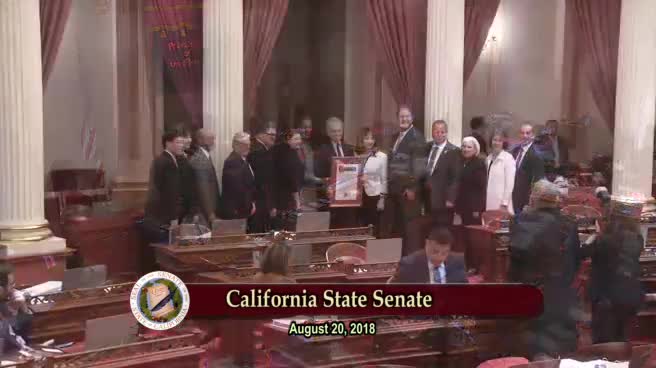 51SEC
Senate Floor
 2MIN
Senate Floor
 7MIN
Senate Standing Committee on Energy, Utilities and Communications
 14MIN
Senate Standing Committee on Transportation and Housing


Bill Co-Author(s):