SB 1104: Pupil safety: human trafficking prevention resources.
- Session Year: 2017-2018
- House: Senate
- Latest Version Date: 2018-09-27
Existing law authorizes a school district to provide sexual abuse and sex trafficking prevention education, as defined, encourages school districts to collaborate with outside consultants, including law enforcement, with expertise in sexual abuse and sex trafficking prevention education in order to create school safety plans to address those threats, and authorizes in-service training of school district personnel relating to understanding sexual abuse and sex trafficking to be conducted periodically, as provided.
This bill would require the governing board of a school district and the governing body of a charter school to work with their schools that maintain any of grades 6 to 12, inclusive, to identify the most appropriate methods of informing parents and guardians of pupils in those grades of human trafficking prevention resources and to implement the identified methods in those schools by January 1, 2020. By imposing additional requirements on school districts and charter schools, the bill would impose a state-mandated local program.
The California Constitution requires the state to reimburse local agencies and school districts for certain costs mandated by the state. Statutory provisions establish procedures for making that reimbursement.
This bill would provide that, if the Commission on State Mandates determines that the bill contains costs mandated by the state, reimbursement for those costs shall be made pursuant to the statutory provisions noted above.
Existing law authorizes a school district to provide sexual abuse and sex trafficking prevention education, as defined, encourages school districts to collaborate with outside consultants, including law enforcement, with expertise in sexual abuse and sex trafficking prevention education in order to create school safety plans to address those threats, and authorizes in-service training of school district personnel relating to understanding sexual abuse and sex trafficking to be conducted periodically, as provided.
This bill would require the governing board of a school district and the governing body of a charter school to work with the their schools of the school district that maintain any of grades 6 to 12, inclusive, but no grade lower than grade 6, to identify the most appropriate methods of informing parents and guardians of pupils in those grades of human trafficking prevention resources and to implement the identified methods in those schools by January 1, 2020. By imposing additional requirements on school districts, districts and charter schools, the bill would impose a state-mandated local program.
The California Constitution requires the state to reimburse local agencies and school districts for certain costs mandated by the state. Statutory provisions establish procedures for making that reimbursement.
This bill would provide that, if the Commission on State Mandates determines that the bill contains costs mandated by the state, reimbursement for those costs shall be made pursuant to the statutory provisions noted above.
Existing law authorizes a school district to provide sexual abuse and sex trafficking prevention education, as defined, encourages school districts to collaborate with outside consultants, including law enforcement, with expertise in sexual abuse and sex trafficking prevention education in order to create school safety plans to address those threats, and authorizes in-service training of school district personnel relating to understanding sexual abuse and sex trafficking to be conducted periodically, as provided.
This bill would require a school district to work with the schools of the school district that maintain any of grades 6 to 12, inclusive, but no grade lower than grade 6, to identify the most appropriate methods of informing parents and guardians of pupils of human trafficking prevention resources and to implement the identified methods in those schools on or before December 31, 2019. by January 1, 2020. By imposing additional requirements on school districts, the bill would impose a state-mandated local program.
The California Constitution requires the state to reimburse local agencies and school districts for certain costs mandated by the state. Statutory provisions establish procedures for making that reimbursement.
This bill would provide that, if the Commission on State Mandates determines that the bill contains costs mandated by the state, reimbursement for those costs shall be made pursuant to the statutory provisions noted above.
Existing law authorizes a school district to provide sexual abuse and sex trafficking prevention education, as defined, encourages school districts to collaborate with outside consultants, including law enforcement, with expertise in sexual abuse and sex trafficking prevention education in order to create school safety plans to address those threats, and authorizes in-service training of school district personnel relating to understanding sexual abuse and sex trafficking to be conducted periodically, as provided.
This bill would require a school district to work with the schools of the school district that maintain any of grades 6 to 12, inclusive, but no grade lower than grade 6, to identify the most appropriate methods of informing parents and guardians of pupils of human trafficking prevention resources and to implement the identified methods in those schools by an unspecified date. on or before December 31, 2019. By imposing additional requirements on school districts, the bill would impose a state-mandated local program.
The California Constitution requires the state to reimburse local agencies and school districts for certain costs mandated by the state. Statutory provisions establish procedures for making that reimbursement.
This bill would provide that, if the Commission on State Mandates determines that the bill contains costs mandated by the state, reimbursement for those costs shall be made pursuant to the statutory provisions noted above.
Existing law authorizes a school district to provide sexual abuse and sex trafficking prevention education, as defined, encourages school districts to collaborate with outside consultants, including law enforcement, with expertise in sexual abuse and sex trafficking prevention education in order to create school safety plans to address those threats, and authorizes in-service training of school district personnel relating to understanding sexual abuse and sex trafficking to be conducted periodically, as provided.
This bill would require a school district to work with the schools of the school district that maintain any of grades 6 to 12, inclusive, but no grade lower than grade 6, to identify the most appropriate methods of informing parents and guardians of pupils of human trafficking prevention resources and to implement the identified methods in those schools by an unspecified date. By imposing additional requirements on school districts, the bill would impose a state-mandated local program.
The California Constitution requires the state to reimburse local agencies and school districts for certain costs mandated by the state. Statutory provisions establish procedures for making that reimbursement.
This bill would provide that, if the Commission on State Mandates determines that the bill contains costs mandated by the state, reimbursement for those costs shall be made pursuant to the statutory provisions noted above.
Existing law authorizes a school district to provide sexual abuse and sex trafficking prevention education, as defined, encourages school districts to collaborate with outside consultants, including law enforcement, with expertise in sexual abuse and sex trafficking prevention education in order to create school safety plans to address those threats, and authorizes in-service training to be conducted periodically, as provided.
This bill would require a school district to work with the schools of the school district to identify the most appropriate methods of informing parents and guardians of human trafficking prevention resources and to implement the identified methods by an unspecified date. By imposing additional requirements on school districts, the bill would impose a state-mandated local program.
The California Constitution requires the state to reimburse local agencies and school districts for certain costs mandated by the state. Statutory provisions establish procedures for making that reimbursement.
This bill would provide that, if the Commission on State Mandates determines that the bill contains costs mandated by the state, reimbursement for those costs shall be made pursuant to the statutory provisions noted above.
(a)The governing board of a school district and the governing body of a charter school shall work with their schools that maintain any of grades 6 to 12, inclusive, to identify the most appropriate methods of informing parents and guardians of pupils in those grades of human trafficking prevention resources.
(b)The governing board of a school district and the governing body of a charter school shall implement the methods identified pursuant to subdivision (a) in their schools that maintain any of grades 6 to 12, inclusive, by January 1, 2020.
SEC. 2.If the Commission on State Mandates determines that this act contains costs mandated by the state, reimbursement to local agencies and school districts for those costs shall be made pursuant to Part 7 (commencing with Section 17500) of Division 4 of Title 2 of the Government Code.
A (a)The governing board of a school district and the governing body of a charter school shall work with the their schools of the school district that maintain any of grades 6 to 12, inclusive, but no grade lower than grade 6, to identify the most appropriate methods of informing parents and guardians of pupils in those grades of human trafficking prevention resources and shall implement the identified methods in those schools by January 1, 2020. resources.
(b)The governing board of a school district and the governing body of a charter school shall implement the methods identified pursuant to subdivision (a) in their schools that maintain any of grades 6 to 12, inclusive, by January 1, 2020.
SEC. 2.If the Commission on State Mandates determines that this act contains costs mandated by the state, reimbursement to local agencies and school districts for those costs shall be made pursuant to Part 7 (commencing with Section 17500) of Division 4 of Title 2 of the Government Code.
REVISIONS: HeadingLine 2.A school district shall work with the schools of the school district that maintain any of grades 6 to 12, inclusive, but no grade lower than grade 6, to identify the most appropriate methods of informing parents and guardians of pupils of human trafficking prevention resources and shall implement the identified methods in those schools on or before December 31, 2019. by January 1, 2020.
SEC. 2.If the Commission on State Mandates determines that this act contains costs mandated by the state, reimbursement to local agencies and school districts for those costs shall be made pursuant to Part 7 (commencing with Section 17500) of Division 4 of Title 2 of the Government Code.
A school district shall work with the schools of the school district that maintain any of grades 6 to 12, inclusive, but no grade lower than grade 6, to identify the most appropriate methods of informing parents and guardians of pupils of human trafficking prevention resources and shall implement the identified methods in those schools by ____. on or before December 31, 2019.
SEC. 2.If the Commission on State Mandates determines that this act contains costs mandated by the state, reimbursement to local agencies and school districts for those costs shall be made pursuant to Part 7 (commencing with Section 17500) of Division 4 of Title 2 of the Government Code.
A school district shall work with the schools of the school district that maintain any of grades 6 to 12, inclusive, but no grade lower than grade 6, to identify the most appropriate methods of informing parents and guardians of pupils of human trafficking prevention resources and shall implement the identified methods in those schools by ____.
SEC. 2.If the Commission on State Mandates determines that this act contains costs mandated by the state, reimbursement to local agencies and school districts for those costs shall be made pursuant to Part 7 (commencing with Section 17500) of Division 4 of Title 2 of the Government Code.
A school district shall work with the schools of the school district to identify the most appropriate methods of informing parents and guardians of human trafficking prevention resources and shall implement the identified methods by ____.
SEC. 2.If the Commission on State Mandates determines that this act contains costs mandated by the state, reimbursement to local agencies and school districts for those costs shall be made pursuant to Part 7 (commencing with Section 17500) of Division 4 of Title 2 of the Government Code.
|
Date
|
Status
|
|---|---|
| Sep 27, 2018 | Chaptered by Secretary of State. Chapter 848, Statutes of 2018. |
| Sep 27, 2018 | Approved by the Governor. |
| Sep 5, 2018 | Enrolled and presented to the Governor at 3:30 p.m. |
| Aug 28, 2018 | Assembly amendments concurred in. (Ayes 39. Noes 0.) Ordered to engrossing and enrolling. |
| Aug 28, 2018 | In Senate. Concurrence in Assembly amendments pending. |
| Aug 27, 2018 | Read third time. Passed. Ordered to the Senate. |
| Aug 20, 2018 | Read second time. Ordered to third reading. |
| Aug 16, 2018 | From committee: Do pass. (Ayes 17. Noes 0.) (August 16). |
| Aug 8, 2018 | August 8 set for first hearing. Placed on suspense file. |
| Jun 28, 2018 | From committee: Do pass and re-refer to Com. on APPR. with recommendation: To consent calendar. (Ayes 7. Noes 0.) (June 27). Re-referred to Com. on APPR. |
| Jun 19, 2018 | From committee with author's amendments. Read second time and amended. Re-referred to Com. on ED. |
| Jun 7, 2018 | Referred to Com. on ED. |
| May 31, 2018 | In Assembly. Read first time. Held at Desk. |
| May 31, 2018 | Read third time. Passed. (Ayes 39. Noes 0.) Ordered to the Assembly. |
| May 29, 2018 | Ordered to special consent calendar. |
| May 25, 2018 | From committee: Do pass. (Ayes 7. Noes 0.) (May 25). |
| May 18, 2018 | Set for hearing May 25. |
| May 8, 2018 | From committee with author's amendments. Read second time and amended. Re-referred to Com. on APPR. |
| Apr 23, 2018 | April 23 hearing: Placed on APPR. suspense file. |
| Apr 13, 2018 | Set for hearing April 23. |
| Apr 11, 2018 | Read second time and amended. Re-referred to Com. on APPR. |
| Apr 10, 2018 | From committee: Do pass as amended and re-refer to Com. on APPR. (Ayes 6. Noes 0.) (April 4). |
| Mar 19, 2018 | From committee with author's amendments. Read second time and amended. Re-referred to Com. on ED. |
| Mar 13, 2018 | Set for hearing April 4. |
| Mar 12, 2018 | March 21 hearing postponed by committee. |
| Mar 5, 2018 | Set for hearing March 21. |
| Feb 22, 2018 | Referred to Com. on ED. |
| Feb 14, 2018 | From printer. May be acted upon on or after March 16. |
| Feb 13, 2018 | Introduced. Read first time. To Com. on RLS. for assignment. To print. |
|
Date
|
Description
|
Location
|
Votes
|
|
|---|---|---|---|---|
| Aug 28, 2018 | Unfinished Business SB1104 Roth et al. Concurrence | Senate Floor |
Passed |
|
| Aug 27, 2018 | SB 1104 Roth Senate Third Reading By O'DONNELL | Assembly Floor |
Passed |
|
| Aug 16, 2018 | Do pass. | Assembly Standing Committee on Appropriations |
Passed |
|
| Jun 27, 2018 | Do pass and be re-referred to the Committee on [Appropriations] with recommendation: To Consent Calendar | Assembly Standing Committee on Education |
Passed |
|
| May 31, 2018 | Special Consent SB1104 | Senate Floor |
Passed |
|
| May 25, 2018 | Do pass | Senate Standing Committee on Appropriations |
Passed |
|
| Apr 23, 2018 | Placed on suspense file | Senate Standing Committee on Appropriations |
Passed |
|
| Apr 4, 2018 | Do pass as amended, but first amend, and re-refer to the Committee on [Appropriations] | Senate Standing Committee on Education |
Passed |
This list shows positions taken on this bill by organizations on the date displayed, which is linked to the original source.
Positions by individuals are not included.
|
Organization
|
Position
|
Date
|
|---|---|---|
| American Academy Of Pediatrics, California | ** Support | Aug 28, 2018 |
| California Catholic Conference | ** Support | Aug 28, 2018 |
| California Federation Of Teachers | ** Support | Aug 28, 2018 |
| California Federation of Women's Clubs | ** Support | Aug 28, 2018 |
| California Partnership To End Domestic Violence | ** Support | Aug 28, 2018 |
| California State PTA | ** Support | Jun 25, 2018 |
| Catholic Church of California | * Support | Apr 4, 2018 |
| Children'S Law Center Of California | ** Support | Aug 28, 2018 |
| Joyful Heart Foundation | ** Support | Aug 28, 2018 |
| Million Kids | ** Support | Jun 25, 2018 |
| Operation Safehouse | ** Support | Aug 28, 2018 |
| Riverside Sheriffs' Association | ** Support | Aug 28, 2018 |
| San Francisco Unified School District | ** Support | Jun 25, 2018 |
Office of Senate Floor Analyses (916) 651-1520 Fax: (916) 327-4478 | SB |
UNFINISHED BUSINESS
Bill No: SB 1104
:
SENATE EDUCATION COMMITTEE: 6-0, 4/4/18
AYES: Allen, Wilk, Galgiani, Leyva, Pan, Vidak
SENATE APPROPRIATIONS COMMITTEE: 7-0, 5/25/18
AYES: Lara, Bates, Beall, Bradford, Hill, Nielsen, Wiener
SENATE FLOOR: 39-0, 5/31/18
AYES: Allen, Anderson, Atkins, Bates, Beall, Berryhill, Bradford, Cannella, De León, Dodd, Fuller, Gaines, Galgiani, Glazer, Hernandez, Hertzberg, Hill, Hueso, Jackson, Lara, Leyva, McGuire, Mitchell, Monning, Moorlach, Morrell, Newman, Nguyen, Nielsen, Pan, Portantino, Roth, Skinner, Stern, Stone, Vidak, Wieckowski, Wiener, Wilk
ASSEMBLY FLOOR: 80-0, 8/27/18 - See last page for vote
SOURCE: California Federation of Women’s Clubs
DIGEST:
This bill requires school districts and charter schools to work with their schools serving students in any of grades 6-12 to identify methods of informing parents of human trafficking prevention resources, and requires schools to implement those methods by January 1, 2020.
Assembly Amendments
apply the requirements of this bill to charter schools, and clarify that the requirements of this bill are imposed upon the governing board of a school district and governing body of a charter school.
Existing law:
- Requires each school district to ensure that all students in grades 7 through 12 receive comprehensive sexual health education and HIV prevention education from instructors trained in the appropriate courses. Existing law requires each student to receive this instruction at least once in junior high or middle school and at least once in high school. Existing law requires this instruction to include, among other things, information about sexual harassment, sexual assault, sexual abuse, and human trafficking. Existing law requires information on human trafficking to include information on the prevalence, nature, and strategies to reduce the risk of human trafficking, techniques to set healthy boundaries, and how to safely seek assistance. (Education Code § 51934)
- Requires comprehensive sexual health education and HIV prevention education to be provided by instructors trained in the appropriate courses. Existing law defines “instructors trained in the appropriate courses” as instructors with knowledge of the most recent medically accurate research on human sexuality, healthy relationships, pregnancy, and HIV and other sexually transmitted infections. (EC § 51931 and § 51934)
- Authorizes the California Department of Education (CDE) to post on its Web site information about the education described in this section, resources on abuse, including sexual abuse, and human trafficking prevention for professional learning purposes, and relevant materials for parents, guardians, and other caretakers of students. (EC § 51950)
This bill:
- Requires the governing boards of school districts and governing bodies of charter schools to work with their schools that serve students in any of grades 6-12 to identify the most appropriate methods of informing parents and guardians of human trafficking prevention resources.
- Requires the governing boards of school districts and governing bodies of charter schools to implement the identified methods in their schools that maintain any of grades 6 to 12, by January 1, 2020.
Comments
Need for the bill. According to the author, “The state currently requires teachers and students to be provided information related to trafficking. Considering that perpetrators frequently groom their victims by instilling in them a distrust of authority figures, or by isolating them from their families, students often try to hide their victimization from teachers and law enforcement. While children spend a significant amount of time at school, there are certain behaviors that parents are more adept at identifying like sudden changes in behavior, depression, unexplained cash, fake identification, or signs of abuse. Considering that California leads the nation with the most reported cases of human trafficking, it is critical that the state require information and resources to be provided to parents and guardians.”
Human trafficking and schools. In 2015, the U.S. Department of Education released a report titled “Human Trafficking in America’s Schools,” which noted that victims experience severe physical, emotional, and psychological trauma, which may manifest as problematic behaviors, such as aggression and truancy. Trafficking is also associated with learning disabilities. The report further argued that “everyone who is part of the school community—administrators, teachers, bus drivers, maintenance personnel, food service staff, resource officers, and other school community members—has the potential to be an advocate for child victims of human trafficking.” The report noted that in order to maintain healthy school environments, school personnel should be knowledgeable about the signs and symptoms of trafficking, ways to support disclosure, and the steps to take when there is a suspicion of trafficking. [https://safesupportivelearning.ed.gov /sites/default/files/HumanTraffickinginAmericasSchools.pdf]
A 2015 study conducted by the University of San Diego and Point Loma Nazarene University of gang-related sex trafficking further suggests that trafficking is a real risk for students in some schools. This research was the first to use schools as a source of data for sex trafficking research. The study, which included focus groups at 20 area high schools, reported that between 8,830 and 11,773 victims—mostly girls—were trafficked in San Diego County each year. All of the 20 San Diego high schools confirmed that recruitment of their students for sex trafficking was occurring. School personnel reported a total of 69 distinctly named gangs, of which 31 were seen as involved in sex trafficking. In total, the high school staff in 20 high schools across the county identified 417 reported victims along with an additional 60 suspected victims in the past 5 years (averaging approximately 95 victims at least suspected per year). The study’s authors recommended that San Diego County increase resources for the training of school personnel in identifiers and protocols, as well as awareness training for students from middle and high schools. [https://www.ncjrs.gov/pdffiles1/nij/grants/249857.pdf]
Existing resources. The CDE’s Web site includes the Commercial Sexual Exploitation of Children site, which provides information about available curriculum and links to outside entities that work to end human trafficking. This Web site does not clearly include information targeted to parents. [https://www.cde.ca.gov/ls/ss/vp/commsexexploitationchild.asp]
The California Department of Social Services administers the Commercial Sexual Exploitation of Children Program. Among other things, this program provides information on specialized service providers by county; some counties provide parent education on commercial sexual exploitation-related issues such as internet safety and parental awareness. [http://www.cdss.ca.gov/inforesources/Child-Welfare-Protection/CSEC]
FISCAL EFFECT: Appropriation: Fiscal Com.: Local:
According to the Assembly Appropriations Committee, this bill imposes:
- One-time Proposition 98 General Fund (GF) costs, potentially in the mid-hundreds of thousands of dollars, for school districts and charter schools to identify methods of informing parents of human trafficking prevention resources (California has over 1,000 school districts and charter schools serving students in grades 6-12. If each school district and charter school takes eight hours to identify methods for informing parents of human trafficking prevention resources, at $50 an hour, costs would be about $400,000 statewide). If the Commission on State Mandates determines these requirements to be a reimbursable state mandate, the state would need to reimburse these costs to school districts or provide additional funding to school districts and charter schools through the K-12 Mandate Block Grant.
- Ongoing annual Proposition 98 GF costs, potentially in the low-tens of thousands of dollars to mid-hundreds of thousands of dollars, for school districts and charter schools to implement the methods. Costs would depend on the method school districts and charter schools choose. For example, if a school district chose to provide an evening course to parents about human trafficking prevention, costs would be higher. If they instead chose to provide parents with a pamphlet, costs would be lower (these activities also could be deemed a reimbursable state mandate).
California Federation of Women’s Clubs (source)
American Academy of Pediatrics, California
California Catholic Conference
California Federation of Teachers
California Partnership to End Domestic Violence
Children’s Law Center of California
Joyful Heart Foundation
Operation SafeHouse
Riverside Sheriffs’ Association
OPPOSITION: (Verified 8/21/18)
None received
ASSEMBLY FLOOR: 80-0, 8/27/18
AYES: Acosta, Aguiar-Curry, Travis Allen, Arambula, Baker, Berman, Bigelow, Bloom, Bonta, Brough, Burke, Caballero, Calderon, Carrillo, Cervantes, Chau, Chávez, Chen, Chiu, Choi, Chu, Cooley, Cooper, Cunningham, Dahle, Daly, Eggman, Flora, Fong, Frazier, Friedman, Gabriel, Gallagher, Cristina Garcia, Eduardo Garcia, Gipson, Gloria, Gonzalez Fletcher, Gray, Grayson, Harper, Holden, Irwin, Jones-Sawyer, Kalra, Kamlager-Dove, Kiley, Lackey, Levine, Limón, Low, Maienschein, Mathis, Mayes, McCarty, Medina, Melendez, Mullin, Muratsuchi, Nazarian, Obernolte, O'Donnell, Patterson, Quirk, Quirk-Silva, Reyes, Rivas, Rodriguez, Rubio, Salas, Santiago, Steinorth, Mark Stone, Thurmond, Ting, Voepel, Waldron, Weber, Wood, Rendon
8/28/18 9:36:23
**** END ****
SENATE THIRD READING
STR Bill Id:SB 1104
Author:(Roth)
As Amended Ver:June 19, 2018
Majority vote
SENATE VOTE: 39-0
Committee | Votes | Ayes | Noes |
Education | 7-0 | O'Donnell, Kiley, Kalra, McCarty, Steinorth, Thurmond, Weber | |
Appropriations | 17-0 | Gonzalez Fletcher, Bigelow, Bloom, Bonta, Brough, Calderon, Carrillo, Chau, Eggman, Fong, Friedman, Gallagher, Eduardo Garcia, Nazarian, Obernolte, Quirk, Reyes |
|
SUMMARY: Requires the governing board of a school district and the governing body of a charter school to work with schools that maintain any of grades 6-12 to identify methods for informing parents and guardians of human trafficking prevention resources, and to implement these methods by January 1, 2020.
FISCAL EFFECT: According to the Assembly Appropriations Committee:
- One-time Proposition 98 General Fund (GF) costs, potentially in the mid-hundreds of thousands of dollars, for school districts and charter schools to identify methods of informing parents of human trafficking prevention resources (California has over 1,000 school districts and charter schools serving students in grades 6-12. If each school district and charter school takes eight hours to identify methods for informing parents of human trafficking prevention resources, at $50 an hour, costs would be about $400,000 statewide). If the Commission on State Mandates determines these requirements to be a reimbursable state mandate, the state would need to reimburse these costs to school districts or provide additional funding to school districts and charter schools through the K-12 Mandate Block Grant.
- Ongoing annual Proposition 98 GF costs, potentially in the low-tens of thousands of dollars to mid-hundreds of thousands of dollars, for school districts and charter schools to implement the methods. Costs would depend on the method school districts and charter schools choose. For example, if a school district chose to provide an evening course to parents about human trafficking prevention, costs would be higher. If they instead chose to provide parents with a pamphlet, costs would be lower (these activities also could be deemed a reimbursable state mandate).
COMMENTS:
Need for the bill. According to the author, "The state currently requires teachers and students to be provided information related to trafficking. Considering that perpetrators frequently groom their victims by instilling in them a distrust of authority figures, or by isolating them from their families, students often try to hide their victimization from teachers and law enforcement. While children spend a significant amount of time at school, there are certain behaviors that parents are more adept at identifying like sudden changes in behavior, depression, unexplained cash, fake identification, or signs of abuse. Considering that California leads the nation with the most reported cases of human trafficking, it is critical that the state require information and resources to be provided to parents and guardians."
Human trafficking of vulnerable children. According to the California Department of Justice, "human trafficking is a modern form of slavery [which]…involves controlling a person through force, fraud, or coercion to exploit the victim for forced labor, sexual exploitation, or both." The International Labour Organization estimates that currently, global human trafficking collects $150 billion per year and impacts 20.9 million victims, of whom 68% are trapped in forced labor, 26% are children, and 55% are women and girls. Furthermore, the National Center for Missing and Exploited Children estimates that of the 25,000 runaways reported to their organization in 2017, one in seven were likely child sex trafficking victims, of whom 88% were in social services or foster care at the time they went missing. In 2015, the U.S. [United States] Department of Education released a report entitled, "Human Trafficking in America's Schools," which states that "everyone who is part of the school community – administrators, teachers, bus drivers, maintenance personnel, food service staff, resource officers, and other school community members—has the potential to be an advocate for child victims of human trafficking."
Analysis Prepared by: Naomi Ondrasek / ED. / (916) 319-2087 FN: 0004114
Date of Hearing: August 8, 2018
ASSEMBLY COMMITTEE ON APPROPRIATIONS
Lorena Gonzalez Fletcher, Chair
SBPCA Bill Id:SB 1104
Author:(Roth) – As Amended Ver:June 19, 2018
Policy Committee: | Education | Vote: | 7 - 0 |
|
| ||
|
|
Urgency: No State Mandated Local Program: Yes Reimbursable: Yes
SUMMARY:
This bill requires a governing board of a school district and a governing board of a charter school to work with schools they oversee serving grades 6-12 to identify methods for informing parents of human trafficking prevention resources and implement those methods by January 1, 2020.
FISCAL EFFECT:
- One-time Proposition 98 General Fund (GF) costs, potentially in the mid-hundreds of thousands of dollars, for school districts and charter schools to identify methods of informing parents of human trafficking prevention resources. (California has over 1,000 school districts and charter schools serving students in grades 6-12. If each school district and charter school takes eight hours to identify methods for informing parents of human trafficking prevention resources, at $50 an hour, costs would be about $400,000 statewide.) If the Commission on State Mandates determines these requirements to be a reimbursable state mandate, the state would need to reimburse these costs to school districts or provide additional funding to school districts and charter schools through the K-12 Mandate Block Grant.
- Ongoing annual Proposition 98 GF costs, potentially in the low-tens of thousands of dollars to mid-hundreds of thousands of dollars, for school districts and charter schools to implement the methods. Costs would depend on the method school districts and charter schools choose. For example, if a school district chose to provide an evening course to parents about human trafficking prevention, costs would be higher. If they instead chose to provide parents with a pamphlet, costs would be lower. (These activities also could be deemed a reimbursable state mandate.)
COMMENTS:
- Purpose. According to the author:
The state currently requires teachers and students to be provided information related to trafficking…While children spend a significant amount of time at school, there are certain behaviors that parents are more adept at identifying…Considering that California leads the nation with the most reported cases of human trafficking, it is critical that the state require information and resources to be provided to parents and guardians.
- Existing Law. Existing law requires each school district to ensure all students in grades 7-12 receive comprehensive sexual health education and HIV prevention education at least once in junior high or middle school and at least once in high school. It requires this instruction to include information about sexual harassment, sexual assault, sexual abuse, and human trafficking, including information on the prevalence, nature, and strategies to reduce the risk of human trafficking and how to safely seek assistance.
In addition, existing law authorizes the California Department of Education to post on its website information about human trafficking prevention for professional learning purposes, and relevant materials for parents, guardians, and other caretakers of students.
- Staff Comments. Existing law requires all students in grades 7-12 to receive sexual health education, but this bill requires information for parents of students beginning in grade 6. The author may wish to consider aligning the timing of parents receiving information about trafficking with when students receive this information at school. Schools serving grades K-6 may not have staff as familiar with the topic as those at schools already required to teach the material. Moreover, aligning the grades during which schools deliver content to students with when their parents receive information could help parents speak with their children about the topic.
- Related Legislation. AB 1861 (Rodriguez) requires school districts to educate students on the use of social media and mobile device applications in human trafficking. The bill is pending on the Assembly Floor.
AB 2601 (Weber) requires charter schools to provide comprehensive sexual health education in grades 7-12. The bill is pending before the Senate Appropriations Committee.
AB 329 (Weber), Chapter 398, Statues of 2015, requires schools to provide comprehensive sexual health education in grades 7-12, and modified the required components of sexual health education and HIV/AIDS prevention education.
Analysis Prepared by: Natasha Collins / APPR. / (916) 319-2081
Date of Hearing: June 27, 2018
ASSEMBLY COMMITTEE ON EDUCATION
Patrick O'Donnell, Chair
SBPCA Bill Id:SB 1104
Author:(Roth) – As Amended Ver:June 19, 2018
SENATE VOTE: 39-0
SUBJECT: Pupil safety: human trafficking prevention resources
SUMMARY: Requires the governing board of a school district and the governing body of a charter school to work with schools that maintain any of grades 6-12 to identify methods for informing parents and guardians of human trafficking prevention resources, and to implement these methods by January 1, 2020.
EXISTING LAW:
- Requires school districts to provide comprehensive sexual health education, delivered by trained instructors, to all students in grades 7 to 12, at least once in middle school and once in high school (EC 51934).
- Requires that comprehensive sexual health education include information on the prevalence and nature of human trafficking, and strategies for reducing the risk of human trafficking, techniques to set healthy boundaries, and how to seek assistance (EC 51934).
- Requires that parents or guardians be given the right to excuse their child from all or part of human trafficking prevention education (EC 51950).
- Requires continuation training to be made available and periodically conducted, to allow school district personnel to learn about new developments in the understanding of abuse, including sexual abuse, and human trafficking, and to provide them with instruction on current prevention efforts and methods (EC 51950).
- Encourages school districts to provide training on the early identification of abuse, including sexual abuse, and human trafficking of pupils and other minors (EC 51950).
- Authorizes the California Department of Education (CDE) to post on its website information about human trafficking prevention education, as well as resources on human trafficking prevention for professional learning purposes, and relevant materials for parents, guardians, and other caretakers of students (EC 51950).
FISCAL EFFECT: According to the Senate Appropriations Committee:
The bill’s requirement for school districts to identify and implement methods of informing parents of human trafficking prevention resources could either create a new reimbursable state mandate or result in pressure to increase the state mandates block grant. Assuming there are 940 school districts statewide that would be affected and that it would take an average of eight hours of staff time at a cost of $50 per hour for each district to complete the bill’s requirements, the Proposition 98 General Fund costs would be approximately $376,000. The costs could be higher to the extent that school districts require additional time and resources in taking the most appropriate methods to comply.
COMMENTS:
Need for the bill. According to the author, “The state currently requires teachers and students to be provided information related to trafficking. Considering that perpetrators frequently groom their victims by instilling in them a distrust of authority figures, or by isolating them from their families, students often try to hide their victimization from teachers and law enforcement. While children spend a significant amount of time at school, there are certain behaviors that parents are more adept at identifying like sudden changes in behavior, depression, unexplained cash, fake identification, or signs of abuse. Considering that California leads the nation with the most reported cases of human trafficking, it is critical that the state require information and resources to be provided to parents and guardians.”
Human trafficking of vulnerable children. According to the California Department of Justice, “human trafficking is a modern form of slavery [which]…involves controlling a person through force, fraud, or coercion to exploit the victim for forced labor, sexual exploitation, or both.” The International Labour Organization estimates that currently, global human trafficking collects $150 billion per year and impacts 20.9 million victims, of whom 68% are trapped in forced labor, 26% are children, and 55% are women and girls. Furthermore, the National Center for Missing and Exploited Children estimates that of the 25,000 runaways reported to their organization in 2017, 1 in 7 were likely child sex trafficking victims, of whom 88% were in social services or foster care at the time they went missing.
Human trafficking and schools. In 2015, the U.S. Department of Education released a report entitled, “Human Trafficking in America’s Schools.” The report noted that victims experience severe physical, emotional, and psychological trauma, which may manifest as problematic behaviors, such as aggression and truancy. Trafficking is also associated with learning disabilities. The report further argued that “everyone who is part of the school community—administrators, teachers, bus drivers, maintenance personnel, food service staff, resource officers, and other school community members—has the potential to be an advocate for child victims of human trafficking.” The report noted that in order to maintain healthy school environments, school personnel should be knowledgeable about the signs and symptoms of trafficking, ways to support disclosure, and the steps to take when there is a suspicion of trafficking.
A 2015 study conducted through University of San Diego and Point Loma Nazarene University of gang-related sex trafficking further suggests that trafficking is a real risk for students in some schools. This research was the first to use schools as a source of data for sex trafficking research. The study, which included focus groups at 20 area high schools, reported that between 8,830 and 11,773 victims—mostly girls—were trafficked in San Diego County each year.
All of the 20 San Diego high schools confirmed that recruitment of their students for sex trafficking was occurring. School personnel identified 69 distinctly named gangs, of which 31 were seen as involved in sex trafficking. In total, the high school staff in 20 high schools across the county identified 417 reported victims along with an additional 60 suspected victims in the past 5 years (averaging approximately 95 victims at least suspected per year).
The study’s authors recommended that San Diego County increase resources for the training of school personnel in identifiers and protocols, as well as awareness training for students from middle and high schools.
Support for parent engagement in the Health Education Framework under revision. In 2008, the Instructional Quality Commission (IQC) began the process of revising the Health Education Framework to reflect current health education statutes, as well as the state’s health content standards, adopted by the State Board of Education (SBE) in 2008. However, AB 4 X2 (Evans) Chapter 2, Statutes of 2009 halted all work on instructional materials adoptions and framework revisions until the 2013-14 school year, a response to the state’s fiscal emergency. The suspension was later extended until the 2015-16 school year by SB 70 (Committee on Budget), Chapter 7, Statutes of 2011.
The health curriculum framework revision has since been reinitiated, and final adoption by SBE is scheduled for May 2019. In April 2018, the CDE released on its website a draft of the Health Education Framework. The framework’s second chapter, entitled “Supporting Health Education,” states that providing parents with information on certain topics, including sex trafficking, can support student learning. Specifically, the framework states:
“…parents, guardians, and caretakers can play a key role in complementing and reinforcing what students are learning in school through discussions and activities at home…Because many parents, guardians, and caretakers do not feel equipped or comfortable discussing sensitive health topics with their children, administrators and teachers should provide opportunities for parents, guardians, and caretakers to get involved and to obtain information to help them support the educational experience for their child. For example, offer evening educational workshops on topics such as depression and suicide, ATOD use, comprehensive sexual health, gender, sexual orientation, healthy relationships, and sex trafficking. Parents, guardians, and caretakers can benefit from the information and support student learning.”
Existing resources. The CDE’s website includes the Commercial Sexual Exploitation of Children (CSEC) site, which provides information about available curriculum and links to outside entities that work to end human trafficking. This website does not clearly include information targeted to parents.
In addition, the California Department of Social Services administers the Commercial Sexual Exploitation of Children Program. Among other things, this program provides information on specialized service providers by county; some counties provide parent education on commercial sexual exploitation-related issues such as internet safety and parental awareness.
Related legislation. AB 1861 (Rodriguez) of this Session requires that students receive instruction on how social media and mobile device applications are used in human trafficking, by adding it to the content included in comprehensive sexual health education. The bill is pending before the Senate Appropriations Committee.
AB 1868 (Cunningham) of this Session authorizes school districts to include, as part of comprehensive sexual health education, instruction on the risks and consequences of creating or sharing sexually suggestive or explicit materials using cellular telephones, social networking websites, computer networks, or other digital media. The bill is pending before the Senate Education Committee.
AB 2601 (Weber) of this Session requires charter schools to ensure that all pupils in 7th through 12th grade receive comprehensive sexual health education and HIV prevention education. The bill is pending before the Senate Education Committee.
Prior legislation. AB 329 (Weber), Chapter 398, Statues of 2015 requires schools to provide comprehensive sexual health education in grades 7-12, and modified the required components of sexual health education and HIV/AIDS prevention education.
SB 1435 (Jackson) Chapter 633, Statutes of 2016 requires, when the health curriculum framework is next revised after January 1, 2017, the IQC to consider including comprehensive information for kindergarten and grades 1 to 8, inclusive, on the development of healthy relationships, as specified.
SB 1165 (Mitchell), Chapter 713, Statutes of 2014, requires the IQC to consider including sexual abuse and sex trafficking prevention education in the health framework when it is next revised.
SB 855 (Senate Committee on Budget and Fiscal Review), Chapter 29, Statutes of 2014, created the CSEC Program, which is an optional program for counties that provides funds for prevention and intervention services related to children who are victims of commercial sexual exploitation.
REGISTERED SUPPORT / OPPOSITION:
Support
California Federation of Women’s Clubs (sponsor)
American Academy of Pediatrics, California
California Catholic Conference
California Federation of Teachers
California Partnership to End Domestic Violence
California State PTA
Children’s Law Center of California
Joyful Heart Foundation
Million Kids
Operation SafeHouse
Riverside Sheriffs’ Association
San Francisco Unified School District
Opposition
None on file
Analysis Prepared by: Naomi Ondrasek / ED. / (916) 319-2087
Date of Hearing: June 13, 2018
ASSEMBLY COMMITTEE ON EDUCATION
Patrick O'Donnell, Chair
SBPCA Bill Id:SB 1104
Author:(Roth) – As Amended Ver:May 8, 2018
SENATE VOTE: 39-0
SUBJECT: Pupil safety: human trafficking prevention resources
SUMMARY: Requires school districts to work with schools that maintain any of grades 6-12, but not schools maintaining grades lower than grade 6, to identify methods for informing parents and guardians of human trafficking prevention resources, and to implement these methods by January 1, 2020.
EXISTING LAW:
- Requires school districts to provide comprehensive sexual health education, delivered by trained instructors, to all students in grades 7 to 12, at least once in middle school and once in high school (EC 51934).
- Requires that comprehensive sexual health education include information on the prevalence and nature of human trafficking, and strategies for reducing the risk of human trafficking, techniques to set healthy boundaries, and how to seek assistance (EC 51934).
- Requires that parents or guardians be given the right to excuse their child from all or part of human trafficking prevention education (EC 51950).
- Requires continuation training to be made available and periodically conducted, to allow school district personnel to learn about new developments in the understanding of abuse, including sexual abuse, and human trafficking, and to provide them with instruction on current prevention efforts and methods (EC 51950).
- Encourages school districts to provide training on the early identification of abuse, including sexual abuse, and human trafficking of pupils and other minors (EC 51950).
- Authorizes the California Department of Education (CDE) to post on its website information about human trafficking prevention education, as well as resources on human trafficking prevention for professional learning purposes, and relevant materials for parents, guardians, and other caretakers of students (EC 51950).
FISCAL EFFECT: According to the Senate Appropriations Committee:
The bill’s requirement for school districts to identify and implement methods of informing parents of human trafficking prevention resources could either create a new reimbursable state mandate or result in pressure to increase the state mandates block grant. Assuming there are 940 school districts statewide that would be affected and that it would take an average of eight hours of staff time at a cost of $50 per hour for each district to complete the bill’s requirements, the Proposition 98 General Fund costs would be approximately $376,000. The costs could be higher to the extent that school districts require additional time and resources in taking the most appropriate methods to comply.
COMMENTS:
Need for the bill. According to the author, “The state currently requires teachers and students to be provided information related to trafficking. Considering that perpetrators frequently groom their victims by instilling in them a distrust of authority figures, or by isolating them from their families, students often try to hide their victimization from teachers and law enforcement. While children spend a significant amount of time at school, there are certain behaviors that parents are more adept at identifying like sudden changes in behavior, depression, unexplained cash, fake identification, or signs of abuse. Considering that California leads the nation with the most reported cases of human trafficking, it is critical that the state require information and resources to be provided to parents and guardians.”
Human trafficking of vulnerable children. According to the California Department of Justice, “human trafficking is a modern form of slavery [which]…involves controlling a person through force, fraud, or coercion to exploit the victim for forced labor, sexual exploitation, or both.”
The International Labour Organization estimates that currently, global human trafficking collects $150 billion per year and impacts 20.9 million victims, of whom 68% are trapped in forced labor, 26% are children, and 55% are women and girls. Furthermore, the National Center for Missing and Exploited Children estimates that of the 25,000 runaways reported to their organization in 2017, 1 in 7 were likely child sex trafficking victims, of whom 88% were in social services or foster care at the time they went missing.
Human trafficking and schools. In 2015, the U.S. Department of Education released a report entitled, “Human Trafficking in America’s Schools.” The report noted that victims experience severe physical, emotional, and psychological trauma, which may manifest as problematic behaviors, such as aggression and truancy. Trafficking is also associated with learning disabilities. The report further argued that “everyone who is part of the school community—administrators, teachers, bus drivers, maintenance personnel, food service staff, resource officers, and other school community members—has the potential to be an advocate for child victims of human trafficking.” The report noted that in order to maintain healthy school environments, school personnel should be knowledgeable about the signs and symptoms of trafficking, ways to support disclosure, and the steps to take when there is a suspicion of trafficking.
A 2015 study conducted through University of San Diego and Point Loma Nazarene University of gang-related sex trafficking further suggests that trafficking is a real risk for students in some schools. This research was the first to use schools as a source of data for sex trafficking research. The study, which included focus groups at 20 area high schools, reported that between 8,830 and 11,773 victims—mostly girls—were trafficked in San Diego County each year.
All of the 20 San Diego high schools confirmed that recruitment of their students for sex trafficking was occurring. School personnel identified 69 distinctly named gangs, of which 31 were seen as involved in sex trafficking. In total, the high school staff in 20 high schools across the county identified 417 reported victims along with an additional 60 suspected victims in the past 5 years (averaging approximately 95 victims at least suspected per year).
The study’s authors recommended that San Diego County increase resources for the training of school personnel in identifiers and protocols, as well as awareness training for students from middle and high schools.
Support for parent engagement in the Health Education Framework under revision. In 2008, the Instructional Quality Commission (IQC) began the process of revising the Health Education Framework to reflect current health education statutes, as well as the state’s health content standards, adopted by the State Board of Education (SBE) in 2008. However, AB 4 X2 (Evans) Chapter 2, Statutes of 2009 halted all work on instructional materials adoptions and framework revisions until the 2013-14 school year, a response to the state’s fiscal emergency. The suspension was later extended until the 2015-16 school year by SB 70 (Committee on Budget), Chapter 7, Statutes of 2011.
The health curriculum framework revision has since been reinitiated, and final adoption by SBE is scheduled for May 2019. In April 2018, the CDE released on its website a draft of the Health Education Framework. The framework’s second chapter, entitled “Supporting Health Education,” states that providing parents with information on certain topics, including sex trafficking, can support student learning. Specifically, the framework states:
“…parents, guardians, and caretakers can play a key role in complementing and reinforcing what students are learning in school through discussions and activities at home…Because many parents, guardians, and caretakers do not feel equipped or comfortable discussing sensitive health topics with their children, administrators and teachers should provide opportunities for parents, guardians, and caretakers to get involved and to obtain information to help them support the educational experience for their child. For example, offer evening educational workshops on topics such as depression and suicide, ATOD use, comprehensive sexual health, gender, sexual orientation, healthy relationships, and sex trafficking. Parents, guardians, and caretakers can benefit from the information and support student learning.”
Existing resources. The CDE’s website includes the Commercial Sexual Exploitation of Children (CSEC) site, which provides information about available curriculum and links to outside entities that work to end human trafficking. This website does not clearly include information targeted to parents.
In addition, the California Department of Social Services administers the Commercial Sexual Exploitation of Children Program. Among other things, this program provides information on specialized service providers by county; some counties provide parent education on commercial sexual exploitation-related issues such as internet safety and parental awareness.
Grade Span | Number of Schools |
K-6 | 1,974 |
K-7 | 34 |
K-8 | 895 |
K-12 | 148 |
4-6 | 18 |
4-8 | 18 |
5-8 | 74 |
Committee amendments. This bill does not require a school district to work with a school maintaining grades 6-12, if the school also serves students in grades lower than 6. Data from the CDE’s 2016-17 records indicate that more than 3,000 public schools would be exempt from this bill’s requirements because they maintain grades both below and above grade 6 (see the adjacent table). To ensure that parents and guardians of all students in grades 6-12 receive the information required by this bill, staff recommends amendments that require districts to work with all schools maintaining any grade in the 6-12 span, and specify that schools are only responsible for informing parents and guardians who have students in grades 6-12. In addition, staff recommends the addition of charter schools to the bill’s requirements.
Related legislation. AB 1861 (Rodriguez) of this Session requires that students receive instruction on how social media and mobile device applications are used in human trafficking, by adding it to the content included in comprehensive sexual health education. The bill is pending before the Senate Appropriations Committee.
AB 1868 (Cunningham) of this Session authorizes school districts to include, as part of comprehensive sexual health education, instruction on the risks and consequences of creating or sharing sexually suggestive or explicit materials using cellular telephones, social networking websites, computer networks, or other digital media. The bill is pending before the Senate Education Committee.
AB 2601 (Weber) of this Session requires charter schools to ensure that all pupils in 7th through 12th grade receive comprehensive sexual health education and HIV prevention education. The bill is pending before the Senate Education Committee.
Prior legislation. AB 329 (Weber), Chapter 398, Statues of 2015 requires schools to provide comprehensive sexual health education in grades 7-12, and modified the required components of sexual health education and HIV/AIDS prevention education.
SB 1435 (Jackson) Chapter 633, Statutes of 2016 requires, when the health curriculum framework is next revised after January 1, 2017, the IQC to consider including comprehensive information for kindergarten and grades 1 to 8, inclusive, on the development of healthy relationships, as specified.
SB 1165 (Mitchell), Chapter 713, Statutes of 2014, requires the IQC to consider including sexual abuse and sex trafficking prevention education in the health framework when it is next revised.
SB 855 (Senate Committee on Budget and Fiscal Review), Chapter 29, Statutes of 2014, created the CSEC Program, which is an optional program for counties that provides funds for prevention and intervention services related to children who are victims of commercial sexual exploitation.
REGISTERED SUPPORT / OPPOSITION:
Support
California Federation of Women’s Clubs (source)
American Academy of Pediatrics, California
California Catholic Conference
California Federation of Teachers
California Partnership to End Domestic Violence
California State PTA
Children’s Law Center of California
Joyful Heart Foundation
Operation SafeHouse
Riverside Sheriffs’ Association
Opposition
None on file
Analysis Prepared by: Naomi Ondrasek / ED. / (916) 319-2087
Office of Senate Floor Analyses (916) 651-1520 Fax: (916) 327-4478 | SB |
THIRD READING
Bill No: SB 1104
:
SENATE EDUCATION COMMITTEE: 6-0, 4/4/18
AYES: Allen, Wilk, Galgiani, Leyva, Pan, Vidak
SENATE APPROPRIATIONS COMMITTEE: 7-0, 5/25/18
AYES: Lara, Bates, Beall, Bradford, Hill, Nielsen, Wiener
SOURCE: California Federation of Women’s Clubs
DIGEST:
This bill requires school districts to work with the schools in the district serving students in any of grades 6-12 to identify methods of informing parents of human trafficking prevention resources, and requires schools to implement those methods by January 1, 2020.
Existing law:
- Requires each school district to ensure that all students in grades 7 through 12 receive comprehensive sexual health education and HIV prevention education from instructors trained in the appropriate courses. Existing law requires each student to receive this instruction at least once in junior high or middle school and at least once in high school. Existing law requires this instruction to include, among other things, information about sexual harassment, sexual assault, sexual abuse, and human trafficking. Existing law requires information on human trafficking to include information on the prevalence, nature, and strategies to reduce the risk of human trafficking, techniques to set healthy boundaries, and how to safely seek assistance. (Education Code § 51934)
- Requires comprehensive sexual health education and HIV prevention education to be provided by instructors trained in the appropriate courses. Existing law defines “instructors trained in the appropriate courses” as instructors with knowledge of the most recent medically accurate research on human sexuality, healthy relationships, pregnancy, and HIV and other sexually transmitted infections. (EC § 51931 and § 51934)
- Authorizes the California Department of Education to post on its Web site information about the education described in this section, resources on abuse, including sexual abuse, and human trafficking prevention for professional learning purposes, and relevant materials for parents, guardians, and other caretakers of students. (EC § 51950)
This bill:
- Requires school districts to work with the schools of the school district that serve students in any of grades 6-12 to identify the most appropriate methods of informing parents and guardians of human trafficking prevention resources.
- Requires schools to implement the identified methods by January 1, 2020.
Comments
- Need for the bill. According to the author, “The state currently requires teachers and students to be provided information related to trafficking. Considering that perpetrators frequently groom their victims by instilling in them a distrust of authority figures, or by isolating them from their families, students often try to hide their victimization from teachers and law enforcement. While children spend a significant amount of time at school, there are certain behaviors that parents are more adept at identifying like sudden changes in behavior, depression, unexplained cash, fake identification, or signs of abuse. Considering that California leads the nation with the most reported cases of human trafficking, it is critical that the state require information and resources to be provided to parents and guardians.”
- Human trafficking and schools. In 2015, the U.S. Department of Education released a report titled “Human Trafficking in America’s Schools,” which noted that victims experience severe physical, emotional, and psychological trauma, which may manifest as problematic behaviors, such as aggression and truancy. Trafficking is also associated with learning disabilities. The report further argued that “everyone who is part of the school community—administrators, teachers, bus drivers, maintenance personnel, food service staff, resource officers, and other school community members—has the potential to be an advocate for child victims of human trafficking.” The report noted that in order to maintain healthy school environments, school personnel should be knowledgeable about the signs and symptoms of trafficking, ways to support disclosure, and the steps to take when there is a suspicion of trafficking. [https://safesupportivelearning.ed.gov/sites/default/files/HumanTraffickinginAmericasSchools.pdf]
A 2015 study conducted by the University of San Diego and Point Loma Nazarene University of gang-related sex trafficking further suggests that trafficking is a real risk for students in some schools. This research was the first to use schools as a source of data for sex trafficking research. The study, which included focus groups at 20 area high schools, reported that between 8,830 and 11,773 victims—mostly girls—were trafficked in San Diego County each year. All of the 20 San Diego high schools confirmed that recruitment of their students for sex trafficking was occurring. School personnel reported a total of 69 distinctly named gangs, of which 31 were seen as involved in sex trafficking. In total, the high school staff in 20 high schools across the county identified 417 reported victims along with an additional 60 suspected victims in the past 5 years (averaging approximately 95 victims at least suspected per year). The study’s authors recommended that San Diego County increase resources for the training of school personnel in identifiers and protocols, as well as awareness training for students from middle and high schools. [https://www.ncjrs.gov/pdffiles1/nij/grants/249857.pdf]
- Existing resources. The California Department of Education’s Web site includes the Commercial Sexual Exploitation of Children site, which provides information about available curriculum and links to outside entities that work to end human trafficking. This Web site does not clearly include information targeted to parents. [https://www.cde.ca.gov/ls/ss/vp/commsexexploitatio
nchild.asp]
The California Department of Social Services administers the Commercial Sexual Exploitation of Children Program. Among other things, this program provides information on specialized service providers by county; some counties provide parent education on commercial sexual exploitation-related issues such as internet safety and parental awareness. [http://www.cdss.ca.gov/inforesources/Child-Welfare-Protection/CSEC]
FISCAL EFFECT: Appropriation: Fiscal Com.: Local:
According to the Senate Appropriations Committee, this bill could either create a new reimbursable state mandate or result in pressure to increase the state mandates block grant. Assuming there are 940 school districts statewide that would be affected and that it would take an average of eight hours of staff time at a cost of $50 per hour for each district to complete the bill’s requirements, the Proposition 98 General Fund costs would be approximately $376,000. The costs could be higher to extent that school districts require additional time and resources in taking the most appropriate methods to comply.
California Federation of Women’s Clubs (source)
American Academy of Pediatrics, California
California Catholic Conference
California Federation of Teachers
California Partnership to End Domestic Violence
Children’s Law Center of California
Joyful Heart Foundation
Operation SafeHouse
Riverside Sheriffs’ Association
OPPOSITION: (Verified 5/25/18)
None received
5/26/18 14:31:08
**** END ****
SENATE COMMITTEE ON
Senator Ricardo Lara, Chair
2017 - 2018 Regular Session
SB 1104 (Roth) - Pupil safety: human trafficking prevention resources
Version: | Policy Vote: |
Urgency: | Mandate: |
Hearing Date: | Consultant: |
This bill meets the criteria for referral to the Suspense File.
Bill Summary:
This bill requires school districts serving students in any of grades 6-12 to identify the most appropriate methods of informing parents of human trafficking prevention resources, and requires schools to implement those methods by December 31, 2019.
Fiscal Impact:
The bill’s requirement for school districts to identify and implement methods of informing parents of human trafficking prevention resources could either create a new reimbursable state mandate or result in pressure to increase the state mandates block grant. Assuming there are 940 school districts statewide that would be affected and that it would take an average of eight hours of staff time at a cost of $50 per hour for each district to complete the bill’s requirements, the Proposition 98 General Fund costs would be approximately $376,000. The costs could be higher to extent that school districts require additional time and resources in taking the most appropriate methods to comply.
Background:
Existing law requires each school district to ensure that all students in grades 7 through 12 receive comprehensive sexual health education and HIV prevention education from instructors trained in the appropriate courses. Existing law also requires each student to receive this instruction at least once in junior high or middle school and at least once in high school. Existing law requires this instruction to include, among other things, information about sexual harassment, sexual assault, sexual abuse, and human trafficking, including information on the prevalence, nature, and strategies to reduce the risk of human trafficking, techniques to set healthy boundaries, and how to safely seek assistance.
Existing law requires comprehensive sexual health education and HIV prevention education to be provided by instructors trained in the appropriate courses. Existing law defines “instructors trained in the appropriate courses” as instructors with knowledge of the most recent medically accurate research on human sexuality, healthy relationships, pregnancy, and HIV and other sexually transmitted infections.
Existing law authorizes the California Department of Education to post on its website information about the education described in this section, resources on abuse, including sexual abuse, and human trafficking prevention for professional learning purposes, and relevant materials for parents, guardians, and other caretakers of students.
Proposed Law:
This bill requires school districts to work with the schools of the school district that serve students in any of grades 6-12 to identify the most appropriate methods of informing parents and guardians of human trafficking prevention resources. Schools would be required to implement the identified methods by December 31, 2019.
Related Legislation:
AB 1861 (Rodriguez) requires school districts to educate students on the use of social media and mobile device applications in human trafficking. AB 1861 is pending on the Assembly Floor.
-- END --
SENATE COMMITTEE ON EDUCATION
Senator Benjamin Allen, Chair
2017 - 2018 Regular
Bill No: SB 1104 Hearing Date: April 4, 2018
Author: | |||
Version: | March 19, 2018 | ||
Urgency: | No | Fiscal: | Yes |
Consultant: | Lynn Lorber | ||
Subject: Pupil safety: human trafficking prevention resources
SUMMARY
This bill requires school districts to work with the schools in the district serving students in any of grades 6-12 to identify methods of informing parents of human trafficking prevention resources, and requires schools to implement those methods by an unspecified date.
BACKGROUND
Existing law:
- Requires each school district to ensure that all students in grades 7 through 12 receive comprehensive sexual health education and HIV prevention education from instructors trained in the appropriate courses. Existing law requires each student to receive this instruction at least once in junior high or middle school and at least once in high school. Existing law requires this instruction to include, among other things, information about sexual harassment, sexual assault, sexual abuse, and human trafficking. Existing law requires information on human trafficking to include information on the prevalence, nature, and strategies to reduce the risk of human trafficking, techniques to set healthy boundaries, and how to safely seek assistance. (Education Code § 51934)
- Requires comprehensive sexual health education and HIV prevention education to be provided by instructors trained in the appropriate courses. Existing law defines “instructors trained in the appropriate courses” as instructors with knowledge of the most recent medically accurate research on human sexuality, healthy relationships, pregnancy, and HIV and other sexually transmitted infections. (EC § 51931 and § 51934)
- Authorizes the California Department of Education to post on its website information about the education described in this section, resources on abuse, including sexual abuse, and human trafficking prevention for professional learning purposes, and relevant materials for parents, guardians, and other caretakers of students. (EC § 51950)
ANALYSIS
This bill:
- Requires school districts to work with the schools of the school district that serve students in any of grades 6-12 to identify the most appropriate methods of informing parents and guardians of human trafficking prevention resources.
- Requires schools to implement the identified methods by an unspecified date.
STAFF COMMENTS
- Need for the bill. According to the author, “The state currently requires teachers and students to be provided information related to trafficking. Considering that perpetrators frequently groom their victims by instilling in them a distrust of authority figures, or by isolating them from their families, students often try to hide their victimization from teachers and law enforcement. While children spend a significant amount of time at school, there are certain behaviors that parents are more adept at identifying like sudden changes in behavior, depression, unexplained cash, fake identification, or signs of abuse. Considering that California leads the nation with the most reported cases of human trafficking, it is critical that the state require information and resources to be provided to parents and guardians.”
- Human trafficking and schools. In 2015, the U.S. Department of Education released a report titled “Human Trafficking in America’s Schools,” which noted that victims experience severe physical, emotional, and psychological trauma, which may manifest as problematic behaviors, such as aggression and truancy. Trafficking is also associated with learning disabilities. The report further argued that “everyone who is part of the school community—administrators, teachers, bus drivers, maintenance personnel, food service staff, resource officers, and other school community members—has the potential to be an advocate for child victims of human trafficking.” The report noted that in order to maintain healthy school environments, school personnel should be knowledgeable about the signs and symptoms of trafficking, ways to support disclosure, and the steps to take when there is a suspicion of trafficking. https://safesupportivelearning.ed.gov/sites/default/files/HumanTraffickinginAmericasSchools.pdf
A 2015 study conducted by the University of San Diego and Point Loma Nazarene University of gang-related sex trafficking further suggests that trafficking is a real risk for students in some schools. This research was the first to use schools as a source of data for sex trafficking research. The study, which included focus groups at 20 area high schools, reported that between 8,830 and 11,773 victims—mostly girls—were trafficked in San Diego County each year. All of the 20 San Diego high schools confirmed that recruitment of their students for sex trafficking was occurring. School personnel reported a total of 69 distinctly named gangs, of which 31 were seen as involved in sex trafficking. In total, the high school staff in 20 high schools across the county identified 417 reported victims along with an additional 60 suspected victims in the past 5 years (averaging approximately 95 victims at least suspected per year). The study’s authors recommended that San Diego County increase resources for the training of school personnel in identifiers and protocols, as well as awareness training for students from middle and high schools. https://www.ncjrs.gov/pdffiles1/nij/grants/249857.pdf
- Existing resources. The California Department of Education’s website includes the Commercial Sexual Exploitation of Children site, which provides information about available curriculum and links to outside entities that work to end human trafficking. This website does not clearly include information targeted to parents. https://www.cde.ca.gov/ls/ss/vp/commsexexploitationchild.asp
The California Department of Social Services administers the Commercial Sexual Exploitation of Children Program. Among other things, this program provides information on specialized service providers by county; some counties provide parent education on commercial sexual exploitation-related issues such as internet safety and parental awareness. http://www.cdss.ca.gov/inforesources/Child-Welfare-Protection/CSEC - Unspecified date. This bill requires schools to implement identified methods of informing parents of human trafficking prevention resources by an unspecified date. Staff recommends an amendment to require schools to implement their identified method of informing parents by January 1, 2020.
- Related legislation. AB 1861 (Rodriguez) requires school districts to educate students on the use of social media and mobile device applications in human trafficking. AB 1861 is pending in the Assembly Appropriations Committee.
SUPPORT
California Federation of Women’s Clubs (sponsor)
American Academy of Pediatrics, California
California Catholic Conference
California Federation of Teachers
California Partnership to End Domestic Violence
Children’s Law Center of California
Operation SafeHouse
Riverside Sheriffs’ Association
OPPOSITION
None received
-- END --
Discussed in Hearing
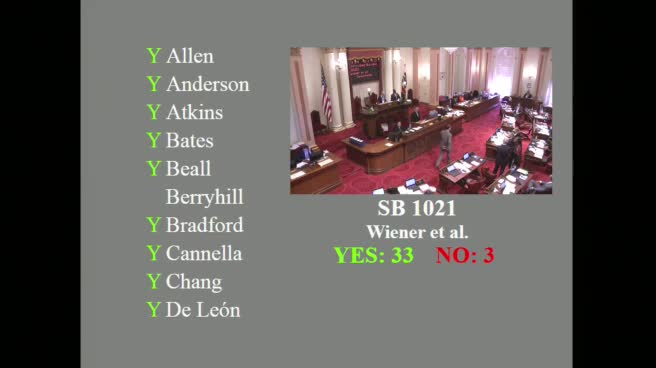 1MIN
Senate Floor
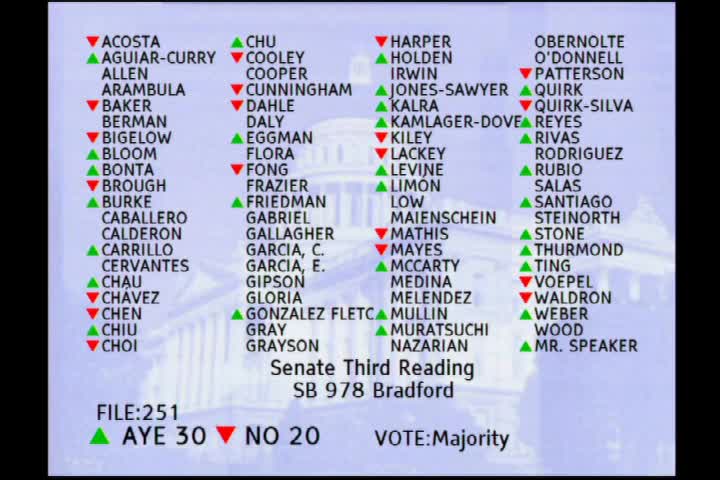 1MIN
Assembly Floor
 1H
Assembly Standing Committee on Appropriations
 7MIN
Senate Standing Committee on Education
Bill Author




