SB 1106: Young adults: deferred entry of judgment pilot program.
- Session Year: 2017-2018
- House: Senate
- Latest Version Date: 2018-09-30
Existing law authorizes, only until January 1, 2020, the Counties of Alameda, Butte, Napa, Nevada, and Santa Clara to establish a pilot program to operate a deferred entry of judgment pilot program for eligible defendants. The pilot program authorizes a defendant to participate in the program within the countys juvenile hall if that person is charged with committing a felony offense, except as specified, he or she pleads guilty to the charge or charges, and the probation department determines that the person meets specified requirements, including that the defendant is 18 years of age or older, but under 21 years of age on the date the offense was committed, is suitable for the program, and shows the ability to benefit from services generally reserved for delinquents. Existing law requires a county to apply to the Board of State and Community Corrections for approval of a county institution as a suitable place for confinement for purposes of the pilot program prior to establishing a pilot program and requires the board to review and approve or deny the application, as specified. Existing law requires a county that establishes a pilot program to submit data regarding the pilot program to the board and requires the board to review the program to ensure compliance with specified requirements of federal law. Existing law requires the board to use the data submitted to it to conduct an evaluation of the pilot programs impact and effectiveness, to combine each evaluation into a comprehensive report, and to submit the comprehensive report to the Assembly and Senate Committees on Public Safety. Existing law also requires the probation department to submit data relating to the effectiveness of the program to the Division of Recidivism Reduction and Re-Entry within the Department of Justice.
This bill would extend the operative date of the authorization to establish a pilot program in those counties to January 1, 2022, and would expand the scope of the program to include the County of Ventura. The bill would also require the board to submit the comprehensive report described above to the Assembly and Senate Committees on Public Safety no later than December 31, 2020.
This bill would make legislative findings and declarations as to the necessity of a special statute for the Counties of Alameda, Butte, Napa, Nevada, Santa Clara, and Ventura.
Existing law authorizes, only until January 1, 2020, the Counties of Alameda, Butte, Napa, Nevada, and Santa Clara to establish a pilot program to operate a deferred entry of judgment pilot program for eligible defendants. The pilot program authorizes a defendant to participate in the program within the countys juvenile hall if that person is charged with committing a felony offense, except as specified, he or she pleads guilty to the charge or charges, and the probation department determines that the person meets specified requirements, including that the defendant is 18 years of age or older, but under 21 years of age on the date the offense was committed, is suitable for the program, and shows the ability to benefit from services generally reserved for delinquents. Existing law requires a county to apply to the Board of State and Community Corrections for approval of a county institution as a suitable place for confinement for purposes of the pilot program prior to establishing a pilot program and requires the board to review and approve or deny the application, as specified. Existing law requires a county that establishes a pilot program to submit data regarding the pilot program to the board and requires the board to review the program to ensure compliance with specified requirements of federal law. Existing law requires the board to use the data submitted to it to conduct an evaluation of the pilot programs impact and effectiveness, to combine each evaluation into a comprehensive report, and to submit the comprehensive report to the Assembly and Senate Committees on Public Safety. Existing law also requires the probation department to submit data relating to the effectiveness of the program to the Division of Recidivism Reduction and Re-Entry within the Department of Justice.
This bill would extend the operative date of the authorization to establish a pilot program in those counties to January 1, 2022. The bill would also 2022, and would expand the scope of the program to include the County of Ventura. The bill would also require the board to submit the comprehensive report described above to the Assembly and Senate Committees on Public Safety no later than December 31, 2020.
This bill would make legislative findings and declarations as to the necessity of a special statute for the Counties of Alameda, Butte, Napa, Nevada, Santa Clara, and Ventura.
Existing law authorizes, only until January 1, 2020, the Counties of Alameda, Butte, Napa, Nevada, and Santa Clara to establish a pilot program to operate a deferred entry of judgment pilot program for eligible defendants. The pilot program authorizes a defendant to participate in the program within the countys juvenile hall if that person is charged with committing a felony offense, except as specified, he or she pleads guilty to the charge or charges, and the probation department determines that the person meets specified requirements, including that the defendant is 18 years of age or older, but under 21 years of age on the date the offense was committed, is suitable for the program, and shows the ability to benefit from services generally reserved for delinquents. Existing law requires a county to apply to the Board of State and Community Corrections for approval of a county institution as a suitable place for confinement for purposes of the pilot program prior to establishing a pilot program and requires the board to review and approve or deny the application, as specified. Existing law requires a county that establishes a pilot program to submit data regarding the pilot program to the board and requires the board to review the program to ensure compliance with specified requirements of federal law. Existing law also requires the probation department to submit data relating to the effectiveness of the program to the Division of Recidivism Reduction and Re-Entry within the Department of Justice.
This bill would extend the operative date of the authorization to establish a pilot program in those counties to January 1, 2022. The bill would also expand the scope of the program to include the County of Ventura.
This bill would make legislative findings and declarations as to the necessity of a special statute for the Counties of Alameda, Butte, Napa, Nevada, and Santa Clara. Santa Clara, and Ventura.
Existing law authorizes, only until January 1, 2020, the Counties of Alameda, Butte, Napa, Nevada, and Santa Clara to establish a pilot program to operate a deferred entry of judgment pilot program for eligible defendants. The pilot program authorizes a defendant to participate in the program within the countys juvenile hall if that person is charged with committing a felony offense, except as specified, he or she pleads guilty to the charge or charges, and the probation department determines that the person meets specified requirements, including that the defendant is 18 years of age or older, but under 21 years of age on the date the offense was committed, is suitable for the program, and shows the ability to benefit from services generally reserved for delinquents. Existing law requires a county to apply to the Board of State and Community Corrections for approval of a county institution as a suitable place for confinement for purposes of the pilot program prior to establishing a pilot program and requires the board to review and approve or deny the application, as specified. Existing law requires a county that establishes a pilot program to submit data regarding the pilot program to the board and requires the board to review the program to ensure compliance with specified requirements of federal law. Existing law also requires the probation department to submit data relating to the effectiveness of the program to the Division of Recidivism Reduction and Re-Entry within the Department of Justice.
This bill would extend the operative date of the authorization to establish a pilot program in those counties to January 1, 2022.
This bill would make legislative findings and declarations as to the necessity of a special statute for the Counties of Alameda, Butte, Napa, Nevada, and Santa Clara.
(a)The following counties may establish a pilot program pursuant to this section to operate a deferred entry of judgment pilot program for eligible defendants described in subdivision (b):
(1)County of Alameda.
(2)County of Butte.
(3)County of Napa.
(4)County of Nevada.
(5)County of Santa Clara.
(6)County of Ventura.
(b)A defendant may participate in a deferred entry of judgment pilot program within the countys juvenile hall if that person is charged with committing a felony offense, other than the offenses listed under subdivision (d), he or she pleads guilty to the charge or charges, and the probation department determines that the person meets all of the following requirements:
(1)Is 18 years of age or older, but under 21 years of age on the date the offense was committed.
(2)Is suitable for the program after evaluation using a risk assessment tool, as described in subdivision (c).
(3)Shows the ability to benefit from services generally reserved for delinquents, including, but not limited to, cognitive behavioral therapy, other mental health services, and age-appropriate educational, vocational, and supervision services, that are currently deployed under the jurisdiction of the juvenile court.
(4)Meets the rules of the juvenile hall developed in accordance with the applicable regulations set forth in Title 15 of the California Code of Regulations.
(5)Does not have a prior or current conviction for committing an offense listed under subdivision (c) of Section 1192.7 or subdivision (c) of Section 667.5, or subdivision (b) of Section 707 of the Welfare and Institutions Code.
(6)Is not required to register as a sex offender pursuant to Chapter 5.5 (commencing with Section 290) of Title 9 of Part 1.
(c)The probation department, in consultation with the superior court, district attorney, and sheriff of the county or the governmental body charged with operating the county jail, shall develop an evaluation process using a risk assessment tool to determine eligibility for the program.
(d)If the defendant is required to register as a sex offender pursuant to Chapter 5.5 (commencing with Section 290) of Title 9 of Part 1, or if he or she has been convicted of one or more of the following offenses, he or she is not eligible for the program:
(1)An offense listed under subdivision (c) of Section 1192.7.
(2)An offense listed under subdivision (c) of Section 667.5.
(3)An offense listed under subdivision (b) of Section 707 of the Welfare and Institutions Code.
(e)The court shall grant deferred entry of judgment if an eligible defendant consents to participate in the program, waives his or her right to a speedy trial or a speedy preliminary hearing, pleads guilty to the charge or charges, and waives time for the pronouncement of judgment.
(f)(1)If the probation department determines that the defendant is not eligible for the deferred entry of judgment pilot program or the defendant does not consent to participate in the program, the proceedings shall continue as in any other case.
(2)If it appears to the probation department that the defendant is performing unsatisfactorily in the program as a result of the commission of a new crime or the violation of any of the rules of the juvenile hall or that the defendant is not benefiting from the services in the program, the probation department may make a motion for entry of judgment. After notice to the defendant, the court shall hold a hearing to determine whether judgment should be entered. If the court finds that the defendant is performing unsatisfactorily in the program or that the defendant is not benefiting from the services in the program, the court shall render a finding of guilt to the charge or charges pleaded, enter judgment, and schedule a sentencing hearing as otherwise provided in this code, and the probation department, in consultation with the county sheriff, shall remove the defendant from the program and return him or her to custody in county jail. The mechanism of when and how the defendant is moved from custody in juvenile hall to custody in a county jail shall be determined by the local multidisciplinary team specified in paragraph (2) of subdivision (m).
(3)If the defendant has performed satisfactorily during the period in which deferred entry of judgment was granted, at the end of that period, the court shall dismiss the criminal charge or charges.
(g)A defendant shall serve no longer than one year in custody within a countys juvenile hall pursuant to the program.
(h)The probation department shall develop a plan for reentry services, including, but not limited to, housing, employment, and education services, as a component of the program.
(i)The probation department shall submit data relating to the effectiveness of the program to the Division of Recidivism Reduction and Re-Entry, within the Department of Justice, including recidivism rates for program participants as compared to recidivism rates for similar populations in the adult system within the county.
(j)A defendant participating in the program pursuant to this section shall not come into contact with minors within the juvenile hall for any purpose, including, but not limited to, housing, recreation, or education.
(k)Prior to establishing a pilot program pursuant to this section, the county shall apply to the Board of State and Community Corrections for approval of a county institution as a suitable place for confinement for the purpose of the pilot program. The board shall review and approve or deny the application of the county within 30 days of receiving notice of this proposed use. In its review, the board shall take into account the available programming, capacity, and safety of the institution as a place for the confinement and rehabilitation of individuals within the jurisdiction of the criminal court, and those within the jurisdiction of the juvenile court.
(l)The Board of State and Community Corrections shall review a countys pilot program to ensure compliance with requirements of the federal Juvenile Justice and Delinquency Prevention Act of 1974 (34 U.S.C. Sec. 11101 et seq.), as amended, relating to sight and sound separation between juveniles and adult inmates.
(m)(1)This section applies to a defendant who would otherwise serve time in custody in a county jail. Participation in a program pursuant to this section shall not be authorized as an alternative to a sentence involving community supervision.
(2)Each county shall establish a multidisciplinary team that shall meet periodically to review and discuss the implementation, practices, and impact of the program. The team shall include representatives from the following:
(A)Probation department.
(B)The district attorneys office.
(C)The public defenders office.
(D)The sheriffs department.
(E)Courts located in the county.
(F)The county board of supervisors.
(G)The county health and human services department.
(H)A youth advocacy group.
(n)(1)A county that establishes a pilot program pursuant to this section shall submit data regarding the pilot program to the Board of State and Community Corrections. The data submitted shall be used for the purposes of paragraph (2).
(2)The board shall conduct an evaluation of the pilot programs impact and effectiveness. The evaluation shall include, but not be limited to, evaluating each pilot programs impact on sentencing and impact on opportunities for community supervision, monitoring the programs effect on minors in the juvenile facility, if any, and its effectiveness with respect to program participants, including outcome-related data for program participants compared to young adult offenders sentenced for comparable crimes.
(3)Each evaluation shall be combined into a comprehensive report and submitted to the Assembly and Senate Committees on Public Safety, no later than December 31, 2020.
(4)The board may contract with an independent entity, including, but not limited to, the Regents of the University of California, for the purposes of carrying out the duties of the board pursuant to this subdivision.
(o)This chapter shall remain in effect only until January 1, 2022, and as of that date is repealed, unless a later enacted statute, that is enacted before January 1, 2022, deletes or extends that date.
SEC. 2.The Legislature finds and declares that a special law is necessary and that a general law cannot be made applicable within the meaning of Section 16 of Article IV of the California Constitution because of the unique circumstances in the Counties of Alameda, Butte, Napa, Nevada, Santa Clara, and Ventura. Recent research on the adolescent brain development has found that brain development continues well after an individual reaches 18 years of age. This bill would therefore extend the existing authorization allowing the criminal justice system to apply the most recent brain development research to its practices in these counties by allowing certain transitional age youth access to age-appropriate rehabilitative services available in the juvenile justice system when an assessment determines that the individual would benefit from the services, with the aim of reducing the likelihood of the youth continuing in the criminal justice system.
(a)The following counties may establish a pilot program pursuant to this section to operate a deferred entry of judgment pilot program for eligible defendants described in subdivision (b):
(1)County of Alameda.
(2)County of Butte.
(3)County of Napa.
(4)County of Nevada.
(5)County of Santa Clara.
(6)County of Ventura.
(b)A defendant may participate in a deferred entry of judgment pilot program within the countys juvenile hall if that person is charged with committing a felony offense, other than the offenses listed under subdivision (d), he or she pleads guilty to the charge or charges, and the probation department determines that the person meets all of the following requirements:
(1)Is 18 years of age or older, but under 21 years of age on the date the offense was committed.
(2)Is suitable for the program after evaluation using a risk assessment tool, as described in subdivision (c).
(3)Shows the ability to benefit from services generally reserved for delinquents, including, but not limited to, cognitive behavioral therapy, other mental health services, and age-appropriate educational, vocational, and supervision services, that are currently deployed under the jurisdiction of the juvenile court.
(4)Meets the rules of the juvenile hall developed in accordance with the applicable regulations set forth in Title 15 of the California Code of Regulations.
(5)Does not have a prior or current conviction for committing an offense listed under subdivision (c) of Section 1192.7 or subdivision (c) of Section 667.5, or subdivision (b) of Section 707 of the Welfare and Institutions Code.
(6)Is not required to register as a sex offender pursuant to Chapter 5.5 (commencing with Section 290) of Title 9 of Part 1.
(c)The probation department, in consultation with the superior court, district attorney, and sheriff of the county or the governmental body charged with operating the county jail, shall develop an evaluation process using a risk assessment tool to determine eligibility for the program.
(d)If the defendant is required to register as a sex offender pursuant to Chapter 5.5 (commencing with Section 290) of Title 9 of Part 1, or if he or she has been convicted of one or more of the following offenses, he or she is not eligible for the program:
(1)An offense listed under subdivision (c) of Section 1192.7.
(2)An offense listed under subdivision (c) of Section 667.5.
(3)An offense listed under subdivision (b) of Section 707 of the Welfare and Institutions Code.
(e)The court shall grant deferred entry of judgment if an eligible defendant consents to participate in the program, waives his or her right to a speedy trial or a speedy preliminary hearing, pleads guilty to the charge or charges, and waives time for the pronouncement of judgment.
(f)(1)If the probation department determines that the defendant is not eligible for the deferred entry of judgment pilot program or the defendant does not consent to participate in the program, the proceedings shall continue as in any other case.
(2)If it appears to the probation department that the defendant is performing unsatisfactorily in the program as a result of the commission of a new crime or the violation of any of the rules of the juvenile hall or that the defendant is not benefiting from the services in the program, the probation department may make a motion for entry of judgment. After notice to the defendant, the court shall hold a hearing to determine whether judgment should be entered. If the court finds that the defendant is performing unsatisfactorily in the program or that the defendant is not benefiting from the services in the program, the court shall render a finding of guilt to the charge or charges pleaded, enter judgment, and schedule a sentencing hearing as otherwise provided in this code, and the probation department, in consultation with the county sheriff, shall remove the defendant from the program and return him or her to custody in county jail. The mechanism of when and how the defendant is moved from custody in juvenile hall to custody in a county jail shall be determined by the local multidisciplinary team specified in paragraph (2) of subdivision (m).
(3)If the defendant has performed satisfactorily during the period in which deferred entry of judgment was granted, at the end of that period, the court shall dismiss the criminal charge or charges.
(g)A defendant shall serve no longer than one year in custody within a countys juvenile hall pursuant to the program.
(h)The probation department shall develop a plan for reentry services, including, but not limited to, housing, employment, and education services, as a component of the program.
(i)The probation department shall submit data relating to the effectiveness of the program to the Division of Recidivism Reduction and Re-Entry, within the Department of Justice, including recidivism rates for program participants as compared to recidivism rates for similar populations in the adult system within the county.
(j)A defendant participating in the program pursuant to this section shall not come into contact with minors within the juvenile hall for any purpose, including, but not limited to, housing, recreation, or education.
(k)Prior to establishing a pilot program pursuant to this section, the county shall apply to the Board of State and Community Corrections for approval of a county institution as a suitable place for confinement for the purpose of the pilot program. The board shall review and approve or deny the application of the county within 30 days of receiving notice of this proposed use. In its review, the board shall take into account the available programming, capacity, and safety of the institution as a place for the confinement and rehabilitation of individuals within the jurisdiction of the criminal court, and those within the jurisdiction of the juvenile court.
(l)The Board of State and Community Corrections shall review a countys pilot program to ensure compliance with requirements of the federal Juvenile Justice and Delinquency Prevention Act of 1974 (34 U.S.C. Sec. 11101 et seq.), as amended, relating to sight and sound separation between juveniles and adult inmates.
(m)(1)This section applies to a defendant who would otherwise serve time in custody in a county jail. Participation in a program pursuant to this section shall not be authorized as an alternative to a sentence involving community supervision.
(2)Each county shall establish a multidisciplinary team that shall meet periodically to review and discuss the implementation, practices, and impact of the program. The team shall include representatives from the following:
(A)Probation department.
(B)The district attorneys office.
(C)The public defenders office.
(D)The sheriffs department.
(E)Courts located in the county.
(F)The county board of supervisors.
(G)The county health and human services department.
(H)A youth advocacy group.
(n)(1)A county that establishes a pilot program pursuant to this section shall submit data regarding the pilot program to the Board of State and Community Corrections. The data submitted shall be used for the purposes of paragraph (2).
(2)The board shall conduct an evaluation of the pilot programs impact and effectiveness. The evaluation shall include, but not be limited to, evaluating each pilot programs impact on sentencing and impact on opportunities for community supervision, monitoring the programs effect on minors in the juvenile facility, if any, and its effectiveness with respect to program participants, including outcome-related data for program participants compared to young adult offenders sentenced for comparable crimes.
(3)Each evaluation shall be combined into a comprehensive report and submitted to the Assembly and Senate Committees on Public Safety. Safety, no later than December 31, 2020.
(4)The board may contract with an independent entity, including, but not limited to, the Regents of the University of California, for the purposes of carrying out the duties of the board pursuant to this subdivision.
(o)This chapter shall remain in effect only until January 1, 2022, and as of that date is repealed, unless a later enacted statute, that is enacted before January 1, 2022, deletes or extends that date.
SEC. 2.The Legislature finds and declares that a special law is necessary and that a general law cannot be made applicable within the meaning of Section 16 of Article IV of the California Constitution because of the unique circumstances in the Counties of Alameda, Butte, Napa, Nevada, Santa Clara, and Ventura. Recent research on the adolescent brain development has found that brain development continues well after an individual reaches 18 years of age. This bill would therefore extend the existing authorization allowing the criminal justice system to apply the most recent brain development research to its practices in these counties by allowing certain transitional age youth access to age-appropriate rehabilitative services available in the juvenile justice system when an assessment determines that the individual would benefit from the services, with the aim of reducing the likelihood of the youth continuing in the criminal justice system.
(a)The following counties may establish a pilot program pursuant to this section to operate a deferred entry of judgment pilot program for eligible defendants described in subdivision (b):
(1)County of Alameda.
(2)County of Butte.
(3)County of Napa.
(4)County of Nevada.
(5)County of Santa Clara.
(6)County of Ventura.
(b)A defendant may participate in a deferred entry of judgment pilot program within the countys juvenile hall if that person is charged with committing a felony offense, other than the offenses listed under subdivision (d), he or she pleads guilty to the charge or charges, and the probation department determines that the person meets all of the following requirements:
(1)Is 18 years of age or older, but under 21 years of age on the date the offense was committed.
(2)Is suitable for the program after evaluation using a risk assessment tool, as described in subdivision (c).
(3)Shows the ability to benefit from services generally reserved for delinquents, including, but not limited to, cognitive behavioral therapy, other mental health services, and age-appropriate educational, vocational, and supervision services, that are currently deployed under the jurisdiction of the juvenile court.
(4)Meets the rules of the juvenile hall developed in accordance with the applicable regulations set forth in Title 15 of the California Code of Regulations.
(5)Does not have a prior or current conviction for committing an offense listed under subdivision (c) of Section 1192.7 or subdivision (c) of Section 667.5, or subdivision (b) of Section 707 of the Welfare and Institutions Code.
(6)Is not required to register as a sex offender pursuant to Chapter 5.5 (commencing with Section 290) of Title 9 of Part 1.
(c)The probation department, in consultation with the superior court, district attorney, and sheriff of the county or the governmental body charged with operating the county jail, shall develop an evaluation process using a risk assessment tool to determine eligibility for the program.
(d)If the defendant is required to register as a sex offender pursuant to Chapter 5.5 (commencing with Section 290) of Title 9 of Part 1, or if he or she has been convicted of one or more of the following offenses, he or she is not eligible for the program:
(1)An offense listed under subdivision (c) of Section 1192.7.
(2)An offense listed under subdivision (c) of Section 667.5.
(3)An offense listed under subdivision (b) of Section 707 of the Welfare and Institutions Code.
(e)The court shall grant deferred entry of judgment if an eligible defendant consents to participate in the program, waives his or her right to a speedy trial or a speedy preliminary hearing, pleads guilty to the charge or charges, and waives time for the pronouncement of judgment.
(f)(1)If the probation department determines that the defendant is not eligible for the deferred entry of judgment pilot program or the defendant does not consent to participate in the program, the proceedings shall continue as in any other case.
(2)If it appears to the probation department that the defendant is performing unsatisfactorily in the program as a result of the commission of a new crime or the violation of any of the rules of the juvenile hall or that the defendant is not benefiting from the services in the program, the probation department may make a motion for entry of judgment. After notice to the defendant, the court shall hold a hearing to determine whether judgment should be entered. If the court finds that the defendant is performing unsatisfactorily in the program or that the defendant is not benefiting from the services in the program, the court shall render a finding of guilt to the charge or charges pleaded, enter judgment, and schedule a sentencing hearing as otherwise provided in this code, and the probation department, in consultation with the county sheriff, shall remove the defendant from the program and return him or her to custody in county jail. The mechanism of when and how the defendant is moved from custody in juvenile hall to custody in a county jail shall be determined by the local multidisciplinary team specified in paragraph (2) of subdivision (m).
(3)If the defendant has performed satisfactorily during the period in which deferred entry of judgment was granted, at the end of that period, the court shall dismiss the criminal charge or charges.
(g)A defendant shall serve no longer than one year in custody within a countys juvenile hall pursuant to the program.
(h)The probation department shall develop a plan for reentry services, including, but not limited to, housing, employment, and education services, as a component of the program.
(i)The probation department shall submit data relating to the effectiveness of the program to the Division of Recidivism Reduction and Re-Entry, within the Department of Justice, including recidivism rates for program participants as compared to recidivism rates for similar populations in the adult system within the county.
(j)A defendant participating in the program pursuant to this section shall not come into contact with minors within the juvenile hall for any purpose, including, but not limited to, housing, recreation, or education.
(k)Prior to establishing a pilot program pursuant to this section, the county shall apply to the Board of State and Community Corrections for approval of a county institution as a suitable place for confinement for the purpose of the pilot program. The board shall review and approve or deny the application of the county within 30 days of receiving notice of this proposed use. In its review, the board shall take into account the available programming, capacity, and safety of the institution as a place for the confinement and rehabilitation of individuals within the jurisdiction of the criminal court, and those within the jurisdiction of the juvenile court.
(l)The Board of State and Community Corrections shall review a countys pilot program to ensure compliance with requirements of the federal Juvenile Justice and Delinquency Prevention Act of 1974 (34 U.S.C. Sec. 11101 et seq.), as amended, relating to sight and sound separation between juveniles and adult inmates.
(m)(1)This section applies to a defendant who would otherwise serve time in custody in a county jail. Participation in a program pursuant to this section shall not be authorized as an alternative to a sentence involving community supervision.
(2)Each county shall establish a multidisciplinary team that shall meet periodically to review and discuss the implementation, practices, and impact of the program. The team shall include representatives from the following:
(A)Probation department.
(B)The district attorneys office.
(C)The public defenders office.
(D)The sheriffs department.
(E)Courts located in the county.
(F)The county board of supervisors.
(G)The county health and human services department.
(H)A youth advocacy group.
(n)(1)A county that establishes a pilot program pursuant to this section shall submit data regarding the pilot program to the Board of State and Community Corrections. The data submitted shall be used for the purposes of paragraph (2).
(2)The board shall conduct an evaluation of the pilot programs impact and effectiveness. The evaluation shall include, but not be limited to, evaluating each pilot programs impact on sentencing and impact on opportunities for community supervision, monitoring the programs effect on minors in the juvenile facility, if any, and its effectiveness with respect to program participants, including outcome-related data for program participants compared to young adult offenders sentenced for comparable crimes.
(3)Each evaluation shall be combined into a comprehensive report and submitted to the Assembly and Senate Committees on Public Safety.
(4)The board may contract with an independent entity, including, but not limited to, the Regents of the University of California, for the purposes of carrying out the duties of the board pursuant to this subdivision.
(o)This chapter shall remain in effect only until January 1, 2022, and as of that date is repealed, unless a later enacted statute, that is enacted before January 1, 2022, deletes or extends that date.
SEC. 2.The Legislature finds and declares that a special law is necessary and that a general law cannot be made applicable within the meaning of Section 16 of Article IV of the California Constitution because of the unique circumstances in the Counties of Alameda, Butte, Napa, Nevada, and Santa Clara. Santa Clara, and Ventura. Recent research on the adolescent brain development has found that brain development continues well after an individual reaches 18 years of age. This bill would therefore extend the existing authorization allowing for the criminal justice system to apply the most recent brain development research to its practices in these counties by allowing certain transitional age youth access to age-appropriate rehabilitative services available in the juvenile justice system when an assessment determines that the individual would benefit from the services, with the aim of reducing the likelihood of the youth continuing in the criminal justice system.
(a)The following counties may establish a pilot program pursuant to this section to operate a deferred entry of judgment pilot program for eligible defendants described in subdivision (b):
(1)County of Alameda.
(2)County of Butte.
(3)County of Napa.
(4)County of Nevada.
(5)County of Santa Clara.
(b)A defendant may participate in a deferred entry of judgment pilot program within the countys juvenile hall if that person is charged with committing a felony offense, other than the offenses listed under subdivision (d), he or she pleads guilty to the charge or charges, and the probation department determines that the person meets all of the following requirements:
(1)Is 18 years of age or older, but under 21 years of age on the date the offense was committed.
(2)Is suitable for the program after evaluation using a risk assessment tool, as described in subdivision (c).
(3)Shows the ability to benefit from services generally reserved for delinquents, including, but not limited to, cognitive behavioral therapy, other mental health services, and age-appropriate educational, vocational, and supervision services, that are currently deployed under the jurisdiction of the juvenile court.
(4)Meets the rules of the juvenile hall developed in accordance with the applicable regulations set forth in Title 15 of the California Code of Regulations.
(5)Does not have a prior or current conviction for committing an offense listed under subdivision (c) of Section 1192.7 or subdivision (c) of Section 667.5, or subdivision (b) of Section 707 of the Welfare and Institutions Code.
(6)Is not required to register as a sex offender pursuant to Chapter 5.5 (commencing with Section 290) of Title 9 of Part 1.
(c)The probation department, in consultation with the superior court, district attorney, and sheriff of the county or the governmental body charged with operating the county jail, shall develop an evaluation process using a risk assessment tool to determine eligibility for the program.
(d)If the defendant is required to register as a sex offender pursuant to Chapter 5.5 (commencing with Section 290) of Title 9 of Part 1, or if he or she has been convicted of one or more of the following offenses, he or she is not eligible for the program:
(1)An offense listed under subdivision (c) of Section 1192.7.
(2)An offense listed under subdivision (c) of Section 667.5.
(3)An offense listed under subdivision (b) of Section 707 of the Welfare and Institutions Code.
(e)The court shall grant deferred entry of judgment if an eligible defendant consents to participate in the program, waives his or her right to a speedy trial or a speedy preliminary hearing, pleads guilty to the charge or charges, and waives time for the pronouncement of judgment.
(f)(1)If the probation department determines that the defendant is not eligible for the deferred entry of judgment pilot program or the defendant does not consent to participate in the program, the proceedings shall continue as in any other case.
(2)If it appears to the probation department that the defendant is performing unsatisfactorily in the program as a result of the commission of a new crime or the violation of any of the rules of the juvenile hall or that the defendant is not benefiting from the services in the program, the probation department may make a motion for entry of judgment. After notice to the defendant, the court shall hold a hearing to determine whether judgment should be entered. If the court finds that the defendant is performing unsatisfactorily in the program or that the defendant is not benefiting from the services in the program, the court shall render a finding of guilt to the charge or charges pleaded, enter judgment, and schedule a sentencing hearing as otherwise provided in this code, and the probation department, in consultation with the county sheriff, shall remove the defendant from the program and return him or her to custody in county jail. The mechanism of when and how the defendant is moved from custody in juvenile hall to custody in a county jail shall be determined by the local multidisciplinary team specified in paragraph (2) of subdivision (m).
(3)If the defendant has performed satisfactorily during the period in which deferred entry of judgment was granted, at the end of that period, the court shall dismiss the criminal charge or charges.
(g)A defendant shall serve no longer than one year in custody within a countys juvenile hall pursuant to the program.
(h)The probation department shall develop a plan for reentry services, including, but not limited to, housing, employment, and education services, as a component of the program.
(i)The probation department shall submit data relating to the effectiveness of the program to the Division of Recidivism Reduction and Re-Entry, within the Department of Justice, including recidivism rates for program participants as compared to recidivism rates for similar populations in the adult system within the county.
(j)A defendant participating in the program pursuant to this section shall not come into contact with minors within the juvenile hall for any purpose, including, but not limited to, housing, recreation, or education.
(k)Prior to establishing a pilot program pursuant to this section, the county shall apply to the Board of State and Community Corrections for approval of a county institution as a suitable place for confinement for the purpose of the pilot program. The board shall review and approve or deny the application of the county within 30 days of receiving notice of this proposed use. In its review, the board shall take into account the available programming, capacity, and safety of the institution as a place for the confinement and rehabilitation of individuals within the jurisdiction of the criminal court, and those within the jurisdiction of the juvenile court.
(l)The Board of State and Community Corrections shall review a countys pilot program to ensure compliance with requirements of the federal Juvenile Justice and Delinquency Prevention Act of 1974 (42 (34 U.S.C. Sec. 5601 11101 et seq.), as amended, relating to sight and sound separation between juveniles and adult inmates.
(m)(1)This section applies to a defendant who would otherwise serve time in custody in a county jail. Participation in a program pursuant to this section shall not be authorized as an alternative to a sentence involving community supervision.
(2)Each county shall establish a multidisciplinary team that shall meet periodically to review and discuss the implementation, practices, and impact of the program. The team shall include representatives from the following:
(A)Probation department.
(B)The district attorneys office.
(C)The public defenders office.
(D)The sheriffs department.
(E)Courts located in the county.
(F)The county board of supervisors.
(G)The county health and human services department.
(H)A youth advocacy group.
(n)(1)A county that establishes a pilot program pursuant to this section shall submit data regarding the pilot program to the Board of State and Community Corrections. The data submitted shall be used for the purposes of paragraph (2).
(2)The board shall conduct an evaluation of the pilot programs impact and effectiveness. The evaluation shall include, but not be limited to, evaluating each pilot programs impact on sentencing and impact on opportunities for community supervision, monitoring the programs effect on minors in the juvenile facility, if any, and its effectiveness with respect to program participants, including outcome-related data for program participants compared to young adult offenders sentenced for comparable crimes.
(3)Each evaluation shall be combined into a comprehensive report and submitted to the Assembly and Senate Committees on Public Safety.
(4)The board may contract with an independent entity, including, but not limited to, the Regents of the University of California, for the purposes of carrying out the duties of the board pursuant to this subdivision.
(o)This chapter shall remain in effect only until January 1, 2020, 2022, and as of that date is repealed, unless a later enacted statute, that is enacted before January 1, 2020, 2022, deletes or extends that date.
SEC. 2.The Legislature finds and declares that a special law is necessary and that a general law cannot be made applicable within the meaning of Section 16 of Article IV of the California Constitution because of the unique circumstances in the Counties of Alameda, Butte, Napa, Nevada, and Santa Clara. Recent research on the adolescent brain development has found that brain development continues well after an individual reaches 18 years of age. This bill would therefore extend the existing authorization allowing for the criminal justice system to apply the most recent brain development research to its practices in these counties by allowing certain transitional age youth access to age-appropriate rehabilitative services available in the juvenile justice system when an assessment determines that the individual would benefit from the services, with the aim of reducing the likelihood of the youth continuing in the criminal justice system.
|
Date
|
Status
|
|---|---|
| Sep 30, 2018 | Chaptered by Secretary of State. Chapter 1007, Statutes of 2018. |
| Sep 30, 2018 | Approved by the Governor. |
| Sep 5, 2018 | Enrolled and presented to the Governor at 3:30 p.m. |
| Aug 28, 2018 | In Senate. Ordered to engrossing and enrolling. |
| Aug 27, 2018 | Read third time. Passed. Ordered to the Senate. |
| Aug 20, 2018 | Read second time. Ordered to third reading. |
| Aug 16, 2018 | From committee: Do pass. (Ayes 13. Noes 4.) (August 16). |
| Jun 27, 2018 | June 27 set for first hearing. Placed on APPR. suspense file. |
| Jun 12, 2018 | From committee: Do pass and re-refer to Com. on APPR. (Ayes 6. Noes 0.) (June 12). Re-referred to Com. on APPR. |
| May 3, 2018 | Referred to Com. on PUB. S. |
| Apr 26, 2018 | In Assembly. Read first time. Held at Desk. |
| Apr 26, 2018 | Read third time. Passed. (Ayes 26. Noes 6.) Ordered to the Assembly. |
| Apr 24, 2018 | Read second time. Ordered to third reading. |
| Apr 23, 2018 | From committee: Be ordered to second reading pursuant to Senate Rule 28.8. |
| Apr 13, 2018 | Set for hearing April 23. |
| Apr 9, 2018 | Read second time and amended. Re-referred to Com. on APPR. |
| Apr 5, 2018 | From committee: Do pass as amended and re-refer to Com. on APPR. (Ayes 5. Noes 1.) (April 3). |
| Mar 19, 2018 | From committee with author's amendments. Read second time and amended. Re-referred to Com. on PUB. S. |
| Mar 13, 2018 | Set for hearing April 3. |
| Feb 22, 2018 | Referred to Com. on PUB. S. |
| Feb 14, 2018 | From printer. May be acted upon on or after March 16. |
| Feb 13, 2018 | Introduced. Read first time. To Com. on RLS. for assignment. To print. |
|
Date
|
Description
|
Location
|
Votes
|
|
|---|---|---|---|---|
| Aug 27, 2018 | SB 1106 Hill Senate Third Reading By QUIRK | Assembly Floor |
Passed |
|
| Aug 16, 2018 | Do pass. | Assembly Standing Committee on Appropriations |
Passed |
|
| Jun 12, 2018 | Do pass and be re-referred to the Committee on [Appropriations] | Assembly Standing Committee on Public Safety |
Passed |
|
| Apr 26, 2018 | Senate 3rd Reading SB1106 Hill | Senate Floor |
Passed |
|
| Apr 3, 2018 | Do pass as amended, but first amend, and re-refer to the Committee on [Appropriations] | Senate Standing Committee on Public Safety |
Passed |
This list shows positions taken on this bill by organizations on the date displayed, which is linked to the original source.
Positions by individuals are not included.
|
Organization
|
Position
|
Date
|
|---|---|---|
| California Academy of Child and Adolescent Psychiatry | ** Support | Jun 11, 2018 |
| California Probation, Parole, and Correctional Association | ** Support | Jun 11, 2018 |
| California Public Defenders Association | * Support | Jun 12, 2018 |
| California State Association Of Counties | * Support | Jun 12, 2018 |
| Center on Juvenile and Criminal Justice | ** Against | Jun 11, 2018 |
| Chief Probation Officers Of California | * Support | Jun 12, 2018 |
| PURPOSE | ** Against | Apr 2, 2018 |
| San Juan Juvenile and Criminal Justice | * Support | Jun 12, 2018 |
| Ventura County Board of Supervisors | * Support | Jun 12, 2018 |
SENATE THIRD READING
STR Bill Id:SB 1106
Author:(Hill)
As Amended Ver:April 9, 2018
Majority vote
SENATE VOTE: 27-6
Committee | Votes | Ayes | Noes |
Public Safety | 6-0 | Jones-Sawyer, Lackey, Carrillo, McCarty, Quirk, Weber | |
Appropriations | 13-4 | Gonzalez Fletcher, Bloom, Bonta, Calderon, Carrillo, Chau, Eggman, Friedman, Gallagher, Eduardo Garcia, Nazarian, Quirk, Reyes | Bigelow, Brough, Fong, Obernolte |
SUMMARY: Extends the operative date of the existing Transitional Age Youth pilot program to January 1, 2022, and establishes a December 31, 2020, deadline by which a report on the program must be delivered to the Senate and Assembly Public Safety Committees. Expands the pilot program to the county of Ventura.
EXISTING LAW:
- Provides that the counties of Alameda, Butte, Napa, Nevada, and Santa Clara may establish a pilot program to operate a deferred entry of judgment pilot program for certain eligible defendants.
- Provides that a defendant, age 18-21, may participate in a deferred entry of judgment pilot program within the county's juvenile hall if that person is charged with committing a felony offense, except as specified, he or she pleads guilty to the charge or charges, and the probation department determines that the person meets specified requirements.
- Provides that the probation department, in consultation with the superior court, district attorney, and sheriff of the county or the governmental body charged with operating the county jail, must develop an evaluation process using a risk assessment tool to determine eligibility for the program.
- Provides that if the defendant is required to register as a sex offender, as specified, or if he or she has been convicted of specified offenses, he or she is not eligible for the program.
- Provides that the court must grant deferred entry of judgment if an eligible defendant consents to participate in the program, waives his or her right to a speedy trial or a speedy preliminary hearing, pleads guilty to the charge or charges, and waives time for the pronouncement of judgment.
- Provides that if the probation department determines that the defendant is not eligible for the deferred entry of judgment pilot program or the defendant does not consent to participate in the program, the proceedings shall continue as in any other case.
- Provides that if it appears to the probation department that the defendant is performing unsatisfactorily in the program as a result of the commission of a new crime or the violation of any of the rules of the juvenile hall or that the defendant is not benefiting from the services in the program, the probation department may make a motion for entry of judgment. After notice to the defendant, the court is required to hold a hearing to determine whether judgment should be entered.
- Provides that if the court finds that the defendant is performing unsatisfactorily in the program or that the defendant is not benefiting from the services in the program, the court is required to render a finding of guilt to the charge or charges pleaded, enter judgment, and schedule a sentencing hearing, and the probation department, in consultation with the county sheriff, is required to remove the defendant from the program and return him or her to custody in county jail. The mechanism of when and how the defendant is moved from custody in juvenile hall to custody in a county jail shall be determined by the local multidisciplinary team, as specified. (Id.)
- Provides that if the defendant has performed satisfactorily during the period in which deferred entry of judgment was granted, at the end of that period, the court is required to dismiss the criminal charge or charges.
- Prohibits a defendant participating in this program from serving longer than one year in juvenile hall.
- Requires the probation department to develop a plan for reentry services, including, but not limited to, housing, employment, and education services, as a component of the program.
- Requires the probation department to submit data relating to the effectiveness of the program to the Division of Recidivism Reduction and Re-Entry, within the Department of Justice, including recidivism rates for program participants as compared to recidivism rates for similar populations in the adult system within the county.
- Prohibits a defendant participating in the program pursuant to this section from coming into contact with minors within the juvenile hall for any purpose, including, but not limited to, housing, recreation, or education.
- Provides that prior to establishing a pilot program pursuant to this section, the county is required to apply to the Board of State and Community Corrections (BSCC) for approval of a county institution as a suitable place for confinement for the purpose of the pilot program. The BSCC is required to review and approve or deny the application of the county within 30 days of receiving notice of this proposed use. In its review, the BSCC is required to take into account the available programming, capacity, and safety of the institution as a place for the confinement and rehabilitation of individuals within the jurisdiction of the criminal court, and those within the jurisdiction of the juvenile court.
- Requires the BSCC to review a county's pilot program to ensure compliance with requirements of the federal law, relating to "sight and sound" separation between juveniles and adult inmates.
- Provides that the statutes related to this pilot program apply to a defendant who would otherwise serve time in custody in a county jail. Participation in this pilot program is prohibited as an alternative to a sentence involving community supervision.
- Requires that each county establish a multidisciplinary team that shall meet periodically to review and discuss the implementation, practices, and impact of the program.
- Requires a county that establishes a pilot program pursuant to this section to submit data regarding the pilot program to the BSCC.
- Requires the BSCC to conduct an evaluation of the pilot program's impact and effectiveness. The evaluation is required to include, but not limited to, evaluating each pilot program's impact on sentencing and impact on opportunities for community supervision, monitoring the program's effect on minors in the juvenile facility, if any, and its effectiveness with respect to program participants, including outcome-related data for program participants compared to young adult offenders sentenced for comparable crimes.
- Requires each evaluation to be combined into a comprehensive report and submitted to the Assembly and Senate Committees on Public Safety.
- Provides that the BSCC may contract with an independent entity, including, but not limited to, the Regents of the University of California, for the purposes of carrying out the duties of the board pursuant to this subdivision.
- Provides that this program shall remain in effect only until January 1, 2020, and as of that date is repealed, unless a later enacted statute, that is enacted before January 1, 2020, deletes or extends that date.
FISCAL EFFECT: According to the Assembly Appropriations Committee:
- Minor costs to the Department of Justice (DOJ) to collect data on recidivism reduction and reentry outcomes for a longer period than required under the current-law version of the pilot program and for one additional county.
- Minor costs to the Board of State and Community Corrections to add Ventura County to the pilot program.
- Costs for counties to participate in the pilot program. The state is not required to reimburse counties for these costs because authorized counties choose to participate in the program.
COMMENTS: According to the author, ''SB 1006 extends an existing pilot project created by SB 1004 in 2016 which intends to help improve the outcomes of young adults who come into contact with the justice system.
''The SB 1004 pilot program is currently underway; however, the existing sunset date is January 1, 2020. Once the bill was enacted there were processes completed by the Board of State and Community Corrections to certify the programs compliance with State and Federal requirements.
''Because the pilot program requires an evaluation to be conducted on the program and its effectiveness, it's important the sunset program date be extended to January 1, 2022.
''This extension will help account for the implementation time at the beginning of the pilot as well as authorize the program to operate for a length of time that delivers the most comprehensive and evidence based evaluation.
''Additionally, by adding Ventura to the program it will add to the dataset and help provide valuable information.''
Please see the policy committee analysis for a full discussion of this bill.
Analysis Prepared by: Matthew Fleming / PUB. S. / (916) 319-3744 FN: 0004096
Date of Hearing: June 27, 2018
ASSEMBLY COMMITTEE ON APPROPRIATIONS
Lorena Gonzalez Fletcher, Chair
SBPCA Bill Id:SB 1106
Author:(Hill) – As Amended Ver:April 9, 2018
Policy Committee: | Public Safety | Vote: | 6 - 0 |
|
|
Urgency: No State Mandated Local Program: No Reimbursable: No
SUMMARY:
This bill extends the operative date of the existing Transitional Age Youth pilot program, to January 1, 2022, and establishes a December 31, 2020, deadline by which a report on the program must be delivered to the Senate and Assembly Public Safety Committees. This bill also expands the pilot program to allow the county of Ventura to participate.
FISCAL EFFECT:
- Minor costs to the Department of Justice (DOJ) to collect data on recidivism reduction and reentry outcomes for a longer period than required under the current-law version of the pilot program and for one additional county.
- Minor costs to the Board of State and Community Corrections to add Ventura County to the pilot program.
- Costs for counties to participate in the pilot program. The state is not required to reimburse counties for these costs because authorized counties choose to participate in the program.
COMMENTS:
- Background. SB 1004 (Hill) Chapter 865, Statutes of 2016, authorized five counties—Alameda, Butte, Napa, Nevada, and Santa Clara—to operate a three-year pilot program in which certain young adult offenders between the age of 18 and 21would serve their time in juvenile hall instead of jail. The pilot program is a deferred entry of judgment program. If the young adult succeeds in the program then the criminal charges are dismissed. In order to establish the pilot program, each county was required to apply to the BSCC for approval of a county institution as a suitable place for confinement for the purpose of the pilot program. According to the bill’s author, a significant part of the first year of the three-year pilot program was consumed by the bill’s implementation. The BSCC had to create an approval process for county applications, and county probation departments had to prepare for the program as well. As a result, the programs were not fully operational by January 1, 2017.
- Purpose. This bill will extend the sunset date for the program in order to allow adequate time to implement the pilot and evaluate outcomes.
Analysis Prepared by: Jessica Peters / APPR. / (916) 319-2081
Date of Hearing: June 12, 2018
Counsel: Matthew Fleming
ASSEMBLY COMMITTEE ON PUBLIC SAFETY
Reginald Byron Jones-Sawyer, Sr., Chair
SBPCA Bill Id:SB 1106
Author:(Hill) – As Amended Ver:April 9, 2018
SUMMARY: Extends the operative date of the existing Transitional Age Youth pilot program to January 1, 2022, and establishes a December 31, 2020 deadline by which a report on the program must be delivered to the Senate and Assembly Public Safety Committees. Expands the pilot program to the county of Ventura.
EXISTING LAW:
- Provides that the counties of Alameda, Butte, Napa, Nevada, and Santa Clara may establish a pilot program to operate a deferred entry of judgment pilot program for certain eligible defendants. (Pen. Code, § 1000.7, subd. (a).)
- Provides that a defendant may participate in a deferred entry of judgment pilot program within the county’s juvenile hall if that person is charged with committing a felony offense, except as specified, he or she pleads guilty to the charge or charges, and the probation department determines that the person meets all of the following requirements:
- Is 18 years of age or older, but under 21 years of age on the date the offense was committed;
- Is suitable for the program after evaluation using a risk assessment tool, as specified;
- Shows the ability to benefit from services generally reserved for delinquents, including but not limited to, cognitive behavioral therapy, other mental health services, and age-appropriate educational, vocational, and supervision services, that are currently deployed under the jurisdiction of the juvenile court;
- Meets the rules of the juvenile hall developed in accordance with the applicable regulations;
- Does not have a prior or current conviction for committing certain specified offenses; and,
- Is not required to register as a sex offender, as specified. (Pen. Code, § 1000.7, subd. (b).)
- Is 18 years of age or older, but under 21 years of age on the date the offense was committed;
- Provides that the probation department, in consultation with the superior court, district attorney, and sheriff of the county or the governmental body charged with operating the county jail, must develop an evaluation process using a risk assessment tool to determine eligibility for the program. (Pen. Code, § 1000.7, subd. (c).)
- Provides that if the defendant is required to register as a sex offender, as specified, or if he or she has been convicted of one or more of the following offenses, he or she is not eligible for the program:
- A “serious” felony, as that term is defined by law;
- A “violent” felony, as that term is defined by law; or,
- A serious or violent crime as that term is defined by juvenile law. (Pen. Code, § 1000.7, subd. (d).)
- A “serious” felony, as that term is defined by law;
- Provides that the court must grant deferred entry of judgment if an eligible defendant consents to participate in the program, waives his or her right to a speedy trial or a speedy preliminary hearing, pleads guilty to the charge or charges, and waives time for the pronouncement of judgment. (Pen. Code, § 1000.7, subd. (e).)
- Provides that if the probation department determines that the defendant is not eligible for the deferred entry of judgment pilot program or the defendant does not consent to participate in the program, the proceedings shall continue as in any other case. (Pen. Code, § 1000.7, subd. (f)(1).)
- Provides that if it appears to the probation department that the defendant is performing unsatisfactorily in the program as a result of the commission of a new crime or the violation of any of the rules of the juvenile hall or that the defendant is not benefiting from the services in the program, the probation department may make a motion for entry of judgment. After notice to the defendant, the court is required to hold a hearing to determine whether judgment should be entered. (Pen. Code, § 1000.7, subd. (f)(2).)
- Provides that if the court finds that the defendant is performing unsatisfactorily in the program or that the defendant is not benefiting from the services in the program, the court is required to render a finding of guilt to the charge or charges pleaded, enter judgment, and schedule a sentencing hearing, and the probation department, in consultation with the county sheriff, is required to remove the defendant from the program and return him or her to custody in county jail. The mechanism of when and how the defendant is moved from custody in juvenile hall to custody in a county jail shall be determined by the local multidisciplinary team, as specified. (Id.)
- Provides that if the defendant has performed satisfactorily during the period in which deferred entry of judgment was granted, at the end of that period, the court is required to dismiss the criminal charge or charges. (Pen. Code, § 1000.7, subd. (f)(3).)
- Prohibits a defendant participating in this program from serving longer than one year in juvenile hall. (Pen. Code, § 1000.7, subd. (g).)
- Requires the probation department to develop a plan for reentry services, including, but not limited to, housing, employment, and education services, as a component of the program. (Pen. Code, § 1000.7, subd. (h).)
- Requires the probation department to submit data relating to the effectiveness of the program to the Division of Recidivism Reduction and Re-Entry, within the Department of Justice, including recidivism rates for program participants as compared to recidivism rates for similar populations in the adult system within the county. (Pen. Code, § 1000.7, subd. (i).)
- Prohibits a defendant participating in the program pursuant to this section from coming into contact with minors within the juvenile hall for any purpose, including, but not limited to, housing, recreation, or education. (Pen. Code, § 1000.7, subd. (j).)
- Provides that prior to establishing a pilot program pursuant to this section, the county is required to apply to the Board of State and Community Corrections (BSCC) for approval of a county institution as a suitable place for confinement for the purpose of the pilot program. The BSCC is required to review and approve or deny the application of the county within 30 days of receiving notice of this proposed use. In its review, the BSCC is required to take into account the available programming, capacity, and safety of the institution as a place for the confinement and rehabilitation of individuals within the jurisdiction of the criminal court, and those within the jurisdiction of the juvenile court. (Pen. Code, § 1000.7, subd. (k).)
- Requires the BSCC to review a county’s pilot program to ensure compliance with requirements of the federal law, relating to “sight and sound” separation between juveniles and adult inmates. (Pen. Code, § 1000.7, subd. (l).)
- Provides that the statutes related to this pilot program apply to a defendant who would otherwise serve time in custody in a county jail. Participation in this pilot program is prohibited as an alternative to a sentence involving community supervision. (Pen. Code, § 1000.7, subd. (m)(1).)
- Requires that each county establish a multidisciplinary team that shall meet periodically to review and discuss the implementation, practices, and impact of the program. The team shall include representatives from the following entities:
- Probation Department;
- The district attorney’s office;
- The public defender’s office;
- The sheriff’s department;
- Courts located in the county;
- The county board of supervisors;
- The county health and human services department;
- A youth advocacy group. (Pen. Code, § 1000.7, subd. (m)(2).)
- Probation Department;
- Requires a county that establishes a pilot program pursuant to this section to submit data regarding the pilot program to the BSCC. (Pen. Code, § 1000.7, subd. (n)(1).)
- Requires the BSCC to conduct an evaluation of the pilot program’s impact and effectiveness. The evaluation is required to include, but not limited to, evaluating each pilot program’s impact on sentencing and impact on opportunities for community supervision, monitoring the program’s effect on minors in the juvenile facility, if any, and its effectiveness with respect to program participants, including outcome-related data for program participants compared to young adult offenders sentenced for comparable crimes. (Pen. Code, § 1000.7, subd. (n)(2).)
- Requires each evaluation to be combined into a comprehensive report and submitted to the Assembly and Senate Committees on Public Safety. (Pen. Code, § 1000.7, subd. (n)(3).)
- Provides that the BSCC may contract with an independent entity, including, but not limited to, the Regents of the University of California, for the purposes of carrying out the duties of the board pursuant to this subdivision. (Pen. Code, § 1000.7, subd. (n)(4).)
- Provides that this program shall remain in effect only until January 1, 2020, and as of that date is repealed, unless a later enacted statute, that is enacted before January 1, 2020, deletes or extends that date. (Pen. Code, § 1000.7, subd. (o).)
FISCAL EFFECT: Unknown.
COMMENTS:
- Author's Statement: According to the author, “SB 1006 extends an existing pilot project created by SB 1004 in 2016 which intends to help improve the outcomes of young adults who come into contact with the justice system.
“The SB 1004 pilot program is currently underway; however, the existing sunset date is January 1, 2020. Once the bill was enacted there were processes completed by the Board of State and Community Corrections to certify the programs compliance with State and Federal requirements.
“Because the pilot program requires an evaluation to be conducted on the program and its effectiveness, it’s important the sunset program date be extended to January 1, 2022.
“This extension will help account for the implementation time at the beginning of the pilot as well as authorize the program to operate for a length of time that delivers the most comprehensive and evidence based evaluation.
“Additionally, by adding Ventura to the program it will add to the dataset and help provide valuable information.”
- Transitional Age Youth Pilot Program: SB 1004 (Hill) Chapter 865, Statutes of 2016, authorized five counties -- Alameda, Butte, Napa, Nevada, and Santa Clara -- to operate a three-year pilot program in which certain young adult offenders would serve their time in juvenile hall instead of jail. The bill recognized that although 18 to 21 year olds are legally adults, “young offenders…are still undergoing significant brain development and…may be better served by the juvenile justice system with corresponding age appropriate intensive services.” (Sen. Com. on Public Safety, Analysis of Sen. Bill No. 1004 (2015-2016 Reg. Sess.) as amended on Mar. 28, 2016.)
The pilot program is a deferred entry of judgment program, meaning that participants have to plead guilty in order to be eligible for the program. If they succeed in the program then the criminal charges are dismissed. To be eligible, the defendant must be between the ages of 18 and 21, and must not have a prior or current conviction for a serious, violent, or sex offense. Participants must consent to participate in the program, be assessed and found suitable for the program, and show the ability to benefit from the services generally provided to juvenile hall youth. The probation department is required to develop a plan for reentry services, including, but not limited to, housing, employment, and education services, as a component of the program. Finally, a person participating in the program cannot serve more than one year in juvenile hall.
In order to establish the pilot program, each county was required to apply to the BSCC for approval of a county institution as a suitable place for confinement for the purpose of the pilot program. According to the bill’s author, a significant part of the first year of the three-year pilot program was consumed by the bill’s implementation. The BSCC had to create an approval process for county applications, and county probation departments had to prepare for the program as well. As a result, the programs were not fully operational by January 1, 2017. For example, Alameda County did not receive approval for its program from the BSCC until January 26, 2018. (http://www.acgov.org/board/bos_calendar/documents/DocsAgendaReg_03_13_18/PUBLIC%20PROTECTION/Regular%20Calendar/Probation_260984.pdf [as of Jun. 4, 2018].)
Participating counties are required to submit data regarding their program to the BSCC, and the BSCC is then required to evaluate the pilot program’s impact and effectiveness. The author believes that an extension of the pilot program’s sunset date is necessary in order for enough data to be collected. This bill would also add Ventura County to the group of counties included in the pilot program. The rationale behind adding Ventura County is to add a mid-sized county to the pilot program to improve the scope and breadth of the data that would be collected. The sponsor of the bill does not believe that adding Ventura County will result in significant, additional delay.
Although no comprehensive evaluation or analysis has been completed yet, counties are beginning to compile data on their programs. Some of the opponents of SB 1004 expressed concern that participants would be held in juvenile hall for the full year allowed under the bill. Anecdotal evidence suggests, however, that many counties are trying to get participants back into the community sooner rather than later and providing reentry-like services upon release. Furthermore, this is a voluntary program. Potential participants are able to opt out if they believe participation in the program will not be in their best interest.
- Argument in Support: According to the California Academy of Child & Adolescent Psychiatry: “Adolescent offenders who are 18 to 21 years old are still undergoing significant cognitive brain development. Research has shown that this population is often better served in the juvenile justice system, accompanied by age appropriate intensive services. This is due to the fact that individuals do not fully develop adult-quality decision-making abilities until their early twenties, which is a key reason that young adults are more likely to engage in risky behavior.
“SB 1004 (Hill, Chapter 865, Statutes of 2016) was designed to address this issue by authorizing several counties to voluntarily enact a pilot program that would allow 18 to 21 year-old offenders to be housed in a juvenile detention facility as opposed to the county jail. To ensure that the pilot program was as successful as possible, its implementation process included the establishment of a county multidisciplinary team, the development of program criteria, and coordination with local stakeholders. However, due to this thorough implementation process, the pilot programs were not fully operational by the enactment date.
“SB 1106 (Hill) would extend the sunset date of the pilot programs established by SB 1004 (Hill, Chapter 865, Statutes of 2016) to January 1, 2022 to account for the additional implementation time. The bill would also add Ventura County to the program in order to expand the dataset and provide additional information. Both of these changes will help ensure that the pilot is able to deliver comprehensive and evidence-based evaluation of its approach to serving the young adult offender population.”
- Argument in Opposition: According to the Center on Juvenile and Criminal Justice: “County juvenile facilities, including juvenile halls, camps, and ranches, are operating at well below their rated capacity. In June 2017, the population of these facilities comprised just 35 percent of bed capacity and, in juvenile halls alone, there are approximately 5,300 empty institutional beds.1 This unprecedented excess capacity is the result of historic declines in juvenile felony arrests, which have fallen 73 percent since 1999.2 Despite these trends, county juvenile facility capacity has remained relatively flat: from 1999 to 2017, the number of beds in local juvenile halls, camps, and ranches increased by 14 percent.
“With the highest vacancy rate in recent history, it is clear that California has overbuilt its juvenile justice system. Through Senate Bill 81 (2007) and Assembly Bill 1628 (2010), the state has invested $300 million in the construction of new county-run facilities for youth. The purpose of this investment was to allow counties to serve high-needs youth who would otherwise be placed in the state youth correctional system, the Division of Juvenile Justice (DJJ). Yet counties continue to commit high numbers of youth to the troubled DJJ facilities, including SB 1004 pilot counties Butte and Alameda, which report a DJJ population that is more than twice the statewide average per juvenile felony arrest.
“In 2016, CJCJ opposed SB 1004 with concern that existing juvenile hall vacancies need not be filled by young adults who would be better served outside of an incarceration setting. Specifically, SB 1004 authorized courts in Alameda, Santa Clara, Butte, Napa, and Nevada counties to place young adults in juvenile halls for up to a year upon condition of an admission of guilt. It provided no guarantee against the incarceration of young adults who might otherwise be served in the community.
“As a condition of participation, young adults must be charged with a non-serious, non-violent, and non-sexual offense, meaning that many participants are low-risk. Research shows that low-risk individuals are better served in their communities, and that community-based services are preferable to incarceration because they are proven to reduce recidivism by allowing participants to remain closer to social supports and meaningful opportunities for education and employment. They can also address underlying needs at a fraction of the cost of incarceration.
“The existing pilot places young adults in facilities with youth under 18, requiring participating counties to maintain sight and sound separation during housing, recreation, and education. Maintaining this separation restricts movement throughout the facilities and may limit the time younger youth can spend in recreational and rehabilitative spaces.”
- Prior Legislation: SB 1004 (Hill) Chapter 865, Statutes of 2016 established the Transitional Age Youth pilot program.
REGISTERED SUPPORT / OPPOSITION:
Support
California Academy of Child and Adolescent Psychiatry
California Probation, Parole, and Correctional Association
California Public Defender’s Association
California State Association of Counties
Chief Probation Officers of California
Ventura County Board of Supervisors
Opposition
Center on Juvenile and Criminal Justice
Analysis Prepared by: Matthew Fleming / PUB. S. / (916) 319-3744
Office of Senate Floor Analyses (916) 651-1520 Fax: (916) 327-4478 | SB |
THIRD READING
Bill No: SB 1106
:
SENATE PUBLIC SAFETY COMMITTEE: 5-1, 4/3/18
AYES: Skinner, Bradford, Jackson, Mitchell, Wiener
NOES: Stone
NO VOTE RECORDED: Anderson
SENATE APPROPRIATIONS COMMITTEE: Senate Rule 28.8
DIGEST:
This bill extends the operative date of the existing Transitional Age Youth pilot program to January 1, 2022, and expands the scope of the program to include Ventura County.
Existing law:
- Provides that the following counties may establish a pilot program to operate a deferred entry of judgment pilot program for eligible defendants, as specified:
- County of Alameda.
- County of Butte.
- County of Napa.
- County of Nevada.
- County of Santa Clara. (Pen. Code, § 1000.7, subd. (a).)
- Provides that a defendant may participate in a deferred entry of judgment pilot program within the county’s juvenile hall if that person is charged with committing a felony offense, except as specified, he or she pleads guilty to the charge or charges, and the probation department determines that the person meets all of the following requirements:
- Is 18 years of age or older, but under 21 years of age on the date the offense was committed;
- Is suitable for the program after evaluation using a risk assessment tool, as specified;
- Shows the ability to benefit from services generally reserved for delinquents, including; but not limited to, cognitive behavioral therapy, other mental health services, and age-appropriate educational, vocational, and supervision services, that are currently deployed under the jurisdiction of the juvenile court;
- Meets the rules of the juvenile hall developed in accordance with the applicable regulations;
- Does not have a prior or current conviction for committing an offense listed under Penal Code sections 1192.7 (c) or 667.5 (c), or Welfare and Institutions Code section 707 (b); and,
- Is not required to register as a sex offender, as specified. (Pen. Code, § 1000.7, subd. (b).)
- Requires the probation department, in consultation with the superior court, district attorney, and sheriff of the county or the governmental body charged with operating the county jail, to develop an evaluation process using a risk assessment tool to determine eligibility for the program. (Pen. Code, § 1000.7, subd. (c).)
- Provides that if the defendant is required to register as a sex offender, as specified, or if he or she has been convicted of one or more of the following offenses, he or she is not eligible for the program:
- A “serious” felony, as defined in Penal Code section 1192.7(c);
- A “violent” felony, as defined in Penal Code section 667.5(c); or
- A serious or violent crime as defined in juvenile law, Welfare and Institutions Code section 707 (b). (Pen. Code, § 1000.7, subd. (d).)
- Requires the court to grant deferred entry of judgment if an eligible defendant consents to participate in the program, waives his or her right to a speedy trial or a speedy preliminary hearing, pleads guilty to the charge or charges, and waives time for the pronouncement of judgment. (Pen. Code, § 1000.7, subd. (e).)
- Provides that if the probation department determines that the defendant is not eligible for the deferred entry of judgment pilot program or the defendant does not consent to participate in the program, the proceedings shall continue as in any other case. (Pen. Code, § 1000.7, subd. (f)(1).)
- Provides that if it appears to the probation department that the defendant is performing unsatisfactorily in the program as a result of the commission of a new crime or the violation of any of the rules of the juvenile hall or that the defendant is not benefiting from the services in the program, the probation department may make a motion for entry of judgment. After notice to the defendant, the court is required to hold a hearing to determine whether judgment should be entered. (Pen. Code, § 1000.7, subd. (f)(2).)
- Provides that if the court finds that the defendant is performing unsatisfactorily in the program or that the defendant is not benefiting from the services in the program, the court is required to render a finding of guilt to the charge or charges pleaded, enter judgment, and schedule a sentencing hearing as otherwise provided in this code, and the probation department, in consultation with the county sheriff, is required to remove the defendant from the program and return him or her to custody in county jail. The mechanism of when and how the defendant is moved from custody in juvenile hall to custody in a county jail shall be determined by the local multidisciplinary team, as specified. (Id.)
- Provides that if the defendant has performed satisfactorily during the period in which deferred entry of judgment was granted, at the end of that period, the court is required to dismiss the criminal charge or charges. (Pen. Code, § 1000.7, subd. (f)(3).)
- Prohibits a defendant from serving longer than one year in custody within a county’s juvenile hall pursuant to the program. (Pen. Code, § 1000.7, subd. (g).)
- Requires the probation department to develop a plan for reentry services, including, but not limited to, housing, employment, and education services, as a component of the program. (Pen. Code, § 1000.7, subd. (h).)
- Requires the probation department to submit data relating to the effectiveness of the program to the Division of Recidivism Reduction and Re-Entry, within the Department of Justice, including recidivism rates for program participants as compared to recidivism rates for similar populations in the adult system within the county. (Pen. Code, § 1000.7, subd. (i).)
- Prohibits a defendant participating in the program pursuant to this section from coming into contact with minors within the juvenile hall for any purpose, including, but not limited to, housing, recreation, or education. (Pen. Code, § 1000.7, subd. (j).)
- Provides that prior to establishing a pilot program pursuant to this section, the county is required to apply to the Board of State and Community Corrections (BSCC) for approval of a county institution as a suitable place for confinement for the purpose of the pilot program. The BSCC is required to review and approve or deny the application of the county within 30 days of receiving notice of this proposed use. In its review, the BSCC is required to take into account the available programming, capacity, and safety of the institution as a place for the confinement and rehabilitation of individuals within the jurisdiction of the criminal court, and those within the jurisdiction of the juvenile court. (Pen. Code, § 1000.7, subd. (k).)
- Requires the BSCC to review a county’s pilot program to ensure compliance with requirements of the federal Juvenile Justice and Delinquency Prevention Act of 1974 (42 U.S.C. Sec. 5601 et seq.), as amended, relating to “sight and sound” separation between juveniles and adult inmates. (Pen. Code, § 1000.7, subd. (l).)
- Provides that the statutes related to this pilot program apply to a defendant who would otherwise serve time in custody in a county jail. Participation in this pilot program is prohibited as an alternative to a sentence involving community supervision. (Pen. Code, § 1000.7, subd. (m)(1).)
- Requires each county to establish a multidisciplinary team that is required to meet periodically to review and discuss the implementation, practices, and impact of the program. The team is required to include representatives from the following:
- Probation department.
- The district attorney’s office.
- The public defender’s office.
- The sheriff’s department.
- Courts located in the county.
- The county board of supervisors.
- The county health and human services department.
- A youth advocacy group. (Pen. Code, § 1000.7, subd. (m)(2).)
- Requires a county that establishes a pilot program pursuant to this section to submit data regarding the pilot program to the BSCC. The data submitted is required be as specified. (Pen. Code, § 1000.7, subd. (n)(1).)
- Requires the BSCC to conduct an evaluation of the pilot program’s impact and effectiveness. The evaluation is required to include, but not limited to, evaluating each pilot program’s impact on sentencing and impact on opportunities for community supervision, monitoring the program’s effect on minors in the juvenile facility, if any, and its effectiveness with respect to program participants, including outcome-related data for program participants compared to young adult offenders sentenced for comparable crimes. (Pen. Code, § 1000.7, subd. (n)(2).)
- Requires each evaluation to be combined into a comprehensive report and submitted to the Assembly and Senate Committees on Public Safety. (Pen. Code, § 1000.7, subd. (n)(3).)
- Provides that the BSCC may contract with an independent entity, including, but not limited to, the Regents of the University of California, for the purposes of carrying out the duties of the board pursuant to this subdivision. (Pen. Code, § 1000.7, subd. (n)(4).)
- Provides that this chapter shall remain in effect only until January 1, 2020, and as of that date is repealed, unless a later enacted statute, that is enacted before January 1, 2020, deletes or extends that date. (Pen. Code, § 1000.7, subd. (o).)
This bill:
- Extends the sunset date of the Transitional Age Youth pilot program to January 1, 2022.
- Expands the scope of the program to include Ventura County.
- Specifies that the comprehensive report that the BSCC is required to submit to the Assembly and Senate Public Safety Committees be submitted no later than December 31, 2020.
Background
SB 1004 (Hill, Chapter 865, Statutes of 2016) authorized five counties—Alameda, Butte, Napa, Nevada, and Santa Clara—to operate a three-year pilot program in which certain young adult offenders would serve their time in juvenile hall instead of jail. The bill recognized that although 18 to 21 year olds are legally adults, “young offenders…are still undergoing significant brain development and…may be better served by the juvenile justice system with corresponding age appropriate intensive services.” (Sen. Com. on Public Safety, Analysis of Sen. Bill No. 1004 (2015-2016 Reg. Sess.) as amended on Mar. 28, 2016.)
The pilot is a deferred entry of judgment program, meaning that participants have to plead guilty to be eligible for the program, and if they succeed in the program then the criminal charges are dismissed. The young adults must be between the ages of 18 and 21, and must not have a prior or current conviction for a serious, violent, or sex crime. Participants must consent to participate in the program, be assessed and found suitable for the program, and show the ability to benefit from the services generally provided to juvenile hall youth. Probation is required to develop a plan for reentry services, including, but not limited to, housing, employment, and education services, as a component of the program. Finally, a person participating in the program cannot serve more than one year in juvenile hall.
In order to establish a pilot program pursuant to Penal Code section 1000.7, a county must apply to the BSCC for approval of a county institution as a suitable place for confinement for the purpose of the pilot program. The BSCC must approve or deny a county’s application within 30 days of receiving notice of the proposed use.
According to the bill’s author, a significant part of the first year of the three-year pilot program was consumed by the bill’s implementation. The BSCC had to create an approval process for county applications, and county probation departments had to prepare for the program as well. As a result, the programs were not fully operational by January 1, 2017. For example, Alameda County did not receive approval for its program from the BSCC until January 2018. (<http://www.acgov.org/board/bos_calendar/documents/DocsAgendaReg_03_13_18/PUBLIC%20PROTECTION/Regular%20Calendar/Probation_260984.pdf [as of Apr. 23, 2018].)
Participating counties are required to submit data regarding their program to the BSCC, and the BSCC is then required to evaluate the pilot program’s impact and effectiveness. The author believes that an extension of the pilot program’s sunset date is necessary in order for enough data to be collected. The bill also adds Ventura County to the group of counties included in the pilot. The rationale behind adding Ventura County is to add a mid-sized county to the pilot to improve the scope and breadth of the data that would be collected.
Although no comprehensive evaluation or analysis has been completed yet, counties are beginning to compile data on their programs. Although some of the opponents of SB 1004 had been concerned that participants would be held in juvenile hall for the full year allowed under the law, anecdotal evidence suggests that many counties are trying to get participants back into the community in a shorter time period than statutorily allowed and providing reentry-like services upon release.
FISCAL EFFECT: Appropriation: Fiscal Com.: Local:
California Probation, Parole, and Correctional Association
Chief Probation Officers of California
Ventura County Board of Supervisors
OPPOSITION: (Verified 4/23/18)
Center on Juvenile and Criminal Justice
Prepared by: Stephanie Jordan / PUB. S. /
4/25/18 14:42:53
**** END ****
SENATE COMMITTEE ON PUBLIC SAFETY
Senator Nancy Skinner, Chair
2017 - 2018 Regular
Bill No: SB 1106 Hearing Date: April 3, 2018
Author: | Hill | ||
Version: | March 19, 2018 | ||
Urgency: | No | Fiscal: | Yes |
Consultant: | SJ | ||
Subject: Young Adults: Deferred Entry of Judgment Pilot Program
HISTORY
Source: Author
Prior Legislation: SB 1004 (Hill), Ch. 865, Stats. of 2016
Support: California Probation, Parole, and Correctional Association; Chief Probation Officers of California; Ventura County Board of Supervisors
Opposition: Center on Juvenile and Criminal Justice
PURPOSE
The purpose of this bill is to extend the operative date of the existing Transitional Age Youth pilot program to January 1, 2022, and to expand the scope of the program to include Ventura County.
Existing law provides that the following counties may establish a pilot program to operate a deferred entry of judgment pilot program for eligible defendants, as specified:
- County of Alameda.
- County of Butte.
- County of Napa.
- County of Nevada.
- County of Santa Clara. (Pen. Code, § 1000.7, subd. (a).)
Existing law provides that a defendant may participate in a deferred entry of judgment pilot program within the county’s juvenile hall if that person is charged with committing a felony offense, except as specified, he or she pleads guilty to the charge or charges, and the probation department determines that the person meets all of the following requirements:
- Is 18 years of age or older, but under 21 years of age on the date the offense was committed;
- Is suitable for the program after evaluation using a risk assessment tool, as specified;
- Shows the ability to benefit from services generally reserved for delinquents, including; but not limited to, cognitive behavioral therapy, other mental health services, and age-appropriate educational, vocational, and supervision services, that are currently deployed under the jurisdiction of the juvenile court;
- Meets the rules of the juvenile hall developed in accordance with the applicable regulations;
- Does not have a prior or current conviction for committing an offense listed under Penal Code sections 1192.7 (c) or 667.5 (c), or Welfare and Institutions Code section 707 (b); and,
- Is not required to register as a sex offender, as specified. (Pen. Code, § 1000.7, subd. (b).)
Existing law requires the probation department, in consultation with the superior court, district attorney, and sheriff of the county or the governmental body charged with operating the county jail, to develop an evaluation process using a risk assessment tool to determine eligibility for the program. (Pen. Code, § 1000.7, subd. (c).)
Existing law provides that if the defendant is required to register as a sex offender, as specified, or if he or she has been convicted of one or more of the following offenses, he or she is not eligible for the program:
- A “serious” felony, as defined in Penal Code section 1192.7(c);
- A “violent” felony, as defined in Penal Code section 667.5(c); or
- A serious or violent crime as defined in juvenile law, Welfare and Institutions Code section 707 (b). (Pen. Code, § 1000.7, subd. (d).)
Existing law requires the court to grant deferred entry of judgment if an eligible defendant consents to participate in the program, waives his or her right to a speedy trial or a speedy preliminary hearing, pleads guilty to the charge or charges, and waives time for the pronouncement of judgment. (Pen. Code, § 1000.7, subd. (e).)
Existing law provides that if the probation department determines that the defendant is not eligible for the deferred entry of judgment pilot program or the defendant does not consent to participate in the program, the proceedings shall continue as in any other case. (Pen. Code, § 1000.7, subd. (f)(1).)
Existing law provides that if it appears to the probation department that the defendant is performing unsatisfactorily in the program as a result of the commission of a new crime or the violation of any of the rules of the juvenile hall or that the defendant is not benefiting from the services in the program, the probation department may make a motion for entry of judgment. After notice to the defendant, the court is required to hold a hearing to determine whether judgment should be entered. (Pen. Code, § 1000.7, subd. (f)(2).)
Existing law provides that if the court finds that the defendant is performing unsatisfactorily in the program or that the defendant is not benefiting from the services in the program, the court is required to render a finding of guilt to the charge or charges pleaded, enter judgment, and schedule a sentencing hearing as otherwise provided in this code, and the probation department, in consultation with the county sheriff, is required to remove the defendant from the program and return him or her to custody in county jail. The mechanism of when and how the defendant is moved from custody in juvenile hall to custody in a county jail shall be determined by the local multidisciplinary team, as specified. (Id.)
Existing law provides that if the defendant has performed satisfactorily during the period in which deferred entry of judgment was granted, at the end of that period, the court is required to dismiss the criminal charge or charges. (Pen. Code, § 1000.7, subd. (f)(3).)
Existing law prohibits a defendant from serving longer than one year in custody within a county’s juvenile hall pursuant to the program. (Pen. Code, § 1000.7, subd. (g).)
Existing law requires the probation department to develop a plan for reentry services, including, but not limited to, housing, employment, and education services, as a component of the program. (Pen. Code, § 1000.7, subd. (h).)
Existing law requires the probation department to submit data relating to the effectiveness of the program to the Division of Recidivism Reduction and Re-Entry, within the Department of Justice, including recidivism rates for program participants as compared to recidivism rates for similar populations in the adult system within the county. (Pen. Code, § 1000.7, subd. (i).)
Existing law prohibits a defendant participating in the program pursuant to this section from coming into contact with minors within the juvenile hall for any purpose, including, but not limited to, housing, recreation, or education. (Pen. Code, § 1000.7, subd. (j).)
Existing law provides that prior to establishing a pilot program pursuant to this section, the county is required to apply to the Board of State and Community Corrections (BSCC) for approval of a county institution as a suitable place for confinement for the purpose of the pilot program. The BSCC is required to review and approve or deny the application of the county within 30 days of receiving notice of this proposed use. In its review, the BSCC is required to take into account the available programming, capacity, and safety of the institution as a place for the confinement and rehabilitation of individuals within the jurisdiction of the criminal court, and those within the jurisdiction of the juvenile court. (Pen. Code, § 1000.7, subd. (k).)
Existing law requires the BSCC to review a county’s pilot program to ensure compliance with requirements of the federal Juvenile Justice and Delinquency Prevention Act of 1974 (42 U.S.C. Sec. 5601 et seq.), as amended, relating to “sight and sound” separation between juveniles and adult inmates. (Pen. Code, § 1000.7, subd. (l).)
Existing law provides that the statutes related to this pilot program apply to a defendant who would otherwise serve time in custody in a county jail. Participation in this pilot program is prohibited as an alternative to a sentence involving community supervision. (Pen. Code, § 1000.7, subd. (m)(1).)
Existing law requires each county to establish a multidisciplinary team that is required to meet periodically to review and discuss the implementation, practices, and impact of the program. The team is required to include representatives from the following:
- Probation department.
- The district attorney’s office.
- The public defender’s office.
- The sheriff’s department.
- Courts located in the county.
- The county board of supervisors.
- The county health and human services department.
- A youth advocacy group. (Pen. Code, § 1000.7, subd. (m)(2).)
Existing law requires a county that establishes a pilot program pursuant to this section to submit data regarding the pilot program to the BSCC. The data submitted is required be as specified. (Pen. Code, § 1000.7, subd. (n)(1).)
Existing law requires the BSCC to conduct an evaluation of the pilot program’s impact and effectiveness. The evaluation is required to include, but not limited to, evaluating each pilot program’s impact on sentencing and impact on opportunities for community supervision, monitoring the program’s effect on minors in the juvenile facility, if any, and its effectiveness with respect to program participants, including outcome-related data for program participants compared to young adult offenders sentenced for comparable crimes. (Pen. Code, § 1000.7, subd. (n)(2).)
Existing law requires each evaluation to be combined into a comprehensive report and submitted to the Assembly and Senate Committees on Public Safety. (Pen. Code, § 1000.7, subd. (n)(3).)
Existing law provides that the BSCC may contract with an independent entity, including, but not limited to, the Regents of the University of California, for the purposes of carrying out the duties of the board pursuant to this subdivision. (Pen. Code, § 1000.7, subd. (n)(4).)
Existing law provides that this chapter shall remain in effect only until January 1, 2020, and as of that date is repealed, unless a later enacted statute, that is enacted before January 1, 2020, deletes or extends that date. (Pen. Code, § 1000.7, subd. (o).)
This bill extends the sunset date of the Transitional Age Youth pilot program to January 1, 2022.
The bill expands the scope of the program to include Ventura County.
COMMENTS
- Need for This Bill
According to the author:
The SB 1004 pilot program is currently underway; however, the existing sunset date in the bill is January 1, 2020. Once the bill was enacted, there were processes completed by the Board of State and Community Corrections to certify the programs for compliance with State and Federal requirements. Further, there were efforts to establish the county multidisciplinary team, develop criteria for the program, and coordinate with local stakeholders. As a result of this thorough implementation process, the programs were not fully operational by the enactment date. Because the pilot program requires an evaluation to be conducted on the program and its effectiveness, it’s important the sunset date be extended to January 1, 2022 to account for the implementation time at the beginning of the pilot as well as authorize the program to operate for a length of time that delivers the most comprehensive and evidence based evaluation.
Additionally, by adding in Ventura County it will add to the dataset and provide valuable information.
2. Transitional Age Youth Pilot Program
a. Establishment of the Pilot Program
SB 1004 (Hill) authorized five counties—Alameda, Butte, Napa, Nevada, and Santa Clara—to operate a three-year pilot program in which certain young adult offenders would serve their time in juvenile hall instead of jail. The bill recognized that although 18 to 21 year olds are legally adults, “young offenders…are still undergoing significant brain development and…may be better served by the juvenile justice system with corresponding age appropriate intensive services.” (Sen. Com. on Public Safety, Analysis of Sen. Bill No. 1004 (2015-2016 Reg. Sess.) as amended on Mar. 28, 2016.)
The pilot is a deferred entry of judgment program, meaning that participants have to plead guilty to be eligible for the program, and if they succeed in the program then the criminal charges are dismissed. The young adults must be between the ages of 18 and 21, and must not have a prior or current conviction for a serious, violent, or sex crime. Participants must consent to participate in the program, be assessed and found suitable for the program, and show the ability to benefit from the services generally provided to juvenile hall youth. Probation is required to develop a plan for reentry services, including, but not limited to, housing, employment, and education services, as a component of the program. Finally, a person participating in the program cannot serve more than one year in juvenile hall.
b. Implementation Delays and the Need to Extend the Sunset Provision
In order to establish a pilot program pursuant to Penal Code section 1000.7, a county must apply to the BSCC for approval of a county institution as a suitable place for confinement for the purpose of the pilot program. The BSCC must approve or deny a county’s application within 30 days of receiving notice of the proposed use.
According to the bill’s author, a significant part of the first year of the three-year pilot program was consumed by the bill’s implementation. The BSCC had to create an approval process for county applications, and county probation departments had to prepare for the program as well. As a result, the programs were not fully operational by January 1, 2017. For example, Alameda County did not receive approval for its program from the BSCC until January 2018. (<http://www.acgov.org/board/bos_calendar/documents/DocsAgendaReg_03_13_18/PUBLIC%20PROTECTION/Regular%20Calendar/Probation_260984.pdf> [as of Mar. 27, 2018].)
Participating counties are required to submit data regarding their program to the BSCC, and the BSCC is then required to evaluate the pilot program’s impact and effectiveness. The author believes that an extension of the pilot program’s sunset date is necessary in order for enough data to be collected. The bill also adds Ventura County to the group of counties included in the pilot. The rationale behind adding Ventura County is to add a mid-sized county to the pilot to improve the scope and breadth of the data that would be collected.
Although no comprehensive evaluation or analysis has been completed yet, counties are beginning to compile data on their programs. Although some of the opponents of SB 1004 had been concerned that participants would be held in juvenile hall for the full year allowed under the law, anecdotal evidence suggests that many counties are trying to get participants back into the community in a shorter time period than statutorily allowed and providing reentry-like services upon release.
3. Argument in Support
The Chief Probation Officers of California write:
SB 1004 authorized the counties of Alameda, Butte, Napa, Nevada and Santa Clara to voluntarily enact a deferred entry of judgment pilot program that allows young adult offenders age 18-21 to be housed in a juvenile detention facility, instead of county jail. Because these young adults will be housed in juvenile detention facilities they will have services available to them such as mental health, vocational, and education services.
While legally adults, young offenders age 18-21 are still undergoing significant cognitive brain development. Research shows this age group can be better served by the juvenile justice system with corresponding age appropriate intensive services…intended to specially address the needs of the emerging adolescent brain.
…Once the bill was enacted, there were processes completed by the Board of State and Community Corrections to certify the programs for compliance with State and Federal requirements….
As a result of this thorough implementation process, the programs were not fully operational by the enactment date. Because the pilot program requires an evaluation to be conducted on the program and its effectiveness, it’s important the sunset date be extended to January 1, 2022 to account for the implementation time at the beginning of the pilot as well as authorize the program to operate for a length of time that delivers the most comprehensive and evidence based evaluation.
Additionally, in light of the existing eligibility for this program and the number of participants in the various pilot counties, adding additional counties to the pilot will help provide a more robust sample size to accurately and efficaciously study the results of the program.
4. Argument in Opposition
The Center on Juvenile and Criminal writes:
The Center on Juvenile and Criminal justice strongly opposes Senate Bill 1106 (Hill), which would extend a yet unevaluated pilot program for an additional two years. Currently, the SB 1004 pilot program authorizes district attorneys to place young adults in a juvenile hall for up to one year of incarceration through deferred entry of judgment….
County juvenile facilities, including juvenile halls, camps, and ranches, are operating well below their rated capacity. In June 2017, the population of these facilities comprised just 35 percent of bed capacity and, in juvenile halls alone, there are approximately 5, 300 empty institutional beds. This unprecedented excess capacity is the result of historic declines in juvenile felony arrests….Despite these trends, county juvenile facility capacity has remained relatively flat; from 1999 to 2017, the number of beds in local juvenile halls, camps, and ranches increased by 14 percent.
With the highest vacancy rate in recent history, it is clear that California has overbuilt its juvenile justice system. Through Senate Bill 81 (2007) and Assembly Bill 1628 (2010), the state has invested $300 million in the construction of new county-run facilities for youth. The purpose of this investment was to allow counties to serve high-needs youth who would otherwise be placed in the state youth correctional system, the Division of Juvenile Justice (DJJ). Yet counties continue to commit high numbers of youth to the troubled DJJ facilities….
In 2016, CJCJ opposed SB 1004 with concern that existing juvenile hall vacancies need not be filled by young adults who would be better served outside of an incarceration setting. Specifically, SB 1004 authorized courts in Alameda, Santa Clara, Butte, Napa, and Nevada counties to place young adults in juvenile halls for up to one year upon condition of an admission of guilt. It provided no guarantee against the incarceration of young adults who might otherwise be served in the community.
As a condition of participation, young adults must be charged with non-serious, non-violent, and non-sexual offenses, meaning that many participants are low-risk. Research shows that low-risk individuals are better served in their communities….
The existing pilot places young adults in facilities with youth under 18, requiring participating counties to maintain sight and sound separation during housing, recreation, and education. Maintaining this separation restricts movement throughout facilities and may limit the time younger youth can spend in recreational and rehabilitative spaces.
For these reasons, we opposed SB 1004 and ask that the pilot sunset in 2020 without a time extension or an expansion to a broader population or larger cohort of counties. An expansion of the SB 1004 pilot would set a problematic precedent for local juvenile facilities and needlessly expand the population at a time of natural decline.
-- END --
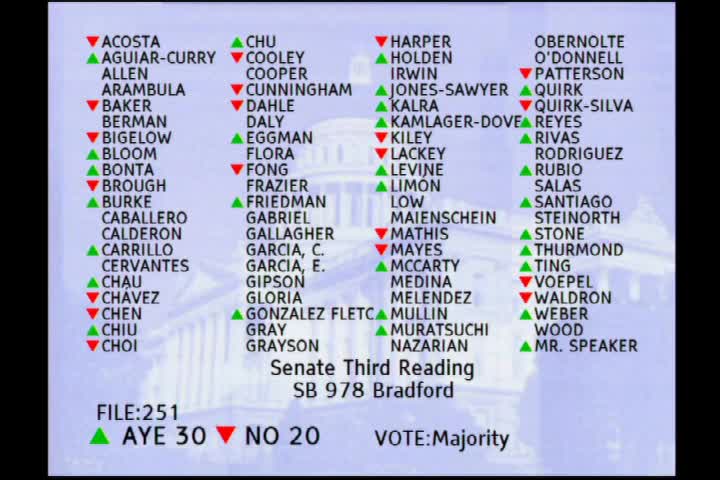

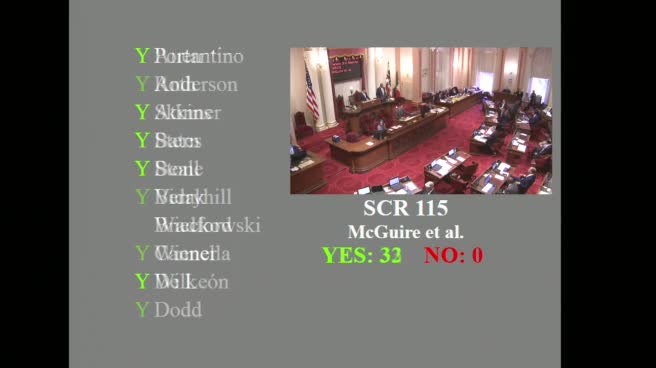
Bill Author

Bill Co-Author(s):