SB 1214: Personal income taxes: deductions: qualified teacher: professional development expenses.
- Session Year: 2017-2018
- House: Senate
- Latest Version Date: 2018-06-18
The Personal Income Tax Law, in modified conformity with federal income tax laws, allows various deductions from gross income in computing adjusted gross income under that law, including deductions for payments to individual retirement accounts, alimony payments, and interest on educational loans.
This bill, for each taxable year beginning on or after January 1, 2019, 2020, and before January 1, 2024, 2025, would allow as a deduction from gross income an amount equal to the amount paid or incurred, up to $2,500, for teacher professional development expenses by a qualified taxpayer during the taxable year for no more than 3 taxable years. The bill would provide that the deduction amount is $0 for each taxable year beginning on or after January 1, 2019, 2020, and before January 1, 2024, 2025, unless otherwise specified in any bill providing for appropriations related to the Budget Bill. The bill also would require the Legislature to review the deduction before January 1, 2024. 2025.
This bill would take effect immediately as a tax levy.
The Personal Income Tax Law, in modified conformity with federal income tax laws, allows various deductions from gross income in computing adjusted gross income under that law, including deductions for payments to individual retirement accounts, alimony payments, and interest on educational loans.
This bill, for each taxable year beginning on or after January 1, 2019, and before January 1, 2024, would allow as a deduction from gross income an amount equal to the amount paid or incurred, up to $2,500, for teacher professional development expenses by a qualified taxpayer during the taxable year for no more than 3 taxable years. The bill would provide that the deduction amount is $0 for each taxable year beginning on or after January 1, 2019, and before January 1, 2024, unless otherwise specified in a budget measure. any bill providing for appropriations related to the Budget Bill. The bill also would require the Legislature to review the deduction before January 1, 2024.
This bill would take effect immediately as a tax levy.
The Personal Income Tax Law, in modified conformity with federal income tax laws, allows various deductions from gross income in computing adjusted gross income under that law, including deductions for payments to individual retirement accounts, alimony payments, and interest on educational loans.
This bill, for each taxable year beginning on or after January 1, 2019, and before January 1, 2024, would allow as a deduction from gross income an amount equal to the amount paid or incurred, up to $2,500, for teacher professional development expenses by a qualified taxpayer during the taxable year for no more than 3 taxable years. The bill would provide that the deduction amount is $0 for each taxable year beginning on or after January 1, 2019, and before January 1, 2024, unless otherwise specified in a budget measure. The bill also would require the Legislature to review the deduction before January 1, 2024.
The bill would require its provisions to be implemented only upon an appropriation for its purposes in the annual Budget Act or other statute.This bill would take effect immediately as a tax levy.
The Personal Income Tax Law, in modified conformity with federal income tax laws, allows various deductions from gross income in computing adjusted gross income under that law, including deductions for payments to individual retirement accounts, alimony payments, and interest on educational loans.
This bill, for each taxable year beginning on or after January 1, 2019, and before January 1, 2024, would allow as a deduction from gross income an amount equal to the amount paid or incurred, up to $2,500, for teacher professional development expenses by a qualified taxpayer during the taxable year for no more than 3 taxable years. The bill also would require the Legislature to review the deduction before January 1, 2024.
The bill would require its provisions to be implemented only upon an appropriation for its purposes in the annual Budget Act or other statute.
This bill would take effect immediately as a tax levy.
The Personal Income Tax Law, in modified conformity with federal income tax laws, allows various deductions from gross income in computing adjusted gross income under that law, including deductions for payments to individual retirement accounts, alimony payments, and interest on educational loans.
This bill, for each taxable year beginning on or after January 1, 2019, and before January 1, 2024, would allow as a deduction from gross income an amount equal to the amount paid or incurred, up to $2,500, for teacher professional development expenses by a qualified taxpayer during the taxable year for no more than 3 taxable years. The bill also would require the Legislature to review the deduction before January 1, 2024.
This bill would take effect immediately as a tax levy.
(a)Section 62 of the Internal Revenue Code, relating to adjusted gross income defined, shall apply, except as otherwise provided.
(b)Section 62(a)(2)(D) of the Internal Revenue Code, relating to certain expenses of elementary and secondary school teachers, shall not apply.
(c)Section 62(a)(21) of the Internal Revenue Code, relating to attorneys fees relating to awards to whistleblowers, shall not apply.
(d)For each taxable year beginning on or after January 1, 2019, 2020, and before January 1, 2024, 2025, Section 62(a) of the Internal Revenue Code, relating to general rule, is modified to provide that the deduction under Section 17208 shall be allowed in determining adjusted gross income.
SEC. 2.Section 17208 is added to the Revenue and Taxation Code, to read:17208.(a)(1)For each taxable year beginning on or after January 1, 2019, 2020, and before January 1, 2024, 2025, subject to paragraph (2), there shall be allowed as a deduction an amount equal to the amount paid or incurred, not to exceed two thousand five hundred dollars ($2,500), for teacher professional development expenses by a qualified taxpayer during the taxable year.
(2)Unless otherwise specified in any bill providing for appropriations related to the Budget Bill, the deduction amount for each taxable year beginning on or after January 1, 2019, 2020, and before January 1, 2024, 2025, shall be zero dollars ($0).
(3)A deduction pursuant to this section may be allowed for no more than three taxable years.
(b)For purposes of this section:
(1)Qualified taxpayer means a taxpayer who meets all of the following requirements:
(A)Completed a teacher preparation program or fulfilled the requirements of the early completion option described in Section 44468 of the Education Code and is in possession of a preliminary general education (multiple or single subject) teaching credential or a preliminary special education teaching credential.
(B)Enrolled in a program, approved by the Commission on Teacher Credentialing, in order to earn a general education clear credential or an education specialist instruction clear credential.
(C)Is not otherwise reimbursed for the teacher professional development expenses.
(2)Second tier teaching credential program means a teacher induction program that leads to a clear teaching credential.
(3)Teacher professional development expenses means enrollment fees associated with the completion of a second tier teaching credential program, approved by the Commission on Teacher Credentialing.
(c)A deduction shall not be allowed under any other provision of this article for any amount paid or incurred for expenses allowed pursuant to subdivision (a).
(d)(1)The Franchise Tax Board may issue regulations necessary or appropriate to carry out the purposes of this section.
(2)The Administrative Procedure Act (Chapter 3.5 (commencing with Section 11340) of Part 1 of Division 3 of Title 2 of the Government Code) shall not apply to any rule, standard, criterion, guideline, procedure, determination, or notice established or issued by the Franchise Tax Board pursuant to this section.
(e)This section shall remain in effect only until December 1, 2024, 2025, and as of that date is repealed.
SEC. 3.The Legislature shall review the deduction described in Section 17208 of the Revenue and Taxation Code before January 1, 2024. 2025.
SEC. 4.This act provides for a tax levy within the meaning of Article IV of the California Constitution and shall go into immediate effect.
(a)Section 62 of the Internal Revenue Code, relating to adjusted gross income defined, shall apply, except as otherwise provided.
(b)Section 62(a)(2)(D) of the Internal Revenue Code, relating to certain expenses of elementary and secondary school teachers, shall not apply.
(c)Section 62(a)(21) of the Internal Revenue Code, relating to attorneys fees relating to awards to whistleblowers, shall not apply.
(d)For each taxable year beginning on or after January 1, 2019, and before January 1, 2024, Section 62(a) of the Internal Revenue Code, relating to general rule, is modified to provide that the deduction under Section 17208 shall be allowed in determining adjusted gross income.
SEC. 2.Section 17208 is added to the Revenue and Taxation Code, to read:17208.(a)(1)For each taxable year beginning on or after January 1, 2019, and before January 1, 2024, subject to paragraph (2), there shall be allowed as a deduction an amount equal to the amount paid or incurred, not to exceed two thousand five hundred dollars ($2,500), for teacher professional development expenses by a qualified taxpayer during the taxable year.
(2)Unless otherwise specified in any budget measure, bill providing for appropriations related to the Budget Bill, the deduction amount for each taxable year beginning on or after January 1, 2019, and before January 1, 2024, shall be zero dollars ($0).
(3)A deduction pursuant to this section may be allowed for no more than three taxable years.
(b)For purposes of this section:
(1)Qualified taxpayer means a taxpayer who meets all of the following requirements:
(A)Completed a teacher preparation program or fulfilled the requirements of the early completion option described in Section 44468 of the Education Code and is in possession of a preliminary general education (multiple or single subject) teaching credential or a preliminary special education teaching credential.
(B)Enrolled in a program, approved by the Commission on Teacher Credentialing, in order to earn a general education clear credential or an education specialist instruction clear credential.
(C)Is not otherwise reimbursed for the teacher professional development expenses.
(2)Second tier teaching credential program means a teacher induction program that leads to a clear teaching credential.
(3)Teacher professional development expenses means enrollment fees associated with the completion of a second tier teaching credential program, approved by the Commission on Teacher Credentialing.
(c)A deduction shall not be allowed under any other provision of this article for any amount paid or incurred for expenses allowed pursuant to subdivision (a).
(d)(1)The Franchise Tax Board may issue regulations necessary or appropriate to carry out the purposes of this section.
(2)The Administrative Procedure Act (Chapter 3.5 (commencing with Section 11340) of Part 1 of Division 3 of Title 2 of the Government Code) shall not apply to any rule, standard, criterion, guideline, procedure, determination, or notice established or issued by the Franchise Tax Board pursuant to this section.
(e)This section shall remain in effect only until December 1, 2024, and as of that date is repealed.
SEC. 3.The Legislature shall review the deduction described in Section 17208 of the Revenue and Taxation Code before January 1, 2024.
SEC. 4.This act provides for a tax levy within the meaning of Article IV of the California Constitution and shall go into immediate effect.
(a)Section 62 of the Internal Revenue Code, relating to adjusted gross income defined, shall apply, except as otherwise provided.
(b)Section 62(a)(2)(D) of the Internal Revenue Code, relating to certain expenses of elementary and secondary school teachers, shall not apply.
(c)Section 62(a)(21) of the Internal Revenue Code, relating to attorneys attorneys fees relating to awards to whistleblowers, shall not apply.
(d)For each taxable year beginning on or after January 1, 2019, and before January 1, 2024, Section 62(a) of the Internal Revenue Code Code, relating to general rule, is modified to provide that the deduction under Section 17208 shall be allowed in determining adjusted gross income.
SEC. 2.Section 17208 is added to the Revenue and Taxation Code, to read:17208.(a)(1)For each taxable year beginning on or after January 1, 2019, and before January 1, 2024, there shall be allowed as a deduction an amount equal to the amount paid or incurred, not to exceed two thousand five hundred dollars ($2,500), for teacher professional development expenses by a qualified taxpayer during the taxable year.
(2)Unless otherwise specified in any budget measure, the deduction amount for each taxable year beginning on or after January 1, 2019, and before January 1, 2024, shall be zero dollars ($0).
(2)(3)A deduction pursuant to this section may be allowed for no more than three taxable years.
(b)For purposes of this section:
(1)Qualified taxpayer means a taxpayer who meets all of the following requirements:
(A)Completed a teacher preparation program or fulfilled the requirements of the early completion option described in Section 44468 of the Education Code and is in possession of a preliminary general education (multiple or single subject) teaching credential or a preliminary special education teaching credential.
(B)Enrolled in a program, approved by the Commission on Teacher Credentialing, in order to earn a general education clear credential or an education specialist instruction clear credential.
(C)Is not otherwise reimbursed for the teacher professional development expenses.
(2)Second tier teaching credential program means a teacher induction program that leads to a clear teaching credential.
(3)Teacher professional development expenses means enrollment fees associated with the completion of a second tier teaching credential program, approved by the Commission on Teacher Credentialing.
(c)A deduction shall not be allowed under any other provision of this article for any amount paid or incurred for expenses allowed pursuant to subdivision (a).
(d)(1)The Franchise Tax Board may issue regulations necessary or appropriate to carry out the purposes of this section.
(2)The Administrative Procedure Act (Chapter 3.5 (commencing with Section 11340) of Part 1 of Division 3 of Title 2 of the Government Code) shall not apply to any rule, standard, criterion, guideline, procedure, determination, or notice established or issued by the Franchise Tax Board pursuant to this section.
(e)This section shall remain in effect only until December 1, 2024, and as of that date is repealed.
SEC. 3.The Legislature shall review the deduction described in Section 17208 of the Revenue and Taxation Code before January 1, 2024.
SEC. 4.(a)This act provides for a tax levy within the meaning of Article IV of the California Constitution and shall go into immediate effect.
(b)The provisions of this act shall be implemented only upon an appropriation for its purposes in the annual Budget Act or other statute.(a)Section 62 of the Internal Revenue Code, relating to adjusted gross income defined, shall apply, except as otherwise provided.
(b)Section 62(a)(2)(D) of the Internal Revenue Code, relating to certain expenses of elementary and secondary school teachers, shall not apply.
(c)Section 62(a)(21) of the Internal Revenue Code, relating to attorneys fees relating to awards to whistleblowers, shall not apply.
(d)Section For each taxable year beginning on or after January 1, 2019, and before January 1, 2024, Section 62(a) of the Internal Revenue Code is modified to provide that the deduction under Section 17208 shall be allowed in determining adjusted gross income.
SEC. 2.Section 17208 is added to the Revenue and Taxation Code, to read:17208.(a)(1)For each taxable year beginning on or after January 1, 2019, and before January 1, 2024, there shall be allowed as a deduction an amount equal to the amount paid or incurred, not to exceed two thousand five hundred dollars ($2,500), for teacher professional development expenses by a qualified taxpayer during the taxable year.
(2)A deduction pursuant to this section may be allowed for no more than three taxable years.
(b)For purposes of this section:
(1)Qualified taxpayer means a taxpayer who meets all of the following requirements:
(A)Completed a teacher preparation program or fulfilled the requirements of the early completion option described in Section 44468 of the Education Code and is in possession of a preliminary general education (multiple or single subject) teaching credential or a preliminary special education teaching credential.
(B)Enrolled in a program, approved by the Commission on Teacher Credentialing, in order to earn a general education clear credential or an education specialist instruction clear credential.
(C)Is not otherwise reimbursed for the teacher professional development expenses.
(2)Second tier teaching credential program means a teacher induction program that leads to a clear teaching credential.
(3)Teacher professional development expenses means enrollment fees associated with the completion of a second tier teaching credential program, approved by the Commission on Teacher Credentialing.
(c)A deduction shall not be allowed under any other provision of this article for any amount paid or incurred for expenses allowed pursuant to subdivision (a).
(d)(1)The Franchise Tax Board may issue regulations necessary or appropriate to carry out the purposes of this section.
(2)The Administrative Procedure Act (Chapter 3.5 (commencing with Section 11340) of Part 1 of Division 3 of Title 2 of the Government Code) shall not apply to any rule, standard, criterion, guideline, procedure, determination, or notice established or issued by the Franchise Tax Board pursuant to this section.
(e)This section shall remain in effect only until December 1, 2024, and as of that date is repealed.
SEC. 3.The Legislature shall review the deduction described in Section 17208 of the Revenue and Taxation Code before January 1, 2024.
SEC. 4.(a)This act provides for a tax levy within the meaning of Article IV of the California Constitution and shall go into immediate effect.
(b)The provisions of this act shall be implemented only upon an appropriation for its purposes in the annual Budget Act or other statute.
(a)Section 62 of the Internal Revenue Code, relating to adjusted gross income defined, shall apply, except as otherwise provided.
(b)Section 62(a)(2)(D) of the Internal Revenue Code, relating to certain expenses of elementary and secondary school teachers, shall not apply.
(c)Section 62(a)(21) of the Internal Revenue Code, relating to attorneys fees relating to awards to whistleblowers, shall not apply.
(d)Section 62(a) of the Internal Revenue Code is modified to provide that the deduction under Section 17208 shall be allowed in determining adjusted gross income.
SEC. 2.Section 17208 is added to the Revenue and Taxation Code, to read:17208.(a)(1)For each taxable year beginning on or after January 1, 2019, and before January 1, 2024, there shall be allowed as a deduction an amount equal to the amount paid or incurred, not to exceed two thousand five hundred dollars ($2,500), for teacher professional development expenses by a qualified taxpayer during the taxable year.
(2)A deduction pursuant to this section may be allowed for no more than three taxable years.
(b)For purposes of this section:
(1)Qualified taxpayer means a taxpayer who meets all of the following requirements:
(A)Completed a teacher preparation program or fulfilled the requirements of the early completion option described in Section 44468 of the Education Code and is in possession of a preliminary general education (multiple or single subject) teaching credential or a preliminary special education teaching credential.
(B)Enrolled in a program, approved by the Commission on Teacher Credentialing, in order to earn a general education clear credential or an education specialist instruction clear credential.
(C)Is not otherwise reimbursed for the teacher professional development expenses.
(2)Second tier teaching credential program means a teacher induction program that leads to a clear teaching credential.
(3)Teacher professional development expenses means enrollment fees associated with the completion of a second tier teaching credential program, approved by the Commission on Teacher Credentialing.
(c)A deduction shall not be allowed under any other provision of this article for any amount paid or incurred for expenses allowed pursuant to subdivision (a).
(d)(1)The Franchise Tax Board may issue regulations necessary or appropriate to carry out the purposes of this section.
(2)The Administrative Procedure Act (Chapter 3.5 (commencing with Section 11340) of Part 1 of Division 3 of Title 2 of the Government Code) shall not apply to any rule, standard, criterion, guideline, procedure, determination, or notice established or issued by the Franchise Tax Board pursuant to this section.
(e) This section shall remain in effect only until December 1, 2024, and as of that date is repealed.
SEC. 3.The Legislature shall review the deduction described in Section 17208 of the Revenue and Taxation Code before January 1, 2024.
SEC. 4.This act provides for a tax levy within the meaning of Article IV of the California Constitution and shall go into immediate effect.
|
Date
|
Status
|
|---|---|
| Aug 16, 2018 | August 16 hearing: Held in committee and under submission. |
| Aug 8, 2018 | August 8 set for first hearing. Placed on suspense file. |
| Jul 3, 2018 | From committee: Do pass and re-refer to Com. on APPR. (Ayes 9. Noes 0.) (July 2). Re-referred to Com. on APPR. |
| Jun 18, 2018 | From committee with author's amendments. Read second time and amended. Re-referred to Com. on REV. & TAX. |
| Jun 7, 2018 | Referred to Com. on REV. & TAX. |
| May 31, 2018 | In Assembly. Read first time. Held at Desk. |
| May 30, 2018 | Read third time. Passed. (Ayes 33. Noes 0.) Ordered to the Assembly. |
| May 29, 2018 | Read second time. Ordered to third reading. |
| May 25, 2018 | From committee: Do pass as amended. (Ayes 7. Noes 0.) (May 25). |
| May 23, 2018 | Set for hearing May 25. |
| May 22, 2018 | May 22 hearing: Placed on APPR. suspense file. |
| May 14, 2018 | Set for hearing May 22. |
| May 9, 2018 | Read second time and amended. Re-referred to Com. on APPR. |
| May 8, 2018 | From committee: Do pass as amended and re-refer to Com. on APPR. (Ayes 7. Noes 0.) (May 2). |
| Apr 17, 2018 | Set for hearing May 2. |
| Mar 19, 2018 | From committee with author's amendments. Read second time and amended. Re-referred to Com. on GOV. & F. |
| Mar 1, 2018 | Referred to Com. on GOV. & F. |
| Feb 16, 2018 | From printer. May be acted upon on or after March 18. |
| Feb 15, 2018 | Introduced. Read first time. To Com. on RLS. for assignment. To print. |
|
Date
|
Description
|
Location
|
Votes
|
|
|---|---|---|---|---|
| Jul 2, 2018 | Do pass and be re-referred to the Committee on [Appropriations] | Assembly Standing Committee on Revenue and Taxation |
Passed |
|
| May 30, 2018 | Senate 3rd Reading SB1214 Portantino | Senate Floor |
Passed |
|
| May 25, 2018 | Do pass as amended | Senate Standing Committee on Appropriations |
Passed |
|
| May 22, 2018 | Placed on suspense file | Senate Standing Committee on Appropriations |
Passed |
|
| May 2, 2018 | Do pass as amended, but first amend, and re-refer to the Committee on [Appropriations] | Senate Standing Committee on Governance and Finance |
Passed |
This list shows positions taken on this bill by organizations on the date displayed, which is linked to the original source.
Positions by individuals are not included.
|
Organization
|
Position
|
Date
|
|---|---|---|
| Association of Independent California Colleges and Universities | ** Support | Jun 29, 2018 |
| Association of Independent Colleges and Universities | ** Support | May 28, 2018 |
| California Association Of Private School Organizations | ** Support | May 28, 2018 |
| California Catholic Conference | ** Support | Jun 29, 2018 |
| California Federation Of Teachers | ** Support | Jun 29, 2018 |
| California State PTA | ** Support | Jun 29, 2018 |
| California Teachers Association | ** Against | Jun 29, 2018 |
| Catholic Church of California | * Support | May 2, 2018 |
| Pacific Union Conference. | ** Support | Apr 27, 2018 |
| Pasadena Unified School District | ** Support | May 28, 2018 |
| School Employers Association Of California | ** Support | May 28, 2018 |
| Teach+Plus | ** Support | May 28, 2018 |
| The California State University | ** Support | May 28, 2018 |
Date of Hearing: August 8, 2018
ASSEMBLY COMMITTEE ON APPROPRIATIONS
Lorena Gonzalez Fletcher, Chair
SBPCA Bill Id:SB 1214
Author:(Portantino) – As Amended Ver:June 18, 2018
Policy Committee: | Revenue and Taxation | Vote: | 9 - 0 |
|
| ||
|
|
Urgency: No State Mandated Local Program: No Reimbursable: No
SUMMARY:
This bill allows, for tax years 2020 through 2024, an above-the-line Personal Income Tax (PIT) deduction worth up to $2,500 for specified teacher development expenses.
FISCAL EFFECT:
Annual General Fund revenue loss of at least $100,000 in 2017-18, $200,000 in 2018-19, and $200,000 in 2019-20.
COMMENTS:
- Background and purpose. The traditional pathway to become a teacher in California involves two tiers of credentialing. A teacher receives their preliminary credential when they obtain a bachelor’s degree, complete a teacher preparation program, and pass the required tests. After they receive their preliminary credential, a clear credential is issued after the teacher completes a state-approved induction program and completes certain training programs.
According to the author, SB 1214 will support new teachers by helping them fulfill the requirements for receiving their clear credential. Proponents argue that graduate education can be costly for students, and this bill will incentivize more Californians to join the ranks of the teaching profession.
- Fiscal implications of tax expenditures. Existing law allows for various tax expenditures such as credits, deductions, exclusions, and exemptions for particular taxpayer groups. These features of the tax code can result in significant state costs through foregone tax revenue, and, in many cases, policymakers have little control over the revenue loss that occurs in any given year. As a result, many tax expenditure bills now include provisions designed to give the Legislature more control over costs. Examples of such provisions include placing a sunset date or making a bill’s provisions contingent upon a separate budget appropriation. SB 1214 includes a sunset date and makes default amount of the deduction equal to $0 unless an annual budget bill specifies otherwise, thereby allowing the Legislature to choose which years the deduction is available.
- Above-the-Line Deductions. SB 1214 creates an “above-the-line” deduction, which is a deduction that reduces adjusted gross income (AGI) and can be claimed by all taxpayers, regardless of whether they itemize their deductions or use the standard deduction. Examples of other above-the-line deductions include moving expenses, payments to individual retirement accounts, and paid interest on student loans. In contrast, a “below-the-line” deduction allows taxpayers to adjust their taxable income once AGI is calculated. Examples include the standard deduction and itemized deductions such as the mortgage interest deduction.
- How many teachers pay? According to data from the California Commission on Teaching Credentialing, the majority of programs do not charge teachers. The commission reports that in 2015-16, 11% of programs serving general education teachers charged the teachers a fee. In comparison, 28% of programs serving private school teachers charged a fee.
- Recent legislation. AB 586 (Holden), of the 2017-18 Legislative Session, similarly allows an above-the-line deduction for teacher development expenses. AB 586 was held on this committee’s Suspense File.
Analysis Prepared by: Luke Reidenbach / APPR. / (916) 319-2081
Date of Hearing: July 2, 2018
ASSEMBLY COMMITTEE ON REVENUE AND TAXATION
Autumn R. Burke, Chairwoman
SBPCA Bill Id:SB 1214
Author:(Portantino) – As Amended Ver:June 18, 2018
Majority vote. Tax levy. Fiscal committee.
SENATE VOTE: 36-0
SUBJECT: Personal income taxes: deductions: qualified teacher: professional development expenses
SUMMARY: Allows an "above-the-line" deduction for specified teacher professional development expenses. Specifically, this bill:
- Allows, for taxable years beginning on or after January 1, 2020, and before January 1, 2025, a deduction equal to the amount paid or incurred, not to exceed $2,500, for "teacher professional development expenses" by a "qualified taxpayer" during the taxable year.
- Provides that the deduction shall be allowed in determining adjusted gross income (AGI).
- Provides that the deduction is contingent upon an appropriation.
- Provides that the deduction shall be allowed for no more than 3 taxable years.
- Defines "teacher professional development expenses" as the enrollment fees associated with the completion of a second tier teaching credential program, approved by the Commission on Teacher Credentialing.
- Defines a "qualified taxpayer" as a taxpayer who meets all of the following requirements:
- Completed a teacher preparation program or fulfilled the requirements of the early completion option described in Education Code Section 44468 and is in possession of a preliminary general education (multiple or single subject) teaching credential or a preliminary special education teaching credential;
- Enrolled in a program, approved by the Commission on Teacher Credentialing, in order to earn a general education clear credential or an education specialist instruction clear credential; and,
- Is not otherwise reimbursed for the teacher professional development expenses.
- Defines "second tier teaching credential program" as a teacher induction program that leads to a clear teaching credential.
- Disallows a deduction under any other provision of the Personal Income Tax (PIT) Law for any amount paid or incurred for expenses allowed as a deduction under this bill.
- Authorizes the Franchise Tax Board (FTB) to issue regulations necessary or appropriate to carry out the administration of the deduction.
- Provides that the Administrative Procedure Act shall not apply to any rule, standard, criterion, guideline, procedure, determination, or notice established or issued by the FTB for the deduction.
- Repeals the provisions of this bill on December 1, 2025.
- Requires the Legislature to review this deduction before January 1, 2025.
- Takes effect immediately as a tax levy.
EXISTING FEDERAL LAW allows eligible educators to deduct up to $250 of the cost to purchase books, supplies, computer equipment, and supplementary materials used by the eligible educator in the classroom as an adjustment to gross income.
EXISTING STATE LAW:
- Allows, in modified conformity with federal income tax laws, various deductions from gross income in computing AGI under the PIT Law, including deductions for payments to individual retirement accounts, alimony payments, and interest on educational loans.
- Allow individuals to deduct certain expenses, such as medical expenses, charitable contributions, interest, and taxes, as itemized deductions.
FISCAL EFFECT: The FTB estimates General Fund (GF) revenue losses of $100,000 in fiscal year (FY) 2018-19, $200,000 in FY 2019-20, and $200,000 in FY 2020-21.
COMMENTS:
- The author has provided the following statement in support of this bill:
SB 1214 would assist all newly credentialed teachers with an individual tax "Above-The-Line-Deduction" for their teacher induction program expenses to fulfill the requirements for a California Clear Credential. Providing new K-12 teachers with such induction tax relief will empower them to succeed and remain in their profession as great educators of California's school children. This measure is the most cost-effective way to ensure greater induction support for all California's new teachers through every program approved by the Commission on Teacher Credentialing. This includes induction programs sponsored by Local Educational Agencies and those offered at colleges/universities across our state.
By supporting these beginning teachers who are now actively educating California's students – as well as those who may not be teaching right now, but will join or return to the classroom in the future – such tax relief would meaningfully increase California's supply of qualified and fully prepared educators.
Under SB 1214, the effect on state resources is extremely modest, yet the benefit for thousands of classroom teachers and their students would be substantial. Given its low fiscal note, it would have a negligible impact on Prop 98 funding statewide – and actually generate great General Fund support for education since it entirely focuses on improving classroom instruction of students.
- Proponents state that a "[g]raduate education can be costly for students, particularly for beginning teachers in California. Providing a tax deduction, for unreimbursed costs of clearing a teacher credential, is one way the state can incentivize more Californians to join the ranks of the teaching profession, by making their degree more financially attainable." Furthermore, "[u]nderrepresented students often find the cost of a program to be a barrier to attend. Financial incentives that help pay for a beginning teacher's education will also help diversify our classroom teachers."
- Opponents state that "[t]he granting of tax deductions, even for our members' benefit, reduces revenue to the State's General Fund, which in turn reduces Proposition 98 funding. Even a deduction of $2,500, if taken by solely two-thirds of our membership, which is approximately 200,000 educators, would total approximately $500 million in additional deductions."
- Committee Staff Comments:
- What is a "tax expenditure"? Existing law provides various credits, deductions, exclusions, and exemptions for particular taxpayer groups. In the late 1960s, U.S. Treasury officials began arguing that these features of the tax law should be referred to as "expenditures" since they are generally enacted to accomplish some governmental purpose and there is a determinable cost associated with each (in the form of foregone revenues). This bill would enact a new tax expenditure program in the form of an above-the-line deduction for professional development expenses.
- How is a tax expenditure different from a direct expenditure? As the Department of Finance notes in its annual Tax Expenditure Report, there are several key differences between tax expenditures and direct expenditures. First, tax expenditures are reviewed less frequently than direct expenditures once they are put in place. While this affords taxpayers greater financial predictability, it can also result in tax expenditures remaining a part of the tax code without demonstrating any public benefit. Second, there is generally no control over the amount of revenue losses associated with any given tax expenditure. Finally, it should also be noted that, once enacted, it takes a two-thirds vote to rescind an existing tax expenditure absent a sunset date, effectively resulting in a "one-way ratchet" whereby tax expenditures can be conferred by majority vote, but cannot be rescinded, irrespective of their cost or efficacy, without a supermajority vote.
This bill provides a number of safeguards that address issues raised by the Department of Finance in its annual Tax Expenditure Report. First, this deduction is contingent upon an appropriation in the budget. Without a budget bill authorizing this deduction, the deduction shall be $0. This provision accomplishes the goal of having the Legislature review the tax expenditure on an annual basis to ensure it remains effective, but also provides control over the amount of revenue losses associated with the deduction. Finally, this bill contains a five-year sunset.
- What is an above-the-line deduction? State law allows for the deduction of certain expenses from gross income when calculating a taxpayer's AGI, such as alimony payments and interest on education loans. Thus, all taxpayers with these types of expenses receive the benefit of the deduction regardless of whether the taxpayer itemizes deductions or uses the standard deduction. As such, "above-the-line" deductions are more desirable than itemized deductions because they are not generally phased out or subject to a floor like many itemized deductions. Additionally, above-the-line deductions lower the taxpayer's AGI, which can allow the taxpayer to qualify for additional tax benefits.
However, not every person receives the same benefit from a deduction. A deduction is generally more valuable to high-income taxpayers because the "value" of a deduction varies with the marginal tax rate (or tax bracket) of the taxpayer. For example, an individual taxpayer in a 10% tax bracket would receive a tax benefit of $10 on a $100 deduction. In contrast, a taxpayer in a 25% tax bracket would save $25 in tax out of every $100 deducted from gross income. Thus, assuming the same level of deductions, high-income taxpayers, presumably with a greater ability to pay taxes, would receive a greater tax benefit from the proposed deduction than the lower income taxpayer.
- Cost of credentials: According to the author's office, new teachers who have completed a teacher preparation program for a preliminary credential are required to participate in an induction program that fulfills their professional development. Specifically, teachers are required to complete the induction program in order to convert the preliminary credential to a "clear" or permanent credential within five years. Although California requires teachers to enroll in such a program, it does not require districts or schools to actually provide the training or cover the cost. The out-of-pocket cost to teachers can average $2,000 for local education agency institutions and as much as $5,000 at colleges or universities.
This bill would only cover the cost of the induction program required of teachers who have already completed a preparation program for a preliminary credential. The universe of beneficiaries is therefore limited to a group of individuals who have already invested a substantial amount of time and energy to join the teaching profession. As such, this bill appears to provide relief from the cost of attaining teaching credentials, and would probably not encourage new people to join the teaching profession. Sponsors of this bill have also stated that a percentage of individuals obtaining their teaching credential have the cost of their induction program reimbursed or covered by the educational institutions. If this bill were to be enacted, local education agencies, universities, and colleges may decide to shift the cost of the program to teachers or increase the cost of existing programs since part of the cost would now be subsidized by the state.
- Subsidizing private school teachers: It would appear that the tax expenditure benefit conferred by this bill would be available to both public and private school teachers. Advocates of providing a credit or deduction for public and private school teachers alike might argue that all new teachers should receive encouragement as they begin work in an inherently noble profession. Critics, however, might question why scarce GF moneys are being used to subsidize the training of teachers at private schools, especially given that tax expenditure programs tend to decrease the amount of funds available for public education in the first instance.
- Related legislation:
- AB 586 (Holden) allows a deduction for teacher development expenses. AB 586 was held on the Assembly Appropriations Committee's Suspense File.
- SB 807 (Stern) provides a tax credit for costs related to specific teacher training programs and provides an income exclusion for certain eligible teachers. SB 807 was held on the Senate Appropriations Committee's Suspense File.
- Prior Legislation: SB 413 (Knight), of the 2013-14 Legislative Session, would have created a personal income tax credit for qualifying science, technology, engineering, or mathematics teachers. SB 413 failed to passage in the Senate Governance and Finance Committee and was returned to the Secretary of the Senate.
REGISTERED SUPPORT / OPPOSITION:
Support
California Catholic Conference (Co-Sponsor)
California Federation of Teachers (Co-Sponsor)
Association of Independent California Colleges and Universities
California State PTA
Opposition
California Teachers Association
Analysis Prepared by: Carlos Anguiano / REV. & TAX. / (916) 319-2098
Office of Senate Floor Analyses (916) 651-1520 Fax: (916) 327-4478 | SB |
THIRD READING
Bill No: SB 1214
Amended: 5/25/18
SENATE GOVERNANCE & FIN. COMMITTEE: 7-0, 5/2/18
AYES: McGuire, Nguyen, Beall, Hernandez, Hertzberg, Lara, Moorlach
SENATE APPROPRIATIONS COMMITTEE: 7-0, 5/25/18
AYES: Lara, Bates, Beall, Bradford, Hill, Nielsen, Wiener
SOURCE: California Catholic Conference
California Federation of Teachers
DIGEST:
This bill creates a tax deduction for certain teacher professional development expenses.
Existing law:
- Provides various “above the line” deductions from gross income in determining adjusted gross income under the Personal Income Tax Law.
- Requires all new teachers to participate in an induction program to obtain their clear teaching credential.
This bill:
- Allows teachers to claim an “above the line” deduction of up to $2,500 for fees incurred or paid to complete an induction program, as specified.
- Requires teachers who claim the deduction meet all of the following requirements:
- Have either completed a teacher preparation program, or fulfilled the requirements of the early completion option and be in possession of either a preliminary general education teaching credential or a preliminary special education teacher credential.
- Have enrolled in an induction program, approved by the Commission on Teacher Credentialing , to earn either a general education clear credential or an education specialist instruction clear credential
- Is not otherwise reimbursed for the expenses.
- Allows teachers to claim the deduction for taxable years 2019 through 2023.
- Allows FTB to issue necessary regulations.
- Establishes that unless otherwise specified in any bill providing for appropriations related to the Budget Bill, the deduction will be $0.
Background
State law requires all new teachers to participate in an induction program. Between 1988 and 1992, the Commission on Teacher Credentialing (CTC) and the California Department of Education conducted a pilot study, known as the California New Teacher Project. The study demonstrated that the state could increase new teacher retention, success, and effectiveness by providing all new teachers with structured mentoring and support. Building off of the pilot’s findings, the Legislature established the Beginning Teacher Support and Assessment (BTSA) induction program in the 1992-93 state budget. At that time, the program was a grant funded voluntary program designed to support new teachers and was not a state requirement.
The successes of the grant program influenced the Legislature to enact SB 2042 (Alpert, 1998), which required all teachers to participate in an induction program as part of their teacher training. From 1995 until 2009, BTSA induction programs operated with dedicated annual funding based on a per-participating teacher allocation. However, in February 2009, the state provided local education agencies (LEAs) — such as school districts and charter schools — with spending flexibility. LEAs were given a block of funding to be used for about 40 categorical programs — including the BTSA induction program — and were allowed to allocate funding as they pleased. While the grants provided greater program funding flexibility for LEAs, it eliminated the dedicated funding source BTSA induction programs had. Over time, LEAs allocated less funding to BTSA induction programs, leaving teachers to pay out of pocket for induction program costs offered through colleges or universities.
Today, induction fee policies vary greatly around the state depending on the LEAs. Some LEAs continue to offer induction programs for free to their beginning teachers. Other LEAs allocate their funding blocks for other purposes, leaving teachers to pay out of pocket for programs offered through various colleges and universities. Additionally, some LEAs cap the number of new teachers their program accepts, resulting in inequities within a district as some new teachers receive induction services for free while others do not.
FISCAL EFFECT: Appropriation: Fiscal Com.: Local:
According to the Senate Appropriations Committee, “the Franchise Tax Board (FTB) estimates that the bill’s tax deduction would result in General Fund revenue losses of $100,000 in 2018-19, $200,000 in 2019-20, and $200,000 in 2020-21. FTB’s costs to implement the bill have yet been determined.”
California Catholic Conference (co-source)
California Federation of Teachers (co-source)
School Employers Association of California
Association of Independent Colleges and Universities
California Association of Private School Organizations
Pasadena Unified School District
California State PTA
Teach+Plus
The California State University
OPPOSITION: (Verified 5/25/18)
California Teachers Association
ARGUMENTS IN SUPPORT: According to the author, “Ensuring well-prepared and exceptionally qualified educators is the single most crucial strategy for providing students with an equitable and excellent education. Yet, learning in California’s classrooms is in peril by a widening shortage of professionally qualified teachers. SB 1214 would allow all newly credentialed teachers an individual tax deduction for professional development expenses to fulfill the requirements for a California Clear Credential, which empowers them to remain and advance in their profession as great educators.”
ARGUMENTS IN OPPOSITION: According to the California Teachers Association, “CTA believes adequate funding for public education is a necessity and respectfully opposes any reduction in revenue to the State’s General Fund which would reduce Proposition 98 funding. The granting of tax deductions, even for our members’ benefit, reduces revenue to the State’s General Fund, which in turn reduces Proposition 98 funding. Even a deduction of $2,500, if taken by solely two-thirds of our membership, which is approximately 200,000 educators, would total approximately $500 million in additional deductions. CTA has consistently opposed such tax deductions for a variety of corporations, individuals and causes due to the negative effect such tax credits would have on the General Fund and Proposition 98 funding.”
5/28/18 9:19:14
**** END ****
SENATE COMMITTEE ON APPROPRIATIONS
Senator Ricardo Lara, Chair
2017 - 2018 Regular Session
SB 1214 (Portantino) - Personal income taxes: deductions: qualified teacher: professional development expenses
Version: May 9, 2018 | Policy Vote: GOV. & F. 7 - 0 |
Urgency: No | Mandate: No |
Hearing Date: May 25, 2018 | Consultant: Robert Ingenito |
Bill Summary:
SB 1214 would create a tax deduction for certain teacher professional development expenses.
*********** ANALYSIS ADDENDUM – SUSPENSE FILE ***********
The following information is revised to reflect amendments
adopted by the committee on May 25, 2018
Fiscal Impact:
The Franchise Tax Board (FTB) estimates that the bill’s tax deduction would result in General Fund revenue losses of $100,000 in 2018-19, $200,000 in 2019-20, and $200,000 in 2020-21. FTB’s costs to implement the bill have yet to be determined.
Committee Amendments:
Provide that the deduction amount is $0 for each taxable year for 2019 through 2023 unless otherwise specified in any bill providing for appropriations related to the Budget Bill.
-- END --
SENATE COMMITTEE ON APPROPRIATIONS
Senator Ricardo Lara, Chair
2017 - 2018 Regular Session
SB 1214 (Portantino) - Personal income taxes: deductions: qualified teacher: professional development expenses
Version: May 9, 2018 | Policy Vote: GOV. & F. 7 - 0 |
Urgency: No | Mandate: No |
Hearing Date: May 22, 2018 | Consultant: Robert Ingenito |
This bill meets the criteria for referral to the Suspense File.
Bill Summary:
SB 1214 would create a tax deduction for certain teacher professional development expenses.
Fiscal Impact:
The Franchise Tax Board (FTB) estimates that the bill’s tax deduction would result in General Fund revenue losses of $100,000 in 2018-19, $200,000 in 2019-20, and $200,000 in 2020-21. FTB’s costs to implement the bill have yet to be determined.
Background:
Tax expenditure programs (TEPs) are special tax provisions that reduce the amount of revenues the “basic” tax system would otherwise generate in order to provide (1) benefits to certain groups of taxpayers, and/or (2) incentives to encourage certain types of behavior and activities, such as charitable giving. Specifically, current law provides for, among other things, various income and corporation tax credits and deductions, as well as exemptions from the sales and use tax. The Department of Finance is required to publish a list of TEPs (currently totaling several hundred), which currently $61 billion annually.
Both federal and state tax law allow for the deduction of certain expenses from gross income (known as “above the line” deductions) when calculating adjusted gross income (AGI). Examples include payments to individual retirement accounts, education loans, and alimony. Unlike other deductions, such as those for donations to charity and mortgage interest, taxpayers do not need to itemize to obtain the benefit of above the line deductions.
Federal tax law allows an “Educator Expense” deduction, which lets educators deduct up to $250 for both professional development expenses and materials used in the classroom that were personally purchased such as books, supplies, computer equipment, and supplementary materials. California tax law currently does not conform to this federal provision.
Proposed Law:
This bill would allow teachers to claim an above the line deduction of up to $2,500 for fees incurred or paid to complete an Induction program, as specified. To claim this deduction, teachers must meet all of the following requirements:
- Have either (1) completed a teacher preparation program, or (2) fulfilled the requirements of the early completion option and be in possession of either a preliminary general education teaching credential or a preliminary special education teacher credential.
- Have enrolled in an Induction program, approved by the Commission on Teacher Credentialing (CTC), to earn either a general education clear credential or an education specialist instruction clear credential
- Is not otherwise reimbursed for the expenses.
The deduction would apply to taxable years 2019 through 2023. FTB would be authorized to issue necessary regulations. The bill would specify that, unless otherwise specified in the Budget Act, bill related to the budget, or any other bill, the deduction amount for each taxable year would be $0.
Related Legislation:
AB 586 (Holden, 2017) was substantially similar to this bill. It was held under submission on the Suspense File of the Assembly Appropriations Committee.
Staff Comments:
Using data from CTC, FTB estimates that in 2015, there were 2,400 taxpayers that met the qualifications in this bill; they spent an average of $2,100 per year on teacher professional development expenses. FTB assumes that the number of qualified taxpayers would grow to 3,500 in taxable year 2019, and that each would incur average annual expenses in excess of the maximum of $2,500 each year, for a total of nearly $8.8 million in qualified teacher professional development expenses. The bill specifies that no other deduction shall be allowed for these expenses. To arrive at the offsetting tax effect of miscellaneous itemized deductions that would otherwise be allowed under current law, FTB estimated that qualified taxpayers would be able to deduct almost $900,000 in teacher professional development expenses. Therefore, the total expenses are reduced by $900,000 for miscellaneous itemized deductions that would no longer be allowed. Applying an average tax rate of 2.5 percent results in an estimated $200,000 revenue loss in 2019.
-- END --
SENATE COMMITTEE ON GOVERNANCE AND FINANCE
Senator Mike McGuire, Chair
2017 - 2018 Regular
Bill No: | SB 1214 | Hearing Date: | 5/2/18 |
Author: | Portantino | Tax Levy: | Yes |
Version: | 3/19/18 | Fiscal: | Yes |
Consultant: | Brown | ||
Personal income taxes: deductions: qualified teacher: professional development expenses
Allows teachers an above the line deduction for fees paid or incurred to complete an induction program approved by the Commission on Teacher Credentialing.
Background
Above the line deductions. Both federal and state laws allow for the deduction of certain expenses from gross income when calculating adjusted gross income (AGI). Some examples include moving expenses, education loans, certain ordinary and necessary trade and business expenses, and alimony. These are known as “above the line” deductions. Unlike other deductions, such as charitable deductions and mortgage interest deductions, all taxpayers with these types of expenses may take the corresponding deduction. In other words, the taxpayer does not need to itemize their deductions to obtain the benefit of that particular deduction.
Federal law allows an “Educator Expense” deduction, which lets educators deduct up to $250 for both professional development expenses and materials used in the classroom that were personally purchased such as books, supplies, computer equipment, and supplementary materials. California does not have a similar deduction for state tax purposes.
California’s Induction program. State law requires all new teachers to participate in an induction program. Between 1988 and 1992, the Commission on Teacher Credentialing (CTC) and the California Department of Education conducted a pilot study, known as the California New Teacher Project. The study demonstrated that the state could increase new teacher retention, success, and effectiveness by providing all new teachers with structured mentoring and support. Building off of the pilot’s findings, the Legislature established the Beginning Teacher Support and Assessment (BTSA) induction program in the 1992-93 state budget. At that time, the program was a grant funded voluntary program designed to support new teachers and was not a state requirement.
The successes of the grant program influenced the Legislature to enact SB 2042 (Alpert, 1998), which required all teachers to participate in an induction program as part of their teacher training. From 1995 until 2009, BTSA induction programs operated with dedicated annual funding based on a per-participating teacher allocation. However, in February 2009, the state provided local education agencies (LEAs) — such as school districts and charter schools — with spending flexibility. LEAs were given a block of funding to be used for about 40 categorical programs — including the BTSA induction program — and were allowed to allocate funding as they pleased. While the grants provided greater program funding flexibility for LEAs, it eliminated the dedicated funding source BTSA induction programs had. Over time, LEAs allocated less funding to BTSA induction programs, leaving teachers to pay out of pocket for induction program costs offered through colleges or universities.
Today, induction fee policies vary greatly around the state depending on the LEAs. Some LEAs continue to offer induction programs for free to their beginning teachers. Other LEAs allocate their funding blocks for other purposes, leaving teachers to pay out of pocket for programs offered through various colleges and universities. Additionally, some LEAs cap the number of new teachers their program accepts, resulting in inequities within a district as some new teachers receive induction services for free while others do not.
The author wants to alleviate the financial burden induction programs have on many of California’s new teachers.
Proposed Law
Senate Bill 1214 allows teachers to claim an above the line deduction —up to $2,500—for fees incurred or paid to complete an Induction program. To claim this deduction, teachers must meet all of the following requirements:
- Have completed a teacher preparation program; or fulfilled the requirements of the early completion option and in possession of either a preliminary general education teaching credential or a preliminary special education teacher credential;
- Have enrolled in an Induction program, approved by the Commission on Teacher Credentialing, to earn either a general education clear credential or an education specialist instruction clear credential; and
- Is not otherwise reimbursed for the expenses.
The deduction applies to the taxable years beginning on or after January 1st, 2019 and before January 1st, 2024. The Franchise Tax Board (FTB) may issue regulations necessary or appropriate to carry out the purposes of the deduction, and the Administrative Procedures Act does not apply.
State Revenue Impact
According to the FTB, SB 1214 results in revenue losses of $100,000 in fiscal year 2018-19, $200,000 in 2019-20, and $200,000 in 2020-21.
Comments
1. Purpose of the bill. According to the author, “Ensuring well-prepared and exceptionally qualified educators is the single most crucial strategy for providing students with an equitable and excellent education. Yet, learning in California’s classrooms is in peril by a widening shortage of professionally qualified teachers. SB 1214 would allow all newly credentialed teachers an individual tax deduction for professional development expenses to fulfill the requirements for a California Clear Credential, which empowers them to remain and advance in their profession as great educators.”
2. Revenue Loss. Existing tax law provides various credits, deductions, exclusions, and exemptions for certain taxpayers. Since these items are enacted to accomplish some governmental purpose and determined to have a cost — in the form of foregone revenues — State law refers to them as "expenditures." This bill would create a new tax expenditure, costing the General Fund $100,000 in the first year alone. As a result, the state will have to reduce spending or increase taxes to match the foregone revenue. The Committee may wish to consider whether SB 1214 is worth the tradeoff of spending cuts or raising taxes.
3. California’s teachers. California faces a severe teacher shortage. A 2016 report by the Learning Policy Institute, Addressing California’s Emerging Teacher Shortage: An Analysis of Sources and Solutions, estimated that California needs to hire 60,000 additional teachers to return to its pre-recession student-to-teacher ratio of 24:1. However, it’s hard to maintain needed staffing levels when prospective teachers decide not to enter the profession and new teachers decide to leave it. Two factors driving teacher retention are low pay and high educational costs. The California Department of Education’s report, Statewide Average Salaries and Expenditure Percentages for the School Accountability Report card: 2015-16, estimates a beginning elementary school teacher’s salary in California is $46,103. Additionally, many new teachers are saddled with the burden of paying for induction programs out of pocket, which can cost, on average, $2,000. Such expenses pose a substantial hardship for new teachers who serve at the lowest end of salary scales. Given the teacher shortage, the low salaries, and the high cost of induction programs, the Committee may wish to consider whether the state should be doing more to support its new teachers.
4. Right way? SB 1214 enacts a new tax expenditure to increase teacher recruitment and retention. However, tax expenditures are not the only strategy the Legislature can use to address this important issue and they come with a major drawback: Proposition 98 sets a minimum guarantee that the state must meet to support K-12 education, and tax expenditures reduce revenues used to calculate that guarantee. Additionally, Governor Brown has directed Career Technical Education to implement several initiatives aimed at enhancing teacher recruitment and retention. Over the last two years, these targeted investments have included, but are not limited to, the following:
- The Educator Effectiveness Block Grant, which provides $490 million one-time Proposition 98 General Fund moneys to support educator professional development;
- California Center on Teaching Careers, which provides $5 million one-time Proposition 98 General Fund moneys to support statewide teacher recruitment and retention efforts; and
- Classified School Employee Credentialing Grant Program, which provides $45 million one-time Proposition 98 General Fund moneys to support at least 2,250 classified employees electing to participate in a teacher preparation program and become certificated classroom teachers in California public schools.
Instead of enacting a tax expenditure, the Legislature could increase general revenues to boost the amount of the guarantee, increase funding for teacher salaries, or increase funding for the programs listed above designed to target teacher recruitment and retention efforts. Is a tax expenditure the best way to support new teachers, address the teacher shortage, and increase teacher retention rates?
5. Public versus private schools. SB 1214 provides a tax benefit that would be available to both public and private school teachers. Advocates of SB 1214 argue that the supply of qualified educators for both public and private schools is limited, and that all new teachers deserve support from the state. Critics, however, argue that tax expenditures decrease General Fund revenue available for public education. While the foregone revenue is being spent on training and supporting the state’s new teachers, not all of these teachers will teach at public schools for the entirety of their career. Some of these teachers will end up teaching in private schools while others will go back and forth between public and private institutions. Should the state be investing money in teacher development training when some of these teachers will work in private schools? The Committee may want to consider another alternative to support teachers — such as increased salaries for public school teachers — to help recruit, support, and retain quality teachers in the public education system.
6. Technical amendments. SB 1214 would benefit from clarifying language. Committee staff recommends the following technical amendment:
- On page 3, line 25, strikeout “The provisions of the act shall be implemented only upon an appropriation for its purposes in the annual Budget Act or other statute” and replace it with “Unless otherwise specified in the Budget Act, bill related to the budget, or any other bill, the deduction amount for each taxable year beginning on or after January 1st, 2019, shall be 0.”.
7. Related legislation. Assembly Bill 586 (Holden, 2017) was substantially similar to SB 1214 and passed the Assembly Revenue and Taxation Committee on April 17th, 2017 with a vote of 9 to 1. The Assembly Appropriations Committee held SB 586 on its suspense file.
Support and Opposition
(4/26/18)
Support: California Catholic Conference, Inc (co-sponsor); California Federation of Teachers (co-sponsor); Association of Independent California Colleges and Universities; California Association of Private School Organizations; Pasadena Unified School Districts; California State PTA.
Opposition: California Teachers Association.
-- END --
Discussed in Hearing
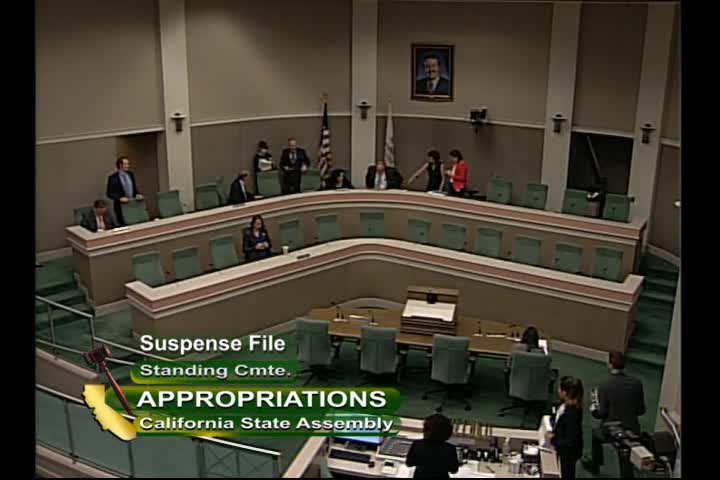 1H
Assembly Standing Committee on Appropriations
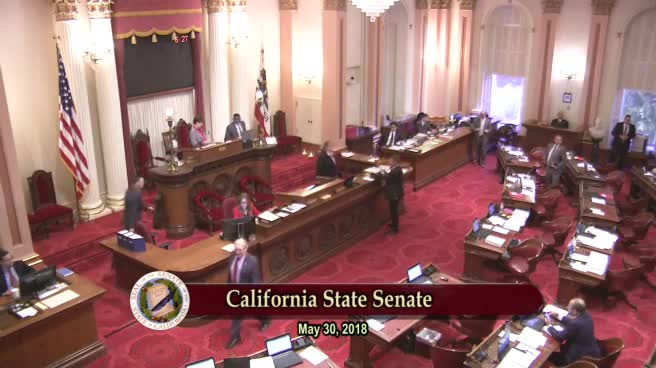 2MIN
Senate Floor
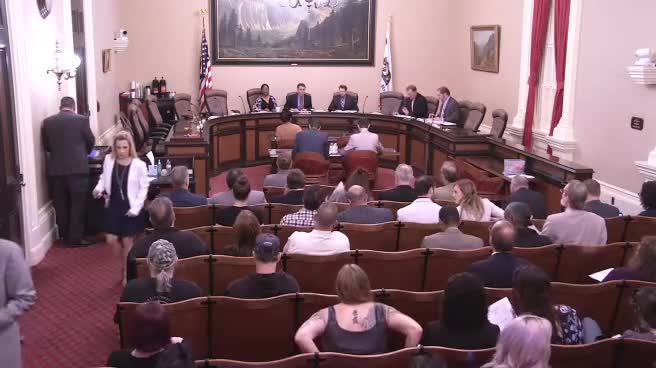 7MIN
Senate Standing Committee on Governance and Finance
Bill Author

Bill Co-Author(s):