SB 1219: Law enforcement: sharing data.
- Session Year: 2017-2018
- House: Senate
- Latest Version Date: 2018-02-15
Existing law, the California Values Act (act), prohibits, subject to exceptions, state and local law enforcement agencies, including school police and security departments, from using money or personnel to investigate, interrogate, detain, detect, or arrest persons for immigration enforcement purposes, as specified, and, subject to exceptions, proscribes other activities or conduct in connection with immigration enforcement by law enforcement agencies. The act requires, by October 1, 2018, the Attorney General, in consultation with the appropriate stakeholders, to publish model policies limiting assistance with immigration enforcement to the fullest extent possible for use by public schools, public libraries, health facilities operated by the state or a political subdivision of the state, and courthouses, among others. The act requires, among others, all public schools, health facilities operated by the state or a political subdivision of the state, and courthouses to implement the model policy, or an equivalent policy, and encourages other organizations and entities that provide services related to physical or mental health and wellness, education, or access to justice, including the University of California, to adopt the model policy. The act requires a law enforcement agency that chooses to participate in a joint law enforcement task force, as defined, to submit a report annually pertaining to task force operations to the Department of Justice, as specified. The act requires the Attorney General, by March 1, 2019, and annually thereafter, to report on the types and frequency of joint law enforcement task forces, and other information, as specified, and to post those reports on the Attorney Generals Internet Web site. The act requires law enforcement agencies to report to the department annually regarding transfers of persons to immigration authorities, and requires the Attorney General to publish guidance, audit criteria, and training recommendations regarding state and local law enforcement databases, for purposes of limiting the availability of information for immigration enforcement, as specified. The act requires the Department of Corrections and Rehabilitation to provide a specified written consent form in advance of any interview between a person in department custody and the United States Immigration and Customs Enforcement regarding civil immigration violations.
This bill would repeal those provisions.
Existing law authorizes local law enforcement to voluntarily cooperate with immigration officials if that cooperation is permitted by the act, and only for specific circumstances, including, among others, that the subject has been convicted within the last 15 years of specified offenses.
This bill would revise those provisions to allow local law enforcement to voluntarily cooperate with immigration officials by detaining an individual on the basis of an immigration hold, as defined, after that individual becomes eligible for release if that detention would not violate federal, state, or local law or local policy, and only for specific circumstances, including, among others, that the subject has been convicted at any time of specified offenses.
This bill would require, that when there is reason to believe a person may not be a citizen of the United States, and that person is arrested for specified drug offenses, including, among others, unauthorized possession or sale of cannabis, and possession of narcotics, the arresting agency to notify the appropriate agency of the United States having charge of deportation matters. By imposing additional duties on local law enforcement, this bill would impose a state-mandated local program.
The California Constitution requires the state to reimburse local agencies and school districts for certain costs mandated by the state. Statutory provisions establish procedures for making that reimbursement.
This bill would provide that, if the Commission on State Mandates determines that the bill contains costs mandated by the state, reimbursement for those costs shall be made pursuant to the statutory provisions noted above.
For purposes of this chapter, the following terms have the following meanings:
(a)Conviction shall have the same meaning as subdivision (d) of Section 667 of the Penal Code.
(b)Eligible for release from custody means that the individual may be released from custody because one of the following conditions has occurred:
(1)All criminal charges against the individual have been dropped or dismissed.
(2)The individual has been acquitted of all criminal charges filed against him or her.
(3)The individual has served all the time required for his or her sentence.
(4)The individual has posted a bond.
(5)The individual is otherwise eligible for release under state or local law, or local policy.
(c)Hold request, notification request, and transfer request have the same meanings as provided in Section 7283. Hold, notification, and transfer requests include requests issued by the United States Immigration and Customs Enforcement or the United States Customs and Border Protection as well as any other immigration authorities.(c)Immigration hold means an immigration detainer issued by an authorized immigration officer, pursuant to Section 287.7 of Title 8 of the Code of Federal Regulations, that requests that the law enforcement official maintain custody of the individual for a period not to exceed 48 hours, excluding Saturdays, Sundays, and holidays, and to advise the authorized immigration officer prior to the release of that individual.
(d)Law enforcement official means any local agency or officer of a local agency authorized to enforce criminal statutes, regulations, or local ordinances or to operate jails or to maintain custody of individuals in jails, and any person or local agency authorized to operate juvenile detention facilities or to maintain custody of individuals in juvenile detention facilities.
(e)Local agency means any city, county, city and county, special district, or other political subdivision of the state.
(f)Serious felony means any of the offenses listed in subdivision (c) of Section 1192.7 of the Penal Code and any offense committed in another state which, if committed in California, would be punishable as a serious felony as defined by subdivision (c) of Section 1192.7 of the Penal Code.
(g)Violent felony means any of the offenses listed in subdivision (c) of Section 667.5 of the Penal Code and any offense committed in another state which, if committed in California, would be punishable as a violent felony as defined by subdivision (c) of Section 667.5 of the Penal Code.
SEC. 2.Section 7282.5 of the Government Code is amended to read:7282.5.(a)A law enforcement official shall have discretion to cooperate with immigration authorities only if doing so would not violate any federal, state, or local law, or local policy, and where permitted by the California Values Act (Chapter 17.25 (commencing with Section 7284)). Additionally, the specific activities described in subparagraph (C) of paragraph (1) of subdivision (a) of, and in paragraph (4) of subdivision (a) of, Section 7284.6 shall only occur under the following circumstances:7282.5.(a)A law enforcement official shall have discretion to cooperate with federal immigration officials by detaining an individual on the basis of an immigration hold after that individual becomes eligible for release from custody only if the continued detention of the individual on the basis of the immigration hold would not violate any federal, state, or local law, or any local policy, and only under any of the following circumstances:
(1)The individual has been convicted of a serious or violent felony identified in subdivision (c) of Section 1192.7 of, or subdivision (c) of Section 667.5 of, the Penal Code.
(2)The individual has been convicted of a felony punishable by imprisonment in the state prison.
(3)The individual has been convicted within the past five years of a misdemeanor for a crime that is punishable as either a misdemeanor or a felony for, or has been convicted within the last 15 years at any time of a felony for, any of the following offenses:
(A)Assault, as specified in, but not limited to, Sections 217.1, 220, 240, 241.1, 241.4, 241.7, 244, 244.5, 245, 245.2, 245.3, 245.5, 4500, and 4501 of the Penal Code.
(B)Battery, as specified in, but not limited to, Sections 242, 243.1, 243.3, 243.4, 243.6, 243.7, 243.9, 273.5, 347, 4501.1, and 4501.5 of the Penal Code.
(C)Use of threats, as specified in, but not limited to, Sections 71, 76, 139, 140, 422, 601, and 11418.5 of the Penal Code.
(D)Sexual abuse, sexual exploitation, or crimes endangering children, as specified in, but not limited to, Sections 266, 266a, 266b, 266c, 266d, 266f, 266g, 266h, 266i, 266j, 267, 269, 288, 288.5, 311.1, 311.3, 311.4, 311.10, 311.11, and 647.6 of the Penal Code.
(E)Child abuse or endangerment, as specified in, but not limited to, Sections 270, 271, 271a, 273a, 273ab, 273d, 273.4, and 278 of the Penal Code.
(F)Burglary, robbery, theft, fraud, forgery, or embezzlement, as specified in, but not limited to, Sections 211, 215, 459, 463, 470, 476, 487, 496, 503, 518, 530.5, 532, and 550 of the Penal Code.
(G)Driving under the influence of alcohol or drugs, but only for a conviction that is a felony.
(H)Obstruction of justice, as specified in, but not limited to, Sections 69, 95, 95.1, 136.1, and 148.10 of the Penal Code.
(I)Bribery, as specified in, but not limited to, Sections 67, 67.5, 68, 74, 85, 86, 92, 93, 137, 138, and 165 of the Penal Code.
(J)Escape, as specified in, but not limited to, Sections 107, 109, 110, 4530, 4530.5, 4532, 4533, 4534, 4535, and 4536 of the Penal Code.
(K)Unlawful possession or use of a weapon, firearm, explosive device, or weapon of mass destruction, as specified in, but not limited to, Sections 171b, 171c, 171d, 246, 246.3, 247, 417, 417.3, 417.6, 417.8, 4574, 11418, 11418.1, 12021.5, 12022, 12022.2, 12022.3, 12022.4, 12022.5, 12022.53, 12022.55, 18745, 18750, and 18755 of, and subdivisions (c) and (d) of Section 26100 of, the Penal Code.
(L)Possession of an unlawful deadly weapon, under the Deadly Weapons Recodification Act of 2010 (Part 6 (commencing with Section 16000) of the Penal Code).
(M)An offense involving the felony possession, sale, distribution, manufacture, or trafficking of controlled substances.
(N)Vandalism with prior convictions, as specified in, but not limited to, Section 594.7 of the Penal Code.
(O)Gang-related offenses, as specified in, but not limited to, Sections 186.22, 186.26, and 186.28 of the Penal Code.
(P)An attempt, as defined in Section 664 of, or a conspiracy, as defined in Section 182 of, the Penal Code, to commit an offense specified in this section.
(Q)A crime resulting in death, or involving the personal infliction of great bodily injury, as specified in, but not limited to, subdivision (d) of Section 245.6 of, and Sections 187, 191.5, 192, 192.5, 12022.7, 12022.8, and 12022.9 of, the Penal Code.
(R)Possession or use of a firearm in the commission of an offense.
(S)An offense that would require the individual to register as a sex offender pursuant to Section 290, 290.002, or 290.006 of the Penal Code.
(T)False imprisonment, slavery, and human trafficking, as specified in, but not limited to, Sections 181, 210.5, 236, 236.1, and 4503 of the Penal Code.
(U)Criminal profiteering and money laundering, as specified in, but not limited to, Sections 186.2, 186.9, and 186.10 of the Penal Code.
(V)Torture and mayhem, as specified in, but not limited to, Section 203 of the Penal Code.
(W)A crime threatening the public safety, as specified in, but not limited to, Sections 219, 219.1, 219.2, 247.5, 404, 404.6, 405a, 451, and 11413 of the Penal Code.
(X)Elder and dependent adult abuse, as specified in, but not limited to, Section 368 of the Penal Code.
(Y)A hate crime, as specified in, but not limited to, Section 422.55 of the Penal Code.
(Z)Stalking, as specified in, but not limited to, Section 646.9 of the Penal Code.
(AA)Soliciting the commission of a crime, as specified in, but not limited to, subdivision (c) of Section 286 of, and Sections 653j and 653.23 of, the Penal Code.
(AB)An offense committed while on bail or released on his or her own recognizance, as specified in, but not limited to, Section 12022.1 of the Penal Code.
(AC)Rape, sodomy, oral copulation, or sexual penetration, as specified in, but not limited to, paragraphs (2) and (6) of subdivision (a) of Section 261 of, paragraphs (1) and (4) of subdivision (a) of Section 262 of, Section 264.1 of, subdivisions (c) and (d) of Section 286 of, subdivisions (c) and (d) of Section 288a of, and subdivisions (a) and (j) of Section 289 of, the Penal Code.
(AD)Kidnapping, as specified in, but not limited to, Sections 207, 209, and 209.5 of the Penal Code.
(AE)A violation of subdivision (c) of Section 20001 of the Vehicle Code.
(4)The individual is a current registrant on the California Sex and Arson Registry.
(5)The individual is arrested and taken before a magistrate on a charge involving a serious or violent felony, as identified in subdivision (c) of Section 1192.7 or subdivision (c) of Section 667.5 of the Penal Code, a felony punishable by imprisonment in state prison, or any felony listed in paragraph (2) or (3) other than domestic violence, and the magistrate makes a finding of probable cause as to that charge pursuant to Section 872 of the Penal Code.
(5)(6)The individual has been convicted of a federal crime that meets the definition of an aggravated felony as set forth in subparagraphs (A) to (P), inclusive, of paragraph (43) of subsection (a) of Section 101 of the federal Immigration and Nationality Act (8 U.S.C. Sec. 1101), or is identified by the United States Department of Homeland Securitys Immigration and Customs Enforcement as the subject of an outstanding federal felony arrest warrant.
(6)In no case shall cooperation occur pursuant to this section for individuals arrested, detained, or convicted of misdemeanors that were previously felonies, or were previously crimes punishable as either misdemeanors or felonies, prior to passage of the Safe Neighborhoods and Schools Act of 2014 as it amended the Penal Code.(b)In cases in which the individual is arrested and taken before a magistrate on a charge involving a serious or violent felony, as identified in subdivision (c) of Section 1192.7 or subdivision (c) of Section 667.5 of the Penal Code, respectively, or a felony that is punishable by imprisonment in state prison, and the magistrate makes a finding of probable cause as to that charge pursuant to Section 872 of the Penal Code, a law enforcement official shall additionally have discretion to cooperate with immigration officials pursuant to subparagraph (C) of paragraph (1) of subdivision (a) of Section 7284.6.(b)If none of the conditions listed in subdivision (a) are satisfied, an individual shall not be detained on the basis of an immigration hold after the individual becomes eligible for release from custody.
SEC. 3.Chapter 17.25 (commencing with Section 7284) of Division 7 of Title 1 of the Government Code, as added by Section 3 of Chapter 495 of the Statutes of 2017, is repealed.SEC. 4.Section 11369 is added to the Health and Safety Code, to read:11369.When there is reason to believe that any person arrested for a violation of Section 11350, 11351, 11351.5, 11352, 11353, 11355, 11357, 11359, 11360, 11361, 11363, 11366, 11368, or may not be a citizen of the United States, the arresting agency shall notify the appropriate agency of the United States having charge of deportation matters.
SEC. 5.If the Commission on State Mandates determines that this act contains costs mandated by the state, reimbursement to local agencies and school districts for those costs shall be made pursuant to Part 7 (commencing with Section 17500) of Division 4 of Title 2 of the Government Code.
|
Date
|
Status
|
|---|---|
| Apr 25, 2018 | April 24 set for second hearing. Failed passage in committee. (Ayes 2. Noes 4.) |
| Apr 18, 2018 | Set for hearing April 24. |
| Apr 17, 2018 | April 17 set for first hearing canceled at the request of author. |
| Apr 3, 2018 | Set for hearing April 17. |
| Mar 1, 2018 | Referred to Com. on PUB. S. |
| Feb 16, 2018 | From printer. May be acted upon on or after March 18. |
| Feb 15, 2018 | Introduced. Read first time. To Com. on RLS. for assignment. To print. |
|
Date
|
Description
|
Location
|
Votes
|
|
|---|---|---|---|---|
| Apr 24, 2018 | Do pass, but first be re-referred to the Committee on [Appropriations] | Senate Standing Committee on Public Safety |
Failed |
This list shows positions taken on this bill by organizations on the date displayed, which is linked to the original source.
Positions by individuals are not included.
|
Organization
|
Position
|
Date
|
|---|---|---|
| American Civil Liberties Union | * Against | Apr 24, 2018 |
| Asian Americans Advancing Justice California | * Against | Apr 24, 2018 |
| California Attorneys For Criminal Justice | * Support | Apr 24, 2018 |
| California Immigrant Policy Center | * Against | Apr 24, 2018 |
| California Public Defenders Association | * Against | Apr 24, 2018 |
| CHIRLA-Coalition for Humane Immigrant Rights | * Against | Apr 24, 2018 |
| Ella Baker Center For Human Rights | * Against | Apr 24, 2018 |
| Inquiring Into An Individual'S Immigration Status; | ** Against | Apr 23, 2018 |
| Jeff Adachi, San Francisco Public Defender | * Against | Apr 24, 2018 |
| Mexican-American Legal Defense and Educational Fund | * Against | Apr 24, 2018 |
| Orange County | * Against | Apr 24, 2018 |
| Participating In Border Patrol Activities, Including Warrantless Searches; | ** Against | Apr 16, 2018 |
| PURPOSE | ** Against | Apr 23, 2018 |
| Sacramento County Sheriff's Department | * Support | Apr 24, 2018 |
| Using Ice Agents As Interpreters; | ** Against | Apr 16, 2018 |
SENATE COMMITTEE ON PUBLIC SAFETY
Senator Nancy Skinner, Chair
2017 - 2018 Regular
Bill No: SB 1219 Hearing Date: April 24, 2018
Author: | Gaines | ||
Version: | February 15, 2018 | ||
Urgency: | No | Fiscal: | Yes |
Consultant: | GC | ||
Subject: Law Enforcement: Sharing Data
HISTORY
Source: Author
Prior Legislation: SB 54 (De Leon), Ch. 495, Stats. of 2017
AB 298 (Gallagher), 2017, failed in Assembly Public Safety
AB 1252 (Allen), 2017, failed in Assembly Public Safety
AB 4 (Ammiano), Ch. 570, Stats. of 2013
Support: Unknown
Opposition: American Civil Liberties Union; California Immigrant Policy Center; California Public Defenders Association; Drug Policy Alliance; Ella Baker Center for Human Rights; Root & Rebound
PURPOSE
The purpose of this bill is to repeal the California Values Act, which defines the circumstances under which law enforcement agencies (LEAs) may assist in the enforcement of federal immigration laws and participate in joint law enforcement task forces.
Existing law prohibits LEAs (including school police and security departments) from using resources to investigate, interrogate, detain, detect, or arrest people for immigration enforcement purposes. These provisions are commonly known as the Values Act. Restrictions include:
- Inquiring into an individual's immigration status;
- Detaining a person based on a hold request from ICE;
- Providing information regarding a person’s release date or responding to requests for notification by providing release dates or other information unless that information is available to the public;
- Providing personal information, as specified, including, but not limited to, name, social security number, home or work addresses, unless that information is “available to the public;”
- Arresting a person based on a civil immigration warrant;
- Participating in border patrol activities, including warrantless searches;
- Performing the functions of an immigration agent whether through agreements known as 287(g) agreements, or any program that deputizes police as immigration agents;
- Using ICE agents as interpreters;
- Transfer an individual to immigration authorities unless authorized by a judicial warrant or judicial probable cause determination, or except as otherwise specified;
- Providing office space exclusively for immigration authorities in a city or county law enforcement facility; and,
- Entering into a contract, after June 15, 2017, with the federal government to house or detain adult or minor non-citizens in a locked detention facility for purposes of immigration custody. (Gov. Code, § 7284.6, subd. (a).)
Existing law describes the circumstances under which a LEA has discretion to respond to transfer and notification requests from immigration authorities. These provisions are known as the TRUST Act. LEAs cannot honor transfer and notification requests unless one of the following apply:
- The individual has been convicted of a serious or violent felony, as specified;
- The individual has been convicted of any felony which is punishable by imprisonment in state prison;
- The individual has been convicted within the last five years of a misdemeanor for a crime that is punishable either as a felony or misdemeanor (a wobbler);
- The individual has been convicted within the past 15 years for any one of a list of specified felonies;
- The individual is a current registrant on the California Sex and Arson Registry;
- The individual has been convicted of a federal crime that meets the definition of an aggravated felony as specified in the federal Immigration and Nationality Act; or,
- The individual is identified by ICE as the subject of an outstanding federal felony arrest warrant for any federal crime; or,
- The individual is arrested on a charge involving a serious or violent felony, as specified, or a felony that is punishable by imprisonment in state prison, and a magistrate makes a finding of probable cause as to that charge. (Gov. Code, § 7282.5.)
Exisitng law provides that LEAs are able to participate in joint taskforces with the federal government only if the primary purpose of the joint task force is not immigration enforcement. Participating agencies must annually report to the California Department of Justice (DOJ) if there were immigration arrests as a result of task force operations. (Gov. Code, § 7284.6, subds. (b) & (c).)
Existing federal law prohibits the federal government from “conscripting” the states to enforce federal regulatory programs. (U.S. Const. Tenth Amend.)
Existing federal law provides that any authorized immigration officer may at any time issue Immigration Detainer-Notice of Action, to any other federal, state, or local law enforcement agency. A detainer serves to advise another law enforcement agency that the Department of Homeland Security (DHS) seeks custody of an “alien” presently in the custody of that agency, for the purpose of arresting and removing the alien. The detainer is a request that such agency advise the DHS, prior to release of the alien, in order for the DHS to arrange to assume custody, in situations when gaining immediate physical custody is either impracticable or impossible. (8 CFR § 287.7(a).)
Existing federal law states that upon a determination by the DHS to issue a detainer for an alien not otherwise detained by a criminal justice agency, such agency shall maintain custody of the alien for a period not to exceed 48 hours, excluding Saturdays, Sundays, and holidays in order to permit assumption of custody by the DHS. (8 CFR § 287.7(d).)
Existing federal law authorizes the Secretary of DHS to enter into agreements that delegate immigration powers to local police. The negotiated agreements between ICE and the local police are documented in memorandum of agreements (MOAs). (8 U.S.C. § 1357(g).)
This bill repeals the California Values Act, which defines the circumstances under which law enforcement agencies (LEAs) may assist in the enforcement of federal immigration laws and participate in joint law enforcement task forces.
This bill allows local law enforcement to voluntarily cooperate with immigration officials by detaining an individual on the basis of an immigration hold, as defined, after that individual becomes eligible for release if that detention would not violate federal, state, or local law or local policy, and only for specific circumstances, including, among others, that the subject has been convicted at any time of specified offenses.
This bill requires that when there is reason to believe a person may not be a citizen of the United States, and that person is arrested for specified drug offenses, including, among others, unauthorized possession or sale of cannabis, and possession of narcotics, the arresting agency to notify the appropriate agency of the United States having charge of deportation matters.
COMMENTS
- Need for This Bill
According to the author:
In 2018, as a result of 2017’s Senate Bill 54 (de Leon), California became the nation’s first and only so-called “Sanctuary State,” shielding illegal alien criminals from federal immigration authorities in most circumstances. In practice, this means that California’s state and local law enforcement agencies (excepting CDCR) are forbidden from any immigration enforcement activities, including responding to immigrations holds or detainers or transferring an individual to immigration authorities without a judicial warrant.
To reiterate, the Sanctuary policy enacted with SB 54 deals only with those illegal aliens who have violated California law, and committed some crime beyond illegal entry into the United States.
Local law enforcement agencies opposed the introduction of limitations on their data sharing because the restrictions are a threat to public safety. As stated by the California State Sheriff’s Association in their opposition letter to SB 54, the 2017 bill that created the restrictions:
“Our overarching concern remains that limiting local law enforcement’s ability to communicate and cooperate with federal law enforcement officers endangers public safety…SB 54 would preclude staff in our jails from notifying ICE, at their request, of the pending release of certain wanted, undocumented criminals – including, but not limited to, repeat drunk drivers, misdemeanor hit and run drivers, those who assault peace officers, serial thieves, animal abusers, chronic abusers of dangerous drugs such as methamphetamine and heroin, and known criminal gang members arrested for most misdemeanor crimes.”
Law enforcement at every level should be working together, seamlessly, with no restrictions, to ensure the highest level of public safety.
In addition, the data sharing restrictions have engendered a federal lawsuit against California, and have placed federal funds at risk.
- California Values Act
The Values Act, which became effective on January 1, 2018, limits the involvement of state and local LEAs in federal immigration enforcement. It prohibits law enforcement agencies (including school police and security departments) from using resources to investigate, interrogate, detain, detect, or arrest people for immigration enforcement purposes. It also places limitations on the ways in which LEAs can collaborate with immigration authorities.
The Values Act is an expansion of prior state law, the TRUST Act which prohibited law enforcement from honoring federal immigration holds unless the detainee had a criminal history involving a serious or violent felony.
After enactment of the Values Act, the federal government has sued the State of California alleging that the Act and two other state laws have made it impossible for federal immigration officials to do their jobs. The lawsuit alleges that the statutes “reflect a deliberate effort by California to obstruct the United States’ enforcement of federal immigration law” and “impede[s] consultation and communication between federal and state law enforcement officials.” (Benner & Medina, Trump Administration Sues California Over Immigration Laws, New York Times (March 6, 2018) <https://www.nytimes.com/2018/03/06/us/politics/justice-department-california-sanctuary-cities.html>.)
Recently, the Orange County Board of Supervisors has voted to join the Trump administration in the challenge to the state laws. (Kopetman, Orange County Votes to Join Trump Administration Lawsuit Against California Sanctuary Law, The Orange County Register (March 27, 2018) <https://www.ocregister.com/2018/03/27/orange-county-votes-to-join-lawsuit-against-california-sanctuary-law/>.)
This bill seeks to repeal the Values Act.
- Heightened Concerns of Intimidation of Immigrants
On January 25, 2017, President Trump signed Executive Order 13768, titled “Enhancing Public Safety in the Interior of the United States.” (https://www.whitehouse.gov/the-press-office/2017/01/25/presidential-executive-order-enhancing-public-safety-interior-united>.) The executive order vastly expanded the proportion of the immigrant population who face potential risk of deportation. The order prioritizes removal of aliens who: are convicted of any criminal offense; are charged with any criminal offense; and commit acts that constitute a chargeable offense.
Additionally, the executive order instructs officers to remove any illegal immigrant that poses “a risk to public safety or national security.” It increases resources for enforcement with 10,000 additional immigration officers. The executive order also withholds federal funding from “sanctuary jurisdictions” or states and cities that limit cooperation with federal immigration officers.
Since the enactment of Executive Order 13768, there have been accounts of immigration sweeps in which ICE agents have arrested people at places of employment, in court, and even at schools. (See e.g., http://www.latimes.com/local/lanow/la-me-ln-norcal-immigration-arrests-20180227-story.html ; https://www.scpr.org/news/2017/03/16/69965/california-justice-doesn-t-want-immigration-arrest/ ; http://www.latimes.com/local/lanow/la-me-immigration-school-20170303-story.html.)
- ICE Involvement Can Impede Cooperation Between Law Enforcement and the Community
A study by the University of Illinois – Chicago sought to assess police involvement in immigration enforcement impacted public safety and police-community relations. Latinos in Cook (Chicago), Harris (Houston), Los Angeles, and Maricopa (Phoenix) counties were surveyed on their perception of local law enforcement when there is police involvement in immigration enforcement. The results showed that “a substantial number of Latinos are less likely to voluntarily contact the police if they are a victim of a crime, or to provide information about a crime, because they are afraid the police will ask them or persons they know about their immigration status.” (Insecure Communities: Latino Perceptions of Police Involvement in Immigration Enforcement, Nik Theodore et al., (May 2013), p. 1 http://www.policylink.org/sites/default/files/INSECURE_COMMUNITIES_REPORT_FINAL.PDF)
Specifically, the study found that 44 percent of Latinos surveyed reported they are less likely to contact police officers if they have been the victim of a crime because they fear that police officers will use this interaction as an opportunity to inquire into their immigration status or that of people they know. (Id. at p. 6.) Likewise, 45 percent of Latinos surveyed stated that they are less likely to voluntarily offer information about crimes, and 45 percent are less likely to report a crime because they are afraid the police will ask them or people they know about their immigration status. And while undocumented immigrants are particularly fearful to contact law enforcement authorities if they were victims of a crime or to offer information relating to a crime; fear of police contact is not confined to immigrants; but rather, it is shared by US-born Latinos. (Ibid.)
- Honoring Immigration Holds
Previously, under the TRUST ACT, LEAs could detain an individual past their scheduled release date in response to a hold request from immigration if the detainee’s criminal history involved a serious or violent felony. The Values Act prohibited such detentions. (Gov. Code, § 7284.6, subd. (a)(1).) Now under the revised TRUST Act provisions, LEAs have discretion to honor transfer and notification requests if certain conditions are satisfied. These conditions include convictions for specified criminal offenses, or arrests for other specified criminal offenses in which a magistrate has made a finding of probable cause as to the charge. (Gov. Code, § 7282.5, subd. (a).)
This bill would once again allow LEAs to hold an individual past his or her release date for purposes of an immigration hold, if certain conditions are met. In addition, this bill would expand the conditions allowing cooperation for purposes of honoring such a hold. Specifically, this bill would eliminate the current washout period which allow cooperation based on an individual’s prior convictions. Also, this bill would allow cooperation based on arrests for a much broader list of crimes, as long as a magistrate has made a finding of probable cause as to the charge.
- Argument in Opposition
According to the American Civil Liberties Union:
SB 1219 is contrary to existing law that sets limits on local entanglement with federal immigration enforcement agencies and raises constitutional concerns. Starting in 2013, California began disentangling state and local public safety resources from the federal deportation system, after recognizing that this entanglement undercut immigrant communities’ confidence in law enforcement and undermined the public safety of all Californians. The TRUST Act (AB 4, Ammiano, 2013) ensured that people with low-level, non-violent misdemeanor offenses were not unnecessarily held for deportation and provided LEAs with discretion to not use scarce taxpayer dollars on immigration detainers. Last year, the Legislature and Governor Brown came together to enact the California Values Act, (SB 54, de Leon, 2017), which amongst other reforms included an absolute prohibition on LEAs honoring immigration detainers. While the Trump administration has recently filed a lawsuit challenging portions of SB 54 in federal court, this lawsuit notably does not challenge the provision of SB 54 that bans honoring immigration hold requests.
These reforms were enacted in response to the federal government’s controversial “Secure Communities” or “S-Comm” deportation program, which relied on immigration holds and detainers. In 2014, a federal court found S-Comm unconstitutional and in November 2014, the Obama Administration acknowledged its failures and dropped the program. See Miranda-Olivares v. Clackamas Cnty., No. 12-02317, 2014 WL 1414305, at *10 (D. Or. Apr. 11, 2014) (holding that plaintiff’s detention on an ICE detainer after she would otherwise have been released “constituted a new arrest, and must be analyzed under the Fourth Amendment;” and resulting in a $30,100 settlement). In January 2017, the Trump administration revered course, reinstated S-Comm, and significantly expanded enforcement actions. S-Comm operated in California as an indiscriminate mass deportation program that cost the state’s taxpayers $65 million annually.
California has already experienced the devastating fiscal and social impacts of allowing immigration detainers and has wisely set forth on a different course of limiting local law enforcement entanglement with federal immigration enforcement in a manner that advances the public safety and well-being of all California residents.
-- END –
SENATE COMMITTEE ON PUBLIC SAFETY
Senator Nancy Skinner, Chair
2017 - 2018 Regular
Bill No: SB 1219 Hearing Date: April 17, 2018
Author: | Gaines | ||
Version: | February 15, 2018 | ||
Urgency: | No | Fiscal: | Yes |
Consultant: | GC | ||
Subject: Law Enforcement: Sharing Data
HISTORY
Source: Author
Prior Legislation: SB 54 (De Leon), Ch. 495, Stats. of 2017
AB 298 (Gallagher), 2017, failed in Assembly Public Safety
AB 1252 (Allen), 2017, failed in Assembly Public Safety
AB 4 (Ammiano), Ch. 570, Stats. of 2013
Support: Unknown
Opposition: American Civil Liberties Union; California Immigrant Policy Center; California Public Defenders Association; Drug Policy Alliance; Ella Baker Center for Human Rights; Root & Rebound
PURPOSE
The purpose of this bill is to repeal the California Values Act, which defines the circumstances under which law enforcement agencies (LEAs) may assist in the enforcement of federal immigration laws and participate in joint law enforcement task forces.
Existing law prohibits LEAs (including school police and security departments) from using resources to investigate, interrogate, detain, detect, or arrest people for immigration enforcement purposes. These provisions are commonly known as the Values Act. Restrictions include:
- Inquiring into an individual's immigration status;
- Detaining a person based on a hold request from ICE;
- Providing information regarding a person’s release date or responding to requests for notification by providing release dates or other information unless that information is available to the public;
- Providing personal information, as specified, including, but not limited to, name, social security number, home or work addresses, unless that information is “available to the public;”
- Arresting a person based on a civil immigration warrant;
- Participating in border patrol activities, including warrantless searches;
- Performing the functions of an immigration agent whether through agreements known as 287(g) agreements, or any program that deputizes police as immigration agents;
- Using ICE agents as interpreters;
- Transfer an individual to immigration authorities unless authorized by a judicial warrant or judicial probable cause determination, or except as otherwise specified;
- Providing office space exclusively for immigration authorities in a city or county law enforcement facility; and,
- Entering into a contract, after June 15, 2017, with the federal government to house or detain adult or minor non-citizens in a locked detention facility for purposes of immigration custody. (Gov. Code, § 7284.6, subd. (a).)
Existing law describes the circumstances under which a LEA has discretion to respond to transfer and notification requests from immigration authorities. These provisions are known as the TRUST Act. LEAs cannot honor transfer and notification requests unless one of the following apply:
- The individual has been convicted of a serious or violent felony, as specified;
- The individual has been convicted of any felony which is punishable by imprisonment in state prison;
- The individual has been convicted within the last five years of a misdemeanor for a crime that is punishable either as a felony or misdemeanor (a wobbler);
- The individual has been convicted within the past 15 years for any one of a list of specified felonies;
- The individual is a current registrant on the California Sex and Arson Registry;
- The individual has been convicted of a federal crime that meets the definition of an aggravated felony as specified in the federal Immigration and Nationality Act; or,
- The individual is identified by ICE as the subject of an outstanding federal felony arrest warrant for any federal crime; or,
- The individual is arrested on a charge involving a serious or violent felony, as specified, or a felony that is punishable by imprisonment in state prison, and a magistrate makes a finding of probable cause as to that charge. (Gov. Code, § 7282.5.)
Exisitng law provides that LEAs are able to participate in joint taskforces with the federal government only if the primary purpose of the joint task force is not immigration enforcement. Participating agencies must annually report to the California Department of Justice (DOJ) if there were immigration arrests as a result of task force operations. (Gov. Code, § 7284.6, subds. (b) & (c).)
Existing federal law prohibits the federal government from “conscripting” the states to enforce federal regulatory programs. (U.S. Const. Tenth Amend.)
Existing federal law provides that any authorized immigration officer may at any time issue Immigration Detainer-Notice of Action, to any other federal, state, or local law enforcement agency. A detainer serves to advise another law enforcement agency that the Department of Homeland Security (DHS) seeks custody of an “alien” presently in the custody of that agency, for the purpose of arresting and removing the alien. The detainer is a request that such agency advise the DHS, prior to release of the alien, in order for the DHS to arrange to assume custody, in situations when gaining immediate physical custody is either impracticable or impossible. (8 CFR § 287.7(a).)
Existing federal law states that upon a determination by the DHS to issue a detainer for an alien not otherwise detained by a criminal justice agency, such agency shall maintain custody of the alien for a period not to exceed 48 hours, excluding Saturdays, Sundays, and holidays in order to permit assumption of custody by the DHS. (8 CFR § 287.7(d).)
Existing federal law authorizes the Secretary of DHS to enter into agreements that delegate immigration powers to local police. The negotiated agreements between ICE and the local police are documented in memorandum of agreements (MOAs). (8 U.S.C. § 1357(g).)
This bill repeals the California Values Act, which defines the circumstances under which law enforcement agencies (LEAs) may assist in the enforcement of federal immigration laws and participate in joint law enforcement task forces.
This bill allows local law enforcement to voluntarily cooperate with immigration officials by detaining an individual on the basis of an immigration hold, as defined, after that individual becomes eligible for release if that detention would not violate federal, state, or local law or local policy, and only for specific circumstances, including, among others, that the subject has been convicted at any time of specified offenses.
This bill requires that when there is reason to believe a person may not be a citizen of the United States, and that person is arrested for specified drug offenses, including, among others, unauthorized possession or sale of cannabis, and possession of narcotics, the arresting agency to notify the appropriate agency of the United States having charge of deportation matters.
COMMENTS
- Need for This Bill
According to the author:
In 2018, as a result of 2017’s Senate Bill 54 (de Leon), California became the nation’s first and only so-called “Sanctuary State,” shielding illegal alien criminals from federal immigration authorities in most circumstances. In practice, this means that California’s state and local law enforcement agencies (excepting CDCR) are forbidden from any immigration enforcement activities, including responding to immigrations holds or detainers or transferring an individual to immigration authorities without a judicial warrant.
To reiterate, the Sanctuary policy enacted with SB 54 deals only with those illegal aliens who have violated California law, and committed some crime beyond illegal entry into the United States.
Local law enforcement agencies opposed the introduction of limitations on their data sharing because the restrictions are a threat to public safety. As stated by the California State Sheriff’s Association in their opposition letter to SB 54, the 2017 bill that created the restrictions:
“Our overarching concern remains that limiting local law enforcement’s ability to communicate and cooperate with federal law enforcement officers endangers public safety…SB 54 would preclude staff in our jails from notifying ICE, at their request, of the pending release of certain wanted, undocumented criminals – including, but not limited to, repeat drunk drivers, misdemeanor hit and run drivers, those who assault peace officers, serial thieves, animal abusers, chronic abusers of dangerous drugs such as methamphetamine and heroin, and known criminal gang members arrested for most misdemeanor crimes.”
Law enforcement at every level should be working together, seamlessly, with no restrictions, to ensure the highest level of public safety.
In addition, the data sharing restrictions have engendered a federal lawsuit against California, and have placed federal funds at risk.
- California Values Act
The Values Act, which became effective on January 1, 2018, limits the involvement of state and local LEAs in federal immigration enforcement. It prohibits law enforcement agencies (including school police and security departments) from using resources to investigate, interrogate, detain, detect, or arrest people for immigration enforcement purposes. It also places limitations on the ways in which LEAs can collaborate with immigration authorities.
The Values Act is an expansion of prior state law, the TRUST Act which prohibited law enforcement from honoring federal immigration holds unless the detainee had a criminal history involving a serious or violent felony.
After enactment of the Values Act, the federal government has sued the State of California alleging that the Act and two other state laws have made it impossible for federal immigration officials to do their jobs. The lawsuit alleges that the statutes “reflect a deliberate effort by California to obstruct the United States’ enforcement of federal immigration law” and “impede[s] consultation and communication between federal and state law enforcement officials.” (Benner & Medina, Trump Administration Sues California Over Immigration Laws, New York Times (March 6, 2018) <https://www.nytimes.com/2018/03/06/us/politics/justice-department-california-sanctuary-cities.html>.)
Recently, the Orange County Board of Supervisors has voted to join the Trump administration in the challenge to the state laws. (Kopetman, Orange County Votes to Join Trump Administration Lawsuit Against California Sanctuary Law, The Orange County Register (March 27, 2018) <https://www.ocregister.com/2018/03/27/orange-county-votes-to-join-lawsuit-against-california-sanctuary-law/>.)
This bill seeks to repeal the Values Act.
- Heightened Concerns of Intimidation of Immigrants
On January 25, 2017, President Trump signed Executive Order 13768, titled “Enhancing Public Safety in the Interior of the United States.” (https://www.whitehouse.gov/the-press-office/2017/01/25/presidential-executive-order-enhancing-public-safety-interior-united>.) The executive order vastly expanded the proportion of the immigrant population who face potential risk of deportation. The order prioritizes removal of aliens who: are convicted of any criminal offense; are charged with any criminal offense; and commit acts that constitute a chargeable offense.
Additionally, the executive order instructs officers to remove any illegal immigrant that poses “a risk to public safety or national security.” It increases resources for enforcement with 10,000 additional immigration officers. The executive order also withholds federal funding from “sanctuary jurisdictions” or states and cities that limit cooperation with federal immigration officers.
Since the enactment of Executive Order 13768, there have been accounts of immigration sweeps in which ICE agents have arrested people at places of employment, in court, and even at schools. (See e.g., http://www.latimes.com/local/lanow/la-me-ln-norcal-immigration-arrests-20180227-story.html ; https://www.scpr.org/news/2017/03/16/69965/california-justice-doesn-t-want-immigration-arrest/ ; http://www.latimes.com/local/lanow/la-me-immigration-school-20170303-story.html.)
- ICE Involvement Can Impede Cooperation Between Law Enforcement and the Community
A study by the University of Illinois – Chicago sought to assess police involvement in immigration enforcement impacted public safety and police-community relations. Latinos in Cook (Chicago), Harris (Houston), Los Angeles, and Maricopa (Phoenix) counties were surveyed on their perception of local law enforcement when there is police involvement in immigration enforcement. The results showed that “a substantial number of Latinos are less likely to voluntarily contact the police if they are a victim of a crime, or to provide information about a crime, because they are afraid the police will ask them or persons they know about their immigration status.” (Insecure Communities: Latino Perceptions of Police Involvement in Immigration Enforcement, Nik Theodore et al., (May 2013), p. 1 http://www.policylink.org/sites/default/files/INSECURE_COMMUNITIES_REPORT_FINAL.PDF)
Specifically, the study found that 44 percent of Latinos surveyed reported they are less likely to contact police officers if they have been the victim of a crime because they fear that police officers will use this interaction as an opportunity to inquire into their immigration status or that of people they know. (Id. at p. 6.) Likewise, 45 percent of Latinos surveyed stated that they are less likely to voluntarily offer information about crimes, and 45 percent are less likely to report a crime because they are afraid the police will ask them or people they know about their immigration status. And while undocumented immigrants are particularly fearful to contact law enforcement authorities if they were victims of a crime or to offer information relating to a crime; fear of police contact is not confined to immigrants; but rather, it is shared by US-born Latinos. (Ibid.)
- Honoring Immigration Holds
Previously, under the TRUST ACT, LEAs could detain an individual past their scheduled release date in response to a hold request from immigration if the detainee’s criminal history involved a serious or violent felony. The Values Act prohibited such detentions. (Gov. Code, § 7284.6, subd. (a)(1).) Now under the revised TRUST Act provisions, LEAs have discretion to honor transfer and notification requests if certain conditions are satisfied. These conditions include convictions for specified criminal offenses, or arrests for other specified criminal offenses in which a magistrate has made a finding of probable cause as to the charge. (Gov. Code, § 7282.5, subd. (a).)
This bill would once again allow LEAs to hold an individual past his or her release date for purposes of an immigration hold, if certain conditions are met. In addition, this bill would expand the conditions allowing cooperation for purposes of honoring such a hold. Specifically, this bill would eliminate the current washout period which allow cooperation based on an individual’s prior convictions. Also, this bill would allow cooperation based on arrests for a much broader list of crimes, as long as a magistrate has made a finding of probable cause as to the charge.
- Argument in Opposition
According to the American Civil Liberties Union:
SB 1219 is contrary to existing law that sets limits on local entanglement with federal immigration enforcement agencies and raises constitutional concerns. Starting in 2013, California began disentangling state and local public safety resources from the federal deportation system, after recognizing that this entanglement undercut immigrant communities’ confidence in law enforcement and undermined the public safety of all Californians. The TRUST Act (AB 4, Ammiano, 2013) ensured that people with low-level, non-violent misdemeanor offenses were not unnecessarily held for deportation and provided LEAs with discretion to not use scarce taxpayer dollars on immigration detainers. Last year, the Legislature and Governor Brown came together to enact the California Values Act, (SB 54, de Leon, 2017), which amongst other reforms included an absolute prohibition on LEAs honoring immigration detainers. While the Trump administration has recently filed a lawsuit challenging portions of SB 54 in federal court, this lawsuit notably does not challenge the provision of SB 54 that bans honoring immigration hold requests.
These reforms were enacted in response to the federal government’s controversial “Secure Communities” or “S-Comm” deportation program, which relied on immigration holds and detainers. In 2014, a federal court found S-Comm unconstitutional and in November 2014, the Obama Administration acknowledged its failures and dropped the program. See Miranda-Olivares v. Clackamas Cnty., No. 12-02317, 2014 WL 1414305, at *10 (D. Or. Apr. 11, 2014) (holding that plaintiff’s detention on an ICE detainer after she would otherwise have been released “constituted a new arrest, and must be analyzed under the Fourth Amendment;” and resulting in a $30,100 settlement). In January 2017, the Trump administration revered course, reinstated S-Comm, and significantly expanded enforcement actions. S-Comm operated in California as an indiscriminate mass deportation program that cost the state’s taxpayers $65 million annually.
California has already experienced the devastating fiscal and social impacts of allowing immigration detainers and has wisely set forth on a different course of limiting local law enforcement entanglement with federal immigration enforcement in a manner that advances the public safety and well-being of all California residents.
-- END –
Discussed in Hearing
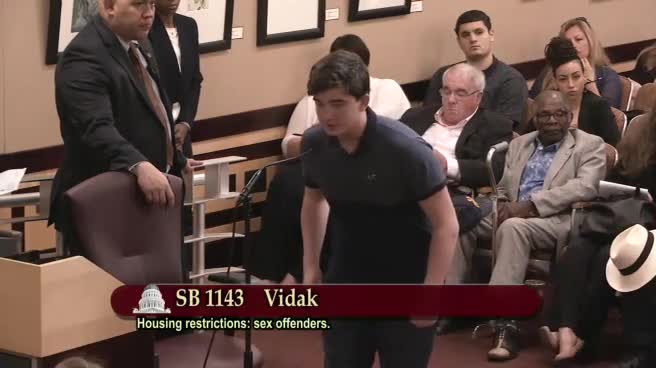 23MIN
Senate Standing Committee on Public Safety
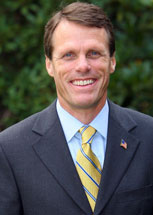
Bill Author
Bill Co-Author(s):