SB 1222: Use of vacuum or suction dredge equipment.
- Session Year: 2017-2018
- House: Senate
- Latest Version Date: 2018-02-15
Existing law prohibits the use of any vacuum or suction dredge equipment by any person in any river, stream, or lake of this state without a permit issued by the Department of Fish and Wildlife. Existing law requires the department to issue a permit if the department determines that the use does not cause any significant effects to fish and wildlife and would authorize the department to adjust the specified fee to an amount sufficient to cover all reasonable costs of the department in regulating suction dredging activities. Existing law prohibits the use of any vacuum or suction dredge equipment in any river, stream, or lake of this state until the Director of Fish and Wildlife makes a prescribed certification to the Secretary of State. Existing law authorizes the State Water Resources Control Board or a California regional water quality control board to adopt waste discharge requirements or a waiver of waste discharge requirements that address certain water quality impacts, specify conditions or areas where the discharge of waste or other adverse impacts on beneficial uses of the waters of the state from the use of vacuum or suction dredge equipment is prohibited, or prohibit particular use of, or methods of using, vacuum or suction dredge equipment, or any portion thereof, for the extraction of minerals, that the state board or a regional board determines generally cause or contribute to an exceedance of applicable water quality objectives or unreasonably impact beneficial uses. Existing law provides that for the purpose of these provisions that the use of vacuum or suction dredge equipment, also known as suction dredging, is the use of a mechanized or motorized system for removing or assisting in the removal of, or the processing of, material from the bed, bank, or channel of a river, stream or lake in order to recover minerals.
This bill would instead provide for the purpose of these provisions that the use of vacuum or suction dredge equipment means the use of any equipment that removes minerals and water in conjunction to process and recover minerals.
Existing law provides that the prohibitions and requirements relating to suction dredging do not apply to, prohibit, or otherwise restrict nonmotorized recreational mining activities, including panning for gold.
This bill would instead provide that the above-described prohibitions and requirements do not apply to, prohibit, or otherwise restrict any equipment that does not transport mineral bearing material through a suction or nozzle.
(a)The use of vacuum or suction dredge equipment by a person in a river, stream, or lake of this state is prohibited, except as authorized under a permit issued to that person by the department in compliance with the regulations adopted pursuant to Section 5653.9. Before a person uses vacuum or suction dredge equipment in a river, stream, or lake of this state, that person shall submit an application to the department for a permit to use the vacuum or suction dredge equipment, specifying the type and size of equipment to be used and other information as the department may require pursuant to regulations adopted by the department to implement this section.
(b)(1)The department shall not issue a permit for the use of vacuum or suction dredge equipment until the permit application is deemed complete. A complete permit application shall include any other permit required by the department and one of the following, as applicable:
(A)A copy of waste discharge requirements or a waiver of waste discharge requirements issued by the State Water Resources Control Board or a regional water quality control board in accordance with Division 7 (commencing with Section 13000) of the Water Code.
(B)A copy of a certification issued by the State Water Resources Control Board or a regional water quality control board and a permit issued by the United States Army Corps of Engineers in accordance with Sections 401 and 404 of the Federal Water Pollution Control Act (33 U.S.C. Secs. 1341 and 1344, respectively) to use vacuum or suction dredge equipment.
(C)If the State Water Resources Control Board or the appropriate regional water quality control board determines that waste discharge requirements, a waiver of waste discharge requirements, or a certification in accordance with Section 1341 of Title 33 of the United States Code is not necessary for the applicant to use of vacuum or suction dredge equipment, a letter stating this determination signed by the Executive Director of the State Water Resources Control Board, the executive officer of the appropriate regional water quality control board, or their designee.
(c)Under the regulations adopted pursuant to Section 5653.9, the department shall designate waters or areas wherein vacuum or suction dredge equipment may be used pursuant to a permit, waters or areas closed to the use of that equipment, the maximum size of the vacuum or suction dredge equipment that may be used, and the time of year when the equipment may be used. If the department determines, pursuant to the regulations adopted pursuant to Section 5653.9, that the use of vacuum or suction dredge equipment does not cause any significant effects to fish and wildlife, it shall issue a permit to the applicant. If a person uses vacuum or suction dredge equipment other than as authorized by a permit issued by the department consistent with regulations implementing this section, that person is guilty of a misdemeanor.
(d)(1)Except as provided in paragraph (2), the department shall issue a permit upon the payment, in the case of a resident, of a base fee of twenty-five dollars ($25), as adjusted under Section 713, when an onsite investigation of the project size is not deemed necessary by the department, and a base fee of one hundred thirty dollars ($130), as adjusted under Section 713, when the department deems that an onsite investigation is necessary. Except as provided in paragraph (2), in the case of a nonresident, the base fee shall be one hundred dollars ($100), as adjusted under Section 713, when an onsite investigation is not deemed necessary, and a base fee of two hundred twenty dollars ($220), as adjusted under Section 713, when an onsite investigation is deemed necessary.
(2)The department may adjust the base fees for a permit described in this subdivision to an amount sufficient to cover all reasonable costs of the department in regulating suction dredging activities.
(e)It is unlawful to possess a vacuum or suction dredge in areas, or in or within 100 yards of waters, that are closed to the use of vacuum or suction dredges.
(f)A permit issued by the department under this section shall not authorize an activity in violation of other applicable requirements, conditions, or prohibitions governing the use of vacuum or suction dredge equipment, including those adopted by the State Water Resources Control Board or a regional water quality control board. The department, the State Water Resources Control Board, and the regional water quality control boards shall make reasonable efforts to share information among the agencies regarding potential violations of requirements, conditions, or prohibitions governing the use of vacuum or suction dredge equipment.
(g)For purposes of this section and Section 5653.1, the use of vacuum or suction dredge equipment, also known as suction dredging, is the use of a mechanized or motorized system for removing or assisting in the removal of, or the processing of, material from the bed, bank, or channel of a river, stream, or lake in order to equipment means the use of any equipment that removes minerals and water in conjunction to process and recover minerals. This section and Section 5653.1 do not apply to, prohibit, or otherwise restrict nonmotorized recreational mining activities, including panning for gold. any equipment that does not transport mineral bearing material through a suction or nozzle.
SEC. 2.Section 13172.5 of the Water Code is amended to read:13172.5.(a)For purposes of this section, the use of any vacuum or suction dredge equipment, also known as suction dredging, is the use of a mechanized or motorized system for removing or assisting in the removal of, or the processing of, material from the bed, bank, or channel of a river, stream, or lake in order to equipment means the use of any equipment that removes minerals and water in conjunction to process and recover minerals. This section does not apply to, prohibit, or otherwise restrict nonmotorized recreational mining activities, including panning for gold. any equipment that does not transport mineral bearing material through a suction or nozzle.
(b)In order to protect water quality, the state board or a regional board may take one or more of the following actions:
(1)Adopt waste discharge requirements or a waiver of waste discharge requirements that, at a minimum, address the water quality impacts of each of the following:
(A)Mercury loading to downstream reaches of surface water bodies affected by the use of vacuum or suction dredge equipment.
(B)Methylmercury formation in water bodies.
(C)Bioaccumulation of mercury in aquatic organisms.
(D)Resuspension of metals.
(2)Specify certain conditions or areas where the discharge of waste or other adverse impacts on beneficial uses of the waters of the state from the use of vacuum or suction dredge equipment is prohibited, consistent with Section 13243.
(3)Prohibit any particular use of, or methods of using, vacuum or suction dredge equipment, or any portion thereof, for the extraction of minerals that the state board or a regional board determines generally cause or contribute to an exceedance of applicable water quality objectives or unreasonably impact beneficial uses.
(c)(1)Before determining what action to take pursuant to subdivision (b), the state board shall solicit stakeholder input by conducting public workshops in the vicinity of the cities of San Bernardino, Fresno, Sacramento, and Redding. A regional board considering independent action pursuant to subdivision (b) shall solicit stakeholder input by conducting at least one public workshop in that boards region. To promote participation in the public workshops, the state board or regional board shall proactively reach out to mining groups, environmental organizations, and California Native American tribes, as defined in Section 21073 of the Public Resources Code.
(2)Before taking a proposed action pursuant to subdivision (b), the state board or regional board shall conduct at least one public hearing regarding that proposed action pursuant to the Bagley-Keene Open Meeting Act (Article 9 (commencing with Section 11120) of Chapter 1 of Part 1 of Division 3 of Title 2 of the Government Code).
(3)To avoid duplication of efforts between the state board and a regional board of a public workshop or public hearing that covers the same regional area, the state board and a regional board may work in collaboration to share information obtained through the public workshops or public hearing.
|
Date
|
Status
|
|---|---|
| Apr 17, 2018 | April 16 set for first hearing. Testimony taken. Further hearing to be set. |
| Apr 17, 2018 | April 18 hearing postponed by committee. |
| Apr 6, 2018 | Set for hearing April 18 in EQ. pending receipt. |
| Mar 14, 2018 | Set for hearing April 16. |
| Mar 1, 2018 | Referred to Coms. on N.R. & W. and EQ. |
| Feb 16, 2018 | From printer. May be acted upon on or after March 18. |
| Feb 15, 2018 | Introduced. Read first time. To Com. on RLS. for assignment. To print. |
This list shows positions taken on this bill by organizations on the date displayed, which is linked to the original source.
Positions by individuals are not included.
|
Organization
|
Position
|
Date
|
|---|---|---|
| American Mining Rights Association | * Support | Apr 16, 2018 |
| American Mining Rights Association | ** Support | Apr 12, 2018 |
| American Mining Rights Association | * Support | Apr 16, 2018 |
| American Mining Rights Association | * Support | Apr 16, 2018 |
| California Sportfishing Protection Alliance | ** Against | Apr 12, 2018 |
| Center For Biological Diversity Inc | * Against | Apr 16, 2018 |
| Clean Water Action | ** Against | Apr 12, 2018 |
| Defenders Of Wildlife | ** Against | Apr 12, 2018 |
| Delta Gold Diggers | * Support | Apr 16, 2018 |
| Delta Gold Diggers | ** Support | Apr 12, 2018 |
| East Bay Prospectors | * Support | Apr 16, 2018 |
| Emerald Resource Group of California | * Support | Apr 16, 2018 |
| Environmental Law Foundation | ** Against | Apr 12, 2018 |
| Friends of the River | ** Against | Apr 12, 2018 |
| Gold Prospectors Association of America | * Support | Apr 16, 2018 |
| Gold Prospectors Association of America | * Support | Apr 16, 2018 |
| Gold Prospectors Association Of America | ** Support | Apr 12, 2018 |
| Gold Prospectors Association of America | * Support | Apr 16, 2018 |
| Herself | * Support | Apr 16, 2018 |
| Herself | * Support | Apr 16, 2018 |
| Herself | * Support | Apr 16, 2018 |
| Individuals | ** Support | Apr 12, 2018 |
| Karuk Tribe | ** Against | Apr 12, 2018 |
| Keene Engineering Company Inc. | ** Support | Apr 12, 2018 |
| Lost Dutchman's Mining Association | * Support | Apr 16, 2018 |
| Mariposa County Sheriff | ** Support | Apr 12, 2018 |
| Pacific Coast Federation Of Fishermen'S Associations | ** Against | Apr 12, 2018 |
| Pacific Crest Alliance | ** Support | Apr 12, 2018 |
| Pioneer Mining | * Support | Apr 16, 2018 |
| Proline Mining Equipment, Inc. | ** Support | Apr 12, 2018 |
| Riverside County Board of Supervisors | * Support | Apr 16, 2018 |
| Roaring Camp Mining Company | * Support | Apr 16, 2018 |
| Rural County Representatives of California | ** Support | Apr 12, 2018 |
| Sierra Club | * Against | Apr 16, 2018 |
| Sierra County Board of Supervisors | ** Support | Apr 12, 2018 |
| Sierra Fund | ** Against | Apr 12, 2018 |
| Small Gold Crafters | * Support | Apr 16, 2018 |
| The Sierra Fund | * Support | Apr 16, 2018 |
| The Sierra Fund | * Against | Apr 16, 2018 |
| Tom's Mining Supplies | * Support | Apr 16, 2018 |
| United Prospectors | * Support | Apr 16, 2018 |
| Western Mining Alliance | * Support | Apr 16, 2018 |
SENATE COMMITTEE ON NATURAL RESOURCES AND WATER
Senator Robert Hertzberg, Chair
2017 - 2018 Regular
Bill No: SB Hearing Date: April 16, 2018
Author: | Stone | ||
Version: | February 15, 2018 | ||
Urgency: | No | Fiscal: | Yes |
Consultant: | Dennis O'Connor | ||
Subject: Use of vacuum or suction dredge equipment
BACKGROUND AND EXISTING LAW
Suction dredging is a technique used by miners to remove matter from the bottom of waterways, extract minerals, and return the residue to the water. A high-powered suction hose vacuums loose material from the bottom of a streambed. Heavier matter, including gold, is separated at the surface by passage through a floating sluice box, and the excess water, sand, and gravel is discharged back into the waterway.
California has regulated suction dredging for the last half-century. As originally enacted, Fish and Game Code Section 5653 authorized the Department of Fish and Game, now known as the Department of Fish and Wildlife (DFW), to issue permits for suction dredging, so long as it determined the dredging would not harm fish. Operation of a suction dredge without, or in violation of the terms of, a permit was a misdemeanor. Later amendments gave DFW authority to designate particular waterways off-limits to suction dredging and made possession of a suction dredge near such waters unlawful.
In 2009, the Legislature enacted SB 670 (Wiggins), an urgency measure which imposed a temporary moratorium on issuing dredging permits pending further environmental review by DFW, the adoption of new regulations governing suction dredging, and the new regulations became operative. The bill was introduced in response to concerns that suction dredging disturbed endangered salmon habitats and contributed to mercury contamination of both fish and humans.
Two years later, the Legislature placed a June 30, 2016, sunset on the moratorium on issuing new permits in the event environmental review and new regulations were not complete by that date. The following year, 2012, DFW finished its environmental review but concluded it lacked regulatory authority to address fully the environmental impacts of suction dredging. DFW identified the following significant and unavoidable effects that could result from the use of vacuum or suction dredge equipment:
- The resuspension and discharge of mercury and trace metals.
- Increased turbidity and total suspended sediment.
- Substantial adverse changes, when considered statewide, in the significance of historical and unique archaeological resources.
- Effects on riparian habitat of special status passerines.
- Effects on nonfish wildlife species and their habitat.
- Exposure of the public to noise levels in excess of city or county standards.
With the completion of the environmental review in 2012, the Legislature:
- Removed the 2016 sunset on the moratorium;
- Left in place the other conditions for issuing new permits (the adoption of new regulations governing suction dredging, and the new regulations became operative); and
- Added additional conditions for the issuing of new permits, such as the new regulations would have to fully mitigate all identified significant environmental impacts, and the imposition of a fee structure that would fully cover all costs to DFW related to the administration of the program.
In 2015, the Legislature enacted SB 637 (Allen). That bill, among other things, authorized the State Water Resources Control Board (SWRCB) or regional water quality control board (regional board) to adopt waste discharge requirements that address water quality effects of suction dredge mining, and prohibited DFW from issuing a permit for suction dredge mining until the application is complete and includes all required permits.
In addition, SB 637 established a statutory definition of suction dredging in both FGC §5653 and CWC §13172.5, which state, in relevant part:
the use of any vacuum or suction dredge equipment, also known as suction dredging, is the use of a mechanized or motorized system for removing or assisting in the removal of, or the processing of, material from the bed, bank, or channel of a river, stream, or lake in order to recover minerals. This section does not apply to, prohibit, or otherwise restrict nonmotorized recreational mining activities, including panning for gold.
PROPOSED LAW
This bill would redefine suction dredging in both the Fish and Game Code and the California Water Code to read:
the use of any vacuum or suction dredge equipment means the use of any equipment that removes minerals and water in conjunction to process and recover minerals. This section does not apply to, prohibit, or otherwise restrict any equipment that does not transport mineral bearing material through a suction or nozzle.
ARGUMENTS IN SUPPORT
Supporters assert that “SB 637 was never intended to restrict all forms of mechanized mining. It pertained to the practice of suction dredge mining only.”
According to the author, “The unforeseen repercussions of this miss-definition has caused a tremendous burden and outright halt on other low impact methods of mining that have nothing to do with suction dredging. These miners who are directly affected by the lack of clarity have been forced to either relinquish their claims, their livelihoods, or face fines and penalties for trying to work and provide for their families. These miners contribute over $64,000 each to the local economies where they work, through their mere presence and contribute more through their successful findings of valuable minerals. SB 1222 protects the low impact methods of gold mining, while still enforcing the permits and restrictions on the high impact methods, such as suction dredging.”
ARGUMENTS IN OPPOSITION
Opponents contend “The language of SB 637 was very deliberately crafted in cooperation with [DFW] to define suction dredging as any ‘mechanized or motorized system for removing or assisting in the removal of, or the processing of material from the bed, bank, or channel of a river, stream, or lake in order to recover materials.’”
“The forms of small-scale mining covered under SB 637’s definition of suction dredging have well documented deleterious effects to water quality, wildlife and cultural resources, including:
- Altering fish habitat by changing the river bottom
- Reintroducing mercury that is left over from historic mining operation
- Exacerbating erosion and sediment problems, and
- Damaging Native American cultural sites.”
COMMENTS
What’s Changed? As noted in the arguments in opposition, the current definition established under SB 637 was designed to prohibit high banking and other mechanized mining techniques the supporters refer to as “low impact methods.” The statute appears to be working as the author and supporters of SB 637 intended.
Current definition appears to include a loop-hole. The current definition of “suction dredging” does ban mechanized suction dredged operations. However, it appears to allow non-mechanized vacuum systems known as “gravity mining,” “gravity dredging,” or “syphon dredging.” In such systems, 100+ feet of hose is laid out with one end upstream where the dredging is to take place and the other end downstream emptying into a sluice box or similar device to separate the gold from the other materials. With a drop of 10 feet or so, the suction from the syphon is usually more than sufficient to dredge the materials.
This bill proposes to close the loophole by eliminating non-vacuum systems from the definition and clarify that “suction dredging equipment” refers to any equipment that “removes minerals and water in conjunction to process and recover minerals.” Another option would be to have a two part definition that includes both mechanized systems and any suction or vacuum system. This would preserve the current definition and clearly ban non-motorized syphon dredges as well.
Double-referral The Rules Committee referred this bill to both the Committee on Natural Resources and Water and to the Committee on Environmental Quality. Therefore, if this bill passes this committee, it will be referred to the Committee on Environmental Quality, which will consider the issues within their jurisdiction.
SUGGESTED AMENDMENTS: None
SUPPORT
American Mining Rights Association
Delta Gold Diggers
Gold Prospectors Association of America
Keene Engineering Company Inc.
Mariposa County Sheriff
Pacific Crest Alliance
Proline Mining Equipment, Inc.
Riverside County Board of Supervisors
Rural County Representatives of California
Sierra County Board of Supervisors
Individuals (199)
OPPOSITION
California Sportfishing Protection Alliance
Center for Biological Diversity
Clean Water Action
Defenders of Wildlife
Environmental Law Foundation
Friends of the river
Karuk Tribe
Pacific Coast Federation of Fishermen’s Associations
Sierra Fund
-- END --
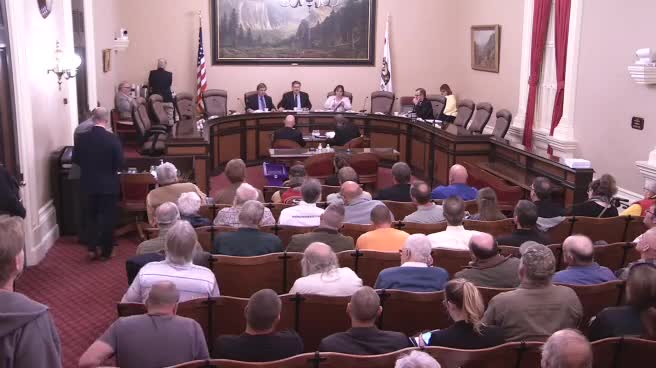
Discussed in Hearing
 1H
Senate Standing Committee on Natural Resources and Water
Bill Author

Bill Co-Author(s):