SB 1223: Construction industry: discrimination and harassment prevention policy.
- Session Year: 2017-2018
- House: Senate
- Latest Version Date: 2018-08-31
Existing law creates the Division of Labor Standards Enforcement (division) within the Department of Industrial Relations (department) and authorizes the division to investigate violations of, and to enforce the provisions of, the Labor Code that are not specifically vested in any other officer, board, or commission.
This bill would require the division to develop recommendations for an industry-specific harassment and discrimination prevention policy and training standard for use by employers in the construction industry, as defined. The bill would also require the department to convene an advisory committee by March 1, 2019, consisting of specified representatives from the construction industry and state agencies to assist the division in developing the policy. The bill would require the division to report to the Legislature by January 1, 2020, with recommendations for a harassment and discrimination prevention policy and training standard for the construction industry and recommendations for legislative implementation of such a standard.
Existing law creates the Division of Labor Standards Enforcement (division) within the Department of Industrial Relations (department) and authorizes the division to investigate violations of, and to enforce the provisions of of, the Labor Code that are not specifically vested in any other officer, board, or commission.
This bill would require the division to develop recommendations for an industry-specific harassment and discrimination prevention policy and training standard for use by employers in the construction industry, as defined. The bill would also require the department to convene an advisory committee by March 1, 2019, consisting of specified representatives from the construction industry and state agencies to assist the division in developing the policy. The bill would require the division to report to the Legislature by January 1, 2020, with recommendations for a harassment and discrimination prevention policy and training standard for the construction industry and recommendations for legislative implementation of such a standard.
Existing law creates the Division of Labor Standards Enforcement (division) within the Department of Industrial Relations (department) and authorizes the division to investigate violations of, and to enforce the provisions of the Labor Code that are not specifically vested in any other officer, board, or commission.
This bill would require the division to develop an industry-specific harassment and discrimination prevention policy and training standard for use by employers in the construction industry, as defined. The bill would also require the department to convene an advisory committee by March 1, 2019, consisting of specified representatives from the construction industry and state agencies to assist the division in developing the policy. The bill would require the division to report to the Legislature by January 1, 2020, with recommendations for a harassment and discrimination prevention policy and training standard for the construction industry and recommendations for implementation of such a standard.
Existing law establishes the Industrial Welfare Commission in the Department of Industrial Relations, which is composed of 2 representatives of organized labor, 2 representatives of employers, and one representative of the general public.This bill would make a nonsubstantive change to that membership provision.Existing law establishes the Industrial Welfare Commission in the Department of Industrial Relations, which is composed of 2 representatives of organized labor, 2 representatives of employers, and one representative of the general public.
This bill would make a nonsubstantive change to that membership provision.
(a)The Division of Labor Standards Enforcement shall develop recommendations for an industry-specific harassment and discrimination prevention policy and training standard for use by employers in the construction industry. For purposes of this subdivision, in the construction industry means performing work associated with construction, including work involving alteration, demolition, building, excavation, renovation, remodeling, maintenance, improvement, repair work, and any other work as described by Chapter 9 (commencing with Section 7000) of Division 3 of the Business and Professions Code. The training standard shall focus on preventing harassment and discrimination in the construction industry on the basis of sex, race, and national origin, in addition to the other categories protected under Section 12940 of the Government Code.
(b)To assist in developing this standard, the Director of Industrial Relations shall convene an advisory committee to recommend minimum standards for a harassment and discrimination prevention policy and training program specific to the construction industry. The advisory committee shall be composed of representatives from recognized or certified collective bargaining agents that represent construction workers, construction industry employers or employer associations, labor-management groups in the construction industry, nonprofit organizations that represent women in the construction industry, and other related subject matter experts, and shall also include representatives of the Division of Labor Standards Enforcement, the Division of Occupational Safety and Health, and the Department of Fair Employment and Housing. The director shall convene the advisory committee no later than March 1, 2019. The advisory committee shall consider the requirements of Section 12950.1 of the Government Code when developing the recommended minimum standard.
(c)The Division of Labor Standards Enforcement shall provide a report to the Legislature by no later than January 1, 2020, in compliance with Section 9795 of the Government Code, with recommendations for an industry-specific harassment and discrimination prevention policy and training standard for use by employers in the construction industry and recommendations for legislative implementation of such a standard.
(a)The Division of Labor Standards Enforcement shall develop recommendations for an industry-specific harassment and discrimination prevention policy and training standard for use by employers in the construction industry. For purposes of this subdivision, in the construction industry means performing work associated with construction, including work involving alteration, demolition, building, excavation, renovation, remodeling, maintenance, improvement, repair work, and any other work as described by Chapter 9 (commencing with Section 7000) of Division 3 of the Business and Professions Code. The training standard shall focus on preventing harassment and discrimination in the construction industry on the basis of sex, race, and national origin, in addition to the other categories protected under Section 12940 of the Government Code.
(b)To assist in developing this standard, the Director of Industrial Relations shall convene an advisory committee to recommend minimum standards for a harassment and discrimination prevention policy and training program specific to the construction industry. The advisory committee shall be composed of representatives from recognized or certified collective bargaining agents that represent construction workers, construction industry employers or employer associations, labor-management groups in the construction industry, nonprofit organizations that represent women in the construction industry, and other related subject matter experts, and shall also include representatives of the Division of Labor Standards Enforcement, the Division of Occupational Safety and Health, and the Department of Fair Employment and Housing. The Director director shall convene the advisory committee no later than March 1, 2019. The advisory committee shall consider the requirements of Section 12950.1 of the Government Code when developing the recommended minimum standard. The Division of Labor Standards Enforcement shall provide a report to the Legislature by no later than January 1, 2020, in compliance with Section 9795 of the Government Code, with recommendations for a harassment and discrimination prevention policy and training standard for the construction industry and recommendations for implementation of such a standard.
(c)The Division of Labor Standards Enforcement shall provide a report to the Legislature by no later than January 1, 2020, in compliance with Section 9795 of the Government Code, with recommendations for an industry-specific harassment and discrimination prevention policy and training standard for use by employers in the construction industry and recommendations for legislative implementation of such a standard.
REVISIONS: HeadingLine 2.(a)The Division of Labor Standards Enforcement shall develop an industry-specific harassment and discrimination prevention policy and training standard for use by employers in the construction industry. For purposes of this subdivision, in the construction industry means performing work associated with construction, including work involving alteration, demolition, building, excavation, renovation, remodeling, maintenance, improvement, repair work, and any other work as described by Chapter 9 (commencing with Section 7000) of Division 3 of the Business and Professions Code. The training standard shall focus on preventing harassment and discrimination in the construction industry on the basis of sex, race, and national origin, in addition to the other categories protected under Section 12940 of the Government Code.
(b)To assist in developing this standard, the Director of Industrial Relations shall convene an advisory committee to recommend minimum standards for a harassment and discrimination prevention policy and training program specific to the construction industry. The advisory committee shall be composed of representatives from recognized or certified collective bargaining agents that represent construction workers, construction industry employers or employer associations, labor-management groups in the construction industry, nonprofit organizations that represent women in the construction industry, and other related subject matter experts, and shall also include representatives of the Division of Labor Standards Enforcement, the Division of Occupational Safety and Health, and the Department of Fair Employment and Housing. The Director shall convene the advisory committee no later than March 1, 2019. The advisory committee shall consider the requirements of Section 12950.1 of the Government Code when developing the recommended minimum standard. The Division of Labor Standards Enforcement shall provide a report to the Legislature by no later than January 1, 2020, in compliance with Section 9795 of the Government Code, with recommendations for a harassment and discrimination prevention policy and training standard for the construction industry and recommendations for implementation of such a standard.
SECTION 1.Section 70.1 of the Labor Code is amended to read:70.1.The Industrial Welfare Commission shall be composed of two representatives of organized labor who are members of recognized labor organizations, two representatives of employers, and one member representative of the general public. The membership shall include members of both sexes.The Industrial Welfare Commission shall be composed of two representatives of organized labor who are members of recognized labor organizations, two representatives of employers, and one member representative of the general public. The membership shall include members of both sexes.
|
Date
|
Status
|
|---|---|
| Sep 30, 2018 | In Senate. Consideration of Governor's veto pending. |
| Sep 30, 2018 | Vetoed by the Governor. |
| Sep 6, 2018 | Enrolled and presented to the Governor at 4 p.m. |
| Aug 28, 2018 | Assembly amendments concurred in. (Ayes 39. Noes 0.) Ordered to engrossing and enrolling. |
| Aug 28, 2018 | In Senate. Concurrence in Assembly amendments pending. |
| Aug 27, 2018 | Read third time. Passed. Ordered to the Senate. |
| Aug 20, 2018 | Read second time. Ordered to third reading. |
| Aug 16, 2018 | From committee: Do pass. (Ayes 17. Noes 0.) (August 16). |
| Aug 8, 2018 | August 8 set for first hearing. Placed on suspense file. |
| Aug 6, 2018 | From committee with author's amendments. Read second time and amended. Re-referred to Com. on APPR. |
| Jun 21, 2018 | From committee: Do pass and re-refer to Com. on APPR. (Ayes 7. Noes 0.) (June 20). Re-referred to Com. on APPR. |
| Jun 11, 2018 | Referred to Com. on L. & E. |
| May 31, 2018 | In Assembly. Read first time. Held at Desk. |
| May 31, 2018 | Read third time. Passed. (Ayes 39. Noes 0.) Ordered to the Assembly. |
| May 29, 2018 | Ordered to special consent calendar. |
| May 25, 2018 | From committee: Do pass. (Ayes 7. Noes 0.) (May 25). |
| May 18, 2018 | Set for hearing May 25. |
| May 7, 2018 | May 7 hearing: Placed on APPR. suspense file. |
| Apr 27, 2018 | Set for hearing May 7. |
| Apr 25, 2018 | From committee: Do pass and re-refer to Com. on APPR. (Ayes 5. Noes 0.) (April 25). Re-referred to Com. on APPR. |
| Apr 13, 2018 | Set for hearing April 25. |
| Apr 4, 2018 | Re-referred to Com. on L. & I.R. |
| Mar 22, 2018 | From committee with author's amendments. Read second time and amended. Re-referred to Com. on RLS. |
| Mar 1, 2018 | Referred to Com. on RLS. |
| Feb 16, 2018 | From printer. May be acted upon on or after March 18. |
| Feb 15, 2018 | Introduced. Read first time. To Com. on RLS. for assignment. To print. |
|
Date
|
Description
|
Location
|
Votes
|
|
|---|---|---|---|---|
| Aug 28, 2018 | Unfinished Business SB1223 Galgiani et al. Concurrence | Senate Floor |
Passed |
|
| Aug 27, 2018 | SB 1223 Galgiani Senate Third Reading By CERVANTES | Assembly Floor |
Passed |
|
| Aug 16, 2018 | Do pass. | Assembly Standing Committee on Appropriations |
Passed |
|
| Jun 20, 2018 | Do pass and be re-referred to the Committee on [Appropriations] | Assembly Standing Committee on Labor and Employment |
Passed |
|
| May 31, 2018 | Special Consent SB1223 | Senate Floor |
Passed |
|
| May 25, 2018 | Do pass | Senate Standing Committee on Appropriations |
Passed |
|
| May 7, 2018 | Placed on suspense file | Senate Standing Committee on Appropriations |
Passed |
|
| Apr 25, 2018 | Do pass, but first be re-referred to the Committee on [Appropriations] | Senate Standing Committee on Labor and Industrial Relations |
Passed |
This list shows positions taken on this bill by organizations on the date displayed, which is linked to the original source.
Positions by individuals are not included.
|
Organization
|
Position
|
Date
|
|---|---|---|
| Associated Builders And Contractors Of Northern California | ** Support | Oct 9, 2018 |
| California Labor Federation | * Support | Jun 20, 2018 |
| International Union Of Painters And Allied Trades | * Support | Apr 25, 2018 |
| Service Employees International Union | * Support | Apr 25, 2018 |
| State Building and Construction Trades Council | ** Support | Oct 9, 2018 |
Office of Senate Floor Analyses (916) 651-1520 Fax: (916) 327-4478 | SB |
VETO
Bill No: SB 1223
:
SENATE LABOR & IND. REL. COMMITTEE: 5-0, 4/25/18
AYES: Pan, Stone, Jackson, Mitchell, Wieckowski
SENATE APPROPRIATIONS COMMITTEE: 7-0, 5/25/18
AYES: Lara, Bates, Beall, Bradford, Hill, Nielsen, Wiener
SENATE FLOOR: 39-0, 5/31/18
AYES: Allen, Anderson, Atkins, Bates, Beall, Berryhill, Bradford, Cannella, De León, Dodd, Fuller, Gaines, Galgiani, Glazer, Hernandez, Hertzberg, Hill, Hueso, Jackson, Lara, Leyva, McGuire, Mitchell, Monning, Moorlach, Morrell, Newman, Nguyen, Nielsen, Pan, Portantino, Roth, Skinner, Stern, Stone, Vidak, Wieckowski, Wiener, Wilk
SENATE FLOOR: 39-0, 8/28/18
AYES: Allen, Anderson, Atkins, Bates, Beall, Bradford, Cannella, Chang, De León, Delgado, Dodd, Fuller, Gaines, Galgiani, Glazer, Hernandez, Hertzberg, Hill, Hueso, Jackson, Lara, Leyva, McGuire, Mitchell, Monning, Moorlach, Morrell, Nguyen, Nielsen, Pan, Portantino, Roth, Skinner, Stern, Stone, Vidak, Wieckowski, Wiener, Wilk
NO VOTE RECORDED: Berryhill
ASSEMBLY FLOOR: 80-0, 8/27/18 - See last page for vote
SOURCE: State Building and Construction Trades Council
DIGEST:
This bill instructs the Division of Labor Standards Enforcement (DLSE) to develop recommendations for an industry-specific harassment and discrimination prevention policy for the construction industry.
Existing law:
- Establishes within the Department of Industrial Relations (DIR) the Division of Fair Labor Standards Enforcement, which is tasked with administering and enforcing labor code provisions concerning wages, hours and working conditions. (Labor Code §56)
- Defines “Labor standards” to mean any legal requirements regarding wages paid, hours worked, and other conditions of employment for the purposes of the jurisdiction of DLSE. (Labor Code §61)
- Prohibits an employer from paying any of its employees at wage rates less than the rates paid to employees of the opposite sex for substantially similar work, except where the employer demonstrates the wage differential is based upon a seniority system, a merit system, a system that measures earnings by quantity or quality of production or a bona fide factor other than sex, such as education, training, or experience. (Labor Code §1197.5)
- Prohibits an employer, because of the race, religious creed, color, national origin, ancestry, physical disability, mental disability, medical condition, genetic information, marital status, sex, gender, gender identity, gender expression, age, sexual orientation, or military and veteran status of any person, to refuse to hire or employ the person or to refuse to select the person for a training program leading to employment, or to bar or to discharge the person from employment or from a training program leading to employment, or to discriminate against the person in compensation or in terms, conditions, or privileges of employment. (Government Code §12940)
- Prohibits any person from discriminating against any person in the selection, termination, training, or other terms or treatment of that person in any apprenticeship training program, any other training program leading to employment, an unpaid internship, or another limited duration program to provide unpaid work experience for that person because of the race, religious creed, color, national origin, ancestry, physical disability, mental disability, medical condition, genetic information, marital status, sex, gender, gender identity, gender expression, age, sexual orientation, or military and veteran status of the person discriminated against. (Government Code §12940)
- Prohibits an employer, labor organization, employment agency, apprenticeship training program or any training program leading to employment, or any other person, because of race, religious creed, color, national origin, ancestry, physical disability, mental disability, medical condition, genetic information, marital status, sex, gender, gender identity, gender expression, age, sexual orientation, or military and veteran status, to harass an employee, an applicant, an unpaid intern or volunteer, or a person providing services pursuant to a contract. (Government Code §12940)
- Prohibits the harassment of an employee, an applicant, an unpaid intern or volunteer, or a person providing services pursuant to a contract by an employee, other than an agent or supervisor, is unlawful if the entity, or its agents or supervisors, knows or should have known of this conduct and fails to take immediate and appropriate corrective action. (Government Code §12940)
- States that an employer may also be responsible for the acts of nonemployees, with respect to sexual harassment of employees, applicants, unpaid interns or volunteers, or persons providing services pursuant to a contract in the workplace, if the employer, or its agents or supervisors, knows or should have known of the conduct and fails to take immediate and appropriate corrective action. Loss of tangible job benefits shall not be necessary in order to establish harassment. (Government Code §12940)
- Requires an employer with 50 or more employees to provide at least two hours of classroom or other effective interactive training and education regarding sexual harassment to all supervisory employees in California within six months of their assumption of a supervisory position and once every two years thereafter. (Government Code §12950.1)
- Specifies that training and education required by the above section must include information and practical guidance regarding the federal and state statutory provisions concerning the prohibition against and the prevention and correction of sexual harassment and the remedies available to victims of sexual harassment in employment. The training and education must also include practical examples aimed at instructing supervisors in the prevention of harassment, discrimination, and retaliation, and shall be presented by trainers or educators with knowledge and expertise in the prevention of harassment, discrimination, and retaliation. (Government Code §12950.1)
This bill:
- Orders DLSE to develop recommendations for an industry-specific harassment and discrimination prevention policy and training standard for use by employers in the construction industry. Specifies that the training standard must focus on preventing harassment and discrimination in the construction industry on the basis of sex, race, and national origin.
- Defines “in the construction industry” to mean performing work associated with construction, including work involving alteration, demolition, building, excavation, renovation, remodeling, maintenance, improvement, repair work, and any other work.
- Orders the Director of DIR to convene an advisory committee to recommend minimum standards for a harassment and discrimination prevention policy and training program specific to the construction industry.
Comments
Need for this bill? The U.S. Department of Labor estimates that women make up only about three percent of the approximately seven million construction industry jobs nationwide. It is further estimated that there will be 790,000 jobs to fill in the construction industry by 2024 due to a rapidly aging workforce. Efforts to promote recruitment and retention of female construction workers can actively alleviate both of these statewide problems.
FISCAL EFFECT: Appropriation: Fiscal Com.: Local:
According to the Assembly Appropriations Committee, minor and absorbable costs for DLSE to develop the standards and training policy and the corresponding report to the Legislature. However, because SB 1223’s primary purpose is to develop a report and an advisory committee, this bill is eligible for the committee’s Suspense File, per committee rules.
State Building and Construction Trades Council (source)
Associated Builders and Contractors of Northern California
OPPOSITION: (Verified 10/3/18)
None received
ARGUMENTS IN SUPPORT: Proponents argue that the best way to change the culture of the male-dominated construction industry is by directly addressing ongoing harassment and discrimination issues. Proponents note that the overall percentage of women working construction jobs remains the substantially similar today to the rates seen in the 1970s. Developing an industry specific harassment and discrimination prevention policy could break this trend.
GOVERNOR'S VETO MESSAGE:
I am returning Senate Bill 1223 without my signature.
This bill would require the Department of Industrial Relations to convene an advisory committee to recommend minimum standards for a harassment and discrimination prevention policy and training program specific to the construction industry, and to provide a report to the Legisatlure with recommendations for implementation.
The Department of Fair Employment and Housing is charged with enforcing the provisions of the Fair Employment and Housing Act, including those pertaining to preventing and remedying sexual harassment and discrimination. That Department is also charged with enforcing the state's sexual harassment training requirements. As such, this proposal would be better placed at the Department of Fair Employment and Housing and not with the Labor Commissioner.
ASSEMBLY FLOOR: 80-0, 8/27/18
AYES: Acosta, Aguiar-Curry, Travis Allen, Arambula, Baker, Berman, Bigelow, Bloom, Bonta, Brough, Burke, Caballero, Calderon, Carrillo, Cervantes, Chau, Chávez, Chen, Chiu, Choi, Chu, Cooley, Cooper, Cunningham, Dahle, Daly, Eggman, Flora, Fong, Frazier, Friedman, Gabriel, Gallagher, Cristina Garcia, Eduardo Garcia, Gipson, Gloria, Gonzalez Fletcher, Gray, Grayson, Harper, Holden, Irwin, Jones-Sawyer, Kalra, Kamlager-Dove, Kiley, Lackey, Levine, Limón, Low, Maienschein, Mathis, Mayes, McCarty, Medina, Melendez, Mullin, Muratsuchi, Nazarian, Obernolte, O'Donnell, Patterson, Quirk, Quirk-Silva, Reyes, Rivas, Rodriguez, Rubio, Salas, Santiago, Steinorth, Mark Stone, Thurmond, Ting, Voepel, Waldron, Weber, Wood, Rendon
10/9/18 10:57:37
Office of Senate Floor Analyses (916) 651-1520 Fax: (916) 327-4478 | SB |
UNFINISHED BUSINESS
Bill No: SB 1223
Amended: 8/6/18
SENATE LABOR & IND. REL. COMMITTEE: 5-0, 4/25/18
AYES: Pan, Stone, Jackson, Mitchell, Wieckowski
SENATE APPROPRIATIONS COMMITTEE: 7-0, 5/25/18
AYES: Lara, Bates, Beall, Bradford, Hill, Nielsen, Wiener
SENATE FLOOR: 39-0, 5/31/18
AYES: Allen, Anderson, Atkins, Bates, Beall, Berryhill, Bradford, Cannella, De León, Dodd, Fuller, Gaines, Galgiani, Glazer, Hernandez, Hertzberg, Hill, Hueso, Jackson, Lara, Leyva, McGuire, Mitchell, Monning, Moorlach, Morrell, Newman, Nguyen, Nielsen, Pan, Portantino, Roth, Skinner, Stern, Stone, Vidak, Wieckowski, Wiener, Wilk
ASSEMBLY FLOOR: 80-0, 8/27/18 - See last page for vote
SOURCE: State Building and Construction Trades Council
DIGEST:
This bill instructs the Division of Labor Standards Enforcement (DLSE) to develop recommendations for an industry-specific harassment and discrimination prevention policy for the construction industry.
Assembly Amendments
change requirements of the bill to call on DLSE to provide a report with recommendations for an industry-specific harassment and discrimination prevention policy; make clarifying, non-substantive wording changes; add Assemblymember Gonzalez-Fletcher as a co-author; and separate a paragraph for clarity, without changing substance.
Existing law:
- Establishes within the Department of Industrial Relations (DIR) the Division of Fair Labor Standards Enforcement, which is tasked with administering and enforcing labor code provisions concerning wages, hours and working conditions. (Labor Code §56)
- Defines “Labor standards” to mean any legal requirements regarding wages paid, hours worked, and other conditions of employment for the purposes of the jurisdiction of DLSE. (Labor Code §61)
- Prohibits an employer from paying any of its employees at wage rates less than the rates paid to employees of the opposite sex for substantially similar work, except where the employer demonstrates the wage differential is based upon a seniority system, a merit system, a system that measures earnings by quantity or quality of production or a bona fide factor other than sex, such as education, training, or experience. (Labor Code §1197.5)
- Prohibits an employer, because of the race, religious creed, color, national origin, ancestry, physical disability, mental disability, medical condition, genetic information, marital status, sex, gender, gender identity, gender expression, age, sexual orientation, or military and veteran status of any person, to refuse to hire or employ the person or to refuse to select the person for a training program leading to employment, or to bar or to discharge the person from employment or from a training program leading to employment, or to discriminate against the person in compensation or in terms, conditions, or privileges of employment. (Government Code §12940)
- Prohibits any person from discriminating against any person in the selection, termination, training, or other terms or treatment of that person in any apprenticeship training program, any other training program leading to employment, an unpaid internship, or another limited duration program to provide unpaid work experience for that person because of the race, religious creed, color, national origin, ancestry, physical disability, mental disability, medical condition, genetic information, marital status, sex, gender, gender identity, gender expression, age, sexual orientation, or military and veteran status of the person discriminated against. (Government Code §12940)
- Prohibits an employer, labor organization, employment agency, apprenticeship training program or any training program leading to employment, or any other person, because of race, religious creed, color, national origin, ancestry, physical disability, mental disability, medical condition, genetic information, marital status, sex, gender, gender identity, gender expression, age, sexual orientation, or military and veteran status, to harass an employee, an applicant, an unpaid intern or volunteer, or a person providing services pursuant to a contract. (Government Code §12940)
- Prohibits the harassment of an employee, an applicant, an unpaid intern or volunteer, or a person providing services pursuant to a contract by an employee, other than an agent or supervisor, is unlawful if the entity, or its agents or supervisors, knows or should have known of this conduct and fails to take immediate and appropriate corrective action. (Government Code §12940)
- States that an employer may also be responsible for the acts of nonemployees, with respect to sexual harassment of employees, applicants, unpaid interns or volunteers, or persons providing services pursuant to a contract in the workplace, if the employer, or its agents or supervisors, knows or should have known of the conduct and fails to take immediate and appropriate corrective action. Loss of tangible job benefits shall not be necessary in order to establish harassment. (Government Code §12940)
- Requires an employer with 50 or more employees to provide at least two hours of classroom or other effective interactive training and education regarding sexual harassment to all supervisory employees in California within six months of their assumption of a supervisory position and once every two years thereafter. (Government Code §12950.1)
- Specifies that training and education required by the above section must include information and practical guidance regarding the federal and state statutory provisions concerning the prohibition against and the prevention and correction of sexual harassment and the remedies available to victims of sexual harassment in employment. The training and education must also include practical examples aimed at instructing supervisors in the prevention of harassment, discrimination, and retaliation, and shall be presented by trainers or educators with knowledge and expertise in the prevention of harassment, discrimination, and retaliation. (Government Code §12950.1)
This bill:
- Orders DLSE to develop recommendations for an industry-specific harassment and discrimination prevention policy and training standard for use by employers in the construction industry. Specifies that the training standard must focus on preventing harassment and discrimination in the construction industry on the basis of sex, race, and national origin.
- Defines “in the construction industry” to mean performing work associated with construction, including work involving alteration, demolition, building, excavation, renovation, remodeling, maintenance, improvement, repair work, and any other work.
- Orders the Director of DIR to convene an advisory committee to recommend minimum standards for a harassment and discrimination prevention policy and training program specific to the construction industry.
Comments
Need for this bill? The U.S. Department of Labor estimates that women make up only about three percent of the approximately seven million construction industry jobs nationwide. It is further estimated that there will be 790,000 jobs to fill in the construction industry by 2024 due to a rapidly aging workforce. Efforts to promote recruitment and retention of female construction workers can actively alleviate both of these statewide problems.
FISCAL EFFECT: Appropriation: Fiscal Com.: Local:
According to the Assembly Appropriations Committee, minor and absorbable costs for DLSE to develop the standards and training policy and the corresponding report to the Legislature. However, because SB 1223’s primary purpose is to develop a report and an advisory committee, this bill is eligible for the committee’s Suspense File, per committee rules.
State Building and Construction Trades Council (source)
Associated Builders and Contractors of Northern California
OPPOSITION: (Verified 8/27/18)
None received
ARGUMENTS IN SUPPORT: Proponents argue that the best way to change the culture of the male-dominated construction industry is by directly addressing ongoing harassment and discrimination issues. Proponents note that the overall percentage of women working construction jobs remains the substantially similar today to the rates seen in the 1970s. Developing an industry specific harassment and discrimination prevention policy could break this trend.
ASSEMBLY FLOOR: 80-0, 8/27/18
AYES: Acosta, Aguiar-Curry, Travis Allen, Arambula, Baker, Berman, Bigelow, Bloom, Bonta, Brough, Burke, Caballero, Calderon, Carrillo, Cervantes, Chau, Chávez, Chen, Chiu, Choi, Chu, Cooley, Cooper, Cunningham, Dahle, Daly, Eggman, Flora, Fong, Frazier, Friedman, Gabriel, Gallagher, Cristina Garcia, Eduardo Garcia, Gipson, Gloria, Gonzalez Fletcher, Gray, Grayson, Harper, Holden, Irwin, Jones-Sawyer, Kalra, Kamlager-Dove, Kiley, Lackey, Levine, Limón, Low, Maienschein, Mathis, Mayes, McCarty, Medina, Melendez, Mullin, Muratsuchi, Nazarian, Obernolte, O'Donnell, Patterson, Quirk, Quirk-Silva, Reyes, Rivas, Rodriguez, Rubio, Salas, Santiago, Steinorth, Mark Stone, Thurmond, Ting, Voepel, Waldron, Weber, Wood, Rendon
8/28/18 12:36:31
**** END ****
SENATE THIRD READING
STR Bill Id:SB 1223
Author:(Galgiani)
As Amended Ver:August 6, 2018
Majority vote
SENATE VOTE: 39-0
Committee | Votes | Ayes | Noes |
Labor | 7-0 | Thurmond, Flora, Gonzalez Fletcher, Jones-Sawyer, Kalra, Rivas, Steinorth | |
Appropriations | 17-0 | Gonzalez Fletcher, Bigelow, Bloom, Bonta, Brough, Calderon, Carrillo, Chau, Eggman, Fong, Friedman, Gallagher, Eduardo Garcia, Nazarian, Obernolte, Quirk, Reyes |
|
SUMMARY: Instructs the Division of Labor Standards Enforcement (DLSE), to develop recommendations for a construction industry specific prevention policy and training standard to address harassment and discrimination on the bases prohibited in the Fair Employment and Housing Act (FEHA) and then report to the Legislature with recommendations for further action by no later than January 1, 2020.
FISCAL EFFECT: According to the Assembly Appropriations Committee, minor and absorbable costs for DLSE to develop the standards and training policy and the corresponding report to the Legislature.
COMMENTS: According to the author, "Recent revelations underscore the extent to which widespread sexual harassment exists within virtually every industry. These incidents undermine the achievements towards equity. According to a 2011 research report by the University of Massachusetts Boston titled Unfinished Business: Building Equality for Women in the Construction Trades, 'The building trades unions are vital to the recruitment and retention of women in the construction industry.' In the unionized construction industry, wages and benefits are negotiated with employer associations and cover all workers regardless of their gender or race. These negotiations provide workers with access to quality healthcare, vacation, sick time, and pension benefits. Directly addressing the ongoing harassment and discrimination issues on the jobsite will ensure all workers are treated fairly and equally and will help change the culture of the industry."
Under current law, the Department of Fair Employment and Housing (DFEH) is the state agency charged with enforcing California's civil rights laws, including FEHA. Under FEHA it is illegal for employers of five or more employees to discriminate against job applicants and employees because of a protected category, or retaliate against them because they have asserted their rights under the law. The FEHA also prohibits harassment based on a protected category against an employee, an applicant, an unpaid intern or volunteer, or a contractor. Harassment is prohibited in all workplaces, even those with fewer than five employees.
Under FEHA, Employers of 50 or more employees are required to provide sexual harassment training to supervisory employees, and DFEH accepts complaints when a person believes that an employer has not complied with these training and education requirements. Employers with at least 50 full-, part-time or temporary employees or independent contractors must provide two hours of sexual harassment prevention training to all supervisory employees once every two years. The employer must train employees within six months of their taking a position as a supervisor.
In addition to these training required under FEHA under the direction of DFEH, in recent years the Department of Industrial Relations (DIR) has been tasked with developing industry-specific programs around sexual harassment prevention. For example, SB 1087 (Monning), Chapter 750, Statutes of 2014, requires all farm labor contractors operating in California, as a condition of obtaining or renewing a license, to provide sexual harassment prevention training to employees. Moreover, AB 1978 (Gonzalez), Chapter 373, Statutes of 2016, requires DLSE to establish a sexual violence and harassment prevention training requirement for employees and employers in the janitorial services industry. This measure follows in this line.
Analysis Prepared by: Jennifer Richard / L. & E. / (916) 319-2091 FN: 0004207
Date of Hearing: August 8, 2018
ASSEMBLY COMMITTEE ON APPROPRIATIONS
Lorena Gonzalez Fletcher, Chair
SBPCA Bill Id:SB 1223
Author:(Galgiani) – As Amended Ver:August 6, 2018
Policy Committee: | Labor and Employment | Vote: | 7 - 0 |
|
| ||
|
|
Urgency: No State Mandated Local Program: No Reimbursable: No
SUMMARY:
This bill requires the Division of Labor Standards Enforcement (DLSE), with the help of an advisory committee convened by the Department of Industrial Relations (DIR), to develop harassment and discrimination prevention policies and training standards for use by employers in the construction industry. The bill also requires DLSE, by January 1, 2020, to report to the Legislature with recommendations for these polices and standards as well as recommendations for legislatively implementing them.
FISCAL EFFECT:
Minor and absorbable costs for DLSE to develop the standards and training policy and the corresponding report to the Legislature. However, because SB 1223’s primary purpose is to develop a report and an advisory committee, this bill is eligible for the committee’s Suspense File, per committee rules.
COMMENTS:
- Background. The Fair Employment and Housing Act (FEHA) requires all employers with 50 or more employees to provide at least two hours of sexual harassment training to each supervisory employee within six months of being hired into a supervisory position and once every two years thereafter. It also requires employers with five or more employees to post a copy of a poster discussing prohibitions against discrimination and harassment.
- Other sexual harassment prevention training programs. In addition to the training provided under FEHA under the direction of the Department of Fair Employment and Housing (DFEH), in recent years DIR has been tasked with developing industry-specific programs around sexual harassment prevention. For example, SB 1087 (Monning), Chapter 750, Statutes of 2014, requires all farm labor contractors operating in California, as a condition of obtaining or renewing a license, to provide sexual harassment prevention training to employees. Moreover, AB 1978 (Gonzalez), Chapter 373, Statutes of 2016, requires DLSE to establish a sexual violence and harassment prevention training requirement for employees and employers in the janitorial services industry.
- Purpose. According to the author, SB 1223 will help address ongoing harassment and discrimination issues on jobsites in the construction industry and help ensure workers are treated fairly and equally.
- Related legislation. There are a number of bills introduced in the second year of the 2017-18 Legislative Session that expand sexual harassment prevention training requirements or develop anti-discrimination policies. Two of those bills are also being heard today in this committee: SB 1300 (Jackson), which expands FEHA’s anti-sexual harassment training requirements to apply to all covered employers and to non-supervisory employees, among other provisions; and SB 1343 (Mitchell), which also expands FEHA’s training requirements to all covered employers and non-supervisory employees.
In addition to the above-cited bills, AB 3081 (Gonzalez Fletcher) includes provisions in the Labor Code requiring employers with more than 25 employees to train all nonsupervisory employees at the time of hire and at least once every two years about identifying, preventing, and reporting sexual harassment in the workplace. AB 2338 (Levine) requires talent agencies to provide training on sexual harassment to employees. AB 2358 (Carrillo) requires apprenticeship programs to have policies and provide training to protect apprentices from harassment. All three bills’ provisions are under the jurisdiction of DIR and are pending in the Senate Appropriations Committee.
Analysis Prepared by: Luke Reidenbach / APPR. / (916) 319-2081
Date of Hearing: June 20, 2018
ASSEMBLY COMMITTEE ON LABOR AND EMPLOYMENT
Tony Thurmond, Chair
SBPCA Bill Id:SB 1223
Author:(Galgiani) – As Amended Ver:March 22, 2018
SENATE VOTE: 39-0
SUBJECT: Construction industry: discrimination and harassment prevention policy
SUMMARY: Instructs the Division of Labor Standards Enforcement (DLSE) to develop recommendations for an industry-specific harassment and discrimination prevention policy for the construction industry and then report to the Legislature with recommendations for further action. Specifically, this bill:
- Orders the DLSE to develop an industry-specific harassment and discrimination prevention policy and training standard for use by employers in the construction industry. Specifies that the training standard must focus on preventing harassment and discrimination in the construction industry on the bases prohibited in the Fair Employment and Housing Act (FEHA).
- Defines “in the construction industry” to mean performing work associated with construction, including work involving alteration, demolition, building, excavation, renovation, remodeling, maintenance, improvement, repair work, and any other work.
- Orders the Director of the Department of Industrial Relations (DIR) to convene an advisory committee, as specified, to develop the recommended minimum standards for a harassment and discrimination prevention policy and training program specific to the construction industry.
- Requires DLSE, no later than January 1, 2020, to report to the Legislature with recommendations for a harassment and discrimination prevention policy and training standard for the construction industry and recommendations for implementation of such a standard.
EXISTING LAW:
- Establishes within the DIR the DLSE, which is tasked with administering and enforcing labor code provisions concerning wages, hours and working conditions (Labor Code Section 56)
- Defines “Labor standards” to mean any legal requirements regarding wages paid, hours worked, and other conditions of employment for the purposes of the jurisdiction of the DLSE. (Labor Code Section 61)
- Prohibits an employer from paying any of its employees at wage rates less than the rates paid to employees of the opposite sex for substantially similar work, except where the employer demonstrates the wage differential is based upon a seniority system, a merit system, a system that measures earnings by quantity or quality of production or a bona fide factor other than sex, such as education, training, or experience. (Labor Code Section 1197.5)
- Prohibits an employer, because of the race, religious creed, color, national origin, ancestry, physical disability, mental disability, medical condition, genetic information, marital status, sex, gender, gender identity, gender expression, age, sexual orientation, or military and veteran status of any person, to refuse to hire or employ the person or to refuse to select the person for a training program leading to employment, or to bar or to discharge the person from employment or from a training program leading to employment, or to discriminate against the person in compensation or in terms, conditions, or privileges of employment. (Government Code Section 12940)
- Prohibits any person from discriminating against any person in the selection, termination, training, or other terms or treatment of that person in any apprenticeship training program, any other training program leading to employment, an unpaid internship, or another limited duration program to provide unpaid work experience for that person because of the race, religious creed, color, national origin, ancestry, physical disability, mental disability, medical condition, genetic information, marital status, sex, gender, gender identity, gender expression, age, sexual orientation, or military and veteran status of the person discriminated against. (Government Code Section 12940)
- Prohibits an employer, labor organization, employment agency, apprenticeship training program or any training program leading to employment, or any other person, because of race, religious creed, color, national origin, ancestry, physical disability, mental disability, medical condition, genetic information, marital status, sex, gender, gender identity, gender expression, age, sexual orientation, or military and veteran status, to harass an employee, an applicant, an unpaid intern or volunteer, or a person providing services pursuant to a contract. (Government Code Section 12940)
- Prohibits the harassment of an employee, an applicant, an unpaid intern or volunteer, or a person providing services pursuant to a contract by an employee, other than an agent or supervisor, is unlawful if the entity, or its agents or supervisors, knows or should have known of this conduct and fails to take immediate and appropriate corrective action. (Government Code Section 12940)
- States that an employer may also be responsible for the acts of nonemployees, with respect to sexual harassment of employees, applicants, unpaid interns or volunteers, or persons providing services pursuant to a contract in the workplace, if the employer, or its agents or supervisors, knows or should have known of the conduct and fails to take immediate and appropriate corrective action. Loss of tangible job benefits shall not be necessary in order to establish harassment. (Government Code Section 12940)
- Requires an employer with 50 or more employees to provide at least two hours of classroom or other effective interactive training and education regarding sexual harassment to all supervisory employees in California within six months of their assumption of a supervisory position and once every two years thereafter. (Government Code Section 12950.1)
- Specifies that training and education required by the above section must include information and practical guidance regarding the federal and state statutory provisions concerning the prohibition against and the prevention and correction of sexual harassment and the remedies available to victims of sexual harassment in employment. The training and education must also include practical examples aimed at instructing supervisors in the prevention of harassment, discrimination, and retaliation, and shall be presented by trainers or educators with knowledge and expertise in the prevention of harassment, discrimination, and retaliation. (Government Code Section 12950.1)
FISCAL EFFECT: According to the Senate Appropriations Committee, DIR indicates that the bill’s requirement to convene and manage an advisory committee and report to the Legislature could likely be absorbed by existing staff. However, to the extent that the bill’s required Legislative report were to become a DLSE-enforced standard, DIR would require additional resources to develop and enforce it, resulting in a cost pressure that would reach, at a minimum, the hundreds of thousands of dollars annually (special fund).
COMMENTS: According to the author, “Recent revelations underscore the extent to which widespread sexual harassment exists within virtually every industry. These incidents undermine the achievements towards equity. According to a 2011 research report by the University of Massachusetts Boston titled Unfinished Business: Building Equality for Women in the Construction Trades, ‘The building trades unions are vital to the recruitment and retention of women in the construction industry.’ In the unionized construction industry, wages and benefits are negotiated with employer associations and cover all workers regardless of their gender or race. These negotiations provide workers with access to quality healthcare, vacation, sick time, and pension benefits. Directly addressing the ongoing harassment and discrimination issues on the jobsite will ensure all workers are treated fairly and equally and will help change the culture of the industry.”
Harassment in the Construction Industry
An Institute for Women’s Policy Research (IWPR) report on women working in construction describes the challenging conditions in that industry. Drawing on a 2013 IWPR interview study of women working in the building trades, the report details women’s employment, earnings, and work experiences as the construction industry emerged from the 2007-09 recession. Construction jobs give women—and men—a chance to earn family-sustaining wages without a college education. For millions of women, however, this opportunity never materializes. Despite decades of federal policies aimed at increasing the number of women in construction, women’s share of these jobs nationally has remained under four percent.
For the more than 200,000 women who do work in construction, the experience can be decidedly mixed. The majority of women report being treated mostly equally when it comes to safety, formal training, and use of tools on the construction job site.
However, according to the report, 31 percent of women say that sexual harassment is a constant or frequent experience at work, and 32 percent of respondents of color report frequent racial harassment and discrimination. Sexual orientation discrimination is even more common; 37 percent of respondents who identify as lesbian, gay, or transgender say that they frequently face discrimination or harassment based on their sexual orientation or gender identity. Finally, it is important to note that the report offers an incomplete picture of women in construction. Only women who remain in the building trades participated in the underlying survey. The report does not capture the views of the many women who leave construction altogether.
Department of Fair Employment and Housing
Under current law, DFEH is the state agency charged with enforcing California’s civil rights laws, including FEHA. The mission of the DFEH is to protect the people of California from unlawful discrimination in employment, housing and public accommodations and from hate violence and human trafficking.
FEHA prohibits discrimination and harassment against a job applicant or employee based on the following:
- Race, color
- Ancestry, national origin
- Religion, creed
- Age (over 40)
- Disability, mental and physical
- Sex, gender (including pregnancy, childbirth, breastfeeding or related medical conditions)
- Sexual orientation
- Gender identity, gender expression
- Medical condition
- Genetic information
- Marital status
- Military and veteran status
FEHA applies to public and private employers, labor organizations and employment agencies. It is illegal for employers of five or more employees to discriminate against job applicants and employees because of a protected category, or retaliate against them because they have asserted their rights under the law. The FEHA prohibits harassment based on a protected category against an employee, an applicant, an unpaid intern or volunteer, or a contractor. Harassment (including sexual harassment) is prohibited in all workplaces, even those with fewer than five employees.
Existing Sexual Harassment Training Requirements under FEHA
Under FEHA, Employers of 50 or more employees are required to provide sexual harassment training to supervisory employees, and DFEH accepts complaints when a person believes that an employer has not complied with these training and education requirements. Employers with at least 50 full-, part-time or temporary employees or independent contractors must provide two hours of sexual harassment prevention training to all supervisory employees once every two years. The employer must train employees within six months of their taking a position as a supervisor.
Under current law, employers must provide sexual harassment prevention training in a classroom setting, through interactive E-learning, or through a live webinar. E-learning training must provide instructions on how to contact a trainer who can answer questions within two business days. Any training must explain:
- The definition of sexual harassment under the Fair Employment and Housing Act and Title VII of the federal Civil Rights Act of 1964;
- The statutes and case-law prohibiting and preventing sexual harassment;
- The types of conduct that can be sexual harassment;
- The remedies available for victims of sexual harassment;
- Strategies to prevent sexual harassment;
- Supervisors’ obligation to report harassment;
- Practical examples of harassment;
- The limited confidentiality of the complaint process;
- Resources for victims of sexual harassment, including to whom they should report it;
- How employers must correct harassing behavior;
- What to do if a supervisor is personally accused of harassment;
- The elements of an effective anti-harassment policy and how to use it;
- “Abusive conduct” under Government Code section 12950.1, subdivision (g)(2).
- Questions that assess learning, skill-building activities to assess understanding and application of content and hypothetical scenarios about harassment with discussion questions.
Last year these training requirements were expanded by SB 396 (Lara), Chapter 858, Statutes of 2017 to include harassment based on gender identity, gender expression and sexual orientation.
Division of Labor Standards Enforcement
The Labor Commissioner’s (LC’s) office is also known as the DLSE. Its mission is to ensure a just day's pay in every workplace in the State and to promote economic justice through robust enforcement of labor laws. By combating wage theft, protecting workers from retaliation, and educating the public, DLSE puts earned wages into workers' pockets and helps level the playing field for law-abiding employers.
Recently, the DLSE has been mandated by the Legislature to develop sexual harassment training requirements for farm laborers and janitorial service employees. DLSE is also charged with ensuring compliance with these specific sexual harassment training requirements through the licensure process for those industries.
Sexual Harassment Prevention and Farm Labor Contractors
The LC’s office licenses farm labor contractors (FLC). Under the provisions of existing law, a FLC who engages in sexual harassment is prohibited from being issued a farm labor contractor’s license or renewing the license, as specified. Additionally, as part of the FLC licensing process the FLC must attests in writing that supervisorial employees have been trained at least once for at least two hours each calendar year in the prevention of sexual harassment in the workplace, and that all new non-supervisorial employees, including agricultural employees, have been trained at the time of hire and at least once every two years thereafter in identifying, preventing, and reporting sexual harassment in the workplace.
Under these FLC licensing requirements, sexual harassment prevention training shall consist of training administered by a licensee or appropriate designee of the licensee and shall be in the language understood by the employee. The person may comply with this language requirement either by providing the training in that language or by having the training interpreted for the employee in the language that he or she understands.
Sexual harassment prevention training under these provisions shall include, at a minimum, components of the following as consistent with Section 12950 of the Government Code:
- The illegality of sexual harassment.
- The definition of sexual harassment under applicable state and federal law.
- A description of sexual harassment, utilizing examples.
- The internal complaint process of the employer available to the employee.
- The legal remedies and complaint process available through the Department of Fair Employment and Housing.
- Directions for how to contact the Department of Fair Employment and Housing.
- The protection against retaliation provided under current law.
The trainer may use the text of the Department of Fair Employment and Housing’s pamphlet DFEH-185, “Sexual Harassment” as a guide to training, or may use other written material or other training resources covering the information required. As part of a FLC’s application for license renewal, in order to establish that training is occurring, a licensee shall provide the LC with a complete list of all materials or resources utilized to provide sexual harassment prevention training to the FLC’s agricultural employees in the calendar year prior to the month the renewal application is submitted.
At the conclusion of the training, the trainer shall provide the employee with a copy of the DFEH’s pamphlet on sexual harassment (DFEH-185), and a record of the training on a form provided by the LC that includes the name of the trainer and the date of the training. FLCs are required to keep a record with the names of all employees who have received sexual harassment training for a period of three years.
As part of a FLC’s application for license renewal, the FLC shall provide to the LC with the total number of agricultural employees trained in sexual harassment prevention in the calendar year prior to the month the renewal application is submitted and the LC shall annually aggregate the data provided under this subparagraph by FLC and publish on the Internet Web site of the LC the total number of agricultural employees trained in sexual harassment prevention in the previous calendar year.
Sexual Violence and Harassment Prevention for Janitorial Service Employees
A 2016 law mandated the DLSE, with the assistance of an advisory committee, establish a biennial in-person sexual violence and harassment prevention training requirement for employees and employers in the janitorial service industry. In developing the training requirements, the advisory group was to consider the sexual harassment prevention training requirements mandated under the Fair Employment and Housing Act. The advisory committee was required to propose training standards by January 1, 2018.
Beginning July 1, 2018 and until the sexual violence and harassment prevention training requirement are approved, janitorial service employers must provide all covered workers a copy of the DFEH pamphlet on sexual harassment (DFEH-185). Beginning January 1, 2020, all new applications for registration and renewal of registration as a janitorial service employer must comply with the sexual violence and harassment prevention training requirements developed by DLSE.
Additional Consideration
If the author’s intention remains to have DLSE develop recommendations for an industry-specific harassment and discrimination prevention policy and training standard requiring further action by the Legislature prior to implementation, the author may wish to amend Labor Code Section 107.5 (a) as indicated below.
107.5. (a) The Division of Labor Standards Enforcement shall develop recommendations for an industry-specific harassment and discrimination prevention policy and training standard for use by employers in the construction industry. For purposes of this subdivision, “in the construction industry” means performing work associated with construction, including work involving alteration, demolition, building, excavation, renovation, remodeling, maintenance, improvement, repair work, and any other work as described by Chapter 9 (commencing with Section 7000) of Division 3 of the Business and Professions Code. The training standard shall focus on preventing harassment and discrimination in the construction industry on the basis of sex, race, and national origin, in addition to the other categories protected under Section 12940 of the Government Code.
Prior and Related Legislation
AB 2358 (Carrillo) of 2018 would require apprenticeship programs to have policies and provide training to protect apprentices from harassment and discrimination and empowers apprenticeship training committees to deny apprentices to employers that fail to protect apprentices from harassment or discrimination. This measure is currently pending in the Senate.
AB 2328 (Levine) of 2018 would require a talent agency to provide training and educational materials, where applicable, on sexual harassment prevention, retaliation, nutrition, and eating disorders to its employees and artists. Requires the LC to provide the minor and the minor’s parent or legal guardian with training in sexual harassment prevention, retaliation, and reporting resources, nutrition, and eating disorders prior to issuing a work permit. This bill is currently pending in the Senate
SB 295 (Monning) Chapter 424, Statutes of 2017 made several additions to the law that governs obtaining and renewing a FLC license. Specifically, this bill requires: (1) that sexual harassment prevention training for each agricultural employee be given in the language understood by that employee; (2) that, as part of their license renewal application, FLCs provide the LC with a complete list of all materials or resources used to provide sexual harassment prevention training to their employees in the prior year; (3) that, as part of their license renewal application, FLCs also include the total number of agricultural employees trained in sexual harassment prevention in the prior year; and (4) that the LC add up the number of sexual harassment prevention trainees annually and post the total on its Web site. This bill also authorizes the LC to assess a civil penalty of $100 for each violation of certain sexual harassment prevention training requirements.
AB 1978 (Gonzalez) Chapter 373, Statutes of 2016 created a registration process for janitorial employers and required sexual harassment and violence prevention training developed by the LC for janitorial workers.
REGISTERED SUPPORT / OPPOSITION:
Support
Associated Builders and Contractors of Northern California
State Building and Construction Trades Council (sponsor)
Opposition
None on file.
Analysis Prepared by: Jennifer Richard / L. & E. /
Office of Senate Floor Analyses (916) 651-1520 Fax: (916) 327-4478 | SB |
THIRD READING
Bill No: SB 1223
:
SENATE LABOR & IND. REL. COMMITTEE: 5-0, 4/25/18
AYES: Pan, Stone, Jackson, Mitchell, Wieckowski
SENATE APPROPRIATIONS COMMITTEE: 7-0, 5/25/18
AYES: Lara, Bates, Beall, Bradford, Hill, Nielsen, Wiener
SOURCE: State Building and Construction Trades Council
DIGEST:
This bill instructs the Division of Labor Standards Enforcement to develop an industry-specific harassment and discrimination prevention policy for the construction industry.
Existing law:
- Establishes within the Department of Industrial Relations (DIR) the Division of Fair Labor Standards Enforcement, which is tasked with administering and enforcing labor code provisions concerning wages, hours and working conditions (Labor Code §56)
- Defines “Labor standards” to mean any legal requirements regarding wages paid, hours worked, and other conditions of employment for the purposes of the jurisdiction of the Division of Labor Standards and Enforcement. (Labor Code §61)
- Prohibits an employer from paying any of its employees at wage rates less than the rates paid to employees of the opposite sex for substantially similar work, except where the employer demonstrates the wage differential is based upon a seniority system, a merit system, a system that measures earnings by quantity or quality of production or a bona fide factor other than sex, such as education, training, or experience. (Labor Code §1197.5)
- Prohibits an employer, because of the race, religious creed, color, national origin, ancestry, physical disability, mental disability, medical condition, genetic information, marital status, sex, gender, gender identity, gender expression, age, sexual orientation, or military and veteran status of any person, to refuse to hire or employ the person or to refuse to select the person for a training program leading to employment, or to bar or to discharge the person from employment or from a training program leading to employment, or to discriminate against the person in compensation or in terms, conditions, or privileges of employment. (Government Code §12940)
- Prohibits any person from discriminating against any person in the selection, termination, training, or other terms or treatment of that person in any apprenticeship training program, any other training program leading to employment, an unpaid internship, or another limited duration program to provide unpaid work experience for that person because of the race, religious creed, color, national origin, ancestry, physical disability, mental disability, medical condition, genetic information, marital status, sex, gender, gender identity, gender expression, age, sexual orientation, or military and veteran status of the person discriminated against. (Government Code §12940)
- Prohibits an employer, labor organization, employment agency, apprenticeship training program or any training program leading to employment, or any other person, because of race, religious creed, color, national origin, ancestry, physical disability, mental disability, medical condition, genetic information, marital status, sex, gender, gender identity, gender expression, age, sexual orientation, or military and veteran status, to harass an employee, an applicant, an unpaid intern or volunteer, or a person providing services pursuant to a contract. (Government Code §12940)
- Prohibits the harassment of an employee, an applicant, an unpaid intern or volunteer, or a person providing services pursuant to a contract by an employee, other than an agent or supervisor, is unlawful if the entity, or its agents or supervisors, knows or should have known of this conduct and fails to take immediate and appropriate corrective action. (Government Code §12940)
- States that an employer may also be responsible for the acts of nonemployees, with respect to sexual harassment of employees, applicants, unpaid interns or volunteers, or persons providing services pursuant to a contract in the workplace, if the employer, or its agents or supervisors, knows or should have known of the conduct and fails to take immediate and appropriate corrective action. Loss of tangible job benefits shall not be necessary in order to establish harassment. (Government Code §12940)
- Requires an employer with 50 or more employees to provide at least two hours of classroom or other effective interactive training and education regarding sexual harassment to all supervisory employees in California within six months of their assumption of a supervisory position and once every two years thereafter. (Government Code §12950.1)
- Specifies that training and education required by the above section must include information and practical guidance regarding the federal and state statutory provisions concerning the prohibition against and the prevention and correction of sexual harassment and the remedies available to victims of sexual harassment in employment. The training and education must also include practical examples aimed at instructing supervisors in the prevention of harassment, discrimination, and retaliation, and shall be presented by trainers or educators with knowledge and expertise in the prevention of harassment, discrimination, and retaliation. (Government Code §12950.1)
This bill:
- Orders the Division of Labor Standards Enforcement to develop an industry-specific harassment and discrimination prevention policy and training standard for use by employers in the construction industry. Specifies that the training standard must focus on preventing harassment and discrimination in the construction industry on the basis of sex, race, and national origin.
- Defines “in the construction industry” to mean performing work associated with construction, including work involving alteration, demolition, building, excavation, renovation, remodeling, maintenance, improvement, repair work, and any other work.
- Orders the Director of DIR to convene an advisory committee to recommend minimum standards for a harassment and discrimination prevention policy and training program specific to the construction industry.
Comments
Need for this bill? The U.S. Department of Labor estimates that women make up only about three percent of the approximately seven million construction industry jobs nationwide. It is further estimated that there will be 790,000 jobs to fill in the construction industry by 2024 due to a rapidly aging workforce. Efforts to promote recruitment and retention of female construction workers can actively alleviate both of these statewide problems.
FISCAL EFFECT: Appropriation: Fiscal Com.: Local:
According to the Senate Appropriations Committee, DIR indicates that the bill’s requirement to convene and manage an advisory committee and report to the Legislature could likely be absorbed by existing staff. However, to the extent that the bill’s required Legislative report were to become a Division of Labor Standards Enforcement-enforced standard, DIR would require additional resources to develop and enforce it, resulting in a cost pressure that would reach, at a minimum, the hundreds of thousands of dollars annually (special fund).
State Building and Construction Trades Council (source)
Associated Builders and Contractors of Northern California
OPPOSITION: (Verified 5/25/18)
None received
ARGUMENTS IN SUPPORT: Proponents argue that the best way to change the culture of the male-dominated construction industry is by directly addressing ongoing harassment and discrimination issues. Proponents note that the overall percentage of women working construction jobs remains the substantially similar today to the rates seen in the 1970s. Developing an industry specific harassment and discrimination prevention policy could break this trend.
5/26/18 15:26:24
SENATE COMMITTEE ON APPROPRIATIONS
Senator Ricardo Lara, Chair
2017 - 2018 Regular Session
SB 1223 (Galgiani) - Construction industry: discrimination and harassment prevention policy
Version: March 22, 2018 | Policy Vote: L. & I.R. 5 - 0 |
Urgency: No | Mandate: No |
Hearing Date: May 7, 2018 | Consultant: Robert Ingenito |
This bill meets the criteria for referral to the Suspense File.
Bill Summary:
SB 1223 would require the Division of Labor Standards Enforcement (DLSE) within the Department of Industrial Relations (DIR) to develop an industry-specific harassment and discrimination prevention policy for the construction industry.
Fiscal Impact:
DIR indicates that the bill’s requirement to convene and manage an advisory committee and report to the Legislature could likely be absorbed by existing staff. However, to the extent that the bill’s required Legislative report were to become a DLSE-enforced standard, DIR would require additional resources to develop and enforce it, resulting in a cost pressure that would reach, at a minimum, the hundreds of thousands of dollars annually (special fund).
Background:
The United States Department of Labor (DOL) estimates that women comprise about three percent of the seven million construction industry jobs nationwide. Additionally, DOL estimates that that nearly 800,000 construction jobs will be need to be filled by 2024, as the current workforce continues to age and retirements increase.
Proposed Law:
This bill would require DLSE to develop an industry-specific harassment and discrimination prevention policy and training standard for use by employers in the construction industry, as defined. The training standard must focus on preventing harassment and discrimination in the construction industry on the basis of sex, race, and national origin. Additionally, DIR would be required to convene an advisory committee to recommend minimum standards for a harassment and discrimination prevention policy and training program specific to the construction industry.
Related Legislation:
AB 2358 (Carrillo) would require apprenticeship programs to have policies and provide training to protect apprentices from harassment and discrimination and empowers apprenticeship training committees to deny apprentices to employers that fail to protect apprentices from harassment or discrimination. The bill is currently pending in the Assembly Appropriations Committee.
Staff Comments:
This bill would address the looming labor shortage in the construction industry by promoting harassment and discrimination prevention, thereby making the occupation more appealing to prospective female employees.
-- END --
SENATE COMMITTEE ON LABOR AND INDUSTRIAL RELATIONS
Senator Richard Pan, Chair
2017 - 2018 Regular
Bill No: SB 1223 Hearing Date: April 25, 2018
Author: | Galgiani | ||
Version: | March 22, 2018 | ||
Urgency: | No | Fiscal: | Yes |
Consultant: | Jake Ferrera | ||
Subject: Construction industry: discrimination and harassment prevention policy
KEY ISSUE
Should the Legislature instruct the Division of Labor Standards Enforcement to develop an industry-specific harassment and discrimination prevention policy for the construction industry?
ANALYSIS
Existing law
- Establishes within the Department of Industrial Relations the Division of Fair Labor Standards Enforcement, which is tasked with administering and enforcing labor code provisions concerning wages, hours and working conditions (Labor Code §56)
- Defines “Labor standards” to mean any legal requirements regarding wages paid, hours worked, and other conditions of employment for the purposes of the jurisdiction of the Division of Labor Standards and Enforcement. (Labor Code §61)
- Prohibits an employer from paying any of its employees at wage rates less than the rates paid to employees of the opposite sex for substantially similar work, except where the employer demonstrates the wage differential is based upon a seniority system, a merit system, a system that measures earnings by quantity or quality of production or a bona fide factor other than sex, such as education, training, or experience. (Labor Code §1197.5)
- Prohibits an employer, because of the race, religious creed, color, national origin, ancestry, physical disability, mental disability, medical condition, genetic information, marital status, sex, gender, gender identity, gender expression, age, sexual orientation, or military and veteran status of any person, to refuse to hire or employ the person or to refuse to select the person for a training program leading to employment, or to bar or to discharge the person from employment or from a training program leading to employment, or to discriminate against the person in compensation or in terms, conditions, or privileges of employment. (Government Code §12940)
- Prohibits any person from discriminating against any person in the selection, termination, training, or other terms or treatment of that person in any apprenticeship training program, any other training program leading to employment, an unpaid internship, or another limited duration program to provide unpaid work experience for that person because of the race, religious creed, color, national origin, ancestry, physical disability, mental disability, medical condition, genetic information, marital status, sex, gender, gender identity, gender expression, age, sexual orientation, or military and veteran status of the person discriminated against. (Government Code §12940)
- Prohibits an employer, labor organization, employment agency, apprenticeship training program or any training program leading to employment, or any other person, because of race, religious creed, color, national origin, ancestry, physical disability, mental disability, medical condition, genetic information, marital status, sex, gender, gender identity, gender expression, age, sexual orientation, or military and veteran status, to harass an employee, an applicant, an unpaid intern or volunteer, or a person providing services pursuant to a contract.
(Government Code §12940)
- Prohibits the harassment of an employee, an applicant, an unpaid intern or volunteer, or a person providing services pursuant to a contract by an employee, other than an agent or supervisor, is unlawful if the entity, or its agents or supervisors, knows or should have known of this conduct and fails to take immediate and appropriate corrective action.
(Government Code §12940)
- States that an employer may also be responsible for the acts of nonemployees, with respect to sexual harassment of employees, applicants, unpaid interns or volunteers, or persons providing services pursuant to a contract in the workplace, if the employer, or its agents or supervisors, knows or should have known of the conduct and fails to take immediate and appropriate corrective action. Loss of tangible job benefits shall not be necessary in order to establish harassment. (Government Code §12940)
- Requires an employer with 50 or more employees to provide at least two hours of classroom or other effective interactive training and education regarding sexual harassment to all supervisory employees in California within six months of their assumption of a supervisory position and once every two years thereafter. (Government Code §12950.1)
- Specifies that training and education required by the above section must include information and practical guidance regarding the federal and state statutory provisions concerning the prohibition against and the prevention and correction of sexual harassment and the remedies available to victims of sexual harassment in employment. The training and education must also include practical examples aimed at instructing supervisors in the prevention of harassment, discrimination, and retaliation, and shall be presented by trainers or educators with knowledge and expertise in the prevention of harassment, discrimination, and retaliation. (Government Code §12950.1)
This Bill
- Orders the Division of Labor Standards Enforcement to develop an industry-specific harassment and discrimination prevention policy and training standard for use by employers in the construction industry. Specifies that the training standard must focus on preventing harassment and discrimination in the construction industry on the basis of sex, race, and national origin.
- Defines “in the construction industry” to mean performing work associated with construction, including work involving alteration, demolition, building, excavation, renovation, remodeling, maintenance, improvement, repair work, and any other work.
- Orders the Director of Industrial Relations to convene an advisory committee to recommend minimum standards for a harassment and discrimination prevention policy and training program specific to the construction industry.
COMMENTS
1. Need for this bill?
The U.S. Department of Labor estimates that women make up only about 3 percent of the approximately 7 million construction industry jobs nationwide. It is further estimated that there will be 790,000 jobs to fill in the construction industry by 2024 due to a rapidly aging workforce. Efforts to promote recruitment and retention of female construction workers can actively alleviate both of these statewide problems.
2. Proponent Arguments:
Proponents argue that the best way to change the culture of the male-dominated construction industry is by directly addressing ongoing harassment and discrimination issues. Proponents note that the overall percentage of women working construction jobs remains the substantially similar today to the rates seen in the 1970s. Developing an industry specific harassment and discrimination prevention policy could break this trend.
3. Opponent Arguments:
None on file.
4. Current Legislation:
AB 2358 (Carrillo) Assembly Labor and Employment requires apprenticeship programs to have policies and provide training to protect apprentices from harassment and discrimination and empowers apprenticeship training committees to deny apprentices to employers that fail to protect apprentices from harassment or discrimination.
SUPPORT
State Building and Construction Trades Council (Sponsor)
Associated Builders and Contractors of Northern California
OPPOSITION
None on file.
-- END --
Discussed in Hearing
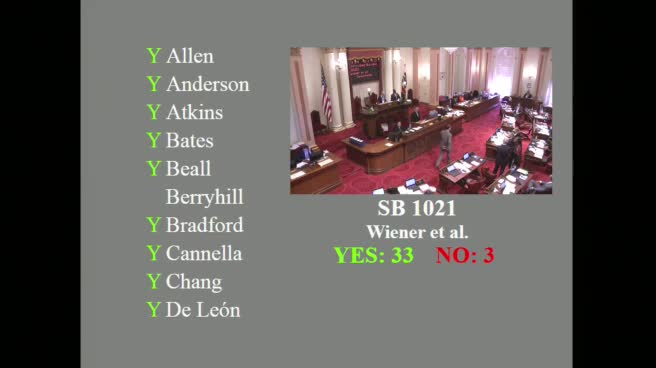 49SEC
Senate Floor
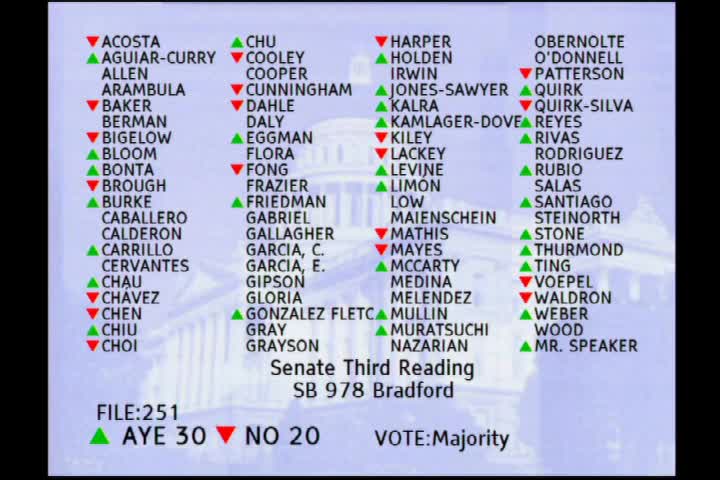 1MIN
Assembly Floor
 1H
Assembly Standing Committee on Appropriations
 5MIN
Assembly Standing Committee on Labor and Employment
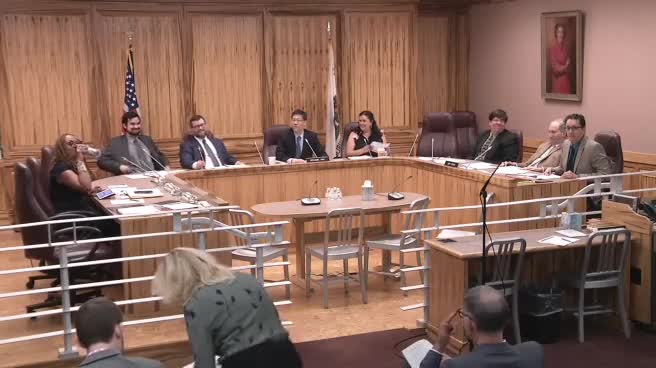 11MIN
Senate Standing Committee on Labor and Industrial Relations
Bill Author

Bill Co-Author(s):
