SB 1240: Prescription drugs: CURES database.
- Session Year: 2017-2018
- House: Senate
- Latest Version Date: 2018-04-09
The Pharmacy Law provides for the licensing and regulation of pharmacies, pharmacists, intern pharmacists, and pharmacy technicians by the California State Board of Pharmacy, which is within the Department of Consumer Affairs. That law defines prescription as an oral, written, or electronic transmission order that includes specified information, including a legible clear notice of the condition or purpose for which the drug is being prescribed if requested by the patient, and is issued by an authorized prescriber. That law makes a knowing violation of its provisions punishable as a crime and makes any other violation punishable as an infraction.
This bill would instead require a prescription, if in writing or transmitted electronically, to include an International Statistical Classification of Diseases, 10th revision (ICD-10) Code or a legible clear notice of the condition or purpose for which the drug is being prescribed, unless the patient requests this information to be omitted and would require a prescription transmitted orally to include either an ICD-10 Code of a description of the condition or purpose for which the drug is being prescribed. The bill would require a pharmacist, prior to processing clinical checks for prescriptions and dispensing the prescriptions, to review the most recent continuity of care document provided by the health care facility or physician and surgeon treating the patient. The bill would also require a pharmacy to immediately convey prescription profile information of a patient to a requesting pharmacy caring for that patient, except for the price and cost of a prescription. By placing new requirements on a pharmacist and a pharmacy pharmacy, this bill would expand an existing crime, and would, therefore, result in a state-mandated local program.
Existing law classifies certain controlled substances into designated schedules. Existing law requires the Department of Justice to maintain the Controlled Substance Utilization Review and Evaluation System (CURES) for the electronic monitoring of the prescribing and dispensing of Schedule II, Schedule III, and Schedule IV controlled substances by all practitioners authorized to prescribe, administer, furnish, or dispense these controlled substances. Existing law requires dispensing pharmacies and clinics to report specified information for each prescription of a Schedule II, Schedule III, or Schedule IV controlled substance to the department.
This bill would additional apply those requirements to Schedule V controlled substances and dangerous drugs, as defined, and would additionally require a description of the diagnosis, condition, or purpose for which the prescription was issued and the directions for use to be provided to the Department of Justice.
The California Constitution requires the state to reimburse local agencies and school districts for certain costs mandated by the state. Statutory provisions establish procedures for making that reimbursement.
This bill would provide that no reimbursement is required by this act for a specified reason.
The Pharmacy Law provides for the licensing and regulation of pharmacies, pharmacists, intern pharmacists, and pharmacy technicians by the California State Board of Pharmacy, which is within the Department of Consumer Affairs. That law defines prescription as an oral, written, or electronic transmission order that includes specified information, including a legible clear notice of the condition or purpose for which the drug is being prescribed if requested by the patient, and is issued by an authorized prescriber. That law makes a knowing violation of its provisions punishable as a crime and makes any other violation punishable as an infraction.
This bill would instead require a prescription, if in writing or transmitted electronically, to include an International Statistical Classification of Diseases, 10th revision (ICD-10) Code or a legible clear notice of the condition or purpose for which the drug is being prescribed, unless the patient requests this information to be omitted and would require a prescription transmitted orally to include either an ICD-10 Code of a description of the condition or purpose for which the drug is being prescribed. The bill would require a pharmacist, prior to processing clinical checks for prescriptions and dispensing the prescriptions, to review the most recent continuity of care document provided by the health care facility or physician and surgeon treating the patient. The bill would also require a pharmacy to immediately convey prescription profile information of a patient to a requesting pharmacy caring for that patient, except for the price and cost of a prescription. By placing new requirements on a pharmacist and a pharmacy this bill would expand an existing crime, and would, therefore, result in a state-mandated local program.
Existing law classifies certain controlled substances into designated schedules. Existing law requires the Department of Justice to maintain the Controlled Substance Utilization Review and Evaluation System (CURES) for the electronic monitoring of the prescribing and dispensing of Schedule II, Schedule III, and Schedule IV controlled substances by all practitioners authorized to prescribe, administer, furnish, or dispense these controlled substances. Existing law requires dispensing pharmacies and clinics to report specified information for each prescription of a Schedule II, Schedule III, or Schedule IV controlled substance to the department.
This bill would additional apply those requirements to Schedule V controlled substances and dangerous drugs, as defined, and would additionally require a description of the diagnosis, condition, or purpose for which the prescription was issued and the directions for use to be provided to the Department of Justice.
The California Constitution requires the state to reimburse local agencies and school districts for certain costs mandated by the state. Statutory provisions establish procedures for making that reimbursement.
This bill would provide that no reimbursement is required by this act for a specified reason.
(a)Prescription means an oral, written, or electronic transmission order that is both of the following:
(1)Given individually for the person or persons for whom ordered that includes all of the following:
(A)The name or names and address of the patient or patients.
(B)The name and quantity of the drug or device prescribed and the directions for use.
(C)The date of issue.
(D)Either rubber stamped, typed, or printed by hand or typeset, the name, address, and telephone number of the prescriber, his or her license classification, and his or her federal registry number, if a controlled substance is prescribed.
(E)If in writing or transmitted electronically, International Statistical Classification of Diseases, 10th revision (ICD-10) Code or a legible, clear notice of the condition or purpose for which the drug is being prescribed, unless the patient requests this information to be omitted. If transmitted orally, either the International Statistical Classification of Diseases, 10th revision (ICD-10) Code or a description of the condition or purpose for which the drug is being prescribed.
(F)If in writing, signed by the prescriber issuing the order, or the certified nurse-midwife, nurse practitioner, physician assistant, or naturopathic doctor who issues a drug order pursuant to Section 2746.51, 2836.1, 3502.1, or 3640.5, respectively, or the pharmacist who issues a drug order pursuant to Section 4052.1, 4052.2, or 4052.6.
(2)Issued by a physician, dentist, optometrist, podiatrist, veterinarian, or naturopathic doctor pursuant to Section 3640.7 or, if a drug order is issued pursuant to Section 2746.51, 2836.1, 3502.1, or 3460.5, by a certified nurse-midwife, nurse practitioner, physician assistant, or naturopathic doctor licensed in this state, or pursuant to Section 4052.1, 4052.2, or 4052.6 by a pharmacist licensed in this state.
(b)Notwithstanding subdivision (a), a written order of the prescriber for a dangerous drug, except for any Schedule II controlled substance, that contains at least the name and signature of the prescriber, the name and address of the patient in a manner consistent with paragraph (2) of subdivision (a) of Section 11164 of the Health and Safety Code, the name and quantity of the drug prescribed, directions for use, and the date of issue may be treated as a prescription by the dispensing pharmacist as long as any additional information required by subdivision (a) is readily retrievable in the pharmacy. In the event of a conflict between this subdivision and Section 11164 of the Health and Safety Code, Section 11164 of the Health and Safety Code shall prevail.
(c)Electronic transmission prescription includes both image and data prescriptions. Electronic image transmission prescription means any prescription order for which a facsimile of the order is received by a pharmacy from a licensed prescriber. Electronic data transmission prescription means any prescription order, other than an electronic image transmission prescription, that is electronically transmitted from a licensed prescriber to a pharmacy.
(d)The use of commonly used abbreviations shall not invalidate an otherwise valid prescription.
(e)Nothing in the amendments made to this section (formerly Section 4036) at the 1969 Regular Session of the Legislature shall be construed as expanding or limiting the right that a chiropractor, while acting within the scope of his or her license, may have to prescribe a device.
SEC. 2.Section 4122.4 is added to the Business and Professions Code, to read:4122.4.A pharmacist, prior to processing clinical checks for prescriptions and dispensing the prescriptions, shall review the most recent continuity of care document provided by the health care facility or physician and surgeon treating the patient.SEC. 3.SEC. 2.Section 4122.5 is added to the Business and Professions Code, to read:4122.5.A pharmacy shall immediately convey prescription profile information of a patient to a requesting pharmacy caring for that patient, except that the price and cost of a prescription shall not be included.
SEC. 4.SEC. 3.Section 11165 of the Health and Safety Code is amended to read:11165.(a)To assist health care practitioners in their efforts to ensure appropriate prescribing, ordering, administering, furnishing, and dispensing of controlled substances and dangerous drugs, law enforcement and regulatory agencies in their efforts to control the diversion and resultant abuse of Schedule II, Schedule III, Schedule IV, schedule V controlled substances and dangerous drugs, and for statistical analysis, education, and research, the Department of Justice shall, contingent upon the availability of adequate funds in the CURES Fund, maintain the Controlled Substance Utilization Review and Evaluation System (CURES) for the electronic monitoring of, and Internet access to information regarding, the prescribing and dispensing of Schedule II, Schedule III, Schedule IV, and Schedule V controlled substances by all practitioners authorized to prescribe, order, administer, furnish, or dispense these controlled substances and the prescribing, ordering, administering, furnishing, and dispensing of dangerous drugs by all practitioners authorized to prescribe, order, administer, furnish, or dispense those dangerous drugs.
(b)The Department of Justice may seek and use grant funds to pay the costs incurred by the operation and maintenance of CURES. The department shall annually report to the Legislature and make available to the public the amount and source of funds it receives for support of CURES.
(c)(1)The operation of CURES shall comply with all applicable federal and state privacy and security laws and regulations.
(2)(A)CURES shall operate under existing provisions of law to safeguard the privacy and confidentiality of patients. Data obtained from CURES shall only be provided to appropriate state, local, and federal public agencies for disciplinary, civil, or criminal purposes and to other agencies or entities, as determined by the Department of Justice, for the purpose of educating practitioners and others in lieu of disciplinary, civil, or criminal actions. Data may be provided to public or private entities, as approved by the Department of Justice, for educational, peer review, statistical, or research purposes, provided that patient information, including any information that may identify the patient, is not compromised. Further, data disclosed to any individual or agency as described in this subdivision shall not be disclosed, sold, or transferred to any third party, unless authorized by, or pursuant to, state and federal privacy and security laws and regulations. The Department of Justice shall establish policies, procedures, and regulations regarding the use, access, evaluation, management, implementation, operation, storage, disclosure, and security of the information within CURES, consistent with this subdivision.
(B)Notwithstanding subparagraph (A), a regulatory board whose licensees do not prescribe, order, administer, furnish, or dispense controlled substances or do not prescribe, order, administer, furnish, or dispense dangerous drugs shall not be provided data obtained from CURES.
(3)In accordance with federal and state privacy laws and regulations, a health care practitioner may provide a patient with a copy of the patients CURES patient activity report as long as no additional CURES data is provided and keep a copy of the report in the patients medical record in compliance with subdivision (d) of Section 11165.1.
(d)For each prescription for a dangerous drug or a Schedule II, Schedule III, Schedule IV, or Schedule V controlled substance, as defined in the controlled substances schedules in federal law and regulations, specifically Sections 1308.12, 1308.13, and 1308.14, respectively, of Title 21 of the Code of Federal Regulations, the dispensing pharmacy, clinic, or other dispenser shall report the following information to the Department of Justice as soon as reasonably possible, but not more than seven days after the date a dangerous drug or controlled substance is dispensed, in a format specified by the Department of Justice:
(1)Full name, address, and, if available, telephone number of the ultimate user or research subject, or contact information as determined by the Secretary of the United States Department of Health and Human Services, and the gender, and date of birth of the ultimate user.
(2)The prescribers category of licensure, license number, national provider identifier (NPI) number, if applicable, the federal controlled substance registration number, and the state medical license number of any prescriber using the federal controlled substance registration number of a government-exempt facility.
(3)Pharmacy prescription number, license number, NPI number, and federal controlled substance registration number.
(4)National Drug Code (NDC) number of the controlled substance or dangerous drug dispensed.
(5)Quantity of the controlled substance or dangerous drug dispensed.
(6)International Statistical Classification of Diseases, 10th revision (ICD-10) Code.
(7)Number of refills ordered.
(8)Whether the controlled substance or dangerous drug was dispensed as a refill of a prescription or as a first-time request.
(9)Date of origin of the prescription.
(10)Date of dispensing of the prescription.
(11)Description of the diagnosis, condition, or purpose for which the prescription was issued.
(12)The directions for use.
(e)The Department of Justice may invite stakeholders to assist, advise, and make recommendations on the establishment of rules and regulations necessary to ensure the proper administration and enforcement of the CURES database. All prescriber and dispenser invitees shall be licensed by one of the boards or committees identified in subdivision (d) of Section 208 of the Business and Professions Code, in active practice in California, and a regular user of CURES.
(f)The Department of Justice shall, prior to upgrading CURES, consult with prescribers licensed by one of the boards or committees identified in subdivision (d) of Section 208 of the Business and Professions Code, one or more of the boards or committees identified in subdivision (d) of Section 208 of the Business and Professions Code, and any other stakeholder identified by the department, for the purpose of identifying desirable capabilities and upgrades to the CURES Prescription Drug Monitoring Program (PDMP).
(g)The Department of Justice may establish a process to educate authorized subscribers of the CURES PDMP on how to access and use the CURES PDMP.
(h)For purposes of this section, dangerous drug has the same meaning as defined in Section 4022 of the Business and Professions Code.
SEC. 5.SEC. 4.No reimbursement is required by this act pursuant to Section 6 of Article XIIIB of the California Constitution because the only costs that may be incurred by a local agency or school district will be incurred because this act creates a new crime or infraction, eliminates a crime or infraction, or changes the penalty for a crime or infraction, within the meaning of Section 17556 of the Government Code, or changes the definition of a crime within the meaning of Section 6 of Article XIIIB of the California Constitution.
(a)Prescription means an oral, written, or electronic transmission order that is both of the following:
(1)Given individually for the person or persons for whom ordered that includes all of the following:
(A)The name or names and address of the patient or patients.
(B)The name and quantity of the drug or device prescribed and the directions for use.
(C)The date of issue.
(D)Either rubber stamped, typed, or printed by hand or typeset, the name, address, and telephone number of the prescriber, his or her license classification, and his or her federal registry number, if a controlled substance is prescribed.
(E)A If in writing or transmitted electronically, International Statistical Classification of Diseases, 10th revision (ICD-10) Code or a legible, clear notice of the condition or purpose for which the drug is being prescribed, if requested by the patient or patients. unless the patient requests this information to be omitted. If transmitted orally, either the International Statistical Classification of Diseases, 10th revision (ICD-10) Code or a description of the condition or purpose for which the drug is being prescribed.
(F)If in writing, signed by the prescriber issuing the order, or the certified nurse-midwife, nurse practitioner, physician assistant, or naturopathic doctor who issues a drug order pursuant to Section 2746.51, 2836.1, 3502.1, or 3640.5, respectively, or the pharmacist who issues a drug order pursuant to Section 4052.1, 4052.2, or 4052.6.
(2)Issued by a physician, dentist, optometrist, podiatrist, veterinarian, or naturopathic doctor pursuant to Section 3640.7 or, if a drug order is issued pursuant to Section 2746.51, 2836.1, 3502.1, or 3460.5, by a certified nurse-midwife, nurse practitioner, physician assistant, or naturopathic doctor licensed in this state, or pursuant to Section 4052.1, 4052.2, or 4052.6 by a pharmacist licensed in this state.
(b)Notwithstanding subdivision (a), a written order of the prescriber for a dangerous drug, except for any Schedule II controlled substance, that contains at least the name and signature of the prescriber, the name and address of the patient in a manner consistent with paragraph (2) of subdivision (a) of Section 11164 of the Health and Safety Code, the name and quantity of the drug prescribed, directions for use, and the date of issue may be treated as a prescription by the dispensing pharmacist as long as any additional information required by subdivision (a) is readily retrievable in the pharmacy. In the event of a conflict between this subdivision and Section 11164 of the Health and Safety Code, Section 11164 of the Health and Safety Code shall prevail.
(c)Electronic transmission prescription includes both image and data prescriptions. Electronic image transmission prescription means any prescription order for which a facsimile of the order is received by a pharmacy from a licensed prescriber. Electronic data transmission prescription means any prescription order, other than an electronic image transmission prescription, that is electronically transmitted from a licensed prescriber to a pharmacy.
(d)The use of commonly used abbreviations shall not invalidate an otherwise valid prescription.
(e)Nothing in the amendments made to this section (formerly Section 4036) at the 1969 Regular Session of the Legislature shall be construed as expanding or limiting the right that a chiropractor, while acting within the scope of his or her license, may have to prescribe a device.
SEC. 2.Section 4122.4 is added to the Business and Professions Code, to read:4122.4.A pharmacist, prior to processing clinical checks for prescriptions and dispensing the prescriptions, shall review the most recent continuity of care document provided by the health care facility or physician and surgeon treating the patient.
SEC. 3.Section 4122.5 is added to the Business and Professions Code, to read:4122.5.A pharmacy shall immediately convey prescription profile information of a patient to a requesting pharmacy caring for that patient, except that the price and cost of a prescription shall not be included.
SEC. 4.Section 11165 of the Health and Safety Code is amended to read:11165.(a)To assist health care practitioners in their efforts to ensure appropriate prescribing, ordering, administering, furnishing, and dispensing of controlled substances, substances and dangerous drugs, law enforcement and regulatory agencies in their efforts to control the diversion and resultant abuse of Schedule II, Schedule III, and Schedule IV IV, schedule V controlled substances, substances and dangerous drugs, and for statistical analysis, education, and research, the Department of Justice shall, contingent upon the availability of adequate funds in the CURES Fund, maintain the Controlled Substance Utilization Review and Evaluation System (CURES) for the electronic monitoring of, and Internet access to information regarding, the prescribing and dispensing of Schedule II, Schedule III, and Schedule IV IV, and Schedule V controlled substances by all practitioners authorized to prescribe, order, administer, furnish, or dispense these controlled substances. substances and the prescribing, ordering, administering, furnishing, and dispensing of dangerous drugs by all practitioners authorized to prescribe, order, administer, furnish, or dispense those dangerous drugs.
(b)The Department of Justice may seek and use grant funds to pay the costs incurred by the operation and maintenance of CURES. The department shall annually report to the Legislature and make available to the public the amount and source of funds it receives for support of CURES.
(c)(1)The operation of CURES shall comply with all applicable federal and state privacy and security laws and regulations.
(2)(A)CURES shall operate under existing provisions of law to safeguard the privacy and confidentiality of patients. Data obtained from CURES shall only be provided to appropriate state, local, and federal public agencies for disciplinary, civil, or criminal purposes and to other agencies or entities, as determined by the Department of Justice, for the purpose of educating practitioners and others in lieu of disciplinary, civil, or criminal actions. Data may be provided to public or private entities, as approved by the Department of Justice, for educational, peer review, statistical, or research purposes, provided that patient information, including any information that may identify the patient, is not compromised. Further, data disclosed to any individual or agency as described in this subdivision shall not be disclosed, sold, or transferred to any third party, unless authorized by, or pursuant to, state and federal privacy and security laws and regulations. The Department of Justice shall establish policies, procedures, and regulations regarding the use, access, evaluation, management, implementation, operation, storage, disclosure, and security of the information within CURES, consistent with this subdivision.
(B)Notwithstanding subparagraph (A), a regulatory board whose licensees do not prescribe, order, administer, furnish, or dispense controlled substances or do not prescribe, order, administer, furnish, or dispense dangerous drugs shall not be provided data obtained from CURES.
(3)In accordance with federal and state privacy laws and regulations, a health care practitioner may provide a patient with a copy of the patients CURES patient activity report as long as no additional CURES data is provided and keep a copy of the report in the patients medical record in compliance with subdivision (d) of Section 11165.1.
(d)For each prescription for a dangerous drug or a Schedule II, Schedule III, or Schedule IV IV, or Schedule V controlled substance, as defined in the controlled substances schedules in federal law and regulations, specifically Sections 1308.12, 1308.13, and 1308.14, respectively, of Title 21 of the Code of Federal Regulations, the dispensing pharmacy, clinic, or other dispenser shall report the following information to the Department of Justice as soon as reasonably possible, but not more than seven days after the date a dangerous drug or controlled substance is dispensed, in a format specified by the Department of Justice:
(1)Full name, address, and, if available, telephone number of the ultimate user or research subject, or contact information as determined by the Secretary of the United States Department of Health and Human Services, and the gender, and date of birth of the ultimate user.
(2)The prescribers category of licensure, license number, national provider identifier (NPI) number, if applicable, the federal controlled substance registration number, and the state medical license number of any prescriber using the federal controlled substance registration number of a government-exempt facility.
(3)Pharmacy prescription number, license number, NPI number, and federal controlled substance registration number.
(4)National Drug Code (NDC) number of the controlled substance or dangerous drug dispensed.
(5)Quantity of the controlled substance or dangerous drug dispensed.
(6)International Statistical Classification of Diseases, 9th revision (ICD-9) or 10th revision (ICD-10) Code, if available. Code.
(7)Number of refills ordered.
(8)Whether the controlled substance or dangerous drug was dispensed as a refill of a prescription or as a first-time request.
(9)Date of origin of the prescription.
(10)Date of dispensing of the prescription.
(11)Description of the diagnosis, condition, or purpose for which the prescription was issued.
(12)The directions for use.
(e)The Department of Justice may invite stakeholders to assist, advise, and make recommendations on the establishment of rules and regulations necessary to ensure the proper administration and enforcement of the CURES database. All prescriber and dispenser invitees shall be licensed by one of the boards or committees identified in subdivision (d) of Section 208 of the Business and Professions Code, in active practice in California, and a regular user of CURES.
(f)The Department of Justice shall, prior to upgrading CURES, consult with prescribers licensed by one of the boards or committees identified in subdivision (d) of Section 208 of the Business and Professions Code, one or more of the boards or committees identified in subdivision (d) of Section 208 of the Business and Professions Code, and any other stakeholder identified by the department, for the purpose of identifying desirable capabilities and upgrades to the CURES Prescription Drug Monitoring Program (PDMP).
(g)The Department of Justice may establish a process to educate authorized subscribers of the CURES PDMP on how to access and use the CURES PDMP.
(h)For purposes of this section, dangerous drug has the same meaning as defined in Section 4022 of the Business and Professions Code.
SEC. 5.No reimbursement is required by this act pursuant to Section 6 of Article XIIIB of the California Constitution because the only costs that may be incurred by a local agency or school district will be incurred because this act creates a new crime or infraction, eliminates a crime or infraction, or changes the penalty for a crime or infraction, within the meaning of Section 17556 of the Government Code, or changes the definition of a crime within the meaning of Section 6 of Article XIIIB of the California Constitution.
|
Date
|
Status
|
|---|---|
| Apr 17, 2018 | April 16 set for second hearing canceled at the request of author. |
| Apr 9, 2018 | From committee with author's amendments. Read second time and amended. Re-referred to Com. on B., P. & E.D. |
| Apr 3, 2018 | Set for hearing April 16. |
| Apr 2, 2018 | April 9 set for first hearing canceled at the request of author. |
| Mar 20, 2018 | Set for hearing April 9. |
| Mar 1, 2018 | Referred to Coms. on B., P. & E.D. and PUB. S. |
| Feb 16, 2018 | From printer. May be acted upon on or after March 18. |
| Feb 15, 2018 | Introduced. Read first time. To Com. on RLS. for assignment. To print. |
This list shows positions taken on this bill by organizations on the date displayed, which is linked to the original source.
Positions by individuals are not included.
|
Organization
|
Position
|
Date
|
|---|---|---|
| Background. | ** Support | Apr 12, 2018 |
| California Academy Of Family Physicians | ** Against | Apr 12, 2018 |
| Double-Referral To Senate Committee On Public Safety, Second. | ** Support | Apr 12, 2018 |
| Support And Opposition: | ** Support | Apr 12, 2018 |
SENATE COMMITTEE ON
BUSINESS, PROFESSIONS AND ECONOMIC DEVELOPMENT
Senator Jerry Hill, Chair
2017 - 2018 Regular
Bill No: SB 1240 Hearing Date: April 16, 2018
Author: | Stone | ||
Version: | April 9, 2018 | ||
Urgency: | Fiscal: | ||
Consultant: | |||
Subject: Prescription drugs: CURES database
SUMMARY: Expands the drugs required to be reported and monitored in the Controlled Substances Utilization Review and Evaluation System (CURES) to include all dangerous drugs and Schedule V controlled substances and requires inclusion of a description of the diagnosis, condition, or purpose for which the prescription was issued and the directions for use to the list of information pharmacies are required to report to CURES for each prescription.
Existing law:
- Establishes, pursuant to the federal Health Insurance Portability and Accountability Act of 1996 (HIPAA), certain requirements relating to the provision of health insurance, including provisions relating to the confidentiality of health records. HIPAA prohibits a covered entity that uses electronic means to perform HIPAA-covered transactions, from using or disclosing personal health information except pursuant to a written authorization signed by the patient or for treatment, payment, or health care operations. Notwithstanding those provisions, HIPAA allows a covered entity to maintain a directory of patients in its facility for specified purposes, and to disclose the protected health information of a patient to family members, relatives, or other persons identified by the patient, if certain conditions are met. Covered entities include health plans, health care clearinghouses, such as billing services and community health information systems, and health care providers that transmit health care data in a way that is regulated by HIPAA. HIPAA further provides that if its provisions conflict with a provision of state law, the provision that is most protective of patient privacy prevails. (Public Law 104–191, 104th Congress)
- Prohibits, pursuant to the state Confidentiality of Medical Information Act (CMIA), a provider of health care, a health care service plan, a contractor, a corporation and its subsidiaries and affiliates, or any business that offers software or hardware to consumers, including a mobile application or other related device, as defined, from intentionally sharing, selling, using for marketing, or otherwise using any medical information, as defined, for any purpose not necessary to provide health care services to a patient, except as expressly authorized by the patient, enrollee, or subscriber, as specified, or as otherwise required or authorized by law. A violation of the provisions of this act that results in economic loss or personal injury to a patient is a crime. (Civil Code Sections (CC) 56, et seq.)
- Defines, for purposes of the CMIA, “medical information” to mean “any individually identifiable information, in electronic or physical form, in possession of or derived from a provider of health care, health care service plan, pharmaceutical company, or contractor regarding a patient’s medical history, mental or physical condition, or treatment.” “Individually identifiable” means that the medical information includes or contains any element of personal identifying information sufficient to allow identification of the individual, such as the patient’s name, address, electronic mail address, telephone number, or social security number, or other information that, alone or in combination with other publicly available information, reveals the individual’s identity.” (CC § 56.05(g))
- Establishes various practice acts in the Business and Professions Code (BPC) governed by various boards within the Department of Consumer Affairs (DCA) which provide for the licensing and regulation of health care professionals including: physicians and surgeons (under the Medical Practice Act), dentists (under the Dental Practice Act), veterinarians (under the Veterinary Medicine Practice Act); registered nurses, nurse practitioners (NP) and certified nurse-midwives (CNM) (under the Nursing Practice Act); physician assistants (PA) (under the Physician Assistant Practice Act); osteopathic physicians and surgeons (under the Osteopathic Medical Practice Act); naturopathic doctors (ND) (under the Naturopathic Doctors Act); optometrists (under the Optometry Practice Act); doctors of podiatric medicine (under the Podiatric Act) and; pharmacies, pharmacists and wholesalers of dangerous drugs or devices (under the Pharmacy Law). (Business and Professions Code (BPC) §§ 500 et seq.)
- Defines “dangerous drug” or “dangerous device” as any drug or device unsafe for self-use in humans or animals, including any drug that bears the legend: “Caution: federal law prohibits dispensing without prescription, “ and “Rx only,” and including any device that bears the statement: “Caution: federal law restricts this device to sale by or on the order of a ____,” “Rx only,” or words of similar import, the blank to be filled in with the designation of the practitioner licensed to use or order use of the device and including any other drug or device that by federal or state law can be lawfully dispensed only on prescription or furnished pursuant to Board of Pharmacy (Board) regulations. (BPC § 4022)
- Defines “dispense” as the furnishing of drugs or devices upon a prescription from a physician, dentist, optometrist, podiatrist, veterinarian, or ND or upon an order to furnish drugs or transmit a prescription from a CNM, NP, PA, ND, or pharmacist acting within the scope of his or her practice. Dispense also means and refers to the furnishing of drugs or devices directly to a patient by a physician, dentist, optometrist, podiatrist, or veterinarian, or by a CNM, NP, ND, PA or pharmacist acting within the scope of his or her practice. (BPC § 4024)
- Specifies certain requirements regarding the dispensing and furnishing of dangerous drugs and devices, and prohibits a person from furnishing any dangerous drug or device except upon the prescription of a physician, dentist, podiatrist, optometrist, veterinarian or ND. (BPC § 4059)
- Establishes the Uniform Controlled Substances Act which regulates controlled substances and defines an opiate as any substance having an addiction-forming or addiction-sustaining liability similar to morphine or being capable of conversion into a drug having addiction-forming or addiction-sustaining liability. (Health and Safety Code (HSC) § 11020)
- Classifies controlled substances into five schedules according to their danger and potential for abuse. (HSC §§ 11054-11058)
- Prohibits any person other than a physician, dentist, podiatrist, veterinarian, ND (according to certain supervision and protocol requirements), pharmacist (according to certain authorization and according to certain policies and procedures), CNM (if furnished or ordered incidentally to the provision of family planning services, routine health care or perinatal care, or care rendered consistent with the CNM’s practice; occurs under physician and surgeon supervision; and is in accordance with standardized procedures or protocols as specified), NP (if it is consistent with a NP’s educational preparation or for which clinical competency has been established and maintained; occurs under physician and surgeon supervision; and is in accordance with standardized procedures or protocols as specified); a pharmacist or registered nurse or PA acting within the scope of an experimental health workforce project authorized by the Office of Statewide Health Planning and Development (HSC §§ 128125 et seq.); an optometrist licensed under the Optometry Practice Act, or an out-of-state prescriber acting in an emergency situation from writing or issuing a prescription for a controlled substance.
(HSC § 11150) - Establishes CURES for the electronic monitoring of Schedule II, III and IV controlled substance prescriptions. CURES provides for the electronic transmission of Schedule II, III and IV controlled substance prescription information to the Department of Justice (DOJ) no more than seven days from the time prescriptions are dispensed. (HSC § 11165)
- States that the purpose of CURES is to assist law enforcement and regulatory agencies in controlling diversion and abuse of Schedule II, III and IV controlled substances and for statistical analysis, education and research. (HSC § 11165 (a))
- Establishes privacy protections for patient data and specifies that the operation of CURES shall comply with all applicable federal and state privacy and security laws and regulations. Specifies that CURES shall operate under existing provisions of law to safeguard the privacy and confidentiality of patients. Specifies that data obtained from CURES can only be accessed by appropriate state, local and federal persons or public agencies for disciplinary, civil or criminal actions. Specifies that CURES data shall also only be provided, as determined by DOJ, to other agencies or entities for educating practitioners and others, in lieu of disciplinary, civil or criminal actions. Authorizes non-identifying CURES data to be provided to public and private entities for education, research, peer review and statistical analysis. Requires DOJ to establish policies, procedures and regulations regarding the use, access, evaluation, management, implementation, operation, storage, disclosure, and security of the information within CURES. (HSC § 11165 (c) (1) and (c) (2) (A))
- Specifies that a regulatory board whose licensees do not prescribe, order, administer, furnish or dispense controlled substances shall not be provided data obtained from CURES. (HSC § 11165(c)(2)(B))
- Requires health care practitioners in receipt of a federal Drug Enforcement Administration (DEA) registration providing authorization to prescribe controlled substances, as well as pharmacists, to register for access to the CURES database. (HSC § 11165.1(a))
- Authorizes a health care practitioner to provide a patient with a copy of the patient’s CURES patient activity report as long as no additional CURES data is provided and authorizes a health care practitioner to keep a copy of the report in the patient’s medical record. (HSC § 11165 (c)(3))
This bill:
- For written and electronic prescriptions, requires International Statistical Classification of Diseases, 10th revision (ICD-10) Code or a legible, clear notice of the condition or purpose for which the drug is being prescribed to be included in a prescription, unless the patient requests this information to be omitted. Current law requires notice of the condition or purpose for which the drug is being prescribed to be included only if requested by the patient. For oral prescriptions, requires either the ICD-10 Code or a description of the condition or purpose for which the drug is being prescribed to be included in the prescription.
- Requires a pharmacy to immediately convey prescription profile information of a patient to a requesting pharmacy caring for that patient, except that the price and cost of a prescription shall not be included.
- Expands the drugs required to be reported and monitored in CURES to include all dangerous drugs and Schedule V controlled substances.
- Prohibits a regulatory board whose licensees do not prescribe, order, administer, furnish, or dispense dangerous drugs from being provided CURES data.
- Adds a description of the diagnosis, condition, or purpose for which the prescription was issued and the directions for use to the list of information pharmacies are required to report to CURES for each prescription.
FISCAL EFFECT: Unknown. This bill is keyed “fiscal” by Legislative Counsel.
COMMENTS:
- Purpose. The Author is the Sponsor of this bill. According to the Author, “SB 1240 would ensure more comprehensive and consistent prescription medication profile information for clinicians than is available under current practices. This proposed expansion of the CURES system is the most technologically practical way to ensure that at least prescription medication information, and the diagnosis of reason for each prescription, is accurate and current.
“By expanding CURES to record all prescription drugs, SB 1240 facilitates more accurate admission and discharge medication list reconciliation and patient history; and gives all clinicians, specifically community pharmacists and physicians, a complete and accurate prescription history. By adding a requirement for additional data elements, specifically directions for use and diagnosis, pharmacists will better be able to assess the appropriateness of a proposed prescription for the patient’s diagnosed conditions.”
- Background.
Controlled Substances, PDMPs and CURES. Through the Controlled Substances Act of 1970, the federal government regulates the manufacture, distribution and dispensing of controlled substances. The act ranks into five schedules those drugs known to have potential for physical or psychological harm, based on three considerations: (a) their potential for abuse; (b) their accepted medical use; and,
(c) their accepted safety under medical supervision.
Schedule I controlled substances have a high potential for abuse and no generally accepted medical use such as heroin, ecstasy, and LSD.
Schedule II controlled substances have a currently accepted medical use in treatment, or a currently accepted medical use with severe restrictions, and have a high potential for abuse and psychological or physical dependence. Schedule II drugs can be narcotics or non-narcotic. Examples of Schedule II controlled substances include combination products with less than 15 milligrams of hydrocodone per dosage unit (Vicodin), morphine, methadone, Ritalin, Demerol, Percocet, Percodan, fentanyl and Oxycontin.
Schedule III and IV controlled substances have a currently accepted medical use in treatment, less potential for abuse but are known to be mixed in specific ways to achieve a narcotic-like end product. Examples include Tylenol with codeine, testosterone, Xanax, Ambien and other anti-anxiety drugs.
Schedule V drugs have a low potential for abuse relative to substances listed in Schedule IV and consist primarily of preparations containing limited quantities of certain narcotics. Schedule V drugs are generally used for antidiarrheal, antitussive, and analgesic purposes.
With rising levels of prescription drug abuse, prescription drug monitoring programs (PDMPs) assist law enforcement and regulatory bodies with their efforts to reduce drug abuse and diversion. In California, CURES is an electronic tracking program that reports all pharmacy (and specified types of prescriber) dispensing of certain schedules of controlled drugs by drug name, quantity, prescriber, patient, and pharmacy. Data from CURES is managed by DOJ. Information tracked in CURES contains the patient name, prescriber name, pharmacy name, drug name, amount and dosage, and is available to law enforcement agencies, regulatory bodies, prescribers, dispensers, and qualified researchers. CURES provides information to identify if a person is “doctor shopping” (when a patient, often a prescription-drug addict, visits multiple doctors to obtain multiple prescriptions for drugs, or uses multiple pharmacies to obtain prescription drugs). The system can also report on the top drugs prescribed for a specific time period, drugs prescribed in a particular county, doctor prescribing data, pharmacy dispensing data, and is a critical tool for assessing whether multiple prescriptions for the same patient may exist.
Every dispenser of controlled substances and every health practitioner authorized by the DEA to prescribe controlled substances is required to obtain a login for access to CURES. For each dispensed Schedule II, III, or IV drug, pharmacists and other dispensers are required to report basic information about the patient and their prescription within 7 days. This information is then made available to other system users in a variety of possible contexts. For example, physicians may query a patient’s prescription history prior to writing a new prescription; pharmacists can check the system before agreeing to fill a prescription for a controlled substance; regulators may review a licensee’s prescribing practices as part of a disciplinary investigation; and law enforcement can incorporate a search of the system into a potential criminal case of drug diversion.
Over 50 million prescription records have been uploaded into the system by dispensers since the beginning of the CURES program. As of January 1, 2018, 170,422 users had been approved for access to the system. Last year, close to 10 million activity reports had been processed by practitioners, pharmacists, law enforcement, and regulatory users. The vast majority of these searches (over 99%) were queries made by prescribers and dispensers seeking to review a patient’s prescription history as a component of exercising informed clinical judgment before providing access to opioids or other controlled substances.
Health practitioners will soon be required to consult the CURES database prior to writing a prescription for a Schedule II, III, or IV drug for the first time, and then at least once every four months as long as the prescription continues to be renewed (DOJ certified the system for statewide use on March 31, 2017; consultation requirements for prescribers outlined in SB 482 [Lara, Chapter 708, Statutes of 2016] take effect six months after DOJ certifies the system). Other recently enacted statutes require the DOJ to facilitate interoperability between health information technology systems and the CURES database, subject to a memorandum of understanding setting minimum security and privacy requirements. As attention to the opioid crisis continues to grow, CURES and other PDMPs are regularly mentioned as powerful tools for curbing the abuse of prescription drugs.
- Related Legislation This Year. CURES has been the focus of ongoing discussions in the Legislature, as California and the nation face an epidemic of prescription drug abuse and related overdose deaths.
AB 1751 (Low) would provide a framework for the CURES PDMP to connect with other states that comply with California’s patient privacy and data security standards. (Status: The bill is pending in the Assembly Committee on Public Safety.)
AB 1752 (Low) adds Schedule V drugs to CURES, changes the required timeframe in which pharmacists are required to report dispensed prescriptions from seven days to the following business day, and makes other technical changes. (Status: The bill is pending in the Assembly Committee on Public Safety.)
AB 1753 (Low) would limit the number of security printers authorized to manufacture prescription pads and linking uniquely serialized pads with CURES. (Status: The bill is pending in the Assembly Committee on Public Safety.)
AB 2086 (Gallagher) would allow prescribers of controlled substances to review a list of patients for whom they are listed as being the prescriber. (Status: The bill is pending in the Assembly Committee on Appropriations.)
AB 2783 (O’Donnell) would reconcile discrepancies between California’s controlled substance schedules and the corresponding federal controlled substance schedules. (Status: The bill is pending in the Assembly Committee on Appropriations.)
AB 2789 (Wood) would require that prescriptions be submitted electronically, with limited exceptions. (Status: The bill is pending in the Assembly Committee on Appropriations.)
- Prior Related Legislation. AB 40 (Santiago, Chapter 607, Statutes of 2017) authorized an entity that operates a health information technology system to establish an integration with, and submit queries to CURES on either a user-initiated basis or automated basis, according to certain requirements.
SB 641 (Lara) of 2016 would have prohibited the DOJ from releasing data in CURES to a law enforcement agency except pursuant to a warrant. (Status: The measure did not move from the Assembly Committee on Public Safety.)
SB 482 (Lara, Chapter 708, Statutes of 2016) required a health care provider authorized to prescribe, order, administer, or furnish a controlled substance to consult CURES prior to prescribing a Schedule II, III or IV drug to a patient for the first time and at least once every four months thereafter if the substance remains part of the patient’s treatment. The bill provided exemptions from the responsibility to consult the CURES system, including while a patient is admitted to a certain type of facility, if a patient receives a non-refillable five-day supply or less prescription in conjunction with a surgery, and in the event of a technological failure or inability to access the CURES system.
SB 1258 (DeSaulnier) of 2014 would have made several changes to the ways that controlled substances are prescribed and tracked in the CURES and would have required medical providers to use electronic prescribing systems, would have required additional reporting of controlled substance prescribing, and would have placed additional restrictions on the prescribing of controlled substances.
(Status: The bill was held in the Senate Committee on Appropriations.)
SB 809 (De Saulnier, Chapter 400, Statutes of 2013) established a funding mechanism to update and maintain CURES, required all prescribing health care practitioners to apply to access CURES information, and established processes and procedures for regulating prescribing licensees through CURES and securing private information.
SB 151 (Burton, Chapter 406, Statutes of 2003) made the CURES program permanent.
AB 2655 (Matthews, Chapter 345, Statutes of 2002) extended the CURES program to 2008 and provided access to CURES data by licensed health care providers.
SB 1308 (Committee on Business and Professions, Chapter 655, Statutes of 1999) extended the sunset date on the CURES program to July 1, 2003 and required DOJ to submit annual status reports on the program to the Legislature.
AB 3042 (Takasugi, Chapter 738, Statutes of 1996) established a three year pilot program, beginning in July 1997, for the electronic monitoring of prescribing and dispensing of Schedule II controlled substances.
- Arguments in Opposition. The California Academy of Family Physicians and American College of Obstetricians and Gynecologists District IX California write that while the intent of CURES to reduce prescription drug abuse and diversion is laudable, “we must ensure the privacy of all valid medical practices and patient care included in the system is secured. Until then, an expansion of the CURES system, such as the one provided in the bill, cannot be supported”.
- Policy Questions and Concerns: Does it really make sense for CURES, maintained by a state law enforcement agency, designed to handle controlled substances prescriptions, should serve as a prescription database for all prescriptions issued in the state? According to the Kaiser Family Foundation, there were 358,944,105 retail prescription drugs filled at California pharmacies in 2017 alone. While CURES is designed to handle millions of controlled substances prescriptions, as well as registration of and queries by large numbers of health care providers, it is highly unlikely that the system is capable of monitoring every prescription issued in this state. “Dangerous drugs” require a prescription; not all dangerous drugs, including the millions of maintenance medications prescribed every year to assist Californians in managing many conditions, pose the same inherent risks as the scheduled drugs currently monitored in CURES.
The vast expansion of CURES also raises privacy concerns and impacts the right of patients to exclude certain information on the actual prescriptions issued by a prescriber as they can under current law. Right now, if a pharmacist seeks additional information about the rationale for a certain prescription, they are able to communicate directly with prescribers. Nothing precludes pharmacists and prescribers from communicating about a particular patient in order to ensure the highest level of care. This bill requires pharmacists to receive medical information about patients through a state-run data system, posing significant risks to patient privacy.
NOTE:
Double-referral to Senate Committee on Public Safety, second.
SUPPORT AND OPPOSITION:
Support:
None on file as of April 10, 2018.
Opposition:
California Academy of Family Physicians
American College of Obstetricians and Gynecologists District IX California
-- END --
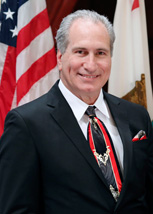
Bill Author
Bill Co-Author(s):