SB 1250: Voting: domicile.
- Session Year: 2017-2018
- House: Senate
- Latest Version Date: 2018-09-29
Existing law defines residence for voting purposes as a persons domicile. Existing law describes the domicile of a person as that place in which his or her habitation is fixed, wherein the person has the intention of remaining, and to which, whenever he or she is absent, the person has the intention of returning. Existing law describes the residence of a person as that place in which the persons habitation is fixed for some period of time, but wherein he or she does not have the intention of remaining. Existing law provides that a person may have only one domicile at a given time, but may have more than one residence. Existing law also provides that, for purposes of determining the domicile of a Member of the Legislature or a Representative in the Congress of the United States, the residence address indicated on that persons currently filed affidavit of voter registration is conclusively presumed to be that persons domicile.
This bill would provide that this presumption applies as long as the address listed is one of the member or representatives residences, notwithstanding that the member or representative may have another residence at which any of certain conditions apply.
Existing law defines residence for voting purposes as a persons domicile. Existing law describes the domicile of a person as that place in which his or her habitation is fixed, wherein the person has the intention of remaining, and to which, whenever he or she is absent, the person has the intention of returning. Existing law describes the residence of a person as that place in which the persons habitation is fixed for some period of time, but wherein he or she does not have the intention of remaining. Existing law provides that a person may have only one domicile at a given time, but may have more than one residence. Existing law also provides that, for purposes of determining the domicile of a Member of the Legislature or a Representative in the Congress of the United States, the residence address indicated on that persons currently filed affidavit of voter registration is conclusively presumed to be that persons domicile.
This bill would reiterate that the domicile of a Member of the Legislature or a Representative in Congress is to be determined solely by the operation of this conclusive presumption and not by the above-described factual criteria otherwise used to determine a persons domicile, and not by whether the address indicated on the affidavit of registration would otherwise qualify as the persons legal domicile. provide that this presumption applies as long as the address listed is one of the member or representatives residences, notwithstanding that the member or representative may have another residence at which any of certain conditions apply.
Existing law defines residence for voting purposes as a persons domicile. Existing law describes the domicile of a person as that place in which his or her habitation is fixed, wherein the person has the intention of remaining, and to which, whenever he or she is absent, the person has the intention of returning. Existing law describes the residence of a person as that place in which the persons habitation is fixed for some period of time, but wherein he or she does not have the intention of remaining. Existing law provides that a person may have only one domicile at a given time, but may have more than one residence. Existing law also provides that, for purposes of determining the domicile of a Member of the Legislature or a Representative in the Congress of the United States, the residence address indicated on that persons currently filed affidavit of voter registration is conclusively presumed to be that persons domicile.
This bill would reiterate that the domicile of a Member of the Legislature or a Representative in Congress is to be determined solely by the operation of this conclusive presumption and not by the above-described factual criteria otherwise used to determine a persons domicile, and not by whether the address indicated on the affidavit of registration would otherwise qualify as the persons legal domicile.
Existing law establishes requirements and procedures for voting by mail, military and overseas voters, and voting by new residents and new citizens. Existing law requires these provisions to be liberally construed in favor of the vote by mail voter.This bill would provide that these provisions shall not be construed to treat military and overseas voters with any less consideration than is granted other vote by mail voters.Existing law establishes requirements and procedures for voting by mail, military and overseas voters, and voting by new residents and new citizens. Existing law requires these provisions to be liberally construed in favor of the vote by mail voter.
This bill would provide that these provisions shall not be construed to treat military and overseas voters with any less consideration than is granted other vote by mail voters.
The domicile of a Member of the Legislature or a Representative in the Congress of the United States shall be conclusively presumed to be at the residence address indicated on that persons currently filed affidavit of registration, as long as the address is a residence under subdivision (c) of Section 349, notwithstanding that the member or representative may have another residence at which any of the following apply:
(a)A child for whom the member or representative is a parent, step-parent, foster parent, guardian, or caretaker is enrolled in school.
(b)The spouse, domestic partner, or intimate partner of the member or representative is located for employment.
(c)The member or representative receives mail or other postal or parcel deliveries.
(d)The member or representative owns, leases, or rents a dwelling.
(e)The member or representative claims a homeowners exemption or any other similar claim for tax purposes.
(f)The member or representative maintains accounts or pays for utilities, cable or satellite television, Internet service, home security service, home or landscape maintenance, or other similar services.
(g)The member or representative registers a vehicle or boat.
(h)The member or representative maintains policies of insurance.
(i)The member or representative has items of personal property.
The domicile of a Member of the Legislature or a Representative in the Congress of the United States shall be conclusively presumed to be at the residence address indicated on that persons currently filed affidavit of registration. Notwithstanding any other law, the domicile of a Member of the Legislature or a Representative in the Congress of the United States shall be determined solely by the operation of this conclusive presumption and without regard to the criteria in Section 349 or whether the address indicated on the affidavit of registration would otherwise qualify as the persons legal domicile. registration, as long as the address is a residence under subdivision (c) of Section 349, notwithstanding that the member or representative may have another residence at which any of the following apply:
(a)A child for whom the member or representative is a parent, step-parent, foster parent, guardian, or caretaker is enrolled in school.
(b)The spouse, domestic partner, or intimate partner of the member or representative is located for employment.
(c)The member or representative receives mail or other postal or parcel deliveries.
(d)The member or representative owns, leases, or rents a dwelling.
(e)The member or representative claims a homeowners exemption or any other similar claim for tax purposes.
(f)The member or representative maintains accounts or pays for utilities, cable or satellite television, Internet service, home security service, home or landscape maintenance, or other similar services.
(g)The member or representative registers a vehicle or boat.
(h)The member or representative maintains policies of insurance.
(i)The member or representative has items of personal property.
The domicile of a Member of the Legislature or a Representative in the Congress of the United States shall be conclusively presumed to be at the residence address indicated on that persons currently filed affidavit of registration. Notwithstanding any other law, the domicile of a Member of the Legislature or a Representative in the Congress of the United States shall be determined solely by the operation of this conclusive presumption and without regard to the criteria in Section 349 or whether the address indicated on the affidavit of registration would otherwise qualify as the persons legal domicile.
SECTION 1.Section 3000 of the Elections Code is amended to read:3000.(a)This division shall be liberally construed in favor of the vote by mail voter.(b)This division shall not be construed to treat military and overseas voters with any less consideration than is granted to other vote by mail voters.(a)This division shall be liberally construed in favor of the vote by mail voter.
(b)This division shall not be construed to treat military and overseas voters with any less consideration than is granted to other vote by mail voters.
|
Date
|
Status
|
|---|---|
| Sep 29, 2018 | Chaptered by Secretary of State. Chapter 911, Statutes of 2018. |
| Sep 29, 2018 | Approved by the Governor. |
| Sep 12, 2018 | Enrolled and presented to the Governor at 5 p.m. |
| Aug 30, 2018 | In Senate. Ordered to engrossing and enrolling. |
| Aug 30, 2018 | Read third time. Passed. Ordered to the Senate. |
| Jun 28, 2018 | Read second time. Ordered to third reading. |
| Jun 27, 2018 | From committee: Do pass. (Ayes 6. Noes 1.) (June 27). |
| May 25, 2018 | Referred to Com. on E. & R. |
| May 17, 2018 | In Assembly. Read first time. Held at Desk. |
| May 17, 2018 | Read third time. Passed. (Ayes 31. Noes 2.) Ordered to the Assembly. |
| May 8, 2018 | Read second time. Ordered to third reading. |
| May 7, 2018 | Read third time and amended. |
| May 2, 2018 | Read second time. Ordered to third reading. |
| May 1, 2018 | From committee: Do pass. (Ayes 4. Noes 0.) (May 1). |
| Apr 17, 2018 | Set for hearing May 1. |
| Apr 12, 2018 | Re-referred to Com. on E. & C.A. |
| Mar 22, 2018 | From committee with author's amendments. Read second time and amended. Re-referred to Com. on RLS. |
| Mar 1, 2018 | Referred to Com. on RLS. |
| Feb 16, 2018 | From printer. May be acted upon on or after March 18. |
| Feb 15, 2018 | Introduced. Read first time. To Com. on RLS. for assignment. To print. |
|
Date
|
Description
|
Location
|
Votes
|
|
|---|---|---|---|---|
| Aug 30, 2018 | SB 1250 Bradford Senate Third Reading By BURKE | Assembly Floor |
Passed |
|
| Jun 27, 2018 | Do pass. | Assembly Standing Committee on Elections and Redistricting |
Passed |
|
| May 17, 2018 | Senate 3rd Reading SB1250 Bradford et al. | Senate Floor |
Passed |
|
| May 1, 2018 | Do pass | Senate Standing Committee on Elections and Constitutional Amendments |
Passed |
This list shows positions taken on this bill by organizations on the date displayed, which is linked to the original source.
Positions by individuals are not included.
|
Organization
|
Position
|
Date
|
|---|---|---|
| American Civil Liberties Union of California | ** Against | May 2, 2018 |
| California Common Cause | ** Against | May 2, 2018 |
| California NAACP | * Support | May 1, 2018 |
SENATE THIRD READING
STR Bill Id:SB 1250
Author:(Bradford)
As Amended Ver:May 7, 2018
Majority vote
SENATE VOTE: 31-2
Committee | Votes | Ayes | Noes |
Elections | 6-1 | Berman, Calderon, Low, Mullin, Steinorth, Weber | Harper |
SUMMARY: Specifies, for the purposes of determining the domicile of a Member of the Legislature or a Representative in Congress for voting purposes, that the existence of certain conditions at one of the person's residences do not override an existing conclusive presumption that establishes the person's domicile. Specifically, this bill provides, for the purposes of a provision of law that creates a conclusive presumption that the domicile of a Member of the Legislature or a Representative in Congress is the residence address indicated on the person's current affidavit of registration, that the presumption applies as long as the address is a residence of the person, notwithstanding that the member or representative may have another residence at which any of the following apply:
- A child for whom the member or representative is a parent, step-parent, foster parent, guardian, or caretaker is enrolled in school.
- The spouse, domestic partner, or intimate partner of the member or representative is located for employment.
- The member or representative receives mail or other postal or parcel deliveries.
- The member or representative owns, leases, or rents a dwelling.
- The member or representative claims a homeowner's exemption or any other similar claim for tax purposes.
- The member or representative maintains accounts or pays for utilities, cable or satellite television, Internet service, home security service, home or landscape maintenance, or other similar services.
- The member or representative registers a vehicle or boat.
- The member or representative maintains policies of insurance.
- The member or representative has items of personal property.
FISCAL EFFECT: None. This bill is keyed non-fiscal by the Legislative Counsel.
COMMENTS: According to the author, "Current law establishes a voter's residence as the place where they primarily live, and where they intend to continue living. Because legislators are required to work both in the Capitol as well as their districts, California law was amended in 1984 to make clear that the primary home, or domicile, of a member of the Legislature is the residence at which they registered to vote. Ever since, this forthright standard has set a clear standard that everyone can understand.
"Unfortunately, some of our courts have allowed other information to be considered in evaluating where an elected official may reside. Despite the precise standard set out in Elections Code Section 2026, they have allowed attorneys to go on fact-finding missions that contradict existing law. This allows for an uneven interpretation of the law.
"SB 1250 does not expand residency requirements for incoming candidates, nor does this bill encourage candidates to run if they do not represent the best interests of their constituents. This bill is about allowing all legislators, who must travel and live in our state capital, to be effective leaders for our respective districts' without the fear of being targeted by overzealous prosecutors or political adversaries."
In 1984, the Legislature enacted AB 1798 (W. Brown), Chapter 21, Statutes of 1984. AB 1798 provided that for the purposes of determining the domicile of a Member of the Legislature or a Representative in the Congress of the United States, it is conclusively presumed that the residence address indicated on that person's currently filed affidavit of registration is the person's domicile. AB 1798 was approved in recognition of the fact that sitting members of the Legislature and Congress face special circumstances because of the nature of their jobs, and that those circumstances could create situations where a consideration of the factors traditionally used to determine a person's domicile could create an inaccurate impression of the true domicile of a member of the Legislature or of Congress. For example, members of the Legislature and of Congress may spend long periods of time away from the districts that they represent in order to serve their constituents in Sacramento or in Washington, D.C., respectively.
Since the enactment of AB 1798, however, at least one California court looked beyond the conclusive presumption created by that bill and engaged in a weighing of evidentiary factors to determine where a member of the Legislature was domiciled. In People v. Superior Court (Wright) (2011) 197 Cal.App.4th 511, a state appellate court reviewed allegations that a member of the Legislature was not, in fact, domiciled at the address he gave on his affidavit of voter registration. The California Supreme Court declined to review the Wright decision and no subsequent cases have addressed the issue. As a result, according to the proponents of this bill, the legislators and Congressional representatives of California are left without clarity as to when, how, and if the conclusive presumption will be applied.
Please see the policy committee analysis for a full discussion of this bill.
Analysis Prepared by: Ethan Jones / E. & R. / (916) 319-2094 FN: 0003621
Date of Hearing: June 27, 2018
ASSEMBLY COMMITTEE ON ELECTIONS AND REDISTRICTING
Marc Berman, Chair
SBPCA Bill Id:SB 1250
Author:(Bradford) – As Amended Ver:May 7, 2018
SENATE VOTE: 31-2
SUBJECT: Voting: domicile.
SUMMARY: Specifies, for the purposes of determining the domicile of a Member of the Legislature or a Representative in Congress for voting purposes, that the existence of certain conditions at one of the person's residences do not override an existing conclusive presumption that establishes the person's domicile. Specifically, this bill provides, for the purposes of a provision of law that creates a conclusive presumption that the domicile of a Member of the Legislature or a Representative in Congress is the residence address indicated on the person's current affidavit of registration, that the presumption applies as long as the address is a residence of the person, notwithstanding that the member or representative may have another residence at which any of the following apply:
- A child for whom the member or representative is a parent, step-parent, foster parent, guardian, or caretaker is enrolled in school.
- The spouse, domestic partner, or intimate partner of the member or representative is located for employment.
- The member or representative receives mail or other postal or parcel deliveries.
- The member or representative owns, leases, or rents a dwelling.
- The member or representative claims a homeowner's exemption or any other similar claim for tax purposes.
- The member or representative maintains accounts or pays for utilities, cable or satellite television, Internet service, home security service, home or landscape maintenance, or other similar services.
- The member or representative registers a vehicle or boat.
- The member or representative maintains policies of insurance.
- The member or representative has items of personal property.
EXISTING LAW:
- Requires a voter's affidavit of voter registration to include the voter's place of residence, among other information. Defines "residence" for voting purposes as a person's domicile.
- Provides that for the purposes of the state's election laws, the domicile of a person is that place in which his or her habitation is fixed, wherein the person has the intention of remaining, and to which, whenever he or she is absent, the person has the intention of returning. Provides that at a given time, a person may have only one domicile.
- Provides that the domicile of a Member of the Legislature or a Representative in the Congress of the United States is conclusively presumed to be at the residence address indicated on that person's currently filed affidavit of registration.
- Provides that a person is not eligible to be elected or appointed to an elective office unless that person is a registered voter and otherwise qualified to vote for that office at the time that nomination papers are issued to the person or at the time of the person’s appointment, unless otherwise specifically provided by law.
- Permits a person who is qualified and is registered to vote to vote at any election held within the territory within which he or she resides and the election is held.
FISCAL EFFECT: None. This bill is keyed non-fiscal by the Legislative Counsel.
COMMENTS:
- Purpose of the Bill: According to the author:
Current law establishes a voter’s residence as the place where they primarily live, and where they intend to continue living. Because legislators are required to work both in the Capitol as well as their districts, California law was amended in 1984 to make clear that the primary home, or domicile, of a member of the Legislature is the residence at which they registered to vote. Ever since, this forthright standard has set a clear standard that everyone can understand.
Unfortunately, some of our courts have allowed other information to be considered in evaluating where an elected official may reside. Despite the precise standard set out in Elections Code § 2026, they have allowed attorneys to go on fact-finding missions that contradict existing law. This allows for an uneven interpretation of the law.
SB 1250 does not expand residency requirements for incoming candidates, nor does this bill encourage candidates to run if they do not represent the best interests of their constituents. This bill is about allowing all legislators, who must travel and live in our state capital, to be effective leaders for our respective districts’ without the fear of being targeted by overzealous prosecutors or political adversaries.
- Domicile and Residency: Determining the domicile for voting purposes of most Californians is relatively straightforward; for any person who has only one residence as defined by state law, that person's residence will also be the person's domicile. For people who have more than one residence, however, the determination of which of those residences is the person's domicile will depend on a number of factors. Among other provisions, state law provides that factors that are relevant in determining a person's domicile include where that person's family resides; the address at which the person claims a homeowner's property tax exemption or a renter's tax credit; the address on the person's driver's license, identification card, or vehicle registration; and whether or not the person has physically resided at the residence in the preceding year.
State law also recognizes, however, that there may be unique circumstances which result in a person's absence for an extended period of time from a residence, which nonetheless do not mean that the residence is no longer the person's domicile. State law, for example, provides that a person does not gain or lose a domicile solely by reason of his or her presence or absence from a place while employed in the service of the United States or the State of California. Similarly, state law provides that students do not gain or lose a domicile solely by reason of their presence or absence from a place while at an institution of learning, but also provides that a student may qualify as an elector in the locality where he or she domiciles while attending the institution if the student has abandoned his or her former domicile.
Similarly, in 1984, the Legislature approved and the Governor signed AB 1798 (W. Brown), Chapter 21, Statutes of 1984. AB 1798 provided that for the purposes of determining the domicile of a Member of the Legislature or a Representative in the Congress of the United States, it is conclusively presumed that the residence address indicated on that person's currently filed affidavit of registration is the person's domicile. AB 1798 was approved in recognition of the fact that sitting members of the Legislature and Congress face special circumstances because of the nature of their jobs, and that those circumstances could create situations where a consideration of the factors traditionally used to determine a person's domicile could create an inaccurate impression of the true domicile of a member of the Legislature or of Congress. For example, members of the Legislature and of Congress may spend long periods of time away from the districts that they represent in order to serve their constituents in Sacramento or in Washington, D.C., respectively. Similarly, incumbent Legislators and members of Congress may be forced to relocate involuntarily due to redistricting in order to continue to represent their constituents. As the analysis of AB 1798 by the Assembly Committee on Elections, Reapportionment, and Constitutional Amendments noted, "[b]ecause of the nature of their position, changing conditions in housing, employment and schooling, and other factors, including, but not limited to, nonstop reapportionment, Representatives in Congress and Members of the Legislature are finding themselves to be in a … situation with other classes of people requiring a separate determination of domicile."
Since the enactment of AB 1798, however, at least one California court looked beyond the conclusive presumption created by that bill and engaged in a weighing of evidentiary factors to determine where a member of the Legislature was domiciled. In People v. Superior Court (Wright) (2011) 197 Cal.App.4th 511, a state appellate court reviewed allegations that a member of the Legislature was not, in fact, domiciled at the address he gave on his affidavit of voter registration. Applying the conclusive presumption, the trial court had dismissed the relevant charges based on the allegation that the legislator was not domiciled where he voted.
The appellate court, however, overturned the trial court’s decision. It ruled that, for the conclusive presumption of domicile to apply, the address at which a legislator or Congressional representative is registered to vote has to be one of the official's "legal residences," meaning a place that the official inhabits at least sometimes, even if the official does not intend to remain there. To decide whether a location was a legal residence of a legislator or Congressional representative, the appellate court concluded that it is appropriate for a court to consider evidence regarding things like how often the legislator or Congressional representative visits the place, how long he or she stays at the location, whether the official receives mail at the location, and whether the location is listed as the official's address in governmental records—in short, much of the same evidentiary analysis by which a person's domicile is determined.
The California Supreme Court declined to review the Wright decision and no subsequent cases have addressed the issue. As a result, according to the proponents of this bill, the legislators and Congressional representatives of California are left without clarity as to when, how, and if the conclusive presumption will be applied. - Previous Legislation: SB 163 (Bradford) of 2017, would have provided that the "domicile" of a legislator or Congressional representative shall be determined solely by the operation of the conclusive presumption created by AB 1798, and not by criteria included elsewhere in the Elections Code for establishing a person's domicile for voting purposes. SB 163 was never heard in the Senate Judiciary Committee after the scheduled hearings were canceled at the request of author.
AB 31 (C. Garcia) of 2015, would have specified that the conclusive presumption created by AB 1798 applies only if the address indicated on that person's currently filed affidavit of voter registration is a place in which the person's habitation is fixed for some period of time, among other provisions. AB 31 died in this committee after the scheduled hearing was canceled at the request of author.
REGISTERED SUPPORT / OPPOSITION:
Support
California State Conference of the National Association for the Advancement of Colored People
Opposition
None on file.
Analysis Prepared by: Ethan Jones / E. & R. / (916) 319-2094
Office of Senate Floor Analyses (916) 651-1520 Fax: (916) 327-4478 | SB |
THIRD READING
Bill No: SB 1250
:
SENATE ELECTIONS & C.A. COMMITTEE: 4-0, 5/1/18
AYES: Stern, Anderson, Allen, Hertzberg
NO VOTE RECORDED: Leyva
DIGEST:
This bill provides that the residence address on an affidavit of voter registration for a Member of the Legislature or a Representative in Congress must be a residence for that member, as defined, notwithstanding that the member or representative may have another residence at which any of several specified factors apply.
Senate Floor Amendments of 5/7/18 strike the reiteration of the existing conclusive presumption and instead specify that the residence address on an affidavit of voter registration for a Member of the Legislature or a Representative in Congress must be a residence for that member as defined in current law notwithstanding that the member or representative may have another residence at which any of several specified factors apply.
Existing law:
- Requires a voter to indicate their residence on their affidavit of voter registration.
- Provides that “residence” for voting purposes means a person’s domicile.
- Describes the domicile of a person as that place in which his or her habitation is fixed, wherein the person has the intention of remaining, and to which, whenever he or she is absent, the person has the intention of returning.
- Describes the residence of a person as that place in which the person’s habitation is fixed for some period of time, but wherein he or she does not have the intention of remaining.
- Provides that a person may have only one domicile at a given time, but may have more than one residence.
- Provides that, for purposes of determining the domicile of a Member of the Legislature or a Representative in the Congress of the United States, the residence address indicated on that person’s currently filed affidavit of voter registration is conclusively presumed to be that person’s domicile. (See discussion under “BACKGROUND” regarding how California courts have interpreted this provision.)
- Provides that no person is eligible to be elected or appointed to an elective office unless that person is a registered voter and otherwise qualified to vote for that office at the time that nomination papers are issued to the person or at the time of the person’s appointment.
This bill maintains the aforementioned conclusive presumption but specifies that the residence address on an affidavit of voter registration for a Member of the Legislature or a Representative in Congress must be a residence for that member as defined in current law notwithstanding that the Member or Representative may have another residence at which any of the following factors apply:
- A child for whom the Member or Representative is a parent, step-parent, foster parent, guardian, or caretaker is enrolled in school.
- The spouse, domestic partner, or intimate partner of the Member or Representative is located for employment.
- The Member or Representative receives mail or other postal or parcel deliveries.
- The Member or Representative owns, leases, or rents a dwelling.
- The Member or Representative claims a homeowner’s exemption or any other similar claim for tax purposes.
- The Member or Representative maintains accounts or pays for utilities, cable or satellite television, internet service, home security service, home or landscape maintenance, or other similar services.
- The Member or Representative registers a vehicle or boat.
- The Member or Representative maintains policies of insurance.
- The Member or Representative has items of personal property.
Background
Domicile for voting purposes
For most Californians, where they may vote is determined by where they predominantly live, i.e., their “domicile.” This is the place that the person intends to remain. It is the place the person plans to come back to, whenever he or she leaves. Any dispute about most Californians’ domicile for voting purposes is thus a factual one. Relevant evidence would include, among other things:
- How much time the person spends at the place.
- How often the person stays the night there.
- Whether the person keeps his or her belongings there.
- Where the person receives mail; and
- What address the person uses when signing up for programs, goods and services.
Members of the Legislature and Representatives in the Congress of the United States have unique official duties that require them to spend considerable amounts of time in their respective seats of government, Sacramento and Washington, DC. This presents a problem with respect to evidence of “domicile.”
Recognizing this fact, in 1983, the Legislature enacted AB 1798 (W. Brown, Chapter 21, Statutes of 1984), which added Section 2026 to the Elections Code. Section 2026 creates a conclusive presumption exclusive to legislators and Congressional representatives. This conclusive presumption is that legislators and Congressional representatives are domiciled at the residential address where they are registered to vote. The idea was to allow legislators and Congressional representatives to go about their duties without concern that the logistical requirements of their job would open them up to allegations that they are not technically domiciled at the place they are registered to vote.
Since the enactment of Elections Code Section 2026, however, at least one court has looked beyond its conclusive presumption and engaged in a weighing of evidentiary factors to determine where a member of the Legislature was domiciled. In The People v. Superior Court (Wright) (2011) 197 Cal.App.4th 511, a state appellate court reviewed allegations that a member of the Legislature was not, in fact, domiciled at the address he gave on his affidavit of voter registration. Applying the conclusive presumption, the trial court had dismissed the relevant charges based on the allegation that the legislator was not domiciled where he voted.
The appellate court however overturned the trial court’s decision. It ruled that, for the conclusive presumption of domicile to apply, the address at which a legislator or Congressional representative is registered to vote has to be one of the legislator’s or Congressional representative’s “residences,” meaning a place that the legislator or Congressional representative inhabits at least sometimes, even if the legislator or Congressional representative does not intend to remain there. To decide that, the appellate court concluded, it is appropriate for a court to review evidence regarding things like how often the legislator or Congressional representative visits the place, how long he or she stays, what belongings are kept, etc. – in short, much of the same evidentiary analysis by which domicile is determined.
The California Supreme Court declined to review the Wright decision and no subsequent cases have addressed the issue.
Domicile and residency requirements to run for U.S. Congress or the California Legislature
Pursuant to the U.S. Constitution, in order to run for the office of Representative in the Congress, a person only needs to be an inhabitant of their state “when elected.” Thus, Congressional representatives from California must live in California, but there is no requirement that they live or register to vote in the district that they represent.
In contrast, Members of the California Legislature are not eligible to be elected to represent a particular district unless they are eligible to vote for that office. In other words, at the time they present nomination papers to run for a seat in the California Senate or Assembly, California legislators must be registered to vote in the district that they will represent if elected.
Reasons for treating domicile differently for Members of the Legislature and Representatives in the Congress of the United States
In most instances, determining a person’s domicile for voting purposes is a relatively simple factual determination. Most people only have one residence. Among those people who have multiple residences, most often one of those homes is clearly the primary one. Typically, it is not hard to marshal the evidence to prove it: the person spends most of their time at that residence, stays most nights there, keeps most of their belongings there, receives mail there, registers for services there, and generally does things that make it clear that they consider that residence “home.”
The situation becomes more complicated for people who have their home in one place, but must, for employment reasons, spend a majority of their time staying at another location. That is the situation that confronts Members of the Legislature and Representatives in the Congress of the United States. Their homes may be located in far-flung locations throughout the state, but to carry out their duties of office, they must be in the seat of government, Sacramento or Washington, DC, respectively, for an enormous part of their time. Logistically, this often requires establishing what amounts to a second home in the seat of government. Legislators or Congressional representatives may buy or rent property, move many of their personal belongings to that place, and sign up to receive goods and services there. If legislators or Congressional representatives have family, they may bring that family along. Spouses may obtain employment in the seat of government. The children may attend the local schools.
The problem is that all of these things are evidentiary hallmarks of domicile. As a result, if the traditional evidence for determining domicile is applied, legislators or Congressional representatives might have a very hard time proving that they are domiciled where they are registered to vote.
In order to resolve this problem and allow legislators and Congressional representatives to focus on the duties assigned to them by the voters, in 1983, the Legislature enacted AB 1798, which added Section 2026 to the Elections Code. That bill was meant to apply to legislators who, of necessity, spend a great amount of time away from their true domicile, often going so far as to purchase homes and move their families to the location of their Legislature in service of their constituents.” (Assembly Speaker Willie Brown, Letter to Governor George Deukmejian, March 1, 1984).
While not stated in the form of a conclusive evidentiary presumption, similar provisions exist to enable students, members of the armed forces, and those engaged in navigation, among others, to retain their domicile in one place even while the logistical demands of their studies, navigation, or service may require them to live in another location for much of their time.
This bill requires that Legislators or Congressional representatives be registered to vote at one of their actual residences but also provides that if one of several factors apply to one of their other residences (in Sacramento or Washington D.C., for instance) it does constitute evidence that the other residence is their domicile for voting purposes.
Related/Prior Legislation
SB 163 (Bradford of 2017), was similar to this bill in that it provided “domicile” for purposes of this Section 2026 of the Elections Code shall be determined solely by the operation of the conclusive presumption and not by the criteria specified in Section 349. SB 163 died in the Senate Judiciary Committee after the hearing was canceled at the request of author.
AB 31 (Garcia of 2015), would have clarified that the conclusive presumption regarding the domicile of a California legislator or Congressional Representative applies only if the address indicated on that person’s currently filed affidavit of voter registration is a place in which the person’s habitation is fixed for some period of time. AB 31 died in the Assembly Committee on Elections, Redistricting, and Constitutional Amendments after the hearing was canceled at the request of author.
AB 892 (Dymally of 2003), would have extended the conclusive presumption to all candidates for state or local elections since 1985, and would have extended it to all proceedings and for all purposes and retroactively. AB 892 died in the Assembly Committee on Elections, Redistricting, and Constitutional Amendments after the hearing was canceled at the request of author.
AB 1798 (W. Brown, Chapter 21, Statutes of 1984), enacted what would eventually become Elections Code Section 2026, which provides that Members of the Legislature and Representatives in the Congress of the United States are conclusively presumed to be domiciled at the residential address where they are registered to vote.
FISCAL EFFECT: Appropriation: Fiscal Com.: Local:
None received
None received
ARGUMENT IN SUPPORT: According to the author, current law establishes a voter’s residence as the place where they primarily reside, and where they intend to continue residing. Because legislators are required to work both in the Capitol, as well as in and outside of their districts, California law was amended in 1994 to make certain that the primary home or ‘domicile’ of a member of the Legislature is the residence at which they registered to vote. Since this change, the forthright rule has set a clear standard that everyone could understand.
Unfortunately, some of our courts have misinterpreted or ignored the plain language in Section 2026 of the Elections Code and allowed other information to be considered when evaluating where an elected official may reside. Despite the precise standard set out in current statute, the ruling allows for overzealous attorneys or political adversaries to go on fact-finding missions that contradict existing law.
To prevent the uneven interpretation of the law, SB 1250 further clarifies the longstanding intent of Section 2026 by providing specific and verifiable ways in which the courts can determine the domicile of a member, while also addressing any uncertainty as to whether or not a legislator truly resides in the district they represent.
SB 1250 does not expand residency requirements for incoming candidates, nor does this bill encourage candidates to run if they do not represent the best interests of their constituents. Ultimately, this bill strikes the right balance between the judicial branch and legislative branch of government by providing courts the clarity and tools necessary to determine residency and also allows elected officials to continue to effectively work on behalf of their constituents, without the fear of intrusive investigations and overly aggressive prosecution.
5/9/18 14:16:53
**** END ****
Office of Senate Floor Analyses (916) 651-1520 Fax: (916) 327-4478 | SB |
THIRD READING
Bill No: SB 1250
:
SENATE ELECTIONS & C.A. COMMITTEE: 4-0, 5/1/18
AYES: Stern, Anderson, Allen, Hertzberg
NO VOTE RECORDED: Leyva
DIGEST:
This bill reiterates an existing conclusive presumption that for voter registration purposes the domicile of a Member of the Legislature or a Representative in Congress is the residence address indicated on their affidavit of voter registration.
Existing law:
- Requires a voter to indicate their residence on their affidavit of voter registration.
- Provides that “residence” for voting purposes means a person’s domicile.
- Describes the domicile of a person as that place in which his or her habitation is fixed, wherein the person has the intention of remaining, and to which, whenever he or she is absent, the person has the intention of returning.
- Describes the residence of a person as that place in which the person’s habitation is fixed for some period of time, but wherein he or she does not have the intention of remaining.
- Provides that a person may have only one domicile at a given time, but may have more than one residence.
- Provides that, for purposes of determining the domicile of a Member of the Legislature or a Representative in the Congress of the United States, the residence address indicated on that person’s currently filed affidavit of voter registration is conclusively presumed to be that person’s domicile. (See discussion under “BACKGROUND” regarding how California courts have interpreted this provision.)
- Provides that no person is eligible to be elected or appointed to an elective office unless that person is a registered voter and otherwise qualified to vote for that office at the time that nomination papers are issued to the person or at the time of the person’s appointment.
This bill provides, notwithstanding any other law, that the “domicile” of a Member of the Legislature or a Representative in the Congress of the United States shall be determined solely by the operation of the aforementioned conclusive presumption and without regard to the current criteria for determining residency or whether the address indicated on the affidavit of registration would otherwise qualify as the person’s legal domicile.
Background
Domicile for voting purposes. For most Californians, where they may vote is determined by where they predominantly live, i.e., their “domicile.” This is the place that the person intends to remain. It is the place the person plans to come back to, whenever he or she leaves. Any dispute about most Californians’ domicile for voting purposes is thus a factual one. Relevant evidence would include, among other things:
- How much time the person spends at the place.
- How often the person stays the night there.
- Whether the person keeps his or her belongings there.
- Where the person receives mail; and
- What address the person uses when signing up for programs, goods and services.
Members of the Legislature and Representatives in the Congress of the United States have unique official duties that require them to spend considerable amounts of time in their respective seats of government, Sacramento and Washington, DC. This presents a problem with respect to evidence of “domicile.”
Recognizing this fact, in 1983, the Legislature enacted AB 1798 (W. Brown), Chapter 21, Statutes of 1984, which added Section 2026 to the Elections Code. Section 2026 creates a conclusive presumption exclusive to legislators and Congressional representatives. This conclusive presumption is that legislators and Congressional representatives are domiciled at the residential address where they are registered to vote. The idea was to allow legislators and Congressional representatives to go about their duties without concern that the logistical requirements of their job would open them up to allegations that they are not technically domiciled at the place they are registered to vote.
Since the enactment of Elections Code Section 2026, however, at least one court has looked beyond its conclusive presumption and engaged in a weighing of evidentiary factors to determine where a member of the Legislature was domiciled. In The People v. Superior Court (Wright) (2011) 197 Cal.App.4th 511, a state appellate court reviewed allegations that a member of the Legislature was not, in fact, domiciled at the address he gave on his affidavit of voter registration. Applying the conclusive presumption, the trial court had dismissed the relevant charges based on the allegation that the legislator was not domiciled where he voted.
The appellate court however overturned the trial court’s decision. It ruled that, for the conclusive presumption of domicile to apply, the address at which a legislator or Congressional representative is registered to vote has to be one of the legislator’s or Congressional representative’s “residences,” meaning a place that the legislator or Congressional representative inhabits at least sometimes, even if the legislator or Congressional representative does not intend to remain there. To decide that, the appellate court concluded, it is appropriate for a court to review evidence regarding things like how often the legislator or Congressional representative visits the place, how long he or she stays, what belongings are kept, etc. – in short, much of the same evidentiary analysis by which domicile is determined.
The California Supreme Court declined to review the Wright decision and no subsequent cases have addressed the issue. As a result, according to the proponents of this bill, the legislators and Congressional representatives of California are left without clarity as to when, how, and if the conclusive presumption will be applied.
Domicile and residency requirements to run for U.S. Congress or the California Legislature
Pursuant to the U.S. Constitution, in order to run for the office of Representative in the Congress, a person only needs to be an inhabitant of their state “when elected.” Thus, Congressional representatives from California must live in California, but there is no requirement that they live or register to vote in the district that they represent.
In contrast, Members of the California Legislature are not eligible to be elected to represent a particular district unless they are eligible to vote for that office. In other words, at the time they present nomination papers to run for a seat in the California Senate or Assembly, California legislators must be registered to vote in the district that they will represent if elected.
Reasons for treating domicile differently for Members of the Legislature and Representatives in the Congress of the United States
In most instances, determining a person’s domicile for voting purposes is a relatively simple factual determination. Most people only have one residence. Among those people who have multiple residences, most often one of those homes is clearly the primary one. Typically, it is not hard to marshal the evidence to prove it: the person spends most of their time at that residence, stays most nights there, keeps most of their belongings there, receives mail there, registers for services there, and generally does things that make it clear that they consider that residence “home.”
The situation becomes more complicated for people who have their home in one place, but must, for employment reasons, spend a majority of their time staying at another location. That is the situation that confronts Members of the Legislature and Representatives in the Congress of the United States. Their homes may be located in far-flung locations throughout the state, but to carry out their duties of office, they must be in the seat of government, Sacramento or Washington, DC, respectively, for an enormous part of their time. Logistically, this often requires establishing what amounts to a second home in the seat of government. Legislators or Congressional representatives may buy or rent property, move many of their personal belongings to that place, and sign up to receive goods and services there. If legislators or Congressional representatives have family, they may bring that family along. Spouses may obtain employment in the seat of government. The children may attend the local schools.
The problem is that all of these things are evidentiary hallmarks of domicile. As a result, if the traditional evidence for determining domicile is applied, legislators or Congressional representatives might have a very hard time proving that they are domiciled where they are registered to vote.
In order to resolve this problem and allow legislators and Congressional representatives to focus on the duties assigned to them by the voters, in 1983, the Legislature enacted AB 1798, which added Section 2026 to the Elections Code. That bill was meant to apply to legislators who, of necessity, spend a great amount of time away from their true domicile, often going so far as to purchase homes and move their families to the location of their Legislature in service of their constituents.” (Assembly Speaker Willie Brown, Letter to Governor George Deukmejian, March 1,1984).
While not stated in the form of a conclusive evidentiary presumption, similar provisions exist to enable students, members of the armed forces, and those engaged in navigation, among others, to retain their domicile in one place even while the logistical demands of their studies, navigation, or service may require them to live in another location for much of their time.
Related/Prior Legislation
SB 163 (Bradford of 2017), was similar to this bill in that it provided “domicile” for purposes of this Section 2026 of the Elections Code shall be determined solely by the operation of the conclusive presumption and not by the criteria specified in Section 349. SB 163 died in the Senate Judiciary Committee after the hearing was canceled at the request of author.
AB 31 (Garcia of 2015), would have clarified that the conclusive presumption regarding the domicile of a California legislator or Congressional Representative applies only if the address indicated on that person’s currently filed affidavit of voter registration is a place in which the person’s habitation is fixed for some period of time. AB 31 died in the Assembly Committee on Elections, Redistricting, and Constitutional Amendments after the hearing was canceled at the request of author.
AB 892 (Dymally of 2003), would have extended the conclusive presumption to all candidates for state or local elections since 1985, and would have extended it to all proceedings and for all purposes and retroactively. AB 892 died in the Assembly Committee on Elections, Redistricting, and Constitutional Amendments after the hearing was canceled at the request of author.
AB 1798 (W. Brown, Chapter 21, Statutes of 1984), enacted what would eventually become Elections Code Section 2026, which provides that Members of the Legislature and Representatives in the Congress of the United States are conclusively presumed to be domiciled at the residential address where they are registered to vote.
FISCAL EFFECT: Appropriation: Fiscal Com.: Local:
None received
American Civil Liberties Union of California
California Common Cause
ARGUMENT IN SUPPORT: According to the author, current law establishes a voter’s residence as the place where they primarily live, and where they intend to continue living. Because legislators are required to work both in the Capitol as well as their districts, California law was amended in 1984 to make clear that the primary home, or domicile, of a member of the Legislature is the residence at which they registered to vote. Ever since, this forthright standard has set a clear standard that everyone can understand.
Unfortunately, some of our courts have allowed other information to be considered in evaluating where an elected official may reside. Despite the precise standard set out in Elections Code § 2026, they have allowed attorneys to go on fact-finding missions that contradict existing law. This allows for an uneven interpretation of the law.
SB 1250 does not expand residency requirements for incoming candidates, nor does this bill encourage candidates to run if they do not represent the best interests of their constituents. This bill is about allowing all legislators, who must travel and live in our state capital, to be effective leaders for our respective districts’ without the fear of being targeted by overzealous prosecutors or political adversaries.
SB 1250 will reinforce existing law, clarify, and emphasize the Legislature’s intent that the conclusive presumption contained in Elections Code 2026 is supposed to be just that: conclusive of the issue without any need for further evidentiary review.
Ultimately, this bill will provide clearer guidance to all 58 counties in California to minimize confusion and different interpretations as to the intent of the legislature.
ARGUMENT IN OPPOSITION: In a letter of opposition dated April 26, 2018, California Common Cause stated, in part, the following:
As a practical accommodation, legislators thus have complete latitude in selecting which of their many residences is their domicile for voting purposes; however, what they may not do is choose an address that is not one of their actual residences and falsely claim that address as their domicile. So, for example, a legislator who split her time between a house in the district, an apartment in Sacramento, and a vacation home could claim her house as her domicile. What she could not do is claim as her domicile a post office box, a business address, the residence of a friend or family member in which she does not reside, or an apartment unit in the district that she never inhabits. As the Second District Court of Appeal has explained, “What is conclusively presumed is not the legislator's ‘residence’ but rather his or her ‘domicile.’ … [T]his conclusive presumption applies only if the address indicated on the legislator's currently filed affidavit of voter registration is one of the legislator's legal residences.” At least three court of appeal decisions, going back over a decade, have approved this interpretation.
SB 1250 would undo this case law – and render essentially unenforceable the district residency requirement – by prohibiting courts from reviewing whether a legislator actually resides where they claim to on their affidavit of registration. In practical effect, this creates a double-standard which places legislators uniquely above the law: neither local elected officials nor even ordinary registered voters are given carte blanche to lie about their residence for voting purposes. They can, in fact, be criminally prosecuted for doing so.
We are sympathetic to the concern that California law should be clearly expressed. To the degree Section 2026 could be drafted more precisely, we would not oppose any clarification that is consistent with existing case law; namely, that legislators have the conclusive discretion to indicate which residence is their domicile, but that this discretion is limited to a true residence.
5/2/18 15:22:19
**** END ****
SENATE COMMITTEE ON
ELECTIONS AND CONSTITUTIONAL AMENDMENTS
Senator Henry Stern, Chair
2017 - 2018 Regular
Bill No: SB Hearing Date: 5/1/18
Author: | |||
Version: | 3/22/18 | ||
Urgency: | No | Fiscal: | No |
Consultant: | Darren Chesin | ||
Subject: Voting: domicile
DIGEST
This bill reiterates an existing conclusive presumption that for voter registration purposes the domicile of a Member of the Legislature or a Representative in Congress is the residence address indicated on their affidavit of voter registration.
ANALYSIS
Existing law:
- Requires a voter to indicate their residence on their affidavit of voter registration.
- Provides that “residence” for voting purposes means a person’s domicile.
- Describes the domicile of a person as that place in which his or her habitation is fixed, wherein the person has the intention of remaining, and to which, whenever he or she is absent, the person has the intention of returning.
- Describes the residence of a person as that place in which the person’s habitation is fixed for some period of time, but wherein he or she does not have the intention of remaining.
- Provides that a person may have only one domicile at a given time, but may have more than one residence.
- Provides that, for purposes of determining the domicile of a Member of the Legislature or a Representative in the Congress of the United States, the residence address indicated on that person’s currently filed affidavit of voter registration is conclusively presumed to be that person’s domicile. (See discussion under “BACKGROUND” regarding how California courts have interpreted this provision.)
- Provides that no person is eligible to be elected or appointed to an elective office unless that person is a registered voter and otherwise qualified to vote for that office at the time that nomination papers are issued to the person or at the time of the person’s appointment.
This bill:
- Provides, notwithstanding any other law, that the “domicile” of a Member of the Legislature or a Representative in the Congress of the United States shall be determined solely by the operation of the aforementioned conclusive presumption and without regard to the current criteria for determining residency or whether the address indicated on the affidavit of registration would otherwise qualify as the person’s legal domicile.
BACKGROUND
Domicile for voting purposes. For most Californians, where they may vote is determined by where they predominantly live, i.e., their “domicile.” This is the place that the person intends to remain. It is the place the person plans to come back to, whenever he or she leaves. Any dispute about most Californians’ domicile for voting purposes is thus a factual one. Relevant evidence would include, among other things:
- How much time the person spends at the place.
- How often the person stays the night there.
- Whether the person keeps his or her belongings there.
- Where the person receives mail; and
- What address the person uses when signing up for programs, goods and services.
Members of the Legislature and Representatives in the Congress of the United States have unique official duties that require them to spend considerable amounts of time in their respective seats of government, Sacramento and Washington, DC. This presents a problem with respect to evidence of “domicile.”
Recognizing this fact, in 1983, the Legislature enacted AB 1798 (W. Brown), Chapter 21, Statutes of 1984, which added Section 2026 to the Elections Code. Section 2026 creates a conclusive presumption exclusive to legislators and Congressional representatives. This conclusive presumption is that legislators and Congressional representatives are domiciled at the residential address where they are registered to vote. The idea was to allow legislators and Congressional representatives to go about their duties without concern that the logistical requirements of their job would open them up to allegations that they are not technically domiciled at the place they are registered to vote.
Since the enactment of Elections Code Section 2026, however, at least one court has looked beyond its conclusive presumption and engaged in a weighing of evidentiary factors to determine where a member of the Legislature was domiciled. In The People v. Superior Court (Wright) (2011) 197 Cal.App.4th 511, a state appellate court reviewed allegations that a member of the Legislature was not, in fact, domiciled at the address he gave on his affidavit of voter registration. Applying the conclusive presumption, the trial court had dismissed the relevant charges based on the allegation that the legislator was not domiciled where he voted.
The appellate court however overturned the trial court’s decision. It ruled that, for the conclusive presumption of domicile to apply, the address at which a legislator or Congressional representative is registered to vote has to be one of the legislator’s or Congressional representative’s “residences,” meaning a place that the legislator or Congressional representative inhabits at least sometimes, even if the legislator or Congressional representative does not intend to remain there. To decide that, the appellate court concluded, it is appropriate for a court to review evidence regarding things like how often the legislator or Congressional representative visits the place, how long he or she stays, what belongings are kept, etc. – in short, much of the same evidentiary analysis by which domicile is determined.
The California Supreme Court declined to review the Wright decision and no subsequent cases have addressed the issue. As a result, according to the proponents of this bill, the legislators and Congressional representatives of California are left without clarity as to when, how, and if the conclusive presumption will be applied.
Domicile and residency requirements to run for U.S. Congress or the California Legislature
Pursuant to the U.S. Constitution, in order to run for the office of Representative in the Congress, a person only needs to be an inhabitant of their state “when elected.” Thus, Congressional representatives from California must live in California, but there is no requirement that they live or register to vote in the district that they represent.
In contrast, Members of the California Legislature are not eligible to be elected to represent a particular district unless they are eligible to vote for that office. In other words, at the time they present nomination papers to run for a seat in the California Senate or Assembly, California legislators must be registered to vote in the district that they will represent if elected.
Reasons for treating domicile differently for Members of the Legislature and Representatives in the Congress of the United States
In most instances, determining a person’s domicile for voting purposes is a relatively simple factual determination. Most people only have one residence. Among those people who have multiple residences, most often one of those homes is clearly the primary one. Typically, it is not hard to marshal the evidence to prove it: the person spends most of their time at that residence, stays most nights there, keeps most of their belongings there, receives mail there, registers for services there, and generally does things that make it clear that they consider that residence “home.”
The situation becomes more complicated for people who have their home in one place, but must, for employment reasons, spend a majority of their time staying at another location. That is the situation that confronts Members of the Legislature and Representatives in the Congress of the United States. Their homes may be located in far-flung locations throughout the state, but to carry out their duties of office, they must be in the seat of government, Sacramento or Washington, DC, respectively, for an enormous part of their time. Logistically, this often requires establishing what amounts to a second home in the seat of government. Legislators or Congressional representatives may buy or rent property, move many of their personal belongings to that place, and sign up to receive goods and services there. If legislators or Congressional representatives have family, they may bring that family along. Spouses may obtain employment in the seat of government. The children may attend the local schools.
The problem is that all of these things are evidentiary hallmarks of domicile. As a result, if the traditional evidence for determining domicile is applied, legislators or Congressional representatives might have a very hard time proving that they are domiciled where they are registered to vote.
In order to resolve this problem and allow legislators and Congressional representatives to focus on the duties assigned to them by the voters, in 1983, the Legislature enacted AB 1798, which added Section 2026 to the Elections Code. That bill was meant to apply to legislators who, of necessity, spend a great amount of time away from their true domicile, often going so far as to purchase homes and move their families to the location of their Legislature in service of their constituents.” (Assembly Speaker Willie Brown, Letter to Governor George Deukmejian, March 1,1984).
While not stated in the form of a conclusive evidentiary presumption, similar provisions exist to enable students, members of the armed forces, and those engaged in navigation, among others, to retain their domicile in one place even while the logistical demands of their studies, navigation, or service may require them to live in another location for much of their time.
COMMENTS
- According to the author: Current law establishes a voter’s residence as the place where they primarily live, and where they intend to continue living. Because legislators are required to work both in the Capitol as well as their districts, California law was amended in 1984 to make clear that the primary home, or domicile, of a member of the Legislature is the residence at which they registered to vote. Ever since, this forthright standard has set a clear standard that everyone can understand.
Unfortunately, some of our courts have allowed other information to be considered in evaluating where an elected official may reside. Despite the precise standard set out in Elections Code § 2026, they have allowed attorneys to go on fact-finding missions that contradict existing law. This allows for an uneven interpretation of the law.
SB 1250 does not expand residency requirements for incoming candidates, nor does this bill encourage candidates to run if they do not represent the best interests of their constituents. This bill is about allowing all legislators, who must travel and live in our state capital, to be effective leaders for our respective districts’ without the fear of being targeted by overzealous prosecutors or political adversaries.
SB 1250 will reinforce existing law, clarify, and emphasize the Legislature’s intent that the conclusive presumption contained in Elections Code 2026 is supposed to be just that: conclusive of the issue without any need for further evidentiary review.
Ultimately, this bill will provide clearer guidance to all 58 counties in California to minimize confusion and different interpretations as to the intent of the legislature.
Argument in Opposition. In a letter of opposition dated April 26, 2018, California Common Cause stated, in part, the following:
As a practical accommodation, legislators thus have complete latitude in selecting which of their many residences is their domicile for voting purposes; however, what they may not do is choose an address that is not one of their actual residences and falsely claim that address as their domicile. So, for example, a legislator who split her time between a house in the district, an apartment in Sacramento, and a vacation home could claim her house as her domicile. What she could not do is claim as her domicile a post office box, a business address, the residence of a friend or family member in which she does not reside, or an apartment unit in the district that she never inhabits. As the Second District Court of Appeal has explained, “What is conclusively presumed is not the legislator's ‘residence’ but rather his or her ‘domicile.’ … [T]his conclusive presumption applies only if the address indicated on the legislator's currently filed affidavit of voter registration is one of the legislator's legal residences.” At least three court of appeal decisions, going back over a decade, have approved this interpretation.
SB 1250 would undo this case law – and render essentially unenforceable the district residency requirement – by prohibiting courts from reviewing whether a legislator actually resides where they claim to on their affidavit of registration. In practical effect, this creates a double-standard which places legislators uniquely above the law: neither local elected officials nor even ordinary registered voters are given carte blanche to lie about their residence for voting purposes. They can, in fact, be criminally prosecuted for doing so.
We are sympathetic to the concern that California law should be clearly expressed. To the degree Section 2026 could be drafted more precisely, we would not oppose any clarification that is consistent with existing case law; namely, that legislators have the conclusive discretion to indicate which residence is their domicile, but that this discretion is limited to a true residence.
RELATED/PRIOR LEGISLATION
SB 163 (Bradford) of 2017, was similar to this bill in that it provided “domicile” for purposes of this Section 2026 of the Elections Code shall be determined solely by the operation of the conclusive presumption and not by the criteria specified in Section 349. SB 163 died in the Senate Judiciary Committee after the hearing was canceled at the request of author.
AB 31 (Garcia) of 2015, would have clarified that the conclusive presumption regarding the domicile of a California legislator or Congressional Representative applies only if the address indicated on that person’s currently filed affidavit of voter registration is a place in which the person’s habitation is fixed for some period of time. AB 31 died in the Assembly Committee on Elections, Redistricting, and Constitutional Amendments after the hearing was canceled at the request of author.
AB 892 (Dymally) of 2003, would have extended the conclusive presumption to all candidates for state or local elections since 1985, and would have extended it to all proceedings and for all purposes and retroactively. AB 892 died in the Assembly Committee on Elections, Redistricting, and Constitutional Amendments after the hearing was canceled at the request of author.
AB 1798 (W. Brown), Chapter 21, Statutes of 1984, enacted what would eventually become Elections Code Section 2026, which provides that Members of the Legislature and Representatives in the Congress of the United States are conclusively presumed to be domiciled at the residential address where they are registered to vote.
POSITIONS
Sponsor: Author
Support: None received
Oppose: American Civil Liberties Union of California
California Common Cause
-- END --
Discussed in Hearing
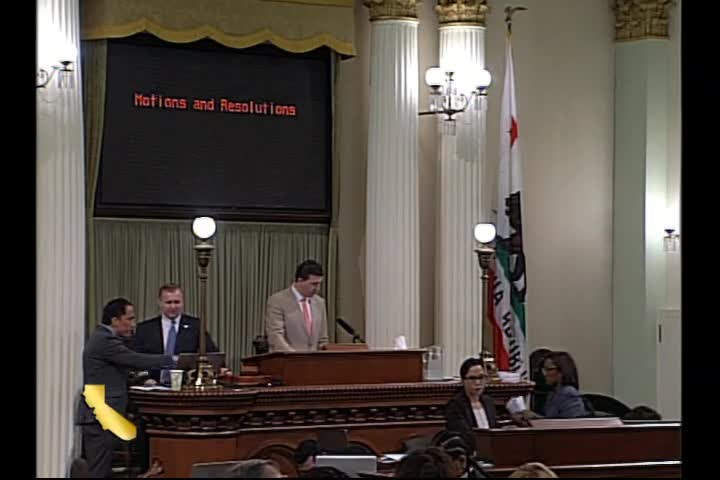 7MIN
Assembly Floor
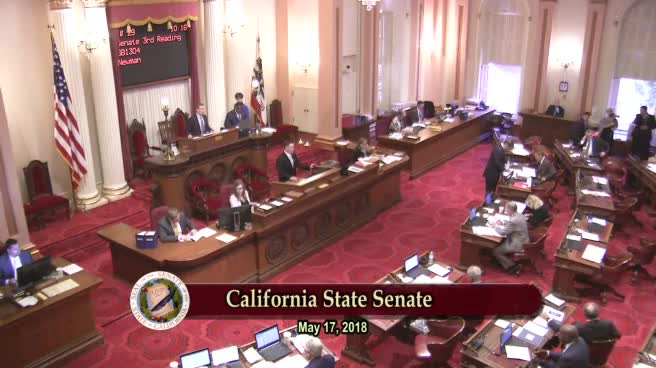 6MIN
Senate Floor
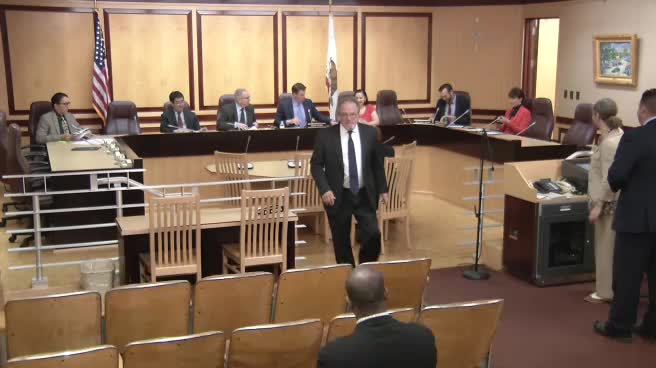 26MIN
Senate Standing Committee on Elections and Constitutional Amendments
Bill Author

Bill Co-Author(s):
