SB 1261: Fire prevention: firefighting aircraft: pilot death benefits.
- Session Year: 2017-2018
- House: Senate
- Latest Version Date: 2018-09-21
(1)Existing law requires that any contract entered into by the Department of Forestry and Fire Protection to retain the services of pilots to fly firefighting aircraft expressly provide that, if the pilot dies while performing the duties specified in the contract, eligible survivors, as defined, if any, of the pilot be paid a one-time death benefit, as determined according to prescribed requirements.
This bill would instead require that express provision only in a contract entered into by the department with a nonpublic entity that includes a provision for the services of pilots to fly firefighting aircraft for the purpose of fighting fire if the aircraft is owned by, or on loan to, the department.
(2)This bill would declare that it is to take effect immediately as an urgency statute.
(1)Existing law requires that any contract entered into by the Department of Forestry and Fire Protection to retain the services of pilots to fly firefighting aircraft expressly provide that, if the pilot dies while performing the duties specified in the contract, eligible survivors, as defined, if any, of the pilot be paid a one-time death benefit, as determined according to prescribed requirements.
This bill would revise that requirement to specify that the contract shall expressly provide that the one-time pilot death benefit shall only be paid to the eligible survivors of a pilot who dies while performing the duties specified in the contract if the pilot is flying firefighting aircraft owned by the department. instead require that express provision only in a contract entered into by the department with a nonpublic entity that includes a provision for the services of pilots to fly firefighting aircraft for the purpose of fighting fire if the aircraft is owned by, or on loan to, the department.
(2)This bill would declare that it is to take effect immediately as an urgency statute.
(1)Existing law requires that any contract entered into by the Department of Forestry and Fire Protection to retain the services of pilots to fly firefighting aircraft expressly provide that, if the pilot dies while performing the duties specified in the contract, eligible survivors, as defined, if any, of the pilot be paid a one-time death benefit, as determined according to prescribed requirements.
This bill would revise that requirement to specify that the contract shall expressly provide that the one-time pilot death benefit shall only be paid to the eligible survivors of a pilot who dies while performing the duties specified in the contract if the pilot is flying firefighting aircraft owned by the department.
(2)This bill would declare that it is to take effect immediately as an urgency statute.
Existing law generally prescribes the procedure for the prosecution of persons arrested for committing a crime, including pleadings, bail, pretrial proceedings, trial, judgment, sentencing, and appeals.Existing law authorizes each county to impanel a grand jury and prescribes the minimum qualifications for a member of the grand jury.This bill would make technical, nonsubstantive changes to those provisions.Existing law generally prescribes the procedure for the prosecution of persons arrested for committing a crime, including pleadings, bail, pretrial proceedings, trial, judgment, sentencing, and appeals.
Existing law authorizes each county to impanel a grand jury and prescribes the minimum qualifications for a member of the grand jury.
This bill would make technical, nonsubstantive changes to those provisions.
(a)Any contract with a nonpublic entity entered into by the department that includes a provision for the services of pilots to fly firefighting aircraft owned by, or on loan to, the department for the purpose of fighting fire shall expressly provide that, if the pilot dies while performing the duties specified in the contract, eligible survivors, if any, of the pilot shall be paid a one-time death benefit by the department equal to the sum of the following:
(1)The amount of the one-time benefit that the eligible survivors of the pilot would receive if the pilot were subject to the federal Public Safety Officers Death Benefits Act (42 U.S.C. Sec. 3796 et seq.). This paragraph shall not be applicable if, at the time of the pilots death, the eligible survivors of the pilot are entitled to benefits under that act.
(2)An amount, as determined by the department, that would be commensurate with the death benefit payable to a mid-career firefighter employed by the department who died in the line of duty.
(b)The benefits payable pursuant to any contract subject to this section shall be paid to eligible survivors in a lump sum as follows:
(1)If there is no eligible child, to the surviving spouse.
(2)If there is an eligible child or children and a surviving spouse, one-half to the child or to the children in equal shares and one-half to the surviving spouse.
(3)If there is no surviving spouse and there is an eligible child or children, to the eligible child or in equal shares to the eligible children.
(4)If there is no surviving spouse nor any eligible child or children, to the surviving parent or in equal shares to the surviving parents.
(c)If there are no eligible survivors, no benefit shall be payable and a pilot may not otherwise designate a beneficiary to receive the benefits under the contract.
(d)(1)As used in this section, an eligible survivor means the surviving spouse, eligible children, or surviving parents of the deceased pilot.
(2)Surviving spouse means a husband or wife who was married to the pilot at the time of the pilots death.
(3)Eligible child means an unmarried, natural child of the deceased pilot who (A) was born before or after the death of the pilot or is an adopted child or stepchild of the pilot, and (B) is 18 years of age or younger at the time of the pilots death, or over the age of 18 years and incapable of self-support due to a physical or mental disability, or between the age of 18 and 22 years and pursuing a full-time course of study or training, if the child has not already completed four years of education beyond high school.
(e)This section shall be applicable irrespective of whether the department contracts directly with the pilot or contracts with a third party that employs or contracts with pilots.
(f)Nothing in this section relieves the pilots employer from the obligation to secure coverage for workers compensation; eliminates or reduces any workers compensation benefits otherwise available; or affects, alters, or eliminates any other remedy otherwise available at law.
(g)This section does not apply to a pilot who dies while performing duties in a firefighting aircraft that is owned by the pilot or another entity other than the department pursuant to a contract or agreement with the department, except for a firefighting aircraft on loan to the department pursuant to subdivision (a).
SEC. 2.This act is an urgency statute necessary for the immediate preservation of the public peace, health, or safety within the meaning of Article IV of the California Constitution and shall go into immediate effect. The facts constituting the necessity are:
In order to make necessary statutory changes governing death benefits for pilots flying firefighting aircraft pursuant to a contract or agreement with the Department of Forestry and Fire Protection before the end of the 2018 fire season, it is necessary that this act take effect immediately.
(a)Any contract with a nonpublic entity entered into by the department to retain that includes a provision for the services of pilots to fly firefighting aircraft owned by by, or on loan to, the department for the purpose of fighting fire shall expressly provide that, if the pilot dies while performing the duties specified in the contract, eligible survivors, if any, of the pilot shall be paid a one-time death benefit by the department equal to the sum of the following:
(1)The amount of the one-time benefit that the eligible survivors of the pilot would receive if the pilot were subject to the federal Public Safety Officers Death Benefits Act (42 U.S.C. Sec. 3796 et seq.). This paragraph shall not be applicable if, at the time of the pilots death, the eligible survivors of the pilot are entitled to benefits under that act.
(2)An amount, as determined by the department, that would be commensurate with the death benefit payable to a mid-career firefighter employed by the department who died in the line of duty.
(b)The benefits payable pursuant to any contract subject to this section shall be paid to eligible survivors in a lump sum as follows:
(1)If there is no eligible child, to the surviving spouse.
(2)If there is an eligible child or children and a surviving spouse, one-half to the child or to the children in equal shares and one-half to the surviving spouse.
(3)If there is no surviving spouse and there is an eligible child or children, to the eligible child or in equal shares to the eligible children.
(4)If there is no surviving spouse nor any eligible child or children, to the surviving parent or in equal shares to the surviving parents.
(c)If there are no eligible survivors, no benefit shall be payable and a pilot may not otherwise designate a beneficiary to receive the benefits under the contract.
(d)(1)As used in this section, an eligible survivor means the surviving spouse, eligible children, or surviving parents of the deceased pilot.
(2)Surviving spouse means a husband or wife who was married to the pilot at the time of the pilots death.
(3)Eligible child means an unmarried, natural child of the deceased pilot who (A) was born before or after the death of the pilot or is an adopted child or stepchild of the pilot, and (B) is 18 years of age or younger at the time of the pilots death, or over the age of 18 years and incapable of self-support due to a physical or mental disability, or between the age of 18 and 22 years and pursuing a full-time course of study or training, if the child has not already completed four years of education beyond high school.
(e)This section shall be applicable irrespective of whether the department contracts directly with the pilot or contracts with a third party that employs or contracts with pilots.
(f)Nothing in this section relieves the pilots employer from the obligation to secure coverage for workers compensation; eliminates or reduces any workers compensation benefits otherwise available; or affects, alters, or eliminates any other remedy otherwise available at law.
(g)This section does not apply to a pilot who dies while performing duties in a firefighting aircraft that is owned by the pilot or another entity other than the department pursuant to a contract or agreement with the department. department, except for a firefighting aircraft on loan to the department pursuant to subdivision (a).
SEC. 2.This act is an urgency statute necessary for the immediate preservation of the public peace, health, or safety within the meaning of Article IV of the California Constitution and shall go into immediate effect. The facts constituting the necessity are:
In order to make necessary statutory changes governing death benefits for pilots flying firefighting aircraft pursuant to a contract or agreement with the Department of Forestry and Fire Protection in time for before the end of the 2018 fire season, it is necessary that this act take effect immediately.
(a)Any contract entered into by the department to retain the services of pilots to fly firefighting aircraft owned by the department shall expressly provide that, if the pilot dies while performing the duties specified in the contract, eligible survivors, if any, of the pilot shall be paid a one-time death benefit equal to the sum of the following:
(1)The amount of the one-time benefit that the eligible survivors of the pilot would receive if the pilot were subject to the federal Public Safety Officers Death Benefits Act (42 U.S.C. Sec. 3796 et seq.). This paragraph shall not be applicable if, at the time of the pilots death, the eligible survivors of the pilot are entitled to benefits under that act.
(2)An amount, as determined by the department, that would be commensurate with the death benefit payable to a mid-career firefighter employed by the department who died in the line of duty.
(b)The benefits payable pursuant to any contract subject to this section shall be paid to eligible survivors in a lump sum as follows:
(1)If there is no eligible child, to the surviving spouse.
(2)If there is an eligible child or children and a surviving spouse, one-half to the child or to the children in equal shares and one-half to the surviving spouse.
(3)If there is no surviving spouse and there is an eligible child or children, to the eligible child or in equal shares to the eligible children.
(4)If there is no surviving spouse nor any eligible child or children, to the surviving parent or in equal shares to the surviving parents.
(c)If there are no eligible survivors, no benefit shall be payable and a pilot may not otherwise designate a beneficiary to receive the benefits under the contract.
(d)(1)As used in this section, an eligible survivor means the surviving spouse, eligible children, or surviving parents of the deceased pilot.
(2)Surviving spouse means a husband or wife who was married to the pilot at the time of the pilots death.
(3)Eligible child means an unmarried, natural child of the deceased pilot who (A) was born before or after the death of the pilot or is an adopted child or stepchild of the pilot, and (B) is 18 years of age or younger at the time of the pilots death, or over the age of 18 years and incapable of self-support due to a physical or mental disability, or between the age of 18 and 22 years and pursuing a full-time course of study or training, if the child has not already completed four years of education beyond high school.
(e)This section shall be applicable irrespective of whether the department contracts directly with the pilot or contracts with a third party that employs or contracts with pilots.
(f)Nothing in this section relieves the pilots employer from the obligation to secure coverage for workers compensation; eliminates or reduces any workers compensation benefits otherwise available; or affects, alters, or eliminates any other remedy otherwise available at law.
(g)This section does not apply to a pilot who dies while performing duties in a firefighting aircraft that is owned by the pilot or another entity other than the department pursuant to a contract or agreement with the department.
SEC. 2.This act is an urgency statute necessary for the immediate preservation of the public peace, health, or safety within the meaning of Article IV of the California Constitution and shall go into immediate effect. The facts constituting the necessity are:
In order to make necessary statutory changes governing death benefits for pilots flying firefighting aircraft pursuant to a contract or agreement with the Department of Forestry and Fire Protection in time for the 2018 fire season, it is necessary that this act take effect immediately.
SECTION 1.Section 893 of the Penal Code is amended to read:893.(a)A person is competent to act as a grand juror only if he or she possesses each of the following qualifications:(1)He or she is a citizen of the United States of the age of 18 years or older who shall have been a resident of the state and of the county or city and county for one year immediately before being selected and returned.(2)He or she is in possession of his or her natural faculties, of ordinary intelligence, of sound judgment, and of fair character.(3)He or she is possessed of sufficient knowledge of the English language.(b)A person is not competent to act as a grand juror if any of the following apply:(1)The person is serving as a trial juror in any court of this state.(2)The person has been discharged as a grand juror in any court of this state within one year.(3)The person has been convicted of malfeasance in office or any felony or other high crime.(4)The person is serving as an elected public officer.(a)A person is competent to act as a grand juror only if he or she possesses each of the following qualifications:
(1)He or she is a citizen of the United States of the age of 18 years or older who shall have been a resident of the state and of the county or city and county for one year immediately before being selected and returned.
(2)He or she is in possession of his or her natural faculties, of ordinary intelligence, of sound judgment, and of fair character.
(3)He or she is possessed of sufficient knowledge of the English language.
(b)A person is not competent to act as a grand juror if any of the following apply:
(1)The person is serving as a trial juror in any court of this state.
(2)The person has been discharged as a grand juror in any court of this state within one year.
(3)The person has been convicted of malfeasance in office or any felony or other high crime.
(4)The person is serving as an elected public officer.
|
Date
|
Status
|
|---|---|
| Sep 21, 2018 | Chaptered by Secretary of State. Chapter 625, Statutes of 2018. |
| Sep 21, 2018 | Approved by the Governor. |
| Aug 30, 2018 | Enrolled and presented to the Governor at 5 p.m. |
| Aug 24, 2018 | Assembly amendments concurred in. (Ayes 39. Noes 0.) Ordered to engrossing and enrolling. |
| Aug 23, 2018 | In Senate. Concurrence in Assembly amendments pending. |
| Aug 23, 2018 | Read third time. Urgency clause adopted. Passed. Ordered to the Senate. |
| Aug 16, 2018 | Read second time. Ordered to consent calendar. |
| Aug 15, 2018 | From committee: Do pass. Ordered to consent calendar. (Ayes 17. Noes 0.) (August 15). |
| Aug 8, 2018 | August 8 hearing postponed by committee. |
| Aug 7, 2018 | From committee with author's amendments. Read second time and amended. Re-referred to Com. on APPR. |
| Jun 20, 2018 | From committee: Do pass and re-refer to Com. on APPR. (Ayes 6. Noes 0.) (June 20). Re-referred to Com. on APPR. |
| Jun 11, 2018 | Referred to Com. on P.E., R., & S.S. |
| May 29, 2018 | In Assembly. Read first time. Held at Desk. |
| May 29, 2018 | Read third time. Urgency clause adopted. Passed. (Ayes 38. Noes 0.) Ordered to the Assembly. |
| May 23, 2018 | Read second time. Ordered to third reading. |
| May 22, 2018 | From committee: Be ordered to second reading pursuant to Senate Rule 28.8. |
| May 15, 2018 | Set for hearing May 22. |
| May 14, 2018 | May 14 hearing postponed by committee. |
| May 8, 2018 | Set for hearing May 14. |
| May 7, 2018 | May 7 hearing postponed by committee. |
| Apr 27, 2018 | Set for hearing May 7. |
| Apr 24, 2018 | From committee: Do pass and re-refer to Com. on APPR. (Ayes 9. Noes 0. Page 4787.) (April 24). Re-referred to Com. on APPR. |
| Apr 23, 2018 | From committee: Do pass and re-refer to Com. on APPR. (Ayes 9. Noes 0.) (April 24). Re-referred to Com. on APPR. |
| Apr 13, 2018 | Set for hearing April 24. |
| Apr 12, 2018 | Re-referred to Com. on N.R. & W. |
| Apr 3, 2018 | From committee with author's amendments. Read second time and amended. Re-referred to Com. on RLS. |
| Mar 1, 2018 | Referred to Com. on RLS. |
| Feb 16, 2018 | From printer. May be acted upon on or after March 18. |
| Feb 15, 2018 | Introduced. Read first time. To Com. on RLS. for assignment. To print. |
|
Date
|
Description
|
Location
|
Votes
|
|
|---|---|---|---|---|
| Aug 24, 2018 | Unfinished Business SB1261 Nielsen Urgency Clause Concurrence | Senate Floor |
Passed |
|
| Aug 23, 2018 | SB 1261 Nielsen Consent Calendar Second Day Regular Session | Assembly Floor |
Passed |
|
| Aug 15, 2018 | Do pass. To Consent Calendar. | Assembly Standing Committee on Appropriations |
Passed |
|
| Jun 20, 2018 | Do pass and be re-referred to the Committee on [Appropriations] | Assembly Standing Committee on Public Employees, Retirement, and Social Security |
Passed |
|
| May 29, 2018 | Senate 3rd Reading SB1261 Nielsen Urgency Clause | Senate Floor |
Passed |
|
| Apr 24, 2018 | Do pass, but first be re-referred to the Committee on [Appropriations] | Senate Standing Committee on Natural Resources and Water |
Passed |
This list shows positions taken on this bill by organizations on the date displayed, which is linked to the original source.
Positions by individuals are not included.
|
Organization
|
Position
|
Date
|
|---|---|---|
| Air West | * Support | Apr 24, 2018 |
| California Special Districts Association | * Support | Jun 20, 2018 |
| Pj Helicopters | ** Support | Aug 23, 2018 |
| Pj Helicopters, Inc. | ** Support | Jun 19, 2018 |
| Red Bluff | * Support | Apr 24, 2018 |
| School Employers Association Of California | * Support | Jun 20, 2018 |
| Small School Districts' Association | * Support | Jun 20, 2018 |
Office of Senate Floor Analyses (916) 651-1520 Fax: (916) 327-4478 | SB |
UNFINISHED BUSINESS
Bill No: SB 1261
:
SENATE NATURAL RES. & WATER COMMITTEE: 9-0, 4/24/18
AYES: Hertzberg, Stone, Allen, Hueso, Jackson, McGuire, Monning, Stern, Vidak
SENATE APPROPRIATIONS COMMITTEE: Senate Rule 28.8
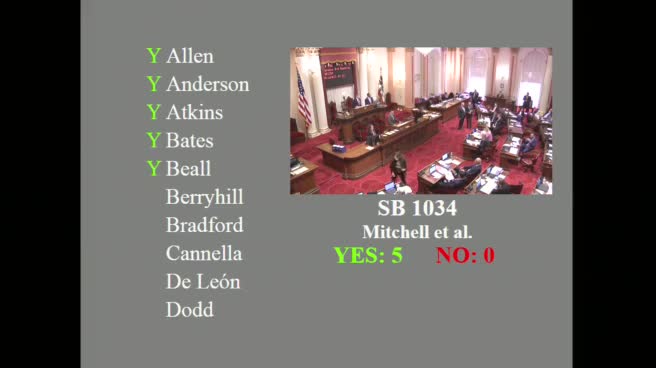
SENATE FLOOR: 38-0, 5/29/18
AYES: Allen, Anderson, Atkins, Bates, Beall, Bradford, Cannella, De León, Dodd, Fuller, Gaines, Galgiani, Glazer, Hernandez, Hertzberg, Hill, Hueso, Jackson, Lara, Leyva, McGuire, Mitchell, Monning, Moorlach, Morrell, Newman, Nguyen, Nielsen, Pan, Portantino, Roth, Skinner, Stern, Stone, Vidak, Wieckowski, Wiener, Wilk
NO VOTE RECORDED: Berryhill
ASSEMBLY FLOOR: 75-0, 8/23/18 (Consent) - See last page for vote
DIGEST:
This bill clarifies existing law regarding the payment of death benefits to pilots who are killed while flying nonpublic aircraft except for those under contract to the state.
Assembly Amendments make technical and clarifying changes.
Existing law:
- Requires that any contract entered into by the California Department of Forestry and Fire Protection (CDF or CAL FIRE) for the services of pilots who fly firefighting aircraft shall expressly provide that if the pilot dies while performing the duties specified in the contract that eligible survivors will be paid a death benefit.
- Provides that call-when-needed aircraft operators are those who are not state employees, and are not full time private contractors. As the name suggests, they are private contractors who supply aircraft, pilots and other personnel, and all other necessary ground equipment (including fuel), to supplement on a contracted basis the firefighting aircraft owned by CDF.
This bill clarifies that death benefits to firefighting pilots are not owed to pilots who fly their own aircraft or one owned by an entity other than CDF.
FISCAL EFFECT: Appropriation: Fiscal Com.: Local:
According to the Assembly Appropriations Committee, no additional state costs.
PJ Helicopters
OPPOSITION: (Verified 8/23/18)
None received
ARGUMENTS IN SUPPORT: According to the author, this bill will clarify that CAL FIRE does not need to provide death benefits for those pilots who fly their own aircraft or one owned by an entity other than CAL FIRE. The author notes that it has been the longstanding understanding among these call-when-needed operators that these death benefits are not available to them.
ASSEMBLY FLOOR: 75-0, 8/23/18
AYES: Acosta, Aguiar-Curry, Arambula, Baker, Berman, Bigelow, Bloom, Bonta, Brough, Burke, Caballero, Calderon, Carrillo, Cervantes, Chau, Chávez, Chen, Chiu, Choi, Chu, Cooley, Cooper, Dahle, Daly, Eggman, Flora, Fong, Frazier, Friedman, Gabriel, Gallagher, Cristina Garcia, Eduardo Garcia, Gipson, Gloria, Gonzalez Fletcher, Gray, Grayson, Harper, Holden, Irwin, Jones-Sawyer, Kalra, Kamlager-Dove, Kiley, Lackey, Levine, Limón, Maienschein, Mathis, Mayes, Medina, Melendez, Mullin, Muratsuchi, Nazarian, Obernolte, O'Donnell, Patterson, Quirk, Quirk-Silva, Reyes, Rivas, Rodriguez, Rubio, Salas, Santiago, Steinorth, Mark Stone, Ting, Voepel, Waldron, Weber, Wood, Rendon
NO VOTE RECORDED: Travis Allen, Cunningham, Low, McCarty, Thurmond
8/23/18 17:21:01
**** END ****
Date of Hearing: August 15, 2018
ASSEMBLY COMMITTEE ON APPROPRIATIONS
Lorena Gonzalez Fletcher, Chair
SBPCA Bill Id:SB 1261
Author:(Nielsen) – As Amended Ver:August 7, 2018
Policy Committee: | Public Employees, Retirement, and Social Security | Vote: | 6 - 0 |
|
| ||
|
|
Urgency: Yes State Mandated Local Program: No Reimbursable: No
SUMMARY:
This bill exempts a pilot who dies while performing duties in a firefighting aircraft that is owned by the pilot or an entity other than the Department of Forestry and Fire Production (CAL FIRE) from requirements related to the payment of a one-time death benefit.
FISCAL EFFECT:
No additional state costs.
COMMENTS:
- Background and purpose. Existing law requires that any contract entered into by CAL FIRE for the services of pilots to fly firefighting aircraft must provide eligible survivors a one-time benefit if that pilot dies while performing the duties of that contract. However, the law is vague on whether these benefits apply to call-when-needed aircraft operators who are not state employees or full-time private contracts. These contractors supply their own aircraft, pilots, and other necessary ground equipment, and supplement the work done by firefighting aircraft owned by CAL FIRE.
According to the author, SB 1261 will clarify that CAL FIRE does not need to provide death benefits for those pilots who fly their own aircraft or one owned by an entity other than CAL FIRE. The author argues that it has been the longstanding understanding among these call-when-needed operators that these death benefits are not available to them. However, following a lawsuit brought against CAL FIRE, the department sent a letter in January 2018 to all operators indicating they would need to provide this death benefit and that they need to purchase an insurance policy that supporters contend is unaffordable.
- Recent author amendments. The author recently amended SB 1261 to further clarify the distinction when a pilot working for a nonpublic entity is eligible for a one-time death benefit paid by CAL FIRE and when that pilot is not eligible. These amendments also clarify that a death benefit is owed to a pilot flying an aircraft on loan to CAL FIRE and not just owned by CAL FIRE.
Analysis Prepared by: Luke Reidenbach / APPR. / (916) 319-2081
Date of Hearing: August 8, 2018
ASSEMBLY COMMITTEE ON APPROPRIATIONS
Lorena Gonzalez Fletcher, Chair
SBPCA Bill Id:SB 1261
Author:(Nielsen) – As Amended Ver:April 3, 2018
Policy Committee: | Public Employees, Retirement, and Social Security | Vote: | 6 - 0 |
|
| ||
|
|
Urgency: Yes State Mandated Local Program: No Reimbursable: No
SUMMARY:
This bill exempts a pilot who dies while performing duties in a firefighting aircraft that is owned by the pilot or another entity other than the Department of Forestry and Fire Production (CAL FIRE) from requirements related to the payment of a one-time death benefit.
FISCAL EFFECT:
No additional state costs.
COMMENTS:
Background and purpose. Existing law requires that any contract entered into by CAL FIRE for the services of pilots to fly firefighting aircraft must provide eligible survivors a one-time benefit if that pilot dies while performing the duties of that contract. However, the law is vague on whether these benefits apply to call-when-needed aircraft operators who are not state employees or full-time private contracts. These contractors supply their own aircraft, pilots, and other necessary ground equipment, and supplement the work done by firefighting aircraft owned by CAL FIRE.
According to the author, SB 1261 will clarify that CAL FIRE does not need to provide death benefits for those pilots who fly their own aircraft or one owned by an entity other than CAL FIRE. The author argues that it has been the longstanding understanding among these call-when-needed operators that these death benefits are not available to them. However, following a lawsuit brought against CAL FIRE, the department sent a letter in January 2018 to all operators indicating they would need to provide this death benefit and that they need ot purchase an insurance policy that supporters contend is unaffordable.
Analysis Prepared by: Luke Reidenbach / APPR. / (916) 319-2081
Date of Hearing: June 20, 2018
ASSEMBLY COMMITTEE ON PUBLIC EMPLOYEES, RETIREMENT, AND SOCIAL SECURITY
Freddie Rodriguez, Chair
SBPCA Bill Id:SB 1261
Author:(Nielsen) – As Amended Ver:April 3, 2018
SENATE VOTE: 38-0
SUBJECT: Fire prevention: firefighting aircraft: pilot death benefits
SUMMARY: As an urgency statute, this measure revises requirements in existing law related to the payment of a one-time death benefit to survivors of a pilot who dies while performing specified contractual duties pursuant to an agreement entered into by the Department of Forestry and Fire Protection (CDF). Specifically, this bill:
1) Exempts a pilot who dies while performing duties in a firefighting aircraft that is owned by the pilot or another entity other than the CDF pursuant to a contract or agreement with the CDF.
2) Establishes that this measure is an urgency statute to make necessary statutory changes governing death benefits for pilots flying firefighting aircraft pursuant to a contract or agreement with CDF in time for the 2018 fire season, and for this act to take effect immediately.
EXISTING LAW:
- Requires that any contract entered into by CDF for the services of pilots who fly firefighting aircraft must provide that if the pilot dies while performing the duties specified in the contract that eligible survivors will be paid a death benefit.
- Provides that call-when-needed aircraft operators are those who are not state employees, and are not full-time private contractors. As the name suggests, they are private contractors who supply aircraft, pilots and other personnel, and all other necessary ground equipment, including fuel, to supplement on a contracted basis the firefighting aircraft owned by the CDF.
FISCAL EFFECT: Unknown. This bill was passed by the Senate Appropriations Committee pursuant to Senate Rule 28.8.
COMMENTS: According to the author, “[b]etween 1958 and 2002, 32 pilots were killed in the line of duty fighting fires on behalf of the state of California. In an effort to provide these pilots of CAL FIRE-owned and serviced aircraft with appropriate death benefits, the Legislature and Governor passed a bill that approved benefits for those pilots comparable to those afforded public safety officers.
‘Following a lawsuit brought against CAL FIRE, the department clarified the rules regarding who is considered eligible for that benefit. In January 2018, the department sent an informational letter to all contracted operators that indicated they would all need to provide this death benefit to their pilots pursuant to statute.
‘It has been the longtime understanding of contractors, however, that pilots who operate aircraft not owned by CAL FIRE have not been subject to this provision. The decision by the department to create this requirement for the upcoming fire season meant that all statewide Helicopter Call-When-Needed Operators would now need to find insurance to meet the payout on this benefit.
‘Several operators noted that the cost for servicing CAL FIRE could reach into the millions for the insurance alone, and one operator noted that the cost of insuring himself was nearly equivalent to the total revenue made from the contract for the previous fire season.
‘The response from contractors regarding contracts for the upcoming fire season has been uniformly negative.
‘Numerous longtime operators indicated that they would not be able or willing to participate in firefighting activities on behalf of CAL FIRE. In response, the department sent another letter in March 2018 which indicated that all Call-When-Needed contracts would include a provision that contractually binds CAL FIRE to pay for the death benefit at no cost to the vendor.
‘While this temporary fix provides a stop-gap response for this season, there is a clear need for both CAL FIRE and contractors to have statutory certainty beyond legal interpretation and changing administrations.
‘Senate Bill 1261 clarifies the intent behind statute and limits death benefit payouts to only those pilots flying firefighting aircraft owned by or on loan to CALFIRE, and contains an urgency clause to ensure that as many contractors as possible are spared from this uncertainty.”
REGISTERED SUPPORT / OPPOSITION:
Support
PJ Helicopters, Inc.
Opposition
None on file.
Analysis Prepared by: Michael Bolden / P.E.,R., & S.S. / (916) 319-3957
Office of Senate Floor Analyses (916) 651-1520 Fax: (916) 327-4478 | SB |
THIRD READING
Bill No: SB 1261
:
SENATE NATURAL RES. & WATER COMMITTEE: 9-0, 4/24/18
AYES: Hertzberg, Stone, Allen, Hueso, Jackson, McGuire, Monning, Stern, Vidak
SENATE APPROPRIATIONS COMMITTEE: Senate Rule 28.8
DIGEST:
This bill re-states the legislative intent of existing law (Public Resources Code Section 4114.5) and states that AB 1748 (Dickerson, Chapter 476, Statutes of 2002) regarding death benefits to firefighting pilots applies only to survivors of a pilot killed while flying aircraft owned by the Department of Forestry and Fire Protection (CDF).
Existing law:
- Requires that any contract entered into by CDF for the services of pilots who fly firefighting aircraft shall expressly provide that if the pilot dies while performing the duties specified in the contract that eligible survivors will be paid a death benefit.
- Provides that call-when-needed aircraft operators are those who are not state employees, and are not full time private contractors. As the name suggests, they are private contractors who supply aircraft, pilots and other personnel, and all other necessary ground equipment (including fuel), to supplement on a contracted basis the firefighting aircraft owned by CDF.
This bill clarifies that death benefits to firefighting pilots applies only to survivors of a pilot killed while flying aircraft owned by CDF.
FISCAL EFFECT: Appropriation: Fiscal Com.: Local:
PJ Helicopters
OPPOSITION: (Verified 5/22/18)
None received
ARGUMENTS IN SUPPORT: According to the author, CDF notified its call-when-needed contractors in January 2018 that they would all need to provide this death benefit to their pilots, regardless of the previous interpretation of the law. The author said that it has been the longtime understanding of the contractors that pilots who operate aircraft not owned by CDF are not subject to this provision. The effect of this decision by CDF meant that all statewide contractors would now need to find insurance to meet the payout on this benefit, which the author and supporters believe could preclude some contractors from providing firefighting services to CDF because death benefits policies are too expensive.
According to PJ Helicopters, this bill clarifies original legislative intent and bolsters the ability of the state to respond to fire with the most available personnel and aircraft.
The author noted that 32 pilots were killed while fighting fires between 1958 and 2002. (Senate Natural Resources & Water Committee staff found information from a lawsuit identifying 14 others after 2002.) However, there is no available data indicating that any of these fatalities were associated with call-when-needed operators.
Call-when-needed operators should not be subject to this provision since they have no assurance that they will be called and they have no idea until they are called how much work they will do for CDF.
California does not extend death benefits to employees of other contractors who work for the state for short stretches of time that vary from year to year.
5/24/18 14:43:08
SENATE COMMITTEE ON NATURAL RESOURCES AND WATER
Senator Robert Hertzberg, Chair
2017 - 2018 Regular
Bill No: SB 1261 Hearing Date: April 24, 2018
Author: | |||
Version: |
| ||
Urgency: | Fiscal: | ||
Consultant: | |||
Subject: Fire prevention: firefighting aircraft: pilot death benefits
BACKGROUND AND EXISTING LAW
Existing law was established in 2002. It requires that any contract entered into by the Department of Forestry and Fire Protection (CDF) for the services of pilots who fly firefighting aircraft shall expressly provide that if the pilot dies while performing the duties specified in the contract that eligible survivors will be paid a death benefit.
Call-when-needed aircraft operators are those who are not state employees, and are not full time private contractors. As the name suggests, they are private contractors who supply aircraft, pilots and other personnel, and all other necessary ground equipment (including fuel), to supplement on a contracted basis the fire-fighting aircraft owned by CDF.
PROPOSED LAW
This bill clarifies that the provision regarding death benefits applies only to survivors of a pilot killed while flying aircraft owned by the department.
ARGUMENTS IN SUPPORT
According to the author, CDF notified its call-when-needed contractors in January, 2018 that they would all need to provide this death benefit to their pilots, regardless of the previous interpretation of the law. The author said that it has been the longtime understanding of the contractors that pilots who operate aircraft not owned by CDF are not subject to this provision. The effect of this decision by CDF meant that all statewide contractors would now need to find insurance to meet the payout on this benefit, which the author and supporters believe could preclude some contractors from providing fire-fighting services to CDF because death benefits policies are too expensive.
According to PJ Helicopters, this bill clarifies original legislative intent and bolsters the ability of the state to respond to fire with the most available personnel and aircraft.
The author noted that 32 pilots were killed while fighting fires between 1958 and 2002. (Staff found information from a lawsuit identifying 14 others after 2002.) However, there is no available data indicating that any of these fatalities were associated with call-when-needed operators.
Call-when-needed operators should not be subject to this provision since they have no assurance that they will be called and they have no idea until they are called how much work they will do for CDF.
California does not extend death benefits to employees of other contractors who work for the state for short stretches of time that vary from year to year.
ARGUMENTS IN OPPOSITION
None received.
COMMENTS
- Is this bill necessary?
The author acknowledged that after the January, 2018 informational letter requiring contractors to obtain insurance, CDF sent a subsequent letter in March, 2018, providing that 2018 contracts for airplane services would include a provision that contractually binds CDF to pay for the death benefit at no cost to the vendor. The survivor death benefit would be $1.48 million and $1.14 million for those eligible for federal public safety officers’ death benefits. However, the author and supporters characterize this as a stop-gap response for this season that may or may not be retained in subsequent years.
The author believes that the bill is necessary to create certainty that endures beyond changing statutory interpretations and changing administrations.
- Is this clarification necessary?
The previous analyses from 2002 are in substantial agreement, with one little twist, in support of the bill.
- According to the Senate Labor Committee analysis of the 2002 legislation, AB 1748 (Dickerson): “According to the author, pilots hired by contractors to fly state planes fighting fires protecting state resources and citizens are not afforded death benefits commensurate with the risk they incur or commensurate with state employees doing similar work.” (emphasis added)
- Further, according to an Assembly committee analysis of the same bill: “This bill would ensure that contract pilots receive death benefits comparable to those afforded public safety officers.” This analysis does not explicitly include the condition that the contractors must be flying state-owned planes but it makes that implication by basing the death benefit on what is available to full-time employees.
- As an aside, this bill demonstrates the long shelf-life of previous committee analyses.
SUPPORT
PJ Helicopters
OPPOSITION
None Received
-- END --
Discussed in Hearing
 1MIN
Senate Floor
 6MIN
Assembly Standing Committee on Public Employees, Retirement, and Social Security
 1MIN
Senate Floor
 11MIN
Senate Standing Committee on Natural Resources and Water
Bill Author

Bill Co-Author(s):