SB 1263: Ocean Protection Council: Statewide Microplastics Strategy.
- Session Year: 2017-2018
- House: Senate
- Latest Version Date: 2018-09-20
The California Ocean Protection Act establishes the Ocean Protection Council in state government and prescribes the functions and duties of the council with regard to the protection and conservation of coastal waters and ocean ecosystems.
This bill would require the council, to the extent funds are available from bonds or other sources, to adopt and implement a Statewide Microplastics Strategy, related to microplastic materials that pose an emerging concern for ocean health, that includes specified components, as provided. The bill would authorize the council, in collaboration with the State Water Resources Control Board, the Office of Environmental Health Hazard Assessment, and other interested entities, to enter into one or more contracts with marine research institutes in the state for the provision of research services that would contribute directly to the development of the Statewide Microplastics Strategy. The bill would require the council, subject to the availability of funding, to submit the Statewide Microplastics Strategy to the Legislature on or before December 31, 2021, and to report to the Legislature on the implementation and findings of the Statewide Microplastics Strategy, and on recommendations for policy changes or additional research, on or before December 31, 2025.
The California Ocean Protection Act establishes the Ocean Protection Council in state government and prescribes the functions and duties of the council with regard to the protection and conservation of coastal waters and ocean ecosystems.
This bill would require the council, to the extent funds are available from bonds or other sources, to adopt and implement a Statewide Microplastics Strategy related to microplastic materials that pose an emerging concern for ocean health and that includes specified components, as provided. The bill would authorize the council, in collaboration with the State Water Resources Control Board, the Office of Environmental Health Hazard Assessment, and other interested entities, to enter into one or more contracts with marine research institutes in the state for the provision of research services that would contribute directly to the development of the Statewide Microplastics Strategy. The bill would require the council, subject to the availability of funding, to submit the Statewide Microplastics Strategy to the Legislature on or before December 31, 2021, and to report to the Legislature on the implementation and findings and recommendations of the Statewide Microplastics Strategy Strategy, and on recommendations for policy changes or additional research, on or before December 31, 2025.
The California Ocean Protection Act establishes the Ocean Protection Council in state government and prescribes the functions and duties of the council with regard to the protection and conservation of coastal waters and ocean ecosystems.
This bill would require the council, to the extent funds are available from bonds or other sources, to adopt and implement a Statewide Microplastics Strategy related to microplastic materials that pose an emerging concern for ocean health and that includes specified components, as provided. The bill would authorize the council, in collaboration with the State Water Resources Control Board, the Office of Environmental Health Hazard Assessment, and other interested entities, to enter into one or more contracts with marine research institutes in the state for the provision of research services that would contribute directly to the development of the Statewide Microplastics Strategy. The bill would require the council, subject to the availability of funding, to submit the Statewide Microplastics Strategy to the Legislature on or before December 31, 2021, and to report to the Legislature on the findings and recommendations of the Statewide Microplastics Strategy on or before December 31, 2025.
The California Ocean Protection Act establishes the Ocean Protection Council in state government and prescribes the functions and duties of the council with regard to the protection and conservation of coastal waters and ocean ecosystems.
This bill would require the council, to the extent funds are available from bonds or other sources, to adopt and implement a Statewide Microplastics Strategy related to microplastic materials that pose an emerging concern for ocean health and that includes specified components, as provided. The bill would authorize the council, in collaboration with the State Water Resources Control Board, the Office of Environmental Health Hazard Assessment, and other interested entities, to enter into one or more contracts with marine research institutes in the state for the provision of research services that would contribute directly to the development of the Statewide Microplastics Strategy. The bill would require the council, subject to the availability of funding, to report to the Legislature on the findings and recommendations of the Statewide Microplastics Strategy on or before December 31, 2025.
The California Ocean Protection Act establishes the Ocean Protection Council in state government and prescribes the functions and duties of the council with regard to the protection and conservation of coastal waters and ocean ecosystems.
This bill would require the council, to the extent funds are available from bonds or other sources, to adopt and implement a Statewide Microplastics Strategy related to microplastic materials that pose an emerging concern for ocean health and that includes specified components, as provided. The bill would require the council, subject to the availability of funding, to report to the Legislature on the findings and recommendations of the Statewide Microplastics Strategy on or before December 31, 2025.
Existing law provides that under an open policy that requires payment of the replacement cost for a loss, the measure of indemnity is the amount it would cost the insured to repair, rebuild, or replace the property, without deduction for physical depreciation, or the policy limit, whichever is less. Under existing law, if a covered loss is related to a state of emergency, as defined, coverage for additional living expenses shall be for 24 months, subject to other policy provisions, and the insured shall have at least 24 months to collect the full replacement of the loss, subject to the policy limit.This bill would require an insurer to increase the replacement cost policy limits, as specified, of a residential property insurance policy by an amount equal to 50% of the policy limits if an insured has suffered a loss relating to a declared state of emergency. The bill would specify that the 50% increase is in addition to applicable extended replacement cost coverage and does not include that coverage in the calculation.Existing law provides that under an open policy that requires payment of the replacement cost for a loss, the measure of indemnity is the amount it would cost the insured to repair, rebuild, or replace the property, without deduction for physical depreciation, or the policy limit, whichever is less. Under existing law, if a covered loss is related to a state of emergency, as defined, coverage for additional living expenses shall be for 24 months, subject to other policy provisions, and the insured shall have at least 24 months to collect the full replacement of the loss, subject to the policy limit.
This bill would require an insurer to increase the replacement cost policy limits, as specified, of a residential property insurance policy by an amount equal to 50% of the policy limits if an insured has suffered a loss relating to a declared state of emergency. The bill would specify that the 50% increase is in addition to applicable guaranteed extended replacement cost coverage. coverage and does not include that coverage in the calculation.
Existing law provides that under an open policy that requires payment of the replacement cost for a loss, the measure of indemnity is the amount it would cost the insured to repair, rebuild, or replace the property, without deduction for physical depreciation, or the policy limit, whichever is less. Under existing law, if a covered loss is related to a state of emergency, as defined, coverage for additional living expenses shall be for 24 months, subject to other policy provisions, and the insured shall have at least 24 months to collect the full replacement of the loss, subject to the policy limit.
This bill would require an insurer to increase the policy limits, as specified, of a residential property insurance policy by an amount equal to 50% of the policy limits if an insured has suffered a loss relating to a declared state of emergency. The bill would specify that the 50% increase is in addition to applicable guaranteed replacement cost coverage.
(a)The Legislature finds and declares all of the following:
(1)Through the adoption of the California Ocean Litter Prevention Strategy, the council has led the development of long-term policies to address marine debris.
(2)Although substantial scientific research on microplastics exists, further research will complement and support continuing efforts to reduce microplastic pollution.
(3)In addition to the development of a long-term Statewide Microplastics Strategy, early actions to prevent and reduce known impacts of microplastics to the marine environment should be pursued.
(4)This chapter is not intended to preclude the Legislature from enacting legislation to reduce microplastic pollution either before or after the Statewide Microplastics Strategy is adopted and implemented.
(b)To the extent that funds are available from bonds or other sources, including from federal, state, academic, or other public or private entities, on or before December 31, 2024, the council shall adopt and implement a Statewide Microplastics Strategy related to microplastic materials that pose an emerging concern for ocean health. The council shall work with the State Water Resources Control Board, the Office of Environmental Health Hazard Assessment, and other interested entities in the development of the Statewide Microplastics Strategy. The goal of the Statewide Microplastics Strategy shall be to increase the understanding of the scale and risks of microplastic materials on the marine environment and identify proposed solutions to address the impacts of microplastic materials, to the extent feasible.
(c)The council, in collaboration with the State Water Resources Control Board, the Office of Environmental Health Hazard Assessment, and other interested entities, may enter into one or more contracts with marine research institutes in the state, including those associated with the University of California, the California State University, Stanford University, the California Ocean Science Trust, and other academic and research institutions that have demonstrated expertise relating to the effects of microplastic materials on ocean health, for the provision of research services that would contribute directly to the development of the Statewide Microplastics Strategy.
(d)The Statewide Microplastics Strategy shall include, but is not limited to, all of the following components:
(1)The development of a comprehensive prioritized research plan that includes research that will support the development of risk assessments for microplastics in the marine environment habitat types of California.
(2)The development of standardized methods for sampling, detecting, and characterizing microplastics.
(3)The characterization of ambient concentrations of microplastics in the marine environment and an assessment of the associated environmental impacts, by microplastic particle age, size, shape, type, and location.
(4)An investigation of the sources and relative importance of pathways associated with the environmental impacts of microplastics determined to be significant pursuant to paragraph (3).
(5)The development of a risk assessment framework for microplastics, based on the best available information on exposure of microplastics to organisms, including humans, through pathways that impact the marine environment.
(6)Research on approaches for reducing the introduction of microplastics into the marine environment from significant pathways of exposure, with an emphasis on the sizes, shapes, and types of microplastics that are associated with significant environmental impacts.
(7)Use of the risk assessment framework developed pursuant to paragraph (5) to evaluate options, including source reduction and product stewardship techniques, barriers, costs, and benefits.
(8)Recommendations for policy changes, including statutory changes, or additional research that may be needed.
(e)The council may include the Statewide Microplastics Strategy within the councils California Ocean Litter Prevention Strategy: Addressing Marine Debris from Source to Sea.
(f)In developing and implementing the Statewide Microplastics Strategy, the council may utilize existing information and leverage ongoing efforts, where possible.
(g)(1)On or before December 31, 2021, subject to the availability of funding, the council shall submit the Statewide Microplastics Strategy to the Legislature, in compliance with Section 9795 of the Government Code. The council may at that time also submit recommended policy changes, including statutory changes, that may be needed to implement the Statewide Microplastics Strategy.
(2)On or before December 31, 2025, subject to the availability of funding, the council shall report to the Legislature, in compliance with Section 9795 of the Government Code, on the implementation of the Statewide Microplastics Strategy and the councils findings pursuant to paragraphs (1) to (7), inclusive, of subdivision (d) and shall make recommendations to the Legislature pursuant to paragraph (8) of subdivision (d).
(3)The reports required pursuant to paragraphs (1) and (2) shall be complementary to, and not preclude appropriate implementation of, the individual components of the councils California Ocean Litter Prevention Strategy: Addressing Marine Debris from Source to Sea.
(4)Pursuant to Section 10231.5 of the Government Code, the requirement for submitting the Statewide Microplastics Strategy and any recommended policy changes imposed by paragraph (1) is inoperative on December 31, 2025, and the requirement for submitting a report imposed by paragraph (2) is inoperative on December 31, 2029.
(a)The Legislature finds and declares all of the following:
(1)Through the adoption of the California Ocean Litter Prevention Strategy, the council has led the development of long-term policies to address marine debris.
(2)Although substantial scientific research on microplastics exists, further research will complement and support continuing efforts to reduce microplastic pollution.
(3)In addition to the development of a long-term Statewide Microplastics Strategy, early actions to prevent and reduce known impacts of microplastics to the marine environment should be pursued.
(b)To the extent that funds are available from bonds or other sources, including from federal, state, academic, or other public or private entities, on or before December 31, 2024, the council shall adopt and implement a Statewide Microplastics Strategy related to microplastic materials that pose an emerging concern for ocean health. The council shall work with the State Water Resources Control Board, the Office of Environmental Health Hazard Assessment, and other interested entities in the development of the Statewide Microplastics Strategy. The goal of the Statewide Microplastics Strategy shall be to increase the understanding of the scale and risks of microplastic materials and microfibers on the marine environment and identify proposed solutions to address the impacts of microplastic materials and microfibers, materials, to the extent feasible.
(b)(c)The council, in collaboration with the State Water Resources Control Board, the Office of Environmental Health Hazard Assessment, and other interested entities, may enter into one or more contracts with marine research institutes in the state, including those associated with the University of California, the California State University, Stanford University, the California Ocean Science Trust, and other academic and research institutions that have demonstrated expertise relating to the effect effects of microplastic materials on ocean health, for the provision of research services that would contribute directly to the development of the Statewide Microplastics Strategy.
(c)(d)The Statewide Microplastics Strategy shall include, but is not limited to, all of the following components:
(1)The development of a comprehensive prioritized research plan that includes research that will support the development of risk assessments for microplastics of all sizes in all major marine habitat types. in the marine environment habitat types of California.
(2)The development of standardized methods for sampling, detecting, and characterizing microplastics.
(3)The characterization of ambient concentrations of microplastics in the marine environment and an assessment of the associated environmental impacts, by microplastic particle age, size, shape, type, and location.
(4)An investigation of the sources and relative importance of pathways of the sizes, shapes, and types of microplastics associated with any the environmental impacts of microplastics determined to be significant pursuant to paragraph (3).
(5)The development of a risk assessment framework for microplastics, based on the best available information on exposure of microplastics to organisms, including humans, through all relevant pathways. pathways that impact the marine environment.
(6)Research on approaches for reducing the introduction of microplastics into the marine environment from all significant pathways of exposure, with an emphasis on the sizes, shapes, and types of microplastics that are associated with significant environmental impacts.
(7)Use of the risk assessment framework developed pursuant to paragraph (5) to evaluate options, including source reduction and product stewardship techniques, barriers, costs, and benefits.
(8)Recommendations for additional research or policy or changes, including statutory changes changes, or additional research that may be needed.
(d)(e)The council may include the Statewide Microplastics Strategy within the councils California Ocean Litter Prevention Strategy: Addressing Marine Debris from Source to Sea.
(f)In developing and implementing the Statewide Microplastics Strategy, the council may utilize existing information and leverage ongoing efforts, where possible.
(g)(1)On or before December 31, 2021, subject to the availability of funding, the council shall submit the Statewide Microplastics Strategy to the Legislature, in compliance with Section 9795 of the Government Code. The council may at that time also submit recommended policy changes, including statutory changes, that may be needed to implement the Statewide Microplastics Strategy.
(e)(1)(2)On or before December 31, 2025, subject to the availability of funding, the council shall report to the Legislature, in compliance with Section 9795 of the Government Code, on the implementation of the Statewide Microplastics Strategy and the councils findings pursuant to paragraphs (1) to (7), inclusive, of subdivision (c) (d) and shall make recommendations to the Legislature pursuant to paragraph (8) of subdivision (c). (d).
(2)(3)The report reports required pursuant to paragraph paragraphs (1) and (2) shall be complementary to, and not preclude appropriate implementation of, the individual components of the councils California Ocean Litter Prevention Strategy: Addressing Marine Debris from Source to Sea.
(3)(4)Pursuant to Section 10231.5 of the Government Code, the requirement for submitting the Statewide Microplastics Strategy and any recommended policy changes imposed by paragraph (1) is inoperative on December 31, 2025, and the requirement for submitting a report imposed by paragraph (1) (2) is inoperative on December 31, 2029.
(a)To the extent that funds are available from bonds or other sources, including from federal, state, academic, or other public or private entities, on or before December 31, 2024, the council, in cooperation with the State Water Resources Control Board and other interested entities, council shall adopt and implement a Statewide Microplastics Strategy related to microplastic materials that pose an emerging concern for ocean health. The council shall work with the State Water Resources Control Board, the Office of Environmental Health Hazard Assessment, and other interested entities in the development of the Statewide Microplastics Strategy. The goal of the Statewide Microplastics Strategy shall be to increase the understanding of the scale and risks of microplastic materials and microfibers on the marine environment and identify proposed solutions to address the impacts of microplastic materials and microfibers, to the extent feasible. The
(b)The council, in collaboration with the State Water Resources Control Board, the Office of Environmental Health Hazard Assessment, and other interested entities, may enter into one or more contracts with marine research institutes in the state, including those associated with the University of California, the California State University, Stanford University, the California Ocean Science Trust, and other academic and research institutions that have demonstrated expertise relating to the effect of microplastic materials on ocean health, for the provision of research services that would contribute directly to the development of the Statewide Microplastics Strategy.
(c)The Statewide Microplastics Strategy shall include, but is not limited to, all of the following components:
(1)The development of a comprehensive prioritized research plan that includes research that will support the development of risk assessments for microplastics of all sizes in all major marine habitat types.
(2)The development of standardized methods for sampling, detecting, and characterizing microplastics.
(3)The characterization of ambient concentrations of microplastics in the marine environment and an assessment of the associated environmental impacts, by microplastic particle age, size, shape, type, and location.
(4)An investigation of the sources and relative importance of pathways of the sizes, shapes, and types of microplastics associated with any environmental impacts determined to be significant pursuant to paragraph (3).
(5)The development of a risk assessment framework for microplastics, based on the best available information on exposure of microplastics to organisms, including humans, through all relevant pathways.
(6)Research on approaches for reducing the introduction of microplastics into the marine environment from all pathways of exposure, with an emphasis on the sizes, shapes, and types of microplastics that are associated with significant environmental impacts.
(7)Use of the risk assessment framework developed pursuant to paragraph (5) to evaluate options, including source reduction and product stewardship techniques, barriers, costs, and benefits.
(8)Recommendations for additional research or policy or statutory changes that may be needed.
(b)(d)The council may include the Statewide Microplastics Strategy within the councils California Ocean Litter Prevention Strategy. Strategy: Addressing Marine Debris from Source to Sea.
(c)(e)(1)On or before December 31, 2025, subject to the availability of funding, the council shall report to the Legislature, in compliance with Section 9795 of the Government Code, on the Statewide Microplastics Strategy and the councils findings pursuant to paragraphs (1) to (7), inclusive, of subdivision (a) (c) and shall make recommendations to the Legislature pursuant to paragraph (8) of subdivision (a). (c).
(2)The report required pursuant to paragraph (1) shall be complementary to, and not preclude appropriate implementation of, the individual components of the councils California Ocean Litter Prevention Strategy: Addressing Marine Debris from Source to Sea.
(2)(3)Pursuant to Section 10231.5 of the Government Code, the requirement for submitting a report imposed by paragraph (1) is inoperative on December 31, 2029.
(a)To the extent that funds are available from bonds or other sources, including from federal, state, academic, or other public or private entities, on or before December 31, 2024, the council, in cooperation with the State Water Resources Control Board and other interested entities, shall adopt and implement a Statewide Microplastics Strategy related to microplastic materials that pose an emerging concern for ocean health. The goal of the Statewide Microplastics Strategy shall be to increase the understanding of the scale and risks of microplastic materials and microfibers on the marine environment and identify proposed solutions to address the impacts of microplastic materials and microfibers, to the extent feasible. The Statewide Microplastics Strategy shall include, but is not limited to, all of the following components:
(1)The development of a comprehensive prioritized research plan that includes research that will support the development of risk assessments for microplastics of all sizes in all major marine habitat types.
(2)The development of standardized methods for sampling, detecting, and characterizing microplastics.
(3)The characterization of ambient concentrations of microplastics in the marine environment and an assessment of the associated environmental impacts, by microplastic particle age, size, shape, type, and location.
(4)An investigation of the sources and relative importance of pathways of the sizes, shapes, and types of microplastics associated with any environmental impacts determined to be significant pursuant to paragraph (3).
(5)The development of a risk assessment framework for microplastics, based on the best available information on exposure of microplastics to organisms, including humans, through all relevant pathways.
(6)Research on approaches for reducing the introduction of microplastics into the marine environment from all pathways of exposure, with an emphasis on the sizes, shapes, and types of microplastics that are associated with significant environmental impacts.
(7)Use of the risk assessment framework developed pursuant to paragraph (5) to evaluate options, including source reduction and product stewardship techniques, barriers, costs, and benefits.
(8)Recommendations for additional research or policy or statutory changes that may be needed.
(b)The council may include the Statewide Microplastics Strategy within the councils California Ocean Litter Prevention Strategy.
(c)(1)On or before December 31, 2025, subject to the availability of funding, the council shall report to the Legislature, in compliance with Section 9795 of the Government Code, on the Statewide Microplastics Strategy and the councils findings pursuant to paragraphs (1) to (7), inclusive, of subdivision (a) and shall make recommendations to the Legislature pursuant to paragraph (8) of subdivision (a).
(2)Pursuant to Section 10231.5 of the Government Code, the requirement for submitting a report imposed by paragraph (1) is inoperative on December 31, 2029.
SECTION 1.Section 2063 is added to the Insurance Code, to read:2063.In the event of a covered loss relating to a state of emergency, as defined in Section 8558 of the Government Code, the replacement cost policy limits of a residential property insurance policy for the primary dwelling, other structures, contents, and additional living expenses shall be increased by an amount equal to 50 percent of the policy limits for each of these coverages. The 50-percent increase shall be in addition to extended replacement cost coverage that may be included in the policy, but shall be calculated based on replacement cost policy limits before the extended replacement cost limits are applied.In the event of a covered loss relating to a state of emergency, as defined in Section 8558 of the Government Code, the replacement cost policy limits of a residential property insurance policy for the primary dwelling, other structures, contents, and additional living expenses shall be increased by an amount equal to 50 percent of the policy limits for each of these coverages. The 50-percent increase shall be in addition to extended replacement cost coverage that may be included in the policy. policy, but shall be calculated based on replacement cost policy limits before the extended replacement cost limits are applied.
In the event of a covered loss relating to a state of emergency, as defined in Section 8558 of the Government Code, the policy limits of a residential property insurance policy for the primary dwelling, other structures, contents, and additional living expenses shall be increased by an amount equal to 50 percent of the policy limits for each of these coverages. The 50-percent increase shall be in addition to extended replacement cost coverage that may be included in the policy.
|
Date
|
Status
|
|---|---|
| Sep 20, 2018 | Chaptered by Secretary of State. Chapter 609, Statutes of 2018. |
| Sep 20, 2018 | Approved by the Governor. |
| Sep 6, 2018 | Enrolled and presented to the Governor at 4 p.m. |
| Aug 28, 2018 | Assembly amendments concurred in. (Ayes 39. Noes 0.) Ordered to engrossing and enrolling. |
| Aug 28, 2018 | In Senate. Concurrence in Assembly amendments pending. |
| Aug 27, 2018 | Read third time. Passed. Ordered to the Senate. |
| Aug 20, 2018 | Read second time. Ordered to third reading. |
| Aug 16, 2018 | From committee: Do pass. (Ayes 17. Noes 0.) (August 16). |
| Aug 8, 2018 | August 8 set for first hearing. Placed on suspense file. |
| Jun 28, 2018 | Read second time and amended. Re-referred to Com. on APPR. |
| Jun 27, 2018 | From committee: Do pass as amended and re-refer to Com. on APPR. (Ayes 6. Noes 0.) (June 26). |
| Jun 26, 2018 | From committee: Do pass and re-refer to Com. on E.S. & T.M. (Ayes 15. Noes 0.) (June 26). Re-referred to Com. on E.S. & T.M. |
| Jun 19, 2018 | From committee with author's amendments. Read second time and amended. Re-referred to Com. on W.,P., & W. |
| Jun 18, 2018 | Assembly Rule 56 suspended. |
| Jun 11, 2018 | Referred to Coms. on W.,P., & W. and E.S. & T.M. |
| May 31, 2018 | In Assembly. Read first time. Held at Desk. |
| May 31, 2018 | Read third time. Passed. (Ayes 39. Noes 0.) Ordered to the Assembly. |
| May 29, 2018 | Ordered to special consent calendar. |
| May 25, 2018 | From committee: Do pass. (Ayes 7. Noes 0.) (May 25). |
| May 23, 2018 | Set for hearing May 25. |
| May 22, 2018 | May 22 hearing: Placed on APPR. suspense file. |
| May 14, 2018 | Set for hearing May 22. |
| May 1, 2018 | Read second time and amended. Re-referred to Com. on APPR. |
| Apr 30, 2018 | From committee: Do pass as amended and re-refer to Com. on APPR. (Ayes 9. Noes 0.) (April 24). |
| Apr 18, 2018 | From committee: Do pass and re-refer to Com. on N.R. & W. (Ayes 7. Noes 0.) (April 18). Re-referred to Com. on N.R. & W. |
| Apr 14, 2018 | Set for hearing April 18. |
| Apr 13, 2018 | Set for hearing April 24 in N.R. & W. pending receipt. |
| Apr 12, 2018 | Re-referred to Coms. on EQ. and N.R. & W. |
| Apr 10, 2018 | Withdrawn from committee. |
| Apr 9, 2018 | From committee with author's amendments. Read second time and amended. Re-referred to Com. on INS. |
| Apr 4, 2018 | Set for hearing April 25. |
| Apr 2, 2018 | April 11 set for first hearing canceled at the request of author. |
| Mar 23, 2018 | Set for hearing April 11. |
| Mar 19, 2018 | From committee with author's amendments. Read second time and amended. Re-referred to Com. on INS. |
| Mar 15, 2018 | Re-referred to Coms. on INS. and APPR. |
| Mar 15, 2018 | Withdrawn from committee. |
| Mar 1, 2018 | Referred to Coms. on I., B. & F.I. and APPR. |
| Feb 16, 2018 | From printer. May be acted upon on or after March 18. |
| Feb 15, 2018 | Introduced. Read first time. To Com. on RLS. for assignment. To print. |
|
Date
|
Description
|
Location
|
Votes
|
|
|---|---|---|---|---|
| Aug 28, 2018 | Unfinished Business SB1263 Portantino Concurrence | Senate Floor |
Passed |
|
| Aug 27, 2018 | SB 1263 Portantino Senate Third Reading By BLOOM | Assembly Floor |
Passed |
|
| Aug 16, 2018 | Do pass. | Assembly Standing Committee on Appropriations |
Passed |
|
| Jun 26, 2018 | Do pass and be re-referred to the Committee on [Environmental Safety and Toxic Materials] | Assembly Standing Committee on Water, Parks, and Wildlife |
Passed |
|
| Jun 26, 2018 | Do pass as amended and be re-referred to the Committee on [Appropriations] | Assembly Standing Committee on Environmental Safety and Toxic Materials |
Passed |
|
| May 31, 2018 | Special Consent SB1263 | Senate Floor |
Passed |
|
| May 25, 2018 | Do pass | Senate Standing Committee on Appropriations |
Passed |
|
| May 22, 2018 | Placed on suspense file | Senate Standing Committee on Appropriations |
Passed |
|
| Apr 24, 2018 | Do pass as amended, but first amend, and re-refer to the Committee on [Appropriations] | Senate Standing Committee on Natural Resources and Water |
Passed |
|
| Apr 18, 2018 | Do pass, but first be re-referred to the Committee on [Natural Resources and Water] | Senate Standing Committee on Environmental Quality |
Passed |
This list shows positions taken on this bill by organizations on the date displayed, which is linked to the original source.
Positions by individuals are not included.
|
Organization
|
Position
|
Date
|
|---|---|---|
| 5 Gyres Institute | ** Support | Aug 28, 2018 |
| Audubon California | ** Support | Aug 28, 2018 |
| California Association Of Sanitation Agencies | ** Support | Aug 28, 2018 |
| California Council For Environmental & Economic Balance | ** Support | Jun 23, 2018 |
| California Municipal Utilities Association | ** Support | Aug 28, 2018 |
| California Product Stewardship Council | ** Support | Aug 28, 2018 |
| California Retailers Association | ** Support | Jun 23, 2018 |
| Californians Against Waste | ** Support | Aug 28, 2018 |
| Center for Oceanic Awareness, Research, and Education | ** Support | Aug 28, 2018 |
| Clean Water Action | ** Support | Aug 28, 2018 |
| County Sanitation Districts Of Los Angeles County | ** Support | Aug 28, 2018 |
| Heal The Bay | ** Support | Aug 28, 2018 |
| National Stewardship Action Council | ** Support | Aug 28, 2018 |
| Plastic Pollution Coalition | ** Support | Aug 28, 2018 |
| Seventh Generation Advisors | ** Support | Aug 28, 2018 |
| Surfrider Foundation | ** Support | Aug 28, 2018 |
| The Story of Stuff Project | ** Support | Aug 28, 2018 |
| UPSTREAM | ** Support | Aug 28, 2018 |
| Upstream Policy | * Support | Apr 18, 2018 |
Office of Senate Floor Analyses (916) 651-1520 Fax: (916) 327-4478 | SB |
UNFINISHED BUSINESS
Bill No: SB 1263
:
SENATE ENVIRONMENTAL QUALITY COMMITTEE: 7-0, 4/18/18
AYES: Wieckowski, Stone, Gaines, Hill, Lara, Skinner, Stern
SENATE NATURAL RES. & WATER COMMITTEE: 9-0, 4/24/18
AYES: Hertzberg, Stone, Allen, Hueso, Jackson, McGuire, Monning, Stern, Vidak
SENATE APPROPRIATIONS COMMITTEE: 7-0, 5/25/18
AYES: Lara, Bates, Beall, Bradford, Hill, Nielsen, Wiener
SENATE FLOOR: 39-0, 5/31/18
AYES: Allen, Anderson, Atkins, Bates, Beall, Berryhill, Bradford, Cannella, De León, Dodd, Fuller, Gaines, Galgiani, Glazer, Hernandez, Hertzberg, Hill, Hueso, Jackson, Lara, Leyva, McGuire, Mitchell, Monning, Moorlach, Morrell, Newman, Nguyen, Nielsen, Pan, Portantino, Roth, Skinner, Stern, Stone, Vidak, Wieckowski, Wiener, Wilk
ASSEMBLY FLOOR: 80-0, 8/27/18 - See last page for vote
SOURCE: California Association of Sanitation Agencies
DIGEST:
This bill requires, on or before December 31, 2024, the Ocean Protection Council, in collaboration with specified entities, to adopt and implement a Statewide Microplastics Strategy and authorizes those entities to enter into contracts with marine research institutes for the provision of research services that would contribute directly to the development of the Statewide Microplastics Strategy.
Assembly Amendments
require, to the extent funding is available, the Ocean Protection Council to submit the strategy to the Legislature before December 31, 2021, and to submit a report on the implementation of the strategy to the Legislature before December 31, 2025.
ANALYSIS:
Existing federal law:
- Prohibits, under the federal Marine Plastic Pollution Research and Control Act of 1987, the at-sea disposal of plastic and other solid materials for all navigable waters within the United States (Public Law 100-220, Title II, 1987, 101 Stat. 1460).
- Requires the National Oceanic and Atmospheric Administration (NOAA) to develop a National Marine Debris Monitoring Program designed to assess the effectiveness of the current national marine debris legislation. Monitoring under this program takes place at designated beaches every 28 days (33 U.S.C. §1951 et seq.).
- Requires, under the federal Clean Water Act (CWA), the state to identify a list of impaired water bodies and develop and implement Total Maximum Daily Loads (TMDLs) for impaired water bodies (33 U.S.C. §1251 et seq.).
Existing state law:
- Vests, under the California Ocean Protection Act, the Ocean Protection Council (OPC) with various responsibilities relating to the protection and conservation of coastal and ocean resources (PRC §35615).
- Requires, under the California Safe Drinking Water Act, the State Water Resources Control Board (SWRCB) to administer provisions relating to public water systems and regulates drinking water to protect public health, including, among other things, adopting primary drinking water standards and maximum contaminant levels for contaminants in drinking water (HSC §116270 et seq.).
- Vests, under the Porter-Cologne Water Quality Act with SWRCB and the California regional water quality control boards, responsibility as the principal agencies with authority over water quality. The regional water quality control boards, operating under the authority of the SWRCB, establish, administer, and enforce water quality objectives and issue waste discharge permits under the National Pollutant Discharge Elimination System (WAT §13000 et seq.).
This bill:
- Requires the OPC, to the extent funds are available and on or before December 31, 2024, to adopt and implement a Statewide Microplastics Strategy related to microplastic materials that pose an emerging concern for ocean health. The goal of the strategy is to increase the understanding of the scale and risks of microplastic materials and microfibers.
- Requires OPC to work with the SWRCB, the Office of Environmental Health Hazard Assessment, and other interested entities in the development of the strategy.
- Authorizes those entities to enter into contracts with marine research institutes in the state for the provision of research services that would contribute directly to the development of the strategy.
- Requires the strategy to include certain components, including, among others, the development of a comprehensive prioritized research plan, including research that will support the development of risk assessments for microplastics in marine environment habitat types
- Requires OPC to work with the SWRCB, the Office of Environmental Health Hazard Assessment, and other interested entities in the development of the strategy.
- Permits OPC to include the strategy within the council’s California Ocean Litter Prevention Strategy: Addressing Marine Debris from Source to Sea.
- Requires OPC, subject to the availability of funding, to submit to the Legislature the strategy no later than December 31, 2021, and to submit to the Legislature a report on the implementation of the strategy no later than December 31, 2025.
Background
- Ocean pollution. According to the Ocean Protection Council (OPC), ocean litter, also commonly referred to as “marine debris,” is a persistent and growing problem worldwide that significantly impacts the health and beauty of our oceans and beaches. It poses serious threats to marine wildlife, including sea birds, turtles, and mammals such as dolphins and whales, as well as human health and welfare. Scientific research demonstrates that debris in oceans is increasing at an alarming rate. According to NOAA, approximately 80% of marine debris comes from land based sources, with food and beverage packaging making up the largest component of that debris. These food and beverage containers can enter the marine environment in a number of ways: through inefficient or improper waste management, intentional or accidental littering, and through stormwater runoff. Once in the marine environment, litter is not just an eyesore, but can damage habitats, harm wildlife through entanglement and ingestion, and have negative economic impacts on coastal communities.
In 2007, OPC adopted a resolution that called for a plan of action to reduce and prevent marine debris, including specific actions to reduce single-use plastics. In 2008, OPC in response to that resolution, further adopted and finalized its initiative, “Implementation Strategy to Reduce and Prevent Ocean Litter,” which offered 16 recommendations aimed to prompt a change in how California generates, handles, and disposes items that frequently land in our ocean. The initiative aimed at reducing the amount of litter that accumulates in the ocean, particularly the 60-80% that is lightweight and buoyant plastic material which kills marine life, including endangered species, transports invasive species and toxic pollutants, and damages the aesthetics of beaches and the sea. The strategy also included three “priority actions for measurable success”: 1) implement a take-back program for convenience food packaging, 2) prohibit single-use products that pose significant ocean litter impacts where a feasible alternative is available, and 3) assess fees on commonly littered items.
OPC is currently updating its 2008 initiative, in partnership with the NOAA Marine Debris Program, to address new forms of ocean litter that have been identified since 2008 and to expand the initiative to include projects of various scales and scopes so that entities, including governmental agencies, nonprofit organizations, and industry stakeholders, can make meaningful contributions towards reducing ocean litter in California. The final strategy is expected to be released in early April.
- Fish with a side of plastic. Microplastics consumed by marine organisms make their way into animals’ tissues and are beginning to show up in the fish that humans eat. In a recent study by UC Davis and Hasunuddin University of Indonesia, researchers sampled fish from markets in Makassar, Indonesia, Half Moon Bay, California, and Princeton, New Jersey. One-quarter of the fish sampled in all locations contained plastic.
Comments
- Purpose of Bill. According to the author, “SB 1263 directs the Ocean Protection Council to implement a Statewide Microplastics Strategy, with the goal of increasing the understanding of the scale and risks of microplastic materials and microfibers on the marine environment. Before actions to remedy the microplastics pollution problem can be explored, it is necessary to scope the issue so it can be approached scientifically and methodically, in particular as it relates to considering potential solution. SB 1263 takes that first initial step in addressing the microplastic problem.”
- Casting a wide net. The components of the Statewide Microplastics Strategy vary and would range from topics such as standardizing methods for sampling, detecting, and characterizing microplastics to characterizing ambient concentrations of microplastics in the marine environment, and an investigation of those microplastics, to addressing microplastic impact on marine habitats and organisms, including humans, through pathways that impact the marine environment. While some aspects of the strategy focus on the impact of microplastics and the impact they have on the health of our oceans, other aspects are geared towards microplastics and the impact they have on drinking water and other means of human consumption.
The varying considerations touch upon the jurisdictions of multiple state agencies. If assessing microplastics or microfibers from a drinking water and human consumption standpoint, the SWRCB would be the appropriate agency to implement. If assessing microplastics from a preservation and conservation of ocean ecosystems standpoint, OPC would be more appropriate. Or in the context of human consumption of fish that have ingested microplastic, the Office of Environmental Health Hazard Assessment (OEHHA) would be appropriate.
Several of the University of California campuses have specialized programs and schools dedicated to the education of the issues that are at the heart of the Statewide Microplastics Strategy. For instance, in 2016, the University of California, San Diego’s Scripps Institution of Oceanography researchers studied microplastic particles found floating across the world’s oceans, trying to understand how old the particles were, where they originated, and how they might move up the food chain into humans. In a recent study by UC Davis and Hasunuddin University of Indonesia, researchers sampled fish from markets in Makassar, Indonesia, Half Moon Bay, California, and Princeton, New Jersey. One-quarter of the fish sampled in all locations contained plastic. And researchers from the University of California Santa Barbara’s Bren School of Environmental Science and Management found that microfibers, a type of microplastic, are prevalent in both aquatic and terrestrial habitats, and that when synthetic jackets are washed, microfibers are released from the washing machine. The microfibers travel to local wastewater treatment plants, where up to 40% of the microfibers can enter into rivers, lakes and oceans.
FISCAL EFFECT: Appropriation: Fiscal Com.: Local:
According to the Assembly Appropriations Committee:
- According to OPC, the workload associated with this bill is absorbable within existing resources.
- Unknown potentially significant cost pressures to implement the statewide strategy (bonds or state funds).
- Unknown, potentially significant cost pressures for implementing recommendations for additional research, policy, or statutory changes that result from the implementation of the strategy (GF or special funds).
- Minor, likely absorbable costs for other state entities to consult with OPC.
California Association of Sanitation Agencies (source)
5 Gyres Institute
Audubon California
California Municipal Utilities Association
California Product Stewardship Council
Californians Against Waste
Center for Oceanic Awareness, Research, and Education
Clean Water Action
County Sanitation Districts of Los Angeles County
Heal the Bay
National Stewardship Action Council
Plastic Pollution Coalition
Seventh Generation Advisors
Surfrider Foundation
The Story of Stuff Project
UPSTREAM
OPPOSITION: (Verified 8/27/18)
None received
ASSEMBLY FLOOR: 80-0, 8/27/18
AYES: Acosta, Aguiar-Curry, Travis Allen, Arambula, Baker, Berman, Bigelow, Bloom, Bonta, Brough, Burke, Caballero, Calderon, Carrillo, Cervantes, Chau, Chávez, Chen, Chiu, Choi, Chu, Cooley, Cooper, Cunningham, Dahle, Daly, Eggman, Flora, Fong, Frazier, Friedman, Gabriel, Gallagher, Cristina Garcia, Eduardo Garcia, Gipson, Gloria, Gonzalez Fletcher, Gray, Grayson, Harper, Holden, Irwin, Jones-Sawyer, Kalra, Kamlager-Dove, Kiley, Lackey, Levine, Limón, Low, Maienschein, Mathis, Mayes, McCarty, Medina, Melendez, Mullin, Muratsuchi, Nazarian, Obernolte, O'Donnell, Patterson, Quirk, Quirk-Silva, Reyes, Rivas, Rodriguez, Rubio, Salas, Santiago, Steinorth, Mark Stone, Thurmond, Ting, Voepel, Waldron, Weber, Wood, Rendon
8/28/18 12:32:43
**** END ****
SENATE THIRD READING
STR Bill Id:SB 1263
Author:(Portantino)
As Amended Ver:June 28, 2018
Majority vote
SENATE VOTE: 39-0
Committee | Votes | Ayes | Noes |
Water | 15-0 | Eduardo Garcia, Gallagher, Bigelow, Carrillo, Choi, Chu, Friedman, Gloria, Harper, Kalra, Levine, Mathis, Rubio, Salas, Wood | |
Environmental Safety | 6-0 | Quirk, Arambula, Lackey, Holden, Mathis, Muratsuchi | |
Appropriations | 17-0 | Gonzalez Fletcher, Bigelow, Bloom, Bonta, Brough, Calderon, Carrillo, Chau, Eggman, Fong, Friedman, Gallagher, Eduardo Garcia, Nazarian, Obernolte, Quirk, Reyes |
|
SUBJECT: Ocean Protection Council: Statewide Microplastics Strategy
SUMMARY: Requires the Ocean Protection Council (OPC) to adopt and implement a statewide microplastics strategy. Specifically, this bill:
- Requires the OPC to adopt and implement a statewide microplastics strategy on or before December 31, 2024, using funds from bonds or other sources, including from federal, state, academic, or other public or private entities.
- Requires the OPC to work with the State Water Resources Control Board (SWRCB), the Office of Environmental Health Hazard Assessment (OEHHA), and other interested entities in the development of the strategy.
- Allows the OPC to enter into one or more contracts with marine research institutes in the state with demonstrated expertise relating to the effects of microplastics on ocean health for the provision of research services that would contribute directly to the development of the strategy.
- Requires the strategy to include specific components, as prescribed.
- Allows the OPC to utilize existing information and leverage ongoing efforts, where possible, in developing and implementing the strategy.
- Allows the OPC to incorporate the strategy within the California Ocean Litter Prevention Strategy: Addressing Marine Debris from Source to Sea but specifies that the reports required by this bill do not preclude the implementation of the California Ocean Litter Prevention Strategy.
- Requires the OPC to submit the strategy to the Legislature on or before December 31, 2021. At this time, the OPC may also submit recommended policy changes, including statutory changes, which may be needed to implement the strategy.
- Requires the OPC to report to the Legislature on or before December 31, 2025, on the implementation of the strategy and the OPC's findings and recommendations.
- Makes findings and declarations relating to microplastics.
EXISTING LAW:
- Establishes the OPC, consisting of the Secretary of the Natural Resources Agency, the Secretary for Environmental Protection, the Chair of the State Lands Commission, and two members of the public appointed by the Governor. [Public Resources Code Section (PRC) 35600]
- Prescribes the functions and duties of the OPC with respect to the protection and conservation of coastal waters and ocean ecosystems. [PRC 35615]
- Allows the OPC to award grants; enter into interagency agreements; and provide assistance to public agencies and nonprofit organizations in order to support efforts to coordinate the activities of state agencies with ocean or coastal management interests or regulatory authority, to improve the effectiveness of state efforts to protect ocean resources, and to establish policies to coordinate the collection and sharing of scientific data related to coastal and ocean resources. [PRC 35621]
- Requires the OPC to give preference when allocating grants and assistance to public agencies that support state agencies' use and sharing of scientific and geospatial information for coastal- and ocean-relevant decision making. [PRC 35621]
FISCAL EFFECT: According to the Assembly Appropriations Committee, the workload associated with this bill is absorbable within the existing resources of the OPC. There are also minor, likely absorbable costs for other state entities to consult with the OPC during the development of the strategy.
There are unknown, potentially significant cost pressures to implement the statewide strategy (bonds or state funds). There are unknown, potentially significant cost pressures for implementing recommendations for additional research, policy, or statutory changes that result from the implementation of the strategy (General Fund or special funds).
COMMENTS: This bill requires the OPC to adopt and implement a statewide microplastics strategy.
Background: Microplastics. Microplastics are pieces of plastic that are less than 5 millimeters long. Microplastics can be manufactured, or can come from larger pieces of plastic that have broken down. Primary microplastics are manufactured as microbeads, capsules, fibers or pellets. Examples include microbeads used in cosmetics and personal care products, industrial scrubbers used for abrasive blast cleaning, microfibers used in textiles, and virgin resin pellets used in plastic manufacturing processes. Secondary microplastics are the result of larger pieces of plastic breaking down into smaller pieces. This occurs when plastic debris is exposed to sunlight and the plastic begins to weather and fragment.
Impacts. Marine species from plankton species to whales are unable to distinguish between food and microplastics and therefore indiscriminately feed on microplastics. In an overview published in 2012 for the Convention on Biological Diversity, it was shown that over 663 different species were negatively impacted by marine debris with approximately 11% of reported cases specifically related to the ingestion of microplastics.
Chemicals added to plastic during the manufacturing process (such as plasticizers and flame retardants) leach out of plastic in the marine environment. Conversely, contaminants from the water may adhere to microplastics. The surface of microplastics has been proven to attract and adsorb persistent organic pollutants (POPs) such as polychlorinated biphenyls (PCBs) and dichlorodiphenyltrichloroethane (DDT) from the marine environment. Research is ongoing to determine whether these contaminants transfer through the food chain and their impacts on organisms.
OPC Programs. The OPC administers programs in several areas, including marine pollution, marine protected areas, climate change, and sustainable fisheries. The OPC works to coordinate efforts to reduce marine debris by leading collaborative partnerships, supporting implementation of past recommendations, funding targeted studies to inform management and policy debates, and sharing that information with decision makers.
California Ocean Litter Prevention Strategy. The OPC adopted the 2018 California Ocean Litter Prevention Strategy at their April 24, 2018, meeting. This document is an update to the 2008 Implementation Strategy to Reduce and Prevent Ocean Litter. Both were produced in partnership with the National Oceanic and Atmospheric Administration (NOAA) Marine Debris Program. The OPC utilized $20,000 from the Safe Drinking Water, Water Quality and Supply, Flood Control, River and Coastal Protection Bond Act of 2006 (Proposition 84) to fund this project.
The Ocean Litter Prevention Strategy is focused on reducing and preventing ocean litter, or marine debris. The strategy prioritizes source reduction strategies and actions, as agencies and experts agree that source reduction is the most effective tactic to address ocean litter. One of the three priority strategies calls for advancing research on microplastics and technological solutions to reduce microplastics in wastewater discharge.
Analysis Prepared by: Keith Cialino / W., P., & W. / (916) 319-2096 FN: 0004124
Date of Hearing: August 8, 2018
ASSEMBLY COMMITTEE ON APPROPRIATIONS
Lorena Gonzalez Fletcher, Chair
SBPCA Bill Id:SB 1263
Author:(Portantino) – As Amended Ver:June 28, 2018
Policy Committee: | Water, Parks and Wildlife | Vote: | 15 - 0 |
Environmental Safety and Toxic Materials | 6 - 0 | ||
|
|
Urgency: No State Mandated Local Program: No Reimbursable: No
SUMMARY:
This bill requires the Ocean Protection Council (OPC) to adopt and implement a statewide microplastics strategy, by December 31, 2024, using funds from bonds or other sources, including from federal, state, academic, or other public or private entities. Additionally, this bill:
- Requires OPC to work with the State Water Resources Control Board (State Water Board), the Office of Environmental Health Hazard Assessment (OEHHA), and other interested entities in the development of the strategy.
- Allows OPC to enter into one or more contracts with marine research institutes in the state with demonstrated expertise relating to the effects of microplastics on ocean health for the provision of research services that would contribute directly to the development of the strategy.
- Requires the OPC to submit the strategy to the Legislature on or before December 31, 2021. At this time, the OPC may also submit recommended policy changes, including statutory changes, which may be needed to implement the strategy.
- Requires the OPC to report to the Legislature on or before December 31, 2025, on the implementation of the strategy and the OPC’s findings and recommendations.
- States this bill is not intended to preclude the Legislature from enacting legislation to reduce microplastic pollution before or after the strategy is adopted and implemented.
FISCAL EFFECT:
- According to OPC, the workload associated with this bill is absorbable within existing resources.
- Unknown potentially significant cost pressures to implement the statewide strategy (bonds or state funds).
- Unknown, potentially significant cost pressures for implementing recommendations for additional research, policy, or statutory changes that result from the implementation of the strategy (GF or special funds).
- Minor, likely absorbable costs for other state entities to consult with OPC.
COMMENTS:
- Purpose. According to the author, “Microplastics are ubiquitous in our environment, and yet there is insufficient data on standardized sampling methods, sources and pathways to move forward with a broad solution to the problem.” The author intends this bill to characterize the problem, measure the risks, identify the sources, and ultimately recommend policy changes to address the issue.
- California Ocean Litter Prevention Strategy. The OPC adopted the 2018 California Ocean Litter Prevention Strategy at its April 24, 2018, meeting. This document is an update to the 2008 Implementation Strategy to Reduce and Prevent Ocean Litter. Both documents were produced in partnership with the National Oceanic and Atmospheric Administration (NOAA) Marine Debris Program. The OPC utilized $20,000 from the Safe Drinking Water, Water Quality and Supply, Flood Control, River, and Coastal Protection Bond Act of 2006 (Proposition 84) to fund this project.
The Ocean Litter Prevention Strategy is focused on reducing and preventing ocean litter, or marine debris. The strategy prioritizes source reduction strategies and actions, as agencies and experts agree that source reduction is the most effective tactic to address ocean litter. One of the three priority strategies calls for advancing research on microplastics and technological solutions to reduce microplastics in wastewater discharge.
- Background. Microplastics are small pieces of plastic, less than five millimeters long, that can be harmful to ocean and aquatic life. Microplastics can come from a variety of sources such as broken down debris from larger plastic pieces or microbeads found in health and beauty products.
According to the OPC, ocean litter is a persistent and growing problem worldwide. Once in the marine environment, litter can damage habitats, harm wildlife through entanglement and ingestion, and harm the economies of coastal communities. Microplastics consumed by marine organisms make their way into animals’ tissues and are beginning to show up in the fish that humans consume. According to a study by UC Davis and Hasunuddin University of Indonesia, one-quarter of the fish that were sampled contained plastic.
Plastic is also prevalent in tap water. According to a study from State University of New York and University of Minnesota that tested 159 drinking water samples, 83% of the worldwide samples contained microplastics and 94% of the samples within the United States contained microplastics. Consequently, people are ingesting microplastics when they drink and eat foods prepared by using tap water.
- Related Legislation. SB 1422 (Portantino), 2018, requires the State Water Resources Control Board to adopt requirements for the annual testing and reporting of the amount of microplastics in drinking water, including public disclosure of those results. SB 1422 is pending in this committee.
Analysis Prepared by: Jennifer Galehouse / APPR. / (916) 319-2081
Date of Hearing: June 26, 2018
ASSEMBLY COMMITTEE ON ENVIRONMENTAL SAFETY AND TOXIC MATERIALS
Bill Quirk, Chair
SBPCA Bill Id:SB 1263
Author:(Portantino) – As Amended Ver:June 19, 2018
SENATE VOTE: 39-0
SUBJECT: Ocean Protection Council: Statewide Microplastics Strategy
SUMMARY: Requires the Ocean Protection Council (OPC) to adopt and implement a Statewide Microplastics Strategy (Strategy) that, to the extent feasible, increases understanding of the scale and risks of microplastics pollution in the marine environment and identifies proposed solutions. Specifically, this bill:
- Makes findings and declarations related to microplastics pollution.
- Requires, on or before December 31, 2024 and to the extent that funds are available from bonds or other sources, including from federal, state, academic, or other public or private entities, the OPC to adopt and implement a Strategy related to microplastics that pose an emerging concern for ocean health.
- Requires the OPC to work with the State Water Resources Control Board (State Water Board), the Office of Environmental Health Hazard Assessment (OEHHA), and other interested entities in the development of the Strategy.
- Establishes the goal of the Strategy as increasing the understanding of the scale and risks of microplastic materials on the marine environment and identifying proposed solutions to address the impacts of microplastic materials and microfibers, to the extent feasible.
- Authorizes the OPC, in collaboration with the State Water Board, OEHHA, and other interested entities, to enter into one or more contracts with marine research institutes in the State that have demonstrated expertise relating to the effect of microplastic materials on ocean health, for the provision of research services that would contribute directly to the development of the Strategy.
- Requires the Strategy to include, though not be limited to, all of the following components:
- The development of a comprehensive prioritized research plan that includes research that will support the development of risk assessments for microplastics;
- The development of standardized methods for sampling, detecting, and characterizing microplastics;
- The characterization of ambient concentrations of microplastics in the marine environment and an assessment of the associated environmental impacts, by microplastic particle age, size, shape, type, and location;
- An investigation of the sources and relative importance of pathways associated with environmental impacts of microplastics determined to be significant;
- The development of a risk assessment framework for microplastics, based on the best available information on exposure of microplastics to organisms, including humans, through pathways that affect the marine environment;
- Research on approaches for reducing the introduction of microplastics into the marine environment from all pathways of exposure, with an emphasis on the sizes, shapes, and types of microplastics that are associated with significant environmental impacts;
- Use of the risk assessment framework developed to evaluate options, including source reduction and product stewardship techniques, barriers, costs, and benefits; and,
- Research on approaches for reducing the introduction of microplastics into the marine environment and into types of microplastics that are associated with significant environmental impacts.
- Use of the risk assessment framework developed to evaluate options, including source reduction and product stewardship techniques, barriers, costs, and benefits.
- Recommendations for additional research or policy changes, including statutory changes, or additional research that may be needed.
- Authorizes the OPC to include the Strategy within the OPC’s California Ocean Litter Prevention Strategy: Addressing Marine Debris from Source to Sea.
- Requires the OPC, on or before December 31, 2021 and subject to the availability of funding, the OPC to submit the Strategy to the Legislature. Authorizes the OPC to, at that time, also submit to the Legislature suggested policy changes that may be needed to implement the Strategy.
- Requires the OPC, on or before December 31, 2025 subject to the availability of funding, to report to the Legislature on the implementation of the Strategy along with findings and recommendations.
- Specifies that the report shall be complementary to, and not preclude appropriate implementation of, the individual components of the OPC's California Ocean Litter Prevention Strategy: Addressing Marine Debris from Source to Sea.
- Sunsets the reporting requirement on December 31, 2029.
EXISTING LAW:
Under federal law:
- Prohibits, under the federal Marine Plastic Pollution Research and Control Act of 1987, the at-sea disposal of plastic and other solid materials for all navigable waters within the United States. (Public Law 100-220, Title II)
- Requires the National Oceanic and Atmospheric Administration (NOAA) to develop a National Marine Debris Monitoring Program designed to assess the effectiveness of the current national marine debris legislation. (33 U.S.C. §1951 et seq.).
- Bans the manufacturing, packaging, and distribution of rinse-off cosmetics that contain intentionally-added plastic microbeads under the amendments to the Federal Food, Drug, and Cosmetic Act made by the Microbead-Free Waters Act of 2015. (21 USC § 331)
Under state law:
- Establishes, under the California Ocean Protection Act, the OPC to coordinate the activities of state agencies related to the protection and conservation of coastal waters and ocean ecosystems. (Public Resources Code § 35600)
- Regulates, under the Porter-Cologne Water Quality Control Act, discharges of pollutants in storm water and urban runoff by regulating, through the National Pollution Discharge Elimination System (NPDES), industrial discharges and discharges through the municipal storm drain systems. (Water Code (WC) § 13000 et seq.)
- Requires the State Water Board and the Regional Water Quality Control Boards to implement a program to control discharges of preproduction plastic (nurdles) from point and nonpoint sources. Requires the State Water Board to determine the appropriate regulatory methods to address the discharges from these point and nonpoint sources. (WC § 13367)
- Declares that littered plastic products have caused and continue to cause significant environmental harm and have burdened local governments with significant environmental cleanup costs. (Public Resources Code (PRC) § 42355)
- Prohibits the sale of personal care products that contain plastic microbeads on and after January 1, 2020. (PRC §42360 et seq.)
FISCAL EFFECT: Unknown
COMMENTS: Need for the bill: According to the author, "SB 1263 directs the Ocean Protection Council to implement a Statewide Microplastics Strategy, with the goal of increasing the understanding of the scale and risks of microplastic materials and microfibers on the marine environment. Before actions to remedy the microplastics pollution problem can be explored, it is necessary to scope the issue so it can be approached scientifically and methodically, in particular as it relates to considering potential solution. SB 1263 takes that first initial step in addressing the microplastic problem."
Microplastics, mega-problem: According to the California Coastal Commission, the primary source of marine debris is urban runoff, such as lightweight plastic bags and plastic bottles. These macroplastics (>5mm) are broken down by ultraviolet radiation and wave action. Eventually, all plastic in the ocean eventually becomes microplastic (<5mm). Microplastics come in different shapes, sizes, and materials. For example, single use plastic water bottles are commonly made from polyethylene and degrade into microplastic fragments in the environment while synthetic clothes are made from resins such as polyester and nylon and shed plastic microfibers as they are washed or otherwise degraded. A 2017 study by the International Union for Conservation of Nature (IUCN) found that, of the 9.5 million tons of plastic waste flowing into the ocean each year, an estimated 15-30 percent comprises fibers shed from clothing.
Ecological significance of microplastics: While it is intuitive that tons of microplastic pollution cannot be a good thing for aquatic life, there is evidence supporting a number of specific impacts these particles have or may have. These plastics are eaten by marine life from coral to remote deep-sea fish and from mollusks to whales. In multiple species, including crabs, ingesting microplastics reduces food consumption, decreasing the overall energy budget available for growth. In fish, microplastics can cut the intestinal track and cause tissue death and inflammation. Fish fed microplastic fragments which had absorbed these chemicals sustained liver damage. The impacts of ingesting microplastics on individual organisms and on whole ecosystems are ongoing areas of scientific research.
Harmful to humans? SB 1263 broadens the scope of the OPC’s current work to, in collaboration with the State Water Board and OEHHA, assess the risks marine microplastics may pose to human health. People are exposed to microplastics through a number of routes including seafood, tap water, and bottled water. Bioaccumulation of toxins from microplastics in seafood has raised concerns that consumption may be a route of exposure to toxins as well as plastic. Two studies commissioned by Orb Media found microplastics in tap water and bottled water in more than 80% of samples taken from around the world.
This bill keeps the OPCs focus on the ocean so drinking water is beyond the scope of the Strategy. However, if the sources of microplastics in the ocean and in drinking water overlap, curbing marine microplastics could also decrease their concentrations in drinking water. Furthermore, another bill before the Committee and by the same author, SB 1422 (Portantino), requires the State Water Board to develop requirements for microplastics testing and reporting in tap water. Both bills require adoption of standard microplastics testing methods in their respective contexts and, to the extent that the same methods work in both, these efforts could be complementary.
So far, it seems few studies have directly assessed potential links between exposure to microplastics and risk to human health. This bill would broaden existing state efforts to address marine microplastics pollution to include development of a risk assessment framework for marine microplastics potential impacts on humans.
The California Ocean Protection Council (OPC): By directing the OPC to adopt and implement the Strategy, SB 1263 reinforces the OPCs ongoing work of addressing marine litter. The OPC was created by the California Ocean Protection Act (Act) in 2004 to help protect, conserve, and maintain healthy coastal and ocean ecosystems and the economies they support. As laid out in the Act, the OPC is tasked with the following responsibilities:
- Coordinating activities of ocean-related state agencies to improve the effectiveness of state efforts to protect ocean resources within existing fiscal limitations;
- Establishing policies to coordinate the collection and sharing of scientific data related to coast and ocean resources between agencies;
- Identifying and recommending to the Legislature changes in law; and,
- Identifying and recommending changes in federal law and policy to the Governor and Legislature.
According to the OPC’s website, its major program focus is on marine protected areas, climate change, sustainable fisheries, and marine pollution. Marine debris, or litter, is a major focus on their work of marine pollution.
The OPC turns its attention to ocean litter: Much of the OPC’s work on ocean litter began in 2007 when the OPC adopted a resolution entitled "Reducing and Preventing Marine Debris" (Resolution). This Resolution framed the problem of ocean litter: 60 to 80 percent of all marine debris and 90 percent of floating debris is plastic, the vast majority coming from land-based sources. Furthermore, plastic lasts hundreds of years in the environment without biodegrading and can contain potentially harmful constituents such as phthalates, bisphenol A, styrene, vinyl chloride, and flame retardants. These plastics threaten marine ecosystems and California’s multibillion dollar ocean-dependent economies.
The OPC identifies solutions to curb ocean litter: The Resolution also identified a number of ambitious priority solutions to curb ocean litter and initiated a steering committee that, in 2008 published An Implementation Strategy for the California Ocean Protection Council Resolution to Reduce and Prevent Ocean Litter (2008 Strategy), developed jointly by the OPC and National Oceanic and Atmospheric Administration (NOAA). Since 2008, a number of measures from the 2008 Strategy have been implemented. These include the statewide ban on free plastic carryout bags, and the State Water Board’s Trash Amendments, which prohibits discharge of trash into state waters and establishes water quality objectives for trash.
Microplastics come to the fore of OPC efforts: In the last 10 years, research into microplastics presence and impacts on marine ecosystems has increased dramatically. In order to reflect these and other developments, the OPC and NOAA partnered again to update the 2008 strategy. On April 24, 2018, this work culminated with the OPC’s adoption of the California Ocean Litter Prevention Strategy: Addressing Marine Debris from Source to Sea (2018 Strategy).
Notably, while microplastics were mentioned only briefly in the 2008 Strategy, to "increase understanding of the scale and impact of microplastics and microfibers on the marine environment and develop solutions to address them" is one of three central goals of the 2018 Strategy. To achieve that goal, the 2018 Strategy sets objectives including those summarized below:
- Fund the development and validation of standardized monitoring methods in California, for several different environments where microplastics are found, including: wastewater effluent, stormwater, marine sediments, and fish tissues.
- Convene scientists and experts to develop a comprehensive research plan by 2024 to characterize microplastics’ sources, pathways, ambient concentrations, risk assessments, and impacts. Research efforts may include the following:
- Quantify the concentration at which microplastics cause ecological impacts to marine life and ocean health;
- Improve the understanding of the sources and pathways associated with microplastic pollution;
- Determine whether reformulated textiles can significantly reduce the loading of microplastics into the environment; and,
- Research into the feasibility and effectiveness of technical solutions for microfibers in wastewater treatment plants, washing machines, and other points in the wastewater management system, including source control.
SB 1263 in context: SB 1263 builds on the OPC’s 2018 Strategy in multiple ways. It codifies several of its objectives, and expands them to include a human health component. Furthermore, the bill may facilitate adoption of new policy, including new statute, by advancing the state of the science on microplastics and creating opportunities for the OPC to make recommendations to the Legislature. However, parallel scientific and policy work could complement the Strategy and any legislation that emerges from it. Therefore, an amendment is needed to clarify that SB 1263 is not intended to preclude or put off any additional legislative efforts to curb microplastic pollution.
This bill does not require updates to the Strategy after its initial formulation and implementation. However, OPCs has a strong history of addressing marine debris and a newly articulated focus on marine microplastics. Therefore, it seems likely that any future updates to their California Ocean Litter Prevention Strategy, of which the Strategy mandated by this bill may be a part, will continue to tackle marine microplastics. Further legislation may guide that strategy, as SB 1263 does, or address microplastic pollution in new ways.
Environmental Safety and Toxic Materials hearing on Marine Debris Impacts and Strategies for Reduction: On November 17, 2009, the Assembly Committee on Environmental Safety and Toxic Materials, along with the Assembly Committee on Natural Resources, conducted a joint informational hearing on Marine Debris: Impacts and Strategies for Reduction. The Committees examined the policies and actions that California agencies are taking to reduce the environmental and public health hazards, habitat damage, and public cost that trash and other marine debris imposes on California's coastal resources.
Proposed amendment: The author and Committee may wish to consider adding a finding and declaration that clarifies the intent of this legislation: "This chapter is not intended to preclude the Legislature from enacting legislation to reduce microplastic pollution either before or after the Statewide Microplastics Strategy is adopted and implemented."
Double referral: This bill was double-referred to the Assembly Water, Parks, and Wildlife Committee, where it set for hearing the morning of June 26, 2018.
Related legislation:
- SB 1422 (Portantino). Would require the State Water Board to adopt regulations requiring annual testing for, and reporting of, the amount of microplastics in drinking water, including public disclosure of those results. This bill will be heard in this Committee on June 26, 2018.
- AB 2379 (Bloom). Would require that, starting January 1, 2020, for all clothing made from fabric that is composed of more than 50 percent synthetic material (e.g. polyester), the care label and a conspicuously visible label at the point of sale read "This garment sheds plastic microfibers when washed, which contributes to marine plastic pollution." This bill is on the Assembly Floor Inactive File.
- AB 888 (Bloom, Chapter 594, Statutes of 2015). Prohibits the sale of personal care products that contain plastic microbeads on and after January 1, 2020.
REGISTERED SUPPORT / OPPOSITION:
Support
California Association of Sanitation Agencies (sponsor)
California Council for Environmental & Economic Balance
California Municipal Utilities Association
California Retailers Association
Californians Against Waste
County Sanitation Districts of Los Angeles County
Opposition
None on file.
Analysis Prepared by: Amy Gilson / E.S. & T.M. /
Date of Hearing: June 26, 2018
ASSEMBLY COMMITTEE ON WATER, PARKS, AND WILDLIFE
Eduardo Garcia, Chair
SBPCA Bill Id:SB 1263
Author:(Portantino) – As Amended Ver:June 19, 2018
SENATE VOTE: 39-0
SUBJECT: Ocean Protection Council: Statewide Microplastics Strategy
SUMMARY: Requires the Ocean Protection Council (OPC) to adopt and implement a statewide microplastics strategy. Specifically, this bill:
- Requires the OPC to adopt and implement a statewide microplastics strategy on or before December 31, 2024, using funds from bonds or other sources, including from federal, state, academic, or other public or private entities.
- Requires the OPC to work with the State Water Resources Control Board (SWRCB), the Office of Environmental Health Hazard Assessment (OEHHA), and other interested entities in the development of the strategy.
- Allows the OPC to enter into one or more contracts with marine research institutes in the state with demonstrated expertise relating to the effects of microplastics on ocean health for the provision of research services that would contribute directly to the development of the strategy.
- Requires the strategy to include specific components, as prescribed.
- Allows the OPC to utilize existing information and leverage ongoing efforts, where possible, in developing and implementing the strategy.
- Allows the OPC to incorporate the strategy within the California Ocean Litter Prevention Strategy: Addressing Marine Debris from Source to Sea but specifies that the reports required by this bill do not preclude the implementation of the California Ocean Litter Prevention Strategy.
- Requires the OPC to submit the strategy to the Legislature on or before December 31, 2021. At this time, the OPC may also submit recommended policy changes, including statutory changes, which may be needed to implement the strategy.
- Requires the OPC to report to the Legislature on or before December 31, 2025, on the implementation of the strategy and the OPC’s findings and recommendations.
- Makes findings and declarations relating to microplastics.
EXISTING LAW:
- Establishes the OPC, consisting of the Secretary of the Natural Resources Agency, the Secretary for Environmental Protection, the Chair of the State Lands Commission, and two members of the public appointed by the Governor. [Public Resources Code (PRC) § 35600]
- Prescribes the functions and duties of the OPC with respect to the protection and conservation of coastal waters and ocean ecosystems. [PRC § 35615]
- Allows the OPC to award grants; enter into interagency agreements; and provide assistance to public agencies and nonprofit organizations in order to support efforts to coordinate the activities of state agencies with ocean or coastal management interests or regulatory authority, to improve the effectiveness of state efforts to protect ocean resources, and to establish policies to coordinate the collection and sharing of scientific data related to coastal and ocean resources. [PRC § 35621]
- Requires the OPC to give preference when allocating grants and assistance to public agencies that support state agencies’ use and sharing of scientific and geospatial information for coastal- and ocean-relevant decision making. [PRC § 35621]
FISCAL EFFECT: Unknown
COMMENTS: This bill requires the Ocean Protection Council (OPC) to adopt and implement a statewide microplastics strategy.
Author’s Statement:
Microplastics are ubiquitous in our environment, and yet there is insufficient data on standardized sampling methods, sources and pathways to move forward with a broad solution to the problem. The development of a comprehensive Microplastics Strategy as contemplated in SB 1263 is needed to adequately characterize the problem, measure the risks, identify the sources, and ultimately recommend policy changes to address the issue.
Background: Microplastics. Microplastics are pieces of plastic that are less than 5 millimeters long. Microplastics can be manufactured, or can come from larger pieces of plastic that have broken down. Primary microplastics are manufactured as microbeads, capsules, fibers or pellets. Examples include microbeads used in cosmetics and personal care products, industrial scrubbers used for abrasive blast cleaning, microfibers used in textiles, and virgin resin pellets used in plastic manufacturing processes. Secondary microplastics are the result of larger pieces of plastic breaking down into smaller pieces. This occurs when plastic debris is exposed to sunlight and the plastic begins to weather and fragment.
While plastics have many benefits for society, a key problem with plastics is that they are essentially indestructible. Rather than being biodegraded, they break down into smaller and smaller pieces, eventually becoming microplastics. As of 2015, 6300 million metric tons of plastic waste was generated, around 9 percent of which was recycled, 12 percent was incinerated, and 79 percent ended up in landfills or the environment. A paper published in 2015 estimated that approximately 8 million metric tons of plastic waste entered the ocean globally in 2010, and rates in subsequent years are likely to be similar.
Impacts. Marine species from plankton species to whales are unable to distinguish between food and microplastics and therefore indiscriminately feed on microplastics. In an overview published in 2012 for the Convention on Biological Diversity, it was shown that over 663 different species were negatively impacted by marine debris with approximately 11 percent of reported cases specifically related to the ingestion of microplastics. For example, the smallest particles of plastic are ingested and retained by filter feeders such as mussels. A research study found that oysters which were exposed to microparticles of polystyrene (a type of plastic) showed interference with energy uptake and allocation, reproduction, and offspring performance. Species of plankton are also found to ingest and retain plastic particles.
Chemicals added to plastic during the manufacturing process (such as plasticizers and flame retardants) leach out of plastic in the marine environment. Conversely, contaminants from the water may adhere to microplastics. The surface of microplastics has been proven to attract and adsorb persistent organic pollutants (POPs) such as PCBs and DDT from the marine environment. Research indicates that certain POPs found in bird tissue were ingested together with plastic. Fish and other seafood have been recorded with plastic fragments inside their guts and body tissues. Scientists hypothesize that over time, POPs will start accumulating in the food chain, transferring from species to species, with consequences ultimately for humans. Research is ongoing to determine whether these contaminants transfer through the food chain and their impacts on organisms.
California Ocean Litter Prevention Strategy. The OPC adopted the 2018 California Ocean Litter Prevention Strategy at their April 24, 2018, meeting. This document is an update to the 2008 Implementation Strategy to Reduce and Prevent Ocean Litter. Both were produced in partnership with the National Oceanic and Atmospheric Administration (NOAA) Marine Debris Program. The OPC utilized $20,000 from the Safe Drinking Water, Water Quality and Supply, Flood Control, River and Coastal Protection Bond Act of 2006 (Proposition 84) to fund this project.
The Ocean Litter Prevention Strategy is focused on reducing and preventing ocean litter, or marine debris. The strategy prioritizes source reduction strategies and actions, as agencies and experts agree that source reduction is the most effective tactic to address ocean litter. One of the three priority strategies calls for advancing research on microplastics and technological solutions to reduce microplastics in wastewater discharge.
Statewide Microplastics Strategy. This bill requires the OPC to adopt and implement a statewide microplastics strategy on or before December 31, 2024. The strategy is required to include:
- The development of a comprehensive prioritized research plan that includes research that will support the development of risk assessments for microplastics in the marine habitat types of California.
- The development of standardized methods for sampling, detecting, and characterizing microplastics.
- The characterization of ambient concentrations of microplastics in the marine environment and an assessment of the associated environmental impacts, by microplastic particle age, size, shape, type, and location.
- An investigation of the sources and relative importance of pathways associated with the environmental impacts of microplastics determined to be significant pursuant to the above characterization.
- The development of a risk assessment framework for microplastics, based on the best available information on exposure of microplastics to organisms, including humans, through pathways that impact the marine environment.
- Research on approaches for reducing the introduction of microplastics into the marine environment from significant pathways of exposure, with an emphasis on the sizes, shapes, and types of microplastics that are associated with significant environmental impacts.
- Use of the risk assessment framework developed pursuant to paragraph (5) to evaluate options, including source reduction and product stewardship techniques, barriers, costs, and benefits.
- Recommendations for policy changes, including statutory changes, or additional research that may be needed.
OPC Programs. The OPC administers programs in several areas, including marine pollution, marine protected areas, climate change, and sustainable fisheries. The OPC works to coordinate efforts to reduce marine debris by leading collaborative partnerships, supporting implementation of past recommendations, funding targeted studies to inform management and policy debates, and sharing that information with decision makers.
Double Referral: The Assembly Committee on Environmental Safety and Toxic Materials is the committee of second referral and will consider the bill with reference to their jurisdiction.
Prior and Related Legislation:
SB 1319 (Burton), Chapter 719, Statutes of 2004, created the Ocean Protection Council to coordinate activities of state agencies that are related to the protection and conservation of coastal waters and ocean ecosystems, to improve the effectiveness of state efforts to protect ocean resources within existing fiscal limitations, to establish policies to coordinate the collection and sharing of scientific data related to coast and ocean resources between agencies, and to identify and recommend to the Legislature and the Governor changes in law and policy needed to meet the above goals.
AB 888 (Bloom), Chapter 594, Statutes of 2015, beginning January 1, 2020, prohibits a person from selling or offering for promotional purposes a personal care product containing plastic microbeads that is used to exfoliate or cleanse in a rinse-off product. The bill establishes enforcement provisions, including civil penalties not to exceed $2,500 per day for each violation.
ACR 246 (Calderon), 2018, recognizes June 8, 2018, as World Oceans Day and includes legislative findings about plastic pollution including microplastics. The bill is currently in the Senate Committee on Rules.
AB 2379 (Bloom), 2018, would require polyester clothing sold in California to include a label stating that the garment sheds plastic microfibers beginning January 1, 2020. The bill was placed on the inactive file at the request of the author.
SB 1422 (Portantino), 2018, requires the State Water Resources Control Board to adopt requirements for the annual testing and reporting of the amount of microplastics in drinking water, including public disclosure of those results. The bill is currently in the Assembly Environmental Safety and Toxic Materials Committee.
Arguments in Support: Those in support argue that additional information is needed before the state can develop a well-thought out approach for microplastics. The proposed strategy would gather information about the risks of microplastics and make recommendations for additional research, policy changes, or statutory changes.
Arguments in Opposition: None on file.
REGISTERED SUPPORT / OPPOSITION:
Support
California Association of Sanitation Agencies (sponsor)
California Council for Environmental and Economic Balance
California Municipal Utilities Association
California Retailers Association
County Sanitation Districts of Los Angeles County
Opposition
None on file
Analysis Prepared by: Keith Cialino / W., P., & W. / (916) 319-2096
Office of Senate Floor Analyses (916) 651-1520 Fax: (916) 327-4478 | SB |
THIRD READING
Bill No: SB 1263
:
SENATE ENVIRONMENTAL QUALITY COMMITTEE: 7-0, 4/18/18
AYES: Wieckowski, Stone, Gaines, Hill, Lara, Skinner, Stern
SENATE NATURAL RES. & WATER COMMITTEE: 9-0, 4/24/18
AYES: Hertzberg, Stone, Allen, Hueso, Jackson, McGuire, Monning, Stern, Vidak
SENATE APPROPRIATIONS COMMITTEE: 7-0, 5/25/18
AYES: Lara, Bates, Beall, Bradford, Hill, Nielsen, Wiener
SOURCE: California Association of Sanitation Agencies
DIGEST:
This bill requires, on or before December 31, 2024, the Ocean Protection Council, in collaboration with specified entities, to adopt and implement a Statewide Microplastics Strategy and authorizes those entities to enter into contracts with marine research institutes for the provision of research services that would contribute directly to the development of the Statewide Microplastics Strategy.
ANALYSIS:
Existing federal law:
- Prohibits, under the federal Marine Plastic Pollution Research and Control Act of 1987, the at-sea disposal of plastic and other solid materials for all navigable waters within the United States (Public Law 100-220, Title II, 1987, 101 Stat. 1460).
- Requires the National Oceanic and Atmospheric Administration (NOAA) to develop a National Marine Debris Monitoring Program designed to assess the effectiveness of the current national marine debris legislation. Monitoring under this program takes place at designated beaches every 28 days (33 U.S.C. §1951 et seq.).
- Requires, under the federal Clean Water Act (CWA), the state to identify a list of impaired water bodies and develop and implement Total Maximum Daily Loads (TMDLs) for impaired water bodies (33 U.S.C. §1251 et seq.).
Existing state law:
- Vests, under the California Ocean Protection Act, the Ocean Protection Council (OPC) with various responsibilities relating to the protection and conservation of coastal and ocean resources (PRC §35615).
- Requires, under the California Safe Drinking Water Act, the State Water Resources Control Board (SWRCB) to administer provisions relating to public water systems and regulates drinking water to protect public health, including, among other things, adopting primary drinking water standards and maximum contaminant levels for contaminants in drinking water (HSC §116270 et seq.).
- Vests, under the Porter-Cologne Water Quality Act, with SWRCB and the California regional water quality control boards responsibility as the principal agencies with authority over water quality. The regional water quality control boards, operating under the authority of the SWRCB, establish, administer, and enforce water quality objectives and issue waste discharge permits under the National Pollutant Discharge Elimination System (WAT §13000 et seq.).
This bill:
- Requires the OPC, to the extent funds are available and on or before December 31, 2024, to adopt and implement a Statewide Microplastics Strategy related to microplastic materials that pose an emerging concern for ocean health. The goal of the strategy is to increase the understanding of the scale and risks of microplastic materials and microfibers.
- Requires OPC to work with the SWRCB, the Office of Environmental Health Hazard Assessment, and other interested entities in the development of the strategy.
- Authorizes those entities to enter into contracts with marine research institutes in the state for the provision of research services that would contribute directly to the development of the strategy.
- Requires the strategy to include certain components, including, among others, the development of a comprehensive prioritized research plan, including research that will support the development of risk assessments for microplastics of all sizes in all major marine habitat types
- Requires OPC to work with the SWRCB, the Office of Environmental Health Hazard Assessment, and other interested entities in the development of the strategy.
- Permits OPC to include the strategy within the council’s California Ocean Litter Prevention Strategy: Addressing Marine Debris from Source to Sea.
- Requires OPC, subject to the availability of funding and no later than December 31, 2025, to submit a report to the Legislature on the strategy and to make recommendations.
Background
- Ocean pollution. According to the Ocean Protection Council (OPC), ocean litter, also commonly referred to as “marine debris,” is a persistent and growing problem worldwide that significantly impacts the health and beauty of our oceans and beaches. It poses serious threats to marine wildlife, including sea birds, turtles, and mammals such as dolphins and whales, as well as human health and welfare. Scientific research demonstrates that debris in oceans is increasing at an alarming rate. According to NOAA, approximately 80% of marine debris comes from land based sources, with food and beverage packaging making up the largest component of that debris. These food and beverage containers can enter the marine environment in a number of ways: through inefficient or improper waste management, intentional or accidental littering, and through stormwater runoff. Once in the marine environment, litter is not just an eyesore, but can damage habitats, harm wildlife through entanglement and ingestion, and have negative economic impacts on coastal communities.
In 2007, OPC adopted a resolution that called for a plan of action to reduce and prevent marine debris, including specific actions to reduce single-use plastics. In 2008, OPC in response to that resolution, further adopted and finalized its initiative, “Implementation Strategy to Reduce and Prevent Ocean Litter,” which offered 16 recommendations aimed to prompt a change in how California generates, handles, and disposes items that frequently land in our ocean. The initiative aimed at reducing the amount of litter that accumulates in the ocean, particularly the 60-80% that is lightweight and buoyant plastic material which kills marine life, including endangered species, transports invasive species and toxic pollutants, and damages the aesthetics of beaches and the sea. The strategy also included three “priority actions for measurable success:” 1) implement a take-back program for convenience food packaging, 2) prohibit single-use products that pose significant ocean litter impacts where a feasible alternative is available, and 3) assess fees on commonly littered items.
OPC is currently updating its 2008 initiative, in partnership with the NOAA Marine Debris Program, to address new forms of ocean litter that have been identified since 2008 and to expand the initiative to include projects of various scales and scopes so that entities, including governmental agencies, nonprofit organizations, and industry stakeholders, can make meaningful contributions towards reducing ocean litter in California. The final strategy is expected to be released in early April.
- Fish with a side of plastic. Microplastics consumed by marine organisms make their way into animals’ tissues and are beginning to show up in the fish that humans eat. In a recent study by UC Davis and Hasunuddin University of Indonesia, researchers sampled fish from markets in Makassar, Indonesia, Half Moon Bay, California, and Princeton, New Jersey. One-quarter of the fish sampled in all locations contained plastic.
- Microplastics in tap water. Plastic is also prevalent in tap water. Researchers at the State University of New York and the University of Minnesota tested 159 drinking water samples from cities and towns across five continents. Eighty-three percent of those samples worldwide contained microplastics. In the United States, 94% of the samples contained microplastics, including a sample collected from the United States Environmental Protection Agency headquarters. People, therefore, are ingesting the microplastics when they drink and eat foods prepared by using tap water.
Comments
- Purpose of Bill. According to the author, “SB 1263 directs the Ocean Protection Council to implement a Statewide Microplastics Strategy, with the goal of increasing the understanding of the scale and risks of microplastic materials and microfibers on the marine environment. Before actions to remedy the microplastics pollution problem can be explored, it is necessary to scope the issue so it can be approached scientifically and methodically, in particular as it relates to considering potential solution. SB 1263 takes that first initial step in addressing the microplastic problem.”
- Casting a wide net. The components of the Statewide Microplastics Strategy vary and would range from topics such as standardizing methods for sampling, detecting, and characterizing microplastics to characterizing ambient concentrations of microplastics in the marine environment, and an investigation of those microplastics, to addressing microplastic impact on marine habitats and organisms, including humans through all relevant pathways. While some aspects of the strategy focus on the impact of microplastics and microfibers and the impact they have on the health of our oceans, other aspects are geared towards microplastics and the impact they have on drinking water and other means of human consumption.
The varying considerations touch upon the jurisdictions of multiple state agencies. If assessing microplastics or microfibers from a drinking water and human consumption standpoint, the SWRCB would be the appropriate agency to implement. If assessing microplastics from a preservation and conservation of ocean ecosystems standpoint, OPC would be more appropriate. Or in the context of human consumption of fish that have ingested microplastic, the Office of Environmental Health Hazard Assessment (OEHHA) would be appropriate. Considering the wide scope and the highly technical nature of microplastics, their complicated interaction with the environment, and the various levels of impact they have on the environment and human health, an academic study may be appropriate to explore the different topics of the study, with submission of the findings to the relevant state agency.
Several of the University of California campuses have specialized programs and schools dedicated to the education of the issues that are at the heart of the Statewide Microplastics Strategy. For instance, in 2016, the University of California, San Diego’s Scripps Institution of Oceanography researchers studied microplastic particles found floating across the world’s oceans, trying to understand how old the particles were, where they originated, and how they might move up the food chain into humans. In a recent study by UC Davis and Hasunuddin University of Indonesia, researchers sampled fish from markets in Makassar, Indonesia, Half Moon Bay, California, and Princeton, New Jersey. One-quarter of the fish sampled in all locations contained plastic. And researchers from the University of California Santa Barbara’s Bren School of Environmental Science and Management found that microfibers, a type of microplastic, are prevalent in both aquatic and terrestrial habitats, and that when synthetic jackets are washed, microfibers are released from the washing machine. The microfibers travel to local wastewater treatment plants, where up to 40% of the microfibers can enter into rivers, lakes and oceans.
FISCAL EFFECT: Appropriation: Fiscal Com.: Local:
According to the Senate Appropriations Committee:
- Unknown, potentially significant costs for increased workload for the OPC to develop and implement a statewide strategy.
- Unknown potentially significant cost pressure to the extent that funds to adopt and implement the Statewide Strategy come from bonds or other state funded sources.
- Unknown, potentially significant cost pressures, likely in the hundreds of thousands of dollars to contract with marine research institute(s) to conduct the appropriate research.
- Unknown, potentially significant cost pressures for implementing recommendations for additional research, policy, or statutory changes that result from the implementation of the strategy.
California Association of Sanitation Agencies (source)
California Municipal Utilities Association
California Retailers Association
OPPOSITION: (Verified 5/25/18)
None received
5/26/18 16:43:47
**** END ****
SENATE COMMITTEE ON APPROPRIATIONS
Senator Ricardo Lara, Chair
2017 - 2018 Regular Session
SB 1263 (Portantino) - Ocean Protection Council: Statewide Microplastics Strategy
Version: May 1, 2018 | Policy Vote: E.Q. 7 - 0, N.R. & W. 9 - 0 |
Urgency: No | Mandate: No |
Hearing Date: May 22, 2018 | Consultant: Debra Cooper |
This bill meets the criteria for referral to the Suspense File.
Bill Summary:
SB 1263 would require the Ocean Protection Council (OPC), in conjunction with the State Water Resources Board, to adopt and implement a Statewide Microplastics Strategy by December 31, 2024.
Fiscal Impact:
- Unknown, potentially significant costs for increased workload for the OPC to develop and implement a statewide strategy.
- Unknown potentially significant cost pressure to the extent that funds to adopt and implement the Statewide Strategy come from bonds or other state funded sources.
- Unknown, potentially significant cost pressures, likely in the hundreds of thousands of dollars to contract with marine research institute(s) to conduct the appropriate research.
- Unknown, potentially significant cost pressures for implementing recommendations for additional research, policy, or statutory changes that result from the implementation of the strategy.
Background:
Microplastics are small pieces of plastic less than five millimeters long that can be harmful to ocean and aquatic life. Microplastics can come from a variety of sources such as broken down debris from larger plastic pieces or microbeads found in health and beauty products.
According to the OPC, ocean litter is a persistent and growing problem worldwide. Once in the marine environment, litter can damage habitats, harm wildlife through entanglement and ingestion, and have negative economic impacts on coastal communities. Microplastics consumed by marine organisms make their way into animals’ tissues and are beginning to show up in the fish that humans consume. According to a study by UC Davis and Hasunuddin University of Indonesia, one-quarter of the fish that were sampled contained plastic.
Plastic is also prevalent in tap water. According to a study from State University of New York and University of Minnesota that tested 159 drinking water samples, 83% of the worldwide samples contained microplastics and 94% of the samples within the United States contained microplastics. Consequently, people are ingesting microplastics when they drink and eat foods prepared by using tap water.
Proposed Law:
This bill:
- Requires the OPC, to the extent funds are available and on or before December 31, 2024, to adopt and implement a Statewide Microplastics Strategy to address microplastic materials that pose an emerging concern for ocean health. The goal of the strategy is to increase the understanding of the scale and risks of microplastic materials and microfibers.
- Requires the strategy to be adopted and implemented in cooperation with SWRCB, the Office of Environmental Health Hazard Assessment, and other interested entities.
- Authorizes OPC, in collaboration with the State Water Resources Control Board, the Office of Environmental Health Hazard Assessment, and other interested entities to enter into one or more contracts with marine research institutes in the state, including those associated with the University of California, the California State University, Stanford University, the California Ocean Science Trust, and other academic and research institutions that have demonstrated expertise relating to the effect of microplastic materials on ocean health, for the provision of research services that would contribute directly to the development of the Statewide Microplastics Strategy.
- Requires the strategy to include certain components, including, among others, the development of a comprehensive prioritized research plan, including research that will support the development of risk assessments for microplastics of all sizes in all major marine habitat types.
- Permits OPC to include the strategy within the council’s California Ocean Litter Prevention Strategy: Addressing Marine Debris from Source to Sea.
- Requires OPC, subject to the availability of funding and no later than December 31, 2025, to submit to the Legislature a report on the strategy that is complementary to, and does not preclude appropriate implementation of California Ocean Litter Prevention Strategy: Addressing Marine Debris from Source to Sea; and to make recommendations.
Related Legislation:
AB 1422 (Portantino, 2018) would require the SWRCB to adopt regulations requiring annual testing for, and reporting of, the amount of microplastics in drinking water. This bill is pending in the Senate Appropriations Committee.
AB 2379 (Bloom, 2018) would require that clothing made from fabric that is composed of more than 50% synthetic material bear a conspicuous label that is visible to the consumer at the point of sale, as specified, including a statement that the garment sheds plastic microfibers when washed. This bill is pending on the Assembly floor.
AB 888 (Bloom, Chapter 594, Statutes of 2015) prohibits a person from selling or offering for promotional purposes a personal care product containing plastic microbeads that are used to exfoliate or cleanse in a rinse-off product.
Staff Comments:
Staff notes that while the OPC has existing statutory authority to issue grants for scientific research and decision supporting tools this statewide strategy and the associated research necessary to be conducted to inform the strategy would create additional costs and cost pressures.
-- END --
SENATE COMMITTEE ON NATURAL RESOURCES AND WATER
Senator Robert Hertzberg, Chair
2017 - 2018 Regular
Bill No: SB Hearing Date: April 24, 2018
Author: | Portantino | ||
Version: | April 9, 2018 | ||
Urgency: | No | Fiscal: | Yes |
Consultant: | William Craven | ||
Subject: Ocean Protection Council: Statewide Microplastics Strategy
BACKGROUND AND EXISTING LAW
Existing law:
- Assigns, under the California Ocean Protection Act, the Ocean Protection Council (OPC) with various responsibilities relating to the protection and conservation of coastal and ocean resources (PRC §35615).
- Developed jointly between OPC and the National Oceanic and Atmospheric Administration (NOAA) “An Implementation Strategy for the California Ocean Protection Council Resolution to Reduce and Prevent Ocean Litter” in 2008. Funding was contributed from both bodies and a strategy and several implementation measures were developed, most of which are completed or still in progress. Examples include the statewide ban on plastic carryout bags, and the State Water Resources Control Board’s (SWRCB) so-called “Trash Amendments” in 2015 that established a water quality objective under state law that prohibits the discharge of trash into state waters. Another example is the completion of training at the SWRCB on how to implement the law banning release of pre-production plastic pellets. Other examples are noted in the draft OPC report mentioned below.
- In 2016, OPC and the NOAA Marine Debris Program initiated a partnership with California Sea Grant to update the OPC 2008 Strategy. Several agencies, tribes, non-profits, industry, scientists, fishing, and federal agencies participated in two workshops in 2017. The strategy includes both OPC priorities developed by OPC staff and stakeholder-identified goals, objectives, and action items. The 2018 California Ocean Litter Prevention Strategy: Addressing Marine Debris from Source to Sea, is proposed for adoption on the same date as this Committee’s hearing at the OPC meeting in Sacramento.
Several actions are carryover items from the 2008 effort and these include a producer take-back program for convenience food packaging (the second largest source of ocean litter behind cigarette butts), expanding the local bans on polystyrene food packaging, and supporting local efforts to impose fees on littering. Other completed items and those still in progress are noted in the report mentioned immediately below
The proposed plan focuses on three main priorities proposed by the OPC: land-based ocean litter, microplastics, and fishing and aquaculture gear. Source reduction is an important component in this goals and actions items. As defined in PRC 40196 this refers to changes in the design, manufacture, purchase, or use of materials and products. It can include reducing packaging, replacing disposal products and material with reusable products and materials. This is considered the most preferred way to reduce ocean litter because it decreases the amount of trash there is to control, cleanup, and dispose.
The OPC is considering proposing changes as follows:
- in the state’s purchasing and service contracts, policies that reduce the use of expanded polystyrene;
- further research on the effectiveness of existing policies;
- possible innovations in waste management policies;
- toxicity reduction efforts in cooperation with the Department of Toxic Substances Control;
- researching the use of plastics in agricultural practices, and
- promoting the use of reusable “to go” containers at food service providers.
As for microplastics and microfibers, the pending report acknowledges the role of future research including the development of standardized monitoring that can assess the concentration and flux of microplastics by 2021. This research will attempt to understand the different environments where microplastics are found, including wastewater effluent, ambient waters, stormwater, marine sediments, and in the tissues of aquatic organisms.
By 2024, the OPC plan is to develop a comprehensive research plan. Some of the topics may include:
- quantification of the concentrations at which microplastics cause ecological damage;
- better understanding of the sources and pathways associated with microplastic pollution, including polymer identification;
- determining whether additives associated with microfibers may cause marine damage; and
- determining whether reformulated textiles can significantly reduce the loading of microplastics into the environment.
The report notes that if wastewater treatment plant loadings of microplastics are found to have a significant impact on the environment, then the plan is to research the feasibility and effectiveness of technical solutions for microfibers in wastewater treatment plants, washing machines, and other pints in the wastewater management system, including source control.
Stakeholder suggested goals and action items are focused on land-based ocean litter as well, possible changes in product production, design, and management of common ocean litter items, and other matters as described in the referenced report.
- Requires, under the California Safe Drinking Water Act, (SWRCB) to administer provisions relating to public water systems and regulates drinking water to protect public health, including, among other things, adopting primary drinking water standards and maximum contaminant levels for contaminants in drinking water (HSC §116270 et seq.).
- Vests, under the Porter-Cologne Water Quality Act, the SWRCB and the California regional water quality control boards responsibility as the principal agencies with authority over water quality. The regional water quality control boards, operating under the authority of the SWRCB, establish, administer, and enforce water quality objectives and issue waste discharge permits under the National Pollutant Discharge Elimination System (WAT §13000 et seq.).
PROPOSED LAW
This bill:
- Requires the OPC, the SWRCB, and the Office of Environmental Hazard Assessment, jointly, to the extent funds are available and on or before December 31, 2024, to adopt and implement a Statewide Microplastics Strategy to address microplastic materials that pose an emerging concern for ocean health. The study is to be conducted by the University of California. The goal of the strategy is to increase the understanding of the scale and risks of microplastic materials and microfibers.
- Requires the strategy to be adopted and implemented in cooperation with SWRCB and other interested entities.
- Requires the strategy to include certain components, including, among others, the development of a comprehensive prioritized research plan, including research that will support the development of risk assessments for microplastics of all sizes in all major marine habitat types
- Requires the strategy to be adopted and implemented in cooperation with SWRCB and other interested entities.
- Permits OPC to include the strategy within the council’s California Ocean Litter Prevention Strategy.
- Requires OPC, subject to the availability of funding and no later than December 31, 2025, to submit a report to the Legislature on the strategy and to make recommendations.
ARGUMENTS IN SUPPORT
According to the author, this bill is necessary to increase the understanding of the scale and risks of microplastic materials and microfibers on the marine environment. Before actions to remedy the microplastic pollution problem can be explored, it is necessary to scope the issue so it can be approached scientifically and methodically, in particular as it relates to considering the potential solutions.
The California Retailers support the bill as a way to establish a scientific understanding of the issue, which it states is still being academically researched. It believes the bill could result in empirical evidence that could focus next steps on a solution.
The California Association of Sanitation Districts and separately, the Sanitation Districts of Los Angeles County support the bill. Their letters point out that growing public and scientific interest in this topic. Like the Retailers, this group believes that more information is needed for California to develop a well-thought out approach for microplastics.
ARGUMENTS IN OPPOSITION
None received.
COMMENTS
- The description of the bill, above, reflects the recommended amendments of the Senate Environmental Quality Committee that will be adopted in this Committee.
- By agreement with that Committee, the OPC will remain the lead entity in developing the study. Also, the study to be conducted by UC will be expanded to authorize a contract by the OPC with the many excellent marine and ocean research institutes in the state, including UC, CSU, Stanford, the Ocean Science Trust, and other such other academic institutions with demonstrated expertise in this topic. Amendment 1.
- As reflected in the description of existing law, this bill is entering the microplastic conversation in mid-stream. In fact, much of the bill’s language tracks closely the OPC report. One exception is that the 2025 date for the required Statewide Microplastics Strategy occurs after one or more of the likely activities already scheduled by the OPC, including a proposed 2021 deadline for developing standardized monitoring for microplastics and a 2024 deadline for developing a comprehensive research plan. The bill should be amended so that it does not step on the activities already underway, but the development of the Strategy should otherwise reflect what is proposed in the bill. Amendment 2.
- At least one support letter mildly hints that the bill may be motivated by a desire to stall future regulations on this topic to avoid “premature legislative action or mandates” as it stated. While the candor is appreciated, steps to address this issue should be undertaken when the science and the policymakers are in sync in recommending and understanding a proposed regulatory response.
SUGGESTED AMENDMENTS
AMENDMENT 1
Page 2, line 9, delete “in cooperation with” and add”jointly” and add the Office of Environmental Hazard Assessment.”
Page 2, line 10, after “shall” add “enter into one or more contracts with marine and research institutes in the state including the University of California, the California State University, Stanford, the Ocean Science Trust, and other academic institutions with demonstrated expertise to provide research services to these state agencies that contributes directly to the adoption and implementation of a State Microplastics Strategy. The purpose of the Strategy shall be…
AMENDMENT 2
Page 3, line 33, add: It is the intent of the Legislature that this report complement and not preclude appropriate implementation of individual components of the adopted California Ocean Litter Prevention Strategy: Addressing Marine Debris from Source to Sea strategy.
SUPPORT
California Association of Sanitation Agencies
California Retailers Assocation
County Sanitation Districts of Los Angeles County
OPPOSITION
None Received
-- END --
SENATE COMMITTEE ON ENVIRONMENTAL QUALITY
Senator Wieckowski, Chair
2017 - 2018 Regular
Bill No: SB 1263
Author: | Portantino | ||
Version: | 4/9/2018 | Hearing Date: | April 18, 2018 |
Urgency: | No | Fiscal: | Yes |
Consultant: | Genevieve Wong | ||
SUBJECT: Ocean Protection Council: Statewide Microplastics Strategy
ANALYSIS:
Existing federal law:
- Under the federal Marine Plastic Pollution Research and Control Act of 1987, prohibits the at-sea disposal of plastic and other solid materials for all navigable waters within the United States (Public Law 100-220, Title II, 1987, 101 Stat. 1460).
- Requires the National Oceanic and Atmospheric Administration (NOAA) to develop a National Marine Debris Monitoring Program designed to assess the effectiveness of the current national marine debris legislation. Monitoring under this program takes place at designated beaches every 28 days (33 U.S.C. §1951 et seq.).
- Under the federal Clean Water Act (CWA), requires the state to identify a list of impaired water bodies and develop and implement Total Maximum Daily Loads (TMDLs) for impaired water bodies (33 U.S.C. §1251 et seq.).
Existing state law:
- Under the California Ocean Protection Act, vests the Ocean Protection Council (OPC) with various responsibilities relating to the protection and conservation of coastal and ocean resources (PRC §35615).
- Under the California Safe Drinking Water Act, requires the State Water Resources Control Board (SWRCB) to administer provisions relating to public water systems and regulates drinking water to protect public health, including, among other things, adopting primary drinking water standards and maximum contaminant levels for contaminants in drinking water (HSC §116270 et seq.).
- Under the Porter-Cologne Water Quality Act, vests with SWRCB and the California regional water quality control boards responsibility as the principal agencies with authority over water quality. The regional water quality control boards, operating under the authority of the SWRCB, establish, administer, and enforce water quality objectives and issue waste discharge permits under the National Pollutant Discharge Elimination System (WAT §13000 et seq.).
This bill:
- Requires the OPC, to the extent funds are available and on or before December 31, 2024, to adopt and implement a Statewide Microplastics Strategy to address microplastic materials that pose an emerging concern for ocean health. The goal of the strategy is to increase the understanding of the scale and risks of microplastic materials and microfibers.
- Requires the strategy to be adopted and implemented in cooperation with SWRCB and other interested entities.
- Requires the strategy to include certain components, including, among others, the development of a comprehensive prioritized research plan, including research that will support the development of risk assessments for microplastics of all sizes in all major marine habitat types
- Requires the strategy to be adopted and implemented in cooperation with SWRCB and other interested entities.
- Permits OPC to include the strategy within the council’s California Ocean Litter Prevention Strategy.
- Requires OPC, subject to the availability of funding and no later than December 31, 2025, to submit a report to the Legislature on the strategy and to make recommendations.
Background
- Ocean pollution. According to the Ocean Protection Council (OPC), ocean litter, also commonly referred to as “marine debris,” is a persistent and growing problem worldwide that significantly impacts the health and beauty of our oceans and beaches. It poses serious threats to marine wildlife, including sea birds, turtles, and mammals such as dolphins and whales, as well as human health and welfare. Scientific research demonstrates that debris in oceans is increasing at an alarming rate. According to NOAA, approximately 80% of marine debris comes from land based sources, with food and beverage packaging making up the largest component of that debris. These food and beverage containers can enter the marine environment in a number of ways: through inefficient or improper waste management, intentional or accidental littering, and through stormwater runoff. Once in the marine environment, litter is not just an eyesore, but can damage habitats, harm wildlife through entanglement and ingestion, and have negative economic impacts on coastal communities.
In 2007, OPC adopted a resolution that called for a plan of action to reduce and prevent marine debris, including specific actions to reduce single-use plastics. In 2008, OPC in response to that resolution, further adopted and finalized its initiative, “Implementation Strategy to Reduce and Prevent Ocean Litter,” which offered 16 recommendations aimed to prompt a change in how California generates, handles, and disposes items that frequently land in our ocean. The initiative aimed at reducing the amount of litter that accumulates in the ocean, particularly the 60-80% that is lightweight and buoyant plastic material which kills marine life, including endangered species, transports invasive species and toxic pollutants, and damages the aesthetics of beaches and the sea. The strategy also included three “priority actions for measurable success:” 1) implement a take-back program for convenience food packaging, 2) prohibit single-use products that pose significant ocean litter impacts where a feasible alternative is available, and 3) assess fees on commonly littered items.
OPC is currently updating its 2008 initiative, in partnership with the NOAA Marine Debris Program, to address new forms of ocean litter that have been identified since 2008 and to expand the initiative to include projects of various scales and scopes so that entities, including governmental agencies, nonprofit organizations, and industry stakeholders, can make meaningful contributions towards reducing ocean litter in California. The final strategy is expected to be released in early April.
- Fish with a side of plastic. Microplastics consumed by marine organisms make their way into animals’ tissues and are beginning to show up in the fish that humans eat. In a recent study by UC Davis and Hasunuddin University of Indonesia, researchers sampled fish from markets in Makassar, Indonesia, Half Moon Bay, California, and Princeton, New Jersey. One-quarter of the fish sampled in all locations contained plastic.
- Mircoplastics in tap water. Plastic is also prevalent in tap water. Researchers at the State University of New York and the University of Minnesota tested 159 drinking water samples from cities and towns across five continents. Eighty-three percent of those samples worldwide contained microplastics. In the United States, 94% of the samples contained microplastics, including a sample collected from the United States Environmental Protection Agency headquarters. People, therefore, are ingesting the microplastics when they drink and eat foods prepared by using tap water.
Comments
- Purpose of Bill. According to the author, “SB 1263 directs the Ocean Protection Council to implement a Statewide Microplastics Strategy, with the goal of increasing the understanding of the scale and risks of microplastic materials and microfibers on the marine environment. Before actions to remedy the microplastics pollution problem can be explored, it is necessary to scope the issue so it can be approached scientifically and methodically, in particular as it relates to considering potential solution. SB 1263 takes that first initial step in addressing the microplastic problem.”
- Casting a wide net. The components of the Statewide Microplastics Strategy vary and would range from topics such as standardizing methods for sampling, detecting, and characterizing microplastics to characterizing ambient concentrations of microplastics in the marine environment, and an investigation of those microplastics, to addressing microplastic impact on marine habitats and organisms, including humans through all relevant pathways. While some aspects of the strategy focus on the impact of microplastics and microfibers and the impact they have on the health of our oceans, other aspects are geared towards microplastics and the impact they have on drinking water and other means of human consumption.
The varying considerations touch upon the jurisdictions of multiple state agencies. If assessing microplastics or microfibers from a drinking water and human consumption standpoint, the SWRCB would be the appropriate agency to implement. If assessing microplastics from a preservation and conservation of ocean ecosystems standpoint, OPC would be more appropriate. Or in the context of human consumption of fish that have ingested microplastic, the Office of Environmental Health Hazard Assessment (OEHHA) would be appropriate. Considering the wide scope and the highly technical nature of microplastics, their complicated interaction with the environment, and the various levels of impact they have on the environment and human health, an academic study may be appropriate to explore the different topics of the study, with submission of the findings to the relevant state agency.
Several of the University of California campuses have specialized programs and schools dedicated to the education of the issues that are at the heart of the Statewide Microplastics Strategy. For instance, in 2016, the University of California, San Diego’s Scripps Institution of Oceanography researchers studied microplastic particles found floating across the world’s oceans, trying to understand how old the particles were, where they originated, and how they might move up the food chain into humans. In a recent study by UC Davis and Hasunuddin University of Indonesia, researchers sampled fish from markets in Makassar, Indonesia, Half Moon Bay, California, and Princeton, New Jersey. One-quarter of the fish sampled in all locations contained plastic. And researchers from the University of California Santa Barbara’s Bren School of Environmental Science and Management found that microfibers, a type of microplastic, are prevalent in both aquatic and terrestrial habitats, and that when synthetic jackets are washed, microfibers are released from the washing machine. The microfibers travel to local wastewater treatment plants, where up to 40% of the microfibers can enter into rivers, lakes and oceans.
An amendment is needed and shall be taken in the Senate Committee on Natural Resources and Water to shift the strategy to an academic study, to be administered jointly by the State Water Resources Control Board, the Ocean Protection Council, and the Office of Environmental Hazard Assessment. The state agencies shall contract with the University of California to conduct this study, and the University of California, upon completion of the study, shall submit its findings to the relevant state agency. Based on those findings, the state agency shall develop an appropriate strategy regarding microplastics.
DOUBLE REFERRAL: SB 1263 is also referred to the Senate Committee on Natural Resources and Water. If this bill is approved by the committee, the motion shall include a do pass to the Senate Committee on Natural Resources and Water Committee.
Related/Prior Legislation
AB 1422 (Bloom, 2017) would require the State Water Resources Control Board to adopt regulations requiring annual testing for, and reporting of, the amount of microplastics in drinking water.
AB 2379 (Bloom, 2017) would require that clothing made from fabric that is composed of more than 50% synthetic material bear a conspicuous label that is visible to the consumer at the point of sale, as specified, including a statement that the garment sheds plastic microfibers when washed. AB 2379 passed out of the Assembly Natural Resources Committee with a vote of 6 to 4 and has been re-referred to the Assembly Committee on Environmental Safety and Toxic Substances.
AB 888 (Bloom, 2017) prohibits a person from selling or offering for promotional purposes a personal care product containing plastic microbeads that are used to exfoliate or cleanse in a rinse-off product. AB 888 was enacted as Chapter 594 of Statutes of 2015.
SOURCE:
California Association of Sanitation Agencies
SUPPORT:
None received
OPPOSITION:
None received
-- END --
Discussed in Hearing
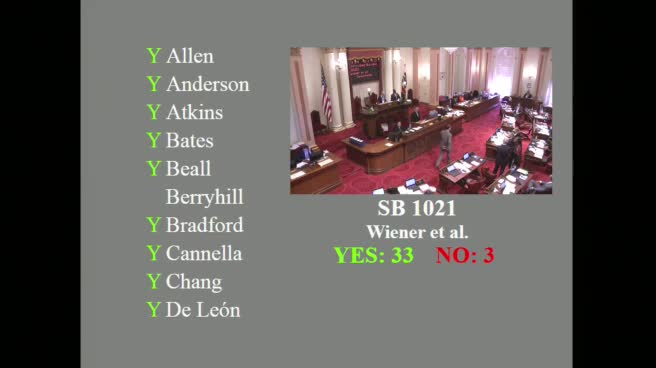 51SEC
Senate Floor
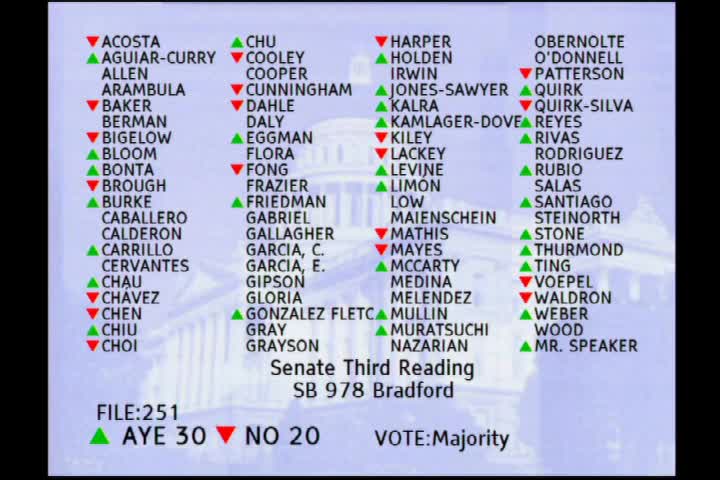 1MIN
Assembly Floor
 1H
Assembly Standing Committee on Appropriations
 9MIN
Senate Standing Committee on Natural Resources and Water
 6MIN
Senate Standing Committee on Environmental Quality
Bill Author

Bill Co-Author(s):