SB 1269: Schoolbus safety: child safety alert system.
- Session Year: 2017-2018
- House: Senate
- Latest Version Date: 2018-05-08
Existing law requires all schoolbuses to be equipped with certain safety features, as specified. Existing law requires, on or before the beginning of the 201819 school year, schoolbuses, school pupil activity buses, except as provided, youth buses, and child care motor vehicles to be equipped with a an operational child safety alert system, which is a device located at the interior rear of a vehicle that requires the driver to either manually contact or scan the device before exiting the vehicle, thereby prompting the driver to inspect the entirety of the interior of the vehicle before exiting.
This bill would limit that requirement to those buses or vehicles that transport special needs pupils and would postpone that requirement until 6 months after the beginning of the 201920 201819 school year. year for those buses or vehicles that do not transport special needs pupils.
This bill would declare that it is to take effect immediately as an urgency statute.
Existing law requires all schoolbuses to be equipped with certain safety features, as specified. Existing law requires, on or before the beginning of the 201819 school year, schoolbuses, school pupil activity buses, except as provided, youth buses, and child care motor vehicles to be equipped with a child safety alert system, which is a device located at the interior rear of a vehicle that requires the driver to either manually contact or scan the device before exiting the vehicle, thereby prompting the driver to inspect the entirety of the interior of the vehicle before exiting.
This bill would postpone that requirement until the beginning of the 201920 school year.
This bill would declare that it is to take effect immediately as an urgency statute.
Existing law, the California Financing Law (CFL), provides for the licensure and regulation of finance lenders and brokers, and, beginning on January 1, 2019, program administrators, by the Commissioner of Business Oversight. The CFL prohibits anyone from engaging in the business of a finance lender or broker without obtaining a license. Existing law defines a finance lender as any person who is engaged in making consumer loans or commercial loans, as defined. The CFL prohibits a licensee from making a materially false or misleading statement to a borrower about the terms or conditions of a loan. A willful violation of the CFL is a crime, except as specified. This bill would require any person who engages in the business of small business financing to provide to the prospective borrower a written statement showing in clear and distinct terms specified information regarding that transaction, including the APR related to that transaction, all upfront charges, the total amount provided to the borrower, payment amount and frequency, and collateral requirements. The bill would require that disclosure be provided at the time the financing is offered, and at the time of closing. The bill would require that statement to be in writing in a form that is clear, complete, and easy to compare with other options. The bill would prohibit any person who engages in the business of small business financing from engaging in abusive practices. The bill would define the term small business financing for these purposes to mean a commercial loan of a principal amount that is less than $1,000,000, or a cash advance to a business that is less than $1,000,000, except as provided. By expanding the scope of an existing crime with respect to violations of the CFL, this bill would impose a state-mandated local program.The California Constitution requires the state to reimburse local agencies and school districts for certain costs mandated by the state. Statutory provisions establish procedures for making that reimbursement.This bill would provide that no reimbursement is required by this act for a specified reason.Existing law, the California Financing Law (CFL), provides for the licensure and regulation of finance lenders and brokers, and, beginning on January 1, 2019, program administrators, by the Commissioner of Business Oversight. The CFL prohibits anyone from engaging in the business of a finance lender or broker without obtaining a license. Existing law defines a finance lender as any person who is engaged in making consumer loans or commercial loans, as defined. The CFL prohibits a licensee from making a materially false or misleading statement to a borrower about the terms or conditions of a loan. A willful violation of the CFL is a crime, except as specified.
This bill would require any person who engages in the business of small business financing to provide to the prospective borrower a written statement showing in clear and distinct terms specified information regarding that transaction, including the APR related to that transaction, all upfront charges, the total amount provided to the borrower, payment amount and frequency, and collateral requirements. The bill would require that disclosure be provided at the time the financing is offered, and at the time of closing. The bill would require that statement to be in writing in a form that is clear, complete, and easy to compare with other options. The bill would prohibit any person who engages in the business of small business financing from engaging in abusive practices. The bill would define the term small business financing for these purposes to mean a commercial loan of a principal amount that is less than $1,000,000, or a cash advance to a business that is less than $1,000,000, except as provided. By expanding the scope of an existing crime with respect to violations of the CFL, this bill would impose a state-mandated local program.
The California Constitution requires the state to reimburse local agencies and school districts for certain costs mandated by the state. Statutory provisions establish procedures for making that reimbursement.
This bill would provide that no reimbursement is required by this act for a specified reason.
(a)On or before January 1, 2018, the department shall adopt regulations governing the specifications, installation, and use of child safety alert systems.
(b)(1)(A)On or before the beginning of the 201920 201819 school year, each schoolbus, school pupil activity bus, except as provided in paragraph (2), youth bus, and child care motor vehicle vehicle, that transports special needs pupils, shall be equipped with an operational child safety alert system.
(B)On or before six months after the beginning of the 201819 school year, each schoolbus, school pupil activity bus, except as provided in paragraph (2), youth bus, and child care motor vehicle, that does not transport special needs pupils, shall be equipped with an operational child safety alert system.
(2)A school pupil activity bus is not required to be equipped with an operational child safety alert system if all of the following apply:
(A)The school pupil activity bus is not used exclusively to transport pupils.
(B)When the school pupil activity bus is used to transport pupils, the pupils are accompanied by at least one adult chaperone selected by a school official. If an adult chaperone is not a school employee, the chaperone shall meet the requirements for a school volunteer established by the policies of the school district, county office of education, charter school, or private school.
(C)One adult chaperone has a list of every pupil and adult chaperone, including a school employee, who is on the school pupil activity bus at the time of departure.
(D)The driver has reviewed all safety and emergency procedures before the initial departure and the driver and adult chaperone have signed a form with the time and date acknowledging that the safety plan and procedures were reviewed.
(E)Immediately before departure from any location, the adult chaperone shall account for each pupil on the list of pupils, verify the number of pupils to the driver, and sign a form indicating that all pupils are present or accounted for.
(F)After pupils have exited a school pupil activity bus, and before driving away, the driver shall check all areas of the bus, including, but not limited to, overhead compartments and bathrooms, to ensure that the bus is vacant.
(G)The driver shall sign a form with the time and date verifying that all required procedures have been followed.
(H)The information required to be recorded pursuant to subparagraphs (D), (E), and (G) may be recorded on a single form. These forms shall be retained by the school district, county office of education, charter school, or private school for a minimum of two years.
(c)A child safety alert system is a device located at the interior rear of a vehicle that requires the driver to either manually contact or scan the device before exiting the vehicle, thereby prompting the driver to inspect the entirety of the interior of the vehicle before exiting.
(d)For purposes of this section, the following definitions apply:
(1)Child care motor vehicle means a vehicle designed, used, or maintained for more than eight persons, including the driver, that is used by a child care provider to transport children.
(2)Child care provider has the same meaning as provided for day care center in Section 1596.76 of the Health and Safety Code.
SEC. 2.This act is an urgency statute necessary for the immediate preservation of the public peace, health, or safety within the meaning of Article IV of the California Constitution and shall go into immediate effect. The facts constituting the necessity are:
In order to allow schoolbus fleets the additional time required to properly install child safety alert systems, it is necessary for this act to take effect immediately.
(a)On or before January 1, 2018, the department shall adopt regulations governing the specifications, installation, and use of child safety alert systems.
(b)(1)On or before the beginning of the 201819 201920 school year, each schoolbus, school pupil activity bus, except as provided in paragraph (2), youth bus, and child care motor vehicle shall be equipped with an operational child safety alert system.
(2)A school pupil activity bus is not required to be equipped with an operational child safety alert system if all of the following apply:
(A)The school pupil activity bus is not used exclusively to transport pupils.
(B)When the school pupil activity bus is used to transport pupils, the pupils are accompanied by at least one adult chaperone selected by a school official. If an adult chaperone is not a school employee, the chaperone shall meet the requirements for a school volunteer established by the policies of the school district, county office of education, charter school, or private school.
(C)One adult chaperone has a list of every pupil and adult chaperone, including a school employee, who is on the school pupil activity bus at the time of departure.
(D)The driver has reviewed all safety and emergency procedures before the initial departure and the driver and adult chaperone have signed a form with the time and date acknowledging that the safety plan and procedures were reviewed.
(E)Immediately before departure from any location, the adult chaperone shall account for each pupil on the list of pupils, verify the number of pupils to the driver, and sign a form indicating that all pupils are present or accounted for.
(F)After pupils have exited a school pupil activity bus, and before driving away, the driver shall check all areas of the bus, including, but not limited to, overhead compartments and bathrooms, to ensure that the bus is vacant.
(G)The driver shall sign a form with the time and date verifying that all required procedures have been followed.
(H)The information required to be recorded pursuant to subparagraphs (D), (E), and (G) may be recorded on a single form. These forms shall be retained by the school district, county office of education, charter school, or private school for a minimum of two years.
(c)A child safety alert system is a device located at the interior rear of a vehicle that requires the driver to either manually contact or scan the device before exiting the vehicle, thereby prompting the driver to inspect the entirety of the interior of the vehicle before exiting.
(d)For purposes of this section, the following definitions apply:
(1)Child care motor vehicle means a vehicle designed, used, or maintained for more than eight persons, including the driver, that is used by a child care provider to transport children.
(2)Child care provider has the same meaning as provided for day care center in Section 1596.76 of the Health and Safety Code.
SEC. 2.This act is an urgency statute necessary for the immediate preservation of the public peace, health, or safety within the meaning of Article IV of the California Constitution and shall go into immediate effect. The facts constituting the necessity are:
In order to allow schoolbus fleets the additional time required to properly install child safety alert systems, it is necessary for this act to take effect immediately.
SECTION 1.Section 22001 of the Financial Code, as added by Section 2 of Chapter 475 of the Statutes of 2017, is amended to read:22001.(a)This division shall be liberally construed and applied to promote its underlying purposes and policies, which are:(1)To ensure an adequate supply of credit to borrowers in this state.(2)To simplify, clarify, and modernize the law governing loans made by finance lenders.(3)To foster competition among finance lenders.(4)To protect borrowers against unfair practices by some lenders, having due regard for the interests of legitimate and scrupulous lenders.(5)To permit and encourage the development of fair and economically sound lending practices.(6)To encourage and foster a sound economic climate in this state.(7)To protect property owners from deceptive and misleading practices that threaten the efficacy and viability of property assessed clean energy financing programs.(b)Consumer loans, as defined in Sections 22203 and 22204, are subject to this chapter, Chapter 2 (commencing with Section 22200), Article 1 (commencing with Section 22700) of Chapter 4, and Article 2 (commencing with Section 22750) of Chapter 4.(c)Commercial loans, as defined in Section 22502, are subject to this chapter, Chapter 3 (commencing with Section 22500), Article 1 (commencing with Section 22700) of Chapter 4, and Article 3 (commencing with Section 22780) of Chapter 4.(d)A program administrator, as defined in Section 22018, is subject to this chapter, Chapter 3.5 (commencing with Section 22680), and Article 1 (commencing with Section 22700) of Chapter 4.(e)Small business financing, as defined in Section 22655, is subject to Article 5 (commencing with Section 22655) of Chapter 3, and Article 3 (commencing with Section 22780) of Chapter 4.(f)This section shall become operative on January 1, 2019.SEC. 2.Article 5 (commencing with Section 22655) is added to Chapter 3 of Division 9 of the Financial Code, to read:5.Small Business Financing22655.(a)Any person who engages in the business of small business financing shall provide to the prospective borrower a written statement showing in clear and distinct terms all of the following with respect to that transaction:(1)The annual percentage rate (APR) for the small business financing calculated according to the provisions of federal Truth In Lending Act (15 U.S.C. Sec. 1601 et seq.) and Regulation Z (12 C.F.R. 226.1 et seq.).(2)All upfront and scheduled charges.(3)The total loan or cash advance amount.(4)The total amount provided by the financing to the borrower, after deducting applicable fees or charges. (5)Payment amount and frequency. If the payment frequency is monthly, the total monthly payment amount. If the payment frequency is other than monthly, the total amount owed for each payment period.(6)Any collateral required as a condition of receiving the small business financing.(b)The statement required by this section shall be provided at the time that the financing is offered, and at the time of closing. (c)The statement required by this section shall be in writing in a form that is clear, complete, and easy to compare with other options.(d)Any person who engages in the business of small business financing shall not engage in abusive practices, such as double dipping and hidden prepayment charges.(e)For purposes of this section, small business financing means either of the following:(1)A commercial loan of a principal amount of less than one million dollars ($1,000,000), or any loan under an open-end credit program, whether secured by either real or personal property, or both, or unsecured, the proceeds of which are intended by the borrower for use primarily for other than personal, family, or household purposes, except for a loan provided to a business that, in the immediately preceding calendar year, had gross receipts totaling five million dollars ($5,000,000) of annual revenue or more.(2)A cash advance to a business of less than one million dollars ($1,000,000), except for a cash advance provided to a business that, in the immediately preceding calendar year, had gross receipts totaling five million dollars ($5,000,000) of annual revenue or more.SEC. 3.No reimbursement is required by this act pursuant to Section 6 of Article XIIIB of the California Constitution because the only costs that may be incurred by a local agency or school district will be incurred because this act creates a new crime or infraction, eliminates a crime or infraction, or changes the penalty for a crime or infraction, within the meaning of Section 17556 of the Government Code, or changes the definition of a crime within the meaning of Section 6 of Article XIIIB of the California Constitution.(a)This division shall be liberally construed and applied to promote its underlying purposes and policies, which are:
(1)To ensure an adequate supply of credit to borrowers in this state.
(2)To simplify, clarify, and modernize the law governing loans made by finance lenders.
(3)To foster competition among finance lenders.
(4)To protect borrowers against unfair practices by some lenders, having due regard for the interests of legitimate and scrupulous lenders.
(5)To permit and encourage the development of fair and economically sound lending practices.
(6)To encourage and foster a sound economic climate in this state.
(7)To protect property owners from deceptive and misleading practices that threaten the efficacy and viability of property assessed clean energy financing programs.
(b)Consumer loans, as defined in Sections 22203 and 22204, are subject to this chapter, Chapter 2 (commencing with Section 22200), Article 1 (commencing with Section 22700) of Chapter 4, and Article 2 (commencing with Section 22750) of Chapter 4.
(c)Commercial loans, as defined in Section 22502, are subject to this chapter, Chapter 3 (commencing with Section 22500), Article 1 (commencing with Section 22700) of Chapter 4, and Article 3 (commencing with Section 22780) of Chapter 4.
(d)A program administrator, as defined in Section 22018, is subject to this chapter, Chapter 3.5 (commencing with Section 22680), and Article 1 (commencing with Section 22700) of Chapter 4.
(e)Small business financing, as defined in Section 22655, is subject to Article 5 (commencing with Section 22655) of Chapter 3, and Article 3 (commencing with Section 22780) of Chapter 4.
(e)(f)This section shall become operative on January 1, 2019.
SEC. 2.Article 5 (commencing with Section 22655) is added to Chapter 3 of Division 9 of the Financial Code, to read:5.Small Business Financing22655.(a)Any person who engages in the business of small business financing shall provide to the prospective borrower a written statement showing in clear and distinct terms all of the following with respect to that transaction:
(1)The annual percentage rate (APR) for the small business financing calculated according to the provisions of federal Truth In Lending Act (15 U.S.C. Sec. 1601 et seq.) and Regulation Z (12 C.F.R. 226.1 et seq.).
(2)All upfront and scheduled charges.
(3)The total loan or cash advance amount.
(4)The total amount provided by the financing to the borrower, after deducting applicable fees or charges.
(5)Payment amount and frequency. If the payment frequency is monthly, the total monthly payment amount. If the payment frequency is other than monthly, the total amount owed for each payment period.
(6)Any collateral required as a condition of receiving the small business financing.
(b)The statement required by this section shall be provided at the time that the financing is offered, and at the time of closing.
(c)The statement required by this section shall be in writing in a form that is clear, complete, and easy to compare with other options.
(d)Any person who engages in the business of small business financing shall not engage in abusive practices, such as double dipping and hidden prepayment charges.
(e)For purposes of this section, small business financing means either of the following:
(1)A commercial loan of a principal amount of less than one million dollars ($1,000,000), or any loan under an open-end credit program, whether secured by either real or personal property, or both, or unsecured, the proceeds of which are intended by the borrower for use primarily for other than personal, family, or household purposes, except for a loan provided to a business that, in the immediately preceding calendar year, had gross receipts totaling five million dollars ($5,000,000) of annual revenue or more.
(2)A cash advance to a business of less than one million dollars ($1,000,000), except for a cash advance provided to a business that, in the immediately preceding calendar year, had gross receipts totaling five million dollars ($5,000,000) of annual revenue or more.
SEC. 3.No reimbursement is required by this act pursuant to Section 6 of Article XIIIB of the California Constitution because the only costs that may be incurred by a local agency or school district will be incurred because this act creates a new crime or infraction, eliminates a crime or infraction, or changes the penalty for a crime or infraction, within the meaning of Section 17556 of the Government Code, or changes the definition of a crime within the meaning of Section 6 of Article XIIIB of the California Constitution.
|
Date
|
Status
|
|---|---|
| May 31, 2018 | Ordered to inactive file on request of Senator Hueso. |
| May 8, 2018 | Read second time and amended. Ordered to third reading. |
| May 7, 2018 | From committee: Do pass as amended. (Ayes 12. Noes 0.) (May 1). |
| Apr 25, 2018 | Set for hearing May 1. |
| Apr 19, 2018 | Re-referred to Com. on T. & H. |
| Apr 16, 2018 | Withdrawn from committee. |
| Apr 16, 2018 | From committee with author's amendments. Read second time and amended. Re-referred to Com. on B. & F.I. |
| Mar 15, 2018 | Re-referred to Coms. on B. & F.I. and JUD. |
| Mar 15, 2018 | Withdrawn from committee. |
| Mar 1, 2018 | Referred to Coms. on I., B. & F.I. and JUD. |
| Feb 20, 2018 | From printer. May be acted upon on or after March 22. |
| Feb 16, 2018 | Introduced. Read first time. To Com. on RLS. for assignment. To print. |
|
Date
|
Description
|
Location
|
Votes
|
|
|---|---|---|---|---|
| May 1, 2018 | Do pass as amended | Senate Standing Committee on Transportation and Housing |
Passed |
This list shows positions taken on this bill by organizations on the date displayed, which is linked to the original source.
Positions by individuals are not included.
|
Organization
|
Position
|
Date
|
|---|---|---|
| California Association Of School Business Officials | * Indeterminate | May 1, 2018 |
| California Association Of School Transportation Officials | * Against | May 1, 2018 |
| California School Boards Association | * Indeterminate | May 1, 2018 |
| Los Angeles Unified School District | ** Support | Apr 26, 2018 |
| Mid-Placer Public Schools Transportation Agency | * Against | May 1, 2018 |
| Oak Grove Unified School District | * Indeterminate | May 1, 2018 |
| School Transportation Coalition | * Against | May 1, 2018 |
| Sounds Plus Incorporated | * Against | May 1, 2018 |
| State Council on Developmental Disabilities | ** Against | Apr 26, 2018 |
Office of Senate Floor Analyses (916) 651-1520 Fax: (916) 327-4478 | SB |
THIRD READING
Bill No: SB 1269
:
SENATE TRANS. & HOUSING COMMITTEE: 12-0, 5/1/18
AYES: Beall, Cannella, Allen, Dodd, Galgiani, McGuire, Morrell, Roth, Skinner, Vidak, Wieckowski, Wiener
NO VOTE RECORDED: Gaines
DIGEST:
This bill postpones the enactment date for certain school bus safety requirements, as specified.
Existing law:
- Requires school officials to develop transportation safety plans.
- Requires enhanced certification to become a school bus driver.
- Authorizes the Department of Motor Vehicles (DMV) to refuse to issue or renew such certification if certain specified crimes or misconduct has occurred.
- Requires specialized equipment in school buses such as seat belts and external lighting systems.
- Requires all school buses to be equipped with certain safety features, as specified.
- Requires, on or before the beginning of the 2018-19 school year, school buses, school pupil activity buses, except as provided, youth buses, and child care motor vehicles to be equipped with a “child safety alert system,” as defined.
- Specifies that a child safety alert system is a device located at the interior rear of a vehicle that requires the driver to either manually contact or scan the device before exiting the vehicle.
This bill:
- Specifies that school buses, school pupil activity buses, youth buses, and child care motor vehicles that transport special needs pupils are required to meet the 2018-2019 timeline as directed in SB 1072 (Mendoza, Chapter 721, Statutes of 2016).
- Extends the implementation date for six months from the beginning of the 2018-2019 school year requiring all school buses, school pupil activity bus, as specified, youth bus, and child care motor vehicle are to be equipped with an operational child safety alert system.
Comments
- Purpose. According to the author, “Last year, Senate Bill 1072 (Mendoza) enacted the Paul Lee School Bus Safety Law, which requires, on or before the beginning of the 2018–19 school year, school buses to be equipped with a ‘child safety alert system.’ A variety of reasons has made strict compliance of SB 1072’s requirements difficult to meet for many school districts across California. One major issue that prevents the speedy implementation of SB 1072’s requirements is that over 24,000 buses are competing for child safety alert systems which have only recently been developed and are currently sold out. Schools districts have reported being placed on waiting lists by the manufacturers of these devices that extend months out. In order to prevent the disruption of transportation services school districts offer California students this bill provides school districts with an additional year to install the Child Safety Alert System devices necessary to comply with SB 1072.”
- SB 1072. In 2016, SB 1072 was introduced to implement additional safety measures for pupils riding school buses. At that time, the author of SB 1072 identified eight incidents in 2012 where a student was left alone on a school bus. SB 1072 aimed to remedy this issue by requiring a school bus driver to walk to the back of the bus to deactivate an alert system before exiting the bus. The bill required all school buses to install these child safety alert systems prior to the beginning of the 2018-2019 school year. SB 1072 ultimately passed out of the Senate on a 39-0 vote.
- Implementation. Since the bill’s enactment, a number of stakeholder groups have indicated that the 2018 timeline will be difficult to meet due to a variety of implementation issues. Several of these issues include:
- Lack of supply — many districts are on a waiting list for child alert safety devices.
- Lack of time to install — the installation time for each alert device is approximately 10 hours. Additionally, school bus fleets are made up of a variety of bus makes and models; preventing a one installation plan fits all approach. Lastly, for larger school districts, the cost of the installation requires the district to go to bid, which further extends the completion times.
- Lack of installers — according to the author, the largest manufacturer of the alert devices does not have any in-house installers and is in turn referring districts to a number of other installers. The author notes there are only three other installers in the state, leaving many districts to rely on in-house mechanics.
- Urgency. This bill includes an urgency measure which will require a two-thirds vote on the Senate Floor.
FISCAL EFFECT: Appropriation: Fiscal Com.: Local:
None received
None received
5/9/18 13:30:04
SENATE COMMITTEE ON TRANSPORTATION AND HOUSING
Senator Jim Beall, Chair
2017 - 2018 Regular
Bill No: Hearing Date: 5/1/2018
Author: | Hueso | ||
Version: | 4/16/2018 | ||
Urgency: | Yes | Fiscal: | No |
Consultant: | Manny Leon | ||
SUBJECT:
DIGEST: This bill postpones the enactment date for certain school bus safety requirements for one year.
ANALYSIS:
Existing law:
- Requires school officials to develop transportation safety plans.
- Requires enhanced certification to become a school bus driver.
- Authorizes the Department of Motor Vehicles (DMV) to refuse to issue or renew such certification if certain specified crimes or misconduct has occurred.
- Requires specialized equipment in school buses such as seat belts and external lighting systems.
- Requires all school buses to be equipped with certain safety features, as specified.
- Requires, on or before the beginning of the 2018–19 school year, school buses, school pupil activity buses, except as provided, youth buses, and child care motor vehicles to be equipped with a “child safety alert system,” as defined.
- Specifies that a child safety alert system is a device located at the interior rear of a vehicle that requires the driver to either manually contact or scan the device before exiting the vehicle.
This bill:
- Extends the implementation date that all school buses, school pupil activity bus, as specified, youth bus, and child care motor vehicle are to be equipped with an operational child safety alert system from the school year beginning in 2018 to the 2019 school year.
COMMENTS
- Purpose. According to the author, “Last year, Senate Bill 1072 (Mendoza) enacted the Paul Lee School Bus Safety Law, which requires, on or before the beginning of the 2018–19 school year, school buses to be equipped with a “child safety alert system.” A variety of reasons has made strict compliance of SB 1072’s requirements difficult to meet for many school districts across California. One major issue that prevents the speedy implementation of SB 1072’s requirements is that over 24,000 buses are competing for child safety alert systems which have only recently been developed and are currently sold out. Schools districts have reported being placed on waiting lists by the manufacturers of these devices that extend months out. In order to prevent the disruption of transportation services school districts offer California students this bill provides school districts with an additional year to install the Child Safety Alert System devices necessary to comply with SB 1072.”
- Prior legislation. In 2016, SB 1072 (Chapter 721, Statutes of 2016) was introduced to implement additional safety measures for pupils riding school buses. At that time, the author of SB 1072 identified eight incidents in 2012 where a student was left alone on a school bus. SB 1072 aimed to remedy this issue by requiring a school bus driver to walk to the back of the bus to deactivate an alert system before exiting the bus. The bill required all school buses to install these child safety alert systems prior to the beginning of the 2018-2019 school year. SB 1072 ultimately passed out of the Senate on a 39-0 vote.
- Implementation. Since bill’s enactment, a number of stakeholder groups have indicated that the 2018 timeline will be difficult to meet due to a variety of implementation issues. Several of these issues include:
- Lack of supply — many districts are on a waiting list for child alert safety devices.
- Lack of time to install — the installation time for each alert device is approximately 10 hours. Additionally, school bus fleets are made up of a variety of bus makes and models; preventing a one installation plan fits all approach. Lastly, for larger school districts, the cost of the installation requires the district to go to bid, which further extends the completion times.
- Lack of installers — according to the author, the largest manufacturer of the alert devices does not have any in-house installers and is in turn referring districts to a number of other installers. The author notes there are only three other installers in the state, leaving many districts to rely on in-house mechanics.
On the other hand, writing in opposition to the bill, the State Council on Developmental Disabilities notes that the Council does not believe delayed implementation is necessary as “CHP met the statutory requirements for regulations. A manufacturer is producing plenty of devices that meet CHP’s specifications. Installation instructions are easily accessible and school districts have already purchased 12,000 devices to meet this requirement.”
This bill will provide school districts across the state with an additional year to meet the child safety alert system requirements as specified in SB 1072.
- Urgency. This bill includes an urgency measure which will require a two-thirds vote on the Senate Floor.
Related Legislation:
SB 1072 (Chapter 721, Statutes of 2016, Mendoza) — required on or before the 2018-19 school year, school buses, other specified buses which transport students, and child care motor vehicles to be equipped with an operational child safety alert system. The bill also included other conforming changes.
FISCAL EFFECT: Appropriation: No Fiscal Com.: No Local: No
POSITIONS: (Communicated to the committee before noon on Wednesday,
April 25, 2018.)
SUPPORT:
California Association of School Business Officials (sponsor)
California Association of School Transportation Officials (sponsor)
Los Angeles Unified School District
OPPOSITION:
State Council on Developmental Disabilities
-- END --
Discussed in Hearing
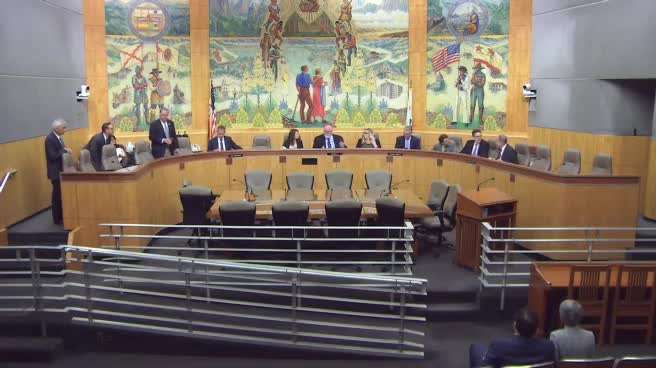 34MIN
Senate Standing Committee on Transportation and Housing
Bill Author

Bill Co-Author(s):