SB 1292: Alzheimer’s disease.
- Session Year: 2017-2018
- House: Senate
- Latest Version Date: 2018-09-23
Existing law requires the State Department of Public Health to provide public and professional education on Alzheimers disease to educate consumers, caregivers, and health care providers, and to increase public awareness.
This bill would require the Center for Healthy Communities, within the department, on or before January 1, 2021, to update the 2009 Alzheimers Disease Facts and Figures in California: Current Status and Future Projections to quantify the burden of Alzheimers disease on at-risk and underrepresented populations, including African Americans, Asian-Pacific Islanders, Latinos, Hispanics, and women. The bill would repeal these provisions on January 1, 2025.
Existing law requires the State Department of Public Health to provide public and professional education on Alzheimers disease to educate consumers, caregivers, and health care providers, and to increase public awareness. Existing law requires the department to establish an Office of Health Equity for the purpose of, among other things, improving the health status of all populations and places, with a priority on eliminating health and mental health disparities and inequities. Existing law establishes an advisory committee within the Office of Health Equity to advance the goals of the office. Existing law requires that members of the advisory committee be composed of representatives from applicable state agencies and departments, local health departments, community-based organizations working to advance health and mental health equity, vulnerable communities, and stakeholder communities that represent the diverse demographics of the state.This bill would require at least one member of the advisory committee described above to have a background in Alzheimers disease and aging.The bill would require the Office of Health Equity to conduct a study to determine the human burden and economic costs of Alzheimers disease in California on African Americans, Latinos, and women. The bill would require the office, on or before January 1, 2020, to submit a report to the Legislature summarizing the findings of the study. The bill would repeal these provisions on January 1, 2024.Existing law requires the State Department of Public Health to provide public and professional education on Alzheimers disease to educate consumers, caregivers, and health care providers, and to increase public awareness. Existing law requires the department to establish an Office of Health Equity for the purpose of, among other things, improving the health status of all populations and places, with a priority on eliminating health and mental health disparities and inequities. Existing law establishes an advisory committee within the Office of Health Equity to advance the goals of the office. Existing law requires that members of the advisory committee be composed of representatives from applicable state agencies and departments, local health departments, community-based organizations, organizations working to advance health and mental health equity, vulnerable communities, and stakeholder communities that represent the diverse demographics of the state.
This bill would require at least one member of the advisory committee described above to have a background in Alzheimers disease and aging. The bill would require the department to implement a public outreach program at all California Alzheimers Disease Centers to educate the public on the availability, purpose, and value of research and clinical trials related to Alzheimers disease. The bill would require that the goal of the program be to increase public awareness and participation in research and clinical trials related to Alzheimers disease, particularly among individuals from traditionally underrepresented groups.
The bill would require the Office of Health Equity to conduct a study to determine the human burden and economic costs of Alzheimers disease in California on African Americans, Latinos, and women. The bill would require the office, on or before January 1, 2020, to submit a report to the Legislature summarizing the findings of the study. The bill would repeal these provisions on January 1, 2024.
Existing law requires the State Department of Public Health to provide public and professional education on Alzheimers disease to educate consumers, caregivers, and health care providers, and to increase public awareness. Existing law requires the department to establish an Office of Health Equity for the purpose of, among other things, improving the health status of all populations and places, with a priority on eliminating health and mental health disparities and inequities. Existing law establishes an advisory committee within the Office of Health Equity to advance the goals of the office. Existing law requires that members of the advisory committee be composed of representatives from applicable state agencies and departments, local health departments, community-based organizations, working to advance health and mental health equity, vulnerable communities, and stakeholder communities that represent the diverse demographics of the state.
This bill would require at least one member of the advisory committee described above to have a background in Alzheimers disease and aging. The bill would require the department to implement a public outreach program at all California Alzheimers Disease Centers to educate the public on the availability, purpose, and value of research and clinical trials related to Alzheimers disease. The bill would require that the goal of the program be to increase public awareness and participation in research and clinical trials related to Alzheimers disease, particularly among individuals from traditionally underrepresented groups.
ThisThe bill would require the office Office of Health Equity to conduct a study to determine the human burden and economic costs of Alzheimers disease in California on African Americans, Latinos, and women. The bill would require the office, on or before January 1, 2020, to submit a report to the Legislature summarizing the findings of the study. The bills provisions would be repealed January 1, 2024. The bill would repeal these provisions on January 1, 2024.
Existing law requires the State Department of Public Health to provide public and professional education on Alzheimers disease to educate consumers, caregivers, and health care providers, and to increase public awareness. Existing law requires the department to establish an Office of Health Equity for the purpose of, among other things, improving the health status of all populations and places, with a priority on eliminating health and mental health disparities and inequities.
This bill would declare the intent of the Legislature to enact legislation that would require the department to conduct a study examining the impact of Alzheimers disease on minorities and women. require the office to conduct a study to determine the human burden and economic costs of Alzheimers disease in California on African Americans, Latinos, and women. The bill would require the office, on or before January 1, 2020, to submit a report to the Legislature summarizing the findings of the study. The bills provisions would be repealed January 1, 2024.
Existing law requires the State Department of Public Health to provide public and professional education on Alzheimers disease to educate consumers, caregivers, and health care providers, and to increase public awareness.
This bill would declare the intent of the Legislature to enact legislation that would require the department to conduct a study examining the impact of Alzheimers disease on minorities and women.
(a)The Center for Healthy Communities, within the State Department of Public Health, shall, on or before January 1, 2021, update the 2009 Alzheimers Disease Facts and Figures in California: Current Status and Future Projections to quantify the burden of Alzheimers disease on at-risk and underrepresented populations, including African Americans, Asian-Pacific Islanders, Latinos, Hispanics, and women.
(b)This section shall remain in effect only until January 1, 2025, and as of that date is repealed.
SECTION 1.Section 125283 is added to the Health and Safety Code, to read:125283.(a)The Office of Health Equity shall conduct a study to determine the human burden and economic costs of Alzheimers disease in California on African Americans, Latinos, and women. The study shall examine county disease prevalence data statistics, analyze demographic trends, evaluate ethnicity, gender, and caregiver statistics, and address modifiable risk factors. The office shall submit a report to the Legislature on or before January 1, 2020, summarizing the findings of the study.(b)The report submitted pursuant to subdivision (a) shall be submitted in compliance with Section 9795 of the Government Code.(c)This section shall remain in effect only until January 1, 2024, and as of that date is repealed.SEC. 2.Section 131019.5 of the Health and Safety Code is amended to read:131019.5.(a)For purposes of this section, the following definitions shall apply:(1)Determinants of equity means social, economic, geographic, political, and physical environmental conditions that lead to the creation of a fair and just society.(2)Health equity means efforts to ensure that all people have full and equal access to opportunities that enable them to lead healthy lives.(3)Health and mental health disparities means differences in health and mental health status among distinct segments of the population, including differences that occur by gender, age, race or ethnicity, sexual orientation, gender identity, education or income, disability or functional impairment, or geographic location, or the combination of any of these factors.(4)Health and mental health inequities means disparities in health or mental health, or the factors that shape health, that are systemic and avoidable and, therefore, considered unjust or unfair.(5)Vulnerable communities include, but are not limited to, women, racial or ethnic groups, low-income individuals and families, individuals who are incarcerated and those who have been incarcerated, individuals with disabilities, individuals with mental health conditions, children, youth and young adults, seniors, immigrants and refugees, individuals who are limited-English proficient (LEP), and lesbian, gay, bisexual, transgender, queer, and questioning (LGBTQQ) communities, or combinations of these populations.(6)Vulnerable places means places or communities with inequities in the social, economic, educational, or physical environment or environmental health and that have insufficient resources or capacity to protect and promote the health and well-being of their residents.(b)The State Department of Public Health shall establish an Office of Health Equity for the purposes of aligning state resources, decisionmaking, and programs to accomplish all of the following:(1)Achieve the highest level of health and mental health for all people, with special attention focused on those who have experienced socioeconomic disadvantage and historical injustice, including, but not limited to, vulnerable communities and culturally, linguistically, and geographically isolated communities.(2)Work collaboratively with the Health in All Policies Task Force to promote work to prevent injury and illness through improved social and environmental factors that promote health and mental health.(3)Advise and assist other state departments in their mission to increase access to, and the quality of, culturally and linguistically competent health and mental health care and services.(4)Improve the health status of all populations and places, with a priority on eliminating health and mental health disparities and inequities.(c)The duties of the Office of Health Equity shall include all of the following:(1)Conducting policy analysis and developing strategic policies and plans regarding specific issues affecting vulnerable communities and vulnerable places to increase positive health and mental health outcomes for vulnerable communities and decrease health and mental health disparities and inequities. The policies and plans shall also include strategies to address social and environmental inequities and improve health and mental health. The office shall assist other departments in their missions to increase access to services and supports and improve quality of care for vulnerable communities.(2)Establishing a comprehensive, cross-sectoral strategic plan to eliminate health and mental health disparities and inequities. The strategies and recommendations developed shall take into account the needs of vulnerable communities to ensure strategies are developed throughout the state to eliminate health and mental health disparities and inequities. This plan shall be developed in collaboration with the Health in All Policies Task Force. This plan shall establish goals and benchmarks for specific strategies in order to measure and track disparities and the effectiveness of these strategies. This plan shall be updated periodically, but not less than every two years, to keep abreast of data trends, best practices, promising practices, and to more effectively focus and direct necessary resources to mitigate and eliminate disparities and inequities. This plan shall be included in the report required under paragraph (1) of subdivision (d). The Office of Health Equity shall seek input from the public on the plan through an inclusive public stakeholder process.(3)Building upon and informing the work of the Health in All Policies Task Force in working with state agencies and departments to consider health in appropriate and relevant aspects of public policy development to ensure the implementation of goals and objectives that close the gap in health status. The Office of Health Equity shall work collaboratively with the Health in All Policies Task Force to assist state agencies and departments in developing policies, systems, programs, and environmental change strategies that have population health impacts in all of the following ways, within the resources made available:(A)Develop intervention programs with targeted approaches to address health and mental health inequities and disparities.(B)Prioritize building cross-sectoral partnerships within and across departments and agencies to change policies and practices to advance health equity.(C)Work with the advisory committee established pursuant to subdivision (f) and through stakeholder meetings to provide a forum to identify and address the complexities of health and mental health inequities and disparities and the need for multiple, interrelated, and multisectoral strategies.(D)Provide technical assistance to state and local agencies and departments with regard to building organizational capacity, staff training, and facilitating communication to facilitate strategies to reduce health and mental health disparities.(E)Highlight and share evidence-based, evidence-informed, and community-based practices for reducing health and mental health disparities and inequities.(F)Work with local public health departments, county mental health or behavioral health departments, local social services, and mental health agencies, and other local agencies that address key health determinants, including, but not limited to, housing, transportation, planning, education, parks, and economic development. The Office of Health Equity shall seek to link local efforts with statewide efforts.(4)Consult with community-based organizations and local governmental agencies to ensure that community perspectives and input are included in policies and any strategic plans, recommendations, and implementation activities.(5)Assist in coordinating projects funded by the state that pertain to increasing the health and mental health status of vulnerable communities.(6)Provide consultation and technical assistance to state departments and other state and local agencies charged with providing or purchasing state-funded health and mental health care, in their respective missions to identify, analyze, and report disparities and to identify strategies to address health and mental health disparities.(7)Provide information and assistance to state and local departments in coordinating projects within and across state departments that improve the effectiveness of public health and mental health services to vulnerable communities and that address community environments to promote health. This information shall identify unnecessary duplication of services.(8)Communicate and disseminate information within the department and with other state departments to assist in developing strategies to improve the health and mental health status of persons in vulnerable communities and to share strategies that address the social and environmental determinants of health.(9)Provide consultation and assistance to public and private entities that are attempting to create innovative responses to improve the health and mental health status of vulnerable communities.(10)Seek additional resources, including in-kind assistance, federal funding, and foundation support.(d)In identifying and developing recommendations for strategic plans, the Office of Health Equity shall, at a minimum, do all of the following:(1)Conduct demographic analyses on health and mental health disparities and inequities. The report shall include, to the extent feasible, an analysis of the underlying conditions that contribute to health and well-being. The first report shall be due July 1, 2014. This information shall be updated periodically, but not less than every two years, and made available through public dissemination, including posting on the departments Internet Web site. The report shall be developed using primary and secondary sources of demographic information available to the office, including the work and data collected by the Health in All Policies Task Force. Primary sources of demographic information shall be collected contingent on the receipt of state, federal, or private funds for this purpose.(2)Based on the availability of data, including valid data made available from secondary sources, the report described in paragraph (1) shall address the following key factors as they relate to health and mental health disparities and inequities:(A)Income security such as living wage, earned income tax credit, and paid leave.(B)Food security and nutrition such as food stamp eligibility and enrollment, assessments of food access, and rates of access to unhealthy food and beverages.(C)Child development, education, and literacy rates, including opportunities for early childhood development and parenting support, rates of graduation compared to dropout rates, college attainment, and adult literacy.(D)Housing, including access to affordable, safe, and healthy housing, housing near parks and with access to healthy foods, and housing that incorporates universal design and visitability features.(E)Environmental quality, including exposure to toxins in the air, water, and soil.(F)Accessible built environments that promote health and safety, including mixed-used land, active transportation such as improved pedestrian, bicycle, and automobile safety, parks and green space, and healthy school siting.(G)Health care, including accessible disease management programs, access to affordable, quality health and behavioral health care, assessment of the health care workforce, and workforce diversity.(H)Prevention efforts, including community-based education and availability of preventive services.(I)Assessing ongoing discrimination and minority stressors against individuals and groups in vulnerable communities based upon race, gender, gender identity, gender expression, ethnicity, marital status, language, sexual orientation, disability, and other factors, such as discrimination that is based upon bias and negative attitudes of health professionals and providers.(J)Neighborhood safety and collective efficacy, including rates of violence, increases or decreases in community cohesion, and collaborative efforts to improve the health and well-being of the community.(K)The efforts of the Health in All Policies Task Force, including monitoring and identifying efforts to include health and equity in all sectors.(L)Culturally appropriate and competent services and training in all sectors, including training to eliminate bias, discrimination, and mistreatment of persons in vulnerable communities.(M)Linguistically appropriate and competent services and training in all sectors, including the availability of information in alternative formats such as large font, braille, and American Sign Language.(N)Accessible, affordable, and appropriate mental health services.(3)Consult regularly with representatives of vulnerable communities, including diverse racial, ethnic, cultural, and LGBTQQ communities, womens health advocates, mental health advocates, health and mental health providers, community-based organizations and advocates, academic institutions, local public health departments, local government entities, and low-income and vulnerable consumers.(4)Consult regularly with the advisory committee established by subdivision (f) for input and updates on the policy recommendations, strategic plans, and status of cross-sectoral work.(e)The Office of Health Equity shall be organized as follows:(1)A Deputy Director shall be appointed by the Governor or the State Public Health Officer, and is subject to confirmation by the Senate. The salary for the Deputy Director shall be fixed in accordance with state law.(2)The Deputy Director of the Office of Health Equity shall report to the State Public Health Officer and shall work closely with the Director of Health Care Services to ensure compliance with the requirements of the offices strategic plans, policies, and implementation activities.(f)The Office of Health Equity shall establish an advisory committee to advance the goals of the office and to actively participate in decisionmaking. The advisory committee shall be composed of representatives from applicable state agencies and departments, local health departments, community-based organizations working to advance health and mental health equity, vulnerable communities, and stakeholder communities that represent the diverse demographics of the state. At least one member of the advisory committee shall have a background in Alzheimers disease and aging. The chair of the advisory committee shall be a representative from a nonstate entity. The advisory committee shall be established by no later than October 1, 2013, and shall meet, at a minimum, on a quarterly basis. Subcommittees of this advisory committee may be formed as determined by the chair.(g)An interagency agreement shall be established between the State Department of Public Health and the State Department of Health Care Services to outline the process by which the departments will jointly work to advance the mission of the Office of Health Equity, including responsibilities, scope of work, and necessary resources.(a)The Office of Health Equity shall conduct a study to determine the human burden and economic costs of Alzheimers disease in California on African Americans, Latinos, and women. The study shall examine county disease prevalence data statistics, analyze demographic trends, evaluate ethnicity, gender, and caregiver statistics, and address modifiable risk factors. The office shall submit a report to the Legislature on or before January 1, 2020, summarizing the findings of the study.
(b)The report submitted pursuant to subdivision (a) shall be submitted in compliance with Section 9795 of the Government Code.
(c)This section shall remain in effect only until January 1, 2024, and as of that date is repealed.
SEC. 3.SEC. 2.Section 131019.5 of the Health and Safety Code is amended to read:131019.5.(a)For purposes of this section, the following definitions shall apply:
(1)Determinants of equity means social, economic, geographic, political, and physical environmental conditions that lead to the creation of a fair and just society.
(2)Health equity means efforts to ensure that all people have full and equal access to opportunities that enable them to lead healthy lives.
(3)Health and mental health disparities means differences in health and mental health status among distinct segments of the population, including differences that occur by gender, age, race or ethnicity, sexual orientation, gender identity, education or income, disability or functional impairment, or geographic location, or the combination of any of these factors.
(4)Health and mental health inequities means disparities in health or mental health, or the factors that shape health, that are systemic and avoidable and, therefore, considered unjust or unfair.
(5)Vulnerable communities include, but are not limited to, women, racial or ethnic groups, low-income individuals and families, individuals who are incarcerated and those who have been incarcerated, individuals with disabilities, individuals with mental health conditions, children, youth and young adults, seniors, immigrants and refugees, individuals who are limited-English proficient (LEP), and lesbian, gay, bisexual, transgender, queer, and questioning (LGBTQQ) communities, or combinations of these populations.
(6)Vulnerable places means places or communities with inequities in the social, economic, educational, or physical environment or environmental health and that have insufficient resources or capacity to protect and promote the health and well-being of their residents.
(b)The State Department of Public Health shall establish an Office of Health Equity for the purposes of aligning state resources, decisionmaking, and programs to accomplish all of the following:
(1)Achieve the highest level of health and mental health for all people, with special attention focused on those who have experienced socioeconomic disadvantage and historical injustice, including, but not limited to, vulnerable communities and culturally, linguistically, and geographically isolated communities.
(2)Work collaboratively with the Health in All Policies Task Force to promote work to prevent injury and illness through improved social and environmental factors that promote health and mental health.
(3)Advise and assist other state departments in their mission to increase access to, and the quality of, culturally and linguistically competent health and mental health care and services.
(4)Improve the health status of all populations and places, with a priority on eliminating health and mental health disparities and inequities.
(c)The duties of the Office of Health Equity shall include all of the following:
(1)Conducting policy analysis and developing strategic policies and plans regarding specific issues affecting vulnerable communities and vulnerable places to increase positive health and mental health outcomes for vulnerable communities and decrease health and mental health disparities and inequities. The policies and plans shall also include strategies to address social and environmental inequities and improve health and mental health. The office shall assist other departments in their missions to increase access to services and supports and improve quality of care for vulnerable communities.
(2)Establishing a comprehensive, cross-sectoral strategic plan to eliminate health and mental health disparities and inequities. The strategies and recommendations developed shall take into account the needs of vulnerable communities to ensure strategies are developed throughout the state to eliminate health and mental health disparities and inequities. This plan shall be developed in collaboration with the Health in All Policies Task Force. This plan shall establish goals and benchmarks for specific strategies in order to measure and track disparities and the effectiveness of these strategies. This plan shall be updated periodically, but not less than every two years, to keep abreast of data trends, best practices, promising practices, and to more effectively focus and direct necessary resources to mitigate and eliminate disparities and inequities. This plan shall be included in the report required under paragraph (1) of subdivision (d). The Office of Health Equity shall seek input from the public on the plan through an inclusive public stakeholder process.
(3)Building upon and informing the work of the Health in All Policies Task Force in working with state agencies and departments to consider health in appropriate and relevant aspects of public policy development to ensure the implementation of goals and objectives that close the gap in health status. The Office of Health Equity shall work collaboratively with the Health in All Policies Task Force to assist state agencies and departments in developing policies, systems, programs, and environmental change strategies that have population health impacts in all of the following ways, within the resources made available:
(A)Develop intervention programs with targeted approaches to address health and mental health inequities and disparities.
(B)Prioritize building cross-sectoral partnerships within and across departments and agencies to change policies and practices to advance health equity.
(C)Work with the advisory committee established pursuant to subdivision (f) and through stakeholder meetings to provide a forum to identify and address the complexities of health and mental health inequities and disparities and the need for multiple, interrelated, and multisectoral strategies.
(D)Provide technical assistance to state and local agencies and departments with regard to building organizational capacity, staff training, and facilitating communication to facilitate strategies to reduce health and mental health disparities.
(E)Highlight and share evidence-based, evidence-informed, and community-based practices for reducing health and mental health disparities and inequities.
(F)Work with local public health departments, county mental health or behavioral health departments, local social services, and mental health agencies, and other local agencies that address key health determinants, including, but not limited to, housing, transportation, planning, education, parks, and economic development. The Office of Health Equity shall seek to link local efforts with statewide efforts.
(4)Consult with community-based organizations and local governmental agencies to ensure that community perspectives and input are included in policies and any strategic plans, recommendations, and implementation activities.
(5)Assist in coordinating projects funded by the state that pertain to increasing the health and mental health status of vulnerable communities.
(6)Provide consultation and technical assistance to state departments and other state and local agencies charged with providing or purchasing state-funded health and mental health care, in their respective missions to identify, analyze, and report disparities and to identify strategies to address health and mental health disparities.
(7)Provide information and assistance to state and local departments in coordinating projects within and across state departments that improve the effectiveness of public health and mental health services to vulnerable communities and that address community environments to promote health. This information shall identify unnecessary duplication of services.
(8)Communicate and disseminate information within the department and with other state departments to assist in developing strategies to improve the health and mental health status of persons in vulnerable communities and to share strategies that address the social and environmental determinants of health.
(9)Provide consultation and assistance to public and private entities that are attempting to create innovative responses to improve the health and mental health status of vulnerable communities.
(10)Seek additional resources, including in-kind assistance, federal funding, and foundation support.
(d)In identifying and developing recommendations for strategic plans, the Office of Health Equity shall, at a minimum, do all of the following:
(1)Conduct demographic analyses on health and mental health disparities and inequities. The report shall include, to the extent feasible, an analysis of the underlying conditions that contribute to health and well-being. The first report shall be due July 1, 2014. This information shall be updated periodically, but not less than every two years, and made available through public dissemination, including posting on the departments Internet Web site. The report shall be developed using primary and secondary sources of demographic information available to the office, including the work and data collected by the Health in All Policies Task Force. Primary sources of demographic information shall be collected contingent on the receipt of state, federal, or private funds for this purpose.
(2)Based on the availability of data, including valid data made available from secondary sources, the report described in paragraph (1) shall address the following key factors as they relate to health and mental health disparities and inequities:
(A)Income security such as living wage, earned income tax credit, and paid leave.
(B)Food security and nutrition such as food stamp eligibility and enrollment, assessments of food access, and rates of access to unhealthy food and beverages.
(C)Child development, education, and literacy rates, including opportunities for early childhood development and parenting support, rates of graduation compared to dropout rates, college attainment, and adult literacy.
(D)Housing, including access to affordable, safe, and healthy housing, housing near parks and with access to healthy foods, and housing that incorporates universal design and visitability features.
(E)Environmental quality, including exposure to toxins in the air, water, and soil.
(F)Accessible built environments that promote health and safety, including mixed-used land, active transportation such as improved pedestrian, bicycle, and automobile safety, parks and green space, and healthy school siting.
(G)Health care, including accessible disease management programs, access to affordable, quality health and behavioral health care, assessment of the health care workforce, and workforce diversity.
(H)Prevention efforts, including community-based education and availability of preventive services.
(I)Assessing ongoing discrimination and minority stressors against individuals and groups in vulnerable communities based upon race, gender, gender identity, gender expression, ethnicity, marital status, language, sexual orientation, disability, and other factors, such as discrimination that is based upon bias and negative attitudes of health professionals and providers.
(J)Neighborhood safety and collective efficacy, including rates of violence, increases or decreases in community cohesion, and collaborative efforts to improve the health and well-being of the community.
(K)The efforts of the Health in All Policies Task Force, including monitoring and identifying efforts to include health and equity in all sectors.
(L)Culturally appropriate and competent services and training in all sectors, including training to eliminate bias, discrimination, and mistreatment of persons in vulnerable communities.
(M)Linguistically appropriate and competent services and training in all sectors, including the availability of information in alternative formats such as large font, braille, and American Sign Language.
(N)Accessible, affordable, and appropriate mental health services.
(3)Consult regularly with representatives of vulnerable communities, including diverse racial, ethnic, cultural, and LGBTQQ communities, womens health advocates, mental health advocates, health and mental health providers, community-based organizations and advocates, academic institutions, local public health departments, local government entities, and low-income and vulnerable consumers.
(4)Consult regularly with the advisory committee established by subdivision (f) for input and updates on the policy recommendations, strategic plans, and status of cross-sectoral work.
(e)The Office of Health Equity shall be organized as follows:
(1)A Deputy Director shall be appointed by the Governor or the State Public Health Officer, and is subject to confirmation by the Senate. The salary for the Deputy Director shall be fixed in accordance with state law.
(2)The Deputy Director of the Office of Health Equity shall report to the State Public Health Officer and shall work closely with the Director of Health Care Services to ensure compliance with the requirements of the offices strategic plans, policies, and implementation activities.
(f)The Office of Health Equity shall establish an advisory committee to advance the goals of the office and to actively participate in decisionmaking. The advisory committee shall be composed of representatives from applicable state agencies and departments, local health departments, community-based organizations working to advance health and mental health equity, vulnerable communities, and stakeholder communities that represent the diverse demographics of the state. At least one member of the advisory committee shall have a background in Alzheimers disease and aging. The chair of the advisory committee shall be a representative from a nonstate entity. The advisory committee shall be established by no later than October 1, 2013, and shall meet, at a minimum, on a quarterly basis. Subcommittees of this advisory committee may be formed as determined by the chair.
(g)An interagency agreement shall be established between the State Department of Public Health and the State Department of Health Care Services to outline the process by which the departments will jointly work to advance the mission of the Office of Health Equity, including responsibilities, scope of work, and necessary resources.
The department shall implement a public outreach program at all California Alzheimers Disease Centers to educate the public on the availability, purpose, and value of research and clinical trials related to Alzheimers disease. The goal of the program shall be to increase public awareness and participation in research and clinical trials related to Alzheimers disease, particularly among individuals from traditionally underrepresented groups.
SECTION 1.SEC. 2.Section 125283 is added to the Health and Safety Code, to read:125283.(a)The Office of Health Equity shall conduct a study to determine the human burden and economic costs of Alzheimers disease in California on African Americans, Latinos, and women. The study shall examine county disease prevalence data statistics, analyze demographic trends, evaluate ethnicity, gender, and caregiver statistics, and address modifiable risk factors. The office shall submit a report to the Legislature on or before January 1, 2020, summarizing the findings of the study.
(b)The report submitted pursuant to subdivision (a) shall be submitted in compliance with Section 9795 of the Government Code.
(c)This section shall remain in effect only until January 1, 2024, and as of that date is repealed.
SEC. 3.Section 131019.5 of the Health and Safety Code is amended to read:131019.5.(a)For purposes of this section, the following definitions shall apply:
(1)Determinants of equity means social, economic, geographic, political, and physical environmental conditions that lead to the creation of a fair and just society.
(2)Health equity means efforts to ensure that all people have full and equal access to opportunities that enable them to lead healthy lives.
(3)Health and mental health disparities means differences in health and mental health status among distinct segments of the population, including differences that occur by gender, age, race or ethnicity, sexual orientation, gender identity, education or income, disability or functional impairment, or geographic location, or the combination of any of these factors.
(4)Health and mental health inequities means disparities in health or mental health, or the factors that shape health, that are systemic and avoidable and, therefore, considered unjust or unfair.
(5)Vulnerable communities include, but are not limited to, women, racial or ethnic groups, low-income individuals and families, individuals who are incarcerated and those who have been incarcerated, individuals with disabilities, individuals with mental health conditions, children, youth and young adults, seniors, immigrants and refugees, individuals who are limited-English proficient (LEP), and lesbian, gay, bisexual, transgender, queer, and questioning (LGBTQQ) communities, or combinations of these populations.
(6)Vulnerable places means places or communities with inequities in the social, economic, educational, or physical environment or environmental health and that have insufficient resources or capacity to protect and promote the health and well-being of their residents.
(b)The State Department of Public Health shall establish an Office of Health Equity for the purposes of aligning state resources, decisionmaking, and programs to accomplish all of the following:
(1)Achieve the highest level of health and mental health for all people, with special attention focused on those who have experienced socioeconomic disadvantage and historical injustice, including, but not limited to, vulnerable communities and culturally, linguistically, and geographically isolated communities.
(2)Work collaboratively with the Health in All Policies Task Force to promote work to prevent injury and illness through improved social and environmental factors that promote health and mental health.
(3)Advise and assist other state departments in their mission to increase access to, and the quality of, culturally and linguistically competent health and mental health care and services.
(4)Improve the health status of all populations and places, with a priority on eliminating health and mental health disparities and inequities.
(c)The duties of the Office of Health Equity shall include all of the following:
(1)Conducting policy analysis and developing strategic policies and plans regarding specific issues affecting vulnerable communities and vulnerable places to increase positive health and mental health outcomes for vulnerable communities and decrease health and mental health disparities and inequities. The policies and plans shall also include strategies to address social and environmental inequities and improve health and mental health. The office shall assist other departments in their missions to increase access to services and supports and improve quality of care for vulnerable communities.
(2)Establishing a comprehensive, cross-sectoral strategic plan to eliminate health and mental health disparities and inequities. The strategies and recommendations developed shall take into account the needs of vulnerable communities to ensure strategies are developed throughout the state to eliminate health and mental health disparities and inequities. This plan shall be developed in collaboration with the Health in All Policies Task Force. This plan shall establish goals and benchmarks for specific strategies in order to measure and track disparities and the effectiveness of these strategies. This plan shall be updated periodically, but not less than every two years, to keep abreast of data trends, best practices, promising practices, and to more effectively focus and direct necessary resources to mitigate and eliminate disparities and inequities. This plan shall be included in the report required under paragraph (1) of subdivision (d). The Office of Health Equity shall seek input from the public on the plan through an inclusive public stakeholder process.
(3)Building upon and informing the work of the Health in All Policies Task Force in working with state agencies and departments to consider health in appropriate and relevant aspects of public policy development to ensure the implementation of goals and objectives that close the gap in health status. The Office of Health Equity shall work collaboratively with the Health in All Policies Task Force to assist state agencies and departments in developing policies, systems, programs, and environmental change strategies that have population health impacts in all of the following ways, within the resources made available:
(A)Develop intervention programs with targeted approaches to address health and mental health inequities and disparities.
(B)Prioritize building cross-sectoral partnerships within and across departments and agencies to change policies and practices to advance health equity.
(C)Work with the advisory committee established pursuant to subdivision (f) and through stakeholder meetings to provide a forum to identify and address the complexities of health and mental health inequities and disparities and the need for multiple, interrelated, and multisectoral strategies.
(D)Provide technical assistance to state and local agencies and departments with regard to building organizational capacity, staff training, and facilitating communication to facilitate strategies to reduce health and mental health disparities.
(E)Highlight and share evidence-based, evidence-informed, and community-based practices for reducing health and mental health disparities and inequities.
(F)Work with local public health departments, county mental health or behavioral health departments, local social services, and mental health agencies, and other local agencies that address key health determinants, including, but not limited to, housing, transportation, planning, education, parks, and economic development. The Office of Health Equity shall seek to link local efforts with statewide efforts.
(4)Consult with community-based organizations and local governmental agencies to ensure that community perspectives and input are included in policies and any strategic plans, recommendations, and implementation activities.
(5)Assist in coordinating projects funded by the state that pertain to increasing the health and mental health status of vulnerable communities.
(6)Provide consultation and technical assistance to state departments and other state and local agencies charged with providing or purchasing state-funded health and mental health care, in their respective missions to identify, analyze, and report disparities and to identify strategies to address health and mental health disparities.
(7)Provide information and assistance to state and local departments in coordinating projects within and across state departments that improve the effectiveness of public health and mental health services to vulnerable communities and that address community environments to promote health. This information shall identify unnecessary duplication of services.
(8)Communicate and disseminate information within the department and with other state departments to assist in developing strategies to improve the health and mental health status of persons in vulnerable communities and to share strategies that address the social and environmental determinants of health.
(9)Provide consultation and assistance to public and private entities that are attempting to create innovative responses to improve the health and mental health status of vulnerable communities.
(10)Seek additional resources, including in-kind assistance, federal funding, and foundation support.
(d)In identifying and developing recommendations for strategic plans, the Office of Health Equity shall, at a minimum, do all of the following:
(1)Conduct demographic analyses on health and mental health disparities and inequities. The report shall include, to the extent feasible, an analysis of the underlying conditions that contribute to health and well-being. The first report shall be due July 1, 2014. This information shall be updated periodically, but not less than every two years, and made available through public dissemination, including posting on the departments Internet Web site. The report shall be developed using primary and secondary sources of demographic information available to the office, including the work and data collected by the Health in All Policies Task Force. Primary sources of demographic information shall be collected contingent on the receipt of state, federal, or private funds for this purpose.
(2)Based on the availability of data, including valid data made available from secondary sources, the report described in paragraph (1) shall address the following key factors as they relate to health and mental health disparities and inequities:
(A)Income security such as living wage, earned income tax credit, and paid leave.
(B)Food security and nutrition such as food stamp eligibility and enrollment, assessments of food access, and rates of access to unhealthy food and beverages.
(C)Child development, education, and literacy rates, including opportunities for early childhood development and parenting support, rates of graduation compared to dropout rates, college attainment, and adult literacy.
(D)Housing, including access to affordable, safe, and healthy housing, housing near parks and with access to healthy foods, and housing that incorporates universal design and visitability features.
(E)Environmental quality, including exposure to toxins in the air, water, and soil.
(F)Accessible built environments that promote health and safety, including mixed-used land, active transportation such as improved pedestrian, bicycle, and automobile safety, parks and green space, and healthy school siting.
(G)Health care, including accessible disease management programs, access to affordable, quality health and behavioral health care, assessment of the health care workforce, and workforce diversity.
(H)Prevention efforts, including community-based education and availability of preventive services.
(I)Assessing ongoing discrimination and minority stressors against individuals and groups in vulnerable communities based upon race, gender, gender identity, gender expression, ethnicity, marital status, language, sexual orientation, disability, and other factors, such as discrimination that is based upon bias and negative attitudes of health professionals and providers.
(J)Neighborhood safety and collective efficacy, including rates of violence, increases or decreases in community cohesion, and collaborative efforts to improve the health and well-being of the community.
(K)The efforts of the Health in All Policies Task Force, including monitoring and identifying efforts to include health and equity in all sectors.
(L)Culturally appropriate and competent services and training in all sectors, including training to eliminate bias, discrimination, and mistreatment of persons in vulnerable communities.
(M)Linguistically appropriate and competent services and training in all sectors, including the availability of information in alternative formats such as large font, braille, and American Sign Language.
(N)Accessible, affordable, and appropriate mental health services.
(3)Consult regularly with representatives of vulnerable communities, including diverse racial, ethnic, cultural, and LGBTQQ communities, womens health advocates, mental health advocates, health and mental health providers, community-based organizations and advocates, academic institutions, local public health departments, local government entities, and low-income and vulnerable consumers.
(4)Consult regularly with the advisory committee established by subdivision (f) for input and updates on the policy recommendations, strategic plans, and status of cross-sectoral work.
(e)The Office of Health Equity shall be organized as follows:
(1)A Deputy Director shall be appointed by the Governor or the State Public Health Officer, and is subject to confirmation by the Senate. The salary for the Deputy Director shall be fixed in accordance with state law.
(2)The Deputy Director of the Office of Health Equity shall report to the State Public Health Officer and shall work closely with the Director of Health Care Services to ensure compliance with the requirements of the offices strategic plans, policies, and implementation activities.
(f)The Office of Health Equity shall establish an advisory committee to advance the goals of the office and to actively participate in decisionmaking. The advisory committee shall be composed of representatives from applicable state agencies and departments, local health departments, community-based organizations working to advance health and mental health equity, vulnerable communities, and stakeholder communities that represent the diverse demographics of the state. At least one member of the advisory committee shall have a background in Alzheimers disease and aging. The chair of the advisory committee shall be a representative from a nonstate entity. The advisory committee shall be established by no later than October 1, 2013, and shall meet, at a minimum, on a quarterly basis. Subcommittees of this advisory committee may be formed as determined by the chair.
(g)An interagency agreement shall be established between the State Department of Public Health and the State Department of Health Care Services to outline the process by which the departments will jointly work to advance the mission of the Office of Health Equity, including responsibilities, scope of work, and necessary resources.
(a)The Office of Health Equity shall conduct a study to determine the human burden and economic costs of Alzheimers disease in California on African Americans, Latinos, and women. The study shall examine county disease prevalence data statistics, analyze demographic trends, evaluate ethnicity, gender, and caregiver statistics, and address modifiable risk factors. The office shall submit a report to the Legislature on or before January 1, 2020, summarizing the findings of the study.
(b)The report submitted pursuant to subdivision (a) shall be submitted in compliance with Section 9795 of the Government Code.
(c)This section shall remain in effect only until January 1, 2024, and as of that date is repealed.
SECTION 1.It is the intent of the Legislature to enact legislation that would require the State Department of Public Health to conduct a study examining the impact of Alzheimers disease on minorities and women.It is the intent of the Legislature to enact legislation that would require the State Department of Public Health to conduct a study examining the impact of Alzheimers disease on minorities and women.
|
Date
|
Status
|
|---|---|
| Sep 23, 2018 | Chaptered by Secretary of State. Chapter 737, Statutes of 2018. |
| Sep 23, 2018 | Approved by the Governor. |
| Sep 12, 2018 | Enrolled and presented to the Governor at 5 p.m. |
| Aug 31, 2018 | Assembly amendments concurred in. (Ayes 39. Noes 0.) Ordered to engrossing and enrolling. |
| Aug 31, 2018 | Ordered to special consent calendar. |
| Aug 30, 2018 | In Senate. Concurrence in Assembly amendments pending. |
| Aug 30, 2018 | Read third time. Passed. Ordered to the Senate. |
| Aug 23, 2018 | Read third time and amended. |
| Aug 20, 2018 | Read second time. Ordered to third reading. |
| Aug 16, 2018 | From committee: Do pass. (Ayes 17. Noes 0.) (August 16). |
| Jun 27, 2018 | June 27 set for first hearing. Placed on APPR. suspense file. |
| Jun 20, 2018 | From committee: Do pass and re-refer to Com. on APPR. with recommendation: To consent calendar. (Ayes 15. Noes 0.) (June 19). Re-referred to Com. on APPR. |
| Jun 11, 2018 | Referred to Com. on HEALTH. |
| May 31, 2018 | In Assembly. Read first time. Held at Desk. |
| May 30, 2018 | Read third time. Passed. (Ayes 35. Noes 0.) Ordered to the Assembly. |
| May 29, 2018 | Read second time. Ordered to third reading. |
| May 25, 2018 | From committee: Do pass as amended. (Ayes 7. Noes 0.) (May 25). |
| May 18, 2018 | Set for hearing May 25. |
| May 14, 2018 | May 14 hearing: Placed on APPR. suspense file. |
| May 4, 2018 | Set for hearing May 14. |
| Apr 19, 2018 | From committee: Do pass and re-refer to Com. on APPR. (Ayes 9. Noes 0.) (April 18). Re-referred to Com. on APPR. |
| Apr 13, 2018 | Set for hearing April 18. |
| Apr 12, 2018 | Re-referred to Com. on HEALTH. |
| Apr 2, 2018 | From committee with author's amendments. Read second time and amended. Re-referred to Com. on RLS. |
| Mar 22, 2018 | From committee with author's amendments. Read second time and amended. Re-referred to Com. on RLS. |
| Mar 1, 2018 | Referred to Com. on RLS. |
| Feb 20, 2018 | From printer. May be acted upon on or after March 22. |
| Feb 16, 2018 | Introduced. Read first time. To Com. on RLS. for assignment. To print. |
|
Date
|
Description
|
Location
|
Votes
|
|
|---|---|---|---|---|
| Aug 31, 2018 | Unfinished Business SB1292 Hueso Concurrence | Senate Floor |
Passed |
|
| Aug 30, 2018 | SB 1292 Hueso Senate Third Reading By KALRA | Assembly Floor |
Passed |
|
| Aug 16, 2018 | Do pass. | Assembly Standing Committee on Appropriations |
Passed |
|
| Jun 19, 2018 | Do pass and be re-referred to the Committee on [Appropriations] with recommendation: To Consent Calendar | Assembly Standing Committee on Health |
Passed |
|
| May 30, 2018 | Senate 3rd Reading SB1292 Hueso | Senate Floor |
Passed |
|
| May 25, 2018 | Do pass as amended | Senate Standing Committee on Appropriations |
Passed |
|
| May 14, 2018 | Placed on suspense file | Senate Standing Committee on Appropriations |
Passed |
|
| Apr 18, 2018 | Do pass, but first be re-referred to the Committee on [Appropriations] | Senate Standing Committee on Health |
Passed |
This list shows positions taken on this bill by organizations on the date displayed, which is linked to the original source.
Positions by individuals are not included.
|
Organization
|
Position
|
Date
|
|---|---|---|
| AARP California | ** Support | Aug 30, 2018 |
| AFSCME Local 3930 | ** Support | Aug 30, 2018 |
| Alzheimer's Association | ** Support | Aug 30, 2018 |
| California Assisted Living Association | ** Support | Aug 30, 2018 |
| California Commission on Aging | ** Support | Aug 30, 2018 |
| California Life Sciences Association | ** Support | Jun 15, 2018 |
| California Pan-Ethnic Health Network | ** Support | Aug 30, 2018 |
| California Rural Legal Assistance Foundation | ** Support | Aug 30, 2018 |
| Latino Coalition for a Healthy California | ** Support | Aug 30, 2018 |
| Mi Familia Vota | ** Support | Aug 30, 2018 |
| Services, Immigrant Rights, and Education Network | ** Support | Aug 30, 2018 |
| Street Level Health Project | ** Support | Aug 30, 2018 |
| University of California, Davis | * Support | Apr 18, 2018 |
Office of Senate Floor Analyses (916) 651-1520 Fax: (916) 327-4478 | SB |
UNFINISHED BUSINESS
Bill No: SB 1292
:
SENATE HEALTH COMMITTEE: 9-0, 4/18/18
AYES: Hernandez, Nguyen, Leyva, Mitchell, Monning, Newman, Nielsen, Pan, Roth
SENATE APPROPRIATIONS COMMITTEE: 7-0, 5/25/18
AYES: Lara, Bates, Beall, Bradford, Hill, Nielsen, Wiener
SENATE FLOOR: 36-0, 5/30/18
AYES: Allen, Anderson, Atkins, Bates, Beall, Bradford, Dodd, Fuller, Gaines, Galgiani, Glazer, Hernandez, Hertzberg, Hill, Hueso, Jackson, Lara, Leyva, McGuire, Mitchell, Monning, Moorlach, Morrell, Newman, Nguyen, Nielsen, Pan, Portantino, Roth, Skinner, Stern, Stone, Vidak, Wieckowski, Wiener, Wilk
NO VOTE RECORDED: Berryhill, Cannella, De León
ASSEMBLY FLOOR: 79-0, 8/30/18 - See last page for vote
SOURCE: Alzheimer’s Association
Latino Coalition for a Healthy California
DIGEST:
This bill requires the Center for Healthy Communities within the Department of Public Health to, on or before January 1, 2021, update the 2009 Alzheimer’s Disease Facts and Figures in California: Current Status and Future Projections to quantify the burden of Alzheimer’s disease on at-risk and underrepresented populations, including African Americans, Asian-Pacific Islanders, Latinos, Hispanics, and women.
Assembly Amendments
delete a requirement that the Office of Health Equity conduct a study to determine the human burden and economic costs of Alzheimer’s disease on African Americans, Latinos and women, and instead require the Center for Health Communities, with the Department of Public Health (DPH) to update a prior report to quantify the burden of Alzheimer’s disease on at-risk and underrepresented populations; and, delete a requirement that at least one member of the Alzheimer’s Disease and Related Disorders Advisory Committee to have background in Alzheimer’s disease and aging.
Existing law:
- Establishes DPH in the California Health and Human Services Agency (CHHS). [GOV §12803]
- Establishes the Alzheimer’s Disease and Related Disorders Advisory Committee within DPH. [HSC §1568.15 - 1568.17]
- Encourages the establishment of California Alzheimer’s Disease Centers (CADCs), which are geographically dispersed diagnostic and treatment centers for Alzheimer’s disease within every postsecondary higher educational institution with a medical center, to encourage research to discover the cause of, and a cure for, Alzheimer’s disease. [HSC §125275]
- Requires DPH to establish an Office of Health Equity for the purposes of aligning state resources, decision making. [HSC §131019.5]
- Requires state agencies, and expresses intent that the University of California, include, in appropriate periodic progress reports required under existing law, data on the extent to which state funds administered by those agencies and the University of California, or both, are used by grantees to support research on diseases, disorders, and health conditions that includes women and minorities in research trials, and that studies diseases, disorders, and health conditions of particular concern to women and minorities. States intent that the research includes Alzheimer’s disease as well as other diagnoses. [HSC §100239]
This bill:
- Requires the Center for Healthy Communities within the Department of Public Health to, on or before January 1, 2021, update the 2009 Alzheimer’s Disease Facts and Figures in California: Current Status and Future Projections to quantify the burden of Alzheimer’s disease on at-risk and underrepresented populations, including African Americans, Asian-Pacific Islanders, Latinos, Hispanics, and women.
Comments
- Author’s statement. According to the author, this bill expands research to better understand the disproportionate burden and economic cost of Alzheimer’s disease on underrepresented communities including African-Americans, Latinos, and women. According to a recent national study, African-Americans are about two times more likely than white Americans to have Alzheimer’s and other dementias, and Latinos are 1.5 times more likely to have Alzheimer’s. When-and if-diagnosed, African-Americans and Latinos are notified in the later stages of the disease. As a result, African-Americans and Latinos diagnosed with Alzheimer’s use substantially more hospital, physician, and home health services – and incur substantially higher costs for those services – than white counterparts. The number of African-Americans and Latinos living with Alzheimer’s is expected to increase significantly by 2025, placing unprecedented demands on our healthcare system. Further, by 2030, the number of African-Americans with Alzheimer’s disease is expected to more than double from 2.7 million to 6.9 million. Respectively, the number of Latinos with Alzheimer’s disease is expected to increase more than nine fold, from 379,000 in 2012 to 1.1 million. There is an immediate need for research and data collection to analyze these demographic trends, evaluate ethnicity, gender, and caregiver statistics and address modifiable risk factors.
- Alzheimer’s disease program. The Alzheimer's Disease Program (Program) was established to meet the legislative mandates of relieving the human burden and economic cost of Alzheimer's disease and related dementias, and to assist in ultimately discovering the cause and treatment of these diseases. The Program administers a statewide network of 10 CADCs at university medical centers. CADCs are located at: UC Davis (Sacramento and Walnut Creek sites), UCLA, USC (Los Angeles and Rancho Los Amigos sites), UCSF (San Francisco and Fresno sites), Stanford University, UC Irvine, and UC San Diego. These centers are dedicated to improving the quality of life of persons affected with Alzheimer's disease and their families by providing diagnostic and treatment services; professional training for medical residents, postdoctoral fellows, nurses, interns, and medical students; and community education such as caregiver training and support. The Program also administers the Alzheimer's Disease Research Fund, which awards grants through a competitive process to scientists in California engaged in the study of Alzheimer's disease and related disorders. Key partners include: California Department of Aging, Alzheimer's Association, California Health and Human Services Alzheimer's Disease and Related Disorders Advisory Committee, Caregiver Resources Centers, and Area Agencies on Aging. The research program is solely dependent on donations from California taxpayers on their State income tax forms.
- 2017 Guideline for Alzheimer’s disease management. The 2017 Guideline is a required legislative report that includes an overview of the workgroup meetings that were held and recommendations from the working group that developed the Guideline. The 2017 Guideline aligns with SB 613 (Allen, Chapter 577, Statutes of 2015) and is designed to improve Alzheimer’s disease management. The Guideline assists primary care physicians with Alzheimer’s disease patients under their care, and offers resources for other forms of dementia including mild cognitive impairment. The 2017 Guideline report concludes that it is vital that California maintain and build upon its accomplishments by supporting this valuable and unique network of CADCs. Additionally, the Guideline concludes that it is important to incorporate public health approaches to prepare for significant growth in Alzheimer’s disease. The Guideline states that expanding upon existing resources, such as the data collected by the Program, can further assist in program refinement, grant submissions and implementation of the California’s Alzheimer’s Disease State Plan. According to the Guideline, the Program aims to set the stage for action and inclusiveness, and help improve delivery and efficacy of treatment through informing caregivers about how to seek optimal care, while expanding education and community outreach to underserved communities. The Program will continue to develop and provide culturally sensitive diagnostic tools to meet the needs of California's diverse seniors, in collaboration with stakeholders.
- Alzheimer’s disease Facts and Figures in California: Current Status and Future Projections. In February of 2009, the Alzheimer’s Association published the report, Alzheimer’s disease Facts and Figures in California. The report executive summary indicates that, over the next 20 years, the impact of Alzheimer’s disease on the State of California will increase dramatically. The leading edge of the baby boomer generation turned 62 in 2009 and the report details the broad and significant implications that this increased prevalence of Alzheimer’s disease and related conditions will have on California’s businesses, public programs, and affected families.
FISCAL EFFECT: Appropriation: Fiscal Com.: Local:
According to the Assembly Appropriations Committee, $180,000 GF per year for two years to DPH to contract for the report and for related administrative costs.
Alzheimer’s Association (co-source)
Latino Coalition for a Healthy California (co-source)
AARP California
California Assisted Living Association
California Commission on Aging
California Pan-Ethnic Health Network
California Rural Legal Assistance Foundation
Mi Familia Vota
Services, Immigrant Rights, and Education Network
Street Level Health Project
UDW/AFSCME Local 3930
OPPOSITION: (Verified 8/30/18)
None received
ARGUMENTS IN SUPPORT: The Alzheimer’s Association writes that this bill expands research to better understand the disproportionate burden and economic costs of Alzheimer’s disease on underrepresented communities. There is an immediate need for research and data collection to analyze these demographic trends, evaluate ethnicity, gender and caregiver statistics and address modifiable risk factors. Importantly, this bill addressed the need for research and data collection to improve the human burden and economic toll of Alzheimer’s disease. The California Pan-Ethnic Health Network writes that the number of African-Americans with Alzheimer’s disease is expected to increase more than nine fold, from 379,000 in 2012 to 1.1 million by 2030. California is uniquely positioned to combat this inequity with increased data collection, research participation and surveillance within its diverse communities.
ASSEMBLY FLOOR: 79-0, 8/30/18
AYES: Acosta, Aguiar-Curry, Travis Allen, Arambula, Baker, Berman, Bigelow, Bloom, Bonta, Brough, Burke, Caballero, Calderon, Carrillo, Cervantes, Chau, Chávez, Chen, Chiu, Chu, Cooley, Cooper, Cunningham, Dahle, Daly, Eggman, Flora, Fong, Frazier, Friedman, Gabriel, Gallagher, Cristina Garcia, Eduardo Garcia, Gipson, Gloria, Gonzalez Fletcher, Gray, Grayson, Harper, Holden, Irwin, Jones-Sawyer, Kalra, Kamlager-Dove, Kiley, Lackey, Levine, Limón, Low, Maienschein, Mathis, Mayes, McCarty, Medina, Melendez, Mullin, Muratsuchi, Nazarian, Obernolte, O'Donnell, Patterson, Quirk, Quirk-Silva, Reyes, Rivas, Rodriguez, Rubio, Salas, Santiago, Steinorth, Mark Stone, Thurmond, Ting, Voepel, Waldron, Weber, Wood, Rendon
NO VOTE RECORDED: Choi
8/30/18 20:54:28
SENATE THIRD READING
STR Bill Id:SB 1292
Author:(Hueso)
As Amended Ver:August 23, 2018
Majority vote
SENATE VOTE: 36-0
Committee | Votes | Ayes | Noes |
Health | 15-0 | Wood, Mayes, Aguiar-Curry, Bigelow, Bonta, Burke, Carrillo, Flora, Limón, McCarty, Nazarian, Rodriguez, Santiago, Thurmond, Waldron |
|
Appropriations | 17-0 | Gonzalez Fletcher, Bigelow, Bloom, Bonta, Brough, Calderon, Carrillo, Chau, Eggman, Fong, Friedman, Gallagher, Eduardo Garcia, Nazarian, Obernolte, Quirk, Reyes |
|
SUMMARY: Requires the Center for Healthy Communities, within the California Department of Public Health (DPH), to, update the 2009 Alzheimer's Disease Facts and Figures in California: Current Status and Future Projections (Report) to quantify the burden of Alzheimer's disease on at-risk and underrepresented populations, including African Americans, Asian-Pacific Islanders, Latinos, Hispanics, and women; and, requires the Report to be updated on or before January 1, 2021 and sunset the new provisions of the bill on January 1, 2025.
FISCAL EFFECT: According to the Assembly Appropriations Committee $180,000 in general fund costs per year for two years to DPH to contract for the report and for related administrative costs.
COMMENTS: According to the author, this bill expands research to better understand the disproportionate burden and economic cost of Alzheimer's disease on underrepresented communities including African-Americans, Latinos, and women. According to a recent national study, African-Americans are about two times more likely than white Americans to have Alzheimer's and other dementias, and Latinos are 1.5 times more likely to have Alzheimer's. When-and if-diagnosed, African-Americans and Latinos are notified in the later stages of the disease. As a result, African-Americans and Latinos diagnosed with Alzheimer's use substantially more hospital, physician, and home health services – and incur substantially higher costs for those services – than white counterparts. The number of African-Americans and Latinos living with Alzheimer's is expected to increase significantly by 2025, placing unprecedented demands on our healthcare system. Further, by 2030, the number of African-Americans with Alzheimer's disease is expected to more than double from 2.7 million to 6.9 million. Respectively, the number of Latinos with Alzheimer's disease is expected to increase more than nine fold, from 379,000 in 2012 to 1.1 million. There is an immediate need for research and data collection to analyze these demographic trends, evaluate ethnicity, gender, and caregiver statistics and address modifiable risk factors.
Alzheimer's disease is a type of dementia that causes problems with memory, thinking and behavior. Symptoms usually develop slowly and get worse over time, becoming severe enough to interfere with daily tasks. Dementia is a general term for memory loss and other cognitive problems that are serious enough to interfere with daily life.
Alzheimer's disease accounts for 60 to 80% of dementia cases. Currently there is no cure for Alzheimer's, but treatments for symptoms are available and research continues. Although current Alzheimer's treatments cannot stop the disease from progressing, they can temporarily slow the worsening of dementia symptoms, and improve quality of life for those with Alzheimer's and their caregivers.
The Office of Health Equity (OHE) was established to provide a key leadership role to reduce health and mental health disparities to vulnerable communities. A priority of this office is building of cross-sectoral partnerships. The work of OHE is informed, in part, by its advisory committee and stakeholder meetings. The OHE consults with community-based organizations and local governmental agencies to ensure that community perspectives and input are included in policies and any strategic plans, recommendations, and implementation activities. OHE is organized into three operational units whose focus is to strengthen DPH's ability to advise and assist other state departments, provide data that facilitates action, and engage partners. These units are the Community Development and Engagement Unit, Health Research and Statistics Unit, and the Health Equity Policy and Planning Unit.
The California Commission on Aging states in support that Alzheimer's disease is the 6th leading cause of death in the nation and the most costly to treat. African-Americans, Latinos, and women are most at risk of developing the disease, with families, their communities, and, often, the state bearing the costs of care. As Californians continue to live longer, the likelihood of their developing Alzheimer's disease or another form of dementia increases, making this a critical topic in planning the state's efforts to ensure access to appropriate treatment and care.
There is no known opposition to this bill.
Analysis Prepared by: Paula Villescaz / HEALTH / (916) 319-2097 FN: 0004552
SENATE THIRD READING
STR Bill Id:SB 1292
Author:(Hueso)
As Amended Ver:May 25, 2018
Majority vote
SENATE VOTE: 36-0
Committee | Votes | Ayes | Noes |
Health | 15-0 | Wood, Mayes, Aguiar-Curry, Bigelow, Bonta, Burke, Carrillo, Flora, Limón, McCarty, Nazarian, Rodriguez, Santiago, Thurmond, Waldron | |
Appropriations | 17-0 | Gonzalez Fletcher, Bigelow, Bloom, Bonta, Brough, Calderon, Carrillo, Chau, Eggman, Fong, Friedman, Gallagher, Eduardo Garcia, Nazarian, Obernolte, Quirk, Reyes |
|
SUMMARY: Requires the Office of Health Equity (OHE) to conduct a study to determine the human burden and economic costs of Alzheimer's disease in California on African Americans, Latinos, and women; requires the study to examine county disease prevalence data statistics, analyze demographic trends, evaluate ethnicity, gender, and caregiver statistics, and address modifiable risk factors; and, requires the OHE to submit a report to the Legislature on or before January 1, 2020, summarizing the findings of the study.
FISCAL EFFECT: According to the Assembly Appropriations Committee $180,000 in general fund costs per year for two years to California Department of Public Health (DPH) to contract for the report and for related administrative costs.
COMMENTS: According to the author, this bill expands research to better understand the disproportionate burden and economic cost of Alzheimer's disease on underrepresented communities including African-Americans, Latinos, and women. According to a recent national study, African-Americans are about two times more likely than white Americans to have Alzheimer's and other dementias, and Latinos are 1.5 times more likely to have Alzheimer's. When-and if-diagnosed, African-Americans and Latinos are notified in the later stages of the disease. As a result, African-Americans and Latinos diagnosed with Alzheimer's use substantially more hospital, physician, and home health services – and incur substantially higher costs for those services – than white counterparts. The number of African-Americans and Latinos living with Alzheimer's is expected to increase significantly by 2025, placing unprecedented demands on our healthcare system. Further, by 2030, the number of African-Americans with Alzheimer's disease is expected to more than double from 2.7 million to 6.9 million. Respectively, the number of Latinos with Alzheimer's disease is expected to increase more than nine fold, from 379,000 in 2012 to 1.1 million. There is an immediate need for research and data collection to analyze these demographic trends, evaluate ethnicity, gender, and caregiver statistics and address modifiable risk factors.
Alzheimer's disease is a type of dementia that causes problems with memory, thinking and behavior. Symptoms usually develop slowly and get worse over time, becoming severe enough to interfere with daily tasks. Dementia is a general term for memory loss and other cognitive problems that are serious enough to interfere with daily life.
Alzheimer's disease accounts for 60 to 80% of dementia cases. Currently there is no cure for Alzheimer's, but treatments for symptoms are available and research continues. Although current Alzheimer's treatments cannot stop the disease from progressing, they can temporarily slow the worsening of dementia symptoms, and improve quality of life for those with Alzheimer's and their caregivers.
The OHE was established to provide a key leadership role to reduce health and mental health disparities to vulnerable communities. A priority of this office is building of cross-sectoral partnerships. The work of OHE is informed, in part, by its advisory committee and stakeholder meetings. The OHE consults with community-based organizations and local governmental agencies to ensure that community perspectives and input are included in policies and any strategic plans, recommendations, and implementation activities. OHE is organized into three operational units whose focus is to strengthen DPH's ability to advise and assist other state departments, provide data that facilitates action, and engage partners. These units are the Community Development and Engagement Unit, Health Research and Statistics Unit, and the Health Equity Policy and Planning Unit.
The California Commission on Aging states in support that Alzheimer's disease is the 6th leading cause of death in the nation and the most costly to treat. African-Americans, Latinos, and women are most at risk of developing the disease, with families, their communities, and, often, the state bearing the costs of care. As Californians continue to live longer, the likelihood of their developing Alzheimer's disease or another form of dementia increases, making this a critical topic in planning the state's efforts to ensure access to appropriate treatment and care.
There is no known opposition to this bill.
Analysis Prepared by: Paula Villescaz / HEALTH / (916) 319-2097 FN: 0004195
Date of Hearing: June 27, 2018
ASSEMBLY COMMITTEE ON APPROPRIATIONS
Lorena Gonzalez Fletcher, Chair
SBPCA Bill Id:SB 1292
Author:(Hueso) – As Amended Ver:May 25, 2018
Policy Committee: | Health | Vote: | 15 - 0 |
Urgency: No State Mandated Local Program: No Reimbursable: No
SUMMARY:
This bill requires the Office of Health Equity (OHE) within the California Department of Public Health (CDPH) to conduct a study on the human burden and economic costs of Alzheimer’s disease in California on African Americans, Latinos, and women, as specified, and submit a report to the Legislature on or before January 1, 2020.
It also requires at least one member of the OHE advisory committee to have a background in Alzheimer’s disease and aging.
FISCAL EFFECT:
$180,000 GF per year for two years to CDPH to contract for the report and for related administrative costs.
COMMENTS:
- Purpose. According to the author, this bill expands research to better understand the disproportionate burden and economic cost of Alzheimer’s disease on underrepresented communities including African-Americans, Latinos, and women. The author explains there is an immediate need for research and data collection to analyze these demographic trends; evaluate ethnicity, gender, and caregiver statistics; and address modifiable risk factors.
- Background. Currently, there are nearly 600,000 Californians 55 and older living with Alzheimer’s disease. Alzheimer's is the most common form of dementia, a general term for memory loss and other cognitive abilities serious enough to interfere with daily life. According to a study released in 2010 by the Alzheimer's Association, African-Americans are about two times more likely than white Americans to have Alzheimer’s and other dementias. Latinos are 1.5 times more likely than white Americans to have Alzheimer’s and other dementias.
Analysis Prepared by: Lisa Murawski / APPR. / (916) 319-2081
Date of Hearing: June 19, 2018
ASSEMBLY COMMITTEE ON HEALTH
Jim Wood, Chair
SBPCA Bill Id:SB 1292
Author:(Hueso) – As Amended Ver:May 25, 2018
SENATE VOTE: 36-0
SUBJECT: Alzheimer’s disease.
SUMMARY: Requires the Office of Health Equity (OHE) to conduct a study to determine the human burden and economic costs of Alzheimer’s disease in California on African Americans, Latinos, and women; requires the study to examine county disease prevalence data statistics, analyze demographic trends, evaluate ethnicity, gender, and caregiver statistics, and address modifiable risk factors; and, requires the OHE to submit a report to the Legislature on or before January 1, 2020, summarizing the findings of the study.
EXISTING LAW:
- Establishes the Department of Public Health (DPH) within the California Health and Human Services Agency.
- Establishes the Alzheimer’s Disease and Related Disorders Advisory Committee within DPH.
- Encourages the establishment of California Alzheimer’s Disease Centers (CADCs), which are geographically dispersed diagnostic and treatment centers for Alzheimer’s disease within every postsecondary higher educational institution with a medical center, to encourage research to discover the cause of, and a cure for, Alzheimer’s disease.
- Requires the functions of the CADCs to be designed to serve all of the following purposes:
- To provide diagnostic and treatment services and improve the quality of care to victims of Alzheimer’s disease;
- To increase research by faculty and students in discovering the cause of, and a cure for, Alzheimer’s disease;
- To provide training, monitoring, consultation, and continuing education to the families of those who are affected by Alzheimer’s disease;
- To increase the training of health care professionals with respect to Alzheimer’s disease and other acquired brain impairments to the extent that the centers have the requisite expertise; and,
- Authorizes the CADCs to collaborate with the Caregiver Resource Centers for Cognitively Impaired Adults, as specified.
- Requires DPH to establish an OHE for the purposes of aligning state resources, decision making, and programs to accomplish all of the following:
- Achieve the highest level of health and mental health for all people, with special attention focused on those who have experienced socioeconomic disadvantage and historical injustice, including, but not limited to, vulnerable communities and culturally, linguistically, and geographically isolated communities;
- Work collaboratively with the Health in All Policies Task Force to promote work to prevent injury and illness through improved social and environmental factors that promote health and mental health;
- Advise and assist other state departments in their mission to increase access to, and the quality of, culturally and linguistically competent health and mental health care and services; and,
- Improve the health status of all populations and places, with a priority on eliminating health and mental health disparities and inequities.
- Requires state agencies, and expresses intent that the University of California (UC), include, in appropriate periodic progress reports required under existing law, data on the extent to which state funds administered by those agencies and the UC, or both, are used by grantees to support research on diseases, disorders, and health conditions that includes women and minorities in research trials, and that studies diseases, disorders, and health conditions of particular concern to women and minorities. States intent that the research includes Alzheimer’s disease as well as other diagnoses.
FISCAL EFFECT: According to the Senate Appropriations Committee, a possible cost of $137,454 for DPH personnel to conduct a study to determine the Alzheimer’s disease burden.
COMMENTS:
- PURPOSE OF THIS BILL. According to the author, this bill expands research to better understand the disproportionate burden and economic cost of Alzheimer’s disease on underrepresented communities including African-Americans, Latinos, and women. According to a recent national study, African-Americans are about two times more likely than white Americans to have Alzheimer’s and other dementias, and Latinos are 1.5 times more likely to have Alzheimer’s. When-and if-diagnosed, African-Americans and Latinos are notified in the later stages of the disease. As a result, African-Americans and Latinos diagnosed with Alzheimer’s use substantially more hospital, physician, and home health services – and incur substantially higher costs for those services – than white counterparts. The number of African-Americans and Latinos living with Alzheimer’s is expected to increase significantly by 2025, placing unprecedented demands on our healthcare system. Further, by 2030, the number of African-Americans with Alzheimer’s disease is expected to more than double from 2.7 million to 6.9 million. Respectively, the number of Latinos with Alzheimer’s disease is expected to increase more than nine fold, from 379,000 in 2012 to 1.1 million. There is an immediate need for research and data collection to analyze these demographic trends, evaluate ethnicity, gender, and caregiver statistics and address modifiable risk factors.
- BACKGROUND. Alzheimer's disease is a type of dementia that causes problems with memory, thinking and behavior. Symptoms usually develop slowly and get worse over time, becoming severe enough to interfere with daily tasks. Dementia is a general term for memory loss and other cognitive problems that are serious enough to interfere with daily life.
Alzheimer's disease accounts for 60 to 80% of dementia cases. Currently there is no cure for Alzheimer's, but treatments for symptoms are available and research continues. Although current Alzheimer's treatments cannot stop the disease from progressing, they can temporarily slow the worsening of dementia symptoms, and improve quality of life for those with Alzheimer's and their caregivers.
OHE. The OHE was established to provide a key leadership role to reduce health and mental health disparities to vulnerable communities. A priority of this office is building of cross-sectoral partnerships. The work of OHE is informed, in part, by its advisory committee and stakeholder meetings. The OHE consults with community-based organizations and local governmental agencies to ensure that community perspectives and input are included in policies and any strategic plans, recommendations, and implementation activities. OHE is organized into three operational units whose focus is to strengthen DPH's ability to advise and assist other state departments, provide data that facilitates action, and engage partners. These units are the Community Development and Engagement Unit, Health Research and Statistics Unit, and the Health Equity Policy and Planning Unit.
- SUPPORT. The California Commission on Aging states in support that Alzheimer’s disease is the 6th leading cause of death in the nation and the most costly to treat. African-Americans, Latinos, and women are most at risk of developing the disease, with families, their communities, and, often, the state bearing the costs of care. As Californians continue to live longer, the likelihood of their developing Alzheimer’s disease or another form of dementia increases, making this a critical topic in planning the state’s efforts to ensure access to appropriate treatment and care.
- RELATED LEGISLATION.
- AB 614 (Limón) of 2017, requires each Area Agency on Aging, in consultation with local organizations with expertise in Alzheimer’s care to develop an evidence-based or evidence-informed core training program relating to Alzheimer’s disease and dementia, and any additional training based on local needs only to the extent that funds are appropriated by the Legislature for that purpose. AB 614 was held on the Senate Appropriations Committee suspense file.
- AB 1955 (Limón) of 2018, requires the Department of Aging to implement a public awareness campaign of the warning signs of Alzheimer’s disease and dementia in order to promote early detection and accurate diagnosis. AB 1955 was held in the Assembly Appropriations Committee.
- PREVIOUS LEGISLATION.
- SB 449 (Monning), Chapter 282, Statutes of 2017, requires at least two of the 60 hours of classroom training that is required as part of the training program for certified nurse assistants to address the special needs of persons with Alzheimer’s disease and related dementias.
- AB 1200 (Cervantes), Chapter 618, Statutes of 2017, establishes an Aging and Disability Resource Center program to provide information to consumers and their families on available long-term services and supports (LTSS) programs, and to assist older adults, caregivers, and persons with disabilities in accessing LTSS programs at the local level.
- SB 97 (Committee on Budget), Chapter 11, Statutes of 2015, among many other provisions requires appropriations for funding for the Alzheimer’s Research Centers to be used for direct services, including, but not limited to, diagnostic screening, case management, disease management, support for caregivers, and related services necessary for positive client outcomes.
- SB 613 (Allen), Chapter 577, Statutes of 2015, requires DPH to convene a multidisciplinary workgroup to update the 2008 Guideline for Alzheimer’s Disease Management in California, and to submit a report from the workgroup to the Legislature, on or before March 1, 2017. SB 613 also permits the workgroup to draw on evidence-based, peer reviewed research and lessons learned from demonstration and pilot projects in updating the Guideline. The updated Guideline was approved by California Health and Human Services Agency on March 15, 2017.
REGISTERED SUPPORT / OPPOSITION:
Support
Alzheimer’s Association (cosponsor)
Latino Coalition for a Healthy California (cosponsor)
AARP California
California Assisted Living Association
California Commission on Aging
California Life Sciences Association
California Pan-Ethnic Health Network
California Rural Legal Assistance Foundation
Mi Familia Vota
Services, Immigrant Rights, and Education Network
Street Level Health Project
Opposition
None on file.
Analysis Prepared by: Paula Villescaz / HEALTH / (916) 319-2097
Office of Senate Floor Analyses (916) 651-1520 Fax: (916) 327-4478 | SB 1292 |
THIRD READING
Bill No: SB 1292
Amended: 5/25/18
SENATE HEALTH COMMITTEE: 9-0, 4/18/18
AYES: Hernandez, Nguyen, Leyva, Mitchell, Monning, Newman, Nielsen, Pan, Roth
SENATE APPROPRIATIONS COMMITTEE: 7-0, 5/25/18
AYES: Lara, Bates, Beall, Bradford, Hill, Nielsen, Wiener
SOURCE: Alzheimer’s Association
Latino Coalition for a Healthy California
DIGEST:
This bill requires the California Alzheimer’s Disease Centers (CADC) to at least once annually, collaborate to collect the best practices regarding targeted outreach to underrepresented communities for the purposes of expanding community education and increasing participation in clinical trials regarding Alzheimer’s disease; requires the CADCs to produce statewide educational resources describing the important role of research and outlining opportunities for participation translated in Spanish, Chinese, and Tagalog; and, requires up to $50,000 annually of the funds allocated under the California Alzheimer’s Disease and Related Disorders Research Fund to promote targeted outreach to underrepresented communities.
Existing law:
- Establishes the Department of Public Health (DPH) in the California Health and Human Services Agency (CHHS). [GOV §12803]
- Establishes the Alzheimer’s Disease and Related Disorders Advisory Committee within DPH. [HSC §1568.15 - 1568.17]
- Encourages the establishment of CADCs, which are geographically dispersed diagnostic and treatment centers for Alzheimer’s disease within every postsecondary higher educational institution with a medical center, to encourage research to discover the cause of, and a cure for, Alzheimer’s disease. [HSC §125275]
- Requires the functions of the CADCs to be designed to serve all of the following purposes:
- To provide diagnostic and treatment services and improve the quality of care to victims of Alzheimer’s disease;
- To increase research by faculty and students in discovering the cause of, and a cure for, Alzheimer’s disease;
- To provide training, monitoring, consultation, and continuing education to the families of those who are affected by Alzheimer’s disease;
- To increase the training of health care professionals with respect to Alzheimer’s disease and other acquired brain impairments to the extent that the centers have the requisite expertise; and,
- Authorizes the CADCs to collaborate with the Caregiver Resource Centers for Cognitively Impaired Adults, as specified. [HSC §125275]
- Requires DPH to establish an Office of Health Equity for the purposes of aligning state resources, decision making, and programs to accomplish all of the following:
- Achieve the highest level of health and mental health for all people, with special attention focused on those who have experienced socioeconomic disadvantage and historical injustice, including, but not limited to, vulnerable communities and culturally, linguistically, and geographically isolated communities;
- Work collaboratively with the Health in All Policies Task Force to promote work to prevent injury and illness through improved social and environmental factors that promote health and mental health;
- Advise and assist other state departments in their mission to increase access to, and the quality of, culturally and linguistically competent health and mental health care and services; and,
- Improve the health status of all populations and places, with a priority on eliminating health and mental health disparities and inequities. [HSC §131019.5]
- Requires state agencies, and expresses intent that the University of California, include, in appropriate periodic progress reports required under existing law, data on the extent to which state funds administered by those agencies and the University of California, or both, are used by grantees to support research on diseases, disorders, and health conditions that includes women and minorities in research trials, and that studies diseases, disorders, and health conditions of particular concern to women and minorities. States intent that the research includes Alzheimer’s disease as well as other diagnoses. [HSC §100239]
This bill:
- Requires the CADCs to, at least once annually, collaborate to collect the best practices regarding targeted outreach to underrepresented communities for the purposes of expanding community education and increasing participation in clinical trials regarding Alzheimer’s disease.
- Requires the CADCs to produce statewide educational resources describing the important role of research and outlining opportunities for participation. Requires the materials to be available to consumers, patients, family caregivers, health professionals, and community members in Spanish, Chinese, and Tagalog.
- Requires at least one member of the Office of Health Equity’s advisory committee to have a background in Alzheimer’s disease and aging.
- Requires up to $50,000 annually of the funds allocated to the Secretary of CHHS from the California Alzheimer’s Disease and Related Disorders Research Fund to promote targeted outreach to underrepresented communities for the purposes of expanding community education and increasing participation in clinical trials regarding Alzheimer’s disease, as determined by the Secretary.
Comments
- Author’s statement. According to the author, this bill expands research to better understand the disproportionate burden and economic cost of Alzheimer’s disease on underrepresented communities including African-Americans, Latinos, and women. According to a recent national study, African-Americans are about two times more likely than white Americans to have Alzheimer’s and other dementias, and Latinos are 1.5 times more likely to have Alzheimer’s. When-and if-diagnosed, African-Americans and Latinos are notified in the later stages of the disease. As a result, African-Americans and Latinos diagnosed with Alzheimer’s use substantially more hospital, physician, and home health services – and incur substantially higher costs for those services – than white counterparts. The number of African-Americans and Latinos living with Alzheimer’s is expected to increase significantly by 2025, placing unprecedented demands on our healthcare system. Further, by 2030, the number of African-Americans with Alzheimer’s disease is expected to more than double from 2.7 million to 6.9 million. Respectively, the number of Latinos with Alzheimer’s disease is expected to increase more than nine fold, from 379,000 in 2012 to 1.1 million. There is an immediate need for research and data collection to analyze these demographic trends, evaluate ethnicity, gender, and caregiver statistics and address modifiable risk factors.
- Alzheimer’s disease program. The Alzheimer's Disease Program (Program) was established to meet the legislative mandates of relieving the human burden and economic cost of Alzheimer's disease and related dementias, and to assist in ultimately discovering the cause and treatment of these diseases. The Program administers a statewide network of 10 CADCs at university medical centers. CADCs are located at: UC Davis (Sacramento and Walnut Creek sites), UCLA, USC (Los Angeles and Rancho Los Amigos sites), UCSF (San Francisco and Fresno sites), Stanford University, UC Irvine, and UC San Diego. These centers are dedicated to improving the quality of life of persons affected with Alzheimer's disease and their families by providing diagnostic and treatment services; professional training for medical residents, postdoctoral fellows, nurses, interns, and medical students; and community education such as caregiver training and support. The Program also administers the Alzheimer's Disease Research Fund, which awards grants through a competitive process to scientists in California engaged in the study of Alzheimer's disease and related disorders. Key partners include: California Department of Aging, Alzheimer's Association, California Health and Human Services Alzheimer's Disease and Related Disorders Advisory Committee, Caregiver Resources Centers, and Area Agencies on Aging. The research program is solely dependent on donations from California taxpayers on their State income tax forms.
- 2017 Guideline for Alzheimer’s disease management. The 2017 Guideline is a required legislative report that includes an overview of the workgroup meetings that were held and recommendations from the working group that developed the Guideline. The 2017 Guideline aligns with SB 613 (Allen, Chapter 577, Statutes of 2015) and is designed to improve Alzheimer’s disease management. The Guideline assists primary care physicians with Alzheimer’s disease patients under their care, and offers resources for other forms of dementia including mild cognitive impairment. The 2017 Guideline report concludes that it is vital that California maintain and build upon its accomplishments by supporting this valuable and unique network of CADCs. Additionally, the Guideline concludes that it is important to incorporate public health approaches to prepare for significant growth in Alzheimer’s disease. The Guideline states that expanding upon existing resources, such as the data collected by the Program, can further assist in program refinement, grant submissions and implementation of the California’s Alzheimer’s Disease State Plan. According to the Guideline, the Program aims to set the stage for action and inclusiveness, and help improve delivery and efficacy of treatment through informing caregivers about how to seek optimal care, while expanding education and community outreach to underserved communities. The Program will continue to develop and provide culturally sensitive diagnostic tools to meet the needs of California's diverse seniors, in collaboration with stakeholders.
FISCAL EFFECT: Appropriation: No Fiscal Com.: Yes Local: No
According to the Senate Appropriations Committee, DPH may need personnel to conduct a study to determine the Alzheimer’s disease burden. Possible costs of $137,454 (special fund) in 2018-19 for:
- (0.8) Health Program Specialist II, ongoing, and
- One (1.0) FTE of an Associate Governmental Program Analyst ongoing.
Alzheimer’s Association (co-source)
Latino Coalition for a Healthy California (co-source)
California Pan-Ethnic Health Network
California Rural Legal Assistance Foundation
Mi Familia Vota
Services, Immigrant Rights, and Education Network
Street Level Health Project
OPPOSITION: (Verified 5/22/18)
None received
ARGUMENTS IN SUPPORT: The Alzheimer’s Association writes that this bill expands research to better understand the disproportionate burden and economic costs of Alzheimer’s disease on underrepresented communities. There is an immediate need for research and data collection to analyze these demographic trends, evaluate ethnicity, gender and caregiver statistics and address modifiable risk factors. Importantly, this bill addressed the need for research and data collection to improve the human burden and economic toll of Alzheimer’s disease. The California Pan-Ethnic Health Network writes that the number of African-Americans with Alzheimer’s disease is expected to increase more than nine fold, from 379,000 in 2012 to 1.1 million by 2030. California is uniquely positioned to combat this inequity with increased data collection, research participation and surveillance within its diverse communities.
5/29/18 11:40:43
**** END ****
SENATE COMMITTEE ON
Senator Ricardo Lara, Chair
2017 - 2018 Regular Session
SB 1292 (Hueso) - Alzheimer’s disease
Version: | Policy Vote: |
Urgency: | Mandate: |
Hearing Date: | Consultant: |
Bill Summary:
Senate Bill 1292 requires the Department of Public Health (CDPH) to implement a public outreach program at all California Alzheimer’s Disease Centers to educate the public on the availability, purpose, and value of research and clinical trials related to Alzheimer’s disease.
The bill requires the department’s Office of Health Equity (OHE) to conduct a study to determine the burden and economic cost of Alzheimer’s disease in California on African Americans, Latinos, and women, and to submit a report to the Legislature, by January 1, 2020, summarizing the study’s findings.
*********** ANALYSIS ADDENDUM – SUSPENSE FILE ***********
The following information is revised to reflect amendments
adopted by the committee on May 25, 2018
Fiscal Impact:
Staff notes the CDPH may need personnel to conduct a study to determine the Alzheimer’s disease burden. Staff notes possible costs of $137,454 (special fund) in 2018-19 for:
- (0.8) Health Program Specialist II, ongoing, and
- One (1.0) FTE of an Associate Governmental Program Analyst ongoing.
Author Amendments:
The amendments remove the proposed requirement for CDPH to implement a public outreach program, as specified.
-- END --
SENATE COMMITTEE ON APPROPRIATIONS
Senator Ricardo Lara, Chair
2017 - 2018 Regular Session
SB 1292 (Hueso) - Alzheimer’s disease
Version: April 2, 2018 | Policy Vote: HEALTH 9 - 0 |
Urgency: No | Mandate: No |
Hearing Date: May 14, 2018 | Consultant: Samantha Lui |
This bill meets the criteria for referral to the Suspense File.
Bill Summary:
Senate Bill 1292 requires the Department of Public Health (CDPH) to implement a public outreach program at all California Alzheimer’s Disease Centers to educate the public on the availability, purpose, and value of research and clinical trials related to Alzheimer’s disease.
The bill requires the department’s Office of Health Equity (OHE) to conduct a study to determine the burden and economic cost of Alzheimer’s disease in California on African Americans, Latinos, and women, and to submit a report to the Legislature, by January 1, 2020, summarizing the study’s findings.
Fiscal Impact:
The CDPH notes costs of $746,563 in Fiscal Year (FY) 2018-19 and FY 2019-20, and $596,563 in FY 2020-21, and ongoing. Specifically:
- One (1.0) Full Time Equivalent (FTE) Health Program Specialist II ongoing
- One (1.0) FTE of an Associate Governmental Program Analyst ongoing, and
- (0.5) FTE of a Health Program Manager II ongoing, to create a public awareness campaign model.
- A public awareness campaign also requires materials, which range from $250,000 ongoing for promotional outreach to the public. There is no compensation for OHE’s advisory committee members; however, OHE does pay for travel-related expenses.
Background:
- Current law establishes California Alzheimer’s Disease Centers (ADCs) to be geographically dispersed diagnostic and treatment centers for Alzheimer’s disease within every postsecondary higher educational institution with a medical center, to encourage research to discover the cause of, and a cure for, Alzheimer’s disease. The ADCs must, among other services, provide diagnostic and treatment services and improve quality of care, provide training and continuing education to families impacted by Alzheimer’s disease; and authorizes the CADCs to collaborate with the Caregiver Resource Centers for Cognitively Impaired Adults, as specified.
The Alzheimer’s Disease Program administers a statewide network of ten ADCs at university medical centers, which are located: UC Davis (Sacramento and Walnut Creek sites), UCLA, USC (Los Angeles and Rancho Los Amigos sites), UCSF (San Francisco and Fresno sites), Stanford University, UC Irvine, and UC San Diego. The Program also administers the Alzheimer's Disease Research Fund, which awards grants through a competitive process to scientists in California engaged in the study of Alzheimer's disease and related disorders.
A number of partners, including California Department of Aging, Alzheimer's Association, California Health and Human Services Alzheimer's Disease and Related Disorders Advisory Committee, Caregiver Resources Centers, and Area Agencies on Aging, work on Alzheimer’s related policies and issues.
The OHE is comprised of three units: Community Development and Engagement Unit, Policy Unit, and Health Research and Statistics Unit. OHE works with community-based organizations and local governmental agencies to ensure that community perspectives and input are included in policies and any strategic plans, recommendations, and implementation activities, as well as aligns decision making, and programs to advise and assist other state departments in their mission to increase access to, and the quality of, culturally and linguistically competent health and mental health care and services and to improve the health status of all populations and places, with a priority on eliminating health and mental health disparities and inequities.
Proposed Law:
Senate Bill 1292 requires the Department of Public Health (CDPH) to implement a public outreach program at all California Alzheimer’s Disease Centers to educate the public on the availability, purpose, and value of research and clinical trials related to Alzheimer’s disease.
The bill requires the department’s Office of Health Equity (OHE) to conduct a study to determine the burden and economic cost of Alzheimer’s disease in California on African Americans, Latinos, and women, and to submit a report to the Legislature, by January 1, 2020, summarizing the study’s findings.
Related Legislation:
- AB 614 (Limón) requires each Area Agency on Aging, in consultation with local organizations with expertise in Alzheimer’s care to develop an evidence-based or evidence-informed core training program relating to Alzheimer’s disease and dementia, and any additional training based on local needs only to the extent that funds are appropriated by the Legislature for that purpose.
- AB 1955 (Limón) requires the Department of Aging to implement a public awareness campaign of the warning signs of Alzheimer’s disease and dementia in order to promote early detection and accurate diagnosis.
- AB 2400 (Kalra) extends the sunset date for a voluntary contribution fund related to Alzheimer’s research and makes other changes to its structure and implementation.
Staff Comments:
Staff notes that CDPH is supportive of efforts to reduce the human burden and economic costs associated with Alzheimer’s, however, “without the addition of staff with the appropriate expertise, implementing the study would present a significant, unfunded cost to CDPH.” The department provided their estimate, based on similar health burden reports, such as the report commissioned by the Alzheimer’s Association in 2009 entitled, “Alzheimer’s disease facts and figures in California: Current status and future projections,” CDPH is requesting $300,000 in contractual costs for one year, as the report is due in one year.
Below is a breakout of the position and funding request:
- 0.5 FTE Health Program Manger II (0.5 FTE $75,455 ongoing) to manage, coordinate and evaluates the overall public awareness campaign model activities. Directs, and supervises the Health Program Specialist II and the Associate Governmental Program Analyst. Supervises and maintains budgets and fiscal control procedures. Provides direction for program design, implementation and evaluation.
- 1.0 FTE Health Program Specialist II (1.0 FTE $146,176 ongoing) to oversee the day-to-day management and operation of the public awareness campaign model including medium travel, dissemination strategy and planning and implementing a public awareness campaign.
- 1.0 FTE Associate Governmental Program Analyst (1.0 FTE $122,932 ongoing) would prepare contracts materials; provide administrative support to the Health Program Manager II and Health Program Specialist II, provide fiscal support services and technical assistance to the contractor; would serve as the contract manager, and handle any subcontracts and invoices, and other budget-related tasks.
- Burden report (Subcontract $300,000 ($150,000/YR for two years)) to oversee, document, research and determine the human burden and economic costs of Alzheimer’s disease in California on African-Americans, Latinos and women.
- Material costs ($250,000 and ongoing) which includes informational and promotional materials, training materials for orientation and educational purposes. Also includes, printing, production and publication costs.
- Travel and per diem expenses for the OHE advisory committee member ($2000 and ongoing) which includes transportation, lodging, and meal reimbursement to attend quarterly advisory committee meetings.
The following table outlines the department’s anticipated costs to implement the bill:
| FY 2018-19 | FY 2019-20 | FY 2020-21 | |
| BY | BY +1 | Ongoing | |
Personnel Costs: |
|
|
| |
Health Program Manger II (50% FTE) |
| $75,455 | $75,455 | $75,455 |
Health Program Specialist II (100% FTE) |
| $146,176 | $146,176 | $146,176 |
Associate Governmental Program Analyst (100% FTE) |
| $122,932 | $122,932 | $122,932 |
Total Personnel Cost: |
| $344,563 | $344,563 | $344,563 |
Subcontractor |
| $150,000 | $150,000 |
|
Material Costs |
| $250,000 | $250,000 | $250,000 |
Travel and per diem |
| $2000 | $2000 | $2000 |
Total Estimated Budget Year: | $746,563 | $746,563 | $596,563 | |
-- END --
SENATE COMMITTEE ON HEALTH
Senator Ed Hernandez, O.D., Chair
BILL NO: SB 1292
AUTHOR: | Hueso | ||
VERSION: | April 2, 2018 | ||
HEARING DATE: | April 18, 2018 | ||
CONSULTANT: | Teri Boughton | ||
SUBJECT: Alzheimer’s disease.
SUMMARY:
Requires the Department of Public Health to implement a public outreach program at all California Alzheimer’s Disease Centers to educate the public on the availability, purpose, and value of research and clinical trials related to Alzheimer’s disease, and requires the Office of Health Equity to conduct a study and submit a report to the Legislature by January 1, 2020, to determine the human burden and economic costs of Alzheimer’s disease in California on African Americans, Latinos, and women.
Existing law:
- Establishes the Department of Public Health (DPH) in the California Health and Human Services Agency. [GC §12803]
- Establishes the Alzheimer’s Disease and Related Disorders Advisory Committee within DPH. [HSC §1568.15 - 1568.17]
- Encourages the establishment of California Alzheimer’s Disease Centers (CADCs), which are geographically dispersed diagnostic and treatment centers for Alzheimer’s disease within every postsecondary higher educational institution with a medical center, to encourage research to discover the cause of, and a cure for, Alzheimer’s disease. [HSC §125275]
- Requires the functions of the CADCs to be designed to serve all of the following purposes:
- To provide diagnostic and treatment services and improve the quality of care to victims of Alzheimer’s disease;
- To increase research by faculty and students in discovering the cause of, and a cure for, Alzheimer’s disease;
- To provide training, monitoring, consultation, and continuing education to the families of those who are affected by Alzheimer’s disease;
- To increase the training of health care professionals with respect to Alzheimer’s disease and other acquired brain impairments to the extent that the centers have the requisite expertise; and,
- Authorizes the CADCs to collaborate with the Caregiver Resource Centers for Cognitively Impaired Adults, as specified. [HSC §125275]
- Requires DPH to establish an Office of Health Equity for the purposes of aligning state resources, decision making, and programs to accomplish all of the following:
- Achieve the highest level of health and mental health for all people, with special attention focused on those who have experienced socioeconomic disadvantage and historical injustice, including, but not limited to, vulnerable communities and culturally, linguistically, and geographically isolated communities;
- Work collaboratively with the Health in All Policies Task Force to promote work to prevent injury and illness through improved social and environmental factors that promote health and mental health;
- Advise and assist other state departments in their mission to increase access to, and the quality of, culturally and linguistically competent health and mental health care and services; and,
- Improve the health status of all populations and places, with a priority on eliminating health and mental health disparities and inequities. [HSC §131019.5]
- Requires state agencies, and expresses intent that the University of California, include, in appropriate periodic progress reports required under existing law, data on the extent to which state funds administered by those agencies and the University of California, or both, are used by grantees to support research on diseases, disorders, and health conditions that includes women and minorities in research trials, and that studies diseases, disorders, and health conditions of particular concern to women and minorities. States intent that the research includes Alzheimer’s disease as well as other diagnoses. [HSC §100239]
This bill:
- Requires DPH to implement a public outreach program at all CADCs to educate the public on the availability, purpose, and value of research and clinical trials related to Alzheimer’s disease, with the goal to increase public awareness and participation in research and clinical trials related to Alzheimer’s disease, particularly among individuals from traditionally underrepresented groups.
- Requires the Office of Health Equity to conduct a study to determine the human burden and economic costs of Alzheimer’s disease in California on African Americans, Latinos, and women.
- Requires the study to examine county disease prevalence data statistics, analyze demographic trends, evaluate ethnicity, gender, and caregiver statistics, and address modifiable risk factors.
- Requires the office to submit a report to the Legislature on or before January 1, 2020, summarizing the findings of the study.
- Sunsets 1) through 4) above on January 1, 2024.
- Requires at least one member of the Office of Health Equity’s advisory committee to have a background in Alzheimer’s disease and aging.
FISCAL EFFECT:
This bill has not been analyzed by a fiscal committee.
COMMENTS:
- Author’s statement. According to the author, this bill expands research to better understand the disproportionate burden and economic cost of Alzheimer’s disease on underrepresented communities including African-Americans, Latinos, and women. According to a recent national study, African-Americans are about two times more likely than white Americans to have Alzheimer’s and other dementias, and Latinos are 1.5 times more likely to have Alzheimer’s. When-and if-diagnosed, African-Americans and Latinos are notified in the later stages of the disease. As a result, African-Americans and Latinos diagnosed with Alzheimer’s use substantially more hospital, physician, and home health services – and incur substantially higher costs for those services – than white counterparts. The number of African-Americans and Latinos living with Alzheimer’s is expected to increase significantly by 2025, placing unprecedented demands on our healthcare system. Further, by 2030, the number of African-Americans with Alzheimer’s disease is expected to more than double from 2.7 million to 6.9 million. Respectively, the number of Latinos with Alzheimer’s disease is expected to increase more than nine fold, from 379,000 in 2012 to 1.1 million. There is an immediate need for research and data collection to analyze these demographic trends, evaluate ethnicity, gender, and caregiver statistics and address modifiable risk factors.
- Alzheimer’s disease program. The Alzheimer's Disease Program (Program) was established to meet the legislative mandates of relieving the human burden and economic cost of Alzheimer's disease and related dementias, and to assist in ultimately discovering the cause and treatment of these diseases. Tthe Program administers a statewide network of ten CADCs at university medical centers. CADCs are located at: UC Davis (Sacramento and Walnut Creek sites), UCLA, USC (Los Angeles and Rancho Los Amigos sites), UCSF (San Francisco and Fresno sites), Stanford University, UC Irvine, and UC San Diego. These centers are dedicated to improving the quality of life of persons affected with Alzheimer's disease and their families by providing diagnostic and treatment services; professional training for medical residents, postdoctoral fellows, nurses, interns, and medical students; and community education such as caregiver training and support. The Program also administers the Alzheimer's Disease Research Fund, which awards grants through a competitive process to scientists in California engaged in the study of Alzheimer's disease and related disorders. Key partners include: California Department of Aging, Alzheimer's Association, California Health and Human Services Alzheimer's Disease and Related Disorders Advisory Committee, Caregiver Resources Centers, and Area Agencies on Aging. The research program is solely dependent on donations from California taxpayers on their State income tax forms.
- 2017 Guideline for Alzheimer’s disease management. The 2017 Guideline is a required legislative report that includes an overview of the workgroup meetings that were held and recommendations from the working group that developed the Guideline. The 2017 Guideline aligns with SB 613 (Allen, Chapter 577, Statutes of 2015) and is designed to improve Alzheimer’s disease management. The Guideline assists primary care physicians with Alzheimer’s disease patients under their care, and offers resources for other forms of dementia including mild cognitive impairment. The 2017 Guideline report concludes that it is vital that California maintain and build upon its accomplishments by supporting this valuable and unique network of CADCs. Additionally, the Guideline concludes that it is important to incorporate public health approaches to prepare for significant growth in Alzheimer’s disease. The Guideline states that expanding upon existing resources, such as the data collected by the Program, can further assist in program refinement, grant submissions and implementation of the California’s Alzheimer’s Disease State Plan. According to the Guideline, the Program aims to set the stage for action and inclusiveness, and help improve delivery and efficacy of treatment through informing caregivers about how to seek optimal care, while expanding education and community outreach to underserved communities. The Program will continue to develop and provide culturally sensitive diagnostic tools to meet the needs of California's diverse seniors, in collaboration with stakeholders.
- Related legislation. AB 614 (Limón) requires each Area Agency on Aging, in consultation with local organizations with expertise in Alzheimer’s care to develop an evidence-based or evidence-informed core training program relating to Alzheimer’s disease and dementia, and any additional training based on local needs only to the extent that funds are appropriated by the Legislature for that purpose. AB 614 was held on the Senate Appropriations Committee suspense file.
AB 1955 (Limón) requires the Department of Aging to implement a public awareness campaign of the warning signs of Alzheimer’s disease and dementia in order to promote early detection and accurate diagnosis. AB 1955 is pending in the Assembly Aging and Long-term Care Committee.
AB 2400 (Kalra) extends the sunset date for a voluntary contribution fund related to Alzheimer’s research and makes other changes to its structure and implementation. AB 2400 is pending on the Assembly Floor.
- Prior legislation. SB 449 (Monning, Chapter 282, Statutes of 2017) requires at least two of the 60 hours of classroom training that is required as part of the training program for certified nurse assistants to address the special needs of persons with Alzheimer’s disease and related dementias.
AB 1200 (Cervantes, Chapter 618, Statutes of 2017) establishes an Aging and Disability Resource Center program to provide information to consumers and their families on available long-term services and supports (LTSS) programs, and to assist older adults, caregivers, and persons with disabilities in accessing LTSS programs at the local level.
SB 97 (Committee on Budget, Chapter 11, Statutes of 2015) among many other provisions requires appropriations for funding for the Alzheimer’s Research Centers to be used for direct services, including, but not limited to, diagnostic screening, case management, disease management, support for caregivers, and related services necessary for positive client outcomes.
SB 613 (Allen, Chapter 577, Statutes of 2015) requires DPH to convene a multidisciplinary workgroup to update the 2008 Guideline for Alzheimer’s Disease Management in California, and to submit a report from the workgroup to the Legislature, on or before March 1, 2017. Additionally, SB 613 permits the workgroup to draw on evidence-based, peer reviewed research and lessons learned from demonstration and pilot projects in updating the Guideline. The updated Guideline was approved by California Health and Human Services Agency on March 15, 2017.
- Support. The Alzheimer’s Association writes that this bill expands research to better understand the disproportionate burden and economic costs of Alzheimer’s disease on underrepresented communities. There is an immediate need for research and data collection to analyze these demographic trends, evaluate ethnicity, gender and caregiver statistics and address modifiable risk factors. Importantly, this bill addressed the need for research and data collection to improve the human burden and economic toll of Alzheimer’s disease. The California Pan-Ethnic Health Network writes that the number of African-Americans with Alzheimer’s disease is expected to increase more than nine fold, from 379,000 in 2012 to 1.1 million by 2030. California is uniquely positioned to combat this inequity with increased data collection, research participation and surveillance within its diverse communities.
SUPPORT AND OPPOSITION:
Support: Alzheimer’s Association (cosponsor)
Latino Coalition for a Healthy California (cosponsor)
California Pan-Ethnic Health Network
California Rural Legal Assistance Foundation
Mi Familia Vota
Services, Immigrant Rights, and Education Network
Street Level Health Project
Oppose: None received
-- END --
Discussed in Hearing
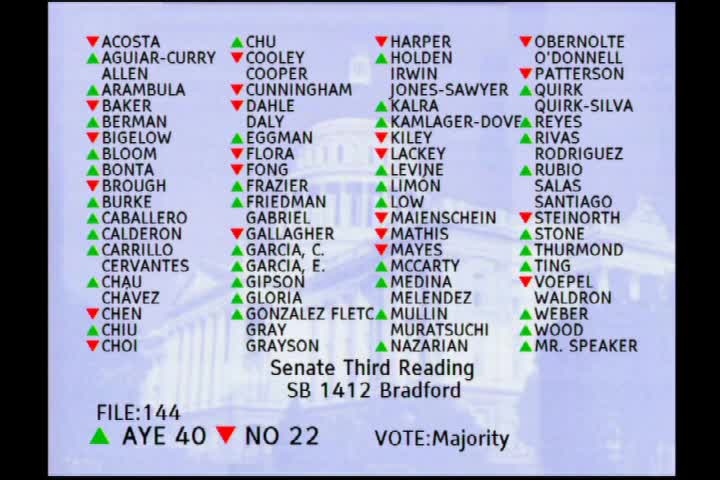 1MIN
Assembly Floor
 1H
Assembly Standing Committee on Appropriations
 1MIN
Senate Floor
 11MIN
Senate Standing Committee on Health
Bill Author

Bill Co-Author(s):