SB 1301: State permitting: environment: processing procedures: dam safety or flood risk reduction project.
- Session Year: 2017-2018
- House: Senate
- Latest Version Date: 2018-08-31
Existing law requires the Department of Water Resources to supervise the maintenance and operation of dams and reservoirs as necessary to safeguard life and property. Existing law requires the department to perform various flood control activities throughout the state. Existing law establishes the Central Valley Flood Protection Board and authorizes the board to engage in various flood control activities along the Sacramento River, the San Joaquin River, their tributaries, and related areas. Existing law also authorizes the board of supervisors of a county to appropriate and spend money from the general fund of the county for specified flood control purposes in connection with streams or rivers in the county.
This bill would require the Office of Planning and Research to develop a joint multiagency preapplication for supplemental consultation and a model fee-for-service agreement, in consultation with a state agency with the power to issue a permit that would authorize a dam safety project or authorize a flood risk reduction project and any interested potential project applicants. The bill would authorize a project applicant to complete a joint multiagency preapplication and submit the preapplication to each state agency named in the preapplication at any time. The bill would require the submission to cause, as appropriate for the proposed project and as specified in the preapplication, a state agency to identify how the requested supplemental consultation will be provided. The bill would require supplemental consultation to occur at least once per quarter, except that supplemental consultation would not occur until a written fee-for-service agreement is entered into. The bill would authorize the establishment and collection of fees payable by a project applicant submitting a preapplication as reimbursement to cover specified reasonable costs, thereby making an appropriation. The bill would authorize and encourage certain federal agencies to provide supplemental consultation for those projects.
Existing law requires the Department of Water Resources to supervise the maintenance and operation of dams and reservoirs as necessary to safeguard life and property. Existing law requires the Department of Water Resources to perform various flood control activities throughout the state. Existing law establishes the Central Valley Flood Protection Board and authorizes the board to engage in various flood control activities along the Sacramento River, the San Joaquin River, their tributaries, and related areas. Existing law also authorizes the board of supervisors of a county to appropriate and spend money from the general fund of the county for specified flood control purposes in connection with streams or rivers in the county.
This bill would require the Office of Planning and Research to develop a joint multiagency preapplication for supplemental consultation and a model fee-for-service agreement, in consultation with a state agency with the power to issue a permit that would authorize a dam safety project or authorize a flood risk reduction project and any interested potential project applicants. The bill would authorize a project applicant to complete a joint multiagency preapplication and submit the preapplication to each state agency named in the preapplication at any time. The bill would require the submission to cause, as appropriate for the proposed project and as specified in the preapplication, a state agency to appoint a member of the interagency team to work on the proposed project and to meet identify how the requested supplemental consultation will be provided. The bill would require supplemental consultation to occur at least once per quarter, except that an interagency team is prohibited from commencing supplemental consultation would not occur until a written fee-for-service agreement is entered into. The bill would authorize an applicant to request in the preapplication that the interagency team, if a project is large or complex, be colocated for a prescribed period and would require the cost of colocation to be covered by the project applicant by fees included in a written fee-for-service agreement. The bill would authorize the establishment and collection of fees payable by a project applicant submitting a preapplication as reimbursement to cover specified reasonable costs, thereby making an appropriation. The bill would authorize and encourage certain federal agencies to participate in the preapplication process and any interagency team developed. provide supplemental consultation for those projects.
Existing law requires the Department of Water Resources to supervise the maintenance and operation of dams and reservoirs as necessary to safeguard life and property. Existing law requires the Department of Water Resources to perform various flood control activities throughout the state. Existing law establishes the Central Valley Flood Protection Board and authorizes the board to engage in various flood control activities along the Sacramento River, the San Joaquin River, their tributaries, and related areas. Existing law also authorizes the board of supervisors of a county to appropriate and spend money from the general fund of the county for specified flood control purposes in connection with streams or rivers in the county.
This bill would require the Office of Planning and Research to develop a joint multiagency preapplication and a model fee-for-service agreement, in consultation with a state agency with the power to issue a permit that would authorize a dam safety project or authorize a flood risk reduction project and any interested potential project applicants. The bill would authorize a project applicant to complete a joint multiagency preapplication and submit the preapplication to each state agency named in the preapplication at any time. The bill would require the submission to cause, as appropriate for the proposed project and as specified in the preapplication, a state agency to appoint a member of the interagency team to work on the proposed project and to meet at least once per quarter, except that an interagency team is prohibited from commencing until a written fee-for-service agreement is entered into. The bill would authorize an applicant to request in the preapplication that the interagency team, if a project is large or complex, be colocated for a prescribed period and would require the cost of colocation to be covered by the project applicant by fees included in a written fee-for-service agreement. The bill would authorize the establishment and collection of fees payable by a project applicant submitting a preapplication as reimbursement to cover specified reasonable costs, thereby making an appropriation. The bill would authorize and encourage certain federal agencies to participate in the preapplication process and any interagency team developed.
Existing law prohibits an entity from substantially diverting or obstructing the natural flow of, or substantially changing or using any material from the bed, channel, or bank of, any river, stream, or lake, or from depositing certain material where it may pass into any river, stream, or lake, without first notifying the Department of Fish and Wildlife of that activity and entering into a lake or streambed alteration agreement, if required by the department to protect fish and wildlife resources.
Existing law also establishes the San Francisco Bay Conservation and Development Commission and requires a person or governmental agency wishing to place fill, extract materials, or make a substantial change in the use of any water, land, or structure within the area of the commissions jurisdiction, as defined, to secure a permit from the commission.
Existing law, the California Coastal Act of 1976, establishes the California Coastal Commission and prescribes the powers and responsibilities of the commission with regard to the regulation of development along the California coast. The act requires any person wishing to perform or undertake any development in the coastal zone, as defined, to obtain a coastal development permit, except as provided.
Under existing law, the State Water Resources Control Board is designated as the state water pollution control agency for purposes of the federal Clean Water Act. Existing law establishes 9 California regional water quality control boards to coordinate with the state board with respect to water quality control matters. Existing law requires the state board or the regional boards to prescribe waste discharge requirements in accordance with the federal national pollutant discharge elimination system permit program established by the federal Clean Water Act and the Porter-Cologne Water Quality Control Act. Existing law requires the state and regional boards to issue dredged or fill material permits in compliance with the federal Clean Water Act.
This bill would require the Department of Fish and Wildlife, the San Francisco Bay Conservation and Development Commission, the California Coastal Commission, the State Water Resources Control Board, and a California regional water quality control board, for certain permits that each agency issues for a dam safety project or flood risk reduction project, beginning July 1, 2020, to keep an accurate record of permit processing times. The bill would require these agencies to issue a report that discloses any legally mandated permit processing times and the average permit processing times for all dam safety projects and flood risk reduction projects, as specified. The bill would require each entity to provide the quarterly report to certain committees of the Legislature and to post the report on the entitys Internet Web site, as prescribed.
This bill would require the Office of Planning and Research to develop a joint multiagency preapplication and a model fee-for-service agreement, in consultation with a state agency with the power to issue a permit that would authorize a dam safety project or authorize a flood risk reduction project and any interested potential project applicants. The bill would authorize a project applicant to complete a joint multiagency preapplication and submit the preapplication to each state agency named in the preapplication at any time. The bill would require the submission to cause, as appropriate for the proposed project and as specified in the preapplication, a state agency to appoint a member of the interagency team to work on the proposed project and to meet at least once per quarter, except that an interagency team is prohibited from commencing until a written fee-for-service agreement is entered into. The bill would authorize an applicant to request in the preapplication that the interagency team, if a project is large or complex, be colocated for a prescribed period and would require the cost of colocation to be covered by the project applicant by fees included in a written fee-for-service agreement. The bill would authorize the establishment and collection of fees payable by a project applicant submitting a preapplication as reimbursement to cover specified reasonable costs, thereby making an appropriation. The bill would authorize and encourage certain federal agencies to participate in the preapplication process and any interagency team developed.
Existing law prohibits an entity from substantially diverting or obstructing the natural flow of, or substantially changing or using any material from the bed, channel, or bank of, any river, stream, or lake, or from depositing certain material where it may pass into any river, stream, or lake, without first notifying the Department of Fish and Wildlife of that activity and entering into a lake or streambed alteration agreement, if required by the department to protect fish and wildlife resources.
Existing law also establishes the San Francisco Bay Conservation and Development Commission and requires a person or governmental agency wishing to place fill, extract materials, or make a substantial change in the use of any water, land, or structure within the area of the commissions jurisdiction, as defined, to secure a permit from the commission.
Existing law, the California Coastal Act of 1976, establishes the California Coastal Commission and prescribes the powers and responsibilities of the commission with regard to the regulation of development along the California coast. The act requires any person wishing to perform or undertake any development in the coastal zone, as defined, to obtain a coastal development permit, except as provided.
Under existing law, the State Water Resources Control Board is designated as the state water pollution control agency for purposes of the federal Clean Water Act. Existing law establishes 9 California regional water quality control boards to coordinate with the state board with respect to water quality control matters. Existing law requires the state board or the regional boards to prescribe waste discharge requirements in accordance with the federal national pollutant discharge elimination system permit program established by the federal Clean Water Act and the Porter-Cologne Water Quality Control Act. Existing law requires the state and regional boards to issue dredged or fill material permits in compliance with the federal Clean Water Act.
This bill would require the Department of Fish and Wildlife, the San Francisco Bay Conservation and Development Commission, the California Coastal Commission, the State Water Resources Control Board, and a California Regional Water Quality Control Board, regional water quality control board, for certain permits that each entity administers, agency issues for a dam safety project or flood risk reduction project, beginning July 1, 2020, to keep an accurate record of permit processing times. The bill would require these entities agencies to issue a quarterly report that discloses any legally mandated permit processing times and the average permit processing times for all projects and for large-sized dam safety projects and flood risk reduction projects, as specified. The bill would require each entity to provide the quarterly report to certain committees of the Legislature and to post the report on the entitys Internet Web site, as prescribed. This bill would also require these entities to expedite permit processing and approval for a project that will maintain or improve human life safety protection through flood risk reduction or reduction of a risk of dam failure, as specified.
This bill would require the Office of Planning and Research to develop a joint multiagency preapplication and a model fee-for-service agreement, in consultation with a state agency with the power to issue a permit that would authorize a dam safety project or authorize a flood risk reduction project and any interested potential project applicants. The bill would authorize a project applicant to complete a joint multiagency preapplication and submit the preapplication to each state agency named in the preapplication at any time. The bill would require the submission to cause, as appropriate for the proposed project and as specified in the preapplication, a state agency to appoint a member of the interagency team to work on the proposed project and to meet at least once per quarter, except that an interagency team is prohibited from commencing until a written fee-for-service agreement is entered. The bill would authorize an applicant to request in the preapplication that the interagency team, if a project is large or complex, be colocated for a prescribed period and would require the cost of colocation to be covered by fees included in a written fee-for-service agreement. The bill would authorize the establishment and collection of fees payable by a project applicant submitting a preapplication as reimbursement to cover specified reasonable costs, thereby making an appropriation. The bill would authorize and encourage certain federal agencies to participate in the preapplication process and any interagency team developed.
Existing law prohibits an entity from substantially diverting or obstructing the natural flow of, or substantially changing or using any material from the bed, channel, or bank of, any river, stream, or lake, or from depositing certain material where it may pass into any river, stream, or lake, without first notifying the Department of Fish and Wildlife of that activity and entering into a lake or streambed alteration agreement, if required by the department to protect fish and wildlife resources.
Existing law also establishes the San Francisco Bay Conservation and Development Commission and requires a person or governmental agency wishing to place fill, extract materials, or make a substantial change in the use of any water, land, or structure within the area of the commissions jurisdiction, as defined, to secure a permit from the commission.
Existing law, the California Coastal Act of 1976, establishes the California Coastal Commission and prescribes the powers and responsibilities of the commission with regard to the regulation of development along the California coast. The act requires any person wishing to perform or undertake any development in the coastal zone, as defined, to obtain a coastal development permit, except as provided.
Under existing law, the State Water Resources Control Board is designated as the state water pollution control agency for purposes of the federal Clean Water Act. Existing law establishes 9 regional water quality control boards to coordinate with the state board with respect to water quality control matters. Existing law requires the state board or the regional boards to prescribe waste discharge requirements in accordance with the federal national pollutant discharge elimination system permit program established by the Clean Water Act and the Porter-Cologne Water Quality Control Act. Existing law requires the state and regional boards to issue dredged or fill material permits in compliance with the Clean Water Act.
This bill would require the Department of Fish and Wildlife, the San Francisco Bay Conservation and Development Commission, the California Coastal Commission, the State Water Resources Control Board, and a California Regional Water Quality Control Board, for certain permits that each entity administers, to keep an accurate record of permit processing times. The bill would require these entities to issue a quarterly report that discloses any legally mandated permit processing times and the average permit processing times for all projects and for large-sized projects, as specified. The bill would require each entity to provide the quarterly report to certain committees of the Legislature and to post the report on the entitys Internet Web site, as prescribed. This bill would also require these entities to expedite permit processing and approval for a project that will maintain or improve human life safety protection through flood risk reduction or reduction of a risk of dam failure, as specified.
For purposes of this division, the following definitions apply:
(a)Dam has the same meaning as defined in Section 6002 of the Water Code.
(b)Dam safety project means a project or plan proposed by a federal, state, or local public agency or a public utility, for the maintenance, repair, retrofit, alteration, or replacement of a dam, in which reducing the risk of dam failure is an objective of the project.
(c)Flood risk reduction project means a project or plan proposed by a federal, state, or local public agency or a public utility, to construct, retrofit, maintain, manage, or improve a facility, channel, levee, or flood control modification, in which flood risk reduction is an objective of the project.
(d)Permit means a permit, agreement, certification, approval, authorization, permission, notice to proceed, or directive, or the issuance of the same, from any state agency, that is necessary for a project to proceed.
(e)State agency means any state department, agency, board, or commission with the power to issue a permit that would authorize a dam safety project or authorize a flood risk reduction project.
21202.A dam safety project or a flood risk reduction project is eligible for supplemental consultation for the purpose of expediting the permitting of the project.
21204.For the purposes of implementing the supplemental consultation, the Office of Planning and Research shall develop a joint multiagency preapplication and a model fee-for-service agreement in consultation with a state agency and any interested potential project applicants. The preapplication shall request information about a proposed project that is common to state agency permit applications and that reasonably would be expected to be available at the time of preapplication submission, and any preliminary information a state agency requests specific to its jurisdiction.
21206.(a)A project applicant may complete a joint multiagency preapplication for supplemental consultation and submit the preapplication to each state agency named in the preapplication at any time. A project applicant is encouraged to submit the joint multiagency preapplication not later than when an applicant provides a notice of preparation, notice of intent, or other similar notice required pursuant to the California Environmental Quality Act (Division 13 (commencing with Section 21000)).
(b)The submission of a preapplication for supplemental consultation to a state agency and the state agencys determination of the proposed projects eligibility for supplemental consultation pursuant to this division shall cause, as appropriate for the proposed project and as specified in the preapplication, a state agency to identify how the requested supplemental consultation will be provided to the applicant. Supplemental consultation shall not commence until a written fee-for-service agreement is entered into pursuant to Section 21208. Supplemental consultation shall occur at least once per quarter to discuss the proposed project with the applicant and shall have the following objectives:
(1)To identify actions that may be taken by the state agency and the applicant to expedite permit processing and approval with the goal of achieving permit approval within times established in statute or faster.
(2)To consider potential significant environmental impacts of the proposed project and the types of mitigation, if any, that may be required as a condition of the permit.
(3)To provide input on the environmental review document prepared pursuant to the California Environmental Quality Act (Division 13 (commencing with Section 21000)).
(4)To identify potential conflicts between the measures or conditions proposed by the consulting state agency for permit issuance with measures or conditions proposed by other state or federal agencies.
(c)Upon the request of the project applicant, supplemental consultation by a state agency may occur with the attendance of other state or federal permitting agencies.
21208.(a)(1)A state agency providing supplemental consultation and the Office of Planning and Research shall establish and collect fees payable by a project applicant submitting a preapplication as reimbursement to cover the reasonable costs of the supplemental consultation and the costs of the Office of Planning and Research in developing the preapplication and a model fee-for-service agreement.
(2)A project applicant shall pay a flat fee to each state agency named in a joint multiagency preapplication and to the Office of Planning and Research upon the submission of a joint multiagency preapplication to cover the reasonable costs of each state agency in assessing how supplemental consultation will be provided and negotiating a written fee-for-service agreement pursuant to subdivision (b) and the reasonable costs of the Office of Planning and Research in developing the preapplication and the model fee-for-service agreement.
(b)(1)A participating state agency shall provide to the project applicant a good faith estimate of the reasonable costs that would be incurred for the requested supplemental consultation.
(2)A project applicant shall enter into a written fee-for-service agreement with the state agencies providing supplemental consultation that requires the project applicant to reimburse the state agencies for the reasonable costs incurred in providing supplemental consultation.
(c)Any fees collected pursuant to this division shall supplement, and not replace, existing fees or funding for permitting by a state agency.
21210.This division does not limit the authority or discretion of a state agency with regard to the dispensation of a permit application, the issuance of a permit, or any conditions that may be required in conjunction with the issuance of a permit.
21212.The United States Army Corps of Engineers, the United States Fish and Wildlife Service, the National Marine Fisheries Service, and the United States Environmental Protection Agency may and are encouraged to provide supplemental consultation to project applicants for dam safety projects or flood risk reduction projects authorized pursuant to this division.
For purposes of this division, the following definitions apply:
(a)Dam has the same meaning as defined in Section 6002 of the Water Code.
(b)Dam safety project means a project or plan proposed by a federal, state, or local public agency or a public utility, for the maintenance, repair, retrofit, alteration, or replacement of a dam, in which reducing the risk of dam failure is an objective of the project.
(c)Flood risk reduction project means a project or plan proposed by a federal, state, or local public agency or a public utility, to construct, retrofit, maintain, manage, or improve a facility, channel, levee, or flood control modification, in which flood risk reduction is an objective of the project.
(d)Permit means a permit, agreement, certification, approval, authorization, permission, notice to proceed, or directive, or the issuance of the same, from any state agency, that is necessary for a project to proceed.
(e)State agency means any state department, agency, board, or commission with the power to issue a permit that would authorize a dam safety project or authorize a flood risk reduction project.
21202.A dam safety project or a flood risk reduction project is eligible for supplemental consultation for the purpose of expediting the permitting of the project.
21204.For the purposes of implementing the supplemental consultation, the Office of Planning and Research shall develop a joint multiagency preapplication and a model fee-for-service agreement in consultation with a state agency and any interested potential project applicants. The preapplication shall request information about a proposed project that is common to state agency permit applications and that reasonably would be expected to be available at the time of preapplication submission, and any preliminary information a state agency requests specific to its jurisdiction.
21206.(a)A project applicant may complete a joint multiagency preapplication for supplemental consultation and submit the preapplication to each state agency named in the preapplication at any time. A project applicant is encouraged to submit the joint multiagency preapplication not later than when an applicant provides a notice of preparation, notice of intent, or other similar notice required pursuant to the California Environmental Quality Act (Division 13 (commencing with Section 21000)).
(b)The submission of a preapplication for supplemental consultation to a state agency and the state agencys determination of the proposed projects eligibility for supplemental consultation pursuant to this division shall cause, as appropriate for the proposed project and as specified in the preapplication, a state agency to identify how the requested supplemental consultation will be provided to the applicant. Supplemental consultation shall not commence until a written fee-for-service agreement is entered into pursuant to Section 21208. Supplemental consultation shall occur at least once per quarter to discuss the proposed project with the applicant and shall have the following objectives:
(1)To identify actions that may be taken by the state agency and the applicant to expedite permit processing and approval with the goal of achieving permit approval within times established in statute or faster.
(2)To consider potential significant environmental impacts of the proposed project and the types of mitigation, if any, that may be required as a condition of the permit.
(3)To provide input on the environmental review document prepared pursuant to the California Environmental Quality Act (Division 13 (commencing with Section 21000)).
(4)To identify potential conflicts between the measures or conditions proposed by the consulting state agency for permit issuance with measures or conditions proposed by other state or federal agencies.
(c)Upon the request of the project applicant, a supplemental consultation by a state agency may occur with the attendance of other state or federal permitting agencies.
21208.(a)(1)A state agency providing supplemental consultation and the Office of Planning and Research shall establish and collect fees payable by a project applicant submitting a preapplication as reimbursement to cover the reasonable costs of the supplemental consultation and the costs of the Office of Planning and Research in developing the preapplication and a model fee-for-service agreement.
(2)A project applicant shall pay a flat fee to each state agency named in a joint multiagency preapplication and to the Office of Planning and Research upon the submission of a joint multiagency preapplication to cover the reasonable costs of each state agency in assessing how supplemental consultation will be provided and negotiating a written fee-for-service agreement pursuant to subdivision (b) and the reasonable costs of the Office of Planning and Research in developing the preapplication and the model fee-for-service agreement.
(b)(1)A participating state agency shall provide to the project applicant a good faith estimate of the reasonable costs that would be incurred for the requested supplemental consultation.
(2)A project applicant shall enter into a written fee-for-service agreement with the state agencies providing supplemental consultation that requires the project applicant to reimburse the state agencies for the reasonable costs incurred in providing supplemental consultation.
(c)Any fees collected pursuant to this division shall supplement, and not replace, existing fees or funding for permitting by a state agency.
21210.This division does not limit the authority or discretion of a state agency with regard to the dispensation of a permit application, the issuance of a permit, or any conditions that may be required in conjunction with the issuance of a permit.
21212.The United States Army Corps of Engineers, the United States Fish and Wildlife Service, the National Marine Fisheries Service, and the United States Environmental Protection Agency may and are encouraged to provide supplemental consultation to project applicants for dam safety projects or flood risk reduction projects authorized pursuant to this division.
For purposes of this division, the following definitions apply:
(a)Dam has the same meaning as defined in Section 6002 of the Water Code.
(b)Dam safety project means a project or plan proposed by a federal, state, or local public agency or a public utility, for the maintenance, repair, retrofit, alteration, or replacement of a dam, in which reducing the risk of dam failure is an objective of the project.
(c)Flood risk reduction project means a project or plan proposed by a federal, state, or local public agency or a public utility, to construct, retrofit, maintain, manage, or improve a facility, channel, levee, or flood control modification, in which flood risk reduction is an objective of the project.
(d)Permit means a permit, agreement, certification, approval, authorization, permission, notice to proceed, or directive, or the issuance of the same, from any state agency, that is necessary for a project to proceed.
(e)State agency means a unit of state government, including, but not limited to, any state department, agency, board, or commission of the State of California with the power to issue a permit that would authorize a dam safety project or authorize a flood risk reduction project.
21202.A dam safety project or a flood risk reduction project is eligible for interagency collaboration supplemental consultation for the purpose of expediting the permitting of the project.
21204.The For the purposes of implementing the supplemental consultation, the Office of Planning and Research shall develop a joint multiagency preapplication and a model fee-for-service agreement in consultation with a state agency and any interested potential project applicants. The preapplication shall request information about a proposed project that is common to state agency permit applications and that reasonably would be expected to be available at the time of preapplication submission, and any preliminary information a state agency requests specific to its jurisdiction.
21206.(a)A project applicant may complete a joint multiagency preapplication for supplemental consultation and submit the preapplication to each state agency named in the preapplication at any time. A project applicant is encouraged to submit the joint multiagency preapplication not later than when an applicant provides a notice of preparation, notice of intent, or other similar notice required pursuant to the California Environmental Quality Act (Division 13 (commencing with Section 21000)).
(b)The submission of a preapplication for supplemental consultation to a state agency and the state agencys determination of the proposed projects eligibility for processing supplemental consultation pursuant to this division shall cause, as appropriate for the proposed project and as specified in the preapplication, a state agency to appoint a member of the interagency team to work on the proposed project. An interagency team identify how the requested supplemental consultation will be provided to the applicant. Supplemental consultation shall not commence until a written fee-for-service agreement is entered into pursuant to Section 21208. The team shall meet Supplemental consultation shall occur at least once per quarter to discuss the proposed project with the applicant and shall have the following objectives:
(1)To identify actions that may be taken by the participating state agencies state agency and the applicant to expedite permit processing and approval with the goal of achieving permit approval within times established in statute or faster.
(2)To consider potential significant environmental impacts of the proposed project and the types of mitigation, if any, that may be required as a condition of the permit.
(3)To provide input on the environmental review document prepared pursuant to the California Environmental Quality Act (Division 13 (commencing with Section 21000)).
(4)To resolve any identify potential conflicts between the measures or conditions that the participating state agencies or participating federal agencies may seek to require for permit issuance. proposed by the consulting state agency for permit issuance with measures or conditions proposed by other state or federal agencies.
(c)If a project is large or complex, an applicant may request in the preapplication that the interagency team for the proposed project be colocated for a prescribed period, as appropriate and mutually agreed upon by an applicant and the state agencies participating in the interagency team. An agency shall not host a colocation to collaborate on the proposed project at the project applicants facility. The project applicant shall pay the costs of any colocation and the cost of colocation shall be covered by fees included in a written fee-for-service agreement entered into pursuant to Section 21208.(c)Upon the request of the project applicant, a supplemental consultation by a state agency may occur with the attendance of other state or federal permitting agencies.
21208.(a)(1)A state agency participating in an interagency team providing supplemental consultation and the Office of Planning and Research shall establish and collect fees payable by a project applicant submitting a preapplication as reimbursement to cover the reasonable costs of the team, its participants, and supplemental consultation and the costs of the Office of Planning and Research in developing and processing the preapplication and a model fee-for-service agreement.
(2)A project applicant shall pay a flat fee to each participating state agency named in a joint multiagency preapplication and to the Office of Planning and Research upon the submission of a joint multiagency preapplication to cover the reasonable costs of each state agency named in the preapplication appointing a member to the interagency team in assessing how supplemental consultation will be provided and negotiating a written fee-for-service agreement pursuant to subdivision (b). (b) and the reasonable costs of the Office of Planning and Research in developing the preapplication and the model fee-for-service agreement.
(b)(1)A participating state agency shall provide to the project applicant a good faith estimate of the reasonable costs that would be incurred for the requested engagement through the interagency team and any colocation. supplemental consultation.
(2)A project applicant shall enter into a written fee-for-service agreement with the participating state agencies providing supplemental consultation that requires the project applicant to reimburse the participating state agencies for the reasonable costs incurred by their participation in the interagency team and by any colocation that may be requested. in providing supplemental consultation.
(c)Any fees collected pursuant to this division shall supplement, and not replace, existing funding for permitting by a state agency.
21210.(a)This division applies only to a proposed project that will require a permit from at least two state agencies.(b)Action by an interagency team pursuant to this21210.This division does not limit the authority or discretion of a state permitting agency with regards regard to the dispensation of a permit application, the issuance of a permit, or any conditions that may be required in conjunction with the issuance of a permit.
21212.The United States Army Corps of Engineers, the United States Fish and Wildlife Service, the National Marine Fisheries Service, and the United States Environmental Protection Agency may and are encouraged to participate in the preapplication process and any interagency team developed provide supplemental consultation to project applicants for dam safety projects or flood risk reduction projects authorized pursuant to this division.
For purposes of this division, the following definitions apply:
(a)Dam has the same meaning as defined in Section 6002 of the Water Code.
(b)Dam safety project means a project or plan proposed by a federal, state, or local public agency or a public utility, for the maintenance, repair, retrofit, alteration, or replacement of a dam, in which reducing the risk of dam failure is an objective of the project.
(c)Flood risk reduction project means a project or plan proposed by a federal, state, or local public agency or a public utility, to construct, retrofit, maintain, manage, or improve a facility, channel, levee, or flood control modification, in which flood risk reduction is an objective of the project.
(d)Permit means a permit, agreement, certification, approval, authorization, permission, notice to proceed, or directive, or the issuance of the same, from any state agency, that is necessary for a project to proceed.
(e)State agency means a unit of state government, including, but not limited to, any department, agency, board, or commission of the State of California with the power to issue a permit that would authorize a dam safety project or authorize a flood risk reduction project.
21202.A dam safety project or a flood risk reduction project is eligible for interagency collaboration for the purpose of expediting the permitting of the project.
21204.The Office of Planning and Research shall develop a joint multiagency preapplication and a model fee-for-service agreement in consultation with a state agency and any interested potential project applicants. The preapplication shall request information about a proposed project that is common to state agency permit applications and that reasonably would be expected to be available at the time of preapplication submission, and any preliminary information a state agency requests specific to its jurisdiction.
21206.(a)A project applicant may complete a joint multiagency preapplication and submit the preapplication to each state agency named in the preapplication at any time. A project applicant is encouraged to submit the joint multiagency preapplication not later than when an applicant provides a notice of preparation, notice of intent, or other similar notice required pursuant to the California Environmental Quality Act (Division 13 (commencing with Section 21000)).
(b)The submission of a preapplication to a state agency and the state agencys determination of the proposed projects eligibility for processing pursuant to this division shall cause, as appropriate for the proposed project and as specified in the preapplication, a state agency to appoint a member of the interagency team to work on the proposed project. An interagency team shall not commence until a written fee-for-service agreement is entered into pursuant to Section 21208. The team shall meet at least once per quarter to discuss the proposed project with the applicant and shall have the following objectives:
(1)To identify actions that may be taken by the participating state agencies and the applicant to expedite permit processing and approval with the goal of achieving permit approval within times established in statute or faster.
(2)To consider potential significant environmental impacts of the proposed project and the types of mitigation, if any, that may be required as a condition of the permit.
(3)To provide input on the environmental review document prepared pursuant to the California Environmental Quality Act (Division 13 (commencing with Section 21000)).
(4)To resolve any conflicts between the measures or conditions that the participating state agencies or participating federal agencies may seek to require for permit issuance.
(c)If a project is large or complex, an applicant may request in the preapplication that the interagency team for the proposed project be colocated for a prescribed period, as appropriate and mutually agreed upon by an applicant and the state agencies participating in the interagency team. An agency shall not host a colocation to collaborate on the proposed project at the project applicants facility. The project applicant shall pay the costs of any colocation and the cost of colocation shall be covered by fees included in a written fee-for-service agreement entered into pursuant to Section 21208.
21208.(a)(1)A state agency participating in an interagency team and the Office of Planning and Research shall establish and collect fees payable by a project applicant submitting a preapplication as reimbursement to cover the reasonable costs of the team, its participants, and the Office of Planning and Research in developing and processing the preapplication and a model fee-for-service agreement.
(2)A project applicant shall pay a flat fee to each participating agency and to the Office of Planning and Research upon the submission of a joint multiagency preapplication to cover the reasonable costs of each state agency named in the preapplication appointing a member to the interagency team and negotiating a written fee-for-service agreement pursuant to subdivision (b).
(b)(1)A participating state agency shall provide to the project applicant a good faith estimate of the reasonable costs that would be incurred for the requested engagement through the interagency team and any colocation.
(2)A project applicant shall enter into a written fee-for-service agreement with the participating state agencies that requires the project applicant to reimburse the participating state agencies for the reasonable costs incurred by their participation in the interagency team and by any colocation that may be requested.
21210.(a)This division applies only to a proposed project that will require a permit from at least two state agencies.
(b)Action by an interagency team pursuant to this division does not limit the authority or discretion of a state permitting agency with regards to the dispensation of a permit application, the issuance of a permit, or any conditions that may be required in conjunction with the issuance of a permit.
21212.The United States Army Corps of Engineers, United States Fish and Wildlife Service, National Marine Fisheries Service, and United States Environmental Protection Agency may and are encouraged to participate in the preapplication process and any interagency team developed pursuant to this division.
(a)For purposes of this section, the following definitions apply to this section:
(1)Covered permit means any of the following permits issued for a dam safety project or flood risk reduction project:
(A)A streambed alteration agreement pursuant to Chapter 6 (commencing with Section 1600) of Division 2 of the Fish and Game Code.
(B)A permit that the San Francisco Bay Conservation and Development Commission may issue pursuant to the McAteer-Petris Act (Title 7.2 (commencing with Section 66600)).
(C)A coastal development permit pursuant to Chapter 7 (commencing with Section 30600) of Division 20 of the Public Resources Code.
(D)Waste discharge requirements prescribed pursuant to Division 7 (commencing with Section 13000) of the Water Code.
(E)Water quality certification pursuant to Section 13160 of the Water Code.
(F)A national pollutant discharge elimination system permit required pursuant to the federal Clean Water Act (33 U.S.C. Sec. 1251 et seq.).
(2)Dam safety project has the same meaning as defined in Section 21200 of the Public Resources Code.
(3)Flood risk reduction project has the same meaning as defined in Section 21200 of the Public Resources Code.
(b)A state agency that administers a covered permit shall do all of the following:
(1)Beginning July 1, 2020, keep an accurate record of covered permit processing times that includes all of the following:
(A)The date a permit application is submitted.
(B)The date a permit application is deemed complete.
(C)The number of resubmittals required for the permit application to be deemed complete.
(D)The date a permit application is approved or denied.
(2)Issue a report for the previous fiscal year on or before October 1, 2021, and by October 1 for each year thereafter, that discloses any legally mandated processing times for covered permits and the average processing times for covered permits for all dam safety projects and flood risk reduction projects, including all of the following information:
(A)The average time from the date a permit application is submitted to the date a permit is approved or denied.
(B)The average time from the date a permit application is submitted to the date a permit application is deemed complete.
(C)The average number of applicant resubmittals required for the application to be deemed complete.
(D)The average time from the date the permit application is deemed complete to the date a permit is approved or denied.
(E)The number of permit applications received.
(F)The number of permit applications deemed complete.
(G)The number of permits approved.
(H)The number of permits denied.
(I)The total number of permit applications pending action.
(c)Each state agency issuing a covered permit shall transmit the report required pursuant to paragraph (2) of subdivision (b) by the deadlines described in that paragraph to the budget and appropriate policy committees of the Legislature and post the report on the agencys Internet Web site. The report shall remain posted on an agencys Internet Web site for at least 10 years.
SEC. 2.Division 13.6 (commencing with Section 21200) is added to the Public Resources Code, to read:13.6.Interagency Collaboration and Expedited Permitting for Dam Safety and Flood Risk Reduction21200.For purposes of this division, the following definitions apply:
(a)Dam has the same meaning as defined in Section 6002 of the Water Code.
(b)Dam safety project means a project or plan proposed by a federal, state, or local public agency or a public utility, for the maintenance, repair, retrofit, alteration, or replacement of a dam, in which reducing the risk of dam failure is an objective of the project.
(c)Flood risk reduction project means a project or plan proposed by a federal, state, or local public agency or a public utility, to construct, retrofit, maintain, manage, or improve a facility, channel, levee, or flood control modification, in which flood risk reduction is an objective of the project.
(d)Permit means a permit, agreement, certification, approval, authorization, permission, notice to proceed, or directive, or the issuance of the same, from any state agency, that is necessary for a project to proceed.
(e)State agency means a unit of state government, including, but not limited to, any department, agency, board, or commission of the State of California with the power to issue a permit that would authorize a dam safety project or authorize a flood risk reduction project.
21202.A dam safety project or a flood risk reduction project is eligible for interagency collaboration for the purpose of expediting the permitting of the project.
21204.The Office of Planning and Research shall develop a joint multiagency preapplication and a model fee-for-service agreement in consultation with a state agency and any interested potential project applicants. The preapplication shall request information about a proposed project that is common to state agency permit applications and that reasonably would be expected to be available at the time of preapplication submission, and any preliminary information a state agency requests specific to its jurisdiction.
21206.(a)A project applicant may complete a joint multiagency preapplication and submit the preapplication to each state agency named in the preapplication at any time. A project applicant is encouraged to submit the joint multiagency preapplication not later than when an applicant provides a notice of preparation, notice of intent, or other similar notice required pursuant to the California Environmental Quality Act (Division 13 (commencing with Section 21000)).
(b)The submission of a preapplication to a state agency and the state agencys determination of the proposed projects eligibility for processing pursuant to this division shall cause, as appropriate for the proposed project and as specified in the preapplication, a state agency to appoint a member of the interagency team to work on the proposed project. An interagency team shall not commence until a written fee-for-service agreement is entered into pursuant to Section 21208. The team shall meet at least once per quarter to discuss the proposed project with the applicant and shall have the following objectives:
(1)To identify actions that may be taken by the participating state agencies and the applicant to expedite permit processing and approval with the goal of achieving permit approval within times established in statute or faster.
(2)To consider potential significant environmental impacts of the proposed project and the types of mitigation, if any, that may be required as a condition of the permit.
(3)To provide input on the environmental review document prepared pursuant to the California Environmental Quality Act (Division 13 (commencing with Section 21000)).
(4)To resolve any conflicts between the measures or conditions that the participating state agencies or participating federal agencies may seek to require for permit issuance.
(c)If a project is large or complex, an applicant may request in the preapplication that the interagency team for the proposed project be colocated for a prescribed period, as appropriate and mutually agreed upon by an applicant and the state agencies participating in the interagency team. An agency may shall not host the colocations a colocation to collaborate on the proposed project, as needed. The project at the project applicants facility. The project applicant shall pay the costs of any colocation and the cost of colocation shall be covered by fees included in a written fee-for-service agreement entered into pursuant to Section 21208.
21208.(a)(1)A state agency participating in an interagency team and the Office of Planning and Research shall establish and collect fees payable by a project applicant submitting a preapplication as reimbursement to cover the reasonable costs of the team, its participants, and the Office of Planning and Research in developing and processing the preapplication and a model fee-for-service agreement.
(2)A project applicant shall pay a flat fee to each participating agency and to the Office of Planning and Research upon the submission of a joint multiagency preapplication to cover the reasonable costs of each state agency named in the preapplication appointing a member to the interagency team and negotiating a written fee-for-service agreement pursuant to subdivision (b).
(b)(1)A participating state agency shall provide to the project applicant a good faith estimate of the reasonable costs that would be incurred for the requested engagement through the interagency team and any colocation.
(2)A project applicant shall enter into a written fee-for-service agreement with the participating state agencies that requires the project applicant to reimburse the participating state agencies for the reasonable costs incurred by their participation in the interagency team and by any colocation that may be requested.
21210.(a)This division applies only to a proposed project that will require a permit from at least two state agencies.
(b)Action by an interagency team pursuant to this division does not limit the authority or discretion of a state permitting agency with regards to the dispensation of a permit application, the issuance of a permit, or any conditions that may be required in conjunction with the issuance of a permit.
21212.The United States Army Corps of Engineers, United States Fish and Wildlife Service, National Marine Fisheries Service, and United States Environmental Protection Agency may and are encouraged to participate in the preapplication process and any interagency team developed pursuant to this division.
(a)For purposes of this section, the following definitions apply to this section:
(1)Covered permit means any of the following: following permits issued for a dam safety project or flood risk reduction project:
(A)A streambed alteration agreement pursuant to Chapter 6 (commencing with Section 1600) of Division 2 of the Fish and Game Code.
(B)A permit that the San Francisco Bay Conservation and Development Commission may issue pursuant to the McAteer-Petris Act (Title 7.2 (commencing with Section 66600)).
(C)A coastal development permit pursuant to Chapter 7 (commencing with Section 30600) of Division 20 of the Public Resources Code.
(D)Waste discharge requirements prescribed pursuant to Division 7 (commencing with Section 13000) of the Water Code.
(E)Water quality certification pursuant to Section 13160 of the Water Code.
(F)A national pollutant discharge elimination system permit required pursuant to the federal Clean Water Act (33 U.S.C. Sec. 1251 et seq.).
(2)State entity means the California Coastal Commission, a California Regional Water Quality Control Board, the Department of Fish and Wildlife, the San Francisco Bay Conservation and Development Commission, and the State Water Resources Control Board.(2)Dam safety project has the same meaning as defined in Section 21200 of the Public Resources Code.
(3)Flood risk reduction project has the same meaning as defined in Section 21200 of the Public Resources Code.
(b)A state entity agency that administers a covered permit shall do all of the following:
(1)Keep Beginning July 1, 2020, keep an accurate record of covered permit processing times that includes all of the following:
(A)The date a permit application is submitted.
(B)The date a permit application is deemed complete.
(C)The number of resubmittals required for the permit application to be deemed complete.
(D)The date a permit application is approved or denied.
(2)Issue a quarterly report report for the previous fiscal year on or before October 1, 2021, and by October 1 for each year thereafter, that discloses any legally mandated covered permit processing times for covered permits and the average covered permit processing times for covered permits for all projects and for large-sized dam safety projects and flood risk reduction projects, including all of the following information:
(A)The average time from the date a permit application is submitted to the date a permit is approved or denied.
(B)The average time from the date a permit application is submitted to the date a permit application is deemed complete.
(C)The average number of applicant resubmittals required. required for the application to be deemed complete.
(D)The average time from the date the permit application is deemed complete to the date a permit is approved or denied.
(E)The number of permit applications received.
(F)The number of permit applications deemed complete.
(G)The number of permits approved.
(H)The number of permits denied.
(I)The total number of permit applications pending action.
(c)No later than 30 days following the end of a quarter, each state entity shall provide the report Each state agency issuing a covered permit shall transmit the report required pursuant to paragraph (2) of subdivision (b) by the deadlines described in that paragraph to the budget and appropriate policy committees of the Legislature and post the report on the entitys agencys Internet Web site. The report shall remain posted on an entitys agencys Internet Web site for at least 10 years.
SEC. 2.Part 9 (commencing with Section 9700) is added to Division 5 of the Water Code, to read:9.Expedited Permit Processing and Approval9700.For purposes of this part, the following definitions apply:(a)Covered permit means any of the following:(1)A streambed alteration agreement pursuant to Chapter 6 (commencing with Section 1600) of Division 2 of the Fish and Game Code.(2)A permit that the San Francisco Bay Conservation and Development Commission may issue pursuant to the McAteer-Petris Act (Title 7.2 (commencing with Section 66600) of the Government Code).(3)A coastal development permit pursuant to Chapter 7 (commencing with Section 30600) of Division 20 of the Public Resources Code.(4)Waste discharge requirements prescribed pursuant to Division 7 (commencing with Section 13000).(5)Water quality certification pursuant to Section 13160.(6)A national pollutant discharge elimination system permit required pursuant to the federal Clean Water Act (33 U.S.C. Sec. 1251 et seq.).(b)State entity means the California Coastal Commission, a California Regional Water Quality Control Board, the Department of Fish and Wildlife, the San Francisco Bay Conservation and Development Commission, and the State Water Resources Control Board.9702.(a)A project shall be eligible for expedited covered permit processing and approval if the project satisfies all of the following:(1)The project will maintain or improve human life safety protection through flood risk reduction or reduction of a risk of dam failure.(2)Any environmental review of the project required pursuant to the California Environmental Quality Act (Division 13 (commencing with Section 21000) of the Public Resources Code) has been completed.(3)The project meets one or more of the following criteria:(A)The project will reduce flood risk through the repair, reconstruction, or retrofit of Oroville Dam or its appurtenant structures, or through the repair of levees or the removal of sediment intended to prevent flooding from the Feather River downstream of Oroville Dam.(B)The project will reduce the risk of flooding or mudslide in a watershed that has experienced wildfire within the last 10 years with a cumulative impacted acreage of ____.(C)The project is located in a watershed that has experienced flooding within the last 10 years that resulted in cumulative losses exceeding fifty million dollars ($50,000,000), and flood risk reduction is an outcome of the project.(D)The project will reduce flood risk through the seismic retrofit or repair of a dam, with an active capacity restriction due to seismic safety and a classification as a high-hazard or extremely high hazard dam, as determined by the Division of Safety of Dams within the Department of Water Resources.(E)The project, through repair or replacement, corrects deficiencies identified by the department for which the department has required an action to protect life and property pursuant to Section 6081, 6111, or 6357.1.(F)The project will reduce the risk of tidal flooding for an urban area in which a 1-percent tidal flood event is estimated to cause damage exceeding five billion dollars ($5,000,000,000) and to threaten industries vital to the state and national economies.(b)(1)At least 60 days before filing an application, a project applicant shall notify the state entity of the applicants intent to submit an application for a covered permit for any project that satisfies the requirements of subdivision (a). If applicable, the project applicant may provide the notice required by this paragraph in the notice of preparation, notice of intent, or other similar notice required pursuant to the California Environmental Quality Act (Division 13 (commencing with Section 21000) of the Public Resources Code).(2)In addition to the notice required by paragraph (1), a project applicant shall notify the applicable state entity concurrent with the application for a covered permit if the project satisfies the requirements of subdivision (a).(c)If the state entity determines substantial evidence exists that a project satisfies the requirements of subdivision (a), the project shall receive expedited covered permit processing and approval in accordance with all of the following:(1)Within 30 days after a state entity receives a notice pursuant to paragraph (2) of subdivision (b) concurrent with an application to approve a covered permit, the state entity shall determine whether the project as proposed in the application meets one of the criteria in paragraph (3) of subdivision (a), and if so, shall determine whether the application is complete and transmit a statement of determination to the applicant.(2)If the application is determined to be complete, the state entity shall commence expedited processing and approval for the covered permit pursuant to paragraph (3).(3)A state entity shall approve or deny an application within 60 days after the application is determined to be complete.(4)(A)If the application is determined by the state entity to be incomplete, the state entitys statement of determination transmitted pursuant to paragraph (1) shall specify the parts of the application that are incomplete and shall indicate the manner in which those parts can be made complete, including a list and thorough description of the specific information needed to complete the application.(B)The applicant shall submit materials to the state entity in response to the list and description. The state entity, upon receipt of the response, shall commence expedited processing and approval of the covered permit pursuant to paragraph (3).(C)If the application is determined by the state entity to be incomplete, the state entity shall provide a process for the applicant to appeal that decision to the governing body of the state entity or, if there is no governing body, to the director of the state entity, as provided by the state entity.(5)Once an application is determined to be complete, the state entity shall not subsequently request of the applicant any new or additional information beyond what was initially provided in the application or request information not specified in the statement of determination transmitted pursuant to paragraph (1). A state entity may, in the course of processing the application, request that an applicant clarify, amplify, correct, or otherwise supplement the information required in a covered permit application.(6)If a state entity determines that mitigation is necessary for a projects significant environmental impacts, as those significant environmental impacts were disclosed in the projects final environmental review document prepared pursuant to the California Environmental Quality Act (Division 13 (commencing with Section 21000) of the Public Resources Code), the mitigation measures listed in the covered permit shall, if authorized by law, be the mitigation measures listed in the projects final environmental review document prepared pursuant to the California Environmental Quality Act. SEC. 2.Division 13.6 (commencing with Section 21200) is added to the Public Resources Code, to read:13.6.Interagency Collaboration and Expedited Permitting for Dam Safety and Flood Risk Reduction21200.For purposes of this division, the following definitions apply:
(a)Dam has the same meaning as defined in Section 6002 of the Water Code.
(b)Dam safety project means a project or plan proposed by a federal, state, or local public agency or a public utility, for the maintenance, repair, retrofit, alteration, or replacement of a dam, in which reducing the risk of dam failure is an objective of the project.
(c)Flood risk reduction project means a project or plan proposed by a federal, state, or local public agency or a public utility, to construct, retrofit, maintain, manage, or improve a facility, channel, levee, or flood control modification, in which flood risk reduction is an objective of the project.
(d)Permit means a permit, agreement, certification, approval, authorization, permission, notice to proceed, or directive, or the issuance of the same, from any state agency, that is necessary for a project to proceed.
(e)State agency means a unit of state government, including, but not limited to, any department, agency, board, or commission of the State of California with the power to issue a permit that would authorize a dam safety project or authorize a flood risk reduction project.
21202.A dam safety project or a flood risk reduction project is eligible for interagency collaboration for the purpose of expediting the permitting of the project.
21204.The Office of Planning and Research shall develop a joint multiagency preapplication and a model fee-for-service agreement in consultation with a state agency and any interested potential project applicants. The preapplication shall request information about a proposed project that is common to state agency permit applications and that reasonably would be expected to be available at the time of preapplication submission, and any preliminary information a state agency requests specific to its jurisdiction.
21206.(a)A project applicant may complete a joint multiagency preapplication and submit the preapplication to each state agency named in the preapplication at any time. A project applicant is encouraged to submit the joint multiagency preapplication not later than when an applicant provides a notice of preparation, notice of intent, or other similar notice required pursuant to the California Environmental Quality Act (Division 13 (commencing with Section 21000)).
(b)The submission of a preapplication to a state agency and the state agencys determination of the proposed projects eligibility for processing pursuant to this division shall cause, as appropriate for the proposed project and as specified in the preapplication, a state agency to appoint a member of the interagency team to work on the proposed project. An interagency team shall not commence until a written fee-for-service agreement is entered into pursuant to Section 21208. The team shall meet at least once per quarter to discuss the proposed project with the applicant and shall have the following objectives:
(1)To identify actions that may be taken by the participating state agencies and the applicant to expedite permit processing and approval with the goal of achieving permit approval within times established in statute or faster.
(2)To consider potential significant environmental impacts of the proposed project and the types of mitigation, if any, that may be required as a condition of the permit.
(3)To provide input on the environmental review document prepared pursuant to the California Environmental Quality Act (Division 13 (commencing with Section 21000)).
(4)To resolve any conflicts between the measures or conditions that the participating state agencies or participating federal agencies may seek to require for permit issuance.
(c)If a project is large or complex, an applicant may request in the preapplication that the interagency team for the proposed project be colocated for a prescribed period, as appropriate and mutually agreed upon by an applicant and the state agencies participating in the interagency team. An agency may host the colocations to collaborate on the proposed project, as needed. The cost of colocation shall be covered by fees included in a written fee-for-service agreement entered into pursuant to Section 21208.
21208.(a)(1)A state agency participating in an interagency team and the Office of Planning and Research shall establish and collect fees payable by a project applicant submitting a preapplication as reimbursement to cover the reasonable costs of the team, its participants, and the Office of Planning and Research in developing and processing the preapplication and a model fee-for-service agreement.
(2)A project applicant shall pay a flat fee to each participating agency and to the Office of Planning and Research upon the submission of a joint multiagency preapplication to cover the reasonable costs of each state agency named in the preapplication appointing a member to the interagency team and negotiating a written fee-for-service agreement pursuant to subdivision (b).
(b)(1)A participating state agency shall provide to the project applicant a good faith estimate of the reasonable costs that would be incurred for the requested engagement through the interagency team and any colocation.
(2)A project applicant shall enter into a written fee-for-service agreement with the participating state agencies that requires the project applicant to reimburse the participating state agencies for the reasonable costs incurred by their participation in the interagency team and by any colocation that may be requested.
21210.This division applies only to a proposed project that will require a permit from at least two state agencies.
21212.The United States Army Corps of Engineers, United States Fish and Wildlife Service, National Marine Fisheries Service, and United States Environmental Protection Agency may and are encouraged to participate in the preapplication process and any interagency team developed pursuant to this division.
(a)For purposes of this section, the following definitions apply to this section:
(1)Covered permit means any of the following:
(A)A streambed alteration agreement pursuant to Chapter 6 (commencing with Section 1600) of Division 2 of the Fish and Game Code.
(B)A permit that the San Francisco Bay Conservation and Development Commission may issue pursuant to the McAteer-Petris Act (Title 7.2 (commencing with Section 66600)).
(C)A coastal development permit pursuant to Chapter 7 (commencing with Section 30600) of Division 20 of the Public Resources Code.
(D)Waste discharge requirements prescribed pursuant to Division 7 (commencing with Section 13000) of the Water Code.
(E)Water quality certification pursuant to Section 13160 of the Water Code.
(F)A national pollutant discharge elimination system permit required pursuant to the federal Clean Water Act (33 U.S.C. Sec. 1251 et seq.).
(2)State entity means the California Coastal Commission, a California Regional Water Quality Control Board, the Department of Fish and Wildlife, the San Francisco Bay Conservation and Development Commission, and the State Water Resources Control Board.
(b)A state entity that administers a covered permit shall do all of the following:
(1)Keep an accurate record of covered permit processing times that includes all of the following:
(A)The date a permit application is submitted.
(B)The date a permit application is deemed complete.
(C)The number of resubmittals required for the application to be deemed complete.
(D)The date a permit application is approved or denied.
(2)Issue a quarterly report that discloses any legally mandated covered permit processing times and the average covered permit processing times for all projects and for large-sized projects, including all of the following information:
(A)The average time from the date a permit application is submitted to the date a permit is approved or denied.
(B)The average time from the date a permit application is submitted to the date a permit application is deemed complete.
(C)The average number of applicant resubmittals required.
(D)The average time from the date the permit application is deemed complete to the date a permit is approved or denied.
(E)The number of permit applications received.
(F)The number of permit applications deemed complete.
(G)The number of permits approved.
(H)The number of permits denied.
(I)The total number of permit applications pending action.
(c)No later than 30 days following the end of a quarter, each state entity shall provide the report to the budget and appropriate policy committees of the Legislature and post the report on the entitys Internet Web site. The report shall remain posted on an entitys Internet Web site for 10 years.
SEC. 2.Part 9 (commencing with Section 9700) is added to Division 5 of the Water Code, to read:9.Expedited Permit Processing and Approval9700.For purposes of this part, the following definitions apply:
(a)Covered permit means any of the following:
(1)A streambed alteration agreement pursuant to Chapter 6 (commencing with Section 1600) of Division 2 of the Fish and Game Code.
(2)A permit that the San Francisco Bay Conservation and Development Commission may issue pursuant to the McAteer-Petris Act (Title 7.2 (commencing with Section 66600) of the Government Code).
(3)A coastal development permit pursuant to Chapter 7 (commencing with Section 30600) of Division 20 of the Public Resources Code.
(4)Waste discharge requirements prescribed pursuant to Division 7 (commencing with Section 13000).
(5)Water quality certification pursuant to Section 13160.
(6)A national pollutant discharge elimination system permit required pursuant to the federal Clean Water Act (33 U.S.C. Sec. 1251 et seq.).
(b)State entity means the California Coastal Commission, a California Regional Water Quality Control Board, the Department of Fish and Wildlife, the San Francisco Bay Conservation and Development Commission, and the State Water Resources Control Board.
9702.(a)A project shall be eligible for expedited covered permit processing and approval if the project satisfies all of the following:
(1)The project will maintain or improve human life safety protection through flood risk reduction or reduction of a risk of dam failure.
(2)Any environmental review of the project required pursuant to the California Environmental Quality Act (Division 13 (commencing with Section 21000) of the Public Resources Code) has been completed.
(3)The project meets one or more of the following criteria:
(A)The project will reduce flood risk through the repair, reconstruction, or retrofit of Oroville Dam or its appurtenant structures, or through the repair of levees or the removal of sediment intended to prevent flooding from the Feather River downstream of Oroville Dam.
(B)The project will reduce the risk of flooding or mudslide in a watershed that has experienced wildfire within the last 10 years with a cumulative impacted acreage of ____.
(C)The project is located in a watershed that has experienced flooding within the last 10 years that resulted in cumulative losses exceeding fifty million dollars ($50,000,000), and flood risk reduction is an outcome of the project.
(D)The project will reduce flood risk through the seismic retrofit or repair of a dam, with an active capacity restriction due to seismic safety and a classification as a high-hazard or extremely high hazard dam, as determined by the Division of Safety of Dams within the Department of Water Resources.
(E)The project, through repair or replacement, corrects deficiencies identified by the department for which the department has required an action to protect life and property pursuant to Section 6081, 6111, or 6357.1.
(F)The project will reduce the risk of tidal flooding for an urban area in which a 1-percent tidal flood event is estimated to cause damage exceeding five billion dollars ($5,000,000,000) and to threaten industries vital to the state and national economies.
(b)(1)At least 60 days before filing an application, a project applicant shall notify the state entity of the applicants intent to submit an application for a covered permit for any project that satisfies the requirements of subdivision (a). If applicable, the project applicant may provide the notice required by this paragraph in the notice of preparation, notice of intent, or other similar notice required pursuant to the California Environmental Quality Act (Division 13 (commencing with Section 21000) of the Public Resources Code).
(2)In addition to the notice required by paragraph (1), a project applicant shall notify the applicable state entity concurrent with the application for a covered permit if the project satisfies the requirements of subdivision (a).
(c)If the state entity determines substantial evidence exists that a project satisfies the requirements of subdivision (a), the project shall receive expedited covered permit processing and approval in accordance with all of the following:
(1)Within 30 days after a state entity receives a notice pursuant to paragraph (2) of subdivision (b) concurrent with an application to approve a covered permit, the state entity shall determine whether the project as proposed in the application meets one of the criteria in paragraph (3) of subdivision (a), and if so, shall determine whether the application is complete and transmit a statement of determination to the applicant.
(2)If the application is determined to be complete, the state entity shall commence expedited processing and approval for the covered permit pursuant to paragraph (3).
(3)A state entity shall approve or deny an application within 60 days after the application is determined to be complete.
(4)(A)If the application is determined by the state entity to be incomplete, the state entitys statement of determination transmitted pursuant to paragraph (1) shall specify the parts of the application that are incomplete and shall indicate the manner in which those parts can be made complete, including a list and thorough description of the specific information needed to complete the application.
(B)The applicant shall submit materials to the state entity in response to the list and description. The state entity, upon receipt of the response, shall commence expedited processing and approval of the covered permit pursuant to paragraph (3).
(C)If the application is determined by the state entity to be incomplete, the state entity shall provide a process for the applicant to appeal that decision to the governing body of the state entity or, if there is no governing body, to the director of the state entity, as provided by the state entity.
(5)Once an application is determined to be complete, the state entity shall not subsequently request of the applicant any new or additional information beyond what was initially provided in the application or request information not specified in the statement of determination transmitted pursuant to paragraph (1). A state entity may, in the course of processing the application, request that an applicant clarify, amplify, correct, or otherwise supplement the information required in a covered permit application.
(6)If a state entity determines that mitigation is necessary for a projects significant environmental impacts, as those significant environmental impacts were disclosed in the projects final environmental review document prepared pursuant to the California Environmental Quality Act (Division 13 (commencing with Section 21000) of the Public Resources Code), the mitigation measures listed in the covered permit shall, if authorized by law, be the mitigation measures listed in the projects final environmental review document prepared pursuant to the California Environmental Quality Act.
|
Date
|
Status
|
|---|---|
| Sep 28, 2018 | In Senate. Consideration of Governor's veto pending. |
| Sep 28, 2018 | Vetoed by the Governor. |
| Sep 10, 2018 | Enrolled and presented to the Governor at 4 p.m. |
| Aug 28, 2018 | Assembly amendments concurred in. (Ayes 39. Noes 0.) Ordered to engrossing and enrolling. |
| Aug 28, 2018 | In Senate. Concurrence in Assembly amendments pending. |
| Aug 27, 2018 | Read third time. Passed. Ordered to the Senate. |
| Aug 20, 2018 | Read second time. Ordered to third reading. |
| Aug 16, 2018 | From committee: Do pass. (Ayes 16. Noes 0.) (August 16). |
| Aug 8, 2018 | August 8 set for first hearing. Placed on suspense file. |
| Aug 6, 2018 | From committee with author's amendments. Read second time and amended. Re-referred to Com. on APPR. |
| Jun 26, 2018 | From committee: Do pass and re-refer to Com. on APPR. (Ayes 13. Noes 1.) (June 26). Re-referred to Com. on APPR. |
| Jun 19, 2018 | From committee with author's amendments. Read second time and amended. Re-referred to Com. on W.,P., & W. |
| Jun 11, 2018 | Referred to Coms. on W.,P., & W. and NAT. RES. |
| May 31, 2018 | In Assembly. Read first time. Held at Desk. |
| May 30, 2018 | Read third time. Passed. (Ayes 33. Noes 0.) Ordered to the Assembly. |
| May 29, 2018 | Read second time. Ordered to third reading. |
| May 25, 2018 | From committee: Do pass as amended. (Ayes 7. Noes 0.) (May 25). |
| May 23, 2018 | Set for hearing May 25. |
| May 22, 2018 | May 22 hearing: Placed on APPR. suspense file. |
| May 17, 2018 | From committee with author's amendments. Read second time and amended. Re-referred to Com. on APPR. |
| May 15, 2018 | Set for hearing May 22. |
| May 14, 2018 | May 14 hearing postponed by committee. |
| May 4, 2018 | Set for hearing May 14. |
| Apr 30, 2018 | May 7 set for first hearing canceled at the request of author. |
| Apr 27, 2018 | Set for hearing May 7. |
| Apr 26, 2018 | April 30 hearing postponed by committee. |
| Apr 20, 2018 | Set for hearing April 30. |
| Apr 18, 2018 | From committee: Do pass and re-refer to Com. on APPR. (Ayes 5. Noes 0.) (April 18). Re-referred to Com. on APPR. |
| Apr 17, 2018 | From committee: Do pass and re-refer to Com. on EQ. (Ayes 8. Noes 0.) (April 16). Re-referred to Com. on EQ. |
| Apr 9, 2018 | From committee with author's amendments. Read second time and amended. Re-referred to Com. on N.R. & W. |
| Apr 6, 2018 | Set for hearing April 18 in EQ. pending receipt. |
| Mar 14, 2018 | Set for hearing April 16. |
| Mar 1, 2018 | Referred to Coms. on N.R. & W. and EQ. |
| Feb 20, 2018 | From printer. May be acted upon on or after March 22. |
| Feb 16, 2018 | Introduced. Read first time. To Com. on RLS. for assignment. To print. |
|
Date
|
Description
|
Location
|
Votes
|
|
|---|---|---|---|---|
| Aug 28, 2018 | Unfinished Business SB1301 Beall et al. Concurrence | Senate Floor |
Passed |
|
| Aug 27, 2018 | SB 1301 Beall Senate Third Reading By CABALLERO | Assembly Floor |
Passed |
|
| Aug 16, 2018 | Do pass. | Assembly Standing Committee on Appropriations |
Passed |
|
| Jun 26, 2018 | Do pass and be re-referred to the Committee on [Appropriations] | Assembly Standing Committee on Water, Parks, and Wildlife |
Passed |
|
| May 30, 2018 | Senate 3rd Reading SB1301 Beall | Senate Floor |
Passed |
|
| May 25, 2018 | Do pass as amended | Senate Standing Committee on Appropriations |
Passed |
|
| May 22, 2018 | Placed on suspense file | Senate Standing Committee on Appropriations |
Passed |
|
| Apr 18, 2018 | Do pass, but first be re-referred to the Committee on [Appropriations] | Senate Standing Committee on Environmental Quality |
Passed |
|
| Apr 16, 2018 | Do pass, but first be re-referred to the Committee on [Environmental Quality] | Senate Standing Committee on Natural Resources and Water |
Passed |
This list shows positions taken on this bill by organizations on the date displayed, which is linked to the original source.
Positions by individuals are not included.
|
Organization
|
Position
|
Date
|
|---|---|---|
| Alameda County Board of Supervisors | ** Support | Oct 4, 2018 |
| American Water Works Association | ** Support | Oct 4, 2018 |
| Bay Area Council | ** Support | Oct 4, 2018 |
| California State Association Of Electrical Workers | ** Support | Oct 4, 2018 |
| California State Pipe Trades Council | ** Support | Oct 4, 2018 |
| City of Morgan Hill | ** Support | Oct 4, 2018 |
| County of Santa Clara | ** Support | Oct 4, 2018 |
| Cupertino Chamber of Commerce | ** Support | Oct 4, 2018 |
| Employees Association Of Santa Clara Valley Water District | ** Support | May 28, 2018 |
| Employees Association, Afscme Local 101 | ** Support | Oct 4, 2018 |
| Gilroy Chamber of Commerce | ** Support | Oct 4, 2018 |
| Metropolitan Water District | ** Support | Oct 4, 2018 |
| Midpeninsula Regional Open Space District | ** Support | Oct 4, 2018 |
| Milpitas Chamber of Commerce | ** Support | Oct 4, 2018 |
| PCFFA | * Against Unless Amend | Apr 16, 2018 |
| San Francisco Bay Conservation and Development Commission | ** Support | Oct 4, 2018 |
| San Francisco Estuary Institute | * Support | Apr 16, 2018 |
| Santa Clara Valley Open Space Authority | ** Support | Oct 4, 2018 |
| Santa Clara Valley Water District | ** Support | Oct 4, 2018 |
| Silicon Valley Leadership Group | ** Support | Oct 4, 2018 |
| Western States Council Of Sheet Metal Workers | ** Support | Oct 4, 2018 |
Office of Senate Floor Analyses (916) 651-1520 Fax: (916) 327-4478 | SB |
VETO
Bill No: SB 1301
:
SENATE NATURAL RES. & WATER COMMITTEE: 8-0, 4/16/18
AYES: Hertzberg, Allen, Hueso, Jackson, McGuire, Monning, Stern, Vidak
NO VOTE RECORDED: Stone
SENATE ENVIRONMENTAL QUALITY COMMITTEE: 5-0, 4/18/18
AYES: Wieckowski, Hill, Lara, Skinner, Stern
NO VOTE RECORDED: Stone, Gaines
SENATE APPROPRIATIONS COMMITTEE: 7-0, 5/25/18
AYES: Lara, Bates, Beall, Bradford, Hill, Nielsen, Wiener
SENATE FLOOR: 36-0, 5/30/18
AYES: Allen, Anderson, Atkins, Bates, Beall, Bradford, Dodd, Fuller, Gaines, Galgiani, Glazer, Hernandez, Hertzberg, Hill, Hueso, Jackson, Lara, Leyva, McGuire, Mitchell, Monning, Moorlach, Morrell, Newman, Nguyen, Nielsen, Pan, Portantino, Roth, Skinner, Stern, Stone, Vidak, Wieckowski, Wiener, Wilk
NO VOTE RECORDED: Berryhill, Cannella, De León
SENATE FLOOR: 39-0, 8/28/18
AYES: Allen, Anderson, Atkins, Bates, Beall, Bradford, Cannella, Chang, De León, Delgado, Dodd, Fuller, Gaines, Galgiani, Glazer, Hernandez, Hertzberg, Hill, Hueso, Jackson, Lara, Leyva, McGuire, Mitchell, Monning, Moorlach, Morrell, Nguyen, Nielsen, Pan, Portantino, Roth, Skinner, Stern, Stone, Vidak, Wieckowski, Wiener, Wilk
NO VOTE RECORDED: Berryhill
ASSEMBLY FLOOR: 78-0, 8/27/18 - See last page for vote
SOURCE: Santa Clara Valley Water District
DIGEST:
This bill requires the Office of Planning and Research (OPR) to develop a joint multiagency preapplication and model fee-for-service agreement in order to expedite the review of dam and flood risk reduction projects. This bill provides for agency co-location under certain conditions.
ANALYSIS:
Existing law:
- Prohibits, in the Fish and Game Code, an entity from substantially diverting or obstructing the natural flow of, or substantially changing or using any material from the bed, channel, or bank of, any river, stream, or lake, or from depositing material where it may pass into any river, stream, or lake, without first notifying the Department of Fish and Wildlife of that activity and entering into a lake or streambed alteration agreement under specified circumstances.
- Establishes the San Francisco Bay Conservation and Development Commission and requires a person or governmental agency wishing to place fill, extract materials, or make a substantial change in the use of any water, land, or structure within the area of the commission’s jurisdiction to secure a permit from the commission.
- Establishes the California Coastal Commission and prescribes the powers and responsibilities of the commission with regard to the regulation of development along the California coast. The act requires any person wishing to perform or undertake any development in the coastal zone to obtain a coastal development permit, except as provided.
- Designates the State Water Resources Control Board as the state water pollution control agency for purposes of the federal Clean Water Act. Existing law requires the state board or the regional boards to prescribe waste discharge requirements in accordance with the federal national pollutant discharge elimination system permit program established by the Clean Water Act and the Porter-Cologne Water Quality Control Act. Existing law requires the state and regional boards to issue dredged or fill permits in compliance with the Clean Water Act.
This bill:
- For the purposes of implementing supplemental consultation among agencies, enhances interagency cooperation by requiring OPR to develop a joint multi agency preapplication for supplemental consultation and model fee-for-service agreement. A project applicant may complete the preapplication at any time, and is encourage to do coincide with the project’s timelines under the California Environmental Quality Act (CEQA). Such a filing triggers the creation of an interagency team to work on proposed project provided that a fee-for-service agreement is entered into. The fee agreement is also to cover the costs of OPR in preparing the preapplication and the model fee-for-service agreement.
- Requires the consultation to occur at least quarterly to consider specified actions that can expedite permit processing including consideration of project mitigation, expediting the processes under CEQA, and conflict resolution between any of the review agencies.
- Authorizes supplemental consultation by a state agency to include other state or federal permitting agencies, if requested by the applicant.
- Requires the costs of participating agencies to review the preapplication and participating in the supplemental consultation to be paid as a flat fee to each agency, as specified, by the applicant. Participating agencies are to provide the applicant with a good faith estimate of the reasonable costs for the supplemental consultation. The applicant would agree to these costs in a written fee-for-service agreement. Any fees shall supplement not replace existing fees or funding for permitting, as specified.
- Encourages the participation of federal agencies in the preapplication process and any interagency team, as appropriate. This process does not limit the authority or discretion of participating state agencies.
Comments
The sponsor has compiled a list of 35 dams across the state with active restrictions due to seismic reasons. It is not known if that is the total universe of dams or flood projects that could utilize the provisions of this bill. Of the 35 identified dams, 7 are owned by the City of Los Angeles Department of Water and Power, 4 are owned by the County of Los Angeles Department of Public Works, and 4 are owned by the bill’s sponsor. The remainder are owned by single entities none of whom own more than one except for the City of Torrance that owns two small dams.
The largest dams on this list are Lake Almanor in Plumas County (1.3 million acre-feet and owned by Pacific Gas and Electric), Perris in Riverside County (131,000 acre-feet owned by the California Department of Water Resources), El Capitan in San Diego (112,000 acre-feet and owned by that city), and Calaveras Dam, owned by the City and County of San Francisco (100,000 acre-feet and already undergoing renovation).
All of the remaining dams on the list have relatively small capacities, ranging from 46 acre-feet to 60,000 acre-feet. By comparison, the Oroville dam with which all Californians are now very much aware, has a capacity of 3.5 million acre-feet.
FISCAL EFFECT: Appropriation: Fiscal Com.: Local:
According to Assembly Appropriations Committee:
- Costs of approximately $300,000 for OPR to develop a pre-application and model fee-for-service agreement to implement the supplemental consultation process.
- Estimated annual costs of between $450,000 and $600,000 for the Department of Water Resources to participate in the interagency review team.
- Estimated annual costs of $250,000 for the State Water Resources Control Board to participate in the interagency review team.
- Estimated annual costs of up to $1.3 million for the Department of Fish and Wildlife to participate in the interagency review team.
- Estimated annual costs of between $10,000 and $20,000 per project application for the Coastal Commission to participate in the interagency review team, depending on the complexity of the project.
All costs are reimbursable through a fee for service.
SUPPORT: (Verified 10/1/18)
Santa Clara Valley Water District (source)
Alameda County Board of Supervisors
American Water Works Association (CA-NV Section)
Bay Area Council
California State Association of Electrical Workers
California State Pipe Trades Council
City of Morgan Hill
County of Santa Clara
Cupertino Chamber of Commerce
Employees Association, AFSCME Local 101
Gilroy Chamber of Commerce
Metropolitan Water District
Midpeninsula Regional Open Space District
Milpitas Chamber of Commerce
San Francisco Bay Conservation and Development Commission
Santa Clara Valley Open Space Authority
Silicon Valley Leadership Group
Western States Council of Sheet Metal Workers
OPPOSITION: (Verified 10/1/18)
None received
ARGUMENTS IN SUPPORT: According to the author, the bill, sponsored by the Santa Clara Valley Water District, will provide state administrators, the Legislature, and the public with an improved permitting structure for important dam safety and flood risk reduction projects. The author points out that these projects reduce the risks of natural disasters and save lives. Because these projects are typically located in rivers, streams, and riparian zones, they often face significant delays in the state regulatory process even after CEQA review has been completed. This is because state agencies, many of whom are under-funded, don’t provide meaningful comments during the CEQA process and only fully engage much later during the permit application review. The late engagement by state agencies can result in costly project redesigns, last-minute funding shortfalls, and significant delay in delivering life safety benefits to the public. The collaborative permitting approach established in this bill also allows potential co-location of the state agencies involved in a dam safety and flood risk reduction projects with the costs of that involvement paid for by the applicant.
The author and sponsor have provided information indicating that permits from the Department of Fish and Wildlife and the regional water quality control boards may
take many months (and up to nearly 3 years) longer than existing statutes allow for those permits in the context of permits for selected flood risk projects.
GOVERNOR'S VETO MESSAGE:
I am returning Senate Bill 1301 without my signature.
This bill requires state agencies involved in permitting dam safety and flood mitigation projects to provide project applicants quarterly supplemental consultation to those applicants who agree to pay the costs of the consultation.
Under this measure, state agencies must prioritize their limited resources on projects that have applicants willing to pay a "supplemental consultation" fee. Consequently, these agencies may be required to fast-track work on permits for minor projects at the expense of other projects that directly impact the public's health and safety.
This bill attempts to address a perceived shortfall in funding and staffing at the permitting agencies. The proper balance of state agency resources is deliberated in the annual budget process. I suggest the author propose this issue during next year's budget discussion.
ASSEMBLY FLOOR: 78-0, 8/27/18
AYES: Acosta, Aguiar-Curry, Travis Allen, Arambula, Baker, Berman, Bigelow, Bloom, Bonta, Brough, Burke, Caballero, Calderon, Carrillo, Cervantes, Chau, Chávez, Chen, Chiu, Choi, Chu, Cooley, Cooper, Cunningham, Dahle, Daly, Eggman, Flora, Fong, Frazier, Friedman, Gabriel, Gallagher, Cristina Garcia, Eduardo Garcia, Gipson, Gloria, Gonzalez Fletcher, Gray, Grayson, Harper, Holden, Irwin, Jones-Sawyer, Kalra, Kamlager-Dove, Lackey, Levine, Limón, Low, Maienschein, Mathis, Mayes, McCarty, Medina, Mullin, Muratsuchi, Nazarian, Obernolte, O'Donnell, Patterson, Quirk, Quirk-Silva, Reyes, Rivas, Rodriguez, Rubio, Salas, Santiago, Steinorth, Mark Stone, Thurmond, Ting, Voepel, Waldron, Weber, Wood, Rendon
NO VOTE RECORDED: Kiley, Melendez
10/4/18 12:41:11
**** END ****
Office of Senate Floor Analyses (916) 651-1520 Fax: (916) 327-4478 | SB |
UNFINISHED BUSINESS
Bill No: SB 1301
:
SENATE NATURAL RES. & WATER COMMITTEE: 8-0, 4/16/18
AYES: Hertzberg, Allen, Hueso, Jackson, McGuire, Monning, Stern, Vidak
NO VOTE RECORDED: Stone
SENATE ENVIRONMENTAL QUALITY COMMITTEE: 5-0, 4/18/18
AYES: Wieckowski, Hill, Lara, Skinner, Stern
NO VOTE RECORDED: Stone, Gaines
SENATE APPROPRIATIONS COMMITTEE: 7-0, 5/25/18
AYES: Lara, Bates, Beall, Bradford, Hill, Nielsen, Wiener
SENATE FLOOR: 36-0, 5/30/18
AYES: Allen, Anderson, Atkins, Bates, Beall, Bradford, Dodd, Fuller, Gaines, Galgiani, Glazer, Hernandez, Hertzberg, Hill, Hueso, Jackson, Lara, Leyva, McGuire, Mitchell, Monning, Moorlach, Morrell, Newman, Nguyen, Nielsen, Pan, Portantino, Roth, Skinner, Stern, Stone, Vidak, Wieckowski, Wiener, Wilk
NO VOTE RECORDED: Berryhill, Cannella, De León
ASSEMBLY FLOOR: 78-0, 8/27/18 - See last page for vote
SUBJECT: State permitting: environment: processing procedures: dam safety or flood risk reduction project
SOURCE: Santa Clara Valley Water District
DIGEST:
This bill requires the Office of Planning and Research (OPR) to develop a joint multiagency preapplication and model fee-for-service agreement in order to expedite the review of dam and flood risk reduction projects. This bill provides for agency co-location under certain conditions.
Assembly Amendments are technical and clarifying amendments to direct interagency collaboration to expedite permitting.
ANALYSIS:
Existing law:
- Prohibits, in the Fish and Game Code, an entity from substantially diverting or obstructing the natural flow of, or substantially changing or using any material from the bed, channel, or bank of, any river, stream, or lake, or from depositing material where it may pass into any river, stream, or lake, without first notifying the Department of Fish and Wildlife of that activity and entering into a lake or streambed alteration agreement under specified circumstances.
- Establishes the San Francisco Bay Conservation and Development Commission and requires a person or governmental agency wishing to place fill, extract materials, or make a substantial change in the use of any water, land, or structure within the area of the commission’s jurisdiction to secure a permit from the commission.
- Establishes the California Coastal Commission and prescribes the powers and responsibilities of the commission with regard to the regulation of development along the California coast. The act requires any person wishing to perform or undertake any development in the coastal zone to obtain a coastal development permit, except as provided.
- Designates the State Water Resources Control Board as the state water pollution control agency for purposes of the federal Clean Water Act. Existing law requires the state board or the regional boards to prescribe waste discharge requirements in accordance with the federal national pollutant discharge elimination system permit program established by the Clean Water Act and the Porter-Cologne Water Quality Control Act. Existing law requires the state and regional boards to issue dredged or fill permits in compliance with the Clean Water Act.
This bill:
- For the purposes of implementing supplemental consultation among agencies, enhances interagency cooperation by requiring OPR to develop a joint multi agency preapplication for supplemental consultation and model fee-for-service agreement. A project applicant may complete the preapplication at any time, and is encourage to do coincide with the project’s timelines under the California Environmental Quality Act (CEQA). Such a filing triggers the creation of an interagency team to work on proposed project provided that a fee-for-service agreement is entered into. The fee agreement is also to cover the costs of OPR in preparing the preapplication and the model fee-for-service agreement.
- Requires the consultation to occur at least quarterly to consider specified actions that can expedite permit processing including consideration of project mitigation, expediting the processes under CEQA, and conflict resolution between any of the review agencies.
- Authorizes supplemental consultation by a state agency to include other state or federal permitting agencies, if requested by the applicant.
- Requires the costs of participating agencies to review the preapplication and participating in the supplemental consultation to be paid as a flat fee to each agency, as specified, by the applicant. Participating agencies are to provide the applicant with a good faith estimate of the reasonable costs for the supplemental consultation. The applicant would agree to these costs in a written fee-for-service agreement. Any fees shall supplement not replace existing fees or funding for permitting, as specified.
- Encourages the participation of federal agencies in the preapplication process and any interagency team, as appropriate. This process does not limit the authority or discretion of participating state agencies.
Comments
The sponsor has compiled a list of 35 dams across the state with active restrictions due to seismic reasons. It is not known if that is the total universe of dams or flood projects that could utilize the provisions of this bill. Of the 35 identified dams, 7 are owned by the City of Los Angeles Department of Water and Power, 4 are owned by the County of Los Angeles Department of Public Works, and 4 are owned by the bill’s sponsor. The remainder are owned by single entities none of whom own more than one except for the City of Torrance that owns two small dams.
The largest dams on this list are Lake Almanor in Plumas County (1.3 million acre-feet and owned by Pacific Gas and Electric), Perris in Riverside County (131,000 acre-feet owned by the California Department of Water Resources), El Capitan in San Diego (112,000 acre-feet and owned by that city), and Calaveras Dam, owned by the City and County of San Francisco (100,000 acre-feet and already undergoing renovation).
All of the remaining dams on the list have relatively small capacities, ranging from 46 acre-feet to 60,000 acre-feet. By comparison, the Oroville dam with which all Californians are now very much aware, has a capacity of 3.5 million acre-feet.
FISCAL EFFECT: Appropriation: Fiscal Com.: Local:
According to Assembly Appropriations Committee:
- Costs of approximately $300,000 for OPR to develop a pre-application and model fee-for-service agreement to implement the supplemental consultation process.
- Estimated annual costs of between $450,000 and $600,000 for the Department of Water Resources to participate in the interagency review team.
- Estimated annual costs of $250,000 for the State Water Resources Control Board to participate in the interagency review team.
- Estimated annual costs of up to $1.3 million for the Department of Fish and Wildlife to participate in the interagency review team.
- Estimated annual costs of between $10,000 and $20,000 per project application for the Coastal Commission to participate in the interagency review team, depending on the complexity of the project.
All costs are reimbursable through a fee for service.
SUPPORT: (Verified 8/27/18)
Santa Clara Valley Water District (source)
Alameda County Board of Supervisors
American Water Works Association (CA-NV Section)
Bay Area Council
California State Association of Electrical Workers
California State Pipe Trades Council
City of Morgan Hill
County of Santa Clara
Cupertino Chamber of Commerce
Employees Association, AFSCME Local 101
Gilroy Chamber of Commerce
Metropolitan Water District
Midpeninsula Regional Open Space District
Milpitas Chamber of Commerce
San Francisco Bay Conservation and Development Commission
Santa Clara Valley Open Space Authority
Silicon Valley Leadership Group
Western States Council of Sheet Metal Workers
OPPOSITION: (Verified 8/27/18)
None received
ARGUMENTS IN SUPPORT: According to the author, the bill, sponsored by the Santa Clara Valley Water District, will provide state administrators, the Legislature, and the public with an improved permitting structure for important dam safety and flood risk reduction projects. The author points out that these projects reduce the risks of natural disasters and save lives. Because these projects are typically located in rivers, streams, and riparian zones, they often face significant delays in the state regulatory process even after CEQA review has been completed. This is because state agencies, many of whom are under-funded, don’t provide meaningful comments during the CEQA process and only fully engage much later during the permit application review. The late engagement by state agencies can result in costly project redesigns, last-minute funding shortfalls, and significant delay in delivering life safety benefits to the public. The collaborative permitting approach established in this bill also allows potential co-location of the state agencies involved in a dam safety and flood risk reduction projects with the costs of that involvement paid for by the applicant.
The author and sponsor have provided information indicating that permits from the Department of Fish and Wildlife and the regional water quality control boards may
take many months (and up to nearly 3 years) longer than existing statutes allow for those permits in the context of permits for selected flood risk projects.
ASSEMBLY FLOOR: 78-0, 8/27/18
AYES: Acosta, Aguiar-Curry, Travis Allen, Arambula, Baker, Berman, Bigelow, Bloom, Bonta, Brough, Burke, Caballero, Calderon, Carrillo, Cervantes, Chau, Chávez, Chen, Chiu, Choi, Chu, Cooley, Cooper, Cunningham, Dahle, Daly, Eggman, Flora, Fong, Frazier, Friedman, Gabriel, Gallagher, Cristina Garcia, Eduardo Garcia, Gipson, Gloria, Gonzalez Fletcher, Gray, Grayson, Harper, Holden, Irwin, Jones-Sawyer, Kalra, Kamlager-Dove, Lackey, Levine, Limón, Low, Maienschein, Mathis, Mayes, McCarty, Medina, Mullin, Muratsuchi, Nazarian, Obernolte, O'Donnell, Patterson, Quirk, Quirk-Silva, Reyes, Rivas, Rodriguez, Rubio, Salas, Santiago, Steinorth, Mark Stone, Thurmond, Ting, Voepel, Waldron, Weber, Wood, Rendon
NO VOTE RECORDED: Kiley, Melendez
Prepared by:
8/28/18 13:05:07
**** END ****
SENATE THIRD READING
STR Bill Id:SB 1301
Author:(Beall)
As Amended Ver:August 6, 2018
Majority vote
SENATE VOTE: 36-0
Committee | Votes | Ayes | Noes |
Water | 13-1 | Eduardo Garcia, Gallagher, Bigelow, Carrillo, Choi, Chu, Friedman, Gloria, Kalra, Levine, Rubio, Salas, Wood | Mathis |
Appropriations | 16-0 | Gonzalez Fletcher, Bigelow, Bloom, Bonta, Calderon, Carrillo, Chau, Eggman, Fong, Friedman, Gallagher, Eduardo Garcia, Nazarian, Obernolte, Quirk, Reyes |
|
SUMMARY: Establishes a supplemental consultation process for dam safety and flood-risk reduction projects to expedite the permitting of projects. Specifically, this bill:
- Defines a "dam safety project" to mean a project or plan for work on a dam in which reducing the risk of dam failure is an objective of the project.
- Defines a "flood risk reduction project" to mean a project or plan for work in which flood risk reduction is an objective of the project.
- Requires the Office of Planning and Research (OPR) to develop a joint multiagency preapplication and model fee-for-service agreement. Allows a project applicant to complete a joint multiagency preapplication for supplemental consultation. Filling a preapplication for supplemental consultation triggers a review that requires a state agency, upon determination of project eligibility, to identify how the supplemental consultation will be provided.
- Specifies that a supplemental consultation will not commence until a written fee-for-service agreement is entered into. Allows, upon request of the project applicant, other state and federal permitting agencies to attend a supplemental consultation. Requires the supplemental consultation to occur at least once per quarter, and have the following objectives:
- Identify actions that may be taken to expedite permit processing and approval;
- Consider potential significant environmental impacts and types of mitigation that may be required of the permit;
- Provide input on the California Environmental Quality Act (CEQA) environmental review; and
- Identify potential conflicts between state and federal permits.
- Specifies the process by which fees will be determined and paid for a joint multiagency preapplication and a supplemental consultation. Specifies that the fees do not supplement or replace existing funding for permitting.
- Specifies that actions taken by a state agency through a supplemental consultation do not limit the authority or discretion of a state permitting agency with regard to the issuance of a permit.
- Specifies federal permitting agencies that may and are encouraged to provide supplemental consultation.
EXISTING LAW:
- Generally, provides that all discretionary projects are subject to environmental review under CEQA. Defines a responsible agency under CEQA to be a public agency, other than the lead agency, to have responsibility for carrying out or approving a project. Specifies that a responsible agency complies with CEQA by considering an environmental impact report (EIR) or negative declaration.
- Generally, may require a number of permits of a project including permits from the Department of Fish and Wildlife (DFW), State Water Resources Control Board, California Air Resources Control Board, the California Coastal Commission, and the California Department of Transportation. Generally requires CEQA be complete before any of those permits may be issued.
FISCAL EFFECT: According to the Assembly Appropriations Committee:
- Costs of approximately $300,000 for OPR to develop a pre-application and model fee-for-service agreement to implement the supplemental consultation process.
- Estimated annual costs of between $450,000 and $600,000 for the Department of Water Resources to participate in the interagency review team.
- Estimated annual costs of $250,000 for the State Water Resources Control Board to participate in the interagency review team.
- Estimated annual costs of up to $1.3 million for the Department of Fish and Wildlife to participate in the interagency review team.
- Estimated annual costs of between $10,000 and $20,000 per project application for the Coastal Commission to participate in the interagency review team, depending on the complexity of the project.
All costs are reimbursable through a fee for service.
COMMENTS: The California Environmental Quality Act (CEQA) requires the identification of significant environmental impacts of discretionary projects to avoid or mitigate those impacts, if feasible. A "responsible agency" under CEQA includes all public agencies with approval authority over the project. CEQA requires responsible agencies to engage in the CEQA process by considering the environmental documents.
There are a number of permits that may be required of a dam safety or flood-risk reduction project including permits from the Department of Fish and Wildlife, State Water Resources Control Board, and others. Generally, agencies cannot issue permits until the CEQA process is complete.
Permits are intended to provide on-going environmental protection and allow for adaptation over time. The CEQA process is a one-time approval that may shape a project, but once CEQA compliance is achieved, it does not provide on-going protections.
Typically, state agencies do not have the resources necessary to fully review and comment on all projects going through the CEQA process. This bill attempts to provide a mechanism for state agencies to have additional resources to review dam safety and flood protection projects.
This bill provides a mechanism for expediting the permitting for flood control and dam safety projects that ultimately will provide public safety and protect human life and property.
Analysis Prepared by: Ryan Ojakian / W., P., & W. / (916) 319-2096 FN: 0004121
Date of Hearing: August 8, 2018
ASSEMBLY COMMITTEE ON APPROPRIATIONS
Lorena Gonzalez Fletcher, Chair
SBPCA Bill Id:SB 1301
Author:(Beall) – As Amended Ver:August 6, 2018
Policy Committee: | Water, Parks and Wildlife | Vote: | 13 - 1 |
|
| ||
|
|
Urgency: No State Mandated Local Program: No Reimbursable: No
SUMMARY:
This bill establishes a supplemental consultation process for dam safety and flood-risk reduction projects to expedite the permitting of projects. Specifically, this bill:
- Requires the Office of Planning and Research (OPR) to develop a joint multiagency pre-application and model fee-for-service agreement for dam safety and flood-risk reduction projects and allows a project applicant to complete a joint multiagency pre-application for supplemental consultation.
- Specifies that a supplemental consultation will not commence until a written fee-for-service agreement is reached. Requires the supplemental consultation to occur at least once per quarter and have specified objectives:
- Identify actions that may be taken to expedite permit processing and approval.
- Consider potential significant environmental impacts and types of mitigation that may be required of the permit.
- Provide input on the California Environmental Quality Act (CEQA) environmental review.
- Identify potential conflicts between state and federal permits.
- Specifies the process by which fees will be determined and paid for a joint multiagency preapplication and a supplemental consultation. Specifies that the fees do not supplement or replace existing fees or funding for permitting by a state agency.
- Specifies that actions taken by a state agency through a supplemental consultation do not limit the authority or discretion of a state permitting agency with regard to the issuance of a permit.
- Specifies federal permitting agencies that may, and are encouraged to provide supplemental consultation.
FISCAL EFFECT:
- Costs of approximately $300,000 for OPR to develop a pre-application and model fee-for-service agreement to implement the supplemental consultation process.
- Estimated annual costs of between $450,000 and $600,000 for the Department of Water Resources to participate in the interagency review team.
- Estimated annual costs of $250,000 for the State Water Resources Control Board to participate in the interagency review team.
- Estimated annual costs of up to $1.3 million for the Department of Fish and Wildlife to participate in the interagency review team.
- Estimated annual costs of between $10,000 and $20,000 per project application for the Coastal Commission to participate in the interagency review team, depending on the complexity of the project.
All costs are reimbursable through a fee for service.
COMMENTS:
Background and Purpose. The California Environmental Quality Act requires the identification of significant environmental impacts of discretionary projects to avoid or mitigate those impacts, if feasible. A "responsible agency" under CEQA includes all public agencies with approval authority over the project. CEQA requires responsible agencies to engage in the CEQA process by considering the environmental documents.
There are a number of permits that may be required of a dam safety or flood-risk reduction project including permits from the Department of Fish and Wildlife, State Water Resources Control Board, and others. Generally, agencies cannot issue permits until the CEQA process is complete.
Permits are intended to provide on-going environmental protection and allow for adaptation over time. The CEQA process is a one-time approval that may shape a project, but once CEQA compliance is achieved, it does not provide on-going protections.
Typically, state agencies do not have the resources necessary to fully review and comment on all projects going through the CEQA process. This bill attempts to provide a mechanism for state agencies to have additional resources to review dam safety and flood protection projects.
This bill provides a mechanism for expediting the permitting for flood control and dam safety projects that ultimately will provide public safety and protect human life and property.
Analysis Prepared by: Jennifer Galehouse / APPR. / (916) 319-2081
Date of Hearing: June 26, 2018
ASSEMBLY COMMITTEE ON WATER, PARKS, AND WILDLIFE
Eduardo Garcia, Chair
SBPCA Bill Id:SB 1301
Author:(Beall) – As Amended Ver:June 19, 2018
SENATE VOTE: 36-0
SUBJECT: State permitting: environment: processing procedures: dam safety or flood risk reduction project
SUMMARY: Makes a dam safety project or a flood risk reduction project eligible for supplemental consultation, as specified, for the purpose of expediting the permitting of the project. Specifically, this bill:
- Defines a “dam safety project” to mean a project or plan for work on a dam in which reducing the risk of dam failure is an objective of the project.
- Defines a “flood risk reduction project” to mean a project or plan for work in which flood risk reduction is an objective of the project.
- Requires the Office of Planning and Research (OPR) to develop a joint multiagency preapplication and model fee-for-service agreement. Allows a project applicant to complete a joint multiagency preapplication for supplemental consultation. Filling a preapplication for supplemental consultation triggers a review that requires a state agency, upon determination of project eligibility, to identify how the supplemental consultation will be provided.
- Specifies that a supplemental consultation will not commence until a written fee-for-service agreement is entered into. Allows, upon request of the project applicant, other state and federal permitting agencies to attend a supplemental consultation. Requires the supplemental consultation to occur at least once per quarter, and have the following objectives:
- Identify actions that may be taken to expedite permit processing and approval;
- Consider potential significant environmental impacts and types of mitigation that may be required of the permit;
- Provide input on the California Environmental Quality Act (CEQA) environmental review; and
- Identify potential conflicts between state and federal permits.
- Specifies the process by which fees will be determined and paid for a joint multiagency preapplication and a supplemental consultation. Specifies that the fees do not supplement or replace existing funding for permitting.
- Specifies that actions taken by a state agency through a supplemental consultation do not limit the authority or discretion of a state permitting agency with regard to the issuance of a permit.
- Specifies federal permitting agencies that may and are encouraged to provide supplemental consultation.
EXISTING LAW:
- Generally, provides that all discretionary projects are subject to environmental review under CEQA. Defines a responsible agency under CEQA to be a public agency, other than the lead agency, to have responsibility for carrying out or approving a project. Specifies that a responsible agency complies with CEQA by considering an environmental impact report (EIR) or negative declaration.
- Generally, may require a number of permits of a project including permits from the Department of Fish and Wildlife (DFW), State Water Resources Control Board, California Air Resources Control Board, the California Coastal Commission, and the California Department of Transportation. Generally requires CEQA be complete before any of those permits may be issued.
FISCAL EFFECT: Unknown.
COMMENTS: Makes a dam safety project or a flood risk reduction project eligible for supplemental consultation, as specified, for the purpose of expediting the permitting of the project.
Author’s Statement:
This bill will provide a mechanism for expediting permitting for flood control and dam safety projects that protect human life and safety.
Flood control projects and dam safety enhancements can reduce the risks of natural disasters and save lives. Unfortunately, these projects are typically located in rivers, streams, and riparian zones and often face significant delays in the state regulatory process, even after California Environmental Quality Act (CEQA) review has been completed. State agencies are required by CEQA to provide advice and comment regarding environmental impacts during the environmental review and community engagement processes. However, under-resourced state agencies often fail to provide meaningful comment during the CEQA process and only fully engage much later during permit application review. Late engagement by state agencies can result in costly project redesigns, last-minute funding shortfalls, and significant delay in delivering the life safety benefits to the public.
Interagency collaboration on vital flood and dam safety projects would help the CEQA process work better for community stakeholders and project applicants. Fees paid by large projects needing this type of collaboration would increase the staffing resources available to state permitting programs. It also would help avoid permitting issues that lead to unanticipated costs such as late-phase project redesigns or significant mitigations for environmental impacts not contemplated in the CEQA process.
The bill would not exempt dam safety and flood risk reduction projects from CEQA or other environmental compliance, but would make those mechanisms work better when it matters most.
Background: CEQA and Permit Process. CEQA requires the identification of significant environmental impacts of discretionary projects to avoid or mitigate those impacts, if feasible. A "responsible agency" under CEQA includes all public agencies with approval power over the project. CEQA requires responsible agencies to engage in the CEQA process by considering the environmental documents.
There are a number of permits that may be required of a project including permits from the Department of Fish and Wildlife, and State Water Resources Control Board for dam safety and flood risk reduction projects. Generally, agencies cannot issue permits until the CEQA process has been completed. Permits require a specific description of a project that cannot be completed until the scope of a project has been determined through CEQA.
Permits are intended to provide on-going environmental protection and allow for adaptation over time. The CEQA process is a one-time approval that may shape a project, but once CEQA compliance is achieved does not provide on-going protections.
Typically, state agencies do not have the resources necessary to fully review and comment on all projects going through the CEQA process. This bill attempts to provide a mechanism for state agencies to have additional resources to review dam safety and flood protection projects.
Scope of Projects. The sponsor has compiled a list of 35 dams across the state with active restrictions due to seismic reasons. It is not known if that is the total universe of dams or flood projects that could utilize the supplemental consultation provisions of this bill. Of the 35 identified dams, seven are owned by the City of Los Angeles Department of Water and Power, four are owned by the County of Los Angeles Department of Public Works, and four are owned by the bill’s sponsor. The remainder are owned by single entities, none of whom own more than one — except for the City of Torrance that owns two small dams.
The largest dams on this list are Lake Almanor in Plumas County (1.3 million acre-feet and owned by Pacific Gas and Electric), Perris in Riverside County (131,000 acre-feet owned by the California Department of Water Resources), El Capitan in San Diego (112,000 acre-feet and owned by that city), and Calaveras Dam, owned by the City and County of San Francisco (100,000 acre-feet and already undergoing renovation).
All of the remaining dams on the list have relatively small capacities, ranging from 46 acre-feet to 60,000 acre-feet. By comparison, the Oroville Dam, with which all Californians are now very much aware, has a capacity of 3.5 million acre-feet.
Prior and Related Legislation:
SB 594 (Beall), 2017, would have required state agencies to expedite permit processing and approval for a project that would maintain or improve human life safety protection through flood risk reduction or reduction of a risk of dam failure. The bill was not heard in a policy committee.
Supporting Arguments: In recent years, the number of projects seeking permits has increased while understaffing at state permitting agencies remains an issue. The supplemental consultation provided for under this bill would identity actions that could expedite the required permits, discuss environmental impacts and mitigation, provide feedback on environmental documents, and would resolve any conflicts between the various conditions proposed for permit approval. This collaborative approach would help the CEQA process work better for community stakeholders and project applicants. It would also help avoid permitting issues that lead to unanticipated costs such as late-phase project redesigns or significant mitigations for environmental impacts not contemplated in the CEQA process.
REGISTERED SUPPORT / OPPOSITION:
Support
AFSCME Local 101
Alameda County Board of Supervisors
Bay Area Council
County of Santa Clara
Cupertino Chamber of Commerce
Gilroy Chamber of Commerce
Metropolitan Water District of Southern California
Midpeninsula Regional Open Space District
Milpitas Chamber of Commerce
Santa Clara Valley Water District
Opposition
None on file
Analysis Prepared by: Ryan Ojakian / W., P., & W. / (916) 319-2096
Date of Hearing: June 26, 2018
ASSEMBLY COMMITTEE ON WATER, PARKS, AND WILDLIFE
Eduardo Garcia, Chair
SBPCA Bill Id:SB 1301
Author:(Beall) – As Amended Ver:June 19, 2018
SENATE VOTE: 36-0
SUBJECT: State permitting: environment: processing procedures: dam safety or flood risk reduction project
SUMMARY: Makes a dam safety project or a flood risk reduction project eligible for supplemental consultation, as specified, for the purpose of expediting the permitting of the project. Specifically, this bill:
- Defines a “dam safety project” to mean a project or plan for work on a dam in which reducing the risk of dam failure is an objective of the project.
- Defines a “flood risk reduction project” to mean a project or plan for work in which flood risk reduction is an objective of the project.
- Requires the Office of Planning and Research (OPR) to develop a joint multiagency preapplication and model fee-for-service agreement. Allows a project applicant to complete a joint multiagency preapplication for supplemental consultation. Filling a preapplication for supplemental consultation triggers a review that requires a state agency, upon determination of project eligibility, to identify how the supplemental consultation will be provided.
- Specifies that a supplemental consultation will not commence until a written fee-for-service agreement is entered into. Allows, upon request of the project applicant, other state and federal permitting agencies to attend a supplemental consultation. Requires the supplemental consultation to occur at least once per quarter, and have the following objectives:
- Identify actions that may be taken to expedite permit processing and approval;
- Consider potential significant environmental impacts and types of mitigation that may be required of the permit;
- Provide input on the California Environmental Quality Act (CEQA) environmental review; and
- Identify potential conflicts between state and federal permits.
- Specifies the process by which fees will be determined and paid for a joint multiagency preapplication and a supplemental consultation. Specifies that the fees do not supplement or replace existing funding for permitting.
- Specifies that actions taken by a state agency through a supplemental consultation do not limit the authority or discretion of a state permitting agency with regard to the issuance of a permit.
- Specifies federal permitting agencies that may and are encouraged to provide supplemental consultation.
EXISTING LAW:
- Generally, provides that all discretionary projects are subject to environmental review under CEQA. Defines a responsible agency under CEQA to be a public agency, other than the lead agency, to have responsibility for carrying out or approving a project. Specifies that a responsible agency complies with CEQA by considering an environmental impact report (EIR) or negative declaration.
- Generally, may require a number of permits of a project including permits from the Department of Fish and Wildlife (DFW), State Water Resources Control Board, California Air Resources Control Board, the California Coastal Commission, and the California Department of Transportation. Generally requires CEQA be complete before any of those permits may be issued.
FISCAL EFFECT: Unknown.
COMMENTS: Makes a dam safety project or a flood risk reduction project eligible for supplemental consultation, as specified, for the purpose of expediting the permitting of the project.
Author’s Statement:
This bill will provide a mechanism for expediting permitting for flood control and dam safety projects that protect human life and safety.
Flood control projects and dam safety enhancements can reduce the risks of natural disasters and save lives. Unfortunately, these projects are typically located in rivers, streams, and riparian zones and often face significant delays in the state regulatory process, even after California Environmental Quality Act (CEQA) review has been completed. State agencies are required by CEQA to provide advice and comment regarding environmental impacts during the environmental review and community engagement processes. However, under-resourced state agencies often fail to provide meaningful comment during the CEQA process and only fully engage much later during permit application review. Late engagement by state agencies can result in costly project redesigns, last-minute funding shortfalls, and significant delay in delivering the life safety benefits to the public.
Interagency collaboration on vital flood and dam safety projects would help the CEQA process work better for community stakeholders and project applicants. Fees paid by large projects needing this type of collaboration would increase the staffing resources available to state permitting programs. It also would help avoid permitting issues that lead to unanticipated costs such as late-phase project redesigns or significant mitigations for environmental impacts not contemplated in the CEQA process.
The bill would not exempt dam safety and flood risk reduction projects from CEQA or other environmental compliance, but would make those mechanisms work better when it matters most.
Background: CEQA and Permit Process. CEQA requires the identification of significant environmental impacts of discretionary projects to avoid or mitigate those impacts, if feasible. A "responsible agency" under CEQA includes all public agencies with approval power over the project. CEQA requires responsible agencies to engage in the CEQA process by considering the environmental documents.
There are a number of permits that may be required of a project including permits from the Department of Fish and Wildlife, and State Water Resources Control Board for dam safety and flood risk reduction projects. Generally, agencies cannot issue permits until the CEQA process has been completed. Permits require a specific description of a project that cannot be completed until the scope of a project has been determined through CEQA.
Permits are intended to provide on-going environmental protection and allow for adaptation over time. The CEQA process is a one-time approval that may shape a project, but once CEQA compliance is achieved does not provide on-going protections.
Typically, state agencies do not have the resources necessary to fully review and comment on all projects going through the CEQA process. This bill attempts to provide a mechanism for state agencies to have additional resources to review dam safety and flood protection projects.
Scope of Projects. The sponsor has compiled a list of 35 dams across the state with active restrictions due to seismic reasons. It is not known if that is the total universe of dams or flood projects that could utilize the supplemental consultation provisions of this bill. Of the 35 identified dams, seven are owned by the City of Los Angeles Department of Water and Power, four are owned by the County of Los Angeles Department of Public Works, and four are owned by the bill’s sponsor. The remainder are owned by single entities, none of whom own more than one — except for the City of Torrance that owns two small dams.
The largest dams on this list are Lake Almanor in Plumas County (1.3 million acre-feet and owned by Pacific Gas and Electric), Perris in Riverside County (131,000 acre-feet owned by the California Department of Water Resources), El Capitan in San Diego (112,000 acre-feet and owned by that city), and Calaveras Dam, owned by the City and County of San Francisco (100,000 acre-feet and already undergoing renovation).
All of the remaining dams on the list have relatively small capacities, ranging from 46 acre-feet to 60,000 acre-feet. By comparison, the Oroville Dam, with which all Californians are now very much aware, has a capacity of 3.5 million acre-feet.
Double Referral: The bill is double referred to Assembly Natural Resources Committee.
Prior and Related Legislation:
SB 594 (Beall), 2017, would have required state agencies to expedite permit processing and approval for a project that would maintain or improve human life safety protection through flood risk reduction or reduction of a risk of dam failure. The bill was not heard in a policy committee.
Supporting Arguments: In recent years, the number of projects seeking permits has increased while understaffing at state permitting agencies remains an issue. The supplemental consultation provided for under this bill would identity actions that could expedite the required permits, discuss environmental impacts and mitigation, provide feedback on environmental documents, and would resolve any conflicts between the various conditions proposed for permit approval. This collaborative approach would help the CEQA process work better for community stakeholders and project applicants. It would also help avoid permitting issues that lead to unanticipated costs such as late-phase project redesigns or significant mitigations for environmental impacts not contemplated in the CEQA process.
REGISTERED SUPPORT / OPPOSITION:
Support
AFSCME Local 101
Alameda County Board of Supervisors
Bay Area Council
County of Santa Clara
Cupertino Chamber of Commerce
Gilroy Chamber of Commerce
Metropolitan Water District of Southern California
Midpeninsula Regional Open Space District
Milpitas Chamber of Commerce
Santa Clara Valley Water District
Opposition
None on file
Analysis Prepared by: Ryan Ojakian / W., P., & W. / (916) 319-2096
Office of Senate Floor Analyses (916) 651-1520 Fax: (916) 327-4478 | SB |
THIRD READING
Bill No: SB 1301
:
SENATE NATURAL RES. & WATER COMMITTEE: 8-0, 4/16/18
AYES: Hertzberg, Allen, Hueso, Jackson, McGuire, Monning, Stern, Vidak
NO VOTE RECORDED: Stone
SENATE ENVIRONMENTAL QUALITY COMMITTEE: 5-0, 4/18/18
AYES: Wieckowski, Hill, Lara, Skinner, Stern
NO VOTE RECORDED: Stone, Gaines
SENATE APPROPRIATIONS COMMITTEE: 7-0, 5/25/18
AYES: Lara, Bates, Beall, Bradford, Hill, Nielsen, Wiener
SOURCE: Santa Clara Valley Water District
DIGEST:
This bill requires the Office of Planning and Research (OPR) to develop a joint multiagency preapplication and model fee-for-service agreement in order to expedite the review of dam and flood risk reduction projects. This bill provides for agency co-location under certain conditions.
Existing law:
- Prohibits, in the Fish and Game Code, an entity from substantially diverting or obstructing the natural flow of, or substantially changing or using any material from the bed, channel, or bank of, any river, stream, or lake, or from depositing material where it may pass into any river, stream, or lake, without first notifying the Department of Fish and Wildlife of that activity and entering into a lake or streambed alteration agreement under specified circumstances.
- Establishes the San Francisco Bay Conservation and Development Commission and requires a person or governmental agency wishing to place fill, extract materials, or make a substantial change in the use of any water, land, or structure within the area of the commission’s jurisdiction to secure a permit from the commission.
- Establishes the California Coastal Commission and prescribes the powers and responsibilities of the commission with regard to the regulation of development along the California coast. The act requires any person wishing to perform or undertake any development in the coastal zone to obtain a coastal development permit, except as provided.
- Designates the State Water Resources Control Board as the state water pollution control agency for purposes of the federal Clean Water Act. Existing law requires the state board or the regional boards to prescribe waste discharge requirements in accordance with the federal national pollutant discharge elimination system permit program established by the Clean Water Act and the Porter-Cologne Water Quality Control Act. Existing law requires the state and regional boards to issue dredged or fill permits in compliance with the Clean Water Act.
This bill:
- Enhances interagency cooperation by requiring OPR to develop a joint multi agency preapplication and model fee-for-service agreement. A project applicant may complete the preapplication at any time, and is encourage to do coincide with the project’s timelines under the California Environmental Quality Act (CEQA). Such a filing triggers the creation of an interagency team to work on proposed project provided that a fee-for-service agreement is entered into. The fee agreement is also to cover the costs of OPR in preparing the preapplication and the model fee-for-service agreement
- Requires the interagency review team to meet at least quarterly to consider specified actions that can expedite permit processing including consideration of project mitigation, expediting the processes under CEQA, and conflict resolution between any of the review agencies,
- Authorizes, for projects considered large or complex, the applicant to request that the interagency team be co-located for a specified period of time at a location other than the project applicant’s facility. Those costs would be covered by the applicant as provided in the fee agreement.
- Requires the costs of participating agencies to review the preapplication and participating in the review team to be paid as a flat fee to each agency by the applicant. Participating agencies are to provide the applicant with a good faith estimate of the reasonable costs that would be incurred through the interagency team and any colocation. The applicant would agree to these costs in a written fee-for-service agreement.
- Limits these procedures for interagency collaboration to projects that require permits from at least two state agencies, and encourages the participation of federal agencies in the preapplication process and any interagency team, as appropriate. This process does not limit the authority or discretion of participating state agencies.
Comments
The sponsor has compiled a list of 35 dams across the state with active restrictions due to seismic reasons. It is not known if that is the total universe of dams or flood projects that could utilize the interagency collaboration provisions of this bill. Of the 35 identified dams, 7 are owned by the City of Los Angeles Department of Water and Power, 4 are owned by the County of Los Angeles Department of Public Works, and 4 are owned by the bill’s sponsor. The remainder are owned by single entities none of whom own more than one except for the City of Torrance that owns two small dams.
The largest dams on this list are Lake Almanor in Plumas County (1.3 million acre-feet and owned by Pacific Gas and Electric), Perris in Riverside County (131,000 acre-feet owned by the California Department of Water Resources), El Capitan in San Diego (112,000 acre-feet and owned by that city), and Calaveras Dam, owned by the City and County of San Francisco (100,000 acre-feet and already undergoing renovation).
All of the remaining dams on the list have relatively small capacities, ranging from 46 acre-feet to 60,000 acre-feet. By comparison, the Oroville dam with which all Californians are now very much aware, has a capacity of 3.5 million acre-feet.
FISCAL EFFECT: Appropriation: Fiscal Com.: Local:
According to Senate Appropriations, the Department of Fish and Wildlife estimates this bill would result in costs of $784,000 in 2018-19 and $1.3 million in 2019-20 to review requests for eligibility and process approval for dam safety and flood risk reduction projects, database development and maintenance, and coordinate the development of the multiagency pre-application and fee-for-service agreement (General Fund and fees on project applicants). There would likely be costs of $300,000 or more for OPR for increased administrative workload, developing a pre-application and model for fee-for-service agreements (fees on project applicants). The State Water Resources Control Board estimates costs of about $250,000 annually while the State Coastal Commission anticipates costs of up to $100,000 annually to participate in the OPR led permitting process.
Santa Clara Valley Water District (source)
Employees Association of Santa Clara Valley Water District/AFSCME Local 101
OPPOSITION: (Verified 5/25/18)
None received
ARGUMENTS IN SUPPORT: According to the author, the bill, sponsored by the Santa Clara Valley Water District, will provide state administrators, the Legislature, and the public with an improved permitting structure for important dam safety and flood risk reduction projects. The author points out that these projects reduce the risks of natural disasters and save lives. Because these projects are typically located in rivers, streams, and riparian zones, they often face significant delays in the state regulatory process even after CEQA review has been completed. This is because state agencies, many of whom are under-funded, don’t provide meaningful comments during the CEQA process and only fully engage much later during the permit application review. The late engagement by state agencies can result in costly project redesigns, last-minute funding shortfalls, and significant delay in delivering life safety benefits to the public. The collaborative permitting approach established in this bill also allows potential co-location of the state agencies involved in a dam safety and flood risk reduction projects with the costs of that involvement paid for by the applicant.
The author and sponsor have provided information indicating that permits from the Department of Fish and Wildlife and the regional water quality control boards may
take many months (and up to nearly 3 years) longer than existing statutes allow for those permits in the context of permits for selected flood risk projects.
5/28/18 9:49:11
**** END ****
SENATE COMMITTEE ON
Senator Ricardo Lara, Chair
2017 - 2018 Regular Session
SB 1301 (Beall) - State permitting: environment: processing procedures
Version: | Policy Vote: |
Urgency: | Mandate: |
Hearing Date: | Consultant: |
Bill Summary:
This bill would require the Department of Fish and Wildlife, the San Francisco Bay Conservation and Development Commission, the California Coastal Commission, the State Water Resources Control Board, and a California Regional Water Quality Control Board to keep accurate records of the processing times for permits related to dam safety and flood risk reduction projects. This bill would also establish a consolidated permitting process for these projects.
*********** ANALYSIS ADDENDUM – SUSPENSE FILE ***********
The following information is revised to reflect amendments
adopted by the committee on May 25, 2018
Fiscal Impact:
- The Department of Fish and Wildlife estimates this bill would result in costs of $671,000 in 2018-19 and $1.1 million in 2019-20 and five new positions to review requests for eligibility and process approval for dam safety and flood risk reduction projects and coordinate the development of the multiagency pre-application and fee-for-service agreement. Of these amounts, $341,000 in 2018-19 and $629,000 in 2019-20 would be obtained through fee-for-service agreements with project applicants while the remaining amounts would be General Fund costs.
- There would likely be costs of $300,000 or more for the Office of Planning and Research (OPR) for increased administrative workload, developing a pre-application and model for fee-for-service agreements (fees on project applicants).
- The State Water Resources Control Board estimates costs of about $250,000 annually while the State Coastal Commission anticipates costs of up to $100,000 annually to participate in the OPR led permitting process.
Author Amendments:
Eliminate the requirement for the affected agencies to keep accurate records of the processing times for permits related to dam safety and flood risk reduction projects.
-- END --
SENATE COMMITTEE ON
Senator Ricardo Lara, Chair
2017 - 2018 Regular Session
SB 1301 (Beall) - State permitting: environment: processing procedures
Version: | Policy Vote: |
Urgency: | Mandate: |
Hearing Date: | Consultant: Lenin Del Castillo |
This bill meets the criteria for referral to the Suspense File.
Bill Summary:
This bill would require the Department of Fish and Wildlife, the San Francisco Bay Conservation and Development Commission, the California Coastal Commission, the State Water Resources Control Board, and a California Regional Water Quality Control Board to keep accurate records of the processing times for permits related to dam safety and flood risk reduction projects. This bill would also establish a consolidated permitting process for these projects.
Fiscal Impact:
- The Department of Fish and Wildlife estimates this bill would result in costs of $784,000 in 2018-19 and $1.3 million in 2019-20 to review requests for eligibility and process approval for dam safety and flood risk reduction projects, database development and maintenance, and coordinate the development of the multiagency pre-application and fee-for-service agreement (General Fund and fees on project applicants).
- There would likely be costs of $300,000 or more for the Office of Planning and Research (OPR) for increased administrative workload, developing a pre-application and model for fee-for-service agreements (fees on project applicants).
- The State Water Resources Control Board estimates costs of about $250,000 annually while the State Coastal Commission anticipates costs of up to $100,000 annually to participate in the OPR led permitting process.
Background:
Existing law, under the California Environmental Quality Act (CEQA), requires lead agencies with the principal responsibility for carrying out or approving a proposed discretionary project to prepare a negative declaration, mitigated negative declaration, or environmental impact report (EIR) for this action, unless the project is exempt from CEQA (CEQA includes various statutory exemptions, as well as categorical exemptions in the CEQA Guidelines). CEQA provides that lead agencies must notify and consult responsible agencies and responsible agencies have an opportunity to comment on the CEQA process and mitigation measures to be included in an EIR.
Existing law designates the State Water Resources Control Board (Board) as the state water pollution control agency for purposes of the federal Clean Water Act. Existing law requires the Board or the regional boards to prescribe waste discharge requirements in accordance with the federal national pollutant discharge elimination system permit program established by the Clean Water Act and the Porter-Cologne Water Quality Control Act. Existing law requires the Board and regional boards to issue dredged or fill permits in compliance with the Clean Water Act.
Proposed Law:
This bill:
- Require the Department of Fish and Wildlife, the San Francisco Bay Conservation and Development Commission, the California Coastal Commission, the State Water Resources Control Board, and a California regional water quality control board, for certain permits that each agency issues for a dam safety project or flood risk reduction project, beginning July 1, 2020, to keep an accurate record of permit processing times.
- Requires these agencies to issue a report that discloses any legally mandated permit processing times and the average permit processing times for all dam safety projects and flood risk reduction projects, as specified.
- Require each entity to provide the quarterly report to certain committees of the Legislature and to post the report on the entity’s Internet Web site, as prescribed.
- This bill would require the OPR to develop a joint multiagency pre-application and a model fee-for-service agreement, in consultation with a state agency with the power to issue a permit that would authorize a dam safety project or authorize a flood risk reduction project and any interested potential project applicants.
- Authorizes a project applicant to complete a joint multiagency pre-application and submit the pre-application to each state agency named in the pre-application at any time.
- Require the submission to cause, as appropriate for the proposed project and as specified in the pre-application, a state agency to appoint a member of the interagency team to work on the proposed project and to meet at least once per quarter, except that an interagency team is prohibited from commencing until a written fee-for-service agreement is entered.
- Authorizes an applicant to request in the pre-application that the interagency team, if a project is large or complex, be co-located for a prescribed period; provides that the project applicant shall pay the costs of any colocation and require the cost of co-location to be covered by fees included in a written fee-for-service agreement.
- Authorizes the establishment and collection of fees payable by a project applicant submitting a pre-application as reimbursement to cover specified reasonable costs.
- Authorizes and encourages certain federal agencies to participate in the pre-application process and any interagency team developed.
-- END --
SENATE COMMITTEE ON ENVIRONMENTAL QUALITY
Senator Wieckowski, Chair
2017 - 2018 Regular
Bill No: SB 1301
Author: | Beall | ||
Version: | 4/9/2018 | Hearing Date: | 4/18/2018 |
Urgency: | No | Fiscal: | Yes |
Consultant: | Rachel Machi Wagoner | ||
SUBJECT: State permitting: environment: processing procedures
ANALYSIS:
Existing law:
- Under the California Environmental Quality Act (CEQA),
- Requires lead agencies with the principal responsibility for carrying out or approving a proposed discretionary project to prepare a negative declaration, mitigated negative declaration, or environmental impact report (EIR) for this action, unless the project is exempt from CEQA (CEQA includes various statutory exemptions, as well as categorical exemptions in the CEQA Guidelines).
- Provides that lead agencies must notify and consult responsible agencies and responsible agencies have an opportunity to comment on the CEQA process and mitigation measures to be included in an EIR.
- Designates the State Water Resources Control Board as the state water pollution control agency for purposes of the federal Clean Water Act. Existing law requires the state board or the regional boards to prescribe waste discharge requirements in accordance with the federal national pollutant discharge elimination system permit program established by the Clean Water Act and the Porter-Cologne Water Quality Control Act. Existing law requires the state and regional boards to issue dredged or fill permits in compliance with the Clean Water Act.
This bill:
- Require the Department of Fish and Wildlife, the San Francisco Bay Conservation and Development Commission, the California Coastal Commission, the State Water Resources Control Board, and a California regional water quality control board, for certain permits that each agency issues for a dam safety project or flood risk reduction project, beginning July 1, 2020, to keep an accurate record of permit processing times.
- Requires these agencies to issue a report that discloses any legally mandated permit processing times and the average permit processing times for all dam safety projects and flood risk reduction projects, as specified.
- Require each entity to provide the quarterly report to certain committees of the Legislature and to post the report on the entity’s Internet Web site, as prescribed.
- This bill would require the Office of Planning and Research to develop a joint multiagency preapplication and a model fee-for-service agreement, in consultation with a state agency with the power to issue a permit that would authorize a dam safety project or authorize a flood risk reduction project and any interested potential project applicants.
- Authorizes a project applicant to complete a joint multiagency preapplication and submit the preapplication to each state agency named in the preapplication at any time.
- Require the submission to cause, as appropriate for the proposed project and as specified in the preapplication, a state agency to appoint a member of the interagency team to work on the proposed project and to meet at least once per quarter, except that an interagency team is prohibited from commencing until a written fee-for-service agreement is entered.
- Authorizes an applicant to request in the preapplication that the interagency team, if a project is large or complex, be co-located for a prescribed period and would require the cost of co-location to be covered by fees included in a written fee-for-service agreement.
- Authorizes the establishment and collection of fees payable by a project applicant submitting a preapplication as reimbursement to cover specified reasonable costs.
- Authorizes and encourages certain federal agencies to participate in the preapplication process and any interagency team developed.
Background
- CEQA: Environmental review process.
CEQA provides a process for evaluating the environmental effects of a project, and includes statutory exemptions as well as categorical exemptions in the CEQA guidelines. If a project is not exempt from CEQA, an initial study is prepared to determine whether a project may have a significant effect on the environment. If the initial study shows that there would not be a significant effect on the environment, the lead agency must prepare a negative declaration. If the initial study shows that the project may have a significant effect on the environment, then the lead agency must prepare an Environmental Impact Report (EIR).
Generally, an EIR must accurately describe the proposed project, identify and analyze each significant environmental impact expected to result from the proposed project, identify mitigation measures to reduce those impacts to the extent feasible, and evaluate a range of reasonable alternatives to the proposed project. Prior to approving any project that has received an environmental review, an agency must make certain findings. If mitigation measures are required or incorporated into a project, the agency must adopt a reporting or monitoring program to ensure compliance with those measures.
If a mitigation measure would cause one or more significant effects in addition to those that would be caused by the proposed project, the effects of the mitigation measure must be discussed but in less detail than the significant effects of the proposed project.
For major infrastructure projects permits are required from a number of different agencies, according to the sponsor, the mitigation or permit requirements may conflict with other agencies’ permit requirements or with the mitigation as required in the EIR, thereby necessitating revisions to plans, design and potentially the EIR which could result in further delay of public safety projects.
Comments
- Purpose of Bill. According to the author, the bill, sponsored by the Santa Clara Valley Water District, will provide state administrators, the Legislature, and the public with a transparent measurement of state performance regarding environmental permitting for important dam safety and flood risk reduction projects. The author points out that these projects reduce the risks of natural disasters and save lives. Because these projects are typically located in rivers, streams, and riparian zones, they often face significant delays in the state regulatory process even after CEQA review has been completed. This is because state agencies, many of whom are under-funded, don’t provide meaningful comments during the CEQA process and only fully engage much later during the permit application review. The late engagement by state agencies can result in costly project redesigns, last-minute funding shortfalls, and significant delay in delivering life safety benefits to the public. Further, to expedite the permitting for these projects, the bill establishes a new approach for collaboration and possible co-location of the state agencies involved in a dam safety and flood risk reduction projects with the costs of that involvement paid for by the applicant.
The author and sponsor have provided information indicating that permits from the Department of Fish and Wildlife and the regional water quality control boards may take many months (and up to nearly 3 years) longer than existing statutes allow for those permits in the context of permits for selected flood risk projects.
- According to the sponsor, “painfully demonstrated by the recent drought, wildfires, mudslides, and floods. Flood control projects and dam safety enhancements can reduce the risks of natural disasters and save lives. Unfortunately, these projects are typically located in rivers, streams, and riparian zones and often face significant delays in the state regulatory process, even after California Environmental Quality Act (CEQA) review has been completed.
Current law permits authorities to take quick action in response to emergencies by exempting lifesaving projects from normal regulatory permitting. However, some high priority projects to protect human life and safety do not rise to the level of an emergency of clear and imminent danger. Furthermore, due to understaffing at state permitting agencies, deadlines for permitting are often missed, particularly for large projects that yield the most public safety benefit.”
SOURCE:
Santa Clara Valley Water District District
SUPPORT:
Employees Association of Santa Clara Valley Water District/AFSCME Local 101
OPPOSITION:
None received
-- END --
SENATE COMMITTEE ON NATURAL RESOURCES AND WATER
Senator Robert Hertzberg, Chair
2017 - 2018 Regular
Bill No: SB Hearing Date: April 16, 2018
Author: | Beall | ||
Version: | April 9, 2018 | ||
Urgency: | No | Fiscal: | Yes |
Consultant: | William Craven | ||
Subject: State permitting: environment: processing times
BACKGROUND AND EXISTING LAW
- Prohibits, in the Fish and Game Code, an entity from substantially diverting or obstructing the natural flow of, or substantially changing or using any material from the bed, channel, or bank of, any river, stream, or lake, or from depositing material where it may pass into any river, stream, or lake, without first notifying the Department of Fish and Wildlife of that activity and entering into a lake or streambed alteration agreement under specified circumstances.
- Establishes the San Francisco Bay Conservation and Development Commission and requires a person or governmental agency wishing to place fill, extract materials, or make a substantial change in the use of any water, land, or structure within the area of the commission’s jurisdiction to secure a permit from the commission.
- Establishes the California Coastal Commission and prescribes the powers and responsibilities of the commission with regard to the regulation of development along the California coast. The act requires any person wishing to perform or undertake any development in the coastal zone to obtain a coastal development permit, except as provided.
- Designates the State Water Resources Control Board as the state water pollution control agency for purposes of the federal Clean Water Act. Existing law requires the state board or the regional boards to prescribe waste discharge requirements in accordance with the federal national pollutant discharge elimination system permit program established by the Clean Water Act and the Porter-Cologne Water Quality Control Act. Existing law requires the state and regional boards to issue dredged or fill permits in compliance with the Clean Water Act.
PROPOSED LAW
This bill focuses on increasing transparency for permits for dam safety and flood risk reduction projects and proposes a consolidated permitting process for these projects. On the first point, it would require the Department of Fish and Wildlife, the San Francisco Bay Conservation and Development Commission, the California Coastal Commission, the State Water Resources Control Board, and a California Regional Water Quality Control Board, to keep accurate records of the processing times for permits related to these projects.
The records include the date a permit is submitted, deemed complete, the number of resubmittals (if any) required for an application to be completed, and the date a permit application is approved or denied.
The agencies identified above would be required to annually report on the average processing times for covered permits, the statutorily required processing times for these permits, and other specified information. The report would be transmitted to the budget and policy committees of the Legislature and posted on the website of each agency.
On the second prong of the bill pertaining to expedited permitting for dam safety and flood risk reduction projects, the bill first defines dam safety and flood risk reduction projects and makes these projects eligible for interagency collaboration for the purpose of expending the permitting of the project.
The Office of Planning and Research is tasked with developing a joint multiagency preapplication and a model fee-for-service agreement that are developed in consultation with the agencies named earlier. The preapplication will identify information that is common to each of these state agency individual permit applications and any preliminary information a state agency may request to be included in the preapplication.
A project applicant may submit a joint multiagency preapplication at any time, but the bill encourages preapplications to be submitted with notices made pursuant to the California Environmental Quality Act, such as a notice of preparation, or a notice of intent.
Filing such an application then triggers each of the relevant state agencies named earlier to appoint a member to an interagency team to work on the proposed project. The team would be required to meet at least quarterly to discuss the project with the applicant.
The team would not commence its activities until reimbursement from the applicant has been determined.
The interagency team would have a series of objectives: (1) to identify actions that may expedite permit processing such that the permit is approved within times established by existing law or faster; (2) to consider environmental impacts and potential mitigation; (3) to provide input on the environmental review document prepared pursuant to CEQA; (4) to resolve any conflicts between the agencies.
For projects considered large or complex, an applicant may additionally request in the preapplication that the interagency team be co-located in a common location for a prescribed period. At the preapplication stage, the costs of the proposed colocation shall be estimated and those costs shall be collected to recover the costs of state agency participation.
The bill provides that the fees payable by a project applicant shall cover the reasonable costs of the interagency team, the OPR costs in developing the pre-application and the fee-for-service agreement.
A flat fee would be paid by the applicant to cover each agency’s costs of appointing a member to the interagency team, as well as the costs of the services requested in the preapplication.
Participating agencies would be required to provide an estimate of their costs and for any co-location, should it be requested.
Applicants that receive services would be required to enter into a fee-for-service agreement that reimburses the agencies for their costs and any co-location.
The bill also provides that it applies only to projects that require a permit from at least two state agencies. It also provides that federal agencies are encourage to participate in the preapplication process and any interagency team that may benefit from federal participation.
ARGUMENTS IN SUPPORT
According to the author, the bill, sponsored by the Santa Clara Valley Water District, will provide state administrators, the Legislature, and the public with a transparent measurement of state performance regarding environmental permitting for important dam safety and flood risk reduction projects. The author points out that these projects reduce the risks of natural disasters and save lives. Because these projects are typically located in rivers, streams, and riparian zones, they often face significant delays in the state regulatory process even after CEQA review has been completed. This is because state agencies, many of whom are under-funded, don’t provide meaningful comments during the CEQA process and only fully engage much later during the permit application review. The late engagement by state agencies can result in costly project redesigns, last-minute funding shortfalls, and significant delay in delivering life safety benefits to the public. Further, to expedite the permitting for these projects, the bill establishes a new approach for collaboration and possible co-location of the state agencies involved in a dam safety and flood risk reduction projects with the costs of that involvement paid for by the applicant.
The author and sponsor have provided information indicating that permits from the Department of Fish and Wildlife and the regional water quality control boards may take many months (and up to nearly 3 years) longer than existing statutes allow for those permits in the context of permits for selected flood risk projects.
ARGUMENTS IN OPPOSITION
None received
COMMENTS
- Double-referral The Rules Committee referred this bill to both the Committee on Natural Resources and Water and to the Committee on Environmental Quality. Therefore, if this bill passes this committee, it will be referred to the Committee on Environmental Quality, which will consider the provisions of this bill that involve the California Environmental Quality Act.
- As the bill moves forward, the author should consider tightening the language regarding the timeline for the initial payment of the fee and subsequent payments, when appropriate for a given project.
- How often will the provisions in this bill be used? The first part of the bill dealing reporting the time periods that permits for dam safety and flood risk are under consideration by state agencies is intended to improve the management and timeliness for the issuance of these permits. It will apply for the specified permits regardless of how frequently the second prong of the bill is used.
The second part of the bill dealing with interagency collaboration is more difficult to predict. The sponsor has compiled a list of 35 dams across the state with active restrictions due to seismic reasons. It is not known if that is the total universe of dams or flood projects that could utilize the interagency collaboration provisions of this bill. Of the 35 identified dams, 7 are owned by the City of Los Angeles Department of Water and Power, 4 are owned by the County of Los Angeles Department of Public Works, and 4 are owned by the bill’s sponsor. The remainder are owned by single entities none of whom own more than one except for the City of Torrance that owns two small dams.
The largest dams on this list are Lake Almanor in Plumas County (1.3 million acre-feet and owned by Pacific Gas and Electric), Perris in Riverside County (131,000 acre-feet owned by the California Department of Water Resources), El Capitan in San Diego (112,000 acre-feet and owned by that city), and Calaveras Dam, owned by the City and County of San Francisco (100,000 acre-feet and already undergoing renovation).
All of the remaining dams on the list have relatively small capacities, ranging from 46 acre-feet to 60,000 acre-feet. By comparison, the Oroville dam with which all Californians are now very much aware, has a capacity of 3.5 million acre-feet.
SUPPORT
Employees Association of Santa Clara Valley Water District/AFSCME Local 101
Santa Clara Valley Water District
OPPOSITION
None Received
-- END --
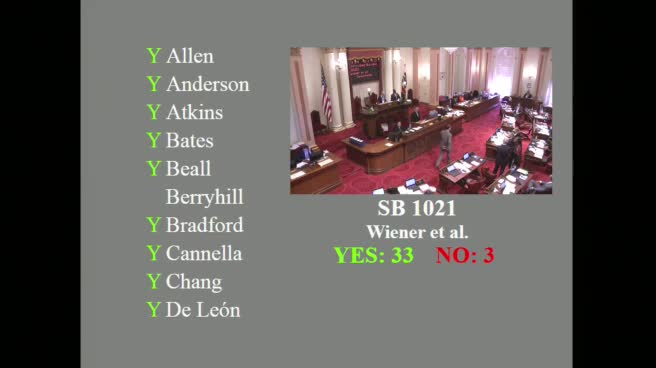

Bill Author


