SB 1322: Medi-Cal: comprehensive medication management.
- Session Year: 2017-2018
- House: Senate
- Latest Version Date: 2018-03-22
Existing law provides for the Medi-Cal program, which is administered by the State Department of Health Care Services, under which qualified low-income individuals receive health care services. The Medi-Cal program is, in part, governed and funded by federal Medicaid Program provisions. Existing law provides for a schedule of benefits under the Medi-Cal program, which includes outpatient prescription drugs, subject to utilization controls and the Medi-Cal list of contract drugs.
This bill would provide that comprehensive medication management (CMM) services, as defined, are a covered benefit under the Medi-Cal program, and would require those services to include, among other things, the development and implementation of a written medication treatment plan that is designed to resolve documented medication therapy problems and to prevent future medication therapy problems. The bill would require the department to evaluate the effectiveness of CMM on quality of care, patient outcomes, and total program costs, as specified.
(a)(1)Comprehensive medication management (CMM) services are covered under the Medi-Cal program.
(2)(A)For purposes of this section, comprehensive medication management means the process of care that ensures each beneficiarys medications, whether they are prescription drugs and biologics, over-the-counter medication, or nutritional supplements, are individually assessed to determine that each medication is appropriate for the beneficiary, effective for the medical condition, and safe given the comorbidities and other medications being taken, and all medications are able to be taken by the patient as intended.
(B)The goals of CMM are to improve quality outcomes for beneficiaries and to lower overall health care costs by optimizing appropriate medication use linked directly to achievement of the clinical goals of therapy.
(b)(1)CMM services shall be offered to a beneficiary who has been identified by a treating prescriber as high risk for medication-related problems poor health outcomes associated with medications, or as high risk for medication-related problems, and who has one or more chronic diseases.
(2)The department shall establish the criteria to identify high risk for poor health outcomes associated with medications and the criteria to identify high risk for medication-related problems. The department shall base the criteria on peer-reviewed, evidence-based medical practice.
(c)Utilizing the clinical services of a primary care physician or pharmacist, working in collaboration with other appropriate providers and in direct communication with the beneficiary, CMM services that are provided pursuant to this section shall include the following services:
(1)Assessment of the beneficiarys health status, including discussing the beneficiarys personal medication experience and preferences, and documenting the beneficiarys actual use patterns of all prescription drugs and biologics, over-the-counter medications, and nutritional supplements.
(2)Documentation of the beneficiarys current clinical status and clinical goals of therapy for each identified chronic condition for which a medication therapy is indicated, such as current blood pressure and the prescribers clinical goals of therapy in a hypertensive patient.
(3)Assessment of each medication for appropriateness, effectiveness, safety, and adherence, with a focus on achievement of the desired clinical and beneficiary goals.
(4)Identification of all medication therapy problems.
(5)Development and implementation, in collaboration with the beneficiary, of a written medication treatment plan that is designed to resolve documented medication therapy problems and to prevent future medication therapy problems, including any additions, deletions, or adjustments to a medication treatment plan by, or in collaboration with, the treating prescriber or primary care physician, that may be needed to achieve optimal therapeutic outcomes.
(6)Verbal education and training, information, support services, and resources designed to enhance the beneficiarys adherence to, and appropriate use of, medication.
(7)Follow-up evaluation and monitoring with the beneficiary to determine the effects of any changes made to a beneficiarys medication treatment plan, reassess actual outcomes, and recommend or implement further therapeutic changes necessary to achieve desired clinical outcomes.
(d)The typical intervention for a beneficiary receiving CMM services shall include an average of three to four eight visits per year with a CMM primary care physician or pharmacist, as appropriate, to continually monitor and evaluate medication therapy progress and problems, and to recommend resolutions or to make changes consistent with a collaborative practice agreement.
(e)The department shall evaluate the effectiveness of CMM on quality of care, patient outcomes, and total program costs, and shall include a description of any savings generated under the Medi-Cal program that can be attributed to the coverage of CMM services, including the effect on emergency room, hospital, and other provider visit costs. The department may utilize patient and prescriber surveys to assess the acceptance of, and perceived value added by, CMM services.
(a)(1)Comprehensive medication management (CMM) services are covered under the Medi-Cal program.
(2)(A)For purposes of this section, comprehensive medication management means the process of care that ensures each beneficiarys medications, whether they are prescription drugs and biologics, over-the-counter medication, or nutritional supplements, are individually assessed to determine that each medication is appropriate for the beneficiary, effective for the medical condition, and safe given the comorbidities and other medications being taken, and all medications are able to be taken by the patient as intended.
(B)The goals of CMM are to improve quality outcomes for beneficiaries and to lower overall health care costs by optimizing appropriate medication use linked directly to achievement of the clinical goals of therapy.
(b)CMM services shall be offered to a beneficiary who has been identified by a treating prescriber as high risk for medication-related problems and who has one or more chronic diseases.
(c)Utilizing the clinical services of a primary care physician or pharmacist, working in collaboration with other appropriate providers and in direct communication with the beneficiary, CMM services that are provided pursuant to this section shall include the following services:
(1)Assessment of the beneficiarys health status, including discussing the beneficiarys personal medication experience and preferences, and documenting the beneficiarys actual use patterns of all prescription drugs and biologics, over-the-counter medications, and nutritional supplements.
(2)Documentation of the beneficiarys current clinical status and clinical goals of therapy for each identified chronic condition for which a medication therapy is indicated, such as current blood pressure and the prescribers clinical goals of therapy in a hypertensive patient.
(3)Assessment of each medication for appropriateness, effectiveness, safety, and adherence, with a focus on achievement of the desired clinical and beneficiary goals.
(4)Identification of all medication therapy problems.
(5)Development and implementation, in collaboration with the beneficiary, of a written medication treatment plan that is designed to resolve documented medication therapy problems and to prevent future medication therapy problems, including any additions, deletions, or adjustments to a medication treatment plan by, or in collaboration with, the treating prescriber or primary care physician, that may be needed to achieve optimal therapeutic outcomes.
(6)Verbal education and training, information, support services, and resources designed to enhance the beneficiarys adherence to, and appropriate use of, medication.
(7)Follow-up evaluation and monitoring with the beneficiary to determine the effects of any changes made to a beneficiarys medication treatment plan, reassess actual outcomes, and recommend or implement further therapeutic changes necessary to achieve desired clinical outcomes.
(d)The typical intervention for a beneficiary receiving CMM services shall include an average of three to four visits per year with a CMM primary care physician or pharmacist, as appropriate, to continually monitor and evaluate medication therapy progress and problems, and to recommend resolutions or to make changes consistent with a collaborative practice agreement.
(e)The department shall evaluate the effectiveness of CMM on quality of care, patient outcomes, and total program costs, and shall include a description of any savings generated under the Medi-Cal program that can be attributed to the coverage of CMM services, including the effect on emergency room, hospital, and other provider visit costs. The department may utilize patient and prescriber surveys to assess the acceptance of, and perceived value added by, CMM services.
|
Date
|
Status
|
|---|---|
| Apr 25, 2018 | April 25 set for first hearing. Failed passage in committee. (Ayes 1. Noes 5.) Reconsideration granted. |
| Mar 22, 2018 | From committee with author's amendments. Read second time and amended. Re-referred to Com. on HEALTH. |
| Mar 20, 2018 | Set for hearing April 25. |
| Mar 1, 2018 | Referred to Com. on HEALTH. |
| Feb 20, 2018 | From printer. May be acted upon on or after March 22. |
| Feb 16, 2018 | Introduced. Read first time. To Com. on RLS. for assignment. To print. |
|
Date
|
Description
|
Location
|
Votes
|
|
|---|---|---|---|---|
| Apr 25, 2018 | Do pass, but first be re-referred to the Committee on [Appropriations] | Senate Standing Committee on Health |
Failed |
|
| Apr 25, 2018 | [First] hearing set for [04-25-2018]: Failed passage in Committee. Reconsideration granted | Senate Standing Committee on Health |
Failed |
This list shows positions taken on this bill by organizations on the date displayed, which is linked to the original source.
Positions by individuals are not included.
|
Organization
|
Position
|
Date
|
|---|---|---|
| California Access Coalition | ** Support | Apr 23, 2018 |
| California Association Of Health Plans | ** Against | Apr 23, 2018 |
| California Medical Association | * Against Unless Amend | Apr 25, 2018 |
| Desert Oasis Healthcare | * Support | Apr 25, 2018 |
| Over Twelve Individuals | ** Support | Apr 23, 2018 |
| Providence St. Joseph Health | * Support | Apr 25, 2018 |
SENATE COMMITTEE ON HEALTH
Senator Ed Hernandez, O.D., Chair
BILL NO: SB 1322
AUTHOR: | Stone | ||
VERSION: | March 22, 2018 | ||
HEARING DATE: | April 25, 2018 | ||
CONSULTANT: | Scott Bain | ||
SUBJECT: Medi-Cal: comprehensive medication management
SUMMARY:
- Requires comprehensive medication management (CMM) services, as defined, to be covered under the Medi-Cal program. Requires CMM services to be offered to a beneficiary who has been identified as high risk for poor health outcomes associated with medications, or as high risk for medication-related problems, and who has one or more chronic diseases. Requires the Department of Health Care Services to evaluate the effectiveness of CMM on quality of care, patient outcomes, and total program costs.
Existing law:
- Establishes the Medi-Cal program, administered by the Department of Health Care Services (DHCS), under which qualified low-income persons receive health care services. [WIC §14000 et seq.]
- Establishes a schedule of benefits under the Medi-Cal program, which includes specified pharmacist services, subject to approval by the federal Centers for Medicare and Medicaid Services (CMS). [WIC §14132.968]
- Requires the following services to be Medi-Cal covered pharmacist services that may be provided to a Medi-Cal beneficiary:
- Furnishing travel medications;
- Furnishing naloxone hydrochloride;
- Furnishing self-administered hormonal contraception;
- Initiating and administering immunizations; and,
- Providing tobacco cessation counseling and furnishing nicotine replacement. [WIC §14132.968]
- Requires DHCS to establish a fee schedule for the list of pharmacist services, and requires the reimbursement rate for pharmacist services to be 85% of the physician fee schedule under the Medi-Cal program. [WIC §14132.968]
- Permits DHCS to implement, interpret, or make specific the pharmacist services Medi-Cal provisions, and any applicable federal waivers and state plan amendments, by means of all-county letters, plan letters, plan or provider bulletins, or similar instructions, without taking regulatory action. Requires DHCS, by July 1, 2021, to adopt regulations to implement these provisions. [WIC §14132.968]
- Requires, under the Pharmacy Law, pharmacists to be licensed and regulated by the California State Board of Pharmacy in the Department of Consumer Affairs. [BPC §4000 et seq.]
- Establishes, under the Pharmacy Law, the functions pharmacists are authorized to perform, which include, but are not limited to, the following:
- Administering drugs and biological products that have been ordered by a prescriber;
- Providing consultation, training, and education to patients about drug therapy, disease management, and disease prevention;
- Ordering or performing routine drug therapy-related patient assessment procedures including temperature, pulse, and respiration;
- Ordering drug therapy-related laboratory tests;
- Administering drugs and biologicals by injection pursuant to a prescriber’s order; and,
- Initiating or adjusting the drug regimen of a patient pursuant to a specific written order or authorization made by the individual patient’s treating prescriber, and in accordance with the policies, procedures, or protocols of a health care facility, home health agency, licensed clinic, health care service plan, or physician. [BPC §4050 et seq.]
- Defines an “advance practice pharmacist” (APP) as a licensed pharmacist who has been recognized as an APP by the Board of Pharmacy (Board), and entitles a Board-recognized APP to practice advanced practice pharmacy, as described below, within or outside of a licensed pharmacy. [BPC §4016.5]
- Permits a pharmacist recognized by the Board as an APP to do all of the following:
- Perform patient assessments;
- Order and interpret drug therapy-related tests;
- Refer patients to other health care providers;
- Participate in the evaluation and management of diseases and health conditions in collaboration with other health care providers; and,
- Initiate, adjust, or discontinue drug therapy pursuant to a specific written order or authorization made by the individual’s treating prescriber, and in accordance with the policies, procedures or protocols of the health care facility, home health agency, licensed clinic, health plan or physician. [BPC §4052.6]
- Permits APPs to participate in the evaluation and management of diseases and health conditions in collaboration with other health care providers. [BPC § 4052.6]
This bill:
- Requires comprehensive medication management (CMM) services to be covered under the Medi-Cal program.
- Defines “CMM” as the process of care that ensures each beneficiary’s medications, whether they are prescription drugs and biologics, over-the-counter (OTC) medication, or nutritional supplements, are individually assessed to determine that each medication is appropriate for the beneficiary, effective for the medical condition, and safe given the comorbidities and other medications being taken, and all medications are able to be taken by the patient as intended.
- States the goals of CMM are to improve quality outcomes for beneficiaries and to lower overall health care costs by optimizing appropriate medication use linked directly to achievement of the clinical goals of therapy.
- Requires CMM services to be offered to a beneficiary who has been identified as high risk for poor health outcomes associated with medications, or as high risk for medication-related problems, and who has one or more chronic diseases.
- Requires DHCS to establish the criteria to identify high risk for poor health outcomes associated with medications and the criteria to identify high risk for medication-related problems. Requires DHCS to base the criteria on peer-reviewed, evidence-based medical practice.
- Requires CMM services, utilizing the clinical services of a pharmacist, working in collaboration with other appropriate providers and in direct communication with the beneficiary, to include:
- Assessment of the beneficiary’s health status, including discussing the beneficiary’s personal medication experience and preferences, and documenting the beneficiary’s actual use patterns of all prescription drugs and biologics, over-the-counter medications, and nutritional supplements;
- Documentation of the beneficiary’s current clinical status and clinical goals of therapy for each identified chronic condition for which a medication therapy is indicated, such as current blood pressure and the prescriber’s clinical goals of therapy in a hypertensive patient;
- Assessment of each medication for appropriateness, effectiveness, safety, and adherence, with a focus on achievement of the desired clinical and beneficiary goals;
- Identification of all medication therapy problems;
- Development and implementation, in collaboration with the beneficiary, of a written medication treatment plan that is designed to resolve documented medication therapy problems and to prevent future medication therapy problems, including any additions, deletions, or adjustments to a medication treatment plan by, or in collaboration with, the treating prescriber or primary care physician, that may be needed to achieve optimal therapeutic outcomes;
- Verbal education and training, information, support services, and resources designed to enhance the beneficiary’s adherence to, and appropriate use of, medication; and,
- Follow-up evaluation and monitoring with the beneficiary to determine the effects of any changes made to a beneficiary’s medication treatment plan, reassess actual outcomes, and recommend or implement further therapeutic changes necessary to achieve desired clinical outcomes.
- States the typical intervention for a beneficiary receiving CMM services includes an average of eight visits per year with a CMM primary care physician or pharmacist, as appropriate, to continually monitor and evaluate medication therapy progress and problems, and to recommend resolutions or to make changes consistent with a collaborative practice agreement.
- Requires DHCS to evaluate the effectiveness of CMM on quality of care, patient outcomes, and total program costs, and to include a description of any savings generated under the Medi-Cal program that can be attributed to the coverage of CMM services, including the effect on emergency room, hospital, and other provider visit costs.
- Permits DHCS to utilize patient and prescriber surveys to assess the acceptance of, and perceived value added by, CMM services.
FISCAL EFFECT:
This bill has not been analyzed by a fiscal committee.
COMMENTS:
- Author’s statement. According to the author, 90% of chronic diseases require medications as first-line therapy in order to provide patients with optimal disease control and avoid preventable morbidity, death, and healthcare costs. However, according to the Food and Drug Administration (FDA), side effects from medications account for the fourth leading cause of death, and at least $200 billion in spending can be avoided annually in the U.S. through proper use of medications by patients and prescribers. Three-fourths of hospital readmissions among seniors are avoidable, primarily through better use of medications, yet half of prescription medications taken every year in the U.S. are used improperly. An abundance of evidence, particularly in the last several years, indicates that CMM applied to patients at risk for chronic disease complications and associated costs improves the Quadruple Aim of population health: Lower costs, better health outcomes, and improved patient and provider satisfaction.
- CMM. According to the California Health Benefits Review Program (CHBRP) analysis of this measure, CMM is a health care practice that assesses all of a patient’s medications individually for appropriateness, effectiveness for the medical condition, safety, and ability to be taken as intended by the patient. Patients who experience multiple medical conditions (MMC) or who take greater numbers of medications are the most likely candidates for this service. CMM is delivered by qualified clinical pharmacists (board certified and residency trained) in a collaborative manner with treating physicians or other qualified medical providers. CMM services aim to improve health outcomes through regular medication and patient assessment. Persons engaged with CMM may be those who have difficulty following their treatment regimen or who are often readmitted to the hospital. CMM is typically used for conditions treated with multiple medications or conditions with potentially avoidable high health-care related costs such as: diabetes, cardiovascular disease, chronic obstructive pulmonary disease (COPD), asthma (in children), cancer chemotherapy, depression, and pain.
- CHBRP analysis. AB 1996 (Thomson, Chapter 795, Statutes of 2002) requests the University of California to assess legislation proposing a mandated benefit or service and prepare a written analysis with relevant data on the medical, economic, and public health impacts of proposed health plan and health insurance benefit mandate legislation. CHBRP was created in response to AB 1996, and renewed this bill. Key findings were:
- CHBRP estimates that, in 2019, 10.6 million Medi-Cal beneficiaries enrolled in DMHC-regulated managed care, as well as the 3.8 million Medi-Cal beneficiaries enrolled in County Operated Health System (COHS) managed care or associated with Medi-Cal fee-for-service (FFS) will have insurance subject to SB 1322.
- Benefit coverage. Among Medi-Cal beneficiaries enrolled in DMHC-regulated managed care, coverage for CMM would rise from 21% to 100%.
- Utilization. Among Medi-Cal beneficiaries enrolled in DMHC-regulated managed care, utilization of CMM would rise from 0.38% to 1.82%.
- Expenditures. For Medi-Cal beneficiaries enrolled in DMHC-regulated managed care, expenditures, adjusted by offsets, would increase by $2.9 million. Assuming a similar impact for Medi-Cal beneficiaries enrolled in COHS, an increase of $0.67 million would be expected. A similar per enrollee increase could occur for Medi-Cal beneficiaries associated with fee-for-service (FFS), but the impact is unknown as the group may be dissimilar in terms of the presence of chronic conditions.
- Medical effectiveness. CHBRP found limited evidence that CMM improves health outcomes and reduces hospitalization relative to usual care. CHBRP found limited evidence that receipt of CMM improves medication adherence. There is limited evidence that CMM reduces hemoglobin A1c and a preponderance of evidence that it reduces blood pressure. There is insufficient evidence to assess the impact of CMM on mortality and on outpatient visits. Evidence regarding effects on emergency department visit rates is inconclusive. There is limited evidence that CMM reduces hospital admissions and inconclusive evidence regarding the effects of CMM on readmissions.
- Public health. In the first year postmandate, of the 109,000 Medi-Cal beneficiaries newly using CMM (those with greatest disease burden), CHBRP estimates, based on limited evidence, that those engaged with CMM would see improvements in medication adherence, reductions in hemoglobin A1c levels among diabetics, reductions in mortality, and reductions in hospital admissions. In addition, based on a preponderance of evidence, CHBRP estimates that there would be a reduction in blood pressure among people with uncontrolled hypertension.
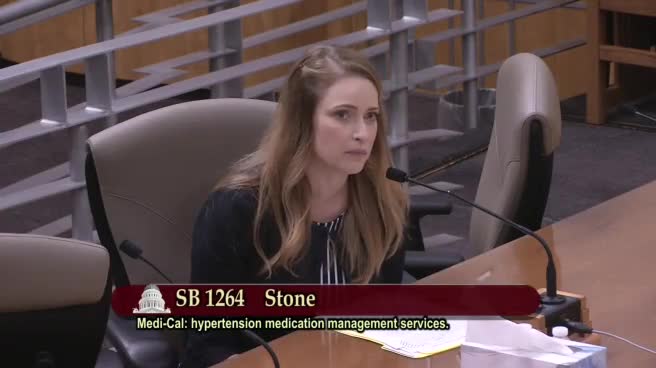
- Related legislation. SB 1264 (Stone) requires Medi-Cal to provide coverage for hypertension medication management services provided by a pharmacist or an advance practice pharmacist pursuant to specified provisions of their scope of practice. SB 1264 is scheduled to be heard in the Senate Health Committee on April 25, 2018.
SB 1285 (Stone) requires health plans, health insurers and Medi-Cal managed care plans to provide coverage for services provided by an advanced practice pharmacist performed within the scope of his or her practice, including, but not limited to, comprehensive medication management services, as defined. SB 1285 is scheduled to be heard in the Senate Health Committee on April 25, 2018.
- Prior legislation. AB 2084 (Wood of 2016) would have provided Medi-Cal coverage for comprehensive medication management, defined as the process of care that ensures each beneficiary’s medications are appropriate, safe, and effective, and are being used as intended. AB 2084 also defines beneficiaries, goals, and related requirements, and requires DHCS to study the effectiveness and costs. AB 2084 was held on the Assembly Appropriations suspense file.
- Support. Providence St. Joseph Health (Providence) writes in support that it believes that comprehensive medication management services should be a covered benefit under the Medi-Cal program because it is proven to help patients manage chronic conditions, improve clinical outcomes and reduce health costs, including reductions in emergency department utilization, hospitalization, and drug costs. Clinical pharmacists can play a pivotal role in helping Medi-Cal patients manage their health conditions through medication reconciliation and consolidated ownership of refill and prior authorization for accurate medication lists and timely provision of prescribed medications. Providence states clinical pharmacists are specifically trained and educated to manage diseases such as chronic obstructive pulmonary disease (COPD), asthma, diabetes, hyperlipidemia, hypertension, pain management, opiate addiction, anticoagulation, and Hepatitis C. Integrating clinical pharmacists into primary care settings to help manage complex patients with multiple co-morbidities allows other providers to treat more patients and avoid patient hospitalization for health conditions that can be best managed by a clinical pharmacist as part of the overall care team. Comprehensive medication management is an evidence-based, physician approved, pharmacist-led, preventive clinical service ensuring optimal use of medications that is effective at improving health outcomes for high-risk patients while decreasing health care costs. This bill recognizes the critical role clinical pharmacists play in a collaborative model of care in helping patients manage chronic disease effectively and efficiently.
Over twelve individual pharmacists write in support that California is in the midst of a primary care shortage, increasing health insurance coverage, an aging population, an increase in chronic diseases, and an increase in the number of prescriptions. Supporters state medications compromise 80% of all treatments, and lack of medication adherence is a growing public health concern that increases overall health care costs as patients become sicker faster and require more costly interventions. Supporters argue a solution to this problem is to authorize eligible pharmacists to receive payment for providing CMM services under Medi-Cal. Supporters argue trained pharmacists can provide much-needed CMM services, and this bill will significantly improve chronic disease management and free physicians and nurses to focus on more complex health concerns. - Opposition. The California Association of Health Plans (CAHP) writes in opposition that this bill mandates duplicative services already provided by Medi-Cal managed care (MCMC) plans. CAHP argues MCMC plans provide pharmaceutical case management and other disease management services to enrollees in existing programs by health plan pharmacist case managers when the enrollee has been identified as needing the service. CAHP states Medi-Cal managed care plans provide a wide range of benefits to beneficiaries and work closely with state and consumer groups to meet the needs of Medi-Cal enrollees. Under current programs, advanced pharmacist case management is provided through the health plan’s systems. CAHP argues the requirements in this bill duplicate those current efforts and programs and, as a result, adds costs to the Medi-Cal program.
- Oppose unless amended. The California Medical Association (CMA) writes it is opposed unless amended to this bill. CMA writes, as currently drafted, it is unclear whether pharmacists would be authorized to provide CMM services without consulting with the prescribing physician. CMA is seeking an amendment that would clarify that CMM services provided by pharmacists are limited to those within their current scope of practice.
- Policy comments.
- Who should be eligible for CMM? This bill requires CMM services to be offered to a beneficiary who has been identified as high risk for poor health outcomes associated with medications, or as high risk for medication-related problems, and who has one or more chronic diseases. DHCS is required to establish the criteria to identify high risk for poor health outcomes associated with medications and the criteria to identify high risk for medication-related problems, and DHCS is required to base the criteria on peer-reviewed, evidence-based medical practice. According to the CHBRP report, it is estimated that 46.6% of non-dual Medi-Cal enrollees have one or more chronic conditions.
- Does evidence of medical effectiveness of CMM warrant mandated coverage? CHBRP found limited evidence that CMM improves health outcomes and reduces hospitalization relative to usual care. CHDRP defines a grade of “limited evidence” to indicate that the studies had limited generalizability to the population of interest and/or the studies had a fatal flaw in research design or implementation. CHBRP found limited evidence that receipt of CMM improves medication adherence. There is limited evidence that CMM reduces hemoglobin A1c and a preponderance of evidence that it reduces blood pressure (a grade of “preponderance of evidence” indicates that the majority of the studies reviewed are consistent in their findings that treatment is either effective or not effective). There is insufficient evidence to assess the impact of CMM on mortality and on outpatient visits. Evidence regarding effects on emergency department visit rates is inconclusive. There is limited evidence that CMM reduces hospital admissions and inconclusive evidence regarding the effects of CMM on readmissions. However, CHBRP found that 109,000 Medi-Cal beneficiaries newly using CMM would see improvements in medication adherence and some disease-specific outcomes. Given the CHBRP medical effectiveness and public health analysis, should coverage be CMM be required in Medi-Cal?
- Language on visits. This bill states the typical intervention for a beneficiary receiving CMM services shall include an average of eight visits per year with a CMM primary care physician or pharmacist, as appropriate, to continually monitor and evaluate medication therapy progress and problems, and to recommend resolutions or to make changes consistent with a collaborative practice agreement. It is unclear whether this language is intended to be a requirement for coverage of a minimum number of visits with a CMM physician or pharmacist or the practical effect of language on a “typical intervention” and an “average” number of visits. Staff recommends this provision be clarified.
- Required evaluation. This bill requires DHCS to evaluate the effectiveness of CMM on quality of care, patient outcomes, and total program costs, and to include a description of any savings generated under the Medi-Cal program that can be attributed to the coverage of CMM services, including the effect on emergency room, hospital, and other provider visit costs. Staff recommends an amendment that requires the results of the DHCS evaluation be provided to the Legislature and posted on the DHCS website.
SUPPORT AND OPPOSITION:
Support: California Access Coalition
Providence St. Joseph Health
Over twelve individuals
Oppose: California Association of Health Plans
California Medical Association
-- END --
Bill Author

Bill Co-Author(s):