SB 1333: Planning and zoning: general plan: zoning regulations: charter cities.
- Session Year: 2017-2018
- House: Senate
- Latest Version Date: 2018-09-27
The Planning and Zoning Law requires each county and city to adopt a comprehensive, long-term general plan for the physical development of the county or city, and of certain land outside its boundaries, and requires the general plan to contain specified mandatory elements, including a housing element. That law sets forth various procedures and requirements with respect to the preparation and adoption of the general plan and housing element, including requiring the legislative body to adopt or amend a general plan by resolution by a majority vote of the total membership of the legislative body. Existing law deems the adoption of the general plan to be reviewable, provides for the preparation of specific plans for the systematic implementation of the general plan, and prohibits the approval of local public works projects and tentative or parcel maps, as specified, as well as the adoption or amendment of a zoning ordinance within an area covered by a specific plan, unless it is consistent with the adopted specific plan. Existing law prohibits the adoption or amendment of a transit village plan unless the plan or amendment is consistent with the general plan. Existing law specifies that these provisions of the Planning and Zoning Law relating to general plans and housing elements generally do not apply to charter cities, but requires a charter city to adopt, by resolution of the legislative body of the charter city or, if the charter so provides, the planning commission, a general plan that contains the mandatory elements required by that law and to comply with specified additional requirements relating to reporting to the Department of Housing and Community Development and low- and moderate-income housing in the coastal zone.
This bill would specify that these provisions of the Planning and Zoning Law regarding general plans, specific plans, and the adoption and review of housing elements apply to charter cities. The bill would also make a nonsubstantive change with respect to the requirement that a charter city adopt a general plan by resolution.
The Planning and Zoning Law additionally authorizes the legislative body to adopt ordinances that, among other things, regulate the use of buildings, structures, and land as between industry, business, residences, and other uses in accordance with specified procedures. Existing law requires each county and city to consider the effects of these ordinances on the housing needs of the region in which the local jurisdiction is situated and balance these needs against the public service needs of its residents and available fiscal and environmental resources. Existing law prohibits a local agency from enacting or enforcing an ordinance that would prohibit the reconstruction, restoration, or rebuilding of a multifamily dwelling that is involuntarily damaged or destroyed, as specified, unless certain determinations are made. Existing law requires county or city zoning ordinances, including certain ordinances of a charter city with a population of 2,000,000 or more, to be consistent with the general plan, as specified. Existing law requires each city, county, or city and county to ensure that its housing element inventory or its housing element program, as specified, can accommodate its remaining unmet share of the allocated regional housing need. Existing law authorizes a city, county, or city and county to enter into a development agreement with any person having a legal or equitable interest in real property for the development of the property, and requires such an agreement to be modified or suspended as necessary to comply with subsequent state or federal law. Existing law specifies that these provisions of the Planning and Zoning Law generally do not apply to charter cities.
This bill would, instead, specify that various provisions of the Planning and Zoning Law regarding ordinances, regional housing need, mobilehome parks, and certain development agreements apply to charter cities.
The bill would include findings that the changes proposed by this bill address a matter of statewide concern rather than a municipal affair and, therefore, apply to all cities, including charter cities.
By adding to the duties of planning officials and legislative bodies of charter cities with respect to adopting and amending general plans and zoning ordinances, this bill would impose a state-mandated local program.
The California Constitution requires the state to reimburse local agencies and school districts for certain costs mandated by the state. Statutory provisions establish procedures for making that reimbursement.
This bill would provide that no reimbursement is required by this act for a specified reason.
The Planning and Zoning Law requires each county and city to adopt a comprehensive, long-term general plan for the physical development of the county or city, and of certain land outside its boundaries, and requires the general plan to contain specified mandatory elements. elements, including a housing element. That law sets forth various procedures and requirements with respect to the preparation and adoption of the general plan, plan and housing element, including requiring the legislative body to adopt or amend a general plan by resolution by a majority vote of the total membership of the legislative body. The Planning and Zoning Law additionally authorizes the legislative body to adopt ordinances that, among other things, regulate the use of buildings, structures, and land as between industry, business, residences, and other uses in accordance with specified procedures. Existing law deems the adoption of the general plan to be reviewable, provides for the preparation of specific plans for the systematic implementation of the general plan, and prohibits the approval of local public works projects and tentative or parcel maps, as specified, as well as the adoption or amendment of a zoning ordinance within an area covered by a specific plan, unless it is consistent with the adopted specific plan. Existing law prohibits the adoption or amendment of a transit village plan unless the plan or amendment is consistent with the general plan. Existing law specifies that these provisions of the Planning and Zoning Law relating to general plans and zoning ordinances housing elements generally do not apply to charter cities, but requires a charter city to adopt, by resolution of the legislative body of the charter city or, if the charter so provides, the planning commission, a general plan that contains the mandatory elements required by that law and to comply with specified additional requirements relating to reporting to the Department of Housing and Community Development and low- and moderate-income housing in the coastal zone. Existing law authorizes a city, county, or city and county to enter into a development agreement with any person having a legal or equitable interest in real property for the development of the property, and requires such an agreement to be modified or suspended as necessary to comply with subsequent state or federal law.
This bill would delete the limitation regarding charter cities and instead specify that these provisions of the Planning and Zoning Law regarding general plans, specific plans, and the adoption and review of housing elements apply to charter cities, and would provide that development agreements entered into before January 1, 2018, are not subject to those provisions. cities. The bill would also make a nonsubstantive change with respect to the requirement that a charter city adopt a general plan by resolution. The bill would include findings that the changes proposed by this bill address a matter of statewide concern rather than a municipal affair and, therefore, apply to all cities, including charter cities.
The Planning and Zoning Law additionally authorizes the legislative body to adopt ordinances that, among other things, regulate the use of buildings, structures, and land as between industry, business, residences, and other uses in accordance with specified procedures. Existing law requires each county and city to consider the effects of these ordinances on the housing needs of the region in which the local jurisdiction is situated and balance these needs against the public service needs of its residents and available fiscal and environmental resources. Existing law prohibits a local agency from enacting or enforcing an ordinance that would prohibit the reconstruction, restoration, or rebuilding of a multifamily dwelling that is involuntarily damaged or destroyed, as specified, unless certain determinations are made. Existing law requires county or city zoning ordinances, including certain ordinances of a charter city with a population of 2,000,000 or more, to be consistent with the general plan, as specified. Existing law requires each city, county, or city and county to ensure that its housing element inventory or its housing element program, as specified, can accommodate its remaining unmet share of the allocated regional housing need. Existing law authorizes a city, county, or city and county to enter into a development agreement with any person having a legal or equitable interest in real property for the development of the property, and requires such an agreement to be modified or suspended as necessary to comply with subsequent state or federal law. Existing law specifies that these provisions of the Planning and Zoning Law generally do not apply to charter cities.
This bill would, instead, specify that various provisions of the Planning and Zoning Law regarding ordinances, regional housing need, mobilehome parks, and certain development agreements apply to charter cities.
The bill would include findings that the changes proposed by this bill address a matter of statewide concern rather than a municipal affair and, therefore, apply to all cities, including charter cities.
By adding to the duties of planning officials and legislative bodies of charter cities with respect to adopting and amending general plans and zoning ordinances, this bill would impose a state-mandated local program.
The California Constitution requires the state to reimburse local agencies and school districts for certain costs mandated by the state. Statutory provisions establish procedures for making that reimbursement.
This bill would provide that no reimbursement is required by this act for a specified reason.
The Planning and Zoning Law requires each county and city to adopt a comprehensive, long-term general plan for the physical development of the county or city, and of certain land outside its boundaries, and requires the general plan to contain specified mandatory elements. That law sets forth various procedures and requirements with respect to the preparation and adoption of the general plan, including requiring the legislative body to adopt or amend a general plan by resolution by a majority vote of the total membership of the legislative body. The Planning and Zoning Law additionally authorizes the legislative body to adopt ordinances that, among other things, regulate the use of buildings, structures, and land as between industry, business, residences, and other uses in accordance with specified procedures. Existing law specifies that these provisions of the Planning and Zoning Law relating to general plans and zoning ordinances generally do not apply to charter cities, but requires a charter city to adopt, by resolution of the legislative body of the charter city or, if the charter so provides, the planning commission, a general plan that contains the mandatory elements required by that law and to comply with specified additional requirements relating to reporting to the Department of Housing and Community Development and low- and moderate-income housing in the coastal zone. Existing law authorizes a city, county, or city and county to enter into a development agreement with any person having a legal or equitable interest in real property for the development of the property, and requires such an agreement to be modified or suspended as necessary to comply with subsequent state or federal law.
This bill would delete the limitation regarding charter cities and instead specify that these provisions of the Planning and Zoning Law apply to charter cities, and would provide that development agreements entered into before January 1, 2018, are not subject to those provisions. The bill would also make a nonsubstantive change with respect to the requirement that a charter city adopt a general plan by resolution. The bill would include findings that the changes proposed by this bill address a matter of statewide concern rather than a municipal affair and, therefore, apply to all cities, including charter cities.
By adding to the duties of planning officials and legislative bodies of charter cities with respect to adopting and amending general plans and zoning ordinances, this bill would impose a state-mandated local program.
The California Constitution requires the state to reimburse local agencies and school districts for certain costs mandated by the state. Statutory provisions establish procedures for making that reimbursement.
This bill would provide that no reimbursement is required by this act for a specified reason.
The Planning and Zoning Law requires each county and city to adopt a comprehensive, long-term general plan for the physical development of the county or city, and of certain land outside its boundaries, and requires the general plan to contain specified mandatory elements. That law sets forth various procedures and requirements with respect to the preparation and adoption of the general plan, including requiring the legislative body to adopt or amend a general plan by resolution by a majority vote of the total membership of the legislative body. The Planning and Zoning Law additionally authorizes the legislative body to adopt ordinances that, among other things, regulate the use of buildings, structures, and land as between industry, business, residences, and other uses in accordance with specified procedures. Existing law specifies that these provisions of the Planning and Zoning Law relating to general plans and zoning ordinances generally do not apply to charter cities, but requires a charter city to adopt, by resolution of the legislative body of the charter city or, if the charter so provides, the planning commission, a general plan that contains the mandatory elements required by that law and to comply with specified additional requirements relating to reporting to the Department of Housing and Community Development and low- and moderate-income housing in the coastal zone. Existing law authorizes a city, county, or city and county to enter into a development agreement with any person having a legal or equitable interest in real property for the development of the property, and requires such an agreement to be modified or suspended as necessary to comply with subsequent state or federal law.
This bill would delete this the limitation regarding charter cities and instead specify that these provisions of the Planning and Zoning Law apply to charter cities. cities, and would provide that development agreements entered into before January 1, 2018, are not subject to those provisions. The bill would also make a nonsubstantive change with respect to the requirement that a charter city adopt a general plan by resolution. The bill would include findings that the changes proposed by this bill address a matter of statewide concern rather than a municipal affair and, therefore, apply to all cities, including charter cities.
By adding to the duties of planning officials and legislative bodies of charter cities with respect to adopting and amending general plans and zoning ordinances, this bill would impose a state-mandated local program.
The California Constitution requires the state to reimburse local agencies and school districts for certain costs mandated by the state. Statutory provisions establish procedures for making that reimbursement.
This bill would provide that no reimbursement is required by this act for a specified reason.
The Planning and Zoning Law requires each county and city to adopt a comprehensive, long-term general plan for the physical development of the county or city, and of certain land outside its boundaries, and requires the general plan to contain specified mandatory elements. That law sets forth various procedures and requirements with respect to the preparation and adoption of the general plan, including requiring the legislative body to adopt or amend a general plan by resolution by a majority vote of the total membership of the legislative body. The Planning and Zoning Law additionally authorizes the legislative body to adopt ordinances that, among other things, regulate the use of buildings, structures, and land as between industry, business, residences, and other uses in accordance with specified procedures. Existing law specifies that these provisions of the Planning and Zoning Law relating to general plans and zoning ordinances generally do not apply to charter cities, but requires a charter city to adopt, by resolution of the legislative body of the charter city or, if the charter so provides, the planning commission, a general plan that contains the mandatory elements required by that law and to comply with specified additional requirements relating to reporting to the Department of Housing and Community Development and low- and moderate-income housing in the coastal zone.
This bill would delete this limitation and instead specify that these provisions of the Planning and Zoning Law apply to charter cities. The bill would also make a nonsubstantive change with respect to the requirement that a charter city adopt a general plan by resolution. The bill would include findings that the changes proposed by this bill address a matter of statewide concern rather than a municipal affair and, therefore, apply to all cities, including charter cities.
By adding to the duties of planning officials and legislative bodies of charter cities with respect to adopting and amending general plans and zoning ordinances, this bill would impose a state-mandated local program.
The California Constitution requires the state to reimburse local agencies and school districts for certain costs mandated by the state. Statutory provisions establish procedures for making that reimbursement.
This bill would provide that no reimbursement is required by this act for a specified reason.
In amending Sections 65356, 65852.150, 65852.25, 65860, 65863, 65863.4, 65863.6, 65863.8, 65866, 65867.5, and 65869.5 of the Government Code to extend the applicability of those sections to charter cities, and in amending Section 65700 of the Government Code to extend the applicability of Sections 65300.5, 65301.5, 65359, 65450, 65454, 65455, 65460.8, 65590, and 65590.1 of, and Article 10.6 (commencing with Section 65580) of Chapter 3 of Division 1 of Title 7 of, the Government Code, to charter cities, the Legislature hereby finds and declares that it does so to address the lack of affordable housing in the state, which is of vital statewide importance, and that ensuring the location, development, approval, and access to housing for all income levels in all jurisdictions in the state is a matter of statewide concern.
SEC. 2.Section 65356 of the Government Code is amended to read:65356.(a)The legislative body shall adopt or amend a general plan by resolution, which resolution shall be adopted by the affirmative vote of not less than a majority of the total membership of the legislative body. The legislative body may approve, modify, or disapprove the recommendation of the planning commission, if any. However, any substantial modification proposed by the legislative body not previously considered by the commission during its hearings, shall first be referred to the planning commission for its recommendation. The failure of the commission to report within 45 calendar days after the reference, or within the time set by the legislative body, shall be deemed a recommendation for approval.
(b)A general plan of a charter city shall be adopted by resolution of the legislative body of the city, or the planning commission if the charter so provides.
SEC. 3.Section 65700 of the Government Code is amended to read:65700.(a)This chapter shall not apply to a charter city, except to the extent that the same may be adopted by charter or ordinance of the city and except that charter cities shall adopt general plans in any case. General plans of a charter city shall be adopted by resolution of the legislative body of the city, or the planning commission if the charter so provides. These general plans shall contain the mandatory elements required by Article 5 (commencing with Section 65300) of Chapter 3 of this title.
(b)Notwithstanding subdivision (a), paragraph (2) of subdivision (a) of Section 65400, Sections 65300.5, 65301.5, 65359, 65450, 65454, 65455, 65460.8, 65590, and 65590.1, and Article 10.6 (commencing with Section 65580) shall be applicable to charter cities.
SEC. 4.Section 65852.150 of the Government Code is amended to read:65852.150.(a)The Legislature finds and declares all of the following:
(1)Accessory dwelling units are a valuable form of housing in California.
(2)Accessory dwelling units provide housing for family members, students, the elderly, in-home health care providers, the disabled, and others, at below market prices within existing neighborhoods.
(3)Homeowners who create accessory dwelling units benefit from added income, and an increased sense of security.
(4)Allowing accessory dwelling units in single-family or multifamily residential zones provides additional rental housing stock in California.
(5)California faces a severe housing crisis.
(6)The state is falling far short of meeting current and future housing demand with serious consequences for the states economy, our ability to build green infill consistent with state greenhouse gas reduction goals, and the well-being of our citizens, particularly lower and middle-income earners.
(7)Accessory dwelling units offer lower cost housing to meet the needs of existing and future residents within existing neighborhoods, while respecting architectural character.
(8)Accessory dwelling units are, therefore, an essential component of Californias housing supply.
(b)It is the intent of the Legislature that an accessory dwelling unit ordinance adopted by a local agency has the effect of providing for the creation of accessory dwelling units and that provisions in this ordinance relating to matters including unit size, parking, fees, and other requirements, are not so arbitrary, excessive, or burdensome so as to unreasonably restrict the ability of homeowners to create accessory dwelling units in zones in which they are authorized by local ordinance.
(c)Notwithstanding Section 65803, this section shall also apply to a charter city.
SEC. 5.Section 65852.25 of the Government Code is amended to read:65852.25.(a)No local agency shall enact or enforce any ordinance, regulation, or resolution that would prohibit the reconstruction, restoration, or rebuilding of a multifamily dwelling that is involuntarily damaged or destroyed by fire, other catastrophic event, or the public enemy.
(b)Notwithstanding subdivision (a), a local agency may prohibit the reconstruction, restoration, or rebuilding of a multifamily dwelling that is involuntarily damaged or destroyed by fire, other catastrophic event, or the public enemy, if the local agency determines that:
(1)The reconstruction, restoration, or rebuilding will be detrimental or injurious to the health, safety, or general welfare of persons residing or working in the neighborhood, or will be detrimental or injurious to property and improvements in the neighborhood.
(2)The existing nonconforming use of the building or structure would be more appropriately moved to a zone in which the use is permitted, or that there no longer exists a zone in which the existing nonconforming use is permitted.
(c)The dwelling may be reconstructed, restored, or rebuilt up to its predamaged size and number of dwelling units, and its nonconforming use, if any, may be resumed.
(d)Any reconstruction, restoration, or rebuilding undertaken pursuant to this section shall conform to all of the following:
(1)The California Building Standards Code as that code was in effect at the time of reconstruction, restoration, or rebuilding.
(2)Any more restrictive local building standards authorized pursuant to Sections 13869.7, 17958.7, and 18941.5 of the Health and Safety Code, as those standards were in effect at the time of reconstruction, restoration, or rebuilding.
(3)The State Historical Building Code (Part 2.7 (commencing with Section 18950) of Division 13 of the Health and Safety Code) for work on qualified historical buildings or structures.
(4)Local zoning ordinances, so long as the predamage size and number of dwelling units are maintained.
(5)Architectural regulations and standards, so long as the predamage size and number of dwelling units are maintained.
(6)A building permit which shall be obtained within two years after the date of the damage or destruction.
(e)A local agency may enact or enforce an ordinance, regulation, or resolution that grants greater or more permissive rights to restore, reconstruct, or rebuild a multifamily dwelling.
(f)Notwithstanding subdivision (a), a local agency may prohibit the reconstruction, restoration, or rebuilding of a multifamily dwelling that is involuntarily damaged or destroyed by fire, other catastrophic event, or by the public enemy, if the building is located in an industrial zone.
(g)Notwithstanding Section 65803, this section shall also apply to a charter city.
(h)For purposes of this section, multifamily dwelling is defined as any structure designed for human habitation that is divided into two or more independent living quarters.
SEC. 6.Section 65860 of the Government Code is amended to read:65860.(a)County or city zoning ordinances shall be consistent with the general plan of the county or city by January 1, 1974. A zoning ordinance shall be consistent with a city or county general plan only if both of the following conditions are met:
(1)The city or county has officially adopted such a plan.
(2)The various land uses authorized by the ordinance are compatible with the objectives, policies, general land uses, and programs specified in the plan.
(b)Any resident or property owner within a city or a county, as the case may be, may bring an action or proceeding in the superior court to enforce compliance with subdivision (a). Any such action or proceeding shall be governed by Chapter 2 (commencing with Section 1084) of Title 1 of Part 3 of the Code of Civil Procedure. No action or proceeding shall be maintained pursuant to this section by any person unless the action or proceeding is commenced and service is made on the legislative body within 90 days of the enactment of any new zoning ordinance or the amendment of any existing zoning ordinance.
(c)In the event that a zoning ordinance becomes inconsistent with a general plan by reason of amendment to the plan, or to any element of the plan, the zoning ordinance shall be amended within a reasonable time so that it is consistent with the general plan as amended.
(d)Notwithstanding Section 65803, this section shall also apply to a charter city.
SEC. 7.Section 65863 of the Government Code is amended to read:65863.(a)Each city, county, or city and county shall ensure that its housing element inventory described in paragraph (3) of subdivision (a) of Section 65583 or its housing element program to make sites available pursuant to paragraph (1) of subdivision (c) of Section 65583 can accommodate, at all times throughout the planning period, its remaining unmet share of the regional housing need allocated pursuant to Section 65584, except as provided in paragraph (2) of subdivision (c). At no time, except as provided in paragraph (2) of subdivision (c), shall a city, county, or city and county by administrative, quasi-judicial, legislative, or other action permit or cause its inventory of sites identified in the housing element to be insufficient to meet its remaining unmet share of the regional housing need for lower and moderate-income households.
(b)(1)No city, county, or city and county shall, by administrative, quasi-judicial, legislative, or other action, reduce, or require or permit the reduction of, the residential density for any parcel to, or allow development of any parcel at, a lower residential density, as defined in paragraphs (1) and (2) of subdivision (g), unless the city, county, or city and county makes written findings supported by substantial evidence of both of the following:
(A)The reduction is consistent with the adopted general plan, including the housing element.
(B)The remaining sites identified in the housing element are adequate to meet the requirements of Section 65583.2 and to accommodate the jurisdictions share of the regional housing need pursuant to Section 65584. The finding shall include a quantification of the remaining unmet need for the jurisdictions share of the regional housing need at each income level and the remaining capacity of sites identified in the housing element to accommodate that need by income level.
(2)If a city, county, or city and county, by administrative, quasi-judicial, legislative, or other action, allows development of any parcel with fewer units by income category than identified in the jurisdictions housing element for that parcel, the city, county, or city and county shall make a written finding supported by substantial evidence as to whether or not remaining sites identified in the housing element are adequate to meet the requirements of Section 65583.2 and to accommodate the jurisdictions share of the regional housing need pursuant to Section 65584. The finding shall include a quantification of the remaining unmet need for the jurisdictions share of the regional housing need at each income level and the remaining capacity of sites identified in the housing element to accommodate that need by income level.
(c)(1)If a reduction in residential density for any parcel would result in the remaining sites in the housing element not being adequate to meet the requirements of Section 65583.2 and to accommodate the jurisdictions share of the regional housing need pursuant to Section 65584, the jurisdiction may reduce the density on that parcel if it identifies sufficient additional, adequate, and available sites with an equal or greater residential density in the jurisdiction so that there is no net loss of residential unit capacity.
(2)If the approval of a development project results in fewer units by income category than identified in the jurisdictions housing element for that parcel and the jurisdiction does not find that the remaining sites in the housing element are adequate to accommodate the jurisdictions share of the regional housing need by income level, the jurisdiction shall within 180 days identify and make available additional adequate sites to accommodate the jurisdictions share of the regional housing need by income level. Nothing in this section shall authorize a city, county, or city and county to disapprove a housing development project on the basis that approval of the housing project would require compliance with this paragraph.
(d)The requirements of this section shall be in addition to any other law that may restrict or limit the reduction of residential density.
(e)This section requires that a city, county, or city and county be solely responsible for compliance with this section, unless a project applicant requests in his or her initial application, as submitted, a density that would result in the remaining sites in the housing element not being adequate to accommodate the jurisdictions share of the regional housing need pursuant to Section 65584. In that case, the city, county, or city and county may require the project applicant to comply with this section. The submission of an application for purposes of this subdivision does not depend on the application being deemed complete or being accepted by the city, county, or city and county.
(f)This section shall not be construed to apply to parcels that, prior to January 1, 2003, were either (1) subject to a development agreement, or (2) parcels for which an application for a subdivision map had been submitted.
(g)(1)If the local jurisdiction has adopted a housing element for the current planning period that is in substantial compliance with Article 10.6 (commencing with Section 65580) of Chapter 3, for purposes of this section, lower residential density means the following:
(A)For sites on which the zoning designation permits residential use and that are identified in the local jurisdictions housing element inventory described in paragraph (3) of subdivision (a) of Section 65583, fewer units on the site than were projected by the jurisdiction to be accommodated on the site pursuant to subdivision (c) of Section 65583.2.
(B)For sites that have been or will be rezoned pursuant to the local jurisdictions housing element program described in paragraph (1) of subdivision (c) of Section 65583, fewer units for the site than were projected to be developed on the site in the housing element program.
(2)(A)If the local jurisdiction has not adopted a housing element for the current planning period within 90 days of the deadline established by Section 65588 or the adopted housing element is not in substantial compliance with Article 10.6 (commencing with Section 65580) of Chapter 3 within 180 days of the deadline established by Section 65588, lower residential density means any of the following:
(i)For residentially zoned sites, a density that is lower than 80 percent of the maximum allowable residential density for that parcel or 80 percent of the maximum density required by paragraph (3) of subdivision (c) of Section 65583.2, whichever is greater.
(ii)For sites on which residential and nonresidential uses are permitted, a use that would result in the development of fewer than 80 percent of the number of residential units that would be allowed under the maximum residential density for the site parcel or 80 percent of the maximum density required by paragraph (3) of subdivision (c) of Section 65583.2, whichever is greater.
(B)If the council of governments fails to complete a final housing need allocation pursuant to the deadlines established by Section 65584.05, then for purposes of this paragraph, the deadline pursuant to Section 65588 shall be extended by a time period equal to the number of days of delay incurred by the council of governments in completing the final housing need allocation.
(h)An action that obligates a jurisdiction to identify and make available additional adequate sites for residential development pursuant to this section creates no obligation under the California Environmental Quality Act (Division 13 (commencing with Section 21000) of the Public Resources Code) to identify, analyze, or mitigate the environmental impacts of that subsequent action to identify and make available additional adequate sites as a reasonably foreseeable consequence of that action. Nothing in this subdivision shall be construed as a determination as to whether or not the subsequent action by a city, county, or city and county to identify and make available additional adequate sites is a project for purposes of the California Environmental Quality Act (Division 13 (commencing with Section 21000) of the Public Resources Code).
(i)Notwithstanding Section 65803, this section shall also apply to a charter city.
SEC. 8.Section 65863.4 of the Government Code is amended to read:65863.4.(a)Prior to noticing a public hearing on a proposed zoning ordinance or amendment to a zoning ordinance reducing the density permitted on property authorized for multifamily dwelling uses, the planning commission and legislative body shall approve a nonconforming use ordinance for multifamily dwellings that are involuntarily damaged or destroyed, which may be conditioned on the approval of an ordinance or amendment to a zoning ordinance reducing the density permitted on property authorized for multifamily dwelling uses.
(b)The planning commission and legislative body shall hold a public hearing on the proposed nonconforming use ordinance. Notice of the public hearing shall be given pursuant to Section 65090. If this hearing is held at the same time as a hearing under Section 65353 or 65854, notice for the hearings may be combined.
(c)A nonconforming multifamily dwelling ordinance need not apply to multifamily dwellings which have been abandoned for a specified period prior to being involuntarily damaged or destroyed, or to multifamily dwellings constituting a public nuisance prior to being involuntarily damaged or destroyed.
(d)For purposes of this section, multifamily dwelling means any structure designed for human habitation that has been divided into two or more legally created independent living quarters.
(e)This section shall not apply to either of the following:
(1)A city, county, or city and county that has adopted a nonconforming use ordinance that applies to multifamily dwellings that are involuntarily damaged or destroyed.
(2)A proposed zoning ordinance or amendment to a zoning ordinance reducing the density permitted on property authorized for multifamily dwelling uses, that has been requested by the owner of the property authorized for multifamily dwelling uses.
(f)Notwithstanding Section 65803, and except as provided in subdivision (e), this section shall also apply to a charter city.
SEC. 9.Section 65863.6 of the Government Code is amended to read:65863.6.(a)In carrying out this chapter, each county and city shall consider the effect of ordinances adopted pursuant to this chapter on the housing needs of the region in which the local jurisdiction is situated and balance these needs against the public service needs of its residents and available fiscal and environmental resources. Any ordinance adopted pursuant to this chapter which, by its terms, limits the number of housing units which may be constructed on an annual basis shall contain findings as to the public health, safety, and welfare of the city or county to be promoted by the adoption of the ordinance which justify reducing the housing opportunities of the region.
(b)Notwithstanding Section 65803, this section shall also apply to a charter city.
SEC. 10.Section 65863.8 of the Government Code is amended to read:65863.8.(a)A local agency to which application has been made for the conversion of a mobilehome park to another use shall, at least 30 days prior to a hearing or any other action on the application, inform the applicant in writing of the provisions of Section 798.56 of the Civil Code and all applicable local requirements which impose upon the applicant a duty to notify residents and mobilehome owners of the mobilehome park of the proposed change in use, and shall specify therein the manner in which the applicant shall verify that residents and mobilehome owners of the mobilehome park have been notified of the proposed change in use. Neither a hearing on the application, nor any other action thereon, shall be taken by the local agency before the applicant has satisfactorily verified that the residents and mobilehome owners have been so notified, in the manner prescribed by law or local regulation.
(b)Notwithstanding Section 65803, this section shall also apply to a charter city.
SEC. 11.Section 65866 of the Government Code is amended to read:65866.(a)Unless otherwise provided by the development agreement, rules, regulations, and official policies governing permitted uses of the land, governing density, and governing design, improvement, and construction standards and specifications, applicable to development of the property subject to a development agreement, shall be those rules, regulations, and official policies in force at the time of execution of the agreement. A development agreement shall not prevent a city, county, or city and county, in subsequent actions applicable to the property, from applying new rules, regulations, and policies which do not conflict with those rules, regulations, and policies applicable to the property as set forth herein, nor shall a development agreement prevent a city, county, or city and county from denying or conditionally approving any subsequent development project application on the basis of these existing or new rules, regulations, and policies.
(b)Notwithstanding Section 65803, this section shall also apply to a charter city.
SEC. 12.Section 65867.5 of the Government Code is amended to read:65867.5.(a)A development agreement is a legislative act that shall be approved by ordinance and is subject to referendum.
(b)A development agreement shall not be approved unless the legislative body finds that the provisions of the agreement are consistent with the general plan and any applicable specific plan.
(c)A development agreement that includes a subdivision, as defined in Section 66473.7, shall not be approved unless the agreement provides that any tentative map prepared for the subdivision will comply with Section 66473.7.
(d)Notwithstanding Section 65803, this section shall also apply to a charter city.
SEC. 13.Section 65869.5 of the Government Code is amended to read:65869.5.(a)If state or federal laws or regulations, enacted after a development agreement has been entered into, prevent or preclude compliance with one or more provisions of the development agreement, those provisions of the agreement shall be modified or suspended as may be necessary to comply with those state or federal laws or regulations.
(b)Notwithstanding Section 65803, a development agreement entered into by a charter city before July 1, 2018, shall not be required to comply with this article.
SEC. 14.The Legislature finds and declares that the serious shortage of decent, safe, and sanitary housing for low- and moderate-income households that was first identified in 1979 continues and that ensuring the location, development, approval, and access to housing for all income levels in all jurisdictions in California is a matter of statewide concern and not exclusively a municipal affair as that term is used in Section 5 of Article XI of the California Constitution. This situation requires the amendment of the charter city exemptions provided in Sections 65700 and 65803 of the Government Code as inconsistent with Section 1 of Article IV and Section 5 of Article XI of the California Constitution.
SEC. 15.No reimbursement is required by this act pursuant to Section 6 of Article XIIIB of the California Constitution because a local agency or school district has the authority to levy service charges, fees, or assessments sufficient to pay for the program or level of service mandated by this act, within the meaning of Section 17556 of the Government Code.
In amending Sections 65356, 65852.150, 65852.25, 65860, 65863, 65863.4, 65863.6, 65863.8, 65866, 65867.5, and 65869.5 of the Government Code to extend the applicability of those sections to charter cities, and in amending Section 65700 of the Government Code to extend the applicability of Sections 65300.5, 65301.5, 65359, 65450, 65454, 65455, 65460.8, 65590, and 65590.1 of, and Article 10.6 (commencing with Section 65580) of Chapter 3 of Division 1 of Title 7 of, the Government Code, to charter cities, the Legislature hereby finds and declares that it does so to address the lack of affordable housing in the state, which is of vital statewide importance, and that ensuring the location, development, approval, and access to housing for all income levels in all jurisdictions in the state is a matter of statewide concern.
SECTION 1.SEC. 2.Section 65356 of the Government Code is amended to read:65356.(a)The legislative body shall adopt or amend a general plan by resolution, which resolution shall be adopted by the affirmative vote of not less than a majority of the total membership of the legislative body. The legislative body may approve, modify, or disapprove the recommendation of the planning commission, if any. However, any substantial modification proposed by the legislative body not previously considered by the commission during its hearings, shall first be referred to the planning commission for its recommendation. The failure of the commission to report within 45 calendar days after the reference, or within the time set by the legislative body, shall be deemed a recommendation for approval.
(b)A general plan of a charter city shall be adopted by resolution of the legislative body of the city, or the planning commission if the charter so provides.
SEC. 2.Section 65700 of the Government Code is amended to read:65700.This chapter shall apply to a charter city.SEC. 3.Section 65803 of the Government Code is amended to read:65803.This chapter shall apply to a charter city.SEC. 3.Section 65700 of the Government Code is amended to read:65700.(a)This chapter shall not apply to a charter city, except to the extent that the same may be adopted by charter or ordinance of the city and except that charter cities shall adopt general plans in any case. General plans of a charter city shall be adopted by resolution of the legislative body of the city, or the planning commission if the charter so provides. These general plans shall contain the mandatory elements required by Article 5 (commencing with Section 65300) of Chapter 3 of this title.
(b)Notwithstanding subdivision (a), paragraph (2) of subdivision (a) of Section 65400 and Sections 65590 and 65590.1 65400, Sections 65300.5, 65301.5, 65359, 65450, 65454, 65455, 65460.8, 65590, and 65590.1, and Article 10.6 (commencing with Section 65580) shall be applicable to charter cities.
SEC. 4.Section 65852.150 of the Government Code is amended to read:65852.150.(a)The Legislature finds and declares all of the following:
(1)Accessory dwelling units are a valuable form of housing in California.
(2)Accessory dwelling units provide housing for family members, students, the elderly, in-home health care providers, the disabled, and others, at below market prices within existing neighborhoods.
(3)Homeowners who create accessory dwelling units benefit from added income, and an increased sense of security.
(4)Allowing accessory dwelling units in single-family or multifamily residential zones provides additional rental housing stock in California.
(5)California faces a severe housing crisis.
(6)The state is falling far short of meeting current and future housing demand with serious consequences for the states economy, our ability to build green infill consistent with state greenhouse gas reduction goals, and the well-being of our citizens, particularly lower and middle-income earners.
(7)Accessory dwelling units offer lower cost housing to meet the needs of existing and future residents within existing neighborhoods, while respecting architectural character.
(8)Accessory dwelling units are, therefore, an essential component of Californias housing supply.
(b)It is the intent of the Legislature that an accessory dwelling unit ordinance adopted by a local agency has the effect of providing for the creation of accessory dwelling units and that provisions in this ordinance relating to matters including unit size, parking, fees, and other requirements, are not so arbitrary, excessive, or burdensome so as to unreasonably restrict the ability of homeowners to create accessory dwelling units in zones in which they are authorized by local ordinance.
(c)Notwithstanding Section 65803, this section shall also apply to a charter city.
SEC. 5.Section 65852.25 of the Government Code is amended to read:65852.25.(a)No local agency shall enact or enforce any ordinance, regulation, or resolution that would prohibit the reconstruction, restoration, or rebuilding of a multifamily dwelling that is involuntarily damaged or destroyed by fire, other catastrophic event, or the public enemy.
(b)Notwithstanding subdivision (a), a local agency may prohibit the reconstruction, restoration, or rebuilding of a multifamily dwelling that is involuntarily damaged or destroyed by fire, other catastrophic event, or the public enemy, if the local agency determines that:
(1)The reconstruction, restoration, or rebuilding will be detrimental or injurious to the health, safety, or general welfare of persons residing or working in the neighborhood, or will be detrimental or injurious to property and improvements in the neighborhood.
(2)The existing nonconforming use of the building or structure would be more appropriately moved to a zone in which the use is permitted, or that there no longer exists a zone in which the existing nonconforming use is permitted.
(c)The dwelling may be reconstructed, restored, or rebuilt up to its predamaged size and number of dwelling units, and its nonconforming use, if any, may be resumed.
(d)Any reconstruction, restoration, or rebuilding undertaken pursuant to this section shall conform to all of the following:
(1)The California Building Standards Code as that code was in effect at the time of reconstruction, restoration, or rebuilding.
(2)Any more restrictive local building standards authorized pursuant to Sections 13869.7, 17958.7, and 18941.5 of the Health and Safety Code, as those standards were in effect at the time of reconstruction, restoration, or rebuilding.
(3)The State Historical Building Code (Part 2.7 (commencing with Section 18950) of Division 13 of the Health and Safety Code) for work on qualified historical buildings or structures.
(4)Local zoning ordinances, so long as the predamage size and number of dwelling units are maintained.
(5)Architectural regulations and standards, so long as the predamage size and number of dwelling units are maintained.
(6)A building permit which shall be obtained within two years after the date of the damage or destruction.
(e)A local agency may enact or enforce an ordinance, regulation, or resolution that grants greater or more permissive rights to restore, reconstruct, or rebuild a multifamily dwelling.
(f)Notwithstanding subdivision (a), a local agency may prohibit the reconstruction, restoration, or rebuilding of a multifamily dwelling that is involuntarily damaged or destroyed by fire, other catastrophic event, or by the public enemy, if the building is located in an industrial zone.
(g)Notwithstanding Section 65803, this section shall also apply to a charter city.
(g)(h)For purposes of this section, multifamily dwelling is defined as any structure designed for human habitation that is divided into two or more independent living quarters.
SEC. 6.Section 65860 of the Government Code is amended to read:65860.(a)County or city zoning ordinances shall be consistent with the general plan of the county or city by January 1, 1974. A zoning ordinance shall be consistent with a city or county general plan only if both of the following conditions are met:
(1)The city or county has officially adopted such a plan.
(2)The various land uses authorized by the ordinance are compatible with the objectives, policies, general land uses, and programs specified in the plan.
(b)Any resident or property owner within a city or a county, as the case may be, may bring an action or proceeding in the superior court to enforce compliance with subdivision (a). Any such action or proceeding shall be governed by Chapter 2 (commencing with Section 1084) of Title 1 of Part 3 of the Code of Civil Procedure. No action or proceeding shall be maintained pursuant to this section by any person unless the action or proceeding is commenced and service is made on the legislative body within 90 days of the enactment of any new zoning ordinance or the amendment of any existing zoning ordinance.
(c)In the event that a zoning ordinance becomes inconsistent with a general plan by reason of amendment to the plan, or to any element of the plan, the zoning ordinance shall be amended within a reasonable time so that it is consistent with the general plan as amended.
(d)Notwithstanding Section 65803, this section shall apply in a charter city of 2,000,000 or more population to a zoning ordinance adopted prior to January 1, 1979, which zoning ordinance shall be consistent with the general plan of the city by July 1, 1982. also apply to a charter city.
SEC. 7.Section 65863 of the Government Code is amended to read:65863.(a)Each city, county, or city and county shall ensure that its housing element inventory described in paragraph (3) of subdivision (a) of Section 65583 or its housing element program to make sites available pursuant to paragraph (1) of subdivision (c) of Section 65583 can accommodate, at all times throughout the planning period, its remaining unmet share of the regional housing need allocated pursuant to Section 65584, except as provided in paragraph (2) of subdivision (c). At no time, except as provided in paragraph (2) of subdivision (c), shall a city, county, or city and county by administrative, quasi-judicial, legislative, or other action permit or cause its inventory of sites identified in the housing element to be insufficient to meet its remaining unmet share of the regional housing need for lower and moderate-income households.
(b)(1)No city, county, or city and county shall, by administrative, quasi-judicial, legislative, or other action, reduce, or require or permit the reduction of, the residential density for any parcel to, or allow development of any parcel at, a lower residential density, as defined in paragraphs (1) and (2) of subdivision (g), unless the city, county, or city and county makes written findings supported by substantial evidence of both of the following:
(A)The reduction is consistent with the adopted general plan, including the housing element.
(B)The remaining sites identified in the housing element are adequate to meet the requirements of Section 65583.2 and to accommodate the jurisdictions share of the regional housing need pursuant to Section 65584. The finding shall include a quantification of the remaining unmet need for the jurisdictions share of the regional housing need at each income level and the remaining capacity of sites identified in the housing element to accommodate that need by income level.
(2)If a city, county, or city and county, by administrative, quasi-judicial, legislative, or other action, allows development of any parcel with fewer units by income category than identified in the jurisdictions housing element for that parcel, the city, county, or city and county shall make a written finding supported by substantial evidence as to whether or not remaining sites identified in the housing element are adequate to meet the requirements of Section 65583.2 and to accommodate the jurisdictions share of the regional housing need pursuant to Section 65584. The finding shall include a quantification of the remaining unmet need for the jurisdictions share of the regional housing need at each income level and the remaining capacity of sites identified in the housing element to accommodate that need by income level.
(c)(1)If a reduction in residential density for any parcel would result in the remaining sites in the housing element not being adequate to meet the requirements of Section 65583.2 and to accommodate the jurisdictions share of the regional housing need pursuant to Section 65584, the jurisdiction may reduce the density on that parcel if it identifies sufficient additional, adequate, and available sites with an equal or greater residential density in the jurisdiction so that there is no net loss of residential unit capacity.
(2)If the approval of a development project results in fewer units by income category than identified in the jurisdictions housing element for that parcel and the jurisdiction does not find that the remaining sites in the housing element are adequate to accommodate the jurisdictions share of the regional housing need by income level, the jurisdiction shall within 180 days identify and make available additional adequate sites to accommodate the jurisdictions share of the regional housing need by income level. Nothing in this section shall authorize a city, county, or city and county to disapprove a housing development project on the basis that approval of the housing project would require compliance with this paragraph.
(d)The requirements of this section shall be in addition to any other law that may restrict or limit the reduction of residential density.
(e)This section requires that a city, county, or city and county be solely responsible for compliance with this section, unless a project applicant requests in his or her initial application, as submitted, a density that would result in the remaining sites in the housing element not being adequate to accommodate the jurisdictions share of the regional housing need pursuant to Section 65584. In that case, the city, county, or city and county may require the project applicant to comply with this section. The submission of an application for purposes of this subdivision does not depend on the application being deemed complete or being accepted by the city, county, or city and county.
(f)This section shall not be construed to apply to parcels that, prior to January 1, 2003, were either (1) subject to a development agreement, or (2) parcels for which an application for a subdivision map had been submitted.
(g)(1)If the local jurisdiction has adopted a housing element for the current planning period that is in substantial compliance with Article 10.6 (commencing with Section 65580) of Chapter 3, for purposes of this section, lower residential density means the following:
(A)For sites on which the zoning designation permits residential use and that are identified in the local jurisdictions housing element inventory described in paragraph (3) of subdivision (a) of Section 65583, fewer units on the site than were projected by the jurisdiction to be accommodated on the site pursuant to subdivision (c) of Section 65583.2.
(B)For sites that have been or will be rezoned pursuant to the local jurisdictions housing element program described in paragraph (1) of subdivision (c) of Section 65583, fewer units for the site than were projected to be developed on the site in the housing element program.
(2)(A)If the local jurisdiction has not adopted a housing element for the current planning period within 90 days of the deadline established by Section 65588 or the adopted housing element is not in substantial compliance with Article 10.6 (commencing with Section 65580) of Chapter 3 within 180 days of the deadline established by Section 65588, lower residential density means any of the following:
(i)For residentially zoned sites, a density that is lower than 80 percent of the maximum allowable residential density for that parcel or 80 percent of the maximum density required by paragraph (3) of subdivision (c) of Section 65583.2, whichever is greater.
(ii)For sites on which residential and nonresidential uses are permitted, a use that would result in the development of fewer than 80 percent of the number of residential units that would be allowed under the maximum residential density for the site parcel or 80 percent of the maximum density required by paragraph (3) of subdivision (c) of Section 65583.2, whichever is greater.
(B)If the council of governments fails to complete a final housing need allocation pursuant to the deadlines established by Section 65584.05, then for purposes of this paragraph, the deadline pursuant to Section 65588 shall be extended by a time period equal to the number of days of delay incurred by the council of governments in completing the final housing need allocation.
(h)An action that obligates a jurisdiction to identify and make available additional adequate sites for residential development pursuant to this section creates no obligation under the California Environmental Quality Act (Division 13 (commencing with Section 21000) of the Public Resources Code) to identify, analyze, or mitigate the environmental impacts of that subsequent action to identify and make available additional adequate sites as a reasonably foreseeable consequence of that action. Nothing in this subdivision shall be construed as a determination as to whether or not the subsequent action by a city, county, or city and county to identify and make available additional adequate sites is a project for purposes of the California Environmental Quality Act (Division 13 (commencing with Section 21000) of the Public Resources Code).
(i)Notwithstanding Section 65803, this section shall also apply to a charter city.
SEC. 8.Section 65863.4 of the Government Code is amended to read:65863.4.(a)Prior to noticing a public hearing on a proposed zoning ordinance or amendment to a zoning ordinance reducing the density permitted on property authorized for multifamily dwelling uses, the planning commission and legislative body shall approve a nonconforming use ordinance for multifamily dwellings that are involuntarily damaged or destroyed, which may be conditioned on the approval of an ordinance or amendment to a zoning ordinance reducing the density permitted on property authorized for multifamily dwelling uses.
(b)The planning commission and legislative body shall hold a public hearing on the proposed nonconforming use ordinance. Notice of the public hearing shall be given pursuant to Section 65090. If this hearing is held at the same time as a hearing under Section 65353 or 65854, notice for the hearings may be combined.
(c)A nonconforming multifamily dwelling ordinance need not apply to multifamily dwellings which have been abandoned for a specified period prior to being involuntarily damaged or destroyed, or to multifamily dwellings constituting a public nuisance prior to being involuntarily damaged or destroyed.
(d)For purposes of this section, multifamily dwelling means any structure designed for human habitation that has been divided into two or more legally created independent living quarters.
(e)This section shall not apply to either of the following:
(1)A city, county, or city and county that has adopted a nonconforming use ordinance that applies to multifamily dwellings that are involuntarily damaged or destroyed.
(2)A proposed zoning ordinance or amendment to a zoning ordinance reducing the density permitted on property authorized for multifamily dwelling uses, that has been requested by the owner of the property authorized for multifamily dwelling uses.
(f)Notwithstanding Section 65803, and except as provided in subdivision (e), this section shall also apply to a charter city.
SEC. 9.Section 65863.6 of the Government Code is amended to read:65863.6.(a)In carrying out the provisions of this chapter, each county and city shall consider the efffect effect of ordinances adopted pursuant to this chapter on the housing needs of the region in which the local jurisdiction is situated and balance these needs against the public service needs of its residents and available fiscal and environmental resources. Any ordinance adopted pursuant to this chapter which, by its terms, limits the number of housing units which may be constructed on an annual basis shall contain findings as to the public health, safety, and welfare of the city or county to be promoted by the adoption of the ordinance which justify reducing the housing opportunities of the region.
(b)Notwithstanding Section 65803, this section shall also apply to a charter city.
SEC. 10.Section 65863.8 of the Government Code is amended to read:65863.8.(a)A local agency to which application has been made for the conversion of a mobilehome park to another use shall, at least 30 days prior to a hearing or any other action on the application, inform the applicant in writing of the provisions of Section 798.56 of the Civil Code and all applicable local requirements which impose upon the applicant a duty to notify residents and mobilehome owners of the mobilehome park of the proposed change in use, and shall specify therein the manner in which the applicant shall verify that residents and mobilehome owners of the mobilehome park have been notified of the proposed change in use. Neither a hearing on the application, nor any other action thereon, shall be taken by the local agency before the applicant has satisfactorily verified that the residents and mobilehome owners have been so notified, in the manner prescribed by law or local regulation.
(b)Notwithstanding Section 65803, this section shall also apply to a charter city.
SEC. 11.Section 65866 of the Government Code is amended to read:65866.(a)Unless otherwise provided by the development agreement, rules, regulations, and official policies governing permitted uses of the land, governing density, and governing design, improvement, and construction standards and specifications, applicable to development of the property subject to a development agreement, shall be those rules, regulations, and official policies in force at the time of execution of the agreement. A development agreement shall not prevent a city, county, or city and county, in subsequent actions applicable to the property, from applying new rules, regulations, and policies which do not conflict with those rules, regulations, and policies applicable to the property as set forth herein, nor shall a development agreement prevent a city, county, or city and county from denying or conditionally approving any subsequent development project application on the basis of such these existing or new rules, regulations, and policies.
(b)Notwithstanding Section 65803, this section shall also apply to a charter city.
SEC. 12.Section 65867.5 of the Government Code is amended to read:65867.5.(a)A development agreement is a legislative act that shall be approved by ordinance and is subject to referendum.
(b)A development agreement shall not be approved unless the legislative body finds that the provisions of the agreement are consistent with the general plan and any applicable specific plan.
(c)A development agreement that includes a subdivision, as defined in Section 66473.7, shall not be approved unless the agreement provides that any tentative map prepared for the subdivision will comply with the provisions of Section 66473.7.
(d)Notwithstanding Section 65803, this section shall also apply to a charter city.
SEC. 4.SEC. 13.Section 65869.5 of the Government Code is amended to read:65869.5.(a)In the event that If state or federal laws or regulations, enacted after a development agreement has been entered into, prevent or preclude compliance with one or more provisions of the development agreement, those provisions of the agreement shall be modified or suspended as may be necessary to comply with those state or federal laws or regulations.
(b)Notwithstanding Section 65803, a development agreement entered into by a charter city before July 1, 2018, shall not be required to comply with this article.
SEC. 5.SEC. 14.The Legislature finds and declares that the serious shortage of decent, safe, and sanitary housing for low- and moderate-income households that was first identified in 1979 continues and that ensuring the location, development, approval, and access to housing for all income levels in all jurisdictions in California is a matter of statewide concern and not exclusively a municipal affair as that term is used in Section 5 of Article XI of the California Constitution. This situation requires the repeal amendment of the charter city exemptions provided in Sections 65700 and 65803 of the Government Code as inconsistent with Section 1 of Article IV and Section 5 of Article XI of the California Constitution. Therefore, Sections 1, 2, and 3 of this act, that amend Sections 65356, 65700, and 65803 of the Government Code, apply to all cities, including charter cities.
SEC. 6.SEC. 15.No reimbursement is required by this act pursuant to Section 6 of Article XIIIB of the California Constitution because a local agency or school district has the authority to levy service charges, fees, or assessments sufficient to pay for the program or level of service mandated by this act, within the meaning of Section 17556 of the Government Code.
(a)The legislative body shall adopt or amend a general plan by resolution, which resolution shall be adopted by the affirmative vote of not less than a majority of the total membership of the legislative body. The legislative body may approve, modify, or disapprove the recommendation of the planning commission, if any. However, any substantial modification proposed by the legislative body not previously considered by the commission during its hearings, shall first be referred to the planning commission for its recommendation. The failure of the commission to report within 45 calendar days after the reference, or within the time set by the legislative body, shall be deemed a recommendation for approval.
(b)A general plan of a charter city shall be adopted by resolution of the legislative body of the city, or the planning commission if the charter so provides.
SEC. 2.Section 65700 of the Government Code is amended to read:65700.This chapter shall apply to a charter city.
SEC. 3.Section 65803 of the Government Code is amended to read:65803.This chapter shall apply to a charter city.
SEC. 4.Section 65869.5 of the Government Code is amended to read:65869.5.(a)In the event that state or federal laws or regulations, enacted after a development agreement has been entered into, prevent or preclude compliance with one or more provisions of the development agreement, those provisions of the agreement shall be modified or suspended as may be necessary to comply with those state or federal laws or regulations.
(b)Notwithstanding Section 65803, a development agreement entered into by a charter city before July 1, 2018, shall not be required to comply with this article.
SEC. 5.The Legislature finds and declares that the serious shortage of decent, safe, and sanitary housing for low- and moderate-income households that was first identified in 1979 continues and that ensuring the location, development, approval, and access to housing for all income levels in all jurisdictions in California is a matter of statewide concern and not exclusively a municipal affair as that term is used in Section 5 of Article XI of the California Constitution. This situation requires the repeal of the charter city exemptions provided in Sections 65700 and 65803 of the Government Code as inconsistent with Section 1 of Article IV and Section 5 of Article XI of the California Constitution. Therefore, Sections 1, 2, and 3 of this act, that amend Sections 65356, 65700, and 65803 of the Government Code, apply to all cities, including charter cities.
SEC. 6.No reimbursement is required by this act pursuant to Section 6 of Article XIIIB of the California Constitution because a local agency or school district has the authority to levy service charges, fees, or assessments sufficient to pay for the program or level of service mandated by this act, within the meaning of Section 17556 of the Government Code.
(a)The legislative body shall adopt or amend a general plan by resolution, which resolution shall be adopted by the affirmative vote of not less than a majority of the total membership of the legislative body. The legislative body may approve, modify, or disapprove the recommendation of the planning commission, if any. However, any substantial modification proposed by the legislative body not previously considered by the commission during its hearings, shall first be referred to the planning commission for its recommendation. The failure of the commission to report within 45 calendar days after the reference, or within the time set by the legislative body, shall be deemed a recommendation for approval.
(b)A general plan of a charter city shall be adopted by resolution of the legislative body of the city, or the planning commission if the charter so provides.
SEC. 2.Section 65700 of the Government Code is amended to read:65700.This chapter shall apply to a charter city.
SEC. 3.Section 65803 of the Government Code is amended to read:65803.This chapter shall apply to a charter city.
SEC. 4.Section 65869.5 of the Government Code is amended to read:65869.5.(a)In the event that state or federal laws or regulations, enacted after a development agreement has been entered into, prevent or preclude compliance with one or more provisions of the development agreement, such those provisions of the agreement shall be modified or suspended as may be necessary to comply with such those state or federal laws or regulations.
(b)Notwithstanding Section 65803, a development agreement entered into by a charter city before July 1, 2018, shall not be required to comply with this article.
SEC. 4.SEC. 5.The Legislature finds and declares that the serious shortage of decent, safe, and sanitary housing for low- and moderate-income households first identified in 1979 continues and that ensuring the location, development, approval, and access to housing for all income levels in all jurisdictions in California is a matter of statewide concern and not exclusively a municipal affair as that term is used in Section 5 of Article XI of the California Constitution. This situation requires the repeal of the charter city exemptions provided in Sections 65700 and 65803 of the Government Code as inconsistent with Section 1 of Article IV and Section 5 of Article XI of the California Constitution. Therefore, Sections 1, 2, and 3 of this act, that amend Sections 65356, 65700, and 65803 of the Government Code, apply to all cities, including charter cities.
SEC. 5.SEC. 6.No reimbursement is required by this act pursuant to Section 6 of Article XIIIB of the California Constitution because a local agency or school district has the authority to levy service charges, fees, or assessments sufficient to pay for the program or level of service mandated by this act, within the meaning of Section 17556 of the Government Code.
(a)The legislative body shall adopt or amend a general plan by resolution, which resolution shall be adopted by the affirmative vote of not less than a majority of the total membership of the legislative body. The legislative body may approve, modify, or disapprove the recommendation of the planning commission, if any. However, any substantial modification proposed by the legislative body not previously considered by the commission during its hearings, shall first be referred to the planning commission for its recommendation. The failure of the commission to report within 45 calendar days after the reference, or within the time set by the legislative body, shall be deemed a recommendation for approval.
(b)A general plan of a charter city shall be adopted by resolution of the legislative body of the city, or the planning commission if the charter so provides.
SEC. 2.Section 65700 of the Government Code is amended to read:65700.(a)This chapter shall not apply to a charter city, except to the extent that the same may be adopted by charter or ordinance of the city and except that charter cities shall adopt general plans in any case. General plans of a charter city shall be adopted by resolution of the legislative body of the city, or the planning commission if the charter so provides. These general plans shall contain the mandatory elements required by Article 5 (commencing with Section 65300) of Chapter 3 of this title. city.
(b)Notwithstanding subdivision (a), paragraph (2) of subdivision (a) of Section 65400 and Sections 65590 and 65590.1 shall be applicable to charter cities.SEC. 3.Section 65803 of the Government Code is amended to read:65803.Except as otherwise provided, this This chapter shall not apply to a charter city, except to the extent that the same may be adopted by charter or ordinance of the city.
SEC. 4.The Legislature finds and declares that the serious shortage of decent, safe, and sanitary housing for low- and moderate-income households first identified in 1979 continues and that ensuring the location, development, approval, and access to housing for all income levels in all jurisdictions in California is a matter of statewide concern and not exclusively a municipal affair as that term is used in Section 5 of Article XI of the California Constitution. This situation requires the repeal of the charter city exemptions provided in Sections 65700 and 65803 of the Government Code as inconsistent with Section 1 of Article IV and Section 5 of Article XI of the California Constitution. Therefore, Sections 1, 2, and 3 of this act, that amend Sections 65356, 65700, and 65803 of the Government Code, apply to all cities, including charter cities.
SEC. 5.No reimbursement is required by this act pursuant to Section 6 of Article XIIIB of the California Constitution because a local agency or school district has the authority to levy service charges, fees, or assessments sufficient to pay for the program or level of service mandated by this act, within the meaning of Section 17556 of the Government Code.
|
Date
|
Status
|
|---|---|
| Sep 27, 2018 | Chaptered by Secretary of State. Chapter 856, Statutes of 2018. |
| Sep 27, 2018 | Approved by the Governor. |
| Sep 12, 2018 | Enrolled and presented to the Governor at 5 p.m. |
| Aug 31, 2018 | Assembly amendments concurred in. (Ayes 25. Noes 13.) Ordered to engrossing and enrolling. |
| Aug 30, 2018 | In Senate. Concurrence in Assembly amendments pending. |
| Aug 30, 2018 | Read third time. Passed. Ordered to the Senate. |
| Aug 24, 2018 | Read third time and amended. |
| Aug 16, 2018 | Read second time. Ordered to third reading. |
| Aug 15, 2018 | From committee: Do pass. (Ayes 12. Noes 5.) (August 15). |
| Jun 27, 2018 | From committee: Do pass and re-refer to Com. on APPR. (Ayes 4. Noes 2.) (June 27). Re-referred to Com. on APPR. |
| Jun 21, 2018 | From committee: Do pass and re-refer to Com. on H. & C.D. (Ayes 5. Noes 2.) (June 20). Re-referred to Com. on H. & C.D. |
| Jun 11, 2018 | Referred to Coms. on L. GOV. and H. & C.D. |
| May 31, 2018 | In Assembly. Read first time. Held at Desk. |
| May 30, 2018 | Read third time. Passed. (Ayes 25. Noes 12.) Ordered to the Assembly. |
| May 29, 2018 | Read second time. Ordered to third reading. |
| May 25, 2018 | Read third time and amended. |
| May 8, 2018 | Read second time. Ordered to third reading. |
| May 7, 2018 | From committee: Be ordered to second reading pursuant to Senate Rule 28.8. |
| Apr 27, 2018 | Set for hearing May 7. |
| Apr 25, 2018 | From committee: Do pass and re-refer to Com. on APPR. (Ayes 4. Noes 2.) (April 25). Re-referred to Com. on APPR. |
| Apr 18, 2018 | From committee with author's amendments. Read second time and amended. Re-referred to Com. on GOV. & F. |
| Apr 10, 2018 | Set for hearing April 25. |
| Apr 2, 2018 | April 4 set for first hearing canceled at the request of author. |
| Mar 21, 2018 | Set for hearing April 4. |
| Mar 1, 2018 | Referred to Com. on GOV. & F. |
| Feb 20, 2018 | From printer. May be acted upon on or after March 22. |
| Feb 16, 2018 | Introduced. Read first time. To Com. on RLS. for assignment. To print. |
|
Date
|
Description
|
Location
|
Votes
|
|
|---|---|---|---|---|
| Aug 31, 2018 | Unfinished Business SB1333 Wieckowski et al. Concurrence | Senate Floor |
Passed |
|
| Aug 30, 2018 | SB 1333 Wieckowski Senate Third Reading By GLORIA | Assembly Floor |
Passed |
|
| Aug 24, 2018 | SB 1333 Wieckowski Senate Third Reading By GLORIA Amendment Set #1 | Assembly Floor |
Passed |
|
| Aug 15, 2018 | Do pass. | Assembly Standing Committee on Appropriations |
Passed |
|
| Jun 27, 2018 | Do pass and be re-referred to the Committee on [Appropriations] | Assembly Standing Committee on Housing and Community Development |
Passed |
|
| Jun 20, 2018 | Do pass and be re-referred to the Committee on [Housing and Community Development] | Assembly Standing Committee on Local Government |
Passed |
|
| May 30, 2018 | Senate 3rd Reading SB1333 Wieckowski | Senate Floor |
Passed |
|
| Apr 25, 2018 | Do pass, but first be re-referred to the Committee on [Appropriations] | Senate Standing Committee on Governance and Finance |
Passed |
This list shows positions taken on this bill by organizations on the date displayed, which is linked to the original source.
Positions by individuals are not included.
|
Organization
|
Position
|
Date
|
|---|---|---|
| California Legal Assistance Association | * Support | Aug 15, 2018 |
| California Renters Legal Advocacy and Education Fund | ** Support | Aug 30, 2018 |
| California Rural Legal Assistance Foundation | ** Support | Aug 30, 2018 |
| California YIMBY | ** Support | Aug 30, 2018 |
| City of Los Angeles Mayor Eric Garcetti | * Indeterminate | Aug 15, 2018 |
| County of Santa Barbara | ** Against | Jun 25, 2018 |
| Disability Rights Califonia | * Support | Apr 25, 2018 |
| League Of California Cities | ** Against | Aug 30, 2018 |
| Lighthouse Public Affairs | * Support | Apr 25, 2018 |
| Non-Profit Housing Association of Northern California | ** Support | Aug 30, 2018 |
| Public Interest Law Project | ** Support | Aug 30, 2018 |
| Resources for Community Development | ** Support | Aug 30, 2018 |
| Unknown. | ** Against | Apr 23, 2018 |
| western center on law and poverty | ** Support | Aug 30, 2018 |
Office of Senate Floor Analyses (916) 651-1520 Fax: (916) 327-4478 | SB |
UNFINISHED BUSINESS
Bill No: SB 1333
:
SENATE GOVERNANCE & FIN. COMMITTEE: 4-2, 4/25/18
AYES: McGuire, Beall, Hertzberg, Lara
NOES: Nguyen, Moorlach
NO VOTE RECORDED: Hernandez
SENATE APPROPRIATIONS COMMITTEE: Senate Rule 28.8
SENATE FLOOR: 25-12, 5/30/18
AYES: Allen, Atkins, Beall, Bradford, Dodd, Galgiani, Glazer, Hernandez, Hertzberg, Hill, Hueso, Jackson, Lara, Leyva, McGuire, Mitchell, Monning, Newman, Pan, Portantino, Roth, Skinner, Stern, Wieckowski, Wiener
NOES: Anderson, Bates, Berryhill, Fuller, Gaines, Moorlach, Morrell, Nguyen, Nielsen, Stone, Vidak, Wilk
NO VOTE RECORDED: Cannella, De León
ASSEMBLY FLOOR: 50-26, 8/30/18 - See last page for vote
SOURCE: California Rural Legal Assistance Foundation
Public Interest Law Project
Western Center on Law and Poverty
DIGEST:
This bill applies specified provisions in the Government Code pertaining to local planning and zoning requirements to charter cities.
Assembly Amendments
eliminate the application of some sections of Planning and Zoning Law to charter cities.
Existing law:
- Allows cities that adopt charters to control their own “municipal affairs,” but on all other matters requires charter cities to follow general, statewide laws.
- Allows a city to “make and enforce within its limits, all local, police, sanitary and other ordinances and regulations not in conflict with general laws.”
- Requires every county and city to adopt a general plan that sets out planned uses for all of the area covered by the plan. A general plan must include seven mandatory elements, including a housing element that establishes the locations and densities of housing, among other requirements. General plans must also either include an eighth element on environmental justice or include environmental justice components in the other elements of the general plan.
- Requires city or county zoning ordinances to be consistent with the general plan, including charter cities with populations of two million people or greater.
- Requires a city or county’s housing element to identify adequate sites for housing at all income levels—very low, low, moderate, and above moderate income—and must include rental housing, factory-built housing, mobile homes, and emergency shelters.
- Requires each local jurisdiction to ensure that its housing element makes enough sites available to accommodate its share of the projected need for new housing—known as the regional housing need assessment (RHNA).
- Requires local land use policies and decisions, including zoning, specific plans, development agreements, and subdivision map approvals, of general law cities (and counties) to be consistent with their general plan. However, charter cities are exempted from many provisions in law that apply to local planning and zoning ordinances, except where state law specifically states that it applies to charter cities.
This bill:
- Applies the following provisions of Planning and Zoning Law to charter cities:
- Requirements for the legislative body of a city or county to adopt or amend a general plan by resolution;
- Legislative findings and declarations about accessory dwelling units;
- Provisions to generally prohibit local agencies from enacting or enforcing any ordinance, regulation, or resolution that would prohibit the reconstruction, restoration, or rebuilding of a multifamily dwelling that is involuntarily damaged or destroyed by a catastrophic event;
- Requirements for consistency of city zoning ordinances with the city’s general plan;
- Requirements for cities and counties to make the inventory of housing sites available at all times in the planning period;
- Provisions related to local ordinances and balancing of housing needs with services;
- Provisions related to mobilehome conversions;
- Provisions related to development agreements, except that development agreements entered into by a charter city before July 1, 2018, are not required to comply with state development agreement statutes;
- Provisions related to elements in the General Plan;
- Provisions related to the adoption of a General Plan and its elements as a legislative act;
- Provisions related to specific plans;
- Provisions related to Transit Village Plans;
- Provisions related to Low and Moderate Income Housing in the Coastal Zone; and
- Housing element law.
- Includes findings to support its purposes.
Background
Most aspects of state law that influence the siting and permitting of lower-income housing explicitly apply to charter cities. However, a 2017 appellate court decision, Kennedy Commission v. City of Huntington Beach, 16 Cal App. 5th 841 (2017), challenged whether charter cities are required to comply with state laws regarding the adoption of specific plans even where an adopted specific plan results in development approvals that are inconsistent with a housing element that is approved by the Department of Housing and Community Development (HCD) as providing adequate lower-income housing. Specifically, in 2013, the City of Huntington Beach adopted an HCD-approved housing element that provided for affordable housing adequate to accommodate its RHNA. The housing element also referenced a specific plan that would contain some of the lower-income housing that would allow the City to meet its RHNA goals. However, responding to citizen concerns, in 2015 the City amended that specific plan to provide for fewer units of lower-income housing. The HCD notified the City that because it had amended the specific plan in this manner, its housing element was no longer in compliance with state law. Several plaintiffs also sued over the adoption of the specific plan, seeking to invalidate it on the basis that state law provides that “no specific plan may be adopted or amended unless the proposed plan or amendment is consistent with the general plan.”
The court found that this consistency requirement does not apply to charter cities because Government Code Section 65700 specifically provides that certain portions of the Planning and Zoning law do not apply to charter cities, and the city had not adopted an ordinance or charter amendment requiring consistency. The City was therefore permitted to adopt a specific plan with zoning rules that are inconsistent with its adopted housing element, eliminating sites that were intended to accommodate affordable housing when originally approved by HCD.
Some housing advocates are concerned that this ruling will allow other charter cities to take actions inconsistent with housing elements approved by HCD. They want to ensure that charter cities are required to follow the same laws on local planning and zoning as general law cities.
Comments
- Purpose of the bill. Housing affordability has reached crisis levels in California. According to the Legislative Analyst’s Office, an average California home costs about two–and–a–half times the average national home price, and the average monthly rent is about 50 percent higher than the rest of the country. The California Legislature has enacted numerous laws establishing state policies and oversight of local decision-making to ensure that adequate affordable housing is available in jurisdictions throughout the state, including laws that require cities to get approval from HCD for their housing elements. Last year, the Legislature enacted a series of measures intended to increase housing affordability, including giving HCD authority to review local actions for consistency with approved housing elements. But a recent court case threatens to undermine the state’s efforts to ensure that affordable housing is available statewide by allowing charter cities to adopt specific plans that permit many fewer affordable units than required by their HCD-approved housing elements. SB 1333 closes this loophole by applying state planning and zoning laws to charter cities, thereby ensuring that charter cities’ zoning ordinances, specific plans, and development agreements are consistent with their plans for affordable housing contained in their housing elements. SB 1333 bolsters the general plan as the foundational document for local planning and codifies a logical policy to which many charter cities already adhere.
- Home rule. The California Constitution vests charter cities with substantial authority over their municipal affairs, and voters choose to adopt charters in order to take advantage of that greater control. Land use is a prototypical example of a municipal affair—the permitting or prohibition of certain types of uses within the boundaries of a local government principally affects the people that live within that community, and zoning in particular has been recognized by courts as having limited statewide effects. The flexibility afforded by adopting a charter allows cities to make the best decisions for their citizens based on local conditions, even if generally applicable state law provides otherwise. SB 1333 runs contrary to these principles by subjecting numerous charter city land use actions to regulation by the state.
FISCAL EFFECT: Appropriation: Fiscal Com.: Local:
According to the Assembly Appropriations Committee:
- Local costs are not reimbursable by the state because cities have the authority to levy fees to cover any costs associated with the changes in this bill.
California Rural Legal Assistance Foundation (co-source)
Public Interest Law Project (co-source)
Western Center on Law and Poverty (co-source)
California Renters Legal Advocacy and Education Fund
California YIMBY
Non-Profit Housing Association of Northern California
Resources for Community Development
OPPOSITION: (Verified 8/27/18)
League of California Cities
ASSEMBLY FLOOR: 50-26, 8/30/18
AYES: Aguiar-Curry, Arambula, Berman, Bloom, Bonta, Burke, Caballero, Calderon, Carrillo, Cervantes, Chau, Chiu, Chu, Cooley, Eggman, Frazier, Friedman, Gabriel, Cristina Garcia, Eduardo Garcia, Gipson, Gloria, Gonzalez Fletcher, Gray, Grayson, Holden, Irwin, Jones-Sawyer, Kalra, Kamlager-Dove, Levine, Low, McCarty, Medina, Mullin, Muratsuchi, Nazarian, Quirk, Quirk-Silva, Reyes, Rivas, Rodriguez, Rubio, Salas, Santiago, Mark Stone, Thurmond, Weber, Wood, Rendon
NOES: Acosta, Travis Allen, Baker, Bigelow, Brough, Chávez, Chen, Choi, Cunningham, Dahle, Flora, Fong, Gallagher, Harper, Kiley, Lackey, Maienschein, Mathis, Mayes, Melendez, Obernolte, O'Donnell, Patterson, Steinorth, Voepel, Waldron
NO VOTE RECORDED: Cooper, Daly, Limón, Ting
8/30/18 20:54:26
**** END ****
SENATE THIRD READING
STR Bill Id:SB 1333
Author:(Wieckowski)
As Amended Ver:August 24, 2018
Majority vote
SENATE VOTE: 25-12
Committee | Votes | Ayes | Noes |
Local Government | 5-2 | Aguiar-Curry, Bloom, Caballero, Gabriel, Rivas | Waldron, Voepel |
Housing | 4-2 | Chiu, Chau, Gloria, Wood | Maienschein, Choi |
Appropriations | 12-5 | Gonzalez Fletcher, Bloom, Bonta, Calderon, Carrillo, Chau, Eggman, Friedman, Eduardo Garcia, Nazarian, Quirk, Reyes | Bigelow, Brough, Fong, Gallagher, Obernolte |
SUMMARY: Applies specified provisions in the Government Code pertaining to local planning and zoning requirements to charter cities. Specifically, this bill:
- Declares, by extending the applicability of specified code sections to charter cities, that the Legislature does so to address the lack of affordable housing in the state, which is of vital statewide importance, and that ensuring the location, development, approval, and access to housing for all income levels in all jurisdictions in the state is a matter of statewide concern.
- Applies the following provisions of Planning and Zoning law contained in the Government Code to charter cities:
- Requirements for the legislative body of a city or county to adopt or amend a general plan by resolution (Government Code Section (GC) 65356);
- Legislative findings and declarations about accessory dwelling units (GC 65852.150);
- Provisions to prohibit local agencies from enacting or enforcing any ordinance, regulation, or resolution that would prohibit the reconstruction, restoration, or rebuilding of a multifamily dwelling that is involuntarily damaged or destroyed by a catastrophic event, except as specified (GC 65852.25);
- Consistency of county or city zoning ordinances (GC 65860);
- Requirements for cities and counties to make the inventory of housing sites available at all times in the planning period (GC 65863);
- Provisions related to local ordinances and balancing of housing needs with services (GC 65863.6);
- Provisions related to mobilehome conversions (GC 65863.8);
- Provisions related to development agreements (GC 65866, GC 65867.5, and GC 65869.05);
- Provisions related to elements in the General Plan(GC 65300.5);
- Provisions related to the adoption of a General Plan and its elements as a legislative act (GC 65301.5);
- Provisions related to specific plans (GC 65359, 65450, 65454, and 65455);
- Provisions related to Transit Village Plans (GC 65460.8);
- Provisions related to Low and Moderate Income Housing in the Coastal Zone(GC 65590 and 65590.1); and,
- Housing Elements (GC Article 10.6, commencing with Section 65580).
- Provides that no reimbursement is required by this act pursuant to the California Constitution Article XIII B, Section 6, because a local agency or school district has the authority to levy service charges, fees, or assessments sufficient to pay for the program or level of service mandated by this act.
EXISTING LAW:
- Allows cities that adopt charters to control their own municipal affairs, but on all other matters requires charter cities to follow general, statewide laws.
- Allows a city to make and enforce within its limits, all local, police, sanitary and other ordinances and regulations not in conflict with general laws.
- Requires every county and city to adopt a general plan that sets out planned uses for all of the area covered by the plan. A general plan must include seven mandatory elements, including a housing element that establishes the locations and densities of housing, among other requirements. General plans must also either include an eighth element on environmental justice or include environmental justice components in the other elements of the general plan.
- Requires a city or county's housing element to identify adequate sites for housing at all income levels, very low, low, moderate, and above moderate income, and must include rental housing, factory-built housing, mobile homes, and emergency shelters.
- Requires each local jurisdiction to ensure that its housing element makes enough sites available to accommodate its share of the projected need for new housing — known as the regional housing need assessment (RHNA).
- Requires local land use policies and decisions, including zoning, specific plans, development agreements, and subdivision map approvals, of general law cities (and counties) to be consistent with their general plan. However, charter cities are exempted from many provisions in law that apply to local planning and zoning ordinances, except where state law specifically states that it applies to charter cities.
FISCAL EFFECT: According to the Assembly Appropriations Committee, local costs are not reimbursable by the state because cities have the authority to levy fees to cover any costs associated with the changes in this bill.
COMMENTS:
- Kennedy Commission v. City of Huntington Beach. Most aspects of state law that influence the siting and permitting of lower-income housing explicitly apply to charter cities. However, a 2017 appellate court decision, Kennedy Commission v. City of Huntington Beach, 16 Cal App. 5th 841 (2017), challenged whether charter cities are required to comply with state laws regarding the adoption of specific plans even where an adopted specific plan results in development approvals that are inconsistent with a housing element that is approved by the Department of Housing and Community Development (HCD) as providing adequate lower-income housing. Specifically, in 2013, the City of Huntington Beach adopted an HCD-approved housing element that provided for affordable housing adequate to accommodate its RHNA. The housing element also referenced a specific plan that would contain some of the lower-income housing that would allow the City to meet its RHNA goals. However, responding to citizen concerns, in 2015 the City amended that specific plan to provide for fewer units of lower-income housing. The HCD notified the City that because it had amended the specific plan in this manner, its housing element was no longer in compliance with state law. Several plaintiffs also sued over the adoption of the specific plan, seeking to invalidate it on the basis that state law provides that "no specific plan may be adopted or amended unless the proposed plan or amendment is consistent with the general plan."
The court found that this consistency requirement does not apply to charter cities because Government Code Section 65700 specifically provides that certain portions of the Planning and Zoning law do not apply to charter cities, and the city had not adopted an ordinance or charter amendment requiring consistency. The City was therefore permitted to adopt a specific plan with zoning rules that are inconsistent with its adopted housing element, eliminating sites that were intended to accommodate affordable housing when originally approved by HCD.
- Bill Summary. Amendments to the bill taken on August 24, 2018, narrow the bill to clarify that certain provisions of the Planning and Zoning law apply to charter cities including existing requirements that general plans, zoning laws, specific plans and site-specific development decisions be consistent with one another. This will ensure that all planning and zoning decisions made by charter cities, like those of all general law cities, must be consistent with the local general plan and with state Planning and Zoning law. The previous version of the bill applied to all provisions of Government Code Title 7, Division 1, Chapter 3 and 4.
This bill is co-sponsored by the California Rural Legal Assistance Foundation, Public Interest Law Project, and Western Center on Law and Poverty.
- Author's Statement. According to the author, "A recent California appellate court decision, Kennedy Commission v. City of Huntington Beach, 16 Cal App. 5th 841 (2017), threatens to undermine California's Housing Element Law, including critical reforms from the 2017 Housing Package. The broader impact of the court's decision is that charter cities are exempt from a significant portion of planning and zoning obligations provided in each city's housing element. SB 1333 will ensure that charter cities do not inappropriately subvert the goals stated in required general plan policies, including approved Housing Elements, and that local planning is internally consistent and not undermined by site-specific decisions."
- Arguments in Support. Supporters argue that if not corrected, this court decision could mean charter cities are exempt from designating sufficient sites to accommodate their share of the regional housing need, implementing locally adopted housing element programs, adopting zoning designations or specific plans that are consistent with the city's housing element.
- Arguments in Opposition. Unknown.
Analysis Prepared by: Debbie Michel / L. GOV. / (916) 319-3958 FN: 0004819
SENATE THIRD READING
STR Bill Id:SB 1333
Author:(Wieckowski)
As Amended Ver:May 25, 2018
Majority vote
SENATE VOTE: 25-12
Committee | Votes | Ayes | Noes |
Local Government | 5-2 | Aguiar-Curry, Bloom, Caballero, Gabriel, Rivas | Waldron, Voepel |
Housing | 4-2 | Chiu, Chau, Gloria, Wood | Maienschein, Choi |
Appropriations | 12-5 | Gonzalez Fletcher, Bloom, Bonta, Calderon, Carrillo, Chau, Eggman, Friedman, Eduardo Garcia, Nazarian, Quirk, Reyes | Bigelow, Brough, Fong, Gallagher, Obernolte |
SUMMARY: Applies local planning and zoning requirements to charter cities. Specifically, this bill:
- Requires a general plan of a charter city to be adopted by resolution of the legislative body of the city, or the planning commission if the charter so provides, which mirrors requirements in existing law for counties and general law cities.
- Applies all provisions in Government Code Title 7 Division 1 Chapter 3 (Local Planning) to charter cities.
- Applies all provisions in Government Code Title 7 Division 1 Chapter 4 (Zoning Regulations) to charter cities.
- Exempts development agreements entered into by a charter city before July 1, 2018, from complying with state development agreement statutes.
- Makes a number of findings and declarations that housing is a matter of statewide concern and not exclusively a municipal affair.
- Provides that no reimbursement is required by this act pursuant to the California Constitution Article XIII B, Section 6 because a local agency or school district has the authority to levy service charges, fees, or assessments sufficient to pay for the program or level of service mandated by this act.
EXISTING LAW:
- Allows cities that adopt charters to control their own municipal affairs, but on all other matters requires charter cities to follow general, statewide laws.
- Allows a city to make and enforce within its limits, all local, police, sanitary and other ordinances and regulations not in conflict with general laws.
- Requires every county and city to adopt a general plan that sets out planned uses for all of the area covered by the plan. A general plan must include seven mandatory elements, including a housing element that establishes the locations and densities of housing, among other requirements. General plans must also either include an eighth element on environmental justice or include environmental justice components in the other elements of the general plan.
- Requires a city or county's housing element to identify adequate sites for housing at all income levels, very low, low, moderate, and above moderate income, and must include rental housing, factory-built housing, mobile homes, and emergency shelters.
- Requires each local jurisdiction to ensure that its housing element makes enough sites available to accommodate its share of the projected need for new housing — known as the regional housing need assessment (RHNA).
- Requires local land use policies and decisions, including zoning, specific plans, development agreements, and subdivision map approvals, of general law cities (and counties) to be consistent with their general plan. However, charter cities are exempted from many provisions in law that apply to local planning and zoning ordinances, except where state law specifically states that it applies to charter cities.
FISCAL EFFECT: According to the Assembly Appropriations Committee, local costs are not reimbursable by the state because cities have the authority to levy fees to cover any costs associated with the changes in this bill.
COMMENTS:
- Kennedy Commission v. City of Huntington Beach. Most aspects of state law that influence the siting and permitting of lower-income housing explicitly apply to charter cities. However, a 2017 appellate court decision, Kennedy Commission v. City of Huntington Beach, 16 Cal App. 5th 841 (2017), challenged whether charter cities are required to comply with state laws regarding the adoption of specific plans even where an adopted specific plan results in development approvals that are inconsistent with a housing element that is approved by the Department of Housing and Community Development (HCD) as providing adequate lower-income housing. Specifically, in 2013, the City of Huntington Beach adopted an HCD-approved housing element that provided for affordable housing adequate to accommodate its RHNA. The housing element also referenced a specific plan that would contain some of the lower-income housing that would allow the City to meet its RHNA goals. However, responding to citizen concerns, in 2015 the City amended that specific plan to provide for fewer units of lower-income housing. The HCD notified the City that because it had amended the specific plan in this manner, its housing element was no longer in compliance with state law. Several plaintiffs also sued over the adoption of the specific plan, seeking to invalidate it on the basis that state law provides that "no specific plan may be adopted or amended unless the proposed plan or amendment is consistent with the general plan."
The court found that this consistency requirement does not apply to charter cities because Government Code Section 65700 specifically provides that certain portions of the Planning and Zoning law do not apply to charter cities, and the city had not adopted an ordinance or charter amendment requiring consistency. The City was therefore permitted to adopt a specific plan with zoning rules that are inconsistent with its adopted housing element, eliminating sites that were intended to accommodate affordable housing when originally approved by HCD.
- Bill Summary. This bill requires charter cities to follow the same laws on local planning and zoning as general law cities, and exempts development agreements entered into by a charter city before July 1, 2018, from complying with state development agreement statutes. This bill is co-sponsored by the California Rural Legal Assistance Foundation, Public Interest Law Project, and Western Center on Law and Poverty.
- Author's Statement. According to the author, "A recent California appellate court decision, Kennedy Commission v. City of Huntington Beach, 16 Cal App. 5th 841 (2017), threatens to undermine California's Housing Element Law, including critical reforms from the 2017 Housing Package. The broader impact of the court's decision is that charter cities are exempt from a significant portion of planning and zoning obligations provided in each city's housing element. SB 1333 will clarify that existing housing laws apply to California's 121 charter cities by applying all local planning and zoning requirements to charter cities but exempting development agreements entered into with a charter city before July 1, 2018, from complying with state development agreement statutes."
- Arguments in Support. Supporters argue that if not corrected, this court decision could mean charter cities are exempt from designating sufficient sites to accommodate their share of the regional housing need, implementing locally adopted housing element programs, adopting zoning designations or specific plans that are consistent with the city's housing element.
- Arguments in Opposition. Opponents argue that this bill goes too far and believe that the author's goal of addressing the recent court case can be achieved without broadly applying all of the planning and zoning statutes to charter cities.
Analysis Prepared by: Debbie Michel / L. GOV. / (916) 319-3958 FN: 0004036
Date of Hearing: August 15, 2018
ASSEMBLY COMMITTEE ON APPROPRIATIONS
Lorena Gonzalez Fletcher, Chair
SBPCA Bill Id:SB 1333
Author:(Wieckowski) – As Amended Ver:May 25, 2018
Policy Committee: | Local Government | Vote: | 5 - 2 |
Housing and Community Development | 4 - 2 | ||
|
|
Urgency: No State Mandated Local Program: Yes Reimbursable: No
SUMMARY:
This bill requires charter cities to follow the same laws on local planning and zoning as general law cities, and exempts development agreements entered into by a charter city before July 1, 2018, from the need to comply with state development agreement statutes.
FISCAL EFFECT:
Local costs are not reimbursable by the state because cities have the authority to levy fees to cover any costs associated with the changes in this bill.
COMMENTS:
- Purpose. This bill is in response to a recent court decision that potentially threatens adequate zoning for affordable housing. According to the author:
A recent California appellate court decision, Kennedy Commission v. City of Huntington Beach, 16 Cal App. 5th 841 (2017), threatens to undermine California’s Housing Element Law, including critical reforms from the 2017 Housing Package. The broader impact of the court’s decision is that charter cities are exempt from a significant portion of planning and zoning obligations provided in each city’s housing element. SB 1333 will clarify that existing housing laws apply to California’s 121 charter cities.
- Kennedy Commission v. City of Huntington Beach. In 2013, the City of Huntington Beach adopted an Housing and Community Development (HCD)-approved housing element that provided for affordable housing adequate to accommodate its regional housing needs assessment (RHNA). The housing element also referenced a specific plan that would contain some of the lower-income housing to allow the city to meet its RHNA goals. However, responding to citizen concerns, in 2015 the city amended that specific plan to provide for fewer units of lower-income housing. The HCD notified the city that, because it had amended the specific plan in this manner, its housing element was no longer in compliance with state law. Several plaintiffs sued over the adoption of the specific plan, seeking to invalidate it on the basis that state law provides that “no specific plan may be adopted or amended unless the proposed plan or amendment is consistent with the general plan.”
The court found, in Kennedy Commission v. City of Huntington Beach, 16 Cal App. 5th 841 (2017), that this consistency requirement does not apply to charter cities because Government Code Section 65700 specifically provides that certain portions of planning and zoning law do not apply to charter cities, and the city had not adopted an ordinance or charter amendment requiring consistency. The city was therefore permitted to adopt a specific plan with zoning rules that are inconsistent with its adopted housing element, eliminating sites that were intended to accommodate affordable housing when originally approved by HCD.
This bill, in response, specifies that relevant provisions of the planning and zoning law apply to charter cities.
Analysis Prepared by: Jennifer Swenson / APPR. / (916) 319-2081
Date of Hearing: June 27, 2018
ASSEMBLY COMMITTEE ON HOUSING AND COMMUNITY DEVELOPMENT
David Chiu, Chair
SBPCA Bill Id:SB 1333
Author:(Wieckowski) – As Amended Ver:May 25, 2018
SENATE VOTE: 25-12
SUBJECT: Planning and zoning: general plan: zoning regulations: charter cities
SUMMARY: Applies local planning and zoning requirements to charter cities. Specifically, this bill:
- Requires a general plan of a charter city to be adopted by resolution of the legislative body of the city, or the planning commission if the charter so provides, which mirrors requirements in existing law for counties and general law cities.
- Applies all provisions in Chapter 3 (Local Planning) of Division 1 of Title 7 of the Government Code to charter cities.
- Applies all provisions in Chapter 4 (Zoning Regulations) of Division 1 of Title 7 of the Government Code to charter cities.
- Exempts development agreements entered into by a charter city before July 1, 2018, from complying with state development agreement statutes.
- Makes a number of findings and declarations that housing is a matter of statewide concern and not exclusively a municipal affair.
- Provides that no reimbursement is required by this act pursuant to Section 6 of Article XIII B of the California Constitution because a local agency or school district has the authority to levy service charges, fees, or assessments sufficient to pay for the program or level of service mandated by this act.
EXISTING LAW:
- Allows cities that adopt charters to control their own municipal affairs, but on all other matters requires charter cities to follow general, statewide laws.
- Allows a city to make and enforce within its limits, all local, police, sanitary and other ordinances and regulations not in conflict with general laws.
- Requires every county and city to adopt a general plan that sets out planned uses for all of the area covered by the plan. A general plan must include seven mandatory elements, including a housing element that establishes the locations and densities of housing, among other requirements. General plans must also either include an eighth element on environmental justice or include environmental justice components in the other elements of the general plan.
- Requires a city or county’s housing element to identify adequate sites for housing at all income levels, very low, low, moderate, and above moderate income, and must include rental housing, factory-built housing, mobile homes, and emergency shelters.
- Requires each local jurisdiction to ensure that its housing element makes enough sites available to accommodate its share of the projected need for new housing — known as the regional housing need assessment (RHNA).
- Requires local land use policies and decisions, including zoning, specific plans, development agreements, and subdivision map approvals, of general law cities (and counties) to be consistent with their general plan. However, charter cities are exempted from many provisions in law that apply to local planning and zoning ordinances, except where state law specifically states that it applies to charter cities.
FISCAL EFFECT: Unknown.
COMMENTS:
Kennedy Commission v. City of Huntington Beach. Most aspects of state law that influence the siting and permitting of lower-income housing explicitly apply to charter cities. However, a 2017 appellate court decision, Kennedy Commission v. City of Huntington Beach, 16 Cal App. 5th 841 (2017), challenged whether charter cities are required to comply with state laws regarding the adoption of specific plans even where an adopted specific plan results in development approvals that are inconsistent with a housing element that is approved by the Department of Housing and Community Development (HCD) as providing adequate lower-income housing. Specifically, in 2013, the City of Huntington Beach adopted an HCD-approved housing element that provided for affordable housing adequate to accommodate its RHNA. The housing element also referenced a specific plan that would contain some of the lower-income housing that would allow the City to meet its RHNA goals. However, responding to citizen concerns, in 2015 the City amended that specific plan to provide for fewer units of lower-income housing. HCD notified the City that because it had amended the specific plan in this manner, its housing element was no longer in compliance with state law. Several plaintiffs also sued over the adoption of the specific plan, seeking to invalidate it on the basis that state law provides that “no specific plan may be adopted or amended unless the proposed plan or amendment is consistent with the general plan.”
The court found that this consistency requirement does not apply to charter cities because Government Code Section 65700 specifically provides that certain portions of the Planning and Zoning law do not apply to charter cities, and the city had not adopted an ordinance or charter amendment requiring consistency. The City was therefore permitted to adopt a specific plan with zoning rules that are inconsistent with its adopted housing element, eliminating sites that were intended to accommodate affordable housing when originally approved by HCD.
This bill requires charter cities to follow the same laws on local planning and zoning as general law cities, and exempts development agreements entered into by a charter city before July 1, 2018, from complying with state development agreement statutes.
Purpose of the bill: According to the author, “A recent California appellate court decision, Kennedy Commission v. City of Huntington Beach, 16 Cal App. 5th 841 (2017), threatens to undermine California’s Housing Element Law, including critical reforms from the 2017 Housing Package. The broader impact of the court’s decision is that charter cities are exempt from a significant portion of planning and zoning obligations provided in each city’s housing element. SB 1333 will clarify that existing housing laws apply to California’s 121 charter cities by applying all local planning and zoning requirements to charter cities but exempting development agreements entered into with a charter city before July 1, 2018, from complying with state development agreement statutes.”
Arguments in Support: Supporters argue that if not corrected, this court decision could mean charter cities are exempt from designating sufficient sites to accommodate their share of the regional housing need, implementing locally adopted housing element programs, adopting zoning designations or specific plans that are consistent with the city’s housing element.
Arguments in Opposition: Opponents argue that this bill would limit new housing projects because developers would hesitate to take a financial risk if the development agreement changes, compelled by state or federal law, and that the bill could make a deal unprofitable.
Double referred: This bill is double referred. It was heard in the Assembly Committee on Local Government and passed out on a vote of 5-2 on June 20.
REGISTERED SUPPORT / OPPOSITION:
Support
California Rural Legal Assistance Foundation (co-sponsor)
Public Interest Law Project (co-sponsor)
Western Center on Law and Poverty (co-sponsor)
California Renters Legal Advocacy and Education Fund
California YIMBY
Non-Profit Housing Association of Northern California
Resources for Community Development
Opposition
County of Santa Barbara
Analysis Prepared by: Lisa Engel / H. & C.D. / (916) 319-2085
Date of Hearing: June 20, 2018
ASSEMBLY COMMITTEE ON LOCAL GOVERNMENT
Cecilia Aguiar-Curry, Chair
SBPCA Bill Id:SB 1333
Author:(Wieckowski) – As Amended Ver:May 25, 2018
SENATE VOTE: 25-12
SUBJECT: Planning and zoning: general plan: zoning regulations: charter cities.
SUMMARY: Applies local planning and zoning requirements to charter cities. Specifically, this bill:
- Requires a general plan of a charter city to be adopted by resolution of the legislative body of the city, or the planning commission if the charter so provides, which mirrors requirements in existing law for counties and general law cities.
- Applies all provisions in Chapter 3 (Local Planning) of Division 1 of Title 7 of the Government Code to charter cities.
- Applies all provisions in Chapter 4 (Zoning Regulations) of Division 1 of Title 7 of the Government Code to charter cities.
- Exempts development agreements entered into by a charter city before July 1, 2018, from complying with state development agreement statutes.
- Makes a number of findings and declarations that housing is a matter of statewide concern and not exclusively a municipal affair.
- Provides that no reimbursement is required by this act pursuant to Section 6 of Article XIII B of the California Constitution because a local agency or school district has the authority to levy service charges, fees, or assessments sufficient to pay for the program or level of service mandated by this act.
EXISTING LAW:
- Allows cities that adopt charters to control their own municipal affairs, but on all other matters requires charter cities to follow general, statewide laws.
- Allows a city to make and enforce within its limits, all local, police, sanitary and other ordinances and regulations not in conflict with general laws.
- Requires every county and city to adopt a general plan that sets out planned uses for all of the area covered by the plan. A general plan must include seven mandatory elements, including a housing element that establishes the locations and densities of housing, among other requirements. General plans must also either include an eighth element on environmental justice or include environmental justice components in the other elements of the general plan.
- Requires a city or county’s housing element to identify adequate sites for housing at all income levels, very low, low, moderate, and above moderate income, and must include rental housing, factory-built housing, mobile homes, and emergency shelters.
- Requires each local jurisdiction to ensure that its housing element makes enough sites available to accommodate its share of the projected need for new housing — known as the regional housing need assessment (RHNA).
- Requires local land use policies and decisions, including zoning, specific plans, development agreements, and subdivision map approvals, of general law cities (and counties) to be consistent with their general plan. However, charter cities are exempted from many provisions in law that apply to local planning and zoning ordinances, except where state law specifically states that it applies to charter cities.
FISCAL EFFECT: According to the Senate Appropriations Committee, pursuant to Senate Rule 28.8, negligible state costs.
COMMENTS:
- Kennedy Commission v. City of Huntington Beach. Most aspects of state law that influence the siting and permitting of lower-income housing explicitly apply to charter cities. However, a 2017 appellate court decision, Kennedy Commission v. City of Huntington Beach, 16 Cal App. 5th 841 (2017), challenged whether charter cities are required to comply with state laws regarding the adoption of specific plans even where an adopted specific plan results in development approvals that are inconsistent with a housing element that is approved by the Department of Housing and Community Development (HCD) as providing adequate lower-income housing. Specifically, in 2013, the City of Huntington Beach adopted an HCD-approved housing element that provided for affordable housing adequate to accommodate its RHNA. The housing element also referenced a specific plan that would contain some of the lower-income housing that would allow the City to meet its RHNA goals. However, responding to citizen concerns, in 2015 the City amended that specific plan to provide for fewer units of lower-income housing. The HCD notified the City that because it had amended the specific plan in this manner, its housing element was no longer in compliance with state law. Several plaintiffs also sued over the adoption of the specific plan, seeking to invalidate it on the basis that state law provides that “no specific plan may be adopted or amended unless the proposed plan or amendment is consistent with the general plan.”
The court found that this consistency requirement does not apply to charter cities because Government Code Section 65700 specifically provides that certain portions of the Planning and Zoning law do not apply to charter cities, and the city had not adopted an ordinance or charter amendment requiring consistency. The City was therefore permitted to adopt a specific plan with zoning rules that are inconsistent with its adopted housing element, eliminating sites that were intended to accommodate affordable housing when originally approved by HCD.
- Bill Summary. This bill requires charter cities to follow the same laws on local planning and zoning as general law cities, and exempts development agreements entered into by a charter city before July 1, 2018, from complying with state development agreement statutes. This bill is co-sponsored by the California Rural Legal Assistance Foundation, Public Interest Law Project, and Western Center on Law and Poverty.
- Author’s Statement. According to the author, “A recent California appellate court decision, Kennedy Commission v. City of Huntington Beach, 16 Cal App. 5th 841 (2017), threatens to undermine California’s Housing Element Law, including critical reforms from the 2017 Housing Package. The broader impact of the court’s decision is that charter cities are exempt from a significant portion of planning and zoning obligations provided in each city’s housing element. SB 1333 will clarify that existing housing laws apply to California’s 121 charter cities by applying all local planning and zoning requirements to charter cities but exempting development agreements entered into with a charter city before July 1, 2018, from complying with state development agreement statutes.”
- Arguments in Support. Supporters argue that if not corrected, this court decision could mean charter cities are exempt from designating sufficient sites to accommodate their share of the regional housing need, implementing locally adopted housing element programs, adopting zoning designations or specific plans that are consistent with the city’s housing element.
- Arguments in Opposition. Opponents argue that this bill would limit new housing projects because developers would hesitate to take a financial risk if the DA changes, compelled by state or federal law, and that the bill could make a deal unprofitable.
- Double-Referral. This bill is double-referred to the Housing and Community Development Committee.
REGISTERED SUPPORT / OPPOSITION:
Support
California Rural Legal Assistance Foundation [CO-SPONSOR]
Public Interest Law Project [CO-SPONSOR]
Western Center on Law and Poverty [CO-SPONSOR]
California Renters Legal Advocacy and Education Fund
California YIMBY
Non-Profit Housing Association of Northern California
Resources for Community Development
Opposition
County of Santa Barbara
Analysis Prepared by: Debbie Michel / L. GOV. / (916) 319-3958
Office of Senate Floor Analyses (916) 651-1520 Fax: (916) 327-4478 | SB |
THIRD READING
Bill No: SB 1333
:
SENATE GOVERNANCE & FIN. COMMITTEE: 4-2, 4/25/18
AYES: McGuire, Beall, Hertzberg, Lara
NOES: Nguyen, Moorlach
NO VOTE RECORDED: Hernandez
SENATE APPROPRIATIONS COMMITTEE: Senate Rule 28.8
SUBJECT: Planning and zoning: general plan: zoning regulations: charter cities
SOURCE: California Rural Legal Assistance Foundation
Public Interest Law Project
Western Center on Law and Poverty
DIGEST:
This bill applies state law governing local planning and zoning to charter cities.
Senate Floor Amendments of 5/25/18 add coauthors and make a technical change.
Existing law:
- Allows cities that adopt charters to control their own “municipal affairs,” but on all other matters requires charter cities to follow general, statewide laws.
- Allows a city to “make and enforce within its limits, all local, police, sanitary and other ordinances and regulations not in conflict with general laws.”
- Requires every county and city to adopt a general plan that sets out planned uses for all of the area covered by the plan. A general plan must include seven mandatory elements, including a housing element that establishes the locations and densities of housing, among other requirements. General plans must also either include an eighth element on environmental justice or include environmental justice components in the other elements of the general plan.
- Requires a city or county’s housing element to identify adequate sites for housing at all income levels—very low, low, moderate, and above moderate income—and must include rental housing, factory-built housing, mobile homes, and emergency shelters.
- Requires each local jurisdiction to ensure that its housing element makes enough sites available to accommodate its share of the projected need for new housing—known as the regional housing need assessment (RHNA).
- Requires local land use policies and decisions, including zoning, specific plans, development agreements, and subdivision map approvals, of general law cities (and counties) to be consistent with their general plan. However, charter cities are exempted from many provisions in law that apply to local planning and zoning ordinances, except where state law specifically states that it applies to charter cities.
This bill:
- Applies all of the local planning requirements and zoning ordinance requirements to charter cities.
- Exempts development agreements entered into by a charter city before July 1, 2018, from complying with state development agreement statutes.
- Includes findings to support its purposes.
- Makes other technical changes.
Background
Most aspects of state law that influence the siting and permitting of lower-income housing explicitly apply to charter cities. However, a 2017 appellate court decision, Kennedy Commission v. City of Huntington Beach, 16 Cal App. 5th 841 (2017), challenged whether charter cities are required to comply with state laws regarding the adoption of specific plans even where an adopted specific plan results in development approvals that are inconsistent with a housing element that is approved by the Department of Housing and Community Development (HCD) as providing adequate lower-income housing. Specifically, in 2013, the City of Huntington Beach adopted an HCD-approved housing element that provided for affordable housing adequate to accommodate its RHNA. The housing element also referenced a specific plan that would contain some of the lower-income housing that would allow the City to meet its RHNA goals. However, responding to citizen concerns, in 2015 the City amended that specific plan to provide for fewer units of lower-income housing. The HCD notified the City that because it had amended the specific plan in this manner, its housing element was no longer in compliance with state law. Several plaintiffs also sued over the adoption of the specific plan, seeking to invalidate it on the basis that state law provides that “no specific plan may be adopted or amended unless the proposed plan or amendment is consistent with the general plan.”
The court found that this consistency requirement does not apply to charter cities because Government Code Section 65700 specifically provides that certain portions of the Planning and Zoning law do not apply to charter cities, and the city had not adopted an ordinance or charter amendment requiring consistency. The City was therefore permitted to adopt a specific plan with zoning rules that are inconsistent with its adopted housing element, eliminating sites that were intended to accommodate affordable housing when originally approved by HCD.
Some housing advocates are concerned that this ruling will allow other charter cities to take actions inconsistent with housing elements approved by HCD. They want to ensure that charter cities are required to follow the same laws on local planning and zoning as general law cities.
Comments
- Purpose of the bill. Housing affordability has reached crisis levels in California. According to the Legislative Analyst’s Office, an average California home costs about two–and–a–half times the average national home price, and the average monthly rent is about 50 percent higher than the rest of the country. The California Legislature has enacted numerous laws establishing state policies and oversight of local decision-making to ensure that adequate affordable housing is available in jurisdictions throughout the state, including laws that require cities to get approval from HCD for their housing elements. Last year, the Legislature enacted a series of measures intended to increase housing affordability, including giving HCD authority to review local actions for consistency with approved housing elements. But a recent court case threatens to undermine the state’s efforts to ensure that affordable housing is available statewide by allowing charter cities to adopt specific plans that permit many fewer affordable units than required by their HCD-approved housing elements. SB 1333 closes this loophole by applying state planning and zoning laws to charter cities, thereby ensuring that charter cities’ zoning ordinances, specific plans, and development agreements are consistent with their plans for affordable housing contained in their housing elements. SB 1333 bolsters the general plan as the foundational document for local planning and codifies a logical policy to which many charter cities already adhere.
- Home rule. The California Constitution vests charter cities with substantial authority over their municipal affairs, and voters choose to adopt charters in order to take advantage of that greater control. Land use is a prototypical example of a municipal affair—the permitting or prohibition of certain types of uses within the boundaries of a local government principally affects the people that live within that community, and zoning in particular has been recognized by courts as having limited statewide effects. The flexibility afforded by adopting a charter allows cities to make the best decisions for their citizens based on local conditions, even if generally applicable state law provides otherwise. SB 1333 runs contrary to these principles by subjecting numerous charter city land use actions to regulation by the state.
FISCAL EFFECT: Appropriation: Fiscal Com.: Local:
California Rural Legal Assistance Foundation (co-source)
Public Interest Law Project (co-source)
Western Center on Law and Poverty (co-source)
California Renters Legal Advocacy and Education Fund
California YIMBY
Non-Profit Housing Association of Northern California
Resources for Community Development
OPPOSITION: (Verified 5/29/18)
None received
5/29/18 17:44:35
**** END ****
Office of Senate Floor Analyses (916) 651-1520 Fax: (916) 327-4478 | SB |
THIRD READING
Bill No: SB 1333
:
SENATE GOVERNANCE & FIN. COMMITTEE: 4-2, 4/25/18
AYES: McGuire, Beall, Hertzberg, Lara
NOES: Nguyen, Moorlach
NO VOTE RECORDED: Hernandez
SENATE APPROPRIATIONS COMMITTEE: Senate Rule 28.8
SOURCE: California Rural Legal Assistance Foundation
Public Interest Law Project
Western Center on Law and Poverty
DIGEST:
This bill applies state law governing local planning and zoning to charter cities.
Existing law:
- Allows cities that adopt charters to control their own “municipal affairs,” but on all other matters requires charter cities to follow general, statewide laws.
- Allows a city to “make and enforce within its limits, all local, police, sanitary and other ordinances and regulations not in conflict with general laws.”
- Requires every county and city to adopt a general plan that sets out planned uses for all of the area covered by the plan. A general plan must include seven mandatory elements, including a housing element that establishes the locations and densities of housing, among other requirements. General plans must also either include an eighth element on environmental justice or include environmental justice components in the other elements of the general plan.
- Requires a city or county’s housing element to identify adequate sites for housing at all income levels—very low, low, moderate, and above moderate income—and must include rental housing, factory-built housing, mobile homes, and emergency shelters.
- Requires each local jurisdiction to ensure that its housing element makes enough sites available to accommodate its share of the projected need for new housing—known as the regional housing need assessment (RHNA).
- Requires local land use policies and decisions, including zoning, specific plans, development agreements, and subdivision map approvals, of general law cities (and counties) to be consistent with their general plan. However, charter cities are exempted from many provisions in law that apply to local planning and zoning ordinances, except where state law specifically states that it applies to charter cities.
This bill:
- Applies all of the local planning requirements and zoning ordinance requirements to charter cities.
- Exempts development agreements entered into by a charter city before July 1, 2018, from complying with state development agreement statutes.
- Includes findings to support its purposes.
- Makes other technical changes.
Background
Most aspects of state law that influence the siting and permitting of lower-income housing explicitly apply to charter cities. However, a 2017 appellate court decision, Kennedy Commission v. City of Huntington Beach, 16 Cal App. 5th 841 (2017), challenged whether charter cities are required to comply with state laws regarding the adoption of specific plans even where an adopted specific plan results in development approvals that are inconsistent with a housing element that is approved by the Department of Housing and Community Development (HCD) as providing adequate lower-income housing. Specifically, in 2013, the City of Huntington Beach adopted an HCD-approved housing element that provided for affordable housing adequate to accommodate its RHNA. The housing element also referenced a specific plan that would contain some of the lower-income housing that would allow the City to meet its RHNA goals. However, responding to citizen concerns, in 2015 the City amended that specific plan to provide for fewer units of lower-income housing. The HCD notified the City that because it had amended the specific plan in this manner, its housing element was no longer in compliance with state law. Several plaintiffs also sued over the adoption of the specific plan, seeking to invalidate it on the basis that state law provides that “no specific plan may be adopted or amended unless the proposed plan or amendment is consistent with the general plan.”
The court found that this consistency requirement does not apply to charter cities because Government Code Section 65700 specifically provides that certain portions of the Planning and Zoning law do not apply to charter cities, and the city had not adopted an ordinance or charter amendment requiring consistency. The City was therefore permitted to adopt a specific plan with zoning rules that are inconsistent with its adopted housing element, eliminating sites that were intended to accommodate affordable housing when originally approved by HCD.
Some housing advocates are concerned that this ruling will allow other charter cities to take actions inconsistent with housing elements approved by HCD. They want to ensure that charter cities are required to follow the same laws on local planning and zoning as general law cities.
Comments
- Purpose of the bill. Housing affordability has reached crisis levels in California. According to the Legislative Analyst’s Office, an average California home costs about two–and–a–half times the average national home price, and the average monthly rent is about 50 percent higher than the rest of the country. The California Legislature has enacted numerous laws establishing state policies and oversight of local decision-making to ensure that adequate affordable housing is available in jurisdictions throughout the state, including laws that require cities to get approval from HCD for their housing elements. Last year, the Legislature enacted a series of measures intended to increase housing affordability, including giving HCD authority to review local actions for consistency with approved housing elements. But a recent court case threatens to undermine the state’s efforts to ensure that affordable housing is available statewide by allowing charter cities to adopt specific plans that permit many fewer affordable units than required by their HCD-approved housing elements. SB 1333 closes this loophole by applying state planning and zoning laws to charter cities, thereby ensuring that charter cities’ zoning ordinances, specific plans, and development agreements are consistent with their plans for affordable housing contained in their housing elements. SB 1333 bolsters the general plan as the foundational document for local planning and codifies a logical policy to which many charter cities already adhere.
- Home rule. The California Constitution vests charter cities with substantial authority over their municipal affairs, and voters choose to adopt charters in order to take advantage of that greater control. Land use is a prototypical example of a municipal affair—the permitting or prohibition of certain types of uses within the boundaries of a local government principally affects the people that live within that community, and zoning in particular has been recognized by courts as having limited statewide effects. The flexibility afforded by adopting a charter allows cities to make the best decisions for their citizens based on local conditions, even if generally applicable state law provides otherwise. SB 1333 runs contrary to these principles by subjecting numerous charter city land use actions to regulation by the state.
FISCAL EFFECT: Appropriation: Fiscal Com.: Local:
California Rural Legal Assistance Foundation (co-source)
Public Interest Law Project (co-source)
Western Center on Law and Poverty (co-source)
California Renters Legal Advocacy and Education Fund
California YIMBY
Non-Profit Housing Association of Northern California
Resources for Community Development
None received
5/9/18 15:00:38
**** END ****
SENATE COMMITTEE ON GOVERNANCE AND FINANCE
Senator Mike McGuire, Chair
2017 - 2018 Regular
Bill No: | SB 1333 | Hearing Date: | 4/25/18 |
Author: | Wieckowski | Tax Levy: | No |
Version: | 4/18/18 | Fiscal: | Yes |
Consultant: | Favorini-Csorba | ||
Planning and zoning: general plan: zoning regulations: charter cities
Applies state law governing local planning and zoning to charter cities.
Background
Charter Cities. State law sets out the powers, duties, and responsibilities of cities in the state. General law cities must follow these laws. However, the California Constitution allows cities that adopt charters to control their own "municipal affairs." In all other matters, charter cities must follow the general, statewide laws. Most of the 482 cities in California are general law cities, but 121 cities have adopted charters, including many of the largest cities in the state. In order to adopt a charter, the governing body of the city or a specially established charter commission drafts a charter, or any amendments to a charter, and submits the proposal to the voters for ratification by a majority of its residents. Because they are legislative acts, a charter or charter amendment may also be adopted by voter initiative.
Planning and Zoning Law. The California Constitution allows a city to "make and enforce within its limits, all local, police, sanitary and other ordinances and regulations not in conflict with general laws." It is from this fundamental power (commonly called the police power) that local governments derive their authority to regulate behavior to preserve the health, safety, and welfare of the public—including land use authority.
The Planning and Zoning Law requires every county and city to adopt a general plan that sets out planned uses for all of the area covered by the plan. A general plan must include seven mandatory elements, including a housing element that establishes the locations and densities of housing, among other requirements.
A city or county’s housing element must identify adequate sites for housing at all income levels—very low, low, moderate, and above moderate income—and must include rental housing, factory-built housing, mobile homes, and emergency shelters. Each local jurisdiction must also ensure that its housing element makes enough sites available to accommodate its share of the projected need for new housing—known as the regional housing need assessment (RHNA). The housing element must identify an adequate number of sites to meet the city or county’s RHNA, and the Department of Housing and Community Development (HCD) reviews and approves adopted housing elements so that sites are adequately identified. HCD also reviews actions or failure to act by a city or county for consistency with an adopted housing element.
The Planning and Zoning Law also establishes a planning agency in each city and county, which may be a separate planning commission, administrative body, or the legislative body of the city or county itself. Public notice must be given at least 10 days in advance of hearings where most permitting decisions will be made. The law also allows residents to appeal permitting decisions and other actions to either a board of appeals or the legislative body of the city or county. Cities and counties may adopt ordinances governing the appeals process, which can entail appeals of decisions by planning officials to the planning commission and the city council or county board of supervisors.
Local land use policies and decisions, including zoning, specific plans, development agreements, and subdivision map approvals, of general law cities (and counties) must be consistent with their general plan. However, charter cities are exempted from many provisions in law that apply to local planning and zoning ordinances, except where state law specifically states that it applies to charter cities. Accordingly, charter cities are required to comply with the following planning requirements:
- Mandated elements of the general plan, including the housing element and open space planning.
- Review by HCD of general plans and local decisions for compliance with state law governing housing elements.
- Providing Office of Planning and Research (OPR) with an annual report on housing approvals.
- Consistency of subdivision approvals with the general plan.
- Consistency of zoning laws enacted by the City of Los Angeles and cities within the Sacramento-San Joaquin Valley with their general plans.
- Prohibitions on displacement of low and moderate income residents within the Coastal Zone.
- Adoption of an ordinance regulating the use of water in landscaping.
- Procedures to ensure the preservation of affordable rental housing.
- Requirements for permitting wireless telecommunications facilities, solar energy installations, electric vehicle charging stations, small energy storage systems, manufactured homes and mobilehome parks, and accessory dwelling units (including junior accessory dwelling units).
Several other requirements in Planning and Zoning Law only apply to general law cities, including:
- Requirements that any other land use decisions—including zoning ordinances, development agreements, and specific plans—and local government actions, such as siting of proposed public works, be consistent with the general plan.
- Procedures for preparing, adopting, and amending general plans, specific plans, zoning ordinances, and development agreements. These procedural requirements include providing the general plan to state, local, and federal public entities and tribes during general plan development, notice and public hearing requirements, and listing the uses that are permitted with only a building permit.
- Mandated contents of and limitations on zoning ordinances, specific plans, and development agreements.
- A required analysis of the service needs and deficiencies of nearby unincorporated disadvantaged communities.
- Adoption of an ordinance governing the use of recycled water if a recycled water producer has notified the city that it will supply the city with recycled water.
- Laws governing the creation of easements for specified uses.
Charter cities may also adopt an ordinance or charter amendment that requires compliance with state planning and zoning laws, including the requirement for consistency. Approximately one-quarter of charter cities have adopted such a requirement.
Kennedy Commission v. City of Huntington Beach. Most aspects of state law that influence the siting and permitting of lower-income housing explicitly apply to charter cities. However, a 2017 appellate court decision, Kennedy Commission v. City of Huntington Beach, 16 Cal App. 5th 841 (2017), challenged whether charter cities are required to comply with state laws regarding the adoption of specific plans even where an adopted specific plan results in development approvals that are inconsistent with a housing element that is approved by HCD as providing adequate lower-income housing. Specifically, in 2013, the City of Huntington Beach adopted an HCD-approved housing element that provided for affordable housing adequate to accommodate its RHNA. The housing element also referenced a specific plan that would contain some of the lower-income housing that would allow the City to meet its RHNA goals. However, responding to citizen concerns, in 2015 the City amended that specific plan to provide for fewer units of lower-income housing. The HCD notified the City that because it had amended the specific plan in this manner, its housing element was no longer in compliance with state law. Several plaintiffs also sued over the adoption of the specific plan, seeking to invalidate it on the basis that state law provides that “no specific plan may be adopted or amended unless the proposed plan or amendment is consistent with the general plan.”
The court found that this consistency requirement does not apply to charter cities because Government Code Section 65700 specifically provides that certain portions of the Planning and Zoning law do not apply to charter cities, and the city had not adopted an ordinance or charter amendment requiring consistency. The City was therefore permitted to adopt a specific plan with zoning rules that are inconsistent with its adopted housing element, eliminating sites that were intended to accommodate affordable housing when originally approved by HCD.
Some housing advocates are concerned that this ruling will allow other charter cities to take actions inconsistent with housing elements approved by HCD. They want to ensure that charter cities are required to follow the same laws on local planning and zoning as general law cities.
Proposed Law
Senate Bill 1333 applies all of the local planning requirements and zoning ordinance requirements to charter cities. However, SB 1333 exempts development agreements entered into by a charter city before July 1, 2018 from complying with state development agreement statutes. SB 1333 also includes findings to support its purposes and makes other technical changes.
State Revenue Impact
No estimate.
Comments
1. Purpose of the bill. Housing affordability has reached crisis levels in California. According to the Legislative Analyst’s Office, an average California home costs about two–and–a–half times the average national home price, and the average monthly rent is about 50 percent higher than the rest of the country. The California Legislature has enacted numerous laws establishing state policies and oversight of local decision-making to ensure that adequate affordable housing is available in jurisdictions throughout the state, including laws that require cities to get approval from HCD for their housing elements. Last year, the Legislature enacted a series of measures intended to increase housing affordability, including giving HCD authority to review local actions for consistency with approved housing elements. But a recent court case threatens to undermine the state’s efforts to ensure that affordable housing is available statewide by allowing charter cities to adopt specific plans that permit many fewer affordable units than required by their HCD-approved housing elements. SB 1333 closes this loophole by applying state planning and zoning laws to charter cities, thereby ensuring that charter cities’ zoning ordinances, specific plans, and development agreements are consistent with their plans for affordable housing contained in their housing elements. SB 1333 bolsters the general plan as the foundational document for local planning and codifies a logical policy to which many charter cities already adhere.
2. Home rule. The California Constitution vests charter cities with substantial authority over their municipal affairs, and voters choose to adopt charters in order to take advantage of that greater control. Land use is a prototypical example of a municipal affair—the permitting or prohibition of certain types of uses within the boundaries of a local government principally affects the people that live within that community, and zoning in particular has been recognized by courts as having limited statewide effects. The flexibility afforded by adopting a charter allows cities to make the best decisions for their citizens based on local conditions, even if generally applicable state law provides otherwise. SB 1333 runs contrary to these principles by subjecting numerous charter city land use actions to regulation by the state.
3. Sledgehammer to crack a nut. The Kennedy court found that a charter city can adopt a specific plan that isn’t consistent with its general plan, even if that potentially means that the general plan is out of compliance with state laws regarding adequate siting for housing. Concerned that this will undermine state housing laws, SB 1333 makes charter cities subject to all provisions of the planning and zoning law pertaining to local planning and zoning ordinances. This change sweeps in laws that go beyond the consistency requirement at the heart of the case, and makes charter cities subject to various procedural requirements for adopting other land use policies and documents, additional required analyses of nearby disadvantaged communities, and policies for adopting development agreements, among other laws. While some of these requirements may be related to ensuring that state housing laws are effective or that other state priorities are achieved, others have no state-level importance. For example, some charter cities may use different procedures for creating easements, which would appear to have little effect on other parts of the state. The Committee may wish to consider whether a narrower approach—applying to charter cities only specific portions of Planning and Zoning Law that have statewide significance—could remedy the potential loophole in housing law created by Kennedy while maintaining a reasonable level of local control.
4. Mandate. The California Constitution generally requires the state to reimburse local agencies for their costs when the state imposes new programs or additional duties on them. According to the Legislative Counsel’s Office, SB 1333 creates a new state-mandated local program due to the streamlined approval process and new reporting requirement. But this bill disclaims the state's responsibility for reimbursing local agencies by including findings and declarations that local agencies may levy fees to cover the costs of the program.
5. Charter city. SB 1333 says that its statutory provisions apply to charter cities. To support this assertion, the bill includes a legislative finding and declaration that ensuring the location, development, approval, and access to housing for all income levels in all jurisdictions in California is a matter of statewide concern, not a municipal affair. Because the Constitution doesn't define "municipal affairs," the courts determine whether a topic is a municipal affair or whether it's an issue of statewide concern. Ultimately, the courts may decide whether SB 1333’s provisions can apply to a charter city.
Support and Opposition
(4/19/18)
Support: California Rural Legal Assistance Foundation (co-sponsor); Public Interest Law Project (co-sponsor); Western Center on Law and Poverty (co-sponsor); California Renters Legal Advocacy and Education Fund; California YIMBY; Non-Profit Housing Association of Northern California; Resources for Community Development.
Opposition: Unknown.
-- END --
Discussed in Hearing
 1MIN
Senate Floor
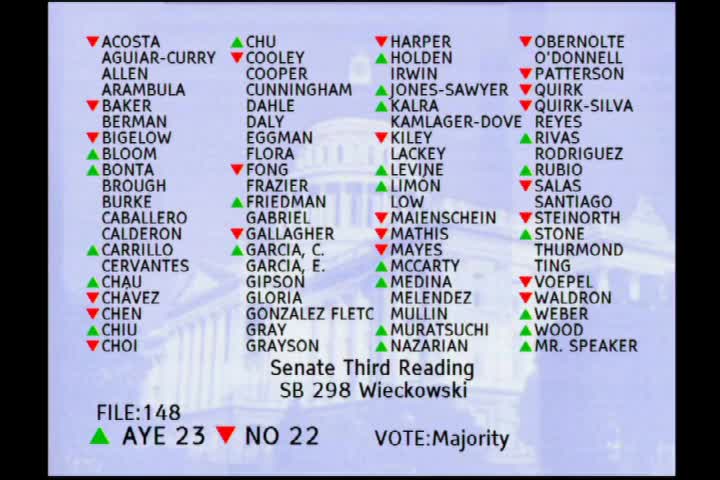 2MIN
Assembly Floor
 1MIN
Assembly Floor
 2MIN
Assembly Standing Committee on Appropriations
 6MIN
Assembly Standing Committee on Local Government
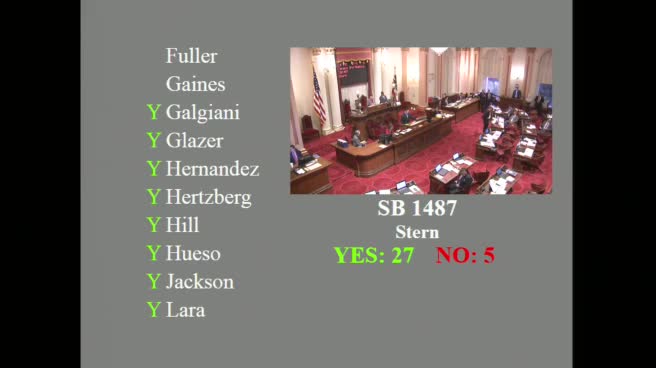 2MIN
Senate Floor
 6MIN
Senate Standing Committee on Governance and Finance
Bill Author

