SB 1347: Energy storage systems: procurement.
- Session Year: 2017-2018
- House: Senate
- Latest Version Date: 2018-07-03
Existing law requires the Public Utilities Commission to determine appropriate targets, if any, for each load-serving entity, including an electrical corporation, to procure viable and cost-effective energy storage systems to be achieved by December 31, 2020. Existing law requires the commission to direct the states three largest electrical corporations to file applications for programs and investments to accelerate widespread deployment of distributed energy storage systems.
This bill would, by January 1, 2020, would require the commission, in addition to the requirements described above, to direct on or before January 1, 2020, to consider procurement strategies for the installation of a statewide total of up to 2,000 megawatts of energy storage systems. As part of the procurement strategies considered by the commission, the bill would require the commission to consider appropriate targets, if any, for electrical corporations, community choice aggregators, electric service providers, and certain electrical cooperatives (collectively, load-serving entities) to procure their proportionate share of a total of 2,000 megawatts, in aggregate, of viable and cost-effective energy storage systems and would authorize the commission to direct the load-serving entities to procure additional energy storage system capacity, as specified. The bill would authorize the electrical corporations to own and operate a certain percentage of these energy storage systems, measured by capacity, if certain conditions are met. systems, to be achieved by December 31, 2030. If the commission imposes an energy storage system procurement target on load-serving entities, the bill would authorize each load-serving entity to meet up to 50% of its procurement target through energy storage systems that it owns, that are interconnected at the transmission or distribution level, or that are located on the customer side of the meter, as specified. The bill would authorize community choice aggregators, electric service providers, and certain electrical cooperatives to own and operate energy storage systems to meet their allocated shares. The bill would require the commission to develop and make available to all load-serving entities a cost recovery mechanism that meets certain requirements. require the commission to reconsider procurement strategies and appropriate targets not less than once every 3 years.
Under existing law, a violation of an order, decision, rule, direction, demand, or requirement of the commission is a crime.
Because a violation of an order or decision of the commission implementing the requirements of this bill would be a crime, the bill would impose a state-mandated local program.
The California Constitution requires the state to reimburse local agencies and school districts for certain costs mandated by the state. Statutory provisions establish procedures for making that reimbursement.
This bill would provide that no reimbursement is required by this act for a specified reason.
Existing law requires the Public Utilities Commission to determine appropriate targets, if any, for each load-serving entity, including an electrical corporation, to procure viable and cost-effective energy storage systems to be achieved by December 31, 2020. Existing law requires the commission to direct the states three largest electrical corporations to file applications for programs and investments to accelerate widespread deployment of distributed energy storage systems.
This bill would, by January 1, 2020, require the commission, in addition to the requirements described above, to direct electrical corporations, community choice aggregators, electric service providers, and certain electrical cooperatives (collectively, load-serving entities) to procure their proportionate share of a total of 2,000 megawatts, in aggregate, of energy storage systems and would authorize the commission to direct the load-serving entities to procure additional energy storage system capacity, as specified. The bill would authorize the electrical corporations to own and operate a certain percentage of these energy storage systems, measured by capacity, if certain conditions are met. The bill would authorize community choice aggregators, electric service providers, and certain electrical cooperatives to own and operate energy storage systems to meet their allocated shares. The bill would require the commission to develop and make available to all load-serving entities a cost recovery mechanism that meets certain requirements.
Under existing law, a violation of an order, decision, rule, direction, demand, or requirement of the commission is a crime.
Because a violation of an order or decision of the commission implementing the requirements of this bill would be a crime, the bill would impose a state-mandated local program.
The California Constitution requires the state to reimburse local agencies and school districts for certain costs mandated by the state. Statutory provisions establish procedures for making that reimbursement.
This bill would provide that no reimbursement is required by this act for a specified reason.
Existing law requires the Public Utilities Commission to determine appropriate targets, if any, for each load-serving entity, including an electrical corporation, to procure viable and cost-effective energy storage systems to be achieved by December 31, 2020. Existing law requires the commission to direct the states three largest electrical corporations to file applications for programs and investments to accelerate widespread deployment of distributed energy storage systems.
This bill would, by January 1, 2020, require the commission, in addition to the requirements described above, to direct the states 3 largest electrical corporations corporations, community choice aggregators, electric service providers, and certain electrical cooperatives (collectively, load-serving entities) to procure their proportionate share of a total of 2,000 megawatts, in aggregate, of energy storage systems and would authorize the commission to direct those electrical corporations the load-serving entities to procure additional energy storage system capacity, as specified. The bill would authorize the electrical corporations to own and operate a certain percentage of these energy storage systems, measured by capacity, if certain conditions are met. The bill would authorize community choice aggregators, electric service providers, and certain electrical cooperatives to own and operate energy storage systems to meet their allocated shares. The bill would provide that the net costs of authorized energy storage systems shall be recovered from the electrical corporations retail end use customers on a fully nonbypassable basis. require the commission to develop and make available to all load-serving entities a cost recovery mechanism that meets certain requirements.
Under existing law, a violation of an order, decision, rule, direction, demand, or requirement of the commission is a crime.
Because a violation of an order or decision of the commission implementing the requirements of this bill would be a crime, the bill would impose a state-mandated local program.
The California Constitution requires the state to reimburse local agencies and school districts for certain costs mandated by the state. Statutory provisions establish procedures for making that reimbursement.
This bill would provide that no reimbursement is required by this act for a specified reason.
Existing law requires the Public Utilities Commission to determine appropriate targets, if any, for each load-serving entity, including an electrical corporation, to procure viable and cost-effective energy storage systems to be achieved by December 31, 2020. Existing law requires the commission to direct the states three largest electrical corporations to file applications for programs and investments to accelerate widespread deployment of distributed energy storage systems.
This bill would, by an unspecified date, require the commission to determine whether additional procurement of energy storage systems by the states 3 largest electrical corporations is needed to maintain long-term system and local reliability. If the commission determines that additional energy storage system procurement is needed, the bill would require the commission to direct those electrical corporations to procure additional energy storage systems. The bill would authorize each of those electrical corporations to own and operate up to 50% of its share of this procurement. The bill would provide that the net costs of procuring the energy storage systems shall be recovered from the electrical corporations retail end use customers on a fully nonbypassable basis.This bill would, by January 1, 2020, require the commission, in addition to the requirements described above, to direct the states 3 largest electrical corporations to procure a total of 2,000 megawatts, in aggregate, of energy storage systems and would authorize the commission to direct those electrical corporations to procure additional energy storage system capacity, as specified. The bill would authorize the electrical corporations to own and operate a certain percentage of these energy storage systems, measured by capacity, if certain conditions are met. The bill would provide that the net costs of authorized energy storage systems shall be recovered from the electrical corporations retail end use customers on a fully nonbypassable basis.
Under existing law, a violation of an order, decision, rule, direction, demand, or requirement of the commission is a crime.
Because a violation of an order or decision of the commission implementing the requirements of this bill would be a crime, the bill would impose a state-mandated local program.
The California Constitution requires the state to reimburse local agencies and school districts for certain costs mandated by the state. Statutory provisions establish procedures for making that reimbursement.
This bill would provide that no reimbursement is required by this act for a specified reason.
Existing law requires the Public Utilities Commission to determine appropriate targets, if any, for each load-serving entity, including an electrical corporation, to procure viable and cost-effective energy storage systems to be achieved by December 31, 2020. Existing law requires the commission to direct the states three largest electrical corporations to file applications for programs and investments to accelerate widespread deployment of distributed energy storage systems.
This bill would, by an unspecified date, require the commission to determine whether additional procurement of energy storage systems by the states 3 largest electrical corporations is needed to maintain long-term system and local reliability. If the commission determines that additional energy storage system procurement is needed, the bill would require the commission to direct those electrical corporations to procure additional energy storage systems. The bill would authorize each of those electrical corporations to own and operate up to 50% of its share of this procurement. The bill would provide that the net costs of procuring the energy storage systems shall be recovered from the electrical corporations retail end use customers on a fully nonbypassable basis.
Under existing law, a violation of an order, decision, rule, direction, demand, or requirement of the commission is a crime.
Because a violation of an order or decision of the commission implementing the requirements of this bill would be a crime, the bill would impose a state-mandated local program.
The California Constitution requires the state to reimburse local agencies and school districts for certain costs mandated by the state. Statutory provisions establish procedures for making that reimbursement.
This bill would provide that no reimbursement is required by this act for a specified reason.
Existing law establishes California Renewables Portfolio Standards Program, which establishes a target of 50% for the annual amount of electricity generated and sold to customers by retail sellers of electricity from renewable energy resources at by December 31, 2030, and establishes various interim targets. Existing law makes various legislative findings and declarations regarding the program.This bill would make a nonsubstantive change to those legislative findings and declarations.Existing law establishes California Renewables Portfolio Standards Program, which establishes a target of 50% for the annual amount of electricity generated and sold to customers by retail sellers of electricity from renewable energy resources at by December 31, 2030, and establishes various interim targets. Existing law makes various legislative findings and declarations regarding the program.
This bill would make a nonsubstantive change to those legislative findings and declarations.
(a)(1)In addition to the requirements of Sections 2836 and 2838.2, on or before January 1, 2020, the commission shall consider procurement strategies for the installation of a statewide total of up to 2,000 megawatts of energy storage systems.
(2)As part of the procurement strategies considered by the commission, the commission shall consider appropriate targets, if any, for each load-serving entity to procure viable and cost-effective energy storage systems to be achieved by December 31, 2030, and may consider a variety of possible policies to encourage the cost-effective deployment of energy storage systems, including refinement of existing procurement methods to properly value energy storage systems.
(b)The commission shall reconsider procurement strategies and appropriate targets, as described in subdivision (a), not less than once every three years.
(c)Nothing in this section prohibits the commissions evaluation and approval of any application for funding or recovery of costs of any ongoing or new development, trialing, and testing of energy storage projects or technologies outside of a proceeding required by this chapter.
(d)If the commission imposes an energy storage system procurement target on a load-serving entity pursuant to this section, the load-serving entity may meet up to 50 percent of its procurement target through energy storage systems owned by the load-serving entity, interconnected at the transmission or distribution level, or located on the customer side of the meter, and may propose an energy storage system in its applicable integrated resource plan, but shall make a showing of the energy storage systems viability and cost-effectiveness in the integrated resource plan.
SEC. 2.No reimbursement is required by this act pursuant to Section 6 of Article XIIIB of the California Constitution because the only costs that may be incurred by a local agency or school district will be incurred because this act creates a new crime or infraction, eliminates a crime or infraction, or changes the penalty for a crime or infraction, within the meaning of Section 17556 of the Government Code, or changes the definition of a crime within the meaning of Section 6 of Article XIIIB of the California Constitution.
SECTION 1.(a)The Legislature finds and declares all of the following:(1)Properly designed and dispatched energy storage systems will help manage energy costs, help reduce overall system peak energy demands, help integrate increased levels of intermittent renewable energy on the grid, improve public health, improve grid reliability, and assist the state in achieving its greenhouse gas emissions reduction goals.(2)Energy storage systems are uniquely situated to assist the state in reducing emissions of greenhouse gases associated with electrical generation by optimizing the use of intermittent renewable generation.(3)As the market for energy storage systems develops and transforms, diverse ownership, operation, and solutions for energy storage systems, including electrical corporation ownership of a portion of energy storage systems can contribute to providing increased flexibility and options to utilize energy storage systems over their operating lives, reduce development and market operating risks, diversify the supply of energy storage, and facilitate innovation. The coordinated deployment of energy storage systems owned and operated by electrical corporations and those owned and operated by third parties can guide market development of new energy storage products and services.(4)Electrical corporations can utilize energy storage systems for distribution and transmission reliability and to optimize the use of energy storage systems.(b)It is the policy of the state and the intent of the Legislature to facilitate and encourage increased utilization of energy storage, including a diversity of ownership models and technologies, as a means to achieve the states greenhouse gas emissions reduction goals, system reliability, efficient operation of the grid, and ratepayer benefits.SEC. 2.Section 2837.5 is added to the Public Utilities Code, to read:2837.5.(a)(1)(A)In addition to the requirements of Sections 2836 and 2838.2, on or before January 1, 2020, the commission shall direct all load-serving entities to procure their proportionate share of a statewide total of 2,000 megawatts of energy storage systems.(B)In addition to subparagraph (A), the commission may direct all load-serving entities to procure additional energy storage system capacity to facilitate the states ability to meet its energy and climate goals.(C)The commission shall allocate the 2,000 megawatts required pursuant to subparagraph (A) and any additional procurement authorized pursuant to subparagraph (B) to each load-serving entity based on its prorata share of customer demand as of July 1, 2019.(2)(A)Each electrical corporation shall have the right to own and operate energy storage systems at its sole election as follows:(i)Up to 50 percent of the capacity required pursuant to subparagraph (A) of paragraph (1) allocated to the electrical corporation pursuant to subparagraph (C) of paragraph (1).(ii)Up to 50 percent of any capacity required by the commission pursuant to subparagraph (B) of paragraph (1) allocated to the electrical corporation pursuant to subparagraph (C) of paragraph (1) for energy storage systems with an expected commercial operation date of December 31, 2030, or earlier.(iii)Up to 35 percent of any capacity required by the commission pursuant to subparagraph (B) of paragraph (1) allocated to the electrical corporation pursuant to subparagraph (C) of paragraph (1) for energy storage systems with an expected commercial operation date of January 1, 2031, or later.(B)Within 90 days of the issuance of an order pursuant to paragraph (1), if an electrical corporation elects to own and operate a percentage of the energy storage systems pursuant to subparagraph (A), the electrical corporation shall notify the commission of its election.(C)Community choice aggregators may own and operate energy storage systems following guidelines determined by their local governing boards, consistent with paragraph (5) of subdivision (a) of Section 366.2.(D)Electric service providers and electrical cooperatives may own and operate all or a portion of the energy storage system allocated to them pursuant to subparagraph (C) of paragraph (1).(E)The commission shall order all load-serving entities to procure their prorata share of energy storage systems on the same timelines.(b)The commission shall approve an electrical corporations ownership and operation of energy storage systems pursuant to paragraph (2) of subdivision (a) and shall grant cost recovery in rates for any investments in those energy storage systems if all of the following conditions are met:(1)The electrical corporation competitively sources the energy storage equipment and installation services.(2)The energy storage systems are systems connected to the electrical grid in front of the electrical corporations customers meters.(3)(A)The electrical corporation has proposed a schedule for competitive solicitations to contract for an equivalent or greater amount of third-party-owned energy storage systems with proposed commercial operation dates in its filing to the commission for cost recovery for energy storage systems owned and operated by the electrical corporations.(B)The cost recovery mechanism is in the best interest of the ratepayers.(c)The commission shall expedite review and approval of contracts for third-party ownership and operation of energy storage systems pursuant to this section through the use of a tier 3 advice letter process.(d)The commission shall develop and make available to all load-serving entities a cost recovery mechanism that meets all of the following requirements:(1)It does not unduly shift costs between customers receiving generation services from electrical corporations and those receiving generation services from other load-serving entities.(2)It can be equally applied to all load-serving entities.(3)It is transparent.(4)It is consistent with paragraph (5) of subdivision (a) of Section 366.2 and paragraph (5) of subdivision (a) of Section 380.(e)The net costs to an electrical corporation of energy storage systems approved pursuant to this section shall be recovered from all retail end-use customers of the electrical corporation on a fully nonbypassable charge basis in a manner determined by the commission.(f)For purposes of this section, load-serving entity does not include an electrical cooperative, as defined in Section 2776, if the electrical cooperative has an annual electrical demand of less than 700 gigawatthours, as determined on a three-year average, commencing with January 1, 2013.SEC. 3.No reimbursement is required by this act pursuant to Section 6 of Article XIIIB of the California Constitution because the only costs that may be incurred by a local agency or school district will be incurred because this act creates a new crime or infraction, eliminates a crime or infraction, or changes the penalty for a crime or infraction, within the meaning of Section 17556 of the Government Code, or changes the definition of a crime within the meaning of Section 6 of Article XIIIB of the California Constitution.(a)The Legislature finds and declares all of the following:
(1)Properly designed and dispatched energy storage systems will help manage energy costs, help reduce overall system peak energy demands, help integrate increased levels of intermittent renewable energy on the grid, improve public health, improve grid reliability, and assist the state in achieving its greenhouse gas emissions reduction goals.
(2)Energy storage systems are uniquely situated to assist the state in reducing emissions of greenhouse gases associated with electrical generation by optimizing the use of intermittent renewable generation.
(3)As the market for energy storage systems develops and transforms, diverse ownership, operation, and solutions for energy storage systems, including electrical corporation ownership of a portion of energy storage systems will provide can contribute to providing increased flexibility and options to utilize energy storage systems over their operating lives, reduce development and market operating risk, risks, diversify the supply of energy storage, and facilitate innovation. The coordinated deployment of energy storage systems owned and operated by electrical corporations and those owned and operated by third parties can guide market development of new energy storage products and services.
(4)Electrical corporations can utilize energy storage systems for distribution and transmission reliability and to optimize the use of energy storage systems.
(b)It is the policy of the state and the intent of the Legislature to facilitate and encourage increased utilization of energy storage as means storage, including a diversity of ownership models and technologies, as a means to achieve the states greenhouse gas emissions reduction goals, system reliability, efficient operation of the grid, and ratepayer benefits.
SEC. 2.Section 2837.5 is added to the Public Utilities Code, to read:2837.5.(a)(1)(A)In addition to the requirements of Sections 2836 and 2838.2, on or before January 1, 2020, the commission shall direct all load-serving entities to procure their proportionate share of a statewide total of 2,000 megawatts of energy storage systems.
(B)In addition to subparagraph (A), the commission may direct all load-serving entities to procure additional energy storage system capacity to facilitate the states ability to meet its energy and climate goals.
(C)The commission shall allocate the 2,000 megawatts required pursuant to subparagraph (A) and any additional procurement authorized pursuant to subparagraph (B) to each load-serving entity based on its prorata share of customer demand. demand as of July 1, 2019.
(2)(A)Each electrical corporation may shall have the right to own and operate energy storage systems at its sole election as follows:
(i)Up to 50 percent of the capacity required pursuant to subparagraph (A) of paragraph (1) allocated to the electrical corporation pursuant to subparagraph (C) of paragraph (1).
(ii)Up to 50 percent of the any capacity required by the commission pursuant to subparagraph (B) of paragraph (1) allocated to the electrical corporation pursuant to subparagraph (C) of paragraph (1) for energy storage systems with an expected commercial operation date of December 31, 2030, or earlier.
(iii)Up to 35 percent of the any capacity required by the commission pursuant to subparagraph (B) of paragraph (1) allocated to the electrical corporation pursuant to subparagraph (C) of paragraph (1) for energy storage systems with an expected commercial operation date of January 1, 2031, or later.
(B)Within 90 days of the issuance of an order pursuant to paragraph (1), if an electrical corporation elects to own and operate a percentage of the energy storage systems pursuant to subparagraph (A), the electrical corporation shall notify the commission of its election.
(C)Community choice aggregators may own and operate energy storage systems following guidelines determined by their local governing boards, consistent with paragraph (5) of subdivision (a) of Section 366.2.
(D)Electric service providers and electrical cooperatives may own and operate all or a portion of the energy storage system allocated to them pursuant to subparagraph (C) of paragraph (1).
(E)The commission shall order all load-serving entities to procure their prorata share of energy storage systems on the same timelines.
(b)The commission shall approve an electrical corporations ownership and operation of energy storage systems pursuant to paragraph (2) of subdivision (a) and shall grant cost recovery in rates for any investments in those energy storage systems if all of the following conditions are met:
(1)The electrical corporation competitively sources the energy storage equipment and installation services.
(2)The energy storage systems are centralized systems connected to the electrical grid in front of the electrical corporations customers meters.
(3)(A)The electrical corporation has entered or will enter into contracts for third-party ownership and operation of energy storage systems under this section in an amount that, along with the amount of capacity the electrical corporation will own and operate, would meet the procurement requirement directed by the commission pursuant to paragraph (1) of subdivision (a). The commission shall determine an appropriate commercial operation date of all third-party-owned energy storage systems.(B)The electrical corporation is not required to have entered into all of the contracts for third-party ownership and operation at the time the electrical corporations ownership and operation of energy storage systems is approved by the commission. The commission shall ensure that the electrical corporation successfully contracts for the required amount of third-party ownership and operation of energy storage systems.(3)(A)The electrical corporation has proposed a schedule for competitive solicitations to contract for an equivalent or greater amount of third-party-owned energy storage systems with proposed commercial operation dates in its filing to the commission for cost recovery for energy storage systems owned and operated by the electrical corporations.
(C)(B)The cost recovery mechanism is in the best interest of the ratepayers.
(c)The commission shall expedite review and approval of contracts for third-party ownership and operation of energy storage systems pursuant to this section through the use of a tier 3 advice letter process.
(d)The commission shall develop and make available to all load-serving entities a cost recovery mechanism that meets all of the following requirements:
(1)It does not unduly shift costs between customers receiving generation services from electrical corporations and those receiving generation services from other load-serving entities.
(2)It can be equally applied to all load-serving entities.
(3)It is transparent.
(4)It is consistent with paragraph (5) of subdivision (a) of Section 366.2 and paragraph (5) of subdivision (a) of Section 380.
(e)The net costs to an electrical corporation of energy storage systems approved pursuant to this section shall be recovered from all retail end-use customers of the electrical corporation on a fully nonbypassable charge basis in a manner determined by the commission.
(e)(f)For purposes of this section, load-serving entity does not include an electrical cooperative, as defined in Section 2776, if the electrical cooperative has an annual electrical demand of less than 700 gigawatthours, as determined on a three-year average, commencing with January 1, 2013.
SEC. 3.No reimbursement is required by this act pursuant to Section 6 of Article XIIIB of the California Constitution because the only costs that may be incurred by a local agency or school district will be incurred because this act creates a new crime or infraction, eliminates a crime or infraction, or changes the penalty for a crime or infraction, within the meaning of Section 17556 of the Government Code, or changes the definition of a crime within the meaning of Section 6 of Article XIIIB of the California Constitution.
(a)The Legislature finds and declares all of the following:
(1)Properly designed and dispatched energy storage systems will help manage energy costs, help reduce overall system peak energy demands, help integrate increased levels of intermittent renewable energy on the grid, improve public health, and assist the state in achieving its greenhouse gas emissions reduction goals.
(2)Energy storage systems are uniquely situated to assist the state in reducing emissions of greenhouse gases associated with electrical generation by optimizing the use of intermittent renewable generation.
(3)As the market for energy storage systems develops and transforms, electrical corporation ownership of a portion of energy storage systems will provide increased flexibility and options to utilize energy storage systems over their operating lives, reduce development and market operating risk, diversify the supply of energy storage, and facilitate innovation, and innovation. The coordinated deployment of energy storage systems owned and operated by electrical corporations and those owned and operated by third parties can guide market development of new energy storage products and services.
(4)Electrical corporations are uniquely situated to utilize energy storage systems for system reliability and renewable integration purposes.(b)It is the policy of the state and the intent of the Legislature to facilitate and encourage increased utilization of energy storage, including ownership of energy storage systems by electrical corporations, storage as means to achieve the states greenhouse gas emissions reduction goals, system reliability, efficient operation of the grid, and ratepayer benefits.
SEC. 2.Section 2837.5 is added to the Public Utilities Code, to read:2837.5.(a)(1)(A)In addition to the requirements of Sections 2836 and 2838.2, on or before January 1, 2020, the commission shall direct the Pacific Gas and Electric Company and Southern California Edison Company each all load-serving entities to procure 900 their proportionate share of a statewide total of 2,000 megawatts of energy storage systems and San Diego Gas and Electric Company to procure 200 megawatts of energy storage systems.
(B)In addition to subparagraph (A), the commission may direct the Pacific Gas and Electric Company, Southern California Edison Company, and the San Diego Gas and Electric Company all load-serving entities to procure additional energy storage system capacity to facilitate the states ability to meet its energy and climate goals.
(C)The commission shall allocate the 2,000 megawatts required pursuant to subparagraph (A) and any additional procurement authorized pursuant to subparagraph (B) to each load-serving entity based on its prorata share of customer demand.
(2)(A)Each electrical corporation may own and operate energy storage systems as follows:
(i)Up to 50 percent of the capacity required pursuant to subparagraph (A) of paragraph (1) allocated to the electrical corporation pursuant to subparagraph (A) (C) of paragraph (1).
(ii)Up to 50 percent of the capacity required by the commission pursuant to subparagraph (B) of paragraph (1) allocated to the electrical corporation pursuant to subparagraph (B) (C) of paragraph (1) for energy storage systems with an expected commercial operation date of December 31, 2030, or earlier.
(iii)Up to 35 percent of the capacity required by the commission pursuant to subparagraph (B) of paragraph (1) allocated to the electrical corporation pursuant to subparagraph (B) (C) of paragraph (1) for energy storage systems with an expected commercial operation date of January 1, 2031, or later.
(B)Within 90 days of the issuance of an order pursuant to paragraph (1), if an electrical corporation elects to own and operate a percentage of the energy storage systems pursuant to subparagraph (A), the electrical corporation shall notify the commission of its election.
(C)Community choice aggregators may own and operate energy storage systems following guidelines determined by their local governing boards, consistent with paragraph (5) of subdivision (a) of Section 366.2.
(D)Electric service providers and electrical cooperatives may own and operate all or a portion of the energy storage system allocated to them pursuant to subparagraph (C) of paragraph (1).
(E)The commission shall order all load-serving entities to procure their prorata share of energy storage systems on the same timelines.
(b)The commission shall approve an electrical corporations ownership and operation of energy storage systems pursuant to paragraph (2) of subdivision (a) and shall grant cost recovery in rates for any investments in those energy storage systems if all of the following conditions are met:
(1)The electrical corporation competitively sources the energy storage equipment and installation services.
(2)The energy storage systems are centralized systems connected to the electrical grid in front of the electrical corporations customers meters.
(3)(A)The electrical corporation has entered or will enter into contracts for third-party ownership and operation of energy storage systems under this section in an amount that, along with the amount of capacity the electrical corporation will own and operate, would meet the procurement requirement directed by the commission pursuant to paragraph (1) of subdivision (a). The commission shall determine an appropriate commercial operation date of all third-party-owned energy storage systems.
(B)The electrical corporation is not required to have entered into all of the contracts for third-party ownership and operation at the time the electrical corporations ownership and operation of energy storage systems is approved by the commission. The commission shall ensure that the electrical corporation successfully contracts for the required amount of third-party ownership and operation of energy storage systems.
(C)The cost recovery mechanism is in the best interest of the ratepayers.
(c)The commission shall expedite review and approval of contracts for third-party ownership and operation of energy storage systems pursuant to this section through the use of a tier 3 advice letter process.
(d)The net costs of energy storage systems approved pursuant to this section shall be recovered from all retail end use customers of the electrical corporation on a fully nonbypassable charge basis in a manner determined by the commission.(d)The commission shall develop and make available to all load-serving entities a cost recovery mechanism that meets all of the following requirements:
(1)It does not unduly shift costs between customers receiving generation services from electrical corporations and those receiving generation services from other load-serving entities.
(2)It can be equally applied to all load-serving entities.
(3)It is transparent.
(4)It is consistent with paragraph (5) of subdivision (a) of Section 366.2 and paragraph (5) of subdivision (a) of Section 380.
(e)For purposes of this section, load-serving entity does not include an electrical cooperative, as defined in Section 2776, if the electrical cooperative has an annual electrical demand of less than 700 gigawatthours, as determined on a three-year average, commencing with January 1, 2013.
SEC. 3.No reimbursement is required by this act pursuant to Section 6 of Article XIIIB of the California Constitution because the only costs that may be incurred by a local agency or school district will be incurred because this act creates a new crime or infraction, eliminates a crime or infraction, or changes the penalty for a crime or infraction, within the meaning of Section 17556 of the Government Code, or changes the definition of a crime within the meaning of Section 6 of Article XIIIB of the California Constitution.
(a)The Legislature finds and declares all of the following:
(1)Properly designed and dispatched energy storage systems will help manage energy costs, help reduce overall system peak energy demands, help integrate increased levels of intermittent renewable energy on the grid, improve public health, and assist the state in achieving its greenhouse gas emissions reduction goals.
(2)Energy storage systems are uniquely situated to assist the state in reducing emissions of greenhouse gases associated with electrical generation by optimizing the use of intermittent renewable generation.
(3)As the market for energy storage systems develops and transforms, electrical corporation ownership of a portion of energy storage systems will provide increased flexibility and options to utilize energy storage systems over their operating lives, reduce development and market operating risk, diversify the supply of energy storage, facilitate innovation, and guide market development of new energy storage products and services.
(4)Electrical corporations are uniquely situated to utilize energy storage systems for system reliability and renewable integration purposes.
(b)It is the policy of the state and the intent of the Legislature to facilitate and encourage increased utilization of energy storage, including ownership of energy storage systems by electrical corporations, as means to achieve the states greenhouse gas emissions reduction goals, system reliability, efficient operation of the grid, and ratepayer benefits.
SEC. 2.Section 2837.5 is added to the Public Utilities Code, to read:2837.5.(a)(1)On or before ____, 2020, the commission shall determine whether additional procurement of energy storage system by the states three largest electrical corporations is needed to do both of the following: (A)Maintain long-term system and local reliability.(B)Accelerate the development of the significant amount of energy storage that is anticipated to be required to integrate intermittent renewable generation and reliably operate the electrical grid with less reliance on greenhouse gas-emitting sources of electricity.(2)(A)If the commission determines that additional procurement of energy storage systems is needed, the commission shall direct each of the states three largest electrical corporations to procure additional energy storage systems, as determined appropriate by the commission, to minimize the reliance on greenhouse gas-emitting sources of electricity. (B)Each electrical corporation may own and operate up to 50 percent of the procurement required pursuant to subparagraph (A).(b)The net costs of procuring energy storage systems pursuant to this section shall be recovered from all retail end-use customers of the electrical corporation on a fully nonbypassable basis in a manner determined by the commission.SEC. 2.Section 2837.5 is added to the Public Utilities Code, to read:2837.5.(a)(1)(A)In addition to the requirements of Sections 2836 and 2838.2, on or before January 1, 2020, the commission shall direct the Pacific Gas and Electric Company and Southern California Edison Company each to procure 900 megawatts of energy storage systems and San Diego Gas and Electric Company to procure 200 megawatts of energy storage systems.
(B)In addition to subparagraph (A), the commission may direct the Pacific Gas and Electric Company, Southern California Edison Company, and the San Diego Gas and Electric Company to procure additional energy storage system capacity to facilitate the states ability to meet its energy and climate goals.
(2)(A)Each electrical corporation may own and operate energy storage systems as follows:
(i)Up to 50 percent of the capacity allocated to the electrical corporation pursuant to subparagraph (A) of paragraph (1).
(ii)Up to 50 percent of the capacity allocated to the electrical corporation pursuant to subparagraph (B) of paragraph (1) for energy storage systems with an expected commercial operation date of December 31, 2030, or earlier.
(iii)Up to 35 percent of the capacity allocated to the electrical corporation pursuant to subparagraph (B) of paragraph (1) for energy storage systems with an expected commercial operation date of January 1, 2031, or later.
(B)Within 90 days of the issuance of an order pursuant to paragraph (1), if an electrical corporation elects to own and operate a percentage of the energy storage systems pursuant to subparagraph (A), the electrical corporation shall notify the commission of its election.
(b)The commission shall approve an electrical corporations ownership and operation of energy storage systems pursuant to paragraph (2) of subdivision (a) and shall grant cost recovery in rates for any investments in those energy storage systems if all of the following conditions are met:
(1)The electrical corporation competitively sources the energy storage equipment and installation services.
(2)The energy storage systems are centralized systems connected to the electrical grid in front of the electrical corporations customers meters.
(3)(A)The electrical corporation has entered or will enter into contracts for third-party ownership and operation of energy storage systems under this section in an amount that, along with the amount of capacity electrical corporation will own and operate, would meet the procurement requirement directed by the commission pursuant to paragraph (1) of subdivision (a). The commission shall determine an appropriate commercial operation date of all third-party-owned energy storage systems.
(B)The electrical corporation is not required to have entered into all of the contracts for third-party ownership and operation at the time the electrical corporations ownership and operation of energy storage systems is approved by the commission. The commission shall ensure that the electrical corporation successfully contracts for the required amount of third-party ownership and operation of energy storage systems.
(c)The commission shall expedite review and approval of contracts for third-party ownership and operation of energy storage systems pursuant to this section through the use of a tier 3 advice letter process.
(d)The net costs of energy storage systems approved pursuant to this section shall be recovered from all retail end use customers of the electrical corporation on a fully nonbypassable charge basis in a manner determined by the commission.
SEC. 3.No reimbursement is required by this act pursuant to Section 6 of Article XIIIB of the California Constitution because the only costs that may be incurred by a local agency or school district will be incurred because this act creates a new crime or infraction, eliminates a crime or infraction, or changes the penalty for a crime or infraction, within the meaning of Section 17556 of the Government Code, or changes the definition of a crime within the meaning of Section 6 of Article XIIIB of the California Constitution.
(a)The Legislature finds and declares all of the following:
(1)Properly designed and dispatched energy storage systems will help manage energy costs, help reduce overall system peak energy demands, help integrate increased levels of intermittent renewable energy on the grid, improve public health, and assist the state in achieving its greenhouse gas emissions reduction goals.
(2)Energy storage systems are uniquely situated to assist the state in reducing emissions of greenhouse gases associated with electrical generation by optimizing the use of intermittent renewable generation.
(3)As the market for energy storage systems develops and transforms, electrical corporation ownership of a portion of energy storage systems will provide increased flexibility and options to utilize energy storage systems over their operating lives, reduce development and market operating risk, diversify the supply of energy storage, facilitate innovation, and guide market development of new energy storage products and services.
(4)Electrical corporations are uniquely situated to utilize energy storage systems for system reliability and renewable integration purposes.
(b)It is the policy of the state and the intent of the Legislature to facilitate and encourage increased utilization of energy storage, including ownership of energy storage systems by electrical corporations, as means to achieve the states greenhouse gas emissions reduction goals, system reliability, efficient operation of the grid, and ratepayer benefits.
SEC. 2.Section 2837.5 is added to the Public Utilities Code, to read:2837.5.(a)(1)On or before ____, 2020, the commission shall determine whether additional procurement of energy storage system by the states three largest electrical corporations is needed to do both of the following:
(A)Maintain long-term system and local reliability.
(B)Accelerate the development of the significant amount of energy storage that is anticipated to be required to integrate intermittent renewable generation and reliably operate the electrical grid with less reliance on greenhouse gas-emitting sources of electricity.
(2)(A)If the commission determines that additional procurement of energy storage systems is needed, the commission shall direct each of the states three largest electrical corporations to procure additional energy storage systems, as determined appropriate by the commission, to minimize the reliance on greenhouse gas-emitting sources of electricity.
(B)Each electrical corporation may own and operate up to 50 percent of the procurement required pursuant to subparagraph (A).
(b)The net costs of procuring energy storage systems pursuant to this section shall be recovered from all retail end-use customers of the electrical corporation on a fully nonbypassable basis in a manner determined by the commission.
SEC. 3.No reimbursement is required by this act pursuant to Section 6 of Article XIIIB of the California Constitution because the only costs that may be incurred by a local agency or school district will be incurred because this act creates a new crime or infraction, eliminates a crime or infraction, or changes the penalty for a crime or infraction, within the meaning of Section 17556 of the Government Code, or changes the definition of a crime within the meaning of Section 6 of Article XIIIB of the California Constitution.
SECTION 1.Section 399.11 of the Public Utilities Code is amended to read:399.11.(a)The Legislature finds and declares all of the following:(a)To attain a target of generating 20 percent of total retail sales of electricity in California from eligible renewable energy resources by December 31, 2013, 33 percent by December 31, 2020, and 50 percent by December 31, 2030, it is the intent of the Legislature that the commission and the Energy Commission implement the California Renewables Portfolio Standard Program described in this article.(b)Achieving the renewables portfolio standard through the procurement of various electricity products from eligible renewable energy resources is intended to provide unique benefits to California, including all of the following, each of which independently justifies the program:(1)Displacing fossil fuel consumption within the state.(2)Adding new electrical generating facilities in the transmission network within the Western Electricity Coordinating Council service area.(3)Reducing air pollution, particularly criteria pollutant emissions and toxic air contaminants, in the state.(4)Meeting the states climate change goals by reducing emissions of greenhouse gases associated with electrical generation.(5)Promoting stable retail rates for electric service.(6)Meeting the states need for a diversified and balanced energy generation portfolio.(7)Assistance with meeting the states resource adequacy requirements.(8)Contributing to the safe and reliable operation of the electrical grid, including providing predictable electrical supply, voltage support, lower line losses, and congestion relief.(9)Implementing the states transmission and land use planning activities related to development of eligible renewable energy resources.(c)The California Renewables Portfolio Standard Program is intended to complement the Renewable Energy Resources Program administered by the Energy Commission and established pursuant to Chapter 8.6 (commencing with Section 25740) of Division 15 of the Public Resources Code.(d)New and modified electric transmission facilities may be necessary to facilitate the state achieving its renewables portfolio standard targets.(e)(1)Supplying electricity to California end-use customers that is generated by eligible renewable energy resources is necessary to improve Californias air quality and public health, particularly in disadvantaged communities identified pursuant to Section 39711 of the Health and Safety Code, and the commission shall ensure rates are just and reasonable, and are not significantly affected by the procurement requirements of this article. This electricity may be generated anywhere in the interconnected grid that includes many states, and areas of both Canada and Mexico.(2)This article requires generating resources located outside of California that are able to supply that electricity to California end-use customers to be treated identically to generating resources located within the state, without discrimination.(3)California electrical corporations have already executed, and the commission has approved, power purchase agreements with eligible renewable energy resources located outside of California that will supply electricity to California end-use customers. These resources will fully count toward meeting the renewables portfolio standard procurement requirements.(a)The Legislature finds and declares all of the following:
(a)In order to To attain a target of generating 20 percent of total retail sales of electricity in California from eligible renewable energy resources by December 31, 2013, 33 percent by December 31, 2020, and 50 percent by December 31, 2030, it is the intent of the Legislature that the commission and the Energy Commission implement the California Renewables Portfolio Standard Program described in this article.
(b)Achieving the renewables portfolio standard through the procurement of various electricity products from eligible renewable energy resources is intended to provide unique benefits to California, including all of the following, each of which independently justifies the program:
(1)Displacing fossil fuel consumption within the state.
(2)Adding new electrical generating facilities in the transmission network within the Western Electricity Coordinating Council service area.
(3)Reducing air pollution, particularly criteria pollutant emissions and toxic air contaminants, in the state.
(4)Meeting the states climate change goals by reducing emissions of greenhouse gases associated with electrical generation.
(5)Promoting stable retail rates for electric service.
(6)Meeting the states need for a diversified and balanced energy generation portfolio.
(7)Assistance with meeting the states resource adequacy requirements.
(8)Contributing to the safe and reliable operation of the electrical grid, including providing predictable electrical supply, voltage support, lower line losses, and congestion relief.
(9)Implementing the states transmission and land use planning activities related to development of eligible renewable energy resources.
(c)The California Renewables Portfolio Standard Program is intended to complement the Renewable Energy Resources Program administered by the Energy Commission and established pursuant to Chapter 8.6 (commencing with Section 25740) of Division 15 of the Public Resources Code.
(d)New and modified electric transmission facilities may be necessary to facilitate the state achieving its renewables portfolio standard targets.
(e)(1)Supplying electricity to California end-use customers that is generated by eligible renewable energy resources is necessary to improve Californias air quality and public health, particularly in disadvantaged communities identified pursuant to Section 39711 of the Health and Safety Code, and the commission shall ensure rates are just and reasonable, and are not significantly affected by the procurement requirements of this article. This electricity may be generated anywhere in the interconnected grid that includes many states, and areas of both Canada and Mexico.
(2)This article requires generating resources located outside of California that are able to supply that electricity to California end-use customers to be treated identically to generating resources located within the state, without discrimination.
(3)California electrical corporations have already executed, and the commission has approved, power purchase agreements with eligible renewable energy resources located outside of California that will supply electricity to California end-use customers. These resources will fully count toward meeting the renewables portfolio standard procurement requirements.
|
Date
|
Status
|
|---|---|
| Aug 16, 2018 | August 16 hearing: Held in committee and under submission. |
| Aug 8, 2018 | August 8 set for first hearing. Placed on suspense file. |
| Jul 3, 2018 | Read second time and amended. Re-referred to Com. on APPR. |
| Jul 2, 2018 | From committee: Do pass as amended and re-refer to Com. on APPR. (Ayes 15. Noes 0.) (June 27). |
| Jun 4, 2018 | Referred to Com. on U. & E. |
| May 29, 2018 | In Assembly. Read first time. Held at Desk. |
| May 29, 2018 | Read third time. Passed. (Ayes 28. Noes 10.) Ordered to the Assembly. |
| May 25, 2018 | From committee: Do pass. (Ayes 5. Noes 2.) (May 25). |
| May 23, 2018 | Set for hearing May 25. |
| May 22, 2018 | May 22 hearing: Placed on APPR. suspense file. |
| May 14, 2018 | Set for hearing May 22. |
| May 10, 2018 | From committee with author's amendments. Read second time and amended. Re-referred to Com. on APPR. |
| May 10, 2018 | May 14 hearing postponed by committee. |
| May 4, 2018 | Set for hearing May 14. |
| May 1, 2018 | Read second time and amended. Re-referred to Com. on APPR. |
| Apr 30, 2018 | From committee: Do pass as amended and re-refer to Com. on APPR. (Ayes 9. Noes 1.) (April 25). |
| Apr 18, 2018 | From committee with author's amendments. Read second time and amended. Re-referred to Com. on E., U. & C. |
| Apr 12, 2018 | Set for hearing April 25. |
| Apr 4, 2018 | Re-referred to Com. on E., U. & C. |
| Apr 2, 2018 | From committee with author's amendments. Read second time and amended. Re-referred to Com. on RLS. |
| Mar 1, 2018 | Referred to Com. on RLS. |
| Feb 20, 2018 | From printer. May be acted upon on or after March 22. |
| Feb 16, 2018 | Introduced. Read first time. To Com. on RLS. for assignment. To print. |
|
Date
|
Description
|
Location
|
Votes
|
|
|---|---|---|---|---|
| Jun 27, 2018 | Do pass as amended and be re-referred to the Committee on [Appropriations] | Assembly Standing Committee on Utilities and Energy |
Passed |
|
| May 29, 2018 | Senate 3rd Reading SB1347 Stern | Senate Floor |
Passed |
|
| May 25, 2018 | Do pass | Senate Standing Committee on Appropriations |
Passed |
|
| May 22, 2018 | Placed on suspense file | Senate Standing Committee on Appropriations |
Passed |
|
| Apr 25, 2018 | Do pass as amended, but first amend, and re-refer to the Committee on [Appropriations] | Senate Standing Committee on Energy, Utilities and Communications |
Passed |
This list shows positions taken on this bill by organizations on the date displayed, which is linked to the original source.
Positions by individuals are not included.
|
Organization
|
Position
|
Date
|
|---|---|---|
| Advanced Energy Economy | ** Support | Jun 26, 2018 |
| Advanced Microgrid Solutions Inc | * Support | Apr 25, 2018 |
| Advanced Microgrid Solutions, Inc. | ** Support | Jun 26, 2018 |
| Altagas | ** Support | Jun 26, 2018 |
| Amber Kinetics | ** Support | Jun 26, 2018 |
| American Wind Energy Association | * Support | Apr 25, 2018 |
| California Community Choice Association | ** Against | Jun 26, 2018 |
| California Energy Storage Alliance | ** Support | Jun 26, 2018 |
| California Wind Energy Association | ** Against | Jun 26, 2018 |
| Clean Power Campaign | * Indeterminate | Apr 25, 2018 |
| E.ON | ** Support | Jun 26, 2018 |
| enel green power north america | ** Support | Jun 26, 2018 |
| Greensmith Energy | ** Support | Jun 26, 2018 |
| Independent Energy Producers Association | ** Against | Jun 26, 2018 |
| Lg Chem | ** Support | Jun 26, 2018 |
| NEXTracker | ** Support | Jun 26, 2018 |
| Nuvve Corporation | ** Against | May 26, 2018 |
| Oppose Unless Amended | ** Against | Jun 26, 2018 |
| Recurrent Energy LLC | * Support | Apr 25, 2018 |
| San Diego Gas & Electric | ** Against | Jun 26, 2018 |
| Solar Energy Industry Association | ** Support | Jun 26, 2018 |
| Southern California Edison | ** Support | Jun 26, 2018 |
| Tesla Inc. | ** Support | Jun 26, 2018 |
| The Utility Reform Network | ** Against | Jun 26, 2018 |
| West Coast Advisors | * Indeterminate | Apr 25, 2018 |
Date of Hearing: August 8, 2018
ASSEMBLY COMMITTEE ON APPROPRIATIONS
Lorena Gonzalez Fletcher, Chair
SBPCA Bill Id:SB 1347
Author:(Stern) – As Amended Ver:July 3, 2018
Policy Committee: | Utilities and Energy | Vote: | 15 - 0 |
|
| ||
|
|
Urgency: No State Mandated Local Program: Yes Reimbursable: No
SUMMARY:
This bill requires the California Public Utilities Commission (CPUC), by January 1, 2020, to consider procurement strategies for the installation of up to 2,000 megawatts of energy storage systems and, as part of that consideration, consider appropriate storage procurement targets and other strategies applicable to the state’s load-serving entities (LSEs), meaning investor-owned utilities, community choice aggregators, and electric service providers. The bill directs the CPUC to reconsider procurement strategies every three years.
FISCAL EFFECT:
The CPUC has identified specific new tasks required by this bill as follows:
- A new storage evaluation and procurement proceeding.
- Consideration of appropriate targets for each LSE.
- Evaluation of the amount of authorized ownership between each LSE.
- Evaluation of the allocation of storage capacity among transmission, distribution, and customer side of the meter interconnections.
- Consideration of a variety of possible policies to encourage the cost-effective deployment of energy storage systems.
- Evaluation of appropriate cost recovery and rate design mechanisms.
- Evaluation of energy storage resource procurement targets and solicitation results.
- Processing advice letters for reasonableness of LSE and third-party contracts and draft/issue resolutions for vote by the commission.
- Evaluation of how the storage procurement applications proposed by LSEs help meet the goals and objectives of the CPUC integrated resource plan (IRP) process.
- Reconsideration of procurement strategies and targets not less than every three years.
- Ongoing electric system analysis to allow recurring analysis of appropriate energy storage targets and LSE procurement strategies.
According to the CPUC, this new workload will cost $1.4 million (special fund) annually to fund seven permanent, full-time positions and $250,000 in contracting costs.
Clearly, this bill will entail significant new costs for the CPUC, costs that could be in the hundreds-of-thousands of dollars annually. But requiring CPUC consideration is a low bar. It seems a stretch to conclude the CPUC would need seven full-time employees who would do nothing all day, every work day, other than facilitate consideration of energy storage procurement strategies.
COMMENTS:
- Purpose. The author sees deployment of energy storage as key to enabling the state to achieve greenhouse gas emission reduction goals. According to the author:
With increasing amounts of renewable energy resources coming on to the grid, many of which generate energy intermittently, energy storage systems will be necessary to integrate these renewable resources, ensure the grid operates reliably and efficiently, and facilitate a transition towards a clean energy grid.
- Background. This bill asks the CPUC to contemplate energy storage procurement mandates. California has frequently used procurement requirements to achieve energy and environmental goals. The Renewable Portfolio Standard itself requires LSE to satisfy certain percentages of their demand through procurement of electricity generated by only qualifying renewable energy resources. Similarly, the state has energy storage procurement requirements. Statute requires the CPUC to determine appropriate energy storage procurement targets, if any, for each LSE. In response, the CPUC required each of the large IOUs to procure its proportional share of 1,325 megawatts of energy storage.
However, state policy has recently moved away from technology-specific procurement mandates. Rather, in passing SB 350 (De Leon), Chapter 547, Statutes of 2015, the Legislature mandated LSEs, and publicly owned utilities, to plan for energy procurement through IRPs, that is, comprehensive procurement plans that achieve the state energy environmental goals at the least possible cost.
It is likely that the IRPs of the various LSEs and POUs will include some amount of energy storage, probably a substantial amount. Indeed, the author, in support of this bill, points to the CPUC’s model IRP, which identifies 2,000 megawatts of energy storage as part of the state’s ideal energy mix. However, as noted in the policy analysis of this bill, the CPUC model IRP is a “guidepost” not a “mandate,” and the LSEs may propose alternative procurement plans that might achieve the state’s goals more cost effectively.
Analysis Prepared by: Jay Dickenson / APPR. / (916) 319-2081
Date of Hearing: June 27, 2018
ASSEMBLY COMMITTEE ON UTILITIES AND ENERGY
Chris Holden, Chair
SBPCA Bill Id:SB 1347
Author:(Stern) – As Amended Ver:May 10, 2018
SENATE VOTE: 28-10
SUBJECT: Energy storage systems: procurement
SUMMARY: This bill requires the California Public Utilities Commission (CPUC) by January 1, 2020, to direct certain load-serving entities (LSE) to procure a total of 2,000 megawatts (MW) of energy storage. This bill establishes criteria for utilities to own and operate a portion of the procured storage and recover costs from the procurements through rates. Specifically, this bill:
- Requires the CPUC by January 1, 2020, to direct electrical corporations, CCAs, electric service providers, and larger electrical cooperatives to file applications to procure a total of 2,000 MW of energy storage.
- Requires the CPUC to allocate the 2,000 MW procurement based on each LSE’s prorata share of customer demand as of July 1, 2019.
- Authorizes the CPUC to direct additional energy storage procurement to support state energy and climate goals.
- Allows the electrical corporations to own and operate up to 50 percent of their proportion of the 2,000 MW.
- Allows the electrical corporations to own and operate up to 50 percent of the additional required energy storage that has an expected commercial operation date before 2031.
- Allows the electrical corporations to own and operate up to 35 percent of the additional required energy storage that has an expected commercial operation date on or after January 1, 2031.
- Requires the CPUC to enable LSE cost-recovery for energy storage investments if the electrical corporation competitively sources the energy storage equipment and installation, the storage systems are connected to the grid in front of the electrical corporation’s consumers’ meters, and the electrical corporation has proposed a schedule for competitive solicitations to contract for an equivalent or greater amount of third-party-owned storage in its filing to the CPUC.
- Requires the CPUC to expedite review and approval of contracts for third-party ownership and operate of energy storage through a Tier 3 advice letter process.
- Allows net costs for energy storage systems to be recovered via nonbypassable charges.
EXISTING LAW:
- Requires the CPUC to determine appropriate targets for each load-serving entity to procure viable and cost-effective energy storage systems to be achieved by December 31, 2015, and December 31, 2020, reevaluate the determinations made pursuant to this subdivision not less than once every three years, and ensure that the energy storage system procurement targets and policies that are established are technologically viable and cost effective. (Public Utilities Code §§ 2836, 2836.2)
- Requires POUs to determine appropriate targets, if any, for the utility to procure viable and cost-effective energy storage systems to be achieved by December 31, 2016, and December 31, 2020. (Public Utilities Code § 2836)
- Requires the CPUC to direct the IOUs file applications for programs and investments to accelerate widespread deployment of distributed energy storage systems for a total capacity not to exceed 500 megawatts. (Public Utilities Code § 2838.2)
- Requires the CPUC to identify a diverse and balanced portfolio of resources needed to ensure a reliable electricity supply that provides optimal integration of renewable energy in a cost-effective manner. The portfolio shall rely upon zero carbon-emitting resources to the maximum extent reasonable and be designed to achieve any statewide greenhouse gas (GHG) emissions limit established pursuant to the California Global Warming Solutions Act of 2006 or any successor legislation. (Public Utilities Code § 454.51[a])
- Directs the California Energy Commission (CEC) and the CPUC, where feasible, to authorize procurement of resources to provide grid reliability services that minimize reliance on system power and fossil fuel resources and, where feasible, cost effective, and consistent with other state policy objectives, increase the use of large- and small-scale energy storage. (Public Utilities Code § 400)
- Requires the CPUC to adopt a process for each LSE to file an IRP to ensure each meets (a) GHG emissions reduction targets for the electricity sector, (b) the Renewables Portfolio Standard (RPS), and (c) other goals and obligations. Requires each LSE to submit an IRP to the CPUC. (Public Resources Code § 454.52)
- Requires the governing board of a local POU to adopt an IRP and a process for updating the plan at least once every five years to ensure the utility meets (a) the GHG emissions reduction targets for the electricity sector, (b) the RPS, and (c) other goals and obligations, to be submitted to the CEC for review. Requires the CEC to provide recommendations to correct the deficiencies in the IRP. (Public Resources Code §§ 9621, 9622)
- Authorizes the CPUC to require the IOUs to collect funds from ratepayers, through December 31, 2019, to be used to provide incentives through January 1, 2021, under SGIP, for distributed energy resources and energy storage systems, the CPUC, in consultation with ARB, determines will achieve reductions in emissions of GHGs. (Public Utilities Code § 379.6)
- Requires the CPUC and CEC to where feasible, authorize procurement of resources to provide grid reliability services that minimize reliance on system power and fossil fuel resources and, where feasible, cost effective, and consistent with other state policy objectives, increase the use of large- and small-scale energy storage with a variety of technologies, targeted energy efficiency, demand response, including, but not limited to, automated demand response, eligible renewable energy resources, or other renewable and nonrenewable technologies with zero or lowest feasible emissions of greenhouse gases, criteria pollutants, and toxic air contaminants onsite to protect system reliability. (Public Utilities Code § 400)
- Requires the CPUC to evaluate and analyze the potential for all types of long duration bulk energy storage resources to help integrate renewable generation into the electrical grid. (Chapter 680, Statutes of 2016)
FISCAL EFFECT: According to the Senate Committee on Appropriations, this bill would result in new costs of about $839,000 (ratepayer funds). Of this amount, $589,000 would support four new positions to manage new proceedings, administer workshops, conduct analysis, advise on the energy storage market and policy developments, and provide legal assistance. The remaining amount would pay for a two-year contract to model flexible energy storage capacity, integrate renewable energy, and develop cost recovery models to achieve the state’s energy and climate goals.
BACKGROUND:
California Energy Storage Roadmap. In late 2014, the California Energy Commission (CEC), the ISO, and the CPUC, developed an energy storage roadmap (Roadmap) that identifies policy, technology and process changes to address challenges faced by the energy storage sector. The comprehensive roadmap assesses the current market environment and regulatory policies for connecting new energy storage technology to the state’s power grid. It is the result of collaboration by the three organizations and input from more than 400 stakeholders, including utilities, technology companies, environmental groups, and interested parties.
The roadmap focuses on activities that address three critical categories of challenges:
- Expanding revenue opportunities for energy storage providers;
- Reducing costs of integrating and connecting to the power grid; and
- Streamlining and defining policies and processes to increase the certainty of expected benefits of energy storage systems.
CPUC Energy Storage Roadmap. The CPUC has developed a comprehensive strategy on storage which builds on the joint agency energy storage roadmap and is reflected in several CPUC decisions the last of which was issued in March.[1] The IOU energy storage procurements were revised in this decision and each was directed to plan for procurement of its share of AB 2868 (Gatto) distributed energy storage systems which will be reflected in the 2018 IOU energy storage procurement and investment plans due before March 1, 2018. The next track of this proceeding will consider rules for “multiple-use applications” which are behind-the-meter storage resources participating in the wholesale market.
Utility Storage Procurement Mandates. AB 2514 (Skinner, Chapter 469, Statutes of 2010) required the CPUC to determine appropriate targets for load-serving entities (LSEs) to procure energy storage systems. The bill required LSEs to meet any targets adopted by the CPUC by 2015 and 2020. The bill also required POUs to set their own targets for the procurement of energy storage and then meet those targets by 2016 and 2021.
The CPUC, in implementing AB 2514, established the following procurement targets for the three largest electric IOUs totaling 1,325 MW. (D.13-10-040) The CPUC reported in 2017 that the IOUs have each progressed in meeting their energy storage procurement goals. However, none has yet met its final procurement goal in any category, other than Southern California Edison (SCE), which has already exceeded the procurement goal for customer-side storage several times over.
Service territory Customer Distribution Transmission Total by Utility
PG&E | 85 | 185 | 310 | 580 |
SCE | 85 | 185 | 310 | 580 |
SDG&E | 30 | 55 | 80 | 165 |
TOTAL BY DOMAIN | 200 MW | 425 MW | 700 MW | 1325 MW |
AB 2868 (Gatto, Chapter 681, Statutes of 2016) – The mandate requires the IOUS to file applications with the CPUC for programs and investments in distributed energy storage systems. The total capacity of the programs and investments in distributed energy storage systems approved by the CPUC shall not exceed 500 megawatts, divided equally among the state’s three largest IOUs.
Integrated Resource Planning – Among the policies of SB 350 (De León and Leno), Chapter 547, Statutes of 2015, was the requirement that all LSEs and POUs prepare integrated resource plans. This "umbrella" process combines all of the state's electric procurement mandates, policies, and programs into one umbrella plan to achieve goals and ensure California has a safe, reliable, and cost-effective electricity supply.
The plans are intended to show how the LSEs and POUs will achieve GHG reduction targets and RPS mandates. And the plans must also at the same time: fulfill the obligation of just and reasonable rates, minimize ratepayer impact, ensure system and local reliability; strengthen the diversity, sustainability, and resilience of the bulk transmission and distribution systems, and local communities; enhance distribution systems and demand-side energy management; and minimize localized air pollutants and other GHG emission, with early priority on disadvantaged communities.
Ideally, this “integrated” approach to resource planning will help California transition away from its history of resource-specific, siloed procurement mandates. Prior to SB 350, IOUs submitted long-term procurement plans (LTPPs) to the CPUC, which evaluated the need for new resources to meet system and local area reliability needs. The CPUC established up-front standards for the LTPPs, pursuant to AB 57 (Wright, Chapter 835, Statutes of 2002), and directed IOUs to procure best-fit and least-cost resources.
COMMENTS:
- Author’s Statement. California’s power sector is currently undergoing wide-ranging transformations. With increasing amounts of renewable energy resources coming on to the grid, many of which generate energy intermittently, energy storage systems will be necessary to integrate these renewable resources, ensure the grid operates reliably and efficiently, and facilitate a transition towards a clean energy grid. Specifically, SB 1347 requires all load-serving entities to procure 2,000 MW of energy storage systems. Furthermore, SB 1347 strikes a balance between utility and third-party ownership by requiring at least 50% of energy storage to be owned and operated by third parties. By promoting diverse ownership models, SB 1347 will provide market certainty for technological innovation across all ownership models. The state has set ambitious goals to drive down greenhouse gas emissions and SB 1347 is an important step towards a cleaner power sector.
- Not All Storage is Created Equal. Storage can and is being used to meet multiple needs on California’s grid and it generally falls in two applications. First, energy that is stored for later injection back to the grid to provide grid services. These wholesale uses have been defined by the CPUC as charging energy, resistive losses, pumps (flow batteries and pumped hydro), power conversion system, transformer, battery management system, thermal regulation, and vacuum (for flywheels). Critical to the grid and ratepayer value is the location of the storage as well as time of use. To ensure ratepayer value for the investment in storage it is important that the optimization of the grid, including peak reduction, contribution to reliability needs, or deferment of transmission and distribution upgrade investments is needed.
The second application is energy stored and injected at different times of the day to change consumption patterns which is a retail use. This typically occurs at a customer facility to help mitigate demand charges and minimize consumption during higher rate periods. These customer-sited storage applications are currently funded by the SGIP program. - Silos v. Integrated Resource Plans. A foundational policy objective of the integrated resource planning process is that this “integrated” approach to resource planning will help California transition away from its history of resource-specific, siloed procurement mandates such as the RPS (a kilowatt hour-based program) and instead plan for carbon reduction. Storage is and will be a critical part of procurement under these plans for most load-serving entities and POUs but there are many paths to meeting carbon reduction goals.
As required by SB 350, the CPUC conducts modeling and analysis to recommend a GHG emissions target for the electricity sector, identify the optimal portfolio of resources to meet the target, and calculate a GHG Planning Price for use in IRP planning and demand side resource cost effectiveness evaluation.
The load-serving entities then prepare and file IRPs with the CPUC based on the statewide, optimal portfolio approved by the CPUC. Each LSE then develops a conforming portfolio to be presented in its IRP. But each LSE may also present an alternate portfolio, or more than one, justifying why that portfolio is preferable to serve its load. So the CPUC model is a guidepost, not a mandate.
This is key because this bill uses the CPUC’s IRP model, which in 2017 identified 2,000 MWs of storage as part of the optimal mix of resources to meet 2030 GHG and RPS goals as a mandate for procurement on each LSE which it is not. This bill does not offer LSEs flexibility in meeting demand for their customer base. It presupposes that every LSE will use storage. But they may determine that it’s not the right fit for their customer base and show why in their IRP. The prescriptive terms of this bill would preclude, for instance, one LSE 50 or 60% geothermal and the remainder from large hydro. - Pumped Hydro. Much discussion and analysis has occurred regarding the need for pumped storage hydropower. Projects come in many sizes but can be hundreds of megawatts in capacity. The largest pumped hydro project of which the committee is aware of in California is the Helms Pumped Storage Plant in Fresno County. The plant commenced construction in 1977, came online in 1984, and has a capacity of 1,212 megawatts.
The plant operates by moving water between two reservoirs, an upper and a lower. When energy demand is high, water is released from the upper reservoir to the plant where electricity is generated before the water is discharged into the lower reservoir. When demand is low (such as at night), water is pumped back up to the upper reservoir to be used as stored energy at a later time. This is accomplished by pump-generators which serve a dual role: both pumps which can reverse, for use as generators. The plant can go from a stand-still to operational in eight minutes which allows it to meet peak energy demand. It consumes more electricity pumping versus generating electricity but pumping occurs during periods of low demand, making the plant economical.
This bill requires each LSE to procure its proportionate share of 2,000 megawatts of storage. If this procurement mandate were to go forward, it would effectively squeeze out any large pumped hydro storage project from being considered for the next decade or two. If a pumped hydro project were to move forward, no one utility or CCA would likely be able to fund the effort. It would likely need one entity in the state to procure the resource for the system and then spread the costs among all benefitting customers.
- An Alternative. To ensure that the priorities of the Legislature in mandating the integrated resource planning requirement and the flexibility for a range of storage resources and funding options is maintained, the committee may wish to amend the bill as follows:
2837.5. In addition to the requirements of Sections 2836 and 2838.2, on or before January 1, 2020, the commission shall consider procurement strategies for up to a statewide total of 2,000 megawatts of energy storage systems.
(a) The commission shall consider appropriate targets, if any, for each load-serving entity to procure viable and cost-effective energy storage systems to be achieved by December 31, 2030. As part of this proceeding, the commission may consider a variety of possible policies to encourage the cost-effective deployment of energy storage systems, including refinement of existing procurement methods to properly value energy storage systems.
(b) The commission shall reevaluate the determinations made pursuant to this subdivision not less than once every three years.
(c) Nothing in this section prohibits the commission’s evaluation and approval of any application for funding or recovery of costs of any ongoing or new development, trialing, and testing of energy storage projects or technologies outside of the proceeding required by this chapter.
(d) Each load-serving entity may meet up to fifty percent of its distribution system procurement target through utility-owned energy storage and propose the energy storage asset within its applicable integrated resource plan, but must make a showing of cost-effectiveness and viability.
- Related Legislation.
SB 338 Requires the CPUC and the governing board of each local POU to each consider the role of a variety of energy technologies and resources in meeting energy and reliability needs during and around the hour of peak demand while reducing the need for new generation and transmission resources. (Chapter 389, Statutes of 2017)
- Prior Legislation.
AB 2868 (Gatto) requires IOUs to file applications with the CPUC for programs and investments to accelerate widespread deployment of distributed energy storage systems. (Chapter 681, Statutes of 2016)
AB 33 (Quirk) obligated the CPUC, in consultation with the CEC, to evaluate and analyze the potential for all types of long-duration bulk energy storage resources to help integrate renewables into the electric grid. (Chapter 680, Statutes of 2015)
SB 886 (Pavley) would have required appropriate energy storage system procurement targets; requires each load-serving entity POU to plan for the procurement of energy storage systems before fossil-fuel-based generation; and requires each electrical corporation to propose measures to encourage customers to install energy storage systems. Status: Held in Assembly Committee on Appropriations.
AB 2514 (Skinner) required the CPUC to determine appropriate targets, if any, for LSEs to procure energy storage systems. The bill required LSEs to meet any targets adopted by the CPUC by 2015 and 2020. The bill required POUs to set their own targets for the procurement of energy storage and then meet those targets by 2016 and 2021. (Chapter 469, Statutes of 2010)
REGISTERED SUPPORT / OPPOSITION:
Support
California Energy Storage Alliance (Co-Sponsor) |
Southern California Edison (Co-Sponsor) Advanced Energy Economy |
Advanced Microgrid Solutions, Inc. |
AltaGas |
Amber Kinetics |
E.ON |
Enel Green Power North America |
Greensmith Energy |
LG Chem |
NEXTracker |
Solar Energy Industry Association |
Tesla Inc. |
Opposition
San Diego Gas & Electric
The Utility Reform Network
Oppose Unless Amended
California Community Choice Association
California Wind Energy Association
Independent Energy Producers Association
Analysis Prepared by: Kellie Smith / U. & E. /
Office of Senate Floor Analyses (916) 651-1520 Fax: (916) 327-4478 | SB |
THIRD READING
Bill No: SB 1347
:
SENATE ENERGY, U. & C. COMMITTEE: 9-1, 4/25/18
AYES: Hueso, Bradford, Cannella, Hertzberg, Hill, McGuire, Skinner, Stern, Wiener
NOES: Vidak
NO VOTE RECORDED: Morrell
SENATE APPROPRIATIONS COMMITTEE: 5-2, 5/25/18
AYES: Lara, Beall, Bradford, Hill, Wiener
NOES: Bates, Nielsen
DIGEST:
This bill requires the California Public Utilities Commission (CPUC) by January 1, 2020, to direct certain load-serving entities (LSE) to procure a total of 2,000 megawatts (MW) of energy storage. This bill establishes criteria for utilities to own and operate a portion of the procured storage and recover costs from the procurements through rates.
Existing law:
- Requires the CPUC to identify a diverse and balanced portfolio of resources needed to ensure a reliable electricity supply that provides optimal integration of renewable energy in a cost-effective manner. The CPUC must direct each electrical corporation to develop a procurement plan that includes a strategy for procuring best-fit and least-cost resources to meet the portfolio’s needs. (Public Utilities Code §454.51)
- Authorizes Community Choice Aggregators (CCAs) to submit proposals to meet their portion of the renewable integration needs identified by the CPUC. (Public Utilities Code §454.51)
- Requires each LSE to prepare and file an integrated resource plan (IRP) that includes procurements enabling utilities to meet greenhouse gas (GHG) emissions reduction targets for the electricity sector. (Public Utilities Code §454.52)
- Requires the CPUC to conduct a proceeding to determine appropriate targets, if any, for each LSE to procure viable and cost-effective energy storage systems to be achieved by December 31, 2015, and December 31, 2020. (Public Utilities Code §2836)
- Requires the CPUC to direct the state’s three largest electrical corporations to file applications for programs and investments to accelerate widespread deployment of distributed energy storage systems to achieve ratepayer benefits, reduce dependence on petroleum, meet air quality standards, and reduce emissions of GHG. Programs and investments proposed by the state’s three largest electrical corporations must seek to minimize overall costs and maximize overall benefits. (Public Utilities Code §2838.2).
This bill:
- Requires the CPUC by January 1, 2020, to direct electrical corporations, CCAs, electric service providers, and larger electrical cooperatives to file applications to procure a total of 2,000 MW of energy storage.
- Requires the CPUC to allocate the 2,000 MW procurement based on each LSE’s prorata share of customer demand as of July 1, 2019.
- Authorizes the CPUC to direct additional energy storage procurement to support state energy and climate goals.
- Allows the electrical corporations to own and operate up to 50 percent of their proportion of the 2,000 MW.
- Allows the electrical corporations to own and operate up to 50 percent of the additional required energy storage that has an expected commercial operation date before 2031.
- Allows the electrical corporations to own and operate up to 35 percent of the additional required energy storage that has an expected commercial operation date on or after January 1, 2031.
- Requires the CPUC to enable LSE cost-recovery for energy storage investments if the electrical corporation competitively sources the energy storage equipment and installation, the storage systems are connected to the grid in front of the electrical corporation’s consumers’ meters, and the electrical corporation has proposed a schedule for competitive solicitations to contract for an equivalent or greater amount of third-party-owned storage in its filing to the CPUC.
- Requires the CPUC to expedite review and approval of contracts for third-party ownership and operate of energy storage through a Tier 3 advice letter process.
- Allows net costs for energy storage systems to be recovered via nonbypassable charges.
Background
What is energy storage? Energy storage systems enable the capture of energy generated at one point of time for use at a later time. Energy storage encompasses a number of different technologies, including, but not limited to: battery storage, flywheels, pumped hydroelectric storage, thermal storage, and compressed air storage. Energy storage can help integrate intermittent renewable energy resources by storing excess renewable energy when these resources are generating and discharging the stored energy when renewable resources cannot generate. Energy storage can also help shave peak energy use and reduce the need for natural gas generation by storing energy during times of the day when energy production exceeds use and discharging this stored energy at peak demand periods in lieu of natural gas generation. Storage can also help defer transmission and distribution upgrades by reducing peak electricity loads.
IRP Reference System Plan. Existing law requires the CPUC to identify a portfolio of resources for electricity procurement that provides optimal integration of renewable energy in a cost-effective manner. The identification of this portfolio is intended to guide LSEs’ IRPs, which help ensure that utilities meet GHG reduction targets for the electricity sector. On February 8, 2018, the CPUC adopted a reference system plan, which identifies the energy procurements needed to help the LSEs meet specific GHG reduction goals. The CPUC adopted a GHG reduction goal of 42 million metric tons by 2030. To meet this target, the CPUC identified specific procurements for LSEs, including 2,000 MW of energy storage needed by 2030.
Storage, generation, or both? Utilities may opt for energy storage investments to couple with existing resources in lieu of building new generating facilities. With appropriate planning, utility ownership of distributed resources can help lower total costs of deploying storage and coordinate distributed storage. Utility procurement and ownership of storage can help build economies of scale for ratepayer storage investments. However, storage is still an expensive technology and ratepayer benefits from large storage procurements will partly depend on how storage is deployed and leveraged with the grid.
No static in the electricity sector. This bill requires the CPUC to direct LSEs to procure 2,000 MW of energy storage. Legislation may not be needed to require the CPUC to direct utilities to procure energy storage identified as a resource. Utilities can propose storage procurements of needed resources through the IRP process. However, this bill establishes specific requirements for storage procurement, ownership and operation of storage, and pre-requisites for LSEs to recover storage investment costs through rates. These requirements limit the CPUC’s discretion to adjust energy storage procurements based on changes in the electricity sector. Under this bill, the CPUC would be required to allocate the 2,000 MW of storage across eligible LSEs based on each LSE’s pro-rata share of customer demand as of July 1, 2019. LSEs’ customer bases are continuously shifting, changing forecasts for electrical demand frequently. Electrical load for an LSE may depart, and the amount of energy storage appropriate for each LSE may change. However, this bill would require LSEs to procure storage after 2020 based on 2019 customer demand. While fixing allocations to demand at a static point in time could help ensure stability for competitive bidding and energy storage contracts by providing predictability, it could also lead some LSEs to have disproportionate storage investments and cost-recovery requirements as load shifts in the electricity sector.
Incentivizing third-party owned storage. The bill also creates and energy storage ownership and operation model that may favor third-party storage ownership models in the long-term. While the bill allows LSEs to own and operate up to 50 percent of storage procured between 2020 and 2030, it lowers the percentage of additional storage an LSE can own and operate after 2030. Under the bill, LSEs may only own and operate up to 35 percent of additional energy storage procurements with an expected operation date of 2031 or later. Additionally, the bill makes procuring third-party owned energy storage a pre-requisite for obtaining cost-recovery for other energy storage investments. Under the bill, an LSE may only receive approval from the CPUC to recover energy storage investment costs through rates if certain conditions are met. Those conditions include submitting a schedule for competitive solicitations to contract for an equivalent or greater amount of third-party owned energy storage as part of a filing to procure storage to be owned and operated by the LSE.
Related/Prior Legislation
AB 2868 (Gatto, Chapter 681, Statutes of 2016) required the CPUC to direct the state’s three largest IOUs to file applications for a total of 500 MW of distributed energy storage to achieve ratepayer benefits, reduce dependence on petroleum, meet air quality standards and reduce emissions of greenhouse gases.
SB 350 (De León, Chapter 547, Statutes of 2015) the Clean Energy and Pollution Reduction Act of 2015, established new clean energy, clean air and GHG reduction goals. The bill also required utilities to submit IRPs to the CPUC and CEC to ensure that the electricity sector meets specified greenhouse gas emissions reduction goals.
AB 2514 (Skinner, Chapter 469, Statutes of 2010) required the CPUC to determine appropriate targets for LSEs to procure energy storage systems. The bill required LSEs to meet any targets adopted by the CPUC by 2015 and 2020. The bill requires publicly owned utilities to set their own targets for the procurement of energy storage and then meet those targets by 2016 and 2021.
FISCAL EFFECT: Appropriation: Fiscal Com.: Local:
According to the Senate Committee on Appropriations, this bill would result in new costs of about $839,000 (ratepayer funds). Of this amount, $589,000 would support four new positions to manage new proceedings, administer workshops, conduct analysis, advise on the energy storage market and policy developments, and provide legal assistance. The remaining amount would pay for a two-year contract to model flexible energy storage capacity, integrate renewable energy, and develop cost recovery models to achieve the state’s energy and climate goals.
Advanced Microgrid Solutions
AltaGas
California Energy Storage Alliance
E.ON
Greensmith Energy
LG Chem
Southern California Edison
Tesla
OPPOSITION: (Verified 5/25/18)
Nuvve Corporation
San Diego Gas and Electric
The Utility Reform Network
ARGUMENTS IN SUPPORT: According to the author:
“California’s power sector is currently undergoing wide-ranging transformations. With increasing amounts of renewable energy resources coming on to the grid, many of which generate energy intermittently, energy storage systems will be necessary to integrate these renewable resources, ensure the grid operates reliably and efficiently, and facilitate a transition towards a clean energy grid. Specifically, SB 1347 requires all load-serving entities to procure 2,000 MW of energy storage systems. Furthermore, SB 1347 strikes a balance between utility and third-party ownership by requiring at least 50 percent of energy storage to be owned and operated by third parties. By promoting diverse ownership models, SB 1347 will provide market certainty for technological innovation across all ownership models. The state has set ambitious goals to drive down greenhouse gas emissions and SB 1347 is an important step towards a cleaner power sector.”
ARGUMENTS IN OPPOSITION: Opponents claim that the bill contradicts existing energy procurement policies, limits the CPUC’s ability to flexibly respond to ongoing changes in the energy storage marketplace, and is duplicative of existing energy storage procurement requirements established by AB 2514 (Skinner, Chapter 469, Statutes of 2010) and AB 2868 (Gatto, Chapter 681, Statutes of 2016). They also argue that the bill may negatively impact ratepayers by permitting utility ownership and operation of energy storage, which may be more expensive than other ownership models. In opposition, The Utility Reform Network (TURN) states: “This prescriptive legislation may impose unnecessary costs on ratepayers and strips the Commission of its ability to rationally analyze problems and propose solutions.”
5/26/18 14:48:58
**** END ****
SENATE COMMITTEE ON APPROPRIATIONS
Senator Ricardo Lara, Chair
2017 - 2018 Regular Session
SB 1347 (Stern) - Energy storage systems: procurement
Version: May 1, 2018 | Policy Vote: E., U., & C. 9 - 1 |
Urgency: No | Mandate: Yes |
Hearing Date: May 22, 2018 | Consultant: Lenin Del Castillo |
This bill meets the criteria for referral to the Suspense File.
Bill Summary:
This bill would direct the California Public Utilities Commission (CPUC) by January 1, 2020, to direct all load-serving entities to procure their proportionate share of a statewide total of 2,000 megawatts (MWs) of energy storage.
Fiscal Impact:
The CPUC indicates that this bill would result in new costs of about $839,000 (ratepayer funds). Of this amount, $589,000 would support four new positions to manage new proceedings, administer workshops, conduct analysis, advise on the energy storage market and policy developments, and provide legal assistance. The remaining amount would pay for a two-year contract to model flexible energy storage capacity, integrate renewable energy, and develop cost recovery models to achieve the state’s energy and climate goals.
Background:
Existing law requires the CPUC to identify a diverse and balanced portfolio of resources needed to ensure a reliable electricity supply that provides optimal integration of renewable energy in a cost-effective manner. The CPUC must direct each electrical corporation to develop a procurement plan that includes a strategy for procuring best-fit and least-cost resources to meet the portfolio’s needs.
Existing law also authorizes Community Choice Aggregators (CCAs) to submit proposals to meet their portion of the renewable integration needs identified by the CPUC.
Further, existing law requires each load-serving entity (LSE) to prepare and file an integrated resource plan (IRP) that includes procurements enabling utilities to meet greenhouse gas (GHG) emissions reduction targets for the electricity sector.
Existing law requires the CPUC to conduct a proceeding to determine appropriate targets, if any, for each LSE to procure viable and cost-effective energy storage systems to be achieved by December 31, 2015, and December 31, 2020.
Existing law also requires the CPUC to direct the state’s three largest electrical corporations to file applications for programs and investments to accelerate widespread deployment of distributed energy storage systems to achieve ratepayer benefits, reduce dependence on petroleum, meet air quality standards, and reduce emissions of GHG. Programs and investments proposed by the state’s three largest electrical corporations must seek to minimize overall costs and maximize overall benefits.
Proposed Law:
This bill requires the CPUC by January 1, 2020, to direct all load-serving entities to procure their proportionate share of a statewide total of 2,000 megawatts (MW) of energy storage. The CPUC may direct these entities to procure additional energy storage system capacity to facilitate the state’s ability to meet its energy and climate goals. Further, the CPUC shall allocate the required 2,000 MWs to each load-serving entity based on its prorata share of customer demand.
This bill allows:
- The electrical corporations to own and operate up to 50 percent of their capacity that is required;
- The electrical corporations to own and operate up to 50 percent of the additional required energy storage that has an expected commercial operation date before 2031; and
- The electrical corporations to own and operate up to 35 percent of the additional required energy storage that has an expected commercial operation date on or after January 1, 2031.
This bill provides that community choice aggregators may own and operate energy storage systems following guidelines determined by their local governing boards. Electric service providers and eletrical cooperatives may own and oerate all or a portion of the energy storage system allocated, as specified. Further, the CPUC shall order all load-serving entities to procure their prorata share of energy storage systems on the same timelines.
This bill specifies the criteria for recovering energy storage costs via rates.
This bill also requires the CPUC to expedite review and approval of contracts for third-party ownership and operate of energy storage through a Tier 3 advice letter process.
This bill requires the CPUC to develop and make available to all load-serving entities a cost recovery mechanism that meets specified criteria, including the requirement that it does not unduly shift costs between customers receiving generation services from other load-serving entities. The bill provides that a load-serving entity does not include an electrical cooperative, as defined, if it has an annual electrical demand of less than 700 gigawatthours, as determined on a three-year average, commencing with January 1, 2013.
Related Legislation:
AB 2868 (Gatto, Chapter 681, Statutes of 2016) required the CPUC to direct the state’s three largest IOUs to file applications for a total of 500 MW of distributed energy storage to achieve ratepayer benefits, reduce dependence on petroleum, meet air quality standards and reduce emissions of greenhouse gases.
-- END --
SENATE COMMITTEE ON ENERGY, UTILITIES AND COMMUNICATIONS
Senator Ben Hueso, Chair
2017 - 2018 Regular
Bill No: SB 1347 Hearing Date: 4/25/2018
Author: | Stern | ||
Version: | 4/18/2018 As Amended | ||
Urgency: | No | Fiscal: | Yes |
Consultant: | Sarah Smith | ||
SUBJECT: Energy storage systems: procurement
DIGEST: This bill requires the CPUC to direct the state’s three largest IOUs to procure a total of 2,000 MW of energy storage.
ANALYSIS:
Existing law:
- Requires the California Public Utilities Commission (CPUC) to identify a diverse and balanced portfolio of resources needed to ensure a reliable electricity supply that provides optimal integration of renewable energy in a cost-effective manner. The CPUC must direct each electrical corporation to develop a procurement plan that includes a strategy for procuring best-fit and least-cost resources to meet the portfolio’s needs. (Public Utilities Code §454.51)
- Authorizes Community Choice Aggregators (CCAs) to submit proposals to meet their portion of the renewable integration needs identified by the CPUC. (Public Utilities Code §454.51)
- Requires each load-serving entity (LSE) to prepare and file an integrated resource plan (IRP) that includes procurements enabling utilities to meet greenhouse gas (GHG) emissions reduction targets for the electricity sector. (Public Utilities Code §454.52)
- Requires the CPUC to conduct a proceeding to determine appropriate targets, if any, for each LSE to procure viable and cost-effective energy storage systems to be achieved by December 31, 2015, and December 31, 2020. (Public Utilities Code §2836)
- Requires the CPUC to direct the state’s three largest electrical corporations to file applications for programs and investments to accelerate widespread deployment of distributed energy storage systems to achieve ratepayer benefits, reduce dependence on petroleum, meet air quality standards, and reduce emissions of GHG. Programs and investments proposed by the state’s three largest electrical corporations must seek to minimize overall costs and maximize overall benefits. (Public Utilities Code §2838.2).
This bill:
- Requires the CPUC by January 1, 2020, to direct the state’s three largest investor-owned utilities (IOUs) to procure a total of 2,000 megawatts (MW) of energy storage in the following proportions:
- Pacific Gas and Electric (PG&E) must procure 900 MW
- Southern California Edison (SCE) must procure 900 MW
- San Diego Gas and Electric (SDG&E) must procure 200 MW
- Authorizes the CPUC to direct the state’s three largest IOUs to procure additional energy storage to support state energy and climate goals.
- Allows the electrical corporations to own and operate up to 50 percent of their proportion of the 2,000 MW.
- Allows the electrical corporations to own and operate up to 50 percent of the additional required energy storage that has an expected commercial operation date before 2031.
- Allows the electrical corporations to own and operate up to 35 percent of the additional required energy storage that has an expected commercial operation date on or after January 1, 2031.
- Specifies the criteria for recovering energy storage costs via rates.
- Requires the CPUC to expedite review and approval of contracts for third-party ownership and operate of energy storage through a Tier 3 advice letter process.
- Allows net costs for energy storage systems to be recovered via nonbypassable charges.
Background
What is energy storage? Energy storage systems enable the capture of energy generated at one point of time for use at a later time. Energy storage encompasses a number of different technologies, including, but not limited to: battery storage, flywheels, pumped hydroelectric storage, thermal storage, and compressed air storage. Energy storage can help integrate intermittent renewable energy resources by storing excess renewable energy when these resources are generating and discharging the stored energy when renewable resources cannot generate. Energy storage can also help shave peak energy use and reduce the need for natural gas generation by storing excess renewable energy at low demand times of the day and discharging this energy at peak periods in lieu of natural gas generation. Storage can also help defer transmission and distribution upgrades by reducing peak electricity loads.
IRP Reference System Plan. Existing law requires the CPUC to identify a portfolio of resources for electricity procurement that provides optimal integration of renewable energy in a cost-effective manner. The identification of this portfolio is intended to guide LSE’s IRPs, which help ensure that utilities meet GHG reduction targets for the electricity sector. On February 8, 2018, the CPUC adopted a reference system plan, which identifies the procurements needed to help the LSEs meet specific GHG reduction goals. The CPUC adopted a GHG reduction goal of 42 million metric tons by 2030. To meet this target, the CPUC identified specific procurements for LSEs, including 2,000 MW of energy storage needed by 2030.
This bill requires the CPUC to direct the state’s three largest IOUs to procure the 2,000 MW of energy storage that the CPUC identified in the reference system plan. Generally, LSE procurement targets are intended for all utilities, including CCAs; however, this bill directs the CPUC to apply this procurement to only the three largest IOUs. Legislation is not necessarily needed to require the CPUC to direct utilities to procure energy storage identified as a resource needed in the IRP process. However, this bill also establishes specific requirements for how utilities will be authorized to own and operate storage. While legislation may not be strictly necessary for utilities to propose that they own and operate storage procured through the IRP process, this bill codifies the terms under which utilities can own and operate storage meeting the procurement goal outlined in the Reference System Plan.
Storage, generation, or both? Utilities may opt for energy storage investments to couple with existing resources in lieu of building new generating facilities. With appropriate planning, utility ownership of distributed resources can help lower total costs of deploying storage and coordinate distributed storage. Utility procurement and ownership of storage can help build economies of scale for ratepayer storage investments. However, storage is still an expensive technology and ratepayer benefits from large storage procurements will partly depend on how storage is deployed and leveraged with the grid.
Need for amendments. This committee understands that the author is working with stakeholders, including the CCAs, to address concerns about the procurement mandate established under this bill. As currently drafted, this bill would limit procurement requirements to only three IOUs. To conform this bill’s procurement mandate to IRP goals, the author and committee may wish to amend this bill to include all LSEs in the procurement, prohibit this bill from resulting in cost-shifts, and require the CPUC to ensure that the procurements are cost-effective for ratepayers.
Prior/Related Legislation
AB 2868 (Gatto, Chapter 681, Statutes of 2016) required the CPUC to direct the state’s three largest IOUs to file applications for a total of 500 MW of distributed energy storage to achieve ratepayer benefits, reduce dependence on petroleum, meet air quality standards and reduce emissions of greenhouse gases.
AB 2514 (Skinner, Chapter 469, Statutes of 2010) required the CPUC to determine appropriate targets for LSEs to procure energy storage systems. The bill required LSEs to meet any targets adopted by the CPUC by 2015 and 2020. The bill requires publicly owned utilities to set their own targets for the procurement of energy storage and then meet those targets by 2016 and 2021.
SB 350 (De León, Chapter 547, 2015) the Clean Energy and Pollution Reduction Act of 2015, established new clean energy, clean air and GHG reduction goals. The bill also required utilities to submit IRPs to the CPUC and CEC to ensure that the electricity sector meets specified greenhouse gas emissions reduction goals.
FISCAL EFFECT: Appropriation: No Fiscal Com.: Yes Local: Yes
SUPPORT:
California Energy Storage Alliance
Southern California Edison
OPPOSITION:
The Utility Reform Network
ARGUMENTS IN SUPPORT: According to supporters, this bill will support grid resiliency efforts and reduce reliance on fossil fuels for electricity generation by expanding the use of energy storage. Supporters also claim that utility ownership and operation of energy storage under this bill will enhance energy storage benefits for utility customers. In support, SCE states:
“While customer-owned or independently-owned storage installation can provide value, utility-owned storage deployment can be precisely targeted for utility grid operation for the benefit of all customers, and not just those customers with the necessary capital and space to install customer-owned systems. Utilities are also uniquely situated to utilize energy storage for system reliability and renewable integration purposes. Furthermore, utility market operations are regulated by the California Public Utilities Commission, which will ensure that utility-owned energy storage systems are used for the benefit of all customers.”
ARGUMENTS IN OPPOSITION: The Utility Reform Network (TURN) opposes this bill because it believes that this bill is unnecessary and will increase ratepayer costs without providing a corresponding benefit. In opposition, TURN states:
“At this time, with consideration given to all of the existing storage mandates and incentive programs, SB 1347 is unnecessary and will result in needless costs to ratepayers. At a minimum, we urge the author to consider removing any language regarding utility ownership of energy storage assets and cost recovery (Section 2). This may help to ensure that undue costs are not imposed on ratepayers and allow the California Public Utilities Commission sufficient flexibility to implement programs.”
-- END --
Discussed in Hearing
 1H
Assembly Standing Committee on Appropriations
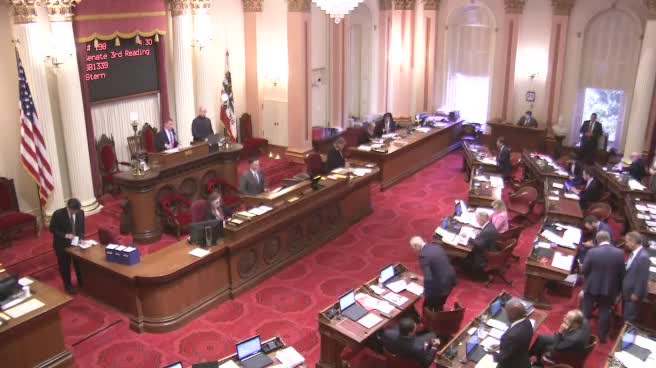 2MIN
Senate Floor
 9MIN
Senate Standing Committee on Energy, Utilities and Communications
Bill Author

Bill Co-Author(s):