SB 1367: San Diego River Conservancy: San Diego Rivers Watershed Consortium Program.
- Session Year: 2017-2018
- House: Senate
- Latest Version Date: 2018-09-23
Existing law establishes the San Diego River Conservancy to acquire and direct the management of specified public lands in the San Diego River area, as defined, and prescribes the management, powers, and duties of the conservancy. Existing law establishes the San Diego River Conservancy Fund, and requires that moneys in the fund be available, upon appropriation, for the purposes of the conservancy.
This bill would require the conservancy to establish the San Diego Rivers Watershed Consortium Program to create advisory panels to work cooperatively with local public agencies and other entities to identify potential project funding, including grant funding, to be used to restore the watersheds of the Otay River, the Sweetwater River, and the parts of the Tijuana River within the state, and to improve access to public lands. The bill would require the conservancy, in administering the program, to create 3 advisory panels representing watersheds within the area, comprised of specified members, to offer advice, expertise, support, and service to the conservancy in those respective watershed areas. The bill would create the San Diego Rivers Watershed Consortium Program Account in the fund, and would authorize the conservancy, upon appropriation, to expend moneys from the account for purposes of the program.
Existing law, on or before January 1, 2017, and on or before January 1 of every odd-numbered year thereafter, requires the conservancy to prepare and submit to the Governor and the Legislature a report that includes specified information and recommendations relating to projects funded or undertaken by the conservancy, as provided.
This bill would additionally require that the report include a summary of the program established by the bill.
Existing law establishes the San Diego River Conservancy to acquire and direct the management of specified public lands in the San Diego River area, as defined, and prescribes the management, powers, and duties of the conservancy. Existing law establishes the San Diego River Conservancy Fund, and requires that moneys in the fund be available, upon appropriation, for the purposes of the conservancy.
This bill would require the conservancy to establish the San Diego Rivers Watershed Consortium Program to create advisory panels to work cooperatively with local public agencies and other entities to identify potential project funding, including grant funding, to be used to restore the watersheds of the Otay River, the Sweetwater River, and the parts of the Tijuana River, River within the state, and to improve access to public lands. The bill would require the conservancy, in administering the program, to create 3 advisory panels representing watersheds within the area, comprised of specified members, to offer advice, expertise, support, and service to the conservancy in those respective watershed areas. The bill would create the San Diego Rivers Watershed Consortium Program Account in the fund, and would authorize the conservancy, upon appropriation, to expend moneys from the account for purposes of the program.
Existing law, on or before January 1, 2017, and on or before January 1 of every odd-numbered year thereafter, requires the conservancy to prepare and submit to the Governor and the Legislature a report that includes specified information and recommendations relating to projects funded or undertaken by the conservancy, as provided.
This bill would additionally require that the report include a summary of the program established by the bill.
Existing law establishes the San Diego River Conservancy to acquire and direct the management of specified public lands in the San Diego River area, as defined, and prescribes the management, powers, and duties of the conservancy. Existing law establishes the San Diego River Conservancy Fund, and requires that moneys in the fund be available, upon appropriation, for the purposes of the conservancy.
This bill would require the conservancy to establish the San Diego Rivers Watershed Consortium Program to create advisory bodies panels to work cooperatively with local public agencies and other entities to identify potential project funding, including grant funding, to be used to restore and enhance natural, historical, cultural, educational, and recreational resources along the San Diego River and its watersheds. the watersheds of Otay River, the Sweetwater River, and the Tijuana River, and to improve access to public lands. The bill would require the conservancy, in administering the program, to create 3 advisory panels representing watersheds within the area, comprised of specified members, to offer advice, expertise, support, and service to the conservancy in those respective watershed areas. The bill would create the San Diego Rivers Watershed Consortium Program Account in the fund, and would authorize the conservancy, upon appropriation, to expend moneys from the account for purposes of the program.
Existing law establishes the San Diego River Conservancy to acquire and direct the management of specified public lands in the San Diego River area, as defined, and prescribes the management, powers, and duties of the conservancy. Existing law establishes the San Diego River Conservancy Fund, and requires that moneys in the fund be available, upon appropriation, for the purposes of the conservancy.
This bill would require the conservancy to establish the San Diego Rivers Watershed Consortium Program to create advisory bodies to work cooperatively with local public agencies and other entities to identify potential project funding, including grant funding, to be used to restore and enhance natural, historical, cultural, educational, and recreational resources along the San Diego River and its watersheds. The bill would require the conservancy, in administering the program, to create 3 advisory panels representing watersheds within the area, comprised of specified members, to offer advice, expertise, support, and service to the conservancy in those respective watershed areas. The bill would create the San Diego Rivers Watershed Consortium Program Account in the fund, and would authorize the conservancy, upon appropriation, to expend moneys from the account for purposes of the program.
The conservancy may do any of the following to assist in the decisionmaking process for the purposes of this division:
(a)Establish advisory boards, panels, or committees.
(b)Engage in public outreach.
SEC. 2.Section 32643 of the Public Resources Code is amended to read:32643.The conservancy may do any of the following to provide necessary services:
(a)Select and hire private consultants or contractors.
(b)Enter into memorandums of understanding with state and local public agencies, and other entities and organizations.
(c)Enter into a joint powers agreement pursuant to the Joint Exercise of Powers Act, as described in Chapter 5 (commencing with Section 6500) of Division 7 of Title 1 of the Government Code.
SEC. 3.Section 32656.1 of the Public Resources Code is amended to read:32656.1.(a)On or before January 1, 2017, and on or before January 1 of every odd-numbered year thereafter, the conservancy shall prepare and submit to the Governor and the Legislature a report that includes all of the following:
(1)A description of, and the amount of money expended for, every project funded or undertaken by the conservancy, directly or by an entity under the direction of the conservancy, during the two years prior to the date of the report.
(2)A description of the progress made in accomplishing the purposes of this division during the two years prior to the date of the report.
(3)Recommendations regarding legislative action that may be necessary to provide funding or other resources to enable the conservancy to more effectively and efficiently carry out its mission, goals, and objectives.
(4)A summary of the program established in Chapter 4.5 (commencing with Section 32659).
(b)The report shall be submitted to the Legislature in the manner provided in Section 9795 of the Government Code.
SEC. 4.Chapter 4.5 (commencing with Section 32659) is added to Division 22.9 of the Public Resources Code, to read:4.5.San Diego Rivers Watershed Consortium32659.The Legislature finds and declares all of the following:
(a)The San Diego Rivers Watershed Consortium Program will establish advisory panels for the designated watersheds of the Otay River, the Sweetwater River, and part of the Tijuana River in southern San Diego County.
(b)The San Diego region is home to one of the fastest growing populations in the nation, which is expected to grow from its current 3,300,000 people to 4,000,000 people by 2050.
(c)Residents in the southern region of San Diego County do not all have direct access to green space and public lands. Park poor communities are highly concentrated south of the San Diego River watershed. One benefit of living in the San Diego region is year-round access to the outdoors and the ability to improve the health and well-being of the general public by improving public access to public lands.
(d)The watersheds of the Otay River, Sweetwater River, and Tijuana River are extraordinary natural resources of statewide significance that have been subject to intense development and are in need of conservation, restoration, protection, including protection of sensitive species, improved water quality, and improved overall health of the ecosystems of the individual watersheds.
(e)The establishment of the program will enable the state to bring together multiple stakeholders to assess the needs of each watersheds ecosystem and collaborate on watershedwide programs that conserve, restore, and protect natural, historical and cultural resources, wildlife, water quality, and natural floodwater conveyance, and that enhance the overall health of each watershed for beneficial uses, including public enjoyment of recreation and education.
(f)The state has an interest in working with organizations to protect, enhance, and restore the natural, historical, cultural, educational, and recreational resources in rivers and watersheds located in the southern region of the County of San Diego.
(g)The intent of the program is to protect and preserve the health of the watershed for each river within the consortium including streams, rivers, wetlands, estuaries, and the diverse natural habitats that are home to plants and animals and that provide educational and recreational opportunities for the public to steward the regions globally unique and diverse plants and wildlife for future generations to enjoy.
32659.1.The following terms have the following meanings:
(a)Account means the San Diego Rivers Watershed Consortium Account established in the San Diego River Conservancy Fund pursuant to subdivision (a) of Section 32659.8.
(b)Consortium watershed area means lands located within the watersheds of the Otay River, the Sweetwater River, and the parts of the Tijuana River within the state, from the headwaters of each river to the Pacific Ocean.
(c)Program means the San Diego Rivers Watershed Consortium Program established pursuant to this chapter.
32659.2.The conservancy shall establish the San Diego Rivers Watershed Consortium Program to create advisory panels to work cooperatively with local public agencies and other entities to identify potential project funding, including grant funding, to be used to restore the consortium watershed area and to improve public access to public lands.
32659.3.(a)The conservancy shall create an advisory panel for each watershed to offer advice, expertise, support, or service to each watershed without compensation in accordance with the following requirements:
(1)The conservancy shall solicit the names of persons to serve as members of each panel from organizations and entities representing watersheds in the consortium watershed area, and those persons shall be appointed to serve on the panel representing the area in which the organization or entity is located.
(2)The members of the advisory panels shall serve on a voluntary basis and without reimbursement from the conservancy.
(3)Each member of an advisory panel shall serve for a two-year term.
(4)A members service as a member of an advisory panel shall end at the time that person ceases to be employed by, or serve as a representative of, the appointing organization.
(5)Advisory panels shall meet at least twice each calendar year at one or more locations within the County of San Diego.
(6)Meetings of the advisory panels shall be open to the public and subject to the Bagley-Keene Open Meeting Act (Article 9 (commencing with Section 11120) of Chapter 1 of Part 1 of Division 3 of Title 2 of the Government Code).
(b)In appointing members and facilitating the work of the advisory panels, the conservancy shall be subject to all laws, regulations, and general and specific plans of the legislative body of the city or county with geographic jurisdiction over the specified watershed areas.
(c)The conservancy shall prepare an annual report on the status of the meetings of the advisory panels, which shall be included in the executive officer of the conservancys report to the governing board.
32659.4.The conservancy shall establish the following advisory panels:
(a)The Otay River Watershed Advisory Panel, comprised of the following members:
(1)A conservancy board member or his or her designee.
(2)A representative of the City of Chula Vista, appointed by its city council.
(3)A representative of the City of Imperial Beach, appointed by its city council.
(4)A representative of the City of National City, appointed by its city council.
(5)A representative of the City of San Diego, appointed by its city council.
(6)A representative of the County of San Diego, appointed by the Board of Supervisors of San Diego County.
(7)A representative of the San Diego Regional Water Quality Board, appointed by that board.
(8)A representative of the Department of Parks and Recreation, appointed by the Director of Parks and Recreation.
(9)A representative of the Kumeyaay Diegueno Land Conservancy, appointed by that conservancy.
(10)A representative of a university or college in the San Diego area, appointed by the president of the university or college.
(11)A representative of the San Diego Unified Port District, appointed by the governing board of the port district.
(b)The Sweetwater River Watershed Advisory Panel, comprised of the following members:
(1)A conservancy board member or his or her designee.
(2)A representative of the City of La Mesa, appointed by its city council.
(3)A representative of the City of Lemon Grove, appointed by its city council.
(4)A representative of the City of Chula Vista, appointed by its city council.
(5)A representative of the City of San Diego, appointed by its city council.
(6)A representative of the County of San Diego, appointed by the Board of Supervisors of the San Diego County.
(7)A representative of the San Diego Regional Water Quality Control Board, appointed by that board.
(8)A representative of the Department of Parks and Recreation, appointed by the Director of Parks and Recreation.
(9)A representative of the Kumeyaay Diegueno Land Conservancy, appointed by the governing board of that conservancy.
(10)A representative of a university or college in the San Diego area, appointed by the president of the university or college.
(11)A representative of the San Diego Unified Port District, appointed by the governing board of the port district.
(12)A representative of the City of National City, appointed by its city council.
(13)A representative of the Sweetwater Authority, appointed by the authority.
(c)The Tijuana River Watershed Advisory Panel, comprised of the following members:
(1)A conservancy board member, or his or her designee.
(2)A representative of the City of Imperial Beach, appointed by its city council.
(3)A representative of the City of San Diego, appointed by its city council.
(4)A representative of the County of San Diego, appointed by the Board of Supervisors of San Diego County.
(5)A representative of the San Diego Regional Water Quality Control Board, appointed by that board.
(6)A representative of the Department of Parks and Recreation, appointed by the Director of Parks and Recreation.
(7)A representative of the Kumeyaay Diegueno Land Conservancy, appointed by that conservancy.
(8)A representative of a university or college in the San Diego area, appointed by the president of the university or college.
(9)A representative of the San Diego Unified Port District, appointed by the governing board of the port district.
32659.5.The advisory panels appointed pursuant to Section 32659.4 shall each prepare a strategic plan containing all of the following:
(a)A system for prioritizing each designated river watershed that shall give priority to watershedwide projects that create and expand opportunities to protect, enhance, and restore the natural, historical, cultural, educational, and recreational resources of the watershed.
(b)A summary of the policies and priorities for each river watershed.
(c)A description of each watershed identifying underused, existing public open spaces, trails, and other facilities, and recommendations of ways to provide better public use and enjoyment in the designated areas.
(d)A plan for implementing the program in conformance with all related general and specific plans and zoning regulations of the local and regional municipalities within each watershed.
32659.6.The conservancy may do all of the following in implementing the program:
(a)Undertake site improvement projects within the consortium watershed area.
(b)Provide for public access within the consortium watershed area.
(c)Provide for restoration and rehabilitation within the consortium watershed area.
(d)Undertake projects directly and award grants to public agencies, Native American Indian tribes, nonprofit organizations, and joint powers authorities to help achieve the intent of the program.
(e)Upgrade deteriorating facilities and construct new facilities as needed for outdoor recreation, natural education and interpretation, and resource protection within the consortium watershed area.
(f)Provide assistance to each advisory panel established pursuant to this chapter.
32659.7.Notwithstanding any other law, the conservancy shall not take any of the following actions:
(a)Exercise the power of eminent domain.
(b)Manage, regulate, or control the use of any land owned or leased by another public agency, except as provided pursuant to a written agreement with that public agency.
(c)Levy a tax.
(d)Take any action that interferes with, conflicts with, impedes, adversely impacts, or prevents the planning and implementation of projects and programs contained in adopted local or community plans.
32659.8.(a)The San Diego Rivers Watershed Consortium Program Account is hereby created in the San Diego River Conservancy Fund. Moneys in the account shall accrue interest and be available, upon appropriation by the Legislature, to the conservancy for expenditure for the purposes of this chapter.
(b)(1)All funds received pursuant to this chapter shall be deposited in the account.
(2)The conservancy may apply for and accept grants, gifts, donations, subventions, rent, royalties, and other assistance from public and private sources on behalf of the program.
(3)The conservancy may also accept goods or services contributed to it by a public agency, private entity, or person and, upon receipt, may use the goods or services, for program purposes.
32659.9.The conservancy shall administer funds appropriated to it for the program and may expend those funds for grants, goods, services, control and removal of invasive species, capital improvements, support of the programs operations, and to carry out the programs intent and purpose.
The conservancy may do any of the following to assist in the decisionmaking process for the purposes of this division:
(a)Establish advisory boards, panels, or committees.
(b)Engage in public outreach.
SEC. 2.Section 32643 of the Public Resources Code is amended to read:32643.The conservancy may do any of the following to provide necessary services:
(a)Select and hire private consultants or contractors.
(b)Enter into memorandums of understanding with state and local public agencies, and other entities and organizations.
(c)Enter into a joint powers agreement pursuant to the Joint Exercise of Powers Act, as described in Chapter 5 (commencing with Section 6500) of Division 7 of Title 1 of the Government Code.
SEC. 3.Section 32656.1 of the Public Resources Code is amended to read:32656.1.(a)On or before January 1, 2017, and on or before January 1 of every odd-numbered year thereafter, the conservancy shall prepare and submit to the Governor and the Legislature a report that includes all of the following:
(1)A description of, and the amount of money expended for, every project funded or undertaken by the conservancy, directly or by an entity under the direction of the conservancy, during the two years prior to the date of the report.
(2)A description of the progress made in accomplishing the purposes of this division during the two years prior to the date of the report.
(3)Recommendations regarding legislative action that may be needed necessary to provide funding or other resources to enable the conservancy to more effectively and efficiently carry out its mission, goals, and objectives.
(4)A summary of the program established in Chapter 4.5 (commencing with Section 32659).
(b)The report shall be submitted to the Legislature in the manner provided in Section 9795 of the Government Code.
SEC. 4.Chapter 4.5 (commencing with Section 32659) is added to Division 22.9 of the Public Resources Code, to read:4.5.San Diego Rivers Watershed Consortium32659.The Legislature finds and declares all of the following:
(a)The San Diego Rivers Watershed Consortium Program will establish advisory panels for the designated watersheds of the Otay River, the Sweetwater River, and part of the Tijuana River in southern San Diego County.
(b)The San Diego region is home to one of the fastest growing populations in the nation, which is expected to grow from its current 3,300,000 people to 4,000,000 people by 2050.
(c)Residents in the southern region of San Diego County do not all have direct access to green space and public lands. Park poor communities are highly concentrated south of the San Diego River watershed. One benefit of living in the San Diego region is year-round access to the outdoors and the ability to improve the health and well-being of the general public by improving public access to public lands.
(d)The watersheds of the Otay River, Sweetwater River, and Tijuana River are extraordinary natural resources of statewide significance that have been subject to intense development and are in need of conservation, restoration, protection, including protection of sensitive species, improved water quality, and improved overall health of the ecosystems of the individual watersheds.
(e)The establishment of the program will enable the state to bring together multiple stakeholders to assess the needs of each watersheds ecosystem and collaborate on watershedwide programs that conserve, restore, and protect natural, historical and cultural resources, wildlife, water quality, and natural floodwater conveyance, and that enhance the overall health of each watershed for beneficial uses, including public enjoyment of recreation and education.
(f)The state has an interest in working with organizations to protect, enhance, and restore the natural, historical, cultural, educational, and recreational resources in rivers and watersheds located in the southern region of the County of San Diego.
(g)The intent of the program is to protect and preserve the health of the watershed for each river within the consortium including streams, rivers, wetlands, estuaries, and the diverse natural habitats that are home to plants and animals and that provide educational and recreational opportunities for the public to steward the regions globally unique and diverse plants and wildlife for future generations to enjoy.
32659.1.The following terms have the following meanings:
(a)Account means the San Diego Rivers Watershed Consortium Account established in the San Diego River Conservancy Fund pursuant to subdivision (a) of Section 32659.8.
(b)Consortium watershed area means lands located within the watersheds of the Otay River, the Sweetwater River, and the parts of the Tijuana River within the state, from the headwaters of each river to the Pacific Ocean.
(c)Program means the San Diego Rivers Watershed Consortium Program established pursuant to this chapter.
32659.2.The conservancy shall establish the San Diego Rivers Watershed Consortium Program to create advisory panels to work cooperatively with local public agencies and other entities to identify potential project funding, including grant funding, to be used to restore the consortium watershed area and to improve public access to public lands.
32659.3.(a)The conservancy shall create an advisory panel for each watershed to offer advice, expertise, support, or service to each watershed without compensation in accordance with the following requirements:
(1)The conservancy shall solicit the names of persons to serve as members of each panel from organizations and entities representing watersheds in the consortium watershed area, and those persons shall be appointed to serve on the panel representing the area in which the organization or entity is located.
(2)The members of the advisory panels shall serve on a voluntary basis and without reimbursement from the conservancy.
(3)Each member of an advisory panel shall serve for a two-year term.
(4)A members service as a member of an advisory panel shall end at the time that person ceases to be employed by, or serve as a representative of, the appointing organization.
(5)Advisory panels shall meet at least twice each calendar year at one or more locations within the County of San Diego.
(6)Meetings of the advisory panels shall be open to the public and subject to the Bagley-Keene Open Meeting Act (Article 9 (commencing with Section 11120) of Chapter 1 of Part 1 of Division 3 of Title 2 of the Government Code).
(b)In appointing members and facilitating the work of the advisory panels, the conservancy shall be subject to all laws, regulations, and general and specific plans of the legislative body of the city or county with geographic jurisdiction over the specified watershed areas.
(c)The conservancy shall prepare an annual report on the status of the meetings of the advisory panels, which shall be included in the executive officer of the conservancys report to the governing board.
32659.4.The conservancy shall establish the following advisory panels:
(a)The Otay River Watershed Advisory Panel, comprised of the following members:
(1)A conservancy board member or his or her designee.
(2)A representative of the City of Chula Vista, appointed by its city council.
(3)A representative of the City of Imperial Beach, appointed by its city council.
(4)A representative of the City of National City, appointed by its city council.
(5)A representative of the City of San Diego, appointed by its city council.
(6)A representative of the County of San Diego, appointed by the Board of Supervisors of San Diego County.
(7)A representative of the San Diego Regional Water Quality Board, appointed by that board.
(8)A representative of the Department of Parks and Recreation, appointed by the Director of Parks and Recreation.
(9)A representative of the Kumeyaay Diegueno Land Conservancy, appointed by that conservancy.
(10)A representative of a university or college in the San Diego area, appointed by the president of the university or college.
(11)A representative of the San Diego Unified Port District, appointed by the governing board of the port district.
(b)The Sweetwater River Watershed Advisory Panel, comprised of the following members:
(1)A conservancy board member or his or her designee.
(2)A representative of the City of La Mesa, appointed by its city council.
(3)A representative of the City of Lemon Grove, appointed by its city council.
(4)A representative of the City of Chula Vista, appointed by its city council.
(5)A representative of the City of San Diego, appointed by its city council.
(6)A representative of the County of San Diego, appointed by the Board of Supervisors of the San Diego County.
(7)A representative of the San Diego Regional Water Quality Control Board, appointed by that board.
(8)A representative of the Department of Parks and Recreation, appointed by the Director of Parks and Recreation.
(9)A representative of the Kumeyaay Diegueno Land Conservancy, appointed by the governing board of that conservancy.
(10)A representative of a university or college in the San Diego area, appointed by the president of the university or college.
(11)A representative of the San Diego Unified Port District, appointed by the governing board of the port district.
(12)A representative of the City of National City, appointed by its city council.
(13)A representative of the Sweetwater Authority, appointed by the authority.
(c)The Tijuana River Watershed Advisory Panel, comprised of the following members:
(1)A conservancy board member, or his or her designee.
(2)A representative of the City of Imperial Beach, appointed by its city council.
(3)A representative of the City of San Diego, appointed by its city council.
(4)A representative of the County of San Diego, appointed by the Board of Supervisors of San Diego County.
(5)A representative of the San Diego Regional Water Quality Control Board, appointed by that board.
(6)A representative of the Department of Parks and Recreation, appointed by the Director of Parks and Recreation.
(7)A representative of the Kumeyaay Diegueno Land Conservancy, appointed by that conservancy.
(8)A representative of a university or college in the San Diego area, appointed by the president of the university or college.
(9)A representative of the San Diego Unified Port District, appointed by the governing board of the port district.
32659.5.The advisory panels appointed pursuant to Section 32659.4 shall each prepare a strategic plan containing all of the following:
(a)A system for prioritizing each designated river watershed that shall give priority to watershedwide projects that create and expand opportunities to protect, enhance, and restore the natural, historical, cultural, educational, and recreational resources of the watershed.
(b)A summary of the policies and priorities for each river watershed.
(c)A description of each watershed identifying underused, existing public open spaces, trails, and other facilities, and recommendations of ways to provide better public use and enjoyment in the designated areas.
(d)A plan for implementing the program in conformance with all related general and specific plans and zoning regulations of the local and regional municipalities within each watershed.
32659.6.The conservancy may do all of the following in implementing the program:
(a)Undertake site improvement projects within the consortium watershed area.
(b)Provide for public access within the consortium watershed area.
(c)Provide for restoration and rehabilitation within the consortium watershed area.
(d)Undertake projects directly and award grants to public agencies, Native American Indian tribes, nonprofit organizations, and joint powers authorities to help achieve the intent of the program.
(e)Upgrade deteriorating facilities and construct new facilities as needed for outdoor recreation, natural education and interpretation, and resource protection within the consortium watershed area.
(f)Provide assistance to each advisory panel established pursuant to this chapter.
32659.7.Notwithstanding any other law, the conservancy shall not take any of the following actions:
(a)Exercise the power of eminent domain.
(b)Manage, regulate, or control the use of any land owned or leased by another public agency, except as provided pursuant to a written agreement with that public agency.
(c)Levy a tax.
(d)Take any action that interferes with, conflicts with, impedes, adversely impacts, or prevents the planning and implementation of projects and programs contained in adopted local or community plans.
32659.8.(a)The San Diego Rivers Watershed Consortium Program Account is hereby created in the San Diego River Conservancy Fund. Moneys in the account shall accrue interest and be available, upon appropriation by the Legislature, to the conservancy for expenditure for the purposes of this chapter.
(b)(1)All funds received pursuant to this chapter shall be deposited in the account.
(2)The conservancy may apply for and accept grants, gifts, donations, subventions, rent, royalties, and other assistance from public and private sources on behalf of the program.
(3)The conservancy may also accept goods or services contributed to it by a public agency, private entity, or person and, upon receipt, may use the goods or services, for program purposes.
32659.9.The conservancy shall administer funds appropriated to it for the program and may expend those funds for grants, goods, services, control and removal of invasive species, capital improvements, support of the programs operations, and to carry out the programs intent and purpose.
The conservancy may do any of the following to assist in the decisionmaking process for the purposes of this division:
(a)Establish advisory boards, panels, or committees.
(b)Engage in public outreach.
SEC. 2.Section 32643 of the Public Resources Code is amended to read:32643.The conservancy may do any of the following to provide necessary services:
(a)Select and hire private consultants or contractors.
(b)Enter into memorandums of understanding with state and local public agencies, and other entities and organizations.
(c)Enter into a joint powers agreement pursuant to the Joint Exercise of Powers Act, as described in Chapter 5 (commencing with Section 6500) of Division 7 of Title 1 of the Government Code.
SEC. 3.Section 32656.1 of the Public Resources Code is amended to read:32656.1.(a)On or before January 1, 2017, and on or before January 1 of every odd-numbered year thereafter, the conservancy shall prepare and submit to the Governor and the Legislature a report that includes all of the following:
(1)A description of, and the amount of money expended for, every project funded or undertaken by the conservancy, directly or by an entity under the direction of the conservancy, during the two years prior to the date of the report.
(2)A description of the progress made in accomplishing the purposes of this division during the two years prior to the date of the report.
(3)Recommendations regarding legislative action that may be needed to provide funding or other resources to enable the conservancy to more effectively and efficiently carry out its mission, goals, and objectives.
(4)A summary of the program established in Chapter 4.5 (commencing with Section 32659).
(b)The report shall be submitted to the Legislature in the manner provided in Section 9795 of the Government Code.
SEC. 3. SEC. 4.Chapter 4.5 (commencing with Section 32659) is added to Division 22.9 of the Public Resources Code, to read:4.5.San Diego Rivers Watershed Consortium32659.The Legislature finds and declares all of the following:
(a)The San Diego Rivers Watershed Consortium Program will establish advisory panels for the designated watersheds of the Otay River, the Sweetwater River, and part of the Tijuana River in southern San Diego County.
(b)The San Diego region is home to one of the fastest growing populations in the nation, which is expected to grow from its current 3,300,000 people to 4,000,000 people by 2050.
(c)Residents in the southern region of San Diego County do not all have direct access to green space and public lands. Park poor communities are highly concentrated south of the San Diego River watershed. One benefit of living in the San Diego region is year-round access to the outdoors and the ability to improve the health and well-being of the general public by improving public access to public lands.
(d)The watersheds of the Otay River, Sweetwater River, and Tijuana River are extraordinary natural resources of statewide significance that have been subject to intense development and are in need of conservation, restoration, protection, including protection of sensitive species, improved water quality, and improved overall health of the ecosystems of the individual watersheds.
(e)The establishment of the program will enable the state to bring together multiple stakeholders to assess the needs of each watersheds ecosystem and collaborate on watershedwide programs that conserve, restore, and protect natural, historical and cultural resources, wildlife, water quality, and natural floodwater conveyance, and that enhance the overall health of each watershed for beneficial uses, including public enjoyment of recreation and education.
(f)The state has an interest in working with organizations to protect, enhance, and restore the natural, historical, cultural, educational, and recreational resources in rivers and watersheds located in the southern region of the County of San Diego.
(g)The intent of the program is to protect and preserve the health of the watershed for each river within the consortium including streams, rivers, wetlands, estuaries, and the diverse natural habitats that are home to plants and animals and that provide educational and recreational opportunities for the public to steward the regions globally unique and diverse plants and wildlife for future generations to enjoy.
32659.1.The following terms have the following meanings:
(a)Account means the San Diego Rivers Watershed Consortium Account established in the San Diego River Conservancy Fund pursuant to subdivision (a) of Section 32659.8.
(b)Consortium watershed area means lands located within the watersheds of the Otay River, the Sweetwater River, and the parts of the Tijuana River, River within the state, from the headwaters of each river to the Pacific Ocean.
(c)Program means the San Diego Rivers Watershed Consortium Program established pursuant to this chapter.
32659.2.The conservancy shall establish the San Diego Rivers Watershed Consortium Program to create advisory panels to work cooperatively with local public agencies and other entities to identify potential project funding, including grant funding, to be used to restore the watersheds of the Otay River, the Sweetwater River, and the Tijuana River, consortium watershed area and to improve public access to public lands.
32659.3.(a)The conservancy shall create an advisory panel for each watershed to offer advice, expertise, support, or service to each watershed without compensation in accordance with the following requirements:
(1)The conservancy shall solicit the names of persons to serve as members of each panel from organizations and entities representing watersheds in the consortium watershed area, and those persons shall be appointed to serve on the panel representing the area in which the organization or entity is located.
(2)The members of the advisory panels shall serve on a voluntary basis and without reimbursement from the conservancy.
(3)Each member of an advisory panel shall serve for a two-year term.
(4)A members service as a member of an advisory panel shall end at the time that person ceases to be employed by, or serve as a representative of, the appointing organization.
(5)Advisory panels shall meet at least twice each calendar year at one or more locations within the County of San Diego.
(6)Meetings of the advisory panels shall be open to the public and subject to the Bagley-Keene Open Meeting Act (Article 9 (commencing with Section 11120) of Chapter 1 of Part 1 of Division 3 of Title 2 of the Government Code).
(b)In appointing members and facilitating the work of the advisory panels, the conservancy shall be subject to all laws, regulations, and general and specific plans of the legislative body of the city or county with geographic jurisdiction over the specified watershed areas.
(c)The conservancy shall prepare an annual report on the status of the meetings of the advisory panels, which shall be included in the executive officer of the conservancys report to the governing board.
(d)A summary of the programs actions and activities shall also be included in the conservancys biannual report to the Legislature.32659.4.The conservancy shall establish the following advisory panels:
(a)The Otay River Watershed Advisory Panel, comprised of the following members:
(1)A conservancy board member or his or her designee.
(2)A representative of the City of Chula Vista, appointed by its city council.
(3)A representative of the City of Imperial Beach, appointed by its city council.
(4)A representative of the City of National City, appointed by its city council.
(5)A representative of the City of San Diego, appointed by its city council.
(6)A representative of the County of San Diego, appointed by the Board of Supervisors of San Diego County.
(7)A representative of the San Diego Regional Water Quality Board, appointed by that board.
(8)A representative of the Department of Parks and Recreation, appointed by the Director of Parks and Recreation.
(9)A representative of the Kumeyaay Diegueno Land Conservancy, appointed by that conservancy.
(10)A representative of a university or college in the San Diego area, appointed by the president of the university or college.
(11)A representative of the San Diego Unified Port District, appointed by the governing board of the port district.
(b)The Sweetwater River Watershed Advisory Panel, comprised of the following members:
(1)A conservancy board member or his or her designee.
(2)A representative of the City of La Mesa, appointed by its city council.
(3)A representative of the City of Lemon Grove, appointed by its city council.
(4)A representative of the City of Chula Vista, appointed by its city council.
(5)A representative of the City of San Diego, appointed by its city council.
(6)A representative of the County of San Diego, appointed by the Board of Supervisors of the San Diego County.
(7)A representative of the San Diego Regional Water Quality Control Board, appointed by that board.
(8)A representative of the Department of Parks and Recreation, appointed by the Director of Parks and Recreation.
(9)A representative of the Kumeyaay Diegueno Land Conservancy, appointed by the governing board of that conservancy.
(10)A representative of a university or college in the San Diego area, appointed by the president of the university or college.
(11)A representative of the San Diego Unified Port District, appointed by the governing board of the port district.
(12)A representative of the City of National City, appointed by its city council.
(13)A representative of the Sweetwater Authority, appointed by the authority.
(c)The Tijuana River Watershed Advisory Panel, comprised of the following members:
(1)A conservancy board member, or his or her designee.
(2)A representative of the City of Imperial Beach, appointed by its city council.
(3)A representative of the City of San Diego, appointed by its city council.
(4)A representative of the County of San Diego, appointed by the Board of Supervisors of San Diego County.
(5)A representative of the San Diego Regional Water Quality Control Board, appointed by that board.
(6)A representative of the Department of Parks and Recreation, appointed by the Director of Parks and Recreation.
(7)A representative of the Kumeyaay Diegueno Land Conservancy, appointed by that conservancy.
(8)A representative of a university or college in the San Diego area, appointed by the president of the university or college.
(9)A representative of the San Diego Unified Port District, appointed by the governing board of the port district.
32659.5.The advisory panels appointed pursuant to Section 32659.4 shall each prepare a strategic plan containing all of the following:
(a)A system for prioritizing each designated river watershed that shall give priority to watershedwide projects that create and expand opportunities to protect, enhance, and restore the natural, historical, cultural, educational, and recreational resources of the watershed.
(b)A summary of the policies and priorities for each river watershed.
(c)A description of each watershed identifying underused, existing public open spaces, trails, and other facilities, and recommendations of ways to provide better public use and enjoyment in the designated areas.
(d)A plan for implementing the program in conformance with all related general and specific plans and zoning regulations of the local and regional municipalities within each watershed.
32659.6.The conservancy may do all of the following in implementing the program:
(a)Undertake site improvement projects. projects within the consortium watershed area.
(b)Provide for public access. access within the consortium watershed area.
(c)Provide for restoration and rehabilitation. rehabilitation within the consortium watershed area.
(d)Undertake projects directly and award grants to public agencies, Native American Indian tribes, nonprofit organizations, and joint powers authorities to help achieve the intent of the program.
(e)Upgrade deteriorating facilities and construct new facilities as needed for outdoor recreation, natural education and interpretation, and resource protection. protection within the consortium watershed area.
(f)Provide assistance to each advisory panel established pursuant to this chapter.
32659.7.Notwithstanding any other law, the conservancy shall not take any of the following actions:
(a)Exercise the power of eminent domain.
(b)Manage, regulate, or control the use of any land owned or leased by another public agency, except as provided pursuant to a written agreement with that public agency.
(c)Levy a tax.
(d)Take any action that interferes with, conflicts with, impedes, adversely impacts, or prevents the planning and implementation of projects and programs contained in adopted local or community plans.
32659.8.(a)The San Diego Rivers Watershed Consortium Program Account is hereby created in the San Diego River Conservancy Fund. Moneys in the account shall accrue interest and be available, upon appropriation by the Legislature, to the conservancy for expenditure for the purposes of this chapter.
(b)(1)All funds received pursuant to this chapter shall be deposited in the account.
(2)The conservancy may apply for and accept grants, gifts, donations, subventions, rent, royalties, and other assistance from public and private sources on behalf of the program.
(3)The conservancy may also accept goods or services contributed to it by a public agency, private entity, or person and, upon receipt, may use the goods or services, for program purposes.
32659.9.The conservancy shall administer funds appropriated to it for the program and may expend those funds for grants, goods, services, control and removal of invasive species, capital improvements, support of the programs operations, and to carry out the programs intent and purpose.
REVISIONS: HeadingLine 2.The conservancy may do any of the following to assist in the decisionmaking process for the purposes of this division:
(a)Establish advisory boards, panels, or committees.
(b)Engage in public outreach.
SEC. 2.Section 32643 of the Public Resources Code is amended to read:32643.The conservancy may do any of the following to provide necessary services:
(a)Select and hire private consultants or contractors.
(b)Enter into memorandums of understanding with state and local public agencies, and other entities and organizations.
(c)Enter into a joint powers agreement pursuant to the Joint Exercise of Powers Act, as described in Chapter 5 (commencing with Section 6500) of Division 7 of Title 1 of the Government Code.
SEC. 3.Chapter 4.5 (commencing with Section 32659) is added to Division 22.9 of the Public Resources Code, to read:4.5.San Diego Rivers Watershed Consortium32659.The Legislature finds and declares all of the following:
(a)The San Diego Rivers Watershed Consortium Program will establish advisory panels for the designated watersheds of the Sweetwater River, Otay River, the Sweetwater River, and part of the Tijuana River in southern San Diego County.
(b)The San Diego region is home to one of the fastest growing populations in the nation, which is expected to grow from its current 3,300,000 people to 4,000,000 people by 2050.
(c)Residents in the southern region of San Diego County do not all have direct access to green space and public lands. Park poor communities are highly concentrated south of the San Diego River watershed. One benefit of living in the San Diego region is year-round access to the outdoors and the ability to improve the health and well-being of the general public by improving public access to public lands.
(d)The watersheds of the Otay River, Sweetwater River, and Tijuana River are extraordinary natural resources of statewide significance that have been subject to intense development and are in need of conservation, restoration, protection, including protection of sensitive species, improved water quality, and improved overall health of the ecosystems of the individual watersheds.
(e)The establishment of the program will enable the state to bring together multiple stakeholders to assess the needs of each watersheds ecosystem and collaborate on watershedwide programs that conserve, restore, and protect natural, historical and cultural resources, wildlife, water quality, and natural floodwater conveyance, and that enhance the overall health of each watershed for beneficial uses, including public enjoyment of recreation and education.
(f)The state has an interest in working with organizations to protect, enhance, and restore the natural, historical, cultural, educational, and recreational resources in rivers and watersheds located in the southern region of the County of San Diego.
(g)The intent of the program is to protect and preserve the health of the watershed for each river within the consortium including streams, rivers, wetlands, estuaries, and the diverse natural habitats that are home to plants and animals and that provide educational and recreational opportunities for the public to steward the regions globally unique and diverse plants and wildlife for future generations to enjoy.
32659.1.The following terms have the following meanings:
(a)Account means the San Diego Rivers Watershed Consortium Account established in the San Diego River Conservancy Fund pursuant to subdivision (a) of Section 32659.8.
(b)Consortium watershed area means lands located within the watersheds of the Sweetwater River, the Otay River, the Sweetwater River, and parts of the Tijuana River, from the headwaters of each river to the Pacific Ocean.
(c)Program means the San Diego Rivers Watershed Consortium Program established pursuant to this chapter.
32659.2.The conservancy shall establish the San Diego Rivers Watershed Consortium Program to create advisory bodies panels to work cooperatively with local public agencies and other entities to identify potential project funding, including grant funding, to be used to restore and enhance natural, historical, cultural, educational, and recreational resources along the San Diego River and its watersheds the watersheds of the Otay River, the Sweetwater River, and the Tijuana River, and to improve public access to public lands.
32659.3.(a)The conservancy shall create an advisory panel for each watershed to offer advice, expertise, support, or service to each watershed without compensation in accordance with the following requirements:
(1)The conservancy shall solicit the names of persons to serve as members of each panel from organizations and entities representing watersheds in the consortium watershed area, and those persons shall be appointed to serve on the panel representing the area in which the organization or entity is located.
(2)The members of the advisory panels shall serve on a voluntary basis and without reimbursement from the conservancy.
(3)Each member of an advisory panel shall serve for a two-year term.
(4)A members service as a member of an advisory panel shall end at the time that person ceases to be employed by, or serve as a representative of, the appointing organization.
(5)Advisory panels shall meet at least twice each calendar year at one or more locations within the County of San Diego.
(6)Meetings of the advisory panels shall be open to the public and subject to the Bagley-Keene Open Meeting Act (Article 9 (commencing with Section 11120) of Chapter 1 of Part 1 of Division 3 of Title 2 of the Government Code).
(b)In appointing members and facilitating the work of the advisory panels, the conservancy shall be subject to all laws, regulations, and general and specific plans of the legislative body of the city or county with geographic jurisdiction over the specified watershed areas.
(c)The conservancy shall prepare an annual report on the status of the meetings of the advisory panels, which shall be included in the executive officer of the conservancys report to the governing board.
(d)A summary of the programs actions and activities shall also be included in the conservancys biannual report to the Legislature.
32659.4.The conservancy shall establish the following advisory panels:
(a)The Otay River Watershed Advisory Panel, comprised of the following members:
(1)A conservancy board member or his or her designee.
(2)A representative of the City of Chula Vista, appointed by its city council.
(3)A representative of the City of Imperial Beach, appointed by its city council.
(4)A representative of the City of National City, appointed by its city council.
(5)A representative of the City of San Diego, appointed by its city council.
(6)A representative of the County of San Diego, appointed by the Board of Supervisors of San Diego County.
(7)A representative of the San Diego Regional Water Quality Board, appointed by that board.
(8)A representative of the Department of Parks and Recreation, appointed by the Director of Parks and Recreation.
(9)A representative of the Kumeyaay Diegueno Land Conservancy, appointed by that conservancy.
(10)A representative of a university or college in the San Diego area, appointed by the president of the university or college.
(11)A representative of the San Diego Unified Port District, appointed by the governing board of the port district.
(a)(b)The Sweetwater River Watershed Advisory Panel, comprised of the following members:
(1)A conservancy board member or his or her designee.
(2)A representative of the City of La Mesa, appointed by its city council.
(3)A representative of the City of Lemon Grove, appointed by its city council.
(4)A representative of the City of Chula Vista, appointed by its city council.
(5)A representative of the City of San Diego, appointed by its city council.
(6)A representative of the County of San Diego, appointed by the Board of Supervisors of the San Diego County.
(7)A representative of the San Diego Regional Water Quality Control Board, appointed by that board.
(8)A representative of the Department of Parks and Recreation, appointed by the Director of Parks and Recreation.
(9)A representative of the Kumeyaay Diegueno Land Conservancy, appointed by the governing board of that conservancy.
(10)A representative of a university or college in the San Diego area, appointed by the president of the university or college.
(11)A representative of the San Diego Unified Port District, appointed by the governing board of the port district.
(b)The Otay River Watershed Advisory Panel, comprised of the following members: (1)A conservancy board member or his or her designee. (2)A representative of the City of Chula Vista, appointed by its city council. (3)A representative of the City of Imperial Beach, appointed by its city council (4)A representative of the City of National City, appointed by its city council. (5)A representative of the City of San Diego, appointed by its city council. (6)A representative of the County of San Diego, appointed by the Board of Supervisors of San Diego County. (7)A representative of the San Diego Regional Water Quality Control Board, appointed by that board. (8)A representative of the Department of Parks and Recreation, appointed by the Director of Parks and Recreation. (9)A representative of the Kumeyaay Diegueno Land Conservancy, appointed by that conservancy. (10)A representative of a university or college in the San Diego area, appointed by the president of the university or college. (11)A representative of the San Diego Unified Port District, appointed by the governing board of the port district.(12)A representative of the City of National City, appointed by its city council.
(13)A representative of the Sweetwater Authority, appointed by the authority.
(c)The Tijuana River Watershed Advisory Panel, comprised of the following members:
(1)A conservancy board member, or his or her designee.
(2)A representative of the City of Imperial Beach, appointed by its city council.
(3)A representative of the City of San Diego, appointed by its city council.
(4)A representative of the County of San Diego, appointed by the Board of Supervisors of San Diego County.
(5)A representative of the San Diego Regional Water Quality Control Board, appointed by that board.
(6)A representative of the Department of Parks and Recreation, appointed by the Director of Parks and Recreation.
(7)A representative of the Kumeyaay Diegueno Land Conservancy, appointed by that conservancy.
(8)A representative of a university or college in the San Diego area, appointed by the president of the university or college.
(9)A representative of the San Diego Unified Port District, appointed by the governing board of the port district.
32659.5.The advisory panels appointed pursuant to Section 32659.4 shall each prepare a strategic plan containing all of the following:
(a)A system for prioritizing each designated river watershed that shall give priority to watershedwide projects that create and expand opportunities to protect, enhance, and restore the natural, historical, cultural, educational, and recreational resources of the watershed.
(b)A summary of the policies and priorities for each river watershed.
(c)A description of each watershed identifying underused, existing public open spaces, trails, and other facilities, and recommendations of ways to provide better public use and enjoyment in the designated areas.
(d)A plan for implementing the program in conformance with all related general and specific plans and zoning regulations of the local and regional municipalities within each watershed.
32659.6.The conservancy may do all of the following in implementing the program:
(a)Undertake site improvement projects.
(b)Provide for public access.
(c)Provide for restoration and rehabilitation.
(d)Undertake projects directly and award grants to public agencies, Native American Indian tribes, nonprofit organizations, and joint powers authorities to help achieve the intent of the program.
(e)Upgrade deteriorating facilities and construct new facilities as needed for outdoor recreation, natural education and interpretation, and resource protection.
32659.7.Notwithstanding any other law, the conservancy shall not take any of the following actions:
(a)Exercise the power of eminent domain.
(b)Manage, regulate, or control the use of any land owned or leased by another public agency, except as provided pursuant to a written agreement with that public agency.
(c)Levy a tax.
(d)Take any action that interferes with, conflicts with, impedes, adversely impacts, or prevents the planning and implementation of projects and programs contained in adopted local or community plans.
32659.8.(a)The San Diego Rivers Watershed Consortium Program Account is hereby created in the San Diego River Conservancy Fund. Moneys in the account shall accrue interest and be available, upon appropriation by the Legislature, to the conservancy for expenditure for the purposes of this chapter.
(b)(1)All funds received pursuant to this chapter shall be deposited in the account.
(2)The conservancy may apply for and accept grants, gifts, donations, subventions, rent, royalties, and other assistance from public and private sources on behalf of the program.
(3)The conservancy may also accept goods or services contributed to it by a public agency, private entity, or person and, upon receipt, may use the goods or services, for program purposes.
32659.9.The conservancy shall administer funds appropriated to it for the program and may expend those funds for grants, goods, services, control and removal of invasive species, capital improvements, support of the programs operations, and to carry out the programs intent and purpose.
The conservancy may do any of the following to assist in the decisionmaking process for the purposes of this division:
(a)Establish advisory boards boards, panels, or committees.
(b)Engage in public outreach.
SEC. 2.Section 32643 of the Public Resources Code is amended to read:32643.The conservancy may do any of the following to provide necessary services:
(a)Select and hire private consultants or contractors.
(b)Enter into memorandums of understanding with state and local public agencies. agencies, and other entities and organizations.
(c)Enter into a joint powers agreement pursuant to the Joint Exercise of Powers Act, as described in Chapter 5 (commencing with Section 6500) of Division 7 of Title 1 of the Government Code.
SEC. 3.Chapter 4.5 (commencing with Section 32659) is added to Division 22.9 of the Public Resources Code, to read:4.5.San Diego Rivers Watershed Consortium32659.The Legislature finds and declares all of the following:
(a)The San Diego Rivers Watershed Consortium Program will establish advisory panels for the designated watersheds of the Sweetwater River, Otay River, and part of the Tijuana River in southern San Diego County.
(b)The San Diego region is home to one of the fastest growing populations in the nation, which is expected to grow from its current 3,300,000 people to 4,000,000 people by 2050.
(c)Residents in the southern region of San Diego County do not all have direct access to green space and public lands. Park poor communities are highly concentrated south of the San Diego River watershed. One benefit of living in the San Diego region is year-round access to the outdoors and the ability to improve the health and well-being of the general public by improving public access to public lands.
(d)The watersheds of the Otay River, Sweetwater River, and Tijuana River are extraordinary natural resources of statewide significance that have been subject to intense development and are in need of conservation, restoration, protection, including protection of sensitive species, improved water quality, and improved overall health of the ecosystems of the individual watersheds.
(e)The establishment of the program will enable the state to bring together multiple stakeholders to assess the needs of each watersheds ecosystem and collaborate on watershedwide programs that conserve, restore, and protect natural, historical and cultural resources, wildlife, water quality, and natural floodwater conveyance, and that enhance the overall health of each watershed for beneficial uses, including public enjoyment of recreation and education.
(f)The state has an interest in working with organizations to protect, enhance, and restore the natural, historical, cultural, educational, and recreational resources in rivers and watersheds located in the southern region of the County of San Diego.
(g)The intent of the program is to protect and preserve the health of the watershed for each river within the consortium including streams, rivers, wetlands, estuaries, and the diverse natural habitats that are home to plants and animals and that provide educational and recreational opportunities for the public to steward the regions globally unique and diverse plants and wildlife for future generations to enjoy.
32659.1.The following terms have the following meanings:
(a)Account means the San Diego Rivers Watershed Consortium Account established in the San Diego River Conservancy Fund pursuant to subdivision (a) of Section 32659.8.
(b)Consortium watershed area means lands located within the watersheds of the Sweetwater River, the Otay River, and parts of the Tijuana River, from the headwaters of each river to the Pacific Ocean.
(c)Program means the San Diego Rivers Watershed Consortium Program established pursuant to this chapter.
32659.2.The conservancy shall establish the San Diego Rivers Watershed Consortium Program to create advisory bodies to work cooperatively with local public agencies and other entities to identify potential project funding, including grant funding, to be used to restore and enhance natural, historical, cultural, educational, and recreational resources along the San Diego River and its watersheds and to improve public access to public lands.
32659.3.(a)The conservancy shall create an advisory panel for each watershed to offer advice, expertise, support, or service to each watershed without compensation in accordance with the following requirements:
(1)The conservancy shall solicit the names of persons to serve as members of each panel from organizations and entities representing watersheds in the consortium watershed area, and those persons shall be appointed to serve on the panel representing the area in which the organization or entity is located.
(2)The members of the advisory panels shall serve on a voluntary basis and without reimbursement from the conservancy.
(3)Each member of an advisory panel shall serve for a two-year term.
(4)A members service as a member of an advisory panel shall end at the time that person ceases to be employed by, or serve as a representative of, the appointing organization.
(5)Advisory panels shall meet at least twice each calendar year at one or more locations within the County of San Diego.
(6)Meetings of the advisory panels shall be open to the public and subject to the Bagley-Keene Open Meeting Act (Article 9 (commencing with Section 11120) of Chapter 1 of Part 1 of Division 3 of Title 2 of the Government Code).
(b)In appointing members and facilitating the work of the advisory panels, the conservancy shall be subject to all laws, regulations, and general and specific plans of the legislative body of the city or county with geographic jurisdiction over the specified watershed areas.
(c)The conservancy shall prepare an annual report on the status of the meetings of the advisory panels, which shall be included in the executive officer of the conservancys report to the governing board.
(d)A summary of the programs actions and activities shall also be included in the conservancys biannual report to the Legislature.
32659.4.The conservancy shall establish the following advisory panels:
(a)The Sweetwater River Watershed Advisory Panel, comprised of the following members:
(1)A conservancy board member or his or her designee.
(2)A representative of the City of La Mesa, appointed by its city council.
(3)A representative of the City of Lemon Grove, appointed by its city council.
(4)A representative of the City of Chula Vista, appointed by its city council.
(5)A representative of the City of San Diego, appointed by its city council.
(6)A representative of the County of San Diego, appointed by the Board of Supervisors of the San Diego County.
(7)A representative of the San Diego Regional Water Quality Control Board, appointed by that board.
(8)A representative of the Department of Parks and Recreation, appointed by the Director of Parks and Recreation.
(9)A representative of the Kumeyaay Diegueno Land Conservancy, appointed by the governing board of that conservancy.
(10)A representative of a university or college in the San Diego area, appointed by the president of the university or college.
(11)A representative of the San Diego Unified Port District, appointed by the governing board of the port district.
(b)The Otay River Watershed Advisory Panel, comprised of the following members:
(1)A conservancy board member or his or her designee.
(2)A representative of the City of Chula Vista, appointed by its city council.
(3)A representative of the City of Imperial Beach, appointed by its city council
(4)A representative of the City of National City, appointed by its city council.
(5)A representative of the City of San Diego, appointed by its city council.
(6)A representative of the County of San Diego, appointed by the Board of Supervisors of San Diego County.
(7)A representative of the San Diego Regional Water Quality Control Board, appointed by that board.
(8)A representative of the Department of Parks and Recreation, appointed by the Director of Parks and Recreation.
(9)A representative of the Kumeyaay Diegueno Land Conservancy, appointed by that conservancy.
(10)A representative of a university or college in the San Diego area, appointed by the president of the university or college.
(11)A representative of the San Diego Unified Port District, appointed by the governing board of the port district.
(c)The Tijuana River Watershed Advisory Panel, comprised of the following members:
(1)A conservancy board member, or his or her designee.
(2)A representative of the City of Imperial Beach, appointed by its city council.
(3)A representative of the City of San Diego, appointed by its city council.
(4)A representative of the County of San Diego, appointed by the Board of Supervisors of San Diego County.
(5)A representative of the San Diego Regional Water Quality Control Board, appointed by that board.
(6)A representative of the Department of Parks and Recreation, appointed by the Director of Parks and Recreation.
(7)A representative of the Kumeyaay Diegueno Land Conservancy, appointed by that conservancy.
(8)A representative of a university or college in the San Diego area, appointed by the president of the university or college.
(9)A representative of the San Diego Unified Port District, appointed by the governing board of the port district.
32659.5.The advisory panels appointed pursuant to Section 32659.4 shall each prepare a strategic plan containing all of the following:
(a)A system for prioritizing each designated river watershed that shall give priority to watershedwide projects that create and expand opportunities to protect, enhance, and restore the natural, historical, cultural, educational, and recreational resources of the watershed.
(b)A summary of the policies and priorities for each river watershed.
(c)A description of each watershed identifying underused, existing public open spaces, trails, and other facilities, and recommendations of ways to provide better public use and enjoyment in the designated areas.
(d)A plan for implementing the program in conformance with all related general and specific plans and zoning regulations of the local and regional municipalities within each watershed.
32659.6.The conservancy may do all of the following in implementing the program:
(a)Undertake site improvement projects.
(b)Provide for public access.
(c)Provide for restoration and rehabilitation.
(d)Undertake projects directly and award grants to public agencies, Native American Indian tribes, nonprofit organizations, and joint powers authorities to help achieve the intent of the program.
(e)Upgrade deteriorating facilities and construct new facilities as needed for outdoor recreation, natural education and interpretation, and resource protection.
32659.7.Notwithstanding any other law, the conservancy shall not take any of the following actions:
(a)Exercise the power of eminent domain.
(b)Manage, regulate, or control the use of any land owned or leased by another public agency, except as provided pursuant to a written agreement with that public agency.
(c)Levy a tax.
(d)Take any action that interferes with, conflicts with, impedes, adversely impacts, or prevents the planning and implementation of projects and programs contained in adopted local or community plans.
32659.8.(a)The San Diego Rivers Watershed Consortium Program Account is hereby created in the San Diego River Conservancy Fund. Moneys in the account shall accrue interest and be available, upon appropriation by the Legislature, to the conservancy for expenditure for the purposes of this chapter.
(b)(1)All funds received pursuant to this chapter shall be deposited in the account.
(2)The conservancy may apply for and accept grants, gifts, donations, subventions, rent, royalties, and other assistance from public and private sources on behalf of the program.
(3)The conservancy may also accept goods or services contributed to it by a public agency, private entity, or person and, upon receipt, may use the goods or services, for program purposes.
32659.9.The conservancy shall administer funds appropriated to it for the program and may expend those funds for grants, goods, services, control and removal of invasive species, capital improvements, support of the programs operations, and to carry out the programs intent and purpose.
|
Date
|
Status
|
|---|---|
| Sep 23, 2018 | Chaptered by Secretary of State. Chapter 738, Statutes of 2018. |
| Sep 23, 2018 | Approved by the Governor. |
| Sep 10, 2018 | Enrolled and presented to the Governor at 4 p.m. |
| Aug 29, 2018 | Assembly amendments concurred in. (Ayes 37. Noes 2.) Ordered to engrossing and enrolling. |
| Aug 28, 2018 | In Senate. Concurrence in Assembly amendments pending. |
| Aug 28, 2018 | Read third time. Passed. Ordered to the Senate. |
| Aug 23, 2018 | Read third time and amended. |
| Aug 20, 2018 | Read second time. Ordered to third reading. |
| Aug 16, 2018 | From committee: Do pass. (Ayes 17. Noes 0.) (August 16). |
| Aug 8, 2018 | August 8 set for first hearing. Placed on suspense file. |
| Jul 2, 2018 | Read second time and amended. Re-referred to Com. on APPR. |
| Jun 28, 2018 | From committee: Do pass as amended and re-refer to Com. on APPR. (Ayes 10. Noes 0.) (June 25). |
| Jun 11, 2018 | Referred to Com. on NAT. RES. |
| May 29, 2018 | In Assembly. Read first time. Held at Desk. |
| May 29, 2018 | Read third time. Passed. (Ayes 36. Noes 2.) Ordered to the Assembly. |
| May 25, 2018 | From committee: Do pass. (Ayes 7. Noes 0.) (May 25). |
| May 18, 2018 | Set for hearing May 25. |
| May 14, 2018 | May 14 hearing: Placed on APPR. suspense file. |
| May 4, 2018 | Set for hearing May 14. |
| May 1, 2018 | May 7 set for first hearing canceled at the request of author. |
| Apr 27, 2018 | Set for hearing May 7. |
| Apr 24, 2018 | From committee: Do pass and re-refer to Com. on APPR. (Ayes 9. Noes 0. Page 4788.) (April 24). Re-referred to Com. on APPR. |
| Apr 23, 2018 | From committee: Do pass and re-refer to Com. on APPR. (Ayes 9. Noes 0.) (April 24). Re-referred to Com. on APPR. |
| Apr 17, 2018 | From committee with author's amendments. Read second time and amended. Re-referred to Com. on N.R. & W. |
| Mar 29, 2018 | Set for hearing April 24. |
| Mar 8, 2018 | Referred to Com. on N.R. & W. |
| Feb 20, 2018 | From printer. May be acted upon on or after March 22. |
| Feb 16, 2018 | Introduced. Read first time. To Com. on RLS. for assignment. To print. |
|
Date
|
Description
|
Location
|
Votes
|
|
|---|---|---|---|---|
| Aug 29, 2018 | Unfinished Business SB1367 Atkins et al. Concurrence | Senate Floor |
Passed |
|
| Aug 28, 2018 | SB 1367 Atkins Senate Third Reading By GLORIA | Assembly Floor |
Passed |
|
| Aug 16, 2018 | Do pass. | Assembly Standing Committee on Appropriations |
Passed |
|
| Jun 25, 2018 | Do pass as amended and be re-referred to the Committee on [Appropriations] | Assembly Standing Committee on Natural Resources |
Passed |
|
| May 29, 2018 | Senate 3rd Reading SB1367 Atkins et al. | Senate Floor |
Passed |
|
| May 25, 2018 | Do pass | Senate Standing Committee on Appropriations |
Passed |
|
| May 14, 2018 | Placed on suspense file | Senate Standing Committee on Appropriations |
Passed |
|
| Apr 24, 2018 | Do pass, but first be re-referred to the Committee on [Appropriations] | Senate Standing Committee on Natural Resources and Water |
Passed |
This list shows positions taken on this bill by organizations on the date displayed, which is linked to the original source.
Positions by individuals are not included.
|
Organization
|
Position
|
Date
|
|---|---|---|
| Amah Mutsun Tribal Band Of Costanoan | ** Support | Aug 28, 2018 |
| California Association Of Resource Conservation Districts | ** Support | Aug 28, 2018 |
| Councilmember Brian W. Jones, City Of Santee | ** Support | Jun 22, 2018 |
| County Of San Diego | ** Support | Aug 28, 2018 |
| Engineering, San Diego State University | ** Support | May 26, 2018 |
| Jamul Indian Village of California | ** Support | Aug 28, 2018 |
| Kumeyaay Diegueno Land Conservancy | ** Support | Aug 28, 2018 |
| Lakeside's River Park Conservancy | ** Support | Aug 28, 2018 |
| Maidu Summit Consortium | ** Support | Aug 28, 2018 |
| Mayor Kevin Faulconer and City of San Diego | * Support | Apr 24, 2018 |
| Mountains Recreation And Conservation Authority | ** Support | Aug 28, 2018 |
| native american land conservancy | ** Support | Aug 28, 2018 |
| Ohlone Indians | ** Support | Aug 28, 2018 |
| Padre Dam Municipal Water District | ** Support | Aug 28, 2018 |
| Resource Conservation District of Greater San Diego County | ** Support | Aug 28, 2018 |
| San Diego Canyonlands | ** Support | Aug 28, 2018 |
| San Diego County Water Authority | ** Support | Aug 28, 2018 |
| San Diego History Center | ** Support | Aug 28, 2018 |
| San Diego River Conservancy | * Support | Apr 24, 2018 |
| soil ecology and restoration group | ** Support | Jun 22, 2018 |
| Sycuan Band Of The Kumeyaay Nation | ** Support | Aug 28, 2018 |
| The Mountains Resource And Conservation Authority | ** Support | Jun 22, 2018 |
| The Nature Conservancy | ** Support | Aug 28, 2018 |
| The Trust For Public Land | ** Support | Aug 28, 2018 |
| The Wildlands Conservancy | ** Support | Aug 28, 2018 |
| Two individuals | ** Support | Aug 28, 2018 |
| Wild Lands Conservatory | * Support | Apr 24, 2018 |
Office of Senate Floor Analyses (916) 651-1520 Fax: (916) 327-4478 | SB |
UNFINISHED BUSINESS
Bill No: SB 1367
:
SENATE NATURAL RES. & WATER COMMITTEE: 9-0, 4/24/18
AYES: Hertzberg, Stone, Allen, Hueso, Jackson, McGuire, Monning, Stern, Vidak
SENATE APPROPRIATIONS COMMITTEE: 7-0, 5/25/18
AYES: Lara, Bates, Beall, Bradford, Hill, Nielsen, Wiener
SENATE FLOOR: 36-2, 5/29/18
AYES: Allen, Atkins, Bates, Beall, Bradford, Cannella, De León, Dodd, Fuller, Gaines, Galgiani, Glazer, Hernandez, Hertzberg, Hill, Hueso, Jackson, Lara, Leyva, McGuire, Mitchell, Monning, Moorlach, Newman, Nguyen, Nielsen, Pan, Portantino, Roth, Skinner, Stern, Stone, Vidak, Wieckowski, Wiener, Wilk
NOES: Anderson, Morrell
NO VOTE RECORDED: Berryhill
ASSEMBLY FLOOR: 80-0, 8/28/18 - See last page for vote
DIGEST:
This bill requires the San Diego River Conservancy (conservancy) to establish the San Diego Rivers Watershed Consortium Program (program), as specified, including the establishment of advisory panels for each of the neighboring Sweetwater, Otay, and Tijuana River watersheds with specified membership, meeting and planning requirements, and the establishment of the San Diego Rivers Watershed Consortium Account which may be spent by the conservancy, upon appropriation, for purposes of the program, among other things.
Assembly Amendments
require the conservancy to provide assistance to each advisory panel, as specified, and make additional clarifying technical changes.
Existing law:
- Establishes the conservancy to acquire and direct the management of specified public lands in the San Diego River area, as defined, and prescribes the management, powers, and duties of the conservancy (see AB 2156 (Kehoe, Chapter 574, Statutes of 2002), and Public Resources Code (PRC) §§32630 et seq.).
- Establishes the San Diego River Conservancy Fund (fund), and requires that moneys in the fund be available, upon appropriation, for the purposes of the conservancy.
This bill requires the conservancy to establish the San Diego Rivers Watershed Consortium Program (program), as specified, including the establishment of advisory panels for each of the neighboring Sweetwater, Otay, and Tijuana River watersheds with specified membership, meeting and planning requirements, and the establishment of the San Diego Rivers Watershed Consortium Account which may be spent by the conservancy, upon appropriation, for purposes of the program, among other things. Specifically, this bill:
- Requires the conservancy to establish the program and create advisory panels to work cooperatively with local public agencies and other entities to identify potential project funding, including grant funding, to be used to restore the watersheds of the Sweetwater, Otay, and Tijuana Rivers, and to improve access to public lands.
- Each advisory panel’s membership is specified and includes representatives of the conservancy, regional water board, the California Department of Parks and Recreation, local government(s), the port district, academia, and the Kumeyaay Diegueño Land Conservancy.
- The advisory panel members are to offer advice, expertise, support, and service to each watershed without compensation for two-year terms.
- The advisory panels shall meet at least twice per year and the meetings are open to the public, as specified.
- The advisory panels will prepare a strategic plan with certain elements, including, for example, the prioritization of watershed-wide projects that create and expand opportunities to protect, enhance, and restore the natural, historical, cultural, educational, and recreational resources of the watershed, and an implementation plan.
- Requires the conservancy to prepare an annual report of the status of the advisory panel meetings, and require a summary of the work to be included in the conservancy’s biannual report to the Legislature.
- Creates the San Diego Rivers Watershed Consortium Account (account) in the fund and authorize the conservancy, upon appropriation, to expend moneys from the account for purposes of the program.
- Authorizes the conservancy to undertake specified activities in implementing the program. These activities include providing assistance to each advisory panel, as specified, undertaking projects directly and awarding grants to help achieve the program’s intent, and, in the program area, undertaking site improvement projects, providing for public access, providing for restoration and rehabilitation, and upgrading or constructing new facilities.
- Provides additional authorization to the conservancy to take certain actions potentially necessary to implement the program.
- Makes appropriate and relevant legislative findings.
Background
According to the conservancy, its mission “is to balance modern land preservation practices with recreational opportunities to allow the public to enjoy natural resources.” The conservancy’s recent strategic plan update lists five main goals – (1) land conservation, (2) recreation and education (3) natural and cultural resources preservation and restoration, (4) water quality and natural flood conveyance, and (5) outreach based on watershed alliances and collaboration. Since its inception, the conservancy, in collaboration with stakeholders, has undertaken a number of projects to meet its goals through, for example, invasive species removal and the construction of trails.
The headwaters of the San Diego River are in the mountains northwest of Julian in northern San Diego County. The 52 mile river runs southwestward and westward through the County, including through the Cities of Santee and San Diego, to its estuary. The river discharges into the Pacific Ocean just south of the entrance to Mission Bay. The river has numerous tributaries, and the watershed is approximately 420 square miles.
According to San Diego County, there are 11 watersheds within its borders that discharge to the Pacific Ocean. Three of these watersheds are located between the southern border of the San Diego River watershed to the north and the United States/Mexico border to the south. These are the Sweetwater River, Otay River and part of the Tijuana River watersheds. Both the Sweetwater and Otay Rivers discharge into San Diego Bay and their watersheds include approximately 230 and 160 square miles, respectively. The northern part of the Tijuana River watershed is located in the United States, and most of that river’s 1,750 square mile watershed is in Mexico. The Tijuana River discharges to the Pacific Ocean on the U.S. side of the border.
All of these four watersheds include urbanized and undeveloped areas, and available information indicates that the watersheds face many of the same challenges such as water quality and habitat degradation, habitat loss and spread of invasive species. These watersheds include historic and cultural resources, ecologically sensitive areas, and sensitive species which all warrant protection. Additionally, many of the areas of the southern watersheds are “park poor,” and many residents of these areas lack access to green space and public lands.
Comments
Previous state agency efforts. The State Coastal Conservancy and the Wildlife Conservation Board have been involved in projects in at least one of the watersheds proposed to be included in the program. Both have recent projects in the Tijuana River estuary and have previous collaborations with the conservancy.
The conservancy’s geographic reach is extended. The existing geographic scope of the conservancy is the vicinity of the San Diego River and its tributaries, as specified, in northern San Diego County (see PRC §32632). Under the auspices of the program, the conservancy would be able to undertake or facilitate projects throughout southern San Diego County too. The conservancy’s experience coupled with the advisory panels’ efforts should result in additional protection, enhancement and restoration in the watersheds in southern San Diego County.
Benefits of multi-stakeholder engagement. Recent planning efforts for the Los Angeles River and its watersheds involving the Santa Monica Mountains, and the San Gabriel and Lower Los Angeles Rivers and Mountains Conservancies appear to have and are benefiting from the engagement of a broad range of public and private stakeholders. Addressing the complexity and nuances of the issues faced by largely urban watersheds require expertise and perspectives spanning multiple disciplines and jurisdictions.
Related/Prior Legislation
AB 392 (Atkins, Chapter 622, Statutes of 2015) removed the conservancy’s sunset, among other things.
FISCAL EFFECT: Appropriation: Fiscal Com.: Local:
According to the Assembly Appropriations Committee:
- Unknown significant cost pressures, likely in the range of hundreds of thousands to low millions of dollars, to undertake projects within the three consortium watershed areas (GF, bond funds, various special funds).
- Conservancy costs are absorbable.
Amah Mutsun Tribal Band of Costanoan/Ohlone Indians
California Association of Resource Conservation Districts
Councilmember Brian W. Jones, City of Santee & Boardmember, San Diego River Conservancy
Councilmember David Alvarez, City of San Diego, District 8
Councilmember Scott Sherman, City of San Diego, District 7 & Boardmember, San Diego River Conservancy
County of San Diego
Jamul Indian Village of California
Kumeyaay Diegueño Land Conservancy
Lakeside’s River Park Conservancy
Maidu Summit Consortium
Mountains Recreation and Conservation Authority
Native American Land Conservancy
Padre Dam Municipal Water District
Resource Conservation District of Greater San Diego County
San Diego Canyonlands
San Diego County Water Authority
San Diego History Center
Soil Ecology and Restoration Group, San Diego State University
Sycuan Band of the Kumeyaay Nation
The Nature Conservancy
The Trust for Public Land
The Wildlands Conservancy
Two individuals
OPPOSITION: (Verified 8/28/18)
None received
ARGUMENTS IN SUPPORT: According to the author “[t]he watersheds of the Otay River, Sweetwater River and Tijuana River are extraordinary natural resources of statewide significance that are in need of conservation, restoration, protection of sensitive species, improved water quality and improved overall health of the ecosystems of the individual watersheds. The state through the San Diego River Conservancy has an interest in collaborating with the local jurisdictions and stakeholders to protect, enhance and restore the natural, historical, cultural, educational and recreational resources in rivers and watersheds in the southern region of San Diego County.”
“The San Diego Rivers Consortium Program would create three advisory panels, one for each of the south county rivers, that would meet at least twice each year, to craft a multi-jurisdictional strategic plan for each of the rivers and their watersheds and identify potential funding sources to implement the plans.”
ASSEMBLY FLOOR: 80-0, 8/28/18
AYES: Acosta, Aguiar-Curry, Travis Allen, Arambula, Baker, Berman, Bigelow, Bloom, Bonta, Brough, Burke, Caballero, Calderon, Carrillo, Cervantes, Chau, Chávez, Chen, Chiu, Choi, Chu, Cooley, Cooper, Cunningham, Dahle, Daly, Eggman, Flora, Fong, Frazier, Friedman, Gabriel, Gallagher, Cristina Garcia, Eduardo Garcia, Gipson, Gloria, Gonzalez Fletcher, Gray, Grayson, Harper, Holden, Irwin, Jones-Sawyer, Kalra, Kamlager-Dove, Kiley, Lackey, Levine, Limón, Low, Maienschein, Mathis, Mayes, McCarty, Medina, Melendez, Mullin, Muratsuchi, Nazarian, Obernolte, O'Donnell, Patterson, Quirk, Quirk-
Silva, Reyes, Rivas, Rodriguez, Rubio, Salas, Santiago, Steinorth, Mark Stone, Thurmond, Ting, Voepel, Waldron, Weber, Wood, Rendon
8/28/18 21:27:54
**** END ****
SENATE THIRD READING
STR Bill Id:SB 1367
Author:(Atkins)
As Amended Ver:August 23, 2018
Majority vote
SENATE VOTE: 36-2
Committee | Votes | Ayes | Noes |
Natural Resources | 10-0 | Muratsuchi, Acosta, Chau, Eggman, Flora, Limón, McCarty, Melendez, Mark Stone, Reyes | > |
Appropriations | 17-0 | Gonzalez Fletcher, Bigelow, Bloom, Bonta, Brough, Calderon, Carrillo, Chau, Eggman, Fong, Friedman, Gallagher, Eduardo Garcia, Nazarian, Obernolte, Quirk, Reyes | > |
SUMMARY: Requires the San Diego River Conservancy (SDRC) to establish the San Diego Rivers Watershed Consortium Program (Program) to create advisory panels to work cooperatively with local public agencies and other entities to identify potential project funding, including grant funding, to be used to restore the watersheds of the Otay River, the Sweetwater River, and the Tijuana River, and to improve public access to public lands. Each of these watersheds is currently outside SDRC's jurisdiction.
EXISTING LAW:
- Established the SDRC in 2002 in the Natural Resources Agency (NRA) and authorized the SDRC to acquire and accept donations of land or interests in land that are located within one-half mile of the San Diego River and its tributaries, historic flumes, and otherwise within the San Diego River Watershed.
- Specifies the SDRC's governing board of 15 members include the Secretary of Resources, the Director of Finance, two representatives of the Department of Parks and Recreation, the mayor of San Diego, a San Diego City Council member, a Santee City Council member, a representative of the Kumeyaay Diegueño Land Conservancy, a San Diego County Supervisor, and five public members. Of the five public members, three are appointed by the Governor, the Senate Rules Committee, and the Assembly Speaker appoints one each.
- Authorizes SDRC to acquire land or interests in land and to hold real property or an interest in real property that is acquired through gift, exchange, donation, or dedication. Authorizes SDRC to improve and develop land for the purposes of protecting the natural environment.
- Prohibits the SDRC from levying taxes, regulating land use, and exercising the power of eminent domain.
- Authorizes SDRC to enter into a joint powers agreement.
- Authorizes that SDRC may award grants to any local public agency, state agency, and nonprofit organization, as specified.
- Requires SDRC to prepare and submit to the Governor and the Legislature a biennial report that includes all of the following:
- A description of, and the amount of money expended for, every project funded or undertaken by SDRC, directly or by an entity under the direction of SDRC, during the two years prior to the date of the report;
- A description of the progress made in accomplishing the purposes of SDRC during the two years prior to the date of the report; and,
- Recommendations regarding legislative action that may be needed to provide funding or other resources to enable SDRC to more effectively and efficiently carry out its mission, goals, and objectives.
THIS BILL:
- Authorizes SDRC to establish advisory panels.
- Defines "consortium watershed area" (area) to mean lands located within the watersheds of the Otay River, the Sweetwater River, and parts of the Tijuana River within the state, from the headwaters of each river to the Pacific Ocean.
- Requires SDRC to establish the Program to create three advisory panels to work cooperatively with local public agencies and other entities to identify potential project funding, including grant funding, to be used to restore the watersheds of the Otay River, the Sweetwater River, and the Tijuana River, and to improve public access to public lands.
- Requires SDRC to solicit the names of persons to serve as members of each panel from organizations and entities representing watersheds in the area.
- Specifies that members of the advisory panels serve on a voluntary basis without reimbursement from SDRC for two-year terms.
- Requires advisory panels to meet at least twice each year within the County of San Diego and that meetings be open to the public.
- Requires a summary of the Program's actions and activities to be included in SDRC's biannual report to the Legislature.
- Specifies the make-up of the three advisory panels including relevant local governments, state agency representatives, university representatives, and a representative of the Kumeyaay Diegueño Land Conservancy.
- Requires the advisory panels to prepare a strategic plan containing priorities, needs, and plans for each watershed.
- Authorizes the SDRC to do all of the following in implementing the Program:
- Undertake site improvement projects;
- Provide for public access;
- Provide for restoration and rehabilitation;
- Undertake projects directly and award grants to public agencies, Native American Indian tribes, nonprofit organizations, and joint powers authorities to help achieve the intent of the Program. and,
- Provide assistance to each advisory panel established pursuant to this chapter.
- Creates the Program Account in the SDRC Fund. Specifies moneys in the Program Account are available, upon appropriation of the Legislature, to SDRC for expenditure for implementing the Program.
FISCAL EFFECT: According to the Assembly Appropriations Committee:
- Unknown significant cost pressures, likely in the range of hundreds of thousands to low millions of dollars, to undertake projects within the three consortium watershed areas (General Fund, bond funds, and various special funds).
- Conservancy costs are absorbable.
COMMENTS:
- Author's statement:
The watersheds of the Otay River, Sweetwater River and Tijuana River are extraordinary natural resources of statewide significance that are in need of conservation, restoration, protection of sensitive species, improved water quality and improved overall health of the ecosystems of the individual watersheds. The state through the San Diego River Conservancy has an interest in collaborating with local jurisdictions and stakeholders to protect, enhance and restore the natural, historical, cultural, educational and recreational resources in rivers and watersheds in the southern region of San Diego County.
The San Diego Rivers Consortium Program would create three advisory panels, one for each of the south county rivers, that would meet at least twice each year to craft a multi-jurisdictional strategic plan for each of the rivers and their watersheds and identify potential funding sources to implement the plans.
- Background. The SDRC watershed spans 440 square miles, includes six major reservoirs, four cities, a large area of unincorporated county lands, Cleveland National Forest, and Native American reservations, with 700,000 people living within its area of influence and an additional two million people in adjacent communities. The river is 52 miles from its headwaters near Julian to the Pacific Ocean at Ocean Beach. Its rich cultural and historic connections began with the Kumeyaay who settled in the area more than 11,000 years ago and extends through Spanish, Mexican, and early Californian settlements. In its 16-year history, SDRC has overseen over 100 acres of restoration along the river, the construction and renovation of approximately 15 miles of a public multi-user trail along the river that is well used and the acquisition of over 300 acres of land. The Water Quality, Supply, and Infrastructure Improvement Act of 2014 (Proposition 1) allocated $17 million to SDRC. AB 392 (Atkins), Chapter 622, Statutes of 2015, made SDRC a permanent conservancy and required SDRC to submit biennial reports to the Legislature. SDRC submitted its first report to the Legislature last year.
Analysis Prepared by: Michael Jarred / NAT. RES. / (916) 319-2092 FN: 0004632
SENATE THIRD READING
STR Bill Id:SB 1367
Author:(Atkins)
As Amended Ver:July 2, 2018
Majority vote
SENATE VOTE: 36-2
Committee | Votes | Ayes | Noes |
Natural Resources | 10-0 | Muratsuchi, Acosta, Chau, Eggman, Flora, Limón, McCarty, Melendez, Mark Stone, Reyes | |
Appropriations | 17-0 | Gonzalez Fletcher, Bigelow, Bloom, Bonta, Brough, Calderon, Carrillo, Chau, Eggman, Fong, Friedman, Gallagher, Eduardo Garcia, Nazarian, Obernolte, Quirk, Reyes |
SUMMARY: Requires the San Diego River Conservancy (SDRC) to establish the San Diego Rivers Watershed Consortium Program (Program) to create advisory panels to work cooperatively with local public agencies and other entities to identify potential project funding, including grant funding, to be used to restore the watersheds of the Otay River, the Sweetwater River, and the Tijuana River, and to improve public access to public lands. Each of these watersheds is currently outside SDRC's jurisdiction.
EXISTING LAW:
- Established the SDRC in 2002 in the Natural Resources Agency (NRA) and authorized the SDRC to acquire and accept donations of land or interests in land that are located within one-half mile of the San Diego River and its tributaries, historic flumes, and otherwise within the San Diego River Watershed.
- Specifies the SDRC's governing board of 15 members include the Secretary of Resources, the Director of Finance, two representatives of the Department of Parks and Recreation, the mayor of San Diego, a San Diego City Council member, a Santee City Council member, a representative of the Kumeyaay Diegueño Land Conservancy, a San Diego County Supervisor, and five public members. Of the five public members, three are appointed by the Governor, the Senate Rules Committee, and the Assembly Speaker appoints one each.
- Authorizes SDRC to acquire land or interests in land and to hold real property or an interest in real property that is acquired through gift, exchange, donation, or dedication. Authorizes SDRC to improve and develop land for the purposes of protecting the natural environment.
- Prohibits the SDRC from levying taxes, regulating land use, and exercising the power of eminent domain.
- Authorizes SDRC to enter into a joint powers agreement.
- Authorizes that SDRC may award grants to any local public agency, state agency, and nonprofit organization, as specified.
- Requires SDRC to prepare and submit to the Governor and the Legislature a biennial report that includes all of the following:
- A description of, and the amount of money expended for, every project funded or undertaken by SDRC, directly or by an entity under the direction of SDRC, during the two years prior to the date of the report;
- A description of the progress made in accomplishing the purposes of SDRC during the two years prior to the date of the report; and,
- Recommendations regarding legislative action that may be needed to provide funding or other resources to enable SDRC to more effectively and efficiently carry out its mission, goals, and objectives.
THIS BILL:
- Authorizes SDRC to establish advisory panels.
- Defines "consortium watershed area" (area) to mean lands located within the watersheds of the Otay River, the Sweetwater River, and parts of the Tijuana River within the state, from the headwaters of each river to the Pacific Ocean.
- Requires SDRC to establish the Program to create three advisory panels to work cooperatively with local public agencies and other entities to identify potential project funding, including grant funding, to be used to restore the watersheds of the Otay River, the Sweetwater River, and the Tijuana River, and to improve public access to public lands.
- Requires SDRC to solicit the names of persons to serve as members of each panel from organizations and entities representing watersheds in the area.
- Specifies that members of the advisory panels serve on a voluntary basis without reimbursement from SDRC for two-year terms.
- Requires advisory panels to meet at least twice each year within the County of San Diego and that meetings be open to the public.
- Requires a summary of the Program's actions and activities to be included in SDRC's biannual report to the Legislature.
- Specifies the make-up of the three advisory panels including relevant local governments, state agency representatives, university representatives, and a representative of the Kumeyaay Diegueño Land Conservancy.
- Requires the advisory panels to prepare a strategic plan containing priorities, needs, and plans for each watershed.
- Authorizes the SDRC to do all of the following in implementing the Program:
- Undertake site improvement projects;
- Provide for public access;
- Provide for restoration and rehabilitation;
- Undertake projects directly and award grants to public agencies, Native American Indian tribes, nonprofit organizations, and joint powers authorities to help achieve the intent of the Program. and,
- Provide assistance to each advisory panel established pursuant to this chapter.
- Creates the Program Account in the SDRC Fund. Specifies moneys in the Program Account are available, upon appropriation of the Legislature, to SDRC for expenditure for implementing the Program.
FISCAL EFFECT: According to the Assembly Appropriations Committee:
- Unknown significant cost pressures, likely in the range of hundreds of thousands to low millions of dollars, to undertake projects within the three consortium watershed areas (general fund, bond funds, and various special funds).
- Conservancy costs are absorbable.
COMMENTS:
- Author's statement:
The watersheds of the Otay River, Sweetwater River and Tijuana River are extraordinary natural resources of statewide significance that are in need of conservation, restoration, protection of sensitive species, improved water quality and improved overall health of the ecosystems of the individual watersheds. The state through the San Diego River Conservancy has an interest in collaborating with local jurisdictions and stakeholders to protect, enhance and restore the natural, historical, cultural, educational and recreational resources in rivers and watersheds in the southern region of San Diego County.
The San Diego Rivers Consortium Program would create three advisory panels, one for each of the south county rivers, that would meet at least twice each year to craft a multi-jurisdictional strategic plan for each of the rivers and their watersheds and identify potential funding sources to implement the plans.
- Background. The SDRC watershed spans 440 square miles, includes 6 major reservoirs, 4 cities, a large area of unincorporated county lands, Cleveland National Forest, and Native American reservations, with 700,000 people living within its area of influence and an additional 2 million people in adjacent communities. The river is 52 miles from its headwaters near Julian to the Pacific Ocean at Ocean Beach. Its rich cultural and historic connections began with the Kumeyaay who settled in the area more than 11,000 years ago and extends through Spanish, Mexican, and early Californian settlements. In its 16-year history, SDRC has overseen over 100 acres of restoration along the river, the construction and renovation of approximately 15 miles of a public multi-user trail along the river that is well used and the acquisition of over 300 acres of land. The Water Quality, Supply, and Infrastructure Improvement Act of 2014 (Proposition 1) allocated $17 million to SDRC. AB 392 (Atkins) Chapter 622, Statutes of 2015, made SDRC a permanent conservancy and required SDRC to submit biennial reports to the Legislature. SDRC submitted its first report to the Legislature last year.
Analysis Prepared by: Michael Jarred / NAT. RES. / (916) 319-2092 FN: 0004199
Date of Hearing: August 8, 2018
ASSEMBLY COMMITTEE ON APPROPRIATIONS
Lorena Gonzalez Fletcher, Chair
SBPCA Bill Id:SB 1367
Author:(Atkins) – As Amended Ver:July 2, 2018
Policy Committee: | Natural Resources | Vote: | 10 - 0 |
|
| ||
|
|
Urgency: No State Mandated Local Program: No Reimbursable: No
SUMMARY:
This bill requires the San Diego River Conservancy (conservancy) to establish the San Diego Rivers Watershed Consortium Program (program) to create advisory panels for the Otay River, the Sweetwater River, and the Tijuana River watersheds, and specifies membership, meeting requirements, and required activities.
Additionally, this bill establishes the San Diego Rivers Watershed Consortium Program Account (account), and authorizes the conservancy, upon appropriation, to expend moneys from the account for purposes of the program within the three consortium watershed areas.
FISCAL EFFECT:
- Unknown significant cost pressures, likely in the range of hundreds of thousands to low millions of dollars, to undertake projects within the three consortium watershed areas (GF, bond funds, various special funds).
- Conservancy costs are absorbable.
COMMENTS:
- Purpose. According to the author:
The watersheds of the Otay River, Sweetwater River and Tijuana River are extraordinary natural resources of statewide significance that are in need of conservation, restoration, protection of sensitive species, improved water quality and improved overall health of the ecosystems of the individual watersheds. The state through the San Diego River Conservancy has an interest in collaborating with local jurisdictions and stakeholders to protect, enhance and restore the natural, historical, cultural, educational and recreational resources in rivers and watersheds in the southern region of San Diego County.
- Background. The conservancy watershed spans 440 square miles, includes six major reservoirs, four cities, a large area of unincorporated county lands, the Cleveland National Forest, and Native American reservations, with 700,000 people living within its area of influence and an additional 2 million people in adjacent communities. The river is 52 miles from its headwaters near Julian to the Pacific Ocean at Ocean Beach. Its rich cultural and historic connections began with the Kumeyaay who settled in the area more than 11,000 years ago and extends through Spanish, Mexican, and early Californian settlements. In its 16-year history, the conservancy has overseen over 100 acres of restoration along the river, the construction and renovation of approximately 15 miles of a public multi-user trail along the river, and the acquisition of over 300 acres of land.
The Water Quality, Supply, and Infrastructure Improvement Act of 2014 (Proposition 1) allocated $17 million to the conservancy for acquisition and restoration.
- Prior Legislation. AB 392 (Atkins) Chapter 622, Statutes of 2015, made the conservancy permanent and required it to submit reports to the Legislature every two years. The conservancy submitted its first report to the Legislature last year.
Analysis Prepared by: Jennifer Galehouse / APPR. / (916) 319-2081
Date of Hearing: June 25, 2018
ASSEMBLY COMMITTEE ON NATURAL RESOURCES
Al Muratsuchi, Acting Chair
SBPCA Bill Id:SB 1367
Author:(Atkins) – As Amended Ver:April 17, 2018
SENATE VOTE: 36-2
SUBJECT: San Diego River Conservancy: San Diego Rivers Watershed Consortium Program
SUMMARY: Requires the San Diego River Conservancy (SDRC) to establish the San Diego Rivers Watershed Consortium Program (Program) to create advisory panels to work cooperatively with local public agencies and other entities to identify potential project funding, including grant funding, to be used to restore the watersheds of the Otay River, the Sweetwater River, and the Tijuana River, and to improve public access to public lands. Each of these watersheds is currently outside SDRC’s jurisdiction.
EXISTING LAW:
- Established the SDRC in 2002 in the Natural Resources Agency (NRA) and authorized the SDRC to acquire and accept donations of land or interests in land that are located within one-half mile of the San Diego River and its tributaries, historic flumes, and otherwise within the San Diego River Watershed.
- Specifies the SDRC's governing board of 15 members include the Secretary of Resources, the Director of Finance, two representatives of the Department of Parks and Recreation, the mayor of San Diego, a San Diego City Council member, a Santee City Council member, a representative of the Kumeyaay Diegueño Land Conservancy, a San Diego County Supervisor, and five public members. Of the five public members, three are appointed by the Governor, the Senate Rules Committee, and the Assembly Speaker appoints one each.
- Authorizes SDRC to acquire land or interests in land and to hold real property or an interest in real property that is acquired through gift, exchange, donation, or dedication. Authorizes SDRC to improve and develop land for the purposes of protecting the natural environment.
- Prohibits the SDRC from levying taxes, regulating land use, and exercising the power of eminent domain.
- Authorizes SDRC to enter into a joint powers agreement.
- Authorizes that SDRC may award grants to any local public agency, state agency, and nonprofit organization, as specified.
- Requires SDRC to prepare and submit to the Governor and the Legislature a biennial report that includes all of the following:
- A description of, and the amount of money expended for, every project funded or undertaken by SDRC, directly or by an entity under the direction of SDRC, during the two years prior to the date of the report;
- A description of the progress made in accomplishing the purposes of SDRC during the two years prior to the date of the report; and,
- Recommendations regarding legislative action that may be needed to provide funding or other resources to enable SDRC to more effectively and efficiently carry out its mission, goals, and objectives.
- A description of, and the amount of money expended for, every project funded or undertaken by SDRC, directly or by an entity under the direction of SDRC, during the two years prior to the date of the report;
THIS BILL:
- Authorizes SDRC to establish advisory panels.
- Defines “consortium watershed area” (area) to mean lands located within the watersheds of the Otay River, the Sweetwater River, and parts of the Tijuana River, from the headwaters of each river to the Pacific Ocean.
- Requires SDRC to establish the Program to create three advisory panels to work cooperatively with local public agencies and other entities to identify potential project funding, including grant funding, to be used to restore the watersheds of the Otay River, the Sweetwater River, and the Tijuana River, and to improve public access to public lands.
- Requires SDRC to solicit the names of persons to serve as members of each panel from organizations and entities representing watersheds in the area.
- Specifies that members of the advisory panels serve on a voluntary basis without reimbursement from SDRC for two-year terms.
- Requires advisory panels to meet at least twice each year within the County of San Diego and that meetings be open to the public.
- Requires a summary of the Program’s actions and activities to be included in SDRC’s biannual report to the Legislature.
- Specifies the make-up of the three advisory panels including relevant local governments, state agency representatives, university representatives, and a representative of the Kumeyaay Diegueño Land Conservancy.
- Requires the advisory panels to prepare a strategic plan containing priorities, needs, and plans for each watershed.
- Authorizes the SDRC to do all of the following in implementing the Program:
- Undertake site improvement projects;
- Provide for public access;
- Provide for restoration and rehabilitation; and,
- Undertake projects directly and award grants to public agencies, Native American Indian tribes, nonprofit organizations, and joint powers authorities to help achieve the intent of the Program.
- Creates the Program Account in the SDRC Fund. Specifies moneys in the Program Account are available, upon appropriation of the Legislature, to SDRC for expenditure for implementing the Program.
FISCAL EFFECT: According to the Senate Appropriations Committee:
- Unknown, likely under $150,000 potentially significant to the SDRC to manage the program and the account. (General Fund, bond funds, Environmental License Plate Fund).
- Unknown, significant cost pressures, likely in the hundreds of thousands of dollars to low millions, related to the implementation of the plan, to the extent state funding is dedicated to projects within the plan. (General Fund, bond funds, various special funds).
COMMENTS:
- Author’s statement:
The watersheds of the Otay River, Sweetwater River and Tijuana River are extraordinary natural resources of statewide significance that are in need of conservation, restoration, protection of sensitive species, improved water quality and improved overall health of the ecosystems of the individual watersheds. The state through the San Diego River Conservancy has an interest in collaborating with local jurisdictions and stakeholders to protect, enhance and restore the natural, historical, cultural, educational and recreational resources in rivers and watersheds in the southern region of San Diego County.
The San Diego Rivers Consortium Program would create three advisory panels, one for each of the south county rivers, that would meet at least twice each year to craft a multi-jurisdictional strategic plan for each of the rivers and their watersheds and identify potential funding sources to implement the plans.
- Background. The SDRC watershed spans 440 square miles, includes 6 major reservoirs, 4 cities, a large area of unincorporated county lands, Cleveland National Forest, and Native American reservations, with 700,000 people living within its area of influence and an additional 2 million people in adjacent communities. The river is 52 miles from its headwaters near Julian to the Pacific Ocean at Ocean Beach. Its rich cultural and historic connections began with the Kumeyaay who settled in the area more than 11,000 years ago and extends through Spanish, Mexican, and early Californian settlements. In its 16-year history, SDRC has overseen over 100 acres of restoration along the river, the construction and renovation of approximately 15 miles of a public multi-user trail along the river that is well used and the acquisition of over 300 acres of land. The Water Quality, Supply, and Infrastructure Improvement Act of 2014 (Proposition 1) allocated $17 million to SDRC. AB 392 (Atkins) Chapter 622, Statutes of 2015, made SDRC a permanent conservancy and required SDRC to submit biennial reports to the Legislature. SDRC submitted its first report to the Legislature last year.
- Amendments. The author and committee may wish to consider the following clarifying amendments:
- Specify the part of the Tijuana River included in the area are the parts of the river that are within California;
- Require activities to implement the Program be within the watersheds identified;
- Authorize SDRC to provide assistance to the advisory panels to fulfill their obligations; and,
- Related technical amendments.
- Prior legislation.
AB 392 (Atkins), Chapter 622, Statutes of 2015, eliminates the 2020 sunset date for the San Diego River Conservancy (Conservancy) and requires the Conservancy to submit a report to the Governor and Legislature on January 1, 2017, and every two years thereafter.
SB 214 (Atkins), Chapter 306, Statutes of 2017, increases the membership of the San Diego River Conservancy (SDRC) from 11 to 15 voting members and provides SDRC with additional authority to carry out its mission.
REGISTERED SUPPORT / OPPOSITION:
Support
Amah Mutsun Tribal Band of Costanoan/Ohlone Indians
California Association of Resource Conservation Districts
Councilmember Brian W. Jones, City of Santee
Councilmember David Alvarez, City of San Diego, District 8
Councilmember Scott Sherman, City of San Diego, District 7
Jamul Indian Village of California
Kumeyaay Diegueño Land Conservancy
Lakeside’s River Park Conservancy
Maidu Summit Consortium
Native American Land Conservancy
Padre Dam Municipal Water District
Resource Conservation District of Greater San Diego County
San Diego Canyonlands
San Diego County Water Authority
San Diego History Center
Soil Ecology and Restoration Group
Sycuan Band of the Kumeyaay Nation
The Mountains Resource and Conservation Authority
The Nature Conservancy
The Trust for Public Land
The Wildlands Conservancy
Two individuals
Opposition
None on file
Analysis Prepared by: Michael Jarred / NAT. RES. /
Office of Senate Floor Analyses (916) 651-1520 Fax: (916) 327-4478 | SB |
THIRD READING
Bill No: SB 1367
:
SENATE NATURAL RES. & WATER COMMITTEE: 9-0, 4/24/18
AYES: Hertzberg, Stone, Allen, Hueso, Jackson, McGuire, Monning, Stern, Vidak
SENATE APPROPRIATIONS COMMITTEE: 7-0, 5/25/18
AYES: Lara, Bates, Beall, Bradford, Hill, Nielsen, Wiener
DIGEST:
This bill requires the San Diego River Conservancy (conservancy) to establish the San Diego Rivers Watershed Consortium Program (program), as specified, including the establishment of advisory panels for each of the neighboring Sweetwater, Otay, and Tijuana River watersheds with specified membership, meeting and planning requirements, and the establishment of the San Diego Rivers Watershed Consortium Account which may be spent by the conservancy, upon appropriation, for purposes of the program, among other things.
Existing law:
- Establishes the conservancy to acquire and direct the management of specified public lands in the San Diego River area, as defined, and prescribes the management, powers, and duties of the conservancy (see AB 2156 (Kehoe, Chapter 574, Statutes of 2002), and Public Resources Code (PRC) §§32630 et seq.).
- Establishes the San Diego River Conservancy Fund (fund), and requires that moneys in the fund be available, upon appropriation, for the purposes of the conservancy.
This bill requires the conservancy to establish the San Diego Rivers Watershed Consortium Program (program), as specified, including the establishment of advisory panels for each of the neighboring Sweetwater, Otay, and Tijuana River watersheds with specified membership, meeting and planning requirements, and the establishment of the San Diego Rivers Watershed Consortium Account which may be spent by the conservancy, upon appropriation, for purposes of the program, among other things. Specifically, this bill:
- Requires the conservancy to establish the program and create advisory panels to work cooperatively with local public agencies and other entities to identify potential project funding, including grant funding, to be used to restore the watersheds of the Sweetwater, Otay, and Tijuana Rivers, and to improve access to public lands.
- Each advisory panel’s membership is specified and includes representatives of the conservancy, regional water board, the California Department of Parks and Recreation, local government(s), the port district, academia, and the Kumeyaay Diegueño Land Conservancy.
- The advisory panel members are to offer advice, expertise, support, and service to each watershed without compensation for two-year terms.
- The advisory panels shall meet at least twice per year and the meetings are open to the public, as specified.
- The advisory panels will prepare a strategic plan with certain elements, including, for example, the prioritization of watershed-wide projects that create and expand opportunities to protect, enhance, and restore the natural, historical, cultural, educational, and recreational resources of the watershed, and an implementation plan.
- Requires the conservancy to prepare an annual report of the status of the advisory panel meetings, and require a summary of the work to be included in the conservancy’s biannual report to the Legislature.
- Creates the San Diego Rivers Watershed Consortium Account (account) in the fund and authorize the conservancy, upon appropriation, to expend moneys from the account for purposes of the program.
- Authorizes the conservancy to undertake specified activities in implementing the program. These activities include undertaking site improvement projects, providing for public access, providing for restoration and rehabilitation, undertaking projects directly and awarding grants to help achieve the program’s intent.
- Provides additional authorization to the conservancy to take certain actions potentially necessary to implement the program.
- Makes appropriate and relevant legislative findings.
Background
According to the conservancy, its mission “is to balance modern land preservation practices with recreational opportunities to allow the public to enjoy natural resources.” The conservancy’s recent strategic plan update lists five main goals – (1) land conservation, (2) recreation and education (3) natural and cultural resources preservation and restoration, (4) water quality and natural flood conveyance, and (5) outreach based on watershed alliances and collaboration. Since its inception, the conservancy, in collaboration with stakeholders, has undertaken a number of projects to meet its goals through, for example, invasive species removal and the construction of trails.
The headwaters of the San Diego River are in the mountains northwest of Julian in northern San Diego County. The 52 mile river runs southwestward and westward through the County, including through the Cities of Santee and San Diego, to its estuary. The river discharges into the Pacific Ocean just south of the entrance to Mission Bay. The river has numerous tributaries, and the watershed is approximately 420 square miles.
According to San Diego County, there are 11 watersheds within its borders that discharge to the Pacific Ocean. Three of these watersheds are located between the southern border of the San Diego River watershed to the north and the United States/Mexico border to the south. These are the Sweetwater River, Otay River and part of the Tijuana River watersheds. Both the Sweetwater and Otay Rivers discharge into San Diego Bay and their watersheds include approximately 230 and 160 square miles, respectively. The northern part of the Tijuana River watershed is located in the United States, and most of that river’s 1,750 square mile watershed is in Mexico. The Tijuana River discharges to the Pacific Ocean on the U.S. side of the border.
All of these four watersheds include urbanized and undeveloped areas, and available information indicates that the watersheds face many of the same challenges such as water quality and habitat degradation, habitat loss and spread of invasive species. These watersheds include historic and cultural resources, ecologically sensitive areas, and sensitive species which all warrant protection. Additionally, many of the areas of the southern watersheds are “park poor,” and many residents of these areas lack access to green space and public lands.
Comments
Previous state agency efforts. The State Coastal Conservancy and the Wildlife Conservation Board have been involved in projects in at least one of the watersheds proposed to be included in the program. Both have recent projects in the Tijuana River estuary and have previous collaborations with the conservancy.
The conservancy’s geographic reach is extended. The existing geographic scope of the conservancy is the vicinity of the San Diego River and its tributaries, as specified, in northern San Diego County (see PRC §32632). Under the auspices of the program, the conservancy would be able to undertake or facilitate projects throughout southern San Diego County too. The conservancy’s experience coupled with the advisory panels’ efforts should result in additional protection, enhancement and restoration in the watersheds in southern San Diego County.
Benefits of multi-stakeholder engagement. Recent planning efforts for the Los Angeles River and its watersheds involving the Santa Monica Mountains, and the San Gabriel and Lower Los Angeles Rivers and Mountains Conservancies appear to have and are benefiting from the engagement of a broad range of public and private stakeholders. Addressing the complexity and nuances of the issues faced by largely urban watersheds require expertise and perspectives spanning multiple disciplines and jurisdictions.
Related/Prior Legislation
AB 392 (Atkins, Chapter 622, Statutes of 2015) removed the conservancy’s sunset, among other things.
FISCAL EFFECT: Appropriation: Fiscal Com.: Local:
According to the Senate Appropriations Committee:
- Unknown, likely under $150,000 potentially significant to the San Diego River Conservancy to manage the program and the account. (General Fund, bond funds, Environmental License Plate Fund).
- Unknown, significant cost pressures, likely in the hundreds of thousands of dollars to low millions, related to the implementation of the plan, to the extent state funding is dedicated to projects within the plan. (General Fund, bond funds, various special funds).
Amah Mutsun Tribal Band of Costanoan/Ohlone Indians
Councilmember Brian W. Jones, City of Santee & Boardmember, San Diego River Conservancy
Councilmember David Alvarez, City of San Diego, District 8
Councilmember Scott Sherman, City of San Diego, District 7 & Boardmember, San Diego River Conservancy
Engineering, San Diego State University
Jamul Indian Village of California
Kumeyaay Diegueño Land Conservancy
Lakeside’s River Park Conservancy
Maidu Summit Consortium
Native American Land Conservancy
Padre Dam Municipal Water District
Resource Conservation District of Greater San Diego County
San Diego Canyonlands
San Diego County Water Authority
San Diego History Center
Soil Ecology and Restoration Group, San Diego State University
Sycuan Band of the Kumeyaay Nation
The Nature Conservancy
The Trust for Public Land
Two individuals
OPPOSITION: (Verified 5/25/18)
None received
ARGUMENTS IN SUPPORT: According to the author “[t]he watersheds of the Otay River, Sweetwater River and Tijuana River are extraordinary natural resources of statewide significance that are in need of conservation, restoration, protection of sensitive species, improved water quality and improved overall health of the ecosystems of the individual watersheds. The state through the San Diego River Conservancy has an interest in collaborating with the local jurisdictions and stakeholders to protect, enhance and restore the natural, historical, cultural, educational and recreational resources in rivers and watersheds in the southern region of San Diego County.”
“The San Diego Rivers Consortium Program would create three advisory panels, one for each of the south county rivers, that would meet at least twice each year, to craft a multi-jurisdictional strategic plan for each of the rivers and their watersheds and identify potential funding sources to implement the plans.”
5/26/18 16:42:46
**** END ****
SENATE COMMITTEE ON APPROPRIATIONS
Senator Ricardo Lara, Chair
2017 - 2018 Regular Session
SB 1367 (Atkins) - San Diego River Conservancy: San Diego Rivers Watershed Consortium Program
Version: April 17, 2018 | Policy Vote: N.R. & W. 9 - 0 |
Urgency: No | Mandate: No |
Hearing Date: May 14, 2018 | Consultant: Narisha Bonakdar |
This bill meets the criteria for referral to the Suspense File.
Bill Summary:
SB 1367 requires the San Diego River Conservancy (conservancy) to establish the San Diego Rivers Watershed Consortium Program (program) to create advisory panels for the Otay River, the Sweetwater River, and the Tijuana River watersheds (program watersheds), and specifies membership, meeting requirements, and required activities, among other things. The bill would also create the San Diego Rivers Watershed Consortium Program Account (account), and would authorize the conservancy, upon appropriation, to expend moneys from the account for purposes of the program.
Fiscal Impact:
- Unknown, likely under $150,000 potentially significant to the San Diego River Conservancy to manage the program and the account. (General Fund, bond funds, Environmental License Plate Fund).
- Unknown, significant cost pressures, likely in the hundreds of thousands of dollars to low millions, related to the implementation of the plan, to the extent state funding is dedicated to projects within the plan. (General Fund, bond funds, various special funds).
Background:
Existing law establishes the San Diego River Conservancy (conservancy) to acquire and direct the management of specified public lands in the San Diego River area, as defined, and prescribes the management, powers, and duties of the conservancy.
Existing law establishes the San Diego River Conservancy Fund (fund), and requires that moneys in the fund be available, upon appropriation, for the purposes of the conservancy.
According to the conservancy, its mission “is to balance modern land preservation practices with recreational opportunities to allow the public to enjoy natural resources.” The conservancy’s recent strategic plan update lists five main goals: (1) land conservation, (2) recreation and education, (3) natural and cultural resources preservation and restoration, (4) water quality and natural flood conveyance, and (5) outreach based on watershed alliances and collaboration. Since its inception, the conservancy, in collaboration with stakeholders, has undertaken a number of projects to meet its goals through, for example, invasive species removal and the construction of trails.
The headwaters of the San Diego River are in the mountains northwest of Julian in northern San Diego County. The 52 mile river runs southwestward and westward through the County, including through the Cities of Santee and San Diego, to its estuary. The river discharges into the Pacific Ocean just south of the entrance to Mission Bay. The river has numerous tributaries, and the watershed is approximately 420 square miles.
According to San Diego County, there are 11 watersheds within its borders that discharge to the Pacific Ocean. Three of these watersheds are located between the southern border of the San Diego River watershed to the north and the United States/Mexico border to the south. These are the Sweetwater River, Otay River and part of the Tijuana River watersheds. Both the Sweetwater and Otay Rivers discharge into San Diego Bay and their watersheds include approximately 230 and 160 square miles, respectively. The northern part of the Tijuana River watershed is located in the United States, and most of that river’s 1,750 square mile watershed is in Mexico. The Tijuana River discharges to the Pacific Ocean on the U.S. side of the border.
All of these four watersheds include urbanized and undeveloped areas, and available information indicates that the watersheds face many of the same challenges such as water quality and habitat degradation, habitat loss and spread of invasive species. These watersheds include historic and cultural resources, ecologically sensitive areas, and sensitive species which all warrant protection. Many of the areas of the southern watersheds are “park poor” with limited access to green space and public lands. These jurisdictions, particularly those along the Tijuana River, are additionally challenged by persistent and pervasive contamination in their waterways resulting from municipal wastewater, sediment, and trash associated with stormwater runoff to the Tijuana River from Mexico.
Proposed Law:
This bill requires the conservancy to establish the San Diego Rivers Watershed Consortium Program (program), as specified, including the establishment of advisory panels for each of the Sweetwater, Otay and Tijuana River watersheds, among other things. Specifically, the bill:
- Requires the conservancy to establish the program and create advisory panels to work cooperatively with local public agencies and other entities to identify potential project funding, including grant funding, to be used to restore the watersheds of the Sweetwater, Otay, and Tijuana Rivers, and to improve access to public lands. Specifically, requires that the advisory panel:
- Hold at least two public meetings per year, are not compensated, and include representatives from the conservancy, regional water board, State Parks, local government(s), the port district, academia, and the Kumeyaay Diegueño Land Conservancy.
- Prepare a strategic plan with certain elements, including, for example, the prioritization of watershed-wide projects that create and expand opportunities to protect, enhance, and restore the natural, historical, cultural, educational, and recreational resources of the watershed, and an implementation plan.
- Prepare an annual report of the status of the advisory panel meetings, and require a summary of the work to be included in the conservancy’s biannual report to the Legislature.
- Creates the San Diego Rivers Watershed Consortium Account (account) in the fund and authorize the conservancy, upon appropriation, to expend moneys from the account for purposes of the program.
- Authorizes the conservancy to undertake specified activities in implementing the program, including undertaking site improvement projects, providing for public access, providing for restoration and rehabilitation, undertaking projects directly and awarding grants to help achieve the program’s intent.
- Provides additional authorization to the conservancy to take certain actions potentially necessary to implement the program.
- Makes appropriate and relevant legislative findings.
Related Legislation:
SB 466 (Portantino, 2018) establishes the Upper Los Angeles River and Tributaries Working Group (working group) within the conservancy to develop a revitalization plan for the Upper LA River and certain of its tributaries, as prescribed. Pending consideration on the Senate Appropriations Committee Suspense File.
Staff Comments:
Like a good neighbor. Unlike most communities in the conservancy’s jurisdiction, the communities that will be served by the advisory panels’ efforts are generally park poor; with limited access to rivers and tributaries, as well as other public lands; and in many cases, are disadvantaged communities (per CalEnviroScreen) with under-resourced local government entities, if any. These communities are now also forced to contend with the outbreak of Hepatitis A that has infected nearly 600 residents and has resulted in 20 deaths in San Diego County.
According to the author’s office, this bill does not expand the jurisdiction of the conservancy, but instead allows for public coordination and information sharing with the communities for which an advisory panel will be created. Most have too few staff to dedicate staff-time to navigating the state’s complex funding infrastructure or complete the often lengthy applications for funding. They similarly lack the resources to hire or contract for the highly specialized subject matter expertise necessary to confront issues like water quality and access to waterways especially given the numerous state and local county permits required when disturbing riparian habitat. This bill will enable the conservancy to provide neighboring communities in the three watersheds assistance in developing a plan to improve water quality in their waterways and increase the public’s access to public lands. Critical to this endeavor, is increasing awareness of state funding opportunities.
The expansion of eligible population, projects, or jurisdiction creates a cost pressure. This bill, among other things, intends to better position the specified communities to receive state (and other types of) funding for water quality improvements and public access. Currently, there is significantly greater need than funding available for these endeavors. This bill, if enacted and effective, will increase pressure on the funding sources available in the same way the expansion of eligible populations, projects, or jurisdictions would. As such, it will similarly result in one of the following, both of which increase the programs funding needs: (1) funds will be diverted from one project/population/jurisdiction that would have otherwise received funding and instead fund a newly-eligible project/population/jurisdiction as a result of this bill or (2) require new funding to maintain the same level of service for all currently-eligible projects/populations/jurisdictions and additionally serve the newly-eligible project/population/jurisdiction.
-- END --
SENATE COMMITTEE ON NATURAL RESOURCES AND WATER
Senator Robert Hertzberg, Chair
2017 - 2018 Regular
Bill No: SB Hearing Date: April 24, 2018
Author: | Atkins | ||
Version: | April 17, 2018 Amended | ||
Urgency: | No | Fiscal: | Yes |
Consultant: | Katharine Moore | ||
Subject: San Diego River Conservancy: San Diego Rivers Watershed Consortium Program
BACKGROUND AND EXISTING LAW
Existing law establishes the San Diego River Conservancy (conservancy) to acquire and direct the management of specified public lands in the San Diego River area, as defined, and prescribes the management, powers, and duties of the conservancy (see AB 2156 (Kehoe, Chapter 574, Statutes of 2002), and Public Resources Code (PRC) §§32630 et seq.).
Existing law establishes the San Diego River Conservancy Fund (fund), and requires that moneys in the fund be available, upon appropriation, for the purposes of the conservancy.
According to the conservancy, its mission “is to balance modern land preservation practices with recreational opportunities to allow the public to enjoy natural resources.” The conservancy’s recent strategic plan update lists five main goals – (1) land conservation, (2) recreation and education (3) natural and cultural resources preservation and restoration, (4) water quality and natural flood conveyance, and (5) outreach based on watershed alliances and collaboration. Since its inception, the conservancy, in collaboration with stakeholders, has undertaken a number of projects to meet its goals through, for example, invasive species removal and the construction of trails.
The headwaters of the San Diego River are in the mountains northwest of Julian in northern San Diego County. The 52 mile river runs southwestward and westward through the County, including through the Cities of Santee and San Diego, to its estuary. The river discharges into the Pacific Ocean just south of the entrance to Mission Bay. The river has numerous tributaries, and the watershed is approximately 420 square miles.
According to San Diego County, there are 11 watersheds within its borders that discharge to the Pacific Ocean. Three of these watersheds are located between the southern border of the San Diego River watershed to the north and the United States/Mexico border to the south. These are the Sweetwater River, Otay River and part of the Tijuana River watersheds. Both the Sweetwater and Otay Rivers discharge into San Diego Bay and their watersheds include approximately 230 and 160 square miles, respectively. The northern part of the Tijuana River watershed is located in the United States, and most of that river’s 1,750 square mile watershed is in Mexico. The Tijuana River discharges to the Pacific Ocean on the U.S. side of the border.
All of these four watersheds include urbanized and undeveloped areas, and available information indicates that the watersheds face many of the same challenges such as water quality and habitat degradation, habitat loss and spread of invasive species. These watersheds include historic and cultural resources, ecologically sensitive areas, and sensitive species which all warrant protection. Additionally, many of the areas of the southern watersheds are “park poor,” and many residents of these areas lack access to green space and public lands.
PROPOSED LAW
This bill would require the conservancy to establish the San Diego Rivers Watershed Consortium Program (program), as specified, including the establishment of advisory panels for each of the Sweetwater, Otay and Tijuana River watersheds, among other things.
Specifically, the bill would:
- Require the conservancy to establish the program and create advisory panels to work cooperatively with local public agencies and other entities to identify potential project funding, including grant funding, to be used to restore the watersheds of the Sweetwater, Otay, and Tijuana Rivers, and to improve access to public lands.
- Each advisory panel’s membership is specified and includes representatives of the conservancy, regional water board, State Parks, local government(s), the port district, academia, and the Kumeyaay Diegueño Land Conservancy.
- The advisory panel members are to offer advice, expertise, support, and service to each watershed without compensation for two-year terms.
- The advisory panels shall meet at least twice per year and the meetings are open to the public, as specified.
- The advisory panels will prepare a strategic plan with certain elements, including, for example, the prioritization of watershed-wide projects that create and expand opportunities to protect, enhance, and restore the natural, historical, cultural, educational, and recreational resources of the watershed, and an implementation plan.
- Require the conservancy to prepare an annual report of the status of the advisory panel meetings, and require a summary of the work to be included in the conservancy’s biannual report to the Legislature.
- Create the San Diego Rivers Watershed Consortium Account (account) in the fund and authorize the conservancy, upon appropriation, to expend moneys from the account for purposes of the program.
- Authorize the conservancy to undertake specified activities in implementing the program.
- These activities include undertaking site improvement projects, providing for public access, providing for restoration and rehabilitation, undertaking projects directly and awarding grants to help achieve the program’s intent.
- Provide additional authorization to the conservancy to take certain actions potentially necessary to implement the program.
- Make appropriate and relevant legislative findings.
ARGUMENTS IN SUPPORT
According to the author “[t]he watersheds of the Otay River, Sweetwater River and Tijuana River are extraordinary natural resources of statewide significance that are in need of conservation, restoration, protection of sensitive species, improved water quality and improved overall health of the ecosystems of the individual watersheds. The state through the San Diego River Conservancy has an interest in collaborating with the local jurisdictions and stakeholders to protect, enhance and restore the natural, historical, cultural, educational and recreational resources in rivers and watersheds in the southern region of San Diego County.”
“The San Diego Rivers Consortium Program would create three advisory panels, one for each of the south county rivers, that would meet at least twice each year, to craft a multi-jurisdictional strategic plan for each of the rivers and their watersheds and identify potential funding sources to implement the plans.”
ARGUMENTS IN OPPOSITION
None received
COMMENTS
Previous state agency efforts. The State Coastal Conservancy and the Wildlife Conservation Board have been involved in projects in at least one of the watersheds proposed to be included in the program. Both have recent projects in the Tijuana River estuary and have previous collaborations with the conservancy.
The conservancy’s geographic reach is extended. The existing geographic scope of the conservancy is the vicinity of the San Diego River and its tributaries, as specified, in northern San Diego County (see PRC §32632). Under the auspices of the program, the conservancy would be able to undertake or facilitate projects throughout southern San Diego County too. The conservancy’s experience coupled with the advisory panels’ efforts should result in additional protection, enhancement and restoration in the watersheds in southern San Diego County.
Benefits of multi-stakeholder engagement. Recent planning efforts for the Los Angeles River and its watersheds involving the Santa Monica Mountains, and the San Gabriel and Lower Los Angeles Rivers and Mountains Conservancies appear to have and are benefiting from the engagement of a broad range of public and private stakeholders. Addressing the complexity and nuances of the issues faced by largely urban watersheds require expertise and perspectives spanning multiple disciplines and jurisdictions.
Academic water quality research. Letters of support for this bill included those from academic faculty leading innovative research efforts to assess water quality in these watersheds. An academic appointee is provided for on each advisory panel which may help facilitate locally relevant watershed research.
Recent related legislation
AB 392 (Atkins, Chapter 622, Statutes of 2015) removed the conservancy’s sunset, among other things.
SUPPORT
Amah Mutsun Tribal Band of Costanoan/Ohlone Indians
Jamul Indian Village of California
Kumeyaay Diegueño Land Conservancy
Lakeside’s River Park Conservancy
Maidu Summit Consortium
Native American Land Conservancy
Padre Dam Municipal Water District
Professor Matthew E. Verbyla, Department of Civil, Construction and Environmental Engineering, San Diego State University
Professor Natalie Mladenov, Department of Civil, Construction and Environmental Engineering, San Diego State University
Resource Conservation District of Greater San Diego County
San Diego Canyonlands
San Diego County Water Authority
San Diego History Center
Soil Ecology and Restoration Group, San Diego State University
Sycuan Band of the Kumeyaay Nation
The Honorable Brian W. Jones, Councilmember, City of Santee & Boardmember, San Diego River Conservancy
The Honorable David Alvarez, Councilmember, District 8, City of San Diego
The Honorable Scott Sherman, Councilmember, District 7, City of San Diego & Boardmember, San Diego River Conservancy
The Nature Conservancy
The Trust for Public Land
OPPOSITION
None Received
-- END --
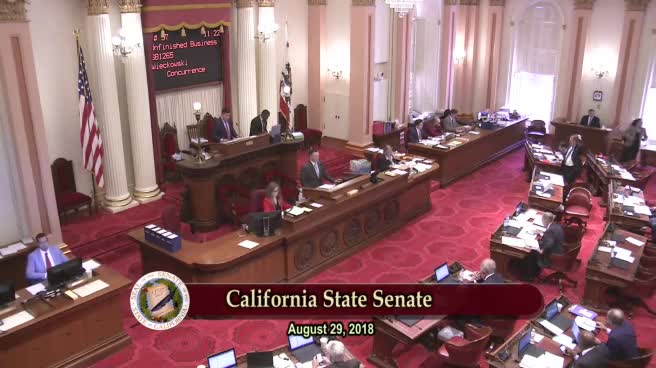

Bill Author



