SB 1369: Energy: green electrolytic hydrogen.
- Session Year: 2017-2018
- House: Senate
- Latest Version Date: 2018-09-19
Under existing law, the Public Utilities Commission (PUC) has regulatory authority over public utilities, including electrical corporations, while local publicly owned electric utilities are under the direction of their governing boards.
Existing law requires the PUC and the State Energy Resources Conservation and Development Commission (Energy Commission) to undertake specified actions to advance the states clean energy and pollution reduction objectives, including, where feasible, cost effective, and consistent with other state policy objectives, increasing the use of large- and small-scale energy storage with a variety of technologies.
This bill would specify green electrolytic hydrogen, as defined, as one of these energy storage technologies to be targeted for increased use. The bill also would require the PUC, State Air Resources Board, and Energy Commission to consider green electrolytic hydrogen an eligible form of energy storage, and to consider other potential uses of green electrolytic hydrogen.
Under existing law, the Public Utilities Commission (PUC) has regulatory authority over public utilities, including electrical corporations, while local publicly owned electric utilities are under the direction of their governing boards.
The California Global Warming Solutions Act of 2006 establishes the State Air Resources Board (state board) as the state agency responsible for monitoring and regulating sources emitting greenhouse gases and requires the state board to adopt regulations to require the reporting and verification of statewide greenhouse gas emissions and to monitor and enforce compliance with this program. The act requires the state board to adopt a statewide greenhouse gas emissions limit to be achieved by 2020 equivalent to the statewide greenhouse gas emissions levels in 1990, and to ensure that statewide emissions of greenhouse gases are reduced to at least 40% below the statewide greenhouse gas emissions limit no later than December 31, 2030.This bill would require the state board, in consultation with the PUC, to develop up to 3 green electrolytic hydrogen pilot projects meeting certain criteria by January 1, 2021, to produce green electrolytic hydrogen, as defined, and to evaluate methods for reducing the cost and energy intensity of producing that hydrogen. The bill would require that the pilot projects be funded by the state board, to the extent funding is available.Existing law requires the PUC and the State Energy Resources Conservation and Development Commission (Energy Commission) to undertake specified actions to advance the states clean energy and pollution reduction objectives, including, where feasible, cost effective, and consistent with other state policy objectives, increasing the use of large- and small-scale energy storage with a variety of technologies.
This bill would specify green electrolytic hydrogen hydrogen, as defined, as one of these energy storage technologies to be targeted for increased use.
Under existing law, the Public Utilities Commission (PUC) has regulatory authority over public utilities, including electrical corporations, while local publicly owned electric utilities are under the direction of their governing boards.
The Warren-Alquist State Energy Resources Conservation and Development Act establishes the State Energy Resources Conservation and Development Commission (Energy Commission). Existing law requires the Energy Commission to carry out technical assessment studies on all forms of energy and energy-related problems, in order to influence federal research and development priorities and to be informed on future energy options and their impact, including, among other things, the use of hydrogen as an energy form.The California Global Warming Solutions Act of 2006 establishes the State Air Resources Board (state board) as the state agency responsible for monitoring and regulating sources emitting greenhouse gases and requires the state board to adopt regulations to require the reporting and verification of statewide greenhouse gas emissions and to monitor and enforce compliance with this program. The act requires the state board to adopt a statewide greenhouse gas emissions limit to be achieved by 2020 equivalent to the statewide greenhouse gas emissions levels in 1990, and to ensure that statewide emissions of greenhouse gases are reduced to at least 40% below the statewide greenhouse gas emissions limit no later than December 31, 2030.
This bill would require the Energy Commission, state board, in consultation with the PUC and the State Air Resources Board (state board), PUC, to develop up to 3 green electrolytic hydrogen pilot projects meeting certain criteria by January 1, 2021, to produce green electrolytic hydrogen, as defined, and to evaluate methods for reducing the cost and energy intensity of producing that hydrogen. The bill would require that the pilot projects be funded from moneys that are dedicated for research and development pursuant to the Electric Program Investment Charge Fund. by the state board, to the extent funding is available.
Existing law requires the PUC to adopt a process for each load-serving entity, defined as including electrical corporations, electric service providers, and community choice aggregators, to file for approval an integrated resource plan and a schedule for periodic updates to the plan to ensure that load-serving entities accomplish specified objectives. Existing law requires that the governing board of a local publicly owned electric utility with an annual electrical demand exceeding 700 gigawatthours adopt an integrated resource plan and a process for updating the plan at least once every 5 years to ensure the utility achieves specified objectives. Existing law requires that local publicly owned electric utility integrated resource plans and any updates be filed with the Energy Commission, and requires the Energy Commission to review the plans and plan updates and, if the Energy Commission determines a plan or plan update is deficient, to provide recommendations to correct the deficiencies.The California Global Warming Solutions Act of 2006 establishes the state board as the state agency responsible for monitoring and regulating sources emitting greenhouse gases and requires the state board to adopt regulations to require the reporting and verification of statewide greenhouse gas emissions and to monitor and enforce compliance with this program. The act requires the state board to adopt a statewide greenhouse gas emissions limit to be achieved by 2020, equivalent to the statewide greenhouse gas emissions levels in 1990. Amendments to the act require the state board to ensure that statewide emissions of greenhouse gases are reduced to at least 40% below the statewide greenhouse gas emissions limit no later than December 31, 2030.This bill would require the PUC, when evaluating an integrated resource plan filed after January 1, 2021, by a load-serving entity, and the Energy Commission, when reviewing an integrated resource plan filed after January 1, 2021, by a local publicly owned electric utility, to consider the existing and potential uses for green electrolytic hydrogen in meeting the statewide greenhouse gas emissions limits approved by the state board, including the procurement of green electrolytic hydrogen for energy storage and to displace the use of fossil fuels in the electrical industry.Existing law requires the PUC and the State Energy Resources Conservation and Development Commission (Energy Commission) to undertake specified actions to advance the states clean energy and pollution reduction objectives, including, where feasible, cost effective, and consistent with other state policy objectives, increasing the use of large- and small-scale energy storage with a variety of technologies.
This bill would specify green electrolytic hydrogen as one of these energy storage technologies to be targeted for increased use.
Under existing law, the Public Utilities Commission (PUC) has regulatory authority over public utilities, including electrical corporations, while local publicly owned electric utilities are under the direction of their governing boards.
The Warren-Alquist State Energy Resources Conservation and Development Act establishes the State Energy Resources Conservation and Development Commission (Energy Commission). Existing law requires the Energy Commission to carry out technical assessment studies on all forms of energy and energy-related problems, in order to influence federal research and development priorities and to be informed on future energy options and their impact, including, among other things, the use of hydrogen as an energy form.
This bill would require the State Energy Resources Conservation and Development Commission (Energy Commission), Energy Commission, in consultation with the PUC and the State Air Resources Board (state board), to develop up to 3 green electrolytic hydrogen pilot projects meeting certain criteria by January 1, 2021, to produce green electrolytic hydrogen, as defined. defined, and to evaluate methods for reducing the cost and energy intensity of producing that hydrogen. The bill would require that the pilot projects be funded from moneys that are dedicated for research and development and not be recovered directly from ratepayers, except for moneys that the PUC, prior to January 1, 2019, authorized to be recovered for the purpose of research and development. pursuant to the Electric Program Investment Charge Fund.
Existing law requires the PUC to adopt a process for each load-serving entity, defined as including electrical corporations, electric service providers, and community choice aggregators, to file for approval an integrated resource plan and a schedule for periodic updates to the plan to ensure that load-serving entities accomplish specified objectives. Existing law requires that the governing board of a local publicly owned electric utility with an annual electrical demand exceeding 700 gigawatthours adopt an integrated resource plan and a process for updating the plan at least once every 5 years to ensure the utility achieves specified objectives. Existing law requires that local publicly owned electric utility integrated resource plans and any updates be filed with the Energy Commission, and requires the Energy Commission to review the plans and plan updates and, if the Energy Commission determines a plan or plan update is deficient, to provide recommendations to correct the deficiencies.
The California Global Warming Solutions Act of 2006 establishes the state board as the state agency responsible for monitoring and regulating sources emitting greenhouse gases and requires the state board to adopt regulations to require the reporting and verification of statewide greenhouse gas emissions and to monitor and enforce compliance with this program. The act requires the state board to adopt a statewide greenhouse gas emissions limit to be achieved by 2020, equivalent to the statewide greenhouse gas emissions levels in 1990. Amendments to the act require the state board to ensure that statewide emissions of greenhouse gases are reduced to at least 40% below the statewide greenhouse gas emissions limit no later than December 31, 2030.
This bill would require the PUC, state board, when evaluating an integrated resource plan filed after January 1, 2021, by a load-serving entity, and the Energy Commission Commission, when reviewing an integrated resource plan filed after January 1, 2021, by a local publicly owned electric utility, to consider the existing and potential uses for green electrolytic hydrogen in meeting the statewide greenhouse gas emissions limits approved by the state board, when evaluating an integrated resource plan adopted by a load-serving entity or local publicly owned electric utility after January 1, 2019, board, including the procurement of green electrolytic hydrogen for energy storage and to displace the use of fossil fuels in the electrical industry, and to adopt policies and incentives to increase the deployment of green electrolytic hydrogen projects, as appropriate. industry.
Under existing law, the Public Utilities Commission (PUC) has regulatory authority over public utilities, including electrical corporations, while local publicly owned electric utilities are under the direction of their governing boards.
This bill would require the State Energy Resources Conservation and Development Commission (Energy Commission), in consultation with the PUC and the State Air Resources Board, Board (state board), to develop up to 3 green electrolytic hydrogen pilot projects meeting certain criteria by January 1, 2021, to produce green electrolytic hydrogen, as defined. The pilot projects would be required to produce that hydrogen through electrolysis using electricity meeting specified criteria and to reduce emissions of greenhouse gases. The bill would require that the pilot projects be funded from moneys that are dedicated for research and development and not be recovered directly from ratepayers, except for moneys that the PUC, prior to January 1, 2019, authorized to be recovered for the purpose of research and development.
Existing law requires the PUC to adopt a process for each load-serving entity, defined as including electrical corporations, electric service providers, and community choice aggregators, to file for approval an integrated resource plan and a schedule for periodic updates to the plan to ensure that load-serving entities accomplish specified objectives. Existing law requires that the governing board of a local publicly owned electric utility with an annual electrical demand exceeding 700 gigawatthours adopt an integrated resource plan and a process for updating the plan at least once every 5 years to ensure the utility achieves specified objectives. Existing law requires that local publicly owned electric utility integrated resource plans and any updates be filed with the Energy Commission, and requires the Energy Commission to review the plans and plan updates and, if the Energy Commission determines a plan or plan update is deficient, to provide recommendations to correct the deficiencies.
The California Global Warming Solutions Act of 2006 establishes the state board as the state agency responsible for monitoring and regulating sources emitting greenhouse gases and requires the state board to adopt regulations to require the reporting and verification of statewide greenhouse gas emissions and to monitor and enforce compliance with this program. The act requires the state board to adopt a statewide greenhouse gas emissions limit to be achieved by 2020, equivalent to the statewide greenhouse gas emissions levels in 1990. Amendments to the act require the state board to ensure that statewide emissions of greenhouse gases are reduced to at least 40% below the statewide greenhouse gas emissions limit no later than December 31, 2030.
This bill would require the PUC PUC, state board, and Energy Commission to consider the existing and potential uses for green electrolytic hydrogen in meeting the statewide greenhouse gas emissions limits approved by the state board, when evaluating an integrated resource plan. plan adopted by a load-serving entity or local publicly owned electric utility after January 1, 2019, including the procurement of green electrolytic hydrogen for energy storage and to displace the use of fossil fuels in the electrical industry, and to adopt policies and incentives to increase the deployment of green electrolytic hydrogen projects, as appropriate.
Under existing law, the Public Utilities Commission (PUC) has regulatory authority over public utilities, including electrical corporations, while local publicly owned electric utilities are under the direction of their governing boards.
This bill would require the PUC, in consultation with the State Energy Resources Conservation and Development Commission (Energy Commission) Commission), in consultation with the PUC and the State Air Resources Board, to develop 5 green up to 3 electrolytic hydrogen pilot projects meeting certain criteria to produce green electrolytic hydrogen, as defined. The pilot projects would be required to produce that hydrogen through electrolysis using electricity meeting specified criteria and to reduce emissions of greenhouse gases. The bill would require that the projects be funded from moneys that are dedicated for research and development and not be recovered directly from ratepayers, except for moneys that the PUC, prior to January 1, 2019, authorized to be recovered for the purpose of research and development.
Existing law requires the PUC to adopt a process for each load-serving entity, defined as including electrical corporations, electric service providers, and community choice aggregators, to file for approval an integrated resource plan and a schedule for periodic updates to the plan to ensure that load-serving entities accomplish specified objectives. Existing law requires that the governing board of a local publicly owned electric utility with an annual electrical demand exceeding 700 gigawatthours adopt an integrated resource plan and a process for updating the plan at least once every 5 years to ensure the utility achieves specified objectives. Existing law requires that local publicly owned electric utility integrated resource plans and any updates be filed with the Energy Commission, and requires the Energy Commission to review the plans and plan updates and, if the Energy Commission determines a plan or plan update is deficient, to provide recommendations to correct the deficiencies.
This bill would require the PUC and Energy Commission to consider the existing and potential uses for green electrolytic hydrogen when evaluating an integrated resource plan.
Under existing law, the Public Utilities Commission (PUC) has regulatory authority over public utilities, including electrical corporations, while local publicly owned electric utilities are under the direction of their governing boards.
This bill would require the PUC, in consultation with the State Energy Resources Conservation and Development Commission (Energy Commission) and the State Air Resources Board, to develop 5 green hydrogen pilot projects meeting certain criteria to produce green hydrogen, as defined. The pilot projects would be required to produce that hydrogen through electrolysis using electricity meeting specified criteria and to reduce emissions of greenhouse gases.
Existing law requires the PUC to adopt a process for each load-serving entity, defined as including electrical corporations, electric service providers, and community choice aggregators, to file for approval an integrated resource plan and a schedule for periodic updates to the plan to ensure that load-serving entities accomplish specified objectives. Existing law requires that the governing board of a local publicly owned electric utility with an annual electrical demand exceeding 700 gigawatthours adopt an integrated resource plan and a process for updating the plan at least once every 5 years to ensure the utility achieves specified objectives. Existing law requires that local publicly owned electric utility integrated resource plans and any updates be filed with the Energy Commission, and requires the Energy Commission to review the plans and plan updates and, if the Energy Commission determines a plan or plan update is deficient, to provide recommendations to correct the deficiencies.
This bill would require the PUC and Energy Commission to consider the existing and potential uses for green hydrogen when evaluating an integrated resource plan.
Existing law authorizes a municipal legislative body to grant a franchise to any person, firm, or corporation to use, or construct and use, poles, wires, conduits, and appurtenances for delivering electricity, or to use, or lay and use, pipes and appurtenances for distributing gas, under terms and conditions provided by law. Existing law requires a transportation customer, as defined, who receives transportation service from an energy transporter, as defined, to pay a municipal surcharge through the energy transporters normal billing process, which is remitted to the municipality that granted the applicable franchise, for the use of public lands by the transportation customer. In the event that payment on a transportation customer closed account becomes more than 90 days delinquent, or a transportation customer notifies the utility that the customer refuses to pay the surcharge, existing law requires the energy transporter to notify the municipality of the delinquency and provide information on the name and address of the delinquent transportation customer and the surcharge amount owed. This bill would make nonsubstantive changes to those delinquency provisions.Existing law authorizes a municipal legislative body to grant a franchise to any person, firm, or corporation to use, or construct and use, poles, wires, conduits, and appurtenances for delivering electricity, or to use, or lay and use, pipes and appurtenances for distributing gas, under terms and conditions provided by law. Existing law requires a transportation customer, as defined, who receives transportation service from an energy transporter, as defined, to pay a municipal surcharge through the energy transporters normal billing process, which is remitted to the municipality that granted the applicable franchise, for the use of public lands by the transportation customer. In the event that payment on a transportation customer closed account becomes more than 90 days delinquent, or a transportation customer notifies the utility that the customer refuses to pay the surcharge, existing law requires the energy transporter to notify the municipality of the delinquency and provide information on the name and address of the delinquent transportation customer and the surcharge amount owed.
This bill would make nonsubstantive changes to those delinquency provisions.
The commission and the Energy Commission shall do all of the following in furtherance of meeting the states clean energy and pollution reduction objectives:
(a)Take into account the use of distributed generation to the extent that it provides economic and environmental benefits in disadvantaged communities identified pursuant to Section 39711 of the Health and Safety Code.
(b)Take into account the opportunities to decrease costs and increase benefits, including pollution reduction and grid integration, using renewable and nonrenewable technologies with zero or lowest feasible emissions of greenhouse gases, criteria pollutants, and toxic air contaminants onsite in proceedings associated with meeting the objectives.
(c)Where feasible, authorize procurement of resources to provide grid reliability services that minimize reliance on system power and fossil fuel resources and, where feasible, cost effective, and consistent with other state policy objectives, increase the use of large- and small-scale energy storage with a variety of technologies, including green electrolytic hydrogen, targeted energy efficiency, demand response, including, but not limited to, automated demand response, eligible renewable energy resources, or other renewable and nonrenewable technologies with zero or lowest feasible emissions of greenhouse gases, criteria pollutants, and toxic air contaminants onsite to protect system reliability.
(d)(1)Review technology incentive, research, development, deployment, and market facilitation programs overseen by the commission and the Energy Commission and make recommendations to advance state clean energy and pollution reduction objectives and provide benefits to disadvantaged communities identified pursuant to Section 39711 of the Health and Safety Code.
(2)The Energy Commission shall review technology incentive, research, development, deployment, and market facilitation programs operating in California and overseen by academia and the private and nonprofit sectors, and make recommendations to advance state clean energy and pollution reduction objectives and provide benefits to disadvantaged communities identified pursuant to Section 39711 of the Health and Safety Code.
(e)To the extent feasible and consistent with the state and federal constitutions, give first priority to the manufacture and deployment of clean energy and pollution reduction technologies that create employment opportunities in California, including high wage, highly skilled employment opportunities, and increased investment in the state.
(f)Establish a publicly available tracking system to provide up-to-date information at least once annually on progress toward meeting the clean energy and pollution reduction goals of the Clean Energy and Pollution Reduction Act of 2015.
(g)(1)Establish a disadvantaged community advisory group consisting of representatives from disadvantaged communities identified pursuant to Section 39711 of the Health and Safety Code. The disadvantaged community advisory group shall review and provide advice on programs proposed to achieve clean energy and pollution reduction and determine whether those proposed programs will be effective and useful in disadvantaged communities.
(2)Each member of the disadvantaged community advisory group shall receive per diem and shall be reimbursed for travel and other necessary expenses incurred in the performance of his or her duties under this section. The total amount of money expended for panel expenses pursuant to this paragraph shall not exceed one hundred thousand dollars ($100,000) per year.
(3)For the purposes of paragraph (2), per diem, travel and other necessary expenses shall be funded equally by the commission and the Energy Commission.
SEC. 2.Section 400.2 is added to the Public Utilities Code, to read:400.2.For the purposes of this article, green electrolytic hydrogen means hydrogen gas produced through electrolysis and does not include hydrogen gas manufactured using steam reforming or any other conversion technology that produces hydrogen from a fossil fuel feedstock.
SEC. 3.Section 400.3 is added to the Public Utilities Code, to read:400.3.The commission, State Air Resources Board, and Energy Commission shall consider green electrolytic hydrogen an eligible form of energy storage, and shall consider other potential uses of green electrolytic hydrogen.
The commission and the Energy Commission shall do all of the following in furtherance of meeting the states clean energy and pollution reduction objectives:
(a)Take into account the use of distributed generation to the extent that it provides economic and environmental benefits in disadvantaged communities identified pursuant to Section 39711 of the Health and Safety Code.
(b)Take into account the opportunities to decrease costs and increase benefits, including pollution reduction and grid integration, using renewable and nonrenewable technologies with zero or lowest feasible emissions of greenhouse gases, criteria pollutants, and toxic air contaminants onsite in proceedings associated with meeting the objectives.
(c)Where feasible, authorize procurement of resources to provide grid reliability services that minimize reliance on system power and fossil fuel resources and, where feasible, cost effective, and consistent with other state policy objectives, increase the use of large- and small-scale energy storage with a variety of technologies, including green electrolytic hydrogen, targeted energy efficiency, demand response, including, but not limited to, automated demand response, eligible renewable energy resources, or other renewable and nonrenewable technologies with zero or lowest feasible emissions of greenhouse gases, criteria pollutants, and toxic air contaminants onsite to protect system reliability.
(d)(1)Review technology incentive, research, development, deployment, and market facilitation programs overseen by the commission and the Energy Commission and make recommendations to advance state clean energy and pollution reduction objectives and provide benefits to disadvantaged communities identified pursuant to Section 39711 of the Health and Safety Code.
(2)The Energy Commission shall review technology incentive, research, development, deployment, and market facilitation programs operating in California and overseen by academia and the private and nonprofit sectors, and make recommendations to advance state clean energy and pollution reduction objectives and provide benefits to disadvantaged communities identified pursuant to Section 39711 of the Health and Safety Code.
(e)To the extent feasible and consistent with the state and federal constitutions, give first priority to the manufacture and deployment of clean energy and pollution reduction technologies that create employment opportunities in California, including high wage, highly skilled employment opportunities, and increased investment in the state.
(f)Establish a publicly available tracking system to provide up-to-date information at least once annually on progress toward meeting the clean energy and pollution reduction goals of the Clean Energy and Pollution Reduction Act of 2015.
(g)(1)Establish a disadvantaged community advisory group consisting of representatives from disadvantaged communities identified pursuant to Section 39711 of the Health and Safety Code. The disadvantaged community advisory group shall review and provide advice on programs proposed to achieve clean energy and pollution reduction and determine whether those proposed programs will be effective and useful in disadvantaged communities.
(2)Each member of the disadvantaged community advisory group shall receive per diem and shall be reimbursed for travel and other necessary expenses incurred in the performance of his or her duties under this section. The total amount of money expended for panel expenses pursuant to this paragraph shall not exceed one hundred thousand dollars ($100,000) per year.
(3)For the purposes of paragraph (2), per diem, travel and other necessary expenses shall be funded equally by the commission and the Energy Commission.
SEC. 4.SEC. 2.Section 400.2 is added to the Public Utilities Code, to read:400.2.For the purposes of this article, green electrolytic hydrogen means hydrogen gas produced through electrolysis and does not include hydrogen gas manufactured using steam reforming or any other conversion technology that produces hydrogen from a fossil fuel feedstock.
The Legislature finds and declares all of the following:
(a)Green electrolytic hydrogen, which is hydrogen gas produced through electrolysis, has become more available and cost effective due to the successful development of new low-cost renewable energy resources, like solar and wind.
(b)Green electrolytic hydrogen production optimizes valuable eligible renewable energy resources, particularly intermittently generated electricity by converting electricity to green electrolytic hydrogen.
(c)Green electrolytic hydrogen will be an important resource to assist the state to maximize intermittent electricity generation and energy storage for short-term, long-term, and seasonal storage applications in the future, as the electrical systems integrates higher levels of intermittent low-cost electricity from eligible renewable energy resources.
(d)Californias goals for reducing emissions of greenhouse gases can be served by utilizing, to the maximum extent possible, eligible renewable energy resources either directly to serve consumers of electricity or indirectly through green electrolytic hydrogen production to replace existing natural gas applications, including displacing natural gas, gasoline, or other fossil fuel-derived gases for electric generation, heating sources, transportation fuels, and other industrial practices.
(e)Green electrolytic hydrogen can assist with reducing emissions of greenhouse gases by leveraging the success of the California Renewables Portfolio Standard Program to further reduce emissions of greenhouse gases and criteria air pollutants from other sectors, including the gas and transportation sectors, as an important next step for deeper decarbonization across all economic sectors to meet the states overall goals for reducing emissions of greenhouse gases.
(f)Electrification is an established pathway for reducing emissions of greenhouse gases in California, and green electrolytic hydrogen will contribute to the electrification of more energy loads across the power generation, industrial, heating and transportation sectors.
(g)Green electrolytic hydrogen is an effective means of displacing natural gas use for generation of electricity and leveraging available capacity in the transmission and distribution system.
(h)Utilizing existing energy infrastructure to produce produce, store, or use green electrolytic hydrogen will benefit consumers by avoiding new, redundant, and excess energy infrastructure and optimizing the use of current system investments.
SEC. 2.Section 25604 is added to the Public Resources Code, to read:25604.(a)For purposes of this section, green electrolytic hydrogen means hydrogen gas produced through electrolysis and does not include hydrogen gas manufactured using steam reforming or some any other conversion technology that produces hydrogen from a fossil fuel feedstock.
(b)The commission, State Air Resources Board, in consultation with the Public Utilities Commission and the State Air Resources Board, Commission, shall develop up to three green electrolytic hydrogen pilot projects by January 1, 2021, to produce green electrolytic hydrogen and to evaluate methods for accomplishing both of the following:
(1)Reducing the costs of producing green electrolytic hydrogen.
(2)Reducing the energy intensity associated with the production of green electrolytic hydrogen.
(c)A pilot project shall meet the following criteria:
(1)Have a capacity no greater than five megawatts, unless the commission determines that higher usage is appropriate.
(2)Utilize electricity from zero-carbon electricity resources. For these purposes, a zero-carbon electricity resource means a facility that produces electricity in a manner that does not produce emissions of greenhouse gases.(3)(2)Facilitate reductions in emissions of greenhouse gases and criteria air pollutants.
(4)(3)Produce electrical system benefits and reduce fossil fuel derived natural gas usage.
(d)The pilot projects shall be distributed among various load-serving entities, as defined in Section 380 of the Public Utilities Code.
(e)The pilot projects shall only be funded from moneys that are dedicated for research and development pursuant to Chapter 8.1 (commencing with Section 25710). by the state board, to the extent funding is available.
SEC. 3.Section 636 is added to the Public Utilities Code, to read:636.(a)For purposes of this section, green electrolytic hydrogen means hydrogen gas produced through electrolysis and does not include hydrogen gas manufactured using steam reforming or some other conversion technology that produces hydrogen from a fossil fuel feedstock.(b)The commission, when evaluating an integrated resource plan filed after January 1, 2021, by a load-serving entity pursuant to Section 454.52, shall consider existing and potential uses for green electrolytic hydrogen in meeting the statewide greenhouse gas emissions limits approved by the State Air Resources Board, including the procurement of green electrolytic hydrogen for energy storage and to displace the use of fossil fuels in the electrical industry.(c)The Energy Commission, when reviewing an integrated resource plan filed after January 1, 2021, by a local publicly owned electric utility pursuant to Section 9622, shall consider existing and potential uses for green electrolytic hydrogen in meeting the statewide greenhouse gas emissions limits approved by the State Air Resources Board, including the procurement of green electrolytic hydrogen for energy storage and to displace the use of fossil fuels in the electrical industry.SEC. 3.Section 400 of the Public Utilities Code is amended to read:400.The commission and the Energy Commission shall do all of the following in furtherance of meeting the states clean energy and pollution reduction objectives:
(a)Take into account the use of distributed generation to the extent that it provides economic and environmental benefits in disadvantaged communities identified pursuant to Section 39711 of the Health and Safety Code.
(b)Take into account the opportunities to decrease costs and increase benefits, including pollution reduction and grid integration, using renewable and nonrenewable technologies with zero or lowest feasible emissions of greenhouse gases, criteria pollutants, and toxic air contaminants onsite in proceedings associated with meeting the objectives.
(c)Where feasible, authorize procurement of resources to provide grid reliability services that minimize reliance on system power and fossil fuel resources and, where feasible, cost effective, and consistent with other state policy objectives, increase the use of large- and small-scale energy storage with a variety of technologies, including green electrolytic hydrogen, targeted energy efficiency, demand response, including, but not limited to, automated demand response, eligible renewable energy resources, or other renewable and nonrenewable technologies with zero or lowest feasible emissions of greenhouse gases, criteria pollutants, and toxic air contaminants onsite to protect system reliability.
(d)(1)Review technology incentive, research, development, deployment, and market facilitation programs overseen by the commission and the Energy Commission and make recommendations to advance state clean energy and pollution reduction objectives and provide benefits to disadvantaged communities identified pursuant to Section 39711 of the Health and Safety Code.
(2)The Energy Commission shall review technology incentive, research, development, deployment, and market facilitation programs operating in California and overseen by academia and the private and nonprofit sectors, and make recommendations to advance state clean energy and pollution reduction objectives and provide benefits to disadvantaged communities identified pursuant to Section 39711 of the Health and Safety Code.
(e)To the extent feasible and consistent with the state and federal constitutions, give first priority to the manufacture and deployment of clean energy and pollution reduction technologies that create employment opportunities in California, including high wage, highly skilled employment opportunities, and increased investment in the state.
(f)Establish a publicly available tracking system to provide up-to-date information at least once annually on progress toward meeting the clean energy and pollution reduction goals of the Clean Energy and Pollution Reduction Act of 2015.
(g)(1)Establish a disadvantaged community advisory group consisting of representatives from disadvantaged communities identified pursuant to Section 39711 of the Health and Safety Code. The disadvantaged community advisory group shall review and provide advice on programs proposed to achieve clean energy and pollution reduction and determine whether those proposed programs will be effective and useful in disadvantaged communities.
(2)Each member of the disadvantaged community advisory group shall receive per diem and shall be reimbursed for travel and other necessary expenses incurred in the performance of his or her duties under this section. The total amount of money expended for panel expenses pursuant to this paragraph shall not exceed one hundred thousand dollars ($100,000) per year.
(3)For the purposes of paragraph (2), per diem, travel and other necessary expenses shall be funded equally by the commission and the Energy Commission.
SEC. 4.Section 400.2 is added to the Public Utilities Code, to read:400.2.For the purposes of this article, green electrolytic hydrogen means hydrogen gas produced through electrolysis and does not include hydrogen gas manufactured using steam reforming or any other conversion technology that produces hydrogen from a fossil fuel feedstock.
The Legislature finds and declares all of the following:
(a)Green electrolytic hydrogen, which is hydrogen gas produced through electrolysis, has become more available and cost effective due to the successful development of new low-cost renewable energy resources, like solar and wind.
(b)Green electrolytic hydrogen production optimizes valuable eligible renewable energy resources, particularly intermittently generated electricity by converting electricity to electrolytic hydrogen.
(c)Green electrolytic hydrogen will be an important resource to assist the state to maximize intermittent electricity generation and energy storage for short-term, long-term, and seasonal storage applications in the future, as the electrical systems integrates higher levels of intermittent low-cost electricity from eligible renewable energy resources.
(d)Californias goals for reducing emissions of greenhouse gases can be served by utilizing, to the maximum extent possible, eligible renewable energy resources either directly to serve consumers of electricity or indirectly through green electrolytic hydrogen production to replace existing natural gas applications, including displacing natural gas, gasoline, or other fossil fuel-derived gases for electric generation, heating sources, transportation fuels, and other industrial practices.
(e)Green electrolytic hydrogen can assist with reducing emissions of greenhouse gases by leveraging the success of the California Renewables Portfolio Standard Program to further reduce emissions of greenhouse gases and criteria air pollutants from other sectors, including the gas and transportation sectors, as an important next step for deeper decarbonization across all economic sectors to meet the states overall goals for reducing emissions of greenhouse gases.
(f)Electrification is an established pathway for reducing emissions of greenhouse gases in California, and electrolytic hydrogen will contribute to the electrification of more energy loads across the power generation, industrial, heating and transportation sectors.
(g)Green electrolytic hydrogen is an effective means of displacing natural gas use for generation of electricity and leveraging available capacity in the transmission and distribution system.
(h)Utilizing existing energy infrastructure to produce green electrolytic hydrogen will benefit consumers by avoiding new, redundant, and excess energy infrastructure and optimizing the use of current system investments.
SEC. 2.Section 25604 is added to the Public Resources Code, to read:25604.(a)For purposes of this section, green electrolytic hydrogen means hydrogen gas produced through electrolysis and does not include hydrogen gas manufactured using steam reforming or some other conversion technology that produces hydrogen from a fossil fuel feedstock.
(b)The commission, in consultation with the Public Utilities Commission and the State Air Resources Board, shall develop up to three green electrolytic hydrogen pilot projects by January 1, 2021, to produce green electrolytic hydrogen and to evaluate methods for accomplishing both of the following:
(1)Reducing the costs of producing green electrolytic hydrogen.
(2)Reducing the energy intensity associated with the production of green electrolytic hydrogen.
(c)A pilot project shall meet the following criteria:
(1)Have a capacity no greater than five megawatts, unless the commission determines that higher usage is appropriate.
(2)Utilize electricity from zero-carbon electricity resources. For these purposes, a zero-carbon electricity resource means a facility that produces electricity in a manner that does not produce emissions of greenhouse gases.
(3)Facilitate reductions in emissions of greenhouse gases and criteria air pollutants.
(4)Produce electrical system benefits and reduce fossil fuel derived natural gas usage.
(d)The pilot projects shall be distributed among various load-serving entities, as defined in Section 380 of the Public Utilities Code.
(e)The pilot projects shall only be funded from moneys that are dedicated for research and development pursuant to Chapter 8.1 (commencing with Section 25710).
SEC. 3.Section 636 is added to the Public Utilities Code, to read:636.(a)For purposes of this section, green electrolytic hydrogen means hydrogen gas produced through electrolysis and does not include hydrogen gas manufactured using steam reforming or some other conversion technology that produces hydrogen from a fossil fuel feedstock.
(b)The commission, when evaluating an integrated resource plan filed after January 1, 2021, by a load-serving entity pursuant to Section 454.52, shall consider existing and potential uses for green electrolytic hydrogen in meeting the statewide greenhouse gas emissions limits approved by the State Air Resources Board, including the procurement of green electrolytic hydrogen for energy storage and to displace the use of fossil fuels in the electrical industry.
(c)The Energy Commission, when reviewing an integrated resource plan filed after January 1, 2021, by a local publicly owned electric utility pursuant to Section 9622, shall consider existing and potential uses for green electrolytic hydrogen in meeting the statewide greenhouse gas emissions limits approved by the State Air Resources Board, including the procurement of green electrolytic hydrogen for energy storage and to displace the use of fossil fuels in the electrical industry.
SEC. 2.Chapter 8.5 (commencing with Section 2847) is added to Part 2 of Division 1 of the Public Utilities Code, to read:8.5.Green Electrolytic Hydrogen1.Definitions2847.For purposes of this chapter, the following terms have the following meanings:(a)Eligible renewable energy resource means a source of electrical generation that is an eligible renewable energy resource pursuant to the California Renewables Portfolio Standard Program (Article 16 (commencing with Section 399.11) of Chapter 2.3 of Part 1).(b)Green electrolytic hydrogen means hydrogen gas produced through electrolysis and does not include hydrogen gas manufactured using steam reforming or some other conversion technology that produces hydrogen from a fossil fuel feedstock. A project to produce green electrolytic hydrogen shall do at least one of the following:(1)Reduce emissions of greenhouse gases.(2)Utilize electricity from zero-carbon electricity resources.(3)Utilize electricity generated for management of the electrical grid to facilitate integration of renewable and zero-carbon electricity.(c)Integrated resource plan means an integrated resource plan filed by a load-serving entity for approval by the commission pursuant to Section 454.52 or an integrated resource plan adopted by a local publicly owned electric utility and filed with the Energy Commission pursuant to Section 9622.(d)ISO means the Independent System Operator or a successor multistate independent system operator.(e)Load-serving entity has the same meaning as defined in Section 380.(f)Renewable electricity means electricity that is generated by an eligible renewable energy resource within the meaning of the California Renewables Portfolio Standard (Article 16 (commencing with Section 399.11) of Chapter 2.3 of Part 1).(g)State board means the State Air Resources Board.(h)Zero-carbon electricity means electricity that is generated in a manner that does not produce emissions of greenhouse gases.2.Green Electrolytic Hydrogen Pilot Program2848.(a)The Energy Commission, in consultation with the commission and the state board, shall develop up to three green electrolytic hydrogen pilot projects by January 1, 2021, to produce green electrolytic hydrogen.(b)The pilot projects shall meet the following criteria:(1)Each shall use no more than five megawatts, unless the commission determines that higher usage is appropriate.(2)Together, they shall achieve reasonable geographic diversity.(3)They shall be distributed among various load-serving entities.(4)They shall facilitate reductions in emissions of greenhouse gases and criteria air pollutants.(5)They shall produce electrical system benefits and reduce fossil fuel derived natural gas usage.(c)The pilot projects shall only be funded from moneys that are dedicated for research and development and shall not be recovered directly from ratepayers, except for moneys that the commission, prior to January 1, 2019, authorized to be recovered for the purpose of research and development.3.Integrated Resource Planning and Electrification2849.The commission, the state board, and the Energy Commission shall do both of the following:(a)Consider existing and potential uses for green electrolytic hydrogen in meeting the statewide greenhouse gas emissions limits approved by the state board when evaluating an integrated resource plan adopted by a load-serving entity or local publicly owned electric utility after January 1, 2019, including the procurement of green electrolytic hydrogen for energy storage and to displace the use of fossil fuels in the electrical industry. (b)Adopt policies and incentives to increase the deployment of green electrolytic hydrogen projects, as appropriate.The Legislature finds and declares all of the following:
(a)Electrolytic Green electrolytic hydrogen, which is hydrogen gas produced through electrolysis, has become more available and cost effective due to the successful development of new low-cost renewable energy resources, like solar and wind.
(b)Electrolytic Green electrolytic hydrogen production optimizes valuable eligible renewable energy resources, particularly intermittently generated electricity by converting electricity to electrolytic hydrogen.
(c)Electrolytic Green electrolytic hydrogen will be an important resource to assist the state to maximize intermittent electricity generation and energy storage for short-term, long-term, and seasonal storage applications in the future, as the electrical systems integrates higher levels of intermittent low-cost electricity from eligible renewable energy resources.
(d)Californias goals for reducing emissions of greenhouse gases can be served by utilizing, to the maximum extent possible, eligible renewable energy resources either directly to serve consumers of electricity or indirectly through green electrolytic hydrogen production to replace existing natural gas applications, including displacing natural gas, gasoline, or other fossil fuel-derived gases for electric generation, heating sources, transportation fuels, and other industrial practices.
(e)Electrolytic Green electrolytic hydrogen can assist with reducing emissions of greenhouse gases by leveraging the success of the California Renewables Portfolio Standard Program to further reduce emissions of greenhouse gases and criteria air pollutants from other sectors, including the gas and transportation sectors, as an important next step for deeper decarbonization across all economic sectors to meet the states overall goals for reducing emissions of greenhouse gases.
(f)Electrification is an established pathway for reducing emissions of greenhouse gases in California, and electrolytic hydrogen will contribute to the electrification of more energy loads across the power generation, industrial, heating and transportation sectors.
(g)Green electrolytic hydrogen is an effective means of displacing natural gas use for generation of electricity and leveraging available capacity in the transmission and distribution system.
(f)(h)Utilizing existing energy infrastructure to produce green electrolytic hydrogen will benefit consumers by avoiding new, redundant, and excess energy infrastructure and optimizing the use of current system investments.
SEC. 2.Chapter 8.5 (commencing with Section 2847) is added to Part 2 of Division 1 of the Public Utilities Code, to read:8.5.Green Electrolytic Hydrogen1.Definitions2847.For purposes of this chapter, the following terms have the following meanings:
(a)Eligible renewable energy resource means a source of electrical generation that is an eligible renewable energy resource pursuant to the California Renewables Portfolio Standard Program (Article 16 (commencing with Section 399.11) of Chapter 2.3 of Part 1).
(b)Electrolytic Green electrolytic hydrogen means hydrogen gas produced through electrolysis and does not include hydrogen gas manufactured using steam reforming or some other conversion technology that produces hydrogen from a fossil fuel feedstock. A project to produce green electrolytic hydrogen shall do at least one of the following:
(1)Reduce emissions of greenhouse gases.
(2)Utilize electricity from zero-carbon electricity resources.
(3)Utilize electricity generated for management of the electrical grid to facilitate integration of renewable and zero-carbon electricity.
(c)Integrated resource plan means an integrated resource plan filed by a load-serving entity for approval by the commission pursuant to Section 454.52 or an integrated resource plan adopted by a local publicly owned electric utility and filed with the Energy Commission pursuant to Section 9622.
(d)ISO means the Independent System Operator or a successor multistate independent system operator.
(e)Load-serving entity has the same meaning as defined in Section 380.
(f)Renewable electricity means electricity that is generated by an eligible renewable energy resource within the meaning of the California Renewables Portfolio Standard (Article 16 (commencing with Section 399.11) of Chapter 2.3 of Part 1).
(f)(g)State board means the State Air Resources Board.
(h)Zero-carbon electricity means electricity that is generated in a manner that does not produce emissions of greenhouse gases.
2.Green Electrolytic Hydrogen Pilot Program2848.(a)The Energy Commission, in consultation with the commission and the state board, shall develop up to three green electrolytic hydrogen pilot projects by January 1, 2021, to produce green electrolytic hydrogen that do all of the following: hydrogen.
(1)Utilize electricity transmitted over the electrical grid if the energy optimizes renewable energy resources on the electrical grid or provides overall electrical system balancing benefits, including short-term, multi-day, and seasonal energy storage, reduces demand for peak electrical generation, defers or substitutes for an investment in generation, transmission, or distribution assets, or improves the reliable operation of the electrical transmission or distribution grid.(2)Utilize electricity from zero-carbon electricity resources as determined by the commission.(3)Reduce emissions of greenhouse gases.(b)The pilot projects shall meet the following criteria:
(1)Each shall use no more than five megawatts, unless the commission determines that higher usage is appropriate.
(2)Together, they shall achieve reasonable geographic diversity.
(3)They shall be distributed among various load-serving entities.
(4)They shall facilitate reductions in emissions of greenhouse gases and criteria air pollutants.
(5)They shall produce electrical system benefits and reduce fossil fuel derived natural gas usage.
(c)The pilot projects shall only be funded from moneys that are dedicated for research and development and shall not be recovered directly from ratepayers, except for moneys that the commission, prior to January 1, 2019, authorized to be recovered for the purpose of research and development.
3.Integrated Resource Planning and Electrification2849.The commission commission, the state board, and the Energy Commission shall consider do both of the following:
(a)Consider existing and potential uses for green electrolytic hydrogen in meeting the statewide greenhouse gas emissions limits approved by the state board when evaluating an integrated resource plan. plan adopted by a load-serving entity or local publicly owned electric utility after January 1, 2019, including the procurement of green electrolytic hydrogen for energy storage and to displace the use of fossil fuels in the electrical industry.
(b)Adopt policies and incentives to increase the deployment of green electrolytic hydrogen projects, as appropriate.
The Legislature finds and declares all of the following:
(a)Green Electrolytic hydrogen, which is hydrogen gas produced through electrolysis, has become more available and cost effective due to the successful development of new low-cost renewable energy resources, like solar and wind.
(b)Green Electrolytic hydrogen production optimizes valuable eligible renewable energy resources, particularly intermittently generated electricity by converting electricity to green electrolytic hydrogen.
(c)Green Electrolytic hydrogen will be an important resource to assist the state to maximize intermittent electricity generation and energy storage for short-term, long-term, and seasonal storage applications in the future, as the electrical systems integrates higher levels of intermittent low-cost electricity from eligible renewable energy resources.
(d)Californias goals for reducing emissions of greenhouse gases can be served by utilizing, to the maximum extent possible, eligible renewable energy resources either directly to serve consumers of electricity or indirectly through green electrolytic hydrogen production to replace existing natural gas applications, including displacing natural gas, gasoline, or other fossil fuel-derived gases for electric generation, heating sources, transportation fuels, and other industrial practices.
(e)Green Electrolytic hydrogen can assist with reducing emissions of greenhouse gases by leveraging the success of the California Renewables Portfolio Standard Program to further reduce emissions of greenhouse gases and criteria air pollutants from other sectors, including the gas and transportation sectors, as an important next step for deeper decarbonization across all economic sectors to meet the states overall goals for reducing emissions of greenhouse gases.
(f)Utilizing existing energy infrastructure to produce green electrolytic hydrogen will benefit consumers by avoiding new, redundant, and excess energy infrastructure and optimizing the use of current system investments.
SEC. 2.Chapter 8.5 (commencing with Section 2847) is added to Part 2 of Division 1 of the Public Utilities Code, to read:8.5.Green Electrolytic Hydrogen1.Definitions2847.For purposes of this chapter, the following terms have the following meanings:
(a)Eligible renewable energy resource means a source of electrical generation that is an eligible renewable energy resource pursuant to the California Renewables Portfolio Standard Program (Article 16 (commencing with Section 399.11) of Chapter 2.3 of Part 1).
(b)Green Electrolytic hydrogen means hydrogen gas produced through electrolysis and does not include hydrogen gas manufactured using steam reforming or some other conversion technology that produces hydrogen from a fossil fuel feedstock.
(c)Integrated resource plan means an integrated resource plan filed by a load-serving entity for approval by the commission pursuant to Section 454.52 or an integrated resource plan adopted by a local publicly owned electric utility and filed with the Energy Commission pursuant to Section 9622.
(d)ISO means the Independent System Operator or a successor multistate independent system operator.
(e)Load-serving entity has the same meaning as defined in Section 380.
(f)State board means the State Air Resources Board.
2.Green Electrolytic Hydrogen Pilot Program2848.(a)The commission, Energy Commission, in consultation with the Energy Commission commission and the state board, shall develop five green up to three electrolytic hydrogen pilot projects to produce green electrolytic hydrogen that do all of the following:
(1)Utilize electricity transmitted over the electrical grid if the energy optimizes renewable energy resources on the electrical grid or provides overall electrical system balancing benefits, including short-term, multi-day, and seasonal energy storage, reduces demand for peak electrical generation, defers or substitutes for an investment in generation, transmission, or distribution assets, or improves the reliable operation of the electrical transmission or distribution grid.
(2)Utilize electricity from zero-carbon electricity resources as determined by the commission.
(3)Reduce emissions of greenhouse gases.
(b)The pilot projects shall meet the following criteria:
(1)Each shall use no more than five megawatts, unless the commission determines that higher usage is appropriate.
(2)Together, they shall achieve reasonable geographic diversity.
(3)They shall be distributed among various load-serving entities.
(4)They shall facilitate reductions in emissions of greenhouse gases and criteria air pollutants.
(5)They shall produce electrical system benefits and reduce fossil fuel derived natural gas usage.
(c)The pilot projects shall only be funded from moneys that are dedicated for research and development and shall not be recovered directly from ratepayers, except for moneys that the commission, prior to January 1, 2019, authorized to be recovered for the purpose of research and development.
3.Integrated Resource Planning2849.The commission and the Energy Commission shall consider existing and potential uses for green electrolytic hydrogen when evaluating an integrated resource plan.
The Legislature finds and declares all of the following:
(a)Green hydrogen, which is hydrogen gas produced through electrolysis, has become more available and cost effective due to the successful development of new low-cost renewable energy resources, like solar and wind.
(b)Green hydrogen production optimizes valuable eligible renewable energy resources, particularly intermittently generated electricity by converting electricity to green hydrogen.
(c)Green hydrogen will be an important resource to assist the state to maximize intermittent electricity generation and energy storage for short-term, long-term, and seasonal storage applications in the future, as the electrical systems integrates higher levels of intermittent low-cost electricity from eligible renewable energy resources.
(d)Californias goals for reducing emissions of greenhouse gases can be served by utilizing, to the maximum extent possible, eligible renewable energy resources either directly to serve consumers of electricity or indirectly through green hydrogen production to replace existing natural gas applications, including displacing natural gas, gasoline, or other fossil fuel-derived gases for electric generation, heating sources, transportation fuels, and other industrial practices.
(e)Green hydrogen can assist with reducing emissions of greenhouse gases by leveraging the success of the California Renewables Portfolio Standard Program to further reduce emissions of greenhouse gases and criteria air pollutants from other sectors, including the gas and transportation sectors, as an important next step for deeper decarbonization across all economic sectors to meet the states overall goals for reducing emissions of greenhouse gases.
(f)Utilizing existing energy infrastructure to produce green hydrogen will benefit consumers by avoiding new, redundant, and excess energy infrastructure and optimizing the use of current system investments.
SEC. 2.Chapter 8.5 (commencing with Section 2847) is added to Part 2 of Division 1 of the Public Utilities Code, to read:8.5.Green Hydrogen1.Definitions2847.For purposes of this chapter, the following terms have the following meanings:
(a)Eligible renewable energy resource means a source of electrical generation that is an eligible renewable energy resource pursuant to the California Renewables Portfolio Standard Program (Article 16 (commencing with Section 399.11) of Chapter 2.3 of Part 1).
(b)Green hydrogen means hydrogen gas produced through electrolysis and does not include hydrogen gas manufactured using steam reforming or some other conversion technology that produces hydrogen from a fossil fuel feedstock.
(c)Integrated resource plan means an integrated resource plan filed by a load-serving entity for approval by the commission pursuant to Section 454.52 or an integrated resource plan adopted by a local publicly owned electric utility and filed with the Energy Commission pursuant to Section 9622.
(d)ISO means the Independent System Operator or a successor multistate independent system operator.
(e)Load-serving entity has the same meaning as defined in Section 380.
(f)State board means the State Air Resources Board.
2.Green Hydrogen Pilot Program2848.(a)The commission, in consultation with the Energy Commission and the state board, shall develop five green hydrogen pilot projects to produce green hydrogen that do all of the following:
(1)Utilize electricity transmitted over the electrical grid if the energy optimizes renewable energy resources on the electrical grid or provides overall electrical system balancing benefits, including short-term, multi-day, and seasonal energy storage, reduces demand for peak electrical generation, defers or substitutes for an investment in generation, transmission, or distribution assets, or improves the reliable operation of the electrical transmission or distribution grid.
(2)Utilize electricity from zero-carbon electricity resources as determined by the commission.
(3)Reduce emissions of greenhouse gases.
(b)The pilot projects shall meet the following criteria:
(1)Each shall use no more than five megawatts, unless the commission determines that higher usage is appropriate.
(2)Together, they shall achieve reasonable geographic diversity.
(3)They shall be distributed among various load-serving entities.
(4)They shall facilitate reductions in emissions of greenhouse gases and criteria air pollutants.
(5)They shall produce electrical system benefits and reduce fossil fuel derived natural gas usage.
3.Integrated Resource Planning2849.The commission and the Energy Commission shall consider existing and potential uses for green hydrogen when evaluating an integrated resource plan.
SECTION 1.Section 6354 of the Public Utilities Code is amended to read:6354.(a)Surcharges calculated pursuant to Section 6353 shall be recovered from the transportation customer through the energy transporters normal billing process.(b)Surcharges collected from the transportation customer shall be remitted to the municipality granting a franchise pursuant to this division in the manner and at the time prescribed for payment of franchise fees in the energy transporters franchise agreement. In recognition of costs to be incurred by energy transporters in administering the surcharge established by this chapter, the energy transporter may retain interest earned on cash balances resulting from the timing difference between the monthly collection of the surcharge and the remittance thereof, as required by individual franchise agreements.(c)In the event that payment on a transportation customer closed account becomes more than 90 days delinquent, or a transportation customer notifies the utility that the customer refuses to pay the surcharge, the energy transporter shall, within 30 days, notify the municipality of the delinquency and provide information on the name and address of the delinquent transportation customer and the surcharge amount owed. The energy transporter shall not be liable for these delinquent surcharges.(d)The municipality, including its authorized officials, employees, and agents, shall use the delinquent transportation customer information only for the purpose of enforcing the surcharge and shall not disclose the information to any officials, employees, agents, or any third parties who are not responsible for and involved in the enforcement of the municipalitys franchise agreements. Nothing herein precludes the municipality, through appropriate officials, employees, or agents, from contacting a transportation customer to collect any surcharges due from the transportation customer.(e)By March 31 of each year, every person, firm, or corporation that transports gas or electricity to any other person, firm, or corporation within a municipality, upon request of the municipality, shall provide the names and addresses of each of its transportation customers and any other information for the preceding calendar year that may be necessary for the municipality to enforce its taxes and fees. The municipality, including its authorized employees and agents, shall use the transportation customer information and any other customer specific information only for the purpose of enforcing its taxes and fees and shall not disclose the information to any officials, employees, agents, or any third parties not responsible for, and involved in, the enforcement of the taxes and fees. Nothing in this subdivision shall prohibit the municipality, through appropriate officials, employees, or agents, from contacting the customer to collect any taxes and fees due from the customer.(f)Notwithstanding any other provision of law, any transportation customer information provided by an energy transporter to a municipality pursuant to this chapter or pursuant to a utility user tax ordinance is not a public record within the definitions contained in the California Public Records Act (Chapter 3.5 (commencing with Section 6250) of Division 7 of Title 1 of the Government Code).(g)In acknowledgment of the potential for systems startup costs to be incurred by the energy transporters in implementing this chapter, authorization is hereby granted for each energy transporter to retain 10 percent of the added fees collected pursuant to this chapter on transported gas or electricity for systems startup costs not to exceed seven hundred fifty thousand dollars ($750,000), provided that the portion of collections withheld by the energy transporter shall be apportioned to all municipalities based upon each municipalitys share of total franchise fees allocated by the transporter in the prior calendar year.(h)Surcharges collected pursuant to this chapter shall be separately identified on the transportation customers normal bill. At the request of the energy transporter, the municipality shall publish notice in a newspaper of general circulation announcing the change in method of collecting franchise fees brought about by deregulation. Energy transporters may send out notice to transportation customers announcing the change in method of collecting franchise fees through the surcharge. The mailing costs incurred by the energy transporter shall be considered to be part of the implementation costs referenced in subdivision (g).(i)In the case of partial payment by a transportation customer, the transportation customer payment shall first be applied to the energy transporter charges. Only after all energy transporter charges have been satisfied, shall remaining payment amounts be used to satisfy the municipalitys surcharge requirement.(j)Energy transporter collection of the surcharge shall begin on or before April 1, 1994. During the interim period between expiration of the targeted sales program and implementation of the energy transporters surcharge collection program, upon request of the municipality, the energy transporter shall provide the municipality with a monthly list of the names and addresses of the transportation customers within the municipalitys jurisdiction, the volume of transported gas in therms, the applicable tariffed core subscription weighted average cost of gas (WACOG) exclusive of any California sourced franchise factor, and the franchise fee factor authorized by the commission to enable the municipality to collect the surcharge directly from the transportation customers. Notwithstanding any other provision of law, except as provided in Section 6352, a municipality is hereby authorized to collect an interim surcharge computed in accordance with Section 6353 until the energy transporter commences billing of the surcharge pursuant to this chapter.(a)Surcharges calculated pursuant to Section 6353 shall be recovered from the transportation customer through the energy transporters normal billing process.
(b)Surcharges collected from the transportation customer shall be remitted to the municipality granting a franchise pursuant to this division in the manner and at the time prescribed for payment of franchise fees in the energy transporters franchise agreement. In recognition of costs to be incurred by energy transporters in administering the surcharge established by this chapter, the energy transporter may retain interest earned on cash balances resulting from the timing difference between the monthly collection of the surcharge and the remittance thereof, as required by individual franchise agreements.
(c)In the event that payment on a transportation customer closed account becomes more than 90 days delinquent, or a transportation customer notifies the utility that they refuse the customer refuses to pay the surcharge, the energy transporter shall, within 30 days, notify the municipality of the delinquency and provide information on the name and address of the delinquent transportation customer and the surcharge amount owed. The energy transporter shall not be liable for these delinquent surcharges.
(d)The municipality, including its authorized officials, employees employees, and agents agents, shall use the delinquent transportation customer information only for the purpose of enforcing the surcharge and shall not disclose the information to any officials, employees, agents, or any third parties who are not responsible for and involved in the enforcement of the municipalitys franchise agreements. Nothing herein precludes the municipality, through appropriate officials, employees employees, or agents, from contacting the a transportation customers in order customer to collect any surcharges due from the transportation customer.
(e)By March 31 of each year, every person, firm, or corporation that transports gas or electricity to any other person, firm, or corporation within a municipality, upon request of the municipality, shall provide the names and addresses of each of its transportation customers and such any other information for the preceding calendar year as that may be necessary for the municipality to enforce its taxes and fees. The municipality, including its authorized employees and agents, shall use the transportation customer information and any other customer specific information only for the purpose of enforcing its taxes and fees and shall not disclose the information to any officials, employees, agents, or any third parties not responsible for, and involved in, the enforcement of the taxes and fees. Nothing in this subdivision shall prohibit the municipality, through appropriate officials, employees, or agents, from contacting the customers in order customer to collect any taxes and fees due from the customer.
(f)Notwithstanding any other provision of law, any transportation customer information provided by an energy transporter to a municipality pursuant to this chapter or pursuant to a utility user tax ordinance is not a public record within the definitions contained in the California Public Records Act (Chapter 3.5 (commencing with Section 6250) of Division 7 of Title 1 of the Government Code).
(g)In acknowledgment of the potential for systems startup costs to be incurred by the energy transporters in implementing this chapter, authorization is hereby granted for each energy transporter to retain 10 percent of the added fees collected pursuant to this chapter on transported gas or electricity for systems startup costs not to exceed seven hundred fifty thousand dollars ($750,000), provided that the portion of collections withheld by the energy transporter shall be apportioned to all municipalities based upon each municipalitys share of total franchise fees allocated by the transporter in the prior calendar year.
(h)Surcharges collected pursuant to this chapter shall be separately identified on the transportation customers normal bill. At the request of the energy transporter, the municipality shall publish notice in a newspaper of general circulation announcing the change in method of collecting franchise fees brought about by deregulation. Energy transporters may send out notice to transportation customers announcing the change in method of collecting franchise fees through the surcharge. The mailing costs incurred by the energy transporter shall be considered to be part of the implementation costs referenced in subdivision (g).
(i)In the case of partial payment by a transportation customer, the transportation customer payment shall first be applied to the energy transporter charges. Only after all energy transporter charges have been satisfied, shall remaining payment amounts be used to satisfy the municipalitys surcharge requirement.
(j)Energy transporter collection of the surcharge shall begin on or before April 1, 1994. During the interim period between expiration of the targeted sales program and implementation of the energy transporters surcharge collection program, upon request of the municipality, the energy transporter shall provide the municipality with a monthly list of the names and addresses of the transportation customers within the municipalitys jurisdiction, the volume of transported gas in therms, the applicable tariffed core subscription weighted average cost of gas (WACOG) exclusive of any California sourced franchise factor, and the franchise fee factor authorized by the commission to enable the municipality to collect the surcharge directly from the transportation customers. Notwithstanding any other provision of law, except as provided in Section 6352, a municipality is hereby authorized to collect an interim surcharge computed in accordance with Section 6353 until the energy transporter commences billing of the surcharge pursuant to this chapter.
|
Date
|
Status
|
|---|---|
| Sep 19, 2018 | Chaptered by Secretary of State. Chapter 567, Statutes of 2018. |
| Sep 19, 2018 | Approved by the Governor. |
| Sep 12, 2018 | Enrolled and presented to the Governor at 5 p.m. |
| Aug 31, 2018 | Assembly amendments concurred in. (Ayes 30. Noes 9.) Ordered to engrossing and enrolling. |
| Aug 31, 2018 | In Senate. Concurrence in Assembly amendments pending. |
| Aug 31, 2018 | Read third time. Passed. Ordered to the Senate. |
| Aug 24, 2018 | Read third time and amended. |
| Aug 21, 2018 | Read second time. Ordered to third reading. |
| Aug 20, 2018 | Read second time and amended. Ordered to second reading. |
| Aug 16, 2018 | From committee: Do pass as amended. (Ayes 12. Noes 0.) (August 16). |
| Aug 8, 2018 | August 8 set for first hearing. Placed on suspense file. |
| Aug 6, 2018 | From committee with author's amendments. Read second time and amended. Re-referred to Com. on APPR. |
| Jun 27, 2018 | Read second time and amended. Re-referred to Com. on APPR. |
| Jun 26, 2018 | From committee: Do pass as amended and re-refer to Com. on APPR. (Ayes 7. Noes 3.) (June 25). |
| Jun 21, 2018 | From committee: Do pass and re-refer to Com. on NAT. RES. (Ayes 10. Noes 4.) (June 20). Re-referred to Com. on NAT. RES. |
| Jun 13, 2018 | From committee with author's amendments. Read second time and amended. Re-referred to Com. on U. & E. |
| Jun 11, 2018 | Referred to Coms. on U. & E. and NAT. RES. |
| May 29, 2018 | In Assembly. Read first time. Held at Desk. |
| May 29, 2018 | Read third time. Passed. (Ayes 28. Noes 10.) Ordered to the Assembly. |
| May 25, 2018 | From committee: Do pass. (Ayes 5. Noes 2.) (May 25). |
| May 23, 2018 | Set for hearing May 25. |
| May 22, 2018 | May 22 hearing: Placed on APPR. suspense file. |
| May 14, 2018 | Set for hearing May 22. |
| May 10, 2018 | May 14 hearing postponed by committee. |
| May 4, 2018 | Set for hearing May 14. |
| May 2, 2018 | Read second time and amended. Re-referred to Com. on APPR. |
| May 1, 2018 | From committee: Do pass as amended and re-refer to Com. on APPR. (Ayes 9. Noes 1.) (April 25). |
| Apr 19, 2018 | Set for hearing April 25. |
| Apr 19, 2018 | Re-referred to Com. on E., U. & C. |
| Apr 11, 2018 | From committee with author's amendments. Read second time and amended. Re-referred to Com. on RLS. |
| Mar 8, 2018 | Referred to Com. on RLS. |
| Feb 20, 2018 | From printer. May be acted upon on or after March 22. |
| Feb 16, 2018 | Introduced. Read first time. To Com. on RLS. for assignment. To print. |
|
Date
|
Description
|
Location
|
Votes
|
|
|---|---|---|---|---|
| Aug 31, 2018 | SB 1369 Skinner Senate Third Reading By BURKE | Assembly Floor |
Passed |
|
| Aug 31, 2018 | Unfinished Business SB1369 Skinner et al. Concurrence | Senate Floor |
Passed |
|
| Aug 16, 2018 | Do pass as amended. | Assembly Standing Committee on Appropriations |
Passed |
|
| Jun 25, 2018 | Do pass as amended and be re-referred to the Committee on [Appropriations] | Assembly Standing Committee on Natural Resources |
Passed |
|
| Jun 20, 2018 | Do pass and be re-referred to the Committee on [Natural Resources] | Assembly Standing Committee on Utilities and Energy |
Passed |
|
| May 29, 2018 | Senate 3rd Reading SB1369 Skinner et al. | Senate Floor |
Passed |
|
| May 25, 2018 | Do pass | Senate Standing Committee on Appropriations |
Passed |
|
| May 22, 2018 | Placed on suspense file | Senate Standing Committee on Appropriations |
Passed |
|
| Apr 25, 2018 | Do pass as amended, but first amend, and re-refer to the Committee on [Appropriations] | Senate Standing Committee on Energy, Utilities and Communications |
Passed |
This list shows positions taken on this bill by organizations on the date displayed, which is linked to the original source.
Positions by individuals are not included.
|
Organization
|
Position
|
Date
|
|---|---|---|
| 3M Automotive Electrification Program | ** Support | Aug 31, 2018 |
| 3M Company | ** Support | Jun 19, 2018 |
| Advanced Power And Energy Program | ** Support | Jun 22, 2018 |
| Advanced Power And Energy Program At Uc Irvine | ** Support | Aug 31, 2018 |
| Alameda-Contra Costa Transit District | ** Support | Aug 31, 2018 |
| aquahydrex | ** Support | Jun 22, 2018 |
| Aquahydrex, Inc. | ** Support | Aug 31, 2018 |
| Calgren Renewable Fuels LLC | * Support | Apr 25, 2018 |
| California Energy Storage Alliance | ** Support | Aug 31, 2018 |
| California Hydrogen Business Council | ** Support | Aug 31, 2018 |
| California Municipal Utilities Association | ** Against | Jun 22, 2018 |
| Coalition For Clean Air | ** Support | Aug 31, 2018 |
| ITM Power | ** Support | Jun 22, 2018 |
| Itm Power Inc. | ** Support | Aug 31, 2018 |
| Magnum Development | ** Support | Aug 31, 2018 |
| Mhps Americas | ** Support | Jun 22, 2018 |
| Mitsubishi Hitachi Power Systems Americas, Inc. | ** Support | Aug 31, 2018 |
| National Fusion Center Association | * Support | Apr 25, 2018 |
| Palo Alto Research Center | ** Support | Aug 31, 2018 |
| The Utility Reform Network | ** Support | Aug 31, 2018 |
Office of Senate Floor Analyses (916) 651-1520 Fax: (916) 327-4478 | SB |
UNFINISHED BUSINESS
Bill No: SB 1369
:
SENATE ENERGY, U. & C. COMMITTEE: 9-1, 4/25/18
AYES: Hueso, Bradford, Cannella, Hertzberg, Hill, McGuire, Skinner, Stern, Wiener
NOES: Vidak
NO VOTE RECORDED: Morrell
SENATE APPROPRIATIONS COMMITTEE: 5-2, 5/25/18
AYES: Lara, Beall, Bradford, Hill, Wiener
NOES: Bates, Nielsen
SENATE FLOOR: 28-10, 5/29/18
AYES: Allen, Atkins, Beall, Bradford, Cannella, De León, Dodd, Galgiani, Glazer, Hernandez, Hertzberg, Hill, Hueso, Jackson, Lara, Leyva, McGuire, Mitchell, Monning, Newman, Pan, Portantino, Roth, Skinner, Stern, Wieckowski, Wiener, Wilk
NOES: Anderson, Bates, Fuller, Gaines, Moorlach, Morrell, Nguyen, Nielsen, Stone, Vidak
NO VOTE RECORDED: Berryhill
ASSEMBLY FLOOR: Not available
SUBJECT: Energy: green electrolytic hydrogen
DIGEST:
This bill requires California Public Utilities Commission (CPUC), California Air Resources Board (ARB), and the California Energy Commission (CEC) to consider green electrolytic hydrogen, as defined, an eligible form of energy storage, and consider other potential uses of green electrolytic hydrogen.
Assembly Amendments
remove language that would have required the CEC to develop up to three pilot projects for electrolytic hydrogen and required the CPUC and CEC to consider the potential uses for electrolytic hydrogen when evaluating an integrated resource plan.
Existing law:
- Authorizes the CPUC to fix rates, establish rules, examine records, issue subpoenas, administer oaths, take testimony, punish for contempt, and prescribe a uniform system of accounts for all public utilities, including electrical and gas corporations, subject to its jurisdiction. (Article 12 of the California Constitution)
- Requires that all charges demanded or received by any public utility for any product, commodity or service be just and reasonable, and that every unjust or unreasonable charge is unlawful. (Public Utilities Code §451)
- Requires the CEC and CPUC to take specified actions in furtherance of meeting the state’s clean energy and pollution reduction objectives, including, where feasible, to authorize procurement of resources to provide grid reliability services that minimize reliance on system power and fossil fuel resources and where cost-effective, and consistent with other state policy objectives: increase the use of large- or small-scale energy storage with a variety of technologies. (Public Utilities Code § 400)
This bill:
- Defines "green electrolytic hydrogen" as hydrogen gas produced through electrolysis and not as hydrogen gas manufactured using steam reforming or any other conversion technology that produces hydrogen from a fossil fuel feedstock.
- Requires the CPUC and the CEC, to, where feasible, authorize procurement to increase the use of energy storage using green electrolytic hydrogen.
- Requires the CPUC, State Air Resources Board, and CEC to consider green electrolytic hydrogen an eligible form of energy storage, and the potential uses for the technology.
Background
Electrolytic hydrogen – gas to energy projects. According to the United States (U.S.) Department of Energy (DOE) hydrogen can be produced by splitting oxygen and hydrogen from water with the help of electricity. Water is not a good conductor of electricity so something like salt can be added to facilitate the process but does have adverse environmental impacts. A membrane can also be used. The DOE further reports that:
Hydrogen produced via electrolysis can result in zero greenhouse gas emissions, depending on the source of the electricity used. The source of the required electricity – including its cost and efficiency, as well as emissions resulting from electricity generation – must be considered when evaluating the benefits and economic viability of hydrogen production via electrolysis. In many regions of the country, today's power grid is not ideal for providing the electricity required for electrolysis because of the greenhouse gases released and the amount of fuel required due to the low efficiency of the electricity generation process. Hydrogen production via electrolysis is being pursued for renewable (wind) and nuclear energy options. These pathways result in virtually zero greenhouse gas and criteria pollutant emissions.
Energy storage. As is widely understood, stored energy can help better integrate intermittent renewable resources into the state’s electrical grid. When intermittent renewable resources are not generating electricity – such as when there is no wind or at night when there is no sunshine – stored energy can replace a portion of the energy that is no longer available. With this bill, the author intends for California to more firmly explore opportunities with electrolytic hydrogen, as defined above. The author acknowledges there have been only limited application of these types of projects in the world and it seems only one operational project in California (a University of Irvine project).
Containing costs. Although the author notes that the costs of electrolytic hydrogen projects are becoming more economical, these projects are still on the higher cost range among others, particularly because of the costs associated with electricity. As an example of the costs, ARB assessed multiple strategies to increase the use of renewable natural gas in the 2017 Climate Change Scoping Plan Update, including the electrolytic (or power-to-gas projects). Specifically, ARB’s assessment noted that these projects were by far the least cost-effective strategy of the ones considered (roughly $1,500/MT-CO2e compared to others that were $300/MT-CO2e). The costs for one project can still be fairly high and utilize nearly all of one year’s funding for the EPIC program, for example.
FISCAL EFFECT: Appropriation: Fiscal Com.: Local:
According to the Assembly Appropriations Committee:
- Unknown, but significant one-time costs to ARB, likely millions of dollars, to develop and fund the electrolytic hydrogen pilot projects. The source of funds to pay these costs is unknown. Actual costs will depend on the number of pilot projects ARB funds, if any, and the details of the projects, as determined by ARB, in consultation with CPUC and ARB. (For reference, CEC reports it funded one such project, the total cost of which CEC reports to have been $29 million.)
- Minor, absorbable costs to CPUC and CEC to consult with ARB and to incorporate electrolytic hydrogen into their respective procurement authorization activities.
3M Automotive Electrification Program
Advanced Power and Energy Program at UC Irvine
Alameda-Contra costa Transit District
AquaHydrex, Inc.
California Energy Storage Alliance
California Hydrogen Business Council
Coalition for Clean Air
ITM Power Inc.
Magnum Development
Mitsubishi Hitachi Power Systems Americas, Inc.
Palo Alto Research Center
The Utility Reform Network
OPPOSITION: (Verified 8/30/18)
None received
ARGUMENTS IN SUPPORT: According to the author, “Clean energy from solar and wind can be stored by breaking apart water to make hydrogen gas and oxygen. SB 1369 defines this new form of storage – “green hydrogen” – and directs the CPUC to deploy five pilot projects to demonstrate how green hydrogen
can help integrate renewable energy into the grid across the state, provide clean transportation fuel, and decarbonize the natural gas sector.”
8/31/18 14:43:26
**** END ****
SENATE THIRD READING
STR Bill Id:SB 1369
Author:(Skinner)
As Amended Ver:August 24, 2018
Majority vote
SENATE VOTE: 28-10
Committee | Votes | Ayes | Noes |
Utilities | 10-4 | Holden, Burke, Eduardo Garcia, Mayes, Muratsuchi, Quirk, Reyes, Santiago, Ting, Friedman | Patterson, Chen, Cunningham, Gallagher |
Natural Resources | 7-3 | Muratsuchi, Chau, Eggman, Limón, McCarty, Mark Stone, Reyes | Acosta, Flora, Melendez |
Appropriations | 12-0 | Gonzalez Fletcher, Bloom, Bonta, Calderon, Carrillo, Chau, Eggman, Friedman, Eduardo Garcia, Nazarian, Quirk, Reyes |
|
SUMMARY: Requires specified actions of state agencies to develop the use of green electrolytic hydrogen. Specifically, this bill:
- Defines "green electrolytic hydrogen" as hydrogen gas produced through electrolysis and not as hydrogen gas manufactured using steam reforming or any other conversion technology that produces hydrogen from a fossil fuel feedstock.
- Requires the California Public Utilities Commission (CPUC) and the California Energy Commission (CEC), to, where feasible, authorize procurement to increase the use of energy storage using green electrolytic hydrogen.
- Requires the CPUC, State Air Resources Board, and CEC to consider green electrolytic hydrogen an eligible form of energy storage, and the potential uses for the technology.
EXISTING LAW:
FISCAL EFFECT: According to the Assembly Appropriations Committee, minor, absorbable costs to the CEC and CPUC.
COMMENT:
Electrolytic Hydrogen Gas. According to the United States (U.S.) Department of Energy (DOE) hydrogen can be produced by splitting oxygen and hydrogen from water with the help of electricity. Water is not a good conductor of electricity so something like salt can be added to facilitate the process but does have adverse environmental impacts. A membrane can also be used. The DOE further reports that:
Hydrogen produced via electrolysis can result in zero greenhouse gas emissions, depending on the source of the electricity used. The source of the required electricity – including its cost and efficiency, as well as emissions resulting from electricity generation – must be considered when evaluating the benefits and economic viability of hydrogen production via electrolysis. In many regions of the country, today's power grid is not ideal for providing the electricity required for electrolysis because of the greenhouse gases released and the amount of fuel required due to the low efficiency of the electricity generation process. Hydrogen production via electrolysis is being pursued for renewable (wind) and nuclear energy options. These pathways result in virtually zero greenhouse gas and criteria pollutant emissions.
CEC's 2017 Integrated Energy Policy Report (IEPR.) The CEC considered hydrogen production from electrolysis of water as an opportunity to use excess energy. The CEC reported that:
…a pathway for preserving the value of excess renewable electricity is to use it in the electrolysis of water. This involves the use of electricity to split water molecules into hydrogen and oxygen gases. The hydrogen can be stored more cheaply than electricity in a battery and can be used on demand in fuel cells. These fuel cells convert the hydrogen back into electricity, whether for stationary applications or for the powering of fuel cell electric vehicles.
Alternatively, the hydrogen produced from excess renewable electricity can be combined with waste or captured CO2 to create renewable methane for the direct displacement of fossil fuel natural gas. This renewable hydrogen or methane can be stored in tanks, used in fuel cell electric vehicles, or directly injected into natural gas or dedicated hydrogen pipelines. This strategy of transferring electrical energy into gaseous chemical energy for energy storage or other useful purposes is termed power-to-gas. Power-to-gas systems can provide long-term energy storage and be deployed in scales similar to pumped hydropower and compressed air, but are modular and flexible in siting. Compared to electric battery storage, while battery costs go up in proportion to the quantity of energy stored, power-to-gas costs are nearly independent of the quantity of energy stored when the existing gas grid is used as the storage medium. The University of California, Irvine, in partnership with SoCalGas, is demonstrating power-to-gas technology on the campus microgrid. Preliminary results of the demonstration using 0.24–0.78% of pipeline hydrogen have shown that power-to-gas technology can increase the use of intermittent renewable energy. The portion of renewable energy used in the campus microgrid could increase from 3.5% to 35% by implementing a power-to-gas strategy.
Energy + Environmental Economics (E3) performed a preliminary cost-effectiveness analysis of various strategies for CARB's 2017 Climate Change Scoping Plan Update and for the Energy Commission's scenario analysis of long-term energy strategies through 2050…Commenters [to the IEPR]suggested that power-to-gas and power-to hydrogen could be used in various applications including grid services, such as voltage and frequency regulation, demand response, ramping services, and avoiding curtailment or negative pricing of renewables.
The CEC further reported that the cost of electrolytic hydrogen is an issue. The capital cost of the electrolyzer unit is high and the conversion process is electricity intensive. They note the need for further research to improve energy efficiency for converting electricity to hydrogen and integrating compression into the electrolyzer to avoid the cost of a separate hydrogen compressor needed to increase pressure for hydrogen storage.
Renewables Portfolio Eligibility Guidebook – Developed by the CEC, the guidebook that sets the requirements for compliance with the Renewables Portfolio Standard (RPS) provides that:
A facility converting hydrogen gas to electricity in a fuel cell may qualify for RPS certification if the hydrogen was derived from a non-fossil-based fuel or feedstock through a process powered using an eligible renewable energy resource. The electricity generated by a facility using this type of hydrogen gas is eligible for the RPS only if the electricity that was used to derive the hydrogen is not also counted toward an RPS compliance obligation or claimed for any other program as renewable generation.
Analysis Prepared by: Kellie Smith / U. & E. / (916) 319-2083 FN: 0004853
SENATE THIRD READING
STR Bill Id:SB 1369
Author:(Skinner)
As Amended Ver:August 20, 2018
Majority vote
SENATE VOTE: 28-10
Committee | Votes | Ayes | Noes |
Utilities | 10-4 | Holden, Burke, Eduardo Garcia, Mayes, Muratsuchi, Quirk, Reyes, Santiago, Ting, Friedman | Patterson, Chen, Cunningham, Gallagher |
Natural Resources | 7-3 | Muratsuchi, Chau, Eggman, Limón, McCarty, Mark Stone, Reyes | Acosta, Flora, Melendez |
Appropriations | 12-0 | Gonzalez Fletcher, Bloom, Bonta, Calderon, Carrillo, Chau, Eggman, Friedman, Eduardo Garcia, Nazarian, Quirk, Reyes |
SUMMARY: Requires the California Public Utilities Commission (CPUC) and the California Energy Commission (CEC), in furtherance of meeting the state's clean energy and pollution reduction goals, to, where feasible, authorize procurement of resources to increase the use of energy storage using green electrolytic hydrogen and defines "green electrolytic hydrogen" as hydrogen gas produced through electrolysis and not as hydrogen gas manufactured using steam reforming or any other conversion technology that produces hydrogen from a fossil fuel feedstock.
FISCAL EFFECT: According to the Assembly Appropriations Committee, minor, absorbable costs to the CEC and CPUC.
COMMENT:
Electrolytic Hydrogen Gas. According to the United States (U.S.) Department of Energy (DOE) hydrogen can be produced by splitting oxygen and hydrogen from water with the help of electricity. Water is not a good conductor of electricity so something like salt can be added to facilitate the process but does have adverse environmental impacts. A membrane can also be used. The DOE further reports that:
Hydrogen produced via electrolysis can result in zero greenhouse gas emissions, depending on the source of the electricity used. The source of the required electricity – including its cost and efficiency, as well as emissions resulting from electricity generation – must be considered when evaluating the benefits and economic viability of hydrogen production via electrolysis. In many regions of the country, today's power grid is not ideal for providing the electricity required for electrolysis because of the greenhouse gases released and the amount of fuel required due to the low efficiency of the electricity generation process. Hydrogen production via electrolysis is being pursued for renewable (wind) and nuclear energy options. These pathways result in virtually zero greenhouse gas and criteria pollutant emissions.
CEC's 2017 Integrated Energy Policy Report (IEPR.) The CEC considered hydrogen production from electrolysis of water as an opportunity to use excess energy. The CEC reported that:
…a pathway for preserving the value of excess renewable electricity is to use it in the electrolysis of water. This involves the use of electricity to split water molecules into hydrogen and oxygen gases. The hydrogen can be stored more cheaply than electricity in a battery and can be used on demand in fuel cells. These fuel cells convert the hydrogen back into electricity, whether for stationary applications or for the powering of fuel cell electric vehicles.
Alternatively, the hydrogen produced from excess renewable electricity can be combined with waste or captured CO2 to create renewable methane for the direct displacement of fossil fuel natural gas. This renewable hydrogen or methane can be stored in tanks, used in fuel cell electric vehicles, or directly injected into natural gas or dedicated hydrogen pipelines. This strategy of transferring electrical energy into gaseous chemical energy for energy storage or other useful purposes is termed power-to-gas. Power-to-gas systems can provide long-term energy storage and be deployed in scales similar to pumped hydropower and compressed air, but are modular and flexible in siting. Compared to electric battery storage, while battery costs go up in proportion to the quantity of energy stored, power-to-gas costs are nearly independent of the quantity of energy stored when the existing gas grid is used as the storage medium. The University of California, Irvine, in partnership with SoCalGas, is demonstrating power-to-gas technology on the campus microgrid. Preliminary results of the demonstration using 0.24–0.78% of pipeline hydrogen have shown that power-to-gas technology can increase the use of intermittent renewable energy. The portion of renewable energy used in the campus microgrid could increase from 3.5% to 35% by implementing a power-to-gas strategy.
Energy + Environmental Economics (E3) performed a preliminary cost-effectiveness analysis of various strategies for CARB's 2017 Climate Change Scoping Plan Update and for the Energy Commission's scenario analysis of long-term energy strategies through 2050…Commenters [to the IEPR]suggested that power-to-gas and power-to hydrogen could be used in various applications including grid services, such as voltage and frequency regulation, demand response, ramping services, and avoiding curtailment or negative pricing of renewables.
The CEC further reported that the cost of electrolytic hydrogen is an issue. The capital cost of the electrolyzer unit is high and the conversion process is electricity intensive. They note the need for further research to improve energy efficiency for converting electricity to hydrogen and integrating compression into the electrolyzer to avoid the cost of a separate hydrogen compressor needed to increase pressure for hydrogen storage.
Renewables Portfolio Eligibility Guidebook – Developed by the CEC, the guidebook that sets the requirements for compliance with the Renewables Portfolio Standard (RPS) provides that:
A facility converting hydrogen gas to electricity in a fuel cell may qualify for RPS certification if the hydrogen was derived from a non-fossil-based fuel or feedstock through a process powered using an eligible renewable energy resource. The electricity generated by a facility using this type of hydrogen gas is eligible for the RPS only if the electricity that was used to derive the hydrogen is not also counted toward an RPS compliance obligation or claimed for any other program as renewable generation.
Analysis Prepared by: Kellie Smith / U. & E. / (916) 319-2083 FN: 0004302
Date of Hearing: August 8, 2018
ASSEMBLY COMMITTEE ON APPROPRIATIONS
Lorena Gonzalez Fletcher, Chair
SBPCA Bill Id:SB 1369
Author:(Skinner) – As Amended Ver:August 6, 2018
Policy Committee: | Utilities and Energy | Vote: | 10 - 4 |
Natural Resources | 7 - 3 | ||
|
|
Urgency: No State Mandated Local Program: No Reimbursable: No
SUMMARY:
This bill requires the Air Resources Board (ARB), in consultation with the California Public Utilities Commission (CPUC) and California Energy Commission (CEC), to develop up to three “green electrolytic hydrogen” pilot projects by January 1, 2021. The bill requires ARB to fund the projects, to the extent funds are available, though the bill does not name the funding source or sources. The bill defines “green electrolytic hydrogen” as hydrogen gas produced through electrolysis and not as hydrogen gas manufactured using steam reforming or any other conversion technology that produces hydrogen from a fossil fuel feedstock.
In addition, the bill requires the CPUC and the CEC, in furtherance of meeting the state’s clean energy and pollution reduction goals, to, where feasible, authorize procurement of resources to increase the use of energy storage using green electrolytic hydrogen.
FISCAL EFFECT:
- Unknown, but significant one-time costs to ARB, likely millions of dollars, to develop and fund the electrolytic hydrogen pilot projects. The source of funds to pay these costs is unknown. Actual costs will depend on the number of pilot projects ARB funds, if any, and the details of the projects, as determined by ARB, in consultation with CPUC and ARB. (For reference, CEC reports it funded one such project, the total cost of which CEC reports to have been $29 million.)
- Minor, absorbable costs to CPUC and CEC to consult with ARB and to incorporate electrolytic hydrogen into their respective procurement authorization activities.
COMMENTS:
- Purpose. The author notes clean energy from solar and wind can be stored by breaking apart water to make hydrogen and oxygen and intends this bill to lead to pilot projects to demonstrate how such “green electrolytic hydrogen” can help integrate renewable energy, provide clean transportation fuel, and decarbonize the natural gas sector.
- Background. Hydrogen can be produced by using electricity to split water into its constituents—hydrogen and oxygen. The greenhouse gas emissions associated with such electrolytic hydrogen production result, primarily, from the source of electricity. The CEC, in its 2017 Integrated Energy Policy Report (IEPR), noted the potential of using excess renewable energy to produce hydrogen, which, in turn, could be stored for later conversion to electricity through use of a fuel cell or to produce renewable methane gas. The CEC noted current high costs of production of hydrogen using electricity produced from natural resources.
It is unclear what funding source or sources the author envisions paying for the pilot projects. Nor is it clear why ARB, CPUC, or CEC could not fund such pilot projects absent this legislation.
Analysis Prepared by: Jay Dickenson / APPR. / (916) 319-2081
Date of Hearing: June 25, 2018
ASSEMBLY COMMITTEE ON NATURAL RESOURCES
Al Muratsuchi, Acting Chair
SBPCA Bill Id:SB 1369
Author:(Skinner) – As Amended Ver:June 13, 2018
SENATE VOTE: 28-10
SUBJECT: Energy: electrolytic hydrogen
SUMMARY: Requires the California Energy Commission (CEC) to develop up to three pilot projects by January 1, 2021 to produce "green electrolytic hydrogen."
EXISTING LAW:
- Requires the CEC to develop and implement the Electric Program Investment Charge (EPIC) program to overcome the barriers that prevent the achievement of the state’s statutory energy goals.
- Requires the Public Utilities Commission (PUC) to adopt a process for electricity suppliers to file an integrated resource plan (IRP) to meet the greenhouse gas (GHG) emissions reduction targets established by ARB for the electricity sector, procure at least 50% eligible renewable energy resources by December 31, 2030, minimize impacts on ratepayers’ bills, and meet other specified requirements.
- Requires the governing board of a publicly owned utility (POU) with an annual electrical demand exceeding 700 gigawatt hours to adopt an IRP to ensure the utility achieves specified objectives and file that IRP with the CEC which provides recommendations to correct deficiencies, if any.
THIS BILL:
- Defines green electrolytic hydrogen to mean hydrogen gas produced through electrolysis and does not include hydrogen gas manufactured using steam reforming or some other conversion technology that produces hydrogen from a fossil fuel feedstock.
- Requires the CEC to deploy up to three pilot projects by January 1, 2021 to produce green electrolytic hydrogen that use no more than five megawatts and that does at least one of the following:
- Reduce greenhouse gas emissions; or
- Use electricity from zero-carbon electricity resources; or
- Use electricity for management of the grid to facilitate integration of renewable and zero-carbon.
- Reduce greenhouse gas emissions; or
- Requires that the pilot projects:
- Use no more than five megawatts unless the CEC determines higher usage is appropriate;
- Be geographically diverse;
- Be distributed among various electric and gas corporations, community choice aggregators and energy service providers;
- Facilitate reduction in GHG emissions and criteria air pollutants;
- Produce electrical system benefits and reduce fossil fuel derived natural gas use; and
- Be funded by moneys dedicated to research and development.
- Use no more than five megawatts unless the CEC determines higher usage is appropriate;
- Requires the PUC, the CEC and the Air Resources Board (ARB), to consider the use of green electrolytic hydrogen when evaluating an IRP, including procurement for storage and to displace fossil fuels.
- Requires the PUC, CEC and ARB to adopt policies and incentives to increase the deployment of green electrolytic hydrogen projects.
FISCAL EFFECT: According to the Senate Appropriations Committee:
- The CPUC indicates that it would incur costs of $445,000 (ratepayer funds) to support one new permanent position to (1) incorporate hydrogen gas potential into the integrated resource plan process, (2) coordinate with the CEC on pilot projects, and (3) update natural gas quality rules to incorporate hydrogen gas safely into the existing infrastructure. Of this amount, $250,000 would be one-time for a contract for a study assessing hydrogen gas potential for electrification, pipeline injection, storage and low carbon fuel, and safety issues.
- The CEC indicates this bill would result in costs of $150,000 (special fund) to support 1.0 position to develop the solicitation for projects. Additionally, this bill would result in the use of up to $9 million to $15 million in Electric Program Investment Charge (EPIC) program funds for three projects. Absent this bill, such projects could receive EPIC funding through the existing program, or those funds could be allocated to other types of projects.
- The CARB indicates that its costs resulting from the bill would be minor and absorbable.
COMMENTS:
- Background. According to the U.S. Department of Energy (DOE) hydrogen can be produced by splitting oxygen and hydrogen from water with the help of electricity. Water is not a good conductor of electricity so something like salt can be added to facilitate the process but does have adverse environmental impacts. A membrane can also be used. The DOE further reports that:
Hydrogen produced via electrolysis can result in zero greenhouse gas emissions, depending on the source of the electricity used. The source of the required electricity – including its cost and efficiency, as well as emissions resulting from electricity generation – must be considered when evaluating the benefits and economic viability of hydrogen production via electrolysis. In many regions of the country, today's power grid is not ideal for providing the electricity required for electrolysis because of the greenhouse gases released and the amount of fuel required due to the low efficiency of the electricity generation process. Hydrogen production via electrolysis is being pursued for renewable (wind) and nuclear energy options. These pathways result in virtually zero greenhouse gas and criteria pollutant emissions.
The CEC’s 2017 Integrated Energy Policy Report (IEPR) considered hydrogen production from electrolysis of water as an opportunity to use excess energy. The CEC reported that:
…a pathway for preserving the value of excess renewable electricity is to use it in the electrolysis of water. This involves the use of electricity to split water molecules into hydrogen and oxygen gases. The hydrogen can be stored more cheaply than electricity in a battery and can be used on demand in fuel cells. These fuel cells convert the hydrogen back into electricity, whether for stationary applications or for the powering of fuel cell electric vehicles.
Alternatively, the hydrogen produced from excess renewable electricity can be combined with waste or captured CO2 to create renewable methane for the direct displacement of fossil fuel natural gas. This renewable hydrogen or methane can be stored in tanks, used in fuel cell electric vehicles, or directly injected into natural gas or dedicated hydrogen pipelines. This strategy of transferring electrical energy into gaseous chemical energy for energy storage or other useful purposes is termed power-to-gas. Power-to-gas systems can provide long-term energy storage and be deployed in scales similar to pumped hydropower and compressed air, but are modular and flexible in siting. Compared to electric battery storage, while battery costs go up in proportion to the quantity of energy stored, power-to-gas costs are nearly independent of the quantity of energy stored when the existing gas grid is used as the storage medium. The University of California, Irvine, in partnership with SoCalGas, is demonstrating power-to-gas technology on the campus microgrid. Preliminary results of the demonstration using 0.24–0.78 percent of pipeline hydrogen have shown that power-to-gas technology can increase the use of intermittent renewable energy. The portion of renewable energy used in the campus microgrid could increase from 3.5 percent to 35 percent by implementing a power-to-gas strategy.
Energy + Environmental Economics (E3) performed a preliminary cost-effectiveness analysis of various strategies for CARB’s 2017 Climate Change Scoping Plan Update and for the Energy Commission’s scenario analysis of long-term energy strategies through 2050…Commenters [to the IEPR]suggested that power-to-gas and power-to hydrogen could be used in various applications including grid services, such as voltage and frequency regulation, demand response, ramping services, and avoiding curtailment or negative pricing of renewables.
The CEC further reported that the cost of electrolytic hydrogen is an issue. The capital cost of the electrolyzer unit is high and the conversion process is electricity intensive. They note the need for further research to improve energy efficiency for converting electricity to hydrogen and integrating compression into the electrolyzer to avoid the cost of a separate hydrogen compressor needed to increase pressure for hydrogen storage.
This bill essentially singles out electrolytic hydrogen projects to receive funding from the CEC through the EPIC program, thereby bypassing the existing process for a proposed research or demonstration project to apply to the CEC for EPIC funding. The bill requires up to three (one to three) pilot projects, but does not limit the cost of each project.
- Author's statement:
Clean energy from solar and wind can be stored by breaking apart water to make hydrogen gas and oxygen. SB 1369 defines this new form of storage – “green electrolytic hydrogen” – and directs the Energy Commission, in consultation with the PUC and Air Resources Board to deploy up to three pilot projects to demonstrate how green electrolytic hydrogen can help integrate renewable energy into the grid across the state, provide clean transportation fuel, and decarbonize the natural gas sector.
- Requiring consideration of electrolytic hydrogen in each IRP seems premature and overly prescriptive. In addition to requiring the pilot projects, this bill requires the PUC, ARB and CEC to consider electrolytic hydrogen when evaluating an IRP. This suggests that the dozens of utilities and other electricity suppliers required to prepare IRPs must each analyze electrolytic hydrogen in their IRPs.
Current law requires each IRP to:
- Meet the GHG emissions reduction targets established by ARB for the electricity sector and each load-serving entity that reflect the electricity sector’s percentage in achieving economy-wide greenhouse gas emissions reductions of 40% from 1990 levels by 2030.
- Procure at least 50% eligible renewable energy resources by December 31, 2030, consistent with the Renewables Portfolio Standard (RPS).
- Enable each IOU to fulfill its obligation to serve its customers at just and reasonable rates.
- Minimize impacts on ratepayers’ bills.
- Ensure system and local reliability.
- Strengthen the diversity, sustainability, and resilience of the bulk transmission and distribution systems, and local communities.
- Enhance distribution systems and demand-side energy management.
- Minimize localized air pollutants and GHG emissions.
Requiring each IRP to be evaluated for its consideration of electrolytic hydrogen may be overly prescriptive, as well as premature prior to the results of the pilot projects regarding the costs and benefits of electrolytic hydrogen compared to other resources. The author and the committee may wish to consider striking out this provision (page 6, lines 7-19).
- Double referral. This bill was approved by the Utilities and Energy Committee on June 20, 2018 by a vote of 10-4, with agreement to adopt the following amendments in this committee:
SEC. 2. Chapter 8.5 (commencing with Section 2847) is added to Part 2 of Division 1 of the Public Utilities Code, to read:
CHAPTER 8.5. Green Electrolytic Hydrogen
Article 1. Definitions
2847. For purposes of this chapter, the following terms have the following meanings:
(a) “Eligible renewable energy resource” means a source of electrical generation that is an eligible renewable energy resource pursuant to the California Renewables Portfolio Standard Program (Article 16 (commencing with Section 399.11) of Chapter 2.3 of Part 1).
(b) “Green electrolytic hydrogen” means hydrogen gas produced through electrolysis and does not include hydrogen gas manufactured using steam reforming or some other conversion technology that produces hydrogen from a fossil fuel feedstock. A project to produce “green electrolytic hydrogen” shall do at least one of the following:
(1) Reduce emissions of greenhouse gases.
(2) Utilize electricity from zero-carbon electricity resources.
(3) Utilize electricity generated for management of the electrical grid to facilitate integration of renewable and zero-carbon electricity.
(c) “Integrated resource plan” means an integrated resource plan filed by a load-serving entity for approval by the commission pursuant to Section 454.52 or an integrated resource plan adopted by a local publicly owned electric utility and filed with the Energy Commission pursuant to Section 9622.
(d) “ISO” means the Independent System Operator or a successor multistate independent system operator.
(e) “Load-serving entity” has the same meaning as defined in Section 380.
(f) “Renewable electricity” means electricity that is generated by an eligible renewable energy resource within the meaning of the California Renewables Portfolio Standard (Article 16 (commencing with Section 399.11) of Chapter 2.3 of Part 1).
(g) “State board” means the State Air Resources Board.
(h) “Zero-carbon electricity” means electricity that is generated in a manner that does not produce emissions of greenhouse gases.
Article 2. Green Electrolytic Hydrogen Pilot Program
2848. Public Resources Code Section XXXXX
(a) "Green electrolytic hydrogen" means hydrogen gas produced through electrolysis and does not include hydrogen gas manufactured using steam reforming or some other conversion technology that produces hydrogen from a fossil fuel feedstock.
(b) The Energy Commission, in consultation with the Public Utilities Commission and State Air Resources Board, shall develop up to three green electrolytic hydrogen pilot projects by January 1, 2021, to produce green electrolytic hydrogen and to evaluate methods for:
- Reducing the costs of production of green electrolytic hydrogen; and
- Reducing the energy intensity associated with the production of green electrolytic hydrogen;
(1) Reduce emissions of greenhouse gases.
(2) Utilize electricity from zero-carbon electricity resources.
(3) Utilize electricity generated for management of the electrical grid to facilitate integration of renewable and zero-carbon electricity.
(c) The pilot projects shall meet the following criteria:
Each shall use no more thanHave a capacity no greater than five megawatts, unless the commission determines that higher usage is appropriate;- Utilize electricity from zero-carbon electricity resources;
(2) Together, they shall achieve reasonable geographic diversity.
(3) They shall be Be distributed among various load-serving entities;
(4) They shall facilitate (3) Facilitate reductions in emissions of greenhouse gases and criteria air pollutants; and
(5) They shall produce (4) Produce electrical system benefits and reduce fossil fuel derived natural gas usage.
(d) The pilot projects shall only be funded from moneys that are dedicated for research and development and shall not be recovered directly from ratepayers, except for moneys that the commission, prior to January 1, 2019, authorized to be recovered for the purpose of research and development pursuant to Chapter 8.1 (commencing with Section 25710) of Division 15 of the Public Resources Code.
Article 3. Integrated Resource Planning and Electrification
2849. The commission, the state board, and the Energy Commission shall do both of the following:
(a) Consider existing and potential uses for green electrolytic hydrogen in meeting the statewide greenhouse gas emissions limits approved by the state board when evaluating an integrated resource plan adopted by a load-serving entity or local publicly owned electric utility filed after January 1, 2019 2021, including the procurement of green electrolytic hydrogen for energy storage and to displace the use of fossil fuels in the electrical industry.
(b) Adopt policies and incentives to increase the deployment of green electrolytic hydrogen projects, as appropriate.
REGISTERED SUPPORT / OPPOSITION:
Support
3M
Advanced Power and Energy Program (UC Irvine)
AquaHydrex
California Energy Storage Alliance
California Hydrogen Business Council
Coalition For Clean Air
ITM Power
Magnum Development
MHPS Americas
Palo Alto Research Center
Opposition
California Municipal Utilities Association (unless amended)
Analysis Prepared by: Lawrence Lingbloom / NAT. RES. /
Date of Hearing: June 20, 2018
ASSEMBLY COMMITTEE ON UTILITIES AND ENERGY
Chris Holden, Chair
SBPCA Bill Id:SB 1369
Author:(Skinner) – As Amended Ver:June 13, 2018
SENATE VOTE: 28-10
SUBJECT: Energy: electrolytic hydrogen
SUMMARY: Requires the California Energy Commission (CEC) to conduct up to three pilot projects utilizing green electrolytic hydrogen and requires the use of the gas to be considered in integrated resource plans (IRPs). Specifically, this bill:
- Defines green electrolytic hydrogen to mean hydrogen gas produced through electrolysis and does not include hydrogen gas manufactured using steam reforming or some other conversion technology that produces hydrogen from a fossil fuel feedstock.
- Requires the CEC to deploy up to three pilot projects by January 1, 2021 to produce green electrolytic hydrogen that use no more than five megawatts and that does at least one of the following:
- Reduce greenhouse gas emissions; or
- Use electricity from zero-carbon electricity resources; or
- Use electricity for management of the grid to facilitate integration of renewable and zero-carbon.
- Reduce greenhouse gas emissions; or
- Requires that the pilot projects:
- Use no more than five megawatts unless the CEC determines higher usage is appropriate;
- Be geographically diverse;
- Be distributed among various electric and gas corporations, community choice aggregators and energy service providers (LSEs or load serving entities);
- Facilitate reduction in GHG emissions and criteria air pollutants;
- Produce electrical system benefits and reduce fossil fuel derived natural gas use; and
- Be funded by moneys dedicated to research and development.
- Use no more than five megawatts unless the CEC determines higher usage is appropriate;
- Requires the California Public Utilities Commission (CPUC), the CEC and the Air Resources Board (CARB), to consider the use of green electrolytic hydrogen when evaluating an IRP submitted by an LSE or a local publicly owned utility (POU) including procurement for storage and to displace fossil fuels.
- Requires the CPUC, CEC and CARB to adopt policies and incentives to increase the deployment of green electrolytic hydrogen projects.
EXISTING LAW:
- Requires the CEC to develop and implement the Electric Program Investment Charge (EPIC) program to overcome the barriers that prevent the achievement of the state’s statutory energy goals. (Public Resources Code § 25710 et seq.)
- Requires the Office of Environmental Health Hazard Assessment (OEHHA) to compile a list of constituents of concern that could pose risks to human health and that are found in biogas, at concentrations that significantly exceed the concentrations of those constituents in natural gas. (Health and Safety Code § 25421 [a])
- Requires the CPUC to adopt standards for biomethane that specify the concentrations of constituents of concerns that are reasonably necessary to protect public health, ensure pipeline integrity and safety, and to adopt monitoring, testing, reporting and recordkeeping protocols. (Health and Safety Code § 25421 [c])
- Requires the CPUC to adopt pipeline access rules that ensure that each gas corporation provides nondiscriminatory access to the gas pipeline system to any party for the purposes of physically interconnecting with the gas pipeline system and effectuating the delivery of gas. (Public Utilities Code § 784)
- Requires the CPUC to adopt a process for each LSE to file an integrated resource plan (IRP) to ensure that LSEs meet the GHG emission reduction targets established by the CARB for the electricity sector, procure at least 50 percent eligible renewable energy resources by December 31, 2030, minimize impacts on ratepayers’ bills, and meet other requirements. (Public Utilities Code § 454.52)
- Requires that the governing board of a POU with an annual electrical demand exceeding 700 gigawatt hours adopt an IRP to ensure the utility achieves specified objectives and file that IRP with the CEC which provides recommendations to correct deficiencies, if any. (Public Utilities Code §§ 9621, 9622)
FISCAL EFFECT: According to the Senate Appropriations Committee:
- The CPUC indicates that it would incur costs of $445,000 (ratepayer funds) to support one new permanent position to (1) incorporate hydrogen gas potential into the integrated resource plan process, (2) coordinate with the CEC on pilot projects, and (3) update natural gas quality rules to incorporate hydrogen gas safely into the existing infrastructure. Of this amount, $250,000 would be one-time for a contract for a study assessing hydrogen gas potential for electrification, pipeline injection, storage and low carbon fuel, and safety issues.
- The CEC indicates this bill would result in costs of $150,000 (special fund) to support 1.0 position to develop the solicitation for projects. Additionally, this bill would result in the use of up to $9 million to $15 million in Electric Program Investment Charge (EPIC) program funds for three projects. Absent this bill, such projects could receive EPIC funding through the existing program, or those funds could be allocated to other types of projects.
- The CARB indicates that its costs resulting from the bill would be minor and absorbable.
BACKGROUND:
Electrolytic Hydrogen Gas – According to the U.S. Department of Energy (DOE) hydrogen can be produced by splitting oxygen and hydrogen from water with the help of electricity. Water is not a good conductor of electricity so something like salt can be added to facilitate the process but does have adverse environmental impacts. A membrane can also be used. The DOE further reports that:
Hydrogen produced via electrolysis can result in zero greenhouse gas emissions, depending on the source of the electricity used. The source of the required electricity – including its cost and efficiency, as well as emissions resulting from electricity generation – must be considered when evaluating the benefits and economic viability of hydrogen production via electrolysis. In many regions of the country, today's power grid is not ideal for providing the electricity required for electrolysis because of the greenhouse gases released and the amount of fuel required due to the low efficiency of the electricity generation process. Hydrogen production via electrolysis is being pursued for renewable (wind) and nuclear energy options. These pathways result in virtually zero greenhouse gas and criteria pollutant emissions.
CEC’s 2017 Integrated Energy Policy Report (IEPR) – Considered hydrogen production from electrolysis of water as an opportunity to use excess energy. The CEC reported that:
…a pathway for preserving the value of excess renewable electricity is to use it in the electrolysis of water. This involves the use of electricity to split water molecules into hydrogen and oxygen gases. The hydrogen can be stored more cheaply than electricity in a battery and can be used on demand in fuel cells. These fuel cells convert the hydrogen back into electricity, whether for stationary applications or for the powering of fuel cell electric vehicles.
Alternatively, the hydrogen produced from excess renewable electricity can be combined with waste or captured CO2 to create renewable methane for the direct displacement of fossil fuel natural gas. This renewable hydrogen or methane can be stored in tanks, used in fuel cell electric vehicles, or directly injected into natural gas or dedicated hydrogen pipelines. This strategy of transferring electrical energy into gaseous chemical energy for energy storage or other useful purposes is termed power-to-gas. Power-to-gas systems can provide long-term energy storage and be deployed in scales similar to pumped hydropower and compressed air, but are modular and flexible in siting. Compared to electric battery storage, while battery costs go up in proportion to the quantity of energy stored, power-to-gas costs are nearly independent of the quantity of energy stored when the existing gas grid is used as the storage medium. The University of California, Irvine, in partnership with SoCalGas, is demonstrating power-to-gas technology on the campus microgrid. Preliminary results of the demonstration using 0.24–0.78 percent of pipeline hydrogen have shown that power-to-gas technology can increase the use of intermittent renewable energy. The portion of renewable energy used in the campus microgrid could increase from 3.5 percent to 35 percent by implementing a power-to-gas strategy.
Energy + Environmental Economics (E3) performed a preliminary cost-effectiveness analysis of various strategies for CARB’s 2017 Climate Change Scoping Plan Update and for the Energy Commission’s scenario analysis of long-term energy strategies through 2050…Commenters [to the IEPR]suggested that power-to-gas and power-to hydrogen could be used in various applications including grid services, such as voltage and frequency regulation, demand response, ramping services, and avoiding curtailment or negative pricing of renewables.
The CEC further reported that the cost of electrolytic hydrogen is an issue. The capital cost of the electrolyzer unit is high and the conversion process is electricity intensive. They note the need for further research to improve energy efficiency for converting electricity to hydrogen and integrating compression into the electrolyzer to avoid the cost of a separate hydrogen compressor needed to increase pressure for hydrogen storage.
Renewables Portfolio Eligibility Guidebook – Developed by the CEC, the RPS Guidebook provides that:
A facility converting hydrogen gas to electricity in a fuel cell may qualify for RPS certification if the hydrogen was derived from a non-fossil-based fuel or feedstock through a process powered using an eligible renewable energy resource. The electricity generated by a facility using this type of hydrogen gas is eligible for the RPS only if the electricity that was used to derive the hydrogen is not also counted toward an RPS compliance obligation or claimed for any other program as renewable generation.
COMMENTS:
- Author’s Statement. Clean energy from solar and wind can be stored by breaking apart water to make hydrogen gas and oxygen. SB 1369 defines this new form of storage – “green electrolytic hydrogen” – and directs the Energy Commission, in consultation with the PUC and Air Resources Board to deploy up to three pilot projects to demonstrate how green electrolytic hydrogen can help integrate renewable energy into the grid across the state, provide clean transportation fuel, and decarbonize the natural gas sector.
- Pilots Purpose Unclear. A pilot project is usually a small scale preliminary study conducted in order to evaluate feasibility, time, cost, adverse events, and improve upon the technology prior to implementation of a full-scale project. This bill does not have a clear purpose for the pilot. It specifies that a result, for example, is to reduce greenhouse gas emissions, but the bill lacks guiding principles, objectives, what is to be learned, and when and where the results of the work should be reported.
The CEC has done some research on electrolytic hydrogen the results of which show that the capital cost of the electrolyzer unit is high and the conversion process is electricity intensive. The CEC notes the need for further research to improve energy efficiency for converting electricity to hydrogen and integrating compression into the electrolyzer to avoid the cost of a separate hydrogen compressor needed to increase pressure for hydrogen storage. The committee may wish to consider amending the bill to provide clarity to the pilots as indicated on the attached draft amendments.
- Funding Source Clarification. The bill requires the CEC to use funds dedicated to research. The primary funding source available to the CEC is the Electric Program Investment Charge (EPIC). The committee may wish to clarify the funding source as reflected in the attached draft amendments.
- Use of Gas Revenues. The green electrolytic hydrogen gas appears to have a market value. It’s the production of the gas which is costly and methods to reduce the costs of that production are being piloted. Since the gas produced may have a market value, the committee may wish to clarify that proceeds from the sale of any green electrolytic hydrogen be credited to the CEC’s source of funds for research. The committee may wish to clarify that revenues be credited to the EPIC as reflected in the attached draft amendments.
- Future Use. The bill calls for the use of green electrolytic hydrogen to be considered by LSEs and POUs when they file their integrated resource plans. The bill also broadly directs the CPUC, CEC, and ARB to adopt policies and incentives to increase the deployment of green electrolytic hydrogen. Is this too soon? Typically when a technology is being piloted, the use and/or benefits and effectiveness of the technology are still being assessed. Should mandated consideration of the product be included in the IRPs before the agencies can consider whether the investment is good for the grid and good for the ratepayers? The committee may wish to consider delaying IRP consideration until 2021 and waiting to pursue these mandates as reflected in the attached amendments.
- Related Legislation. SB 433 (Mendoza) Permits the CPUC to authorize a gas corporation to procure zero-carbon or low-carbon hydrogen. Status: Assembly Utilities & Energy Committee.
REGISTERED SUPPORT / OPPOSITION:
Support
3m Company
Advanced Power And Energy Program
AquaHydrex
California Energy Storage Alliance
California Hydrogen Business Council
Coalition For Clean Air
ITM Power Inc.
Magnum Development
MHPS Americas
Palo Alto Research Center
The Utility Reform Network
Opposition
None on file.
Oppose Unless Amended
California Municipal Utilities Association
Analysis Prepared by: Kellie Smith / U. & E. /
Attachment
Proposed Amendments to SB 1369 (Skinner)
SEC. 2. Chapter 8.5 (commencing with Section 2847) is added to Part 2 of Division 1 of the Public Utilities Code, to read:
CHAPTER 8.5. Green Electrolytic Hydrogen
Article 1. Definitions
2847. For purposes of this chapter, the following terms have the following meanings:
(a) “Eligible renewable energy resource” means a source of electrical generation that is an eligible renewable energy resource pursuant to the California Renewables Portfolio Standard Program (Article 16 (commencing with Section 399.11) of Chapter 2.3 of Part 1).
(b) “Green electrolytic hydrogen” means hydrogen gas produced through electrolysis and does not include hydrogen gas manufactured using steam reforming or some other conversion technology that produces hydrogen from a fossil fuel feedstock. A project to produce “green electrolytic hydrogen” shall do at least one of the following:
(1) Reduce emissions of greenhouse gases.
(2) Utilize electricity from zero-carbon electricity resources.
(3) Utilize electricity generated for management of the electrical grid to facilitate integration of renewable and zero-carbon electricity.
(c) “Integrated resource plan” means an integrated resource plan filed by a load-serving entity for approval by the commission pursuant to Section 454.52 or an integrated resource plan adopted by a local publicly owned electric utility and filed with the Energy Commission pursuant to Section 9622.
(d) “ISO” means the Independent System Operator or a successor multistate independent system operator.
(e) “Load-serving entity” has the same meaning as defined in Section 380.
(f) “Renewable electricity” means electricity that is generated by an eligible renewable energy resource within the meaning of the California Renewables Portfolio Standard (Article 16 (commencing with Section 399.11) of Chapter 2.3 of Part 1).
(g) “State board” means the State Air Resources Board.
(h) “Zero-carbon electricity” means electricity that is generated in a manner that does not produce emissions of greenhouse gases.
Article 2. Green Electrolytic Hydrogen Pilot Program
2848. Public Resources Code Section XXXXX
(a) Green electrolytic hydrogen” means hydrogen gas produced through electrolysis and does not include hydrogen gas manufactured using steam reforming or some other conversion technology that produces hydrogen from a fossil fuel feedstock, and uses electricity from zero-carbon electricity resources in the its production.
(b) The Energy Commission, in consultation with the Public Utilities Commission and State Air Resources Board, shall develop up to three green electrolytic hydrogen pilot projects by January 1, 2021, to produce green electrolytic hydrogen and to evaluate methods for:
- Reducing the costs of production of green electrolytic hydrogen; and
- Reducing the energy intensity associated with the production of green electrolytic hydrogen;
(1) Reduce emissions of greenhouse gases.
(2) Utilize electricity from zero-carbon electricity resources.
(3) Utilize electricity generated for management of the electrical grid to facilitate integration of renewable and zero-carbon electricity.
(b) The pilot projects shall meet the following criteria:
Each shall use no more thanHave a capacity no greater than five megawatts, unless the commission determines that higher usage is appropriate;- Utilize electricity from zero-carbon electricity resources;
(2) Together, they shall achieve reasonable geographic diversity.
(3) They shall be Be distributed among various load-serving entities;
(4) They shall facilitate (3) Facilitate reductions in emissions of greenhouse gases and criteria air pollutants; and
(5) They shall produce (4) Produce electrical system benefits and reduce fossil fuel derived natural gas usage.
(c) The pilot projects shall only be funded from moneys that are dedicated for research and development and shall not be recovered directly from ratepayers, except for moneys that the commission, prior to January 1, 2019, authorized to be recovered for the purpose of research and development pursuant to Chapter 8.1 (commencing with Section 25710) of Division 15 of the Public Resources Code.
Article 3. Integrated Resource Planning and Electrification
2849. The commission, the state board, and the Energy Commission shall do both of the following:
(a) Consider existing and potential uses for green electrolytic hydrogen in meeting the statewide greenhouse gas emissions limits approved by the state board when evaluating an integrated resource plan adopted by a load-serving entity or local publicly owned electric utility filed after January 1, 2019 2021, including the procurement of green electrolytic hydrogen for energy storage and to displace the use of fossil fuels in the electrical industry.
(b) Adopt policies and incentives to increase the deployment of green electrolytic hydrogen projects, as appropriate.
Office of Senate Floor Analyses (916) 651-1520 Fax: (916) 327-4478 | SB |
THIRD READING
Bill No: SB 1369
:
SENATE ENERGY, U. & C. COMMITTEE: 9-1, 4/25/18
AYES: Hueso, Bradford, Cannella, Hertzberg, Hill, McGuire, Skinner, Stern, Wiener
NOES: Vidak
NO VOTE RECORDED: Morrell
SENATE APPROPRIATIONS COMMITTEE: 5-2, 5/25/18
AYES: Lara, Beall, Bradford, Hill, Wiener
NOES: Bates, Nielsen
DIGEST:
This bill requires the California Energy Commission (CEC), in consultation with the California Public Utilities Commission (CPUC) and the California Air Resource Board (ARB), to develop up to three electrolytic hydrogen pilot projects which produce hydrogen through electrolysis using electricity meeting specified criteria and to reduce emissions of greenhouse gases (GHGs). This bill requires the projects to be funded from moneys dedicated for research and development. This bill also requires the CPUC and the CEC to consider the existing and potential uses for electrolytic hydrogen when evaluating an integrated resource plan.
Existing law:
- Authorizes the CPUC to fix rates, establish rules, examine records, issue subpoenas, administer oaths, take testimony, punish for contempt, and prescribe a uniform system of accounts for all public utilities, including electrical and gas corporations, subject to its jurisdiction. (Article 12 of the California Constitution)
- Requires that all charges demanded or received by any public utility for any product, commodity or service be just and reasonable, and that every unjust or unreasonable charge is unlawful. (Public Utilities Code §451)
- Requires the CPUC to identify a diverse and balanced portfolio of resources needed to ensure a reliable electricity supply that provides optimal integration of renewable energy in a cost-effective manner. Requires the portfolio to rely upon zero carbon-emitting resources to the maximum extent reasonable and be designed to achieve any statewide GHG emission limit established pursuant to California’s Global Warming Solutions Act of 2006 or any successor legislation. (Public Utilities Code §454.51)
- Requires the CPUC to adopt a process for each load-serving entity (LSE), including each electrical corporation, to file an integrated resource plan (IRP), and a schedule for periodic updates to the plan, to ensure that LSEs meet the GHG emission reduction targets established by the ARB for the electricity sector, procure at least 50 percent eligible renewable energy resources by December 31, 2030, minimize impacts on ratepayers’ bills, and other requirements. (Public Utilities Code §454.52)
- Requires that the governing board of a local publicly owned electric utility with an annual electrical demand exceeding 700 gigawatt hours adopt an IRP and a process for updating the plan at least once every five years to ensure the utility achieves specified objectives. (Public Utilities Code §9621)
- Requires that local publicly owned electric utility IRPs and any updates be filed with the CEC, and requires the CEC to review the plans and plan updates and, if the CEC determines a plan or plan update is deficient, to provide recommendations to correct the deficiencies. (Public Utilities Code §9622)
This bill:
- Makes findings and declarations related to electrolytic hydrogen.
- Requires the CEC, in consultation with the CPUC and ARB, to develop up to three electrolytic hydrogen pilot projects to produce hydrogen that do all of the following:
- Utilize electricity transmitted over the electrical grid if the energy optimizes renewable energy resources on the electrical grid or provides overall electrical system balancing benefits, including short-term, multi-day, and seasonal energy storage, reduces demand for peak electrical generation, defers or substitutes for an investment in generation, transmission, or distribution assets, or improves the reliable operation of the electrical transmission or distribution grid.
- Utilize electricity from zero-carbon electricity resources as determined by the CPUC.
- Reduce emissions of GHGs.
- Requires the pilot projects to meet the following criteria:
- Requires each to use no more than five megawatts, unless the CPUC determines that higher usage is appropriate.
- Requires that together they achieve reasonable geographic diversity.
- Requires they are distributed among various LSEs.
- Requires they facilitate reductions in emissions of GHGs and criteria air pollutants.
- Requires they produce electrical system benefits and reduce fossil fuel derived natural gas usage.
- Requires the CPUC and CEC to consider existing and potential uses for electrolytic hydrogen when evaluating an IRP.
Background
Electrolytic hydrogen – gas to energy projects. The author states her intent to fund pilot projects that utilize a process that splits water molecules into hydrogen gas and oxygen, through a process called electrolysis. According to the author, recent advances in electrolysis technology have allowed significantly greater levels of energy efficiency in this process and electrolysis is much less energy intensive and more economical than it has been in the past. Specifically, the pilot projects would utilize electricity generated by wind or solar to conduct electrolysis to split the molecules and create hydrogen which can then be stored in pressurized containers until it is needed to create electricity utilizing a fuel cell or spinning turbine.
As is widely understood, stored energy can help better integrate intermittent renewable resources into the state’s electrical grid. When intermittent renewable resources are not generating electricity – such as when there is no wind or at night when there is no sunshine – stored energy can replace a portion of the energy that is no longer available. With this bill, the author intends for California to more firmly fund and explore opportunities with electrolytic hydrogen, as defined above. The author appropriately characterizes these projects as pilots, since there have been only limited application of these types of projects in the world and it seems only one operational project in California (a University of Irvine project).
Integrated Resources Plan (IRP). Among its many provisions, SB 350 (De León, Chapter 547, Statutes of 2015) required the CPUC with investor-owned utilities (IOUs), electric service providers (ESPs) and community choice aggregators (CCAs), and the CEC with publicly owned utilities, to develop a process to file an IRP. The IRP is an “umbrella” planning proceeding to consider all of the electric procurement policies and programs and ensure California has a safe, reliable, and cost-effective electricity supply that will ensure that electric sector (each LSE) meets targets to contribute to California’s economy-wide GHG emissions reductions goals. The agencies and respective entities are currently in the midst of developing the IRP processes. In late February, the CPUC adopted the first phase which establishes requirements for all LSEs under the jurisdiction of the CPUC to file IRPs on or before June 1, 2018, including direction regarding how to account for GHG emissions. As noted above, the intended outcome for the IRP is an energy portfolio that achieves the state’s renewable energy and GHG reduction goals, among other objectives, at the least feasible cost. This bill appropriately does not require the use of electrolytic hydrogen within the IRP. Rather, the bill directs the CPUC to consider its use in the IRP process.
Containing costs. As drafted, this bill protects ratepayers from funding the pilot projects, unless there is funding that has already been dedicated to research and development, such as the Electric Program Investment Charge (EPIC) program. Considering the nascent demonstration stage of the technology, it makes sense to utilize funding geared towards research and development. Additionally, although the author notes that the costs of the projects are becoming more economical, these projects are still on the higher cost range among others, particularly because of the costs associated with electricity. As an example of the costs, ARB assessed multiple strategies to increase the use of renewable natural gas in the 2017 Climate Change Scoping Plan Update, including the electrolytic (or power-to-gas projects). Specifically, ARB’s assessment noted that these projects were by far the least cost-effective strategy of the ones considered (roughly $1,500/MT-CO2e compared to others that were $300/MT-CO2e). The costs for one project can still be fairly high and utilize nearly all of one year’s funding for the EPIC program, for example. This bill appropriately provides the CEC with authority to fund “up to” three projects, without requiring a specific amount of projects to fund, so as to better balance the costs with other funding priorities and based on available funding.
FISCAL EFFECT: Appropriation: Fiscal Com.: Local:
According to the Senate Committee on Appropriations, the fiscal impact would be:
- The CPUC indicates that it would incur costs of $445,000 (ratepayer funds) to support one new permanent position to (1) incorporate hydrogen gas potential into the integrated resource plan process, (2) coordinate with the CEC on pilot projects, and (3) update natural gas quality rules to incorporate hydrogen gas safely into the existing infrastructure. Of this amount, $250,000 would be one-time for a contract for a study assessing hydrogen gas potential for electrification, pipeline injection, storage and low carbon fuel, and safety issues.
- CEC indicates this bill would result in costs of $150,000 (special fund) to support 1.0 position to develop the solicitation for projects. Additionally, this bill would result in the use of up to $9 million to $15 million in EPIC program funds for three projects. Absent this bill, such projects could receive EPIC funding through the existing program, or those funds could be allocated to other types of projects.
- The ARB indicates that its costs resulting from the bill would be minor and absorbable.
Advanced Power and Energy Program at UC Irvine
California Energy Storage Alliance
California Hydrogen Business Council
Coalition for Clean Air
ITM Power Inc.
Magnum Development
Palo Alto Research Center
The Utility Reform Network
None received
OPPOSITION: (Verified 5/25/18)
None received
ARGUMENTS IN SUPPORT: According to the author:
“Clean energy from solar and wind can be stored by breaking apart water to make hydrogen gas and oxygen. SB 1369 defines this new form of storage – “green hydrogen” – and directs the CPUC to deploy five pilot projects to demonstrate how green hydrogen can help integrate renewable energy into the grid across the state, provide clean transportation fuel, and decarbonize the natural gas sector.”
5/26/18 14:53:45
**** END ****
SENATE COMMITTEE ON
Senator Ricardo Lara, Chair
2017 - 2018 Regular Session
SB 1369 (Skinner) - Energy: electrolytic hydrogen
Version: | Policy Vote: |
Urgency: | Mandate: |
Hearing Date: | Consultant: |
This bill meets the criteria for referral to the Suspense File.
Bill Summary:
SB 1369 would require the California Energy Commission (CEC) to develop up to three electrolytic hydrogen pilot projects that utilize zero-carbon electricity resources and reduce greenhouse gas emission.
Fiscal Impact:
- The California Public Utilities Commission (CPUC) indicates that it would incur costs of $445,000 (ratepayer funds) to support one new permanent position to (1) incorporate hydrogen gas potential into the integrated resource plan process, (2) coordinate with the California Energy Commission (CEC) on pilot projects, and (3) update natural gas quality rules to incorporate hydrogen gas safely into the existing infrastructure. Of this amount, $250,000 would be one-time for a contract for a study assessing hydrogen gas potential for electrification, pipeline injection, storage and low carbon fuel, and safety issues.
- CEC indicates this bill would result in costs of $150,000 (special fund) to support 1.0 position to develop the solicitation for projects. Additionally, this bill would result in the use of up to $9 million to $15 million in Electric Program Investment Charge (EPIC) program funds for three projects. Absent this bill, such projects could receive EPIC funding through the existing program, or those funds could be allocated to other types of projects.
- The California Air Resource Board (CARB) indicates that its costs resulting from the bill would be minor and absorbable.
Background:
Electrolysis is a process that splits water molecules into hydrogen gas and oxygen. With recent advances in electrolysis technology, it is less energy intensive and more economical than it has been in the past.
Hydrogen can be produced using several different processes. Thermochemical processes use heat and chemical reactions to release hydrogen from organic materials. Water can be split into hydrogen and oxygen using electrolysis or solar energy. Microorganisms, such as bacteria and algae, can produce hydrogen through biological processes. Stored energy can help better integrate intermittent renewable resources into the state’s electrical grid. When intermittent renewable resources are not generating electricity – such as when there is no wind or at nighttime for solar – stored energy can replace a portion of the energy that is no longer available. This bill would fund and explore opportunities with green hydrogen.
Proposed Law:
This bill would, among other things, do the following:
- Define "electrolytic hydrogen" as hydrogen gas produced through electrolysis and does not include hydrogen gas manufactured using steam reforming or some other conversion technology that produces hydrogen from a fossil fuel feedstock.
- Require CEC, in consultation with CPUC and CARB, to develop up to three electrolytic hydrogen pilot projects to produce electrolytic hydrogen that do all of the following: (1) utilize electricity transmitted over the grid if the energy optimizes renewable energy resources on the grid or provides overall electrical system balancing benefits, including short-term, multi-day, and seasonal energy storage, reduces demand for peak electrical generation, defers or substitutes for an investment in generation, transmission, or distribution assets, or improves the reliable operation of the transmission or distribution grid, (2) utilize electricity from zero-carbon electricity resources, and (3) reduce emissions of greenhouse gases.
- Require the pilot projects to meet specified criteria.
- Provide the pilot projects shall only be funded from moneys dedicated for research and development and shall not be recovered directly from ratepayers, except for moneys previously authorized by CPUC for research and development (i.e. EPIC).
- Require CPUC and CEC to consider existing and potential uses for electrolytic hydrogen when evaluating an integrated resource plan.
-- END --
SENATE COMMITTEE ON ENERGY, UTILITIES AND COMMUNICATIONS
Senator Ben Hueso, Chair
2017 - 2018 Regular
Bill No: SB 1369 Hearing Date: 4/25/2018
Author: | Skinner | ||
Version: | 4/11/2018 As Amended | ||
Urgency: | No | Fiscal: | Yes |
Consultant: | Nidia Bautista | ||
SUBJECT: Energy: green hydrogen
DIGEST: This bill would require the CPUC, in consultation with the CEC and the ARB, to develop five green hydrogen pilot projects meeting specified criteria to produce green hydrogen, as defined. The pilot projects would be required to produce hydrogen through electrolysis using electricity meeting specified criteria and to reduce emissions of GHG. This bill would also require the CPUC and the CEC to consider the existing and potential uses for green hydrogen when evaluating an integrated resource plan.
ANALYSIS:
Existing law:
- Authorizes the California Public Utilities Commission (CPUC) to fix rates, establish rules, examine records, issue subpoenas, administer oaths, take testimony, punish for contempt, and prescribe a uniform system of accounts for all public utilities, including electrical and gas corporations, subject to its jurisdiction. (Article 12 of the California Constitution)
- Requires that all charges demanded or received by any public utility for any product, commodity or service be just and reasonable, and that every unjust or unreasonable charge is unlawful. (Public Utilities Code §451)
- Requires the CPUC to identify a diverse and balanced portfolio of resources needed to ensure a reliable electricity supply that provides optimal integration of renewable energy in a cost-effective manner. Requires the portfolio to rely upon zero carbon-emitting resources to the maximum extent reasonable and be designed to achieve any statewide greenhouse gas (GHG) emission limit established pursuant to California’s Global Warming Solutions Act of 2006 or any successor legislation. (Public Utilities Code §454.51)
- Requires the CPUC to adopt a process for each load-serving entity (LSE), including each electrical corporation, to file an integrated resource plan (IRP), and a schedule for periodic updates to the plan, to ensure that LSEs meet the GHG emission reduction targets established by the California Air Resources Board (ARB) for the electricity sector, procure at least 50 percent eligible renewable energy resources by December 31, 2030, minimize impacts on ratepayers’ bills, and other requirements. (Public Utilities Code §454.52)
- Requires that the governing board of a local publicly owned electric utility with an annual electrical demand exceeding 700 gigawatt hours adopt an IRP and a process for updating the plan at least once every five years to ensure the utility achieves specified objectives. (Public Utilities Code §9621)
- Requires that local publicly owned electric utility IRPs and any updates be filed with the CEC, and requires the CEC to review the plans and plan updates and, if the CEC determines a plan or plan update is deficient, to provide recommendations to correct the deficiencies. (Public Utilities Code §9622)
This bill:
- Makes findings and declarations related to green hydrogen.
- Requires the CPUC, in consultation with the CEC and ARB, to develop five green hydrogen pilot projects to produce green hydrogen that do all of the following:
- Utilize electricity transmitted over the electrical grid if the energy optimizes renewable energy resources on the electrical grid or provides overall electrical system balancing benefits, including short-term, multi-day, and seasonal energy storage, reduces demand for peak electrical generation, defers or substitutes for an investment in generation, transmission, or distribution assets, or improves the reliable operation of the electrical transmission or distribution grid.
- Utilize electricity from zero-carbon electricity resources as determined by the CPUC.
- Reduce emissions of GHGs.
- Requires the pilot projects to meet the following criteria:
- Requires each to use no more than five megawatts, unless the CPUC determines that higher usage is appropriate.
- Requires that together they achieve reasonable geographic diversity.
- Requires they are distributed among various LSEs.
- Requires they facilitate reductions in emissions of GHGs and criteria air pollutants.
- Requires they produce electrical system benefits and reduce fossil fuel derived natural gas usage.
- Requires the CPUC and CEC to consider existing and potential uses for green hydrogen when evaluating an IRP.
Background
Green hydrogen – gas to energy projects. The author states her intent to fund five pilot projects that utilize a process that splits water molecules into hydrogen gas and oxygen, through a process called electrolysis. According to the author, recent advances in electrolysis technology have allowed significantly greater levels of energy efficiency in this process, electrolysis is much less energy intensive and more economical than it has been in the past. Specifically, the pilot projects would utilize electricity generated by wind or solar to conduct electrolysis to split the molecules and create hydrogen which can then be stored in pressurized containers until it is needed to create electricity utilizing a fuel cell or spinning turbine.
As is widely understood, stored energy can help better integrate intermittent renewable resources into the state’s electrical grid. When intermittent renewable resources are not generating electricity – such as when there is no wind or at nighttime for solar – stored energy can replace a portion of the energy that is no longer available. With this bill, the author intends for California to more firmly fund and explore opportunities with green hydrogen, as defined above. The author appropriately characterizes these projects as pilots, since there have been only limited application of these projects in the world and it seems only one in California (a University of Irvine project).
Integrated Resources Plan (IRP). Among its many provisions, SB 350 (De León, Chapter 547, Statutes of 2015) required the CPUC with investor-owned utilities (IOUs), electric service providers (ESPs) and community choice aggregators (CCAs), and the CEC with publicly owned utilities to develop a process for to file an IRP. The IRP is an “umbrella” planning proceeding to consider all of the electric procurement policies and programs and ensure California has a safe, reliable, and cost-effective electricity supply that will ensure that electric sector (each LSE) meets targets that allow the electricity sector to contribute to California’s economy-wide GHG emissions reductions goals.
The agencies and respective entities are currently in the midst of developing the IRP processes. In late February, the CPUC adopted the first phase which establishes requirements for all LSEs under the jurisdiction of the CPUC to file IRPs on or before June 1, 2018, including direction regarding how to account for GHG emissions. As noted above, the intended outcome for the IRP is an energy portfolio that achieves the state’s renewable energy and GHG reduction goals, among other objectives, at the least feasible cost. This bill appropriately does not require the use of green hydrogen within the IRP. Rather, the bill directs the CPUC to consider its use in the IRP process.
Impacts to ratepayers. As drafted, this bill would require ratepayers to fund the five pilot projects. However, considering the nascent demonstration stage of the technology, it makes more sense for funding geared towards research and development to be used. Additionally, although the author notes that the costs of the projects are becoming more economical, the costs for one project can still be fairly high and utilize nearly all of one year’s funding for the Electric Program Investment Charge (EPIC) program, for example. As such, the author and committee may wish to amend this bill to direct the CEC, in consultation with the CPUC, to consider funding for up to three pilot projects from funding sources that enable research and development demonstration. Additionally, this bill may need amendments to the definition by replacing the word “green” with “electrolytic” to be clear that that the hydrogen in being generated with electricity.
FISCAL EFFECT: Appropriation: No Fiscal Com.: Yes Local: No
SUPPORT:
Advanced Power and Energy Program at UC Irvine
California Energy Storage Alliance
California Hydrogen Business Council
ITM Power Inc.
Magnum Development
The Utility Reform Network
OPPOSITION:
None received
ARGUMENTS IN SUPPORT: According to the author:
“Clean energy from solar and wind can be stored by breaking apart water to make hydrogen gas and oxygen. SB 1369 defines this new form of storage – “green hydrogen” – and directs the PUC to deploy five pilot projects to demonstrate how green hydrogen can help integrate renewable energy into the grid across the state, provide clean transportation fuel, and decarbonize the natural gas sector.”
-- END --
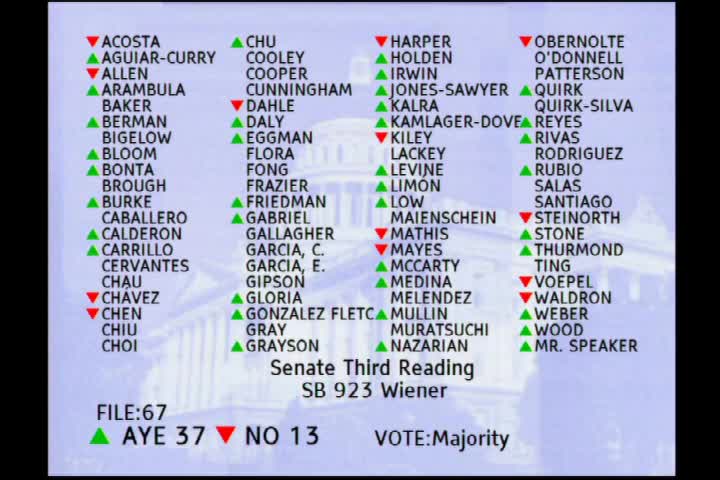

Bill Author

Bill Co-Author(s):
