SB 1399: Renewable energy: shared renewable energy tariffs.
- Session Year: 2017-2018
- House: Senate
- Latest Version Date: 2018-05-01
Existing law requires the Public Utilities Commission to develop a standard contract or tariff, which may include net energy metering, for an eligible customer-generator with a renewable electrical generation facility that is a customer of a large electrical corporation, as defined.
The Green Tariff Shared Renewables Program requires a participating utility, as defined, to file with the commission an application requesting approval of a tariff to implement a program enabling ratepayers to participate directly in offsite electrical generation facilities that use eligible renewable energy resources, consistent with certain legislative findings and statements of intent. Existing law requires the commission, by July 1, 2014, to issue a decision concerning the participating utilitys application, determining whether to approve or disapprove the application, with or without modifications, pursuant to a specified methodology.
This bill would require the commission to require each large electrical corporation to establish a tariff or tariffs that provide for bill credits for electricity generated by eligible renewable generating facilities and exported to the electrical grid to be credited to electrical accounts of nonresidential customers of the corporations. The bill would require the commission to ensure that the credit reflects credits reflect the full value of the electricity from the eligible renewable generating facilities and the credit is credits are established using the same methodology that as is used to determined determine credits under the standard contract or tariff for eligible customer-generators.
Under existing law, a violation of the Public Utilities Act or any order, decision, rule, direction, demand, or requirement of the commission is a crime.
By requiring the commission to require large electrical corporations to establish the above-described tariff, a violation of which would be a crime, this bill would impose a state-mandated local program.
The California Constitution requires the state to reimburse local agencies and school districts for certain costs mandated by the state. Statutory provisions establish procedures for making that reimbursement.
This bill would provide that no reimbursement is required by this act for a specified reason.
Existing law requires the Public Utilities Commission to develop a standard contract or tariff, which may include net energy metering, for an eligible customer-generator with a renewable electrical generation facility that is a customer of a large electrical corporation, as defined.
The Green Tariff Shared Renewables Program requires a participating utility, as defined, to file with the commission an application requesting approval of a tariff to implement a program enabling ratepayers to participate directly in offsite electrical generation facilities that use eligible renewable energy resources, consistent with certain legislative findings and statements of intent. Existing law requires the commission, by July 1, 2014, to issue a decision concerning the participating utilitys application, determining whether to approve or disapprove the application, with or without modifications, pursuant to a specified methodology.
This bill would require the commission to require each large electrical corporation to establish a tariff or tariffs that provide for bill credits for electricity generated by eligible renewable generating facilities and exported to the electrical grid to be credited to electrical accounts of nonresidential customers of the corporations. The bill would require the commission to ensure that the credit reflects the full value of the electricity from the eligible renewable generating facilities and the credit is established using the same methodology that as used to determined credits under the standard contract or tariff for eligible customer-generators.
Under existing law, a violation of the Public Utilities Act or any order, decision, rule, direction, demand, or requirement of the commission is a crime.
By requiring the commission to require large electrical corporations to establish the above-described tariff, a violation of which would be a crime, this bill would impose a state-mandated local program.
The California Constitution requires the state to reimburse local agencies and school districts for certain costs mandated by the state. Statutory provisions establish procedures for making that reimbursement.
This bill would provide that no reimbursement is required by this act for a specified reason.
The Legislature finds and declares the following:
(a)California leads the nation and the world in the development of renewable energy generally and specifically solar energy, from individual rooftops to the worlds largest solar projects.
(b)Despite this, there are still many commercial, industrial, public sector, and nonprofit electric customers that are unable to install solar energy either because they lease their space or they lack available rooftop or other space.
(c)At the same time, California has an abundance of previously developed sites like parking lots, warehouses, and brownfields that are well suited for solar development. In fact, there are approximately 70,000 acres of previously developed parcels across the state, including over 40,000 in disadvantaged communities, that could provide sites for new investments in renewable energy.
(d)A program needs to be developed that helps expand access to solar for Californias nonresidential customers that face barriers to onsite solar by allowing them to partner with developed and previously impacted sites to develop those sites with clean, local renewable energy, promoting economic development and local job growth.
SEC. 2.Section 2827.2 is added to the Public Utilities Code, to read:2827.2.(a)For purposes of this section, the following definitions apply:
(1)Benefiting account means an electricity account, or more than one account, that satisfies both of the following:
(A)It is located in the service territory of, and the electric service is provided by, the same electrical corporation as the generation account.
(B)It is an individually metered electric electrical account of an eligible customer.
(2)Bill credit means an amount of money credited to a benefiting account that is calculated based upon the applicable rate under the tariff established pursuant to this section multiplied by the quantities of electricity generated by an eligible renewable generating facility that are exported to the grid. Electricity is exported to the grid if it is generated by an eligible renewable generating facility, is not utilized onsite by the eligible renewable generating facility, and flows through the meter site and onto the electrical corporations distribution or transmission infrastructure.
(3)Eligible customer means a nonresidential customer of a large electrical corporation.
(4)Eligible renewable generating facility means a generation facility that meets both of the following requirements:
(A)It has a generating capacity of no more than 20 megawatts.
(B)It is an eligible renewable energy resource, as defined in Section 399.12.
(5)Generation account means an electricity account, or more than one account, attached to a generation project that satisfies both of the following:
(A)It is located in the service territory of, and its electric service is provided by, the same electrical corporation as the benefiting account.
(B)It is sited behind the meter of any of the following locations:
(i)A government property.
(ii)A commercial property.
(iii)A landfill.
(iv)A port.
(v)A warehouse.
(vi)A parking lot.
(vii)An industrial zone.
(viii)A brownfield site.
(ix)An area of disturbed agricultural land.
(x)A former industrial or commercial site identified by a federal or state entity as contaminated or polluted.
(xi)A school facility, including a college, trade school, or university property.
(xii)A location sited in a disadvantaged or low-income community, as defined by the commission.
(xiii)A location sited in any area determined by the electrical corporation or the commission to have high locational value.
(6)Large electrical corporation has the same meaning as defined in Section 2827.
(b)(1)The commission, as part of its review pursuant to Section 2827.1, shall require each large electrical corporation to establish a tariff or tariffs that provide for bill credits generated by an eligible renewable generating facility at a generating account to be credited to a benefiting account. account in a manner that the commission determines to be in the interest of ratepayers.
(2)The commission shall ensure both of the following:
(A)The credit reflects credits reflect the full value of the electricity from the eligible renewable generating facility.
(B)The credit is credits are established using the same methodology used to determine credits for other customer generation under the program established pursuant to Section 2827.1.
(C)The credit does not cause shifting of costs to bundled service customers of an electrical corporation.
(c)A tariff or tariffs established pursuant to this section shall be available for service no later than January 1, 2021.
(d)Service taken under a tariff established pursuant to this section by an individually metered account does not preclude participation by the eligible customer in other programs, so long as the credit provided pursuant to this section is not credited to more than one program.
SEC. 3.No reimbursement is required by this act pursuant to Section 6 of Article XIIIB of the California Constitution because the only costs that may be incurred by a local agency or school district will be incurred because this act creates a new crime or infraction, eliminates a crime or infraction, or changes the penalty for a crime or infraction, within the meaning of Section 17556 of the Government Code, or changes the definition of a crime within the meaning of Section 6 of Article XIIIB of the California Constitution.
The Legislature finds and declares the following:
(a)California leads the nation and the world in the development of renewable energy generally and specifically solar energy, from individual rooftops to the worlds largest solar projects.
(b)Despite this, there are still many commercial, industrial, public sector, and nonprofit electric customers that are unable to install solar energy either because they lease their space or they lack available rooftop or other space.
(c)At the same time, California has an abundance of previously developed sites like parking lots, warehouses, and brownfields that are well suited for solar development. In fact, there are approximately 70,000 acres of previously developed parcels across the state, including over 40,000 in disadvantaged communities, that could provide sites for new investments in renewable energy.
(d)A program needs to be developed that helps expand access to solar for Californias nonresidential customers that face barriers to onsite solar by allowing them to partner with developed and previously impacted sites to develop those sites with clean, local renewable energy, promoting economic development and local job growth.
SEC. 2.Section 2827.2 is added to the Public Utilities Code, to read:2827.2.(a)For purposes of this section, the following definitions apply:
(1)Benefiting account means an electricity account, or more than one account, that satisfies both of the following:
(A)It is located in the service territory of, and the electric service is provided by, the same electrical corporation as the generation account.
(B)It is an individually metered electric account of an eligible customer.
(2)Bill credit means an amount of money credited to a benefiting account that is calculated based upon the applicable rate under the tariff established pursuant to this section multiplied by the quantities of electricity generated by an eligible renewable generating facility that are exported to the grid. Electricity is exported to the grid if it is generated by an eligible renewable generating facility, is not utilized onsite by the eligible renewable generating facility, and flows through the meter site and onto the electrical corporations distribution or transmission infrastructure.
(3)Eligible customer means a nonresidential customer of a large electrical corporation.
(4)Eligible renewable generating facility means a generation facility that meets both of the following requirements:
(A)It has a generating capacity of no more than 20 megawatts.
(B)It is an eligible renewable energy resource, as defined in Section 399.12.
(5)Generation account means an electricity account, or more than one account, attached to a generation project that satisfies both of the following:
(A)It is located in the service territory of, and its electric service is provided by, the same electrical corporation as the benefiting account.
(B)It is sited behind the meter of any of the following locations:
(i)A government property.
(ii)A commercial property.
(iii)A landfill.
(iv)A port.
(v)A warehouse.
(vi)A parking lot.
(vii)An industrial zone.
(viii)A brownfield site.
(ix)An area of disturbed agricultural land.
(x)A former industrial or commercial site identified by a federal or state entity as contaminated or polluted.
(xi)A school facility, including a college, trade school, or university property.
(xii)A location sited in a disadvantaged or low-income community, as defined by the commission.
(xiii)A location sited in any area determined by the electrical corporation or the commission to have high locational value.
(6)Large electrical corporation has the same meaning as defined in Section 2827.
(b)(1)The commission, as part of its review pursuant to Section 2827.1, shall require each large electrical corporation to establish a tariff or tariffs that provide for bill credits generated by an eligible renewable generating facility at a generating account to be credited to a benefiting account.
(2)The commission shall ensure both of the following:
(A)The credit reflects the full value of the electricity from the eligible renewable generating facility.
(B)The credit is established using the same methodology used to determine credits for other customer generation under the program established pursuant to Section 2827.1.
(c)A tariff or tariffs established pursuant to this section shall be available for service no later than January 1, 2021.
(d)Service taken under a tariff established pursuant to this section by an individually metered account does not preclude participation by the eligible customer in other programs, so long as the credit provided pursuant to this section is not credited to more than one program.
SEC. 3.No reimbursement is required by this act pursuant to Section 6 of Article XIIIB of the California Constitution because the only costs that may be incurred by a local agency or school district will be incurred because this act creates a new crime or infraction, eliminates a crime or infraction, or changes the penalty for a crime or infraction, within the meaning of Section 17556 of the Government Code, or changes the definition of a crime within the meaning of Section 6 of Article XIIIB of the California Constitution.
The Legislature finds and declares the following:
(a)California leads the nation and the world in the development of renewable energy generally and specifically solar energy, from individual rooftops to the worlds largest solar projects.
(b)Despite this, there are still many commercial, industrial, public sector, and nonprofit electric customers that are unable to install solar energy either because they lease their space or they lack available rooftop or other space.
(c)At the same time, California has an abundance of previously developed sites like parking lots, warehouses, and brownfields that are well suited for solar development. In fact, there are approximately 70,000 acres of previously developed parcels across the state, including over 40,000 in disadvantaged communities, that could provide sites for new investments in renewable energy.
(d)A program needs to be developed that helps expand access to solar for Californias nonresidential customers that face barriers to onsite solar by allowing them to partner with developed and previously impacted sites to develop those sites with clean, local renewable energy, promoting economic development and local job growth.
SEC. 2.Section 2827.2 is added to the Public Utilities Code, to read:2827.2.(a)For purposes of this section, the following definitions apply:
(1)Benefiting account means an electricity account, or more than one account, that satisfies both of the following:
(A)It is located in the service territory of, and the electric service is provided by, the same electrical corporation as the generation account.
(B)It is an individually metered electric account of an eligible customer.
(2)Bill credit means an amount of money credited to a benefiting account that is calculated based upon the applicable rate under the tariff established pursuant to this section multiplied by the quantities of electricity generated by an eligible renewable generating facility that are exported to the grid. Electricity is exported to the grid if it is generated by an eligible renewable generating facility, is not utilized onsite by the eligible renewable generating facility, and flows through the meter site and onto the electrical corporations distribution or transmission infrastructure.
(3)Eligible customer means a nonresidential customer of a large electrical corporation.
(4)Eligible renewable generating facility means a generation facility that meets both of the following requirements:
(A)It has a generating capacity of no more than 20 megawatts.
(B)It is an eligible renewable energy resource, as defined in Section 399.12.
(5)Generation account means an electricity account, or more than one account, attached to a generation project that satisfies both of the following:
(A)It is located in the service territory of, and its electric service is provided by, the same electrical corporation as the benefiting account.
(B)It is sited behind the meter of any of the following locations:
(i)A government property.
(ii)A commercial property.
(iii)A landfill.
(iv)A port.
(v)A warehouse.
(vi)A parking lot.
(vii)An industrial zone.
(viii)A brownfield site.
(ix)An area of disturbed agricultural land.
(x)A former industrial or commercial site identified by a federal or state entity as contaminated or polluted.
(xi)A school facility, including a college, trade school, or university property.
(xii)A location sited in a disadvantaged community, as defined by the commission.
(xiii)A location sited in any area determined by the electrical corporation or the commission to have high locational value.
(6)Large electrical corporation has the same meaning as defined in Section 2827.
(b)(1)The commission, as part of its review pursuant to Section 2827.1, shall require each large electrical corporation to establish a tariff or tariffs that provide for bill credits generated by an eligible renewable generating facility at a generating account to be credited to a benefiting account.
(2)The commission shall ensure both of the following:
(A)The credit reflects the full value of the electricity from the eligible renewable generating facility.
(B)The credit is established using the same methodology used to determine credits for other customer generation under the program established pursuant to Section 2827.1.
(c)A tariff or tariffs established pursuant to this section shall be available for service no later than January 1, 2021.
(d)Service taken under a tariff established pursuant to this section by an individually metered account does not preclude participation by the eligible customer in other programs, so long as the credit provided pursuant to this section is not credited to more than one program.
SEC. 3.No reimbursement is required by this act pursuant to Section 6 of Article XIIIB of the California Constitution because the only costs that may be incurred by a local agency or school district will be incurred because this act creates a new crime or infraction, eliminates a crime or infraction, or changes the penalty for a crime or infraction, within the meaning of Section 17556 of the Government Code, or changes the definition of a crime within the meaning of Section 6 of Article XIIIB of the California Constitution.
|
Date
|
Status
|
|---|---|
| May 25, 2018 | May 25 hearing: Held in committee and under submission. |
| May 23, 2018 | Set for hearing May 25. |
| May 22, 2018 | May 22 hearing: Placed on APPR. suspense file. |
| May 15, 2018 | Set for hearing May 22. |
| May 14, 2018 | May 14 hearing postponed by committee. |
| May 4, 2018 | Set for hearing May 14. |
| May 1, 2018 | Read second time and amended. Re-referred to Com. on APPR. |
| Apr 30, 2018 | From committee: Do pass as amended and re-refer to Com. on APPR. (Ayes 8. Noes 0.) (April 25). |
| Apr 12, 2018 | Set for hearing April 25. |
| Apr 11, 2018 | April 17 hearing postponed by committee. |
| Apr 5, 2018 | From committee with author's amendments. Read second time and amended. Re-referred to Com. on E., U. & C. |
| Mar 23, 2018 | Set for hearing April 17. |
| Mar 8, 2018 | Referred to Com. on E., U. & C. |
| Feb 20, 2018 | From printer. May be acted upon on or after March 22. |
| Feb 16, 2018 | Introduced. Read first time. To Com. on RLS. for assignment. To print. |
|
Date
|
Description
|
Location
|
Votes
|
|
|---|---|---|---|---|
| May 22, 2018 | Placed on suspense file | Senate Standing Committee on Appropriations |
Passed |
|
| Apr 25, 2018 | Do pass as amended, but first amend, and re-refer to the Committee on [Appropriations] | Senate Standing Committee on Energy, Utilities and Communications |
Passed |
This list shows positions taken on this bill by organizations on the date displayed, which is linked to the original source.
Positions by individuals are not included.
|
Organization
|
Position
|
Date
|
|---|---|---|
| Advanced Energy Economy | * Support | Apr 25, 2018 |
| Berkeley Repertory Theatre | ** Support | Apr 23, 2018 |
| Borrego Solar | * Support | Apr 25, 2018 |
| California Building Industry Association | ** Support | Apr 23, 2018 |
| California Business Properties Association | * Support | Apr 25, 2018 |
| California Farm Bureau | * Support | Apr 25, 2018 |
| California School Districts Association | ** Support | Apr 23, 2018 |
| California Solar and Storage Association | * Support | Apr 25, 2018 |
| California Solar Energy Industry Association | * Support | Apr 25, 2018 |
| California Special Districts Association | * Support | Apr 25, 2018 |
| California State Association Of Counties | ** Support | Apr 23, 2018 |
| California Wind Energy Association | * Against | Apr 25, 2018 |
| Center for Sustainable Energy | ** Support | Apr 23, 2018 |
| Clean Coalition | ** Support | Apr 23, 2018 |
| CleanTech San Diego | ** Support | Apr 23, 2018 |
| Coalition for Responsible Community Development | ** Support | Apr 23, 2018 |
| Coronado Unified School District | ** Support | Apr 23, 2018 |
| Engie Services U.S. Inc. | ** Support | Apr 23, 2018 |
| Foundation Windpower | ** Support | Apr 23, 2018 |
| Independent Energy Producers Association | * Against | Apr 25, 2018 |
| Indian Wells Valley Water District | ** Support | Apr 23, 2018 |
| League Of California Cities | ** Support | Apr 23, 2018 |
| Pacific Gas And Electric Company | * Against | Apr 25, 2018 |
| San Diego Gas and Electric Company | * Against | Apr 25, 2018 |
| School Energy Coalition | * Support | Apr 25, 2018 |
| Silicon Valley Leadership Group | ** Support | Apr 23, 2018 |
| Southern California Edison | * Against | Apr 25, 2018 |
| Techna | * Support | Apr 25, 2018 |
| Technet | ** Support | Apr 23, 2018 |
| Terraverde Energy | ** Support | Apr 23, 2018 |
| The Utility Reform Network | ** Against | Apr 23, 2018 |
| Vote Solar | ** Support | Apr 23, 2018 |
SENATE COMMITTEE ON APPROPRIATIONS
Senator Ricardo Lara, Chair
2017 - 2018 Regular Session
SB 1399 (Wiener) - Renewable energy: shared renewable energy tariffs
Version: May 1, 2018 | Policy Vote: E., U., & C. 8 - 0 |
Urgency: No | Mandate: Yes |
Hearing Date: May 22, 2018 | Consultant: Mike Peterson |
This bill meets the criteria for referral to the Suspense File.
Bill Summary:
This bill would require the California Public Utilities Commission (CPUC) to require Investor Owned Utilities to create a tariff or multiple tariffs enabling commercial and industrial customers to obtain bill credits generated by an eligible renewable generating facility and apply those credits to a benefiting account.
Fiscal Impact:
- Annual costs of approximately $560,000 in ratepayer funds to support three additional positions to analyze, review, and approve such a tariff or multiple tariffs.
Background:
Existing law, pursuant to Public Utilities Code §2830, establishes the Renewable Energy Self-Generation Bill Credit Transfer (RES-BCT) program, which allows a local government entity to designate accounts controlled by the entity to receive bill credits for electricity generated by a renewable generating facility located within the boundaries of the governmental entity.
Further, existing law requires Investor Owned Utilities to develop a standard contract or tariff enabling net energy metering (NEM). IOUs must make the contract or tariff available to customers generating on-site renewable energy (customer-generators) on a first-come-first-serve basis until the generating capacity of the customer-generators.
Utility customers in solar ready buildings can offset their electricity use with appropriately sized solar systems. Customers who generate renewable energy on-site can receive bill credits for excess solar production through NEM. NEM provides customers with retail rate credits for excess generation that is supplied to the grid. These rates guarantee that a NEM customer receives a kilowatt-hour credit for every kilowatt-hour of excess generation. NEM rates are reviewed and approved by the CPUC. Currently, customers are operating under NEM 2.0, which established new requirements to accommodate time-of-use rates, interconnection fees, and payment of non bypassable charges. The CPUC is set to establish the NEM 3.0 program in 2019.
Proposed Law: The bill includes the following provisions:
- Requires the CPUC to require the large IOUs to create a tariff or multiple tariffs enabling nonresidential customers to obtain bill credits generated by an eligible renewable generating facility and apply those credits to a benefiting account. The CPUC must incorporate this tariff requirement as part of its review of the NEM program. Further, this bill requires the tariff to be available by January 1, 2021.
- Establishes eligibility criteria for renewable energy generation sites. The generation site must be in the same utility service territory as the benefiting account and must be located behind the meter at one of several specified locations.
- Caps on-site generation for the program at 20 MW per facility.
- Defines a bill credit as an amount of money credited to a benefiting account and specifies that the bill credit will be calculated by multiplying the tariff by the quantities of electricity generated by an eligible renewable generating facility exported to the grid.
- Requires the CPUC to ensure that the credit reflects the full value of the electricity from the eligible renewable generating facility and the credit is established using a methodology created for the NEM program.
- Requires that the tariff or multiple tariffs be in the interest of ratepayers and not cause a cost shift to bundled service customers.
Related Legislation:
AB 2278 (Berman, 2018) would modify how credits for the RES-BCT program are calculated to incorporate TOU rates and eliminate the requirement that the bill credit be reset to zero every 12 months, allowing the carry-over of surplus credits for future use. The bill would also eliminate the existing requirement that the RES-BCT program not result in a cost-shift to other customers. Instead, the bill would require the CPUC to ensure that the program not directly result in a shifting of actual costs to other customers. Actual costs are defined to include bill-related expenses. The bill is currently pending in the Assembly Committee on Appropriations.
AB 512 (Gordon, Chapter 478, Statutes of 2011) raised the RES-BCT generation cap for a facility from one MW to five MW; prohibited requiring an electrical corporation to compensate a local government for electricity generated from a facility in excess of the bill credits applied; prohibited a local government from being eligible for certain other tariff programs; and exempted electrical corporations with 60,000 or fewer customers from the program.
AB 2466 (Laird, Chapter 540, Statutes of 2008) established the RES-BCT program by allowing local government entities to install off-site solar on property owned by the local government and receive a credit on their electricity bill. The bill established criteria for combining multiple metered accounts and applying the credit to that single account. The bill also capped the amount of solar generation that qualified for the credit at one megawatt.
Staff Comments:
Cost-shifting. While amendments to SB 1399 from May 1 add language to require the new tariff to be in the interest of ratepayers and not cause a cost shift to bundled services customers, it is still an open question how such a tariff can fulfill the intent of the bill and avoid shifting costs. As the energy policy committee analysis notes, an electric bill generally includes a variety of charges that fund the maintenance of transmission and distribution systems. As more customers switch to different models of electricity service, there is potential for bundled customers to face disproportionate costs.
Renewable energy generation. The program established by this bill would include a higher cap for on-site generation. The existing RES-BCT program limits on-site generation for a renewable energy facility to 5 MW. This bill would enable commercial and industrial customers to generate up to 20 MW at each facility.
Geographic proximity between generation and credited account. The program established by this bill provides no requirement that customers generate electricity in close geographic proximity to the location associated with the account that receives credits for electrical generation. The existing RES-BCT program restricts the transfer of credits to within the boundary of the local government entity or campus. Therefore the generation of energy and the credited account are in close proximity. An increase in geographic distance between the two entities may create potential for cost shifts.
-- END --
SENATE COMMITTEE ON ENERGY, UTILITIES AND COMMUNICATIONS
Senator Ben Hueso, Chair
2017 - 2018 Regular
Bill No: SB 1399 Hearing Date: 4/25/2018
Author: | Wiener | ||
Version: | 4/5/2018 As Amended | ||
Urgency: | No | Fiscal: | Yes |
Consultant: | Sarah Smith | ||
SUBJECT: Renewable energy: shared renewable energy tariffs
DIGEST: This bill requires the CPUC to require IOUs to create a tariff or multiple tariffs enabling commercial and industrial customers to obtain bill credits generated by an eligible renewable generating facility and apply those credits to a benefiting account.
ANALYSIS:
Existing law:
- Establishes the Renewable Energy Self-Generation Bill Credit Transfer (RES-BCT) program, which allows a local government entity to designate accounts controlled by the entity to receive bill credits for electricity generated by a renewable generating facility located within the boundaries of the governmental entity. (Public Utilities Code §2830)
- Defines a benefitting account for the RES-BCT program as an electricity account, or more than one account, located within the geographical boundaries of a local government that is mutually agreed upon by the local government and an electrical corporation. (Public Utilities Code §2830)
- Requires benefitting accounts under the RES-BCT program to receive service under a time-of-use (TOU) rate schedule and base bill credit calculations on when electricity is exported to the grid. (Public Utilities Code §2830)
- Caps the total amount of generation for the RES-BCT program at 250 megawatts (MW) for all eligible renewable facilities within investor-owned utility (IOU) service territories and five MW per facility. (Public Utilities Code §2830)
- Requires the California Public Utilities Commission (CPUC) to ensure the transfer of a bill credit to a benefiting account does not result in a shifting of costs onto bundled service subscribers. (Public Utilities Code §2830)
- Requires IOUs to develop a standard contract or tariff enabling net energy metering (NEM). IOUs must make the contract or tariff available to customers generating on-site renewable energy (customer-generators) on a first-come-first-serve basis until the generating capacity of the customer-generators exceeds five percent of the IOU’s total customer peak demand. (Public Utilities Code §2827)
This bill:
- Requires the CPUC to require the large IOUs to create a tariff or multiple tariffs enabling nonresidential customers to obtain bill credits generated by an eligible renewable generating facility and apply those credits to a benefiting account. The CPUC must incorporate this tariff requirement as part of its review of the NEM program.
- Establishes eligibility criteria for renewable energy generation sites. The generation site must be in the same utility service territory as the benefiting account and must be located behind the meter at one of the following locations:
- A government property.
- A commercial property.
- A landfill.
- A port.
- A warehouse.
- A parking lot.
- An industrial zone.
- A brownfield site.
- An area of disturbed agricultural land.
- A former industrial or commercial site identified by a federal or state entity as contaminated or polluted.
- A school facility, including a college, trade school, or university property.
- A location sited in a disadvantaged or low-income community, as defined by the CPUC.
- A location sited in any area determined by the electrical corporation or the CPUC to have high locational value.
- Caps on-site generation for the program at 20 MW per facility.
- Defines a bill credit as an amount of money credited to a benefiting account and specifies that the bill credit will be calculated by multiplying the tariff by the quantities of electricity generated by an eligible renewable generating facility exported to the grid.
- Requires the CPUC to ensure that the credit reflects the full value of the electricity from the eligible renewable generating facility and the credit is established using a methodology created for the NEM program.
- Requires the tariff to be available by January 1, 2021.
- Participation in the program does not preclude participation in other programs as long as the credit is not double counted.
Background
Solar readiness. Solar ready buildings are those equipped with a solar zone, generally on the rooftop, which is free of obstructions and shade. Integration of these zones in building design facilitates the installation of solar panels. However, not all buildings in California are suitable for solar installation, and many nonresidential buildings are not solar ready. The California Energy Commission (CEC) establishes building standards governing solar readiness. According to the CEC’s 2016 Nonresidential Compliance Manual for the building codes, building stock surveys show that less than 30 percent of existing nonresidential buildings are suitable for solar photovoltaic or solar water heating systems.
Businesses in nonresidential buildings that are unsuitable for solar installation have several options for obtaining energy from renewable resources. These businesses may opt to participate in the Green Tariff Shared Renewables program. The Green Tariff portion of this program enables customers to pay the difference between their current electricity cost and the cost of obtaining between 50 to 100 percent renewable energy to meet their demands.
Net Energy Metering (NEM). Utility customers in solar ready buildings can offset their electricity use with appropriately sized solar systems. Customers who generate renewable energy on-site can receive bill credits for excess solar production through NEM. NEM provides customers with retail rate credits for excess generation that is supplied to the grid. These rates guarantee that a NEM customer receives a kilowatt-hour credit for every kilowatt-hour of excess generation.
NEM rates are reviewed and approved by the CPUC. Since the start of NEM, the CPUC has revised the NEM program. Currently, customers are operating under NEM 2.0, which established new requirements to accommodate TOU rates, interconnection fees, and payment of nonbypassable charges. The CPUC regularly reviews the NEM program, and the CPUC is set to establish the NEM 3.0 program in 2019. NEM 3.0 will revise the NEM program to accommodate changes in the electricity market since NEM 2.0.
Renewable Energy Self-Generation Bill Credit Transfer Program (RES-BCT). Under the existing RES-BCT program, local government entities and public higher education campuses that cannot generate renewable energy on-site can generate renewable energy at an off-site location within their jurisdictions and designate an account to receive the credit for the generation. This bill credit transfer is especially useful for local government entities that have multiple sites. One site may have solar generation but lower energy use. The credits from this site can be transferred to the local government entity’s bill for another site that has higher energy use and no solar generation.
The program established by this bill would differ from the existing RES-BCT in several ways. The program established by this bill includes a significantly higher cap on on-site generation. Under existing law, the RES-BCT limits on-site generation for a renewable energy facility to five MW. This bill would enable commercial and industrial customers to generate up to 20 MW at each renewable energy facility. Under the existing RES-BCT program, entities can only transfer credits within the boundaries of the local government or campus. This restriction limits the degree to which credits are transferred from remote sites over the transmission and distribution systems. This bill would establish a program similar to the RES-BCT program through the NEM 3.0 proceeding. The program established under this bill would serve commercial and industrial customers. However, there is no requirement that these customers generate electricity in close geographic proximity to the location associated with the account receiving credits for electrical generation.
Some stakeholders refer to the remote relationship between a generator and benefitting account as virtual net energy metering (VNEM). Traditionally, VNEM has been used to share solar generation credits across multiple accounts. For example, it can be used to credit tenants of an apartment building for solar generation associated with the building. Shared renewables like VNEM can provide significant benefits for consumers in areas where few solar-ready sites exist. However, if shared renewable programs are not designed to enable recovery of transmission and distribution costs, cost-shifts can occur.
Cost-shifting. An electric bill generally includes a variety of separate charges associated with providing electricity. These charges are “bundled” into a single cost. Part of a bundled consumer’s bill includes costs for transmission service, which helps deliver energy to retail electric consumers. Cost-shifts can occur for a number of reasons. Generally, these costs occur when bundled customers of utilities continue to pay for both the energy generation and delivery costs while other types of energy customers pay a smaller portion of these costs. As more customers switch to different models of electricity service, the CPUC is exploring options for ensuring that sufficient resources exist to maintain the transmission and distribution system and prevent customers that remain bundled from disproportionate cost-shifts. Existing law requires the CPUC to ensure that the RES-BCT program does not result in cost-shifting to bundled service subscribers. This bill does not contain a similar prohibition. While the CPUC’s NEM 3.0 proceeding may identify mechanisms for preventing cost-shifts, the CPUC is not specifically required to ensure that cost-shifting does not occur when developing the new program through NEM 3.0.
Need for amendments. This bill would require the CPUC to establish a program for commercial and industrial customers that is similar to the RES-BCT program. This bill would require the CPUC to establish this new program through the CPUC’s NEM 3.0 proceeding. Existing law for the RES-BCT program specifically requires the CPUC to ensure that bill credit transfers do not result in cost-shift for bundled service subscribers. To the extent that the author and committee wish to ensure that the program established by this bill includes ratepayer protections similar to those for the existing RES-BCT program, the author and the committee may wish to consider amending this bill to specifically require the CPUC to consider the tariffs as part of its NEM 3.0 proceeding and apply the tariffs if the CPUC finds that they are in the best interest of ratepayers. This consideration would still require the CPUC to explore these tariffs as part of the NEM 3.0 proceeding while providing the CPUC with the flexibility to limit the application of these tariffs if the CPUC determines that ratepayers would be negatively impacted by cost-shifts.
Prior/Related Legislation
AB 2278 (Berman, 2018) would modify how credits for the RES-BCT program are calculated to incorporate TOU rates and eliminate the requirement that the bill credit be reset to zero every 12 months, allowing the carry-over of surplus credits for future use. The bill would also eliminate the existing requirement that the RES-BCT program not result in a cost-shift to other customers. Instead, the bill would require the CPUC to ensure that the program not directly result in a shifting of actual costs to other customers. Actual costs are defined to include bill-related expenses. The bill is currently pending in the Assembly Committee on Appropriations.
AB 512 (Gordon, Chapter 478, Statutes of 2011) raised the RES-BCT generation cap for a facility from one MW to five MW; prohibited requiring an electrical corporation to compensate a local government for electricity generated from a facility in excess of the bill credits applied; prohibited a local government from being eligible for certain other tariff programs; and exempted electrical corporations with 60,000 or fewer customers from the program.
AB 2466 (Laird, Chapter 540, Statutes of 2008) established the RES-BCT program by allowing local government entities to install off-site solar on property owned by the local government and receive a credit on their electricity bill. The bill established criteria for combining multiple metered accounts and applying the credit to that single account. The bill also capped the amount of solar generation that qualified for the credit at one megawatt.
FISCAL EFFECT: Appropriation: No Fiscal Com.: Yes Local: Yes
SUPPORT:
Solar Energy Industries Association (Source)
Advanced Energy Economy
Berkeley Repertory Theatre
Borrego Solar
California Building Industry Association
California Business Properties Association
California School Districts Association
California Solar & Storage Association
California State Association of Counties
Center for Sustainable Energy
Clean Coalition
Cleantech San Diego
Coalition for Responsible Community Development
Coronado Unified School District
ENGIE Services U.S. Inc.
Foundation Windpower
Indian Wells Valley Water District
League of California Cities
School Energy Coalition
Silicon Valley Leadership Group
TechNet
TerraVerde Energy
Vote Solar
OPPOSITION:
California Wind Energy Association
Independent Energy Producers Association
Pacific Gas and Electric Company
San Diego Gas & Electric
Southern California Edison
The Utility Reform Network
ARGUMENTS IN SUPPORT: According to the author:
“California leads the nation in renewable energy development. Ranging from small-scale rooftop solar to some of the world’s largest clean energy power plants, California has strongly supported the development of a wide range of renewable energy resources. Unfortunately, many non-residential customers with large on-site electricity demand have been left out because they do not own their space or because they lack the space to install onsite renewable energy. Luckily, California has an abundance of sites without large on-site electricity demand like parking lots, warehouses and brownfields that are perfect for local clean energy projects. By matching customers lacking physical space with customers lacking load, SB 1399 will expand access to local renewable energy to non-residential customers who have been inadvertently excluded. SB 1399 will further cement California’s role as the renewables leader, spur economic development, and create good-paying jobs in communities throughout our state.”
ARGUMENTS IN OPPOSITION: Opponents claim that this bill could result in cost-shifting that would negatively impact ratepayers. They argue that this bill fails to require a geographic nexus between a generating facility and a benefiting account, enabling large nonresidential generators to obtain bill credits that exceed the actual value of the energy they produce off-site. They claim that this will enable these customers to use the transmission and distribution system without effectively paying for it. The Utility Reform Network (TURN) states, “…the VNEM approach in SB 1399 is unlikely to result in a ‘community’ facility that serves neighbors but instead would enable customers in urban areas to receive outsized financial credits for projects located hundreds of miles away from their premises.” Opponents also argue that the bill is an attempt to circumvent limitations on direct access and billing arrangement requirements for the wholesale grid energy market.
-- END --
Discussed in Hearing
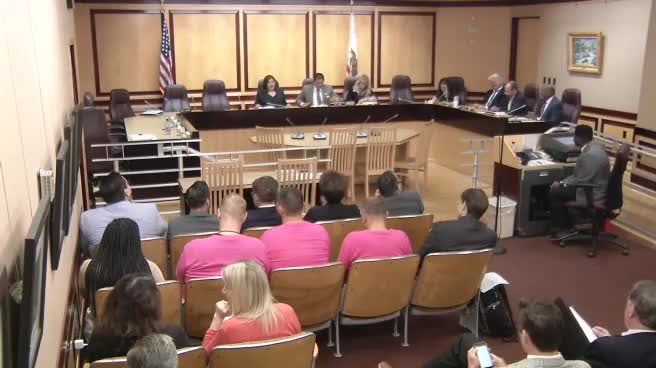 11MIN
Senate Standing Committee on Energy, Utilities and Communications
Bill Author

Bill Co-Author(s):