SB 1423: Medi-Cal: oral interpretation services.
- Session Year: 2017-2018
- House: Senate
- Latest Version Date: 2018-09-19
Existing law establishes the Medi-Cal program, administered by the State Department of Health Care Services. The Medi-Cal program is, in part, governed and funded by federal Medicaid program provisions. Under existing law, one of the methods by which Medi-Cal services, including medical, dental, and mental health services, are provided is pursuant to contracts with various types of managed care plans. Existing law requires the department to require all managed care plans and mental health plans contracting with the department to provide language assistance services, including translation services and oral interpretation services by an interpreter who meets specified minimum qualification criteria, to limited-English-proficient (LEP) Medi-Cal beneficiaries.
This bill would modify the minimum qualifications that an interpreter is required to possess to provide oral interpretation services to an LEP beneficiary enrolled in either a managed care plan or a mental health plan.
Existing law establishes the Medi-Cal program, administered by the State Department of Health Care Services. The Medi-Cal program is, in part, governed and funded by federal Medicaid program provisions. Under existing law, one of the methods by which Medi-Cal services, including medical, dental, and mental health services, are provided is pursuant to contracts with various types of managed care plans. Existing law requires the department to require all managed care plans and mental health plans contracting with the department to provide language assistance services, including translation services and oral interpretation services by an interpreter who meets specified minimum qualification criteria, to limited-English-proficient (LEP) Medi-Cal beneficiaries.
This bill would modify the minimum qualifications that an interpreter is required to possess to provide oral interpretation services to an LEP beneficiary enrolled in either a managed care plan or a mental health plan.
Existing law establishes the Medi-Cal program, administered by the State Department of Health Care Services. The Medi-Cal program is, in part, governed and funded by federal Medicaid program provisions. Under existing law, one of the methods by which Medi-Cal services, including medical, dental, and mental health services, are provided is pursuant to contracts with various types of managed care plans. Existing law requires the department to require all managed care plans and mental health plans contracting with the department to provide language assistance services, including translation services and oral interpretation services by an interpreter who meets specified minimum qualification criteria, to limited-English-proficient (LEP) Medi-Cal beneficiaries.
This bill would modify the minimum qualifications that an interpreter is required to possess to provide oral interpretation services to an LEP beneficiary enrolled in either a managed care plan or a mental health plan.
Existing law provides for the Medi-Cal program, which is administered by the State Department of Health Care Services, under which qualified low-income individuals receive health care services. The Medi-Cal program is, in part, governed and funded by federal Medicaid program provisions. Existing law generally requires a county to redetermine a Medi-Cal beneficiarys eligibility to receive Medi-Cal benefits every 12 months and whenever the county receives information about changes in a beneficiarys circumstances that may affect his or her eligibility for Medi-Cal benefits.This bill would make technical, nonsubstantive changes to these provisions.Existing law provides for the Medi-Cal program, which is administered by the State Department of Health Care Services, under which qualified low-income individuals receive health care services. The Medi-Cal program is, in part, governed and funded by federal Medicaid program provisions. Existing law generally requires a county to redetermine a Medi-Cal beneficiarys eligibility to receive Medi-Cal benefits every 12 months and whenever the county receives information about changes in a beneficiarys circumstances that may affect his or her eligibility for Medi-Cal benefits.
This bill would make technical, nonsubstantive changes to these provisions.
(a)The department shall require all managed care plans contracting with the department to provide Medi-Cal services to provide language assistance services to limited-English-proficient (LEP) Medi-Cal beneficiaries who are mandatorily enrolled in managed care in the following manner:
(1)(A)Oral interpretation services shall be provided in any language on a 24-hour basis at key points of contact.
(B)Oral interpretation services shall be provided by an interpreter that, at a minimum, meets all of the following qualifications:
(i)Demonstrated proficiency in speaking and understanding both spoken English and the language spoken by the LEP beneficiary.
(ii)The ability to interpret effectively, accurately, and impartially, both receptively and expressly, to and from the language spoken by the LEP beneficiary and English, using any necessary specialized vocabulary, terminology, and phraseology.
(iii)Adherence to generally accepted interpreter ethics principles, including client confidentiality.
(C)A managed care plan shall not require an LEP beneficiary to provide his or her own interpreter or rely on a staff member who does not meet the qualifications described in subparagraph (B) to communicate directly with the LEP beneficiary.
(D)A managed care plan shall not rely on an adult or minor child accompanying the LEP beneficiary to interpret or facilitate communication except under either of the following circumstances:
(i)In an emergency, as defined by the department, and an interpreter who meets the qualifications described in subparagraph (A) is not immediately available for the LEP beneficiary.
(ii)If the LEP beneficiary specifically requests that the accompanying adult interpret or facilitate communication, the accompanying adult agrees to provide that assistance, and reliance on that accompanying adult for that assistance is appropriate under the circumstances.
(2)Translation services shall be provided to the language groups identified by the department.
(3)Written notice of the availability of free language assistance services shall be provided in English and in the top 15 languages spoken by LEP individuals in California, as determined by the department, and consistent with the requirements identified in Part 92 of Title 45 of the Code of Federal Regulations and Section 1557 of the federal Patient Protection and Affordable Care Act (42 U.S.C. Sec. 18116).
(b)The department shall determine when an LEP population meets the requirement for translation services using one of the following numeric thresholds:
(1)A population group of at least 3,000 or 5 percent of the beneficiary population, whichever is fewer, mandatory managed care Medi-Cal beneficiaries, residing in the service area, who indicate their primary language as other than English.
(2)A population group of mandatory managed care Medi-Cal beneficiaries, residing in the service area, who indicate their primary language as other than English, and that meet a concentration standard of 1,000 beneficiaries in a single ZIP Code or 1,500 beneficiaries in two contiguous ZIP Codes.
(c)The department shall make this determination if any of the following occurs:
(1)A nonmanaged care county becomes a new managed care county.
(2)A new population group becomes a mandatory Medi-Cal managed care beneficiary population.
(3)A period of three years has passed since the last determination.
(d)The department shall instruct managed care plans, by means of incorporating the requirement into plan contracts, all-plan letters, or similar instructions, of the language groups that meet the numeric thresholds.
(e)A managed care plan shall notify beneficiaries, prospective beneficiaries, and members of the public of all of the following information:
(1)The availability of language assistance services, including oral interpretation and translated written materials, free of charge and in a timely manner, when those services are necessary to provide meaningful access to health care programs or activities to LEP beneficiaries.
(2)The availability of appropriate auxiliary aids and services, including qualified interpreters for individuals with disabilities and information in alternate formats, free of charge and in a timely manner, when those aids and services are necessary to ensure an equal opportunity to participate for individuals with disabilities.
(3)A managed care plan does not discriminate on the basis of race, color, national origin, ancestry, religion, sex, marital status, gender, gender identity, sexual orientation, age, or disability.
(4)The availability of a grievance procedure and how to file a grievance, including identification of, and contact information for, the designated managed care plan representative.
(5)How to file a discrimination complaint with the United States Department of Health and Human Services Office of Civil Rights if there is a concern of discrimination based on race, color, national origin, age, disability, or sex.
(f)(1)The information described in paragraph (3) of subdivision (a) and subdivision (e) shall be provided in the following manner:
(A)In the evidence of coverage.
(B)Posted in conspicuous physical locations where the managed care plan interacts with the public.
(C)On the Internet Web site published and maintained by the managed care plan in a manner that allows a beneficiary, prospective beneficiary, and members of the public to easily locate the information.
(2)To the extent the information described in paragraph (3) of subdivision (a) and subdivision (e) is not included in existing informational notices, a managed care plan shall add this information at the time of the next regularly scheduled update of the applicable publication.
(g)The amendments made to this section by the act that added this subdivision shall be implemented by the department only to the extent that federal financial participation is available and is not otherwise jeopardized.
(h)This section does not apply to mental health plans contracting with the department pursuant to Section 14712.
(i)For purposes of this section, a person is limited-English-proficient if he or she speaks English less than very well.
SEC. 2.Section 14727 of the Welfare and Institutions Code is amended to read:14727.(a)A mental health plan shall notify beneficiaries, prospective beneficiaries, and members of the public of all of the following information:
(1)The availability of language assistance services, including oral interpretation and translated written materials, free of charge and in a timely manner, when those services are necessary to provide meaningful access to an individual with limited English proficiency (LEP).
(2)The availability of appropriate auxiliary aids and services, including qualified interpreters for individuals with disabilities and information in alternate formats, free of charge and in a timely manner, when those aids and services are necessary to ensure an equal opportunity to participate for individuals with disabilities.
(3)A mental health plan does not discriminate on the basis of race, color, national origin, ancestry, religion, sex, marital status, gender, gender identity, sexual orientation, age, or disability.
(4)The availability of the grievance procedure and how to file a grievance, including identification of, and contact information for, the designated mental health plan representative.
(5)How to file a discrimination complaint with the United States Department of Health and Human Services Office of Civil Rights if there is a concern of discrimination based on race, color, national origin, age, disability, or sex.
(b)Written notice of the availability of free language assistance services shall be provided in English and in the top 15 languages spoken by LEP individuals in California, as determined by the department, and consistent with the requirements identified in Part 92 of Title 45 of the Code of Federal Regulations and Section 1557 of the federal Patient Protection and Affordable Care Act (42 U.S.C. Sec. 18116).
(c)(1)The information described in subdivisions (a) and (b) shall be provided in the following manner:
(A)In the beneficiary handbook.
(B)Posted in conspicuous physical locations where the mental health plan interacts with the public.
(C)On the Internet Web site published and maintained by the mental health plan, in a manner that allows beneficiaries, prospective beneficiaries, and members of the public to easily locate the information.
(2)To the extent the information described in subdivisions (a) and (b) is not included in existing informational notices, a mental health plan shall add this information at the time of the next regularly scheduled update of the applicable publication.
(d)Oral interpretation services shall be provided to an LEP beneficiary by an interpreter that, at a minimum, meets all of the following qualifications:
(1)Demonstrated proficiency in speaking and understanding both English and the language spoken by the LEP beneficiary.
(2)The ability to interpret effectively, accurately, and impartially, both receptively and expressly, to and from the language spoken by the LEP beneficiary and English, using any necessary specialized vocabulary, terminology, and phraseology.
(3)Adherence to generally accepted interpreter ethics principles, including client confidentiality.
(e)A mental health plan shall not require an LEP beneficiary to provide his or her own interpreter or rely on a staff member who does not meet the qualifications described in subdivision (d) to communicate directly with the LEP beneficiary.
(f)A mental health plan shall not rely on an adult or minor child accompanying the LEP beneficiary to interpret or facilitate communication except under either of the following circumstances:
(1)In an emergency, as defined by the department, and an interpreter who meets the qualifications described in subdivision (d) is not immediately available for the LEP beneficiary.
(2)If the LEP beneficiary specifically requests that the accompanying adult interpret or facilitate communication, the accompanying adult agrees to provide that assistance, and reliance on that accompanying adult for that assistance is appropriate under the circumstances.
(g)This section shall be implemented only to the extent that federal financial participation is available and is not otherwise jeopardized.
(a)The department shall require all managed care plans contracting with the department to provide Medi-Cal services to provide language assistance services to limited-English-proficient (LEP) Medi-Cal beneficiaries who are mandatorily enrolled in managed care in the following manner:
(1)(A)Oral interpretation services shall be provided in any language on a 24-hour basis at key points of contact.
(B)Oral interpretation services shall be provided by an interpreter that, at a minimum, meets all of the following qualifications:
(i)Demonstrated proficiency in speaking and understanding both spoken English and the language spoken by the LEP beneficiary.
(ii)The ability to interpret effectively, accurately, and impartially, both receptively and expressly, to and from the language spoken by the LEP beneficiary and English, using any necessary specialized vocabulary, terminology, and phraseology.
(iii)Adherence to generally accepted interpreter ethics principles, including client confidentiality.
(C)A managed care plan shall not require an LEP beneficiary to provide his or her own interpreter or rely on a staff member who does not meet the qualifications described in subparagraph (B) to communicate directly with the LEP beneficiary.
(D)A managed care plan shall not rely on an adult or minor child accompanying the LEP beneficiary to interpret or facilitate communication except under either of the following circumstances:
(i)In an emergency, as defined by the department, and an interpreter who meets the qualifications described in subparagraph (A) is not immediately available for the LEP beneficiary.
(ii)If the LEP beneficiary specifically requests that the accompanying adult interpret or facilitate communication, the accompanying adult agrees to provide that assistance, and reliance on that accompanying adult for that assistance is appropriate under the circumstances.
(2)Translation services shall be provided to the language groups identified by the department.
(3)Written notice of the availability of free language assistance services shall be provided in English and in the top 15 languages spoken by LEP individuals in California, as determined by the department, and consistent with the requirements identified in Part 92 of Title 45 of the Code of Federal Regulations and Section 1557 of the federal Patient Protection and Affordable Care Act (42 U.S.C. Sec. 18116).
(b)The department shall determine when an LEP population meets the requirement for translation services using one of the following numeric thresholds:
(1)A population group of at least 3,000 or 5 percent of the beneficiary population, whichever is fewer, mandatory managed care Medi-Cal beneficiaries, residing in the service area, who indicate their primary language as other than English.
(2)A population group of mandatory managed care Medi-Cal beneficiaries, residing in the service area, who indicate their primary language as other than English, and that meet a concentration standard of 1,000 beneficiaries in a single ZIP Code or 1,500 beneficiaries in two contiguous ZIP Codes.
(c)The department shall make this determination if any of the following occurs:
(1)A nonmanaged care county becomes a new managed care county.
(2)A new population group becomes a mandatory Medi-Cal managed care beneficiary population.
(3)A period of three years has passed since the last determination.
(d)The department shall instruct managed care plans, by means of incorporating the requirement into plan contracts, all-plan letters, or similar instructions, of the language groups that meet the numeric thresholds.
(e)A managed care plan shall notify beneficiaries, prospective beneficiaries, and members of the public of all of the following information:
(1)The availability of language assistance services, including oral interpretation and translated written materials, free of charge and in a timely manner, when those services are necessary to provide meaningful access to health care programs or activities to LEP beneficiaries.
(2)The availability of appropriate auxiliary aids and services, including qualified interpreters for individuals with disabilities and information in alternate formats, free of charge and in a timely manner, when those aids and services are necessary to ensure an equal opportunity to participate for individuals with disabilities.
(3)A managed care plan does not discriminate on the basis of race, color, national origin, ancestry, religion, sex, marital status, gender, gender identity, sexual orientation, age, or disability.
(4)The availability of a grievance procedure and how to file a grievance, including identification of, and contact information for, the designated managed care plan representative.
(5)How to file a discrimination complaint with the United States Department of Health and Human Services Office of Civil Rights if there is a concern of discrimination based on race, color, national origin, age, disability, or sex.
(f)(1)The information described in paragraph (3) of subdivision (a) and subdivision (e) shall be provided in the following manner:
(A)In the evidence of coverage.
(B)Posted in conspicuous physical locations where the managed care plan interacts with the public.
(C)On the Internet Web site published and maintained by the managed care plan in a manner that allows a beneficiary, prospective beneficiary, and members of the public to easily locate the information.
(2)To the extent the information described in paragraph (3) of subdivision (a) and subdivision (e) is not included in existing informational notices, a managed care plan shall add this information at the time of the next regularly scheduled update of the applicable publication.
(g)The amendments made to this section by the act that added this subdivision shall be implemented by the department only to the extent that federal financial participation is available and is not otherwise jeopardized.
(h)This section does not apply to mental health plans contracting with the department pursuant to Section 14712.
(i)For purposes of this section, a person is limited-English-proficient if he or she speaks English less than very well.
SEC. 2.Section 14727 of the Welfare and Institutions Code is amended to read:14727.(a)A mental health plan shall notify beneficiaries, prospective beneficiaries, and members of the public of all of the following information:
(1)The availability of language assistance services, including oral interpretation and translated written materials, free of charge and in a timely manner, when those services are necessary to provide meaningful access to an individual with limited English proficiency (LEP).
(2)The availability of appropriate auxiliary aids and services, including qualified interpreters for individuals with disabilities and information in alternate formats, free of charge and in a timely manner, when those aids and services are necessary to ensure an equal opportunity to participate for individuals with disabilities.
(3)A mental health plan does not discriminate on the basis of race, color, national origin, ancestry, religion, sex, marital status, gender, gender identity, sexual orientation, age, or disability.
(4)The availability of the grievance procedure and how to file a grievance, including identification of, and contact information for, the designated mental health plan representative.
(5)How to file a discrimination complaint with the United States Department of Health and Human Services Office of Civil Rights if there is a concern of discrimination based on race, color, national origin, age, disability, or sex.
(b)Written notice of the availability of free language assistance services shall be provided in English and in the top 15 languages spoken by LEP individuals in California, as determined by the department, and consistent with the requirements identified in Part 92 of Title 45 of the Code of Federal Regulations and Section 1557 of the federal Patient Protection and Affordable Care Act (42 U.S.C. Sec. 18116).
(c)(1)The information described in subdivisions (a) and (b) shall be provided in the following manner:
(A)In the beneficiary handbook.
(B)Posted in conspicuous physical locations where the mental health plan interacts with the public.
(C)On the Internet Web site published and maintained by the mental health plan, in a manner that allows beneficiaries, prospective beneficiaries, and members of the public to easily locate the information.
(2)To the extent the information described in subdivisions (a) and (b) is not included in existing informational notices, a mental health plan shall add this information at the time of the next regularly scheduled update of the applicable publication.
(d)Oral interpretation services shall be provided to an LEP beneficiary by an interpreter that, at a minimum, meets all of the following qualifications:
(1)Demonstrated proficiency in speaking and understanding both English and the language spoken by the LEP beneficiary.
(2)The ability to interpret effectively, accurately, and impartially, both receptively and expressly, to and from the language spoken by the LEP beneficiary and English, using any necessary specialized vocabulary, terminology, and phraseology.
(3)Adherence to generally accepted interpreter ethics principles, including client confidentiality.
(e)A mental health plan shall not require an LEP beneficiary to provide his or her own interpreter or rely on a staff member who does not meet the qualifications described in subdivision (d) to communicate directly with the LEP beneficiary.
(f)A mental health plan shall not rely on an adult or minor child accompanying the LEP beneficiary to interpret or facilitate communication except under either of the following circumstances:
(1)In an emergency, as defined by the department, and an interpreter who meets the qualifications described in subdivision (d) is not immediately available for the LEP beneficiary.
(2)If the LEP beneficiary specifically requests that the accompanying adult interpret or facilitate communication, the accompanying adult agrees to provide that assistance, and reliance on that accompanying adult for that assistance is appropriate under the circumstances.
(g)This section shall be implemented only to the extent that federal financial participation is available and is not otherwise jeopardized.
(a)The department shall require all managed care plans contracting with the department to provide Medi-Cal services to provide language assistance services to limited-English-proficient (LEP) Medi-Cal beneficiaries who are mandatorily enrolled in managed care in the following manner:
(1)(A)Oral interpretation services shall be provided in any language on a 24-hour basis at key points of contact.
(B)Oral interpretation services shall be provided by an interpreter that, at a minimum, meets all of the following qualifications:
(i)Demonstrated proficiency in speaking and understanding both spoken English and the target language. the language spoken by the LEP beneficiary.
(ii)Knowledge in both English and the target language of health care terminology and concepts relevant to health care delivery systems.(ii)The ability to interpret effectively, accurately, and impartially, both receptively and expressly, to and from the language spoken by the LEP beneficiary and English, using any necessary specialized vocabulary, terminology, and phraseology.
(iii)Adheres Adherence to generally accepted interpreter ethics principles, including client confidentiality.
(C)A managed care plan shall not require a an LEP beneficiary with limited English proficiency to provide his or her own interpreter or rely on a staff member who does not meet the qualifications described in subparagraph (B) to communicate directly with the limited-English-proficient LEP beneficiary.
(D)A managed care plan shall not rely on an adult or minor child accompanying the limited-English-proficient LEP beneficiary to interpret or facilitate communication except under either of the following circumstances:
(i)In an emergency, as defined by the department, and an interpreter who meets the qualifications described in subparagraph (A) is not immediately available for the beneficiary with limited English proficiency. LEP beneficiary.
(ii)If the individual with limited English proficiency LEP beneficiary specifically requests that the accompanying adult interpret or facilitate communication, the accompanying adult agrees to provide that assistance, and reliance on that accompanying adult for that assistance is appropriate under the circumstances.
(2)Translation services shall be provided to the language groups identified by the department.
(3)Written notice of the availability of free language assistance services shall be provided in English and in the top 15 languages spoken by limited-English-proficient LEP individuals in California, as determined by the department, and consistent with the requirements identified in Part 92 of Title 45 of the Code of Federal Regulations and Section 1557 of the federal Patient Protection and Affordable Care Act (42 U.S.C. Sec. 18116).
(b)The department shall determine when an LEP population meets the requirement for translation services using one of the following numeric thresholds:
(1)A population group of at least 3,000 or 5 percent of the beneficiary population, whichever is fewer, mandatory managed care Medi-Cal beneficiaries, residing in the service area, who indicate their primary language as other than English.
(2)A population group of mandatory managed care Medi-Cal beneficiaries, residing in the service area, who indicate their primary language as other than English, and that meet a concentration standard of 1,000 beneficiaries in a single ZIP Code or 1,500 beneficiaries in two contiguous ZIP Codes.
(c)The department shall make this determination if any of the following occurs:
(1)A nonmanaged care county becomes a new managed care county.
(2)A new population group becomes a mandatory Medi-Cal managed care beneficiary population.
(3)A period of three years has passed since the last determination.
(d)The department shall instruct managed care plans, by means of incorporating the requirement into plan contracts, all-plan letters, or similar instructions, of the language groups that meet the numeric thresholds.
(e)A managed care plan shall notify beneficiaries, prospective beneficiaries, and members of the public of all of the following information:
(1)The availability of language assistance services, including oral interpretation and translated written materials, free of charge and in a timely manner, when those services are necessary to provide meaningful access to health care programs or activities to individuals with limited English proficiency. LEP beneficiaries.
(2)The availability of appropriate auxiliary aids and services, including qualified interpreters for individuals with disabilities and information in alternate formats, free of charge and in a timely manner, when those aids and services are necessary to ensure an equal opportunity to participate for individuals with disabilities.
(3)A managed care plan does not discriminate on the basis of race, color, national origin, ancestry, religion, sex, marital status, gender, gender identity, sexual orientation, age, or disability.
(4)The availability of a grievance procedure and how to file a grievance, including identification of, and contact information for, the designated managed care plan representative.
(5)How to file a discrimination complaint with the United States Department of Health and Human Services Office of Civil Rights if there is a concern of discrimination based on race, color, national origin, age, disability, or sex.
(f)(1)The information described in paragraph (3) of subdivision (a) and subdivision (e) shall be provided in the following manner:
(A)In the evidence of coverage.
(B)Posted in conspicuous physical locations where the managed care plan interacts with the public.
(C)On the Internet Web site published and maintained by the managed care plan in a manner that allows a beneficiary, prospective beneficiary, and members of the public to easily locate the information.
(2)To the extent the information described in paragraph (3) of subdivision (a) and subdivision (e) is not included in existing informational notices, a managed care plan shall add this information at the time of the next regularly scheduled update of the applicable publication.
(g)The amendments made to this section by the act that added this subdivision shall be implemented by the department only to the extent that federal financial participation is available and is not otherwise jeopardized.
(h)This section does not apply to mental health plans contracting with the department pursuant to Section 14712.
(i)For purposes of this section, a person is limited-English-proficient if he or she speaks English less than very well.
SEC. 2.Section 14727 of the Welfare and Institutions Code is amended to read:14727.(a)A mental health plan shall notify beneficiaries, prospective beneficiaries, and members of the public of all of the following information:
(1)The availability of language assistance services, including oral interpretation and translated written materials, free of charge and in a timely manner, when those services are necessary to provide meaningful access to an individual with limited English proficiency. proficiency (LEP).
(2)The availability of appropriate auxiliary aids and services, including qualified interpreters for individuals with disabilities and information in alternate formats, free of charge and in a timely manner, when those aids and services are necessary to ensure an equal opportunity to participate for individuals with disabilities.
(3)A mental health plan does not discriminate on the basis of race, color, national origin, ancestry, religion, sex, marital status, gender, gender identity, sexual orientation, age, or disability.
(4)The availability of the grievance procedure and how to file a grievance, including identification of, and contact information for, the designated mental health plan representative.
(5)How to file a discrimination complaint with the United States Department of Health and Human Services Office of Civil Rights if there is a concern of discrimination based on race, color, national origin, age, disability, or sex.
(b)Written notice of the availability of free language assistance services shall be provided in English and in the top 15 languages spoken by limited-English-proficient LEP individuals in California, as determined by the department, and consistent with the requirements identified in Part 92 of Title 45 of the Code of Federal Regulations and Section 1557 of the federal Patient Protection and Affordable Care Act (42 U.S.C. Sec. 18116).
(c)(1)The information described in subdivisions (a) and (b) shall be provided in the following manner:
(A)In the beneficiary handbook.
(B)Posted in conspicuous physical locations where the mental health plan interacts with the public.
(C)On the Internet Web site published and maintained by the mental health plan, in a manner that allows beneficiaries, prospective beneficiaries, and members of the public to easily locate the information.
(2)To the extent the information described in subdivisions (a) and (b) is not included in existing informational notices, a mental health plan shall add this information at the time of the next regularly scheduled update of the applicable publication.
(d)Oral interpretation services shall be provided to an LEP beneficiary by an interpreter that, at a minimum, meets all of the following qualifications:
(1)Demonstrated proficiency in speaking and understanding both English and the target language. the language spoken by the LEP beneficiary.
(2)Knowledge in both English and the target language of health care terminology and concepts relevant to health care delivery systems.(2)The ability to interpret effectively, accurately, and impartially, both receptively and expressly, to and from the language spoken by the LEP beneficiary and English, using any necessary specialized vocabulary, terminology, and phraseology.
(3)Adheres Adherence to generally accepted interpreter ethics principles, including client confidentiality.
(e)A mental health plan shall not require a beneficiary with limited English proficiency an LEP beneficiary to provide his or her own interpreter or rely on a staff member who does not meet the qualifications described in subdivision (d) to communicate directly with the limited-English-proficient LEP beneficiary.
(f)A mental health plan shall not rely on an adult or minor child accompanying the limited-English-proficient LEP beneficiary to interpret or facilitate communication except under either of the following circumstances:
(1)In an emergency, as defined by the department, and an interpreter who meets the qualifications described in subdivision (d) is not immediately available for the beneficiary with limited English proficiency. LEP beneficiary.
(2)If the individual with limited English proficiency LEP beneficiary specifically requests that the accompanying adult interpret or facilitate communication, the accompanying adult agrees to provide that assistance, and reliance on that accompanying adult for that assistance is appropriate under the circumstances.
(g)This section shall be implemented only to the extent that federal financial participation is available and is not otherwise jeopardized.
All matter omitted in this version of the bill appears in the bill as introduced in the Senate, February 16, 2018. (JR11)(a)Except as provided in Section 14005.39, a county shall perform redeterminations of eligibility for Medi-Cal beneficiaries every 12 months and shall promptly redetermine eligibility whenever the county receives information about changes in a beneficiarys circumstances that may affect eligibility for Medi-Cal benefits. The procedures for redetermining Medi-Cal eligibility described in this section shall apply to all Medi-Cal beneficiaries.
(b) Loss of eligibility for cash aid under that the CalWORKs program shall not result in a redetermination under this section unless the reason for the loss of eligibility is one that would result in the need for a redetermination for a person whose eligibility for Medi-Cal under Section 14005.30 was determined without a concurrent determination of eligibility for cash aid under the CalWORKs program.
(c)A loss of contact, as evidenced by the return of mail marked in such a way as to indicate that it could not be delivered to the intended recipient or that there was no forwarding address, shall require a prompt redetermination according to the procedures set forth in this section.
(d)Except as otherwise provided in this section, Medi-Cal eligibility shall continue during the redetermination process described in this section and a beneficiarys Medi-Cal eligibility shall not be terminated under this section until the county makes a specific determination based on facts clearly demonstrating that the beneficiary is no longer eligible for Medi-Cal benefits under any basis and due process rights guaranteed under this division have been met. For the purposes of this subdivision, for a beneficiary who is subject to the use of MAGI-based financial methods, the determination of whether the beneficiary is eligible for Medi-Cal benefits under any basis shall include, but is not limited to, a determination of eligibility for Medi-Cal benefits on a basis that is exempt from the use of MAGI-based financial methods only if either of the following occurs:
(A)(1)The county assesses the beneficiary as being potentially eligible under a program that is exempt from the use of MAGI-based financial methods, including, but not limited to, on the basis of age, blindness, disability, or the need for long-term care services and supports.
(B)(2)The beneficiary requests that the county determine whether he or she is eligible for Medi-Cal benefits on a basis that is exempt from the use of MAGI-based financial methods.
(e)(1)For purposes of acquiring information necessary to conduct the eligibility redeterminations described in this section, a county shall gather information available to the county that is relevant to the beneficiarys Medi-Cal eligibility prior to contacting the beneficiary. Sources for these efforts shall include information contained in the beneficiarys file or other information, including more recent information available to the county, including, but not limited to, Medi-Cal, CalWORKs, and CalFresh case files of the beneficiary or of any of his or her immediate family members, which are open, or were closed within the last 90 days, information accessed through any databases accessed under Sections 435.948, 435.949, and 435.956 of Title 42 of the Code of Federal Regulations, and wherever feasible, other sources of relevant information reasonably available to the county or to the county via the department.
(2)In the case of an annual redetermination, if, based upon information obtained pursuant to paragraph (1), the county is able to make a determination of continued eligibility, the county shall notify the beneficiary of both of the following:
(A)The eligibility determination and the information it is based on.
(B)That the beneficiary is required to inform the county via the Internet, by telephone, by mail, in person, or through other commonly available electronic means, in counties where such that electronic communication is available, if any information contained in the notice is inaccurate but that the beneficiary is not required to sign and return the notice if all information provided on the notice is accurate.
(3)The county shall make all reasonable efforts not to send multiple notices during the same time period about eligibility. The notice of eligibility renewal shall contain other related information such as if the beneficiary is in a new Medi-Cal program.
(4)In the case of a redetermination due to a change in circumstances, if a county determines that the change in circumstances does not affect the beneficiarys eligibility status, the county shall not send the beneficiary a notice unless required to do so by federal law.
(f)(1)In the case of an annual eligibility redetermination, if the county is unable to determine continued eligibility based on the information obtained pursuant to paragraph (1) of subdivision (e), the beneficiary shall be so informed and shall be provided with an annual renewal form, at least 60 days before the beneficiarys annual redetermination date, that is prepopulated with information that the county has obtained and that identifies any additional information needed by the county to determine eligibility. The form shall include all of the following:
(A)The requirement that he or she provide any necessary information to the county within 60 days of the date that the form is sent to the beneficiary.
(B)That the beneficiary may respond to the county via the Internet, by mail, by telephone, in person, or through other commonly available electronic means if those means are available in that county.
(C)That if the beneficiary chooses to return the form to the county in person or via mail, the beneficiary shall sign the form in order for it to be considered complete.
(D)The telephone number to call in order to obtain more information.
(2)The county shall attempt to contact the beneficiary via the Internet, by telephone, or through other commonly available electronic means, if those means are available in that county, during the 60-day period after the prepopulated form is mailed to the beneficiary to collect the necessary information if the beneficiary has not responded to the request for additional information or has provided an incomplete response.
(3)If the beneficiary has not provided any response to the written request for information sent pursuant to paragraph (1) within 60 days from the date the form is sent, the county shall terminate his or her eligibility for Medi-Cal benefits following the provision of timely notice.
(4)If the beneficiary responds to the written request for information during the 60-day period pursuant to paragraph (1) but the information provided is not complete, the county shall follow the procedures set forth in paragraph (3) of subdivision (g) to work with the beneficiary to complete the information.
(5)(A)The form required by this subdivision shall be developed by the department in consultation with the counties and representatives of eligibility workers and consumers.
(B)For beneficiaries whose eligibility is not determined using MAGI-based financial methods, the county may use existing renewal forms until the state develops prepopulated renewal forms to provide to beneficiaries. The department shall develop prepopulated renewal forms for use with beneficiaries whose eligibility is not determined using MAGI-based financial methods by January 1, 2015.
(g)(1)In the case of a redetermination due to change in circumstances, if a county cannot obtain sufficient information to redetermine eligibility pursuant to subdivision (e), the county shall send to the beneficiary a form that is prepopulated with the information that the county has obtained and that states the information needed to renew eligibility. The county shall only request information related to the change in circumstances. The county shall not request information or documentation that has been previously provided by the beneficiary, that is not absolutely necessary to complete the eligibility determination, or that is not subject to change. The county shall only request information for nonapplicants necessary to make an eligibility determination or for a purpose directly related to the administration of the state Medicaid plan. The form shall advise the individual to provide any necessary information to the county via the Internet, by telephone, by mail, in person, or through other commonly available electronic means and, if the individual will provide the form by mail or in person, to sign the form. The form shall include a telephone number to call in order to obtain more information. The form shall be developed by the department in consultation with the counties, representatives of consumers, and eligibility workers. A Medi-Cal beneficiary shall have 30 days from the date the form is mailed pursuant to this subdivision to respond. Except as provided in paragraph (2), failure to respond prior to the end of this 30-day period shall not impact his or her Medi-Cal eligibility.
(2)If the purpose for a redetermination under this section is a loss of contact with the Medi-Cal beneficiary, as evidenced by the return of mail marked in such a way as to indicate that it could not be delivered to the intended recipient or that there was no forwarding address, a return of the form described in this subdivision marked as undeliverable shall result in an immediate notice of action terminating Medi-Cal eligibility.
(3)During the 30-day period after the date of mailing of a form to the Medi-Cal beneficiary pursuant to this subdivision, the county shall attempt to contact the beneficiary by telephone, in writing, or other commonly available electronic means, in counties where such that electronic communication is available, to request the necessary information if the beneficiary has not responded to the request for additional information or has provided an incomplete response. If the beneficiary does not supply the necessary information to the county within the 30-day limit, a 10-day notice of termination of Medi-Cal eligibility shall be sent.
(h)Beneficiaries shall be required to report any change in circumstances that may affect their eligibility within 10 calendar days following the date the change occurred.
(i)If within 90 days of termination of a Medi-Cal beneficiarys eligibility or a change in eligibility status pursuant to this section, the beneficiary submits to the county a signed and completed form or otherwise provides the needed information to the county, eligibility shall be redetermined by the county and if the beneficiary is found eligible, or the beneficiarys eligibility status has not changed, whichever applies, the termination shall be rescinded as though the form were submitted in a timely manner.
(j)If the information available to the county pursuant to the redetermination procedures of this section does not indicate a basis of eligibility, Medi-Cal benefits may be terminated so long as due process requirements have otherwise been met.
(k)The department shall, with the counties and representatives of consumers, including those with disabilities, and Medi-Cal eligibility workers, develop a timeframe for redetermination of Medi-Cal eligibility based upon disability, including ex parte review, the redetermination forms described in subdivisions (f) and (g), timeframes for responding to county or state requests for additional information, and the forms and procedures to be used. The forms and procedures shall be as consumer-friendly as possible for people with disabilities. The timeframe shall provide a reasonable and adequate opportunity for the Medi-Cal beneficiary to obtain and submit medical records and other information needed to establish eligibility for Medi-Cal based upon disability.
(l)The county shall consider blindness as continuing until the reviewing physician determines that a beneficiarys vision has improved beyond the applicable definition of blindness contained in the plan.
(m)The county shall consider disability as continuing until the review team determines that a beneficiarys disability no longer meets the applicable definition of disability contained in the plan.
(n)In the case of a redetermination due to a change in circumstances, if a county determines that the beneficiary remains eligible for Medi-Cal benefits, the county shall begin a new 12-month eligibility period.
(o)For individuals determined ineligible for Medi-Cal by a county following the redetermination procedures set forth in this section, the county shall determine eligibility for other insurance affordability programs and if the individual is found to be eligible, the county shall, as appropriate, transfer the individuals electronic account to other insurance affordability programs via a secure electronic interface.
(p)Any renewal form or notice shall be accessible to persons who are limited-English proficient and persons with disabilities consistent with all federal and state requirements.
(q)The requirements to provide information in subdivisions (e) and (g), and to report changes in circumstances in subdivision (h), may be provided through any of the modes of submission allowed in Section 435.907(a) of Title 42 of the Code of Federal Regulations, including an Internet Web site identified by the department, telephone, mail, in person, and other commonly available electronic means as authorized by the department.
(r)Forms required to be signed by a beneficiary pursuant to this section shall be signed under penalty of perjury. Electronic signatures, telephonic signatures, and handwritten signatures transmitted by electronic transmission shall be accepted.
(s)For purposes of this section, MAGI-based financial methods means income calculated using the financial methodologies described in Section 1396a(e)(14) of Title 42 of the United States Code, and as added by the federal Patient Protection and Affordable Care Act (Public Law 111-148), as amended by the federal Health Care and Education Reconciliation Act of 2010 (Public Law 111-152), and any subsequent amendments.
(t)When contacting a beneficiary under paragraphs (2) and (4) of subdivision (f), and paragraph (3) of subdivision (g), a county shall first attempt to use the method of contact identified by the beneficiary as the preferred method of contact, if a method has been identified.
(u)The department shall seek federal approval to extend the annual redetermination date under this section for a three-month period for those Medi-Cal beneficiaries whose annual redeterminations are scheduled to occur between January 1, 2014, and March 31, 2014.
(v)Notwithstanding Chapter 3.5 (commencing with Section 11340) of Part 1 of Division 3 of Title 2 of the Government Code, the department, without taking any further regulatory action, shall implement, interpret, or make specific this section by means of all-county letters, plan letters, plan or provider bulletins, or similar instructions until the time regulations are adopted. The department shall adopt regulations by July 1, 2017, in accordance with the requirements of Chapter 3.5 (commencing with Section 11340) of Part 1 of Division 3 of Title 2 of the Government Code. Beginning six months after the effective date of this section, and notwithstanding Section 10231.5 of the Government Code, the department shall provide a status report to the Legislature on a semiannual basis, in compliance with Section 9795 of the Government Code, until regulations have been adopted.
(w)This section shall be implemented only if and to the extent that federal financial participation is available and any necessary federal approvals have been obtained.
(x)This section shall become operative on January 1, 2014.|
Date
|
Status
|
|---|---|
| Sep 19, 2018 | Chaptered by Secretary of State. Chapter 568, Statutes of 2018. |
| Sep 19, 2018 | Approved by the Governor. |
| Aug 31, 2018 | Enrolled and presented to the Governor at 6 p.m. |
| Aug 23, 2018 | In Senate. Ordered to engrossing and enrolling. |
| Aug 23, 2018 | Read third time. Passed. Ordered to the Senate. |
| Aug 16, 2018 | Read second time. Ordered to third reading. |
| Aug 15, 2018 | From committee: Do pass. (Ayes 13. Noes 4.) (August 15). |
| Jun 20, 2018 | From committee: Do pass and re-refer to Com. on APPR. (Ayes 13. Noes 2.) (June 19). Re-referred to Com. on APPR. |
| Jun 4, 2018 | Referred to Com. on HEALTH. |
| May 21, 2018 | In Assembly. Read first time. Held at Desk. |
| May 21, 2018 | Read third time. Passed. (Ayes 34. Noes 2.) Ordered to the Assembly. |
| May 15, 2018 | Read second time. Ordered to third reading. |
| May 14, 2018 | From committee: Be ordered to second reading pursuant to Senate Rule 28.8. |
| May 9, 2018 | Set for hearing May 14. |
| Apr 26, 2018 | From committee: Do pass and re-refer to Com. on APPR. (Ayes 8. Noes 0.) (April 25). Re-referred to Com. on APPR. |
| Apr 20, 2018 | Set for hearing April 25. |
| Apr 19, 2018 | Re-referred to Com. on HEALTH. |
| Apr 9, 2018 | From committee with author's amendments. Read second time and amended. Re-referred to Com. on RLS. |
| Mar 8, 2018 | Referred to Com. on RLS. |
| Feb 20, 2018 | From printer. May be acted upon on or after March 22. |
| Feb 16, 2018 | Introduced. Read first time. To Com. on RLS. for assignment. To print. |
|
Date
|
Description
|
Location
|
Votes
|
|
|---|---|---|---|---|
| Aug 23, 2018 | SB 1423 Hernandez Senate Third Reading By CHU | Assembly Floor |
Passed |
|
| Aug 15, 2018 | Do pass. | Assembly Standing Committee on Appropriations |
Passed |
|
| Jun 19, 2018 | Do pass and be re-referred to the Committee on [Appropriations] | Assembly Standing Committee on Health |
Passed |
|
| May 21, 2018 | Senate 3rd Reading SB1423 Hernandez et al. | Senate Floor |
Passed |
|
| Apr 25, 2018 | Do pass, but first be re-referred to the Committee on [Appropriations] | Senate Standing Committee on Health |
Passed |
This list shows positions taken on this bill by organizations on the date displayed, which is linked to the original source.
Positions by individuals are not included.
|
Organization
|
Position
|
Date
|
|---|---|---|
| California Pan-Ethnic Health Network | * Support | Jun 19, 2018 |
| Department of Health Care Services | ** Support | Jun 15, 2018 |
| Health Access California | * Indeterminate | Jun 19, 2018 |
| western center on law and poverty | ** Support | Jun 15, 2018 |
SENATE THIRD READING
STR Bill Id:SB 1423
Author:(Hernandez)
As Amended Ver:April 9, 2018
Majority vote
SENATE VOTE: 34-2
Committee | Votes | Ayes | Noes |
Health | 13-2 | Wood, Mayes, Aguiar-Curry, Bonta, Burke, Carrillo, Limón, McCarty, Nazarian, Rodriguez, Santiago, Thurmond, Waldron | Bigelow, Flora |
Appropriations | 13-4 | Gonzalez Fletcher, Bloom, Bonta, Calderon, Carrillo, Chau, Eggman, Friedman, Eduardo Garcia, Nazarian, Obernolte, Quirk, Reyes | Bigelow, Brough, Fong, Gallagher |
SUMMARY: Revises existing law relating to Medi-Cal managed care (MCMC) and mental health plan oral interpretation services for an individual who is limited-English-proficient (LEP) to require that an interpreter must have the ability to provide effective, accurate, and impartial, interpreter services to and from the language spoken by the LEP beneficiary and in English, using any necessary specialized vocabulary, terminology, and phraseology, and makes other clarifying changes. Specifically, this bill:
- Replaces the terms "target language" with "the language spoken by the LEP beneficiary."
- Requires that an interpreter must have the ability to interpret effectively, accurately, and impartially, both receptively and expressly, to and from the language spoken by the LEP beneficiary and in English, using any necessary specialized vocabulary, terminology, and phraseology, instead of 3)a)ii) and 4)b) of existing law below.
- Requires an interpreter to adhere to generally accepted interpreter ethics principles, including client confidentiality, instead of 3)a)iii) and 4)c), of existing law below.
- Replaces the terms "beneficiary with LEP" with "LEP beneficiary" throughout existing law related to Medi-Cal oral interpretation services.
EXISTING LAW:
- Prohibits, pursuant to the federal Patient Protection and Affordable Care Act (ACA), discrimination on the basis of race, color, national origin, sex, age, or disability in certain health programs and activities. Prohibits an individual from being excluded from participating in any federally funded or administered health program or activity except as permitted under the health insurance reforms of the ACA.
- Establishes the Medi-Cal program, administered by the Department of Health Care Services (DHCS), under which qualified low-income individuals receive health care services.
- Requires DHCS to require all MCMC plans contracting with DHCS to provide Medi-Cal services to provide language assistance services to LEP Medi-Cal beneficiaries who are mandatorily enrolled in managed care in the following manner:
- Requires oral interpretation services to be provided in any language on a 24-hour basis at key points of contact and by an interpreter that, at a minimum, meets all of the following qualifications:
- Demonstrated proficiency in both English and the target language;
- Knowledge in both English and the target language of health care terminology and concepts relevant to health care delivery systems; and,
- Adheres to generally accepted interpreter ethics principles, including client confidentiality.
- Requires oral interpretation services to be provided in any language on a 24-hour basis at key points of contact and by an interpreter that, at a minimum, meets all of the following qualifications:
- Requires a mental health plan to notify beneficiaries, prospective beneficiaries, and members of the public specified information related to the availability of language assistance services, including requiring oral interpretation services to be provided by an interpreter that at a minimum meets the following qualifications:
- Demonstrated proficiency in both English and the target language;
- Knowledge in both English and the target language of health care terminology and concepts relevant to health care delivery systems; and,
- Adheres to generally accepted interpreter ethics principles, including client confidentiality.
FISCAL EFFECT: According to the Assembly Appropriations Committee, negligible state costs.
COMMENTS: According to the author, this bill is clean up to SB 223 (Atkins), Chapter 771, Statutes of 2017, which requires health plans, including MCMC plans, and health insurers to include information about the availability of language assistance services, including oral interpretation services in the top 15 languages as determined by the Department of Health Care Services (DHCS) and requires interpreters to meet specified requirements. The author states that this bill was requested by DHCS to align California law more closely with the Patient Protection and Affordable Care Act (ACA). According to the author, the meaning and implementation of existing law remains the same and will ensure needed interpretation services are available to LEP people on Medi-Cal.
- Section 1557 of the ACA. On May 18, 2016, the federal Office of Civil Rights and the Department of Health and Human Services (HHS) issued a final rule implementing Section 1557 of the ACA. The rule was effective immediately with exceptions to the extent changes are required for health insurers, who were required to be in compliance as of January 1, 2017. The rule covers any health program or activity, any part of which receives funding from HHS (such as hospitals that accept Medicare or doctors who accept Medicaid); any health program that HHS administers; and, health insurance marketplaces and issuers that participate in those marketplaces.
The final rule includes many provisions, but those relevant to this bill require a qualified interpreter for an LEP individual to mean an interpreter who, via a remote interpreting service or an on-site appearance: adheres to generally accepted interpreter ethics, principles, including client confidentiality; has demonstrated proficiency in speaking and understanding both spoken English and at least one other spoken language; and, is able to interpret effectively, accurately, and impartially, both receptively and expressly, to and from such language(s) and English, using any necessary specialized vocabulary, terminology and phraseology.
- Oral Interpretation Requirements. SB 223 requires health plans, including MCMC plans, and health insurers to include information about the availability of language assistance services, including oral interpretation services in the top 15 languages as determined by the DHCS. The law requires interpreters to meet specified requirements, specified disclosures to the public and Medi-Cal beneficiaries and applies these and existing Medi-Cal provisions on language assistance to Medi-Cal mental health plans. When SB 223 was introduced, existing law in California established strong nondiscrimination protections in health, standards for language access, and notification to consumers of their rights, the federal nondiscrimination regulations provided a set of directives that strengthen several aspects of these consumer protections but did not necessarily align with all of California's strongest existing practices. SB 223 required all health plans to meet the highest standards of consumers protections in non-discrimination and language assistance.
The California Pan-Ethnic Health Network, sponsor, states that this bill clarifies the requirements of individuals providing oral interpretation to align with the existing federal requirements. DHCS states that this bill would make technical changes to existing law to better align SB 223 dealing with interpreter requirements with the existing federal requirements that SB 223 largely codified.
There is no known registered opposition to this bill.
Analysis Prepared by: Kristene Mapile / HEALTH / (916) 319-2097 FN: 0004022
Date of Hearing: August 15, 2018
ASSEMBLY COMMITTEE ON APPROPRIATIONS
Lorena Gonzalez Fletcher, Chair
SBPCA Bill Id:SB 1423
Author:(Hernandez) – As Amended Ver:April 9, 2018
Policy Committee: | Health | Vote: | 13 - 2 |
Urgency: No State Mandated Local Program: No Reimbursable: >
SUMMARY:
This bill is a cleanup measure that makes minor, technical changes to recently codified statute related to interpretation services in Medi-Cal to better align state law with federal requirements.
FISCAL EFFECT:
Negligible.
COMMENTS:
- Purpose. According to the author, this bill is clean up to SB 223 (Atkins), Chapter 771, Statutes of 2017, which requires health plans, including Medi-Cal managed care plans, and health insurers to include information about the availability of language assistance services, including oral interpretation services in the top 15 languages as determined by Department of Health Care Services (DHCS) and requires interpreters to meet specified requirements. The author states this bill was requested by DHCS to align California law more closely with federal regulations. According to the author, the meaning and implementation of existing law remains the same and will ensure needed interpretation services are available to limited-English-proficient people on Medi-Cal.
- Background. SB 223 requires health plans, including Medi-Cal managed care plans, and health insurers to include information about the availability of language assistance services, including oral interpretation services in the top 15 languages as determined by DHCS. The law requires interpreters to meet specified requirements, specifies disclosures to the public and Medi-Cal beneficiaries, and applies these and existing Medi-Cal provisions on language assistance to Medi-Cal mental health plans.
This bill, consistent with federal regulations, requires an interpreter to have the ability to provide effective, accurate, and impartial interpreter services to and from the language spoken by the LEP beneficiary and in English, using any necessary specialized vocabulary, terminology, and phraseology, and makes other clarifying changes.
Analysis Prepared by: Lisa Murawski / APPR. / (916) 319-2081
Date of Hearing: June 19, 2018
ASSEMBLY COMMITTEE ON HEALTH
Jim Wood, Chair
SBPCA Bill Id:SB 1423
Author:(Hernandez) – As Amended Ver:April 9, 2018
SENATE VOTE: 34-2
SUBJECT: Medi-Cal: oral interpretation services.
SUMMARY: Revises existing law relating to Medi-Cal managed care (MCMC) and mental health plan oral interpretation services for an individual who is limited-English-proficient (LEP) to require that an interpreter must have the ability to provide effective, accurate, and impartial, interpreter services to and from the language spoken by the LEP beneficiary and in English, using any necessary specialized vocabulary, terminology, and phraseology, and makes other clarifying changes. Specifically, this bill:
- Replaces the terms “target language” with “the language spoken by the LEP beneficiary.”
- Requires that an interpreter must have the ability to interpret effectively, accurately, and impartially, both receptively and expressly, to and from the language spoken by the LEP beneficiary and in English, using any necessary specialized vocabulary, terminology, and phraseology, instead of 3)a)ii) and 4)b) of existing law below.
- Requires an interpreter to adhere to generally accepted interpreter ethics principles, including client confidentiality, instead of 3)a)iii) and 4)c), of existing law below.
- Replaces the terms “beneficiary with LEP” with “LEP beneficiary” throughout existing law related to Medi-Cal oral interpretation services.
EXISTING LAW:
- Prohibits, pursuant to the federal Patient Protection and Affordable Care Act (ACA), discrimination on the basis of race, color, national origin, sex, age, or disability in certain health programs and activities. Prohibits an individual from being excluded from participating in any federally funded or administered health program or activity except as permitted under the health insurance reforms of the ACA.
- Establishes the Medi-Cal program, administered by the Department of Health Care Services (DHCS), under which qualified low-income individuals receive health care services.
- Requires DHCS to require all MCMC plans contracting with DHCS to provide Medi-Cal services to provide language assistance services to LEP Medi-Cal beneficiaries who are mandatorily enrolled in managed care in the following manner:
- Requires oral interpretation services to be provided in any language on a 24-hour basis at key points of contact and by an interpreter that, at a minimum, meets all of the following qualifications:
- Demonstrated proficiency in both English and the target language;
- Knowledge in both English and the target language of health care terminology and concepts relevant to health care delivery systems; and,
- Adheres to generally accepted interpreter ethics principles, including client confidentiality.
- Requires oral interpretation services to be provided in any language on a 24-hour basis at key points of contact and by an interpreter that, at a minimum, meets all of the following qualifications:
- Requires a mental health plan to notify beneficiaries, prospective beneficiaries, and members of the public specified information related to the availability of language assistance services, including requiring oral interpretation services to be provided by an interpreter that at a minimum meets the following qualifications:
- Demonstrated proficiency in both English and the target language;
- Knowledge in both English and the target language of health care terminology and concepts relevant to health care delivery systems; and,
- Adheres to generally accepted interpreter ethics principles, including client confidentiality.
FISCAL EFFECT: According to the Senate Appropriations Committee, pursuant to Senate Rule 28.8, negligible state costs.
COMMENTS:
- PURPOSE OF THIS BILL. According to the author, this bill is clean up to SB 223 (Atkins), Chapter 771, Statutes of 2017, which requires health plans, including MCMC plans, and health insurers to include information about the availability of language assistance services, including oral interpretation services in the top 15 languages as determined by DHCS and requires interpreters to meet specified requirements. The author states that this bill was requested by DHCS to align California law more closely with the ACA. According to the author, the meaning and implementation of existing law remains the same and will ensure needed interpretation services are available to LEP people on Medi-Cal.
- BACKGROUND.
- Section 1557 of the ACA. On May 18, 2016, the federal Office of Civil Rights and the Department of Health and Human Services (HHS) issued a final rule implementing Section 1557 of the ACA. The rule was effective immediately with exceptions to the extent changes are required for health insurers, who were required to be in compliance as of January 1, 2017. The rule covers any health program or activity, any part of which receives funding from HHS (such as hospitals that accept Medicare or doctors who accept Medicaid); any health program that HHS administers; and, health insurance marketplaces and issuers that participate in those marketplaces.
The final rule includes many provisions, but those relevant to this bill require a qualified interpreter for an LEP individual to mean an interpreter who, via a remote interpreting service or an on-site appearance: adheres to generally accepted interpreter ethics, principles, including client confidentiality; has demonstrated proficiency in speaking and understanding both spoken English and at least one other spoken language; and, is able to interpret effectively, accurately, and impartially, both receptively and expressly, to and from such language(s) and English, using any necessary specialized vocabulary, terminology and phraseology. - Oral Interpretation Requirements. SB 223 requires health plans, including MCMC plans, and health insurers to include information about the availability of language assistance services, including oral interpretation services in the top 15 languages as determined by the DHCS. The law requires interpreters to meet specified requirements, specified disclosures to the public and Medi-Cal beneficiaries and applies these and existing Medi-Cal provisions on language assistance to Medi-Cal mental health plans. When SB 223 was introduced, existing law in California established strong nondiscrimination protections in health, standards for language access, and notification to consumers of their rights, the federal nondiscrimination regulations provided a set of directives that strengthen several aspects of these consumer protections but did not necessarily align with all of California’s strongest existing practices. SB 223 required all health plans to meet the highest standards of consumers protections in non-discrimination and language assistance.
- Section 1557 of the ACA. On May 18, 2016, the federal Office of Civil Rights and the Department of Health and Human Services (HHS) issued a final rule implementing Section 1557 of the ACA. The rule was effective immediately with exceptions to the extent changes are required for health insurers, who were required to be in compliance as of January 1, 2017. The rule covers any health program or activity, any part of which receives funding from HHS (such as hospitals that accept Medicare or doctors who accept Medicaid); any health program that HHS administers; and, health insurance marketplaces and issuers that participate in those marketplaces.
- SUPPORT. The California Pan-Ethnic Health Network, sponsor, states that this bill clarifies the requirements of individuals providing oral interpretation to align with the existing federal requirements. DHCS states that this bill would make technical changes to existing law to better align SB 223 dealing with interpreter requirements with the existing federal requirements that SB 223 largely codified.
- RELATED LEGISLATION. AB 2299 (Chu) requires DHCS to ensure that all written health education and informing materials, as defined, in English and those translated into threshold languages by MCMC plans are at or below the equivalent of 6th grade reading level. AB 2299 also requires DHCS to require MCMC plans or other contractors to conduct, by January 1, 2020, a one-time, targeted community review of health education and informing materials in English and each threshold language, in order for members to ensure the cultural and linguistic appropriateness of materials in community-based settings. Requires MCMC plans to adopt additional readability and suitability standards developed by the community-review process by July 1, 2020. AB 2299 is pending in Senate Health Committee.
- PREVIOUS LEGISLATION. SB 223 requires health plans, including MCMC plans, and health insurers to include information about the availability of language assistance services, including oral interpretation services in the top 15 languages as determined by the DHCS. Requires interpreters to meet specified requirements, requires specified disclosures to the public and Medi-Cal beneficiaries and applies these and existing Medi-Cal provisions on language assistance to Medi-Cal mental health plans.
REGISTERED SUPPORT / OPPOSITION:
Support
California Pan-Ethnic Health Network (sponsor)
Department of Health Care Services
Health Access California
Western Center on Law and Poverty
Opposition
None on file.
Analysis Prepared by: Kristene Mapile / HEALTH / (916) 319-2097
Office of Senate Floor Analyses (916) 651-1520 Fax: (916) 327-4478 | SB 1423 |
THIRD READING
Bill No: SB 1423
Amended: 4/9/18
SENATE HEALTH COMMITTEE: 8-0, 4/25/18
AYES: Hernandez, Nguyen, Leyva, Mitchell, Monning, Newman, Pan, Roth
NO VOTE RECORDED: Nielsen
SENATE APPROPRIATIONS COMMITTEE: Senate Rule 28.8
SUBJECT: Medi-Cal: oral interpretation services
SOURCE: California Pan Ethnic Health Network
DIGEST:
This bill revises existing law relating to Medi-Cal managed care and mental health plan oral interpretation services for an individual who is limited-English-proficient (LEP) to require effective, accurate, and impartial, interpreter services to and from the language spoken by the LEP beneficiary and in English, using any necessary specialized vocabulary, terminology, and phraseology, and makes other clarifying changes.
Existing law:
- Establishes the Medi-Cal program, administered by the Department of Health Care Services (DHCS), under which qualified low-income individuals receive health care services. (WIC §14000 et seq.)
- Requires DHCS to require all managed care plans contracting with DHCS to provide language assistance services to LEP Medi-Cal beneficiaries who are mandatorily enrolled in managed care in a manner that requires oral interpretation services in any language to be provided on a 24-hour basis at key points of contact and by an interpreter that, at a minimum, meets all of the following qualifications:
- Demonstrated proficiency in both English and the target language;
- Knowledge in both English and the target language of health care terminology and concepts relevant to health care delivery systems; and,
- Adheres to generally accepted interpreter ethics principles, including client confidentiality. (WIC §14020.91)
- Requires a mental health plan to notify beneficiaries, prospective beneficiaries, and members of the public specified information related to the availability of language assistance services, including requiring oral interpretation services provided by an interpreter that at a minimum meets the following qualifications:
- Demonstrated proficiency in both English and the target language;
- Knowledge in both English and the target language of health care terminology and concepts relevant to health care delivery systems; and,
- Adheres to generally accepted interpreter ethics principles, including client confidentiality. (WIC §14727)
This bill:
- Replaces the terms “target language” with “the language spoken by the LEP beneficiary.”
- Requires the ability to interpret effectively, accurately, and impartially, both receptively and expressly, to and from the language spoken by the LEP beneficiary and in English, using any necessary specialized vocabulary, terminology, and phraseology, instead of 2b) and 3b) of existing law above.
- Requires adherence to generally accepted interpreter ethics principles, including client confidentiality, instead of 2c) and 3c), of existing law above.
- Replaces the terms “beneficiary with LEP” with “LEP beneficiary” throughout existing law related to Medi-Cal oral interpretation services.
Comments
- Author’s statement. According to the author, this bill is clean up to SB 223 (Atkins, Chapter 771, Statutes of 2017) requested by DHCS to align California law more closely with the Affordable Care Act (ACA). The meaning and implementation will continue to ensure needed interpretation services are available to people with LEP on Medi-Cal.
- Section 1557 of the ACA. On May 18, 2016, the federal Office of Civil Rights and the Department of Health and Human Services (HHS) issued a final rule implementing Section 1557 of the ACA. The rule was effective immediately with exceptions to the extent changes are required for health insurers, who were required to be in compliance as of January 1, 2017. The rule covers any health program or activity, any part of which receives funding from HHS (such as hospitals that accept Medicare or doctors who accept Medicaid); any health program that HHS itself administers; and, health insurance marketplaces and issuers that participate in those marketplaces.
The final rule includes many provisions, but those relevant to this bill require a qualified interpreter for an LEP individual to mean an interpreter who, via a remote interpreting service or an on-site appearance: adheres to generally accepted interpreter ethics, principles, including client confidentiality; has demonstrated proficiency in speaking and understanding both spoken English and at least one other spoken language; and, is able to interpret effectively, accurately, and impartially, both receptively and expressly, to and from such language(s) and English, using any necessary specialized vocabulary, terminology and phraseology.
FISCAL EFFECT: Appropriation: No Fiscal Com.: Yes Local: No
California Pan Ethnic Health Network (source)
Department of Health Care Services
Health Access California
OPPOSITION: (Verified 5/15/18)
None received
ARGUMENTS IN SUPPORT: The California Pan Ethnic Health Network writes in 2017, the Governor signed SB 223 which codified in California statute requirements for health plans to comply with non-discrimination notification measures, strengthen consumer protections and align language assistance standards, regardless of federal changes to the ACA. SB 223 included requirements for individuals providing oral interpretation to Medi-Cal enrollees. Since the bill’s signing, DHCS has noted that provisions related to the qualifications of individuals providing oral interpretation may extend beyond what was originally intended in SB 223, going beyond existing California law and the requirements of Section 1557. This bill clarifies the requirements of individuals providing oral interpretation to align with the existing Section 1557 regulations. DHCS writes that this bill makes technical changes and helps clarify implementation.
Prepared by: Teri Boughton / HEALTH / (916) 651-4111
5/16/18 10:26:23
**** END ****
SENATE COMMITTEE ON HEALTH
Senator Ed Hernandez, O.D., Chair
BILL NO: SB 1423
AUTHOR: | Hernandez | ||
VERSION: | April 9, 2018 | ||
HEARING DATE: | April 25, 2018 | ||
CONSULTANT: | Teri Boughton | ||
SUBJECT: Medi-Cal: oral interpretation services
SUMMARY:
Revises existing law relating to Medi-Cal managed care and mental health plan oral interpretation services for an individual who is limited-English-proficient (LEP) to require the ability to interpret effectively, accurately, and impartially, both receptively and expressly, to and from the language spoken by the LEP beneficiary and in English, using any necessary specialized vocabulary, terminology, and phraseology, and makes other clarifying changes.
Existing law:
- Establishes the Medi-Cal program, administered by the Department of Health Care Services (DHCS), under which qualified low-income individuals receive health care services. [WIC §14000 et seq.]
- Requires DHCS to require all managed care plans contracting with DHCS to provide Medi-Cal services to provide language assistance services to LEP Medi-Cal beneficiaries who are mandatorily enrolled in managed care in the following manner:
- Requires oral interpretation services to be provided in any language on a 24-hour basis at key points of contact and by an interpreter that, at a minimum, meets all of the following qualifications:
- Demonstrated proficiency in both English and the target language;
- Knowledge in both English and the target language of health care terminology and concepts relevant to health care delivery systems; and,
- Adheres to generally accepted interpreter ethics principles, including client confidentiality. [WIC §14020.91]
- Requires oral interpretation services to be provided in any language on a 24-hour basis at key points of contact and by an interpreter that, at a minimum, meets all of the following qualifications:
- Requires a mental health plan to notify beneficiaries, prospective beneficiaries, and members of the public specified information related to the availability of language assistance services, including requiring oral interpretation services to be provided by an interpreter that at a minimum meets the following qualifications:
- Demonstrated proficiency in both English and the target language.
- Knowledge in both English and the target language of health care terminology and concepts relevant to health care delivery systems.
- Adheres to generally accepted interpreter ethics principles, including client confidentiality. [WIC §14727]
This bill:
- Replaces the terms “target language” with “the language spoken by the LEP beneficiary,” of existing law above.
- Requires the ability to interpret effectively, accurately, and impartially, both receptively and expressly, to and from the language spoken by the LEP beneficiary and in English, using any necessary specialized vocabulary, terminology, and phraseology, instead of 2)a)ii) and 3)b) of existing law above.
- Requires adherence to generally accepted interpreter ethics principles, including client confidentiality, instead of 2)a)iii) and 3)c), of existing law above.
- Replaces the terms “beneficiary with LEP” with “LEP beneficiary” throughout existing law related to Medi-Cal oral interpretation services.
FISCAL EFFECT:
This bill has not been analyzed by a fiscal committee.
COMMENTS:
- Author’s statement. According to the author, this bill is clean up to SB 223 (Atkins, Chapter 771, Statutes of 2017) requested by DHCS to align California law more closely with the Affordable Care Act (ACA). The meaning and implementation will continue to ensure needed interpretation services are available to people with LEP on Medi-Cal.
- Section 1557 of the ACA. On May 18, 2016, the federal Office of Civil Rights and the Department of Health and Human Services (HHS) issued a final rule implementing Section 1557 of the ACA. The rule was effective immediately with exceptions to the extent changes are required for health insurers, who were required to be in compliance as of January 1, 2017. The rule covers any health program or activity, any part of which receives funding from HHS (such as hospitals that accept Medicare or doctors who accept Medicaid); any health program that HHS itself administers; and, health insurance marketplaces and issuers that participate in those marketplaces.
The final rule includes many provisions, but those relevant to this bill require a qualified interpreter for an LEP individual to mean an interpreter who, via a remote interpreting service or an on-site appearance: adheres to generally accepted interpreter ethics, principles, including client confidentiality; has demonstrated proficiency in speaking and understanding both spoken English and at least one other spoken language; and, is able to interpret effectively, accurately, and impartially, both receptively and expressly, to and from such language(s) and English, using any necessary specialized vocabulary, terminology and phraseology. - Related legislation. AB 2299 (Chu) requires DHCS to ensure that all written health education and informing materials, as defined, in English and those translated into threshold languages by managed care plans are at or below the equivalent of a sixth grade reading level. Requires DHCS to require managed care plans or other contractors to conduct a one-time, targeted community review of health education and informing materials in English and each threshold language, in order for members to ensure the cultural and linguistic appropriateness of materials in community-based settings. Requires the managed care plans to report the findings of the community review process, and requires DHCS to publish those findings and develop recommendations for additional readability and suitability standards based on the findings. AB 2299 passed the Assembly Health Committee by a vote of 11-4 on April 17, 2018.
- Prior legislation. SB 223 requires health plans, including Medi-Cal managed care plans and health insurers to include information about the availability of language assistance services, including oral interpretation services in the top 15 languages as determined by the DHCS. Requires interpreters to meet specified requirements, requires specified disclosures to the public and Medi-Cal beneficiaries and applies these and existing Medi-Cal provisions on language assistance to Medi-Cal mental health plans.
- Support. The California Pan Ethnic Health Network writes in 2017, the Governor signed SB 223 which codified in California statute requirements for health plans to comply with non-discrimination notification measures, strengthen consumer protections and align language assistance standards, regardless of federal changes to the ACA. SB 223 included requirements for individuals providing oral interpretation to Medi-Cal enrollees. Since the bill’s signing, DHCS has noted that provisions related to the qualifications of individuals providing oral interpretation may extend beyond what was originally intended in SB 223, going beyond existing California law and the requirements of Section 1557. This bill would clarify the requirements of individuals providing oral interpretation to align with the existing Section 1557 regulations.
SUPPORT AND OPPOSITION:
Support: California Pan Ethnic Health Network (sponsor)
Department of Health Care Services
Oppose: None received
-- END --
Discussed in Hearing
 2MIN
Assembly Floor
 1MIN
Assembly Standing Committee on Health
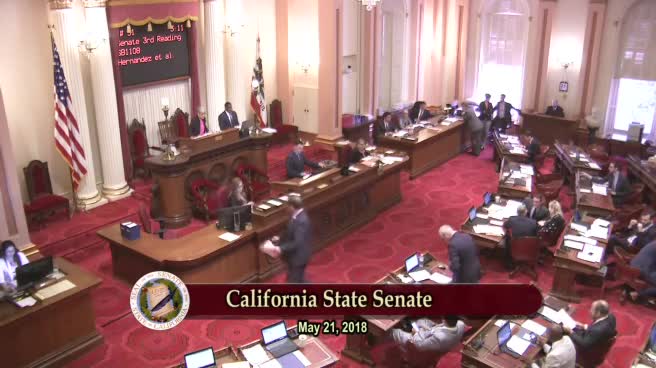 2MIN
Senate Floor
 1MIN
Senate Standing Committee on Health
Bill Author

Bill Co-Author(s):