SB 143: Sentencing: persons confined to a state hospital.
- Session Year: 2017-2018
- House: Senate
- Latest Version Date: 2017-02-21
Existing law, the Three Strikes Reform Act of 2012, passed by the voters as Proposition 36 at the November 6, 2012, statewide general election, amended the Three Strikes Law and provided for lower sentences in specified circumstances, including when the current crime is not a serious or violent crime. The act provided a means by which a person serving an indeterminate term of imprisonment can be resentenced in conformance with the provisions of the act.
Existing law, the Safe Neighborhoods and Schools Act, enacted by Proposition 47, as approved by the voters at the November 4, 2014, statewide general election, reduced the penalties for various crimes. Under the provisions of the act, a person currently convicted of a felony or felonies who would have been guilty of a misdemeanor under the act if the act had been in effect at the time of the conviction may petition or apply to have the sentence reduced in accordance with the act. That act requires that this petition or application be filed before November 4, 2017, or at a later date upon a showing of good cause.
This bill would authorize a person who is committed to a state hospital after being found not guilty by reason of insanity to petition the court to have the maximum term of commitment reduced to what it would have been had Proposition 36 or Proposition 47 been in effect at the time of the original determination. The bill would require the petitioner to show that he or she would have been eligible to have his or her sentence reduced under the relevant proposition, to show that he or she would not be a danger to himself or herself if released from the state hospital, proposition and to file the petition prior to January 1, 2021, or at a later date with a showing of good cause.
Existing law, the Three Strikes Reform Act of 2012, passed by the voters as Proposition 36 at the November 6, 2012, statewide general election, amended the Three Strikes Law and provided for lower sentences in specified circumstances, including when the current crime is not a serious or violent crime. The act provided a means by which a person serving an indeterminate term of imprisonment can be resentenced in conformance with the provisions of the act.
Existing law, the Safe Neighborhoods and Schools Act, enacted by Proposition 47, as approved by the voters at the November 4, 2014, statewide general election, reduced the penalties for various crimes. Under the provisions of the act, a person currently convicted of a felony or felonies who would have been guilty of a misdemeanor under the act if the act had been in effect at the time of the conviction may petition or apply to have the sentence reduced in accordance with the act. That act requires that this petition or application be filed before November 4, 2017, or at a later date upon a showing of good cause.
This bill would authorize a person who is committed to a state hospital after being found not guilty by reason of insanity to petition the court to have the maximum term of commitment reduced to what it would have been had Proposition 36 or Proposition 47 been in effect at the time of the original determination. The bill would require the petitioner to show that he or she would have been eligible to have his or her sentence reduced under the relevant proposition, to show that he or she would not be a danger to himself or herself if released from the state hospital, and to file the petition prior to January 1, 2021, or at a later date with a showing of good cause.
It is the intent of the Legislature in enacting this act to allow people who are committed to the State Department of State Hospitals upon a conviction for an offense that would otherwise fall within the resentencing provisions of Section 1170.126 or 1170.18 of the Penal Code, as enacted by Proposition 36 of the 2012 statewide general election or Proposition 47 of the 2014 statewide general election, to petition the original committing court for relief under those sections. This act is intended to nullify the holding in People v. Dobson, 245 Cal.App.4th 310 (2016).
SEC. 2.Section 1170.126 of the Penal Code is amended to read:1170.126.(a)The resentencing provisions under this section and related statutes are intended to apply exclusively to persons presently serving an indeterminate term of imprisonment pursuant to paragraph (2) of subdivision (e) of Section 667 or paragraph (2) of subdivision (c) of Section 1170.12, whose sentence under this act would not have been an indeterminate life sentence.
(b)A person serving an indeterminate term of life imprisonment imposed pursuant to paragraph (2) of subdivision (e) of Section 667 or paragraph (2) of subdivision (c) of Section 1170.12 upon conviction, whether by trial or plea, of a felony or felonies that are not defined as serious and/or or violent felonies by subdivision (c) of Section 667.5 or subdivision (c) of Section 1192.7, may file a petition for a recall of sentence, within two years after sentence on or before November 7, 2012, 2014, or at a later date upon a showing of good cause, before the trial court that entered the judgment of conviction in his or her case, to request resentencing in accordance with subdivision (e) of Section 667, and subdivision (c) of Section 1170.12.
(c)A person who is presently serving a term of imprisonment for a second strike conviction imposed pursuant to paragraph (1) of subdivision (e) of Section 667 or paragraph (1) of subdivision (c) of Section 1170.12, is not eligible for resentencing under this section.
(d)The petition for a recall of sentence described in subdivision (b) shall specify all of the currently charged felonies that resulted in the sentence under paragraph (2) of subdivision (e) of Section 667 or paragraph (2) of subdivision (c) of Section 1170.12, or both, and shall also specify all of the prior convictions alleged and proved under subdivision (d) of Section 667 and subdivision (b) of Section 1170.12.
(e)An inmate is eligible for resentencing if:
(1)The inmate is serving an indeterminate term of life imprisonment imposed pursuant to paragraph (2) of subdivision (e) of Section 667 or subdivision (c) of Section 1170.12 for a conviction of a felony or felonies that are not defined as serious and/or or violent felonies by subdivision (c) of Section 667.5 or subdivision (c) of Section 1192.7.
(2)The inmates current sentence was not imposed for any of the offenses appearing in clauses (i) to (iii), inclusive, of subparagraph (C) of paragraph (2) of subdivision (e) of Section 667 or clauses (i) to (iii), inclusive, of subparagraph (C) of paragraph (2) of subdivision (c) of Section 1170.12.
(3)The inmate has no prior convictions for any of the offenses appearing in clause (iv) of subparagraph (C) of paragraph (2) of subdivision (e) of Section 667 or clause (iv) of subparagraph (C) of paragraph (2) of subdivision (c) of Section 1170.12.
(f)Upon receiving a petition for recall of sentence under this section, the court shall determine whether the petitioner satisfies the criteria in subdivision (e). If the petitioner satisfies the criteria in subdivision (e), the petitioner shall be resentenced pursuant to paragraph (1) of subdivision (e) of Section 667 and paragraph (1) of subdivision (c) of Section 1170.12 unless the court, in its discretion, determines that resentencing the petitioner would pose an unreasonable risk of danger to public safety.
(g)In exercising its discretion in subdivision (f), the court may consider all of the following:
(1)The petitioners criminal conviction history, including the type of crimes committed, the extent of injury to victims, the length of prior prison commitments, and the remoteness of the crimes.
(2) The petitioners disciplinary record and record of rehabilitation while incarcerated.
(3)Any other evidence the court, within its discretion, determines to be relevant in deciding whether a new sentence would result in an unreasonable risk of danger to public safety.
(h)Under no circumstances may resentencing under this section result in the imposition of a term longer than the original sentence.
(i)Notwithstanding subdivision (b) of Section 977, a defendant petitioning for resentencing may waive his or her appearance in court for the resentencing, provided that the accusatory pleading is not amended at the resentencing, and that no new trial or retrial of the individual will occur. The waiver shall be in writing and signed by the defendant.
(j)If the judge who originally sentenced the defendant is not available to resentence the defendant, the presiding judge shall designate another judge to rule on the defendants petition.
(k)This section does not diminish or abrogate any rights or remedies otherwise available to the defendant.
(l)Nothing in this and related sections is intended to diminish or abrogate the finality of judgments in any case not falling within the purview of this section.
(m)A resentencing hearing ordered under this section shall constitute a post-conviction release proceeding under paragraph (7) of subdivision (b) of Section 28 of Article I of the California Constitution (Marsys Law).
(n)A person who is committed to a state hospital after being found not guilty by reason of insanity pursuant to Section 1026 may petition the court to have his or her maximum term of commitment, as established by Section 1026.5, reduced to the length it would have been had the act that added this section been in effect at the time of the original determination. All Both of the following conditions are required for the maximum term of commitment to be reduced:
(1)The person would have met all of the criteria for a reduction in sentence pursuant to this section had he or she been found guilty.
(2)The person proves that he or she would not be a danger to himself or herself if released from the state hospital. (3)(2)The person files the petition for a reduction of the maximum term of commitment before January 1, 2021, or on a later date upon a showing of good cause.
SEC. 3.Section 1170.18 of the Penal Code is amended to read:1170.18.(a)A person who, on November 5, 2014, was serving a sentence for a conviction, whether by trial or plea, of a felony or felonies who would have been guilty of a misdemeanor under the act that added this section (this act) had this act been in effect at the time of the offense may petition for a recall of sentence before the trial court that entered the judgment of conviction in his or her case to request resentencing in accordance with Sections 11350, 11357, or 11377 of the Health and Safety Code, or Section 459.5, 473, 476a, 490.2, 496, or 666 of the Penal Code, as those sections have been amended or added by this act.
(b)Upon receiving a petition under subdivision (a), the court shall determine whether the petitioner satisfies the criteria in subdivision (a). If the petitioner satisfies the criteria in subdivision (a), the petitioners felony sentence shall be recalled and the petitioner resentenced to a misdemeanor pursuant to Sections 11350, 11357, or 11377 of the Health and Safety Code, or Section 459.5, 473, 476a, 490.2, 496, or 666 of the Penal Code, as those sections have been amended or added by this act, unless the court, in its discretion, determines that resentencing the petitioner would pose an unreasonable risk of danger to public safety. In exercising its discretion, the court may consider all of the following:
(1)The petitioners criminal conviction history, including the type of crimes committed, the extent of injury to victims, the length of prior prison commitments, and the remoteness of the crimes.
(2)The petitioners disciplinary record and record of rehabilitation while incarcerated.
(3)Any other evidence the court, within its discretion, determines to be relevant in deciding whether a new sentence would result in an unreasonable risk of danger to public safety.
(c)As used throughout this code, unreasonable risk of danger to public safety means an unreasonable risk that the petitioner will commit a new violent felony within the meaning of clause (iv) of subparagraph (C) of paragraph (2) of subdivision (e) of Section 667.
(d)A person who is resentenced pursuant to subdivision (b) shall be given credit for time served and shall be subject to parole for one year following completion of his or her sentence, unless the court, in its discretion, as part of its resentencing order, releases the person from parole. The person is subject to parole supervision by the Department of Corrections and Rehabilitation pursuant to Section 3000.08 and the jurisdiction of the court in the county in which the parolee is released or resides, or in which an alleged violation of supervision has occurred, for the purpose of hearing petitions to revoke parole and impose a term of custody.
(e)Under no circumstances may resentencing under this section result in the imposition of a term longer than the original sentence.
(f)A person who has completed his or her sentence for a conviction, whether by trial or plea, of a felony or felonies who would have been guilty of a misdemeanor under this act had this act been in effect at the time of the offense, may file an application before the trial court that entered the judgment of conviction in his or her case to have the felony conviction or convictions designated as misdemeanors.
(g)If the application satisfies the criteria in subdivision (f), the court shall designate the felony offense or offenses as a misdemeanor.
(h)Unless requested by the applicant, no hearing is necessary to grant or deny an application filed under subsection (f).
(i)This section does not apply to a person who has one or more prior convictions for an offense specified in clause (iv) of subparagraph (C) of paragraph (2) of subdivision (e) of Section 667 or for an offense requiring registration pursuant to subdivision (c) of Section 290.
(j)Except as specified in subdivision (p), a petition or application under this section shall be filed on or before November 4, 2022, or at a later date upon showing of good cause.
(k)A felony conviction that is recalled and resentenced under subdivision (b) or designated as a misdemeanor under subdivision (g) shall be considered a misdemeanor for all purposes, except that resentencing shall not permit that person to own, possess, or have in his or her custody or control a firearm or prevent his or her conviction under Chapter 2 (commencing with Section 29800) of Division 9 of Title 4 of Part 6.
(l)If the court that originally sentenced the petitioner is not available, the presiding judge shall designate another judge to rule on the petition or application.
(m)This section does not diminish or abrogate any rights or remedies otherwise available to the petitioner or applicant.
(n)Nothing in this and related sections is intended to diminish or abrogate the finality of judgments in any case not falling within the purview of this section.
(o)A resentencing hearing ordered under this section shall constitute a postconviction release proceeding under paragraph (7) of subdivision (b) of Section 28 of Article I of the California Constitution (Marsys Law).
(p)A person who is committed to a state hospital after being found not guilty by reason of insanity pursuant to Section 1026 may petition the court to have his or her maximum term of commitment, as established by Section 1026.5, reduced to the length it would have been had the act that added this section been in effect at the time of the original determination. All Both of the following conditions are required for the maximum term of commitment to be reduced.
(1)The person would have met all of the criteria for a reduction in sentence pursuant to this section had he or she been found guilty.
(2)The person proves that he or she would not be a danger to himself or herself if released from the state hospital. (3)(2)The person files the petition for a reduction of the maximum term of commitment before January 1, 2021, or on a later date upon a showing of good cause.
It is the intent of the Legislature in enacting this act to allow people who are committed to the State Department of State Hospitals upon a conviction for an offense that would otherwise fall within the resentencing provisions of Section 1170.126 or 1170.18 of the Penal Code, as enacted by Proposition 36 of the 2012 statewide general election or Proposition 47 of the 2014 statewide general election, to petition the original committing court for relief under those sections. This act is intended to nullify the holding in People v. Dobson, 245 Cal.App.4th 310 (2016).
SEC. 2.Section 1170.126 of the Penal Code is amended to read:1170.126.(a)The resentencing provisions under this section and related statutes are intended to apply exclusively to persons presently serving an indeterminate term of imprisonment pursuant to paragraph (2) of subdivision (e) of Section 667 or paragraph (2) of subdivision (c) of Section 1170.12, whose sentence under this act would not have been an indeterminate life sentence.
(b)Any A person serving an indeterminate term of life imprisonment imposed pursuant to paragraph (2) of subdivision (e) of Section 667 or paragraph (2) of subdivision (c) of Section 1170.12 upon conviction, whether by trial or plea, of a felony or felonies that are not defined as serious and/or violent felonies by subdivision (c) of Section 667.5 or subdivision (c) of Section 1192.7, may file a petition for a recall of sentence, within two years after the effective date of the act that added this section November 7, 2012, or at a later date upon a showing of good cause, before the trial court that entered the judgment of conviction in his or her case, to request resentencing in accordance with the provisions of subdivision (e) of Section 667, and subdivision (c) of Section 1170.12, as those statutes have been amended by the act that added this section. 1170.12.
(c)No A person who is presently serving a term of imprisonment for a second strike conviction imposed pursuant to paragraph (1) of subdivision (e) of Section 667 or paragraph (1) of subdivision (c) of Section 1170.12, shall be is not eligible for resentencing under the provisions of this section.
(d)The petition for a recall of sentence described in subdivision (b) shall specify all of the currently charged felonies, which felonies that resulted in the sentence under paragraph (2) of subdivision (e) of Section 667 or paragraph (2) of subdivision (c) of Section 1170.12, or both, and shall also specify all of the prior convictions alleged and proved under subdivision (d) of Section 667 and subdivision (b) of Section 1170.12.
(e)An inmate is eligible for resentencing if:
(1)The inmate is serving an indeterminate term of life imprisonment imposed pursuant to paragraph (2) of subdivision (e) of Section 667 or subdivision (c) of Section 1170.12 for a conviction of a felony or felonies that are not defined as serious and/or violent felonies by subdivision (c) of Section 667.5 or subdivision (c) of Section 1192.7.
(2)The inmates current sentence was not imposed for any of the offenses appearing in clauses (i) to (iii), inclusive, of subparagraph (C) of paragraph (2) of subdivision (e) of Section 667 or clauses (i) to (iii), inclusive, of subparagraph (C) of paragraph (2) of subdivision (c) of Section 1170.12.
(3)The inmate has no prior convictions for any of the offenses appearing in clause (iv) of subparagraph (C) of paragraph (2) of subdivision (e) of Section 667 or clause (iv) of subparagraph (C) of paragraph (2) of subdivision (c) of Section 1170.12.
(f)Upon receiving a petition for recall of sentence under this section, the court shall determine whether the petitioner satisfies the criteria in subdivision (e). If the petitioner satisfies the criteria in subdivision (e), the petitioner shall be resentenced pursuant to paragraph (1) of subdivision (e) of Section 667 and paragraph (1) of subdivision (c) of Section 1170.12 unless the court, in its discretion, determines that resentencing the petitioner would pose an unreasonable risk of danger to public safety.
(g)In exercising its discretion in subdivision (f), the court may consider: consider all of the following:
(1)The petitioners criminal conviction history, including the type of crimes committed, the extent of injury to victims, the length of prior prison commitments, and the remoteness of the crimes; crimes.
(2) The petitioners disciplinary record and record of rehabilitation while incarcerated; and incarcerated.
(3)Any other evidence the court, within its discretion, determines to be relevant in deciding whether a new sentence would result in an unreasonable risk of danger to public safety.
(h)Under no circumstances may resentencing under this act section result in the imposition of a term longer than the original sentence.
(i)Notwithstanding subdivision (b) of Section 977, a defendant petitioning for resentencing may waive his or her appearance in court for the resentencing, provided that the accusatory pleading is not amended at the resentencing, and that no new trial or retrial of the individual will occur. The waiver shall be in writing and signed by the defendant.
(j)If the court that judge who originally sentenced the defendant is not available to resentence the defendant, the presiding judge shall designate another judge to rule on the defendants petition.
(k)Nothing in this This section is intended to does not diminish or abrogate any rights or remedies otherwise available to the defendant.
(l)Nothing in this and related sections is intended to diminish or abrogate the finality of judgments in any case not falling within the purview of this act. section.
(m)A resentencing hearing ordered under this act section shall constitute a post-conviction release proceeding under paragraph (7) of subdivision (b) of Section 28 of Article I of the California Constitution (Marsys Law).
(n)A person who is committed to a state hospital after being found not guilty by reason of insanity pursuant to Section 1026 may petition the court to have his or her maximum term of commitment, as established by Section 1026.5, reduced to the length it would have been had the act that added this section been in effect at the time of the original determination. All of the following conditions are required for the maximum term of commitment to be reduced:
(1)The person would have met all of the criteria for a reduction in sentence pursuant to this section had he or she been found guilty.
(2)The person proves that he or she would not be a danger to himself or herself if released from the state hospital.
(3)The person files the petition for a reduction of the maximum term of commitment before January 1, 2021, or on a later date upon a showing of good cause.
SEC. 3.Section 1170.18 of the Penal Code is amended to read:1170.18.(a)A person who, on November 5, 2014, was serving a sentence for a conviction, whether by trial or plea, of a felony or felonies who would have been guilty of a misdemeanor under the act that added this section (this act) had this act been in effect at the time of the offense may petition for a recall of sentence before the trial court that entered the judgment of conviction in his or her case to request resentencing in accordance with Sections 11350, 11357, or 11377 of the Health and Safety Code, or Section 459.5, 473, 476a, 490.2, 496, or 666 of the Penal Code, as those sections have been amended or added by this act.
(b)Upon receiving a petition under subdivision (a), the court shall determine whether the petitioner satisfies the criteria in subdivision (a). If the petitioner satisfies the criteria in subdivision (a), the petitioners felony sentence shall be recalled and the petitioner resentenced to a misdemeanor pursuant to Sections 11350, 11357, or 11377 of the Health and Safety Code, or Section 459.5, 473, 476a, 490.2, 496, or 666 of the Penal Code, as those sections have been amended or added by this act, unless the court, in its discretion, determines that resentencing the petitioner would pose an unreasonable risk of danger to public safety. In exercising its discretion, the court may consider all of the following:
(1)The petitioners criminal conviction history, including the type of crimes committed, the extent of injury to victims, the length of prior prison commitments, and the remoteness of the crimes.
(2)The petitioners disciplinary record and record of rehabilitation while incarcerated.
(3)Any other evidence the court, within its discretion, determines to be relevant in deciding whether a new sentence would result in an unreasonable risk of danger to public safety.
(c)As used throughout this Code, code, unreasonable risk of danger to public safety means an unreasonable risk that the petitioner will commit a new violent felony within the meaning of clause (iv) of subparagraph (C) of paragraph (2) of subdivision (e) of Section 667.
(d)A person who is resentenced pursuant to subdivision (b) shall be given credit for time served and shall be subject to parole for one year following completion of his or her sentence, unless the court, in its discretion, as part of its resentencing order, releases the person from parole. Such The person is subject to Section 3000.08 parole supervision by the Department of Corrections and Rehabilitation pursuant to Section 3000.08 and the jurisdiction of the court in the county in which the parolee is released or resides, or in which an alleged violation of supervision has occurred, for the purpose of hearing petitions to revoke parole and impose a term of custody.
(e)Under no circumstances may resentencing under this section result in the imposition of a term longer than the original sentence.
(f)A person who has completed his or her sentence for a conviction, whether by trial or plea, of a felony or felonies who would have been guilty of a misdemeanor under this act had this act been in effect at the time of the offense, may file an application before the trial court that entered the judgment of conviction in his or her case to have the felony conviction or convictions designated as misdemeanors.
(g)If the application satisfies the criteria in subdivision (f ), (f), the court shall designate the felony offense or offenses as a misdemeanor.
(h)Unless requested by the applicant, no hearing is necessary to grant or deny an application filed under subsection (f ). (f).
(i)The provisions of this This section shall does not apply to persons who have a person who has one or more prior convictions for an offense specified in clause (iv) of subparagraph (C) of paragraph (2) of subdivision (e) of Section 667 or for an offense requiring registration pursuant to subdivision (c) of Section 290.
(j)Any Except as specified in subdivision (p), a petition or application under this section shall be filed on or before November 4, 2022, or at a later date upon showing of good cause.
(k)Any A felony conviction that is recalled and resentenced under subdivision (b) or designated as a misdemeanor under subdivision (g) shall be considered a misdemeanor for all purposes, except that such resentencing shall not permit that person to own, possess, or have in his or her custody or control any a firearm or prevent his or her conviction under Chapter 2 (commencing with Section 29800) of Division 9 of Title 4 of Part 6.
(l)If the court that originally sentenced the petitioner is not available, the presiding judge shall designate another judge to rule on the petition or application.
(m)Nothing in this This section is intended to does not diminish or abrogate any rights or remedies otherwise available to the petitioner or applicant.
(n)Nothing in this and related sections is intended to diminish or abrogate the finality of judgments in any case not falling within the purview of this act. section.
(o)A resentencing hearing ordered under this act section shall constitute a postconviction release proceeding under paragraph (7) of subdivision (b) of Section 28 of Article I of the California Constitution (Marsys Law).
(p)A person who is committed to a state hospital after being found not guilty by reason of insanity pursuant to Section 1026 may petition the court to have his or her maximum term of commitment, as established by Section 1026.5, reduced to the length it would have been had the act that added this section been in effect at the time of the original determination. All of the following conditions are required for the maximum term of commitment to be reduced.
(1)The person would have met all of the criteria for a reduction in sentence pursuant to this section had he or she been found guilty.
(2)The person proves that he or she would not be a danger to himself or herself if released from the state hospital.
(3)The person files the petition for a reduction of the maximum term of commitment before January 1, 2021, or on a later date upon a showing of good cause.
|
Date
|
Status
|
|---|---|
| Feb 1, 2018 | Returned to Secretary of Senate pursuant to Joint Rule 56. |
| May 25, 2017 | May 25 hearing: Held in committee and under submission. |
| May 19, 2017 | Set for hearing May 25. |
| Apr 3, 2017 | April 3 hearing: Placed on APPR. suspense file. |
| Mar 24, 2017 | Set for hearing April 3. |
| Mar 22, 2017 | From committee: Do pass and re-refer to Com. on APPR. (Ayes 5. Noes 1. Page 429.) (March 21). Re-referred to Com. on APPR. |
| Mar 1, 2017 | Set for hearing March 21. |
| Feb 21, 2017 | From committee with author's amendments. Read second time and amended. Re-referred to Com. on PUB. S. |
| Jan 26, 2017 | Referred to Com. on PUB. S. |
| Jan 17, 2017 | From printer. May be acted upon on or after February 16. |
| Jan 13, 2017 | Introduced. Read first time. To Com. on RLS. for assignment. To print. |
|
Date
|
Description
|
Location
|
Votes
|
|
|---|---|---|---|---|
| Apr 3, 2017 | Placed on suspense file | Senate Standing Committee on Appropriations |
Passed |
|
| Mar 21, 2017 | Do pass, but first be re-referred to the Committee on [Appropriations] | Senate Standing Committee on Public Safety |
Passed |
This list shows positions taken on this bill by organizations on the date displayed, which is linked to the original source.
Positions by individuals are not included.
|
Organization
|
Position
|
Date
|
|---|---|---|
| California District Attorney Association | * Against | Mar 21, 2017 |
| California District Attorneys Association; California State Sheriffs' Association | ** Against | Mar 21, 2017 |
| California Public Defenders Association | * Support | Mar 21, 2017 |
| California State Sheriffs' Association | * Against | Mar 21, 2017 |
| PURPOSE | ** Against | Mar 21, 2017 |
SENATE COMMITTEE ON
Senator Ricardo Lara, Chair
2017 - 2018 Regular Session
SB 143 (Beall) - Sentencing: persons confined to a state hospital
Version: | Policy Vote: |
Urgency: | Mandate: |
Hearing Date: | Consultant: |
This bill meets the criteria for referral to the Suspense File.
Bill Summary:
SB 143 applies the resentencing provisions of Proposition 36 (2012) and Proposition 47 (2014) to persons committed to a state hospital because they were found not guilty by reason of insanity.
Fiscal Impact:
- Potential unknown significant one-time court workload costs (General Fund) to review petitions and hold resentencing hearings of state hospital commitments.
- Potential but unlikely estimated cost savings (General Fund) of $6.4 million annually to the Department of State Hospitals (DSH) to the extent that persons likely affected by this bill would be released early from commitment and beds are deactivated after those releases. The department likely will not realize these savings as there are approximately 800 individuals of various commitment types awaiting transfer to a state hospital.
- Potential cost savings (local funds) to counties for detaining fewer individuals, or individuals for a shorter period of time, in county jails who are awaiting placement in a state hospital. These savings would be realized only if a person who is transferred from the jail to a state hospital is not replaced by a new inmate.
Background:
California voters passed the Three Strikes Reform Act of 2012 (Proposition 36) and the Safe Neighborhoods and Schools Act (Proposition 47) that, among other things, provided for the resentencing of people in custody for certain offenses.
Proposition 36 revised California’s “Three Strikes Law” by authorizing a court to resentence an inmate serving a third-strike life sentence for a non-serious or non-violent felony offense to a term that is no longer than the original sentence. An inmate, however, is ineligible for Proposition 36 resentencing if his or her current sentence was imposed for certain controlled substance, sex, or firearm offenses. Additionally, an inmate is ineligible for resentencing if he or she has a prior conviction for specified sex, homicide, or weapons offenses or any serious or violent felonies that may be punished by life imprisonment or death. Proposition 36 required that all other affected inmates be resentenced unless the court determines that resentencing would pose an unreasonable risk of danger to public safety.
Proposition 47 authorized a court to resentence an inmate who was convicted of a felony offense that was reduced to a misdemeanor as a result of the initiative to a term no longer than the original sentence. Specifically, the offenses affected include drug possession for personal use and non-violent property crimes where the value of the property taken was less than $950. Persons with prior convictions for certain sex, homicide, or weapons offenses or an offense that requires registration as a sex offender are not eligible for resentencing. Additionally, Proposition 47 required the court to make a determination that the person would not pose an unreasonable risk of danger to public safety prior to the immediate release of an inmate.
In 2016, the California Court of Appeal, Fifth Appellate District, held in People v. Dobson that the resentencing relief provided for in Proposition 36 did not apply to a person found not guilty by reason of insanity (NGI) and committed to DSH because that person, while not free to leave, is not serving a “term of imprisonment,” which is to what the relief applied.
Generally, a defendant found NGI will be committed to a state hospital or other treatment facility for a period of time not to exceed the maximum term of commitment. The maximum term of commitment for a felony is “the longest term of imprisonment which could have been imposed for the offense or the offenses of which the person was convicted, including the upper term of the base offense and any additional terms for enhancements and consecutive sentences which could have been imposed.” For a misdemeanor NGI commitment, the maximum term is the longest term of county jail confinement that could have been imposed for the offense or offenses that the person was found to have committed.
Proposed Law:
This bill seeks to authorize the resentencing of persons found NGI who would be eligible for the relief provided for in Proposition 36 and Proposition 47 but for their commitment to a state hospital instead of a state prison. Specifically, this bill:
- Authorizes a person found NGI who is committed to a state hospital to petition the court to have his or her maximum term of commitment reduced to the length it would have been had Proposition 36 and Proposition 47, as applicable, been in effect at the time of the original determination.
- Requires both of the following conditions for the maximum term of commitment to be reduced:
- The person would have met all of the criteria for reduction in sentence pursuant to Proposition 36 or Proposition 47, as applicable, had he or she been found guilty.
- The person files the petition for a reduction of the maximum term of commitment before January 1, 2021 or on a later date upon a showing of good cause.
Prior Legislation:
SB 955 (Beall, Ch. 715, Stats. 2016) established a compassionate release program for individuals committed to the state hospitals.
Staff Comments:
This bill would require trial courts to entertain new petitions to reduce commitment sentences for NGI individuals confined in a state hospital but otherwise meet the criteria for reduction in either Proposition 36 or Proposition 47. The courts would use the same processes already in place for resentencing hearings for eligible individuals sentenced to state prison but would have to hear and decide on more petitions.
The Department of State Hospitals estimates that there are approximately 30 NGI patients committed to its facilities who could be eligible to file a petition for resentencing under this bill. If all of the roughly 30 patients successfully petition the court for resentencing and are released, the department could realize a cost savings of approximately $6.4 million annually if those beds were subsequently deactivated ($214,000 annual bed rate x 30 patients). It is highly unlikely, however, that DSH would deactivate beds of any NGI patient released early because of this bill and realize any cost savings as it currently has a shortage of bed space with about 800 people on its waiting list.
-- END --
SENATE COMMITTEE ON PUBLIC SAFETY
Senator Nancy Skinner, Chair
2017 - 2018 Regular
Bill No: SB 143 Hearing Date: March 21, 2017
Author: | Beall | ||
Version: | February 21, 2017 | ||
Urgency: | No | Fiscal: | Yes |
Consultant: | SC | ||
Subject: Sentencing: Persons Confined to a State Hospital
HISTORY
Source: NAACP Legal Defense Fund
Prior Legislation: SB 955 (Beall) Ch. 715, Stats. 2016
Support: American Civil Liberties Union of California; American Friends Service Committee; Anti-Recidivism Coalition; California Attorneys for Criminal Justice; California Coalition of Women Prisoners; California Public Defenders Association; Disability Rights California; National Union of Healthcare Workers; San Diego District Attorney’s Office; San Francisco District Attorney’s Office
Opposition: California District Attorneys Association; California State Sheriffs’ Association
PURPOSE
The purpose of this bill is to apply the resentencing provisions of Proposition 36 (2012) and Proposition 47 (2014) to persons committed to the Department of State Hospitals (DSH).
Existing law includes a number of “forensic” civil commitment schemes for persons who have been in the criminal justice system, have a mental disorder that caused or contributed to the person’s criminal conduct and are involuntarily committed to DSH for treatment. These include persons who are incompetent to stand trial (IST), not guilty by reason of insanity (NGI), mentally disordered offender-parolees (MDO) and sexually violent predators (SVP). The maximum period of confinement for treatment varies with the category of forensic patient, but generally lasts for the length of time necessary to treat the person’s condition, with limits determined by the maximum criminal sentence for the underlying conduct in the case of an IST or NGI patient. MDO and SVP patients are subject to recommitment hearings, as specified. (Pen. Code, §§ 1026, 1367, 2980; Welf. & Inst. Code, § 6600.)
Existing law, as enacted by Proposition 36, approved by California voters on November 6, 2012, revises California’s “Three Strikes Law” to require the third strike to be a “serious” or “violent” felony in order to impose a life sentence. Proposition 36 contains provisions to authorize a court to resentence offenders currently serving life sentences if their third strike conviction was not “serious” or “violent” and if the judge determines that the re-sentence does not pose unreasonable risk to public safety. (Pen. Code, §§ 1170.126.)
Existing law makes ineligible for resentencing under the provisions of Proposition 36 (2012) a person who has prior convictions of certain offenses such as felony sex offenses or homicide, as specified, or if the person’s current offense involves use of a firearm, felony drug offenses and felony sex offenses, as specified. (Pen. Code, § 1170.126, subd. (e).)
Existing law, as enacted by Proposition 47, approved by California voters on November 4, 2014, requires misdemeanor sentencing for certain drug and property crimes. Proposition 47 includes provisions authorizing resentencing of persons convicted of felonies for the crimes that were reduced to misdemeanors. (Pen. Code, § 1170.18.)
Existing law requires a court to determine whether resentencing the person would pose an unreasonable risk of danger to public safety, as defined to mean an unreasonable risk that the petitioner will commit a new “violent” felony. (Pen. Code, § 1170.18, sub. (b).)
Existing law makes ineligible for resentencing under the provisions of Proposition 47 a person who has one or more prior convictions for an offense requiring registration on the sex offender registry or other specified offenses. (Pen. Code, § 1170.18, sub. (i).)
This bill authorizes a person who is committed to a state hospital after being found NGI to petition the court to have his or her maximum term of commitment reduced to the length it would have been had the provisions of this bill been in effect at the time of the original determination.
This bill specifies that the person must file the petition for a reduction of the maximum term of commitment before January 1, 2021, or on a later date upon a showing of good cause.
This bill requires the person to meet all of the criteria for a reduction in sentence as provided in existing provisions of law enacted by Proposition 36 (2012) and Proposition 47 (2014).
This bill states the intent of the Legislature to nullify the holding in People v. Dobson (2016) 245 Cal.App.4th 310.
COMMENTS
1. Need for This Bill
According to the author:
In 2012, voters enacted Proposition 36 (“Three Strikes Reform Act”), which gave certain prison inmates serving life sentences for non-serious, non-violent crimes an opportunity to petition in court for a lower sentence. In order to receive a reduced sentence, the court had to agree that the prisoner no longer poses “an unreasonable risk of danger to public safety.” To date, over 2,100 former lifers have had their terms reduced the courts under this program and the recidivism rate of those released is at least three times better than the average inmate released from prison in California.
In 2014, voters enacted Proposition 47 (“Safe Neighborhoods and Schools Act”), which, among other things, extended the re-sentencing procedure enacted in Proposition 36 to a select group of non-serious, non-violent prison inmates who were not serving life sentences under the Three Strikes law. The recidivism rate of prisoners released under Proposition 47 is also far below average.
In 2016, the Fourth District Court of Appeal ruled in People v. Dobson, 245 Cal. App. 4th 310 (2016), that the re-sentencing procedure enacted by Proposition 36 did not apply to mentally ill offenders in state hospitals because the initiative applied to “prisoners” and not “patients” confined in state hospitals, even if those patients had committed the same crime and had the same criminal histories.
This bill clarifies that criminal justice reforms under Proposition 36 (2012) and Proposition 47 (2014) apply to people confined at a state mental hospital if the individual is no longer a danger to public safety. The exclusion of these patients in state hospitals was not intended by the authors of these propositions. SB 143 simply allows fair and equal access to the law.
2. Insanity Plea Generally
In a criminal proceeding, a jury may find a defendant to be NGI if the defendant proves “by a preponderance of the evidence that he or she was incapable of knowing or understanding the nature and quality of his or her act and of distinguishing right from wrong at the time of the commission of the offense.” (Pen. Code, § 25.)
If a defendant is found NGI, he or she will be committed to a state hospital or other treatment facility for a period of time not to exceed the maximum term of commitment, except as provided. The maximum term of commitment for a felony means “the longest term of imprisonment which could have been imposed for the offense or the offenses of which the person was convicted, including the upper term of the base offense and any additional terms for enhancements and consecutive sentences which could have been imposed. . . .” (Pen. Code, § 1026.5, sub. (a)(1).) For a misdemeanor, the maximum term of commitment means the longest term of county jail confinement which could have been imposed for the offense or offenses which the person was found to have committed. (Pen. Code, § 1026.5, sub. (a)(3).) The court may extend a person’s commitment the maximum term of commitment, two years at a time, only if the person was committed for a felony and the person “by reason of mental disease, defect, or disorder represents a substantial danger of physical harm to others.” (Pen. Code, § 1026.5, sub. (b)(1).)
A person committed to a state hospital may be released upon expiration of the maximum term of commitment or upon a showing that the person’s sanity has been restored and that the person does not pose a danger to the health and safety of others due to a mental defect, disease, or disorder. In the latter situation, the court must first place the person in a one-year conditional release program. The court may not determine whether a person has been restored to sanity until the person has completed one year in the program, unless the program director recommends earlier release. (Pen. Code, § 1026.5, subd. (e).) A person committed to a state hospital may also be conditionally released into an outpatient program upon the recommendation of the director of the state hospital upon a finding that the person will not be a danger to the health and safety of others while on outpatient status and will benefit from such outpatient status. The outpatient status is subject to annual reviews by the court to determine whether the person shall be discharged, have his or her outpatient status renewed, or to be returned to the state hospital. (Pen. Code, §§ 1602, 1604, 1606.)
This bill would authorize a person committed to DSH after being found NGI to petition the court for resentencing pursuant to the provisions in Proposition 36 and Proposition 47. Both initiatives require a finding related to the person’s dangerousness and make certain persons ineligible based on either the current offense or a prior offense. This bill requires a person petitioning the court for resentencing to meet all of the eligibility criteria laid out in the initiatives’ provisions.
3. Resentencing Eligibility
Proposition 47 authorizes a court to resentence a person who was convicted of a felony that was reduced to a misdemeanor as a result of the initiative. Specifically, those offenses include drug possession for personal use and non-violent property crimes where the property taken is less than $950. Persons who have prior convictions for specified sex, homicide, weapons offenses or offense that require registration as a sex offender are not eligible for resentencing. (Pen. Code, § 1170.18, subd. (i).) The court must also make a determination that the person would not pose an unreasonable risk of danger to public safety. (Pen. Code, § 1170.18, subd. (b).) An inmate may not be resentenced to a term longer than the original sentence. (Pen. Code, § 1170.18, subd. (e).)
Proposition 36 authorizes a court to resentence an inmate serving a life sentence for a third strike if the third offense was not a “serious” or “violent” felony. An inmate is ineligible for resentencing if his or her current sentence was imposed for the following: specified controlled substance, sex, or firearm offenses. (Pen. Code, § 1170.126, subd. (e)(2).) An inmate is also ineligible for resentencing if he or she has a prior conviction for any of the following: specified sex, homicide, weapons offenses or any serious or violent felonies that may be punished by life imprisonment or death. (Pen. Code, § 1170.126, subd. (e)(3).) If the inmate is eligible for resentencing, he or she must be resentenced unless the court determines that resentencing the inmate would pose an unreasonable risk of danger to public safety. (Pen. Code, § 1170.126, subd. (f).) An inmate may not be resentenced to a term longer than the original sentence. (Pen. Code, § 1170.126, subd. (h).)
In People v. Dobson, supra, 245 Cal.App.4th 310, the Fifth District Court of Appeal held that persons found NGI and committed to DSH cannot apply for relief under Proposition 36’s resentencing provision because the plain language of the initiative requires a person to be currently serving a “term of imprisonment” in order to apply. (Id. at 317.) A person who is committed to DSH, while not free to leave, is not serving a term of imprisonment. This bill would state the Legislative intent to nullify the court’s holding and allow a person who is committed to a state hospital to petition the court for resentencing under Proposition 36 and Proposition 47’s resentencing provisions. The petitioner must meet all of the criteria for a reduction in sentence as provided above.
4. Support
According to the Anti-Recidivism Coalition:
SB143 would allow people confined to a state mental hospital to reenter the community for treatment. By allowing equal access to Proposition 36 (2012) and Proposition 47 (2014), this population would be able to access community mental health centers and other support networks. If the person is found to no longer be a danger to public safety, then community treatment would allow them more treatment options and access to their natural support systems such as family and friends.
Both Proposition 36 (2012) and Proposition 47 (2014) were enacted to allow an opportunity for re-sentencing or a reduced sentence for prisoners who are no longer a danger to public safety. SB 143 ensures that these same rights are accessible to individuals confined at a state mental hospital. SB 143 allows these individuals to have greater access to resources without further need for incarceration. It would also provide more space in state mental hospitals for individual in need of intensive services.
5. Opposition
The California State Sheriffs’ Association writes in opposition of this bill:
Persons found NGI are committed to the state hospital for treatment, not punishment. Conversely, persons found guilty of an offense can be sentenced to incarceration as punishment. While both types of persons may ultimately be confined, the purpose of the confinement is materially different. An NGI’s term of commitment reflects the need to treat the mental condition that underlies the activity at issue. Allowing such a commitment length to be reduced simply because a criminal sentence of the same length may be retroactively shortened under Prop 36 or 47 ignores the reason why a person is committed to the state hospital, namely, to be treated.
Additionally, given that an NGI may be released before his or her maximum term of confinement has ended by prevailing at a sanity restoration trial, this bill is not necessary.
-- END –
Discussed in Hearing
 48MIN
Senate Standing Committee on Appropriations
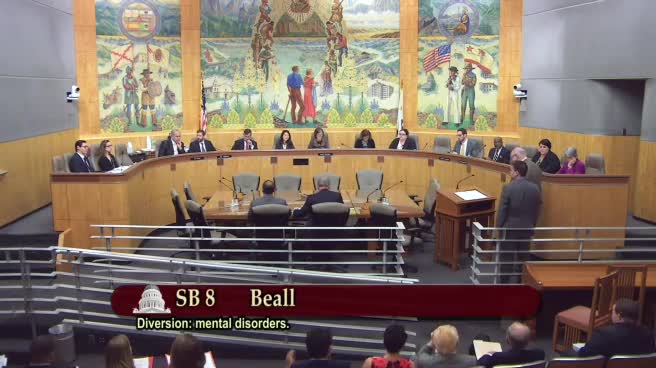 23MIN
Senate Standing Committee on Public Safety
Bill Author

Bill Co-Author(s):