SB 1448: Healing arts licensees: probation status: disclosure.
- Session Year: 2017-2018
- House: Senate
- Latest Version Date: 2018-09-19
Existing law, the Medical Practice Act, establishes the Medical Board of California for the licensing, regulation, and discipline of physicians and surgeons. Existing law establishes the California Board of Podiatric Medicine within the Medical Board of California for the licensing, regulation, and discipline of podiatrists. Existing law, the Osteopathic Act, enacted by an initiative measure, establishes the Osteopathic Medical Board of California for the licensing and regulation of osteopathic physicians and surgeons and requires the Osteopathic Medical Board of California to enforce specified provisions of the Medical Practice Act with respect to its licensees. Existing law, the Naturopathic Doctors Act, establishes the Naturopathic Medicine Committee within the Osteopathic Medical Board of California for the licensing and regulation of naturopathic doctors. Existing law, the Chiropractic Act, enacted by an initiative measure, establishes the State Board of Chiropractic Examiners for the licensing and regulation of chiropractors. Existing law, the Acupuncture Licensure Act, establishes the Acupuncture Board for the licensing and regulation of acupuncturists. Existing law authorizes each of these regulatory entities to discipline its licensee by placing her or him on probation, as specified.
This bill, on and after July 1, 2019, would require the California Board of Podiatric Medicine, the Naturopathic Medicine Committee, the State Board of Chiropractic Examiners, and the Acupuncture Board to require a licensee to provide a separate disclosure, as specified, to a patient or a patients guardian or health care surrogate before the patients first visit if the licensee is on probation pursuant to a probationary order made on and after July 1, 2019. The bill, on and after July 1, 2019, would require the Medical Board of California and the Osteopathic Medical Board of California to require a licensee to provide a separate disclosure, as specified, to a patient or a patients guardian or health care surrogate before the patients first visit if the licensee is on probation pursuant to a probationary order made on and after July 1, 2019, under specified circumstances. The bill would also require the California Board of Podiatric Medicine, the Naturopathic Medicine Committee, the State Board of Chiropractic Examiners, the Acupuncture Board, the Medical Board of California, and the Osteopathic Medical Board of California to provide specified information relating to licensees on probation on the regulatory entitys online license information Internet Web site.
Existing law, the Medical Practice Act, establishes the Medical Board of California for the licensing, regulation, and discipline of physicians and surgeons. Existing law establishes the California Board of Podiatric Medicine within the Medical Board of California for the licensing, regulation, and discipline of podiatrists. Existing law, the Osteopathic Act, enacted by an initiative measure, establishes the Osteopathic Medical Board of California for the licensing and regulation of osteopathic physicians and surgeons and requires the Osteopathic Medical Board of California to enforce specified provisions of the Medical Practice Act with respect to its licensees. Existing law, the Naturopathic Doctors Act, establishes the Naturopathic Medicine Committee within the Osteopathic Medical Board of California for the licensing and regulation of naturopathic doctors. Existing law, the Chiropractic Act, enacted by an initiative measure, establishes the State Board of Chiropractic Examiners for the licensing and regulation of chiropractors. Existing law, the Acupuncture Licensure Act, establishes the Acupuncture Board for the licensing and regulation of acupuncturists. Existing law authorizes each of these regulatory entities to discipline its licensee by placing her or him on probation, as specified.
This bill, on and after July 1, 2019, would require those regulatory boards the California Board of Podiatric Medicine, the Naturopathic Medicine Committee, the State Board of Chiropractic Examiners, and the Acupuncture Board to require a licensee to provide a separate disclosure, as specified, to a patient or a patients guardian or health care surrogate before the patients first visit if the licensee is on probation pursuant to a probationary order made on and after July 1, 2019. The bill, on and after July 1, 2019, would require the Medical Board of California and the Osteopathic Medical Board of California to require a licensee to provide a separate disclosure, as specified, to a patient or a patients guardian or health care surrogate before the patients first visit if the licensee is on probation pursuant to a probationary order made on and after July 1, 2019, under specified circumstances. The bill would also require those regulatory boards the California Board of Podiatric Medicine, the Naturopathic Medicine Committee, the State Board of Chiropractic Examiners, the Acupuncture Board, the Medical Board of California, and the Osteopathic Medical Board of California to provide specified information relating to licensees on probation on the regulatory entitys online license information Internet Web site.
Existing law, the Medical Practice Act, establishes the Medical Board of California for the licensing, regulation, and discipline of physicians and surgeons. Existing law establishes the California Board of Podiatric Medicine within the Medical Board of California for the licensing, regulation, and discipline of podiatrists. Existing law, the Osteopathic Act, enacted by an initiative measure, establishes the Osteopathic Medical Board of California for the licensing and regulation of osteopathic physicians and surgeons and requires the Osteopathic Medical Board of California to enforce specified provisions of the Medical Practice Act with respect to its licensees. Existing law, the Naturopathic Doctors Act, establishes the Naturopathic Medicine Committee within the Osteopathic Medical Board of California for the licensing and regulation of naturopathic doctors. Existing law, the Chiropractic Act, enacted by an initiative measure, establishes the State Board of Chiropractic Examiners for the licensing and regulation of chiropractors. Existing law, the Acupuncture Licensure Act, establishes the Acupuncture Board for the licensing and regulation of acupuncturists. Existing law authorizes each of these regulatory entities to discipline its licensee by placing her or him on probation, as specified.
This bill, on and after July 1, 2019, would require those regulatory boards to require a licensee to provide a separate disclosure, as specified, to a patient or a patients guardian or health care surrogate before the patients first visit if the licensee is on probation pursuant to a probationary order made on and after July 1, 2019. The bill would also require those regulatory boards to provide specified information relating to licensees on probation on the regulatory entitys online license information Internet Web site.
The California Uniform Controlled Substances Act requires the Attorney General, the California State Board of Pharmacy, and other agencies to carry out educational programs designed to prevent and deter misuse and abuse of controlled substances. Existing law authorizes, in connection with these programs, the Attorney General to take certain actions, including, among others, promoting better recognition of the problems of misuse and abuse of controlled substances within the regulated industry and among interested groups and organizations.This bill would also specifically require the Medical Board of California and the Osteopathic Medical Board of California to carry out those educational programs.The California Uniform Controlled Substances Act requires the Attorney General, the California State Board of Pharmacy, and other agencies to carry out educational programs designed to prevent and deter misuse and abuse of controlled substances. Existing law authorizes, in connection with these programs, the Attorney General to take certain actions, including, among others, promoting better recognition of the problems of misuse and abuse of controlled substances within the regulated industry and among interested groups and organizations.
This bill would also specifically require the Medical Board of California and the Osteopathic Medical Board of California to carry out those educational programs.
This act shall be known, and may be cited, as the Patients Right to Know Act of 2018.
SEC. 2.Section 1007 is added to the Business and Professions Code, to read:1007.(a)On and after July 1, 2019, except as otherwise provided in subdivision (c), the board shall require a licensee to provide a separate disclosure that includes the licensees probation status, the length of the probation, the probation end date, all practice restrictions placed on the licensee by the board, the boards telephone number, and an explanation of how the patient can find further information on the licensees probation on the licensees profile page on the boards online license information Internet Web site, to a patient or the patients guardian or health care surrogate before the patients first visit following the probationary order while the licensee is on probation pursuant to a probationary order made on and after July 1, 2019.
(b)A licensee required to provide a disclosure pursuant to subdivision (a) shall obtain from the patient, or the patients guardian or health care surrogate, a separate, signed copy of that disclosure.
(c)A licensee shall not be required to provide a disclosure pursuant to subdivision (a) if any of the following applies:
(1)The patient is unconscious or otherwise unable to comprehend the disclosure and sign the copy of the disclosure pursuant to subdivision (b) and a guardian or health care surrogate is unavailable to comprehend the disclosure and sign the copy.
(2)The visit occurs in an emergency room or an urgent care facility or the visit is unscheduled, including consultations in inpatient facilities.
(3)The licensee who will be treating the patient during the visit is not known to the patient until immediately prior to the start of the visit.
(4)The licensee does not have a direct treatment relationship with the patient.
(d)On and after July 1, 2019, the board shall provide the following information, with respect to licensees on probation and licensees practicing under probationary licenses, in plain view on the licensees profile page on the boards online license information Internet Web site.
(1)For probation imposed pursuant to a stipulated settlement, the causes alleged in the operative accusation along with a designation identifying those causes by which the licensee has expressly admitted guilt and a statement that acceptance of the settlement is not an admission of guilt.
(2)For probation imposed by an adjudicated decision of the board, the causes for probation stated in the final probationary order.
(3)For a licensee granted a probationary license, the causes by which the probationary license was imposed.
(4)The length of the probation and end date.
(5)All practice restrictions placed on the license by the board.
(e)Board for purposes of this section means the State Board of Chiropractic Examiners.
SEC. 3.Section 2228.1 is added to the Business and Professions Code, to read:2228.1.(a)On and after July 1, 2019, except as otherwise provided in subdivision (c), the board shall require a licensee to provide a separate disclosure that includes the licensees probation status, the length of the probation, the probation end date, all practice restrictions placed on the licensee by the board, the boards telephone number, and an explanation of how the patient can find further information on the licensees probation on the licensees profile page on the boards online license information Internet Web site, to a patient or the patients guardian or health care surrogate before the patients first visit following the probationary order while the licensee is on probation pursuant to a probationary order made on and after July 1, 2019, in any of the following circumstances:
(1)A final adjudication by the board following an administrative hearing or admitted findings or prima facie showing in a stipulated settlement establishing any of the following:
(A)The commission of any act of sexual abuse, misconduct, or relations with a patient or client as defined in Section 726 or 729.
(B)Drug or alcohol abuse directly resulting in harm to patients or the extent that such use impairs the ability of the licensee to practice safely.
(C)Criminal conviction directly involving harm to patient health.
(D)Inappropriate prescribing resulting in harm to patients and a probationary period of five years or more.
(2)An accusation or statement of issues alleged that the licensee committed any of the acts described in subparagraphs (A) to (D), inclusive, of paragraph (1), and a stipulated settlement based upon a nolo contendre or other similar compromise that does not include any prima facie showing or admission of guilt or fact but does include an express acknowledgment that the disclosure requirements of this section would serve to protect the public interest.
(b)A licensee required to provide a disclosure pursuant to subdivision (a) shall obtain from the patient, or the patients guardian or health care surrogate, a separate, signed copy of that disclosure.
(c)A licensee shall not be required to provide a disclosure pursuant to subdivision (a) if any of the following applies:
(1)The patient is unconscious or otherwise unable to comprehend the disclosure and sign the copy of the disclosure pursuant to subdivision (b) and a guardian or health care surrogate is unavailable to comprehend the disclosure and sign the copy.
(2)The visit occurs in an emergency room or an urgent care facility or the visit is unscheduled, including consultations in inpatient facilities.
(3)The licensee who will be treating the patient during the visit is not known to the patient until immediately prior to the start of the visit.
(4)The licensee does not have a direct treatment relationship with the patient.
(d)On and after July 1, 2019, the board shall provide the following information, with respect to licensees on probation and licensees practicing under probationary licenses, in plain view on the licensees profile page on the boards online license information Internet Web site.
(1)For probation imposed pursuant to a stipulated settlement, the causes alleged in the operative accusation along with a designation identifying those causes by which the licensee has expressly admitted guilt and a statement that acceptance of the settlement is not an admission of guilt.
(2)For probation imposed by an adjudicated decision of the board, the causes for probation stated in the final probationary order.
(3)For a licensee granted a probationary license, the causes by which the probationary license was imposed.
(4)The length of the probation and end date.
(5)All practice restrictions placed on the license by the board.
(e)Section 2314 shall not apply to this section.
SEC. 4.Section 2228.5 is added to the Business and Professions Code, to read:2228.5.(a)On and after July 1, 2019, except as otherwise provided in subdivision (c), the board shall require a licensee to provide a separate disclosure that includes the licensees probation status, the length of the probation, the probation end date, all practice restrictions placed on the licensee by the board, the boards telephone number, and an explanation of how the patient can find further information on the licensees probation on the licensees profile page on the boards online license information Internet Web site, to a patient or the patients guardian or health care surrogate before the patients first visit following the probationary order while the licensee is on probation pursuant to a probationary order made on and after July 1, 2019.
(b)A licensee required to provide a disclosure pursuant to subdivision (a) shall obtain from the patient, or the patients guardian or health care surrogate, a separate, signed copy of that disclosure.
(c)A licensee shall not be required to provide a disclosure pursuant to subdivision (a) if any of the following applies:
(1)The patient is unconscious or otherwise unable to comprehend the disclosure and sign the copy of the disclosure pursuant to subdivision (b) and a guardian or health care surrogate is unavailable to comprehend the disclosure and sign the copy.
(2)The visit occurs in an emergency room or an urgent care facility or the visit is unscheduled, including consultations in inpatient facilities.
(3)The licensee who will be treating the patient during the visit is not known to the patient until immediately prior to the start of the visit.
(4)The licensee does not have a direct treatment relationship with the patient.
(d)On and after July 1, 2019, the board shall provide the following information, with respect to licensees on probation and licensees practicing under probationary licenses, in plain view on the licensees profile page on the boards online license information Internet Web site.
(1)For probation imposed pursuant to a stipulated settlement, the causes alleged in the operative accusation along with a designation identifying those causes by which the licensee has expressly admitted guilt and a statement that acceptance of the settlement is not an admission of guilt.
(2)For probation imposed by an adjudicated decision of the board, the causes for probation stated in the final probationary order.
(3)For a licensee granted a probationary license, the causes by which the probationary license was imposed.
(4)The length of the probation and end date.
(5)All practice restrictions placed on the license by the board.
(e)Section 2314 shall not apply to this section.
(f)For purposes of this section:
(1)Board means the California Board of Podiatric Medicine.
(2)Licensee means a person licensed by the California Board of Podiatric Medicine.
SEC. 5.Section 2459.4 is added to the Business and Professions Code, to read:2459.4.(a)On and after July 1, 2019, except as otherwise provided in subdivision (c), the board shall require a licensee to provide a separate disclosure that includes the licensees probation status, the length of the probation, the probation end date, all practice restrictions placed on the licensee by the board, the boards telephone number, and an explanation of how the patient can find further information on the licensees probation on the licensees profile page on the boards online license information Internet Web site, to a patient or the patients guardian or health care surrogate before the patients first visit following the probationary order while the licensee is on probation pursuant to a probationary order made on and after July 1, 2019, in any of the following circumstances:
(1)A final adjudication by the board following an administrative hearing or admitted findings or prima facie showing in a stipulated settlement establishing any of the following:
(A)The commission of any act of sexual abuse, misconduct, or relations with a patient or client as defined in Section 726 or 729.
(B)Drug or alcohol abuse directly resulting in harm to patients or the extent that such use impairs the ability of the licensee to practice safely.
(C)Criminal conviction directly involving harm to patient health.
(D)Inappropriate prescribing resulting in harm to patients and a probationary period of five years or more.
(2)An accusation or statement of issues alleged that the licensee committed any of the acts described in subparagraphs (A) to (D), inclusive, of paragraph (1), and a stipulated settlement based upon a nolo contendre or other similar compromise that does not include any prima facie showing or admission of guilt or fact but does include an express acknowledgment that the disclosure requirements of this section would serve to protect the public interest.
(b)A licensee required to provide a disclosure pursuant to subdivision (a) shall obtain from the patient, or the patients guardian or health care surrogate, a separate, signed copy of that disclosure.
(c)A licensee shall not be required to provide a disclosure pursuant to subdivision (a) if any of the following applies:
(1)The patient is unconscious or otherwise unable to comprehend the disclosure and sign the copy of the disclosure pursuant to subdivision (b) and a guardian or health care surrogate is unavailable to comprehend the disclosure and sign the copy.
(2)The visit occurs in an emergency room or an urgent care facility or the visit is unscheduled, including consultations in inpatient facilities.
(3)The licensee who will be treating the patient during the visit is not known to the patient until immediately prior to the start of the visit.
(4)The licensee does not have a direct treatment relationship with the patient.
(d)On and after July 1, 2019, the board shall provide the following information, with respect to licensees on probation and licensees practicing under probationary licenses, in plain view on the licensees profile page on the boards online license information Internet Web site.
(1)For probation imposed pursuant to a stipulated settlement, the causes alleged in the operative accusation along with a designation identifying those causes by which the licensee has expressly admitted guilt and a statement that acceptance of the settlement is not an admission of guilt.
(2)For probation imposed by an adjudicated decision of the board, the causes for probation stated in the final probationary order.
(3)For a licensee granted a probationary license, the causes by which the probationary license was imposed.
(4)The length of the probation and end date.
(5)All practice restrictions placed on the license by the board.
(e)A violation of this section shall not be punishable as a crime.
(f)For purposes of this section:
(1)Board means the Osteopathic Medical Board of California.
(2)Licensee means a person licensed by the Osteopathic Medical Board of California.
SEC. 6.Section 3663.5 is added to the Business and Professions Code, to read:3663.5.(a)On and after July 1, 2019, except as otherwise provided in subdivision (c), the committee shall require a licensee to provide a separate disclosure that includes the licensees probation status, the length of the probation, the probation end date, all practice restrictions placed on the licensee by the committee, the committees telephone number, and an explanation of how the patient can find further information on the licensees probation on the licensees profile page on the committees online license information Internet Web site, to a patient or the patients guardian or health care surrogate before the patients first visit following the probationary order while the licensee is on probation pursuant to a probationary order made on and after July 1, 2019.
(b)A licensee required to provide a disclosure pursuant to subdivision (a) shall obtain from the patient, or the patients guardian or health care surrogate, a separate, signed copy of that disclosure.
(c)A licensee shall not be required to provide a disclosure pursuant to subdivision (a) if any of the following applies:
(1)The patient is unconscious or otherwise unable to comprehend the disclosure and sign the copy of the disclosure pursuant to subdivision (b) and a guardian or health care surrogate is unavailable to comprehend the disclosure and sign the copy.
(2)The visit occurs in an emergency room or an urgent care facility or the visit is unscheduled, including consultations in inpatient facilities.
(3)The licensee who will be treating the patient during the visit is not known to the patient until immediately prior to the start of the visit.
(4)The licensee does not have a direct treatment relationship with the patient.
(d)On and after July 1, 2019, the committee shall provide the following information, with respect to licensees on probation and licensees practicing under probationary licenses, in plain view on the licensees profile page on the committees online license information Internet Web site.
(1)For probation imposed pursuant to a stipulated settlement, the causes alleged in the operative accusation along with a designation identifying those causes by which the licensee has expressly admitted guilt and a statement that acceptance of the settlement is not an admission of guilt.
(2)For probation imposed by an adjudicated decision of the committee, the causes for probation stated in the final probationary order.
(3)For a licensee granted a probationary license, the causes by which the probationary license was imposed.
(4)The length of the probation and end date.
(5)All practice restrictions placed on the license by the committee.
(e)A violation of this section shall not be punishable as a crime.
SEC. 7.Section 4962 is added to the Business and Professions Code, to read:4962.(a)On and after July 1, 2019, except as otherwise provided in subdivision (c), the board shall require a licensee to provide a separate disclosure that includes the licensees probation status, the length of the probation, the probation end date, all practice restrictions placed on the licensee by the board, the boards telephone number, and an explanation of how the patient can find further information on the licensees probation on the licensees profile page on the boards online license information Internet Web site, to a patient or the patients guardian or health care surrogate before the patients first visit following the probationary order while the licensee is on probation pursuant to a probationary order made on and after July 1, 2019.
(b)A licensee required to provide a disclosure pursuant to subdivision (a) shall obtain from the patient, or the patients guardian or health care surrogate, a separate, signed copy of that disclosure.
(c)A licensee shall not be required to provide a disclosure pursuant to subdivision (a) if any of the following applies:
(1)The patient is unconscious or otherwise unable to comprehend the disclosure and sign the copy of the disclosure pursuant to subdivision (b) and a guardian or health care surrogate is unavailable to comprehend the disclosure and sign the copy.
(2)The visit occurs in an emergency room or an urgent care facility or the visit is unscheduled, including consultations in inpatient facilities.
(3)The licensee who will be treating the patient during the visit is not known to the patient until immediately prior to the start of the visit.
(4)The licensee does not have a direct treatment relationship with the patient.
(d)On and after July 1, 2019, the board shall provide the following information, with respect to licensees on probation and licensees practicing under probationary licenses, in plain view on the licensees profile page on the boards online license information Internet Web site.
(1)For probation imposed pursuant to a stipulated settlement, the causes alleged in the operative accusation along with a designation identifying those causes by which the licensee has expressly admitted guilt and a statement that acceptance of the settlement is not an admission of guilt.
(2)For probation imposed by an adjudicated decision of the board, the causes for probation stated in the final probationary order.
(3)For a licensee granted a probationary license, the causes by which the probationary license was imposed.
(4)The length of the probation and end date.
(5)All practice restrictions placed on the license by the board.
(e)A violation of this section shall not be punishable as a crime.
This act shall be known, and may be cited, as the Patients Right to Know Act of 2018.
SEC. 2.Section 1007 is added to the Business and Professions Code, to read:1007.(a)On and after July 1, 2019, except as otherwise provided in subdivision (c), the board shall require a licensee to provide a separate disclosure that includes the licensees probation status, the length of the probation, the probation end date, all practice restrictions placed on the licensee by the board, the boards telephone number, and an explanation of how the patient can find further information on the licensees probation on the licensees profile page on the boards online license information Internet Web site, to a patient or the patients guardian or health care surrogate before the patients first visit following the probationary order while the licensee is on probation pursuant to a probationary order made on and after July 1, 2019.
(b)A licensee required to provide a disclosure pursuant to subdivision (a) shall obtain from the patient, or the patients guardian or health care surrogate, a separate, signed copy of that disclosure.
(c)A licensee shall not be required to provide a disclosure pursuant to subdivision (a) if any of the following applies:
(1)The patient is unconscious or otherwise unable to comprehend the disclosure and sign the copy of the disclosure pursuant to subdivision (b) and a guardian or health care surrogate is unavailable to comprehend the disclosure and sign the copy.
(2)The visit occurs in an emergency room or an urgent care facility or the visit is unscheduled, including consultations in inpatient facilities.
(3)The licensee who will be treating the patient during the visit is not known to the patient until immediately prior to the start of the visit.
(4)The licensee does not have a direct treatment relationship with the patient.
(d)On and after July 1, 2019, the board shall provide the following information, with respect to licensees on probation and licensees practicing under probationary licenses, in plain view on the licensees profile page on the boards online license information Internet Web site.
(1)For probation imposed pursuant to a stipulated settlement, the causes alleged in the operative accusation along with a designation identifying those causes by which the licensee has expressly admitted guilt and a statement that acceptance of the settlement is not an admission of guilt.
(2)For probation imposed by an adjudicated decision of the board, the causes for probation stated in the final probationary order.
(3)For a licensee granted a probationary license, the causes by which the probationary license was imposed.
(4)The length of the probation and end date.
(5)All practice restrictions placed on the license by the board.
(e)Board for purposes of this section means the State Board of Chiropractic Examiners.
SEC. 3.Section 2228.1 is added to the Business and Professions Code, to read:2228.1.(a)On and after July 1, 2019, except as otherwise provided in subdivision (c), the board shall require a licensee to provide a separate disclosure that includes the licensees probation status, the length of the probation, the probation end date, all practice restrictions placed on the licensee by the board, the boards telephone number, and an explanation of how the patient can find further information on the licensees probation on the licensees profile page on the boards online license information Internet Web site, to a patient or the patients guardian or health care surrogate before the patients first visit following the probationary order while the licensee is on probation pursuant to a probationary order made on and after July 1, 2019, in any of the following circumstances:
(1)A final adjudication by the board following an administrative hearing or admitted findings or prima facie showing in a stipulated settlement establishing any of the following:
(A)The commission of any act of sexual abuse, misconduct, or relations with a patient or client, including, but not limited to, any of the acts described client as defined in Section 726 or 729.
(B)Drug or alcohol abuse directly resulting in harm to patients or the extent that such use impairs the ability of the licensee to practice safely.
(C)Criminal conviction directly involving harm to patient safety or health.
(D)Inappropriate prescribing resulting in harm to patients and a probationary period of five years or more.
(2)An accusation or statement of issues alleged that the licensee committed any of the acts described in subparagraph subparagraphs (A) to (D), inclusive, of paragraph (1), and a stipulated settlement based upon a nolo contendre or other similar compromise that does not include any prima facie showing or admission of guilt or fact but does include an express acknowledgment that the disclosure requirements of this section would serve to protect the public interest.
(b)A licensee required to provide a disclosure pursuant to subdivision (a) shall obtain from the patient, or the patients guardian or health care surrogate, a separate, signed copy of that disclosure.
(c)A licensee shall not be required to provide a disclosure pursuant to subdivision (a) if any of the following applies:
(1)The patient is unconscious or otherwise unable to comprehend the disclosure and sign the copy of the disclosure pursuant to subdivision (b) and a guardian or health care surrogate is unavailable to comprehend the disclosure and sign the copy.
(2)The visit occurs in an emergency room or an urgent care facility or the visit is unscheduled, including consultations in inpatient facilities.
(3)The licensee who will be treating the patient during the visit is not known to the patient until immediately prior to the start of the visit.
(4)The licensee does not have a direct treatment relationship with the patient.
(d)On and after July 1, 2019, the board shall provide the following information, with respect to licensees on probation and licensees practicing under probationary licenses, in plain view on the licensees profile page on the boards online license information Internet Web site.
(1)For probation imposed pursuant to a stipulated settlement, the causes alleged in the operative accusation along with a designation identifying those causes by which the licensee has expressly admitted guilt and a statement that acceptance of the settlement is not an admission of guilt.
(2)For probation imposed by an adjudicated decision of the board, the causes for probation stated in the final probationary order.
(3)For a licensee granted a probationary license, the causes by which the probationary license was imposed.
(4)The length of the probation and end date.
(5)All practice restrictions placed on the license by the board.
(e)Section 2314 shall not apply to this section.
SEC. 4.Section 2228.5 is added to the Business and Professions Code, to read:2228.5.(a)On and after July 1, 2019, except as otherwise provided in subdivision (c), the board shall require a licensee to provide a separate disclosure that includes the licensees probation status, the length of the probation, the probation end date, all practice restrictions placed on the licensee by the board, the boards telephone number, and an explanation of how the patient can find further information on the licensees probation on the licensees profile page on the boards online license information Internet Web site, to a patient or the patients guardian or health care surrogate before the patients first visit following the probationary order while the licensee is on probation pursuant to a probationary order made on and after July 1, 2019.
(b)A licensee required to provide a disclosure pursuant to subdivision (a) shall obtain from the patient, or the patients guardian or health care surrogate, a separate, signed copy of that disclosure.
(c)A licensee shall not be required to provide a disclosure pursuant to subdivision (a) if any of the following applies:
(1)The patient is unconscious or otherwise unable to comprehend the disclosure and sign the copy of the disclosure pursuant to subdivision (b) and a guardian or health care surrogate is unavailable to comprehend the disclosure and sign the copy.
(2)The visit occurs in an emergency room or an urgent care facility or the visit is unscheduled, including consultations in inpatient facilities.
(3)The licensee who will be treating the patient during the visit is not known to the patient until immediately prior to the start of the visit.
(4)The licensee does not have a direct treatment relationship with the patient.
(d)On and after July 1, 2019, the board shall provide the following information, with respect to licensees on probation and licensees practicing under probationary licenses, in plain view on the licensees profile page on the boards online license information Internet Web site.
(1)For probation imposed pursuant to a stipulated settlement, the causes alleged in the operative accusation along with a designation identifying those causes by which the licensee has expressly admitted guilt and a statement that acceptance of the settlement is not an admission of guilt.
(2)For probation imposed by an adjudicated decision of the board, the causes for probation stated in the final probationary order.
(3)For a licensee granted a probationary license, the causes by which the probationary license was imposed.
(4)The length of the probation and end date.
(5)All practice restrictions placed on the license by the board.
(e)Section 2314 shall not apply to this section.
(f)For purposes of this section:
(1)Board means the California Board of Podiatric Medicine.
(2)Licensee means a person licensed by the California Board of Podiatric Medicine.
SEC. 5.Section 2459.4 is added to the Business and Professions Code, to read:2459.4.(a)On and after July 1, 2019, except as otherwise provided in subdivision (c), the board shall require a licensee to provide a separate disclosure that includes the licensees probation status, the length of the probation, the probation end date, all practice restrictions placed on the licensee by the board, the boards telephone number, and an explanation of how the patient can find further information on the licensees probation on the licensees profile page on the boards online license information Internet Web site, to a patient or the patients guardian or health care surrogate before the patients first visit following the probationary order while the licensee is on probation pursuant to a probationary order made on and after July 1, 2019, in any of the following circumstances:
(1)A final adjudication by the board following an administrative hearing or admitted findings or prima facie showing in a stipulated settlement establishing any of the following:
(A)The commission of any act of sexual abuse, misconduct, or relations with a patient or client, including, but not limited to, any of the acts described client as defined in Section 726 or 729.
(B)Drug or alcohol abuse directly resulting in harm to patients or the extent that such use impairs the ability of the licensee to practice safely.
(C)Criminal conviction directly involving harm to patient safety or health.
(D)Inappropriate prescribing resulting in harm to patients and a probationary period of five years or more.
(2)An accusation or statement of issues alleged that the licensee committed any of the acts described in subparagraph subparagraphs (A) to (D), inclusive, of paragraph (1), and a stipulated settlement based upon a nolo contendre or other similar compromise that does not include any prima facie showing or admission of guilt or fact but does include an express acknowledgment that the disclosure requirements of this section would serve to protect the public interest.
(b)A licensee required to provide a disclosure pursuant to subdivision (a) shall obtain from the patient, or the patients guardian or health care surrogate, a separate, signed copy of that disclosure.
(c)A licensee shall not be required to provide a disclosure pursuant to subdivision (a) if any of the following applies:
(1)The patient is unconscious or otherwise unable to comprehend the disclosure and sign the copy of the disclosure pursuant to subdivision (b) and a guardian or health care surrogate is unavailable to comprehend the disclosure and sign the copy.
(2)The visit occurs in an emergency room or an urgent care facility or the visit is unscheduled, including consultations in inpatient facilities.
(3)The licensee who will be treating the patient during the visit is not known to the patient until immediately prior to the start of the visit.
(4)The licensee does not have a direct treatment relationship with the patient.
(d)On and after July 1, 2019, the board shall provide the following information, with respect to licensees on probation and licensees practicing under probationary licenses, in plain view on the licensees profile page on the boards online license information Internet Web site.
(1)For probation imposed pursuant to a stipulated settlement, the causes alleged in the operative accusation along with a designation identifying those causes by which the licensee has expressly admitted guilt and a statement that acceptance of the settlement is not an admission of guilt.
(2)For probation imposed by an adjudicated decision of the board, the causes for probation stated in the final probationary order.
(3)For a licensee granted a probationary license, the causes by which the probationary license was imposed.
(4)The length of the probation and end date.
(5)All practice restrictions placed on the license by the board.
(e)A violation of this section shall not be punishable as a crime.
(f)For purposes of this section:
(1)Board means the Osteopathic Medical Board of California.
(2)Licensee means a person licensed by the Osteopathic Medical Board of California.
SEC. 6.Section 3663.5 is added to the Business and Professions Code, to read:3663.5.(a)On and after July 1, 2019, except as otherwise provided in subdivision (c), the committee shall require a licensee to provide a separate disclosure that includes the licensees probation status, the length of the probation, the probation end date, all practice restrictions placed on the licensee by the committee, the committees telephone number, and an explanation of how the patient can find further information on the licensees probation on the licensees profile page on the committees online license information Internet Web site, to a patient or the patients guardian or health care surrogate before the patients first visit following the probationary order while the licensee is on probation pursuant to a probationary order made on and after July 1, 2019.
(b)A licensee required to provide a disclosure pursuant to subdivision (a) shall obtain from the patient, or the patients guardian or health care surrogate, a separate, signed copy of that disclosure.
(c)A licensee shall not be required to provide a disclosure pursuant to subdivision (a) if any of the following applies:
(1)The patient is unconscious or otherwise unable to comprehend the disclosure and sign the copy of the disclosure pursuant to subdivision (b) and a guardian or health care surrogate is unavailable to comprehend the disclosure and sign the copy.
(2)The visit occurs in an emergency room or an urgent care facility or the visit is unscheduled, including consultations in inpatient facilities.
(3)The licensee who will be treating the patient during the visit is not known to the patient until immediately prior to the start of the visit.
(4)The licensee does not have a direct treatment relationship with the patient.
(d)On and after July 1, 2019, the committee shall provide the following information, with respect to licensees on probation and licensees practicing under probationary licenses, in plain view on the licensees profile page on the committees online license information Internet Web site.
(1)For probation imposed pursuant to a stipulated settlement, the causes alleged in the operative accusation along with a designation identifying those causes by which the licensee has expressly admitted guilt and a statement that acceptance of the settlement is not an admission of guilt.
(2)For probation imposed by an adjudicated decision of the committee, the causes for probation stated in the final probationary order.
(3)For a licensee granted a probationary license, the causes by which the probationary license was imposed.
(4)The length of the probation and end date.
(5)All practice restrictions placed on the license by the committee.
(e)A violation of this section shall not be punishable as a crime.
SEC. 7.Section 4962 is added to the Business and Professions Code, to read:4962.(a)On and after July 1, 2019, except as otherwise provided in subdivision (c), the board shall require a licensee to provide a separate disclosure that includes the licensees probation status, the length of the probation, the probation end date, all practice restrictions placed on the licensee by the board, the boards telephone number, and an explanation of how the patient can find further information on the licensees probation on the licensees profile page on the boards online license information Internet Web site, to a patient or the patients guardian or health care surrogate before the patients first visit following the probationary order while the licensee is on probation pursuant to a probationary order made on and after July 1, 2019.
(b)A licensee required to provide a disclosure pursuant to subdivision (a) shall obtain from the patient, or the patients guardian or health care surrogate, a separate, signed copy of that disclosure.
(c)A licensee shall not be required to provide a disclosure pursuant to subdivision (a) if any of the following applies:
(1)The patient is unconscious or otherwise unable to comprehend the disclosure and sign the copy of the disclosure pursuant to subdivision (b) and a guardian or health care surrogate is unavailable to comprehend the disclosure and sign the copy.
(2)The visit occurs in an emergency room or an urgent care facility or the visit is unscheduled, including consultations in inpatient facilities.
(3)The licensee who will be treating the patient during the visit is not known to the patient until immediately prior to the start of the visit.
(4)The licensee does not have a direct treatment relationship with the patient.
(d)On and after July 1, 2019, the board shall provide the following information, with respect to licensees on probation and licensees practicing under probationary licenses, in plain view on the licensees profile page on the boards online license information Internet Web site.
(1)For probation imposed pursuant to a stipulated settlement, the causes alleged in the operative accusation along with a designation identifying those causes by which the licensee has expressly admitted guilt and a statement that acceptance of the settlement is not an admission of guilt.
(2)For probation imposed by an adjudicated decision of the board, the causes for probation stated in the final probationary order.
(3)For a licensee granted a probationary license, the causes by which the probationary license was imposed.
(4)The length of the probation and end date.
(5)All practice restrictions placed on the license by the board.
(e)A violation of this section shall not be punishable as a crime.
This act shall be known, and may be cited, as the Patients Right to Know Act of 2018.
SEC. 2.Section 1007 is added to the Business and Professions Code, to read:1007.(a)On and after July 1, 2019, except as otherwise provided in subdivision (c), the board shall require a licensee to provide a separate disclosure that includes the licensees probation status, the length of the probation and probation, the probation end date, all practice restrictions placed on the licensee by the board, the boards telephone number, and an explanation of how the patient can find further information on the licensees probation on the licensees profile page on the boards online license information Internet Web site, to a patient or the patients guardian or health care surrogate before the patients first visit following the probationary order while the licensee is on probation pursuant to a probationary order made on and after July 1, 2019.
(b)A licensee required to provide a disclosure pursuant to subdivision (a) shall obtain from the patient, or the patients guardian or health care surrogate, a separate, signed copy of that disclosure.
(c)A licensee shall not be required to provide a disclosure pursuant to subdivision (a) if any of the following applies:
(1)The patient is unconscious or otherwise unable to comprehend the disclosure and sign the copy of the disclosure pursuant to subdivision (b) and a guardian or health care surrogate is unavailable to comprehend the disclosure and sign the copy.
(2)The visit occurs in an emergency room or an urgent care facility or the visit is unscheduled, including consultations in inpatient facilities.
(3)The licensee who will be treating the patient during the visit is not known to the patient until immediately prior to the start of the visit.
(4)The licensee does not have a direct treatment relationship with the patient.
(d)On and after July 1, 2019, the board shall provide the following information, with respect to licensees on probation and licensees practicing under probationary licenses, in plain view on the licensees profile page on the boards online license information Internet Web site.
(1)For probation imposed pursuant to a stipulated settlement, the causes alleged in the operative accusation along with a designation identifying those causes by which the licensee has expressly admitted guilt and a statement that acceptance of the settlement is not an admission of guilt.
(2)For probation imposed by an adjudicated decision of the board, the causes for probation stated in the final probationary order.
(3)For a licensee granted a probationary license, the causes by which the probationary license was imposed.
(4)The length of the probation and end date.
(5)All practice restrictions placed on the license by the board.
(e)Board for purposes of this section means the State Board of Chiropractic Examiners.
SEC. 3.Section 2228.1 is added to the Business and Professions Code, to read:2228.1.(a)On and after July 1, 2019, except as otherwise provided in subdivision (c), the board shall require a licensee to provide a separate disclosure that includes the licensees probation status, the length of the probation and probation, the probation end date, all practice restrictions placed on the licensee by the board, the boards telephone number, and an explanation of how the patient can find further information on the licensees probation on the licensees profile page on the boards online license information Internet Web site, to a patient or the patients guardian or health care surrogate before the patients first visit following the probationary order while the licensee is on probation pursuant to a probationary order made on and after July 1, 2019, in any of the following circumstances:
(1)A final adjudication by the board following an administrative hearing or admitted findings or prima facie showing in a stipulated settlement establishing any of the following:
(A)The commission of any act of sexual abuse, misconduct, or relations with a patient or client, including, but not limited to, any of the acts described in Section 726 or 729.
(B)Drug or alcohol abuse directly resulting in harm to patients or the extent that such use impairs the ability of the licensee to practice safely.
(C)Criminal conviction involving harm to patient safety or health.
(D)Inappropriate prescribing resulting in harm to patients and a probationary period of five years or more.
(2)An accusation or statement of issues alleged that the licensee committed any of the acts described in subparagraph (A) to (D), inclusive, of paragraph (1), and a stipulated settlement based upon a nolo contendre or other similar compromise that does not include any prima facie showing or admission of guilt or fact but does include an express acknowledgment that the disclosure requirements of this section would serve to protect the public interest.
(b)A licensee required to provide a disclosure pursuant to subdivision (a) shall obtain from the patient, or the patients guardian or health care surrogate, a separate, signed copy of that disclosure.
(c)A licensee shall not be required to provide a disclosure pursuant to subdivision (a) if any of the following applies:
(1)The patient is unconscious or otherwise unable to comprehend the disclosure and sign the copy of the disclosure pursuant to subdivision (b) and a guardian or health care surrogate is unavailable to comprehend the disclosure and sign the copy.
(2)The visit occurs in an emergency room or an urgent care facility or the visit is unscheduled, including consultations in inpatient facilities.
(3)The licensee who will be treating the patient during the visit is not known to the patient until immediately prior to the start of the visit.
(4)The licensee does not have a direct treatment relationship with the patient.
(d)On and after July 1, 2019, the board shall provide the following information, with respect to licensees on probation and licensees practicing under probationary licenses, in plain view on the licensees profile page on the boards online license information Internet Web site.
(1)For probation imposed pursuant to a stipulated settlement, the causes alleged in the operative accusation along with a designation identifying those causes by which the licensee has expressly admitted guilt and a statement that acceptance of the settlement is not an admission of guilt.
(2)For probation imposed by an adjudicated decision of the board, the causes for probation stated in the final probationary order.
(3)For a licensee granted a probationary license, the causes by which the probationary license was imposed.
(4)The length of the probation and end date.
(5)All practice restrictions placed on the license by the board.
(e)Section 2314 shall not apply to this section.
SEC. 4.Section 2228.5 is added to the Business and Professions Code, to read:2228.5.(a)On and after July 1, 2019, except as otherwise provided in subdivision (c), the board shall require a licensee to provide a separate disclosure that includes the licensees probation status, the length of the probation and probation, the probation end date, all practice restrictions placed on the licensee by the board, the boards telephone number, and an explanation of how the patient can find further information on the licensees probation on the licensees profile page on the boards online license information Internet Web site, to a patient or the patients guardian or health care surrogate before the patients first visit following the probationary order while the licensee is on probation pursuant to a probationary order made on and after July 1, 2019.
(b)A licensee required to provide a disclosure pursuant to subdivision (a) shall obtain from the patient, or the patients guardian or health care surrogate, a separate, signed copy of that disclosure.
(c)A licensee shall not be required to provide a disclosure pursuant to subdivision (a) if any of the following applies:
(1)The patient is unconscious or otherwise unable to comprehend the disclosure and sign the copy of the disclosure pursuant to subdivision (b) and a guardian or health care surrogate is unavailable to comprehend the disclosure and sign the copy.
(2)The visit occurs in an emergency room or an urgent care facility or the visit is unscheduled, including consultations in inpatient facilities.
(3)The licensee who will be treating the patient during the visit is not known to the patient until immediately prior to the start of the visit.
(4)The licensee does not have a direct treatment relationship with the patient.
(d)On and after July 1, 2019, the board shall provide the following information, with respect to licensees on probation and licensees practicing under probationary licenses, in plain view on the licensees profile page on the boards online license information Internet Web site.
(1)For probation imposed pursuant to a stipulated settlement, the causes alleged in the operative accusation along with a designation identifying those causes by which the licensee has expressly admitted guilt and a statement that acceptance of the settlement is not an admission of guilt.
(2)For probation imposed by an adjudicated decision of the board, the causes for probation stated in the final probationary order.
(3)For a licensee granted a probationary license, the causes by which the probationary license was imposed.
(4)The length of the probation and end date.
(5)All practice restrictions placed on the license by the board.
(e)Section 2314 shall not apply to this section.
(f)For purposes of this section:
(1)Board means the California Board of Podiatric Medicine.
(2)Licensee means a person licensed by the California Board of Podiatric Medicine.
SEC. 5.Section 2459.4 is added to the Business and Professions Code, to read:2459.4.(a)On and after July 1, 2019, except as otherwise provided in subdivision (c), the board shall require a licensee to provide a separate disclosure that includes the licensees probation status, the length of the probation and probation, the probation end date, all practice restrictions placed on the licensee by the board, the boards telephone number, and an explanation of how the patient can find further information on the licensees probation on the licensees profile page on the boards online license information Internet Web site, to a patient or the patients guardian or health care surrogate before the patients first visit following the probationary order while the licensee is on probation pursuant to a probationary order made on and after July 1, 2019, in any of the following circumstances:
(1)A final adjudication by the board following an administrative hearing or admitted findings or prima facie showing in a stipulated settlement establishing any of the following:
(A)The commission of any act of sexual abuse, misconduct, or relations with a patient or client, including, but not limited to, any of the acts described in Section 726 or 729.
(B)Drug or alcohol abuse directly resulting in harm to patients or the extent that such use impairs the ability of the licensee to practice safely.
(C)Criminal conviction involving harm to patient safety or health.
(D)Inappropriate prescribing resulting in harm to patients and a probationary period of five years or more.
(2)An accusation or statement of issues alleged that the licensee committed any of the acts described in subparagraph (A) to (D), inclusive, of paragraph (1), and a stipulated settlement based upon a nolo contendre or other similar compromise that does not include any prima facie showing or admission of guilt or fact but does include an express acknowledgment that the disclosure requirements of this section would serve to protect the public interest.
(b)A licensee required to provide a disclosure pursuant to subdivision (a) shall obtain from the patient, or the patients guardian or health care surrogate, a separate, signed copy of that disclosure.
(c)A licensee shall not be required to provide a disclosure pursuant to subdivision (a) if any of the following applies:
(1)The patient is unconscious or otherwise unable to comprehend the disclosure and sign the copy of the disclosure pursuant to subdivision (b) and a guardian or health care surrogate is unavailable to comprehend the disclosure and sign the copy.
(2)The visit occurs in an emergency room or an urgent care facility or the visit is unscheduled, including consultations in inpatient facilities.
(3)The licensee who will be treating the patient during the visit is not known to the patient until immediately prior to the start of the visit.
(4)The licensee does not have a direct treatment relationship with the patient.
(d)On and after July 1, 2019, the board shall provide the following information, with respect to licensees on probation and licensees practicing under probationary licenses, in plain view on the licensees profile page on the boards online license information Internet Web site.
(1)For probation imposed pursuant to a stipulated settlement, the causes alleged in the operative accusation along with a designation identifying those causes by which the licensee has expressly admitted guilt and a statement that acceptance of the settlement is not an admission of guilt.
(2)For probation imposed by an adjudicated decision of the board, the causes for probation stated in the final probationary order.
(3)For a licensee granted a probationary license, the causes by which the probationary license was imposed.
(4)The length of the probation and end date.
(5)All practice restrictions placed on the license by the board.
(e)A violation of this section shall not be punishable as a crime.
(f)For purposes of this section:
(1)Board means the Osteopathic Medical Board of California.
(2)Licensee means a person licensed by the Osteopathic Medical Board of California.
SEC. 6.Section 3663.5 is added to the Business and Professions Code, to read:3663.5.(a)On and after July 1, 2019, except as otherwise provided in subdivision (c), the committee shall require a licensee to provide a separate disclosure that includes the licensees probation status, the length of the probation and probation, the probation end date, all practice restrictions placed on the licensee by the committee, the committees telephone number, and an explanation of how the patient can find further information on the licensees probation on the licensees profile page on the committees online license information Internet Web site, to a patient or the patients guardian or health care surrogate before the patients first visit following the probationary order while the licensee is on probation pursuant to a probationary order made on and after July 1, 2019.
(b)A licensee required to provide a disclosure pursuant to subdivision (a) shall obtain from the patient, or the patients guardian or health care surrogate, a separate, signed copy of that disclosure.
(c)A licensee shall not be required to provide a disclosure pursuant to subdivision (a) if any of the following applies:
(1)The patient is unconscious or otherwise unable to comprehend the disclosure and sign the copy of the disclosure pursuant to subdivision (b) and a guardian or health care surrogate is unavailable to comprehend the disclosure and sign the copy.
(2)The visit occurs in an emergency room or an urgent care facility or the visit is unscheduled, including consultations in inpatient facilities.
(3)The licensee who will be treating the patient during the visit is not known to the patient until immediately prior to the start of the visit.
(4)The licensee does not have a direct treatment relationship with the patient.
(d)On and after July 1, 2019, the committee shall provide the following information, with respect to licensees on probation and licensees practicing under probationary licenses, in plain view on the licensees profile page on the committees online license information Internet Web site.
(1)For probation imposed pursuant to a stipulated settlement, the causes alleged in the operative accusation along with a designation identifying those causes by which the licensee has expressly admitted guilt and a statement that acceptance of the settlement is not an admission of guilt.
(2)For probation imposed by an adjudicated decision of the committee, the causes for probation stated in the final probationary order.
(3)For a licensee granted a probationary license, the causes by which the probationary license was imposed.
(4)The length of the probation and end date.
(5)All practice restrictions placed on the license by the committee.
(e)A violation of this section shall not be punishable as a crime.
SEC. 7.Section 4962 is added to the Business and Professions Code, to read:4962.(a)On and after July 1, 2019, except as otherwise provided in subdivision (c), the board shall require a licensee to provide a separate disclosure that includes the licensees probation status, the length of the probation and probation, the probation end date, all practice restrictions placed on the licensee by the board, the boards telephone number, and an explanation of how the patient can find further information on the licensees probation on the licensees profile page on the boards online license information Internet Web site, to a patient or the patients guardian or health care surrogate before the patients first visit following the probationary order while the licensee is on probation pursuant to a probationary order made on and after July 1, 2019.
(b)A licensee required to provide a disclosure pursuant to subdivision (a) shall obtain from the patient, or the patients guardian or health care surrogate, a separate, signed copy of that disclosure.
(c)A licensee shall not be required to provide a disclosure pursuant to subdivision (a) if any of the following applies:
(1)The patient is unconscious or otherwise unable to comprehend the disclosure and sign the copy of the disclosure pursuant to subdivision (b) and a guardian or health care surrogate is unavailable to comprehend the disclosure and sign the copy.
(2)The visit occurs in an emergency room or an urgent care facility or the visit is unscheduled, including consultations in inpatient facilities.
(3)The licensee who will be treating the patient during the visit is not known to the patient until immediately prior to the start of the visit.
(4)The licensee does not have a direct treatment relationship with the patient.
(d)On and after July 1, 2019, the board shall provide the following information, with respect to licensees on probation and licensees practicing under probationary licenses, in plain view on the licensees profile page on the boards online license information Internet Web site.
(1)For probation imposed pursuant to a stipulated settlement, the causes alleged in the operative accusation along with a designation identifying those causes by which the licensee has expressly admitted guilt and a statement that acceptance of the settlement is not an admission of guilt.
(2)For probation imposed by an adjudicated decision of the board, the causes for probation stated in the final probationary order.
(3)For a licensee granted a probationary license, the causes by which the probationary license was imposed.
(4)The length of the probation and end date.
(5)All practice restrictions placed on the license by the board.
(e)A violation of this section shall not be punishable as a crime.
This act shall be known, and may be cited, as the Patients Right to Know Act of 2018.
SEC. 2.Section 1007 is added to the Business and Professions Code, to read:1007.(a)On and after July 1, 2019, except as otherwise provided in subdivision (c), the board shall require a licensee to provide a separate disclosure that includes the licensees probation status, the length of the probation and the probation end date, all practice restrictions placed on the licensee by the board, the boards telephone number, and an explanation of how the patient can find further information on the licensees probation on the licensees profile page on the boards online license information Internet Web site, to a patient or the patients guardian or health care surrogate before the patients first visit following the probationary order while the licensee is on probation pursuant to a probationary order made on and after July 1, 2019.
(b)A licensee required to provide a disclosure pursuant to subdivision (a) shall obtain from the patient, or the patients guardian or health care surrogate, a separate, signed copy of that disclosure.
(c)A licensee shall not be required to provide a disclosure pursuant to subdivision (a) if any of the following applies:
(1)The patient is unconscious or otherwise unable to comprehend the disclosure and sign the copy of the disclosure pursuant to subdivision (b) and a guardian or health care surrogate is unavailable to comprehend the disclosure and sign the copy.
(2)The visit occurs in an emergency room or an urgent care facility or the visit is unscheduled, including consultations in inpatient facilities.
(3)The licensee who will be treating the patient during the visit is not known to the patient until immediately prior to the start of the visit.
(4)The licensee does not have a direct treatment relationship with the patient.
(d)On and after July 1, 2019, the board shall provide the following information, with respect to licensees on probation and licensees practicing under probationary licenses, in plain view on the licensees profile page on the boards online license information Internet Web site.
(1)For probation imposed pursuant to a stipulated settlement, the causes alleged in the operative accusation along with a designation identifying those causes by which the licensee has expressly admitted guilt and a statement that acceptance of the settlement is not an admission of guilt.
(2)For probation imposed by an adjudicated decision of the board, the causes for probation stated in the final probationary order.
(3)For a licensee granted a probationary license, the causes by which the probationary license was imposed.
(4)The length of the probation and end date.
(5)All practice restrictions placed on the license by the board.
(e)Board for purposes of this section means the State Board of Chiropractic Examiners.
SEC. 3.Section 2228.1 is added to the Business and Professions Code, to read:2228.1.(a)On and after July 1, 2019, except as otherwise provided in subdivision (c), the board shall require a licensee to provide a separate disclosure that includes the licensees probation status, the length of the probation and the probation end date, all practice restrictions placed on the licensee by the board, the boards telephone number, and an explanation of how the patient can find further information on the licensees probation on the licensees profile page on the boards online license information Internet Web site, to a patient or the patients guardian or health care surrogate before the patients first visit following the probationary order while the licensee is on probation pursuant to a probationary order made on and after July 1, 2019. 2019, in any of the following circumstances:
(1)A final adjudication by the board following an administrative hearing or admitted findings or prima facie showing in a stipulated settlement establishing any of the following:
(A)The commission of any act of sexual abuse, misconduct, or relations with a patient or client, including, but not limited to, any of the acts described in Section 726 or 729.
(B)Drug or alcohol abuse directly resulting in harm to patients or the extent that such use impairs the ability of the licensee to practice safely.
(C)Criminal conviction involving harm to patient safety or health.
(D)Inappropriate prescribing resulting in harm to patients and a probationary period of five years or more.
(2)An accusation or statement of issues alleged that the licensee committed any of the acts described in subparagraph (A) to (D), inclusive, of paragraph (1), and a stipulated settlement based upon a nolo contendre or other similar compromise that does not include any prima facie showing or admission of guilt or fact but does include an express acknowledgment that the disclosure requirements of this section would serve to protect the public interest.
(b)A licensee required to provide a disclosure pursuant to subdivision (a) shall obtain from the patient, or the patients guardian or health care surrogate, a separate, signed copy of that disclosure.
(c)A licensee shall not be required to provide a disclosure pursuant to subdivision (a) if any of the following applies:
(1)The patient is unconscious or otherwise unable to comprehend the disclosure and sign the copy of the disclosure pursuant to subdivision (b) and a guardian or health care surrogate is unavailable to comprehend the disclosure and sign the copy.
(2)The visit occurs in an emergency room or an urgent care facility or the visit is unscheduled, including consultations in inpatient facilities.
(3)The licensee who will be treating the patient during the visit is not known to the patient until immediately prior to the start of the visit.
(4)The licensee does not have a direct treatment relationship with the patient.
(d)On and after July 1, 2019, the board shall provide the following information, with respect to licensees on probation and licensees practicing under probationary licenses, in plain view on the licensees profile page on the boards online license information Internet Web site.
(1)For probation imposed pursuant to a stipulated settlement, the causes alleged in the operative accusation along with a designation identifying those causes by which the licensee has expressly admitted guilt and a statement that acceptance of the settlement is not an admission of guilt.
(2)For probation imposed by an adjudicated decision of the board, the causes for probation stated in the final probationary order.
(3)For a licensee granted a probationary license, the causes by which the probationary license was imposed.
(4)The length of the probation and end date.
(5)All practice restrictions placed on the license by the board.
(e)Section 2314 shall not apply to this section.
SEC. 4.Section 2228.5 is added to the Business and Professions Code, to read:2228.5.(a)On and after July 1, 2019, except as otherwise provided in subdivision (c), the board shall require a licensee to provide a separate disclosure that includes the licensees probation status, the length of the probation and the probation end date, all practice restrictions placed on the licensee by the board, the boards telephone number, and an explanation of how the patient can find further information on the licensees probation on the licensees profile page on the boards online license information Internet Web site, to a patient or the patients guardian or health care surrogate before the patients first visit following the probationary order while the licensee is on probation pursuant to a probationary order made on and after July 1, 2019.
(b)A licensee required to provide a disclosure pursuant to subdivision (a) shall obtain from the patient, or the patients guardian or health care surrogate, a separate, signed copy of that disclosure.
(c)A licensee shall not be required to provide a disclosure pursuant to subdivision (a) if any of the following applies:
(1)The patient is unconscious or otherwise unable to comprehend the disclosure and sign the copy of the disclosure pursuant to subdivision (b) and a guardian or health care surrogate is unavailable to comprehend the disclosure and sign the copy.
(2)The visit occurs in an emergency room or an urgent care facility or the visit is unscheduled, including consultations in inpatient facilities.
(3)The licensee who will be treating the patient during the visit is not known to the patient until immediately prior to the start of the visit.
(4)The licensee does not have a direct treatment relationship with the patient.
(d)On and after July 1, 2019, the board shall provide the following information, with respect to licensees on probation and licensees practicing under probationary licenses, in plain view on the licensees profile page on the boards online license information Internet Web site.
(1)For probation imposed pursuant to a stipulated settlement, the causes alleged in the operative accusation along with a designation identifying those causes by which the licensee has expressly admitted guilt and a statement that acceptance of the settlement is not an admission of guilt.
(2)For probation imposed by an adjudicated decision of the board, the causes for probation stated in the final probationary order.
(3)For a licensee granted a probationary license, the causes by which the probationary license was imposed.
(4)The length of the probation and end date.
(5)All practice restrictions placed on the license by the board.
(e)Section 2314 shall not apply to this section.
(f)For purposes of this section:
(1)Board means the California Board of Podiatric Medicine.
(2)Licensee means a person licensed by the California Board of Podiatric Medicine.
SEC. 5.Section 2459.4 is added to the Business and Professions Code, to read:2459.4.(a)On and after July 1, 2019, except as otherwise provided in subdivision (c), the board shall require a licensee to provide a separate disclosure that includes the licensees probation status, the length of the probation and the probation end date, all practice restrictions placed on the licensee by the board, the boards telephone number, and an explanation of how the patient can find further information on the licensees probation on the licensees profile page on the boards online license information Internet Web site, to a patient or the patients guardian or health care surrogate before the patients first visit following the probationary order while the licensee is on probation pursuant to a probationary order made on and after July 1, 2019. 2019, in any of the following circumstances:
(1)A final adjudication by the board following an administrative hearing or admitted findings or prima facie showing in a stipulated settlement establishing any of the following:
(A)The commission of any act of sexual abuse, misconduct, or relations with a patient or client, including, but not limited to, any of the acts described in Section 726 or 729.
(B)Drug or alcohol abuse directly resulting in harm to patients or the extent that such use impairs the ability of the licensee to practice safely.
(C)Criminal conviction involving harm to patient safety or health.
(D)Inappropriate prescribing resulting in harm to patients and a probationary period of five years or more.
(2)An accusation or statement of issues alleged that the licensee committed any of the acts described in subparagraph (A) to (D), inclusive, of paragraph (1), and a stipulated settlement based upon a nolo contendre or other similar compromise that does not include any prima facie showing or admission of guilt or fact but does include an express acknowledgment that the disclosure requirements of this section would serve to protect the public interest.
(b)A licensee required to provide a disclosure pursuant to subdivision (a) shall obtain from the patient, or the patients guardian or health care surrogate, a separate, signed copy of that disclosure.
(c)A licensee shall not be required to provide a disclosure pursuant to subdivision (a) if any of the following applies:
(1)The patient is unconscious or otherwise unable to comprehend the disclosure and sign the copy of the disclosure pursuant to subdivision (b) and a guardian or health care surrogate is unavailable to comprehend the disclosure and sign the copy.
(2)The visit occurs in an emergency room or an urgent care facility or the visit is unscheduled, including consultations in inpatient facilities.
(3)The licensee who will be treating the patient during the visit is not known to the patient until immediately prior to the start of the visit.
(4)The licensee does not have a direct treatment relationship with the patient.
(d)On and after July 1, 2019, the board shall provide the following information, with respect to licensees on probation and licensees practicing under probationary licenses, in plain view on the licensees profile page on the boards online license information Internet Web site.
(1)For probation imposed pursuant to a stipulated settlement, the causes alleged in the operative accusation along with a designation identifying those causes by which the licensee has expressly admitted guilt and a statement that acceptance of the settlement is not an admission of guilt.
(2)For probation imposed by an adjudicated decision of the board, the causes for probation stated in the final probationary order.
(3)For a licensee granted a probationary license, the causes by which the probationary license was imposed.
(4)The length of the probation and end date.
(5)All practice restrictions placed on the license by the board.
(e)A violation of this section shall not be punishable as a crime.
(f)For purposes of this section:
(1)Board means the Osteopathic Medical Board of California.
(2)Licensee means a person licensed by the Osteopathic Medical Board of California.
SEC. 6.Section 3663.5 is added to the Business and Professions Code, to read:3663.5.(a)On and after July 1, 2019, except as otherwise provided in subdivision (c), the committee shall require a licensee to provide a separate disclosure that includes the licensees probation status, the length of the probation and the probation end date, all practice restrictions placed on the licensee by the committee, the committees telephone number, and an explanation of how the patient can find further information on the licensees probation on the licensees profile page on the committees online license information Internet Web site, to a patient or the patients guardian or health care surrogate before the patients first visit following the probationary order while the licensee is on probation pursuant to a probationary order made on and after July 1, 2019.
(b)A licensee required to provide a disclosure pursuant to subdivision (a) shall obtain from the patient, or the patients guardian or health care surrogate, a separate, signed copy of that disclosure.
(c)A licensee shall not be required to provide a disclosure pursuant to subdivision (a) if any of the following applies:
(1)The patient is unconscious or otherwise unable to comprehend the disclosure and sign the copy of the disclosure pursuant to subdivision (b) and a guardian or health care surrogate is unavailable to comprehend the disclosure and sign the copy.
(2)The visit occurs in an emergency room or an urgent care facility or the visit is unscheduled, including consultations in inpatient facilities.
(3)The licensee who will be treating the patient during the visit is not known to the patient until immediately prior to the start of the visit.
(4)The licensee does not have a direct treatment relationship with the patient.
(d)On and after July 1, 2019, the committee shall provide the following information, with respect to licensees on probation and licensees practicing under probationary licenses, in plain view on the licensees profile page on the committees online license information Internet Web site.
(1)For probation imposed pursuant to a stipulated settlement, the causes alleged in the operative accusation along with a designation identifying those causes by which the licensee has expressly admitted guilt and a statement that acceptance of the settlement is not an admission of guilt.
(2)For probation imposed by an adjudicated decision of the committee, the causes for probation stated in the final probationary order.
(3)For a licensee granted a probationary license, the causes by which the probationary license was imposed.
(4)The length of the probation and end date.
(5)All practice restrictions placed on the license by the committee.
(e)A violation of this section shall not be punishable as a crime.
SEC. 7.Section 4962 is added to the Business and Professions Code, to read:4962.(a)On and after July 1, 2019, except as otherwise provided in subdivision (c), the board shall require a licensee to provide a separate disclosure that includes the licensees probation status, the length of the probation and the probation end date, all practice restrictions placed on the licensee by the board, the boards telephone number, and an explanation of how the patient can find further information on the licensees probation on the licensees profile page on the boards online license information Internet Web site, to a patient or the patients guardian or health care surrogate before the patients first visit following the probationary order while the licensee is on probation pursuant to a probationary order made on and after July 1, 2019.
(b)A licensee required to provide a disclosure pursuant to subdivision (a) shall obtain from the patient, or the patients guardian or health care surrogate, a separate, signed copy of that disclosure.
(c)A licensee shall not be required to provide a disclosure pursuant to subdivision (a) if any of the following applies:
(1)The patient is unconscious or otherwise unable to comprehend the disclosure and sign the copy of the disclosure pursuant to subdivision (b) and a guardian or health care surrogate is unavailable to comprehend the disclosure and sign the copy.
(2)The visit occurs in an emergency room or an urgent care facility or the visit is unscheduled, including consultations in inpatient facilities.
(3)The licensee who will be treating the patient during the visit is not known to the patient until immediately prior to the start of the visit.
(4)The licensee does not have a direct treatment relationship with the patient.
(d)On and after July 1, 2019, the board shall provide the following information, with respect to licensees on probation and licensees practicing under probationary licenses, in plain view on the licensees profile page on the boards online license information Internet Web site.
(1)For probation imposed pursuant to a stipulated settlement, the causes alleged in the operative accusation along with a designation identifying those causes by which the licensee has expressly admitted guilt and a statement that acceptance of the settlement is not an admission of guilt.
(2)For probation imposed by an adjudicated decision of the board, the causes for probation stated in the final probationary order.
(3)For a licensee granted a probationary license, the causes by which the probationary license was imposed.
(4)The length of the probation and end date.
(5)All practice restrictions placed on the license by the board.
(e)A violation of this section shall not be punishable as a crime.
This act shall be known, and may be cited, as the Patients Right to Know Act of 2018.
SEC. 2.Section 1007 is added to the Business and Professions Code, to read:1007.(a)On and after July 1, 2019, except as otherwise provided in subdivision (c), the board shall require a licensee to provide a separate disclosure that includes the licensees probation status, the length of the probation and the probation end date, all practice restrictions placed on the licensee by the board, the boards telephone number, and an explanation of how the patient can find further information on the licensees probation on the licensees profile page on the boards online license information Internet Web site, to a patient or the patients guardian or health care surrogate before the patients first visit following the probationary order while the licensee is on probation pursuant to a probationary order made on and after July 1, 2019.
(b)A licensee required to provide a disclosure pursuant to subdivision (a) shall obtain from the patient, or the patients guardian or health care surrogate, a separate, signed copy of that disclosure.
(c)A licensee shall not be required to provide a disclosure pursuant to subdivision (a) if any of the following applies:
(1)The patient is unconscious or otherwise unable to comprehend the disclosure and sign the copy of the disclosure pursuant to subdivision (b) and a guardian or health care surrogate is unavailable to comprehend the disclosure and sign the copy.
(2)The visit occurs in an emergency room or an urgent care facility or the visit is unscheduled, including consultations in inpatient facilities.
(3)The licensee who will be treating the patient during the visit is not known to the patient until immediately prior to the start of the visit.
(4)The licensee does not have a direct treatment relationship with the patient.
(d)On and after July 1, 2019, the board shall provide the following information, with respect to licensees on probation and licensees practicing under probationary licenses, in plain view on the licensees profile page on the boards online license information Internet Web site.
(1)For probation imposed pursuant to a stipulated settlement, the causes alleged in the operative accusation along with a designation identifying those causes by which the licensee has expressly admitted guilt and a statement that acceptance of the settlement is not an admission of guilt.
(2)For probation imposed by an adjudicated decision of the board, the causes for probation stated in the final probationary order.
(3)For a licensee granted a probationary license, the causes by which the probationary license was imposed.
(4)The length of the probation and end date.
(5)All practice restrictions placed on the license by the board.
(e)Board for purposes of this section means the State Board of Chiropractic Examiners.
SEC. 3.Section 2228.1 is added to the Business and Professions Code, to read:2228.1.(a)On and after July 1, 2019, except as otherwise provided in subdivision (c), the board shall require a licensee to provide a separate disclosure that includes the licensees probation status, the length of the probation and the probation end date, all practice restrictions placed on the licensee by the board, the boards telephone number, and an explanation of how the patient can find further information on the licensees probation on the licensees profile page on the boards online license information Internet Web site, to a patient or the patients guardian or health care surrogate before the patients first visit following the probationary order while the licensee is on probation pursuant to a probationary order made on and after July 1, 2019.
(b)A licensee required to provide a disclosure pursuant to subdivision (a) shall obtain from the patient, or the patients guardian or health care surrogate, a separate, signed copy of that disclosure.
(c)A licensee shall not be required to provide a disclosure pursuant to subdivision (a) if any of the following applies:
(1)The patient is unconscious or otherwise unable to comprehend the disclosure and sign the copy of the disclosure pursuant to subdivision (b) and a guardian or health care surrogate is unavailable to comprehend the disclosure and sign the copy.
(2)The visit occurs in an emergency room or an urgent care facility or the visit is unscheduled, including consultations in inpatient facilities.
(3)The licensee who will be treating the patient during the visit is not known to the patient until immediately prior to the start of the visit.
(4)The licensee does not have a direct treatment relationship with the patient.
(d)On and after July 1, 2019, the board shall provide the following information, with respect to licensees on probation and licensees practicing under probationary licenses, in plain view on the licensees profile page on the boards online license information Internet Web site.
(1)For probation imposed pursuant to a stipulated settlement, the causes alleged in the operative accusation along with a designation identifying those causes by which the licensee has expressly admitted guilt and a statement that acceptance of the settlement is not an admission of guilt.
(2)For probation imposed by an adjudicated decision of the board, the causes for probation stated in the final probationary order.
(3)For a licensee granted a probationary license, the causes by which the probationary license was imposed.
(4)The length of the probation and end date.
(5)All practice restrictions placed on the license by the board.
(e)Section 2314 shall not apply to this section.
SEC. 4.Section 2228.5 is added to the Business and Professions Code, to read:2228.5.(a)On and after July 1, 2019, except as otherwise provided in subdivision (c), the board shall require a licensee to provide a separate disclosure that includes the licensees probation status, the length of the probation and the probation end date, all practice restrictions placed on the licensee by the board, the boards telephone number, and an explanation of how the patient can find further information on the licensees probation on the licensees profile page on the boards online license information Internet Web site, to a patient or the patients guardian or health care surrogate before the patients first visit following the probationary order while the licensee is on probation pursuant to a probationary order made on and after July 1, 2019.
(b)A licensee required to provide a disclosure pursuant to subdivision (a) shall obtain from the patient, or the patients guardian or health care surrogate, a separate, signed copy of that disclosure.
(c)A licensee shall not be required to provide a disclosure pursuant to subdivision (a) if any of the following applies:
(1)The patient is unconscious or otherwise unable to comprehend the disclosure and sign the copy of the disclosure pursuant to subdivision (b) and a guardian or health care surrogate is unavailable to comprehend the disclosure and sign the copy.
(2)The visit occurs in an emergency room or an urgent care facility or the visit is unscheduled, including consultations in inpatient facilities.
(3)The licensee who will be treating the patient during the visit is not known to the patient until immediately prior to the start of the visit.
(4)The licensee does not have a direct treatment relationship with the patient.
(d)On and after July 1, 2019, the board shall provide the following information, with respect to licensees on probation and licensees practicing under probationary licenses, in plain view on the licensees profile page on the boards online license information Internet Web site.
(1)For probation imposed pursuant to a stipulated settlement, the causes alleged in the operative accusation along with a designation identifying those causes by which the licensee has expressly admitted guilt and a statement that acceptance of the settlement is not an admission of guilt.
(2)For probation imposed by an adjudicated decision of the board, the causes for probation stated in the final probationary order.
(3)For a licensee granted a probationary license, the causes by which the probationary license was imposed.
(4)The length of the probation and end date.
(5)All practice restrictions placed on the license by the board.
(e)Section 2314 shall not apply to this section.
(f)For purposes of this section:
(1)Board means the California Board of Podiatric Medicine.
(2)Licensee means a person licensed by the California Board of Podiatric Medicine.
SEC. 5.Section 2459.4 is added to the Business and Professions Code, to read:2459.4.(a)On and after July 1, 2019, except as otherwise provided in subdivision (c), the board shall require a licensee to provide a separate disclosure that includes the licensees probation status, the length of the probation and the probation end date, all practice restrictions placed on the licensee by the board, the boards telephone number, and an explanation of how the patient can find further information on the licensees probation on the licensees profile page on the boards online license information Internet Web site, to a patient or the patients guardian or health care surrogate before the patients first visit following the probationary order while the licensee is on probation pursuant to a probationary order made on and after July 1, 2019.
(b)A licensee required to provide a disclosure pursuant to subdivision (a) shall obtain from the patient, or the patients guardian or health care surrogate, a separate, signed copy of that disclosure.
(c)A licensee shall not be required to provide a disclosure pursuant to subdivision (a) if any of the following applies:
(1)The patient is unconscious or otherwise unable to comprehend the disclosure and sign the copy of the disclosure pursuant to subdivision (b) and a guardian or health care surrogate is unavailable to comprehend the disclosure and sign the copy.
(2)The visit occurs in an emergency room or an urgent care facility or the visit is unscheduled, including consultations in inpatient facilities.
(3)The licensee who will be treating the patient during the visit is not known to the patient until immediately prior to the start of the visit.
(4)The licensee does not have a direct treatment relationship with the patient.
(d)On and after July 1, 2019, the board shall provide the following information, with respect to licensees on probation and licensees practicing under probationary licenses, in plain view on the licensees profile page on the boards online license information Internet Web site.
(1)For probation imposed pursuant to a stipulated settlement, the causes alleged in the operative accusation along with a designation identifying those causes by which the licensee has expressly admitted guilt and a statement that acceptance of the settlement is not an admission of guilt.
(2)For probation imposed by an adjudicated decision of the board, the causes for probation stated in the final probationary order.
(3)For a licensee granted a probationary license, the causes by which the probationary license was imposed.
(4)The length of the probation and end date.
(5)All practice restrictions placed on the license by the board.
(e)A violation of this section shall not be punishable as a crime.
(f)For purposes of this section:
(1)Board means the Osteopathic Medical Board of California.
(2)Licensee means a person licensed by the Osteopathic Medical Board of California.
SEC. 6.Section 3663.5 is added to the Business and Professions Code, to read:3663.5.(a)On and after July 1, 2019, except as otherwise provided in subdivision (c), the committee shall require a licensee to provide a separate disclosure that includes the licensees probation status, the length of the probation and the probation end date, all practice restrictions placed on the licensee by the committee, the committees telephone number, and an explanation of how the patient can find further information on the licensees probation on the licensees profile page on the committees online license information Internet Web site, to a patient or the patients guardian or health care surrogate before the patients first visit following the probationary order while the licensee is on probation pursuant to a probationary order made on and after July 1, 2019.
(b)A licensee required to provide a disclosure pursuant to subdivision (a) shall obtain from the patient, or the patients guardian or health care surrogate, a separate, signed copy of that disclosure.
(c)A licensee shall not be required to provide a disclosure pursuant to subdivision (a) if any of the following applies:
(1)The patient is unconscious or otherwise unable to comprehend the disclosure and sign the copy of the disclosure pursuant to subdivision (b) and a guardian or health care surrogate is unavailable to comprehend the disclosure and sign the copy.
(2)The visit occurs in an emergency room or an urgent care facility or the visit is unscheduled, including consultations in inpatient facilities.
(3)The licensee who will be treating the patient during the visit is not known to the patient until immediately prior to the start of the visit.
(4)The licensee does not have a direct treatment relationship with the patient.
(d)On and after July 1, 2019, the committee shall provide the following information, with respect to licensees on probation and licensees practicing under probationary licenses, in plain view on the licensees profile page on the committees online license information Internet Web site.
(1)For probation imposed pursuant to a stipulated settlement, the causes alleged in the operative accusation along with a designation identifying those causes by which the licensee has expressly admitted guilt and a statement that acceptance of the settlement is not an admission of guilt.
(2)For probation imposed by an adjudicated decision of the committee, the causes for probation stated in the final probationary order.
(3)For a licensee granted a probationary license, the causes by which the probationary license was imposed.
(4)The length of the probation and end date.
(5)All practice restrictions placed on the license by the committee.
(e)A violation of this section shall not be punishable as a crime.
SEC. 7.Section 4962 is added to the Business and Professions Code, to read:4962.(a)On and after July 1, 2019, except as otherwise provided in subdivision (c), the board shall require a licensee to provide a separate disclosure that includes the licensees probation status, the length of the probation and the probation end date, all practice restrictions placed on the licensee by the board, the boards telephone number, and an explanation of how the patient can find further information on the licensees probation on the licensees profile page on the boards online license information Internet Web site, to a patient or the patients guardian or health care surrogate before the patients first visit following the probationary order while the licensee is on probation pursuant to a probationary order made on and after July 1, 2019.
(b)A licensee required to provide a disclosure pursuant to subdivision (a) shall obtain from the patient, or the patients guardian or health care surrogate, a separate, signed copy of that disclosure.
(c)A licensee shall not be required to provide a disclosure pursuant to subdivision (a) if any of the following applies:
(1)The patient is unconscious or otherwise unable to comprehend the disclosure and sign the copy of the disclosure pursuant to subdivision (b) and a guardian or health care surrogate is unavailable to comprehend the disclosure and sign the copy.
(2)The visit occurs in an emergency room or an urgent care facility or the visit is unscheduled, including consultations in inpatient facilities.
(3)The licensee who will be treating the patient during the visit is not known to the patient until immediately prior to the start of the visit.
(4)The licensee does not have a direct treatment relationship with the patient.
(d)On and after July 1, 2019, the board shall provide the following information, with respect to licensees on probation and licensees practicing under probationary licenses, in plain view on the licensees profile page on the boards online license information Internet Web site.
(1)For probation imposed pursuant to a stipulated settlement, the causes alleged in the operative accusation along with a designation identifying those causes by which the licensee has expressly admitted guilt and a statement that acceptance of the settlement is not an admission of guilt.
(2)For probation imposed by an adjudicated decision of the board, the causes for probation stated in the final probationary order.
(3)For a licensee granted a probationary license, the causes by which the probationary license was imposed.
(4)The length of the probation and end date.
(5)All practice restrictions placed on the license by the board.
(e)A violation of this section shall not be punishable as a crime.
SECTION 1.Section 11600 of the Health and Safety Code is amended to read:11600.The Attorney General, the Board of Pharmacy, the Medical Board of California, the Osteopathic Medical Board of California, and other agencies shall carry out educational programs designed to prevent and deter misuse and abuse of controlled substances. In connection with these programs, the Attorney General may do all of the following:(a) Promote better recognition of the problems of misuse and abuse of controlled substances within the regulated industry and among interested groups and organizations.(b) Assist the regulated industry and interested groups and organizations in contributing to the reduction of misuse and abuse of controlled substances.(c) Consult with interested groups and organizations to aid them in solving administrative and organizational problems.(d) Assist in the education and training of state and local law enforcement officials in their efforts to control misuse and abuse of controlled substances.The Attorney General, the Board of Pharmacy, the Medical Board of California, the Osteopathic Medical Board of California, and other agencies shall carry out educational programs designed to prevent and deter misuse and abuse of controlled substances. In connection with these programs, he the Attorney General may do all of the following:
(a) Promote better recognition of the problems of misuse and abuse of controlled substances within the regulated industry and among interested groups and organizations.
(b) Assist the regulated industry and interested groups and organizations in contributing to the reduction of misuse and abuse of controlled substances.
(c) Consult with interested groups and organizations to aid them in solving administrative and organizational problems.
(d) Assist in the education and training of state and local law enforcement officials in their efforts to control misuse and abuse of controlled substances.
|
Date
|
Status
|
|---|---|
| Sep 19, 2018 | Chaptered by Secretary of State. Chapter 570, Statutes of 2018. |
| Sep 19, 2018 | Approved by the Governor. |
| Sep 12, 2018 | Enrolled and presented to the Governor at 5 p.m. |
| Aug 31, 2018 | Assembly amendments concurred in. (Ayes 34. Noes 3.) Ordered to engrossing and enrolling. |
| Aug 31, 2018 | In Senate. Concurrence in Assembly amendments pending. |
| Aug 31, 2018 | Read third time. Passed. Ordered to the Senate. |
| Aug 23, 2018 | Read third time and amended. |
| Aug 20, 2018 | Read second time. Ordered to third reading. |
| Aug 16, 2018 | From committee: Do pass. (Ayes 14. Noes 3.) (August 16). |
| Aug 8, 2018 | August 8 set for first hearing. Placed on suspense file. |
| Jun 19, 2018 | From committee: Do pass and re-refer to Com. on APPR. (Ayes 16. Noes 1.) (June 19). Re-referred to Com. on APPR. |
| Jun 11, 2018 | From committee with author's amendments. Read second time and amended. Re-referred to Com. on B. & P. |
| Jun 11, 2018 | Referred to Com. on B. & P. |
| May 31, 2018 | In Assembly. Read first time. Held at Desk. |
| May 30, 2018 | Read third time. Passed. (Ayes 28. Noes 3.) Ordered to the Assembly. |
| May 29, 2018 | Read second time. Ordered to third reading. |
| May 25, 2018 | From committee: Do pass as amended. (Ayes 5. Noes 2.) (May 25). |
| May 23, 2018 | Set for hearing May 25. |
| May 22, 2018 | May 22 hearing: Placed on APPR. suspense file. |
| May 14, 2018 | Set for hearing May 22. |
| Apr 24, 2018 | From committee: Do pass and re-refer to Com. on APPR. (Ayes 7. Noes 0.) (April 23). Re-referred to Com. on APPR. |
| Apr 10, 2018 | Set for hearing April 23. |
| Apr 9, 2018 | From committee with author's amendments. Read second time and amended. Re-referred to Com. on B., P. & E.D. |
| Mar 8, 2018 | Referred to Com. on B., P. & E.D. |
| Feb 20, 2018 | From printer. May be acted upon on or after March 22. |
| Feb 16, 2018 | Introduced. Read first time. To Com. on RLS. for assignment. To print. |
|
Date
|
Description
|
Location
|
Votes
|
|
|---|---|---|---|---|
| Aug 31, 2018 | SB 1448 Hill Senate Third Reading By LOW | Assembly Floor |
Passed |
|
| Aug 31, 2018 | Unfinished Business SB1448 Hill et al. Concurrence | Senate Floor |
Passed |
|
| Aug 16, 2018 | Do pass. | Assembly Standing Committee on Appropriations |
Passed |
|
| Jun 19, 2018 | Do pass and be re-referred to the Committee on [Appropriations] | Assembly Standing Committee on Business and Professions |
Passed |
|
| May 30, 2018 | Senate 3rd Reading SB1448 Hill | Senate Floor |
Passed |
|
| May 25, 2018 | Do pass as amended | Senate Standing Committee on Appropriations |
Passed |
|
| May 22, 2018 | Placed on suspense file | Senate Standing Committee on Appropriations |
Passed |
|
| Apr 23, 2018 | Do pass, but first be re-referred to the Committee on [Appropriations] | Senate Standing Committee on Business, Professions and Economic Development |
Passed |
This list shows positions taken on this bill by organizations on the date displayed, which is linked to the original source.
Positions by individuals are not included.
|
Organization
|
Position
|
Date
|
|---|---|---|
| American Society Of Addiction Medicine | ** Against | Aug 31, 2018 |
| California Academy Of Family Physicians | ** Against | Aug 31, 2018 |
| California Medical Association | * Against | Jun 19, 2018 |
| Center for Public Interest Law | ** Support | Aug 31, 2018 |
| Consumer Attorneys Of California | ** Support | Aug 31, 2018 |
| Consumer Federation Of California | ** Support | Aug 31, 2018 |
| Consumer Watchdog | ** Support | Aug 31, 2018 |
| Consumers Union | ** Support | Aug 31, 2018 |
| Herself | * Support | Apr 23, 2018 |
| Medical Board of California | ** Support | Aug 31, 2018 |
| Osteopathic Physicians And Surgeons Of California | ** Against | Aug 31, 2018 |
| Support And Opposition: | ** Support | Apr 19, 2018 |
| Ventura District Attorney Office | * Support | Aug 8, 2018 |
Office of Senate Floor Analyses (916) 651-1520 Fax: (916) 327-4478 | SB |
UNFINISHED BUSINESS
Bill No: SB 1448
:
SENATE BUS., PROF. & ECON. DEV. COMMITTEE: 7-0, 4/23/18
AYES: Hill, Dodd, Galgiani, Glazer, Hernandez, Newman, Wilk
NO VOTE RECORDED: Fuller, Pan
SENATE APPROPRIATIONS COMMITTEE: 5-2, 5/25/18
AYES: Lara, Beall, Bradford, Hill, Wiener
NOES: Bates, Nielsen
SENATE FLOOR: 29-3, 5/30/18
AYES: Atkins, Beall, Bradford, Cannella, De León, Dodd, Galgiani, Glazer, Hernandez, Hertzberg, Hill, Hueso, Jackson, Lara, Leyva, McGuire, Mitchell, Monning, Moorlach, Morrell, Newman, Nguyen, Portantino, Roth, Skinner, Stern, Wieckowski, Wiener, Wilk
NOES: Anderson, Gaines, Vidak
NO VOTE RECORDED: Allen, Bates, Berryhill, Fuller, Nielsen, Pan, Stone
ASSEMBLY FLOOR: Not available
DIGEST:
This bill establishes the Patients Right to Know Act of 2018 which requires physicians and surgeons, osteopathic physicians and surgeons, podiatrists, acupuncturists, chiropractors and naturopathic doctors to notify patients of their probationary status beginning July 1, 2019.
Assembly Amendments add a coauthor and remove chaptering conflicts.
Existing law:
- Requires health practitioner licensing boards to create and maintain a central file of the names of all persons who hold a license, certificate, or similar authority. Requires the central file to be created and maintained to provide an individual historical record for each licensee and must include specified information including the following: any conviction of a crime, any judgment or settlement in excess of $3,000, any public complaints as specified, and any disciplinary information, as specified. States that the content of the central file that is not public record under any other provision of law is confidential. Allows a licensee to submit any exculpatory or explanatory statements or other information to be included in the central file. (Business and Professions Code (BPC) § 800)
- Requires the Medical Board of California (MBC), the Osteopathic Medical Board of California (OMBC), the California Board of Podiatric Medicine (BPM), and the Physician Assistant Board to disclose to an inquiring member of the public information regarding any enforcement actions taken against a licensee including temporary restraining orders issued, interim suspension orders issued, revocations, suspensions, probations, or limitations on practice ordered by the boards (including those made part of a probationary order or stipulated agreement), public letters of reprimand issued, infractions, citations, or fines imposed. (BPC § 803.1)
- Requires MBC to post the current status of its licensees on its website; any revocations, suspensions, probations, or limitations on practice, including those made part of a probationary order or stipulated agreement; historical information regarding probation orders by MBC, or the board of another state or jurisdiction, completed or terminated, including the operative accusation resulting in the discipline by that board; and other information about a licensee's status and history. (BPC § 2027)
This bill:
- Requires, on and after July 1, 2019, licensees of MBC and OMBC (according to circumstances outlined in 5) and 6) below) and licensees of BPM, Acupuncture Board, Board of Chiropractic Examiners, and the Naturopathic Medicine Committee to provide a patient or the patient’s guardian or healthcare surrogate with a disclosure prior to the patient’s first visit if the licensee is on probation on or after July 1, 2019, that contains the following:
- The licensee's probationary status.
- The length of the probation and the end date.
- All practice restrictions placed on the licensee by the licensing board.
- The board’s phone number.
- An explanation of how the patient can find further information on the licensee's probation on the licensee's profile page on the board’s online license information site.
- Requires licensees to obtain a signed copy of the disclosure outlined above from the patient or the patient's guardian or health surrogate. Provides an exemption to the disclosure requirement if the patient is unconscious or otherwise unable to comprehend the disclosure and if a guardian or health care surrogate is unavailable to comprehend the disclosure and sign the receipt of disclosure; if the visit occurs in an emergency room and the licensee who will be treating the patient during the visit is not known to the patient until immediately prior to the start of the visit and; if the licensee does not have a direct treatment relationship with the patient.
- Requires the health practitioner licensing boards in 1) above, to provide the following information on their online license information sites for licensees on probation and practicing under probationary licenses:
- The causes alleged in the operative accusation for probation imposed pursuant to a stipulated settlement along with a designation identifying those causes by which the licensee has expressly admitted guilt and a statement that acceptance of the settlement is not an admission of guilt for probation imposed pursuant to a stipulated settlement.
- The causes for probation stated in the final probationary order for probation imposed by the board’s adjudicated decision.
- The causes by which the probationary license was imposed for a licensee granted a probationary license.
- The length of the probation and an end date.
- All practice restrictions placed on the license.
- Requires licensees of MBC and OMBC to comply with the notification requirements set forth in this bill, if there is a final adjudication by MBC or OMBC following an administrative hearing, or admitted findings or prima facie showing in a stipulated settlement establishing any of the following:
- The commission of any act of sexual abuse, misconduct or relations with a patient or client.
- Drug or alcohol abuse directly resulting in harm to patients or the extent that such use impairs the ability of the licensee to practice safely.
- Criminal conviction involving harm to patient safety or health.
- Inappropriate prescribing resulting in harm to patients and a probationary period of five years or more.
- Requires MBC and OMBC licensees to comply with the notification requirements set forth in this bill if an accusation or statement of issues alleged that the licensee committed any of the acts in a) to d) above in situations where the licensee pleas no-contest or agrees to a similar compromise that does not include any prima facie showing or admission of guilt of fact but does include an express acknowledgement that notification would serve to protect the public interest.
- States that a violation of any of the above requirements shall not be punishable as a crime.
Background
Public notification of disciplinary actions. Healing arts boards within the Department of Consumer Affairs (DCA) that license health professionals have the authority to set their own priorities and policies and take disciplinary action on their licensees. A determination of probation is a step in a lengthy disciplinary process, conducted in accordance with the Administrative Procedures Act, and offering due process for accused licensees. Licensees may be placed on probation following the Attorney General’s filing of an accusation for a variety of reasons such as gross negligence/incompetence (a common reason for probation), substance abuse, inappropriate prescribing, sexual misconduct, conviction of a felony or other miscellaneous violations. Boards utilize disciplinary guidelines which are regulations that allow boards to establish consistency in disciplinary penalties for similar offenses on a statewide basis and create uniform guidelines for violations of a particular practice act. Guidelines are used by Administrative Law Judges, attorneys, licensees and others involved in a regulatory program’s disciplinary process.
When a licensee is placed on probation, generally they continue to practice and interact with patients, often under restricted conditions. As such, increasing the ability of patients and the public to obtain information about health care professionals they interact with has also been the subject of various Legislative and regulatory actions. A number of health licensing boards within the DCA already have requirements similar to those contained in this bill. The Board of Behavioral Sciences, Board of Optometry and Physical Therapy Board are authorized through regulations to require licensees to provide notification of probationary status to clients as a term of probation. Other boards require notification of probationary status to be provided to employers (Dental Hygiene Committee of California, California Board of Occupational Therapy, Board of Pharmacy, Board of Registered Nursing, Respiratory Care Board of California, Speech-Language Pathology and Audiology and Hearing Aid Dispensers Board, Board of Vocational Nursing and Psychiatric Technicians) and to employees (Veterinary Medical Board).
The MBC posts information regarding probation on its Web site, distributes the information to its email list and includes final enforcement actions and a summary of the violations leading to those actions, which may include probation. However, the groups most likely to benefit from this information are the least likely to have access to electronic communications. According to a recent Pew Research Center U.S. analysis, seniors, the most likely group to seek healthcare, are also the group most likely to say they never go online. About four in 10 adults ages 65 and older (39 percent) do not use the Internet, compared with only three percent of 18- to 29-year-olds. One-in-five African Americans, 18 percent of Hispanics and five percent of English-speaking Asian Americans do not use the Internet, compared with 14 percent of whites.
Patients may be especially deserving of greater access to information about health care licensees on probation given the potential for future disciplinary action. The 2008 California Research Bureau (CRB) study reported that physicians who have received serious sanctions in the past are far more likely to receive additional sanctions in the future. According to the CRB report, “These findings strongly imply that disciplinary histories provide patients with important information about the likely qualities of different physicians.” The CRB cited research that examined physician discipline data provided by Federation of State Medical Boards.
As the author notes, “hospitals and malpractice insurers are already notified when a doctor is placed on probation, but patients are left in the dark. The only way they can find out their doctor’s probation status is if they have computer and internet access and try to navigate the Medical Board’s website and read through lengthy legal documents…On average about 124 doctors (out of 140,000 licensed physicians) are placed on probation each year by the California Medical Board for a variety of offenses.”
FISCAL EFFECT: Appropriation: Fiscal Com.: Local:
According to the Assembly Appropriations Committee, this bill will result in costs likely in the low hundreds of thousands of dollars annually associated with a higher number of cases going to a formal hearing rather than settling and a projected information technology cost of $95,000 that can be absorbed by redirecting existing maintenance resources.
Center for Public Interest Law
Consumer Attorneys of California
Consumer Federation of California
Consumer Watchdog
Consumers Union
Medical Board of California
OPPOSITION: (Verified 8/28/18)
American Society of Addiction Medicine
California Academy of Family Physicians
Osteopathic Physicians and Surgeons of California
ARGUMENTS IN SUPPORT: Supporters note that patients are typically unaware of any conditions placed on physicians or the fact that their doctor is on probation at all. Supporters state that even if patients are aware of the MBC’s website, they cannot be expected to consistently check for new disciplinary actions, particularly when they have an existing relationship with their physician. Supporters write that the current lack of notification provides an opportunity for unscrupulous doctors to violate the terms of their probation and deprives patients the opportunity to make an informed decision regarding their medical provider. Supporters believe that SB 1448 would ensure that patients are fully informed by requiring doctors to notify patients of their probation status, the terms and conditions of their probation, and tell them how to find more information. Supporters also write that this bill’s requirements are not onerous - only those doctors whom the Medical Board has determined merit serious disciplinary action would be required to report their status which amounts to less than one half of one percent of the total active licensee population. According to supporters, the vast majority of patients have no idea they have a right look up a doctor's record beyond Yelp reviews, adding that patients will never learn otherwise. Supporters believe this bill is necessary because physician regulators at the MBC have repeatedly dismissed proposals that the Board require disclosure as a condition of all probation agreements.
ARGUMENTS IN OPPOSITION: Opponents state that the patient notification process outlined in this bill will ultimately cut into the time in which patient care can be provided, adding that when the MBC issues probation as a fair disciplinary action, they are consciously allowing a physician to continue to practice based on that particular case and circumstance. Opponents believe the practical impact of SB 1448 on a physician practice is to increase the action to that similar to suspension, one that significantly impacts physician’s ability to practice. Opponents are also concerned about additional enforcement costs to boards, stating that physicians who would otherwise stipulate to a probationary order would, rather than settling, request administrative hearings for a chance to avoid probation, which would result in additional enforcement costs to the board.
8/31/18 14:40:35
**** END ****
SENATE THIRD READING
STR Bill Id:SB 1448
Author:(Hill)
As Amended Ver:August 23, 2018
Majority vote
SENATE VOTE: 29-3
Committee | Votes | Ayes | Noes |
Business & Professions | 16-1 | Low, Baker, Bloom, Chen, Chiu, Cunningham, Eggman, Fong, Gipson, Grayson, Holden, Irwin, McCarty, Medina, Mullin, Ting | Obernolte |
Appropriations | 14-3 | Gonzalez Fletcher, Bloom, Bonta, Calderon, Carrillo, Chau, Eggman, Fong, Friedman, Gallagher, Eduardo Garcia, Nazarian, Quirk, Reyes | Bigelow, Brough, Obernolte |
SUMMARY: Enacts the Patient's Right to Know Act of 2018 to require healing arts licensees on probation for certain offenses to provide their patients with information about their probation status prior to the patient's first visit following the probationary order beginning July 1, 2019. Specifically, this bill:
- Requires physicians and surgeons regulated by the Medical Board of California (MBC) and the Osteopathic Medical Board of California (OMBC); podiatrists regulated by the Board of Podiatric Medicine (BPM); acupuncturists regulated by the California Acupuncture Board (CAB); chiropractors regulated by the Board of Chiropractic Examiners (BCE); and naturopathic doctors regulated by the Naturopathic Medicine Committee (NMC) to disclose to their patient or their patient's guardian or health care surrogate before the patient's first visit following a probationary order made on and after July 1, 2019, the following information:
- The licensee's probation status;
- The length of the probation;
- The probation end date;
- All practice restrictions placed on the licensee by the licensee's board;
- The board's telephone number; and
- An explanation of how the patient can find further information on the licensee's probation on the licensee's profile page on the board's license information website.
- Requires physicians and surgeons regulated by the MBC or the OMBC to provide the above disclosure only when a final adjudication by the board following an administrative hearing or admitted findings or prima facie showing in a stipulated settlement establish that the physician and surgeon did any of the following:
- The commission of a specified act of sexual abuse, misconduct, or relations with a patient.
- Drug or alcohol abuse directly resulting in harm to patients or the extent that such use impairs the ability of the licensee to practice safely.
- Criminal conviction directly involving harm to patient health.
- Inappropriate prescribing resulting in harm to patients and a probationary period of five years or more.
- Requires physicians and surgeons regulated by the MBC or the OMBC to provide a disclosure to their patients under the above circumstances following a stipulated settlement based upon a nolo contendere or other similar compromise that does not include any prima facie showing or admission of guilt or fact when an accusation or statement of issues alleged any of the acts and the settlement includes an express acknowledgment that the disclosure requirements of this section would serve to protect the public interest.
- Requires a licensee subject to any of the above disclosures to obtain from the patient, or the patient's guardian or health care surrogate, a separate, signed copy of that disclosure.
- Exempts from all of the disclosure requirements any of the following circumstances:
- The patient is unconscious or otherwise unable to comprehend the disclosure and sign the copy of the disclosure;
- The visit occurs in an emergency room or an urgent care facility or the visit is unscheduled, including consultations in inpatient facilities;
- The licensee who will be treating the patient during the visit is not known to the patient until immediately prior to the start of the visit;
- The licensee does not have a direct treatment relationship with the patient.
- On and after July 1, 2019, requires the aforementioned boards to provide the following information, with respect to licensees on probation and licensees practicing under probationary licenses, in plain view on the licensee's profile page on the board's website:
- For probation imposed pursuant to a stipulated settlement, the causes alleged in the operative accusation along with a designation identifying those causes by which the licensee has expressly admitted guilt and a statement that acceptance of the settlement is not an admission of guilt.
- For probation imposed by an adjudicated decision of the board, the causes for probation stated in the final probationary order.
- For a licensee granted a probationary license, the causes by which the probationary license was imposed.
- The length of the probation and end date.
- All practice restrictions placed on the license by the board.
- States that a violation of any of the above requirements shall not be punishable as a crime.
EXISTING LAW:
- Requires healing arts boards to each create and maintain a central file of the names of all persons who hold a license or similar authority from the board confidentially containing an individual historical record for each licensee containing, among other things, disciplinary information. (Business and Professions Code Section (BPC) 800)
- Requires the MBC, the OMBC, the BPM, and the Physician Assistant Board to disclose to an inquiring member of the public information regarding any enforcement actions taken against a licensee, including probationary status and limitations on practice. (BPC 803.1)
FISCAL EFFECT: According to the Assembly Committee on Appropriations, costs likely in the low hundreds of thousands of dollars annually associated with a higher number of cases going to a formal hearing rather than settling and a projected information technology cost of $95,000 that can be absorbed by redirecting existing maintenance resources.
COMMENTS:
Purpose. This board is sponsored by the author. According to the author:
"SB 1448 requires that physicians disciplined by their regulatory board for the following offenses will have to notify their patients prior to their visit:
- Sexual misconduct with a patient
- Drug abuse that can harm patients
- Criminal conviction directly involving harm to patients
- Inappropriate prescribing resulting in patient harm
These categories include the most egregious probation cases. The bill has been amended to exclude less serious offenders.
Currently doctors have to notify their insurer and their hospital or clinic about their probation status, but patients receive no notice – they are left in the dark and susceptible to future abuse."
Background. The probation disclosure requirements contained within this bill were previously proposed by the author in prior legislative vehicles, including Senate Bill 798 (Hill) Chapter 775, Statutes of 2017, the sunset extension vehicle for the MBC and the OMBC. The proposal stems from a concern that many health practitioners are able to actively practice on patients or clients despite being guilty of misconduct, including certain egregious offenses such as sex or drug-related crimes. In many of these instances, a licensee accepts or receives probationary status and continues to practice with certain conditions, such as practice restrictions, monitoring requirements, or mandatory substance abuse counseling. Attention to these concerns was partly heightened by public awareness surrounding the victimization of star athletes, including Olympic gymnasts, by licensed health practitioners in other states.
Efforts to include probation disclosure requirements in the sunset vehicle for the MBC and OMBC were stalled by stakeholder opposition and reservations within the committee that adequate due process was not safeguarded for physicians and surgeons where the serious offense was not proven through an adjudication or settlement stipulation. This bill has been amended to address those concerns by including language in the MBC and OMBC provisions that in the event a settlement for probation did not feature any stipulations or admissions but the underlying accusation alleged one of the included crimes, the settlement must include an express acknowledgment that the disclosure requirements will apply in order to serve to protect the public interest.
For physicians and surgeons regulated by the MBC and OMBC, the disclosure requirements only apply to licensees on probation for serious offenses including sexual abuse, misconduct, or relations with a patient or client; drug or alcohol abuse directly resulting in harm to patients or the extent that such use impairs the ability of the licensee to practice safely; criminal convictions directly involving harm to patient health; and inappropriate prescribing resulting in harm to patients and a probationary period of five years or more. For other regulatory entities included in the provisions of this bill, all licensees on probation would be required to disclose their probation status.
Information regarding many licensees' probation status is already available on the board's website. The MBC is finalizing development of a mobile application that would further enable patients to learn about new disciplinary actions against their physician. However, there is a belief that the majority of patients will not proactively research their practitioner prior to a visit. This bill would provide the information for physicians and other healing arts licensees automatically at the beginning of a visit, allowing patients to make their own determination about whether to see a licensee who is allowed to practice but on probation following an offense.
Analysis Prepared by: Robert Sumner / B. & P. / (916) 319-3301 FN: 0004660
SENATE THIRD READING
STR Bill Id:SB 1448
Author:(Hill)
As Amended Ver:June 11, 2018
Majority vote
SENATE VOTE: 29-3
Committee | Votes | Ayes | Noes |
Business & Professions | 16-1 | Low, Baker, Bloom, Chen, Chiu, Cunningham, Eggman, Fong, Gipson, Grayson, Holden, Irwin, McCarty, Medina, Mullin, Ting | Obernolte |
Appropriations | 14-3 | Gonzalez Fletcher, Bloom, Bonta, Calderon, Carrillo, Chau, Eggman, Fong, Friedman, Gallagher, Eduardo Garcia, Nazarian, Quirk, Reyes | Bigelow, Brough, Obernolte |
SUMMARY: Enacts the Patient's Right to Know Act of 2018 to require healing arts licensees on probation for certain offenses to provide their patients with information about their probation status prior to the patient's first visit following the probationary order beginning July 1, 2019. Specifically, this bill:
- Requires physicians and surgeons regulated by the Medical Board of California (MBC) and the Osteopathic Medical Board of California (OMBC); podiatrists regulated by the Board of Podiatric Medicine (BPM); acupuncturists regulated by the California Acupuncture Board (CAB); chiropractors regulated by the Board of Chiropractic Examiners (BCE); and naturopathic doctors regulated by the Naturopathic Medicine Committee (NMC) to disclose to their patient or their patient's guardian or health care surrogate before the patient's first visit following a probationary order made on and after July 1, 2019, the following information:
- The licensee's probation status;
- The length of the probation;
- The probation end date;
- All practice restrictions placed on the licensee by the licensee's board;
- The board's telephone number; and
- An explanation of how the patient can find further information on the licensee's probation on the licensee's profile page on the board's license information website.
- Requires physicians and surgeons regulated by the MBC or the OMBC to provide the above disclosure only when a final adjudication by the board following an administrative hearing or admitted findings or prima facie showing in a stipulated settlement establish that the physician and surgeon did any of the following:
- The commission of any act of sexual abuse, misconduct, or relations with a patient.
- Drug or alcohol abuse directly resulting in harm to patients or the extent that such use impairs the ability of the licensee to practice safely.
- Criminal conviction involving harm to patient safety or health.
- Inappropriate prescribing resulting in harm to patients and a probationary period of five years or more.
- Requires physicians and surgeons regulated by the MBC or the OMBC to provide a disclosure to their patients under the above circumstances following a stipulated settlement based upon a nolo contendre or other similar compromise that does not include any prima facie showing or admission of guilt or fact when an accusation or statement of issues alleged any of the acts and the settlement includes an express acknowledgment that the disclosure requirements of this section would serve to protect the public interest.
- Requires a licensee subject to any of the above disclosures to obtain from the patient, or the patient's guardian or health care surrogate, a separate, signed copy of that disclosure.
- Exempts from all of the disclosure requirements any of the following circumstances:
- The patient is unconscious or otherwise unable to comprehend the disclosure and sign the copy of the disclosure;
- The visit occurs in an emergency room or an urgent care facility or the visit is unscheduled, including consultations in inpatient facilities;
- The licensee who will be treating the patient during the visit is not known to the patient until immediately prior to the start of the visit;
- The licensee does not have a direct treatment relationship with the patient.
- On and after July 1, 2019, requires the aforementioned boards to provide the following information, with respect to licensees on probation and licensees practicing under probationary licenses, in plain view on the licensee's profile page on the board's website:
- For probation imposed pursuant to a stipulated settlement, the causes alleged in the operative accusation along with a designation identifying those causes by which the licensee has expressly admitted guilt and a statement that acceptance of the settlement is not an admission of guilt.
- For probation imposed by an adjudicated decision of the board, the causes for probation stated in the final probationary order.
- For a licensee granted a probationary license, the causes by which the probationary license was imposed.
- The length of the probation and end date.
- All practice restrictions placed on the license by the board.
- States that a violation of any of the above requirements shall not be punishable as a crime.
EXISTING LAW:
- Requires healing arts boards to each create and maintain a central file of the names of all persons who hold a license or similar authority from the board confidentially containing an individual historical record for each licensee containing, among other things, disciplinary information. (Business and Professions Code Section (BPC) 800)
- Requires the MBC, the OMBC, the BPM, and the Physician Assistant Board to disclose to an inquiring member of the public information regarding any enforcement actions taken against a licensee, including probationary status and limitations on practice. (BPC 803.1)
FISCAL EFFECT: According to the Assembly Committee on Appropriations, costs likely in the low hundreds of thousands of dollars annually associated with a higher number of cases going to a formal hearing rather than settling and a projected information technology cost of $95,000 that can be absorbed by redirecting existing maintenance resources.
COMMENTS:
Purpose. This board is sponsored by the author. According to the author:
"SB 1448 requires that physicians disciplined by their regulatory board for the following offenses will have to notify their patients prior to their visit:
- Sexual misconduct with a patient
- Drug abuse that can harm patients
- Criminal conviction involving harm to patients
- Inappropriate prescribing resulting in patient harm
These categories include the most egregious probation cases. The bill has been amended to exclude less serious offenders.
Currently doctors have to notify their insurer and their hospital or clinic about their probation status, but patients receive no notice – they are left in the dark and susceptible to future abuse."
Background. The probation disclosure requirements contained within this bill were previously proposed by the author in prior legislative vehicles, including Senate Bill 798, the sunset extension vehicle for the MBC and the OMBC. The proposal stems from a concern that many health practitioners are able to actively practice on patients or clients despite being guilty of misconduct, including certain egregious offenses such as sex or drug-related crimes. In many of these instances, a licensee accepts or receives probationary status and continues to practice with certain conditions, such as practice restrictions, monitoring requirements, or mandatory substance abuse counseling. Attention to these concerns was partly heightened by public awareness surrounding the victimization of star athletes, including Olympic gymnasts, by licensed health practitioners in other states.
Efforts to include probation disclosure requirements in the sunset vehicle for the MBC and OMBC were stalled by stakeholder opposition and reservations within the committee that adequate due process was not safeguarded for physicians and surgeons where the serious offense was not proven through an adjudication or settlement stipulation. This bill has been amended to address those concerns by including language in the MBC and OMBC provisions that in the event a settlement for probation did not feature any stipulations or admissions but the underlying accusation alleged one of the included crimes, the settlement must include an express acknowledgment that the disclosure requirements will apply in order to serve to protect the public interest.
For physicians and surgeons regulated by the MBC and OMBC, the disclosure requirements only apply to licensees on probation for serious offenses including sexual abuse, misconduct, or relations with a patient or client; drug or alcohol abuse directly resulting in harm to patients or the extent that such use impairs the ability of the licensee to practice safely; criminal convictions involving harm to patient safety or health; and inappropriate prescribing resulting in harm to patients and a probationary period of five years or more. For other regulatory entities included in the provisions of this bill, all licensees on probation would be required to disclose their probation status.
Information regarding many licensees' probation status is already available on the board's website. The MBC is finalizing development of a mobile application that would further enable patients to learn about new disciplinary actions against their physician. However, there is a belief that the majority of patients will not proactively research their practitioner prior to a visit. This bill would provide the information for physicians and other healing arts licensees automatically at the beginning of a visit, allowing patients to make their own determination about whether to see a licensee who is allowed to practice but on probation following an offense.
Analysis Prepared by: Robert Sumner / B. & P. / (916) 319-3301 FN: 0004164
Date of Hearing: August 8, 2018
ASSEMBLY COMMITTEE ON APPROPRIATIONS
Lorena Gonzalez Fletcher, Chair
SBPCA Bill Id:SB 1448
Author:(Hill) – As Amended Ver:June 11, 2018
Policy Committee: | Business and Professions | Vote: | 16 - 1 |
Urgency: No State Mandated Local Program: No Reimbursable: No
SUMMARY:
Effective July 1, 2019, this bill requires healing arts licensees on probation for certain offenses to provide their patients with information about their probation status prior to the patient’s first visit following the probationary order, with specified exceptions, and requires the provider to obtain a copy of the disclosure signed by a patient. Specifically, this bill:
- Applies to physicians, doctors of osteopathy, podiatrists, acupuncturists, naturopathic doctors, and chiropractors.
- Limits the disclosure requirement, in the case of physicians and doctors of osteopathy, to the following circumstances:
- A final adjudication by the board following an administrative hearing, or admitted findings or prima facie showing in a stipulated settlement, establish that the physician and surgeon did any of the following:
- The commission of any act of sexual abuse, misconduct, or relations with a patient or client.
- Drug or alcohol abuse directly resulting in harm to patients or the extent that such use impairs the ability of the licensee to practice safely.
- Criminal conviction involving harm to patient safety or health.
- Inappropriate prescribing resulting in harm to patients and a probationary period of five years or more.
- Situations where there is an accusation or statement of issues alleges that the licensee's committed any of the acts described in (a), where a stipulated settlement based on a nolo contender or similar compromise includes an express acknowledgement that the disclosure requirements serve the public interest.
- A final adjudication by the board following an administrative hearing, or admitted findings or prima facie showing in a stipulated settlement, establish that the physician and surgeon did any of the following:
- Requires licensing boards to disclose specified information about individual licensee's probation and its terms.
FISCAL EFFECT:
- Costs, likely in the low hundreds of thousands of dollars annually, for staff within the Medical Board of California (MBC) and Department of Justice (DOJ) associated with a higher number of cases going to a formal hearing rather than settling (MBC costs are Medical Board Contingent Fund; DOJ costs are Legal Services Revolving Fund, reimbursed by the Medical Board Contingent Fund).
- A projected information technology cost of $95,000 can be absorbed by redirecting existing maintenance resources (Medical Board Contingent Fund).
COMMENTS:
- Purpose and Background. The probation disclosure requirements contained within this bill were previously proposed by the author in prior legislative vehicles, including Senate Bill 798, the sunset extension vehicle for the MBC and the Osteopathic Medical Board of California. The proposal stems from a concern that many health practitioners are able to actively practice on patients or clients despite being guilty of misconduct, including certain egregious offenses such as sex-or drug-related crimes. In many of these instances, a licensee accepts or receives probationary status and continues to practice with certain conditions, such as practice restrictions, monitoring requirements, or mandatory substance abuse counseling.
Information regarding many physician licensees’ probation status is already available on the board’s website. However, there is a belief that the majority of patients will not proactively research their practitioner prior to a visit. This bill would require a provider to give this information at the beginning of a visit, allowing patients to make their own determination about whether to see a licensee who is allowed to practice but on probation following an offense.
- Related Legislation. A prior version of AB 505 (Caballero), which is pending on the Senate Floor, prohibited the MBC from entering into any stipulation for disciplinary action if the stipulation places a licensee on probation and the operative accusation included specified circumstances. The current version authorizes an administrative law judge to extend the timeframe for expert witness testimony to be exchanged during disciplinary cases brought by the MBC, upon motion to extend the deadline based on a showing of good cause.
- Prior Legislation SB 798 (Hill, Chapter 775, Statutes of 2017) originally contained language that would have required physicians and surgeons to notify patients of their probationary status. It was chaptered with the provisions regarding probation status disclosure removed.
Analysis Prepared by: Lisa Murawski / APPR. / (916) 319-2081
Date of Hearing: June 19, 2018
ASSEMBLY COMMITTEE ON BUSINESS AND PROFESSIONS
Evan Low, Chair
SBPCA Bill Id:SB 1448
Author:(Hill) – As Amended Ver:June 11, 2018
SENATE VOTE: 29-3
SUBJECT: Healing arts licensees: probation status: disclosure
SUMMARY: Enacts the Patient’s Right to Know Act of 2018 to require healing arts licensees on probation for certain offenses to provide their patients with information about their probation status prior to the patient’s first visit following the probationary order beginning July 1, 2019.
EXISTING LAW:
- Establishes the Medical Board of California (MBC), a regulatory board within the Department of Consumer Affairs (DCA) comprised of 15 appointed members, including 7 public members. (Business and Professions Code (BPC) § 2001)
- Requires the MBC to post on its Internet Web site the current status of its licensees; any revocations, suspensions, probations, or limitations on practice, including those made part of a probationary order or stipulated agreement; historical information regarding probation orders by the board, or the board of another state or jurisdiction, completed or terminated, including the operative accusation resulting in the discipline by the board; and other information about a licensee’s status and history. (BPC § 2027)
- Establishes the Osteopathic Medical Board of California (OMBC), which regulates osteopathic physicians and surgeons that possess effectively the same practice privileges as those regulated by the MBC but with a training emphasis on diagnosis and treatment of patients through an integrated, whole-person approach. (BPC § 2450)
- Establishes the California Board of Podiatric Medicine (BPM) within the jurisdiction of the MBC, which regulates health practitioners whose scope of practice is restricted to the foot and ankle. (BPC §§ 2460 et seq.)
- Establishes the California Acupuncture Board (CAB) to regulate licensed acupuncturists in the state. (BPC § 4928)
- Establishes the Board of Chiropractic Examiners to license and regulate the practice of chiropractic. (The Chiropractic Initiative Act of California, an uncodified initiative act approved by electors November 7, 1922)
- Establishes the Naturopathic Medicine Committee (NMC) within the OMBC to enforce and administer the Naturopathic Doctors Act. (BPC § 2450.3)
- Requires healing arts boards to each create and maintain a central file of the names of all persons who hold a license or similar authority from the board confidentially containing an individual historical record for each licensee containing, among other things, disciplinary information. (BPC § 800)
- Requires the MBC, the OMBC, the BPM, and the Physician Assistant Board to disclose to an inquiring member of the public information regarding any enforcement actions taken against a licensee, including probationary status and limitations on practice. (BPC § 803.1)
THIS BILL:
- Requires podiatrists regulated by the BPM; acupuncturists regulated by the CAB; chiropractors regulated by the BCE; and naturopathic doctors regulated by the NMC to disclose to their patient or their patient’s guardian or health care surrogate before the patient’s first visit following a probationary order made on and after July 1, 2019, the following information:
- The licensee’s probation status;
- The length of the probation;
- The probation end date;
- All practice restrictions placed on the licensee by the licensee’s board;
- The board’s telephone number; and
- An explanation of how the patient can find further information on the licensee’s probation on the licensee’s profile page on the board’s license information website.
- Requires physicians and surgeons regulated by the MBC or the OMBC to provide the above disclosure only when a final adjudication by the board following an administrative hearing or admitted findings or prima facie showing in a stipulated settlement establish that the physician and surgeon did any of the following:
- The commission of any act of sexual abuse, misconduct, or relations with a patient or client.
- Drug or alcohol abuse directly resulting in harm to patients or the extent that such use impairs the ability of the licensee to practice safely.
- Criminal conviction involving harm to patient safety or health.
- Inappropriate prescribing resulting in harm to patients and a probationary period of five years or more.
- Requires physicians and surgeons regulated by the MBC or the OMBC to provide a disclosure to their patients under the above circumstances following a stipulated settlement based upon a nolo contendre or other similar compromise that does not include any prima facie showing or admission of guilt or fact when an accusation or statement of issues alleged any of the acts and the settlement includes an express acknowledgment that the disclosure requirements of this section would serve to protect the public interest.
- Requires a licensee subject to any of the above disclosures to obtain from the patient, or the patient’s guardian or health care surrogate, a separate, signed copy of that disclosure.
- Exempts from all of the disclosure requirements described above any of the following circumstances:
- The patient is unconscious or otherwise unable to comprehend the disclosure and sign the copy of the disclosure;
- The visit occurs in an emergency room or an urgent care facility or the visit is unscheduled, including consultations in inpatient facilities;
- The licensee who will be treating the patient during the visit is not known to the patient until immediately prior to the start of the visit;
- The licensee does not have a direct treatment relationship with the patient.
- On and after July 1, 2019, requires the aforementioned boards to provide the following information, with respect to licensees on probation and licensees practicing under probationary licenses, in plain view on the licensee’s profile page on the board’s website:
- For probation imposed pursuant to a stipulated settlement, the causes alleged in the operative accusation along with a designation identifying those causes by which the licensee has expressly admitted guilt and a statement that acceptance of the settlement is not an admission of guilt.
- For probation imposed by an adjudicated decision of the board, the causes for probation stated in the final probationary order.
- For a licensee granted a probationary license, the causes by which the probationary license was imposed.
- The length of the probation and end date.
- All practice restrictions placed on the license by the board.
- States that a violation of any of the above requirements shall not be punishable as a crime.
FISCAL EFFECT: According to the Senate Committee on Appropriations, likely ongoing costs in the low hundreds of thousands of dollars per year for increased enforcement costs and disciplinary hearings for physicians licensed by the MBC and additional costs to the other affected boards and programs; precise amounts are unknown but are expected to be absorbable within existing resources.
COMMENTS:
Purpose. This board is sponsored by the author. According to the author:
SB 1448 requires that physicians disciplined by their regulatory board for the following offenses will have to notify their patients prior to their visit:
1. Sexual misconduct with a patient
2. Drug abuse that can harm patients
3. Criminal conviction involving harm to patients
4. Inappropriate prescribing resulting in patient harm
These categories include the most egregious probation cases. The bill has been amended to exclude less serious offenders.
Currently doctors have to notify their insurer and their hospital or clinic about their probation status, but patients receive no notice – they are left in the dark and susceptible to future abuse.
Background. The probation disclosure requirements contained within this bill were previously proposed by the author in prior legislative vehicles, including Senate Bill 798, the sunset extension vehicle for the MBC and the OMBC. The proposal stems from a concern that many health practitioners are able to actively practice on patients or clients despite being guilty of misconduct, including certain egregious offenses such as sex or drug-related crimes. In many of these instances, a licensee accepts or receives probationary status and continues to practice with certain conditions, such as practice restrictions, monitoring requirements, or mandatory substance abuse counseling. Attention to these concerns was partly heightened by public awareness surrounding the victimization of star athletes, including Olympic gymnasts, by licensed health practitioners in other states.
Efforts to include probation disclosure requirements in the sunset vehicle for the MBC and OMBC were stalled by stakeholder opposition and reservations within the committee that adequate due process was not safeguarded for physicians and surgeons where the serious offense was not proven through an adjudication or settlement stipulation. This bill has been amended to address those concerns by including language in the MBC and OMBC provisions that in the event a settlement for probation did not feature any stipulations or admissions but the underlying accusation alleged one of the included crimes, the settlement must include an express acknowledgment that the disclosure requirements will apply in order to serve to protect the public interest.
For physicians and surgeons regulated by the MBC and OMBC, the disclosure requirements only apply to licensees on probation for serious offenses including sexual abuse, misconduct, or relations with a patient or client; drug or alcohol abuse directly resulting in harm to patients or the extent that such use impairs the ability of the licensee to practice safely; criminal convictions involving harm to patient safety or health; and inappropriate prescribing resulting in harm to patients and a probationary period of five years or more. For other regulatory entities included in the provisions of this bill, all licensees on probation would be required to disclose their probation status.
Information regarding many licensees’ probation status is already available on the board’s website. The MBC is finalizing development of a mobile application that would further enable patients to learn about new disciplinary actions against their physician. However, there is a belief that the majority of patients will not proactively research their practitioner prior to a visit. This bill would provide the information for physicians and other healing arts licensees automatically at the beginning of a visit, allowing patients to make their own determination about whether to see a licensee who is allowed to practice but on probation following an offense.
Current Related Legislation. AB 505 (Caballero) would prohibit the MBC from entering into any stipulation for disciplinary action if the stipulation places a licensee on probation and the operative accusation includes a felony conviction involving harm to patient safety or health; drug or alcohol abuse directly resulting in harm to patient safety or health; or sexual act or sexual exploitation as defined. This bill is pending in the Senate Business, Professions and Economic Development Committee.
Prior Related Legislation. SB 763 (Hill) of 2015 would have required the MBC, the OMBC, and the BPM to disclose to an inquiring member of the public and to post on their websites specified information concerning each licensee including revocations, suspensions, probations, or limitations on practice. This bill died in Assembly Rules following substantial amendments.
SB 1033 (Hill) of 2016 would have required physicians and surgeons, podiatrists, acupuncturists, chiropractors, and naturopathic doctors to notify patients of their probationary status before visits take place. This bill failed passage on the Senate Floor.
SB 798 (Hill, Chapter 775, Statutes of 2017) originally contained language that would have required physicians and surgeons to notify patients of their probationary status. This bill was chaptered with the provisions regarding probation status disclosure removed.
ARGUMENTS IN SUPPORT:
The Consumer Attorneys of California (CAOC) writes in support. CAOC states that “the recent case against Olympic team doctor Larry Nasser, who was convicted after decades of abusing young athletes under his care, highlights the need to protect patients when regulators fail to act. Even more recently, Dr. George Tyndall, a USC gynecologist, was accused of conducting inappropriate pelvic exams on young students.” CAOC further states that “SB 1448 would help ensure that health care consumers are informed of a doctor’s previous misconduct, thereby improving patient safety and putting an end to a system that facilitates abuse.”
ARGUMENTS IN OPPOSITION:
None on file.
REGISTERED SUPPORT:
Center for Public Interest Law
Consumer Attorneys of California
Consumer Federation of California
Consumer Watchdog
Consumers Union
REGISTERED OPPOSITION:
None on file.
Analysis Prepared by: Robert Sumner / B. & P. / (916) 319-3301
Office of Senate Floor Analyses (916) 651-1520 Fax: (916) 327-4478 | SB |
THIRD READING
Bill No: SB 1448
: 5/25/18
SENATE BUS., PROF. & ECON. DEV. COMMITTEE: 7-0, 4/23/18
AYES: Hill, Dodd, Galgiani, Glazer, Hernandez, Newman, Wilk
NO VOTE RECORDED: Fuller, Pan
SENATE APPROPRIATIONS COMMITTEE: 5-2, 5/25/18
AYES: Lara, Beall, Bradford, Hill, Wiener
NOES: Bates, Nielsen
DIGEST:
This bill establishes the Patients Right to Know Act of 2018 which requires physicians and surgeons, osteopathic physicians and surgeons, podiatrists, acupuncturists, chiropractors and naturopathic doctors to notify patients of their probationary status.
Existing law:
- Requires health practitioner licensing boards to create and maintain a central file of the names of all persons who hold a license, certificate, or similar authority. Requires the central file to be created and maintained to provide an individual historical record for each licensee and must include specified information including the following: any conviction of a crime, any judgment or settlement in excess of $3,000, any public complaints as specified, and any disciplinary information, as specified. States that the content of the central file that is not public record under any other provision of law is confidential. Allows a licensee to submit any exculpatory or explanatory statements or other information to be included in the central file. (Business and Professions Code (BPC) § 800)
- Requires the Medical Board of California (MBC), the Osteopathic Medical Board of California (OMBC), the California Board of Podiatric Medicine (BPM), and the Physician Assistant Board to disclose to an inquiring member of the public information regarding any enforcement actions taken against a licensee including temporary restraining orders issued, interim suspension orders issued, revocations, suspensions, probations, or limitations on practice ordered by the boards (including those made part of a probationary order or stipulated agreement), public letters of reprimand issued, infractions, citations, or fines imposed. (BPC § 803.1)
- Requires MBC to post the current status of its licensees on its website; any revocations, suspensions, probations, or limitations on practice, including those made part of a probationary order or stipulated agreement; historical information regarding probation orders by MBC, or the board of another state or jurisdiction, completed or terminated, including the operative accusation resulting in the discipline by that board; and other information about a licensee's status and history. (BPC § 2027)
This bill:
- Requires, on and after July 1, 2019, licensees of MBC and OMBC (according to circumstances outlined in 5) and 6) below) and licensees of BPM, Acupuncture Board, Board of Chiropractic Examiners, and the Naturopathic Medicine Committee to provide a patient or the patient’s guardian or healthcare surrogate with a disclosure prior to the patient’s first visit if the licensee is on probation on or after July 1, 2019 that contains the following:
- The licensee's probationary status.
- The length of the probation and the end date.
- All practice restrictions placed on the licensee by the licensing board.
- The board’s phone number.
- An explanation of how the patient can find further information on the licensee's probation on the licensee's profile page on the board’s online license information site.
- Requires licensees to obtain a signed copy of the disclosure outlined above from the patient or the patient's guardian or health surrogate. Provides an exemption to the disclosure requirement if the patient is unconscious or otherwise unable to comprehend the disclosure and if a guardian or health care surrogate is unavailable to comprehend the disclosure and sign the receipt of disclosure; if the visit occurs in an emergency room and the licensee who will be treating the patient during the visit is not known to the patient until immediately prior to the start of the visit and; if the licensee does not have a direct treatment relationship with the patient.
- Requires the health practitioner licensing boards in 1) above, to provide the following information on their online license information sites for licensees on probation and practicing under probationary licenses:
- The causes alleged in the operative accusation for probation imposed pursuant to a stipulated settlement along with a designation identifying those causes by which the licensee has expressly admitted guilt and a statement that acceptance of the settlement is not an admission of guilt for probation imposed pursuant to a stipulated settlement.
- The causes for probation stated in the final probationary order for probation imposed by the board’s adjudicated decision.
- The causes by which the probationary license was imposed for a licensee granted a probationary license.
- The length of the probation and an end date.
- All practice restrictions placed on the license.
- Requires licensees of MBC and OMBC to comply with the notification requirements set forth in this bill, if there is a final adjudication by MBC or OMBC following an administrative hearing, or admitted findings or prima facie showing in a stipulated settlement establishing any of the following:
- The commission of any act of sexual abuse, misconduct or relations with a patient or client.
- Drug or alcohol abuse directly resulting in harm to patients or the extent that such use impairs the ability of the licensee to practice safely.
- Criminal conviction involving harm to patient safety or health.
- Inappropriate prescribing resulting in harm to patients and a probationary period of five years or more.
- Requires MBC and OMBC licensees to comply with the notification requirements set forth in this bill if an accusation or statement of issues alleged that the licensee committed any of the acts in a) to d) above in situations where the licensee pleas no-contest or agrees to a similar compromise that does not include any prima facie showing or admission of guilt of fact but does include an express acknowledgement that notification would serve to protect the public interest.
Background
Public notification of disciplinary actions. Healing arts boards within the DCA that license health professionals have the authority to set their own priorities and policies and take disciplinary action on their licensees. A determination of probation is a step in a lengthy disciplinary process, conducted in accordance with the Administrative Procedures Act, and offering due process for accused licensees. Licensees may be placed on probation following the Attorney General’s filing of an accusation for a variety of reasons such as gross negligence/incompetence (a common reason for probation), substance abuse, inappropriate prescribing, sexual misconduct, conviction of a felony or other miscellaneous violations. Boards utilize disciplinary guidelines which are regulations that allow boards to establish consistency in disciplinary penalties for similar offenses on a statewide basis and create uniform guidelines for violations of a particular practice act. Guidelines are used by Administrative Law Judges, attorneys, licensees and others involved in a regulatory program’s disciplinary process.
When a licensee is placed on probation, generally they continue to practice and interact with patients, often under restricted conditions. As such, increasing the ability of patients and the public to obtain information about health care professionals they interact with has also been the subject of various Legislative and regulatory actions. A number of health licensing boards within the DCA already have requirements similar to those contained in this bill. The Board of Behavioral Sciences, Board of Optometry and Physical Therapy Board are authorized through regulations to require licensees to provide notification of probationary status to clients as a term of probation. Other boards require notification of probationary status to be provided to employers (Dental Hygiene Committee of California, California Board of Occupational Therapy, Board of Pharmacy, Board of Registered Nursing, Respiratory Care Board of California, Speech-Language Pathology and Audiology and Hearing Aid Dispensers Board, Board of Vocational Nursing and Psychiatric Technicians) and to employees (Veterinary Medical Board).
The MBC posts information regarding probation on its Web site, distributes the information to its email list and includes final enforcement actions and a summary of the violations leading to those actions, which may include probation. However, the groups most likely to benefit from this information are the least likely to have access to electronic communications. According to a recent Pew Research Center U.S. analysis, seniors, the most likely group to seek healthcare, are also the group most likely to say they never go online. About four in 10 adults ages 65 and older (39 percent) do not use the Internet, compared with only three percent of 18- to 29-year-olds. One-in-five African Americans, 18 percent of Hispanics and five percent of English-speaking Asian Americans do not use the Internet, compared with 14 percent of whites.
Patients may be especially deserving of greater access to information about health care licensees on probation given the potential for future disciplinary action. The 2008 California Research Bureau (CRB) study reported that physicians who have received serious sanctions in the past are far more likely to receive additional sanctions in the future. According to the CRB report, “These findings strongly imply that disciplinary histories provide patients with important information about the likely qualities of different physicians.” The CRB cited research that examined physician discipline data provided by Federation of State Medical Boards.
As the author notes, “hospitals and malpractice insurers are already notified when a doctor is placed on probation, but patients are left in the dark. The only way they can find out their doctor’s probation status is if they have computer and internet access and try to navigate the Medical Board’s website and read through lengthy legal documents…On average about 124 doctors (out of 140,000 licensed physicians) are placed on probation each year by the California Medical Board for a variety of offenses.”
FISCAL EFFECT: Appropriation: Fiscal Com.: Local:
According to the Senate Appropriations Committee, this bill will result in likely ongoing costs in the low hundreds of thousands of dollars per year to MBC for increased enforcement costs and disciplinary hearings and potentially additional costs to the other licensing boards whose licensees would be subject to the provisions of this bill, costs that are expected to be absorbable within existing resources.
Center for Public Interest Law
Consumer Attorneys of California
Consumer Federation of California
Consumer Watchdog
OPPOSITION: (Verified 5/25/18)
American Society of Addiction Medicine
California Academy of Family Physicians
California Medical Association
Osteopathic Physicians and Surgeons of California
ARGUMENTS IN SUPPORT: Supporters note that patients are typically unaware of any conditions placed on physicians or the fact that their doctor is on probation at all. Supporters state that even if patients are aware of the MBC’s website, they cannot be expected to consistently check for new disciplinary actions, particularly when they have an existing relationship with their physician. Supporters write that the current lack of notification provides an opportunity for unscrupulous doctors to violate the terms of their probation and deprives patients the opportunity to make an informed decision regarding their medical provider. Supporters believe that SB 1448 would ensure that patients are fully informed by requiring doctors to notify patients of their probation status, the terms and conditions of their probation, and tell them how to find more information. Supporters also write that this bill’s requirements are not onerous - only those doctors whom the Medical Board has determined merit serious disciplinary action would be required to report their status which amounts to less than one half of one percent of the total active licensee population. According to supporters, the vast majority of patients have no idea they have a right look up a doctor's record beyond Yelp reviews, adding that patients will never learn otherwise. Supporters believe this bill is necessary because physician regulators at the Medical Board of California have repeatedly dismissed proposals that the Board require disclosure as a condition of all probation agreements.
ARGUMENTS IN OPPOSITION: Opponents state that the patient notification process outlined in this bill will ultimately cut into the time in which patient care can be provided, adding that when the MBC issues probation as a fair disciplinary action, they are consciously allowing a physician to continue to practice based on that particular case and circumstance. Opponents believe the practical impact of SB 1448 on a physician practice is to increase the action to that similar to suspension, one that significantly impacts physician’s ability to practice. Opponents are also concerned about additional enforcement costs to boards, stating that physicians who would otherwise stipulate to a probationary order would, rather than settling, request administrative hearings for a chance to avoid probation, which would result in additional enforcement costs to the board.
5/29/18 19:11:01
**** END ****
SENATE COMMITTEE ON APPROPRIATIONS
Senator Ricardo Lara, Chair
2017 - 2018 Regular Session
SB 1448 (Hill) - Healing arts licensees: probation status: disclosure
Version: April 9, 2018 | Policy Vote: B., P. & E.D. 7 - 0 |
Urgency: No | Mandate: No |
Hearing Date: May 25, 2018 | Consultant: Lenin Del Castillo |
Bill Summary:
This bill requires physicians, osteopathic physicians, podiatrists, acupuncturists, chiropractors, and naturopathic doctors to notify patients of their probationary status before a patient visit occurs.
*********** ANALYSIS ADDENDUM – SUSPENSE FILE ***********
The following information is revised to reflect amendments
adopted by the committee on May 25, 2018
Fiscal Impact:
- Likely ongoing costs in the low hundreds of thousands of dollars per year for increased enforcement costs and disciplinary hearings for physicians licensed by the Medical Board (Contingent Fund of the Medical Board of California).
- There could also be additional costs to the other affected boards and programs (Osteopathic Medical Board, the Board of Podiatric Medicine, and the Board of Chiropractic Examiners) for disciplinary hearings. The precise amounts are unknown but are expected to be absorbable within existing resources (Osteopathic Medical Board of California Contingent Fund, Board Podiatric Medicine Fund, State Board of Chiropractic Examiners Fund, and Naturopathic Doctors Fund).
Author Amendments:
Narrow the types of enforcement cases that require probationers to provide notification to patients.
-- END --
SENATE COMMITTEE ON
Senator Ricardo Lara, Chair
2017 - 2018 Regular Session
SB 1448 (Hill) - Healing arts licensees: probation status: disclosure
Version: | Policy Vote: |
Urgency: | Mandate: |
Hearing Date: | Consultant: |
This bill meets the criteria for referral to the Suspense File.
Bill Summary:
This bill requires physicians, osteopathic physicians, podiatrists, acupuncturists, chiropractors, and naturopathic doctors to notify patients of their probationary status before a patient visit occurs.
Fiscal Impact:
- The Department of Consumer Affairs indicates ongoing costs of about $1.7 million per year for increased enforcement costs and disciplinary hearings for physicians licensed by the Medical Board (Contingent Fund of the Medical Board of California).
- There could also be additional costs to the other affected boards and programs (Osteopathic Medical Board, the Board of Podiatric Medicine, and the Board of Chiropractic Examiners) for disciplinary hearings. The precise amounts are unknown but are expected to be absorbable within existing resources (Osteopathic Medical Board of California Contingent Fund, Board Podiatric Medicine Fund, State Board of Chiropractic Examiners Fund, and Naturopathic Doctors Fund).
Background:
Under current law, certain boards committees within the Department of Consumer Affairs license and regulate the practice of medicine, osteopathic medicine, podiatric medicine, acupuncture, chiropractic, and naturopathic medicine. Under current law and regulation, licensees are subject to disciplinary action by their licensing board or committee for actions in violation of law or regulation. Depending on the severity of the violation and the licensee’s past disciplinary history, a licensing board or committee can suspend or revoke a license, place the licensee on probation, or issue a citation. Generally, the licensing boards and committees make information about disciplinary actions available on their websites, although consumers may have difficulty finding such information.
Proposed Law:
This bill requires physicians, osteopathic physicians, podiatrists, acupuncturists, chiropractors, and naturopathic doctors to provide a patient or the patient’s guardian or healthcare surrogate with a disclosure prior to the patient’s first visit if the licensee is on probation on or after July 1, 2019 that contains the following:
- The licensee's probationary status.
- The length of the probation and the end date.
- All practice restrictions placed on the licensee by the licensing board.
- The board’s phone number.
- An explanation of how the patient can find further information on the licensee's probation on the licensee's profile page on the board’s online license information site.
This bill also requires licensees to obtain a signed copy of the disclosure outlined above from the patient or the patient's guardian or health surrogate. Additionally, the bill provides an exemption to the disclosure requirement if the patient is unconscious or otherwise unable to comprehend the disclosure and if a guardian or health care surrogate is unavailable to comprehend the disclosure and sign the receipt of disclosure; if the visit occurs in an emergency room and the licensee who will be treating the patient during the visit is not known to the patient until immediately prior to the start of the visit and; if the licensee does not have a direct treatment relationship with the patient.
This bill requires the health practitioner licensing boards to provide the following information on their online license information sites for licensees on probation and practicing under probationary licenses:
- The causes alleged in the operative accusation for probation imposed pursuant to a stipulated settlement along with a designation identifying those causes by which the licensee has expressly admitted guilt and a statement that acceptance of the settlement is not an admission of guilt for probation imposed pursuant to a stipulated settlement.
- The causes for probation stated in the final probationary order for probation imposed by the board’s adjudicated decision.
- The causes by which the probationary license was imposed for a licensee granted a probationary license.
- The length of the probation and an end date.
- All practice restrictions placed on the license.
Related Legislation:
SB 798 (Hill, Chapter 775, Statutes of 2017) extends the operation of the Medical Board of California until 2022 and made a number of changes to the Medical Practice Act and the Osteopathic Act intended to improve regulatory oversight over those professions. A previous version of SB 798 included a patient notification requirement similar to what is included in this measure.
SB 1033 (Hill, 2016), similar to this bill, would have required physicians, osteopathic physicians, podiatrists, acupuncturists, chiropractors, and naturopathic doctors to notify patients of their probationary status before a patient visit occurs. SB 1033 bill failed passage on the Senate Floor.
Staff Comments:
Under current practice, many disciplinary actions against physicians licensed by the Medical Board are resolved through a stipulated settlement. In those cases the accused physician stipulates to one or more lesser disciplinary charges and accepts probation. Under this bill, the requirement to notify patients of a physician’s probationary status and the reasons for probation listed in the accusation is likely to result in some accused physicians forgoing a stipulated settlement and seeking an administrative hearing on the case. The average cost difference between a full administrative proceeding versus a stipulated settlement is about $35,000 per case.
There are about 130 cases per year that result in probation. Of those, about 30 cases result in a stipulated settlement for a probationary period of less than three years. Generally, those cases result from first-time offenses or accusations of lesser significance. Under the bill, it is likely that most of those cases would result in a full administrative hearing. Cases resulting in a probation period of more than three years are less likely to proceed to a full administrative hearing under the bill, because a licensee in those cases has a greater chance of losing his or her license in the administrative hearing process and so would likely be less willing to forgo a stipulated settlement resulting in probation.
-- END --
SENATE COMMITTEE ON
BUSINESS, PROFESSIONS AND ECONOMIC DEVELOPMENT
Senator Jerry Hill, Chair
2017 - 2018 Regular
Bill No: SB 1448 Hearing Date: April 23, 2018
Author: | Hill | ||
Version: |
| ||
Urgency: | Fiscal: | ||
Consultant: | |||
Subject: Healing arts licensees: probation status: disclosure
SUMMARY: Establishes the Patients Right to Know Act of 2018 which requires physicians and surgeons, osteopathic physicians and surgeons, podiatrists, acupuncturists, chiropractors and naturopathic doctors to notify patients of their probationary status.
Existing law:
- Establishes various practice acts in the Business and Professions Code (BPC) governed by various boards within the Department of Consumer Affairs (DCA) which provide for the licensing and regulation of health care professionals including: physicians and surgeons (under the Medical Practice Act); osteopathic physicians and surgeons (under the Osteopathic Medical Practice Act); naturopathic doctors (under the Naturopathic Doctors Act); doctors of podiatric medicine (under the Podiatric Act); chiropractors (under the Chiropractic Initiative Act) and: acupuncturists (under the Acupuncture Licensure Act). (Business and Professions Code (BPC) §§ 500 et seq.)
- Requires health practitioner licensing boards to create and maintain a central file of the names of all persons who hold a license, certificate, or similar authority. Requires the central file to be created and maintained to provide an individual historical record for each licensee and must include specified information including the following: any conviction of a crime, any judgment or settlement in excess of $3,000, any public complaints as specified, and any disciplinary information, as specified. States that the content of the central file that is not public record under any other provision of law is confidential. Allows a licensee to submit any exculpatory or explanatory statements or other information to be included in the central file. (Business and Professions Code (BPC) § 800)
- Requires the Medical Board of California (MBC), the Osteopathic Medical Board of California (OMBC), the California Board of Podiatric Medicine (BPM), and the Physician Assistant Board to disclose to an inquiring member of the public information regarding any enforcement actions taken against a licensee including temporary restraining orders issued, interim suspension orders issued, revocations, suspensions, probations, or limitations on practice ordered by the boards (including those made part of a probationary order or stipulated agreement), public letters of reprimand issued, infractions, citations, or fines imposed. (BPC § 803.1)
- Requires MBC to post the current status of its licensees on its website; any revocations, suspensions, probations, or limitations on practice, including those made part of a probationary order or stipulated agreement; historical information regarding probation orders by MBC, or the board of another state or jurisdiction, completed or terminated, including the operative accusation resulting in the discipline by that board; and other information about a licensee's status and history. (BPC § 2027)
- Authorizes the Board of Psychology (BOP) to post information on its website about all current and former licensees including whether or not the licensee has a record of a disciplinary action; temporary restraining orders, interim suspension orders, revocations, suspensions, probations, or limitations on practice ordered by BOP or by a court with jurisdiction in the state, including those made part of a probationary order, cease practice order, or stipulated agreement, accusations filed by BOP, including those accusations that are on appeal, excluding ones that have been dismissed or withdrawn where the action is no longer pending, citations.
(BPC § 2934.1)
This bill:
- On and after July 1, 2019, requires licensees of MBC, OMBC, BPM, Acupuncture Board (CAB), Board of Chiropractic Examiners (BCE) and the Naturopathic Medicine Committee (NMC) to provide a patient or the patient’s guardian or healthcare surrogate with a disclosure prior to the patient’s first visit if the licensee is on probation on or after July 1, 2019 that contains the following:
- The licensee's probationary status.
- The length of the probation and the end date.
- All practice restrictions placed on the licensee by the licensing board.
- The board’s phone number.
- An explanation of how the patient can find further information on the licensee's probation on the licensee's profile page on the board’s online license information site.
- Requires licensees to obtain a signed copy of the disclosure outlined above from the patient or the patient's guardian or health surrogate. Provides an exemption to the disclosure requirement if the patient is unconscious or otherwise unable to comprehend the disclosure and if a guardian or health care surrogate is unavailable to comprehend the disclosure and sign the receipt of disclosure; if the visit occurs in an emergency room and the licensee who will be treating the patient during the visit is not known to the patient until immediately prior to the start of the visit and; if the licensee does not have a direct treatment relationship with the patient.
- Requires the health practitioner licensing boards in Item # 1) above, to provide the following information on their online license information sites for licensees on probation and practicing under probationary licenses:
- The causes alleged in the operative accusation for probation imposed pursuant to a stipulated settlement along with a designation identifying those causes by which the licensee has expressly admitted guilt and a statement that acceptance of the settlement is not an admission of guilt for probation imposed pursuant to a stipulated settlement.
- The causes for probation stated in the final probationary order for probation imposed by the board’s adjudicated decision.
- The causes by which the probationary license was imposed for a licensee granted a probationary license.
- The length of the probation and an end date.
- All practice restrictions placed on the license.
FISCAL EFFECT: Unknown. This bill is keyed fiscal by Legislative Counsel.
COMMENTS:
- Purpose. The Author is the Sponsor of this bill. According to the Author, “Senate Bill 1448 would make California the first state to require that doctors notify their patients if they are on probation by the Medical Board of California for wrongdoing, including sexual misconduct. Hospitals and malpractice insurers are already notified when a doctor is placed on probation, but patients are left in the dark. The only way they can find out their doctor’s probation status is if they have computer and internet access and try to navigate the Medical Board’s website and read through lengthy legal documents. 82% of Americans favor the idea of doctors having to tell patients they are on probation, and why. (Source: 2016 Consumer Reports survey of 1,203 U.S. adults.) On average about 124 doctors (out of 140,000 licensed physicians) are placed on probation each year by the California Medical Board for a variety of offenses. SB 1448 breaks the silence on misconduct and ensures that future patients are fully informed.”
The Author states that “Doctors who face probation in the future would have a choice: Either pursue a hearing by an administrative law judge or agree to terms of probation with the Medical Board. SB 1448 would require that notifying patients of their status is a condition of accepting probation. This does not infringe on a doctor’s due process. Even if a doctor decided to pursue an ALJ hearing, SB 1448 is still necessary since the ALJ might recommend probation. SB 1448 would make sure that patients are informed of the doctors probation status.”
- Public Notification of Disciplinary Actions. Healing arts boards within the DCA that license health professionals have the authority to set their own priorities and policies and take disciplinary action on their licensees. A determination of probation is a step in a lengthy disciplinary process, conducted in accordance with the Administrative Procedures Act, and offering due process for accused licensees. Licensees may be placed on probation following the Attorney General’s filing of an accusation for a variety of reasons such as gross negligence/incompetence (a common reason for probation), substance abuse, inappropriate prescribing, sexual misconduct, conviction of a felony or other miscellaneous violations. Boards utilize disciplinary guidelines which are regulations that allow boards to establish consistency in disciplinary penalties for similar offenses on a statewide basis and create uniform guidelines for violations of a particular practice act. Guidelines are used by Administrative Law Judges, attorneys, licensees and others involved in a regulatory program’s disciplinary process.
When a licensee is placed on probation, generally they continue to practice and interact with patients, often under restricted conditions. As such, increasing the ability of patients and the public to obtain information about health care professionals they interact with has also been the subject of various Legislative and regulatory actions. A number of health licensing boards within the DCA already have requirements similar to those contained in this bill. The Board of Behavioral Sciences, Board of Optometry and Physical Therapy Board are authorized through regulations to require licensees to provide notification of probationary status to clients as a term of probation. Other boards require notification of probationary status to be provided to employers (Dental Hygiene Committee of California, California Board of Occupational Therapy, Board of Pharmacy, Board of Registered Nursing, Respiratory Care Board of California, Speech-Language Pathology and Audiology and Hearing Aid Dispensers Board, Board of Vocational Nursing and Psychiatric Technicians) and to employees (Veterinary Medical Board).
The MBC posts information regarding probation on its website, distributes the information to its email list and includes final enforcement actions and a summary of the violations leading to those actions, which may include probation. However, the groups most likely to benefit from this information are the least likely to have access to electronic communications. According to a recent Pew Research Center U.S. analysis, seniors, the most likely group to seek healthcare, are also the group most likely to say they never go online. About four in ten adults ages 65 and older (39 percent) do not use the internet, compared with only 3 percent of 18- to 29-year-olds. One-in-five African Americans, 18 percent of Hispanics and 5 percent of English-speaking Asian Americans do not use the internet, compared with 14 percent of whites.
Patients may be especially deserving of greater access to information about health care licensees on probation given the potential for future disciplinary action. The 2008 California Research Bureau (CRB) study reported that physicians who have received serious sanctions in the past are far more likely to receive additional sanctions in the future. According to the CRB report, “These findings strongly imply that disciplinary histories provide patients with important information about the likely qualities of different physicians.” The CRB cited research that examined physician discipline data provided by Federation of State Medical Boards.
- Arguments in Support. The Center for Public Interest Law (CPIL) supports this bill, stating that “Patients place their lives in the hands of their health professionals every day. When MBC places a physician on probation for serious offenses, it often places certain conditions upon that physician’s ability to continue practicing medicine. For example, if a male physician is disciplined for sexual misconduct with a patient, the Board may require a female chaperone to be present during all examinations with female patients as a condition of allowing that physician to continue practicing. Yet patients are typically unaware of any such conditions or the fact that their doctor is on probation at all. While the Medical Board does post disciplinary information on its website (and some of the boards subject to this bill are NOT required to post the same information required of MBC), that information is useful only if: (1) the patient knows of the existence of the Medical Board, and that it is the state agency that licenses and regulates physicians; and (2) the Medical Board posts information about physicians on its website; and (3) the Medical Board posts disciplinary decisions on its website; and (4) the patient has a computer and is computer-literate, and is able to access this information (consider patients in nursing home facilities, who might be in most need of this information); and (5) the patient is willing and able to parse a 50-page decision that is replete with legal jargon and eventually (on page 45 of a 50-page decision) lists the terms and conditions of the physician’s probationary status. And even if patients are aware of the Board’s website, they cannot be expected to consistently check for new disciplinary actions, particularly when they have an existing relationship with their physician.”
According to the Consumer Attorneys of California, “Under current procedures for probation, doctors are not required to disclose their probation status to their patients. This provides an opportunity for unscrupulous doctors to violate the terms of their probation and deprives patients the opportunity to make an informed decision regarding their medical provider. Recent scandals, including the serial molestation of hundreds of girls, including U.S.A. Olympic gymnasts by Larry Nassar, demonstrate the potential for abuse and need for transparency during the disciplinary process. SB 1448 would ensure that patients are fully informed by requiring doctors to notify patients of their probation status, the terms and conditions of their probation, and tell them how to find more information.”
The Consumer Federation of California writes that “SB 1448’s requirements are not onerous - only those doctors whom the Medical Board has determined merit serious disciplinary action would be required to report their status. This amounts to less than one half of one percent of the total active licensee population. SB 1448 requirement for physicians to disclose their probationary status directly to their patients is essential in light of the varied availability of internet in California, as well as the fact that seniors are most likely to seek healthcare yet are also the group most likely to say they never go online. Information relating to a doctor’s probationary status should be provided affirmatively.”
Consumer Watchdog states that “Patients have a right to know if their doctor has been disciplined for causing patient harm. Women from all walks of life, from hospital employees to Olympic athletes, have come forward to tell their stories of sexual assault at the hands of their doctors and to demand lawmakers act to protect other patients from the same abuse.” The organization also writes that “Placing the burden on the public to know about an obscure state government website, then wade through and decipher legal documents about a doctor’s history of misconduct, is equivalent to sealing a doctor’s disciplinary records to the public. The vast majority of patients have no idea they have a right look up a doctor's record beyond Yelp reviews. This is why disclosure before a patient’s appointment, as required by SB 1448, is so critical to patient safety. Patients will never learn otherwise…SB 1448 is also necessary because physician regulators at the Medical Board of California have repeatedly dismissed proposals that the Board require disclosure as a condition of all probation agreements.”
- Arguments in Opposition. The California Academy of Family Physicians opposes this bill stating that “the patient notification process outlined in this bill will ultimately cut into the time in which patient care can be provided. When the MBC issues probation as a fair disciplinary action, they are consciously allowing a physician to continue to practice based on that particular case and circumstance. The practical impact of SB 1448 on a physician practice is to increase the action to that similar to suspension, one that significantly impacts physician’s ability to practice. SB 1448 will also have the consequence of influencing physician’s decision making about defense against an MBC accusation. It will discourage settlements and encourage more physicians to pursue full hearings, which will slow the hearing process for all cases before the MBC This results in a bad outcome for overall patient protection.”
According to the Osteopathic Physicians and Surgeons of California, “the addition of an onerous reporting requirement for physicians is unlikely to provide additional protections for patients, but instead will cause confusion and take away time available for valuable patient care…This type of reporting requirement would also serve as a deterrent for physicians who voluntarily seek assistance. An additional concern for the [Osteopathic Medical Board] is that physicians who would otherwise stipulate to a probationary order would, rather than settling, request administrative hearings for a chance to avoid probation, which would result in additional enforcement costs to the board.”
SUPPORT AND OPPOSITION:
Support:
Center for Public Interest Law
Consumer Attorneys of California
Consumer Federation of California
Consumer Watchdog
Opposition:
California Academy of Family Physicians
Osteopathic Physicians and Surgeons of California
-- END --
Discussed in Hearing
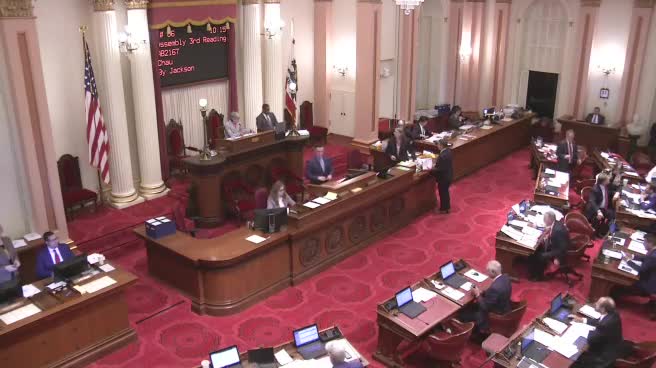 2MIN
Senate Floor
 1MIN
Assembly Floor
 1H
Assembly Standing Committee on Appropriations
 5MIN
Assembly Standing Committee on Appropriations
 15MIN
Assembly Standing Committee on Business and Professions
 9MIN
Senate Floor
 47MIN
Senate Standing Committee on Business, Professions and Economic Development
Bill Author

Bill Co-Author(s):
