SB 145: Autonomous vehicles: testing on public roads.
- Session Year: 2017-2018
- House: Senate
- Latest Version Date: 2017-10-12
Existing law authorizes the operation of an autonomous vehicle on public roads for testing purposes by a driver who possesses the proper class of license for the type of vehicle operated if specified requirements are satisfied. Existing law prohibits the operation of an autonomous vehicle on public roads until the manufacturer submits an application to the Department of Motor Vehicles, as specified, and that application is approved. Existing law requires the department to notify the Legislature if it receives an application from a manufacturer seeking approval to operate an autonomous vehicle capable of operating without the presence of a driver inside the vehicle. Existing law prohibits such an application from becoming effective any sooner than 180 days after that application is submitted.
Existing law requires the department to adopt regulations no later than January 1, 2015, setting forth requirements for submitting evidence of insurance, surety bond, or self-insurance, and for submitting and approving an application to operate an autonomous vehicle. Existing law requires the department to approve an application submitted by a manufacturer if it finds, among other information, that the applicant has completing testing necessary to satisfy the department that the autonomous vehicles are safe to operate on the public roads. Existing law prohibits the limitation or expansion of existing authority to operate autonomous vehicles on public roads, until 120 days after the department adopts those regulations.
This bill would repeal the requirement that the department notify the Legislature of receipt of an application seeking approval to operate an autonomous vehicle capable of operating without the presence of a driver inside the vehicle. The bill would also repeal the requirement that the approval of such an application not be effective any sooner that 180 days after the date the application is submitted. The bill would require the department to provide public notice when it adopts the autonomous vehicle regulations, would repeal the 120 day prohibition against limiting or expanding the authority to operate autonomous vehicles, and instead would prohibit the department from approving an application submitted pursuant to the regulations until 30 days after public notice of the adopted regulations is provided.
This bill would declare that it is to take effect immediately as an urgency statute.
Existing law authorizes the operation of an autonomous vehicle on public roads for testing purposes by a driver who possesses the proper class of license for the type of vehicle operated if specified requirements are satisfied. Existing law prohibits the operation of an autonomous vehicle on public roads until the manufacturer submits an application to the Department of Motor Vehicles, as specified, and that application is approved. Existing law requires the department to notify the Legislature if it receives an application from a manufacturer seeking approval to operate an autonomous vehicle capable of operating without the presence of a driver inside the vehicle. Existing law prohibits such an application from becoming effective any sooner than 180 days after that application is submitted.
Existing law requires the department to adopt regulations no later than January 1, 2015, setting forth requirements for submitting evidence of insurance, surety bond, or self-insurance, and for submitting and approving an application to operate an autonomous vehicle. Existing law requires the department to approve an application submitted by a manufacturer if it finds, among other information, that the applicant has completing testing necessary to satisfy the department that the autonomous vehicles are safe to operate on the public roads. Existing law prohibits the limitation or expansion of existing authority to operate autonomous vehicles on public roads, until 120 days after the department adopts those regulations.
This bill would repeal the requirement that the department notify the Legislature of receipt of an application seeking approval to operate an autonomous vehicle capable of operating without the presence of a driver inside the vehicle. The bill would also repeal the requirement that the approval of such an application not be effective any sooner that 180 days after the date the application is submitted, and the requirement that an applicant complete testing necessary to satisfy the department that the autonomous vehicles are safe to operate on the public roads. submitted. The bill would require the department to provide public notice when it adopts the autonomous vehicle regulations, would repeal the 120 day prohibition against limiting or expanding the authority to operate autonomous vehicles, and instead would prohibit the department from approving an application submitted pursuant to the regulations until 30 days after public notice of the adopted regulations is provided. The bill would make specified findings and declarations relating to federal traffic and highway safety regulation.
This bill would declare that it is to take effect immediately as an urgency statute.
Existing law authorizes the operation of an autonomous vehicle on public roads for testing purposes by a driver who possesses the proper class of license for the type of vehicle operated if specified requirements are satisfied. Existing law prohibits the operation of an autonomous vehicle on public roads until the manufacturer submits an application to the Department of Motor Vehicles, as specified, and that application is approved. Existing law requires the department to notify the Legislature if it receives an application from a manufacturer seeking approval to operate an autonomous vehicle capable of operating without the presence of a driver inside the vehicle. Existing law prohibits such an application from becoming effective any sooner than 180 days after that application is submitted.
Existing law requires the department to adopt regulations no later than January 1, 2015, setting forth requirements for submitting evidence of insurance, surety bond, or self-insurance, and for submitting and approving an application to operate an autonomous vehicle. Existing law requires the department to approve an application submitted by a manufacturer if it finds, among other information, that the applicant has completing testing necessary to satisfy the department that the autonomous vehicles are safe to operate on the public roads. Existing law prohibits the limitation or expansion of existing authority to operate autonomous vehicles on public roads, until 120 days after the department adopts those regulations.
This bill would repeal the requirement that the department notify the Legislature of receipt of an application seeking approval to operate an autonomous vehicle capable of operating without the presence of a driver inside the vehicle. The bill would also repeal the requirement that the approval of such an application not be effective any sooner that 180 days after the date the application is submitted. submitted, and the requirement that an applicant complete testing necessary to satisfy the department that the autonomous vehicles are safe to operate on the public roads. The bill would require the department to provide public notice when it adopts the autonomous vehicle regulations, would repeal the 120 day prohibition against limiting or expanding the authority to operate autonomous vehicles, and instead would prohibit the department from approving an application submitted pursuant to the regulations until 30 days after public notice of the adopted regulations is provided. The bill would make specified findings and declarations relating to federal traffic and highway safety regulation.
This bill would declare that it is to take effect immediately as an urgency statute.
Existing law authorizes the operation of an autonomous vehicle on public roads for testing purposes by a driver who possesses the proper class of license for the type of vehicle operated if specified requirements are satisfied. Existing law prohibits the operation of an autonomous vehicle on public roads until the manufacturer submits an application to the Department of Motor Vehicles, as specified, and that application is approved. Existing law requires the department to notify the Legislature if it receives an application from a manufacturer seeking approval to operate an autonomous vehicle capable of operating without the presence of a driver inside the vehicle. Existing law prohibits such an application from becoming effective any sooner than 180 days after that application is submitted.
This bill would repeal the requirement that the department notify the Legislature of receipt of an application seeking approval to operate an autonomous vehicle capable of operating without the presence of a driver inside the vehicle. The bill would also repeal the requirement that the approval of such an application not be effective any sooner that 180 days after the date the application is submitted.
This bill would declare that it is to take effect immediately as an urgency statute.
(a)For purposes of this division, the following definitions apply:
(1)Autonomous technology means technology that has the capability to drive a vehicle without the active physical control or monitoring by a human operator.
(2)(A)Autonomous vehicle means any vehicle equipped with autonomous technology that has been integrated into that vehicle.
(B)An autonomous vehicle does not include a vehicle that is equipped with one or more collision avoidance systems, including, but not limited to, electronic blind spot assistance, automated emergency braking systems, park assist, adaptive cruise control, lane keep assist, lane departure warning, traffic jam and queuing assist, or other similar systems that enhance safety or provide driver assistance, but are not capable, collectively or singularly, of driving the vehicle without the active control or monitoring of a human operator.
(3)Department means the Department of Motor Vehicles.
(4)An operator of an autonomous vehicle is the person who is seated in the drivers seat, or, if there is no person in the drivers seat, causes the autonomous technology to engage.
(5)A manufacturer of autonomous technology is the person as defined in Section 470 that originally manufactures a vehicle and equips autonomous technology on the originally completed vehicle or, in the case of a vehicle not originally equipped with autonomous technology by the vehicle manufacturer, the person that modifies the vehicle by installing autonomous technology to convert it to an autonomous vehicle after the vehicle was originally manufactured.
(b)An autonomous vehicle may be operated on public roads for testing purposes by a driver who possesses the proper class of license for the type of vehicle being operated if all of the following requirements are met:
(1)The autonomous vehicle is being operated on roads in this state solely by employees, contractors, or other persons designated by the manufacturer of the autonomous technology.
(2)The driver shall be seated in the drivers seat, monitoring the safe operation of the autonomous vehicle, and capable of taking over immediate manual control of the autonomous vehicle in the event of an autonomous technology failure or other emergency.
(3)Prior to the start of testing in this state, the manufacturer performing the testing shall obtain an instrument of insurance, surety bond, or proof of self-insurance in the amount of five million dollars ($5,000,000), and shall provide evidence of the insurance, surety bond, or self-insurance to the department in the form and manner required by the department pursuant to the regulations adopted pursuant to subdivision (d).
(c)Except as provided in subdivision (b), an autonomous vehicle shall not be operated on public roads until the manufacturer submits an application to the department, and that application is approved by the department pursuant to the regulations adopted pursuant to subdivision (d). The application shall contain, at a minimum, all of the following certifications:
(1)A certification by the manufacturer that the autonomous technology satisfies all of the following requirements:
(A)The autonomous vehicle has a mechanism to engage and disengage the autonomous technology that is easily accessible to the operator.
(B)The autonomous vehicle has a visual indicator inside the cabin to indicate when the autonomous technology is engaged.
(C)The autonomous vehicle has a system to safely alert the operator if an autonomous technology failure is detected while the autonomous technology is engaged, and when an alert is given, the system shall do either of the following:
(i)Require the operator to take control of the autonomous vehicle.
(ii)If the operator does not or is unable to take control of the autonomous vehicle, the autonomous vehicle shall be capable of coming to a complete stop.
(D)The autonomous vehicle shall allow the operator to take control in multiple manners, including, without limitation, through the use of the brake, the accelerator pedal, or the steering wheel, and it shall alert the operator that the autonomous technology has been disengaged.
(E)The autonomous vehicles autonomous technology meets Federal Motor Vehicle Safety Standards for the vehicles model year and all other applicable safety standards and performance requirements set forth in state and federal law and the regulations promulgated pursuant to those laws.
(F)The autonomous technology does not make inoperative any Federal Motor Vehicle Safety Standards for the vehicles model year and all other applicable safety standards and performance requirements set forth in state and federal law and the regulations promulgated pursuant to those laws.
(G)The autonomous vehicle has a separate mechanism, in addition to, and separate from, any other mechanism required by law, to capture and store the autonomous technology sensor data for at least 30 seconds before a collision occurs between the autonomous vehicle and another vehicle, object, or natural person while the vehicle is operating in autonomous mode. The autonomous technology sensor data shall be captured and stored in a read-only format by the mechanism so that the data is retained until extracted from the mechanism by an external device capable of downloading and storing the data. The data shall be preserved for three years after the date of the collision.
(2)A certification that the manufacturer has tested the autonomous technology on public roads and has complied with the testing standards, if any, established by the department pursuant to subdivision (d).
(3)A certification that the manufacturer will maintain, an instrument of insurance, a surety bond, or proof of self-insurance as specified in regulations adopted by the department pursuant to subdivision (d), in an amount of five million dollars ($5,000,000).
(d)(1)As soon as practicable, but no later than January 1, 2015, the department shall adopt regulations setting forth requirements for the submission of evidence of insurance, surety bond, or self-insurance required by subdivision (b), and the submission and approval of an application to operate an autonomous vehicle pursuant to subdivision (c).
(2)The regulations shall include any testing, equipment, and performance standards, in addition to those established for purposes of subdivision (b), that the department concludes are necessary to ensure the safe operation of autonomous vehicles on public roads, with or without the presence of a driver inside the vehicle. In developing these regulations, the department may consult with the Department of the California Highway Patrol, the Institute of Transportation Studies at the University of California, or any other entity identified by the department that has expertise in automotive technology, automotive safety, and autonomous system design.
(3)The department may establish additional requirements by the adoption of regulations, which it determines, in consultation with the Department of the California Highway Patrol, are necessary to ensure the safe operation of autonomous vehicles on public roads, including, but not limited to, regulations regarding the aggregate number of deployments of autonomous vehicles on public roads, special rules for the registration of autonomous vehicles, new license requirements for operators of autonomous vehicles, and rules for revocation, suspension, or denial of any license or any approval issued pursuant to this division.
(4)The department shall hold public hearings on the adoption of any regulation applicable to the operation of an autonomous vehicle without the presence of a driver inside the vehicle.
(e)(1)The department shall approve an application submitted by a manufacturer pursuant to subdivision (c) if it finds that the applicant has submitted all information and completed testing necessary to satisfy the department that the autonomous vehicles are safe to operate on public roads and the applicant has complied with all requirements specified in the regulations adopted by the department pursuant to subdivision (d).
(2)Notwithstanding paragraph (1), if the application seeks approval for autonomous vehicles capable of operating without the presence of a driver inside the vehicle, the department may impose additional requirements it deems necessary to ensure the safe operation of those vehicles, and may require the presence of a driver in the drivers seat of the vehicle if it determines, based on its review pursuant to paragraph (1), that such a requirement is necessary to ensure the safe operation of those vehicles on public roads.
(f)The department shall post a public notice on its Internet Web site when it adopts the regulations required by subdivision (d). The department shall not approve an application submitted pursuant to the regulations until 30 days after the public notice is provided.
(g)Federal regulations promulgated by the National Highway Traffic Safety Administration shall supersede the provisions of this division when found to be in conflict with any other state law or regulation.
(h)The manufacturer of the autonomous technology installed on a vehicle shall provide a written disclosure to the purchaser of an autonomous vehicle that describes what information is collected by the autonomous technology equipped on the vehicle. The department may promulgate regulations to assess a fee upon a manufacturer that submits an application pursuant to subdivision (c) to operate autonomous vehicles on public roads in an amount necessary to recover all costs reasonably incurred by the department.
SEC. 2.This act is an urgency statute necessary for the immediate preservation of the public peace, health, or safety within the meaning of Article IV of the California Constitution and shall go into immediate effect. The facts constituting the necessity are:
In order to facilitate safe and timely deployment of autonomous vehicles in California, it is necessary for this act to take immediate effect.
(a)For purposes of this division, the following definitions apply:
(1)Autonomous technology means technology that has the capability to drive a vehicle without the active physical control or monitoring by a human operator.
(2)(A)Autonomous vehicle means any vehicle equipped with autonomous technology that has been integrated into that vehicle.
(B)An autonomous vehicle does not include a vehicle that is equipped with one or more collision avoidance systems, including, but not limited to, electronic blind spot assistance, automated emergency braking systems, park assist, adaptive cruise control, lane keep assist, lane departure warning, traffic jam and queuing assist, or other similar systems that enhance safety or provide driver assistance, but are not capable, collectively or singularly, of driving the vehicle without the active control or monitoring of a human operator.
(3)Department means the Department of Motor Vehicles.
(4)An operator of an autonomous vehicle is the person who is seated in the drivers seat, or, if there is no person in the drivers seat, causes the autonomous technology to engage.
(5)A manufacturer of autonomous technology is the person as defined in Section 470 that originally manufactures a vehicle and equips autonomous technology on the originally completed vehicle or, in the case of a vehicle not originally equipped with autonomous technology by the vehicle manufacturer, the person that modifies the vehicle by installing autonomous technology to convert it to an autonomous vehicle after the vehicle was originally manufactured.
(b)An autonomous vehicle may be operated on public roads for testing purposes by a driver who possesses the proper class of license for the type of vehicle being operated if all of the following requirements are met:
(1)The autonomous vehicle is being operated on roads in this state solely by employees, contractors, or other persons designated by the manufacturer of the autonomous technology.
(2)The driver shall be seated in the drivers seat, monitoring the safe operation of the autonomous vehicle, and capable of taking over immediate manual control of the autonomous vehicle in the event of an autonomous technology failure or other emergency.
(3)Prior to the start of testing in this state, the manufacturer performing the testing shall obtain an instrument of insurance, surety bond, or proof of self-insurance in the amount of five million dollars ($5,000,000), and shall provide evidence of the insurance, surety bond, or self-insurance to the department in the form and manner required by the department pursuant to the regulations adopted pursuant to subdivision (d).
(c)Except as provided in subdivision (b), an autonomous vehicle shall not be operated on public roads until the manufacturer submits an application to the department, and that application is approved by the department pursuant to the regulations adopted pursuant to subdivision (d). The application shall contain, at a minimum, all of the following certifications:
(1)A certification by the manufacturer that the autonomous technology satisfies all of the following requirements:
(A)The autonomous vehicle has a mechanism to engage and disengage the autonomous technology that is easily accessible to the operator.
(B)The autonomous vehicle has a visual indicator inside the cabin to indicate when the autonomous technology is engaged.
(C)The autonomous vehicle has a system to safely alert the operator if an autonomous technology failure is detected while the autonomous technology is engaged, and when an alert is given, the system shall do either of the following:
(i)Require the operator to take control of the autonomous vehicle.
(ii)If the operator does not or is unable to take control of the autonomous vehicle, the autonomous vehicle shall be capable of coming to a complete stop.
(D)The autonomous vehicle shall allow the operator to take control in multiple manners, including, without limitation, through the use of the brake, the accelerator pedal, or the steering wheel, and it shall alert the operator that the autonomous technology has been disengaged.
(E)The autonomous vehicles autonomous technology meets Federal Motor Vehicle Safety Standards for the vehicles model year and all other applicable safety standards and performance requirements set forth in state and federal law and the regulations promulgated pursuant to those laws.
(F)The autonomous technology does not make inoperative any Federal Motor Vehicle Safety Standards for the vehicles model year and all other applicable safety standards and performance requirements set forth in state and federal law and the regulations promulgated pursuant to those laws.
(G)The autonomous vehicle has a separate mechanism, in addition to, and separate from, any other mechanism required by law, to capture and store the autonomous technology sensor data for at least 30 seconds before a collision occurs between the autonomous vehicle and another vehicle, object, or natural person while the vehicle is operating in autonomous mode. The autonomous technology sensor data shall be captured and stored in a read-only format by the mechanism so that the data is retained until extracted from the mechanism by an external device capable of downloading and storing the data. The data shall be preserved for three years after the date of the collision.
(2)A certification that the manufacturer has tested the autonomous technology on public roads and has complied with the testing standards, if any, established by the department pursuant to subdivision (d).
(3)A certification that the manufacturer will maintain, an instrument of insurance, a surety bond, or proof of self-insurance as specified in regulations adopted by the department pursuant to subdivision (d), in an amount of five million dollars ($5,000,000).
(d)(1)As soon as practicable, but no later than January 1, 2015, the department shall adopt regulations setting forth requirements for the submission of evidence of insurance, surety bond, or self-insurance required by subdivision (b), and the submission and approval of an application to operate an autonomous vehicle pursuant to subdivision (c).
(2)The regulations shall include any testing, equipment, and performance standards, in addition to those established for purposes of subdivision (b), that the department concludes are necessary to ensure the safe operation of autonomous vehicles on public roads, with or without the presence of a driver inside the vehicle. In developing these regulations, the department may consult with the Department of the California Highway Patrol, the Institute of Transportation Studies at the University of California, or any other entity identified by the department that has expertise in automotive technology, automotive safety, and autonomous system design.
(3)The department may establish additional requirements by the adoption of regulations, which it determines, in consultation with the Department of the California Highway Patrol, are necessary to ensure the safe operation of autonomous vehicles on public roads, including, but not limited to, regulations regarding the aggregate number of deployments of autonomous vehicles on public roads, special rules for the registration of autonomous vehicles, new license requirements for operators of autonomous vehicles, and rules for revocation, suspension, or denial of any license or any approval issued pursuant to this division.
(4)The department shall hold public hearings on the adoption of any regulation applicable to the operation of an autonomous vehicle without the presence of a driver inside the vehicle.
(e)(1)The department shall approve an application submitted by a manufacturer pursuant to subdivision (c) if it finds that the applicant has submitted all information and completed testing necessary to satisfy the department that the autonomous vehicles are safe to operate on public roads and the applicant has complied with all requirements specified in the regulations adopted by the department pursuant to subdivision (d).
(2)Notwithstanding paragraph (1), if the application seeks approval for autonomous vehicles capable of operating without the presence of a driver inside the vehicle, the department may impose additional requirements it deems necessary to ensure the safe operation of those vehicles, and may require the presence of a driver in the drivers seat of the vehicle if it determines, based on its review pursuant to paragraph (1), that such a requirement is necessary to ensure the safe operation of those vehicles on public roads.
(f)The department shall post a public notice on its Internet Web site when it adopts the regulations required by subdivision (d). The department shall not approve an application submitted pursuant to the regulations until 30 days after the public notice is provided.
(g)Federal regulations promulgated by the National Highway Traffic Safety Administration shall supersede the provisions of this division when found to be in conflict with any other state law or regulation.
(h)The manufacturer of the autonomous technology installed on a vehicle shall provide a written disclosure to the purchaser of an autonomous vehicle that describes what information is collected by the autonomous technology equipped on the vehicle. The department may promulgate regulations to assess a fee upon a manufacturer that submits an application pursuant to subdivision (c) to operate autonomous vehicles on public roads in an amount necessary to recover all costs reasonably incurred by the department.
(i)The Legislature finds and declares that the National Traffic and Motor Vehicle Safety Act of 1966 (15 U.S.C. Sec. 1381 et seq.) and the Highway Safety Act of 1966 (23 U.S.C. Sec. 401 et seq.) made the federal government responsible for setting and enforcing safety standards for motor vehicles. The National Highway Traffic Safety Administration is vested with the authority to develop Federal Motor Vehicle Safety Standards. Federal Motor Vehicle Safety Standards establish minimum performance standards for motor vehicles and motor vehicle equipment in order to protect the public from the unreasonable risk of accidents because of the design, construction, or performance of a motor vehicle, and from the unreasonable risk of resulting death or injury.SEC. 2.This act is an urgency statute necessary for the immediate preservation of the public peace, health, or safety within the meaning of Article IV of the California Constitution and shall go into immediate effect. The facts constituting the necessity are:
In order to facilitate safe and timely deployment of autonomous vehicles in California, it is necessary for this act to take immediate effect.
(a)For purposes of this division, the following definitions apply:
(1)Autonomous technology means technology that has the capability to drive a vehicle without the active physical control or monitoring by a human operator.
(2)(A)Autonomous vehicle means any vehicle equipped with autonomous technology that has been integrated into that vehicle.
(B)An autonomous vehicle does not include a vehicle that is equipped with one or more collision avoidance systems, including, but not limited to, electronic blind spot assistance, automated emergency braking systems, park assist, adaptive cruise control, lane keep assist, lane departure warning, traffic jam and queuing assist, or other similar systems that enhance safety or provide driver assistance, but are not capable, collectively or singularly, of driving the vehicle without the active control or monitoring of a human operator.
(3)Department means the Department of Motor Vehicles.
(4)An operator of an autonomous vehicle is the person who is seated in the drivers seat, or, if there is no person in the drivers seat, causes the autonomous technology to engage.
(5)A manufacturer of autonomous technology is the person as defined in Section 470 that originally manufactures a vehicle and equips autonomous technology on the originally completed vehicle or, in the case of a vehicle not originally equipped with autonomous technology by the vehicle manufacturer, the person that modifies the vehicle by installing autonomous technology to convert it to an autonomous vehicle after the vehicle was originally manufactured.
(b)An autonomous vehicle may be operated on public roads for testing purposes by a driver who possesses the proper class of license for the type of vehicle being operated if all of the following requirements are met:
(1)The autonomous vehicle is being operated on roads in this state solely by employees, contractors, or other persons designated by the manufacturer of the autonomous technology.
(2)The driver shall be seated in the drivers seat, monitoring the safe operation of the autonomous vehicle, and capable of taking over immediate manual control of the autonomous vehicle in the event of an autonomous technology failure or other emergency.
(3)Prior to the start of testing in this state, the manufacturer performing the testing shall obtain an instrument of insurance, surety bond, or proof of self-insurance in the amount of five million dollars ($5,000,000), and shall provide evidence of the insurance, surety bond, or self-insurance to the department in the form and manner required by the department pursuant to the regulations adopted pursuant to subdivision (d).
(c)Except as provided in subdivision (b), an autonomous vehicle shall not be operated on public roads until the manufacturer submits an application to the department, and that application is approved by the department pursuant to the regulations adopted pursuant to subdivision (d). The application shall contain, at a minimum, all of the following certifications:
(1)A certification by the manufacturer that the autonomous technology satisfies all of the following requirements:
(A)The autonomous vehicle has a mechanism to engage and disengage the autonomous technology that is easily accessible to the operator.
(B)The autonomous vehicle has a visual indicator inside the cabin to indicate when the autonomous technology is engaged.
(C)The autonomous vehicle has a system to safely alert the operator if an autonomous technology failure is detected while the autonomous technology is engaged, and when an alert is given, the system shall do either of the following:
(i)Require the operator to take control of the autonomous vehicle.
(ii)If the operator does not or is unable to take control of the autonomous vehicle, the autonomous vehicle shall be capable of coming to a complete stop.
(D)The autonomous vehicle shall allow the operator to take control in multiple manners, including, without limitation, through the use of the brake, the accelerator pedal, or the steering wheel, and it shall alert the operator that the autonomous technology has been disengaged.
(E)The autonomous vehicles autonomous technology meets Federal Motor Vehicle Safety Standards for the vehicles model year and all other applicable safety standards and performance requirements set forth in state and federal law and the regulations promulgated pursuant to those laws.
(F)The autonomous technology does not make inoperative any Federal Motor Vehicle Safety Standards for the vehicles model year and all other applicable safety standards and performance requirements set forth in state and federal law and the regulations promulgated pursuant to those laws.
(G)The autonomous vehicle has a separate mechanism, in addition to, and separate from, any other mechanism required by law, to capture and store the autonomous technology sensor data for at least 30 seconds before a collision occurs between the autonomous vehicle and another vehicle, object, or natural person while the vehicle is operating in autonomous mode. The autonomous technology sensor data shall be captured and stored in a read-only format by the mechanism so that the data is retained until extracted from the mechanism by an external device capable of downloading and storing the data. The data shall be preserved for three years after the date of the collision.
(2)A certification that the manufacturer has tested the autonomous technology on public roads and has complied with the testing standards, if any, established by the department pursuant to subdivision (d).
(3)A certification that the manufacturer will maintain, an instrument of insurance, a surety bond, or proof of self-insurance as specified in regulations adopted by the department pursuant to subdivision (d), in an amount of five million dollars ($5,000,000).
(d)(1)As soon as practicable, but no later than January 1, 2015, the department shall adopt regulations setting forth requirements for the submission of evidence of insurance, surety bond, or self-insurance required by subdivision (b), and the submission and approval of an application to operate an autonomous vehicle pursuant to subdivision (c).
(2)The regulations shall include any testing, equipment, and performance standards, in addition to those established for purposes of subdivision (b), that the department concludes are necessary to ensure the safe operation of autonomous vehicles on public roads, with or without the presence of a driver inside the vehicle. In developing these regulations, the department may consult with the Department of the California Highway Patrol, the Institute of Transportation Studies at the University of California, or any other entity identified by the department that has expertise in automotive technology, automotive safety, and autonomous system design.
(3)The department may establish additional requirements by the adoption of regulations, which it determines, in consultation with the Department of the California Highway Patrol, are necessary to ensure the safe operation of autonomous vehicles on public roads, including, but not limited to, regulations regarding the aggregate number of deployments of autonomous vehicles on public roads, special rules for the registration of autonomous vehicles, new license requirements for operators of autonomous vehicles, and rules for revocation, suspension, or denial of any license or any approval issued pursuant to this division.
(4)The department shall hold public hearings on the adoption of any regulation applicable to the operation of an autonomous vehicle without the presence of a driver inside the vehicle.
(e)(1)The department shall approve an application submitted by a manufacturer pursuant to subdivision (c) if it finds that the applicant has submitted all information and completed testing necessary to satisfy the department that the autonomous vehicles are safe to operate on public roads and the applicant has complied with all requirements specified in the regulations adopted by the department pursuant to subdivision (d).
(2)Notwithstanding paragraph (1), if the application seeks approval for autonomous vehicles capable of operating without the presence of a driver inside the vehicle, the department may impose additional requirements it deems necessary to ensure the safe operation of those vehicles, and may require the presence of a driver in the drivers seat of the vehicle if it determines, based on its review pursuant to paragraph (1), that such a requirement is necessary to ensure the safe operation of those vehicles on public roads.
(f)Nothing in this division shall limit or expand the existing authority to operate autonomous vehicles on public roads, until 120 days after the department adopts the regulations required by paragraph (1) of subdivision (d).(f)The department shall post a public notice on its Internet Web site when it adopts the regulations required by subdivision (d). The department shall not approve an application submitted pursuant to the regulations until 30 days after the public notice is provided.
(g)Federal regulations promulgated by the National Highway Traffic Safety Administration shall supersede the provisions of this division when found to be in conflict with any other state law or regulation.
(h)The manufacturer of the autonomous technology installed on a vehicle shall provide a written disclosure to the purchaser of an autonomous vehicle that describes what information is collected by the autonomous technology equipped on the vehicle. The department may promulgate regulations to assess a fee upon a manufacturer that submits an application pursuant to subdivision (c) to operate autonomous vehicles on public roads in an amount necessary to recover all costs reasonably incurred by the department.
(i)The Legislature finds and declares that the National Traffic and Motor Vehicle Safety Act of 1966 (15 U.S.C. Sec. 1381 et seq.) and the Highway Safety Act of 1966 (23 U.S.C. Sec. 401 et seq.) made the federal government responsible for setting and enforcing safety standards for motor vehicles. The National Highway Traffic Safety Administration is vested with the authority to develop Federal Motor Vehicle Safety Standards. Federal Motor Vehicle Safety Standards establish minimum performance standards for motor vehicles and motor vehicle equipment in order to protect the public from the unreasonable risk of accidents because of the design, construction, or performance of a motor vehicle, and from the unreasonable risk of resulting death or injury.
SEC. 2.This act is an urgency statute necessary for the immediate preservation of the public peace, health, or safety within the meaning of Article IV of the California Constitution and shall go into immediate effect. The facts constituting the necessity are:
In order to facilitate safe and timely deployment of autonomous vehicles in California, it is necessary for this act to take immediate effect.
(a)For purposes of this division, the following definitions apply:
(1)Autonomous technology means technology that has the capability to drive a vehicle without the active physical control or monitoring by a human operator.
(2)(A)Autonomous vehicle means any vehicle equipped with autonomous technology that has been integrated into that vehicle.
(B)An autonomous vehicle does not include a vehicle that is equipped with one or more collision avoidance systems, including, but not limited to, electronic blind spot assistance, automated emergency braking systems, park assist, adaptive cruise control, lane keep assist, lane departure warning, traffic jam and queuing assist, or other similar systems that enhance safety or provide driver assistance, but are not capable, collectively or singularly, of driving the vehicle without the active control or monitoring of a human operator.
(3)Department means the Department of Motor Vehicles.
(4)An operator of an autonomous vehicle is the person who is seated in the drivers seat, or, if there is no person in the drivers seat, causes the autonomous technology to engage.
(5)A manufacturer of autonomous technology is the person as defined in Section 470 that originally manufactures a vehicle and equips autonomous technology on the originally completed vehicle or, in the case of a vehicle not originally equipped with autonomous technology by the vehicle manufacturer, the person that modifies the vehicle by installing autonomous technology to convert it to an autonomous vehicle after the vehicle was originally manufactured.
(b)An autonomous vehicle may be operated on public roads for testing purposes by a driver who possesses the proper class of license for the type of vehicle being operated if all of the following requirements are met:
(1)The autonomous vehicle is being operated on roads in this state solely by employees, contractors, or other persons designated by the manufacturer of the autonomous technology.
(2)The driver shall be seated in the drivers seat, monitoring the safe operation of the autonomous vehicle, and capable of taking over immediate manual control of the autonomous vehicle in the event of an autonomous technology failure or other emergency.
(3)Prior to the start of testing in this state, the manufacturer performing the testing shall obtain an instrument of insurance, surety bond, or proof of self-insurance in the amount of five million dollars ($5,000,000), and shall provide evidence of the insurance, surety bond, or self-insurance to the department in the form and manner required by the department pursuant to the regulations adopted pursuant to subdivision (d).
(c)Except as provided in subdivision (b), an autonomous vehicle shall not be operated on public roads until the manufacturer submits an application to the department, and that application is approved by the department pursuant to the regulations adopted pursuant to subdivision (d). The application shall contain, at a minimum, all of the following certifications:
(1)A certification by the manufacturer that the autonomous technology satisfies all of the following requirements:
(A)The autonomous vehicle has a mechanism to engage and disengage the autonomous technology that is easily accessible to the operator.
(B)The autonomous vehicle has a visual indicator inside the cabin to indicate when the autonomous technology is engaged.
(C)The autonomous vehicle has a system to safely alert the operator if an autonomous technology failure is detected while the autonomous technology is engaged, and when an alert is given, the system shall do either of the following:
(i)Require the operator to take control of the autonomous vehicle.
(ii)If the operator does not or is unable to take control of the autonomous vehicle, the autonomous vehicle shall be capable of coming to a complete stop.
(D)The autonomous vehicle shall allow the operator to take control in multiple manners, including, without limitation, through the use of the brake, the accelerator pedal, or the steering wheel, and it shall alert the operator that the autonomous technology has been disengaged.
(E)The autonomous vehicles autonomous technology meets Federal Motor Vehicle Safety Standards for the vehicles model year and all other applicable safety standards and performance requirements set forth in state and federal law and the regulations promulgated pursuant to those laws.
(F)The autonomous technology does not make inoperative any Federal Motor Vehicle Safety Standards for the vehicles model year and all other applicable safety standards and performance requirements set forth in state and federal law and the regulations promulgated pursuant to those laws.
(G)The autonomous vehicle has a separate mechanism, in addition to, and separate from, any other mechanism required by law, to capture and store the autonomous technology sensor data for at least 30 seconds before a collision occurs between the autonomous vehicle and another vehicle, object, or natural person while the vehicle is operating in autonomous mode. The autonomous technology sensor data shall be captured and stored in a read-only format by the mechanism so that the data is retained until extracted from the mechanism by an external device capable of downloading and storing the data. The data shall be preserved for three years after the date of the collision.
(2)A certification that the manufacturer has tested the autonomous technology on public roads and has complied with the testing standards, if any, established by the department pursuant to subdivision (d).
(3)A certification that the manufacturer will maintain, an instrument of insurance, a surety bond, or proof of self-insurance as specified in regulations adopted by the department pursuant to subdivision (d), in an amount of five million dollars ($5,000,000).
(d)(1)As soon as practicable, but no later than January 1, 2015, the department shall adopt regulations setting forth requirements for the submission of evidence of insurance, surety bond, or self-insurance required by subdivision (b), and the submission and approval of an application to operate an autonomous vehicle pursuant to subdivision (c).
(2)The regulations shall include any testing, equipment, and performance standards, in addition to those established for purposes of subdivision (b), that the department concludes are necessary to ensure the safe operation of autonomous vehicles on public roads, with or without the presence of a driver inside the vehicle. In developing these regulations, the department may consult with the Department of the California Highway Patrol, the Institute of Transportation Studies at the University of California, or any other entity identified by the department that has expertise in automotive technology, automotive safety, and autonomous system design.
(3)The department may establish additional requirements by the adoption of regulations, which it determines, in consultation with the Department of the California Highway Patrol, are necessary to ensure the safe operation of autonomous vehicles on public roads, including, but not limited to, regulations regarding the aggregate number of deployments of autonomous vehicles on public roads, special rules for the registration of autonomous vehicles, new license requirements for operators of autonomous vehicles, and rules for revocation, suspension, or denial of any license or any approval issued pursuant to this division.
(4)The department shall hold public hearings on the adoption of any regulation applicable to the operation of an autonomous vehicle without the presence of a driver inside the vehicle.
(e)(1)The department shall approve an application submitted by a manufacturer pursuant to subdivision (c) if it finds that the applicant has submitted all information and completed testing necessary to satisfy the department that the autonomous vehicles are safe to operate on public roads and the applicant has complied with all requirements specified in the regulations adopted by the department pursuant to subdivision (d).
(2)Notwithstanding paragraph (1), if the application seeks approval for autonomous vehicles capable of operating without the presence of a driver inside the vehicle, the department may impose additional requirements it deems necessary to ensure the safe operation of those vehicles, and may require the presence of a driver in the drivers seat of the vehicle if it determines, based on its review pursuant to paragraph (1), that such a requirement is necessary to ensure the safe operation of those vehicles on public roads. The department shall notify the Legislature of the receipt of an application from a manufacturer seeking approval to operate an autonomous vehicle capable of operating without the presence of a driver inside the vehicle and approval of the application. Approval of the application shall be effective no sooner than 180 days after the date the application is submitted.
(f)Nothing in this division shall limit or expand the existing authority to operate autonomous vehicles on public roads, until 120 days after the department adopts the regulations required by paragraph (1) of subdivision (d).
(g)Federal regulations promulgated by the National Highway Traffic Safety Administration shall supersede the provisions of this division when found to be in conflict with any other state law or regulation.
(h)The manufacturer of the autonomous technology installed on a vehicle shall provide a written disclosure to the purchaser of an autonomous vehicle that describes what information is collected by the autonomous technology equipped on the vehicle. The department may promulgate regulations to assess a fee upon a manufacturer that submits an application pursuant to subdivision (c) to operate autonomous vehicles on public roads in an amount necessary to recover all costs reasonably incurred by the department.
SEC. 2.This act is an urgency statute necessary for the immediate preservation of the public peace, health, or safety within the meaning of Article IV of the California Constitution and shall go into immediate effect. The facts constituting the necessity are:
In order to facilitate safe and timely deployment of autonomous vehicles in California, it is necessary for this act to take immediate effect.
REVISIONS: HeadingLine 2.|
Date
|
Status
|
|---|---|
| Oct 12, 2017 | Chaptered by Secretary of State. Chapter 725, Statutes of 2017. |
| Oct 12, 2017 | Approved by the Governor. |
| Sep 22, 2017 | Enrolled and presented to the Governor at 3 p.m. |
| Sep 15, 2017 | Assembly amendments concurred in. (Ayes 38. Noes 0.) Ordered to engrossing and enrolling. |
| Sep 15, 2017 | In Senate. Concurrence in Assembly amendments pending. |
| Sep 15, 2017 | Read third time. Urgency clause adopted. Passed. Ordered to the Senate. |
| Sep 14, 2017 | Read second time. Ordered to third reading. |
| Sep 13, 2017 | Withdrawn from committee. |
| Sep 12, 2017 | From committee with author's amendments. Read second time and amended. Re-referred to Com. on TRANS. |
| Sep 12, 2017 | Re-referred to Com. on TRANS. pursuant to Assembly Rule 77.2. |
| Sep 7, 2017 | Read third time and amended. |
| Aug 24, 2017 | Read second time. Ordered to third reading. |
| Aug 23, 2017 | From committee: Do pass. (Ayes 14. Noes 0.) (August 23). |
| Jul 13, 2017 | From committee: Do pass and re-refer to Com. on APPR. with recommendation: To consent calendar. (Ayes 13. Noes 0.) (July 12). Re-referred to Com. on APPR. |
| Jul 3, 2017 | Coauthors revised. |
| Jun 27, 2017 | From committee: Do pass and re-refer to Com. on C. & C. (Ayes 14. Noes 0.) (June 26). Re-referred to Com. on C. & C. |
| May 18, 2017 | Referred to Coms. on TRANS. and C. & C. |
| May 4, 2017 | In Assembly. Read first time. Held at Desk. |
| May 4, 2017 | Read third time. Urgency clause adopted. Passed. (Ayes 38. Noes 0. Page 959.) Ordered to the Assembly. |
| May 2, 2017 | Read second time. Ordered to consent calendar. |
| May 1, 2017 | From committee: Be ordered to second reading pursuant to Senate Rule 28.8 and ordered to consent calendar. |
| Apr 21, 2017 | Set for hearing May 1. |
| Apr 19, 2017 | From committee: Do pass and re-refer to Com. on APPR. with recommendation: To consent calendar. (Ayes 12. Noes 0. Page 750.) (April 18). Re-referred to Com. on APPR. |
| Apr 4, 2017 | Set for hearing April 18. |
| Jan 26, 2017 | Referred to Com. on T. & H. |
| Jan 18, 2017 | From printer. May be acted upon on or after February 17. |
| Jan 17, 2017 | Introduced. Read first time. To Com. on RLS. for assignment. To print. |
|
Date
|
Description
|
Location
|
Votes
|
|
|---|---|---|---|---|
| Sep 15, 2017 | Unfinished Business SB145 Hill et al. Urgency Clause Concurrence | Senate Floor |
Passed |
|
| Sep 15, 2017 | SB 145 Hill Third Reading Urgency By BERMAN | Assembly Floor |
Passed |
|
| Aug 23, 2017 | Do pass. | Assembly Standing Committee on Appropriations |
Passed |
|
| Jul 12, 2017 | Do pass and be re-referred to the Committee on [Appropriations] with recommendation: To Consent Calendar | Assembly Standing Committee on Communications and Conveyance |
Passed |
|
| Jun 26, 2017 | Do pass and be re-referred to the Committee on [Communications and Conveyance] | Assembly Standing Committee on Transportation |
Passed |
|
| May 4, 2017 | Consent Calendar 2nd SB145 Hill Urgency Clause | Senate Floor |
Passed |
|
| Apr 18, 2017 | Do pass, but first be re-referred to the Committee on [Appropriations] with the recommendation: To Consent Calendar | Senate Standing Committee on Transportation and Housing |
Passed |
This list shows positions taken on this bill by organizations on the date displayed, which is linked to the original source.
Positions by individuals are not included.
|
Organization
|
Position
|
Date
|
|---|---|---|
| AAA Northern California, Nevada & Utah | ** Support | Jul 11, 2017 |
| Alliance Of Automobile Manufacturers | ** Support | Sep 15, 2017 |
| Asian Business Association | ** Support | Jul 11, 2017 |
| Association of Global Automakers | ** Support | Jul 11, 2017 |
| bay area central american chamber of commerce | ** Support | Jul 11, 2017 |
| Black Women Organized for Political Action | ** Support | Jul 11, 2017 |
| California Asian Chamber of Commerce | ** Support | Jul 11, 2017 |
| California Chamber Of Commerce | ** Support | Sep 15, 2017 |
| california hawaii state conference of the naacp | ** Support | Jul 11, 2017 |
| california league of latin american citizens | ** Support | Jul 11, 2017 |
| CompTIA | ** Support | Jul 11, 2017 |
| Computing Technology Industry Association | ** Support | Sep 15, 2017 |
| CTIA | ** Support | Jul 11, 2017 |
| fathers against drunk driving | ** Support | Jul 11, 2017 |
| Global Automakers | ** Support | Sep 15, 2017 |
| hispanic chambers of commerce san francisco | ** Support | Jul 11, 2017 |
| latin american and caribbean chamber of commerce | ** Support | Jul 11, 2017 |
| nicaraguan chamber of commerce northern california | ** Support | Jul 11, 2017 |
| Orange County Business Council | ** Support | Jul 11, 2017 |
| R Street Institute | ** Support | Jul 11, 2017 |
| san diego county hispanic chamber of commerce | ** Support | Jul 11, 2017 |
| San Diego Regional Chamber Of Commerce | ** Support | Jul 11, 2017 |
| Self-Driving Coalition for Safer Streets | ** Support | Sep 15, 2017 |
| Silicon Valley Leadership Group | ** Support | Sep 15, 2017 |
| Silicon Valley Organization | ** Support | Jun 23, 2017 |
| Society for the Blind | ** Support | Jul 11, 2017 |
| Technet | ** Support | Sep 15, 2017 |
| The Silicon Valley Organization | ** Support | Jul 11, 2017 |
| united domestic workers local 3930 | ** Support | Jul 11, 2017 |
| VALLEY INDUSTRY AND COMMERCE ASSOCIATION | ** Support | Jul 11, 2017 |
| Waymo | ** Support | Sep 15, 2017 |
SENATE THIRD READING
STR Bill Id:SB 145
Author:(Hill)
As Amended Ver:September 12, 2017
2/3 vote. Urgency
SENATE VOTE: 38-0
Committee | Votes | Ayes | Noes |
Transportation | 14-0 | Frazier, Fong, Aguiar-Curry, Baker, Berman, Bocanegra, Chu, Daly, Friedman, Harper, Mathis, Medina, Nazarian, O'Donnell | |
Communications | 13-0 | Santiago, Obernolte, Bonta, Cervantes, Dababneh, Eduardo Garcia, Holden, Lackey, Low, Maienschein, Patterson, Rodriguez, Wood | |
Appropriations | 14-0 | Bigelow, Bocanegra, Bonta, Brough, Calderon, Chau, Eggman, Fong, Friedman, Gallagher, Gray, Jones-Sawyer, Obernolte, Reyes |
SUMMARY: Makes various changes regarding the Department of Motor Vehicles (DMV)'s authority to develop regulations and approve applications for the operation of autonomous vehicles on the public roadways. Specifically, this bill:
- Deletes a requirement that DMV notify the Legislature of the receipt and approval of an application from a manufacturer seeking to operate autonomous vehicles capable of operating without the presence of a driver inside the vehicle on public roads for non-testing purposes, and the requirement that the approval of such an application not take effect for 180 days.
- Requires DMV to post a public notice on its website when it adopts the autonomous vehicle regulations.
- Repeals the prohibition against limiting or expanding the authority to operate autonomous vehicles until 120 days after DMV adopts the autonomous vehicle regulations, and instead prohibits DMV from approving a submitted application until 30 days after the newly required public notice is provided.
- Declares this bill an urgency measure.
FISCAL EFFECT: According to the Assembly Appropriations Committee, negligible fiscal effect.
COMMENTS: In response to arguments for the traffic safety benefits of increasingly automated vehicle technology, the Legislature passed and Governor Brown signed legislation in 2012 requiring DMV to adopt regulations for the operation of autonomous vehicles on California's public roads [SB 1298 (Padilla), Chapter 570, Statutes of 2012]. The rollout of DMV's regulations was separated into two stages: regulations for insurance requirements for the purposes of testing autonomous vehicles and regulations for the full deployment of autonomous vehicles on California roads for non-testing purposes. Both sets of regulations were required to be adopted by January 1, 2015. DMV adopted testing regulations on May 19, 2014, and submitted proposed regulations for non-testing purposes for public comment on March 10, 2017. The public comment period ended on April 24, 2017, and DMV anticipates adopting finalized regulations before the end of 2017. These regulations establish a framework for the testing and operation of autonomous vehicles without the human drivers present in the vehicles.
This bill would delete a requirement that DMV report to the Legislature every time a manufacturer applies for authorization to operate an autonomous vehicle without a driver in the vehicle, as well as a requirement that such an authorization would not take effect for 180 days after the application is submitted. Additionally, this bill would repeal the prohibition against limiting or expanding the authority to operate autonomous vehicles until 120 days after DMV adopts the autonomous vehicle regulations. Instead the bill requires DMV to post a public notice on its website when it adopts the final regulations, which are now out for comment. The bill prohibits DMV from approving a submitted application until 30 days after the public notice is posted.
According to the author, removing these requirements will help facilitate the safe and timely deployment of driverless vehicles. DMV posts extensive information on manufacturers holding permits to test autonomous vehicles under its current regulatory framework and would likely continue that practice for driverless vehicles.
Specifically, under its current proposed regulations, DMV would require manufacturers seeking authorization to test driverless autonomous vehicles to comply with a number of requirements to obtain a permit, including paying a $3,600 application fee, certifying that the vehicles meet applicable Federal Motor Vehicle Safety Standards or have been granted a federal exemption, and submitting a copy of a law enforcement interaction plan and proof of a $5 million insurance policy. Approval of the application is contingent on meeting these and other requirements.
Analysis Prepared by: Justin Behrens / TRANS. / (916) 319-2093 FN: 0002349
Office of Senate Floor Analyses (916) 651-1520 Fax: (916) 327-4478 | SB |
UNFINISHED BUSINESS
Bill No: SB 145
:
SENATE TRANS. & HOUSING COMMITTEE: 12-0, 4/18/17
AYES: Beall, Cannella, Allen, Atkins, Gaines, McGuire, Mendoza, Morrell, Roth, Skinner, Wieckowski, Wiener
NO VOTE RECORDED: Bates
SENATE APPROPRIATIONS COMMITTEE: Senate Rule 28.8
SENATE FLOOR: 38-0, 5/4/17 (Consent)
AYES: Allen, Anderson, Atkins, Bates, Beall, Berryhill, Bradford, Cannella, De León, Dodd, Fuller, Gaines, Galgiani, Glazer, Hernandez, Hill, Hueso, Jackson, Lara, Leyva, McGuire, Mendoza, Mitchell, Monning, Moorlach, Newman, Nguyen, Nielsen, Pan, Portantino, Roth, Skinner, Stern, Stone, Vidak, Wieckowski, Wiener, Wilk
NO VOTE RECORDED: Hertzberg, Morrell
ASSEMBLY FLOOR: 58-2, 9/15/17
(ROLL CALL NOT AVAILABLE)
DIGEST:
This bill repeals a provision that requires the Department of Motor Vehicles (DMV) to notify the Legislature upon receipt of an application to operate an autonomous vehicle (AV) capable of operating without the presence of a driver and it repeals a 180 day delay of an approved application.
Assembly Amendments
replace an existing 120-day prohibition provision with a requirement that the DMV provide public notice on their Web site upon adoption of AV regulations and prohibit DMV from accepting an application until 30 days after that public notice is provided.
- Allows operation of an AV with the presence of a driver on California public roads upon DMV approval of an application containing the following:
- Manufacturer certification of the following vehicle features:
- An accessible way for the operator to engage/disengage the autonomous features.
- A visual indicator of autonomous mode.
- The capability to alert the operator upon failure, upon which it will do the following:
- Require the operator to take control.
- Come to a complete stop if the operator cannot take control.
- Ability of the operator to take control in multiple ways (braking, accelerating, steering, etc.) and to alert the operator when autonomous features are disengaged.
- The autonomous technology meets Federal Motor Vehicle Safety Standards (FMVSS) and other state and federal safety standards.
- The vehicle does not make inoperative any of the above safety standards.
- A mechanism to capture data at least 30 seconds prior to a collision and maintains that data for three years after collision.
- A certification that the manufacturer testing the autonomous technology on public roads has complied with the DMV’s testing standards.
- A certification of an instrument of insurance, a surety bond, or self-insurance for $5 million.
- Manufacturer certification of the following vehicle features:
- Requires the DMV to approve any application that:
- Includes all the required information.
- Completed satisfactory testing to ensure that the vehicles are safe to operate on public roads.
- Complies with the DMV’s regulations regarding insurance requirements.
- Allows the DMV to impose additional requirements on vehicles capable of operating without a driver and allows DMV to require the presence of a driver in the driver’s seat if necessary for safety.
- Requires the DMV to notify the Legislature when it receives an application for the operation of a vehicle capable of operating without a driver.
- Requires that the DMV’s approval of an application for an autonomous vehicle shall go into effect no sooner than 180 days after submission of the application.
This bill:
- Repeals the requirement that the DMV notify the Legislature when it receives an application for an autonomous vehicle capable of operating without a driver.
- Repeals the requirement that DMV approval of an application for an autonomous vehicle capable of operating without a driver go into effect no sooner than 180 days after submission of the application.
Background
In 2012, California passed SB 1298 (Padilla, Chapter 570, Statutes of 2012) which established requirements for the testing and operation of AVs on public roads. For testing on public roads, SB 1298 required the presence of a driver in the driver’s seat, who would oversee the safe operation of the vehicle and be capable of taking over in case of a failure or emergency. Based on the bills requirements, in 2014 the DMV adopted regulations for the operation of AVs on public roads, requiring the presence of a driver and establishing an application and approval process for a Manufacturer’s Testing Permit. Under these regulations, 30 companies are currently testing AVs on California’s public roads with drivers on board. As permit recipients, these companies are required to obtain $5 million in insurance coverage, pay an annual $150 fee, report accidents within 10 days, and annually report the number and circumstance of any autonomous disengagement that requires the driver to take control.
Comments
- Purpose. According to the author, current law governing the operation of AVs contains an unnecessary provision that will delay their deployment. Currently, the DMV is required to notify the Legislature when it receives an application for the operation of an AV without the presence of the driver and enacts a 180 day delay for an approved application to go into effect. According to the author, the Legislature has other means to stay informed and the current notification requirements puts California at a competitive disadvantage as other states are aggressively pursuing the deployment of AVs.
- New Federal guidelines. In September, 2016 the National Highway Traffic Safety Administration (NHTSA) released its federal policy on AVs. NHTSA emphasized the potential of highly automated vehicles (HAVs) to reduce traffic fatalities in the United States. In 2015, over 35,000 people died in traffic crashes, representing a 7.2% increase year-over-year, the largest increase since 1966. They cite that 94% of car crashes are associated with human choice or error, presenting a major opportunity for HAVs to save lives. NHTSA’s policy release provided Vehicle Performance Guidelines for AVs, a Model State Policy framework, clarification of NHTSA’s current regulatory tools, and the identification of potential new tools and authorities to aid the safe deployment of HAVs. NHTSA’s Guidance is intended not only for manufacturers but also for those designing, supplying, testing, selling or deploying autonomous vehicles in the U.S. To monitor how Vehicle Performance Guidance is being followed, NHTSA would request a Safety Assessment Letter from manufacturers for each HAV system addressing a number of issues: data recording and sharing, privacy, system safety, vehicle cybersecurity, crashworthiness, consumer education and training, post-crash behavior, adherence to federal, state, and local laws, ethical considerations, and the vehicle’s fall back mechanism. The voluntary Safety Assessment Letter is in addition to manufacturers’ certified compliance with current FMVSS.
- Levels of automation. NHTSA also adopted the SAE International (SAE) definitions for levels of automation, ranging from SAE Level 0 (no automation) to SAE Level 5 (full automation under all conditions). Level 2 vehicles, which are currently available on the market, include automated features that assist both steering and acceleration/braking but still require the full engagement of the driver. HAVs are considered to be SAE Levels 3-5.
- State vs. Federal role. The Federal guidelines for AVs delineate the regulatory responsibilities between Federal and State governments. The Federal government must ensure compliance by manufacturers with the FMVSS and has the ability to initiate and manage recalls nationwide for manufacturers not in compliance with the FMVSS. States are responsible for licensing drivers, registering vehicles, enforcing traffic laws, conducting safety inspections, and regulating auto insurance.
- No driver, no problem. In March 2017, the California DMV released its draft regulations for the testing and deployment of AVs that do not require the presence of the driver. They allow for the application for a Manufacturer’s Testing Permit – Driverless Vehicles. The application requires a $3,600 application fee, background information about the manufacturer, vehicle licensing and registration information, and other acknowledgements, attachments and certifications. Manufacturers are required to notify and coordinate with local authorities in the area where vehicles are to be tested and must assume liability for any crashes caused by the autonomous technology. Manufacturers must also maintain communication with the driverless fleet and have a plan to instruct law enforcement on how to interact with the vehicle in emergency situations. Members of the public must also be notified of the personal information, if any, that is collected by the vehicle. These regulations also include similar protocols for an Application to Deploy Autonomous Vehicles on Public Streets. The final regulations, with public feedback incorporated, are expected to be complete before the end of 2017.
- Notify the Legislature. SB 1298 (Padilla) mostly addressed the operation of AVs with drivers present. However, the bill somewhat pre-emptively included two provisions addressing applications for AVs that do not require a driver inside. The first provision requires the DMV to notify the Legislature when they receive an application to test an AV without a driver. The DMV maintains a public record of permit recipients for AVs on its Web site and would likely share permit information to interested legislators. However, this requirement seems relatively inconsequential in terms of time required.
- A six-month delay. The second provision requires that an approved application go into effect no sooner than 180 days (six months) after submission. There are no specified requirements for the permit applicant during this six-month delay after approval. However, the proposed DMV regulations and application process include extensive public safety requirements. In addition to compliance with federal safety standards, permit applicants must certify that local authorities have been notified and include a law enforcement interaction plan, that they assume liability for at-fault collisions and have a process for displaying the vehicle owner information in the event of a collision, and that there is a communication link between the vehicle and a trained remote operator in case of emergency. Further, permit applicants are required to have tested the autonomous vehicle under controlled conditions that simulate the intended scenarios for each autonomous feature as closely as practicable and determined that they are safe in those scenarios. All of these requirements are met as part of the permitting application process, not as part of the six-month delay. Now that draft regulations have been released, it is unclear what the need is for the six-month delay.
- A four-month prohibition. Current law contains a provision that prohibits anything in Division 16.6 of the Vehicle Code, relating to AVs, from limiting or expanding current authority to operate AVs on public roads until 120 days after the DMV adopts regulations. This bill replaces that prohibition with the requirement that the DMV provide public notice on its Web site when it adopts AV regulations and that it wait 30 days before approving any applications after that providing that notice.
- Urgency. This bill is an urgency measure, requiring 2/3 vote and would go into effect immediately. DMV is expected to release its finalized regulations by the end of this year. Passing this bill as an urgency measure ensures that any applications DMV receives for a driverless permit this year would not be subject to a 180-day delay.
Related/Prior Legislation
AB 1592 (Bonilla, Chapter 814 of 2016) authorized a pilot program by the Contra Costa Transportation Authority to test autonomous vehicles without a driver, steering wheel, brake pedal or accelerator.
SB 1298 (Padilla, Chapter 570 of 2012) established rules for the operation of autonomous vehicles on public roads.
FISCAL EFFECT: Appropriation: Fiscal Com.: Local:
Alliance of Automobile Manufacturers
California Chamber of Commerce
Computing Technology Industry Association
Global Automakers
Self-Driving Coalition for Safer Streets
Silicon Valley Leadership Group
TechNet
Waymo
OPPOSITION: (Verified 9/14/17)
None received
ARGUMENTS IN SUPPORT: Supporters argue that the 180-day delay and notice requirement, which are repealed by this bill, are unnecessary, burdensome impediments and that this bill will help advance AVs in California without any additional public safety risk.
9/15/17 18:57:32
**** END ****
SENATE THIRD READING
STR Bill Id:SB 145
Author:(Hill)
As Introduced Ver:September 7, 2017
2/3 vote. Urgency
SENATE VOTE: 38-0
Committee | Votes | Ayes | Noes |
Transportation | 14-0 | Frazier, Fong, Aguiar-Curry, Baker, Berman, Bocanegra, Chu, Daly, Friedman, Harper, Mathis, Medina, Nazarian, O'Donnell | |
Communications | 13-0 | Santiago, Obernolte, Bonta, Cervantes, Dababneh, Eduardo Garcia, Holden, Lackey, Low, Maienschein, Patterson, Rodriguez, Wood | |
Appropriations | 14-0 | Bigelow, Bocanegra, Bonta, Brough, Calderon, Chau, Eggman, Fong, Friedman, Gallagher, Gray, Jones-Sawyer, Obernolte, Reyes |
SUMMARY: Makes various changes regarding the Department of Motor Vehicles (DMV)'s authority to develop regulations and approve applications for the operation of autonomous vehicles on the public roadways. Specifically, this bill:
- Deletes the requirement that an applicant to operate an autonomous vehicle upon a public road must complete testing to satisfy DMV that the autonomous vehicle capable of operating without the presence of a driver inside the vehicle on public roads for non-testing purposes is safe to operate on the public road.
- Deletes a requirement that DMV notify the Legislature of the receipt and approval of an application from a manufacturer seeking to operate autonomous vehicles capable of operating without the presence of a driver inside the vehicle on public roads for non-testing purposes, and the requirement that the approval of such an application not take effect for 180 days.
- Requires DMV to post a public notice on its website when it adopts the autonomous vehicle regulations.
- Repeals the prohibition against limiting or expanding the authority to operate autonomous vehicles until 120 days after DMV adopts the autonomous vehicle regulations, and instead prohibits DMV from approving a submitted application until 30 days after the newly required public notice is provided.
- Makes findings and declarations that the federal government is responsible for setting and enforcing safety standards for motor vehicles, and that the National Highway Traffic Safety Administration has the authority to establish minimum performance standards for motor vehicles and motor vehicle equipment.
- Declares this bill an urgency measure.
EXISTING LAW:
- Authorizes the operation of autonomous vehicles on public roads for testing purposes under certain circumstances specified in regulations adopted by DMV.
- Prohibits the operation of autonomous vehicles on public roads for non-testing purposes unless the manufacturer of the vehicles submits an application to DMV that is approved pursuant to DMV regulations.
- Requires the application submitted to DMV for the operation of autonomous vehicles on public roads for non-testing purposes to include a certification from the manufacturer that the vehicle allows the operator to take control through the use of the brake, the accelerator pedal, or the steering wheel.
- Requires DMV to approve an application submitted by a manufacturer for the operation of autonomous vehicles for non-testing purposes if DMV finds that the applicant has submitted all information and completed testing necessary to satisfy DMV that the autonomous vehicles are safe to operate on public roads and the applicant has complied with all requirements specified in DMV regulations.
- Authorizes DMV to impose additional requirements it deems necessary to ensure the safe operation of autonomous vehicles if those vehicles are capable of operating without the presence of a driver inside the vehicle, including the presence of a driver in the driver's seat of the vehicle, if DMV determines that such a requirement is necessary to ensure the safe operation of those vehicles on public roads.
- Requires DMV to notify the Legislature of the receipt and approval of an application from a manufacturer seeking to operate autonomous vehicles capable of operating without the presence of a driver inside the vehicle on public roads for non-testing purposes, and provides that the approval of the application is not effective until 180 days after the application is submitted.
FISCAL EFFECT: According to the Assembly Appropriations Committee, negligible fiscal effect.
COMMENTS: In response to arguments for the traffic safety benefits of increasingly automated vehicle technology, the Legislature passed and Governor Brown signed legislation in 2012 requiring DMV to adopt regulations for the operation of autonomous vehicles on California's public roads [SB 1298 (Padilla), Chapter 570, Statutes of 2012]. The rollout of DMV's regulations was separated into two stages: regulations for insurance requirements for the purposes of testing autonomous vehicles and regulations for the full deployment of autonomous vehicles on California roads for non-testing purposes. Both sets of regulations were required to be adopted by January 1, 2015. DMV adopted testing regulations on May 19, 2014, and submitted proposed regulations for non-testing purposes for public comment on March 10, 2017. The public comment period ended on April 24, 2017, and DMV anticipates adopting finalized regulations before the end of 2017. These regulations establish a framework for the testing and operation of autonomous vehicles without the human drivers present in the vehicles.
This bill would delete a requirement that DMV report to the Legislature every time a manufacturer applies for authorization to operate an autonomous vehicle without a driver in the vehicle, as well as a requirement that such an authorization would not take effect for 180 days after the application is submitted. Additionally, this bill would repeal the prohibition against limiting or expanding the authority to operate autonomous vehicles until 120 days after DMV adopts the autonomous vehicle regulations. Instead the bill requires DMV to post a public notice on its website when it adopts the final regulations, which are now out for comment. The bill prohibits DMV from approving a submitted application until 30 days after the public notice is posted.
According to the author, removing these requirements will help facilitate the safe and timely deployment of driverless vehicles. DMV posts extensive information on manufacturers holding permits to test autonomous vehicles under its current regulatory framework and would likely continue that practice for driverless vehicles.
This bill also attempts to clarify roles of the state and the federal National Highway Traffic Safety Administration (NHTSA) in regulating autonomous vehicles and ensuring their safe deployment on the public roadways. Specifically, NHTSA is the entity with the expertise and federal mandate to address safety issues with vehicles. According to the author, the deletion of the DMV requirement in state statute to deem autonomous vehicles safe, along with the codified intent language, recognizes that role appropriately belongs with NHTSA. DMV's proposed autonomous vehicles regulations reinforce this by contemplating NHTSA's role.
Specifically, under its current proposed regulations, DMV would require manufacturers seeking authorization to test driverless autonomous vehicles to comply with a number of requirements to obtain a permit, including paying a $3,600 application fee, certifying that the vehicles meet applicable Federal Motor Vehicle Safety Standards or have been granted a federal exemption, and submitting a copy of a law enforcement interaction plan and proof of a $5 million insurance policy. Approval of the application is contingent on meeting these and other requirements.
Analysis Prepared by: Justin Behrens / TRANS. / (916) 319-2093 FN: 0001908
SENATE THIRD READING
STR Bill Id:SB 145
Author:(Hill)
As Introduced Ver:January 17, 2017
2/3 vote. Urgency
SENATE VOTE: 38-0
Committee | Votes | Ayes | Noes |
Transportation | 14-0 | Frazier, Fong, Aguiar-Curry, Baker, Berman, Bocanegra, Chu, Daly, Friedman, Harper, Mathis, Medina, Nazarian, O'Donnell | |
Communications | 13-0 | Santiago, Obernolte, Bonta, Cervantes, Dababneh, Eduardo Garcia, Holden, Lackey, Low, Maienschein, Patterson, Rodriguez, Wood |
|
Appropriations | 14-0 | Bigelow, Bocanegra, Bonta, Brough, Calderon, Chau, Eggman, Fong, Friedman, Gallagher, Gray, Jones-Sawyer, Obernolte, Reyes |
|
SUMMARY: Deletes a requirement that the Department of Motor Vehicles (DMV) notify the Legislature of the receipt and approval of an application from a manufacturer seeking to operate autonomous vehicles capable of operating without the presence of a driver inside the vehicle on public roads for non-testing purposes, and the requirement that the approval of such an application not take effect for 180 days; declares this bill an urgency measure.
EXISTING LAW:
- Authorizes the operation of autonomous vehicles on public roads for testing purposes under certain circumstances specified in regulations adopted by DMV.
- Prohibits the operation of autonomous vehicles on public roads for non-testing purposes unless the manufacturer of the vehicles submits an application to DMV that is approved pursuant to DMV regulations.
- Requires the application submitted to DMV for the operation of autonomous vehicles on public roads for non-testing purposes to include a certification from the manufacturer that the vehicle allows the operator to take control through the use of the brake, the accelerator pedal, or the steering wheel.
- Requires DMV to approve an application submitted by a manufacturer for the operation of autonomous vehicles for non-testing purposes if DMV finds that the applicant has submitted all information and completed testing necessary to satisfy DMV that the autonomous vehicles are safe to operate on public roads and the applicant has complied with all requirements specified in DMV regulations.
- Authorizes DMV to impose additional requirements it deems necessary to ensure the safe operation of autonomous vehicles if those vehicles are capable of operating without the presence of a driver inside the vehicle, including the presence of a driver in the driver's seat of the vehicle, if DMV determines that such a requirement is necessary to ensure the safe operation of those vehicles on public roads.
- Requires DMV to notify the Legislature of the receipt and approval of an application from a manufacturer seeking to operate autonomous vehicles capable of operating without the presence of a driver inside the vehicle on public roads for non-testing purposes, and provides that the approval of the application is not effective until 180 days after the application is submitted.
FISCAL EFFECT: According to the Assembly Appropriations Committee, negligible fiscal effect.
COMMENTS: In response to arguments for the traffic safety benefits of increasingly automated vehicle technology, the Legislature passed and Governor Brown signed legislation in 2012 requiring DMV to adopt regulations for the operation of autonomous vehicles on California's public roads [SB 1298 (Padilla), Chapter 570, Statutes of 2012]. The rollout of DMV's regulations was separated into two stages: regulations for insurance requirements for the purposes of testing autonomous vehicles and regulations for the full deployment of autonomous vehicles on California roads for non-testing purposes. Both sets of regulations were required to be adopted by January 1, 2015. DMV adopted testing regulations on May 19, 2014, and submitted proposed regulations for non-testing purposes for public comment on March 10, 2017. The public comment period ended on April 24, 2017, and DMV anticipates adopting finalized regulations before the end of 2017. These regulations establish a framework for the testing and operation of autonomous vehicles without the human drivers present in the vehicles.
This bill would delete a requirement that DMV report to the Legislature every time a manufacturer applies for authorization to operate an autonomous vehicle without a driver in the vehicle, as well as a requirement that such an authorization would not take effect for 180 days after the application is submitted. According to the author, removing these requirements will help facilitate the safe and timely deployment of driverless vehicles. These requirements were included in SB 1298 to ensure the Legislature was kept informed on the advancement of autonomous vehicle technology. However, given the rapid pace of technological development and the numerous other venues for the Legislature to monitor this program, such a reporting requirement is cumbersome and no longer necessary. DMV posts extensive information on manufacturers holding permits to test autonomous vehicles under its current regulatory framework and would likely continue that practice for driverless vehicles.
Under its current proposed regulations, DMV would require manufacturers seeking authorization to test driverless autonomous vehicles to comply with a number of requirements to obtain a permit, including paying a $3,600 application fee, certifying that the vehicles meet applicable Federal Motor Vehicle Safety Standards or have been granted a federal exemption, and submitting a copy of a law enforcement interaction plan and proof of a $5 million insurance policy. Approval of the application is contingent on meeting these and other requirements, not the 180-day waiting period. Because the 180-day waiting period is not part of any sort of action or approval by the Legislature, DMV, or the manufacturer seeking authorization to deploy its vehicles, deleting that waiting period removes an unnecessary impediment to the continued development of autonomous vehicle technology.
This bill is supported by numerous business and technology groups who believe it will help remove barriers to the deployment of autonomous vehicles in California.
Analysis Prepared by: Justin Behrens / TRANS. / (916) 319-2093 FN: 0001390
Date of Hearing: August 23, 2017
ASSEMBLY COMMITTEE ON APPROPRIATIONS
Lorena Gonzalez Fletcher, Chair
SBPCA Bill Id:SB 145
Author:(Hill) – As Introduced Ver:January 17, 2017
Policy Committee: | Transportation | Vote: | 14 - 0 |
Communications and Conveyance | 13 - 0 | ||
|
|
Urgency: Yes State Mandated Local Program: No Reimbursable: No
SUMMARY:
This bill deletes the requirement that the Department of Motor Vehicles (DMV) notify the Legislature of the receipt of an application from a manufacturer seeking approval to operate an autonomous vehicle (AV) capable of operating without the presence of a driver inside the vehicle and the approval of the application. This bill also deletes the waiting period of 180 days after the date the application is submitted before DMV can provide approval.
FISCAL EFFECT:
Negligible fiscal effect.
COMMENTS:
- Background. Existing law requires the manufacturer of an AV capable of operating without a driver to apply to the DMV for approval to test or operate the AV on public roads in California. DMV is then required to notify the Legislature of the receipt and approval of such applications. Existing law also requires that applications cannot be approved for at least 180 days from the initial date they are submitted. Existing law also specifies other requirements regarding the use of AVs on public roads in California.
- Purpose. According to the author, “SB 145 facilitates the safe and timely deployment of driverless vehicles by eliminating a 180 day application waiting period and a legislative notification requirement. This is a small change that will have a big impact. California is at risk of falling behind in the development of (AVs) to other states like Michigan and Florida. We need to make sure that we can maintain California’s position as a leader. The DMV recently released regulations that will allow for full driverless operation, but under current law any application has to sit for half of a year and the legislature must be notified about each application. This unneeded bureaucracy may result in delays that could put our state and companies behind the curve. SB 145 removes the red tape and helps California maintain its leadership role.”
- Related Legislation. AB 623 (Rodriguez) requires CHP and local law enforcement to specify whether an AV was involved in the traffic collision in any manner in each traffic incident report. AB 623 is pending a hearing in the Senate Committee on Appropriations.
AB 1444 (Baker) authorizes the Livermore Amador Valley Transit Authority to conduct a demonstration project for the testing of AVs without a driver seated in the driver’s seat, under specified conditions. AB 1444 is pending on the Senate Floor.
Analysis Prepared by: Jessica Peters / APPR. / (916) 319-2081
Date of Hearing: July 12, 2017
ASSEMBLY COMMITTEE ON COMMUNICATIONS AND CONVEYANCE
Miguel Santiago, Chair
SBPCA Bill Id:SB 145
Author:(Hill) – As Introduced Ver:January 17, 2017
SENATE VOTE: 38-0
SUBJECT: Autonomous vehicles: testing on public roads
SUMMARY: Deletes the requirement that the Department of Motor Vehicles (DMV) notifies the Legislature of the receipt of an application from a manufacturer seeking approval to operate an autonomous vehicle (AV) capable of operating without the presence of a driver inside the vehicle and approval of the application, and the requirement that the approval of the application shall not take effect no sooner than 180 days after the date the application is submitted.
EXISTING LAW:
- Authorizes DMV to suspend, cancel, or revoke the registration of a vehicle or a certificate of ownership, registration card, license plate, or permit under specified circumstances, including when DMV determines that a registered vehicle is mechanically unfit or unsafe to be operated or moved upon the highways. (Vehicle Code (VEH) Section 8800)
- Defines “autonomous vehicle” to mean any vehicle equipped with autonomous technology that has been integrated into that vehicle. Specifies that an AV does not include a vehicle that is equipped with one or more collision avoidance systems, including, but not limited to, electronic blind spot assistance, automated emergency braking systems, park assist, adaptive cruise control, lane keep assist, lane departure warning, traffic jam and queuing assist, or other similar systems that enhance safety or provide driver assistance, but are not capable, collectively or singularly, of driving the vehicle without the active control or monitoring of a human operator. (VEH Section 38750)
- Requires DMV to notify the Legislature of the receipt and approval of an application from a manufacturer seeking to operate AVs capable of operating without the presence of a driver inside the vehicle on public roads for non-testing purposes, and provides that the approval of the application is not effective until 180 days after the application is submitted. (VEH Section 38750)
- Authorizes an AV to operate on public roads for testing purposes by a driver who possesses the proper class of license for the type of vehicle being operated if specified requirements are met. (VEH Section 38750)
- Prohibits an AV from operating on public roads until the manufacturer submits an application to DMV, and that application is approved by DMV pursuant to the specified regulations adopted by DMV. (VEH Section 38750)
- Requires DMV, as soon as practicable, but no later than January 1, 2015, to adopt regulations setting forth requirements for the specified submission of evidence of insurance, surety bond, or self-insurance, and the submission and approval of an application to operate a specified AV. (VEH Section 38750)
- Requires DMV’s AV regulations to include any testing, equipment, and performance standards, in addition to those established, as specified, that DMV concludes are necessary to ensure the safe operation of AVs on public roads, with or without the presence of a driver inside the vehicle. (VEH Section 38750)
- Requires the application submitted to DMV for the operation of AVs on public roads for non-testing purposes to include a certification from the manufacturer that the vehicle allows the operator to take control in multiple manners, including, without limitation, through the use of the brake, the accelerator pedal, or the steering wheel, and it shall alert the operator that the autonomous technology has been disengaged. (VEH Section 38750)
- Requires DMV to approve an application submitted by a specified manufacturer if it finds that the applicant has submitted all information and completed testing necessary to satisfy the department that the AVs are safe to operate on public roads and the applicant has complied with all requirements specified in the regulations adopted by DMV, as specified. (VEH Section 38750)
- Authorizes DMV to establish additional requirements by the adoption of regulations, which it determines, in consultation with the Department of the California Highway Patrol (CHP), are necessary to ensure the safe operation of AVs on public roads, including, but not limited to, regulations regarding the aggregate number of deployments of AVs on public roads, special rules for the registration of AVs, new license requirements for operators of AVs, and rules for revocation, suspension, or denial of any license or any approval issued, as specified. (VEH Section 38750)
FISCAL EFFECT: Unknown. This bill has been keyed fiscal by the Legislative Counsel.
COMMENTS:
- Authors Statement: According to the author, “SB 145 facilitates the safe and timely deployment of driverless vehicles by eliminating a 180 day application waiting period and a legislative notification requirement. This is a small change that will have a big impact. California is at risk of falling behind in the development of [AVs] to other states like Michigan and Florida. We need to make sure that we can maintain California’s position as a leader. The DMV recently released regulations that will allow for full driverless operation, but under current law any application has to sit for half of a year and the legislature must be notified about each application. This unneeded bureaucracy may result in delays that could put our state and companies behind the curve. SB 145 removes the red tape and helps California maintain its leadership role.”
- Background: California law regulates different modes of passenger transportation for compensation. The California Public Utilities Commission is responsible for the permitting and regulation of passenger carriers, such as shuttles and tour buses, as well as limousines and household goods carriers. The DMV is responsible for the registration of motor vehicles and CHP is responsible for certain vehicle inspections and patrol over California highways.
Over the past few years, California has seen the rapid development of automotive technology. This means that within the next decade, partially and fully automated vehicles are nearing a point in which widespread deployment becomes a reality. Deployment of AVs has the potential to transform personal mobility and safety. In 2015, over 35,000 people died on US roadways, of those, 94% of crashes can be tied to human error. Automated driving has the potential to decrease the number of crashes tied to human choices and behavior. In addition, AVs open new doors and opportunities for a new class of people and communities, such as people with disabilities, the elderly, or low-income. AVs have the potential to transform how cities, and the state, think about urban planning and public transit, as well as energy use and pollution.
Although, the rise of new technology is inevitable, in order for the state to keep pace, society must find a balance between the development of emerging technology and the unknown socioeconomic impacts and safety concerns. Essential to safe deployment and reassuring the public about the impact of AVs is rigorous testing conducted in collaboration between the public and private sector to ensure that sufficient data is available to determine safe performance in order for policymakers to make informed decisions over the speed of which AVs are deployed on our public roads.
- DMV Autonomous Vehicle Regulations: In 2012, the Legislature passed SB 1298 (Padilla), Chapter 570, Statutes of 2012, which established conditions for the operation of AVs upon public roadways. SB 1298 required DMV to adopt regulations for the operation of AVs by January 1, 2015. The DMV rolled out its regulation in two stages. In the first stage, DMV established regulations for insurance requirements for the purposes of testing AVs, while stage two established regulations for the full deployment of AVs for non-testing purposes. Although, DMV adopted testing regulations by May 2014, it is still finalizing regulations for non-testing purposes. The DMV has submitted proposed regulations for non-testing purposes in March 2017 for public comment. The DMV anticipates adopting finalized regulations before the end of 2017. The final regulations will not take effect for 120 days after they have been adopted.
- Driverless AV Requirements: Under the DMV’s current proposed regulations, a manufacturer desiring to conduct testing of driverless AVs on public roads must comply with a number of requirements in order to obtain a permit. These requirements include: coordinating with local authorities within the jurisdiction where the vehicle will be tested, certifying that the manufacturer assumes all responsibilities for liability associated with the operation of the vehicles on public roads, certifying that the vehicle has communications links between the vehicle and the remote operator, certifying that the vehicles complies with all required Federal Motor Vehicle Safety Standards, requiring the manufacturer to have a law enforcement interaction plan, requiring the manufacturer to submit a $3,600 application fee, and requiring the manufacturer to provide proof of a $5 million insurance policy, among others.
This bill deletes the requirement that DMV notifies the Legislature of the receipt, and approval, of an application from a manufacturer seeking approval to operate a driverless AV, and the requirement that the approval of the application shall not take effect no sooner than 180 days after the date the application is submitted. These requirements were included in SB 1298 to keep the Legislature informed on the advancement of AV technology. Since the passage of SB 1298, AV technology has advanced dramatically. According to the author, such requirements are cumbersome and no longer necessary. The DMV proposed regulations include a number of requirements prior to granting a testing permit for driverless AVs on public roads.
In addition, current law prohibits any application for a driverless AV from taking effect for 180 days. Arguably, such a wait period could provide policymakers the opportunity to consider actions to delay implementation should they consider the progress of AV testing and deployment to be advancing too rapidly. However, the current law is not tied to any actual approval by the Legislature, DMV, or the manufacturer seeking authorization to deploy its vehicles. With the development of DMVs AV regulations, along with the ability to access information on manufacturer holding permits to test AVs provided by DMV, deleting the waiting period removes an unnecessary barrier to the continued development of AV technology.
- Arguments in Support: According to the Silicon Valley Leadership Group, “When SB 1298 (Padilla) was passed and signed into law in 2012, [AV] technology was just emerging and state lawmakers were only beginning to consider its implications. Particularly concerning to legislators was whether the law should allow ‘driverless’ operation. Since that time, there have been major advances in driverless technology. In addition, given the DMV’s currently proposed comprehensive regulations as well as the guidance issued by the National Highway Traffic Safety Administration, we believe that the concerns that inspired the mandatory 180-day wait period no longer apply. Furthermore, as written the law does not specify what – if anything- the Legislature should do during this wait period. These dual requirements burden the DMV and delay the deployment of this important technology […] By removing these unnecessary provisions, we believe that SB 145 complements California’s efforts to support and expedite the development and deployment of [AVs].”
- Related Legislation: AB 87 (Ting) of 2017 requires DMV to revoke the registration for the vehicle if it determines that an AV is being operated in violation of specified requirements. Status: Pending in the Assembly Committee on Transportation.
AB 399 (Grayson) of 2017 authorizes the Contra Costa Transportation Authority to conduct a pilot project for the testing of AVs that do not have a driver seated in the driver’s seat and are not equipped with a steering wheel, a brake pedal, or an accelerator if the testing is conducted only at specified locations and the AV operates at speeds of less than 35 miles per hour, for an additional 12 months. Status: Pending in the Assembly Committee on Transportation.
AB 623 (Rodriguez) of 2017 requires the operator of an AV to follow existing motor vehicle accident reporting requirements, and requires CHP or any other peace officer to specify an AV was involved in the traffic collision in any manner. Status: Pending in the Senate Committee on Appropriations.
AB 1141 (Berman) of 2017 require DMV, to adopt regulations, in consultation with the Department of Transportation and CHP, setting forth standards for the testing of AVs used to transport freight by September 30, 2018. Status: Pending in the Assembly Committee on Communications and Conveyance.
AB 1160 (Bonta) of 2017 defines AV to include a vehicle that is equipped with technology that makes it capable of operations that meets the definitions of Levels 3, 4, or 5 of the Society of Automotive Engineers’ “Taxonomy and Definitions for Terms Related to On-Road Motor Vehicle Automated Driving Systems, Standard J3016.” Status: Pending in the Senate Committee on Transportation and Housing.
AB 1444 (Baker) of 2017 authorizes the Livermore Amador Valley Transit Authority to conduct a demonstration project for the testing of AVs without a driver seated in the driver’s seat under specified conditions. Status: Pending on the Senate Floor.
SB 251 (Cannella) of 2017 authorizes the County of Merced to conduct a pilot project for the testing of AVs without a driver in the driver’s seat under specified conditions. Status: Pending in the Senate Committee on Transportation and Housing.
- Prior Legislation: SB 1298 (Padilla) of 2012 establishes conditions for the operation of AVs upon public roadways. Status: Chaptered by the Secretary of State, Chapter 570, Statutes of 2012.
AB 1592 (Bonilla) of 2016 authorizes the Contra Costa Transportation Authority to conduct a pilot project for the testing of AVs without a driver in the driver’s seat, under specified conditions. Status: Chaptered by the Secretary of State, Chapter 814, Statutes of 2016.
- Double-referral: This bill is double referred, having been previously heard by the Assembly Committee on Transportation on June 26, 2017, and approved on a 14-0 vote.
REGISTERED SUPPORT / OPPOSITION:
Support
AAA Northern California, Nevada & Utah
Alliance of Automobile Manufacturers
Asian Business Association
Association of Global Automakers
Bay Area Central American Chamber of Commerce
Black Women Organized for Political Action
California Asian Chamber of Commerce
California Chamber of Commerce
California Hawaii State Conference of the NAACP
California League of Latin American Citizens
CompTIA
CTIA
Fathers Against Drunk Driving
Hispanic chambers of Commerce San Francisco
Latin American and Caribbean Chamber of Commerce
Nicaraguan Chamber of Commerce Northern California
Orange County Business Council
R Street Institute
San Diego County Hispanic Chamber of Commerce
San Diego Regional Chamber of Commerce
Self-Driving Coalition for Safer Streets
Silicon Valley Leadership Group
Society for the Blind
TechNet
The Silicon Valley Organization
United Domestic Workers Local 3930
Valley Industry and Commerce Association
Waymo LLC
Opposition
None on file.
Analysis Prepared by: Edmond Cheung / C. & C. / (916) 319-2637
Date of Hearing: June 26, 2017
ASSEMBLY COMMITTEE ON TRANSPORTATION
Jim Frazier, Chair
SBPCA Bill Id:SB 145
Author:(Hill) – As Introduced Ver:January 17, 2017
SENATE VOTE: 38-0
SUBJECT: Autonomous vehicles: testing on public roads
SUMMARY: Deletes a requirement that the Department of Motor Vehicles (DMV) notify the Legislature of the receipt and approval of an application from a manufacturer seeking to operate autonomous vehicles capable of operating without the presence of a driver inside the vehicle on public roads for non-testing purposes, and the requirement that the approval of such an application not take effect for 180 days; declares this bill an urgency measure.
EXISTING LAW:
1) Authorizes the operation of autonomous vehicles on public roads for testing purposes under certain circumstances specified in regulations adopted by DMV.
2) Prohibits the operation of autonomous vehicles on public roads for non-testing purposes unless the manufacturer of the vehicles submits an application to DMV that is approved pursuant to DMV regulations.
3) Requires DMV, by January 1, 2015, to adopt regulations setting forth requirements for the application to operate autonomous vehicles on public roads for non-testing purposes.
4) Requires the application submitted to DMV for the operation of autonomous vehicles on public roads for non-testing purposes to include a certification from the manufacturer that the vehicle allows the operator to take control through the use of the brake, the accelerator pedal, or the steering wheel.
5) Requires DMV to approve an application submitted by a manufacturer for the operation of autonomous vehicles for non-testing purposes if DMV finds that the applicant has submitted all information and completed testing necessary to satisfy DMV that the autonomous vehicles are safe to operate on public roads and the applicant has complied with all requirements specified in DMV regulations.
6) Authorizes DMV to impose additional requirements it deems necessary to ensure the safe operation of autonomous vehicles if those vehicles are capable of operating without the presence of a driver inside the vehicle, including the presence of a driver in the driver’s seat of the vehicle, if DMV determines that such a requirement is necessary to ensure the safe operation of those vehicles on public roads.
7) Requires DMV to notify the Legislature of the receipt and approval of an application from a manufacturer seeking to operate autonomous vehicles capable of operating without the presence of a driver inside the vehicle on public roads for non-testing purposes, and provides that the approval of the application is not effective until 180 days after the application is submitted.
FISCAL EFFECT: According to the Senate Appropriations Committee, pursuant to Senate Rule 28.8, negligible state costs.
COMMENTS: In response to arguments for the traffic safety benefits of increasingly automated vehicle technology, the Legislature passed and Governor Brown signed legislation in 2012 requiring DMV to adopt regulations for the operation of autonomous vehicles on California’s public roads [SB 1298 (Padilla), Chapter 570, Statutes of 2012]. The rollout of DMV’s regulations was separated into two stages: regulations for insurance requirements for the purposes of testing autonomous vehicles and regulations for the full deployment of autonomous vehicles on California roads for non-testing purposes. Both sets of regulations were required to be adopted by January 1, 2015. DMV adopted testing regulations on May 19, 2014, and submitted proposed regulations for non-testing purposes for public comment on March 10, 2017. The public comment period ended on April 24, 2017, and DMV anticipates adopting finalized regulations before the end of 2017. These regulations establish a framework for the testing and operation of autonomous vehicles without the human drivers present in the vehicles.
This bill would delete a requirement that DMV report to the Legislature every time a manufacturer applies for authorization to operate an autonomous vehicle without a driver in the vehicle, as well as a requirement that such an authorization would not take effect for 180 days after the application is submitted. According to the author, removing these requirements will help facilitate the safe and timely deployment of driverless vehicles. These requirements were included in SB 1298 to ensure the Legislature was kept informed on the advancement of autonomous vehicle technology. However, given the rapid pace of technological development and the numerous other venues for the Legislature to monitor this program, such a reporting requirement is cumbersome and no longer necessary. DMV posts extensive information on manufacturers holding permits to test autonomous vehicles under its current regulatory framework and would likely continue that practice for driverless vehicles.
Under its current proposed regulations, DMV would require manufacturers seeking authorization to test driverless autonomous vehicles to comply with a number of requirements to obtain a permit, including paying a $3,600 application fee, certifying that the vehicles meet applicable Federal Motor Vehicle Safety Standards or have been granted a federal exemption, and submitting a copy of a law enforcement interaction plan and proof of a $5 million insurance policy. Approval of the application is contingent on meeting these and other requirements, not the 180-day waiting period. Because the 180-day waiting period is not part of any sort of action or approval by the Legislature, DMV, or the manufacturer seeking authorization to deploy its vehicles, deleting that waiting period removes an unnecessary impediment to the continued development of autonomous vehicle technology.
This bill is supported by numerous business and technology groups who believe it will help remove barriers to the deployment of autonomous vehicles in California.
Double referral: This bill will be referred to the Assembly Communications and Conveyance Committee should it pass out of this committee.
Related legislation: AB 1444 (Baker) would authorize the Livermore Amador Valley Transit Authority to conduct a demonstration project for the testing of autonomous vehicles without a driver in the driver’s seat, under specific conditions. AB 1444 is set to be heard by the Senate Transportation and Housing Committee on June 27, 2017.
SB 251 (Cannella) would authorize the County of Merced to conduct a pilot project for the testing of autonomous vehicles without a driver in the driver’s seat, under specific conditions. SB 251 was set to be heard by the Senate Transportation and Housing Committee on April 18, 2017, but the hearing was cancelled by the author.
Previous legislation: AB 1592 (Bonilla), Chapter 814, Statutes of 2016, authorized the Contra Costa Transportation Authority to conduct a pilot project for the testing of autonomous vehicles without a driver in the driver’s seat, under specific conditions.
SB 1298 (Padilla), Chapter 570, Statutes of 2012, established conditions for the operation of autonomous vehicles upon public roadways.
REGISTERED SUPPORT / OPPOSITION:
Support
AAA Northern California, Nevada, and Utah
Asian Business Association
Bay Area Central American Chamber of Commerce
Black Women Organized for Political Action
California Asian Chamber of Commerce
California Chamber of Commerce
California Hawaii State Conference of the NAACP
California League of Latin American Citizens
Computing Technology Industry Association
CTIA
Fathers Against Drunk Driving
Hispanic Chamber of Commerce San Francisco
Latin American and Caribbean Chamber of Commerce
Nicaraguan Chamber of Commerce Northern California
Orange County Business Council
San Diego County Hispanic Chamber of Commerce
San Diego Regional Chamber of Commerce
Silicon Valley Leadership Group
Silicon Valley Organization
Society for the Blind
TechNet
United Domestic Workers Local 3930
Valley Industry and Commerce Association
Opposition
None on file
Analysis Prepared by: Justin Behrens / TRANS. / (916) 319-2093
Office of Senate Floor Analyses (916) 651-1520 Fax: (916) 327-4478 | SB |
CONSENT
Bill No: SB 145
:
SENATE TRANS. & HOUSING COMMITTEE: 12-0, 4/18/17
AYES: Beall, Cannella, Allen, Atkins, Gaines, McGuire, Mendoza, Morrell, Roth, Skinner, Wieckowski, Wiener
NO VOTE RECORDED: Bates
SENATE APPROPRIATIONS COMMITTEE: Senate Rule 28.8
DIGEST:
This bill repeals a provision that requires the Department of Motor Vehicles (DMV) to notify the Legislature upon receipt of an application to operate an autonomous vehicle (AV) capable of operating without the presence of a driver and it repeals a 180 day delay of an approved application.
- Allows operation of an AV with the presence of a driver on California public roads upon DMV approval of an application containing the following:
- Manufacturer certification of the following vehicle features:
- An accessible way for the operator to engage/disengage the autonomous features.
- A visual indicator of autonomous mode.
- The capability to alert the operator upon failure, upon which it will do the following:
- Require the operator to take control.
- Come to a complete stop if the operator cannot take control.
- Ability of the operator to take control in multiple ways (braking, accelerating, steering, etc.) and to alert the operator when autonomous features are disengaged.
- The autonomous technology meets Federal Motor Vehicle Safety Standards (FMVSS) and other state and federal safety standards.
- The vehicle does not make inoperative any of the above safety standards.
- A mechanism to capture data at least 30 seconds prior to a collision and maintains that data for 3 years after collision.
- A certification that the manufacturer testing the autonomous technology on public roads has complied with the DMV’s testing standards.
- A certification of an instrument of insurance, a surety bond, or self-insurance for $5 million.
- Manufacturer certification of the following vehicle features:
- Requires the DMV to approve any application that:
- Includes all the required information.
- Completed satisfactory testing to ensure that the vehicles are safe to operate on public roads.
- Complies with the DMV’s regulations regarding insurance requirements.
- Allows the DMV to impose additional requirements on vehicles capable of operating without a driver and allows DMV to require the presence of a driver in the driver’s seat if necessary for safety.
- Requires the DMV to notify the Legislature when it receives an application for the operation of a vehicle capable of operating without a driver.
- Requires that the DMV’s approval of an application for an autonomous vehicle shall go into effect no sooner than 180 days after submission of the application.
This bill:
- Repeals the requirement that the DMV notify the Legislature when it receives an application for an autonomous vehicle capable of operating without a driver.
- Repeals the requirement that DMV approval of an application for an autonomous vehicle capable of operating without a driver go into effect no sooner than 180 days after submission of the application.
In 2012, California passed SB 1298 (Padilla, Chapter 570, Statutes of 2012) which established requirements for the testing and operation of AVs on public roads. For testing on public roads, SB 1298 required the presence of a driver in the driver’s seat, who would oversee the safe operation of the vehicle and be capable of taking over in case of a failure or emergency. Based on the bills requirements, in 2014 the DMV adopted regulations for the operation of AVs on public roads, requiring the presence of a driver and establishing an application and approval process for a Manufacturer’s Testing Permit. Under these regulations, 30 companies are currently testing AVs on California’s public roads with drivers on board. As permit recipients, these companies are required to obtain $5 million in insurance coverage, pay an annual $150 fee, report accidents within 10 days, and annually report the number and circumstance of any autonomous disengagement that requires the driver to take control.
Comments
- Purpose. According to the author, current law governing the operation of AVs contains an unnecessary provision that will delay their deployment. Currently, the DMV is required to notify the Legislature when it receives an application for the operation of an AV without the presence of the driver and enacts a 180 day delay for an approved application to go into effect. According to the author, the Legislature has other means to stay informed and the current notification requirements puts California at a competitive disadvantage as other states are aggressively pursuing the deployment of AVs.
- New Federal guidelines. In September, 2016 the National Highway Traffic Safety Administration (NHTSA) released its federal policy on AVs. NHTSA emphasized the potential of highly automated vehicles (HAVs) to reduce traffic fatalities in the United States. In 2015, over 35,000 people died in traffic crashes, representing a 7.2% increase year-over-year, the largest increase since 1966. They cite that 94% of car crashes are associated with human choice or error, presenting a major opportunity for HAVs to save lives. NHTSA’s policy release provided Vehicle Performance Guidelines for AVs, a Model State Policy framework, clarification of NHTSA’s current regulatory tools, and the identification of potential new tools and authorities to aid the safe deployment of HAVs. NHTSA’s Guidance is intended not only for manufacturers but also for those designing, supplying, testing, selling or deploying autonomous vehicles in the U.S. To monitor how Vehicle Performance Guidance is being followed, NHTSA would request a Safety Assessment Letter from manufacturers for each HAV system addressing a number of issues: data recording and sharing, privacy, system safety, vehicle cybersecurity, crashworthiness, consumer education and training, post-crash behavior, adherence to federal, state, and local laws, ethical considerations, and the vehicle’s fall back mechanism. The voluntary Safety Assessment Letter is in addition to manufacturers’ certified compliance with current FMVSS.
- Levels of automation. NHTSA also adopted the SAE International (SAE) definitions for levels of automation (Table 1), ranging from SAE Level 0 (no automation) to SAE Level 5 (full automation under all conditions). Level 2 vehicles, which are currently available on the market, include automated features that assist both steering and acceleration/braking but still require the full engagement of the driver. HAVs are considered to be SAE Levels 3-5.
Table 1. SAE Levels of Automation
Level 0: | No Automation | Driver is in full control at all times |
Level 1: | Driver Assistance | A driver assistance system controls either steering or acceleration/braking using some information about the environment, driver remains engaged and controls all other aspects |
Level 2: | Partial Automation | One or more driver assistance systems of both steering and acceleration/braking using some information about environment, driver remains engaged and controls all other aspects |
Level 3: | Conditional Automation | Automated driving system performs all aspects of the dynamic driving tasks with the expectation that a driver is ready to occasionally take control when prompted with a notice |
Level 4: | High Automation | Automated driving system performing all aspects of driving tasks in certain conditions even if the driver does not respond when prompted |
Level 5: | Full Automation | Full-time performance of all aspects of the driving task in all conditions, can be managed by a human driver |
- State vs. Federal role. The Federal guidelines for AVs delineate the regulatory responsibilities between Federal and State governments. The Federal government must ensure compliance by manufacturers with the FMVSS and has the ability to initiate and manage recalls nationwide for manufacturers not in compliance with the FMVSS. States are responsible for licensing drivers, registering vehicles, enforcing traffic laws, conducting safety inspections, and regulating auto insurance.
- No driver, no problem. In March, 2017 the California DMV released its draft regulations for the testing and deployment of AVs that do not require the presence of the driver. They allow for the application for a Manufacturer’s Testing Permit – Driverless Vehicles. The application requires a $3,600 application fee, background information about the manufacturer, vehicle licensing and registration information, and other acknowledgements, attachments and certifications. Manufacturers are required to notify and coordinate with local authorities in the area where vehicles are to be tested and must assume liability for any crashes caused by the autonomous technology. Manufacturers must also maintain communication with the driverless fleet and have a plan to instruct law enforcement on how to interact with the vehicle in emergency situations. Members of the public must also be notified of the personal information, if any, that is collected by the vehicle. These regulations also include similar protocols for an Application to Deploy Autonomous Vehicles on Public Streets. The final regulations, with public feedback incorporated, are expected to be complete before the end of 2017.
- Notify the legislature. SB 1298 (Padilla) mostly addressed the operation of AVs with drivers present. However, the bill somewhat pre-emptively included two provisions addressing applications for AVs that do not require a driver inside. The first provision requires the DMV to notify the Legislature when they receive an application to test an AV without a driver. The DMV maintains a public record of permit recipients for AVs on its Web site and would likely share permit information to interested legislators. However, this requirement seems relatively inconsequential in terms of time required.
- A six month delay. The second provision requires that an approved application go into effect no sooner than 180 days (6 months) after submission. There are no specified requirements for the permit applicant during this 6 month delay after approval. However, the proposed DMV regulations and application process include extensive public safety requirements. In addition to compliance with federal safety standards, permit applicants must certify that local authorities have been notified and include a law enforcement interaction plan, that they assume liability for at-fault collisions and have a process for displaying the vehicle owner information in the event of a collision, and that there is a communication link between the vehicle and a trained remote operator in case of emergency. Further, permit applicants are required to have tested the autonomous vehicle under controlled conditions that simulate the intended scenarios for each autonomous feature as closely as practicable and determined that they are safe in those scenarios. All of these requirements are met as part of the permitting application process, not as part of the 6 month delay. Now that draft regulations have been released, it is unclear what the need is for the 6 month delay.
- Urgency. This bill is an urgency measure, requiring 2/3 vote and would go into effect immediately. DMV is expected to release its finalized regulations by the end of this year. Passing this bill as an urgency measure would ensure that any applications DMV receives for a driverless permit this year would not be subject to a 180 day delay.
Related/Prior Legislation
SB 1298 (Padilla, Chapter 570 of 2012) established rules for the operation of autonomous vehicles on public roads.
AB 1592 (Bonilla, Chapter 814 of 2016) authorized a pilot program by the Contra Costa Transportation Authority to test autonomous vehicles without a driver, steering wheel, brake pedal or accelerator.
FISCAL EFFECT: Appropriation: Fiscal Com.: Local:
Alliance of Automobile Manufacturers
California Chamber of Commerce
Computing Technology Industry Association
Global Automakers
Self-Driving Coalition for Safer Streets
Silicon Valley Leadership Group
TechNet
Waymo
None received
5/3/17 16:18:07
**** END ****
SENATE COMMITTEE ON TRANSPORTATION AND HOUSING
Senator Jim Beall, Chair
2017 - 2018 Regular
Bill No: SB 145 Hearing Date: 4/18/2017
Author: | Hill | ||
Version: | 1/17/2017 | ||
Urgency: | Yes | Fiscal: | Yes |
Consultant: | Mikel Shybut | ||
SUBJECT: Autonomous vehicles: testing on public roads.
DIGEST: This bill removes a provision that requires the Department of Motor Vehicles (DMV) to notify the Legislature upon receipt of an application to operate an autonomous vehicle (AV) capable of operating without the presence of a driver and it removes a 180 day delay of an approved application.
ANALYSIS:
Existing law:
- Allows operation of an autonomous vehicle with the presence of a driver on California public roads upon DMV approval of an application containing the following:
- Manufacturer certification of the following vehicle features:
- An accessible way for the operator to engage/disengage the autonomous features.
- A visual indicator of autonomous mode.
- The capability to alert the operator upon failure, upon which it will do the following:
- Require the operator to take control.
- Come to a complete stop if the operator cannot take control.
- Ability of the operator to take control in multiple ways (braking, accelerating, steering, etc.) and to alert the operator when autonomous features are disengaged.
- The autonomous technology meets Federal Motor Vehicle Safety Standards and other state and federal safety standards.
- The vehicle does not make inoperative any of the above safety standards.
- A mechanism to capture data at least 30 seconds prior to a collision and maintains that data for 3 years after collision.
- A certification that the manufacturer testing the autonomous technology on public roads has complied with the DMV’s testing standards.
- A certification of an instrument of insurance, a surety bond, or self-insurance for $5 million.
- Manufacturer certification of the following vehicle features:
- Provides that the DMV should approve any application that:
- Includes all the required information.
- Completed satisfactory testing to ensure that the vehicles are safe to operate on public roads.
- Complies with the DMV’s regulations regarding insurance requirements.
- Provides that the DMV may impose additional requirements on vehicles capable of operating without a driver and that the DMV may require the presence of a driver in the driver’s seat if necessary for safety.
- Requires the DMV to notify the Legislature when it receives an application for the operation of a vehicle capable of operating without a driver.
- Requires that the DMV’s approval of an application for an autonomous vehicle goes into effect no sooner than 180 days after submission of the application.
This bill:
- Repeals the requirement that the DMV notify the Legislature when it receives an application for an autonomous vehicle capable of operating without a driver
- Repeals the requirement that DMV approval of an application for an autonomous vehicle go into effect no sooner than 180 days after submission of the application
COMMENTS:
- Purpose. According to the author, current law governing the operation of AVs contains an unnecessary provision that will delay their deployment. Currently, the DMV is required to notify the Legislature when it receives an application for the operation of an AV without the presence of the driver and enacts a 180 day delay for an approved application to go into effect. According to the author, the Legislature has other means to stay informed and the current notification requirements puts California at a competitive disadvantage as other states are aggressively pursuing the deployment of AVs.
- Background. In 2012, California passed SB 1298 (Padilla), which established requirements for the testing and operation of AVs on public roads. For testing on public roads, SB 1298 required the presence of a driver in the driver’s seat, who would oversee the safe operation of the vehicle and be capable of taking over in case of a failure or emergency. Based on the bills requirements, in 2014 the DMV adopted regulations for the operation of AVs on public roads, requiring the presence of a driver and establishing an application and approval process for a Manufacturer’s Testing Permit. Under these regulations, 29 companies are currently testing AVs on California’s public roads with drivers on board. As permit recipients, these companies are required to obtain $5 million in insurance coverage, pay an annual $150 fee, report accidents within 10 days, and annually report the number and circumstance of any autonomous disengagement that requires the driver to take control.
- Federal guidelines. In September, 2016 the National Highway Traffic Safety Administration (NHTSA) released its federal policy on AVs. NHTSA emphasized the potential of highly automated vehicles (HAVs) to reduce traffic fatalities in the United States. In 2015, over 35,000 people died in traffic crashes, representing a 7.2% increase year-over-year, the largest increase since 1966. They cite that 94% of car crashes are associated with human choice or error, presenting a major opportunity for HAVs to save lives. NHTSA’s policy release provided Vehicle Performance Guidelines for AVs, a Model State Policy framework, clarification of NHTSA’s current regulatory tools, and the identification of potential new tools and authorities to aid the safe deployment of HAVs. NHTSA’s Guidance is intended not only for manufacturers but also for those designing, supplying, testing, selling or deploying autonomous vehicles in the U.S. To monitor how Vehicle Performance Guidance is being followed, NHTSA would request a Safety Assessment Letter from manufacturers for each HAV system addressing a number of issues: data recording and sharing, privacy, system safety, vehicle cybersecurity, crashworthiness, consumer education and training, post-crash behavior, adherence to federal, state, and local laws, ethical considerations, and the vehicle’s fall back mechanism. The voluntary Safety Assessment Letter is in addition to manufacturers’ certified compliance with current Federal Motor Vehicle Safety Standards (FMVSS).
- Levels of automation. NHTSA also adopted the SAE International (SAE) definitions for levels of automation (Table 1), ranging from SAE Level 0 (no automation) to SAE Level 5 (full automation under all conditions). Level 2 vehicles, which are currently available on the market, include automated features that assist both steering and acceleration/braking but still require the full engagement of the driver. HAVs are considered to be SAE Levels 3-5.
Table 1. SAE Levels of Automation
Level 0: | No Automation | Driver is in full control at all times |
Level 1: | Driver Assistance | A driver assistance system controls either steering or acceleration/braking using some information about the environment, driver remains engaged and controls all other aspects |
Level 2: | Partial Automation | One or more driver assistance systems of both steering and acceleration/braking using some information about environment, driver remains engaged and controls all other aspects |
Level 3: | Conditional Automation | Automated driving system performs all aspects of the dynamic driving tasks with the expectation that a driver is ready to occasionally take control when prompted with a notice |
Level 4: | High Automation | Automated driving system performing all aspects of driving tasks in certain conditions even if the driver does not respond when prompted |
Level 5: | Full Automation | Full-time performance of all aspects of the driving task in all conditions, can be managed by a human driver |
- State vs. Federal role. The Federal guidelines for AVs delineate the regulatory responsibilities between Federal and State governments. The Federal government must ensure compliance by manufacturers with the Federal Motor Vehicle Safety Standards (FMVSS) and has the ability to initiate and manage recalls nationwide for manufacturers not in compliance with the FMVSS. States are responsible for licensing drivers, registering vehicles, enforcing traffic laws, conducting safety inspections, and regulating auto insurance. Generally, vehicle manufacturing standards are regulated at the federal level while drivers and vehicle operation are regulated at the state level.
- No driver, no problem. In March, 2017 the California DMV released its draft regulations for the testing and deployment of AVs that do not require the presence of the driver. They allow for the application for a Manufacturer’s Testing Permit – Driverless Vehicles. The application requires a $3,600 application fee, background information about the manufacturer, vehicle licensing and registration information, and other acknowledgements, attachments and certifications. Manufacturers are required to notify and coordinate with local authorities in the area where vehicles are to be tested and must assume liability for any crashes caused by the autonomous technology. Manufacturers must also maintain communication with the driverless fleet and have a plan to instruct law enforcement on how to interact with the vehicle in emergency situations. Members of the public must also be notified of the personal information, if any, that is collected by the vehicle. These regulations also include similar protocols for an Application to Deploy Autonomous Vehicles on Public Streets.
- Picking up GoMentum. Prior to the DMV releasing its regulations for operating driverless autonomous vehicles on public roads, in late 2016 the Legislature passed AB 1592 (Bonilla). AB 1592 authorized a pilot program by the Contra Costa Transportation Authority to test autonomous vehicles without a driver in the vehicle and without a steering wheel, brake pedal, or an accelerator. The testing was limited to a privately owned business park that contained some public roads and to the 5,000 acre GoMentum Station located at the former Concord Naval Weapons Station. Private, shared, and commercial AVs are currently being tested at GoMentum Station including EasyMile self-driving shuttles and Otto self-driving trucks.
- Notify the legislature. SB 1298 (Padilla) mostly addressed the operation of AVs with drivers present. However, the bill somewhat pre-emptively included two provisions addressing applications for AVs that do not require a driver inside. The first provision requires the DMV to notify the Legislature when they receive an application to test an AV without a driver. The DMV maintains a public record of permit recipients for AVs on its website and would likely share permit information to interested legislators. However, this requirement seems relatively inconsequential in terms of time required.
- A six month delay. The second provision requires that an approved application go into effect no sooner than 180 days (6 months) after submission. There are no specified requirements for the permit applicant during this 6 month delay after approval. However, the proposed DMV regulations and application process include extensive public safety requirements. In addition to compliance with federal safety standards, permit applicants must certify that local authorities have been notified and include a law enforcement interaction plan, that they assume liability for at-fault collisions and have a process for displaying the vehicle owner information in the event of a collision, and that there is a communication link between the vehicle and a trained remote operator in case of emergency. Further, permit applicants are required to have tested the autonomous vehicle under controlled conditions that simulate the intended scenarios for each autonomous feature as closely as practicable and determined that they are safe in those scenarios. All of these requirements are met as part of the permitting application process, not as part of the 6 month delay. Now that draft regulations have been released, it is unclear what the need is for the 6 month delay.
10) Urgency. This bill is an urgency measure, requiring 2/3 vote and would go into effect immediately. DMV is expected to release its finalized regulations by the end of this year. Passing this bill as an urgency measure would ensure that any applications DMV receives for a driverless permit this year would not be subject to a 180 day delay.
Related Legislation:
SB 1298 (Padilla, Chapter 570 of 2012) — Established rules for the operation of autonomous vehicles on public roads.
AB 1592 (Bonilla, Chapter 814 of 2016) — Authorized a pilot program by the Contra Costa Transportation Authority to test autonomous vehicles without a driver, steering wheel, brake pedal or accelerator.
FISCAL EFFECT: Appropriation: Fiscal Com.: Local:
POSITIONS: (Communicated to the committee before noon on Wednesday,
April 12th.)
SUPPORT:
Alliance of Automobile Manufacturers
California Chamber of Commerce
Computing Technology Industry Association (CompTIA)
Global Automakers
Self-Driving Coalition for Safer Streets
Silicon Valley Leadership Group
TechNet
Waymo
OPPOSITION:
None received.
-- END --
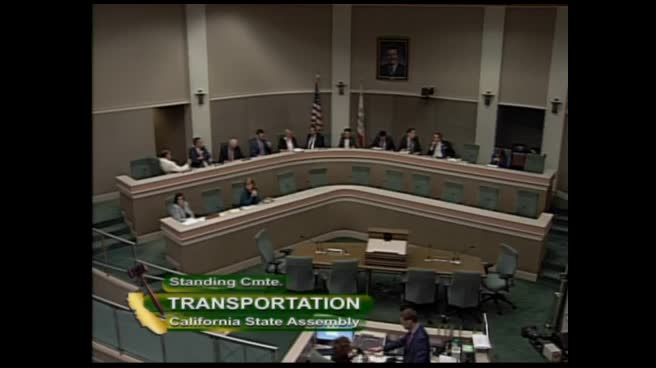
Bill Author




