SB 1453: Statutes of limitations.
- Session Year: 2017-2018
- House: Senate
- Latest Version Date: 2018-09-26
Existing law provides that civil actions can only be commenced within prescribed periods, based on the nature of the action. Existing law prescribes a limitations period of one year for, among other things, an action upon a statute for a forfeiture or penalty to the people of the state. Under existing law, this one-year period is applicable to an action to petition a court to impose a civil penalty for an intentional, knowing, or negligent violation of the Zberg-Nejedly Forest Practice Act of 1973 (FPA) or any rules or regulations of the State Board of Forestry and Fire Protection.
This bill would instead provide that such an action is subject to a 3-year limitations period, if the action is for a violation of specified provisions of the FPA or a specified regulation of the board and is related to the conversion of timberland to nonforestry-related agricultural uses. The bill would provide that the limitations period for this cause of action does not begin until discovery by the Department of Forestry and Fire Protection.
Existing law provides that civil actions can only be commenced within prescribed periods, based on the nature of the action. Existing law prescribes a limitations period of one year for, among other things, an action upon a statute for a forfeiture or penalty to the people of the state. Under existing law, this one-year period is applicable to an action to petition a court to impose a civil penalty for an intentional, knowing, or negligent violation of the Zberg-Nejedly Forest Practice Act of 1973 (FPA) or any rules or regulations of the State Board of Forestry and Fire Protection.
This bill would instead provide that such an action is subject to a 3-year limitations period, if the action is for a violation of specified provisions of the FPA or a specified regulation of the board and is related to the conversion of timberland to nonforestry-related agricultural uses. The bill would provide that the limitations period for this cause of action does not begin until an agency with standing to bring the action discovers the facts constituting the grounds for commencing the action. discovery by the Department of Forestry and Fire Protection.
Existing law provides that civil actions can only be commenced within prescribed periods, based on the nature of the action. Existing law prescribes a limitations period of one year for, among other things, an action upon a statute for a forfeiture or penalty to the people of the state. Under existing law, this one-year period is applicable to an action to petition a court to impose a civil penalty for an intentional, knowing, or negligent violation of the Zberg-Nejedly Forest Practice Act of 1973 (FPA) or any rules or regulations of the State Board of Forestry and Fire Protection.
This bill would instead provide that such an action is subject to a 3-year limitations period, if the action is for a violation of specified provisions of the FPA or a specified regulation of the board and is related to the conversion of timberland to nonforestry-related agricultural uses. The bill would provide that the limitations period for this cause of action does not begin until an agency with standing to bring the action discovers the facts constituting the grounds for commencing the action. The bill would specify that it is intended to apply to conduct that occurred on or after January 1, 2017.
Existing law provides that civil actions can only be commenced within prescribed periods, based on the nature of the action. Existing law prescribes a limitations period of one year for, among other things, an action upon a statute for a forfeiture or penalty to the people of the state. Under existing law, this one-year period is applicable to an action to petition a court to impose a civil penalty for an intentional, knowing, or negligent violation of the Zberg-Nejedly Forest Practice Act of 1973 (FPA) or any rules or regulations of the State Board of Forestry and Fire Protection.
This bill would instead provide that such an action is subject to a three-year 3-year limitations period. period, if the action is for a violation of specified provisions of the FPA or a specified regulation of the board and is related to the conversion of timberland to nonforestry-related agricultural uses. The bill would provide that the limitations period for this cause of action does not begin until an agency with standing to bring the action discovers the facts constituting the grounds for commencing the action. The bill would specify that it is intended to apply to conduct that occurred on or after January 1, 2017.
Existing law provides that civil actions can only be commenced within prescribed periods, based on the nature of the action. Existing law prescribes a limitations period of one year for, among other things, an action upon a statute for a forfeiture or penalty to the people of the state. Under existing law, this one-year period is applicable to an action to petition a court to impose a civil penalty for an intentional, knowing, or negligent violation of the Zberg-Nejedly Forest Practice Act of 1973 or any rules or regulations of the State Board of Forestry and Fire Protection.
This bill would instead provide that such an action is subject to a three-year limitations period. The bill would provide that the limitations period for this cause of action does not begin until an agency with standing to bring the action discovers the facts constituting the grounds for commencing the action. The bill would specify that it is intended to apply to conduct that occurred on or after January 1, 2017.
Within three years:
(a)An action upon a liability created by statute, other than a penalty or forfeiture.
(b)An action for trespass upon or injury to real property.
(c)(1)An action for taking, detaining, or injuring goods or chattels, including an action for the specific recovery of personal property.
(2)The cause of action in the case of theft, as described in Section 484 of the Penal Code, of an article of historical, interpretive, scientific, or artistic significance is not deemed to have accrued until the discovery of the whereabouts of the article by the aggrieved party, his or her agent, or the law enforcement agency that originally investigated the theft.
(3)(A)Notwithstanding paragraphs (1) and (2), an action for the specific recovery of a work of fine art brought against a museum, gallery, auctioneer, or dealer, in the case of an unlawful taking or theft, as described in Section 484 of the Penal Code, of a work of fine art, including a taking or theft by means of fraud or duress, shall be commenced within six years of the actual discovery by the claimant or his or her agent, of both of the following:
(i)The identity and the whereabouts of the work of fine art. In the case where there is a possibility of misidentification of the object of fine art in question, the identity can be satisfied by the identification of facts sufficient to determine that the work of fine art is likely to be the work of fine art that was unlawfully taken or stolen.
(ii)Information or facts that are sufficient to indicate that the claimant has a claim for a possessory interest in the work of fine art that was unlawfully taken or stolen.
(B)This paragraph shall apply to all pending and future actions commenced on or before December 31, 2017, including an action dismissed based on the expiration of statutes of limitation in effect prior to the date of enactment of this statute if the judgment in that action is not yet final or if the time for filing an appeal from a decision on that action has not expired, provided that the action concerns a work of fine art that was taken within 100 years prior to the date of enactment of this statute.
(C)For purposes of this paragraph:
(i)Actual discovery, notwithstanding Section 19 of the Civil Code, does not include constructive knowledge imputed by law.
(ii)Auctioneer means an individual who is engaged in, or who by advertising or otherwise holds himself or herself out as being available to engage in, the calling for, the recognition of, and the acceptance of, offers for the purchase of goods at an auction as defined in subdivision (b) of Section 1812.601 of the Civil Code.
(iii)Dealer means a person who holds a valid sellers permit and who is actively and principally engaged in, or conducting the business of, selling works of fine art.
(iv)Duress means a threat of force, violence, danger, or retribution against an owner of the work of fine art in question, or his or her family member, sufficient to coerce a reasonable person of ordinary susceptibilities to perform an act that otherwise would not have been performed or to acquiesce to an act to which he or she would otherwise not have acquiesced.
(v)Fine art has the same meaning as defined in paragraph (1) of subdivision (d) of Section 982 of the Civil Code.
(vi)Museum or gallery shall include any public or private organization or foundation operating as a museum or gallery.
(4)Section 361 shall not apply to an action brought pursuant to paragraph (3).
(5)A party in an action to which paragraph (3) applies may raise all equitable and legal affirmative defenses and doctrines, including, without limitation, laches and unclean hands.
(d)An action for relief on the ground of fraud or mistake. The cause of action in that case is not deemed to have accrued until the discovery, by the aggrieved party, of the facts constituting the fraud or mistake.
(e)An action upon a bond of a public official except any cause of action based on fraud or embezzlement is not deemed to have accrued until the discovery, by the aggrieved party or his or her agent, of the facts constituting the cause of action upon the bond.
(f)(1)An action against a notary public on his or her bond or in his or her official capacity except that a cause of action based on malfeasance or misfeasance is not deemed to have accrued until discovery, by the aggrieved party or his or her agent, of the facts constituting the cause of action.
(2)Notwithstanding paragraph (1), an action based on malfeasance or misfeasance shall be commenced within one year from discovery, by the aggrieved party or his or her agent, of the facts constituting the cause of action or within three years from the performance of the notarial act giving rise to the action, whichever is later.
(3)Notwithstanding paragraph (1), an action against a notary public on his or her bond or in his or her official capacity shall be commenced within six years.
(g)An action for slander of title to real property.
(h)An action commenced under Section 17536 of the Business and Professions Code. The cause of action in that case shall not be deemed to have accrued until the discovery by the aggrieved party, the Attorney General, the district attorney, the county counsel, the city prosecutor, or the city attorney of the facts constituting grounds for commencing the action.
(i)An action commenced under the Porter-Cologne Water Quality Control Act (Division 7 (commencing with Section 13000) of the Water Code). The cause of action in that case shall not be deemed to have accrued until the discovery by the State Water Resources Control Board or a regional water quality control board of the facts constituting grounds for commencing actions under their jurisdiction.
(j)An action to recover for physical damage to private property under Section 19 of Article I of the California Constitution.
(k)An action commenced under Division 26 (commencing with Section 39000) of the Health and Safety Code. These causes of action shall not be deemed to have accrued until the discovery by the State Air Resources Board or by a district, as defined in Section 39025 of the Health and Safety Code, of the facts constituting grounds for commencing the action under its jurisdiction.
(l)An action commenced under Section 1602, 1615, or 5650.1 of the Fish and Game Code. These causes of action shall not be deemed to have accrued until discovery by the agency bringing the action of the facts constituting the grounds for commencing the action.
(m)An action challenging the validity of the levy upon a parcel of a special tax levied by a local agency on a per parcel basis.
(n)An action commencing under Section 51.7 of the Civil Code.
(o)An action commenced under Section 4601.1 of the Public Resources Code, if the underlying violation is of Section 4571, 4581, or 4621 of the Public Resources Code, or of Section 1103.1 of Title 14 of the California Code of Regulations, and the underlying violation is related to the conversion of timberland to nonforestry-related agricultural uses. These causes of action shall not be deemed to have accrued until discovery by the Department of Forestry and Fire Protection.
Within three years:
(a)An action upon a liability created by statute, other than a penalty or forfeiture.
(b)An action for trespass upon or injury to real property.
(c)(1)An action for taking, detaining, or injuring goods or chattels, including an action for the specific recovery of personal property.
(2)The cause of action in the case of theft, as described in Section 484 of the Penal Code, of an article of historical, interpretive, scientific, or artistic significance is not deemed to have accrued until the discovery of the whereabouts of the article by the aggrieved party, his or her agent, or the law enforcement agency that originally investigated the theft.
(3)(A)Notwithstanding paragraphs (1) and (2), an action for the specific recovery of a work of fine art brought against a museum, gallery, auctioneer, or dealer, in the case of an unlawful taking or theft, as described in Section 484 of the Penal Code, of a work of fine art, including a taking or theft by means of fraud or duress, shall be commenced within six years of the actual discovery by the claimant or his or her agent, of both of the following:
(i)The identity and the whereabouts of the work of fine art. In the case where there is a possibility of misidentification of the object of fine art in question, the identity can be satisfied by the identification of facts sufficient to determine that the work of fine art is likely to be the work of fine art that was unlawfully taken or stolen.
(ii)Information or facts that are sufficient to indicate that the claimant has a claim for a possessory interest in the work of fine art that was unlawfully taken or stolen.
(B)This paragraph shall apply to all pending and future actions commenced on or before December 31, 2017, including an action dismissed based on the expiration of statutes of limitation in effect prior to the date of enactment of this statute if the judgment in that action is not yet final or if the time for filing an appeal from a decision on that action has not expired, provided that the action concerns a work of fine art that was taken within 100 years prior to the date of enactment of this statute.
(C)For purposes of this paragraph:
(i)Actual discovery, notwithstanding Section 19 of the Civil Code, does not include constructive knowledge imputed by law.
(ii)Auctioneer means an individual who is engaged in, or who by advertising or otherwise holds himself or herself out as being available to engage in, the calling for, the recognition of, and the acceptance of, offers for the purchase of goods at an auction as defined in subdivision (b) of Section 1812.601 of the Civil Code.
(iii)Dealer means a person who holds a valid sellers permit and who is actively and principally engaged in, or conducting the business of, selling works of fine art.
(iv)Duress means a threat of force, violence, danger, or retribution against an owner of the work of fine art in question, or his or her family member, sufficient to coerce a reasonable person of ordinary susceptibilities to perform an act that otherwise would not have been performed or to acquiesce to an act to which he or she would otherwise not have acquiesced.
(v)Fine art has the same meaning as defined in paragraph (1) of subdivision (d) of Section 982 of the Civil Code.
(vi)Museum or gallery shall include any public or private organization or foundation operating as a museum or gallery.
(4)Section 361 shall not apply to an action brought pursuant to paragraph (3).
(5)A party in an action to which paragraph (3) applies may raise all equitable and legal affirmative defenses and doctrines, including, without limitation, laches and unclean hands.
(d)An action for relief on the ground of fraud or mistake. The cause of action in that case is not deemed to have accrued until the discovery, by the aggrieved party, of the facts constituting the fraud or mistake.
(e)An action upon a bond of a public official except any cause of action based on fraud or embezzlement is not deemed to have accrued until the discovery, by the aggrieved party or his or her agent, of the facts constituting the cause of action upon the bond.
(f)(1)An action against a notary public on his or her bond or in his or her official capacity except that a cause of action based on malfeasance or misfeasance is not deemed to have accrued until discovery, by the aggrieved party or his or her agent, of the facts constituting the cause of action.
(2)Notwithstanding paragraph (1), an action based on malfeasance or misfeasance shall be commenced within one year from discovery, by the aggrieved party or his or her agent, of the facts constituting the cause of action or within three years from the performance of the notarial act giving rise to the action, whichever is later.
(3)Notwithstanding paragraph (1), an action against a notary public on his or her bond or in his or her official capacity shall be commenced within six years.
(g)An action for slander of title to real property.
(h)An action commenced under Section 17536 of the Business and Professions Code. The cause of action in that case shall not be deemed to have accrued until the discovery by the aggrieved party, the Attorney General, the district attorney, the county counsel, the city prosecutor, or the city attorney of the facts constituting grounds for commencing the action.
(i)An action commenced under the Porter-Cologne Water Quality Control Act (Division 7 (commencing with Section 13000) of the Water Code). The cause of action in that case shall not be deemed to have accrued until the discovery by the State Water Resources Control Board or a regional water quality control board of the facts constituting grounds for commencing actions under their jurisdiction.
(j)An action to recover for physical damage to private property under Section 19 of Article I of the California Constitution.
(k)An action commenced under Division 26 (commencing with Section 39000) of the Health and Safety Code. These causes of action shall not be deemed to have accrued until the discovery by the State Air Resources Board or by a district, as defined in Section 39025 of the Health and Safety Code, of the facts constituting grounds for commencing the action under its jurisdiction.
(l)An action commenced under Section 1602, 1615, or 5650.1 of the Fish and Game Code. These causes of action shall not be deemed to have accrued until discovery by the agency bringing the action of the facts constituting the grounds for commencing the action.
(m)An action challenging the validity of the levy upon a parcel of a special tax levied by a local agency on a per parcel basis.
(n)An action commencing under Section 51.7 of the Civil Code.
(o)An action commenced under Section 4601.1 of the Public Resources Code, if the underlying violation is of Section 4571, 4581, or 4621 of the Public Resources Code, or of Section 1103.1 of Title 14 of the California Code of Regulations, and the underlying violation is related to the conversion of timberland to nonforestry-related agricultural uses. These causes of action shall not be deemed to have accrued until discovery by the agency bringing the action of the facts constituting the grounds for commencing the action. the Department of Forestry and Fire Protection.
Within three years:
(a)An action upon a liability created by statute, other than a penalty or forfeiture.
(b)An action for trespass upon or injury to real property.
(c)(1)An action for taking, detaining, or injuring goods or chattels, including an action for the specific recovery of personal property.
(2)The cause of action in the case of theft, as described in Section 484 of the Penal Code, of an article of historical, interpretive, scientific, or artistic significance is not deemed to have accrued until the discovery of the whereabouts of the article by the aggrieved party, his or her agent, or the law enforcement agency that originally investigated the theft.
(3)(A)Notwithstanding paragraphs (1) and (2), an action for the specific recovery of a work of fine art brought against a museum, gallery, auctioneer, or dealer, in the case of an unlawful taking or theft, as described in Section 484 of the Penal Code, of a work of fine art, including a taking or theft by means of fraud or duress, shall be commenced within six years of the actual discovery by the claimant or his or her agent, of both of the following:
(i)The identity and the whereabouts of the work of fine art. In the case where there is a possibility of misidentification of the object of fine art in question, the identity can be satisfied by the identification of facts sufficient to determine that the work of fine art is likely to be the work of fine art that was unlawfully taken or stolen.
(ii)Information or facts that are sufficient to indicate that the claimant has a claim for a possessory interest in the work of fine art that was unlawfully taken or stolen.
(B)This paragraph shall apply to all pending and future actions commenced on or before December 31, 2017, including an action dismissed based on the expiration of statutes of limitation in effect prior to the date of enactment of this statute if the judgment in that action is not yet final or if the time for filing an appeal from a decision on that action has not expired, provided that the action concerns a work of fine art that was taken within 100 years prior to the date of enactment of this statute.
(C)For purposes of this paragraph:
(i)Actual discovery, notwithstanding Section 19 of the Civil Code, does not include constructive knowledge imputed by law.
(ii)Auctioneer means an individual who is engaged in, or who by advertising or otherwise holds himself or herself out as being available to engage in, the calling for, the recognition of, and the acceptance of, offers for the purchase of goods at an auction as defined in subdivision (b) of Section 1812.601 of the Civil Code.
(iii)Dealer means a person who holds a valid sellers permit and who is actively and principally engaged in, or conducting the business of, selling works of fine art.
(iv)Duress means a threat of force, violence, danger, or retribution against an owner of the work of fine art in question, or his or her family member, sufficient to coerce a reasonable person of ordinary susceptibilities to perform an act that otherwise would not have been performed or to acquiesce to an act to which he or she would otherwise not have acquiesced.
(v)Fine art has the same meaning as defined in paragraph (1) of subdivision (d) of Section 982 of the Civil Code.
(vi)Museum or gallery shall include any public or private organization or foundation operating as a museum or gallery.
(4)Section 361 shall not apply to an action brought pursuant to paragraph (3).
(5)A party in an action to which paragraph (3) applies may raise all equitable and legal affirmative defenses and doctrines, including, without limitation, laches and unclean hands.
(d)An action for relief on the ground of fraud or mistake. The cause of action in that case is not deemed to have accrued until the discovery, by the aggrieved party, of the facts constituting the fraud or mistake.
(e)An action upon a bond of a public official except any cause of action based on fraud or embezzlement is not deemed to have accrued until the discovery, by the aggrieved party or his or her agent, of the facts constituting the cause of action upon the bond.
(f)(1)An action against a notary public on his or her bond or in his or her official capacity except that a cause of action based on malfeasance or misfeasance is not deemed to have accrued until discovery, by the aggrieved party or his or her agent, of the facts constituting the cause of action.
(2)Notwithstanding paragraph (1), an action based on malfeasance or misfeasance shall be commenced within one year from discovery, by the aggrieved party or his or her agent, of the facts constituting the cause of action or within three years from the performance of the notarial act giving rise to the action, whichever is later.
(3)Notwithstanding paragraph (1), an action against a notary public on his or her bond or in his or her official capacity shall be commenced within six years.
(g)An action for slander of title to real property.
(h)An action commenced under Section 17536 of the Business and Professions Code. The cause of action in that case shall not be deemed to have accrued until the discovery by the aggrieved party, the Attorney General, the district attorney, the county counsel, the city prosecutor, or the city attorney of the facts constituting grounds for commencing the action.
(i)An action commenced under the Porter-Cologne Water Quality Control Act (Division 7 (commencing with Section 13000) of the Water Code). The cause of action in that case shall not be deemed to have accrued until the discovery by the State Water Resources Control Board or a regional water quality control board of the facts constituting grounds for commencing actions under their jurisdiction.
(j)An action to recover for physical damage to private property under Section 19 of Article I of the California Constitution.
(k)An action commenced under Division 26 (commencing with Section 39000) of the Health and Safety Code. These causes of action shall not be deemed to have accrued until the discovery by the State Air Resources Board or by a district, as defined in Section 39025 of the Health and Safety Code, of the facts constituting grounds for commencing the action under its jurisdiction.
(l)An action commenced under Section 1602, 1615, or 5650.1 of the Fish and Game Code. These causes of action shall not be deemed to have accrued until discovery by the agency bringing the action of the facts constituting the grounds for commencing the action.
(m)An action challenging the validity of the levy upon a parcel of a special tax levied by a local agency on a per parcel basis.
(n)An action commencing under Section 51.7 of the Civil Code.
(o)An action commenced under Section 4601.1 of the Public Resources Code, if the underlying violation is of Section 4571, 4581, or 4621 of the Public Resources Code, or of Section 1103.1 of Title 14 of the California Code of Regulations, and the underlying violation is related to the conversion of timberland to nonforestry-related agricultural uses. These causes of action shall not be deemed to have accrued until discovery by the agency bringing the action of the facts constituting the grounds for commencing the action. This subdivision applies to conduct that occurred on or after January 1, 2017.
Within three years:
(a)An action upon a liability created by statute, other than a penalty or forfeiture.
(b)An action for trespass upon or injury to real property.
(c)(1)An action for taking, detaining, or injuring goods or chattels, including an action for the specific recovery of personal property.
(2)The cause of action in the case of theft, as described in Section 484 of the Penal Code, of an article of historical, interpretive, scientific, or artistic significance is not deemed to have accrued until the discovery of the whereabouts of the article by the aggrieved party, his or her agent, or the law enforcement agency that originally investigated the theft.
(3)(A)Notwithstanding paragraphs (1) and (2), an action for the specific recovery of a work of fine art brought against a museum, gallery, auctioneer, or dealer, in the case of an unlawful taking or theft, as described in Section 484 of the Penal Code, of a work of fine art, including a taking or theft by means of fraud or duress, shall be commenced within six years of the actual discovery by the claimant or his or her agent, of both of the following:
(i)The identity and the whereabouts of the work of fine art. In the case where there is a possibility of misidentification of the object of fine art in question, the identity can be satisfied by the identification of facts sufficient to determine that the work of fine art is likely to be the work of fine art that was unlawfully taken or stolen.
(ii)Information or facts that are sufficient to indicate that the claimant has a claim for a possessory interest in the work of fine art that was unlawfully taken or stolen.
(B)This paragraph shall apply to all pending and future actions commenced on or before December 31, 2017, including an action dismissed based on the expiration of statutes of limitation in effect prior to the date of enactment of this statute if the judgment in that action is not yet final or if the time for filing an appeal from a decision on that action has not expired, provided that the action concerns a work of fine art that was taken within 100 years prior to the date of enactment of this statute.
(C)For purposes of this paragraph:
(i)Actual discovery, notwithstanding Section 19 of the Civil Code, does not include constructive knowledge imputed by law.
(ii)Auctioneer means an individual who is engaged in, or who by advertising or otherwise holds himself or herself out as being available to engage in, the calling for, the recognition of, and the acceptance of, offers for the purchase of goods at an auction as defined in subdivision (b) of Section 1812.601 of the Civil Code.
(iii)Dealer means a person who holds a valid sellers permit and who is actively and principally engaged in, or conducting the business of, selling works of fine art.
(iv)Duress means a threat of force, violence, danger, or retribution against an owner of the work of fine art in question, or his or her family member, sufficient to coerce a reasonable person of ordinary susceptibilities to perform an act that otherwise would not have been performed or to acquiesce to an act to which he or she would otherwise not have acquiesced.
(v)Fine art has the same meaning as defined in paragraph (1) of subdivision (d) of Section 982 of the Civil Code.
(vi)Museum or gallery shall include any public or private organization or foundation operating as a museum or gallery.
(4)Section 361 shall not apply to an action brought pursuant to paragraph (3).
(5)A party in an action to which paragraph (3) applies may raise all equitable and legal affirmative defenses and doctrines, including, without limitation, laches and unclean hands.
(d)An action for relief on the ground of fraud or mistake. The cause of action in that case is not deemed to have accrued until the discovery, by the aggrieved party, of the facts constituting the fraud or mistake.
(e)An action upon a bond of a public official except any cause of action based on fraud or embezzlement is not deemed to have accrued until the discovery, by the aggrieved party or his or her agent, of the facts constituting the cause of action upon the bond.
(f)(1)An action against a notary public on his or her bond or in his or her official capacity except that a cause of action based on malfeasance or misfeasance is not deemed to have accrued until discovery, by the aggrieved party or his or her agent, of the facts constituting the cause of action.
(2)Notwithstanding paragraph (1), an action based on malfeasance or misfeasance shall be commenced within one year from discovery, by the aggrieved party or his or her agent, of the facts constituting the cause of action or within three years from the performance of the notarial act giving rise to the action, whichever is later.
(3)Notwithstanding paragraph (1), an action against a notary public on his or her bond or in his or her official capacity shall be commenced within six years.
(g)An action for slander of title to real property.
(h)An action commenced under Section 17536 of the Business and Professions Code. The cause of action in that case shall not be deemed to have accrued until the discovery by the aggrieved party, the Attorney General, the district attorney, the county counsel, the city prosecutor, or the city attorney of the facts constituting grounds for commencing the action.
(i)An action commenced under the Porter-Cologne Water Quality Control Act (Division 7 (commencing with Section 13000) of the Water Code). The cause of action in that case shall not be deemed to have accrued until the discovery by the State Water Resources Control Board or a regional water quality control board of the facts constituting grounds for commencing actions under their jurisdiction.
(j)An action to recover for physical damage to private property under Section 19 of Article I of the California Constitution.
(k)An action commenced under Division 26 (commencing with Section 39000) of the Health and Safety Code. These causes of action shall not be deemed to have accrued until the discovery by the State Air Resources Board or by a district, as defined in Section 39025 of the Health and Safety Code, of the facts constituting grounds for commencing the action under its jurisdiction.
(l)An action commenced under Section 1602, 1615, or 5650.1 of the Fish and Game Code. These causes of action shall not be deemed to have accrued until discovery by the agency bringing the action of the facts constituting the grounds for commencing the action.
(m)An action challenging the validity of the levy upon a parcel of a special tax levied by a local agency on a per parcel basis.
(n)An action commencing under Section 51.7 of the Civil Code.
(o)An action commenced under Section 4601.1 of the Public Resources Code. This cause Code, if the underlying violation is of Section 4571, 4581, or 4621 of the Public Resources Code, or of Section 1103.1 of Title 14 of the California Code of Regulations, and the underlying violation is related to the conversion of timberland to nonforestry-related agricultural uses. These causes of action shall not be deemed to have accrued until discovery by the agency bringing the action of the facts constituting the grounds for commencing the action. This subdivision applies to conduct that occurred on or after January 1, 2017.
Within three years:
(a)An action upon a liability created by statute, other than a penalty or forfeiture.
(b)An action for trespass upon or injury to real property.
(c)(1)An action for taking, detaining, or injuring goods or chattels, including actions an action for the specific recovery of personal property.
(2)The cause of action in the case of theft, as described in Section 484 of the Penal Code, of an article of historical, interpretive, scientific, or artistic significance is not deemed to have accrued until the discovery of the whereabouts of the article by the aggrieved party, his or her agent, or the law enforcement agency that originally investigated the theft.
(3)(A)Notwithstanding paragraphs (1) and (2), an action for the specific recovery of a work of fine art brought against a museum, gallery, auctioneer, or dealer, in the case of an unlawful taking or theft, as described in Section 484 of the Penal Code, of a work of fine art, including a taking or theft by means of fraud or duress, shall be commenced within six years of the actual discovery by the claimant or his or her agent, of both of the following:
(i)The identity and the whereabouts of the work of fine art. In the case where there is a possibility of misidentification of the object of fine art in question, the identity can be satisfied by the identification of facts sufficient to determine that the work of fine art is likely to be the work of fine art that was unlawfully taken or stolen.
(ii)Information or facts that are sufficient to indicate that the claimant has a claim for a possessory interest in the work of fine art that was unlawfully taken or stolen.
(B)This paragraph shall apply to all pending and future actions commenced on or before December 31, 2017, including an action dismissed based on the expiration of statutes of limitation in effect prior to the date of enactment of this statute if the judgment in that action is not yet final or if the time for filing an appeal from a decision on that action has not expired, provided that the action concerns a work of fine art that was taken within 100 years prior to the date of enactment of this statute.
(C)For purposes of this paragraph:
(i)Actual discovery, notwithstanding Section 19 of the Civil Code, does not include constructive knowledge imputed by law.
(ii)Auctioneer means an individual who is engaged in, or who by advertising or otherwise holds himself or herself out as being available to engage in, the calling for, the recognition of, and the acceptance of, offers for the purchase of goods at an auction as defined in subdivision (b) of Section 1812.601 of the Civil Code.
(iii)Dealer means a person who holds a valid sellers permit and who is actively and principally engaged in, or conducting the business of, selling works of fine art.
(iv)Duress means a threat of force, violence, danger, or retribution against an owner of the work of fine art in question, or his or her family member, sufficient to coerce a reasonable person of ordinary susceptibilities to perform an act that otherwise would not have been performed or to acquiesce to an act to which he or she would otherwise not have acquiesced.
(v)Fine art has the same meaning as defined in paragraph (1) of subdivision (d) of Section 982 of the Civil Code.
(vi)Museum or gallery shall include any public or private organization or foundation operating as a museum or gallery.
(4)Section 361 shall not apply to an action brought pursuant to paragraph (3).
(5)A party in an action to which paragraph (3) applies may raise all equitable and legal affirmative defenses and doctrines, including, without limitation, laches and unclean hands.
(d)An action for relief on the ground of fraud or mistake. The cause of action in that case is not deemed to have accrued until the discovery, by the aggrieved party, of the facts constituting the fraud or mistake.
(e)An action upon a bond of a public official except any cause of action based on fraud or embezzlement is not deemed to have accrued until the discovery, by the aggrieved party or his or her agent, of the facts constituting the cause of action upon the bond.
(f)(1)An action against a notary public on his or her bond or in his or her official capacity except that a cause of action based on malfeasance or misfeasance is not deemed to have accrued until discovery, by the aggrieved party or his or her agent, of the facts constituting the cause of action.
(2)Notwithstanding paragraph (1), an action based on malfeasance or misfeasance shall be commenced within one year from discovery, by the aggrieved party or his or her agent, of the facts constituting the cause of action or within three years from the performance of the notarial act giving rise to the action, whichever is later.
(3)Notwithstanding paragraph (1), an action against a notary public on his or her bond or in his or her official capacity shall be commenced within six years.
(g)An action for slander of title to real property.
(h)An action commenced under Section 17536 of the Business and Professions Code. The cause of action in that case shall not be deemed to have accrued until the discovery by the aggrieved party, the Attorney General, the district attorney, the county counsel, the city prosecutor, or the city attorney of the facts constituting grounds for commencing the action.
(i)An action commenced under the Porter-Cologne Water Quality Control Act (Division 7 (commencing with Section 13000) of the Water Code). The cause of action in that case shall not be deemed to have accrued until the discovery by the State Water Resources Control Board or a regional water quality control board of the facts constituting grounds for commencing actions under their jurisdiction.
(j)An action to recover for physical damage to private property under Section 19 of Article I of the California Constitution.
(k)An action commenced under Division 26 (commencing with Section 39000) of the Health and Safety Code. These causes of action shall not be deemed to have accrued until the discovery by the State Air Resources Board or by a district, as defined in Section 39025 of the Health and Safety Code, of the facts constituting grounds for commencing the action under its jurisdiction.
(l)An action commenced under Section 1602, 1615, or 5650.1 of the Fish and Game Code. These causes of action shall not be deemed to have accrued until discovery by the agency bringing the action of the facts constituting the grounds for commencing the action.
(m)An action challenging the validity of the levy upon a parcel of a special tax levied by a local agency on a per parcel basis.
(n)An action commencing under Section 51.7 of the Civil Code.
(o)An action commenced under Section 4601.1 of the Public Resources Code. This cause of action shall not be deemed to have accrued until discovery by the agency bringing the action of the facts constituting the grounds for commencing the action. This subdivision applies to conduct that occurred on or after January 1, 2017.
|
Date
|
Status
|
|---|---|
| Sep 26, 2018 | Chaptered by Secretary of State. Chapter 796, Statutes of 2018. |
| Sep 26, 2018 | Approved by the Governor. |
| Aug 28, 2018 | Enrolled and presented to the Governor at 3:30 p.m. |
| Aug 22, 2018 | Assembly amendments concurred in. (Ayes 37. Noes 2.) Ordered to engrossing and enrolling. |
| Aug 21, 2018 | In Senate. Concurrence in Assembly amendments pending. |
| Aug 20, 2018 | Read third time. Passed. Ordered to the Senate. |
| Aug 6, 2018 | Read second time. Ordered to third reading. |
| Jul 5, 2018 | Read second time and amended. Ordered to second reading. |
| Jul 3, 2018 | From committee: Do pass as amended. (Ayes 10. Noes 0.) (July 3). |
| Jun 11, 2018 | Referred to Com. on JUD. |
| May 31, 2018 | In Assembly. Read first time. Held at Desk. |
| May 30, 2018 | Read third time. Passed. (Ayes 31. Noes 4.) Ordered to the Assembly. |
| May 25, 2018 | From committee: Do pass. (Ayes 5. Noes 1.) (May 25). |
| May 23, 2018 | Set for hearing May 25. |
| May 22, 2018 | May 22 hearing: Placed on APPR. suspense file. |
| May 14, 2018 | Set for hearing May 22. |
| May 8, 2018 | Read second time and amended. Re-referred to Com. on APPR. |
| May 7, 2018 | From committee: Do pass as amended and re-refer to Com. on APPR. (Ayes 6. Noes 1.) (May 1). |
| Apr 11, 2018 | From committee with author's amendments. Read second time and amended. Re-referred to Com. on JUD. |
| Apr 10, 2018 | Set for hearing May 1. |
| Mar 8, 2018 | Referred to Coms. on JUD. and APPR. |
| Feb 20, 2018 | From printer. May be acted upon on or after March 22. |
| Feb 16, 2018 | Introduced. Read first time. To Com. on RLS. for assignment. To print. |
|
Date
|
Description
|
Location
|
Votes
|
|
|---|---|---|---|---|
| Aug 22, 2018 | Unfinished Business SB1453 McGuire Concurrence | Senate Floor |
Passed |
|
| Aug 20, 2018 | SB 1453 McGuire Senate Third Reading By WOOD | Assembly Floor |
Passed |
|
| Jul 3, 2018 | Do pass as amended. | Assembly Standing Committee on Judiciary |
Passed |
|
| May 30, 2018 | Senate 3rd Reading SB1453 McGuire | Senate Floor |
Passed |
|
| May 25, 2018 | Do pass | Senate Standing Committee on Appropriations |
Passed |
|
| May 22, 2018 | Placed on suspense file | Senate Standing Committee on Appropriations |
Passed |
|
| May 1, 2018 | Do pass as amended, but first amend, and re-refer to the Committee on [Appropriations] | Senate Standing Committee on Judiciary |
Passed |
This list shows positions taken on this bill by organizations on the date displayed, which is linked to the original source.
Positions by individuals are not included.
|
Organization
|
Position
|
Date
|
|---|---|---|
| California Department of Forestry and Fire Protection | ** Support | Aug 21, 2018 |
| California District Attorneys Association | ** Support | Aug 21, 2018 |
| California Licensed Foresters Assoaciation | * Support | May 1, 2018 |
| California Licensed Foresters Association | * Support | May 22, 2018 |
| California Trout | ** Support | Aug 21, 2018 |
| Civil Justice Association Of California | ** Against | Aug 21, 2018 |
| Defenders Of Wildlife | ** Support | Aug 21, 2018 |
| Forest Landowners Of California | * Support | May 1, 2018 |
| Pacific Forest Trust | ** Support | Aug 21, 2018 |
| Save the Redwoods League | ** Support | Aug 21, 2018 |
| Sierra Club California | ** Support | Aug 21, 2018 |
| The Nature Conservancy | ** Support | Aug 21, 2018 |
| The Wildlands Conservancy | ** Support | Aug 21, 2018 |
| Trout Unlimited | ** Support | Aug 21, 2018 |
Office of Senate Floor Analyses (916) 651-1520 Fax: (916) 327-4478 | SB |
UNFINISHED BUSINESS
Bill No: SB 1453
:
SENATE JUDICIARY COMMITTEE: 6-1, 5/1/18
AYES: Jackson, Moorlach, Hertzberg, Monning, Stern, Wieckowski
NOES: Anderson
SENATE APPROPRIATIONS COMMITTEE: 5-1, 5/25/18
AYES: Lara, Beall, Bradford, Hill, Wiener
NOES: Nielsen
NO VOTE RECORDED: Bates
SENATE FLOOR: 34-4, 5/30/18
AYES: Allen, Atkins, Bates, Beall, Berryhill, Bradford, Cannella, Dodd, Gaines, Galgiani, Glazer, Hernandez, Hertzberg, Hill, Hueso, Jackson, Lara, Leyva, McGuire, Mitchell, Monning, Moorlach, Newman, Nguyen, Pan, Portantino, Roth, Skinner, Stern, Stone, Vidak, Wieckowski, Wiener, Wilk
NOES: Anderson, Fuller, Morrell, Nielsen
NO VOTE RECORDED: De León
ASSEMBLY FLOOR: 79-0, 8/20/18 - See last page for vote
DIGEST:
This bill provides that an action under Section 4601.1 of the Public Resources Code for specified violations of the Z’berg-Nejedly Forest Practice Act of 1973 involving the conversion of timberland to nonforestry-related agricultural uses must be commenced within three years.
Assembly Amendments
provide that the statute of limitations begins to run upon discovery by the Department of Forestry and Fire Protection.
Existing law:
- Prescribes the periods for the commencement of civil actions. (Code Civ. Proc. Sec. 335 et seq.) Civil actions, without exception, can only be commenced within those periods prescribed, after the cause of action shall have accrued, unless where, in special cases, a different limitation is prescribed by statute. (Code Civ. Proc. Sec. 312.)
- Provides, through the Z’berg-Nejedly Forest Practice Act of 1973, that the policy of this state is to encourage prudent and responsible forest resource management calculated to serve the public’s need for timber and other forest products, while giving consideration to the public’s need for watershed protection, fisheries and wildlife, sequestration of carbon dioxide, and recreational opportunities. (Pub. Resources Code, Sec. 4511 et seq.)
- Prohibits a person from engaging in timber operations until that person has obtained a license from the State Board of Forestry and Fire Protection (the Board). (Pub. Resources Code Sec. 4571.)
- Provides that no person shall conduct timber operations unless a timber harvesting plan prepared by a registered professional forester has been submitted for such operations to the Department of Forestry and Fire Protection (CAL FIRE), as specified. Such plan is an additional requirement to the license required above. (Pub. Resources Code Sec. 4581.)
- Requires a person who owns timberlands that are to be devoted to uses other than the growing of timber to file an application for conversion with the Board. The Board prescribes the procedures for the application and collects a fee. “Growing of timber” includes restoration and conservation forest management activities, which may include the removal of commercial species, if necessary to achieve specific forest health and ecological goals, including restoration and conservation, as specified, that are not conducted in conjunction with the cutting or removal of trees or other forest products during the conversion of timberlands for other uses, including, but not limited to, residential or commercial developments, production of other agricultural crops, recreational developments, ski developments, water development projects, and transportation projects. (Pub. Resources Code Sec. 4621.)
- Provides that no timber operations or other conversion activities shall be conducted on Timberland which is proposed to be converted to a use other than the growing of timber unless a conversion permit has been issued and recorded, as specified. No timber operations shall be conducted on Timberland for which a conversion permit has been issued until a Timber Harvesting Plan has been filed and found in conformance. (14 C.C.R. Sec. 1103.1.)
- Provides that, in addition to any other penalty, any person who intentionally, knowingly, or negligently violates the Act, or a rule or regulation adopted pursuant to it, is subject to a civil penalty imposed by a court in an amount not to exceed $10,000 for each violation. Each specific act that results in a violation, including an act that is repeated on separate days, shall be considered a separate violation. The Attorney General or district attorney, upon request, shall petition the superior court to impose, assess, and recover such civil penalties. In determining the appropriate amount, the court shall consider all relevant circumstances, including, but not limited to, persistence, circumstances, extent and gravity of the violation, the length of the time over which the violation occurred, whether any substantial damage caused by the violation is susceptible to corrective action, whether the violation was willful or caused by negligence, and, with respect to the violator, the ability of the violator to pay any fines or penalties, the effect on the ability to continue in business, the corrective action, if any, taken by the violator, whether the violator has any prior history of violations, the degree of culpability, economic savings, if any, resulting from the violation, and such other matters as justice may require. A civil penalty may alternatively be administratively imposed by CAL FIRE for such violations. (Pub. Resources Code Sec. 4601.1.)
- Provides that the Attorney General may, on the Attorney General’s own motion or at the request of the Board, bring an action to enforce compliance with the rules and regulations of the Act. (Pub. Resources Code Sec. 4603.)
This bill provides that an action under Section 4601.1 of the Public Resources Code, if the underlying violation is of Section 4571, 4581, or 4621 of the Public Resources Code, or of Section 1103.1 of Title 14 of the California Code of Regulations, and the underlying violation is related to the conversion of timberland to nonforestry-related agricultural uses, must be commenced within three years. These causes of action are not deemed to have accrued until discovery by CAL FIRE.
Background
The Z’berg-Nejedly Forest Practice Act of 1973 was enacted to carry out the policy of this state to encourage prudent and responsible forest resource management calculated to serve the public’s need for timber and other forest products, while giving consideration to the public’s need for watershed protection, fisheries and wildlife, sequestration of carbon dioxide, and recreational opportunities. (Pub. Resources Code, Sec. 4511 et seq.) The Act, and regulations adopted pursuant to it, in relevant part, provide clear processes for the harvesting of timber or other conversion activities on certain timberlands. CAL FIRE is responsible for much of the enforcement of the Act.
According to data from CAL FIRE’s Forest Practice System and the Civil Penalties Tracking Database, forest practice management traditionally involved approximately 30 percent unpermitted conversion cases or operating without a proper harvest document and 70 percent forest practice cases related to harvest documents. The data shows that between 2011 and 2017 there was a dramatic rise in conversion cases. In 2011, there were 17 such violations resulting in eight conversion cases. These numbers stayed relatively consistent until the passage of the Medical Marijuana Regulation and Safety Act in 2015. In 2017, there were almost 100 violations with 70 cases initiated.
CAL FIRE indicates that cannabis cultivation was the primary intent of many of the unlawful conversions. Given the sharp increase in violations of relevant provisions of the Act and CAL FIRE’s limited resource issues, this bill extends the relevant statute of limitations for pursuing actions based on unlawful conversions to ensure proper enforcement of the Act.
Comments
The Z’berg-Nejedly Forest Practice Act of 1973 governs the lawful uses to which timberlands may be put. In relevant part, it prohibits a person from engaging in timber operations until that person has obtained the appropriate license and has submitted the proper timber harvesting plan. (Pub. Resources Code Secs. 4571, 4581.) A person who owns timberlands that are to be devoted to uses other than the growing of timber is required to file an application for conversion. (Pub. Resources Code Sec. 4621.) Attendant regulations further require that a conversion permit must be secured and recorded, and, if applicable, a timber harvesting plan filed and found in conformance, before timber operations or other conversion activities can be conducted on timberland which is proposed to be converted to a use other than the growing of timber. (14 C.C.R. Sec. 1103.1.)
This bill extends the applicable statute of limitations for claims seeking civil penalties for violations of these provisions. The author argues this bill will enable enforcement entities “to better investigate rogue grows that are unlawfully converting timberland by allowing more time to identify and investigate possible violations, and to work with law enforcement and the local District Attorney’s Office.” The author points to the sharp increase in violations, discussed above, which are specifically connected to illegal conversion of timberland for cannabis cultivation operations.
The author argues that “it is extremely difficult for [CAL FIRE] inspectors to, within just one year, become aware of a potential violation, investigate it, prepare a report, and then refer the matter to a District Attorney or the Attorney General’s Office.”
A statute of limitations is a requirement to commence legal proceedings (either civil or criminal) within a specific period of time. Statutes of limitations are tailored to the cause of action at issue – for example, cases involving injury must be brought within two years from the date of injury, cases relating to written contracts must be brought four years from the date the contract was broken, and, as commonly referenced in the media, there is no statute of limitations for murder. Although it may appear unfair to bar actions after the statute of limitations has elapsed, that limitations period serves important policy goals that help to preserve both the integrity of our legal system and the due process rights of individuals.
For example, one significant reason that a limitations period is necessary in many cases is that evidence may disappear over time – paperwork gets lost, witnesses forget details or pass away, and physical locations that may be critical to a case change over time. Limitations periods also promote finality by encouraging an individual who has been wronged to bring an action sooner rather than later – timely actions arguably ensure that the greatest amount of evidence is available to all parties.
In general, California law requires all civil actions be commenced within applicable statutes of limitations. (Code Civ. Proc. Sec. 312.) Under existing law, the general statute of limitations in California to bring an action for assault, battery, or injury to, or for the death of, an individual caused by the wrongful act or neglect of another, is two years. (Code Civ. Proc. Sec. 335.1)
This bill extends the relevant statute of limitations from one year to three years. Furthermore, the relevant causes of action do not accrue until discovery by the Department of Forestry and Fire Protection, thereby applying the so-called “discovery rule.”
The bill is narrowly targeted to specific violations of the Act involving unlawful conversion of timberland. There is some precedent for such provisions. In Section 338 of the Code of Civil Procedure, where these new provisions are added, a three-year statute of limitations period is applied to three specific violations of the Fish and Game Code. (Code Civ. Proc. Sec. 338(l).) The provision further states: “These causes of action shall not be deemed to have accrued until discovery by the agency bringing the action of the facts constituting the grounds for commencing the action.”
Given the rapidly changing legal landscape for cannabis cultivation, there is some concern that this bill is overly harsh and that there should be parallel efforts to streamline the process for transitioning historic illegal conversions into lawful operations. The author has acknowledged such concerns but indicates that they are “outside the framework of the current bill.”
FISCAL EFFECT: Appropriation: Fiscal Com.: Local:
California Department of Forestry and Fire Protection
California District Attorneys Association
California Trout
Defenders of Wildlife
Pacific Forest Trust
Save the Redwoods League
Sierra Club California
The Nature Conservancy
The Wildlands Conservancy
Trout Unlimited
OPPOSITION: (Verified 8/20/18)
Civil Justice Association of California
ARGUMENTS IN SUPPORT: Save the Redwoods League states: “Currently, the statute of limitations for any violation of the Forest Practice Act is one year, which does not give sufficient time for CAL FIRE to investigate violations, and since the passage of the Medical Marijuana Regulation and Safety Act (MMRSA), there has been a 200% jump in illegal timberland conversion violations. . . . Without SB 1453, CAL FIRE inspectors will continue to be overburdened, clear violations will continue, and the enforcement of the Forest Practice Act will continue to be undermined.”
ARGUMENTS IN OPPOSITION: The Civil Justice Association of California writes: “Statutes of limitations encourage the diligent settling of claims. If claims are resolved soon after the injury occurred, the result is more likely to fair since witnesses and evidence will be fresh. Extending the statute of limitations for filing these claims increases the likelihood that witnesses, and evidence will become unavailable, and the memories will become less reliable.”
ASSEMBLY FLOOR: 79-0, 8/20/18
AYES: Acosta, Aguiar-Curry, Travis Allen, Arambula, Baker, Berman, Bigelow, Bloom, Bonta, Brough, Burke, Caballero, Calderon, Carrillo, Cervantes, Chau, Chávez, Chen, Chiu, Choi, Chu, Cooley, Cooper, Cunningham, Dahle, Daly, Eggman, Flora, Fong, Frazier, Friedman, Gabriel, Gallagher, Cristina Garcia, Eduardo Garcia, Gloria, Gonzalez Fletcher, Gray, Grayson, Harper, Holden, Irwin, Jones-Sawyer, Kalra, Kamlager-Dove, Kiley, Lackey, Levine, Limón, Low, Maienschein, Mathis, Mayes, McCarty, Medina, Melendez, Mullin, Muratsuchi, Nazarian, Obernolte, O'Donnell, Patterson, Quirk, Quirk-Silva, Reyes, Rivas, Rodriguez, Rubio, Salas, Santiago, Steinorth, Mark Stone, Thurmond, Ting, Voepel, Waldron, Weber, Wood, Rendon
NO VOTE RECORDED: Gipson
8/21/18 13:33:08
**** END ****
SENATE THIRD READING
STR Bill Id:SB 1453
Author:(McGuire)
As Amended Ver:July 5, 2018
Majority vote
SENATE VOTE: 34-4
Committee | Votes | Ayes | Noes |
Judiciary | 10-0 | Mark Stone, Cunningham, Chau, Chiu, Holden, Kalra, Kiley, Maienschein, Reyes, Gonzalez Fletcher |
|
SUMMARY: Extends the statute of limitations for specified violations of the Z'Berg-Nejedly Forest Practice Act (Forest Practice Act) from one year from the occurrence of a violation to three years from the discovery of a violation by the Department of Forestry and Fire Protection (CAL FIRE). Specifically, this bill:
- Provides that the statute of limitations for any action seeking civil penalties for a violation of the Forest Practice Act is three years from the discovery of the violation of the following:
- Conducting a timber operation without a valid license;
- Conducting a timber operation without submitting a Timber Harvest Plan to CAL FIRE prepared by a registered professional forester;
- Converting timberland without filing a valid application for conversion with the Board of Forestry and Fire Protection;
- Conducting timber operations to convert timberland without first obtaining an approved Timber Harvest Plan and a recorded application for conversion.
- Provides that the provisions of 1), above, only apply when the underlying violation stems from a conversion of timberland to non-timber agricultural uses.
- Provides that the statute of limitations provided in 1), above, begins to accrue upon discovery of the violation by CAL FIRE.
EXISTING LAW:
- Finds and declares that the forest resources and timberlands of the state are among the most valuable of the natural resources of the state and that there is great concern throughout the state relating to their utilization, restoration, and protection. (Public Resources Code Section 4512(a).)
- Establishes the Board of Forestry and Fire Protection consisting of nine members appointed by the Governor, subject to confirmation by the California State Senate. (Public Resources Code Section 730.)
- Establishes CAL FIRE in the Natural Resources Agency to be overseen by an executive officer known as the Director of Forestry and Fire Protection. (Public Resources Code Section 701.)
- Establishes the Forest Practice Act and declares the policy of the State of California is to encourage prudent and responsible forest resource management calculated to serve the public's need for timber and other forest products, while giving consideration to the public's need for watershed protection, fisheries and wildlife, sequestration of carbon dioxide, and recreational opportunities. (Public Resources Code Section 4511 et seq.)
- Authorizes the Director of Forestry and Fire Protection to ensure that CAL FIRE possesses an adequate number of employees who, by reason of their education or professional qualifications, are equipped to perform the duties required under the Forest Practice Act, including, but not limited to, the review of timber harvest plans and performing the necessary inspections of timber operations. (Public Resources Code Section 709.)
- Defines "Timber Operations" as the cutting or removal, or both, of timber or other solid wood forest products, including Christmas trees, from timberlands for commercial purposes, together with all the incidental work, including, but not limited to, construction and maintenance of roads, fuelbreaks, firebreaks, stream crossings, landings, skid trails, and beds for the falling of trees, fire hazard abatement, and site preparation that involves disturbance of soil or burning of vegetation following timber harvest activities, but excluding preparatory work such as treemarking, surveying, or roadflagging. (Public Resources Code Section 4527(a)(1).)
- Provides that no person shall engage in timber operations until that person has obtained a license from the Board of Forestry and Fire Protection. (Public Resources Code Section 4571.)
- Establishes the Professional Foresters Law and defines a "professional forester" as a person who, by reason of his or her knowledge of the natural sciences, mathematics, and the principles of forestry, acquired by forestry education and experience, performs services, including, but not limited to, consultation, investigation, evaluation, planning, or responsible supervision of forestry activities when those professional services require the application of forestry principles and techniques. (Public Resources Code Section 752.)
- Requires applicants for the "professional forester" designation to submit an application to the Board of Forestry and Fire Protection and tasks the Board of Forestry and Fire Protection with ensuring that all licensed professional foresters can demonstrate such degree of experience and such general knowledge of the profession of forestry as the board deems necessary for the protection of the public. (Public Resources Code Sections 767, 768.)
- Provides that no person shall conduct timber operations, unless a timber harvest plan prepared by a registered professional forester has been submitted for such operations to the Department of Forestry and Fire Protection. (Public Resources Code Section 4581.)
- Provides that a person who owns timberlands that are to be devoted to uses other than the growing of timber shall file an application for conversion with the board. Provides that the Board of Forestry and Fire Protection shall, by regulation, prescribe the procedures for, and the form and content of, the application. An application for a timberland conversion permit shall be accompanied by an application fee, payable to the department, in an amount determined by the Board of Forestry and Fire Protection. (Public Resources Code Section 4621(a).)
- Provides, generally, that no timber operations or other conversion activities shall be conducted on timberland without a conversion permit and approved Timber Harvest Plan. (14 California Code of Regulations. Section 1103.1.)
- Provides that in addition to any other penalty, any person who intentionally, knowingly, or negligently violates the Forest Practice Act or a rule or regulation adopted by the Board of Forestry and Fire Protection pursuant to that Act is subject to a civil penalty imposed by a court in an amount not to exceed ten thousand dollars ($10,000) for each violation. Provides that damage that occurs over multiple days that results from a single action shall not be considered a continuing violation. Provides that each specific act that results in a violation the Forest Practice Act or a rule or regulation adopted pursuant to that Act, including an act that is repeated on separate days, shall be considered a separate violation. (Public Resources Code Section 4601.1(a).)
- Provides that the Attorney General or district attorney, upon request of the Director of CAL FIRE, shall petition the superior court to impose, assess, and recover a civil penalty authorized by 13), above. Provides that the court shall consider all relevant circumstances, including, but not limited to, persistence, circumstances, the extent and gravity of the violation, the length of the time over which the violation occurred, whether any substantial damage caused by the violation is susceptible to corrective action, whether the violation was willful or caused by negligence, and, with respect to the violator, the ability of the violator to pay any fines or penalties, the effect on their ability to continue in business, the corrective action, if any, taken by the violator, whether the violator has any prior history of violations, the degree of culpability, economic savings, if any, resulting from the violation, and such other matters as justice may require. (Public Resources Code Section 4601.1(b).)
- Provides that the Attorney General may, on his or her own motion or at the request of the board, bring an action to enforce compliance with the rules and regulations of the board and this chapter. (Public Resources Code Section 4603.)
- Provides that civil actions, without exception, can only be commenced within those periods prescribed, after the cause of action shall have accrued, unless where, in special cases, a different limitation is prescribed by statute. (Code of Civil Procedure Section 312.)
- Provides a three year statute of limitation for the following:
- An action upon a liability created by statute, other than a penalty or forfeiture;
- An action for trespass upon or injury to real property;
- An action for taking, detaining, or injuring goods or chattels, including actions for the specific recovery of personal property;
- An action for relief on the ground of fraud or mistake;
- An action upon a bond of a public official except any cause of action based on fraud or embezzlement;
- An action against a notary public on his or her bond or in his or her official capacity except that a cause of action based on malfeasance or misfeasance;
- An action for slander of title to real property;
- An action commenced under the Porter-Cologne Water Quality Control Act;
- An action for a violation of false advertising law;
- An action to recover for physical damage to private property via inverse condemnation;
- An action related to air quality standards filed on behalf of an air board;
- Specific actions filed under the Fish and Game Code;
- An action regarding a levy on a parcel of a special tax levied by a local agency on a per parcel basis; and
- An action to enforce the Ralph Civil Rights Act of 1976. (Code of Civil Procedure Section 338.)
FISCAL EFFECT: As currently in print this bill is keyed non-fiscal.
COMMENTS: To combat growing rates of unlawful conversion of California's timberlands, this bill would extend the statute of limitations imposed on CAL FIRE for bringing an action seeking civil penalties for specified violations of the Forest Practice Act.
Existing law requires any person seeking to clear timber to submit a Timber Harvest Plan to CAL FIRE. A Timber Harvest Plan is the environmental review document submitted by landowners detailing what trees will be cut, how the timber will be harvested, and the steps that will be taken to prevent damage to the environment. Failing to properly conduct a timber harvest plan increases the risk of environmental harms, including erosion and associated water quality issues, slope instability resulting in potential landslides, riparian habitat destruction, and increased fire risk. Accordingly, in addition to CAL FIRE, Timber Harvest Plans are frequently reviewed by the State Water Quality Control Board, the California Geology Survey, and the Department of Fish and Wildlife.
Any operation to remove timber from state regulated lands that is not conducted by a licensed timber operator pursuant to a valid Timber Harvest Plan is a violation of the Forest Practice Act and subject to civil penalties of up to $10,000. Additionally, due to existing tax and land use laws, any party seeking to convert timberlands into non-timber use must seek a permit from the Board of Forestry and Fire Protection and pay associated fees. A failure to obtain a conversion permit is also subject to civil penalty.
The author notes that since the passage of the bills establishing the Medical Marijuana Safety and Regulation Act, and in particular AB 243 (Wood, Chapter 688, Statutes of 2015), regarding indoor and outdoor cultivation, CAL FIRE has seen a growing number of Forest Practice Act violations whereby a party illegal converts forest lands into cannabis cultivation. According to CAL FIRE's Forest Practice System and Civil Penalties Tracking Database, since 2015 the annual number of unlawful conversions of timberland has increased from 30 conversions to 99 in 2017. Over that same time period the number of conversion cases initiated increased from 12 to 70. The 70 initiated actions in 2017 represented 42% of all enforcement actions by CAL FIRE since 2011.
Unlawful cannabis cultivation causes significant environmental harm. According to the State Water Resources Control Board, unlawful conversion of timberland for cannabis cultivation releases carbon into the atmosphere, increases contamination to local waterways from runoff of soil and mulch, fertilizers, pesticides, and other chemicals, and destroys riparian habitats. (Environmental Harm from Cannabis Cultivation, State Water Resources Control Board- Cannabis Cultivation Unit, available at: https://www.waterboards.ca.gov/water_issues/programs/enforcement/cannabis_enforcement.html#harm.)
CAL FIRE additionally notes that due to the remote location of many illegal cannabis cultivation sites, it takes months to years after a timberland site is converted to discover the illegal conversion and take action. However, the existing statute of limitations regarding unlawful conversions of timberland is one year from the date of the illegal act, leaving the Department with little time to discover a violation and build an enforcement case.
Seeking to deter illegal conversion of timberland for cannabis cultivation, and provide CAL FIRE the time necessary to discover and take action against unlawful conversion, as proposed to be amended, this bill provides a three year statute of limitations for violations of the Forest Practice Act in certain circumstances. This bill would apply the extended statute to the existing laws that prohibit engaging in timber operations without a valid license and outside the scope of an approved Timber Harvest Plan, as well the statute and regulations regarding illegally converting timber land without a conversion permit, or conducting timber operations in furtherance of such a conversion. This bill would limit the applicability of the extended statute of limitations to cases involving an illegal conversion to non-timber related agriculture. Finally, and most helpful to stemming the growth of illegal timber conversions into cannabis grows, this bill provides that a cause of action for illegal conversion does not accrue until the violation is discovered by CAL FIRE.
Should this bill pass, CAL FIRE would not be unique among state agencies subject to a three year statute of limitations for filing enforcement actions. Within the Code of Civil Procedure Section 338 that this bill proposes to amend, the Air Resources Board, Department of Fish and Wildlife, and State Water Resources Board all possess program-specific enforcement statutes of limitations. This bill is also not unique in adopting an "upon discovery" standard for the accrual of the cause of action, as all of the aforementioned agencies utilize this standard in association with their enforcement programs. These "upon discovery" standards, as applied to state enforcement programs, has been upheld by California appellate courts. (See. The People ex rel. State Air Resources Board v. Wilmshurst (1999) 66 Cal.App.4th 1332.)
Analysis Prepared by: Nicholas Liedtke / JUD. / (916) 319-2334 FN: 0003724
Date of Hearing: July 3, 2018
ASSEMBLY COMMITTEE ON JUDICIARY
Mark Stone, Chair
SBPCA Bill Id:SB 1453
Author:(McGuire) – As Amended Ver:May 8, 2018
As Proposed to be Amended
SENATE VOTE: 34-4
SUBJECT: Statute of limitations: Forest Practice Act Violations
KEY ISSUE: SHOULD THE STATUTE OF LIMITATIONS FOR SPECIFIED VIOLATIONS OF THE Z’BERG-NEJEDLY FOREST PRACTICE ACT OF 1973 BE EXTENDED FROM ONE YEAR FROM THE COMMISSION OF A VIOLATION, AS PROVIDED UNDER CURRENT LAW, TO THREE YEARS FROM THE DISCOVERY OF A VIOLATION?
SYNOPSIS
To combat the growing problems posed by the illegal conversion of timberlands for cannabis cultivation, this bill would extend the statute of limitations for certain violations of the Z’Berg-Nejedly Forest Practice Act from one year after the violation to three years after discovery of the violation. This bill would apply the extended statute of limitations to cases involving the unlawful conversion of timberland if the underlying violation results in a conversion of land to non-timber agricultural uses. The bill, as proposed to be amended, would provide that under the new statute of limitations, an action accrues upon the discovery of the violation by the Department of Forestry and Fire Protection and require the action to commence within three years of that date.
This bill is supported by a coalition of environmental and conservation organizations, the California District Attorneys Association, and, notably, the Department of Forestry and Fire Protection. The supporters contend that the additional time is critical to discover, investigate, develop evidence, and file legal actions that often involve remote locations and difficult to discover violations of law. This bill is opposed by the Civil Justice Association of California on the grounds that the bill creates an “upon discovery” standard for the statute of limitations, a provision they believe creates a nearly endless opportunity for litigation. This bill received bi-partisan support in the Senate and was approved by a 34-to- 4 vote.
SUMMARY: Extends the statute of limitations for specified violations of the Z’Berg-Nejedly Forest Practice Act (Forest Practice Act) from one year from the occurrence of a violation to three years from the discovery of a violation by the Department of Forestry and Fire Protection (CAL FIRE). Specifically, this bill:
- Provides that the statute of limitations for any action seeking civil penalties for a violation of the Forest Practice Act is three years from the discovery of the violation of the following:
- Conducting a timber operation without a valid license;
- Conducting a timber operation without submitting a Timber Harvest Plan to CAL FIRE prepared by a registered professional forester;
- Converting timberland without filing a valid application for conversion with the Board of Forestry and Fire Protection;
- Conducting timber operations to convert timberland without first obtaining an approved Timber Harvest Plan and a recorded application for conversion.
- Provides that the provisions of 1), above, only apply when the underlying violation stems from a conversion of timberland to non-timber agricultural uses.
- Provides that the statute of limitations provided in 1), above, begins to accrue upon discovery of the violation by CAL FIRE.
EXISTING LAW:
- Finds and declares that the forest resources and timberlands of the state are among the most valuable of the natural resources of the state and that there is great concern throughout the state relating to their utilization, restoration, and protection. (Public Resources Code Section 4512 (a).)
- Establishes the Board of Forestry and Fire Protection consisting of nine members appointed by the Governor, subject to confirmation by the California State Senate. (Public Resources Code Section 730.)
- Establishes CAL FIRE in the Natural Resources Agency to be overseen by an executive officer known as the Director of Forestry and Fire Protection. (Public Resources Code Section 701.)
- Establishes the Forest Practice Act and declares the policy of the State of California is to encourage prudent and responsible forest resource management calculated to serve the public’s need for timber and other forest products, while giving consideration to the public’s need for watershed protection, fisheries and wildlife, sequestration of carbon dioxide, and recreational opportunities. (Public Resources Code Section 4511 et seq.)
- Authorizes the Director of Forestry and Fire Protection to ensure that CAL FIRE possesses an adequate number of employees who, by reason of their education or professional qualifications, are equipped to perform the duties required under the Forest Practice Act, including, but not limited to, the review of timber harvest plans and performing the necessary inspections of timber operations. (Public Resources Code Section 709.)
- Defines “Timber Operations” as the cutting or removal, or both, of timber or other solid wood forest products, including Christmas trees, from timberlands for commercial purposes, together with all the incidental work, including, but not limited to, construction and maintenance of roads, fuelbreaks, firebreaks, stream crossings, landings, skid trails, and beds for the falling of trees, fire hazard abatement, and site preparation that involves disturbance of soil or burning of vegetation following timber harvest activities, but excluding preparatory work such as treemarking, surveying, or roadflagging. (Public Resources Code Section 4527 (a)(1).)
- Provides that no person shall engage in timber operations until that person has obtained a license from the Board of Forestry and Fire Protection. (Public Resources Code Section 4571.)
- Establishes the Professional Foresters Law and defines a “professional forester” as a person who, by reason of his or her knowledge of the natural sciences, mathematics, and the principles of forestry, acquired by forestry education and experience, performs services, including, but not limited to, consultation, investigation, evaluation, planning, or responsible supervision of forestry activities when those professional services require the application of forestry principles and techniques. (Public Resources Code Section 752.)
- Requires applicants for the “professional forester” designation to submit an application to the Board of Forestry and Fire Protection and tasks the Board of Forestry and Fire Protection with ensuring that all licensed professional foresters can demonstrate such degree of experience and such general knowledge of the profession of forestry as the board deems necessary for the protection of the public. (Public Resources Code Sections 767, 768.)
- Provides that no person shall conduct timber operations, unless a timber harvest plan prepared by a registered professional forester has been submitted for such operations to the Department of Forestry and Fire Protection. (Public Resources Code Section 4581.)
- Provides that a person who owns timberlands that are to be devoted to uses other than the growing of timber shall file an application for conversion with the board. Provides that the Board of Forestry and Fire Protection shall, by regulation, prescribe the procedures for, and the form and content of, the application. An application for a timberland conversion permit shall be accompanied by an application fee, payable to the department, in an amount determined by the Board of Forestry and Fire Protection. (Public Resources Code Section 4621 (a).)
- Provides, generally, that no timber operations or other conversion activities shall be conducted on timberland without a conversion permit and approved Timber Harvest Plan. (14 C.C.R. Section 1103.1.)
- Provides that in addition to any other penalty, any person who intentionally, knowingly, or negligently violates the Forest Practice Act or a rule or regulation adopted by the Board of Forestry and Fire Protection pursuant to that Act is subject to a civil penalty imposed by a court in an amount not to exceed ten thousand dollars ($10,000) for each violation. Provides that damage that occurs over multiple days that results from a single action shall not be considered a continuing violation. Provides that each specific act that results in a violation the Forest Practice Act or a rule or regulation adopted pursuant to that Act, including an act that is repeated on separate days, shall be considered a separate violation. (Public Resources Code Section 4601.1 (a).)
- Provides that the Attorney General or district attorney, upon request of the Director of CAL FIRE, shall petition the superior court to impose, assess, and recover a civil penalty authorized by 13), above. Provides that the court shall consider all relevant circumstances, including, but not limited to, persistence, circumstances, the extent and gravity of the violation, the length of the time over which the violation occurred, whether any substantial damage caused by the violation is susceptible to corrective action, whether the violation was willful or caused by negligence, and, with respect to the violator, the ability of the violator to pay any fines or penalties, the effect on their ability to continue in business, the corrective action, if any, taken by the violator, whether the violator has any prior history of violations, the degree of culpability, economic savings, if any, resulting from the violation, and such other matters as justice may require. (Public Resources Code Section 4601.1 (b).)
- Provides that the Attorney General may, on his or her own motion or at the request of the board, bring an action to enforce compliance with the rules and regulations of the board and this chapter. (Public Resources Code Section 4603.)
- Provides that civil actions, without exception, can only be commenced within those periods prescribed, after the cause of action shall have accrued, unless where, in special cases, a different limitation is prescribed by statute. (Code of Civil Procedure Section 312.)
- Provides a three year statute of limitation for the following:
- An action upon a liability created by statute, other than a penalty or forfeiture;
- An action for trespass upon or injury to real property;
- An action for taking, detaining, or injuring goods or chattels, including actions for the specific recovery of personal property;
- An action for relief on the ground of fraud or mistake;
- An action upon a bond of a public official except any cause of action based on fraud or embezzlement;
- An action against a notary public on his or her bond or in his or her official capacity except that a cause of action based on malfeasance or misfeasance;
- An action for slander of title to real property;
- An action commenced under the Porter-Cologne Water Quality Control Act;
- An action for a violation of false advertising law;
- An action to recover for physical damage to private property via inverse condemnation;
- An action related to air quality standards filed on behalf of an air board;
- Specific actions filed under the Fish and Game Code;
- An action regarding a levy on a parcel of a special tax levied by a local agency on a per parcel basis; and
- An action to enforce the Ralph Civil Rights Act of 1976. (Code of Civil Procedure Section 338.)
FISCAL EFFECT: As currently in print this bill is keyed non-fiscal.
COMMENTS: To combat growing rates of unlawful conversion of California’s timberlands, this bill would extend the statute of limitations imposed on CAL FIRE for bringing an action seeking civil penalties for specified violations of the Forest Practice Act.
CAL FIRE’s role in managing California’s forests. While known today as California’s state wildland firefighting agency, CAL FIRE traces its origins to managing California’s forests. Since the late 1800s, the Board of Forestry has been authorized to investigate, collect, and disseminate information about forestry. Early board members were deemed peace officers under California law and tasked with enforcing timber rules across the state. As California’s timber industry matured, and the state’s environmental consciousness grew, California enacted the Forest Practice Act in 1973 and tasked the now-Board of Forestry and Fire Protection, as well as CAL FIRE, with licensing timber operators, registering professional foresters, and ensuring that timberlands are not cut without approval from the state.
Existing law requires any person seeking to clear timber to submit a Timber Harvest Plan to CAL FIRE. A Timber Harvest Plan is the environmental review document submitted by landowners detailing what trees will be cut, how the timber will be harvested, and the steps that will be taken to prevent damage to the environment. Failing to properly conduct a timber harvest plan increases the risk of environmental harms, including erosion and associated water quality issues, slope instability resulting in potential landslides, riparian habitat destruction, and increased fire risk. Accordingly, in addition to CAL FIRE, Timber Harvest Plans are frequently reviewed by the State Water Quality Control Board, the California Geology Survey, and the Department of Fish and Wildlife.
Any operation to remove timber from state regulated lands that is not conducted by a licensed timber operator pursuant to a valid Timber Harvest Plan is a violation of the Forest Practice Act and subject to civil penalties of up to $10,000. Additionally, due to existing tax and land use laws, any party seeking to convert timberlands into non-timber use must seek a permit from the Board of Forestry and Fire Protection and pay associated fees. A failure to obtain a conversion permit is also subject to civil penalty. Nonetheless, parties seeking to avoid compliance with California’s environmental laws and timber harvest review process, parties seeking to avoid paying land conversion fees, and those seeking to cut timber and conduct illegal operations on the site frequently attempt to avoid complying with the Forest Practices Act.
Illegal cannabis operations are a leading cause of illegal timber harvests and violations of the Forest Practice Act. The supporters of this bill note that since the passage of the bills establishing the Medical Marijuana Safety and Regulation Act, and in particular AB 243 (Wood, Ch. 688, Stats. 2015), regarding indoor and outdoor cultivation, CAL FIRE has seen a growing number of Forest Practice Act violations whereby a party illegal converts forest lands into cannabis cultivation. According to CAL FIRE’s Forest Practice System and Civil Penalties Tracking Database, since 2015 the annual number of unlawful conversions of timberland has increased from 30 conversions to 99 in 2017. Over that same time period the number of conversion cases initiated increased from 12 to 70. The 70 initiated actions in 2017 represented 42 percent of all enforcement actions by CAL FIRE since 2011.
Unlawful cannabis cultivation causes significant environmental harm. According to the State Water Resources Control Board, unlawful conversion of timberland for cannabis cultivation releases carbon into the atmosphere, increases contamination to local waterways from runoff of soil and mulch, fertilizers, pesticides, and other chemicals, and destroys riparian habitats. (Environmental Harm from Cannabis Cultivation, State Water Resources Control Board- Cannabis Cultivation Unit, available at: https://www.waterboards.ca.gov/water_issues/programs/enforcement/cannabis_enforcement.html#harm.)
CAL FIRE additionally notes that due to the remote location of many illegal cannabis cultivation sites, it takes months to years after a timberland site is converted to discover the illegal conversion and take action. However, the existing statute of limitations regarding unlawful conversions of timberland is one year from the date of the illegal act, leaving the Department with little time to discover a violation and build an enforcement case.
This bill. Seeking to deter illegal conversion of timberland for cannabis cultivation, and provide CAL FIRE the time necessary to discover and take action against unlawful conversion, as proposed to be amended, this bill provides a three year statute of limitations for violations of the Forest Practice Act in certain circumstances. This bill would apply the extended statute to the existing laws that prohibit engaging in timber operations without a valid license and outside the scope of an approved Timber Harvest Plan, as well the statute and regulations regarding illegally converting timber land without a conversion permit, or conducting timber operations in furtherance of such a conversion. This bill would limit the applicability of the extended statute of limitations to cases involving an illegal conversion to non-timber related agriculture. Finally, and most helpful to stemming the growth of illegal timber conversions into cannabis grows, this bill provides that a cause of action for illegal conversion does not accrue until the violation is discovered by CAL FIRE.
Author’s statement. The author notes that illegal timberland conversion is problematic in rural regions of the state with significant cannabis operations and forested areas, including the North Coast of California. In support of this measure, the author states:
Illegal timberland conversion violations have jumped over 200 percent since the passage of the Medical Marijuana Regulation and Safety Act in 2015. Over the last 20 years- tens of thousands of acres of California forestland have been illegally converted to illegal cannabis grows. This reprehensible act has polluted pristine watersheds, threatened drinking water supplies, killed countless wildlife, and is pushing the rare bear-like mammal, the Fisher, to the brink of extinction due to the illegal rodenticides used at several grow sites.
In order for CAL FIRE to thoroughly investigate rogue cannabis grows, SB 1463 extends the statute of limitations for illegal conversions from one to three tears. This bill also ensures that the action accrues upon discovery of the violation versus when the conversion takes place, a critical change that will assist in prosecuting these offenses.
Additional time needed to investigate remote cannabis grows. The author and CAL FIRE suggest that due to the remoteness of many of the illegal cannabis grows, discovering an illegal forest conversion and building an enforcement case within one year of the act of converting the land is nearly impossible. CAL FIRE staff is struggling to keep up with its increased caseload as well as the changing nature of the violations. Data from CAL FIRE suggests that, historically, nearly 70 percent of all enforcement actions related to the Forest Practice Act were related to documentation issues and other technical violations. As illegal cannabis grows begin to dominate CAL FIRE’s caseload, enforcement actions now require more field work and overall time, as developing illegal conversion cases require greater effort in order to build evidence including determining the date of violations, parties involved, and scope of the violation. Accordingly, this bill would provide the additional time necessary for CAL FIRE to investigate and file legal action without violating the statute of limitations.
Three-year statutes of limitations are not unusual in state regulatory enforcement cases. Should this bill pass, CAL FIRE would not be unique among state agencies subject to a three year statute of limitations for filing enforcement actions. Within the Code of Civil Procedure Section 338 that this bill proposes to amend, the Air Resources Board, Department of Fish and Wildlife, and State Water Resources Board all possess program-specific enforcement statutes of limitations. This bill is also not unique in adopting an “upon discovery” standard for the accrual of the cause of action, as all of the aforementioned agencies utilize this standard in association with their enforcement programs.
In opposition to the measure, the California Civil Justice Association contends that this bill adopts a nearly limitless timeframe to file illegal conversion claims. They highlight the California Supreme Court’s own statement regarding need for statutes of limitation that holds, “the purpose of any limitations statute is to require diligent prosecution of known claims thereby providing necessary finality and predictability in legal affairs and ensuring that claims will be resolved while the evidence bearing on the issues is reasonably available and fresh.” (Kaiser Foundation Hospitals v. Workers’ Comp. Appeals Bd. (1985) 39 Cal.3d 57.) However, as the court notes, statutes of limitations are helpful when evidence is available and fresh. As applied to violations of the law that occur in remote, and at times difficult to access, areas of the state, such evidence may not be immediately available within a one-year statute of limitations. Furthermore, the “upon discovery” standard, as applied to state enforcement programs, has been upheld by California appellate courts. (See. The People ex rel. State Air Resources Board v. Wilmshurst (1999) 66 Cal.App.4th 1332.)
Proposed amendments clarify this bill applies upon discovery of violations by CAL FIRE. As currently in print, the three year statute of limitations does not accrue until “discovery by the agency bringing the action of the facts constituting the grounds for commencing the action.” Given that most legal actions to prosecute unlawful conversion cases are filed by a local district attorney or the Attorney General after an investigation by CAL FIRE, the existing language of the bill is somewhat unclear as to which agency’s “discovery” of the illegal conversion would trigger the statute of limitations. The author has indicated to this Committee that this bill is intended to apply to CAL FIRE’s discovery of an unlawful conversion. Proposed amendments seek to clarify this point. Accordingly, as proposed to be amended, the new subdivision (o) of Section 338 of the Code of Civil Procedure would read:
(o) An action commenced under Section 4601.1 of the Public Resources Code, if the underlying violation is of Section 4571, 4581, or 4621 of the Public Resources Code, or of Section 1103.1 of Title 14 of the California Code of Regulations, and the underlying violation is related to the conversion of timberland to nonforestry-related agricultural uses. These causes of action shall not be deemed to have accrued until discovery by the Department of Forestry and Fire Protection. the agency bringing the action of the facts constituting the grounds for commencing the action.
This bill does not apply to all Forest Practice Act violations. The author is clearly seeking to improve enforcement against illegal cannabis operations that damage timberlands. Accordingly, this bill is limited to enforcing violations in which the underlying issue is an illegal conversion of land to non-timber related agricultural uses. The narrow scope of this bill, however, presents two challenges. Although similar statutes of limitations provisions have been narrowly focused on specific acts, this bill would likely require any person litigating an enforcement case to prove additional elements, specifically that a party committed a violation and that the violation was specifically related to an illegal conversion for non-timber agriculture. Proving the additional legal elements may make substantiating a violation more difficult in these cases than if the new timelines were applied to all Forest Practice Act violations.
Additionally, illegal conversions do not only occur when land is converted for cannabis cultivation or other agricultural uses. Land can be illegally converted for residential and commercial development, rural roads, and other non-timber uses. Additionally, the civil penalty provisions that would be used to pursue the cannabis growers are also used in the event of all intentional, knowing, or negligent violations of the Forest Practice Act. All of the above-mentioned violations may have significant environmental impacts or pose risks for increased fire danger to rural communities. Accordingly, as this bill progresses, the author may wish to consider broadening the applicability of the extended statute of limitations to give CAL FIRE additional tools to carry out all of its legal authorities in order to better protect the environment and California residents.
ARGUMENTS IN SUPPORT: This bill is supported by a coalition of environmental and land conservation organizations, law enforcement, and CAL FIRE. In support CAL FIRE states:
CAL FIRE has faced a sharp increase of Forest Practice Act violations resulting from illegal conversion of timberland for cannabis cultivation operations. Currently, the statute of limitation or cause of action for a violation of the Forest Practice Act is set at one year. Given the current statute of limitation, it is very difficult for CAL FIRE inspectors to discovery a potential violation, investigate it, prepare a report, and refer the matter to a District Attorney or the Attorney General’s office to file a civil action in time.
SB 1453 would enhance CAL FIRE’s ability to enforce the Forest Practice Act by increasing the statute of limitation. The increased length of time in which a violation may be discovered and pursued civilly will allow action to be taken against persons violating the Forest Practice Act, and may deter such violations in the future.
ARGUMENTS IN OPPOSITION: The California Civil Justice Association opposes this measure contending that it creates a nearly unlimited period of time to bring a lawsuit. They suggest:
Statutes of limitations encourage the diligent settling of claims. If claims are resolved soon after the injury occurred, the result is more likely to be fair since witnesses and evidence will be fresh. Extending the statute of limitations for filing these claims increases the likelihood that witnesses, and evidence will become unavailable, and the memories will become less reliable.
REGISTERED SUPPORT / OPPOSITION:
Support
California Department of Forestry and Fire Protection (CAL FIRE)
California District Attorneys Association
California Trout
Defenders of Wildlife
Nature Conservancy, The
Pacific Forest Trust
Save the Redwoods
Sierra Club California
Trout Unlimited
Wildlands Conservancy, The
Opposition
Civil Justice Association of California
Analysis Prepared by: Nicholas Liedtke / JUD. / (916) 319-2334
Office of Senate Floor Analyses (916) 651-1520 Fax: (916) 327-4478 | SB |
THIRD READING
Bill No: SB 1453
:
SENATE JUDICIARY COMMITTEE: 6-1, 5/1/18
AYES: Jackson, Moorlach, Hertzberg, Monning, Stern, Wieckowski
NOES: Anderson
SENATE APPROPRIATIONS COMMITTEE: 5-1, 5/25/18
AYES: Lara, Beall, Bradford, Hill, Wiener
NOES: Nielsen
NO VOTE RECORDED: Bates
DIGEST:
This bill provides that an action under Section 4601.1 of the Public Resources Code for specified violations of the Z’berg-Nejedly Forest Practice Act of 1973 involving the conversion of timberland to nonforestry-related agricultural uses must be commenced within three years. These causes of action accrue upon discovery by the agency bringing the action of the facts constituting the grounds for commencing the action.
Existing law:
- Prescribes the periods for the commencement of civil actions. (Code Civ. Proc. Sec. 335 et seq.) Civil actions, without exception, can only be commenced within those periods prescribed, after the cause of action shall have accrued, unless where, in special cases, a different limitation is prescribed by statute. (Code Civ. Proc. Sec. 312.)
- Provides, through the Z’berg-Nejedly Forest Practice Act of 1973, that the policy of this state is to encourage prudent and responsible forest resource management calculated to serve the public’s need for timber and other forest products, while giving consideration to the public’s need for watershed protection, fisheries and wildlife, sequestration of carbon dioxide, and recreational opportunities. (Pub. Resources Code, Sec. 4511 et seq.)
- Prohibits a person from engaging in timber operations until that person has obtained a license from the State Board of Forestry and Fire Protection (the Board). (Pub. Resources Code Sec. 4571.)
- Provides that no person shall conduct timber operations unless a timber harvesting plan prepared by a registered professional forester has been submitted for such operations to the Department of Forestry and Fire Protection (CAL FIRE), as specified. Such plan is an additional requirement to the license required above. (Pub. Resources Code Sec. 4581.)
- Requires a person who owns timberlands that are to be devoted to uses other than the growing of timber to file an application for conversion with the Board. The Board prescribes the procedures for the application and collects a fee. “Growing of timber” includes restoration and conservation forest management activities, which may include the removal of commercial species, if necessary to achieve specific forest health and ecological goals, including restoration and conservation, as specified, that are not conducted in conjunction with the cutting or removal of trees or other forest products during the conversion of timberlands for other uses, including, but not limited to, residential or commercial developments, production of other agricultural crops, recreational developments, ski developments, water development projects, and transportation projects. (Pub. Resources Code Sec. 4621.)
- Provides that no timber operations or other conversion activities shall be conducted on Timberland which is proposed to be converted to a use other than the growing of timber unless a conversion permit has been issued and recorded, as specified. No timber operations shall be conducted on Timberland for which a conversion permit has been issued until a Timber Harvesting Plan has been filed and found in conformance. (14 C.C.R. Sec. 1103.1.)
- Provides that, in addition to any other penalty, any person who intentionally, knowingly, or negligently violates the Act, or a rule or regulation adopted pursuant to it, is subject to a civil penalty imposed by a court in an amount not to exceed $10,000 for each violation. Each specific act that results in a violation, including an act that is repeated on separate days, shall be considered a separate violation. The Attorney General or district attorney, upon request, shall petition the superior court to impose, assess, and recover such civil penalties. In determining the appropriate amount, the court shall consider all relevant circumstances, including, but not limited to, persistence, circumstances, extent and gravity of the violation, the length of the time over which the violation occurred, whether any substantial damage caused by the violation is susceptible to corrective action, whether the violation was willful or caused by negligence, and, with respect to the violator, the ability of the violator to pay any fines or penalties, the effect on the ability to continue in business, the corrective action, if any, taken by the violator, whether the violator has any prior history of violations, the degree of culpability, economic savings, if any, resulting from the violation, and such other matters as justice may require. A civil penalty may alternatively be administratively imposed by CAL FIRE for such violations. (Pub. Resources Code Sec. 4601.1.)
- Provides that the Attorney General may, on the Attorney General’s own motion or at the request of the Board, bring an action to enforce compliance with the rules and regulations of the Act. (Pub. Resources Code Sec. 4603.)
This bill provides that an action under Section 4601.1 of the Public Resources Code, if the underlying violation is of Section 4571, 4581, or 4621 of the Public Resources Code, or of Section 1103.1 of Title 14 of the California Code of Regulations, and the underlying violation is related to the conversion of timberland to nonforestry-related agricultural uses, must be commenced within three years. These causes of action are not deemed to have accrued until discovery by the agency bringing the action of the facts constituting the grounds for commencing the action.
Background
The Z’berg-Nejedly Forest Practice Act of 1973 was enacted to carry out the policy of this state to encourage prudent and responsible forest resource management calculated to serve the public’s need for timber and other forest products, while giving consideration to the public’s need for watershed protection, fisheries and wildlife, sequestration of carbon dioxide, and recreational opportunities. (Pub. Resources Code, Sec. 4511 et seq.) The Act, and regulations adopted pursuant to it, in relevant part, provide clear processes for the harvesting of timber or other conversion activities on certain timberlands. CAL FIRE is responsible for much of the enforcement of the Act.
According to data from CAL FIRE’s Forest Practice System and the Civil Penalties Tracking Database, forest practice management traditionally involved approximately 30 percent unpermitted conversion cases or operating without a proper harvest document and 70 percent forest practice cases related to harvest documents. The data shows that between 2011 and 2017 there was a dramatic rise in conversion cases. In 2011, there were 17 such violations resulting in eight conversion cases. These numbers stayed relatively consistent until the passage of the Medical Marijuana Regulation and Safety Act in 2015. In 2017, there were almost 100 violations with 70 cases initiated.
CAL FIRE indicates that cannabis cultivation was the primary intent of many of the unlawful conversions. Given the sharp increase in violations of relevant provisions of the Act and CAL FIRE’s limited resource issues, this bill extends the relevant statute of limitations for pursuing actions based on unlawful conversions to ensure proper enforcement of the Act.
Comments
The Z’berg-Nejedly Forest Practice Act of 1973 governs the lawful uses to which timberlands may be put. In relevant part, it prohibits a person from engaging in timber operations until that person has obtained the appropriate license and has submitted the proper timber harvesting plan. (Pub. Resources Code Secs. 4571, 4581.) A person who owns timberlands that are to be devoted to uses other than the growing of timber is required to file an application for conversion. (Pub. Resources Code Sec. 4621.) Attendant regulations further require that a conversion permit must be secured and recorded, and, if applicable, a timber harvesting plan filed and found in conformance, before timber operations or other conversion activities can be conducted on timberland which is proposed to be converted to a use other than the growing of timber. (14 C.C.R. Sec. 1103.1.)
This bill extends the applicable statute of limitations for claims seeking civil penalties for violations of these provisions. The author argues this bill will enable enforcement entities “to better investigate rogue grows that are unlawfully converting timberland by allowing more time to identify and investigate possible violations, and to work with law enforcement and the local District Attorney’s Office.” The author points to the sharp increase in violations, discussed above, which are specifically connected to illegal conversion of timberland for cannabis cultivation operations.
The author argues that “it is extremely difficult for [CAL FIRE] inspectors to, within just one year, become aware of a potential violation, investigate it, prepare a report, and then refer the matter to a District Attorney or the Attorney General’s Office.”
A statute of limitations is a requirement to commence legal proceedings (either civil or criminal) within a specific period of time. Statutes of limitations are tailored to the cause of action at issue – for example, cases involving injury must be brought within two years from the date of injury, cases relating to written contracts must be brought four years from the date the contract was broken, and, as commonly referenced in the media, there is no statute of limitations for murder. Although it may appear unfair to bar actions after the statute of limitations has elapsed, that limitations period serves important policy goals that help to preserve both the integrity of our legal system and the due process rights of individuals.
For example, one significant reason that a limitations period is necessary in many cases is that evidence may disappear over time – paperwork gets lost, witnesses forget details or pass away, and physical locations that may be critical to a case change over time. Limitations periods also promote finality by encouraging an individual who has been wronged to bring an action sooner rather than later – timely actions arguably ensure that the greatest amount of evidence is available to all parties.
In general, California law requires all civil actions be commenced within applicable statutes of limitations. (Code Civ. Proc. Sec. 312.) Under existing law, the general statute of limitations in California to bring an action for assault, battery, or injury to, or for the death of, an individual caused by the wrongful act or neglect of another, is two years. (Code Civ. Proc. Sec. 335.1)
This bill extends the relevant statute of limitations from one year to three years. Furthermore, the relevant causes of action do not accrue until discovery by the agency bringing the action of the facts constituting the grounds for commencing the action, thereby applying the so-called “discovery rule.”
The bill is narrowly targeted to specific violations of the Act involving unlawful conversion of timberland. There is some precedent for such provisions. In Section 338 of the Code of Civil Procedure, where these new provisions are added, a three-year statute of limitations period is applied to three specific violations of the Fish and Game Code. (Code Civ. Proc. Sec. 338(l).) The provision further states: “These causes of action shall not be deemed to have accrued until discovery by the agency bringing the action of the facts constituting the grounds for commencing the action.” This is the exact language used in this bill.
Given the rapidly changing legal landscape for cannabis cultivation, there is some concern that this bill is overly harsh and that there should be parallel efforts to streamline the process for transitioning historic illegal conversions into lawful operations. The author has acknowledged such concerns but indicates that they are “outside the framework of the current bill.”
FISCAL EFFECT: Appropriation: Fiscal Com.: Local:
According to the Senate Appropriations Committee:
- Court: Unknown, potentially-significant workload cost pressures to the court to adjudicate cases filed within the expanded statute of limitations that otherwise would have been time barred. While the superior courts are not funded on a workload basis, an increase in workload could result in delayed court services and would put pressure on the General Fund to fund additional staff and resources. Case in point, the Governor’s proposed 2018-19 budget includes an additional $150 million appropriation from the General Fund to the judicial branch, $47.8 million of which would be earmarked specifically for trial courts to help bring courts to the statewide average funding levels that reflect workload. (General Fund*)
- Fine revenue: Unknown, potentially-significant revenue from administrative and court-imposed fines resulting from successful civil prosecutions of violations after one year of the violation dates but within three years of their discovery, to the extent the fines are collected. (General Fund, various funds)
* Trial Court Trust Fund
California Department of Forestry and Fire Protection
California District Attorneys Association
California Trout
Defenders of Wildlife
Pacific Forest Trust
Save the Redwoods League
Sierra Club California
The Nature Conservancy
The Wildlands Conservancy
Trout Unlimited
OPPOSITION: (Verified 5/25/18)
Civil Justice Association of California
ARGUMENTS IN SUPPORT: Save the Redwoods League states: “Currently, the statute of limitations for any violation of the Forest Practice Act is one year, which does not give sufficient time for CAL FIRE to investigate violations, and since the passage of the Medical Marijuana Regulation and Safety Act (MMRSA), there has been a 200% jump in illegal timberland conversion violations. . . . Without SB 1453, CAL FIRE inspectors will continue to be overburdened, clear violations will continue, and the enforcement of the Forest Practice Act will continue to be undermined.”
ARGUMENTS IN OPPOSITION: The Civil Justice Association of California writes: “Statutes of limitations encourage the diligent settling of claims. If claims are resolved soon after the injury occurred, the result is more likely to fair since witnesses and evidence will be fresh. Extending the statute of limitations for filing these claims increases the likelihood that witnesses, and evidence will become unavailable, and the memories will become less reliable.”
5/26/18 15:26:29
**** END ****
SENATE COMMITTEE ON APPROPRIATIONS
Senator Ricardo Lara, Chair
2017 - 2018 Regular Session
SB 1453 (McGuire) - Statutes of limitations
Version: May 8, 2018 | Policy Vote: JUD. 6 - 1 |
Urgency: No | Mandate: No |
Hearing Date: May 22, 2018 | Consultant: Shaun Naidu |
This bill meets the criteria for referral to the Suspense File.
Bill Summary:
SB 1453 would extend the statute of limitations for the illegal conversion of timberland to non-forestry-related agricultural uses from one year from the date of the violation to within three years from the time that the violation was discovered.
Fiscal Impact:
- Court: Unknown, potentially-significant workload cost pressures to the court to adjudicate cases filed within the expanded statute of limitations that otherwise would have been time barred. While the superior courts are not funded on a workload basis, an increase in workload could result in delayed court services and would put pressure on the General Fund to fund additional staff and resources. Case in point, the governor’s proposed 2018-19 budget includes an additional $150 million appropriation from the General Fund to the judicial branch, $47.8 million of which would be earmarked specifically for trial courts to help bring courts to the statewide average funding levels that reflect workload. (General Fund*)
- Fine revenue: Unknown, potentially-significant revenue from administrative and court-imposed fines resulting from successful civil prosecutions of violations after one year of the violation dates but within three years of their discovery, to the extent the fines are collected. (General Fund, various funds)
*Trial Court Trust Fund
Background:
The Z’berg-Nejedly Forest Practice Act of 1973 governs the lawful uses to which timberlands may be put. In relevant part, it prohibits a person from engaging in timber operations until that person has obtained the appropriate license and has submitted the proper timber harvesting plan. A person who owns timberlands that are to be devoted to uses other than the growing of timber is required to file an application for conversion. Attendant regulations further require that a conversion permit must be secured and recorded, and, if applicable, a timber harvesting plan filed and found in conformance, before timber operations or other conversion activities can be conducted on timberland which is proposed to be converted to a use other than the growing of timber.
In addition to any other penalty, any person who intentionally, knowingly, or negligently violates the act, or a rule or regulation adopted pursuant to it, is subject to a civil penalty imposed by a court of up to $10,000 for each violation. Each specific act that results in a violation, including an act that is repeated on separate days, is considered a separate violation. The Attorney General or district attorney, upon request, is required to petition the court to impose, assess, and recover such civil penalties. In determining the appropriate amount, the court must consider all relevant circumstances, including, but not limited to, persistence; circumstances; extent and gravity of the violation; the length of the time over which the violation occurred; if any substantial damage caused by the violation is susceptible to corrective action; if the violation was willful or caused by negligence; and, with respect to the violator, the ability of the violator to pay any fines or penalties; the effect on the ability to continue in business; the corrective action, if any, taken by the violator; if the violator has any prior history of violations; the degree of culpability; economic savings, if any, resulting from the violation; and such other matters as justice may require. Alternatively, a civil penalty may be imposed administratively by the Department of Forestry and Fire Protection (Cal Fire) for such violations. For purposes of the administration civil penalty, however, damage that occurs over multiple days that results from a single action is not considered a continuing violation.
Proposed Law:
This bill would provide that a civil action involving the conversion of timberland to non-forestry-related agricultural uses in violation of the Z’berg-Nejedly Forest Practice Act of 1973 must be commenced within three years of the discovery of the violation by the agency bringing the action.
Related Legislation:
AB 2525 (Wood, 2018) would provide for the annual surveys of all public lands for unlawful marijuana activity, the creation of a database of such activity, and the eradication of such activity. AB 2525 is pending on the Suspense File of the Assembly Committee on Appropriations.
Staff Comments:
According to information provided by the author’s office, the number of known violations of illegal timberland conversion has increased tremendously over the past few years, likely resulting from the state’s enactment of a regulatory scheme for the cultivation and commerce of medical (and then recreational) marijuana. The average number of violations issued for illegal conversion between 2011 and 2015 was thirty-two. Approximately three times as many violations—about ninety—were issued in 2017 alone, which the author contends indicates a growing trend for at least the next few years.
The workload impact of this bill to the court will depend on how many civil actions the Attorney General and district attorneys file after one year from the date of the violations. While it is unknown how many actions would be filed within the expanded time period ultimately, it costs the court a little over $2,600, on average, in personnel and resources to adjudicate a limited civil case and a little over $11,600 in personnel and resources to adjudicate an unlimited civil case. These costs take into consideration the time from when a petition or motion is received by the court, processing and calendaring by the clerks, any hearings presided over by a judicial officer, and the finalizing of the outcome by the clerk. It does not include the salaries of judges or the cost of sheriff-provided court security. If this bill led to more than nineteen limited civil cases or more than four unlimited civil cases in one year that otherwise would have been time barred because of the current one-year statute of limitations, the cost pressures of this bill to the court would surpass the Suspense File threshold.
Conversely, this bill could result in an increase of revenue to the state and local jurisdictions through the collection of fines resulting from court-imposed and administrative civil penalties that otherwise would be time barred under existing law. If the eleven violations cited by Cal Fire in 2017 represented only a portion of violations discovered but were the only ones that could move forward within the one-year period to bring an administrative penalty, any fines collected for violations discovered and cited within three years would be increased revenue to the General Fund. For example, if Cal Fire discovered and administratively went after ten separate timberland conversion violators after one year from the violations but within three years from their discovery, and the department sought and obtained the full fine of $10,000 for each violation, the increased revenue to the General Fund would be $100,000.
-- END --
Senator Hannah-Beth Jackson, Chair
2017-2018 Regular Session
Bill No: SB 1453 (Author:McGuire)
Version: April 11, 2018
Hearing Date: May 1, 2018
Fiscal: No
Urgency: No
Consultant: CK
SUBJECT
Statutes of limitations
DESCRIPTION
This bill would provide that an action under Section 4601.1 of the Public Resources Code for specified violations of the Z’berg-Nejedly Forest Practice Act of 1973 involving the conversion of timberland to nonforestry-related agricultural uses must be commenced within three years. These causes of action would accrue upon discovery by the agency bringing the action of the facts constituting the grounds for commencing the action. This bill would apply to conduct that occurred on or after January 1, 2017.
BACKGROUND
The Z’berg-Nejedly Forest Practice Act of 1973 (the Act), was enacted to carry out the policy of this state to encourage prudent and responsible forest resource management calculated to serve the public’s need for timber and other forest products, while giving consideration to the public’s need for watershed protection, fisheries and wildlife, sequestration of carbon dioxide, and recreational opportunities. (Pub. Resources Code, Sec. 4511 et seq.) The Act, and regulations adopted pursuant to it, in relevant part, provide clear processes for the harvesting of timber or other conversion activities on certain timberlands. The California Department of Forestry and Fire Protection (CAL FIRE) is responsible for much of the enforcement of the Act.
According to data from CAL FIRE’s Forest Practice System and the Civil Penalties Tracking Database, forest practice management traditionally involved approximately 30 percent unpermitted conversion cases or operating without a proper harvest document and 70 percent forest practice cases related to harvest documents. The data shows that between 2011 and 2017 there was a dramatic rise in conversion cases. In 2011, there were 17 such violations resulting in eight conversion cases. These numbers stayed relatively consistent until the passage of the Medical Marijuana Regulation and Safety Act in 2015. In 2017, there were almost 100 violations with 70 cases initiated.
CAL FIRE indicates that cannabis cultivation was the primary intent of many of the unlawful conversions. Given the sharp increase in violations of relevant provisions of the Act and CAL FIRE’s limited resource issues, this bill seeks to extend the relevant statute of limitations for pursuing actions based on unlawful conversions to ensure proper enforcement of the Act.
CHANGES TO EXISTING LAW
Existing law prescribes the periods for the commencement of civil actions. (Code Civ. Proc. Sec. 335 et seq.) Civil actions, without exception, can only be commenced within those periods prescribed, after the cause of action shall have accrued, unless where, in special cases, a different limitation is prescribed by statute. (Code Civ. Proc. Sec. 312.)
Existing law, the Z’berg-Nejedly Forest Practice Act of 1973 (the Act), provides that the policy of this state is to encourage prudent and responsible forest resource management calculated to serve the public’s need for timber and other forest products, while giving consideration to the public’s need for watershed protection, fisheries and wildlife, sequestration of carbon dioxide, and recreational opportunities. (Pub. Resources Code, Sec. 4511 et seq.)
Existing law prohibits a person from engaging in timber operations until that person has obtained a license from the State Board of Forestry and Fire Protection (the Board). (Pub. Resources Code Sec. 4571.)
Existing law provides that no person shall conduct timber operations unless a timber harvesting plan prepared by a registered professional forester has been submitted for such operations to the Department of Forestry and Fire Protection (CAL FIRE), as specified. Such plan is an additional requirement to the license required above. (Pub. Resources Code Sec. 4581.)
Existing law requires a person who owns timberlands that are to be devoted to uses other than the growing of timber to file an application for conversion with the Board. The Board prescribes the procedures for the application and collects a fee. “Growing of timber” includes restoration and conservation forest management activities, which may include the removal of commercial species, if necessary to achieve specific forest health and ecological goals, including restoration and conservation, as specified, that are not conducted in conjunction with the cutting or removal of trees or other forest products during the conversion of timberlands for other uses, including, but not limited to, residential or commercial developments, production of other agricultural crops, recreational developments, ski developments, water development projects, and transportation projects. (Pub. Resources Code Sec. 4621.)
Existing regulatory law provides that no timber operations or other conversion activities shall be conducted on Timberland which is proposed to be converted to a use other than the growing of timber unless a conversion permit has been issued and recorded, as specified. No timber operations shall be conducted on Timberland for which a conversion permit has been issued until a Timber Harvesting Plan has been filed and found in conformance. (14 C.C.R. Sec. 1103.1.)
Existing law provides that, in addition to any other penalty, any person who intentionally, knowingly, or negligently violates the Act, or a rule or regulation adopted pursuant to it, is subject to a civil penalty imposed by a court in an amount not to exceed $10,000 for each violation. Each specific act that results in a violation, including an act that is repeated on separate days, shall be considered a separate violation. The Attorney General or district attorney, upon request, shall petition the superior court to impose, assess, and recover such civil penalties. In determining the appropriate amount, the court shall consider all relevant circumstances, including, but not limited to, persistence, circumstances, extent and gravity of the violation, the length of the time over which the violation occurred, whether any substantial damage caused by the violation is susceptible to corrective action, whether the violation was willful or caused by negligence, and, with respect to the violator, the ability of the violator to pay any fines or penalties, the effect on the ability to continue in business, the corrective action, if any, taken by the violator, whether the violator has any prior history of violations, the degree of culpability, economic savings, if any, resulting from the violation, and such other matters as justice may require. A civil penalty may alternatively be administratively imposed by CAL FIRE for such violations. (Pub. Resources Code Sec. 4601.1.)
Existing law provides that the Attorney General may, on the Attorney General’s own motion or at the request of the Board, bring an action to enforce compliance with the rules and regulations of the Act. (Pub. Resources Code Sec. 4603.)
This bill would provide that an action under Section 4601.1 of the Public Resources Code, if the underlying violation is of Section 4571, 4581, or 4621 of the Public Resources Code, or of Section 1103.1 of Title 14 of the California Code of Regulations, and the underlying violation is related to the conversion of timberland to nonforestry-related agricultural uses, must be commenced within three years. These causes of action would not be deemed to have accrued until discovery by the agency bringing the action of the facts constituting the grounds for commencing the action. This subdivision would apply to conduct that occurred on or after January 1, 2017.
COMMENT
1. Stated need for the bill
Save the Redwoods League writes in support:
Currently, the statute of limitations for any violation of the Forest Practice Act is one year, which does not give sufficient time for CAL FIRE to investigate violations, and since the passage of the Medical Marijuana Regulation and Safety Act (MMRSA), there has been a 200% jump in illegal timberland conversion violations. This increase of Forest Practice Act violations has resulted in CAL FIRE taking longer to investigate, develop, and process cases. Without SB 1453, CAL FIRE inspectors will continue to be overburdened, clear violations will continue, and the enforcement of the Forest Practice Act will continue to be undermined.
2. Target of the bill
The Z’berg-Nejedly Forest Practice Act of 1973 (the Act) governs the lawful uses to which timberlands may be put. In relevant part, it prohibits a person from engaging in timber operations until that person has obtained the appropriate license and has submitted the proper timber harvesting plan. (Pub. Resources Code Secs. 4571, 4581.) A person who owns timberlands that are to be devoted to uses other than the growing of timber is required to file an application for conversion. (Pub. Resources Code Sec. 4621.) Attendant regulations further require that a conversion permit must be secured and recorded, and, if applicable, a timber harvesting plan filed and found in conformance, before timber operations or other conversion activities can be conducted on timberland which is proposed to be converted to a use other than the growing of timber. (14 C.C.R. Sec. 1103.1.)
This bill seeks to extend the applicable statute of limitations for claims seeking civil penalties for violations of these provisions. The author argues this bill will enable enforcement entities “to better investigate rogue grows that are unlawfully converting timberland by allowing more time to identify and investigate possible violations, and to work with law enforcement and the local District Attorney’s Office.” The author points to the sharp increase in violations, discussed above, which are specifically connected to illegal conversion of timberland for cannabis cultivation operations.
The author argues that “it is extremely difficult for [CAL FIRE] inspectors to, within just one year, become aware of a potential violation, investigate it, prepare a report, and then refer the matter to a District Attorney or the Attorney General’s Office.”
A statute of limitations is a requirement to commence legal proceedings (either civil or criminal) within a specific period of time. Statutes of limitations are tailored to the cause of action at issue – for example, cases involving injury must be brought within two years from the date of injury, cases relating to written contracts must be brought four years from the date the contract was broken, and, as commonly referenced in the media, there is no statute of limitations for murder. Although it may appear unfair to bar actions after the statute of limitations has elapsed, that limitations period serves important policy goals that help to preserve both the integrity of our legal system and the due process rights of individuals.
For example, one significant reason that a limitations period is necessary in many cases is that evidence may disappear over time – paperwork gets lost, witnesses forget details or pass away, and physical locations that may be critical to a case change over time. Limitations periods also promote finality by encouraging an individual who has been wronged to bring an action sooner rather than later – timely actions arguably ensure that the greatest amount of evidence is available to all parties.
In general, California law requires all civil actions be commenced within applicable statutes of limitations. (Code Civ. Proc. Sec. 312.) Under existing law, the general statute of limitations in California to bring an action for assault, battery, or injury to, or for the death of, an individual caused by the wrongful act or neglect of another, is two years. (Code Civ. Proc. Sec. 335.1)
This bill would extend the relevant statute of limitations from one year to three years. Furthermore, the relevant causes of action would not accrue until discovery by the agency bringing the action of the facts constituting the grounds for commencing the action, thereby applying the so-called “discovery rule.”
The bill is narrowly targeted to specific violations of the Act involving unlawful conversion of timberland. There is some precedent for such provisions. In Section 338 of the Code of Civil Procedure, where these new provisions would be added, a three-year statute of limitations period is applied to three specific violations of the Fish and Game Code. (Code Civ. Proc. Sec. 338(l).) The provision further states: “These causes of action shall not be deemed to have accrued until discovery by the agency bringing the action of the facts constituting the grounds for commencing the action.” This is the exact language used in this bill.
Given the rapidly changing legal landscape for cannabis cultivation, there is some concern that this bill would be overly harsh and that there should be parallel efforts to streamline the process for transitioning historic illegal conversions into lawful operations. The author has acknowledged such concerns but indicates that they are “outside the framework of the current bill.”
3. Reviving expired claims
This bill would also provide that it applies the extended statute of limitations to any conduct occurring after January 1, 2017. Given the existing one-year limitations period, this bill would revive some claims that will have expired by the effective date of this legislation if signed into law.
The California Supreme Court has squarely addressed this particular issue:
The Legislature has authority to establish—and to enlarge—limitations periods. . . . [H]owever, legislative enlargement of a limitations period does not revive lapsed claims in the absence of express language of revival. This rule of construction grows out of an understanding of the difference between prospective and retroactive application of statutes. . . . As long as the former limitations period has not expired, an enlarged limitations period ordinarily applies and is said to apply prospectively to govern cases that are pending when, or instituted after, the enactment took effect. This is true even though the underlying conduct that is the subject of the litigation occurred prior to the new enactment. . . . However, when it comes to applying amendments that enlarge the limitations period to claims as to which the limitations period has expired before the amendment became law—that is, claims that have lapsed—the analysis is different. Once a claim has lapsed (under the formerly applicable statute of limitations), revival of the claim is seen as a retroactive application of the law under an enlarged statute of limitations. Lapsed claims will not be considered revived without express language of revival.
(Quarry v. Doe I (Quarry) (2012) 53 Cal.4th 945, 955-957, internal citations omitted.)
In summary, an extension of a limitations period, as this bill would effectuate, automatically extends the applicable period for conduct that occurred before the effective date of the change in law, but for which the limitations period has not expired. Claims are not revived if the previously-applicable period has expired unless there is express language in the relevant statute providing for such revival. An example of where this has been applied is in the case of claims involving childhood sexual abuse. This bill would expressly provide for revival of claims for unlawful conversions of timberlands.
There are strong policy reasons for not reading revival into such statutes:
“The reason for this rule is a judicial perception of unfairness in reviving a cause after the prospective defendant has assumed its expiration and has conducted his affairs accordingly.” As one court commented, “a statute of limitations grants prospective defendants relief from the burdens of indefinite exposure to stale claims. By reviving lapsed claims, the Legislature may appear to renege on this promise. As Judge [Learned] Hand wrote, there may be something ‘unfair and dishonest’ in after-the-fact withdrawal of this legislative assurance of safety.” Individuals, as well as businesses and other enterprises ordinarily rely upon the running of the limitations period: “The keeping of records, the maintenance of reserves, and the commitment of funds may all be affected by such reliance . . . . To defeat such reliance . . . deprives [enterprises] of the ability to plan intelligently with respect to stale and apparently abandoned claims.” It is for this reason that we have expressed confidence that “the Legislature would have expressed itself in unmistakable terms had it rejected the established rules governing the interpretation of statutes of limitations.”
(Quarry, at 958, internal citations omitted.)
The California Supreme Court thus makes the case against reviving claims that have expired, highlighting the principle that such revival should not be provided lightly. Although there are certainly claims that clearly warrant such retroactive application, such as childhood sexual abuse claims, the illegal conversion of timberlands does not rise to that level. Therefore, the following Committee amendment is suggested:
Amendment:
Delete the following language from Section 338(o): “This subdivision applies to conduct that occurred on or after January 1, 2017.”
Support: California Department of Forestry and Fire Protection; California District Attorneys Association; California Trout; Defenders of Wildlife; The Nature Conservancy; Pacific Forest Trust; Save the Redwoods League; Sierra Club California; Trout Unlimited; The Wildlands Conservancy
Opposition: Civil Justice Association of California
HISTORY
Source: Author
Related Pending Legislation: AB 2525 (Wood, 2018) would provide for annual surveys of all public lands for unlawful cannabis activity, the creation of a database of such activity, and the eradication of such activity. This bill is currently in the Assembly Appropriations Committee.
Prior Legislation:
Proposition 64 (2016) legalized marijuana for recreational purposes, and authorized the collection of revenues to facilitate the investigation, enforcement, and prosecution of illegal cultivation, production, sale and use of marijuana or marijuana products on public land.
AB 243 (Wood, Ch. 688, Stats. 2015), AB 266 (Bonta, Ch. 689, Stats. 2015), and SB 643 (McGuire, Ch. 719, Stats. 2015) together created the Medical Cannabis Regulation and Safety Act to regulate the medical cannabis industry.
**************
Discussed in Hearing
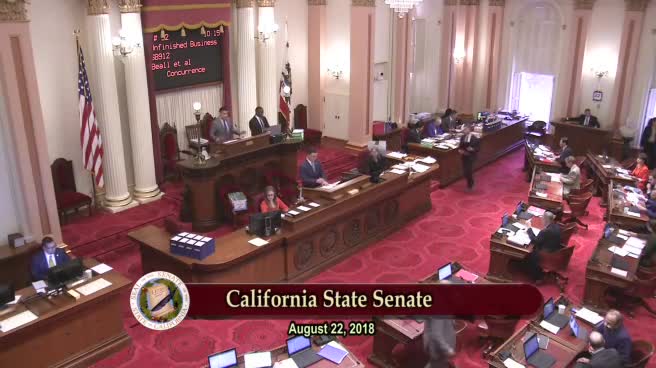 2MIN
Senate Floor
 1MIN
Assembly Floor
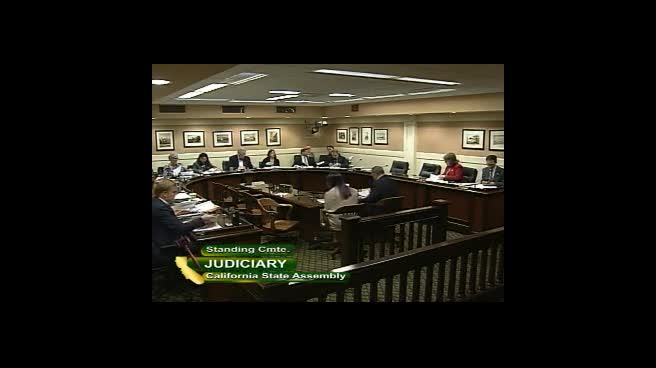 8MIN
Assembly Standing Committee on Judiciary
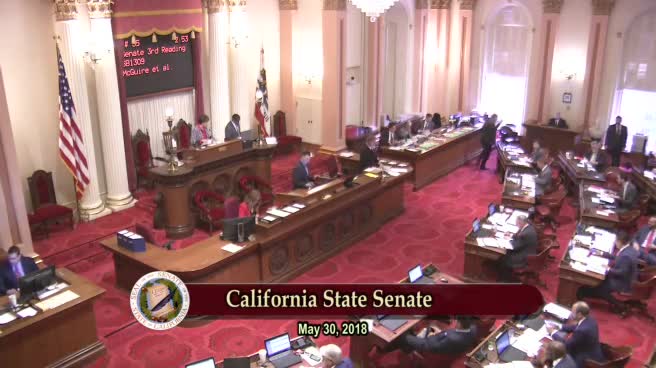 3MIN
Senate Floor
 4MIN
Senate Standing Committee on Appropriations
 15MIN
Senate Standing Committee on Judiciary
Bill Author

Bill Co-Author(s):